
A to Z Album Reviews
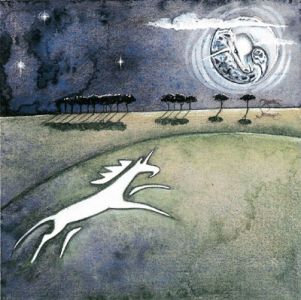
Quite rightly, Bill's regarded as one of the key songwriters of his generation, with a truly distinctive writing and performing voice and a career which thus far spans three decades, from the mid-70s (Oller Boller) to Y2K (The Writing Of Tipperary), and his output is renowned for its extraordinary consistency and quality. Bill's exhaustive CV includes stints as a solo performer and with the Albion Band and as founder member of The Home Service, also authoring TV and radio music and famed for his long-time work with the National Theatre in collaboration with John Tams. For a long time now, though, whilst other artists have continued to record his songs, virtually none of his own performances have been available for some years, the original vinyl issues long deleted of course, so until now 1995's excellent Winter With Flowers album (Fledg'ling) formed Bill's only CD entry in the current catalogue (aside from the appearance of John O' Dreams in last year's Acoustic Folk Box.
Technically, Unicorns is a new release, but it actually also serves as a retrospective collection. Confused? - well, don't be. In response to the constant stream of requests for recordings wherever he appeared, Bill took himself and his guitars into a remote cottage for three days to record a selection of his songs (chosen by himself and his fans) for CD posterity. What was initially intended to be a single-CD "greatest hits" quickly became a fulsome double (lasting well over two hours) - an instant measure of just how many unequivocally fine songs he's written over the years, some of these all too often still (inexplicably) unheralded even by those who choose to cover them! Genuinely timeless songs that were originally released on classic albums such as Rough Music, Sunny Memories, The Wild West Show and Urban Legend are here dusted down and performed by today's Bill with an immediacy and total freshness of commitment that's completely devoid of auto-pilot cash-in. The passage of time has, inevitably, occasioned some minor changes to a few of the songs since those earlier versions (as Bill himself so evocatively puts it, "songs leave you like children leave home"). He's in absolutely great voice too, while I marvel anew at just how damned fine and individually stylish a guitarist (6-string, 12-string or slide) he is. Compelling ain't the word! And there are five songs among the 36 recorded here that, incredibly, Bill's not recorded before (these include Rainbow Waistcoat, Aqaba and The Old Man's Song).
Anyone familiar with Bill's oeuvre will realise that his songs cover a wide stylistic gamut, from distinctly English-trad-idiom to country to ragtime to neo-music-hall to contemporary chanson. You may not like every one, but you can't fail to admire Bill's consummate craftsmanship as an intelligent, and strikingly effective, wordsmith, whatever the idiom; a real gift for memorable and poetic observation is his hallmark. This superb and very realistically-priced set (not much more than the usual cost of a single CD) is an absolutely essential purchase - no cliché intended.
www.workingjoe.co.uk
www.billcaddick.co.uk
David Kidman
Andrew's a founder member of that vibrant young Northumbrian trio Roll A Penny (see review of their CD Swingin' Hinnies in the NetRhythms archive). Here after several years of studying traditional music, he's produced a more contemporary-sounding solo album, which is an extremely accomplished effort presenting a thoughtful yet admirably spontaneous-sounding set comprising both tunes and songs. The tunes are all self-penned, and are suitably perky, quirky and sprightly in character - some, like the strathspey-inflected Seven Streets, even turn out to be insidiously catchy too! It's the songs, however, that predominate; all but three are self-penned, and these turn out to be outstanding, with a deft feel for both economy in construction and expression as well as a mature appreciation of tradition. The opening Emigrant's Song has the kind of leaping melodic compass that I associate with the songs of Bernie Parry, while O My Lady takes the Keel Row into gentler Steve Tilston territory and Widow's Walk is a minor masterpiece of evocative poetic writing. Of the genuinely traditional songs, Andrew's arrangement of Sandgate Wife's Dandling Song, to the sole accompaniment of fiddle, is attractively managed, and (perhaps against all the odds) even his choice of an unusual, tripping jig-rhythm treatment of Jock O' Hazeldean works, while Andrew clearly feels no shame in utilising Tim O'Brien's gorgeous old-timey-styled setting of Love Is Pleasing as a basis for his own. Playing fiddle, guitar, Northumbrian pipes, whistles, trumpets, bass and percussion over the course of the album, Andrew achieves an exciting and satisfying instrumental blend by judicious multitracking without overegging the pudding, although it must be stressed that Andrew takes great pride in pulling out as much emotion and interest as possible from just two "voices" (ie singer and guitar or fiddle) wherever practical, and the feeling of spontaneous interaction he's striving for is clearly paramount - and successfully achieved. This is a very appealing CD, although due to its sheer abundance of gently inventive ideas it may not reveal all its treasures absolutely immediately - but when it does hook you in, you can't stop playing it ...
David Kidman
Caladh is an old Irish word meaning "harbour" or "place of shelter"; thus the band name signifies a state whereby they've found a new comfortable place to showcase their musical talents in a warm and convivial atmosphere. And that turns out an apt description of the genially energetic music on offer from this fairly new young five-piece band who hail variously from Counties Waterford, Carlow and Kilkenny.
Although there's no shortage of musicianship, the band members don't force the issue, preferring instead to concentrate on letting the music speak for itself. Theirs is an easygoing style, as demonstrated on this collection that readily intersperses tune-sets and songs in sensibly varied and clean, uncluttered arrangements that let the individual musicians have their say without fear of being drowned out or interrupted mid-flow. And yet, considering that the lineup sports two fiddlers (Paddy Tutty and Lisa Butler), the overall texture isn't always as rich as you might expect – but this isn't ever a problem when the playing is so deliciously pointed and the arrangements kept so simple. The lineup's completed by Eoin O'Meachir (banjo, whistle, mandolin), Derek Morrissey (button accordion) and Colm O'Caoimh (guitar, bouzouki), who together provide a fortuitous balance of timbres that's impeccably judged, with melody line and harmony support well proportioned at all times.
The opening set of reels is a good illustration of the band's flair for balance between sensitivity of internal dynamics and outright energy, although there are instances on later sets where one feels that a little more capital might have been made out of the tunes (for example The Jolly Beggarman, which flits by in just under three minutes) and that a touch more loosening-up might have helped in dispelling the hint of "by rote" that just occasionally creeps into the rhythm of the ensemble. Interestingly though, one of the most appealing of the instrumental tracks is a swinging ragtime-cum-vaudeville-flavoured piece By Heck (which originates from the playing of the Flanagan Brothers, who emigrated to America in the early 1900s).
The rest of the tune-sets contain a nice mixture of jigs, reels and hornpipes and barndances, and the chosen pace is well managed but never too frantic even in the concluding head-of-steam stages of a set. Colm gives us a delightful solo performance too, the Gort Na Mona set (comprising a jig and a hornpipe): light and lyrical guitar picking at its finest (and, like his rendition of The Humours Of Ballyloughlin on the disc's final medley, inspired by the duetting of Paul Brady and Arty McGlynn). As far as the songs are concerned, Lisa takes the vocals for three out of the four, and she has a pleasing, warm, generous tone with a good sense of line without resorting to over-use of ornamentation; I particularly enjoyed her rendition of Cad É Sin Don Té Sin, a Donegal song dealing with the issue of personal freedom and individuality, although her treatment of Banks Of The Lee is a little too much on one level to rise above the standard. The fourth of the songs is the odd-one-out in two respects: it's the only contemporary composition - Richard Thompson's Beeswing - and it's sung (albeit rather attractively too) by Colm, but it ends a little abruptly and in the end doesn't add anything to the song's already massive discography.
Overall, then, Happy Days is a pretty impressive debut, for these musicians are undeniably talented and have already learnt some key lessons in the successful presentation of Irish traditional music. And even though I'm left with a feeling of being ever so slightly shortchanged, it proves an enjoyable listen.
David Kidman October 2010
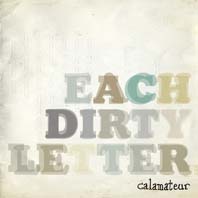
Folk-pop singer-songwriter Andrew Howie, as he's named on the birth certificate, hails from Scotland and, while not being part of the ever expanding Fence Collective circle obviously lowers his hip rating among trendy types, he certainly deserves to be afforded attention.
He has a gentle sleepy warm lilt to the voice with melodies that follow suit (although he can and does shake things up) and is adept at weaving something as dreamy as the acoustic Change This World, I Would as he is the more strident lovelorn stadium anthemics of Testimony or the hushed intimacy of City Is Mine which uses both real drums and drum track.
Well polished production and arrangements along with songs addressing faith (he's Christian but in a flag waving manner) and relationships ensure it slips down smoothly, his literate lyrics pricking the ears along the way and while there's nothing life changing, Retreat's waltzing duet with Jo Mango and the solo acoustic self-blaming A Bad Friend ensure it makes a pleasing soundtrack to the reflective early hours.
www.calamateur.com
www.myspace.com/autoclavecalamateur
Mike Davies Kidman August 2010
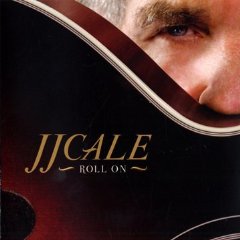
If Eric Clapton calls you 'one of the masters' then you must have a little something about you. If, on top of that ringing endorsement, you're responsible for two of EC's hits, After Midnight and Cocaine then you are definitely a musician to be taken seriously.
However, old 'Slowhand' isn't the only one to appreciate the talents of 70-year-old John Weldon Cale. Such diverse acts as The Band, Johnny Cash, Santana, Spiritualized and Band Of Horses have all covered his songs, while Mark Knopfler, Neil Young, Bryan Ferry all cite him as an influence.
While all that is something to be proud of, it's also a bit of a millstone, ordinary just won't do. Thankfully, Cale's latest release Roll On is definitely in the extraordinary category, almost without trying.
Cale's first solo album for five years, shows that there is definitely no substitute for talent. Always a pioneer in the studio he has built this album upon something far more fundamental, the ability to express honest emotion, backed by a lifetime's experience.
But JJ is still able to spring a few surprises, the album's opening track Who Knew is a glorious slice of easy, scat jazz. Even at this stage of his career, he is not ready to be easily pigeonholed. Listening to him meander his way through the country blues of Cherry Street is the musical equivalent to being handed a piece of old leather, there's a comforting, solid smell and suppleness about the song.
While there's been a lot of love and affection poured into Roll On, the beauty of tracks like Fonda-lina is that they appear effortless with Cale's understated vocals sinking easily into the mix. Everything about JJ Cale's music flows along quite naturally.
As you'd expect of a musician of this standing, the blend of Roll On is just right, no one facet of the album overrides the other, all are equal and that gives the album a sense of completeness. It may be presented simply, as if Cale were entertaining friends in his kitchen, but there's also nothing you could think of to add.
Roll On is an example of what happens when talented, grown up musicians ply their trade. There is nothing brash or flash, no gimmicks or trickery, a masterpiece doesn't require a gilded frame and with Roll On, JJ Cale offers up a dozen of them.
Michael Mee March 2009
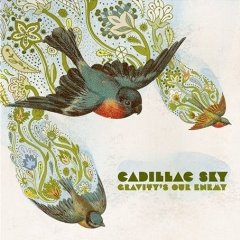
This is the second record to be released by self-styled bluegrass iconoclasts Cadillac Sky, the Texan quintet led by songwriter and mandolinist Bryan Simpson. The band's speciality is taking the soulful mountain sound of traditional bluegrass into the 21st century by using the genre's traditional instrumentation and vocal harmonising as a vehicle for songs that tackle deeper modern-day issues like relationships, domestic abuse and alcoholism. Virtuoso musicianship that's never in any doubt, with accomplished singing and playing that's lodged firmly in the tradition of the genre, allied to often pensive songwriting with a strong sense of social justice and keenly observed storytelling: now there's a winning combination. A genuine concern for humanity and all its foibles and vices is apparent in the writing, whether discussing the plight of a wife faced by an abusive husband (Bible By The Bed), the impact of a momentary lapse in behaviour (Baby Don't Cry), the process of denial that a rejected lover goes through (It Won't Be Over You), or the more general life's-journey (Carousel). A couple of instrumental tracks provide a further bonus for fans of well-oiled newgrass. With thoroughly credible musical chops from Bryan's fellow band-members (banjoist Matt Menefee, fiddler Ross Holmes, guitarist Mike Jump and bassist Andy Moritz), there's nothing to dislike, and everything to admire, about Gravity's Our Enemy; there should be no argument about filing this disc under "bluegrass – reliable, thoughtful, satisfying".
www.cadillacsky.net
www.skaggsfamilyrecords.com
David Kidman April 2009
David Kidman
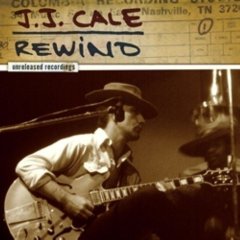
Rewind compiles together 14 tracks originally recorded by J.J. during the 70s and early 80s (we don't have exact dates), but the title is mildly misleading 'cos it's not a revisit of previously released material but a first-time airing for some tapes that had lain in storage under the care of producer Audie Ashworth for the best part of 25 years. The eight Cale originals here are absolutely typical of his distinctive sound and approach, the laid-back easy-rolling bluesy rootsiness of the "Tulsa Sound" that characterises his early years, absorbing influences from country, jazz and rock'n'roll, and which was arguably to prove so inspirational for successive generations and especially so in defining the sound of artists like Dire Straits. Songs like Seven Day Woman could've come off any of those classic early albums from Naturally onwards, fitting like a glove into Cale's recorded canon and sounding utterly timeless and fresh today ...
Unusually for Cale, these tapes also contain several cover versions, which are presented in a block towards the beginning of this CD: Cale has only rarely recorded other writers' material, but he sure puts his personal stamp on the six non-original songs here; these include Randy Newman's Rollin', Waylon Jennings' Waymore's Blues and Eric Clapton's Golden Ring (repaying the compliment of Clapton's championing his work generally and covering his own After Midnight in particular). Other musicians appearing on these tapes include Spooner Oldham, Richard Thompson, Glen D. Hardin, Tim Drummond and Jim Keltner - so we're not being palmed off with half-baked session outtakes here I assure you, but it's solid-state archetypal Cale all the way (shame the total playing-time's only 37 minutes tho', leading me to wonder if there's gonna be more where these came from). Either way, Cale devotees will need this CD, for it's both an essential supplement to the early albums and a valuable collection in its own right.
www.jjcale.com
www.myspace.com/jjcale
David Kidman September 2007
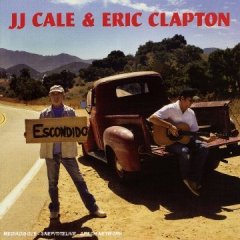
From the get-go one knows this is a goodie! Danger fits like a comfortable well-worn favourite. This is going to be a kick back, chill and let the music flow over and around ~ a total immersion of the senses ~ album. Heads In Georgia is a beautifully mellow number, lyrics make me think of those halcyon days of Capricorn soulful blues but transplanted to southern California. As one would expect the playing is immaculate throughout but not in the sanitised synthetic style of so much 'modern' music ~ they are just all so darned competent that it is spot on all the time and yet feels so loose. Shut your eyes and you can all but see the odd nod and smile being exchanged in the studio because it feels soooo good and right.
When This War Is Over clicks along the tracks with all the feel of the old days riding the railroads ~ relentless and unforgiving but with the vocal very under- stated and yet so strong ~ it would be a weird sort of joy if it were not the blues. But it is. And somehow it is. A feeling of 'togetherness' and solidarity knowing that there are others who feel the same way about war. Some brilliant bass riffs on this track that manage to sound the anger at the concept of war. It is weird how soothing to the soul this is despite the lyrical content, it lowers the blood pressure, maybe it is the endearing familiarity of the form but Sporting Life Blues, the Brownie McGhee song, does just that.
The pathos in Clapton's vocal on Hard To Thrill plucks at the soul's strings, evoking a primeval maternal urge to hold out both arms and a box of tissues - which is patently ridiculous. Then the piano player subtly demands the same response. The deft and delicate mixing of this CD is incomparable. There's a more cynical edge with Anyway The Wind Blows and instrumental breaks with lots happening but oh so cleverly, like watching the majesty of a high wind on the tree tops. And then floating gently back down to earth like a leaf on a hint of a soft breeze into Three Little Girls. I almost feel as though I am intruding into a private space ~ but then that has always been one of Clapton's strengths ~ that ability to suck you into his world with his music. And indeed with the music and lyrics of JJ Cale's as well. As though we have managed to somehow sidle round the door and quietly sit in on their private jam.
The guitar work, combined with the lyrics, of Last Will And Testament, are making me gently weep. Maybe it is our ages that bring with it both a sense of our own mortality, along with a profound gratitude for living. We have all made it this far. There is more to come for most of us. How much we do not know, nor where we will go with it, but there is some master plan. What a fitting tribute the dedication to the memory of Billy Preston this CD is. Who Am I Telling You? How beautiful and apposite.
And so the curtain starts to fall on Ride The River. I had not expected this CD to be quite so much of a spiritual experience for me. Nor to provoke quite so much reflective thought. It had to be good ~ that was a given ~ but this good? Proof again that the whole is greater than the sum of all the parts and Cale and Clapton form an amazingly strong but gentle and formidable team. Eric certainly knew what he was doing when he followed his instincts and set about doing this CD. Something, I for one, would not have missed for the world. A must have. No. Essential. If it were vinyl it would have to be two copies - it is going to be played so much! Clapton is God? Close!
www.jjcalemusic.com
www.ericclapton.com
Miranda Ward May 2007
www.myspace.com/mirandawarduk
J J Cale - To Tulsa and Back (EMI)
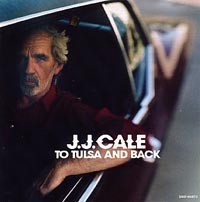
I needn't have worried. From the first beat of the opener "My Gal", I was in familiar territory. A wonderful, laid-back JJ Cale world where the roads are empty, the beer is cold and life hums along to the lazy burble of a big V8. The problem is that the more I listened, the more I was convinced that it wasn't quite firing on all cylinders. Not that the album is in any way poor, it's just that I have one or two minor niggles about what could have been a really top-notch CD.
I like my blues to be played by real musicians not machines. Half of the songs on "To Tulsa and Back" feature a live band and the other half are solo efforts by Cale himself. This is a mix that he has used successfully since his 1972 debut "Naturally". Thing is though, the unaccompanied tracks on this album are backed by the slightly synthetic sound of a drum machine. For the most part, this didn't matter. "Stone River" in particular was well played and the essential feel of the music combined with Cale's legendary gravelly voice meant that I barely noticed the band weren't there anymore.
Unfortunately, it wasn't to last. Things came to a head with "Rio". I was on holiday at the time and every bar on the island featured a keyboard player belting out karaoke versions of old chart hits with a synthesised Latin beat and pre-programmed instruments. "Rio" was just like that, complete with manufactured "brass" section. The familiar cracked and croaking Cale vocals were there as usual, yet even this couldn't disguise the fact that the music sounded not only false, but also out of place on what was for the most part a blues album. To me it just sounded wrong.
Luckily for me, I didn't give up, because from Jim Karstein's first real brush stroke on a real snare drum, "These Blues" got me right back in the groove. What a relief. After the temporary misfire, things smoothed out and just got better and better. "Motormouth" was excellent and when you listen to the words of "Blues for Mama", you won't fail to be moved. In the end, I was left feeling that the final banjo picking track "Another Song" came around way too soon.
Incidentally, has anyone else noticed the similarity in guitar and vocal styles between JJ Cale and Britain's own Mark Knopfler? Take a listen and you'll see what I mean.
Andy Pearson
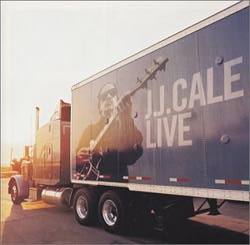
This is self-effacing, Tulsa-born JJ Cale's first 'live' offering in an album career which commenced in 1971 with the wonderful 'Naturally' on Shelter and has remained consistently excellent throughout. Nowadays playing a Gibson L5 (if the album cover is to be believed) rather than his old $50 expensively-customised Harmony and living in a house in southern California rather that his Airstream trailer in a trailer park, JJ's music is still a benchmark for simplicity, style and elegance.
'Live' tracks are taken from concerts in USA and Europe from '90 to '96. The whoops of joy from the audience, captured on this album, were echoed by me writing the review. Oh my! did this one push my buttons. His songs may be better known to some for being recorded by 'great and good' Eric Clapton, Santana, The Band, Lynyrd Skynyrd, Mavericks and more, but no one does it like JJ Cale; the effortless perfection of that laid-back and rhythmic blues shuffle, that confidential mumble - like he's telling you stuff you'll really want to know - and those flashes of understated guitar brilliance which have influenced better-known guitarists such as Eric Clapton and Mark Knopfler.
From the opening track, an outstanding solo acoustic After Midnight, bass player Bill Raffensperger joins him for Old Man, and the full band come on for Call Me The Breeze and Sensitive Kind (from Cargegie Hall '96) for one of the greatest recorded live performances I can remember. These four perfect tracks are worth the cost of the album in themselves - and then they are are joined by memorable versions of Cocaine, Money Talks, River Boat Song, Living Here Too, Mama Don't Allow, People Lie, Humdinger, Thirteen Days, Magnolia, and Ride Me High - the distinctive style of the legendary guitar genius sounding as fresh as ever. More than "highly recommended".
Sue Cavendish
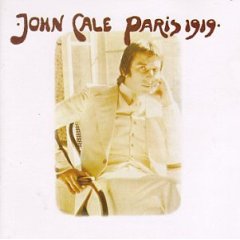
Paris 1919 was the (outwardly) gentle-as-the-Welsh-accent record that occupied a kind of no-man's-land between Cale's two post-Velvets Columbia albums (bold experimentation with Terry Riley on Church Of Anthrax then the rockist surrealism of Vintage Violence) and his arguably even more maverick Island recordings. Its elegant gentility and supreme musical accessibility turned out to be deceptive; indeed, Cale himself has even described it as "an example of the nicest ways of saying something ugly". As the writer of this reissue's booklet note posits, the album title's timeline (the Versailles Conference) was after all a harbinger of future bloodshed, and even the most luxurious melodies can't hide the rivers of blood - and acute sense of loss - running through the intelligent, knowingly literate (if at times cryptic) lyrics of these songs. The album therefore repays much more than just a superficial rosy-tinted revisit, and its latest reissue fittingly expands the original nine tracks by the addition of no less than eleven "sketches and roughs" for the album. These inevitably vary in interest, from a beautifully dark, viola-rich Hanky Panky Nohow and a more chansonnier yet strangely satisfying solo-piano-backed version of the title track (with a rather lovely Brian-Wilson-inspired vocal bridge passage) to a poignant yet curiously enigmatic previously-unreleased song, the country-waltz-tinged Burned Out Affair. Listening to these "roughs" did have another intriguing benefit too: that of re-focusing on the effect the contributions of Cale's diverse backing crew (Little Feat members Lowell George and Ritchie Hayward, Jazz Crusader Wilton Felder and members of the UCLA Symphony Orchestra!) had on the final mixes - for instance, A Child's Christmas In Wales makes a more direct impact in its "rough" state, with a more prominent organ part in place of that slide-guitar riffing, and the more opulent yet sensitively-scored fuller-orchestral setting given to the second alternative version of the title track gives a fabulous sense of panoramic scale to the enterprise. In truth, I actually prefer many of these "rough mixes" (the majority being anything but rough in fact), where the ambiguity of the lyrics is in my opinion better complemented by the fresher yet paradoxically more considered settings. Even the messy, out-of-tune piano on Graham Greene has a certain charm! In all, this is a fascinating and enlightening reissue.
David Kidman July 2006
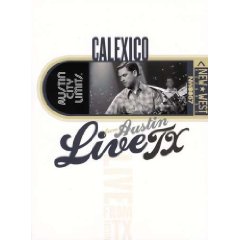
Recorded in September 2006, shortly after the release of Garden Ruin, this shows the band in a transitional period, reflecting on their earlier experimental, atmospheric ambience but moving towards the more structured song oriented and often pop inclined approach to their craft that now defines their work, their Tex-Mex border cinemascope mariachi sound informing both.
With singer Joey Burns in relaxed, chatty form, it's a fairly evenly balanced set list, opening with a pared down Convict Pool and including such past nuggets as a crowd rousing, trumpet soaked Across The Wire, El Picador and the superb rock edged Not Even Stevie Nicks alongside then new numbers like subdued ballad Cruel, the muscular rock fire of Letter to Bowie Knife and Roka.
For the latter they're joined by Salvador Duran who also hangs around to lend his rich Mexican baritone to Guero Canelo and He Lays In The Reins. That, of course, was written by Iron and Wine's Sam Beam and the live set delivers a terrific reprise of the studio collaboration between him, wife Sarah, Duran and the band.
The influence of Arthur Lee is often evident in Calexico's music, so it's fitting too that one of the highlights of the set is a superb cover of Love's Alone Again Or that does full justice to the original. If, you happen to have seen this as a tape of the TV show, you'll also be pleased to know that the DVD features the extended full version of the show with no less than eight songs that weren't included in the broadcast.
www.casadecalexico.com
www.myspace.com/casadecalexico
Mike Davies April 2009
Calexico - Feast of Wire (City Slang)
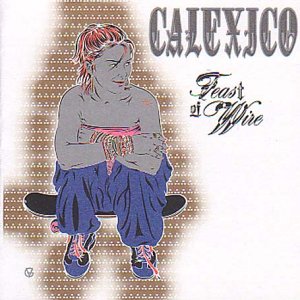
Always providing a welcome blend of bluesy Mariachi desert rock Americana and border stories, this is easily their finest album yet with its mix of cinematic epic and atmospheric sparsity. Peppered with instrumental interludes, it scuffs its dust blown heart through such downbeat visions as Sunken Waltz and the plaintively sad Not Even Stevie Nicks -where Joey Burns shows off his rarely heard falsetto - and the hushed spook of Woven Birds. But while Across The Wire may be a typical brass hued Calexico TexMex number they also pull a few rugs from under the feet of expectations with the jazztronics Attack El Robot! Attack!, the parping jazz blast Crumble and the self descriptive Dub Latina. They've also just lifted one of the album's stand outs, the string drenched , heavy limbed melancholy of Black Heart, for an EP of reworks and remixes that include a jazz dub version of that, a 3am smoky cellar sax mourning retool of Robot and the Go Tan Project's samba lurch of Quattro.
Mike Davies
Harp player Alvin 'Big Al' Calhoun and guitarist Henry Townsend get together for this August 1979 session that was recorded in Townsend's home in St Louis, a fact that only adds to the charm of the album. The session, recorded by Arcola founder Bob West, was suggested by Townsend after West had recorded him earlier that month. The result was Harmonica Blues and it is a great example of the art of harmonica playing. Calhoun takes on the vocal duties for the first half of the album and his smokey voice compliments his harp and Townsend's, sometime sparse, yet effective, guitar style.
Black Panther is a good, powerful opener with both guys on form and is followed by the often covered and probably not too politically correct nowadays, Good Morning Little Schoolgirl - good version though. The instrumental Al's Boogie-Woogie shows all of the facets of Calhoun's playing and his songwriting skill is shown on Buy Me An Airplane, the only track on the album written by him although if he could write this good then why aren't there more of his tracks present?
Shake Your Boogie sounds as if he's going to blow his lungs out as he powers his way through and this is followed by his homage to Little Walter, It's Too Late/My Babe, on which he does not disgrace himself. Calhoun said that if he could pick any guitar players to play with then he'd choose the Meyers Brothers who were, incidentally Little Walter's men. The last track sung by Calhoun is That's All Right, which is a wailing blues in the classic mould with Townsend's guitar twanging away in the background.
Henry Townsend and his wife Vernell take over the vocal duties for the rest of the album and the style changes from Calhoun's raw delivery to the Townsend's more polished vocals. Betty Lou is standard fare but Can't You See has the Townsend's in harmony on one of the highlights of the set. Townsend writes the final six tracks on the album and he shows his class with Love Was In Our Hearts and Wake Up Old Maid, allowing Calhoun to express himself fully but he saves his best for Tears Come Rollin' Down. This is the track of the album and Vernell takes the lead vocal. She sings the song perfectly, Henry delivers the guitar fills with venom and Big Al plays understated harmonica brilliantly.
The final two tracks are Tin Pan Alley and Old Story Blues, the former sang by Vernell and the latter by Henry. The closing song is the more upbeat but Tin Pan Alley wins the contest of the singers. Calhoun is not to be outdone and produces some of his best work on Old Story Blues. If this is an indication of what is in the Arcola archives then hopefully they'll be opened again soon.
David Blue
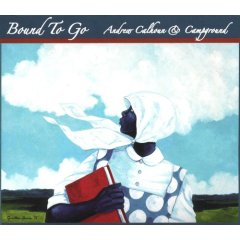
This fascinating 72-minute disc is rather unassumingly subtitled "folk songs and spirituals". It contains vital and committed performances of authentic spirituals, shout songs from the Sea Islands, prison ballads and rare secular songs from the African-American folk tradition. Andrew's own excellent rootsy singing is found to be ideal to the task, and he's augmented by the individual and combined voices of around a dozen other singers, including within their ranks Bruce Soper, Tony Dale, Sue Demel, Katherine Davis, Darwin McBeth Walton, Richard Shindell, Valerie Carter-Brown and Runako Robinson (and most of these get a solo!).
The beauteous richness of these voices is given a perfectly sensitive amount of instrumental support (guitars, banjo, cello, fiddle, trumpet, piano, harmonica and sundry percussion) that lends a brilliance and power to the vocal contributions, throwing them into relief without ever overwhelming them. Bound To Go is the fruit of Andrew's extensive research into old songbooks and collections, and he's unearthed some fabulous music (quite a bit of it unfamiliar to me). The majority of the disc's 35 tracks are quite short, but such is the nature and diversity of the selections that the listener neither feels shortchanged nor gets the chance to be bored.
The accompanying 24-page booklet contains exhaustive notes, bibliography and discography, all prefaced by what amounts to a mini-thesis by Andrew which does so much more than merely expound his motivation for the project - for it's a labour of love which has its roots in his mother's own involvement in activism. In accordance with Andrew's opening statement "folk songs carry the emotional truth of our history", every piece on the disc (whether a concise, pithy rhyme or holler, or the extended chain-gang lament No More Cane On The Brazos) is sung with entirely appropriate integrity, authentic expression, sympathy and affection, and an infectious intensity.
Aside from Andrew's own spine-tingling near-acappella rendition of Brazos (accompanied only by some rudimentary drum-banging), highlights come thick and fast: the bleak slave-song O'er The Crossing, Big Llou Johnson's deep-felt plantation-song Way Up On The Mountain, a sterling group rendition of Lost John, Sue Demel's wonderfully sturdy Michael Haul The Boat Ashore, and Tyisha Williams' tender lullaby Open The Window, Noah. No sir, there's none of yer vacuous happy-clappy here - this is a tremendously powerful album with a great sense of atmosphere and the deepest possible commitment that shines through both in the performances themselves and the exceptionally fine recording and presentation. Prepare yourself for a heap of neck-prickling moments. This is a landmark release, I'm convinced.
www.waterbug.com
www.andrewcalhoun.com
David Kidman April 2008
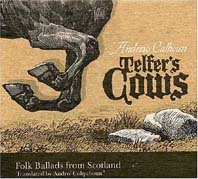
This is a kind of sidestep for Waterbug label founder Andrew - whereas all his other releases thus far have concentrated on his own fine original songs, this is a foray into exclusively traditional sources, in this case folk ballads from Scotland. But actually it's not aeons removed from Andrew's own work, for it's still shot through with his trademark thoughtfulness of execution and his signature warm vocal tones. Also, close listening will reveal how closely Andrew's experience of those traditional ballads informs his own writing: not least in the poetical impact, and the keen sense of structure and development, and onward progress within a song - that's in every sense, not just in how to tell a story and keep listeners' attention.
We learn from Andrew's pithy yet informative booklet notes that he grew up listening to Ewan MacColl's recordings, and he has clearly taken on board the very principles behind Ewan's interpretations of these age-old tales. He recognises the ballads' unique role in the oral tradition, and has taken pains to ensure, through careful translation and occasional rewriting, the effective communication of their timeless preoccupations and morality and thus convey their continuing relevance today. His actual choice of ballads is an interesting one; though his selection is taken exclusively from the Child collection, he intersperses some of the celebrated "heavyweights" that we know and love (King Orfeo, Glenlogie, Clark Colven, Hughie Graeme, Eppie Morrie) with more well-known fare (Two Sisters, The Unquiet Grave) and some less often heard items (The Battle Of Harlaw, Telfer's Cows).
This is not a CD of unrelieved doom, gloom and murder either, for there's the delectable "Chaucerian farce" of A Shake In The Basket for light relief - and several of the ballads are taken at a sensibly brisk tempo without a trace of lugubriousness! Andrew has creatively and credibly reworked some of the original published sources - for example, Kinmont Willie (one of many Child ballads collected and then extensively rewritten by Sir Walter Scott) has been brought closer to the historical record of the events, while Clark Colven brings in some information from a Danish variant.
Andrew's readings are without exception intelligent and scholarly, sufficiently intense without sounding offputting, not in any way forbidding and always musical, accessible and listenable. Four of the twelve ballads employ just Andrew's guitar, with accompaniment stylings ranging from simple but effective rippling bardic chords (Clark Colven) to more intricate yet undistracting embellishment. Two are sung acappella - Hughie Grime (sic) solo (a measured yet suitably intense highlight), and the lively Battle Of Harlaw with Bob Soper and Rob Stroup in tow. Andrew's own voice is rich and his delivery and phrasing wholly pleasing; although he uses and respects the original sources, he suffers neither from his natural accent nor from any forced Scottishness in his diction. On the rest of the tracks Andrew has enlisted Tracy Grammer (violin), Elisabeth Nicholson (harp), Joe Root (accordion), Donny Wright (bass) and the aforementioned Bob and Rob (fiddle, mandola) in various permutations, except for the stirring tale of Eppie Morrie which enjoys a wonderfully full-on (and fulsome), driving treatment courtesy of the admirable William Pint & Felicia Dale.
My conclusion is that this vital and enterprising release ought to appeal to the serious enthusiast of traditional balladry as much as to the lover of quality contemporary songwriting who's keen to gain an insight into a writer's inspirations by exploring his sources in his own company.
David Kidman
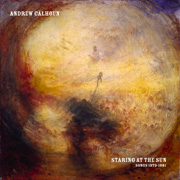
Founder of the esteemed artists' cooperative label Waterbug, Connecticut-born Andrew's also a prolific singer-songwriter and poet in his own right. To date he's brought out nine solo albums (six on CD) and two books of poetry, and achieved a high degree of artistic consistency over the 22-year timespan covered by these releases. For a good ten years prior to that first album (1983's Water Street), though - in fact, since the early 70s - Andrew had been busily writing songs; when in December 2004 Andrew moved back into the house where he'd written most of them and started looking at them again, he realised that he still knew them all by heart and decided to get them recorded afresh for posterity, hence this new CD. And it proves to be a fascinating disc, a journey through Andrew's formative years as a songwriter that displays his talent as being well-formed virtually from the start. Perhaps some songs, such as Atmospheres (dating from 1973), aren't as confident melodically as Andrew's later work, but they're still interesting pointers to what he calls the "psychic" strand of his songwriting - as is Broken Boundaries, which concerns his uncanny premonition of a car accident. The 16 songs on Staring At The Sun date from between 1973 and 1981 (the title of this collection coming from a line in History), and contain examples of most of the strands that have since defined themselves within Andrew's writing: image-rich poetic journeys, atmospheric portraits (John's Wife), simple yet emotionally-charged little lieder (like From Time To Time and I Have Run And I Have Crawled, both of which prefigure later classics such as If..., and the haunting Deliver Me), and fun comic observations where lines tumble out over each other (like on the breakneck A Seat In The Mezzanine). Andrew's songs exhibit a masterly economy and a highly developed sense of literacy, and his warm, resonant, individual baritone voice and gentle yet fulfilling fingerpicking style prove the ideal vehicle for his creations. Maybe this release isn't the first-choice for an Andrew Calhoun album to buy if you want an accommodating introduction to the very best of his writing, but nevertheless it comes close to being representative in terms of his unique songwriting personality, all the while proving that even Andrew's early work is inspired and far better than mere juvenilia, providing a valuable insight into his subsequent artistic development.
David Kidman
Califone arose out of Red Red Meat, from whence came founder members Tim Rutili and Ben Massarella; their approach to music-making has always been one born of a love of experimenting with sparse and unusual instrumental textures. Their latest offering, Roots And Crowns, follows a particularly intense period of activity after Quicksand/Cradlesnakes, during which they recorded four albums in three years. However, the new album betrays no sign of drying-up of inspiration, in fact quite the reverse, for it draws much of its white-heat inventiveness from the situation the band found itself in when its equipment was burgled during their last tour and they were forced to stretch the sound envelope with increasingly limited resources. Although the uniquely atmospheric qualities of Califone's previous work are retained, there's a new freshness about this latest album that seems born more than anything else out of a revitalised attention to minor detail, a willingness to take time over it, that informs the overall texture. Folk-psych meets alt-, you could say, on cuts like Burned By The Christians, whereas the Califone cover of Psychic TV's Orchids (the album's only non-original) seems as natural as twilight blending into the dark duvet of its twisted nu-folk bedfellows. From the eccentric fractured rhythms of Black Metal Valentine to the layered organic experiments of Spider's House and 3 Legged Animals, mixing traditional with modern sound-sources, the fibrous tendrils of the various and different instrumental strands weave into and through the music like the roots and crowns of the album title, an apt metaphor if ever there was one. What these guys do with just a violin, banjo, guitars, a smattering of percussion and a sensitively restrained modicum of electronica, is all pretty creative stuff. There are countless intriguing touches, too many to comment on here - you just need to listen with an open ear. Me, I think this is Califone's most immediate and persuasive album to date.
David Kidman March 2007
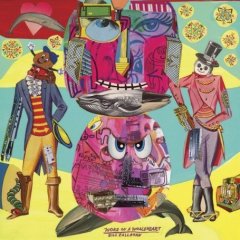
Lynchpin of Smog and married to Joanna Newsom, Callahan's first solo album is only really a departure in as much as he's abdicated production, design and arranging duties to focus on his playing, writing and singing. So, basically a Smog album then with its free flowing train of thought lyrics, chugging country flavours, and a low baritone that frequently paints him as a young Lenny Cohen. It's a comparison that's particularly striking on the talk-sing opening piano led track From The Rivers To The Ocean, a meditation on time passing where lines like 'have faith in worthless knowledge' and 'I could tell you about the river or we could just get in' sound like something Cohen might have penned with Bill delivering them in much the same fashion. The Cohen touch is evident too on the funkier marching rhythm Diamond Dancer but elsewhere it's Lou Reed that comes to mind on the sunny lollopping Honeymoon Child. the shimmeringly lovely summer breeze Sycamore with its Baptist choir backing and a pulsing staccato rythmed carnival feeling Day. And then Johnny Cash and Willie Nelson are surely the guiding spirits behind the chirpy hiccuping train rhythm A Man Needs A Woman Or A Man To Be A Man and the country gospel The Wheel where, like some travelling preacher leading his congregation, Callahan speaks the lines before singing them. But, while there may be reference points, Callahan is undeniably his own man and now, trading with his own name, this is an small but individual pleasure.
www.dragcity.com/bands/callahan
www.myspace.com/toomuchtolove
Mike Davies April 2007
Ben Calvert - The Leafy Underground (Bearos)
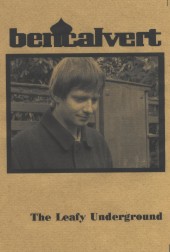
Following on from his EP of three years back, Birmingham singer-songwriter Calvert (not the Vex Red drummer, ok) recorded parts of his debut album at the Royal Academy of Music and a small church in native Moseley. That gives you a rough idea of where he's coming from. A mix of solo numbers with just acoustic guitar, some fleshed out with flute or piano and some featuring the band he recently toured with, it's firmly in Nick Drake/Ben Watt/Syd Barrett leafy English post folk territory though there's also hints of Pete Atkin, Nico (especially on Counting Carriages), Robin Williamson, Noel Harrison (on No Lullaby) and early Roy Harper in there too.
Starlight sounding almost like a traditional troubadour number, it's dreamy, reflective sadness veined romantic stuff, Calvert's finger-picking guitar trickling like raindrops after the storm. Images of autumn gardens, wooded lanes, potting sheds, allotments and all things quintessentially old fashioned England tumble into the head as he sings of sitting watching ducks on Sunday morning while, with just voice and piano accompaniment, the haunting Ides of March sounds what you might image English spirituals to sound like if such things existed, while with big orchestration and a bigger budget Last Orders could easily translate into the sort of stadium sweller beloved of Coldplay. He's happier though to shoot for more modest targets. I'd say the new Tom McRae would be about right.
Mike Davies
Paul Camilleri - Another Sad Goodbye (Zyx Music)
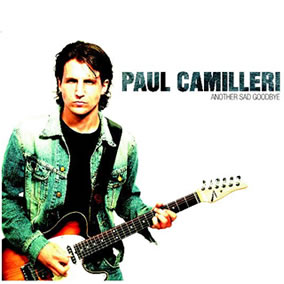
I don't know if Paul means to be prophetic on Let My Guitar Talk but, believe it or not, he actually turns in one of his better vocals on this shuffling blues. It's Too Late is middle of the road soft rock and doesn't really get going but things change for the better on the slinky and smooth When The Night Comes - this is one of the album's highlights. The theme stays on the slow side for All Went Wrong so get your lighters out for this and sit back for the scorching guitar. There's some Kansas style swing blues on I Can't Wait Until Tonight and Paul turns in some snappy guitar as he really pings those strings. Ain't Givin' Up is a funky blues, driven by drummer, Steve Holley but the guitar outshines the vocal again. The album finishes with a radio edit of the earlier Lady Luck. Paul Camilleri certainly has talent as a guitarist and songwriter but it may be some time before his voice grows on you.
David Blue
Alex Campbell - Been On The Road So Long (Castle)
Widely heralded as one of the most influential and lasting of the folk singers of the European revival, the mighty and irascible Alex Campbell (who died in 1987) was the quintessential wandering troubadour who earned a reputation as a hard-travelling, hard-drinking, hard-living man, despite which he was unarguably a phenomenal live performer of traditional and contemporary material alike. It's been said that Alex cut more than a hundred albums during his 30-year singing career, many of which were one-off, one-take affairs recorded live, and often of uncertain and erratic quality. It's widely accepted, though, that the cream of his recorded output, representing his peak as a writer and performer, was the handful of releases he cut for the Transatlantic label in the mid-60s, some of which featured support from the likes of Louis Killen, Martin Carthy and Cliff Aungier. These albums (along with the largely autobiographical EP My Old Gibson Guitar, the title track of which appears here) presented sparse, earthy and committed renditions of traditional songs like I'm A Rover, The Overgate, My Singing Bird, Night Visiting Song and The Unquiet Grave (one of the picks of this side of Alex's repertoire was Glesga Peggy, which for some inexplicable reason didn't appear on any release at the time). A good number of these songs were even then folk club standards, and others have since become such, but these passionate, distinctively burring performances have rarely been surpassed, although one or two (eg Bruton Town) seem decidedly dour. In addition to the traditional songs, Alex was wont to feature a sizeable contingent of original songs, which included evocative personal numbers like Don't You Put Me Down, and touching performances of choice contemporary material like Woody Guthrie's Plane Wreck At Los Gatos. Additionally, Alex's protegée, a young nurse called Alexandra ?Sandy? Denny, appears on the final selection on this anthology, a second version of its title track that's taken from the Alex Campbell And Friends album. This new compilation, which benefits from hindsight-filled notes by David Wells, claims to draw together each and every track that Alex recorded for the label - three LPs' worth - although I'm unable to verify this as I'm ashamed to admit that I never actually owned the original LPs (though I'm aware that many LPs gave distinctly short measure in those days). Whatever, all of the songs already mentioned in this review are included on this handsome single-disc anthology, which stretches to 79 minutes and thus represents a real bargain. And when you've invested in this excellent anthology, you'd do well also to purchase the fine mid-90s two-disc set of recordings taken from the Alex Campbell tribute concert which was masterminded by Allan Taylor (still available from Allan on his own T Records label).
David Kidman
Fil Campbell - Songbirds (CD and companion DVD) (Glenshee Records)
The Fermanagh-born singer/songwriter has changed tack for her latest project (and fourth album release), on which she looks back at the music of her childhood and pays tribute to the songs of the past and the women singers who performed them. Its genesis lies in Fil's desire to make a CD of folk songs that she had grown up with and that had first been recorded in the 1930s by Delia Murphy, but that basic idea has since evolved further to also embrace the lives of four other women who had also recorded this material (Ruby Murray, Bridie Gallagher, Mary O'Hara and Margaret Barry), eventually blossoming into a six-part series for Irish Television – entitled Songbirds: The First Ladies Of Irish Song – which was first shown in autumn 2005.
The DVD (which is available separately from the CD) presents the actual TV programmes in their entirety. What comes across more than anything else is that the project has been a real labour of love for Fil: her unreserved affection for her subjects and their songs, and her ability to get to the heart of the singers' stories and communicate it lovingly to her audience. The series is also strongly unified both in style and format and in terms of design and presentation, and looks and sounds extremely attractive, with archive film extracts and interviews sensibly balanced and integrated. Each programme seems just about the right length, and no individual element outstays its welcome - and yet I also felt I learned a significant amount about the ladies and their personalities from these brief portraits. The basic biographical information is fleshed out by reminiscences from an array of respected and experienced musicians, writers and broadcasters (these including Mick Moloney, Colum and Tommy Sands, Phil Coulter, Reg Hall, Steve Cooney and Ron Kavana), all of whom display an evident warmth, regard and admiration for the ladies (and a keen appreciation of their talents) and a relevant depth of informed knowledge with often some very interesting stories to tell. Finally, a number of excerpts from the recording-studio sessions (where Fil and a select few master musician friends performed key songs associated with the singers discussed) set the actual biographical studies into relief and give them an interpretive context. The first programme introduces the series' concept and rationale, while presenting a thoughtful overview: its tempting and plausible central thesis is that women singers weren't recognised as important in the performance of Irish repertoire (and moreover, all Irish singers were almost ashamed of their own heritage) until the emergence and subsequent popularity of these five singers; each in her own way has been deemed to contribute significantly to the ongoing folk revival while defining a specifically Irish repertoire that nevertheless encompassed both indigenous songs from the true tradition and songs from the music-hall or even Tin Pan Alley that idealised "the motherland" for the benefit of emigrants exiled in other countries (especially the USA). Each of the remaining five programmes in turn is then seen to concentrate exclusively on the life and work of one of the "first ladies of Irish song". Some or most of the five singers may at times have had songs which were common to their individual repertoires, but it's important to note that they performed in often diametrically opposed styles. While noting that all five ladies were in their own way popularisers of Irish song (and their semi-traditional way of singing even non-traditional material ensured that this got fed back into the tradition almost by default), the series also points up the contrasts between them, from the raw, but completely natural street-singer Maggie to the soaring, classically sweet bel-canto soprano and elegant harpistry of Mary; the wild, unbridled charm of Delia to the lift-the-stage persona and come-all-ye inclusiveness of Bridie and the all-pervading purity of tone and Hollywood-style artistry of Ruby.
Now, one may initially be disappointed that the series (and therefore the DVD too) contains no complete performances of individual songs, either by the original artists or by Fil herself - although it's perfectly understandable in view of the programmes' remit and the necessary time constraints of the format. The companion Songbirds CD, being available separately, should thus by rights be the answer to one's prayers, and to a large extent it is. The first thing to note is that it is indeed both entirely complementary to, and a logical development from, the DVD. To be sure, even if you've not viewed the DVD it stands alone as a totally lovely collection of songs, affectionately performed by Fil in her characteristically warm, sensitive yet commanding vocal style (someone once dubbed Fil "a third McGarrigle", and not without some justification). The songs all suit her down to the ground, and she luxuriates mildly in the expression of these old-fashioned sentiments (the DVD extracts show just how much she revels in singing them, but you can hear it on the audio tracks too). Fil also benefits enormously from the gently-conceived and ultra-sympathetic musical accompaniment courtesy of a worthy crew that includes her percussionist-husband Tom McFarland, James Blennerhassett (bass), Brendan Emmett (guitars, mandolin, banjo), Seamus Brett (keyboards) and Brendan Monaghan (uilleann pipes, whistles). There are some special guests too, notably Sean Keane who duets with Fil on Love's Old Sweet Song (Just A Song At Twilight) and Tommy Sands on What Would You Do Love?, with star instrumentalists Steve Cooney, Finbar Furey and Laoise Kelly providing key contributions to individual songs. I might well single out Steve's embellishments for special mention, but truth to tell they're all exemplary in their taste and ambience. Fil can through her own masterful reinterpretations justifiably lay claim to being a contemporary equivalent of the celebrated "first ladies", you might say.
However - and here's the rub - although all of the 15 songs on the CD occur in brief snippet form during the course of the six TV programmes, there are several more songs (including My Lagan Love, The Bonny Boy, Johnny The Daisy-O, Farewell But Whenever and Seoladh Na nGamhna) of which extracts are tantalisingly performed on the DVD, but which don't appear on the CD at all. I realise that the CD is over an hour long already, but it's a glorious length and I for one would easily have welcomed extra tracks. More in the way of a missed opportunity though, surely the bonus-material space on the DVD could better have been used for these additional songs (instead it presents five audio-only tracks taken from two of Fil's previous studio albums and unrelated to the Songbirds project).
One other, more minor point regarding the CD: although all the songs included therein are taken from the repertoires of the various singers portrayed, the booklet notes don't always specify which singer is primarily associated with which song. We all know of Delia's recordings of If I Were A Blackbird, What Would You Do, Love?, The Connemara Cradle Song and The Moonshiner; some of us will remember Mary's recording of The Castle Of Dromore; The Spinning Wheel was recorded by both Delia and Mary; and Ruby's Softly, Softly was but one of her five Top 20 hits in just one week in 1955! But as for the remainder, well without having seen either the TV series or the DVD we're left guessing just a bit (tho' you won't necessarily think that matters a lot when several of the songs were common to more than one of the singers). In any case though, Fil's own lovingly-turned performances are likely to inspire listeners to investigate the original recordings of the "first ladies".
The above reservations notwithstanding, the whole project (DVD and CD) has proved immensely worthwhile; the discs are great value as they stand, and all credit to Fil and Tom for their initiative and skill in producing what amounts to such an intensely rewarding and treasurable experience: both highly charming and uniquely comforting, and perfect fireside entertainment on all counts, I'd say.
David Kidman December 2008
Grant Campbell - Postcards From Nowhere (Luna)
Glasgow born but with his spirit clearly raised in the mid-West, Campbell's debut solo album shows he's clearly picked up a few tricks and influences from years supporting the likes of The Handsome Family, Mary Gauthier and Johnny Dowd. He's never opened for Springsteen but you'll hear Bruce ringing out in there too, most notably on the Nebraska flavoured The Day Your Luck Ran Out where he seems to be going in for a soundalike contest.
Elsewhere his weary waltzing and Texas desert dustiness might find yourself thinking of a Celtic infused Steve Earle or Tom Pacheco but, strangely, also Mark Knopfler.
Though his tendency to try and bring a throaty American twang to the double tracked vocals sometimes sounds overdone, it's an impressive first outing that, with such songs as Church House, Restless Blues, Last Standing Renegade and the brushed waltzing Broken Jukebox King marks him as a voice and writer to watch.
Mike Davies
Following her collaboration with Mark Lanegan, for her new label debut the former Belle and Sebastian cellist has come over all folky, looking to recreate that leafy, cobwebby pastoral sound on a collection of self-penned and traditional numbers. It's suitably sparse and spectral with arrangements employing percussion, flute and cello, at other times leaving her vocals exposed and naked, but, as is quickly made evident by the opening O Live Is Teasin' and Willows Song (previewed on the soundtrack to the Wicker Man remake), her fragile voice isn't necessarily best suited to the pagan darkness of trad English folk.
Take that old standard Reynardine, a song long associated with Sandy Denny, where her fey, wispy reading robs the song of its dark sensuality while Hori Horo cries out for something of less gossamer persuasions.
However, that's not to decry the whole album. Imbued with grace, there are some fine moments here. Her self-penned Yearning, with what sounds like a crumhorn in the background, is a lovely medieval courtly dance number, James a frisky instrumental tumble on the acoustic guitar while the title track offers a fine instrumental showcase for her cello playing, complemented by tinkling harp.
Likewise, the original Cachel Wood is a lovely apple orchard scented summery romantic frolic by the waterside, while her whispering a capella Loving Hannah has a rough edged innocence that compensates for the limited vocal colours and is offset by the album's closing brace of tracks, the stormclouded ominous dissonant instrumental Over The Wheat and the Barley and the narcotic haze of Thursday's Child. It works better as the "hobby album" she's called it rather than an attempt to compete with the current masters of the tradfolk revival, but there's certainly some twisted beauty in its roots.
Mike Davies November 2006
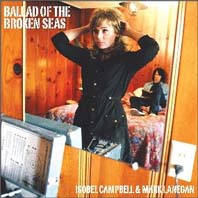
Formerly of Belle & Sebastian, the feathery voiced Scottish chanteuse has joined forces with rough-throated ex Screaming Trees/Queens of The Stone Age singer Mark Lanegan. Given the strong Americana flavours of the album, it's not much of a surprise that their mix and match of honey and gravel plays like a latter day answer to Lee Hazlewood and Nancy Sinatra. Well, no problems there then.
It's a moody, desert nights on the border album, The False Husband sounding a perfect fit for some David Lynch movie with its snaky melody, breathed vocals and the balance between twangy guitar and light strings that counterpoint each of their verses while a clattering shuffle cover of Hank Williams' Ramblin' Man as she whispers in your ear over his dusty moan is clearly on the lookout for a Tarantino soundtrack.
It's also darkly atmospheric, wreathed with twisted folk shadows and cracked country vines (Black Mountain marries a Parsley, Sage melody line to Appalachian gothic textures) with Lanegan's recent immersion in Johnny Cash's American Recordings apparent on the likes of the title track, his own new song Revolver and the closing The Circus Is Leaving Town.
It's not all bottom of the boots stuff though, (Do You Wanna) Come Walk With Me is a lovely summery two step love song and Honey Child What Can I Do opens the door to let the breeze, light and a hint of 60s Motown in to a hopeful sad heart. The problem is, of course, that Lanegan's voice is so mesmerising and Campbell's so airy, that she's almost invisible on her own album.
Mike Davies, February 2006
Althugh she's never enjoyed the same sort of success, since releasing her debut album back in 1994, Campbell has been held in the same high critical esteem as such kindred folk/Americana names as Emmylou Harris, Gretchen Peters and Nanci Griffith.
This is her 14th album and again comes steeped in her Southern roots, though this time she's behind the piano rather than her usual guitar, a musical transition cemented in the album's title and opening number, a song that, co-penned with producer Will Kimbrough, details the technical process of making music on the instrument, and, sounding appropriately hymnal (with a brief sample of Ode To Joy) marvels at the mystery of spinning beauty from such mechanical means. Indeed, she's so taken with the magic, she plays out the album with an instrumental reprise.
Raised a Mississippi preacher's daughter in the civil rights unrest of the 60s, both have been constant influences on her writing, and no less so here, Bearing echoes of Tumbleweed Connection era Elton John, Montgomery To Mobile opens at a late night Greyhound station and imagines a bus journey taken by Civil Rights campaigner Rosa Parkes and Alabama Governor, George Wallace, she offering him the window seat so they can "see if the view has changed'. The same era also yields (I Want Jesus To) Walk With Me, a spirited reading of the traditional gospel number adopted by the Civil Rights movement.
Faith takes centre stage on the I Will Be Your Rest, a soulful ballad that calls to mind early 70s Bonnie Raitt and Karla Bonoff, while the more specific God Bless You Arthur Blessitt, again co-written with Kimbrough, pays tribute to the Mississippi travelling Christian preacher who carried a cross through ever nation of the world.
The peace of God also informs Alabama Department Of Corrections Meditation Blues which, musically what it says on the lid with a chain gang rhythm, is sung in the persona of a lifer finding freedom and peace after accepting Jesus. You don't have to share Campbell's beliefs to appreciate the passionate delivery, supported by Emmylou Harris on harmonies and Kimbrough on resonator guitar.
There's another familiar name providing input into the album, legendary Muscle Shoals organist and songwriter Spooner Oldham who not only contributes Wurlitzer but also has a song named for and dedicated to him (though he doesn't play on it), Spoonerville, a soulful number that sneaks in references to his work with The Boxtops (he wrote Cry Like A Baby) and Neil Young.
The album's rounded off with The Occasional Wailer, a highly disposable instrumental featuring Kimbrough on bouzouki, and, with Oldham on Rhodes, Red Clay After Rain, a migrant worker's wistful yearning for the crimson stain dying the river and the 'cotton, camelias and curtains of cane' of their Birmingham home, and arguably the best track here.
It's not going to expand her audience a great deal, but for those who've followed her career over the past 18 years it's another testament to their very good taste.
Mike Davies May 2012
Recorded live in front of a studio audience in Texas on the nights of April 8/9 last year, Southern songwriter Campbell revisits 14 of her best known songs, introducing them and accompanying herself on guitar and piano with a backing trio providing dobro, banjo and bass.
Opening the show with Miles Of Blues, the set pretty much offers an overview of her musical stylings and lyrical concerns, taking in folk, gospel, blues and country with songs that address social, spiritual, racial and political concerns. And, of course, Galaxie 500 and See Rock City's odes to the joys of four wheels and the escape of the open road.
Her religious upbringing feeds into several numbers, from the playful Jesus and Tomatoes (inspired by a roadside sign) to the bluesy devil's temptations themed 10,000 Lures and Steal Away Trilogy's musings on how Nashville, Wall Street, Salt Lake City and Boston would react to Jesus if he came among them with his preachings today.
Elsewhere, the South's scarred history informs her Civil Rights themed classic Crazy In Alabama and both the strummed A Cotton Field Away and the piano gospel Look Away's reflections on a land struggling to rise above a past steeped in slavery, segregation and violence.
Closing up with the eight minutes fusion of 1999's Rosa's Corona and Lanterns On The Levee from 1994, she's given a rapturous response. Give it a listen. you'll likely find yourself clapping too.
Mike Davies November 2011
Apparently written on the hoof as ideas struck rather than her usual approach of mulling themes over before committing them to paper, Campbell's twelfth album - and striking affirmation of her American folk roots - comes with a parcel of literary, historical and spiritual inspirations.
Backed by scraping fiddle, with references to Moses in the wilderness and drought struck farmers, and sounding like it should have been a centrepiece on the Oh Brother soundtrack, Falling Out Of Heaven borrows its title phrase from Langston Hughes poem Daybreak in Alabama, tender love song More Than One More Day was inspired by Joan Didion's The Year of Magical Thinking and the plaintive hymnal Sorrowfree (featuring Spooner Oldham on piano) has its origins in Harper Lee's To Kill A Mockingbird.
That book's setting in turn finds a thematic connection with the bluesy spiritual Color Of Love, a song commissioned by Gene Cheek to accompany the audio version of his book of the same name, an autobiography of growing up in the Jim Crow South. There's resonance from American history too in the aching Fordlandia where, with Nanci Griffith on harmonies, she recounts Henry Ford's failed attempt to build a tyre factory in the Amazon. It's no thematic accident that it follows directly on from Welcome To Ray, a banjo dappled elegy for a smalltown "bulldozed into clay" where all that remains is the welcome sign.
Another American icon fuels the church organ backed gospel Everybody Knows Elvis which links Presley and Jesus in a meditation on loneliness and the unknowable. The latter makes a repeat appearance on Looking For A Jesus which, in a duet with John Prine and featuring a clarinet solo, addresses the blurring of the spiritual and the commercial in the contemporary quest for faith.
Keeping religion in view, the upbeat, uptempo twangy Americana of Shining Like The Sun (with producer Walt Aldridge's ringing 12 string in shimmering form) is based on the epiphany of Trappist monk Thomas Merton while, revisited in band form from 2006's For the Living Of These Days (which also included a Merton-inspired song), Dark Night of the Soul is informed by the writings of Saint John of the Cross and Teresa of Avila. Oh yes, and lest I forget, the title track's musing on the relative importance of what we need and what we desire derives from a quote by New York Presbyterian author Frederick Buechner. With Back To The Moon, a witty but disposable observation on American consumerism, the only blip, this makes a persuasive argument for being Campbell's finest recording since Monuments.
Mike Davies May 2009
The greatest gift of Kate Campbell's For The Living Of These Days is that it's so well played and simply produced, that it becomes all things to all men. With it, Kate Campbell has recorded a celebration. It's a celebration of her faith, a celebration of her spirit and it's also a celebration of the power and effect music can have. Even for those who perhaps don't follow the album's core message, Kate Campbell is a passionate artist and, with the legendary Spooner Oldham alongside her, she will enchant and move you, whatever it is you believe.
If this were 'merely' a collection of folk songs the strength of Campbell's voice, magnified by the clarity and directness of the songs, would be enough to make it a great one. But it is a gospel album and as such it is a slightly humbling experience. Faith to Kate Campbell is not just a set of rules to live by, Without Him is a cry from the heart, completey open, completely honest and utterly compelling. But, as it should be, it is also a thought-provoking album, Woody Guthrie's Jesus Christ, Kris Kristofferson's They Killed Him and Would They Love him In Shreveport pose disturbing and fundamental questions. Kate Campbell's religion is challenging and direct not wide-eyed and 'happy clappy', one sad conclusion to be drawn from those three songs is that, 2,000 years on little has changed.
As a spiritual album For The Living Of These Days works beautifully, as a secular album it questions. What more can you ask of it.
Michael Mee, Editor Hawick News, October 2006
Kate Campbell - Blues and Lamentations (Large River Music)
Having revisited her back catalogue for acoustic versions of live favourites last time round, for her tenth album Campbell's finally back behind the pen producing new material for a musical journey through the emotional state the blues represents rather than any geographical route map. As she says on the opening Miles of Blues, "the delta ain't the only place you might find sorrow on some face".
No gutbucket stuff here then (though she does sing 'that's all right mama' at one point on Genesis Blues) , rather her familiar mother lode of folk, Southern country, gospel and pop recorded in one takes with strict acoustic instrumentation to deliver a potent organic feel that's well attuned to Campbell's rich, loamy voice.
Filtered through songs of folk surviving hard times and their relationship to the land, the roots of blues in slavery finds expression in Freedom Train which moves from an image of Moses guiding the Israelites from Egypt to runaway slaves seeking the promised land, hounded by dogs and inspired by Harriet Tubman while Free World yearns for an acre of ground of one's own to plough.
Three covers flesh out her own material; the trad Pans of Biscuits with Guy Clark helping out on vocals, Trixie Smith's jazzy Mining Camp Blues and, unaccompanied save for a tambourine shaker, Jessie Mae Hemphill's chanting gospel Lord, Help The Poor and Needy.
Not that her own work needs bolstering. Peace Comes Stealing Slow which closes the album in fine form and features harmony from Maura O'Connell, is inspired by the WB Yeats poem, prayers by a young soldier and a homeless girl to find salvation from the world's trials and tribulations while the quietly soaring Fade To Blue describes a man who, every night, caresses the photo of his lost love.
The best though are Shallow Grave and Wheels Within Wheels. The former is a haunting lament and prayer for payback by woman whose heart has been left dead and buried by her callous lover while, underpinned by a good old Dixie slow march melody, the latter, surely destined for staple status and a wealth of cover versions, is based on the true story of Burrell Cannon. A Texas preacher in 1902, inspired by the Bible, he allegedly pre-empted the Wright Brothers by inventing a flying machine, Ezekial's Cannon, that flew once before being demolished en route by rail to the World's Fair leaving Cannon to determine God never intended man to fly. I'm not sure that, as an album, it's quite up there with her defining Monuments, but it's only shade away.
Mike Davies
Kate Campbell - The Portable Kate Campbell/Sing Me Out/Songs From The Levee (Compadre)
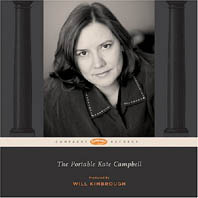
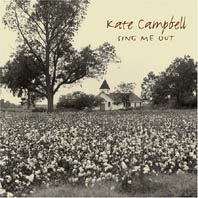
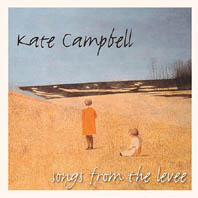
Campbell devotees had better have deep pockets because here's not one but three new albums. Well, two and a bit if we're being accurate. Marking a move to her new label, the bit is a remastered reissue of her 1994 debut with four bonus acoustic mix versions that includes as Trains Don't Run From Nashville and Bury Me In Bluegrass plus an alternate take of Like A Buffalo. Nice to have, but not essential. The other two albums though are much more significant. It's not new material but, produced by Will Kimbrough, they contain re-recordings of songs that have proven live favourites over the past 10 years, one with a band and the others wholly acoustic. Actually there's more to it than that.
Portable is a musical photo album of the South, a tangle of contradictions, memories and landscapes that offer the empty mansions and hillside gravestones of Wrought Iron Fences, of widows and lonely dogs (Moonpie Dreams), beloved old cars (Galaxie 500 with Nanci Griffith on harmony), crazy dreams (Bud's Sea-Mint Boat) and childhood confusions about segregation and civil rights (Crazy In Alabama, Bus 109).
Here are songs of the South's lost promises (Visions of Plenty, an achingly hymnal Look Away), yearnings for more innocent times (a Southern funky blues When Panthers Roamed In Arkansas), regrets (a lonesome Elvis looks back on his days back home in Tupelo's Too Far), the security of love (Rodney Crowell duet A Perfect World), wistful stories of bruised souls seeking escape (the girl off to See Rock City before it's too late, the cigar factory girl in Rosa's Coronas) and, most personally, poignant recollections of mom and Rosemary Clooney (Rosemary).
Sing Me Out, on which she's backed by Kimbrough, Dave Jacques, Pat Buchanan and Chris Carmichael on assorted stringy things and the odd harmonica and harmonium but no percussion, is less specifically themed in terms of landscape and location, but remains firmly reflective and rooted in songs of hope, faith and belonging.
Here then are the uplifting Heart Of Hearts, the burping Jesus and Tomatoes, Older Angel's prayer for guidance from someone who's been round the block, Ave Maria Grotto (a lovely story of devotion about a man who built a grotto from shells and broken china), the prodigal daughter welcomed home In My Mother's House, bluegrass preacher tale Signs Following, the man following God's calling and his mama's wishes in Would You Be A Parson, and Delmus Jackson, an affecting account of the simple, honest black custodian of the local church content in knowing he'd one day be welcomed by the Lord.
Death's here too in all its pain and loss; on the bluesy gospel Sing Me Out a man still mourns the death of his wife's illegitimate young daughter thirty years earlier while on the heartbreaking Who Will Pray For Junior a recently widowed mother worries about who will care for the child she more late in life when she passes away, and the jauntily closing Funeral Food notes how somehow a funeral nosh up always seems to attract those friends and relatives that never managed to pay a visit in life.
Superbly played, throughout, Campbell's achingly honest voice rings clear with the sense that these are folk and places that she not only knows, but which are a very part of the blood and history that runs through her veins and keeps her heart beating. It's enough to make you start checking the property prices.
Mike Davies
Kate Campbell - Monuments (Evangeline)
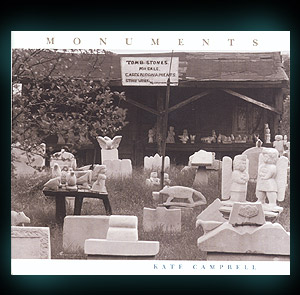
The arrival of Gillian Welch has somewhat overshadowed Campbell's Southern Gothic brand of storytelling with its roots in the tradition of Faulkner and Flannery O'Connor (and musically speaking Mickey Newbury), but as this, slightly more electric guitar driven album ably demonstrates it hasn't dulled her muse.
Inspired, most specifically on the opening William's Vision, by the folk-carvings and monumental sculptures of William Edmondson, the first African-American artist to have a solo show at New York's Museum of Modern Art and veined with images of the South and her formative years as a Baptist minister's daughter spent amid the civil rights movement, this isn't as dark as some of her earlier work despite the frequent allusions to death.
Progress doesn't impress her much, Corn In A Box an ironic comment on cloning and genetic engineering, New South a cynical observation on the 'improvements' brought by the likes of Disneyworld, Coca Cola and Italian loafers set to a New Orleans march. The past - and its passing - though clearly rings an ache in her heart as evidenced by Petrified House, the emotionally affecting Joe Louis' Furniture and Walk Among Stones, a tribute to Muscle Shoals where "for one shining moment they made hit records for the world." No coincidence that among the musicians featured on the album you'll find the legendary Spooner Oldham.
Her voice (at times akin to Kathy Mattea) crystal pure, her storytelling resonant, her heart woven from compassion, pride, dignity and spirituality, Campbell remains one of the most important voices and writers of her generation and birthright.
Note: while you're ordering a copy of this you should make it a double blessing and grab a copy of her last little publicised album, Wandering Strange (released via Eminent), her gospel album that features four of her own songs, including Bear It Away about the four girls killed in the Sixteenth Street Baptist Church bombings in Birmingham, alongside covers of Gordon Lightfoot's The House You Live In and such gospel stalwarts as Jordan's Stormy Banks, William Cowper's There Is A Fountain.
Mike Davies
The Ideal Band was in the 1980s one of Scotland's most highly respected folk bands, and now after a brief hiatus its original co-frontman Ken Campbell has formed a new Ideal Band around the talents of fellow-musicians cellist Seylan Baxter and keyboardist Gavin Paterson - albeit principally as a vehicle for his own original songs (Ken's songwriting pedigree is well established, and he has released four previous albums to date). This eponymous new disc is billed as "a unique blend of contemporary and traditional song from Scotland", but although the landscapes and lyrics are informed by traditional sources there's comparatively little of a traditional sound to the music herein.
Launching straight into the first track on this new album (Piper's Refrain), the first thing to strike you is Ken's voice: firm, ornate and rich in tone, well controlled, and cultured in the trained sense - but nevertheless highly stylised. Personally I like it - however, it's one of those voices that's distinctive almost to a fault, incorporating a trace of vibrato that feels slightly less than natural; in a way it commands one's listening, sure, but although it embodies a sensitivity and a deliberately moulded approach to line it seems curiously devoid of what I'd call onward expression in terms of conveying a song, and Ken tends to treat each and every song in much the same way. In the end, Ken's is probably one of those voices that you either warm to or you don't - it sounds attractive on first acquaintance, for sure, and yet in the final analysis it doesn't seem to impart any special interpretive quality to the songs, in fact it almost gets in the way of the texts sometimes. These, although obviously professionally crafted and genuinely felt, somehow don't tend to remain in the mind once the playing time has elapsed. It's curious, but after listening once to the entire CD I was hard put to recall any one individual song particularly (and I must stress that this is not a common reaction with me, and in this instance I found it all the more surprising given the very high quality of all the various elements within).
This problem does not, I hasten to add, stem from a lack of proficiency or musicianship on the part of any of the participants. At various points, Ken has recruited the talented Blair Cowan, Wendy Weatherby, Stevie Lawrence and Hamish Moore (all of whom he's collaborated with over the years) to further embellish the already richly textured backings from Seylan and Gavin. The performances are without exception solid, highly musical and well-coordinated, and they receive a supremely polished, state-of-the-art studio recording without a single note or nuance out of place. I feel convinced that the combination of these often quite sugary textures and Ken's own ultra-smooth vocal tone just dilutes (or even smothers) any impact the lyrics might have had the chance of making. Lyrics are available on Ken's website, which is helpful - and perusal of these shows them to be well-written, with a keen sense of history and its impact on the present.
Although most of the tracks on the CD are recent compositions of Ken's, The Old Time is a re-recording of Ken's earlier setting of two Christina Rossetti poems, while River Song is an appealing Paul Metsers cover; but even the one purely instrumental track (which combines a retreat march with a Norwegian tune) seems to fail to ignite the passions. It all seems just too calculated, as if smooth playing and singing, a gorgeous glossy sound and high production values were everything one needed for a satisfying CD. But...
www.kencampbellscotlandmusic.co.uk
David Kidman March 2010
That energetic young Scottish piper, flautist/whistle player and singer can always be trusted to produce something brilliant, and this time his solo album is especially well named, for it's an exciting and yes, somewhat intrepid (in the sense of ultra-adventurous and often unexpected) collection of vocal and instrumental tracks that always feels like it's going somewhere purposeful and draws you effortlessly in with its flow. Rory's a busy guy right at the moment, being a key constituent of the mighty band NUSA of course and also now a fulltime member of Old Blind Dogs alongside guitarist Jonny Hardie - fellow NUSA man who, coincidentally, along with NUSA/Mystery Juice drummer Donald Hay, guests on this very album. The identity and known musical character of the personnel involved in what might otherwise seem just a basic trio lineup will give more than a clue to the extraordinary character of this record, fantastically light and airy with plenty of room around the players and yet lacking in neither nuance nor depth of feeling. The record's biggest ear-opener for me was the discovery of just how attractive - and versatile - a singer Rory is, capable of tackling anything from Gaelic song (and at a fast lick too!) on Song Of The Moccasins, to Björk's intriguing Jöga, via two (I think) songs of his own. And then of course there's the purely instrumental tracks, on which Rory and his gang cope equally easily and felicitously with Corinna Hewat's funky Bass Strathspey set, a medley of Breton gavotte with Northumbrian polka, a Galician muiñeira and pasodoble, and a somewhat strange variation on bluegrass (Cotton-eyed). The arrangements neatly yet flexibly straddle the divide between traditional and contemporary, with the lithe textures giving both the music and the musicians ample room to breathe. And (here's a bonus for some!) the pipes are never overbearing. So Rory's bravery has really paid off here, producing a great showcase for his energetic music-making.
www.rorycampbell.co.uk
www.nusa.co.uk
David Kidman February 2008
Shelley Campbell - Blue Ridge Reveille (Nettwerk)
Originally released in Canada two years ago under the name of Auburn, it's now been rebranded for a UK reissue to put the spotlight on frequent Radiogram collaborator Campbell. Based in Vancouver but born in rural Ontario, raised on mixture of evangelical Christianity and Native American culture (her missionary father was an honorary chief of the Mohawk nation) and music that included Tennessee country as well as soul, African and the gospel of the regular revival meetings they attended.
It's all come out the other end as a Lucinda, Dolly and De Ment like blend of bluegrass and backporch country, Campbell's achingly pure crooning (and occasionally world wearily smokey) vocals over songs of lost loves, truckstops, Civil War graveyards, and backwoods nights, complemented by strummed guitar, banjo, fiddle and pedal steel.Drivin' You opens the set in fine form, setting the album's dominant slow waltz tempo and melancholic yearning mood as things move on through the Appalachian ambience, Is It You? (which also appears in a bonus duet version with Radiogram's Ken Beattie) adding a flicker of honky tonk torch while the likes of Unsatisfied (a definite hint of Parton here), Beautiful Child (Texicali flavoured), Porchswing and the warbling title track chime with the sort of old school traditional country musical values upon which people like the Louvins were raised.
She may not arrive in the UK accompanied by the same buzz of recent country songbirds, but once ears latch on to the simple gems it contains, the excellent bittersweet waltzing New Year's Eve At The Legion in particular, she's going to find herself lauded up there with Laura Cantrell.
Mike Davies
Harking back to the 70s folk tradition and apparently designed to evoke old British vocal traditions such as church hymns, communal singing and folk ballads, the trio's fifth album takes rather more work than usual. Partly this is because the tracks, themselves rarely longer than three and a half minutes, are punctuated by three brief 'field recordings' of guitar instrumental fragments and the unaccompanied sea shanty Wesley that, while delightful in their own right, feel awkward in the overall structure. Likewise, touches such as the mingling of Eastern rhythms and drones with bluegrass shades that percolate through When The Rose From The Weeds, The Everlasting Arm, Tiny Tim and Avro No 1 seem at odds with their prevailing English trad folk colours.
That said, there's moments of immediate loveliness. An upbeat, catchy meeting place between CS&N, Simon & Garfunkel and Don Partridge, Amsterdam is a banjo picking love song to the joys of backpacking freedom while Cast Into The Storm is a nigh acapella sea shanty hymn with handclaps and hurdy gurdy psychedelia fade out.
Persistence also brings rewards with Tiny Tim slowly revealing itself to be a delicate broken hearted song that could have Snow Patrol fans in a swoon while the opening Furlough is a soaring dark folk lullaby and both the gently waltzing Harryhausen and Swear It Will Snow splice English pastoral moods with country sways and West Coast harmonies. Oddly, the breathily acoustic Marie Alexander calls to mind nothing less than Floyd's Dark Side of the Moon album. Those looking for other touchstones might hear shades of Matthews Southern Comfort to On Every Stone.
On the penultimate, slightly hippie-like anthemic The Sky, they turn into The Polyphonic Spree and sing 'we're wasting our time again, but we make beautiful stuff. And that might be enough'. For those prepared to spend the effort looking, it might just be.
www.candidatesite.co.uk
www.myspace.com/candidateband
Mike Davies, Sept 2007
Candidate - Under The Skylon (Snowstorm)
Following up an album based around the Wicker Man was always going to pose a few problems, wanting to hold on to the swell of interest it had created but not wishing to restrict themselves by repeating the thematic concept. So what they've done is to use the skyscraping South Bank's sculpture that featured prominently in the 1951 Festival of Britain (hence the instrumental intro May 4th, 1951) before being dismantled by the new government as inspiration and metaphor for the construction and destruction of a relationship.
Looking for a bigger sound than the simple arrangements of Nuada, using Neil Young, Big Star and The Hollies as their inspirational guidelines, the result is, perhaps inevitably, a ride through emotional ups and downs on songs that variously afford country jangles, 60s pop harmonies and surges of sonic guitar storms.
They set a high standard for themselves from the outset with Going Outside, a marvellous train rhythm psychedelic folk number that calls to mind Men Without Hats, and then proceed to not only maintain but exceed it with such tumbling nuggets of clearwater effervescence as the jubilantly in love Gardens, the acoustic strummed Moving An Oil Rig and the Young-like Lay Me On The Line.
You want soaring anthemic crescendos, try Nothing Between Us But Sky or A Lifetime From Now; feel like a witty use of imagery for fading love, that'll be Mountain Snow; trad folk sounding despair? - here's Falling Leaves; want to put a goodbye song on repeat play until your heart recovers, select Glass Skylon. In short, another fine album from one of the still most criminally undervalued bands in the country. They get my vote though.
Mike Davies
As movie buffs will realise, the title comes from the name of the sun god worshipped by the islanders in cult 1972 British horror film The Wicker Man. With the depressing news that a remake is afoot starring Nicolas Cage, here's something to cheer, a concept modern folk album inspired by both the film's themes and Paul Giovanni's haunting score.
Immersing themselves in the film's atmosphere by staying in the same hotel used by Edward Woodward's character, meeting the locals and recording in such scene setting west Scotland locations as a deserted church and between the legs of the wicker man prop on the brow of a cliff, they returned home to assemble their musical thoughts and sufficiently impressed Bert Jansch to have him contribute a guitar solo on the instrumental Burrowhead.
The result's a pastoral earthy folk album but one veined with hints of darkness, evidenced from the start with Barrel of Fear and later on the in times of trouble hymnal Save Us, and reflecting the film's pagan themes on the three part vocal structured fertility ballad Sowing Song. They know how to craft folk music these boys. Listen to the instrumental Tomorrow's Tomorrow where haunting flute plays against the finger-picked guitar with its aural images of leafy glades and running streams. Beautiful Birds is a wholly successful attempt at writing a modern day middle ages lament for a distant lover (what the band terms of a medieval Wichita Lineman) while Song of the Oss (named for Hobby Horse that features in Padstow's Mayday revels) is another instrumental, a joyous celebratory folk dance tune, before moving into the sexual awakening themed Circle of Ash, a number that begins with ominous trepidation but slowly swells with added harmonies, to become a song of exultation.
The gently crooning Rain On The Roof switches traditions somewhat with its banjo/guitar structure, although the use of harmonium brings it home from Appalachia and into age old English churches. Island 34 is another guitar instrumental, bracing with coastal salty breezes and the taste of loam, and the whole thing comes to the end credits with Modern Parlance, a simple stomping slow frenzy clump around the dance hall with more guitar and banjo, horns, one long unending bass note rumble, woozy chorus vocals (inspired apparently by a drunken session singing Creeque Alley) and ending on the same three held notes as in the film's origial score.
Like all good folk songs, the lyrics speak as much of living now and of the writers themselves as the ostensible subject matter that inspires them, and while there's not a Carthy, Waterson, Rusby or Lakeman in sight, it fully warrants being up there in the running when it comes to considering the genre's finest achievements. The album also comes with a CD-Rom documentary detailing the band's visit to the Wicker Man's locations and their thoughts on the project.
Mike Davies
Noddy Holder famously said - It's Christmasssssssssssss" and each year we get a raft of Christmas related albums and singles to listen to for a couple of weeks before discarding. Blues rock legends Canned Heat are no different to most bands and have released an album that spans history. There are two versions of the band here with three tracks from the original, and best loved, line-up. The bands first delve into Christmas records happened when Skip Taylor met Ross Bagdasarian of Chipmunks fame in 1968 and they decided that it would be a good idea to have The Chipmunks record with The Heat. The result was The Christmas Song and it is so surreal. It has its humorous moments as the Chipmunks butt in and I think that by not using this song, the advertising people have missed a great opportunity with the new Chipmunks movie coming out for the holiday period. However, they did not miss the chance to use Christmas Blues for a Heineken advert from 2003 to 2005. There are three versions of the song on offer, a standard 12 bar blues, a painfully slow, grungy alternative version with harmonica on form and Dr John on piano and a more upbeat bonus live version with Eric Clapton guesting on guitar and John Popper from Blues Traveller on harp and vocals. Other tracks include seasonal favourites Deck The Halls and Jungle Bells, both given the Canned Heat treatment. Nothing is sacred as the boys turn their attention to Boogie Boy (Little Drummer Boy) and the Christmas cheer is spread with lines such as 'children need to guns when we got the boogie'. Another well known track is Santa Claus Is Coming To Town and this is turned into a swinging instrumental but they also give us Santa Claus Is Back In Town, which is a rousing boogie. Add a classic Heat boogie on Christmas Boogie and a tearful barroom blues, I Won't Be Home For Christmas, and you've just about covered all of the holiday emotions. Don't Worry, Santa will soon be here.
David Blue December 2007
David Kidman
Canned Heat - Friends In The Can (Ruf Records)
"Don't Forget To Boogie!" said Fito de la Parra (drums, vocals) band leader of Canned Heat. Canned Heat certainly haven't. Despite the untimely deaths of three members of the band - Alan (Blind Owl) Wilson in 1970, Bob (The Bear) Hite in 1981 and Henry Vestine in 1997, Heat have stayed true to their mid-60s roots and have cooked up regular servings of timeless boogie and blues. No one will ever forget their joyful scene-setting and era-defining Goin' Up The Country from the film Woodstock but - as is often the case when a band keeps on going - some albums are more memorable and satisfying than others. Friends In The Can is in the memorable and satisfying category.
It's a surprise package - it comes in a very collectable tin can. The German 1st edition from Ruf Records comes in a square one and the US version in a circular one. Inside is the music - driving boogie/ blues moved along by the band - now consisting of Stan Behrens (flute, saxophone, harmonica, vocals), Greg Kage (bass, vocals), Dallas Hodge (vocals, guitar), 'J.P.' John Paulus (guitar, slide-guitar) and the aforementioned Fito. Vocal and guitar leads are alternated between band members and some good friends and ex-band members (John Lee Hooker, Taj Mahal, Walter Trout, Corey Stevens), Robert Lucas, Henry Vestine, Harvey Mandel and Roy Rogers). Larry Taylor guests on upright bass and Mike Finnigan on organ.
There're some of the tastiest guitar solos I've heard in a long time - nothing really flamboyant, just straight-up quality with everyone and everything working together. It's a collaboration which celebrates 36 years of Canned Heat and pays tribute "to the band's major, musical influence ... John Lee Hooker" (listen to John Lee talking about Canned Heat on I'll Never Get Out Of These Blues Alive). There's their old favourite Let's Work Together (Wilbert Harrison), JLH's essential Little Wheel and plenty of original songs which sound like they've been around a long time. All wonderful stuff and bound to end up on my Top 20 list at the end of the year.
www.cannedheatmusic.com
www.rufrecords.de
Sue Cavendish
Laura Cantrell - The Hello Records (Spit & Polish)
It's good to see that Cantrell's profile and following is sufficiently established here to warrant the release of these 1996 recordings, produced by John Flansburgh of They Might Be Giants and originally only available through the subscription-only Hello Recording Club. It's just five tracks long, but provides a useful blueprint for the old school bluegrass and country albums that would eventually follow. Cellar Door, one of the first songs she wrote, jogs along like an old-tyme barnyard crooner with plinking mandolin, while the bluegrass again blooms on Roll Truck Roll, penned as an answer song to Red Simpson's same titled truck driver's tune. No Place For Me was initially begun as a female perspective country pop song for Garth Brooks, though, possibly because she decided he'd probably not record what sounds like a tale of emotional cruelty sung by a honky tonk devil and set to an old hymn tune, it never made it to his ears. Inspired by a friend's teleplay about a cursed high school, The Curse of Hook Mountain is probably best described as the theme tune to a 70s teen horror as written by the Be Good Tanyas. Finally, recorded live at a 1993 radio show broadcast from the presenter's back porch, Lee Harvey Was A Friend Of Mine is a cover of a song she found on a Homer Henderson single, a Guthrie-ish contribution to the who shot JFK debate as seen from the perspective of a young guy from Dallas who Oswald used to take fishing as a kid. Not essentials perhaps, but great to have around to provide a little formative history. It's also being released as part of a twin pack with When The Roses Bloom Again.
Mike Davies
It's been two long years since Cantrell made her debut with Not The Tremblin' Kind, prompting John Peel to pronounce it possibly his favourite album of his life. While this may have a bit impulsive, I'd certainly put it up there with the best albums I've heard in the past decade. Now the Nashville born, NYC based performer and regular host of weekly country show Radio Thrift Shop on Jersey City's WFMU returns with a second collection of covers and originals that prompt a case of the raptures all over again.
Working with many of the same musicians who played on the previous album, it's further evidence of her fondness for vintage country and a no fuss, no frills approach to socking it across. She's possessed of a pure and vulnerable voice that's part buttermilk, part crystal mountain stream and part sitting on the haystack with your best sweetheart as the fireflies flicker in the night air, and when she sings its like she's strumming the strings of your heart.
The covers range from the work of contemporary New York writers to a clutch of old timers. All The Same To You is a tumbling slice of breezy twangy pop from Joe Flood that features the great line "I'd like to buy the world an aspirin and slip it in their Coke," Don't Break The Heart with its ringing pedal steel tips the hat to Amy Rigby, the infectious Byrdsian Vaguest Idea with its cascading waterfall 12 string guitar comes courtesy of Dan Prater while Dave Schramm provides the slow swaying anti-war protest song Conquerer's Song.
Moving to the old timers, the war theme's picked up by the title track which buffs may well recognise as the old folk-hewn 'soldier singing to the girl he left behind' number attributed to A.P. Carter and recently recorded for but not included on the Wilco/Billy Bragg Mermaid collaboration Avenue under the belief it was a Woody Guthrie lyric.
Then Yonder Comes A Freight Train sees her kicking up a fine pair of bluegrass heels riding the rails of the old Jim & Jesse tune in a manner that just makes you want to shout out yeehaw.
The album closes with Oh So Many Years, a fabulous honky tonk waltz around the tearstained C&W ballad originally immortalised by Webb Pierce and Kitty Wells. It's Wells, of course, to whom Cantrell has been much compared, a point underscored by her own Broken Again.
As with her debut, while the covers may be quite magnificent, it's her own songs that are the brightest jewels. A disarmingly simple love song, the opening Too Late For Tonight musically reprises I'm Not The Tremblin' Kind as she sings "I've been sitting all night listening to my records...", then Early Years is a gentle bittersweet story of a naive young fan who falls for a singing star and gets her heart broken when things turn sour, set to a break for the border flavour with Iris DeMent colours. And finally in an all too small a selection, there's the Appalachian biosong Mountain Fern, the story of 40s hillbilly singer Molly O'Day who, just to keep the baton passing thread in motion, was a major influence of Kitty Wells.
There's no glitz, no razzle, no big PR generated hype, no tabloid tales to tell. There's just the music. Cantrell needs nothing else. She's the real thing.
www.lauracantrell.com
www.wfmu.org/audiostream
Mike Davies
Laura Cantrell - Not The Tremblin' Kind (Spit & Polish)
Nashville born, New York based and released on a Scottish label, Cantrell had her own Big Apple radio show on WFMU where she hosts the influential Radio Thrift shop basically playing the sort of stuff she's into. Translate that approach to performance and you'll find her leanings towards the Nanci Griffith, Emmylou and Lucinda Williams collections, though with a rougher vocal edge that mixes some ground glass with the molasses.
For the album she's trawled songs by New York artists she's heard live, most notable being George Usher's title track, Amy Allison's classic honky tonker The Whisky Makes You Sweeter, Dan Prater's Do You Ever Think Of Me which sounds like the Mavericks should have gotten there sooner, and Somewhere, Some Night, an old school Nashville country tune from Melba's brother Carl Montgomery.
However, gems though these may be, they're rhinestones compared to Cantrell's own skewed road song Churches of the Interstate and Queen Of The Coast, a tale of a downwardly mobile ageing country singer that could have been found in Gram Parsons attic.
Mike Davies

Enterprising Scottish label Footstompin' Records never lets us down! Their latest release comes from a new five-strong outfit arising from the Edinburgh session scene, Cantrip, which comprises John Bews and Gavin Marwick (fiddles), Dan Houghton (Border and Highland pipes, flutes, whistles, bouzouki), Cameron Robson (guitar, bouzouki, banjo) and Ian Willis (percussion). Names that will be familiar in other contexts too I'm sure - think Iron Horse and Sandy Brechin, while John's also appeared on Malinky's latest album Three Ravens - so their personal credentials aren't in any doubt. Silver is a spirited and sprightly collection of tracks gathering up sources and influences ranging from trad Scottish and Irish through to Scandinavian and Breton, blended together really naturally and with buckets of wit and skill much in evidence in both the playing and the arranging. The aptness of the group name is everywhere conveyed on Cantrip's disc - it's a Scots word meaning an antic or piece of mischief, as the insert puckishly mentions in the notes to track ten. Compositions mix self-penned with traditional, as you might expect from such an eclectic display of musicianship. And what musicianship! - the weaving of the twa fiddles is a particular delight, while Ian's drumming syncopates delightfully yet fair keeps the listener's feet a-stompin', and the well-judged rhythmic and melodic input of the stringed instruments perfectly counterpoints the agile whistles and pipes. And even when the pace gets quite fast the playing's lyrical rather than frenetic. Three of the tracks are solo performances - All The Seasons In A Day pairs together two delicate guitar pieces by Cameron, while Dan's pipes provide the focus for the lament Cumha Gun Ainm and (naturally) the Highland Pipe Set. It's hard not to fall for Cantrip's infectious and individual brand of folk and roots musics.
David Kidman
Canyon - Empty Rooms (Wichita)
Out of Kansas City and now based in Washington, emerging from a defunct demo outfit singer-guitarist Brandon Butler and guitarist Joe Winkle joined forces with Derek DeBorja, Dave Bryson and Evan Berodt to form Canyon in 1999. Releasing their self-titled debut in 2001, this sophomore set now provides their first UK album, the sort of wasted lo fi country and psychedelia that makes Willard Grant Conspiracy sound like Little Richard.
With melodies that feel as if they were almost too much effort to construct and yet still paint a canvass of tension across the wide open spaces, they slope their way through influences as seemingly diverse as The Beatles, Jeff Buckley, REM, Townes Van Zandt, and, judging by parts of Mansion On The Mountain, even Quicksilver Messenger Service. However, while guitar distortions, sonic waves and, yes, sleigh bells, find their way into the tapestry, for the most part they weave their threads from a country loom of red streaked skies, dusty backroads, lap steel, drawled vocals and songs of loneliness and broken lives.
Harmonica wails on the nakedly sparse The Long Weekend, after hours barroom yearning drips from Other Show, Radio Driver and Lights Of Town, Ten Good Eyes the sort of roughshod soaring swayer Bob and The Band might have messed around with back in the early days, the simple closing rumble, thudding bass drum and echoey acoustic guitar of Shields, a melancholic hymnal evocative of Mickey Newbury. A grand Canyon indeed.
www.canyonrock.com
www.wichita-recordings.com
Mike Davies
They're back - with a new studio album at last (there'd been a long hiatus since 2003's Choice Language, partly due to recording plans being postponed when fiddle player Charlie McKerron broke his arm last year). Thankfully, it turns out to be a suitably strong offering that will cause the band's fans to welcome them back with open ears. As ever, Capercaillie major on creative reworkings of Gaelic song, and the opening track, Him Bò, is a very typical example - a cool, funky treatment of a puirt-a-beul with Karen Matheson's trademark super-smooth assured vocal delivery well to the fore. Unmistakable Capercaillie, as is the even more delightful clapping song from Barra which kicks off track 5, marrying lively energy with a modicum of restraint and a beautifully balanced instrumental backdrop with plenty of interest. A similarly seductive, delicious blending of acoustic textures occurs on the track 10 medley. Each track is blessed with a believable arrangement that's suitably refined - that may sound like I'm saying the album contains no new musical developments, but actually it feels as though there's a subtle evolution at work within that matter of internal balance I mentioned, for although the whole affair is faultlessly played and has an air of relaxed ease there's still an excitement, an edge to the playing and the group dynamics/interaction. As far as the repertoire is concerned, the balance is weighted heavily in favour of songs, with just three tune-sets interspersed; the latter trip along easily without seeming either unduly rushed or auto-pilot, and are characterised by the spirit of gentle innovation for which Capercaillie have always been noted. Of the vocal tracks, the mouth-music tracks are all predictably vibrant, and I also liked the contrasting finale, a gently passionate rendition of Murdo Macdonald's Leodhasach An Tir Chein which just about avoids bombast in its anthemic build-up to the close. Just two of the songs here are not in Gaelic, and the lyric of one of these (Donald Shaw's composition Soldier Boy) provides the album's title; the other, also on the same theme, is a powerful yet understated cover of John Martyn's anti-war song Don't You Go. Fine though these two unified tracks are, indeed the latter is possibly a standout in purely isolated musical terms, in the end they don't entirely fit with the rest of the album. In total I've got to say that on the evidence of the half-dozen plays I've managed to give it so far, Roses And Tears may yet rank as one of Capercaillie's best albums. It sure won't disappoint.
David Kidman
Capercaillie - Grace And Pride: The Anthology (Survival)
Cleverly subtitled "The Anthology 2004-1984", this fine two-disc, 2½-hour collection fast-forwards back in time in that very direction, beginning with three cuts from Choice Language and ending with (sadly) only one track apiece from the impossible-to-find mid-80s albums Crosswinds and Cascade, visiting each of the band's releases along the way in (for the most part) decently representative fashion and co-opting an unreleased set from the Nadurra sessions, one selection from the mail-order-only Glenfinnan release of 1995 and a couple of more obscure 12" remixes from the Delirium period along the way. No significant grouse there (sorry, couldn't resist!)… No mere cash-in either, just an honest attempt to celebrate the achievements of this leading Celtic band in bringing the concept of fusion out of the "dirty-word" status and into the forefront of creativity. Of course, it helps enormously that they've been blessed with two of the scene's most prized talents – the peerless, creamy voice of Karen Matheson and the instrumental dexterity and musical vision of co-founder Donald Shaw - but then again, countless superb musicians have passed through the band's ranks over that 20-year span, including Fred Morrison and Marc Duff, and not to need mentioning the now long-serving Messrs McKerron, McGoldrick, Lunny and Vernal from the current lineup. The set charts the band's progress from talented turbo-charged tune-merchants to purveyors of cutting-edge world/jazz-inflected Celtic music via their evangelical zeal in pioneering the bringing of Gaelic-language music to the masses - and expanding their inspiration even further before returning to their acoustic roots. A healthy dynamism and beauty go hand in hand in their sophisticated contemporary vision, whatever the musical material they treat, and this set really is worth playing end to end - for even if you're a fan and already have most of the original releases you're bound either to discover a fresh perspective or find joy in rediscovery. The blood is strong, indeed.
David Kidman
A vehicle for Philadelphia singer-songwriter Shai Halperin, now expanded into a full band project, this a fabulously schizophonic power pop affair. One minute they're chiming Byrdsian 60s psychedelic folk (Juicers) or chunky slouching rock blues (Giant Drunks) the next its Beatles nods (Going Down, Ramona) and Who influenced guitar riffery (Mounds of Money, Everyone Is A Skunk), while also lollopping on West Coast harmonies (Let Them Drink) and rocking out of the garage with Neil Young (Solid Gold). In the past Halperin's had to struggle against the predictable Strokes comparisons, but he's come of age here, confident enough to wrap up with a track called Watch It Not End (Stones) that deliberately recalls the slurry 60s country of Messrs Jagger and Co and Dirty Bitch which, defying titular expectations, reveals itself as a gentle laid back close harmony acoustic strum. Raise a glass.
Mike Davies
Before Katrina forced him and his family to relocate to Tennessee, the Alabama born singer-songwriter spent 20 years soaking up the vibes of New Orleans, clearly imbibing deep of bayou juice if the growly timbre of his voice and music is any indication.
Reminscent of early Waylon Jennings with hints of Delbert McLinton, Kristofferson, Tony Joe White and (on the honky tonking Jukebox especially) Johnny Cash, Capps draws on a life seasoned and stained by the personal and political for his storytelling.
The title track swamp stomper was inspired by the birth of son Waylon, Daddy's Eyes is a bittersweet nod back to an earlier failed marriage while the allegorical Waterhole Branch refers to a shoe burning Thanksgiving ritual annually hosted by his father Ronald. Trivia buffs will be aware that it was he who wrote Off Magazine Street, the novel that spawned the John Travolta/Scarlett Johannson film Love Song For Bobby Long, for which Capps Jr wrote the soundtrack.
If the quietly angry New Orleans Waltz offers his response to Hurricane Katrina and the political mud it stirred up, there's plenty of other local colour on the album too. New Orleans mythology pours through the verses of the bon temps swaggerer Poison that name checks Marie Levaux with Broomy a bluesy snapshot of a local homeless street sweeper. And, recognising the darker side of the Big Easy's streets, it's hard to imagine something like the drunkard's death lament cum celebration blues Ed Lee or the devil haunted Mermaid being spawned anywhere but among the bones of Southern gothic.
Raw, gritty, sharply observed and deeply felt, Capps deserves to be far better and wider known than he is. This might be the start.
www.graysoncapps.com
www.myspace.com/graysoncapps
Mike Davies January 2007
When I reviewed Cara's last CD Long Forgotten, I said it ensured that they wouldn't ever be! And yes, The Granary Steps is if anything even finer a demonstration of their thoughtful approach to Irish traditional music, responding first and foremost to its intrinsic beauty. When not purveying gentle, unhurried (yet still genuinely-felt) versions of actual tunes from the body of the Celtic Irish tradition, Cara take the sound, feel and structure of musical forms from that tradition and use it as a springboard for their own melodic inventions. Like its predecessor, The Granary Steps was recorded in Co. Roscommon, where Cara clearly feel thoroughly at home; the full sound and appealing blend of Mike Ryan (uilleann pipes, whistles, mandolin and guitar), John Rawlings (guitar) and David Oakley (violin, mandolin) here give us an hour of stimulating yet contented listening. This time, however, the trademark Cara sound is augmented on several tracks by a different guest contribution: the wonderful flute playing of Mick's Sligo cousin John Dwyer. Otherwise, The Granary Steps differs from Long Forgotten principally in that Cara only include one vocal track, which is rather a shame; The Shades Of Sweet Drumdoe (composed in the traditional style by Mick Corcoran and John Moran) is quite a lovely choice, and would prove to be one of the highlights of the new disc if the phrasing were just a little more confident in its early stages. Elsewhere, I won't go as far as to recycle the old quote that the abundance of beauty tires the soul, but the first half-dozen tracks do seem to merge into one continuous relaxed mood, and when the pace gets to pick up for a pair of jigs (The Jackpike/Down The Broom) and a further two comparatively uptempo tune-sets, this comes as a relief. There's one other aspect of this new CD with which I'm a little uneasy, and that is the actual recording, whereby there's a trace of distortion at times where instruments such as flute, fiddle and pipes seem to have been recorded at too high a level. I'm also unconvinced by what sounds like n artificial keyboard tone providing the countermelody on The Coolin (track 16). The disc goes out on a high though, with some fine mandolin work on The Andover Fist/Donegal Mazurka medley.
David Kidman February 2007
If you've never heard of Cara up to now, then you're in for a real treat – but look carefully, for they seem to hide their light under a bushel! Cara's a three-piece outfit based in North Lincolnshire, comprising Mike Ryan (uilleann pipes, whistle and mandolin), John Rawlings (guitar) and (Dave) Oakley (violin). They play "music from the Celtic tradition", which in their case means an unpretentious yet extremely well-chosen mixture of traditional and self-composed tunes and songs. I realise that description is bland, and could apply to zillions of bands, but believe me, Cara have a very special take on it all, for the gentle power of Cara's accomplished and thoughtful music-making wins you over immediately. On the slower pieces in particular (though not exclusively), you notice straightway the deeply loving way in which they approach the material, caressing the notes with a degree of real feeling that's born of proper understanding rather than any desire to over-emote for mere effect. Cara originally started out as a vehicle for exploring the potential for combining uilleann pipes and guitar, but listening to the wholly natural way in which Oakley weaves his abundantly lyrical fiddle lines round Mick's pipe melodies on tunes such as Bootyman's Umbrella, you'd think they'd been playing together all their lives!
The Cara sound is glorious and quite beautiful, yet with never a dull moment that might tempt the unwary off to sleep. On this, their third CD (get hold of Asleep Behind The Settee and The Notes In The Stones too, for a couple of hours' more sheer magic), again recorded over in Co. Roscommon, the trio are joined on a small handful of tracks by fiddle player Janey Beharrell, and the result is absolutely brilliant! The augmented Cara have a ball on a set of jigs composed by Janey herself, and later treat us to a rough-hewn, hell-for-leather rendition of The Mason's Apron. But I must mention the vocal tracks separately, for they're a rather unusual selection of songs for a group professing a bias towards the Celtic tradition. One More Day is sung with an attractively relaxed passion, while Grimsby songwriter Dave Evardson's classic lament North Wall is taken calmly and almost resignedly, seeming to play down the inherent bitterness of the lyric - yet the mood is consistently managed and in the end convinces, albeit on a different level. In complete contrast, there's the album's gently humorous number, Great Uncle's Warning, though perhaps Mike doesn't have quite the rumbustious vocal timbre needed to realise the song's fullest potential. Mike's final offering is the most successful: the title track's a really lovely, wistful and reflective composition on a timeless theme. All in all, Cara grace the airwaves with highly intelligent music-making, of a calibre you all too rarely encounter in bands playing this kind of repertoire. On this evidence, long forgotten is one thing Cara never will be.
David Kidman
Caramel Jack ...Performs songs from Low Story (World of Furr)
Mike Davies
Somewhere east of Paris and west of the Black Sea lies the nomad village of Plèchti, which has both its own defiantly cosmopolitan language and its own dedicated cultural ambassadors in the form of music and theatre group La Caravane Passe, who since 2002 have been purveying their irresistible brand of music at concerts and festivals throughout Europe (though I've not seen them in the UK). The quintet presents a unique, if truly bewildering melange of gypsy music with elements of klezmer, Balkan, cabaret, circus, belly dance, dub, rock, opera and serious party-animal, which can be as exasperating as it is exhilarating - moving real fast in a veritable whirlwind of activity, very theatrical and often quite intense yet also significantly creative. It's very exciting, but at the same time rather more highly disciplined than it might at first appear. Even so, it's not hard to feel overwhelmed and more than a little disoriented by the constant activity and the switching between idioms and languages (although, helpfully, a "dictionary" - glossary of a kind - is provided in the booklet). And some tracks teeter beyond the edge of parody - the falsetto tribute to (or should I say paraphrase of) the famous aria from Bizet's Carmen, for instance. There will also doubtless be times when you feel you're missing out on a lot by just having access to the audio track - as on the breakneck nutty-boys chattergun Miserlou/Bouge Bush (one of two bonus tracks recorded live), which borders on the incomprehensible. On the evidence of all the music on this CD though, La Caravane Passe are having loads of fun, and they're inviting their audience to do the same - so we're told, their live gigs are like a happy bordello, where they get folks up and dancing with abandon at the slightest provocation. Either way, you can't ignore the band's boundless energy and enthusiasm, nor their ability to win over audiences.
www.myspace.com/voyageentziganie
David Kidman November 2008
What a caper indeed – this is an hour-long compilation par excellence of sundry moments of glory from the ace squeezer's illustrious career-so-far, oh-so-care-fully assembled by Simon himself from his assorted musical ramblings as a kind of supplement to the superb Box Set collection of around six years ago. It's a salutary reminder, too, of just how many musical pies Simon's had his dextrous digits in: Edward II of course (now temporarily re-formed!), the Morris On Band, Tickled Pink, Cave, Whapweasel and not forgetting the Albion Band and its various collaborations and collectives, to name but a few (sorry if I've missed any out!). It features tracks from almost all of the above ensembles: some (the Whaps, Ashley Hutchings, Ashley's Big Beat Combo, Lark Rise Band, Albion Xmas Band, Cecil Sharp Centenary Collective and Morris On Band cuts) are taken from existing album releases, whereas others emanate from rare not-generally-released recordings and live tapes. And what a goldmine this latter category proves! There's a cajunny track from manic Tickled Pink guitarist Gerald Claridge's little-known solo album; an outtake from the Northamptonshire project Cobbled Together; a Care, Wilson & Fletcher number recorded at Cropredy; a high-octane Drowsy Maggie from a determinedly obscure film-library disc and with various Steeleye members in consort; and a had-to-be-there festival performance from classic '96-vintage Edward II. The all-encompassing artistry and dancing-feet-in-every-musical-camp versatility of the good Mr. Care couldn't be better demonstrated than on this great-listening, foot-tapping compilation.
David Kidman May 2009
This nicely lengthy (66-minute) anthology is culled both from existing studio albums and unreleased session and live tapes spanning the most recent half of well-respected Simon's 30-not-out (so far) as a melodeon player par excellence. Many similar compilations are little more than excuses for hasty recycling, but this one is care-fully compiled (sorry! - well, Simon did choose the tracks himself!), and plays really well in one sitting. Simon's own playing is always scintillating and idiomatic, and he enjoys a fine supporting cast to fuel his ambitions, though quite often on these cuts the main focus is on some other element of the individual ensemble, band or project than Simon's own contribution - as in Dave Burland's rendition of Richard Thompson's New St. George, Kellie While's Fall Back On You (from her Tenacious album) - and he even selflessly shifts the spotlight onto the guitarist on his own band Tickled Pink's rockin' shanty medley.
Simon's divided loyalties (betwixt Morris and cutting-edge dance fusion) veer from various Albion Band lineups to the Phil Beer Band to Edward II/e2K, but Simon's integrity and commitment remain intact throughout. Indeed, these all provide a salutary reminder of just how much each of the various lineups have benefitted from the consistency and quality of Simon's expertise and musicianship. Some fascinating curios unearthed here include a frantically cooking out-take from e2K's Shift album, a never-before-released (and undated) track by the Studio G Band (rather vaguely described as featuring "various Steeleye personnel and Steafan Hannigan" alongside Simon), and a superb Judy Dunlop Threats Medley. Simon himself has provided insert notes that take us through the tracks chattily and informatively, a perfect accompaniment to the listening experience on this, one box-based album that's a joy from start to finish.
David Kidman
He's been around has Frank. Back in the early 70s he played guitar for Peter Frampton, led his own band, recorded their debut album with the Stones' equipment and jammed with Led Zep, wrote a European hit for Johnny Hallyday, collaborated with Carly Simon and played US tour support to Bad Company. In the 80s he wrote, produced and provided backing vocals for Twiggy and in the 90s went on to team up with Annie Golden, recording two albums as Golden Carillo and appearing in the Meg Ryan movie Prelude To A Kiss. Come the new century he was part of Golden Earring and, more recently, toured as part of John Hammond's band. Now he's back with his own band again for an album of classic American guitar rock and country filters in the tradition of Southside Johnny, Tom Petty, Miami Steve and, at times, even early Graham Parker.
There's nothing here that will suddenly make him a superstar after thirty odd years of paying dues, but bang this into the stereo, pour and beer and crank up tracks like Everything Changes, the Springsteeneque double of Lucky and Somebody Poisoned The Well, a bluesy throated Someday, the piano boogie Gotta Be You or the closing stripped back, gravelly throated acoustic ballad Glass Heroes, and it's like having a dynamite bar band ripping up your back room. www.frankcarillo.comMike Davies March 2008
Born in Houston, dues paid in Galveston's Gulf Coast dives, Carll clicked with his self-released second album, Little Rock. Now, hooked up to one of Americana's leading labels, he's back for a third with a collection of Texas country-rock informed by such acknowledged influences as Townes Van Zandt, Guy Clark and Ray Wylie Hubbard and given musical muscle by guest players like Al Perkins, Will Kimbrough and Dan Baird.
Indeed, the twangy swagger of the marvellous Bad Liver And A Broken Heart sounds like a meeting between Clark and Baird's old band The Georgia Satellites.
A good time mood hangs around the album's shoulders, the songs stitched with observations from hard lived experience and the characters who've crossed his sightlines. Figures like the "barefoot shrimper with a pistol up his sleeve" in the low slung bluesy I Got A Gig, the wild lover who "likes to lay naked and be gazed upon" in the Hubbard co-written Drunken Poet's Dream, the banjo dappled love story of the Girl Downtown "with freckles on her nose, pencils in her pocket and ketchup on her clothes" and the lovelorn guy with the single white rose trying to win a hard heart in Beaumont.
Musically, he keeps pretty much to the template of southern honky tonk and barroom country, Faulkner Street even swinging like Billy Swan's I Can Help (albeit with a heft sample of Dion's The Wanderer), and from the likes of the slap-swing Wild As A Turkey and the Clark-sounding Knocking Over Whiskeys, you can bet he's done more than his share of sampling the wares as well as entertaining the customers.
Other than a fine slow country lurch cover of Tom Waits' I Don't Wanna Grow Up, all the material's self-penned, the songs revealing that, along with a keen eye, Carll also has a wry sense of tongue in cheek humour, framed no finer than on the final track, She Left Me For Jesus where a clueless redneck complains about his girlfriend dumping him for "that freak in his sandals with his long purty hair".It might not get him too many gigs in the irony free Bible belt, but he's always going to be welcome where they serve long tall cold ones.
www.hayescarll.com
www.myspace.com/hayescarll
Mike Davies May 2008
Hayes Carll - Little Rock (Highway 87)
Every time Hayes Carll hears himself mentioned in the same breath as Steve Earle he should allow himself a little smile of satisfaction.
Earle is not namechecked as the benchmark by which Carll will be judged, it's just that they are hewn from the same slab of rock. On this CD, Carll displays the same aching, burning, all consuming passion that is the trademark of the great man.
They also share the habit of presenting to the audience an almost impermeable face, Down The Road Tonight Is Carll at his devil may care, rabble rousing best.
But that 'rock face' proves to be something of a facade and, as it melts under the heat of songs like Take Me Away and Long Way Home, we find that, like Earle on My Old Friend The Blues, Hayes Carll hurts, bleeds and cries just like the rest of us. The only difference is that we do it in private he exorcises his (and our) ghost in the harsh glare of the public, eventually we feel as much for him as we do ourselves.
Little Rock extends the boundaries of its country home, Good Friends is a piece of warm nostalgic whimsy, ruing the passing of youth. On it Carll proves that death and taxes are not the only sure things in life because, at some time, we'll all look back and wonder where it all went. Carll provides the soundtrack for that inevitable moment.
While he is undoubtedly a serious musician and little Rock is an album of serious intent he is not a musician who takes himself too seriously. Amid the soul searching and introspection there are some wonderfully hilarious moments.
The album's title track comes from the fact that he was too late to make any money out of songs about Texas so had to move on to Arkansas. And there can't be too many collaborations with writers of the calibre of Ray Wylie Hubbard that have ended up with a song about chickens. The rationale behind it was that the pair felt that the world needed a song about chickens, and you know what? They were right.
Little Rock is one of those unpretentious albums that speaks volumes about the talents of its creator. If you're saying the right things, in the right way, you don't need to shout or wear a big hat and on Little Rock, Hayes Carll certainly says all the right things.
Michael Mee
Kim Carnes - Chasin' Wild Trains (Corazong)
Now based in Nashville, singer-songwriter Kim is currently enjoying a new lease of success, and this 2005 release, with its fresh and solid new-country vibe, is a very good example of her craft. Kim's gorgeous, smoky voice is heard to fine effect on this collection of well-contrasted, exclusively self-penned material. She's already got a proven track record for coming up with catchy melodies and immediate hooks, aligned to lyrics that come straight from the heart; her extensive writing and producing CV includes, in addition to her own run of top-selling albums in the 80s, work with Kenny Rogers and Jeff Bridges, and she's written hits for Reba McEntire and Vince Gill among many other illustrious country names. Chasin' Wild Trains demonstrates her keen ear for radio-friendly twang, and there's always the temptation to hit the repeat button after virtually any individual cut. Ranging from the uptempo strut of Just To See You Smile to the gospel-tinged If I Were An Angel, from the breezy determination of Too Far Gone to the beautiful, if forlorn Goodnight Angel and the delicate acoustic opener One Beat At A Time, all the moods of personal-angle country are present and very much correct. What's more, as you probably know by now, Kim has just the right quality of voice to do the songs full justice - forthright, throaty and husky, with plenty of presence; she's in really fine voice on this album, and it helps that her backing musicians are well endowed with all the necessary chops. No wonder too that country stars of the calibre of Kim Richey, Matraca Berg and Chuck Prophet were keen to contribute backing vocals. So, if you're looking for an accessible and satisfying straight-down-the-line new-country set with the personal touch that really delivers the goods, then look no further.
David Kidman
At long last, another highly consumable artefact from this distinctive African-American combostring-band, to follow up their acclaimed Genuine Negro Jig album of a couple of years back – and I'm convinced it's even finer! OK, so some folks still don't know quite what to make of this exuberant outfit, not least for their unorthodox teaming of primitive old-time mountain music and bluegrass with influences from hip-hop, soul, blues, gospel and beyond. But the Drops really don't sound like any other group, for their sheer conviction and honesty, their incredible energy, aren't the only qualities that set them apart from those bands that proclaim (but can't deliver) a genuine fusion of elements. There's that defiantly dark percussive element too, that which when reviewing Genuine Negro Jig I termed dirt-floor immediacy, that's unshakable and impossible to ignore.
But the unbridled eclecticism of the Drops is also undoubtedly a contributory factor in their success, since their glorious musicianship enables them to genre-hop ever-joyfully. And whatever the choice of song or tune, there's full authenticity on display in the music that's complemented by authoritative research in their liner notes which give full credit to sources. Again, founder member Rhiannon Giddens delivers some absolutely stunning vocal performances on some highly contrasted material, notably on the gritty Ethel Waters number No Man's Mind, the disc's outstandingly poignant title song (an original composition by Laurelynn Dossett concerning the fate of a mill town) and a supreme acappella rendition of Hazel Dickens' powerful Pretty Bird.
But Rhiannon can't always be upstaging the rest of the unit, no sir! For co-founder Dom Flemons proves at his charismatic and versatile best again throughout, whether driving away on his signature four-string banjo, ferociously pounding the drums on the rough-house of Riro's House or clacking the bones on Rhiannon's furious reinvention of Cousin Emmy's Ruby Are You Mad At Your Man?, both intoning the chant and playing the quills on the feisty Run Mountain, or spiritedly leading the vocal gang on Read 'Em John (sourced from an Alan Lomax recording of the Georgia Sea Island Singers). And mandolin maestro Hubby Jenkins excels himself this time round in a variety of instrumental settings that make their own playful connections between the indigenous musics, also sharing the credit for a smile-inducing arrangement of the little tune Mahalla from the Karoo region of South Africa.
In addition to the Drops' standard trio lineup, a couple of tracks also feature the fine cello playing of guest Leyla McCalla, and a further handful contain backing vocals from Adam Matta. But for sheer guts and grit, just set track 12 (I Truly Understand That You Love Another Man) on replay and crank the volume up. Irresistible – as the band are when on stage of course (but chances to catch the band live in the UK are unjustly parsimonious – their latest UK "tour", at the end of last month, barely took in Celtic Connections and CSH before they were whisked back to the States, and it was long gone before I received this disc for review… hey, there ain't no justice!).
www.carolinachocolatedrops.com
David Kidman March 2012
Sheer joy! This stylish African-American trio caused a real stir a couple of years ago with some overdue UK exposure for their lively and committed revival of what's best termed the Piedmont string-n-jugband music tradition, effectively reclaiming their own ("black string-band") heritage. Their slightly confusing discography was brought up to date by the release of a new album, Dona Got A Ramblin' Mind, which rapidly won them many new admirers. And now the band consolidates its pole position in its field by returning to the UK for a (once again far too brief) tour and releasing another brand new album. Which is a cracker!
Much of its 38 minutes is a deeply footstompin', fiddle-scratchin', banjo-pluckin', jug-blowin' country-string-band howdy-rowdy-dow, full of what might be called dirt-floor immediacy and with the strongest goodtime presence of almost any album I've heard in a while – and a state-of-the-art recording to match, pairing a brilliance of inner detail with the spontaneous capturing of the trio's characteristic authentic edge. You won't hear stuff like Trouble In Your Mind and Your Baby Ain't Sweet Like Mine played with any more verve and gusto than here, but one of the aces in this threesome's pack is their ability to transform songs we now think of as genre classics back into their original milieu and invest them with that first-time-round freshness on each successive performance. Dallas Austin's Hit 'Em Up Style gets perhaps the most spectacular retro-makeover, with a sensual hoedown-inflected rumba treatment (stunning vocal from Rhiannon Giddens by the way!), but I just love what these guys do, period, with everything from Sandy Boys to Kansas Joe McCoy's Why Don't You Right?, to the old English ballad Reynadine (done by Rhiannon, as an acappella solo), and the delectably joyful Cornbread And Butterbeans.
They make all the connections between the different musics that would form an inter-continental melting-pot and criss-cross the seas. Even so, the album's nominal quasi-title-track, Snowden's Jig, is a rather strange item, with slapped percussion and a sinuous, rather Eastern-European vibe that doesn't sound remotely like a jig! And then again, the album's final number might seem a surprising choice – yet Tom Waits' Trampled Rose is a piece we could almost take as coming from the tradition (or a branch of it that came over to the States from Weimar!), although it makes for a bit of a leave-you-in-mid-air moment as closing tracks go, I feel. Fabulous though the energised but unrushed goodtime numbers are, though, there are a couple of time-stands-still moments too, when the tempo drops right back: these really strike home – and not just because they provide such a contrast. Band member Justin Robinson's own composition Kissin' And Cussin' is a real standout in that regard, with its ominous ringing autoharp and drumbeats enhancing its sense of bluesy doom.
The individuality of the CCDs' sound is striking – even within the time-honoured old-time string-band template – and this might well be attributed to the band members' versatility, the easy facility with which each of them can swop instruments and duties and come up with a great combined sound by working it all out together with a passion. Creative use of percussion, with some superb banjo, fiddle and guitar (not to forget jug, kazoo and harmonica) work to both underpin and embellish the basics, all helps to establish that band identity. This is mountain music with a vengeance - and that revenge is both sweet and intensely more-ish.
www.carolinachocolatedrops.com
David Kidman January 2010
This month, the celebrated young African-American trio continue on their entirely laudable mission to reclaim their string-band heritage with an all-too-brief UK mini-tour, while releasing another CD to capitalise on the stir they caused with their Heritage compilation (already reviewed here at NetRhythms). Confusingly perhaps, then, all but one of the tracks making up Dona Got A Ramblin' Mind were recorded as long ago as 2006, and it would seem that three of the titles (Rickett's Hornpipe, Another Man Done Gone and Short Life Of Trouble) have already appeared on Heritage. Duplication aside, however, there's no sign at all of "having heard it all before", for the freshness of the performances and recordings fair leaps out at you with the excitement and immediacy of discovery. No need to fret about any rough edges or the occasional off-key moment, for their reworking of timeless traditional source material is exactly in the spirit and just what the doctor ordered - supremely soulful, and "choc" full of energy and commitment. Highlights include the charging opener Starry Crown, Rhiannon's acappella solo Little Margaret, and the jug-besotten treatment of Georgie Buck, while the full-steam-ahead drive of the ensemble work on cuts like Black Eyed Daisy is magnificent. As records go, this is overall a more cohesive set than Heritage, in that by and large it keeps to the trusty repertoire of traditional standards (aside from the bluegrassy waltz-time Short Life Of Trouble) – but what these guys do with that core repertoire is sometimes miraculous and quite often pretty stimulating - especially where Rhiannon's amazing vocal and/or fiddle work is to the forefront. Go catch up with CCD before they vanish back to the States.
www.carolinachocolatedrops.com
www.myspace.com/carolinachocolatedrops
David Kidman November 2008
It always struck me as ironic that, for a musical form that had its roots in the African-American community, there were only three black musicians featured on the Oh Brother soundtrack. A young trio comprising Dom Flemons, Rhiannon Giddens and Justin Robinson, the Carolina Chocolate Drops, (a riff on the Tennessee 20s outfit and would anyone not black get away with that name!) are dedicated to reclaiming their string-band heritage, even if they had to learn some of the songs from white hillbilly recordings.
Playing 4 and 5 string banjo, fiddle, resophonic guitar, jug, bones, snare and other percussion in trio, duo and solo permutations, recorded between 2005 and 2007 the 16 track set consists on traditional standards, Flemons' banjo adaptation of Schubert's Erlkonig (Earl King) and a setting of Banjo Dreams by Black poet Lalenja Giddens Harrington. Indeed, it's Lalenja and Rhiannon who get the ball rolling with their unaccompanied rendition of chain gang prison song Another Man Done Gone, Rhiannon taking a stunning solo spotlight (and sounding far older than her years) for Po' Lazarus, the folk hero tale that opened the Oh Brother soundtrack. Elsewhere, you'll be familiar with titles like Jack O'Diamonds (Robinson playing body percussion), bluegrass waltz Short Life Of Trouble, Real Old Mountain Dew and Flemons and Giddens' own slow tempo take on 30s blues standard Sittin' On Top Of The World.
Lesser know but no less invigorating tunes include rousing banjo and fiddle instrumental Rickett's Hornpipe with its martial snare beat from the fife and drum tradition, Lottie Kimborough-Beaman's 1928 Wayward Girl Blues, Don't Get Trouble In Mind, and a Flemons talking blues solo with Bye-Bye Policeman. Fittingly they end the album by going back to the roots with Gambia, a song taught to Rhiannon by a Senegalese troupe during her visit to West Africa and featuring her playing on the native akonting, one of the lute like instruments from which the banjo descended.
The CD also features a 10 minute video with the trio talking about the music and playing up a storm. Tremendous stuff. The trio play a short UK tour in November
www.carolinachocolatedrops.com
www.myspace.com/carolinachocolatedrops
Mike Davies October 2008
Hailing from Australia, the nasally voiced Carpenter has released seven albums without much troubling audiences outside the Pacific Rim. I have no idea what the others sound like, but listening to his eighth it's hard to work out where his influences end and he begins. He's clearly big on Elvis Costello with the opening Can't Go Back sounding like it came straight from Armed Forces. Then Workin' For A Livin' comes on a like Dave Edmunds rock n roll pastiche (it even resembles Here Comes The Weekend in places) while, staying with the English pub rock circuit, there's surely a dose of Nick Lowe about I'm Not Done With You.
Then there's his jangling folk rock to reckon with as the title track, I'm Not Done With You, Middle of Nowhere, Falling Down and 'Til The End of Time put Dylan, McGuinn and Petty into the blender.
You'll also hear borrowings from Revolver era Beatles while, most bizarrely, The King Of The Scene so desperately wants to be Queen - right down to copying Killer Queen's throaty guitar sound and melody line - that it's embarrassing.
Yet for all that, it's actually quite a good album. He writes capable songs, usually on a theme of getting past the bad times without giving up, he knows his way around an instantly familiar tune, and his vocals have an appealing catch to them. You wouldn't walk out of the room - or barbecue - if this was playing in the background, but you probably wouldn't make a huge effort to seek it out in the record store either. I'd like to hear more, if only to learn whether he's more than the sum of his record collection.
Mike Davies August 2009
Michael Carpenter's a well-respected Australian studio producer, also a talented multi-instrumentalist who also plays in various bands. He's contributed to numerous tribute albums too over the past couple of years. As a singer-songwriter, Michael's released two solo albums to date already (Baby and Hopefulness), on which he played every instrument and sang every harmony, but now he fronts his own band, King's Rd.
This collection presents Michael backed by this basic three-piece live band lineup, but you wouldn't know it's only a three-piece because Michael plays everything else. The surprising thing, though, is that the whole album sounds less like a studio confection and retains a blistering live feel. It's a great listen, especially for that in-car time when you need to beat the road-rage - Michael utilises his innate gift for fine hooks with almost three-quarters of an hour's worth of decidedly classy power-pop that's much in the Tom Petty mould if you need a marker-point. It's over all too soon, and you just have to go play it through again.
But… notwithstanding all the above really positive vibes, on this showing at least I still find that Michael's music lacks that last little edge of memorability that would lift KingsRdWorks above the current glut of similarly styled, punchy and confident releases that on their own terms are more than worthy, highly competent and a breezy, satisfying way of spending anyone's 45 minutes. And I bet the band's a storming live act too.
David Kidman
A thematic concept work, it's inspired by and about stories from 40s Britain, France, Germany and Poland while the music colours its folk foundations with jazz, cabaret and classical.
Following glockenspiel intro Star Song, Sparkle weaves a spectral ethereal nerve-endings web with jazzy guitar, strings and a barely there breathy vocal that amply reinforces the album title as she flirtatiously sings 'live for me, die for me" like some fairy Kate Bush.
She's cited troop entertainers such as Gracie Fields as an influence, and indeed the clattering beats, film noir and cabaret flurries of Berliner Ring is a tribute to Marlene Deitrich while Vera Lynn gets the nod on the trad folk and brass waltzing The White Cliffs, though sung by a pilot's widow contemplating suicide it's certainly not a case of we'll meet again.
Elswhere, Violetta is a French sung chanson tango with accordion, the emotionally heady Orchidophile is another trad hued song with classical string quartet arrangement, Kommander's Car a jazzy, beats scuffing tale of the four Auschwitz escapees that suggests Beth Orton and Portishead were on the listening list while the witchy wood mood of the piano tinkling Army is a dark and intoxicating marriage of Tori Amos, June Tabor and Martin Carthy.
Evoking the McGarrigles, the multi-tracked light kissed piano lullabying Sleepyhead closes the album on a high note and, while repeated plays have enlisted me to its cause, I suspect that it's real potential might be bets fulfilled as a theatrical production.
www.myspace.com/karycarrmusic
www.katycarr.com
Mike Davies November 2009
A veteran journeyman of blue eyed English rock n roll, Carrack was the voice behind classic Ace hit How Long, part of Squeeze and can still occasionally be found adding vocals to Mike and the Mechanics. He maintains a respectable solo career too that, while not throwing up hit records, does support a solidly respectable base of loyal admirers. Filtering elements of Phil Collins, John Martyn and Paul Young into his smoky vocals, he variously leads from the front on guitar or gets behind the piano for the more ballad inclined numbers.
This career retrospective collection of his best moments (it says Greatest Hits, but that's pushing it) embraces such diverse numbers as the old Squeeze classic Tempted, a fine new solo version of The Living Years, BB King duet Bring It On Home To Me, his own inestimable Satisfy My Soul, and covers of When You Walk In The Room, Any Day Now and What A Wonderful World, alongside new versions of the uptempo Dedicated and Love Will Keep Us Alive, a song he had covered by The Eagles. He's perhaps unfashionable in the current musical climate, but there's no denying the man's writing and vocal talents, and, you may be surprised at how many songs from his 'low key' career you actually recognise.
Mike Davies November 2006
What is it about these gals? Twins Laura and Charlotte Carrivick, from South Devon, have been working as professional musicians ever since leaving school in 2007, such was their confidence in their abilities – and yet folks didn't latch onto them immediately and it took them until 2009 to make it to the finals of the BBC Radio 2 Young Folk Awards. And their name still doesn't figure on the radar of your typical folk audience, even though their every live appearance leaves the heaving, in-the-know crowds hollering for more, such is the impact their incredible stage presence and winning musicianship makes.
Maybe their resolutely cult status is due to the genuinely cross-genre nature of their music-making, for theirs is a very special kind of determinedly acoustic bluegrass with both a strong folk influence and a deep respect for old-time tradition and heritage, and an acute feel for contemporary concerns that informs the themes of their (almost exclusively) self-penned material. Their music is attractive and easy to listen to without being prissy or unduly pretty, and their instrumental and vocal skills are virtually second to none on the current roots scene; the idiom they inhabit is comfortably familiar yet still retains the edge of spontaneity, a credible measure of innovation, and the power to both engage and rouse the emotions.
All of the above traits and qualities are in evidence on From The Fields, the sisters' third "proper" album release, which marks a step or two forward from their accomplished Jupiter's Corner CD, which I finally managed to review, albeit belatedly, a year or so back. Since which time, of course, the sisters have brought their gentle but assertive "wow factor" music-making to festivals from Saltburn to Cleckheaton (I caught them at the latter, and I can honestly say their two sets were among the highlights of an entirely superb weekend).
What probably most marks out the songs on From The Fields from the crowd of run-of-the-mill bluegrass-roots songwriting is their highly complementary blending of personal expression with deep tradition, which is managed in such a thoughtful and natural way that it can't help but make an impact, while all the time given a lift by the sisters' impeccable and authoritative yet individually creative – and delightfully unassuming – instrumental prowess.
Just as with their previous album, I find myself marvelling continually at Laura's supremely sensitive dobro playing and finely-judged fiddling, Charlotte's naturally sprightly mandolin and satisfyingly nimble flat-picked guitar, and both sisters' unerring intuitive ability to blend their voices in the most gorgeous harmonic combination. But their writing is really something too, and their songs refuse point blank to leave the mind. Album highlights, quite aside from an inventive reworking of the traditional Early, Early In The Spring, include Charlotte's charming Song Of The Night and the contrasting tragic tale of the title track (a powerful acappella piece), the banjo-led murder ballad Charlotte Dymond (one of a pair of songs inspired by west-country legends), Laura's reflective If I Had Time and the playfully optimistic jointly-penned Today Is A Good Day (as indeed will every day you play this CD – trust me!).
A further delicious level of icing is provided on this already plenty rich acoustic confection by the admirably selective occasional contributions of guest musicians B.J. Cole (pedal steel), Eleanor Cross (double bass), Matt Crum (melodeon), John Breese (banjo) and David Kosky (guitar), none of which do anything but very cordially enhance the sisters' own togetherness. A truly lovely record.
David Kidman August 2011
The Carrivick Sisters are twins Laura and Charlotte Carrivick, who first performed as a duo in 2006 and turned professional when they left school in 2007; eventually they made it to the finals of this year's BBC Radio 2 Young Folk Awards. They hail from South Devon, and play a rather special and personal brand of bluegrass with a strong folk influence; they write virtually all their own material, drawing inspiration from their local landscape, stories and heritage.
Jupiter's Corner, which turns out to be their third CD, was in fact released a whole year ago, but for some reason it's taken its time to percolate to this neck of the woods, but now's definitely the time to give them some overdue coverage here, cos hey, they really deserve it - and they've a whole clutch of festival bookings coming up this summer! And if this darned excellent CD is anything to go by, the Carrivick Sisters sure have a great deal to offer the lover of quality contemporary bluegrass and folk.
Their expertise and togetherness is astounding, and their unassuming virtuosity on a large number of instruments undeniably impressive - and yet you never ever feel they're showing off (nor do they need to!). Not only do Charlotte and Laura equitably share the lead and harmony vocal roles (with five songs each on this CD), they also swop that instrumental dexterity around like nobody's business, Laura's prowess on dobro and fiddle especially being most impressive in its sensitivity to line and texture, and they're unafraid to vary the standard instrumental complement to incorporate cello or banjo, say, while any inevitable enthusiastic rough-edges or intonation lapses are disarmingly left in the mix for our pleasure too.
The sisters' musical skills are one thing, and would be cause for celebration on their own terms, but what really sets the seal on their musical presence is the sheer quality of their writing. Here we get a series of quite magical contemporary songs that cover all the potential ground uncannily well, from the beautifully simple, nay Carteresque Song For The Year to the contemplative Stars and Slip Away, the historical narrative ballad of The William And Emma, which recounts a local lifeboat disaster to the tearfully delicate, daringly introspective All The Times That I'm Not There - all these being standouts within a consistently fine set of songs. You can just taste the timeless nostalgia of The Old Apple Tree (there's another song just crying out to be covered by someone like Alison Krauss!), while the sprightly uptempo Waiting For A Train turns out to be far superior to the hoary makeweight train song you'd find on almost any ol' bluegrass CD. There's also a brace of instrumentals, which show structural ingenuity in tandem with the exhilarating playing on display.
The Carrivick Sisters are having fun, yeah, but are serious in their intent, and their naturally assertive musicality never gets in the way of communicating their unique musical vision. They're something pretty special, I'd say.
David Kidman May 2010
Fans of the American singer songwriter style will be well pleased that Tom Russell, Slaid Cleaves, Eliza Gilkyson, etc have become regular visitors to the UK. Equally pleasing is the fact that there is a host of lesser-known treasure waiting to be unearthed in the American hinterland, or, even just in Austin!
Step right up Adam Carroll. His music got my ears a couple of years back with a live album that sounded like John Prine meets Bob Dylan. Sure enough with 'Far Away Blues' in the CD player, there are the same influences on show but now you hear an artist with plenty of character of his own, too. With time under his belt and a studio to hand, Adam takes us through bluegrass styles on 'AFL-CIO' where he reminisces on the musical fun to be had at union meetings. Then, the title track gives us a classic boy-girl tale of unrequited love as the lonesome hours get whiled away over a few beers in the local pool hall. More unrequited love arrives with the pop of 'Picture Show' and strings adorn the lovely 'Teardrops'. There's plenty of sadness and melancholy around but, then, there's nothing wrong with that. The record closes with 'Peace On Earth', yet another war inspired song of worth - yes, we should be thankful for small mercies.
Amongst his peers, he gets the recognition deserved with the likes of Slaid Cleaves singing his praises. Ray Wylie Hubbard and Terri Hendrix have joined him on this record to add their vocals, too. Hopefully, this latest record will raise his profile amongst UK music fans, too.
Steve Henderson, October 2006
Aside from a fine joint album with Mick Sands (The Ominous And The Luminous) a year or so ago, and a DVD in the excellent Guitar Maestros series (Sound Techniques), all things have been quite silent in the Clive Carroll camp since his astounding second album The Red Guitar (2005), which I described as "an instrumental album par excellence that can be appreciated by fellow-guitarists and us mere mortals alike". And I'd stand by that assessment again for album number three, Life In Colour, which is every bit as – em, colourful as its predecessor (not that there's ever been anything remotely monochrome about Clive's music).
In fact, once again it's hard to write about the album without using the same old superlatives, praising the same qualities and virtues in Clive's playing. Once again Clive roves across and around accepted genre boundaries, while at the same time showing an intuitive empathy with, and deep respect for, the conventions of those genres. And again, that healthily open-minded attitude is key to Clive's musicianship and an important factor by which to measure his success in achieving a satisfying variety of musical experiences for the listener. Here, the relaxed All This Time and Eliza's Eyes have a gentle jazzy lilt, with (on the latter especially) an attractive use of percussive elements alongside the innate lyricism of the compositions. The glistening, gleaming Shiny Wooden Toy has a kind of John Fahey-meets-Nick Harper vibe, while the shuffling syncopated rhythms of Sid The Squid contrast with the hypnotic, altogether more pensive road-sketch Oregon and The Gentle Man, an affectionate character-study of Clive's late father Michael, who had been such a huge influence on his life and music-making. The swinging Doodup is also lovingly dedicated to Michael, and this is a real tour-de-force of invention and technique, the nearest Clive comes to overt display and letting his hair down. For with Clive, his intense musicality is never compromised by a desire to show off his impressive technique. The final, linked pair of tracks travels back in time to the Elizabethan courtly music scene, with an original praeludium and galliard.
Life In Colour is another self-produced effort: there's bits and pieces of percussion from Paul Clavis on a couple of tracks, otherwise all the sounds you hear have been produced by Clive's acoustic guitar (or classical guitar, with some banjo on Dehli Fratelli and delectable twangy Telecaster on Doodup). OK, so I might take mild issue with a couple of the titles (Mississippi Blues sounds less like an homage to the delta than Chicago barrelhouse boogie, for instance), but my only real critical carp, on a purely artistic basis, comes with a slight but still nagging feeling that Life In Colour doesn't hang together quite so convincingly as its predecessors: first, I'm not sure that All This Time is sufficiently attention-grabbing as an opening salvo, and second, I don't find that the track entitled (…change of scene…), a brief sequence of ambient sound(s) placed before the penultimate track, does anything for the continuity of the set. Otherwise, in all matters of playing and musicianship (phrasing, attack, dynamics, tone, the lot) this ultra-listenable set is beyond criticism, literally.
David Kidman January 2009
Clive Carroll - The Red Guitar (Own label)
Ace young guitarist Clive returns to recording at last after an all-too-long four years away from the studio, shorn of much hair maybe but not shorn of any of that outstanding talent that had marked him out on his debut CD The Sixth Sense as a very special instrumentalist indeed. The Red Guitar is that comparative rarity – an instrumental album par excellence that can be appreciated by fellow-guitarists and us mere mortals alike! Of course, the uneducated and/or impatient ear is apt to dismiss Clive's playing as just a lot of tricksy noodling, but to do so is missing the point, refusing to acknowledge the subtleties of Clive's approach, the intrinsic musicality of his phrasing and tonal shading. The level of musicality that Clive displays is truly astonishing, one not automatically present in even the most skilled of professional guitarists, many of whom are content to spin notes for the sake of showing off how clever they can be with their twelve fingers!
tylistically, Clive's compositions (which comprise 11 out of the 13 tracks on this new CD) rove eclectically and brilliantly through and across genre boundaries – well, as if that matters!. The opener March And The Messenger starts out craftily like a morris tune, then progresses through a series of syncopated riffs to finish somewhat breathlessly as a fast reel. Song For Chris Berry is an altogether more lyrical creation; then there are two sets directly inspired by Clive's Irish upbringing (which wouldn't necessarily spring immediately to mind when you think of any obvious influence on either his playing, technique or musical sensibility). These sets display Clive's superb sense of rhythm, external and internal, and his unerring feel for pace, knowing just when and how to let the music breathe (marvel at track 3, which pairs the air Black Moon with the march Westward Move, with both even played together towards the end!). Interpolated devices such as harmonics and slaps (I hesitate to call them tricks!) are applied naturally as part of the musical ebb and flow; there's no sense of "oh how clever am I" with Clive, listening to him play is as natural as having a conversation with a good friend. Devil's Bridge (nifty title that!) proves a real finger-twister of a piece, 1½ minutes of satanic Romanian-inspired tunes; Les Petites Clochettes makes a virtue of delicacy. The pensive Inside stretches out lovingly across the fretboard, expanding gently to fill four glorious minutes, and is dedicated to fellow-guitarist Tommy Emmanuel, with whom Clive has memorably toured. Blue notes, percussive slaps and beautiful lyricism combine on the brief road-movie that is Route 73 (Stoke Newington to Hammersmith anyone?!). The Romanian connection surfaces again on Bela Boy, which pithily transcends its inspiration (Bartók's pioneering folksong arrangements in the early years of the last century). The "other" Bela (bluegrass master Fleck) then gets the homage honour on the fingerlickin' hoedown of Luck For Sale. Perhaps on Clive's rendition of Gilbert Biberian's piece The Romantic the character is more of an Impressionist though…? Wayne Shorter's flamboyant showpiece Black Nile then makes for an ideal closer to the CD. Just before which, the insistent, repetitive motor rhythms of Threnody provide an altogether different challenge to both player and listener, which Clive passes with flying colours.
Is one of them "red"? – well, red-hot with aching fingers, I'm sure, but also red-hot with creativity. Your guess is as good as mine! In all its moods, Clive's playing may be note-perfect, but that doesn't ever mean it's soulless. Guitar music doesn't often get right to one's emotions, but I find Clive's playing gets deep to mine. Suffice it to say, this is a superb CD. Go buy it when it appears. And visit Clive's website for the stories behind the tunes.
David Kidman
An exhilarating disc from these two master Irish-American musicians, on which they rock on through a fantastically varied selection of tunes with nay a pause for breath - yet you feel no sense of being hurried or hustled through its course. That in itself is an achievement. We all know of Chicago-born Liz's fearsome reputation for terrific live performances, but this is arguably the first time that their true vibrancy has translated onto the medium of CD. At times you can really hear and feel the coarse scrape-on-rosin bow strokes, the raw energy of her playing - for instance on the minor-key shenanigans of the second of the reels in the opening set, or the Smokies In Arbroath set (track 5). And I don't think I've ever heard a pair of musicians more in tune with each other and at one in their vision of where the music is going - ex-Solas man John's superb sense of rhythmic drive and counterpoint truly works both ways, bringing out the very best in Liz's playing and enabling her to mould her rhythms accordingly. John's ability to coax such a variety of colours out of the fretboard (guitar or bouzouki), together with his unerring natural control of ebb and flow dynamics are qualities that so perfectly complement the heady, delirious swoop of Liz's fiddle lines, and the pair take immense delight in swopping round the rhythmic emphasis between instruments during the course of a tune. Whether the gait is reel, hornpipe or waltz, the collective sense of bounce and swing is tremendous, but Liz and John show they can relax in great style too with the thoughtfully delicate slow air The Island Of Woods. Like that very air, a significantly large proportion of the tunes played on the disc are Liz's own compositions - and mighty fine they are too. And what's more, the sound quality is brilliantly spot-on: crisp, close and detailed but not in any way artificial or sterile - and it's been produced by Liz and John themselves! This is a short review - simply because I really can't find a thing wrong with this excellent disc, for this is an uncommonly persuasive illustration of the overwhelming power and joy that can be gained from listening to two fine musicians simply playing tunes together.
David Kidman December 2007
He's had any number of setbacks in his career with deals falling apart, labels folding, misguided marketing and generally dismal bad luck. Through it all, however, the Dublin singer-songwriter's music, guitar ringing folk rock, has remained defiantly confident and steadfast over the course of four albums, earning him admirers in both Dylan and Brian Wilson as well as a loyal following of fans.
Now with a new deal under his belt, his back catalogue is being prepared for reissue alongside a new album for release next year. Prior to both comes this 'best of' primer, though bafflingly, while it takes its title from a song off debut album Ten Of Swords, there are no actual tracks from it. Well, at least not from the European release.
It's good news for completists that In Reverse, the instrumental which only ever appeared on the Japanese Extended Edition, surfaces here. But why this at the expense of, for example, Crashpad Number, Silent And Blind or the plangent Terror And Tired Eyes (The Brilliance And Violence Of Vincent Van Gogh)?
Still, both World On A Wire and Dust Of rumour are well served with the likes of Love Over Gold, the Dylanesque What's Left Of My Heart, piano ballad In Agreement With Reality and the tumble and chime of Always. His raspy voiced non-album single version of trad folk staple Matty Groves is also included, bringing things up to date ready to jump to the new material next year, but ideally you'd be best advised trying to find copies of the original albums.
Mike Davies September 2011
However, it's inevitably going to be the Dylan/McGuinn axis that will pin back most ears, and few capture the sound and spirit as well as Carroll. Now Or Never may be the high water mark, but it's only a cat's whisker distance between that, the gravelly voiced What's Left Of My Heart and the jangling You Just Might Be What I've Been Waiting For while Against My Will could be an Irish veined shanty that stowed away aboard McGuinn's Cardiff Rose. It's taken him for years and various label hiccups to get this self-released and virtually entirely self-played album out into the world. It would be nice to think the world would show its appreciation.
www.myspace.com/marccarroll
www.marccarroll.com
Mike Davies July 2009
Marc Carroll - Ten of Swords (Evangeline)
The former frontman of much underrated Irish chiming pop rock outfit The Hormones , continues his love affair with the 12 string Rickenbacker on his debut solo album, along with Roger McGuinn influences that embrace both the folk rock psychedelia of the Byrds and the folkier tones of his later solo work. Not to mention The Buzzcocks touches of Idiot World.
From the opening jangling Crashpad Number to the haunting plangent closer Terror And Tired Eyes (The Brilliance and Violence of Vincent Van Gogh), it's a glorious blood firing piece of work, exploding with hooks and infectious melodies, his bruised weary vocal tones equally adept on songs and styles that range from the spare Guthrie-esque gospel folk trad number Satan, Your Kingdom Must Come Down and the cosmic psychedelia of In Silence (shades of the Stones Roses here) to an amped up tumbling Byrdmaniax era Weird Dreams, the unadorned folksy skipping pop of You Saved My Life (Again Last Night), and the West Coast meets Simon & Garfunkleisms of Silent and Blind and Falling Into Nowhere.
According to the Tarot, the ten of swords denotes ruin, failure and disaster. Not here it doesn't.
Mike Davies
Tim Carroll - If I Could (Spit and Polish)
The Glasgow based label continues its mission to give UK exposure to lesser known alt-country talent with this compilation of early material from the Nashville singer-songwriter. Actually he's not that obscure, having been paying his dues for a decade or so and having his material covered by the likes of John Prine and Asleep At The Wheel and featured on the soundtracks of teen satires Drop Dead Gorgeous and Election. Covering a three year span from 93-96 it leans pretty much to the rockier side of country, a bit Earle, a bit Bare Jr, a bit Stonesy swagger Open Flame (which occasionally hints at Take It Easy) and She Does My Heart Good the best of the guitar rockers, much in the vein of Jason and the Scorchers but there's also some old time good ol' boys slapping with If I Could, Then I Would and the hillbilly western swing of the lighthearted Every Kind of Music But Country. Trivia freaks will note that Joan Osborne provides back ups on I'm In Pieces and that I Think Hank Woulda Done It This Way is quoted in a song by NYC hardcore outfit Sheer Terror. A useful introduction to a rising talent, but now how about letting us hear what he's up to these days.
Mike Davies
The entry-point to any CD is always a decisive moment, and here Kendel's got it right, for as a hook, the opening gambit Oh Baby Lie Down couldn't be more enticing, a soulful entreaty if ever there was one, with coaxing vocals and honeyed fiddle playing. After which, although there are necessarily changes of style and mood, the whole album hangs together pretty well, and it's a point of special note that this time round the more uptempo numbers aren't riddled with dumb-ass clichés like many of them on Kendel's first record were. Only one song – the relatively vacuous, pointless Submarine – lets the side down… and then it's over in a couple of minutes (at least, thank goodness, Kendel's grown out of her silly fixation with trucks!). As far as writing credits are concerned, Alright Dynamite brings us nine songs written by Kendel's producer and mentor Chip Taylor, four co-written by Kendel and Chip and one Janis Joplin number (Mercedes Benz, here transformed into a delicious full-steam-ahead hillbilly hoedown). The set contains some really lovely songs, the standouts being the two most sparsely scored: the delicate, simple, intimate closer Mexico and the gently poignant joint composition One Blue Dress On The Line. Other highlights come on the seductive Lady K (which has a nice cello contribution from Ben Kalb), the funky Seven Shadows On My Golden Roses (great fiddle work from Kendel herself on this one) and the structurally more complicated Cowboy Boots, while the tumbling rhythms of New Shoes make something more infectious and substantial of a fairly workaday lyric.
Kendel's backing crew naturally prominently features Chip himself, with better than solid playing from John Platania, Tony Mercadante, Seth Farber, Bryan Owings, Tony Leone and Ron Eoff, and other guests on cameo roles (trumpet, sax, and backing vocals). With this accomplished set, I'm satisfied that Kendel is heading in the right direction now after a debut where she was maybe being forced into making too much of an impression: Alright Dynamite is so much nearer the mark – so now let's hear a bit more fiddle on the next one!
David Kidman July 2009
Knowing young Kendel's spirited fiddle playing with the Paperboys, I expected good things from this, her debut solo record. But... Let's get down to it. There's not a massive amount of fiddle on it, but instead she concentrates on singing - and that's just fine as it happens, for she sings honestly and naturally - and on around half of the album she convinces me that she's got something (and more) to offer. It appears the idea for recording the album came from Chip Taylor, who Kendel first met a couple of years ago at the Canmore Folk Festival. Hence his role as guiding light, mentor, producer, songwriter and backing vocalist on the final product. And that, sorry to say, is the reason why to m y mind the album's not as good as it could maybe 've been. In fact, it's a bit remarkably like the John Platania CD I reviewed recently in that respect, and I could make some of the same observations about it, in that at times it suffers from interference (albeit well-intentioned I'm sure) and a tendency to saddle Kendel with obtrusive production gimmicks on several of the uptempo numbers. On the other hand, there are some really appealing slower-tempo cuts with a fairly spare almost-live feel: Ribbons And Bows, Take Me Down To The River, Ain't That A Sun and Gold In The Hills. Musicianship from Chip and his doughty crew (John Platania, Tony Mercadante, Dan Rieser and Seth Farber, with Carrie Rodriguez and Tyler Carson on backing vocals) is spot-on, but (like those of Kendel herself) their efforts are compromised by the quality and generally inappropriate (for Kendel) nature of much of the material. It's the uptempo numbers that contain the real turkeys, like the irredeemably awful dross of I Like Trucks (I ask ya!) and other unnecessarily crowd-noise-bedecked cuts like I Certainly Know Why. The only uptempo cut that does anything for me is the opening hoedown Run To The Middle Of The Mornin', and even that's just a bit of gentle oldtimey fun. The other unfortunate and irritating thing about this CD is its wasteful format, whereby the final two songs, which happen to have been recorded at a later session with a fuller, more country-rocky band arrangement, are presented on a completely separate second CD; the playing time for the two discs adds up to just a sliver over 45 minutes. You could say that the comparative artistic failure of Rearview Mirror Tears ought to signal a manoeuvre in another direction - in other words, that next time round Kendel be allowed to make a more personal statement and let her own persuasive and individual voice come through, for she deserves better.
David Kidman July 2007
This CD has turned out to be an unheralded gem. It's an inspirational – and yet seemingly unlikely – teaming of a young and extremely talented Cincinnati-born singer and fiddle player (Rosie Carson, who's still only 18 years of age but thus far the winner of numerous national competitions for both fiddle and voice, as well as having already shared a stage with many of the legends of folk) with master guitarist, singer, songwriter, producer and British folk icon Kevin Dempsey (veteran of innumerable lineups including Whippersnapper and Uiscedwr and memorable collaborations with the likes of Swarb, Peter Knight, Joe Broughton and Mary Black).
These credentials alone would speak for themselves, but together Rosie and Kevin make a truly amazing and effective (and perhaps unexpectedly symbiotic) musical team. Each musician, although skilled and versatile in her/his own right, also complementarily combines the specific key qualities of lyricism and dexterity in their playing, entirely at the service of the music. There's an unerring sense of purpose in their thoughtfully presented renditions of traditional material, in particular their knowingly refreshingly different takes on the songs, which often use less usual variants of the melodies than those we're accustomed to hearing (The Bay Of Biscay, Silver Dagger and Green Grows The Laurel are all cases in point). Rosie has studied singing with Danú's Muireann Nic Amhlaoibh, and this shows in her careful use of ornamentation and ably flowing phrasing, and even if there's occasionally still a slight suspicion of "learnt" response in her delivery this is still better than hearing unwarranted mannerisms and she's got plenty of time ahead of her in which to develop her personal craft. And with her animated fiddle style the notes fairly trip off her bow, and her control of line appears effortless yet evidently conceals much careful preparation.
Kevin's probably best known as an ace guitarist whose playing combines vibrancy and sensitivity, but he's also a very fine singer with a keen grasp of the meaning and feeling in a lyric, as well as a songwriter of no mean stature (although The Music Bringer, which he wrote a number of years ago, is the disc's only self-penned track). Both Rosie and Kevin turn in some appealing harmony vocal work here too, as you can hear best on the closing track, a brief foray into bluegrass territory Come And Go (which also highlights Kevin's unassuming prowess on banjo), while they also regale us with an attractive cover of Waltzing's For Dreamers along the way.
The disc's three instrumental items seem on the surface to be less of a departure from routine, since the tune-sets comprise mostly fairly standard session tunes, but listen more closely and you'll unearth some scintillating playing, especially amongst Kevin's deliciously syncopated fretwork adventures, which more than compensates for the apparently mundane choices of material.
The Salty Diamond is a deceptively simply conceived and simply arranged affair which manages almost without trying to win over the listener with its quiet, undemonstrative sense of accomplishment and unerringly classy musicality.
www.myspace.com/rosiecarsonkevindempsey
David Kidman July 2010
Incredibly, it's actually been 13 years since her last album. During which time she has, as she sings on the melancholic title ballad, "had her fair share of heartache." That will include a prescription drugs problem, busts for identity theft, car theft, and heroin possession and, in the space of nine months, the deaths of fellow addict bassist boyfriend Howie Epstein, mother June Carter, stepdad Johnny Cash, and sister Rosey.
However, as she says on the same track, "what doesn't kill me makes me stronger". And she's clearly alive and in fighting deeper voiced form with this comeback collection of scorching country rock and heart-stopping ballads, the songs not surprisingly informed by themes of loss, family, love and, following marriage to Joe Breen, of redemption and recovery from her "bittersweet wasted youth".
Recorded without any label backing or contract, she initially sold it via the Internet and at gigs. Word of mouth grew and eventually Yep Roc stepped in, more instrumentation was added, the production sharpened, the tracks remixed and the album given a proper commercial release.
I have to confess I'm no huge fan of Carter in her hillbilly rocking mode but there's no denying she cooks up a storm on the likes of The Bitter End, Why Be Blue, the funky On To You, and a new version of twangy growler I'm So Cool. I'm more inclined to uptempo Carter when she's being more old school, as with the bright piano and strings fuelled country pop Bring love, the handclappy line-dance friendly Light Of Your Love or the Opry rockabilly flavours of Break My Little Heart In Two which sounds like the influence of former husband Nick Lowe is still in the mix.
However, when she slows it down for the more traditional sounding material of her own family heritage, she brings a silver tingle to the back of the neck. To Change Your Heart could have been plucked from the Carter Family songbook while Spider Lace is woven from pedal steel yarn and (essentially an elegy for Rosey) Stronger is the sort of I'm still standing number that can reduce hardened truckers to babies.
That's the album stand-out, but chasing close on its heels has to be the country waltzing It Takes One to Know Me, an old tune that dates back to when Carter was 18. Originally written for her step-father, lines like "it's true that you used to be crazy, and harder to know than most men" now ring with the resonance of her own journey through the rings of fire to find sanctuary with Breen, whose baritone harmonies spookily suggesting she's actually duetting with Cash himself. She says she tends to reinvent herself every 10 or 12 years. This will do nicely for the next decade.
Mike Davies May 2008
The eight tracks on this very special release go back quite a way in time. The story is that three years running (1999 through 2001), Dave and Tracy were called upon by Ted Quackenbush on behalf of the president of a national US hardware store chain to contribute songs for a special annual gift holiday compilation for his employees. Now they're gathered together on one disc and made available publicly for the first time (the fabulous title song aside, that is). It may be viewed as an exercise in seasonal ephemera, but it's ephemera of the highest order, a truly charming and beautifully managed - and musically consistent - collection that deserves a place on your tinsel-bedecked shelf.
American Noël has a brilliant sense of meditative unity, although the sources of its raw material prove diverse; it contains four originals by Dave Carter and four classy reinterpretations of traditional (or neo-traditional) seasonal songs. The originals are both gently thought-provoking and timelessly idiomatic, and a further reminder of just how talented and versatile a songwriter the world lost when Dave died so tragically back in 2002. There's the backwoods charm of Go Tell The Fox and the delicious Christmas'n'western fun of Giddyup Said Santa Claus; the gorgeous, utterly sincere title song and, probably best of all, the sensitive Footsteps Of The Faithful. The non-originals are enterprising choices, and generally little-known: the tender German traditional Lo, How A Rose E'er Blooming duet and Tracy's matchless rendition of The Ditchling Carol are definite highlights.
With both Dave and Tracy on their very finest form (and oh what an enchanting a singer Tracy is, I'm reminded anew!), this is an inspired collection, which with its genuinely felt qualities of peace and understanding certainly eclipses most of this year's batch of seasonal releases. It came out a little late for consideration last Christmas, but you really shouldn't delay in getting a copy while it's still available; an added incentive is that a portion of the proceeds from its sale go to the Dakin Pioneer Valley Humane Society in Massachusetts. As the cover tray art proclaims: "By this merit may all beings be free of suffering. May all beings be happy. Happy Holidays!"
www.daveandtracy.com
www.tracygrammer.com
David Kidman December 2008
Where does one start with the Carter Family? Well, "country music's first family" were the originators of a style of performance much copied since. The original "family" trio of Alvin Pleasant, his wife Sara and her cousin Maybelle dug, and then steadfastly continued to plough, their own distinct musical furrow between 1927 and the early 40s, a furrow with clearly defined parameters: the lead vocal was almost always taken by Sara, with a harmony part from Maybelle and bass harmony by A.P., and the influentially dextrous lead guitar part was always the province of Maybelle (Sara confined herself to autoharp or rhythm guitar). Sara's singing style was strong and clear and to a defined structural and expressive blueprint, whatever the song - and the material itself has been described as a motley assemblage of folk ballads, gospel, sentimental or parlour songs, hymns and old-time, all collected by A.P. himself (remember that over time, the authorship of many of the songs has been credited to, or directly copyrighted by, A.P. virtually by default simply because the Carters got round to recording them first). Theirs is a sound that once heard and assimilated is never forgotten, and the extravagant (and oft-pedalled) claim that it laid the foundations for modern country music just can't be refuted.
So this is music that you need in your collection, period: at any rate in some form or other. But there are many (too many) Carter Family collections on the market, and the majority of these, while inevitably too selective by far for most tastes, come in indifferent or even poor sound - which is emphatically not the case with this great new set from Proper, where the sound quality is uniformly fine and full of presence. But you might well still ask: what is the point of bringing out a new four-disc-box compilation of Carter Family recordings, when the JSP label has set the benchmark with its two fabulous-value five-disc boxes (covering the time-frames 1927-34 and 1935-41 respectively) that are still available... Well, aside from the storage issue (your choice!) that is, for purchase cost isn't really a significant factor (the Proper box is around £12, the JSP boxes roughly the same each or perhaps a little less) ... Sure, you may prefer the songs on the earlier records, say, or else you may simply feel that you only want a representative sample of their music. But the facts and figures may help to guide you: these exceptionally well-filled Proper discs contain 103 tracks in total, with a playing-time of 75+ minutes per disc, so neither quantity nor quality can be questioned.
The Proper box comes with a splendid 44-page booklet incorporating a brilliant biographical essay and all due discographical information, whereas the only downside of the JSP sets is their relatively sparse documentation. The Proper box condenses the mighty corpus of CF recordings (effectively, ten discs down to four) through a sensible (if apparently ruthless) process of track selection, albeit giving roughly equal weight to each recording period, and to be honest I couldn't fault the compilers' choices here. I can see that this new Proper box, with its wide and effective distribution mechanism, will bring the work of the original Carter Family Trio (the name carried on but there were personnel changes after the early 40s) to an audience increasingly eager to investigate the roots of today's country music - and indeed of many of the songs we still continue to sing. I think the phrase "here's 'most all the Carter Family records that 'most of you'll ever want, sounding great, at a giveaway price and easily available" best voices my strong recommendation for this new box.
David Kidman August 2007
Unlike many of the current crop of new young folkies, Carter's prime influences are neither Billy Bragg (though you'll hear echoes on Hired Hands) nor English traditional (but he does do Oh Dear, Rue The Day with Bellowhead's Sam Sweeney on fiddle) but seem more inclined to literate old school names like Pete Atkin, Nic Jones, Al Stewart, Davy Graham, Vin Garbutt, and Roy Harper (notably so on the reflective Spill Those Secrets) while Fight bears close comparison to the leafy pastoral folk moods of the Lilac Time.
Carter's nasal voice occupies ground somewhere between Atkin and Harper, and as such might prove an acquired taste, but it has a burnished autumnal warmth and soul that imparts extra resonance to his conversational tales of a musician's life on the road (Captain), being laid off (Hired Hands), splintered relationships (Pheasants), a realisation that your childhood home isn't home anymore (Station Rd) and how, sometimes, life can just get on top of you (Taxi).
Deftly played and perceptively written, it's a unassuming but quietly persuasive affair that can only serve to bolster Carter's profile and reputation as it finds its way on to the folk albums of the year lists.
www.myspace.com/samjohncarter
www.samcartermusic.co.uk
Mike Davies August 2009
Neptune is intended by Eliza as officially constituting the followup to her staggering 2008 solo record Dreams Of Breathing Underwater. Co-produced by Dave Wah and Eliza herself, Neptune presents a set of ten new self-penned compositions that Eliza describes as a chronologically ordered sequence telling of the last ten years of her life. Although this keenly autobiographical aspect is on occasion partially obscured by a (perhaps more overtly attention-grabbing) layer of pointed social comment, what does come across most clearly is a consistent, recurring theme of imperfection, the depiction of which lends a restless and sometimes rather queasy air to Eliza's observations.
A distinct aura of fractured romanticism seems now to pervade Eliza's songwriting: a quality which incidentally complements her already-established penchant for startling imagery but embraces a new maturity that no doubt arises from hard personal experience in the intervening years. A deep sense of longing and yearning permeates the unsettling hothouse of Tea At Five and the haunted confessional of Write A Letter, both standout songs, while Thursday, the album's final statement, is a harrowing portrait whose initial air of cosy domesticity is all-too-fragile since it lives in the shadow, the dread of the impending "working weekend", the aching (and frustratingly unavoidable) pain of the touring artist leaving loved ones behind. Revolution is another brand of lover's lament, here given a doowop setting whose plainness of musical expression doesn't quite chime with the violence of its lyric, although instrumentally this apparent mismatch is redeemed by some canny electric guitar (Aidan Curran) and a neat chamber-pop string arrangement. Some tracks employ a horn section, to supplement the credibly tight-knit ensemble sound of Eliza's core "band" (Phil Alexander, Bethany Porter, Emma Smith and Willy Molleson) and Eliza's own signature violin work. Nevertheless, the overall sound of the album tends still to be quite idiosyncratic and often wilfully unorthodox, with some quite eccentric touches that also mirror both Eliza's lively (and seemingly boundless) eclecticism and her continuing preoccupation with contemporary world musics. For Eliza still exhibits a toybox/magpie delight in playfully parading her reference points, which are drawn from a perennially wide range of popular-cultural arenas.
Be ever so slightly forewarned, then, that Neptune, like its predecessor, is emphatically not an album steeped in the traditional folk music in which resides Eliza's family background… although inevitably the very occasional deliberate reference will creep in, like the Oak & The Ash refrain which introduces the chaotic dystopian vision informing the suffocating mêlée of Britain Is A Carpark, or the plundering of a specific phrase (on Monkey, "how I wish I was single again" forms a regretful counterpoint to the bright, chirpy nutty-boys-style chorus-chant that points up the fantasy implied by its King Kong movie allusion).
But the word "folk" can of course also be taken to denote a broader ambit, and Eliza's songs contain plenty of cheekily interspersed quotations, paraphrases and knowing references taken from popular (folk-)culture. For instance, Blood On My Boots' blowsy saloon-bar meditation both namedrops and drips colloquialisms, while imparting an almost big-top swagger to its subliminal playground taunts. War starts off by concealing some apposite social commentary within a Chumba-style happy-clappy forebitter-cum-calypso, but this is subsequently cut short in its prime, brought up sharply to reality by a gloomy cautionary reminiscence that builds to an ominously empty skank rhythm. And Hansel is just plain sinister in its desperation, couched in an edgy Weimar-jazz setting.
There's often a lot more than meets the ear in Eliza's latest batch of songs, an ear that's first dazzled by a certain amount of heady, sometimes claustrophobic opacity in the arrangements and then bewildered by the latest of Eliza's vocal developments, an earthy gruffness that generates cracks in her otherwise distinctly sensual lines. For many listeners, I suspect that Neptune is not going to be an easy record to come to terms with, but I assure you, it contains some outstanding writing and I just know it will more than repay the effort.
David Kidman June 2011
As befits the first ever duo album from two key members of this illustrious musical dynasty. As is only right and proper, it concentrates on the ladies' distinctive voices, those gifts which individually are unrivalled on the folk stage and when placed in glorious harmony exhibit an unearthly, fully intuitive brand of togetherness that transcends even expected familial closeness. And it places those voices in gorgeous, what one might call gift-wrapped settings that prove entirely appropriate for the occasion: settings that incorporate contributions from various (Waterson:Carthy clan) family members and musician friends.
Every song Norma and Eliza choose to sing has the ring of truth, where the singer is totally immersed and truly understands its content and message; this is inbred song interpretation of the very highest order. We can rely on Eliza and Norma (either individually or in whatever combination) to give us something both authentic and forward-looking, familiar yet unusual, and Gift delivers on all counts, for while the tracklist may contain a number of well-worn items the element of surprise is also a seriously notable feature.
The stunning version of Poor Wayfaring Stranger which opens proceedings here is a case in point, Norma's landmark interpretation being prefaced by a brief, almost improvisatory instrumental prelude defined by the delicate wandering guitar work of Aidan Curran and Danny Thompson's fabulously fluid double bass, these instruments and subsequent chilling vocal harmonies (courtesy of Eliza and Marry Waterson) furnishing Norma with intriguing travelling companions. Follow that! you cry...
And so there ensues a veritable parade of musical folk styles reflecting the predilections of the estimable ladies, firstly revisiting the trad English folk of Little Grey Hawk (with Eliza fiddle-singing and Martin Simpson on banjo) before embarking on the transatlantic voyage with two interpretations which run completely contrary to expectations (and familiar treatments). The normally over-jaunty Boston Burglar becomes a more stately-paced rumination with Martin Carthy's guitar tripping along deliciously (almost cautiously!) in tow, whereas Bonaparte's Lament is taken at a decidedly cheery lick with accompaniment including banjo, melodeon and cajun triangle.
Strategically placed between these tracks, in direct and palpable contrast, a muffled heartbeat ushers in the darkly elegiac Eliza epic that pairs the tale of The Nightingale with an instrumental piece composed in homage to the inspirational Kate McGarrigle (to whose memory the album itself is dedicated). The Rose And The Lily, a further disc highlight, is granted a fulsome arrangement by Eliza and Oliver Knight (who contributes chiming electric guitar to the brooding piano-and-fiddle-rich texture); this is followed by an enticingly sturdy Eliza & Norma version of Bunch Of Thyme (with Saul Rose's melodeon coming into its own in counterpoint to Eliza's fiddles) which is unlikely to be bettered.
The disc's curveball is the quirky, cheeky swing-style segue of Ukulele Lady with Amen Corner's Half As Nice (complete with brilliant solos from Aidan on guitar and Roger Williams on muted trombone). And of course there's more delights to come with the gorgeously solemn Psalm Of Life and Eliza's huskily emotional, sparsely banjo-backed Prairie Lullaby (which gains extra resonance by being the very song that Norma sang to Eliza when she was but a mere babe). After which the intentionally rousing finale, a family-bedecked rendition of Shallow Brown, does seem just a minor case of short-shrift, even an anticlimax (at under three minutes it's the shortest track) - but even so, I don't think any of the other tracks could've closed the album any more effectively.
Gift is an album replete with dedication to the cause and joyous counterpoint, mother and daughter in total accord; the sense of empathy and commitment is absolutely spine-tingling, and I really don't think either of these two extraordinary voices has ever sounded better. And I can't imagine receiving a more welcome gift. Honestly!
David Kidman June 2010
We've been waiting for this one for some time, and whoa, this is a heavy-duty release, no doubt about it, totally notwithstanding the big-name allure of the lass herself. Eliza's always defiantly poised herself right on the cutting edge of the music scene, openly challenging preconceptions and daring to be different while wholeheartedly respecting and vigorously embracing tradition and heritage.
So Dreams... turns out to be a truly fearless statement, with a distinctive and curiously compelling ambience that permeates the whole package. It has a garish seaside drowning-off-the-end-of-the-pier feel about it that's heady and actually quite stifling, especially when you first immerse yourself in its enticing, deceptively silvery waters. For there's a lot happening within those murky depths, with weird and intriguing instrumental textures swimming around in the mix like exotic, strangely-coloured fish.
The songs themselves (all but one self-penned by Eliza) and their dreamlike musical settings resonate with knowing, half-remembered, almost affectionately-parodic snatches of folksongs, Watersongs, chansons, café music, circus, cabaret, palais-de-danse, communal singsongs - you name it! With this record Eliza throws down a challenge by thrusting right in our faces an intoxicating devil-may-care melange of her whirlwind experiences personal and musical. She both reflects and refracts these, proudly displaying her hard-won muso-cred and her chameleon-like ability to absorb, assimilate and re-present the essence of her unashamedly eclectic inspirations. To accomplish this, she brings on board a veritable party-load of collaborators including Messrs. Spiers and Boden, three members of the Ivitsky clan (principally the multi-skilled Ben, Eliza's co-producer), Heather Macleod, Eddi Reader, Martin Green, Barnaby Stradling, assorted string players, and at one point most of the band Mystery Juice. Happily, none of the above ever place Eliza's ebullient musical personality - or her super-strong singing voice - in any danger of being subsumed, even if her own special instrumental virtuosity isn't overmuch to the fore as a general rule here (not that it needs to be).
Each of the eleven songs has its own distinct, if slightly skewed, character. Follow The Dollar is a distorted commentary on fame with a similarly distorted corruption of a folky chorus refrain and a pop-band lalalalaah (see her at the bar, going far...) - ho hum... Two Tears was inspired by Norma singing the Marianne Faithfull version of a Tom Waits song; its elliptical nostalgia uncannily evokes the spirit of Eliza's aunt, Lal Waterson, and the galumphing backdrop is echt-Bellowhead. Rows Of Angels has a kindof Portishead drumtrak backbeat, a vulnerable soundscape that parallels the lyric, swimming the depths and soaring the treetop heights, with stylophone, oboe and concertina uneasily coexisting in the mix. Rosalie takes a nice Sussex waltz tune and converts it into what I took to be a kind of flipside to Maid With The Bonny Brown Hair, characterising the lady concerned through a lush string arrangement and a feisty, punchy rhythm section. Mr. Magnifico is a florid, mariachi-sodden portrait of Eliza's larger-than-life new hero, given flesh and blood through Tim Matthew's clipped narration and Toby Shippey's fine trumpet soloing. Like I Care is a wild and carefree blowsy noisy rant that skitters and skas rocksteady through your brain and out the other side. Lavenders is a would-be idyll starting with a memory-check soundalike of the dilly-dilly folksong, before this and the attendant incessant twittering of eerie little winged things is interrupted by disturbing scratchy, spidery percussion crawling inside the skin of the lush string-pastoral arrangement. Little Bigman ushers in Ratcatchers and Mr. McFall's Chamber for a jaunty oompah evocation of a Whitby romance in which Eliza pumps the melodeon, Jon Boden plonks the banjo, and there's even a barbershop chorus! Simple Things is a quite desperate, if coolly beautiful (and perhaps rather Robert Wyatt-like) reflection on romance. The drunkenly swaggering finale, Oranges And Seasalt, is a woozy singalong amalgamation of three legendary parties - as a prelude to which Eliza's richly-textured take on Rory Macleod's Hug You Like A Mountain forms a poignant additional link from the track preceding it.
Summing up... well, Dreams Of Breathing Underwater is everything we expected from Eliza - and at the same time everything we didn't quite expect, and somehow even more: an almost hallucinogenic experience, quite overwhelming in its multilayered sensuality - and hey, seriously well worth the wait.
David Kidman June 2008
Eliza Carthy - Anglicana (Topic)
Returing to the label after a misfiring one off with Warner, who clearly didn't get her at all, this also marks a return to her love of English traditional song following the poppier radio friendly Angels and Cigarettes. With the exception of Dr MCMBE, a stately meditative instrumental written for her dad's 60th (dad himself playing guitar), this is all self-arranged trad, most of it culled from Topic's 20 volume Voice of the People series, not to mention the family song sheet library, the title denoting an 'expression of Englishness as I feel it.' It's a mix of the well ploughed - Bold Privateer, the umpteenth reinterpretation of Just As The Tide Was Flowing, here driven on melodeon and viola, and Worcester City (woman dies of poison at hands of lover to the slow marching sound of scraped fiddle and military drum beat) -and the less tilled (Limbo, a trio of country dance tunes, Joseph Taylor's concertina jaunty Little Gypsy Girl with mom Norma helping out on vocals), all played with a reinvigorated recommitment to her roots.
The stand-outs both come at the close of play. In London So Fair is Carthy recorded live at the Steinway singing a haunting ballad from the canon of Irish singer Mary Ann Carolan, and Willow Tree, a fabulous 40s English dance hall meets New Orleans march swayer with sax, trumpet, piano accordion, jazz violin and vocals from Heather McLeod and Mary McMaster that absolutely demands you raise a flagon and join in the fun.
Mike Davies
Eliza Carthy & Nancy Kerr - On Reflection (Mrs Casey Music)
This admirable compilation is aptly titled, for it gives an ample 73 minutes of reflection on just what a tremendous combination of talents this duo represented. To my mind it has never been surpassed in either of the two lasses' subsequent work, fine though that has been - Eliza and Nancy together were quite simply a powerhouse. Stunning playing, incredibly full twin-fiddle sound, absolutely devastating and imaginative harmonies, striking presence, white-heat conviction and ear-curdling intensity in every phrase - nothing has quite matched it since.
What we have here is a sensibly chosen and credibly sequenced selection of tracks from the two duo albums (five from each) of 1993 and 1995 respectively (can it really be that long ago?!), topped up with one each from the Nancy Kerr & James Fagan releases Scalene and Steely Water and three previously unreleased cuts. These will provide the main interest for committed fans, and comprise two "new" tracks (offcuts?) recorded by Eliza we know not when (one's a set of hornpipes accompanied by a somewhat recessed Martin Green on piano accordion - not piano as stated on the booklet! - and the other's a curious rambling experimental quasi-tonepoem Fen, which also features fellow-EC-Band members Saul Rose and Ben Ivitsky), together with a Kerr/Fagan track recorded live last year (a slightly different version of which appears on their newest Fellside release). A worthwhile collection, and one that amply fulfils its promise.
David Kidman
The long-term partnership of these two iconic musicians is one of the glories of folk music, both men noted for their uncannily intuitive connection and their risk-taking stage presence. Their special individual qualities are legend: Swarb's distinctive and innovative, stylish and joyously swinging fiddle and mandolin playing both contrasting with and complementing Martin's exceptional guitar technique and creative approach to song (chiefly through the investigation of melody and lyrics rather than chord progression, as Paul Adams' perceptive booklet note points out).
The duo was formed in the 1960s, but after a successful run was put on hold when Swarb joined Fairport Convention in 1969 and Martin became involved in a number of different projects. Following that considerable hiatus, the duo (amazingly) was able to pick up exactly where it left off when it was resurrected in 1989 - close to which point this retrospective disc of live performances begins, shortly before the recording of their "comeback" album (1990's Life And Limb), with three tracks taken from a Hitchin Folk Club gig.
Aside from one isolated number (a joyful revisit of Porcupine Rag, on which Swarb and Martin are clearly having tremendous fun!) that was recorded at Bristol's Albert Hole, the remainder of the recordings on this collection come from gigs in Germany, Australia and the US (1992, 1994 and 1996 respectively), and what's constantly remarkable time after time is the unique combination of spontaneity and togetherness that binds the two musicians intimately to their material yet communicates fully and inclusively - and always excitingly - to their audience. Something really special, whether tackling a tricky instrumental medley with customary seat-of-the-pants panache (there are two supreme examples on this disc), undertaking scintillating and unusual arrangements of traditional song (as where Arthur McBride is succeeded by a renaissance dance tune, or The Sheepstealer becomes a rollicking tale set to a nursery-rhyme tune), or intense and powerful ballads like Ship In Distress.
The recording quality is pretty fine across the board too, even at its roughest (which is no disgrace). One aspect of the presentation that may surprise the purchaser is the distribution of tracks from individual gigs, which are scattered throughout the disc rather than being kept together in "sets"; this has obviously been done for maximum programming listenability, and I'd foresee no complaints arising from this practice. All recordings originate from the Swarbrick Archive, by the way, and we've every reason to be grateful for their donation, as they provide the best possible illustration of this captivating duo at their most persuasive - and glory be, they're still going strong.
David Kidman July 2011
Martin's influences on other musicians have been widely broadcast, and all relevant aspects of his artistry are covered by the 34 tracks selected for this Essential set, which are taken from everything through from 1965's eponymous and entirely unassuming debut solo LP right up to 2004's Waiting For Angels with judicious interspersions of material from joint releases with Dave Swarbrick and band releases with Brass Monkey, The Watersons and Waterson: Carthy (whose most recent CD, 2006's Holy Heathens & The Old Green Man, provides one track near the close of the second disc, prior to the time-honoured encore of The Harry Lime Theme. But of course (due to licensing restrictions one assumes) there's nothing from Shearwater (or Skin & Bone or The Kershaw Sessions, but who's complaining?). For the enthusiast, there's one tantalising track from the No Songs EP (which to my knowledge has never been reissued on CD), and one (Work Life Out To Keep Life In) from the Special Delivery project Hard Cash. While the sleeve notes are concise and honest in their appraisal.
So it's pretty obvious that this collection is making a creditable attempt to cover all possible bases within its remit, in presenting Martin as the consummate guitarist, singer, accompanist, song stylist, researcher, interpreter, all par excellence… you name it… and it does so with style. Beginners can't go wrong here, and those (and there must be some!) who've wondered why Martin's status is so high – or indeed just haven't latched on to his talents hitherto – can prepare to be dazzled. A fitting compilation, then.
David Kidman May 2011
This is an extremely valuable disc. It makes available a live recording of a gig performed by this duo at the Folkus Folk Club (at Arnold and Carlton College) on 16th June 1966 (apparently enshrined in the artists' memories as "the night before the day we ran over the cow" – read the booklet note for the full story, not least for its provision of context for the title of this release!). The tape of this night's entertainment was ceremoniously handed to Martin at a gig some 33 years later by the very sound-man who had recorded it (Keith Brake), and after being remastered by Swarb and Martin Jenkins was issued on a CD on his own Atrax label (though not widely available – its release on Topic now should remedy that). What a night it was, with both performers on a high. Their duo repertoire of the day was based very much on the half-dozen or so songs they'd performed together on Martin's eponymous first album, punctuated by sets of tunes which were "meat and drink to him (=Swarb) at the time" and a couple of ragtime instrumentals which they were shortly to record on the Rags, Reels And Airs album with Diz Disley. Of the rest, Fair Maid On The Shore and Newlyn Town would surface on Martin's second LP, while Bonny Black Hare was destined for the duo's first joint album proper (Byker Hill) the following year. But it never feels as though they were running short of performable material, and the lively jokey asides and occasional shout all add to the great atmosphere of the night and give the flavour of a pair of musicians well in tune with each other, their instrumental and interpretive skills and their audience – even at that early stage of their musical partnership. So brilliant were the performances that night, notwithstanding the occasional fluff (on Bonny Black Hare), and so tumultuous was the applause at the conclusion of the set. It's one of those rare live sets that you're unlikely to tire of hearing. Now if you already own the Atrax issue, then don't worry about the difference: the sound is possibly marginally sharper on the Atrax than on the Topic disc in fact, but there's not much in it. Curiously, the tape is faded around 20 seconds earlier on the Topic, excising the MC's parting comment. As far as presentation goes, however, for Topic David Suff has provided some fine archive photos to complement the straight reproduction of Martin's booklet reminiscence from the Atrax issue; the only other difference is the change of composer credit for the two rags from Joplin to Johnson!
www.watersoncarthy.com
www.topicrecords.co.uk
David Kidman December 2007
I'll bet this one's been eagerly awaited, and not just by those who bought any of the first six fabulous releases in this series (already reviewed here on NetRhythms). But the glory of the Guitar Maestros series is that both the keen listener and the non-practising-guitarist (I mean that kindly, and in both senses of the term!!) will get plenty out of it, probably every bit as much as the inveterate musician and the dedicated guitar buff, perhaps even more and/or in a different way. Martin, of course, has in his 40+ year career as a folk singer/guitarist been right at the forefront of the enthusiastic (and highly influential) communication of the power of folksongs traditional (and to some extent contemporary too), and his innovative guitar technique has been a benchmark and constant inspiration to countless musicians across (probably three) generations. Yet Martin's head remains firmly on his shoulders, so to speak, and there's not a trace of precious aloofness or arrogance in the man, as Trevor Dann's interview (well, friendly conversation!) here on this DVD proves.
The format of the Carthy DVD is virtually identical to the previous six in the series (ie. a main interview feature followed by a selection of additional tracks of music performances), and as before the emphasis of the interview, and the direction of the questioning, is very much geared to the subject, the man himself and his musical personality - exactly as it should be, and a premise that so many interviewers habitually ignore in following their own agenda. Interestingly though, and especially bearing in mind that the series' generic title is Guitar Maestros, the main feature throws us in at the proverbial deep end with a (near-ten-minute tour-de-force) performance of one of the most celebrated items from Martin's huge repertoire, Famous Flower Of Serving Men, where the emphasis is firmly, indeed primarily, on the words and the storytelling (a point to which the interview returns full circle at the close, by the way). After which the interview proper sets out with an account of how Martin arrived at the version of the ballad which he performs, rather than a discussion of guitar technique. Admittedly, it turns out that there's a logistical reason for starting out with that song, for it's the only one to utilise Martin's Fylde Jumbo guitar (for the remainder of the interview segment it's back to his trusty signature Martin!); and fair enough, there's an anecdote about how Martin got the Fylde too!
Before really getting down to talking about Martin's innovations in tuning and playing technique, we learn of Martin's empathy with the timeless quality of traditional song and of the seminal influence of the Penguin Book Of English Folksongs on his researches into performing versions of those songs. A performance of Lovely Joan (the melody of which Vaughan Williams used within his Fantasia On Greensleeves - but not the Tallis Fantasia, Martin!) is followed by the enlightening information that Martin's accompaniment for that song is adapted from a tuning that might be used for a cello or viola, say, and a fascinating discourse on why Martin "could never make sense of DADGAD tuning", experimenting instead with DADEAE. Between the ensuing song-performances, the conversation ranges over Martin's views on performing songs of social comment and the relevance issue, and on Martin's entirely logical and practical insistence on maintaining his status as a soloist right through his career in tandem with any other duo or group projects. Martin also quite objectively extols the artistic virtues of the individual members of his adopted family the Watersons, especially daughter Eliza, and his carefully-considered rationale for accepting the MBE (to give folk music a deserved profile). There's not a great deal of detailed explanation of aspects of Martin's playing technique, but in compensation there's plenty of camera-dwelling on those deft, apparently effortless fingerings and ever-agile moves across the fretboard. A typically magisterial definitive rendition of Seven Yellow Gypsies closes the main feature, after which we get a sizeable bonus in the form of no less than eleven fine additional tracks with a total duration of some 49 minutes. These encompass some classic Carthy indeed, in defiantly individual renditions of The Deserter and Sir Patrick Spens, the eight-minute "blood-and-thunder ballad" Bill Norrie with its insistent droning accompaniment, and Leon Rosselson's Ant And The Grasshopper with its bold and gloriously dissonant touches; surprisingly perhaps, there are only two instrumentals (Princess Royal and Le Cardeuse). But no quibbles, for what a splendid collection this is. A little over two hours, fantastic value, expertly filmed, top-quality sound, easy of access, and definitely a jewel in the crown of what is already an exceptionally fine series of DVDs.
David Kidman October 2006
David Kidman
Currently T'n'G Musician Of The Year, John's recently joined the ranks of supergroup Patrick Street, but his pedigree stretches way back; he was a founder member of Four Men And A Dog, and over the years he's also played with De Dannan and At The Racket. John's a more than dependable musician whose virtuoso versatility on many different instruments has been widely celebrated. For this solo offering, however, John concentrates on the fiddle, on a sequence of invigorating tune-sets backed variously by the bouzouki of Alec Finn, the guitar of Francis Gaffney or Arty McGlynn and/or the piano keyboard of (mostly) Brian McGrath. John can also be heard duetting with his brother James's flute on (sadly only) two delightful tracks (probably the highlights in an album of high points!). Although John was born in London, his playing style is rooted in the musical tradition of North Connaught, to which area (Co. Roscommon) he's lately returned to live. That said, John's quick to acknowledge his influences and the sources for the tunes in his liner notes - these range from Séamus Tansey to Joe Burke, Séamus Ennis and Lad O'Beirne to John Wynne, Micho Russell to Michael Coleman. This is a superb album, full of exquisitely turned playing, where subtlety meets drive hand-in-hand, where the melodies never get lost in the notes and a lasting beauty of expression is more important than the temporary "big effect" of straight-ahead virtuosity. There's very little I can usefully add to that, in fact - if you appreciate the music of the Sligo tradition well played and simply arranged, with no frills or gimmicks, just good honest musicianly playing with a great joyous feel and understanding, then this lovely CD is for you - me, I could listen to this stuff all night!
David Kidman
Making its US chart debut at #1 (not too surprising since the songs were chosen on the basis of fan reactions to them live), the Southern California singer-songwriter's sophomore album still finds her singing about boys, crushes and having hearts broken. But this time she's less a female Jack Johnson and a little more Taylor Swiftish country pop rock, at times (as with Begin Again and Break Through) suggesting her dad's experience producing Fleetwood Mac albums like Rumours (as well as hers) has filtered into her musical blood stream.
Detractors complain that, like her career making single, she's too Bubbly, and yes there's a certain sugar rush to the music, but the girl has an attractive, slightly husked voice and she peppers her songs with more hooks than a fishing club day out, making it hard to keep the toes from tapping or smiles from breaking out along with her skipping heart on You Got Me. Strings add extra warmth to the acoustic guitars and, save for piano ballad Fearless, there's none of the processed beats of her debut while the stripped back arrangement of the dreamily melancholic Breakin' At The Cracks showcases her soft, breathy delivery in its full splendour.
It could have lost the reggae revisiting of Begin Again (where those Johnson echoes resurface), but otherwise there's nothing here to engage the skip button, and if Fallin' For You, skipalong Rainbow and Jason Mraz duet Lucky don't leave you feeling a little happier, then not even prescription antidepressants are going to help.
Mike Davies September 2009
Caitlin Cary - I'm Staying Out (Yep Roc)
Formerly fiddle player with Whiskeytown, Cary's sophmore album (I never did get to hear her debut While You Weren't Looking, but the Waltzie EP was more than enough to confirm Ryan Adams wasn't the only ex member heading for a major solo career) takes a step away from their alt country and several closer to the crossover mainstream. None of the Nashville spangly gloss thankfully, rather a combination of the vintage days of Patsy Cline (check the torch piano waltz Please Break My Heart), cranked up country bar room rock (Cello Girls) and Fleetwood Mac pop (You Don't Have To Hide). She gives good crying in the beer folk tinged sobbery on the title track too.
She's impressing the right people. The legendary Don Dixon's all over the album like a rash while Mary Chapin Carpenter turns up to add harmony to three tracks, the closing clarinet spiced aching love song I Want to Learn to Waltz one of the set's highlights while The Next One wouldn't sound out of place on a Carpenter album itself.
Vocally occupying a nasal middle ground between Natalie Merchant and Lucinda Williams, Cary's sounding rightfully confident here, crossing country boundaries with ease, spinning songs of the doubts that gnaw at love's self-confidence as on the glorious fiddle and mandolin laced folk-pop stand out Beauty Fades Away. But also of strong, resilient women like the character who refuses to break down in Empty Rooms or in the poignant Lorraine Today, the single mother who fears her daughter will be swayed away by her father in one verse and then prepares to give her to a husband in the next.
When she first went solo she was spoken of almost as a footnote in Ryan Adams' rise to fame. As of now she's officially a chapter heading of her own.
Mike Davies
Caitlin Cary & Thad Cockrell - Begonias (Yep Roc)
Every year or so, some music critic or another will declare the arrival of the news Gram Parsons & Emmylou Harris. Invariably expectations are never quite met. However, this teaming of the former Whiskeytowner and her North Carolina singer-songwriter old buddy comes as close as any with their first collaboration. The closest comparison comes with the opening and closing cuts, Two Different Things (lovers worlds apart) and Big House (religion) though the old school jaunty Party Time and Don't Make It Better take the bloodlines back to Porter and Dolly and George and Tammy respectively too.
Other references rear their head. Cary's lead on the train chugging distant longing of Something Less Than Something More oddly recalls Anne Murray and Bob Lind, Second Option is in the rowdier spectrum of the old Everly numbers, while the rework of self-worth ballad Please Break My Heart from Cary's earlier album is pure barroom Patsy Cline. And their fine country soul cover of Percy Sledge classic Warm & Tender Love surely owes its inspiration to the version by Thea Gilmore with the Reel & Soul Association.
It's a fine collection of song choices too, though perhaps the showcase has to be the spare Conversations About A Friend (Who's In Love With Katie), a heart breaking cracked seven minute love pushed apart story song that plays out like a small town screenplay.
Begonias might not, ultimately, be a Grievous Angel for the new millennium but its scent seems destined to linger long.
www.caitlincary.com
www.thadcockrell.com
Mike Davies
Taking time out from his ongoing day job with Ryan Adams backing band The Cardinals, the New Jersey singer-songwriter returns to the Americana folk-roots of his 1998 Basement Dreams album. With 16 tracks and a running time of around an hour, he's clearly been bottling things up for while. It's an assured, largely laid back affair peppered with steel, banjo, mandolin, fiddle and organ that sails by nicely. However, although there's nothing here to have you reaching for the skip button, nor is there that killer track that would make you really sit up and take notice.
The Losing End eases you in with a 70s SoCal mellow groove that immediately conjures thoughts of Jackson Browne and Gram Parsons and everything that follows pretty much keeps things smoothed. A quietly anthemic The Cold & The Darkness showcases Casal's guitar skills, A Year & A Day flirts with bluegrass banjo while Cold Waves turns attention to piano ballad territory and Keep The Peace politely checks out the acoustic folk blues. Best by far is Hereby The Sea, a 60s flavoured pop ballad that pins George Harrison guitar stylings to Roy Orbison delivery. Undeniably pleasant but, you have to wish that, given the title, it took flight a little more often.
www.nealcasal.com
www.myspace.com/nealcasal
Mike Davies February 2009
Neal Casal - Leaving Traces 1994-2004 (Fargo)
Maybe he's clearing the decks and getting ready for a relaunch, but after his recent album of covers now comes an 18 track collection of material released over the course of nine albums. Latecomers will be pleased to hear that the opening two tracks, Free To Go and Maybe California, stem from his long deleted (brief) major label debut Fade Away Diamond Time (which also provides the compilation's title though not the accompanying song), though it's disappointing that he only finds room for one (the jauntily ironic All The Luck in The World) from its follow up, Rain Wind and Speed.
Skipping past the Field Recordings release, there's a brace of representatives from The Sun Rises Here, easily one of his best albums and the waltzing Today I'm Gonna Bleed among his best songs. Basement Dreams saw him pulling together assorted home and 8 track recordings as well as things that had been hanging around without a home for the past three years. Out of its 23 folk-inclined tracks, he's included four (five if you count the alternate previously unreleased version of the slow waltzing gem St Cloud), among them the Paul Simon-like Me and Queen Sylvia.
His collaboration with Ken Robey on Black River Sides also slips through the net, moving to Anytime Tomorrow, his last band album, which, in keeping with being the most acclaimed, represents the largest trawl of the net with five cuts that balance the lullabying Too Much To Ask and a late 60s West Coast sounding Oceanview on one hand with the tougher sounding and fuller rock arrangements of Lucky Stars and a cranked up electric Neil Young-like rumble through Eddy & Diamonds on the other. And, just to bring things up to date, he's even reprised his doomy piano cover of Johnny Thunder's It's Not Enough.
A useful sampler for new admirers and old fans alike, but can we please now close up the back pages and hear what new chapters the last four years of silence have wrought.
Mike Davies
Neal Casal - Return In Kind (Fargo)
Having seemingly lost a firm grip on the direction of his own material in recent years, it's somewhat ironic that, rather like the recent Katherine Williams equivalent, it's taken a covers album to refocus Casal's musical attention on his strengths. With an acoustic delivery strikingly reminiscent of Jackson Browne, the selections clearly echo his own musical inspirations and influences. There's a some relatively familiar names with a wearily fine versions of Ronnie Lane's Debris and Gene Clarke's With Tomorrow, a Van Morrison-like soulful take on Doug Sahm's Be Real and a doomy piano reading of Johnny Thunders's punk stamp It's Not Enough. But most of his choices tend to be either on the fringe and underground such as the wholly redesigned Yellow Kid from indie rockers Royal Trux and Michael Hurley's fairground organ waltzer Portland Water or bordering on the obscure with the gospel Too Late by The Consolers, the finger picking Greenwich Village folk of Love As Laughter's Miss Direction (learned during his stint with Beechwood Sparks), Grace Braun's It Won't Hurt (with spare church hymnal arrangement) and the simple voice and minimal guitar of the closing There's A Reward by Jamaican songwriter Joe Higgs. A new studio album of original material is scheduled for later this or early next year, his first since 2000's Anytime Tomorrow. If the batteries are as recharged as they sound here, it'll be worth the wait.
Mike Davies
This latest by Neko, her first for over two years, finds her vocally on her finest form, rich and evocative, on a bunch of new songs that together take an unsentimental yet conscience-filled look at the animalistic, and invariably destructive, nature of relationships. Twelve of the fourteen songs are Neko's own compositions, and their often sumptuous, glowing musical settings can belie the darker import of her lyrics (these deserve wider dissemination, so it's a pity they're not reproduced in the booklet, which instead concentrates on photos, arty collages and cartoon drawings - there's not even a proper summary tracklisting on the outside, and you have to ferret details out from within the booklet instead). Neko's left-field stablemates, who include Kelly Hogan, Nora O'Connor, Paul Rigby, Howe Gelb and Joey Burns, do her proud, if at times the bright nature of the soundscape generally threatens to overshadow or misrepresent the savagery of the lyrics. Even the two covers - Harry Nilsson's Don't Forget Me and Ron Mael's Never Turn Your Back On Mother Earth (coincidentally, both dating from 1974) - exude a deceptively exotic, at times power-pop-inflected aroma. It's a shame that the disc's final track, Marais La Nuit, is a repetitive, pointless and needlessly expansive half-hour sound-picture that evokes nothing more than a multitude of chirruping insects circling around your head and going absolutely nowhere… all of which rather tends to detract rather from the strength of the preceding songs; but then, you can always jettison the disc after Red Tide!
David Kidman April 2009
Occasional member of the New Pornographers, although Case released live album The Tigers Have Spoken in 2004, marking her debut for her new label, it's been a long four years since the husky but tough voiced Virginia born singer's last studio recording, the ineffably wonderful Blacklisted. However, the wait's been worthwhile.
Her voice remains a cross between Patsy Cline and Loretta Lynn, but the long gap between recordings has seen her songwriting and performance become richer and deeper, even if the lyrics often remain bafflingly enigmatic and shrouded in mythic narrative.
Again working with The Sadies, Howe Gelb, Calexico's Joey Burns and John Convertino, and longtime collaborator Brian Connelly as well as guests like the Band's Garth Hudson, there's an interesting collection of musical shapes here.
A Widow's Toast and the rousing traditional John Saw That Number respectively embrace hillbilly and gospel folk while the painfully optimistic That Teenage Feeling brings a surf rock twang and there's a blues vein with added discordance to the title track which, taken from Ukrainian mythology, laments the destruction of the natural landscape in a fable that pits the naive against the wily.
Themes of displacement and loss of self-certainty curl through the songs and animal imagery, ruefully musing on her hometown's changes and her own emotional bruises on The Needle Has Landed, favouring the comfort of strangers over the dangers of family blood on Hold On, Hold On, or obscurely addressing dementia as a preying wolf on Dirty Knife. There is too the dark waltzing pessimism that engulfs Little Sparrow and the elusive metaphors that stalk country blues honky tonk slow dance Lion's Jaws.
Though the songs demand work before they yield their deep secrets, she's again proves a keen observer of human emotion on the opening Margaret vs Pauline, a poetic but no less bitter story of envy (the living jealous of the dead) laced with images of chlorine and satin. And, as befits any artist steeped in the old Country from which Case's roots draw their sustenance, there's the spectre of death too.
It hangs heavy but defied over the brief acoustic strummed Lynchian soundscape At Last while Star Witness sees her reinventing the 60s teen tragedy genre with its detailed snapshot of a car wreck, the 'glass in the thermos', the blood stained jeans and the girl in the nightgown weeping 'please, don't let him die.'
An album of beguiling beauty and musical risks, sewn together with both darkness and a hope for the light of better days, in this world or the next, it's a flood well worth drowning in.
www.nekocase.com
www.myspace.com/nekocase
Mike Davies October 2006
Neko Case - The Tigers Have Spoken (Anti)
Two years on from the ineffably wonderful Blacklisted, the husky but tough voiced Virginia born singer marks her move to a new label with a live album of original (some self-penned, others in collaboration with The Sadies who also serve as her backing band) and some choice covers. Variously recorded in Toronto and Chicago (save for one track, of which more later), it's disappointingly on the short side at just over half an hour and the sound quality can be a little distant and muddy at times, but there's no complaints about the content.
The first of two new numbers, If You Knew kicks things off in chiming other woman country ballad form reminiscent of 10,000 Maniacs, the second new song being the slightly folk-rockier title track (though, not to spoil the musical flow, the explanatory introduction turns up as a bonus hidden track) in which the shooting a chained tiger because it can't be reintroduced it back to the wild becomes a metaphor about relationships. Two earlier numbers, a spare, high lonesome Favourite (the first song she wrote herself and only available on a rare early tour only CD) and bluesy version of Blacklisted (clocking in at less than the studio version), provide the remainder of the Case songs, leaving five covers and two traditional numbers. Buffy St Marie's Soulful Shade of Blue gets a breezy, upbeat old school mountain music treatment that doesn't obscure the song's tale of lost love, Freakwater's Hex is a torchy honky tonk swayer while Train From Kansas City, the old Shangri-La's impending break-up hit sob song, is taken a considerably faster lick than the original. A thumping rocking rip it up take of the Nervous Easter's punky Loretta duly leads on to a track by Ms Lynn herself, a faithful gutsy version of Rated X.
Which leaves the trad tunes, a knees up good time bluegrass romp through This Little Light Of Mine and the mournful Wayfaring Stranger, the latter recorded 'partly live' (whatever that means) at the ideaCity Conference in Toronto, the simple banjo and acoustic guitar accompaniment fleshed out by a chorus in which the 300 delegates join in. A new studio album is in progress for 2005, but for now these tigers are burning bright enough.
Mike Davies
Neko Case - Black Listed (Matador)
Soon to be starting work the New Pornographers follow up to Mass Romantics, shorn of Her Boyfriends this finds Case on solo form (albeit with help from Howe Gelb, Calexico's Joey Burns and John Convertino and singer Mary Margaret O'Hara) for her third album, the follow up to 2000's Furnace Room Lullaby. All dark, brooding reverb guitar noir country, sometimes shivering like a desert night, sometimes as hot as oatcakes on the griddle.
the Virginia born singer-songwriter siren is closer to what Patsy Cline might have sounded had she been influenced by Nick Cave. The gothic bluegrass Things That Scare Me opens the innings, spooky haunted woods mountain music with banjo showing off her nasal twang and emotional fire to fine effect but also serving to introduce you to Case's inclination for impressionistic lyrics that prefer to let images rather than narrative provide the resonances. Case in point the next track, Deep Red Bells where she sings that the handprint on a smashed car "looks a lot like engine oil, and tastes like being poor and small, and Popsicles in summer" and makes emotional rather than literal sense, though as the line "water through my lashes looked just like Christmas lights" from Stinging Velvet shows, she certainly has a way with a strikingly evocative sensory image.
Whatever specifics may lie behind the lines, loss, death and longing seem to be the general themes, whether couched in the wistfulness of the gently beautiful Wish I Was The Moon, the melancholic Pretty Girls with its David Lynch/Angelo Badalamenti chiming guitars (first heard on the soundtrack to The Gift) or the fraying nerves of Ghost Wiring. Tightly is the strongest evocation of Cline (sharing the sensibility of Walking After Midnight) but elsewhere she takes the old Sarah Vaugan/Kitty lester obsessive love song Look for Me (I'll Be Around) and makes it sound like Judy Garland while on the album's other cover, Runnin' Out Of Fools, she takes Aretha Franklin's version as the blueprint and adds in piano and twang to emerge like Wanda Jackson.
With its empty hall, radio mike Owen Bradley style production and Case's powerful, passionate voice, it's at once achingly old fashioned Nashville and ferociously now alt-country, her brand of cold warm blue flame torch burns as bright as they come.
Mike Davies
Many a musician who's had a brush with death has reflected the experience in an album of reflective, sober, introspective balladry. Not Case. Recovering from open-heart surgery in January of last year, he left hospital with a revitalised affection for the full of life rock n roll with which he made his name in The Nerves and The Plimsouls. Not that the songs don't speak to what he'd been through, though, having left hospital with a six figure medical bill and no ready means to settle it or pay the rent, it's less about mortality and more about hitting the bottom. As he sings on House Jump Blues, "it's a free country but it sure ain't cheap!"
Fortunately, over the years Case has made a fair few friends and fans and fellow musicians alike chipped in to stage a benefit concert. No surprise then that another theme that surfaces is that of community and support, particularly evident in the closing acoustic blues House Rent Party, in which he notes "I know you'd do the same for me as I would do for you."
Although that features Case alone on guitar, the bulk of the album, laid down in just three days, is built around a band, most notably featuring Memphis guitar legend Ron Franklin and X drummer DJ Bronebrake. Musically, it pretty much divides its time between the barrelhouse blues of Thirty Days In The Workhouse, the rattlesnake moan of My Kind Of Trouble and Colors Of Red's rockabilly, Dylan influence evident on the opening Banks Of The River, Link Wray's ghost sitting in on the swampy New Old Blue Car and Elvis lending snake hips rhythms to Look Out! On the driving harmonica boogie electric blues I Dig What You're Putting Down he even borrows the title line and phrasing of 1956 hit the King's I Want You, I Need You, I Love You.
"I live every day like a millionaire", he hollers righteously on the slap mouth harp boogie Ain't Got No Dough, clearly determined to make the most of his new lease of life. Fans who prefer the dusty folk blues side of Case might not be particularly inclined to the album, but they'll certainly be grateful he's around to have made it.
www.petercase.com
www.myspace.com/petercase
Mike Davies August 2010
Not, as the title might lead you to think, a tribute album to acoustic bluesman Sleepy John Estes. However, Case's first solo acoustic album clearly takes its inspiration from the genre he embodied with Guthrie an obvious influence on both Underneath The Stars and the excellent Every 24 Hours, on which, joined by Richard Thompson, Case fuses classic Woody (the melody recalls Deportee) with traditional folk.
Variously drawing dusty throat vocal comparison to John Prine (Ain't Gonna Worry No More, The Open Road Song) and early Dylan (The Soul Twist), Case also comes at things from a similar storytelling perspective and social conscience, addressing US foreign policy, washed up boxers, urban poverty, homelessness, and (in what may well be a dig at the Spector case on Million Dollars Bail) the way money buys the justice you want.
Aside from Thompson, other guests include pedal steel player Norm Hamlet giving extra lustre to The Soul Twist, Lysa Flores duetting on the upbeat Somebrightmorninblues and Duane Jarvis plugging his electric guitar into the rowdy blues I'm Gonna Change My Ways. But for the most this is Case as lone troubadour, showing off his picking chops to dazzling effect on a cover of Robert Wilkins' trad blues instrumental Get Away Blues. Case has come a long way down a different path since his days fronting power pop guitar outfit The Plimsouls. It's been a fascinating journey, where he goes next promises to be just as intriguing.
Mike Davies November 2007
Back with Vanguard after last year's self-released Thank You St Jude, Case's 9th album puts another spin on his flat-picked acoustic folk-blues, introducing new global textures and filtering back in some of the rock of his earlier albums. If You Got A Light To Shine draws a line in the sand from the get go with a percussive rhythm that reminds you why he once termed his music tribal folk and why those Dylan comparisons used to come by the bucketload. Although Lost In The Sky introduces an Eastern colour to the palette with what sounds like some Arabic horn, Evening Raga isn't quite the Asian mantra the title suggests, rather a slow ticking rhythm and bare bones brooding mountain music drone in which he sings of his voice cracking like old dry leaves, which indeed it does. Something's Coming, the swampy It's Cold Inside with its harp and jug jugging computer noises and a cover of Townes Van Zandt's Ain't Leavin' Your Love are the closest to his favoured blues-country style, but it's those other tracks and the finger picking Greenwich Village folk of Gone, a dreamy smooth I Hear Your Voice with Case in weight of the ages weary nasal mode, an Earle-like Manana Champeen (with the opening line here's the procrastination champions of the world) and the closing acoustic desert-roots guitar First Light with its humming on the wires intro and yet more Eastern instrumentation that distinguish this personal boundaries pushing release.
Mike Davies
West Clare fiddler Bobby, who died a little over seven years ago, was an undisputed doyen of, and a major influence on, the London Irish traditional music scene in the 50s and 60s. He made some recordings for Bill Leader and Reg Hall in the mid-to-late 1960s, including the sterling examples of his playing which appeared on Topic Records' landmark collection Paddy in the Smoke; the hour's worth of tapes comprising this new release were recorded both at around the same time (1966/67) and slightly later (1971). The phrase Banish Misfortune (being the title of that wellknown jig of course) could easily and rightly be used as an epithet for Bobby's playing. Yet it's also probably atypical of the West Clare style, in that it's characterised by both a sweeping flamboyance and a relatively heavy level of ornamentation (albeit still exhibiting a degree of fluidity). It also carries traces of the Sligo style and the Irish-American Michael Coleman records to which he was exposed, but Bobby's biggest inspiration was arguably Junior Crehan. What impresses me most on the recordings collected here, though, is the sheer weight of tone Bobby achieves from his fiddle for much of the time, a richly layered sound that often almost makes you think he's been doubletracked! Bobby's sense of conveying the tune's essence is unerring: unhurried but still unbridled. Just listen to the slyly sliding swing on the final Moving Bogs reel-set, for instance. A very small handful of the disc's 18 tracks feature other musicians in tandem: there's a particularly invigorating set of jigs (track 7) with Tommy McCarthy on concertina. But I never tire of Bobby's constantly inventive fiddling (and his tin whistle playing is pretty nifty too - he also gives us a brief reel on that instrument, The Laurel Tree). This is a happy celebration of Bobby's talent indeed.
www.irishfiddle.com
www.copperplatedistribution.com
David Kidman
Karan Casey - Chasing The Sun (Vertical)
Though not as impressive as her previous Distant Shore, this fourth solo outing by County Waterford's former lead singer of Irish-American Celtic folkers Solas is only a minor dip on the career graph.
Recorded with her touring band (Robbie Overson, Paul Mehan, Ewen Vernal and Niall Vallely) rather than guest musicians, again it balances a couple of traditional numbers (The Brown and the Yellow Ale, Robbie Burns's Lady Mary Anne, Jimmy Whelan) with her own compositions and contributions by fellow Irish songsters. This time round these coke courtesy Robbie O'Connell's love n drinking The Keg of Brandy and three politically minded outings from Barry Kerr, famine song Waiting For The Snow, the Palestinian refugee themed The World Looks Away and the environmental concerns of Mother Earth's Revenge.
Her voice settling somewhere between Sally Oldfield and Mary Black, Casey hits the protest trial herself with the 60sish acoustic blues When Will We All Be Free with its class divide subject matter and the moody self-explanatory if somewhat hippie dippy Freedom Song while songs of relationships (Bright Winter's Day), female strength (The Yellow Furze) and determined optimism (Chasing The Sun, This Time Will Pass) complete the parcel.
Mike Davies
Karan Casey - Distant Shore (Vertical)
Former lead singer of Irish-American Celtic folk outfit Solas, the County Waterford colleen's already carved out an impressive solo career over the course of the two albums released since she left to start a family. Unlike its predecessors, while there are traditional numbers such a and Lord MacDonald's (sung in Scots Gaelic, a language Casey doesn't speak) the emphasis is more on the contemporary. Here are songs by Billy Bragg (the wearily beautiful title track), American bluegrass star Tim O'Brien (Another Day), Mary Brookbank (The Jude Mill Song the female equivalent of the preceding trad The Four Loom Weaver) and the great Ewan MacColl (The Ballad of Tim Evans) nestling alongside contributions by Irish writers such as Ger Wolfe (The Curra Road) and her self-penned, intimately delivered Quiet Of The Night.
Love ballads, songs of homesickness, immigration, sweat labour, and the miscarriage of justice paint the emotional landscape in both personal and political colours, etched out in simple acoustic arrangements making haunting use of fiddle, low whistle, flute, mandolin and accordion in a manner that evokes Dolly Parton's recent return to her Appalachian roots.
Name guests include O'Brien, Karen Matheson and Donald Shaw from Capercaillie, and Balfa Toujours banjo man Dirk Powell, but its Casey's pure voice that strikes the most resonant notes, forging an album that while unassumingly understated slowly stakes a strong claim as Celtic CD of the year.
Mike Davies
Its widely-publicised genesis is that when Rosanne was just 18, back in 1973, her father, alarmed at her then apparent lack of deep understanding of country music, provided her with a list of the 100 Essential Country Songs for her to learn. This list, effectively his own musical genealogy, was far-ranging and thorough, portraying his intuitive understanding of each critical juncture in the evolution of country music, and included virtually everything from old Appalachian ballads to his own compositions. Over the subsequent years, Rosanne has looked to that list as standards of excellence to which to measure up in songwriting, but only now has she decided to record a selection of twelve of the songs on the list. Why only a dozen, I'm left wondering, when the result is as persuasive as this.
With refreshing, intelligently stripped-down and moodily atmospheric backings masterminded by her husband, producer John Leventhal, Rosanne really gets to the heart of these timeless songs, and to do this she enlists the help of a small number of illustrious guests. Again, don't groan - for the most part they really do enhance her personal takes on these standards: there's vocals from The Boss himself (Sea Of Heartbreak), Elvis Costello (Heartaches By The Number), Jeff Tweedy (Long Black Veil), Rosanne's daughter Chelsea Crowell (500 Miles), and Rufus Wainwright (Silver Wings), and the gently focused but clear and forthright instrumental support comes courtesy of that talented Mr Leventhal, with appearances from (among others) Larry Campbell, Joe Bonadio, Zev Katz and Rick DePofi.
As regards the actual songs selected for inclusion, well nobody could challenge the classic status of most of them (tho' I guess I'd probably not have ranked the soulful Hank Cochran/Patsy Cline number She's Got You within an essential top hundred, nor Dylan's trad-arr Girl From The North Country - much as I like the songs themselves, and Rosanne's takes on them). Rosanne's treatments of all these songs are carefully considered, showing her respect for the creations and their context within the broader history of the music, and she proves (as if proof were needed) that she can convey so elegantly and with so much feeling the essential qualities of all these different strands of country, with an equally natural, almost effortlessly smooth demeanour yet retaining an expressive edge that shows her deep understanding too.
Rosanne's performances both soothe and intensely involve the listener on each play, however many times he/she may have heard these songs before. Some of them, of course, were covered by her father in years gone by, and it's interesting to hear Rosanne's quite different perspective on (for instance) Sea Of Heartbreak and Long Black Veil. Other particular interpretive successes include Rosanne's eerily resigned take on Hank Snow's I'm Moving On, her nagging yet understated bluesy portrayal of Motherless Children and her beautifully simple A.P. Carter cover (Bury Me Under The Weeping Willow). The only one I can't quite get on with is Merle Haggard's Silver Wings, which seems to suffocate under a rather fussy blanket of over-arrangement - though Rosanne's singing is still peerless. For the rest of the time, this is one of those albums of covers that just cries out for further volumes from Rosanne from out of that essential songbook (of which the liner note refers to this album as its "first instalment").
David Kidman October 2009
The Good Lord does like to kick you down when you're on a high. Having returned to the studio after lengthy health problems and releases the highly praised Rules of Travel, the next two years were as dark as they come for Rosanne Cash with death claiming her father, stepmother June Carter and her own mother, Vivian Liberto.
As you might surmise from the title, these all loom large on her new album, dwelling as it does on themes of loss, mortality, grief and acceptance. Book-ended with the voice of her father calling 'come on' and bidding 'bye bye bye', it opens with the title track's funeral farewell, a memorable, tickingly melodic country rock number where she notes that 'one of us gets to go to heaven, one has to stay here in hell' and proceeds through memories of dad with the heated swampy boogie Radio Operator, a reference to Johnny's first job, and the reflective, heart-aching piano ballad I Was Watching You charting his journey from before her birth to his death. Inevitably faith enters the equation, grappling with its loss on the bluesy New Orleans groove of World Without Sound ("I wish I was a Christian, knew what to believe") and finding the divine in the natural world on God Is In The Roses, and, as she adds 'in the thorns'.
Although she musically rips it up on a couple of occasions, notably the rocking rumbling blues boogie of Burn Down This Town with its Hammond organ, the mood is prevailingly quiet and atmospheric, digging into the emotion (but never sentimentality) that veins the likes of the delicately melancholic The World Unseen where (borrowing the 'westward leading, still proceeding' line from We Three Kings Of Orient Are) she observes her parents will live on "in the rhythm of my bloodstream", House On The Lake where she recalls the old family home, and the anger of Like Fugitives "where the church leads you to hell and the lawyers get the money". Inspired by experience, reaching into her heart and blood, this is Cash's best album yet. Following the final track, the simple acoustic soul folk of The Good Intent, the album closes with 71 seconds of silence, one for each year of her father's life. Rarely has silence told such a potently poignant story.
Mike Davies, February 2006
Rosanne Cash - Rules of Travel (Capitol)
It was never intended to take ten years to follow up The Wheel, but having begun work in mid 98 Cash became pregnant and developed a polyp that shut down her vocal chords. Unable to speak let alone sing, the songs sat on the shelf while she turned her energies into writing - stories, magazine articles, a children's book - while wrestling with an identity crisis of shattering proportions. Having defined herself as a performer, who was she if she couldn't sing?
For two and half years she didn't touch a guitar. Then, in late 2000, her voice began to return. Out of shape but capable of resurrection. She began to work once again on the project she'd abandoned. Surprisingly there's nothing here that reflects on what she went through, perhaps that will come later, but one suspects that the array of guest vocalists stems from a fear that her voice might not be up to the task alone. However, while the presence of Sheryl Crow (Beautiful Pain), Steve Earle (I'll Change For You) and Teddy Thompson (Three Steps Down) adds extra lustre to the songs, Cash's voice is as good as it's ever been, perhaps, on the evidence of 44 Stories, Last Stop Before Home and the twangy mid-tempo Closer Than I Appear, even better.
It's a mature, reflective album, John Leventhal's production clean and spare to give her voice the space to breathe and while the majority of the tracks - self-penned or otherwise - revolve around relationships, but two in particular address mortality; Will You Remember Me and September When It Comes. The latter is the fourth of the album's vocal collaborations and while it's not the greatest song in the world it is something of a landmark since it's the first time she's ever duetted on record with her father Johnny. He was ill during recording, but insisted on doing several takes until he felt he'd got it right. Not only does he sound great but the lines about growing old and losing strength add an extra poignancy. Had she not lost her voice ten years ago, it might never have happened. Sometimes fate moves in mysterious ways.
Mike Davies
Mason Casey, blues harmonica king? No, I'd not heard of him either before this CD arrived in the mail. Apparently, he's released three CDs on the French label Dixiefrog since 2000, but nothing in the US - that is, until Northern Blues label supremo Fred Litwin took up the gauntlet and got him together with producer and multi-instrumentalist Jon Tiven (who had already produced Little Milton, B.B. King and Wilson Pickett among others) to make this record. Yes, there's some blues harmonica on here, and a darned good player Mason is too, but this ain't yer average blues harp record, no sir, for Mason's music transcends the blues – it's a soulful blend of blues and R&B with maybe just a little dash of country, but more hard-hitting and upfront than that tag might imply (often there's a downhome earthiness that puts me very much in mind of Creedence Clearwater, as on Blue Hair Woman). What's more, Mason turns out to be a really good singer, with a voice that fuses the grit and energy of classic Memphis/Stax soul with the feel of the blues (Wilson Pickett has compared Mason to Joe Cocker, and I can hear exactly what he means on cuts like Taxi Love). Pulsing, driving 12-bar has never sounded so persuasive as on cuts like Take Me To The Airport (hey bro', you just couldn't refuse Mason a ride!). Only on the title track - whose refrain's a laboured and all-too-obvious play on words for getting across an empty boast – does NYC-born Mason fail to quite convince. But Mason's backing crew (who include Chester Thompson, Jon & Sally Tiven and Mark T. Jordan) certainly do him proud, and Jonell Mosser's backing vocals (heard best on tracks like It Takes A Lotta Love) are brilliant. Oh, and he's even got Steve Cropper special-guesting on guitar on a couple of tracks! With this album Mason has given us a superb example of just what the blues can do for you when it gets a dose of true soul.
David Kidman October 2007
The Cash Brothers - A Brand New Night (Zoe)
The sophomore joint album from Canadian brothers Peter and Andrew who've already earned their place in the Americana hall of fame with their song Nebraska, for the most part this is a match for their How Was Tomorrow debut with its Everly harmonies, ringing guitars (far more electric than their previous acoustic folk-rock sound), circling melodies and songs that deal with contemporary issues (the young man with a gun of the country rock It's Too Late To Say Goodbye) and elationships with equal heft.
They've cited Pink Floyd as an influence this time round. The bad news is that this manifests itself all too drearily on the tired David Gilmour guitar breaks of ploddingly 'funky swagger Give Me Your Hips. The good news is that it's the only time. Otherwise it's either infectious guitar pop as on the opening Shadow of Doubt, the chug rocking Sweet and the most excellent Everly flavours of You're It or aching forlorn ballads like Dealing With The Distance (a terribly sad road song where the singer finds himself in a cold phone booth as he learns his girl's pregnant), the stripped down Into A Brand New Night and, one of the highlights, the aching song of regret that is Tilsburg. The lyrical introspection remains, but with each step the boys are looking increasingly towards musical and emotional horizons.
Mike Davies
Well here it is at long last - the sixth and final instalment of JC's American Recordings series of albums, being officially released on what would have been the man's 78th birthday, February 26th.
Again produced by Rick Rubin, and this time featuring the talents of guitarists Mike Campbell, Smokey Hormel, Matt Sweeney and Jonny Polonsky and keyboardist Benmont Tench, American VI (recorded in May 2003, at the same sessions as American V) forms arguably the series' most personal statement, a deliberately elegiac coda to an extraordinary life and an achingly intimate sequence of spiritual reflections on life's mysteries and challenges. It kicks off with the defiance of Ain't No Grave, intoned to a spectral backdrop of rustic banjo, rhythmic earth-shovelling and footstomps, then moves on through moving renditions of Sheryl Crow's Redemption Day and Kris Kristofferson's tender For The Good Times. The latter in particular potently calls to mind the circumstances of these recordings, for in that month Cash lost his wife June due to surgical complications and it appears that he'd told Rubin that recording was his main reason for being alive.
Maybe his own never-before-aired setting of verses from Corinthians (O death where is thy sting?) is a touch sweetly contoured and over-arranged, but there's no escaping the heartfelt nature of his delivery, and his croaky rendition of Tom Paxton's Can't Help But Wonder Where I'm Bound really sharpens the meaning with the added poignancy of hindsight… as does the pained acceptance of Don Robertson & Jack Rollins' I Don't Hurt Anymore. A spare version of The Sons Of The Pioneers' Cool Water provides another of the session's highlights, and Cash concludes as a man of peace with himself (and fully resigned to imminently meeting his maker) with Aloha Oe, Queen Lili'uokalani's song of farewell.
So there we have it - Cash's final half-hour in the studio… or is it? For I guess it'll soon be time for the collected-Americans to be brought out as a box-set - and I can't believe that there aren't any outtakes, extras and bonus cuts squirreled away in Rick Rubin's vaults (says he hopefully…).
David Kidman February 2010
In the months leading up to his passing on 12th September 2003, Cash had been recording new material with producer Rick Rubin - material destined for what would turn out to be the final album in the American series, and very different in character from its predecessors. As it would be, for at that time Cash was going through the emotionally and physically painful grieving process following the passing of his wife June, and desperately needed the focus which the activity of concentrating on the recording of a new album provided. Even though he was in frail health, he was concerned more than anything else to get a great vocal performance, the intention being to build up the tracks later when allowing for any re-recording; sadly this latter stage was not possible, and only last year did Rubin get round to going through these recordings, eventually enlisting some of Cash's erstwhile collaborators (six guitarists and a keyboard player) to sympathetically flesh out those final vocal tracks in the studio.
The end result is endearingly casual and yet close and compelling, feeling both uncannily empathic and genuinely supportive; it's a very immediate, and at times profoundly touching set – and it would possess these qualities even without the resonances of subsequent events. And after all the fuss of the inevitable recent spate of repackages, compilations, movie soundtracks and tributes, waiting to release this set was a wise decision I feel, for its intensity and freshness can be appreciated without distraction or hype. Cash's choice of songs is eclectic and yet not surprising given what was obviously on his mind during those painful months. Writers run the gamut from Hank Williams to Springsteen and Hugh Moffatt to Gordon Lightfoot, with Rod McKuen's Love's Been Good To Me as fitting an epitaph as any. There's also two of Cash's own compositions here: firstly, Like The 309, the last song he ever wrote, a decidedly non-valedictory Jimmie Rodgers-style number that coincidentally returns him to the train theme and setting of his first recorded single Hey Porter, and secondly a revisit of I Came To Believe, which addresses the pain of addiction and connecting to a higher power, The heartrending opener, Larry Gatlin's Help Me, sets the tone with a chilling cri-de-cœur that you can't fail to respond to, and backings continue to be kept simple throughout the album, most admirably so. Cash's true voice rings out nakedly to reflect the music that was central to his life at the time of recording, and these twelve songs together make up a unique record that has the most appropriate claim of all to being accorded the status of Cash's final statement.
David Kidman, July 2006
Johnny Cash - My Mother's Hymn Book (Fierce Distribution)
The 'Man in Black' has enjoyed a massive renaissance over the last six months largely due to the success of the movie Walk the Line. Little wonder then that there has been an explosion in the number of Johnny Cash CDs over the last few months, with record labels eager to make the most of the Oscar winning film.
My Mother's Hymn Book first came out in 2004 as part of the Unearthed boxset, but has now been released on its own in the UK by Fierce Distribution. The good news is that it is produced by Rick Rubin, the man responsible for some of Cash's greatest recordings. The bad news is that while it is a good record, there is nothing that reaches the majestic heights of Hurt or Folsom Prison Blues. What you get is 15 songs from a hymn book given to him by his mother, with just Cash's voice and a guitar.
In liner notes, which were written before his death, Cash himself declares this be his favourite CD. 'On that album I nailed it,' he writes. 'That was me.' Anyone who knows the story of Johnny Cash will know how important his Christian faith was to him, and to his wife, June Carter Cash. During his life, he fought many personal demons and won. The Gospel songs on this CD give him a chance to articulate that faith and every track is full of conviction and honesty.
Anyone who is interested in Cash's religious recordings will find an uplifting and thoughtful record. If you are more interested in Cash's legendary hell-raising days, you will find a man who has seen it all, done it all, and who comes truly alive when he strums a guitar and sings.
Jamie Hailstone, May 2006
Johnny Cash - Ring Of Fire: The Legend Of Johnny Cash (Universal Recordings)

So, there are more 'best of' and 'box sets' that you can choose from but, as far as I can see (and that needs a lot of digging), this is the only single CD that fully draws from across his career. We start with the Tijuana brass blast which begins 'Ring Of Fire' running through the early career highlights such as his 'hit', 'A Boy Named Sue', to 'Get Rhythm'. Some of you, including me, may wish to quibble when we get to later selections such as his appearance with U2 on 'The Wanderer'. Even the duet with Willie Nelson on 'Highwayman' sounds a little dated despite the general view that this was also one of the classic periods of his career. Yet, Rick Rubin's guidance towards providing his own versions of classics like 'I've Been Everywhere' as well as reworking of modern classics such as Depeche Mode's 'Personal Jesus' and the aforementioned version of Nine Inch Nail's 'Hurt' was just visionary.
The driving force behind this CD is the controversial film of his life, 'Walk The Line'. Though it has upset some members of his family, this CD does provide a single CD snapshot of his career as a whole. Of course, you may argue that a single CD does not do justice to such a man or that it doesn't fit with those Cash CDs already sat on your shelf. On the other hand, if you have a friend who steadfastly sees Cash as no more than a bloke who knocked out a comic hit single, just thrust a copy of this in their hand - life will not be the same.
Steve Henderson
Johnny Cash - Unearthed Vol 1-5 (America)
In the works prior to Cash's death last year, this magnificent five disc box set collection gathers together 64 previously unissued off cuts (well 63 since one track, Book Review, is, er, Cash discussing a book he'd read) from his recording sessions for Rick Rubin's America records along with a 15 track best of. Although Cash's legend had never been in doubt, the label restored his credibility and fire, arresting the almost casual carelessness that had taken over his recording career and providing and inspiration and outlet for the man's passions. For many his last album, The Man Comes Around, would rank among the five best he'd ever made.
Yet, as this collection reveals, while incredibly prolific not everything passed his litmus test for inclusion on the four albums for which they were originally planned. But as even a cursory listen demonstrates, the stuff Cash put on hold would be the envy of lesser mortals. Although Vol 4, My Mother's Hymn Book (arguably the most potent of the lot) clearly has a self-explanatory context as, stripped to the bone of voice and guitar, Cash rumbles his way through such traditional religious material as When The Roll, Where The Soul of Man Never Dies, I'll Fly Away and I'd Bound For The Promised Land, the three other discs of unreleased material aren't thematically compiled. Except of course that, in keeping with his long time subject matter, it's hard to escape just how many songs deal with death, dying, regret and release from mortal toil.
Cash was a master of the cover version, taking a song and making it his own and there's some sterling examples here, both of contemporary and old school material. Kristofferson, of whom Cash was an early champion, provides two numbers on Who's Gonna Cry, Casey's Last Ride and Just The Other Side of Nowhere, while on Vol 2, Trouble In Mind, Neil Young does likewise with resonant versions of Pocahontas and Heart Of Gold, Cash reaching into the belly of his soul as he sings 'I'm gettin' old'. The same disc features two takes of Dolly Parton's I'm A Drifter (the big orchestra Heartbreak Version and the stripped back, slower bluesy Flea Version) and a chunky blues burping guitar take on Steve Earle's Devil's Right Hand but what characterises this set is Cash in his rock n roll as he loosens up and barrels his way through the likes of Brown-Eyed Handsome Man, Down The Line, I'm Movin' On and Everybody's Trying To Be My Baby on which he's joined by Carl Perkins. There's also a great live orchestral recording of Bird On A Wire on which Cash has his musicians in stitches as he declares he can't find the key of F on his guitar. It also includes a couple of duets, with Willie Nelson on Cash's own Like A Soldier and Tom Petty on Merle Haggard's The Running Kind, and, always one for a keen musical coupling, there's three more on Vol 3's Redemption Songs; a not entirely successful Father and Son with Fiona Apple who sounds like she's struggling to be heard over Cash's vibrant bass, Nick Cave in unusually frisky mood for the trad bluegrass dappling Cindy, and, one of the set's biggest highlights, a teaming with the late Joe Strummer on the Marley track that gives the volume its title. There's a couple of disappointing inclusions here though, a routine version of He Stopped Loving Her Today that completely misses the ache of the George Jones original hit and, after a winning reading of Glen Campbell's Wichita Lineman he then does a totally lacklustre Gentle On My Mind. That said, compensations are plentiful, not least an unexpected slow acoustic country interpretation of the old standard You Are My Sunshine, a churchy organ backed You'll Never Walk Alone that really digs into its hymnal qualities and an early take of The Man Comes Around.
You can niggle about the Best Of disc's inexplicable omission of his total recasting of Petty's I Won't Back Down, but there's really little cause to complain about the overall excellence of this epitaph to country music's greatest voice. Who's gonna cry for John he sings on Vol 1. Just the world, just the world.
Mike Davies
Johnny Cash - The Man Comes Around (American)
Given his recent health scares, it's not surprising that the man in black's latest album should be veined with songs of mortality and a calling in. Produced once again by label boss Rick Rubin we're in apocalypse mood from the offset with Cash's The Man Comes Around, a Revelations inspired tale of sorting the what from the chaff come Armageddon's trumpets. It doesn't much lighten up from this point.
Give My Love To Rose is a cowboy song about coming across a dying man, Sam Hall a jaunty tune about a convicted murderer at his hanging, and Tear Stained Letter's bitter accusations of a faithless lover make up the rest of the self-penned numbers in what can hardly be called a mood of boundless joy and optimism. The covers though are more balanced and again mark the inspired choices he's recorded since linking with Rubin.
Taking the gloom first there's a sparse acoustic treatment of Nine Inch Nails man Trent Reznor's songs of quite literally self-lacerating self-loathing, then there's I Hung My Head, Sting's grim anti-gun cowboy tale of a man accidentally killing a stranger, The Eagles' world weary Desperado (Don Henley on vocals) twinned with Hank Williams's melancholic hobo lament I'm So Lonesome I Could Cry on which Cash duets with Nick Cave, and, back in Western territory, the traditional Streets of Laredo, a cheery song you'll recall about a young cowboy wrapped in a shroud and dying of gunshot wounds.
But if there's death then there's also salvation. Depeche Mode's Personal Jesus seems an unlikely addition to the Cash repertoire but picked out on strummed guitar and mid tempo boogie woogie piano it comes over with the smell of a fire and brimstone preacher man he's conjured many a time before. The promise of Christ's salvation comes in less intense mood with Bridge Over Troubled Water, again framed with Cash's grumbling voice against a simple acoustic guitar, backing vocals (from Fiona Apple) and piano slowly entering the mix. Since we're in a religious frame of mind, it's not hard to put that interpretation to his renditions of Ewan MacColl's First Time Ever I Saw Your Face (Cash's devotional vocal set to churchy organ backing) or even his cracked and weary version of Lennon & McCartney's In My Life.
Which just leaves two tracks, both moving from salvation to acceptance and peace. The evergreen Danny Boy here becomes a calling home, a reunion with those who've gone before, the album closing in no accidental fashion with the entire Cash gang on vocals, Jack Clement behind dobro, Laura Cash on fiddle and Terry Harrington on jazz clarinet as he bids a spoken farewell with We'll Meet Again that could almost have been a goodbye to wife June in the event of his passing. Praise the Lord.
www.americanrecordings.com
www.johnnycash.com
Mike Davies
e
June Carter Cash - Keep On The Sunny Side: Her Life In Music (Columbia/Legacy)
This two-disc collection is intended as a companion to the above-reviewed lavish celebration of The Man In Black, so I'll get the piffling gripe out of the way first - that it duplicates a few tracks from that four-disc box. In all other respects, however, this is a useful and reasonably comprehensive overview (perhaps unbelievably, the first proper anthology) of the recording career of this vital and versatile lady who spent virtually her entire life onstage.
It begins with a glimpse of June at the tender age of 10 with the original Carter Family group in 1939 (two radio recordings), then moves on through her cornball humour/"Homer & Jethro" phase (yep, that Baby, It's Cold Outside parody!) and sundry 50s and early 60s sides; all that's on Disc 1, with the circle closed at the end of the disc by reprising the title track in the celebrated 1963 duet version with Johnny Cash.
Disc 2 covers the post-marriage years, and has as its centrepiece the entire contents (ten tracks) of June's first solo LP, 1975's Appalachian Pride; there's one previously unreleased cut (Song For John, from the same year as that LP - for all I know, it may be from the actual same sessions, but since I've not been sent the booklet with the CDs I can't say!), and a track from her guest appearance with the NGDB on their 2002 album, then closes with June's final (2003) rendition of that title track, taken from the living-room session that produced the posthumously-released Wildwood Flower album, which carries the Carter Family on into another generation with the presence of June's granddaughter.
The whole collection has clearly been put together with care and thought and an appreciation of June's talent not only as a singer but also as a songwriter (all but two of the tracks on Disc 2 are either composed or jointly composed by June herself). Given the sheer volume of music that has been produced by June and Johnny over the span of their 40-year romance (early 60s through to their deaths, a mere three months apart), it's a very fair selection, 40 tracks, born out of what must have been a near-impossible task.
David Kidman
Footstompin' is a fair description - I'd defy you to keep still during the opening salvo from this young bagpipe player with a rockin' sensibility. He plays the traditional tunes with all due fire and grace, backed by a rhythm section that really rocks – by which I mean just that, in the straightahead meaning of the term rather than befuddling us with complicated time-signatures and experimental fusion. Stuart was awarded the accolade of BBC Radio Scotland's Young Traditional Musician of 2005, following a storming performance at Glasgow's Royal Concert Hall in January of that year, and his playing is certainly both breathtaking and genuinely engaging; his feel for expressing the rhythm within the skirl is infectious, and may endear his playing to those who don't normally appreciate piping. Oh, and he's already established his cred outside of folk circles by performing at the T In The Park festival, as well as live and on record with rockers The Darkness, and on the soundtrack of a Harry Potter film… But back to the matter in hand: here on Blown Away, Stuart proves himself every bit as adept on the Border pipes as the Highland bagpipes, and the disc is engineered in such a way as to enable his brave band of supporting musicians (Ross Kennedy, Douglas Miller, Craig Strain and Paul Jennings) to be heard, and further chinks in the texture allow for guest contributions from Martin O'Neill (check out his stunning solo on Moran And The Bodhrán!), Simon Moran, Sandy Meldrum and Nick Hawryliw. For it must be said that the prospect of a whole 50+-minute album of full-on piping would be too much for most listeners… which is why by track 4 Stuart has willingly put down his pipes and given Lorne MacDougall's low whistle the spotlight for his deliciously relaxed composition Ginny's Tune. Stuart then further rings the changes with a fine version of Ewan MacColl's Terror Time well sung by Ross Kennedy. There's also an uproarious live bonus track, recorded straight after Stuart's BBC awards victory, which follows a long and reverent silence after his brilliant set in tribute to Gordon Duncan, the disc's dedicatee. Last but not least, Stuart brings on his touring band, the catchily-named Red Hot Chilli Pipers ensemble, for the Hills Of Argyll set, and this is perhaps the only instance on the whole disc where I cringed a little at the "spectacle" impact of the climax. But elsewhere, Stuart and his crew provide a modest and persuasive demonstration of skill and musicianship: so be ye prepared to be blown away! For, vibrant and energetic, this is an unmissable debut from Stuart that both promises and delivers much.
David Kidman July 2007
Fifteen years after her death, you might think, what with compilations, new backing tracks, live recordings, and revised reissues, the well of posthumous releases had run dry. Not so. The vaults have now thrown up a collection of solo acoustic recordings, presumably demos, taken from the original tapes and featuring just Cassidy's voice and guitar, affording a chance to hear the songs in their raw state unadorned by other instruments, arrangements or studio polish.
The promotional copy offered no sleevenotes as to when the tracks were recorded or under what circumstances, though I assume finished CDs will provide background, but for those already familiar with the versions already out there it's the music rather than the timeline that will be of primary interest.
The album opens with her best known track, her signature cover of Christine McVie's Songbird, here in a simple, intimate and emotional reading that reaffirms claims for her as one of the greatest song interpreters. Her folk influences come to the fore on trad chestnut Wayfaring Stranger and the acoustic blues hints there are drawn out further on both a soulful People Get Ready and, deftly showcasing her six string skills, the gospel infused Wade In Water.
Two Cyndi Lauper numbers get the unadorned treatment with Cassidy digging into the emotional core of True Colors and Time After Time and if her reading of the old chestnut Autumn Leaves isn't especially memorable, she brings a distinctive shiver down the spine to Who Knows Where The Time Goes.
While the very nature of the album will make it essential for her legion of admirers, four cuts in particular make it a significant addition to the legacy. Though the guitar is too far in the mix and overshadows the vocal fragility, Kathy's Song stands out by the inclusion of verses omitted from the studio recording and the album also includes the hitherto unavailable world weary solo guitar-vocal performance of Over The Rainbow from the Blues Alley session and a previously unreleased version of Jesse Fuller's seminal San Francisco Bay Blues which, unlike any other I've heard, slows it right down to a Delta moan that label boss Bill Straw rightly described as redefining.
And, finally, there's the closing farewell, a 58 second last verse fragment of the self-penned I Know You By Heart and the first ever release of Cassidy singing a capella. The folk purity of her voice underlines the tragic loss in her death while, bearing in mind she died in a November, the line 'you left in Autumn' has a bittersweet irony. However, it also serves as a perfect summation of her enduring posthumous success and the devotion of her admirers as she sings "you're still here beside me every day 'cause I know you by heart." Hopefully, the vault still has treasures to reveal.
Mike Davies January 2011
After the posthumous success of the Songbird and Time After Time compilations and the subsequent surge of sales of the three albums from whence the material came, now comes a collection of previously unissued recordings that seem set to repeat its predecessor's chart topping performance. Again the songs have been culled from various periods of Cassidy's career, the Blues Alley sessions this time producing a smoky version of Billie Holiday favourite You've Changed while the solo/guitar vocal recordings originally made as club audition tapes now yield up Tennessee Waltz (a starker, more forlorn version than the Patti Page hit) and an intimate interpretation of the Lennon classic that provides the album title. Elsewhere you'll find a crisply recorded take on Fever that harks back to the Little Willie John r&b original and features Eva's brother Dan on violin (the track will also feature on a projected Eva/Dan duets album), a tired eyes version of Sandy Denny's Who Knows Where The Time Goes recorded live in 1995 during the Maryland Inn sessions. The real collector's nuggets though are those drawn from two studio recordings with other musicians and the Live At Pearl tapes recorded in Sept 94 and, until recently, thought only to exist as poor quality copies.
The former comprises Stevie Wonder's I Can Only Be Me recorded in 1990, a passionate big ballad reading with Cassidy in full voice accompanied by Lenny Williams on piano, and Still Not Ready, written by keyboardist Chris Izzi and finding a young Cassidy (it was recorded in 1987) exploring film noir soundscapes. The Pearl tapes (of which more will follow) provide folkier sounds with Paul Anka's It Doesn't Matter Anymore, Gordon Lightfoot's Early Morning Rain and, with Cassidy doing an Over the Rainbow refurb, a disarming, emotional version of the old chestnut Danny Boy. The legacy lives on
Mike Davies
This fine CD is one of those gentle delights that totally enchants on first play and lingers with you for long after. The Cast is an engaging duo who over the years they've been together have made too few records, Greengold being but album number three (the previous two came out on the Culburnie label). A bald description of the disc ("a neat collection of songs and tunes played and sung most attractively"), though essentially accurate, does the release absolutely no justice, however. Although Mairi Campbell and Dave Francis still specialise in the songs of Robert Burns, and Greengold contains a couple of prime examples (The Lea-Rig and the nowadays seemingly ubiquitous Red, Red Rose), this time they also treat us to four of their own compositions, which are quite simply sublime. The opener, Smile Or Cry, lives up to its title, being one of those achingly wistful songs that stirs and mixes the emotions so very persuasively and memorably, while There Is A Light seeks and finds basic hope and solace in the presence of nature. Song For Cove, which powerfully mingles sung and spoken delivery, was written for the 125th anniversary of a disastrous storm off the East Lothian coast, while the coolly jazzy Deirdre's Song celebrates the endearingly positive personality of Deirdre Armstrong. On all of these, plus a couple of traditional songs (including Higher Germany, learnt from the singing of Phoebe Smith), Mairi shows just how fine a singer she is as well as a talented fiddler. Mairi also contributes some tunes from her own pen, both being affectionate and loving tributes to close acquaintances but seriously beautiful tunes in their own right. Although the basic pulse of the disc is gently flowing, Mairi and Dave don't confine themselves to gentility however, whooping it up nicely on the pipe reel Miss Betty Ann Gordon. One other impressive feature of the CD is the spare-yet-full sound that's achieved by producer Jack Evans, incorporating a tiny modicum of additional musical contributions (Derek Hoy's fiddle on two tracks, Robin Galloway's double bass on one and Jack's own shruti box drone on another) to thoughtfully embellish Mairi's wonderful fiddle playing and Dave's exceptional, economic and carefully moulded guitar lines. Finally, although I'm a firm believer in quality over quantity, I'd still quibble a tad at the disc's brevity (40 minutes). But Greengold remains an immensely pleasurable, and most treasurable, CD.
David Kidman October 2007
The self-styled "storyteller who sings half his stories" returns with a typically convivial programme of mainly songs with a couple of short stories and a dance instrumental thrown in. Pete's latterly celebrated 30 years as a folk professional, and he's achieved this longevity through a combination of genuine talent, integrity and sheer hard work, reliably ploughing his own steady furrow where tradition is the starting-point for his own musical exploration rather than a constraint on his imagination. Although the true extent of Pete's prowess and the full measure of his easygoing nature necessarily comes through best in live performance, his CDs have always been a source of delight and have satisfied enough to be returned to more often than you might think. 1995's False Waters was a hard act to follow, but Poor Old Horse will probably come to be reckoned the finest, partly because it conveys an extra degree of as-live immediacy in its performances. Aside from Pete's own pleasing and gently accomplished guitar work, the dextrous and vital musical accompaniment is provided by Doug Eunson (melodeon), Sarah Matthews (fiddle, viola) and Edmund Hunt (whistle, Northumbrian pipes), with Doug, Sarah and Pete's wife Sue on backing vocals. As far as the choice of material is concerned, most of the nine songs here are ones that Pete's been aware of for a long while even if he's not sung them himself – but he turns to them with enthusiasm, finding (or creating from different or disparate sources) credible performing versions, with the end result that the songs "come back fresh and strong". Several of the songs come from Kent (where Pete was born and brought up) or Derbyshire (his home for the past 20 years), but whatever their geographical origins they tend to have as connecting thread what Pete refers to as the underlying "lingua franca" of symbolism which exists within all true folk songs. Pete can be relied upon to turn in well-considered and thoroughly amenable renditions of his chosen material, and the pick of the current bunch are probably the less-often-heard transportation song Virginia, the bawdy Firelock Stile (from the repertoire of Harry Cox) and Poor Sally Sits A-Weeping (aka Once I Had A Sweetheart). And, as we all know by now, Pete's a perennially genial and quietly captivating storyteller, supremely confident in his art. No surprises then I suppose, but just a thoroughly dependable (and replayable) set.
David Kidman June 2008
Now here's an interesting one. A six piece from Melbourne who are massive in Australia and at the Edinburgh Festival alike, they serve up a playful concoction of jazz, soul, hip-hop, salsa, reggae and rock that defies anyone not to get up and shake a hip or two.
Musically, it's not exactly original but, led by vocalist Felix Riebl, these guys give it a kick up the backside with slick playing and a solid energy. Recorded in Cuba with BVSC producer Jerry Boys behind the knobs, Sly's driving beat, blasts of brass, and sweeping boogie woogie keyboards evokes the 60s garage soul of Sam the Sham if they had Strine accents, slipping into a Latin groove for In My Pocket and rollicking along on a rock n rolling The Car Song.
The Cuban experience is spread all over Sol Y Sombra, a track that'll get cha cha fans on their feet while Lullaby is a lazy tropical jazzed incarnation of Madness, Lullaby a scratching 60s calypso gone hip hop hybrid that sounds bizarrely like Chas n Dave crossed with Kid Coconut and Protons, Neutrons, Electrons a sort of zip ah dee doo dah jug band soft shoe shuffle love song that almost harks back to the days of the Mixtures.
Originally released here last year, it's now being reissued minus a couple of tracks but featuring five from their self-titled debut, including the party happy Hello and the Latino reggae lurching brass soaked mournful The Lost Song which sound like Havana versions of The Street, Aussie hip hop rapping The Rhythms and a boozy klezmer carnival swaying The Wine Song. Purrfect.
Mike Davies June 2007
If I Could Holler is the eleventh album release from Catfish, a truly unique musician whose ongoing evangelical mission is to tour the world with his deep, foot-stomping acoustic blues and roots music; and he still regularly plays to packed houses whenever he tours the UK. Just when you might think the well containing the world's supply of Catfish Brand rootsy delta-blues might be running dry, this latest collection comes up trumps with a totally fresh new chapter. Of course, it's always a miracle to hear the way Catfish plays, lovingly caressing the notes and expressive import out of his equally lovingly tended guitars, so much so that they're like an extension of his own physical body (as has already been observed by the blues commentators, but it don't hurt to say it again!). Such is his command of the music that he always fully realises his vision, which is to find "the richest expression possible out of one guitar, vocals and stomping feet". And altho' I've seen Catfish play live at least half a dozen times and I own all his albums, I still sat open-mouthed through this new record, such is the guy's tremendous command of his craft - and his listeners! The album contains original songs as well as ones "recomposed from the influence of musical giants", and forms a seamless and well-contrasted sequence of as-live performances captured with stunning immediacy by engineer Justin Kennedy. Several of the titles are revisits of stuff Catfish had recorded earlier or has been performing for many years - and it forms an interesting exercise in comparison (I wouldn't want to be without either). And hey, so what if some of the titles are well-worn too - good ol' Catfish still brings something special to each and every one of 'em! He carefully chooses an instrument suited to his interpretation of each title (here, two acoustics and four different Nationals - 12-string, baritone, wood and metal bodies), and as ever his control of phrasing, rhythm, dynamics and harmonics is more than exemplary, in perfect phase with his vocal work. Malted Milk, taken at a drippingly leisurely pace, fairly steams with juicy innuendo, and as usual Catfish excels on the sanctified selections like Cross The River Of Jordan (learnt from Blind Willie McTell) and Joseph Spence's Gonna Live That Life (With Music In My Soul). His recomposed Skip James number (My Gal) contains the priceless line "She's got a head just like some two-by-four in some lumberyard"! Jitterbug Swing is funkier than ever, I swear, while Catfish shows he can even give us a new perspective on the folk ballad The Cuckoo, for goddamn's sake! On the final cut (Mississippi John Hurt's Satisfied, Tickled Too), partner Penny brings her own voice to blend in - delicious! I could say (at the risk of a well-worn pun!) that Iowa hefty debt of gratitude to this guy for all the fantastic music over the past 20 or so years, and for all he's done to spread the gospel.
David Kidman May 2008
The mighty Catfish's tenth album sees him effortlessly consolidating his status as one of the world's premier bluesmen, continuing with what he terms his "original vision of the deepest acoustic solo blues and roots music". No more accurate description could I ever proffer for the dude's ever-dazzling display of empathy with his chosen idiom and his fantastic instrumental prowess that fair knocks you sideways whether you're right there in concert with him or just listenin' to a CD. And Sweet Pea might just be Catfish's best album yet, I reckon (and there've been some!). Catfish turns the most well-worn of material into refreshing explorations into almost unknown territory - his restless yet at the same time highly purposeful excursions across the fretboard of his brand new 12-string National Tricone on Leadbelly's When I Was A Cowboy sure evoke all that pioneering western spirit and wanderlust, while Gus Cannon's jugband classic I'm Going To German gets a new lease of life at the close of this CD and Catfish's use of the Baritone Tricone imparts the requisite mournfulness to Poor Boy Long Ways From Home. Best of the 13 tracks for me, though, are the pindrop moments like Catfish's slow-brooding and superbly atmospheric rendition of Sister Rosetta Tharpe's Lightning Flash, Thunder Roll and the truly haunting Hawaiian-blues-style instrumental Deep Sea Moan (inspired by M.K. Moke's famous Moana Chimes), the dreamy melody of which is said to permeate all Hawaiian music. Grittier highlights come with Catfish's delicious falsetto treatment of Skip James' cheeky Put Your Bucket In Your Basket and his admittedly portmanteau "sanctified" A True Friend Is Hard To Find (a Catfish original that was inspired by a combination of Blind Willie Johnson, Son House and Washington Phillips), one of six tracks on which Catfish is accompanied by Marty Christensen on seriously beefy stand-up bass. Most every track turns out to hit highlight status while you play the disc thru' tho'! I loved Catfish's choice of resonant Radio Tone National to back his take on the old-time banjo tune Blotted Out My Mind that cannily evokes both Mike Seeger and the ghost of Dock Boggs; and on Little Sweet Pea, written in affectionate tribute to his true love Penny, Catfish proves irresistibly charming. Whether essaying interpretations of ancient blues tunes or concocting juicy originals, Catfish employs an adventurously wide tonal palette through the judicious use of different guitars, yet through all his experimentation never once loses sight of the essence of the music. He never fails to set my spine a-tinglin' too. So, if you want an hour-long fix of totally tasty, totally authentic and yet invigoratingly innovative Delta blues, then hey, Sweet Pea's for you, right enough. And if you don't get hooked by that ol' Catfish right away, then shame on ya!
David Kidman
Pauline Cato - New Tyne Bridge (Tomcat Music)
The beaming visage of the lovely, warm-hearted Northumbrian piper Pauline shines out from the front and back portraits of this CD. Pauline's usually seen gigging around the folk circuit in tandem with the (also perennially beaming) fiddle maestro Tom McConville, but here she treats us to a new solo CD with no fiddle in earshot! Of course, with so many years of virtuoso piping under her belt now, the last twelve of these as a professional musician, no further proof should be needed that Pauline's one of the country's finest exponents of Northumbrian pipery. As well as being a highly respected tutor of the Northumbrian pipes, Pauline's rapidly gained a reputation for expanding the repertoire of the instrument and has been involved in countless stimulating new projects, while for the past three years her post as Research Fellow at Sheffield University has enabled her to further examine and explore performance style and repertoire issues. All this has now culminated in the release of New Tyne Bridge, which includes many of her favourites among the tunes she's unearthed in her recent research into archives and manuscript collections. I'd imagine (though Pauline's wonderfully detailed booklet notes don't specify the fact) that the majority of the tunes chosen for performance on this CD might be première recordings (but I wouldn't claim to have in-depth knowledge of this repertoire!). Pauline's technique is precise and exacting yet far from soulless, for her playing is at once breathtakingly exciting (there are some incredibly tricky rhythms to negotiate in these tunes!) and highly musical. One might argue that it's so richly textured in itself that it needs no accompaniment, but here she's backed selectively and most dextrously by (in various permutations) Phil Cunningham (piano and cittern), Dave Wood (guitar), Ciarán Boyle (bodhrán) and Christine Hanson (cello) on around two-thirds of the 16 tracks (the rest are purely solo excursions). Pauline has clearly made every effort to present an appetisingly balanced menu in terms of pace, mood and texture, and with such vital, sensitive and abundantly tasteful playing from all participants there's no trace of cloistered academic sterility, so New Tyne Bridge can only be described as an absolute delight from start to finish.
David Kidman
This album is the first recorded fruit of the collaboration between three of the most highly regarded North Eastern musicians on the folk circuit, and, like the live shows given by this acclaimed touring partnership, features an exhilarating sequence that alternates lively dance tunes with moving, delicate airs and beautifully managed songs. It's so attractive a listen that you don't quite realise you're missing the visual dimension, since you can virtually hear fiddler/vocalist Tom's wide grin and chuckling repartee, not to mention the permanently beaming visages of both piper Pauline and guitarist Terry, communicated in their total enjoyment of the music they play so well. Virtuosity and musicality have never been more effectively (and effortlessly) partnered than in this outfit, a shining example of what can be achieved by three musicians who have a striking empathy that's at the same time canny and uncanny. Every track's stunning in its impact, and it's unusual to find a studio CD that comes as close to capturing the vital presence of a live act as this CD does; all that's missing is Tom's repartee with the audience (and himself - isn't that right Tom?, yes mate…). All three players have an innate versatility that makes any combination of their collaboration an exciting and enriching experience for them each time they perform, and this excitement is conveyed to the listener in the immediacy of their realisations of the chosen songs and tunes. Of the songs, the two penned by the underrated Ewen Carruthers might well prove to be the cream of the crop, whereas my favourites among the tunes are probably the opening set of reels and the final set of marches, whereas the combination of Mark Knopfler's Sailing To Philadelphia with the popular Fisher's Hornpipe is nothing short of inspired; but honestly there's no weak link. If you appreciate joyous and seriously scintillating playing presented in a sympathetically accomplished blend of subtlety and energy, then look no further.
David Kidman
Jim's come a long way since his original Best Newcomer nomination in the 2006 Radio 2 Folk Awards, with a further award nomination this year for the CD (Blood And Honey) by the trio he sings with, The Devil's Interval. Jim's also appeared with Waterson: Carthy, and as part of a duo with Waulk Elektrik's James Dumbelton (who plays guitar and mandolin on this, Jim's second solo CD), and now he's gone on to form the ensemble Mawkin: Causley with vibrant young foursome Mawkin (whose fiddle player James Delarre appears on three of the tracks here). Lost Love Found enjoys a self-evident thematic continuity through varying interpretations of songs and ballads of heartbreak and lament, and indeed of the wider concept of love itself. This brief enables Jim to tackle a similarly wide stylistic range of material across and outwith that emanating from the expected traditional folk sources. Jim's blessed with a rich warm baritone voice which (and this is less often encountered in a singer than you might think) is equally impressive on deeply sensitive and lighter or more comic material. He combines a companionable presence with a technique that's both accommodating and accessible, while his accordion playing is dextrous and sympathetically moulded too, with evident compassion but also commendable restraint alongside the desire to fill out the sound and underpin his singing voice. Jim chooses to open the CD with a refreshingly straightforward variant of Polly Vaughn which typifies his measured and respectful approach to a text while leaving room for expressive contouring as appropriate. There's more than a hint of Tony Rose about the quality of relaxed vocal assurance that Jim brings to any song he tackles, notwithstanding any textual or interpretational innovations he introduces. Jim's unaccompanied treatment of Oxford City and his chilling duet with Sandra Kerr on Lady All Skin And Bone are both outstanding, as in a different way is his take on Wild Rover, which borrows from the wistful approach of the "southern variant" originally collected by Cyril Tawney and further adopted by Brian Peters & Gordon Tyrrall, and Sandra Kerr's Appalachian dulcimer is a brilliant choice for accompanying instrument. A couple of the selections in the latter half of the disc will surprise the traditionalists: Autumn Days is that old primary-school chestnut (well that's what Jim calls it), given a strummy, chummy Formby-uke-style setting that's either utterly charming or infuriatingly twee depending on your view of the song I suppose (I actually rather like it). Traitor's Love, on the other hand, is a contemporary composition by George Papavgeris, whose (singing) voice is the first you hear on the track (the song takes the form of a dialogue); this song needs a few plays, for its meaning is slower to reveal itself than its swift pace and lively, busy setting might at first appear to allow. But elsewhere I'm still unsure about Jim's decision to leave intact the wilful narratorial gender ambiguities of Loving Hannah, even though his choice and style of accompaniment (fiddle, mandolin and accordion) are first-rate. At the end of the tenth song, Rolling Of The Stones, however, the album just stops dead in its tracks (so to speak), and I really was left wondering whether I'd got a faulty pressing until I checked the list of songs on the back cover which confirmed it was no fault, that really is the end of the disc. It's a disconcertingly short album, and thus not only poor value for money at a mere 36 minutes but - more importantly - it definitely leaves me with a feeling of having been shortchanged artistically (good though this is, Jim's capable of delivering more, I believe) and, crucially, a niggling residual sense of insubstantiality about the album as a whole (which is very probably unfair and) which doesn't wholly surface until after the disc has exited the player before its anticipated time. And I was also mildly surprised that the otherwise attractive booklet, most unusually for WildGoose, appears to have been less than usually carefully proofread. But basically, what the disc contains is fine - it's just that there's not enough of it.
David Kidman November 2007
When most artists bung out a compilation like this it's usually a contract filler or a stop gap padding out of odds and ends that were never considered good enough to make an album or see light of day. Cave on the other hand come sup with a triple CD box set that easily ranks among the best he's released. B sides, outtakes and alternative versions (all featuring the band rather than Cave solo or collaborating elsewhere) trawled from across a twenty one year career that takes in soundtracks, tribute albums and radio sessions, it's a goldmine of collectable gems.
Taking the covers for example, you get a Link Wray style rumble through Cohen's Tower of Song that's like injecting the song with viagra, a mood equally evident on Leadbelly's Black Betty, while Cave taps into the emotion shredding qualities of Orbison's Running Scared and Young's world weary Helpless to such effect you're amazed his heart didn't burst during recordings. Or then, over on Vol II, there's his fine boozed up duet with Shane MacGowan and What A Wonderful World and MacGowan's own Rainy Night In Soho alongside a loose limbed version of trad murder ballad Knoxville Girl that brims over with seething brutality sung through clenched, spittle-flecked teeth.
Acoustic variations of The Mercy Seat, Deanna (which also works as a cover of Oh Happy Day), Jack the Ripper and City of Refuge sit alongside a band recording of Black Hair while, for the completist, there's a generous clutch of previously unreleased material, most notably the moody, sinewy menacing version of Red Right Hand recorded for the Scream 3 soundtrack, barroom waltzer There's No Night Out In The Jail from an unissued Australian country cover versions collection, studio outtakes of Sheep May Safely Graze and Opium Tea and, for the really curious, a version of Where The Wild Roses Grow with Blixa Bargeld providing the guide vocal that would be later supplied by Kylie Minogue. It comes, naturally enough, in a simple black box. Johnny Cash would be proud.
www.nickcaveandthebadseeds.com
Mike Davies
Nick Cave & The Bad Seeds - Nocturama (Mute)
More songs of dark romanticism then that find the guru of gloom and the Seeds (Warren Ellis's violin headily to the fore) in surpassingly optimistic mood with the opening Wonderful Life in which he proclaims for seven minutes that life is, um, wonderful. If you find it that is.
Then on to the gorgeously Celtic-country lilting He Wants You in which a man rows his boat to his lover, despite "the wind that blowed Horribly 'round his ears." Right Out Of Your Hand and (another dose of Celtic mists) Bring It On (on which he's joined by Chris Bailey from The Saints) have their shade of melancholy, but remain essentially moving devotions. It's not all such relaxed contentment though. The musically splenetic Dead Man In My Bed spits guitar wire and organ dementia all over the show as a woman rages against the blank space with whom she shares her home, the final 15 minute list song Babe, I'm On Fire is a raging chaotic torrent of 'world gone mad' invective caught up in the flames of hell, and, lest you fear he's come over all happy ever after in his notion of love's web, on the waltzing Rock Of Gilbralter he spends two third of the song extolling the firm foundations of the relationship only to wind up asking "Could the powers that be Ever foresee That things could so utterly alter? All the plans that we laid Could soon be betrayed Betrayed like the Rock of Gibraltar."
Those new to Cave's work are usually referred to Dylan, Cohen and, more recently, Tindersticks while the cod-trad folk She Passed By My Window suggests one might also profitably cite Jackie Leven and his old countrymen The Triffids, but as on his eleven previous albums with the Seeds he remains a distinctively original voice.
Mike Davies

I guess if a bluegrass princess and a [heavy] metal rock god can unite on a bunch of cover tunes and succeed in grabbing a Grammy, then the field is wide open for musical experimentation. In the case of the Cedar Hill Refugees, musically speaking, East meets West. The experiment began in the city of Tashkent, in the Central Asian country of Uzbekistan where Oklahoma born Jack Clift has intermittently resided during the 21st century. As a composer, Clift is best known for fusing genres of music. He co-founded the American-Uzbek band, Jadoo which included string player Toir Kuziev who has toured with Peter Gabriel, recruited famed local guitarist Enver Ismaylov and cut the basic tracks for Pale Imperfect Diamond using numerous traditional instruments unique to the region. Taking the results to John Carter Cash's Cabin Studio in Hendersonville, Tennessee, contributions from numerous country/bluegrass musicians and vocalists were added. The cast of stellar contributors include The Peasall Sisters, Dr. Ralph Stanley, Marty Stuart and John Cowan. The collective of participants subsequently adopted the name Cedar Hill Refugees.
Some three years in the making, the thirteen cuts on Pale Imperfect Diamond are composed of seven traditional [American/European] songs and a cover of A. P. Carter's Wildwood Flower, rounded off by a handful of tunes specially composed for the project. Supported by Sarah Peasall, Clift takes the lead vocal on the opening track - the traditional Whitehouse Blues – which recalls the 1901 assassination in Buffalo, New York of President William McKinley, and Vice-President Theodore Roosevelt's subsequent ascendance as leader of his nation. Bookended sonically by Ron Miles' coronet, Ralph Stanley delivers a haunting vocal rendition of the traditional gospel song Keys To The Kingdom, and it's followed by The Wife Of Usher's Well, aka Child Ballad # 79, featuring the sweet voices of The Peasall Sisters. The fourth track, Oh, Bury Me Not, also a traditional number paints portraits of endless prairies and vast blue skies, with John Cowan in the role of lead vocalist.
The album title song, track five, is credited to Jack Clift, John Carter Cash & Jack Propps, the acid test being would it sound out of place relative to the 'East meets West' Carter Family style musical fusion that preceded it. Written at the outset of project, the lyric could be interpreted as an observation on the musical mission Messrs Clift and Cash were embarking upon. Excuse the pun, but it's a gem. Cash and Clift share the vocal duties while Enver Izmaylov supports on tapped guitar, [a method he and American jazz guitarist Stanley Jordan evolved simultaneously, BUT independently]. Fred Kinsel is a sometime Clift co-writer and their wistful Colors Of The Sky is reminiscent of Michael Martin Murphey's writing during his Cosmic Colorado heyday.
Another traditional selection, Clift is supported on Stormalong by the Uzbek freestyle vocals of Ravshon Namazov. Polly's Last Ride is credited to Clift/Cash, although in truth it borrows much from its better known [and traditional] step-sister Pretty Polly. Marty Stuart is the lead voice, while Sarah, Hannah and Leah Peasall harmonise on Green Grows The Laurel a traditional Celtic tale of love lost. At a tad over seven minutes duration Wildwood Flower is the longest cut, and after the Peasall girls and Laura Cash, John Carter's champion fiddle playing wife, sing their hearts out, the track closes with a four minute plus long Jadoo [instrumental] jam. Claw hammer banjo player Tom Adler, an acquaintance since high school, is Clift's collaborator on the wistful love themed Final Kiss. The final traditional offering Sailaway Ladies, is by far the wildest most daring sonic selection, features Jadoo's Kobiljon Shapirov and Nodir Raimov playing the Karnay - aka the Central Asian long trumpet. Pale Imperfect Diamond draws to a close with the Clift/Cash co-write Candle, a reflection on mankind's Earthbound journey.
A couple of year's ago I was thoroughly impressed by Cash's production of Jonathan Elias' The American River. Every once in a while a recording comes along that simply rewrites the handbook. Pale Imperfect Diamond is definitely one of the latter.
10 out of 10
www.myspace.com/cedarhillrefugees
www.effigyrecords.net
Arthur Wood, Kerrville Kronikles April 2009
This Mayo-based outfit released their debut Like A Wild Thing in 2001, and at the time I forecast a promising future for them. However, its followup has been a long time in coming, I'd guess possibly due to the expansion of the lineup into a six-piece with the addition of fine singer Marianne Knight (who also plays flute and bodhrán) - though somewhat confusingly Marianne only appears on six of the album's 13 tracks... The thoughtful and sensibly restrained attack of the instrumental playing that I'd noted on Céide's debut CD is still there in plenty, with if anything perhaps an even better-defined sense of proportion in the balance between the front-line (melody) and supporting/rhythm parts, as the set of reels at track 3 in particular demonstrates. Céide also continue to exhibit a flair for inspired instrumental arrangement, with unusual touches like employing no less than three whistles in counterpoint on Charlie Lennon's Wedding March that opens track 4 and weaving a dobro around in the texture on the Air & Reel set at track 8. Then again, the spirited set of polkas (track 9) shows what a stunning and complete sound just three instruments (here Tom Doherty's accordion, Brian Lennon's flute and John McHugh's fiddle) can make, and Tom's exchanges accordion for melodeon (an instrument not often heard in Irish traditional music) on the track 12 set of reels, to good effect. The thundering CD closer is another, even more rousing set of reels. As for the songs, well I liked Marianne's pacey, refreshingly unsentimentalised treatment of John O' Dreams, but I found her tone and effort a little too forthright for Declan Askin's beautiful, optimistic Western Waves (it needs a gentler approach I feel). It also took a couple of plays for me to be convinced by the almost rockabilly-jazz treatment of Bold Donnelly, with its dare-to-be-different driving rhythm, but Marianne seems more in her element on Man In The Moon (the one popularised by Andy M. Stewart). The expertly clean production is by ex-Dervish man Seamie O'Dowd (who also guests on dobro, fiddles and electric guitar). And another bonus point for the booklet notes, which are detailed and welcomingly informative.
www.ceide.net
www.copperplatedistribution.com
David Kidman
This is the first release from a new Mayo-based five-piece, and comes highly recommended by Matt Molloy at sessions at whose pub in Westport he first encountered their distinctive collective approach and individual talents. Matt sure has a finely tuned ear, for this album's appealing blend of traditional tunes and contemporary songs makes for a good listen.
The opening set defines the mood and pace, with spirited front-line accordion (Tom Doherty) offset by gently rhythmic guitar (Declan Askin) and smooth bowed double-bass (Kevin Doherty), before fiddle (John McHugh) and whistle (Brian Lennon) join the front line for the repeat and the rhythms take off, though maintaining a level of restraint that's attractively managed. The band's general method of attack remains thoughtful rather than full-tilt, and their ensemble tightness conceals a considerable degree of internal fire, and there's some very expert shading in the playing that repays many further listens.
With an innate and well-considered sense of poise, Céide have a healthy attitude to repertoire too, unafraid to essay a Finnish waltz (and bring in a handbell-choir to boot!) alongside reels and jigs (those on track 5 feature Charlie Lennon's wonderfully gentle guest piano playing as a bonus). There's also a hidden track, where a wailing blues harmonica drives the whole train off on holiday! The choice of songs (just three out of the twelve tracks) is clearly tailored to suit the winning combination of softness and strength in Declan's blues-inflected vocal style - Lyle Lovett's If I Had A Boat, John Martyn's John The Baptist and the hitherto unfamiliar title track, a fine composition by local Mayo resident Tony Reidy that rather belies the image evoked by that title. I liked this album a lot, and look forward to hearing more of Céide. (Available from Copperplate Distribution.)
www.ceide.net
www.copperplatedistribution.com
David Kidman
The band name's a killer - right? Possibly the best joke I've heard in a long time in fact. Wish the music were as good, you'll be thinking... but then, it's a hell of a name to live up to... ! And actually, while it's not laughs all the way by any means, this turns out to be a more than respectable album of modern ceilidh-inspired music, which often catches fire to produce a distinctly zestful sound that's guaranteed to have you dancing in the aisles (if you have any!). It starts out deceptively sedately however, with a slow-burner of a medley (Miss Campbell Set) that has more incidental beauty than you've the right to expect from a ceilidh band. The majority of the remaining sets are uptempo-biased medleys, and the most exhilarating of the tracks that follow are undoubtedly the pell-mell Para Handy In New York set and La Brass-thing, on which the core band really rip it up and they're joined by guests John Burgess (tenor sax) and Steven Hawkes (trumpet). Oh, and by "core band" I mean Gregor Lowrey (accordion), Gavin Marwick (fiddle), Bob Turner (piano, accordion) and Al Morrow (drums), who over the past eight years of playing together have developed quite a full sound in their own right thankyou, although for this album guitarist Duncan Findlay also appears on many tracks and mandolinist Angus Wares and bass player Roy Percy are then brought on to flesh out the sound even further at times. I wasn't convinced by the staid CM treatment of My Love Is Like A Red, Red Rose (perhaps I just don't like the tune enough!), or the final selection (Waltzing Matilda?!), but the band do have a persuasive sense of control and can certainly rein in the excesses of enthusiasm when they choose. The menu is otherwise well-chosen, with plenty of decent traditional Scottish and Irish dances. OK so it's not quite "grouse à-l'Orange", but it's close and sufficiently colourful in texture!
David Kidman October 2007
Although she's not repeated the pulp noir narrative fragments of Little Black Dress And Other Stories, the LA singer-songwriter's sophomore solo album does echo its themes of interconnectivity in human relationships or, as the blurb puts it, "the many ways we find ourselves entangled the moment we allow ourselves to be touched by another, and the ways those tangles reach into other lives and back to touch us again."
More to the point, produced by Brian Wilson's drummer Nelson Bragg (who also co-wrote two numbers), it further underscores the 60s and folk pop influences that inform her own music. Her list of influences on her MySpace page doesn't actually mention The Monkees (ok, she does include Mickey Dolenz), but listening to the opening title track, it's hard not to find yourself thinking of Pleasant Valley Sunday. She does, however, cite The Byrds and they certainly take flight on the ringing guitar wings of both Thanksgiving In Hollywood and First Love Freezes while the swaying, horns packed Now You Can Hurt Me brings together her love of soul, Dusty and 60s girl groups and the dreamy pop of Own Sweet Time oozes pure Bacharach.
But, while you might want to point to a pinch of Julie London on the lilting piano flecked Paper Umbrella or suggest Piece Of Heaven is how Debbie Harry may have sounded had Blondie been a 60s flower pop outfit like the Cowsills, the fact remains while Celsi isn't just recycling her record collection. Like her voice, her songs, lyrics and melodies have their own distinctive character.
Listen, for example, to the soft country shuffling The Night She Learned To Drive which draws on memories of a road trip she took with her now teenage son Ivan (who, incidentally, sings back up here and plays trumpet on the title track) and turns them into a bittersweet story of a mother taking her young child and fleeing an abusive relationship. Or then again there's the deceptively lilting Dream Boy which, building over dark twangy guitar and an almost Orbisonesque sense of drama, weaves a tragic noir tale of a failing marriage, drunk husband, jealous rage, an old flame and murder.
My only reservation come with the album's two covers. For her debut she put her own spin on a track by 80s guitar outfit Translator but here she's gone back to the 60s and simply replicated the originals.
There have been many versions of Sally Go 'Round The Roses' (Great Society, ? and the Mysterians, and even Donna Summer among them), but, joined by Brooklyn born minor legend singer-songwriter Evie Sands, Celsi's hews almost identically to the Spector produced 1963 original by girl group The Jaynetts, complete with the original Artie Butler arrangement. Then there's the duet with Bragg on Lee and Nancy classic Some Velvet Morning. Bragg makes a reasonable pass at sounding like Hazelwood, but given the unique quality of the original, unless you're going to totally deconstruct the song in the manner of Vanilla Fudge, I'd have to say that sometimes it's better to just stand back and admire.
This, though, is just a minor knot in what is an otherwise terrific second album that should deservedly see her success and reputation flourish.
www.myspace.com/annycelsi
www.annycelsi.com
Mike Davies July 2009
Anny Celsi - Little Black Dress & Other Stories (Ragazza Music)
If the mood setting fragments from pulp noir novels that accompany each of the tracks are any indication, then LA based singer-songwriter Celis (pronounced Chelsea) could probably make a useful living penning short stories. Indeed the opening narrative 'Twas Her Hunger Brought Her Down is actually inspired by Theodore Dreiser's Sister Carrie novel.
However, should she decide to flesh out her literary talents, hopefully she won't abandon her other muse because this is a fine debut album of folk pop and songs about cheap booze, hopeful losers, femme fatales and female empowerment with a soft but slightly burred voice somewhere between Aimee Mann, Chrissie Hynde and Sheryl Crow.
She covers a fair few bases. Wicked Little Heart and All I'm Gonna Say are moody jazznik numbers, the former a slinky blues prowl that might have well served Eartha Kitt or Peggy Lee, the latter all echoey percussion, cellar bar piano, wah wah burst of bluesy guitar and a touch of Joni. Contrast those with Summer Fling with a sunny chorus bouncer that conjures memories of the Cowsills, the power pop Can't Win 'Em All and the Meredith Brooks-like So Many Bad Dreams or the 60s folk rock of Day After Tomorrow and the harmonica introed Empty Hangers ("every girl deserves a nervous breakdown").
Her influences and roots are probably also evidenced by her choice of collaborators. She closes the album with a cover, a fine folk rock along version of No Time Like Now from defunct much underrated 80s guitar rock outfit Translator whose Steve Barton provides guitar and harmonies on the album. And while Anny and Kevin Jarvis produce the bulk of the material, the album's standout title track - and surely a potential single hit and future goldmine in country rock covers - is done in a Marshall Crenshaw stylee by Marvin Etzioni, formerly of jangling guitar rock outfit Lone Justice. Dressed to impress indeed.
Mike Davies
Phil Cerny - Atlantic Passages (Hudson Records)
For the past 37 years, NY-born Phil has been living in the UK, and over the past 17 of these he's become a key member of the York folk scene by virtue of his residency status at the city's renowned Black Swan Folk Club. Now an appointment to a teaching post in his native US has entailed Phil departing these shores, leaving behind this nicely-turned, sympathetically recorded and attractively packaged CD, which, unbelievably, represents his very first recorded artefact. It contains a generous selection of tracks (18 in number) which present sensibly unadulterated solo (ie. voice accompanied by either guitar or bouzouki, except for one acapella track) renditions of material interspersing American country-blues with traditional English, Scottish and Irish ballads, often in refreshingly less-often-heard variants. The guy sure knows – and importantly, respects – his sources! Coincidentally, too, most of the material Phil's chosen to perform embodies or explores the theme of transatlantic passage, whether in the stylistic homage he pays or the origin, travel and further development of the songs themselves. Most of Phil's treatments, though quite laid-back, are strongly individual, and even the least distinguished of them prove more than a cut above workmanlike. Phil's singing and playing has a distinctive edge, quietly accomplished without needing to resort to flashy embellishment or attention-grabbing technical gimmickry. I particularly liked his laconic take on Katy Cruel (learnt, like most of us I suspect, from Cordelia's Dad), the two prison songs Go Down, Old Hannah and Long John, his spirited version of Woody Guthrie's Do-Re-Mi and his "slightly Rusbyfied" take on The Wild Goose, but in truth, each and every one of Phil's interpretations has something to commend it. Grab this memento of Phil's art while you can – in case he never gets round to making another CD! (Available from the Black Swan Folk Club in York.)
David Kidman
Levellers fans might want to skip forward to track 10, fish stocks/oil reserves conservation themed enviro clarion call shanty strummerEmpty Now, to confirm that this really is the Chadwick who's fronted the politically aware folk rockers for the past 23 years. Reassured by that and the following simple trad feel acoustic break-up number Inevitable, they can now safely explore the rest of his band-departure solo debut.
Set aside expectations and, while it never strays too far from his folk roots, you'll find a diverse and hugely enjoyable collection of memorable songs and catchy melodies, aided and abetted by guest contributors such as Lakeman brothers Seth and Sean (who produced), Kathryn Roberts and Clearlake's Toby May.
Citing Cat Stevens and Nick Drake among the influences, Chadwick says the album chronologically reflects phases in his life over the past 28 years. Appropriately then it begins with late 60s flavoured psych-folk chant chorus Elephant Fayre, a homage to he music festival that fired up both his musical and political engines. Having been politicised, the jaunty title track heads into the years of tear it down and rebuild idealism while, as the album proceeds, he addresses the toll life on the road takes on relationships, the passions that keep you making music and his later disillusion with both mainstream and radical politics.
Not that such personal touchstones are important in listening to the songs. Anyone who's felt the rush of being in 'small filled rooms of reckless rhythm", on either side of the stage, will know the euphoria that charges the ebb and flow stomp of Havens, just as anyone's who's ever screwed up a relationship will identify with the sentiments behind the fingerpicked Seasons, the Clash bounce of Paramount or the handclapping, glorious Magic Bus chugging Who pop of Say You're Gonna Be My Girl.
To these ears, though, the best cuts would have to be the politically veined Indians, a jogging swayalong with an a capella chorus intro, The Great And The Dead's heartfelt, slow swaying, piano arranged soulful tribute to Johnny Cash and all the other musical inspirations that have fed his spirit, and the fiddle backed 'rock star' self-examination of the gospel and folk Satellite, another song where the Strummer touches shine through. In his blurb, Chadwick says music's given him everything he has. Here he's giving some of it back.
www.markchadwickofficial.co.uk
www.myspace.com/markchadwickofficial
Mike Davies September 2010
Kasey's dad and singing partner to Audrey Auld, Bill Chambers ventures forth with his solo release albeit supported by those ladies in his life. Coming out of that Australian community which just loves its Country music, Bill has had more than a hand in the success of a number of others.
Now, it's his turn. On Sleeping With The Blues, he makes selections of material from Fred Eaglesmith (Big Ass Garage Sale), Mary Gauthier (I Drink) and John Sebastian (Stories We Could Tell) dueting on the latter with daughter, Kasey. So, you get a flavour of what makes Bill tick. His gruff voice is reminiscent of John Prine and his songwriting has Prine's view of the tougher side of life. There are tales of drinking with Devil's Bell, lost love on Sometimes and more drinking along with plenty more substance abuse on the co-composition with Audrey Auld, The Whisky Isn't Working. The latter being a personal favourite around these parts with its country swing and 'tonight, the bottle let me down' feel.
Nobody will be holding this record up as ground breaking stuff. It's the sound of a talented guy enjoying himself along with some of his equally talented friends and relatives. So, what's wrong with that?
Steve Henderson
David Kidman
Written while recovering from a life-threatening pulmonary embolism, it's not too surprising to find this full of songs about reflection, impermanence, and the past, present and future. The first she finished writing, she says the title track is both personal self-encouragement and a snapshot of the times in which we live.
It certainly addresses a wide canvas that embraces such dark moments as global warming, Hurricane Katrina, and Southern race hate (an obscure reference to nooses being hung in a schoolyard tree in the Lousiana town of Jena) but finding optimism and hope in human endeavour, grace and resilience emblemised in the protests of Burma's Buddhist monks.
Other tracks make equally specific references. The gently tumbling 4 June 1989 is sung in the voice of Chen Guang, a 17 year old artist turned soldier who was part of the Tianenmen Square crackdown a now risks his own liberty by painting images based on the photographs he took at the time.
Vicarious historical autobiography surfaces too with the Mrs Hemingway, a simple piano led wistful ballad in which Ernest Hemingway's first wife, Hadley Richardson, reflects on their time living Paris and the few brief lost years of happiness before he met and fell in love with Pauline Pfeiffer and "the clouds closed the curtains and blocked the sun".
There is, throughout, a sense of things changing or (as on the country rock ringing The Way I Feel, Zephyr, or I Was A Bird) feeling an urge to take flight. But this is offset by the need for security, for something to provide an anchor or, like the Burmese monks, provide the inspiration to shake off fears.
On Iceland (a song which could be read as a near death experience) she sings of standing on a precipice, uncertain of where the edge might take her before a hand pulls her back to safety. The waltzing rootsy opening We Travelled So Far finds her buffeted by the storms of adversity and oceans of longing, but essentially celebrating how love is both the journey's end and the beginning of life.
I Have A Need For Solitude, she sings, but adds "you can find me here where I've been waiting for you" while, joined by Vince Gill on guest vocals, she turns metaphor into a Tom Pettyish country twang rocker as I Put My Ring Back On rekindles a marriage that had lost its way.
Delivered without unnecessary fuss or trappings, it's an intelligent, insightful, often contemplative album that may not deliver any passionate kisses, but which seduces you just as effectively.
www.marychapincarpenter.com
www.myspace.com/marychapincarpenter
Mike Davies April 2010
A mellow country-Americana take on Once In Royal David's City, with ringing twang guitar, heralds a pleasingly different Christmas album, Mary's first foray into the seasonal record territory. Aside from the disc's bookending carols, most of the remainder of the fare consists of original songs. Six of these have been penned by Mary herself (two co-written with John Jennings), and these are warm, convivial offerings replete with the generous spirit of the season, welcomingly unpretentious with humanitarian rather than overly religious tone. The title track references the traditional Nativity scene, sure, but the song's simple and universal message of optimism is clear. Even more affecting is the wistful, reflective message of peace Christmas Carol, and the winter-solstice-inspired song The Longest Night Of The Year, The Bells Are Ringing (which Mary wrote in 1999 after a visit to Bosnia) and Christmas Time In The City all make a positive and life-affirming impression. In addition to her own compositions, Mary covers songs by Robin & Linda Williams and the Red Clay Ramblers' Tommy Thompson, also tackling John Rutter's Candlelight Carol with some success. Arguably saving the best till last, Mary's lovely version of the negro spiritual Children, Go Where I Send Thee forms both a disc highlight and an unusual yet effective closer. With companionable musicianship from just co-producer and multi-instrumentalist John Jennings and Jon Carroll (piano), the prevailing mood of the settings is soft-focus: gentle, genial and accessible mid-tempo, and just right for relaxing by the fireside on a winter's evening.
David Kidman December 2008
Her first for the Massachusetts label reunites Carpenter with Matt Rollins, keyboardist co-producer of her critically acclaimed last album, Between Here & Gone, to pull off an equally impressive collection of songs as strong on content as they are melody.
The title track opener, oddly evocative of Dylan's The Times They Are A Changin', announces a loose theme, an exploration of vocation and the way many abuse notions of being chosen to justify their actions, but also the need to believe in a purpose that gives reason to one's life. And, as the call to engagement that Why Shouldn't We addresses, the commonality of faith that brings us together, whether we call that God, Buddah, Allah.
The attack on hypocritical self-righteousness rings loud on the jangling country rock of On With The Song, a pointed swipe at the plague of blindly patriotic jingoism ("get out of the way of the red white and blue") and xenophobia ("they call him a camel jockey instead of his name") that's infesting the USA that, as the dedication implies, was partly inspired by the reaction to the Dixie Chicks' comment about Bush, the DJ's "exhorting their listeners to spit on the sinner'.
The political sounds clear too on Houston, a gently waltzing, achingly touching portrait of the New Orleans evacuees, betrayed by a President's broken promises and lost to themselves uprooted from a home to which they can never return.
The personal and the spiritual inform the album's other songs, most linked by a sense of affirmation in the essential goodness and strength of the human spirit that brings us through. It's there on the uptempo We're All Right declaring we need no talismans or shamans to make it through, and it's there on the gently rippling hymn to nature's balm of Twilight.
It's there too in the hand outstretched Here I Am, in Your Life Story's affirmation of a life lived, be it as a flicker or a flame, and in the dust wearied On And On It Goes' reminder that it only takes a drop of rain to start a river and a helping hand to save a stranger's life.
Whether you read it as God or lover to whom she's reaching out, or whether its the spark within that becomes her rock, this is very much an album by a songwriter of a certain age, veined with reflection and a sense of putting things in order.
Leaving Song is a wonderful, hymnal number about accepting death when it comes and the three greatest gifts of 'forgiveness, hope and the great beyond', while the album closes with a note of rebirth in Bright Morning Star, the singer emerging from the dark clouds obscured turmoil of night 'by friends all but abandoned... alone but for my scars' to climb the hilltop and embrace the sun of a better tomorrow. You can't help but think it's a hymn of hope sung to a lost nation.
Mike Davies March 2007
Mary Chapin Carpenter - Between Here and Gone (Sony)
Her first new recordings in three years - and the first album to be recorded in Nashville - as the title hints this is an album of transition, partly physical but also emotional and interior, looking back and looking forward. It is arguably also the best thing she's ever done.
The sound, produced her by Matt Rollings, is fuller, but remains rooted in the country-folk that's guided all her previous work and is, if anything, even more emotionally resonant and introspective.
Two key events inform the album's stand out tracks. The closing Elysium, veined with it images of losing track and then finding the road, is a magnificent love song inspired (as is the muscular love can build a bridge country rock of River) by her recent marriage while the stunning Grand Central Station is her contribution to the songs of 9/11, inspired by an ironworker who, during an interview, said he felt the departed souls were travelling home with him.
Death and the hereafter also looms in My Heaven, a song inspired by Alice Sebold's novel, The Lovely Bones that sees the afterlife as the paradise that could never be found on earth. It should be sentimental, but instead it's just somehow simultaneously terribly sad and profoundly touching.
The ringing upbeat Beautiful Racket is perhaps the album's concession to chart seeking airplay, though the lyrics about taking time to smell the roses (or in this case the passing seasons) is still veined with regret at what we lose in the rush to get from A to B. Otherwise, the mood is reflectively melancholic. The opening What Would You Say To Me with its fiddle led melody contemplates ex lovers meeting on the street years down the line as it observes that time moves only one way before Luna (which sounds melodically very similar) finds a parent wondering why their daughter has run away from home, drawn perhaps by the lure of the open spaces but leaving behind no reasons for her departure. And yet it's somehow uplifting rather than distressed, almost acknowledging the way free spirits have to take wing as part of the plan.
That lure of the open road also veins Goodnight America, a travelogue hymn to places visited and the highways with the promised lands that lie ahead, a theme that recurs on both One Small Heart (where the narrator stops to call home and those that lost them to the open road) and the haunting piano ballad title track with its lines about wayward angels, passing souls and journeys made and yet to come. Whether freely chosen or enforced, change is necessary in order to move on, a sentiment expressed in The Shelter of the Storms in which the narrator sings of a former lover unable to let go their bitter heart, always embracing the storm rather than the sun, choosing to get away rather than face the catharsis in the pain.
Only one song doesn't fit neatly into the scheme, the simple acoustic guitar based Girls Like Me more an echo of Janis Ian's At Seventeen, a moving snapshot of those self-conceived lonely ugly ducklings whose lack of self-esteem always finds them waiting for the end of the romance with an acceptance that they will have to let go and set them free. And yet from those brief moments between they are wanted. Although her marriage might contradict things, it is, the album seems to be saying, better to travel than to arrive. In which case this is a journey well worth taking.
Mike Davies
Following the death of her husband and her breast cancer experiences that informed Deeper Still, Hymns collection of Latin hymns amd Prism's multi-language songs of devotion and the spiritual, Chapman's latest finds her in a less meditative and more upbeat and joyous frame of mind. Indeed, both I Can See Me Loving You and I Need You Love find her breaking into a giggle. But then, having recently come out the other end of an operation for a benign brain tumour, she has more reason to laugh than most. As she says on How We Love, life's taught her that every day is new and that from the ashes new dreams start.
Echoing the subject matter of 2005's Look, she describes the album's dominant theme as the awakening the heart and letting love in. If the title weren't clue enough, love also figures in no less than six of the song titles while two others, Happiness and Peace, equally give a pretty good idea of where she's emotionally coming from.
Returning to the soulful country pop that characterised her eponymous album a decade ago with co-write contributions from such names as Michael McDonald, Benmont Tench, Danny Flowers and Annie Roboff, the set opens with Hallaleujah, the melodically infectious and life-embracing stand out number previewed during last year's tour (the lyrics of which add another dose of love to proceedings) and featuring a lovely George Harrison-like slide guitar figure.
More Than Love may have a handclapping old school country gospel rhythm and the choppy I Can See Me Loving You a frisky guitar and mandolin setting, but the prevalent musical mood here is gently rolling mid-tempo, punctuated by the relaxed, star-kissed and Celtic tinged early evening balladry of How We Love (very reminiscent of Julie Gold), and the piano and strings back hymnal notes of Peace and The Path Of Love.
Over the years, Chapman has been giving workshops about healing grief through music. This album should swiftly become a set text.
Mike Davies January 2010
This new double-disc set is the result of a unique and special project on which Beth's been working for several years. In a way, it's a follow-on from her 2004 collection of Latin liturgical pieces Hymns, and more directly the 2006 live DVD filmed in St. Paul's Cathedral. But, so much more than that, it represents an extraordinary spiritual journey for this contemporary singer/songwriter, and presents an extremely wide-ranging collection of songs celebrating the "spectrum and spiritual diversity of the human family". As well as a Negro spiritual and Shaker hymn, there are several pieces which are sung in other languages than English - there's the traditional Hebrew Shalom Aleichem, the Cuban Orisha Yemaya, a Zulu hymn, a Tibetan mantra and chants in Navajo, Sanskrit and Latin.
There are also several songs written by Beth herself. Befitting its wide cultural ambit, then, the album utilises many different musical forms and genres, and thus ends up being a bit of a curio - but although the first disc starts quite unpromisingly, the pluses soon begin to way outnumber the minuses. Joyful, upbeat moments like That Mystery are particularly attractive, and the experimental all-things hip-hop/rap of My Religion is laudable enough, but I find one or two other tracks on the first disc (like the string-and-choir-soaked Prayers Of An Atheist and Thank You My Lord) quickly become too saccharine to be listenable. Beth's own spirituality seems best conveyed in the simpler moments, the acappella The Flame and the beautifully expressed faith of the hymn For The Beauty Of The Earth for instance. I also liked the quality of "amazing grace" Beth brings to her own anthem Shine All Your Light, and the gentle This Life That's Lent To You, a gorgeous piece of Carter-Family-style country-gospel.
Disc 2 is the more musically adventurous, on which Beth collaborates with Maartin Allcock on an arrangement of the ancient Gaelic hymn Durrow (sung in Welsh). Indeed, Beth's prowess in foreign-language singing is considerable (it even extends to a very credible guttural Farsi), as is her evident attention to detail - she treats her indigenous sources with respect and achieves sincere homage as opposed to clumsy pastiche. And she achieves a universality of purpose by using her own singing voice in each piece, to represent in effect the consistency of humanity itself. The recording quality is both stunning and consistent: all the more amazing when you consider that tracks were recorded in a diverse array of locations. The end-product transcends mere cultural tourism, and is worthy but not in any way pretentious; optimistic, and yes, inspiring for the most part, Beth bravely baring her soul and spirituality with music that really heals. Whether or not you personally subscribe to any specific religious beliefs, you can't ignore the serious impact that her spiritual quest has made on Beth, and the journey she's undergone has certainly produced some very beautiful music.
www.bethnielsenchapman.com
www.myspace.com/bethnielsenchapman
David Kidman May 2008
The latest in the Growing Pains series of archive trawls through the eclectic previously unreleased back pages of this virtuoso guitarist and singer-songwriter transports us on a magical not-quite-but-almost-chronological trip from a 1969 folk club on the Severn estuary to an unpretentious home studio in the Scottish Borders some sixteen years later. Michael himself guides us through the dozen tracks with personal reminiscences and explanatory notes in the extensive booklet, which also contains a selection of photos from Michael's own collection abutting a typically well-informed essay-cum-portrait by Marc Higgins that gives further necessary perspective on the dazzling array of musical experiences enshrined on the disc itself.
So what of the music then? Well, the aforementioned Devon folk club tape performance of A Scholarly Man (at that time a virtually brand-new item in the set) is utterly stunning, a 14-minute strum-thrash extravaganza framed by the enigmatic, regretful situational lyric that was not to appear on record until album three (Window); Michael's opening rendition of Rabbit Hills may have been more familiar to his audience, but it's no less persuasive for that. Fast-forwarding to the mid-70s, we next encounter Michael "sitting on the sofa trying to be Jim Hall twice" in his lazy but animated tribute to Jimmy Giuffre (For Mr G) that glances both backwards and forwards, after which we shift on nearly 20 years to a Guildford cricket club (don't ask!) for the bluesy rumination So Young which effortlessly morphs into an "electric and understated" contemporary take on the essential themes of the Rainmaker classic Sunday Morning. A quintessential 1983 duo performance of Shuffleboat River Farewell comes next (defying the listed track order momentarily), with Rick Kemp taking much of the solo work due to Michael having badly injured his left wrist around that time.
The real curiosities nestling within Growing Pains 3 start with the pair of 1986 tracks which formed demos for the TV series Border Ballads, in which Michael, Maddy Prior and Rick Kemp talked through and performed songs inspired by the Borders and their people; Michael's familiar common thread of a strong sense of time and place informs both Tow Law and Percy Topliss, which sport Maddy's and Rick's vocals respectively and a would-be-Steeleye-style folk-rock setting that was quite obviously conjured in a kitchen studio. Babe and Too Soon To Tell are two ballads which feature Michael's exemplary chordings accompanying Ann, a neighbour and friend and fellow jazz-lover; they were recorded in 1992 as the first fruit of an occasional collaboration that later surfaced on Michael's self-released Café Blue album.
A pair of selections which date from 1999 are derived from an aborted project involving Sonic Youth's Thurston Moore, one of the new generation of experimental players then discovering Michael's music for the first time; the project's take on Youth Is Wasted On The Young is then followed by Michael's later (2005), altogether softer, electronica-soaked – and completely different – recording of the song featuring partner Andru on vocal and credited to The Academicals (who are plainly not the 70s outfit of that name that partnered Michael with Rod Clements and Keef Hartley). So there we have it - another enticing array of previously unreleased Chapman artefacts, impressive musically but also crowned with impeccable packaging. What more could you want?
David Kidman June 2011
This is instrumental heaven. Close on two hours of Michael's solo guitar playing, with no overdubs, no unwarranted studio interventions or effects: and enough to convince anyone not already a devotee of this man's music that yes, we do need fresh recordings of 25 of the 26 pieces played here on this latest double-disc set (appended to which there's 2010's excellent Slowcoach, the final item on disc one, which receives its première recording here).
The man's a genius of course, and always has been: not only as a guitarist par excellence but as a songwriter of note and a damnably fine and distinctive singer (not to mention published novelist). However, there's much more to keep one's interest over this lengthy span than well-judged note-spinning and super-accomplished fretwork, for Trainsong unerringly provides a portrait of the man through his playing: all those intrinsic personal qualities, like the playful creativeness that's inextricably aligned to his musical intelligence.
Through this carefully managed sequence of pieces, Michael guides us through various tunings and utilises an array of different instruments (acoustic to electric, resonator to 12-string – and all listed in the booklet, albeit not track-by-track), choosing specific timbres and tonalities to suit the individual compositions. These are mostly from his own pen – and yes, many of them just seem, like Sweet Little Friend From Georgia, to've quite naturally "fell out of the soundhole", but the folk process has clearly also informed his cover versions of The Coming Of The Roads, Rockport Sunday and Hi Heel Sneakers.
Charles Shaar Murray's perceptive booklet essay pinpoints those all-important things we've always known but almost taken for granted within Michael's playing: the man's unassuming versatility and sheer inventiveness, his gritty, elemental sense of space, his resourceful eclecticism. All features that are inescapable when you listen, transfixed, to any single item on these discs. The actual compositional timespan may stretch over forty years, but Michael's musicianship is as timeless (and truthfully non-dated) as the compositions themselves.
Highlights on the first disc alone come thick and fast, with each successive track providing a stunning new sonic adventure. From the expansive, leisurely close-on-nine-minute gamelan of Little Molly's Dream to the suitably eccentric Fahey's Flag (complete with fun "wind-down gramophone" effect), from the grainy electric texture of New Chord Blues to the limpid tone-portrait of Sunday Morning, from the pithy late-70s "acoustic guitar disco instrumental" cheekily titled Theme From The Movie Of The Same Name to the pair of vintage Americana-odyssey pieces from Michael's Y2k search for Uncertain Texas… – and that's only disc one!
Disc two kicks off with the iconic, insistently memorable Naked Ladies And Electric Ragtime (which crops up again on Sometimes), and proceeds through the skittish slide-oriented pseudo-polka of Wellington The Skellington, the delectable late-night duelling-ragtime hands of Silverking, the searing energy of Thank You PK 1944 and the gleaming rockabilly jive of Hi Heel Sneakers (you could say that it's not quite all over now!), finally to come to rest on the eerily evocative La Madrugada… - a masterpiece every last one.
Hindsight kicks in every so often and continues to remind us what history seems content to let us forget: that Michael is one of the guitar greats, his achievements and his ongoing influence on other musicians so criminally unsung (even while I'd never ignore the importance of "the usual suspects" of the guitar world…). The presentation of the package is great too, with plenty of archive photos to savour. It's a brilliant set (hard to believe it comes straight from the hands of a near-septuagenarian too - words fail me every time I hear the man play!). Mm yes, instrumental heaven!
David Kidman February 2011
David Kidman
Vancouver singer-songwriter Joanna's personal preoccupation is the dichotomy of right and wrong within the human spirit (as exemplified by Blake's The Marriage Of Heaven And Hell), the often arbitrary interpretation of which in daily life forms the core of her writing.
Quite uniquely in her field, though, her favoured mode of musical expression nowadays seems to be not the folk acoustic guitar but an elegant and urbane hybrid of sophisticated troubadour, gypsy-cabaret and jazz, at the loyal service of which she harnesses her quirky little band The Tryst (comprising Dawn Zoe on accordion, Justine Fischer on bass and Wayne Adams on drums). Joanna's an enticing singer, with a voice that conveys emotional honesty without overplaying her hand (indeed, you may have heard Joanna lending her dulcet tones to Sarah MacDougall's album last year). She is really in her element on this collection of her own songs, which are as refreshing for their underplayed theatricality as for their captivating verbal expression of their central theme; insouciance and deep caring go hand in hand in this paradoxical bohemian musical universe, with the essence of her spirituality often emerging from the most unexpected of quarters.
There's a wonderful precision about her melodies and the sharing of vocal parts within them - check out the acappella Body Language, for instance - and the way these melodies twist and slide is acutely judged with loving care, even though the listener is equally encouraged to focus on the lyrics. Having said all that, however, one of the disc's standout tracks - and arguably its emotional epicentre - is Between The Minds, a rather powerful lament backed by a lone nylon-strung guitar and ushered in by a whistled melody. Any early impression of insubstantiality in Joanna's songs that's conveyed by the generally jazzy milieu of the first few tracks is soon dispelled by the time you're halfway through Between The Minds, and the demeanour of mental disturbance continues to thread through Things Are Gonna Go Wrong and Tactile World.
The mood subsequently lightens with a pair of brief instrumental tracks which weaken the flow of the record somewhat, but the ensuing pair of contemplative songs (In The Quiet and For Good, featuring guest musicians on violin and cello respectively) deliver a satisfying weight to the proceedings before the disc's altogether more ruefully carnivalesque closing salvo takes down the Big Top. Oh, and I also liked the compellingly strange cover artwork, which takes up the contraries theme into its drawing styles.
www.joannacs.com
www.myspace.com/joannacs
David Kidman June 2010
Chasing Dorotea - Chasing Dorotea (Stereo Test Kit)
www.labrador.se/artists/chasingdorotea.php3
Mike Davies
Don't be afraid to change your ways", sings Dave Wilson on Sweet Eviction's tale of too little money and too much booze, and it seems the North Carolina boys have taken the message to heart. As the likes of The Carolinian, perky instrumental Clear Blue Sky, and the Dillards-like Thanks demonstrate, their fourth album remains rooted in the acoustic bluegrass they've always played with the fiddles, mandolins and so forth. And it's not just the title that finds She conjuring thoughts of Gram Parsons.
But it also stretches out to add different tones and textures. Let It Rock pretty much does just that with a Stonesy swagger, Birmingham Jail's story of 60s school desegregation burrows into darkness with a scraping violin and John Teer's torn throat harmonies while I Got Worry kicks up a rowdy bluesy groove and, sporting pedal steel from Greg Readling, Chip Of A Star is pure cosmic country pop. I'd swear there was even a hint of calypso to Country Boy/City Boy.
Not as immediate as their previous Route 23 and I do miss that album's 50s Everly touches and Louvin influences, but it's good to seem them both keeping traditions alive and injecting them with new life.
Mike Davies March 2008
A North Carolina quartet with a love of old school bluegrass and a shared fondness for The Band, two of the boys, guitarist Dave Wilson and bassist cum pedal steel ace Greg Readling, were part of Tift Merritt's backing outfit The Carbines when former dBs legend abnd Whiskeytown producer Chris Stamey saw them at an album launch and offered to record them and get them a deal with Yep Roc.
That was an album ago and the relationship still holds good for the follow-up, laying down tracks in Mitch Easter's studio with Caitlin Cary dropping by to add backing vocals on a couple of tracks.
If I tell you that influences apparent would be Bill Monroe, Doc Watson, the Dillards, Burritos and The Louvins then you'd have a fair idea of what to expect; plenty of fiddle, banjo and songs about drink, death, women, love, religion and, with the title track, a tale of economic depression inspired by his father whose own hardware store that was forced to close when a re-routed highway took away all the passing trade.
There's a couple of banjo-fiddle instrumental tunes, scorching along on Sun Up, and a clutch of ballads (the stand outs being leaving song Louisiana Freight Train and Parlour Light) but it's the more uptempo close harmony songs that dominate, Take Heed and Arms of the Law both showing striking Everly Brothers influences. Those 50s influences are evident too in the album's sole cover, a banjoed up version of the old Chordettes hit (and subsequent Dave Edmunds rework), Born To Be With You.
Nothing startling then, but it's an album that slips down very nicely on a sunny day with a mint julep by your side.
Mike Davies
I suppose your enjoyment of Swedish country band The Cheatin' Hearts eponymous album will be in direct proportion to your expectations.
If you're looking for trail blazing, social conscience and fire and brimstone, you'll be mightily disappointed. However if you want to kick off your shoes, loosen your tie and join Marina Uppgren, Sophia Johansson, Peter Andersson, Johan Ek, Patrik Malmros and Jonas Bylund for some relaxing, unapologetic traditional country and western then you're in the right place. On this evidence it is doubtful that as a band Cheatin' Hearts will ever cause the kind of waves made by some of today's country young guns, but neither will it disappoint with an album, made up of two Uppgren and one Andersson originals plus some well chosen covers.
The band has certainly been astute in its selection of songs because, instead of reinforcing their traditionalist credentials with obvious song choices, they have used a little imagination and looked further afield and it gives the project a spark of freshness and vitality that is sometimes lacking in a band relying on someone else's work.
Perhaps the best examples come with Jay D Miller's 'answer' to Wild Side of Life, It Wasn't God Who Made Honky Tonk Angels, recorded by among others, Kitty Wells, Patsy Cline and Wanda Jackson and Johnny Cash's Still Miss Someone, not the easiest selections but neither song suffers by comparison and more importantly it shows a band unwilling to settle for the easy life. The thrust of Cheatin' Hearts comes from the vocals of Uppgren and the pedal steel guitar of Peter Andersson, together they combine to make a strong statement, it's been heard before but it still has to be done well.
Clearly the future for the band lies with its own songs and here too the apple hasn't fallen too far from the country tree, Queen Of Denial and Show Me are full of TammyWynette heartache but with the cracking and crackling vocals of Marina Uppgren (who also wrote both) to carry them along they work very well, while Peter Andersson's instrumental Steelwalk is a pleasant enough shuffle.
If Cheatin' Hearts is to progress, as this album suggests it should, then it will need to devote its energies to original material. This is an accomplished country band, well capable of interpreting someone else's music but then again so are a host of others, it needs to make the most of what makes it different.
Michael Mee, February 2006
The musical settings range from the classic twang of the opener Grown Up People to the rowdy accordion-led Cajun of Luckenbach, the fiddle-and-banjo epic Mushroom Cloud Lil, the tongue-in-cheek Bo-Diddley-shuffle of One Good Rib and the steamy, stealthy bluesy swagger of Texas Is An Only Child, but musical versatility notwithstanding, I feel that this time round the album's standouts lie more in the terrain of the longing, lovelorn ballads at the centre of the disc (the exquisite Budget Motel, the tougher Turquoise Heart With A West Texas Smile and the tenderly resigned Give This Heart) and maybe also the closer (Falling). Even so, there's not a weak track, and while Bob's loyal legions of fans won't be disappointed by this new set I'm sure with another exhaustive UK tour coming up this country's stage is firmly set for further conquests as well.
David Kidman October 2009
On his latest collection, Bob presents an unashamedly romantic sequence of songs inspired by his enigmatic muse Fiona (the exact nature of his relationship with whom remains tantalisingly obscure, but who he clearly identifies in his liner note as English artist Fiona Long, who'd sketched Bob at a concert in Southampton back in 2006). Fiona would appear to have been the catalyst for last year's inspirational burst of songwriting activity. And yet somehow the album brilliantly manages to sidestep what might so easily have become an exercise in gooey sentimentality. The idealistic nature of the symbiotic relationship around which the eleven songs revolve seems to be most conventionally chronicled in New Forest Girl, an old-fashioned lovesong with Celtic musical overtones, while the heady, headlong attraction of such a romance tumbles through the identical lyric in its New Forest Hoedown guise. This concluding track, with its stagey applause tacked on, leaves an uneasily contrived final impression that goes against the grain and honesty and integrity of the remainder of the album, which contains some appealingly mellow music and plenty of top-drawer songwriting, a bit of an object lesson in careful craftsmanship. All bar two of the songs are Bob's own – those two being penned by old friend David MacNeill, the disc's engineer, who also collaborated with Bob on the actual music for the songs. There's an enchanting pair of songs at the disc's heart which are set in Paris, and the title track is both memorable and beguiling, while the disc also includes occasional moments that puzzle as much as delight, like the unusual Pictures Of Strangers which even incorporates a spoken call-and-response between Fiona herself and Bob. Instrumental embellishment here is provided by the weaving violin of Fats Kaplan, and other musicians helping Bob to realise his romantic vision include Chris Conway, Dan Britton and Charlie White. Overall, it's an ultimately satisfying collection.
David Kidman July 2008
Bob's pedigree in the nowadays highly competitive field of Americana has been further enhanced by his last two CDs having charted more than respectably in that genre. His Memphis upbringing has both informed and influenced his own songwriting and music-making, and with each new release I'm more convinced than ever of Bob's place among the pantheon of top country/roots artistes writing today. Without wishing to make it sound in any way predictable or mundane, I'd describe Bob's latest collection of songs as a kind of "more of the same" counterpart to his very first CD, Gettysburg To Graceland, which featured characters living along the Mississippi Delta. This new one is, according to Bob, "a musical road paved with tales about people, places and things from Texas to Tennessee", and, as he says rather enigmatically, "I don't know if these stories are true, but they happened to me" (think about it!...).
This really is a compelling collection, beautifully performed and recorded, running the gamut from sensitive and affectionate (Under The Bayou Moon), touching homage (Me And Dan And The Spoonman) and funky down-home good-time (Memphis Till Monday) through to some typically acerbic Cheevers tongue-in-cheek observation (Downhome Backwoods Hillbilly Fool); and hey, dare I say it, every single track's a winner (and I mean it!)... Bob's cohorts on this set include Charlie White, Byron House, Spooner Oldham, Joe Bidewell, Fats Kaplin, Dan Dugmore, Mark Prentice and John Gardner, with Joy Lynn White and Carolyn Aitken on duet vocals. This album's so good it's hard to think of anything else to say except that if you're not yet one of the converted and haven't quite latched onto Bob's unique, forthrightly honest and deeply thoughtful writing then Texas To Tennessee is probably the album to do it. So go visit Bob's website pronto - or even better, check out his tour dates (there's loads of them, with a good geographical spread, for he's in the UK right through till late August) and go experience an evening you won't forget in a hurry!
David Kidman, July 2006
Bob Cheevers - One Man One Martin (Inbred Records)
Geraint Evans
Well, I get more impressed with Bob with every new CD of his that I get to hear, and We Are All Naked is probably my favourite so far. Recorded back in 2001, its gestation was fairly long and personal. As Bob candidly explains in his insert note, We Are All Naked is a kind of multi-layered thematic concept CD, the theme revealed in the title over the course of the project. This most personal of Bob's recording projects has been the first which he'd begun "sort of standing naked with just the songs" before (only in the final stages) involving other Nashville players (these include Charlie White, Al Perkins, Louis Shelton and Bruce Michael Miller - hey, Bob sure knows how to pick 'em!) During the album's gestation, Bob's real life caught up with him, to the extent that no less than eleven of the album's fourteen songs concern his love affair with a "sweet Kentucky woman" and how her effect on him resulted in his "writing straight from the heart rather than putting a bunch of characters in between" him and his feelings. Raw, naked truth and honesty are the stuff of the album's theme, indeed. This really is an excellent piece of work; though each and every song is still recognisably of Bob's distinctive and individual authorship, he seems this time round to have found an extra dimension to his writing which proves itself even more compelling and attractive then usual over a wide musical spectrum, from the opening "road song" Once In A Lifetime Ride to the fresh take on Memories I'll Keep to the sleazy electric barrelhouse stomp of All I Want From Memphis to the glistening, yearning, pensive closer That Evening And Forever. Moving on to People, Places And Things, well this offering is more standard Cheevers fare, in the sense that if I'd heard it before We Are All Naked I'd not have been in the least surprised. It's a typically mixed bag, in the sense that it pits expertly crafted character songs (Me And Dan And The Spoonman) and location epics (The Legend Of Sleepy Hollow), alongside examples of Bob's slightly twisted philosophy (I Need To Slow Down) and the occasional sillier piece displaying Bob's deliciously warped sense of humour (notably the tricksy hidden track that's sheepishly tucked away there a couple of minutes after the end of The Promise And The Promised Land). Another fine set all told, but on the evidence of these two new CDs Bob's in danger of getting almost too prolific for his own good, and even with all those frequent visits to the UK it's sure getting hard to keep up with his outpourings!
David Kidman
A heartwarming and affectionate seasonal offering that has just arrived to brighten my post-Christmas blues! It's Cherish The Ladies' second foray into this territory (a kind of sequel to A Christmas Night), and it cleverly mixes sparkling (but not too glittery) renditions of festive favourites and more recent compositions, all refreshingly sung and vibrantly played, with some good old-fashioned hoolie-cum-fireside-session bonhomie.
There's a great sense of togetherness, especially in the instrumental work; the opening joyous-but-mellow tune-set, a neat medley of marches with a snatch of Handel in between, is a case in point, with the sprightly melody lines of Joanie Madden's whistle boosted by fiddle and accordion (Mirella Murray and Roisin Dillon) and an irresistible rhythm input from Mary Coogan's banjo and Kathleen Boyle's piano. And interestingly enough, the interpolation of Jingle Bells and the Greensleeves Jig into tune-sets is nowhere near as incongruous as it might appear on paper.
However, superb though all the band's instrumentalists (and their guests) are, it's possibly the Ladies' most recent recruit - vocalist Michelle Burke, possessor of arguably the most beguiling lilting tone imaginable - who turns out to be the real ace in the pack, for she conjures some charming and delightful interpretations including the beautiful Hebridean Christ Child's Lullaby and the more frostedly-hoary chestnut The First Noël (here deft and stately, clothed in a sensitive string arrangement).
But for me the most welcome tracks are the enterprising, much less well-known choices like Boo Hewerdine's On New Year's Eve, which closes the proceedings. The gentle pair of reels Christmas Eve and The Road To Glountane feature some delicious guitar playing from Mary, while Robbie O'Connell's lovely song All On A Christmas Morning provides an early album highlight. It's also impossible to resist the cheery upbeat showband-ceilidh-fling of Home On Time For Christmas, or Joanie and Mary's breezy cajun-country rewrite of the African-American spiritual Rise Up Shepherd And Follow.
Perhaps I'll not be often playing the recitation of Patrick Kavanagh's Christmas Childhood poem (nicely done though it is), but still the whole album is a perfect seasonal conjoining of popular sacred and secular, in an unassuming, genial, accessible and thoroughly musical hour-long programme that (the aforementioned recitation aside) will bear replay at any time of the year.
David Kidman January 2010
This new offering from the Ladies was recorded last year in Glasgow during their regular stay for the annual Celtic Connections Festival; since the festival always presents an ideal networking opportunity, it was only natural that the band would invite to the sessions some of the friends they encountered there – in this instance over a dozen of them! Indeed, the sessions produced some rather special music-making, and the additional frisson of the environment proved the catalyst for a kind of welcome revitalisation of the Ladies' profile (their last two CDs having been to my mind just a bit underwhelming). The sense of fun and enjoyment in each other's company is something the Ladies are noted for in live performance, and this element has only intermittently been captured on CD, but I do feel it comes across more on this new offering, particularly noticeable I thought on the instrumental selections (six out of the album's eleven tracks), the most storming of which is the medley that includes the title number (and features the excellent playing of Sharon Shannon, John Joe Kelly, Liz Kane and Laoise Kelly among others). Even so, that's not to say that the song performances are below-par in any way - it's more that their intrinsically soft-edged treatments don't necessarily lend themselves to extra fire. The partial drawback is that the Ladies' choice of song material is fairly well-worn, though on this occasion it proves astute, in making the best of the Ladies' individual characteristics while allowing the guests' contributions to bloom too. For instance, Karen Matheson and Eddi Reader join Heidi Talbot in a glorious trio rendition of Fair And Tender Ladies, and Kate Rusby adds her dulcet tones to Heidi's on Bogie's Bonnie Belle, while the Ladies' version of Betsy Bell And Mary Gray has plenty of spirit. Phil Cunningham's production is cherishable too, as it enables the whole expanded ensemble to bask in an attractive creative glow.
David Kidman
Known to his mates in Bolton as Simon Aldred, taking his nom de musique from a line in a Wilco song, and inspired by the likes of both them, Sparklehorse, Smog and Johnny Cash, this is all about country infused acoustic melancholy delivered with a nicotine stained rough edged voice. Shimmering debut single Mathematics conjured thoughts of fellow Northerner Richard Hawley while follow up People Help The People offered another strings soaked dose of romantic aching and yearning choruses.
Now you get the full works, and a tasty fruit it is too, opening with the title track's night wind blown country blues title track as he sings 'I see demons dance across factory floors,' while a haunted piano tinkles away in the corner of the lost saloon. His taste for Americana's evident too in the shuffling train chugging rhythms and chorus catch of 4AM's hymn to devotion and heartbreak, spare Neil Young like piano ballad Roses with its images of 'god's assassins' and the bluesy lope of Mountain Girl.
But that's not the only flavour here. Alfred The Great is out and out gunslinging rock n roll with crashing chords and driving drum beats, reminiscent of early Costello crossed with Bob Seger, Here Come The Romans a rollicking chorus line sax blowing swayer that sounds like Randy Newman demoing for a Southside Johnny dance party movie while by complete contrast Mary On The Mend is an eight minute, orchestrated Hawley-like rusted romance kitchen sink tale of a triple divorcee on a Northern estate.
If there's criticism to be made, it's that the production's a bit harsh, tending to blunt his Northern poetry and pushing his aching voice to compete against the instrumentation, but otherwise this is a very impressive debut and a solid foundation for the future. Drink deep.
Mike Davies July 2007
Here's a further can't-be-faulted collection from this classy family bluegrass band, presenting a clutch of immaculately crafted and immaculately performed original songs that stick in the memory in a positive way. The boldness and confidence of the members' proven instrumental chops are the ideal foil for their intuitive vocal harmonies and equally intuitive word-painting, and if there's a chink in their armoury it's that just one or two of the dozen songs travel a comparatively mundane emotional path, even if they do so perfectly tastefully.
But there's more than enough to keep the fans happy here (and make new converts even), and nearly all the cuts possess that bright, keen Cherryholmes sparkle without reservation. The swinging gospel template of Sandy's song Changed In A Moment is a bit of a departure from the standard bluegrass norm of much of the rest of the set, and provides an opportunity for the soloing to stretch out a bit (Skip turns in a beautifully economic solo guitar passage here); Sandy's other composition Standing also exhibits a strong gospel vibe, with some great backup-vocal responses from the rest of the band and neat fiddle and guitar fills.
Banjoist Cia's superb singing and playing really comes into its own on cuts like the breakdown The Harder I Fall, and the ensuing track (It's Your Love, also a part-BJ composition, this time co-penned with Cia) provides a contrast with its mellow string arrangement and Beatlesque chorus tag. Cia's personal Weaver Of Lies is a further album highlight, and the album closes with a stylish high-voltage instrumental. Yes, Common Threads is a fine contemporary bluegrass album, one that grows in stature during its course and on subsequent plays.
David Kidman December 2010
That really is the surname of husband and wife team Jere and Sandy who, along with four of their kids, came together as a band in the wake of tragedy when, looking to raise spirits after the death of the eldest daughter, they visited a bluegrass festival and saw Jim & Jesse and the Virginia Boys. They were hooked. Nine years down the line, they've played extensively, been signed to Ricky Skaggs' label, won Entertainer of the Year at the Annual International Bluegrass Music Association awards and picked up a Grammy nomination for both of their previous two albums.
Featuring twin fiddles, banjo, clawhammer, mandolin, Jere's impressive beard, there's no reason to think a third won't be in order for this accomplished set of picking and singing. Despite an image that says bikers more than back porch, they're as traditional lyrically as they are musically. Largely penned by daughter Cia, songs here are based around relationships (I Can Only Love You So Much), unrequited love (My Love For You Grows), religion (the trad folk gospel The King As A Babe Comes Down), death (Broken), devil women (a cover of Gram's Devil In Disguise) and, on This Is My Son, a mother's riposte to those who don't appreciate the sacrifices of those who go off to fight for freedom. With BJ contributing two sizzling instrumentals (Sumatra, Mansker Spree/O'Coughlin's Reel), to add extra heat to the fire, whatever the title may say, you'll find yourself pledging the faith.
Mike Davies September 2008
Family bands, and even dynasties, are not exactly unheard of in bluegrass and country music. Few, if any, will have a story as powerful as that of the Cherryholmes family.
Firstly, bluegrass is not synonymous with the tough part of LA that the family lived in but after the death of the eldest daughter in 1999, the Cherryholmes attended a local bluegrass festival and, in need of something to lift the spirits and pull the family together at a tragic time, the idea of a band took hold.
Although the Cherryholmes had no professional musical background, dad Jere and mum Sandy Lee were experienced musicians and the four children Cia Leigh, BJ, Skip and Molly Kate proved to be naturally gifted. In fact Molly Kate began playing fiddle aged 6 and made her debut at the Grand Ol' Opry a year later.
Although the leap from amateur to professional is a wide one, the band made it effortlessly but even they must have been surprised when at an IBMA convention, instead of taking the more usual 'Emerging Artists Award' the Cherryholmes went straight to the top, scooping 'Entertainer of the Year'.
The bluegrass of Black and White is so steeped in history and tradition that it would take someone equally soaked in it, to comment accurately on the techniques of the various members. Safe to say that collectively they create music that makes the spirits soar, it's the kind of music that burrows its way into your soul.
Perhaps because it is a family band and because there are no outside influences (TV and internet) allowed, there is a clarity and purity to the music, no doubt reinforced by the fact that the Cherryholmes not only play as a family, they listen as a family (no headphones). However, the sense of common purpose goes beyond that, musically they are tight outfit, family or not, there's not the width of a sheet of paper between them all as musicians.
Although good bluegrass has an inherent energy and sense of life, the Cherryholmes take it even further, You Don't Know What Love Is, is darker than its homespun exterior might at first suggest. By whatever criteria you judge it, this is serious music played by equally serious musicians, Black and White prods and pokes the conscience and the imagination in equal measure.
To carry that off successfully, you have to be extremely talented players and even to the laymen the Cherryholmes's blend of fiddles banjos and guitars is at times exquisite.
With all members of the band taking lead vocals, in effect you get five bands for the price of one, from the rough-edged Jere to the youthful Molly Kate. But in truth it matters little whose turn it is in the spotlight because Black and White is a true family album built on the strength and talent of all its members.
Sometimes music becomes more than just something nice to listen to, sometimes it can touch your heart, this is one of those occasions.
www.myspace.com/cherryholmesband
Michael Mee July 2008
Such is the perversity of modern music that Kenny Chesney is in grave danger of becoming a victim of his own success.
If you're a 'serious' musician, releasing albums that sell by the bucketload and filling football-size stadia is almost a reason to retreat to a darkened room. The charge laid at the door of artists like Kenny Chesney is that somehow commercial equals betrayal and they've lost their sense of roots. It's true that success has enabled Kenny Chesney to work with the best musicians and producers, it's also undeniable that Just Who I Am: Poets And Pirates is a slick and professional piece of work. Kenny Chesney is no longer the rough and ready saloon bar singer, but why should it count against you when you do something as well as this?
Whether you're a superstar of country or on the first rung of the ladder, it all comes down to the songs and how they are sung and on those two counts Kenny Chesney is as true to his roots as he's ever been. This is a great country album, straight from the heart of the man; whichever direction you approach it from, it works. Chesney may also open himself up to unfair criticism because his music sits neatly in the no man's land between pure country and country rock. His songs are also about the kinds of things the chattering classes deride, love and family. Mind you he doesn't help himself by adding a large dollop of sugar wherever he can.
But you have to accept Kenny Chesney and his music for what they are Just As I Am: Poets and Pirates is an honest album. It doesn't hide behind any philosophy or promise to be a life-changing experience but it does provide songs that an ordinary man can relate to.
However, it's not just the melodies on Just Who I Am: Poets And Pirates that strike a chord, once you've decided to enter the world created on the likes of Don't Blink you quickly discover that it's not such a bad place after all and there's nothing wrong with a bit of escapism, reality's harsh enough. Throughout the album's nine tracks Chesney sells a slightly unreal view of the world but he does it with a great deal of style. Just Who I Am; Poets And Pirates is unashamedly country/country rock and it doesn't stray too far from that formula. You'll love it or hate it, whichever it is you'll have to acknowledge that Kenny Chesney is very good at it.
Michael Mee October 2007
Away from the stage and the studio, country star Kenny Chesney will undoubtedly have had better years than 2005. However he can take some comfort in the fact that as a singer he appears to be in the form of his life.
Chesney is firmly in the country superstar bracket - the current CMA and ACM Entertainer of the Year - but with The Road And The Radio you don't have to peel the superstar skin too far back to reveal the boy from Luttrell, Mississippi.
In fact the album's best monents come with the title track and the closaing song Like Me. Like Glen Campbell before him, Chesney exposes a vulnerability that many musicians lose on the way up, what you're hearing is the core of the man not just his music.
But the expectations of him are far greater now and The Road And The Radio has to deliver to an international audience. Summertime for one is a country rock juggernaut brushing aside everything in its path.
This is also a beautifully (and expensively) crafted album, only the finest materials - musicians and production expertise - have been used in its making and it shows, this is almost flawless without ever becoming 'packaged'.
But at the heart of it all is the singer/songwriter Kenny Chesney and, although he didn't write all of the songs, he takes complete ownership of the poignant Who'd You Be Today and, again like Campbell, you instinctively warm to Kenny Chesney the man as much as you do to his undoubted talent. He may well be an 'A list' star but The Road And The Radio says much about the man underneath the stetson.
Michael Mee, January 2006
Produced by Jonathan Richman (who also plays guitar) and his drummer Tommy Larkins, recorded live his 15th album (and the second this year) is stripped to the bone, virtually devoid of any arrangements and, sung in his Dylanesque croak, as raw as it gets in terms of both performance and the bitter and angry emotional core of the material.
Picked out with just a handful of grizzled blues notes, a timely song about those who metaphorically pick the bones of the less fortunate The Feast In The Time Of Plague sets the tone for what follows. Things don't get much more venomous than Dick Cheney, riding off into the sunset "while civilisation burns behind you", but then Worst Friend is hardly sporting rose tinted glasses either as he runs down all the moral, social, sexual and intellectual shortcomings of those the unnamed listener counts as friends before declaring himself, nowhere to be found when you're down, as the worst of the lot.
With My New Life plumbing the anguish of loneliness as he sounds like he's about to fall apart and Rips In The Fabric essentially says shit happens, that life is what life is, that there's no God pushing the buttons and we should embrace what we get. Or as he puts it "we are trapped but we are free to go through the motions and be just as a happy as we can be."
But for all this, he still has a sentimental and romantic streak, as, evoking Proust's sensory memory of a madeleine in A La Recherche du Temps Perdu on Unpacking My Suitcase, he tells of the comforting smells of home and a lover that wafted out as he took the clothes out of his bag; "squirrelling them away for the lonely winter."
www.myspace.com/vicchesnutt
www.vicchesnutt.com
Mike Davies November 2009
He's flirted with garnering big audiences whilst gathering a cult following on the back of praise from such quarters as that other Athens favourite, Michael Stipe. Maybe, that's about to change for Vic Chesnutt.
Past records have often been quite sparse affairs with Vic's whining voice providing a 'love him or loathe him' factor for the listening public. With the likes of Van Dyke Parks on board for this record, his opening strings for 'Virginia' tell you that this is no ordinary record. Suddenly, the vocals become part of a bigger picture and the song rides forward as, in this case, a beautiful love song unfolds. Next up is 'Little Caesar' - a pop at George W if I read it right. Here, Bill Frisell lends his guitar distortions to create the sort of drama that one might expect to sit behind a spiteful lyric. Vic's lyrics have always been a joy and no sooner have we left spite behind than 'What Do You Mean?' comes up with the delightful line 'like a puppy on a trampoline'. What a wonderful image this conjures up. A Chesnutt strong point that has passed by the 'loathe him' listeners but, perhaps, this time, will hit the sweet spot. For my ears, the sweet spot of the whole record is the marvellous 'Forthright'. Seven minutes of shimmering perfection as he pleads to be told the truth of some deep, dark secret. His vocals skip across the deftly played music whilst more excellent guitar dives in the other direction. Wonderful. In similar musical vein, 'Vesuvius' provides a slick backdrop to a whole catalogue of lyrical imagery. After all this beautiful imagery, who else would wind up the record with a song called 'Gnats'?
He may not be anywhere near an easily marketable package ready for slick presentation. Nevertheless, this might just be the record to push his boat out into the mainstream.
Steve Henderson
This band is a real enigma, and their background, CV and modus-operandi all cheerfully defy all the normal rules for a folk-type band. They're basically a British outfit, but they're based in Brittany - and yet their music contains not a trace of Breton within its otherwise abundantly eclectic mix of bold, flamboyant and thoughtful folk unlimited and contemporary pop.
They remain rather a cult secret, yet they definitely possess the elusive - 100% knockout factor, a presence to totally wow first-time audiences at a stroke (and by the way, they scored a massive hit at last year's Cropredy) with one of the most polished, accomplished and seriously Alive acts on the circuit. In that regard I'm strongly reminded of those mighty Canadians Tanglefoot, in their adept mingling of instrumental and vocal brilliance with folk tradition and high-order contemporary songwriting and always leave an audience tremendously uplifted and energised.
Although Churchfitters is to a surprisingly large number of folk fans an unknown quantity at present, there's been a band of that name for around 30 years, and yet none of its original members have survived through to the current quartet lineup, whose longest-serving member, lead singer and multi-instrumentalist Rosie Short, was joined by her violinist/mandolinist brother Chris a mere 15 or so years ago, followed closely by vocalist/bouzoukist/guitarist Topher Loudon and ultra-imaginative bassist Boris Lebret. As I've already hinted, Churchfitters' music is quite uncategorisable, although individual tracks on this latest CD (the third from the band's current incarnation) will have you reaching for ready comparisons - only to find them totally dashed by the time the track gets halfway through (they switch styles and modes like they swop instruments around, often quite manically, sometimes during the course of a single number).
To call these guys versatile is a whopping understatement, as just one listen to this disc will testify. Within its immediate-encore-demanding 42 minutes, we're treated to the most varied musical menu you might imagine: five instantly distinctive freshly-composed original songs (three by Rosie, two by Topher), a couple of significantly scintillating, ultra-exuberant tune-sets and two exceedingly interesting takes on traditional folk songs (notably an urgent full-steam-ahead House Carpenter, replete with imaginative and theatrical touches).
Churchfitters' original songs really have the power to move too, from the dizzy jazzy insouciance of My Beamish Boy to the decidedly Tull-esque House Of Cards and the arm-linking festival anthem Sing! (For Our Time On Earth); and yet, although the end-effect is generally uplifting (and often comforting), there quite often also seems to be a dark and sinister undertone to the proceedings, as on the abundantly haunting, tellingly intense, unusually pained disc opener Knee Deep (its weird scoring embracing musical saw and ukulele) and some later, momentary interjections.
An almost deliberate policy of ironic underselling may well be a Churchfitters trademark (their previous album was called Amazing!), but don't be deceived - Churchfitters really are one of the most impressive acts you're likely to encounter, period; catch them at the occasional folk festival this summer (Chester, Fylde) or at a mere handful of other UK gigs in early autumn.
David Kidman May 2010
The Churchfitters - New Tunes For Old (Churchfitters Records)
Pete Fyfe
Toronto-born Annabelle, for three years a member of those wonderful Wailin' Jennys, has for the past couple of years resumed her solo career, the first direct fruit of which is Resilience. The new record continues the trend started on her previous solo outings, the EP Burned My Ass and the full-length Water, in showing her to be an impressive, if mildly idiosyncratic, songwriter and performer in her own right: a brilliantly agile vocalist and multi-skilled musician (fearsomely talented on violin, mandolin and guitar). The aptly-named Resilience portrays a tough, independent talent, capable of reflecting poignantly, often through the metaphor of relationships, on how humankind survives and deals with its own foibles. This can result in some determinedly crazy music (like the quirky junk-country of I Left My Brain), but for the most part Annabelle overlays basic acoustic textures with more subtle ornamentation, displaying influences from her earlier musical activities (including electro-acoustic composition and, even old-time). Guest musicians are brought in to supplement her own individual musical vision at key points: these include Bruce Molsky (fiddlin' on the train-ride waltzer of The Sioux), Bruce Cockburn (duet vocal and joint composition credit on Driving Away) and Mary Gauthier. Perhaps the album gets progressively weirder as it goes on its merry way, but this just makes you want to go back to listen more closely to the opening cuts (especially the deceptively indie-pop feel of the title track). Anabelle's singing has real character too, with a striking way of moulding phrases round the lyrics that's not always what you'd expect from a reading of the words. All in all, with its warm and enveloping sound and intriguing variety of diverse ambiences, this fascinating album really does live up to Annabelle's own description of "a big complicated hug".
David Kidman September 2008
An alt-folk five piece from East Yorkshire who take their name from REM's surf rock song and feature a largely acoustic line-up that includes mandolin, bouzouki, cajon and flute, their debut album captures my attention immediately with opening track Regret, a wearily reflective 'wish I was a better man' number with a great singalong chorus, a hint of I Still Haven't Found What I'm Looking For, and Leigh Hirst's soft burr vocals recalling a young Iain Matthews.
Unfortunately for them, it's so good it overshadows even something as strong as the choppy folk pop of Snakes And Ladders with its catchy chorus and the fiery fiddle driven Say Something while weaker numbers such as strings drenched ballad A New Dawn, flamenco hurried Last Cigarette and Betty Watson, a run of the mill trad styled tale of a fallen woman suicide, are thrown into starker relief that might otherwise be the case.
There's a slight problem too in that, while Hirst has a pleasant voice, he rarely flexes it beyond the soft comfort zone, so that whatever the instruments may be doing, many of the songs tend to sound a little samey.
There are a couple of other high points though. Combining lyrics from different versions and tweaking the tune, the rousing Three Score And Ten is a traditional number based on the poem of the same name detailing the 1889 storm that took the lives of some 60 to 70 Grimsby fishermen while, sticking with local history, The Burning Sky recalls the bombing of Hull in 1945.
It's a listenable enough set, but next time they'll either have to up their consistency or remember not to put their best track at the start.
Mike Davies October 2011
Cicero Buck - Humbucky (Super Tiny Records)
Not officially out until November but available on pre-release from their website, I have to say that neither the punning title nor the sleeve artwork are exactly prepossessing. The music, however, is another matter entirely. The follow up to 2002's Delicate Shades of Grey, there's less of the alt-country stylings this time round and a stronger leaning on the jazz-blues-folk colours of the debut while their melodic sensibilities and awareness of what makes a perfectly crafted grown up pop song are, if anything, stronger than ever.
For latecomers, the duo comprises American singer-songwriter Kris Wilkinson and English bassist/writer Joe Hughes, once half of underrated 80s classy ballad pop outfit The Lover Speaks, while this time round they've roped in a few friends (unknown to the casual listener but minor industry legends) to sprinkle some extra magic in the shape of former Muscle Shoals trumpeter Jack Peck, pianist Billy Livsey (that's him you hear on Tina Turner's What's Love Got To Do With It) and, just to confuse things, Kris Wilkinson (as in the Nashville one who scored All The Pretty Horses) looking after the strings. They also get to co-write one song, the haunting blinded by the light ballad Bound To Fall, with Pierce Pettis.
Right, that's the bio and credits taken care of. Now for the music. Treating on love found, lost, desired, good, bad and plain ornery, the songs are gentle, occasionally world weary blues streaked creatures, peering through a gauze of light bruises and sun dappled lace. Eyelashes (rhymed with Molasses) bounces along with a trumpet splashed verve in a manner reminiscent of the old Harper's Bizarre while the jugbandish jog of Little Songbird trills in similar upbeat vein and, despite its darker lyrical neuroses, Black Roads is paved with a lolloping lazy New Orleansy rhythm. Funhouse is one of those mid-afternoon sun baking straw fields blues numbers that has you feeling parched as you listen, Gonna Fly a guitar rocking swaggery chug. Wilkinson's in cracking form throughout, her vocals and delivery on the musically up, emotionally down Ascension calling to mind Laura Nyro while the creek lazing If I Can't Sing suggests a twangier, Southern raised Carole King. For me though the best moments come with the sparer, more reflective ballads; a self-accusatory bluesy What I Couldn't Say, the leafily folk comedown Lie On The Horizon and, the album's two gold-plated standouts, the aching Catching You In Between and their sparse, stripped back piercingly touching revival of Hughes's classic old hit No More I Love You's on which Wilkinson's voice stands shoulder to shoulder with Christine Collister. And frankly, recommendations don't come much higher than that. Humdinger.
Mike Davies
Cicero Buck - Delicate Shades of Grey (SuperTiny Records)
Blending alt-country and acoustic rock, Cicero Buck (I have no idea where the name comes from) is made up of now UK based American singer-songwriter Kris Wilkinson and English bassist/writer Joe Hughes who some may remember as formerly 50% of The Lover Speaks who were responsible for No More 'I Love You's'.
This is their debut album (released in the UK in August with an accompanying tour but available from the website now) and serves to spotlight Wilkinson's evocative vocals, their hint of folksy-jazz colouring (complemented by the arrangements) throwing up comparisons to Eddie Reader and early Tracey Thorn (but with a yearning Americana catch that also suggests kd lang) while the title track even hints at vintage Jerry Jeff Walker. It's full of understated classic melodic American song craft, from the dreamily swirling Lullabye that opens the album through the strummed Handsome Family sparseness of melancholic failed love song Fencepost, a breezy twangy guitar Skyline and the brushed ache of Beautiful Daydreamer to the acoustic blues stripped back portrait of emotional despair and haunted madness that is Trudy. You get three bonus cuts too, stylistically askew from the others and gueesingly rawer recordings, among them the punkily-pop Secret Crush that sounds oddly like a demo for The Bangles and electronica dance oddity Happy Ever After co-written with DJ Liquid Todd.
Mike Davies
Kansas-born and -raised Kathy has for the past fifteen years or so been accumulating praise for her superb singing, which has hitherto been more prominently displayed on her session work than on her solo album releases, of which there have only been three to date. With album number four (Somehow), however, Kathy marks a new departure in that it consists entirely of her own original songs (13 in number). She's fortunate in being able to call upon a cast of musicians drawn from her many illustrious contacts in the bluegrass and country worlds, including Rob Ickes, Edgar Meyer, Darrell Scott, Stuart Duncan, Victor Wooten, Jeff Coffin, Byron House and Kenny Malone – and of course they do her proud. Although the principal idiom of the album is country with a tinge of contemporary bluegrass, in its later stages it loses its musical unity somewhat when Kathy then branches out somewhat wilfully into a diverse array of musical idioms: soul (What'll I Do With This Love), Latin/flamenco (Girl With A Mission) and blues (the driving You Blew It Baby, where it rather feels she's trying to "do a Rory Block"!). These ventures are not unconvincing, as Kathy has the vocal chops to carry them off, but the level of songwriting therein really doesn't match up to the country and bluegrass ones where she's clearly more comfortable emotionally. The finest examples of her craft here, to my mind, are Missing You, I Wouldn't Be Here and the mournful, eastern-influenced title track. But in the end, I feel, it's Kathy's voice that impresses, more so than her songwriting - even so, this is still a creditable album and its longevity is redeemed to a large extent by the actual performances.
David Kidman June 2008
This album, showcasing six of Chicago's finest harp players also features The Chicago Bluesmasters who provide some excellent backing. The six players are Dusty Brown, Omar Coleman, Russ Green, Larry Cox, Harmonica Khan #1 and Little Addison and each are given two songs to impress. Dusty Brown serves up I Got To Go and He Don't Love You. The former is a good tempo Little Walter song that epitomises Chicago blues and played by an elder statesman of the city. Brown is, in fact, at age 77 the oldest performer here. He has lost none of his vigour and although He Don't Love You is of a slower pace it does project his tortured soul and experience. Omar Coleman's two offerings are Jody's Got Your Girl And Gone and You Don't Love Me. From the oldest performer to the youngest and Coleman's youth bursts out of his funky, modern blues. He often plays with John Primer's band but is not a full time musician. Having said that, his singing and playing are very strong and it is clear that he is heavily influenced by Billy Branch. You Don't Love Me is a great finish to the album. It has to be one of the highlights and why this guy is not in the upper echelons of blues is anybody's business. Russ Green is the strongest player so far and, although he wrote How Many More Years, you can hear the Howlin' Wolf influences. A Chicago native, he's another youngster at 39 and has modelled himself on Sugar Blue. His second song is Everything's Gonna Be Alright and I still reckon that he is the most powerful player from a selection of powerful players. This song sets up his power playing to perfection.
Next up is Larry Cox and he gives us the old classic, Mean Old World. Cox's world weary voice is as you'd expect from the Tennessee veteran – Chicago blues at its best. He was given his first harmonica at the age of four by Sonny Boy Williamson #2 and you can't get a much better start than that. Cox's other offering is Goin' To New York, a standard blues played to a slightly better than average standard by The Chicago Bluesmasters. They back all of the artists on the album apart from Harmonica Khan #1. Cox provides some great trills. The aforementioned Harmonica Khan #1 (real name George Meares-EL) is up next and his performance harks back to the players in old time Maxwell Street with his howling, foot stomping and bone rattling. Baby What You Want Me To Do is primitive stuff – I love it!! Khan's other contribution is Next Time You See Me and he manages to keep up the primitive sound whilst modern technology keeps the sound clean. I would love to hear just one song in person. The last artist is Little Addison and he is completely different from Harmonica Khan #1. This is electric blues with all the trimmings. Addison's history is as good as anyone's having played with Elmore James in the 1950s, had Luther Johnson in his band in the 1960s and counted Muddy Waters as one of his friends. His other track, the slow blues of Respect Me, loses a little on the vocal by trying to be too emotional. It's a powerful song though and the piano player sounds as if he's playing his fingers off. These are, very surprisingly, his first recordings at the age of 70.
If you like Chicago blues or harmonica blues in any way then this album has to be in your collection.
David Blue, July 2006
Chicago Blues Reunion - Buried Alive In The Blues (Out The Box Records)
I guess this live CD proves beyond reasonable doubt that the best blues is about extremes - happy, sad, misery and joy, lurking on the outer extremes of emotions you'll find the blues.
This 2004 performance from Fitzgerald's in Chicago (naturally), sees the return of Barry Goldberg, Nick Gravenites, Harvey Mandel and Corky Siegel to the city where they fashioned the transition of the blues into the blues/rock explosion of the late 60s. They are joined by the not inconsiderabe voices of Tracy Nelson and Sam Lay and these six are further augmented by the appearances of Zach Wagner, Rick Reed and Gary Mallaber, you can see why they call it a collective not a band.
While the date and venue wil be seared into the minds of all who were lucky enough to experience the show in person, (even on CD you can feel the heat, goodness knows what it was like in the front row). It could just as easily have been recorded at the beginning of the 60s because this kind of blistering performance took the blues from the coccoon of specialist clubs, radio and record labels and ignited the explosion that spawned the likes of Hendrix, Zeppelin and a host of other soon-to-be rock legends.
As Buried Alive In The Blues evolves you can almost hear the ghosts of bluesman past, pass the torch to the next generation. And, if for some reason you missed it all, the band round things off in fine style with a segue of Hound Dog and Roll Over Beethoven.
In the space of its two opening songs the album encapsulates why the blues will always be the most relevant and lasting of musical genres. Born In Chicago explodes with the force of a firework display set off against an inky black sky, the colours are the brightest you've seen, the sound the sharpest you've heard and the thrill the biggest. That 'high' is followed by Buried Alive In The Blues, a song written by Gravenites for the great Janis Joplin. Tragically Joplin died the night before she could lay down the vocals and the song appeared as an instrumental. Talk about a classic blues subject.
What the CD lacks in the natural ebb and flow and cohesion of a band that works together regularly, it more than makes up for in the collective talents of its personnel. There is no let up or quarter given as Tracy Nelson performs a towering Walk Away and then Gravenites weighs with the rollicking Drinking Wine, only to be then faced with the sheer malevolence of King Bee from Siegel.
The unbreakable connection between all the performers is their individual brilliance. Throughout Buried Alive In The Blues you can hear bands springing from its loins. Canned Heat is the son of GM Boogie and it would be hard to believe that Hendrix hadn't heard the band at least once before he launched his career.
In fact, it's all too easy to get caught up identifying influences and assessing Gravenites, Mandel, Goldberg and Siegel's place in history and lose sight of the fact that this is a band in the perfect place (on stage), doing all the right things and everyone's having a damn good time while they do it.
Whether you like your blues hot and steamy (Left Handed Soul and Death Of Muddy Waters) or bordering on heavy rock (Snake), it's all here in glorious technicolour. Forget the bland and the banal, Buried Alive In The Blues may be a draining experience but it's one you won't want to miss.
Michael Mee
Chicken Legs Weaver (a band, not a person) have had their debut album produced by the legendary Johnny Dowd and he has allowed them to stamp their personality all over it. They have come up with 12 original tracks of brooding blues that make them sound like recording veterans. Frontman Andy Weaver growls out his vocal on the opener, Paper Houses, which is full of grungy slide guitar and snappy drums. In The Ground is dark, moody and wonderful and the Country influenced Love Locked continues the grungy feel to the start of the album. The very powerful Desert Rose is packed with old style blues shouting and sleek guitar. Billboard Queen with its upright bass from Norton Lees is easy going by Chicken Legs standards but it still has that air of menace just bubbling under the surface. Gritty blues return in the shape of Your Enemy Cannot Harm You and the now obligatory punk elements and excellent slide guitar are to the fore. Weaver gives his all on vocals, as he does on all of the songs.
Howling Road is, compared to the others, quite sedate but normal service is resumed with Spring Isn't Coming This Year, not a blues as such but a good rock song anyway. Some people may feel Weaver's voice a bit overpowering though and may prefer to listen to the album in short bursts. Stump John & The Owl sets off at a pedestrian pace and tells a fine story. They are back to form on A Mile Out Of Town with Weavers snarling vocal a particular highlight. Zombiefied is about a hangover in parts and if this is what a hangover feels like them I'm glad I don't have them very often. This song takes you to a very dark place. The album closes with the classy, acoustic alt country of Sheol Station. This track with vocal, guitar and backing vocal only has as much impact as any of the more powerful punk blues tracks.
Chicken Legs Weaver is the dark side of the blues. In fact, if the blues were Star Wars then Chicken Legs Weaver would be Darth Vader himself.
David Blue, June 2006
Chicken Of The Woods - Chicken Of The Woods (Floating World Records)
Chicken Of The Woods probably don't take themselves or the music industry too seriously and nor should we - but then music should be about people having fun and enjoying themselves.
A chicken of the woods is a fungus which grows on trees, a runaway slave or a battery hen which has flown the coop - take your pick. COTW are also a modern London Art Band in the middle-aged delinquent/punk/folk/country blues genre (someone had to invent it!) who've produced a low-fi, toe-tapping album of beat-up guitar and mandolin strummery and lonesome harmonica howling.
There's a crazy bravery about it all which is irresistible. Here are innocent tales of contemporary country folk (and animals) and something a little more sinister ('Seeds and sweat and petrol in my hair'?). Christopher Twigg on vocals, guitar and harmonica and Chris Everett on mandolin, guitar and percussion, 'sing' songs with titles (and appropriate lyrics) which include The Ballad Of The Shropshire Lorry, Goldfish Memory, Half-deaf and Half-blind Alsatian, and In The Belly Of The Pig. There's percussion from Paul Becker and John Cheeseman is everywhere with double bass, piano, percussion and electric guitar. The album was recorded at the aptly named Snake Ranch, Chelsea.
COTW will be touring UK in June/July 2001. With choruses such as 'Emergency, Emergency, the horses, coming out now into the air', you'll be singing along too without asking yourself why!
Sue Cavendish
This is an extremely puzzling release, which I'm sure could have been made into something much better without an awful lot of extra effort. Firstly, it seems to have no connection whatsoever with the Cyril Tawney song of that name that namechecks that noted delicacy of naval cuisine, poached-egg-on-toast! Instead, it's "the American traditional folk project of two longtime veterans of the Oakland (CA) songwriter scene", wherein the duo "provide their own input to the meaning of the lyrics and melodies, carrying on the folk tradition", as the accompanying handout proclaims somewhat optimistically. Chicken On A Raft are Tommy Carns (of Boatclub and the Billy Talbott Band) and Thom Moore (of the Moore Brothers); they present us with 13 songs of varying provenance, sung in polite and considered (but only intermittently interesting) close harmony. Overall it's a weird choice of songs; though it includes some actually quite fascinating material like the strange Bachelor's Hall (got from Fiddlin' John Carson), the potent The Snow Is On The Ground (from the Frank Warner Collection) and of course Lone Pilgrim. There are, however, some more dubious choices, like Sam Bell's unfunny parody After Last Fall and a somewhat humorless rendition of the Nugrapes' 1926 hit I Got Your Ice Cold Nugrape! But the big drawback is that COAR treat each song much the same, with little or no expression or apparent understanding of the texts they're singing. For instance, the famous political anthem Which Side Are You On? is sung in exactly the same delivery as the Cherry Tree Carol. The "neat and complete", fully measured approach, and indeed their singing voices generally, are not unattractive in itself, should you listen to one song in isolation, but it still lacks passion almost entirely. Any enterprise and ingenuity in searching out some genuinely unusual and interesting material is negated by the dull, deadpan delivery. The most well-known of the traditional songs here, Searching For Lambs, which is done solo by one of the duo (sorry, I don't know which!), is tedious and unduly tentative (and not even particularly well sung). Oh, and the booklet design is a travesty, with pointlessly minimalist artwork that has no connection with the contents, no details of the performers other than the bland statement "COAR is TC and TM singing"!!! Even the unaccountably brief notes on the songs are less than ideally informative, especially considering the potentially intriguing provenance of many of them. Perhaps it's a good thing, then, that the disc only lasts a paltry (sic!) 29 minutes in total. No; to carry the Chicken-On-A-Raft analogy a stage further: this disc is more than a curate's egg, whose success it's rather difficult to toast!
David Kidman January 2007
The Chieftains - Live From Dublin: A Tribute To Derek Bell (RCA Victor)
www.chieftains.com
www.irish.com
David Kidman
The Chieftains - Further Down The Old Plank Road (RCA Victor)
A third instalment of their bringing together of Irish and American roots, this follows the path of its immediate predecessor with the group joined by an assortment of star names drawn from the bluegrass and Americana genres. Relative newcomers Nickle Creek get to start the ball rolling with Raggle Taggle Gypsy and while, given the concept, there's not exactly any eyebrow raising surprises there's plenty of good times to be had before Rosanne Cash closes up shop with a moody The Lily of the West. Between times you'll find a mix of instrumentals featuring guests Doc Watson, Chet Atkins, and Jerry Douglas and songs with such diverse voices as Joe Ely (I'm A Gambler I'm A Rambler), Don Williams (a typically sleepy Wild Mountain Thyme), John Hiatt (kicking up a pair of heels on Jordan's A Hard Road To Travel), a very authentic folk sounding Alison Moorer (Hick's Farewell), Carlene Carter The Cheating Waltz) and Patty Loveless (the sombre Three Little Babies). Perhaps inevitably Emmylou steals the honours with a plaintive Lambs In The Greenfield, though John Prine's a close runner up sounding like he's just returning from an all night session on the black stuff with The Girl From Sunny Tennessee.
Mike Davies
The Chieftains - Down The Old Plank Road (RCA)
It seems no one's immune to the O Brother mountain music resurgence, hence no sooner has The Wide World Over's 40th anniversary compilation reached the store racks than here comes the result of the veteran Irish outfit schlepping out to Nashville to take Newcastle to the coals for their 40th album, joining the dots between authentic Celtic instrumentation, composition and arrangements with old time country for what is essentially a sequel to 1992's Grammy winning Another Country.
Inevitably this also meant again hauling in a wagon load of American practitioners to share the album's journey through folk ballads, lullabies and fiddle tunes plucked from both countries traditions. Throwing their bluegrass weight into the mix there's Ricky Scaggs (the cowboy evergreen Cindy), Bela Fleck (figuring on both a collection of banjo n fiddle reels and the opening title track hoe down with John Hiatt on vocals), Del McLoury (Rain And Snow) and the legendary Earl Scruggs who scorches up a forest fire racing through Sally Goodin. By way of upsetting expectations, Alison Krauss gives her favoured musical form a wide berth to lend her voice to the sombre slow march trad folk death song Molly Bawn (better known on the folk scene as Polly Vaughan) with its uillean pipes offering a resonant ache.
Elsewhere Lyle Lovett tumbles through Don't Let Your Deal Go Down, Patti Griffin turns Whole Heap Of Little Horses into a frankly disturbing lullaby which, with its woodwind solo, is more likely to spook than soothe, an Americana gothic mood complemented by Gillian Welch and David Rawlings harmonising on murder ballad Katie Dear while the Chieftains interpolate a classic Irish melody into the bridges.
It all winds up in a rousing ten minute hooley finale of Give the Fiddler a Dram with everyone throwing their penny(whistle)worth into the party knees up, but pushed to single out one favourite it'd have to be Vince Gill again acknowledging his roots and heritage with a sterling cover of Dark As A Dungeon. A Plank well worth walking.
PS. A second volume featuring Emmylou Harris, Patty Loveless, Allison Moorer, John Prine, Joe Ely, Jerry Douglas and the Nitty Gritty Dirt Band will be released in 2003
www.rcaredseal-rcavictor.com
www.irish.com
Mike Davies
When David Childers released "Room 23"' his previous, excellent, album, I remember being confused as to where the heart of his music lay, such was the variety of styles. Well from three bars in to Jailhouse Religion there can be no doubt: he's a rock and roll man and he's not going quietly. Tumbling guitar notes are drowned under power chords and a thudding rhythm section as the band launch into "No Pool Hall". When you've got the message that hard rocking is what this band is about, the band rein back a bit for track 4 "Bottom of my Bottle", and you get to hear that in another musical context David Childers would be a folksinger. Sometimes humorous and sometimes tender, he writes slice-of-life story songs that deal with his own and other people's stories, facing up to the sometimes bleak realities of life, but celebrating the joys too. He deals with political issues as well, and here his humorous take on George Wallace's career (simply, "George Wallace") is a standout track for me. The religious theme that appears in the title track (Jailhouse religion is apparently first cousin to deathbed religion) crops up in other places too, and clearly religion is an issue that you have to contend with, no matter what your personal beliefs, in the America of today. The delightful "Roadside Parable" is a revisiting of the tale of the Good Samaritan, with the singer being one of those who passed by on the other side....and then regretted it.
Like any good rock band, the slower, quieter songs come slow and quiet but never less than muscular because thy're always playing and singing above the sound of the crowd at the bar. Only "Chains of Sadness" with its use of mandolin and banjo has a lightness and delicacy that escapes the general rule. Live, I bet these guys put on a storming set, and the songs will get under your skin and stay with you. Time to check them out if you haven't already.
John Davy
It's just over 20 years since Childs released her debut album, Union, and scored a sizeable international hit with rock ballad Don't Walk Away. However, in the period since then she's only been two further albums, 1991's House Of Hope and The Woman's Boat three years later. Now, 15 years on, she returns, reunited with debut album producer David Ricketts, to serve reminder of a powerful voice that at times sounds like a fusion of Grace Slick, Melanie and Marianne Faithful. Sure, there's distinct 80s feel to the music while the material mostly date back to the mid 90s, but there's plenty here to make you hail her comeback, her performance always dynamic even if the songs themselves fall short.
Mingling folk elements with the stadium rock, standouts would have to include the opening lighters aloft stay true to yourself anthemics of Keep The Faith,a bluesy rock I Saw God In The Supermarket, the quiveringly emotive One Life (though it should have lost the funky wah wah guitar bits), the orchestrally arranged six and half minute big build ballad When All Is Said And Done and (partly because she strikingly reminds me of New Zealand's former Earthband singer Shona Laing) the 2004 Emmy award winning Because You're Beautiful.
www.tonichilds.com
www.myspace.com/thetonichilds
Mike Davies May 2009
The fiery fiddler from Wolfstone (also latterly Blazin' Fiddles and Section A9) has on his solo ventures thus far (Redpoint and The Door Of Saints) shown an altogether more mellow and relaxed side to his artistry, and album number three leans even more in this direction with six out of its ten tracks built around slow airs, a musical form of which he's proved a consummate master. Compositions come from the pens of established writers (Gordon Duncan, Fred Morrison, Michael McGoldrick), topped up with a couple by Duncan himself. And Farrar turns out to be as magical as the mountain which inspired it, producing a succession of atmospheric tunes-as-tone-pictures. Duncan's magnificent playing is so at peace with its inspiration, yet its sheer silken eloquence can also be slightly deceptive in that it can sometimes conceal the depth of emotion within the notes and the phrasing. There's a wonderfully unforced sense of flow to Duncan's playing, a classical kind of poise allied to a miraculous control of line. Take his majestic rendition of Alasdair's Tune (composed by Charlie McKerron), or the sublimely tender and haunting A' Mhairead Og. On the graceful yet poignant Lorient Mornings, Duncan doubletracks a viola part and Phil Cunningham provides a supremely sensitive piano accompaniment. Other supporting musicians - Kris Drever (acoustic guitar), Ross Hamilton (bass, electric guitar) and Martin O'Neill (bodhrán) - help Duncan to realise his vision, and such is the high quality of the recording (all credit to Brian McNeill here) that all contributions are given a credible perspective while allowing Duncan's own playing to bloom and shine; for example, the glistening tones of The Hill Of The High Byre are a model of restrained accompaniment yet add considerably to the atmosphere and impact of the contours of the tune. On the more animated selections such as Duncan's own reel The Farley Bridge and the Galician-inflected 250 To Vigo (composed by Shooglenifty's Angus Grant), the tune loses absolutely nothing in forward momentum while Duncan's trademark unhurried lyricism still permeates the playing. Throughout, Duncan's musicianship is miraculous, outstandingly stylish and eloquent, and this is a significantly classy record which I can't praise highly enough. Its one flaw is in the design of the package, where a dour grey-on-black colour scheme renders the credits etc extremely difficult to read (Stop Press: even this has now been sorted, I'm told, on the latest pressing)..
David Kidman February 2009
It's entirely understandable to read a review about an album as intensely personal as Zimbabwean musician Chiwoniso's Rebel Woman is and be sceptical. After all, unless you've seen the world through her eyes, how can you begin to know just what this music means to her.
The truth is you can't, but what you can say hand on heart is that Chiwoniso brings such commitment and self belief to the music, she carries you along with her and perhaps that's the point. Everyone has a view but if a musician believes as deeply and risks so much as Chiwonisa does then that's all you can ask for. Again, without knowing definitively, you wouldn't claim to be a champion of free speech and a mirror to Zimbabwe's plight unless your conscience ran deep. But Rebel Woman doesn't flinch or turn its head from anything that may make its creator's chosen path one fraught with danger, Rebel Woman is a set of challenges met head on.
Even a lack of literal understanding - the almost inevitable consequence of an album recorded in a mix of languages - can't mask the feeling of strength and ultimately hope that runs through the album. Just the defiant spirit of Nguva Ye Kufara is enough to inspire and lift the soul.
Although the album was recorded in Zimbabwe, South Africa, England and slightly bizarrely Vermont (Cumbancha's HQ) and Chiwoniso herself cites rock, soul, r'n'b and reggae as influences, there is not a hint of commercial compromise. If this album is influenced by anything other than Chiwoniso's burning desire to tell stories that need to be told, then it's well hidden.
Perhaps the one concession is that some of the tracks contain lyrics in English and two, Listen To The Breeze and the title track - inspired by a poem about the role of women in Zimbabawe's war of independence - entirely so. Strangely it makes no difference either way that you can follow the narrative, the gentle strength of Nerudo for instance has a far louder voice.
Rebel Woman doesn't fit anywhere into the normal scheme of thing. True, it's a serious piece of work but alongside that it's also an almost indescribable pleasure to listen to.
Michael Mee September 2008
This, claims the accompanying press release, is the first ever career overview CD to explore the work of Keith Christmas, a singer-songwriter in the classic mould who achieved a measure of fame at the cusp of the decade with three fine albums which followed swiftly after his appearance at the very first Glastonbury Festival in 1970. For those fans who have consistently believed in Keith's status as a greater-than-minor-league recording artist, it's criminal that these three albums haven't yet been reissued on CD, and I do hope that this anthology will prove successful enough for Sanctuary to consider doing so. In the meantime, this single-disc selection, which presents seven tracks from each of the two original LPs Fable Of The Wings and Pigmy (albums two and three in the Christmas discography respectively), together with a previously unreleased 1969 live recording from around the time of the Stimulus (first album) sessions, will have to suffice (says he reluctantly). One rather curious error in the text of the otherwise admirable booklet states that this anthology includes "material from Stimulus", but aside from that aforementioned live track and the third-album re-recording of another song (see below) it doesn't really! (perhaps a two-disc anthology was originally planned??) I'd readily acknowledge that Stimulus was an uneven and poorly-recorded debut, where the disparate elements didn't always quite gel, but it nevertheless contained some fine songs and performances worth resurrecting and is of more than mere curiosity value in my opinion. However, to deal with what we do have on this release: the vital hallmarks of Keith's distinctive style, such as the dextrous guitar style and bittersweet vocal work, are here in force, especially on the Pigmy tracks, many of which I'd consider to be amongst Keith's finest work (even though one standout, Travelling Down, turned out to be a reworking of a Stimulus track with a fine new string arrangement courtesy of Robert Kirby). The maturity of Keith's songwriting at that time marks him out as up with the best the scene had to offer. On Fable Of The Wings, there had been times when I felt Keith's writing got a mite buried in the rocked-up arrangements (characteristically of-their-time and well-judged though they were), although Lorri might be termed a minor masterpiece and The Faun and Fable Of The Wings itself very beautiful creations (the latter was even covered by Martin Carthy). So, Timeless And Strange probably does represent the best of those second and third albums, and by implication the best of Keith's recorded output over those early years, but it's surely not as claimed, "the career overview that Christmas devotees have been waiting for" - for after all, Keith's contributions to David Bowie's Space Oddity album predated his own solo albums, while, even more importantly, Keith's career didn't stop at Pigmy. He continued recording through the mid-70s, with two albums for Manticore (admittedly less artistically satisfying, but worth an airing), then toured with Phil Manzanera's 801 before retiring from music for a decade, after which he returned to the folk/blues live circuit in the 90s with the Weatherman blues band and, later in the decade, a fine Ashley Hutchings-produced solo album Love Beyond Deals; not to mention the acclaimed 2004 instrumental release Acoustica... But the music on this anthology: Timeless? - indeed, but strange? - no, and very much worth reviving.
David Kidman, July 2006
The My Beautiful Demon debut pretty much saw the Wolverhampton born Christophers hailed as the second coming of singer-songwriters, earning his comparisons to Jeff Buckley, Thom Yorke and, with that angelic, fragile almost feminine voice, even Liz Fraser. His eagerly anticipated follow-up is essentially more of the same, but even better. An otherwordly soulful blues imbued with a cosmic ethereality, producer David Hosten again weaving an intoxicating mix of the avant garde and classical around Christopher's hypnotic sparse melodies and narcotic beats. Atmospheric numbers like Falls Into View, Easter Park and the Erik Satie influenced title track will inevitably prompt more Radiohead talk but a more direct reference point would be Talktalk where warmth rather than cold phobia is the order of the day. Musically there's colours from backwoods American folk (Leaving My Sorrow Behind), European liturgy (The Stream), dustbowl blues (evident on the wistfully haunted Ry Cooder-like guitar of The Opium Willows) and the East (Songbird Scrapes the Sky) while lyrically (images of flight and water prevalent) themes of release, cleansing and surrendering wholly to another and finding yourself in their reflection suggest the lad's been bitten by a serious love bug. One to close the eyes and let your astral body have a groove, though Transatlantic Shooting Stars is proof he can get up and (in his terms at least) rock n roll with the best of them.
Mike Davies
One of the frustrating aspects of being signed to a small, independent (and in this case foreign) label means that your latest recording could be two years old before it sees the light of day. Certainly the duo's third album was edging that way, but really this is so timeless it could have been released anytime over the next few decades and still sounded newly minted. Recorded at the label's German studios with Faust's Hans Joachim Irmler at the controls. you might expect it to highlight their more experimental adventurous side or at least show some Kraut rock influence. However, despite some brooding ambient electronics on Cave and the reverberating trigger pulses behind Little World where the rhythm feels like a steam train coming to the end of the line, this is their folksiest and most direct release yet.
Eerie five and half minute opening track Beast sets the mood, Christy's echoing reverb guitar conjuring images of moss hung everglades through which dart sprites in the shape of Gillian Welch and Kate Campbell before the Southern Gothic, Oh Brother echoes of Welch, Harris and Krauss break the surface of Firefly with its gorgeous harmonies, tinkling, almost Oriental Wurlitzer notes and tumbling refrain.
They even intro the achingly lovely Sundowners with mouth organ to accentuate its mix of old tyme cowboy honky tonk and prairie church balladeering with Emily providing the saloon bar piano.
They weave beguiling webs where voices, lyrics and instrumentation entangle you in their strands; parent-child fable Guava Tree with its cello and piano duet, Idle Hands with its intricate rhythms, the metaphor heavy Amaryllis which moves from trad folk style ballad and medieval piano accompaniment to mid section psych-folk swell and back again, and Kings & Monsters dark lullaby with an opening chord that makes you think they're about to launch into I Will Survive.
They don't, but they do include a sprightly Wurlitzer bubbling cover of Here Comes The Water Now, Tom Brosseau's admiring acknowledgement of nature's power inspired by the 1997 flood of his Dakota hometown of Grand Forks.
Each of the duo's albums has taken them a step forward and earned them louder acclaim and wider audiences. This one deserves to see them taken up by those who've so enthusiastically championed the likes of First Aid Kit, Fleet Foxes, Bon Ivor and the new minimalist old-roots new shoots movement. Hopefully we and the girls won't have to wait for distribution cash flows to align before their next release.
www.christyandemily.com
www.myspace.com/christyandemily
Mike Davies July 2010

Originally a limited edition featuring a hand drawn cover and insert, it was previously only sold at gigs but is finally available for download (at present via http://digital.thinkindie.com/# and soon via their own site), and while you may have to do a little searching it's well worth the effort.
Imagine, if you will, the young McGarrigle sisters fronting Galaxie 500 and you might just be able to conjure the shimmering crystal water beauty of opening number Chicken Little with its vibraphone and cascading strings. Listening to it is like finding God in the pews of some backwoods Shaker chapel. Then, opening on musing electric piano notes, comes the chamber folk, cello and cobwebbed harmonies of Golden Rings, and you're transported to some courtly madrigal otherworld of Alice narcotics.
Their debut album was called Gueen's Head, but it's only now that the title track surfaces, a cleverly arranged shifting tempo raggy waltz of classical motifs (Erik Satie's an influence), airy vocals, bassoon and echoey guitar that (perhaps) nods lyrically to You've Got To Hide Your Love Away. It's almost redundant to say it sends shivers down the spine.
That atmosphere of spider web and goblin folk is sustained through the tinkling, hushed melancholia of Lover's Talk, the title track's bewitching swirling mist melody, siren harmonies and lamenting viola solo and the spooked lullabying Nightingale with its plinketty saloon piano and vaudeville/silent cinema soundtrack influences.
Then the mood changes with 105 & Rising's dark droning percussive pulses, spaghetti western guitar twang, fraying nerve piano shards, and vocals buried and echoey behind gathering desert storm clouds. It's a Nancy and Lee noir drama scored by John Cage and filtered through Calexico's darkest nightmares.
Urgent drumming, discordant electric piano and Emily singing in Spanish ushers in Tidal Wave, a magnificently schizophrenic number where the storm breaks to welcome a dreamy show tune dawn on a wash of synthesised harp and cymbals before breaking into sonic fractures, mutating into a whistling prairie jog (with surreal lyrics about sharks and water on the brain) and a finale return of that Busby Berkeley aquatic ballet of shimmering synths. Awesome.
Which leaves rumblingly uneasy love song Tigers to lead you into the Velvet(s)een dichotomy of the parched desert landscapes etched by Christy's guitar, Oneida drummer Kid Millions and the deceptively sweet Dixie sugared harmonies as they sing "look away darling, hide your eyes."
On the insert, Christy has listed and illustrated several superstitions. That your life will be emptier without a copy of this outstanding album is, however, a certifiable truth.
www.christyandemily.com
www.myspace.com/christyandemily
Mike Davies September 2009
Nothing else is quite as likely to scare the horses, but they do have a knack for catching listeners off-guard with musical mood switches, as with the opening Ocean which lulls you into a dreamy folksiness before opening into a Pandora's musical box lullaby that gives way to a military marching beat crescendo with the girls crooning behind like a faerie world answer to the McGarrigles.
Other little gems to listen out for in the set would have to include the hushed and oddly hymnal Noah, the playfully skewed Carter Family meets Brian Eno at a gypsy campfire of New Years, the tropical hula swaying Island Song where you almost expect a Harry Belafonte sample, and the all together lovely and vaguely Christmas in the Appalachians flavoured backwoods country folk that is Birds.
A somewhat belated review I know, but the album's not exactly been overexposed and having recently seen them perform live there's no doubt that they deserve to be much better and wider known. So, consider this an appetite whetter for the release, later this year (by way of UK indie label Big Print), of their second album Superstitions, which, perversely, will include the debut album's title track.
www.myspace.com/christyandemily
www.christyandemily.com
Mike Davies July 2009
The Chucky Monroes - Fallen Angel (Laughing Outlaw)
The Chucky Monroes are the complete opposite to The Hazelwoods illustrating how diverse the music on Laughing Outlaw is. Dark and dense, Fallen Angel is as good as any Alt. Country album out of the States and will find its way across musical genres into the world of the Goths where, in fact, it really belongs. The Chucky's are a power trio, two guitars and drums (no bass - they don't need it!) who are produced by Tony Cohen (Nick Cave and The Cruel Sea). Often you're listening to drums, electric guitar with an acoustic playing rhythm and it's surprising how huge this combination can be. I love this release and if you ask me "why?" then I'll say "because the band sound like a close relative of The The, one of my favourite groups of all time." Muzza, lead singer, whispers out the chilling lyrics with a style close to Matt Johnson and the guitars, whether slide or straight, are pure Johnny Marr. Fallen Angel is as dark and intriguing as Dusk, so unless Matt comes up with a collection of Jimmy Rogers songs this could be the misery album of the year.
cj holley
[Ed: Misery album of the year? This is high praise indeed from cj!]
Historically, music has ever been a potent political force as well as simple entertainment, and folk music in particular is well a traditional vehicle for socio-political commentary, overt and covert alike. In this day and age, whether offering wry observations or running flags up over the barricades, few are such adept agit-prop practitioners as the Chumbs and this album is a collection of songs about, as they say on the sleeve notes, music, its characters, history and composers.
They briefly set the stage with Brecht's quote about singing in the dark times before launching into Voices, That's All in which, joined by Jon Boden on fiddle, they take inspiration from Siegfried Sassoon's Everyone Sang for a lament about pre pub jukebox days and a celebration of spontaneous massed community voices, be it at a demo or a football match.
Featuring Belinda O'Hooley and Heidi Tidow, the piano-led carnival waltzing Pickle takes its cue from Martin Simpson's comments about those who believe traditional music should never be altered, a theme to which they return on the suitably squeeze box backed The Song Collector.
Telling how, offering to pay a shilling a go to record regional songs, villagers conned one Edward Alexander by making them up on the spot, it's an irreverent sly jibe at Cecil Sharp and his fellow collectors who 'cleaned up' the 'vulgar' elements of working class folk song and at the Folk Societies who believe they're preserving true roots.
On a specific political note, set to a military march beat, Wagner At The Opera recounts the old concentration camp survivor who, in protest at a 2000 performance of the anti-Semite's Siegfried Idyll in Israel, disrupted proceedings by waving a football rattle until ejected by security.
Likewise, though couched in a breezy honky tonk piano shuffle, the crooned Torturing James Hetfield refers to the Metallica leader's agreement over the use of the band's music for sleep deprivation tactics with Iraqi prisoners. Wittily, Hetfield spills everything when forced to listen to Chumbawamba.
You get the idea by now. Addressing censorship, Hammer, Stirrup and Anvil relates how Shostakovich (whose musical signature is quoted here) hid the compositions that would not have met Stalin's approval, the gentle, harmonica accompanied You Don't Exist remembers East German musician Klaus Reft, banned and written out of musical history for writing songs critical of the government while, over in America, That Same So-So Tune recalls how, while shellac and petrol shortages meant musicians were subject to a WWII recording ban, singers were exempt, resulting in a surfeit of bland novelty records and sentimental ballads.
Harking back to the Great War, the acapella Singing Out The Days follows in the path of Oh What A Lovely War in illustrating how soldiers adapted popular tunes to comment and criticise those giving the orders.
The church has, of course, exercised its own heavy hand about the music to which people can and cannot listen. Thus, The Devil's Interval which, with Boden and Oysterband's Chopper scraping away, illustrates precisely the musically dissonant leap between notes (much beloved of horror scores) which, in the 11th century, was forbidden on pain of torture as the music of the devil.
Elsewhere, Underground is a wistful love letter to the subversive days of discovering music through pirate radio, Puccini Says unfolds the sad tale of 50s opera singer Maria Tobyn (poignantly sampling the singer herself) who, suffering from Alzheimer's, spent her final days in a hospital chair singing the same Madam Butterfly notes, a jazzily jaunty Ratatatay spins the true story of how George Melly frightened off muggers by reciting a Dadaist poem and New York Song is an equally true 1982 autobiographical account of how a threatening street gang turned out to be a doo wop quartet.
The album ends on a timely note with Dance, Idiot Dance, a Morris style Folk Against Facism tune written and recorded in collaboration with the No Masters Collective (and managing to rhyme 'cold lasagne' with 'Rule Britannia') in response to the BNP's attempt to reclaim regional folk traditions. I daresay Nick Griffin won't be recommending the album to his membership, but I'm certainly recommending it to you.
www.chumba.com
www.myspace.com/acousticchumbawamba
Mike Davies February 2010
Typically, since their last "singsong and scrap" of a studio album, followed by another slew of ripping gigs (and a live CD) proving the strength and eternal relevance of acoustic unplugged delivery and acappella, our Chumba chums have gone away and tinkered with their winning formula. And they've emerged with a totally fresh-sounding new batch of material that effortlessly avoids the charge of "same old same old" that plagues so many artistic comebacks.
Though recognisably, quintessentially Chumba, this new material also resonates powerfully with the time-honoured purpose of folk music as both propaganda and pertinent commentary on our times. In other words, The Boy Bands... is a real modern-day concept album. But hang on there - for, as often with Chumba, you can't, and mustn't, take the label on the tin at face value. For the album title, like the newsy-banner-slogan it cheekily replicates, will turn out to be at best only journalistic shorthand, half the story, or else an incomplete (and ostensibly contentious and provocative) assertion that begs an ellipsis: where the key qualifying clause has been omitted, leaving behind a blatant lie, or at best a distinctly misleading impression of what's actually being said. In this case, the title needs completing with "... if we allow our culture to be shaped by mimicry, whether from lack of ideas or exaggerated respect" (and yeah, right on, brother!).
As the band's new, improved website reminds us, "Chumba began with a mission to be interesting and arresting, to be literate and understanding"; and that mission has become a tradition, which is continued strong throughout the 25 tracks making up this latest CD. Together they present a continuous moving-target, moving-carpet kaleidoscope of ideas - some just passing thoughts, others fully-formed songs, but (rather like those Mothers/Zappa albums with loads of little tracks) each one having a point to make, doing so with admirable economy and moving on pronto to the next one. You could justifiably say that the album's 25 tracks together comprise a representation of modern life and culture, easily mixing musical styles and modes in an accessible and listenable language on songs that are often honey-coated and "deceptively gentle and warm in tone, but caustic in intent".
Chumbawamba reprise their customary stage role as Dickensian cultural pickpockets, but this time "it's all different again" as they unerringly shine their moveable spotlight onto all the important stuff of life in turn. There are songs about individual people (the innocent Gary Tyler, the survivor El Fusilado, the poet Philip Larkin, the dreaded Margaret Thatcher), and songs sung from the viewpoint of individuals (Refugee, a modern-day counterpart to Patience Kershaw, and Compliments Of Your Waitress). And there are some delightfully wry commentaries (Add Me punningly examines the MySpace phenomenon, and A Fine Career is a neat little pub-singalong exposé done to perfection here by Robb Johnson). There are also several songs about literacy, poetry and the power and use of words, from Words Can Save Us and (Words Flew) Right Around The World to RIP, RP and The Ogre - and most pertinently, Word Bomber (sung here by Roy Bailey), while the tale of Lord Bateman's Motorbike shows that "traditions are there to be destroyed as well as celebrated".
As well as the already-mentioned guest singers, the supporting cast of "a hundred others, give or take a few" at various times includes Oysterband, Barry Coope, Jim Boyes, Ray Hearne, Jo Freya, Harry Hamer and the Durbervilles' Dave Crickmore. All of whom are, like the core members of Chumba, masters of their art, and living proof of the paramount importance of the dictum that "the only thing that you can do to music that will damage it is not change it, not make it your own". With The Boy Bands Have Won, Chumba continue to provide the model for the creative recycling of our culture.
www.chumba.com
www.myspace.com/acoustichumbawamba
David Kidman March 2008
The City Waites - Penny Merriments: Street Songs Of 17th Century England (Naxos)
For close on three decades now, the City Waites have been peddling their lusty and characterful renditions of what on the "serious" (ie classical) music scene is loosely but accurately termed "early music", though unlike many of their contemporaries in that sphere of musical activity they've specialised for the most part on "the pop music of the day". Such songs, as the learnèd booklet notes point out, were churned out by anonymous hacks then printed in their thousands on crude penny broadsheets; they subsequently became known as Broadside Ballads. They might as easily have been performed for domestic entertainment as heard on the London stage or posted up on the wall of a country tavern, and their subject matter was as broad as the life itself they reflected, embracing historical events, sensationalist escapist tales of bold heroes or sexual exploits, and bawdy comic stories and situations. Directly descending from the long classic folk ballads, then, but specifically a form of mass communication, and their heyday was the 17th century. This CD has been produced following years of research by the noted early-music specialist and broadcaster Lucie Skeaping (a book is also in the offing later this year). Lucie, with husband Roderick, had co-founded the City Waites group in the mid-70s; in fact, they came perilously close to our own pop charts, in 1973 or 1974 I think, with a single (The Fox), the B-side of which, One Of My Aunts, appears (retitled Seldom Cleanly), in an extended and re-recorded form on this very CD. The performances by the City Waites are replete with resourceful instrumental scoring (for the original sources rarely contained any musical notation even, let alone indication of accompaniment), while the unfailingly expert playing of the ensemble's four instrumentalists (who between them play cittern, lute, theorbo, baroque guitar, recorder, bass curtal, fiddle, bass viol, "bum fiddle", bagpipes and percussion) is a joy outwith the sung renditions they accompany. The vocal complement of the Waites (comprising a soprano, a tenor and a bass-baritone) is very lively indeed, yet some will find it not quite "rough enough for folk" as they say, since it's by turns either a little refined or else it can be somewhat over-theatrical (in an attempt to portray street characters there can be a tendency to over-dramatise in either a quasi-operatic or quasi-music-hall manner), some accents even seeming a mite forced, but it's mostly good fun if taken in the right spirit. I particularly liked Lucie's own singing, which has a clean, fresh vigour; her unaccompanied rendition of The Country Lass is very fine; other highlights for me included the Greensleeves variant Old England Grown New, also The Downfall Of Dancing (deliciously done to the Robin Goodfellow tune and combined with a Playford dance), and A Merry Jest Of John Thomson And Jakaman His Wife… (also known as Give Me My Yellow Hose Again) and The Courtier's Health, both of which stay the right side of the line between expressive comedy and over-statement. One other point worth noting is that this CD comes at super-bargain price (a fiver!), and complete with excellent notes (and links to the full texts which are easily downloadable from the Naxos website!), so it represents very good value indeed and provides a fascinating and immensely enjoyable 70 minutes' entertainment.
www.naxos.com
www.citywaites.co.uk
David Kidman
Having recently picked up Grammys for Best Folk Album and Best Country Duo/Group Performance, you might wonder exactly to which genre acoustic duo (but not a couple) Joy Williams and John Paul White belong. The answer would be both, but his Appalachian Alabama heritage (there's a fair deal of banjo going down) hold sway over her Nashville roots so that even when the album does venture deeper into country territory, as with the waltzing Forget Me Not, it's decidedly of the retro back porch variety on which he was raised.
White's background is probably most evident on the title track, a rousing strummed gospel blues with a cinema noir narrative that balances his gruff tones with her softer notes in a manner that will inevitably bring the Plant/Krauss collaboration to mind. But while the massive success of Raising Sand surely has a lot to do with ensuring the duo attention, it would be wrong to suggest they're riding its coat tails.
Listen to C'Est La Mort and you may well discern as hint of the Everlys while the harmonies and vocal contrasts of To Whom It May Concern and Poison & Wine are far more of the Gram and Emmylou variety just as the spooked atmosphere of My Father's Father with its repetitive simple guitar figure suggests Welch and Rawlings and Girl With The Red Balloon with its filmic lyrics and the evocative European colour of the strings calls to mind The Swell Season.
Sparsely arranged to rely largely on just vocals and guitar (although The Violet Hour provides a moody piano and cello instrumental), the musical mood reflects lyrical themes of love, loss, death, and disappointment.
On Falling they sing 'I can't help falling out of love with you' while 20 years has the narrator still waiting for forgiveness and redemption two decades on from leaving a note under the door. But misery and broken hearts have always been a folk music staple and the duo's strength lies in making melancholy more attractive than most, even restyling Michael Jackson's denial and rejection Billy Jean as a slow late night jazzy blues.
Released in America last year it wound up on many year end Best Of lists. There's every reason to think it'll do the same over here this December.
Mike Davies March 2012
The Claque blends together four voices of depth and maturity, all with serious folk credentials. Dave Lowry and Sean O'Shea conjure up memories of 70s acts Isca Fayre and Hollinmor, while Tom Addison is fondly remembered from the Songwainers (whose iconic Argo album must surely be a candidate for reissue), in whose recently re-formed lineup we also find Barry Lister (whose fine Ghosts And Greasepaint album gave me much pleasure). Going against the grain of the group's name, however, no "preconcerted applause" need be bestowed on this disc to ensure its success, for it will stand (or falls) purely on the strength of its refreshingly no-frills performances and excellently judged recording. Here The Claque give us fifteen traditional (or thereabouts) songs in warm and considered acappella harmony: nothing over-cosy or tediously safe but plenty to fascinate the eager or more adventurous ear. The group's repertoire is well chosen: off the beaten track it may be, but it's a connoisseur's selection with some really fine songs from a variety of sources. Two - including the grand, epic Tom Of Bedlam - come from the singing of the Songwainers' Dave Stephenson; the poignant Farewell, Farewell comes from Padstow in the time of the Great War; Drink, Puppy, Drink is a vigorous galloping-song; whereas My Faithful Johnnie, gleaned from the singing of Jeannie Robertson, is possibly the most well-known item on the disc. If harmony singing is your bag then you'll find much to admire and enjoy in these performances, for there's much that's exciting going on, in the lower parts in particular. For those less used to this manner of delivery, however, closer listening is required in order to get the most out of the arrangements - but that's no less than they deserve, to be fair. The full ensemble can very occasionally seem mildly underpowered or undersung, but that's a minor issue considering the superb quality of the actual singing on both an individual and combined basis.
David Kidman July 2008
This lass is a discovery, sure enough: Rebecca's a Cambridge-born singer-songwriter now living in a wooden house in Finland, where (according to her website biog) she plays the piano and sings, talks to squirrels and falls over in the snow… Whatever, her stock-in-trade is intense and powerful emotional observation, whereby torrents of words paint free-flowing word-pictures; these are at once reflected and counterpointed by her unusual keyboard style, which is high-powered and rhythmically buoyant and yet (perversely?) supremely elegant. The literacy of her imagery and the peculiarly compelling nature of her expressive singing all contribute to a definite overall "arty" vibe, but this is both attractively dynamic and very different from the unfortunate mental image this might at first conjure. Rebecca's a true original, not really sounding like anyone else, and very few artists would be brave enough to release an album of such stark, unadorned, solitary grandeur: Rebecca's only accompaniment is her piano, save for the swooping, swooning violin of Lucy Welch on just one song (the reprise version of Tower Of You that crops up as an uncredited bonus track). True, Rebecca's vocal delivery possesses shades of both Tori Amos and Kate Bush and, in the slightly quavery phrasing that creeps into her singing at times, Martha Tilston - but without the latter's tonal fragility: Rebecca's is a more robust voice generally. The above comparisons may give some idea of her quirkiness and idiosyncratic character, but they don't provide much of a pointer to Rebecca's unearthly distinctiveness and originality as far as her extraordinary lyrics are concerned. In that connection, the one thing regarding this album about which I'm unhappy is the absence of the lyrics from the totally blank booklet that comes with the CD (it would be really useful to be able to read and absorb them at greater leisure) - and there's precious little on her website in the way of information and certainly no lyrics that I could find: a shame when that's such an important part of Rebecca's art. I can appreciate the value of remaining artistically just a little enigmatic, and sure, the songs should be able to speak for themselves, but this may be taking it too far. That aside, this is a brave and fascinating, if at times ascetic debut album that begs the question of how Rebecca might be able to follow it next time round.
David Kidman April 2007
Singer Aoife, daughter of the late Bobby (one of the famous Clancy Brothers), is now resuming her solo career after a successful five years with Cherish The Ladies, and this sparkling new album is the first fruit. Re-establishing her own name, Aoife here decided to record a representative selection of material in order "to delve further into the world of Irish, Scottish, English, Appalachian and contemporary folk". That means some traditional songs from both sides of the pond – there's a neat, vigorously-paced shuffling take on Banks Of The Sweet Primroses, and of course the glorious title track, a song I first remember hearing on Packie Byrne's magical recording – and some choice contemporary material, the pick of which is probably Mark Simos's delightful, country-tinged Giving (which I could have sworn Alison Krauss had once covered too, but I could be wrong) and Ron Kavana's Reconciliation (which Aoife has performed much with CTL yet never previously recorded). Backings are kept admirably simple, tenderly executed and tasteful, with folks like Ted Ponsonby (dobro, guitar), Lissa Schneckenburger and Al Gould (fiddles), Jacqueline Schwab (piano) and Liam Bradley (percussion) forming the mainstay, although the family connection is maintained too, with guitarist Donal Clancy (member of Solas) featuring on three tracks and father Bobby duetting with Aoife on the final track. Actually, my favourite track's probably Across the Blue Mountains, an Appalachian ballad which Aoife sings acapella with Julee Glaub and Aoife O'Donovan. The whole album's characterised by Aoife's cool and clear singing, with crystalline diction, which makes for an enticing and refreshing listening experience. Yes, on the evidence of this fine release, Aoife sure continues to be a lady to cherish!
David Kidman
Dónal, son of the legendary Clancy Brother Liam, is probably best known as co-founder of the band Danú, the ranks of whom he rejoined in 2003 after a brief absence. He's one of Ireland's foremost guitarists as regards interpretation of traditional Irish tunes, and started performing more than 15 years ago in his native Co. Waterford, going on to record albums with his father and cousin Robbie O'Connell and also appearing on records by Eileen Ivers' band, Kevin Crawford, Solas and Cherish The Ladies. His playing on this, his first solo album, is at once easygoing and vital, and he has a keen sense of rhythmic momentum which is infectious - as you can hear on every twist and turn of the tunes, whether they be reel, jig or hornpipe. Dónal does indulge in some multitracking, accompanying himself on bodhrán and/or bouzouki on occasion, and the results are exhilarating, as especially on the jig-sets (tracks 4 and 10) and the closing pair of hornpipes. David Power guests with a drone on the brief Repeal Of The Union reel, otherwise as I said the album is completely Dónal in intimate solo mode. Dónal also shows himself capable of plenty of attractive light and shade in his fingerwork, as on the slow air Seán Ó Duibhir Á Ghleanna played as a prelude to the Bill Malley's barn dance (track 6) which Dónal learnt from fiddler Martin Hayes. As well as including several slow airs on the disc, Dónal also turns in a neat, sprightly rendition of O'Carolan's Lord Inchiquin. The recording (which Dónal produced himself) is top-class, capturing enough sense of the action without it getting to be obtrusive, and, exceptional playing notwithstanding, the actual sound of Dónal's instrument is sufficiently appealing for the listener not to grow tired of hearing only guitar tones for most of the record.
David Kidman January 2007
Clannad's second eponymous album is here released as part of the 50th anniversary celebrations of the Irish label Gael Linn. Even more so than the band's first, perhaps, this album acted as a benchmark for contemporary interpretation of indigenous Irish and Scottish material, and certainly proved a winner on its original appearance in 1974. It was widely and deservedly acclaimed, as much for its artful (and at that time fairly ambitious) marriage of traditional songs and tunes with quite sophisticated, often jazz-inflected arrangements, as for its superlative performances (particularly those of vocalist Máire Brennan). This was all before Clannad ventured into electronic texturings, and the album undeniably represents the peak of the band's acoustic period, with its captivating mixture of the exhilarating and the plaintive (at both of which extremes of expression Clannad excelled) on which the band were given free rein to demonstrate their admirable capacity to exercise restraint yet still communicate in order to produce the desired effect.
This album presents some excellent interpretations of songs - notably the highly charged Coinleach Ghlas An Fhómair and the charming By Chance It Was (this latter, unusually for Clannad, sourced from the English West Country), while the "slightly electrified" arrangement of the Scottish waulking song Dhéanainn Súgradh could (flute aside) almost have been taken from Trees or first-album-vintage Steeleye album. The purely instrumental cuts positively exude vitality and finesse, even at the relaxed pace of the whimsically-titled jig Fairly Short Of Her, and alongside the expected Irish material the band tackles a lively mountain gavotte (Rince Briotánach) which they learnt from the Breton group Triskell.
Thirty years on, a lot may have changed on the contemporary-Celtic scene, but Clannad's second album remains one of the important releases in the "second vanguard" and its reissue by Gael Linn is now doubly welcome; I sure am glad to have a "playable" copy of this record at long last!
www.gaellinn.com
www.copperplateconsultants.com
David Kidman
I'm not exactly a Clapton fan. I like some of his stuff, but equally find many albums to be tastefully sterile and dull. This, however, is a different affair. While electric sparks fly for the Clapton-penned Run Back To Your Side, in mostly harking back to acoustic blues roots it eschews showy solos in favour of a relaxed but not somnambulant groove, burnished here and there by Allen Toussaint on piano and the New Orleans Horns.
They're not the only guests in town. Alongside a core band of Jim Keltner, Willie Weeks and Walt Richmond, J J Cale provides vocals for his own songs, River Runs Deep and Everything Will Be All right, the latter featuring Paul Carrack on organ, Doyle Bramlett turns upon several occasions, co-writing and singing backing vocals on Clapton and Sheryl Crow duet Diamonds Made From Rain.
The choice of material is notable for the number of standards included. Hoagy Carmichael's Rocking Chair, Johnny Mercer's Autumn Leaves, Harry Woods' When Somebody Thinks You're Wonderful, My Very Good Friend The Milkman by Johnny Burke and Irving Berlin evergreen How Deep Is The Ocean, the latter three all featuring trumpet by Wynton Marsalis.
Back in 1970, his first solo album was titled Eric Clapton. 40 years later this is an equally eponymous offering of where he's at today.
www.ericclapton.com
www.myspace.com/ericclapton
Mike Davies October 2010
This is a generous and worthwhile 40-track anthology that divides its time almost equally between Eric's "slowhand" days with the Yardbirds (both live and in the studio) and backing Sonny Boy Williamson - on the first disc - and Eric's time with John Mayall's Bluesbreakers and the Immediate All-Stars, and some odd items from his session-work CV, on the second disc. Disc 1 brings a mixture of often-heard tracks (five from the Five Live Yardbirds album) and less-frequently-compiled recordings, even downrigfht obscurities, ranging in time from 1963 through to 1966 (tho' not strictly chronologically), including the late-1964 cancelled A-side Putty In Your Hands and ending on a high note with the alternate take of the classic instrumental B-side Got To Hurry that originally graced the 1977 Charly Shapes Of Things collection. Disc 2 finds Eric backing Otis Spann and Champion Jack Dupree in 1965 and 1966, then there's four tracks with Jimmy Page from Immediate's Blues Anytime vol 2 set and both sides of two singles that Eric made with Mayall for Immediate and Purdah - best of which by far is Telephone Blues, a fine cut that was unaccountably relegated to a B-side! The most wellknown item on Disc 2 is Have You Heard from the landmark Decca "Beano cover" Blues Breakers album, virtually all of the rest are either obscure or uncomped. Disc 2 closes with two tracks from the obscure Martha Velez LP Fiends And Angels (with Eric both holding back and being mixed quite far back), and that wonderful Viv Stanshall A-side Labio-Dental Fricative (1970), on which Eric has a bit of fun at his own expense, you might say. In fact, perhaps the only thing we don't get on this intro-and-outro-to Eric's non-Cream 60s work is Eric on ukulele! All in all, it's an anthology that's full of incidental (as well as labio-dental!) interest, and worth acquiring, with comprehensive liner notes in the best Sanctuary/Castle tradition.
David Kidman March 2008
Eric Clapton - Me And Mr. Johnson (Reprise)
Me and Mr. Clapton go back a long way, too. Sure The Yardbirds was a vinyl only affair but the Mayall and Cream tristes were full on. Even saw Blind Faith in the park and our solo meetings have been many and varied. Never, however, daubed Clapton Is God on a vacant wall; may have been iconography in the Smoke but in Whitley Bay it was vandalism. Now this long term relationship has certainly been anything but stress free; once the first flush of excitement waned and the first salvo of solo albums had passed it ran into difficulties - for both of us. For me it was albums with appalling quality control, the artist seemingly hell bent on commercial gain, whatever the artistic cost whist for Eric a slew of personal problems and, one can only guess, a similar realisation about the quality of music, precipitated the mother of a lost weekend.
What was really frustrating about this Armani and Versace period was that Clapton never actually lost it. Sure the major tours seemed to be done on auto pilot, the faithful waiting for a chorus or two that would ignite as in days gone by, and the albums were by and large over produced twaddle but, if you were lucky enough to catch the man playing a one off gig with all the attendant commercial pressure binned for the night his eloquence with six strings was clearly undimmed. What was also undimmed, as has become clear during interviews about this new album, was his love of the blues and his enduring devotion to the small - 29 songs only - catalogue of the mythic bluesman Robert Johnson; he of the devil deal and early death.
So, whilst Clapton has recorded Johnson before, notably the overwrought if hugely influential Cream reading of Crossroads, the idea of making a full album of his songs was a natural. It was also something he'd avoided until now sensing that only now did he have the depth of life to make it possible to inhabit the songs properly. Of course any artist can, and will, talk up any new product in such terms and the cynic could easily see Eric Clapton recording an album of Robert Johnson's songs as the perfect tribute concept. After all a back to the roots set has been the saviour of many a fading legend. (Would it be impertinent to wag fingers at recently themed sets from Aerosmith and John Mellencamp, good as they are?) Clapton could have phoned in such an album and the core audience in league with and equally uninformed media would have lapped it up.
But it didn't happen that way. And it shows. Seems that mired down in sessions for a new album Eric and his band decided to have a crack at a couple of Johnson songs as a diversion. The results were good and this album grew quickly out of the enthusiasm generated. The result is really good; an absolute joy in fact. It sounds like a band having a great time playing with and for one another. Listen carefully and you can hear Eric calling on band members to solo suggesting that the spontaneity you hear is genuine. Certainly it sounds like it; the band swings, there's a palpable sense of enjoyment and the playing is great. There are no prolonged solos, everyone says what they have to concisely and clearly and whether it's Billy Preston's keyboards - his piano and Hammond work is spot on - the second guitar of Doyle Bramhall or Jerry Portnoy's harmonica there are no wasted notes.
And don't think of the blues in cliché terms for whilst Little Queen Of Spades, Milkcow's Calf Blues, Come On In My Kitchen and Love In Vain fit there, They're Red Hot, Last Fair Deal Gone Down and If I Had Possession Over Judgment Day are rollicking, almost vaudeville pieces that were, by all accounts, staples of bluesmen like Johnson who were, after all, pub entertainers of the day.
So, even though he's blissfully unaware of it, me'n'Eric have shared a somewhat up and down forty years or so; some great moments and some, sadly, crap. Happily this is amongst the very best. An essential album.
www.ericclapton.comSteve Morris
This latest release by the quintessential Texan master of story-songs is a no-holds-barred live set captured quite recently (tho' the sleeve doesn't say exactly when) at Nashville's Belcourt Theatre. Seated along with his band (Verlon Thompson, Shawn Camp, Bryn Davies and Kenny Malone – though the fiddle player isn't actually credited on the booklet lineup), it's a relaxed, convivial and entirely natural evening during which Guy performs eight of his own songs (and a loving rendition of Townes Van Zandt's If I Needed You); both in between and during the performances, we're treated to Guy's archetypally laid-back, wistful exposition of the stories behind the songs.
Guy's principal achievement, apart from having written the songs themselves of course, is that he manages somehow to make each story seem entirely fresh-minted, as the audience responses enshrined herein demonstrate. This may be the rub for many listeners, or then again it may be the deciding factor on whether to purchase. The breadth of invention in Guy's songwriting during his career to date is still astonishing – he can move so very easily and consistently from the sanguine anthem Maybe I Can Paint Over That to the iconic LA Freeway (which, it's salutary to recall, appeared on Guy's very first album over 35 years ago!), the playful childhood tale of The Cape and the gloriously picked Homegrown Tomatoes, then on to the seminal Magnolia Wind (sung here by Shawn), the powerful, emotional family reminiscence of The Randall Knife and finally that perennial crowd-pleaser Dublin Blues. Guy also modestly yields the centre-stage entirely to Shawn and Verlon at one juncture (for a magnificent performance of Guy's own Sis Draper, from Cold Dog Soup), then Verlon performs two of his own songs – although Guy also gives them due prominence elsewhere by allowing them space for some tasty soloing during several other tracks.
While not for a moment quibbling over the quality of this entertaining release, and while not denying its documentary importance, I still suspect that it's ultimately gonna be one for the Guy Clark completists and Americana diehards. Which would be an ungenerous fate, for it's a disc that I'll be keeping handy on my own shelves.
David Kidman October 2011
The title track eases you into the collection with a relaxed drift and self-explanatory lyric before the first new Clark classic hits you between the eyes with Thompson co-penned story The Guitar, a variation on the devil at the crossroads blues legend as a directionless musician stumbles into a pawnshop and finds a guitar that makes him play like a man inspired.
Hemingway's Whiskey is another songwriting themed tale of 'livin' one word at a time', a song about the things that burn your soul but give you a reason for living.
Introducing Hughes and Monroe, The Coat echoes way back to Like A Coat From The Cold that talks of moving on but is really about thinking things through rather than making impulsive decisions. Then Davis makes his debut with All She Wants Is You, serving a few more shots of whiskey in a bluesy love song about a devil woman with nothing to prove and nothing to lose.
Tapped out on a seductive rhythm, Hollywood is Clark and Hughes' tale of tinsel town's addictive lure and dark soul, then Crowell steps up to the co-write mark for Eamon, a seafarer's story that, in telling how he dies (rather desperately they rhyme sea with d) when he ventures inland is really an allegory about not abandoning what you know.
Musically referencing 16 Tons, Wrong Side of the Tracks is a bluesy, harp wailing homeless and hustling tale that, picking up a theme from The Coat, talks about bad choices and not being as smart as the you think. The second Hughes/Monroe co-write, One Way Ticket Down's another morning after picking blues about the inevitable low following the high and Maybe I Can Paint Over That provides an appropriate closer, looking failings (and ill advised tattoo) in the face, admitting "I have stumbled in my time" but, in the album's only hint at religion, acknowledging "I can't hide it from you".
As is now tradition, there's once again a Townes Van Zandt cover, this time a wonderful, fiddle and banjo backed interpretation of If I Needed You, a song first sung in the Clark household just moments after it was written. It's the perfect icing on a lovingly baked and wonderfully tasty cake. Long may his Texas Cooking serve up such delights.
Mike Davies September 2009
Recorded following chemotherapy treatment for cancer, Clark's voice sometimes betrays the effects of his illness and treatment, lacking some of the dusty resonance of his earlier work, occasionally sounding drained of energy. That said, paradoxically the weariness also brings strength to numbers such as Walking Man's tribute to Guthrie, Chuck Berry and Gandhi and the difference they made, Magdalene's plea from a tired man to his girl to move to Mexico, Funny Bone's sad lament for a former rodeo clown and Out In The Parking Lot snapshot of drunks outside the barroom, a song that's stained with the sadness of people drowning their desperations.
There's a fine cover wistful Townes Van Zandt's No Lonesome Tune while more uptempo moments rise up on a funky country swinging Tornado Time In Texas, Analog Girl's TexMex flavoured tale of defiant refusal to join the techno revolution, and the fiddle flashing dance tune Expose, all prime examples of the craftsmanship Clark always brings to the table. He made his name 20 odd years ago with classics like LA Freeway, Desperadoes Waiting For A Train and Last Gunfighter Ballad; it's good to hear he's still coming up with material of the same calibre.
Mike Davies September 2007
Guy Clark - The Dark (Sugar Hill)
Call it roots, call it Americana, call it folk-country, whatever tag you put on the music Clark is one of its greatest storytellers. From the days of L.A. Freeway on he's been crafting memorable images of Texas lives fighting against the odds, travelling unknown dusty roads, sometimes losing, sometimes brought down by a mess of hurt, sometimes just revelling in the joy of home grown tomatoes. His characters have the stains of the world upon their skin, etched on their faces and in their hearts, his songs have the smell of jasmine nights, of rotting cactus, of an unfaithful woman's perfume, a cheating man's whisky lies, they are full of the sounds of lonesome train whistles, of car tyres squealing on hot tarmac, of rain beating on battered farm windows. They are the American experience.
His latest collection features some of the finest stories is told in recent years, opening fittingly enough with Mud, his answer to the dust to dust imagery of this mortal coil and a reminder that you need to get it between your toes and on your shirt before you return to that swamp. Arizona Star, which features Gillian Welch and David Rawlings on harmony, recalls a real Nashville character from the 70s, a 'pre-Madonna primadonna part time southern belle'. It's not a narrative but the pictures it paints allows you to write a novel of your own.
Magnolia Wind and Soldier's Joy, 1864 are co-written with Shawn Camp and evolved from Sis Draper on Cold Dog Soup, drawing on characters from that song and giving them extended lives of their own. The former is sung by one of fiddle player Sis's ex lovers while the latter casts its tale back a to her great-great grandfather who, having lost a less in the Civil War was left unable to dance so too up the fiddle and passed his skill down the generations.
Dancing figures again on Dancin' Days, a simple, dobro coloured happy-sad song Clark describes as an unintended sequel to She Ain't Going Nowhere from Old No 1, another of his snapshots of free-spirited independent women throwing their hair to the wind and whatever else the world throws at them. Like the character in She Loves To Ride Horses, you can love them but you can't tie them down.
Clark's women seem to embody resilience and optimism. Even Betty in Homeless, who may live with the bums, whores and abused who carry cardboard signs that says Friend for Life 25c but she still says 'hey it could be rainin''
Unlike the women, the men featured here seem bowed down by the years. In Off The Map, a lazy rolling country blues, a guy pulls in to a two pump gas station, pours a drink and sits back as the rain falls to think back on how he managed to drive off life's map and never wakes up again. In Bag of Bones, a Bay of Pigs veteran talks of his spark and spirit being trapped inside a crumbling body. In Queenie's Song some SOB even shoots the guy's dog!
And yet, in the darkness there is light. A spiritual healing away from the wounds of the day. Appropriately the album ends with the title track, a snapshot of night under Texan skies, of fireflies, of campfires, of the quiet when you can hear your heart beat, of the calm that renews, of the magic hour when it's so dark the sky's on fire and 'you can see Ft Worth from here.' Wonderful stuff.
PS: Further to Clark's vow to include a track by his great friend, the late Townes Van Zandt, on every album until he dies, this time round he's covered Rex's Blues.
Mike Davies
Allan Clarke - Headroom/ I've Got Time (BGO Records)
Allan's widely acknowledged as one of the great pop voices and best known as lead singer with the Hollies back in the 60s. His ambitions to make it outside of the group context (having enviously observed the success Graham Nash had achieved with CSN on leaving the group a year or so earlier), fuelled his decision to quit the band and take the chance by going solo. After an intermittently intriguing LP for RCA (My Real Name Is 'arold, itself surely deserving of CD reissue right now), the chief strength of which was Allan's knack for discovering material from writers about to make a name for themselves, Allan signed to EMI for three solo albums, which form the basis of this BGO reissue.
Headroom, issued in July 1973, was in retrospect too classy for its time, and did not sell especially well, but it stands up now as arguably one of the finest British pop albums of the time. It contained an expansive reworking of the old Hollies (Butterfly) album track Would You Believe, but in all other respects was determinedly contemporary in feel, with tough and muscular instrumental work allied to trademark Clarke vocals (often doubletracked to compensate for the lack of Hollies harmonies!) in arrangements that ranged from the outright vigorous to swooping late-Beatlesque. An atmospheric yet clear-sighted production was the key, and most of the tracks were a highlight in some way or other; small wonder that the moody Who? and the delicate I Look In Your Eyes were selected for release as a single - but the public inexplicably didn't want to know - their loss, I say!…
After Headroom, Allan was persuaded to rejoin the Hollies for a while, and a couple of big hits ensued, after which Allan found time to make his third, eponymous, solo album. Produced by Roger Cook and featuring top sessioners Herbie Flowers, Ray Glynn and Tony Newman, it was an impressive, hook-laden effort that demonstrated Allan's vocal versatility as much as showcasing some great songs, and proved that Allan could handle ballads and rockers with equal conviction (not a common combination in 70s vocalists!). Allan Clarke is notable for including the very first cover version of a Springsteen song (If I Were A Priest, taken from Bruce's 1972 demo tape for Columbia Records!), which predates his cover of Born To Run - another "should've made it but didn't" moment, that along with its B-side (Why Don't You Call?) is included on this reissue for good measure. Allan's next solo album, I've Got Time, boasted an even bigger cast list, horn and string arrangements and all, but to my mind its disco-friendly blandness (after all, it was made for the American market) and its winsome and boring choice of material (including chart fodder like Hallelujah Freedom and If You Think You Know How To Love Me) makes it almost entirely forgettable and to my mind unworthy of Allan's talents; perhaps its only redeeming feature is a fine cover of Springsteen's Blinded By The Light (which, true to form, was deemed insufficiently commercial for single release - and we all know what happened!…). So, denied the chart success he undoubtedly deserved and beset by a run of bad luck as regards commercial acclaim, Allan returned sporadically to the Hollies (although he did record a further two solo albums in America in the late 70s), surviving there till his retirement from music in 2000. So, despite the inevitable longueurs of I've Got Time, this BGO anthology is an essential complement to your Hollies collection. Just luxuriate in that powerful and distinctive voice!
David Kidman
Anthony John Clarke - Sing A Chorus With Me?: The Very Best Of Anthony John Clarke (Osmosys)
Even on what's loosely called the folk circuit (where you're most likely to find him touring), the "quiet Irishman" Anthony John Clarke may not be such a well-known name in comparison with, say, Christy Moore, but some of his songs may be familiar through cover versions. But in truth, Anthony has a definite claim to a place among the top singer-songwriters in the country – one I don't think I'd dispute. The title of this retrospective sampler collection is quite appropriate too, for his songs are so catchy that you find yourself singing along with his choruses before you even realise that they've got you hooked! The fourteen tracks on this sensible collection have been taken almost equal-handedly from Anthony's four currently available CDs (the exception being A Sideways Glance, which only gets one track represented here). The actual choice of songs has been made by some of Anthony's most loyal supporters, so it goes without saying that it's a sound one! During the course of the CD's well-filled 64 minutes we're presented with classics like Tuesday Night Is Always Karaoke, The Wrong Way Round, If I'd Only Learned To Dance and Irish Eyes - and if this is your first encounter with the latter, you're in for a real treat! Right from the opening touching tale of The Only Life Gloria Knows on in, you find that Anthony's songs are unassuming little observational gems every one, characterised by a quiet yet knowing sense of humour and a gift for simply yet evocatively expressing the life experiences, loves and aspirations of "ordinary folk" like you and me whose lives might otherwise be seen as unexceptional or undramatic. Some address "the Irish questions", sure, but honestly, poignantly and unsentimentally. Often tinged with a regret or reflective nostalgia that's informed by those experiences, Anthony's songs are refreshingly unpretentious and communicate immediately with the listener through an accessible and entertaining musical language that sometimes pays direct and affectionate homage to other musical traditions from folk to rock'n'roll (though without descending into parody). At times there's a feeling for the picaresque, akin perhaps to Colum Sands. And Anthony's keen facility with words on the quick-fire patter songs like One Night Stand is pretty astounding; moreover, he's not averse to taking a quirkily laconic look at his own craft either - as the nifty Smooth Old Talk demonstrates! We laugh and cry along with AJ, sharing our common experiences and identifying with his recounting of our stories and those of his (and life's) characters. It's also a measure of Anthony's communicative power that his voice and his songs shine through some often quite intricate musical settings (although IMHO there's just a touch of over-production on a very few of the tracks). Try to catch him live for an even more immediate experience of course, but if you can't manage that then do take this chance to get to know AJ's fine songs.
David Kidman
It's been a long six years since Clarke's last studio album, Green Voodoo, so the end of the drought is made doubly sweet by the fact he's releasing not one but two new collections. Actually recorded back in 2004, Night Ride To Birmingham finds him reunited with Wes McGhee for what's essentially an album of homages to musical heroes and the linked memories. Opening with the rockabilly chugging Me And Johnny Burnette, it's an honest, unfussy, beautifully played gathering of rock n roll, border country ballads, swing and classic pop as the ghosts of Gene Vincent, Elvis, Bonnie Owens, Laura Nyro and even Maria Callas gather round the jukebox.
Some numbers, such as Margaret & 'The Wayward Wind' and Maria (recalling the opera diva by way of a TexMex melody seems inspired to me) stem from childhood musical memories while the title track pays tribute to Johnny Cash, the man who inspired him to become a singer-songwriter. Others have different sources.
Delivered in a familiar chugging train rhythm, John Lennon & Johnny Cash recounts a possible meeting between the two legends as conceived in a Rosanne Cash short story, the blues rocking Blind Tom In Hoboken sketches a portrait of the little known bluesman while both The Last Days of Tampa Red and Degas In New Orleans are factional story songs co-penned with Ronny Elliott. And, because, few could say it better, his doff of the cap to Presley comes courtesy of a cover of Gillian Welch's tremendous Elvis Presley Blues. She should be honoured.
The second disc is the result of a gig he, McGhee and Elliott played in 2005 at the Lighthouse at Dunnet Head in Caithness. Inspired by the landscape and having forged a friendship with John Sutherland and his son Isaac who run the venue and recording studio, he returned the following year to start recording the material that now surfaces here.
A collection of 14 songs, some previously unrecorded, some new, it's vintage Clarke with its cocktail of Celtic and Emerald country, Cash-influenced rockabilly, Texicali balladeering and mist-infused folk. Once again there's tributes, homages and references; Glasgow Girl a bouncy tale of a local lass falling for a Memphis Boy, Go 'long Lonnie dedicated to Lonnie Donegan, while Loch Carron is a moving elegy to his late father.
The wildness of Caithness and Scotland itself inspires several tracks, from the opening self-explanatory snapshot of Caithness through images of sitting on the sea wall eating Clementines to the aural landscapes of Going Down To Campbelltown where the spirit of Van Morrison rears its head. And, in pleasingly contrasting stories, Kodiak is based on the family letters of a Caithness native whose relative took wing to Alaska while Sam Martinez sings the tale of a man from British Honduras and his family who came to settle in the north of Scotland.
'I sing these songs of love and loose change' he sings on the title song, you really should spare him some of both.
www.myspace.com/terryclarke
www.terryclarke.com
Mike Davies January 2008
Terry Clarke - Green Voodoo (Catfish Records)
It's been some time since I last heard from Clarke whose earlier albums, The Shelly River in particular, occupy a special place in my roots collection with his recollections of growing up in England and Ireland.
Although Appaloosa released Sound of the Moon last year, this is his first new material since signing to Catfish (who recently reissued Shelly River) and while recorded in Austin with more of a Texas production inclination, again finds him in reflective Gaelic mood, bending his increasingly throaty warble to celebrations of his homeland and the memories it holds on songs like the Van Morrison-esque title track (his answer to Into The Mystic?), Maureen's Irish Blues, Goin' Back To Belfast, Angel In Ireland (on which Rosie Flores contributes harmony), and the uptempo soul-rocking My Irish Soul Wants You.
I could live without The Mayo Mambo which really does live down to its title, but settle back and let the rolling joyful reverie that is The New Sugaree (dedicated to the late Fred Neil) wash over you, steep yourself in the Wild Honey Blues and feel the emotions well up as he sings Manhattan Blues, a post 9/11 tribute the Irish-Americans who built this city and whose descendants died (royalties to the NY Police & Fire Widow's & Children's Benefit Fund) to protect it.
Mike Davies
Terry Clarke - The Shelly River (Catfish Records)
It's seemingly taken a little direct action by the artiste to get this 1991 set back on the shelves. Mired in the contractual uncertainty of past deals it's my understanding that this release has been done on a get it out and suffer the consequences basis. Let's praise the cavaliers involved as this album, one of the very best of the past twenty years - really - more than deserves mass availability.
It's the album on which Reading's Terry Clarke, generally unheralded national treasure and cult artiste in Austin, Texas, found his true voice. Previously his stock in trade was a kind of high grade Americana, beautifully constructed paeans to a culture he was a keen observer of rather than one he was born of. That said it's also clear that Terry was a good half decade ahead (and a head and shoulders taller than many) of the glut of alt country minstrels currently harvesting plaudits. For The Shelly River the songs came not from observations, not from emotional jolts but from the blood. Or rather bloodline, Terry's father was an Irish emigrant to England.
In his sleeve notes Clarke writes of his father's walking the roads looking for work in situations as far apart as winter cold Lincolnshire fields and excavating the London underground. It's the tales these experiences sired, and the strength of Clarke's heritage that power the songs. Songs that touch every facet of the Irish / Celtic experience, the unique, inexplicable culture that travels so well - "they say that when you cross the equator they dip you in a tub of brine / What happens in the ether when you cross that Celtic line" (Johnnie's On The Road). And what songs they are; Sligo Honeymoon 1946's vivid picture of his parents, American Lipstick with its potent, prosaic contrast of the experiences of Irish who settled in Detroit and those who remained, and the longing the links them "when he left here he smoked Sweet Afton, now he smokes Lucky Strike but if he walked in here he could smoke anything he liked" whilst Detroit To Dingle's adroit examination of the pull of 'home' on Irish Americans and the legacy of its religious traditions telling. But picking out songs like this is to miss the point; each of The Shelly River's fifteen gems is a treasure of acute observation, crafted with a fine writer's care and set to melodies you'll never shake. Terry's made a good half dozen albums since this and is presently preparing another, none are easy to find though his website might help when it's fully up and running, but this is without any doubt the desert island choice.
Steve Morris
Raised on an Isle of Wight nature reserve, an environmental experience that has informed her music, Class is currently best known as a composer among classical and soundtrack circles. She earned a Classical Brits nomination for the best selling Aurora-Cantamus for which she provided the music and wrote two numbers for Hayley Westrena's Pure album while her film and TV scores have included BBC natural history series The Blue Planet - Deep Trouble and The State of the Planet (for which was Emmy nominated), Animal Forensics, big screen documentary Meerkats and, most recently, Blitz Street.
So, this is a bit of a departure that finds her not only broaching the acoustic folk market but also singing. As you'd expect, her melodies are impeccably crafted and often atmospheric but, as the nautically inspired Make Me Free shows, she can pen a breezy la la la-ing pop tune as well as filmscapes while Baby I Will Know You is a light footed Radio 2 friendly folk-pop waltz.
Perhaps informed from working with ethereal Irish singer Eimear Quinn, When Your Heart and Northern Shore have a touch of the Celtic mist about them, especially the latter with its multi-tracked vocals and Alex Hutchings' Knopfleresque guitar solo.
A New Dawn and Darkness In My Heart should find favour among those whose collections include Katie Melua and KT Tunstall and although her pure-toned angelic voice could do with a little less formality in places and her background gives rise to occasional New Agey numbers like A Golden Leaf Fell, her popular music debut again proves she an, ahem, class act.
www.filmscore.co.uk
www.myspace.com/sarahclassmusic
Mike Davies July 2010
Neville's a Tyneside council-estate dweller who's been playing solo gigs with his trusty 12-string acoustic since 1995, plying his trade as a singer-songwriter. His second album, Not It, carried the endorsement of Kathryn Williams, who guested on a couple of tracks; Neville repaid the compliment by opening for her on one of her fairly recent tours. His third album, Pearshaped, recorded just over two years ago but only recently surfacing in my review pile, builds on the promising impression set by Not It with a new (and proudly brief - "fit onto one side of a C90") collection of eleven songs on which the sound of his own voice and guitar is boosted in an attractively DIY-indie way by the musicianship of Phil Tyler (drums, fiddle), Jon Lee (pedal steel) and Richard Dawson (jaw harp) and some very occasional vocal contributions from other parties. The title track leads off the CD with what appears to be a nice Chris Smither-style country-blues groove (though Neville's lyrics ain't!), then Staff Room is an observant, quietly cynical little portrait of a female teacher. Your Dad Sells Lighters is a carefree little romp on which a slightly dodgy would-be-rockabilly guitar part is played with a gleeful who-gives-a-damn apparent carelessness that ideally matches the knowing small-time realism of the lyric. Call Centre's rippling guitar trips over itself in an effort to convince, just as your very own Jobseekers' Advisor attempts to convince you that working there's just the job for you! Serendipity is a strangely melodic expression of a philosophical conundrum that says a lot in rather few words. The jubilant Geordie-hoedown setting of Scratchcard mirrors the told-you-so comic resignation of the lyric. Rollover even incorporates a kinda cheeky nod to Hank Williams in recounting a suitably lonesome Newcastle canvas. I do like Neville's wittily expressed takes on everyday lives and foibles and his unassuming ability to convey contradictory emotions; his defiant so-what stance is that of the true "talented amateur", and in the end his music's all the more appealing for that. And as before with Neville, you get the lyrics (well, most of 'em anyway) in the booklet (in prose form).
David Kidman
Otis Clay - In The House (Crosscut Records)
He chooses his covers quite well and Kris Kristofferson's For The Good Times is treated to a slower than normal pace and Clay's silky voice washes over you. I Can Take You To Heaven Tonight is quite a boast and there are some of you that will reach that lofty elevation by way of this mellow song in the classic R&B/Soul mould. You are more likely to be taken to the heavens on Amen/This Little Light Of Mine. Otis's voice can take you from the bottom to the top in one swift move and Sharrie Williams lends her not inconsiderable vocal talents as well. Love & Happiness is an Al Green song and Otis was a contemporary. His voice is still as silky as it was at the start of the album and there is a certain power in it that is difficult to quantify. Otis, like many other blues and soul singers, has his roots in gospel and I Just Wanna Testify is an example of this and he continues this into Respect Yourself, which he dedicates to Pop Staples and shows his class to the end. Otis Clay has had his ups and his downs and his career needs no discussion here. Just take him as he is, quite simply a master of his art.
David Blue
Now this is a really strange one. An uncompromising battery of sound assaults you as soon as the CD hits the player: Back Off Turkey is a clattering, clashing cacophony with well-nigh unintelligible, menacing growling vocals, ultra-funky skittering bass, glittering cymbals, busy drumming ... Track 2 (One Better) goes with its name and struts it all up even more, with a cheeky, almost irreverent horn riff and cool skeletal marimba, all wrapped (or should I say warped?!) around a vocal line that seem to cross the menace of Dr John in voodoo mode with the most streetwise funk imaginable. Brilliantly aggressive, this is music you just can't ignore - and nor do I wish to. Right in yer face, but intensely invigorating, no mistake. Lust Strings revolves around a cumbersome, heavy Beefheartian riff and shrill bass-sax noises and plays with the contrast between Plantesque and Beefheartian vocal acrobatics at either end of the register. Phantom Patriot brings together Zoot Horn Rollo and grandiose quasi-operatic chanting to a pounding funk beat of the kind you might've encountered on a mid-period Zappa album. Iowan Gal is an irresistibly catchy number that marries tongue-twisting hoedown-chic with a pulsating dance beat. There's even stranger gargling Freak Out weirdness on the pithy Robot Chicken, then the dulcet tones of a sitar (played by Gabby La La) come into the foreground on Filipino Ray and Vernon The Company Man, and Les gets strong support elsewhere from his other band members too: Skerik (sax) and Mike Dillon (percussion). They sure blow up a storm on cuts like Nothing Ventured and Rumble Of The Diesel! I've not encountered Les before, but it turns out he's "bass-playing mainstay with Primus" and has collaborated with Tom Waits and Stewart Copeland among others. No surprise there maybe, for it's a multi-layered, truly creative and free-thinking work, one of real imagination and tremendously diverse inspiration. I've played this album many many times now and I still can't quite figure what's going on in there at times, but I sure like it, a lot. It's pretty unique. And cranked up real loud, this is specially fantastic listening.
David Kidman October 2006
With a no-nonsense "Right, here we go", Vikki Clayton sets off on her long overdue first live recording. It's been a long time coming but proves to have been worth the wait, displaying, as it does, the lady's skills, wit and charm over its 57 minutes' playing time. Recorded at a specially arranged gig at The Musician, in Leicester, she has said that she'd never been so nervous before taking the stage. Any butterflies she may have been feeling obviously failed to flutter into life, however, possibly aided by the muscular strumming that ushers in The messenger after her brief, four-word introduction. It's a good opening track, immediately grabbing the attention with its forceful melody and memorable chorus. If anything, her guitar playing has often been overlooked, sitting in the shadows of that for which she's best known, that great voice, and, on studio albums, surrounded by other instrumentation. Here, though, voice aside, there are no distractions and her prowess on six strings is in evidence across the album. From the strength of The messenger she slips easily into the fragile beauty of Beguiled on which her sure touch with the sensitive melody is quietly assured.
Clayton is a ready raconteur on stage, and a perfect balance has been struck by producer Nick Watson who, in addition to achieving a warm, clear sound, has carefully edited her sometimes rambling (yet always entertaining) song introductions to a brevity more suited to a recording on which repeated plays could see them lose their charm. An ironic smile is won with her intro to Shackleton's song" when she says: "It seems to be very fashionable to do anything connected with Earnest Shackleton at the moment and I've always been in the fast lane, as you all know". She wins further brownie points with this reviewer when she goes on to describe the Polar explorer as an amazing bloke - nice to hear somebody not giving in to the pervasive use of the word "guy". Got her feet on t'ground, 'as our Vikki. Snakebite could become Clayton's "You're so vain" with her admission that it was inspired by her loathing of somebody with whom she once had to work. It, inevitably, has the listener trying to guess the identity of her victim. The lyric has venom aplenty: "You want the rings from my hand, you want the boys in the band, you wanna make a few grand without working, well, that's not working" - and she sings it with feeling.
Her oft-stated love of the work of the late Sandy Denny is given vent here with two of the former Fairport Convention vocalist's greatest songs. Anybody who's seen Clayton in concert will have had their spine tingled by her wonderful, unaccompanied singing of Denny's Rising for the moon. At last it's been caught on tape - and it sounds just as good as you remember it was on the night you saw her. As ever, with only her voice to hold them, she has the audience's complete attention as she makes the song her own. Anybody not knowing Clayton would surely be instantly won over on hearing this magical rendition. And she pulls the trick off again with, perhaps, Denny's best-known song, Who knows where the time goes. This time, backed with her guitar, she lends the poignant lyric an extra edge, with her own phrasing emphasising the song's emotions.
There's so much that's good about this album and I've not even touched on the aching beauty of Kisses in the dark, the sheer joy of These are my people or the unexpected pleasure of tripping across the pop classic Sweets for my sweet. If you're a Clayton fan, you'll love this album for its different takes on her songs. If you're not (yet) a Clayton fan, hear this and you will be. Guaranteed.
Fred Hall
David Kidman August 2009
Back in the 70s, Cleary was a significant presence on the Birmingham folk scene. At a time when the late 60s folk boom had given way to rock and singer-songwriters who did not fit into the prescribed folkie image - and, heaven forbid, even verged on folk-rock - found it hard to get arrested, Cleary established the Big Ears folk club where artists like himself could find a platform for their music.
Performing and hosting, Cleary was a familiar name with a loyal following and considerable respect among his peers. However, despite running the club for some five years, attracting audiences and writing some great songs, he never got to release a single disc. Certainly he recorded his material, working with many different musicians and even made an album, produced by ELO's Richard Tandy, with Dave Morgan as the Morgan-Cleary Band, for Jet Records. But it was never released.
Eventually, work and personal commitments saw Cleary withdraw from the music spotlight, disappointed but not bitter. But he was never forgotten by those with whom he'd worked and to whom he had given such pleasure. So when it was learned that he was ailing, fans and friends got together to arrange a celebration of his music, bringing him up from Kent for a closed-doors evening at a Birmingham folk club where they would perform his songs. The event swiftly sold out.
The musicians involved were mostly all stalwarts of the 70s folk scene, local and national, among them Vo Fletcher, Andy Morton, Dave Carroll, Bob Boucher, Ruth Davies and Catherine Howe and between them they performed 17 of Cleary's compositions, including two brand new numbers, showcasing the man's lyrical dexterity, his wit, humanity, passion and keen sense of melody.
There's playful songs like Summer Song, the bluesy The Hen and, with a tune that sounds like a Shake A Tail Feather were it written by Ronnie Lane, The Sky's Done A Lovely Job On Itself, there's finely wrought stories like The French Minor Poet,, wistful reveries Paris Days and the fiddle accompanied, lovely true love waltz The Metropole and, my favourite of the set, Righteous Man's catchy mandolin-backed protest swipe at hypocrisy.
Cleary himself steps up to join the others for the final five numbers and while his voice is obviously not what it was, he still brings a warmth to Nothing Says Goodbye Like A Tear while everyone piles in for the hugely infectious strrummed singalong Cafe Au Lait.
As a recording, it's technically not great with the applause louder than the performances which, at times, sound a little muffled and I guess you really had to be there to get the full effect (though the accompanying DVD gives a flavour of the atmosphere), but for anyone with fond memories of a sadly overlooked talent, this is rather special.
Cleary passed away in April this year but, thankfully, not without finally being able to see his songs recorded for posterity and to realise the esteem in which he was held. Copies of the CD are available from Highbury Studios c/o john.mostyn@gmail.com.
Mike Davies December 2012
Erstwhile Bonnie Raitt pianist, Jon Cleary also has a burgeoning solo career ably backed by the wonderfully named Absolute Monster Gentlemen. Cleary is much respected in blues, soul and funk circles and this live album confirms that status.
The smooth and funky Go To The Mardi Gras is an updated Professor Longhair song with a great bass line from Cornell Williams. Cleary has a silky voice that just oozes over you and the song is just simply New Orleans summed up in 6 and a half minutes. They step up the funk on People Say and provide ample vocal harmonies at the same time. Jon Cleary is, as we know, an excellent piano player and his tight band helps him to rip it up. Cleary introduces Eddie Christmas on drums and he is a newcomer with a big future as he shines on C'mon Second Line. This is funk and boogie-woogie of the highest order. I first heard Professor Longhair play Tipitina on the Live On The Queen Mary album and have been a fan of his ever since. Cleary's treatment of the song is more funky but manages to stick to the ethos of the Prof. Cheatin On You is so easy on the ear, as are most of his songs.
Port Street Blues is a slow and slinky barroom blues and Help Me Somebody is very soulful and understated. There is not a whisper in the crowd as Derwin Perkins plays a lovely solo on guitar. He does build things up toward the end of the solo and gets his much deserved praise. Groove Me has us back in the New Orleans groove again. Cleary's voice is like treacle and his fingers are as quick as Usain Bolt! When U Get Back features electric piano and is soul of the highest standard. This is music to get horizontal to and the jazzy interludes make it a true joy, overall. They finish with the title track and Cleary lets the band have a couple of minutes in the spotlight before he comes in with a grinding groove. Funk, soul, this has got the lot and his voice suits it to a tee. A star has certainly been found in the form of Eddie Christmas but Derwin 'Big D' Perkins on guitar and Cornell C. Williams on bass are big, big parts of this band too.
www.joncleary.com
www.myspace.com/joncleary
David Blue September 2008
[Ed: Check out the eponymous Jon Cleary & The Absolute Monster Gentlemen album from 2002. New Orleans based Cleary was in fact born and raised in UK and left for the Big Easy after graduating from Art School!)
The latter topic rears its head on Twistin’, a disturbing dust dry account of the hanging of a toung black man told from the perspective of the executioner as he sees the crowd - ladies dressed up in their best, men holding up the babies to see - gathered for the entertainment of the kill.
Most writers would be happy to come up with just one such diamond per album, but Cleaves has a whole mine full of them. The trot along Beautiful Thing is a state of the nation address about profiteers, politicians and boys coming home in body bags, the reflective guitar ringing Hard To Believe paints a snapshot of a cold Milwaukee Christmas Eve with prostitutes trying to keep warm and pay the bills while fat cats milk ‘the same old swindle’, and the bluegrassy Green Mountains And Me (with Trish Murphy on backing vocals) finds a war widow poignantly lamenting her loss, remembering how the news was delivered and the impact on her in-laws.
Elsewhere, the country funk chugging Cry, the softly lilting Dreams and Beatles-esque ballad Beyond Love reflect on the changing shapes of the heart, Tumbleweed Stew tells a playful tale of a cowboy wanting to let off steam and get stoned, Black T Shirt offers up a good girl gone teenage attitude bad and the closing Temporary is a reminder to make the most of life’s moments before midnight’s voices call you home. A fan since he first heard Wishbones, on the sleeve notes, Stephen King writes that his life would be poorer without him. Yours will be too.
www.slaid.com
www.myspace.com/slaidcleaves
Mike Davies October 2009
David Kidman May 2009
I hate to admit it, but Unsung - tho' it may be an album of covers - is close on becoming one of my favourites among Slaid's albums. Not only does Slaid introduce me to a whole load of pretty fine songs I'd never come across before, but he instinctively brings his own stamp to them too. Although Slaid's included covers in his sets right from the very beginning of his career, it's taken him until now to pluck up the courage to record a whole album of covers. Now all too many artists use covers albums as a means of treading water between "real" albums, but this ain't the case here, no way. Perhaps in order to separate it from his other output, Slaid took time out from his regular producer Gurf Morlix and flew to Nashville to work on the project with Rod Picott (whom Slaid had first played alongside in a high-school garage band, and who'd latterly co-written some of Slaid's best-known songs including Broke Down and Sinner's Prayer). But no worries on any score either, cos Slaid's so talented an interpreter of the songs of others that clearly move him; here he introduces us to a host of powerful songs that don't deserve to languish in obscurity and remain unheard by anyone except for their writers. I was particularly taken with the way these songs fit so well into Slaid's own writing idiom; you can easily envisage Graham Weber's Oh Roberta or Chris Montgomery's Call It Sleep, say, cropping up in Slaid's own œuvre, so closely allied are they to his own writing idiom. There's also two songs by Slaid's long-time guitar accompanist Michael O'Connor (fittingly, Devil's Lullaby opens the album, with Getaway Car later leading effectively to the album's closer, JJ Baron's moving June Carter tribute sung to just a delicate autoharp backing). Karen Poston's Flowered Dresses, David Olney's Millionaire and Ana Egge's Fairest Of Them All provide further highlights of a set where there's truly no weak cut. Rod himself is heavily involved in the record as a musician too, and his cohorts include David Henry, Dave Jacques and Charles Arthur with a variety of different drummers, while backing vocalists include Mary Gauthier. Instrumentation's wonderfully varied too, much being made of sparse resources throughout. All credit to Slaid for chancing his arm on an album-full of covers, a gamble that's really paid off.
David Kidman Sept 2006
Slaid Cleaves - Wishbones (Philo)
Described as Loudon Wainwright fronting Wilco, the Austin based singer-songwriter also throws up such reference points as Dylan, Prine, Springsteen, Guthrie, Earle and Cash. He writes barroom stories about roads travelled, populated by dreamers and losers who don't know enough to lie down on the canvas, searching for or running from their hearts and souls. Four years back, Broke Down established him as a name with whom to reckon in the Texas troubador canon and he returns now, Gurf Morlix again at the helm, to consolidate matters with another sterling set of Lone Star beer stained barroom ballads and slap rhythm boogie.
Road Too Long is easily the weakest of the collection, its truck driving litany of the cost it exacts on a relationship too close to cliche, but it's the only time he falters as he spins his stories of getting by on getting by (a Prine-like weary Wishbones), seeking to rise above your faults (Drinkin' Days, the bluesy Rod Picott co-write Sinner's Prayer), the homes (physical and metaphorical) to which you can never go home again (Below's story of a village flooded in a dam project) and lives battered by life ( the mini-drama of Borderline that Tom Russell would have been proud to write, a cover of Picott's broken boxer saga Tiger Tom Dixon's Blues) and fate (the death of a jockey recalled in Quick As Dreams inspired by a chapter of Seabiscuit). But if there's loss and death, there's also the stoic determination to laugh at adversity (the Cash influenced Horses), and a refusal not to end on your knees, the album closing with the uptempo, fiddle fired fusion of Prine and Earle that is the jubilant New Year's Day where a dead man's friends and family raise a glass, sing a favourite song, eat lobsters and swim in Barton's Springs to celebrate the legacy and love he left behind. It may not be breaking new ground, but the earth it tills is rich and fertile indeed.
Mike Davies
Ginny Clee - Hold On Tight (Sore Thumb)
Taking advantage of an indefinite sabbatical brought about by fellow Dear Jane Babs Marsh finding the man of her dreams, in tandem with writing partner Pete Smith Clee's put together this sturdily impressive album to explore and satisfy long simmering solo urges. Though fans of the band will feel readily at home with things like the huskily gorgeous chanson Lament and quirky love song Love Drain, there's places here that'll have them checking the musical compass.
Touch, for example, is a full on clanking but far sexier excursion into Tom Waits swordfishtrombones territory swiftly followed by the brushed nakedness and early hours limped languor of All That Matters, a go with the flow all whistle and bells Gotta Do with its African tribal gospel mood, the flute flavoured bluesy rumble and throatiness of her cover of Blind Willie Johnson's You Don't Ever Change and, just to keep radio programmers on their toes, the resigned bruised heart country strummer C'Est La Fucking Vie!
And the album could cost twice and much and it would still be worth it just to hear Sam, a wonderful Marianne Faithful meets Donovan folk n country slow waltzer portrait of a 17 year old "a cross between God and a scarecrow..lost in growing up dreams'. Much an admirer of the Dear Janes as I am, listening to this I feel I really must wish Babs a long and happy romance.
Mike Davies
Tom Clelland - Life Goes On (Whistleberry)
Tom's debut CD Little Stories appeared around four years ago on Shoeshine Records' Spit & Polish imprint, and I recall it as a fine collection showing more than just initial promise from this East Lothian singer and songwriter. Where had he been prior to that? I asked myself - probably listening to such country-roots greats as Guy Clark and John Prine (by whom he's obviously been influenced, but not derivatively so). But amazingly, even now, his songwriting CV only stretches back a mere six years! Little Stories was good, very good in fact, and I've found myself returning to key tracks quite often, but Life Goes On is significantly better, and not only in its strong element of consistency-within-variety. In changing labels and coming on board the new Whistleberry artists' cooperative, Tom's landed squarely on his feet. He's been able to benefit from the production skills of Davie Scott and his hand-picked crew of backing musicians, who are used sparingly but always convincingly to provide easy-rolling backdrops for Tom's warm voice and songs on guitars, mandolin, dobro, pedal steel, occasional keyboards, bass and softly-spoken percussion. Delicacy of expression and filigree playing are the perfect counterpoint for Tom's ever-thoughtful compositions, which infuse reflectiveness on universal or Scottish themes with the folksy spirit of Americana. Listen to A Day Like This, written at the heart of a Scottish winter, and you'll hear what I mean; or the beautifully-voiced resonances of The Wind, She Changed and the final cut Slip Away (now there's an ideal set closer). The Wine Song is a kind of lazy-ragtime reflection on the glorious act of imbibing inspired by (and taking further) Sir Walter Scott's dictum - methinks it wouldn't be out of place on a future Robin Laing themed album! Two further standout cuts are Sky Like A Hammer and Stormclouds At A Distance, where autumnal instrumental colours are utilised to mirror quite different situations: one historical ("Scotland's curse" from a post-Culloden perspective), and one rather more personal (the shifting restlessness of a man unable to commit to a relationship). Overall, there's not a weak cut, and Tom's songs are classy creations that stick in the mind and feel comfortingly familiar on second hearing, then like old friends on third. Fourth listen on, I can't wrestle the CD from the player - it's that addictive, honest!
David Kidman
Back in 1994, well-respected Lindisfarne guitarist and songwriter Rod took a break from band duties to record a solo album; the resulting One Track Mind was released only in limited-edition cassette format. It was a superb set, eleven songs in all, that included some timeless blues and folk standards that had inspired him alongside solo versions of some of his own well-loved classics like Road To Kingdom Come, Train In G Major and (of course!) Meet Me On The Corner. Just under half of the album was Rod solo, demonstrating in particular just how masterly a guitarist (especially slide) he is as well as an easygoing vocalist skilled in expressive understatement: these tracks included a really impressive take on Ain't No More Cane (On The Brazos), while the stripped-bare versions of the aforementioned classics work brilliantly. On the rest of the cuts, which included powerful takes on Evil Hearted Woman and Bourgeois Blues, Rod was more than ably backed by what was then Lindisfarne's rhythm section - Steve Cunningham (bass) and Ray Laidlaw (drums). In 2001, the album was reissued on CD, and the opportunity was taken to add three extra (instrumental) tracks; these pitted Rod's guitar wizardry against his own programmed percussion, with (on occasion) judicious additional bass, harmonica and keyboard. These elegantly bluesy adventures formed a useful adjunct to the original cassette album, and made the CD an essential purchase - but glory be, this 2008 expanded reissue of the earlier CD is even more desirable, for it contains also the original home recording of No Turning Back as well as two more tracks (bringing the total up to 17), these last recorded only this year by that most sympathetic of engineers, Ron Angus. These are solo performances by Rod of songs resurrected from a very early stage of his career: Blues For A Dying Season was originally recorded around 1969 for the unreleased Downtown Faction album, whereas A Dream Within A Dream (written in 1968/69) was performed just the once by Lindisfarne for a 1971 radio broadcast. This wonderfully fresh-sounding and supremely coherent (and excellent-value) 70-minute collection just has to be one of the year's key reissues.
David Kidman September 2008
Indiana-born fiddler Michael's still only in his mid-twenties, yet he's already made himself a place in the bluegrass hall of fame. He appeared with the Bluegrass Youth All-Stars in 1993, then his first CD, self-produced, appeared in 1998; but it was his first album for Rounder, Flame Keeper, that rather set the world alight (sorry!) when it appeared in 2002 (following which, a joint CD with Tom Adams, Live At The Ragged Edge, provided a stopgap). It's a pleasure to report, then, that Let 'Er Go, Boys! provides more of the same – but not in any way that's predictable. Tho' Mike's fabulously fiery five-string fiddling forms the focus once again, there's so much more goin' on around him, and his supporting ensemble is more diverse this time round, embracing Pete Kelly (banjo) and Jesse Brock (mandolin), both fellow members of Dale Ann Bradley's band, as well as guitarists Jeff Guernsey and Audie Blaylock, Resophonic ace Rob Ickes and bassist Jason Moore, not to mention fellow banjoists Charlie Cushman and Jens Kruger. Then there's vocals from Larry Sparks, Jeff White, Del McCoury, Vince Gill, Dan Tyminski and Dale Ann as well as from Mike himself. The whole affair is a hoot, and the guys all really get off on playing together, with plenty of room for juicy little solos amidst the (largely trad-arr) tunes and songs. The arrangements are solid-state bluegrass, in the approved manner but with heaps of room to breathe amidst the jawdropping show of technique and musicality. I can't find fault with either playing or arrangements, and the album fills 54 minutes very agreeably indeed.
David Kidman, July 2006
The idea for this band originally arose out of dance music combo Meridian, which was formed by accordionist Richard Jones (Climax Blues Band's founder) after a late conversion to folk music; its three-piece lineup (Richard, fiddler Anna Tabbush and piper/whistle player Chris Walshaw) was later expanded to a quintet, ostensibly to play ceilidhs and festival stages, by the addition of additional fiddler Holly Sheldrake and guitarist Swerve (Mark Weaver), both of Pesky; a sparky debut CD (Come Dancing, 2007) swiftly followed. You might say Five Play presents more of the same, but with arguably more assurance as the five players exhibit even greater intuitive sympathy both with each other and with their respective roles within the band sound. The fiddles dance their melodies quite deliciously, interweaving with the wind instrument parts above the driving rhythms of the accordion and guitar; and the tunes - a significant majority of which are self-penned by band members - tend to have rhythmic or textural surprises round every corner but without resorting to gimmicks, while often fearlessly employing riffs from Jimi Hendrix (Foxy Rant) or the Stranglers (Horny Miss Hart), to organically inventive effect. The fun and vitality of the playing has rather an as-live feel, and only on one track (the waltz On The Fly) does its composer Chris get to indulge in a mild surfeit of overdubbing, though it's carried out very musically! And just when you're not looking, one lone vocal track gets snuck in - a jazzily syncopated treatment of the shanty Yeller Girls (sung by Anna), which leads neatly into a vigorous set of jigs that conjures up irresistible images of dancing spiders! All of which adds up to a stimulating disc of dance music, built around lively and immediate acoustic-based textures that are rich and full enough to appeal to the head as well as the feet.
David Kidman November 2008
It's good to welcome folk stalwart Roy back to the recording scene, for it seems a while since his last CD An Honest Working Man, which I found a particularly satisfying collection. Over the past couple of years or so, Roy's been busy adding another string to his bow - so to speak - in instigating and developing a fruitful musical partnership with that excellent Cheshire dance musician, Neil Brookes. Neil's rich, stirring and passionate fiddle style (he plays both the conventional and octave varieties of instrument here) forms a perfect complement to Roy's finely wrought English concertina (and occasional guitar) playing and reliably solid singing, and together they make a commendably full and attractive sound (I specially liked the octave fiddle, which gives a cello-like depth to the blend at times). As well as touring as a duo, Roy and Neil have also performed within a troupe which Roy gathered together for a maritime-themed presentation which you may have seen at festivals, and Roy's predilection for maritime material is given healthy representation on this new CD alongside a goodly selection of songs and tunes from within the tradition. Where both strands collide is in Roy's admirable penchant for constantly seeking out different and interesting versions of traditional songs. Roy's also carried out extensive research into the folk heritage of his native county, culminating in his recent publication of a book on the subject, and this expertise is evidenced most obviously on the CD's opener Cheshire May Song as well as the delectable set of local 3/2 tunes which Roy calls Cheshire Rounds (and the local references in the version of Lovely Nancy presented here!).
The abundant thoughtfulness with which the duo approach their material, and their generosity of spirit, are apparent throughout, as much in the vital and characterful performances as in the insert notes, contributed individually by Roy (the songs) and Neil (the tunes), which prove a model of concise informativeness. Roy has a most winning way with his material, and having Neil in tandem has enabled him to become increasingly adventurous in his approach to song accompaniments. Highlights here include the sprightly Sights Of London, a driving Bold Lovell and a rousing All Smiles Tonight (an Oxfordshire variant on Fare Thee Well Cold Winter). The purely instrumental selections (comprising a little under half of the total playing-time) are great too, though one or two of the songs also ingeniously incorporate tunes (for instance, Roy's intense rendition of the disturbing chronicle of Andrew Rose has its scene set by the slip-jig The Rugged Sailor played as an air). The duo's honest and genuine enthusiasm in sharing their songs and tunes is transparent (although some listeners may find Roy's use of vibrato on longer melodic lines a mite intrusive, as on his otherwise persuasive cover of Barrie Temple's elegiac River Days, the CD's only non-traditional selection). Another Round is a delightful and supremely well-managed set that, with its bright and attractive artwork, is a very good advocate for the continuing investigation and performance of this repertoire.
David Kidman
Liverpool-based quartet Clinic is a defiantly individual-sounding band who've so far made three records without causing a ripple on my musical radar – just 'cos nobody brought 'em to my attention. But on the strength of Visitations, their fourth album, I'll be striving hard to rectify that asap. Though their sound is centred round the distinctive tones of singer Ade Blackburn, Clinic is nevertheless a wilfully independent combo whose other members (Brian Campbell, Carl Turney and "Hartley") all prove totally unafraid to try and experiment to get their ideas across. The opening cut, Family, comes on like a depth-charge of Beefheartian splendour with a Fall-like (Elastic Man) abrasive vocal; a heavy-punk spooked southern gothic atmosphere that pervades the remaining "visitations" with explosive yet totally unpredictable regularity. Channelled weirdness on Animal/Human mixes glossy autoharp strum with off-key Everlys-style chanting and wah-wah percussion. The ghosts of Generation X come thrashing in on Tusk. Paradise is the album's Riders On The Storm, a triumph of emotion over situation. Children Of Kellogg is a menacing slice of pounding fuzz-psych ushered in by fairground calliope and capped by an intentionally idyllic back-woods coda. Jigsaw Man could almost be Wicker Man for all its neo-pagan acoustica. The New Seeker is a pulsating space-rock dropout-boogie answer to Wipe Out. And Gideon is a brooding induced trip thru primitive Meek-like surfdom with subhuman cryptic lyrics almost buried in the mid-riff territory. It's all like you've strayed into an arthouse horror movie and you're locked in your seat – but you really want to be captive! Or maybe it's a seriously bad dream, with its own deep and intensely peculiar wild logic that all comes together while you're listening. Prepare to be surprised and yet totally energised by this album, where so much is packed into its 32 minutes that you just gotta relive it all again straightaway. Tremendous (if creepy) stuff.
David Kidman March 2007
Cathal and Eamonn have been performing together as a fiddle-and-button-accordion duo since 2008, and yet this is their debut CD release. As the disc's plain-spoken title would appear to indicate, much of the record consists of solos and duets. Pick of these has to be Cathal's vigorous yet highly musical treatment of a pair of hornpipes (track 2 – the second of which, Clay's, was penned by Cathal himself), and Eamonn's tricky solo set of reels (track 4), but in truth every single track dazzles with a vital combination of proven musicianship and the virtue of exercising restraint in pacing above expressiveness. Taking that track 4 set of reels as an example, there's no lack of nifty precision in Eamonn's expert handling of his chosen instrument, and yet there's no feeling that he's hurrying through the notes to prove a point, and the musical communication of those notes is paramount.
The pair of jigs at track 6 is another key example of the musicians' empathy and their ability to combine and interpolate both unison and counter-melody techniques in their trade-offs; on this and a further four tracks, Eamonn and Cathal are augmented by Rodney Lancashire playing bouzouki or mandolin in nimble and refreshingly understated supporting mode. But it's for the brilliance, the precision and the sheer presence of the main players' contributions, naturally, that this disc will be purchased – and for those it will doubtless be hailed as a supreme example of its kind, both uplifting and invigorating, cutting but not grating in its rhythmic drive (check out the marvellous track 7 reel-set) and yet capable of flowing lyricism and impressive dynamic shading on slower pieces like Sergeant Early's Dream and the air Aisling Gheal.
Presentation is accomplished too; the booklet's notes on the tunes' sources are excellent, detailed and most informative. One engineering decision with which I would take issue, however, is that of leaving insufficient space between the individual tracks. The vast majority follow on absolutely instantaneously, with no chance to pause for breath even – this is not standard session practice, and I can't see the rationale for adopting this technique, even for a continuous home-listening sequence; it does mar the impact of the music-making ever so slightly, I feel, albeit a very minor point to make in the overall scheme of things.
Available from Copperplate Consultants
David Kidman August 2011
Released in good time for this sparkling duo's upcoming UK tour, their sixth CD brings another superbly-performed and skilfully-arranged collection that showcases everything John and Nicole do best. In other words, a simply brilliant batch of songs and tunes of varying origin that includes a handful of new self-penned originals and a significant number of what must for most of us non-Australians be first-hearings (and they sure won't be last-hearings!), alongside persuasive readings of traditional material and a timely revisit of an earlier success.
Interestingly, the tracks I enjoyed the most here were those sung acappella; first up is a gorgeous duet version of David Francey's lament on early-morning fears of lost love, The Waking Hour, while around the middle of the disc Nicole turns in a stirring rendition of Yodel It Over Again (a keen antidote to the overly casual runthroughs I've heard at indifferent sessions) and there's a truly beguiling ballad, Sheepskin Creek, by Brisbane's Anne Infante (which is imaginatively given a backdrop of natural Queensland bush night sounds recorded on location during the album sessions - this proves very effective, although for me the Cioudstreet vocals will always weave their own special magic best without any backing!).
There's also the revisit I mentioned above: John's wonderful, hugely inspirational composition The Green Man, first recorded by the duo on their debut CD Swallow The Concertina back in 1999, which is here given an impressive and triumphant new chorally-tracked harmony-rich acappella treatment that gives the song arguably even more anthemic gravitas. Following which, I'm sorry to say, the disc's would-be-Big-Top-grand-style title number feels like an anticlimax, with its somewhat contrived soundscape and less than memorable melody.
But back to the disc's many overwhelming positives: the circus-swagger theme and mood is especially well-managed on the disc's opener, John's true-story account of Bill And The Bear, which sports a seriously juicy brass arrangement by Mal Webb. John's rendition of Charles Flower's social commentary The Broken-Down Squatter is notable for its sympathy, while Nicole's account of the traditional ballad Geordie has much to commend it. John and Nicole both sing well throughout, their voices naturally conveying passion and life without resorting to exaggeration of sentiment or undue theatricality, and their own instrumental work (guitar, flutes, whistles, concertinas, fiddles and percussion) is, as ever, exuberant and comparably proficient without needing to be showily flashy (even within the perfectly allowable context of a circus turn!). Some extra percussion, courtesy of Erin Sulman, is carefully employed to subtle effect.
The disc also contains two delectable tune-sets, each comprising one tune of Nicole's and one taken from tradition; the enchanting Clockwork Elephant Set aptly pairs a Swedish sung-polka with a lovely waltz-tune Nicole wrote for the wedding of Vicki Swan and Jonny Dyer - who repay the compliment by cyber-contributing their guest instrumental parts (double-bass and piano respectively) for several of the tracks; Vicki's bowed bass strokes are particularly inventive and engaging.
Summing up: like any real circus, this one from Cloudstreet can be relied upon to put on a jolly good show, one of daringly fine quality; with the occasional forgivable excess, sure, but it's still very much a show from which you will, it is guaranteed, emerge refreshed, invigorated and thoroughly entertained.
David Kidman May 2010
Clouds On The Road, released to celebrate many successful years of live performances, documents several shows in New Zealand and their native Australia undertaken earlier this year, edited together to form a fairly seamless and very much typical Cloudstreet live set lasting around 75 minutes (that's including the song preambles, which are admirably concise and, helpfully, are also banded separately). Though inevitably a mere snapshot of the current Cloudstreet repertoire, it draws songs from the duo's four studio albums as well as a few as yet unrecorded items. It's a truthful portrait of the duo's talents both vocal and instrumental - although happily (and unsurprisingly) there's plenty of emphasis on their glorious harmonies with a good selection of acapella items. Passion and professionalism don't automatically go hand in hand in folk music, but Cloudstreet demonstrate they have both qualities in spades, especially evident in those acapella pieces (contrast Tom Waits' Briar And The Rose with John Warner's Miner's Washing which follows, and you'll hear what I mean). As for instrumental prowess, well Nicole and John have plenty of that too, albeit in an entirely unassuming way, while us UK Cloudstreet fans will notice immediately that the duo is augmented on some items by Belinda Ford and/or Rebecca Wright (who to my knowledge haven't yet been brought over here on tour).
The 14 songs on this disc run the celebrated Cloudstreet gamut, from traditional balladry to session tune, contemporary song (including some fine original compositions like Nicole's award-winning Wooden Spoon and John's vibrant tribute to morris Dance Up The Sun) to revue-number (Sheldon Harnick's Ballad Of The Shape Of Things). Highlights come both seriously heart-stopping (First Time Ever I Saw Your Face) and deliciously fun (John's hilarious Van Song). And there's no other way a Cloudstreet live performance could end but with the brilliantly rousing John Broomhall anthem Time Is A Tempest! Now live albums are a funny thing: many don't do the performers justice, many don't survive the transition to home listening, and many are definitely for existing converts only. But Clouds On The Road is a truly life-affirming example, a live album that's good for repeated plays, and both a perfect calling-card and a perfect memento - what more could you ask for?
www.cloudstreet.org
www.myspace.com/cloudstreetmusic
David Kidman August 2007
This friendly, vibrant Australian folk duo have over the past short number of years built up a healthy following in the UK, notably at this country's folk festival stages, and their thoroughly professional approach is commendable - not least because they've got the talent to back it up (in that respect, they're much in the mould of Artisan and Quicksilver, if you get my drift). Following their acclaimed third album The Fiddleship was never going to be easy, but Dance Up The Sun manages to honourably continue the Cloudstreet tradition while inventively ringing some changes.
Here John and Nicole present another scintillating, accessible collection of songs with acres of contrast; it's perhaps the most persuasive demonstration of their versatility yet. Vocally neither of them has ever sounded better, for their inspirational, uncannily accomplished harmonies set the seal on some truly magnificent solo singing; their voices are augmented when appropriate with some expertly judged instrumentation (guitar, English concertina, flutes, fiddle and percussion). So with fine singing, excellent musicianship and gimmick-free production, all you need is some good songs to complete the picture - and Dance Up The Sun comes up trumps here too, with a compelling and generally well-paced mixture of material drawn mostly (though not exclusively) from the pens of contemporary folk songwriters (including their own).
The title track opens proceedings with John's own cheery bell-ridden tribute to the magic of morris (the Horn Dance itself is given a stately instrumental rendition later in the disc). Ewan MacColl's The First Time Ever I Saw Your Face is done in a stirring acappella rearrangement, providing a telling contrast with John Warner's wonderfully earthy Miner's Washing and the anthemic Time Is A Tempest (for so long a live favourite, though it's never as effective without a full chorus raising the roof!). The disc's remaining acappella items are of a distinctly lighter ilk: there's the supremely aromatic bouquet of Grant Baynham's brilliant Wine Song (which even appears as an encore, as a "quartet"), and John's own clever, epic sales jingle for "Swaggy the Camper Van" (another long-standing request from the live set!). Highlights among the accompanied items are Nicole's impassioned performance of Hugh McDonald's setting of Henry Lawson's moving tale of Scots Of The Riverina and John's own Sweetest Complexity, "a love song to whiskey, conversation and late nights with good friends", which touchingly exudes the generous spirit of its dedicatee George Papavgeris. This is a matter of personal taste here, but I'm not entirely sold on Cloudstreet's treatment of Rue, the hybrid Tom-Bliss-cum-Mary-Humphreys reworking of a beautiful traditional song (the deliberate imbalances in the phrasing prove disconcerting, however confidently executed they are); while I don't think they add much to John Barleycorn, well arranged and performed though it is (let's be honest, it's hard to come up with anything radical or exciting for Barleycorn these days!). And I do find Nicole's own affectionate culinary tribute to her mother (Wooden Spoon) perhaps a trifle long. However, despite my slight nagging feeling of it not-quite-hanging-together as an album in the final stretch, Dance Up The Sun unquestionably contains much of Cloudstreet's best and most persuasive work to date, and the recording quality's excellent too.
David Kidman February 2007
The Clumsy Lovers - After The Flood (Nettwerk)
Canadian bluegrass stomping Celtic rock speedfolk, this bunch are probably a much better live proposition where the undoubted energy they display on Better Me can truly let rip. In the studio things can feel a touch polite and polished but they still manage to blow up a fiddle and banjo storm, violinist Andrea Lewis surely possessed of one of the most fluid elbows since Charlie Daniels took on the devil. Awash with references to water, they mix up trad instrumentals with their own numbers, splashing the arrangements with such global colours as the Spanish goes Eastern Europe gypsy Playera and the tartan flings of Highland Ship while, bizarrely Scarce conjures up the mindboggling thought of a bluegrass Bad Manners.
As the throaty Amen, a tale about a drought struck farmer whose prayer for rain is answered rather more enthusiastically then he wanted, shows they have a strange sense of lyrical humour, but they're surely at their best on the infectiously catchy pop of Mercy, a radio friendly swayer that could see them capturing a slice of the Sawdoctors audience.
Mike Davies
The Coal Porters have over the years become something of an icon, ostensibly due to their founder Sid Griffin, whose pedigree stretches right back to the beginnings of roots-rock (and some say Americana too) with his "Paisley Underground" band The Long Ryders. Now, more than three decades on, Sid's still championing his enthusiasms through exploring and making music that, although refusing to be pigeonholed and often referred to as alt-bluegrass, is arguably closer to mountain music or old-time in its refusal to kow-tow to overt virtuosity to make its effect – and as a result is far more refreshing despite its at times slightly rough edges.
Not all band members have been in this combo since the beginning, and most recent recruit, violinist and singer Carly Frey, turns out a real discovery, handling herself with aplomb aplenty on meaningful instrumental fills and a number of vocal duets with Griffin himself as well as a degree of persuasive vocal leading. Most of the album consists of compositions by group members, with Sid having penned four, Carly one (with joint involvement in a further two), guitarist Neil Robert Herd three and banjoist John Breese one instrumental cut; all these are a few notches above capable, and several are excellent, from the barroom waltzing of Red-Eyed And Blue to the retro of Ask Me Again, the Carteresque breakdown of You Only Miss Her When She's Gone and the rather eerie Gospel Shore. The band also delivers a brace of eminently credible bluegrass-styled covers – Bowie's Heroes and, as album closer, a neat tumble through Paint It, Black which interestingly sports a genuine sitar interpolation for its coda.
I really like the band's well-defined sense of ensemble, drilled but not soulless in any way. They also employ a few additional musicians for specific instrumental colourings, while there's also a modicum of "black lightning" in the daring guitar adventures of a certain Richard Thompson who guests on the track Hush U Babe. The enhanced-CD format also contains a short documentary film of the band. Yeah, this one's a keeper for sure.
David Kidman October 2012
Recorded over the course of two weeks in the Colorado mountains overlooking the titular town and produced by New Wave veteran Ed Stasium, mandolin touting singer Sid Griffin has recalled fiddler Carly Frey, banjo picker Dick Smith, bassist Jez Kazmierski and guitarist Neil Robert Herd for another bout of alt country bluegrass.
I've always found Griffin's nasal vocals best taken in small measures, so with 13 tracks within there's a fair bit of selective listening. With classic country wordplay driving the break up lyrics, a playful Let's Say Goodbye (Like We Said Hello) gets the ball rolling in sprightly form, a testifying hellfire preacher leads into Griffin-penned freedom celebration No More Chains and, making it three hits in a row, bluegrass legend Peter Rowan guests on a cover of his own Moonlight Midnight sung by Frey.
Then I'm afraid I have to slide across I'm Not Going Away (a tribute to Sid's girlfriend of 14 years), and, a pair of Herd written and sung drinking songs, One Too Many and the Bob Wills styled The Squeaky Wheel Gets The Oil. His Closing Time Genius doesn't make me any more of a fan, though the lyrics are wittier.
I tune back in for Griffin and Frey's duet on the trad folk chestnut Pretty Polly (fittingly given Griffin's a Gram Parsons buff, The Byrds had intended to include on Sweetheart of the Rodeo) but am less enamoured of the brisk bluegrass restyling of Neil's Like A Hurricane which just seems to drain the song of everything it lives for.
In Lookin' For A Soft Place To Fall, Griffin has written a song that would have made a Gram and Emmylou classic. Unfortunately, he and Frey aren't the substitute it needs.
Smith's instrumental showcase Roadkill Breakdown ably illustrates his skills but is immensely forgettable as a tune, even with Tim O'Brien on mandolin, and the trad fiddle driving closer Sail Away doesn't roll me on the water either.
However, one song does earn the album its stripes. Inspired by the story of a British soldier wounded in Basra, countrified anti-war protest Permanent Twilight rightly stops live audiences dead in their tracks and is one of Griffin's finest songwriting moments, though I also have to say I'd pay good money to hear Steve Earle get his hands on it.
Note: The enhanced CD also includes a mini documentary about the band
www.sidgriffin.com
www.myspace.com/thecoalporters
Mike Davies February 2010
Lovely bloke Sid Griffin. And a veritable walking Gram Parsons encyclopaedia into the bargain. But, let's be honest, as the opening Final Wild Son (an old Long Ryders number) illustrates, he's not got the best voice in the world and that nasal, sometimes off key delivery can prove a little grating after a while. Good news then that he often takes a backseat or shares vocal duties on the latest outing by his bluegrass outfit with the deeper toned Neil Robert Herd and fiddler Gemma White given more prominence. Indeed, the latter proves especially striking on Behind My Eyes where she sounds like a bluegrass Kirsty MacColl. Her Fox Ate My Shoe solo instrumental reveals she's no slouch in the fiddle scraping stakes either.
But it's when everyone pitches in that the album works best, serving up rollicking bluegrass foot stomping with mandolins, banjo and fiddles in full flood, voices meshing like a backwoods hoolie on the likes, The Sound of Life and Here In The Dock. Plus, of course, there's also the added attraction of special guest Chris Hillman strutting his stuff on Sid's rousing Woody tribute, Mr Guthrie. Those with low sugar tolerance might, however, wish to skip Butterfly Hearts, a brief cute little ditty written and sung by Sid's daughter Esther Mae. Mind you, she can hold a tune.
www.myspace.com/thecoalporters
Mike Davies February 2008
Clive's Original Band was a short-lived three-piece "progressive folk" outfit formed by Clive Palmer in 1970, following spells with the Famous Jug Band, Stockroom Five and Temple Creatures, all of which superseded his brief stint as founder member of the Incredible String Band in the mid-60s. The sound of COB was characteristically intimate and quiet, with a pervasive eastern vibe that was reminiscent of the ISB, but not as overtly exotic. Lyricist and vocalist Mick Bennett and multi-instrumentalist John Bidwell both placed their individual stamp on the band's material, while Clive's hitherto trademark banjo only really surfaced on one track (the curious instrumental Banjoland). And Ralph McTell even guests on two tracks!
Far more of a distinctive sonic identity for the album was provided by John's dulcitar, a specially-constructed and strange hybrid 3-string Appalachian dulcimer with bridge enhancement that caused the strings to buzz like a sitar. This, coupled with the distinctly mystical subject-matter, probably ensured the album's poor sales and subsequent cult status born of undeserved neglect and comparative obscurity. This CD is its first-ever legal release (although various bootleg issues, annoyingly shorn of one or two tracks, have been intermittently available), so BGO are to be congratulated on making this music available again. It comes complete with reproduction original artwork (though the handwritten lyrics prove all but unreadable at the CD-booklet scale) and illuminating new sleeve-notes, and is well worth becoming acquainted with, since the music (though assuredly much of its time) really hasn't dated all that much.
David Kidman
David Kidman October 2007
Stevie Cochran - Got To Have A Song/Underground/Live At Montreux (Harry Records)
This trio of albums is a snapshot of Stevie Cochrane and what he is about. Got To Have A Song opens with the soulful jazzy eponymous title track, which shows off Cochrane's voice and excellent guitar style. Between The Lines is a bluesy ballad that builds well and has his voice more to the forefront. The distorted guitar on Hands leads into a big, bold solo and an out and out power song. Stevie gets down and rocks on Next Stage and there's a power ballad with the obligatory scorching solo on The Bad Road. Ain't It Funny is a little weak but will appeal to those who like middle of the road music. The guitar, however, is as good as always. Misunderstood is a funky blues that sees Stevie get into a groove and there's a blues of the highest order on the slow Let Me Go. The blues based Heckle And Jeckle is a bit of fun. Dual layered guitars played at speed before he launches into a top solo. Unfortunately, Stevie does have a schmaltzy side and Good To Me is a return to that side. Dinosaur Boogie is another piece of fun and maybe this is how the dinosaurs died out – they boogied themselves to death!! This is out and out rock, so let your hair down and let yourself go. Got To Have A Song finishes with the harmless, country influenced, laid back I Wanna Be With You.
Underground opens with Why Do They Kill?, a heavy start that the headbangers will love. Three Thursdays is middle of the road rock and although there's no big guitar solo, it's pleasant enough. Headed For Trouble is jazz/rock and is surprisingly good – guitar is up to the standard that I've come to expect. Why does Stevie insist on adding these cheesy, middle of the road tracks such as What You Do To Me. They are well played but really add nothing to the album or his reputation. The Bitterness is straightforward rock but he really shines on the slow blues Shame On You – this is superb. Underground Theme is a guitar instrumental so all you guys get your air guitars out. There are tracks that you know that will make great live songs and Pieces Of Doubt is one of those. This rock ballad will have them singing in the aisles and waving their lighters. Eatin' On Me is a jazzy blues that shows Stevie can really play the blues. He struggles a little on the vocal but the performance, on the whole, is sound. Lately is standard rock fare, Back To You is another of those cheesy songs as is the final track, Hangin' Around. I don't think that slow songs are Stevie's forte and his weak lyrics yet strong instrumentals make him a bit of a paradox.
The final album, 2003s Live At Montreux, gives us an insight into Stevie's live potential. I've Got A Reason is a classy opener, a jazzy blues that shows Stevie is a good live singer and his guitar playing is nothing less than top class. He has a different tone to his voice on Maybe It's You and this funky song with stinging guitar shows his versatility. Sometimes is a good festival song and its stadium rock feel is sure to have them bouncing in the aisles. Why Do They Kill? from the Underground album continues the pomp rock theme and it's followed up with another from the same album. However, What You Do To Me is not any better, or worse, than the studio version. The Underground Theme is a wailing guitar instrumental as is followed by Misunderstood from the Got To Have A Song album. This cements his reputation as a class live act and the piano man flows. The jazzy Headed For Trouble completes the quartet from Underground before Cochran turns to his rock side again for You Amaze Me. The guitar playing on this is surprisingly aggressive for what is not really an aggressive song. I prefer the studio version of Got To Have A Song as this live effort does not really come up to standard. The album finishes with two songs that are new to me, No Quarter and In One Ear-Out The Other. No Quarter is not Robert Plant but, musically, it could easily have been and In One Ear-Out The Other is a brilliant way to finish – all pomp and circumstance stadium rock. Stevie Cochran was well received at the end of this set and the album is testament to good live music.
David Blue
Following the release of his last studio album five years ago, Cockburn says he was persuaded it was time to try something different. Something electric and noisy with distorted guitars and gongs. For this, he realised, he'd need to work things out somewhere that wouldn't annoy the neighbours. However, as it turned out, the only isolation he found in the past few years was driving from one urban apartment to the next in various places, largely trouble spots, around the world.
So, what's emerged on the other side of a planned musical shakeup is a collection of acoustic folkie numbers, five of them instrumentals. As a longtime admirer I'm happy to hear familiar sounds, both in his nimble fingerwork and distinctive voice and melodies. However, I have to confess that his lyrics feel a little blunted here and there, even, heaven forbid, a touch lazy.
The opening Iris Of The World is trademark Cockburn, an urgent folk blues rhythm with descending scales, but what initially seems as if it's going to be one of his geo-political commentaries turns out to be road song about driving to your lover's that has him rhyme 'told her' with 'colder' and includes the couplet 'I'm good at catching rainbows not so good at catching trout.' It's a good song, but it's much better if you don't actually listen too hard to what he's singing.
Given the time spent in Afghanistan, one might have expected something a little angrier on the lines of the classic Rocket Launcher from the two numbers stemming from the experience. Instead you get Comets Of Khandahar, a jazzy blues instrumental inspired by the trails of American jets taking off, spotlighting Jenny Scheinman's violin and his 12 string picking that he describes as Django meets John Lee Hooker. That and Each One Lost, which, borrowing from but not acknowledging the melody to Battle Hymn Of The Republic, recalls the ramp ceremony at a Canadian military base in the Middle East, honouring two fallen soldier as their coffins were brought from the plane. Cockburn says he was deeply touched to witness it, but the hackneyed lines "you can die on your sofa safe inside your home or die in a mess of flame and shrapnel, we all in our time go" don't really catch the tragic sense of loss.
Much, like the bluesy 'Brooklyn experience' of Five Fifty-One and the sultry hypnotic sway of Radiance (inspired by a Jungian psychologist's description of the Divine Feminine), is impressionistic, playing on the senses more than the intellect to evoke the emotional response, though unless you read the sleevenotes you'd not guess that breezy instrumental Lois On The Autobahn was prompted by the death of his mother.
Of the three other instrumentals, Bohemian 3-Step was written with Scheinman as part of a possible film score and works well as a showcase for Cockburn's guitar playing but is less effective than Parnassus And Fog which, featuring producer Colin Linden on electric guitar, is a response to the 'magic and mystery' of San Francsico, or the Zen-steeped Ancestors with its singing bowl and chimes.
Two numbers are co-written with Annabelle Chvostek who also provides the vocal harmonies. One is the lovely Driving Away which, with lines like "the ashes of a heart drift past the lights driving away, blue as the night", sounds as though it belongs on Tom Waits soundtrack to Coppola's One From The Heart.
The other is Boundless, a number driven urgent, sexually charged rhythms but with confused lyrics that jumble 'serpents of desire' with allusions to environmental issues ("standing by the lake sucking poison mist" and social inequality ("the strong get fed and the weak get torn").
Ironically, the most memorable numbers are the most playful. Set to an almost cajun folk stomp, Called Me Back starts off complaining about how a 'so-called buddy' never returned a call even though "I coulda been croaking on the floor of my flat" but then imagines various reasons why, including divorce, heart surgery and his mom being banged up by the cops, before deciding to call him back. It's slight, but the message at its core is anything but.
However, by far the best moment is the slope slanted melody of Call Me Rose, a song about karma that opens with the attention grabbing line "my name was Richard Nixon only now I'm a girl" and recounts how the disgraced former President has been reincarnated as a single mother in the inner city projects, learning humility through poverty and "the strength to endure."
No classic Cockburn by any means, but a small source of comfort that he's still out there making music all the same.
Mike Davies April 2011
Over the past 39 years Bruce Cockburn has made a staggering 29 albums, three of them live recordings. But this, his 30th, is, in response to popular demand, is the first ever live solo release. Drawn from 10 concerts he played in May 2008 it's released as a two disc set, the second CD including four sound check recordings, among them Mama Just Wants To Barrelhouse All Night Long which dates back to 1973's Night Vision. That's the earliest extant work in the set but otherwise his career's pretty well represented with rearrangements of some of his best known material, including 1979 breakthough hit Wondering Where The Lions Are, World of Wonders, Lovers In A Dangerous Time, Tibetan Side of Town, If A Tree Falls and, arguably still his most potent song, the passion and anger infused If I Had A Rocket Launcher.
Interspersed with anecdotes and banter (Bearded Folksinger a particularly amusing reminiscence), it's a sterling illustration of Cockburn's live charisma and musical power, not least his brilliant guitar playing, breathtakingly showcased on the introduction to Wait No More and, in the soundcheck section, an eight minute 12 string warm up that, in a real treat for fans, evolves into a brief sample of The Trains Don't Go There Anymore, co-penned with Bill Hawkins back in the 60s, rarely heard and never previously released.
Mike Davies May 2009
It's 26 years since the Canadian songsmith released his eponymous debut album. and it's reassuring to report that with his 23rd studio album, the follow up to 2005's instrumental set, Speechless, little has changed since that original template was established; melodic folk rock informed by personal and social conscience lyrics, delivered in that grainy warm burr of a voice.
The cost of being an itinerant troubadour veins the opening, trumpet burnished title track where he muses 'how many ways to say goodbye can one man fit in a normal life', while See You Tomorrow (with Ani Di Franco on backing) has him envying a mercenary's 'guilt free life' . Elsewhere, while the chimingly melodic soul folk Different When It Comes To You sees him spinning a line of true lust to another one night stand, come the gentle lullaby Mystery (where he's joined by Ron Sexsmith and Hawksley Workman), he's hymning the praise of beauty and mystery of the world and the everlasting nature of love.
Such contradictions aside, the album again brings biting political observations. This is his first new material since the Iraq war and inevitably it makes its presence felt. And if Tell The Universe, with its tick tocking percussion, makes oblique reference in the line 'out in the desert with your smoking gun', This is Baghdad is totally upfront in addressing the cock up 'Generation Two' has wrought in 'the birthplace of law'.
Then you get Slow Down Fast, a rhythmically heated, greasy brass stabbed rocker that partially evokes We Didn't Start The Fire with its enumeration of 'oil wars, water wars, tv propaganda whores' and 'L ron, N Ron, very kind of ron con'.
Two instrumentals, Peace March and Jerusalem Poker, with its handclap percussion, serve reminder of Cockburn's dexterity and brilliance on the acoustic guitar before things are rounded out with the sky over mountains world music meets cosmic jazz vibe of To Fit In My Heart, a celebration of the expansive nature of the human heart's universe. Which leaves the album to draw to a close with Nude Descending A Staircase which, introed with radio static, reveals itself a loungecore instrumental with Farfisa organ sounding like a cheesy nightclub backdrop to a David Lynch movie. It's a strange parting, but the album remains a potent addition to a lifetime of concern, compassion and commitment. Pick up the phone and dial a copy.
www.myspace.com/officialbrucecockburn
brucecockburn.com
Mike Davies, August 2006
Bruce Cockburn - You've Never Seen Everything (Cooking Vinyl)
Some 27 albums down the line, short of winning a Canadian answer to Pop Idol the chances of Cockburn breaking out of his international cult status and recovering the mainstream attention he had with Wondering Where The Lions are a lifetime ago seem pretty remote. And while the revenue from album sales might be nice, I suspect that's now the way he likes it. He's not preaching to the converted so much as making music for those ready to listen.
While slightly more jazz influenced than usual (much down to working with pianist and occasional co-writer Andy Milne), his latest is pretty much form; tightly channelled loose rhythms, a heated temperature and songs that address personal, spiritual, political and social concerns.
Setting the mood with the opening talking song Tried and Tested, it's an album concerned with contemporary spiritual malaise and the need to rise above it (though it might also refer to the creative block that preceded the album), a theme explored further on things like All Our Dark Tomorrows with its jungle sounds and image of 'shrunken men stuffed up with greed' and the attack on corporate self-interest with its 'sweatshop subjugation; that is Trickle Down. And just in case the point's passed you by, the title track squeezes in phrases like 'transnational manipulation' and (reminiscent of Tokyo) pulls an image from the headlines of the drug squad that "busts a child's birthday party puts bullets in the family dog and the blood goes all over the baby."
It doesn't ease up. Postcards From Cambodia, another lengthy talking son, paints a vivid picture of the landscape from his window before moving on to shake its head at human history as (invited by Vietnam veterans to witness the aftermath of the war). he considers the seven million landmines that remain in the terraced grass.
It's not all darkness. Cockburn's not one to lead you into the night without showing you the day beyond. Put It In Your Heart is an oblique 9/11 number that reaches out to find love in a time of terror while Don't Forget About Delight serves reminder that while 'meaning feels like it's evaporating' ultimately 'anger drips and pools and then it passes.' Dating back as far as 1978, Celestial Horses is another hymn to hope, a moment of peace amid the turmoil where 'light comes pounding through', while the album closes on the simple upbeat notes of Messenger Wind with its violins underscoring the emotional swell of a song whose final words evoke TS Eliot's Waste Land in the "messenger wind swooping out of the sky lights each tiny speck in the human kaleidoscope with hope." Not a bad image to leave resonating.
Mike Davies
Philip's an accomplished musician, singer and songwriter (based in West Yorkshire), who's always written, sung and played music, but now that his family have grown up and reached their own "age of reason", he's been able to find the time to properly address some of the issues life's raised and branch out into the acoustic folk scene with his music.
This CD covers all the relevant bases, with Philip's songs taking a wry and often edgily poignant look at aspects of life, whether his own or that around him. Here, Philip proves he has the knack of writing songs that make a point, concisely and memorably, as well as the gift for putting together attractive and unassumingly inventive musical settings that complement rather than distract. And he's an excellent singer and instrumentalist to boot, so you know you're in for an exciting ride on this batch of 14 songs (and one instrumental).
All sorts of memories and emotions are evoked in Philip's songs, and the passionate delivery, driving riffs and rock-style arrangement of My Father's Shoes make for a strong opener to the disc that's hard to follow. I'm not sure that I'm So Happy I'm A Banker fits the bill at this stage of the CD, but it's still an annoyingly catchy little commentary with which we can all totally identify. Philip then picks up the thread of memory again, tracing his life from first day at school (the appealingly 60s-styled Orange Juice And Cold Potato Stew - no, it wasn't a closet hallucinogenic!) through the thoughtful science of Bones (shades of Tim Minchin perhaps?), the cautious self-exploration of the bluesy Slow Turning Man and the plaintive, John Martyn-like Save You, through the passage of time as Philip experiences it. Magic is another of those late-60s moments distilled in rippling acoustic guitar and percussion with a glorious cello counterpoint (Carol Yeadon), while If You Take Care Of It moves effortlessly into 70s Beatles/Badfinger mode.
The more introspective moments also score through their aptly simple expression of often complex emotional states, and what shines through powerfully is Philip's overriding optimism (Don't Be Blue and the wistful I Wish I'd Met Somebody, the latter being one of two songs further enhanced by a superb second guitar part from Duncan McFarlane and also sporting a delicate oboe solo from Philip's trusty keyboard). Summer Muse perfectly conveys a state of post-illness disorientation, that unsettling, itchy, desperate limbo, whereas Green Blues evokes a Jackson C. Frank or early-Steve-Tilston troubadour style (the delicious arrangement on this track is further evidence of Philip's acute ear for sublime textural fills and ingenious touches) and Baby Be There is infused with the spirit of indie-rock. The all-too-brief folk-rock instrumental The Crack forms a thumping good (if distinctly Duncan-McFarlane-esque) interlude before the final song, Last Orders, which closes the time-frame circle with a heartfelt portrait of Philip's grandfather, who was not only a proud soldier but a hero in so many other ways too.
Yes, this CD is quality through and through, and richly repays both your initial investment and repeated plays. I foresee we'll be hearing a lot more of Mr. Cockerham in the future.
David Kidman December 2010
Thad Cockrell - Warmth & Beauty (Yep Roc)
Mike Davies
Coco Rosie, sisters Sierra and Bianca Casady, release their third album on Touch & Go and build on the critical acclaim of their previous two. Opening with Rainbowarriors, an ethereal folktronica with spirits in the background, they take the listener on a journey that is sometimes unsettling but never mediocre. The vocal is childlike and there is lots going on. Promise is unique and the childlike vocal continues but the content is certainly not juvenile. Bloody Twins opens with bells and chimes. Images of witches abound on this very short offering. The strange but charming Japan follows and leads us into the most mainstream song so far, Sunshine. This is gentle, sleepy and hypnotic and is already a mainstay of their live set. Black Poppies contains more of their gentle, sparse tones and confirms their status as officially strange. The childs voice on this is spooky.
Werewolf will take you to very dark places and Animals makes it difficult to categorise them and identify who their fan base will be. There is a slow barrelhouse piano background to the funereal Houses and they continue their fascination with one word titles on Raphael. A word of warning; don't be taken in by their innocent vocals, these songs are razor sharp. I don't see the point of the extremely short Girl And The Geese but they make up for it with the 11 minute epic that is the closing track, Miracle. This is hard going, as are some of the others, but they don't profess to be for the mass market. There is a long, unnecessary patch of silence before the track ends with train and animal noises heralding in acoustic guitar and voice.
Coco Rosie can take you from folk to hip-hop and beyond – you never know what is around the corner. Strange, an acquired taste, yet most compelling.
David Blue May 2007
Cocos Lovers are described as a family band in the truest sense of the word…made up of husbands, wives, brothers, sisters and friends of all ages; they hail from Deal, Kent, and after forming in 2008 they quickly acquired a host of UK festival appearances under their belts (including supporting - and upstaging! - the iconic Mumford & Sons), while a prestigious appearance at Cambridge Folk Festival next month is now looming.
The band's debut album, which (at any rate thematically) builds on their explorations of alternative living styles, readily and enthusiastically exemplifies their DIY approach to music-making, even if this inevitably leads to a certain air of untidy, ramshackle, hit-and-miss invention. For that reason, if no other, it can prove quite hard to get a handle on their music, even if you find yourself in empathy with their ideals and sensibilities. Musically, Johannes flits around like spending a day at Glastonbury, moving unembarrassedly betwixt a bewildering ragbag of styles and chances, mostly in a whirlwind of hectic beats and vocal harmonies that's not easy to avoid getting caught up in – and thoroughly enjoying.
And yet at times it feels distinctly overcrowded; there's almost too much going on, too many eager participants, in Cocos Lovers' music, which on Johannes presents a proud sequence of travelling tales informed by their visits to various alternative communities and observing and experiencing their lifestyles. For instance, the title track was written when visiting a socialist community in Germany, A Beggar's Land was inspired by a stay in an Amsterdam squat, and Dead In The Water stemmed from a sojourn in the Riberola valley in Spain where they worked the land.
When at their most persuasive, Cocos Lovers exude an offbeat charm that recalls the rambling adventures of the Dead (albeit without the legendary Jerry Garcia factor), or Seize The Day (albeit without the same degree of intense edge to their songwriting) or the more inspired of the early-1970s alt-prog-folk acts like Principal Edwards Magic Theatre (albeit without their inbuilt theatrical ethos). Cocos Lovers' lyrics - all reproduced in a continuous montage on the inner panel of the digipack - can be seen to possess an unassuming kind of natural poetry, even if this is not always brought out in the musical settings they adopt; gentler or more considered moments such as Oh My Love probably succeed best in this regard, certainly in terms of listening, while the more animated or sprawling escapades such as Time To Stand are probably better experienced live.
In the Cocos Lovers universe there's clearly a lot happening, but the music it produces is maddeningly elusive and often shifts by in a swirling ephemera before you can get to properly assess its content. Greater musical stimulation comes with repeated play, as you might expect - and you soon get used to the curious shifts from ostensibly unpromising, almost casual indie-Americana (Fire On The Moon) and campfire meanderings (Oh Rosa, Oh Rosa) to wilful bizarreness (Awake You Loon) and seemingly perverse plundering of cod-oriental motifs (The Howling Wind, I Am The Road). The instrumental work may at times be a touch scruffy, but there's no escaping the players' unbridled enthusiasm for musical creation, and tracks such as I Am The Road bring a sense of catharsis and release.
In the final analysis, Cocos Lovers will I'm sure prove worth getting to know, although the initial "courting period" has at times been quite wayward and even a touch disconcerting.
David Kidman June 2010
Pete Coe is often blessed with the ready-made critic's epithet "one-man folk industry", one which he wears lightly and modestly; and yet his lasting influence on the folk scene over the past 40 years (and continuing onward) is still inexplicably underestimated except among the cognoscenti who savour each of Pete's comparatively rare solo gigs. Very few performers can so ably and persuasively take us from deep joy to thoughtful commentary via hardcore ballads and music-hall, all during the course of a single club or concert set and with expert instrumental and vocal dexterity.
Backbone, Pete's latest CD, although a studio production (and an exceptionally well recorded one too), is both a finely balanced representation of his live set and a demonstration of his perennial strengths as a performer and educator. It also ideally encapsulates his predilections, his total understanding of (and unflinching commitment to) his chosen repertoire and his keenly scholarly approach to its sources, all tempered with an unrivalled vibrancy and a delicious sense of fun. Pete's special way of bringing the material so very alive stimulates the listener into a fresh appreciation of what might otherwise often be considered dusty and at best dull fare. Take his version of Byker Hill, which opens the disc in splendid fashion: a lively and catchy but at the same time thought-provoking rendition, with loads of telling detail in the instrumental accompaniment (bouzouki, fiddle, concertina, mini-brass section – but it never feels overloaded) and a perceptive final verse that brings the song up to date.
Only Pete could get away with following that with a seriously dark ballad: here, Fair Margaret & Sweet William, banjo-backed in authentic Appalachian fashion with brooding textual nuances so powerfully conveyed by Pete's distinctive vocal styling. And the disc goes on to include brilliant treatments of two more "big ballads" (Wife Of Usher's Well and Cruel Mother), without making the record sag under their weight or import. Other moments of sheer interpretive genius come with Pete's shuffle-jazz setting of Cyril Tawney's Monday Morning, which is exceedingly cannily followed by his superb version of Cyril's version of Flora, Lily Of The West, and the age-old tall-tale of Blind Man He Can See (told with a gleeful abundance of true Yorkshire relish). Not to mention the fact that for added value (and devilment) Pete squeezes in (phrase chosen carefully!) an equally gleeful bonus track, his priceless, acutely-observed parody The Sound Of Hohner, arguably the melodeon joke to silence all other melodeon jokes.
Pete's latest versions of Bob Zentz's Light From The Lighthouse and the ceremonial Poor Old Horse will raise the roof of your CD player; here, as more selectively throughout the CD, Pete's own lusty playing and singing are entirely fittingly counterpointed by the resplendent contributions of his cohorts and collaborators (sorry, it's unable to avoid all those punning "coe-worker" references!) who include Johnny Adams, Chris Coe, Alice Jones, Kirsty Bromley and Hugh Bradley. And the joyous atmosphere of the whole Ryburn 3Step tune-session experience is captured in the wonderful set of jigs (band 3) with its pumping piano, thrusting, bouncing fiddle and melodeon and clattering hammer dulcimer, while the CD's second instrumental track, a delicious (if unexpected) pairing of two Swedish fiddle tunes, is no less gorgeous or vital.
This is an exceptional record, coegently demonstrating that Pete is as much a backbone of the modern folk revival as this fine disc should itself by rights form a backbone of your own CD collection.
David Kidman November 2010
All of three years on from his superb CD In Paper Houses, and no doubt in response to persistent and well-meaning requests from those who have but only recently discovered this forceful, reliable, intensely multi-skilled folk entertainer (the veritable "one-man folk festival"), Pete has now compiled together tracks from his two earlier own-label LPs It's A Mean Old Scene and A Right Song And Dance (originally issued in 1985 and 1989 respectively). Reading between the lines of Pete's typically laconic and self-deprecatory liner notes, what we have on this well-filled 75-minute CD is virtually the entire contents of both original LPs - well, with two exceptions: the omission of Sick Parade (from IAMOS) ("well, something had to go!"), and the substitution of the studio version of Pete's regular finishing-song, the anthemic Rolling Down The Ryburn, with a comparatively recent (1998) live Sidmouth Festival rendition of that same song. Pete's personal brand of versatility is the principal focus of the compilation, of course, but the contributions of his supporting musicians and singers ("Coe's Crew") lend an extra edge of vitality and creativity to the proceedings. Indeed, the arrangements on the first disc alone are resplendent, quirkily ambitious and fulsome. Several things strike me even now: not least what a fine singer and instrumentalist Pete was even then, how powerful a political songwriter he could be, and how well he must be thought of in order to command such loyalty and fine support from his fellow-players (or should I call them coe-llaborators!?). A Right Song And Dance was aptly named, for it comprised a vibrant mix of "right songs" (imaginative and vital treatments of traditional material) and a couple of sets of dance tunes backed by the gloriously rumbustious sound of the massed talents of the ensemble Hooke's Law. Pete's enthusiasm for multitracking was reined in to produce a credible balance (even the five melodeons subbing for brass-band on Sons Of Freedom don't sound over-the-top!). Granted, the earlier of the two LPs betrays a hint of flutteriness at times, a sneaking impression of being mastered slightly too slow at one or two points, but this is a small price to pay for the privilege of having the grand music on these discs available on CD at last. Yes, I'm glad these tracks have earned their release from their unfortunate imprisonment in vinyl jail, a kind of remission at last, for they prove (at the risk of making an awful pun) that Pete continues to have the courage of his convictions! The only contra-point I might make (pedant that I am), is that the substituted live track, with its long stage-intro, doesn't quite fit with the rest and I'd have preferred to have retained the original studio Ryburn (over-egged warts and all), so I'm left wondering whether the difference between timings of the live and studio Ryburns would have enabled the inclusion of Sick Parade and made for more than just completeness.
David Kidman January 2008
This turns out to be the fifth release from Carolina bluesman Coen, who bases his music on a spicy mixture of New Orleans swamp, southern-fried Americana and soulful acoustic blues - all of which he takes on with authentically gritty demeanour and a real-deal feel. Coen's emotionally convincing vocal delivery shows traces of Jimmy Reed, John Lee Hooker and Lightnin' Hopkins, but he's very much his own man as his own compositions demonstrate. This time, highspots come with the voodoo on the bayou (Mambo Jumbo) and a Rory-Gallagheresque late-night-Hooker tribute Accelerated Woman, alongside a whole clutch of fine covers, including the driving bottleneck Jack Of Diamonds, a glorious rockabilly-style take on gospel (Since I Laid My Burden Down), a slice of casual ragtime-country-blues (Don't Let The Deal Go Down), and a rolling take on Professor Longhair's Baby Let Me Hold Your Hand. While his solo cut C.C. Rider shows considerable depth of artistry in stripped-down (yet admirably full-toned) mode, other key tracks also make a virtue of adding tasty Hammond organ to the basic blues-combo setting to really good effect, notably the opening Basement With The Blue Light and the vaudeville-inflected New Shoes Blues. Indeed, right on through this album, Coen's ever-developing mastery of a wide range of blues stylings is here increasingly impressive.
David Kidman September 2008
She (yes, that's not a mistake) has been playing the Scottish circuit since she was a teenager but, joined by a backing ensemble of musicians in their own right, this is her debut album, a solid showcase for her slightly smoky voice and mastery of the folk-pop genre.
Opening track The Endless Road rolls along pleasantly enough with Ross Cockburn providing the banjo bedrock but never really gets anywhere, and while it picks up train chugging steam with Emily Peppers adding fiddle to the mix on the bluegrass flavoured Spinning Rooms, it doesn't really make you stop and listen until her spare unadorned cover of Jimmy McCarthy's The Mad Lady And Me. With Kris Drever joining on acoustic guitar and harmonies it places her voice upfront to hypnotic effect.
There's an equally stripped down cover of Gillian Welch's graveyard lament Annabelle that, with cello and Spanish guitar offering empathetic backing, weaves a suitably melancholic bluesy, meditative mood.
Elsewhere the band provide an arrangement of the trad Rain And Snow that, with cello, fiddle and mandolin, sees her embracing American folk roots, expanding the album's musical colours further with tabla providing the percussive bedrock for the Pentangle flavour of Tonight while, with Boo Hewardine and Drever on acoustic and Jedd Potts on slide augmenting strings and banjo, the hazy Quarter Moon conjures thoughts of Joan Baez with a pinch of blues.
Completed by Jackdaw's waltzing dusty Americana, a hint of early Judy Collins on The Owl and, closing track and album highlight, the stark, world-wearily lovely prayer that is The Road Less Travelled, it may not make her an immediate star in the folk firmament, but her eventual place in the cosmos is assured.
www.jakecogan.com
www.myspace.com/jakecogan
Mike Davies November 2010
Based at various places around Worecstershire, the band's roots stretch back to the 70s and a Birmingham outfit called Lautrec, a jazz funk crew likened to the Average White Band and with whom Traffic's Chris Wood would frequently sit in on flute and sax.
Fast forward a few decades and various projects and founder members Julian Crook (vocals, keyboards) and Dave Smaylen (drums) reconvened with Sean Griffin on guitar and Pete Cottom providing electronic percussion to become the Cohen Brothers, releasing debut album, Moving On, in 2009.
Two years later, now with Brian Richards on bass and bluesy guest vocalist Abby Brant, their follow up again mixes together folk, blues, jazz and rock, drawing on influences that embrace the likes of Traffic, Steely Dan, Little Feat, The Band, Jess Roden, Clapton, and Robin Trower. Indeed, the album's two covers come directly from the inspirational source with fine readings of Clapton and Winwood's Can't Find My Way Home from the Blind Faith album and Trower's Caledonia from his 1976 album, Long Misty Days.
Very much a classic jam band with plenty of meaty guitar solos, the album's bookended by two versions of Ancient Stones, the opener with Doobie Brothers style keyboard groove and some fret burning descending guitar scales and the slower, longer and bluesier closer where Julian Crook's throaty growl is complemented by Brand's jazz-gospel wail.
The other eight numbers are all self-penned too, and it says much that they don't pale by comparison. Lyrically inspired by the story of Pat Martino, the Italian-American jazz guitarist who learned to play again after surgery left him with no memory of his career or the guitar, This Is Life is funky Southern jazz-blues, Cool Wind a fluid guitar and organ rolling down the highway groove.
Keeping the laid back mellow vibe, Do It Right evokes the lazy slouch of Lowell George with slide guitar, blues harp and more soulful backups from Brant while Stars is a keyboard based swayer (that reminds me in parts of On Broadway) with crowd singalong chorus that celebrates friends and family who've passed on.
A couple of numbers have been gestating a while. The six minute Time & Time Again dates from the early 90s but musically harks back to the 70s with a Santana-like Latin groove that gives way to a jazzy hot summer meeting of George Benson and Herbie Hancock. Even older is Barefoot, a languid jazz rock number originally recorded by Lautrec, some 30 years ago. It's aged well.
Anchored by a steady riff, clavinet and funky blues rhythm with a blistering blues guitar solo, the remaining number, Memphis Without Elvis, finds the band in playful mood with a lyric ("I've sewn on every rhinestone so sue me if I sing") inspired by an old rumour that Elvis tribute acts could be banned in Vegas by Elvis Presley Enterprises, and Crook's vocals just adding a little bit of the King for good measure.
They're not fashionable, but those reared on the same influences should be well impressed while younger ears, picking up on the musical roots behind the likes of Paul Weller, will find much to savour here too.
Mike Davies July 2011
Once upon a time there was Vinyl and we were lucky if sleeve notes were more than a list of tracks and songwriting credits. We couldn't even relay on the names of some the musicians as, in the early days, many played under pseudonyms for contractual reasons. Today we have little books containing the complete lyrics, full band history and credits, and miniature glossy portraits tucked into our CD cases - and I'm not even talking about those impressive and expensive box sets.
Here's another small work of art for the price of a CD, with a 34-page booklet of b&w photos and song notes, entitled 'There Is No Eye: Music For Photographs'. John Cohen, photographer, film maker, folklorist and musician has produced a 23-track personal selection of raw glimpses of a musical heritage - a collection which brings together gospel music from Harlem, classic songs from Alan Lomax, Rev Gary Davis, Woody Guthrie, Bill Munroe, Cohen's New Lost City Ramblers and many more, including an early, and unreleased until now, Bob Dylan song 'Roll On John' from 1962. It's unsophisticated fare - 'back-porch feel' authentic recordings of the roots from which some of this decade's musicians are revisiting and, and like Moby, sampling!
An accompanying book of photographs, showcasing the artists and thinkers who populated Cohen's world, will be published in the Spring by Powerhouse Books of New York.
www.johncohenworks.com
www.si.edu/folkways
www.powerhousebooks.com
Sue Cavendish
As Columbia release Songs From The Road, a CD collection of recordings from Cohen's recent tour, so comes a DVD of Tony Palmer's long lost documentary of the 1972 European tour with a band that included Bob Johnston on organ, Ron Cornelius on guitar and Jennifer Warnes on backups.
Having been re-edited without Palmer's involvement and turned down by the BBC, it was released on a very limited run on July 5, 1974; a one night only screening at the Rainbow. Palmer says that version contained 50% of his original material, that the structure had been totally destroyed and the musical editing was "crass beyond belief." He recalls reading that Cohen would only promote the film "through gritted teeth".
Other than poor bootleg videos, the film subsequently disappeared, presumed lost. Then, in 2009, Steve Machat, son of the film's original producer, unearthed rusty cans containing 294 rolls of film in a Hollywood warehouse. The negative wasn't among them, some prints were in black and white and some were badly scratched. However, with much of the original rushes and most of the sound dubbing tracks, Palmer was able to painstakingly restore much of the footage to a close resemblance of his original film.
It opens at the Tel Aviv concert, a show that almost turned into a riot as Cohen invited the audience to move closer and the orange suited security guards forcefully went about their business of ensuring they didn't. The plug is eventually pulled, with Cohen saying they'll play again somewhere where it's their scene.
What follows is a not necessarily chronologically assembled diary, Palmer and his cameraman having incredible fly on the wall access to life backstage as well as the performances.
Permeated throughout by his charismatic presence, there are some wonderful insouciant moments, among them the strikingly good looking and self-deprecating 38 year old Cohen unsuccessfully trying to pick up a girl backstage, conscious of the camera recording his chat ups.
Throughout Cohen displays a sense of humour that belies his then reputation as a troubadour of gloom, a tag he mockingly sends up during one performance (in another he laughs when audiences applaud a song's introduction, saying it's impossible to guess what he's going to play since they all sound the same), while, posing for photographs and blowing smoke, also playing up to his image.
Apparently plagued by a dodgy sound system on earlier shows, things come to a head in Germany where the speakers squall with feedback (apparently a crew member plugged his headphones into the wrong socket on the second night and blew the PA amps) and Cohen improvises his frustration by singing at them. Afterwards, two disgruntled fans demand their money back and accuse everyone of cheating the crowd. Bemused by the whole confusion, Cohen hands over his own money.
Aside from its rough and ready portrait of life on the road, the film contains 17 of Cohen's finest songs (many in full) often in the sepia or black and white tones of the early album covers.
Soundtracking footage of the Berlin wall, The Partisan is especially potent while other stand-outs include Sisters Of Mercy, Suzanne (which he introduces by describing how he lost the royalties with a rip off contract), Story Of Isaac and Hey, That's No Way To Say Goodbye. In addition to the songs, the DVD also restores Cohen reciting four poems from The Energy Of Slaves that were excised from the edited 1974 version.
Like the tour, the film builds to a moving climax when, fatigued, tetchy and so nervous about playing Jerusalem and failing, Cohen wonders about cancelling the show. He then receives such a rapturous response that, moved to tears, he has to be coaxed back out to say thank you and bid goodnight before the film's title track plays over a closing montage of archive childhood footage. It's rare for a music documentary to have soul; this one glows.
With the cover featuring Picasso's Dove Of Peace (permission unprecedently granted by the Picasso Foundation), the DVD contains replica promo poster and card and a booklet of photos and cuttings.
Mike Davies September 2010
Reissue time comes round again for the first three, seminal, albums of Leonard Cohen, on this occasion in limited-edition deluxe digipack format with a small but important helping of previously unreleased bonus material. Oh, and beautifully remastered too - they really have never sounded better IMHO, with all those intricate details of arrangement and orchestration intact and audible. Why oh why should Mr Cohen be saddled with the tag of high-priest of ultra-depressive, slit-yer-throats music? That's such an unfair assessment; sure, his lyrics aren't entirely chirpy, but then neither is the best poetry - and I've always rated his lyrics as poetry of the highest order, infused with a sensitivity that was absent from much of the music of the time. Their trademark blending of imagery from sacred and profane worlds is a marvellous artistic device and a memorable and seductive one with its hint of artistic taboo and transgression. The sheer maturity and literacy of the writing - which was after all an extension of Leonard's existing poetic career - was, and still is, astounding, and the substantial nature of his lyrics has provided source material for many an academic discussion or thesis. And unlike most of the music of its era, none of that on these three albums has dated one iota. The longevity and durability of the songs on these three albums has been proved again and again, not least through a legion of cover versions (notably those by Judy Collins initially) but hearing again the original versions from the master is still an unforgettable and ultimately compelling experience today. The simple lyrical charm of Leonard's singing voice and the rippling gentility of his insistent nylon-strung guitar accompaniment provide an austere basic signature that allows for maximal concentration on the lyric, from which the haunting and often imaginative settings provide no distraction. Impressions of dispassionateness can be deceptive, for Leonard's gift for depicting a character's innermost thoughts displays an empathy that manages against all the odds to remain even-handed and unbiased. And you can't argue with the liner note writer's statement that "if Leonard Cohen had only recorded (his) extraordinary debut album and then disappeared, his stature as one of the most gifted songwriters of our time would still be secure". Even Store Room and Blessed Is The Memory, the two bonus tracks appended to the present reissue of that 1967 debut (out-takes from the album sessions) don't dispel the high level of artistic consistency (although it's a pity that the lyrics for these songs are omitted from the booklet). Songs From A Room (1969) was an instance of "how could he possibly follow such an impressive debut with anything remotely as good? but he did!", for it proved another artistic triumph. Produced by Bob Johnston, it featured compelling arrangements (sparer than on Songs Of LC) and intense performances, and was if anything even more intimate yet every bit as haunting as that debut LP. The writing is harder, the stance more overtly critical, but the sensitivity (and grimness) is unrelenting yet curiously satisfying. The album did, however, include one non-Cohen composition (The Partisan), and ended on a relatively cheery note with Tonight Will Be Fine. Bonus tracks for this reissue comprise comparatively stripped-down early versions of two of the album's songs (Bird On A Wire and You Know Who I Am). The final album of the trilogy, Songs Of Love And Hate, appeared in 1971, and the intensity of Leonard's vision remained intact: the partisan remained an artisan, and if despair and melancholy were more than ever his stock-in-trade, they were characterised by a new element of aggression in some of the songs (and I always did find the incessant rasp of Diamonds In The Mine uncomfortable listening). This quality points up the view that despite appearances and received opinion, love and hate are not far apart in the final analysis ("the more powerful and all-consuming a feeling, the more it comes to resemble its opposite", indeed). Only one bonus track this time: a fascinating early version of Dress Rehearsal Rag, recorded during the sessions for Songs From A Room. But the most important thing is that finally these timeless and inspirational albums have finally got the deluxe reissue presentation they've always deserved.
David Kidman June 2007
Leonard Cohen - Dear Heather (Columbia)
Having recently turned 70, making him the first septuagenarian of the 60s rock survivors, Cohen's followed up 2001's Ten New Songs by going two better. And, for emotionally thematic reasons that eventually become apparent, has added a bonus live version of country chestnut Tennessee Waltz record back in 1985. However, comparing the state of his voice back then with the whispering thick smoke and throaty husk it is now where he pretty much speaks the lyrics and leaves regular backing singers Anjani Thomas and Sharon Robinson to carry many of the songs, does little to dissuade that this could well be his farewell album
But if so, then it's a suitably Cohenesque swansong with its songs of women, sex, sadness and spirituality. Drenched in resigned, melancholy sax and strings, fairly inevitably mortality and reflection looms large. Dedicated to the memory of Canadian poet Irving Layton and with words by Byron, Go No More A-Roving opens the album on meditations of rest and times past while the playfully lecherous second track, Because Of, finds the ladies who "have been exceptionally kind" to him in his old age say "look at me Leonard, look at me one last time, then they bend over the bed and cover me up like a baby."
If as he says on the lengthy Villanelle For Our Time, a spoken track adapted from a poem by Frank Scott set to a spare keyboard backing, he has spent his years engaged in a "bitter searching of the heart", this often impressionistic, late night jazz moods album finds him unsentimental but accepting of life. On the wonderful There For You he sings "I walk the streets like I used to do and I freeze with fear but I'm there for you" while, harking to his other life as a Buddhist monk, on the slow waltzing string bass n vibes beat jazz poetry number Morning Glory he wonders if "we are moving towards some transcendental moment."
Maybe it's that sense of peace that brings a tranquil sorrowed helplessness to even his brief 9/11 song, On That Day, where, verses punctuated by Jew's Harp, he wonders whether the day "they wounded New York" was the deserved result of 'sins against God and crimes in the world" or a response to hatred of "our women unveiled, our slaves and our goals", but concludes that "I wouldn't know, I'm just holding the fort." The importance is to recognise how you responded in the way you approach your life. To perhaps not leave love unreciprocated or unacknowledged as he recalls on The Letters or maybe, as on the playful trilling title track, to reminiscence of the joys that gladdened the heart and invite the ladies once loved to "please walk by me again, with a drink in your hand and your legs all white from the winter."
The album comes to a gorgeous conclusion with the uplifting, lilting folk notes of Nightingale, another image of resting in settled peace as "the forest grows around you" and the elegiac tones of The Faith, adapted from a Quebecois folk song (and surely distantly related to Plaisir D'Amour) into a hymn to the transient beauty and healing, redemptive powers of sexual intimacy. If this truly does prove Cohen's farewell, then hey, that's some way to say goodbye.
Mike Davies
Barring a self released, gig and internet only, live album in 05, this is Marc Cohn's first release since 1998's Burning The Daze. Curious, huh? Is it because his profile was raised in mid 05 when he survived being shot in the head during a failed car jacking whilst traveling with his band in a van. And that alone begs more questions; what on earth was one of our best singer songwriters doing in a van? Sure being far more muso than celebrity he probably enjoys the company of his fellow players but for goodness sake this is one muso who should be far more celebrated than he is. Or maybe it's because he has a new album in the wings . . well a brief glance at his website suggests that that long awaited day may be more future than imminent.
So we'll just have to go with this excellent 18 tracker. Featuring only two cuts that may not be familiar to the less than committed fan; One Safe Place is culled from last year's live set and Fallen Angels is retrieved from soundtrack oblivion. The remaining sixteen come from the thirty three that grace his studio albums. Not bad then, half the catalogue in one bite. Except that there are probably twenty to thirty live cuts and out-takes that graced the plethora of CD singles that Atlantic issued way back when Cohn was a chart contender. Surely a second album collecting the best of those could have been appended.
As it is the album is a gem. Cohn is both musically and lyrically literate; a master musician and a fine storyteller. He brings an amazing musical palette to his performances; rooted at once in blues, rhythm and blues (pity that you can't write R&B these days without some pillock thinking you mean Beyonce or Mariah Carey), country and folk. Indeed Willie Dixon's 29 Ways was for a long time a show stopping feature of the Cohn concert experience. Vocally too there's a smokiness about the man that carries with it experience, honesty and a maturity that adds weight to every tale told.
If you're a fan you can still get the live album from the website; if Cohn is as yet unexplored this is a fine hello. Either way no one should leave this review unMarc-ed.
Steve Morris Sept 2006
www.roots-and-branches.com
www.myspace.com/stevemorrispresentsrootsandbranches
WCR1350am
The Beat
I reviewed this Australian (Adelaide-based) outfit's Dolphin Bay CD only last year, and felt that it didn't quite do the members' talents justice as the strongest tracks were the covers rather than the group originals. I may have read the credits wrongly, but for Journeys, the swift follow-up release, Colcannon would appear to have slimmed down further, to a four-piece (bassist/keyboard player Don Holdernesse now listed along with drummer Toby Lang under "special thanks" rather than within the band lineup); and if anything, the band sound is even more dynamic, confidently managed and strikingly attractive here. This time, three of the four band members (Kat, John and Pete) have contributed songs to the album – and very fine they are too: immediate in appeal, genuinely accessible and melodic contemporary folk with a keen sense of history (particularly in the songs of John Munro, who you'll have seen touring worldwide with Eric Bogle). Not only do songs like The Judas Trap, My Only Son and The Island (the latter inspired by a trip to Orkney) make a vivid impression, but the musical settings are invariably bright-eyed and upfront without overstepping the mark or distracting from the power of the lyrics, which is something of an achievement in itself. The occasional excursion into fuller string arrangements, as on the beautiful Bless This House, is wholly credible too, while the parting-song Down The Track (a joint composition between John and Kat) achieves just the right combination of feelings, invoking sentiment without sentimentality. On the more uptempo songs, some fiery playing (Emma's violin and Pete's guitar on the forthright Stand Up are a specially persuasive demonstration of the skills on display) puts the icing on the cake in just the right proportion. Kat Kraus's singing provides both a focus and an anchor, stunningly characterised as before with a natural poise and innate feel for shading within the strength of delivery for which she's noted. And just to give Kat's gorgeous larynx a rest, there's a set of jigs midway through that wouldn't disgrace the set-list of any of those speciality instrumental bands doing the rounds nowadays. I'm not sure why the decision was taken to group all three of the covers (songs by Stephen Stills, Carly Simon and David Francey) right near the end of the CD, and I'm not sure that they stick in the memory any better for it, although they're well chosen and both the underrated Stills (Find The Cost Of Freedom, learned from the singing of CS&N) and Francey (Torn Screen Door, here done acapella) are extremely persuasive and make a real impact. Accomplishment and musicianly magic hand in hand with a genuine joie-de-vivre in performance. The band will be touring the UK during the next couple of months, with appearances at festivals, arts centres and folk clubs from South Wales to Teesside, Skye to Drumnadrochit, Newcastle to Orkney - and I'll find them topping a bill at the wonderful Saddleworth Festival in mid-July - so do try to see them.
David Kidman
His first band album in a decade (musicians include Fred Maher, Blair Cowan, Joan Wasser and Mark Schwaber) finds Cole sort of getting back to his country tinged pop roots, although the presence of banjo sustains the folk colours of recent years and his ongoing bluegrassy trio The Small Ensemble.
His old Velvets collection make a reappearance on That's Alright, though even that has the same countrified roll to it as things like Westchester County Jail, the pedal steel waltzing Like A Broken Record and the bluegrass tapping Rhinestones.
With an intro that recalls Ronnie Lane's Slim Chance, the catchy folk pop Writer's Retreat is classic Cole, every bit as good Perfect Skin and Lost Weekend, while the likes of Why In The World?, the accordion backed shanty sway Man Overboard and a wistful mountain air swathed The Flipside all serve reminder of his abilities as a writer.
It's unfortunate, perhaps, that on several of the songs, both they and he sound a lot like Stephen Duffy and the Lilac Time, but if you're going to prompt comparisons, that's pretty good company to keep.
www.lloydcole.com
www.myspace.com/lloydcolemusician
Mike Davies September 2010
You may, or may not, have heard of Wallace Coleman and if you haven't then please allow me to give you a little piece of background. Respected bluesman Robert Jr Lockwood always said that he would never have a harmonica player in his band - that was until he heard Wallace Coleman play. Coleman was, at the time, playing with Guitar Slim whilst working on his day job and two years later, in 1987, once he had worked enough to earn his pension he joined Lockwood for a ten year stint.
Since starting his solo career, somewhat late in life, in 1997, Coleman has won many awards for his harp playing and these three albums give a good account of him as both a studio and live artist.
Stretch My Money (2000) was his debut and opens with the Lightnin' Hopkins song Mojo Hand. This introduces us to Coleman's deep silky voice and slightly understated harmonica considering this was his first solo track. Spare Woman is self-written but played in a Muddy Waters style. His voice is not as powerful but, not many are. Highlight of the song is the excellent slide guitar provided by Frank 'Silk' Smith. Dead Presidents is a Willie Dixon song and it's not about what you may think – it's all about those Presidents who are depicted on dollar bills. Coleman is starting to get into gear now and his harmonica playing is really warming up. The title track is another of the self penned numbers and is pretty much standard fare. His harmonica is starting to be used more than just a filler and the song gives Mark Augustine the chance to show his prowess. Bring It On Home is another Willie Dixon song and, although Coleman is not in the same class as Howlin' Wolf, his style of not over exaggerating his harp playing has a certain panache. Shake Me is probably the weakest track on the album despite the good harmonica - it's all just a bit too light. The opposite could be said of Strong Love. This has a much heavier sound and is a real grower. Earl Hooker's Off The Hook is a laid back jazz blues where Mark Augustine excels on Hammond B3. Dangerous Man is the top track on the album and Augustine continues his good form on this Roosevelt Sykes song. Vernondo Parker keeps it all together on drums. Sugar To Shame is a jaunty, happy blues that has Coleman coming out of his shell and the shuffling blues of the Howlin' Wolf song Who's Been Talking is a highlight where everything just clicks. Painesville Slim on guitar deserves to be singled out for particular praise here. The closing track, Homeless People, shows a social conscience and although the overall sound is a bit thin, Coleman's harmonica has continued to get better and better.
Coleman's second album, Live At Joe's, gives a flavour of Wallace and the band on stage. Opening with a classy performance of the Little Walter classic, Juke, he shows that he a top live performer and certainly in the top 10 harmonica players in the world. This is followed by the first of his self-written songs, Hard Life. Coleman produces a true downtrodden blues here and his harmonica compliments Tim Matson and Mike Modin's guitars perfectly. You're The One is best known as a Jimmy Rogers song and Coleman manages to evoke the true image of Chicago blues. Another of Wallace's own songs is the low key Love Spell. This is played in an intimate fashion and the sparse use of harmonica is very effective. Robert Johnson's songs have been covered by Wallace Coleman since his days with Lockwood and it is a brave man that adds a harmonica part to a Johnson song. Coleman is certainly brave as there are normally only two ways to play a Robert Johnson song, play it exactly like the original or completely make it your own. He doesn't really do either but this song carries itself. He goes back to Little Walter for One More Chance With You. This swings along very well and Coleman produces another top class performance on harp. Big Dog Blues is an everyday tale of buying a small dog that turns into a big one, been there have you? Coleman's wailing harmonica saves this one. Young Fashioned Ways is a Willie Dixon written, Muddy Waters song that is perfectly played - enough said. There's more Muddy Waters on Lonesome Room Blues and although he is not as strong as Muddy vocally, this is still a highlight of the album and it is Chicago blues personified. Coleman returns to Little Walter for Tell Me Mama and Fred Goodnight excels on drums as he does on Juke. My Last Meal is a prison song, a rich seam for blues singers, and is another made famous by Jimmy Rogers. Coleman's sweet vocal sets this off well. The session finishes with Way Back Home, written by Wilton Felder. This is a laid back finish to the show but shows Coleman's expertise and he is ably backed by Tim Marston and Mike Modlin on guitar.
The most recent of the trio, 2003's Bad Weather Blues, sees Wallace return to the studio, this time with guests Bob Stroger and Billy Flynn. The eponymous title track is a shuffling blues with a singalong chorus. Mark Hoffman's introduction on guitar is a bonus and the complete package shows how much a storyteller Coleman is. Pretty All Over is a chugging Chicago blues and marks the improvement in Coleman's playing and songwriting since the first album - he has become more professional in his songs and his playing has become more classy. He is so comfortable with his harmonica that you could easily be fooled into thinking that he's not playing anything that difficult. Southern Comfort is a case in point. This laid back instrumental is deceptively simple and shows a master of his craft at work. Better Way To Live is the second of two songs from Jody Getz, Coleman's sidekick, and this one draws out Wallace's voice to produce one of the best vocals on the album. He makes his usual visit to the catalogue of Little Walter, this time for Everybody Needs Somebody. Again, his voice is not as powerful as Jacobs' but he still manages to turn in an accomplished performance and there's always that understated harmonica. Standing Still is a jaunty country blues and is a piece of good fun. The self-penned Blue Mist is a virtuoso harmonica performance. This slow blues will have you desperate for more. I wondered when we were going to get a Robert Lockwood song and Mean Red Spider ends that wait. The acoustic guitar and harmonica fit in so well together and this is a very, very good version of a classic song. Coleman's songwriting has certainly improved since his debut album and Cloudy is a straightforward, medium paced blues. The professionalism of his harp playing should not distract you too much from his words. I'm always impressed by harmonica players lung capacity and Coleman shows his on the lung bursting Billy Bob Jam – the man has lungs of steel! From that, he slows down into Seems Like, which is a wistful, soulful blues and is so proficient. Old Fashioned Guy is standard fare but the wailing harmonica makes it more than listenable. High Tech Blues is a self explanatory tale of those who are neglected by computer lovers. It's a contemporary theme and shows the blues is moving with the times even if it does go back to the loving topic. Bad Weather Blues closes with Going Down Slow and he's saved one of the best for last. This has it all - rhythm, harmonica and vocal are all top drawer. If you are a fan of harmonica players then Wallace Coleman has to be on your list.
David Blue
Two years ago, reviewing Wildlflower, I commented that, in moving back to her early roots and away from easy listening and showtunes. for the first time in years I was actually keenly anticipating the follow up. And so here we are, and, I'm relieved to say that it doesn't disappoint.
Coinciding with the publication of her memoir, Sweet Judy Blue Eyes, it too harks back to her days in late 60s California as she reflects on the times with original numbers and covers. Opening with the-self-penned Morocco, featuring Tony Levin on bass and cello and Larry Campbell on acoustic guitar, her soprano is on vintage form as she weaves a reverie of leaving and loss and letting go around a dream about a place she'd never been but which her mother had.
It's one of two songs inspired by her late mother, to whom the album's dedicated, the other being In The Twilight, a tumbling together of childhood memories set to piano and cello chamber orchestra. There's two more Collins numbers, Big Sur, a love letter to the iconic California region and 'a reminder of the time when I was me" is a new song but the other is a new, solo piano recording of Wings Of Angels. Replacing the autobiographical Raised On Rock which was on the original track listings and appears on several lyric sites for the album, I suspect it's here because, while written in memory of her son and first heard on the Wildlfower Festival live CD (and subsequently included on the Essential compilation), it's words and sentiments are equally applicable to the passing of her mother. It's just a pity there wasn't room for both numbers.
As ever, her choice of covers is faultless. Joni Mitchell's Cactus Tree takes the form of a wonderful duet with Shawn Colvin, The Desperate Ones is a return to the work of Jacques Brel (though it lacks the dynamics of Marieke or Sons Of), Jimmy Webb's TexMex tinted Campo de Encino shares sentiments with Big Sur, Michael Veitch's Veteran's Day, sung here as a duet with Kenny White, recalls the anti-war songs of the 60s protest movement, while looking further back she also includes a keyboards and guitar arrangement of Woody's Pastures of Plenty followed by an austere reading of traditional lullaby All The Pretty Horses.
In recent years, Collins has also recorded music for children, so it is fitting that the remaining cover here is a voice and piano version of the Bricusse/Newley number Pure Imagination from Willy Wonka and the Chocolate Factory. Which, I guess, provides the album's show tune quota.
Perhaps her pristine vocals could have invested a little more raw emotion in songs that clearly touch the heart, but such quibbles aside, I'm again looking forward to her next.
Mike Davies February 2012
I must confess I'd rather lost faith with Collins over the past few years as she seemed to drift further away from the days of Wildlowers, Whales & Nightingales and Bread And Roses and more towards the easy listening that began with her, admittedly wonderful, version of Send In The Clowns and went on to include children's albums, show tunes and Christmas records.
Her last release saw her doing the Lennon & McCartney songbook and while, save for the self-penned Kingdom Come, an account of the Roxy Club tribute concert for the 9/11 firefighters, this too is a collection of covers. However, now 71, it's the first in a long while to catch that early spark.
Ironically, having bemoaned her MOR leanings, the album actually opens with Over The Rainbow, but starting out unaccompanied before a simple piano backing arrives, this sounds wide-eyed and innocent rather than just another rendition of a desiccated chestnut. Mind you, she can't resist the swell of strings for the final flourish.
It's an interesting choice of material, harking back to Greenwich Village days with Stephen Stills on Tom Paxton's evergreen Last Thing On My Mine, even further for Ghost Riders In The Sky (which actually features Paxton on the chorus) and, harking back to her formative years, a pure voiced arrangement of traditional folk ballad Dens Of Yarrow.
But then she also comes up to date with a tremendous version of Jimmy Webb's Gauguin that features Webb himself on keyboard, and a simple guitar accompanied duet with Michael Johnson on what appears to be an as yet otherwise unrecorded of his Emilio.
She also features a vocally soaring cover of Weight Of The World, Amy Speace's anti-war protest from her current album The Killer In Me. On an album that draws from The Wizard Of Oz, both it and a gospel hued version of Tim Buckley's soldier song, Once I Was, serves reminder that she was and remains a political activist.
Which in turns leads neatly to my personal favourite as she joins forces with fellow activist and 60s folk contemporary Joan Baez, joining their voices in harmony for the latter's signature Diamonds And Rust. Not, perhaps, as great as Baez's solo version, but more than enough to make me keen, once again, to anticipate the next Judy Collins album.
Mike Davies July 2010
Judy's well-deserved reputation as a percipient interpreter of other writers' songs has over the years vastly (and unjustly) overshadowed her own writings. Now's the time to redress the balance, at least in some measure, so this tribute album (released on Judy's own label) features Judy's own songs and poetry performed by a host of contributors ranging from top names (Joan Baez, Leonard Cohen, Dolly Parton, Jim Lauderdale, Jimmy Webb) through to some of the label's more recent signings (Amy Speace, Ali Eskandarian, Kenny White). Apparently, the idea for the project came from a casual compliment Judy received from Chrissie Hynde, who rated My Father one of her top ten favourite songs… no surprise, then, to find Chrissie covering that very song here. The simple and affecting poetry of Judy's lyrics is life-affirming, invariably informed by her hard-won positive attitude and outlook and shot through with a desire to promote the principle and practice of self-help in all walks of life. Particular successes on this disc, songs where it feels there's a real connection between the artist and the song, include Rufus Wainwright on Albatross, Shawn Colvin on Secret Gardens and Joan Baez on Since You've Asked (one of two renditions of that piece here - Mr Cohen's spoken recitation providing the other and closing the album). Additionally, Amy Speace turns in a passionate cover of the disc's title track, and Dar Williams' take on Weaver Song forms a charmingly evocative portrait of this iconic figure. On Song For Sarajevo, Ali Eskandarian is less overtly expressive than he allows himself to be on his debut album, which actually works in his favour in the context of the song. I was much less convinced, however, by Bernadette Peters' sugary treatment of Trust Your Heart and Kenny White's bland Song For Martin, and James Mudriczki's Che is (at over seven minutes) overlong and compromised by an overdose of keyboard programming. So: as with all tribute albums, there's some unevenness, but Born To The Breed is for much of its length a considerable success, as the contributors use their own stylings to good advantage in conveying the special qualities of Judy's writing. No wonder, than, that the finished product gets Judy's heartfelt endorsement on the cover of the package.
David Kidman October 2008
The first in a new anthology series from the label that aims to provide, well, introductions really, to the early work of the featured artists, giving a useful career overview for those just discovering them or supplying a handy best of for the already aware.
As definitive collections go, the Collins is pretty much faultless, ranging across the significant markers of her formative and peak years with classic choices from the seminal Elektra albums. Laid out in non chronological order, the album opens with the trad title track from A Maid of Constant Sorrow and closes with her still spine-tingling unaccompanied interpretation of Amazing Grace, the song that not only provided her highest UK chart placing, reaching No 5 in 1970, but returned to the Top 40 twice in the next two years.
Inbetween you'll find a rich supply of 'best ofs' with her versions of Suzanne, Both Sides Now, Send In The Clowns (her other UK top 10), My Father, Desperado, Just Like Tom Thumb Blues and Who Knows Where The Time Goes, liberally spiced with lesser known recordings such as Since You Asked (from Wildflowers), In The Heat Of Summer (from Fifth Album), Grandaddy (from The Times Of Our Lives) and a live recording of Tear Down The Walls.
On a personal note, two of the real pearls here must be protest anthem Bread & Roses and the wonderful Farewell To Tarwathie, complete with whale songs, but (save for the disappointing absence of her cover of In My Life) this is about as definitive a Collins portfolio as you could wish on one album.
It's the Elektra catalogue that provides the 16 cuts here (which, despite it appearing on the label's Essentials album, means you don't get Sequel, the song that picked up the story of Harry and Sue from his hit Taxi), cherry picking from the vast selection of material to include such timeless nuggets as Cats In The Cradle (which provided a 1993 cover hit for Ugly Kid Joe), Circle, Better Place To Be, Corey's Coming and, his signature number, W.O.L.D.
Inevitably, given his output, every fan will grumble about some omissions or the other, but it has to be said that it seems strange that no room could be found for Mr Tanner, Mail Order Annie or, arguably his best mini-movie in song, The Mayor of Candor Lied. That said, completists can always grab a copy of the 47 track Story of a Life box set, this will do nicely as a snapshot for newcomers looking for a taste before exploring further.
For information the Introducing series also includes anthologies by Dr John and The Incredible String Band as well as Back To California, a compilation of music from the LA canyons of the late 60s and early 70s, ranging from feted stars such as Zevon, Webb, Parsons, Ronstadt, Newman and Souther to lesser known names from the Elektra roster like Essra Mohawk, Ned Doheny and Judee Sill.
www.harrychapin.com
www.judycollins.com
Mike Davies July 2006
Born in Barre, Vermont, Lui first established herself as a powerful presence in the folk community in the late 70s and early 80s, initially gaining a reputation for covering songs by then-emerging artists such as Stan Rogers, Julie Snow and Greg Brown then releasing a trilogy of albums (the first two consisting almost exclusively of intelligent cover versions) on the Philo and Green Linnet labels. After a family-raising break, Lui began once more to pursue her craft of songwriting, on a series of increasingly assured albums. Then came a collaboration with Dana Robinson (she played on his first two albums too). Now for Closer, her eighth solo recording, Lui additionally brings on board her recently-acquired expertise in the Southern Appalachian (clawhammer) banjo style, and comes up with something a little different from the accepted album format: an hour-long programme, a "confluence" which intersperses during the course of its 22 tracks ten (mostly self-penned) songs, two original banjo tunes and recitations of ten of Lui's own poems. And she manages to make this mixture into a compelling organic whole, which should even remain accessible for those normally possessing an ingrained antipathy towards the spoken word. It's rather like experiencing a typical live set from Lui, for its natural flow both gives rise to and arises from the intimacy of her performance. The songs on Closer are, aside from three covers (of Patty Griffin, Cheryl Wheeler and Harry Woods), from Lui's pen and mostly of recent vintage; these are inspired by the rural landscape outside Lui's home, and contain some outstanding writing. Especially impressive are Blood Red The Stain (inspired by images from the film The Red Violin), which has the feel of a traditional ballad, and the delicately poignant Someone To Come Home To. Some of Lui's songs (eg Gone But Not Forgotten) embody an acutely contemporary use of an old-timey sensibility. The quality of Lui's singing is wonderfully compelling too, with a fine texture and excellent control of poetic dynamics (also naturally present in her recitations). Her poetry is beautiful too, capably blending the spiritual with the sensual; it's very much the product of a sure-footed creative mind that's not afraid to proceed along often unexpected pathways of thought where the focus shifts from the personal to the philosophical in a most natural progression. Lui is also fortunate to have secured the services of Anand Nayak, Rani Arbo, Dana Robinson, Rose Sinclair, Larry Unger, Scott Kessel and Keith Murphy to simply and effectively flesh out her own playing and singing. Closer is a vital artistic statement, albeit one that very gently purveys its bold charms - for it sure doesn't need to shout to make a deep impact on the listener. Its quiet dynamism has me well and truly hooked.
David Kidman
This new collection just has to be the definitive last word on the seminal recordings that Shirley and Dolly made for EMI's "underground" label Harvest during 1969 and 1970, those remarkably intense years of progressive folk experimentation. It gathers together under one roof (and on just two well-filled discs) the entire contents of both of the key albums they released at the time - Anthems In Eden and Love, Death And The Lady - together with Shirley's 1976 intended-as-swansong recordings that originally came out as Amaranth a few years later, followed by four outtakes from the album sessions (which have appeared before, on successive CD reissues of the original albums) and topped up with a couple of rousing tracks taken from subsequent albums by Ashley Hutchings' crusading Albion Dance Band lineup. In a nutshell, Shirley and Dolly produced some of the most lasting music of the 60s folk revival, and their deep understanding of our country's heritage informed their innovations in the music's presentation. Having already released the truly groundbreaking Power Of The True Love Knot with guitarist Davy Graham, and begun to explore early music through getting to know the late David Munrow and his Musica Reservata/EMC colleagues, Shirley moved on to investigate the potential of marrying the often rough instrumental textures of early music with English traditional songs and tunes. Anthems In Eden was the pioneering result; it included an astonishingly ambitious and deeply moving sequence of interlinked songs on the theme of "the maypole being replaced by the memorial stone", whereby so many young men from rural communities were slaughtered in World War One. Among other things, Anthems In Eden proved beyond doubt the massive potential for imaginatively accompanying folksong with instruments other than the guitar - but the actual performances too were utterly riveting, original and even other-worldly. The sisters' starkly beautiful followup LP (Love, Death And The Lady) wove a similarly rich musical tapestry around their sublime and often chamber-like arrangements (centred once again around the piano or harpsichord) of emotionally testing folk songs, their rendition of Plains Of Waterloo enshrined herein being one of the benchmark recordings of the set IMHO. The bonus tracks are not in any way substandard, and truthfully complement the original albums to provide a complete picture of the sisters' recording activities during this abundantly fruitful period. Shirley's unique singing voice, with its spellbinding combination of fragility and intense power, has never been equalled, and Dolly's innovative approach to arrangement has proved enormously influential: it's tragic that Dolly died in 1995, and Shirley retired from singing altogether in the early 1980s, but at least we can continue to celebrate their craft with this splendid set of recordings which (together with the handsome Fledg'ling label reissues of Shirley's other recordings) will forever form a cornerstone of my personal collection for that famous desert island.
David Kidman November 2008
Now rescued from catalogue oblivion in order to complete the beautifully-presented series of Fledg'ling reissues of the important early Shirley Collins recordings, here's Sweet England, the first of them all. Recorded in 1958 (roughly in tandem with its sister album False True Lovers), at Peter Kennedy's home "studio" in Belsize Park, when Shirley was but 22 years of age (though sounding even younger and arguably more naïve), it's a simple, and simply managed, 44-minute set that for the most part can't fail to charm the proverbial birds from the trees.
Capturing a turning moment in the English folk revival of the 1950s, it comprises what Shirley herself describes as "the first shaky steps of a journey that I've been on all my life", presenting her thoughtful, naturally dignified, honestly responsive renditions of songs with which she'd been familiar for some time, several of which dating back to the time of her childhood in Hastings and the singing of her mother and aunt. The sheer elegance of Shirley's singing is at its most persuasive on the smooth, yet gently passionate legato of songs such as The Bonny Labouring Boy, Hori-Horo and Blackbirds And Thrushes, while the eerie purity of her timbre on The Cherry Tree Carol is quite spellbinding.
As you'd expect from a still-developing singer, these recordings betray occasional awkwardnesses of inflection, like the artificial-sounding inserted glottal stop (especially noticeable on Charlie). Shirley also betrays (albeit inevitably at that early stage of her career), the extent of the influence of Alan Lomax (with whom at that point she'd been living and working closely for a couple of years) and embraces in her intonation a touch too obviously the transatlantic influence (notably on her somewhat over-driven account of the ballad of Omie Wise); even so, her interpretive skills, even at that tender age, are ample mitigation.
Shirley's blessed with attractively unobtrusive (tho' admittedly primitive) instrumental accompaniments courtesy of banjoist John Hasted and guitarists Guy Carawan and Ralph Rinzler; and yet it's indicative that her benchmark unaccompanied rendition of Pretty Saro on this disc is a standout cut that proves that she could stand alone as a singer who's entirely unafraid of exposure and proceeds to emerge with colours flying. Shirley was to re-record no fewer than seven of Sweet England's songs during her future career: Pretty Saro was one of the three to be reworked with Davy Graham for the seminal Folk Roots, New Routes album close on eight years later, while Polly Vaughan and Barbara Allen (the atmospheric account of the latter being another highlight of the Sweet England collection) would both reappear on The Power Of The True-Love Knot, Shirley's exquisite mid-60s duo album recorded with sister Dolly, and The Cherry Tree Carol much later on The Holly Bears The Crown.
The only miscalculation on the entire menu of Sweet England was Shirley's decision to record The Lady & The Swine, a would-be-comic turn that just doesn't suit her (and her colleague's farmyard impressions don't help matters either). As you can easily hear, the altogether fresher sense of fun Shirley brings to A Keeper Went Hunting shows off her vocal abilities much better. So it's clear that this newly- and skilfully-remastered Fledg'ling issue of Sweet England, which comes complete with attractively-designed digipack and excellent, revealing new notes from Shirley herself, is pretty much self-recommending.
David Kidman January 2011
Shirley Collins & Davy Graham - Folk Roots, New Routes (Fledg'ling)
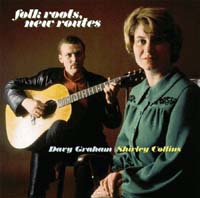
One of the truly essential folk albums, no debate! It was way ahead of its time when originally released in 1964 on the Decca label, but what's perhaps not widely known is that it almost never made it onto record! The story is told in the fascinating new booklet essay by Ken Hunt which adorns this latest CD reissue of the original LP - the second in fact (the first was on Topic in 1999).
It's wholly logical that Fledg'ling should now add this classic album to its catalogue, as the label has already established a proud benchmark in its high-standard reissue series of the early Shirley Collins recordings and is currently in the process of making available again Davy Graham's five Decca LPs. Technical points first: for this latest reissue, the music has been carefully remastered, and all the elements of the original artwork have been restored, adding several previously unpublished photographs.
As for the music contained within the package, well it's no exaggeration to say that Folk Roots, New Routes was truly a landmark in the history of folk music; not only did it capture the adventuresome spirit of the time within its 49 minutes (quite lengthy for an album at that time, and containing an intrinsically enduring and uniformly refreshing 16 tracks), but it also represented a turning point in both artists' careers. Shirley was in the last throes of her interest in American music, soon to shift her focus more wholeheartedly to the English repertoire which she then considered to be her true vocation, while Davy was just beginning his cathartic exploration of the world music arena.
They were already developing an impressive and eclectic live repertoire, which was already attracting considerable attention in packed venues, yet this scintillating musical partnership was to prove short-lived. So the mix of pieces they chose for this recording ranged far and wide, albeit mostly from traditional sources (British folk songs, learnt via a diverse array of performers from Bert Lloyd, MacColl and Seeger to Texas Gladden -"Negro blues-lore woven into the great Anglo-Appalachian love-knot", as Austin John Marshall's original sleeve-note so aptly described it). Shirley turns in a breathtaking unaccompanied rendition of Lord Greggory, while in between the songs were interspersed three captivating solo-guitar instrumentals that demonstrated the staggering breadth of Davy's inspirations from jazz to blues to then-obscure oriental and middle-eastern and eastern-European musics.
But it was less the artists' prowess as individual performers than the intense and unassumingly groundbreaking collision (or should that be collusion?) of their two quite distinct musical intelligences that epitomised the "new routes" being taken - nowhere is this better illustrated perhaps than on Shirley and Davy's call-and-response approach to Pretty Saro. The word "seminal" might well have been coined for this album, although it sold badly beyond a cult following at the time of its original release; but believe me, you do need it in your collection!
David Kidman
This fine four-disc retrospective box-set (aptly titled after a line from the Gower Wassail) marks the passage of exactly twenty years since Shirley's official retirement from singing in 1982, after an illustrious (though in some quarters strangely underappreciated) career spanning just over a quarter of a century, during which she initially accompanied Alan Lomax on his song-collecting jaunts in North America, subsequently touring both as a solo singer and with her sister Dolly, also with various musicians and group lineups including Ashley Hutchings' celebrated Albion Dance Band. As we have come to expect as given with anything bearing the Fledg'ling imprint, obvious care has been lavished on the product in a manner befitting the importance of its subject. Its exemplary packaging contains within the box a fulsome booklet embracing oodles of background information and a very well-written autobiographical essay by Shirley herself, together with memoirs by Bob Copper, Billy Bragg and John Kirkpatrick, a Pete Frame family tree and exhaustively detailed recording notes, not to mention a goodly selection of excellently reproduced archive photographs and - last but definitely not least - some really beautiful artwork by label supremo David Suff.
I reckon that you could fall in love with this set before you've even heard a note of the music!… but the "labour of love" care and attention with which the set has been compiled and presented perfectly mirrors Shirley's own care and attention in presenting the songs she chooses to sing, in fact. That hallmark of her approach is demonstrated unwaveringly throughout the set, and her commitment never falters, even when (in the early 80s) her voice did, effectively forcing her retirement from singing. It's surely no understatement that Hastings-born Shirley is a singer of no small significance in folk circles, and she proves herself a fitting subject for this lavish memento, which showcases (if that's not an inappropriately upfront expression for a singer of such humility in accomplishment) Shirley's pure and unaffected singing style. It has oft been pointed out, with some justification, that her wonderfully unselfconscious expression is something you either warm to or leaves you totally cold, so if you're not yet familiar with Shirley's singing I'd recommend you sample something from disc 2 (perhaps tracks 4 to 13, which include the Sweet Primeroses and Power Of The True Love Knot sessions), or - if you want to be truly mesmerised - her superb eight-minute version of The Plains Of Waterloo which opens disc 3.
Myself, I'll admit to being totally hooked, and listening to the four CDs through in one sitting has proved a real delight. But to the actual contents: well, the set will certainly appeal to enthusiasts and completists for its plethora of unreleased tracks and genuine rarities (amounting to around a third of the set's 84 tracks), which include a real revelation - Lost In The Wood (a variant of Babes In The Wood), accompanied by Iris Bishop on concertina and Gary Holder on bass, which I understand was recorded very recently, and in which we hear Shirley's voice now in a state of transition, showing an attractive fragility and quite striking in its newer, darker colouring although still distinctly recognisable as Shirley (you'll hear what I mean). And having heard Shirley (reluctantly!) sing but a brief fragment of a comic song just three years ago at the Ryburn Spring Sing (where she was booked to give her illuminating talk on her field trips with Lomax), I'm not altogether convinced of her need to remain in retirement, but who am I to say?!…
Back to the task in hand, the arrangement of the set is fairly strictly chronological. Disc 1 takes us from 1955 to 1964, and largely consists of very basic, even primitive, recordings on which Shirley's simply accompanied by either 5-string banjo (usually her own) or guitar (folkers like Robin Hall and Ralph Rinzler, then latterly Davy Graham for the groundbreaking Folk Roots, New Routes album cuts). For those immune to Shirley's special vocal charms, Disc 1 is likely to be hard going at first - many of the songs are little more than fragmentary versions, and the sparseness of the backing makes for uncompromisingly bleak listening, especially when much of it is quite tentative in character; having said that, some of these early recordings are fascinating in their own right, and it's always instructive to learn more of the origins of the songs themselves.
Disc 2 takes us from 1964 through to 1969, with an unreleased 1966 Bethlehem forming a brief appendage to the Holly Bears The Crown tracks. This was a definitive (and defining) period in Shirley's career, during which her musical partnership with Dolly blossomed with the benefit of Dolly's unmistakable and absolutely charming instrumental arrangements, which usually featured her own portative organ, and then, towards the end of the decade, she involved early music specialist David Munrow in the creation of her landmark Anthems In Eden suite which in an uncharacteristic fit of vision EMI released on its "underground" label Harvest. This set could not reasonably include the whole suite, notwithstanding its status as indisputably one of Shirley's finest achievements, compensation is at hand in the form of an unreleased demo of the Whitsun Dance. Disc 3 further develops the innovative strand in folksong arrangement which Shirley was pursuing in her musical collaborations through the 70s, and takes us from the sublime Love, Death And The Lady album via the often curious experimental electrified folk of No Roses and the pioneering Morris On sessions, on to the sparse but mature, succinctly atmospheric Adieu To Old England and the classic Albions' Prospect Before Us - a golden period, and universally recognised as such.
Disc 4 consists for the most part of previously unreleased recordings, and charts what Shirley acknowledges as her artistic decline as a singer, which she admits to have been triggered by the ending of her partnership with Ashley; minor frailties and inconsistencies in her delivery there may be, but Shirley was still worth hearing, and these later recordings are less of a disgrace than might be imagined. Disc 4 includes a late-70s demo from the unfinished Anonymous Smudge project, some live tracks from tours with Dolly in Dublin and London, a duet with Peter Bellamy from 1980 and items from her collaborations with Julie Carter and Jim Younger (and an uncredited whistle player), also a poignant, elegantly poised little piano piece performed solo by Dolly to provide a kind of time-lapse interlude before the final selection. A masterstroke of planning, I think, and very much typical of the intelligent, thoughtful, affectionate and respectful way in which the whole package has been put together. Expenditure of your hard-earned dosh on this excellent set is fully justified.
www.thebeesknees.com
www.shirleycollins.com
David Kidman
Christine Collister - Love ... (Stereoscout)
Love ... ,Christine's latest CD, originally started life as a special project for Roy Gandy of hi-fi equipment manufacturers Rega Research, to produce a hi-fidelity release that captured as faithfully as possible the emotion, depth and feel of Christine's voice as demonstrated in a live performance, elements which under normal circumstances invariably and unavoidably tend to get lost in the recording process.
Roy suggested that Christine record an album of "classic popular songs" with a mixture of instruments, using analogue rather than digital recording techniques to best capture the desired qualities, an album which ideally should be issued on high-quality vinyl in the first instance and only at a later stage transferring to the digital medium for CD release. All of which might partially (though not entirely) explain this record not being widely publicised outside of Christine's website and gigs - and what a shame, for it's a really superb set that nestles perfectly within the canon of Christine's existing recorded work, and as such deserves much wider exposure.
Christine's such a compelling performer, a singer who always makes the most out of her chosen material without resorting to crass overstatement or expressive overkill; she shares with June Tabor an innate sense of poise and a control of dynamic shading to die for, while her tone is smooth, luscious and yes, deeply sexy. The choice of material on Love ... is very much typical for Christine, a mix of classy contemporary writing and what might be termed jazz/pop virtual-standards, blessed with creative, nay inspirational yet simple arrangements.
For instance, Cole Porter's I've Got You Under My Skin eschews the familiar blowsy Nelson Riddle treatment for a more flexible, pensive setting that "enables the pores to breathe", while Sandy Denny's Who Knows Where The Time Goes? has just the quality of visionary philosophical melancholy that many aspiring singers of this song entirely miss. On a soulful version of Leonard Cohen's Hallellujah and an eerie rendition of Joni Mitchell's Amelia, Christine uses a mini-choir (her mates Chris While, Julie Matthews, Melanie Harrold and Helen Watson) to potent effect, and the plangent tones of oboe or cor anglais (played by Jerome Brown) add atmosphere to two tracks - one of which, Christine's own phantasmagorical co-composition Lighter Than Air (a CD highlight), has a quite bleak, other-worldly air that recalls Lal Waterson's writing. Christine also does a great job on songs by Kate Bush and Jimmy Webb, and the Hollies' Air That I Breathe.
Aside from those already mentioned, Christine's select band of extra musicians comprises Rory McFarlane, Huw Warren and Gary Bennett and Gary Frost - and they provide an ideal foil for Christine's extraordinary voice. Absolutely unmissable!
David Kidman
Christine Collister - Home (Stereoscout)

She'll never shift records in Dido quantities, but in ten year's time those who have brought her albums will at least still be listening to them. And she needs nothing more than a microphone and an audience to hold an audience mesmerised with her rich brand of soulful folk and blues. Don't take my word for it, lend an ear to her latest live album recorded, complete with chat, over the course of three shows in her native Isle of Man during 2002's 20th anniversary tour.
Opening with an unaccompanied version of Helen Watson's bluesy Lowish Time she proceeds to demonstrate exactly why she's introduced as 'world class' as she makes her way through self-penned numbers such as Act of Kindness and the wistfully weary Waiting For My Prayer and an eclectic set of covers that range from Tom Waits' Broken Bicycles, a song she's made very much her own, Don McLean's Vincent (including a bonus 'studio' version with strings) and a spare reading of Emmylou Harris's gospel Deeper Well with just shaken tambourine accompaniment to a folky intimate treatment of U2's Still Haven't Found What I'm Looking For and a smoke curling torch through Billie Holiday's God Bless the Child, a song that takes real confidence in your abilities to even think of tackling it. Collister masters it with ease. But the best though has to be her haunting a cappela version of Christine McVie's Songbird for which the very air hushes in awe and, perhaps the song with which she's most identified, Clive Gregson's beautifully weary It's All Just Talk. Heart is where the home is.
www.christinecollister.com
www.stereoscout.com
Some years back, Collum swapped Tulsa for Basildon, now, backed by bassist Dan Wilkinson and drummer Paul Quarry, he heads one of the UK's leading Americana outfits. This is his fourth album, the second with the current band, with guest musicians BJ Cole on steel and Grand Drive's Julian Wilson on organ. There's no attempt to rewrite the rule book, just a set of reliable roots country songs, generally to do with busted or blossoming relationships, packed with melodic hooks, ringing guitars and lived in vocals designed to be heard with a cold beer in your fist.
It's a little bit rock n roll (Jennifer Jones, Disco Jesus), a little bit rockabilly (Well Runs Dry, A Little Wind), and a little bit blues [Cemetery Blues) with a twist of western swing (Brought Up Wrong), a lick of keening ballads (Katie I Agree, very Dr Hook, the banjo spotted Nevermore) and a parcel of honky tonking twang (Virginia Mystery, Set The Stupid Free). In Austin, they'd be well respected bar band with a small but steady following and it's unlikely they'll be seeing their star rise much beyond that here. But, if you see the name on a poster outside your local, you'd be foolish to pass them by.
www.myspace.com/bobcollumthewelfaremother
www.bobcollumonline.com
Mike Davies January 2008
Bob Collum and the Welfare Mothers - The Boy Most Likely To... (Atomic Powered Records)
AN air of mystery is never a bad thing for a musician, leave 'em wondering say I. I'm sure that there are those out there who are very well acquainted with Bob Collum and, on the strength of The Boy Most Likely To..., they're the lucky ones. However for those, like me, who aren't, a few biographical details on the website wouldn't go amiss. It helps to fill in the blanks where you can.
I know that Collum is from Tulsa and now settled in Basildon, Essex, reputedly the weathervane of elections - win in Basildon and No 10 beckons. Collum may not go that far but I can't believe the Essex town has resisted the charms of either Bob Collum or the Welfare Mothers. I also know that this is his third release with the Welfare Mothers, following 1997's More Tragic Songs Of Life and 2000's Low Rent Romeo. But of life before Basildon? Little.
Most importantly though, even the most cursory of listens to this CD reveals the most vital detail of all, Collum and the Welfare Mothers make great music.
It is a simple, direct and completely uncomplicated album. Both Merry Go Round and A Little Less Soul could have been lifted from a Squeeze or Dave Edmonds' catalogue. Full of jangling guitars they share with Squeeze and Edmonds a love of lyrics, touched by a melodic sense of fun. It's not pub rock/pop but it is about having a good time.
One of the great things about the music is that it never gets bogged down by the recording process, it all bounds along quite naturally.
The Boy Most Likely To's greatest achievement is to confirm that pop music can have substance. It's not a hybrid or 'rock lite', it's unashamedly melodic pop and easy on the ear, however The Joke's On You for one has roots.
Collum has an engaging voice and even when it all gets a bit 'riffy' as it does on Victim That You Need and One Hundred Years it is still the voice of Collum that leads the way, the front man is back and he's in charge.
Sadly, The Boy Most Likely To is the kind of album you don't hear too much these days. Songs lovingly written, carefully crafted and played with sense of freedom.
Michael Mee
Color Wall - The View From Above (Lazy Suzan Records)
Los Angeles-based indie rock trio Color Wall have been solidly building on their modest 1997 beginnings with a steady stream of singles and EPs ever since; they first established their place on both sides of the indie-vs-mainstream divide with their 2002 release Blue – at any rate, in their native USA. Now comes the big step up to releasing a full-length CD, and the question will be – is it more than just a collection of potential EP tracks? Well not quite, I suspect, with some ideas sounding a tad underfulfilled, but it's still a vibrant and largely consistent effort nonetheless. Guitarists Jeff Burgee and Justin Billmeier along with drummer Andrew Loeser make a toweringly powerful sound with loads of presence, the dense yet constantly interesting instrumental textures racked with dynamically propelled rhythms. It's very much a tightly controlled wall-of-sound approach, but tinged with occasional epic-psych colourings that provide the backdrop for some pretty direct lyrics presenting states of emotional confusion in a more focused mode of expression than we might reasonably expect. Though with distinct nods to 80s power-pop (there's a reasonable cover of the Cars' Just What You Needed), 70s thrash (Surf Anthem For A New Millennium – hey, why do the shortest tracks end up with the longest titles?!), Teardrop Explodes, and even Joy Division riffs (I'll Bet), the erm, colourful music of Color Wall proves definitively accessible, while also enjoying a decent degree of depth, and it's worth looking out for.
David Kidman
Although she made an album of songs for kids in 1996, it's 21 years since Colter's last proper solo album, Rock n Roll Lullaby, since which time, other than the occasional back-up contributions, usually on albums by her late husband Waylon Jennings, she pretty much dropped out of the business, dedicating her time to raising son Shooter. However, those of us with fond memories of such 70s classics as I'm Not Lisa, Storms Never Last, and It's Morning (And I Still Love You) have never given up hope of hearing that tremulous, emotion cracked twang back with new original material in her own right.
Good news than that, after re-recording Storms Never last for a Waylon tribute three years ago, the first lady of outlaw country has returned, produced by the inestimable Don Was, with an album that mixes up swaggering boogie blues, gospel and pop country. Her voice sounding stronger than ever, she kicks off proceedings with the simple, piano backed gospel of His Eye Is On The Sparrow before heading into a funky leathery blues groove with You Can Pick 'Em, a mood that returns on Starman with his fat brass, the Southern fried r&b of Velvet And Steel and a mid-tempobarrelhousing cover of Dylan's Rainy Day Women #12 & #35.
On an album that muses on love and faith, more plaintive tones are to be found on the lovely So Many Things with its piano and cello arrangement, the swelling emotions of The Canyon, a gently pulsing The Phoenix Rising with its cascading piano figure and string, and the acoustic slide guitar blues Never Got Over You where she duets with guitarist and co-writer Ray Herndon.
But it's two other duets that will catch most ears. The closing Please Carry Me Home, an aching gospel flavoured song about the search for spiritual salvation, finds her sharing the microphone with Shooter while, backed by the Greater Apostolic Christ Temple Choir, her highlight cover of Tony Joe White's Out of the Rain features not only White but also Waylon, a stunning example of vintage Outlaw country that will send shivers down the spine. It's great to have her back.
www.cmt.com/artists/az/colter_jessi/artist.jhtml
Mike Davies, June 2006
Shawn Colvin - Polaroids (Columbia)
Though still sadly underestimated on UK shores, Colvin's carved a solid career's worth of award winning albums since her debut back in 1989 with Carry On. Back in the early days there was a slightly tougher musical edge than the more mellow brand of contemporary singer-songwriter folk she's settled in to of late, the Joni Mitchell influences fairly evident on such numbers as Steady On and the outstanding Shotgun Down The Avalanche.
13 tracks have been culled from her five albums, among them her striking interpretations of Sting's Every Little Thing (He) Does Is Magic and the Talking Heads' This Must be The Place, with a bonus of a newly recorded Janis Ian-like acoustic cover of Lennon and McCartney's I'll Be Back. Everything here underlines Colvin's ability as a top flight writer and performer, her pure but bruised vocals investing the songs with a rich emotional melancholy, but while the compilation includes such stand outs as her Grammy winning Song of the Year Sunny Came Home, A Matter Of Minutes and You and the Mona Lisa, perhaps her finest moment remains the stunning hymnal purity of I Don't Know Why, an affirmation of the mystery of love that truly warrants a place among the all time classics.
Mike Davies
The bastard offspring of Lonnie Donegan, the Everlys and Buddy Holly, with a diploma from the Billy Bragg school of social politics, a healthy cynicism about fashion trends, and a heart with a bruise the size of a broken love affair, Birmingham's very own political romantics skiffle combo effervesced on to the scene in September 84, debuting with the thigh-slappingly wonderful Butters On the Bread EP. A year later, along came the preening peacocks put down, Clothes Shop Closed and the gently barbed Kennedy Says.
Expanding the line up from guitar and string bass to include washboard (Doreen Deville) and second guitar (variously Andy Downer, Jeremy Paige and Mick Howson), they released a clutch of singles, Hello, Banking On Simon, Reservation (a marvellous number about council estate disenfranchisement) and the brilliant indie No 1 album From Lubbock To Clintwood East. Featuring such gems as The Good, The Bad, The Usherette, The Armchair Terrorist's Song, and Fashion Rodeo, it was an object lesson in how to affectionately skewer dreams, foibles, political delusions, escapist fantasies and the sometimes absurd nature of our daily ridiculousness in under two minutes a throw. Perhaps their finest moment, Last Bullet in The Gun, a song that encapsulated life under Thatcher, sadly also proved to be their last, Gerry (one of the country's greatest undiscovered songwriters) going on to form The Gerry Colvin Inexperience, The Atlantics, and, currently Colvin & Quarby. The good news for old fans and newly curious alike, is that their complete recorded works (B sides and alternate mixes as well) are now gathered together on this compilation, along with live versions of Butter's On The Bread, Wait Until You're Older and Dennis & Brian, recorded in their native Lubbock, sorry Birmingham, still as much fun and as bitingly resonant now as it was 20 years ago. Yippee-I-Ay, as they might once have said. Oh yeh, I did the sleeve notes, too. But that's love not bias.
www.colvinquarmby.com
www.cherryred.co.uk
Mike Davies May 2007
Colvin Quarmby - A Short Walk To The Red Lion (CAQ)
I really don't understand why Paul Heaton gets such acclaim as a quintessentially English songwriter when he's frankly not half the talent Gerry Colvin is. Indeed, way back in the distant ages, the Housemartins used to share a bill with Terry & Gerry and the cynic in me has always felt that a certain amount of influence rubbed off.
From The Man Upstairs through Terry & Gerry and The Atlantics to his current collaboration with Nick Quarmby, Colvin's been producing diamond quality songs for over twenty years and yet, while he regularly plays to packed houses, it's only now that he's starting to get anything like the recognition he deserves.
While he's flirted with blues and soul here and there along the way, the music's generally remained within the pop-folk-country triangle, his songsdisarmingly pointed and affecting observations on the humanity, dreams, hopes, loves and fears of the everyday. His back catalogue contains some of the greatest break up, broken heart songs yet to be discovered. Incredibly, each successive album manages to surpass its predecessor and while I thought Beth's Electric Birthday would be an impossible act to follow, both musically and in terms of the material, this is their finest hour yet, the Tony Hancock sleeve drawing evoking the tragi-comedy that lies within.
The wistfully reflective 'screwed it up' I Look The Same But I Have Changed opens in jangly folk rock fashion, a CS&N feel to the rolling train rhythms while somewhere in there also lurks the spirit of Roy Orbison before things move on to Girls World, a lovely song of incompatibility ("I'm the girl whose world is spinning too fast for you" ) that begins with a Here Comes The Sun sounding acoustic guitar refrain.
A Parisian cafe accordion underpins the swaying chanson of Go And Ask Somebody Else, a bitter song of domestic abuse, soured dreams and, in a pointed reference to South Mary Cray, ("her home is a stain on the apron of London"), suburban social decay. From village to the whole planet, piano ballad Wings and Prayers is a stirring allegory of the environmental madness we inflict on the only world we have.
There's a related theme behind I Am The Bell, an effectively simple cascading acoustic guitar and clicking percussion number that, in brilliant imagery, tolls the loss as progress turns town to conurbation and the foundations (the Church here) upon which close knit community was founded are left to crumble.
Holding that thought, the Mexicali jaunty The Right Stop rides the London underground, taking snapshots of the myriad of commuters and their hopes, secrets and stories, the anorexic girl, the man in the mac with his jaded marriage, all together but never connecting.
The Poacher, The Highwayman and the Rustling Wheelwright is, as you might imagine from the title, steeped in folk balladry territory. But, set in inner city Birmingham, in singing of supermarket shoplifters, car jammers and victims too scared to leave their homes, it incisively exposes the innate hypocrisy of the way trad folkies celebrate and romanticise the equivalent crimes of yesteryear.
Love and relationships take up the rest of the album. Featuring Trish Keelan on accordion, Mermaid's Eyes is a lovely, tropical tale of the girl who teaches you to see the world differently, the old school country back porch shuffle What I Did To Her Last Night I'd Rather Do To You is a cheating song with an unexpected twist of the blades to its other man's grass where he sings "what I had with her last night I want for you and me".
Which leaves The Ocean and One More Week; and emotional epiphany and an emotional resignation. The first (evocative of vintage Harvey Andrews) is a moving tale of love at first sight, the exchange of smiles across the dance floor as "she became the ocean into which he fell" while, closing the album, the latter rockier electric guitar driving latter track looks back years later on what could easily be the same moment, at summer love gone astray, where "country walks and constant smiles have been replaced by bathroom tiles." I'll see you down the pub boys, this round's on me.
Mike Davies
Having fallen victim to the EMI corporate takeover following her well received Hurricane Glass, Catherine Feeney moved back home to Portland, releasing completed third album, People In The Hole, on her own label. Described as songs that might have come from a union of Joni and Morrissey and featuring such titles as Jacaranda, He's Like You Only Better and Last Night I Awoke In The Midst Of A Dream, it's disappointingly not widely available. Fortunately, this first studio offering from her new project with English-born husband (and producer) Sebastian Rogers, flatpicking guitarist Jon Neufeld from Decemberists offshoot Black Prairie and multi-instrumentalist singer-songwriter Mike Danner is.
A rootsier affair than her more folk-rock inclined solo albums with their echoes of Sheryl Crow and Suzanne Vega, it's also (down to Rogers) a more politically conscious work, evidenced by Freedom Or Death, a clanky banjo-laced lurching folk-blues attack on US foreign policy, accordion waltzing anti-corporate chanson Modern Mythology, and Holy White Ghostly's jaunty stab at Christian hypocrisy.
Although songwriting duties are fairly evenly balnced, Feeney fans might be disappointed to learn that Rogers takes lead on the majority of tracks, often sounding, as on finger-picking blues Frontline, like Paul Simon; but that balance brings extra strength and colour to the album and, when Feeney does step into the spotlight, duetting on the CS&N flavoured bluesy title track or upfront on wistful acoustic strum Home, the pedal steel backed Windchime with its emotional barbs and the fragile Floating World, where's she's accompanied by just muted guitar, she sounds more assured and soulful than ever. Draw close and enjoy.
www.comegatherroundus.com
www.myspace.com/comegatherroundus
Mike Davies October 2010
The Comsat Angels - Waiting For A Miracle / Sleep No More / Fiction / Time Considered As A Helix Of Semi-Precious Stones (Renascent)
Sheffield's Comsat Angels were one of the most unjustly overlooked (indeed, virtually unsung) bands of the early 1980s, even though they hailed from the same city as the equally unjustly over-exposed Human League and ABC (neither of whom had anything like as much going for them musically in my opinion). It can't have been that the Comsats' distinctive and idiosyncratic sound was uncommercial (or commercially unacceptable), surely, but whatever the reason it's certainly not due to any shortcomings in terms of quality, for their work as captured on these four CDs (which have at their core the three original studio albums and a fulsome collection of radio sessions) is stunning by any standards. In an age of overkill and overemphasis on overblown production values, the Comsats' relatively unadorned sound was genuinely invigorating. Proudly psychedelic (at a time when that word wasn't exactly the coolest thing on the planet!), the Comsats derived a certain inspiration from the garage-psych bands beloved of the Nuggets compilers, yet filtered through the lean and angular sounds of Britishers PIL and Joy Division, which gave their music a peculiarly piquant kind of Englishness. The other principal notable feature of the Comsats' music was that, despite the predominance of burnished, ringing guitar timbre within their driving, forthright yet quite subtly layered soundscape, the band eschewed indulgent solos in an overall, wholly admirable economy of expression that, perhaps paradoxically, never shortchanged the listener in terms of true passion. The impressive and superbly judged instrumental backdrop was perfect for the thoughtful yet powerful lyrics, all of which (unusually for the time) were democratically credited as whole-band compositions. The band's lineup remained stable throughout their tenure with Polydor - ie. Stephen Fellowes (vocal/guitar), Kevin Bacon (bass), Andy Peake (keyboards) and Mik Glaisher (drums) - during which time they retained the services of producer Pete Wilson, an arrangement which produced a comparatively straightforward but extremely effective signature group sound, with no excess baggage. At the same time their music audibly progressed and developed during the course of that brief but abundantly creative three-year span.
These four CDs from the ultra-reputable Renascent label comprise exemplary, and long-awaited, reissues in that format of the band's landmark first three studio CDs (1980's Waiting For A Miracle, 1981's Sleep No More and 1982's Fiction), complete with copious fascinating and genuinely worthwhile bonus material (taken from singles, outtakes and alternate takes) that in each case occupies almost as much playing-time as the original album, together with a whole CD generously stocked exclusively with radio session takes spanning the period 1979 to 1984 (ie. from well before the first album through to well after the band had left Polydor). Taking the three original LPs first, these can be heard to chart the band's rapid and amazingly assured progress from unusually confident and almost fully-formed debut recording through supremely articulate second-album consolidation to a "difficult third album" which was at once a step-back from the dark, monolithic brink of album two and an interesting exercise in lighter texturings yet with no loss of artistic credibility. The radio sessions were notable in that almost every performance which can be compared directly with an album or single recorded version of a given song emerges from the comparison with fresh insights yielded. Sadly there's not space within the scope of this review to go into detail, but suffice to say that this session disc is an essential purchase for that reason alone - not to mention the given that the actual performances are uniformly excellent. Indeed, there's no mere filler material anywhere on these four well-filled discs, and the musical importance of the bonus material should ensure that these reissues aren't solely the province of completists. There's heaps of truly awesome music here that really deserves to be better known, and taken as a whole the triptych of albums covering the Comsats' Polydor career, together with the supplementary radio-sessions CD, represents a towering achievement in anyone's book. These brilliant reissues - which come in beautiful digipacks complete with splendidly authoritative and super-informative liner notes - now present the ideal opportunity for ultimate, and leisurely and lengthy, re-evaluation of this important band.
David Kidman
Jim Condie - Distant Cousins (Redberet Records)

This is Jim Condie's debut album as a solo artist but he's been around for quite a while. He's played with Charlie Musselwhite, Lowell Fulsom and Carey Bell among many others. Don't be fooled though, this isn't just a blues album – it's much more than that.
The opener Judgement Day is a classic blues theme played in a jaunty country style with some top slide and mandolin. Greasy Greens is a Bumble Bee Slim song about not getting his vegetables – boy did those old blues singers have it tough! Seriously, this has some more stunning slide.
As someone from the West Coast of Scotland I should have some flippant remark about the next track, the Celtic based Farewell To Edinburgh, such as "that's the best thing you could say" (sorry Jim). This is a pleasant, self-written instrumental that shows his guitar work is top drawer. Talco Girl is back to the country-tinged, Steve Earle style with mandolin and guitar.
A traditional blues Tamp 'Em Up Solid follows. Dice Jameson provides the excellent slide guitar as he does throughout the album. Lap steel from Jay McSnide adds to the authentic feel. Sleepwalk is a showcase for McSnide's steel guitar although it sounds like an escapee from a Shadows album.
Didn't Quite Make It is another that trundles along very nicely with slide as good as ever and Jane Discome's mandolin adding depth. What follows is one of my favourite all-time songs, Woody Guthrie's classic Vigilante Man. I grew up on versions by Ry Cooder (my favourite) and Nazareth. Condie has come up with a very good rendition and I think that this is his best vocal contribution.
I can't get the traditional Make Me A Pallet On The Floor out of my head. I don't know why! Probably because of the excellent playing again with bassist Iceman Jodes thumping away good style. A second instrumental Great Dream From Heaven is the penultimate track. This is another traditional song and gives Condie another chance to show how good an instrumentalist he is.
The last track, yet one more traditional song, Livin' With The Blues sums this man and his backing band. They sound as if they have indeed lived with the blues but have got through it to produce this thoroughly enjoyable album.
David Blue
Johnny Connolly - An Mileoidean Scaoilte (Cló Iar-Chonnachta)
Johnny is the original King of the Irish melodeon, make no mistake, and don't you dare confuse him with the other box player of very similar name (Johnny B. Connolly, who records for the Green Linnet label)! Born on a remote Connemara island, he only returned to the county (though not the island) in the mid-70s after raising a family, since when he has settled near Spiddal. Johnny started out on the two-row melodeon, but reverted to the once rarely-heard one-row variety around 20 years ago. This latest CD, Johnny's third solo recording for the Cló Iar-Chonnachta label (the previous two released at annoyingly long intervals from 1993!), is further testament to the power of the seemingly limited single-row instrument in the right hands. These hands seem effortlessly to "unlock" the capabilities of both player and instrument (the CD's title - literally, "the melodeon unlocked, or set free" – refers back to an incident in Johnny's youth when he came across a melodeon with a locked case, the key to which was found by his sister Nain). Johnny's playing embodies a natural and exemplary sense of rhythm that comes with its own innate and attractive ornamentation, and he coaxes the soul out of the instrument in a uniquely bright and rousing way that's an utter delight to listen to whether he's essaying hornpipes, reels, jigs, polkas or waltzes but he plays especially soulfully (to my mind) on the one slow air on the disc, the unduly brief Amhrán na Trá Báine. There's an unusual combination of jig and reel on the track 6 set that spotlights the compositional skills of Johnny's own son. Also, to reflect his solid accomplishments in the role of accompanist for dancing, Johnny himself has arranged the central section of the album specifically to suit the dancing of the Connemara set, and Seosamh Ó Neachtain can be heard stepping it out in fine fashion on New Mown Meadows, the second of the tunes in the first of that section's tracks. Throughout, Johnny achieves some impressive results from the humble one-row box yet at the same time turns in some supremely affectionate playing, which in turn inspires some particularly lyrical piano accompaniment from Leitrim man Charlie Lennon (who, to my joy, also brings out his fiddle to further augment the Emmet The Piper/The Frost Is All Over set that comprises track 12). Musically then, this is a wonderful CD; it's such a pity that the booklet design lets the product down more than a shade in the end by printing the English translation of the notes in a colour scheme (yellow on grey!) that renders the otherwise useful notes virtually unreadable. (Available from Copperplate Distribution.)
www.copperplatedistribution.com
David Kidman
This CD presents a whole glorious hour's worth of "new songs from the old firm", a description which will mean that the disc is self-recommending for all fans of the work of this long-term songwriting partnership.
And so it turns out - but it's also a rather special disc, in that it's like having a tape of your very own personal house-concert. It was intimately recorded during the winter of 2008/2009, at the home of John & Bill's good friend (and fine songwriter) Dave Evardson and his wife Julie; they "simply sat in his lounge and sang the songs". And it sounds like it (in the nicest possible way): no over-produced studio gimmicks, just good honest home-front music-making with a better-than-serviceable recording quality (although I do detect a different, arguably more responsive acoustic environment - the bathroom?! - on Bill's two solo acappella offerings).
The songs run the usual well-judged thematic gamut, from maritime to nostalgia, industrial or occupational songs to love songs, affectionate seasonal songs, local history, and the folk scene itself. These topics have formed the men's key inspirations over the past however-many years, producing some timeless and gently potent material that has stood the test of time. The question is whether this batch of new songs has the potential to similarly readily engage; John and Bill clearly believe in them, for their rationale for releasing this disc was "mainly to make them available to potential singers" (an entirely laudable gambit, of course, and I've already earmarked a couple of these songs for learning myself…).
In my humble opinion, the strongest items here are the supremely evocative Banks Of The Humber, The Garden Of White Roses (which recalls both Old Men Sing Love Songs and Angels Of Lincoln), the farming nostalgia of Home From The Haying, and the homespun philosophy of Sit Closer Friends. It's just possible that the deeper impact of Last Big Trip's Gone Down (a really fine song written in 1981 for a TV documentary) is diluted just a little for me by its melodic resonance of I Live Not Where I Love, but that response may in itself be a blessing in disguise. I also rather liked the traditional-sounding Maid Of Castlereagh, as well as Woodpecker Cider (dedicated to Rob Gutteridge), Stay With Me (a kind-of-Carter-Family feelgood number written for Bill's wife Pat), and the suitably barnacle-encrusted Cape Horn Shanty, while I Am Christmas is a genuinely non-grumpy and sincere response to traditional seasonal goodwill.
I'd be less than honest, though, if I didn't express some lingering impressions given by one or two of the songs that smack a shade obviously of "shavings from the masters' workbench" (albeit probably as much in the distinctive Conolly-Meek stylings as in any other aspect); for instance, almost anyone hearing Geneva And Rum is likely to harbour a sneaking suspicion that John and Bill were aiming to replicate the success of Fiddlers' Green. Familiarity breeds content? Well, the disc does close with John's traditional encore-cum-night-closer, One More Before We Go, but, that song aside, the vast majority of the other songs on the disc had hitherto not been heard in public - and, given their lasting quality, we're left rather wondering why, for this is a thoroughly delightful disc that should not disappoint admirers of John and Bill and their old-fashioned, reliable craft. Even better, it's available at the bargain price of £6 incl. P&P (from John at 18 Scrivelsby Court, Cleethorpes DN35 0HJ).
David Kidman February 2010
Still one of the most reliable and genuinely entertaining performers on the folk circuit, John's a true stalwart, but also one of the most underrated, a situation for which his abundantly modest self-promotion may partially account. John's latest CD is a particularly keenly observed self-portrait, having much in common with his live performances in that it convivially and unashamedly intersperses the two basic kinds of material at which he excels. Firstly there's the wistful, evocative and perceptive songs which have become John's trademark, generally concerning his native North Lincolnshire, its heritage and lost industries: the disc contains several fine examples of John's craft (and that of his sometime-writing-collaborator Bill Meek), of which Down Dock, I Am Christmas, Lincoln Castle and Boar's Head And Bells are especially memorable. The second strand comprises the equally evocative and perceptive humorous songs and parodies: some of them (most obviously the priceless Brave Admiral Storey's Farewell To Whitby) definitely rely on a little in-crowd-type knowledge of the folk scene, its songs, traditions and foibles (and personalities!), but they certainly hit the spot, and how! John's a born communicator, and has a fresh and natural way with an audience, as testified by the handful of tracks recorded live at Beverley's Not The White Horse Folk Club, on which he gleefully relishes both the material itself and the rapport he maintains. John delights in including a performance of Les Barker's brilliantly-observed parody of his own "greatest hit" Fiddler's Green, but even then he can't resist capping it with three extra self-penned verses for the shanty-crews! That sense of fun is also evident on the (studio-recorded) tale of The Jolly Tar. On several tracks John's blessed with glorious vocal harmony singing from our good friends Hissyfit (especially beguiling perhaps on Sally Brown, The Crystal Stream and the charming Charlie In The Meadow), while he also enjoys some additional well-considered instrumental (and vocal) backing from Keith Kendrick and Robin Garside. But it's still John's own genially grumpy personality that's (rightly) at the forefront of this disc (and backside too - for we get two separate bites at the grumpy cherry of the title track!). The whole CD is a persuasive demonstration of John's creative approach to traditional sources and his capacity to reinvent what in lesser hands might seem tired material (eg the joyous A Frog He Would A-Wooing Go), making it his own and thoroughly endearing it (and himself) to his listeners. Bravo, I say!
David Kidman November 2008
Continental Drifters - Listen, Listen (Blue Rose Records)
This CD is only 28 mins long, but is still very worth adding to your collection. It contains spirited versions of songs by Sandy Denny and Richard Thompson, mainly from the Fairport era. This acoustic band, lead by Peter Holsapple really kicks some butt, the playing is superb, the singing is passionate, and you will recognise the cover :) The title track opens, followed by storming version of 'Bright Lights'. 'Poor Ditching Boy' is wonderful, but for me 'You're Going to Need Somebody' is the stand out track - it ROCKS!! 'I'm Dreamer' is well presented, and then we get to full and bloody version of 'Matty Groves' - the mandoline really rules here, as does the gritty, violent vocal. 'Meet on the Ledge' concludes, it's good, but....... it ain't FC. This is an album that I enjoyed a lot - but it's too short!!
Jon Hall
I never cease to be amazed at this prolific guy and the sheer amount of stuff he produces. Not only does he keep down a full-time pivotal role as multi-instrumentalist within the Vikki Clayton Band, but he's a prodigiously talented musician, singer, songwriter, composer and producer in his own right. This time he's released - simultaneously! - two brand new albums which showcase these talents to the hilt.
Describing Chris's music to the uninitiated is not easy, for its definitively genre-hopping nature ensures that it falls between an awful lot of stools - although it often settles on one or the other for long sittings! My Mind's Island is ostensibly the rootsier of the two albums, wherein we experience to the full Chris's skill in producing well-crafted and thoughtful songs with predominantly acoustic-based settings. Having said that, there's a fair helping of Celtic folk and ambient grooves in these songs too, and the relaxed yet committed, often deeply touching and generally life-affirming nature of the lyrics makes for an attractive 55 minutes of listening. The overlap with Alien Salad Abduction occurs in Chris's use of guest performers - notably selected members of band The Talking Fish augmenting Chris's own impressive array of instruments on around half of the tracks, with special guest contributions from ancillary vocalists (Vikki C, Judith Silver, Jodi Krangle et al.) too.
The songs on Alien Salad Abduction, though (as the title might well imply to the astute!), major more on the overtly witty, frivolous side of Chris's writing, the fully fledged space hippie having (almost) come of age on a veritable galaxy of songs embracing world, fusion, electronic, funky pop and nouvelle-jazz influences and embodying an intrinsic (if scattergun) whimsy that probably owes as much to Daevid Allen and Gong as to anything else in the musical universe. To be absolutely honest, I find some of Alien Salad a mite disposable, and you certainly have to be in the right mood to get the most out of this album, whereas My Mind's Island is more equitable and consistent (and lasting) in its impact. Chris may be hard to keep up with, but there's no denying the man's serious creativity or his perennial inventiveness.
David Kidman
This is the second solo album from the prodigious young musician who was recently voted Best Traditional Female in Irish Music magazine; she holds the All-Ireland Senior Fiddle Champion title, yet she's equally at home with classical discipline. The Horse's Tail comes prominently emblazoned with a sticker proclaiming "Riverdance Soloist", an unnecessary gambit which filled my mind with foreboding, but I needn't have worried, for this scintillating album doesn't need any hype whatsoever. It really is a cracker from start to finish, with none of the contrived, packaged "Irishness" of the Riverdance shows. This is what one might call the genuine Irish traditional music experience, raw and natural in its energy, seat-of-the-horse's-pants if you like (at times you can hear and feel the rasp of the horse-hair!), with a sound quality that deliberately harks back to classic old LP recordings like the Chieftains' first. It was recorded in a restored barn in Co Louth, and is so truthful and immediate that you really do feel that you're right there in the same room as the musicians, close up and getting every last nuance and breath. Her collaborators - mainly just Steve Cooney (guitar) and Robbie Harris (bodhrán), with brief appearances by Lisa Conway (extra fiddle on the Smiling Maidens set) and John McIntyre (guitar on two tracks) - do a splendid job in helping Zoë to convey the frisson of the spontaneity and magic of musicians playing live together (the participants simply sat in a circle and played), with any momentary imperfections and rough edges instantly forgotten in the spirit of the music-making. Zoë even gets the chance to play a few tunes completely solo, and these are album highlights even considering the excellence of the contributions of her collaborators elsewhere on the record. As far as the material goes, the balance tips a little in favour of traditional tunes, the bulk of the remainder being Zoë's own compositions, which are themselves conceived very much in the traditional mode (and darned fine examples too, I might add - I'd defy anyone to correctly guess the origins of superb jigs like Sraíd Na Cathrach!), although there are one or two exceptions (like the devilish Breton-influenced 11/8 Diabolo Lyon). A small handful of Charlie Lennon's tunes form the final contingent. I particularly liked Zoë's earthy take on the slow air The Blackbird, while the infectious lilt of her faster playing is a constant foot-tapping delight on items like Scott Skinner's Baker's Reel and the opening set of "melodic jigs". Although Zoë's exceptional, fiery and gutsy fiddling is necessarily the focus for the record, she also sings for us on a couple of tracks: she twists the "accepted" melody of Westlin' Winds somewhat, not entirely convincingly as she hasn't quite the skill in ornamentation or expression to bring it off, while her take on O'Carolan's beautiful A Ghaoth Andeas works better, though I still find the timbre of her voice just a tad cloying. But laying this minor deficiency aside, it's abundantly clear that Zoë and her fellow-musicians are having a ball on this recording, and this enjoyment is communicated straight down the line to the listener. And the record also contains a vibrant bonus track, an astonishing truly-live rendition of the identical pair of tunes (track 3) incorporating the CD's title piece; this, we're told, was recorded at the Fiddle Recital, Scoil Samhraidh Willie Clancy last year, yet I'm not sure that I don't prefer the studio version, so fabulously successful is the latter in capturing the essence and immediacy of Zoë's musicianship.
David Kidman April 2007
This latest offering from the redoubtable Mr. Cooder is a collection of great new songs that form a suitably w-Ry kindof wakeup call as the US heads into the dreaded autumn election season. Taken together the nine songs form a powerful political commentary on our times, but in spite of its deep concern, its passionate protest and angry, brooding vibe there's a lot of dark humour in there too, and it's not in any way a continuous 38-minute sloganeering soapbox session.
Cooder's actually a true patriot, and he cares about the fate of his country, scathing in his condemnation of how things are being played out against his country's interests. So Election Special is a kind of campaigning set in the best US tradition of the word, although its other dimension is that it turns out to be a considered song-sequence that's dripping with atmosphere, as strong on the musical referentials as it is on the actual commentary itself and – singularly appropriately – infused with the spirits of contemporary and past Americana that inform the individual settings for Cooder's specified causes.
The sidelong, slightly skewed often-jauntiness of these settings makes for an oddball set, but it's a distinctly satisfying one, on which Cooder himself gleefully multitracks (guitars, mandolin, bass) as usual while son Joachim drums away solid.
The man's sometimes kooky but entirely right-on takes on political issues are exemplified by the deliciously funky-country opener Mutt Romney Blues, which is sung from the viewpoint of Republican candidate Mitt Romney's mistreated dog who's just "got to bottle up and go"! The rather sinister Brother Is Gone, despite its lightness of touch, posits the notoriously influential Koch Brothers doing a deal with the devil, while Cold Cold Feeling imagines President Obama musing bluesily as he paces the Oval Office alone at night.
The Wall Street Part Of Town is a quite rock'n'roll, even Thompsonesque exhortation to personal protest, while Guantanamo is a tough, almost Springsteen-cum-Clash opus that catchily lambasts the "new growth industry" of prisons. Kool-Aid finds Cooder sounding uncannily Beefheartian in his condemnation of lax gun laws, and on the softer-edged old-time mando-country of Going To Tampa he offers to "give all my money if Sarah Palin calls me honey" and take the consequences.
The final pair of songs form a rather Guthrie-esque epilogue: The 90 And The 9 (an imagined dialogue twixt father and child) tellingly references the Stones' The Last Time, while the snarling, grinding R&B-inflected Take Your Hands Off It is a further defiant encouragement to protest. And with a vengeance too.
Election Special may have been conceived primarily for this particular snapshot in our time, but its themes and preoccupations are timeless and will never cease to be relevant.
David Kidman August 2012
It's possible to glibly and simplistically describe it as Mexican music with a bit of an Irish accent, and there are isolated moments when that's the case, but anyone familiar with Paddy Moloney's globetrotting adventures will know there's so much more to the music-making, and (in spite of the necessity for a degree of tight musical arranging) the fresh spirit of the craic is but one of the essential elements that the Chieftains bring to the table while contouring with, and fully respecting, the contributions of the indigenous Mexican performers and other guests, who include Lila Downs, Carlos Nuñez, Chavela Vargas and harpist Graciana Silva.
The sheer joie-de-vivre of ensembles such as Los Camperos De Valle (on El Caballo), Los Cenzontles (on the mariachi tune El Chivo), and Los Tigres Del Norte (on Cancion De Mexteca) can't be contained within the disc, and their unbridled exuberance is closely matched by their elegance. There's also a contrasting surprise or two in store, in the shape of Los Cenzotles' brilliant close-harmony singing on Ojitos Negro and the stirring pipes-and-drums tattoo of March To Battle (featuring the Chrubusco Mexican Pipe Band), which perhaps against the odds survives its interpolated narration. Elsewhere, Linda Ronstadt turns in an engaging slice of ranchera, and Lila Downs' spicy son El Relámpgo is as intense and energetic as the lightning flash it depicts, while in contrast Clannad's Moya Brennan contributes a sensitive account of Lullaby For The Dead and Ry Cooder himself, outwith his role elsewhere as relatively unobtrusive facilitator, turns in a fine rendition of The Sands Of Mexico, both of these tracks providing further standout moments.
And the commonality of Irish and Mexican musical heritage is brought home on Cancion De Mexteca, where Ry starts out playing The Mountains Of Mourne before gliding effortlessly into the tune itself. All the various elements then come together most persuasively on the finale. But in truth, the whole exercise is a superbly coherent weaving-together of cultures and traditions and a convincing portrayal of those elements within the context of the San Patricio tale.
David Kidman March 2010
This is the final instalment in Ry Cooder's California-trilogy. It starts from a handicap position though, in having to follow his inventive and musically insightful tributes to the LA Chicanos and their proud sense of place and history (Chavez Ravine) and the era of the dustbowl political balladeers and their proud convictions in the face of loss of solidarity and unity (My Name Is Buddy) - and inevitably this new set, with its narrower focus, can't quite match either of these. Even so, as the accompanying 95-page novella shows, the man's imaginative powers haven't deserted him in his depiction of the music of the (necessarily fictional) Kash Buk and the Klowns. So perhaps it's that Kash's era and environment – that of the hardboiled DIY salt-flat drag-racing community of the post-war years - isn't quite so inherently fascinating to the listener (I surmise here). Kash's world is nevertheless one where strange people are the norm, and his friendship with Shakey The Alien allows for a cornucopia of musical references to sci-fi, surf, C&W, mariachi, R&B and honky-tonk lounge to creep in. For there's no escaping the fact that Cooder's produced some classy and idiomatic music for the soundtrack to Kash's weird universe, and like much of his output it manages to be at once rootsy and commercially accessible. There's less emphasis on Cooder's own axe-work than hitherto, but what there is manages to impress with its taste and restraint, and elsewhere the canny instrumental arrangements more than compensate. Rather like the effect of putting nickels at random into a salt-flat jukebox, the stylistic variety of the individual tracks we hear ensures a sense of dislocation, of being at a remove from the "normal world" that only occasionally impinges fully on Kash's personal universe. Transcending pastiche, we find 5000 Country Music Songs riding cheek by jowl with the Waits-esque Flathead One More Time; Johnny Cash walkin' the line alongside the disembodied Little Trona Girl; the jerky Drive Like I Never Been Hurt alongside the Springsteen/Steve Earle-esque swagger of Waitin' For Some Girl. There's everything from southern-fried Pink-O Boogie to Egyptian-reggae skank (Fernando Sez) and the mex-border balladry of Filipino Dance Floor Gal – every portrait a diamond in the rough-house. However, I do find the semi-spoken Can I Smoke In Here? and Steel Guitar Heaven rather overstay their welcome, and there's a needless overdose of drag-racing effects on the otherwise keen rockin' Ridin' With The Blues, but the rest is well-up-to-par, if not quite vintage, Cooder.
David Kidman July 2008
You could say that most of Mr Cooder's albums embody some kind of a concept or other, and My Name Is Buddy is no exception, being ostensibly the picaresque allegorical fable of the life and soul-searching of an all-too-recognisable character named Buddy Red Cat, following his journey through the familiar Cooderesque landscape of the America of yesteryear.
Buddy's life and rambles are documented in the accompanying booklet, through attractive vignettes or snatches of episodic stories set alongside attractive little drawings. If you can accept the slightly contrived nature of this overall concept and just concentrate on the music and the performances, there are times when this approaches the status of a five-star record that brings us archetypal Ry Cooder, his years of experience playin' his roots music letting him do exactly what he does best now in the company of a handful of respected fellow-musicians.
Van Dyke Parks (piano) and Ry's son Joachim (drums) are for parts of the album the sole accompanists, but there are some sparky contributions from Mike Seeger (fiddle, banjo, harmonica), Roland White (mandolin) and Jim Keltner (drums), with juicy cameos from Pete Seeger (banjo), Paddy Moloney (whistle, pipes) and Flaco Jiménez (accordion) that add further spice to the proceedings.
The approved musical idiom for much of the set is the "old style folk" of Woody Guthrie and the whole dust-bowl/hobo/industrial-activism arena, but there are occasional excursions into dirty funk (the cutting tale of racism Sundown Town), lazy lounge-jazz (Green Dog), hip spoken bar-room beat-bop (One Cat, One Vote, One Beer) etc, as the various twists and turns of the narrative demand or suggest. The Stones-like idiom of Three Chords And The Truth seems to be making a commentary on the folk communists, and there may be an uneasy sense of pastiche (as opposed to homage) about songs like Hank Williams and The Dying Truck Driver, but for the most part the customary Cooder border-crossing and sense of authenticity carry the day effortlessly and the music satisfies.
David Kidman 2007

Daughter of a central Florida welder - the first in the region to build his own mobile welding unit - Cook likes to see herself a musical welder of sorts, fusing together elements of bluegrass, blues, rock, country and pop to create her own tapestry, stitched from old school threads but hammered out with a contemporary design.
Last time round, Rodney Crowell was at the controls, here it's Don Was though Crowell is on hand to provide back-up vocals alongside Buddy Miller and Dwight Yoakam. You can hear the Was influence at work on El Camino, a speak sing funky blue boogie in which she dishes it out to some redneck cruising for girls like something out of Boogie Nights.
Coming as it does right after All The Time where she sounds like a young Dolly Parton on a rowdy girl's night out down the saloon with some guitarist who thinks he's playing a sitar, it quickly shows that Cook's not about to be pigeonholed as staple Nashville no matter how many times she plays the Grand Ole Opry. Not that she can't craft classic country with the best of them. Listen to the keening Girlfriend Tonight, a bittersweet song where, like many a George Jones hit, the emotionally punch hinges on a wordplay twist of the title, or the honky tonk Yoakam duet I'll Never Know.
But then you get Rock n Roll Man, a loose-limbed sleazy guitar bluesy rocker about a smooth talking loser womaniser, the lighthearted hillbilly honky tonker Snake In The Bed, stripped own acoustic badlands blues Follow You Like Smoke, a shuffling cover of Frankie Miller's backwoods gospel Blackland Farmer, and the tongue in cheek party time Yes To Booty where she notes the effect of too much beer on your sex life.
What about ballads you ask? Well, there's the big anthemic building version of Hem's Not California, but the real standouts are also the most intensely personal; the acoustic simple but devastating Heroin Addict Sister and equally self-explanatory Mama's Funeral. Mama was Joyce Cook, an unrecognised singer-songwriter in her own right and it's fitting that her daughter's farewell should be followed by her tribute in recording her late mother's I'm Beginning To Forget, a break-up ballad that you could imagine Patsy or Loretta having recorded. But probably not as affectingly as this.
www.elizabeth-cook.com
www.myspace.com/elizabethcook
Mike Davies May 2010
'Sometimes it takes balls to be a woman', sings the Florida singer-songwriter Nanci Griffth described as 'this generations Loretta Lynn'. She has them too. Produced by Rodney Crowell and sounding a little like a young Dolly Parton on the more Appalachian mountain numbers, Cook has the bluegrass twang and the Nashville sass to have mainstream country audiences bouncing in their seats without ever feeling like she'd riding a conveyor belt.
Banjo bubbling opening track Times Are Tough In Rock 'n' Roll ably demonstrates her hillbilly credentials but also her sense of fun as she sings lines like "all my feelings, all my fears, were confirmed with Britney Spears," before swiftly flashing her key to the roadhouse with the sweet raunch bluesy shuffle Don't Go Borrowing Trouble. Old school honky tonking swing He Got No Heart is Dolly cloned with Wanda Jackson while that's pure Parton shining through Mama's Prayers.
The album comes with notable guests too. Crowell and Griffith join Cook for Down Girl's slow dancing tale of beating the odds while the high lonesome Rest Your Weary Mind is a duet with the cracked tones of Bobby Bare Jr. And as well as contributing guitar, songwriter husband Tim Carroll contributes the yearningly plaintive five minute closer song of hope Always Tomorrow. And remember that bit about taking balls, well you certainly need cojones if you're going to include a cover of the Velvets' Sunday Morning. All I can say is Cook must have one hell of a jockstrap.
Mike Davies April 2008
At the turn of the last century CB&S released their first seasonal collection A Garland Of Carols, and followed it up five years later with Fire, Sleet And Candlelight, on which - with some sublime additional vocal augmentation from sisters Fi Fraser and Jo Freya and Jim's partner Georgina - they further mined the rich seam of regional and historical carols with which they were becoming increasingly associated.
But not only did the disc contain several lustily-sung examples of carols from South Yorkshire and Derbyshire (Hail Smiling Morn, The Bradda' Anthem, Hark, Hark What News, the lightfooted Sweet Chiming Bells variant of While Shepherds Watched, and not forgetting the rousing Diadem), it also presented equally persuasive renditions of other seasonal fare (King Pharim, Personent Hodie, Shepherds Rejoice and The Cherry Tree Carol - the latter a duet between Fi and Jo), and a not-often-heard setting of I Saw Three Ships by Ian Carter of Derby to a melody that references Adieu Adieu. Although the six singers' harmony-rich presentation of these carols is polished, it lacks nothing in either spontaneity or creativity; and yet, perhaps the most imaginative treatment is reserved for Down In Yon Forest, which makes great play of an eerie mantra-like antiphonal chant and underlying muffled drumbeat.
And as if all these spirited performances of the carols were not sufficient seasonal enticement, the disc also included some choice items that reflected the whole history of midwinter traditions in England - for instance, the celebrated Gloucestershire Wassail Song and the nursery-rhyme-like Clementsing (to words originally used by blacksmiths calling from house to house asking for gifts of drink to celebrate their patron saint's feast day).
The disc was always one of the finest seasonal releases of the past decade, but this newly remastered 2011 "special edition" is even finer, for it has even more presence - and appends a clutch of excellent bonus tracks, all previously unreleased, which appear to have been recently recorded (if I've correctly read the production credit to Neil Ferguson in the booklet). These comprise a reliable rendition of the Broadwood Wassail, a superbly crafted treatment of The Leaves Of Life and a supremely uplifting Shepherds Arise to close - oh yes, and a sly little fun squib of an encore (I daren't spoil the surprise!).
This disc really is the ideal fireside accompaniment to the nights drawing in: so go buy a copy, order up your choice tipple, then get some singer friends round, get those voices raising the rafters - and yes, put the magic back into Christmas (you know it makes sense!).
David Kidman November 2011
This year's celebration of 20 years of the unique force in roots music that is No Masters Co-operative wouldn't be complete without a new offering from the UK's finest exponents of close harmony singing. And yet, with a gleeful perversity, the first sound you hear is Barry Coope indulging in a spot of Quebecoise tap-dancing, bringing an unusual rhythmic slant to the trio's forthright take on Jean Ritchie's spiritual Now Is The Cool Of The Day.
In the best CB&S tradition, As If... believably draws together various strands of songmaking, presenting a stimulating collection of quite disparate material, much of it little known even to the connoisseur of contemporary song. Typically, each item's a thought-provoking gem in its own right, with five of the twelve tracks penned by either Jim or Lester. And yet, arguably the most thorny and enigmatic selections (Michael Marra's Silence and the Clive James/Pete Atkin mini-masterpiece A Hill Of Little Shoes) appear early in the proceedings: in slightly uneasy juxtaposition we find an engaging Flemish lullaby, a happy-clappy-boom-chicka take on Richard Thompson's Keep Your Distance (which CB&S have been singing since year dot and yet, astonishingly, hadn't previously recorded) and Haven, an inspirational composition of Lester's that was written for a friend undergoing a deep personal crisis.
It may be indicative of the As If... concept that traditional English song is largely absent from the menu other than as part of the disc's centrepiece, a creative assemblage of Burns' The Slave's Lament and The Gaol Song (collected by Henry Hammond in 1906 in a workhouse). Stunning though this key track is, the disc's most memorable sequence comes shortly thereafter, beginning with an especially powerful rendition of Happy Traum's wonderful made-up-ballad Golden Bird (those who criticise CB&S for their matter-of-factness and lack of passion should be chained to their seat and force-fed this coruscating performance!). This is followed by a brace of exceptional songs by Jim: the harrowingly sinister Under The Stone and the harrowingly beautiful Spring 1919. Elsewhere, the distinctive CB&S brand of deliciously knowing political commentary is given its head on Jim's rousing, catchy The Emperor's New Clothes and the closing salvo of Lester's chirpy-chappy opus We Got Fooled Again.
In the past CB&S may sometimes have sounded a touch austere on disc, but here their true warmth, as well as the balance and clarity of the parts and the directness of expression in the individual voices, has been faithfully captured by engineer/producer Neil Ferguson (of Chumbawamba). As If... may well thus be CB&S's finest hour on disc to date.
David Kidman May 2010
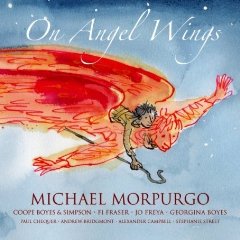
This disc is in effect a dramatised adaptation of children's writer Morpurgo's unusual and lyrical re-telling of the Christmas story, seen through the eyes of the youngest shepherd who was left to look after the sheep when the others went to Bethlehem.
The narrative is tellingly and wholly appropriately interspersed with renditions of various carols. Don't groan - for these are the real deal, not your boring same-old turkey'n'tinsel carols, but instead tend to be drawn from specifically local traditions (eg. South Yorkshire, Derbyshire) and historical sources. These are magnificent, radiant performances, typically bright and energetic and full of true spirit, ideally paced (nothing lugubrious or sentimentalised) and well harmonised in the best NoMasters tradition. I particularly enjoyed the four versions of While Shepherds Watched and the tremendously exultant Wesleyan hymn Curly Hark, then also Isaac Watts' Shepherds Rejoice, John Tams' Devonshire Carol and the glory-filled finale Nowell And Nowell, originally collected by Cecil Sharp in Cornwall.
The voices blend exceptionally well too, as you'd expect from these fine singers. As for the linking narrative - well, it's quite charming actually, and nicely characterised, and certainly entertaining enough for one listen, but in truth you're fairly unlikely to want to play it very often, if indeed again (at any rate at all soon), so it's rather useful that each section is individually cued on the disc and you can skip or programme out these spoken passages quite easily. For the carols themselves are so genuinely uplifting, so infectiously and joyously done, that you'll return again and again to these performances I'm sure.
www.coopeboyesandsimpson.co.uk
www.nomasters.co.uk
David Kidman November 2008
At first hearing you might just be thinking that Gerry's been recorded waiting for that train, for his voice has been given a touch of reverb akin to a station waiting-room - but you soon get used to that apparent reduction in intimacy, which proves deceptive as the recording soon settles down and extra instruments are judiciously introduced into the texture. Even though Gerry's debut CD Big Road Blues was an accurate reflection of the appealing live presence and strong musical personality of this fine "Yorkshire delta" bluesman, My Train Is Waiting goes more than one step further on down the platform and shows him keen to expand his horizons beyond the basic voice-and-guitar format while remaining absolutely true to those musical roots he clearly respects and gains inspiration from: not just standard, classic twelve-bar blues but also ragtime, country-blues and parlour-guitar music. Gerry celebrates, and revels in, the sheer diversity within the music that's normally umbrellaed under the overly all-encompassing "blues" label: a diversity that, like that diverted train, comes in as unexpected for many listeners. So the message is - don't write Gerry off, even if you don't think you like the blues. Give him a listen - and not just for his ever-imaginative treatments of classics and obscurities alike, and his use of continually varying instrumental textures (here, both six- and 12-string acoustics, resophonic and bass guitars and harmonica) by means of selective and creative multitracking. Here Gerry tackles material ranging far and wide, from Jesse Fuller, Big Bill Broonzy and Blind Willie McTell to Furry Lewis, Barbecue Bob and Blind Boy Fuller. Gerry's sleeve notes may be brief, but they're welcomingly informative (even hardened blues buffs will learn from Gerry's erudition!), and Gerry always credits both the originals and the versions from which he derived his prime inspiration. For Gerry's got a real feel for the music in all its many forms, and a great gift for making it interesting for the listener as well as the performer! And not only is Gerry a hell of a musician, coaxing just the right (wholly idiomatic) sound from his instruments, but he's not a bad singer - though his diction is arguably a mite too precise on occasion (Blind Blake's That Lovin' I Crave), and he comes a mite unstuck, I think, with the strained high register he adopts for Skip James' plaintive and disquieting Hard Times Killing Floor. This well-recorded new CD is a real credit to Gerry as an ever-developing artist. With a neat design and layout too by the way.
David Kidman
Almost as impressive as James Cooper's debut album Second Season is the fact that this London-based Australian designed the sleeve for Paul McCartney's single Fine Line, worked on the album art for Macca's Chaos and Creation and also the sleeve for David Bowie's Platinum Collection. Almost as impressive but not quite because this is a mighy fine debut.
If you find the over-emotional warblings of some of today's singer songwriters reminiscent of love poems written by a pre-pubescent teenager to the French mistress on whom they have a crush, then salvation is at hand. Not only is Second Season hugely enjoyable it's also literate, intelligent and grown up. It has the feeling of a musical portfolio, as a collection of songs it never sits still long enough to be easily defined.
The album opens with the freewheeling rock of Everything To Everyone, which is energetic without being over frenetic. Cooper, having got that out of his system, settles down to display the full range of both his songwriting and singing talents, beginning with the superbly light Love In London.
The closeness and intimacy of much of Second Season may be a result of it being written in the small French town of Sarlat, which provides the obvious connection for Couch In Montmatre and also gives the album a sense of completeness.
While Couch In Montmatre is undoubtedly one of the album's cleverest examples of wordplay, it sounds a bit too Beautiful South (the band not the region) for my liking, clever but somehow lacking in depth, however that's a personal prejudice and should be dismissed as such. It's also immediately and completely overshadowed by the infinitely superior Dream Trader.
Without a central core you find yourself searching for comparisons where you can find them, Sammy for instance is a relaxed piano ballad in the style of early Billy Joel while Dry Reaching For Grace is honest and tender.
It will be interesting to see the direction that James Cooper settles on once the critical dust has settled on Second Season because the album leaves all roads open, it also sets down a marker. However make no mistake, James Cooper is here to stay.
Michael Mee
Released alongside Cooper's Master Sessions album with Eric Brace that saw them backed by Green and Mike Auldridge, this time the singer-songwriter and pedal steel maestro are in duo mode, albeit with the same backing musicians and a few special guests that include Brace, Rodney Crowell and Kim Carnes on harmonies.
As before, this is old school country and folk roots with a mix of covers and self-penned storytelling that nod to Cooper's influences. Opener Dumb Luck chugs along in the same relaxed mood as classic Don Williams and should itself cropping up on others' albums in times to come while Cooper's other memorable inclusions include Champion Of The World which, if you listen carefully, sounds like a slower paced Crawling From The Wreckage, Elmer The Dancer, a tribute to an old timer concertina player with Carnes on backing, and the dusty weary optimism of Gospel Song.
However, other than some terrific Green solos, the album's distinguished more by its choice of covers and the emotions Cooper invests in them. He makes the keening sadness of Train To Birmingham, written but never recorded by John Hiatt, his own, invites Rodney Crowell to revisit a poignant version of Tulsa Queen, the song he co-wrote with Emmylou Harris, and brings a contemporary resonance to Tom T Hall's returning soldier heart-tugger Mama, Bake A Pie.
Kristofferson is up there at the top of the list of Cooper's heroes, so it's only natural that he's represented here by a dusty, cowboy take on Here Comes That Rainbow Again and, through stylistic comparison, by Chris Richards' Bells Of Odilia, a tale of being called to redemption that he declares a companion piece to Sunday Morning Coming Down. He's not far off.
To be honest, while a nice self-effacing tribute, the album title isn't the most imaginative or attention catching I've ever heard, but give it a listen and you'll find what lies with considerably more memorable.
Mike Davies February 2011
This East Nashville singer-songwriter has been gaining plaudits of late, and Cautionary Tales, his debut CD, has received prominent endorsements from Kris Kristofferson, Tom T. Hall and Todd Snider.
Peter's first outings as a performing musician (he's already a prominent music journalist over in America) were helping Todd out on bass or production duties, and it was Todd who pushed Peter into making a full-length album. They gathered together some of their favourite musicians: Lloyd Green's exceptional pedal steel work permeates the musical textures, giving the album more than just an atmospheric country backbone, while Jason Ringenberg (harmonica), Bill Lloyd (electric guitar), Jen Gunderman (piano) pitch in as appropriate and Dave Roe (bass), Pat McInerney and Paul Griffith provide a suitably solid rhythm section and a unified sound.
As for Peter's songwriting, he uses the time-honoured blueprint of the cautionary tale as a means of conveying the feelings of his characters, who tend to be mired in troubles, most of their own doing - which gives Peter the cue for some sympathetic storytelling. The best of these tend to be those which have a satisfying musical vision to complement the portrait, and those which lovingly reference musical legends. The poignant One By One has the figure of Johnny Cash lingering around the barsmoke, while Thin Wild Mercury (co-written with Todd) reflects on the night Dylan threw Phil Ochs out of his car, and Andalusia finds the spectre of Hank Williams wandering through a town in Alabama where Peter's grandfather used to live. But I have to say that I can't relate to 715, the story of baseball player Hank Aaron, or Boy Genius, or Couple Of Lies (another baseball yarn). Interestingly too, two of the album's strongest tracks in terms of impression made are Peter's covers of Eric Taylor songs: All The Way To Heaven (an irresistible true story, apparently) and Mission Door (which features Nanci Griffith, Todd Snider and Fayssoux McLean on extra vocal parts).
On the evidence of this record, I wouldn't quite class Peter a major songwriting talent, but he's produced enough interesting material to suggest a watching brief be kept on his future activities.
www.myspace.com/petercoopermusic
David Kidman November 2008
Ray Cooper - best known as Chopper, of course - has been a driving force in the mighty Oysterband for a bit over 20 years, as well as a veteran of session work far and wide. In both of those arenas his strident, forceful cello playing has made its mark with a vengeance, indeed become something of a trademark. The graphically-titled Tales Of Love, War And Death By Hanging, Chopper's long-awaited first-ever solo record, carries that trademark aloft like a gold standard, while honing in on his prowess in hitherto less widely profiled areas, notably his own rather fine songwriting.
The seriously widescreen quality of Ray's musical vision matches its altogether rugged demeanour (mirrored in the artwork - plenty of images of a proud, anguished, embittered "man with a mission"). It's a rich, full and forward production, a deeply layered yet admirably transparent sound cradling that big vocal presence and its passionate delivery.
Tales... was produced and recorded in a small log cabin in Sweden (a country which Ray's made his home for the past ten years), Ray accompanying himself on cello, harmonium, guitar, mandolin, mandola, harmonica and kantele, but with assistance from friend and neighbour Patrik Andersson, who plays violin, viola and hardanger fiddle and contributes the vital, earthy string arrangements that seem to arise out of the very native soil. For there's a distinct Nordic musical sensibility permeating the sound of the record, a life-force stemming from a deep cultural wellspring into which Ray has tapped in order to realise his own artistic vision (for instance, a stately Swedish bridal march envelops the reassuring lyric of I Kiss The Night). As Ray explains, "the heart of the album lies somewhere between the old and the new, at times giving a pithy relevance to events that happened in the distant past."
Thus, Ray's own songs may tellingly reinterpret, or put a fresh (contemporary) slant on, events such as Agincourt (The Grey Goose Wing), or else depict a more generalised character type (The Puritan), or take a more personal angle on the themes of isolation and identity. Then, the homey Stephen-Foster-style fireside intimacy of In Your Sweet Arms forms a contrast with the larger-scale retelling of McPherson's Rant; Ray also invests the traditional Ye Jacobites By Name with true heroic strife (and a lengthy cello prelude-cum-extemporisation).
Stirring and spacious: rather like Ennio Morricone galloping through the brooding grandeur of the Nordic forests with a trusty cello as sword and emblem. Mightily compelling stuff.
www.myspace.com/raycooperchopper
David Kidman April 2010
You'd not call him prolific. The Southern California songwriter released his debut album, Revenge Will Come, in 1982, produced by best friend Jackson Browne and featuring the ringing guitar rock of Full Cleveland and El Salvador's biting attack on US foreign policy in South America.
This is his second. It's a touch vague as to why he's been off the rader in the interim, other than to say he went into law and he and his wife raised two sons, but apparently he started writing again in 2000 and finally decided to commit things to recordings some five years later.
With Browne credited as executive producer (though guitarist Greg Leisz did the actual knob twiddling), it's a welcome return and a concept album of sorts in that the title characters (nothing to do with princesses and rumoured lovers) recur through the album, moving through different lives, vicissitudes and narratives that link (in non linear fashion) the songs. Thus the character in the fiddle scraping I Am The One was responsible for the woman's death in Muddy Water while apparently that's Hank Williams on the night he died on The Only Wicked Thing.
Of course, you don't need to try and map out the players or the journey to savour Copeland's storytelling and his earthy, dust-throat voice that variously calls to mind Prine, Hiatt, Cash and, most especially, Guy Clark. Musically, the rock of his debut has transformed into old school Americana with shades of folk, blues and hillbilly, shuffling along on brushed percussion with Palace Of Love, riding the hobo railway rhythms and bluegrass fiddle for the Clark-like speak-sing Blue Room, Red Suitcase and with Leisz's pedal steel taking a keening showcase on Typical.
Heather Waters provides harmony vocals on the title track, a terrific number that could have come from Old No 1, while violinist Carla Kihlstedt does likewise for the intriguing (Iraw war themed?) Count The Bodies On My Crown and shares lead on the superb, euphonium and pump organ coloured Texas barroom waltzer Palace Of Love. But it's Copeland's seasoned, relaxed delivery, his way with a simple but effective melody and his Carver/McCarthy like novelist's sensibilities that make this a solid contender for the year end's best of lists. Let's hope he doesn't wait another quarter of a century for album number three.
www.mysongwriters.com/GregCopeland
www.insiderecordings.com/gregcopeland
Mike Davies May 2009
I didn't manage to finally get my hands on a copy of this CD until I experienced the magic of the Young Coppers live in York back in the spring, so this review of the Coppers' 2007 Xmas release will now be a full year late! But the music it contains is sincerely timeless: ancient and perennially relevant in the best tradition of seasonal music. Though subtitled The Carol Collection Of The Copper Family Of Rottingdean, Sussex, it actually takes the form of a sequence of songs sung by the Copper family at their annual Christmas family reunions - chosen as much for their quality of singability as for their seasonal import, one suspects, and in any case the term "carols" here includes a starkly beautiful evocation of winter (Christmas Song, aka The Trees Are All Bare) in addition to the family's own delightful version of The Twelve Days Of Christmas and an obscure piece The Angels Sang which appears to have been used within the Salvation Army but whose true origins elude even the disc's sleeve-note writer Vic Gammon! In fact, over half of the selections are either determinedly obscure or else the province of only the most hardened carol enthusiasts - and welcome they are too, and well sung in to the bargain. There's Rolling Downwards, a solid Baptist piece from Sankey's Sacred Songs collection, and the Sheffield Carol Christians Awake, Arise Rejoice And Sing makes an appearance. And inevitably, the glory-filled fuguing tune Shepherds Arise gets a fulsome airing as the disc's finale. As regards the personnel on these recordings, it's basically drawn from the present-day Copper Family (John and Jill, with Jill's husband Jon Dudley), along with the six members making up The Young Coppers group.
The album also includes some tracks which feature the late Bob Copper (who died in 2004), yet the notes don't give any real clues to recording dates apart from in the case of the two archive selections (Christmas Presents was recorded in the 50s by Bob with cousin Ron, and the introductory brief reminiscence by Bob's father Jim is taken straight from a 1951 radio broadcast). This collection forms a worthwhile adjunct to the series of home-grown Coppersongs recordings and the classic archive collection on Topic, and will prove gently uplifting in its own relaxed and measured way.
David Kidman November 2008
This disc was actually released over a year ago, but didn't get reviewed on NetRhythms at the time. The omission is inexcusable, for it's unarguably one of the most important reissues of archive folk material to come from the Topic stable (and there've been some!), certainly on a par with the marvellous, if massive (20-volume) Voice Of The People set of traditional song that came out a few years ago. Indeed, the absence of the redoubtable singing family from deepest Sussex from that commendable and otherwise exhaustive set was one of its very few deficiencies. Fear not, for this new 71-minute CD fills that gap admirably; these recordings date from the period 1951 to 1963 (though you mightn't realise it, for the quality is superb) and were originally made for the BBC and EFDSS.
In the main they feature just Bob and cousin Ron, although there are a handful that feature Bob's father Jim (two solos, the rest duets with Bob), whereas Jim and Bob's uncle John (who both died in the early 50s) join Bob and Ron for just three of the songs, including the classic that gives this collection its apt title. The Copper Family has been singing in its distinctive "southern harmony" style for the best part of 200 years, and the current incarnation of the "family group" is headed by the charismatic Bob, now in his 80s and still going strong. Recordings of a more recent vintage are currently available from the Coppers themselves, but the performances on this CD were among the first of the family to be recorded, thanks to the enterprise of the likes of Seamus Ennis and Peter Kennedy.
It's no exaggeration to say that these are timeless songs in timeless performances, which have provided the inspiration for generations of folk singers and revivalists from the 60s right up to the present; surely no more persuasive demonstration of the power of the folk tradition, its songs and its singing, could be imagined, and for anyone interested in English traditional singing this release is an absolutely essential acquisition whose importance cannot be overestimated. Oh, and the two substantial and ultra-informative booklets enclosed within the jewel-case include a wholly readable biography and commentary as well as the full song-texts, and must count as among the most comprehensive of their kind, really adding immensely to our understanding of the family and the social context. A totally excellent package.
David Kidman
Copper Kettle - Two Guitars And A Song (Destiny Productions)
Copper Kettle is a well-regarded West Yorkshire (Dewsbury-based) duo consisting of Michael Forsyth and Brian Firth, and this is their second CD release. Like their first, Kettle's On, it's as much a showcase for Michael's beautiful, sensitive self-penned songs as for the duo's equally sensitive and distinctively gentle style of performance. This time round, their signature unpretentious, mellifluous and nicely unobtrusive twin-acoustic-guitar accompaniment is boosted on many of the 14 tracks by some well-judged (and thankfully not overdone) keyboard and bass playing courtesy of the album's producer/mixer/editor Pete Earnshaw. So as you can see, the CD's title is probably more representative of Copper Kettle's live act! The internal balance on individual songs varies between - for the most part - excellent (extremely clear, as on A Farmer's Plight and I Didn't Want To Go To War) and very good if just a little opaque (Farewell To The Sea).
If you've seen Copper Kettle live, you'll know how their performance can cast a unique spell (even if some nuances and subtle vocal shadings can get lost occasionally in the sheer consistency of pace or mood). Michael's songwriting is steeped in compassion and understanding for and of his fellow human beings and shot through with an attractive, reflective yet unsentimental nostalgia; his songs make a considerable impact through words and melody, notwithstanding his knack of creating catchy and memorable choruses for many of them. In both respects his writing can be seen to have a certain kinship with that of Alan Bell, I feel, and especially so in the embracing of simple pleasures and genuine, honest human values expressed with a sense of "folky craftsmanship" that in these cutting-edge days is often viewed (even unfairly disparaged) as old-fashioned, even outmoded - but this kind of writing still has a place in folks' affections, and very probably always will have.
A slight drawback for some might be that the vast majority of the songs are uniformly medium-paced, although the lads are to be given credit for having learnt from Album Number One in the sense that they do their utmost here to mitigate any feeling of inevitable homogeneity through varying the accompaniments and alternating vocal leads - gambits which by and large work well. Each of the lads has a special gift as regards vocal delivery - whilst Michael's is the more natural "folk" type voice, Brian's superbly controlled vibrato-rich tenor is possibly more reminiscent of the art-song or light-operetta genre than the folk world, and yet each singer conveys the essence of the song quite expertly.
My overall feeling is that to arrange to savour each song individually (rather than playing the entire 63 minutes in one sitting) is to get the best of the softly simmering Copper Kettle brew; I'd recommend you do so at leisure, for this is a lovely collection of songs well sung, that if anything prove even more persuasive than the duo's live renditions of the same material. And the CD's very well-presented too, with booklet containing full lyrics.
David Kidman
Johnny and Mike have for some years been acclaimed as two of England's finest singer-songwriters, and the idea of their teaming-up for a few duo gigs was an inspirational one. Since 2005, their joint concerts have both consolidated their individual reputations and won each many new fans, and at last we can hear the glory of their collaboration in permanently-available disc form. Although their singing and style of writing are quite different, they do share a gift for apparently effortless melody and gentle expressiveness of thought, qualities which are demonstrated in abundance in their joint performance. It's clear from the way they share and perform their songs that Mike and Johnny both deeply admire and respect each other's creativity, and Breaking The Silence is one of the most impressively natural examples of true duo working that you could possibly get. On this truthful "what you hear is what you get" live-in-the-studio set, recorded down in North Cornwall, Johnny and Mike perform a total of 15 songs, of which just over half are thoughtful and sensitively managed revisits of well-loved songs from the writers' back catalogues. These include superb new renditions of songs that have become classics: Mike's Not A Matter Of Pride and Wrong Side Of Midnight (and Breaking The Silence itself of course), Mike's wonderful Reaching Out For Love (co-written with Ewen Carruthers), Johnny's Never Lost For Love and that beautiful paean to Rydal – to name but a handful. And not forgetting Postcards From Cornwall, the evocative Dave Bell lyric for which Johnny composed a melody... Alongside which, and very probably the jewels in this disc's crown, there are three songs which mark the debut of Johnny and Mike as a songwriting team: the simple but powerful Survival (words by Mike, music by Johnny), This Heart Sings (lovingly dedicated to Sylvie Smith, a friend to many artistes) and the reflective We Had It All. Finally, the album contains four covers, the pick of which for me are Susanna Martin (with words by John Allison adapted from transcripts of the Salem witch trials) and Karine Polwart's wonderful The Sun's Coming Over The Hill. Well I said "finally", but actually you need to leave the disc playing (after Up On Cripple Creek has subsided in laughter) for a bonus cut, recorded on tour, which features a capacity audience singing along on Mike's Old-Fashioned Saturday Night - this conveys perfectly the easy rapport the two men enjoy with their audiences, and the convivial communal atmosphere of one of their gigs, and forms an ideal memento to close the disc. Throughout which, both performers give of their very best in an ideal setting, with the two mellifluous guitars (or Mike's guitar with Johnny's keyboard) melding together in glorious counterpoint to the men's equally glorious vocal harmonies. Altogether, a supremely classy disc.
www.johnnycoppin.co.uk
www.mikesilver.co.uk
David Kidman October 2007
Johnny Coppin - The Winding Stair (Red Sky Records)
Many of us have fond memories of Johnny's work with 70s cult folk-rock band Decameron, but his solo work since has been sporadic, annoyingly so for those of us who appreciate the high quality of his writing. Johnny's last solo album of fresh new material was Force Of The River, which came out in 1993. But now, after 12 years of releasing mostly nothing but seasonal albums and compilations of earlier material, this underrated Cotswolds-based singer and songwriter has at long last taken the plunge again by releasing The Winding Stair, a full-length CD which consists entirely of new recordings. Although it's nominally a solo Johnny Coppin album, around half of it takes the form of an artistic collaboration with fellow singer-songwriter Mike Silver (now there's another excellent fellow who all too rarely receives the acclaim and profile he so deserves!). The CD's 13 tracks intersperse the four new songs/settings by Johnny himself (two of these have words by Mike S) with some of Johnny's favourite contemporary compositions (Karine Polwart, Martin Graebe, Richard Shindell, Paul Metsers) and a couple of items involving rearrangement of words from traditional sources. The sound of this new album is distinctively mellow yet with a loving attention to detail that's the hallmark of both key participants, and since it features the expert playing of Mike Silver, Mick Dolan and Phil Beer it's thus mercifully free of the occasionally blander and more wishy-washy accompaniments that have spoiled some of his other releases (Johnny's own piano playing on around half the tracks here being the only concession to keyboards!), I've heard it said that Johnny's voice calls to mind that of Jim Moray - well, certainly it shares some harmonic properties and range as well as an evident propensity for the higher register, but Johnny's gift for convincing phrasing is streets ahead of Jim, being completely unaffected, unmannered and natural in inflection and delivery, replete with grace and poise and a real joy to hear. I particularly liked Johnny's fresh setting of Gloucester-born First World War poet Ivor Gurney's The Fire Kindled, which sensitively counterpoints Martin Graebe's From Severn By The Somme a little earlier in the running order. All in all, I'm convinced that this lovely CD will give much pleasure. Although, as someone once said of the slow movement of Mozart's Clarinet Concerto: "the abundance of such beauty almost tires the soul"; and indeed there comes a point towards the end of this CD when I can understand exactly what that commentator meant.
David Kidman
None of the band were born when the artists who influence their work were at their peak, but somehow the DNA of the mid to late 60s has been embedded into the Wirral quintet's genes so deeply that their latest album might well have found its way on to the turntables of some 1967 West Coast love in.
From the opening Arthur Lee tinged psych-folk of More Than A Lover with echoing Morricone reverb guitars and heady swirling melody that conjure the same burning desert imagery of America's Horse With No Name, you're transported back to days when you weren't a real music buff unless you'd acquired albums by Clear Light, Fever Tree, Earth Opera and Savage Resurrection never mind the Airplane, Dead, Doors and Byrds.
Produced by John Leckie, the band's sixth album is unquestionably their best yet, packed full of irresistible blurring melodies that are as newly minted as they are as old as time with songs that deal with love, loss and the changes wrought by the passing of years. Guitars jingle, hooks cascade over a waterfall of descending chords while James Skelly's delicate-bruise of a voice aches its way through hurt and regret (will the year bring a more beguilingly sad song than Walking In Winter with its woodwind trill and Simon & Garfunkel traces?) but also holds its head up to the sun on the optimism of 1000 Years.
You'll hear shades of CS&N there, Skelly's burr recalling Graham Nash, while elsewhere they paint with the colours of Love (the title track would have fitted neatly on Forever Changes), Peanut Butter Conspiracy, David McWilliams, McGuinn, West Coast Pop Art Experimental Band (notably on Coney Island), Strawberry Alarm Clock, and, on Two Faces, slyly share a Pleasant Valley Sunday with The Monkees.
There's no point trying to isolate favourites because from the opening notes to the closing distortion guitar work of North Parade and its fleeting ghostly piano coda, everything here is a luminous quicksilver masterpiece. The only thing you can do is put it on an endless loop, surround yourself with hot smoke, sassafras, incense and peppermints the colour of thyme and indulge.
www.thecoral.co.uk
www.myspace.com/thecoral
Mike Davies July 2010
The Coral - Magic & Medicine (Deltasonic)
The Coral's follow up to their eponymous debut album opens with the strange, slow organ-driven In The Forest. This is a desperate tale and sets the scene for the rest of the album. Don't Think You're The First has a 60s feeling to it and this underlying theme continues throughout until Confessions Of A.D.D.D. with its snappy guitars and virtual helicopter at the end, which is an anathema of the title.
Liezah is an acoustic, simple song that creeps up on you although the simplicity of the song belies the message of the lyric. The next offering, Talkin' Gypsy Market Blues is modern British R&B at its best. The 60s return with 'Secret Kiss' which could have been the theme tune to a 60s TV show/film. Milkwood Blues is a strange one with its numerous beats, including waltz, stinging guitar and violins. Bill McCai will be a concert favourite with its upbeat style. A story in a nutshell with excellent guitar work and there's plenty of scope for audience participation. Eskimo Lament opens with 'Rain, rain go away' - it should be called Scottish Lament. There are some Memphis funeral horns in here and after a few listens it has become one of my favourites. Careless Hands is another 60s sound alike. Pass It On is acoustic led and is another favourite as it is, quite simply, a very good song. This was a single but didn't do as well as it should have but, then again, it isn't always good songs that do well in the charts. The penultimate track All Of Our Love is another strange, eerie effort. It's acoustic and almost Cure in its execution.
There is an undercurrent of menace throughout the album and it is very dark in places. I'm sure that the album will do well on the showing of their debut but I'm sure that there is more to come from The Coral. I just hope that they don't run out of steam first.
David Blue
In 1996, the iconoclastic folk-punk-rock outfit of many faces Cordelia's Dad released a live album (Road Kill) which ostensibly signalled the end of a distinct phase in their career, being a culmination and statement of all they had achieved in the sphere of thrusting full-on electro-charged music. The intention was that the members of the band would continue with both acoustic and electric manifestations, but confusingly so under different names, as well as leader Tim Eriksen releasing solo albums in a more austerely traditional mode (and also memorably contributing to the Song Links 2 project last year). Only Tim's side of this arrangement seems to have come to pass, and here some years later is the first proper group release (aside, that is, from the acoustic Spine back in 1998) to come our way - and even then, with almost no publicity; this is a shame, for it's a typically eclectic, wildly schizophrenic album with so much going on it's difficult to get a measure of on even half a dozen plays. And yet it comes over as the most rounded, and overall best, of all the Cordelia's Dad group albums so far. It's plain weird, but the album's schizoid qualities actually count for it rather than against it, and give it a striking, if perverse level of unity. I love it to bits, every strange moment, from the crashing, blundering punk stop-start-Beefheart charge of Little Speckled Egg to the stark acappella cut Despair and the 1848 sacred-harp piece Brethren Sing, the Doors-like brooding of Eyelovemusic, the Dead-like weirdness of Inhaler, the seriously chilling, sinister and menacing Sioux-gothic of Hammer, the bare-bones acoustic modal keening of the sombre traditional Dark And Rolling Eye and the proto-garage workout of Rock Me (To Sleep). Deep melody and deep discord walk hand in hand, proving apt bedfellows in the manner born of equally deep, primordial tradition. Both timeless and contemporary, Cordelia's Dad have always managed the inherent dichotomy of severe old-time folk and grinding punk with a surprising degree of credibility, and What It Is is indeed what it is at its very best. What I do find most weird, though, and well nigh inexplicable, is that although the tracks gathered together for this album date from two different studio binges at around 1997 and 1999, during a period when Cordelia's Dad had deliberately eschewed any sense of corporate identity as a band, at least in public, the recordings weren't mixed for release till 2001. So what the hell's happened since then? - it sure begs the questions, and plenty of them; and we certainly can't let the guys rest easy with this fabulous offering. There just has to be more where that came from? Lots, please!
David Kidman
Co produced by Mark Howard, who'd just polished off World Without Tears for Lucinda Williams, a combination of no money and a desire to capture the intimacy of her gigs led them to three days of off the cuff recordings in May 2003 with assorted sessioneers that included John Mayer's guitarist Michael Chaves. With half the album done, she returned for five days in September, this time with Emmylou Harris bassist Daryl Johnson and Victoria Williams's guitarist Josh Grange on hand, to finish the job.
Listening, there's no sense of any corner cutting, rather it unfolds with an organic relaxed warmth, Correia's scratchily high pitched, sometimes smokily adenoidal voice calling to mind hybrids of Jeff Buckley, Victoria Williams, Patsy Cline and Norah Jones.
The bittersweet wistful diary entry 59th Street is a pure New York love song, inspired by driving away from a hotel in the rain after having been dumped by her lover. It calls to mind both David Gray and Randy Newman and should prove to be something of a classic in her repertoire. But then the album's packed with those. Dotted with the travels of a restless soul, it moves through the piano doodling California (about moving to, well, California), Coney Island USA recalls getting drunk at a birthday celebration and missing her train station, the spare, acoustic plucked title track finds her in a New York club wishing she was back home as a muted trumpet parps into the wee hours with the jaunty ragtime Dollar Lake is another tale of being picked up by the wrong man and being left holding the emotional and monetary bill.
Those jazzy notes drift through the brushed lazy On Second Thought where she catches herself yearning for her gone man and then the considers how the memories are better than the reality. Calling in her musical influences, she turns to Tom Waits bluesy shapes for the lurching march beat swampy slide guitar blues The Devil & I, a suitably hoodoo mooded number stemming from an experience with a hand-holding ghost at a friend's house. When she sings the line' smoke on the water', you suspect any Deep Purple reference isn't accidental.
It's not all autobiographical. There are cinematic stories and snapshots too. The cello introed Hold On is sung in the voice of a heroin addict writing to her daughter telling her how she keeps her photo over her bed while she was incarcerated in California and that she'll see her when parole comes in six months. But how she still needs a little something to get high. It's heartbreakingly unsentimental. Elsewhere, slightly echoey in the mix her voices soars over brushed drums and gypsy violin for the eye of the beholder Beautiful/Ugly.
The album closes with the gospel hued Love Is, a late night swaying, inspirational slow swelling torch song of an aching, searching heart looking for love in any place that's going, about walking in the rain and just getting wet but still keeping your head up and taking your soul and worn out shoes with you into the promised land. This song alone would be enough earn Correia a room in the halls of musical fame, the album earns her a whole damn suite.
Mike Davies
Cosmic Rough Riders - Deliverance (Raft/Measured Records)
Mike Davies
Cosmic Rough Riders - Too Close To See Far (Measured)
It's almost two years since they released any new material, but this more than makes up for the wait and marks an auspicious debut for co-founder and main writer Stephen Fleming stepping up to lead vocals.
From the opening Justify The Rain you're plunged right back to the halcyon ringing 12 string days of The Byrds and Searchers, the album irradiated with their burred softly bruised harmonies and summery melodies to such glorious effect you want to rush out, steal a softtop and find the nearest highway. It's not all McGuinn and Parsons, the 1.11 of Tomorrow May Never Come is pure Brian Wilson and She's Never Around and Stupid You both pulse with the heart of the early Beatles.
It's not all sunshine inside the songs though, the majority of them (For A Smile, Justify The Rain, Because You, and Blind especially) veined with feelings of relationships broken down, emotions betrayed, of leaving dead wood behind and lacking touch with yourself while Life In Wartime pushes things into the universal with "love the victim of this life in wartime.' But tell me, when have songs of self-doubt, fear of failing and emotional distancing ever been couched in such a glorious rush of guitar pop! Grab a copy of the CD2 version of the Because of You single too and treat yourself to the best version of Helplessly Hoping since CS&N themselves.
Mike Davies
National Ransom is effectively a sequel to Elvis's Americana-infused 2009 release Secret, Profane And Sugarcane; again, like that offering, it's been produced by T-Bone Burnett, and recorded with lightning speed (less than a fortnight!) over in Nashville. Featured in T-Bone's carefully coordinated, copiously upholstered instrumental backdrop we encounter the various members of Elvis's combos The Sugarcanes and The Imposters mixed and matched together with guests Marc Ribot, Buddy Miller, Leon Russell and Vince Gill.
That information may give the (accurate) impression that National Ransom is, musically, a slightly wayward set, one that if anything overtly owes less to Americana and country than its predecessor, while retaining both that record's sense of adventure and its slightly thorny opacity of texture. Also, and without for a moment wishing to imply that EC's aping Richard Thompson, there does seem a distinct kinship between the two master songwriters in a number of aspects of this new release, not least the choice of targets and the sardonic take on that subject-matter. The opening (title) track's carnivalesque usual-suspects critique of the money-men's handling of economic crises contains some suitably caustic guitar work, and cries out for a response, which it receives at the album's bookend, A Voice In The Dark, a chummy, if mildly echoey ballroom-cum-hot-club tea-dance with scat vibe, providing an unexpectedly hopeful (if maybe not entirely trustworthy?) glimmer at the end of the road.
Between those points, much of the mood of the album is brooding and menacing, with EC outing some at times particularly chilling subject-matter; for instance on One Bell Ringing, where a man dreams of his own interrogation and demise, while on You Hung The Moon he engages crooner mode with a sinister elegance in order to convey a hushed séance. The wistfully persuasive Jimmie Standing In The Rain has a kind of weary Al Bowlly's In Heaven tread to it, with some delicately managed instrumental touches to boot including trumpet (Darrell Leonard), celeste (Steve Nieve) and fiddle (Stuart Duncan).
Then there's the sparse fingerpicked setting of Bullets For The New Born King (voiced by a regretful assassin), contrasting with the brisk-trot "rock and roll as it sounded in 1921" (love that description!) of Slow Drag With Josephine and its mandolin, fiddle and banjo fills, and Five Small Words, where a heavy-duty Telecaster twang casts its own chunky "shadow" over the bitter lyric. I Lost You (co-written with Jim Lauderdale) thankfully takes its uptempo country riff into pounding Imposters territory, and Dr Watson I Presume sports some keen vocal harmonies (Vince Gill) and gleaming dobro (Jerry Douglas) to point up its cheekily referential lyric. The ominous simmering swampy soul of Stations Of The Cross, with its uncertain melodic progression, conveys the sense of the writer distancing himself from his own sentiments, while Church Underground provides a skewed portrait of a nightclub singer's path towards redemption.
Set against these telling reflections, the album has its share of arguably less inspired moments: That's Not The Part Of Him You're Leaving marries doowop and R&B with self-pitying country heartbreak, to not entirely convincing effect, while My Lovely Jezebel (jointly penned with Leon Russell) feels trite and has a distinct air of heard-it-all-before and the wannabe-Thompsonesque, teasingly power-pop essay The Spell That You Cast sounds a touch strained. But to be fair, there are enough genuinely unsettling and typically-EC moments for the set to satisfy and stimulate further listening, and it's still an Elvis Costello album I wouldn't want to be without.
David Kidman December 2010
Mr. Costello's latest release is heavily rooted in acoustic Americana, and can be viewed as a sequel to 1986's classic King Of America set, which was the first of EC's (now three) records to be produced by T-Bone Burnett (the second being 1989's markedly less interesting Spike). Unlike EC's first foray into classic country territory, the slightly laboured Almost Blue, it shares with King Of America the T-Bone hallmark of making a virtue out of subtle colourings and an understatement which carries through into EC's own vocal performance.
Recorded in just three days over in Nashville, Secret, Profane And Sugarcane conjures a wonderfully warm immediacy from its bare-bones rootsy late-40s-bluegrass/stringband-style settings, entirely acoustic and unamplified apart from some electric guitar from T-Bone himself on some of the tracks. The supporting musicians couldn't have been better chosen: Jerry Douglas' dobro provides the most telling signature, weaving brilliantly into, out of and around EC's sinuous vocal lines, often in tandem with Stuart Duncan's fiddle, while Dennis Crouch's double bass provides unerring rhythmic input and Mike Compton's mandolin and Jeff Taylor's accordion counterpoint some songs with an appealing Cajun-country lilt and Jim Lauderdale's vocal harmonies are well-judged throughout.
The title Secret, Profane And Sugarcane alludes in part to EC's as yet unfinished chamber opera about the life of Hans Christian Andersen (The Secret Songs), from which stem four of the album's thirteen songs (in fresh adaptations); these are intriguing and powerful creations indeed, all but one of these concerning the singer Jenny Lind (and her relationship with Andersen). The album's longest track (by a short measure!), the lazy shuffling jugband-style Sulphur To Sugarcane, is one of two songs co-written with T-Bone, the second of which (The Crooked Line) features a typically sweet-toned vocal harmony added by Emmylou Harris to the song's chorus. Several of the album's songs were premièred by EC on his Bob Dylan Show appearances in late 2007; there are solid country connections elsewhere, for I Felt The Chill is a writing collaboration with Loretta Lynn, while two others (including the classy Hidden Shame) were originally written for Johnny Cash. Another satisfying revisit is Complicated Shadows (originally cut 13 years ago on All This Useless Beauty), now benefiting much from its bleaker setting. The tone of many of the new songs is tender and charming (the somewhat early-Dylan-flavoured I Dreamed Of My Old Lover), thoughtful and affectionate, gently ironic on occasion rather than sardonic – and in the end distinctly attractive; and it was a masterstroke to end the set with a cover of the waltz-time Changing Partners, a mid-50s hit for both Bing Crosby and Patti Page.
All told, this is a very fine set indeed, although as yet perhaps not quite as good as King Of America (but time will tell); at the same time, the diversity and disparity within the corpus of songs – a feature which might have counted against it – is given a stronger unity by the well-coordinated backdrops. And the vinyl (two-disc) edition of the album has two additional tracks (though I really can't see why these couldn't have been included on the 51-minute CD as there's plenty of spare space).
David Kidman July 2009
This collaboration represents the fruits of the first major sessions to take place in New Orleans since Hurricane Katrina last August. It's both representative of the indigenous culture (for many, Toussaint's name being synonymous with that culture) and of the desire to make something positive out of the disaster, the continuance and thriving of that very culture against all the odds.
The two musicians met at a benefit concert in New York (where Toussaint is currently living while his home is being rebuilt), and felt sufficiently inspired to decide to work together on a set which includes a handful of new co-written songs as well as one really striking new Costello composition (the CD's title track) which points up, in typically clever wordplay as reflected in the near-anagrammatic title, the human disaster at the heart of the obvious natural one.
The trademark Costello combination of bitterness and deep affection permeates the new compositions, and musically he and Toussaint are extremely well matched, while deriving much pleasure from their supporting cast that includes fellow-Imposters (Messrs. Nieve, Thomas and Faragher) as well as a Big Easy horn-section. It goes without saying that Toussaint's piano skills are well to the fore, and he's not lost his touch over the years, as the brooding, rolling Ascension Day in particular demonstrates. Soulfulness is the order of the day, whether on the new originals or the "reinvigorations" of songs Toussaint originally wrote for folks like Lee Dorsey and (if I remember rightly) Betty Harris.
In general the album really cooks, but I do have a reservation in that Costello's distinctive vocal style, with its proclivity towards long-held notes and tendency to extreme emoting, doesn't always entirely suit the kind of soul that the New Orleans "brand" demands in its interpreters. Having said that, there's no denying either his level of commitment or his passion, and it would seem churlish to complain overmuch - especially since he sounds great on over half of the tracks, and in any case Toussaint himself takes the vocal on one cut (Who's Gonna Help Brother) too.
David Kidman, July 2006
Elvis Costello & The Imposters - The Delivery Man (Lost Highway)
Something of a cut and paste affair that's part story cycle conceptual album of songs revolving around the Southern anti hero of the title and his relationships, part a response to war on terror and the climate of fear and part a gathering together of songs he wrote for the Cold Mountain soundtrack. Often all combined. It's not the most unified of sounds, but it's one of the best things he's done in years.
It opens in raw form, the veins in the neck positively standing out as he and the band (basically the Attractions with Davey Farragher instead of Bruce Thomas) rip through Button My Lip with a rough bluesy clang that interpolates samples from Bernstein's America as he declares "don't wanna talk about the government".
He does though, even if not directly. The equally pumped up blues of Bedlam ("a version of the nativity story crossed with a refugee story") directs the vitriol at the Iraq war, albeit obliquely with talk of Moors and Crusaders and an obscure reference to the capture and rescue of Jessica Lynch. Moving closer home, Needle Time is an organ driven slice of tempo shifting r&b venom directed at "those sour English". Thematically linked to a vision of the idiot cousin of the primate family, Monkey To Man is more musically specifically a namechecking nod to Dave Bartholomew's 1954 r&b nugget The Monkey.
Last of the rockier pieces is the wonderfully rowdy honky tonker There's A Story In Your Voice, a cheatin' and leavin' song that sounds like it could have been penned by Nick Lowe at his country peak and duetted here with a marvellously trash sounding Lucinda Williams.
The remainder of the album takes the mood down. A slow swaying pedal steel and piano ballad Country Darkness is clearly one of the original narrative remnants in its images of disconnection, a train of thought that also pulls into the Jerry Ragavoy co-penned soulfulness of Either Side of Town.
The title track is a moody late night blues club that introduced the emotionally disreputable eponymous character and his three women, Vivian, Geraldine and Ivy while again introducing the cost of war in the image of the father shot in the back 'cos orders were misleading'. Ivy puts in a second appearance for the first of the Emmylou Harris guest appearances, providing harmony on Nothing Clings Like Ivy's minimal wounded ballad of tenderness blunted. Harris returns for the wonderful country ballad Heart Shaped Bruise', a simple country ballad that recalls her soul country days with Gram, and for a third time on the closing The Scarlet Tide, a simple vocal and ukulele version of the Oscar nominated number about rising above the tide of blood war unleashes that Alison Krauss sang in Cold Mountain.
Which leaves the somewhat disposable The Name Of This Thing Is Not Love, a surprisingly unimaginative song about domestic abuse and The Judgement, a knowingly cliched (courtoom images, you know) tale of a man begging his ex for forgiveness (ironically co-written by former Mrs Costello Cait O'Riordan) to an anguished vocal and a suitably dramatic old soul backing.
If you happen to get the UK edition though, there's an extra track, one that's arguably one of the cleverest things he's written. Shifting back to the album's fused themes of desperation, the politics of violence, and the lot of women and sounding like a showtune from some particularly dark musical, She's Pulling The Pin brilliantly juggles the lives of a female suicide bomber (grenade pin) and a pole dancer (hair pin) to juxtapose, as he's put it, "the most heartless part of our culture and the most desperate part of another". At the risk of a bad pun, it's an album that really does deliver.
Mike Davies
This still-incredibly-young Cape Breton foursome just gets better and better, and Feast, their fourth album release, bridges Scottish, Irish and Cape Breton Celtic musics even more credibly than its predecessors. The Cottars have by now been able to more fully establish a credible corporate identity, not least because the album's producer Allister MacGillivray (father of band members Fiona and Ciarán) has channelled his skills and energies away from the over-orchestration of the early records and into a faithful representation of the band's own considerable individual and combined talents (and blessed with a warmly detailed and entirely apposite recording).
At the same time, those talents have developed apace even since the band's earlier Rounder CD (2006's Forerunner); Fiona's singing has matured especially well, but the group's fiddle player Claire (Pettit) is now also emerging as a vocalist of some stature to complement the others, and there's some superb harmony work on several of Feast's tracks. The mixture of material on Feast follows a similar pattern to that of Forerunner, with a couple of instrumental tracks of predominantly traditional origin interspersed within a sequence of songs of largely contemporary provenance. Those instrumental selections really crackle along: they comprise a vitally-managed, fiddle-led Contradiction Set, and a sparkling guitar-duet sequence The Munster Suite (taken from arrangements by Julie Henigan and Sarah McQuaid) is outstandingly well executed by Ciarán and Bruce.
One of the standout vocal tracks is an ingenious pairing of Mark Knopfler's Fare Thee Well Northumberland with Claire's original tune The Purple Wave; there's also a clever, (musically) thematic link between the opening Overture and the tracks Young Munro and Oidhche Mhath Leibh (best known as the parting-song Goodnight To You), which demonstrates that some thought has gone into the planning of the whole record. The lyricality of Gordon Lightfoot's Song For Stephen Foster, Your Love's Return (bedecked with an ornate string arrangement) is contrasted with the tongue-twisting patter of the Clancys-style bar-ballad The 23rd Of June.
Fiona's written two songs for the record too, of which the sensuous yet enigmatic Hymn For N is an exceptional composition by any standards. Here, as occasionally elsewhere, Fiona sounds uncannily like Alison Krauss (not a bad role-model!). This well-rounded new collection is a feast indeed.
David Kidman April 2010
This new quartet of traditional musicians from the island of Cape Breton in Nova Scotia comprises two brother-and-sister duos (Ciaran & Fiona McGillivray and Jimmy & Roseanne MacKenzie) whose ages together range from 13 to 16 (according to the press release - or 11 to 14 if you believe the insert booklet instead - hmm!). Already voted "Best New Artist" at last year's East Coast Music Awards, Canada, the Cottars are already being touted as "destined to become the next Rankin Family", and seem set to follow in the illustrious footsteps of Natalie MacMaster and the Barra MacNeills in putting the traditional music of their native Cape Breton on the world folk music map. Each of the four Cottars is already a talented instrumentalist and/or singer, and three of the four also stepdance. Well, here on their debut CD they certainly make the right moves - at least for much of the time. Well rehearsed and much practised they undoubtedly are, with all the notes firmly in place and arrangements worked out in just the right detail to please a crowd. But vocally at least, that's not enough; as illustrated by Fiona's singing of Ballinderry, the timbre and phrasing of her voice betraying an excessive youthfulness that denies the song the proper gravitas (I recall the same criticism being levied, with some justification, at Bill Jones when she started out on the scene). Instrumentally, again, there's nothing wrong as such, but the element of "spontaneity" often seems manufactured, learnt for the show, rather than born of experience or true maturity. I also find the over-reliance on keyboard textures wearisome and pandering to the whims of the "arrangers" and their views on accessibility rather than the demands of the music itself. There's a disconcerting feeling, indeed, that the whole exercise is being guided, "orchestrated" even, by the youngsters' illustrious parents. However, the choice of material is intelligent, including as it does Tom Waits' Briar And The Rose and a clutch of fine tunes both traditional and composed. However, there are one or two serious exceptions. The CD takes a real nosedive midway through with the horrendously mawkish Scarlet Ribbons - yeech! (and it's one of the very few tracks on any CD that I've reviewed where I just couldn't bear listening right to the end) and near the end of the CD an over-cosy salon-ambient version of Here's To Song (which coincidentally, I believe, shares with Scarlet Ribbons a guest vocal by the album's producer John McDermott). But much of the rest of the CD makes for spirited listening right enough, as long as you manage to programme out the dross. Perhaps the Cottars ought now to be left alone for a while and only allowed back into the studio when they have more independence of thought and a more mature musical vision for which they alone can be responsible.
David Kidman
What a great title for an album - it conjures up so many images. This Yellow Dog debut was recorded, intentionally loosely, during a two day jam session and is an album that covers most of southern America's musical history.
Opening track, Morgan City Mississippi has a good time feeling and is the first of three self-penned songs. Cotton has an 'authentic' feel to his music, with excellent guitar and distinctive vocal. The gentle, finger-picking acoustic blues of Come On follows complete with sleepy vocal. The title track is almost ragtime until the vocal kicks in and Cotton gets rockin'.
The first cover is Blind Willie McTell's Dying Crapshooter's Blues – traditional blues played in a traditional style. That's It is a Mississippi Sheiks song and Hamilton Rott adds some serious fiddle on this instrumental slice of Americana. I'm So Glad is a Skip James song and Cotton's guitar playing comes into its own here and he produces a flurry of notes. This is just guitar and voice and you can hear the vocal effort as he stretches himself to the limit.
Was It Low? takes us back to the self written songs and is gentle, acoustic and world weary. Black Night, like the rest of the album, was recorded in one take. It features Big Jack Johnson on slide guitar and is Delta blues with a backbeat. Louis Collins is a simple, beautifully played piece of music. Its strained, emotion-filled lyric is almost spiritual and I defy you not to be moved. Blues For Big Bill, dedicated to his hero Big Bill Broonzy, has Cotton serving up a classy country blues and the fiddle sets it off brilliantly.
The traditional Bill Bailey is given the Cotton treatment and you won't recognise it until he starts singing. He really sounds as if he is having a good time here. The album finishes with the gentle, world weary Goin' Back Home which highlights Cotton's unique style.
As a debut album for his new label this must have his backers drooling for more. As a bonus, if you buy from Yellow Dog quickly enough then they'll send you their excellent sampler, Inspired Explorations of America's Musical Roots. It features their complete roster, the jug band style of the Bluff City Backsliders on Boll Weevil Blues and bottleneck blues on Mark Lemhouse's What's The Matter With Papa's Little Angel Child, contemporary blues Americana from William Lee Ellis (son of Tony Ellis, ex-Bill Monroe's Blue Grass Boys) on She Conquered The Conqueroo. If you add in The Bo-Keys classic R&B Under The Table, Billy Joe Duskin's blues and boogie-woogie piano, Betty & Dupree, Chris Cotton's aforementioned That's It, Calvin Newborn's blues/jazz on Ubiquity and Terry Robb's acoustic ragtime blues of Lucky Labrador then you have as good a slice of American music history as can be found.
www.yellowdogrecords.com
www.cottonchris.com
David Blue
Roger Cotton & Alan Glen - Born In Black & White (Note Records)
British blues stalwarts Cotton (keyboards & guitar) and Glen (harmonica & guitar) have played with the best in the business and this album of original blues shows why. The opener, Blow Diddley, is, as suggested by the title, played in a chugging Bo Diddley style. Alan Glen leads this on the harmonica and it's not hard to see why he is thought to be amongst Britain's top harp players. Cotton's classy organ work underpins the whole thing. Hard Life has smooth vocals from Rob King and is a silky contemporary blues. There's some up-tempo jazzy blues on Jam For T and the set up of guitar, bass, organ and drums lends itself to this. The blues really hit in with Glen's superb harp.
On The Waterfront is a smooth, slow, sophisticated blues and Crazy Life is a straightforward medium paced guitar blues with great fills from Cotton and another excellent vocal from King. Maxwell Street Mood is Chicago blues with top guitar and harp from Glen. There's a switch to R&B for Another Kinda Love and this up-tempo effort has Britain stamped all over it. Glen is the star again and King turns in another consistent vocal. The Purple Cat is an instrumental that showcases Cotton and Glen and I Don't Want Your Love is a slow, world-weary blues with wailing harmonica and a very strong vocal from Rob King.
The short but beautifully played Smitty's Corner has slow, swinging harmonica and the album finishes with Fat Tuesday, a jazzy blues with a live feel. All in all, a very good addition to any blues collection.
David Blue
Seven years on since the Irish singer's last studio album Red Blues, Coughlan's belated follow up arrived forged by the ending of a 13 year old relationship (she found her husband was sleeping with the nanny), parading her bitterness, resentment and defiance in songs about deceit, betrayal, desire, regret and all the familiar fallouts.
Yet, save for Mary Mary (a memoir of childhood abuse, hard times, and anger and one of the very few self penned numbers she's ever recorded), they're all by other writers. However, penned by regular collaborator Erik Visser, lines like the Celtic hued Antarctica's 'you lying bastard, whoring fraud you rotten stinking heat I thought you were my haven now I drown in your deceit' clearly channel her own emotions.
Musically, she sets the tone with the opening The House Of Ill Repute, a whirlygig song of bordellos that comes straight from the spirit of Weimar cabaret (and interpolating a musical steal from Teddy Bear's Picnic) with Coughlan cast, not in past Billie Holiday clothes, but as Lotte Lenya while the sexual playfulness of Tootsies even suggests a distaff vision of Sensational Alex Harvey Band doing Brel.
It's a canny selection of material and arrangements. Wally Page's Love Is Extra could well have been a lost outtake from Cabaret itself, Pornography's a Piaf-like burlesque waltzing chanson, Some Cats Know transforms the Leiber & Stoller song into a lazy Tom Waits late night blues (she also does a lovely gentle sway through the pair's more obscure Tango), she does a Led Zep on the Eastern wail rock blues The Whore Of Babylon, spreads sleaze-greasy brass across Sleep On It and takes a trip down the carnival for a cover of Kirsty MacColl's desire drenched raunchy Bad that, again, she mines for her own autobiographical content.
Over the years, Coughlan's had more demons than most to exorcise and seen more hells than the Catholic church would wish on anyone, this album is a testament to the fact that, while she may have fallen and been bent, she's always come back with a strength that remains unbroken.
www.marycoughlanmusic.com
www.myspace.com/marycoughlanmusic
Mike Davies March 2009

Another album another label. After two releases on Evangeline, her live tribute to Billie Holiday and studio album The Long Honeymoon, the Galway jazz-blues diva returns with a new collection of smoky late night club jazz and blues covers. The blueprint remains much the same, music curling through cool cigarette smoke and warm whiskey fumes, torch songs fanning the flames as a seductive stranger unfolds at your table and the 46 year old red haired Coughlan lays down the soundtrack for the night's smoulder.
It's well tilled ground but still fertile, Coughlan imbuing her interpretations of broken love affairs and seductive come ons with acceptance rather than regret. As ever she displays a fine choice of material, ranging here from Ain't No Love In The Heart Of The City (most popularly known via Whitesnake), Randy Newman's You Can Leave Your Hat On, Peggy Lee's Black Coffe, a laid back sway through old Chicken Shack hit I'd Rther Go Blind that eclipsed her own previous recording and evergreen chestnut One For My Baby.
Her affinity with Holiday is revisited with another take on Strange Fruit while a one day collaboration with Canadian trio Tri-Continental produces her take on guitarist Bill Bourne's dark blues-funk lurcher Portland. Only her interpretation of Sly & Robbie's Pull Up To The Bumper, immaculately played but stripped of the feral sensuality Grace Jones brought to the table and sounding as if it could devolve into alive bore, lets down an otherwise top notch album.
Mike Davies
A Choctaw Indian from small town Oklahoma, recorded in a friend's basement Crain's debut 5 track EP (subtitled 'A Musical Novella') seems destined to make quite an impression. Woody Guthrie and Flaming Lips seem to get thrown up as influence markers (mainly since they all come from the same state) but while the former's certainly in musical evidence (though no more so than, say Neil Young or Dylan) her singing style is probably best described as a sort of rural pixie folk Bjork. She doesn't swoop to such extremes, but she's certainly got a very distinctive vocal, slightly glottal in places (if you didn't know her origins you might suspect Sarf London inflections) and occasionally reminiscent of the young Buffy Sainte Marie.
If her songs had nothing to say, lyrically or musically, hearing her sing them in that throaty rasp would still be worth the experience. As it is, having studied EngLit at college and honed her playing with years on the road, the 21 year olds writing has equal rewards. Referring to them as chapters rather than songs, her southern gothic tales deal in stories of love, hate, despair, betrayal, death and redemption.
Opening on harmonica notes, the rollicking folk rock The River tells of a preacher who drowns those he baptises while infatuation and loneliness provides the thread of In Smithereens, the Search for Affinity and The Last Stanchion Goes Belly Up would seem to be about a tendency to self-destruction in her relationships.
Musically lacing the folk core with experimental, ambience and found sounds, her melodies are intoxicating too, a skewed waltz on Beloved, We Have Expired, spooked and swampy on The Last Stanchion and jauntily poppy for Traipsing Through the Aisles. I await her next publication with interest.
Mike Davies September 2008
Another of those "how and why has this guy passed me by?" moments washed over me like a massive flood when I started this disc up - it's that good! On checking out his website, I find John's background is quite straightforward: a London-born, self-taught musician with a solid pedigree in bands playing anything from hard-hitting R&B to skiffle, gospel and jazz-blues. But disc-wise, there doesn't even appear to be a Volume 1 disc to go back to, so I've no other musical point of reference. This won't be a specially wordy or analytical review then, since what John does is simple but VERY powerful and tremendously effective: he sets right off as he really means business, with a heavy-duty driving beat, growlin' the blues like nobody's business (he claims his influences include Howlin' Wolf, Bukka White, Ry Cooder and John Lee Hooker), Though armed with nothing more than a 30s National Steel guitar, harmonica and stomp-box, John makes a very big sound. He sure tells the blues like it is, propelling the rhythm of the bar-lines forward with his gruff and gravelly voice, while his energetic and idiomatic bottleneck playing is at one with his singing, with more than occasional harp flurries exactly where they would and should be yet sounding completely spontaneous. There's a chance that some blues fans might find John's style a mite relentless, but for me he's a real welcome antidote to the lifeless routiners that in some places try to pass themselves off as the real deal (and fail miserably!). And in spite of what I just said, there's variety in John's music too: after four hard stompers, track 5 (Raven) is an astonishing, hammering flamenco-style instrumental whose flowing mood and tempo changes are brilliantly controlled within its seven-minute span. Raven is one of John's own compositions, as are all but two of the eleven tracks (the others being full-on high-octane sparks-flying covers of Baby Please Don't Go and Pick A Bale Of Cotton). Furious energy may be John's trademark; but it ain't quite everything though, for along the way he delves into the reflective with Perfect Lover and proves the soul of his blues can also spring deep from oldtime (with the virtuoso, hillbilly-style Jackass Stomp). But whatever John's doing - playing, singing or any combination, backed by that rippling Steel or just letting rip with just voice, harp and stomp-box (as on Million Miles), he's exciting and totally compelling, and the more-than-upfront live-in-the-studio recording, while of demonstration quality, manages to convey that rough-house emotionality and gutsy physical immediacy like nothing else I've heard for a long time. Hey there, you can fair feel that ol' hellhound scratchin' at the door!...
David Kidman December 2007
See John Crampton's current uk tour dates
An interesting premise, this - and one which bears aural scrutiny, especially if you're prepared to stretch out over the lazy and generous hour-long timespan of this disc. If you think you've heard everything, then this is probably the record for you... Joe's a versatile musician (violin, mandolin, etc etc) with a long pedigree of collaborations with anyone from Ramblin' Jack Elliott to Alison Brown via David Grisman - and Stephane Grappelli, whose presence in Joe's CV gives the mightiest clue to this project. Which is basically (though this ain't the half of it as it turns out!) a reworking, nay reinvention and transformation, of the music and repertoire of Django Reinhardt with a spicy and highly distinctive Latin twist - but the spirit of gypsy is alive and well too. And here, that can means anything from Cuban charanga to bossa nova, aromatic Argentinian tango to jazzy rumba and Brazilian samba, with visits to Puerto Rico, Colombia and even Haiti along the way and I think I also feel a dash of New Flamenco (Swing 39) blowing in on the North African desert wind. The booklet notes are admirably detailed and extremely informative. Joe's cohorts include pianist John Burr, bassist Sam Bevan, flautist Matt Eakle, all excellent of course, while Joe also plays a host of exotic percussion instruments. Plenty of foot-tapping, finger-shaking vitality from Joe and his chums ensure a great time is had by all, not least the listener. This is both Hot Club and Hot Social Club, and great fun too. I'm not a great fan of Latin music generally, but I did enjoy this immensely invigorating collection for its sheer daring and its enterprise in bringing together such strands of world music in so delightfully imaginative fashion - and all without either sounding routinely derivative or self-consciously trendy. Top marks then.
David Kidman December 2007
Derbyshire-based Jack, a highly-regarded resident singer at the Traditions At The Tiger folk club in Long Eaton, has at long last produced his first CD for WildGoose. It contains 12 songs drawn from the tradition (mostly, but not exclusively, English in origin), plus one modern-day composition (well, 1960!). Although Jack normally sings solo and unaccompanied, he does so on only six of the disc's thirteen tracks: on the remainder he's blessed with ultra-respectful though singularly characterful instrumental accompaniment from the excellent Mary Humphreys and Anahata. Jack's singing style is assured and confident, with an unerring sense of exactly where the melody and words are going. Effective control of line is achieved partly through a gentle moulding of the occasional decoration within the line and a tempered use of vibrato; there's a hint of Martyn Wyndham-Read about Jack's delivery, not least in the seemingly effortless control of pitch and melodic flow, where Mick Ryan is also brought to mind at times. Either way, Jack's delivery is by and large, measured, yet involving and carefully passionate, and this kind of accomplished performance cannot fail to attract the aficionado of the traditional song idiom. Jack's account of The Deluded Lover (an ambiguous song collected by Paddy Tunney) is intensely felt, indeed very impressive, and contrasts well with his able rendition of the altogether livelier A Brisk Young Widow (complete with the dancing clicking keys of Anahata's melodeon!). His version of The Valiant Sailor is also taken at an ideal pace for us to reflect on the unfolding history (a unique feature of this song, incidentally, is Jack's double-tracking of his own voice for the refrains, which proves an effective one-off device). Yet for all Jack's skill with traditional material, one of the finest performances on the whole disc is of Cyril Tawney's Suit Of Grey, with lyrical English concertina and brooding cello forming an effective and unusual backdrop. A similar mood is well conveyed by Jack on The Slave's Lament, while his version of Annan Water makes a strong case for the Nic Jones "adaptation and extension" of this oft-modified tale, and he repays the favour granted by Mary by presenting his personal take on Mary's own adaptation of When Fishes Fly (aka Rue or No Me Love Not I). Overall, the disc is certainly representative of Jack's repertoire, but if I have any slight criticism it's that there's probably insufficient contrast in tempo and mood for the more general listener to readily warm to the disc as a whole. However, for me - and doubtless for other aficionados of accomplished traditional-style performance - this disc scores heavily and thus I can highly recommend it. Pride Of The Season is (typically for WildGoose) an aptly-chosen title for this attractively-packaged disc.
David Kidman February 2009
The master blues guitarist released this, his eighteenth album with his band, at the tail-end of last summer, but it's only just caught up with me! It's a signature blend of electric blues, R&B, rock and soul that's as ever hard to resist, underpinned (again as ever) by that trademark contemporary sensibility that Robert's always been renowned for, that daringness to reinterpret the music over again even while his songs could be considered definitive statements. Never less than reliable, always very tasty, Robert's distinctive sensitive stinging guitar style is omnipresent, and his ever-colourful stew of inspirations is always full of interest, whether it's the tinkling pop-organ-funk of Love 2009 or the stretched-out soulful groove of Chicken In The Kitchen, the slinky Hammond struttin' vibe of That's What Keeps Me Rockin' or the regretful title song (quite extended, but worth its weight). A couple of bland numbers follow that one, but things soon pick up again with the southern-rock barroom-boogie ambience of Trouble And Pain. Refreshingly, Robert never overplays his hand and refuses to rely on out-and-out thrust to carry his emotional weight, preferring to keep his expressive tendencies in check to make the points he needs. And most commendable of all, Robert's undisputed axe skills are always kept neatly in reserve and just given limited and telling rein when the song demands - no more, no less - and make that much more of a meaningful statement by doing so. Nothing to shout about, then, but equally nothing to remotely disappoint - Robert just keeps comin' up with the goods, so hey, who's gonna complain?
David Kidman April 2010
Robert Cray - Twenty (Sanctuary)
The recent 'elevation' of Robert Cray to both A-list and playlist can't be because he's a new kid on the block. He and his band have just celebrated their 1000th appearance together.
Also blues fans have known for years what the wider public is cottoning on to with Twenty, Robert Cray is one of the world's best bluesmen and one of the most respected, having shared a stage with Clapton, Buddy Guy and Hubert Sumlin and, earlier this year, being inducted into Hollywood's Rock Walk. The answer to Cray's current commercial acceptance may lie in Twenty' s opening track and first single, Poor Johnny. It's warm, funky, open and accessible, not traits you immediately associate with the blues.
It's not that Cray has 'sold out' in any way, long time fans will recognize Fadin Away and I'm Walkin, as Robert Cray at the very top of his game. However, Does It Really Matter is a rock song, while the heart-rending, poignant and pointed title track crosses all boundaries to get its message across. Influences are always a part of any music, perhaps here they're properly respected.
But a band that has a 1,000 performances under its belt, offers far more than the sum of the talents of its members. Few of the tracks were rehearsed before recording, there was no need and that gives Twenty an energy and immediacy. Instead of the 'cutting and pasting' together of takes, it ebbs and flows like a live recording.
After all this time, Twenty might just make Robert Cray an overnight sensation.
Michael Mee
This is one of a batch of two discs which comprise what I hope will be many first-time-on-CD reissues of important folk albums from the catalogue of the Decca-group label Argo. This particular LP presented "an anthology of London songs", and (along with a series of other similar anthologies) was masterminded (directed) by Ewan MacColl and Peggy Seeger though neither appeared on the recording, choosing instead to showcase a small group of up-and-coming singers under the umbrella name of The Critics Group. This was not a specific performing "Group" as such, since it had no permanent format or consistent membership lineup, but as represented on this recording it constituted members of the London "chapter". They met regularly to explore practically "how best to apply the techniques of folk-music and drama to the folk revival", especially mindful of MacColl's laudable dictum that the main aim of any singer should be to understand the songs, to enjoy them and to communicate that understanding and enjoyment to the listener; the main activity of the meetings was the immensely valuable group criticism and discussion of each other's performances, the principal aim being to improve one's communication of the essence of the songs. The five singers in this incarnation of the Critics Group are John Faulkner, Sandra Kerr, Terry Yarnell, Ted Culver and Jim O'Connor; all sing with character and a distinct feel for the material. (One interesting sidelight to note, bearing in mind that this LP was recorded in 1967, is how much Sandra sounded then like her daughter Nancy does now!) The whole anthology gives quite a variety in song types, from original ballads (William And Phyllis, Ratcliffe Highway) to original compositions in ballad style (The Colour-Bar Strike, Betsy Baker, and of course the MacColl-penned title track) to a pair of contrasted sailor songs (Outward Bound and My Jolly Sailor Boy) to a lusty set of street cries that opens the disc. Many of the selections are interpretations of Broadside texts, some updated with contemporary moral stances or circumstances. Peggy Seeger's Landlord's Nine Questions, enthusiastically rendered by the ensemble, is one specially intriguing update that I don't recall hearing before. And it's interesting to compare the treatment of a litany of London place-names in MacColl's Sweet Thames... with the song which may well have provided its inspiration, The Streets Of London (aka Roving Jack Of All Trades). As far as performance and interpretation are concerned, the singers all acquit themselves well, and although there are very occasional instances of theatricality (in terms of "stage-Cockney" accenting) these are wholly acceptable in the context of communicating the songs effectively. It's entirely inevitable that one or two of the arrangements will sound dated or awkward (the jollified spoons-and-kazoo Randolph Turpin-Sugar Ray Fight quickly palls for instance), but for the most part this gives us an entertaining 53 minutes' listening. It's a pity, but indicative, that the original booklet notes are skimpy by today's high standards, but this doesn't spoil one's enjoyment of the music on this well-remastered - and very welcome - reissue.
David Kidman
Reduced to initials after previously trading as Adrian James, this is the sixth album from the son of Jim Croce and another quality entry into an all too overlooked CV. There's no huge change of style or direction here, just another fine collection of quality classy easy listening piano pop songs that will have you instantly running off the comparisons to Messrs McCartney (All About You), Holly (I'll Know It's Right), Simon (Once Again), Costello (I'm With You) and Folds (Time will Tell) while the Brill Building classic sound of Neil Sedaka pokes through the seams of I Should Have Known. He even turns in a cover of Macca's own Maybe I'm Amazed (complete with some Jerry Lee piano) that shows the old man a thing or two. At this stage in his career, it's unlikely that AJ's going to be swept up by a mass audience, but those who've discovered his charms will ensure the word of mouth keeps growing.
www.ajcroce.com
www.myspace.com/ajcrocemusic
Mike Davies November 2006
There's no reference in the press notes, but AJ is the son of the late Jim Croce (he was two when dad died in a plane crash). But then, listening to Don't Let Me Down, the opening track on this, his fifth album and first on his own label, you might think him more of the Costello bloodline. But then you'll also hear a considerable musical debt to the Beatles with Baby Tonight, Upside Down and Too Soon, even fusing the Fab Four with Buddy Holly on the irresistible tumbling pop of Call Me Dear.
This is quality middle of the road grown up piano based pop a la Ben Folds and the better days of Billy Joel, Croce revealing himself as talented a writer as he is singer, his range underlined by the fact that previous albums have loomed large in jazz, America & Blues, college radio and AAA charts.
As adept at melancholic introspection as putting a spring in the step with upbeat melodies, whether its the lilting Simon-esque touches of Almost Angeline and Lying On The Ground, the soaring McCartney flavours evident on How Long and the stripped back acoustic charm of Cold, or the Ray Charles country influence that creeps into Too Soon there's not an even mildly disappointing track among the 14 here. He remains something of an unknown outside of America, but if there's justice in the airwaves then that should be remedied forthwith.
Mike Davies
You might guess from the name that Croft No. Five is a Scottish roots-fusion outfit - right first time! Their first CD, Attention All Personnel, came out on the enterprising Footstompin' label almost three years ago, and I was impressed with its exhilarating yet easy assimilation of different influences and playing styles while being at times underwhelmed by a recording that often promised that much more than it delivered.
The band's second offering, Talk To The Future, finds them capitalising on two years of incendiary live appearances at major festivals, with a studio set that screams confidence in that it not only appears on their own label but also even more audibly then before revels in the collective spirit (and sense of community implied by the very choice of band name) by expanding to take on an even wider range of dance, rock and world-music influences.
Again the material is almost entirely original, and moves fairly effortlessly (if at times a tad relentlessly) from the sultry Celtic-meets-middle-eastern mood of the opener Elephant through the driving jazz-café-funk of 80 Euro to the more pensive meanderings of Cynara, the synth-jiggery of Taxi For O'Neill and the heavy rock guitar riffing that adorns the Martyn Bennett tune remix Sputnik, finally finishing up in seriously cool territory on Passing Train.
Croft No. Five has slimmed down just a bit since their first CD - having jettisoned their fiddler, there's now a basic four-piece band (Barry Reid on guitars, Paul Jennings on drums and programming, John Somerville on accordion and Misha Somerville on whistles and sax) which is more or less permanently augmented here by bassist Duncan Lyall, and with judicious appearances by Stuart Pollack (trumpet/flugelhorn), Ewan Macpherson (jew's harp) and (on the closing track) vocalist/rapper Jonathan Urquhart. The whole CD is a work of vision, in which native Celtic roots meet the "modern urban buzz" with infectious confidence, and it proves a genuinely exciting listen.
David Kidman
Coulson, Dean, McGuiness and Flint - Lo And Behold (Air Mail Archive)
Why a review of a long gone 1972 album of Dylan covers by team of second stringers? Well, for a while there's been a swell of opinion that this, of all Dylan cover sets, is actually The One. That's opinion backed up by an eyewatering $199 price tag on Amazon.com at the moment. But when the album first appeared on DJM Tom McGuinness and Hughie Flint (guitar and drums respectively) were yesterday's men. Respected and revered as players maybe but with more past than future. And Dennis Coulson and Dixie Dean (Lead vox and bass) were then (and now) names only known to me from this record. Production incidentally was by the band and Manfred Mann.
So does a little known album by a set of Brits stand toe to toe with the holy scripts by Band and Byrds? Well yes it does. Sure those bands are ahead on points because they carved the covers they did in stone; provided the gravitas and the measuring stick but what C,D,M & F do is throw away said gravitas replacing a sense of importance with the loose, scuffed boot and faded denim that fits Dylan better. There's a loose flow at play here that highlights the humour inherent in much of the material. That said the tabla fuelled Mississippi crossroads blues arrangement of Let Me Die In My Footsteps and the frontline New Orleans swagger of Don't You Tell Henry scupper the above inference of this being a simple pub rock set.
The best news, however, is that after being unavailable for ages (hence the above price) it can be found as a Japanese mini LP as CD reissue for about $26 via Gemm Records. And at that price it's the bargain of the year.
Steve Morris
It's been four years since Adam Duritz and the boys released an album of new material, In 2009, the year after the ambitious Saturday Nights and Sunday Mornings, they split from Geffen, their label of 18 years, and last year released a concert recording of debut album August And Everything After via Eagle Rock. Now, signed to Collective Sounds in America and Cooking Vinyl for the UK, they return with.....an album of cover versions.
But stifle the frustrations for a moment because it's actually really rather good, although for band devotees many of the choices will be familiar from live shows, B sides and bonus tracks, albeit those that have previously surfaced are here in newly recorded versions.
Duritz is in fine dusty drawling voice and even if they must have played some of these numbers dozens of times, the band sounds fresh and purposeful. It's also good news that, unless you're a totally avid fan or a dedicated music collector, the bulk of the material isn't going to spark memories of the original versions. Certainly not the yearning alt country rock Jumping Jesus which dates back to Duritz's pre Crows days with Bay Area underachievers Sordid Humor. Likewise, how many out there have heard of Long Beach indie folk rock outfit Romany Rye, let alone their Untitled (Love Song) which provides the soulful Southern country opening (and longest) track or Like Teenage Gravity by Oregon's Kasey Anderson while the nervy Hospital with its prominent strummed acoustic guitar is a bit of a cheat, being a cover of a demo from an as yet unreleased album by friend of the band Coby Brown.
But if you're starting to feel a little adrift, then the jangling 12 string tones of Teenage Fanclub's Start Again will bring a warm smile of recognition. It's just one of several tracks that underscore the influence of British folk rock and acoustic on the band's own music, the others lining up as a Fairport's Meet On The Ledge which starts out sparse and gradually builds to a rowdy chorus swell that points up the song's inherent gospel streak, a chiming version of Travis' Coming Around with Duritz making a decent stab at Fran Healy's falsetto, and a suitably good time, bluesy reading of Ooh La La off The Faces album of the same name.
Inevitably though, it's native sons who dominate the material. Charlie Gillingham and Dan Vickrey used to be in Tender Mercies who, despite not actually recording an album until they got back together last year after two decades, contribute two of the album's best and most soulful Americana numbers, Mercy and Four White Stallions.
Veteran country act Pure Prairie League turn up with mandolin and accordion good timing Amie (an old Crows B side) while rising folk rock outfit Dawes are celebrated with the excellent slow swaying lament All My Failures, although the track itself stems from a Daytrotter session by their singer Taylor Goldsmith.
The remaining tracks come from three of the band's biggest inspirations. They've done Dylan's You Ain't Goin' Nowhere before, but judging by the loose rolling treatment here, still clearly get a buzz from it while Gram Parsons is inevitably represented by a joyful romp though long standing live favourite Return of the Grievous Angel. Perhaps The Ballad of El Goodo isn't the most obvious pick from the Big Star catalogue, but, a heartfelt melancholic reading, it winds things up in style.
Definitely a solid addition to their discography and an album that'll sound great cruising down the highway with the windows down, but I now the holiday's over it really is time they knuckled down and made an album of their own original material. .
Mike Davies April 2012
Counting Crows - Hard Candy (Geffen)
Although they've made consistently fine records, there's always been the feeling that Adam Durvitz and co haven't ever quite reached the same glorious heights as their debut. Matters are rectified however on this, their fourth studio set, which finds them pouring their Petty, Springsteen, REM, Byrds and Band powder into the blender and mixing in a touch of magic dust. In keeping with the self-identified theme of memory, Durvitz's yearning dust-lined throatiness exudes a melancholic ruefulness, not only on such downbeat tunes as Goodnight LA, Up All Night (Frankie Miller Goes To Hollywood) and Black and Blue but even when the band perk it up on something like the jangling American Girls with guest Sheryl Crow and, one of the standouts, the piano driven Bruce-like opening title track. The dreamily waltzing Butterfly In Reverse (on which Ryan Adams shares harmonies) is a fine example of Americana hanging out with easy listening just as the late night regretful moods of Carriage fold Spanish guitar and a muted 3am jazz club trumpet from Andre Carter into the folksy roots. As mentioned above The Band have long been an influence, easily identified here on Why Should You Come When I Call? So it seems fitting somehow that If I Could Give All My Love with its intimations of relationship mortality should come with the alternative title Richard Manuel Is Dead.
Produced by both Ethan Johns and Steve Lillywhite, overall it's a reflective, meditative album suffused with images of moving on, letting go, searching and finding things to provide anchors, but the UK version does close on an upbeat note with two bonus cuts, pedal steel keening through Patrick Winningham's White Horses and Dylan's buoyant You Ain't Goin' Nowhere, the latter of course a nod to Durvitz's love for Messrs McGuinn and co.
Mike Davies
Countrypolitans - Face Of My Hometown (Sideburn Records)
Fronted by co-songwriter and rhythm guitarist Elisabeth Ames, at times the Oregon based country-rock quartet sound not unlike a meeting between The Cowboy Junkies and 1000 Maniacs (a sultry Falling At Your Feet, Kind Of funny) while at others the conjure what The Pretenders might have been has they featured keening pedal steel (Maybe It's You).
They reach into the high lonesome side of trad country on the world weary title track but they also rock it up down the honky tonk with Designated Driver and I Wanna Score while suggesting Jackie De Shannon style 60s pop influences on the opening I Can't Stop You. And then again Ames summons up thoughts of Joan Baez's country-folk flavours crooning on Hurricane and Faith. All this with lyrics veined with themes of female empowerment on songs of love and loss and Justin DeFreece's 12-string Rickenbacker ratcheting up the yearning melodies' chime factor. In short exactly the album you've been waiting for since Lone Justice and The Maniacs fell apart at the seams.
Mike Davies
When lead singer and principal writer Natalie Maines decided she wasn't yet sufficiently inspired to end the Dixie Chicks hiatus and make a new album, sisters Martie Maguire and Emily Robison decided to do their own under a side project moniker.
Robison takes vocal duties, her voice softer, less edgy than Maines' and with a hint of Sheryl Crow to the timbre, but otherwise, with catchy hooks and close harmonies, there's no a huge musical gulf between this and the duo's day job. Lyrically, it doesn't have the same teeth that Maines often brings, content to muse about love, relationships and, perhaps inevitably, the prospect of going it alone that informs the twangy Delight (Something New Under the Sun).
Not an album that looks to rattle any expectations, the most daring it gets is the bluesy Then Again and homophobia-themed Ain't No Son which, after a fiddle and Southern bluegrass banjo intro erupts into a a strident, guitar heavy rocker. Otherwise, this is easy on the ear country folk/rock with several numbers - Skyline with its trapped in a cage image, Jakob Dylan break-up duet See You In The Spring, the acoustic April's Love, heat hazy organ backed blues slow swayer Fairytale and, even though written and sung by her sister, Gracefully's farewell waltz - clearly drawn from Robison's recent divorce from husband Charlie.
Understandably, there's songs here too about asserting strength and finding peace and quiet; heading down to The Coast where "nothin' ever seems to matter" or the twanged It Didn't Make A Sound where 'freedom bells' ring and there's no sound of a heart breaking while the gentle closing Fear Of Wasted Time is a hushed celebration of motherhood and a determination to make every moment count.
The inner sleeve inscription is intriguing. It talks of talent being a fanatical mistress that puts everything else into second place, wife, friends, family, but who also vanishes for long stretches and one day leaves to seek the arm of a younger man. Charlie Robison is 46.
www.courtyardhounds.com
www.myspace.com/courtyardhounds
Mike Davies May 2010
David Kidman August 2007
A sizeable name on the Canadian folk scene, now based in Boston Cousins recruited several notable local musicians, Kris Delmhorst and Jennifer Kimball among them, for her third full length album. Taking its cue from the bluesy, dobro accompanied opening track The Darkness it explores themes of loneliness, depression, frustration, vulnerability, her crystal clear voice tinged with a world weariness offset by the often melancholic nature of her melodies.
With the exception of What I See with is percussive spine and keening pedal steel, it's a downtempo set with three numbers, This Light, One Way and end of the relationship Go First, all stark, minimally arranged piano ballads. The problem is that, with melodies and instrumentation reined in, the tunes tend to blend into one and while the vocals and lyrics command attention, there's occasionally a sense of them having to battle against the songs themselves.
Which isn't to dismiss the album, there's much here to admire, the lovely, wistful The Shell (which melodically curiously reminds me of Janis Ian's At Seventeen) and For The Best with its soulful organ solo, particular stand outs while her cover of Springsteen's If I Should Fall Behind, a duet with Mark Erelli, brings new emotional notes to the original. However, next time round a little more colour to the melodies wouldn't go amiss.
The limited edition versions features Boston re-recordings of two tracks from her previous album, piano ballad All the Time It Takes To Wait now with added choir and a more soulful White Daisies which replaces the twangy guitar bridge with pedal steel and fiddle.
Mike Davies July 2012
With 2002's sophomore album Sirena barely registering on the radar and then songwriter Davey Moore jumping ship, few would have put money on the band being around for a third album. Especially when they then also lost their drummer and keyboard player as well and reverted to their old trade as painters and decorators.
However, singer Liam McKahey has stepped into the breach and, with yet another shift of label, they re-emerge sounding stronger than anyone had the right to expect.
McKahey's love of Scott Walker and the Tindersticks has always been evident but now it surfaces through the material too, and it's a fair guess from several numbers that he's a fan of Black too. It's a melancholic affair with several songs concerned with death. Though musically upbeat, Sadness arose from the death of McKahey's errant father while She's Not Coming Back was inspired by the late Paula Yates and the hymnal Pia, a simple piano ballad with a spoken vocal, concerns how a friend dealt with the death of his young daughter.
Add in here the self-loathing of the moody Black Heart Of Mine where he sings "this black heart of mine is stained beyond redemption" (a plea for love as it turns out), the yearning To Sail Away and Echoes and the jazzed torchy Highly, and you get the picture. With the guitars engaging in wah wah and even shades of the Isleys here and there, it is a rockier work than their previous albums but even with the edgier vibe of There She Goes it's hardly not one for turning up loud and bouncing round the room. Find yourself a corner though, and it'll curl up with you with the best of them.
Mike Davies
"Cowboy Junkies are blasting forward with unprecedented determination", proudly proclaims the press handout for this latest (penultimate) volume in the projected Nomad Series of recordings. And sure thing, Sing In My Meadow blasts forward out of the speakers like a creature demented.
Following on from the first two volumes of that series, each completely different in character (a set of eastern-influenced original songs and a tribute to the late great Vic Chesnutt), Sing In My Meadow presents a facet of the band's work that they don't dig into very much in the studio recordings. It revolves around those psychedelic, blues-inspired and often extended wild forays that they're so fond of exploring on stage. Michael Timmins' description references Mirror-Man Beefheart psychoses, Bitches Brew-era Miles Davis, The Birthday Party ca 1981, classic backroom Crazy Horse – and I can hear groundforce Hendrix, iconic QMS or Airplane in there too, especially on numbers like 3rd Crusade and I Move On.
What happened for these sessions was that the live incarnation of the band (the three Timminses and Alan Aston plus Jeff Bird) gathered in the studio for a live-off-the-floor "nasty and dirty" runthrough of eight songs that, while in other respects also largely quintessential Junkies, here illustrate this aspect of their performance to perfection. Particularly impressive, perhaps, is the workout on I Move On that closes the set.
However, my feeling is that, magnificent though these tracks sound, with all the white-heat intensity of a Junkies live set captured brilliantly by the production, some of them could've (should've) stretched out even further. I do feel just a touch shortchanged by a set of this character that's all over in just 40 minutes. But as I say, what's here is top-drawer, with Margo on specially fine vocal form and the whole band playing like their lives depended on it, with a level of energy and inspiration not usually encountered in a band celebrating their quarter-century!
David Kidman October 2011
The Junkies' four-volume Nomad series continues apace; swiftly following last autumn's envelope-pushing volume 1, Renmin Park, which married Chinese and Canadian sensibilities within the band's personal brand of Americana. Volume 2, Demons, is a more conventionally conceived album, in that it's a deliberate tribute to the maverick Athens, Georgia songwriter Vic Chesnutt, who tragically died on Christmas Day, 2009. The band has chosen eleven songs that together encompass Chesnutt's career, and it's probably quite indicative of his generally overlooked status (even within the world of Americana singer-songwriters) that there are only a very few of the songs on the CD that I'd even heard before at all.
As the Junkies' Michael Timmins says, even the band didn't encounter Vic's music till the mid-90s, when they "stumbled across" his album West Of Rome, which made such an impression that they decided to throw a cover of its title track into the mix of the sessions for the album they were working on at the time (Lay It Down). Even so, it's a testament to the "difficult" quality of Vic's songwriting, and his uniquely hard-to-like (awkward, often infuriating but eventually disarming) presence, that it proved impossible to replicate "the way the song just simply and effortlessly existed as recorded by Vic" and the track never appeared on Lay It Down in the end – only now does it appear, among the selection chosen for Demons, and it sure proves one of the new record's languid and mysterious highlights. Vic was invited to join the band on their subsequent tour (1997/8 I think it was), and around ten years later, in 2007, he helped them out with their Trinity Revisited project, that experience sowing the seeds for a projected Chesnutt/Junkies album collaboration – which sadly never materialised.
Instead, the band decided to delve deeper into the Chesnutt psyche and try to provide, through their own musical approach, a way-in to his special world. Listening to Demons, it's very strongly apparent that Chesnutt and the Junkies shared the all-pervasive quality of expressive honesty couched in a musical landscape that's absolute, intense and uncompromising, yet feels loose, easy and organic. I don't mean to imply that these Demons renditions make Vic's songs sound like Junkies songs, but one can't ignore the uncanny correspondences in terms of sensibility – and strange beauty – and in the way both artistes can so powerfully convey a distinct spirit of adventure. Certainly these songs possess an often eerie ambience, one of decidedly forlorn spirituality, that's pretty much individual and actually quite hard to define (and it would've been really nice to have the lyrics printed in a booklet with the record, but instead we get another starkly minimalist package – oh what a missed opportunity).
It's interesting, though, that the musical settings employed by the band for these songs often step some way out of the stripped-down, sparse soundscape we associate with the band (and indeed with Chesnutt himself). There's a certain (uncharacteristic) degree of rocking-out at times: Wrong Piano grinds in with all the spirit of a garage band, while Flirted With You All My Life keeps the tempo cooking and Ladle struts some especially fiery guitar work. The award for the coolest sequence, though goes to the telling grouping of See You Around, Betty Lonely and Square Room: quintessential Junkies, but with an added element of almost wistful menace that puts the Chesnutt angle into keen perspective.
The man's presence really does stalk Demons, but he himself only comes into the spotlight on the final track, When The Bottom Fell Out, which is introduced by a sampled verité snatch of typically shambolic Chesnutt preamble; this track and Strange Language, which both feature a guest vocal from Andy Maize and a soulful horn arrangement, don't seem to quite fit with the rest of the album, which is otherwise spellbinding in its unity of feel and overall execution. Sure, the band bring in other guests too, familiar faces like Joby Baker (organ, piano), Jeff Bird (mandolin), Dave Henry (cello), Bob Stevenson (clarinets) and Tania Elizabeth (fiddle), but their colours are used sparingly and intelligently at the service of the songs. And the reedy, rich woodwind voicings adopted for the cryptically poetic We Hovered With Short Wings (a stroke of genius on the part of arranger Henry Kucharzyk) are nothing short of mesmerising.
So to answer the inevitable question: yes, I do believe the visionary Junkies have finally succeeded on this generous tribute disc, boldly treading where probably no other artiste might dare to tread, in palpably immersing themselves in Chesnutt's art and strikingly conveying the essence of his often frustratingly elusive world-view.
David Kidman January 2011
This Toronto band has over the past 25 years produced some of the most distinctive and haunting music around, and its often been claimed that theyve reinvented Americana while also significantly pushing its envelope. Even so, their latest (and duly ambitious) musical project will doubtless come as a bit of a shock to the system. Its a planned series of four releases over the next 18 months which will together comprise The Nomad Series, the first instalment of which, Renmin Park, was inspired by the Timmins familys three-month stay in China, which Michael described as an other-worldly experience.
The album is a celebration of the sights, sounds and characters of Jingjiang, a small town on the Yangtze River; several of its tracks were actually built on loops made from field recordings that Michael made in China (music, conversations, games, street sounds etc.). Taken together, its tracks present a fictional love story about two people whose worlds will forever keep them apart, while documenting a bewilderingly complex culture experiencing a massive upheaval. To all intents and purposes this is an east-meets-west Chinese-meets-Canadian experience, but even on those terms its hard to quite imagine at first. But when you hear the first of the albums ten song tracks you realise that the sound-worlds of the two cultures need not be considered so far apart after all.
After a brief ambient-soundscape-cum-prelude, we launch straight in to the music with the albums title song, which from the start embraces those unmistakable Cowboy Junkies trademarks: Margos cool-but-hot vocal, set against a typically unrushed tempo and an underscored, almost subliminally sparse twang backdrop. The specifically Chinese imagery is viewed through the camera lens of an observer from an alien culture whos gradually assimilated into the scene hes observing, with an evocative solo from the Chinese fiddle (erhu) creeping in towards the end of the track.
Things do get a touch stranger with the next song, Sir Francis Bacon At The Net, which uses as its starting-point a sample of a badminton game set to a cluttered, grinding, grungey industrial backing that in spite of its opacity has a curious preciseness in the presentation of its inner detail. But then we get the almost catchy, unusually uptempo vibe of Stranger Here, with strong fuzz guitar and organ texturings, which betrays hardly any overtly Chinese inspiration outside of the lyrics. A Few Bags Of Grain is an eerie shuffle through matters of conscience that brings the shadow of the Chinese government into brooding focus. Some of the other songs are harder to divine due to a certain impenetrability in the lyrics (which Id like to have been able to scrutinise at leisure but they dont appear either in the albums slim package or on the bands website). The weirdest track, A Walk In The Park, pits an indecipherable Chinese lyric (rather uncomfortably delivered) and a passage of fiery Chinese musical improvisation against a lazy version of a Zeppelinesque drum riff before speeding up for its final minute or so and bringing in a chanting kids choir.
In addition to the handful of new original songs, the band also tackles a pair of covers, of songs by two of Chinas most important rock artists: ZXZZs I Cannot Sit Sadly By Your Side drips with dark melancholy, into and around whose loping piano figures are creatively interlaced an electric slide guitar and the delicate sounds of the Chinese pipa, while Xu Weis My Fall reminds me of The Decemberists, or perhaps even The Cure in one of their more pensive moments.
Here, as throughout, Alan Antons pulsating, leaping bass work is outstanding, but mention must also be made of the key out-of-band contributions of Joby Baker, which help to define and characterise the special sound of this album.
Even though (as Ive hinted) many of the familiar CJ features are present, I must be honest and say that Renmin Park is still one of the least immediately accessible of the bands albums to date, and demands close attention in order that its rewards may start to be reaped. But it is in the end richly worth persevering with this intriguingly original artistic statement.
(Look out for the upcoming hens teeth Cowboy Junkies UK tour dates next month worth travelling miles to catch this outfit I say)
David Kidman October 2010
The Trinity Session, recorded in the ambience-rich Church Of The Holy Trinity in Toronto back in November of '87, is one of those select very special albums. It both chronicles a momentous occasion (and life-changing experience) for the band and a (then long overdue) reaffirmation of the power of music for me. So I greeted with disbelief and (I'll be honest) not a little dismay the news that the Junkies were planning to risk going back to the Church to see what (a little under) 20 years of experience would bring to that same set of songs.
The band had long acknowledged that the origjnal session was so important to them, to their development as a band and to their profile, and that the record "captured the hearts, minds and souls of so many people in so many different ways and in so many different parts of the world". It was quite simply unique, and there has never been another record quite like it, both in terms of spine-tinglingly tangible atmosphere and unnervingly intense, up-close performance. Now I've enough respect for the Junkies to trust to their good judgement and their decision to "not re-do The Trinity Session but to reinterpret it": there is, after all, a subtle difference... In order to give the project an edge, the band asked along some artists whose own work and lives were in some way affected by Trinity and whose work also had an effect on their lives and music: Ryan Adams, Vic Chesnutt and Natalie Merchant all showed up, as did Jeff Bird, who'd played fiddle, mandolin and harmonica at the original Trinity Session.
It was amazing how well the eight musicians melded together as a group in the end, even tho' there was minimal rehearsal, and the sense of spontaneity in the music-making on this revisit is as palpable as the maturity of the musicianship. And what's most important is that the guests really do bring a fresh perspective to material on which the Junkies had put their special stamp back in '87, with their personal touches blending and cohering with the essential Junkies characteristics to make something really special. Naturally it could never replace or supersede the original unique and totally seminal record, but taken in the above context and on its own terms it's a compelling musical - and yes, very much spiritual - experience, and an essential supplement to the original album. As the band themselves say: "Sometimes" (well me, I'd say most times) "it's unwise to revisit past glories, but sometimes that's just what these glories require". Quite.
The hour-long audio CD of Trinity Revisited comes in an attractive digipack with a second disc - a DVD of the entire performance, with remarkably little between-song padding, to which is appended a 48-minute bonus documentary which features the four band members along with Jeff Bird and Peter Moore "sittin' around gettin' drunk and reminiscin' about the good ol' days" (but doing so remarkably lucidly), together with a few short teaser clips and some footage from the physical preparation time at the church. The audio CD is a powerful disc, in superb sound, and I definitely wouldn't want to be without it, but the DVD really does set the seal on this magnificent one-off performance. Obviously there's an enormous gain in our appreciation to be had from the greater completeness the extra dimension brings, not just in casting the spotlight on individual passages like Jeff's electric mandolin solo, but also enabling us to clarify elements in the texture which may pass us by when just playing the audio CD, particularly in respect of identification of the more unusual vocal contributions and asides from the guests. The almost unearthly, "coolly warm" atmosphere of the whole performance is palpably conveyed: key defining moments such as the new collective rendition of I'm So Lonesome I Could Cry are literally spine-chilling.
I could single out several priceless features, like Vic's vocal solos, eg Postcard Blues, where his distinctive (if exaggerated) qualities (who was it compared him to Peter Lorre?! now you can hear what they mean!) really come into their own; also Ryan's tasty guitar work and interesting vocal phrasing. These are essential constituents of the "revisited" Trinity, but the power and glory of that core Junkies presence - and their uncanny sibling musicianship - is never ever compromised. Margo's rich, gorgeous crooning, oozing toughness as well as ambience; Michael's fantastically tricky guitar lines and Peter's soft-brushed drumming, making so much intense capital out of so little volume... I could be hypercritical and mention a couple of purely technical matters: I do wish the short opening track (Margo's pindrop acappella Mining For Gold) had concentrated on showing the singer without having the title credits interrupting the visual image, while there were places where I felt that Ryan's vocal contributions had been undermiked and it's not always easy to hear the words Natalie's singing. All things considered tho', the presentation of this DVD memento really couldn't have been significantly bettered.
David Kidman November 2007
The Cowboy Junkies - Early 21st Century Blues (Cooking Vinyl)
With Michael Timmins behind the pen and sister Margo providing the hushed vocals, over the years and numerous fabulous albums the Junkies have more than proven themselves as masters of their craft and purveyors of haunting, insightful, emotionally affecting songs. They're also peerless interpreters of others' material, which provides the context for the bulk of this new collection.
Holed up in the winter of Feb 05, they decided to pull in brother John on guitar along with a few friends, and get together in the Clubhouse studio where, over the course of five days and with everyone charged with bringing along a couple of songs embracing various themes of war, violence, fear, greed, loss and ignorance, they let the tape run and put together what they refer to as 'a small document of hope'.
Judging by Margo's laughing at the start of the disc, a good time was had by all, one shared here now with their audiences.
There's two original Timmins numbers included, Written in Oct 02 and recorded during the One Soul Now sessions, December Skies is a potent bluesy anti-war response to the news of the day while, borrowing its title line from a Tennyson poem, This World Dreams On is a slower, strung out revisitation of a song that never found a satisfactory form during the same sessions.
The remaining nine numbers are either by contemporary songwriters or traditional songs. The latter are represented by a skeletal blues reading of No More, a slavery lament they'd actually performed at their debut gig 20 years ago and firmly in the mode of Whites off Earth Now, and a Junkies 60s folk protest style take on Two Soldiers, a song previously recorded by, among many, Jerry Garcia and Dylan.
It's Dylan himself who sets the covers ball rolling with an evocative moody, desert night slow sway through License To Kill while his own 60s contemporary Richie Havens provides Handouts In The Rain, a song Michael first heard via a compilation assembled by Paul Weller. Pared down to its basics with pretty much just guitar and Margo's voice, its heart-bruisingly defiant lyrics (and a melody that partly recalls Darling be Home Soon) make it one of the album's highlights.
Long regarded among the definitive interpreters of Springsteen, they include a brace of Boss here. Brothers Under The Bridge from Tom Joad comes with added banjo and a slightly more uptempo rippling beat as Margo underscores the song's sense of community among the dispossessed while she brings the full weight of loss to his devastatingly sad 9/11 response You're Missing.
The remainder selections stem from the other side of the ocean with two interesting reworks of songs from the Beatles stable; a slow late night shuffle of resignation and weariness through George Harrison's Isn't It A Pity while Lennon's Don't Want To Be A Soldier opens on a burping bassline and drum loop and heads off into a smouldering hip hop groove and snarly guitar that breaks out into a potent rap by Kevin Bond aka Rebel based on the album's core themes.
Which just leaves the U2 classic One which, with a simple guitar and percussive backing unfolds into a slowly building anthem of both frustration and hope by Margo who soars from familiar whisper to almost a storm to end the album, as Michael says, with a punctuation mark to its themes. As quietly awesome as ever.
Mike Davies
Cowboy Junkies - One Soul Now (Cooking Vinyl)
Almost 20 years and nine albums in and nobody's expecting the Junkies to throw out baby and bathwater these days. However, they have broken with tradition to an extent in that this is the first album they've recorded without an outside producer and, working largely within their core line-up, the first time they've made a record entirely in the studio rather than working it out first in rehearsal.
Of course, having grown into the material on the road, there wasn't exactly a huge degree of playing around with stylistic diversions so the end result's pretty much what you've come to expect, spooked and spare intimate arrangements, Margo Timmins' hushed smoky vocals and Michael's excursions into fuzzed blues guitar.
Thematically too the issues remain fairly constant, though the band say they've viewed the personal concerns of relationships through a wider window on songs that deal - in their familiarly obscure lyrical fashion - with the long term and the effects and confusions that the likes of birth, death, separation, age and weariness can bring.
Meditating on the idea of connection and the unfathomable mysteries of love, the title track (written back in 1997) opens the set in spare, brooding bluesy mood before the chorus blossoms into a tumbling country hued melody, then it's claustrophobic blues again for Why This One?, its swelling ebbs and flows and rumbling percussion echoed again in My Wild Child, a song where its the child that proves the stabilising anchor for the parent.
They loosen up somewhat with Stars Of Our Stars, a chugging start over foottapper that's almost a rock n roll workout in their terms, and the meandering No Long Journey Home with its fuzz guitar doodles. But it's on the more pensive moments that the album scores highest; the stripped down trad folk feel of Notes Falling Slow (which opens with a couplet from Shakespeare's 138th sonnet), its barely there melody and blurry guitar lines accentuating the frayed nerve endings of Timmins' vocals, He Will Call You Baby's 3am bluesy musings on love's twisted and tortured lies and betrayals, and the lost souls that haunt the ghostly desert landscape of Simon Keeper (an embezzler has his family turn against him and becomes a preacher) to a backdrop of skeletal percussion and organ.
Appropriately enough given the religious references that run through the work they end on another questioning note with Slide, that sets the spiritual desolation of the lines 'Jesus, sweet Jesus if you're listening can you pass me to your pa, I'm having a hard time understanding why he's so cruel and demanding with his love' in a context where change may tough but is part of life and one should 'savour its sweetness, yearn for the slide.'
Not perhaps as immediate an album as, say Open or The Caution Horses, but it grows slowly inside you until, like all their work, it becomes indispensable.
Note: For a limited period copies come with Underneath Your Covers, part 1, a free bonus CD of five recent previously unissued cover versions, Thunder Road (Bruce Springsteen), 17 Seconds (The Cure), Lungs (Townes Van Zandt), Darkness, Darkness (The Youngbloods) and Helpless (Neil Young). There's also Anatomy Of An Album, a CDRom companion piece that explores the writing and recording of each song, complete with images, lyric drafts and some 90 minutes of demos and alternate takes.
Mike Davies
The Cowboy Junkies - Best Of (RCA)
Although there's no new album on the immediate horizon there's still a flurry of activity in the Junkies' CD browser. In the wake of the recent BBC sessions now comes this compilation trawl through the back catalogue. As Nigel Williamson pointedly observes in the sleeve notes, with a 15 year plus career, no single album's going to accommodate a definitive best of and the lack of anything from their self-released debut, Whites Off Earth Now, is a serious omission, especially since the label have or at least had it under license.
Suffice to say the band, who are no longer with BMG, aren't amused. As they say on their web site "we have absolutely nothing to do with this release. We have not been consulted about any details, from the track selection to the artwork, and we were only given the 'courtesy' of a single phone call to let us know that this release was being contemplated. This release is a huge insult to us and we ask that if you are a fan of the band that you please don't buy it."
If you do though, you'll be getting 17 songs to drown yourself in Margo Timmins whispery, world weary and thoroughly sexy voice and the languid roots country ache of the band's melodies culled from the albums released between 1988 and 1993. There's four from each, except for Black Eyed Man, which arbitrarily yields five, which is fine as far as it goes since you get such classics as Misguided Angel and Blue Moon Revisited from The Trinity Sessions, Sun Comes Up, It's Tuesday Morning and 'Cause Cheap Is How I Feel from The Caution Horses, A Horse In The Country and Murder, Tonight, In The Trailer Park from BEM and Ring On The Sill off Pale Sun. But why Sweet Jane when you could have To Love Is To Bury, why no place for Powderfinger or If You Were The Woman and I Was The Man, why none of the B side rarities?
If you're looking for an introduction then it's certainly a good place to start, but as the band say "if you must have these specific tracks in this specific order then: find them on the Internet, download them for free and burn them on to a CD....you have our blessing." Quite.
Mike Davies
This useful release collects together from amongst the "general blur" (!) three radio sessions the Junkies did for the BBC over a period of eight key years. The first, from July 1989, dates from just after the time of the incomparable Trinity Session album (which still rates as one of the most mind-blowingly atmospheric albums ever released, to my mind), though the five tracks concerned weren't to surface on record till the following year's Caution Horses album.
These radio session takes, which almost recapture that telling sparseness (in spite of the engineering disputes recounted in Michael Timmins' insert note), all but knock the fuller sound of the Caution Horses versions for six, good though these are. The interplay between accordion and guitar or mandolin, the lonesome wailing harmonica and Margo's ethereally poised vocal riding aloft, these are classic Junkies moments indeed, and truly essential listening.
Three tracks from the February 1992 Nicky Horne session then follow, good alternative versions of tracks from the roughly contemporaneous Black Eyed Man album that differ little interpretatively from the familiar versions although the restricted scoring and rhythm-section-less sound of the radio session is very immediate and attractive.
The album is rounded off with four cuts recorded for the Mark Radcliffe show in Manchester in February 1996; this session was notable because Margo was suffering from a bad cold (plainly audible in the interview snippet that precedes the songs), also because the guitar amp burst into flames just as the final song was ending (hey, what timing!). The four songs performed at that session by the newly-expanded Junkies (Alan and brother Peter having come on board by then) all come from the then-soon-to-be-released Lay It Down album, and actually come off pretty well, all things considered. Junkies aficionados need not hesitate here, though the album's worth having for the first session alone.
David Kidman
It's been quite a while since Boston-based Debra's last record, the excellent Dad's Dinner Pail, which presented songs from the Helen Hartness Flanders Collection. In the main, Debra's been trawling quite different sources for her new CD, Fond Desire Farewell, although these still clearly represent the personal choice and artistic response of a lady of extreme good taste! Key contemporary songwriters figure large: for instance, the disc features compositions by Steve Tilston, Richard Thompson, Nic Jones and Bill Caddick (and not the usual selections, either!). And such is the acuity of Debra's interpretive powers that she makes every bit as great a fist of all of these in their variety and contrasts as she's already proved her adeptness many times over with purely traditional material. Her bluesy rendition of RT's underappreciated Old Kit Bag classic Jealous Words and her beautifully moulded take on Steve T's The Night Owl Homeward Turns both prove especially masterly. But I gotta say it: on the entire disc Debra's in tremendous voice (I'm sure I've never heard her sing better), and the disc's highlight for me is her keen adaptation of Cruel Was My Father (another taken from the Hartness collection incidentally, and employing the tune used by Sarah Makem for In The Month Of January), on which the expressive capabilities of her voice attain fullest exposure. Elsewhere - and I know I've remarked the clarity, purity and focus of Debra's voice to similar qualities in that of Joan Baez - here more than ever there are times when I swear I hear Maddy Prior (indeed, when I played The Rainbow to a Steeleye-fixated friend, I was berated for keeping Maddy's new record to myself!).
Although there's a greater use of additional instrumentation (and more multitracking too) than on Debra's earlier records, the overall feel is still refreshingly uncluttered. Much of the set is determined by a gentle but commanding, at times almost-folk-rock signature that's bound to be directly attributable to the guiding hand and all-round musicianly expertise of producer Dave Mattacks (who plays percussion and several other instruments on the sessions). This time round, Debra's principal guitar (and mando) accompanist is the superb Duke Levine (best known perhaps as erstwhile sideman to Mary Chapin Carpenter), whereas Debra continues to keep her own not inconsiderable guitar skills hidden under the proverbial bushel, only bringing her guitar out of its case for three of the album's dozen tracks. The contributions of Joyce Anderson (fiddle) and Marty Ballou (upright bass) are also not to be underestimated, notably on the jaunty-but-intense Chris Moore number Wall Of Stone and the glorious, lilting Stanley Brothers cover (The Darkest Hour Is Just Before The Dawn) that brings the disc to its (official) close (but hey, do leave the engine running for a spirited acappella alternate-take of The Rainbow, one of a handful of songs which bring in Mike Barry for backing vocal duties). And guest clarinet and tuba players bring a sardonic Berliner-klezmer vibe to Ray Davies' Alcohol. The album is a Fond Desire Farewell in the most poignant sense, in that it's a memorial to Debra's brother Michael, who died in 2007. But in order to realise your own fond desire, you need just to purchase a copy of this wholly treasurable disc, and then you needn't ever bid Debra farewell!Debra will be in the UK again this July and August.
David Kidman March 2009
In addition to being a singer-songwriter, London based Cowan is also a poet (her first collection due to be published this October), media archivist and film historian. As you might expect, then, her music is informed by a wide diversity of influences. Among those she lists are D.H. Lawrence, William Blake, Incredible String Band, Sibelius. Hank Williams, 20s Berlin, Tom Lehrer, Dadaists, and, er, the Eiffel Tower. She describes her sound as a cocktail of Eccentric English, fin-de-siecle Gothic avant-garde, Americana and pastoral perambulations and critics have thrown out such bewildering references as Marianne Faithful, P.J. Harvey, Nick Cave, Siouxsie and the Banshees, Cocteau Twins, and Kate Bush. Not the easiest of pigeonholing tasks then.
Backed by a guitar that sounds more like a harp, the jazzy cabaret title track tells of love and lust to a backdrop of Blitz-era London, Jolly Roger is whimsical spoken call/sung response with a flurry into the blues and hornpipe about pregnancy and abortion with a studied eccentricity that wears rather thin before its three and half minutes plays out and She Sits At The Window's piano accompanied sketch of dignified madness is more poem set to music than song.
The influence of Lehrer's slightly cruel ditties is in evidence on the guitar plucked Navajo Joe's tale of a lad with an unhealthy passion for a palomino and the dark tango of Club Apache . Elsewhere, her folk inclinations bubble through Nations Nations, an unaccompanied lullaby flavoured song about happy British children that unsettlingly includes a passage about child abuse, and the ISB coloured Alien Folk Valediction's meditation on death and becoming one with the cosmos.
She is, it must be said, an acquired taste, and one which -with melodies that verge on the drone - requires a fair amount of persistence, but, while probably best sampled in small does, you'll find the likes of Lady Chatterley's Dream and the twisted Kate Bush blues of The devil Can Take Me have rewards for those who stay the course.
Mike Davies February 2010
David Kidman
From the moment that I received this CD for review I wondered how well the fusion of Eastern and Blues music would go. I need not have worried Cox, Bhatt and Ramkumar Mishra serve up a feast. They begin with the Mississippi John Hurt song Pay Day, which starts off as a standard slide blues until Bhatt adds his instrument, a satvik veena. Surprisingly enough, he really manages to make it sound like a second guitar. The addition of tabla from Mishra is also interesting on this folk blues. Bhoopali Dance is overtly Asian in its make up. All three wrote this and Cox answers Bhatt as they dance together on it. Their instruments work so well together and it's like Appalachia meets Himalaya! At times Bhatt sounds like he is an angry bee. Arabian Night is very easy to listen to and Blind Willie Johnson's Soul Of A Man allows Cox to get his slide guitar to the forefront as well as his vocal. An interesting addition on this is Bhatt's father, Vishwa Mohan Bhatt, who plays the instrument that he invented, the mohan veena. Vishwa has already collaborated with such heavyweights as Ry Cooder and Taj Mahal.
The angry bee is back on Fish Pond as Bhatt gives his instrument a pounding. It is obviously the style of playing but it does sound so aggressive. Father Kirwani, written by Vishwa and again featuring him on mohan veena is a true fusion of East and West as all show their virtuosity. Beware Of The Man (Who Calls You Bro), written by Cox, is another of the more bluesy songs and both artists, I feel, have had a fair chance to show their individuality as well as how well they fuse together. The strangely titled final track, Meeting By The Liver, is a fitting finale for these four masters of their instruments. If this finds its way into your collection, you will not be disappointed.
www.dougcox.org
www.sallibhatt.com
www.northernblues.com
David Blue May 2007
Paul Cox's latest album, his third for highly acclaimed British label Note Records, confirms his status as one of the country's leading blues/soul vocalists. Al Green's Are You Lonely is a soulful R&B opener and Cox's vocal is as good as ever. He has that ability to bend notes and the tonal quality is excellent. Hold On To Your Dreams is a ballad where the power comes through and shows that he is one of the best in the genre. Real World is sung in a Joe Cocker style. This is a classy, blue-eyed soul/rock crossover. Already Gone is a slow piano bar blues. He gives us highs and lows and goes from a lion to a lamb within a few bars. Paper Thin is a rocker and allows Cox to let rip. He shows that he has many facets to his voice on this John Hiatt song. Ain't Gonna Be The First To Cry is another classy, tight soul/blues and is followed by the funky R&B of Heart Of Stone. You're Born, You Live, You Die is a barroom blues with the welcome addition of slide guitar.
Walk In The Dark brings us more soulful tones from the big man. Derek Nash's sax solo is worthy of a mention too. Cox's passionate vocal comes through loud and clear on Sam Cooke's Change Is Gonna Come, a soul/gospel effort. Allen Toussaint's blues rocker, Brickyard Blues (Play Something Sweet), has Chris Farlow-esque tones. Rolling Back The Years has a big sax influence over the shuffling R&B. The live version of Change Is Gonna Come is a big, bold statement of his vocal talent. Three further live tracks, John Mayall's Walking On Sunset and Van Morrison's Nation Son and Caravan provide the full gamut of Cox's style – jaunty party blues, adult rock with incisive guitar fills and blue-eyed soul. He finishes with BB King's The Thrills Gone, a classic tune given a staccato guitar treatment by John Slaughter. Cox gives it his own personality and surely he has to have one of the best voices in the business.
David Blue December 2007
This is, I believe, a first-time-on-CD reissue for a double album that was even by the standards of its time decidedly oddball in virtually every respect. The set originally appeared on John Peel's Dandelion label in 1971, and was regarded as so weird – yes, esoteric – that the label's boss Clive Selwood even resorted to the desperate marketing gambit of persuading Zig Zag magazine to offer the album to readers at an ultra-bargain price of £1.65 in the hope of shifting some units!
Lol, a veteran of the jazz and improvised music scene since the mid-50s (whose career even lasted to playing with The Damned circa Music For Pleasure), was surely an "ace cat" and a darned fine musician, having blown his saxes with visiting soul acts and later maverick outfits like Delivery and Kevin Ayers' Whole World, but he was an uncompromising talent whose echt-bohemian, beret-bedecked-egghead appearance entirely fitted with his wholehearted espousal of the busker-ethic.
The musical menu of one of his support sets for rock bands of the time would be similarly unpredictable, eccentric to a fault but always stimulating and challenging and invariably with a vital element of humour somewhere in the mix. The wilfully diverse patchwork of musical experiments that make up Ear Of Beholder (note the barbed, not entirely jocular pun implicit in that title!) is one of the most peculiar you're ever likely to encounter over the course of one album release. There are extended passages of unashamed, determinedly experimental free-form solo sax playing, often replete with electronic distortion and transformation effects courtesy of a portable unit, these balanced by some surprisingly lyrical extemporisations on soprano or tenor sax; there are some snippets of poorly-recorded live improv in loose group settings; the kaleidoscopic 20-minute quasi-collage of Rasa Moods also takes in quirky Zappa-esque percussion noises and electro-rock gestures; and there are studied explorations of the bop heritage through evocative soundscapes recorded verité-style in London street locations.
But then there are moments of inspired lunacy too (A Series Of Superbly Played Mellotron Codas), and – this is a real pearl, a snapshot of a priceless moment – a fairly riotous and entirely unembarrassed (even perversely charming) rendition by Lol's children of I Am The Walrus (no kidding, it's brilliant!). And then there's the seemingly incongruous "cherished memories of the early 30s" items, in which Lol, in occasional duo partnership mode with pianist and composer David Bedford (another Ayers/Oldfield acolyte), coyly crooned his way through "they don't make them like that anymore" novelty numbers like Two Little Pigeons and That's Why Darkies Were Born – you can almost taste that aromatic chintzy parlour decadence!… The latter category also provides the material for the second disc's four bonus tracks, useful not just for completism's sake.
All of which goes to make up an intriguing audio-documentary that's of more than purely musical interest: some of it is difficult listening, but much of it is real fun too. The strange thing is, it's a brave record that could in all honesty probably not have been made in today's musical climate, despite the avowedly wider acceptance of stretching musical boundaries. Esoteric's exemplary presentation and packaging have done this release proud too.
David Kidman August 2011
Graham Coxon - The Kiss of Morning (Transcopic)
Booted out of Blur (but still possibly welcome to kiss and make up), guitarist Coxon's fourth album ploughs much the same bluesy country furrows as his previous solo work, but continuing encounters with the bottle and his inner demons have not left him a happy man. At times it's not a pleasant listen, getting abusive with his guitar on the savage bluesy Locked Doors and Do What You're Told To, wallowing in anger, hate and loathing on far too many of the scarringly personal songs to be comfortable. Even the quieter, more reflective songs like Bitter Tears, the folksy strummer Baby You're Out Of Your Mind and Good Times are weighed down with a sense of isolation, despair and sadness.
But it's not all sonic gloom. He still plays a mean guitar when he's not trying to beat it senseless, Live Line is a solid suicidal train blues that evokes Dylan at his most intense, country honky tonker Mountain of Regret has a sense of genre tongue in cheek and Latte is a great little throwaway acoustic guitar folk tune about fancying someone because they make a good cup of coffee that calls up the ghosts of Nick Drake and John Fahey. Not one for to cheer you up much, but an interesting snapshot of one man climbing down in the abyss and then looking for the rope back up.
Mike Davies
The title's ever so slightly misleading actually, for this release ain't a suite as such (the term being usually defined as a single musical composition in several movements). The title track (there, inconsistently, spelt Sweet!) turns out to be a medley of two tunes, one composed by each of the two musicians, but the rest of the CD comprises a well-contrasted collection of tunes (and songs) showcasing their complementary skills in fine fashion. Renowned Dublin-born tenor banjoist Éamonn has performed and recorded with a variety of people including Eileen Ivers, the Wrigley Sisters, Sharon Shannon and most recently Salsa Celtica, so his credentials need not be questioned; here he plays mandolin and tenor guitar as well as four-string banjo, and what has been described as his characteristically clear, earthy tone is a joy for the ear to behold. Kris, of course, has just released a brilliant solo CD (Black Water), and his wholly distinctive guitar playing and singing bring a stylish counterpoint to Éamonn's own contributions. I specially liked the tracks where he and Éamonn duet on guitars, but his sense of rhythm is noteworthy throughout. Kris's impressive use of percussive guitar chordings is further enhanced by a bodhrán (either John-Joe Kelly or Erik Laughton guesting here) on a handful of tracks. The menu for the disc comprises an enjoyable and well varied mix of tunes skirting the different traditions and styles that have influenced the two musicians, topped up with a few original compositions. A highlight of the latter is Kris's ballad-style song The Viking Bride, while the foot-tapping Peninsula Set (finishing up with a delectable tune of Simon Bradley's) demands repeat play immediately. Although around half of the tracks are fleet-footed renditions of traditional jigs or reels, there's plenty of textural variety, while the remainder of the tracks encompass anything from swing (a delightful set of barndances) to lyrical song (a very fine rendition by Kris of Walking In The Dew, which he learned from the singing of Freddie Thompson). Whatever the style, the lads clearly had a ball recording the album, most evident perhaps in their fun rendition of the old Harry Reser number Cock-a-Doodle (recorded almost 79 years to the day after the original, we learn!). The recording and balance are well up to standard, reflecting the sharpness of the musicianship, although one or two details (like the ancillary guest lilting of the Manitoba McGillicuddy Barbershop Three on the Lakeside Barndances set) are a mite lost in the mix. Otherwise, my only real criticism concerns the presentation, in that sections of the liner notes are rather hard to read, being printed in white lettering on a gold-beige background.
www.krisdrever.com
www.eamonncoyne.com
www.compassrecords.com
David Kidman January 2007
This is Kevin Coyne's last, and ironically a comeback, album; he died on 02/12/2004 after having a long and eccentric career in the music business. All 15 of the albums tracks were recorded within a few hours and it is reputed that he made up at least 10 of them on the spot. The opener, Monkeyheart is a fractured blues with Coyne's distinctive moaning vocal. This shows that he is no respecter of musical genre. Britischer Cowboy is a waltz, in parts, Americana in others and comic in the lyric. He was certainly his own man, often acclaimed as the British Captain Beefheart. Over Land And Sea is Asian influenced with the wailing vocal now the norm. Songs like this show why he was regarded as the antithesis of pop. Money Like Water is in a country style but also has echoes of Blur's Parklife and Ian Dury. Way Of The World is dreamy and blues influenced. The acoustic Happy Island Girl has a childlike lyric, "zoom zoom goes the plane and I'm on my way" being a good example of this happy song. By the time I reach Scene Of The Crime I'm scouring my memory to find who his voice is reminiscent of. Cracked it - Alex Harvey. This is another bluesy song but one of his more conformist.
She's Not There is pub rock with a country bent, English style of course - a rollicking good ride. You You You! keeps up the standard and Harvey, Blur and Dury come to mind again. I'm sorry that I never got into Kevin Coyne in earlier years and I am sure that he is sadly missed by many. However, he is musically survived by his son, Robert, who released his first solo album in April this year. I've not tracked it down yet but I'm intrigued to hear if he has taken on any of his fathers attributes. There's a bit of Van Morrison in Angel, another great song sung with so much feeling. Saviour, the standout amongst standouts, is a rhythmic, pulsating rock track; why he was never a big star I do not know. It is said that he was offered the chance to be Jim Morrison's replacement in The Doors but turned it down as he didn't fancy having to wear leather trousers. There is also the tale that he refused the offer to write lyrics for Tubular Bells, now I wish that I could have heard the result of that collaboration if it had ever come off. There are four live bonus tracks, the first of which is Blame It On The Night. This is just guitar and voice and Coyne gives a passionate performance. Fat Girl is blues influenced with Coyne's twist and black lyrics. Money Like Water (version) is better than the studio version and is altogether impassioned and surrealistic. The last of the live tracks is Karate King and it is here that you can hear how ill he was at the time. His breathlessness comes over very strongly. There is a short précis about how the song is dedicated to a bully called Denis and his acerbic lyric is a fine testament to his writing talent. Kevin Coyne is the type of artist that probably only Britain can produce but I fear we may never see his like again.
David Blue August 2007
David Kidman
Hailing from Canberra and now based in London, Martin Craft deals in folk tinged soul pop, neatly embodied in the Simon & Garfunkel meets Nick Drake in a Brazilian bar playing Golden Brown feel of the title track. He sticks with the samba for Emily Snow too, though the You Are The Music reveals he's not averse to dallying in the low lights of soft electronic dance pop when the mood takes him. Though Teardrop Tattoo relates (presumably from a true story) how a Kings Cross prostitute was murdered by a hit man to prevent her testifying against corrupt cops and Sweets also deals in the desperate life of a hooker, much of the material is of the 'where's my place in the universe' musing variety interspersed with songs of finding or losing love.
With a soft, sweetly confessional voice that frequently evokes thought of Art G (though Lucile does nod in the direction of Baby Bird's nest), and songs such as Dragonfly and I Got Nobody Waiting For Me that dreamily laze past on woodwind streams, Latin ripples and the eddies of 60s jazzy folk pop, this is subtly insidious listening that slowly seeps into the veins. And Snowbird's tale of wasting your talent (gifted artist goes to art school becomes coked up fashion trash party powder girl) is probably the only song you'll ever hear to namecheck Egon Schiele, the Austrian painter who specialised in explicit works depicting human sexuality, was a big mate of Gustav Klimt and died of influenza in 1918, aged just 28. But you knew that.
Mike Davies, June 2006
This, Cathryn's third solo album, takes her away from the controlled polish of the recording studio and back to the ol' folks at home. The Pigg River in Franklin County, Virginia, is the boyhood home of Cathryn's father, and on this album Cathryn performs the ageless folk songs of the southern Appalachians (which are most recognisable as adapted British folksongs) that formed the music of his childhood, woven around stories actually told by him. Cathryn's 91-year-old Uncle Wit sets the scene for the songs, which are punctuated with just a few reminiscences and early (and very much low-fi) recordings of Cathryn herself. The designation "Symphony" needs to be understood not in its accepted latter-day sense (of a formally structured, usually classical, composition), but in the original sense of the term, a "sounding together", for that's exactly what it is - a friendly bunch of singers and musicians gettin' it together in the family kitchen or on the back porch, running through the old songs. These are mostly extremely familiar (one might say over-familiar) ones, but done in a very much back-to-basics, homespun manner, recorded with just one microphone, and getting right back to their original spirit. I don't think I've ever come across a more heartfelt version of Dixie, for instance, and other well-loved old songs like Carry Me Back To Old Virginny, Red River Valley, Little Brown Jug, Amazing Grace and Down In The Valley get just the right degree of emotional import; there's also a thrusting, bluesy Frankie And Johnny to contend with! Contributing special guests include Adie Gret, Brian Willoughby, Michael Snow, Kathy Chiavola and Clive Gregson (Cathryn's fellow Nashville resident!). All told, this is a perfectly charming and unassuming release, although I'm aware that listeners who are used to a higher degree of technical sophistication may get impatient and its simple virtues may thus get easily overlooked.
David Kidman
Craig; Morgan; Robson - Peppers And Tomatoes (Reiver Records)
Another of those forbidding-sounding legal-type group names with decidedly idiosyncratic punctuation, this one conceals a trio of lovely ladies each possessing considerable vocal talents in her own right. Usually, the best way to experience such a combination of voices is to hear them live, and this recording scores extra points for embodying an immediacy that's very close to the live experience. There's nothing to compare with the sound of three highly accomplished female voices in close and considered harmony, and CMR (along with Grace Notes) must be England's finest practitioners of such.
To give each lady their due: Moira Craig has long been recognised by club and festival goers for her superb interpretations of Scottish, Irish and English traditional songs, whereas Sarah Morgan is renowned as a singer, song-writer and arranger; many choirs and harmony groups throughout the land are now singing her exquisite arrangements (she has so far published two songbooks). Sarah has been a member of acclaimed harmony groups Bread and Roses and Hen Party, and has worked with Appalachian singer Mary Eagle, and with Mick Ryan in two of his folk operas. Carolyn Robson has an extensive repertoire of songs from her native Northumberland and Scotland as well as from other parts of the British Isles. Some of my most memorable club nights have been spent in the company of one or other of those three ladies, in fact! Their individual versatility is legendary, each well capable of communicating expertly and directly in her own special way with an audience, whether on a deadly serious classic ballad, a hymn, a patter-song or a flippant slice of music-hall nonsense.
The repertoire they perform as a threesome is similarly varied, reflecting the predilections of each of its members, in turn reflected on this long-awaited disc. And though each voice is so strongly individual, to hear them harmonising together is a revelation; and what's important too is that the ever-creative harmonies are never allowed to obscure either the melody or meaning of the songs. Quite often too, any disc consisting almost exclusively of acappella singing can turn out unduly precious and sound all too refined and polished, not to mention unduly esoteric, but the impeccable collective artistry (and vocal power and strength) of CMR ensures that this trap is invariably well avoided - and by a wide margin! Their approach may be serious in intent, always according the songs their due respect, but the end result is always magic, so very warm and involving. That trait applies also to the three ?solo? tracks - which are only solo in the sense that there's just one singer featured on each. Moira gets to sing Kilkerran Shepherd (Sarah's own setting of a version of the 23rd Psalm) - quite logically, in view of the Lowland Scots dialect! - accompanied by Andy Johnson's piano; Andy also accompanies Carolyn on a rendition of Blow The Wind Southerly that (although beautifully sung) can't ever efface one's childhood memories of Kathleen Ferrier. Sarah then sings a wonderful Hampshire version of Low Down In The Broom to the accompaniment of her own concertina and Anna Tabbush's fiddle; this is a highlight of the CD.
Two other highlights come earlier on, in the form of the title track (that superb Ralph McTell composition) and Graeme Miles' lovely When The Snows Of Winter Fall, whereas a third - an intriguingly-harmonised new ?slight reconstruction? of the Laily Worm ballad - just before halfway through the programme. For the finale, a passionately reverential yet ultimately peaceful rendition of the hymn Only Remembered (recorded in the soft sympathetic acoustic bloom of a Farnham church), CMR bring in a seven-piece chorus of ?mostly family? (including the ladies' respective husbands/partners and Carolyn's daughter Nonny); so now I realise why Sarah's simple, inspirational Keep You In Peace was placed at track 11 instead of right at the end of the CD (which would be its logical place in any other circumstances!)?
Well perhaps I found the opening track, an unexpectedly jaunty treatment of Bannero (a sort of variant of the Reynardine tale), almost too Artisan-like in its air of mildly studied theatricality, but I admit I appreciated CMR's interpretative subtleties much better from second time round. One oh-so-tiny technical glitch here (the abrupt cropping of the initial consonant of track 8, a beautifully poised account of Fare Thee Well My Dearest Dear) is unfortunate, and it proves to be the only aural blemish on a very fine CD (though some listeners won't even notice it I suspect). Whatever, the standard of actual singing remains unflinchingly high throughout the CD's 57 minutes, matched by its excellent production, and the ladies have every reason to be very proud indeed of this long-overdue excursion into the recording studio.
www.CMR-harmony.org.uk
www.carolynrobson.com
David Kidman
The Cranberries - Wake Up And Smell The Coffee (MCA)
The first for their new label sports a sleeve with free floating, er, cranberries, that looks like it's escaped from a Pink Floyd catalogue (well, it's designed by the same people) but inside fans will be happy to know their winsome withering remains much the same as ever. Oh sure there's some cultured bile on Analyse and Do You Know and Time Is Ticking Out furrows it's brow over the depletion of the ozone barrier. But thankfully long gone are the past warblings of banal political commentaries and while Dying Inside documents a shrivelling soul, now that Dolores and Noel have both become parents for the second time most of the album's rather like swimming in the huggy tank as they celebrate the life-force singing 'love is all' and 'faith will save you'.
The affecting Chocolate Brown (recorded live on one microphone) is guessingly a parent's apology to a child for not having quality time right now and along way from trying to solve the problems of the Bosnian conflict. If this all sounds like an incitement to the sick bucket, it's not actually that cloying and it naturally all comes gift wrapped in the sort of tuneful Celtic pop melodies that make The Corrs sound like The Damned. The fact they still shift millions suggests their audience has grown along with them sufficiently to identify with metaphorical nappy changing, but just to serve reminder of what the fuss was about in the first place there's a live version of Dreams thrown in as a bonus track, though it's quite likely Elvis will be turning in his grave at their lifeless cover of In The Ghetto. Nescafe rather than Douwe-Egberts really.
Mike Davies
Many a singer or musician who's become new parent has recorded a song about the joys of their offspring. Several, usually women, have even made whole albums of songs for children. None, however, have come up with anything quite like this collaboration between Anna Spencer, formerly of punk outfit Delicate Vomit, and multi-tasking folkie Kathryn Williams.
Regulary getting together so their kids, Louis and Lenny, could play, the mums were struck by the things spawned from the boys' imaginations and started talking about writing songs that would give them a giggle.
None of that wheels on the buss stuff here. Incorporating punk, hip hop, psychedelia, country, electro and Latin flavoured world music, the album offers up such delights as Robots In The Rain (a winsomely sung Japanese flavoured synth-hissing electro-pop tune), Disco Teeth (a blues country acoustic shuffle promoting dental health and regular brushing), Sweet On The Floor (a strings-swathed warning not to consume dropped confectionery) and, with scraped violin and electric guitar pulses, the conundrum posing How Hot Is A Toad? And let's not forget the amusingly obvious hip-Hopscotch.
If you aren't feeling particularly maternal and playgroup huggy, songs about things to do on a rainy day, tall scary trees and pirates taking over buses (heave ho, me hearties), it'll probably sound horribly twee and vomit making. Delicate or otherwise.
But there's some clever musical ideas here and, while the breathy little girl voices the pair occasionally adopt might make you want to burn down Mothercare, the treated echoing reverb on Pirates On The Bus or the spaced out approach to Dancing On The Moon are a whole different romper room. If three year olds go clubbing, this is their Gatecrasher party.
www.kathrynwilliams.net
www.myspace.com/kathrynwilliams
Mike Davies September 2010
Marshall Crenshaw - What's In The Bag? (Evangeline)
It's been seven years since anything was heard from the Detroit born singer-songwriter whose early albums formed part of America's pure-pop revival in the 80s. In a career stretching over twenty years, despite nothing up a UK top 3 single with his cover of You're My Favourite Waste of Time Crenshaw's never really cracked the mainstream but he's maintained a loyal following and earned consistently positive critical response. This isn't going to produce any global conquering breakthrough, but its warm return to classic pop values should certainly build on his audience among those harking for the dreamier days of the late 60s and early 70s.
The album's mood and style's set with the opening Will We Ever featuring what sounds a lot like an Hawaiian guitar solo and inviting thoughts of Harry Nilsson before going on to unfold an easy going mix of laid back reflective rolling ballads and beaty pop tunes that variously conjure comparisons to James Taylor (Where Home Used To Be), early Billy Joel (the storytelling Long And Complicated), Neil Young (I'd Rather Be With You) and going back to the roots, the Beatles flavours he injects into Prince's Take Me With U.
Neither of the two guitar instrumentals, Aka A Big Heavy Hot Dog and Despite The Sun, are particularly memorable, though the latter does sound like a theme for some 60s detective movie Gary Moore might have gone back in time to write. And, just to diversify a touch more A Few Thousand Days Ago is rolling country rock and both The Spell Is Broken and Alone In A Room suggest he could find a lucrative sideline penning Broadway show tunes.
Mike Davies
The Crickets and their Buddies (Cooking Vinyl)
Ignore the dreadful title (and reach for the skp button the second The Real Buddy Holly Story starts) and there's some worthwhile moments to be found on this, the first album in eight years by Buddy Holly's legendary backing band.
Essentially a rework of their greatest hits - recorded with and without Holly, it sees J.I Alison, Joe Maudlin and Sonny Curtis rope in a whole bunch of celebrity guests from across the musical spectrum, including the last ever Waylon Jennings recording, a sadly not especially interesting version of Well...All Right from the man who gave up his place on the ill-fated flight to the Big Bopper
Generally faithful to the original arrangements, when it works things skip along nicely, particular notables including Rodney Crowell on a brass soloing That'll Be The Day, Peter Case's harmonica wailing away as Tonio K takes a train rhythm to Not Fade Away, Clapton laid back on Someone, Someone, JD Souther's uncluttered take on Someday and Nanci Griffiths, the only female contributor (she also duets with Curtis on Love You More Than I Can Say), getting back to her roots with Heartbeat. And it really is nice to hear Bobby Vee resurrected for a jaunty, back to basics Blue Days, Black Nights, a song recorded by Holly and Curtis before the Crickets came into existence
On the downside though, the misfires can be quite painful. What on earth is Motley Crue's Vince Neil doing coming over all adenoidal trying to sound like Bobby Fuller with a cold on a clunky I Fought The Law, why does Johnny Rivers insist on repeating the chorus lines instead of having a backing singer for a leaden Love's Made A Fool of Young and how come Graham Nash's Think It Over and John Prine's Oh Boy! are so lifeless? And, while acceptable enough, surely Albert Lee could have put just a little more heart into Learning The Game, covered so much better umpteen years ago by Harvey Andrews. Curiosity value only I'm afraid.
Mike Davies
Born in Kansas City, raised in Washington and currently based in Nashville, Croker's a solid journeyman with some 15 years of gigs under his belt and two albums to his name that have variously seen him compared to Steves Earle and Forbert with vocal shades of Ray Charles and Jackson Browne.
I've not heard either of his previous outings, but this 5 track debut for Wing Ding (which features label co-founder producer George Marinelli on guitar) proves a useful taster though the sleeve photo of him in his scarf looking like some mature college student doesn't prepare you for opening swampy surging rocker Careful (a cautionary reminder about selling out your music for commercial success?) sounding just like Stan Ridgeway back in Wall of Voodoo days.
Having put that through replay four or five times, I moved on to the title track, introducing female backing vocals for a piano backed folk-rock strolling rhythm groove, Marinelli's guitar ringing away in the background and Croker's dust coated throaty vocals wrapping itself around some barbed lyrics and hook title line chorus.
Hungry is bluesier and grittier, harking back to the late 60s West Coast psychedelia as it breaks out into a moody Velvetsy riff that seems built for live expansion but ultimately proves a bit of a filler on disc. What'd She Pay keeps the psychedelic vibe going, a crunching marching tribal beat with clanging loops and samples set to the service of an environmental warning that pulses away on unexpected strings.
Final cut is back to rootsier flavours with Beasts Fall Away, guitar chopping away behind the insistent chiming melody and Croker's twangy warbling on a soulful song of rising above adversity on wings of courage and love that sounds like a cocktail of Steve Earle, Suspicious Minds, and the Michael Stanley Band. I gather his past work has been perhaps a little too eclectic and diversified to attract mainstream focus, but while you can hear him taking tangents here and there, this EP proves a generally unified sound that, if justice prevails, deserves to bring him to the attention of a far wider audience
www.joecroker.com
www.wingdingrecords.com
Mike Davies
Dennis is probably best known nowadays as guitarist with Winterpills, whose second album is just out on Signature Sounds. But on his solo work, this soft-spoken Northampton (Massachusetts) singer-songwriter seems to prefer to evoke the spirits of certain other songwriters rather than present an individual personal vision. So here we find songs with a distinct Elliott Smith feel (Some Kind Of Friend, Thank God It's The Morning Of, even Green Depression Glass), though largely without the depressive slant; I hear Simon & Garfunkel in the delicate enunciation, the vocalising and close harmony work on Oranges And Reds and especially Bright; and there's Nick Drake to the fore on Larkspur (right down to that archetypal autumnal cello-and-guitar backdrop), albeit without Nick's unique depth of melancholy. But I do like the sound of this record, the playing is nice and intimate (just Dennis and a handful of musician friends including Winterpills colleagues Dave Hower and Philip Price) and the songwriting is always most appealing (pity he didn't include the lyrics in the package). Without wishing to damn with faint praise, then: on the face of it, The Evening Sorrow is an amenable enough offering, closely and believably recorded and all, yet it's hard to escape the feeling that it's at times too referentially derivative to be making a sufficiently personal artistic statement. I'm totally sure it's not Dennis's intention to pastiche, and if you don't already know the music of the artistes I mentioned you'll probably get more out of Dennis's music. But I still like it...
David Kidman June 2007
This is a strange but immensely soothing disc, one which meanders into your consciousness without seeming to intrude on your preconceptions yet in the end - should you pause to reflect - can be profoundly disturbing to them. Which sounds like an immense paradox - and probably is… Almost all of the music on Ochre is leisurely-paced, unfolding in the manner of the new age and world musics inspiring it and which in a way it aspires to emulate. Its exotic instrumental colourings embrace the Middle Eastern oud and qanun, the Welsh triple harp, the Greek lyra, and obscure reed instruments from China and Slovakia. Together their deployment deceives the ear into forming a misleading impression about the music's origins, yet each of the album's seven tracks turn out to be using as its starting point a different melody from the English folk tradition. With one or two exceptions, it really isn't at all easy to discern these melodies, I'll admit… but perhaps this doesn't matter in the final analysis. Andrew's inventively reverses the more usual "Englishman abroad" approach (whereby British musicians explore foreign musical traditions) in that here he's persuaded musicians from the "foreign" traditions to build on music that's exotic to them (ie that of England), and the end-product is a fascinating listening experience, whether you can identify the sources or not, and at times there's a quite unexpected, and curiously potent, resonance of the inflections of those timeless Joseph Taylor recordings which Andrew credits on the sleeve. You may also recall that on his previous release, 2000's On The Shoulders Of The Great Bear, Andrew took a broadly similar approach to blurring the boundaries of the different musics when he absorbed tunes from the Finnish tradition. Here again, Andrew's trademark electric zither figures prominently in the mix and ideally matches the authenticity of the various contributions from Syrian maestro Abdullah Chhadeh, Welsh triple-harpist Llio Rhydderch, renowned Arabian diva Natacha Atlas and Pontic lyra virtuoso Matthiaos Tsahourides, especially when further augmented by the sporadic clarinet or soprano sax of Ian Blake and the resonant double-bass of Bernard O'Neill. Standout tracks for me were the final two, which both feature Natacha's vocalising (especially the showstopping Sofia The Saracen's Daughter), and the eerie combination of whistle and "unCaged" prepared piano is very effective in setting the scene for The Broom-field Hill), and No Trust In A Man, where Andrew's gu-cheng integrates credibly with Abdullah's qanun. The only slight puzzlement that I'm left with is when I get round to pondering the onward significance of the actual concept of treating English melodies as alien material for musical experimentation (ie where can it be taken from this point onward?), though it's not only on those terms that Ochre deserves to be heard and taken seriously.
David Kidman
A former BBC Radio 2 Young Tradition finalist, the Bath based harpist's sophomore album also marks her fully fledged singer-songwriter debut after a career that has already included Cythara (whose Maclaine Colston contributes hammered dulcimer here), the early 90s trad folk duo who provided music for David Attenborough's The Private Life of Plants, Celtic rock outfit Madigan, partnership with fiddler Henry Sears, a duo tour with Miranda Sykes (who appeared on solo debut A Few Small Things) and playing harp with English National Opera, Elephant Talk, and Snow Patrol.
Having become mates with Boo Hewardine, it was he suggested she record a solo album with invited guests rather than a band, working on shaping songs new and old and eventually producing with Mark Freegard at Glasgow's 3kyoti studio.
It's apparent from the opening number, Catching Butterflies, that this was a fruitful inspired collaboration, Crook's blue skies voice as crystal pure as her shimmering harp slightly reminiscent of the young Eddi Reader who herself provides backing vocals on both this and the lovely vocal and harp closer, One Little Song.
Bethany Porter's cello providing the pulse, When Time Stood Still maintains the airy summer breeze before Crook puts the harp aside for the title track (one of several songs concerning change and movement) with Reader again on backing and Hewardine handling glockenspiel and ukulele duties.
Fresh from touring with Robert Plant's Band Of Joy, Nashville virtuoso Darrell Scott dropped by to duet on simple acoustic guitar backed bittersweet love song Cowboys, hanging around to add mandolin to the country folk Come September and dobro on the world weary but optimistic Baltimore where Hewardine takes the lead vocal with Crook on back up.
Sounding as if it was put down live, Probably The Rain with its chugging music hall meets reggae backing, is the friskiest number musically, but it's the more reflective numbers like She Wore Red's hymn to the free spirit 60s that stand out and mark her transition from go to session harpest to star turn.
Mike Davies July 2011
Young Jennifer's best known as a master musician, a key exponent of the Celtic harp. Here, Jennifer's debut offering in the role of singer-songwriter is informed both by her chamber-folk background (as erstwhile member of Cythara and in duo with Henry Sears) and her subsequent more contemporary-flavoured activity (in the Champagne For Breakfast Band). Laying aside her trademark Celtic harp and picking up a guitar, Jennifer has come up with an enchanting album, showcasing a set of gently crafted songs that don't draw attention to themselves yet prove both attractively accessible and genuinely evocative.
Displaying a keen sense of instrumental colour, Jennifer has surrounded herself with a quite unconventional small ensemble that includes English concertina (Robert Harbron), hammered dulcimer (Maclaine Colston) and cello (Bethany Porter), with cameo appearances by Clive Gregson and Miranda Sykes. The delicate instrumentation works with Jennifer's sublimely intimate singing to create a musical landscape of controlled beauty that proves entirely appropriate to her songwriting, which is characterised by a simple latterday romanticism expressed with reflective, often plaintive and wistful poetry.
A Few Small Things is one of those records that repeatedly delights and captivates, yet its appeal is arguably less easy to pin down - the words comprising its title being significantly indicative of its spacious yet detailed recording and its welcomingly unpretentious pleasures. So once again, then, small turns out to be beautiful...!
David Kidman June 2008
Crooked Fingers - Dignity and Shame (Fargo)
Fronted by former Archers of Loaf mainman Eric Bachmann, this is the Fingers' fourth album of chiming melancholic barroom Americana and classic piano tinkling pop delivered in his dusty half-strangled warble.
Opening with Islero, an instrumental that might have ridden in from a Leone movie, it widens out into Weary Arms, setting the pattern for the sun-dried desert roads down which the album drives. It hits its chiming guitars stride early with the anthemic tumbling pop of Call To Love, Australian singer Lara Meyerratken providing the Cher complement to Bachmann's Sonny; then, to keep the changes ringed, Twilight Creeps uncurls on tinkling piano chords and Bachmann turns on his best Willy DeVille/Springsteen speak-sing tones before Meyerratken puts in another appearance and mariachi trumpets parp in the background.
The trumpets are back again for Valerie, a joyous slice of intoxicated Mexican tinged pop singing the praises of the lady who turned him from boy to man in the darkness of her room, while Bachmann brings out his his gravelly deep throated Neil Diamond for the wonderfully sombre stark love and hate piano ballad Destroyer and the far sweeter and sunnier lullaby duet Sleep All Summer.
Long standing devotees will note the album, while not exactly suffused with beatific bliss, is a less miserable affair than past outings, love still leaving Bachmann bruised but not entirely battered and beaten in his quest for romance. The flood in his heart is matched by the power of the record, building to a mountain of sound on Coldways, peering reflectively into the horizon on the majestic closing title track. It takes time to reveal itself, but this could well be one of the best albums you hear this year.
Mike Davies
On paper this might sound an unlikely combination: old-time music meets modern dance. Basically, it's a 20-track soundtrack album for a recent contemporary dance production, but the musical content is almost entirely old-time string band, albeit creatively rearranged by the San Francisco-based Jades. The project came about when acclaimed New York-based dancer/director Kate Weare attended a gig and was inspired by the skill, edge and depth of their music, both to dance and to choreograph, feeling that the hypnotic authentic spirit of the Jades' brand of old-time would fit with her own boldly poetic style of modern dance movement.
The Jades, of course, have always been on a mission to de-segregate old-time music and show its relevance to modern times, and so found this an ideal opportunity for artistic collaboration. Some of the music has appeared on earlier Jades records, but this presents a freshly evocative, distinctly cinematic new take on the songs and tunes, with performances of the core works that are brilliantly intense and without a trace of artifice or contrivance. From the mournful ballad Moonshiner (vocalist Lisa Berman's finest performance out of many fine ones here) to the frenetic ensemble gospel of World's On Fire and worksong chants like Sea Lion Woman, the range of the Jades' empathy with the music is always impressive, and under the leadership of mainman Jeff Kazor, they rise to new heights of raw and natural emotion, even chestnuts like Shady Grove emerging freshly clothed here. Jeff himself turns in some great vocal performances too - Waiting City Shining, Unfortunate Rake and his duet with Lisa on Pearl Bryan being just three - while the spare, yet richly recorded instrumentation (banjo, guitar, slide, fiddle and harmonium with occasional bowed bass) is just so wonderfully effective on all levels. The soundtrack includes a couple of strange passages of found-sounds (shuffling, clanking machinery, etc) along the way, but otherwise the sequence of energetic (in whatever tempo) old-time music never lets up for close on 50 minutes, and it all works surprisingly well as a stand-alone audio experience shorn of the visual element (might they be planning a DVD release too?).
Both moving and thrilling, it's possibly their finest hour to date on record; certainly its compelling sounds and spirit are destined to haunt you still.
David Kidman October 2012
If after reading my review of the Crooked Jades' matchless 2006 opus World's On Fire you took the plunge and invested in a copy, you'll know something of what to expect here - but even so, I bet you'll think Shining Darkness a very strange record at times. Its sound-world is if anything even more tellingly spare, with every single strand of the carefully considered texture counting for an enormous amount.
Although the band's website partially indicates otherwise - and confusingly so - it would seem that for this CD the band's been trimmed down even leaner since 2006: now apparently a four-piece, it still centres round founder member Jeff Kazor, but otherwise it's been all-change, with Canadian uke/guitar player Leah Abramson now the principal co-vocalist, supported by Seth Folsom (fiddle, banjo, harmonium, guitar) and Charlie Rose (ukes, cello, bass), with cameo instrumental contributions from four extra musicians. The actual instruments used may include less in the way of real obscurities this time (just a couple of Vietnamese ones), but the vintage, antique ambience is retained through a perennially inspired use of conventional old-timey instruments (when used in conjunction with the multifarious ukes and harmonium) and the careful placing of textures and timbres on the blank studio canvas. The Crooked Jades really do take primordial mountain and old-time string band music into areas where even the most inventive of the alt- and Americana outfits don't dare to tread - and with a hell of a musicality too.
A significant proportion of the material on Shining Darkness (in common with World's On Fire) originates from Jeff: delicately poised, sharply defined, either gnomically obscure or seriously beautiful and often both at once. And as on that previous offering, every single one of the 19 tracks is utterly distinctive, whether it be an eccentric, dark-toned old-time hooley (Lost In The Woods, Sand Lake), a skewed bluesy holler (Let It Show), an insistently atmospheric instrumental sketch of Satie-esque minimalism (The Black Sun) or Partch-like microtonal weirdness (Underlings), or an extended spiritual mantra (the closing title track, which wouldn't have sounded out of place on The Hangman's Beautiful Daughter or Wee Tam). Even the totally bare-bones primeval-Faheyesque guitar piece Winnemucca communicates so much in just two pithy minutes. Elsewhere, Call It Something Else mirrors its very title, with its eerie ululating vocal (Leah has such an extraordinary voice, even more so on Sleep In The River, which the liner note says cryptically, was "inspired by Chemirocha of the Kenyan Kipsigis tradition"), and The Marrow Of A Young Girl has the timeless ambience of a prime Gillian Welch track. Jeff's lead vocal combines spinechillingly with Leah's unearthly tones on Ghost Coat and the (Swift-As-The-Wind-)swept incantation Visible Is The Night, and The Diving Bell manages to convey intense, suffocating claustrophobia with severely restricted resources.
Rustic, quaint, oddball, charming and yet often very disturbing; awe-inspiringly other-worldly - and totally unlike anything else on the dusty soil of Planet Americana at the moment: that's the Crooked Jades. Totally unmissable tho'. And utterly addictive too. Ye can't ignore 'em - and nor would I wish to!
David Kidman August 2008
There will, no doubt, be grander albums than the Crooked Jades' World's On Fire. Few, if any will get so deep into the heart of their music and fewer still will touch the soul quite as much.
This is roots music in it purest, undiluted, untouched form, its essence and history springs forth like a river. This album doesn't just hark back to harsher times when music was a way of protest, an emotional release and an historical record, it brings those times to vivid life.
Such is the scope and impact of what is an essentially intimate, even humble album that the legendary Bob Harris and that doyen of 'World Music' Andy Kershaw have both come out as fans and promoted the band's music. Whichever part of the compass you approach World's On Fire from, there is magic.
Fork and File is a wonderful slice of evocative bluegrass while One Girl On The Turnpike Road draws together the threads of Celtic and European folk and early American country, added into this wonderful mix is the steamy blues of Goodbye Trouble.
There is a rough-hewn enchantment about World's On Fire, it is music to completely immerse yourself in, emotionally uplifting, romantic, wild and free. In the company of the Crooked Jades, it's time to step back into a sepia-tinged and simpler world.
If there is a danger lurking for the album, it's that the intensity of the music means you have to listen to it. However, the foot stomping fun of Old Cow Died and the heart-rending beauty of Shallow Brown, are gems in a compelling mosaic that hasn't just stayed true to its roots but nourished them until they've blossomed into the wonderful World's On Fire.
Michael Mee, July 2006
OK, so maybe you think I went a bit overboard with my effusive review of World's On Fire, the Jades' latest offering, but I thought it time you heard about some of their previous records too - even if they're not as easy to get hold of maybe. They released three albums for the small but excellent Copper Creek label between 2000 and 2004, in fact. 2001's Seven Sisters: A Kentucky Portrait was the companion soundtrack to the PBS documentary of the same name which followed the coming-of-age of seven sisters who each in her own way moved away from the family farm in the Appalachian Mountains down to the city of Lexington below. On that album the Jades delivered their own take on the traditional ballads, tunes and spirituals that have remained popular for close on 100 years in rural Kentucky, and expanded their exploration into the lesser-known rural and mountain music of that area; this was the Jades' most traditional encapsulation of the old-time sensibility on record.
For the two volumes of The Unfortunate Rake, however, the Jades shifted the focus away from the exclusive use of purely traditional sources onto incorporating some of their own compositions too, moving that much closer to invoking in their own music and approach a direct reflection of the music and approach of the ever-inventive pioneers of the old-time genre. The Unfortunate Rake albums ostensibly kinda "celebrate" through song and tune the era of the California Gold Rush of 1849, and the covers and booklets (especially those of volume 1) incorporate some fascinating drawings that give the events their due historical perspective; volume 2, however, focuses more on the contemporaneous tragedies arising from "yellow mercury" poisoning. Leader Jeff Kazor has clearly done his research, and the Jades' reinterpretations of the chosen old tunes and songs have a flair and originality of spirit and execution that so many revivalists lack. Using authentic instruments (and some really unusual ones too, like quill and mortar-and-pestle!), and singing and playing in such a way as to bring out all the idiosyncrasies of the original pioneers, with their inbred melancholy and their often wacky humour too, the Jades have given us something very special and precious in these recordings.
I could cite so many examples of the Jades' attention to detail and inspirational touches of instrumentation or execution, but there just ain't space here. Just you fall in with the deliciously wild spirit of cuts like Liza Jane and Diamond Joe! But the historical-perspective angle is but a springboard for the original compositions (mostly Jeff's), which are truly inspired. Just listen to Angel Of Mercy on volume 1 for instance, and you'll be as hooked as I was; also there's Jeff's dolorous gospel masterpiece Waiting City Shining and Tom Lucas's wonderful minstrel-lay Lucy Molen, more authentic than authentic! Not to mention their superlative (and immensely thoughtful) take on the G.B. Grayson song I Saw A Man At The Close Of Day (normally associated with the Watson Family). On Volume 2, highlights include Jeff's poignant setting which serves as his contribution to the extensive ballad-cycle of the title, the deeply forlorn Yellow Mercury No. 1, and the almost unbearably sorrowful Love Creek, written in memory of the folks who died in the 1982 Santa Cruz mud-slide disaster. The Jades also allow guest producer Richard Buckner a solo outing to tackle a rare Hank Williams song, Heaven Holds All My Treasures. With exceptionally fine vocal contributions from the Jades' several fine singers, and incredible harmonies that manage to sound both modern and authentically old-time, not to mention the solid and affectionate yet wild and "crooked" instrumental work, these two CDs are wonderfully skewed portraits of genuine old-time that seem to awaken something ancestral inside me to which I respond deeply: and I can't put it all any plainer than that I'm afraid.
David Kidman December 2006
Almost two years on from Crooked Still's third release Still Crooked, here they come again with Some Strange Country, having now well settled into their new lineup and gotten used to the fuller-toned sound that the addition of five-string-fiddle player Brittany Haas brought to the already rich and unusual group dynamic. Unusual, of course, in that "traditional" bluegrass instruments like guitar and mandolin are almost entirely absent from this particular string-band (vocalist Aoife O'Donovan only turning to the guitar on just two tracks here), and the group sound is characterised by the strange but beguiling combination of the airy top level (Aoife's light, ethereal voice), the frantic, rushing mid-level (Gregory Liszt's banjo) and the dark, moody bottom line (Tristan Clarridge's cello and Corey DiMario's double bass).
It tends to happen that this very juxtaposition, which defines Crooked Still, can still feel a touch relentless, even though the individual parts can still raise a frisson due to their innovative virtuosity and musicality. Whatever, Some Strange Country still manages to satisfy, by providing a similarly tried-and-tested mix of material to that which we're used to from the band's previous albums - ie most from traditional sources, with a Sacred Harp piece (Distress), a couple of inspired originals penned by Aoife herself, and a modern cover thrown in at the end for a curveball. The latter is the comparatively underrated Stones number You Got The Silver, and - though idiosyncratic - it comes off better than tolerably, as Aoife reveals a different kind of passion in her voice that's only occasionally hinted at on the traditional material.
The traditional-based cuts embrace rewarding new takes on material sourced from Dock Boggs (Calvary), Peggy Seeger (Henry Lee), Jody Stecher (The Golden Vanity) and Doc Watson (I'm Troubled). For a handful of these, guest vocalists (Tim O'Brien, Ricky Skaggs, Sarah Jarosz and Annalise Tornfelt) have been invited into the studio, and these provide a certain (one might argue necessary) amount of tonal contrast with Aoife's wispier singing style.
Particular successes include Calvary and Sometimes In This Country, while although the aforementioned Sacred Harp piece seems a mite underpowered there's no lack of commitment in the performances. I'm left wondering now, though, whether Crooked Still (original and exciting though their sound still is, especially to those having their first close encounter with the band's music) will be able to stretch the basic envelope of their approach out beyond this album.
www.crookedstill.com
www.myspace.com/crookedstill
David Kidman June 2010
The fantastic 4 piece string band 'Crooked Still' released two fantastic albums over the past couple of years, but for this third album a slight change in line-up has seen explosive cellist Rushad leave to be replaced by two new members, Tristan Clarridge and Brittany Haas, who add cello and fiddle to the existing banjo and double bass. The change to five members has kept the band's trademark driving cello, but also adds the detail and top end of the fiddle; it's changed the sound a little, but it's a welcome change as it makes them a more versatile outfit.
'Still Crooked' starts of by introducing the new members with a groove heavy cello line and some fantastic fiddle playing, and from there on in the band go about their material as they did on the previous albums, mixing traditional American songs with a handful of self written material, all backed by some of the finest young musicians on the scene.
Aofie's clean and pure vocals soar and glide across the 13 songs, while Greg Liszt's fantastic banjo and Corey DiMarco's double bass keep the whole band together - they're a great bunch of musicians and this album shows them off at their very best.
The album is packed with great songs and memorable hooks, notably 'Undone in Sorrow', 'Captain Captain' and the album's highlight 'Tell her to Come Back Down'.
'Still Crooked' is the finest bluegrass / old-time roots disc to come our way for years, and it has everything you could wish for, expressive vocals, outstanding players and a great choice of material.
While the first two discs highlighted the promise of the group, it's this disc that really shows them to be the best young band around. Essential.www.crookedstill.com
www.myspace.com/crookedstill
Release June 24th - pre-order from
www.fishrecords.co.uk
Rejoice - for the massive acclaim heaped on Crooked Still's second album Shaken By A Low Sound last year has, it seems, finally persuaded the powers-that-be to release the band's three-year-old debut in Europe. If anything, Hop High is an even more vital record, with a gutsy, abundantly vigorous groove being set up right from the outset. This energetic young four-piece makes the most unusual bluegrass sound for any band of its type, with its distinctive, constantly pulsing low-register backbone (Rushad Eggleston's cello and Corey Di Mario's double-bass), a frenetic virtuoso banjo counterpoint (Gregory Liszt) and that clear'n'pure yet sensuous vocal (Aoife O'Donovan) ridin' high on top. They're a bit like the other side of the new-minted coin that has Uncle Earl on the other, maybe... Here, the Crooked Still treatments of the traditional Old Virginia and Robert Johnson's Last Fair Deal Gone Down are notable for their chunky quality, a tautly stretched funkiness that sets your deepest soul alight, and Lulu Gal (from the lyric of which comes the album's title) is one of those must-repeat cuts, while the foursome imparts unexpected angles to the overly well-travelled Flora and Shady Grove that against all the odds get to reveal fresh insights. As on album number two, though, I find the less frantic moments (like Rank Stranger, where, incidentally, Greg debuts his 7-string banjo!) particularly rewarding, also the moments when the texture gets altered by bringing in a fiddle (Brittany Haas) or guitar (Aoife or Rushad) or percussion (Richie Barshay). Those isolated instances aside, there are no embellishments to the basic Crooked Still sound aside from guest vocals by Ruth Ungar and Jake Armerding on two cuts apiece. The occasional downside of the Crooked Still approach comes at times like when the relentless driven pace proves plain inappropriate for the material, as on the band's breakneck cover of Gillian Welch's Orphan Girl. But I'm sure with 'em the rest of the way tho'. Shame their next UK appearance is but a flying visit only (to Shrewsbury Folk Festival, on August Bank Holiday weekend).
www.crookedstill.com
www.myspace.com/crookedstill
David Kidman August 2007
Why, even when I keep my antenna primed and tuned all ready to get the good music vibes, does it still take a couple of years before great acts like this get to filter through to me? Here's another tremendous combo who're now poised for a UK tour debut, who come armed with a top-selling album (Hop High) that set the Falcon Ridge Folk Festival alight in 2004... yet only now with their second CD do I get to hear about them!
Crooked Still give us a special blend of high-energy old-time mountain music, performed with all the in-yer-face octane of good rock music yet totally without any electricity or drumkits. Crooked Still really do "shake us by those low sounds", for Corey DiMario's double-bass provides the heavy-duty undertow and solid rhythm while Greg Liszt's banjo and Rushad Eggleston's cello and guitar furnish all the instrumental colours that the band's superb vocalist Aoife O'Donovan needs to put the songs across. With that contrast between the plucking banjo and the bloom of the mini-string section, the musicians provide a spare yet curiously full sound-picture, lean and economical but with loads of presence; the tasty groove that's set up is characterised by chunky and choppy beats that maintain a helplessly funky rhythm. In particular, Rushad's innovative cello style with its "rumbling riffing" is something to behold, and I'll wager you'll not have heard anything this extraordinary even in newgrass fusion. Aoife's singing is something really special too, at once coolly refined and highly sultry and sensuous, and she gets right to the heart of the emotional import of what she's singing about; it's perhaps a shame that some of the material the band choose doesn't quite permit Aoife to do her talent full justice.
The tracklisting may not immediately inspire a casual listener to investigate further, I'll admit: Little Sadie, New Railroad, Oxford Town and Come On In My Kitchen have all been done a heck of a lot by revivalist old-time, bluegrass, country and crossover/fusion outfits of late, but Crooked Still do to their credit bring a forthright and totally fresh slant on many of these well-travelled chestnuts (especially the last-mentioned, which really does get cookin'!). Still, good though the faster-paced numbers are, it's definitely the less frenetic moments where Crooked Still really shine for me - the poised, hushed stillness of their spellbinding take on Lone Pilgrim, for instance, or the more gently stretched-out Ecstasy (an intriguing setting of a Sacred Harp piece), which is so sublime that the two tracks that follow just can't do an awful lot for me (Rushad's Mountain Jumper is filler by any other name), so I find myself skipping straight on to the band's appealing rendition of Wind And Rain that closes the disc. By the way, guesting on the album are fiddler Casey Driessen (on four tracks), percussionist Scott Amendola (one track) and harmony vocalists Ruth Ungar, Laurie Lewis, Tom Rozum and John McDonald.
Whatever, Crooked Still are where it's at, where old-time authenticity meet cutting-edge, and will definitely be a band to catch when they come over to this side of the pond.
www.crookedstill.com
www.myspace.com/crookedstillc
David Kidman, November 2006
To coincide with the legendary trio's forthcoming visit to the UK, where they're set to play Glastonbury Festival, here's a really enticing first-time release for a collection of 12 demos recorded between 1968 and 1971, nearly all at the then-popular Wally Heider Studios on the West Coast. A relatively unadorned performance of Marrakesh Express, recorded four months before the album cut was released, kicks off the CD. There's a brief tryout of You Don't Have To Cry, and a Crosby & Stills take of Long Time Gone recorded in June 1968, just a few weeks before Nash joined the group. Of similar vintage is My Love Is A Gentle Thing, recorded solo by Stills here but never released on a studio album (although a later, 1975 take of the track surfaced on the 1991 CSN boxed-set).
The remainder of this collection comprises early versions of songs that were destined for solo projects which band members focused on after the success of CSNY's Déjà Vu album. A while prior to its appearance on that latter album, Crosby's wilful, defiant anthem Almost Cut My Hair was demoed solo, and it's good to have it here. Crosby also contributes a wayward but beguiling demo of Déjà Vu itself. Three tracks by Nash (Be Yourself, Chicago and Sleep Song) demoed songs from his forthcoming Songs For Beginners set, while Stills is represented by a sparky April 1970 version of Love The One You're With (which pre-dates by over six months the version on his first solo record), and a delicate demo of Singing Call which both pre-dates and surpasses the Stephen Stills 2 album take. And finally, there's a curiosity in the shape of co-writers Crosby, Young and Nash getting together and jamming to record the mantric, if ultimately disposable Music Is Love (which was later to appear on Crosby's If I Could Only Remember My Name solo debut LP). This is a useful, and in the end fairly illuminating collection, not only in that it begs the question of whether any more material exists in the vaults.
David Kidman May 2009
The soundtrack to Neil Young's movie of the same name - recorded during CSN&Y's 2006 Freedom Of Speech Tour - Déjà Vu is destined to be scrutinised for a whole host of reasons, some of them may even be musical.
Back in the days when David Crosby, Stephen Stills, Graham Nash and Neil Young were so much younger than they are today, music as a protest was almost commonplace. The focus then was Vietnam, 40 years on only the names have changed, the cause is sadly the same. Not only is the title Déjà Vu a sad reflection, it's also the title of the one of the band's seminal albums and it is fitting that Teach Your Children is one of the tracks that bridges the gap. However, instead of a hymn of optimisim here it's a bitter dirge of dire warning.
Undoubtedly Déjà Vu raises the question of music's place in the wider world but it commands our respect and demands our attention because all four musicians have a long and illustrious CV in expressing their consciences. Young, in particular, wrote one of the most devastating of all protest songs, Ohio. However, that was then and this is now and there's no Suite Judy Blue Eyes or Guinevere to soften the blows of Military Madness and Let's Impeach The President. The weavers of golden harmonies are painting broad, vivid and angry strokes. The message is simple, it's loud and it's clear.
The driving stridency of the guitars that lie behind Shock And Awe mark this out as a Neil Young fuelled project but Stills, Crosby and Nash appear more than committed and the album has far more impact because of their participation. That four musicians who must be well into their 60s, can be roused to tour and record an album as passionate as Déjà Vu shows the depth of feeling. That they can still play great rock n roll while doing it, is even more remarkable. Déjà Vu is no musical turkey dressed in the finery of a cause, it can stand on its own two feet perfectly well. But it is almost impossible to accept Déjà Vu solely on its musical merits - although Families would fit in anywhere in the CSN&Y library. Deja Vu is music as something more important than a nice noise in the background and if ever a raised voice (or four) were needed, it's now.
www.neilyoung.com
www.myspace.com/neilyoung
Michael Mee September 2008
When Crosby, Stills and Nash first sat down and harmonised, there was a seismic shift in the 60's music scene. Rumoured to have taken place in the back seat of a car, this meeting of an ex-Byrd, ex-Buffalo Springfield and ex-Hollie didn't auger well due to those super group connotations. To confound the idea that ego-filled super groups just don't work, CSN seemed to realise that the harmonies that resulted were just perfect and too good to ignore. So, here is that first release; remastered and with four additional tracks.
I'd be surprised if you weren't already familiar with 'Marrakesh Express' and have, at least, some memory of 'Suite: Judy Blue Eyes' and 'Wooden Ships'. Indeed, if you were around in the 60's, you probably have the lot imprinted on your mind. There are two pluses to this CD even if you have the original vinyl tucked away somewhere. Firstly, there is a remastering job here that gives a clearer sound though, to be honest, not a lot clearer for my ears. Secondly, and this is the big one, there are some great extra tracks.
On lots of these re-issues, the extra tracks are just the weaker material that got dropped in the first place. Deep joy can be found here in that the original tapes contained early versions of tracks to appear later. 'Do for the Others' appeared on Steve Stills self-titled solo album and 'Our House' surfaced on 'Déjà Vu', this albums follow-up. However, the real find is Nash and Stills running through Fred Neil's 'Everybody's Talkin'. Worth the price of the CD alone.
The 'train spotters' out there will notice that face of drummer Dallas Taylor has disappeared from the window on the sleeve. He was added to the original when it was realised that he was not present at the photo shoot. You'll also find that David Crosby singing 'Come Into My Kitchen' at the beginning of '49 Bye-Byes' has been dropped at the request of the late Robert Johnson's family. Couple of good questions for the pub quiz there but the main thing is just to sit back and soak up the harmonies!
Steve Henderson April 2006
www.amazon.co.uk - nice price (Ed)
Crosby, Stills & Nash - Greatest Hits (Rhino/Atlantic)
This disc was released to coincide with the Crosby-Nash tour that took place a few months ago, but it's taken a while to find its way to me! No matter, for it's a solid and imaginatively compiled 19-track collection that brings together tracks from the four LPs the three musicians recorded together (including 1970's Déjà Vu with Neil Young). So first there's a healthy helping of outright classics (seven tracks) from the supergroup's very first (eponymous - dontcha just luv that word?!) release, including the complete Suite: Judy Blue Eyes, the richly harmonised yet sparsely accompanied Helplessly Hoping, David Crosby's oblique and darkly beautiful Guinnevere and the rambling Wooden Ships. This selection (rightly) places the emphasis firmly on that first LP being the trio's most glorious hour. Then (and this may prove the collection's only disappointment perhaps) we get just three cuts from Déjà Vu (Teach Your Children, Our House and Carry On/Questions), alongside five from 1977's CSN reunion album and four from the early-80s release Daylight Again. Patchy though those final two LPs were, they did produce some worthwhile music, and the selections presented here by and large dispel the myth that all reunions are a waste of time, money and talent. All four of the original LPs have, it is claimed, been newly remastered for this collection, although I admit I can't tell any significant difference from the early-to-mid-90s CD remasterings. But the sequencing is plausible, and as a "best of" collection it's pretty good. It's a pity though that the booklet's a bit of a colouristic mishmash of collaged photos, and there are no liner notes; otherwise this is a credible and sensibly wide-ranging overview that demonstrates both the gentler, melodic acoustic and more raunchy, harder-rock sides of their musical adventures and at least has the courage to represent the later pair of albums in reasonable perspective to the early pair. And importantly, CS&N are also presented in the dual light that their superb vocal harmonies proved a major influence and inspiration to many artists that followed after, and that their songs possessed in their day, and still possess, a social relevance that has stood the test of time very well.
David Kidman
David Crosby & Graham Nash - Crosby/Nash (Sanctuary)
David Crosby and Graham Nash have often been considered the 'lesser lights' of Crosby, Stills, Nash and Young. Young may well have been the heart and Stills the soul of the band but would Teach Your Children, Marrakesh Express or Our House have been the songs they were without the feather bed harmonies of Crosby and Nash? Their contribution should not be devalued. The same qualities that the pair brought to CSN&Y are all here. The sweet harmonies are still as sweet and when Graham Nash begins singing Puppeteer, the years just roll back.
Crosby and Nash have thankfully avoided the pitfall of becoming mutton dressed as lamb, they have stuck to what they know and what they do very well, gentle organic folk/rock.
Understandably there is a wealth of experience brought to bear, this is not some fresh-faced duo with all before them. Both have lived lives, in the case of Crosby several, it would be ludicrous if none of that experience were brought to bear. However the basic tools are still in perfect working order and while time has given them a different edge and feel than 1972's Crosby and Nash had. It is only different, not worse.
On this 2 CD set there are no songs that smack you between the eyes. It's music to soothe the soul rather than stir the blood but there are worse ways to spend a pleasant evening than in the company of two musicians who probably deserve the title iconic.
Michael Mee
This début solo album from the then ex-Byrd has always been regarded as a somewhat strange affair. Trippily relaxed like a typically Californian hangover, thus often rambling, but containing some brilliant moments of insight within. For the recording sessions, David had the benefit of a suitably stellar accompanying cast – Nash, Young, Kaukonen, Slick, Mitchell, even a sizeable chunk of the Dead (Garcia, Hart, Kreutzmann, Lesh). I suppose you could say that musically it's all over the shop, even by Californian standards – the opening cut (Music Is Love) is little more than a mantra, but the ensuing Cowboy Movie redeems things instantly, pulling it all into close focus by embarking on a leisurely-paced yet tight Crazy Horse-style cinemascope feature. Tamalpais High (At About 3) pits wordless vocalising against some tasty improvised guitar lines, then the beautiful yet (lyrically) wilfully obscure Laughing builds on a soft droning Byrdsy jangle from a minimal riff, creating an anthem without quite the focus to become a legend. What Are Their Names? is a curious, meandering "committee composition", and Song With No Words still seems an aimless exercise in atmospherics, whereas Traction In The Rain returns us to an ostensibly more halcyon simplicity, gorgeous vocal harmonising with percussive guitar interjections on a swimming, glistening autoharp backing, and the pair of annoyingly brief but distinctly inspired closing tracks prove rather more than just makeweight vocal showcases (I'd Swear There Was Somebody Here is like an upfront counterpart to, and curiously reminiscent of, the drifty a-capella textures of Ligeti's Lux Aeterna that was used in the movie 2001). Yes, it all hangs together surprisingly well, and emerges as one of the more credible artistic statements of the early 70s, coming as it did out of a confused and fragmented scene recovering from the 60s excesses and all the resultant disillusionment. It's such a shame that David never got round to following up this album's promise (not releasing another solo album until free of drug abuse at the very end of the 80s)
www.davidcrosby.com
www.crosbystillsnash.com
David Kidman
This new young five-piece has been prominently endorsed with alliterative glee (in a fair flourish of "F-words"!) by Kathryn Tickell - and rightly so, for they exhibit a formidable array of individual and collective talent. They formed their musical friendship at Newcastle University, where they were among the first graduates of the new degree in folk and traditional music. On the evidence of their debut full-length CD (for there’s been a 4-track EP too, which has just one track in common with Momentum!), they’re every bit as good on record as live, albeit with a slightly different focus - which is as it should be. The title is well chosen too, for in their (so far comparatively brief) career they’ve generated a hefty degree of Momentum with invigorating appearances at festivals and clubs in the UK and Europe. Live, they’ve a very definite presence, a team-playing verve and sense of real fun alongside what’s been described as "an understated sexiness and drive". In other words, they look good and they play good - but there’s something else there too that marks them out from other brat-pack bands I think. It helps of course that each band member comes with his/her own ready-made yet impressive CV: taking the ladies first, there’s two Borders lasses Shona Mooney (a key member of Borders Young Fiddles) and Lillias Kinsman-Blake (flautist and fiddler with the Small Hall Band), and Rachael McShane (cellist, fiddler and stepdancer with the mighty Bellowhead), whereas the gents comprise Damien O’Kane (singer, banjoist and guitarist, acclaimed for duo work with accordionist Shona Kipling) and David Wood (guitarist and bouzouki player who’s played alongside many folk from Bill Jones to Catriona MacDonald). But what marks CrossCurrent out for me is not so much the sheer diversity of material they play well (tunes whose provenance mirrors the band members’ origins), but more their unusual and distinctive instrumental complement, which is imaginatively utilised and makes the greatest capital out of the strengths and musicality of individual band members. It’s good too that CrossCurrent boasts three very capable singers - Rachael, Damien and David - although I feel that Damien in particular is under-utilised (only one track here), which is a real pity as his singing has great character. His rendition of Lough Erne Shore is one of the highlights of Momentum, along with the absolutely lovely Claire’s Waltzes set and the vital multi-fiddle thrust of the fast-and-furious Burning Of The Piper’s Hut set of strathspeys. The closing track, Moon Sphinx, breaks the mould of the rest of Momentum somewhat in that it’s an intriguing original song by Rachael, which has distinct echoes of both Kate Rusby and Lal Waterson (though I’m not sure that Rachael yet has quite the vocal chops to do it full justice). CrossCurrent have clearly got their act together, for the CD is well balanced musically, also attractively presented, with a well-designed booklet, good notes containing just enough detail and a timely mention that song texts are available on the (functioning!) website. Momentum is a very encouraging and sensibly versatile debut from a band to really watch.
David Kidman
He's been in the business a while now, his career marked by a series of outstanding albums, a few middling ones but never anything that dipped below a quality high water mark. His latest (and first since leaving Sony) doesn't let the side down, though it's a bit of an uneven affair. Recorded in quick live sessions with Joe Henry producing and a band that includes Doyle Bramhall II, Greg Leisz, and Patrick Warren, the songs take a familiar route in exploring relationships and women, several told from a female point of view.
I'm no huge fan of the rockier side of Crowell, something that opens the album with Sex & Gasoline, a sexual politics and social issues song recently covered in, to these ears, better swampier mood by Kimmie Rhodes. He's tough-edged too on The Rise And Fall Of Intelligent Design, another bluesy 'manifesto' number in which he addresses what it means to be a man by taking the woman's point of view. Those who like the funkier Crowell won't be disappointed by either these or the chunky Dylanesque I Want You # 35 and the loose limbed Southern voodoo lope of Funky And The Farm Boy, but it's the more tender musical moments that hold my attention.
Heading the field is Moving Work Of Art, a lovely reflective love song to an old flame that some think is about first wife Rosanne Cash, but is likely not autobiographical. Snapping at its heels there's the gentle slow rolling steel-flavoured country ache of I've Done Everything I Can (with Henry duetting), the poignant Alzheimer's themed Forty Winters and Closer To Heaven which, if you can forgive the opening line 'I don't like hummus', slowly unfolds from a list of grumpy complains to a starry night spangled catalogue of the things that matter in his life; friends, wife and children. Its numbers like these that make you want to fill up the tank.
Mike Davies August 2008
Rodney Crowell - The Outsider (Columbia)
It could be argued that The Outsider is the third album, of the second part of Rodney Crowell's already hugely successful career because after a six-year break he returned in 2001 with The Houston Kid and in 2003 he released the rightly acclaimed Fate's Right Hand.
Quite what Crowell is The Outsider of, is unclear. He was part of the famed Bishop's Pub crowd alongside Guy Clark, Townes Van Zandt, John Hiatt, Lucinda Williams and Steve Earle and to quote the song: 'If you can make it there, you can make it anywhere', not only that he was also a member of Emmylou Harris's legendary Hot Band.
Since 1972 it seems that wherever great country music is being made, Rodney Crowell is never far away. So when he claims that the last three albums are 'the best I've done', you know that they're something special and a listen or two will confirm the claim.
The Outsider sees a fired-up Rodney Crowell and not just in the 'rockier' Say You Love Me, The Obscenity Prayer or the title track, an 'unholy trinity' that get the album off to a rousing start. The inner fire burns just as bright in the tender Beautiful Despair, it's there in the focussed passion of Ignorance Is The Enemy and it's all over a marvellously emotion-soaked cover of Dylan's Shelter From The Storm, where Crowell and Emmylou Harris show just why The Hot Band was well-named.
Although Crowell has never compromised, devalued or lost his ability both as a singer and a songwriter, The Outsider would suggest that, as he matures, his skills are becoming even keener.
It helps if you can call on friends of the calibre of Harris, John Hiatt, JD Souther, Beth Neilson Chapman, Buddy and Julie Miller as well as Will Kimbrough to lend a hand. It helps but they are guests and the strength of The Outsider is the host's, it shows why Rodney Crowell is one of the jewels in American music's crown.
Michael Mee
Rodney Crowell - Fate's Right Hand (Epic)
If The Houston Kid saw Crowell looking back, then his latest sees him staring the present full in the eye, a semi-autobiographical confessional that pulls few punches in his observations on himself and the world around him. In a post 9/11 world, Crowell questions just how fate affects our decisions and the way they impact on our lives as we seek to live up to our hopes and self ideals and try to come to terms with things beyond our control.
Surrounded by top drawer guests that include Will Kimbrough, Kim Richey, David Rawlings, Gillian Welch, Jerry Douglas, and Béla Fleck, Crowell draws on his eclectic tastes in country for a cocktail of twangy thumping rockers, haunted Americana, good time stompers and more reflective acoustic balladeering. On the punchy taking stock of the world title track - a sort of We Didn't Start The Fire rhythm - he even sounds like a rap star Jimmie Dale Gilmour.
On the opening Still Learning How To Fly, written after a conversation with a friend dying from cancer, he's acknowledging life's been good and he's still moving on but by the time he gets to the semi-spoken ticking folksy Time To Go Inward he's sounding in much the same mortality contemplating mood of late former father in law Johnny Cash while, having turned the introspective eye The Man In Me clearly doesn't like what it's seen.
Death, disillusion and lost dreams loom large through songs such as Ridin' Out The Storm (a John Stewart like number about a homeless New Yorker who, holding to his dignity, refused the coat Crowell offered to keep out the cold), It's A Different World Now (addressing the world America's created by its policies and devouring consumerism) and Adam's Song, a Townes Van Zandt-like heartbreaking acoustic strum written for friends after the death of their son.
But if angst and self-doubt weigh heavy, Crowell still finds hope and acceptance. On Adam's Song the child may have gone but his spirit lives on in those loved and left behind, the rollicking Earthbound enumerates the things that have made 50 years of living worth the while, among them Tom Waits, Aretha, Charlie Brown and Ringo Starr. And it's another Beatle whose soul lifts the album's final track This Too Will Pass as dad offers daughter encouraging words of life's wisdom to remember when times get tough; recorded on the day George Harrison died it nods the head to his own All Things Must Pass and ends with a farewell 'Goodnight George'. "Time to make the most of the time that I've got left," he sings on Time To Go Inward. He's certainly doing that.
Mike Davies
This Sheffield-based fab-foursome has made giant strides since its (even then, pretty accomplished) WildGoose debut Changeling five years ago, and they continue to play to their strengths (and they have so many!) while demonstrating a strong ongoing sense of musical and artistic development without compromising their ideals or principles. In that sense it's not an easy album to review, for Crucible still have so much going for them that it's tempting to just become overwhelmed (in the nicest possible way) by their individual and collective musicianship. This time round they open proceedings with a persuasive parade of their talents, reflecting their prominent role in the local traditional dance scene: an acappella calling-on song for the Grenoside Sword Dancers, leading straight into a tune-set beginning with one of the dances they use (Roxburgh Castle). As ever, the band's rhythmic impetus is both unerring and brilliantly coordinated, never forgetting credibility of expression as an integral element. Every successive track has something special to marvel at, though - instrumentally, there's Gav's bold guitar riffing (check out the strident Old Mrs. Wilson set) and ever-imaginative fills and rhythmic tricks (ibid.), Helena's increasing use of the border bagpipes to stirringly complement Jess's intuitive and masterful fiddle and viola playing, Rich's ever-imaginative melodeon work which manages to combine rhythmic panache and expressive élan, and not least the majestic nature of the complete group sound when gainfully employed. As if that's not enough, there's Crucible's utterly enviable vocal prowess, not only individually but in those tremendous vocal harmonies and their thorough grasp of forms and techniques - their intricate treatment of the traveller song True Love is both challenging and inspirational. Then there's the band's immensely thoughtful approach to their chosen material, and Gav's ability to write original songs within the spirit of the tradition - and now Jess too! for her composition, Pilgrimage, is a stunner, a definite album highlight. Other standouts include a potently sombre setting of Dancing At Whitsun (complete with atmospheric pipes on the postlude), an epic Three Maidens (Helena excels here at holding our attention through its six-minute span), a sparky Collier Lad, and a rich-textured (yet almost drained in its impact) acappella reworking of Gav's unsettling Under The Leaves. The disc's finale (Walkley Anthem) possesses a warm brass-chorale arrangement courtesy of Jim Moray which ideally suits the Sheffield-carol-like ambience of the tune. Have I missed anything else? Well, you simply must get yourself a copy of this excellent CD to find out!
David Kidman August 2008
Cruel Folk is a Norfolk-based acoustic duo consisting of brothers Sean and Paul Holden. Their musical background is in rock and jazz, however, Sean having played drums for 25 years (latterly in space-rock band Underground Zero) before Seeing The Acoustic Light back in 2001 after a visit to Cambridge Folk Festival.
They call themselves Cruel Folk in a bid to reflect the kind of subject-matter (and life-outlook) with which their self-penned original songs are concerned - the dark, doomy and murderous, tales of dramatic historical escapades and suchlike. Indeed, the cover shot, of a hangman's noose strung over a branch against a cloudy twilight sky, reinforces this; but although Cruel Folk's music is atmospheric with a deep sense of folk tradition it's not always especially dour in nature, and there's a goodly amount of light and shade in the instrumental textures, keenly exploring the tonal possibilities of a host of stringed instruments (a panoply of guitars including an octave 12-string model, as well as mandocello, bouzouki and mandolin). Initially, it would seem that the Holdens can't really escape the most obvious of comparisons - ie. with Show Of Hands, to which reference point I might also add 70s acid-folk act Forest - but I feel their penchant for the historical (or historio-local) timeframe in narrative arguably brings them closer to the world of Weardale duo Brother Crow, while their generally in-yer-face approach to vocal dynamics (and its occasionally uncomfortable sense of strain on attaining, and maintaining, the high notes) at times seems to stem from the world of rock rather than folk.
All those observations notwithstanding, there's some strongly individual songwriting on display here on Cruel Folk's debut CD: persuasive and involving where the story is related from the first-person viewpoint, for Paul and Sean really do get inside their protagonists and their motives and aspirations. The standout tracks are For The Cause (which examines the actions of a terrorist-cum-freedom-fighter), Before I Walk Away (told from the viewpoint of a farmer in the Northern borders 300 years ago), the gaunt What's Done Is Done (the plight of an 18th century thief) and Cold Blood (which tells of an informer in 18th century Scotland).
But other songs are almost equally impressive in depicting the helpless plight of their characters, you'll find as you play the album through for the second or third time. Magic's Almost Gone is a bitter-yet-tender tale of unrequited love set in a college, whereas in Merrie England a soldier thinks of his home life on the eve of the battle of Towton. The latter is imaginatively scored with whistles and drum tattoos, and the disc's opener Foreign Lands even sports a singalong chorus, while the final song The Greenwood Tree tells its boy-meets-girl story in an enticingly upbeat manner (with Jude Merryweather guesting on backing vocals). Yet here, as on every other song, there's a sting in the tale and we just know there'll be no happy-ever-after ending. Why then should we care if "several serfs were hideously mutilated in the making of this album", after all?!
However, sometimes (as on the closing stages of that latter track) the duo indulge in additional studio effects for dramatic effect, and the occasional touch of over-reverb here or there doesn't distract unduly, but there are instances where the gimmickry can backfire, as on Worst Nightmare - in any case, this song doesn't really quite fit with the rest of the album, being rather student-humour-that-wears-thin in nature and jarring somewhat with the maturity of the remainder of the songs, several of which may well be destined for classic status.
David Kidman January 2010
Touring the UK in October, Washington native Cubero's name may mean next to nothing here but, likened to Lucinda Williams and Shelby Lynne alike, she's been creating a sizeable buzz Stateside, twice Singer magazine's Indie Artist of the Year, winner of Mavric Independent Music Award's Folk Song of the Year for Feather In The Wind (featured here) and named 2006 Artist of the Year by the Santa Barbara Blues Society, oldest blues society in America.
I daresay they'd be pretty impressed by Set You Free and acoustic blues drawl Old Cadillac here,. However, with Bill Flores prominent on pedal steel and dobro, the dominant flavour is country, whether of the Southern twangy rocking persuasion embodied by I Want More, It's All right (sic) and the barrelhouse strut Reserve The Right or a bluegrassy Two Trains and the soulful balladeering flavour of What If I Really Love You and Whatcha Gonna Do.
It's not about to elevate her to ranks of those to whom she's compared, but it's a highly listenable offering for those looking to find new names to discover within their favoured listening field.
www.kaceycubero.com
www.myspace.com/kaceycubero
Mike Davies July 2010
David Kidman
Against the backdrop of the 60s folk revival, Harold & Betty Thom and Jim Smoak were uniquely positioned, in that where other groups were striving to rediscover a rootsy authenticity, the three of them (aka The Cumberlands) came by it naturally. Things like the simple pleasures of harmonising in the living room or on the back porch. And now, more than 40 years of touring later, the circle has remained unbroken and they're still doing what they do best. Jim had actually left the band in the 70s, as Americana was becoming unfashionable and tastes were changing, but now, in keeping with the current "resurgence of rusticity" in popular taste, the original Cumberlands have returned. This collection of over an hour's worth of recent recordings returns the Cumberlands to their origins; the performances have a direct innocence and a secure authority and conviction that comes from a lifetime of music making. Jim's banjo playing is a perennial delight, while his vocal style (described as a "smooth husky croon" puts an inimitable stamp on the songs. That's not to say that Harold and Betty are in any way upstaged by Jim - merely that the down-home richness of their singing and guitar playing delivers a joyous counterpoint to Jim's own contribution. All the while, Curtis and Ricky Burch augment the trio well for this recording with dobro, bass and fiddle. A minimalist vitality and urgent simplicity, combined with an enchanting richness of texture, are the hallmarks of the reborn Cumberlands, and it's grand stuff!
David Kidman
Already a published poet, the Yorkshire singer-songwriter drove for 6 ½ hours and then took two ferries to spend 20 days recording his debut album at the only recording studio on the Isle of Jura, a ruggedly beautiful but desolate place that also has but one pub and a population of just 200. Plus, of course, a distillery.
He doesn't make things easy for himself. But, with its self-declared tales of lust, regret, anger, love, death, onanism, dehumanisation and insanity, the end result was certainly worth the effort.
Consisting entirely of the line 'I love you but you never come round with the elephant juice', chanted over and over as the tempo gathers pace into a dervish whirl, the opening track sets the idiosyncratic mood for what follows.
Accompanied by Simon Edwards on, among other things, bass, piano, and marimbula and producer Giles Perring on a variety of exotic percussion (not to mention lap steel, harmonium, and baglama), Culley himself plays quicksilver fingerpicked acoustic guitar (superbly showcased on Suffering), his flamenco-like rhythmic style evolving from teenage years mixing drum and bass and a stint as a skiffle-noir percussionist. A little John Martyn is certainly in there too.
The voice is a little reedy, but he builds on this by either accentuating each syllable (especially the sibilants) or adopting a wavering wobble in the manner of the formative ISB. He can also bring a darkling, spectral quality to his delivery which, in tandem with often mantra-like lyrics and the hypnotic nature of the rhythms, weaves a mesmerising esoteric ambience.
I'm Not Proud Of Myself, for example has a Middle Eastern snake-charmer sway while The Haunting Of Karl Culley saddles up with spaghetti western ghost riders, the cello adorned Man In The Shadows lingers around Palestinian villages, In Her Nature is a mazurka rework of the frog and the scorpion fable as played by a folk answer to Black Rebel Motorcycle Club and the wonderfully twitchy Bundle Of Nerves comes on like a cocktail of Cat Stevens and New Order reconstructed into an Andalucian stomp.
As if to demonstrate that not everything has to be performed at a life-dependent urgent pace, Sap provides the album's laid back moment with bluesy electric guitar intermingling with acoustic plucking and jazzy brushed drums while things play out with the hand drum percussive drone Sand And Snow leading you like nomadic herders across some North African plain.
Certain to appeal to world music and contemporary folk audiences alike, I'd recommend you develop a nervous disposition.
Mike Davies February 2010
Cupola is a threesome comprising experienced Derbyshire duo Doug Eunson and Sarah Matthews, and like-minded musician (though no relation!) Oli Matthews. Together they present a vibrant mix of songs and dance tunes. The latter, in the majority on this disc, are clearly very much inspired by the likes of Blowzabella and Andy Cutting, scored and played with all the panache and ebullience of those noted practitioners.
Typically, the arrangements of tunes (sourced both from the tradition and contemporary writers such as John Dipper) have plenty of brilliance in timbre and energy, with the strong primary colours of fiddle and two melodeons supplemented with, and counterpointed by, soprano sax, clarinet, viola, hurdy gurdy and a smidgen of percussion. Three of the tracks imaginatively combine a traditional song with a tune: that of a local (ie Derbyshire) variant of Spencer The Rover and a Swedish polska is particularly intriguing, and who'd have thought of nestling John Barleycorn snugly in within the morris tune The Cuckoo's Nest?… while one of the other tune-sets even strings together versions of the same tune (which has since been identified as John Spiers' Hungry Badger's Delight) in 3/4, 5/4 and 4/4!
The sheer spirit of the trio's ensemble work is especially well captured in the tricky Polska Set (track 7). Pick of the various songs is the lone non-traditional item, The Homeless Wassail, a dark modern take on the traditional wassail by Ian Robb (of the Canadian trio Finest Kind), which features some great harmony work – as also does the final Wassail on the disc, sung acappella. Even the more well-known of the traditional texts are innovatively clothed in sparkling new melodies (that which Sarah now brings to John Barleycorn is a real winner).
Keen research, attractive presentation and fine playing and singing from these underrated musicians – what more can you desire? A satisfying and at the same time highly enterprising release.
David Kidman November 2010
I'd have thought it unlikely that she's familiar with her albums, but perhaps it's the shared influences that sometimes makes me want to call Curran Canada's answer to Thea Gilmore. Listen to Julia and you'll hear echoes of Baez while Leonard Cohen's clearly in evidence on the jazzy folk sway The Dozens which patently shares the same musical DNA as Dance Me To The End Of Love.
But it's more than that. The Mistress, a bluesily sultry number with strummed acoustic guitar sounds like something Gilmore herself might have written with its sharp lyrical structure and images as she sings from the perspective of a married man's lover. The two singers even have a similar delivery.
I'd also suspect from Mad World, Outlive Me that Janis Ian's in her make up too as well as a dose of Emmylou, Kathy Mattea and the McGarrigles rippling through the likes of the dust and banjo flecked country folk waltzes of Love's Lost Regard, Tiny Glass Houses, Hands On A Grain Of Sand and the wonderful tear-stained, accordion coloured farewell of superb opening track Bye Bye Montreal.
Curran cites Tom Waits among the inspirations, and he's undeniably present prowling the junkyard cabaret jazzy blues of The Company Store, a number that effortlessly demonstrates Curran's ability to flex her vocal timbre to suit style and mood.
With the soft chugging tones of Ah, Me, Last Call's winter-sunset last dance acoustic sway and the frayed emotional nerves of the soft shuffling Wrecking Ball with its bittersweet chorus line, there's not a padded moment on an album that deserves to expand her reputation well beyond native shores and find its way on to several year best of lists.
www.ameliacurran.com
www.myspace.com/ameliacurran
Mike Davies September 2010
www.myspace.com/ameliacurran
www.ameliacurran.com
David Kidman May 2009
In recent years, Paul's tended to be namechecked more for being the partner of Devon Sproule than for his own status as a performing songwriter of no mean talent - this despite releasing his fifth, and particularly impressive, album (The Velvet Rut) barely two years ago.
California is once again characterised by Paul's dextrous guitar work and typically smoky vocal, but its songs don't quite possess either the darker edge or the consistency of expression that had defined The Velvet Rut – unsettled and often angry though that album was. Sure, California's songs grow on you, but it's almost as though the relative optimism that permeates the new album from opening song Now I Can Go On in has dulled Paul's emotional soul to the extent that he's unable to revisit the murkier depths, at least for the time being. There's compensation, of course, in the self-inflicted high production values of the new album, including the fact that (again) Paul plays every instrument himself (on all tracks but Wildegeeses, a Michael Hurley cover on which he's joined by Devon herself), and the often hypnotic yet homespun well-craftedness of the songs themselves (well, most of them anyway). I found one or two of the new songs a touch glib, almost self-parodic (on The Line he takes his voice into an uneasy strain in an attempt to sound wacky, while Tight Pack Me Sugar is almost too self-consciously like a pastiche of Tom Waits, although its weird instrumental backdrop is not without interest). And I'm puzzled as to why the booklet reprints lyrics for all Paul's songs except The Line, which is represented by an italicised anecdote.
However, in the final analysis, it's the hazy intricacy of Paul's guitar picking, together with the often elliptical vagaries of the better of the lyrics (the title track, Here Comes Another Morning and the tender John-Martyn/Martin-Simpson-like I Can't Return) and the sometimes extraordinary directions the songs get to twist into (like the essay in throat-singing that snarls I Can Hear The Future Calling to its premature close), that inspire me to return to this disc for further edification - which I'm sure will follow in time.
David Kidman January 2010
Based in Charlottesville, Virginia, and (interestingly) husband of Devon Sproule, Paul is in his own right a gifted singer-songwriter and guitarist but also an equally gifted producer (as his work on Danny Schmidt's latest album will testify immediately). All of these strands coincide on The Velvet Rut, Paul's fifth album release, a true solo effort on which he plays, sings, writes and produces everything you hear. It's a decidedly strange-sounding, unsettling and often quite intimidating collection, with a nagging, insistent quality whatever the musical mode or approach - which, incidentally, seems to vary almost at a whim and within the space of a single track. Folk, jazz, electro-indie, uneasy Sprechstimme, all collide and refract and you just never know where any individual track's going, even on many plays in, there's a surprise round every corner and Paul really keeps you on your toes. Freestylin' Crost The Pond is about the closest we get to conventional insightful s/s-style, with archetypal vox and acoustic guitar meandering, but even this cut rambles on way beyond your expectations into lengthy minimalist musing - rather like a time spent surfing the internet, you might think. Mantra kick-starts the whole affair with gruff, growled voice over an electric guitar riff that's a distant cousin to the VU themselves, then ever-evolving repeated twisted acoustic layerings bring an evocation of the album's title on the track so named. A Song Of Robbing and Where You Got Ain't What You Done Come From are funkier, street-wise rants, the latter complete with Lou Reed-style coda. Don't Drink is a quirky ragtime-inflected guitar piece with discordant overtones, a touch like a tipsy John Fahey. The Wasp has a backing like an African kora being fly-swatted, and the jazzy troubadour ambience of The Ugly Angel is characterised by some weird subliminal background effects. Loretta takes its cue from the sultry chachacha interlude before it, and Paul makes the most of its stance of lazy bluesy regret to capitalise on his rhyme-making capability. Elsewhere there are echoes of John Martyn, Tom Waits and even psych-garage (Fat Killer At Dawn). Though ultimately intriguing to the nth degree, The Velvet Rut can be hard work, because it's an album of uncompromising individuality; it can be a job to keep up with, and get the measure of, Paul's musical vision at times, but it's sure worth trying.
David Kidman March 2008
The Curst Sons are three Brighton lads (Tim Dunkerley, Willi Kerr and Dave Simner) who play gutsy, rootsy songs, mostly self-penned, that combine oldtime, hillbilly and hellfire gospel. Their stripped-down energy is reminiscent of the upfront back-to-basics thrust of The White Stripes, but with instrumentation instead consisting of banjo, lead and slide guitars, mandolin and percussion the sound is rougher down-home yet retaining that added dash of urban grit, resulting in a tableau that's often more akin to Hayseed Dixie (with whom they've shared the stage on tour!) but not as frenzied. One of the several standout cuts has to be the hypnotic The Secrets Of The Boudoir (a redneck take on Venus In Furs?!), closely followed by I Got It Bad, which is a kind of hybrid between Shady Grove and Who Do You Love (just go check it out!) and one of the handful of tracks where an electric guitar rocks on in for that extra degree of insanity. Hey Moon turns out to be the band's third CD, and it's a powerful set of 13 songs, ten of which are band-penned: these are inspired by the short stories of Raymond Carver and the originality and spontaneity of early American folk music (whether bluegrass, blues, oldtime or gospel), yet avoiding any slavish folky imitation. The energy never quite lets up, and it can make for a slightly exhausting listen, but once you latch onto the Curst Sons groove you never quite want to clamber on out of it: certainly it's pretty addictive in its own way.
www.thecurstsons.co.uk
www.myspace.com/thecurstsons
David Kidman December 2007
I've long been an admirer of the Boston singer-songwriter but I have to admit it's taken a while to come round to her eleventh album. Not that it's not quality material - I'd expect nothing less - but it moves a further away from her earlier Americana folk-country sound and, it dampens down the rockier edges of My Shirt Looks Good On You. Instead Another Day On Earth comes with funky rhythms and soul pop chorus while the bulk of the album channels that soulfulness into a warm and mellow vibe, but one where her country roots are less prominent.
However, listen to it for what it is rather than what you expected it to be, and it slowly unfolds its melancholic charms as she addresses the fleeting nature of life and asks for it not to pass by so fast. Mary Chapin Carpenter joins her on harmony for the opening statement of thematic concern, Let It Last. Choppier on the rhythms with a hint of blues behind her pure crystal stream vocals, Shadowbird continues the idea of transience as she sings 'when the whiskey's gone, what if I want another one?'
Likewise the airy laid back Highway del Sol has her talking about living on a wing and a prayer but finding unexpected grace to live with unexpected turns while. And it's that optimism in the face of adversity that provides the album's lyrical backbone. The jazzy jaunty, organ led title track basically says shit can happen to anyone, and while, accompanied by just piano, the reflective River Wide (which slightly recalls Mad World) notes that so much of what we try and hold on to falls away, it also seizes on the possibilities life offers and that, in the end, maybe the chance to soar is enough.
Which is why the album lets in more light in its final stretch, acknowledging the 'beautiful mess' of life on Another Day On Earth, dreaming of sharing a table with a departed friend on the aching sway of After Hours and finding the union of love on both the fireflies mood of I Do and the slightly jazzy shuffling Wedding Band.
Given the nature of the contemplation, inevitably the album ends on death with the almost hymnal Seeds And Tears. But it's a glass half full approach to mortality. 'Don't put flowers on my grave I won't be there anyway', runs the opening line as she asserts a belief in something beyond, the song ending with a note of renewal, 'I still believe all our tears will fall like rain on seeds'.
Is it her best album? No, I don't think so. But in these troubled times, it's certainly her most reassuring.
Mike Davies October 2011
She's also thrown in a clutch of covers, so that terrific new versions of self-penned gems Dad's Yard, Saint Lucy, Passing Through, 100 Miles (with a spare banjo arrangement) and Deliver Me (transformed from backwoods hymnal into a sprightlier banjo and fiddle affair) sit alongside readings of some of her personal favourites.
John Martyn's I Don't Want To Know (No Evil) makes for a superb brooding bluegrass tune, with its fiddle backing, acoustic strum and hand tapped percussion Walking On A Wire is rootsily unrecognisable from the Richard Thompson original while Cat Steven's Tuesday's Dead sounds like it was birthed in some Appalachian backwoods cabin. But the golden nugget is surely a faithful take on the A.P. Carter title track, a duet that reunites her with Mary Gauthier with whom she co-wrote Sugar Cane for My Shirt Looks Good On You some nine years ago.
This is the first time she's taken the string band format into the studio, so it'll be interesting to see how it might shape her next album of original material. On the evidence here, it promises to be eagerly anticipated.
www.catiecurtis.com
www.myspace.com/catiecurtis
Mike Davies September 2009
Sweet Life is this Boston-based singer-songwriter's first record to be cut in Nashville. I've quite enjoyed her past efforts, but each time I've felt there was still better to come. Unfortunately, Sweet Life, while exuding a bright and positive quality throughout its dozen tracks, doesn't really engage the emotions in the way I expected it to. I can't fault Catie's sincerity or her artistic intentions, and she openly welcomes the listener's ears and mind with a friendly, fulsome and open-hearted sound, but truth to tell the majority of the songs seem to merge into one fairly bland aural experience, of which the predominant musical tone is unexpectedly insipid and erring on the jangly, glossy side of ultra-accessible. And that's in spite of the presence of a clutch of Music City veterans including George Marinelli and Alison Prestwood. The slow pace of the ballad For Now rings a welcome change with its sultry soulfulness, and one or two of the other songs go just a little way towards hinting at the promise of earlier albums, but by and large this is an overly winsome, almost cosy, and in the end aurally unchallenging set that makes too much of a virtue of its playful and contented optimism. Hard Times come again no more?
David Kidman March 2009
Lesley Curtis - Shock Delayed (Organic Blonde)
Citing Aretha, Bonnie Raitt, Joan Baex and, rather worryingly Heart, among her prime influences, with a career background that includes schlepping round Europe in a pop rock band, supporting The Bachelors with a show called The Lesley Curtis Affaire, and staging a tribute to Eva Cassidy Curtis doesn't exactly arrive on the singer-songwriter scene trailing masses of cred. However, while no one's going to be making too many claims for this debut album as heralding the arrival of a major new talent, its mixture of folk, country and gospel does merit cautious recommendation.
You can hear the Cassidy touches in there on Share Your Love And Live while elsewhere on the likes of Why Am I Still Waiting?, Made of Stone and Vanishing Man her slightly sandpapery tremulous twang evokes thoughts of Wanda Jackson, Dolly Parton and a less gravelly Joplin. The arrangements are generally functional and a little too stiff and a hello skies hello trees tendency on I Hold The Earth and, oh dear, Moonbeams doesn't do her songwriting score any favours. However, you can hear real potential lurking when you arrive at the gently sad ballad Who Does Every Day End In A Why? where the Cassidy influence again surfaces, veined with thoughts of Shawn Colvin's I Don't Know Why. The title track though is probably the album's best shot, a swaggery Nashville chick barroom country number with a nagging chorus hook that manages to incorporate melodic steals from both Pancho and Lefty and Out Of Time. Worth a casual investigation.
Mike Davies
Tracey's first CD, If The Moon Could Talk, came out a couple of years ago, and I appreciated it for its simplicity, its no-fuss production and uncluttered, just-voice-and-guitar mode of expression. And of course there was Tracey's attractive songwriting, with its acute political edge expressed in unconvoluted language, her (singing) delivery being admirably direct and appealing without being pushy or point-making, her guitar work unflashy and definitely not technique-driven: all these were features that worked very much in her favour. Album number two is very much a "more of the same without exactly repeating herself", and once again a personal and immediate "just Tracey and her guitar, singing for you right there in your living-room" experience. It's also a true "part two" in the sense that it's a further set of almost conversational, honest, knowingly opinionated songs that deliberately court political stance while keeping a sensible distance from the fray. Here again, Tracey's youthful idealism is tempered with realism and experience, a degree more so now (two years on): this shift is most apparent in the more reflective songs like Snow Is Freedom and First Riot (one of two songs written for the play Twenty Years On about the 1984 Miners' Strike). Tracey's firmly-tongue-in-cheek stance on American politics surfaces again on Letters To Mr Bush (a prequel to a song on her first CD). There are also some songs dealing with more personal concerns, which again are characterised by candour and honesty - and it's the little things that matter, in whatever context they're viewed (Tracey's pet "if…" theme is continued through It's Not Fair and the self-explanatory-but-fun reminiscence I Used To Want To Be The Cat). Tracey's sweet-voiced brand of satire flies straight into your face with The Vegan Police (yes, we've all been there!), while her John Peel Song finds an additional level of poignancy in its "home truths" and its catchy "Ammanford's in Wales" refrain. Though If The Death Penalty Were An Olympic Sport might seem to court controversy, and elsewhere too Tracey's overriding sense of honesty and right-on-ness may at times appear a touch innocent still, her convictions (and her desire to spotlight and do something about the wrongs of this world) are never in doubt, neither is her confidence in those convictions nor her right to express them in song. And good on her!
www.traceycurtis.com
www.myspace.com/traceycurtis
David Kidman September 2007
Ivor Cutler - An Elpee And Two Epees (Decca)
The sublime performances of this unique poet, storyteller and author (who celebrated his 80th birthday a couple of years ago!) are rather like the best Earl Grey tea – arguably an acquired taste, but a strongly individual blend that's to be sipped and savoured at leisure. And his work should remain available for all time in the national archive: that much is never in dispute. I'd go further than that and say that Ivor's works (whether in book or CD form, or preferably both) are mandatory acquisitions for anyone with a pretension to appreciating the true originals of British (one might even almost say intrinsically Scottish) culture. Of which Ivor is unarguably one of the very finest. The close-on-fifty-year career (so far) of this "little old Glaswegian man perched at a creaky harmonium" makes for impressive reading, even if you profess not to "get" his idiosyncratic yet thoroughly likeable brand of (both mildly and more catastrophically) surreal humour. Over the past thirty-odd years in particular, Ivor's peculiar talents have been admired and wholeheartedly embraced by the connoisseurs of "alternative" music, true believers ranging from Paul McCartney and John Lennon through to John Peel (for whose celebrated radio programmes Ivor recorded over 20 sessions!). But, fairly many years before all that magical mystery tour, Ivor had appeared on the BBC Home Service and recorded two EPs (Ivor Cutler of Y'Hup and Get Away From The Wall) and an LP (Who Tore Your Trousers?) for the old Fontana and Decca labels, in 1959 and 1961 respectively, and it is the first CD transfer of those priceless artefacts to which I have been listening enchantedly in order to compile this review. Admittedly, just a few of the 28 typically brief items enshrined herein don't quite hit the mark, and some sound merely neurotic or at least strange for their own sake, but Ivor's pithy and laconic expressions never outstay their welcome and if you don't get one item then the next is bound to crack you up so you get to accept the inevitable, for at its best Ivor's poetry of the mildly absurd is intriguing and captivating. Ivor's influence on the early-60s rising generation of British satirists has often been but grudgingly acknowledged at best (although to be fair, Peter Cook invited Ivor to appear at his Establishment Club on occasions), but fresh ears of today listening to choice cuts such as A Red Flower, Gruts For Tea, A Warning To The Flies, Egg Meat and The Tureen (from the second of the EPs) cannot fail to appreciate the direct inspiration Ivor's work gave to these fellows. This "oblique musical philosopher" who sometimes had sung in such a curiously mannered way on his earliest recordings had by the time of his first LP perfected a style of presentation all his own, which (not least in its peculiarly natural intermingling of songs, poems and stories) was to delight, infuriate and utterly confuse contemporary audiences with deliberate though welcome unpredictability. Genius? Sure thing! And it would be great if An Elpee And Two Epees sells so well that those who hold the relevant licences might be persuaded to systematically reissue the remainder of Ivor's pre-Virgin output…
David Kidman
After many many years of squeezing for an enormous number of other musicians in studio session and live gig environments, including along the way a key partnership with Chris Wood, finally Andy gets to release a solo album in his own right. And yet even then, of its dozen tracks, no fewer than seven actually take the form of duets! But what scintillating examples these are… and there can be no complaint whatsoever on any score. (Well, apart from the somewhat curious omission of musician credits from the package - although the booklet gives details of the different instruments Andy plays, and some necessary background to the various tunes, along with composition credits, the identity of the various co-performers can only be gleaned by scrutiny of the arranger-credits for the individual tracks.)
The various tracks that make up this disc are sourced from three different recording sessions, which would imply that the disc has been in preparation for some years. A 2001 session produced by Ollie Knight yielded four superb duets with the perennially inventive guitarist Ian Carr - these are probably the pick of the whole disc, with some of the most joyfully together playing I've heard in a while, especially on the nigh-seamless conjoining of morris tunes (The Cuckoo's Nest and Old Mollly Oxford) - while the most recent of the tracks (the genuinely solo outings) date from 2008. In between these dates, there are three cuts from a 2004 session, two of which feature the sparring talents of masterly double bassist Tim Harries (their rendition of Huw Warren's lazy jazzy reverie Still Hearing You is a spellbinding match), the third being an infectious little tune (Atherfield) on which Andy's button accordion is placed in lively counterpoint with Michael McGoldrick on flute.
As regards the material played, this is mostly of Andy's own devising - he really is a gifted tunesmith as well as a fine exponent of the box - the exceptions being those penned and arranged jointly with Ian Carr and the others referred to elsewhere in this review. Four out of the five tracks played entirely solo are Andy's own compositions, and these range from the deeply reflective Old Light, a masterpiece in emotional economy, and The Abbess (an exercise in gentle nostalgia) to the "springy" step of Charlie/Come Back! and the gleefully animated Covered In People (music for a found button accordion?!); while the fifth, Granton Fish Bowl, is a poised rendition of a delightful strathspey by Simon Thoumire.
In spite of the differing recording dates, the tracks making up this collection all sound bang up-to-the-minute; and they're all far too good to be regarded as shavings from the studio cutting-room floor, demonstrating as they do the outstanding consistency and unity of Andy's artistry and his uncanny ability to meld the traditional and the contemporary influences in his music.
This cd is at present available from Andy's website, but will be on general release from August.
David Kidman June 2010
Jennifer Cutting - Ocean (Sun Sign)
Under the catchy marketing banner of "Celtic Music For Ancient Moderns", here auteur-producer Jennifer Cutting (leader of the Celtic folk-rock band Ocean Orchestra) has gathered together a whole host of participants to realise her vision of a unified suite of music on the theme of Songs For The Night Sea Journey that blends folk, progressive rock and a classical sensibility that's very much in the tradition (though not necessarily the sound-ambit) of the Strawbs. Sampling the first two or three tracks, while giving the listener a good idea of what to expect, isn't quite representative of the breadth of invention or scope of emotion across the whole CD however. Ocean opens with Call Of The Siren, a lavish seascape where waves wash and surf laps over and under the soaring voice of Polly Bolton, cosseted with rippling harps, keyboards, sitar samples and soft percussion; soothing and atmospheric, but almost unbearably sweet if you're not quite in the right mood... Which applies to much of this CD in fact, for many of the more traditional folkies are likely to find much of it too saccharine, even a mite pompous, while prog-rock enthusiasts will doubtless find it leaning too far in the folky direction. Personally, I found it worth persevering, although sometimes it still proved too over-rich a diet for me to take all in one sitting. The more energetic selections, like the spirited, optimistic jig-set (track 2), are certainly more durable, while other highlights for me included the "ecstatic wailing" of Tatiana Sarbinska on Woman Of The House and the distinctly Steeleye-esque setting of The Gladdest Breeze (sung by Grace Griffith). The epic Forgiveness, previously heard on Park Records' Women In Folk compilation, makes a welcome reappearance in the new context of this concept album (Maddy Prior's the guest-vocalist here). Indeed, many individual passages of music here are genuinely mesmerising and satisfying. However, I sometimes felt that Jennifer's music, immensely accomplished though it be, can be almost too overwhelming, when it cloys and/or overdoses just a little on the grandeur and exoticism angles in an attempt to convey the sheer sensuality of the chosen texts. But then again, there were times when the abundant classical, quasi-symphonic beauty and gorgeous melodies of such pieces as My Grief On The Sea proved just what I needed to listen to at that moment, indeed a kind of ethereal antidote to the earthier traditional folk albums in my collection. Perhaps a few sections still veer dangerously close to over-smooth fantasy-film soundtrack, but equally often matters are redeemed instantly by some ear-catching, felicitously inventive scoring or a liberating and lively instrumental section (The Dissolving/King Neptune conjunction is a case in point). In the end, it's most significant in terms of a comment on the quality of her own artistry that Jennifer's been able to assemble and command a coterie of folk-rock musicians and singers of absolutely top-notch standing (Peter Knight, Dave Mattacks, Troy Donockley, Gabriel Yacoub, Tony Cuffe to name but a few) to help her realise her unique and uplifting musical vision. And the deluxe packaging is most attractive, while mirroring the project's ambitions and pretensions. (The album is distributed in the UK through Witchwood Media)
www.jennifercutting.com
www.witchwoodrecords.co.uk
David Kidman, May 2006
The Czars - Goodbye (Bella Union)
Five albums in and the Denver quintet are finally starting to make serious inroads with their world weary brooding, sometimes dazedly languid and frazzled and at others lushly opiate pop. Their latest and arguably finest offering again draws on such reference point influences as Chris Isaak, Go-Betweens, Triffids, and Tindersticks (you might even detect Procol Harum on Los) for its acoustic pop songs of love, loss and regret. Elsewhere I'm The Man picks up an electronic Latin sway for its desert night mood, the fabulous Paint The Moon harks to twangy border country harmony balladeering and Pain is a Spectorised toybox of Mary Chain chug, the dominant colours here are the slow swells evidenced on the soulful Bright Black Eyes and moody piano ballad Little Pink House, the autumnal weariness given added resonance by the warmly melancholic brass that veins the Kurt Weill cabaret jazz ambience of I Saw A Ship and the hymnal choral harmonies of, er, The Hymn.
The foreign language samples and queasy opening that feature on My Love may be taking the quirky bent a little too far, but otherwise this is a fair old treat.
Mike Davies