
A to Z Album and Gig Reviews
Martin Carthy, Martin Simpson, Martin Taylor & Juan Martin - Martins 4 (P3 Music)
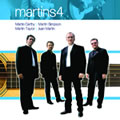
The four members of this grouping together cover the major part of the musical spectrum, and it shouldn't need to be said that each one's a highly individual guitar stylist, not only as a leading exponent of music in his particular idiom but also as a skilled instrumentalist per se. Stating the very obvious, Martin Carthy is to English traditional folk music what Martin Simpson is to the delta blues, Martin Taylor to jazz guitar and Juan Martin to flamenco. The rationale of this collaboration between them, and coincidentally its strength, lies in pointing up and exploring the connections between these musical genres. This CD presents excerpts from the collected Martins' touring show, recorded live in Glasgow (presumably some time last year). Fear not then, those of you who might think it's an excuse for an esoteric ego trip by four single-minded and self-absorbed musos; quite the contrary, it's an enticing and thoroughly accessible blending of their talents. You might, however, think it a bit naughty that out of the twelve tracks on the CD, there's only four where all four participants actually come together to lock horns or whatever; the remainder are personal showcases for the individuals (two apiece). But you can't argue that on every single selection the pure excitement generated by the playing is tangible - these musicians aren't mere technicians (a charge that's often unfairly levelled at the jazzers in particular), but exhibit their skills with an abundance of prime musicality.
The four cuts utilising the full "fearsome foursome" do provide most of the highlights of the set, with some superbly imaginative interplay on Glass Of Water and Vuelo in particular, and a wholly credible integration of ostensibly disparate elements like bluesy slide and percussive flamenco on the opening eight-minute La Pasion Del Lamento, but Juan's solo showpiece Evocacion – De Damascus A Cordoba is stunning on any level. Simpson's Jasper Songbird/Spoonful medley is a brilliantly evocative concoction, Taylor's African-inflected piece Kwame/Kiko glitters and sparkles with sprightly rhythmic complexity, and Carthy's Heather Down The Moor has an equally capricious spring in its step. What matter that most if not all of the solo pieces have appeared before on other CDs by these artists, for these new live renditions have a frisson all to themselves. I was going to say "even allowing for the absence of the visual dimension", but I notice an advert on the CD booklet for a DVD of the 4 Martins live at Glasgow's Royal Concert Hall – which may well be an extended edition of the CD I'm reviewing, and if so, then I guess it's another must-have, fine though this CD is.David Kidman
Before comparatively recently, Peter's name may not have sparked recognition in anyone, even those involved in the wider Irish music scene, except perhaps for those with long memories. His early introduction to the London Irish music scene (in the milieu of which he grew up) culminated in 1979 by his winning (while still in his late teens) the Senior All-Ireland title on the tin-whistle, then proceeded to devote his life to teaching, becoming "lost to academia" for the best part of the ensuing 30 years.
However, last year the death of two enormously influential figures in his life – his mother Kitty and his musical mentor and neighbour Kathleen Murray – coincided with an invitation from Karen Tweed to perform at the Camden Town Irish music festival, and Peter's dormant musical muse was rekindled; spurred on by the success of that concert and pleading from fellow-musicians, Peter has now recorded this CD with the help of that London-based doyen of the capital's Irish music scene Pete Quinn. This redoubtable gentleman, best known hereabouts for his work with the London Lasses, brings the benefit of his keyboard expertise to accompanying Peter's tin-whistle on a generous collection of 18 sparkling tracks that breathe abundant life into assorted tune-sets that pair reels, jigs or hornpipes with each other, interspersed with the occasional air or set-dance.
As Peter says in his booklet notes, these traditional tunes have, it appears, been around for ever, but they sure retain their charm in his confident yet affectionate and committed renditions that retain that essential twinkle in the eye. His playing is admirably fluent and never seems breathless, thoroughly musical at whatever pace he adopts – which to his eternal credit is not at any time showily over-fast! Measured in the most delightful and lively way, while taking inspiration from many of the classic interpreters of the tradition (I rather liked his way with the Michael Coleman tunes on track 3 for instance). Peter's playing is always tasteful, and often quite masterly. And Pete's keyboard work is complementary in its subtlety, in its own right conveying both sympathy with the inflections and phrasings of the tin-whistle and its player, and a feeling for the contours of the music itself that allows for sensitive nuances alongside of the main instrumental focus or principal melodic input.
I'd be the first to admit that the restricted palette of the two musicians might seem a touch unvaried – this would be unavoidable whatever the calibre of the musicians involved – but the balance is always ideally judged, the recording given an intimate presence (the whistle doesn't pierce your orifices!), and then playing contains sufficient intrinsic contrast to satisfy within the sequence of tunes presented. For the slow airs, Mr Quinn departs from the "pure" piano and instead provides understated keyboard chordings and embellishments: no more is needed. I do feel the keyboard tone encourages a touch of over-sweetness in intonation on Peter's part at times, though. There's a touch of low-key doubletracking of keyboard parts here and there, but nothing at all obtrusive.
Economy is a watchword in the performances generally, for no individual track lasts longer than three-and-a-quarter minutes, and the vast majority clock in at well under three minutes – with one exception, a 4:56 rendition of The Star Of The County Down which Peter presents in the form of a fantasia that metamorphoses from slow air through jig and hornpipe to fleet-footed reel and then back to lament in its thematic treatments; this latter track forms a poignant tribute to Peter's parents, and a fitting close to the album.
I'm not always convinced by the juxtapositions of different rhythms within a given set – some instances where reel follows jig (such as The Morning Dew on track 4) seem a touch forced – but on the whole the groupings are sensibly coordinated by the two musicians. But there'll be no argument that the music on this disc is still beautifully played and impeccably registered, and the two musicians are evidently completely in tune with one another and their craft; thus it proves impossible to find fault with that aspect of the disc (I'll pass that task over to the hard-core specialists in this genre, but I suspect it will be a tough challenge). Peter's own booklet notes are friendly and companionable, and provide some delightful personal-historical anecdotes amidst the informativeness, although some of his choices of tune namings may puzzle the aficionado.
www.copperplatedistribution.com
David Kidman January 2011
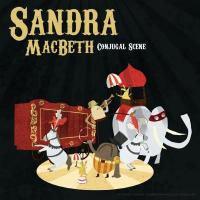
Listening to the soulful folk hue of Go Out with its percussive guitar rhythms and to the banjo and accordion accompanied fairground attraction handclapping bounce of Mooneyes, it's hard not to think of Macbeth (more properly MacBeath) as Edinburgh's answer to Glasgow's Eddi Reader. Both have that slight warm burr to the voice, both write music that embraces jazz, folk and pop colours and both can summon either giddy joy or poignant sadness.
Kiss off opener Ya Hoe skips along with vocal whoops that make you want to run down the street clicking your heels in the air, Let It Go turns on the Brubeck juice for a brushed drums and piano jazz shuffle and with its lines about forty a day woodbine girls, transvestites in latex and pearls and randy truckers, Conjugal Scene is straight out of burlesque cabaret by way of Tom Waits.
The dominant mood of the album, however, is reflection, beautifully manifested in such emotion tugging numbers as the simple voice and guitar Alison's Song, the growing up late acquired wisdom of Waltzing In Blue and, best of all, piano ballad Eight Ball's tale of a thirtysomething housewife and mother's lost dreams. She even manages to include a track called Babies which, for all its cooing 50s doo wop backing, tinkling piano scale and rock to sleep rhythm, manages to avoid any hint of twee.
Save for the odd gig in Sri Lanka, Spain, Latvia and Estonia, she's not really played much outside of Scotland so mainstream awareness across the country is, at present, rather limited. Given the reviews and radio play the album deserves, that situation should soon begin to change and see gathering demand for increasingly frequent ventures south of the border.
Mike Davies March 2010
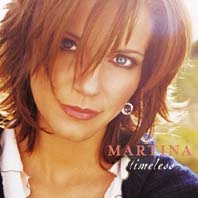
Following on from Dolly Parton's disappointing set of mildly bluegrassed 60s/70s covers on Those Were The Days (though still worth it to hear her duetting with the artist formerly known as Cat Stevens on Where Do The Children Play), here's another country icon, from a rather younger generation, paying tribute to the songs that went before, including some like Satin Sheets that she used to sing when she was just seven working in her dad's band.
McBride's produced the album herself, insisting on keeping with the nostalgia programme by using only vintage microphones and instruments and recording her vocals live with a small backing band, steel player Paul Franklin well in evidence. Dwight Yoakam stopped by too to add vocals to Harlan Howard's Heartaches By The Number.
Her twangy voice does full justice to the material she's selected while the arrangements remain faithful to, if not the original versions then at least the best known ones. Hence Don Gibson's I Can't Stop Loving You recalls the Ray Charles classic (its Charles's spirit on Take These Chains From My Heart too) while Help Me Make It Through The Night salutes Kristofferson but also the hit recording of Sammi Smith.
With bonus tracks for the UK release, there's 22 jewels from country's crown here, ranging from the C&W retro diamond You Win Again through a gorgeous string backed True Love Ways and Eddy Arnold's Make The World Go Away to Walk On By, Lynn Anderson chestnut Rose Garden and Loretta Lynn's You Ain't Woman Enough.
There's not a duff choice to be found, which makes picking favourites difficult but if push comes to shove then I'd have to nominate its triple punch of tear stained honky tonk ballads Today I Started Loving You Again (another nod to Sammi Smith), Tammy Wynette's 'til I Can Make It On My Own and the duet with Parton on Johnny Cash's I Still Miss Someone. But whatever selection you punch up, this almost as good as listening to the real things.
Mike Davies, April 2006
Mary McBride - By Any Other Name (Reality Entertainment)
Out of Brooklyn by way of Louisiana, actress-playwright-singer-songwriter McBride (her stepbrother's Edward Norton) walks a raunchy, self-assured walk, her twang sassy vocal and rock n rolling approach to her country (Weathervane's intro hints at Creedence while I Got Everything positively boogies) ensuring the album motors along with spark and swagger to complement the pain and passion in her voice and her saltily defiant songs.
She's well served by her collaborators too. Three songs (the guitar ringing title track included) are co-writes with Steve Wynn while elsewhere Georgia Satellites man Dan Baird joins forces for a piano pumping Coming Up Empty and the warbling moody (imagine Dolly if she was Lucinda) storytelling Toll Girl, the pair of them also providing the album's two covers with Wynn's Stones gone Texas strut One-Eyed Dog and Baird's bluesy gospel Bottle & Bible.
And if she tends to favour the whisky n demin honky tonk belters, the gorgeously sad Semi-Star and Black-Eyed Strays amply demonstrate, her well weathered heart handles the quieter aches with panache too. Definitely an album for anyone whose wheels travel Lucinda's gravel road, and besides how can you not admire someone who. On That Was Then, can get a way with the line 'you walked a million miles and you blew a million kisses, you gave a million hugs, I said I'd be your missus'.
Mike Davies
Since Then is Northern Irishman Simon McBride's second album, his first being the critically acclaimed Rich Man Falling in 2008. A winner of Guitarist Magazine's Young Guitarist of the Year and endorsed by guitar builder Paul Reed Smith by the time he was 15, it was inevitable that he would go on to greater things. Stints in Sweet Savage (replacing Def Leppard guitarist Vivian Campbell) and Andrew Strong's band led to him taking the solo plunge and the aforementioned debut album.
The 14 self-penned tracks of Since Then open with Take My Hand, which is a full throttle opener with Adrian McIlduff's drum kit at breaking point and electrifying slide guitar from McBride. Hell Waters Rising is a blues rock title if I've ever heard one and this pounding track is just the type of song to rock out to. Superb guitar from McBride and he definitely knows what buttons to press. Acoustic guitar makes an appearance on Save Me and McBride's very good rock voice comes into its own. This is a grower, starting in ballad style and building up into a soft rocker. Down To The Wire is a high class slow blues. Joe Bonamassa must be an influence as I can hear him all over this. McBride is a new star is on the blues horizon. Be My Baby is Jimi Hendrix meets Kansas City blues -- oddly catchy with McBride's guitar stinging you at every turn. From The Other Side is rhythmic blues rock and although there's a lot of guys out there doing this kind of stuff McBride more than holds his own. It's back to slide guitar with The Promise and to great effect too with the power chorus on this good time rocker reaching down your throat and playing with your insides.
Tear Down Your Soul is a funky rocker and I now feel that I've known Simon McBride forever. Dead Man Walking has a resonator in there somewhere but it gets dwarfed by McBride's slashing electric guitar. However, it's another high class blues rocker and he is a master of the chorus. Even though this one is simple it's the power chords that do for you again. Dancing On The Sidewalk is a mid-paced rocker with a funky edge and Sweet Angel has shades of Gary Moore's Still Got The Blues For You in its opening but it's much more than that. McBride's guitar goes straight to your heart. He has the Dobro out again for Coming Home but this time it gets a higher billing. This has intricate guitar work over a pounding beat. I know that I mentioned Mr Bonamassa before but McBride is so similar vocally on Devils Road it's uncanny. This is a strange one with Paul Hamilton's drums on the off beat and it may have been better with just voice and guitar -- a fast paced blues, country, hip hop crossover! He finishes with The Truth, a short instrumental lament with piercing guitar which draws out his Celtic origins.
Simon McBride has the class to challenge the might of the Provogue Records guitarist stable.
David Blue October 2010
There's no major - or indeed minor - label behind her, there's no big name guests and no press release sporting celebrity quotes. But, then, this is only her first release and it's early days yet.
Raised in rural Alabama and reared on a musical diet of '70s and '80s rock and country and the hymns of her weekly Southern Baptist church visits, she formed her first band while at school and it's sort of grown from there.
Playing guitars, drums, keyboards and harmonica, McCarley also wrote 10 of the 11 songs and produced and mixed everything in her home studio in Huntsville. Citing Dylan, Chrissie Hynde, Steve Forbert, Lucinda Williams, and Gillian Welch among her diverse influences (with the melody of Faster Than The Truth suggesting The Box Tops' Neon Rainbow too), she has a raw, unadorned homespun voice that might crack slightly on the high notes but which is engagingly natural and organic as she brings life-worn cares and emotions to her songs.
Lyrically, the album revolves around the tried and tested concerns of first time singer-songwriters with songs of bruised, battered and broken relationships, self-examination, a mix of uncertainty and self-assurance, and hope for the future.
You can hear the Forbert influence on the opening track, the Long Way Home, an aching bones paced number delivered in a weary rich drawl that has all the makings of a classic. 'It's a long way home. but that don't mean I don't wanna go', she sings, marking a sense of ambivalence and hesitancy about decisions that also runs through such songs as the shuffling What I Was Ordering, the glad you're gone but I miss you of Midnight Gown with its memorable line 'I'm just a ghost in my own personal history' and, especially, the bittersweet Hollywood where tinsel town's big break opportunities are set against a chorus about how little girls 'forget to believe they can be happy when they sit too close to the TV.'
She gets playfully frisky on Every Which Way which seems to have its musical roots in the old Southern minstrel tradition, but it and Everything Changed are the only tracks to even approach uptempo and maybe next time she could vary the pacing a little bit more.
However, when someone can include a cover of Welch's Look At Miss Ohio and totally own it, far be it from me to start bandying around career advice!
Mike Davies July 2011
Dave McCann and the Ten Toed Frogs - Country Medicine (Own Label)
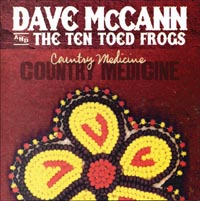
It's not that Canadian Dave McCann doesn't care about his music, every note, melody and lyric on this album screams otherwise. It's just that he comes across as the kind of man who doesn't compromise a whole lot. He makes his music and you can take it or leave it, mind you you'd be a fool to leave it. With a little tweaking and a little dumbing down, several of the tracks on Country Medicine would fit easily into the repertoire of any of the 'Shanias' of this world and guarantee a life of luxury for McCann into the bargain. Believe me he's a writer who knows how to put words and music together in a very entertaining way.
His 'problem' is that he demands so much more of his songs than they are just pleasing on the ear. You can smell the woodsmoke and fresh air on Country Medicine. It's not a 'raw' album as such but it is firmly rooted in real life. When he sings Leaving This Town there is absolutely no doubt that he has suffered the pain.
McCann has discovered the perfect blend on Country Medicine. Depending on your starting point, it's rock influenced country or vice versa. Brokenwing Bird is the kind of band track that is instantly a fans' favourite, while Joe's Bones has a solitary darkness that makes it unforgettable.
The effect of the album is a cumulative one, each track adds something a little different to the experience. None overshadows the other and certainly none are superfluous.
If there are standout tracks then it is comes down to personal choice. For me Sleeping With Ghosts is as close to the complete 'Americana' track as you can get, driving hard but full of honest feeling. Cocaine Stole is a runaway train of a song and to round things off there is an affectionate cover of Jethro Tull's Locomotive Breath. You're never going to get consensus about songs as good as this.
There's even the added bonus of an unlisted song at the end. It still mystifies me why they do that. Why not credit the track and make it 13 great songs instead of 12? It can't be superstition can it? Now that would be ironic because the one thing Country Medicine will not rely on is luck. In the midst of all this wonderful country rock, it would be too easy to overlook the contribution of the exotically named Ten Toed Frogs. To say that they aid and abet McCann in his envdeavours would be to suggest a supporting role. Forget it, Dave Bauer, Mel Smith, Sandy Switzer, Danny Patton, Ross Watson, Jake Peters, Jenny Allen and Gary Kurtz are the reason that Country Medicine is as good as it is.
There may seem to be a cast of thousands but their contribution is vital to an album that is the perfect antidote to the plastic world in which most of us live.
Michael Mee
Debby's latest release is a delicious compendium based round a theme that's been close to her heart for many, many years. Subtitled The Legacy Of Charlie Poole, this lovely collection centres round a clutch of (nine) songs that Charlie and his North Carolina Ramblers popularised in the late 20s, supplementing these with other songs from that era. The latter category brings together material that might well have been important to Charlie: songs of mill-workers, vaudeville and traditional jazz pieces not covered by him, and also a mountain ballad possibly sung at his time. Fittingly, Debby can be seen as a true heir to Charlie's legacy, for, like Charlie and his Ramblers, Debby takes all these (seemingly disparate) types of material and presents them in what's very much an old-time mountain style, principally to the accompaniment of her own banjo and/or guitar (and here, on a small handful of tracks, the harmonica of our old buddy Dave Peabody). And remember that Charlie's Ramblers were originally mill-workers from what is now Eden, North Carolina, and so no doubt they would have known and appreciated the Dixon Brothers' Weave Room Blues, which Debby covers on this CD (the opening snatch of melody of which rather intriguingly bears exceeding-close resemblance to D-Day Dodgers!). But as I said at the outset, although it's the songs associated with Charlie himself that form the heart of this collection, Debby has managed to achieve a striking and satisfying sense of unity by dint of her deeply affectionate and genuinely loving interpretations of the material, characterised by an intensity of commitment and true respect both for her sources and her audience. Some of the choices (eg Vandy Vandy, Carolina Mountain Home and Sail Away Ladies) have been in Debby's live repertoire for some considerable time, yet she clearly never grows tired of singing them, for there's a wonderful quality of freshness to these new recordings. Several of the uptempo songs (like Chesapeake Bay, Leaving Home and It's Movin' Day) are delectable creations, with quite fiendish choruses that tax the memory but in an insidiously catchy manner, and Debby conveys their essence with gusto (just you catch that wickedly gleeful chuckle in her voice on You Ain't Talking To Me!). However, it's clear too that Debby relishes singing these every bit as much as she does the more poignant items such as The Letter That Never Came, where she expresses the requisite emotions so very naturally and tellingly; Debby's unaccompanied rendition of Sweet Sunny South is another highlight of the CD, extremely moving. Having concentrated thus far on the songs and Debby's singing of them, I mustn't neglect to stress also that Debby's banjo frailing is, as ever, exemplary, and its contribution to the appeal (and authenticity) of the whole album should not be underestimated. This is a totally charming and self-recommending release.
David Kidman, June 2006
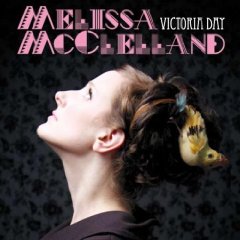
The spirit of Patsy Cline hovers over the opening A Girl Can Dream and the torchy Cry On My Shoulder with its upright bass, while Victoria Day (May Flowers) is vintage Carl Perkins rock n roll swing, I Blame You posits the cowgirl side of Doris Day and When The Lights Went Off In Hogtown takes a sultry jelly roll stroll through Dixieland in a playful account of the 2003 Toronto blackout.
It's not all old school hayrides, Glenrio drives along on a clanky rhythm that evokes the industrial stomp of Tom Waits (who surely also informs God Loves Me) while Money Shot's a twangy reverb guitar blues and Victoria Day (April Showers) is full of fat horns.
But it's the more laid back retro moods that provide the album's backbone and such memorable moments as the strings laced piano ballad Segovia (a song that bizarrely reminds me of I Don't Want To Play In Your Yard) and the gentle swaying Seasoned Lovers where Ron Sexsmith stops by to offer duet vocals. Switching musical moods and personas to suit the stories she tells while remaining firmly focused, her timeless vocals always relaxed and assured, like the holiday after which it's named, this is cause for celebration.
Mike Davies June 2009
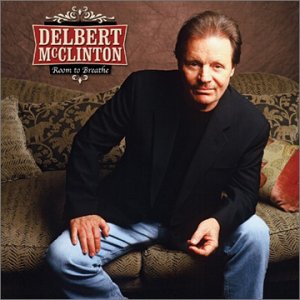
In the 1980's, I had a few weeks in Dallas which has been part of the Texan stamping ground of Delbert McClinton for many a year. Even back then, it seemed like he'd been around forever. If my memory serves me right, he opened up for The Stones as well as playing every beer joint in the state. Though the picture in the sleeve notes is a bit of a pose with Delbert in the centre of a group photo that includes Steve Earle, Emmylou Harris, Guy Clark, Butch Hancock, Jimmie Dale Gilmore and other luminaries, it shows his place in Texan folklore is established.
It is great to report that his new release, Room To Breathe, has him sounding fresh as a daisy. As the opening Same Kind Of Crazy cranks up, you know that this is a bunch of musicians honed to perfection on a live circuit. As well as the up beat stuff, they can take it down low with the smouldering funk and tasty brass section of Jungle Room. The Rub with its cheesy organ, horns, southern soul and wit to boot is worth the price of entrance alone.
Mind you, it's not all Lone Star magic. For example, I struggle with a track like Blues About You Baby as it sounds too derivative for me – the Texan answer to Status Quo. Nevertheless, there is enough here to warrant your attention if you've not heard of him before. A set of good McClinton compositions and a production that captures the frisson of a live show makes a good memento of the man and his music.
Steve Henderson
The golden-voiced Maranna, who lives in Co. Derry (Dungiven), is already a veteran fleadh singing champion and recipient of the www.LiveIreland.com Vocal Album Of The Year Award: some credentials, and well deserved by all accounts. Her latest album, At Last, marks an exciting new development in her career by showcasing four of her own compositions: these are mostly inspired by her personal observations of life, ancient legends and her own spiritual beliefs, yet they're expressed in an accessible and non-exclusive language and as a bonus couched in a musically eminently radio-friendly language; Fraser Island is particularly beguiling, I find. The originals sit well alongside Maranna's lithe, appealingly contoured treatments of traditional songs, which not only fully reflect the singer's effervescent personality but also accord ideally with the musical settings. These are formed out of genial acoustic-based arrangements and centred around Brian Baynes' crisp yet full-toned production, with his own guitar and mandolin and Eric Rigler's uilleann pipes and whistles well to the fore, and set the seal on a decidedly attractive set. I do however find that due to the slightly over-poppy nature of a few of the settings (where Gerard Nolan's saxophone is to the fore and a more insistent backbeat is employed), much of the record leaves a niggling impression of insubstantiality. It's only 36 minutes long in total, and its ten tracks breeze by and leave little permanent mark beyond a feeling of a wholly pleasing half-hour spent in convivial company. Nothing wrong with that at all, but I still feel there should have been more to it somehow.
www.marannamccloskey.com
www.copperplatedistribution.com
David Kidman April 2009
Ewan MacColl was a pre-eminent interpreter of traditional ballads, and over the course of thirty years he recorded no less than five separate ballad anthologies in a total of 28 LPs. This baldly-titled Topic set is a particular gem, gleaming exceeding brightly in among the historic reissues in this label's anniversary series. It gathers together on two exceptionally-well-filled CDs a total of 29 sample recordings from the first of MacColl's ballad anthologies, the eight-LP-set of Child ballads (titled The English And Scottish Popular Ballads) which was released by New York's Riverside Records in 1956 (and itself supplemented by a single LP of non-Child ballads).
These recordings furnish an invaluable glimpse into MacColl's early career, when, it could be said, the revival was little more than a gleam in the eye. These are straightforward readings, and even if at times they might not feel quite fully developed, MacColl's even-then-unerring sense of the dramatic, allied to his commanding delivery, gives them a compelling quality that's hard to fault (certainly not in the cruel and excessive manner that the man's method-singing technique was mercilessly pilloried in later decades); his full-bodied exploration of so many of the great ballads is truly something to savour. Taking account of their serious treatment of the chosen material, these may at first seem to be discs for the connoisseurs and specialists only, but they're actually more deserving of celebration and reassessment today than ever before. The two discs are thematically subtitled Murder And Intrigue and Love And Discord respectively. Included are sterling takes on Cruel Mother and other well-known or since-more-familiar ballads, unashamedly placed alongside lighter (comparatively!) fare and some more-rarely-heard items like Gil Maurice: every one worth hearing.
Compiler Fred McCormick's erudite, sensible (and yet suitably concise) booklet note is exemplary, both in its explanation of the ballad idiom and its reasoned and genuinely contextual assessment of MacColl's achievement. Full texts of all the ballads sung on the two discs are appended too.
Uncompromising MacColl's readings may appear, even to our modern ears, but ultimately satisfying they definitely are. This marvellous set is certainly one to treasure, and I for one would wish to see the remainder of the original 1956 nine-disc series accorded the same treatment and duly reissued.
David Kidman January 2011
This album is classic in both senses - for it's a classic recording of some classic traditional folk ballads. First issued in 1961, it became a seminal part of folks' collections in no time at all, and it was here that many 60s folk revivalists first heard these songs in any form. Think of the performances herein as templates, source recordings if you like, from which (no doubt) folks like Pentangle got I Loved A Lass and Sandy Denny got Banks Of The Nile. Done to a simple guitar and/or banjo accompaniment, these recordings might now be termed a tad primitive, but such is the sincere and wholly authoritative power of the singers' interpretations that little else matters, for they are "doing their job" - ie. actually communicating the songs, their essence and their story. More than that, actually, as you'll hear. (Of course, there were eyebrows raised at first at the idea of Peggy and her Appalachian-style banjo tackling some of the Scots ballads, but remember the British roots of these songs stretched far and wide into the States. ) As well as the noted tales of love lost and won, including some prime examples from the Child collection (The Gardener Chyld, Hughie Grame, The Elfin Knight), many incorporating a supernatural theme, there's some lesser-known Scottish folk poetry too; and it's not all gloom, doom and murder by any means, as the deliciously ribald The Maid Gaed To The Hill, the bothy song The Monymusk Lads and the spirited Jacobite song Aikendrum all demonstrate. These performances really do stand the test of time, and how! For the overwhelmingly confident and convincing interpretations work to provide a riveting listen that's rarely matched in modern reinterpretations of the material. Ewan's authentic delivery in the natural dialect is well complemented by Peggy's lovely harmony singing, although his voice spinetinglingly commands your attention on its own at all times. The presentation of this reissue is exemplary too, with the extensive original liner notes printed in full within the booklet and original cover art faithfully reproduced too. Don't hesitate to get this splendid reissue in your collection, it really is one of the finest examples of its kind.
David Kidman January 2007
This disc is a straightforward reissue of a late-50s album that is at once a classic and a curiosity. It's a classic because it presents two of the greatest interpreters of folksong in their prime, on fine form singing a collection of songs and shanties from the maritime tradition, whereas it's a curiosity because it presents the pieces in a style of interpretation which – at any rate in the maritime repertoire - has by now to a large extent passed out of performance tradition (what we nowadays get is mostly polarised between on one hand the intentionally authentic rendition and on the other hand the bland "tourist" version). What is important to realise it that on this disc Ewan and Bert brought to the attention of general folk music enthusiasts a whole sub-genre of song which had not previously had wide currency outside of the maritime specialist coterie. Ewan's erudite liner note, which is reproduced in full here, explains and details the various types of song included here - principally shanties and forebitters - and the recordings include an almost equal quotient of each. Generally speaking, the shanties are performed acappella, and at a credible speed (and in a rough-and-tumble manner) that conforms to their function as worksongs; these may sound primitive, but that's absolutely as it should be - no sanitised jolly-mariners renditions here! The forebitters (songs sung by sailors "to embellish their leisure time"), which include variants of broadside ballads on seafaring subjects, love and romance, are performed with a modicum of instrumental accompaniment - here courtesy of Alf Edwards (concertina), Ralph Rinzler (mandolin, guitar and banjo) and the trusty Steve Benbow (guitar). Any occasional stiltedness is more than compensated for by the authoritative nature of the singing. The CD transfer is mostly excellent, although I did note some tape-flutter on Do Me Ama. For those who only know the likes of South Australia and Whup Jamboree from the rather "safe" pub-singalong Spinners versions, going back to these lustier, rougher renditions will be a breath of fresh sea-air. Another important reissue.
David Kidman January 2007
Since winning the 2005 BBC Radio 2 Young Folk Award, fiddler Lauren has recorded two CDs under her own name: 2007's When Leaves Fall and now an even finer new one, Strewn With Ribbons. On both albums, her extraordinary talents have been placed in the context of a trio lineup, aptly named The MacCollective, comprising a guitarist (Barry Reid from Croft No. 5) and a pianist (on Strewn it's Mhairi Hall, who's lately replaced James Ross).
Strewn With Ribbons is arguably an even more classy product than its predecessor, and proves even more conclusively Lauren's flair for unearthing and creatively adapting tunes from old manuscripts (here the collections of William Christie, Donald Grant, Charles Grant and William Morrison). On this new album in particular, Lauren is shown to have a special gift for exploring the gentler and more reflective side of the repertoire, with some extremely attractive performances of slow airs figuring large here. Several of these quickly count as album highlights, from the gorgeous opening, a transcription of the song Oigfhear A Chuil Duinn, and the more thickly scored 'S Trom Trom A Tha Mi (with guest Su-A Lee providing an elegant and luxurious cello line) to the endearing portrait of Honesty (one of five of Lauren's own compositions on the disc). But the pair of laments is if anything even more striking: the intense, spectral timbre of the Lament For Mr. Thomas Grant Of Glen Elgin contrasting with the haunting closing Lament For The Death Of Hugh Allan, which Lauren plays entirely solo.
When in company, Lauren's superbly lyrical playing is inevitably placed right at the centre of the sound-picture, but her sensitivity of attack and her genuine skill in dynamic shading ensures that the melodies breathe and flourish and her technique, though still remarkable, remains admirably unobtrusive. On the faster selections, Lauren's vibrant playing is marked by her constant refusal to resort to heavy-handedness or hammer the rhythms home even when a buildup of tempo is called for: there's a wonderfully playful touch, a commendable lightness in her bold syncopations, which her fellow-musicians are able to relish along with her. The set of reels from the Donald Grant collections (placed midway through the disc) is a case in point, while the typically snappy strathspey-led set (track 2, which also includes two of Lauren's own tunes) and the Happy Hours reel-medley (on which Lauren enjoys sparring with guest Donald Shaw's accordion) are both well nigh irresistible too.
Lauren's sense of adventure when adapting tunes from published collections is evidenced with her decision to treat The Banks Of The Deveron slowly and delicately here, having previously recorded a fast-paced version with flautist Calum Stewart and Andy May (check out Calum's Earlywood album, reviewed here a few months back). Producer Chris Stout (who also guests on viola) knows exactly how Lauren should sound, and he's achieved a faithful and highly persuasive representation of Lauren's artistry, her winning combination of elegance, strength and vigour.
David Kidman July 2009
There's an artless charm to McCombs' songwriting that carries over into his singing, the musicianship of his excellent band, and the invisible yet somehow perfect production. Influences ranging from Donovan to Tim Hardin and Neil Young are vaguely discernible, yet there's also a powerful individual presence, one which is both dreamlike and incredibly focused. Who else could create such unsettling beauty from a string of platitudes about job satisfaction, as Cass McCombs does on 'The Executioner's Song'? Who would have a rhythm section play machine-like grooves that are almost Krautrock in execution, and overlay them with the loveliest pedal steel solos you are ever likely to hear?
Cass McCombs' previous album Dropping The Writ had many great moments. What's special about Catacombs is the addition of that elusive something that makes a collection of unrelated songs into a satisfying whole, the pursuit of a unique internal logic to a beautiful conclusion. This is the sound of potential being realised - and how.
Sam Inglis, Features Editor, Sound On Sound magazine, June 2009
This fabulous musician just gets better and better it seems - and every record he makes represents a significant step forward in at least one aspect. But Tommy On Song, a natural followup to Tommy On The Bridge, both chooses to emphasise how great a singer Tom is (in addition to his proven fiddle skills), and highlights just how much Tom's past couple of years playing and touring with those vibrant and immensely gifted young musicians Claire Mann and Aaron Jones has galvanised his already fertile musical imagination onto a higher plane. So how could they not appear on Tom's latest solo album? - and a tremendous contribution they make too, providing so much in the way of unassumingly inventive detail, paying such careful attention to integrating dynamics and responsiveness within the overall texture. And once again, how abundantly well Tom's chosen sound engineer Ron Angus has captured the musical personalities of all the participants and the special nuances they bring to their playing.
The usual hallmarks of Tom's own music-making are present too in all their glory: the deeply expressive bowing, just like another human voice in its telling contours when it ventures its gorgeous swooping harmonies in counterpoint with his singing, as here on Phil Ochs' When I'm Gone (set aside yer average, decidedly flat cover, this one really penetrates its inspirational core). Now however well I think I have the measure of Tom, there are almost always surprises in store within his choice of songs on each new CD, and this set proves no exception. It opens in splendidly energetic mode with a robust and exhilarating portrayal of the itinerant Geordie working man (Mark Knopfler's Why Aye, Man) that's so exuberant I kept expecting it to break into Rawhide! This highlights an interesting development in Tom's singing since his last CD (or maybe it's just the choice of songs?), whereby his vocal delivery seems altogether tougher and more forthright and instead of concentrating on maintaining an even, keening flow of melody line he now also at times employs some more exaggerated gestures, often semi-spoken, for expressive effect. This shift continues through the new CD, more noticeable on the racier songs like Jez Lowe's The Net Me Father Left Me. But there are key moments of lyricism and resilience-in-repose too, with Kieran Halpin's fine Azalea and the rarely-heard, intensely beautiful Allan Taylor song Firefly. And I need to credit some lovely harmony vocal contributions (on several tracks), courtesy of Sally Johnson as well as Claire and Aaron.
No CD of Tom's would be complete without a scattering of instrumental tracks, and here we can marvel at the freewheeling flamboyance Tom brings to the Gateshead Hornpipe, a tune he's known forever and knows just what he can do with in the space of a mere couple of minutes - and yet the spontaneity he conveys is miraculous. As is the delightful little cajun-style waltz Tom wrote for the grandson of his violin-maker, the late Mick Johnson. And again, Tom's facility of combining songs with appropriate tunes works wonders elsewhere: reminiscences of session tunes are woven through his fitting rendition of All The Tunes In The World, then he reaches a zenith on the disc's finale, where he so captivatingly caps Archie Fisher's poignant and knowing Fiddle Farewell with a memorial tune by Jerry Holland (although I do hope that this song, with its heavenly choir of fiddle tones, isn't to be taken literally, in the sense of signalling that Tom's ready to hang up his bow and retire his fiddle in its case). I suspect there'll be ne'er a dry eye in the house at the close of this disc. Jeez, man, it's good. No - seriously sublime.
David Kidman August 2008
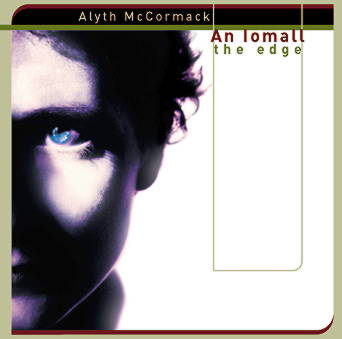
This release begins deceptively simply, with Alyth's spine-tingling, beautifully fragile unaccompanied vocal breathing life into the traditional Gaelic song MhicShiridh; thereafter, a further eleven songs are given a more ambitious treatment by producer Jim Sutherland which encompasses some particularly cool instrumental work and on some tracks a greater degree of programmed percussion; this does not swamp the singing, however, being intelligently conceived and delicately layered to reflect and counterpoint both the ebb and flow of the texts and the heart-stopping textural delicacy of Alyth's voice.
Instrumentalists appearing here include Aidan O'Rourke, Mary MacMaster, Rory Campbell, Davey Trouton, Neil Harland and Kevin Mackenzie, and their contributions are all faithfully captured by the excellently clear recording (the only, minor flaw being the overly close balance given to the piano at times). The arrangements are actually quite unusual, with deft and sparky rhythmic twists and turns, and worlds away from the thick, washy Celtic mush of some latterday fusion music. Take the strident fiddle work on A Fhleasgaich Óig, and the thumping piano dissonances on Ó Mo Dhúthaich, contrasted with the smooth, dark cello lines on Dheannain Súgradh, and the apt use of electronic sounds on the downright scary closer MacCrimmon.
One unforgivable omission, however, which devalues the total package somewhat, is some notes on, or at the very least a summary of the texts of, the songs. But aurally, this is a really mesmerising album that deserves many repeated plays at close listening quarters.
www.alyth.com
www.verticalrecords.co.uk
David Kidman
If you've already encountered Manchester-born Jenny, you may be as confused as I was to read that English Country Garden is being promoted as her debut CD. This is, however, blatantly not the case, for I recall that around two years ago I reviewed (for The Living Tradition magazine, as it happens) a more than promising CD by Jenny entitled Me, I Prefer The Moon. That disc contained, along with its self-penned title track, at least three other songs which also crop up on English Country Garden (though I've not yet been able to check whether the actual recordings are identical as I can't lay my hands on the earlier CD just at the moment!).
However, having got that misconception-cum-deception out of the way, what we have with English Country Garden is a truly delightful disc, one that tends to underplay the Kate-Rusby-soundalike angle and concentrate more on Jenny's own special qualities. (Actually, the more I think about it, the more I suspect that following comments I made in the original review Jenny's had a rethink, done some more recording that more strongly forges her own identity, and has now gotten re-branded.)
Even so, hearing her own composition Don't Be Cruel, you could be easily forgiven for believing that Jenny has fully embraced Kate Rusby as her role model – such is the "dead ringer" impression created by her pure-toned and youthful vocal inflections and "regional accent" vowel sounds, the simple chordal phrasing of her strummed guitar style and the wandering, floating slow-waltz tempo of the song itself. But to dismiss Jenny as a Rusby clone would be immensely unfair, and unfortunate in the extreme, for she has many more individual facets to her talent, not least her personable songwriting. Indeed, the very title of this new CD turns out to be a peculiarly accurate indication of where Jenny's at, for it's not a namecheck for the slightly twee dance tune and song of that name but a clever portrayal of Jenny's musical sensibilities, her dual empathy with traditional English folk song and country music of the backwoods-garden kind (tho' I find she's been compared to both Anne Briggs and Lucinda Williams, with shades of Kathryn Williams hanging out in the background!). Jenny's singing voice is a breathy, ostensibly fragile timbre that belies its latent expressive potential, especially for conveying a gently melancholy quality. On this album, Jenny intersperses some striking personal reworkings of four traditional songs with seven of her own haunting compositions; of the former, her take on Blackwater Side is particularly original and compelling, but I also really liked her interpretation of Go From My Window (which opens the disc), even if in comparison her House Carpenter maybe underplays the drama of the ballad to some extent. Jenny's own songwriting activity has resulted in some enchanting compositions which in their poetic expressivity reflect her ambition to be a writer: The Fisherboy is directly inspired by traditional sources, but the remainder are more tellingly personal, purveying a healthy optimism in the face of often quite desperate emotional crises and states. The album was recorded simply and effectively at home (another point of comparison with Ms Rusby and her clan, but we shouldn't do anything but note that in passing), but it sounds great – intimate and immediate. I understand that the fine supporting musician Kevin McCormick (mandolin and guitar) is Jenny's father, but the disc also contains some exceptional double bass playing from Jon Thorne and Stuart Eastham, with banjo and harmonica on a couple of tracks courtesy of Tom Barnes, piano by Rob Fowler and percussion by Paddy Steer. There's just one minor aspect of the recording that still troubles me a little, and I can't be sure of my ground since I've not yet managed to see Jenny perform live; it's a concern that I noted in my earlier review, whereby on record at least (and more noticeably on some tracks than others), her voice seems to possess a slightly artificial (treated?) "girly" timbre. But that aside, all in all this CD is a very persuasive advocate for Jenny as an individual emerging talent.
David Kidman January 2008
Steve McCormick - Lowlight And Footnotes (Own Label)
Steve's probably easiest termed a loosely Americana-styled singer-songwriter based near Carlisle, with an appealingly individual angle on the genre. Basically, his clever, observational take on all things country comes from a very English perspective, as much reminiscent of Squeeze (very much so at times, in fact) as (say) Bob Cheevers or Robbie Fulks. Having said that, there's plenty of commendably self-deprecating humour amidst his pithy commentaries. For instance, My Woman Doesn't Give A Damn comes on like Billy Bragg meets the Burritos – great stuff… Maybe the opener Another English Cowboy goes a little too far towards self-parody, with a hint of over-deliberate point-making, but as a general rule Steve makes all the right noises and his songs wear a badge of conviction that overrides the very occasional feeling of contrivance. You can hear there's potential for songs such as The Other Man and Breaking Hearts being covered by other artists too. The conviction in his lyrics is backed with a knowing empathy with the genre in which he evidently feels musically most comfortable, for on this his debut CD, he plays all the instruments himself (aside from pedal steel, for which he brings in Dave Midgley). Impressive. Yeah: Steve's alright, Jack!
David Kidman December 2008
Del McCoury - High Lonesome & Blue (Rounder Heritage)
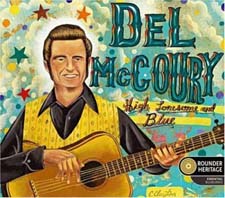
One of the latest instalments in Rounder's ongoing thirty-part Heritage series concentrates on a true cornerstone of the bluegrass scene, the celebrated singer (and no mean guitar player) Del McCoury. There's no denying that Del, perennial winner of IBMA awards and recent Grand Ol' Opry inductee, is the possessor of one of the most soulful voices in bluegrass today. This compilation gathers together no less than 16 of his definitive recordings made for the Rounder label between 1987 and 1996, at a time when Del was on the cusp of his now burgeoning popularity with audiences within bluegrass, country and rock. Del's joint album with brother Jerry (1987's McCoury Brothers) is the origin of three of the cuts on this compilation, whereas Del's four subsequent 90s solo albums for Rounder are sourced more or less evenly – four tracks apiece from Blue Side Of Town and Don't Stop The Music, three from A Deeper Shade Of Blue and just two from the latest, Cold Hard Facts. Having said that, Del's career with Rounder actually began with the landmark album High On A Mountain, released way back in 1972; although no tracks from that debut are included here, the version of its title track which Del re-recorded for 1992's Blue Side Of Town appears here instead. These really are classic performances, and every song's a great one; among the musts for inclusion on any compilation featuring Del are his own I Feel The Blues Moving In, which has become a session favourite and recorded by all manner of artists from Slaid Cleaves to the Parton/Harris/Ronstadt "trio" to the Cox Family, and Del's first tryout of a Steve Earle number (If You Need A Fool), seven whole years before his high-profile collaboration The Mountain. Del's expertise with typical lively, snappy treatments is well known, but his versatility outside of hoedown-tempo and medium-fast workouts is demonstrated on the altogether slower Old Memories Mean Nothing To Me. But in tandem with Del's own artistry, this compilation can't help but focus also on the contributions made by his brothers Rob, Ronnie and Jerry, and the natural empathy he achieves with all other band members. You can't put a foot wrong with this collection, a great introduction to Del. Essential bluegrass, sure!
David Kidman
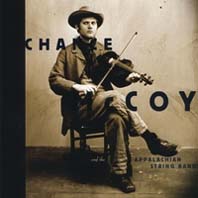
Every now and again you get one that shines out from the rest. There are lots of young American string bands putting out CDs but most fail to fully satisfy for one reason or another. Here is one that does the business. Chance McCoy is a young fiddler and a rapidly rising star in the world of American traditional music. For this CD, his first, he has assembled a hand-picked band of top class musicians to work through nineteen tracks of fully traditional material.
The first thing that comes across is the band's sincere respect and admiration for the original source material and the musicians who played it. They position the music as the hero. They resist the temptation to "improve" it. The band is at the service of the music. They just play it skilfully and tastefully. A recipe for successs. The resulting music says everything that needs to be said.
So many bands have a "we're the stars" approach, putting themselves and their image in first place and the music second. This leads directly to errors of musical judgement and taste and usually delivers the opposite effect to that which is hoped for, which is why they don't satisfy. Those who try to impress for example, with how quick they can play don't deserve a second listen. There is more to music than mere speed and it is an insult to the intelligence of the audience. On this CD you can enjoy every note beautifully articulated without a hint of flavour blur.
Outstanding is their working of "Gospel Plow" with Chance McCoy on banjo and Adam Hurt supplying some very tasteful "Duet Style" banjo in support, ably showing the magical and intriguing sound which two banjos can make together. Chance sings well too, eschewing all the fashionable "country" vocal mannerisms, giving honest and straightforward singing with Aimee Curl doing a superb job of supplying female harmony on several tracks. Chance sings a fine and moving version of "Little Birdie" and accompanies himself on banjo. Also notable is "Little Rose is Gone", a Wilson Douglas tune done as a lovely and haunting fiddle and banjo duet by Chance and Adam. These are just my personal highlights from nineteen excellent tracks.
If you enjoy American Old Time Music there's plenty on this disc for you and something tasty for everybody whatever their predilection. It would have earned the sincere respect and admiration of those who played and recorded the music first time around and now so long ago. They would have understood it perfectly. The CD is available from CD Baby at $15 or as MP3 downloads but is not otherwise widely distributed which is a shame as a lot more people would like to know about it. So here's your chance (no pun intended) to be in on a best kept secret.
www.myspace.com/chancemccoy
www.cdbaby.com/cd/chancemccoy
Roger Young January 2009
A favourite of both Bob Harris and Lucinda Williams, the Sidney born, LA based singer-songwriter and mean slide guitarist follows 2004's stupendous Roll with an album that effortlessly takes her to the next level.
Featuring appearances from Williams, John Doe, Jim Lauderdale and Nancy Wilson, it's informed by both her love of early 70s music (As The Crow Flies could have come from a Crazy Horse session) and the collapsing state of the modern world.
Opening with the swampy strutting raunch of Driving Down Alvarado ("take me down to the place where the monsters graze" she sings as guitars wail behind her), she switches musical moods for From Bakersfield To Saigon, a horny country journey that welds sex and an implied vein of politics. Then, just to pack another punch, along comes Any Minute Now feeding on the apocalyptic paranoia and anxiety that curdle in the blood of All Along The Watchtower and Gimme Shelter and pressing them into a Motown groove.
Expanding the last album''s guitar based trio with Carl Byron's keyboards adding muscle and texture to the solid Texan rhythm section of Dusty Wakeman and Dave Raven, she crafts a full and brooding musical landscape. One across which roam such disturbing numbers as Jesus's Blood with its bitter attack on a curdled Catholicism and cases of paedophilia rumbling through an almost madrigal setting.
It's not all so heavy or musically intense. The gently acoustic, tenderly passionate love song Coming To You, a pure voiced backwoods hymnal Shivers ("take me back to the source of this flame"), the bluegrass slow rolling Bright Light of Day (a reverie coming home after a night with her lover), the gloriously full-blooded poppy Lay Me Down and even the Lucinda and Beatles flavoured bittersweet Sweet Burden of Youth all glimmer with the light of hope.
Closing up with the twangy guitar instrumental title track and its images of neon washed night streets and stories of love and hurt, loss and salvation behind stained windows, it marks a major leap forward for an artist rapidly earning a reputation as one of the finest new voices of the present century.
Mike Davies, August 2006
Anne McCue - Roll (Cooking Vinyl)
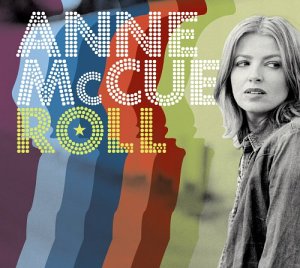
A declared favourite of both Bob Harris and Lucinda Williams, singer-songwriter and a mean slide guitarist to boot McCue is Americana by way of Sydney, Australia and a musical upbringing that embraced such diversity as Erik Satie and Nick Cave. A stint on the Lilith Fair tours saw her relocate to LA, notching up tour supports with such luminaries as Williams, Richard Thompson and Dave Alvin.
Having released the pop flavoured debut Amazing Ordinary Things and a live album recorded at San Francisco's legendary Fillmore on the Williams tour, she now steps up a level with this cocktail of Delta inclined country/folk blues n rock that embraces influences that run the gamut from The Byrds (Stupid) and Lucinda (Crazy Beautiful Child) to Zeppelin/Robert Johnson (Hangman), Patti Smith (the venomous Ghandi) and Hendrix whose Machine Gun she covers in a nine minute one take burst of blistering, vitriolic guitar.
Her folk leanings surface gently on the leafily scuffed, sun hazed Milkman's Daughter while the spare broken-hearted bruise of 50 Dollar Whore points up those formative Beatles influences and the opening I Want You Back (which lyric checks the opening line of High Noon) is probably the closest she gets to guitar riding alt-country, but mostly this is an album dominated by bluesy riffs as tough-minded as lyrics spawned from a fair few car wreck romances. Despite the ballads, you get the feeling that it's raunch that characterises her live shows and, impressive as the album is that's probably where she really hits home, though with several numbers already clocking in well past the five minute mark it's to be hoped that she's not prone to extended jams.
Mike Davies
Alistair's impressive CV includes winning the Scottish National Fiddle Championship in three not-quite-successive years in the early 90s, and a stint as a member of "supergroup" Cantarach; for the past ten years he's led the Ayrshire-based band Coila. Alistair's earlier solo album for Fellside, Highly Strung, was one of those exceedingly accomplished offerings that just demanded an immediate encore, yet only now has Wired Up finally hit the racks. Do I hear complaints from puzzled Marx Brothers fans here? For it isn't quite a natural followup, because although it certainly continues the trend of showcasing Alistair's considerable skills as an instrumentalist, the range of its repertoire is far narrower, concentrating this time round much more on a mixture of Scottish material and Alistair's own compositions. These blend very naturally and instinctively, and make for a beautifully paced listening experience. Perhaps Alistair's special strength as a musician lies in combining an easy virtuosity with a true gift for bringing out the melody lines - you might feel that nowhere is this more apparent than in the slow airs like Sarah's Song (composed by Phil Cunningham) and Alistair's own Hazelwood, the former especially displaying a supreme degree of almost classical restraint and poise, but I hear it even more in the sprightliness with which Alistair commands the various sets of faster tunes. His purely solo rendition of the Hanged Man's Reel at the end of the CD is striking for its control and musicality (where so many performers lose grip in trying to rush and impress). There's no lack of drive in the rest of the tracks either; these feature, variously, Alistair backed expertly by pianist Morag Macaskill (his accompanist at championships), fellow-Cantarach member Angus Lyon on accordion and keyboards, erstwhile Capercaillie colleague Marc Duff on whistles and veteran of many lineups Aaron Jones on bouzouki and guitar, among others. The set of reels forming track 5 in particular storms along like nobody's business, culminating in a whirlwind version of Amy Wood's modern classic Catharsis that's only marred by the decision to fade! This fine selection should appeal equally to fiddle fanciers and those who just love good tunes well played and simply but effectively arranged.
David Kidman
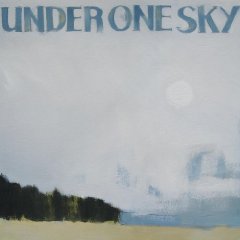
Under One Sky is an ambitious, hour-long vocal and instrumental suite by John McCusker, performed by twelve of the most acclaimed folk artistes from Scotland and England: John Tams, Jim Causley, Julie Fowlis, Roddy Woomble, Andy Cutting, Ian Carr, Ewen Vernal, James Mackintosh, Graham Coxon, Iain MacDonald, Emma Reid, and McCusker himself. Some (Causley, Tams, Fowlis, Coxon and Woomble) only make one cameo appearance, but all are pre-eminent in their own sphere of activity, naturally.
Musically, Under One Sky is an all-embracing work which demonstrably embodies the simple universal truth that "there is only one sky and we all live under it". Most of the seven movements making up the suite are of sectional construction, comprising a sequence of tunes and/or songs which are combined creatively into an artistic whole without compromising the integrity of these individual pieces in any way. Notwithstanding the intentionally strongly unified nature of the suite, each movement has its own special character, as you'd expect.
The opening (title) track is loosely akin to an overture: it's a kind of tone-poem, portraying a scenic tour of traditional Scottish tunes half-remembered you might say - although all bar one of the tunes are John McCusker's own compositions, the fourth being by Ian Carr... of course, the authorship credit is an indicator of just how convincingly these musicians are able to write within the tradition. The actual scoring of the music is felicitous too, making well-defined use of individual instrumental colours and combinations to convey a delightful "arranged-session" vibe; John McCusker has a real gift for this, and Under One Sky must count among his finest achievements in the field.
The second movement is a masterly piece that wears its twelve-minute span lightly: it conjoins two poignant original songs by John Tams (Will I See Thee More and Hush A Bye), fondly sung by Jim Causley and Tam respectively, with a fabulous McCusker tune (Rosaleen's Waltz) forming the bridge between the two. Further contrast in timbre and mood occurs with the third movement, on which a contrasted pair of songs composed and performed by Julie Fowlis (the lyrical 'S Tusa Thilleas and the breathtaking mouth music of Banais Bhaile) find themselves ably counterpointed by three sprightly tunes, whirling to a jazzy conclusion with Touche Pas.
Roddy's principal contribution comes with the fourth movement, which brings together his wonderfully atmosphere-laden Long Time Past and Lavender Hill, and to which the ensuing, admirably lithe tune-set (which includes one of Andy's tunes) provides an effective foil, whereas Graham's turn in the spotlight comes with the suite's penultimate movement, All Has Gone - inevitably the work's most contemporary-sounding episode but not jarring in the slightest. If I've any criticism of the suite, it's that it feels a little unbalanced, since the more extended and substantial items occur early on, while the final movement, a pair of sparkling McCusker-penned jigs, might be considered less of a progression or conclusion and takes on more of the role of a crowd-pleaser finale.
The accompanying booklet contains copious biographical notes on the musicians, but (reasonably enough) allows the music to speak for itself: all very well, but room could (and should) have been found, I'm sure, for a translation of Julie's lyrics. But these are minor points when set alongside the finely-coordinated arrangements and the array of superlative musicianship on display.
www.underonesky.co.uk
www.navigatorrecords.co.uk
David Kidman December 2008
John McCusker - Yella Hoose/ Goodnight Ginger (Navigator)
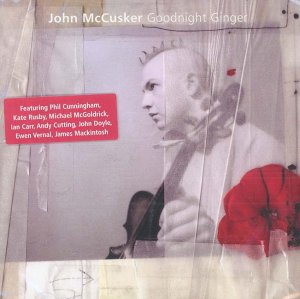
This sensibly-mid-priced set forms a timely reissue of John's second and third solo albums, originally released in 2000 and 2003 respectively, and here presented in freshly remastered guise. It also forms a salutary reminder of just how long John's been around the folk scene as a consummate instrumentalist (fiddle, whistles, cittern) not to mention a much-in-demand session-man. And there's also the undeniable fact that when the first of these two CDs was made he'd already chalked up over a decade in the mighty Battlefield Band!
Of course, the past five years have seen John occupied twenty-five hours a day with special projects and joint ventures of various kinds (his latest, Under One Sky, is already proving a sizeable hit), but it's still good to hear him relaxing into what he's always done so well - playing and writing tunes in a defiantly musical, non-frenetic style - for two whole albums' worth. Revisiting these records after the passage of time proves a very worthwhile exercise, too, for they're replete with a thoroughly unassuming virtuosity, and a command of - and respect for - the tradition, both qualities which have long been John's trademarks. Some of the material originates from John's Battlefield days, but there's no appreciable difference in quality over the years - indeed, the consistency is quite uncanny. It's indicative, too, that much of the material is predominantly lyrical.
On each album, John has proudly recruited a staggering array of guest musicians, all of whom clearly believe in, and greatly respect, John's talent, and who contribute greatly to the carefully-arranged sound picture. It's like a who's-who of trusty folk and roots sessioners: Ian Carr, Andy Cutting, Tim O'Brien, Darrell Scott, Michael McGoldrick, Simon Thoumire, Gino Lupari, all brilliant and intuitive musicians. And (perhaps inevitably, given the time-frame of these recordings) there's a cameo vocal track by Kate Rusby on each of the discs: perfectly in tune with the gentle, restrained and tasteful mood of the rest of the menu. Although I marginally prefer the balance and content of Goodnight Ginger over Yella Hoose, both albums satisfy much and are recommended for close listening in order to fully appreciate the intimate and intricate - and musically intelligent - arrangements.
David Kidman January 2009
This release has strong connections with Flame Of Wine by Lasarfhíona (which coincidentally I've reviewed very recently too), in two respects: that Inishere (Aran Islands) native MacDara Ó Conaola is Lasarfhíona's brother, and that The Love Token also uses the same co-producer (Máire Breatnach) together with an almost identical cast of backing musicians (in this case Bill Shanley, Mick O'Brien, Danny Dyrt, Paul Gunning, Johnny McDonagh and Máire herself). Lasarfhíona herself even appears on backing vocals on two of the tracks. MacDara's singing shares with his sister's a predominantly gentle quality and timbre, which proves most attractive on a wide range of material on this, his debut release. Musically at any rate, that range may prove a mite too wide for some listeners, for in encompassing some quite adventurous arrangements alongside the fairly orthodox trad-arr guitar, fiddle, whistle and bodhrán accompaniments I'm not entirely sure that it all quite hangs together - even though MacDara's voice provides the all-important unifying factor and he's evidently totally at ease with his chosen material. But almost every track turns out to have a special virtue - and character - all its own, from very appealing renditions of two contrasting traditional songs Baile Uí Laoi (Ballylee) and Stóirín Geal Mo Chroí, through to the romantic swoon of dance-floor country-cajun (Webb Pierce's I Don't Care) and the carefree, relaxed free-wheeling whimsy of the self-composed It's So Easy. There's an altogether more experimental ambience-enhanced soundscape for the strangely funky lament Án Dún Aengus, whereas in contrast, MacDara adopts an almost cheeky come-on tone for the delicious Buachaillín Deas Óg Mé and Beidh Aonach Amárach. And when singing in English, MacDara is generally every bit as persuasive (although, exceptionally, I do find his setting of By The Roving Of Her Eyes a little bland). For, listening to MacDara, you feel you can almost believe his claim that "someone invented the wheel for me"!...
www.myspace.com/macdaramusic
www.thearansinger.com
David Kidman March 2007
Were there any justice, dust-throated McDermott's 1991 folk rock debut 620 W. Surf should have put him on track to the sort of career enjoyed by Mellencamp and Springsteen, both artists to whom he has been likened. Despite critical acclaim, that didn't happen nor, equally inexplicably, did stunning follow up Gethsemane prove any more successful.
At which point, things took a stumble as the now 23 year old Irish-Catholic Chicagoan found himself lured by the temptations of the road and rock n roll lifestyle, believing that experiencing the gutter would be good for his creativity. It gave him the songs, inspirational numbers infused with his strong religious faith, but he found climbing back out again a harder trick to pull off. Four further albums emerged, though by now he'd lost his major label deal, then came the crunch when, in 2004, he was busted for cocaine possession and locked up in Cook County, Chicago's toughest jail. Realising he'd hit bottom, the consolation was that the only way left was up. An agreement to attend drug school rehab put him back in the world, taking with him the inspiration that would produce the songs about addiction and the search for redemption on this, his eighth album. Ironically, his cell he was the one his still incarcerated father had spent time in some years before for a gun bust. Maybe that gave him pause to see where his own life was heading, it was certainly the impetus to write the aching confessional My Father's Son.
Maybe it's because of the fire in which it was forged, but, largely recorded live, it's his best and most emotionally raw work since the debut. Built around acoustic guitar, dobro, piano and pedal steel, Mess Of Things lays the cards on the table from the start as he looks back to being a strung out addict 'on 23rd waitin' on a friend', caught in New York's black hole of self-destruction, overwhelmed by his loneliness and ability to screw up.
Throughout the album women and God are the straws at which he clutches, looking to help pull himself from the abyss. Relationships founder, regrets weigh down and self-loathing washes in on numbers like the Prine-like Still Ain't Over You Yet, A Kind Of Love Song, Broken, A Long Way From Heaven and the janglingly anthemic The American In Me, a self-examination of both himself and a nation.
But equally, No Words finds hope that he's worth saving, All My Love sees him realising what he's wants from acknowledging what he's lost and the album closes on the magnificent piano ballad Shall Be Healed where he finally comes to the alter and opens himself to be saved.
You don't have to share his faith to be swept up by McDermott's songs, but if you've ever even half-glimpsed the same darkness, this will ring like a chapel bell in the night.
www.michael-mcdermott.com
www.myspace.com/michaelmcdermott
Mike Davies April 2008
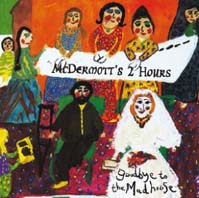
This time released on the Levellers' OTF label, the McDermotts crew's latest studio CD brings another glorious set of thoughtful, fresh-sounding, often rabble-rousing songs from the pen of Nick Burbridge. Once again Nick takes traditional-type tune structures as the template and ambit for his brilliantly cogent and alert commentaries on our society. Couched in vital, stirring acoustic-based settings with strong tunes, a logically mighty degree of rhythmic impetus and a perennial abundance of energy in the playing and singing, these new songs are the total embodiment of Nick's unwavering commitment to the dispossessed which as always lends the songs a uniquely plaintive passion and urgency.
Here the McDermott's core lineup of Nick Burbridge (guitar, vocals, bodhrán), Ben Paley (fiddle) and Matt Goorney (bass, ukelele, harmonica, melodica) is augmented by a whole host of musicians including Tim Cotterell, Charlie Heather, Mandy Murray, Calum Stewart and John Brewins, but textures are kept clear and uncluttered and Nick's lyrics remain the unerring focus throughout. And again Nick shows his acute feel for expressing wholly reasoned views on our own times, preoccupations and morals through an unfailingly intelligent use of political narrative and allegory. His creations are songs that grab you from first play, and by second runthrough you almost feel you've known them for ages; I could single out the haunting Stowaway, the wonderfully atmospheric sense of poetry linking Bone's Farewell and All Souls' Night, the wildly catchy Crazy Jane's Day Out... but that would be denigrating the impact of the remainder of the songs, which seriously don't have a weak link among them anywhere. If as on previous albums I hear distinct resonances of the work of Dr. Strangely Strange and Robin Williamson (the latter especially on the phrasing and demeanour of aforementioned Bone's Farewell), well that's not to be taken as any kind of complaint. In fact, all that I said about the previous McDermotts offerings remains true for this new set, which is easily the equal of those (who knows, it might soon surpass them - that is, until I get round to playing one or other of them again!); yes, Goodbye To The Madhouse is surely set to enter the exalted company of both Claws And Wings and Disorder as positively a classic of acoustic-folk-rock.
www.burbridgearts.org
www.levellers.co.uk
David Kidman August 2007
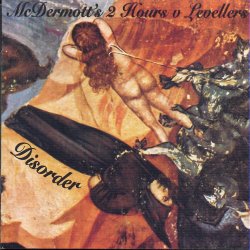
David Kidman
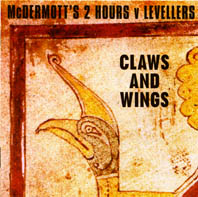
Influential folk band McDermott's Two Hours were named after a hippy who when left in charge of Radio Free Derry for a famous two hours replaced the playlist of rebel songs with the Incredible String Band (good man!). McDermotts were "out-levelling the Levellers in the anarchy stakes when the latter were still wet behind the ears", and the Levs repaid the debt by signing them to their label in the 80s. The bands continue to be firm friends, and this second "vs" collaboration reunites McDermotts' two founder members Nick Burbridge and Tim O'Leary with the Levs' rhythm section (Charlie Heather and Jeremy Cunningham), with Jon Sevink providing extra fiddle on the opening track, The first collaboration between McDermotts and Levellers had allegedly been little more than a bloody good craic, though energetic and inspired; unfortunately it passed me by, so I can't comment, but Claws And Wings turns out to be something very special indeed. It's described on the press handout as "a classic contemporary protest record, which isn't made for 'the business' but for the true listener, drawing on the best elements of the folk-rock tradition to find an authentic, powerful voice". And that's no exaggeration. Elements such as the thoughtful contemporary sensibility, and a healthy open-mindedness in musical expression, with arrangements that are (happily) totally bereft of the worst types of folk-rock cliché (like leaden or thrashy rhythms) and truly serve the lyric content. Heavy-handedness gets no quarter here. The multi-tracking of Tim's bowed string contributions (fiddle, viola) is managed with a quality that recalls Robin Williamson (Merry Band or Myrrh), and Nick's singing has that puckish, perky and alert drive that combines the delicious quirkiness of the ISB with the vitality of the Levs. The songs really do cut through time, as they run the gamut from the opening rallying-cry reel of Song Of A Leveller to the dark drunkard's tale North And South to the wonderfully sombre Eyes Of Fate aura of Snapshot and the deeply meditative Song Of A Quaker's Wife to the vibrant mysticism of Travelling To Cockaigne to the tender and thought-provoking Postcard to the bitter mouth-music chant of Stór Mo Chroí to Song Of A Father, where the affirmative quality of the life-force is conveyed with an even-handed, consistent quasi-classical poise; then there's the fine trilogy that concludes the album, wherein the perspectives of contemporary political experience are brought to bear on all that has gone before. Sure, no-one wins (again) - as if you didn't know it; but hey, it's the listener who wins, in being immeasurably enriched by the insight and (eventually) wisdom that these enlightened perspectives bring. Yes, Claws And Wings is a very impressive record indeed, uniformly strong and well-balanced both musically and lyrically, and it's easily going to turn out to be one of my albums of the year, I'm convinced.
David Kidman
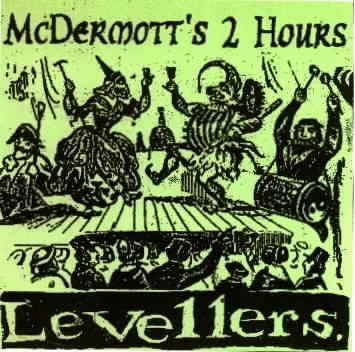
The shortened history of this excellent Irish folk/rock album is that songwriter, guitarist and vocalist Nick Burbridge and multi-instrumentalist Tim O'Leary of McDs 2 Hours got together with the rhythm section of the Levellers, Charlie Heather, percussion and Jeremy Cunningham, bass, and recorded World Turned Upside Down in Brighton last year.
Their collaboration has produced an album of eight melodious and original songs which feel like Celtic standards (and will probably end up being so). There's a strong political edge to the intelligent and thought-provoking lyrics: the struggle for freedom; battles fought and friends lost; friendship celebrated. But it's not just one which will only go down well with expatriates at Guinness parties; 'celebratory' describes the album itself. The musicianship is accomplished, the music hook-laden. Burbridge's acoustic guitar and O'Leary's fiddle, bouzouki, whistles and harmonica are sensitively played and arranged. The album rocks along with a fine foot-tapping and joyful swagger, underpinned by the impressive Levellers' rhythm section.
The name McDermott's Two Hours was "taken from a hippy called Tommy McDermott who, when left in charge of Radio Free Derry, replaced the usual playlist of rebel songs with the Incredible String Band and exhorted the people to 'be cool and calm and love one another'." We'll drink to that!
Sue Cavendish
It's nearly eight years since Catriona recorded her second solo CD Bold, and while in the interim there's been no shortage of bright young Shetland folk musicians making names for themselves this scintillating fiddle player has always been in a class of her own somewhat, and here definitely remains so. For album number three, Catriona has again surrounded herself with three of the most in-demand musicians on the Scottish music scene - Unusual Suspects' David Milligan (piano) and Shooglenifty's Conrad Ivitsky (double bass) and James Mackintosh (percussion) – who together lend this album too a strong jazz perspective that both complements and moulds Catriona's own playing to give the whole project a very distinctive signature. A good example of this is track 4 (Him On Piano), which takes Catriona's own hymn-like piece (which was composed specially for David) and ingeniously metamorphoses into a Swedish polska, finishing up on a brilliant original tune by Carina Normansson. The special rapport between Catriona and David in particular is striking, but the whole album has a real feel of the musicians having fun and appreciating and enjoying each other's company and sensibility, sparking off each other most inventively with as much the spirit of an empathic jazz trio as that of a folk or classical ensemble. Just over half of the eleven tracks either contain or consist exclusively of Catriona's own compositions, either heavily inspired by traditional tune-forms or more freely constructed. The official final track pairs a solo rendition of Da West Side Brides March with a Muckle reel which intriguingly sounds much like a Norwegian halling, given an almost heavy-metal-style finish (I can't find a more apt description). After which, there's a few minutes of silence before the bonus track, on which Catriona delivers Sir Olaf, a Trowie ballad fetchingly sung to a Norse melody (her only vocal performance on the entire disc). This may provide a deliberate contrast to all that's gone before, but like the rest of this genuinely exhilarating CD it interprets and presents the ever-changing tradition in the light of world influences as it sparkles with both a youthful freshness of approach and an attractive maturity of outlook. You too may well be as much over the moon listening to the disc as Catriona and her chums obviously were in making the record.
David Kidman March 2008
Greentrax get seriously funky with this latest offering from young Highland piper/whistle player Finlay, who, with his crack band, lay down what I'd wager is probably the tightest groove on the scene at the moment. His previous outing, Pressed For Time (on the Footstompin' label), was a really assured disc that demonstrated not only Finlay's formidable playing technique but also his respect for the tradition, while creating exciting settings for the tunes themselves. ReEcho, which follows a period of intensive touring, also sees a small change in his band personnel, whereby John Speirs has replaced Quee Macarthur on bass, but if anything the band is tighter than ever. This is apparent right away when the disc kicks off with the seven-minute funk extravaganza Back To Bergamo (melding together three of Finlay's own compositions), mean and dirty with edge-of-the seat rhythms and constant interest in all departments - the point when Finlay switches to the pipes (after starting out on flute) is one of those defining moments that stuns each time you play through. What sets this disc apart from the crowd of jazzed-up, funked-up pretenders is the sheer excitement, the exhilaration, the amazing dexterity with which Finlay and his band encompass metres that surprise even in the context of the tunes' origins. Their approach is innovative, the groove fiercely contemporary, yet not a programmed beat in earshot - and the result is all the more exciting for it. That opening set is hard to beat, but in their own way the stirring, majestic pace of the Time To Dance set and the heavier tread of Abdoul's carry their own weight and the statelier Bulgarian tune midway through the disc provides a key staging-post. Martyn Bennett's Ud The Duduk forms the basis for a robust workout where Fergus Mackenzie's hyperactive drumming and brother Kevin's electric guitar licks entice with their counter-rhythms. Fiddler Chris Stout again more than proves his worth, every bit as much on the lyrical viola melody of Miss Elliott's as on the spinning, whirling-ever-faster sections where he seems to be duelling with Finlay's pipes. The closing medley of a Breton tune and Finlay's piece The Sunday Club makes for a fittingly sparky finale. No disappointment here then, from any quarter.
David Kidman January 2008
Scott MacDonald - New Heart (Catacol Records)
Scott MacDonald is a singer-songwriter from a village on the outskirts of Glasgow. He is a fine musician and songwriter, with one foot in the tradition and the other pointing West. His music has best been described as where Celtic meets country. It's honest solo acoustic guitar fare with simple harmonica accompaniment (track 10 being the exception with fiddle, guitar, percussion and backing vocal additions). His voice is warmly melodic and confidential, with just enough polish and that touch of desolation which makes lyrics compulsive listening. The album is a pleasure to listen to. Live he performs his songs with strength, style and intensity; Scott is no limp-wristed strummer!
New Heart will be released shortly but is available now at his gigs. Also available is a 3-track single 'Burn Baby Burn', songs written about his time in Australia where he played Perth & Melbourne and was known as the Celtic Neil Young!
Sue Cavendish
Shelagh's was never a household name, even within the hallowed realms of the folk enthusiast, but she so richly deserved the status and her damnably short career is the stuff of legend. Arguably even more so since she did a complete vanishing act in 1972 after releasing just two LPs which showed her to be a performer of considerable talent and promise. And she's not been heard of since then - no, not at all. So to all intents and purposes, Let No Man Steal Your Thyme is all you're ever going to get in terms of recordings; it's the absolutely complete collection. On two CDs it brings us the entire contents of both of Shelagh's LPs, originally released on B&C (1970's The Shelagh McDonald Album and 1971's Stargazer), along with all retrievable alternate takes, outtakes and demos and the tracks which appeared on the Club Folk records. If you already own the Mooncrest CD editions of the two albums (which came out around five or six years back), which included most of the extra material mentioned, you're still likely to want this new collection, for it opens with the brace of (admittedly less than characteristic) acoustic country-blues-style tracks recorded live and originally available only on the obscure 1969 BBC compilation Dungeon Folk. And it has a finely detailed new booklet note by David Wells, which not only provides full credits for the recordings (unlike the Mooncrest reissues), but also states the case for Shelagh's artistry most persuasively. Not that it could pass you by when you play the CDs, for Shelagh had a superb singing voice by any standards, notwithstanding the strength and individuality of her songwriting. Her singing matched the purity of a Judy Collins with the dexterity and range of Joni Mitchell (the melodic contours of whose songs, not to mention the actual writing, Shelagh's resembled at times too), but it's Sandy Denny to whom Shelagh was most often considered the heir in the solo female artist stakes (Sandy herself having at that point forsaken a solo career for a group setting). Shelagh seemed to have everything (striking good looks too!), although the critical approval which her music garnered wasn't matched by LP sales. Then there was the vigour of the supporting playing - producer Sandy Roberton had gathered round Shelagh a real who's-who of fine guest musos for each session. Album featured Andy Roberts, Gerry Conway, Pat Donaldson, Gordon Huntley, Ian Whiteman and Keith Tippett, as well as fellow singer-songwriter Keith Christmas (with whom Shelagh had been briefly involved while living in Bristol in 1969). Aside from bringing on board Messrs Christmas and Whiteman again, Stargazer featured an even more diverse array of talents, from Richard Thompson, Dave Mattacks and Danny Thompson to Mac & Katie Kissoon! Some of the musical arrangements employed were pretty ambitious, and were masterminded by Robert Kirby (who'd done string settings for Nick Drake), and thus don't fall into the despised 70s over-production trap. As well as Shelagh's own songs (which provide the main focus only on Stargazer, whereas roughly a third of Album was covers, albeit superior ones, of material by Christmas, Roberts and Gerry Rafferty). As well as this collection's title track, the traditional song repertoire is represented by a stunning, brooding version of the traditional Dowie Dens Of Yarrow which would have put many a contemporaneous folk-rock treatment well and truly in the shade. Though her albums sounded very much in the mould of upcoming folk-rock-pop singer-songwriter offerings of the time, none of the tracks Shelagh recorded seem really to have dated (at least to my ears). If you've not caught up with Shelagh's work before now, then hasten along and get this set. Join with me in regretting Shelagh's disappearance, sure, but rejoice with me that her complete recorded legacy is here for our permanent enjoyment.
David Kidman
Kate McDonnell - Where The Mangoes Are (Appleseed)
Connecticut-born, New-York-State-based singer-songwriter Kate joins the illustrious roster of Appleseed for this, her fourth album. Coming a full two years on from her well-received and decidedly strong third offering Don't Get Me Started, Where The Mangoes Are is another strong record, marking a further significant advance in Kate's music. Tom Paxton has cited Kate's music for its combination of grace, intelligence and warmth – a beguiling one indeed, and one with which I'd be loth to disagree; I sure can't, so I won't! Once again, the majority of the songs on the album are Kate's own compositions, either solo or in collaboration with Anne Lindley. These include two songs with at first glance rather familiar titles, Go Down Moses and Hey Joe, the former a direct portrayal of the highs of love and the latter a rather more enigmatic expression of the conundrum of life and death that capitalises on the rhythm and momentum of the more familiar song of that title. Chronologically, the songs here were mostly written over the period 2000 through 2003 (standouts Mercy and Soft-hearted Girl were both songwriting contest winners last year), the one exception being 5:05, written as long ago as 1991 but betraying not a trace of immaturity. The one and only cover this time round is of Steve Earle's Goodbye Song, given an attractive and deeply felt rendition, with nice fiddle playing from Mindy Jostyn in tow; there's also a "cheerful-and-efficient" interlude midway through the CD in the form of a Freight-Train-style reworking of the traditional Railroad Bill. As before, Kate relies on a small coterie of backing musicians, among whom the multi-talented Scott Petito figures large but without dominating Kate's own delectable musical personality (but what on earth's a "garden weasel" then, Scott?!); there's also some notable electric guitar fills from Marc Shulman on many of the cuts. Also as before, Kate's own guitar playing is crisp and clear-toned yet unobtrusive (less unobtrusive than you might think when you learn that she plays left-handed yet with guitar strung upside-down – so figure that, fingerpickers!)… Her singing is again characterised by that rarer-than-you'd-think combination of rhythmic individuality in phrasing and strength in flexibility (her playful vocalising on the strange, seductive Lemon Marmalade, which includes the CD's title phrase, is specially mesmerising). So what this all adds up to is another memorable album from Kate, which with the added benefit of Appleseed's wide distribution should ensure Kate gains plenty more admirers.
David Kidman
This third album from Connecticut-born singer-songwriter Kate is very probably her best yet (if not quite the most consistent) - and both Broken Bones and Next (both on Waterbug) were hard acts to follow. These two albums were separated by a gap of four years, but Don't Get Me Started appeared last year, after a shorter gap of only just over two years. This shorter interval is reflected in the urgency of the writing, and an even greater self-confidence that kicks away every last trace of that occasional diffidence I'd noted on Broken Bones. Aside from joyous Carter-Family-style takes on Banks Of The Ohio and Little Darlin' Pal Of Mine (the bonus track) - where Kate's joined by what seems like the whole McDonnell clan - and a deft, swift and wonderfully-judged cover of John Pennell's Will You Be Leaving?, everything here is self-penned and (mostly) acutely personal, but you don't feel excluded at all (as can so easily happen with confessional singer-songwriters). Songs like the title track (an unsurpassable slice of bitterness co-written by the curiously-named Anne Killheffer!), Gone, Take Me Home and What Will You Do? (shades of Joan Baez on the latter perhaps, tho' no bad thing!) are classics of their kind, and set my machine's replay button on overtime. Kate's vocal delivery is immensely assured and distinguished by its very passion, and since it doesn't readily invoke any direct comparisons with other singers it proves pretty damn impressive in its own right. Kate's guitar work is unusually skilled and powerful (she's been described as "upside-down-and-backwards guitarist" - just hear her!), emphasising the poetic rhythms of her lyrics in a strikingly individual way. Instrumental support is carefully managed courtesy of producer Scott Petito, who also plays bass, electric guitar, mandolin and percussion; Jerry Marotta plays drums, while there are also notable fiddle contributions from Gina Forsyth on a handful of cuts, and Ben Murray blows a bluesy harmonica on Sticky Buns, one of the oldest songs on the album and the most throwaway in nature. But importantly, the focus is firmly on Kate and her guitar throughout, which is exactly at it should be. Very much worth seeking out.
under construction - try http://www.waterbug.com/mcdonnell.htmlDavid Kidman
Although born in Sweden, Sarah's lately become a rising star on the Canadian folk scene, especially since the release of her debut CD Across The Atlantic two years ago, while an appearance on the Bob Harris radio programme paved the way for a brief UK tour in early October of this year.
For her followup record, Sarah seems to have taken the decision to smooth out the stylistic quirks and inconsistencies that to some extent dogged her debut, although in steering this altered path in terms of idiom and scoring she also appears to have embraced concessions to folk-pop along the way, especially on the first two or three tracks. There's a slightly chirpy timbre to Sarah's voice on occasion, which may slightly irritate, but when this is kept in check and her expressive powers given fuller rein on a more hushed delivery, she can be very persuasive indeed; especially so when matched with the backing vocals of Po' Girl's Awna Teixeira (who appears on three of the album's tracks).
The disc presents nine new self-penned songs, of which the most memorable and satisfying tend to be those where the backings don't unduly distract and Sarah's voice is left alone with only her own instrument (an electric guitar on Mmm, or with the intimate company of just Bob Hamilton's keening pedal steel on Permafrost for instance). Having said that, Cold Night really hits home with its contradictory mix of emotions and quietly judged instrumental palette, while the soft-rollin', more uptempo Song #43 is also quite delicious, with its mix of pedal steel and twang guitars measuring deft brushstrokes in counterpoint.
I've not listed all the fine musicians helping Sarah out on this record, but if I mention that they include Tim Tweedale (who'd also played on Across The Atlantic), Shawn Killaly, Patrick Metzger and Matt Rogers among the regular crew you'll get a decent idea of the standard of supportive playing. The tenth track, Unwork, is no song but a mere snippet; we learn from Sarah's liner notes it's just a snatch of an eight-minute piece for string quartet that she wrote a few years ago (hell, to include the whole of it would've been a better move, since the entire album as it stands only plays for 37 minutes - and the work deserves to be heard and taken seriously). Far too good to be blown away - yes, that gentle yet anthemic finale's still ringin' in my mind!
David Kidman November 2011
Sarah is a Swedish-born but Canada-based songwriter who's been described as an up-and-coming alt. country/indie folksinger – which doesn't give a massive clue to what to expect from this, her official debut release – even following as it does on the heels of a number of successful tours of Canada, the UK and Scandinavia over the past two years. But Across The Atlantic enters centre-stage pretty inauspiciously, as a bewildering Jekyll-and-Hyde creation that hops trains pretty randomly, vacillating between quirkily carefree charge-ahead uptempo numbers and more intimate, elegantly personal essays that are taken at a more restrained pace.
The opening salvo, Ballad Of Sherri, is initially quite disconcerting (nay, most may find it offputting), with its first minute or so sounding like Sarah, her disembodied voice and what sounds like a primitive Chinese guitar (oh, and her band too) were all cooped up in a box – of course this is a deliberate effect, but despite the ear-grabbing timbre of Sarah's voice it's still a touch infuriating to have to wait till the engineer feels like turning the switch on in the next room and we get to hear the full power of the song in proper studio sound quality. Even then, its decidedly peculiar scoring and full-pelt drive gives it a kind of Weimar-cabaret demeanour that doesn't feel entirely apt, well at least till second time around. And Sarah seems also to be employing wilful exaggeration in elements of her singing here, which may jar on repetition.
Any initial misgivings I have with that first track, though, are blown straight away on hearing the next song, Rambling, a heart-melting lonesome slowie with the richly keening melodic warmth of a classic McGarrigle composition, which Sarah delivers with the expressive depth of Eliza Gilkyson (with just a touch of Joan Baez maybe), helped along the course by a killer of a cushioned arrangement involving whining pedal steel and Fender Rhodes – well, you just don't want her to be alone! But then its reverie is disturbed by a psycho-country-rock vibe, with Cry Wolf and its over-cooked weirdly howling backing vocal effects that distract from some classy playing.
The title track then tries valiantly to evoke a cold Nordic town (might it displace Emily Barker as a potential Wallander theme song, I wonder?), and appeals with its increasingly expansive air of gentle nostalgia and reflection. I've Got Your Back is another nicely intimate piece, then the cryptic Hundred Dollar Bills treads a delicately-balanced high-wire between whip-cracking cabaret and bittersweet reflection. The latter quality is also a feature of I've Got Sorrow, which forms a kind of bookend for Rambling (although it carries with it a trace of self-pity), and carries through into the laconic Crow's Lament and the album's swansong, the haunting trumpet-bedecked Goodbye Julie. As the album progresses, you somehow get used to its unpredictability, carried along by Sarah's riveting vocal work.
Sarah's apparent breezy over-confidence in her own production skills has led her to bring in the proverbial kitchen sink at times – for as well as Tim Tweedale's signature dobro and pedal steel (and trumpet) she calls on other folks for violin, clarinet, keys, cello, bass, drums and euphonium, and there are still moments when it all sounds a trifle messy and either unfocused or distortedly focused. But then there are moments of supreme clarity too, which only goes to confuse matters. Perhaps the most curious thing is that I ended up liking the album a lot, and more on each playthrough. But hang on – surely that means it's starting to do what Sarah herself intended: to write an album that sticks in your head and grabs a hold of your heart.
www.myspace.com/sarahmacdougall
David Kidman January 2010
Kicking her heels between tour dates, McEvoy took herself off to a secluded converted barn studio in Norfolk where, with only the engineer for company, she recorded a stripped down (one instrument per track) selection of songs from her back catalogue, the raw setting throwing into relief the sheer quality of her voice and her proud Dublin accent.
She says she wasn't in the brightest state of mind which may account for why most of the material she chose was on the sombre or confessional side, though I'd not read too much into album title or the fact the only new number, What's Her Name, featuring her on sparse double bass and sounding like a nascent Presleyish rock n roll number, addresses a cheating partner seeing an old flame.
Thus she opens with the failed relationship self-flagellating of Did I Hurt You? from Yola, the same album providing Days Roll By's 'is this all there is?' worries about getting older while Snapshots yields a jagged scarred heart version of Did You Tell Him? and, accompanying herself on piano, Sophie's bitterly sad tale of anorexia.
It's not all tears and open wounds, though. From Early Hours comes the 'lean on me' themed I'll Be Willing and two (though I confess any differences between them are too subtle for my ears) torch song versions of the self-deprecating but movingly open-hearted love song You'll Hear Better Songs (Than This).
And from last year's marvellously titled I'd Rather Go Blonde there's the tinkling piano backed 'take me in your arms' plea of Harbour with its muted anthem chorus, the Dave Rotheray co-penned 'they don't see you like I do' (with love if Ireland sub-text) Just For The Tourists and the playful fingerclicking jazzy For The Avoidance which wittily sets out a woman's annoyance at not hearing from the guy she gave her number to in terms of a solicitor's letter.
She ended that album with a cover (Sam Cooke's Good Times) and she does the same here with a punchy, scratchy electric guitar backed version of PF Sloan's still relevant 60s protest classic Eve Of Destruction. There is, of course, one song I've neglected to mention. Only A Woman's Heart kick-started her entire career, appearing first on the compilation of the (almost) same name, duetted with Mary Black, and then on her debut album. It's rightfully here again, and, with just a simple guitar backing and McEvoy's Irish twang more pronounced, it cuts to the vulnerable core of its emotion and is by far the best version she's recorded. But the whole album is a singular sensation.
Mike Davies September 2011
As such, it's a bit of rollercoaster in terms of tone, sliding from the loose limbed jazzy double bass, vibes and brushed percussion shuffle of Non Smoking Single Female and the vaudeville ragtime Old New Borrowed And Blue via the 40s meets Van Morrison gospel I'll Be Willing and the Celtic bluegrass suffer So Well to the Tom's Diner aping Isn't It A Little Late?, a slow lollop through Rodney Crowell's Shame On The Moon and a stripped down acoustic folk cover of Marvin Gaye's Mercy Mercy Me.
A useful thumbnails introduction, but you'd really be much better off seeking out the source albums, while fans who've already got the set will be happy to know that the only new track, the exuberant, percussion perky Oh Uganda, is also being released as a single.
www.eleanormcevoy.com
www.myspace.com/emcevoymusic
Mike Davies October 2009
A bit of a change of pace from her last few albums, this doesn't ditch the folk, jazz, blues cocktail but it is far meatier (replete with much fat brass) than the stripped back moods of Out There and very much wears its late 50s/early 60s heart on its (album) sleeve. It also reverses the balance of past releases by favouring covers over the self-penned and collaborative material.
Apparently initially planned as a covers collection linked around a theme of turning 40 (a wry twist being that most of them are normally sung by men), it grew into a reflection on the hopes and disappointments of love as well as growing old. It's the latter that strikes the opening note with a bossa nova treatment of the Stones' Mother's Little Helper complete with jazz piano, itchy percussion and early hours sax. Sung in her distinctive accent, it's not only a fabulous reinterpretation but it's the first time I've actually made out all the words.
The passing of the years is there on the next cover, a fine honky tonk piano roll through Terry Allen's bluegrassed tale of a Lubbock Woman hitting 40, lonely, not so good looking but raunchy and with a good heart.
Ringing the musical changes, If You Want Me To Stay is a simply arranged voice and percussion gospel blues reading of the Sly and the Family Stone nugget while Hands Off Him brings a sassy good time New Orleans brass and organ roll through Priscilla Bowman's 1955 big band swinger.
Turning on the country taps, a slowly lollopping Shame On The Moon, Rodney Crowell's wistful musing on the mysteries of a woman's heart, lifts a throaty slide guitar solo right out of the 50s before she slips over the border for a mariachi samba through Butch Hancock's timeless (S)He Never Spoke Spanish To Me before wrapping up with a breathily delivered, loose limbed, skirt swirling prowl around Nick Lowe's I Knew The Bride (When She Used To Rock 'n'Roll).
So much for the interpretations then (though perhaps technically speaking, a new howl at the moon version of the celebratory Easy In Love from Yola has her covering herself), what about the original material?
First up is track two, a co-write with Johnny Rivers on the jazzy soul swing blues title track with its Hammond backing, sax and snare percussion, delivered with a warm relaxed groove that sounds like it'll be a scorcher live.
Roll Out Better Days, the only self-penned number is another uptempo organ and brass r&b swing tune that you could imagine Van Morrison recording in one of his less grumpy moods. Which leaves a brace of collaborations with former Beautiful South guitarist Dave Rotheray. They shared two co-writes on his recent Homespun album, Short Stories From East Yorkshire, and do the same here. Old New Borrowed And Blue jauntily streams goodtime vaudeville ragtime jazz with clarinet leading the dance steps down the aisle, and the marvellously titled drunken slow waltz The Night May Still Be Young, But I Am Not sees The Pogues meet Piaf down some faded seaside music hall or cabaret dive where an old pianola player tickles the ivories while grey-haired romantics dance away the memories. If the album's this good, the live shows are going to be truly something to savour.
www.eleanormcevoy.com
www.myspace.com/eleanormcevoy
Mike Davies May 2008
Back with an album even more stripped down that Early Hours, and on which she's taken charge of the arrangements and plays pretty much everything you hear, this finds the South Wexford singer-songwriter variously mediating on ecology, economics and, in songs about relationships ended, lacking and desired, female strengths and vulnerabilities.
Opening in k.d.lang mood, the smokey lounge ambience, brushed percussion and vibes of Non Smoking Single Female offers a witty plea for romance written in small ads style but with a sub-text about consumerism.
In more serious moods, she moves on embrace the bitter hurt of To Sweep Away A Fool, masculine commitment phobia on Quote I Love You Unquote (co-penned with Dave Rothery of The Beautiful South), the wounded heart sarcasm of the mandolin and fiddled based Suffer So Well, the marimba tinged So Much Trouble's tale of a woman discovering her husband's infidelity and, by way of a mirror image, temptation resisted in the Gaelic infused folk of Wrong So Wrong.
At least Little Luck looks on the brighter side of holding fast to a relationship in the face of everything.
Elsewhere, Vigeland's Dream uses the Norwegian sculptor as a springboard for a meditation on the connections and emotions art can unlock within us while, embracing wider malaise Fields of Dublin 4 addresses the loss of the city's soul that's accompanied its tiger economy and eco concerns come to the fore on a haunting version of Marvin Gaye's Mercy Mercy Me, slowed down and sung with just acoustic guitar backing.
It's one of two covers on the album, the second being her equally bare boned reinterpretation of Little Feat's Roll Um Easy.
It doesn't always work, the use of programmed drums and synths at odds with the more organic nature elsewhere, but, again drawing on a musical cocktail of jazz, folk and blues, and never compromising her accent in the phrasing, for the most it's another quiet triumph for one of Ireland's most golden yet far too unappreciated talents.
Mike Davies, October 2006
Eleanor McEvoy - Eleanor McEvoy Special Edition (Market Square)
A year later and a new version appeared on McEvoy's self-titled debut album on Geffen. While not perfect, it's an auspicious debut, combining Celtic roots with rock and even a classical colouring. Not bad going though for a one-time 'anonymous fiddler' on albums by the likes of Sinead O'Connor and Foreigner. An early self-taught guitarist, McEvoy's background is essentially classical, though she admits that as a child she hated violin.
"I'd have done anything to give it up. My parents said I could when I was twelve. So on my twelfth birthday I marched in and said 'can I give it up now?' And of course they said no. I remember the injustice of that. One day I just flung it across the room in frustration. It was only when I got older and started playing in youth orchestras (the National Youth Orchestra actually) and listening to the orchestral repertoire that I started to love it!"
A one time hippie, then punk, and always something of a female Nigel Kennedy in her unconventional attitude, McEvoy soon started moonlighting, playing violin with assorted rock bands. But although she'd been busy writing, she didn't have the confidence to get up and sing her own songs in public. Until that is NSO percussionist (and her present drummer) Noel Eccles heard her at a party.
"He talked me into it by saying he'd play with me, which, since he was well known, was a big deal. So I began doing solo gigs. It was difficult to leave the Orchestra because of the salary and security. But while I loved the music, I had no desire to be a concert violinist star, having to practice five hours a day just to stop yourself going backwards. I was never attracted to that lifestyle."
Before finally quitting the classical connections, McEvoy was juggling orchestral appearances, session work, playing violin and keyboards in Mary Black's touring band, as well as her solo 'rock' gigs. It was at one of these solo gigs that A Woman's Heart came to fruition.
"It's a very simple song that I'd written when I was depressed. I didn't think twice about it and I didn't sing it for ages. I did it at this gig that Mary and her husband came to see. He'd got this idea for an album of Irish female performers and when he heard the song he said that would be the title track!"
The rest is history, the success of the track and the album prompting first a tour by the women and then securing a solo deal for McEvoy.
She's been writing from an early age ("my first was when I was eight and it was in Gaelic, then at 10 I wrote something called I'm Being Bugged By My parents"), knocking out string quartets when she was a teenager. She wrote her first serious song however when she was 18. Titled For You, it's included on the album more for sentimental reasons than anything since she declares the lyrics to be so hilariously naive she swore she'd never write anything like it again.
Embracing cello, oboe and a classical violin on one hand and the Celtic melody of Stray Thoughts on the other, it's a rootsy album with rock feel, and perhaps inevitably has prompted comparisons to Suzanne Vega.
But despite the bittersweet nature of the songs, McEvoy insists it's not presenting a portrait of vulnerable womanhood.
"Leave Her Now is about a woman's strength, about coping and getting by, about the strength she has to see her through. A Woman's Heart may be about depression but there's also a strength there. It's 'God, I'm depressed, but I'll survive and manage on my own.' I don't think even Go Now, which is the starkest and most difficult to sing because it's saying' go because I'll cry if you stay', is vulnerable, because it's the woman that's making the decision. You get the feeling more when you hear these songs live. It's not Irish serenity or melancholy. They're a lot rockier!"
Mike Davies
Glaswegian schoolteacher turned singer-songwriter, McEwan's been compared to David Gray and Damien Rice neither of which really sit t comfortably but do serve to locate him in the area of forlorn love songs for those who need convenient pigeonholing.
That said the stirring opening Make A Wave would seem to owe much more to the rousing Celtic rock of Runrig were they fronted by John Mellencamp or Bryan Adams. That same midwest guitar slinging cruising down the highway feel resurfaces on Take The Road and More To Me while slower moments such as the title track, Run Away, piano ballad Crazy and the Memphis infused country soulfulness of Hopeless Heart call to mind Marc Cohn and Billy Joel, suggesting he may initially find it easier to crack America than here.
But, if sheer talent will out then, armed with a warm, dust burred voice and an apparently effortless ability to pen one great song after another (Even Angels Fall and The River Runs Deep alone should have every country singer in Nashville queuing at his door), the world is clearly McEwan's stadium.
Mike Davies
Duncan's one of the most consistent, consistently hardworking – and genuinely talented – performers on the scene, and he and his merry band (in electric or acoustic mode) should IMHO have been right up there in the Folk Awards nominations for Best Live Band by now. Duncan's enjoyed a number of minor lineup permutations over the past years, but this is the (official) Acoustic Band's first full-blown studio CD, and it oozes dedication, graft and keen musicianship, qualities that have wrought hard-won excellence and solid, confident accomplishment.
It's a thoughtfully-assembled collection that intersperses lively but perceptive and often interestingly subtle arrangements of traditional songs with a generous handful of Duncan's own compositions bearing many of his proven trademarks. Out On Ye is a gutsy retelling of a North York Moors legend, while Circle (Round) For Danny is a tender tribute-cum-reminiscence of Duncan's maternal grandfather. There are two items specifically dedicated to his daughter Kiera: the reassuring Hurry On Home and the delicate song-without-words I Held Your Hand. (There's one minor mystery here too: the latest version of Turn The Bones Around, while providing this new disc with its title, has inexplicably been missed off the tracklist on the back cover even though it's definitely present on the actual disc, as track 2.) The trad-arr items include robust and imaginative takes on Three Gypsies, Cold Haily Windy Night and British Man Of War and Rakish Young Fellow – these all very familiar from live electric-band gigs of course, but by and large standing up well to the more restrained palette available to an all-acoustic lineup.
And one interesting development I've noted of late, which manifests itself quite strongly on this new CD, is a more pronounced (literally so, in the sense of more consciously-enunciated) Scottish burr to Duncan's singing – mostly, it must be said, on the songs with a specific Scottish connection or bent. But none of this observation negates the dynamism or supreme confidence with which Duncan carries himself through the programme. Indeed, such is Duncan's own distinctive musical personality as a charismatic singer and guitarist that it might be temptingly easy to underestimate the excellence of the other musicians' contributions: Anne Brivonese (fiddle), Steve Fairholme (melodeon) and Gerry McNeice (double bass) are all musicians who are much more than a hefty notch above mere jobbers, and there's a truly supportive simpatico that flows between them and Duncan – and each other. But I was particularly struck too, anew the noo, by the marvellous inventiveness of Anne's fiddling on this occasion.
All in all, Marked Out In Pegs is a strategic triumph that brings the D.McF.Ac.Band in all their glory and with oodles of presence right into your living-room (or car) – and it's a great disc for playing (and singing along to!) if you want to feel good about the healthy state of grass-roots folk.
David Kidman February 2011
Cripes! I could just cop out and say "another stonking set from Dunc and his merry chums" - But I'm biased of course, for I'm one of the legion of folks who've been avidly following the ongoing strength-to-strength development of the DMcF (Electric) Band as a vital, must-see performing-unit and the progression of their repertoire as honed through the band's commitment to seemingly innumerable live performances – for which reason, if no other, All Rogues And Villains is one of those records for which the phrase "long-awaited" must surely have been coined.
The band's previous studio offering, 2004's Woodshed Boys, was great, but whilst it contained some really good performances and material and fair stormed along in the process it didn't always quite recapture the band's essential onstage presence; so this time round Duncan and his band have, by initially recording this new album live in the studio, brought back the frisson of the "feel of the gig". But this new CD really does benefit from the "best of both worlds" in that full advantage has also been taken of the studio environment to sensibly enhance those details or lines (instrumental or vocal) which inevitably get buried in any live performance environment, while also enabling some creative, intelligent - and often quite subtle - experiments with texture; credit to engineer Matt, who has furnished this latest recording with an impressive depth of focus. Individual instrumental lines are well defined, drawing attention all the more easily to instances where the pairing and/or sounding-together of different instruments (eg electric guitar and fiddle, fiddle and melodeon) form a strong and empathic unison melody line. The sound-picture is at the same time widescreen and richly detailed (rather like viewing a distant shore through a decent wide-angle telescope, perhaps), a combination stressing the gutsy unity of the band while helping to highlight the excellence of the individual band members' contributions. Duncan's nominally the band's figurehead, leading with an iron sporran (!), but he's quick to give his fellow band-members plenty of chances to shine: for instance, fiddle player Anne Brivonese takes the lead vocal role superbly on Lowlands Of Holland, and melodeonist Steve Fairholme proves he's so much more than a mere jobbing squeezer by leading off the Cuckoo's Nest tune-set and fair managing to upstage the rest of the band in the process! Other constant delights include Geoff Taylor's incandescent electric guitar, either resplendent in full-prog mode or satisfyingly twangy; the majestic sweep of Anne's sweet-but-strong fiddle lines; Tony Rogerson's splendidly versatile bass work (alternately niftily melodic and chunky, solid-state); Duncan's own firm-but-gloriously-hyperactive acoustic-guitar bedrock; and Nick Pepper's sparky drumming (not a hint of ploddery, and on the jauntier numbers a sprightly cross between ceilidh-band and driving rock-band). Oh, and the ever-more-confidently-managed backing-vocal teamwork. And Dunc's own singing too has taken a leap forward in stature even since Woodshed Boys, now altogether tougher, grittier and having gained in expressive power (note too his well authentic Scots delivery for Band O' Shearers!). Another development is Dunc's increasing tendency to allow the last line of (say) a stanza or verse to lag behind the beat and over beyond the end bar-line; this can be disconcerting on first acquaintance, but you soon get used to it - and in any case, by avoiding an obvious, regimented and too-perfect delivery, this is good 'cos it enhances the off-the-cuff, as-live feel of the performances.
As for the material performed on this well-stocked disc (70-minute, and not one too long - no filler, all killer!), it's made up of four Dunc-penned ditties (one's a revisit of his earliest "hit", Bed Of Straw), two rollicking instrumental sets and the remainder trad-arr and trad-added-to (imaginatively so, as opposed to bog-standard rocked-up!) songs. The import of the lyrics of Dunc's own Spadge and Rawfold's Mill (sometimes lost in live performance) benefits from the greater clarity of diction that a studio recording affords. And other particular successes? A supremely thoughtful take on Lord Franklin, which ingeniously yet naturally builds in the chorus of Stan Rogers' North West Passage; a mighty rendition of Rakish Young Fellow; and a fair share of neck-prickling moments, like the "orchestrated" interpolation midway through Botany Bay (I don't know quite what's goin' on there, but it sure sounds tremendous!) and the deeply joyous "Anna Goes To Atholl" tune medley that prompts an immediate repeat play just like Dirty Linen or Flatback Caper did the first time you played through Fairport's Full House (remember?)! There are lots of really neat extra touches too (like the mandolin on Cuckoo's Nest), while additionally those all-important little ad-hoc "heys", "yeps" and "yeuches" have been left in the mix, and the "pub gig" feel of the insidiously catchy singalong finale Robin Hood's Bay also extends into the disc's runout groove with a slice of après-gig rolldown-frivolity (recorded on location at "Letsbe Avenue" at closing-time!).
All Rogues And Villains shares with the best folk-rock that fine balance of being at once rewarding to listen to, good to bop around to and fun to play (this comes straight from Duncan's liner-note: "Making music is our hobby and our passion. Long may we love what we do"). Absolutely! - for Duncan and his band sure keep the feelgood factor going in their robust, dynamic and enthusiastic embodiment of "The Living Tradition" (living = vital, alive and relevant). It's a real-live smiley smile from the he-rogues and villains! This is definitely Duncan's best CD yet, and one of which he's every right to be fiercely proud - and so too should every member of his doughty band, without whom Duncan's vision could never be realised. For this is more than a vision: you could say it's the future of folk-rock as informed equally by the past and the present.
David Kidman October 2007
On her latest (and seventh) CD, the ever-popular Irish-Canadian songstress presents a varied collection of songs that effortlessly showcases all the qualities that together characterise her own special musical character: literate and poetic writing with a strong melodic sense, allied to a beautiful singing voice and an authentic connection with the traditions of Celtic music.
As ever, in order to realise her personal vision, Eileen has the benefit of a small handful of fully supportive musical accompanists, headed by the multi-talented David K playing assorted stringed instruments (and damnably well too!). One key aspect of Eileen's music-making that always greatly impresses is her versatility within the broad church of folk song. Here, ten of the disc's thirteen tracks are Eileen's own compositions; her songwriting ranges from the uplifting (Rushing River and the closing lullaby-mantra All Shall Be Well) to the gently introspective (Ferry Me Home and the title track), via a catchy gospel-style chorus song (When I Go) and a brace of sensitive songs of political conscience (The Evening News and How Many Wars?), with the occasional glimpse into the world of contemporary Celtic legend (the playfully ominous Song Of The Ferrishyn, which is based on a Manx lyric source) and a "freshly-fallen" shovelling-up of Eileen's 1994 parody Snow Shanty. The traditional items include a three-part-harmonised acappella version of the Irish love song I Wish My Love and a better-than-decent account of the murder ballad Bonnie Banks Of Fordie. It's as impossible to fault this enchanting disc as it is to find anything lacking in Eileen's armoury; her interpretations are invariably keen and expressive, well focused and committed, qualities that are entirely consistent with her songwriting talent.
David Kidman October 2011
Eileen McGann - Beyond The Storm (Dragonwing)
Eileen's an Irish Canadian singer, songwriter and a skilled interpreter of traditional song, now based out on Vancouver Island, but she visits these shores every couple of years or so, makes a great impression through her live appearances yet inexplicably still has yet to attain much of a "name" profile in this country, despite having aided and abetted Les Barker on numerous recent occasions! Her all-traditional album Heritage was a highlight of 1997, and Beyond The Storm must be considered its true follow-up, though it's been a long time in coming! Eileen here returns to the pattern set by her earlier album Elements, for this time round only four out of the twelve tracks contain either words or music that are traditional, the remainder being Eileen's own compositions (aside from the lovely Waterfall, which comes from the pen of Eileen's good friend Aileen Vance).
Eileen's musical idiom has been accurately described as "Celtic-influenced Canadian folksong"; it's generally mellow and accessible, but not lacking in intensity, for Eileen's a really fine singer with one of those gently soaring voices to die for! Eileen's a committed environmentalist, but she doesn't ram that commitment down your earpiece; instead, her songs are genuinely beautiful creations, replete with comforting, positive philosophy; though they're easy on the ear with attractive melodies, this doesn't mean that they're safe and unchallenging, for her compassion and social conscience inform her performance style and give it considerable power and internal strength. There's no lack of bite in Eileen's writing either - her commentary on global economy, No Country's Law is strong stuff indeed. Her talent for painting pictures and telling stories is enhanced greatly by her choice of supporting musicians - here again, principally "David K" (no relation!) on guitars, bouzouki and bass. The depth and breadth of Eileen's concerns enable a sensible variety in subject-matter too, and she even finds room for a simple love song (Fits Like A Glove), set to an infectious two-step rhythm, from which point the album just gets better and better, the final trio (the haunting, entrancing Water Kelpie's Lullaby, the dramatic ballad Queen Eleanor and the plaintive unaccompanied closer Island Home) providing outstanding and inspiring listening. "Oh what could be more beautiful", indeed…
David Kidman
Beloved singer Kate, younger sister of Anna and mother of Rufus and Martha Wainwright, died tragically of cancer in the first month of 2010. The prospect of a celebration-cum-tribute album for this utterly irreplaceable lady probably engenders mixed feelings, but this is something quite special and different, for it has the extra ring of closest authenticity, being a live set recorded during a series of in-memoriam concerts featuring Kate's family members and assorted musician friends.
Clearly, these concerts were chokingly intense occasions and a good number of the performances immediately bring the tears welling up. Perhaps no more so than on the final item of disc one, a recording of Kate herself singing Proserpina at what I believe was her final appearance on stage. Other heartbreakingly touching moments include Martha Wainwright's achingly tender interpretation of Matapedia, Antony's show-stoppingly intense rendition of Go Leave, and – inevitably – Heart Like A Wheel, here with Anna sharing the load with Emmylou Harris. Also, to hear Rufus singing the song Kate wrote about him, First Born, in tandem with Martha, makes for another immensely powerful and cherishable experience.The vast majority of the songs associated with Kate are included on this set (aside perhaps for Goin' Back To Harlan); Norah Jones gives a fine account of (Talk To Me Of) Mendocino, Jenni Muldaur (whose mother Maria first covered The Work Song in '73) does a great job on Come Back Baby, Emmylou naturally includes Darlin' Kate and duets with Norah on As Fast As My Feet Can Carry Me. Anna's revisit of Jacques Et Gilles is equally charming, and Martha demonstrates the influence of her mother's legacy on All The Way To San Francisco.
Some listeners may find Rufus' distinctive vocal style a tad mannered and torchy for the material, but he doesn't let the side down with his emotive renditions of Southern Boys and Oliver, and he captures the right mood for I Eat Dinner, performed as a duet with Emmylou, and I Am A Diamond (a duet with Martha). Go Leave turns up in a second version: a completely different reading to Antony's but still an almost unbearably emotional affair, which unexpectedly brings back together on stage Richard & Linda Thompson (guitar and vocal respectively), while Tell My Sister is given two contrasted readings, by Martha W and guest Peggy Seeger (with piano) respectively. Fittingly, the second disc closes with another of Kate's own performances, a home demo of I Just Want To Make It Last, her Meaning Of Life moment.
No matter that some of the ensemble items like Kiss And Say Goodbye are a touch ramshackly upholstered, nay shambolic even, but this conveys something of the spirit of the McGarrigle family concerts after all and will be judged a part of the appeal of such occasions. This is a set you can love over and over, too. Net profits from its sale will be donated to the Kate McGarrigle Foundation (a non-profit organisation dedicated to raising money in the fight against sarcoma and also to preserving her legacy through the arts).
David Kidman August 2013
Tell My Sister is a brand new three-disc set that's part-compilation and part-reissue – and almost entirely treasure-trove. The reissue part is easiest to discuss, so we'll get that out of the way first. Discs 1 and 2 of the set comprise freshly remastered versions of the sisters' first two album releases: their eponymous Warners debut of 1976 and its 1977 followup Dancer With Bruised Knees.
The former is one of those albums that's always been magic, a cornerstone of my collection ever since its original purchase and a constant companion whatever else I may have been listening to at any time since. And it's amazing (tho' it shouldn't be!) how fresh it still sounds close on 35 years since it was recorded! And its power to move me to tears hasn't diminished one iota. It runs the whole gamut of emotions too, from the feelgood cajun of Complainte Pour Ste-Catherine and the good-time rockin' insouciance of Kiss And Say Goodbye through to the exquisite (Talk To Me Of) Mendocino, the drop-dead-gorgeous wistful laments Heart Like A Wheel and My Town and the sparse, air-cutting heartbreaker Go Leave, via the rolling Wade Hemsworth classic Foolish You, the cheeky Loudon Wainwright III Swimming Song and the Bahamian spiritual Travelling On For Jesus. All given a simple, rustic and very immediate production that enabled maximum concentration on the sisters' glorious singing and their matchlessly beautiful harmonies, the like of which seemed almost supernatural at the time and they still possess the power to tingle the spine like nothing else ever recorded. Well nigh perfection!
Dancer would in almost any other circumstances have been regarded a classic album, but, as producer Joe Boyd has observed, "the only problem was the album it had to follow"! It's impossible to fault individual tracks like the lovely Walking Song, the pastoral Southern Boys and the delicate Naufragée Du Tendre, but when you put the whole album alongside its predecessor there isn't quite the same sense of unity and some tracks feel mildly derivative of earlier compositions (elements of the second-album syndrome!). Even so, it's still streets ahead of the majority of records released in that year, and this reissue affords an opportunity to give it another chance in or out of the context of its illustrious company.
So finally to disc 3 of this set, which will for most McGarrigles fans be the justification for buying the whole set without question. It's a collection of 21 demos (all hitherto unreleased), recordings dating from 1971 and 1974. Eight of these are voice-and-piano studio demos by Kate, recorded in a New York studio in 1971; these include a pair of especially edgy and passionate performances, of Mendocino (with an extra final verse that Kate later dropped) and Heart Like A Wheel (this only spoilt by a hiatus before the words "love for you" in verse 1, as if the words had been momentarily forgotten). It's indicative that wherever these songs later appeared on official albums, those later versions are almost always less compelling (albeit perfectly acceptable or better in isolation! – it's just that these early demos are so darned intense and cuttingly immediate); The Work Song – which later surfaced as one of the best tracks of Love Over And Over – is a particular case in point.
One of the 1971 demo songs, Oliver Remember Me?, is a dramatic little curiosity that never cropped up again anywhere, and from its abrupt ending feels like a tantalising fragment of a longer song. Of the remaining 13 tracks on disc three, six – including early duo "roughs" of five of the first-album tracks – were cut in 1974 in North Hollywood; a further six – including a brilliant version of the traditional Willie Moore recorded by the sisters with Roma Baran on guitar – the same year in New York. These 1974 recordings include half a dozen songs that I don't recall hearing on any official album releases, and their high artistic quality doesn't give any clue why they were dropped. The final demo track, Kate's reminiscence-cum-novella Saratoga Summer Song, sounds like it could have come from the 1971 session, but is listed as "date and studio unknown". There's pure unassuming genius at work here – and notwithstanding the brilliance of the sisters in duo mode, Kate herself is revealed as a stunning talent in her own right who could easily have explored a solo career had she had the mind to. But throughout this sequence of early demos and tryouts, I guarantee you'll be transfixed by those fabulous voices, the unbelievable alchemy of those harmonies and all over again, the haunting quality and top calibre of those songs.
Any McGarrigles fans who've already just purchased the Odditties collection can rest assured there's not a single recording duplicated between the two releases, and so can safely invest in the Tell My Sister set for the third disc alone.
David Kidman August 2011


Here we are at just over a year since Kate's untimely death last January, and that devastating news still hasn't sunk in. Late last year, this CD sneaked out with virtually no publicity, and ever since I managed to get hold of a copy it's been giving me enormous pleasure - and a significant number of rather tearful moments.
The basic history of this collection of previously unreleased recordings is sort-of explained in Anna's brief anecdotal liner-note. The sisters had long planned a compilation of songs that they remembered liking a lot, songs they had recorded for various projects between 1973 and 1990, but even when they got around to locating and evaluating the tapes the project always somehow got put off, simply cos "it could wait another year"!… But finally it's appeared - which is cause for rejoicing.
Despite being cobbled together from disparate sources, the disc's dozen tracks are sensibly grouped to form a powerful sequence that cumulatively gives us a rounded portrait of the sisters' musical attributes (if, inevitably, never painting quite the whole picture). Fittingly, since the sisters grew up singing Stephen Foster songs, the disc opens with a set of truly gorgeous renditions of four contrasted examples from that catalogue. Beginning with the doleful Was My Brother In The Battle and the rousing, hope-filled Better Times Are Coming (both of which were previously recorded by Kate and Anna for a Civil War-themed documentary series), then moving on through Kate's chokingly sublime account of Gentle Annie (to my mind easily surpassing the version on The McGarrigle Hour) to the beautiful, if brief lament Ah May The Red Rose, on which Anna's voice is so movingly counterpointed by Kate's telling harmony line.
The next item on the disc is the charming Wade Hemsworth ditty The Log Driver's Waltz, a song dating from the sisters' Mountain City Four days which had achieved more recent exposure when it formed the soundtrack of a short animation – and which we'd all been waiting for ages to get a CD recording of! The Hemsworth sequence continues with the boldly conceived, ambitiously arranged My Mother Is The Ocean Sea, an atmospheric and rather ethereal piece that I'd not heard before but makes a strong impact with orchestral and choral embellishments that magically enfold those characteristic rich vocal harmonies.
The decidedly catchy As Fast As My Feet, which follows, turns out to be another song new to me: a touch reminiscent of Kiss And Say Goodbye (from the first album), perhaps. This functions as an appetiser for a brace of French-language songs that didn't grace French Record (or indeed any previous McGarrigles disc): À La Claire Fontaine, recorded live, isn't anywhere near perfect as recording quality goes, but the intimacy of the performance is more than adequate compensation, whereas the sheer ebullience of the sisters' foot-tapping stomp through the Balfas' cajun standard Parlez-Nous À Boire has to be experienced to be believed. Kate's composition Lullaby For A Doll is another of those wonderfully nostalgic childhood-memory songs the sisters did so well, and another that was new to me – as was Louis The Cat, the slightly boxy sound of which betrays its source (a pre-first-album demo). The final cut is the sisters' own full-band recording of You Tell Me That I'm Falling Down, a song (co-written by Anna and Carol Holland) that had first appeared in a cover version by Linda Ronstadt (on her 1976 Prisoner In Disguise album) and which I'm sure I remember Kate and Anna singing onstage sometime around then.
It's sad that the presentation lets the disc down and undermines its value - for all we get, aside from Anna's aforementioned memoir, is a bare list of track titles and collective roster of musicians - no composition credits*, recording dates or personnel credits for individual tracks, let alone lyric sheets. Kate's memory deserves so much more. And it's a real pity too that the small Ontario-based label on which the CD's released doesn't seem to have a distribution deal here in the UK.
David Kidman February 2011
The McGarrigle Hour DVD (Hannibal)
Loudon, for example, takes charge for his own Schooldays and the trad Baltimore Fire, Martha has vocal duties on Cole Porter's Allez-Vous-En (showing she's inherited the distinctive McGarrigle tremulous flutter) and her self-penned Year of the Dragon (cousin Lily Lanken provides back up and takes her own lead on the touching Alice Blue Gown) while Rufus (looking incredibly young here) gets his solo turn in the spotlight for Heartburn, joins Martha and Kate for a gorgeous reading of the classic Talk To Me Of Mendocino and leads mom, dad and sister on What'll I Do.
Long time musical associate Chaim Tannenbaum steps up to sing Young Love and his own Time On My Hands while lesser known McGarrigle sister Jane takes to the piano to accompany her siblings on Bon Voyage. And so it goes.
It's all lovely, intimate stuff , some songs rendered a cappella (Johnny's Gone To Hilo sees everyone as an assembled choir), some with spare musical backing on banjo, guitar and piano, the set polished off with Rufus returning to take lead on the evergreen Goodnight Sweetheart. By way of a bonus, and showing how years pass, there's also four excerpts from Kate & Anna's 1981 concert at theatre Expo in Montreal, but perhaps the best of the extras is the hyperlink interviews, a facility that enables you to intercut the performances with Kate & Anna's comments on the songs and their family. It's a marvellous piece of musical history and, given recent re-opened rifts between Loudon and the kids, poignant celebration of family.
Mike Davies - December 2005
Kate & Anna McGarrigle - The McGarrigle Christmas Hour (Nonesuch)
It's that time of the year when you find yourself deluged by a succession of slick festive offerings from the Nashville machine as anyone who's ever worn a rhinestone feels compelled to record yet another collection of seasonal chestnuts.
Thank goodness then for a little sanity among the santa clauses in the contracts as Kate & Anna invite family and friends in for something a little more intelligent with this collection of traditional and contemporary songs.
Things start of in crisp, snow-rimmed and garland bedecked mood with church organ launching into the traditional Seven Joys of Mary as everyone, Beth Orton included, lets rip, the choir slimming down to mothers and their offspring for Old Waits Carol before Emmylou Harris takes centre pew to sing O Little Town of Bethlehem accompanied by just piano before brass and pretty much everyone's background vocals join the celebrations.
Kate and Anna are joined by respective daughters Martha Wainwright and Lily Lanken for the trad French tune Il Est Ne/Ça Bergers and Wise Men while things take a more modern turn with Martha and Lily handling lead for a plaintive cover of Jackson Browne's The Rebel Jesus.
Rufus Wainwright gets his turn upfront too, cosying up to the open fire with the evergreen What Are You Doing New Year's Eve, Some Children See Him and the self-penned tumbling Spotlight On Christmas.
Elsewhere the mix of old and new continues with Martha and Lily on Merry Christmas and Happy New Year, Vinnie Dow providing the spoken passage to Counting Stars and an ensemble of voices doing solid duty on Port Starboard Sox and the ever reliable God Rest Ye Merry Christmas. Then mufflers return to the drawers and mince pies are polished off with long time collaborator Chaim Tannenbaum joining the sisters on a gentle, warmingly melancholic Blue Christmas. Now doesn't that all sound so much better than Tony Christie going big band on Merry Xmas Everybody!
Mike Davies
Midlands-born though of Irish and Romany gypsy descent, Ellen was inspired by traditional folk song from an early age, but then went on to form the band Saint Joan, whom she fronted for a little over five years. Since 2007 she's returned to her roots and started writing her own off-kilter folksongs informed by her wayward, unconventional childhood and the fantasy worlds into which she would escape. Ellen's music has been compared to that of Vashti Bunyan, but it actually seems to have more in common with that of current English-folk-inspired American nu/psych-folk artists like Pamela Wyn Shannon and Marissa Nadler.
Ellen has a bold and confident singing voice, albeit one that contains more than a hint of wavering fragility, combining its innate lightness and flexibility with a darker melancholy of tone and some really pained nuances; she accompanies herself assuredly on banjo, guitar and zither. On this, her debut album, her most powerful material – like the majestic, eerie He Is No Earthly Man and the prescient, Wilfred-Owen-referenced Upon Death And Dying – tends to reflect upon those time-honoured folksong themes, with The Wintering drawing the focus even closer and more directly personal with a moving tale of a suicide-note. Several of Ellen's songs concern themselves with transient characters whom she has known, loved and lost, while the more sinister aspects of her childhood world are evoked on The Fatal Flower Garden. Sometimes, too, Ellen draws parallels with mythological episodes (as on Teeth Of The Hydra, which has a quite scary Kate-Bush-meets-Linda-Perhacs feel, and Theseus), while the gentler Acolytes has an altogether more pastoral, if whimsical feel that recalls The Sun Also Rises. Outside of her own compositions, however, I'm not quite as convinced by Ellen's rendition of the purely traditional Lord Franklin, which promises well but ends rather suddenly before realising its full potential.
The musical arrangements Ellen adopts are staggeringly simple for the most part, with very few instrumental colours deployed at any one time (aside from Ellen's own contributions, there appear to be some guest musicians, on piano, cello, glockenspiel, harmonica and assorted percussion, but I was unable to unearth any further details); only some mildly obtrusive squeaking guitar action on the opening song A Watch Of Nightingales disturbs the peace (so to speak) of the settings. The biggest quibble is that at barely more than half-an-hour's duration, this utterly intriguing and exquisite album is over far too soon, and I can only hope that Ellen has a followup already in preparation.
www.southern.com
www.myspace.com/thecrescentsun
David Kidman September 2009
Last year was not a good time for the former BBC Folk Award nominee. Despite five critically acclaimed and commercially well-received albums marking the development of her self-styled hobopop, a growing problem with depression was compounded by a series of personal disasters. It all came to a head with a breakdown that left an album of fuzzy blues gathering dust and McGee physically and emotionally incapable of singing, playing guitar or writing songs.
Taking herself off to Spain to recover, she immersed herself in the healing world of nature, swimming daily, walking and listening to the birds. Gradually she began to recover to the point where she was able to pick up a guitar and, though she still couldn't sing, began tracing simple patterns that eventually evolved into tunes. When her voice did return, it had changed, become harder, grittier and stained with her experiences. She began to write again, but it was clear the old McGee had been reshaped into someone new.
The blues album remains on the shelf and instead she marks a new beginning with this magnificent meditation on betrayal, loss, anger and defiant determination, the music's marriage of folk, jazz and Americana reflecting her past work but also influenced by artists to whom (after years of self-reliance) she reached out to for help, among them Danny Schmidt, Carrie Elkin and Inge Thomson.
McGee sounding like a cross between Thea Gilmore and Suzanne Vega and featuring harmonica solo from Clive Mellor, the album opens with the gently flowing pop of Something Going On with its theme of change and, born of depression, how it can be hard to recognise the person in the mirror and 'life is nothing like before', a theme echoed in I Burn For You's 'it hurts more than I can say, to have your whole world and then to have it swept away'.
Whatever led her to sing 'I had you down for a lover never for a thief' on the slow waltzing, banjo flecked title track, the effect ripples out to bring a loss of faith in god (" I would not put my trust in Jesus to bring us back' - God And The Sparrowherder) and the world ("The world is not a happy place, the people in it are not nice' - Solace) while the Dolly Partonish Appalachian What Love Entails has her asking why god brought her to the world where 'no one will ever love again when they know what love entails.
The names may differ, but Alice, the 'child of late night whisky talk' in Aberdeen ('I loved you then but dared not speak for fear of what you'd say') could well be the the subject of the Janis Ian-like gentle acoustic fingerpicked Rebecca who is 'prettiest when you're sober'. Or there again, maybe it's McGee herself whose 'only thoughts are for your own sanity and health'.
The lyrics richly open to interpretation, there's also hope amid the darkness, acceptance and a sense of moving on to be found in such numbers as the filigree patterned lullaby folk New Bird, the finger-clicking upright bass gospel jazz Setting Of The Sun (sounding a little like Peggy Lee's Fever), music box hymnal String Baby and, another echo of Ian, the closure of the confessionally hushed, late night sax All Things Must Change.
It's a melancholically beautiful, deeply moving and ultimately inspiring album with every song, every phrase sheer perfection, but none more so than the heartrending, bittersweet backwoods country of Sequins, its 'I can't see the diamonds for the sequins in my hand' easily the best line of the year. The Kirsty McGee we once knew may be gone, but like a phoenix she is reborn.
Mike Davies December 2012
Last October, Kirsty performed a special one-off gig in her native Manchester (at Contact) with her full band The Hobopop Collective, a six-piece consisting of long-term collaborator Mat Martin with Rob Turner, Nick Blacka, James Steel (Brute Chorus), Christopher Cundy (Guillemots) and Clive Mellor. This gig formed the basis for Kirsty's fifth album release, and the decision was made to present it with no overdubs or repairs - exactly the way the songs were performed on the night, and unquestionably the best way of capturing the sound of the ensemble. The only difference from the actual gig being the inevitable editing-out of between-song tuning, extra applause etc? well no, it would appear that the band themselves have made the selection, choosing just nine songs from the total concert, and carefully re-sequenced them to give the best possible finished product.
From out of this process, two things emerge clear: first and most important, the very special atmosphere of a Kirsty McGee gig has definitely been captured, and second, the songs chosen give a very decent and pretty much representative spread of Kirsty's writing, with fresh new interpretations of some of her best songs to date (four from The Kansas Sessions and one - the perennially stunning Bliss - from her debut album Honeysuckle) settling in comfortably alongside four brand new songs which together are worth the price of admission in their own right.
These new songs run the gamut across what have of late become the principal strands of Kirsty's musical expression: on one hand, there's the animated movers, Omaha and Stonefruit, which employ an itchy-scratchy jugband jazzy vibe, tasty swinging let-it-hang-out tempos and eccentric junk percussion, and on the other hand the more deeply searching numbers, the supremely chilling Last Orders and the fragile, lonesome yet almost unbearably beautiful The Last To Understand. This one, coming immediately on the heels of the brilliant new treatment of the epic Bliss (on which I've never heard Kirsty better or more expressive), is the surest-fire candidate for the replay button I've found for a very long time - it's both delicate and really moving, and I just can't get it out of my consciousness. That's not to say that Faith, another now-proven-classic of the Kirsty McGee catalogue, comes off in any way badly - it forms a fine set- (and album-) closer, of that there's no doubt. Well I guess I admit to first feeling a mite shortchanged when the disc lasts only 36 minutes (that's just nine songs out of the 15 in the show) - but this is definitely one of those times when less is more (and there's a bonus, for the disc also contains a video of a tenth song, Bonecrusher). And I mustn't underplay the brilliantly judged contributions the band members make to realising Kirsty's vision, especially Mat.
Believe me, you need this record, cos Kirsty's really special. And go catch her on tour with the band this spring - for she's one of the few performers who's got such a powerful vocal presence that it stops you dead in your tracks and you'll be frozen to the spot.
David Kidman February 2010
The fourth album from the Mancunian songstress marks a huge departure from the pastoral contemporary folk and dusty English vocals of her previous releases. Recorded, as you might guess, in Kansas (Lawrence, to be precise) with Mike West, formerly of The Man From Del Monte, in the producer's chair and sharing multi-instrumental duties with Mat Martin, it's very much old school American folk-country with a dose of New Orleans jazz and vaudeville for good measure. Some call it boho-folk, she terms it hobopop.
It may also be the best thing she's recorded. Which, if you've heard her other albums, is really saying something.
There's a political streak to the material too, whether in the self-styled anti-capitalist New Orleans brassy gospel swing The Profit Song, the good timing (yodelling even) Bonecrusher's sly metaphor about self-destructive greed that could well apply to US foreign policy, or the more direct (yet never obvious) banjo dappled carny shuffle Gunsore with its lines about 'bombs that splutter in the road' and 'angel ray almost seventeen swallowing up the bullets like sweets'.
These are finely offset by the personal with songs about loss; of a relationship (the gentle early Janis Ian touches to the acoustic filigrees of Sparks, the Baez echoes of the hushed, softly sung No Way To Treat A Friend, the wind and rain tearing things apart in Shame) or trust (an achingly pure world-weary Faith).
And if anyone's written a song that captures the itch of paranoid delusion and nervous breakdown better than the skittering Harlem jazz jive and gypsy guitar of Killer Wasps, I've yet to hear it.
But, if there's loss, psychological hives and self-deluding wanderlust (Alibi Blues), there's also the pledge of love to the burnished Southern torch sway of Sandman and the mountain music bluegrass of Lamb, the dark passion and sensual intimacy of Dust Devils' clarinet kissed, Yiddish jazz-blues moods.
Whether this is a one-off or marks the start of a new musical direction for McGee, like its predecessors it's got an automatic free pass to the albums of the year list.
www.kirstymcgee.com
www.myspace.com/kirstymcgeeandmatmartin
Mike Davies August 2008

Again resonant with her love of Nick Drake, Cohen and Joni, her eco sensibilities find plenty of expression in images of the natural world with insects and the weather finding frequent expression within her songs. Mostly these hang their arms around relationships, their impermanence signified in songs of leaving (Plane Vapours), the wandering life (Spit & Shine), nature's ebb and flow (Kisses) and of life's passing (Cloudwatching). The passage of time weighs upon her songs too, the changing seasons, day giving way to night, month surrendering to month; two possible lovers staring into the dawn sky at the end of a party in Coffee Coloured Strings and its what happened afterwards companion piece Put Back The Stars, sitting on a bench watching the tide of life pass by at St Mark's Place as memories trickle into its stream.
This all with a slightly dusty, pure, careworn and very English voice (shown to fine effect in the a cappela trad sounding Safe Harbour Song) and musicians of the calibre of John Spiers, Roy Dodds, Neill MacColl and Boo Hewardine (who also produces) adding their mandolins, piano accordion, melodeons, guitars and double bass to McGee's own guitar and flute work. The sound of barley scented summer and harvest autumn nights, caught between late balmy breezes and early chills to the air, it's a gorgeous album that marks McGee as one of the finest exponents of literate and hauntingly emotional pastoral contemporary folk.
www.kirstymcgee.com
www.parkrecords.com
Matt McGinn - The Best Of Matt McGinn Volume 2 (Greentrax)
Gallowgate native Matt McGinn, who died in 1977 at the early age of 48, was one of the most celebrated of the Glasgow songwriters who compiled what might loosely be termed the urban folk traditions into his own hilarious, sharply observed little songs. He took in his stride the foibles of the age, and coined a determined modern-day expression for his back-street politics through his embracing of diverse elements such as traditional ballad narrative and popular satire alongside more obviously populist sources like street-corner soapboxers, other music of the streets, kids' games and rhymes and music-hall.
Prolific almost to a fault, Matt was a household name in Scotland and in folk circles worldwide for over two decades, and many of his songs are still sung in folk clubs without their authorship being readily (or in some cases even correctly) acknowledged, yet his recordings have not often been collected together in easily available packages. Volume 1 of The Best Of Matt McGinn appeared in 2000 on Castle, and presented recordings he made between 1966 and 1969. Volume 2, the natural successor, collects together under licence the recordings which originally appeared on RCA International in 1971 and 1972 (the two vinyl LPs Take Me Back To The Jungle and Tinny Can On My Tail), with a lone bonus track in the shape of the showstopping Wee Kirkcudbright Centipede, which comes from a 1973 Moonbeam EP (pity the rest of the EP could not have been included for completeness, but let's be thankful for what we have here!).
Matt was not just an exceptional writer of purposefully humorous songs, as the equally perceptive yet more personal, reflective Troubled Waters In My Soul, the stirring chronicle Ibrox Disaster, the anti-pollution Tinny Can, the political singalong Yes, Yes, UCS and the pensive Tell Me What The Tea Leaves Tell Me prove. Notwithstanding his necessary strong local bias, his songs are wonderfully accessible and easy to appreciate, whether they be original compositions in the folk idiom or else rich parodies either of popular lyrics (Have A Banana) or hoary old folk standards (In A Neat Little Town); there was always a keen creative intelligence at work. Only one item on this collection is not self-penned - Jim McLean's Lady Chat (a Lawrentian rejoinder to Adam MacNaughtan's Hamlet, Hamlet?!), which fits in with the McGinn songs as to the manner born. Listening to these gleefully turned recordings again, it's tempting to hear Matt as a clear inspiration to folk-jokers like Billy Connolly.
The producer of the original albums, Pete Kerr, had rated the album sessions as some of the most enjoyable he'd ever worked on, and the warm, easily convivial atmosphere Matt and his pals created was tangible, with everyone having a ball. Interestingly, the session musos for the first of the LPs included Dick Gaughan, Alex Sutherland and Alistair Watson, but for some strange reason the performer credits for the second LP are infinitely more sketchy! Anyway, congratulations to Greentrax supremo Ian Green on this reissue, which showcases the remarkable breadth (and sometimes surprising depth) of Matt's songwriting and performing abilities. He was always a prolific geezer, and it's hoped that this volume will sell well enough to tempt more of his recordings to resurface.
www.greentrax.com
www.mattmcginn.info
David Kidman
This lineup may sound like it has the trappings of a supergroup, but the musicians wear their brilliant light under a bushel for this ebullient and joyful offering has appeared with all possible modesty. Those two legendary guitarists, Chris and Arty, have for long been at the forefront of creative cutting-edge interpretation of tradition (within whatever musical "region"), and their mastery of style and innovation has long been a talking point among discerning music lovers. Máire's command of the Irish harp is unrivalled, while her sister Nollaig's exquisite fiddle playing has long been revered for its combination of fire and lyricism. What a spellbinding combination of talents then! On this exemplary disc, eclecticism is the watchword, and when allied to playing of this calibre you just know you're in for a fabulous ride. It's like a home-grown Transatlantic Session, with Irish and other Celtic musics meeting bluegrass and ragtime head-on and producing something fresh and vibrant with all the spirit of the best sessions in town. The first four tracks alone demonstrate what a fine balance is being struck: Wild Goose Chase (a composition by Chris himself) has harp being pursued by guitars and fiddle over a Hispanic landscape, while Tom Cronin's Homework has more of an old-time feel and the pace slackens for the delightfully "orchestrated" Song Of The Harp (only surpassed by the majestic Lament For Limerick later on the disc) and the crew then jig out on a traditional set that would knock most full-time tune-bands into a corner. Chris and Arty turn in a beautifully understated, gently rockin' (fun rockabilly-style) duet variant of Merle Travis' Saturday Night Shuffle (with a middle-eight derived from oral tradition - ie Chris's brother Mark!). Chris's El Vals Argentino is a persuasive illustration of how several seemingly different musical styles can prove on closer examination to have much in common. Even the breakneck pace the foursome adopt for the Bill Monroe Gold Rush doesn't wrong-foot any of them in the slightest! Variety proves the spice of the disc with two songs sung deftly and precisely by Nollaig (I especially liked her take on Among The Heather). Everywhere you turn on the disc, in fact, the unstintingly high standard of the playing is miraculous, the musicianship supreme; all of the musicians are noted for their virtuosity and their fastidious attention to detail, but this aspect never allowed to get in the way of the expression of their intense musicality. Even non-guitarists will regularly marvel at Chris's superlative flatpicking and his tremendous gift for improvisation, and the sheer range of textures and moods Nollaig conjures from her fiddle (and viola) strings is astonishing, while the warmth and power of Máire's harpistry would melt even the sternest harp-allergy, and Arty's rhythmic inventiveness is but one compelling facet of his extraordinary talent prominently displayed on this disc. So if you want a scintillating and varied menu to spice up your listening, you can do no better than indulge yourself with the excellent Heartstring Sessions.
David Kidman October 2008
Aurora features the core group of fine musicians Dezi Donnelly (fiddle), Neil Yates (trumpet), Donald Shaw (keyboards and production), Ed Boyd (guitar) and Ewen Vernal (bass), with James Mackintosh, Che Beresford, John Joe Kelly and Parvinder Bharat on varied and specialist percussion duties that give the project a piquant signature. Guests are also brought in on assorted or individual tracks: Manus & Donal Lunny, John McCusker, Alan Kelly, Brendan Power, Anna Massie, Dermot Byrne and Tommy Smith all contribute meaningfully. And on the disc's curiosity – its lone vocal track, a well-judged Transatlantic-Session-style account of Dirk Powell's Waterbound – Michael's fetching singing (and guitar, mandolin and dobro playing) is complemented by the charismatic duet voice of Heidi Talbot, singing persuasively as ever.
Of course, the presence of so many guest musicians elsewhere should not be taken as an indication that Michael tires of the spotlight – far from it, for his scintillating flute, whistle and uillean-pipes virtuosity is the thread that binds the project together and tirelessly graces every track in some form or other (apart from Waterbound, which is a special case that gives us a rare glimpse of another side of Michael's talent). And yet it's impossible to tire of the sounds of those instruments in such expert hands, especially when Michael generously and rightly affords ample chances for other musicians to shine when he steps back from the lead melody role and decorates the texture so tastefully.
As far as the disc's compositions are concerned, Michael is responsible for a sizeable majority of them, yet his invention runs no risk of getting stale as he reworks traditional forms with such creativity and sprightly vivacity. It's no wonder that he's always so much in demand (who else has a CV that stretches from Capercaillie, Flook and Lúnasa to Afro-Celts and Sharon Shannon's band). Whatever the tempo or mood (and there's loads to choose from within Aurora's 53-minute span), Michael's musicianship totally convinces – from trusty slow reels to evocative session-style jigs – while the gentler climes of Breton-inspired Pontivy and Donald's masterful audio portrait of the enigmatic cyclic whirlpool of Corrievreckan also provide satisfying diversions. Only the closing funk excursion, guitarist Ian Fletcher's Tunin Dre, didn't quite hold my attention and appears a bit of an anticlimactic squib to end the disc on – but the rest of the album is satisfying and stimulating and rounded in a way that Fused and Wired, fine though they were, in retrospect only hinted at.
David Kidman April 2010
You'd not expect anything less than a super-charged set of sophisticated, energetic folk-fusion from Michael now, would you? In the opinion of many, he's the current folk scene's acknowledged master of flute, whistles and uillean pipes, and of course on this count alone he's unlikely to disappoint. But as anyone who's followed Michael's blistering career thus far will attest, his creativity knows no bounds; his previous solo albums, At First Light and especially Fused, demonstrated Michael's innate tendency to inspire the finest playing in all his fellow-musicians alongside his penchant for breaking new ground without really trying, and easily incorporating new sounds into traditional and traditional-styled musics without a trace of awkwardness or uneasy conscience, the end result flowing as naturally as the tradition itself. Wired takes the (occasionally ever-so-slightly tentative) experiments of Fused that degree further, and involves a veritable who's who of great musicians (such is Michael's drawing-power that they're queuing round the block to collaborate with him!), including members of Capercaillie, Flook! And Shooglenifty (Donald Shaw, Manus Lunny, Ed Boyd, Ewen Vernal, James Mackintosh), not to mention fiddler Dezi Donnelly, trumpet player Neil Yates, bodhránist JonJoeKelly and tabla player Parvinder Bharat; there's also numerous additional guests including James Grant and Anna Massie (guitars), while John McCusker, Alison Brown and the Scottish String Ensemble make but cameo appearances. A healthily eclectic, definitively world-beating mix, with mesmerising and unusual flavours aplenty yet never a feeling of "exotic grooves for their own sake". The twelve pieces on Wired each twist and turn seductively during their purposeful but almost casual course, yet always manage to steer that course with minimal excess baggage on board, only one piece (track 10, which starts out as a slow air then jigs along off onto The Desert Road) stretching out to over seven minutes' duration (and even then not outstaying its welcome). Strange Journey is another example of a piece that develops organically from a selectively lush, almost ambient soundscape through to altogether jazzier environs yet preserving the essential folk sensibility of the source stylings; jazz also surfaces prominently on Edinburgh Rock (track 11) - great trumpet solo there by the way! The ever-changing musical backdrop is but one facet of the appeal of this album, and unusual instrumental combinations abound, often proving uncannily effective (bet you never thought you'd hear mandolin accompanied by marimba - but just you hear the opening of track 9!), and even the presence of sampled vocals on Sophie's is an intriguing touch, an innovation rather than an intrusion. You can't listen to Wired and remain unmoved, either by Michael's inventiveness or by the invigorating contributions of his fellow-musos.
David Kidman
Tim McGraw - Live Like You Were Dying (Curb)
It's not difficult to hear why Tim McGraw has registered 23 US No 1 singles and six multi-platinum albums. On Live Like You Were Dying McGraw embodies the very best of American country music.
After a barnstorming opening track, How Do You Want It, which is the kind of defiant face-off where it's best to blink first, the album settles back into some very good country rock.
However there's far more to Tim McGraw than a 'good ol boy' whose handy with a guitar and a melody. And even though occasionally, very occasionally, the lyrics flirt with cliché, 'Talk is cheap and free advice is worth the price you pay' being probably the most glaring example, by and large the songs are neatly written and McGraw is a charming and engaging performer. It's impossible to not like the man and, more importantly, put your trust in him. It's a trust that becomes increasingly important as the CD progresses. When you get to the level of success that Tim McGraw has attained, you get sent the best songs and Old Town New and the title track are just two that serve him well. You also have the clout to get it just right but it's what you do with the material and the clout that counts and that's why McGraw is undoubtedly a star.
Strangely, as Live Like You Were Dying rolls on, there's a sort of deeper, darker sub-album running parallel to the love songs and wonderful country ballads like Open Season On My Heart. The cautionary Drugs To Jesus, We Carry On and most telling Kill Myself take it all in an unexpected direction. Now country music is no stranger to heartache and tragedy, it's built on it, but Kill Myself is in a whole different league and hits like a bolt out of the blue. Unfortunately my sleeve notes don't say who wrote it, whoever it was held nothing back and there's a real sense of unburdening on it and McGraw's performance only serves to heighten the song's emotional tension.
It's as well that it comes at the end of the album, because the integrity and honesty of the previous 14 songs answer any questions about the subject matter.
Whether We Carry On follows it by design or accident, will probably remain unanswered but after Kill Myself has caused the ripples, We Carry On ends the album, as it began, on a note of defiant optimism.
With Live Like You Were Dying Tim McGraw shows just why he's a country superstar but he also shows he retains a musician's heart.
Michael Mee
I somehow lost track of Wes's albums a few years back, so it's good to get back on the train with this, his first since 2003. Happily, little has changed in the interim, he's even back on his own imprint after 15 years, and, even better, he's reunited the line up from the Thanks For The Chicken live album and found his way back to the TexMex stylings that first bought him to attention with songs like the classic Monterrey.
He gets into the swing from the get go with Moon Over Ciudad Acuna with its mariachi brass and cantina tequila sway, keeping the Andalusian mood but taking the pace down to a dancefloor slow dance with Al Andalus And You and the melancholic waltz The Ghost of Dale Watkins, a homage to one of legendary characters on the Austin scene but also, noting that "I'm losing my friends one by one", a songs about the increasing frequency of mortality as the years wear on.
Mexico and memories loom again on the reflective Orbisonesque title track while, by way of lyrical and musical contrast, McGhee gets into his rock n roll boots for the bluesy swagger Don't Let The Monkey Drive, a non too veiled swipe at George Bush's apocalyptic foreign policy, while Shame On You Rosie takes a rockabilly beat to kiss off bad news on two legs with "a fine education" but not "a pinch of style".
Elsewhere you'll find spooky diners (Is Anybody There), sassy sleaze and sex (Ragged Annie, sounding like a bluesy Doug Sahm number) and not so best wishes to an old heartbreaker (Happy Anniversary), but it's the two part twelve minute play out Texas #2 that is the album's high point, a remembrance of and tribute to Roxy Gordon, the iconclastic Choctaw Indian West Texas poet, musician and storyteller who met McGhee when he first flew into Fort Worth and, over the next 30 years, would be mentor, guide, inspiration, collaborator and friend.
Part 1, Talba is a collage of sound recordings of Gordon and Grandma Bodell to a soundtrack of McGhee's cinematic desert guitar, leading to 25 Years On as Wes, meditating on mortality again, recalls riding in Grandma's red cadillac, the ghosts of West Texas left behind in the dry dust of changing times, and bids farewell to Roxy, Townes, Watkins and Sahm, urging Gordon to keep the campfire burning till they meet again. Hopefully that'll be many years and a lots more albums like this away.
Mike Davies, March 2006
Fledg'ling continues its programme to restore to the catalogue the landmark, highly creative and largely unsung recordings of exiled South African pianist Chris McGregor, with a reissue of the 1968 Polydor set on which he and his group were at a peak of energy and intensity. The album's title sums it up precisely: Chris and his group produced music so very urgent (and entirely uncompromising too) that you just couldn't ignore it. Very Urgent actually pre-dates by around three years the first of Chris's bigger-band Brotherhood Of Breath releases (and interestingly, it was produced by Joe Boyd (with engineer John Wood) roughly concurrently with the classic Island/Elektra Witchseason projects). The sensational, fiery group lineup that Chris commanded here comprised fellow Blue Notes Dudu Pukwana (alto sax) and Mongezi Feza (pocket trumpet), with Ronnie Beer (tenor sax), Johnny Dyani (bass) and Louis Moholo (drums), and their music was a joyful paragon of the rising British free-jazz world which they then inhabited, with all its characteristic roughness of spirit which took precedence over absolute precision yet never quite obscured its undoubted technical proficiency. The free-jazz idiom's archetypal unbridled fast'n'loose headlong rush and (apparent) cacophony is thrust out there in full force on the pair of central tracks Heart's Vibration and The Sound's Begin Again/White Lies, the latter especially energetic with its torrent of cascading saxes and tumbling drumming, piano clusters erupting like lava and spilling out all over the rhythms. The LP opens unusually gently, however, with the lyrically bluesy Marie My Dear, before succumbing to more bebop-like figurations as the music gathers pace on Travelling Somewhere. The final track, Chris's stunning 15-minute arrangement of Don't Stir The Beehive, is the proverbial bee's knees: powerful, dramatic and purposeful, with portentous, almost funereal last-post brass echoes punctuating the manic lashing drumming. A raw, exhilarating and extraordinarily life-affirming musical experience, unquenchable and unforgettable and not in the least dated. It's to be welcomed with open ears back to the catalogue - and in a most attractive new digipack too, with a perceptive sleevenote.
David Kidman June 2008
This is a straight reissue for the first solo album that Roger had released after a long gap since the celebrated 1977 Thunderbyrd. It turned out to be his last rock-oriented album, and almost predictably it charted well in the States. I'd not picked up on it when it originally appeared (on Arista in 1991), but it's surprisingly good, albeit admittedly not of absolute-classic status. The basic vibe is catchy but classy upbeat jangle-pop, with that unmistakable mellifluous electric 12-string right to the fore on every track – with certain riffs and figures plundered from the Byrds back-catalogue, inevitably. And Roger's trademark smooth-but-expressive vocals give the songs (mostly McGuinn originals) a yearningly timeless aura, whatever their topic (The Trees Are All Gone through to Without Your Love). Roger commands a stellar backing-crew (including Tom Petty, Benmont Tench, John Jorgenson and Michael Thompson) and there are guest backing-vocal appearances from David Crosby and Chris Hillman, and Elvis Costello (on his own You Bowed Down). Production values are high and the set sounds great (tho' we could've done without the gimmicks on Car Phone). Altogether it's an appealing set, and sure worth reviving.
David Kidman April 2009
Treasures from the Folk Den is a collection of tradition folk songs, played acoustically with 12 and 6-string guitars, banjo, violin and dulcimer, with guests including Joan Baez, Tommy Makem, Pete Seeger, Odetta and Judy Collins. Wagoner's Lad, Nottamun Town, Finnigan's Wake, Alabama Bound, Whiskey in the Jar are amongst the 18 tracks on the album (plus an eight minute hidden track). The songs are recorded in one take. The feeling is of a songwriters circle: different lead instruments and singers alternating and providing harmonies for each other. The inimitable Pete Seeger features strongly and many will want this album for that alone.
This collection has come out of what is now McGuinn's passion; the songs he's collected for his Folk Den Web Page. Using the Web to preserve and continue the folk tradition - the telling of stories and singing of songs - he's amassed a wealth of songs to share with anyone who visits his website. Since 1995, a "new" folk song has been uploaded every month and each can be heard and downloaded via Real Audio. His Folk Den Web Page is an important addition to our musical and cultural heritage.
Here is Ex-Byrds Roger McGuinn, with the signature Rickenbacker 12-string and instantly recognisable voice; the songwriter of such hits as Mr Spaceman, Eight Miles High and Fifth Dimension, and a member of the Rock and Roll Hall of Fame, with a low-key and very personal project. You have to admire the man and what he's doing as you enjoy this very special collection of wonderful folk performances. I found it utterly compelling.
Sue Cavendish
David Kidman August 2007
David Kidman July 2009
Ayrshire-based Maggie MacInnes comes from a long line of Gaelic singers from the Hebridean island of Barra, her mother being the celebrated Flora MacNeil. She is also a gifted exponent of the clarsach. Formerly a member of various groups such as Ossian and Eclipse, she now has a solo career, and Spiorad Beatha is her second solo release. It's characterised by her beautifully clear singing, exemplary in tone and diction on every single track, with shadings and nuances that are a joy to the ear, and moreover the language proves no barrier to appreciation of the songs (texts and translations are provided in the admirable booklet), all traditional arranged by Maggie with Graeme Hughes.
Maggie is also blessed with a varied array of interesting, though perfectly accessible accompaniments for the songs; these embrace clarsach, keyboards, fiddle, with on some tracks a modicum of percussion, and others displaying an unexpectedly "rocky" edge with Graeme's electric guitar or bass. The comparatively lengthy A'Mhic Dhúghaill 'ic Ruairidh, which features Brian McAlpine's piano against the uilleann piping of Keith Easdale, benefits from an altogether more barren soundscape, as does the ensuing O Hù As Mo Rùn Air (with the weaving counterpoint of Sean O'Rourke's sax). There's also some fine backing vocals on various tracks, from singers including Flora herself; a group of children also chant on two cuts (though with none of the cringe factor that normally has me reaching for the off button, I'm glad to say). Amongst the other fine musicians involved here we encounter Ali Napier, Paul Jennings and Capercaillie's Charlie McKerron. This is a very satisfying release indeed, with quality, variety and enterprise in roughly equal measure.
David Kidman
Any album with such a title would normally send me reaching for the bin (or at least hurling it in that direction!), but having been enchanted by Mairi's earlier solo albums for Greentrax I was determined to give this CD an open-minded listen. I'm glad I did, for although Tickettyboo's 23 tracks (all fairly short, and all sung in Gaelic) comprise songs intended primarily for children, the performances are adult and refreshingly unpatronising. Mairi herself has the ideal voice for this repertoire of course, and has the distinct advantage over other interpreters of children's songs in that she grew up on South Uist where Gaelic song and poetry was an integral part of play and learning. This album presents a generous selection of the songs which Mairi had featured and performed on the two BBC series Orain Is Rannan (Songs And Rhymes), and range from wholly delightful songs of nature through to gently humorous, fun songs and lullabies. A significant number of the songs are Mairi's own compositions too. It's a bit like that famous Donovan Gift From A Flower To A Garden album, in fact, in feel and mood, but with its own special poetry that's created partly by the sheer musicality of the Gaelic language. Mairi's alternating accompanists are Tony McManus (guitar, fiddle) and William Jackson (clarsach, whistles, keyboard, bodhrán), both of whom prove totally sympathetic and capable of exercising the necessary restraint and subtlety wherever called for. Perhaps the only drawback of this charming CD is the persistent over-use of sound samples on a few of the songs; was this approach chosen in an attempt to overcome the language barrier, I wonder? well if so, then it's a tad misguided I feel, for it's far better to hear the songs unadulterated and let the poetry speak for itself.
www.mairimacinnes.com
www.greentrax.com
David Kidman
Robbie McIntosh - Wide Screen (Compass Records)
Compass Records of Nashville has impeccable taste. Founders, Grammy award-winning banjo-player Alison Brown and husband Gary West, have signed some of the best roots music from the UK including Fairport Convention, Eddi Reader, Kate Rusby, Paul Brady, Clive Gregson, and Robbie McIntosh.
His musical pedigree as world-class axeman (Pretenders, Paul McCartney's Wings) and musician's musician would make him one to look out for, but this is definitely his best album yet - and I just love it!
His core band for 'Wide Screen' is one he's toured with and it has that well-worn, road-tested togetherness which so many studio albums don't have. The wonderfully catchy Rat In A Hole, in real Tom Petty style, opens this album of country rockers, jazzy/blues and Americana-feel songs. Throughout, Robbie's guitars (from electric slide to fingerstyle acoustic), mandolin and bass; Melvin Duffy's pedal steel or Hawaiian guitars; Paul Beavis's drums and percussion, plus Mark Feltham's inimitable harmonica, strut and shuffle along with joyful exuberance or melodic laziness. Drop-in guests include Chrissie Hynde and Paul Young on vocals. Look out for an appearance by Alison Brown on banjo and Garry West on bass.
The late Douglas Adams first released Robbie's instrumental album, Unsung, on his own Digital Village label. This too is available on Compass. Adams wrote, "Robbie McIntosh is one of the world's best guitar players, and also one of its most incompetent human beings, as anyone who has watched him trying to buy a shirt will tell you." He may have a problem with daily practicalities but he can produce a real stunner of an album. Let someone else look after the other stuff!
Sue Cavendish
Emotional Bends - Robbie McIntosh (Vandeleur VANCD 005)
No, this is not the Average White Band's (late) Robbie McIntosh. This is the other Robbie McIntosh, formerly Pretenders and Paul McCartney's Wings axe-man, and he's very much alive and one heck of a fine guitarist.
Emotional Bends is his first 'solo' album with band, released 1999. There's McIntosh himself on Epiphone Coronet, Martin D28, Fender Stratocaster & Telecaster (and probably lots more) and vocals, the excellent Pino Palladino (ex-Paul Young) on bass, showman Mark Feltham on harmonica, Paul Beavis on drums and Melvin Duffy on pedal steel; superior musicians all. The album was recorded analogue to give it a 'live' sound but it was digitally mixed. In fact most of the album was recorded live with very few overdubs.
The album swings along in style. It's a tasty, rootsy collection: pub R&B shuffle, country rock, Texas swing, hard-edged blues and foot-tapping cajun. McIntosh's Martin is all over the album, and quite a bit of Stratocaster, and his slide playing is a joy.
McIntosh has been touring with Melvin Duffy on pedal steel and Mark Feltham on harmonica and they are wonderful live. Feltham doesn't just play the harmonica, he's personally involved and 'dances' with it (well, it's hard to describe!). They performed a great set at the 12-Bar on March 28. It's impossible to keep still when that Jimmy Reed-feel insistent R&B starts working away at you. But the other side of McIntosh impresses as well - the gently invasive Homesteaders, laid-back country rock played acoustically 'live', is a stand-out song, and there were two fingerstyle instrumental numbers to smooth over one's creases. There are new songs too; material for a new album, one hopes.
Sue Cavendish
Recorded in LA with a band that included Lucinda Williams' guitarist Doug Pettibone on pedal steel and banjo and Emmylou Harris bassist Daryl Johnson, it opens with the title track that provided the project's impetus, a gorgeous spare and romantic yearning lilt with snare drum slow march beat, keening steel and soulful harmonies. If nothing else quite produces the same shiver down the spine and Gloria sounds perhaps a little too similar to Springsteen's I'm On Fire, there's still plenty to make your heart melt.
To banjo and pedal steel backing, Bluebell Wood showcases Lorraine's soprano with lovely waltzing wedding day memories, the acoustic All My Trust I Place In You sees them harmonising on a soaring pledge of enduring love, the simple guitar backed Walls features Ross on a song about not shutting yourself away from those who care, while the mid-tempo handclapping Silver And Gold and the plaintive country ballad Oh The Dark both conjure Gram and Emmylou thoughts.
Rounding off with the hidden a capella gospel Jesus Nailed My Sins Upon The Tree, it deserves to find an audience beyond the Deacon Blue fan base, though it must be said that Mount Juliet's postal system tribute to these 'brave messengers... delivering their parcels and epistles' seems unlikely to go down too well among those suffering with the current Royal Mail strikes.
Mike Davies September 2009
The family tree spreads its branches through the songs too, the simple acoustic guitar-accompanied Samuel Demster RIP recounting the story of his great-grandfather who went off to serve in WWI and never came home.
Featuring several first takes, it's a fairly rough and ready affair, Macintyre's voice often more concerned with catching the emotional mood than the right notes. But considerably more introverted and hushed than his previous work, there's a warm quality to its casual shambling, whether on the flamenco shanty Cape Wrath, the soft brown tones of the fiddle accompanied Breathe or relatively lush King Creosote collaboration Out Stealing Horses. the island life suits him.
www.myspace.com/colinmacintyre
www.colinmacintyre.com
Mike Davies July 2009
Hers is not an easy name to get right, but K.C. proves a singer-songwriter worth your close attention on the evidence of her fourth album received recently for review. Of course, since it contains exclusively self-penned material, one would expect to undergo a period of acclimatisation to K.C.'s personal style before reaping the rewards that are obviously there for the taking.
So it's a bit frustrating therefore that available biographical and background info on K.C. is rather scant (do we assume she's US-born and bred?), and virtually all the press coverage on her music thus far seems to originate in Germany! But it's useful to know that after a mid-teens baptism in the music of The Band, then Beefheart and Tori Amos, it was a meeting with Joe "Budi" Budinsky (and his record collection!) that would appear to have been the catalyst for the unleashing of K.C.'s creative muse back in 2004. Since which time, Budi and his bass, banjo and percussion have become permanent musical partners for K.C.'s own voice and guitars.
Her music is also quite hard to pin down as far as genre is concerned, for she hops and flits across and back over, and sometimes straddles, that awkward boundary-line between Americana and Brit-folk s/s, with shades of Leonard Cohen angst and old-time wistfulness thrown into the mix too, and musically speaking there are sometimes even mild folk-rock touches, especially on DryLand with its generally more extensive use of drums and percussion compared to K.C's previous work (albeit only on selected tracks) to provide the rhythm element.
It's both curious and interesting, though, that despite the beautiful and unpretentious sparseness of her music, the stripped-down nature of most of K.C.'s arrangements and the softly personal, intimate, passionate nature of her thoughts on love, lust, longing and despair, her writing can be intriguingly complex, elusive and challenging – disturbed and yet relaxed in demeanour. And yet, although each individual song carries its own heady, melancholy perfume and makes a strong impact during the time it occupies the airwaves, it can be hard to recall the delicate melodies therein.
DryLand's highpoints are pretty individual in basic character though: the purposeful opening title track creatively offsets a rollicking uptempo country shuffle with a yearning cello line, while Lovesick Boy is intoned to an eerie knocking percussion, squeezebox drone and spectral clucking banjo. A brooding, bluesy cello and bass pervades Man Of Gentle Birth and an even more stealthy tread informs To The Ground, whereas The Shabby Bride resonates ominously with echoes of traditional folk balladry, Machine Gun Fire ricochets its muted banjo sparks to a jew's harp rhythm, and Mirrors, Spoons And Bottles is a deliciously homespun banjo-ridden come-on. The disc closes with the pained emotional kernel of Into The Killerstorm. After only two or three plays, the album is fast revealing its true stature, becoming a front-runner in my affections of late.
David Kidman December 2009
Back in 2005 I praised Andrew's solo CD Pennbucky To Llangenny for its more than able presentation of his own original songs on the theme of Swansea's maritime and industrial history. Andrew's latest CD, Characters, is by contrast a true duo effort in conjunction with his lovely wife Carole, herself also a singer of distinctive character whose voice more often than not well complements the sturdy timbre of Andrew's own. On Characters they present a well-varied and well-programmed collection of songs that cover traditional, music-hall and recently-composed with equal facility; there's also a keen sense of proud enjoyment in the duo's singing that's really infectious and positively invites you to join in with the rousing choruses they evidently like so much. If you believe in judging a book by its cover, then the first track on the CD will conform to your expectations, for the ancient music-hall ditty Down In A Diving Bell embodies the saucy-seaside-postcard ambience of the trayback photo to a T (or should that be a C?!), if not quite plumbing the depths of cheeky humour! Although this naughty mood surfaces from time to time over the CD's 53 minutes, it doesn't dominate, and moving on through the CD proves to be an altogether more sober affair at times with some well-pointed contrasts. For, enormous fun though the sillier items are, it's some of the more serious items that provide the CD's most rewarding and lasting musical experiences (if not quite its defining moments) for me. For a start, Scarecrow (written by Maria Cunningham) is a brilliantly evocative song of ancient lore and earth-mystery, on which the apt combination of Carole's keening voice and Andrew's concertina does its eerie symbolism full justice (but the song's still gone straight to my own must-learn list!). Reflecting Andrew's time with the Baggyrinkle shanty crew, there's Walk Her Away, a shanty-like composition of Andrew's describing various dockside characters. The late Brian Ingham, a much-missed "character" from the maritime music scene, is affectionately remembered by Carole's very poignant rendition of his Love Now Let Me Call Your Name. For intriguingly, each of the CD's 16 songs revolves around one or more of the "characters", "good or bad, humorous or sad", who provide life's talking-points. There's both men (the legendary Childe The Hunter, the scurrilous travelling tinker of Too High Or Else Too Low) and ladies - from aggressive Portsmouth businesswoman Mary Baker (celebrated in a lively shanty-like composition by Carole) and safety campaigner Big Lil from Hull, to "Harriet Lane", which (you'd never have guessed!) turns out to be the nickname for an early variety of Spam much favoured by ships' crews! Some rather more familiar characters appear in Kipling's Smugglers' Song and Colin Wilkie's Icy Acres (here done at a suitably celebratory, and welcomingly non-lugubrious, tempo for a change). And there's a small cast of characters accompanying the duo on parts of this record: Andy Baker (guitar), Ken Simpson (mandolin, fiddle) and a three-piece female chorus. As singers, both Andrew and Carole have by and large chosen songs that suit both their temperament and the particular qualities of their voices: Andrew's combination of robustness and gentle passion are captured well by the full-toned recording, although on Butterflies (Andrew's own wistful homage to the Swansea oyster fleets) the awkwardly wide compass of the melody seems to tax his intonation a little). Once or twice on songs which the duo sing together, I felt Andrew was a touch undermiked, or else Carole was too forward in the mix; that feeling of being sometimes overpowered by Carole may however be just a misleading impression created by virtue of the actual tonal quality (and strikingly clear diction) of her voice and the admirably close recording she's given (she can come across very occasionally as a slightly schoolmistressy version of Shirley Collins who's determined to make an impression to get her point over). No such problems with the balance on the CD's closer, the inspirational emigration song Tomorrow Noon, which leaves us in no doubt about the talents of this special singing partnership. Which extend to effective presentation skills: the whole package impressively exhibits a strong sense of identity and personality through Andrew's attractively risqué cover theme, the saucy-seaside-postcard pastiche and period-snapshot motifs accurately conveying both the naughtier side of their repertoire and their loving attention to detail which extends to the admirably informative liner notes.
David Kidman May 2007
This is a refreshingly intimate record, with no guest musicians and no excessive studio enhancements, of two award-winning practitioners of their art exploring their traditional Scottish heritage in a series of honest self-penned compositions of tender beauty. Although both Catriona and Chris continue to enjoy membership of the acclaimed ensemble Fiddlers' Bid, they've become increasingly renowned for their duo work over the past few years.
Their previous album, Laebrack, was enchanting, and confirmed the musical partnership as something quite special, but if anything the two musicians feel even closer together on White Nights. Prior to investigating this disc, you might be one of those who consider the combination of harp and fiddle a touch esoteric for casual listening, but such is the skill with which Catriona and Chris weave their intricate, yet understated musical patterns that the effect is anything but rarefied or lightweight. I'd probably go as far as to say that the opening track, Missing You, a composition of Catriona's, is one of the most emotionally compelling pieces of original music I've heard in a while: a masterly reflection of mournful, plangent beauty that really hits the heart.
And in complete contrast, the disc contains plenty of more lively pieces like the sparkling title track (which really conjures up the excitement generated by the "eternal nights" one experiences in Shetland) and the nervous syncopated energy of Edges And High Water, whereas I'd defy anyone to resist Eira, a delectable pair of waltzes (the second of which, a traditional Irish piece Parting Of Friends, is the only non-original on the whole disc), or Chris's closing evocation of a forest of remembrance, Michaelswood. Although the sounds the two instruments make are perfectly accessible and appealing to the listener, the music sometimes presents a gentle challenge in that the use of traditional forms doesn't quite lead the musicians where you might expect – so be prepared to make an effort at times. Which will not prove difficult when the playing's as constantly scintillating (and unobtrusively so) as this. And persuasive too; for all its intimacy, I really like the way Catriona and Chris both leave sufficient space within their playing-space, not only for each other to respond and react but also for the listener to "intrude" (in the nicest possible way), so that their music-making never feels exclusive.
Stylistically too, the musicians' open embracing of elements of medieval, Scandinavian and other world musics is a further instance of their keen inclusiveness. This is music that relies on ambience rather than obvious pyrotechnics, but there's no lack of fire and it proves an enthralling disc.
www.myspace.com/catrionamckayharp
www.chrisstout.co.uk
David Kidman October 2010
This is the second CD to be released on this enterprising Skye-based small label by the popular, sturdy-voiced singer from the Isle Of Lewis, and once again it contains a thoroughly accessible and engaging selection of material mixing composed pieces with more traditional Gaelic songs. At any rate, that's my own perception - yet at the outset I'd better say that although I find Iain's robust, sometimes quite strident manner of singing attractive and invigorating, it might be considered a little too forthright to suit all folk tastes; it provides quite a contrast from the altogether softer-toned female voices we've got used to hearing of late in Gaelic-language repertoire. That aspect of Iain's performance may at first prove more of a barrier to acceptance than the language in which the songs are sung (and yes, I grant that's an unusual observation for one to make of a latter-day Gaelic-language recording). Another aspect of the disc which I find intriguing rather than bothersome is the unexpectedly eclectic (some might think occasionally wayward) character of the instrumental backings on some of the songs; a significant majority of them are centred on the accordion, an instrument perhaps not commonly associated with Gaelic song accompaniment (Iain employs three different accordionists over the course of the CD), the first of the disc's two sprightly Puirt A Beul selections uses a melodeon (in addition to an accordion) along with flute, guitar and jew's harp, Togail Cùrs Air Leòdhas (a paean to the beauty of Ness) brings in the small pipes of Iain MacDonald, and the fun, tongue-in-cheek title track (which takes its tune from Buttons And Bows!) has a slightly gawky "homespun wedding-party scratch-band" feel with its dancing, prancing electric guitar, fiddle and drumkit. Allan Henderson's appealing, well moulded piano playing is also well to the fore on many of the songs, providing an ideally rich chordal complement to Iain's singing. Although I like every track, and appreciate the contrasts within the overall sequence, my favourite tracks occur toward the middle of the disc: Is Truagh Nach Robh Mi Còmhla Riut (a love song from Uist), with Mary Ann Kennedy adding her gorgeous voice to the mix, Mo Chailin Bheag Dhonn (another old-fashioned "courting" song with a melody very close to what I know as the Tiree Love Song), the beautifully simple love song Tha M'Eudail Is M'Àighear 's Mo Ghràdh, the lovely Gur Moch Rinn Mi Dùsgradh (describing the sights and sounds of early morning), and the elegant sadness of Tormad Moireach's lament (track 5) - the only song on the entire disc which Iain sings unaccompanied (I'd have liked to hear more). All these songs to my mind showcase the gloriously florid, soaring qualities of Iain's voice to best advantage. The final pair of tracks - a whaling song and a typical Lewis Puirt A Beul - were recorded live at a ceilidh in Fort William last year. I find the whole disc very satisfying indeed, and one which I've grown to love more with each successive playthrough.
David Kidman December 2006
Formerly of 80s Scottish mavericks and Kurt Cobain favourites The Vaselines, McKee' spent the intervening years variously teaching in Glasgow, recording an album under the name of Suckle and raising a family. Now she makes the move into solo territory with a rather fine debut collection of melancholic narcotic gothic folk that owes more to the Velvets than it does Nick Drake. However, despite the distorted psychedelic guitar noise and scraping violin that marks hypnotic opening track The Kindness of Strangers, the biggest influence here is probably Leonard Cohen, whose brooding presence not only haunts the sombre but melodic corners of tracks like The Country Song, Childish Memories, Limbo and Without Reason but, rather giving the game away, also provides the album's sole cover with You Know Who I Am.
However, where Len sounds like he's on a permanent downer, McKee sounds strangely serene, her world weary wispy voice as languid as it is brooding, the aural equivalent of trailing your fingers in the river as you float downstream. The approach does tend to lose its charms in the final stretch if you try soaking it all in at once, but sample it at leisure and you'll find there's much leafy magic to be revealed in those spare, cello enhanced arrangements and fine lyrical filaments.
Mike Davies, May 2006
Maria McKee - High Dive (Viewfinder)
A longtime absentee from the scene, McKee's spent the past seven years in Ireland and LA, getting wed, messing around in her home studio, starting her own label and walking the dogs. Now she's back with a new band and the long awaited follow-up to 1996's Life Is Sweet. Indeed, just to jog the memory, she's done a new, more tinklingly pop version of the title song that ably serves to show just how much her voice has grown in stature in the intervening years. And it was pretty damned sensational back then.
She's also been busy exploring different styles. The familiar country tinged roots rock she was making as far back as her days fronting Lone Justice is still evident on things like To The Open Spaces' hymn to the open road, In Your Constellation, Something Similar and the infectious Be My Joy (which also bears hints of the Velvets), but elsewhere she's given full sway to those Broadway/Bacharach/Sondheim inclinations on High Dive, No Gala, and From Our TV Teens To The Tomb. Love Doesn't Love even sounds like it could have wandered in from Les Mis.
And then you get the strident Non Religious Building on which she belts out "suicide, ever think of suicide" before the song builds to another musical theatre crescendo.
Sexy (We Pair Off),wistful (Worry Birds) and full bloodedly diva (After Life), it's an album that gets better the more you listen and forceful reminder of just what we've been missing in her time away.
Mike Davies
Lori McKenna - Bittertown (Signature Sounds)
Following her internet only third album, Kitchen Songs (named because she recorded them in her Massachusetts kitchen, presumably between cooking for the four kids), McKenna's found time to hang up the apron and get back in the studio for a fourth round of documenting the struggles and disillusions of small town lives for whom the future never proved as bright as high school promised.
Musically it's harder edged sound than her previous, folkier sets, electric guitar ringing clear on several tracks, accentuating the rasp frequently evident in her vocals as, drawing on the lives of friends, relatives and neighbours she sings of suicides (Bible Song), enduring love (One Man), the school geek turned rock star and the former bullies boasting how he's an old mate (Lone Star), laundry on the line (Silver Bus, a song about never leaving but knowing you could) and domestic abuse (Cowardly Lion).
There's honest sentiment and real romance in the likes of One Kiss Goodnight and If You Ask but nothing's sentimentalised or romanticised in her snapshots of a world of people trying to get by and make do.
Sometimes she'll paint in simple acoustic colours, Stealing Kisses or the piano based My Sweetheart for example, at others, like the chiming country pop of Monday Afternoon and the ambiguous feelgood Mr Sunshine or the percussion and lap steel driven jazz rhythms of Pour she'll pull in band arrangements to splash broader colours, but always keeping the brushstrokes firm and even. Like her blue collar studies, the emotion rings true, grit sprinkled with sugar making Bittertown a place both bitter and sweet, the ledge (as the song notes) from which you could fall if you didn't have another's love to keep you safe.
Mike Davies
Lori McKenna - Pieces of Me (Acoustic Roots)
Born in Massachusetts but sounding like she has the Deep South in her veins and vocal chords, 32 year old McKenna manages to fit a music career around raising four kids. Looking to find a part of life she could call her own, she began singing round the kitchen, graduating to parties and family get togethers before braving non partisan crowds in the local folk clubs. Audiences took to her songs about the highs and lows of family life and 1998 saw the release of her own label debut Paper Wings & Halo. Gathering a growing reputation on the New England singer-songwriter scene, three years later saw the arrival of this, her more widely distributed sophomore album.
With a nasal and adenoids twang reminiscent of Nanci Griffith with a touch of Alison Krauss, she sets the musical flavour and thematic concerns with the opening track, a ringing acoustic guitar folk country Mars, a song about her young son's dreams of flying to the planet that also sketches a portrait of comfortable domesticity with its image of the hole in the couch. With guests who include Richard Shindell and Jennifer Kimball on backing vocals and encompassing the blues and rock into her folk weave, she proceeds to sing of family, love, faith, life and death with an affecting open honesty. Never Die Young is dedicated to her mother who passed away when McKenna was just six, God Will Thank You is a song of everyday faith from the perspective of someone who should have died as a child, Pieces of Me, This Fire, the wonderful Fireflies and the simple voice and piano Deserving Song all mingling self-doubt and disappointment with a determination to survive in her own skin. And, just to show she sees a world beyond her house and home, she pours on the vocal bite and some reverb electric guitar for Pink Sweater, a song dedicated to James Byrd, a black man dragged to death at the back of a truck by Texan bigots.
We're a bit late catching up over here and McKenna already has a third album, The Kitchen Tapes, 10 songs recorded on mini-disc at her kitchen table, in the wings, but with the recent reissue of Paper Wings & Halo featuring extra tracks this seems a good time to start.
Mike Davies
The Paul McKenna Band is a fresh-sounding young outfit that has been in existence for three or four years now but only now has got round to releasing its debut CD, which no doubt will capitalise on its growing reputation and sparkling, engaging live act. In addition to singer/songwriter/guitarist Paul himself, the band consists of recent BBC Radio Scotland Young Traditional Musician Award finalist Ruairidh Macmillan (fiddle), Seán Gray (flute/whistle), David McNee (bouzouki) and Ewan Baird (bodhrán), and their trademark sound, robust and lively but not without its gentler overtones, is built around the simple yet warm combination of flute/whistle and fiddle sharing melody lines underpinned by driving guitar, bouzouki and bodhrán rhythms.
The disc's two instrumental sets build up a fine head of steam without toppling over into manic mode. However, since the majority of the band's repertoire is song-based, it's doubly fortunate that Paul himself is a singer of no mean stature, with a clear-toned, hauntingly expressive voice that dovetails extremely well with the instrumental lines, both on his own compositions or on traditional material (much of the latter, ingeniously, being set to Paul's own melodies). I'll admit that on early playthroughs I found the aforementioned "trademark sound" a little too unvaried over the course of a whole album, with proven arrangements consistently applied throughout; at first, the band arguably scores more highly on the variety within the material. Paul's own songs are pleasing and well-put-together, and while not always in the very top bracket as regards memorability they're a harbinger of forthcoming potential. The title track reflects its name, straddling the contemporary and traditional worlds as regards the band's approach to writing and performing, while Daylight is an attractive, considered reflection on life and the slightly enigmatic Dancing In The Dark has some of the pensive quality we associate with Dougie MacLean.
Generally, the covers are sensibly chosen to match Paul's vocal strengths, although he tends sometimes to steer too accessible a middle course, allowing the rhythmic element to influence his phrasing rather than necessarily trusting his own response: the result being a certain degree of homogeneity between individual songs, an impression of over-similarity that doesn't always fade with closer acquaintance with the internal subtleties of the settings. Minor points, however, when set against the promising nature of this debut release from this vibrant band.
David Kidman July 2009
Fiona's previous album for Greentrax (2007's Duan Nollaig) was a seasonal collection with a difference, and quite a groundbreaking one. Her latest venture, which is linked to 2009's Homecoming Scotland initiative, is arguably even more enterprising. Here Fiona presents a dozen songs of the "Emigrant Gael" (meaning those who had emigrated from Scotland over the past 300 years), performed in an attractive and accessible tradition-based style likely to appeal to new audiences as well as to folks more accustomed to the Gaelic tradition.
Fiona's wonderfully pure singing voice is to the fore, but she doesn't hog the limelight, affording other singers (Darren Maclean, Katie Mackenzie and Cathy Ann MacPhee) the chance to duet with Fiona or (in the case of Sineag Macintyre on the nostalgic South Uist anthem O Mo Dhùthaich) treat us to their own interpretation. And the arrangements, while undeniably smoothly contoured, possess a certain honest ruggedness and yet are very beautiful indeed while managing to genuinely stir and excite the listener and bring alive the emotions of the songs. The calibre of the supporting musicians, too, speaks for itself: Mary Ann Kennedy (clarsach), Fraser Fifield (whistle, pipes), Irvin Duguid (piano, harmonium), John Goldie and Anna Massie (guitars), Ed McFarlane (double bass), Ian Muir (accordion), Simone Welsh (fiddle) and the string quartet Mr. McFall's Chamber. The songs themselves range from older examples to more recently-composed ones, and from the comparatively well-known (Cuir Cùlaibh Ri Asainte, from Sutherland) to the unusual (Òran Chianalais, a homesickness-song written in Australia). Each song is memorable in its own right, but the opening Dùthaich MhicAoidh and especially Tha Thu Beò Nam Anamsa mark themselves out first time for an early replay. Fiona's fine rendition of the final song, Tilleadh An Eilthirich, is cleverly prefaced by a 1975 archive recording of its composer Archie Mackenzie (from Halifax, Nova Scotia), himself an emigrant (as is Cathy Ann MacPhee who duets with Fiona on this track).
As is usual with Greentrax releases, the accompanying booklet is first-class, with attractive design, full texts and credits, informative notes and well-reproduced photographs. Another significant artistic triumph for Fiona, and another richly textured feather in Greentrax's cap.
David Kidman September 2009
The third seasonal release in this year's mailbag is arguably the most specialist in appeal, although it still yields a small sackful of musical riches. Fiona's role is that of Gaelic Song Fellow for the Highland Council; she won the BBC Scotland Traditional Music Personality Of The Year award in 2004, with further nominations for other awards in subsequent years. Although this recording has been made in response to numerous requests she's received for material for Gaelic medium classes in Scottish schools to work with, Fiona's also managed to make it a perfectly listenable experience in its own right. The first of the two discs presents melodic carols and songs, with varying levels of accompaniment (though often centering around a keyboard or two); it contains Fiona's crystal-clear Gaelic-language renditions of both traditional and contemporary Scottish Gaelic Christmas songs and carols. Some, notably those with the more sparing accompaniment, are very beautiful indeed - I particularly liked Biodh An Trianaid Ga Moladh (Praised Be The Trinity) from Eriskay and Taladh Chriosda (both with James Graham harmonising), and New Year Song (on which Fiona is accompanied by just Katie Mackenzie's clarsach), also How Glorious The News (with Simone Welsh's lyrical fiddle backing), The Virgin Mary's Hymn from Barra and the various acappella items such as Great Christmas Night. Disc 2 comprises 17 short songs for children and young people, varying from hymns and ballads to a couple of fun items; some of these are given quite full musical settings, which can be stimulating (Christmas Song and He Is Coming, which sound a bit like rocked-up mouth music) or rather charming (the gently countryesque The Star and the jolly We Made A Snowman Today), although one or two are mildly glutinous. The full-blown rock arrangement given to the Eilidh Mackenzie Gaelic translation of Leonard Cohen's Halleluiah forms a decent finale to Disc 1, but I did find the arrangements given to pieces like Silent Night and In the Bleak Midwinter somewhat sickly by comparison. It's a pity that Karen Matheson's guest vocal expertise is wasted on one such piece out of her two contributions - however, the performances of other guest musicians, including John Goldie, Ed Mcfarlane, Hamish Napier and Gary Innes, redeem matters considerably, and quality is assured. There seem to be some uncharacteristic lapses in accuracy with the listed credits on the back of the booklet, however, which do rather undermine the admirable rationale of presenting such details. The majority of the settings are tasteful and musically credible, but there's sometimes a nagging feeling that perhaps Fiona is here trying just a little too hard to be all things to all men, so to speak, with this release, and as a result it neither completely satisfies the traditionalist who appreciates the starker approach nor the more commercially "friendly" listener used to the "TV Christmas", but Fiona's to be congratulated for her enterprise in presenting two whole discs of Christmas music sung in the Gaelic language, performed so vitally.
David Kidman December 2007
Trouble has 12 original songs and opens with The Girl, which has an industrial feel, some great riffs and an all encompassing sound. However, the guitar, albeit in short bursts, is the star. I Can Tell highlights McKeon's youthful voice and the song comes over as a bit poppy, but there is a harder core in there too. This may be a bit too middle of the road for some people's tastes. The eponymous title track is a grinding standard rocker with a big chorus and this chorus may just be enough to win you over, that's if McKeon's guitar doesn't. Scarecrow is the track of the album so far with acoustic influences all over and layer upon layer of sense provoking guitar. Written by Robbie McIntosh who also contributes slide and resonator guitar. Talk To Me, featuring John Mayer's vocalist David Ryan Harris, is an acoustic led rhythmic groover with a sing-along feel to it.
Broken Man has fuzzed guitar and echoed vocals wrapped up in some classy pop rock. All That We Were is a ballad which shows how good a song McKeon can write. This is as good as any in the genre and the big guitar solo sets it off well. Capture Me has a pounding drum beat and strong, throbbing guitar. So Much More has sultry acoustic vibes with Robbie McIntosh adding his weight on guitar. Added horns and organ on Giving Me The Blues makes for a soulful sound. What I've Become is another mid-paced rocker with heavy bass and a storming finish. Home is a low key finish but after a 20 second pause it drifts into an electric jam. Fully instrumental, it is a strange finish but a well played one nonetheless.
David Blue April 2010
What can I tell you, I've been a sucker for the lesbian Massachusetts multi-instrumentalist singer-songwriter ethnomusicologist since I first heard her sophomore album, Distillation, on its belated UK release a few years back. Since then, although I've yet to track down a copy of her debut or the even harder to find Live On KCRW EP and available at gigs only Small Deviant Things collection of early material, I've eagerly acquired every new album and never been disappointed.
Now released via Ani di Franco's label, this is her eighth release and, arguably, her best yet as, recorded independently without label pressures, it gathers her familiar cocktail of pop, folk, jazz, swing, cabaret and tin pan alley and stirs in some new playful, sly magic. I've had it on the car CD player for a month and everytime I hear it it sounds fresh and new nuances and novel little sonic quirks in Sam Kassirer's production reveal themselves.
To A Hammer opens with pizzicato strings and sounds a little like a classical gavotte as McKeown skips through an almost childlike love song lyric about devotion that ends on the wonderful like 'to a hammer everything is a nail'.
Percussion skittering like mice tap dancing, Santa Cruz is a buoyant pop song before the simple You Sailor heads into folk territory with seafaring imagery, a strumming acoustic guitar, woodwind and vibes. Another offkilter romantic lyric, the shuffling swishy Foxes has a slight cabaret vibe, a gorgeous sunkissed chorus and all manner of sonic colours adding to the good to be alive vibe.
Taking the mood to its polar opposite (Put The Fun Back In) The Funeral conjures the terror of being buried alive to, as the press release puts it, "a dark river of smothering murmurs and the hiss of subway grates". It's a mesmerising number, a slow bossa rhythm and a spidery vocal while the 'I can't breath' refrain is surely borrowed directly from Dido's, er, I Can't Breathe.
I could go on at length about the pleasures of each and every track, but in the interests of time and repetitive strain injury from scrolling down, let me just offer a few brief reader's notes.
Spinning a metaphor about homophobia, circus acrobat romance tale The Lions has a burlesque tango vibe. The edge of a break up All That Time You Missed is littered with scratchy sonic tics that scamper around the track like mischievous sprites. The Boats conjures a cobwebbed cloaked Hebrew lament to a pulsing bassline. The Rascal bubbles like a playschool clapalong baked with a crumb or two of Shortnin' Bread. 28 (first heard on the live Lafayette album) ebbs and flows on a pensive electronic pulse between which bookends piano and percussion soar to the skies, And, finally, a nakedly exposed Seamless calls time with a cracked musical box motif echoing the Harry Potter theme as, in a bittersweet fractured relationship sign off, she notes how imperceptibly fused are the extremes of 'apocalypse and bliss'.
Effortlessly earning a place among the albums of the year, it marks a magnificent end to her first decade as a recording artist and a tantalising taste of a truly exciting future.
www.erinmckeown.com
www.myspace.com/erinmckeown
Mike Davies November 2009
What's the point of being a ethnomusicologist if you can't take some time out to record an album of the sort of songs that have influenced your own mash of pop, folk, New Orleans jazz, blues and tin pan alley? Which is exactly what the Massachusetts born McKeown's done here. Reaching into her collection of favourite tunes from the 30s to the 50s, from Broadway to the silver screen, she kicks things off with a cover of seminal influence Judy Garland classic Get Happy and works her way through such jazzy evergreens as Paper Moon, Something's Gotta Give, Just One of Those Things and Coucou.
Being a purist, she's mercifully resisted doing a Rod and crushing the material with big brassy band arrangements, instead she keeps things simple and acoustic with brushed drums, upright bass, piano and the occasional clarinet or trumpet. She's played around with the arrangements too, giving Paper Moon a dub calypso click, turning Anita O'Day's 1941 big band nugget Thanks For The Boogie Ride into the sort of rockabilly knees up the title suggests while Just One Of Those Things is slowed down to a prowl, laced with electric organ.
The feel of 50s lounge bars, cocktail shakers behind the bar, comes across strong on Sing you Sinners and Rhode Island Is Famous For You, both sounding like they've just stepped straight out of some Garland musical soundtrack. There's a self-penned number in there too, but unless you happen to be conversant with the collected works of Porter, Mercer, Harling, and Arlen, it says much for her affinity for the era that you'd be hard put to readily identify it among the archive gems.
To be honest, the production does rather expose her voice, which it must be said lacks the beef of a Blossom Dearie or a Rosemary Clooney, but there's no denying this is a infectious fun for anyone who wants to cut an old fashioned rug or two.
Mike Davies November 2006
This warm-voiced (and equally warm-hearted) Canadian singer-songwriter made a big impression when he last toured the UK just a couple of years ago, and his return visit this autumn is prefaced by the release of a new CD. For those who are new to Dan's music, and have been won over by his charms but hitherto unable to purchase all of his previous five CDs, Just Another Day will provide an ideal opportunity to catch up, for it's a retrospective collection of sorts.
But - I'll point out at once - it's not a best-of set that's been hastily-cobbled to make a fast buck. Basically, the story is that after getting so much positive feedback about his 2005 album Fields Of Dreams And Glory, especially in respect of Paul Mills' sympathetic production, Dan decided to revisit some of his older songs in Paul's company, employing the FOD&G backing musicians (and additionally Cindy Church for some gorgeous backing vocals). So, among Just Another Day's 14 tracks we find two songs taken from Dan's 1995 CD Chasing Sunsets, four from 1997's Between Wind And Water, five from 2000's Songs From The Hearth and two from 2002's Minstrel In The Rain. The remaining pair of songs (The Man Of Her Dreams and the title track) are recent compositions, newly-recorded - and beautiful songs they are too. (Lest you now suspect my arithmetic, I must point out that one song, Sailmaker, has already "double-counted" by appearing separately on two of Dan's albums!) The assemblage of this new collection has been an important exercise in that it makes for a cohesive sequence of material that demonstrates of the sheer consistency and quality of Dan's writing over a span of nearly 20 years. These songs have neither lost their power to move, nor their enchantment: they concern events, people and matters that have continued to inspire Dan over the years, however jaded the passage of time has otherwise made things seem.
The CD's bookends - the magical title song and the closer Simple Things - sum up Dan's philosophy admirably. Between these, we're treated to some stirring narrative songs (The Captain And The Queen, Mystery Of Oak Island), powerful commentaries on lost ways of life (Sailmaker, When The Under-run Is Done), touching personal reminiscences (Remember Me, Back To You, This House), and even a modern shanty (Before the Day Is Done), done in multitracked acappella by Dan himself. These new versions are absolutely ideal, the accessible and genuinely concordant settings perfect for conveying the gentle beauty and humanity of Dan's writing and fully complementing his own singing and guitar. I've revisited the earlier recordings myself of late, and although none of those old records is below-par by any means, in all cases the new version is an improvement (albeit sometimes only marginal) in communicating the essence of the song. The mellower maturity, and yet more expressive quality, of Dan's own singing now makes the 1995 tracks in particular sound undercharacterised, and some of the earlier arrangements seem distractingly busy in inner detail. But the humour of Nova Scotia For Sale/Sold seems somehow better pointed in this latest, more jaunty rendition, and Change For The Better, though shorn of its attractive instrumental prelude, is more tellingly articulated on the new recording. This House is also much more tender vocally, and benefits from the fuller instrumentation on the new disc. And yet, while it's hard to recapture the rugged innocence of the BW&W version of Sailmaker, the new version has an altogether more wistful tinge, which is equally valid. So, even if you already have some (or maybe all) of Dan's earlier CDs, I certainly wouldn't hesitate in getting this new primer. And do catch Dan on his next UK tour, this autumn.
David Kidman August 2008
Winner of the Scots Traditional Music Award for Up and Coming Artist of the Year, 2007, Maeve's a striking young singer with a strong-toned but quite gorgeous voice, who sings with equal facility in both English and Gaelic on this her debut CD (even more amazing when you learn that she's not a native Gaelic speaker). Her vocal approach is well matched by an elegant, thoroughly contemporary musical backdrop courtesy of bassist and producer Duncan Lyall with colleagues Ali Hutton (guitar, pipes, whistle), Martin O'Neill (percussion) and Patsy Reid (fiddle, viola, cello) - a backdrop which in a fresh, direct and upfront manner enhances the drama in Maeve's vocal performances. Maeve's liner note dedicates the CD to "three gutsy, inspiring women", and those adjectives could well be used to define Maeve's own singing here; I particularly enjoyed her take on the waulking songs Ho Ro Hùg O Hùg O and Mac Iain 'ic Sheumais, although her way with ballads like The Cruel Brother, The Diver Boy and Silver Dagger (whence the CD's title comes) is also very persuasive, as is her spicy, episodic treatment of the puirt-a-beul strathspey-and-reel set (track 9). Perhaps the rear cover shot depicts Maeve a tad fearsomely though, for her version of The Wild Rover which closes the disc is wild only in the syncopated sense, and it makes jazzy capital out of the unusual melody she learnt from Mick West. With neat, tight yet supple arrangements the order of the day (I especially like Patsy's intensely powerful string contributions which offset Ali's clean and precise guitar figures and Martin's well-drilled kit drumming), every item on the disc is a winner, and it's a shame that it only runs to 40 minutes in total. With her supremely confident ability to communicate a song to her audience, and a clear-sighted vision of just where she intends to take the song, Maeve's certainly gonna be one to watch in the future.
David Kidman May 2008
Hammered-dulcimer virtuoso Mac (veteran of Cythara and Pressgang, and prodigy of Jim Couza) and melodeon legend Saul (Edward II, Whapweasel, Faustus, Waterson: Carthy) originally formed a duo 12 years ago while both were with Eliza Carthy's Kings Of Calicutt, but only now have got round to putting out a joint album. And they make a mighty sound indeed (a big sound for just two players, one might say) – the unusual instrumental combination producing a brilliant and rich-textured noise, both irresistibly punchy and resolutely clangorous. The duo's crackling technical proficiency provides a canny vehicle for their sense of abundant enjoyment in whatever they play, too, while the powerful (yet also mildly understated) nature of their characteristic and distinctive musical backdrop perfectly matches the bold confidence of the vocal work. Unusually for a debut album, the tracks originate from three points on a lengthy time continuum, with recordings made last year (around half of the total) sitting comfortably alongside "digital restorations" of tracks recorded back in 1996 and 1998 (and I'd challenge anyone to spot the difference in terms of artistic consistency or approach). Of the disc's ten tracks, seven are songs, all but two of these being derived from traditional sources. There's a truly infectious forward thrust, a proudly gutsy drive about the duo's renditions, with an almost urban-folk-like demeanour to tracks like The Lazy Farmer. Methinks perhaps their Bold Fisherman is a tad too brisk and choppy for to be "a-rowing with the tide", and I doubt anyone could cap Martin Carthy's renowned version of Devil And The Feathery Wife…. but there's no denying the excitement generated by the duo on this and other similarly vibrant interpretations - they do a splendid job here. Mark Colgan (Mac's father) brings his vocal chops to British Man O' War and Barbaree, also contributing the tune for the latter, while the two non-traditional songs on the disc are John Martyn's anti-war plea Don't You Go (poignantly sung by guest Teph Kay) and Mac's (partial) setting of Tennyson's epic poem Locksley Hall. The disc is completed by three contrasted instrumental tracks: a mixed set, a strathspey-and-hornpipe combo, and the uplifting, ostensibly programmatic Emily's Waltz (composed by Mac), the latter tune featuring the wondrously fulsome sonorities of the rarely-heard bass dulcimer. Mac and Saul (or should we call them Sand And Soil?) have produced an intelligently dynamic album that with its defiantly different sound really makes you sit up and take notice while at the same time imparting a high feelgood factor – something we sorely need in these depressing times!
www.www.myspace.com/maclainecolstonsaulrose
David Kidman March 2009
David Kidman December 2007
I find myself asking why Dougie's albums so seldom get reviewed in the music press, even the folk music press. Could it be because his readily identifiable style is so consistent, his writing so even-tempered and (again) consistent, that there's nothing new left for the reviewer to say? Point taken, I suppose... So what do I say about Inside The Thunder, except that it contains some very fine new songs, showing that Dougie's writing is every bit as strong and well-crafted as ever. And that his mellow, easy rollin' performing style is smooth and accommodating yet, as always with calm waters, that very smoothness belies its hidden depths and the ruffled undercurrents of the thoughts within. Well over half of the songs on this new ten-song collection would straightaway seem to earn the epithet of classic Dougie MacLean, and some are surely among his very best (and this is even when we bear in mind that, like any songwriter, not every song he writes can be expected to attain that status). The structuring of the lines (complete with their distinctive mantra-like refrains), the phrasing, the chord sequences, all those elements are quintessential Dougie, absolutely unmistakable, the songs could be no-one else's. Dougie's gentle and compassionate, yet often enigmatic expression of life's necessary philosophies carry echoes of his earlier œuvre, of course, and continue to develop similar themes, but there's still an open-heartedness, a freshness of vision and purpose, that makes his songs continually attractive. Song For Johnny (from the lyric of which the album takes its title) is another of those incredibly simple but powerful songs stemming from mere snippets of reminiscence, a type of song that Dougie does so very well. Seventh Sea (one of two songs to feature just Dougie and his rippling guitar) is superb, and possibly the most archetypal Dougie of all the songs here. There's abundant beauty in the poetry of the stately, cryptic Into The Flames, and also in the less guarded optimism of Home; perhaps this latter song is just a tad over-scored in terms of insistence on rhythm, but generally the arrangements are kept fairly simple and undistracting, with a soft-textured rhythm section underlying the gently luscious acoustic-electric blend (and thankfully no over-use of washy keyboards). String textures are sensitively handled for Open Fields, and the more brittle tones of the electric guitar are kept well in check when used. I'm not convinced, though, of the need to add the sound of a vintage tractor to the otherwise perfectly evocative Strathmore. That isolated instance aside, the arrangements – courtesy of Jamie MacLean and including some fine playing from Greg Lawson, Gordon Duncan, Ali Ferguson, Chris Agnew and Dougie and Jamie themselves, are an epitome of taste and restraint. Though tempos are laid-back and easy on the ear and the mood is softly pensive throughout, Dougie's music invariably demands - and repays - your concentration, even if you think you've heard it all before. Inside The Thunder is another subtle masterpiece.
David Kidman February 2007
Whoa there, here's another of those hitherto-well-kept-secret female singer-songwriters from across the pond... How I've not come across Linda before is another of life's imponderables – she released an album on Rounder (Betty's Room) a while back, on the strength of which critics dubbed her "a rough-hewn Lucinda Williams", which on the evidence of No Language ain't such a bad tag, certainly as far as her songwriting's concerned. I'm not sure Linda's got quite the same kind of distinctive tonal quality in her vocal chops (yet), but she's heading that way - that's for certain. Her performance is every bit as vibrant, and she knows exactly how to ensnare a listener with a lyrical or melodic hook: in that respect just about every one of the dozen songs on No Language scores an immediate bullseye. The (deceptively) bouncy opener Love Nor Money sets out Linda's stall with some "right-on" universal commentary on modern-day values, after which the focus shifts to the personal for the storming, jangling rock of How Strong Is Your Sorrow, and stays right there even through moments of more politically-inclined contemplation (the plaintive mid-tempo Calling) and confident life-philosophy (What I'm After), and even the poignant heartbreak of the sad rocker All Around (which turns out to be the first song Linda ever wrote!). Linda's writing has a deep sense of awareness of the way our existence can be altered irrevocably by one moment of choice, a realisation summarised by the haunting Lives Change. Almost Alien embodies that seductive combination of feistiness and tenderness I associate with Chrissie Hynde. Even though there's a more than sufficient quotient of drive and guts in the more uptempo of the songs, I do find myself replaying some of the quieter, more considered moments more often. The closing Burn The Boats and the beautifully evocative Amsterdam Canals are particular highlights, and the expressive range of Linda's voice on these cuts is quite stunning, moving from powerhouse grit to soaring yearning and intense vulnerability, often within the same song (the title track being a really good example). Finally, some credit for the great sound of this record must go to the rest of Linda's crew, with production (and some of the music) by partner Andy (who plays guitars throughout) and fine keyboard work and rhythm section (John Whynot, Gary Craig and Maury Lafoy respectively). Keep an eye on Linda - she's gonna be big I reckon.
www.myspace.com/lindamcleans
www.lindamclean.com
David Kidman June 2007
As the hooky riffs and catchy melodies of Love Nor Money introduce Canadian Linda Mclean's second album, No Language, all seems perfectly clear. The country rock supplied by her husband Andy, dovetails neatly with a slightly toussled and defiant voice to produce the kind of songs which will make her the darling of a more mature (i.e. older) audience. And, while female country rock is a crowded market, No Language is robust enough to make its own way in the world. But Canada appears to concentrate on quality rather than quantity where its musicians are concerned and their music is never quite as straightforward as that of their American cousins. So while Linda McLean can mix it with the best, radio friendly rock is just one facet in the diamond of a major talent.
On No Language she sits comfortably alongside the likes of Lucinda Williams and Sarah Harmer, she's the kind of musician for whom the song not the genre dictates the direction. There is an unsettling edge and slightly off the wall quality to Linda McLean, as a listener you're never quite sure what's around the corner. With the haunting call of Where Are You and the rootsier Clouds And Rain, Linda McLean falls through the cracks of easy labelling. She excites without being theatrical, she intrigues without being enigmatic. As the story of All Around unfolds, you feel the need to know as much about its author as you do about the song.
No Language is built on a foundation of intelligent maturity, Linda McLean mines the songs from the seam of her own experience. The beauty of her life in the forests of Canada, bestows an emotional calm to the depths of Almost Alien. While Linda Mclean will justifiably find herself bracketed alongside the very best of today's original thinking singer-songwriters, she has a unique quality that causes you to doubt simple labels.
No Language is an example of how complete an album can be, when it's left to the tender mercies of the likes of Linda McLean.
Michael Mee, Editor Hawick News, October 2006
The daughter of Gene MacLellan who wrote for, among others, Elvis, Baez and Bing Crosby, this is the Canadian's fourth album and sits comfortably on the easy on the ear country rock racks without tottering into conveyor belt Nashville but also lacking the edge that would sell it to more hardline Americana fans.
That said, she has a clear pure voice that, at times evokes the younger Emmylou and at others, as for example on the anti-war Keep On Fighting calls to mind the early work of Joni Mitchell. Recorded in a secluded rural cabin, the setting's reflected in the album's uncluttered acoustic arrangements and downhome atmosphere while her songs balance the romantic heartaches of numbers like Stealin', Trickle Down Rain, Now And Then, and Same Way Again with many that, like the piano based Chop That Wood, Sparrows and especially Lines On The Road that are haunted by the death of someone close.
Made famous by Anne Murray, her dad's biggest hit was Songbird and she pays tribute here with a gentle, rippling simple version featuring pedal steel and backing vocals by Blue Rodeo's Jim Cuddy. It's no life changer, but there are far worse ways to soundtrack an evening nursing a bottle of wine.
Mike Davies September 2011
Which, accommodatingly, she offers by including a trimmed down reissue of her mail-order only and slightly more bluesy 2004 debut, Dark Dream Midnight, as a bonus second disc.
www.myspace.com/catherinemaclellan
Mike Davies May 2009
New Zealand-born Jamie is what one might best call a consummate young musician; his main instrument is fiddle, but he's also quite a virtuoso on whistle, guitar and mandolin (all of which he evidently also keeps in that there transit!).
For the past few years, he's become best known for his integral role in the touring and recording partnership with award-winner Emily Smith, but his CV goes back much further than that. In 1998, back in NZ, Jamie formed his first band, The Last Drop, with Gerry Paul, Andy Laking and Alan Doherty, but when Jamie subsequently moved to Scotland the others moved to Ireland and formed the mighty Gráda. For the past ten years, as well as becoming a fixture on the Glasgow session scene, Jamie's been touring the world with a variety of lineups (not just traditional outfits), and his energetically eclectic musical predilections are accurately reflected in the 20 or so self-penned tunes that variously conjoin to form the twelve tracks on this, his debut solo CD.
It's typical of the regard in which Jamie's held by his fellow-musicians that he's persuaded his former Last Drop colleagues Gerry and Alan to play on In Transit, along with double bassist Duncan Lyall and drummer Fraser Stone; in addition, Adelaide Carlow (cello) contributes to one track (Shannon's), and Emily Smith plays piano on the Vivienne's Jig set, while Andrew Collins brings a neat touch of bluegrass mandolin to both the latter set and the album's opening track.
The whole affair has a splendidly organic feel, with a litheness to the arrangements that's most refreshing. Over the course of the first few tracks alone, Jamie's own musicianship proves spellbinding; his playing displays an engaging combination of the nifty and the soulful, and he achieves more tonal contrast in just 15 minutes than some musicians get to achieve in a whole album. But he's also fortunate in surrounding himself with supremely sympathetic collaborators: Emily's Wee Tune is the first of many examples that utilises Gerry's skilled but gentle electric guitar styling (at the service of the tune rather than parading the effect for its own end), whereas Alan's vital yet relaxed and assured flute work on Little Red ably complements the contours of Jamie's fiddle playing and the nuances of Gerry's wah-wah pedal.
Throughout, Duncan and Fraser's rhythm section keeps a delicious spring in its step to match Jamie's own playful sprightliness. And the more reposeful moments are well managed too, notably the delicately attractive motifs of Crichope Linn/The Painted Lady, whereas the execution of Jamie's multitracked solo showcase (Road To Bennan) displays commendable sensitivity and understatement while retaining the essential fire in his playing (on all three of his instruments). The whole album sparkles with the joy of musicians who really understand and respond to each other but don't feel the need to dazzle with instrumental pyrotechnics to draw a listening audience into their music; perhaps my favourite cuts are the Rainbow Sheep set and the twin-whistle attack of Fun With Colin, but every track is persuasive in its own way with much detail to savour amidst the onward momentum of the tunes themselves.
The only thing missing from this CD is a modicum of descriptive or background notes to the tunes (there's just the tracklisting and instrumental credits) - but hey, does this really matter, I ask myself, when the playing is so vital and the arrangements so appealing and varied. As purely instrumental albums go, In Transit is definitely in the winner category, and (unlike some instrumental albums) it's a record that you can listen through from start to finish without becoming bored.
David Kidman April 2010
Edinburgh-born (now Yorkshire-based) Ewan may be a fairly new kid on the block, but his exceedingly confident debut CD is remarkably impressive. Ewan displays not only a totally credible immediacy in his delivery, a disarmingly accessible way with (mostly trad) songs and tunes, but also a hell of a talent for original composition that's definitively within the tradition. His vocal style is a strong, determined and distinctive vibrato-rich burr that clearly derives from early Dick Gaughan, whereas his fluid guitar playing is, audibly, directly inspired by that of his tutor and mentor Martin Simpson.
Nevertheless (and perhaps against the odds), Ewan possesses a strikingly individual presence as a song-carrier; his crisp, fresh and passionate personal interpretations of As I Roved Out and MacColl's Old Man's Tale and Jamie Foyers (to namecheck but three) are up there with the best on record. And, notwithstanding the skilful embellishments from either Peter Tickell or Jackie Oates on just a handful (five) of the disc's 14 tracks, "less" (ie. Ewan in the shape of solo performer) can still very persuasively count for "more" in terms of impact.
The intensity and commitment of Ewan to his chosen material is palpable, and is reflected in his own compositions, especially the astoundingly percipient Yorkshire Regiment; I do hope that Ewan can be persuaded to include more of his own work on album number two. Whatever, Rags And Robes can be viewed as a truly magnificent debut.
David Kidman October 2010
Heather Macleod - Crossing Tides (Leod Music)
Heather's a Scottish singer-songwriter with a strong voice and a compelling line in rootsy Celtic pop. Crossing Tides, her debut album, is tremendously accomplished, and exudes an aura of smouldering finesse within which the individual timbre of her own versatile vocal identity is the dominant flavour. Heather's soaringly seductive singing owes as much (if not more) to Beth Gibbons or Annie Lennox, or even more intimate jazz stylings, as to the Gaelic song of her childhood (she grew up on the Isle Of Lewis). Her own songs, which comprise all but two of the CD's ten tracks, are clothed in a dark and highly potent intimacy, yet are also bold and confident (a juxtaposition which her photographic portraits in the booklet reflect). Many of her word-pictures are built around a subtle yet insistent rhythmic pulse which embodies a kind of ebb and flow that mirrors the tides of the album's title, but I wouldn't stress this over and above – or at the expense of – the free-flowing character of the album's music as a whole. Much of this is imparted by the rich musical settings Heather has chosen for her songs, capitalising on the instrumental talents of Steven Polwart, Donald Hay, Paul Harrison, Stuart Ritchie, Marcus Britton and Donald MacDougall, augmented but occasionally by Sugar Blue on "scorching" blues harmonica, a four-piece string ensemble, and – last but definitely not least – Heather's own chosen "dream collaborator", that celebrated bassist Danny Thompson. The album's many moods all add up to a work that my choice of descriptive adjectives might make it appear contradictory, but you have to hear it yourself to catch what I mean; it's cool yet burning, dreamy yet vivid, etched yet fluid, drifting yet controlled. The only track that doesn't do much for me, disrupting the flow a bit just over halfway through, is the tongue-in-cheek jazzy Man Of Many Valentines (idiomatic and well realised though it is on its own terms, it doesn't seem to fit with the rest). After which, Heather turns in a hypnotic rendition of Richard Thompson's Baby She Don't Know What To Do With Herself and follows it with three standout cuts (the steamily evocative Red Mist, the Zeppelin-3-esque eastern-modal Home Strait and the compelling closer Weightless). Now if Karine Polwart can scoop all those awards with a similarly mature and well-judged product, then why not Heather too, for Crossing Tides is an exceptional debut release and no mistake.
David Kidman
David Kidman
Susan McKeown - Sweet Liberty (World Village)
David Kidman
Tina and Matt have been performing as a duo since late 2007, gradually building up an appealing live set from material both traditional and contemporary which is drawn from two different strands - their Irish musical backgrounds and Tina's own songwriting. Tina grew up in a strong family singing tradition, and her speciality is her intimate and compelling vocal delivery, whereas Matt, a recording engineer by trade, has a wide skill-base that includes considerable instrumental prowess (guitar, bass, mandolin, bodhrán, low whistle). Their individual talents prove well matched, and there's a sense of real complementary music-making in their work together.
While this CD (recorded in 2008) does, however, sound very different to the duo's live act, since it is for the most part a consciously studio-produced artefact, it also manages to display their live strengths very capably. Tina's superb singing voice is a prominent feature, and the CD includes two unaccompanied tracks, notably the seven-minute showpiece Máirín De Barra (sung here in Brian O'Rourke's English translation). And Tina's own composition Camden, a bittersweet reminiscence couched in a simple pop-folk setting with a memorable melody-line, turns out to be another of the disc's highlights. Tina also adds some instrumental colour with piano accordion and melodica from time to time.
As for Matt, his easy versatility, his adeptness in moving between different instruments and his attractive singing voice, are all qualities which are given due emphasis here without any feeling of undue overstatement. Matt also contributes an original song of his own: The Time Has Come, a gentle if mildly cautious slice of lilting electric-folk. Matt's stock-in-trade, his gift for programming, really comes to the fore on just over half of the tracks, with percussive and other effects both imaginatively applied and not overindulged; May Morning Dew and the mantric Níl S'én Lá perhaps provide the best (and most sensitive) examples of Matt's keen ear for instrumental timbres and textural arrangement. And here in the studio environment, Matt also wears his wider roots background and inspirations on his sleeve by shamelessly layering reggae and dance influences, as on an extended dub treatment of Star Of The County Down and a "dance mix" of Máirín De Barra. The latter, in being placed first in the running order, may not at first appear an obvious choice for lead track (and it does meander a touch), but the rationale becomes clearer as the disc progresses towards Tina's unaccompanied rendition that forms its final bookend.
If I'm completely honest, I'm still not entirely convinced that the disc quite hangs together as an entity, even though I do get the feeling that a lot of thought has gone into the sequencing and planning of the disc. And notwithstanding the bargain price at which this disc retails, the presentation of the package is a touch too basic, with no notes on the songs. It could be the case too, that Matt's eager embracing of his various influences lends some of the final product overmuch of an experimental air for the more traditionally-inclined folk fans or those who've been charmed by the duo's live act; it doesn't cause me a problem personally, but I think prospective purchasers need to be aware of this aspect.
www.myspace.com/tinamckevittmatthegarty
David Kidman March 2010
David Kidman October 2007
This superbly-executed and finely-recorded album represents a journey through time from the 17th century to the present, in the company of the gifted exponent of the Scottish lute and cittern Rob MacKillop. Rob's dedication to his researches into early manuscripts has already borne one fruit, the CD Flowers Of The Forest (1998), but Rob's deep interest rises above the driness and dustiness that sometimes accompanies a purely academic approach, for his expert playing, while intimate, retains one's interest through a winning combination of feeling, precision and energy.
The Healing is an apt title, for this is a soothing collection indeed, guaranteed to heal any aural discomforts, yet like the healing process it is also very stimulating! It begins with a series of short pieces for the Scottish 12-course lute, then moves on to seven pieces for diatonic cittern from the Robert Edwards Commonplace Book of the very end of the 17th century, many of which reveal an appealingly haunting quality of sensitivity not normally associated with music written for the cittern, and ending with two curiously strident, almost old-timey-sounding tunes. Then follows an undated setting of the Lowlands Of Holland, and a series of pieces for the mandour (a small mandolin-like lute) on which Rob's backed by the distinctive "skirling flamenco" style of rhythm guitarist Steve "Rattlesnake" Player.
The album then moves into modern times with arrangements of two grand compositions by Border piper Matt Seattle (it's interesting, too, comparing this new version of Port Joan Morrison with Matt's own with string quartet on his Border Sessions CD). These are followed by a recitation by poet James Robertson of his poem Nine (a deeply-felt response to the hanging of nine activists by the Nigerian government) to Rob's imaginative commentary on the oud, and the album concludes with a pibroch of Rob's own, during the course of whose 8½-minutes Rob sets out to (in his own words) "explore the hidden sounds of the lute… to find the invisible musical ley-lines which are timeless and which bind us" - and sure enough, the sounds Rob coaxes out of his chosen instrument are truly extraordinary here. What a fine way to end this intelligently realised, totally beguiling and abundantly satisfying CD.
David Kidman
The average fan of English folk music (at any rate, as represented by the mainstream media) will very probably not have heard of Tynesiders Danny and Joyce, although they're both excellent singers and they've been heavily involved in the north-eastern folk scene and highly regarded as performers and organisers for many years. Danny has sung with the Keelers and Pinch o' Salt, then subsequently with Joyce alongside Barrie and Ingrid Temple in the four-piece harmony group Salt Of The Earth, finally on that group's demise launching out as a performing duo in their own right. Wisely, they've spent the intervening years in accumulating and road-testing a distinctive repertoire largely unique to themselves, comprising what they term "songs to last forever" (the CD's subtitle).
I'm glad to see that these embrace no less than six fine examples of settings of Cicely Fox Smith's maritime verse; here it's mostly Danny at the vocal helm, reflecting his lifelong interest in, instinctive feeling for and deep understanding of the stirring and highly evocative work of that underappreciated poet. There's also a neatly-managed triptych on the subject of whaling, kicking off with Jonty Davis' chilling depiction of the brutality of that trade set to a perversely catchy chorus (Try Boys Try) and ending with Joyce's compelling solo rendering of Harry Robertson's Whaling Wife, with Danny's sensibly-paced version of Greenland Whale Fishery as its centrepiece. Elsewhere, Joyce takes the lead on Roy Harris's simple but harrowing Millworkers' Children and turns in a lovely solo performance of John Gay's beautiful love song Black-eyed Susan.
The bulk of the remainder of the collection is unashamedly traditional – a not-often-heard version of John Barleycorn is well complemented by that increasingly celebrated, if perhaps uncharacteristically jovial, drinking song by Graeme Miles Merry Little Hop (here, as on a handful of other tracks, Joyce and Danny are augmented by the superb ONT "house chorus" of Dave Webber, Anni Fentiman and Johnny Collins). Joyce's "bubbly" version of the Sandgate Girl's Lamentation is a delight, while special mention must go to an exceptional Waters Of Tyne towards the end of the CD, on which Joyce's daughter Donna is given the chance to sing lead with Joyce providing delectable supporting harmonies. Aside from Dave Webber's concertina (on one track), all the songs are performed unaccompanied, but the colours of the individual voices and their variety in expression provide more than enough to delight the ear and should "give you a clue" to the high level of accomplishment on display here. And so the CD's title proves cannily accurate in its depiction of a harmonious and well-produced collaboration between two fine voices.
David Kidman
Recorded in MacLeod's favourite European city, The Utrecht Sessions sees a consummate songwriter in his prime. Despite the Scottish name, MacLeod is an American, born and bred, although he now spends a lot of time in Holland where he has mastered one word - Heineken. The album was recorded in such a way that it feels live and MacLeod is in his element.
The opener, Horse With No Rider, has top class slide guitar and is an authentic blues in every way. It is very contemporary and he is in good voice. He stays with dobro and slide for This Old River which has an emotion laden vocal – this is what it is all about. MacLeod builds on this with The Addiction To Blues, which is more upbeat and shows a true troubadour. The Long Black Train is a familiar subject matter for blues and country artists and he gets the effect of the shuffling train to a tee - very clean sound. The Demon's Moan has another wailing vocal and the slide is, as it is throughout, top class. Long Time Road is bouncy and energetic with a very familiar sound.
I Respectfully Decline is soulful and mourning with a simple execution which hides the mastery of his instrument. He is a man confident in his own talent and this Americana is how music should be. That Ain't Right is a country blues with great finger picking, Coming Your Brand New Day is gentle rhythmic blues and Sheep Of A Different Color is a slow John Lee Hooker style blues. What You Got (Ain't Necessarily What You Own) keeps up the standard although he does lose it a bit on some of the guitar breaks. Where You'll Find Me is just one man and his guitar - lovely Americana. The enclosed booklet gives little insights such as the guitar tuning for each song and some musings from MacLeod. For a true live experience you can also buy his DVD - The Blues In Me.
David Blue August 2008
Smart and vibrant singer-songwriter Kate has shifted the focus a little for this, her third album release (it follows on the two she made for her mentor Andrew Calhoun's excellent Waterbug label, Trying To Get It Right and Constant Emotion, released in 1995 and 1997 respectively). On Feel The Earth Spin, Kate's avowed intent was to make a recording in response to those who said they like to hear her sing her songs all by herself, just like in the kitchen. I wouldn't take that as a criticism that her earlier albums were in any way over-produced, for they proved creditable examples of sensitively-accompanied singer-songwriter product. Feel The Earth Spin is thus a commendably honest record, atmospheric and uncomplicated, with Kate playing guitars (acoustic and occasional electric) and a little violin and harmonica backup; at the time of writing her own liner note, Kate was unsure what to think of it, but it seems to capture the essence of Kate's writing on a well-planned sequence of songs that includes just one non-original (Mary McCaslin's Way Out West). Strong and inspired it is too, as evidenced by The Annual Menhaden, a latter-day paean to the east-coast fishing community harvesting the small fry, and the poignant poeticality of My Baby Leaving and Shadow Changes; then the curious melodic sweep and emotional ambivalence of Cliffhanger might appear to carry resonances of Richard Thompson. Well, maybe at times there's also a slightly elusive quality to her lyrics, despite their basic immediacy and their attractive economy of expression. Perhaps, too, her songs are best viewed as snapshots rather than linear narratives - like these no-frills recordings in fact. Kate's delivery is really entrancing - her wispy phrasing and ethereal tone is pitched just right for the material. By any standards, Kate should count this release a success.
David Kidman
What is it about this guy? He defies any meaningful description (folk, indie, country, soul, world, chansonnier, all of them at once but that's never the whole story), and he's totally brilliant at everything he does. He's The Compleat Entertainer, period. He's a true freewheeling free spirit, but generous to the last in sharing his lanky chirpiness and sheer good vibes with everyone who comes anywhere within his orbit. He's like the friendly busker who captivates you with his talent and presence, but he's also just like your best mate.
A typical Rory McLeod performance is overwhelming in the nicest possible way, with expert musicianship setting the seal on a veritable torrent of intelligent wordplay that always has something important to say without preaching, or else he's got an absorbing (or plain tall) story to tell that believe me, you're going to want to hear. Rory's is a personality that fair overflows with the life-force itself, a supreme positive-energy that you can't resist getting caught up in. It can be almost too much to take in. For all of these features spill uncontrollably out of the player at once, to enhance your life, the moment this disc is played.
Over the course of 76 glorious minutes we're privileged to receive 17 new original songs (and one instrumental): every single one of these catchy and musically accessible and unreservedly well-crafted, yet at the same time consistently persuasive and edgy with a depth to the lyrics that belies the apparent facility of Rory's delivery. Home truths and unpalatable social or personal issues are shamelessly explored, but with the accessible face of reality and entirely devoid of the self-conscious over-involved navel-gazing that's forever associated with the singer-songwriter tag. The all-too-real trials and tribulations of love in its many guises are the focus of several songs here: the familiarity that breeds content, those insatiable illicit-affair scenarios, those innocent romances and fantasies and three-sided relationships (Forever Til Monday, My Better Half, Old Flame, I'm Married). These are serious topics that cause real problems, yet as a true songmaker Rory's proved himself a past master at conveying these with a lightness of touch that invariably makes their impact so much more poignant.
Somehow Rory manages to pull off the trick of making the universality of situation he depicts through unfussy everyday language carry resonances that may well be deeply personal to each one of his listeners. Rory's real concern for humanity is never far from the surface, and he can paint a sympathetic portrait of one of life's misfits (I Just Want To Be Loved) as capably as he can perceptively examine his own, or our own, foibles and preoccupations and how they might (and do) relate to others. And he's believable even when he adopts the persona of a fourteen-year-old unmarried mother(When You Were Born). For even the most ostensibly self-confessional or therapeutic of the songs on this latest disc (which is Rory's ninth) are done in a way that well sidesteps self-pity.
A considerable number of these new songs are in fact seriously touching, from the simple and charming credo I Play to the anguished Moment Of Weakness and the gently heartbreaking Your Mummy And I (which itself arose out of an idea in a half-forgotten Loudon Wainwright song). The extended stream-of-consciousness litany of defiance that is I'm Not Ready To Die (a song that's effectively constructed around a heartbeat) is perhaps a victim of its own enthusiasm, but to his credit Rory retains that all-important sense of humour with some priceless turns of phrase to lighten a central thesis that might easily have become mawkish. Musical backings are always interestingly conceived yet remain the right side of undistracting - here, the distinctive colourings of pedal steel (BJ Cole), clarinet, assorted string-harps, vibes, cello, violin, mandolin and sax, together with occasional rhythm section, ably and creatively embellish Rory's own irrepressible prowess on guitar, harmonica, tap-dancing and everything percussive the largest possible kitchen sink might contain (the breathlessly inventive instrumental Lassoing The Bees fairly buzzes with ideas!). While the package and presentation also gives great value-for-money with full lyrics and credits and notes.
As Rory himself says: "I don't want to sing these songs to make people sad and miserable but more because I want to take the sadness out of people". And you emerge from hearing this album infused with that very life-force and spirit and somehow you feel better about yourself.
David Kidman April 2010
We've waited far too long for a new album from this maverick iconoclast of a performer, but this fulsome showcase is no disappointment in any respect. Setting off listening to it, well it's just like going to see him live - you don't quite know what to expect, other than that you'll be entertained big-time: stunned into heady silence by his full-on friendliness and innate instrumental virtuosity and his eclectic mastery of every musical idiom in the world (and several others besides, no doubt!), and by turns enchanted, provoked and delighted by his ultra-creative lyrics. Brave Faces also reflects Rory's live act in the sense that the guy's virtually unstoppable - you get the feeling that if a CD wasn't physically limited to 79 minutes there would be loads more music here. He shows no sign of running out of steam or ideas or energy even after 78 minutes! And that would be considered great value, whatever the standard of the music, but you've no worries on that count either, for these 19 tracks represent Rory at his most persuasive. 12 of these are brand new own-compositions, stylistically unpredictable as always but containing such invariably brilliantly characterised storytelling and thus absolutely typical of Rory's art. But even though Rory's previous record releases have always provided a more than satisfying memento of his live act there have been occasional longueurs and moments which haven't always translated to the harsher recorded medium. Brave Faces, however, succeeds entirely and keeps one's interest throughout with its dazzling parade of ideas and sounds.
The new songs are tremendously strong, almost too powerful to cope with on first hearing or even second. They make well-observed statements without ever preaching - Rory is able to convey depth of feeling and highly-charged views without oppressing your brain! - just take a listen to the jaunty calypso-backed A Cut In Pay, or the caustic irony of Cold Blow These Winter Winds couched in a deceptively gentle whimsy, or .the heavily-accented "alienation tango" of No More Blood For Oil. Two opposite poles of intimacy are provided by the potent global concerns of Thirsting For War and the beautifully intimate and affectionate Doing Time Together (the latter one of a handful of tracks featuring the gorgeous Aimee Leonard, here on both vocals and bodhrán - otherwise this is very much a Rory McLeod solo tour-de-force that transcends any casual novelty value).
Several of the songs last longer than 5 minutes, but not so you'd ever notice for not a word or chord is wasted or superfluous. And another thing I constantly find unbelievable (that is, when I take a breather to think about it!) is that however desperate or depressing the subject matter, ideas and/or lyrics, Rory's music is always fun to listen to, and full of interesting and unusual textures. He's clever but not clever-clever, if you hear what I mean, for he's got the skill of communicating immediately and acutely with his audience, you're gently compelled to listen just like you would to a good mate.
Rory's truly unique: a creative minefield, against whom a hell of a lot of other self-styled singer-songwriters can so easily seem one-dimensional. And that creativity extends right out into the cover versions (there's five here, and two purely instrumental tracks too): two of the highlights on this set are acappella treatments - the traditional Oh Death is given a chillingly wayward reading, whereas The Glory Of Love (never a favourite song for me) wins me over completely by being superbly inventive, fresh and Fun. Then there's the old Elvis number Guitar Man, which has Rory's tap-dancing bottleneck in full flight, while I don't think Hank Williams' Rambling Man has received a better cover. On the closing track, The Man Who Couldn't Say Goodbye, Rory may be obviously playing for laughs but it's also a perfect, larger-than-life re-creation of the man, his personality, his ultimate irrepressibility (the image persists of Rory lifting up the coffin lid with a cheeky "Hello"!)…. Brilliant, and definitely Rory's best yet; if this don't convince you the man's a major talent then nothing will!
David Kidman
The idea of The Maker's Mark was conceived at a guitarists' gathering (2007 Swannanoa) where Tony met a man who arrived each day with a different, equally top-of-the-range instrument; he turned out to be Paul Heumiller, owner of the Dream Guitars dealership. The front cover of this release thus gives almost as much prominence to the makers of the various instruments (14 different ones in all) that premier acoustic fingerstyle guitarist Tony plays during the course of its 15 well-contrasted tracks. Each guitar is lovingly described and pictured within the lavish accompanying booklet (Greentrax's benchmark high standard), providing copious detail of its finer technical points for the benefit of the guitar specialists.
But non-practising-guitarist listeners will still be able to appreciate this wonderful 54-minute disc, for it forms a benchmark of musicality too, imparting a genuinely beautiful listening experience that will greatly satisfy repeated programming. If you don't want to take it in the allotted sequence, then why not start with the breathtaking jig-and-reel medley The Rolling Waves/Martin Wynne's, where Tony brings a stunning flight of frolicksome fingerwork-fancy to these staple Irish session tunes. Or his superbly deft yet sonorous transcription, for baritone guitar, of the South African anthem N'Kosi Sikelele Afrika. Or his limpid yet passionate rendition of the grand slow air Slaibh Na bHan. Or his excursion onto sitar-guitar for the genially spicy Doïna/Parov's Daichevo medley. Tony also performs other music not necessarily associated with the guitar, from a Monteverdi madrigal to a Scott Skinner strathspey and a Quebecois reel (both written for the fiddle), but over half of the disc is devoted to the Celtic side of his massive repertoire, which proves no bad thing as it's impossible to get bored with these scintillating performances. For Tony continually astounds with his intricate (ie tasteful rather than flash for its own sake) picking, and the recording is nothing short of miraculous in bringing out the myriad of nuances in his fingerwork. He's also partial to having fun too, on the disc's splendid finale where he multitracks all of the guitars to make a veritable orchestra for André Marchand's Valse Des Bélugas. This has got to be one of the most enjoyable (and accessible) solo-guitar albums to have been produced of late.
David Kidman June 2009
The Meat Purveyors - Pain By Numbers (Bloodshot)
Attention all veggies! Austin's finest alt-bluegrass punks serve up another helping (their fourth full-length album) of their high-octane attitude-rich music. TMP bring the energy back to bluegrass, but there's much more to their craft than that, for it's not just a quick-fire dash to the finishing post for instrumental technicians, they harness a full-throttle punk sensibility to their reckless precision in order to revitalise a genre that can so often relapse into tired cliché. They respect their roots, yet relish challenging them in order to generate their own special take on authenticity. All this is achieved through the qualities the band's individual members bring to the mix: the first thing you notice is Peter Stiles' hard-drivin, hard-driven mandolin that'd knock many a seasoned bluegrasser into the rear stalls, cemented by the stormin' badass rhythm guitar of Bill Anderson and the manic slap-bass of Cherilyn Dimond, then ridin' high and lonesome above all that is Jo Stanli Cohen's defiant country wail – hey now, what a singer! – that contours so ably with Cherilyn's "mountain-punk" harmonies. Oh, and there's some absolute killer fiery fiddle work from guest Darcie Deaville on a few cuts. But TMP choose their material with care too, since they've a head start with Bill as their "house songwriter"; he makes a virtue of a real ear-catching, cheeky sense of wordplay to get his rants across, and in a way it's a shame that only five out of the album's 14 tracks are his compositions, 'cos they sure turn out the highlights. Not just the stop-you-in-your-tracks stunner closing cut Car Crash, where Jo panics audibly as her doomed vision comes to pass. There's also the jaunty alcoholic's lament How Can I Be So Thirsty Today? (When I Had So Much To Drink Last Night), and the breakneck anti-drug-abuse rip-it-up TMP Smackdown to contend with. Pick of the band's enterprising selection of influence-tracing covers comes on Boyd Rice's I'd Rather Be Your Enemy and Johnny Paycheck's It Won't Be Long (And I'll Be Hating You). But there's more to TMP than full-pelt tear-up-the-tarmac dash – Peter's own Leaving turns on the mournful heartbreak in spades, just perfect and how it oughta sound in fact, while Bill Monroe's disconsolate One I Love Is Gone gets the authentic treatment with the emotional level upped a coupla notches. These and other slower-paced numbers are cunningly spaced through the disc to give good contrast, and even tho' once or twice you might start to find the frenetic pace a tad relentless then you just focus on the lyrics and you won't fret no more, I promise! Brilliant, and thoroughly invigorating.
David Kidman
Two years on from Take Yourself A Wife, their album of songs from North-East songwriters of the past three centuries, Teeside husband and wife duo Debbie Palmer and Stu Hanna return with another collection of tradition and self-penned folk.
Like its predecessor, there's a linking theme in that, inspired by the current recession, the songs address working life past and present and the relationship between employment (or lack of it) and spiritual, emotional and physical well being.
Two numbers revisit writers featured on the previous album. A witty complaint about having to rise early for work, the jaunty Time To Get Up comes from the pen of publican turned teetotaller Joe Wilson and is taken from his Tyneside Songs and Drolleries, Reading and Temperance Songs. Sung in melancholic tones by Palmer to a backdrop of what sounds like a National Steel guitar, the second, Two Match Lads, is by 19th century Stokesley dialect poet Elizabeth Tweddell, an account of two kids trying to eke a living selling matches on the street.
The opening track, its story of economic hard times sets the album's prevailing mood. Working Life Out may be musically robust and earthy with its accordion drone but, drawn from John Ord's Bothy Songs And Ballads, its lyrics recount the harsh working conditions of farm labourers while, dating back to the 60s, The Old Miner voices the words of an unnamed Durham miner's prescient concerns over the industry's future.
Not without a little irony, the traditional William Brown (on which the couple share verses) tells how the title character worked so hard he found himself out of work for producing too much surplus stock. Rather better known in folk circles will be The Handloom Weaver and the Factory Maid, mandolin strumming forcefully away as Palmer visits the trad romantic spin on a familiar industrial revolution tale of unskilled, cheaper women workers taking the jobs of the skilled weavers.
The self-penned numbers share the thematic content. Hanna taking lead, the simple guitar backed Last Man In The Factory is a self-explanatory, all too nowadays familiar story about a family business going to the wall while, Palmer on vocals, the scratchy, skiffle-blues Working Town extends the image to entire working communities that have now become boarded up estates.
It's not entirely downcast, however. Published in 1862, The Cab Man is a mandolin bubbling comic number from Blaydon Races writer George Ridley about a cocky Newcastle Hackney Carriage driver and, although told from the perspective of a wife waiting for her migrant worker husband to find work and housing in 1850 Eston, the self-penned spare and slow swaying California harks back to when Teesside once became the steel and iron capital of the world.
The age may have passed, but in recalling how an industry was born the song serves reminder of how the hard graft of the working class can overcome adversity. And that note of resilience and optimism is also at the heart of the album's beautifully harmonised standout title track, a sort of Northern football folk hymn for Middlesborough fans who, for all the missed opportunities and own goals still hold faith in miracles and that, when all hope is gone, "the long shot is better than none".
Boro may still be struggling to recover from last season's relegation, but there's little doubt that Megson are in folk's premier league to stay.
www.megsonmusic.co.uk
www.myspace.com/megsonmusic
Mike Davies April 2010
For their third album, Debbie Palmer and Stu Hanna have plunged into the deep end of the trad folk pool. Previous releases have mixed together trad material with their own self-penned, 60s folk-pop influenced songs, but this time round everything comes from a list of nine North-East songwriters who lived in the area encompassing the Cleveland Hills to south of the Scottish borders between the years 1700 and 1950.
As you'd anticipate, the playing and the new arrangements are stripped right down to the nuts and bolts with the duo relying solely on concertina, mandola, mandolin, fiddles, bass and guitar, perfectly capturing the organic nature of the songs themselves.
Although dates are unknown for two of the writers, the earliest material here would seem to come from Northumberland stonemason James Robson, a musician in the Jacobite army of 1715 who wrote The Pitman's Happy Times (here given a folk blues slow jog) while imprisoned in Preston.
Born around 1775, Henry Robson was a Tyneside printer who resisted the customary tradition of writing in Northern dialect, Palmer double tracking her vocals for Sandgate Lassie's Lament about a young keelman press-ganged into the Royal Navy. A little older than Robson, Preston's William Mitford's contribution, The New Fish Market, is an early example of town planning protest, his call to arms to defy Newcastle Corporation's plans to replace 'the wee shop that once held Jack the Barber' and other merchants with a new fish market, bashed out by the duo on strummed mandolin.
Born in Edinburgh in 1794, Robert Emery moved to Newcastle as a lad to become a printer's apprentice. He clearly had an ear for a story as, given muscle by electric guitar, Jane Jamieson's Ghost tells of the ghost of a street vendor executed for matricide in March 1829, now walking the streets calling out her market cries from the afterlife.
The hard times of the 19th century caused many to emigrate in search of better lives, and such is the subject of the melancholic O Mary Will You Go written by Richard Watson,a rare example of an educated pit worker who also mined a successful reputation as a poet.
The life of miners was also a rich seam for songwriters, and, sung unaccompanied, pitman Tommy Armstrong's The Oakey Strike Evictions recounts the practice of striking miners being evicted from their homes by the 'Candymen' bailiffs.
There's no known dates for Teesdale's Thomas Raine but, collected by Ewan MacColl and Joan Littlewood, Fourpence A Day, the album's most rousing, uptempo tune, refers to the money paid to the young washer boys who worked 12 hours a day cleaning the ore from the lead mines.
A bit of a superstar playing to packed houses on the North East circuit, Joe Wilson worked himself to an early grave at the age of 33, the hard slog of life on the road imbuing Little Joe, a poignant letter home to his son and one of the album's standout numbers. Which just leaves Take Yourself A Wife. A playful tongue in cheek tune given a suitably upbeat treatment, it's the sole female contribution to the album, written by Elizabeth Tweddell, the wife of a writer and publisher who, after the kids were grown, embarked on a literary career of her own, the song taken from Rhymes and Sketches, a collection written to illustrate the Cleveland Dialect. Not, perhaps, of quite the same stature as MacColl and Littlewood's Radio Ballads, but firmly in the Waterson-Carthy spirit and superbly sung and played, this is a fine tribute to some of the region's little known or long forgotten songwriters and sure to become a staple in trad folk clubs up and down the country.
Mike Davies September 2008
Hailing from Teeside and now making something of a splash on the London club circuit, soprano voiced Debbie Palmer and musical partner Stu Hanna started out singing in their local chor, a background that undoubtedly went some way to shaping her pure vocals. While nodding to indie pop inspirations here and there, the core of their sound is rooted very much in the late 60s folk-pop, the opening Rose On The Stem reminiscent of Mike and Sally Oldfield's outfit Sallyangie or Renaissance before they went all over-orchestrated.
Their traditional influences are well in evidence on this debut album with five songs getting Megson arrangements and with the duo setting trad lyrics to their own music on northern homesick lament Oak & Ash and the salty breeze hued tale of Grace Darling.
Their interpretations are undeniably solid; haunting Welsh folk song The Loom showing off Hanna's prowess on finger picked acoustic guitar while a wistful reading of Butternut Hill's anti-war sentiments (Palmer's angelic voice soaring away in behind the guitar solo), the perky Maid on the Shore and the 18th century nursery rhyme Sandy Dawe on which Hanna takes lead all prove highlights.
They're no slouches penning their own material either. More Than Me is a gorgeous chiming break up love song that evokes thoughts of Art Garfunkel while a bouncy mandolin led tune provides setting for Freefall's snapshot of the daily grind. They've already warmed the cockles of Bob Harris's heart with the sweetness of the melodies and harmonies and it shouldn't be long before they're making further inroads into the awareness of audiences already turned on to the likes of Eliza Carthy and Rusby & Lakeman.
Mike Davies
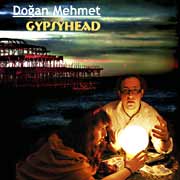
Dogan, a Brighton-based second-generation Turkish Cypriot and finalist in 2008's BBC Young Folk Awards, has been dubbed "one of the UK's first Turkish morris men". An intriguing tag, but one which on hearing his debut CD you'll understand - though it's by no means the whole story.
Dogan, along with his storming five-piece backing band The Deerhunters, creates a unique Anglo-Turkish/gypsy-punk (call it what you may!)-style mix of southern English and Turkish folk songs, self-penned material and driven tunes from both English morris and Cypriot traditions. The album is a thrillingly original, upfront experience, brimming over with Dogan's unbridled enthusiasm for creatively combining his own heritage with a deep-rooted love for the aforementioned Southern English traditional music. It's hard to believe he's still 19!
Dogan's a stunning singer and violinist, exuding all the chutzpah and verve you'd associate with the Demon Barbers or Little Johnny England, allied to a genuinely cutting-edge response to tradition that comes not only with those artists but also with (say) Jim Moray or the Imagined Village project. The mix is compelling. His original song West Pier, for instance, penned in response to the tragic destruction of Brighton's magnificent landmark, is shot through with ample feeling for its heritage and culminates in a fantastic, florid improvised violin solo (Ozun Hava) that acts as a bridge to the bouncy syncopations of the dance tune Ceftetelli (common among both Turks and Greeks) and a rousing chorus song in praise of girls from his grandfather's village Dillirga. Dogan's other original song on the disc, The Raging Seas, is a banjo-flecked reflection on conversations with his grandfather about Turkish and Cypriot history and reminiscences.
Another high-point of the disc is the closing track, an epic rendition of The Royal Oak, sung with tremendous conviction and bite, which relies more on light and shade and atmosphere to build its narrative and employs some intriguingly unusual touches along the way. Earlier, Dog(an turns in tough, forthright performances of Wraggle Taggle Gypsies, The Lawyer and Seventeen Come Sunday, which manage to be both effervescent and respectful of the sources; sometimes these powerfully combine with original morris-inspired tunes by band members (Tom Redman or Tom Wright).
Throughout, however, Dogan's own enthusiasm is infectious and doesn't need to be curbed all the while he can exercise a plausible degree of self-restraint too, as here. The robustly rocking, superbly gutsy nature of the music and playing on this disc is acutely matched by its bright and stupendously forward recording quality. By all accounts we should be hearing much more of Dog(an in times to come.
www.doganmehmet.com
www.myspace.com/doganmehmetthedeerhunters
David Kidman November 2009
Produced by T Bone Burnett and recorded (on vintage gear and in mono) at "historically significant locations around the South" (Sun Studios, the First African Baptist Church in Savannah, room 404 of San Antonio's Gunter Hotel which saw the birth of Robert Johnson's Brunswick recordings) with all the musicians gathered and playing together. With songs that "reflect various American traditions" (folk, gospel, swampy blues, country), Mellencamp says his 19th studio album is his "most rebellious record ever".
Well, I'm not sure how he defines rebellion, but if he means getting back to his musical roots rather than making an album with one eye on the commercial market, I guess it is.
The live approach ensures an off the cuff feel (even if they worked things up before takes) that's equally relaxed on the rockabilly title track as it is on bluesy stomp No One Cares About Me, Johnny Cash chugger Coming Down The Road or the honky tonk waltzing Don't Forget About Me.
Fuelled by themes of mortality, reflection, hope, the need for relationships and being on good terms with life in general, several songs count among some of the best of his career, not least the opening Some Time To Dream, the jazz-folk fiddle backed Right Behind Me, spooked blues West End and A Graceful Fall, the latter sounding as though it was plucked right out of the 50s.
The problem is that, while he's in fine dusty rasp voice, there's too many occasions when he sounds like his influences. John Prine's timbre and phrasings are there on Love At First Sight and Thinking About You while, accompanied by banjo, Easter Eve's six minute folk ballad tale of being out with his (apparently pretty tough) adolescent son who gets into a barroom fight with some drunk with attitude is pure Dylan in both construction and delivery.
But if the only problem is that you stand comparison with two of American folk's finest names, then I guess you don't got much to worry about.
www.mellencamp.com
www.myspace.com/johnmellencamp
Mike Davies September 2010
Melanie - Paled By Dimmer Light (CNR)
The first person I ever interviewed when I got into the music hack business, with her songs of peace, love and brand new keys Melanie Safka was the seminal poster child for the hippy 60s, her distinctive warble bringing new emotional life to Ruby Tuesday, her first UK hit. Inevitably, as the era passed so did she, her sometimes 'hello skies, hello trees' sensibilities out of synch with the new world. Her last significantly promoted release was Seventh Wave back in 1983 and although she's continued to record, her albums have either been unavailable in the UK or subject to the official secrets act. To be honest, I thought she'd retired, but it seems she's set up a thriving cottage industry with a whole clutch of albums, both new material and re-recordings, available though her web site and mail order.
She's back in the spotlight now - Radio 2 exposure included - with her first fully distributed album since 1989. I'm pleased to say she's in fine form too, her tremulously emotional voice still capable of evoking a catch in the heart, familiar songs of self-questioning, common humanity and relationships understandably now veined - as on the excellent I Tried To Die Young - with themes of ageing and reflection.
As ever, while there are moments of delicacy (They Can Find You In Your Dreams, The Ballad of Crazy Love), her folk hued rock typically swells to big music crescendos, finely represented here in the likes of Make It Work For Me, the driving pop You Call Yourself A Writer and the anthemic guitar ringing (courtesy song Beau Jared Shekeryk) And We Fall. Fitting then that, in a continuing tradition of recording solid cover versions, she invests U2's I Still Haven't Found What I'm Looking For with a rousing sense of yearning and spirituality. Seems those candles in the rain are still burning bright.
Mike Davies
David Kidman August 2007
One of the most sought-after major-label folk-rock rarities has at last been granted a proper re-release with decent (read excellent) packaging including fully informative sleeve notes and complete lyrics. Listening to the music of Mellow Candle now, it seems extraordinary that it should have remained buried for so long, for Swaddling Songs really is a gem. By the time it was recorded, though, in 1971, the group was on its third incarnation, with its touring activities including support for the likes of Lindisfarne and Steeleye. The group had always centred round the songwriting and vocal talents of Dublin-born pianist Clodagh Simonds, whose glorious harmonies with fellow-Dubliner Alison Williams (by then O'Donnell) formed such a striking feature of the band sound. The lineup at that point was then completed by guitarist David Williams, bassist Frank Boylan and drummer Willy Murray. Appearing on the Deram label, you could say the band was caught in the crossfire between folk-rock, prog and psych, and certainly there are times when you feel they've got the best of all three sub-genres in this lone album. There's a strident, Maddy Prior-like sense of drama to Dan The Wing, and the harpsichord-drenched opener Harmony Heath recalls Celia Humphries/Trees, while the classical predilections of Renaissance (on Alison's composition Messenger Birds) contrast with the theatricality of Principal Edwards Magic Theatre (on The Poet And The Witch) and the eerie Sheep Season. And yet there's a bluesy toughness and confidence about songs like Lonely Man, Silver Song and Buy Or Beware that tempers claims to any kind of specifically folk-rock throne, whereas the refrain of the pulsating closer Boulders On My Grave is the closest to Irish "turalu" trad the record gets. But for all that, Mellow Candle still don't exactly conform to any given prototypes, least of all in the peculiarly mystical nature of the songwriting. They really do seem to have developed an individual musical niche that, while seeming fully-formed, also showed great promise for a future that (alas) was never to be. (As a footnote, however: individual band members have gone on to - much later - produce some interesting music... check out Alison's Mise Agus Ise album from 2006, for instance, which reunited her with Frank and David.) Yes, Swaddling Songs is a neglected classic: trust me!
David Kidman August 2008
B-side, flip side, side 2, seaside: this two-disc collection of tracks from the "other side of TMTCH" covers all those obscure and forgotten varieties of discographical anomaly during the period of the band's history from first demos in a basement studio in Shepherd's Bush 1984 through the surprise split in 1991 to the reformation in 1996. It's an attempt to clear some of the fog away from the confusing plethora of multi-format releases (on a variety of labels) that appeared during that period, which even the band's fans will have found an impossible task to keep up with – and to this end a discographical section would have been a useful addition to the liner notes, although these are pretty informative in their own right.
Anyway, what we have here is a cross-section sliced through the kind of material the band was performing live, stuff that didn't fit with the albums, and so forth. The common factor being a combination of easy musicianship, commitment and a penchant for having a good time, with an inclination towards the maverick and unpredictable. Hectic live schedules often left the band with little time to develop their songwriting craft, but some fine material still got shunted off into the sidings of the 12-inch format; two prime examples of this being the bittersweet Pieces Of Paradise (which I'd never come across before) and The Ghosts Of Cable Street, which (perversely) appeared not on the 12" of that name but on Gold Rush… Then there's that intriguing song Dream Machine, here shorn of its would-be-spectacular playlet-prelude, and at the other side of the spectrum a bunch of raw and raucous essays such as Whiskey With Me Giro and the frantic rock'n'roller Johnny Come Home, both of which possess their own unassumingly primitive charm. Punchy covers of 70s classics like Slade's Gudbuy T' Jane and 10cc's Rubber Bullets both unexpectedly hit the mark, as in a more poignant way do the band's takes on Liverpool Lullaby (Mucky Kid) and Neil Young's Harvest Moon and their surprisingly affectionate rendition of the old Marty Robbins number Big Iron.
Country-punk, indie jangle, feisty anthemic folk-rock, wacky trash-can punk – all have their place in this assorted parade of takes that I'm glad didn't end up being swept off the cutting-room floor into the waste-basket, but instead are preserved for posterity on this collection. But (OK, my memory may be playing tricks here) aren't there even more TMTCH rarities ripe for exhumation from the archives? There would surely have been room for even more delights on these two discs, I'm sure. By the way, 5 Go Mad on Tour at festivals this summer - plenty of chances to catch them!
David Kidman August 2011
TMTCH, remember, were one of the elite collection of bands who brought to the tired mid-80s an energetic marriage of punk-rock and folk/Celtic sensibilities. The Pogues and Oysterband (arguably the Men's closest original bedfellows) may have attained higher profiles, then and since, but TMTCH have still endured the decades well, continuing (with just the one six-year hiatus in recordings) to preserve their own distinctive niche on that honorary continuum (along which also reside those good people Urban Folk, Robb Johnson, Levellers and Blyth Power), by delivering their own special brand of politically-savvy, intelligent and tuneful anthemic rock-with-folk-stylings.
Devil On The Wind, the Men's first full studio album in six years (since 2003's The Cherry Red Jukebox), appears on the eve of their 25th anniversary as a band. A short while back, the band released a "taster" in the form of an EP of the same name, which contained four exclusive tracks, a rootsy mix of the title song and one preview album track. Now, on the main-course full-length CD, the full-on thrust of the trusty latterday TMTCH lineup (Phil "Swill" Odgers, Stefan Cush, Paul Simmonds and Ricky McGuire with virtually-permanent drummer Billy Jo Abbott) is boosted by a handful of guest musicians comprising TMTCH regulars Bobby Valentino, Nick Muir, Dave Kent and Tom Spencer, with David Carroll on uilleann pipes and Appalachian dulcimer, plus an appearance on trumpet from Chumba's Jude Abbott (on Aquamarine). Production's by Pat Collier, who's succeeded not only in capturing the essence of TMTCH and their sheer enjoyment in making the music together, but also conjuring a rousing, majestic ambience. For Pat's skills, together with the contributions of the guests, swell the basic TMTCH sound out way beyond the Men's trademark ferocious live attack into a handsomely accessible recorded artifact whose rich-toned, full-bodied presence conjures a wide-screen quality befitting the globally-conscious vision of the lyrics, parading confidence without complacency.
The title track's panoramic spaghetti-eastern sweep rides out across a hellish landscape on the first of three songs that concern themselves with the contemporary Middle East situation. Reservoir depicts a Gulf War veteran running amok way down yonder in New Orleans, while Overseas, with its edict that "faith will be the key", draws a thought-provoking parallel with the time of the Crusades. The latter's one of five songs where Cush handles lead vocal, another being Beast Of Brechfa (a pell-mell study in fear), but don't fret for Swill's on typically intense form for the rest, notably Heartbreak Park (which examines the effect of spirit-of-place on the collective psyche) and The Ragged Shoreline (an evocative Coast-style overview). Some other songs depart a touch from what one might regard the Hang-Men's norm as represented by the doomy power-punk prophecy of A Real Rain Coming (which takes its cue from a line in the movie Taxi Driver): for instance, the seductive (if somewhat idealised) romantic-poesy of the lover's portrait Aquamarine; the bittersweet, almost Gregsong-esque pop-country-balladry of Hard To Find and the wistful Mrs. Avery (a deliberate "what happened next" sequel to Dr. Hook's weepy Sylvia's Mother).
Devil On The Wind represents rather more than a return-to-form for the Men: it's a stimulating addition to their illustrious catalogue, and a clear indication of their proven longevity. So hang on in there!
David Kidman July 2009
The Mendoza Line - Fortune (Cooking Vinyl)
Born in Athens, residents of Brooklyn, and named for underachieving Mexican baseball player Mario Mendoza, the quintet's last album, Lost in Revelry, saw them breaking out into a wider audience and being deluged with critical acclaim. As a result they boarded the plane and went off gigging around the UK and, er, Greece. Their first time away from home, it spurred them to start writing songs around themes of Americans abroad in troubled times and of recent immigrants to the US.
In some instances this is just a reason to come up with a hood down road song like the burring hook riddled pop of Before I Hit The Wall, but most times it serves to set up the downbeat mood that informs the woozy Fellow Travelers with its veiled references to the way the country now seems to exist to serve those who can afford to buy, the short but tumbling catchy handclapping Faithful Brother (Scourge of the Land) where Shannon McArdle takes lead to observe how Americans aren't that welcome any more, and the metaphorical but fairly obvious rock n roll stroller The Road To Insolvency.
However, although Metro Pictures and the country aching Will You Be Here Tomorrow slow dance with a sad pedal steel, Let's Not Talk About It is resignedly worn down and Throw It In The Fire is 60s folk pop woven and twang guitar with funeral march rhythms, the dominant musical mood is surprisingly jubilant, An Architect's Eye swaggering like an alcohol drenched Stones, Tiny Motions a circling Byrdsian ringer, The Road To Insolvency evoking Armed Forces era Elvis and the likes of It's A Long Line (But It Moves Quickly) even reminiscent of the 70 British pub rock of Dave Edmunds and Nick Lowe. Mendoza may have had an undistinguished batting record, but the band look like hitting it out of the park.
Mike Davies
Is there no end to the incredible creativity in Scotland these days, I ask myself, for the musicians of that fair nation are continually finding vital new ways to interpret and carry forward their traditions in the context of, and representing, an important world-stage music in its own right (expanding on the pioneering work of Martyn Bennett, I'm reminded at times here).
This new collaborative venture between Mary Macmaster (leading exponent of the clarsach and electro-harp and a key member of The Poozies and Sileas) and Donald Hay (leading and much-in-demand exponent of the empathic school of drumming/percussion) provides a magically innovative, thoughtful and genuinely progressive, take on traditional Scottish music that is sure to attract a wider range of listeners.
It's not a purely instrumental album either, a factor which will definitely broaden its appeal outwith the pure-Celtic brigade. Now we all know Mary's a fabulous singer as well as a brilliant harper, and she gets plenty of chances to shine here in the sparkling musical settings that she and Donald conjure from what might imagine would be rather limited resources. The album displays a thoroughly skilful use of timbre and texture that comes from two musicians who really know their instruments and their latent possibilities and have the imagination to remain open to, and keenly and boldly investigate, new ideas (including the use of samples).
Love And Reason brings us a seriously invigorating sequence of music that journeys from a delectable reel composed by Vancouver fiddle and trumpet player Daniel Lapp, onto a pair of original tunes by piper Fred Morrison, a brace of Gaelic waulking songs, a curious pibroch by MacCrimmon, a fine song by Burns (Weary - The Slave's Lament) and two written by local Edinburgh legend Sandy Wright- of which the unequivocally simple statement of love that is My Shining Star forms the disc's final (and quite perfect) utterance. Highlights during the course of this wonderful journey include an enchanting little song from the time of the Jacobite Rebellion concerning the proscribed wearing of the plaid; the aforementioned pibroch, Lament For The Children (which eerily, almost cinematically, incorporates the sounds of children's cries - it shouldn't work, but it does!); Mary's delicate personalised setting of Sorley MacLean's poem Reason And Love; and the joyously rippling tune-set Waves.
Mary's in splendid voice, and no more sympathetic and tasteful (fully present but never remotely intrusive) accompanist could she have than Donald in her exemplary renditions of the MacLean and waulking songs in particular; they're joined by singer Amy MacDougall on two of the pieces (including the aforementioned Burns song). The whole album is beguiling and mesmerising, and I'm totally caught up in the engulfing wave of enchantingly inspirational sounds and atmospheric moods and texturings.
David Kidman December 2009
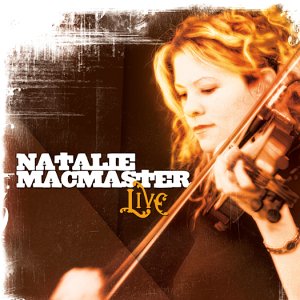
David Kidman
Cork-born Lorcán is a passionate young sean-nós singer with a confident and commanding, though sensibly measured, style which emphasises the musical quality of the songs in an often quite innovative way while demonstrating both a respect for and understanding of the texts. Sean-nós singing can be a bit of an acquired taste, I'll admit, but Lorcán's strongly individual presentation is both intense and involving without being austere or intimidating: deliberate yes, but involved rather than soporific. There's both intimacy and an understated sensuousness in his response (a combination which I've noted also in the singing of Dónal Maguire), and on some of the songs there's also an approach to decoration that rather resembles that of Robin Williamson. Unusually for a singer perhaps, Lorcán admits that he has often fallen for the music of a song and the sound of its phrases before he understood anything else about it. The drone of a hardanger or fiddle (Caoimhin Ó Raghallaigh), cello (Jane Hughes) or pipes (Mick O'Brien), at once pictorial and timeless, Pictorial aspect to the musical expression almost before the meaning of the words at times. other musicians play harp, whistle and bodhrán but each individual song in sparse in texture and two of the key songs are performed "undressed with accompaniment" as Lorcán aptly describes it. There's a weird sensation caused by Lorcán double-tracking some passages of the text of the eerie 18th century elegy Tuireamh Mhic Finín Dhuibh, only accentuating the sheer other-worldly nature of its melody line, which is at once epic and highly disorientating. A bit like the parallel-chanting of Tibetan monks, perhaps, but it sounds truly extraordinary. Finally, the whole CD ends most delightfully when the subtly mellow song Bean Dubh An Ghleanna glides almost effortlessly into an uplifting and gently sparkling Merry-Band-like playthrough of the reel Kiss The Maid Behind The Barrel. Sure enough, there's sometimes a hint of stridency in Lorcán's delivery, and it probably won't help that a significant majority of the disc's tracks are performed at a similar (slowish) pace, but personally I've found this one of the most captivating discs of sean-nós singing I've encountered in recent years.
www.copperplatedistribution.com
David Kidman May 2008
www.alisonmcmorland.com
www.greentrax.com
David Kidman December 2007
Nairn-born fiddler Rua (short for Ruairidh), as well as fronting his own band, is currently a member of the award-winning Paul McKenna Band, whose CD Between Two Worlds I reviewed here a year or so back. But I'd say Rua's got even more to offer on this seriously exciting solo album, on which he plays a selection of his own compositions together with spirited arrangements of traditional and contemporary tunes.
This solo recording came about as a prize for winning BBC Radio Scotland's Young Traditional Musician Of The Year award in 2009, and on this evidence Rua's already a major force to be reckoned with, displaying a striking degree of maturity and confidence both in his playing and in his willingness to experiment with fresh arrangements for the music. A key feature of Rua's solid technique is his embracing of pipe-ornamentation as an influence on his fingerwork – you can hear this best, perhaps, in the style he adopts for Charlie McKerron's Bruachladdich on the Ooh, Pierre set (track 7).
But unlike many fiddlers with a strongly driven style, Rua convinces whatever the tempo – whether on the lively medley of jigs (track 2), the rollicking Kitchen Criminals set or the lovely, reflective Harv's (composed for Kristan Harvey, a fine fiddler from Orkney). Although Rua's strong, brilliant fiddle playing is at the forefront of this persuasive recording (produced by Brian McNeill), a certain amount of the record's special character stems from his choice of accompanying musicians – principally Tia Files (guitars, bass) and Adam Brown (bodhrán), both members of Rua's own band, and augmented occasionally by Alasdair MacLeod (drums), and further (on just two tracks) by Brian himself on concertina or bouzouki and Lorne MacDougall on pipes and whistle on the superbly animated George, Donald And Sandy (march-and-pipe-jigs combination). Tia's guitar work both propels and complements Rua's own sense of forward momentum, while Adam's bodhrán playing is a model of sensitivity.
Even so, the one entirely solo track, a soulful, entirely affectionate and wonderfully rich-toned rendition of the lullaby Bidh Clann Ulaidh, proves a disc highlight (and fittingly too, since it was the very music which won Rua the YTM award!). Perhaps the Glasgow Spike march seems a touch hard-driven at first, but the use of octave fiddles for a textural backdrop is a nice foil for the more abrasive front-line work; and it's a pity the ensuing tune is faded before it's outstayed its welcome. But even this doesn't spoil the keen impact Rua's playing has on the listener, especially since there's still one more track to play - the hard-swinging Taxi set…! For Tyro is both a very attractive and forcefully impressive record: one that bodes extremely well for Rua's future career.
David Kidman October 2010
Formerly into hardcore punk, spindly Irish singer-songwriter McMorrow had something of a Road To Damascus conversion when he stumbled on CS&N. Taking himself off to write and record in a remote house by the sea, he emerged with wispy beard, hat and a collection of bucolic songs inspired by folk music and writers such as Steinbeck and Dahl, featuring banjo and delivered in a fragile croaky falsetto to be, rather inevitably, hailed as Dublin's answer to Bon Iver.
He's not averse, however, to kicking up his heels for a bit of a shindig with Sparrow And The Wolf positively bustling along while Breaking Hearts conjures lollopping Neil Young and This Old Dark Machine has echoes of Joni's Woodstock amid its CS&N flavours. And he catches you totally offguard when From The Woods suddenly erupts in an urgent panic that makes you want to run and not look behind.
It is, though, for the sparse and hushed pastoral ballads that he's going to be known for the present, beautifully framed in numbers like the airy Hear The Noise That Moves So Soft And Low and the darker shadows of Follow You Down To The Red Oak Tree, haunted folk blues Down The Burning Ropes and the waltzing And If My Heart Should Somehow Stop. Early In The Morning, I'll Come Calling he sings on the title track closer. I'd make sure you're at home for visitors.
Mike Davies February 2011
An excellent all-instrumental release from a young East Tennessee banjo player (just 22 years old at the time of this recording), who's clearly been influenced big-time by Earl Scruggs but retains plenty of his own individual brand of fiery expertise (just you marvel at Josh's take on Earl's Randy Lynn Rag!). Josh also does a nice line in lyricism (as on his treatment of the song Cora's Gone, where the melodic flow continues unhampered by the exigencies of tuning or conversion), and he even proves himself a dab hand on finger-picking guitar too on a couple of tracks. Josh's been a member of Larry Sparks' band for the past five years too, which speaks volumes for his talents. So too is the very indication given by the presence of Scott Napier (mandolin), Randall Hubbard (bass), Hunter Berry (fiddle) and G.C. Matlock (guitar) as the basic backing crew for this record; the ensemble work is just grand, and no-one could accuse Josh of steamrollering through the laser with an overbearing banjo showcase as every player is given due weight. Most of the music Josh has chosen to play here is fairly well-trodden within old-time/bluegrass circles, at least in its original guise (several tunes are creative and resourceful song adaptations by Josh himself), but in truth these performances are most invigorating and are well able to hold their own (all-round inspired and deft picking is the order of the day, yes sir!). There's even a jolly rendition of Stephen Foster's Suwannee (sic) River! The only drawback of this CD (a couple of premature fades aside) is the seriously light playing-time - 29 minutes, which is utterly ridiculous in this day and age.
David Kidman
What it says on the box, this is a collection of eight numbers recorded at gigs in Amsterdam, The Netherlands and Germany during McMurtry's first European tour with a four piece band featuring Tim Holt on guitar, bassist Ronnie Johnson, drummer Daren Hess and Ian McLagen on keyboards.
Save for the Bruce Cockburn-like Restless from Childish Things and Fraulein O which, to the best of my knowledge, ha sonly ever appear on Live In Aught-Three, everything comes from his most recent studio album, Just Us Kids.
Swamp boogie Bayou Tortue kicks things off with guitars setting a Creedence groove but, save for Freeway View where McLagen lets rip, the set favours the album's mid-tempo and bluesier drawled ballad numbers, Katrina themed Hurricane Party, You'd A'Thought (Leonard Cohen Must Die), Just Us Kids and the speak-sing narrative Ruby And Carlos.
However, this is only part of the picture. Because the album was issued on vinyl, the running time was limited. Hence the CD runs for just over 40 mins, but comes with a bonus DVD from the Paradiso, Amsterdam, show which, in addition to footage of the band performing Freeway and You'd A'Thought, features a further four numbers.
First up is Choctaw Bingo, a 10 minute bar room jam that, at times, reminds me of the rhythm line from Come Together. They keep it hot for blues boogie We Can't Make It Here, McLagen again pounding the keys while the DVD winds up on the mid-tempo burn of Too Long In The Wasteland. Before that, however, show opener Jon Dee Graham, seemingly having availed himself of the dressing room rider in the interim, returns to the stage to round on some critic who was 'not impressed' with his performance and then crank up a storm with Laredo.
Although a solid enough live set, with its very specific album promotional focus this is very much one for the fans rather than something to point newcomers to the repertoire, but as such it's a tasty filler until the next studio album arrives.
Mike Davies February 2010
Eight albums down the line and the son of Texas novelist Larry is firmly on a roll, following up Childish Things with an ever more political collection of songs hewn from his ongoing disillusion with his country and the current administration's handling of Hurricane Katrina and the Irag war.
He's pretty specific on the growling, guitar gutsy Cheney's Toy, a bitter indictment of the way the war has dehumanised those sent to fight in it and of a President blinded by the pursuit of a legacy of his own. Likewise, the bluesy slow riffing God Bless America, a track that again evokes thoughts of Bruce Cockburn, directs its attention at the oil industry while a Steve Earle-like banjo picking Ruins Of The Realm notes how nation states have a habit of falling apart and, by inference, draws a comparison between the 'little cowboy' and the Third Reich.
He's not all about Iraq, though. Hurricane Party revisits New Orleans from the perspective of a guy who stayed behind, observing the waters rise and reflecting on the way things change and slip away.
Showing the same storytelling skills as his father and prompting thoughts of Warren Zevon's finest moments, Ruby And Carlos is a stand out semi-spoken tale of a Gulf war vet turned drummer and his woman trying to make a relationship work in the face of everything life's thrown at them as the years fall past while the title track revisits Johnny from his song Candyland, now grown with a kid, a divorce and a life still going nowhere.
Equally potent and downbeat, Fire Line Road is a powerful drawled Texan country-blues, a tale of domestic sexual abuse as Alice Walker recounts how her sister wasn't lucky enough to avoid their drunken father's desires.
Interestingly, given his cinematic style, The Governor, about a murdered fisherman and political conspiracy, is actually John Sayles' Silver City recast as a song. Musically, whether rocking the boogie on Bayou Turtous and Freeway View, the latter featuring Ian McLagen driving the groove, or otherwise chewing the Texas dust, this is McMurtry's most confident and assured work yet, and if he's got the blood churning in his anger and frustration, he leaves the album on You'd a Thought with a note of acceptance that we're essentially always going to repeat the same mistakes but that "through all the smoke and mirrors, I guess we do the best we can." He certainly has here.
Mike Davies July 2008
If you were presented with this without a sleeve then you'd easily think it was a new album from Bruce Cockburn. The son of novelist Larry (whose work has been a long standing influence on Nancy Griffith), McMurtry may be Texan but the opening cover of Dave Alvin's Dry River sounds so like the Canadian singer-songwriter, from voice to musical arrangement, that it's spooky. The title track filters in a hint of early Dylan sounding like a slowed down Queen Jane Approximately, but whether rocking it up on Valley Road or taking it down slow and moody as on Out Here In The Middle or the smouldering Red Dress with its Hendrixy chopping guitar, the Cockburn comparisons are hard to shake.
Still, if that doesn't pose a problem, then McMurtry has rewards aplenty on offer. Like Cockburn too he's an observer of the shifting world, the city and the backroads that lead there. Inspired no doubt by his dad's writing, his characters are losers (Lobo Town), down and outs (Saint Mary of the Woods), broken lovers (Broken Beds), kids recounting their parents fights (Gone To The Y), ordinary lives coping with ordinary life, often leaning on a bottle to make it through. Sometimes leaning too hard. As Out Here In The Middle indicates, he's also concerned about the changing face of the rural American landscape and the erosion of the people and places upon which the nation was founded. Listening to him relate the family reunion of hell raising, gun totin', cousin-screwing, land rent shark rednecks in Choctaw Bingo you wonder if that's necessarily a bad thing.!
www.jamesmcmurtry.com
www.sugarhillrecords.com
Mike Davies
Virginia MacNaughton - Levers Pulleys & Engines (Paraphernalia)
With one indie label album already to her credit (ascribed to Vanessa MacNaughton in the Q review) and work with the Young Vic, the Linconshire born singer-songwriter isn't new to the game but it's reasonable to assume she's not a name likely to ring many bells. That should change with this her own label sophomore release. Among the inevitable comparisons that attach themselves to any new artist have been Dido, Beth Orton, Indigo Girls, Kirsty MacColl and Nick Drake, to which you may as well as Eddi Reader and Judie Tzuke for good measure with music that sits comfortably in the cool folksy-jazz pop zone. A little too poised and crafted at times when a rush of blood would have worked better, even so she's possessed of a honeyed voice that swoops and hushes to easy laid back Chardonnay evenings effect, subtly veined with the sense of resignation and wearied hurt that imbues many of her bleak and desperate love songs. Goodbye To All That (dedicated to MacColl) is ideal testament to her way around an arrangement with its dark coffee Latin flavoured percussion while the likes of Faceless, Anonymous (a song about loving an alcoholic), a slow waltzing Worth The Wait and the understated excellence of the opening Essentially Prey reveal her intelligent, literate way around bruised romance and insecurity. The ringing Lou Reed like guitar lines of From the Heart Down shows she can handle the big rock sound as confidently as wispy acoustic and throws up yet another reference point in Shawn Colvin with a track that cries out to be a Radio 2 featured single and quite possibly the lever that will crack wide the dividing wall between cult and star.
Mike Davies
This guy's a bit of a local hero round these parts (read West Yorkshire): though deservedly well regarded as a solo performer (singer, songwriter, guitarist, indeed multi-instrumentalist), Gerry also leads his own four-piece band and augmented "orchestra" and plays stand-up bass with Duncan McFarlane's mighty acoustic outfit, yet in spite of all these activities he somehow maintains an unassuming profile.
Although Gerry's been around the music scene for some 25 years, with his expertise in great demand from fellow-musicians, it's only in the past five years that he's launched himself into a solo career path. An early studio recording displayed Gerry's penchant and aptitude for intelligent experimentation, especially as regards texture and arrangement, while now on the brand-new album release, Small Town Boy, he combines that trait with his many other proven talents: characterful singing, skilled songwriting and fine all-round musicianship, all of which can be heard to good advantage on a thoughtful collection of songs that celebrate the best of contemporary acoustic writing with a handful of keen arrangements of traditional songs that (as a self-confessed nu-folkie!) he's recently discovered.
To help him realise the potential of these songs, Gerry has drawn around him a host of talented friends, mixing and matching the various musical colours as they drop in to assist. There's a real feel of willing collaboration, a genuinely enjoyable coming-together of enviably naturally talented muso-mates. These include members of his band (Katriona Gilmore on fiddle and mandolin, Ruth Wilde on double bass and Liam McNeice on guitar) and extended orchestra (Dom Howell on bodhrán and Jude Rees on oboe), while there are also key appearances from melodeonists Andy Cutting, Steve Fairholme and Pete Robinson, with backing vocals from Michelle Plum, fiddle from Marjorie Paterson and Jamie Roberts on trombone: stars every one of 'em!
Gerry's personal treatments of his chosen material are without exception genial and pleasing, but that evaluation should not be taken pejoratively, for he displays a real knack for communicating the essence of each song; it's rather that Gerry's performances are couched in a brilliantly likeable, listener-friendly and thoroughly accessible nu-folk idiom that occasionally understates and belies its own keen depth of invention and imagination.
Gerry's own songs (just three on this disc, but there's plenty more on the stocks!) are simply- and memorably-expressed demonstrations of his acute empathy with the human condition, although their inspiration invariably derives from specific stories. These in turn can be based either on true events (Home is the tale of an American airman lost in training during WW2, whereas Danger Sign uses the much-documented local issue of the fence alongside the river Wharfe in Otley as a telling metaphor for other life experiences and concerns) or urban myths (The Legend Of Black Jack, a ghost who haunted a friend's farm). Gerry also turns in affectionate and well-considered performances of songs penned by other songwriters: Katriona's I Know You (clearly inspired by Alison Krauss) receives a distinctive, sensitive reading that's quite different from that on Kat and Jamie's own 2006 EP, while Boo Hewerdine's limpid Wings On My Heels shows Gerry's persuasive way with that kind of nostalgic material. For two of the album's songs, there's no other recorded comparison to hand: Shadow Of Skiddaw, which comes from the pen of Australian singer-songwriter Chris Aronsten, appealingly namechecks several locations from Gerry's (and mine own!) favourite part of the Lake District, while Circle (Round) For Danny is a lovely, evocative recent composition by Duncan McFarlane written for and about his own grandfather. Elsewhere: do we really need yet another version of Beeswing? A resounding yes, when it's as finely realised as Gerry's!
He also manages to achieve a similar freshness of interpretive approach for other folkie-familiar fodder, here the traditional songs Flash Company, The White Cockade and Lezzie Lindsay, all of which he so beguilingly makes his own. In all these cases, Gerry's superlative renditions can proudly hold their own alongside those by illustrious "star names" of the folk scene; and his melodious take on Braw Sailing is a close match for Kris Drever's celebrated recent version, which can be taken as praise indeed.
As a singer, Gerry has a very pleasing vocal delivery, a gentle and light-textured but never unfeeling way of putting across a song, the total believability of which is only mildly compromised on isolated occasions by the slightly forced adoption of an "accent" (a Scottish burr on Circle For Danny and a rougher tone on some phrases of Flash Company).
Not only is Gerry a significantly accomplished instrumentalist (guitars, tenor guitar, bouzouki, banjo and basses), wearing his talents lightly and modestly, but he also has a great ear for effective blending of instrumental colour; each successive listen to this CD reveals playful and ingenious subtleties of individual parts that really enhance his own performances. For the most part, the carefully-managed recording does Gerry's creative insights commendable justice, although there were times when I felt a touch of opaqueness in the overall texture, especially in the definition of bass lines and some minor clutter in the separation of other parts.
But these trifles matter little when set alongside the considerable achievements of the disc as a whole in accurately presenting the consummate nature of Gerry's talents and reflecting where Gerry is artistically right now. And it's top quality all the way - no wonder he's got so many friends!
David Kidman October 2009
Over the past 30 years, Brian's been a real force to be reckoned with in Scottish music. It was, however, as long ago as 1969 that he formed Battlefield Band, the long-lasting ensemble whom he finally left in 1990 in order to pursue solo projects and his wider interest in the Scottish disapora through writing. And yet, although Brian's status, as performer, songwriter, composer, producer and musical director, has always seemed assured, his actual profile has in the main seemed almost obstinately low-key (that well-worn phrase "hiding his light under a bushel" comes to mind again). Extensive touring and recording commitments in support of other artists and their projects have resulted in only sporadic releases under his own name as singer/instrumentalist/songwriter over the past twenty years.
The Baltic Tae Byzantium is a labour-of-love, long-in-gestation project that has only now finally seen the light of day, with its individual tracks having been recorded over the lengthy span of the past six years or so. It's best regarded as the sequel to 1991's Back O' The North Wind (an audio-visual show whose theme was the emigration of six individual Scots to North America), this time concerning itself with the influence of the Scots in the opposite geographical direction (Europe). It comes in the form of a kind of suite comprising seven original songs and four instrumental tracks, with virtually everything you hear having been composed by Brian himself. He's unrivalled among contemporary Scottish songwriters in his grasp of, and response to, history both on the personal and national scales, and his stirring tales of real personalities (both known and unknown), while copiously researched, are abundantly truthful, insightful and often deeply moving. I can only describe the whole sequence as a mighty achievement.
The songs are without exception worthy successors to those already widely celebrated entries in Brian's canon like No Gods & Precious Few Heroes, The Yew Tree, The Lads O' The Fair and The Snows Of France And Holland. These new songs tellingly incorporate Brian's special trademarks: invariably anthemic in nature, with passionate, often outspoken sentiments and his own intense, spirited vocal delivery matched perfectly by clear-sighted and ingenious musical arrangements that display the keenest ear for variety of texture as well as mood and pace and maintain a listener's interest without ever distracting from their powerful lyrics.
Selecting some highlights is a task that proves difficult, such is the quality of all the songs, but I'd probably single out the rousing title song, also The Holland Trade (the tale of the 15th century commercial links between the Scots and the Dutch), A Far North Land (the story of John Knox and Mary, Queen Of Scots and their inextricable links to Europe), and, arguably the most fascinating of all, Bring The Lassie Home, which proudly tells his father's own life story, focusing on his courtship and marriage to a Styrian lady. This latter track is poignantly followed by True To The Forest (the very title being a translation of Brian's mother's name), an affectionate and quite gorgeous little tune which ably reconciles the sound of the zither (here represented by an autoharp) with traditional Scottish elements.
The remainder of the instrumental selections are wonderful too: Scotus is a simple modal tune replete with the feel of antiquity, in tribute to the founders and followers of the Irish Christian faith from both sides of the Irish Sea, whereas the livelier "soldiers and merchants" set of reels pays respects to historical personages including Brian's paternal grandfather.
Musicianship couldn't be bettered – in addition to Brian's enviable ability to play an indecent number of instruments brilliantly (from fiddles to concertina and hurdy gurdy, mandos and guitars to percussion), we also get to savour the talents of Dick Gaughan, a veritable plethora of other impressive contributions both instrumental (pipes, whistles, harp, tenor banjo, harmonica, soprano sax, percussion) and vocal (courtesy of Sylvia Barnes and Patsy Seddon). Presentation is (even by Greentrax standards) truly exemplary, with a scrupulous attention to detail in the booklet notes that in every way reflects a comparable quality in the musical settings. Only one very minor gripe - the track titles on the rear box cover are rather difficult to read (white against the pale background photo). But otherwise, this is a thoroughly appealing and satisfying release on every count.
David Kidman March 2010
This contemporary acoustic duo, who both study at the Birmingham Conservatoire and are in their fourth year on the BMus course, started playing together as a duo just before Easter 2007 and were finalists in 2008's Radio 2 Young Folk Awards. This, their debut CD, is an unusual release, at any rate in the context of the trend among so many of today's young performers for making their name reworking traditional material, for Light Up All The Beacons consists exclusively of entirely self-penned material, being a collection of thoughtful and intelligent songs (by Jack) and a couple of instrumentals composed by Charlie. The songs, though often distinctly personal in nature, are mature, thought-provoking and refreshingly devoid of archetypal studenty navel-gazing. Jack's vocal delivery is individual and confident, though some may find it just a touch abrasive on occasion; his guitar style, in contrast, is deft and imaginatively melodic, whereas Charlie's rich-toned violin accompaniment is very much to the fore while clearly innovative in its approach to phrasing and contour. The duo's music is pretty original and not easy to describe, at least in terms of ready reference points, but there's no denying that their debut is definitely brimful of interest and promise, although on initial hearing it may be judged a trifle elusive, even exclusive. I suspect this album will turn out to be a bit of a grower, one to perhaps lay aside and return to in a month or two with fresh ears, when it will doubtless yield even greater satisfaction.
www.myspace.com/jackmcneillandcharlieheys
David Kidman March 2009
Born in Bradford to Irish-Polish parentage, McNiff cites Italian leftist songwriter Fabrizio De Andre as a major influence (he even references him in opening track Mountain Song), but his nasal vocals and strummed Americana tinted songs are more likely to have you thinking early Dylan or Arlo Guthrie.
His melodies are pleasantly catchy enough but it's in the lyrics that his real strengths lie. The poetic images of Howling Moon's 'honey wind' or the Bus of Tears that 'only goes once every seven years', the painterly description of the landscape in Seaside Song, Tombola's story of a raid on a Nazi HQ in Northern Italy by the SAS ad local resistance fighters and Students Of Love with its divorced couple re-establishing civilised relationships a year on.
Many of his wistfully romantic songs read like short story capsules and, like the Yorkshire set Hometown and Kissing In The Wind, leave you wanting to know more of the characters or the background to the events and scenes he's describing. If the music doesn't take off, he's got a real future in the publishing world.
Mike Davies September 2011
I reviewed his second album, Nobody's Son, for Netrhythms some time back, but never heard his Off The Rails debut and never got a promo copy of the third, Another Man. So, originally put together to introduce him to America, this compilation and its four new recordings is a useful catch-up for me and an enticing primer for newcomers.
Born in Bradford of Irish-Polish stock, a graduate in French and Russian, and a former cross-country runner for Yorkshire, McNiff is quite open about his influences, basically early Dylan, Woody Guthrie and Ernest Hemingway. I don''t think he sounds much like Ernest, but you can certainly hear Bob's nasal tones in his vocals, guitar playing and (especially on Blow Up The Bridge, the only number from the second album) songwriting. Lost My Way, one of the new cuts, throws up hints of John Prine while Woody's Annie Hall from his debut suggests a young Eric Anderson and In Our Time harks to Heart of Saturday Night Tom Waits without the gravel.
I can't say I'm too much taken with gypsy folk stomper new recording Bella Ciao, a trad anti-fascist song from WWII sung in Italian, but the Simon & Garfunkel like Pilgrim Soul and a lovely strummed Dylanesque live version of hymn chestnut Hard Times are fine additions to his library.
Taken from his debut, Soho ably underscores his nimble dexterity on the fretwork with strong echoes of John Fahey while the slow brooding defiant title track from his sophomore release is another welcome inclusion that will hopefully bolster the number of people out there waiting for his overdue fourth studio album proper.
Mike Davies March 2008
Mary's abnormally fine CD The Holland Handkerchief was a highlight of my listening year back in 2004, so it was in a heightened state of both eagerness and trepidation that I approached her latest offering. I needn't have worried in the slightest, for Petticoat Loose is another exceptional release. Two years in the making, its essence is represented by, and crystallised in, the four principal strands of Mary's artistic endeavours: her close associations with luminaries of the traditional music world, her work at the National University Of Ireland, Galway, her ongoing musical collaboration with former Dervish multi-instrumentalist Seamie O'Dowd and her lifelong friendship with poet, playwright and broadcaster Vincent Woods. These strands, though on the surface quite diverse, are well unified here by Mary's marvellous singing voice: supremely strong, full of spirit and passion and an intense love of the songs she sings, whatever their provenance. Having said that, Mary benefits much from the inventive nature of the settings given to the songs, which range from the epic layerings of Cúmha (Parting Sorrow) and Caoine Sheáin Mhic Searraigh to the altogether simpler, ungainly rusticity of the Romanian drinking song Lumé, Lumé (accompanied by the galumphing strings of the quartet ConTempo). Highlights are provided by the pair of songs collected by Stiofán O'Cheilleachair from the area of Drumkeerin where Mary grew up, which are both blessed with imaginative arrangements by Brendan O'Regan, while two further songs have an intriguing choral setting: a beautiful, small-scale-harmonised rendition of Barbara Allen contrasting with an ambitious treatment of Lowlands Away on which Mary's voice is surrounded by the surging waves of sound produced by NUIG's Orbsen Choir. A further standout track is Mary's solo unaccompanied rendition of the traditional narrative My Generous Lover, while another unexpected success is Mary's "strangely comforting" cover of Leonard Cohen's Sisters Of Mercy. The three Vincent Woods songs couldn't be more contrasted too: Sanctuary is a poignant childhood reminiscence, while Kiss The Moon's light-country-bluegrassy setting belies the personal and moving nature of its story and the album's title track playfully makes use of a bluesy kind of jig form to convey both the carefree abandon and the ominous intoxicating allure of the strayed woman of folklore. If I must be picky, the album's two least successful tracks for me are Wild Mountain Side, where Mary's very strength of vocal timbre appears to hector the listener a touch, and Victor Jara, whose almost jaunty accompaniment works against the emotive power of Mary's voice. But these criticisms are very much comparative, as the album works so well as a whole and the rest of it is so fine. No lover of good singing can be disappointed with Mary's performance here, while another definite selling-point must be her excellent and illustrious support crew, which includes Mairtín O'Connor, Cathal Hayden and the aforementioned Mr. O'Dowd (all of whom appeared on The Holland Handkerchief), with this time additionally (amongst others) Frankie Gavin, Gerry (Banjo) O'Connor, Garry O'Briain and Johnny Ringo McDonagh.
www.marymcpartlan.com
www.copperplatedistribution.com
David Kidman
There's something not quite right here. Here's a CD by a singer I've never previously heard, who has one of the finest voices I've heard, so where the hell has Mary been hiding? Even on the (wonderfully textured) cover shot she's peering out a mite sternly, half-hidden amidst long stalks of grass. Well I'm the ignorant one it seems, for apparently she's well known as a music producer in television and theatre for some years, and The Holland Handkerchief is her first record. For it, she's gathered around her some of the finest Irish musicians one could wish for (including Paddy Keenan, Cathal Hayden, Mairtín O'Connor, Liam Kelly, Tom Morrow, and not least Dervish's Shamie O'Dowd), and comes up with what amounts to something of a masterwork that somehow manages to straddle the uneasy divide that has caused many a talented artiste to make one compromise too many. In other words, this CD should appeal to the enthusiast for classy folk performance and the lover of good songs well sung, while achieving that elusive element of mainstream accessibility that's as often reviled as appreciated for its skilful attainment. Mary's voice has a well nigh unique combination of qualities - a passionate maturity, a wholly natural directness of expression, and a distinct earthiness over a wide compass, embodying at once a great strength and a great tenderness. Her repertoire, at least as evidenced on this CD, includes a fair smattering of what one might call relatively familiar material that's lately in need of reasoned rejuvenation. Which is just what Mary provides, aided considerably by the production and arranging skills of P. J. Curtis and Shamie O'Dowd respectively. Standouts for me were the opening title track, a mournfully atmospheric version ofPeat Bog Soldiers, a fine and unerringly well-paced unaccompanied rendition of Lord Gregory, a joyous cajun-style revisit of Thom Moore's Saw You Running and a superb three-part rendition (with Mary Staunton and Martina Goggin) of Slieve Gallion Braes that finishes the album in perfection with its blazing economy of execution. And even the jazzy swing of Mary's take on Aura Lee (done to that hoary old Love Me Tender tune which I've hated forever) didn't alienate me! Yes, I'm convinced this album is destined to be regarded as a classic.
www.copperplatedistribution.com
David Kidman
It's good to see this title included among the first batch of anniversary reissues of selected LPs from the illustrious Topic back-catalogue, for there's no question that Belfast's McPeake Family were one of the most successful of the groups playing Irish traditional music within the 1960s folk revival. Theirs was a distinctive sound, based not on the customary fiddle and whistle but instead on the quite specific - and novel and unusual - combination of uilleann pipes, harp and harmony singing.
The McPeakes first captured the attention of English audiences in the early 1950s as a result of Peter Kennedy bringing two uilleann pipers, Francis McPeake and his son Frank, over to perform at the Royal Albert Hall; the duo soon then became a trio with the addition of second son James, a harp player. At the time of the Topic recording sessions, however (the winter of 1962-63), the McPeake Family group consisted of that original trio augmented by a second trio comprising Frank's daughter Kathleen (another harpist) and son Francis and their cousin Tommy McCrudden, both pipers. The sessions spawned an LP and an EP, and the four tracks of the latter (which include the celebrated song that gives this disc its title) are used to neatly top and tail the former on this reissue. All the McPeakes complement their instrumental skills with fine singing, and some of their harmonies are quite edgy indeed. The songs include repertoire that has since become standard, including The Verdant Braes Of Skreen and Slieve Gallon Brae, as well as versions of Cock Robin, A Bucket Of The Mountain Dew and Jug Of Punch; performances are vital and imaginative. Pick of the handful of purely instrumental selections would have to be the stirring piping on The Lament Of Aughrim, but there's plenty of spirit in the various reels and hornpipes too.
As far as documentation goes, the sleeve notes for both original releases are reproduced in the enclosed booklet, although an amusing error has crept in whereby I Know My Love (which James sings here to his own harp accompaniment) is listed as I Know Where I'm Going (oops!). A very welcome reissue nevertheless.
David Kidman December 2009
Catherine-Ann MacPhee - Suilair Ais: Looking Back (Greentrax)
Cathy-Ann's widely regarded as one of the finest of today's Gaelic singers, who around six years ago had appeared on the groundbreaking Gaelic Women CD and the ensuing Celtic Connections concert in 2000, and this is her fourth album release for Greentrax (her very first, the highly-acclaimed Canan Nan Gaidheal, appeared back in 1987, only a year after the label itself was launched!). It's a lovely collection featuring many of Cathy-Ann's all-time favourite Gaelic songs, and a CD which, although predominantly gentle in character, betrays hidden depths on close listening. Like her chosen accompanists, in fact - just a glance at the names of whom should give you a good idea: Tony McManus (guitar), Wendy Stewart (clarsach), Iain MacDonald (flute and small pipes), Ewen Vernal (bass) and Neil Martin (cello). They provide finely-textured backing tracks that delicately and elegantly frame Cathy-Ann's outstanding singing, and the overall effect is immensely soothing without being soporific. In this respect, it's probably invidious to attempt to single out specific tracks, although I admit to particularly enjoying the triptych at the centre of the CD, which begins with a medley of A Ghaoil Leig Dhachaidh and Leannan Mo Ghaoil (track 7), where Cathy-Ann invests her performance with the potent memory of a wonderful evening concert she gave in Edinburgh, continuing with the weaving counterpoint of electric and acoustic guitars on Mo Chridhe Trom's Mi Seòladh, and ending with the delicious lilt of the unaccompanied Gaol An t-Seòladair. The artistic character of the album in pure sound terms is carried on through into the cover design, which features a beautiful painting by Cathy-Ann's young daughter Mairead MacDonald. This is a delightfully intimate, yet immensely accessible CD, by which I mean accessible even to those who think Gaelic singing is not for them - and at least part of this accessibility is due to the uniformly sensitive and tastefully-crafted accompaniments, which I here emphasise at the risk of denigrating Cathy-Ann's superb singing, the quality and stature of which, though exceptional and enviably consistent, should in no way be taken for granted either.
David Kidman
The songs evoke headily ethereal landscapes while dealing in what for yer average songwriter would be decidedly obscure or esoteric subject-matter: Tarot card illustrator Pamela Colman Smith (The Lovers), the sufferings of Mexican artist Frida Kahlo (Aquí Me Pinté Yo), lucid dreaming (Western, with its trance-like spoken passages), the writings of Carlos Castaneda (the title track, which also integrates influences from Native American music). Eastern drones are used to mesmeric effect on Pipe And Tabor (which posits the theory that the Great God Pan still lives among us) and Kathakali Boy (inspired by the elaborate Indian classical dance-cum-story-play of that name), while Mama's take on the Biblical story of Salome bewitchingly utilises mariachi trumpet within a hallucinatory and chaotic swirling dervish of Dancing Girl. The flamboyant, devil-may-care insistence of opening track The Fool Of Spring is a bit like the Roches on speed, while further contrasts are provided by the disturbed awakening of Liquid Sunshine and the gentle ambient tinkling-bell-adorned idyll of At The Waterside, and the bonus track is a fresh update of Zoë's 1991 hit single Sunshine On A Rainy Day – mildly disposable perhaps (a bit like the Hole In My Shoe that's still letting in water, I guess!), but it's fit for purpose as a desirable encore here.
The instrumental backings are clear-textured, with Zoë's rippling ukulele and classical guitar in delicate counterpoint with Sarah's open-tuned guitar while further delectable backing is provided by Tiffany Bryant's flute and Andy Jarvis's intricate percussion (and occasional accordion, trumpet or harmonium). These various elements add to the wayward, trippy vibe, but (and this bit's hardest to pin down!) there's also a curiously spontaneous sense of control to the whole proceedings, a feeling of considered arrangement that's conscious but not self-conscious – all of which adds to the appeal of the music. Even so, there's occasionally a nagging little feeling that the whole is less than the sum of its parts, with individual tracks very persuasive yet the total effect a touch too ragbag to be entirely convincing. But after much deliberation, and despite superficially underwhelming first impressions and occasional reservations about the easy-trendy Glastonbury vibe and flawed vision of some of the lyrics, I've grown to really like the endearing music produced by Mama's fruitful, if idiosyncratic creative partnership.
David Kidman July 2009
You might recall that last year, Sarah managed belatedly to re-release her fine debut disc, 1997's When Two Lovers Meet, to be greeted with even wider acclaim than on its first appearance, for its timeless properties: the gently sensuous singing, quiet lyricism and tasteful arrangements, which I felt had a certain kinship with the output of Niamh Parsons. Hardly surprising, given the time Sarah had spent in Ireland, immersing herself in its cultural heritage. Now safely Cornwall-based, however, in her (American) mother's former home, Sarah has taken stock and decided to revisit the Southern Appalachian songs and tunes that she learned during her childhood, to many of which she had been introduced by her mother. It's clear from her quietly expressive and supremely affecting performances that these songs have powerful emotional resonances for Sarah, and on this new CD she takes us on a cathartic spiritual journey through this material. It's a lovingly produced (and incidentally, beautifully packaged) release, containing several standout tracks and not a weak link anywhere in earshot. Sarah leads off the CD with a marvellously atmospheric and idiomatic The Chickens They Are Crowing (Peggy Seeger's seminal 1958 recording of which she wore out on her Mickey Mouse record-player!), following this with a delicious rendition of West Virginia Boys (with deftly cheeky percussion accompaniment from Liam Bradley) and the disc's sole instrumental cut, a version of Shady Grove backed by Gerry O'Beirne on tiple and guitars. Although Sarah openly admits her cover of Ode To Billie Joe can't hope to match Bobbie G's original, it's a pretty authentic stab, as is her attempt at emulating Rory Block's muscular treatment of J.K. Alwood's Uncloudy Day. The disc's two acappella tracks provide definite highlights: there's a well-turned rendition of a song Sarah had learned directly from her mother, a North Carolina variant of The Wagoner's Lad, but even finer is her spellbinding vocal duet with Liam Bradley on the sacred harp hymn Wondrous Love that forms the disc's centrepiece. It's also impossible to fault Sarah's well-judged take on East Virginia (based on the 1960 Joan Baez recording of Jean Ritchie's version), which benefits additionally from Máire Breatnach's wonderful guest fiddle contribution. Máire also appears on Only An Emotion, the first of two original songs by Sarah that complete the disc's tasty menu; the second of these, appropriately entitled Last Song, closes the disc in affectionate childhood reminiscence mode. This is a truly lovely record: it proves a thoroughly delightful listening experience that arises completely naturally out of a deeply satisfying personal artistic statement.
David Kidman October 2008
You can be easily forgiven for not having heard of Sarah... for this CD is a belated reissue of Sarah's widely-acclaimed debut, which was first released on a purely limited basis in Ireland in 1997.
It's a quiet, uniformly lyrical album, characterised by timeless, fine-toned, warm and gently sensuous singing and thoughtful, sparkling yet understated guitar work. The simple unadorned physical beauty of Sarah herself, as captured in the booklet's photographic portraits, is mirrored by the spare beauty of the music on the disc: 47 minutes of pure delight, entirely embodying Sarah's personal philosophy that "a soft approach can still be a source of joy, intensity, even wildness". Indeed, the two lovers of the title could well be interpreted as vocal and instrumental performance, for their marriage is at once perfectly controlled and perfectly natural, both in conception and in execution.
The focus is always on Sarah's singing or playing, and she's blessed with unobtrusive and appealing settings which are a model of intelligence and sensitive restraint. In fact the overall feel of the album reminded me of the work of Niamh Parsons in that respect, and it came as no surprise to find her name among the credits (she duets with Sarah on her fabulous closing rendition of The Parting Glass, which done to an unusual tune, a little reminiscent of Quiet Joys Of Brotherhood, which she learnt from the singing of Len Graham) along with piper John McSherry, bassist Trevor Hutchinson, cellist Kevin Murphy, fiddler Colm McGaughey, keyboard player Rod McVey and producer Gerry O'Beirne who pitches in with backing guitars and ukulele. The complement of the album is seven songs and three instrumental tracks, the latter rather surprisingly providing highlights of the set with richness in sparsity.
The songs include fetching variants of Sprig Of Thyme, the title track (also known as The Banks Of The Lee) and When A Man's In Love, also one of Sarah's own compositions (Charlie's Gone Home) which despite its "folkiness" still feels like the cuckoo in the nest (although it doesn't compromise the mood of the album in any way). Sarah sings unaccompanied on just one song, the macaronic-form Táim Cortha Ó Bheith Im' Aonar Im' Luí. Finally, the good news is that Sarah's just moved to Cornwall and plans to release a new CD next year. For the time being, though, this treasure of an album is now available easily in the UK through Proper Distribution and by the good auspices of Gael Linn.
www.sarahmcquaid.com
www.myspace.com/sarahmcquaid
David Kidman August 2007
A decade and four album on from his Mercury Music Prize nominated debut, McRae's not parlayed critical acclaim into commercial success, but each successive release has seen him stretching out within his genre parameters and largely shaking off the Nick Drake comparisons that first greeted him.
This, his fifth album, may still lack the killer song or memorable hook that will attract wider, mainstream audiences, but it does find him painting his literate songs of bruised hearts, distances between and troubled souls from a colourful musical palette.
The opening Still I Love You, for example, has him accompanied on banjo, A Is For is a 52 second clarinet led instrumental from the gypsy quarter that leads into the acoustic raggy waltzing Won't Lie where Django meets Brubeck in some klezmer dive and Told My Troubles To The River is a clattering percussive and discordant piano affair with echoey gospel blues toned vocals. Then the turbulent Me & Stetson is all nervy piano chords, brass, gospel handclaps rhythms and desert moan voice.
He's not forsaken the simple melancholic pleasures of unadorned acoustic guitar and fragile, hurt stained vocals, indeed, building to a sonorous swell of brass, the six minute American Spirit may be one of the finest songs he's produced from that blueprint. Can't Find You picks out the weight of loneliness with minimal guitar notes, and, with its meditative piano and yearning delivery, Out Of The Walls conjures thoughts of a furrowed brow Thom Yorke.
Lyrically, the songs are shot through with darkness and resignation. Summer of John Wayne alone finds him singing of getting old, loss, and things that slip through the cracks in time, while elsewhere there's talk of "sundialling my days away" (Please), blood (Me & Stetson), swimming from the shore "till I can't swim no more" (American Spirit) and, on Won't Lie, of easing the pain of deserted lovers with a knife.
After such shadows, it's a relief to have the album end on a more positive note, for while piano, forlorn harmonica and violin enrobe the terrific country-folk flecked Fifteen Miles Downriver and McRae is still in reflective, cracked voice mode, the lyrics at least see him putting "distance 'tween you and me", refusing to show his tears and, after swimming against the tide, finding the peace of letting the wind blow him where it will. It would be nice to think he might be taking a few more devotees with him on the journey.
www.tommcrae.com
www.myspace.com/tommcrae
Mike Davies February 2010
Tom McRae - Just Like Blood (DB)
His Mercury Prize nominated debut saw McRae enter the new millennium garlanded with a sheaf of new Nick Drake comparisons, largely down to the minimal, folksy settings, wistful voice and melancholic songs. Some years on he's back, his sophomore album, Just Like named from a Simon Armitage poem about self-harm, lone guitar now surrounded by strings, piano, banjo, organ, percussion and assorted sonics. The voice though remains a bruised sweet weary murmur, reminiscent of Thom Yorke's more strung out moments or Jeff Buckley at his most achingly fragile and his songs still concern loss, despair and life and love under siege.
As per the title, images of blood crop up throughout, as does water (liquid or frozen) on songs that regularly seem to be about lovers disappearing or trying to hold to them while simultaneously wrestling with issues of commitment. These come in a variety of waves. Crashing through the distorted guitars of Mermaid Blues, hushed and fragile Walking 2 Hawaii, whirling around the bitter recriminations of Karaoke Soul, rippling over wood chimes on the opening A Day Like Today, tinged with alt-country rumbles on Stronger Than Dirt where he defiantly refuses to crumble along with the relationship.
On the gently undulating Ghost of A Shark his guitar sounds speaks Leonard Cohen while his voice croons like a suicidal choirboy as he sings "burn my clothes, bury my fears you will never know I was here."
On Overthrown with its hints of Lennon he stands half in sunlight, half in shade, on Line Of Fire he's a former lover's shadow stalker, and on the devastating closing Human Remains he uses the conceit of a photograph burned at the edge as a resigned observation that while the image remains unchanged everything it represents, physically and emotionally fades. Yet for all these thoughts of pain, misery and revenge, he somehow rises above the drowning flood, the pack ice of the heart, finding a glimmer of air in the romantic notion that "I can sing you out of this." Vein glorious indeed.
Mike Davies
Aside from her recent immersion in the Darwin Song Project, cellist and singer Rachael's spent the best part of the past four years tucked away (in the nicest possible way!) within the mighty elftet Bellowhead, who themselves have taken English folk music by the scruff of its neck and not only revitalised its presentation but also thrust it firmly into the dance arenas and trendy places of the kingdom. Working so closely and intensely within that kind of environment is bound to have inspired Rachael to create adventurous and exuberant music of her own, and her debut solo record certainly lives up to expectations while coming up with some surprising and effective answers to the age-old question of how to arrange and present traditional song in order to breathe new life into it. Folk-rock it ain't, but it folks and it rocks!
Much of the credit here, however, must go to the extraordinarily cohesive trio of musicians (keyboardist James Peacock, bassist Jonathan Proud and drummer Adam Sinclair) with whom Rachael has recorded this CD, for their own backgrounds (in jazz, soul and funk) have clearly formed a major influence on Rachael's own musical approach to the songs as well as on the actual arrangements adopted. The darkly driven sound of the core trio (plus Rachael's cello and fiddle) is embellished throughout the album with bold stabs of additional colour from guests including Julien Batten (piano accordion), Tom Oakes (flute, bansuri), Sam Sweeney (fiddle, viola), a punchy three-piece brass section and backing vocalists Emily Portman and Richard Sutton. Even so, Adam Sinclair's excellent production ensures textures don't become cluttered, and Rachael's stunning singing always shines through strong and clear – this is a great chance to appreciate just how characterful a singer she is, in fact, and she has a playful and individual way with expressiveness that's really attractive, whether recounting tales of love lost and won, intrigues and mischiefs or deeper sorrow.
Particularly successful in their intelligent innovation, I thought, were Rachael's bold (if occasionally quite cheeky!) takes on The Fisherman, The Gardener and The Highwayman Outwitted. Some of the treatments (like Maid On The Shore) take a Bellowhead-style funk line with their syncopated get-on-yer-feet rhythms, whereas others (eg My Johnny Was A Shoemaker) develop their strong percussive content outside of the basic riffs that drive the melody along. Whenever you start getting the sneaking feeling you've probably heard an idea or gambit before (as on the introduction to Captain Ward maybe), Rachael and her crew pull the rug out and take things quite effortlessly into a different musical arena. Rachael's more introspective, piano-led treatment of Shepherd Lad appealingly evokes a kind of creative conjunction of the Unthanks and Kate Rusby, while the epic ballad of Miles Weatherill builds from melancholy chamber-jazz to a strident choppy conclusion.
Finally, the disc's extra-musical presentation (courtesy of The Shee's Lillias Kinsman-Blake) is most attractive too, reflecting and retaining the uncluttered but well-defined (within traditional concepts) nature of the music within (who needs over-ornate design and frustratingly unreadable artwork?). Rachael's surely triumphed on this album, managing to inject something really fresh and exciting into traditional song - but I do slightly wonder whether she's left no tricks in the bag for a followup.
David Kidman August 2009
Ralph's first album of all-new original material since Red Sky (all of ten years ago) is of course keenly anticipated – so let me allay any fears straightaway by stating categorically that it has been worth every minute of the long wait. Avid followers of Ralph's website blog for the current year, having already become familiar with the ongoing progress of this major new work, will already have some conception of what the songs might sound like, but nothing can entirely prepare us for that first eager playthrough of the new record in all its glory. And we find on that crucial first playthrough both an instant appeal and a definite feeling that there will be plenty of "growing" in the plays ahead – which is exactly as things should be.
Musically, this new collection takes in an array of musical influences and idioms, from folk and blues, tex-mex and cajun to soulful balladry – but such flavours are always kept at the service of the song and never gratuitously applied. Thematically, this latest set encompasses many of Ralph's familiar preoccupations, but imbued with this writer's uniquely personal slant and his own very special kind of poetic inspiration. The passage of time in the context of life's journey inevitably figures large, most obviously in the troubadourial title song (intended also as a tribute to Jesse Fuller), while freedom and youthful self-discovery are viewed from the perspective of an older, wiser man on the easy-rolling, almost Paxton-esque Walk Into The Morning.
The nature of fleeting chance (regret at the road not taken) is contemplated on The Girl On The Jersey Ferry (inspired by both Robert Frost and Citizen Kane, and adorned with a wonderful, subtle fin-de-siècle-style string quartet arrangement and almost a kindof Buddy Holly feel to its simple melody), while the elegiac nostalgia of Lantern Slides (retelling his own mother's recollection of a trip to her grandparents' home near Brackley) has a potent ring of authenticity in its elegant, delicate poetry and is beautifully unsentimentally managed, with an enchanting melody that evokes what Ralph calls "the hypnotic state of unknown memory".
Several songs, though they undoubtedly function as deliberate homages to key inspirations of Ralph's, also operate on many other levels, such is Ralph's skill in counterpointing ideas with emotional responses and reminiscences. For instance, Reverend Thunder (Blind Faith), while on the most obvious level a brilliant stylistic tribute to iconic gospel-bluesman Rev Gary Davis, also examines through its percipient lyric the concept and contradictions of faith. On the surface, A Kiss In The Rain narrates the folk-myth surrounding Anne Briggs' teaching of the folksong Blackwaterside to Bert Jansch, but it also celebrates the very concept of the folk tradition and the sharing of music. And the Guthrie-esque Around The Wild Cape Horn, ostensibly a genial adventure yarn espousing Ralph's Wanderlust, also explores the potentially contradictory issues of the pursuit of danger and the love of life. Arguably even more impressive is The Ghost Of Robert Johnson, which is less a biographical essay than an atmospheric exploration of the long-reaching effect and meaning of his music through the emotions he outlines and defines in his songs… a special mention for some tremendous support playing on this track from The Bucket Boys' Tim Renwick (could've sworn that electric guitar part was the ghost of Richard Thompson!) and Steve Turner (some stunning slide work).
On most of the songs here, in fact, the spirit of place informs and inspires deeper philosophical reflections – for instance, Cannabis Creek is a kind of parable that examines envy and a man's desire to destroy the very thing he desires most; then there's A Sunny Day, a deliciously unpretentious chansonnier-style encapsulation (sung in both English and French) of the joy of the first day of spring. Rosalinda is a bit of a curiosity in that it belies its upbeat tex-mex setting and bittersweet melody in analysing emotional turmoil - yet it packs quite a punch in doing so.
Finally we come to a couple of tracks which don't quite fit (yet?). The London Apprentice, which opens the disc, ponders the contradictions of the city, the ever-changing nature of our knowledge of its "map", and posits that we're unable to ever know it all; musically, though, it (oddly) inescapably reminds me of a certain award-winning Martin Simpson song given a jaunty Geordie gait… And The Break Of The Union is a complex song (using marital discord as a metaphor for the separation of national states) with a complex and ambitious setting (involving an orchestra arranged and conducted by Maartin Allcock); inexplicably there seems something uneasy, even a touch artificial, about this opus, perhaps more in terms of its sound-world than its concept or ideas, and this even though its structure succeeds in invoking the classic epic ballad.
Having made those points, I'd still say that Somewhere Down The Road is a very strong album even by Ralph's own high standards, and may well in time come to be regarded as one of his best ever. The writing is that of a proven master craftsman, informed by many decades of life experiences, and there's no sense of treading water or hasty regurgitation of past glories: quite the opposite in fact. And the writing of this batch of new songs has been a catalyst for Ralph to get down to writing even more. All his decades of musical experience have clearly informed his meticulous approach to song-setting, whereby the listener's interest in the incidental detail is maintained.
The selective contributions of a number of other musicians (including Chris Parkinson, Dave Quinn and John Dowling) are chosen with great care to convey the flavour of the individual lyrics and moods. For invariably, Ralph's skill at lyric-setting extends far beyond, and significantly deeper than, any purely basic (or superficially literal-pictorial) reflection of his lyrics. And I'm glad too that Ralph resisted the temptation to overlay his carefully-judged musical settings with any ambient effects or extraneous distractions. Maybe one or two of the songs seem a verse or two too long; but then, as Ralph himself acknowledges candidly in his online journal, "This is a frequent problem for me. A basic idea slowly becomes an epic and impossible to keep short" - anyway, who can reasonably complain when the quality of poetic invention is so consistent.?
All in all, Somewhere Down The Road is magnificent, and a real triumph, not least in that it serves to unify the strands of Ralph's musical and philosophical psyche in a thoroughly convincing, both thought-provoking and entertaining way. And the packaging – containing complete lyrics and an appealing design, courtesy of Peter Thaine, that's fully contiguous with his work on Ralph's deservedly best-selling Time's Poems volume - is exemplary.
David Kidman October 2010
Affairs Of The Heart is a thoughtfully compiled, thematic collection of Ralph's love songs. It's beautifully and economically packaged in an elegant little cardboard box with fresh and attractive artwork, its enclosed booklet incorporating a mildly interpretive note on each of the 56 songs together with lyrics to just five of the songs, also some photos and a short essay by Rory McGrath. Just as Ralph is so much more than a singer-songwriter, so too can the word "love" be widely interpreted: not least in that love defines humanity, and humanity is a key ingredient in every one of Ralph's songs. Neat!
This new collection manages to be both exhaustive and lovingly sequenced, and also refreshingly non-predictable (eg. no Streets Of London), each of the four discs forming a satisfying self-contained programme that's also dutifully complementary to the others. The whole collection leads off with the touchingly simple First Song and concludes with the beautiful bleak Terminus (one of two early compositions that Ralph has re-recorded for this occasion). In between these lovely bookends, we zip back and forth in time, being struck anew at the remarkable consistency of Ralph's poetic and musical vision through his take on love in all its guises, moods and meanings. Even the "standard" angle (affairs of the heart = romance) has inspired some of Ralph's greatest songs: for instance, The Girl From The Hiring Fair, which takes pride of place at the head of Disc 3, a CD which then goes on to provide what is arguably the set's finest overall sequence.
Tracks for the set have been drawn from all phases of Ralph's long career, with no fewer than nine tracks taken from the relatively recent, quite brilliant Red Sky album and one (the superb When They Were Young) from the autobiographical release As Far As I Can Tell.
The cynics among you might question the rationale for buying Affairs Of The Heart, since the long-time Ralph fan will already have all these tracks on the shelves; but the reality is that Affairs Of The Heart, being such a well-programmed release, enables new perspectives to be gained both on individual songs and on Ralph's work as a whole, and thus proves an eminently desirable acquisition on its own special terms.
David Kidman April 2010
Jacqui McShee's Pentangle - At the Little Theatre (Park Records PRKCD53)You want crashing guitars? You want angry young men hollering at the top of their rasping voices that their baby done them wrong? You do? Then I suggest you turn the page, 'cos you ain't gonna find 'em here! What "At the Little Theatre" does give the listener is cool, understated class; a shimmering, glistening, ripple-free pond calling invitingly on a hot summer day. Lending it only half an ear you get the impression of pure ease but pay a little closer attention and it becomes obvious that sweat is being broken here.
There's barely a moment of this 72-minute live recording in which the awesomely inventive percussion of Gerry Conway and the sinuously athletic bass-playing of Alan Thomson aren't working to telling effect in the background or, on occasion, right up front.
Opening with the traditional "She Moved Through the Fair", the tone of the album is immediately set. McShee's sensual vocal takes the limelight with subtle colouring provided by the keyboards of Foss Patterson and Thomson's bass.Conway's cymbals then shimmer like the gentlest of waves washing on to the sand. At around the four-minute mark, Jerry Underwood's echoing soprano sax heralds the seamless move into track two, the heavily atmospheric "Jabalpur" which positively reeks of the kasbah. Insistently pushed along by the drums, it's not difficult to imaging Conway's contorted face reflecting the concentration he pours into his every down-stroke.
"That's the Way It Is" will strike a chord of recognition in every parent of a teenager. Introducing it to the audience at Chipping Norton Theatre, she says: "This is a song about my son when he was about 18 - he used to sort of grunt, then". Over a choppy melody she then voices the contradictory frustrations of trying to love and understand a child trying to make his way into adulthood. Even the devil, she says "would sit on the shelf and then throw in the towel". "I've Got A Feeling" delves back into earlier days of the Pentangle story. Possessed of a light jazz swing, it gives each band member a chance to show us his chops, with a particularly tasty bass solo from Thomson just about edging the contributions of Underwood and Patterson.
McShee's voice is a wonderful instrument that graces and enhances every track here but is shown to stunning advantage on "The Bonny Greenwood Side" on which she is accompanied only by the hand-drums of husband Conway and some ethereal, choir-like keyboard layering from Patterson. And, showing she can handle other genres as well as traditional folk and band compositions, the album's rounded off with the standard "We'll Be Together Again" on which McShee's smokey vocal is backed by late-night jazz club piano, Conway's lightly brushed snare and a rich, warm tenor solo from Underwood. Mmm, nice! The Pentangle of old were never afraid to experiment with traditional folk songs and, although McShee may be the sole remaining original member, the current band's instrumental line-up and fearless arrangements are doing a fine job of keeping that old Pentangle fire blazing brightly.
www.folkcorp.co.uk/pent/welcome.htm
Fred Hall
This is an unusual but compelling release from Ralph. The idea for this project sprung from Ralph's tour of UK bookshops just a few years ago to give readings publicising his two volumes of autobiography (Angel Laughter and Summer Lightning). Ralph's live readings were enhanced by his interpolation of performances of selected songs illustrating episodes depicted in the passages being read, which enabled his listeners to gain additional insight into the songs. Thus tried and tested, the same presentation format is now carried through into this bargain-priced three-disc set, which consists of brand new studio recordings made down in Cornwall over the past five years or so. On each of the discs, Ralph treats us to a series of readings interleaved with a handful of songs (and a few instrumental pieces for good measure); all of these musical items have been freshly recorded, and fans will note that some of the songs are completely new and a few others are seldom sung by Ralph in live performance these days. Just occasionally, the audio picture of the readings is completed, ie. further augmented, with ambient sound effects, which score extra points for their genuine relevance and comparative unobtrusiveness (it's good too that such effects are not liberally applied to every one of the readings). But, exactly as you would wish and expect, Ralph's own superb storytelling and singing is both the cornerstone and raison-d'être of these discs, and it's a tribute to his real gift for both aspects of the project that the 70 or so minutes of each disc flows by so effortlessly and thoroughly companionably. You're involved from the outset, and you remain totally enchanted, involved in Ralph's tales right on through: you are the child, right there experiencing Ralph's reminiscences. It's just like a good book that you really can't - and don't want to - put down, in fact. A superior class of audio-book, one with the best possible musical interludes - except that they're more substantial by far than the word interlude would normally suggest: essential, in fact. There is never any acceptable substitute for hearing the author read his own work, but Ralph's is the voice in my head when I read his writings and this set really does bring them alive with the final dimension of reality, truly the next closest thing to Ralph being welcomed right there into your living-room. And I'd actually also recommend the set as a perfect introduction to Ralph's world for anyone unfamiliar with his songs (there will always be someone!), not only to illustrate Ralph's skills and effectiveness as a wordsmith but also to really experience and share in his personal journey. Of course, you will point out that, as is the nature of audio-books, you may probably not expect to take such a set down from the shelves as often as you would an exclusively musical release - but I'll bet that this one will prove an exception to that rule and that it does come down again, and before too long too: it helps also that the individual musical items are (thoughtfully) separately cued. But me, I just found the whole set magic.
David Kidman January 2008
David Kidman December 2007
Here at last is the DVD release of the ever-so-special concert held at the Royal Festival Hall, London on 26th November 2004 to celebrate Ralph's 60th birthday. A gig with a potent sense of occasion certainly, but no razzamatazz, no marching bands, no overkill hype, just an honest and faithful portrait of a genuine trouper (a description often used but never more apt than to describe this top-class singer-songwriter, as Bob Harris noted in his brief introductory speech before presenting Ralph with three gold discs!). Ralph himself appeared pretty much overwhelmed, and his casual, abundantly friendly introductions to the songs struck an immediate rapport with the capacity audience at this unmissable event. Self-effacing and modest almost to a fault, you might say, yet we wouldn't have it any other way. The set-list for the gig was drawn from all stages of Ralph's long career, with some songs being performed for the first time in ages it seemed - but as Ralph so truthfully observed, "you can't forget the old songs"! And the atmosphere of these special performances has been caught well by the team responsible for this release, in fine sound and straightforward, no-nonsense visual presentation.
The first half of the concert was just Ralph alone on stage, and any very minor lapses in vocal pitching were more than compensated for by the intense yet easy familiarity of Ralph's presence and the naturalness of his performance; Ralph's trademark gentle and unassumingly accomplished guitar playing proved as ever the perfect vehicle for his songs. And as is usual at a Ralph gig, the listener wonders anew at the sheer breadth of his songwriting catalogue ("oh yes, of course, he wrote this one too!")... That first set ranged from an early composition (Gypsy) to a new one (A Feather Fell, dedicated to the memory of Banjoman Derroll Adams), from an instrumental (That'll Do Babe, dedicated to the grace of Oliver Hardy) to two very much celebrated items (From Clare To Here and The Girl From The Hiring Fair, the latter dedicated affectionately to Fairport Convention), with perhaps the most unusual selection being Irish Girl (from Ralph's Dylan Thomas project The Boy With The Note, unjustly neglected even by his fans), on which Ralph played spangly-toned keyboard.
For the second set, Ralph brought on a succession of special guests in turn, beginning with Wizz Jones (for San Francisco Bay Blues and a Woody Guthrie medley, the latter also featuring Chris Parkinson on accordion). A dazzling array of mates (Maartin Allcock, Graham Preskett and Dave Pegg) then joined Ralph (and Chris) for an affecting performance of Old Brown Dog (for which Ralph moved onto the trusty Steinway), which was followed stylishly by a duet with Bert Jansch (on one of whose records Ralph had once played harmonica!) on Moonshine. Cara Dillon was then brought onto the stage to sing her showstopping rendition of Tommy Sands' There Were Roses, before joining Ralph for a lovely duet on After Rain. It was back to the Steinway for Ralph then for a touching performance of Naomi (with violin and viola from Graham P and Frank Gallagher respectively), before the afore-mentioned "crew" came back onstage for Around The Wild Cape Horn and a fun trot through Spiral Staircase. The final few numbers were launched with the inevitable Streets Of London (one of its earliest public performances had been in that very same venue, we learnt), this time with Ralph and his guitar backed by the London Community Gospel Choir, and a "band" rendition of Zimmerman Blues (for which Mike Harding got co-opted for extra harmonica duty!). The Choir (complete with its somewhat distracting swaying "choreography") returned to back Ralph for the closing In The Bleak Midwinter (a touch too sentimental for my taste, and I think you had to be there to savour its full impact, but it was sensitively enough done). "See you down the road" was Ralph's parting shot - for surely, this celebration was truly as he described it: "the start of something, not the end of something". The strains of Happy Birthday (dear Ralph...) echoed through the PA system as the audience filed out contentedly at the end ...
David Kidman
When this CD, Ralph's most recent studio album, was first released over four years ago, it was a limited-availability product. We can now celebrate, for it's being given a full-blown release with distribution by Proper. The re-pressed, repackaged re-release follows Ralph's sell-out 60th birthday concert at London's Royal Festival Hall late last year and coincides with the publication in paperback of his volume of autobiography Angel Laughter.
In 2001 I confessed readily that prior to the millennium, and for some years at that, I'd been guilty of somewhat underestimating Ralph. And that was after loving much of his early output, certainly up to Not Till Tomorrow. Then, like many I suspect, I got fed up of hearing Streets Of London everywhere I turned, and as my own musical explorations became more radical I tended to write Ralph off as a bit middle-of-the-road and yes, unexciting. But I can no longer ignore the accumulation of fine songs he's written over the years, and this new album brings the sheer consistency of Ralph's writing home to me with a vengeance.
On Red Sky, Ralph was certainly on a real creative high, for it provides more than enough evidence that his considerable powers of observation have not waned one jot, and that his voice is still as warm and enticing as ever. He shows himself capable of expressing himself artistically through a wide variety of musical styles with almost equal credibility. The best of these new songs retain that typically McTell humanity through their magically wistful ambience that transcends nostalgia with realism, acutely capturing often complex or contradictory emotional situations and telling universal personal stories. For evocative restraint and depth within simplicity, sample Red Sky At Night and In The Dreamtime, or the eerie piquancy of the coolly passionate, curiously hymn-like Now This Has Started; other standouts include I'll Keep This With Mine, the tender Saucers, I'm Not Really Blue, Up, and the cinematic vignettes of Easter Lilies and Fin, while Bicker And Rue could almost be a forgotten Richard Thompson song.
Several tracks share an attractively jaunty countrified feel too (and even including a more-than-respectable cover of Raining In My Heart). The sessions took place at Woodworm Studios, and the production values are expectedly and unstintingly high. Ralph's backing band here comprises assorted OX15/Fairport mafiosi (Allcock, Pegg, Conway), along with Chris Parkinson, Steve Turner, Mike Piggott and Alan Thomson, and there's some sterling backing vocals from Chris While & Julie Matthews. OK, so not quite every song's a gem; one or two have a fairly bland rockist accompaniment that tends to accentuate their less interesting nature as songs, but within the 19 tracks on this 70-minute CD the proportion of exceptionally fine songs is very high indeed. It really is excellent value, as well as an undisputed pinnacle of Ralph's achievement.
David Kidman
Strange Adventure is the latest, critically acclaimed album from Boston duo, The Mercy Brothers. Consisting of vocalist Barrence Whitfield and guitarist Michael Dinallo, The Mercy Brothers are a bit of a throwback to the days of when it didn't matter what type of music you were playing, as long as you were playing. Another Man Done Gone has a strangely 60s feel to it but its rootsy and the reverb guitar is simply executed. Stay Away From My Door is hard to pigeonhole but if I had to, I'd call it Rootsy rock. Down That Road is acoustic blues in a Furry Lewis/Reverend Gary Davis style. It is energetic and Whitfield lets rip in a gospel style. I Believe I'll Make A Change is classy roots that nods its head to Woody Guthrie and The New Year Blues is simply gentle. Blind Willie McTell's Broke Down Engine is more of the blues, Mercy Brothers style. Very good and played with panache. Working On The Line is well played if a little on the light side. Night Train To Memphis is a Country tinged swinger and Misery Train continues the locomotive theme, moving like a high class train – very smooth with good guitar. Mr Johnson is rootsy again but Whitfield loses it a bit, although that is not a common complaint.
Long Black Train is the first of six live bonus tracks recorded in Oslo, Norway and is unashamed Country and a feel good song into the bargain. California Stars is some more Country flecked musings and is extremely good, as you would expect from a Woody Guthrie song. The live version of The New Year Blues is pleasant and Countrified but the studio version is better. Down That Road stands up to the studio edition and the demonic screams are certainly a change. Misery Train is another of the studio tracks to be given the live treatment and shows them to be a good live band indeed. Pallet On The Floor is more upbeat to the versions that I'm used to. They've electrified it and turned it into an R&B but it is different enough to get you thinking. They finish with a bonus studio track, Terraplane Blues, with voice and guitar only. This is the only way to play this slow, acoustic blues.
David Blue July 2007
Stephin Merritt - Pieces of April (Nonesuch)
Which leaves five brand new numbers, four in his Magnetic guise and one under his own name. The 'solo' offering, One April Day, is a simple two minute pledging my love song set to what sounds like either zither or dulcimer and on which the lyric only puts in an appearance in the final stretch.
The Fields material again underlines Merritt as the missing link between Jonathan Richman and the Flaming Lips, an insightful observer of the light and shade of romance blessed with the ability to sound like a complete ingenue and then set that all to tumblingly infectious melodies. Heather Heather, which sounds like a rough cut demo, turns a sly phrase on lines like 'We belong together, Like sex and violence' while the almost Kinks-like Stray With Me and the country carnival waltzing Dreams Anymore recognise that there'll be times when you have to put up with a lot in the name of love and staying together. Best of the lot though is All I Want To Know, a gorgeous cascading melody twinned to Merritt's sandpapery ache of a voice as he trembles with insecurity about his lover's feelings. As perfect a grown up pop song as you could wish for it ups the anticipation of the next Fields album proper to almost unbearable level.
Mike Davies
While maintaining her cocktail of country, soul and Southern rock n roll, Merritt's mantra for her fourth studio album was 'direct'. This was to apply to both the songs and the production, bringing an organic sense of depth and space to create an album that felt found rather than worked up.
Recruiting Tucker Martine to handle production duties and recording in her native North Carolina with her long time band and contributions from pedal steel player Greg Leisz and My Morning Jacket's Jim James (providing harmonies on Feel Of The World), it certainly sounds more open while the songs come from the heart without having to navigate obstacles along the way.
Although Feel Of The World directly stems from the death of her grandmother (written through the eyes of her late grandfather), the tenor of the album is upbeat. The chiming Six More Days Of Rain may be about the depressing experience of constant drizzle, but is ultimately about human resilience just as the midtempo country rocking Engine To Turn concludes that feeling a failure and curling up in a ball is no way to change the state of things.
Likewise, the bluesy chugging - and rather disposable - Papercut may note how the tiny things often hurt a lot, but also how - using it as a symbol for a bad relationship - it's not worth losing sleep over.
The only real dark cloud hovers over After Today, a song she wrote after hearing a friend's stories about inner city kids who, spending time in prison, become used to the chains and harden their souls.
Otherwise, you get the opening Mixtape, a love song to the joys of making your own cassette listening, self-explanatory love song All The Reasons We Don't Have Fight, and the title track's life-affirming tribute to a late friend and neighbour who'd always looked out for her.
There's two non-orginals, both of which steer a similar course. A plangent, guitar ringing, belt it out version of Emitt Rhodes' Live Till You Die and, arising from an argument about Anne Murray, a cover of her Kenny Loggins-penned hit Danny's Song.
Some have said it's the best album of her career to date. I'm not sure that's quite true, but it's certainly the album on which she's truly found her own voice and, to a great extent, her own heart.
Mike Davies May 2010
Originally released in a limited edition on her own label back in 2005 following her departure from Lost Highway, this has been out of print ever since. However, while still signed to Fantasy back in the States with whom she's now released two further studio albums, she's inked a European deal with Blue Rose to make this available one more.
Recorded in June of 2005 at a hometown gig at North Carolina Museum of Art, it's a meld of country, soul and Southern rock n roll that draws on songs from her first two albums with three off Bramble Rose and the other six from Tambourine.
Opening with the yearning Lucinda-like Write My Ticket Home she and the band (which includes members of Stillhouse and Chatham County Line) move between funky Southern country soul grooves (Your Love A U Turn, Ain't Looking Closely), rock struts (Neighbourhood), Memphis gospel blues boogie (Tambourine, Shadow In The Way) and keening ballads (Laid A Highway, Supposed To Make You Happy).
With the reissue adding the classic Bramble Rose as a bonus cut (presumably from the same show), this is one for the fans rather than casual dippers, but it's good to have it back out there.
Mike Davies February 2010
Tift Merritt -Tambourine (Lost Highway)
Overseen by Black Crowes producer George Drakoulias and with the likes of Maria McKee, Gary Louris and Neal Casal helping out on harmonies, the follow up to the North Carolina singer-songwriter's 2002 debut Bramble Rose is a considerably different creature. While Still Pretending may evoke the whiskier fumes of Patsy Cline's barroom and Write My Ticket carries on down the Lucinda Williams gravel road, the country roots flavours of its predecessor have been pretty much kicked into touch in favour of a raunchier rock-soul flavour. The emphasis here is far more on the Bonnie Raitt r&b end of the comparisons with a dose of Van Morrison, Aretha and, on the horn laden Good Hearted Man, Dusty in Memphis influences thrown in.
The songs remain honest and strong, their heart wounds open and stained with regret on the likes of the slow dance ache of a standout Plainest Thing (with Mike Campbell on hymnal pump organ) while Laid A Highway's snapshot of a dying mill town sees her storytelling undiminished.
It may disappoint those hoping she'd travel further down the Emmylou road, but from the opening strum of Stray Paper (with a guitar intro reminiscent of My Sweet Lord) with its hints of Jayhawks and the swaggering early Pettyisms of Wait It Out to the Memphis Hornsy tail feather shaking of I Am Your Tambourine and piano rolling boogie gospel mood of Shadow In The Way those southern cooking Staxy flavours make this a decidedly tasty musical barbecue.
Mike Davies
Tift Merritt - Bramble Rose (Lost Highway)
Out of North Carolina and championed by Ryan Adams after she played solo support for his Raleigh gig, Merritt is being touted as country's next big thing. This is overstating the case at present and in saying she'd like to emulate the likes of Emmylou, Ronstadt and Raitt she herself underlines the fact that although she's got a strong catch to the throat voice, the album too often sounds like a coming together of her influences. Bird of Freedom and the autobiographical Sunday find her in country blues Bonnie mood, I Know Him Too and Diamond Shoes peel off pedal steel and sweet voice in Harris fashion while Linda's flags are waved on the opening Trouble Over Me. There'll be some Sheryl Crow comparisons with strutting Neighbourhood too. However, as evidenced by the Appalachian twangy Virginia, No One Can Warn You, a plaintive Supposed To Make You Happy, a slow waltzing Patsy Cline-like Are You Still In Love With Me and the keening destined to be classic title track there's no denying that she writes some great literate and emotional songs and, recorded live, clearly has an exceptional vocal ability. If she can follow Adams' footsteps by finding her own individual style, then there's every chance those predictions could indeed be prophetic.
Mike Davies
The debut release by Norwich troubadour Rory (recently a finalist at the Red Stripe Music Awards), who operates within the netherworld of traditional song craft, may initially seem a fairly low-key affair, but as the disc plays on through it becomes an increasingly present and very attractive one. Perhaps the first thing that grabs the ear is Rory's rather spellbinding singing voice, an uncommonly flexible instrument that sneaks and croons in a high register, combining the vulnerability of Morrissey with the youthful confidence of Robyn Hitchcock. But his songs are heard to embody a peculiar type of yearning all their own, incorporating classy influences back from Roy Orbison, David Bowie and Lou Reed rather than wallowing in self-pity or attempting some kind of pastel reflection. For instance, the brief One More Lullaby could easily have become twee, but the minimal acoustic setting and Rory's gently impassioned delivery banish any potential misgivings. On other songs, Rory bestows an inventive electric setting, where he gets help from (among others) Shane Olinski, Owen Turner and Andrew Rayner, while cello, violin, cornet and French horn also make fleeting appearances during the course of the album, along with some mildly eccentric percussion. Throughout the album in fact, I like Rory's imaginative use of unusual (and indeed more usual) instrumental colours and textures to mirror the moods and sentiments of his simply personal but uncannily expressive little songs. All Your Life shuffles eerily along its rails to a deep twang guitar and slow-builds to a surprisingly cacophonous climax, whereas No More Do I Care has the distinct aura of classic Smiths insouciant whimsy and the brooding Resentments is reminiscent of the less manic side of Nick Harper. The third of the more extended tracks, Pretend Song, is a weirdly menacing creation that says much in remarkably few words, to an increasingly unsettling electro-electronic backdrop (leading to a Smiths-like bridge before the distortion-rich peroration), contrasting with the closing Goodbye To An Old Friend, a telling, if lo-fi rumination. Rory has no need to apologise for wearing some of influences on his sleeve, nor for his undoubted talent, and I'm impressed enough by his debut to want to make a point of looking out for the followup.
www.rorymcvicar.com
www.myspace.com/rorymcvicar
David Kidman December 2007
Christine McVie - In The Meantime (Sanctuary)
I guess the hardest part of being Christine McVie is to try and escape being Christine McVie of Fleetwood Mac. The band are woven into the fabric of popular culture and famously the McVie song Don't Stop became the anthem of the late 20th century's iconic president, Bill Clinton. It may have been a gilded cage but a cage is still a cage.
So it's a real shame that she didn't seize the opportunity to completely break free. In The Meantime was a golden chance for her to return to her roots and show just what a gutsy singer she can be. When you add her experience and immense talent to the equation, the mind boggles at what she could and should, have achieved. If only she'd been a little braver and perhaps averted her gaze from the American market.
This is a very slick, very professional album, the production is lush and lavish. Unfortunately, the only thing that all that care and attention achieves is to squeeze the life and spirit out of one of pop's great writers. You Are is beautifully written but it just isn't given the opportunity to fly. Even the atmospheric Northern Star struggles, largely because there's so much going on in the background. Just McVie and a guitar would have been perfect.
Infuriatingly, every now and again the embers flicker into life. Calumny has real feeling and, best of all, Givin' It Back may just be a taste of better things to come.
I suppose that In The Meantime is an example of just because you can, doesn't mean you should. Hopefully it's the album others wanted her to make and the next one will be the one she wants to make.
Talent like Christine McVie's doesn't grow on trees and it doesn't just disappear. But the legacy of Fleetwood Mac is that she is judged by different criteria, it may be a harsh fact of life but it is a fact. And, as much as I wanted to really like In The Meantime, she surely has more to offer as a musician than Mac-lite.
Michael Mee
From the enterprising new label that's already brought us (among others) Lau, Kris Drever, Jon Redfern and Joan As Police Woman, this is undoubtedly the most enigmatic of the latest batch of releases. The pre-album taster-single Calling For Love was a deceptively candy-pop confection that's easily the lightest thing on the album, and not altogether representative of its world. The band name Madam is a collective sobriquet for a particularly foxy sound-surround of musicians encasing the sultry vocal chords of songwriter Sukie Smith. The whole album is a forty-minute parade of intoxicating aural images that exude both danger and vulnerability, steeped as much in lost-highway Americana as Portishead gothic. To the untutored ear it'll all seem decidedly strange, but there's a weird twisted Eraserhead skewed logic to the disturbingly conversational lyrics and late-night musical backdrops that are often the stuff of small-town nightmares. The atmosphere conjured by Sukie's lyricscapes is stunning: primordially filmic yet embroiled in a back-projection definitively manipulated in the very darkest recesses of a studio. Its inventiveness is its fragile beauty, yet its tread is heavy enough to shatter any illusions of undue glamour. There's way too much to take in on one or two or even a half-dozen playthroughs: indeed, it's taken me more than that to get this far with a review. For music this simple to sound this opaque, is some trick to play - and Sukie's one hell of a femme-fatale! It's one step beyond Nico and the Velvet Underground, moving the far side of noir, maybe Nick Cave via Tarnation and the Cowboy Junkies, with dark hints of Cohen and minimalist troubadours like Jeffrey Foucault and Danny Schmidt... get the picture? Probably not quite.. you just gotta hear Madam for yourself, for Sukie and her band make quite extraordinary music.
www.madam.org.uk
www.myspace.com/madammusic
David Kidman March 2008
Here's another spirited Irish-American release from the good folks at Compass. It's blessed with a wonderfully natural ambience that suits that very quality in the playing. It's one of those releases that you just know, from the sound of the first few bars, that it's going to be self-recommending - and so it proves. It's also one of those releases whose entirely natural-as-breathing top-drawer quality renders a review almost superfluous. So if you're a fan of Irish traditional tunes played from the heart, straight-but-proper in an honest-to-goodness good-time fashion by musicians with years of solid experience and that vital spark informed by the legacy of the great traditional players down the ages, then recorded artefacts just don't come any better.
Simply, these four musicians, the cream of the New York Irish scene, were just born to play together! Their brimful-joyful musical bonhomie, as captured here on this splendid and vivid recording that, although supremely rich in texture, enables every line to be heard with exemplary clarity, forms the best possible illustration of the quintessential New York style of playing Irish music: hence, of course, the entirely honest album title. No false modesty here!… as the liner note good-humouredly points out, the New York playing style is a mongrel of influences from various traditional rural Irish styles all driving together in the solid-state steel and concrete of NYC. The way the individual musicians come together and respond creatively to each other's playing, whether in unison on the melody line or providing delicious counterpoint, is breathtaking – they take no prisoners, yet at all times they acutely observe the parameters of the tunes. You can taste the sheer pride they take in their music-making! These are four of the finest exponents of the music you could imagine, and the classic flute/whistle, fiddle, button accordion, piano lineup is both time-honoured and genuinely timeless.
If I could just pick out some especially enjoyable moments: Billy's ebullient solo lines on the Steeplechase reel, Brian's equivalent on The High Level Hornpipe and both of them taking turns on the final reel-set, the lovely solos from both Joanie and Brendan on the air Slán Le Máigh, the fiery drive of the slip-jigs set (track 9) and the oh-so-slightly-cheesy second tune of Sean McGlynn's Waltz (I wonder why they keep us waiting for that one!). But it's that snappy spring-in-the-step lift to the rhythms underpinning the whole shebang, that arguably proves most irresistible to the reviewer's tired old feet, particularly on the three vigorous sets of hornpipes (I liked the sparkling track 11 set the best) - but hey, not to underplay the excellence and camaraderie of all of the musicians throughout, of course.
The tradition's in very safe hands here, then. And the disc's presentation is top-notch, with extensive notes. This CD is nearly an hour long - but feels like less than half that length and is immensely cheering to the weary soul.
David Kidman January 2010
Madison Violet comprises Brenley MacEachern and Lisa MacIsaac, who both hail from small-town Canada. Over the course of three albums and five years, their musical ambit has shifted from pop-folk (2004's Worry The Jury) through alt-country (2006's Caravan) to their latest, which seems to bring more backwoods-folk into the mix (as well as instigating a name-change – from Madviolet, in case you're wondering). Their (jointly self-penned) songs are if anything now more keenly crafted, with almost every track making a strong impact. With a stock-in-trade of heartfelt heartbreak and longing and loss that comes as no surprise I guess, but the overall vibe is quite soft-tinged with a soundscape that's gently driven by banjo and/or acoustic guitar with occasional fiddle from Lisa (most impressive) and a modicum of accordion, pedal steel, slide and mandolin from colleague Les Cooper and a select crew of other musicians. Good though the openers are, it's the songs in the middle section of the disc that are the most lasting - the tenderly soulful Small Of My Heart, followed by the small-time electric combo adding drama to Baby In The Black And White, and the powerful tale of The Woodshop. Perhaps with Best Part Of Your Love the level of invention slackens a touch, and Time And Tide doesn't quite set the seal on the whole set, but there's plenty of satisfying - if understated - craft on display generally on No Fool For Trying: more than enough to convince me that Madison Violet deserve to be taken seriously. A haunting and quietly stimulating record.
David Kidman September 2009
This young north-west-based five-piece has been causing a stir on the circuit for a while, but Sofa is their debut release; it's an exciting, refreshing and sometimes unpredictable experience. The band members met while studying at the Royal Northern College Of Music, and they draw from a diverse pool of musical experience and sensibilities. Here they take British folk tunes and songs and inventively transform them into a veritable cocktail of folk, jazz, Latin, funk and various musics from right across the globe. Salma Adam (flute), Sarah Stuart (fiddle), Paul-Isaac Franks (guitar), Olly Hamilton (piano, synth, accordion) and Toby Kearney (percussion) together employ a broad instrumental palette, with occasional creative enhancement from electronics. All five sing (and well too, with some appealing harmony work), although the lead vocal role is taken by Salma: her voice has a cool, jazzy inflection but it's not without keen expressive capabilities. The five songs themselves, to be brutally honest, seem a slightly unadventurous choice, but the treatments are nevertheless mostly interesting: I Drew My Ship and Geordie are both eerily atmospheric, Two Magicians benefits from an exuberant latin-jazz vibe, and whereas the Maerlock's take on Twa Corbies uses an Anglicised text, this awkwardness is redeemed by an attractive Eastern European feel and string quartet scoring. The opening instrumental set Macedonian Tune starts the CD on a high, with stabbing irregular percussive rhythms that suddenly melt into a freer Latin groove, after which a funkier section heralds a gear-change into a frantic reel with tumbling piano figurations. Salma's distinctly jazzy flute playing is a strong feature here, and together with Sarah's fiery fiddling provides a bold front-line through which Olly can weave his gleeful jazzy-classical improvisations. Vital though all the playing is, however, there's sometimes an inescapable hint of over-uniformity in the arrangements; happily this doesn't apply in the case of the two different versions of the Jungle Queen set, the second of which showcases the bold, brassy and funky 13-piece Maerlock Big Band, which augments the quintet with a line of horns, a rhythm section and an extra fiddle; the sense of ensemble is very impressive indeed. Well, in the end I'm not quite sure where The Maerlock may be heading, but (to coin a phrase) sofa so good!
David Kidman July 2008
Magic Car - Family Matters (Tiny Dog)
While the musical mood's a little more downbeat, it's no huge departure from the critically acclaimed debut (though they're now attracting guests of the calibre of Rick Kemp) with its mix of high lonesome wistfulness (White Knuckle Ride), the slow barroom waltz (Small Town Saturday Night), folk country blues (Cinderella # 1 sounding very much like the Junkies doing Dylan), and yearning Gram inspired wearied and rust-rimmed country (Gold Wing Queen).
There's some fine, melancholic songs here, Small Town Saturday Night's snapshot of bored lives, the Badlands boy with a gun scenario Seventeen and the salvation in love that is the simple cracked Baltimore among the finest. However, while Smeeton clearly has a way with a striking image as he talks of witches that laugh like a drunk giraffe and ancient sea creatures floating by like helium balloons, he also has a tendency to deflate the material with groaning rhymes such as Terrible Thing's tale of fame turned sour and talent where he notes "he looked like a prince with his primitive rinse'. That said, it's still hard to resist a smile on The Biker's Lament, is a deadpan tongue in cheek addition to the Leader of the Pack, Terry lineage of dead biker songs that, set to a mournful backwoods sway, features the line "there's a scar on the tarmac and a scar in my heart for you".
Mike Davies
The Magnetic Fields - i (Nonesuch)
The 69 Love Songs box set established baritone Stephen Merritt among the dreamiest of bruised romance singer-songwriters and he recently provided the beguilingly wonderful soundtrack for Pieces of April. Now he returns signed to a major label with 14 alphabetically ordered songs beginning with the letter 'i' and which, for the first time, turn the lyrical focus back on himself and what seems to be his fairly disastrous way with relationships.
Those who found Merritt's simple uncluttered lo fi melodies one of the most appealing factors to the music may not be enamoured of the fuller arrangements here where he bulks up the electronica with strings, pianos, banjos, ukuleles and, on the wryly cynical In An Operetta even what sounds like a tinkling harpsichord. As a result much of the previous Cole Porter infused individuality is replaced by easy to draw comparisons to Badly Drawn Boy and The Divine Comedy. Heck, I Thought You Were My Boyfriend even sounds like an old Human League outtake. It must be said too that the arrangement does rather spoil It's Only Time which would otherwise be one of the most meltingly lovely devotions of love he's written just as the fractured high-strung setting of Is This What They Used To Call Love? Undermines an otherwise fabulous jazz blues torch song.
Not that the charm and wit isn't still there. I Die is a gorgeous broken hearted tinkler and both I Don't Believe You and the catty I Don't Really Love You Anymore are as infectious fizzes of tumbling pop as anything off his previous epic while the faltering melody of self-deprecating I'm Tongue Tied soft shoes with a beguiling coconut island beach bar ambience. Maybe next time though a little less could prove a lot more again.
Mike Davies
For a start, the Magnolia Sisters ain't sisters, except in their united friendship and love for traditional Louisiana Cajun music. Their lineup is now a four-piece, comprising founder members Ann Savoy (wife of famed Cajun musician Marc and member of the Savoy-Doucet Band) and Jane Vidrine (of Nez-Piqué), along with Lisa Trahan (daughter of Cajun accordionist Harry) and Anya Burgess (Bonsoir Catin); the Sisters are the real deal. This is the Sisters' fourth CD (following 2000's brilliant Chers Amis, there was apparently a further Rounder release which I never got sent).
But one point to make at the outset is that the album title, if taken literally, may give you a slightly false impression of the true richness of the Sisters' sound. Yes, it's stripped down compared to an ensemble that plays full tilt all the time, but the resulting sound, though undeniably raw, is far from austere or forbidding, and these musicians make great capital out of their minimal resources. And hey, these gals really have got everything the lover of authentic Cajun music might desire - a total feel for the music, inbred or inborn (call it what you will) coupled with unerring musicianship (and instrumental versatility) and excellent singing voices (principally Ann, supported by Jane and Anya on occasion).
The timeless sound of this kind of primal Cajun is so addictive that I could listen to it all night. Seriously. But there's much more to Stripped Down than that. For alongside the enterprising selection of spicy two-steps and swooning waltzes, we find a straightahead St James Infirmary-style barroom string band song (Barroom Blues), an intriguing ballad fragment (Paulina Tate), an plaintive slice of authentic cajun blues (Jolie Petite Blonde) and a fetchingly gleeful quasi-calypso take on Clarence Garlow's old R&B tune Bon Temps Rouler!
And not to omit mention of two specific disc highlights: the rare and beautiful song Pourquoi Tu M'As Trahi?, on which Jane hauntingly harmonises over Ann's lead voice, and the spine-chilling closer Goodbye Chère Amie, on which album producer Joel Savoy (Ann's son) contributes a keening fiddle drone. But not all of the chosen material is as obscure: for even among the Magnolias' lively renditions of what might be termed the more staple numbers, there are plenty of supreme delights, such as some tremendous twin-fiddling from Anya and Jane on Creole Stomp, and the perennially inventive accordion playing that juxtaposes classic Louisiana pumping with earthy bass work. And some well characterised vocal work.
As far as presentation goes, I found one or two of the individual tracks' personnel credits in the booklet just a touch awry, but you can find lyrics and additional notes on a pdf file that comes up on the pc when you play the disc itself. Whatever, this is a magnificent record: while it's a must for the Cajun connoisseur, it's also one that's likely to convert the unbeliever to the glories of this music.
David Kidman March 2010
Chris Grabau's burred vocals are an obvious immediate attraction while the band around him peel off fine work on guitars (12 string included), pedal steel and fiddle in the service of keening melodies and uplifting chords. They get a touch carried away by extending the ballad Diminished Returns to nearly six minutes with a lengthy instrumental coda and Wrong Chords is a bit of an aimless rocker, but, closing out with the slow building anthemic arms waving swayer Epitaph, this deserves to be the album that spreads their name beyond the current circle of converts.
Eco-friendly PS: The sleeve is made from recycled and recyclable materials and the CD is printed with vegetable-based inks
www.myspace.com/magnoliasummer
Mike Davies June 2009
Here's the first of 2007's seasonal offerings to come my way! Actually, there's a significantly smaller pile of CDs under the tree this year, and if this one represented the standard of all of them I'd be well pleased to receive them as presents. The Oxford-based ensemble Magpie Lane are known for their energetic, abundantly spirited music-making, while their previous releases have satisfied almost as much with their intelligent thematic programming as with the excellence of their musical content. Although Magpie Lane have for some years hosted their own annual Christmas concert at Oxford's Holywell Music Rooms, their excursions on record are less frequent, and their earlier seasonal offering, Wassail: A Country Christmas, is now over ten years old, so it could be argued that a new selection is well due. For Knock At The Knocker, English traditional songs and dance tunes again remain at the core, and this wonderful "village-band" presents a superb selection of Christmas music, the majority of which is probably little heard outside the localities where it's been collected. The most familiar items here (and even then I suspect only to folkies frequenting the more traditional of festive gatherings) are Nowell Nowell, The Cherry Tree Carol and Foster (one of the myriad of South Yorkshire settings of While Shepherds Watched). Even so, other items on the disc might spring some surprises on the unwary: A Virgin Unspotted uses the tune normally associated with the Admiral Benbow ballad, while The Nine Joys Of Mary (sourced from one of the Roy Palmer books) uses a variant of God Rest Ye Merry Gentlemen. The rumbustiousness of Martin Graebe's November Drinking Song (the only item on the disc not specifically Christmas-tied) is utterly infectious, even if the lyric is delivered at a quite furious pace that even for the song-leader is almost out of control (at any rate it would be for any assembled drunken company to try and join in with)! This air of gleeful abandon spills over into The Wren Boys' Song (whence comes the CD title), its stirring polka-postlude and also the two purely instrumental tracks which pair lively tunes from old manuscripts (sourced from Lancashire, Northumbria, Ireland and Scotland). But every single item, whatever its tempo or metre, is given the fully committed Magpie Lane treatment, with lusty singing from all six more than able participants that uses both harmony and unison as well as some delightful soloing, all complemented by superbly organised instrumental accompaniment, with thoroughly enjoyable and accomplished arrangements that fully suit the texts and enhance the mood without being obtrusive in any way. Such is the standard and variety of the music-making that it's equally desirable to play the whole CD through as a concert or to cherry-pick individual items to savour repeatedly. I can honestly say that I mightily enjoyed every selection, from the acappella items to the more fully-fledged band pieces. The only other thing I need to mention is that the Magpie Lane lineup on this new CD is slightly different from that on Six For Gold, Jon Fletcher having since replaced Benji Kirkpatrick in the guitar/bouzouki/mando role, while additionally Giles Lewin guests on bagpipes and smallpipes. If you enjoyed the Watersons' Frost And Fire, either the show or the CD, then Magpie Lane will be right up your street; and if you feel the need for a feelgood revitalisation of the whole concept of Christmas spirit, then this CD is a great place to get your fix, an ideal Christmas present for Christmas present.
David Kidman December 2007
This Oxfordshire combo has always delivered the goods with its forthright, fresh and lively interpretations of songs and dance tunes from the English tradition, and this, their sixth release, does not disappoint. Although the group remains a six-piece, Tom Bower and Di Whitehead have departed and their places alongside the stalwart founding trio (Ian Giles, Mat Green and Andy Turner) and Benji Kirkpatrick have been taken by newcomers Marguerite Hutchinson (whistles, recorders, flute) and Sophie Polhill (cello), both of whom also take turns at lead vocal duties. The new recruits add even more spice and variety to an already spicy and varied instrumental and vocal palette. When everyone is playing, the consort sound is fulsome indeed, possibly on occasions a little over-rich, but the well-blended individual instrumental colours are always clearly audible and the trademark group vitality is dynamic, exciting and most infectious. The 71 minutes of this well-filled CD amount to an epic journey through the English folk tradition, during the course of which the group revisits no less than13 songs, mixing "classics" with less familiar material, and always in interesting and convincing variants (whose source and context is always well explained in the admirable booklet notes). Sensibly, the songs are punctuated with three totally instrumental tracks, which range from a pair of sprightly 18th century dance tunes by Oxford's own John Malchair to a coupling of a French tune (Ganivelle) with a polka composed by Andy himself. Some of the songs also incorporate dance tunes - the ensemble has particular fun with the closing My Old Hat That I Got On (with a chorus that's a close relative of All For Me Grog). My earlier slight reservation regarding the fulsomeness of the sound surfaces also in respect of one or two of the songs, and you might also feel that an abundance of ancillary harmonies (however well managed) can sometimes clutter and distract from the melody line, as on The Constant Lovers. I'll admit that on first playthrough I wasn't always entirely convinced by one or two of the ladies' lead vocal contributions - Sophie's on John Reilly, and Marguerite's on Bold William Taylor, for example, which at first appeared a tad over-decorated, even florid, but in fact I found I soon warmed to them. All of these minor points will probably be viewed as virtually negligible in the context of the uniformly invigorating impact of this welcomingly accessible CD, I must say.
David Kidman
"Not Pious in the proper sense, but Chattering like a Bird, Of Sin and Grace - in such a Case, Magpiety's the Word." Here, Magpiety's a duo consisting of Anne Marie Summers and Esme Ryder, both of whom were born in Wales but now live in the north-east. This, which would seem to be their début CD, is subtitled "folksongs from Northumbria and the south"; many of the songs are maritime ballads told from the woman's perspective, whereas the Northumbrian material is mostly drawn from the 19th century Northumbrian Minstrelsy source book. Magpiety present all these traditional songs and tunes in a uniformly imaginative way, using a stimulatingly different approach that owes much to the early music scene yet carries none of the unduly dusty trappings you might expect from that connotation. In a nutshell, their music grabs your attention right away, and then just won't let go. Each of the ladies possesses a highly individual singing voice - a clear soprano and a dark-toned contralto respectively - and the resultant harmonies are both intriguing and striking. As if their vocal prowess were not enough, their instrumental skills are formidable too - Esme plays accordion, while Anne Marie (who's also a member of The Wendigo and Zephyrus and the medieval ensemble Misericordia) plays bagpipes, hurdy-gurdy, clarinet and recorder - one of her specialities is accompanying her own singing on the small-pipes (not an easy feat!). Magpiety's repertoire cannily intermingles familiar and unfamiliar material - the former (The Blacksmith, I Live Not Where I Love, Searching For Lambs and Polly On The Shore, for instance) are dusted down and revisited from a fresh angle, and almost become new songs while retaining the intrinsic stylistic features of more overtly "traditional" readings. The indigenous north-eastern contingent on this CD (just under half of the 17 tracks) includes Dol-li-a, the fine old lullaby A U Hinny Bird, Elsie Marley and When Aa Was Young; really compelling and exceptionally realised versions all. Finally, Magpiety also co-opt extra musicians from time to time (Stephen Tyler, Frank Lee and Phil Tyler), who feature intermittently on this CD. The CD's title, by the way, is a 14th century colloquialism meaning "to busy oneself and to do any nice and silly thing one likes"; apt, that, for while this CD's playing, I can't think of a better way to busy yourself…
David Kidman
Dónal is an excellent (if underrated) singer whose previous albums have given me much pleasure and inspiration. Though he stresses that he's no historian, he takes his song research and performance seriously, and his latest CD presents a satisfying, and at times quite challenging sequence of broadside ballads reflecting the life and times of one Michael Davitt (1846-1906), according to Dónal's liner note "one of the most significant personalities in nineteenth-century Irish history", whose achievement tends to be overshadowed by those of his co-agitator Parnell; in effect, Davitt paved the way for Home Rule through his involvement in the agrarian reform movement of the National Land League. Dónal's selection of material is both intelligent and expertly coordinated, much in the way of a thematic concept record but entirely without the unfortunate air of contrivance such a project often entails. The songs were originally an integral part of Triumph Over Adversity, an illustrated musical lecture on Davitt which Dónal began touring in August last year; they form a well-rounded selection too, the broadsides portraying a true cross-section of the views of "ordinary people" of the time and their perception of events both political and domestic. And before I forget, Dónal's booklet notes, which sit proudly alongside the reproduced complete song texts, are absolutely exemplary: highly informative, extensive, well ordered and abundantly relevant. The disc kicks off with a rendition of Rocky Road To Dublin which due to the sensibly sedate pace adopted (a neat antidote to the usual auto-pilot pub-folk of the breakneck Dubliners version) permits the words to be heard and savoured, enabling the song's true theme of "intra-Irish discrimination" to percolate through its strong imagery. Here Dónal is backed by his own tenor banjo; he plays guitar on two other songs, and John Murphy's uilleann pipes accompany Druimfhionn Donn Dílis, but for most of the disc Dónal sings unaccompanied (albeit with a small chorus of backing singers on four of the songs including a rousing Wheels Of The World). Bearing in mind that many of the broadsides would have lacked printed tunes, Dónal has made canny and appropriate use of relatively familiar tunes or adaptations thereof: for instance, the tale of immigrant labourer Michael Murphy (written by Robert West Whalley in Lancashire dialect) is set to Slieve Gallion Brae, while the powerful A Clearance Melody carries deliberate echoes of Westlin' Winds to evoke its comparison of the savage and the tender. The closing track, Mayo, is a tender paean to that County penned by Andrew Houston, who (like Dónal himself and Davitt before him) had migrated to Lancashire's Rossendale Valley. Here, as throughout, Dónal's superbly controlled singing, with its natural phrasing and subtle, restrained approach to ornamentation, proves a constant gentle delight. And, entirely aptly, the album is dedicated with affection and respect to Dónal's friend, the late (and great) Frank Harte.
David Kidman February 2007
Born in London but now living an eco friendly life in the Australian bush, Maguire learned to read music when she was 3. Nine years later she was being taught the cello by Paul Tortelier. A classical career loomed until she discovered Bob Marley and, on her 21st birthday, was given a guitar. Teaching herself to play from his Legend songbook, she then set about starting to write her own songs.
Moving to Australia in 2003, the following year saw the release of her debut album, Stranger Place, the opening track of which, The Real World, earned an invite to open for Gail Ann Dorsey at the Borderline Singer-Songwrter Festival. Two years later came her sophomore release, Keep Walking, an album inspired by her 10 year struggle to recover the use of her legs following a serious car crash when she was 17. That album saw her profile elevated considerably with invites to tour with the likes of Don McLean, Eric Bibb and Glen Tilbrook.
Now comes album number three. The Joni, Natalie Merchant and Dido touches are still present as is the mix of folk and jazz on numbers such as the ballad Wanting Time, plaintive waltzer Start Over Again and the bossa scuffed Autumn Leaves.
But she's also tapped into a poky AOR rock seam that manifests itself in the big building Brave New World, the muscular title track, a soaring Free, and the swaggery chugging guitar slinging I'd Rather Be where shades of both Rumours era Fleetwood Mac and Thea Gilmore are evident.
Vaguely reminiscent of Mike Oldfield's Moonlight Shadow, the breathy voiced, acoustic, strings laced single Lighthouse Man should leverage plenty of airplay and having already established a solid reputation as a live performer, it seems she'll increasingly be seeing less and less of her place back home. Give it a listen, she'll make a believer of you, too.
Mike Davies November 2009
Disappointingly Maki's last album, On High, slipped past unnoticed and unpromoted so the arrival of the Canadian singer-songwriter's fourth studio release is a particularly welcome start to the new decade.
Recorded live with few overdubs, as is her custom, working with musicians that included Howe Gelb and Thoger Lund from Giant Sand, Arcade Fire drummer Jeremy Gara, and Calexico's Nick Luca and Jacob Venezuela, eight of the songs were laid down over a two day session at WaveLab in Tucson during a break from promoting On High.
None of them had been played to anyone else before and Maki herself was uncertain on what direction they might take. Thus, on the one hand there's the folksy rockabilly train time chug of Rage In A Cage while at the other end of the spectrum Upon A Time is two naked uncluttered hushed minutes of Maki's voice and electric guitar.
Unfiltered by predetermined paths, a mix of influences that variously embrace Led Zeppelin, Pink Floyd, The Beatles, Leonard Cohen, Anne Murray, Beth Gibbons, and Neko Case, also wove themselves into the recordings as they unfolded.
Duetting with Gelb who also provides organ, Bloodshot & Blistered opens the album on a bluesy late night slouch that simply ends on the line 'look out the window' before In Comes The Light picks up the tempo for a backbeat shuffle and a guitar break that slides in from another reality before the song resumes.
Another soft shoe shuffle rhythm, From Below highlights the woozy melancholia of Maki's dusty voice before Message Delivered conjures the hot desert outside the studio walls with its bluesy organ and upright bass, gathering the pace as it goes to mutate into a full blooded trumpet and piano mariachi boogie swirl.
A fairground waltzer with Gara providing brushed percussion and vibraphone and Gelb tinkling the ivories, Dig You A Grave is one of the album's lo fi highlights but, as with the opening cut, it falls away just as it's getting really interesting.
The same's true of the Tucson session itself, cut short when the desert heat took its toll on Maki's voice, but gradually disappearing as the recordings were laid down, that's also part of the album's unquantifiable magic.
Short on numbers, back in Ontarioa day was spent adding two further tracks with different musicians. However, while the intention was clearly to re-invoke the desert mood, while both the bluesy brooding Rip Out The Moon and the jauntier, steel, accordion and trumpet Texicali shuffling Crossfire would be strong elements of another album, they don't quite have the same spooked quality of the Arizonan otherness. It'll be interesting to see how, once she's digested the experience, how it informs the next album.
Mike Davies January 2010
Kate Maki - The Sun Will Find Us (Independent)
Canada's proving quite a treasure house of Americana singer-songwriters. Case in point Maki's sophomore release album which finds her working with Ruth Minnikin and two of her fellow former Guthries. Maki's honeyed weariness is displayed in fine form on the opening pedal steel flavoured First Impression, proceeding to beguile on a set of shifting sounds that embrace the Band flavours of the waltzing One By One with its throaty guitars, cranking up the Southern soul brassiness with Someone Better, tripping round the honky tonk with the old school fiddle and pedal steel country of Old Guitar and peeking through the smoky back room curtains of Western Swing and mazurka with Defend The End.
Steeped in melancholy but never brought to its knees by sadness, the slow shufflingly resigned wounded memories of Another Storm and the inspirational defy the odds woozy swayer To Get Across provide two potent highlights, but the sun shines bright throughout.
Mike Davies
Austin (Texas)-based singer-songwriter Karen follows up her most recent collection, one of exclusively traditional material (2006's Dark-Eyed Sailor), by returning principally to original composition for The Space Between, which comprises 11 new songs (all but two of which are self-penned or jointly self-penned) and two trad-arrs. (the mandolin waltz Flavia and the beautiful Te Acuerdo En Mis Sueños, for which Karen has written Spanish lyrics). It's an attractive set, on which Karen's signature charming, seductively beckoning voice is ideally suited to the sentiments she's expressing – ironically perhaps, most of all on one of the songs Karen didn't write: Rachel Ries's For You Only. The gentle, thoughtful nature of Karen's own songwriting is clearly reflected in the soft-textured accompaniments she conjures from her fellow-musicians, the nucleus of which comprises bassist Bill Small, fiddle player Warren Hood and (most notably) dobroist Colin Brooks. It's a different team from that which Karen employed on Dark Eyed Sailor, but the effect is similar: tasteful, accessible and pleasingly characterised, and I really liked the majority of the songs, especially Falling, Beneath My Quilt, White Cloud (by Jonathan Byrd) and the wistful (and award-winning) Suitcase Full Of Memories (which also features an uncredited harmonica player). Perhaps there's a mild sense of tweeness to A Sailor Returns From The Sea, but Karen sidesteps potential cliché better elsewhere, for instance on Everything About You. And if you need the translation for Te Acuerdo... or lyrics for the rest, all that's freely available on Karen's website.
David Kidman March 2008
Mm, this one's a real goodie! This teenage duo has been described as the new breed of blues musicians – but on this evidence they're much more than that. Lead vocalist Scarlett Wrench and guitarist George Perez clearly have the music in their souls, but embody a gutsy sensibility that springs right from (or else gets right to) the deepest roots of the music they play, whether it's out-and-out blues standards or R&B or other classics from the 60s. Yet unbelievably, this record almost didn't get made at all, let alone released, for a series of reasons too convoluted to go into here. Especially considering its genesis in the ill-fated early incarnation of the Malchicks (BirdWrench Hoffmann) and all the successive health tragedies and other catastrophes – but thank goodness it made it, literally "dragged back from the crossroads" it would seem. One glance at the tracklist - almost entirely tried-and-tested covers - wouldn't immediately inspire a prospective purchaser terribly much, I suspect, but hey trust me, what the Malchicks do with these songs is something really, really special. Opening a CD with a cool, Margo-Timmins-like take on A Taste Of Honey is a stroke of genius to start with, but one's senses are confounded further when this is followed by a raunchy, blistering Baby Please Don't Go and a Neanderthal bash through Mojo Working. The album trips on down the highway of collective memory with more brilliant covers that display the duo's uncanny, nay, unearthly deep spiritual understanding of the rawest essences of the music. I could further single out a smouldering I Put A Spell On You, a superbly rough-house Boom Boom, an enchanting Black Girl and a surprisingly delicate, poised Little Bird - tho' I'm not totally sure where and how the Malchicks' driving rendition of Glenn Danzig's Thirteen fits into their scheme of things, and their lazy ol' Freight Train doesn't quite "go so fast", their boxcars chugging along more in mid-tempo. But to finish, there's what's definitely become my favourite version of Hallelujah (one of my hitherto less favourite Leonard Cohen songs). Self-evident though the remarkable talents of Scarlett and George are, no small measure of credit for the success of To Kill A Mocking Bird is due to the firm guiding hand of ex-Pretty Thing Dick Taylor (who, along with Mark St. John, Phil May, Arthur Brown and original band drummer Bryn Hoffmann, also appears on the album). Truly exceptional - just don't you miss this one!
www.zohomusic.com
www.myspace.com/themalchicks
David Kidman October 2007
Having released two excellent studio albums in Glitter In The Gutter and The Fine Art of Self Destruction, hooking in both Ryan Adams and Springsteen to make guest appearances. I'm not really sure of the point to this acoustic live set. He's a fine storytelling songwriter with an strong adenoidal vocal, but these stripped back versions no neither too many favours. Part of the power to the originals of Broken Radio, Lucinda and Wendy was their full blooded arrangements, and, perversely, while affording a more intense focus on what he has to say, the more exposed versions prove somehow less compelling.
The live selection's drawn from his three solo albums, and in addition to these mentioned also includes Cigarettes & Violets, Hotel Columbia and Aftermath though, oddly, not his breakthrough Queen of the Underworld, plus a cover of Helpless that reminds you of his Neil influences.
As an enticement, there's also five new studio tracks of which Megan Don't Know is solidly in his upbeat Springsteen guitar rocking mode (and references John Hughes' Sixteen Candles) though at 75 seconds It's Not Enough seems more of a sketch than a fully developed song. Harking back to his recent covers collection, there's two more here; a fair version of Tim Hardin's Lady From Baltimore and, duetting with Bree Sharp a frankly pointlessly faithful Fairytale Of New York; well, faithful that is apart from singing Happy Christmas Your Ass rather than 'arse', which rather spoils its charm. It'll do to tide over his following until the next studio set, but it'll not be adding any new acolytes to the list.
Mike Davies December 2008
Flower And Iron is the quintet's fourth album for Greentrax, and the label's continuing faith in them is well placed for it's definitely their finest yet. Indeed, Malinky now seem to have the best of all worlds with their current (newly revised) lineup, which comprises Fiona Hunter (cello), Mark Dunlop (whistle, flute, bodhrán), Mike Vass (fiddle, guitar) and a brace of guitar/bouzouki players Steve Byrne and Dave Wood (Mike and Dave having recently replaced Ewan Macpherson and Jon Bews, if you're following such matters!).
Their impeccable and elegantly creative musicianship is boosted into the listening stratosphere by the band's even bigger selling-point of having within their ranks no fewer than three top-class lead vocalists (Steve, Fiona and Mark), which means they're able to command a wide variety of expression and thus perform a more diverse range of songs than many other bands. They choose well, too, and this latest offering presents some particularly stimulating material (much of it new to me) alongside a satisfying (and very imaginatively arranged) Scots variant of The Broomfield Hill. In addition to the latter, Fiona sings lead on three other songs, including a tender rendition of Willie Mitchell's traditional-sounding The Road Tae Drumleman (done to Tony Cuffe's fine tune) and (perhaps unexpectedly) Archie Fisher's Shipyard Apprentice, while Pad The Road Wi' Me, a fetching duet with Steve, opens the disc most stylishly. In his turn, Steve is allotted three further songs, which include the Child Ballad Sweet Willie And Fair Annie (freely using a tune by Tim Eriksen) and the elegiac anti-war song When Margaret Was Eleven (from the pen of Pete St. John), But it's Mark's two lead vocal contributions that stand out in proudest profile; his towering, ululating (almost Robin Williamson-esque) rendition of Liam Weldon's powerful Dark Horse On The Wind constitutes the disc's highlight for me, and his jovial version of The Ploughboy And The Maid (capped by one of Mike's tunes) gives a good contrast.
The principal focus of the band, and the disc, is rightly on the song repertoire, but they've also included a few keenly-managed and inventive instrumental sets: the pick of these has to be the combination of slow jig and pipe lullaby (Ruaraidh Mor's) deliciously played by fiddle and cello in consort, though the fun portrayal of The Drunken Duck comes close, and in truth all three instrumental tracks are so much better than merely efficient devices for breaking up the songs in the running order. Malinky have survived a large number of major lineup changes over their ten-year history, yet each successive album release brings and preserves a thoroughly credible (and robust) sense of band identity. In whatever context, though, Flower And Iron is both a well-contrasted and strongly unified achievement.
David Kidman June 2009

This striking Scottish outfit made quite a splash with their début album Last Leaves three years ago, and the follow-up has been swift to arrive. But I've just noticed that it didn't get coverage on NetRhythms when it came out at the end of last summer, so I must rectify that tout-de-suite! And yes, having lived with the album for many months now, I can confirm that it really is even better than Last Leaves! Malinky's lineup has now expanded to a five-piece, with the recent addition of box/whistle player Leo McCann (yes, if anyone cann…!) who brings an extra dimension to the already attractive, subtle and abundantly inventive group dynamics. The focus remains on ultra-vibrant acoustic music, whether traditionally-based or newly-composed (by one or other of the band members, all of whom contribute to Three Ravens), and on the exciting, fresh singing of Karine Polwart and Steve Byrne. And once again, there's lots of contrast within the material, from sprightly tunes that playfully juggle with your expectations (Leaving Rum) through to a swift version of John Conolly's Trawlin' Trade, the bleak mantra of the title track and some superior modern ballads (the brief but chilling Sound Of A Tear Not Cried, with a curious but effective arrangement that's built around eerie whispers and vocal drones, and the equally intriguing Thaney, the tale of an early rape victim, set to a time-signature that's more at home in Eastern Europe than lowland Scotland, providing but two of the highlights). And Karine's finale Follow The Heron looks destined to be in demand as an anthemic end-of-session closer, maybe even a-capella. As is often the case with releases of uniform excellence, superlatives become redundant or repetitive and to quit while I'm ahead is best. As I've already hinted, the performances, arrangements and musicianship on Three Ravens are all exemplary, and so compelling that I can't help but wonder how Malinky can better this for their third album!
David Kidman
The cheeky moniker conceals a right gang of reprobates, but they've no need to hide themselves away waiting for a bus in the middle of nowhere, for on the evidence of this CD (and some awesome live appearances, including its launch gig) they're really going places. The Malkies formed around a year ago, with feisty-but-sensitive Glasgow-born singer-songwriter Alistair Hulett teaming up with those three currently-Yorkshire-based musos of high repute Phil Snell (mando/fiddle wiz, ex-Bayou Gumbo and St. Louis Zipper), Hugh Bradley (double bass, ex-Whisky Priests) and Hugh Whitaker (drums, also ex-Bayou Gumbo). Together they produce what they describe as "hybrid music for uncertain times", wherein folk music from the traditions of Scotland, England, Ireland and the Americas is melded inextricably with country, celtabilly and rogue folk, serving up something quite unique and tremendously exhilarating. Happily, their repertoire encompasses several of Alistair's own songs, which invariably embrace a strong political conscience; here, Out In The Danger Zone, Playing For The Traffic, The Day That The Boys Came Down come into this category, as do suitably sparky covers of Pete Seeger's Quite Early Morning (a mighty gem, this) and Guthrie's Pastures Of Plenty – and indeed, the CD's own "calling-on song", the catchy Buy Us A Drink. Not to mention the disc's finale: what else but The Internationale?!... The Malkies also turn in elegant and well-considered versions of traditional ballads (The Wife Of Usher's Well and High Germany), and the parlour-song pastiche The Road To Dundee (found in the repertoire of many a tradition-based song-carrier), while I loved their "Pictish-Blues" take on the bothy ballad The Overgate. It's an invigorating mix alright, the mood and delivery may be (roughly) good-time, but it's done with buckets of taste and real style. There's loads of delectable inner detail in the arrangements, and the musicians are having a ball too; there's an easygoing, if slightly-rough-and-tumble backroom feel to the music-making that flatters to deceive by belying the expertise of the participants, but it's so darned appealing! Phil's dexterity on his newly-acquired ironing-board (sorry - pedal steel!) is worthy of special mention, as is his consummate skill in matters of recording, production, layout and design (clever b*****!). Another dimension of vocal heaven is brought to the mix with the harmonies on several tracks contributed oh-so-naturally by the stunning Rachel Goodwin (ex-Waking The Witch). All of which adds up to a welcomingly assured and disarmingly stylish band debut that really is a constant delight.
David Kidman August 2008
Bill Mallonee - Dear Life (Fundamental)
Georgia's Bill Mallonee appears to have more than his home state on his mind with the release of Dear Life. Never one to make his listeners feel completely at ease, he has produced an album that delights, perplexes and disturbs in equal measure.
It may be that all roads and experiences have led him to this point. If Summershine was his 'happy' album then Dear Life is his most personal to date.
It's impossible to listen to a single track without relating it back to the man himself. The trademark Mallonee references - the depression of the 30s, Woody Guthrie - are all there but on Dear Life it's how they impact on him, rather than the world at large. Few albums will finish with such a feeling of finality as this. I Will Miss You is uncomfortably private while Songwriter (Numb) is the song of a man who has taken stock and is not entirely happy with his life's work. It is one of the most poignant and saddest songs written.
There's a different kind of energy driving Dear Life, instead of the raging, passionate guitar rock of Blister Soul or Extreme North of the Compasss, Ready and Red Eye is just one track that is fuelled from within. Mallonee appears to have reached a point where he realizes that what he feels compelled to say is as important, if not more so, than how he says it. Undoubtedly this is a brilliant Bill Mallonee album, the devastating use of lyrics and melody is a gift that will surely never leave him but Carol Merrill shows the reflection of a man at the crossroads.
His greatest gift is the ability to turn the harsh light of his talent on to the listener, by the end of the album it's not just his life that's in the unforgiving glare.
In whatever form and in whatever context, listening to Bill Mallonee is never less than compelling and always absorbing. Here, with long time colleague Jacob Bradley, the messages are just as strong, just as uncompromising. The unsettling thing for fans is what it is he's saying. It is impossible to read too much into Bill Mallonee, he reveals just enough to intrigue but not enough to fully explain.
Michael Mee
Bill Mallonee & The Vigilantes of Love - Locket Full of Moonlight (Fundamental)

Whatever the tangled details may be, fact is it's another fine piece of work, albeit rather fuller and more arranged than his sparer rootsy projects, that mines a dark shade of heartache and despair framed (if you discount the extra tracks which rather make nonsense of the thematic circle) by the hopelessness and loss of the rocked up title track and its more reflective reprise. It's not all down, Jaws of Life is a ringing guitar look back at his life and times with the band but then even Rearview Mirror sees the cost of life on the road while Dirty Job brings things back to the downbeat where even ten years of making music could be a curse. It's great stuff, but you kinda hope that somewhere along the path of the new album he finds a place to let the sun in.
Mike Davies
There are some singers that, when they go solo, manage to leave the band behind completely. Lionel Ritchie springs to mind, he was rarely describe as an ex- Commodore. However, Raul Malo was the voice of the Mavericks and, as such, his instantly recognisable voice will likely forever be linked with the band. Then again there are worse weights to have on your shoulder. In truth he doesn't appear to let it worry him because there are a couple of songs on The Lucky One that are pure Mavericks, the single Hello Again and Lonely Hearts are energetic, warm and exotic pop, guaranteed to make you smile and get your feet going.
What is new, at least to me, is just how smooth a musical operator Mr Malo is. If Moonlight Kiss and You Always Win weren't recorded with him wearing a dinner jacket - bow tie undone of course - and a glass in hand he missed a trick. Both make Dean Martin sound hyperactive.
Ralo Malo also makes the most of the freedom afforded by a solo project, but he uses his 'liberty' well, going back to a classic era when the song was king. The Lucky One is a singer's album, any production rightly thrusts the voice way out in front and when you're blessed with an instrument of seemingly infinite shades, what else would you do with it? He 'works' the likes of Ready For My Lovin', extracting every ounce the song has to offer, then going back for more.
It is also quite obviously an album of Raul Malo's own choosing. He forgoes the commercially attractive path of least resistance which would surely have denied us the gentle beauty of Crying For You.
Even the most diehard of Mavericks/Malo fans can't fail to be stunned and delighted by One More Angel and Rosalie, the first is tender and touching, the second almost operatic. Both treat the sad stories behind them with affection and respect, they are Raul Malo's finest moments and two of the best examples of what a real singer can do you'll hear in many a year. Malo's aim with The Lucky One was to 'inject a little class', boy did he succeed. A class act from a class act.
Michael Mee March 2009
Crazed Swiss punk-swamp combo Mama Rosin have made a series of primally warped albums that have taken them from feral zydeco and garage voodoo, and over the past few years their uncompromising live act has been the stuff of legend. Now has come the time to translate that visceral experience to CD, and left-field American rocker Jon Spencer has taken up the challenge and positioned himself at the helm for the band's latest studio creation, on which they've taken punk and cajun by the roots and ripped up the rulebooks in no uncertain terms.
The music here may take even the band's own fans by surprise, for it signals a conscious evolution from the raw, wild, in-yer-face alchemy of the guys' previous albums by conjuring its own kind of weird bad-ass magic through fuzzed, admirably heavily distorted and grungified noise in a kind of aural soup that obeys only its own arcane laws, cranking those amps way up high in the process of course.
From the muzzily incandescent Memphis-garage-rock'n'roll of Marilou and the explosively heavy Damned-style riffing of Sorry Ti Monde, with bursts of moody psychedelic cajun (Paraît Qu'y A Pas L' Temps and You Broke My Stuffs) and thrash cajun (Bye Bye Birdy Black part 2) and an excursion into the Green River bayou (Black Samedi) along the way, this is a bit like taking a tour with the band through the landscapes and locations of their touring (if you get the drift) – there's even a song about the Essex outpost of Wivenhoe (which incidentally pays homage to the Beastie Boys and Rick Rubin) while Mama Don't is a haunting slice of psych-blues audibly inspired by the droning weirdnesses of Jesse Mae Hemphill and the VU and Seco E Molhado takes a sleepy banjo tune into the scary realms of True Blood. I also rather liked the rather uncharacteristically sad I Don't Feel At Home, and the disc's mournful closing homage to Leonard Cohen (don't ask!), but arguably the strangest cut of them all, though, is the seriously warped clanking French-language shuffle through Assis Sur Le Sommet Du Monde.
All adding up to 35 minutes of glorious noise, Mama R will make a crazily fitting support act for Bellowhead on their upcoming tour and are dead sure to give the Boden Boys some ideas!
David Kidman October 2012
This Swiss three-piece outfit was a new name to me, and it was a pity that this pair of reissues of their first two albums (recorded back in 2006 and 2008, and hitherto unavailable in the UK) arrived just too late for me to check the band out on their brief UK tour at the beginning of last month. They're described as "the power cajun trio", which I guess is one sensible enough way to tag their abrasive, straight-in-yer-face-and-guts rough-house sound that's best sampled at beyond maximum volume.
Together, these two albums form an extraordinary, yet perversely coherent statement of the band's intentional rebel-zydeco manifesto. But they also blow your ears off with their unbridled raw energy and devil-may-care oscillation between authentic cajun, punk, zydeco, grunge, psych, trash and all points in between (and the second album of the pair even boasts a deliberate Velvet Underground homage with its "red banana" sleeve illustration!). Sometimes it's hard to get a handle on what's going down, but stick in with it and you'll not regret being sucked along for the ride.
The somewhat ironically titled Tu As Perdu Ton Chemin was recorded by Reverend Beat-Man (owner of cult label Voodoo Rhythm) in a wild (and highly percipient) fit of enthusiasm and white heat after hearing an ad-hoc garage tape submitted by the trio following a particularly fiery party gig. At the time, the Mama Rosìn core of "les frères Souchet" (manic melodeon man Cyril Yeterian and guitar/banjo player Robin Girod) was batteringly backed by endemically pounding female drummer Power Van's Fischer, who were joined sporadically by a small handful of mates - notably Old Greek Leon who adds some spicily traditional raw fiddle to La Valse De La Dernière Fois.
The same basic lineup, minus guests, was then persuaded to record a followup album, the arguably even trashier Brûle Lentement, which proved even more diverse and perverse in its stylistic extravagances and wilfully subversive pushing of the sweaty swamp/cajun/zydeco/punk envelope into rocking psychoboogie (Honky Tonk Tout Le Temps), ear-splitting, brooding-psychobeat (Bon Temps Roulet#2) and screaming Clash-Pistols-style speed-trash (You Stole My Motorcycle). We learn that significant exhaustion took its toll on the band members between takes, but the intensity of the 13 tracks recorded betrays none of that, for they all burn like the essence of hell squeezed straight into your orifices with no letup.
Together, this pair of albums gives a heady, often bewilderingly weird trip, but one I'm real glad to have made - even if I feel like I've been pulled thru the grinder and spat out the other end barely in one piece! I now eagerly await the belated UK release of album number 3 (Black Robert), which is planned for autumn this year, I believe to coincide with a fuller UK tour.
David Kidman April 2010
This is "Chinagrass": "simple, honest, direct music with one foot in the past and another in the future; it is to China what alt.country is to America." But the grasses of Mamer should not be confused with the grasses of Kentucky. Chinagrass has warmth and a big-country feel - a delightfully unrushed ease. No matter that the songs are in another language, the harmonies that the voices provide are a rhythmic chanted thread which needs no translation. "Eagle" was recorded in Beijing and Urumqi, and is released on Real World Records. Mamer plays the Union Chapel on May 16th (tickets via the Barbican link below) and the Electroacoustic Club on the 18th. (Sue Cavendish, May 2009)
"Never far from Mamer was his dombra, the traditional lute of nomadic Central Asia, found all over Kazakhstan, Kyrgyzstan and Uzbekistan, and also played by Kazakhs living in China. It is played by either strumming the two strings together or plucking each string individually. In the folklore of the grasslands, the slender dombra was nature's gift to man and is the ultimate symbol of nomadic life. Feathers from eagle owls are hung from the instrument's long neck, considered important good luck charms to Muslims of the grasslands who believe the intricate patterning on the feathers resembles the letters from the Koran. As well as being an excellent dombra player, Mamer is also a guitar virtuoso. "I play a lot on acoustic guitars but I use open tunings," says Mamer. "This way I can make a bigger and more resonant sound, but still sound like a dombra." Mamer also plays the sherter (a three-stringed plucked instrument), the Jew's harp and the dabel (hand drum) on the album."
www.myspace.com/mamermusic1
www.youtube.com/watch?v=K-7hl4Q6IH4
Sue Cavendish May 2009
David Kidman
The Manawatu Scottish Society Pipe Band - The Calling (Greentrax)
This Pipe Band has a long and illustrious history – it was formed back in 1925 in Palmerston North (New Zealand), and made it to the finals of the Grade 1 World Pipe Band Championships (Scotland) in 2003. The band's style is indicative of the traditional pipe band sound, while their approach to repertoire is enterprising and inventive without having to resort to bastardised pop tunes – in other words, compositions by modern-day pipe masters such as Gordon Duncan, Murray Blair, Robert Wallace and Michael Grey sit easily alongside a handful of traditional tunes and the circle is drawn together again with compositions by the band's leader Stewart MacKenzie, whose brother Fraser is responsible for the arrangements and drum scores. The music and performances on this CD characterise the familiar pipe band sound, while some less usual rhythms and nuances expand the more traditional repertoire without exiting the genre. They even draft in a bouzouki player (Duncan Davidson) for additional rhythm work on three tracks, and a whistle player (Paul Turner) for the final track, a pibroch (which, annoyingly, is faded out after a mere three minutes). But the actual ensemble playing is just fine; all is managed in a precise, well-drilled manner – perhaps too much so, for at times there's a sense of going through the motions rather than responding more deeply to the music they're playing. And the recording seems to emphasise that rather dry, sometimes even clinical aspect of the band's performances. But you can't fault the band for variety of pace or breadth of repertoire, certainly not within the CD's wee 39 minutes (yes, some of the tracks are exasperatingly brief – even Stewart's lightning solo trip through no less than six reels on track 6 weighs in at only just over four minutes!).
www.greentrax.com
www.manawatuscottish.co.nz
David Kidman

The same holds true for her latest, sixth full length studio release, the first to be recorded with her new band that features impressive guitarist Jeremy Drake. Last time round I noted reference points that included Billie Holiday, Aimee Mann and Diana Krall, and they still hold true with a strong sultry, hypnotic jazz blues vibe buzzing across God Is Love with its staccato guitar frills, a brooding jazz-folk inflected Two Faces and the title track's Tom Waits inclined jittery tango sway.
At the same time, her retro affections also embrace the soft shoe shuffling and oompahing brass of the 30s jazzy pop Right Side while the 60s come on strong with Bigger Burn's British Beat invasion, the nursery rhyme pop buoyancy (and Celtic skirl guitar) of Little Foot and the lovely Don't Let it Happen's nods to both oohing girl group pop and the tumbling cascades of Tommy James' Crimson and Clover. A little more recent influence can be heard on the rocking out punky Cracked that looks straight down a Chrissie Hynde barrel.
Working her way through various entanglements of the heart and sexual tensions, it's variously upbeat and melancholic, but whatever her mood Mandell never strikes a false emotional beat or musical note.
Kisses provide a recurring motif, and whether she's slowdancing you into the bedroom with early hours of In The Doorway, seducing you in misty meadows to the spooked atmospherics of I Love Planet Earth or wistfully pouring out coming of age or childhood memories on Personal and It Wasn't The Time (It Was The Color), you'll find it impossible not to pucker up and embrace those lips.
Mike Davies June 2009
This is the debut album from the much feted Glasgow based songwriter and with labels such as Island and Fiction courting her it is eagerly awaited. Showing an independent streak and spurning the majors may have been a mistake but on listening to what she has produced I think that she has made the right decision. She opens with My Lung, a simple vehicle for her childlike voice - simply beautiful. Tea Lights introduces guitar for the first time but it is her cool, clear voice that is the real star. She has a quality to her signing that I have not heard for some time. Alan Peacock duets vocally on the standout track, Gomer, on which we have two singers giving it their all on an epic song. This is acoustic brilliance. We have here the next Scottish star and her beautiful and simple music on tracks such as How I'd Be will have you hooked. You wouldn't expect to find a waltz on a modern album but Jo manages to squeeze one in with Waltz With Me and this, played on guitar and flute, is quite hypnotic.
Being from Scotland you should expect some Celtic tinged songs and you will not be disappointed with the stunning, folksy Take Me Back on which she draws on all of her history. Hard Day is slightly reminiscent of an acoustic Alanis Morrissette but don't be fooled, Jo is very much her own woman. Blue Light highlights her lovely voice and how well she uses it. This is moody and evocative and the electric guitars add to that mood. It also shows that she can perform with a band as well as a solo artist. She returns to acoustic for Harlow 1959 (a fine year that was) and this is another epic of a song. This is where the albums title comes from but I still haven't a clue what it's about though. The album ends with Bonus Track (don't know if this is the title or if it really is a bonus track) and it is just so deceptively simple. If anything, that will be her trademark. This girl is destined for higher things - mark my words.
David Blue, February 2006
Arguably this is the best of the Manic Street Preachers. They've certainly released poorer music in the 10 years since its release, but if you could quietly sneak in 2003's Motorcycle Emptiness, it's difficult to know what else you'd miss.
Unfortunately, in common with some of their contemporaries, the band seems to have falling into preening and posturing rather too easily. But there's none of that excess evident here, as James Dean Bradfield, Nicky Wire and Sean Moore put their boots into some blistering, powerhouse rock n roll. It's lean and it's mean.
The album was recorded in the aftermath of Richey Edward's disappearance, and it's understandable if some of the album's raw edge is derived from the pain of that event. And while the band was already showing its artistic ambition most notably Interiors and The Girl Who Wanted To Be God - it's not many young bands who namecheck Willem De Kooning and Sylvia Plath - there is still the connection with a young and hungry rock band.
Kevin Carter, A Design For Life and Australia are the album's most recognisable tracks but it's Further Away that shows Wire's true strength as a lyricist and Bradfield's as a powerful interpreter of those lyrics.
This sumptuous 3CD package contains a second audio CD of demos and band-chosen unreleased material, plus a DVD featuring a newly-commissioned 45-minute 'Making of' documentary, sundry videos and a home movie. While discs 2 and 3 will be of most interest to fans, if anyone not around at the time wants to hear what all the fuss was about in 2006, then this is the place to do it.
Michael Mee November 2006
Despite the acclaim that greeted her crucial contribution to the Magnolia soundtrack, Mann remains more of a critical than a commercial favourite, her emotionally gritty, literate and subtle songwriting not in tune with instant fix punters who just want radio friendly sexual confessions and snotty teen divas.
Produced by Joe Henry, it's a loosely constructed concept album, set in the 70s and following the return of John, a former boxer and ongoing drug addict, from Vietnam who meets Caroline, a southern girl looking to escape her dead end world, at the Virginia State Fair.
Packing up their troubles in an old cadillac to lighten the load by sharing the burden, they proceed to travel across America, Mann documenting the physical, psychological, emotional and indeed political journey as they finally wind up in Vegas and the relationship falls apart. Though not necessarily in chronological order.
Self-confessedly influenced by the Band, Rod Stewart's Every Picture Tells A Story, Elton's Tumbleweed Connection and, apparently, Mott the Hoople, it's a classic cinematic narrative (and one which shares a few thematic elements with Magnolia) about co-dependent bruised souls knotted with addiction and in search of salvation who also serve as a metaphor for a lost nation. It's also a largely lean and uncluttered sound, a basic soundtrack of southern infused rootsy rock, acoustic and electric guitars buttered with piano and (on King of the Jailhouse) warm soulful horns.
There's nothing here that's going to suddenly transform Mann into a multi-million selling, world conquering name but - having already walked away from suits who wanted to give her an Avril make-over - it's unlikely that she'd want that anyway. However, for those who find their hearts affected by the deepy veined emotions that flow through That's How I Knew This Story Would Break My Heart, Going Through the Motions and the deep sadness of Goodbye Caroline, this is worth far more than chart positions.
Mike Davies
Claire Mann & Aaron Jones - Secret Orders (Trad Music)
www.clairemann.com
www.tradmusic.com
David Kidman
Uh-huh, it's the Manfreds! To my knowledge this is the first time that all the recordings by Manfred Mann "Mark 1" (ie the one that soon after the band's formation quickly settled into basically the classic Mann-Hugg-Vickers-McGuinness-Jones lineup) have been collected together in one package. And on four well-filled discs we get absolutely everything: singles, B-sides, EP and album cuts, mono mixes, alternate takes and finally a (singularly unrevealing and stilted) group interview segment. Every beat group in the 60s recorded a fair share of filler material, in order to pad out albums to a standard 35 minutes once the hits had been trawled for use as headliners, but clearly this was not the case with the Manfreds, primarily I suspect because they had a genuinely wide musical ambit that provided more stylistic variety than that of the average beat group of the time, but also because their instrumental prowess was more well developed too. The various solos were actually interesting (not just the all-purpose guitar-breaks-by-numbers beloved of the bog-standard band, but decent and jazzy interjections from vibes, sax, organ, flute etc too), and the all-instrumental cuts generally proved far from routine, with personal versatility being a keyword. And the consistently impressive quality of Mike Hugg's drumming, as Tom McGuinness himself (the booklet's note-writer) remarks, is a notable feature of the music when listening to these tracks again many years on.
The recordings on the four discs are arranged in strictly chronological order, beginning with the band's first clutch of commercial test recordings from May 1963, which yielded their first B-side (Frère Jacques) and the first take of Without You, which was to appear more fully formed as the quality B-side of their massive hit 54321 single six months later. Quality B-sides were the order of the day for the Manfreds, in fact, with strong and contrasting material rather than the out-and-out fillers relegated there by most acts. It was only when the hard edge of the early cuts was (presumably due to commercial pressures) subsumed by more pop-oriented romantic songs that the material became less worthwhile. As vocalist, Paul Jones had even then a great feel for the blues and R&B stylings - he was no mere "shouter" - but he happened to be too much of a "pretty face" (as The One In The Middle cutely pointed out!) and so was steered in the direction of the misplaced Spectoresque balladry of You Gave Me Somebody To Love, which proved the group's downfall while the rest of the band were given inadequate chance to display their instrumental talents in that context (even the limited soloing on their final hit, Pretty Flamingo, was pretty lame). The last-gasp mostly-instrumental EPs contained some quite experimental music, but Paul's departure from the group was the death knell as far as EMI were concerned, and Manfred Mann the band moved into a new phase (and with a new vocalist, Mike D'Abo) on being signed to Fontana.
This complete collection of the EMI recordings is a valuable one, therefore, in bringing together all the various musical strands of the Manfred Mann experience. Mk. 1 Manfred Mann was a unique band, musically wayward at times sure, but always focused whatever the studio or other constraints, and unlike many other bands of the era they were keen to absorb influences and where possible resisted commercial pressure to do otherwise. Additionally, they gave prominent exposure to lesser-known Dylan compositions, scoring a hit with If You Gotta Go, Go Now and stopping many a show with their powerful take on With God On Our Side. The liner-note puts all this in due perspective, and the booklet also scores points by including separate sessionography and discography entries alongside the tracklist. A definitive set, well worth acquisition in order to obtain the complete picture of this incarnation of what was after all an underrated 60s band.
www.themanfreds.com
www.manfredmann.com
David Kidman October 2007
David Kidman August 2007
Isle-Of-Man-born Harry has lived all over the world, including India, where he spent time getting to know the country's music as well as its meditation processes, all of which have imbued his own music with a relaxed, spiritual and inspirational quality. This has resulted in him gaining a reputation as one of the world's leading exponents of "indo-blues", an essential link between the musics of east and west, a niche further confirmed by his intensive period of study with Vishwa Mohan Bhatt, acknowledged master of (indeed, inventor of) the 20-string Mohan Veena. Harry's latest CD, Bread And Buddha, is an attempt to reconcile the earthy blues tradition and the heavenly depth of classical Indian music, in particular the ra-g. Its ten tracks constitute a "soulful meditation on the ephemeral nature of human existence", although Harry includes four covers in amongst his own original compositions including a slightly curiously phrased (tho' you do get used to it) eastern-blended version of Long Black Veil and a tasty, if leisurely take on Charlie Patton's Moon Going Down. With the aid of extra musicians on piano, organ, bass, drums, occasional electric guitar and arranged strings, together with a female Indian singer and tabla player, Harry conjures some addictive and persuasive moods here certainly, although (to be fair) he presents rather less of a musical hybrid than the album's title implies; it's more an alternation of the two principal musical stylings. Well strictly speaking not even that, for only three tracks really to any significant measure display, let alone integrate, the Indian elements (and one of those only occurs with the veena solo midway through); the all-too-brief closing track is a wordless meditative improvisation on a drone. The majority of the remainder of the album is a succession of satisfying, soulfully bluesy cuts, with a definite Ry Cooder influence at times and perhaps a hint of J.J. Cale (tho' not as swampy), Kelly Joe Phelps or Eric Bibb - nothing wrong with any of that, but it's kinda hard to assess, or confirm, Harry's well-seasoned reputation on just this basis. Bread And Buddha is a good solid late-night-listening kind of album, but I get the feeling it should've been something more - maybe his presence on tour this month will help.
David Kidman November 2009
Map - The View From Here (Map Records)
It's been four years since Birmingham guitar duo Max Gilkes and Pete Harris released their debut EP, Flying Without Wings, but a follow-up's finally surfaced.
I don't pretend to be well versed in appreciating the virtuosity of instrumental guitar techniques but I know what I like and this is up there with the best of them. Ten numbers (including the five from the EP), played entirely on two acoustic guitars, with influences derived from folk, classical, world and jazz musics. Lost In Lagos is self-evidently steeped in an African groove, Waltz of Ten Tigers and Rhumba cross the continents to soak up gypsy and flamenco flavours with Soledad continuing the Spanish moods in less energetic (but no less graceful) form while Glassillaun finds them sitting outside an Irish cottage ruminating on the rugged beauty of the countryside.
Variously ruminative and exuberant and sounding invigoratingly crisp and live it's far from the sterile or 'muso' experience instrumental albums can often be, and their simple, unadorned cover of The Beatles' I Will is quite simply gorgeous.
Mike Davies
Blues veteran Margolin releases his first album on Steady Rollin' Records and the former Muddy Waters guitarist gives us a personal insight to his blues world. To have played with Muddy Waters for seven years is testament to Bob's playing and he can be seen playing alongside the great man on Martin Scorsese's The Last Waltz. Just to prove his high level of musicianship, Margolin plays all the instruments heard on the album. He opens, appropriately enough, with a Muddy Waters song. Tell Me Why is a great song to start an album with and Margolin's slide guitar and fractured solo compliment his understated vocal. The soft vocal is a good idea because it would be potential disaster to try and match Waters' delivery. The title track is almost played to a tango beat and Bob turns in a silky vocal performance. This is the first of Margolin's originals; the album is split roughly 50/50 between covers and originals, and gives an indication of his particular lyrical style. You Rascal You is a Sam Thread song and, as the title suggests, is a bouncy, good time song. It's acoustic, unlike the first two, and I really have taken to it. Just Before Dawn is another original and is a slow Chicago blues. The Muddy Waters influence is there for all to hear, as is that of Johnny Winter who he also played with. He's not a blues shouter by any manner of means and he's kept his voice on a leash so far. It's two self-penned songs in a row with the slow instrumental Colleen. This allows him to show off his guitar skills although he's leaning towards country rather than the blues with this one. He returns to Muddy Waters for Lonely Man and he's back to the blues, no mistake. Snappy snare and punchy guitar make for one of the albums highlights. A track from Bob Dylan may be a strange choice but this reminds me of The Rolling Stones, Wild Horses ilk - very good.
J.W. Henry's Natural Blues is given a funked up treatment with slap bass. It's a swing blues but an even more beefy sound would have been welcome. Margolin's own Bring Me Your Blues has a very deep vocal and is painfully slow (no bad thing though) but he returns to the Chicago style blues for Lillian Shedd McMurry's Red Hot Kisses. This has some of the best guitar work on the album and although he delivers a laconic vocal he does put a bit of rage in there at last. Hard Feelings is an acoustic blues that has Bob on top form again but Floyds Blues is another slow instrumental that doesn't really go anywhere. She And The Devil continues in the sedate vein but this self-penned Delta blues has some of the best guitar playing that I've heard recently. Baby Baby Baby is played in a Sonny Terry/Brownie McGhee style with some added electric slide and gets top marks from me. The final, bonus, track is a spoken tale of blues bands, what songs they get as requests and other interesting things. It's a bit of a strange way to finish the album and I, personally, would have preferred it if he had just finished with Baby Baby Baby.
This is a top class album from a man steeped in the blues. He's played alongside two of my heroes and that would have been enough for me but he's added the cream on top by releasing this.
David Blue January 2007

Fado star Mariza's first studio album in almost three years has been promoted as signalling an exciting, creative new force in her music following two years of intense media attention. To my ears at least, it sounds less like a tantalising "new direction" but more like the subtle exploration of a broader musical palette and a looser approach to rhythm in the settings, while retaining the essential Portuguese feel at all costs. For Mariza's feet are still planted on terra firma, as she refuses to compromise on her roots and never loses sight of her fado heritage; there's no hint of sellout on this new recording at least. Vocally she's on absolutely stunning top form, giving some of her most impassioned performances - or perhaps they just seem so in contrast to the more limpid, relaxed syncopations of the musical backdrops.
Here the traditional fado guitar (Diogo Clemente) and Portuguese guitar (Bernardo Couto) are supplemented by two other guitarists, Dominic Miller (who's backed Sting over the past 20 years) and Spanish flamenco musician Javier Limón (who also produces the album), as well as Brazilian and Cuban pianists, excellent trumpet player Carlos Sarduy and Spanish percussionist Piraña. And Mariza's unique voice is joined on isolated occasions by other unique voices: the extraordinary smoky tones of Cape Verdean Tito Paris (on Beijo De Saudade) and Afro-Hispanic Concha Buika (on Javier's own delicious, rippling composition Perqiuenas Verdades).
The least satisfactory aspect of this set, to my mind, is the inconsistency of the actual material: there's plenty of contrast between enchanting, entrancing late-night balladry (Tasca Da Mouraria), the sublime yearning of Já Me Dixou, the distinctly jazzy Brazilian-lounge-inflected As Guitarras, the supremely soulful Minh'alma and the more lively Cuban-influenced tracks like Fronteira, but some of the songs just don't seem all that memorable. I liked the transparency of textures, clean and clear, and yes, Mariza herself has lost none of her power to move, but in the end even Mariza's stellar performances can't quite lift the slightness of much of the material to render this an unmissable set.
David Kidman October 2008
Sometime collaborator with Neko Case as The Corn Sisters, the Canadian singer-songwriter's worked with guest musicians before but this is the first time she's put together a collection of duets. Not that, unless you happen to primed on Canada's acoustic scene, are you likely to recognise names like Amy Honey, Ford Pier or Geoff Berner. No matter, it's the music not the familiarity that matters here. That said, you may have heard of NQ Arbuckle who joins her for the wonderful opener, late night barroom slow waltzer Fireworks, Corb Lund from The Smalls who kicks his way through the straw for Nat Stuckey's good timin' jug band Sweet Thing, and Veal's Luke Doucet providing sweet harmonies on the evergreen I'm So Lonesome I Could Cry.
Her teaming with Honey on the whimsical Rocket Piano Man, which basically fuses and namechecks Messrs John and Joel, is something of an oddity in the album's musical framework but for the most part, things stay to the path of old school country with its vocal twangs and back porch fiddles and accordions. Easy on the ear throughout, favourites are likely to prove her Cline swing Slow Poke with Nathan Tinkham doing his best Willie Nelson, her own barn dance clumping swayer North Country Fair with The Silver Hearts and sousaphone, and a sprightly cover of Gordon Lightfoot's in company with Robyn Carrigan, but there's plenty to hear to keep the honeymoon lingering.
Mike Davies, May 2006
His last album was inspired by Eternal Sunshine of the Spotless Mind, his latest addresses a theme of mortality and transience that features two tracks inspired by his dead dog and takes in references to MySpace, religion, reality TV and celebrity ex con Paris Hilton with the unidentified central character journeying from Abingdon Square to the seven minute The Mountain by way of assorted life experiences.
A former playwright and a journalism graduate, Mark likes to underline his literary bent though there's times when the lyrics veer dangerously close to teenage poetry while the REM-rocking Paris Hilton Generation, with its referencing of Kurt Cobain and Jane Fonda, is somewhat a less scathing cautionary tale about the cult of the celebrity than it thinks. However, his sandpapery voice has developed more muscle between recordings and he's certainly been honing his ability to write melodies that curl around the brain, even if Numb Yourself Inside does steer litigationally close to REM's The Man In The Moon. His roots are clearly in the 60s with shades of Simon & Garfunkel, Badfinger, Nick Drake and the Byrds mingling with later influences such as Elliott Smith and Ryan Adams; indeed, he even turns in a cover of Burt Bacharach's Always Something There To Remind Me, though its slowed down Brill Building treatment lacks the sprightly wounded insouciance of Sandie Shaw.
Although the album as a whole isn't likely to make him the next big singer-songwriter thing, individual numbers such as So Look Away, Take Your Place Now, Father Journeys On and the Harry Chapin-esque Abingdon Square should go some way to establishing himself firmly on the ladder.
www.stevemarkmusic.com
www.myspace.com/stevemark
Mike Davies August 2007
Apparently loosely inspired by the film Eternal Sunshine Of The Spotless Mind and your everday 'dysfunctional boy-girl relationships' while also taking in songs about his siblings (Yesterday's Smile) and his dog (You've Seen It All), Mark's album sits neatly on the pile marked sensitive piano playing singer-songwriters who are a bit Beatles, a bit Elliott Smith, a bit jangly Byrds and a bit Brian Wilson.
He's got a pleasant scuffed sort of voice that's not quite distinctive enough to stand out but not bland enough to disappear into the wallpaper, and, as evidenced by a swirling almost flamenco flavoured Window In The Dark, piano ballad Lazy Sunday Afternoon, the baroque folksy Fairmaiden and the uptempo REM-ish But Look To The Right he clearly has a knack for writing catchy pop rock melodies with dark undercurrents.
Ultimately, it's a bit watery (especially on the fey troubadour folk Narcissus and You've Seen It All) but the introspective lyrics are worth spending some time with and the arrangements and musicianship are more than competent. You probably won't want it on the iPod, but there'll be times in the early weekend afternoons and lonely dusk evenings when it'll sound just perfect.
Mike Davies, April 2006
Mark T - who he? You may well ask, for the enigmatic initial stands for Turauskis and emphatically not Thatcher (although in a curious twist the community music organisation Circle Of Sound, in which he's a leading light, is based in Thatcham!)… As a folk-roots-chillout performer, though, Mark's one of those intransigent individuals who never seems to go away, even tho' he may disappear from parts of the scene for periods at a time. In the mid-to-late-80s Mark was a key figure in the lineup of those ahead-of-their-time global roots-folk-rockers The Brickbats, in which capacity he brought out two LPs on the Fellside and Waterfront labels before branching out on his own in pastures new including an acclaimed album of mainly traditional songs (The Garden Of Love) for the Folksound label. When in solo mode, his stock-in-trade is a heady brand of often blues-influenced folk troubadour songwriting, and perhaps one of the strongest tracks on this new CD is the gospel blues I Wish I Was In Heaven Sittin' Down, where everything seems to come together and the quirkier influences bring a coherence of vision. For much of his writing, though, Mark draws evident inspiration from the west-country (specifically the Hereford area) and the locales therein which mean much to him - notably the watering-holes, as you might expect (the title track's litany namechecks several of his favourite pubs). There's a decent pair of connected songs (Apple Town and I Went Back To Apple Town), whereas River Wye Song is more of a hippie throwback, complete with some cringily embarrassing rhymes, that outstays its welcome in a Hey Jude-like extended coda, while Close Your Eyes has some good ideas musically but is let down by the out-of-tune singing (this trait is a problem elsewhere too, unfortunately). There's a bit of a time-warp in this guy's music that's quite attractive, and his instrumental skills are well developed, but at the same time he does himself no favours with some tuneless singing (thankfully his backing vocalist Fran Wood doesn't suffer from this affliction). As well as the own-compositions on this disc, there are three trad-arrs which vary wildly: Mark's treatment of Wild Mountain Thyme is a bit of a careless throwaway, while the slightly Bolanesque delivery of Whiskey In The Jar at least gets away from the tubthumping treatment we're used to hearing and actually improves with acquaintance, and Green Brooms builds nicely. But overall I can't yet make up my mind where Mark's going - I'm glad to have heard Mark's music, I like some of it a lot and I feel that he's definitely got talent, but sometimes his music is way too idiosyncratic for its own good. You may disagree (either way) - so do give him a listen, there's loads of chances on his website.
David Kidman January 2008
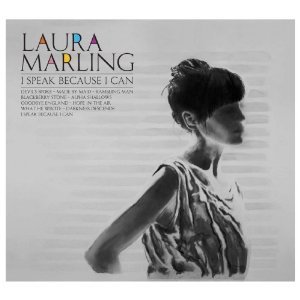
Backed by Munford & Sons, her second solo album since splitting from Noah and the Whale finds Marling in heady folk form, deepening further the richness of Alas, I Cannot Swim and finding her voice bolder, more confident and forceful on songs that explore her transition from teenager to woman.
Her traditional roots are marked from the opening Devil's Spoke, a bluesy whirling dervish of a tune with fiery banjos that climaxes in what might be described as a folk rave. Those brooding folk notes spill across the the lyrically bleak Hope In The Air with its Balkan hints while the intense city angst of Alpha Shallows dances English trad around what sounds like a hurdy gurdy in some Egyptian bazaar.
Her Nick Drake and Joni influences remain present and correct, heard to melancholic calming effect on the live sparse recording of Made By Maid and Blackberry Stone, a strings washed number which, in noting how she's moved on while her ex hasn't let go, would seem to refer to the last Noah album which documented her break up with Charlie Fink.
She's been reading up on her Greek too. In the gentle acoustic What He Wrote, a forbidden love confessional inspired by wartime letters, she calls on Hera, the goddess of marriage, while, slowly building to a swaying swell, the title track retells the story of Oydsseus from the perspective of Penelope, the wife left at home.
Elsewhere there's a touch of Dylan and Baez about her delivery of the self-acceptance crisis themed Rambling Man, a perky account of encroaching madness, Darkness Descends musically nods towards Be Good Tanyas territory while, reminiscent of Eddi Reader, Goodbye England (Covered In Snow) provides an orchestral air of wistful romanticism as she gets rid of the clutter that brings her down.
It's a hugely accomplished step forward in establishing Marling at the forefront of the new indie folk revival.
www.lauramarling.com
www.myspace.com/lauramarling
Mike Davies April 2010
Only just turned 18 but clearly having lived several lifetimes if the depth and maturity of her debut album is any indication, Marling is being hailed as the Duffy and Adele of the next young folk generation. Not without foundation either, and she has as much soul in her, er, soul too, mingling with those rootsy chromosomes.
Filtering Bonnie Prince Billy through the prism of Joni Mitchell but with a keen hold of her English heritage, her lyrics pin heartbreak with the precision of a butterfly collector, though with a little less objective detachment. The skitteringly catchy, strings kissed Ghosts having attracted attention, she keeps ears and heart entranced on trad hewn ballads such as the bluesy Old Stone and shantified The Captain and the Hourglass, the jogging summer buoyancy of You're No Good where she hints at the young Thea Gilmore, a gypsy coloured My manic And I and the dark, rumbling fever chills of Night Terror.
With a Philip Larkin poem providing the foundations for Tap At My Window's early hours wearied romance jazzed folk suggesting her library's probably as tastefully well stocked as her CD collection, Failure's compassionate wisdom and the sheer raw unadorned trembling beauty and hurt of her voice on Shine, a song Janis Joplin and Billie Holiday would have killed for, this is patently a remarkable new talent with a future as rich as the past from which she's born.
And, if you're wondering about the title, it's tucked away as a hidden track, a sort of folk nursery rhyme where she sings about desires on the other side of the river. "I'll live my life regretting I never jumped in", she says. I think not.
www.lauramarling.comMike Davies February 2008
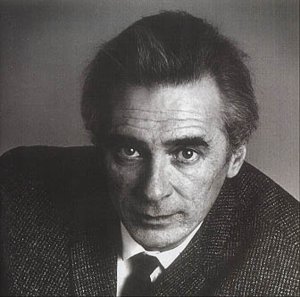
Dundee-born Michael's hitherto enjoyed only a cult following, and this latest album (his sixth, apparently, but I've never been able to track down more than two!), while extremely intriguing, is probably unlikely to lift him into the mainstream as regards acceptance. But in my book, uncompromising individuality and a generous helping of idiosyncrasy are good healthy signs, and there's a hell of a lot of interesting ideas here. Initial comparisons on hearing the first track (Albert White Feather) might lead you into thinking of Tom Waits, with impenetrable growling vocal and peculiar brass textures in the accompaniment, but after a few more tracks you'll realise how far off-beam that first assessment is. The album's title might be Posted Sober, but that's not exactly the impression its music gives, for you need to be almost on another (alcohol-fuelled?) planet to get fully in tune with Michael's quirky, eccentric thought-processes, I feel. The album's final track is even titled Scribbled Down Drunk - need I say more? Thought not… But you shouldn't write Michael off as a drink-sodden creator of ill-focused rambling ditties - far from it, in fact. Michael's superficially deadpan delivery all but hides his deliciously wicked, almost surreal wit and an acute level of true insight giving a balanced perception of life in all its curious guises and moods. Musically, Michael's not afraid to use anything and everything at his disposal, from folk-session-band trappings (the take-your-partners Waltzing's-For-Dreamers triple-time All To Please Macushla and the brief, unusually off-target political allegory Botanic Endgame) to carefree rocker-drive (Angela Gunn), roots reggae (Constable Le Clock), cute retro-references (Letter From Perth and the sunshine-pop All Will Be Well) and acoustically-driven Americana-style s/s (the enigmatic Frida Kahlo's Visit To The Taybridge Bar) - indeed, whatever might best appear to serve his unusual artistic visions. And I loved such cheeky little touches as following the good-time folky-jokey polemic of Bob Dylan's Visit To Embra with a song called The Lonesome Death Of Francis Clarke! Inevitably there's an element of hit-and-miss running through the entire proceedings, indeed much of the album appears a mite impenetrable at first, but at least that ensures a constantly stimulating (and healthily unpredictable) listening experience that as likely as not is going to entice you back again and again to its defiantly oddball delights.
David Kidman

A Norwegian pixie pop fireball whose impulsive, untrammelled Iggy Pop influenced stage performances have led to cracked ribs and regular blood spraying cuts and abrasions, her debut album is a power packed collection of short sharp punky 70s garage pop songs that, like hymn to partying Queen Of The World, give you an idea what The Strokes might be like were they fronted by a cross betwixt Bjork, Chrissie Hynde and Janis Joplin. It bursts with life and the same's true of everything on the album, whether she's talking about drinking too much (the tremulously driving Oh My God which calls to mind Coventry new wave heroes The Primitives), depression (the feisty folk Drive Away My Heart), sexual politics (the Blondie goes mod I Love You So Much Better When You're Naked), God (Stella) or love (the sherbet dab explosion Louie).
She's not all hyperactivity, both See Me Through and Keep Me Warm show she can handle an early hours slow dance ballad to good effect, but it's the songs you can as she puts it, dance, drink and go crazy to that are going to make her a star. Maria has a condition called synaesthesia which means she sees music in terms of colour. No wonder she sings a Jackson Pollock rainbow.
Mike Davies August 2008

I'm no expert, so I'll take their word for it that the album embraces several different facets of mariachi; norteno, jorocho, wasteka, bolero and corridos among them. What I do know is that they make a damn fine noise, whether conjuring heady border romances with Sleepwalking, Quinceniera and the strummed My Love or singing of self-determination (Slave Labor), exploitative religion (Silver or Lead), love letters from prison (Cell Mates), outlaws (My Brother The Gun), and even, on the deceptively lilting Despretador, paedophilia. Can't imagine that getting them many wedding gigs, though.
www.thebronxxx.com
www.myspace.com/thebronx
Mike Davies August 2009
The Mariachis - Like A Crown (Squarejaw)
Originally an acoustic duo from Birmingham, a move to London and an expanded line up gave birth to the jangly Americana the five piece now tout round the club and pub circuit. They've steadily been building up a loyal audience and with a co-write credit for Buddy Mondlock on the excellent Texicali bar room swayer Crooked Scars obviously making some notable friends too.
Lead singer Richard Evans has a raspy voice somewhere between John Prine, former Smokie frontman Chris Norman and Ronnie Lane circa Slim Chance, ideal for putting the emotional catch to things like Long Way Home, My Woman and the aforementioned Crooked Scars. Mostly they favour uptempo country pop bouncers with ringing guitars and pedal steel mingling over a steady beat on songs that fuse the songwriting sensibilities of McGuinn and Shel Silverstein, the title track a particular joy as, namechecking Strummer and Jones, they sing from the perspective of a cocky, snotty young band who reckon they've got better songs than anyone. It sounds like a live favourite and if it wasn't for that bit of Anglo Saxon in the chorus it could probably find its way on to country friendly radio shows too. Elsewhere the material doesn't always grip as instantly as it might, but Cinderella, Go Tell Georgie (that'll be Mr Bush then) and closing time lolloper It's A Trap certainly earn them their sombreros.
Mike Davies
A West Country girl with a mix of Devonian and Irish blood, Marshall's guitar work's been compared to that of Stevie Ray Vaughn. That may be overstating things, but she certainly knows how to pick her way round a bluesy slide fretboard. Trading in swampy blues and country rock, her whisky-stripped husky vocals most readily call to mind Janis Joplin and you could easily imagine the legend herself steaming up some bar, slinking her way through the 12 bar blues Red Light or the gutsy blues gospel Stand Up.
The rolling rhythms and guitar picking of Kitchen Table suggest JJ Cale plays a considerable part in Marshall's influences while slow burn Black Guitar suggests what might be the result of teaming Bonnie Raitt and Led Zep and letting them jam in an everglades moonshine joint. As a writer, the likes of Little Bird and Here Is My Heart are proof that she's mastered the art of making new material sound like it's been found in long forgotten vaults and the presence of Hayseed Dixie's Don and Dale Reno supplying banjo and mandolin various tracks show she's impressing the right people too. You should be among them.
Mike Davies June 2008
This release is the second from this duo team (their first recorded outing together, Into The Cauldron, was one of Sugar Hill's hits of 2003), and it's another veritable mandofeast, with the two master musicians strutting their stuff in tandem (and in front of an enthusiastic audience) on an enormously varied set of pieces ranging from original compositions by either or both of the men to an expert arrangement of the Gigue movement from Bach's second Partita for solo violin. No other musicians were involved in these concerts, so it's mandolins all the way, with occasional swopping-around onto mandola or mandocello.
It's not an overstatement to say that both musicians have been involved in changing people's perceptions of the mandolin, elevating it from the status of simple and humble bluegrass/folk instrument to that of sophisticated and versatile tool for expressing a hitherto undreamt-of range of styles and emotions from hot jazz improvisation through to tender classical melody. Pushing the boundaries as well as challenging perceptions, in fact. And though the two musicians are virtually a generation apart and from different backgrounds (Mike's already a quarter-century veteran of working with noted musicians from all disciplines, whereas Chris has made his mark with "young Turks" Nickel Creek), they work together like a father-and-son team, Chris's phenomenal technical prowess complementing Mike's thoughtfully adventurous playing.
The whirlwind procession of country, world music, jazz, folk, bluegrass and other associations and influences can seem almost too much to assimilate on one hearing, and the only solution is to replay - a luxury not afforded the punter at one of their gigs, of course, so the CD owner gains considerably here! The only downside is that despite the variations in register and timbre that the different instruments of the mandolin "family" provide, there's probably still insufficient contrast to satisfy the more general listener, who is likely to remain unmoved even by the delicacy of Hualalai, or I'd Go Back If I Could (where less notes is certainly more), or resolutely unexcited by the briskly duelling mandos in full flight on Byron's or Carpathian Mt. Breakdown. In other words, some listeners may still find it too esoteric a sound-world for their personal taste - but that's their loss!
www.mikemarshall.net
www.nickelcreek.com
David Kidman, July 2006
This elegant new duo offering turns out to be rather more than a superior example of "thinking man's bluegrass", arguably sharing as it does more of a kinship with bluegrass-classical crossover projects like Edgar Meyer's landmark Uncommon Ritual collaboration with both Mike and Bela Fleck that Sony issued some five or six years back. The two musicians may be a generation apart (Mike was a member of the original David Grisman Quartet back in the late 70s, while Chris is but one of the three wunderkids that make up the acclaimed Nickel Creek), but they play together as to the manner born, with never a dull moment and with obvious relish at the combination of musicianly togetherness and healthy, lively competitiveness that the arrangements enable. The repertoire they tackle on this CD is a cauldron indeed, a veritable melting-pot of western culture, ranging far and wide from a clever mandolin adaptation of an old fiddle tune to a sprightly treatment of Charlie Parker's Scrapple From The Apple, and from a Brazilian choro to one of Bach's Goldberg Variations. These non-originals are bolstered by two joint compositions and a few of Mike's which subtly display all manner of musical influences from Mike's personal CV (he's worked with Stephane Grappelli as well as Tony Rice, after all). And lest you feel that the unadulterated sound of two mandolins (or mandolin with mandocello) might be too much to take for the length of a whole CD, then one listen will convince you otherwise, as the tonal palette proves unexpectedly varied. It's the perfect rippling chill-out album for these humid summer months, in fact - cool and considered, yet at the same time quite invigorating in a laid-back sort of way, with enough soulful and tasty intricacy of detail to keep your interest. www.sugarhillrecords.com
David Kidman
Marshmallow - Marshmallow (Lo-Max)
I could have preferred proper drums to the beat box that hampers some of the tracks, but it's a very small niggle when faced with such beguiling musical magic, not least of which is The Ballad of Wendi Deng, a disarmingly lovely song about Rupert Murdoch's trophy wife that manages to mingle comments about corporate nepotism with an unabashed romanticism as he talks about the media mogul not swapping her for "all the TV in China."
Like his old band, it's probably unlikely to reach the widespread audience it deserves, but this is one Marshmallow that truly deserves to be toasted.
Mike Davies
With a sweet, lightly trebly voice completely at odds with his somewhat weather-beaten, frizzled haired appearance, Marinelli is probably best known as co-founder of Bruce Hornsby and the Range, a guitarist whose licks have been featured on albums from the likes of The Dixie Chicks, Joe Ely, Bonnie Raitt, Willie Nelson and, er, Donna Summer.
His first release for his and Doug Hoekstra's label (George build the studio, Hoekstra co-produced and provides backing on one track), this six tracker is solid West Coast poprock that perhaps not surprisingly sounds not unlike Hornsby's old combo on occasion. You'll also find yourself thinking Tom Petty (Wave Goodbye), a touch Steely Dan (The Royal Clan) while The Wheels Aren't Turning (dad moves family from the coast after losing his railroads job) brings shades of country with some funky mandolin playing.
Needless to say the guitar work is masterful, fluid and expressive but given his effortlessly engaging vocals and the easing on down laid back classic road music quality of self-penned material like We're Not Going Home it's about time Marinelli started receiving due accolades as far more than some sideman.
Mike Davies
Mike Martell is a Canadian singer-songwriter with a sureness of touch, a rich rounded vocal tone and easy lyrical style. His voice caresses the sentiments lovingly, wrapping the words in creamily phrased melodies that flow easily and appealingly off the stave. His songs are honest, simple, fondly conceived, wistful and gently heartfelt creations that display a thoughtful sympathy for their subjects and for the human condition generally.
Born and raised on Prince Edward Island, Mike's been a coastal fisherman for 40 years, and his songs are informed by his life, philosophy and work experiences and the world in which he operates. There must be something in the water, for (perhaps inevitably) there will be times when he could be compared to Stan Rogers, and a first-time listener could be readily forgiven for mistaking both idiom and delivery on songs like Ballad Of The Garden Trip. There are times, too, when I'm also reminded of Dan McKinnon. All of these characteristics are positive features. And each individual song has something to commend it, whether it's in the pure expression of homespun philosophy and experience through the attractive lyric content, or the accommodating, flowing melodies or the uncomplicated musical settings (gentle guitars, accordion, mandolin, whistle), or any combination of those elements.
But in the end, this is one of those discs that seems to promise much yet doesn't quite deliver, for various reasons. Principally, Mike's music is just too equable, too eager to please; the majority of his songs are taken at an identical effortless slow-to-medium-tempo ¾ time, and seem just to drift in and out of consciousness in a much-of-a-muchness kind of way. If I listen to songs like Fisherman's Soul, Ten Knots Or More, Pencil or Thoughts Of September – in isolation, they elicit a certain appeal, a certain unaffected beauty; but his melodies are often just not strong enough to match his lyric facility or to carry his thoughts forward, there's little or no variation in basic style and there are no real emotional peaks or troughs.
Pleasingly though each song passes by, it's difficult to recall many of the songs after the hearing, and his choruses don't tend to stick in the mind even after repetition. And although the instrumental accompaniments are efficient, it's all too even-toned and nothing much stands out; also, the vocal harmonies from Mike's wife Tami, though well-meaning, just don't enhance the songs or Mike's own singing in the way they were evidently intended to do. So although Mike would be likely to impress momentarily, as in a folk club floor-spot situation, as indeed he may do on CD for that time-span, after three or four perfectly decent songs of a broadly similar nature and character the listener is likely to tire.
David Kidman February 2010
While we still patiently await Nigel Stonier's much overdue new solo album, the man himself has been busy elsewhere. Having met up with Harley at assorted festivals, he was invited to produce the trio's latest album. Not only that he played banjo and piano and co-wrote Hand To Hold, Harley's first collaboration with another writer, also bringing in his other half, Thea Gilmore, to provide the distinctive backing vocals.
Not that the trio need rely on Stonier's involvement to get attention. Citing such influences as Nina Simone, Leadbelly, Django Rhenhardt and JJ Cale they range from the opening Love In The Afternoon's skeedaddle gypsy jazz swing and the swampy blues of the title track to the dirty rocking slide guitar workout Take What You Want, the world weary rootsy acoustics of Hand To Hold and Winter Coat's balalaika accompanied folky jog.
Not a ground breaker, but one that should ensure their tour diary's kept pretty full for the rest of the year.
www.martinharleyband.com
www.myspace.com/martinharleyband
Mike Davies April 2010
An interesting combination of talents this: banjoist Steve, amasser of awards for his 2009 bluegrass album The Crow, and singer Edie (New Bohemian, Gaddabout and wife of Paul Simon). And as such, to be honest, I didn't exactly have high expectations of this collaboration, but their first album together has turned out to be a very rewarding listen, where everything's come together most winningly.
This has been something of a dream project for Edie: the kind of music she always wanted to make, she says. Her own insightful self-penned songs all possess such a distinct ring of truth; even when they're not dealing directly with her own personal experience, there's an intimacy within their lyrics that's richly conveyed by her irresistible singing voice and further accentuated by the close, intuitively collaborative nature of Steve's evocative and simple yet attractively inventive banjo accompaniments. These qualities together give the album a quite special character that takes elements of bluegrass and acoustic pop and channels them into a delightful and genuinely uplifting concoction.
The banjo may have a constant presence, but such is the nature of Steve's wholly supportive contribution that one never feels he's grandstanding or insisting on ubiquity, instead concentrating on getting the message of the songs across. And this applies equally to the reflective numbers like Remember Me This Way and When You Get To Asheville and the surprisingly memorable lighter songs like Siamese Cat. When required, Edie also calls selectively on the talents of other musicians to supplement Steve's unassumingly skilled (as opposed to shamelessly and needlessly virtuoso) playing: the acclaimed bluegrass combo Steep Canyon Rangers (with whom Steve had collaborated on his Rare Bird Alert album), as well as ace bassist Esperanza Spalding, guitarist Waddy Wachtel and both Sean and Sara Watkins of Nickel Creek.
Peter Asher's expert production helps too. But the emphasis is squarely (and fairly) on the material, the quality, and economy of expression of, the songs themselves, and on its import being conveyed so clear-sightedly through the natural interaction of the two protagonists themselves. A most pleasing, nay quite enchanting album - one that's refreshingly devoid of the clichés of both bluegrass and singer-songwriterdom.
www.ediebrickell.com
www.stevemartin.com
Barely a couple of years back, Steve's first bluegrass record scooped a Grammy award for Best Bluegrass Album of that year, and he's quick to follow it up with Rare Bird Alert, a whole album-full of (mostly brand new) compositions of his own, which appears in the racks just ahead of an upcoming (July) UK tour with the Steep Canyon Rangers.
The phrenological study incorporated into the liner notes proudly proclaims Steve's state of self-awareness, and once again he wears many of those head-hats on this new recording, although any listener discomfort that might be caused by potential disparities of tone and content between numbers are easily outweighed by Steve's fantastic clawhammer banjo playing, which knits the whole album together so stylishly.
For many of us, it'll be Steve's prowess on the banjo that's the clincher: he really is amazingly good, and that's being judged by the exacting standards of bluegrass, as the handful of commendably tight instrumental cuts here prove beyond any shadow of doubt. On these, his musicianship goes beyond the actual playing into the realms of the keenest of interplay with the Rangers' own crack musicians, especially banjoist Graham Sharp and mandolinist Mike Guggino (on the title track), and they form a neat complement to Steve's own sensitivity on the more pensive The Great Remember (dedicated to the memory of Nancy Short).
The Rangers also lend their vocal expertise to several tracks (guitarist Woody Platt does a charming, simple job on Yellow-Backed Fly too), while on a couple of occasions (interestingly, the disc's pair of love-songs) the vocal role falls to (wait for it!) the special guests: Dixie Chicks on the lingeringly lovely You, and Sir Paul McCartney on Best Love (which also sports a swooningly lush string arrangement by the Rangers' fiddler Nicky Sanders). Of course, humour's not forgotten amidst all the music-making; Women Like To Slow Dance is a real fun gem in the approved tradition, while the zany pair of tracks ending the disc (Atheists Don't Have No Songs and King Tut - the latter you'll probably recall from Steve's 1978 recording with the NGDB!) sure benefit from being recorded at live shows.
Rare Bird Alert's great fun, but it's also a well-rounded portrait and showcase for Steve that should, like its predecessor, reach a lot of non-bluegrass folks and shift loads of copies on that forthcoming tour.
David Kidman June 2011
Steve plays the five-string variety of banjo, pretty much almost always in the clawhammer style (though he confuses the issue by crediting it as frailing), and you'll soon get the drift that he's a helluva player. That's impossible to escape all the while you're listening to this collection of (mostly) his own tunes, ably produced by erstwhile Nitty Gritty Dirt Band man John McEuen and almost incidentally drafting in an impressive array of supporting talent, of which more in due course. Sure, you need to get yourself beyond the entertainingly jokey medicine-show-style presentation of the accompanying booklet and notes, but even within those pages you'll find a keen, companionable and loquacious personality that infectiously mirrors the actual playing.
Though self-taught, Steve was very much inspired by Earl Scruggs, from whom he's inherited an effortless-seeming dexterity-at-speed that takes your breath away. Earl repays the compliment by dropping in on the sessions for two of the album's cuts, while Gary Scruggs contributed to the lyrics for Daddy Played The Banjo, a song whose genially nostalgic quality is enhanced by Tim O'Brien's guest vocal. The other vocal numbers are a touch inconsistent maybe, though the best (Calico Train) boasts the presence of Mary Black, while Vince Gill and Dolly Parton (no less) duet on Pretty Flowers and Steve himself does a Donald O'Connor pratfall-style trip through the kids' fare of Late For School.
The remainder of the album is made up of instrumentals, and these range from the playful Hoedown At Alice's to the eastern-inflected Saga Of The Old West; the deliciously melodic, restful Words Unspoken to the dashing dogstep of Wally On The Run, the gleeful headlong orchestral-string-backed rush of Banana Banjo to the antique-orchestra-with-accordion vibe of Pitkin County Turnaround. There's also an attractive pot-pourri Clawhammer Medley, on which Steve's grasp of authentic frailing is well demonstrated. Steve's heavyweight (but oh so fleet-fingered) crew includes Jerry Douglas, Stuart Duncan, Matt Flinner, Brittany Haas, Craig Eastman, Russ Barenberg and Michael Davies - all of whom play their socks off for Steve (and some even manage to get a solo or two in!), while Tony Trischka, Jourdan Urbach and even Liam O'Flynn put in appearances. A swift followup is demanded!
Brilliant - or alternatively, as the cover slogan says: "truly wonderful and just as advertised"!
David Kidman October 2009
It's an uncanny and none-too-happy coincidence that my long-gestating review of this celebratory box-set should finally appear on these pages shortly after the very day that the man's untimely death was announced. The set got one of my votes in the Retrospective/Compilation category of last year's fRoots writers' poll, and that was on the strength of only receiving the promo discs and an electronic copy of the booklet notes (sadly, I was never sent the full package) so that must say something for the quality of this release.
As it turns out, Ain't No Saint is considerably more than a career-retrospective. Just to scratch the surface, let alone cover, the many facets of this enormously gifted, influential and inspirational musician (guitarist, singer, songwriter - you name it, but all par excellence), nothing less than a four-disc box could possibly do John (Ian David McGeachy OBE, for trivia buffs!) justice.
The astoundingly visionary nature of many of John's musical achievements compares well with the similarly visionary nature of the early 19th century English romantic painter of the homonymically similar name. John's was a truly revolutionary and awe-inspiring talent, one which so deeply tapped the core of experience and the human condition and could convey it fully to his listeners.
His versatility and virtuosity on the humble guitar was breathtaking, whether in simply acoustic or complex electric mode; his itchily busy, rather percussive guitar style moving freely within and around folk, jazz, experimental improv and anything and everything in between and beyond. He's specially noted for his use and development of innovative effects and techniques such as echoplex and signal repeat delay. And then, the influence of his singing too - soulful, smoky, world-weary, with deep emotional wells plumbed in an at times almost casual-sounding expressiveness - has been wide-reaching in the extreme; resonances can be heard in so many other British performers. And then (again), there's John's immense skill as an interpreter of song, his incredibly perceptive and individual songwriting. Sure, some of his more experimental music can still make for uncomfortable listening at times, not to mention challenging, but it still exhibits a savage beauty all its own. And sure, there've been some distinctly wayward episodes in his long musical career, but he's always returned to form with some cataclysmic live performances of almost claustrophobic intensity.
Taking a brief tour through these four discs, then: although studio recordings are well represented, the killer live cuts form an even more integral part of the John Martyn experience, on which the open-endedness of the songs' potential could be explored unashamedly and extensively. From what I can tell (since I don't possess copies of all of them!), each of John's 22 studio albums is allotted one track apiece, from 1967's London Conversation right up to 2004's On The Cobbles.
Disc One starts with a brief chronological trawl through John's folky days, those three heady years which saw John rise from the Soho (Les Cousins) scene and the folk clubs and make tentative forays into jazzier guitar styles as well as developing his songwriting and teaming up with his then-wife Beverley for two key albums. The disc then delves into the treasure-trove and unearths a clutch of invaluable out-takes, beginning with four from the Solid Air period, one of which is a work-in-progress early take of that LP's iconic title track, another a quite different treatment of The Glory Of Love from that eventually released on Inside Out. These are followed by the Sunday's Child outtake Eight More Miles and three compelling cuts from a home demo tape recorded in late 1976 after John's return from Jamaica. The outtakes continue on into disc two, with a blissful ten-minute Small Hours and an obscure film track Anna, then it's on to the 1980s, a decade which arguably produced some of John's least remarkable music. There were times, too, when the over-rambling nature of some of John's jazzier, funkier extemporisations could engender a sensation of more than mild incoherence, and it would be unjust if any retrospective collection excluded examples of this sometimes infuriating trait - but hey, that's genius for ya! Disc three contains some quintessential live performances with (variously) Danny Thompson, John Stevens and Stevie Winwood, culled from early 1975 (Leeds University and Rainbow Theatre) and late 1977, spilling over into the fourth disc. There's a fantastic, totally engaging Bless The Weather from Edinburgh 1973 and the later recordings include a blistering I'd Rather Be The Devil, an archetypal Big Muff and a thirteen-minute Outside In. The fourth disc brings some funky live ensemble tracks from the mid-80s, before charting John's return to form on some BBC recordings for the Jools Holland show (including a reverential May You Never) and Andy Kershaw's radio programme in the mid-90s (the chill-out hit Sunshine's Better). The disc - and the set - closes appropriately with Over The Hill (featuring John Paul Jones on mandolin), recorded at last year's Radio 2 Folk Awards (where John won the Lifetime Achievement Award).
Taken holistically, the set has been sympathetically compiled by John Hillarby to form "a journey straight into John Martyn's soul". It's a heady trip: during that journey we're privileged to be able to revisit many old friends, still recognisable though wearing different clothes. We gain a fresh perspective on some of these, whereas on others the frisson of experimentation is the catalyst for some glorious, loose stretching out of the musical envelope that gives a new dimension to the familiar. And you may not like everything you hear (I don't). Nevertheless, there has never been any doubting John's absolute honesty and integrity, his status as an immensely gifted - if uncompromising - performer and communicator, a musical visionary in the compleat sense. The man who'd been through it all and viewed himself as hard to kill - now there's a bitter irony for you. But we still have his music - not least on this splendid box-set; and, as once was said: "John Martyn: he's so good it hurts".
David Kidman January 2009
This is a valuable issue in so many ways. Firstly, in terms of its rarity (since it gives us a record of one of John's very last folk club gigs). Secondly placed in the context of John's career as a whole, it delineates a crucial phase, reproducing a key point in time smack between the releases of the two groundbreaking LPs Solid Air and Inside Out where John was just bringing the unbridled power and experimentation of electrics (including echoplex effects) into his music, following his muse with stunning, often frightening results. He may have been risking alienating some of the more traditional-minded folk audiences for whom he'd been performing over the preceding decade, but the overwhelming impact of the resulting music outweighed any such considerations. This July 1973 gig was recorded in ambient stereo on a trusty reel-to-reel tape recorded by Geoff Harden, organiser of the Medway Folk Club, and succeeds in capturing the heady atmosphere of the occasion, where John's was in effect a last-minute engagement, a substitution that only proved possible because he lived relatively locally at the time. There's some distortion on a few of the louder electric passages, and some chatting-and-cash-registers-at-the-bar noise during the quieter numbers (eg the Don't Wanna Know/May You Never medley), but by and large John's stunning live presence and electrifying (in both senses!) musicianship emerge intact. The set ranges effortlessly from the extended opener Outside In (a fascinating early treatment of the piece that was to become a Martyn classic), through straight blues (Mr. Jelly Roll Baker), John's individual rendition of Singing In The Rain (complete with nicely opinionated nostalgic preamble), the philosophical Head And Heart, to the filigree folk-virtuoso brilliance of Seven Black Roses, and at length culminating in a truly masterly I'd Rather Be The Devil, itself worth the price of admission. Hux's presentation of this typically freewheeling set is just fine too, with booklet notes reproducing segments of a key interview John gave for the NME perhaps only a few days before the gig itself. No further recommendation is needed: if you're already a confirmed Martyn addict you'll want this disc, and if you're not you can still take it that it defines the artist at his most persuasive while standing steadfast at an important crossroads in his career. Tremendous.
David Kidman January 2009
This is a real gem, a magnificent testimonial to the sheer power and presence and astounding white-heat musicianship of John Martyn at his creative peak in the late 70s: what a communicator! The DVD presents John in (virtually) an entire, virtually unedited live performance given on 17th March 1978 at the Audimax venue in Hamburg and filmed for the German TV show Rockpalast. At that time, his seminal One World album was all of four months past its release date, and John gave stunning renditions of five of the album's key tracks on this night. This, as Martyn fans will instantly recall, was arguably his most creative period, in which he showcased not only his excellent prowess on straight acoustic guitar (the mighty "visual tour-de-force" Seven Black Roses) but also his thirst for experimentation (the brilliantly layered Echoplex adventures of the almost free-form extravaganza Outside In) and his talent for writing some extremely persuasive songs (the deceptively simple and memorable May You Never, the tribute to Nick Drake Small Hours, the magical romanticism of Couldn't Love You More). He also treats the appreciative German audience to a typically expansive workout of Solid Air and a superb version of one of his best known tracks, Big Muff, which points up the then-only-recently-assimilated influence of Lee "Scratch" Perry. As well as providing plenty of evidence of John's distinctive slightly slurred, smoky vocalising, his comparative volubility is in evidence too here, in some singularly idiosyncratic, pithy, perceptive and often very funny song introductions (one or two of the individual comments are priceless, and his even his laconic string-changing interlude bears repeated viewing!). The performance has just one hiatus: due to the loss of the original master tape, the performance of the concert's final number (a rather delightful rendition of Singing In The Rain) has been spliced in from a different, previously broadcast version. The bonus track, I'd Rather Be The Devil, discovered only recently while going through the master tapes, probably comes from the same show as the main concert, but that's not confirmed. This musically exceptional DVD is blessed with very good sound, and its extreme desirability is boosted by the excellent companion booklet, which features an acutely informed and informative commentary by John Martyn expert John Hillerby (and also including the lyrics for the songs performed). Full marks.
David Kidman January 2008
This disc is a valuable companion to the Island Remasters editions of the John Martyn studio albums which have appeared over the past couple of years (which however I've not been sent for review). In just over 70 minutes, it collects together for the first time all of John's surviving sessions recorded for the BBC between 1973 and 1978, a key period in his career. They're quintessential John Martyn, bringing us the very best demonstration of the man's unique blend of folk and jazz, his compelling live presence and unique musical personality. The disc kicks off with six excellent tracks recorded for the Bob Harris programmes during 1973; these range from the epic scope of the layered, experimental electric-guitar sonorities on the bluesy driving momentum of Devil Get My Woman and Inside, to the warmly crafted purely acoustic traceries of Beverley (accompanied by Danny Thompson) and the grander echoplex meaderings of the trad-adapted air Eibhli Ghail Chiuin Ni Chearbhail. The early-1975 Peel Session cuts are solo and folk-acoustic, and include My Baby Girl and The Message, with a definitively laid-back reading of Spencer The Rover. The Peel Session of January 1977 yields a second version of the celebrated May You Never, which provides fascinating comparison with the altogether looser-phrased October 1973 Harris session take earlier on the disc. Indeed, all the session takes provide interesting comparison with other (studio) JM renditions of the material, and this disc is an essential acquisition for John Martyn's many fans. The final Small Hours, an eight-minute epic from an early-1978 Peel session, is a harbinger of things to come, with eerie new-wave electronic treatments and beats counterpointing John's singing and playing, and it's a strange but effective piece on which to conclude the collection.
David Kidman October 2006
This classic pair of albums, originally released by Island in 1970, are now available in a remastered and expanded edition from Universal. The history is unusually straightforward for albums of their time: after releasing a pair of critically acclaimed solo albums on Island (London Conversation and The Tumbler) in 1967 and 1968 respectively, master guitarist Iain McGeachy (duly renamed John Martyn, in a corruption from the name of the maker of his favourite guitar!) teamed up with singer Beverley Kutner (who he'd married in 1969) to record as a performing duo, at the instigation of Joe Boyd. In respect of John's own musical adventures, it was to be a fruitful and creative, if transitional period; instrumentally it built on the jazz inflections of The Tumbler and the increasing sophistication of John's acoustic guitar playing while making good use of the smoky-folkier timbre of Beverley's voice in a tender and soulful setting.
Stormbringer had always seemed a very mature product to me, so it comes as no surprise to learn of the existence of four intriguing pre-album demos (which are included here as bonus tracks); only two of these (the seminal John The Baptist, and Traffic-Light Lady) are for songs that were eventually to appear on the album. The album itself was formulated after the duo had relocated from London and based themselves in Woodstock, NY, and was a scintillating and eclectic mixture of contemporary folk and soulful acoustic jazz-influenced rock, veering from delicate and intricate picking (Tomorrow Time, Woodstock) to brooding, majestic and beautiful string-drenched opuses (The Ocean and the title track) and more fluid workout-style cuts (Sweet Honesty) that proved a harbinger of things to come. The whole album, though, was a more pioneering effort than perhaps was appreciated at the time, not least in its adoption of drums as a primary supporting element for acoustic instruments (though to be fair, Fairport had been following this path too), and in its original and inventive musical arrangements. The album's final track, Would You Believe In Me?, featured John's first, exploratory use of the Echoplex tape delay unit on his guitar - apparently, according to John himself, in an attempt to imitate saxophonist Pharaoh Sanders' unique sustain technique.
Stormbringer proved an artistically satisfying and strangely consistent set, yet The Road To Ruin brought the collaborative elements of that work into sharper focus, with this time three joint compositions and one (Primrose Hill) written by Beverley alone. Musically, it's another eclectic mixture, with some superb guitar playing from John himself, notably on the sparer selections like Tree Green, although it's cuts like Say What You Can and especially New Day that provide the biggest clue to John's future direction, with melodic pre-echoes of May You Never (also present in the distinctively slurred vocal treatment) as well as stylistic pre-echoes of the lazy, hazy, jazzy grooves of much of John's then-upcoming work. The Road To Ruin also featured the excellent session playing of several respected musicians, including Danny Thompson, Lyn Dobson, Ray Warleigh and Dave Pegg, yet John himself was concerned over the record company/producer's penchant for more ambitious production values, which John viewed as a tendency to over-arrangement at the expense of spontaneity, and this, coupled with Beverley's childcare commitments, acted as the catalyst for the discontinuance of the duo as a working partnership and forced John's concentration once more onto a solo career path. The lone bonus track unearthed for this reissue, Here I Am Now, a Beverley Martyn composition from early 1970, is a long-buried demo recording very much in the soul-folk mode: perhaps not essential musically, but still worth having for completeness.
David Kidman
David Kidman
John Martyn - On The Cobbles (Independiente)
Since the early 70's Solid Air, he's been the master of rhythm and percussive texture, and he doesn't disappoint on On The Cobbles, but there's a warm acoustic feel on several of his songs, reminiscent of his early albums.
Who'd have believed that he would return with such a punch. Last year his leg was amputated below the knee but it doesn't seem to have dampened his passion the tiniest bit. The man's a giant!
www.johnmartyn.net
Available from MusikFolk
Sue Cavendish
Press Release from Independiente: Four years since the release of his last studio album Glasgow Walker, John Martyn returns with his 22nd studio album entitled On The Cobbles through Independiente. The new album was recorded at various studios in the UK and US including Woolengrange in Ireland, The Toolshed, Chicago USA, Doon The Cellar, Birkenhead, Swan Yard Studios, London, Parr Street Studios, Liverpool, Hornyold Road Studios, Worcestershire and at The Caliope Recorders, Chicago USA. Produced & engineered by Jim Tullio & Garry Pollitt, On The Cobbles features Aaron Ahmun, Ari Brown, Paul Burn, Chris 'Hambone' Cameron, Spencer Cozens, Steve Eisen, Kahil El Zabar, Peter Erskine, John Giblin, Greg Marsh, Joan Martyn, Nick McCabe, Paul Mertens, Fred Nelson, Garry Politt, John Rice, John Scully, Andy Sheppard, Mavis Staples, Scott Steiner, Alan Thompson, Danny Thompson, Jim Tullio & Paul Weller
The Maryhillbillys - Meet The Maryhillbillys (Luna)
The Maryhillblies share a love of country music, drinking beer and telling lies it says on their website. Well, I can't testify to their relationship with the truth but this debut album certainly bears witness to the other two attributes. Forged by Maryhill born Scot, Scott Richardson the St Kilda based Australian sextet wear their influences on their drinking arms, the most obvious being Steve Earle (Mad Ass Manic), George Jones (Happy Hour Blues), Hank Williams (Pills and Alcohol), and John Prine (How Did It Come To This) but with a clear love of anyone who's ever played a bluegrass hillbilly fiddle or stomped around the saloon floor, singing, drinking and quite possibly fighting.
It's pure good time country music, straining the usual tales of good beers and bad loves, come hither women and get out of here rebels through a rousing bunch of carousers, of which Battlefield, Only Me, Goddam He Thinks He's Elvis and Goin' Home To Trouble are just a random selection of welcome invitations to stay until well past closing time.
Mike Davies
The good guys at Talking Elephant have recently pledged their faith in signing this Southampton-based outfit, so they must be worth hearing – but that turns out to be a mammoth understatement! For on further investigation it transpires that Mary Jane have been somewhat of a best-kept secret for close on 20 years; they formed at the tail-end of 1993 (out of the ashes of psychedelic band The Magic Cat), and spent a considerable time being better-known on the European scene, releasing their first four albums on the German label September Gurls along with a series of enticing offshoot projects, and all with a succession of personnel changes that would tax a Pete Frame family tree.
Mary Jane's modus operandi is perhaps most readily described as good old folk-rock: folk-rock that's recognisably of the old-school, sure, but of the sprightly, fleet-footed, freshest-sounding variety, solidly acoustic-based but with plenty of electricity (in both senses of the term) and devoid of leaden, lumpy rhythm or unwanted tired cliché. Listening to Eve, their fifth album release (and their first in eight years), is like being transported back to 1968, 1969 or 1970, the ultra-prolific time when all manner of more obscure, cult wyrd-folk (tho' the term hadn't been invented) bands were doing really interesting things with traditional material, giving it their own personal slant with a bit of judicious rocking-out for good measure, and topping up the trad with superior self-penned material to a greater or lesser degree according to predilections. Mary Jane is a band cast firmly in that mould; for, were it not for the exceptionally bright, clear sound and balance, the top-flight production values of their album, you could quite easily be deceived into thinking you were uncovering an archive treasure, a long-forgotten album that's lain buried for the best part of 40 years in some obscure vault somewhere.
By some way the closest musical and spiritual reference point from that era, I feel, is Trees, though there are touches of Mellow Candle, early Steeleye and Unhalfbricking/Liege & Lief-period Fairport there too. Eve has the absolute authentic vibe of that era, but with a more aggressively confident demeanour that's born of years of hard graft and accumulated musicianship as well as a deep-rooted conviction that transcends any desire for pastiche or lazy derivativeness, and it's markedly less tentative or clumsy than its forebears in terms of experimentation (embracing episodic changes of time-signature and texture with fearlessness and logical ease). The real deal, in other words. These guys know how to have intelligent fun with their music-making, respecting both their sources and their listeners without getting too self-indulgent, weirdly esoteric or otherwise wilfully inaccessible. Of the key latter-day exponents of folk-rock, Mary Jane perhaps have the closest kinship with Bluehorses, or Mostly Autumn (without the same extent of prog tendencies), The Morrigan, Rhiannon, or even the original incarnation of Blackstone Edge. Some of Mary Jane's individual and strikingly unusual treatments also evoke the Unthanks in their spirit of adventurousness and the frisson of excitement they create – Cruel Sister brings several such moments, where some of the vocal phrasing uncannily recalls a more forthright model of Becky Unthank, even though in purely musical terms the style of arrangement more closely resembles the aforementioned Trees.
Mary Jane now appears to have become a six-piece lineup, but at the time most of Eve was recorded the personnel consisted of founder members Paul Alan Taylor (guitars) and Jo Quinn (lead vocals, flute, recorders, violin), with violinist Gillie Hotston, drummer and lead vocalist Steve Barker and bassist Jon Hawkes. That bald listing doesn't give a true idea of the richness and depth of the band sound on Eve, in both instrumental and (especially) vocal departments. In the latter regard, not only does Jo have a voice to die for (ethereally poised, swooping and soaring, often quite like Renaissance's Annie Haslam with shades of Judy Dyble, comparably perfect in terms of diction but with an extra edge of powerhouse, a Grace-Slick-like earthiness that matches her intense strength of register), but the layering of vocal harmonies and the amazing intertwining of parts prove strong and often highly original. A recently-struck bond between Mary Jane and Portsmouth folk-rockers Arlen has resulted in that band's vocalist Lucy Rutherford contributing big-time to a couple of Eve's standout tracks – the epic Cruel Sister and a spine-chilling, nay quite time-stopping acappella rendition of When I Was In My Prime.
Me, I believe that the best folk-rock tends to be created where the elements of inventive interpretation, arrangement and spiritful workout are kept in credible balance and due perspective; and Mary Jane have all that going for them. There's a sensitivity in their integration of decades of rock and folk influences, manifest in a conscious desire to vary, or deliciously underplay, the metrical beat. But when something heavier is called for, as on the storming Clonakilty, then Mary Jane rises to the occasion and pulls all the stops out; the soundscape opens out stylishly, it's complex yet not overloaded, for every strand of the texture is allowed free rein and can be heard with blinding clarity throughout the course of the track. The sheer passion in execution crashes round in your head and heart like there's no tomorrow. As it does on the disc's opening salvo, an especially feisty and imaginative take on Twa Corbies.
Cruel Sister is another supreme moment – it engages so well because it's organically evolving with the unfolding call-and-response of the ballad, and not just engineered as a lame excuse for a solo or two (well OK, the band don't exactly have a Thompson or Swarb in their ranks, but equally they don't lack serious musical chops). Mary Jane's hard-driven take on The Great Silkie may in terms of attack and tempo be worlds away from Trees' masterfully moody version, yet in its own way is probably every bit as "skerry" (read "scary"!) in its effect on the listener. The protagonist of Lovely Joan is an altogether different creature from the one usually encountered in folksong, here escaping any charge of prettiness with her swaggering, funky, almost Zeppelinesque gait, and her triumphant reel forms a natural coda to the track.
The title song, which refers both to the twilight of the day and an allegorical character representing this mixture of light and dark, is presented in two different settings, each in its own way highly persuasive. The "single version", a sure-fire candidate for ready radio play, is gutsy and dynamic, and features the forthright fieriness of the band's newest recruit, fiddler Serena Smith, here making her recorded debut with the band (she adds a special touch of the Irish in her signature fiddle style that both contrasts with and complements Gillie's classically-influenced playing). The more considered, extended version is particularly fine and arguably even more satisfying, however, in context. Let The Fire Begin, with its ritualistic echoes, starts promisingly but becomes a touch self-conscious, its repetitive mantra eventually seeming slightly wooden and its episodic development a touch contrived; and So Be Wise feels rambling and inconsequential; but even these weaker moments are relative on what is basically a vibrant, strong album with a real sense of identity. It's a disc that due to its distinctively punchy character really does make you sit up and take notice and realise there's much more life left in the folk-rock genre than its detractors will admit.
David Kidman December 2010
Hippy, dippy and trippy, well played and excellently sung, heavily influenced by Trees, with a little of Pentangle, ISB and FC thrown in for good measure. What could it be? Well, it's the latest CD from Southampton based folkrock band Mary Jane. Entitled 'To The Prettiest One', this collection features a core line up of Nick B. Davis on drums, Martin Griffin on Bass, Jo Quinn on idosyncratic vocals, flutes, other blowey things, fiddle and bodhran, and Paul Alan Taylor on guitars, bouzouki and bouzar. They are augmented by Gillie Leach on fiddle and James Carey on guitar for a number of tracks, plus four additional players on single songs.
This is a full CD album, long, and the middle section does drag a bit as the tone and style of the songs does not vary much, but despite this it does contain many splendid moments and some real highlights. The album starts off in sombre mode with the solo voiced 'Deus Meus', then launches into 'Leaves Are Falling', a song that could easily have fitted onto a Trees album - it's very atmospheric and lilting with heavily strummed guitar thumping bass and a strident fiddle counterpoint. I think the vocals are multi tracked, and this again works fine.
Track three, 'Three Maidens' is much harsher in tone - quite a rocker with a great riff. The tune is a varient on 'Gypsy Davey' as performed by Fotheringay. A flute adds extra colour. 'Journey' is again lead by accoustic guitar and fiddle, and is a very busy track - but still underpinned by solid bass playing. It's back to Trees mode for track five - 'Bruton Town'. A solid reworking of the song with a splendid electric guitar fill driving the song along. 'Helios', 'No Effort Required' and 'Fragments' are the next three tracks.
As mentioned before there is a sameness of tone and style present here, but never the less the general 'feel' of these mid section tracks is very pleasent, but not earth shaking. Just let them wash over you on a hot summers day. The flute section on 'Fragments' is delightfully dreamy. Next up is a medley of tunes - 'The Morning Dew' and 'The Lads of Laois'. Excellent crowd pleasing stuff, and well executed. There is a double flute intro to 'Mahadey', which sets the tone for this darkly delicious piece - nice fuzz guitar as well.'Phaethon' begins with drum, guitar and fiddle before the voice and bass enter the fray. Another dreamy track. 'Spiral' is again dripping with Trees influence, and rocks along at an excellent pace.
The album ends with a reprise of 'Deus Meus' before taking a final bow with the tune 'Return to Milltown'. Again this is a superb electric guitar lead track. The band are firing on all cylinders! All in all this is a very fine album indeed, and I highly recommend it to all lovers of classic folkrock.
Jon Hall
She does bluesy too, heard to smouldery effect on the organ backed Lucky Me (where the guitar solo calls to mind George Harrison) and the Southern rocking Verla (a song about a victim of incest) while, somewhat bizarrely, Nothing Left To Say sounds like something Sandie Shaw might have done in the 60s, the simple acoustic Every Song Is Different could easily slot into a Disney movie while the wry Where Did I Go Wrong, Elton John? (naturally weaving his song titles into the verses) has a swirly melody reminscent of the waltzing theme to Tales of the Unexpected.
I'm not wholly convinced it's a better album than 700 Miles (it lacks that heart piercing ballad for a start), but it is further evidence that Ms Corvette's got an impressive set of valves under the hood.
Mike Davies, May 2006
Mary Lee's Corvette - 700 Miles (Southbound Records)
Mike Davies
The title is apt in describing the look of the release: the unpretentiously creative "arty" artwork, the tenderly indie colour and image-texture scheme, the defiant use of the extra "T" to emphasise the band name as more important than the mere icon it depicts perhaps. For Mascott is described as an indie rock band fronted by New York's Kendall Jane Meade, that combines soft piano and guitar pop with diary-like lyrical intimacy. Kendall's songs deal mainly with themes of love and loss, and their gently soaring harmonies and simple construction embody her reverence for her classy musical heroes (Baez, Mitchell, Dylan) albeit without the often more allegorical predilections of much of the output of those role-models. Art Project is a refreshing set, full of ideas (albeit frustratingly short at just 25 minutes), on which Kendall's helped out by an assortment of mates including producer Jim Bentley. It teases the listener between its various lithe moods and fancies, with insistent jangle and pulsing percussion battery on 4th Of July, delicate introspective acoustic balladry on Red Flowers, radiant and uplifting indie-pop on the bouncy Dream Another Day and the Blondie-esque Oh Peggy I, stately string-backed psychedelic-folk on the reflective Like Letting Go Of The Sun, breezy Americana on Nite Owl, and towards the end of the disc even a charming take on the Carter Family's Wildwood Flower. A very attractive, if knowingly vulnerable, musical portrait: and one that leaves this listener longing for more.
David Kidman April 2009
Mask is Sonja Kristina of Curved Air fame and ambient cellist/violinist/producer Martin Ayers. They have produced an album of mixed emotions and tracks such as the opener, Dark Murmur, have a haunting sound, full of Eastern influences. There's music to heal the soul on Global Incantation and gentle folk for the 21st century on the haunting, melodic Paean. It's the fourth track, Fall So Hard, before we get any vocals and this is more of a conformist song because of that. What it shows is that Ayers can write lyrics as well as instrumentals. Healing Senses takes us back to the mystic and this is the type of track that you can play whist you are doing other things and it will take your mind off of those others tasks. Blue Words has an Oriental feel and gives us another vocal from Kristina. This is standard, slow paced folk rock and she does slightly struggle a bit in the higher range. Shelter Skelter returns to the Asian theme for more mystic sounds and is music for the mind.
The ethereal Free follows and Sonja puts in a more creditable vocal before the pair go off into avant garde meditation on Sliding Universe which is laden with overtoning. Lambent Spire opens with an operatic vocal before turning into an Enya-esque saga. The introduction of violin gives the song added depth. There are more strings on Beloved, which gives an impression of English folk music. Sonja reminds us of her Curved Air days on Living Inside My Head which, after a sedate beginning, launches into prog rock with a driving drum beat just underneath the surface. Walking The Dream is chillout music and reminds me, apart from the vocals, of the type of work theat The Beloved turned out in their heyday. The wonderfully titled Sound Of Tears Forming defies you to use your imagination and may take you to a happy or a sad place depending on what path you take. The final track, Those Ghosts, has that ethereal feeling again and the warbled vocal makes for a strange ending. Mind you, it's a strange album all round but that's not always a bad thing.
The CD is a dual disc CD/DVD and the 5.1 surround DVD gives versions of Free, Lambent Spire and Healing Senses with films by the audiovisual artist OuterBongolia.
David Blue
Dave Mason - Alone Together/ Headkeeper (BGO Records)
Dave Mason was a founder member of Traffic, providing a key element of their sound on their early singles and debut album Dear Mr Fantasy, after which he left the group but somewhat perversely was to be found drifting in and out of their ambit over the following few years, as well as guesting occasionally with Delaney & Bonnie and Friends and Derek & The Dominoes. During which time he recorded Alone Together for the American label Blue Thumb, helped by a stellar assortment of muso mates including Leon Russell, Jim Capaldi, Don Preston, Larry Knechtel, the aforementioned Delaney & Bonnie, and Rita Coolidge. The album contained just eight tracks, all Dave's own compositions including a co-write; these were much in the tight-rolling, leisurely, loosely rock-roots style familiar from, say, Traffic's eponymous second LP. Some of the songs (like World In Changes) had already been featured in Traffic's live sets, but these studio renditions retain the loose feel and are replete with some very fine playing from the assembled gang. Though clocking in at a mere 35 minutes or so, the album possessed a satisfying unity and stands up well today - as do its songs.
Headkeeper, its successor, appeared in 1972, and to be honest was a bit of a mixed blessing: in common with many albums of the era, it strove to present the best of both worlds by being divided into studio and live sides. This may have been a ploy to camouflage a shortage of new material, but whatever, the five studio tracks were solid enough examples of early-70s roots-rock, ranging stylistically from the fervent gospel-choir mood of To Be Free to the Harrison-soundalike slide guitar work on In My Mind, the rolling country-esque A Heartache, A Shadow And A Lifetime and the breezy keyboard pop of Here We Go Again. The choice of material for the live cuts, however, made fans feel a mite shortchanged, for three of the five songs had appeared on Alone Together, the remaining two being familiar staples of the Traffic repertoire (Feelin' Alright and Pearly Queen). The Headkeeper sessions boasted a mere five-piece band, with Dave himself joined by keyboardist Mark Jordan, bassist Lonnie Turner (ex-Steve Miller Band) and two percussionists (Rick Jaeger and Felix Falcon). The live cuts are efficient but not really much more, and Headkeeper was a disappointing album all told, although it did well enough in the States and proved a good pre-advert for another live album (1973's Dave Mason Is Alive!). But it's good to have both albums together on the one CD, as they put Dave's fledgling solo work in perspective.
David Kidman
After spending his teenage years listening to blues records and being blown away by live performances by Johnny Winter and James Cotton, it is no surprise that John-Alex Mason took up blues guitar. However, it was after listening to The Complete Recording Of Robert Johnson that his particular love of solo country blues artists began. This is John-Alex Mason's fifth full length recording but the first to reach my desk. He splits the album roughly in half with original songs and reworkings of classic and traditional tunes.
Shake 'Em On Down (OMB) has a voice that belies his youthful looks on the cover. Electric Delta blues and OMB stands for One Man Band - simple and powerful. Steel Pony Blues is also Delta style but acoustic this time. This is a modern response to Charley Patton's Pony Blues and proves him to be the real deal. Bury My Boots has him playing acoustic slide and we could have a real rival for current guitar kings such as Joe Bonamassa. Terraplane Blues is a different take on the Robert Johnson classic. He has a clear vocal and this treatment is clinical & professional. The acoustic thread continues with Boll Weevil and this country slide blues is made to sound so easy by a master of his instrument. Chef Menteur is sedate but the feeling behind the song, a tribute to the people of New Orleans and how everyone was touched by what happened to the city, is well meant. Strange Things is played out on the dobro, as are a number of others, and is a bit more urban than its predecessors. Having said that, he is still firmly rooted in the Delta.
Milk Cow Blues is another famous song, well played. He manages to inject some much welcomed emotion into this vocal. There's a return to electric guitar for Locomotive and I've worked out the code on the back of the sleeve. The titles with pale print are electric and those in black are acoustic or, if you like, Town & Country. This is vibrant and he lets it rip on the vocal. What Are You Hungry For? is another pumping tune with drums complimenting perfectly. The drums pound out a heartbeat for Rabbit Song, a pared down electric offering with emotive vocals. Jitterbug Swing has Southern influences throughout and there is a telling introduction of bass about half way through. This is a good arrangement of a traditional song. The Skip James classic Cypress Grove is slow and thought provoking. Mason will be a star of the blues if he continues in this form. There are no big solos, just top class picking and slide. You can't play an Elmore James song at anything less than 100% and Shake Your Money Maker is no exception. This has been covered by many but I can't remember any better than Mason's version. It's just guitar and drums and is the shortest track on offer but it will get you going. He closes with an acoustic version of the opening track, Shake 'Em On Down. John-Alex Mason will hold your attention by himself very easily. This is real music for real music lovers.
www.johnalexmason.com
www.myspace.com/johnalexmason
David Blue March 2008
Major Matt Mason USA - Honey, Are You Ready For The Ballet (Shoeshine)
Last year Kansas's self-styled anti-folk movement singer released Me Me Me, a collection of lo fi tunes he'd written in the mid-90s to earn a reputation as a sort of hybrid of Michael Stipe, Jonathan Richman, Elliot Smith and Loudon Wainwright III. Now he's back with a new bunch, turning up he fi a little and adding some extra instrumentation, effects and samples but no less skewed in his Syd Barrett/Robyn Hitchcock like observations on the world around him. Bad luck song Shark Attack opens things up with a skittering rhythms and what sounds like someone doing a Spanish flamenco on tin tacks, a nursery rhyme melody and nonsense lines like "the taste in my mouth sounds a lot like my dad". And this pretty much sets the pattern for what follows. Primitive acoustic guitar, a mix of swaying warm love songs like Follow Her's anthem to devotion and Mittens where being struck by Cupid's arrow is decribed as "my mitten became a glove, my chicken became a dove" on the one hand and slightly more bitter emotions such as Lame's loser lament and the downbeat resignation of It's All You. An acquired taste to be sure, especially with Mason's nasal whiny vocal, but when you have such disarming gems as Tow The Line lurking within it's one well worth letting your tongue explore.
Mike Davies
Another gem from Teenage Fanclub drummer Francis MacDonald's label to add to the lustre already accrued by Laura Cantrell and Paul Burch, Kansas-born Major Matt (who takes his name from an American bendy action doll) serves up 19 of the lo fi ditties (dating between 1995-98) with which he made his name as the Loudon Wainwright III of the same New York antifolk circuit frequented by Moldy Peaches.
After 70 minutes the nasal whine and false starts begins to wear a bit thin, but before then there's plenty of acoustic wit and whimsy to keep you engaged as songs like The Ballad of Danny Scheer, Waitress Song, Rose Paned Glasses and Rockstar serve up his quirky off the cuff views on the world. And anyway, how can you reist someone who comes up with painfully rhymed lines like 'we had falafel, it was awful.'
Mike Davies
Two years back his outstanding debut album, Where The Humans Eat, announced the Martha's Vineyards native as one of the finest new singer-songwriters on the roots folk scene, his dust croaked world seasoned voice conjuring comparisons to Guy Clarke, Woody Guthrie, Johnny Cash and Bruce Cockburn and earning him the inevitable new Dylan tag.
The same reference points echo throughout the follow-up, an equally strong but more polished collection of sparely arranged strongly melodic acoustic songs drawn from personal experiences, family relationships, political views and tales of broken lives and America's mainstream rednecks.
The opening Gotta Keep Walking leans towards those Cockburn colours while The World That I Wanted, an affecting song about his alcoholic, neglectful late father, shows the Clarke touches. Interestingly, the influence of Eric Clapton also surfaces here, notably on the folk bluesy We Can Be Strong and the gentle, plucked strings I Can't Sleep while you might find yourself humming Fleetwood Mac's Dreams as the title track wafts out of the speakers.
But the album's more than a list of comparisons. Listen to Save Myself, a jaunty little number that reveals itself as a cutting comment about Bush's domestic policies that serves as a thematic companion piece to the last album's Oxygen. Or then again try the slow, mournful blues of the magnificent Simple Town with its ambivalent examination of small town life or the Oh Brother gospel flavours of When The River Moves On and the hobo rolling train chugging The End of the Race.
Arguably, he leaves the best to last with the slow building, guitar thrumming, piano based, tom tom climaxing When The Leaves Have A Fallen, a melancholic hymn about the destruction of nature and its apocalyptic implications. Both downcast realist and hopeful romantic, Mason forges a sad beauty that will flow through your yearning hearts for months.
Mike Davies May 2007
Anna released her first album for Footstompin', Glad Company, soon after winning the Radio Scotland Young Traditional Musician Of The Year award in 2003; that CD was praised for its vibrancy and accomplishment, and seemed a hard act to follow. But now, after three further years of award nominations and an ever-busy schedule of concert and festival appearances, yes it's happened! For, once again in tandem with her regular "band" - guitarist Jenn Butterworth and accordionist/piper Mairearad Green - multi-instrumentalist Anna (equally skilled - ie pretty outstanding! - on both fiddle and guitars, though she also plays mandolin and banjo here) has come up with an even more sparkling disc, which (partly, but not wholly, due to the skill of producer Donald Shaw) has an immediate, exciting and entirely winning almost-as-live feel to the music-making. And, though you wouldn't necessarily guess it, the majority of tunes that Anna and her cohorts play are not actually traditional in origin, but composed by Anna herself (17 out of the 28). The ensemble playing is brilliantly empathic, slick and highly together, with fun and energy being high in the mix (and spilling right on over into the booklet-notes too!). It matters not that the pace is predominantly at the faster end of the spectrum, for there's no sense of rushing or skating over the surface, just a refreshing breeze blowing across the musical landscape (The Blue Angel jigs are most invigorating). Moments of relative repose are provided by the relatively sedate waltz Maggie West's (composed and led by Mairearad) and the delicate The Silver Darlings (a tune dedicated to Anna's parents), both lyrical and keenly polished contrasting jewels. Mairearad's piping skills come to the fore on the sprightly We're A Case set and a nicely poised version of Hard Times (one of only two vocal tracks on the album, the other being a rendition of Si Kahn's What You Do With What You've Got – both all well and good, but arguably not quite as inspired as the instrumental cuts). The disc closes with all due style and panache with a pair of sets which, while utilising the trio's standard fiddle/guitar/accordion complement, almost bring the house down. A grand little record we have here.
David Kidman October 2007
David Kidman
Adam Masterson - One Tale Too Many (Gravity)
The latest British singer-songwriter great white hope, the 22 year old Londoner launches into the world armed with an acoustic guitar, a love of Ryan Adams and a record collection that obviously includes Bruce, Bob, Neil and Van. As such it's fairly easy to point to the reference points. The Dylan inflections to his cracked dusty voice on What Yesterday Brings Morrison's Celtic Astral Weeks soul investing We'll Go Walking, while Sarah, Queen of England so obviously a tip of the hat to Mary, Queen of Arkansas from Springsteen's The Wild, The Innocent and the E Street Shuffle, an album he confesses to being one of the first three he bought. And just in case you hadn't noticed it, Same Sad Story gives it another dose of the Boss just to bring it home.
However, while We're The Last even brings them together to sound like Van Morrison sings the unreleased songs of Bob Dylan, Masterson's more than the sum of his influences. He has the lived in whisky soaked husky vocals, he has the moody look, he has the right collaborators (Van alumni Mick Glossop produced and, one suspects, was behind quite a lot of the wearily entrancing Celtic twilight arrangements) and, more to the point, he can write a lyric that captures your attention and your heart. He needs to stretch beyond the safety net of his musical comfort zone and gradually separate his voice from those he's echoing, but there's the seeds of greatness here.
Mike Davies
Karen Matheson - Downriver (Vertical)
The latest album from the Capercaillie lass with the super-smooth voice marks a change from previous, often somewhat more lushly-textured offerings, presenting instead a fairly sparse sound with a mesmerising live feel that really complements Karen's haunting singing, giving that voice room to breathe yet enabling it to be pinpointed in sharp focus at the centre of the aural picture. All but two of the songs are sung in Gaelic, reflecting the traditional music which inspired Karen while she was growing up, and the soft and gentle focus of the largely acoustic (and also welcomingly synth-less) musical settings proves absolutely ideal for the task. Perhaps the opening track, a piano-backed rendition of Chi Mi Bhuam, is just a tad too understated, but things soon settle into their stride thereafter with Cronan Bleoghainn and James Grant's composition I Will Not Wear The Willow. As a familiar member of Karen's touring band, James plays a key part in the recording (playing guitars, banjo and mandolin), as do Donal Lunny, Ewen Vernal, James Mackintosh and producer Donald Shaw, while there's an extra degree of selective adornment provided by Aidan O'Rourke's fiddle, Michael McGoldrick's pipes and Stuart Nisbet's dobro, with the strings of the Scottish Ensemble also weaving their magic from time to time. My favourite tracks tend to be clustered towards the middle of the CD - a gorgeous, if tongue-twisting rendition of O Mhairi's Tu Mo Mhairi, the relaxed Laoidh Fhearchair Eoghainn, then another of James's fine songs (Singing In The Dark), then a spirited piece of puirt a beul (mouth music). It goes without saying that Karen's diction, phrasing and tonal clarity are exemplary, but the easy delicacy of expression artfully conceals the accomplished technique - yet Karen's singing should never be described as merely flawless. Downriver is a specially haunting set from Karen, I think (however much I've enjoyed her previous solo albums), and it's been well worth waiting for.
David Kidman
I love Karen's gorgeous, creamy voice, smooth sound, luscious looks… On Time To Fall, Capercaillie's vocalist follows up her Dreaming Sea album of six years ago with an even more soft, silvery, swooning set of songs, backed by a plethora of current Scottish musical talent (James Grant, Ewan Vernal, James Mackintosh and Donald Shaw, with guests including trumpeter Neil Yates, Michael McGoldrick on whistle and the strings of the BT Scottish Ensemble, and even Tim O'Brien duetting on the final track). Karen's in great voice, no mistake, and she tries hard to convince, for these are faultless performances delivered with all the requisite expression, but even after a lot of plays I find much of the album strangely soulless, and in some moods I find I'm quick to switch it off altogether in search of something more immediately enervating. It doesn't even quite work as superior chill-out music. Many of the songs are James Grant's compositions, and the combination of James's poetic lyrics and Karen's silky tones ought to be riveting and irresistible, but they don't quite manage to attain that expected frisson, at least not consistently. Even the two songs in Gaelic and the lone Burns setting (by Ross Kennedy) don't engage the listener with their melodies; pleasant enough they appear while they're playing, they're not terribly memorable afterwards. Perhaps it's the heady, aromatic, heavily-layered and atmospheric musical settings, which though accomplished and very well engineered, seem all on one emotional level and don't always seem to give any well-defined identity to individual songs. This album's not dire by any means, just that it doesn't stand out among the many very fine releases so far this year I'm afraid.
David Kidman
She comes from the Netherlands, but is currently based in Bristol where she's build a solid local reputation with both her live work and her 2008 debut, So Much For Superman. Working at the musically grittier end of the Americana and country rock spectrums, she's drawn comparisons to Neil Young and Chrissie Hynde, uptempo numbers like the title track and Lighthouse bearing out the former while the raspy Written In Blood (which gets an extended version bonus reprise) and the poppier inclined and decidedly Pretenders-like Oh Anna confirm the latter.
The album's emphasis is on the meatier, more muscular sound (that Ali Chant also produced PJ Harvey perhaps has something to do with it) of things like Going Under, Black Dress and the Morricone-laced Philomena O'Grady, but I'm personally more taken with her when she dispenses with the surrounding storms and takes it down to just her and an acoustic guitar for the plaintive Day Of The Dead, the piano accompanied New Place To Run and the twangy guitar and Native American war dance beat of Knoxville Song, which is essentially her House of the Rising Sun.
There's certainly much here to impress and should deservedly expand her audience. She just needs to get out of Bristol a little more often.
www.myspace.com/mireillemathlener
Mike Davies November 2011
Kathy's not really enjoyed much of a profile in the rootsier Americana circles, for she first made her name largely in the more commercially-oriented mainstream of the 1980s' New Country movement. But Kathy really rises to the occasion with this latest offering, a themed concept set on which she returns to her Appalachian roots (she grew up in West Virginia's mining country) to pay tribute to the region's miners' songs and culture. Kathy has a great voice, allied to a true feel for these songs, and she's surrounded herself with a bunch of sympathetic musicians who're able to get right inside the songs with her, featuring star names like Marty Stuart, Byron House, Bill Cooley and Stuart Duncan and with harmony vocals from Patty Loveless and Tim and Mollie O'Brien. Heaven! Kathy's choice of songs is wonderful too, with repertoire standards like Merle Travis' Dark As A Dungeon, Jean Ritchie's Blue Diamond Mines and The L&N Don't Stop Here Anymore nestling alongside neglected gems like Utah Phillips' Green Rolling Hills and relative obscurities like Billy Edd Wheeler's wistful Coming Of The Roads and Darrell Scott's You'll Never Leave Harlan Alive (both new to me but undeniably top-drawer). Kathy's closing acappella rendition of Black Lung (Hazel Dickens' searing portrait of the industry's occupational hazards) is a real tour de force, but the simple musical settings accorded the remainder of the programme also go a fair way towards cementing Kathy's fine vocal performances throughout the disc, and I can confidently mark the whole release out as an artistic triumph and one to be sought out and cherished.
David Kidman October 2008
Although I'd been aware of Mattea for a while, notably through the classic 18 Wheels And A Dozen Roses, it was 1991's Asking Us To Dance that became one of my all time favourite songs and made me fall in love with her music. However, the affair had cooled over recent years so I pleased to rekindle an old flame with this open, honest and simply arranged album that takes her back to her Appalachian roots. Although her father never worked the mines, both parents grew up in coal camps and both grandfathers were miners. Over the years, Mattea says she'd been quietly compiling mining and mountain songs, But, never feeling confident that she had an ear for singing real rootsy Appalachian music it wasn't until the West Virginia Sago Mine Disaster of 2006 brought back childhood memories of the loss of 78 miners in Farmington tragedy 38 years earlier that she realised she had a need to let out those stored songs and emotions.
With Marty Stuart handling production duties and working without drums, Mattea assembled the material, drawing on the work of writers such as Jean Ritchie, Hazel Dickins, Merle Travis and Utah Phillips for stories of a coal mining life with its hardships and tragedies but also its stoic dignity.
Much of the material will be familiar. Opening the album with a scraping fiddle that leads into Ritchie's The L&N Don't Stop Here Anymore, you'll find the dark spare trad folk tones of Red-Winged Blackbird (one of three songs by Billy Ed Wheeler), Phillips' hymn to West Virginia Green Rolling Hills where she's joined by Tim and Mollie O'Brien, Darrell Scott's hillbilly bluesy You'll Never Leave Harlan Alive and Travis' classic Dark As A Dungeon.
All these are rich in emotion as Mattea works the seam from which the lyrics are hewn, but nothing really compares to the album's closing tour de force as a lone ghostly banjo gives way to Mattea's unaccompanied reading of Dickins' stark and angry Black Lung, itself giving way to Stuart's mournful instrumental title track fade.
October Sky author Homer Hickam, himself the West Virginia son of a miner, provides the sleeve notes, offering the memories and images the songs have prompted, including the moving fact that his own father died of black lung as the family watched helplessly. Listen and be as moved to the soul as he so obviously was.
www.mattea.comMike Davies March 2008
It's only a few months since the brilliant female quartet Waking The Witch "quit while they were ahead", but founder member Patsy has wasted no time in getting back to making music, returning to the studio with a bunch of great new songs that she's assembled to form her first solo release since 1997's Breathe Me. Her brace of late-90s albums was always going to be a hard act to follow (I still play tracks from them regularly), and more especially now after the heightened expectations of WTW, but A Little Piece Of England is an admirably assured offering that both consolidates Patsy's proven songwriting talent and takes her into an arguably more considered musical direction – albeit still rooted in the contemporary-acoustic-with-folk-sensibilities mode.
The actual title of this new CD might however perhaps mislead some of the more folky-inclined listeners into expecting either a fairly hard-hitting commentary on the state of our nation (à-la-Maggie Holland or Steve Knightley) or a more idyllic celebration of pastoral pursuits. All of which would be too simplistic an expectation, for although several of Patsy's songs undeniably incorporate an element of protest, they also form quite personal accounts of, or observations on, universal relationship conundrums and romantic dilemmas. These are self-evidently related or discussed from the angle of direct experience (rather than just being rehashed second-hand), but there's never any sense of intrusion on Patsy's privacy, instead more a feeling of somehow being included within the difficult thought processes and the situation, its history and its consequences.
As for the "little piece of England" in Patsy's songs: well, although it occurs in a literal sense through her referencing of specific locations for three of the songs here, Englishness is probably more of an undercurrent, in the sense that the imagery used, together with the often quite wistful tone and acute sense of place, are elements that seem quintessentially English in songwriting terms. Patsy cements our involvement with her songs through her ability to recount - with an enviable economy of expression - experiences and feelings common to all of us, which may have formed the basis of countless songs over time, but which are rarely voiced with such percipient sensitivity and simple, painful (yet in some ways almost detached) honesty as here.
The consciously stripped-down musical settings employed reflect the intimacy of the lyrics too: Patsy's solo (mostly acoustic, sometimes electric) guitar is sparingly and tellingly augmented by that of her producer Sam Bartholomew, with only a very occasional accordion or percussion part to mildly thicken the texture. All of which produces a gently intricate sound-world which is (perhaps surprisingly) very direct in its impact. There are some really imaginative touches too, including an eerie electronic treatment to the electric guitar part on This New Song, excitingly reflecting the unearthly, even scary synergy of personal connection between two musicians that's expressed through the lyric - you feel the pull of the magnet as you're drawn in.
The character of Patsy's own singing ranges, entirely believably, from world-weary and knowing - as in Addiction To Love - to emotionally vulnerable - as in Precious Little Soldier. The writing of the latter, a deceptively simple anti-war song, one of the album's standout tracks, was inspired by Martyn Joseph's impressive gift for combining political issues with personal feelings in song; it features some delicate chiming electric guitar figures counterpointing both Patsy's own delivery and Gina Dootson's precise and heartfelt backing vocal, and shares a certain kinship with Dylan's Visions Of Johanna in terms of structure. While each of the album's ten songs is distinctive, they're also unified by virtue of Patsy's writing having a keen sense of structure and good use of hooks both musical and lyrical (note the latter especially in Play The Game, Precious Little Soldier, Ulverston Gypsy and Sunday Morning Song - it's intelligence rather than contrivance that's on display here).
Patsy's trademark guitar figure provides the signature hesitant, ominous riff for Lamb To Slaughter, a powerful commentary on the paparazzi culture (with some seriously tasty, edgy electric guitar from Sam setting off Patsy's unsettling, bluesy vocal). At the other end of the scale, the full-toned modal-folk-guitar backdrop for Ulverston Gypsy complements both the song's nods to the tradition of Gypsy Davey and the inevitable resonances of contemporary parables by Bob Pegg (The Gypsy) and Richard Thompson (Bee's Wing). Whereas the desperation and comparative monotony of the melody of Treading Water Town mirrors the rut which the song's creative protagonist is stuck in. But there are so many incidental delights in these songs, and I'll leave you to discover the rest yourself (I'm still finding extra nuances after several plays). I need additionally to praise the clear-toned recording, and the artful (in both senses!) presentation of the whole package, with its provision of full lyrics and credits and its attractive nu-folk design and graphics that really complement the music within - another persuasive selling-point. Well done Pats - so here's to the next project!
David Kidman September 2008
Cerys Matthews - Cock A Hoop (Blanco Y Negro)
Catatonia having imploded not least in part to Cerys's well documented rather excessive love of the party life, there's more than a touch of knowing irony to open her solo debut with alcoholic's love song Chardonnay. With lines about reaching to hold you with my trembling hands, it could have been written for her. It wasn't, it's an old Roger Cook tune, but including it shows she's not lost her sense of humour.
Recorded in Nashville after she moved to Texas, dried out and got hitched, it's produced by Dylan and Ryan Adams's pedal-steel player Bucky Baxter and, perhaps surprisingly to those who still remember Mulder and Scully and Road Rage, it's a country album and proud of it. The jauntiness sounds a little forced on things like Louisiana where her love of Dolly Parton goes into overload, and the sozzled goodtime clumpings of If You're Looking For Love and La Bague, a song where her experiences of closing time clearly inform the swaying mood.
However, while her wide-eyed little girl touch works well on Ocean and the swampy honky tonk The Good In Goodbye is a rousing pick herself up again slow stomp, she's at her best when things weigh heavier on her emotional soul. Thus the confessional Only A Fool which recalls the more anguished of Catatonia balladry, the cello enhanced urchin swaying lullaby of Gypsy Song and her haunting backwoods folksy cover of The Handsome Family's Weightless Again. Along with her rendition of old Welsh hymn Arglwydd Dyma Fi, it's among the album's strongest moments.
Her distinctive voice remains an irresistible acquired taste, tantalising in limited doses, irritating taken at length. However, selective use of the programing button pays dividends. The album closes with her cover of the traditional All My Trials. They may not yet be over, but the jury's verdict is looking favourable.
Mike Davies
[Ed: which is the real album cover? The correct answer to NetRhythms, please.]
The most significant, however, is the first release under his post-Fairport band's name in 40 years. It will, of course, come as no surprise to learn that the belated fourth album contains none of the original members save for Matthews himself. Instead the line up features Mike Roelofs on keyboards, former Drongos guitarist Richard Kennedy, bassist and mandolin player Bart-Jan Baartmans and Orlando country-folk singer-songwriter Terri Binion sharing vocals and acoustic guitar. Sessioneer Joost Kroon provides the drums but doesn't seem to be a full band member.
Given Matthews' recent excursions into blues-jazz, it's little surprise to find things spilling over into the folk fabric here, notably so on the Binion showcasing These Days, and the keyboard arrangements of the Celtic soul flavoured O'Donnell Street and a gospel tinted Kingfish. It's actually on Binion's superb Seven Hours and Perfect Love that the country flavours of the early MSC albums resurface, though, as Dear Richard and Locomotive show, she's equally adept at getting the bluesy soul groove going too.
There are revisitations of three old past Comfort tunes too. From Second Spring comes the trad shanty Blood Red Roses (here credited to Richard Farina and the only real folk track on the album) while Late That Same Year is represented by a world weary Southern country blues walk back down the Road To Ronderlin, and, perhaps inevitably, a new version of their chart topping version of Woodstock.
It's not the first time Matthews has reworked the song. To mark its 40th anniversary, he released it last year as a single with Nick Vernier, but here, arranged with minimal piano, drums and guitar and instrumentation and delivered in a speak-sing vocal with gospel chant back ups, it sounds as it might have done had Joni Mitchell written in during her Hissing Of Summer Lawns phase.
I'm not too struck on the opening Letting The Mad Dogs Lie, a funky blues eco protest song that rather overcooks its animal fable approach, nor the choppy, slightly reggae tinged closer, Money where Matthews' spills out his bitterness at the music business' concern with cash rather than creativity.
Some might cynically suggest that reviving the old band name could be an attempt to mine the nostalgia market. Sure it'll bring a twinge to old fans, but one listen to the passion and heart in the album is enough to prove such accusations have no place levelled here.
Mike Davies August 2010
It's also something musically different. Although he's probably most usually thought of in folk rock terms, Matthews has been a lifelong jazz fan and this finally sees him fully expressing his musical affections on record. Having first met Dutch jazz composer Egbert Derix while touring a live version of If You Saw Thro My Eyes five years ago, the pair reunited when Matthews invited him and his Quartet to collaborate on his Common Ground performance series. Writing sessions ensued, followed by the self-released album in Holland last year. Now it's finally getting a deserved wider release.
With Derix on piano, Peter Hermesdorf on sax, Norbet Leurs on bass and Sjoerd Rutten providing the drums, there are times when it does get a little self-indulgent with extended and possibly extemporised jazz cellar workouts and when Matthews' lyrics get a touch creaky with lazy rhymes ("we were lovers, blinded by the light, we just saw each one another and we knew it was right") and (notably on Fishing) overdone metaphors, but its merits far outweigh the flaws.
If you want reference points, then they would have to be Randy Newman, Steely Dan and Sondheim, many of the numbers sounding as if they could have come from some off Broadway production, but this is firmly a jazz album.
Mining self-examination and reflection veined with autobiography, recommended cuts would have to include the bluesy opening St Theresa's Ghost (which mingles the Newman with some Waits influence), the loose limbed In Spite Of Myself ("Mill town kids got a right to sing"), My Town with its wistful memories of Scunthorpe's industrial decline, Randolph Scott's elegy to elegy to the forgotten cowboy childhood hero and the closing 1944, a moving tale of a woman receiving a last letter from her sweetheart, 16 years after he was killed in action.
Jazz aficionados are a notoriously purist bunch, but it's to be hoped that they, like Matthews fans, will give this a fair hearing. I think both will be very pleasantly surprised and, like me, be eagerly awaiting next year's second Derix collaboration, the tentatively titled Sticktuitiveness which promises both new material and reworks of songs dating back to Matthews' Fairport days.
Mike Davies October 2009
Matthews Southern Comfort was Ian Matthews' first post-Fairport adventure, a six-piece band that took the form of a true country-meets-folk hybrid, a rather satisfying crossover point from which to explore the musical genres and sub-genres on either side. Ian's own developing compositional skills were given good rein, interspersing his own work (and that of fellow band-members) with innovative country/bluegrass-flavoured adaptations of traditional folk material and some well-chosen – and beautifully rendered – covers of contemporary songs (James Taylor, Jesse Winchester, Neil Young). With hindsight, MSC can now be regarded as something of a gently pioneering home-grown counterpart to what the Byrds were doing in the States post-Sweetheart Of The Rodeo, but with an even more consciously harmony-driven vocal edge.
This release completes the set of MSC albums to be given the BGO treatment (the band's debut and Second Spring were both reissued by the label not all that long ago). Later That Same Year never recaptured quite the dizzy heights of the brilliant Second Spring, but it contained some very fine music nevertheless and it's good to finally see a CD reissue of the album that both restores the track Jonah (omitted from the 90s Line CD edition) and appends both sides of the band's contemporaneous hit single Woodstock as well as a couple of B-sides mopped up from singles of earlier vintage (The Struggle and Parting). The original Later That Same Year LP was a typical product of a band audibly pulling in different directions; it contained three beautiful Ian Matthews compositions (its finest moments in my opinion), five respectable covers (including two by NRBQ's Al Anderson), and three somewhat laid-back numbers penned by MSC's guitarist Carl Barnwell, including the rambling, sprawling For Melanie. It was surprising, then, that the album possessed the unity it did, but I suspect this was due more to the strength of individual tracks than any accidental coherence. Nobody will deny the status of the band's winsome but appealing cover of Joni Mitchell's compelling vignette Woodstock, an iconic treatment that far and away eclipsed the rather ordinary CSNY version and provided the soundtrack for many contemporary dreamers. This definitive BGO reissue of Later That Same Year comes digitally remastered, sounds great, and is the one to have in your collection as an adjunct to Second Spring.
David Kidman January 2009
Looking for all the world like a bootleg release (tho' I may be wrong), this gig purchase CD proves a listening treasure. Uniting the two reprobates for an acoustic duo appearance in Austria in August 1996, this 66-minute CD may not exactly be a model of recorded perfection (there's a degree of flakiness and/or dropout at times), but is a more than acceptable record of what must have been quite an occasion. The material selected for the 18 cuts ranges over the participants' careers to date. The set kicks off with a two-part acapella rendition of Richard Thompson's Galway To Graceland, then moves on effortlessly through Southern Wind, Julian's celebrated Fragile As China, Fairport's Meet On The Ledge… you get the picture, I guess. Quality live performances that stand up to at-home scrutiny, and you can't go far wrong with any of them. The only negative aspects are the minimal notes (in German only) and lack of writer credits for the set list - but hey, what d'you expect from a bootleg?
www.iainmatthews.com
www.juliandawson.com
David Kidman
Recorded over one night in 2009 while touring and then expanded on his return to New York with the help of members of Beirut and The National, Murdoch's sparse third album clearly reveals the influence of Nick Drake but is also grained by time spent in Scotland to where his family moved from Greece when he was ten. Indeed, the final track, the eight minute Crinan Wood with its pizzicato guitar plucking, refers to a forest in the Western Isles and calls to mind the formative days of the Incredible String Band as much as it does Sufjan Stevens.
Steeped in stillness, there's a strong air of late 60s progressive (mostly British) folk music throughout, numbers such as At Your Door, Towards The Sun, and the arpeggios of Some Day Soon conjuring such names as Donovan, John Renbourn, Davey Graham, John Martyn, Rab Noakes, Bert Jansch and Jackson C Frank.
He has the sort of voice, warm but slightly husky, you want to have soothing away headaches, and his off beat fingerpicking is impressively deft. The, songs, wistful and melancholic, veer lyrically between light and dark', metaphorical images of life and death and subtexts of religious or spiritual questioning.
On Some Day Soon he sings "where I live it gets dark at night, the kind of dark eats up the light," Towards The Sun has the light turning grey and him "drifting away unseen by anyone', in Crinan Wood morning is "so far off from out here in the night" and in Slow Revolution's apocalyptic vision of a time of change, "sun is burning the deserts, but water's filling the plains, Noah's chipping crazily away at his ark while all of us ready ourselves to go into the dark."
Love, parental or romantic, ultimately is the salvation; someone reaching out hold him Through The Dark or the light that shines all around father, mother and brother on the life affirming The Light (Her Hands Were Leaves), a sort of lyrical equivalent of a Rousseau painting.
Nine of Murdoch's songs (including several from this album) featured on the soundtrack to Sam Mendes' low key comedy drama Away We Go with Through The Dark also appearing over the final scene and end credits of Ben Affleck's Gone Baby Gone. Hopefully, he won't, like Glen Hansard, have to wait for an Oscar nomination to reach a wider music buying audience.
Mike Davies August 2011
Julie Matthews - Slow (Fat Cat)
I gather that like me, most fans of the wonderful Julie Matthews return most often to the slow numbers on her albums, so on the face of it that makes good sense for her to capitalise on her strengths by issuing an entire album of slow-paced songs. You'd imagine the inevitable drawback will be that you have to be in the right mood to listen through 45 minutes of such material in the one sitting, but this really isn't a problem at all, as there's more than enough internal variety in delivery, tone and even pace within the catch-all "slow" branding (if you like, roughly comparable to differentiating between tempo markings adagio, lento and andante in classical music). Medium pace for tracks 1 and 9 with a definite forward-drive to the rhythm, otherwise it's unequivocal ballad-tempi all the way.
So – is the material up to scratch? Most definitely – for Julie's been on a real creative roll of late. She says she wrote all the songs here (and two more) in the space of a single month, and the plain truth is that there's not a weak cut among them (well OK, the final one-minute instrumental doodle Dylan's Lullaby is a bit of a throwaway), with ten brand new relationship-centred classics in the making I'm convinced. Although Julie has surrounded herself with a typically selective and sensitive backing band comprising Howard Lees, Neil Marshall and Martin Brunsden, and naturally there's some backing vocal work from Chris and Kellie, the focus is as it should be, firmly on Julie herself – THAT voice, underpinned securely by her own piano (or guitar), alternately deeply soulful, deeply heartfelt, seriously delicate as necessary, it gets you right inside and never lets go of your emotions.
On the very first playing, I was picking out standout cuts – the folksy-country simplicity of the Nanci Griffith-like opener Faithless Heart, the bluesy title track, the touching Home In My Heart, the sparse chanson One Step To The Side (performed totally solo), the understated desperation of the all-too-familiar fable of The Unspoken Word. But then there's the intense emotional pull of Hands Against The Wall (with its resonances of Candle In The Wind that I couldn't quite manage to shift) and a gorgeous gospel-inflected duet with guesting young Australian singer and lap-steel player Mia Dyson (Where Is Your Angel?). No, sod it, every song's memorable, and by second play you're treating them like old friends and warming to their embrace. This is an outstanding disc that exceeds even my high expectations, presenting Julie at her faultless best.
David Kidman
Having escaped the limp grip of Island Records, the Novello winning Wolverhampton singer-songwriter releases his third studio album directly through the independent label with whom he originally recorded his debut. It also reunites him with Jon Cotton, the producer of Passing Stranger, recorded at his Artisan Studios in Birmingham.
Although, as with 'The transplant of my mind is wreckage I refuse to exhume', there's times when his lyrics are overdone, they mostly twist inside you like vines knotting around the emotions. It's certainly his most mature work yet, steeped in themes of loss, regret, self-doubt, and mortality with, as the title suggests, a prevalent after-dark mood and setting. With a pirouetting string arrangement that echoes an image in the lyrics, Ballerina Lake sketches a pregnant widow reminiscing about a lover killed in a motorbike accident, debunking the romantic notion that memories can fill a void.
Pregnancy reappears on the closing solo track Piano Song , where he sings 'your unborn's kicking the life out of you as you scream' to a woman alone, checking into some anonymous room 'lookin' to start anew and dispose of her traits'.
In the opening Myself Again he conjures a sense of dislocation and loss of self as he sings 'will I ever get back home?, a line echoed by 'you lose sight of what you've become' in So Long, My Moonlight and the rolling, lap steel flecked The Man Who Had Everything "who lost it all." Restlessness, relationship uncertainties, and mental torment also inform songs like Obsession Never Sleeps, Walking Home In The Rain and the life on the road 3am anxieties of Echoes Of The Lonely, while images of dying fires and graves and lines like 'biding my time 'til the dirt takes hold of me' compound the melancholia.
Most intriguing of all is Head First Into Paradise, seemingly again concerned with death and rebirth and hung around the line 'I want to be just like you without the losing streak.' Whatever turmoils fed into this album, they've clearly left deep scars.
Musically, you'll still hear Jeff Buckley on Myself Again and the gorgeous Walking Home In The Rain with its string ebb and flows, but Obsession Never Sleeps finds him in Richard Hawley territory while, maybe because the album features Danny Thompson on double bass, numbers like the tabla jazzy Bad Apple, Echoes of the Lonely and So Long, My Moonlight are redolent of the late night whisky fumed folk blues of John Martyn. Intimate, uncluttered and personal, this sets the seal on him as one of the country's finest artists.
Mike Davies August 2011
After listening to Scott Matthews' debut album Passing Stranger it's little wonder that he's becoming one of the 'talked about' musicians of 2006. The only difficulty with the album is to decide exactly what kind of musician he is, eventually the penny drops, he's unique.
On Passing Stranger he's as quirkily and seductively funky as Jay Kay and as fragile and delicate as Nick Drake, he's a blues singer - R L Burnside for one would be proud of Sweet Scented Figure - a folk musician and a writer of rxquisite pop songs, what's more he's good at all of them. The one common thread is that whatever style or genre he enters, he makes it utterly bewitching. It's impossible to tear yourself away from Passing Stranger for fear of missing yet another twist or change of mood.
It would be understandable for a singer songwriter to play safe with a debut but there's a grandness of scale about Passing Stranger. The music is fired by an imagination that knows no bounds and a desire to test talent to its limit. What that philosophy means is that Passing Stranger becomes a strange mix and an energetic ride, it's not an album that slips easily into the mainstream. The exotic The Fool's Fooling Himself is followed by the gossamer light folk of Eyes Wider Than Before which, in turn, moves into the country blues of Blue In The Face Again, and it does so as if it were the most natural thing in the world.
As he progresses, Scott Matthews will realise that not everyone is doing what he does on Passing Stranger, the reason for that is simple, not everyone can.
Michael Mee May 2006
Named for her mother's favourite Stones song and based in LA, former model Mattson's sophomore album is a sultry, swampy affair that entwines blues, jazz, folk and tribal rhythms around the sinewy songs and their cinematic images. She mentions Tusk, Erykah Badu, southerns soul, Plant & Krauss and Twin Peaks among her influences and you can hear their colours feeding into things like Bravery with its squally guitars, the bayou brooding mood of Make This Real where you can almost hear snakes slithering over her limbs, and the hypnotic dirges of Mississippi and Cool Water with its bluesy slink and reverb guitar.
Sounding like a more intimidating Bobbie Gentry on Mary while Friends and Weapons has her spreading sexual allure and innocent dreams alike over stripped down plangent guitar, it's all over too son at just 28 minutes, but she certainly knows how to leave you wanting more.
www.angiemattson.com
www.myspace.com/angiemattson
Mike Davies September 2010
Ever since the band split 10 years ago, their fans have been patiently hoping that one day they'd get back together. Well, now they can rejoice as founder members Raul Malo, Paul Deakin and Robert Reynolds reunite with later additions Eddie Perez and Jerry Dale McFadden to, essentially, pick up exactly where they left off.
Which is, of course, exactly what the fans want and the band certainly aren't about to give them any nasty surprises by deviating from the familiar sound. That said, the aptly titled opening cut Back in Your Arms Again does introduce a new colour to the music with a lurching ska rhythm underpinning the TexMex but even then they make it sound like it's native to Mexico.
Other than that, though, the album's the staple diet of mariachi (All Over Again), twang (Come Unto Me, which they reprise in Spanish), rockabilly (As Long As There's Loving Tonight) and blues (Call Me When You Get To Heaven) upon which they built their career. Naturally there's the big ballads for Malo to do his best Roy Orbison (In Other's Arms) though on the dreamy Forgive Me he sounds more like Tony Williams, singer with The Platters. Indeed at times the song even echoes Only You.
Full of life and energy, packed with exuberant country tunes that make you want to get up and dance, it's like they've never been gone. Which, I guess, is the whole point.
Mike Davies February 2013
Based in Wakefield (West Yorkshire), Mark's a stylish acoustic guitarist, a gifted fingerstyle musician with a keen innate sense of musical proportion and structure. This would seem to be his debut CD, on which he presents a relaxed, fluid and unhurried perspective on a pleasing selection of tunes from Ireland, Scotland and England. His playing of the slow airs especially is very beguiling and observes exactly and precisely he requisite degree of repose, and although the faster, more rhythmic dance tunes could at times do with a tad more spring in the step there's much to be said in favour of Mark's more measured approach, this provides a welcome change from the manic whirling notespinning and tricksy doodles beloved of guitar-buffs and sessioners. Mark certainly is heard to get all the notes in (particularly nimbly I thought on the Eagle's Whistle set), yet clearly without seeming unduly clinical. If Mark's playing occasionally errs on the side of genteel, well that's not a serious fault and there's help at hand on three of the disc's 12 tracks, in the shape of augmentation from guests Cameron Edgar on uilleann pipes and Russell Jalland on percussion who provide just the right degree of lift. I also liked Tony Taffinder's well coordinated lead guitar lines on certain other tracks. The whole affair is beautifully recorded, with all the nuances and finer details of Mark's playing engagingly captured. But Mark ruins the carefully-cultivated ambience of the rest of the disc by including four songs, presumably for variety but his actual singing of these really lets the disc down. I don't think I've ever heard a drearier version of Richard Thompson's Farewell, Farewell, one which shows no understanding of the lyric whatsoever; even Mark's own song I'll Lay My Head In England receives a quite lugubrious performance, and the short vocal section rather spoils an otherwise appealing treatment of a Peter Bardens (Camel) number. The traditional Newry Highwayman has more life, but only just. Let's hope that Mark exercises more quality control for his next record.
David Kidman 2007
This is the long-awaited full-length album debut of Mawkin: Causley, that dynamic young fivesome of whom I'd been forecasting great things ever since they first metamorphosed from crack Essex ceilidh-band-with-a-difference into fully-fledged folk-boyband with the addition of acclaimed singer Jim Causley to the lineup.
Some storming festival appearances were consolidated with the release of their EP Cold Ruin last year: a mere taster maybe, but what a taster!… And the lads have evidently thought long and hard in putting together The Awkward Recruit, a kind-of-themed collection of pieces, mostly songs and predominantly traditional in origin, that tend to focus on those time-honoured folk topics of rebellion and/or the futility of war.
The ominous Jolly Broom Man, from the Elizabethan Roxburghe Ballads, forms a stylish, brooding opener to the album, creatively sandwiching a markedlier jolly Eliza Carthy tune - no doubt to mirror the ambiguous attitude of the song's soldier-protagonist. Then comes a spicy multilingual treatment of the medieval L'Homme Armé, pummelled along with an intensity and drive you're more likely to encounter in rock than folk, followed by the stirring Drummer Boy From Waterloo, which features some weirdly atmospheric instrumental sound effects. The Mawkin:Causley versions of Saucy Sailor and Cutty Wren are also refreshingly different from those we're used to, the former done to a suitably saucy pasodoblé and the latter given a distinctly bluesy demeanour by Jim's gruff vocal and some deliberately discordant instrumental underpinning. The title track has the distinction of being "the only song in the world with a Mawkin reference, according to Google" (unless someone out there knows different!). The rather strange Keeper Of The Game, aside from its sweeping funky-tango rhythm, sounds traditional but turns out to be Jim's own composition, inspired by a tenth-century anthology of Anglo-Saxon poetry, while the other non-originals are Jim's intriguing 5/4 setting of his great-great-uncle Charlie's poem I Am The Song (neatly prefaced by a morris tune) and Barrie Temple's rollicking Greenlander.
Having thus far concentrated on the songs, I must also praise the thoughtfully melodramatic instrumental settings, together with the extraordinary degree of rapport the Mawkin:Causley ensemble achieves, their archetypal parallel impressions of comparative textural richness and keen delineation and interworking of specific colours and strands, in tandem with some striking individual playing (David Delarre's intelligent, well-considered guitar work, the lively interplay between brother James's fiddle and Alex Goldsmith's melodeon or Jim's accordion, and Danny Crump's ever-thrusting bass lines). All of which proves that English can be every bit as exciting as Celtic, particularly when played with the boundless energy and vigour and inventiveness that Mawkin:Causley bring to it. And Jim's singing is becoming stronger in character almost by the minute, more earthy too, more robust even, with an intense power and grit that now matches its trademark confident smoothness. Just occasionally, as on The Downfall Of Charing Cross, he's arguably a touch too close-miked and over-sibilant, which brings me to one general observation about the whole disc: that it doesn't quite convey the impact of the Mawkin:Causley live performance. That's not to say it has no impact - far from it, for the sound is brilliant: crisp and upfront, as befits the signature of the disc's gifted producer Stu Hanna (of Megson fame); it's just an altogether more analytical kind of immediacy, you'll find - and no adverse comment is intended by that.
My only real criticism of this excellent disc concerns the accompanying booklet, which while presenting the credits and acknowledgements straightforwardly and clearly, then resorts to arty collage-mode for the actual song texts, rather irritatingly presenting these in fragmentary and arbitrary form at best (some are omitted entirely). In every purely aural aspect, though, this is one of those "play it again at once" discs that refuses point blank to be dislodged from the CD machine.
www.mawkincausley.co.uk
www.myspace.com/mawkincausley
David Kidman April 2009
Believe it or not, this young band's deliberately colon-ised handle is less a pretension to the hallowed Waterson: Carthy mantle than a genuine attempt at a literal representation of the exciting new artistic collaboration therein: in a nutshell, that vibrant Essex "more than just a ceilidh band" outfit Mawkin in happy conjunction with singer/accordionist Jim Causley (already veteran of two solo CDs and trio The Devil's Interval). Mawkin: Causley have been making serious waves on the folk circuit for the past nine months, although a more intensive performance schedule has not been possible simply due to the logistics involved in getting them all together in one place! I'd guess that very constraint might be the reason that Cold Ruin, their debut recording, is but a six-track EP. Yet it betrays no sign of being recorded in transit or in haste - rather, there's a great feel of spontaneity here, of responsive inventiveness and interaction that rises above the necessity of presenting a pre-defined "arrangement" of each song or tune.
Just marvel at their commanding delivery, the confidence with which they open proceedings on a solid rendition of John Kirkpatrick's song George's Son that shows each of the five band members has thought hard about his interpretation and yet each is prepared to allow for incidental variation in dynamics, light and shade in response to the playing of the rest of the team. Here, as on each track, there's a real sense of adventure alongside the aforementioned confidence in each other's abilities. It's great that it's also never a matter of "Jim with a backing band", but a genuinely interactive approach to the setting and performance of each song. The fact that each of the five lads is a superb musician helps, naturally; and you realise too that their (in the main) non-folk background informs their open-minded approach to rhythm and blending of parts, as on their defiantly kooky (but it works!) "funkadelic" treatment of the traditional drinking song Come My Lads. Here, the sheer dynamic thrust of Jim's singing recalls the robustness of Duncan McFarlane, and a guest backing vocal from Lauren McCormick works really well. The closing song New York Trader in particular gives plenty of instances of Mawkin members' flair for creating and developing sensitive intricate detail within the texture in response to the text - never do we hear anything approaching a "formula" accompaniment when they get hold of a song, and Jim's rich baritone is marvellous at unassumingly but unerringly conveying the relevant nuances. The one instrumental track consists of a striking, and somewhat busy, pair of tunes that moves brilliantly from a Balkan-sounding take on Playford to a tune by fiddle player James that might have been written for a whirling dervish morris team (and check out Danny's frenetic bass work here!).
Other points worth noting with Mawkin: Causley are the parallel impressions of comparative richness and intense attention to small detail within the total sound (the highly skilled nature of David Delarre's guitar and mandolin work - no mere strummery! - contributes greatly to this latter aspect); while an unusual feature of the band's instrumental complement is the presence of accordion (Jim) and melodeon (Alex) within the same lineup. Finally, I must praise the exceptionally high standard of the production, by Megson man Stu Hanna (who'd produced Mawkin's previous work too): crisp, clear and (you can tell at once) totally in synch with the musicians themselves and their sensibilities. This EP is a mighty fine taster for what should prove to be a stunning full-length album - if those infernal logistics (and the constant demand for them to play live) don't get in the way of it being recorded some day!
David Kidman August 2008
May Monday is an exceedingly compatible anglo-Scandinavian duo comprising piano-accordionist Karen Tweed and Finnish pianist Timo Alakotila, both of whom have a strong reputation for inspirational eclecticism and innovation in any musical milieu in which they choose to work. This applies to composition as well as instrumental accomplishment, as the music on Midnight exemplifies, taking their experimental collaboration a stage further from that heard on their debut May Monday CD collaboration of around seven or eight years ago, in that the new disc virtually exclusively eschews pure traditional sources to concentrate exclusively on Karen and Timo's own recent compositions and those of their contemporaries.
Midnight consists of a headily diverse yet both individually and cumulatively satisfying sequence of 12 tracks that span the widest emotional gamut while remaining at all times thoroughly musical. Bringing their own musical talents to the keyboard textures on this occasion are Emma Reid, John Dipper and Gerard and Bernard Kilbride (fiddles), Roger Tallroth (guitars), Ursula Leveaux (bassoon) and Neil Yates (flugelhorn), all of whose contributions both delight and surprise in equal measure. In fact, Emma and Roger are heard on a majority of the tracks, making it almost a core quartet sound. Timo's playing is a combination of rippling inventiveness and cool abandon, although he also deals the music some hefty syncopations at times. The piano sound is imposing and beautifully recorded with both brightness and repose, especially on the closing portrait of Timo's sister Lumen Valossa. Karen's playing as always combines an easy virtuosity and distinctive elegance with her characteristic puckish humour, with the more Irish-inspired moments particularly exhilarating.
Delicious contrast is the name of the game, from the scintillating headlong rush of the opening set's finale Sam's Tune to the mellow brooding bassoon of Karen's Moonbeam Passage, Emma leading the running on her own affectionate, gently driving, keening Great Uncle Henry, and a neat pair of waltzes that moves from Parisian café to double-time à-la-Chris Wood. The disc also contains some loving tributes from Karen herself to musician friends, best of which are So Long Joe for the late, much-lamented fiddler Joe Scurfield (paired with the touching Triolipolska by Antti Järvelä), and Midnight Macmaster, a birthday tune from Karen to fellow-Poozie Mary Macmaster. At the other end of the scale, we find the manic dancing-on-eggshells demeanour of Andy Cutting's Spaghetti Panic and the blazing forward momentum of the ringing jig-set The Carillion. There's too much to take in on even a few plays, and I'm sure that May Monday will delight for some time to come with its often ambient but always intricate and hauntingly-woven sound-tapestries.
www.myspace.com/maymonday
www.myspace.com/karentweed
www.myspace.com/timoalakotila
David Kidman July 2009
The self-styled yellow-haired young laddie has been many times award-winner for his skill on the Northumbrian pipes and now he's an integral member of Jez Lowe's Bad Pennies as well as the pan-European group Baltic Crossing. On this, his second solo album for Fellside, he's joined by two members of 422 (guitarist Ian Stephenson and fiddler Sophy Ball) and Julien Batten (accordion). The record brings a joyous sequence of traditional and composed tunes (some self-penned), all played impeccably as you'd expect but with a real sparkle in the eye too. Though Andy's piping technique (especially in matters of articulation) is really formidable, it never gets in the way of his musicality, for he's blessed with a keen feel for the internal pulse of the music. Thus he impresses every bit as much on the niftier, fast-paced selections like the sets of hornpipes and reels (notably the James Hill Set and All Night Long), as on the rather luscious Breton valse Five Four, the more stately Arethusa (a variant of Princess Royal, it turns out) and on the lyrical Ellington, a lament for the last working coalmine in the Northumberland & Durham coalfields which closed in 2005. On the latter, and a couple of other tracks, Andy moves to piano. Two further album highlights are the stirring duet-set in consort with fellow-piper Andrew Davison, and the disc's finale, a spirited set of Galician tunes which Andy learned from gaita player Anxo Lorenzo. The odd-track-out is the song One Miner's Life, for which Andy brings in Benny Graham to reprise his rendition of that Ed Pickford classic originally heard in Jez's show A Song For Geordie; though well sung and accompanied, it doesn't really seem to fit with the rest of the disc. But this is a minor matter when the disc is so cannily named to give happy hours of listening pleasure.
David Kidman April 2009
Though originally from Omaha, Nebraska, for the past 36 years Tom's lived the life of a professional troubadour, performing from coast to coast and even hosting a radio program. Blue Roads, Red Wine is Tom's twelfth album, and its songs embody the theme of things that Tom has cared about the most in his long musical career: history, friends, love, wine and books. Hence the opening number (the title track), one of those likeable, companionable folky singalongs in praise of certain pleasures in life, which contains all the key features of Tom's easy-going and wholly accessible style. His singing is completely assured, his voice a smooth and well rounded baritone much reminiscent of Stan Rogers especially, or Dan McKinnon, with shades of Gordon Lightfoot or Ian Tyson too perhaps. Tom sounds, and is, thoroughly comfortable in his craft, lovingly caressing words and phrases to ensure the meaning is communicated, and years of experience and success have enabled him to hone his style accordingly. The best and most rewarding of Tom's songs for me are those with a historical bias, like Celilo Falls (the story of the area flooded by the building of the Dalles Dam on the Columbia River in 1957) and Words Upon The Wire (the tale of Tom's father, a telegraph operator). I also liked The Eyes Of Rembrandt, a reflection on the timelessness of art that in a way mirrors the timelessness of Tom's writing style, and Tom's heartfelt cover of Andy M. Stewart's Lover's Heart. It's probably symptomatic that these standouts mostly occur in the first half of the disc, which consists almost entirely of Tom's own compositions; the rest is a series of sufficiently well-observed (but to my mind largely less distinguished) covers - of songs by Bruce Coughlan, Pat Garvey, Chris Kennedy (his Watching The Rivers Flow appears in two versions including a folky-reggae bonus cut) and David Mallett (his Hope For One And All closes the set, and very nicely too). Musical accompaniments see Tom's gently intricate and always interesting guitar attractively complemented by bassist Donny Wright (who'd previously worked with Carter & Grammer), Nolan Murray (fiddle), Fuzzy Purcell (mandolin) and Marty Leonard (percussion) among others; it's a fulsome and accessible blend, although there are times when the insistent, "easy-busy" flicked percussive strummed rhythm gets a little wearing on repeat. Which I suppose leads me to the small but significant reservation I have with this record: ie., that while there's no denying the high level of craft on display, nor the appeal of each individual song, nor indeed the cumulative effect of the whole set (a dozen songs), the lasting impression isn't (yet) all that great. Having said which, that impression may prove deceptive and my conclusion may turn out to be premature, and I have the feeling that I shall be returning to Tom's work fairly soon.
David Kidman May 2008
Universal are doing John proud for the 40th anniversary of the iconic Bluesbreakers With Eric Clapton (aka Beano!) LP. Not only have they issued a deluxe expanded edition of that album, but they've spoilt us rotten with newly remastered and radically expanded editions of three other fine early Mayall LPs: John Mayall Plays John Mayall, A Hard Road and The Blues Alone.
The Bluesbreakers… album, recorded in the spring of 1966 on Mayall's re-signing to Decca, spotlighted Eric Clapton's tough, aggressive and incredibly dextrous Freddie King-inspired guitar work, with its distinctive tonal quality (achieved by playing his Gibson Les Paul through a Marshall amp) paramount. It contained a large number of seminal recordings, classic performances of songs like Ramblin' On My Mind, Parchman Farm and Key To Love and storming instrumentals like Hideaway and Steppin' Out which fast became benchmarks for the electric blues ever since, not least in informing the subsequent British Blues Boom. The bonus (second) disc of this deluxe edition contains some real treasures: as well as eight radio session tracks from Saturday Club broadcasts, there's the various, rare 45 rpm sides recorded by the fluctuating band lineup during 1965 and 1966 and before the Beano sessions, and finally half-a-dozen tracks recorded live at the Flamingo Club around the time of the start of the studio album sessions. The biggest irony is that within days of the studio album's release in July 1966, Eric had decided to leave Mayall's band and form Cream with Messrs Bruce and Baker… But leaving behind one hell of a recorded legacy even in that one full album with Mayall, one of the most influential British blues albums ever, period.
Maybe the practice of presenting both mono and stereo mixes of the original LPs is taking things a little too far, bordering on the obsessive in the cases where few differences can be discerned, but remember that in those days there often were quite significant differences between the two versions (in features like longer fades, salient balance shifts and so on). Interestingly, however, in the case of Bluesbreakers… there was a unusually lengthy gap of over three years between original release dates for the mono and stereo versions. Mayall's developing pivotal role as band leader, mentor, mover and shaker following his departure from the Alexis Korner fold in early 1963, is well documented in the three other Mayall albums being reissued here. The first of these, Mayall Plays Mayall, took the form of a live album recorded at Klook's Kleek in West Hampstead in December 1964, a vibrantly performed set that was enthusiastically received. Mayall's band at the time comprised Roger Dean (guitar), John McVie (bass), Hughie Flint (drums), with Nigel Stanger joining on sax for four tracks. This expanded reissue comes with five bonus tracks: both sides of each of the two singles the band cut before and after the live album, and an early 1965 track (My Baby Is Sweeter) which had previously only appeared on a 1971 rarities compilation Thru' The Years.
This series of reissues continues with the early 1967 release A Hard Road, the first post-Clapton Bluesbreakers release, which proudly featured Peter Green, the band's new guitarist, who after a baptism of fire emulating the departed Mr Clapton was found to possess a playing style quite different to, yet arguably as influential in its own way as, Clapton's; McVie remained on bass, while the lineup was completed by Aynsley Dunbar on drums. Although the group dynamic was necessarily quite different to the Clapton days, Mayall's penchant for innovative, groundbreaking treatment of the blues in all its guises was much in evidence, and A Hard Road proved another tremendous set, with Mayall again using the band and the studio (and his own 5- and 9-string guitars) to good advantage. The bonus tracks on this reissue kick off with two that were recorded by Mayall but left off the final album release (not collected since the aforementioned 1971 compilation), as well as a Saturday Club radio session from January 1967 and both sides of two roughly contemporaneous 45 rpm singles, topped up with the four tracks forming the EP the band recorded in late November 1966 with Paul Butterfield (at the time released only here in the UK).
The current crop of Mayall reissues then skips forward to the solo Mayall LP The Blues Alone, which was released in November of that year on Decca's (specialist) Ace Of Clubs subsidiary. The 12 tracks forming this outing were recorded during a singularly productive full day's session earlier that year while the Bluesbreakers were in a bewildering state of continual flux as regards lineup changes. With deliberately extensive overdubbing (and just a little help from the band's new drummer Keef Hartley), the LP was a rich and imaginative exploration of the blues; this time there are only two bonus tracks, alternate ("first") versions of two of the album tracks which employ rather different arrangements (the liner notes here imply that several more alternatives, and two further tracks, were cut at the session, but curiously these don't appear in the bonus section of this reissue).
Anyone remotely interested in the development of British blues will need the above batch of definitive Mayall reissues, which has been excellently managed as far as sound and remastering are concerned, while the accompanying liner notes (by Mark Powell) are perfectly authoritative and clarify many previously murky points regarding those continual band lineup changes. Presumably the isolated "missing" inter-album Bluesbreakers singles from earlier in 1967 will be mopped up when the subsequent Mayall LPs Crusade and Diary Of A Band are given the expanded treatment (eagerly awaited as far as I'm concerned).
David Kidman April 2007
John Mayall - Live: Rolling With The Blues (Shakedown)
The seven concerts from which the fine live recordings on these two discs are taken span a little over ten years, but this (incredibly) represents only just under a quarter of John's stupendously long and consistent career to date. Ponder that for a moment! First there's four tracks from a 1972 Frankfurt gig, where John, hot from his successful Jazz-Blues Fusion album, is backed by a brass-inflected five-piece that utilises Blue Mitchell and Clifford Solomon in tandem with guitarist Freddie Robinson (John having first come across these three musicians on an Albert King LP he'd produced the previous year) and a rhythm section comprising superb jazzer double-bassist Victor Gaskin and (returning to the fold after his celebrated "sacking" four years previous) drummer Keef Hartley. Frankfurt is again the location for the rest of Disc One, barely a year later, with virtually the same lineup apart from Red Holloway having replaced Clifford on tenor sax; a terrific Next Time Around is probably the high point of these sets. Disc Two fast-forwards eight years past some at times lean years for John, on to Huntington Beach, California, vintage 1980 (four tracks) and by then an almost complete change of personnel behind John – Red's retained on sax, but with guitarist James Quill Smith, Kevin McCormick (bass) and Soko Richardson (drums) – for a sturdy blues-rock set. The remainder of Disc Two comprises recordings from June (USA) and December (Italy) of 1982, the so-called Bluesbreakers' Reunion tours with Mick Taylor on guitar, bass by (in the June) John McVie (then on sabbatical from Fleetwood Mac) or (in the December) Steve Thompson, and Colin Allen on drums. These latter segments particularly are a living testament to John Mayall's status as both noted blues crusader and the archetypal timeless blues man, resonating as they do with sounds that could have come from almost any decade of his career (just tune in to Sitting Here Alone for instance). One interesting facet of this new compilation of live recordings (all taken from John's own private collection) is that many of the songs featured herein (predominantly John's own work, reflecting his oft unsung strengths as a blues songwriter) are of previously unissued compositions. Finally, Disc 3 is the now customary bonus DVD interview disc, on which John talks for a little over half-an-hour to "Jet" Martin Celmins during a break from a 2002 Basingstoke gig. Let's hope there are more releases of this calibre to come in this series from Shakedown.
David Kidman
John Mayall & The Bluesbreakers and Friends - 70th Birthday Concert (Eagle Rock)
Bluesbreakers past and present turn out on this celebration of John Mayall's 70th birthday. The father of British blues has lived a full life and I'm sure there are a few more years left in him yet.Buddy Whittington and the rest of the current Bluesbreakers open the album with a couple of warm-ups Grits Ain't Groceries and Jacksboro Highway before the birthday boy takes to the stage. Mayall's voice is as vibrant as ever and his musicianship is still top notch. Three tracks follow from John and the band including the effortless Kids Got The Blues and one of my favourites, Dirty Water. Mayall has such a vast back catalogue to choose from it can't have been easy cramming 19 songs onto this double album.
Mick Taylor is the first to join him on stage and hangs around for four songs, the best of which is the Albert King oldie Oh Pretty Woman. This is from the Crusader album and although it's not as powerful as the Gary Moore version, it is more soulful. The highlight of the night for many will be when Eric Clapton joins Mayall for the first time in 38 years. They start with an acoustic duet, No Big Hurry and they sound as if they'd never been apart.
The second album starts with the understated Please Mr Lofton and sees Chris Barber join Mayall, the Bluesbreakers and Clapton. Barber remains for another song, the classic Hideaway, before leaving the stage to Mayall and Clapton once more. Clapton begins to wind things up on All Your Love and an 18-minute version of Have You Heard from the first Bluesbreakers album.
The party is in full swing now as Barber re-joins for a rousing, Clapton sung Hoochie Coochie Man and I'm Tore Down. Clapton leaves the stage to Mayall and Barber for the Little Walter song It Ain't Right before Mick Taylor comes back for an epic California. Everyone is then on stage for the finale, JB Lenoir's Talk To Your Daughter, and I can't think of a better ending to the great mans 70th birthday celebration. I, for one, hope that John Mayall will continue to record for as long as he can and surely it should be on the cards for an album to be made with each and every one of John Mayall's Bluesbreakers.
David Blue
John Mayall & The Bluesbreakers - Stories (Eagle Records)
John Mayall is now 68 years old - an age that most of us would want to have given up working. On the contrary, Mayall and the current Bluesbreakers are still going strong and showing no indication of throwing the towel in just yet.
The elder statesman of British blues still has as much of the passion to spread his love of the blues as he did when he formed the original Bluesbreakers in 1963. The personnel has changed many times since then but the current crop are as tight a band as you'll ever hear.
Stories is a mix of self-penned songs and contributions from contemporary blues artists such as Walter Trout (himself an ex-bluesbreaker) and Eric Bibb. Beginning with Southside Story and Dirty Water, through Oh, Leadbelly and Demons In The Night to finish with I Thought I Heard The Devil and Mists Of Time this is as good a set of songs as I've heard from Mayall.
Buddy Whittington's guitar screams on Southside Story, ably backed by Mayall's harmonica. In fact, Whittington is on top form throughout the album. Mayall's voice is as effective as ever and is consistent all through this set. My favourites are the aforementioned Southside Story, Dirty Water, the blues-rock offering Romance Classified and the mellow and laidback Pieces And Parts.
John Mayall is widely regarded as the godfather of British blues - long may he reign.
David Blue
John Mayer - Room For Squares (Aware)
A sort of Elvis Costello for those who regard Dave Matthews as cutting edge, Atlanta based singer-songwriter Mayer has built a considerable following in America with his easy on the ear, mildly blues inflected folk pop. This is a remix version of his first full band album, the title a response to Hank Mobley's 1963 album No room For Squares (just to demonstrate his musical buff/hip pedigree), and comes packed wall to wall with soft, rootsy rock hinged upon his dextrous guitar work and a warm, slightly smoky voice that variously reminds you of Sting, David Gray and, yes, Dave Matthews. Described as covering what he terms a 'quarter-life crisis', the songs focus on love, purpose and self-identity, the usual staples of most songwriters of his age (he's 23) with stories of trying to find his place (Why Georgia), messing up relationships (My Stupid Mouth), afternoon sexual discovery (Your Body is A Wonderland) and making the effort to get out in the dating game (Great Indoors). He's a literate wordsmith and the lyrics read like small vignettes from an urban movie, things like St Patrick's Day, 83 and No Such Thing full of well observed images and emotions, but the music tends to suggest he's going to continue to make waves in America while remaining something of a ripple effect in the UK.
Mike Davies
Produced by Gurf Morlix (who also contributes bass and guitars), the latest from Canada's answer to Lucinda Williams should not be listened to in you're planning on driving. You can probably get intoxicated from the fumes of alcohol seeping out of these bluesy roadhouse songs of burning love, empty bottles, bad roads and bruised hearts.
The name's pronounced Raw Me, which pretty much seems to sum up her bad ass approach to life and songs hewn from blunt-fisted experience and loss; whether that's the slide guitar kicking boogie Tire Marks (woman leaves her no good man), the dirty swamp blues rocker If The Lord Don't Love You and the hitchhiking and sex fuelled Mercy On Me (where Morlix shares vocals) or the softer honky tonk soul aches of Somethin' Going On (shades of Bonnie Raitt) and the plaintive I Won't Cry. There's nothing new here, but sometimes you just want to rely on the things you know. And these bones are mighty sturdy.
www.myspace.com/romimayes
www.romimayes.com
Mike Davies April 2009
Another belated discovery! This Canadian (Winnipeg, Manitoba) singer-songwriter (she pronounces her name 'Raw-mee') landed some prestigious award nominations back in 2006 and 2007 in her homeland, but only now, with the overdue release of this album in the UK, can her talent be properly assessed over here. This disc, recorded almost two years ago, follows a 2005 self-released, home-produced EP (which I've not yet heard, but with a humble title like Living Room Sessions it must've been a raw, immediate affair), and it's a studio production by the celebrated Gurf Morlix. And that's where the Lucinda Williams or Mary Gauthier comparisons might start rollin' in…! But in fact, tho' it's easy (and tempting) to find superficial similarities, especially with Gauthier, you'll quickly find that Romi's no clone. The best of her songs are masterfully atmospheric slices of bourbon-soaked broken-heartedness, sure, but she's not (yet) quite as worn down by her experiences. Still, there's a total sincerity of expression in her writing and her singing, and a kindof honest sensuous come-on that draws you into her world right away. The slow-burn delicacy that prefaces the eventual catharsis of Desperately, the simple sweet pain of Angeline, the regretful confusion of Let Me Run and Bible, the laconic Smoke More Than I Drink – these are all brilliant evocations of states of mind; while On The Corner Of Grant And Alice has a storybook poignancy that says much in few words. What really helps Romi get her ideas and feelings across as much as her voice, you could say, are the inspired and judiciously pared-down musical backdrops. There's a great sense of spaciousness to these settings, even tho' the subject-matter and internal mood of the songs is often quite claustrophobic. Even on the faster-paced numbers like Long Way Home the less self-conscious rhythm contributions are all the more telling for their minimalism (you don't always need a persistent drumbeat!). Key players are Dan Walsh (dobro), Gurf himself (guitars) and Chris Carmichael (drums and vocal harmonies), with Scott Nolan (bass), and Jaxon Haldane and Sky Onosson delivering some nice fills too. Perhaps the harder-edged, rockier songs like How I Roll and The Other Dame need to touch a rawer nerve than the polish of their arrangement here allows - but generally the forceful tone of Romi's music comes over just fine, while also letting the songs breathe for themselves.
David Kidman June 2008
The Mayflies play a delicious rockin' brand of bluegrass, energetic and spontaneous-sounding; home-grown in the local barroom so sometimes a little rough'n'ready, especially in the vocal department (not your smoothly organised harmonies here). Singing duties are shared between banjoist Jon Eric, fiddle player Annie Savage and guitarist Stacy Webster, and the lineup's completed by a swinging, driving rough-and-tumble rhythm section (David Lumberg and James Robinson). Jerusalem Ridge, the Mayflies' third album, comes after a four-year gap, and is titled after the celebrated hoedown that opens proceedings. Things then progress via a loping but edgy, almost good-timey take on I Am A Pilgrim, a frantic kickback Lonesome Road Blues (great if idiosyncratic guitar solo here!) with an even more frantic breakdown coda: a swift half-hour later, the set concludes with another hectic helter-skelter breakdown that even manages to work in a Deep Purple riff somehow! In between, there's a weird, almost Brett Sparks-like take on St. James Hospital, which turns out a standout cut (and I could swear they'd brought a harp in for the first of the track's ripe clutch of solos here, but it ain't credited!); they also tackle Shady Grove (with that harp again!). Throughout, the playing's commendably hot, with licks conjured and traded as to the manner born but with just that little extra inventiveness to lift them above cliché status.
David Kidman August 2008
The Maynard Brothers - Take It From Me (PacificSol)
This is The Maynard's third album for PacificSol and they are just getting better and better. I said in my review of Nasty Packages that they had to find their direction and on Take It From Me they have. They've settled into a hard driving blues-rock outfit that will be about for a good few years to come.
I've been waiting all year for an opening track with that 'wow' factor and, although many have come close, I've finally found it. Your Blues Is Killing Me has every ingredient that I look for in an introduction to an album and is hard blues-rock at its best from the first second. There's strong lead guitar from Erv Maynard and Gary 'Zeke' Brajczewski and it cries out to be played at maximum volume. Used To Do Before is a shuffling blues and highlights the fact that the band has become a tighter unit although the subject matter is just a bit too close to home boys!!
The style, both vocally and musically, on All The Good Ones Are Taken is pure Robert Cray and Jeff Maynard turns in one of his assured vocals here. The introduction of Tony Perrino's Hammond organ is a masterstroke. There's some more grinding blues-rock on You Me & Luther before they show that they can still do the odd country bouncer on It All Broke Loose with its solid base provided by Harold 'Clutch' Reiser's drumming.
Leave The Rest For Me is a bit of a rarity. It's slow and acoustic but it does give a sense of contrast to the rest of the album and reminds us that they also do this type of song very well. Normal service is resumed for Love Don't Wait, with its Stevie Ray Vaughn style sliding start. There's emotion in abundance in Jeff Maynard's voice on this screamer of a track. The title track is a slow, soulful offering with a top guitar solo and the album finishes with Without You Loving Me. This is a storming way to end and all I can say is, Elmore James lives!
www.pacificsol.com
www.maynardbrothersband.com
David Blue
Steve Mayone seems to be developing a self-deprecating theme with the titles of his solo albums. His excellent debut Bedroom Rockstar is now followed by the equally humbly-titled Unfortunate Son.
Someone may well have to whisper in his ear that the jig is up as far as modesty is concerned, Unfortunate Son is an album he has nothing to be modest about.
It builds on the promise of its predecessor, Iowa for one, is the realisation and arrival of a major Americana talent, grand without being grandiose, Mayone uses the songwriter's arsenal to devastating effect. On what is a sparse album, he has honed his songwriting talent to a razor-sharp edge, Black Poison, the tale of an heroin addict is as bleak and hard-hitting as the title suggests it should be, where Mayone fixes his gaze, he delivers with unerring accuracy.
But Unfortunate Son is not an endlessly dark and depressing album, the simplicity and joy of Pocketful of Promises, shorn of any unneccesary decoration, lifts the spirts and in tandem with I'll Be Alright it shows the mutual admiration between singer and song.
While it would be easy to think of Unfortunate Son as simply a showcase for an Americana, folk/rock writer of considerable talent, Mayone has done more than restore the reputation of the three-minute song. With honest and no frills performances he has also established his own reputation as a singer.
Michael Mee, February 2006
Steve Mayone - Bedroom Rockstar (Umver Records)
You could lay a whole host of folk/rock influences at the door of Steve Mayone and Bedroom Rockstar his debut album, all of them at the top end of the market, they'd be correct but irrelevent. Mayone may be carrying on a proud tradition of guitar-driven rock n roll but he has no one, other than himself, to thank for the excellent Bedroom Rockstar.
It is infuriating enough for those of us lucky enough to come across the likes of Steve Mayone that he is hitherto largely unknown to a wider audience, think how much it must irk him. He has enjoyed the company of the likes of Kris Delmhorst Levon Helm and Jimmy Ryan and, on the evidence of Bedroom Rockstar, he was not out of his depth in that company. This may be his debut but he is already an accomplished musician and Bedroom Rockstar is a grown up album, full of life and vitality. Other Side and Going Down would fit neatly into that late 60s period, when melodic rock was at its very, very best and music was treated as something to cherish rather than as just a background noise.
What Mayone has captured on Bedroom Rockstar is the very essence of a singer songwriter. How it all turns out is down to him and his talent, neither are found wanting.
Much of the album contains the elements of Americana, it's a robust and strong album, dark at times. But its not one that topples over into 'woodsman machismo'. Good Day To Die is instantly memorable, its deep sense of belief gives the listener something intangible but vital to hang on to. Perhaps most importantly for his future success, which is inevitable, Mayone has put the song back where it belongs, on top.
Michael Mee
Just like this year's Christmas cards, the seasonal CDs seem to be late in arriving - which may explain the otherwise mysterious appearance in my mailbag of this scintillating offering from mando supremo Simon. But it's not the afterthought it might seem, but more likely a straight re-promotion exercise for one of the most scintillating seasonal albums of recent years; I find to my astonishment that it bears a 1992 date - I'd certainly not realised it was that old, and it hasn't dated one iota! (OK, some of Simon's hardcore fans might notice by directly comparing minute nuances of his playing over the intervening 15 years, but let's face it, Simon seems to have been a brilliant player since the cradle!) The Mandolin Album was Simon's ultra-accomplished recording debut, which marked the start of his mission to "give the mandolin a uniquely British voice", one which he's single-mindedly (and successfully) pursued ever since: Winter With Mandolins finds Simon a little further down the road of experience, but with commitment and enthusiasm proudly undiminished. Each of his albums tends to contain an intelligent and perennially exhilarating mix of original compositions, traditional tunes and showstoppers/lollipops from the worlds of classical, light music and even jazz, yet it's far from predictable and this listener's reaction is always broadly one of surprise, delight, enchantment and amazement in roughly equal measure. Here, then, the "traditional" contingent of the menu has a sparkling I Saw Three Ships, an unsurpassable God Rest Ye Swinging Gentlemen, and inventive arrangements of carols from Spain and the Provençale, as well as the South Yorkshire glee Hail Smiling Morn, topped up with four of Simon's own pieces and, as a grand finale, a Russian melody played with infinite panache by a multitracked Mayorian ensemble of at least nine mando-family instruments and a number of others - one of those tunes that gets faster before it stops and along the way even finds room for a bluegrass mandolin solo! Simon'snot completely on his own for the record, he does allow Hilary James, Brendan Power and Alan Whetton in for cameos. But to sum up, this is serious musicianship leavened with lashings of good-humour: timeless music, timeless performances, timeless arrangements - no wonder it all sounds so fresh 15 years on, and ready indeed for a whole new audience to discover.
www.mandolin.co.uk
www.acousticsrecords.co.uk
David Kidman December 2007
Here's another delicious CD from this band of "mandolinquents", effectively a mandolin-and-guitar-orchestra comprising Simon and his cohorts (Hilary James, Richard Collins and Gerald Garcia) who between them play an assortment of mandolins along with both classical and steel-strung guitars, a violin, a banjo and the lumbering mandobass (which has to be seen to be believed - it's larger than its player, I'm convinced!). Recorded live in concert (though neatly spliced together from different performances), it's a scintillating hour-long set comprising pieces from all over the repertoires and genres - folk songs and tunes, jazz standards, virtuoso party-pieces, classical miniatures, light-music novelties, ballet excerpts, and all arranged and played with the consummate skill we've come to expect as given from the reliable partnership of Simon and Hilary and their two long-term collaborators. Their musicianship is abundantly excellent, while the music itself is intelligently arranged and always leavened with an equally delicious sense of fun. Some spoken intros have been retained within the sequence, and these convey through easy good humour and cunning puns a good sense of the infectiously convivial atmosphere to be enjoyed at the concerts (I'd. If you've enjoyed the cross-stylistic adventures of folks such as David Grisman, Dave Apollon and the late Jerry Garcia, then you'll find much kinship in the playing of the Mandolinquents, while the combo's takes on the classical bonbons are second to none. I particularly enjoyed their performances of Grieg's Rigaudon (the final movement of the Holberg Suite) and Duke Ellington's Caravan. Simon's merry band has another ace in the hole, however, in the shape of Hilary's seriously beautiful singing: on this set alone she turns in peerless performances of Loch Lomond and Lullaby Of Birdland, and settings by Simon himself of poems by John Clare and Sylvia Townsend Warner (I wasn't quite as convinced by the Rimsky-Korsakov aria I'll admit, although it's equally peerlessly sung in French). If this kind of feelgood, adventuresome and eclectic "Cook's tour" through the musics is your kind of thing, then you'll want this disc in your collection for definite.
David Kidman June 2007
This disc's somewhat Brysonesque title at once impishly part-conceals and deliberately reflects its musical contents. With any CD bearing Simon's name you just know you're in for a delightful and gently stimulating listening experience embracing perennially elegant and supremely accomplished playing and some invariably interesting arrangements of trusty and/or well-loved material, often in tandem with some fine original compositions of Simon's own.
Well, all of those expectations are met on this sparkling new CD - and how! This has got to be the most repeatedly enjoyable of the many discs which Simon has made over the years. This ultra-talented mando-maestro can always be relied upon deliver the goods and usually also to spring some delightful surprises along the way, and this release is no exception, for it brings together music from England and Scotland, played on mandolins, guitar and bass with some fiddle. The delightful and appetising menu contains as its main course a batch of Simon's own compositions; bookending the disc we find two appealing short sketches, but the jewel is undoubtedly the Wharfedale Suite, inspired by recent summers spent in that grand Yorkshire Dale's landscape, which really does conjure its beauty (its tumbling waters, its heathery moorland) in instrumental colours so very artistically applied: true painting in sound. Having said that, I also really liked the other English segment of the disc, which comprises three songs: Rosebud In June, Bold Reynard and Linden Lea, the first two arranged from the traditional source, the third not in the usually-heard Vaughan Williams setting but to an interesting new tune written by Simon and Hilary themselves. All three songs are sung beautifully and clearly by Hilary (who also contributes supporting musicianship throughout the disc, on bass guitar, double bass and mandobass).
The final section of the disc comprises a healthy contingent of Scottish pieces, including an appealingly imaginative treatment of Such A Parcel Of Rogues and a nifty transcription of the distinctly polka-like pipe march The Barren Rocks Of Aden (on which Frank Kilkelly makes a cameo appearance with his deft guitar rhythms in counterpoint to Simon's mandolin) which scurries by so fast you'd miss it if you blinked! All told, then, a scintillating collection that should have much to please a wide selection of folk fans as well as the more general listener in search of a classy and long-lasting musical experience.
www.acousticsrecords.co.uk
www.mandolin.co.uk
David Kidman
Simon Mayor & Hilary James - Laughing With The Moon / Lullabies With Mandolins (Acoustics Records)
Laughing With The Moon is a quality new album of songs and instrumentals from these self-styled "mandolinquents" (it's the latest in a long line of over twenty releases on their own label, in fact!), containing both traditional and original material in almost equal measure. As you'd expect if you've previously encountered their music, each and every selection is elegantly sung and/or expertly played, and so is unlikely to disappoint in any way. Simon and Hilary are helped out a bit by Frank Kilkelly (guitar), Phil Fentimen (guitar, double bass), Alan Whetton (soprano sax) and Simon Price (drums), one or more of these musicians appearing on around half of the tracks, so the emphasis isn't overwhelmingly on the duo's penchant for anything "mando". The disc therefore turns out to be more well-balanced than the idea of an unadulterated mando-fest might at first convey to the uninitiated, and it's actually all quite fun to listen to – light-textured, fleet of foot yet never insubstantial. Hilary's clear-toned vocals fit just right with the lithe and skilled instrumental playing too. Herein may not quite be the finest versions of familiar repertoire pieces such as Carolan's Concerto or songs such as The Shearing's Not For You that you'll have heard, but they're nowhere near the bottom of the pile and Simon and Hilary invariably find something fresh in their chosen material. This sparkling release should win Simon and Hilary some new admirers, as should its companion CD Lullabies With Mandolins. This is billed as a children's album, and though described as "a bedtime collection of traditional songs and classical tunes", is probably unlikely to send you to sleep even though it includes versions of famous cradle-songs by Grieg and Schubert alongside Golden Slumbers, Over The Hills And Far Away and Hush-a-Bye-Baby and, to open proceedings, a particularly beautiful version of Lavender's Blue. There's even a movement from one of Vivaldi's concerti (the lovely one in G for two mandolins, RV532), and I think that the entire concerto could easily have fitted snugly into place on this CD and sounded good. Simon and Hilary do play more instruments than just mandolins on this album, however, in case you're worried! They turn in renditions that are endearingly informal, and affectionate and warm rather than cloyingly sentimental, and the whole album is tasteful and entertaining. With its refreshing lack of condescension (ie not patronising its audience in the slightest) it's every bit as satisfying as Laughing With The Moon, and it would certainly prove a genuinely charming gift for any musically-inclined young person you know who's not fixated with pop culture.
David Kidman
Both Matt Mays and El Torpedo come with immaculate credentials. Mays was a member of The Guthries and was nominated at the 2005 Juno Awards for New Artist of the year and Adult Alternative Album of the Year. As a band, MM&ET were nominated for Entertainer of the Year, Group of the Year, Radio Rock Recording of the Year, Album of the Year and Single of the Year, scooping all but Entertainer of the Year, something I suspect all concerned will be eternally grateful for.
The moot point behind that impressive list is that all are music awards in the truest sense. Instead of the annual fashion-fest of some awards ceremonies, to win these you've got to know your craft and know it well. It would be really easy and tempting to categorise MM&ET as merely radio friendly, Canadian rock, a slightly more credible cousin of its American counterpart but the box of delights on offer with this eponymous offering defies cheap labelling.
The first thing that hits you about Matt Mays and El Torpedo - the album that is - is its rawness. This is a rough recording for all the right reasons, instead of seeking slick perfection, the band has injected an urgent, vivid energy and sense of joy into its music.
The second is the neat and engaging 'conflict' between the predominant driving guitar rock and the vulnerability that lies just beneath the surface of Matt Mays's voice. It's pleasantly defined in tracks like Under The Hood where band and singer are closer together but works best on the altogether more raucous Travellin' - which opens the album - here Mays voice becomes an oasis in a rhythmic maelstrom.
Quite naturally and rightly, all manner of guitar-based country-rock bands come to mind when listen to MM&ET and undoubtedly the album travels a well worn path. However there is more than enough to suggest that the band will travel it well and with some success. Wicked Come Winter is a grand enough closing track to live long in the memory and between it and Travellin' are the likes of Cocaine Cowgirl, Ain't So Heavy and Move Your Mind; all have enough of an intelligent edge and originality to make them stand out and not just in the context of this album.
Perhaps the most important impression left by Matt Mays & El Torpedo is of a band that believes completely in its music, instead of a\half-hearted search for direction, you're presented with a complete, confident and highly entertaining album.
Cocaine Cowgirl, On The Hood and Time Of Your Life also feature on a bonus DVD which is a definite bonus but the music speaks eloquently and loudly enough on its own.
www.myspace.com/mattmayseltorpedo
Michael Mee May 2008
While he undoubtedly has an eye - and more importantly an ear – for a traditional country song, he demonstrates time and again that he's much, much more than just the next country cab off the rank. Even though Journeyman's Wager may feel 'familiar', scratch the surface and there's a slightly anarchic originality that turns Journeyman's Wager into an album full of surprises.
If you're going to make a statement, make it early and make it loud and Out On The Natchez Trail, fizzes and crackles along, as an opener it's a thrill a minute ride. However, as good as it is, the real gems of Journeyman's Wager are yet to reveal themselves. Gun Metal Grey, for one, is a song that would thrive in any genre it found itself in and thrive there. It's as good a rock n roll track as it is a country one and there's just enough of a thread of blues to add extra shade to an already fine song.
And even when Mead stays closer to the roots of country he does it with a crispness and sharpness that give Albuquerque and I Wish It Was Friday an unexpected edge. It's what happens when passion and talent collide.
Those two qualities reach a zenith on Up On Edge Hill, a raw, almost bleeding ballad. Mead allows nothing to come between his song and his audience.
Perhaps the scope of Journeyman's Wager is encapsulated in the album's only cover. George Harrison's Old Brown Shoe wouldn't be first on most people's lists of alt-country covers but Mead takes it, moulds it and gives it the same care and attention he lavishes on his own creations. Eventually it becomes a seamless part of a truly exciting whole.
www.myspace.com/chuckmeadmusic
Michael Mee June 2009
David Mead - Indiana (Nettwerk America/Liberty)
Disappointment seeps through the cracks, but so too does hope. The possibility of relationships offer lifelines in the breezy Oneplusone and brass accompanied waltzer Only A Girl, an 'angel on disguise' might save him from an Ordinary Life while the clip clopping cowboy crooning New Mexico offers the promise of clean air.
Certainly there's nothing downcast about the music, gorgeous melodies embrace even the most disillusioned of songs. Beauty soars on cello wings and a dreamy falsetto, Nashville flows with a liquid guitar and soft Paul Simonesque vocals, and he even takes Michael Jackson's Human Nature, graces it with strings, piano and acoustic guitar and transforms it into something that sounds as though it stepped off the Broadway stage. He saves the best for last though, back in New York's island of vagabonds for Queensboro Bridge, a beautiful, poignant song of leaving and waiting behind surely written to be sung by Art Garfunkel and played over the most romantic movie montage you could imagine.
Mike Davies
Kieron Means - Far As My Eyes Can See (Fellside FECD. 195)
Most Net Rhythms readers will by now be aware of Kieron's lineage. Sara Grey, one of the foremost exponents of both singing and banjo playing in the old-time mode, is his mother; he was born in the States then grew up in Britain, gaining a love of, and an unbelievable degree of expertise in, music from both countries' traditions. Kieron's previous solo album Run Mountain (reviewed here too) had already gained him quite a reputation, but this CD, its direct successor, should ensure the rapid consolidation of that reputation, for it's a rather special product. Between these two CDs, of course, Kieron had contributed to Fellside's wonderful Song Links 2 project earlier this year, along with Sara herself (who also appears on this new CD, and with whom he's been touring as a duo). I've tried before to get a handle on the special, individual qualities of Kieron's artistry; the nearest I've got is to describing his singing as mellow and understated yet genuinely soulful and in the end immensely powerful, with an unerring sense of phrasing and control, light and shade, and its innate agility often embodying an attractive element of vibrato that seems to derive directly from his mother's singing. Whereas his guitar playing is accomplished and fiery without ever being overtly attention-seeking - in other words, the ideal foil for his voice. The other particular feature of Kieron's achievement as a performer is that he's very much master of his chosen repertoire; I'm sure this is because - importantly - he really understands its background and context and carries within him a deep love for its traditions. The material Kieran covers on this CD is broader than even a hardened old-time enthusiast might reasonably expect to hear in the space of fifty minutes. It encompasses traditional folk songs from both sides of the pond (each with its own tale to be told, which is invariably expounded, and succinctly too, in the booklet notes), ranging from spirited renditions of The Cuckoo and Pat Do This (aka Paddy On The Railroad) to a telling and beautifully paced treatment of False Young Man (a version learnt from Shirley Collins, we're told) and some rather less familiar but superbly addictive fare like Swannanoa Mountain (from the singing of Roscoe Holcomb). Kieron also tackles three more modern compositions in the idiom (two by Jean Ritchie, one by Herrick & Thompson) and has contributed one of his own, the fervent One Day, which definitely qualifies as an album highlight. As do the two even less obvious choices, the blues cuts – especially the first of these, Skip James's I Don't Want A Woman To Stay Out All Night Long, which opens with some outstanding guitar work. On these last-mentioned tracks, Kieron appears solo, but on most of the rest he's supported by Sara (vocal and banjo) and/or that other son-of-a-real-gun Ben Paley, fiddle player extraordinaire (New Deal String Band, McDermotts 2 Hours, Expatriate Game etc.) with a highly individual style all his own. This sure is one of the finest CDs of this brand of repertoire that I've had the pleasure of reviewing this year, and it's better even than I had anticipated having seen Kieron and Sara live on numerous occasions; Paul Adams has captured their essence admirably faithfully. I really can't fault it - well, OK, I've just one minor reservation, hardly worth mentioning I suppose, which is the questionable need to slow-fade-out the very last track on the CD.
David Kidman
The latest release in this excellent ongoing series from the makers of The Living Tradition magazine is the second in the sub-series North American Songs And Ballads, following on from the lovely album by Sara Grey that I reviewed a few months back. The link is made even stronger, for Kieron is Sara's son and Sara is heard helping Kieron out with some harmony vocals and/or banjo on eight of the fourteen tracks on this album (and further augmented by Kate Lissauer on fiddle and vocal for just two cuts). Nevertheless, it's Kieron's own identity that is to the forefront here, as you'd rightly expect. His level of accomplishment for one so young (26) is startling, he's already so heavily steeped in the tradition (albeit his very youth sets him apart from the rest of the artists represented in the Tradition Bearers series). In one respect, though, he's a gently unassuming performer - no frills or over-fancy playing, just good honest solid musicianship and singing - whereas vocally in particular he has a strong presence, an idiomatic delivery that wails lonesome in the true old-time mountain tradition yet contains body and depth, also conveying a feel for the blues that's unusual in old-time singers. Kieron sings with a real unpretentious passion and obviously cares deeply for the songs he sings. The bulk of his repertoire is traditional in origin, the exceptions on this album being one of his own compositions (The Shark Song), Skip James' Hard Killing Floor and one each by Johnny Whelan and Bob Coltman. (By the way, Kieron's own insert notes are an enchanting mixture of erudition and friendly anecdote, and we learn much in the reading.) Aside from a boldly-phrased rendition of the ballad Edward, performed unaccompanied, Kieron accompanies himself throughout on guitar, in a refreshingly sparse and unadorned yet telling manner that genuinely enhances the songs while not needing to draw attention to itself. Indeed, there's a distinct air of understatement about the whole proceedings but, as you'll quickly discover, this is a virtue rather than a stumbling block to appreciation. In common with many of the Tradition Bearers series issued thus far, in fact, Run Mountain turns out to be a rather special release. Don't miss out.
www.thetraditionbearers.com/kieronmeans
David Kidman
In addition, Merchant has collaborated with a wide assembly of artists in putting the project together, among them The Klezmatics, Medeski, Martin & Wood, The Chinese Music Ensemble of New Yor, members of the New York Philharmonic, the Wynton Marsalis Quintet and Lunasa, the sessions recorded in live ensemble settings to capture the dynamic.
The collections opens with Lunasa providing guitar, whistles, pipes and fiddle in a folk arrangement of Charles Causley's bittersweet transition from childhood to adult life, Nursery Rhyme Of Innocence & Experience, before a chamber orchestra of pizzicato violins waltz through Rachel Field's hymn to the joys of riding in Equestrienne and Edward Lear's nonsense rhyme Calico Pie gets a hillbilly bluesgrass workover.
Such musical diversity sparks throughout. There's New Orleans skittish jazz for Bleezer's Ice Cream, Brian Wilson musical parade pop with Mervyn Peake's It Makes A Change, a lively kletzmer setting for Albert Bigelow Paine's The Dancing Bear, Berlin cabaret moods swish across The Sleepy Giant, The Peppery Man turns into a gospel blues stomp, and Ogden Nash is recast in Cajun clothes on The Adventures of Isabel.
Indeed, Merchant has cast her musical net far and wide across genres and forms. Striking a contemporary note William Brighty Rands's Topsyturvey-World comes with a reggae lurch and Eleanor Frajeon's Griselda is brass and organ soaked R&B and Stevenson's Land Of Nod is lushly orchestral while, for contrast, Robert Graves's Vain & Careless has a medieval courtly arrangement, Rosetti's Crying, My Little One is Appalachian folk bathed in woodwind, The King Of China's Daughter is suitably Oriental and, seeing the album out with chant and tribal drum, Lydia Huntley Sigourney's Indian Names conjures the Native American feel of Buffy Sainte-Marie.
Listening to the sheer exuberance spilling all over the carney swaying The Blind Men And The Elephant and the shanty swaying and vocal hopscotch of The Wallopping Window Blind, it's clear all concerned had a ball putting this together. You'll have even more of one listening. There's a single disc 16 track version available, but why on earth would you want to deny yourself the full pleasure!
Mike Davies April 2010
Her third solo studio album since departing 10,000 Maniacs finds Merchant traversing new musical and thematic territory, immersing herself in the blues on several tracks and laying down a reggae rhythm lope along with more familiar folk infused melodies. Henry Darger could be an old trad folk ballad while Put The Law On You purrs with a late night promise of sexual intimacy, underlining - as does the album's inclusion of pump organ, mandolin, accordion, banjo and full orchestra - her versatility as both performer and arranger. But it's the content that strikes most. Tell Yourself is a poignant pinning of teenage self-doubt and insecurities, Build A Levee lays out the need to shore your defences against romantic betrayal just as in Not In This Life she refuses to make the same life mistakes twice. What strikes most though are those tipped with political steel. Saint Judas takes its inspiration from a photographic exhibition of lynchings and concludes that racism is as virulent as eve it's just that the burning tires are now high tech.
But it's the opening two tracks that take your breath away. Although written prior to Sept 11 and in response to the Seattle World Trade riots, This House Is On Fire, with its veiled critique of American foreign policy and picture of a world in chaos and people in rebellion sounds like a response to and explanation of the Twin Towers terrorist attack. The use of an Arabic flavoured melody just compounds the irony. And then comes the title track, a vitriolic condemnation of the America her nation has become and a desperate plea for a lost innocence and a healing balm in this "wasteland, this terrible place." Unlikely to earn many invitations to play at the White House, but its sentiments surely embody the voices of millions of lost, confused Americans.
Mike Davies

Essentially this is Wigan's The Tansads by another name with founding Kettle brothers John, Andrew and Bob joined by the bands former keyboard player and drummer Lee Goulding and Phil Knight, but with Janet Anderton's vocal shoes now worn by John's wife Virginia who plays acoustic guitar as well as writing six of the 14 tracks. Andrew Dawson completes the line up as the new boy on bass.
Musically things aren't much different either, still bashing out trad tinted, punk influenced folk rock with a political and social conscience and songs rooted in the Northern working class experience. As such, it seems unlikely they'll have any more commercial success in this incarnation than their last, but as in their previous life they pull together a potent brew, played with both fiery spirit and tenderness where required.
Ironically perhaps, but underlining the throughline of the spirit that drives the band, the two strongest tracks are both old Tansads tunes, bookending the album with Drunken Serenade, a rousing, guitar ringing number that, like This Time and the swaying Over The Border, recalls the rebel anthemics of The Men They Couldn't Hang, and an epic version of Pendle Hill's poignant lament for the loss of childhood take on the world idealism, one of the oldest songs in the repertoire.
Not that the new numbers are second division by any means. The Crooked Man with its 'criminals in pin stripe suits' has more shanty roots, Lean On Me harks back to the Byrds singing Dylan and both Rosanna's Song and Virginia's solo showcase ballad It Won't Be Long come from the folk tradition.
Alongside songs about corporate greed and mutual intolerance (The War Between Ourselves) they throw in love and relationships numbers like the whimsical odd couple The Butcher and the Vegan and the jaunty One More Day with its line " I miss you like a world cup penalty".
"We lived this long on a song and we're not beaten yet," they sing on the carpe diem title track. They're most certainly not. May I suggest you seek them out and, ahem, play Merry Hell.
Mike Davies October 2011
Michael Messer - Lucky Charms (Cooking Vinyl)
Michael Messer's virtuosity and his passion for the Blues - from Mississippi Delta slide-guitar to Hawaiian lap-steel, through early Muddy Waters to Messer's Second Mind Band, (original nu-blues with loops and samples which he was using before Moby took them into the charts), have earned him international acclaim and a signing to Cooking Vinyl. To top it all there's a brand new Michael Messer DVD out in the prestigious Guitar Maestros Series from Sound Techniques - 96 minutes of blues and interviews with 'King Guitar' himself in which he performs and talks about his Messer blues.
His latest album release, Lucky Charms, is a sharp elbow to the ribs of a genre where there are many legends, much skill but few surprises these days. It's fresh and colourful yet Messer and his Second Mind Band sound as if they were recorded by some 'collector' on a Southern cotton picker's front porch and archived for posterity in a sepia photograph. You can almost see the Delta dust bouncing off the speakers. It's powerful and gritty - and it's analogue here, not digital! " Most of the album was recorded live in the studio over a three day period, with as little overdubbing as possible. I also like to mix the tracks the old way without a computer storing ones every move. This makes the mixes, as well as the music, become performances that cannot be repeated", explains Messer.
Lucky Charms opens with the irresistible locomotive groove of Messer's ringing resonator guitar and the first of several new Messer/ Terry Clarke songs which tip their collective hat at such varied blues influences as Steve Cropper, Son House and Messer's 1937 12-string National 'Havana' guitar! It's an organic blues band sound but you are aware of a difference. There's another instrument starring - turntables. And a musical instrument it has become in the hands of young Louie Genis (brought up with the guitar playing of his father Ed Genis, Messer's regular collaborator) as he works his 'scratching' and sampling from classic blues vinyl into this unique 21st century blues performance. Keep an open mind - you'll be intrigued and captivated.
I can't imagine anyone with a blues soul and a beating heart not being blown away by Messer's Lucky Charms. Play the album loud and listen how the individual parts are put together to make this stunning Second Mind whole.
www.myspace.com/michaelmessermusic
Sue Cavendish, May 2006
Cooking Vinyl is also re-releasing Messer's two previous albums on the late Catfish label, King Guitar, and Second Mind. Essential listening we say - but if you want to read before you buy, NetRhythms has already reviewed them
www.netrhythms.co.uk/reviewsm.html#messer
The Michael Messer DVD is now out in the prestigious Guitar Maestros Series from Sound Techniques. 96 Minutes of this Master bluesman up close and personal in conversation with Trevor Dann whilst performing some of his favourite songs is an absolute delight as well as being an instructive 'must have' for student of the guitar. The tracks can also be played without the interview for those who want their blues straight up! From Robert Johnson's 'Walking Blues' and Muddy Waters 'I can't be Satisfied' to Gershwin's 'Lady Be Good' - 15 in all. My Messer favourite? Terry Clarke's lonesome and slidey 'Crow Blues'.
Guitar Maestros Series One features six DVDs: Steve Tilston, Martin Simpson, Clive Carroll, Wizz Jones and Big Jim Sullivan. NetRhythms will be reviewing this excellent series in full. In the meantime, find out more at
Michael Messer & The Second Mind Band @ The Shepherds Bush Empire, 20th July 2004
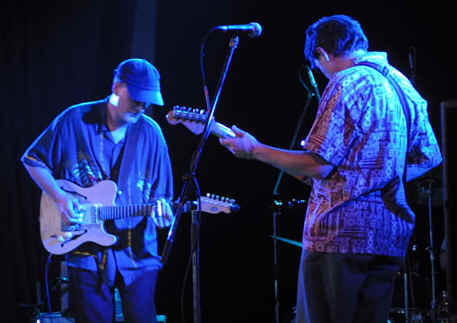
Michael Messer is (probably) the best thing to happen to the blues since that sad day R.L. Burnside abandoned his guitar in his manager's office. Don't believe me? Go and see him live acoustic or with his Second Mind Band.
Michael Messer & The Second Mind Band was on stage before the Dr John gig at Shepherd's Bush Empire on 20th July. It was encouraging to see so many turn out for a support act but then for those 'in the know', Messer IS King Guitar! Playing from his latest album, the superb Second Mind, (voted 'Best Blues Guitar Album Of The Year' by International Guitar Federation ahead of Chris Rea, Eric Bibb, Sonny Landreth and Aynsley Lister), Messer and band rocked us and rolled us through an awesome set.
His electric slide guitar weaves and duels with the sampling and scratching from young Louie Genis's turntable and collection of old blues vinyl. This is contemporary blues with its heart in US Delta country and urban Chicago but here's something going on that makes the hairs stand up on the back of your neck. Blues is a broad church with a firm foundation - it has the robustness to evolve without losing it's soul - and here we have guitar blues at it's most skillful, melodic and creative with the deepest of blue roots. Credit must be given, too, to The Second Mind Band and to Terry Clarke, the writer and co-writer of much of the material the band performs. Together they're a winning combination.
Still need convincing? Messer & Band play a Live session on BBC Radio 2 - The Paul Jones Show Thursday 2nd September 2004 @ 8pm AND on Sunday 5th September from 2-8 pm Michael Messer & the Second Mind Band + National Debt (featuring Michael Messer on Dobro) are performing @ The Bell, Waltham St Lawrence (near Reading/Maidenhead, Berkshire) Phone Glen on 0118 934 1788 for details. There's Ox Roast over a wood fire, Barbecue (with vegetarian food), Special Beer Selection. C'mon - what a great way to round off the summer holidays!!!
Sue Cavendish
Photo credit Fee©2002
There's almost too much to take in, but every single selection has its own considerable rewards to be reaped. Michael's own seriously stunning musicianship dazzles on every cut, yet his sheer inventiveness and healthily world-wise attitude to his many acknowledged influences ensures that his work never comes across as just another guitar showcase, for all factors are given due prominence within the mix, even when the spotlight inevitably falls on his own lead work. Michael's excellent supporting crew includes Ruby Turner on backing vocals, Richard Causon on keyboards, and brothers Ed and Louie Genis on guitars and scratching respectively; this represents an extension from his touring band (just Ed and the rhythm section of Andy Crowdy and Simon Price). The mere appearance of scratching on a blues album might seem heresy to purists, but it's saying something for Michael's skill that it's selectively and intelligently used and not remotely out of place.
Although most of the cuts are relatively extended, they stretch out quite unashamedly and totally naturally in context rather than exuding workout-fatigue as can often be the case on solo outings by blues guitarists. Its sheer diversity is but one of the album's many strengths, being celebrated stylishly by its unity of purpose. In the end, then, if you want a blues-based album that's full of excellent playing, yet startlingly original and refreshingly different, then don't "messeround", check Michael's two albums out pronto!
David Kidman
The eponymous King Guitar opening track is an electric-slidey, full-band, name-dropping, rockabilly blaster! It sets the pace for over seventy minutes of American blues in all its styles. Michael Messer is King Guitar - from string-bending-electric, cool, urban blues, through red-blooded funk .... to the best National Steel slide guitar this side of the big pond.
You won't find him in any of the American encyclopedias of blues, yet he is recognised by those in the know as one of the finest blues musicians around. His website is an encyclopedia in itself - it provides a wealth of international information and links to other blues/Dobro/resonator guitar sites and is well worth checking out for those who dig deep into the DNA of it all.
The Michael Messer Band is MM, vocals, slide guitar; Ed Genis, rhythm guitar and bvs; Andy Crowdy, double bass and bvs; Simon Price, drums & percussion. Guest musicians include MM's writing partner Terry Clarke. Get to see them is you can: Maryport Festival on July 28th and at Bishopstock festival on August 25th.
The Blues is a genus of music generally best experienced 'live'. King Guitar is an exception - from a musician's musician. It's an absolute essential for lovers of the blues and guitar gods! Superb!
Sue Cavendish
The music on this disc was first released by WildGoose on cassette back in the late 1990s, and no doubt it will reach a whole new audience (generationally too?) by being reissued now in CD format. As it fully deserves to, I believe. Songs From Yorkshire And Other Civilisations (to give the collection its full title) is a mixture of traditional and music hall songs with a Yorkshire flavour, all sung unaccompanied by a singer from Yorkshire. Now I just know I've come across Graham on my travels around festivals and singarounds, but I can't place him exactly in any one location (blame that on my advancing years!). Some of you may know Graham as one-third of trio GMW (with Magpie Lane's Ian Giles, and Ian Woods), others as half of duo Folly Bridge (again with Ian G), but the plain truth is that Graham's an impressive singer in his own right, with a marvellous voice possessing a wide range and an especially attractive lower register. He is naturally relaxed and totally at ease with his chosen material, which he performs with real conviction and not a trace of complacency. He has a very distinctive style, with a natural flow in the delivery, a control of melodic line which incorporates a sweet and infectious passion; this passion is expressed without sentimentality or over-emoting.
Now it's received wisdom in the folk recording business that you can't - or shouldn't - release a whole album of unaccompanied singing that's mostly by one single voice. Well I believe that exceptions can be honourably made when the singer concerned has vocal character in abundance and a healthy variety of repertoire (and expression); and I believe that Graham is one of these exceptions - I could certainly have listened to him singing solo for longer than the 38-minute span of this CD! But to be fair, Graham's not completely solo here, for a little into track 4 (The Immigrant), in come some sublime harmonies courtesy of Ian Giles and Moira Craig which both enhance Graham's own line and unroll the tapestry to reveal a majestic aural spread. Although just under half of the tracks benefit from such harmonic embellishment, it's still Graham's own delicious singing which stays in the memory. His renditions of many now-time-honoured club staples like Scarborough Sands (familiar to many revivalists as a primary source for the Dransfields' Rout Of The Blues) prove second-to-none: Allandale is refreshingly un-dirgelike, with an unabashed relish in the unfolding of the melodic line, whereas several songs, like Dalesman's Litany and Cawd Stringy Pie, benefit from being done authentically in dialect. Graham also shows a deep-seated delight in his material and in the act of telling the story, with notable features in his singing such as that "catch" or chuckle in the voice (a little redolent of Mike Waterson perhaps, or Lancashire's Sid Calderbank) - features which can in lesser singers sound stylised or else mere affectation. Whatever the type of song - and Faithful Johnny and (the Somerset music-hall ditty?) Home Made Remedies provide a neatly contrasted pairing toward the end of the CD - Graham's intelligent shaping of line, and lively sense of pace and flow (and control), is exemplary, and his interpretations can be listened to again and again without tiring. Finally (and perhaps unusually for a Yorkshire singer), Graham sometimes relies quite heavily on ornamentation or decoration - listen to his fine version of Sweet Primroses for instance. Graham says in the booklet note, "some songs give you an extra buzz when singing them", and that certainly comes across here, for although the measured approach Graham takes is quite closely modelled on that of his source, Fred Jordan, whom he heard sing it at a York folk club in 1970, Graham definitely has a better control of line and none of Fred's intrusive warbling vibrato! Bottom line: for anyone who appreciates fine singing (and that also includes singers wishing to develop their craft), this CD is an essential purchase.
David Kidman
You'll probably have noticed that this enterprising young four-piece string ensemble has been enjoying as much exposure on Radio 3's Late Junction slot as at festivals and concert venues. For they're certainly something different from the usual folk-circuit string ensemble.
Comprising English Acoustic Collective fiddlers John Dipper and Emma Reid, violist Miranda Rutter (of Jabadaw) and cellist Lucy Deakin, to all intents and purposes that two-violins-plus-viola-and-cello lineup is a string quartet, but while it embodies the requisite aesthetic and cultural resonances with all the accuracy and precision (and discipline) expected of that classically acknowledged grouping, the players exude an added enjoyment and sense of involvement that's more characteristic of folk session players.
However, while Methera's roots are firmly planted in English traditional music, much of their repertoire is self-penned. Methera's trailblazing debut CD (impeccably produced by Robert Harbron) was reviewed here in autumn 2008, since when they've been creating quite a stir with their intense and involving live performances. These have embraced collaborations with the likes of Karen Tweed & Roger Wilson and Kerr Fagan Harbron; indeed, a lone selection featuring the last-mentioned trio is included on this disc alongside performances culled from two Methera concerts given last October. These chronicle an ensemble ever more confidently exploring that murky territory lying between folk and chamber music – and having a whale of a time doing so.
Methera's stage presence is rather intimate however – for the musicians choose to play in an insular, inward-facing circular grouping rather than a straight outward-facing performance line – and yet they foster a state of concentration that's somehow (illogically?) inclusive for their audience. This skilled approach is applied equally to the more animated jigs and an assortment of pictorially descriptive pieces, with a consistent sense of joyous momentum conveyed in sprightly bow-strokes and a depth of expression not automatically associated with the rarefied string-quartet medium.
The finest moments come when the ensemble's beauteous richness of tone combines with an attack that's forceful and vigorous yet with copious light and shade and a keen, responsive control of internal dynamics. The second track's creative juxtaposition of a Playford 3/2 hornpipe with a fabulous Andy May tune, the cascading onomatopoeia of Stepping Stones and the wholly infectious lilt of Magdalenas Vals (transporting Bach to Scandinavia), all exemplify this; and yet Methera can also conjure a compellingly primordial mystical mood, as their original treatment of Gower Wassail (utilising obscure and delicious old modalities) proves. The finale's fiendish pair of tunes aren't to be dismissed as mere "mad technical fun" either!
As live recordings go, this is state-of-the-art (even if the necessary protocols of the editing process detract from the aura built by a continuous concert experience), and I'm sure it will prove sufficiently irresistible to entice you into buying a ticket to see Methera live.
David Kidman September 2010
Methera are but one of the newer acts on what might now loosely be considered the folk circuit who have been granted a welcome measure of exposure on BBC Radio 3's excellent Late Junction programme: and therein lies the bridge with the world of classical music, for Methera is to all intents and purposes a string quartet - that most decidedly un-folklike of ensembles. And yet of its individual members, fiddler John Dipper and viola player Miranda Rutter are arguably better known for their work in the folk arena (with such ensembles as The English Acoustic Collective and ceilidh band Jabadaw respectively), whereas fiddler Emma Reid has recorded and toured with concertina player Robert Harbron (also of EAC and currently one constituent of Kerr Fagan Harbron), who coincidentally has been responsible for recording and producing this very CD; only cellist Lucy Deakin has not hitherto enjoyed an equivalently front-line profile in the folk world.
So - and this is where the reviewing process gets tricky - is Methera's music just folk tunes played by a string quartet? Well not exactly - that's not the whole story at all. And certainly not in the same sense as the acknowledged transcriptions by, say, Bartók, Dvorák or Kodály of indigenous folk material. But there's still no escaping the fact that the string quartet is a recognised classical ensemble grouping, which carries with it certain cultural resonances as regards aesthetic, approach and discipline. Basically, Methera embrace these expectations with all the accuracy and precision of chamber music players but with an added enjoyment and sense of involvement that's characteristic of folk session players. In other words, the playing is practised and polished and highly focussed but not over-intellectualised.
There is a danger, of course, that the string quartet's perceived austerity, not to mention its natural homogeneity as regards actual sonority (all bowed stringed instruments) might prove a barrier to appreciation for those listeners who regard the guitar (not the fiddle) as the centre of the folk universe, but in compensation there's a good variety of sounds, moods and musical expression across the dozen items on the disc. Although "it was a yearning for traditional music to be heard through the voice of the string quartet that compelled Methera into existence", much of the music here is composed, and by contemporary musicians at that (including pieces by all four group members), although it's often hard to discern exactly their provenance since the context and nature of the invention is closer to folk than classical, with an intrinsic clarity that's much influenced by Scandinavian music. Two tracks (Tiggarvisor and the quirky waltz-and-bourée set) draw directly from Swedish sources, while the lusty Mount Hills Set pairs a Playford dance with a Dipper original. Further examples of the quartet's bright, lean-limbed energy come on the vigorous sweeping action of Apple Scrumping and Roger Tallroth's Anno 1643 which drives ahead with its Bartók-like stridency and sonorous drones, while restless pizzicatos usher in Jean-François Vrod's Frenchy Set. These contrast with mystical, evocative, mildly programmatic adventures which recall the sound-world of the courtly viol consort (Miranda's 1st September and Robert's Copernicus).
Throughout, Methera's sheer richness of sound, coupled with their stylish differentiation of parts and strong sense of ensemble, make for a harmonious, enchanting, quite ravishing - and distinctly rewarding - listening experience. However, although the CD was in fact recorded live (albeit over four days), and Robert's production has sufficient bloom to capture the essence of Methera's music-making exceptionally accurately, the final effect remains just a little emotionally detached: unfair though that might seem, I can't express it any other way. For the curious thing is that while you sense immediately that the players are totally into what they're doing, you as a listener will inevitably always be one degree removed from the music, for a recording, even one as faithful as this, simply cannot fully engage with any listener due to the absence of the purely spatial element of the performance and the personal and musical response of the players to their physical environment during the course of the performance (not to mention the revolving-stage gambit...). In these respects, it greatly aids appreciation of the CD if you've seen Methera live in concert, for the intense memory of that experience will carry on over into the audio track.
Finally, you'll probably be wondering whence cometh the group name? In northern English sheep-counting parlance, it represents the numeral four: aptly so then, for you could say that Methera's lively and involved approach to their art ensures that you're not going to be put to sleep counting the "baa-lines" (ouch!) of the tunes!
David Kidman October 2008
Once labelled 'America's answer to Billy Bragg' and 'Springsteen with a Midwestern twang', Paul Metsa celebrates his 25th anniversary in music by releasing a live recording recently discovered on a cassette tape in his vault. The two hour session that spawned these 15 songs was recorded in one take and the songs appear here as they did on the tape. Despite having released 11 albums, this is his first fully acoustic set and may well spread his fame beyond his mid-west roots.
Slow Justice is a political study, as you can gather from lines such as 'only white means go', and is as good a piece of anti-prejudice poetry as I've heard. Even as early as this first track I can hear the similarities to Bragg and Springsteen but I would also throw in Paul Weller in his angry phase. Kisses In The Wind has a touch of Derrin Nauendorf about both the guitar playing and the vocal. There's a clever lyric to this one and after one hearing it became a favourite of mine. I'll throw in one last similarity here, John Mellencamp, on Party To A Crime. Metsa sure fits in a lot of words into his songs and sometimes it takes a few listens to hear what he's on about. This one has a well worn topic – a robbery gone wrong and is another of my favourites.
Ok, I lied about the comparisons. On Fires Of Jerusalem he has a definite likeness to Dan Bern and continues a series of favourites. There's a certain relaxed feeling to his performance even though he can become quite frenetic at times. There's more political musings on 59 Coal Mines and he could quite easily be talking about the mine closures in the UK on this. Metsa's style has become quite evident by the time we get to Stars Over The Prairie and it would be interesting to hear how this style would translate into a full band situation although some of the impact may be lost.
Floretta's Junkyard is a familiar story of a broken youth that comes good eventually and the wonderfully titled Judas Sang The Blues sees Metsa in a less aggressive mood. Another Man's Chains has a grittier vocal than most and rekindles the Paul Weller comparisons and is followed by the understated Second Avenue Sunset. His most powerful vocal appears on As Good As It Gets and this also shows that he is the consummate storyteller and songwriter. You'll think that I've gone mad here but I could just hear AC/DC playing the chorus - it would be great!
There's a little hesitation on Honeymoon In Drag Alley but this does not mask the master storyteller. Having said that, this is the only song on the album that I feel requires backing. The beautiful and painful When The World Breaks Your Heart is a highlight in an album of highlights. He just captures the feeling of the moment, just the same as the afore-mentioned Derrin Nauendorf. The closing tracks are as different as you could wish for. The bluesy Robots On Death Row has me stumped with its imagery but it's very tight and well played. He finishes with the title track, a cowboy style song, and this is Americana personified. Metsa has the talent to make you hark back to days gone by and then shake you out of your comfort zone within the space of a track or two.
David Blue
This seriously enchanting new release from two of Wales' finest traditional musicians presents a sequence of songs and tunes from deep within the Welsh tradition, alongside some new compositions (four by Cass, two by Nial). Somewhat like the recordings of Fernhill (with whom Cass has worked), Deuawd ("Duet") may for some listeners appear a bit of a slow-burner due to its innate special qualities of quiet intensity and comparative understatement, but this kind of music doesn't need to shout. And moreover, there's no lack of skill, passion or commitment in the performances of Cass and Nial, which are both gently mesmerising and uniquely atmospheric, rather like eavesdropping on a shared fireside conversation between two close friends.
Cass is one of the Welsh folk scene's most gifted instrumentalists, not just as a fiddler and viola player but also as a leading exponent of the crwth (Wales' six-stringed bowed medieval lyre, which has a distinctively earthy timbre that's addictive and not easily forgotten). Moreover, Cass is blessed with a warm and naturally expressive singing voice, which features on just four of the album's tracks; these encompass a charming cow-calling lullaby, the magical Spring Child, the doom-laden Lift Your Heart and the cheeky Grey Blue Cuckoo's Song (simply sung in penillion style). Nial's delicate and often deeply contemplative guitar accompaniments count for so much more than that term implies, for they audibly sympathise with the protagonist of the piece, whether this be singer or player, and at the same time drive the music along with an almost unobtrusive momentum. The disc's various dance tunes are a real joy too, from the rippling Beddgelert to the lustier (if stately) pair of hornpipes that follow the achingly beautiful (if mournful) air The Gentle Maid.
This disc is definitely one with a key role to play in the conversion of this country's folk fraternity to the cause of Welsh folk music, so often regarded as the "poor relation" in this land filled with more-widely-feted Scottish, Irish and English traditional musics. It has already been on repeat play for most of the evening, such are its constant delights; and I envisage many more hours spent in its company.
David Kidman June 2010
Responding to demands from his fans, the Somerset singer-songwriter decided to have his new album reflect the intimacy of his live shows where he either performs solo or accompanied by Bethany Porter on cello. And, although he also enlisted Lili Meuross and Jess Vincent to provide backing vocals, that was the stripped back format he adopted for these recordings, with Reg playing guitar, dulcimer, banjo and harmonica.
As such, in tandem with those ash and honey vocals, the album glows with a soothing homespun warmth, wrapping the listener in its cloak of stories. Variously steeped in reverie or melancholy, they are, to one extent or another, love songs. Some, like the wistful thoughts of home road song Ticket To Louise, the distances apart All I Really Want Is You and the broken relationship I Need You are straightforward, others less so.
Loss and longing weighs heavy on many. Emily's Pages (where he sounds a lot like Don McLean) imagines the poet Emily Dickinson's unhappy in unrequited love, though the identity of the 'Master' (Benjamin Newton, Leonard Humphrey or one of the other older men she referred to as such) remains respectfully unknown.
The minstrel styled Weary Jane with its beautiful backing vocals, seems to be sung in the spirit of a sailor looking on at the woman from he's now divided by death while Come Back To Me is a portrait of a widow sadly reflecting on the day her husband died in a car accident.
One Cold April Morning may even be the same person, some years on, missing her children and a family split by death and divorce, her new weekend lover unwilling to make the commitment she desperately needs.
Accompanied by rippling guitar arpeggios, I Saw A Woman is a strange lyric, the singer observing the subject lying in a field, laughing and crying, only to see another man watching too, later encountering her in a bank and noting the dirt under her fingernails.
Putting a different spin on romance, the resigned and achingly sad If You Wanna Be Mine might be described as a masochist's love song as, the accustomed to hurt narrator sings 'if you want to take my heart you've got to take your time, you've got to break my heart if you wanna be mine'.
The remaining three numbers are love songs of a different nature, to place rather than person and veined with political comment. Addressing both the bank scandals behind the economic collapse and unjust and unnecessary wars, My Jerusalem's a lament for the 'broken promised land' of Albion, its fields stripped and hapless soldiers sacrificed by those in 'pretty suits of blue' and, sung in the first person.
Having evoked William Blake, his spirit also informs My Name Is London Town, a haunting bittersweet love letter that embraces both 'the bundle of rags in the Oxford Street doorway' and 'the cry of the Smithfield fishmonger at dawn', the dome of St Paul's and the Regent's Park mosque. But if London is 'your vision going up...your nightmare coming down... the Westminster fool...the Pentonville clown'.
Meuross also applies the metaphor to I Am The House, a hymn of solace and comfort for lives wounded, lonely and lost that may imply religious imagery (are those angel wings he's wearing on the sleeve, illuminated against the cosmos?) as he sings 'I am the light that doesn't end with the sun' or interpret the bosom of home and hearth as the weary traveller's rest, the 'safe harbour' from our fears. Either way, it fills your soul with peace, the sort of song you might want to hear on your deathbed.
I confess that, while musically love at first listen, it took longer than usual to get into the songs themselves; after several plays they are now as much a part of me as breathing.
Mike Davies February 2013
It's not unusual for a record company or the artist themselves to trawl through the archives for a collection of previously unreleased material. Meuross, however, is the only one I know to have his compiled by someone from the University of Oxford's Bodleian Music Library.
Quite how this came about I have no idea, but having listened to dozens of unreleased tracks, Stephen Jordan settled on the baker's dozen that feature on this limited signed and numbered edition release of 1000 copies.
Disappointingly, while some writing dates are given on the website, neither it nor the album details when the songs were actually recorded (some solo, some with various regular backing musicians) to place them in context of albums from which they might have been outtakes. No matter, Reg's songs are timeless, anyway.
As ever, they're a mix of the personal and the historical, opening with the solo acoustic title track's 19th century tale of a young woman who, banished from her village on Hoy when the sailor who made her pregnant failed to return, went mad and committed suicide. Travelling back three more centuries and again a solo recording, with its shanty style singalong chorus The Boundary Stone tells of the 1665 Eyam Plague in Derbyshire, the title referring to the hole-pitted stone where locals would leave payment in vinegar pools for food brought by outsiders.
The other songs inspired by actual events are of (relatively) more recent occurrence. Featuring Roy Dodds on cajon and sounding like a trad ballad, Jenny's War records a story told him by a farming couple who were caught in the Argentinean invasion of the Falkands, the wife recalling how, when imprisoned in the schoolhouse with her neighbours, she took her contraceptive pills to ensure she'd not have 'no bastard' son if she were raped!
More fleshed out musically, while not actually about the tragedy For You is a song about appreciating the love you have written in response to Thailand's 2004 Tsunami while nature's devastation also feeds into Mr Rain The Tailor, penned after the Cumbrian floods of 2009.
Both direct and obliquely, love and affairs of the heart inform several numbers; folk-country shuffle I'm Leaving You (with Miranda Sykes on double bass), All Through The Night (penned for the late Alan Briars, the Trowbridge Festival Director who passed in 2007), Davey Johnson (basically a jaunty rework of Black Jack Davy), the regret and reflections of the cello adorned The Curse of Memory and the lovely Broken Down Night with Reg on high string guitar and dulcimer and on his best Art Garfunkel form even if the melody does remind me of a slowed tempo Here Comes My Baby.
With 'Rabbit' Bundrick on piano, the album ends with the understatedly anthemic Cinderella Man, a song he wrote on spec for the Russell Crowe biopic of boxer James Braddock. It didn't make the movie, but once again confirms Meuross as the non-bombastic Chris De Burgh it's okay to like. So, hats off to Mr Jordan for his fine ear and good taste and there's the tantalising prospect that those that didn't make this album might yet one day surface too.
Mike Davies September 2011
Featuring collaborators Jackie Oates, Paul Sartin, Andy Cutting, cellist Bethany Porter, and Fairground Attraction rhythm section Roy Dodds and Simon Edwards, the Somerset high tenor's fifth album firmly reinforces his status as one of the country's finest singer-songwriters. A little like a better-looking David Caruso, he's a warm, engaging live entertainer and that same easy going feel informs his discs and their songs of love, longing and true life stories.
In the past I've likened him to Martyn Joseph and Don McLean. The latter's still readily apparent on For The Seeds Of Love, a lovely song inspired by song collector Cecil Sharp and the need to preserve the storytelling tradition for future generations, has a definite starry starry night feel.
However, the comparison that increasingly strikes me is that of early Harvey Andrews, in the humanity of his writing, an interest in history, and the lilt and catch of the vocals.
While, undoubtedly unintentional, listening to The Redcliffe Boy, in which the ghost of ill-fated Bristol poet Thomas Chatterton prevents the suicide of a post-war working lad helping rebuild the city while having to stifle the poet inside him, I can hear similarities of phrasing. Meuross deserves to enjoy a similarly lengthy and acclaimed career.
Chatterton's not the only real life figure to inhabit these songs. With suitably anthemic refrains, Victor Jara recounts the military junta's 1973 murder of the outspoken Chilean poet and theatre director while (aside from Come On Eileen, the only lyric name check I'm aware of for the Prince of Wails), the gently swaying Looking For Johnnie Ray uses the 50s housewife's choice as the perfect example for an unlucky in love woman's search for " a guy who's not too tough to cry." Of course, she wouldn't have been aware that he was gay and an alcoholic.
Closer to home, guitar jangling murder ballad The Bitter Wind gives an account of the 19th century Dartmoor double murder by rejected lover Peter Tavy while, with a melody reminiscent of Ian & Sylvia's Darcy Farrow, The Heart Of Ann Lee tells of the Manchester born 18th century Shakers founder who rejected sex but was forced into marriage, bearing four children (and four stillborn) "taken before they were ten", before fleeing to America to escape persecution.
Even when not drawing on history, the songs are still very much driven by character and human drama. The opening Angelina's Coming Home concerns a romantically disillusioned prodigal's return set to a Molly Malone-like melody, The Drover's Road weaves a trad flavoured, accordion backed tale of romance between an artist and a travelling musician while the closing hymnal lament Sail Away No More guessingly concerns the fears of sailors' wives but likely runs much deeper.
The softly cascading If I Should Fall From You and The Shoreline And The Sea appear to be personal songs about supportive love, but perhaps the most moving here - and sharing the same theme - is Shadows On The Wall, a deeply touching pledge to nurse "the one who made me whole" through depression and how "the hands of those who love you make cradles when you fall."
In reviewing his last album, Dragonfly, I said it was his finest hour. It looks like I was 60 minutes out.
www.regmeuross.com
www.myspace.com/regmeuross
Mike Davies September 2010
Once again joined by Roy Dodds and Rabbit Bundrick on drums and keyboards, with BBC2 Folk Awards Nominee Jackie Oates on fiddle, after three albums veined with personal experience, the Somerset troubadour's latest is predominantly built upon historically based story songs, many inspired by tales collected while touring the country.
It is, though, an exception to the rule that provides the opening track, Fool's Gold, a liltingly melodic, bittersweet snapshot of a married woman's adultery, the wedding ring left behind in the hotel bed and Maria the chambermaid who slips it on her finger, transforming its tainted guilt into a pledge of her own fidelity.
Subtly reworking the tune of Bring It On Home To Me, shifting its blues origins to a roots country base while retaining the same lyrical theme, Without Love finds him sounding a little like James Taylor while The Sound of Hallelujahs brings those Art Garfunkel meets Martyn Joseph thoughts to mind again. Inspired by a conversation with his daughter debating the relative merits of Leonard Cohen's original Hallelujah and Jeff Buckley's cover, it becomes a beautiful hymn to endurance and finding faith in the dirt of disappointment.
Set to a tune which, borrows directly from Steve Goodman's The City of New Orleans, Birmingham Hotel is, fairly obviously, a road song with Meuross singing of sleeping in a 'stranger's bed' and thinking of those left behind and the good times and songs shared. Its celebration of the power of song is echoed in the shantyish Singaway (where Maria puts in a reappearance), the voice of the singer becoming the voice of everyone with a story to tell and pain to share.
Perhaps the most lyrically problematic track here is The Priest. Meuross has often used religious motifs, but, cast in traditional folk ballad mode, this is a troubling number about an alcoholic priest, a traveller in need of solace and the bitter betrayal of faith lost. It's like something Chris De Burgh might have once written. Only far better.
With the airily gorgeous title track referencing 9/11 and addressing both the causes and the blindness of terrorism without resorting to strident polemic, the remaining material is also rooted in past and contemporary record.
His voice at its most tender, with lines like 'I watch you brush your yellow hair run your fingers through the sun', Until I Hold You Once Again sounds like another love song; until you learn it was written after hearing a mother talk of her daughter, one of the five murdered Suffolk prostitutes. It's heartbreaking. Also born from a news item, the equally moving Valentine is a romantic quasi ghost story that recalls Lance Corporal Matty Hull, killed by friendly fire in Iraq on Valentine's Day 2003.
Of older historical provenance, conjuring thoughts of Don Mclean in his vocal and melody, Lizzie Loved A Highwayman details the true story of Dick Turpin, cleverly entwining the romanticised myth with the rather less glamorous truth of a rapist, murderer and thief. From earlier in the same century comes Martha Went Down To The Well (The Bowes Tragedy), the true Yorkshire story of Roger Wrightson and Martha Railton who, their relationship denied by his family, died of, respectively, exposure and a broken heart.
McLean comparisons return, filtered through the influence of Simon and Garfunkel, on the album's marvellous closing number, William Brewster Dreams of America, which documents the journey of one of the Pilgrim Fathers and his family aboard the Mayflower, cleverly finding subtle resonance in the fact that, of his children, Patience died leaving Love and Fear to build the legacy of America.
But, good though the song is, the album's tour de force is And Jesus Wept on which, sounding uncannily like a young Harvey Andrews, he tells the story of Harry Farr who, in 1916, suffering from shellshock, was shot for desertion. A song destined to become a folk classic, it's dedicated to Farr's daughter Gertrude and granddaughter Janet whose efforts led him to become the first of the 306 British soldiers executed in such circumstances to be granted a posthumous pardon.
Arranged and performed with beguiling simplicity and warmth, and evocative of the singer-songwriter folk scene of the late 60s and early 70s as embodied by Ralph McTell, Richard Digance, Gordon Lightfoot, and those mentioned above, this may not have the same cool cachet as those waving the flag for today's folk revival, but it's both Meuross' finest hour and one of the best albums you'll hear this or any year.
www.regmeuross.com
www.myspace.com/regmeuross
Mike Davies April 2008
It took eight years for the West Country's answer to Martyn Joseph to follow up his debut album, so thankfully there's only been two between Short Stories and this, his third studio set. Once again Meuross, formerly of the Panic Brothers and still sometime member of Hank Wangford's band, is joined by Rabbit Bundrick on keyboards, Roy Dodds on drums and Miranda Sykes on double bass and backing vocals, only this time he's also recruited guest spots from Martin Carthy and Phil Beer.
Although the latter crops up on several tracks, it's The Poacher that finds the pair plying their trade together, Carthy on guitar, Beer on fiddle, for a song about a hunter who falls for the woman he finds in the woods only to learn she's the transfigured mate of the deer he'd killed earlier. It's the only real excursion into English trad here, and while folk flavours the album it's very much filtered through the rippling roots rock country embodied in tracks like the calypso tinged Down To The River (one of several numbers to feature religious imagery), and the lovely barley coloured Days Like These.
As before here are songs of love and family, as he sings about searching for someone to bring inner peace on My Nirvana, or being lonely far from home in the Chapin-esque The Man In Edward Hopper's Bar.
But what you'll notice are the many references to broken marriages and, as with Do You Really Want My Love where the narrator ponders how 'we don't touch anymore", of relationships that have drifted apart. But there is a resigned acceptance that because some things cannot last, there's no reason to apportion blame. On the bluegrassy lollopping I'll Come Back he sings how love is the chalice and Holy Grail, but realises that sometimes people want to 'see blue whales rise on a Christmas morning' and while they may leave, they carry a love left behind in their heart. Again on Something New he talks of a man leaving his wife and setting off to see the mistress who makes him feel young again.
One of the stand out tracks on the previous album was Good With His Hands, the poignant tale of his father and the wife who left him. It's an event to which he returns here on Don't Give Up, a track where he sounds a lot like the young Harvey Andrews. But he brings a more balanced perspective and while the song's a retrospective encouragement to dad and he may refer to his late mother as a homebreaker and 'cheating and unfaithful wife' who he felt had deserted him, he also finds compassion for a woman with an unsatisfied need to be loved, and, in a kind of forgiveness, acknowledges the influence she had in making him who he is. It's a wonderful epiphany. And, almost in acknowledgement of a burden of bitterness lifted, there's a bonus track, It's Me Or Elvis, that plays out the whole domestic strife in tongue in cheek fashion, complete with lyrics that weave in Presley song titles.
Marred only by a cover of Tim Buckley's Morning Glory that sounds as if Meuross recorded the vocals in a cellar's echo chamber, it's a gem of an album that fully deserves to bring him some long overdue acclaim beyond his loyal but somewhat localised following.
Mike Davies, August 2006
Reg Meuross - Short Stories (Offspring Records)
Formerly half of the Panic Brothers and now a mainstay of Hank Wangford's Lost Cowboys, Mueross has taken a while following up his 1996 solo debut, but, aided by musicians that include Free veteran Rabbit Bundrick on keyboards, guitarist Martin Belmont and Sianed Jones on violin, the wait's been well worth it. While covering such diverse musical bases as jangly piano pop (Your Face Again), bluegrass (Back Door Man), Brill Building beat pop (And They Danced), English folk (Roslyn Banks) and backporch gospel (Walking To The Light), as an entity it's a rootsier affair with gentle melodies rippling through songs of love, family and keeping faith. His voice is eerily reminiscent of Art Garfunkel on several occasions (most notably the lovely Worry No More with its Townes Van Zandt flavours) while at other times, as on Good With His Hands, the poignant tale of his father and the wife who left him, he calls to mind Martyn Joseph.
Waltzing through memories of old flames, lost dreams, bruised hearts and pledged loves but with optimism at full mast, many of the songs veined with religious motifs, it's a warm, soothing listen that touches the emotions with its fingertips, perhaps no deeper than on the Chapel hymnal feel of Wherever You Go and the quiet ache of Home where empty nesters leave the city behind to revisit the seaside where they fell in love 25 years earlier. Lovely stuff.
Mike Davies
Former member of ska party band The Rhinos, but since 1995 making his name mostly as a solo performer or with The Collectables, Canada's freewheeling indie singer-songwriter now (for his seventh album) turns his attention to matters of social conscience – although as is usual with Danny's peculiar creative mind this proves not to be quite the whole story.
Feather, Fur And Fin was released over a year ago, but has only recently reached me, so Danny may well have moved on a stage or two by now! But it's worth bearing in mind that Danny released an entire album of David Bowie covers back in 2006, for a similarly maverick spirit infuses Danny's own music. In terms of subject matter, though, the social conscience theme is strongest at the outset: the title track is a kind of busy-bouncy mardi-gras examination of the relentless destruction of our planet (fuelled by the decline of a local rural sanctuary), whilst If God's On Your Side presents a caustic take on organised religion. But after that there are some more of Danny's typically quirky little tales of experience and rueful reflections on romance. It may seem a bit of a rub to say this perhaps, but Danny's enterprising musical arrangements are so idiosyncratically ear-catching that they can arguably appear more interesting than his songs, although it's to his credit that they don't distract more than they do.
Performing live, Danny makes considerable use of samples, looping devices and layering, and yet his own well-developed skills as an experimental musician are such that he plays many of the instruments himself on this new album (though he adds a brass section, piano, mandolin, pedal steel, clarinet, sax, bass and drums to the mix at strategic points) and he retains an acute pop sensibility. In that context, Sweet Things (where tinkling mandolin and banjo sit incongruously atop a grinding Joy Division bass riff) works much in the spirit of classy 80s indie-pop, but the breezy stomper I'm 'A Love You Anyway feels fairly disposable. More substantial is the leisurely Clear, which uses a modern acoustic-based groove with jazz inflections and pedal steel embellishments, and the eerily cinematic chanson Motorcade even paraphrases a theme from Schubert's second piano trio (and sports a florid classical-style piano part), while The 14 Masks Of Danger exhibits an attractive slow-dub/ska vibe. In its often intriguing texturings, the whole album may seem wilfully unorthodox, and yet both within and without the determinedly alt-indie gestures there's a curious consistency to Danny's creations that compels further investigation.
David Kidman December 2009
Four years on from The Trials of Van Occupanther, the Texan quintet make a long overdue but very welcome return with a sublime new album that is, if anything, even more steeped in 60s prog-folk than its predecessor; dark limned, age old songs cast in minor keys and littered with images drawn from the natural world.
But this time round, rather than CS&N, and Neil Young, you're more likely to find yourself thinking of Matthews' Southern Comfort's first album, Renaissance, early Genesis, Pentangle, Jethro Tull, Tim Buckley and, on many an occasion, an English folk variant of Love.
With its acoustic guitar fingering, evocative flute, Tim Smith's rich loamy vocals and its air of wearied melancholy, the opening eco-themed Acts Of Man sets the bar so high you wonder how they'll ever follow it.
The answer comes swiftly with the madrigal feel of Winter Dies, snarly electric guitar joining acoustic and tambourine in a brooding observation of the passing seasons that serves as metaphor for mortality, the renewal of life and the possibility of change.
This in turn gives way to the Small Mountain, another weary lament about inevitable change, 'a way of life that will surely be gone' and days that 'count for nothing', drums gathering power as the slow march builds to its crescendo. Then comes the paganistic The Core Nature with its lines about woods, blood, bone and "all that waits to be known and all that will never be known."
So, four spine-tingling songs in and already a folk album of the year contender, things continue to take the breath away with the gently fingerpicked Fortune's echoes of Paxton and Denver, the delicate Forever Changes filigrees of Rulers Ruling All Things, a lyrically ominous, melodically urgent Children Of The Grounds, Bring Down's darkling waltz, and The Horn, which opens on shades of Blue Oyster Cult's Don't Fear The Reaper before slipping into stately medieval mood and (as befitting the sleeve image) Smith's Gregorian intonations.
Closing out with the hauntingly, despairingly beautiful title track with its squally finale and, again referencing the end of Winter and coming of Spring, In The Ground's hypnotic ebb, flow and dying fall, it leaves you transfixed in a way that makes the likes of Fleet Foxes and Bon Iver seem utterly inconsequential. Take courage.
www.midlake.net
www.myspace.com/midlake
Mike Davies February 2010
Midnight Special? probably sounds like a naff Leadbelly tribute band! No, instead it's an abundantly talented young trio (Amy Atkinson, Sam Leahy and Tim Yates), who started out in 2005 with their own musical agenda. Although brought up on the traditional folk and acoustic scene, they've been quick to absorb and assimilate influences from other branches of roots music, and Arriving, their debut recording, showcases elements of jazz, swing, blues, rockabilly and skiffle alongside the folk and their own self-penned material. What sets Midnight Special apart from the plethora of "new young bands" on the folk scene is their unusual repertoire and their genuine feel for "industrial" songs. But there's more to the band than those aspects...
Their instrumental complement is pretty wide-ranging: between them, the three play fiddle, melodeon, piano, guitar, banjo, double bass, trombone and tuba - and with considerable accomplishment too. Vocalist Amy shows an impressive maturity of delivery, whether on the folkier material, her own compositions or (perhaps less expectedly) on the more jazzy, bluesy numbers. Even so, I was particularly taken with her acappella rendition of Keith Jones' powerful portrayal of the Sheffield steel industry (Steelworks Game), also her own Snow Mill (which deals with child labour in the cotton mills of the 1850s), Sydney Carter's melancholy yet gently seductive portrait of Marilyn Monroe, and the admonition that's rather plainly titled Collier's Song. The latter is a composition by the band's mentor and manager Roy Atkinson (Amy's dad), who has also provided idiomatic and memorable musical settings for Shan't Be Home At Four and The Roadman (both originally poems which he'd discovered in local collections).
Generally, with one exception (a genially rollicking I Saw The Light, with two American old-time fiddle tunes as a rip-roaring coda), I'm not quite so convinced by the more familiar "standards" the band choose to tackle (eg Old Joe's Bar Room, better known as St James' Infirmary): though more than competently performed and making for pleasing enough listening, they're arguably more geared to live performance than repeated home play, but on the other hand they do serve to highlight the trio's eclectic taste and considerable musicianship. This is capably augmented for the purposes of this record by Matt Fisher (drums), and other guests playing trumpet, tenor horn and mouth organ - and Brian Bedford (who's responsible for the disc's state-of-the-art engineering and production values) even contributes backing vocals on one track!
I do have a mild quibble perhaps with the disc's running order, in its placing of the pair of Amy's songs together at the start (thus giving a misleading impression of the rest of the menu), also a couple of minor miscalculations (a lapse in fiddle intonation on The Arran Boat Song, some clumsy percussion synching on Seven Days). But this is small beer beside the inescapable fact that with Arriving..., Midnight Special have produced an attractively sparky debut CD, one which definitely places them in the "must-see" category.
David Kidman October 2008
Not even the wonderfully surreal title can steal the thunder from what is a breathtakingly honest album.
Most CDs intended for review, are accompanied by a sheaf of biographical notes thick enough to choke a horse. At the end they are full of testimonials telling us how wonderful the music is.
There was no need for any of that paraphernalia with Ramsay Midwood all you need is the man's music. Far more eloquently than any PR spin, Popular Delusions and the Madness of Cows proves beyond any shadow of a doubt that Ramsay Midwood is not only the real deal but he's a class act.
His music stalks the no-man's land between country and blues like the meanest beast in the jungle. He gets about as far away from manufactured, 'showbusiness' music as it is possible to get. Tracks like Ringmaster and Withered Rose are chipped, chiselled hacked and hewn from the soul of a man who has lived and seen all sides of life. You don't need a piece of paper to tell you that Ramsay Midwood has been there and done the hard yards, it's the lifeblood of his music.
And while its heart may lie in the simple pleasure derived from listening to a song like Planet Nixon distilled down to its neatest and purest form, within that simplicity and clarity of thought and purpose lies an album of infinite shades and moods.
Boxwine Ruth reveals the seedier, darker underbelly of the blues, it is a direct descendant of those songs written when he blues wasn't for 'respectable folks'. But the homely almost humble Ramsay Midwood returns in Jesus Is Number 1, a simple statement of faith, wrapped up in an equally simple simple song. With both you know that you are close to the real man. Ramsay Midwood allows his music do the talking for him and it on Popular Delusions and the Madness of Cows it comes through loud and clear.
www.myspace.com/ramsaymidwood
www.farmwire.com
Michael Mee January 2007
Ramsay Midwood - Shoot Out At The OK Chinese Restaurant (Glitterhouse GRCD 467)
The album: this is Chicago-electric blues, 'singing' B.B. King lead-guitar style, with a 'jump down pick a bale o' cotton' and swampy groove, which owes more to J.J. Cale than Leadbelly. It's totally hypnotic. Midwood's low-range blues-mumble rolls along. Variety comes from the different instruments on each track supporting the guitar licks. Each track starts off simple - usually Midwood and electric guitar (I'm presuming this because there's nothing to say so in the sleeve notes) or Weeks on acoustic or electric guitar (more presumption), plus rhythm section. Waynesboro, with its bluesy banjo shuffle, is an exception here. The musos feed into each song - organ or piano, guitar, fiddle, accordion, fiddle, harmonica - with a slow, clean build, never detracting from the overall laid-back chugging rhythm. The opening track is bizarre, the acappella 'Dreary Life', a cowboy's lament, sung or rather grumbled by Midwood.
Who is Ramsay Midwood? There's no picture and the total of 75 words of sleeve notes tell you nothing except the muso and production credits. However, this is not a Chicago Bluesman. Born in Woodstock, raised in suburban Virginia, supposedly now living in California, Midwood is an enigma. There's nothing like an enigma to get people buzzing. Get the album and you'll see why.
Live in London: Not really a performance, more a couple of guys hanging loose, jamming in someone's house, somewhat disorganised, with no set list and songs that ended a bit abruptly. Charlie McGovern on bass sat in for a few numbers then drifted off again. But that's cool. Hey! we're on California time, folks! If you 'get it', you'll love it.
All the way through there's that basic hypnotic swampy blues from Ramsey, laid-back monotone mumble, stream of consciousness lyrics from beneath his 'signature' furry hat! It sounds very like Shoot Out At The OK Chinese Restaurant, but then 'Shoot Out...' was recorded like that, 'I mean, some guys got together and played some songs on to a recorder and now we are famous in France and the former Yugoslavia and Germany and England and Australia, Austria and Culver City'.
Surprises came when Randy Weeks did more than his singing-blues-guitar noodling, harmonica playing and 'special effects' accompaniment percussing. Just when those lazy blues had you sliding to the floor with your Southern Comfort, Randy changed the pace with some sweet rocking songs and tasty Fender licks. A word about Ramsey's guitar, this is one ancient, beat-up mother, a '58 Sears Silvertone, acquired in Arizona where it had probably been working the streets picking up character long before it moved West.
Sue Cavendish
Singer-songwriter Edward Bernthal Mikalski, best known to everyone as Teddy, was born in Kent but now lives in Denmark; like all true creative souls, he always has a story to tell. Having charmed all and sundry with his recent solo set at Acoustic Rotherham 3, he's now unleashed this CD on the unsuspecting world. Teddy's led a difficult but rewarding life, and the representative collection of his songs chosen for this CD portrays the rollercoaster of emotions and events that have formed his character. At its best, Teddy's writing brings these to life with an immediacy and directness of emotional impact that strikes and nurtures a ready rapport with the listener. Teddy's a true eccentric in the best of traditions, and his music – like his personality – is seriously endearing: a quality which can (perhaps perversely?) also be its principal attraction, evoking generous quantities of sympathy, empathy and compassion (albeit depending on your mood and predilections I suspect).
Nearly all of the songs are heard to describe a particular individual episode from Teddy's life, from childhood dreams to adolescent fantasies to adult realisations; each one makes its point with simple but memorable imagery. And Teddy's unshakable belief in his own creativity is clearly informed by his discovery, early in life, that "anything could be put right with a song". This credo might be seen as impractically naïve, although it generates its own genially independent, playfully-DIY vibe as a bonus. Also in this context, for much of the time I'm reminded of Donovan (one of Teddy's key inspirations, it turns out), in his "flower" period, as characterised by a charming and often absorbing quality of observation that allies a closeness to nature with a gentle tolerance and understanding of the world, its people and its creatures (though not always quite managing to escape the charge of tweeness that dogged his mentor).
Teddy's creations range from the beautiful, peaceful and contemplative (Lady, Moon Song and Summer Farewell) to the jaunty, childishly euphoric Pushbike Song and the uplifting Campari Girl, via the social-conscience commentary of Butterflies And Swallows, the folky-philosophical Dunes Of Time and the affectionate lullaby Child Of Spring. There are also three character-sketches: Tanith (an alluring portrait of a gypsy, and the first song Teddy wrote), Quentin (ie. Quentin Crisp, and incorporating samples of his speech) and Hang-Glide Bill (who mildly overstays his welcome I find). But I find I really can't help liking nearly all of Teddy's songs a lot, for they get into the blood and stay in the consciousness. OK, so Teddy's singing style could be considered somewhat idiosyncratic (even at times unnervingly so), but I find it's easy to warm to (once you plug into his internal rhythms and get used to his tendency to slur and slide phrases along a melodic line).
Which brings me to the other important aspect of this CD which not everyone will readily embrace: its production. For while it does still largely succeed in communicating the essence of Teddy the man, there are moments when other distractions get in the way of my appreciation of Teddy's personal vision of life and its glories and tribulations. Shave The Monkey's Bryan Causton, whom Teddy has engaged to realise his vision, has performed his task with sympathy and integrity, contributing some nice mandolin embellishments and understated keyboard work, also bringing in Carolyn Sheppard for some lovely vocal harmonies. Just occasionally, however, some of the extra production touches jar on the ear (eg the sound samples can be either genuinely atmospheric or obtrusive and more than slightly annoying). Those small reservations apart, however, I'm sure you'll find much enchantment in this disc, for it proves really hard not to fall under Teddy's spell.
www.myspace.com/edwardmikalski
David Kidman June 2009
Buddy Miles. What can I say? The man is a legend and has played with some of the best bluesmen ever, including Muddy Waters, Mike Bloomfield and Jimi Hendrix. With credentials like that the listener shouldn't have to work too hard to enjoy the music.
The Blues Berries crank up the funk on the opening track, a fantastic version of The Nashville Teens Tobacco Road. Miles' voice is in top form and guitarist Rocky Athas gives a hint of why he was one of the 'Texas Tornadoes' (the top 10 guitarists in Texas - an elite group that includes Billy Gibbons and Johnny Winter). One of Athas' contemporaries was Stevie Ray Vaughn and it is his former Double Trouble rhythm section Chris Layton and Tommy Shannon that provide the drive for the album. This is particularly shown in Big Mama, a shuffling blues that Stevie Ray would have been proud of. Compassion For The Blues is a nine-minute treat with a fantastic one-minute guitar intro. Buddy's voice is so mournful that you feel his pain with him.
Most of the songs on this excellent return to form are solidly in the blues storytelling tradition, none more so than Rock & Roll - a Robert Cray style smoothie. Texas Cannonball is a good old down to earth rocker and I love Mark Leach's keyboards - very Hammond organ. Bayou Delta starts off as a rocker, loses it for a moment and then returns to a groove to die for and Miss Suga' Fine takes us back to the rockier side of things with Athas again proving his virtuosity. Down At The Crossroads finishes the album in fine style with Gregg Diamond getting in on the act with some neat acoustic guitar work. All in all, this is a very good album and should put Buddy Miles' name back on many people's lips.
David Blue
All of Lynn's previous albums, most especially Slightly Haunted, Unravel and Love Sweet Love, came highly recommended, replete with excellent, well-crafted songs full of memorable images and keen hooks, and so it was always a puzzle to me that she's never made it to massively wider acclaim.
This latest collection, where Lynn revisits a whole host of her earlier compositions in wonderfully refreshing stripped-down arrangements (her own voice accompanied by just guitar or piano), can't do her profile any harm, in fact should really do the exact opposite, focusing attention on her fabulous singing voice (remember that she taught the 14-year-old Alanis Morrisette!), as well as her gift for creating memorable melodies and lyrics. It should also pave the way for her forthcoming UK tour and fifth studio album, both eagerly anticipated.
Happily, most of my own favourite Lynn Miles songs appear on this new two-disc set, but they're even more stunning in these sparser, and altogether closer and more intimate, new studio renditions. The Joni Mitchell-like Map Of My Heart benefits from a telling electric guitar backdrop, as does the wondrous Last Night (complete with its references to Joni's own Christmas song), whereas Night Drive gains a fair bit in potency here too. The Katy Moffatt-like I Give Up has never sounded more persuasive, and the delightfully referential Surrender Dorothy has a greater resonance by being shorn of unnecessary studio trickery. With the desolate You're Not Coming Back on one hand and the charming Gillian Welch-like I'm The Moon and Over You on the other, Lynn proves her skills many times over.
And that's just the first disc which closes with a hitherto unrecorded song, When My Ship Comes In, whose semi-spoken delivery lets the side down a touch (tho' that's probably just a matter of personal preference). Disc Two effortlessly keeps up the standard, with further choice selections from Lynn's impressive back-catalogue given a sparklingly immediate dusting-down. All reinforcing my view that as singer-songwriters go, Lynn really is one of Canada's jewels.
David Kidman March 2010
This new album from singer-songwriter Lynn is something really special. Her previous two albums (Slightly Haunted for Philo and Night In A Strange Town for Rounder) had increasingly done more than hint at an exceptional degree of promise, but this new offering has seen Lynn take several steps forward, with a greater overall consistency in the material (again all self-penned) that pulls no punches, either on the driving, thrusting uptempo numbers or the cooler, more tender, aching ballads. There's a different kind of confidence in her writing now, and a deeper (though understated, almost casual) maturity in the way she's positive yet realistic about the painful issues she confronts, with a knack for making her individual, deeply personal concerns appear equally relevant to you. Spare, brooding rhythms provide a haunted undertow to the bittersweet emotional content, notably on the opener I'm The Moon; on the outstanding Black Flowers, this is taken a stage further with the imaginative use of percussion to evoke the clattering of ghostly mining machinery.
I was really impressed with the assurance of Lynn's live presence when she toured with Slaid Cleaves a couple of years back, and Unravel certainly seems to be announcing her arrival on the bigger stage, up there with the Emmylous and Lucindas. Ian Lefeuvre's production can take much of the credit too, being atmospheric in all the right ways and full of depth and incidental interest although utilising fairly minimal instrumental resources. The commercial edge of the production is no mere shallow concession to radio play, but symptomatic of a defiant resilience, as typified by the title track. Only the rather obvious gimmick of the faux-retro opening and close of Surrender Dorothy spoils the poignant mood. That apart, this is a damned fine album.
David Kidman
The Milk & Honey Band - Boy from the Moon (Ugly Man)
'Boy from the Moon' is a sweet concoction made with a base of very sharp songwriting, ladles of vocal harmonies, dashes of 60's British Pop, Surf, Psychedelia & a generous helping of Crowded House.
Primarily a vehicle for songwriter, singer, guitarist, bassist, drum programmer & keyboard player Robert White, The Milk & Honey Band recorded this piece between 1996 & 2000. Some indication of chronology on the sleeve would therefore have been useful in allowing the listener to chart the development of sounds & ideas. Instead of featuring so many tastefully manipulated images from the American & Russian space programs, part of the booklet might have been better employed to reprint White's simplistic, quirky & distinctly English lyrics.
"There's a message in my heart for you
Like the feeling on a swing when you go too high" - 'Junior'
The album is awash with crisp, driving acoustic guitars, layers of atmospheric, occasionally ethereal electric guitars, strong percussion, swooping & loping bass and lush pop production. The only sour note is left by the fact that White's writing, particularly vocals & harmonies seems at times a little too heavily influenced by that of Crowded House's Neil Finn.
Where White finds his own voice however, it is that of a fine songwriter with a talent for melodic hooks which fast track into the memory, impressive use of textures in his production & an ear for vocal arrangements with sweetness which stop short of saccharine excess.
James Hibbins
Enforced by her indisposition through illness, it's been a long eight years since the husband and wife team's first joint recording, but they return in terrific shape with an album that, nine songs written by Julie, strides confidently through frontporch folk, Nashville twang, throaty blues, torchy jazz and country rock n roll.
Old school makes the early running with Ellis County opening the album to a slow march tempo, the sound of fiddle and guitar and nostalgia for times past when 'daddy led the singing Sunday, n' nobody had to plough until Monday'. But then it cranks up immediately for the couple-penned Gasoline And Matches, a swamp sloshing bluesy boogie woogie with a Doug Sahm rhythm and Buddy's Creedence grumbling guitar showing just why the man's a country legend. Then it's all mood change again as Patty Griffin's harmonies join Julie for Brill building like piano ballad Don't Say Goodbye.
As you'll gather, it keeps you on your musical toes, but there's not a style here of which the pair aren't masters. Griffin puts in a second appearance for another piano ballad, the dusty Austin flavoured duet of Chalk while also guesting on two tracks you'll find Regina and Ann McCrary who, after figuring prominently on Buddy's last solo album, Universal United House Of Prayer, are welcome visitors for the slow waltzing melancholic Hush, Sorrow and the more guitarslinging Border Country blues of Dee Ervin's One Part, Two Part.
As Julie's early hours jazzy torch sway through A Long, Long Time, her breathy delivery on the simple Appalachian hymnal tones of June, and the six minute, molten blues guitar and growl of Smooth ably demonstrate, they don't need the help of others to make the music shine.
Even so, ironically it's the two numbers with their other special guests that are the album's highlights. Emmylou Harris joins Buddy for Leon Payne's The Selfishness In Man, a slow marching Sprinsgteen-esque spiritual croon with chiming pedal steel and soulful piano that burns into the heart. Burning into other, lower regions of the body is the loose slung version of Mel Tillis's What You Gonna Do Leroy, a midtempo hoochie coochie man swampy stomper with hot club fiddle solo which, after Miller provided guitar on the recent Raising Sand tour, sees Robert Plant repaying the favour by lending his distinctive lazily golden tones as he trades verses and harmonises. Chalk this up as one of the year's best, and all we need now is for Buddy to recover from his recent heart op so the pair can get out on the road and for Julie to record that decade long overdue solo follow up to Broken Things.
www.buddyandjulie.com
www.myspace.com/buddyandjuliemiller
Mike Davies March 2009
Over the years these two critically acclaimed, well-established artists have frequently appeared together as musical collaborators both on stage and in the studio, and they even co-host a radio show these days too. But for the two men to actually make a record together has long been a dream for them both, and this album, recorded in just three days at Buddy's home studio, finds them having great fun stepping back to the days of the 1950s to pay homage to (and kinda recreate) their inspirations – notably those vintage male country duos like The Louvin Brothers who wrote, sang and harmonised together.
The 11-track result mixes originals (some of them joint compositions) with a couple of spicily arranged traditional numbers and old favourites by the likes of Johnnie & Jack Anglin and Joe Tex. The sound is authentic, the playing affectionate yet hot – and with entirely trusty sidemen like Stuart Duncan, Russ Pahl and Dennis Crouch in tow, why shouldn't it be? Style- and delivery-wise, it's as tasty a batch of retro-inflected tunes as you could get, with suitably twang-laden excursions into driving country-pop (I Lost My Job Of Loving You), shuffling bayou-swamp-pop (South In New Orleans), rockabilly (The Train That Carried My Gal Into Town, ), Hanky-tonk (Lonely One In This Town), full-tilt Comets-style rock'n'roll (Jimmy McCracklin's The Wobble) and heartbreak-balladry (That's Not Even Why I Love You), with a sleazy Vampire Girl being what one might call the disc's True-Blooded wild-card. The settings at all times brilliantly and convincingly encase the comradely vocal harmonies of Buddy and Jim themselves, who on numbers like It Hurts Me sound distinctly Everly-like (and that's meant as a compliment). This sure is grand!
www.jimlauderdale.comDavid Kidman January 2013
Catching a breather from touring with Robert Plant and producing Grammy nominated albums, Miller gathered together fellow guitarists Marc Ribot, Bill Frisell and Greg Leisz, brought in Dennis Crouch on bass and Jay Bellarose on drums, and invited along a few friends to add vocals. Gathering in the studio to lay things down live (albeit with a few overdubs), they set about reimagining a bunch of classic country songs.
Secure in their own musicianship and reputations, none of the four guitarists feel the need to showboat, clearly enjoying the way their individual and at times contrasting styles and approaches work together in the interests of the material.
First up to bat is Tex Owens' Cattle Call, the song made famous by Eddy Arnold, here cut down to two verses and a lengthy instrumental intro with Hawaiian sounding guitar, then a raunchy Ann McCrary steps up as the first guest vocalist for a blues boogie run through No Good Lover on which you hear the band messing around before being counted in, just to emphasise that jam session feel.
I'm sure they had a great time playing off each other on this and the other uptempo tracks, a slap bass shuffling Why Baby Why and virtuoso instrumental run through skiffle standard Freight Train with Frisell on electric, Ribot on acoustic, Miller on baritone and Leisz on pedal steel, but it's the slower numbers that dominate and define the experience.
Patty Grifffin duets with Miller on Lefty Frizell's crying in your beer honky tonker I Want To Be With You, Shawn Colvin doing the world weary honours on one of her own Frizell favourites, That's The Way Love Goes.
You can't of course, have this sort of album without a contribution from Emmylou Harris who duly brings the old time country radio magic to Stonewall Jackson's Why I'm Walkin'. Then, heading down to the border with Ribot on a Gibson nylon string acoustic, Lee Ann Womack puts the icing on 1958 Dean Martin hit Return To Me. She also slips into something warm and comfy to accompany the twin acoustic guitars on the confessional angst of Meds, a new number from Ribot. He doesn't sing on that, but he does lend his voice to the album's two traditional numbers, bringing a Townes Van Zandt feel to a spare mournful reading of the obscure Barres de la Prison and a spoken slow spooked folk blues rework of Bury Me Not On The Lone Prairie redolent of lonesome desert nights with Frisell's electric guitar countering Ribot's acoustic.
It's not, though, the most drastic rework. That honour goes to Roger Miller's Dang Me, transformed into a Waits-like blues moan dirge, arranged and sung by Marc Anthony Thompson, aka Chocolate Genius, turning the original's inveterate rogue lightheartedness into a scouring wail of confessional contrition underpinned by Ribot's complementary guitar.
The album closes with the only other new song, the quite lovely God's Wing'ed Horse, a traditional high lonesome folk tune sounding number written by Frisell and Julie Miller, featuring three acoustic guitars and pedal steel and the perfect vocal combination of her and husband Buddy.
Heaven knows what schedules had to be juggled to make this come together, but here's hoping someone can get working on an Excel document to figure out when they can make a second.
Note: The release comes with a bonus DVD featuring a Making Of mini documentary intercut with snippets from the quartet's first, and so far only, concert performance plus the full live version of Why Baby Why.
www.buddymiller.com
www.facebook.com/majesticsilverstrings
Mike Davies March 2011
Buddy Miller - Universal United House Of Prayer (New West)
Whether as a performer, either solo or duetting with his wife Julie; or as a collaborator; or as a writer whose songs have been covered by the Dixie Chicks, Lee Ann Womack and Brooks and Dunn, Miller has consistently set the benchmark of what is called Americana. Universal United House Of Prayer confirms that he is no mood to relinquish his place at the top of the professional tree.
The album is a deep testament of faith but not the kind that is pedalled by perma-tanned TV evangelists, one step away from clink. This is a collection of simple truths that Miller holds dear. On Is That You, he dispenses with 'middle man' completely and speaks directly of his own beliefs.
But Miller's faith is also one with its eyes wide open. The 9 minute version of Dylan's With God On Our Side, shatters the charade of governments wrapping themselves in Christianity to justify war. Dylan's hymn to change has been replaced by an angry condemnation. But without the likes of Buddy Miller then all hope is surely lost.
If you want to hear what a man's soul sounds like, listen to Universal United House Of Prayer.
Michael Mee
Husband and wife Nashville fixtures, they've made acclaimed solo albums and both worked with Emmylou Harris as guitars and backing singer respectively, but amazingly this is the first time they've actually got together as a duo, at least for public consumption. The opening cover of Richard Thompson's Keep Your Distance sets up Gram/Emmylou expectations with its close harmony country while Forever Has Come To An End (Emmylou adding harmonies) harks to the golden days of the Louvins and the high lonesome back porch Appalachian blues-folk Little Darlin could have come from the soundtrack sessions for O Brother, at least until it roils into an electric loose strung swagger. As that suggests, they're equally at home with the tougher edged and rockier numbers, The River's Gonna Run highlighting the Steve Earle grittiness to his delivery and down and dirty guitar while the steamy and swampy You Make My Heart Beat Too Fast she can more than hold her bourbon n blues too. That's Just How She Cries takes them back to plaintive acoustic barroom laments, Dirty Water (their only co-write) navigates the same moody everglades as Daniel Lanois and Holding Up The Sky winds things up in the same sphere of influence as it began. With the exception of the aforementioned Thompson number, a rowdy back and forth sway through Dylan's Wallflower and Buddy's take on Rock, Salt and Nails (made famous by Steve Young but written by Utah Phillips), all the numbers are penned by Julie, they and Rachel (a song inspired by Rachel's Tears, a book based on the journal of Rachel Scott, the first of the 13 students killed during the Columbine High School massacre) in particular proof that she's one of the finest songwriters Nashville currently has on offer.
Mike Davies
Early last year, I belatedly caught up with the recordings of this mega-talented (honestly!) Keighley-based singer-songwriter, and he's been well busy ever since in writing and recording this followup CD. It's a logical next step in terms of "more of the same" – that is, a collection of exceptionally well-crafted songs couched in a fully accessible idiom with all parts performed by Den himself through the miracles of multitracked musicianship (acoustic and electric guitars, bass, keyboards, percussion and forthright, confident vocals - clever b******!).
If anything, this latest batch of songs seems marginally stronger than those on Still A Beautiful World. Or it could be that I've been lucky to hear him performing many of them live over the past year or so at local folk clubs but familiarity definitely does not breed contempt in Den's case, for his songs are genuinely memorable and, while their appeal is immediate and they're full of catchy melodies and incisive lyrics, successive plays reveal extra canny little touches of craftsmanship, finesse and inventiveness.
As far as musical settings are concerned, Den's as creative and accomplished as ever, displaying and maintaining what I can only call his acute pop sensibility for what works and what layers to use to build a listenable texture. Take the opening song, It Might Not Rain Everywhere, which is one of those swear-you-know-it-from-somewhere jobs, it could've been in a hit show or on a recently-discovered late-Beatles tape, and it comes with a torchy octave-buster of an inexorable build-up in the melody - all it needs is block-chords in the piano part hammed up to Tchaikovsky status and hey presto! Next up, One Day The First Shall Be Last is a clever retelling of folk memory in the guise of a kindof Grimm fairy tale. Then Den rivals Queen with his lush vocal harmonies on Oh For A Dream, then switches onto snarling quasi-punk Subterranean Homesick defiance mode for You Won't Tell Me What To Think.
Imagine the Blondel-cum-Lindisfarne brand of tunefulness allied to thoughtful life-philosophy on What's It Take To Make You Smile Again? - but with an added dizzy vocal leap into Den's favoured high register for the climax. Sleep My Baby is an unsentimental but affecting soft-shoe-shuffle of a Broadway lullaby, while I'd Just Rather Be Me cleverly manages to escape from its Dylanesque straitjacket (but only just) to celebrate in cheesy R'n'R style. I Feel Alive is a cathartic burst of world-drumming exhilaration that (unlike many a similarly Glastonbury-tinged anthem) actually rings true, while How Did We Make It To Here? really couldn't have expressed the eternal conundrum any better.
Now I wouldn't intend to alienate the folkie readership here, but I'm paying Den the highest compliment by branding his songs timeless contemporary pop – even so, the beauty of his songs is that so many of them also communicate well in a stripped-down folk club setting and can appeal to the folkie audience too. As far as lyrics are concerned, Den maintains his generally positive outlook despite all the odds, and his commentaries on life's hassles and dubious moral codes are both right-on and superbly well expressed.
Be Where You Are bestows on this fickle world a dozen really excellent songs; at times I wonder whether the world deserves it, but Den is generous to a fault in his modesty and optimism, qualities which are most refreshing and not to be begrudged. And the packaging is attractive, with appealing artwork and full lyrics supplied. Quite honestly, versatile contemporary pop-folk-styled songwriting doesn't come any more classy than this.
David Kidman November 2009
John Miller - One Excuse Too Many (Spit & Polish)
Having gotten himself voted Best Scottish Country Artist by BBC Radio Scotland for last year's Popping Pills, the Radio Sweethearts frontman's reassembled his Country Casuals (among them Teenage Fan Clubber Fran Macdonald) for a swift follow up.
Taking the not broken don't fix approach, it's another fine self-penned set of old school honky tonk country and crying in the beer ballads that bear testament to his love of Hank Williams, Johnny Cash (the chugging rhythms of All Alone), the country swing of Ernest Tubb and Bob Wills (Butt Out) and, on Leave My Darling Alone, the TexMex cowboy ballads of the legendary Marty Robbins.
Inevitably heartaches and self-questioning provide a backbone to the songs, with the slow waltzing Another Sweetheart On Your Mind, the keening I Close My Eyes, Acting Like A Stranger and the line-dance friendly One Excuse Too Many and Two Into Three Won't Go more than enough to keep bartenders and Relate counsellors in business for some time.
It's not all broken romances though, The Water Of Life's a joyful hillbilly hymn to the pleasures of whisky while the Cash styled A Real Ghost Town wryly tells of the resurrection of a decaying former cotton mill town into an economic depression theme park. The urge to run out and buy a rhinestone studded shirt is overwhelming.
Mike Davies
Guildford's finest, Larry Miller, releases his fifth album, 10 self-penned tracks of blues rock that opens with Shame On You. This is a rocking opener and gives an early indication of his no nonsense style. He comes out as the modern equivalent of a blues shouter and no mean guitar player either! Crank up the volume on this one. Writing's On The Wall has a long lead in before the band, ex-Jethro Tull rhythm section Scott Hunter on drums & bassist Neil Sadler and Matt Empson on keyboards, join in and boogie it up. This is good, honest music and Miller's guitar is in flames! Calling All The Angels is a blues ballad and as good as any I've heard and he shows that his playing can be delicate as well as full on. Rebekah is a storming boogie and Storm Comin' is a Hoochie Coochie Man revamp. This has a classic style of blues playing and Miller snarls out the vocal. Professor Casanova is mid-paced and not really too much to get excited about although the guitar work is pointed and snappy. Only One Woman I Want is a solid boogie and Outlaw Blues does what it says on the tin with a Canned Heat beat. Blues Forever is completely slowed down and shows that he can be heartfelt too and his sympathetic playing finishes the overall feel. The closing track, Klondyke, is played solo on dobro and is such a powerful performance that you almost forget that you are listening to one guy. British blues rock is safe in the hands of Larry Miller.
David Blue March 2008
The Old 97 frontman's not renowned for writing sunny lyrics to go with his jaunty tunes, and his self-titled fourth album's no exception, the death of his grandmother and the suicide of a personal hero feeding its subject matter and themes. However, where the band favour Texas country, Miller's solo material is more inclined towards 60s power pop with the likes of The Beatles, Marshall Crenshaw and Jonathan Richman high among the influences.
He rocks out on the pyschpop Happy Birthday Don't Die (a sci fi portrait of an old lady on a colony planet celebrating her 100th by dying), but for the most part it's all tastefully restrained and easy on the ear mid-tempo strums. As such, while there's individual nuggets that stand repeat plays (Caroline, Sometimes, I Need To Know Where I Stand and the Buddy Hollyish If It's Not Love), as an album it does rather tend to be more pleasant than memorable.
Mike Davies January 2010
A brace of new albums from Scott and his trusty band, Citation being the more satisfying of the two. It's a studio album, and Scott's third for Sugar Hill; it sports a clean, rocking acoustic vibe with occasional heavier overtones, and it's imbued, like most of Scott's lyrics, with a strong sense of place. I liked this set more than his first two albums in fact, and its variety in mood and texture works both ways in giving Scott's writing a fine sense of identity and coherence - and context. Rootsy Americana (Summons), pithy reflection (Freedom's A Stranger), driving guitar-led power-pop (Only Everything), tough funky country-flavoured rock (Eight Miles A Gallon) - well it's all here. And Scott's band (Eric Fritsch, Jeremy Pennebaker, Reba Russell and Shawn McWilliams) prove admirably tight, supporting and holding back where necessary then blossoming out into glorious sonic splendour on the more stretched-out numbers like the fulsome Still People Are Moving. Citation's only drawback is its annoying brevity - barely 36 minutes, why so poor value?
Secondly, Reconstruction is just that, I suppose you could say - a reconstruction into CD format of a live set from Scott, suitably anthemic and striding forward purposefully, with plenty of energy and enthusiasm. Scott and the band are on good form, no denying, but there's just a slight element of routine about the crowd-pleasing gestures at times that just takes the edge off the power of the compositions and tightness of the performances themselves. The chief attraction of the disc will doubtless be the inclusion of some songs not previously available on Scott's studio albums, notably that crowd favourite Drunk All Around This Town (see what I mean?)... Reconstruction is, I suspect, one for Scott's fans only rather than one to convert new listeners to the cause.
David Kidman January 2008
Two years on from solo album Cerberus, the Islington based Italian returns with a full band and a set of road-honed songs that again draw on Dylan, Cash, the Gun Club and Thin White Rope influences while the breezy Fear Of Flyin' pays tribute to Gene Clark.
Lyrically, he's not much lightened the mood. A loosely linked gothic western narrative thread runs through, opening with a man accidentally shooting his lover instead of a rival in Inferno Valley, someone (though not necessarily the same guy) on the run, visiting Last Chance Motel where, to Shou Jie Eng's scraping fiddle, he laments 'no one will miss me when I'm gone', then travelling the cowboy trail down Nowhere Road to meet the hangman in Ballad of The Gospel Oak as Ruth Jacob's banjo backdrops a tale of a misspent life.
It doesn't get much cheerier with images of shattered hopes spread amongst the rocks on the spare folk noir of Come Down To Murder Love while, back in cowboy campfire Western territory, a spurned lover knifes his girl and lays her body in the mossy sea.
Musically, though, things are a little more upbeat, Key To Her Heart waltzing around the bar room, Whispers Of A Fool skipping along like something off John Wesley Harding and Sunday Morning Goin' Down harking to Western swing blues with brushed drums and trumpet.
Miller clearly knows his American folk and country roots and, on the evidence of the songs and music of both this and his debut, could well develop into a storyteller of Tom Russell or Guy Clark proportions in the years to come.
Mike Davies August 2011
Hailing from Turin, based in Islington and vocally sounding like he was reared on a diet of Dylan, Cash and Thin White Rope with William Faulkner on the reading list, Miller isn't here to send you skipping into the world on beams of light. As you might gather from such titles as Scream Your Last Scream, Hellbound Train, Six Feet Under, Tombstone Eyes and Hangman Shore, this is dark Americana tales about bad stuff, rattled out on a spare acoustic guitar, harmonica and the occasional pad of percussion.
Thankfully, the tunes aren't as gloomy as the songs with their lines about blood, demons, death and other such cheery subjects, and Miller (who is Skeleton Jive too) keeps the melodies breezy with the Dark River chopping a Mississippi folk gospel blues rhythm, Hangman Shore strumming along like Dylan in his trad folk days, Calvary Mountains chewing on Van Zandt chords and Moon Bog Party positively kicking up its heels. If you wish you could relive the troubadour folk scene days of 60s Greenwich Village, then you'll want to take this three headed dog walkies.
Mike Davies November 2009
This double-disc is a reissue of the legendary Varsity gig where these two humorists, both at the height of their fame you could say, got together and got on so famously on only their second meeting that the concert spawned a long-running stage show (For One Week Only - which ran for two years!). The concert lasted a little under two hours in total, Spike's unique brand of goonish surrealism and madcap way of looking at life being given full rein on one-liners and sustained flights of fancy alike. Spike's contributions more or less alternate with (and brilliantly complement, as it happens) Jeremy's significantly (and often hilariously) un-PC original songs. These include many of those we've come to know and love: Transplant Calypso, The Pot Song, Lift Girls and of course, the famous Jobsworth - but there's also the more seriously pointed Crossroads... The two men join together for the finale, Goodnight Irene - but not before a good time has been had by all, audience and performers alike. Bearing in mind the historical importance of this recording, however, it's a pity the CD transfer has been so carelessly managed: not only are tracks 2 and 3 on each disc listed incorrectly, as being on the other disc (if you see what I mean), but also apparently a vinyl source seems to have been used, for Jobsworth in particular suffers from an intermittent but quite annoying series of surface pops and clicks. Additionally, the accompanying booklet contains a cartoon strip but no liner notes apart from a brief 2006 memoir from Jeremy himself. The songs and gags do manage to stand the test of time, however: yet, as it's salutary to reflect, quite a proportion of the material might (perversely?) be considered hors-de-concours in today's oh-so-politically-correct climate. And if you want more of Jeremy's albums, Folksound now has three more of them out on CD.
David Kidman August 2008
Chris Mills - The Silver Line (Loose)
Hailing from Chicago, cardie wearing roots-pop singer-songwriter Mills is building a growing rep on the back of 2000's Kiss It Like This and now this follow-up collection that jumbles up references to the likes of Wilco, Ryan Adams, Steve Earle, Jeff Buckley, Costello and, for throwback buffs, even PF Sloan and Bobby Fuller.
Ranging from the plaintive sparse piano led I Could Not Stand To See You and the quietly mournful Don't Be Crushed to the rocked up swaggering title track, pumped up alt-country Floorboards, the emotionally rich orchestral Diamond and caustic power pop Sleeptalking, he pens songs of heartbreak and making connections that drip with an air of experience seen from the bottom up.
Mike Davies
Chris Mills - Kiss It Goodbye (Loose)
Chris Mills is a singersongwriter from Chicago who sneaks up on you unawares. Don't be misled by appearances, he's not as straight as he looks and that goes for his lyrics too. Light floppy hair, glasses, black double-breasted jacket, white shirt and brogues, when he performed at the 12-Bar Club in June, the jacket came off, he lit up a cigarette and tucked it in that place suited for such items on the guitar, and placed the obligatory bottle of Newcastle Brown at his feet. He's been maturing nicely for this, his second full length album, a surprisingly mature, effortless and delicious collection of songs. The killer number [gonna stick a straight razor in my] Crooked Vein is a perfect example of his twisted cheerfulness.
More punk than folk, (Mills acknowledges listening to Lou Reed's Transformer rather a lot when he started this album), still his Kiss It Goodbye retains a roots-acoustic feel. His album support is of the alt.country, No depression variety, with pedal steel, Dobro, violin and mandolin enough to provide a zestful twang. Producers Jon Langford (Mekons, Waco Bros) and Brian Deck (Wheat, Modest Mouse amongst others) have done a superb job in giving this album and Mills himself a sound which is very much identifiable as his own.
He's over in the UK, supporting the Handsome Family tour, with some geographical deviations, to do his own headlining act. He'll impress you; a confident, darkly humourous performer, who's now catching the attention of audiences as well the music magazines. One to see most definitely. You get the feeling that very soon, when prizes are given out, Mills will be at the receiving end. Check out our Listings page too.
www.chris-mills.com
www.loosemusic.com
Sue Cavendish
Jim Mills - Hide Head Blues (Sugar Hill)
This is the third album from Jim, a self-confessed banjo aficionado who just happens to own and play a remarkable collection of instruments, four of which he gives an outing on this CD. But Hide Head Blues is much more than just a five-string-banjo tour-de-force, it's an affectionate exploration of the repertoire that's self-defining, almost effortlessly stretching out over the bluegrass genre and its various offshoots. And although the banjo is inevitably the main focus, it's as much a small-band experience as a true solo album, for Jim's surrounded himself with a bunch of friends that includes some of the finest sessioneers around - Stuart Duncan (fiddle), Adam Steffey (mandolin), and Union Station men Dan Tyminski and Barry Bales (guitar and bass respectively). Also, Jim takes a (for him unusual) vocal lead on a juicy rendition of Merle Travis' Guitar Rag (without a banjo in earshot!), and on three of the other tracks he makes good use of vocalists Don Rigsby and Paul Brewster (supplemented by Barry and Dan) - the pick of these is probably the gently-driven gospel number Standing In The Need Of Prayer. But it's the instrumental cuts that sparkle most (as you might expect), with the standouts including a beautifully leisurely-paced rendition of I Started Loving You Again and a more frenetic yet well-controlled breakdown-style Pick Along. Finally, Jim varies the complement by bringing in Cody Kilby and Andy Leftwich for guitar and fiddle backing for a robust take on Temperance Reel. Everywhere you turn on this CD, solos are taken where granted, very much in the approved manner but with a sense of enjoyment and true off-the-cuff spontaneity that's not to be taken for granted (if you see what I mean). Yeah, this is what bluegrass should sound like! And by the way, the CD booklet contains, along with the customary background notes on the sources used for the various tune and song selections, Jim's own enthusiastic and lovingly extensive liner notes on his trusty "fine old flatheads".
David Kidman
Chris Milner - Clear Thinking From The North (Own Label)
This new CD from one of North Yorkshire's best-established local singer-songwriters has been too long in coming! But now that it's finally here, it's clear that Chris has amassed a healthy corpus of new material over the past few years since his previous CD The Rubicon (on Making Waves). If you've not yet come across Chris's songwriting, then you need to think a combination of the more obviously romantic side of Allan Taylor and Tom Paxton, with the melodic flexibility of Paul Metsers and the contemplative thoughtfulness of a Townes Van Zandt, allied to a powerful individual presence, a distinctive strength in delivery of a kind that's nowadays probably regarded as a little outmoded or old-fashioned (in the sense of being more characteristic of those classy folk s/s of the 80s, say, than of the indie-acoustic stylings now in vogue) - tho' that's not meant as a criticism, just an observation…! For much of the album, Chris performs solo here, his sturdy singing blessed with just his guitar for accompaniment, but there's some very selective (and highly effective) instrumental embellishment courtesy of Rik Currie (mandolin), Martin Dawson (lead guitar) and Brook Trickett (bass). Generally speaking, Chris's songs are distinguished by realism and poetry going hand in hand, images and feelings closely intertwined in memorable phrases and hooks; the poignant Cyber Dating and the reflective Company Man are possibly the strongest cuts on offer this time round. The album's s/s consistency is, however, (somewhat puzzlingly) broken by two curious "sore thumbs" in the shape of unaccompanied renditions of traditional material, Banks Of The Bann and Claudy Banks, that seem very out of context and don't really quite come off, appearing to be (expressively, at any rate) rather rushed-through, almost makeweights. But for the most part, that well-chosen phrase Clear Thinking From The North is what characterises Chris's work.
David Kidman
A thematic concept album, yes, but a vastly superior example. It's subtitled "a musical record of the Irish people in the United States 1780-1980", and therein we find those indefatigable researchers Dan and Bob giving us spirited and honest performances of songs documenting this theme; quite a few of these songs were new to me, and many of the others don't get aired all that often. The musical idioms span folksy old-time (Roving Gambler), industrial worksong (Drill, Ye Tarriers, Drill) and immigration ballad (The Girl I Left Behind), all executed with equal facility and feeling (and by the way, did you know that Billy The Kid was an Irish immigrant son?).
Dan and Bob, both of Irish descent and both excellent singers, are steeped in the Irish-American heritage, and since their teaming-up in 1998 have lectured regularly on the topic as well as leading the maritime group The New York Packet; Dan has also recorded an album of Irish ballads and songs of the sea with Louis Killen which is well worth investigating. Accompaniments on this new release are kept fairly simple, but this proves a very effective gambit, the duo's banjo and guitar being augmented on occasion by (among others) champion fiddlers Brian Conway and Pat Mangan, accordionist Billy McComiskey, also Brendan Dolan and Orrin Star, stepdancer Niall O'Leary and a team of supporting singers. The vitality and involvement of all concerned shines through in every track, and extends into the tune-sets that crop up almost incidentally but quite naturally. And the insert notes are marvellously extensive and detailed. Irish In America is a splendid achievement, and most highly recommended.
David Kidman
You don't have to be a blues revivalist to appreciate this outstanding young talent, however, if you are a lover of piano blues/boogie in the tradition, this will cheer you enormously. Here's a twenty-year-old with all the juke-joint fluency of a Meade Lux Lewis or Albert Ammons, enough urban sophistication to have travelled straight out of Chicago, performed with the vitality and enthusiasm of a musician who really enjoys what he's doing.
Milner has been playing since he was nine and I bet he's had to go the classical-piano-lesson route to develop that unconscious-competent mastery of the old 88s - listen to his Preludes to the Bumble Fumble and to Caravan. There are more than just nods to Duke Ellington, Memphis Slim and Willie Dixon, Brownie McGhee and Sonnie Terry and other blues artists; his knowledge goes deep.
21st century Boogie is a band album, with horn section, vocals by Earl Green or Eddi Martin, guitar additions by Robbie Macintosh, and an occasional harmonica howl from Nick Gomer. Most of the songs on 21st Century Boogie are by Milner and where they are not, they are arranged by him.
Watch your back, Jools Holland, this guy is coming up behind you and he's in the fast lane.
Sue Cavendish
I have to say that so many CDs arrive with quotes from Bob Harris that it's losing the impact that it once had on me. The PR folk must sit hanging on to every word of his shows! No pressure then, Bob? Having said that, his ears have always been well in tune with good music. When I heard him play the opening track of The Milroys CD, I knew that 'My Favourite Heartache' was worth the price of the CD alone. When it arrived, it was obvious that there is more than Bob and I who've succumbed to their charms.
That opening track is a most wonderful 'love lost' country ballad featuring Al Perkins on steel guitar and CJ Milroy on vocals. The heart of The Milroys act is CJ and her husband, John, but their friends include a number of names that'll be familiar to you. For example, given the style of that opening number, it's not surprising that Caitlin Cary and Thad Cockrell add backing vocals to the more up-tempo 'The Marrying Kind'. Indeed, if you were to simply hear these opening tracks with CJ on vocal, you'd be convinced that The Milroys are another in the long line of country duets (George and Tammy, Gram and Emmylou, etc.) but that would not tell the full story at all.
As a case in point, 'The Good News Gospel Hour' does what it says on the lid with a vocal from John and is the first of three tracks where CJ and John have Railroad Earth as their backing band. It also reveals that The Milroys are not a one trick pony and, if that wasn't convincing enough, 'Hallelujah Time' has John teamed up on vocals with Jerry Lawson of The Persuasions. So, The Milroys take on a number of styles depending on their musical partners but the songs are all their own. The song quality is good and it's no surprise that they were 2006 Merlefest winners.
Watch out for them - they're due in the UK in October 2007 for a handful of shows and a spot on the Bob Harris show.
www.themilroys.com
cdbaby.com/cd/milroys
Steve Henderson September 2007
Richie Milton & The Lowdown - Bluesique (Note Records)
There's a big jazzy opening to Richie Milton's fourth album, his first for Note Records, Bluesique. Had No Lovin sets the scene for what you can expect from Richie and his backing band, The Lowdown. It's big and bold and Dave Lennox's funky organ will have you dancing in the aisles. All 14 tracks are written by Richie and the complete lyrics are on the booklet. If Love Is A Crime starts a run of soul/R&B songs and the horns make this one a winner. Steve King on sax and 'Slick' Dick Hanson on trumpet are an excellent backdrop to Milton's style.
Get Naked is more soul/R&B and Blind To Her Love is a tear-jerker which is almost gospel in its delivery. The title track has the horns to the fore again for a competent big band swinger and there's a big sax and organ build up to the slow track Life Is Strange. This is the highlight of the album with Linda Hall's sultry vocal and it sounds as if it could have been the theme for a sixties detective movie. Heavenly Moon has barrelhouse piano and sounds very much like Dr. John, right down to Milton's vocal. There's a little bit of Randy Newman in there as well.
Rock and Roll gets an airing on the uncomplicated Takes 2 To R&R and Tip Of My Tongue. Back to R&B for Nothing Can Stop Me and, not for the first time, it's the horns that make the song. Better The Devil flirts between country and rock and roll and has a good-time feel to it but I couldn't help humming Wild Side Of Life along to it. Another rock and roll song, this time a ballad, turns up in the form of My Confession. This is another of the better songs on the album and is sung in a 50s style.
The album finishes with two differing songs, the slow R&B of Don't You Just Know It and the slight ska feel to the start of Goodbye Song. The former of the two is a better song with its easy feel and with the band on top form. However, the vocals are not quite up to it on this occasion. The latter is a fun way to end the set.
This has more plus's than minus's and I think that Richie Milton and The Lowdown will do good business with it and a number of the songs will go down well live. The album is due for release on 15th of March 2005.
David Blue
They've had constant and consistent critical acclaim for every album they've released, yet Trevor Jones and Marcus Cliffe have inexplicably never translated that into equivalent commercial success. Evocative of and in the same musical and literate class as early Deacon Blue, Costello, The Blue Nile. Martyn Joseph and Prefab Sprout, those of us who have discovered their charms are joined together on a crusade to awaken other ears to what they're missing. This compilation from across their career to date seems as good a place to start as any.
Not a best of exactly, it was put together from requests and suggestions for favourite tracks solicited from their fans. Given the slow build of awareness, it's no surprise to find the largest number of songs are lifted from the most recent Limbo (Lights Of Home, Love Letters And Long Goodbyes, Papillon, Yuri's Dream, Sunburst Finish) while their debut, Bicycle Thieves is only represented by the wistful acoustic Walking John Wayne. Rather harder to understand is why there's nothing at all from second album Candids. All the more disappointing as I've never been able to track down a copy.
Inevitably, some personal favourites won't be here. The Alaska album, for example, contributes Alaska, Wilful. Five Points Of Light and Weatherwise though sadly not the poignant Sister Song or Malkovich. Likewise, American Skin failed to make it alongside Milk Moustache and Dust Will Shape Your Sins from Stories I Could Tell or An Average Sadness in tandem with Glow's title track Heels For Dust and Paper Planes And Ponytails.
Not owning a copy of Slow Fade, I'm pleased to find three tracks included here, Blue Sea White Dog, Starwatching and the beguilingly romantic Guggenheim and am clearly going to have to increase my efforts to complete the collection.
Ignoring whinges about preferred songs, the only real criticism is the lack of credits information. Long serving fans may be aware of from when and where they are taken, but for newcomers wishing to know more the only advice on the sleeve is to see the original albums. Which, given the band's website doesn't currently include any info on Limbo, seems a bit of a wasted awareness raising opportunity.
Mike Davies July 2008
I've been a big admirer of the country veined English pop Trevor Jones and Marcus Cliffe have released over the course of six albums. Now comes their seventh and the quality remains undiminished, although it's also by far one of the saddest collection of songs they've recorded.
A relationship break up album, it sets the mood with the slow opener Lights of Home, a song that initially seems like a temporary farewell, a musician setting off on the road perhaps, but gradually you realise it really is a goodbye and the disappearing lights won't be illuminating the way back. The story expands on Love Letters and Long Goodbyes, sounding a lot like Martyn Joseph in hymnal folk form as it details a broken marriage, a broken family, and, to a keeping steel guitar, two bruised, yearning hearts cracked with regret but unable to put the pieces back together.
The mood of wistful, aching reflection and longing is sustained throughout, moments of loving tenderness and enduring devotion balanced with the weight of loss in the likes of Papillon, Yuri's Dream, All The Way To London, Way Back When, and Joshua's Watch while Plasticine slowly steps from behind the armour of standing proud to break on the rocks of things that might have been.
It's all dressed in dreamy, floating melodies, tinged with pop, folk, country and even splashes of blues and jazz as Jones' quivering voice pierces your romantic nerve endings and pulls back heart memories you'd long buried, finding almost a sense of strength in pain survived. And, if there's a salve, then it would seem to be music as, time and again, the album celebrates the power of song to absorb and ease the hurt, to celebrate what was and, on Ghostwritten, to provide a reason to go on. Something this album does with consummate ease.
Mike Davies October 2007
Quite where he finds time between lesson planning, marking homework and the myriad other demands on a teacher's life, but the good news is that Trevor Jones is back with another superb (and lavishly packaged) album a mere year after the excellent Stories We Could Tell. As ever he's working in tandem with producer/multi-instrumentalist Marcus Cliffe with Melvin Duffy and BJ Cole adding their trademark pedal steel and, as with its predecessor, the songs deal with transience, memory, family and hopes and dreams, here often filtered through the haze of less judgmental, less cynical childhood eyes and recollections where the world is often full of, as the song puts it, Paper Planes and Ponytails.
Maybe its the burr to his inflections, but he's sounding more than ever like Martyn Joseph (this is a good thing), indeed the opening Can I Start Again Please wouldn't sound out of place on one of Joseph's own fine albums. Not that Jones needs such comparisons, his music is in no-one's shadow, the achingly lovely melodies and gently melancholic thoughtful lyrics and sentiments rich in instant classics. Listen to the uptempo, acoustic ringing Baby's In The House, an emotionally ambiguous song about escape surely inspired by his girlfriend buying a house in Corsica, the childhood memory of his late sister Kerry 'naked in a field full of barley' that invests Beads Without A Chain with the same undercurrent of sadness that ripples through An Average Sadness' theme of settling for the middle ground to avoid the extremes of manic-depression.
The sunny Prefab Sprout feel of What Kate Did Next speaks of healing words spoken in anger, playground days haunt Heels For Dust, while the slow building percussive Strange Sympathy is a call to look at and truly appreciate what you have and, soaring on wings of pedal steel and orchestral arrangement, the title track is a heartfelt counting of blessings.
As before, he's included two spoken tracks; The Secret Fold a genuinely touching reminiscence of a father by a son who looked to follow in his footsteps (dad was an airman, son made paper gliders) and ultimately the safe harbour of family and, picking up the 'sooner rather than later' refrain from the opening track, the closing Night Sail, a Dylan Thomas like meditation on mortality, a call to resist the darkness and to accept the hand that guides and comforts. The glow is radiant, I suggest you bathe in its illuminations.
Mike Davies
Miracle Mile - Stories We Could Tell (MeMe)
School teacher Trevor Jones takes time out of the classroom again, reuniting with producer and co-writer Marcus Cliffe and pedal steel wizards Melvin Duffy and BJ Cole for this follow up to 2003's Alaska and a fifth collection of beguilingly reflective classic English pop. Sensitively orchestrated and lightly hued with tumbling country, rolling folk and echoes of variously Martyn Joseph (Bad One In The Barrel, Holding Patterns) and Elvis Costello (Why I Sing, As We Speak). You might even detect a fondness for Ivor Cutler on the spoken intro to Lost And Found where the brass band imbued northern soul gives way to the sub-song Secret History, a melancholic Costello ache, massaged by pedal steel and banjo.
Literate (he quotes C S Lewis, Dylan Thomas and Robert Frost) songwriting of the first emotional water, Jones deals with the themes that resonate in our lives, the mystery of love, the weight of the past, memory, growing old, death, the feeling of failure, family, hope and the importance of communication. Milk Moustache snapshots a moment of childhood, parents and words not spoken, As We Speak talks of the bewildered heart, Making Repairs To Lisa offers the clever conceit of love as a house in need of upkeep, American Skin is a marvellous exploration of self-recrimination while Scars, in his words 'puts a story to the bruise'. It closes on the quiet, almost hymnal setting of The Dust Will Shape Your Sins, a simple affirmation of life and love in all its contradictions, messy disappointments but ultimately its need to move forward yet not leave things behind.
Mike Davies
When London school teacher Trevor Jones isn't busy in the classroom he can be found tinkering about in the studio in his hobby incarnation as singer-songwriter Miracle Mile. Inviting along sessioneers that include Geraint Watkins and pedal steel gurus Melvin Duffy and BJ Cole to join him and producer and co-writer Marcus Cliffe, this is his fourth album of gentle, beguiling English pop with a hint - especially on the lovely Wilful - of alt-country. Vocally Jones sounds like Costello in his more reflective moments while reference points for the music would probably also embrace Deacon Blue, Prefab Sprout and the Blue Nile. His songs, dealing with the big themes of life, death, disappointment, change, hope, family, "the skills we develop, to stop ourselves from becoming unglued", are literate, thoughtful, and finely observed affecting stories drawn from personal experience and personal hurt. Deaf Face is inspired by Lon Chaney who learned to communicate through facial expression and gesture from his deaf parents, Hat Of Hope reflects on the magic of fallible fathers, Mermaid takes things back a generation further for a day at the beach, the title track and Malkovich both inspired by a couple nursing their baby (a doll as it turned out), while (obviously too close to include the lyrics) Sister Song is a farewell to his sister Kerry. There's 17 tracks and not a filler among them, all a potent testament to his belief that "wishing on stars is a worthy waste of time."
Mike Davies
Not quite as prolific as sister Ruth, this is only the Canadian ex-pat's third album (the second, Wandering Midnight seems to have fallen below everyone's radar) in the ten years since The Guthries called it a day, whereas she's notched up not only three solo albums but a couple of EPs and an album with The Heavy Blinkers.
Still, originally planned for release last year, it's been worth the wait not least since it's a considerably more expansive and cinematic setting than his Hard Feelings debut featuring not only instrumentation that includes organ, double bass, banjo and pedal steel (with contributions from Chris Hillman) but also a full scale orchestra with strings, woodwind, brass and percussion, albeit the latter section seeing double duties by Minnikin, his sister (who also plays accordion) and guitarist Sam Lench.
Taking sweeping widescreen orchestral form, opening track Land of Language sounds almost like an anthem, not in the stadium sense but rather running up the flag and saluting with Minnikin's rich baritone providing the folk bedrock.
Icy piano notes and the synthesised sound of a chilly wind introduce Machine Guest, the first of the familiar Cohen comparisons that also include the acoustic guitar accompanied Arkansas and the funereal blues of A Tune.
Although the arrangements of New Orleans, a goodtime banjo, brass and barroom piano stomp with Minnikin sounding like he's singing through a megaphone, and the Neil Youngish Halifax Blues, with its mournful harmonica, pedal steel and line about 'where were you going with all those guns in your car', are fairly restrained, most of the album sees him going for a full rush of blood to the head. The Hand That Feeds comes with soaring strings and crashing timpani, Three has an almost operatic intro before giving way to what surely has to be an ELO influence (it sound a little like Mr Blue Eyes) and a full orchestral welter while Sleepy Dreamy Tune could only be classed as a lullaby if you'd be happy to have a pumped up string section sitting by the bedside.
With the darkly lush classical arrangement of the closing Song And Dance and an almost theatrical performance from Minnikin, you might well suspect there a Rufus Wainwright influence at work across the album, aggrandising past nods to Nick Cave. Whether that's true or not, the result is a glorious, dramatic piece of work that's leagues away from the Americana of his past work but yet which carries that soul in his voice. How he'll ever afford to tour it in its recorded form I have no idea, but it'll sound great booming from the speakers.
www.gabrielminnikin.com
www.myspace.com/gabrielminnikin
Mike Davies February 2012
Gabriel Minnikin - Hard Feelings (Gabe Minnikin)
The Guthries may have bitten the dust but their component parts remain as active as ever. With Ruth having already released hers, now brother Gabe gets back on the horse for his debut solo album, albeit with sis on backing vocals and various other ex Guthries lending a playing hand. It's pretty much what you might expect with Minnikin's rumblingly stentorian baritone variously conjuring comparisons to Brad Roberts from Crash Test Dummies (on the title track), Nick Cave (The Worst Shot) and Leonard Cohen (Where's My Tea). Though not yet 30, he sounds like he's lived several lifetimes longer and been worn down by the weight of the world and experience, all of which inform his melancholic but melodic songs of loss, misery and finding you're out of tea.
Steeped in the loam of Americana and hewn from the rough wood of blues, old time folk and mountain music, the dominant insomniac musical mood is a fitting match for the downcast emotional tenor but there's still occasion when Minnikin lightens up. Train Wreck is sprightly banjo picking bluegrass, Blinking Heavy has much the same jauntiness of Tie A Yellow Ribbon and both the Johnny Cash flavoured Closer To Me and the optimistic Cloud Ten carry a spring in their step. And there's always the dreamy glockenspiel tinkled Lullaby with its warm reassurance of comfort soothed to the strains of pedal steel, strings and accordion. Given the low times to which assorted addictions have brought him at one stage or another, it's also nice to see that while his muse may favour a climate of sadness, he's still likely to slip in a sardonic smile or a wry witticism. I mean, how can you not cherish someone who has the sheer effrontery to write something like the self-pitying lament Why and then include a line that rhythms happy with crappy!
Mike Davies
It's three years since Minnikin released Folk Art, a simple bucolic affair as homespun as the hessian pouch in which it was packaged. Anyone expecting more of the same, should take a breath now.
Again working with her bandwagon of brother Gabe, Brian Murray, Dave Christensen and Anna Plaskett, here joined by guitarist Craig Buckley, its musical palette is still formed from roots, country, 40s music hall, jazz and bluegrass but here she's painting the same pictures on two very different canvases.
Taking two years to make and necessitating the addition of a male vocal choir and a wide selection of additional instruments that include woodwinds, organ, brass, dulcimer and pedal steel, it treats on the different perspectives people have on death (basically melancholic and less so) over the course of six songs. However, it then does a literal double take and revisits the same six songs in entirely different synth-laced arrangements. So, for example, The Theme Song I lollopingly sways along with parping brass whereas The Theme Song II comes with a slower tempo, fluttering flutes and the lyrics removed to leave just the ahh ahhing backing vocals.
Likewise, the first Animals Of Breman dapples its fingers lazily in the banjo sunshine while what sounds like woodchucks trill in the background and warm brass rays and steel glimmer behind her. The second is a far more orchestral affair of synthesised strings, computer effects, bass lines and discordance, the lyrics again reduced to repeated phrases.
Whether you prefer the original coy Sleeping And Dreaming with its R&B spine and sha la las or the click track, bass throbbing version with its electronic effects, or favour the flute shaped, clacking crackling colours of the reinvented title track over its lullabying predecessor with its jaunty vaudeville sing song vibe is all going to be down to personal musical preferences. I'd have to cast my vote for the lazy, drunken brass and tempo lurching Louisiana sway of Finale I over the swarm of buzzing electronic bees that hover over Finale II, but it's an accomplishment that, even when the tunes take on radically different creative forms, they always retain the core spirit and sense of life affirmation that makes this such an intriguing, challenging and ultimately mesmerising listen.
Mike Davies March 2010
The third solo release by the Canadian singer-songwriter and sometime member of The Guthries and Heavy Blinkers, maintains her DIY cottage industry ethos, coming with hand written card insert and packaged in a hessian pouch. Recorded in just two days, and mixed in one, with accompaniment from brother Gabriel, Brian Murray, Dave Christensen and Anna Plaskett, it also maintains the homespun bucolic innocence of the music, her pure plaintive McGarrigles-esque voice designed to inspire folk in backwoods churches or greet mountain sunrises and end of harvest dusks.
The galumphing instrumental Bad Dreams that top and tail the album set the carnival in a playground swaying musical mood, carried through with burping French horn, theramin and clarinet adding distinctive colours to the banjo and guitars that provide the songs bedrock. There's a couple of other instrumentals here, the brief banjo plucked Christmas Riff which calls to mind the lazy ambience of Simon & Garfunkel's Feelin' Groovy and the self-descriptively titled Instrumental Breakdown, a wonderfully naive upright piano tinkling tune that could have come from some silent movie comedy.
Inevitably though, it's the songs that harbour the best delights. Angel of the Dawn is 1914 (or possibly 1917) war poem by James Lyons from Manchester originally recorded for an as yet unreleased tribute album featuring settings of his poems by such names as Willard Grant Conspiracy and I Am Kloot. It subsequently surfaced on line as part of a Sweet Relief charity project alongside a fuller sounding version of Southern Misfortune, an aching lullaby written during the New Orleans floods.
"This country's only got so much country" she sings on Chicken Cooped Up In Country Music a wonderful blend of vaudeville 40s folk and doo wop that, along with the arm-linking swayer Admirable Admiral, serves to remind how well her witty wordplay serves to carry serious themes.
As with the trot along Nanny Jones, where she duets with Gabriel and sings lines about rain, arguments and a fade out of 'my life experience is death experience my death experience is life experience', or the gentle plinketty bluegrass Song Mill's 'hearing the gears turn, hearing the fear burn... mmm mind your head, mmm mind your ps and qs, 1s and 2s', you might not always quite know what she's singing about, but listening to her sing it is a joy everyone should know at some time in their life.
Mike Davies February 2007
David Kidman
However, while you try and decipher meaning, the music will keep you comfortably engrossed with its strains of Wilco, The Byrds, Buffalo Springfield and, perhaps inevitably, REM.
Other highlights would have to include, the perky pedal steel driven CS&N styled The Long Hall, Valutin's Cohen-like carnival waltzer co-write Big Beat Moon, keening Band influenced Gash In The Cocoon, Your Favourite Mess, the banjo flecked The Lurking Barrister and the piano driven, hangover lurching drunkard's anthem Tonight You're Buying Me A Drink, Bub, but pretty much everything has you reaching for the repeat button.
www.myspace.com/theminus5
www.minus5.com
Mike Davies July 2009
I rather like this one... although it'll probably be considered a little too "world" for those entrenched in Americana. Minyeshu Kifle was born in Ethiopia and is now based in Belgium, and Dire Dawa is her second album. It takes its title from her birthplace, a city on the railway line from Djibouti to Addis Ababa, and this choice indicates its role as a meeting place - in this case, of musics as much as anything else. Minyeshu brings back to her African roots the influences of her travels in Western civilisation and a pan-European sensibility, with a set of sophisticated yet earthy songs that explore a delicately balanced cultural mix (some of the tracks are her own contemporary updates of ancient songs, the remainder her own originals. Minyeshu's a dynamic and personality-rich singer, and she's gathered an eclectic and energetic multi-national band of musicians to flesh out her creations, with judicious use of a variety of instrumental colours ranging from guitars, kora, ngoni and masingo to western rhythm section, with occasional banjo and keyboard parts and other guest musicians (sax, clarinet, tambour) and backing vocalists. The musical hybrid stylings are attractive too, from the hypnotic, lazy, slow drifting closer Ayasresam and the plaintive, sinuous lines of Tileshign Athidg to the vital township rumba of Buna (The Coffee Song), with some angular Beefheartian touches like the guitar solo on Sidama and the riff of Wosenku. One or two don't quite engage - the over-breezy happy-wish chant-ritual Gurage, for instance, sounds superficially poppy - but for the most part this album is a brave and musically stimulating and exciting experience.
David Kidman May 2008
Big in her native Sweden where she won Best Female Artist 'Grammis' for this 2003 platinum seller, multi-instrumentalist Miskovsky started out as a songwriter, most notably penning Shape of My Heart for the Backstreet Boys in between playing premier league ice hockey and taking her snowboarding to Olympic level. Now she's carving her own recording career with this collection of ballads and breathy pop songs.
Although it marks her UK debut it's actually her second album, the eponymous first, apparently a more rockier affair was released in Sweden back in 2001 and recently reissued with an extra six tracks of B sides and unreleased material (including a cover of Raindrops Keep Falling On My Head) while its What If single was also re-recorded with post 9/11 lyrics.
Taking its title from the name of architect Frank Lloyd Wright's house design, the follow-up's all very innocuous in that tasteful, folksy Katie Melua/Lucie Silvas sort of way, dripping radio friendly melodies, frequently breaking into bouts of la la laing and humming when lyrical inspiration fails and displaying her Woodstock 60s era inclinations on a couple of numbers.
Debut single Lady Stardust is by far the strongest track, conjuring brief thoughts of Shania and Sheryl and while A Brand New Day has clearly spent far too much time listening to Sultans of Swing, both it and Take Me By The Hand also score high points. Too much though - and that will include You Dance Just Like Me, and piano ballad Butterfly Man - is at best inoffensive and at worst a bit dull. Not that that should prove any barrier to shifting sizeable units to the coffee table brigade who want soothing listening without any thought troubling lyrics.
Interestingly, my copy features 12 tracks but the version touted on Amazon has 14, the latter two both B sides to the album's Swedish singles. I guess if you're smitten you may as well have the fullest version.
www.lisamiskovsky.com
www.stockholmrecords.com
Mike Davies
Mississippi Heat - Glad You're Mine (Crosscut Records)
There's a strong band performance on the Muddy Waters influenced I'm A Woman which is followed by the staccato beat of Take My Hand. Carl Weathersby returns for the slow blues of Love Will Play Tricks and he is really on form here. Inetta Visor also lets us hear just how good a blues singer she is. Where Were You (Ode To Magic Sam) is a fitting tribute to the great man. Weathersby makes his last, and most telling contribution to this classy blues that will get your hands clapping. Reggae blues is not a common combination but that's what we get on Jamaican Night. It's an interesting fusion and Lacocque excels again on harmonica. Real Sad Story closes the album and it is another showcase for the voice of Inetta Visor. I can only describe her as the female BB King, she has the same tone to her voice. This is a band that has paid its dues and in Pierre Lacocque they have a gifted harmonica player and songwriter.
www.crosscut.de
www.mississippiheat.net
David Blue
Vermont-based alt-folk singer and songwriter Anaïs has always produced strange and stimulating music, but one of her most recent projects, Hadestown, is arguably the most unusual thus far. It's actually been around for a few years now in some form or other, beginning its existence in 2006 as a live "folk opera" ("folk" in the sense of apertaining to the culture of a community or nation), which was created in collaboration with director Ben T. Matchstick (Bread & Puppet Theater) and arranger/orchestrator Michael Chorney.
After the piece had toured New England with a 22-strong cast, some of the songs were reworked in preparation for a recorded version, which Anaïs believed would make a good stand-alone, self-contained song-cycle. One of the songs had by then already appeared on Anaïs' 2007 CD The Brightness, but the remainder - all lyrics being Anaïs' own - are recorded on disc for the first time here. Hadestown is based on the Orpheus & Eurydice myth and set in a post-apocalyptic Depression state (there's even a cheeky cross-reference to Woody Guthrie during one number, Why We Build The Wall).
To enable Anaïs to more fully realise her artistic vision, she recruited a number of her fellow-musician heroes, who perform appropriate key roles within the song-cycle. For instance, Bon Iver's Justin Vernon plays Orpheus, Greg Brown plays Hades (Lord of the Underworld) and Ani Di Franco his wife Persephone, with Low Anthem's Ben Knox Miller as Hermes the messenger. Fittingly, Anaïs herself plays the part of Eurydice with the requisite childlike charm that befits the character whose metaphorical death is the catalyst for the propulsion of Orpheus into Hadestown.
Lest all this sound mildly pretentious, Anaïs is keen to stress that the writing of the songs was what led her back to the myth and not the other way round: an interesting prognosis, certainly, and one with which it's hard to disagree having now heard the work on disc. Even so, on a purely musical basis it's still a tough nut to crack at times, with a slightly wayward sense of musical direction that can't seem to make up its mind whether it's jazz, gospel, indie-folk or pop-soul and at times satisfies the demands of neither. In the end, and rather as is often the case in conventional opera in fact, it's the most intimate moments and times of greatest passion, like Anaïs's central aria Flowers and the Vernon-Mitchell duet Doubt Comes In respectively, that seem to succeed best and most readily survive the awkward transition to disc format. Greg Brown's individual cameo numbers work well, and Ani's Our Lady Of The Underground is an intentional showstopper. Some of the rest of the opera consists of scenas or duets or ensemble pieces, which are inevitably harder to assimilate in this context, despite their plainspoken poetry.
Notwithstanding those considerations, and the fact that many of the individual musical numbers have been specifically remade for the singers concerned, and thus reveal much of their personal characteristics (as I've already hinted), the musical and operatic unity that Anaïs clearly intended for the work doesn't quite come off, even though the performances are just fine and all definitively committed and Todd Sickafoose's production is suitably widescreen where appropriate yet retaining its intimate touches. Michael Chorney's admirably sophisticated musical score (for an ensemble of 15 musicians including Anaïs herself) inhabits a kind of crossover land between small-to-medium-band jazz and chamber-musical: not the easiest medium to come to terms with perhaps. And on this occasion, many of the songs' melodies seem less than ideally memorable - even though the musical idiom itself may be relatively accessible.
But you can't fault Anaïs on the grounds of ambition or vision, and, as is the case with many a contemporary operatic work, successive plays and deeper acquaintance do reap rewards; it's just that it needs considerably more effort on the part of the listener than even the less straightforward of singer-songwriter albums. An effort for which a sight of the full libretto - available on Anaïs' website - proves essential.
David Kidman April 2010
This Vermont-born singer-songwriter has at age 25 already got years of travelling troubadour experience under her belt, and The Brightness, her third CD, is both an earnestly mature effort and an accurate portrayal of her talent at this point in her career. Album number 2, Hymns For The Exiled, was quite well received, but some folks found it hard to get past the unusual timbre of her singing voice - a shrill, fervent childlike warble that sounds innocent but is shot through with knowing expressive potential. I'll admit it can take a while to settle in with it, but once over that hurdle you'll find the songs immensely rewarding. It was a feather in Anaïs' cap to get signed to Ani Di Franco's label for a start, and she doesn't disappoint in the slightest, for The Brightness proves a captivating listen from start to finish. Recorded on Anaïs' home territory in a studio built into an old Vermont gristmill, the homemade feel of the production is tangible, sparse and lovingly intimate. Small is here very beautiful indeed; Anaïs' own acoustic guitar, economical and gently ringing, forms the sole accompaniment for much of the time (and she moves over to piano a couple of times), with just a small modicum of assistance from her long-term collaborator Michael Chorney and a handful of local musicians (on occasional banjo, viola, sax, percussion etc). Her songs are meticulously constructed yet their images and thoughts flow naturally and uninterruptedly, blending personal and more political concerns yet retaining their focus over the course of a song's typical timespan. Anaïs' loose central theme here (inspired by Durrell's Alexandria Quartet novel-sequence, she tells us) is the effort to recapture a former brightness, "a flame that you could have sworn was there". In her onward interpretation of that basic theme, we encounter an intriguing parade of musical and lyrical ideas, from distinct echoes of Appalachian folksong on Hobo's Lullaby and Shenandoah (this last one's a bit like the Tanyas in its raw delicacy) to a bohemian jazzy vibe (Namesake), from the meditative lament Of A Friday Night (set to a cryptic Satie-esque piano part) to the urgent rippling rhythms of Song Of The Magi. Sadness is conveyed with total honesty and not a trace of self-pity on Old Fashioned Hat, while another of the standout tracks is Hades And Persephone (seemingly a preview for Anaïs' folk-opera-in-progress based on the myth of Eurydice). This is an admirably confident, atmospheric, and in the end quietly stunning, album.
David Kidman June 2007
A certain soft David Gray warble to the voice, a hint of early Van in there too perhaps along with names like Ben Harper, Jeff Buckley and Jack Johnson, Melbourne singer-songwriter Mitchell's getting feted as potential next big thing with this debut album.
It may be a bit early for that, but from the laid back soul flecked opener Go Now (which oddly sounds a bit like a medieval troubadour ballad in places) and the Johnson-like grooves of Your Hold Is Strong and a playful Cool And A Little Silly, it's obvious he has the talent and the ability to make the grade.
Generally upbeat in its musings on life and love, it also shows Mitchell exploring the musical territory. Could Not Love You More posits a meeting point between the Beatles and Radiohead, Everything and Kitty Kat are both bluesy jazz numbers that respectively seem to tip the hat to Beck and Bobby Darin, while Moon Shine offers acoustic folk blues and the irresistible acoustic strummed Photo's a nifty echo of the young James Taylor.
He closes up with the confidently relaxed country soul streaked We Win And We Lose Some, a beguilingly beautiful whole body massage of a song that guarantees we'll be hearing a lot more from the lad in the months ahead.www.ben-mitchell.com
www.myspace.com/benmitchellmusic
Mike Davies November 2006
For the past two years, the scintillating duo partnership of these north-eastern legends has garnered rave reviews for its performances at folk clubs and arts centres throughout the UK. Here at last is a permanent record on silver-disc for you to treasure: the album of the tour, you could say, except that it weighs in at less than half the length of a typical evening's set.
But that's likely to be your only complaint, for the disc's ten tracks capture to absolute perfection, in a totally brilliant recording, everything that makes this partnership so very special while placing the spotlight exactly where it needs to be at any given moment in order to showcase each man's individual talents during the course of each song. For a start there's the remarkable, and apparently effortless, accomplishment of their instrumental work (it's all too easy to underestimate just what fine musicians they both are - as a set of tunes at track 8 companionably demonstrates), and the glorious ringing tone of Billy's twelve-string is a sparkling foil for Bob's own dexterity. Then there's the natural-as-breathing complementary singing voices of the two musicians, smoothness and gravel in consort and harmony which incidentally accentuates the sheer togetherness and bonhomie between the two. And not least, of course, Bob and Billy's complete empathy with each other is matched (or should I say mitched?!) with that which they have for their chosen material.
For, at the risk of trotting out the clichés (though they may be sincerely meant), Back On City Road presents a canny mix indeed, which is drawn partly from the local tradition (ye canna go wrang wi' any of these!) and partly from classy contemporary writing from the region's songsmiths (the two contrasted Mark Knopfler songs Sailing To Philadelphia and Why Aye Man surely provide disc highlights, with Anth & Gerry Kaley's Child Of Mine and Billy's own Shiftin'To The Toon not far behind). The odd-one-out is the final track, the old Beatles B-side Yes It Is, but B&B's fine treatment gives the song a ticket to ride all over again.
This is nothing less than a self-recommending release - even if at twice its length it would still not have overstayed its welcome.
www.billymitchell.co.uk
www.bobfoxmusic.com
David Kidman November 2009
After many years of mutual admiration, those two fabulous Tynesiders combined forces last autumn for a lengthy joint tour, during which some recordings were made by the estimable Ron Angus. And now these are available in the form of a five-star CD! Its 14 tracks present edited highlights from the tour, with songs (mainly but not exclusively) from the individual repertoires of each man performed with integrity, grit, driving energy and immediacy by the duo. Immediacy is the key word, with immediacy of interpretation complemented by the tremendous immediacy of presence which Ron's recording accords the performances; it really is just like being there. Billy and Bob truly give their all, and always have done; what superb musicianship! Both men are excellent singers, no mean instrumentalists, and expert interpreters of the tradition and the songs of other writers, and to see them sharing the same stage in consort is deep joy. Billy's own compositions are represented here by a generous helping of songs from his Devil's Ground album, including The Pitman And The Blackin' and Where My Heart Lives, while the classic modern songs of the north-east are represented by Big River. Bob's inventive reworkings of traditional songs include perennial favourites The Gateshead Lass, Dance To Your Daddy and The Rambling Rover. The latter includes a specially nifty instrumental duet in the form of a scintillating jig. The disc's only mild irritation comes on The Galway Shawl, where Bob's exhortation to audience participation palls somewhat on repetition. This release may be a no-frills, no-nonsense presentation, but it sure earns its five stars; and usefully, the tracklist details a currently available studio recording of each of the songs (bar the encore tracks Meet Me On The Corner and Monday, Monday - the latter particularly fine by the way), but, rather strangely, it doesn't credit authorship of the songs. Five-star B&B is available from either Billy's or Bob's website.
www.bobfoxmusic.com
www.billymitchell.co.uk
David Kidman February 2007
Billy Mitchell - The Devil's Ground (MWM)
I always thought that Billy Mitchell was somehow unfairly constrained by who he was and, rather perversely, by who he wasn't. It's not that he suffered, he's hugely respected, it's just that it's taken this album to seal his place among the very best and gain him the respect he richly deserves.
As a member of Jack the Lad, Maxie and Mitch and, most notably, Lindisfarne he was the 'larger than life' dynamo at the front, which wrongly suggested he lacked a little gravitas.
When he joined Lindisfarne after the death of Alan Hull, they were mighty boots to fill and, although it could be argued that it was his energy and passion that kept the band alive and galvanized them into recording two great albums, he was never the icon that Ray Laidlaw and Rod Clements were.
Strangely, much of that may be down to the sheer 'normality' of the man. It's a normality that serves him so well here, the songs demand to be sung in the clear tones of the working man and you can imagine Billy Mitchell looking up from his pint and captivating a crowd of fellow drinkers with any of the songs from The Devil's Ground. The songs are upright, rugged and honest and Billy Mitchell does them proud. That could be because he could, quite easily, have joined four generations of his own family and gone down the West Wylam pit which serves as the backdrop for this homage.
Whatever has gone on before, The Devil's Ground has been a lifetime in the maturing and is Billy Mitchell's legacy. He can now rank himself alongside the chroniclers and curators of the region's heritage and history and, in the care of men like Billy Mitchell, that heritage and history is in the safest of hands.
It is only when you look through the writing credits that you realize just how much of the material is original and contemporary. Any one of these songs could have come straight from the beginning of the 20th century, written by a man who was there and expereinced it all. It is testament to Mitchell's skills as a composer and lyricist that the timeline between then and now is seamless.
To the untutored outsider, the folk music of the north east is probably defined by one song but that song had a strength, warmth and joy that survived its prostitution to TV. Billy Mitchell has captured and nurtured those self same qualities here.
The 10 songs of The Devil's Ground epitomize what a folk song should be and the power it wields whenit comes from the heart. The title track acts as the prologue to an 'everyday epic', essentially the story of the family Mitchell.
The Pitman And the Blackin', words by Bobby Nunn, music by Mitchell, celebrates the wonderful ordinariness that is folk music's lifeblood. Life is a series of 'every days' ruptured by great events.
1915-1972 starts with perhaps the 'greatest event' of them all, however its scope doesn't stop there because it goes on to tell the story of Mitchell's father and the sacrifices he made for his family. Heroes are not always found in the midst of battle.
The Newcastle Lad, again a combination of Nunn and Mitchell, and Mitchell's own composition Shiftin' To The Toon will, quite naturally, have a greater resonance in the land which gave them birth but The Tyne Exile's Lament and the instrumental As I Watched The Tyne Go By capture universal sentiments.
Everyone away from home is an exile from somewhere, this is their song, while As I Watched The Tyne Go By evokes the wild romanticism that we all think is the preserve of our own beloved home.
Perhaps The Devil's Ground's greatest gifts are the haunting The Collier Laddie's Wife and The Bogs Bank Disaster.
The Collier Laddie's wife smashes the rose-tinted glasses that history likes to wear. It graphically portrays the daily grind but it is also a hymn to hope. No-one chooses to be poor but the strength of the people portrayed in the song means they are never beaten or bowed by poverty.
The Bogs Bank disaster which fittingly closes the album, is a poem written by Billy Mitchell's cousin Joe Ridley with music by the man himself. Its story needs little explanation but its simple, poignant telling brings into sharp relief the nobility and unfairness of life, sentiments still relevant.
The Devil's Ground is a son of Northumbria's gift to the land with whom he shares an eternal love affair. Nowhere and no-one will have received a gift more precious.
Michael Mee
Anybody remember Roger Chapman, with his quivering, raucous singing style? Well, Cole Mitchell sounds like Roger Chapman sings country, and Cole's distinctive singing is married to honest, quirky, humorous songwriting and a lo-fi slightly chaotic sound that adds up to one very distictive and appealing set of songs. He describes his music as a twisted take on the country music he grew up with - Hank Williams et al. His story is that after several other working lives, he fronted a particularly raucous honky-tonk band for fifteen years, which I'd like to have heard. Although he sometimes sounds a bit like Steve Earle, his is far from a classic country voice, and undermines completely any notion that you night be listening to bog-standard country fare.
Bitter and twisted, his writing deals with life not turning out like the brochure promised - happiness, contentment and true love always round the next corner: "Been a long time coming, a long time gone/ Since I had a good gal or a proper home/ I'm a steamroller, got a million plans/ If one of them clicks I'm going to stick it to the man" (Born To Lose). For a little time, life can come together, and he can appreciate it with a poet's intensity: "Can't you hear the night, oh it's deafening/ With the stars so bright they could burn out your eyes/ And I don't know darlin' if you're listening/ But with you right here tonight I'm sure alive" (Van Gogh's Moon). Mostly, though, things don't work out and a new day, a fresh start have to be faced all over again. His wry humour is never far away, though, and all these things are matched by loose country arrangements, twangy guitar often to the fore and back-up singing from Glenda June Fish that is gloriously, appropriately, never quite with the lead vocal. Three cheers for Allen Appel's guitar and Cole Mitchell's own production that take us from the scratchy lo-fi confessed pain of "Transient Emotions" to the dance floor fun of "Bye Bye Baby". Here's a man to cheer for, an antidote to the same old radio-friendly schtick.
John Davy April 2007

These two albums comprise the very latest releases in the Tradition Bearers series, instigated around 18 months ago by the makers of The Living Tradition magazine, the philosophy behind them being to present "honest recordings of traditional music, varied in content but with a common spirit". Honest in the sense of straightforward recordings of traditional music and musicians with a minimum of extras. The project aims to bring to the fore the role of the current generation of traditional singers and musicians, and is a statement of belief in the value of traditional song, for "singing in a traditional style does not mean a slavish copy or a lack of personal input or innovation, but comes from those who have immersed themselves in a tradition and have the skills to carry it forward." What has been most strikingly apparent from the issues in the series thus far is that the singers chosen really do hold your attention, and there is no distracting ambience in the recordings. Each singer is absolutely distinctive in style, and each release does his/her individual skills full justice to the extent hat you're invariably left wanting more. The first six releases presented Bob Blair, Maureen Jelks, Alison McMorland, Jimmy Hutchison, Walt Michael and John Watt, and the two new releases continue the series in fine style indeed.
Ellen Mitchell's album (part of the continuing Scots Songs And Ballads sub-series), gives a well-balanced hour-long programme of attractive material that's delivered altogether unpretentiously yet with an utterly genuine response to the emotional import and an innate sense of the right pace for each song. Being Glasgow-born, Ellen has retained a certain edge to her delivery, but her voice also embodies a quality which Adam McNaughtan has described as a sweetness, though this is a qualitative description rather than an over-emoted characteristic. Most tracks are sung unaccompanied, though Tom Speirs (fiddle) and Jack Beck (guitar) appear occasionally to good effect (notably on The Feein' Time). Highlights for me were the unaccompanied Far Over The Forth, the infectious, jauntily-paced Lady Mary Anne (a "happy" version of The College Boy that Ellen learnt from Lizzie Higgins), the "big ballad" The Twa Brithers and the mixed-provenance Rue And Thyme. And to Ellen's eternal credit, her renditions of Burns (which open and close the album) are sung with a refreshing absence of that all-too-easy "convivial" sentimentality that besets many readings. Ellen's lovely album should be heard and appreciated outside the "inner circle" of connoisseurs of Scottish song.
Now the album by the wonderful Sara Grey (subtitled North American Songs And Ballads) in effect forms a natural follow-up to her gorgeous Waterbug release of a few years back Back In The Airly Days. On this new album she's helped out on just under half of the tracks by the talents of fiddler/singer Kate Lissauer and her son Kieron Means, but note that Sara's own strong and convivial personality is never subsumed. The opening track is a magical solo performance of Bob Coltman's dark Rosianne (a contemporary version of the Lizzie Wan ballad), and the quality never lets up, from the spirited old-time of Meet Her When The Sun Goes Down and the curious Hop High My Lulu Girl to an unusually paced, superbly idiomatic version of House Carpenter (yes, we do need another version of that ballad if it's as compelling as this!) and the jolly yodel-ay-ee-hee of Bucking Bronco (from the repertoire of the Girls Of The Golden West). Sara's choice of material is, as you'd expect from one with so deep a knowledge of the cross-over-the-ocean traditions and repertoire, admirably thoughtful, and she configures for our listening pleasure some absolutely stunning discoveries, such as the CD's centrepiece, the ten-minute War Medley - a quartet of settings of poems (sung unaccompanied) that tellingly depict the woman's perspective; a highlight indeed. Sara's distinctive singing, with its confidently-controlled vibrato and eminently assured sense of melodic line and direction, is ideally complemented by her beautifully gentle banjo work, which is a model of sensitive frailing, and Kieron's equally sensitive vocal harmony work is a source of constant delight. I do have a slight reservation about the quality of the recording, wherein the fiddle sounds a mite boxy and just occasionally Sara's voice is placed in a rather too resonant acoustic, but these aren't serious concerns in the scheme of things on what is actually an exemplary release that I do hope is but the first in a long series of recordings of North American Songs And Ballads. Tradition Bearers releases are available either on subscription or individually, from PO Box 26064, Kilmarnock KA2 0YG; full information on
David Kidman
Simple on the face of it: this is an album of cover versions of Joni Mitchell songs masterminded and performed by Sally Barker (of the Poozies, and a hell of a singer-songwriter in her own right). And Sally proves an ideal interpreter for songs that clearly have inspired her over the years, while she provides more than a hint of how their writer has also inspired and influenced her own writing.
The musical arrangements adopted here are fresh and uncluttered, with Sally's voice and acoustic guitar gently but effectively augmented by Glenn Hughes' keyboards and dulcimer and Debbie Cassell's banjo (and occasional backing vocals). Sally's own special brand of vocal excellence is every bit a match for Joni's in terms of dexterity and flexibility, even down to the jazz leanings that became increasingly apparent in Joni's later work, and she makes light of technical difficulties like those characteristic swooping gestures highlighting the sometimes awkward range the songs may involve, making such obstacles sound naturally conquered rather than artificially manoeuvred in mimicry.
Sally's affection for, and deep love of, Joni's art is apparent in every one of these covers. The majority of the dozen songs chosen originate from Joni's early albums: especially successful in capturing the essence of Joni to my mind are Chelsea Morning, For Free, Carey, Blue and (my favourite) A Case Of You (blessed with a glorious, unashamedly back-porch dulcimer and banjo backing). Sally sticks to the authorised Joni lyrics, aside from a little update to the final verse of Big Yellow Taxi – although this is fine in the spirit of the original.
Sally's masterful and keen readings accurately emphasise the special qualities of Joni and her songs while bringing her own stamp to their interpretation, and I do hope that volume 2 won't be long in coming.
www.joni-mitchell-project.co.uk
David Kidman August 2011
However, unlike Joan who's weathered the vicissitudes of the industry with dignified stoicism, a few years ago Joni threw her toys out of the pram, declared the music business a cess pool of corporate pornographers and announced she wanted nothing more to do with it. She was going to paint. And anyway, time and cigarettes had started to take a toll on that voice.
Odd then, five years later and voice back in shape, to find her returning with her first new material in almost a decade by way of the record label offshoot of Starbucks, not exactly an organisation with a spotless record sheet in regard to the exploitation of its workers and coffee growers. Still, rather than concern ourselves with how Ms Mitchell sleeps at night, what about the actual music?
Well, just to tease, the album opens with the instrumental One Week Last Summer (which is, quite literally, about what it says), letting you get used to the 'easy' listening nature of the buttery sax, piano and synths. But if you fear this is something you might hear soothing customers at the local branch of, well Starbucks, then take a listen to the title track where she's clearly not feeling especially mellow towards President Bush's contribution to world peace, despoilers of the environment, the Catholic church or people who run red lights while on their cell phones. Not one to make the cappuccino slip down smoothly.
Indeed the album's careworn musical textures belie the anger seething in the songs with religion (If I Had A Heart, Strong And Wrong), corporate greed (This Place), and eco disasters (Bad Dreams) all grist to the mill. With the place falling down around our ears, you have wonder if she included a fairly faithful (with extra accordion) re-recording of Big Yellow Taxi just as a told you so reminder she was saying all this 37 years ago. Mind you this time, there's no laugh at the end. But there's still notes of defiance and hope in her pen. The Latin samba shuffling Hana is a hymn to some earth mother who rolls up her sleeves and gets stuck in to tackle the beast "with its tenacious teeth" while the closing If rewrites the Rudyard Kipling poem to rising above adversity with a closing affirmation that 'you've got the insight'.
Quite where her potted version of Tennessee Williams' Night of the Iguana fits in to it all I'm unsure but, driven on tropical heat rhythms and Brian Blade's elastic drumming, it's one of the best things here. A welcome return, but hey Joni, lighten up a little on the next one.
Mike Davies October 2007
Joni Mitchell- Songs of a Prairie Girl (Asylum/Reprise/Nonesuch/Rhino)
She's also a very relevant writer. If you think about it Big Yellow Taxi, which is the one everyone knows, has more to say about today than it did when it was released in 1970.
And now she's released Songs of A Prairie Girl. It and a collection of photographs, are Mitchell's contributions to her childhood home of Saskatchewan's centennial celebrations.
With a career of 30 years behind her you'd expect Mitchell to know what she wants and, while Songs Of A Prairie Girl is a gentle and affectionate combination of newly remastered tracks, plus the previously unreleased Paprika Plains and Urge For Going, only available until now as a single, it's still the music of an artist who has an unshakable belief and confidence in what she's doing. It may be a celebratory album but it's not a 'throw away', Joni Mitchell has chosen tracks like Chinese Cafe/Unchained Melody and Let The Wind Carry Me, to name just two, with great care.
While this collection will undoubtedly further enchant those who have already fallen under her spell it also serves to show just what a textured and complex musician she is. Joni Mitchell is undoubtedly one of the greats, she's proved it many times and Songs Of A Prairie Girl may be a love song to home but it's also a fantastic album in its own right.
Michael Mee
Joni Mitchell - Dreamland (Nonesuch)
Mere mortals, even multiple-Grammy winning ones, get 'Best Ofs' artists of the calibre of Joni Mitchell get 'Retrospectives'. And the distinction is more than just words, the former suggests a commercial motivation, the latter an objective look at an important contributor to modern cultural life.
It may be a generational thing but Joni Mitchell transcends the label musician, she is woven into the fabric of modern life.
That all makes her sound very worthy if a little dull so it's great that the first impression of Dreamland is just how much fun she's had throughout her career. Free Man In Paris is a rock song, pure and simple and in the couple of tracks that follow lie the route map used by all of today's significant female singer-songwriters. Name one and they'll owe their success in no small part to Joni Mitchell.
But it is as the socially aware, folk troubadour that she is fixed in our minds and neither a retrospective, or best of, would be complete without perhaps the most celebrated environmental warning of them all, Big Yellow Taxi.
But what shines through is just how good an entertainer she was and is, Dancin' Clown is the music of a true free spirit.
Maybe it's fitting that the album finishes on a series of emotional highs, Amelia, For The Roses, Both Sides Now, surely one THE great love songs of all time and The Circle Game.
Put aside any preconceptions and listen to the reality presented on Dreamland. Whichever Joni Mitchell you want is here and, whatever she does, she does it better than just about anyone else.
Michael Mee
Joni Mitchell - Travelogue (Nonesuch)
Having dipped her toe in orchestral waters with Both Sides Now a couple of years back, giving a facelift to the title track and A Case Of You, Mitchell now goes the whole hog with this double set recorded pretty much live with the 70 piece London Symphony Orchestra and a 20 strong choir augmenting a backing band that includes Herbie Hancock, Billy Preston and Wayne Shorter.
A retrospective journey through virtually her entire career, it also seems to be a full stop to it too, Mitchell having announced that, disgusted with the industry in which she's spent 35 years, this will be the last album she records. Quite how you regard going out with showtune arrangements after a career that's seen her moving from folk through impressionist jazz is probably matter of taste, prejudice and visions of Barry Manilow, but this is a remarkable and frequently genius inspired reconsideration of her work with Mitchell in seasoned superlative voice. Just bend an ear to Woodstock which becomes a completely different song, the woodwind and dreamy strings that enfold For The Roses in a nocturnal embrace or the jubilant brass section that now announces the same album's Judgement Of The Moon And Stars.
Taken from Mingus, God Must Be A Boogie Man might not be quite as basement jazz nervy as the original, but with Shorter's sax in fat greasy warm form and with backing singers laughing it swings with an even more relaxed, soundtrack groove.
Elsewhere you'll find her plucking material from albums as diverse as Turbulent Indigo (Sex Kills), Wild Things Run Fast (You Dream Flat Tyres and, almost as if it were written with this eventually in mind, her fusion of Chinese Cafe and Unchained Melody), Song To Seagull (The Dawntreader), Court and Spark (Just Like This Train), Blue (The Last Time I Saw Richard) and a truly magical The Circle Game from 1970's Ladies Of The Canyon that now comes with an air of the acceptance and wisdom of time rather than the impatient frustration of youth. And, with a keen, uncanny note of topicality, the opening gambit of the project is Otis and Marlena, originally recorded for 1977's Don Juan's Reckless Daughter but the line 'while Muslims stick up Washington' now standing out with eerie prescience.
It's a stunning reinterpretation, restatement and reaffirmation of a life in music which she's considering taking on the road and which will also form an hour long making of documentary, a prelude to a planned 90 minute film of her life and career scheduled to air next Spring. If this truly is where the musical journey ends, it's difficult to conceive of a more magnificently appointed retirement home for the songs that have travelled with her.
Mike Davies
Paper Thin Walls is the first full length album release from Tom Mitchell, twelve tracks with which to stamp his credentials to the top flight, following his debut on a 5 song 'taster' EP back in 2007. The album is a positive progression, albeit built on similar lines; another eclectic mix of cover versions, cherry picked with great care, I imagine, from the Mitchell family record collection.
Covered here are tasteful choices from the back catalogues of Randy Newman, Lowell George, Loudon Wainwright III and John Martyn, amongst others, all handled with deceptive ease by Tom, whose strong, smooth vocal style often echoes that of James Taylor, another Mitchell family favourite. As with the Taylor dynasty, there is a confidence in Tom's voice that suggests you could throw him any decent song and he would make it his own and here Tom has chosen 'Nothing I Can Do' from the pen of Ben Taylor, son of James and Carly Simon.
On this record Tom has enlisted the help of family and friends to round out the sound, including Ray Laidlaw, Michael Bailey, Peter Tickell, Tom's older brother Scott and the old man, Billy Mitchell. It makes a refreshing change to hear an album where the lead instruments are largely piano and violin, where the electric guitar is used sparingly or kept in it's case, leaving the delicate arrangements to push Tom's voice to the fore. Not that they can't hit a groove when they want to. The full band really come into their own on Robbie Robertson's 'The Weight' which is a pure delight from start to finish, not least when Tom and Billy swap verses with Mitchell senior doing his best Levon Helm impersonation. You just know that the guys in the studio were enjoying every second of recording this Band classic – broad smiles all round.
In amongst the American songwriters, there is a nod to Tom's Northern roots with the inclusion of the haunting Alan Hull rarity 'Tynemouth Song' and his knack of finding a hidden gem is perfectly illustrated by 'Frida Kahlo in the Tay Bridge Bar'. Just the title of this Michael Marra song is enough to draw you in, and the song itself is as brilliantly conceived a piece of surrealism as one of Frida's paintings. Choosing to cover Springsteen's epic 'The River' as the closing track can only be described as an act of extreme bravery, but Tom takes on the Boss with just a harmonica and piano for company and pretty much nails it.
If I have one minor reservation about this collection, its the lack of further evidence of Tom's own writing ability, the sole self-penned piece being 'Convenience' which is a fine song, but one which has already appeared in a more stripped down arrangement on the EP. Overall this album is an enjoyable ride, an intriguing choice of material, well played and often brilliantly sung, but ultimately, for Tom to make that giant leap to the next level, he needs to find a batch of killer songs of his own. For the time being, Paper Thin Walls still represents a long stride in the right direction.
Chris Groom August 2011
Ohio-born Stacy has been playing the blues since 1991, releasing all his own records (this is the ninth, I gather) on his own label. He moved to Nashville in 1996, since rapidly gaining a fun reputation as "a Yankee in Nashville doing the most non-country thing (he) can do"! His personal brand of blues owes much to his principal influences BB King, Bobby Bland and Albert Collins - in other words, it's a dynamic, soulful, occasionally gospel-inflected R&B-styled conflagration that features sterling vocal work and masterfully controlled guitar playing (both acoustic and electric), backed by his hand-picked band (which varies over the course of the album but employs keyboards, bass, drums and a seven-piece horn section). Material ranges from self-penned numbers (around two-thirds of the disc, with The Blues Has Got You Bad particularly standing out) to Albert King's I'll Play The Blues For You, and Gregg Allman (a wonderfully moody slowed-down take on Whipping Post). There's also a weird stripped-down medley of Led Zepp's Black Dog and Whole Lotta Love, done acoustically with dobro in a manner befitting a pre-war acoustic country bluesman - curious, but hell, it works! As a climax to the set, there's an absolutely brilliant, showstopping performance of Blue Monday (recorded live, and building through some especially hair-raising guitar work from Stacy himself). Whatever the style, Stacy convinces, from down-home acoustic to growling funk, and the production both enhances Stacy's personality and allows his artistry room to breathe in the individual musical context of each track. The only misjudgement, I feel, is with the canine interjections on the jovial old-timey stomper Doghouse Blues, where the novelty value of the kennel-club chorus wears off rather fast. But I still like this album a lot, for Stacy sure gets the feeling back into the blues, all the while confirming himself to be a superb entertainer as well as a fine musician.
David Kidman September 2007
An Edinburgh five part vocal harmony outfit with instrumentation that includes sax and cello, the name and album title might prompt you to expect some sort of techno. However. From the opening notes of Be Cool, Stay Cool you're forced to revise preconceptions, not least because it appears to be launching into Marrakesh Express and, when the vocals arrive, transforms into an echo of Last Train To Clarkesville.
Aside from The Monkees, they've variously been likened to the Beach Boys, Beatles, Johnny Cash, The Band, Dick Dale, Moody Blues, Devendra Banhart, Them and The Acorn, some of whose influences you'll undoubtedly hear on what is very much a 60s revival sound.
There's quite a bit of that jittery train rhythm going down, driving along the bluesy surf rock Then I Get That Feeling, the psychedelic sax parping garage pop of Little Pink Dress (not one of the strongest vocals, it must be said), Tomorrow (a Cash chug) and, the wheels rolling faster, Alaska. This might suggest a certain sameness to the tunes, but the band's use of instruments, arrangements, time changes and melodies ensures there's plenty of curves on the line, Alaska, for example, breaking into a ska lurch midway and with sax breaks that suggest they might be familiar with Blurt's Ted Milton.
They ring other changes too. Sheep is 60s West Coast psychedelic freak out rock n roll with a titular musical joke in its 'ba ba ba ba' doo wop chorus, Turn is a rolling country ballad that harks back to Sweetheart of the Rodeo days, Roman Nose combining folk, avant jazz and psychedelia and the gorgeous closing seven minute plus Faithful Retainer a shimmering acoustic folk number which, while sounding nothing like them, reminds me of the beguiling simplicity of the early Incredible String Band.
A blend of soothing charm and challenging experimentation, they may wear retro influences on their sleeve but they also have a few post modern tricks up them too.
www.myspace.com/miyagimusicMike Davies July 2010
As Kings of Leon so aptly illustrate (and does anyone else think they sound like Reef?), it's often preachers' kids who play the best devil's music. Mississippi's Melissa Swingle's another fine example, joined by Laura King on drums for this Faulkneresque Southern Gothic blues punk stew inspired by such musical heroes as RL Burnside and Mississippi Fred McDowell and recorded in the state's legendary Money Shot Studios. And on the standout Dreamin' Of Flying you'd swear that's the ghost of Jim Morrison leaning over their shoulders.
"I've a Yankee on my shoulder, and an angel on my sleeve. The Yankee says have another. The angel says you'd better leave," drawls Swingle on the opening bottleneck bluesy Yankee On My Shoulder, and you just want to buy another round. All night.
The musical liquor keeps flowing, loosening libidos on French Song (in French, of course), lamenting lost saints and drowned lives in Poor Souls, retelling the stripped down punk rattling tale of 70s blaxploitation action woman Foxy Brown, a black belt in bar stool, and getting drunkenly horny on the slide guitar sashaying I think I Love You.
Swingle plays guitar and blows harmonica like she sings, and she sings like a woman nobody messes with and walks away on two legs, while King handles the percussion like a gunslinger who's never been outdrawn. Apparently it took 300 drinks to record the album, which surely makes it the hangover of the year.
www.themoaners.com
www.myspace.com/themoaners
Mike Davies May 2007
Los Mocosos - American Us (Six Degrees Records)
Remember all those films (the best were in black and white) that depicted America at the turn of the 20th century. It was usually New York, it was described as a 'melting pot' and everyone lived in Little something. Well this is the modern musical equivalent.
And just to add extra spice it comes from a band whose roots lie south of the border. At least I think they do because on American Us nothing is quite what it at first appears to be. Never mind going through looking glass, Alice would have had a field day listening to this.
The opening track, Bandolera Era, is the most typically latin song, it's light and it's hot. After that the album becomes a reviewers nightmare and a music lovers dream. Hey Mama sees Dion and the Belmont's come through one door and Shaggy through another and when they meet, sparks fly.
As the album progresses it becomes clearer and clearer that this cultural collision is very much by design. The funk and jazz on Vele El Largo Adios are complementary and dovetail nicely.
And just before you get too attuned to this kaleidoscope, the band weighs in with a pretty straight up cover of I'm Your Puppet. It acts a bit like drinking a glass of water during a meal to clean the palate before the next exotic dish is served.
Although American Us is undeniably upbeat and 'good time' it's not desperate to be liked. The rhythms and feel of Amigos Y Amates are warm and inviting but not overpowering. This is the sound of the party that everyone wants a ticket for.
However, the rollercoaster continues unabated and on Genius the main song is in Spanish and the samples in English, there's never a phrase book when you need one, but importantly they fit and the song works beautifully.
To fully enjoy American Us requires a degree of suspension of belief, don't worry about what's being done just enjoy the result. And just to keep the pot boiling the band reveal a social conscience with Senor Presidente (who could they mean?).
Los Mocosos set out to obliterate the boundaries between music and they have pretty much achieved that here. Maybe that's what they should mean when they talk of world music.
www.sixdegreesrecords.com/artists/losmocosos
Michael Mee
Trilogy collects together in one convenient new two-disc package (and with a fine booklet essay-overview too) three of Katy's original album releases from the early-to-mid-90s that have been (frustratingly) only intermittently available for some time: that's 36 glorious tracks in all, each one with its own tender insights, both compelling and gently memorable.
The albums concerned are The Evangeline Hotel (which was initially titled The Greatest Show On Earth), Hearts Gone Wild and Midnight Radio; all three were jointly produced by Katy and Tom Russell, and Tom himself contributes some duet and harmony vocals to the first and third albums of the set. Backing musicians are consistent too – there's Russell's then-regular sideman Andrew Hardin of course, augmented by Hank Bones, David Mansfield, Gene Hicks and Larry Eagle, with Fats Kaplin and Larry Campbell also putting in appearances. Quite a number of the songs from these records have lasted on into Katy's live sets to this day – This Heart Stops For Railway Crosses, Evangeline Hotel, Amelia's Railroad Flat to name but three straight off… and so many of the songs are top-drawer Katy, high-quality crafted compositions that tell real believable stories, songs which in performance are unassumingly and naturally conveyed by her easy-mannered yet involving vocal delivery. The musical settings are timeless, sensibly stripped-back yet with just enough extra detail plugged in to embellish rather than swamp the refreshingly honest sentiments. Just occasionally there's a telling sort-of-apparent-mismatch between the sweet-textured settings and the more disquieting nuances of the lyrics, as on EH's penultimate number She's Driving Home Tonight. But this sometime duality doesn't signal a weakness in Katy's craft – quite the reverse. It's a mark of her standing as a songwriter that she writes sensitively for her characters and yet refuses to be drawn into sentimentality of expression.
Of the three albums, Hearts Gone Wild has probably the closest to a mainstream country sound, with splashes of rockabilly and even soulful swing tossed into the mix, but nowhere do these influences dilute the power of the material (again predominantly Katy's own or co-written). Midnight Radio is probably the rootsiest of the three albums, although it contains in its more autobiographical reminiscences a broader cross-section of styles generally. Therein, Katy does a nice line in eulogy/ homage, with an affecting song about Dylan Thomas, while the album is also notable for the inclusion of a pre-Loreena-McKennitt version of Phil Ochs' arrangement of Noyes' epic The Highwayman (something rather less typical of Katy). This trio of albums represents heartfelt country-folk at its very best, and any serious fan of the genre needs records like these in the collection, to be savoured again and again down the years.
David Kidman January 2010
Much cherished, highly acclaimed but still largely undiscovered after some 30 years, Moffat's latest is a stripped down, intimate live recording performed (four years ago, actually) to a politely appreciative Albuquerque crowd on which, armed with just acoustic guitar, she ranges across some of her best known songs (many co-penned with Tom Russell) and a collection of quality covers.
It's not an album to turn the tide of awareness, but anyone who's grown up with her records and songs will want to own a copy and soak up the warm, gently aching pleasures of her singing seasoned favourites like This Heart Stops For Railway Crosses, Russell's Amelia's Railroad Flat, Holly Near's bluesy My Man's Been Laid Off, Hugh Moffatt's tender Texicali ballad Papacita, a funky blues slouch through Chris Smither's Love Me Like A Man and Eddy Arnold chestnut You Don't Know Me. And yes, she does include her and Tom's love in bloom stone classic Walkin' On The Moon. How could she not.
Mike Davies November 2006
Over the years, Katy's produced a string of intermittently impressive albums that haven't always achieved any sort of profile, with the result that annoyingly often a new one's appeared before I've even heard about the previous release! Changing labels frequently hasn't helped matters, and this latest is on a label more usually associated with Irish-American folk acts, which suffers from at best indifferent UK distribution and promotion. These hurdles finally overcome, however, Cowboy Girl has more than repaid the effort in tracking it down – in fact I'd rate it among her very best albums. In the spirit of defining the album's title, Katy's truly a "female top hand", in that not only is she a real fine singer who possesses skills as a guitar-picker that tend to be underappreciated, but she's a superb interpreter of material over a wide range of traditional and contemporary writing, as this new release amply demonstrates. It's a loosely thematic collection of 15 "cowboy songs" (a genre with enduring and universal appeal if ever there was one!) that's sensibly balanced in mood and largely eschews what might be over-obvious selections (with the possible exception of Leadbelly's When I Was A Cowboy, which closes the album, but Katy's version's such fun I'm not complainin'!). The list includes a few adaptations of traditional material alongside composiions by Joe Ely, John Phillips, David Halley and Norman Blake and (perhaps surprisingly, only the one by) Tom Russell (Hallie Lonigan). I'm glad that Katy included two of her own compositions, Magdalena And The Jack Of Spades and Black-eyed Caballero, which taken together make for a pretty nigh unsurpassable, neat near-centrepiece. Brother Hugh also gets a writing credit, his eerie tale The Ghost Light Of Marfa forming another of the album's highlights for me, as does Katy's superlative unaccompanied rendition of the traditional Texas Rangers. In fact I reckon Katy's voice has never sounded better on record – powerful, committed and fully idiomatic, with a distinctive charm that's mighty irresistible. Her performance is thrown into ideal relief by the intimacy of the backings, courtesy of longish-term occasional stage cohort David Wilkie in tandem with Rich O'Brien and Mary Stribling. Simplicity being the keynote, and you can't go far wrong with that can you?
David Kidman January 2009
Every so often, a clutch of new musicians comes along that sweeps aside the old order, making established bands sound awfully tired and jaded. Recently that process was begun by Franz Ferdinand, The Kaiser Chiefs and The Arctic Monkeys you can now count on Mohair, surely Watford's finest export since Graham Taylor, to carry on the good work.
I made the mistake of listening to Small Talk early in the morning and it hit like an intravenous caffeine drip. In place of a gentle introduction to the day I was forcibly propelled into it by Mohair's all-action guitar pop.
Few musicians possess as much self-belief as Tom Billingham, Alex Richards, Peter Baker and Tim Slade do, this early in their career but it's a self belief justified by the sheer originality of Small Talk. Quiet introspection and self-analysis can wait until they grow old the unstoppable optimism and the attitude displayed on Disarray will serve them nicely for now, this is all about having and giving a good time.
If you look closely enough into Small Talk you can see golden threads of many fine bands running through the album but why waste time? Hop on and enjoy the ride.
This may be their debut album but the band has 400+ gigs behind it so instead of tentative, blinking steps, Stranded for one arrives fully formed and ready to take its place amongst great pop songs.
But it's the spirit and sense of adventure that makes Small Talk irresistible. Intelligent thought- provoking pop music is rare enough but music that has all that and a fire raging in its belly as well, ranks alongside hen's teeth.
Michael Mee April 2006
While Neil Halstead and Rachel Goswell have both released solo albums and Ian McCutcheon's working on a debut by his own band, The Loose Salute, there's clearly also been something of a seachange within their day job band too. Opening with the bouncy Truck Driving Man and sliding into the jangly title track it's the poppiest, most approachable work they've ever done, departing from the slow, fragile melancholy and furthering instead the West Coast sounding material and uptempo pop of 2003's Spoon & Rafter. Certainly the single, Breaking The Ice, is a fabulous flurry of power pop fizz, all early Roxy tumbling riff, majestic piano chords and sunny skipping vocals.
As Most Days, You Said It Before (with its water dripping backdrop) and The Mutineer show, they've not wholly thrown out their more wistful, ruminative elements, but these too are wrapped in a lush warm cocoon of hazy sunshine. Colouring the album with pedal steel and banjo, it's a breezy, uplifting and, yes, toe-tapping affair. Listen to Running With Your Eyes Closed and you could back in 1967, flowers and patchouli in the air as they sing of dragonflies and buttercups, while the chugging Ghostship Waiting and Kill The Lights surely owe a debt to such harmony bands like The Association and CS&N and To Hold Your Tiny Toes with its bouncy Crococile Rock beat might well have come from another world's version of American Graffiti. I wouldn't be surprised if they'd dug out a few Monkees albums for inspiration too.
They've been something of a cult property until now, hopefully this will see them getting the widespread acclaim they fully deserve.
Mike Davies, June 2006
Mojave 3 - Spoon and Rafter (Beggars Banquet)
I have absolutely no idea what the title's about, but frankly who cares. All you need to know is that this sublimely melancholic fourth album with its mix of uptempo pop like Starlight #1 and Bill Oddity and the fragile country of skeletal piano ballad Hard To Miss You is by far the best work they've yet produced.
Opening with a nine minute Bluebird of Happiness that builds from a simple piano and pedal steel to a full band flourish before dropping away again to a fading ache as Rachel Gosell sings 'never wanted to be this free' over the weeping steel as Neil Halstead croons 'got to find a way back home', it's a collection of songs about the world of broken hearts where, as Halstead observes on the of Battle of the Broken Hearts with its swing between jaunty 70s pop lollop and moody meditative ballad "no one wants you when you're broken, no one needs you when you're blue." There's another dose of the 70's on Tinkers Blues (where Gilbert O'Sullivan meets The Beautiful South) with its synth and glockenspiel while Too Many Mornings conjures the halcyon days of the West Coast 60s sunshine pop but it's the slower, sadder numbers that stand out most, the haunting piano and guitar ballad She's All Up Above with Halstead's voice so fragile it makes Mercury Rev sound like Motorhead and the warm glow that surrounds the six minutes of sadness drenched Writing To St Peter. It rounds off with Between The Bars, a song originally featured in Halstead's solo EP Seasons, but here revisited with pedal steel, harmonica, banjo and Goswell's harmonies to burnish it with a mournful Americana as the band trot off into the shimmering sunset.
Mike Davies
A brief review should suffice to herald the reappearance on CD (now through Compass/Green Linnet) of this classic mid-70s album showcasing the extraordinarily fine flute playing of Matt Molloy, here deftly accompanied (on all tracks bar one) - and produced too - by the masterly Dónal Lunny. The 15 tracks last a mere 33 minutes in total, and they trip past your ears in a breathless parade of reel-sets, interspersed with the very occasional air, jig or hornpipe; therein lie my only criticisms of the disc - its short playing-time and its relative lack of variety (in terms of tune-type). The music itself, however, is stunning, as you'd expect - from both participants. What's special about Matt's playing style, making him unique among flautists of the time, is his use of piping techniques on the flute (including his knack of sliding into notes from the note below) to convey his innate feel for the music. Of course, there have been other musicians since with comparable technical skills, especially in recent years, but Matt's then-innovatory approach can now be recognised both as definitive and as enormously influential in pushing back the boundaries of Irish traditional flute playing. And, just as the sleeve notes proudly proclaim, the final item on the disc, The Bucks Of Oranmore (which Séamus Ennis maintained was the most difficult of all reels to play on the pipes...), is a tour-de-force by any standards. Nuff said.
David Kidman June 2008
This hugely entertaining record is also a rather unusual one in that it presents a corner of the American popular musical repertoire which is often overlooked: that created by the unlikely cross-cultural collaboration between Irish and Jewish lyricists and composers for Tin Pan Alley during the period between the 1890s and the Great Depression. And I can imagine no more ideal man for the job than Mick Moloney, indefatigable musician, singer, anthropologist and musical historian par excellence.
With the help of a large cast of fellow-travellers (singers and musicians) that includes John Doyle, Susan McKeown, Joanie Madden, Billy McComiskey, Egil Rostad, Dana Lyn and John Roberts, step-dancer Niall O'Leary, and (figuring largest) the assorted talents of Vince Giordano & The Nighthawks on various brass, wind and stringed instruments, imparting a great klezmer vibe to the proceedings. The musical compass swings wildly and widely during the course of the disc, from the vibrant mandolin-backed emigration song Sailing Off To Yankee Land (learnt from Frank Harte) to an adaptation of the music-hall song Has Anybody Here Seen Kelly?, from the haunting heartbreaker The Old Bog Road (which features the beautiful fiddle playing of Athena Tergis), to When McGuinness Gets A Job (a wry commentary on the use of Italian seasonal migrant workers to take the jobs of irish Americans) and the typically chirpy, jaunty paean to the ever-ambitious Irish tradesman (Maloney Puts His Name Above The Door).
The vaudeville stage was a natural home for songs that might elsewhere have been uneasy bedfellows; especially so with wartime songs, where the regimental morale-boosters Faugh A Ballagh and When You Come Back And You Will Come Back contrasted almost indecently with (although coexisting with) the blatantly anti-war ditty I Didn't Raise My Boy To Be A Soldier. Inevitably, many of the disc's 14 songs will be familiar from the oral tradition, whether from the music-hall or folk club milieus (or indeed both), but Mick's realisations are spot-on, delivered without a trace of overcooked sentimentality – and yet I'd defy anyone to remain dry-eyed during the entirely authentic rendition of 'Twas Only An Irishman's Dream that graces this disc.
This CD is not just a magnificent audio record containing 48 minutes' musical excellence, but in totality a peerless, flawlessly performed, meticulously researched and beautifully presented document that belongs on the shelves of every serious student of Irish and American musical history.
David Kidman October 2010
The music of the Irish in America has been a preoccupation of folklorist and tenor banjo player Mick Moloney for the past 30 years, and his skill in bringing together players from both sides of the big pond in order to explore its connections is legendary. He gets to explore this heritage in some depth for this latest recording project, on which he's gathered round him a host of musician-friends including guitarist John Doyle, fiddler Athena Tergis, singer/guitarist Robbie O'Connell and button-accordionist Billy McComiskey.
The central theme of the project, naturally, is the Irishman's migration west to America, and the balance of the disc is admirably even-handed between instrumental medleys and songs (seven of each). There's a lot of relatively little-trodden material here, with some particularly delightful tunes I'd not previously come across, regarding the provenance of which we learn a useful amount of detail in the well-researched booklet notes. Well-researched but not drily academic, I might add - matching the wonderful playing, which combines a supremely intelligent degree of arrangement with spirit and fire a-plenty in its musicianship. At times it's very much like a drop-in Transatlantic Session, with brilliant yet thoroughly unassuming contributions from guests Jerry O'Sullivan and Ivan Goff (uilleann pipes), Tim Collins (concertina), Mac Benford (five-string banjo) and Brendan Dolan (piano). And Bruce Molsky, no less, gets to join in the hooley on a delicious closing set that mixes Appalachian and Irish variants culminating in Waynesboro.
The context of cross-continental musical connections is continually emphasised, in fact; so within the disc's abundant treasure trove of musical gems we discover a tune that was written by Percy Grainger (Molly On The Shore), an unusually enigmatic variant of the ballad Across The Western Ocean, a vigorous take on Stephen Foster's Glendy Burke (with the ensemble's two banjoists trading vocals!), and an outrageous escape-yarn (The Catalpa, which comes complete with rousing chorus), while at one point we even encounter a barndance version of Paddy McGinty's Goat! Another standout track is Robbie's powerful original song The Islander's Lament.
In truth there's no letup in the sparkling energy and excitement, and the disc's 54 minutes just fly by. If you want to experience a demonstration record of Irish American culture at its finest, then look no further: for you're bound to enjoy the listening as much as the musicians obviously did playing.
David Kidman January 2010
Bruce's previous album, Contented Must Be (for Rounder), is unusually swiftly followed up this year by Soon Be Time, another typically brilliantly varied collection of songs and tunes on which Bruce more or less alternates on fiddle, banjo and guitar (and still so darned maddeningly expert on each instrument!) with plenty of his vibrant singing too. As Bill Frisell observes in his liner note, Bruce truly understands his history, goes deep down into that well and comes back intact, bringing all that good stuff with him; "he has absorbed it, and it is his ... he's singing and playing in his own voice." Unlike Contented Must Be, this excellent new offering is a purely solo effort from Bruce - but you're never ever left feeling in any way shortchanged, for quite honestly Bruce is such a fabulous performer, period. OK, so you just know if you're in the presence of this master musician that this is going to be a great record, but even such an immodest expectation is surpassed here I feel. Just marvel at the picking on The Brass Band Ruchenitsa (a fiendish 7/16 tune Bruce learned from Andy Irvine - who else?!) or the fast-rippling banjo frails with which Bruce accompanies The Golden Willow Tree, or the rugged, supremely lonesome West Virginia fiddle tone Bruce coaxes on Three Forks Of Cheat. Marvel too at the delicacy of Bruce's transposition of the tune Come Home (composed by the fiddler from Swedish band Hoven Droven) onto guitar, or his tremendous, gutsy Kentucky-style fiddling on Forked Deer, or the magnificent degree of expression he brings to his rendition of Bury Me Not On The Lone Prairie. Aah ... this really is one of those special albums that cries out for unqualified praise, which from me it most certainly gets.
David Kidman Sept 2006
And contented indeed I was after listening through this wholly entertaining and uniformly excellent CD. Bruce can only be described as a truly consummate old-time musician and singer, who's tremendously proficient on fiddle, banjo and guitar. An hour spent in his company is never wasted, and such is the power of his presence - albeit so damnably unassuming! - that you feel he's having such a good time playing and singing and yet he's also able to tap in to just what you'd love to hear right at that moment so you feel he's playing just for you. Bruce's latest CD follows straight on in the footsteps of his previous two Rounder solo releases in presenting a sequence of songs and tunes that moves easily from wonderfully energetic old-time fiddling (Ways Of The World and Glory In The Meeting House) to accompanying traditional songs with his spiritful and idiomatic banjo (Hills Of Mexico) or stirring fiddle (Green Grows The Laurel), to some beautifully finger-picked blues guitar (Sam McGee's Knoxville Blues) to a nostalgically swaying barn-dance fiddle tune (Someone I Love) to an unaccompanied play-party song from the Lomax collection of work-calls, to a deft guitar arrangement of a Norwegian fiddle tune (honest!), to a brisk slice of vibrant session ragtime (Johnson City Rag). OK, so maybe it all springs no surprises, especially if you're already acquainted with Bruce's talents, but every single track is superbly managed in the very best tradition, showcasing Bruce's great gift of making "old" music seem completely fresh-minted in his own interpretation. And as if Bruce himself weren't enticement enough for you to buy this CD, he's joined in the studio by Darol Anger (baritone fiddle on two standout cuts, including a show-stopping rendition of Blackberry Blossom), Mick Moloney (tenor banjo), Paul Brown (5-string banjo), Audrey Molsky (guitar) and Mike Compton (mandolin, tenor guitar). If you're looking for a demonstration CD of the very best in old-time music performed with a definitively modern-day sensibility, then you need look no further. You'll be staggered - and, I'm sure, won over at once - by the three Vs" - i.e., the variety of music on offer, and the versatility and virtuosity of Bruce and his fellow musicians.
David Kidman
Not come across Buddy before? Well maybe the name? For Nanci Griffith recorded his song Comin' Down in the Rain (on Other Voices, Other Rooms), and Maura O'Connell covered the title song of Buddy's last album Poetic Justice, which appeared as long ago as 1999. But Buddy had been known long before that over in Nashville, where he'd written for Guy Clark and co-written with Janis Ian and Garth Brooks – but he's never been part of the Nashville scene, since spiritually he's much more of a "gentle outsider" in the vein of Townes Van Zandt. It's taken him an inordinately long time to get round to following up his acclaimed Poetic Justice set (some of the intervening time was spent in a collaborative project with Art Garfunkel and Maia Sharp, apparently), but The Edge Of The World proves eminently worth the long wait, being a really satisfying set. Even after one playthrough, I could hear the fairly massive cover potential for several of the album's 14 songs. It's a personal set, which Buddy himself describes as a song-cycle charting an introspective journey from childhood through to the recent break-up of a marriage and beyond. Considering the depth of emotion conveyed in these songs, the musical idiom is unexpectedly gentle, with Buddy's singing voice possessing an honestly melodic, almost innocent quality that's very attractive indeed (tonally I'm often reminded of the aforementioned Mr Garfunkel, in fact). There's a beautiful, timeless quality to Buddy's writing that totally transcends the ephemeral appeal of the "perfunctory nine-to-five songwriters", and concentration on his lyrics is considerably enhanced due to the fact that instrumental backing is kept to a sensible minimum (Buddy did much of it himself, including co-production with Jim Tullio who helped out on guitars and stuff – the only a couple of extra musicians including Mike Lindauer). But what lovely, thoughtful, softly philosophical lyrics, with the images painting pictures of strikingly delicate tangibility (The Skin), alongside equally sensory-rich life-cycle reflections (Mud, co-written with Guy Clark) and the wonder conveyed in the gracefully assured nature portrait The Birds. Even the harder political edge that surfaces during Nobody Knows Nothing and Big Fish, Shallow Water makes all the more telling an impact by virtue of Buddy's understated delivery. While the album's solitary cover (Tom Dundee's Cowboys Born Out Of Their Time) doesn't feel at all out of place, with Buddy's tender delivery of the wistful lyric that rather chimes in with his own life-vision. One other important thing: however perplexed or "down" a state or experience Buddy's own lyrics might be depicting, hearing the songs always makes you feel "up" and positive about things - and that's a hell of an achievement. Hey now, this is a really special album, and it's a big shame that his current UK tour is so darned short and selective.
www.buddymondlock.com
www.myspace.com/buddymondlock
David Kidman October 2007
This redoubtable Yorkshire-based crew has undergone some sea-changes over the past couple of years, and has now settled into a four-piece lineup consisting of founder members Alan Collier and Colin Devey now joined by Steve Flude and John Horsey (both refugees from former South Yorkshire crew Sheafknot). Together these four admirable fellows have now produced in Sailing On The Evening Tide an accurate representation, and entirely worthy studio-recorded memento, of how Monkeys Fist performs live nowadays (read: late last year).
It looks good from the cover art on in, but when you get inside you'll find its 16 tracks are also very much indicative of the breadth and stature of the group's current repertoire, the members' individual and collective versatility enabling them to credibly mix ship's-crew "bread-and-butter" shanties with traditional-sounding contemporary songs on a maritime theme, often of a distinctly thoughtful or poignant nature. Within the context of the folk circuit, I guess Monkeys Fist are necessarily "branded" as a shanty crew, which is what to all appearances they are, but this CD is good in that it gives us the complete picture.
Monkeys Fist have within their ranks four strong, and contrasted, singing voices, each one more than capable of taking a convincing lead part - but their act is best and most fairly considered by not being lumped in with the heavy-duty shanty crews on the circuit as, although they still do sterling service on the shanties, they have much more to offer the lover of maritime music in all its guises. They're unafraid to seek out and perform a wider range of material than yer bog-standard shanty crew; they have complete conviction in, and respect for, their sources, and in the case of the more well-known items on this CD (Blow The Man Down, Bold Riley and - especially successfully - Rolling Down To Old Maui), they proudly unearth unusual variants or try refreshingly different angles - whether that involves painstaking extra-textual research or ingenuity in textural presentation by incorporating instrumental lines (concertina, guitar or harmonica) or essaying additional vocal harmonies.
Repertoire-wise, then, this CD presents an enterprising selection, and a well-listenable sequence that generally alternates the pensive compositions with the full-ahead shanties, with the occasional forebitter thrown in for good measure. The impassioned Carrying Nelson Home (from the pen of Mike O'Connor) is an inspired inclusion, and Dylan Bustin's Roustabout Song (Rollin' And Flowin') receives a spirited rendition, while Gerry Hallom's lovely setting of Henry Lawson's elegiac Outside Track forms a perfect choice of closer. I was less happy about the group's decision to lead the disc off with Bill Meek's Time Ashore Is Over, not because the song itself is in any way inappropriately chosen or badly performed (it isn't!), but because the recorded sound on this one track seems rather fluttery (especially the lead vocal, with an ambient acoustic signature that betrays a different recording date).
Any other minor reservations I have with this well-presented CD will probably be insignificant to many listeners, since they revolve around matters of phrasing or pacing (mostly a matter of personal preference or taste among us maritime-repertoire enthusiasts, I suspect) rather than the standard of Monkeys Fist's performances, which are invariably both well-integrated and characterful. Nitpicking I suppose, sure there are times when one misses a special kind of vocal contrast (like the presence of a truly deep bass part), and sometimes Monkeys Fist are still feeling their way to some extent with regard to the overall group dynamic, trying out different approaches, arrangements and harmonic inputs; but the level of their ensemble confidence is apparent in the quality of the end result.
Monkeys Fist's new CD shows the group to have a keen feel for the material they choose to sing, and they demonstrate considerable flair in its presentation, both aurally (in what you hear) and visually (in the well-written booklet notes). The only serious omission to my mind is that the group members aren't individually named or credited anywhere on the package; they so deserve to be properly recognised I say! (while noting that fuller info is available at their website).
David Kidman September 2009
When I heard that Monsieur Pantin were a three-piece band using guitar, mandocello, assorted bagpipes, woodwind and occasional vocal, I thought I had an idea of what to expect. I imagined great jangling chords, nifty twanging riffs, subtle trills and soulful pipe tunes, all interwoven into a melodic instrumental feast. What I didn't expect was such utter originality and such an astounding range of tonalities, rhythms and feels.
I really can't begin to guess where these guys get the many influences that permeate their original compositions. What I do know is that listening to this album is like being transported to beautiful far-off lands, one after another, each one more intriguing than the last, and all to a soundtrack which abounds in beauty, passion and imagination. One minute you're in a bustling mosque, the next you are in the middle of a dance floor at a Turkish knees-up or a Russian wedding. Then you're scouring somewhere over mountains in a country I can't even get close to naming.
If you like instrumental music that speaks to you in languages you don't fully understand, that takes you places you never dreamt you'd see and invokes emotions that you can't quite identify, then you'll love Monsieur Pantin's debut album Ma Rosalie. And even if you don't like any of that, I still defy you to feel unmoved by this album or to listen to it for more than 2 minutes without feeling compelled to jig about in your seat.
Steve White
Anna Montgomery - Lyin' In The Face Of Love (DJM Records)
Ain't Got Time To Cry is another soul song with funky guitar & organ as well as a very tight horn section. The slow, jazzy Julie Knows would sound great in a nightclub setting and Anna's voice has the smoky quality to it that enhances the performance. The strangely titled Off Ramp Dancer only gets going when it reaches the chorus but when it does it delivers it with a Steely Dan ethos.
Nothin' After Lovin' You highlights Anna's lovely voice and I could listen to her all day. Her excellent backing band, Buzz Clifford (guitar) and Christopher Moore (drums) helps Anna on piano and keys to lay down a groove on this. I'm very much reminded of Bonnie Raitt on 12 Page Letter and the vocal on this cements my feeling that Anna Montgomery is as good as any female singer that I've heard since I first seriously listened to music some 30 years ago.
There a 70s feel to Lost Angel Lounge and she returns to the Steely Dan style on ITRIMAGIX (I'm not shouting, that's the way it's written on the sleeve). This is a funky R&B effort and Clifford takes over part of the lead vocal. He also has an excellent voice and the pair work very well together. The excellent, Clifford written All The Kings Horses finishes the album and, although it's downbeat it suits her voice to a tee.
This is a gentle album to be played when you are in need of a few mellow moments.
David Blue
Kevin Montgomery - 2:30am (Syren)
The stand outs though are his journey back to the past for Red-Blooded American Boy, a touchingly nostalgic memoir of teenage innocence and finding the girl you're going to spend your life with; that and the album's sole cover, perhaps inevitably a Springsteen number, a slowed down, hushed and reflective version of No Surrender that in reclaiming the cracked pain inherent in the defiant lyrics actually tops the original. With 2:30am dare I say Montgomery's time has finally arrived.
Mike Davies
Already in the Top 50 All-Time Greatest Guitar Players, Alabama's Monte Montgomery is a guitar player's guitarist. This is his second album for Provogue and showcases 11 original Montgomery songs that reinforce his writing talent and brings it to the same level as his renowned guitar playing. River is, like all of Montgomery's songs, acoustic based. His use of slide is handled well and the song flows like the mighty Amazon itself. He is a strong contender in the guitar stakes with his wicked flurries.
The addition of strings on Let's Go helps to build a wall of sound. Acoustic guitar is his weapon of choice and he pushes the instrument to its limits. It's all too easy to forget that he is singing too and he has a great rock voice that shouldn't be allowed to be overwhelmed by his guitar wizardry. There's a bit of Sammy Hagar in him and none more so than on Everything About You with its harmonics r us chorus. Company You Keep is acoustic rock of the highest order and his style is just so fluid that it washes over you and you come out so refreshed. The ballads are pleasant enough and the first of these, Love's Last Holiday, is a prime example.
He lays down some slinky moves on Moonlight Tango, which is as sharp as an Argentinean on speed. Can't Fool Everyone has a distorted vocal and hi-octane guitar. This should be a great live track. Montgomery goes all smooth and sultry on Could've Loved You Forever and as with the previous track, the backing vocal fits perfectly. This has a big chorus and epic guitar. Be Still is a classy acoustic rock with an electrifying solo and How Far is another of the ballads that serves as a good counterpoint to the more hectic stuff. Is it me or does everyone do Little Wing these days? However, Montgomery's instrumental version is unlikely to be bettered. Taking us from delay and reverb effects at the start to over 10 minutes of superb guitar playing he gives us a true epic in every way. As Crocodile Dundee would say "that's not a guitar solo - this is a guitar solo". He closes with Midlife Matinee and although he needed to slow down it is a bit of an anti climax. It's gentle and there's nothing really wrong with it but he has set such a high standard with some of the previous tracks.
www.montemontgomery.com
www.myspace.com/officialmontemontgomery
David Blue September 2008
Erstwhile Bluesbreaker, Coco Montoya has a reputation within blues circles as an awesome guitarist. He forged this reputation alongside Walter Trout in John Mayall's Bluesbreakers and has continued it into a parallel solo career.
He's not just about the blues though and Hey Senorita has Latin grooves meeting the blues with punchy guitar from Montoya. The piano fills make you feel like you are in Cuba. The eponymous title track is soulful, with silky guitar from both Montoya and Keb' Mo'. Forever is another on the soul side, not surprising seeing that Lamont Dozier and Brian Holland were involved in its composition, and Cry Lonely will creep into your head.
As Close As I Have Come is a bit tired and The Life Of My Broken Heart, whilst strangely familiar, is mainly harmless soft rock. The One Who Really Loves You continues his laid back, soulful side although his guitar does get a little outing this time. Buster Brown's Fannie Mae delivers some of the guitar slinging Montoya that we all know. This takes us back to the days of his exchanges with Walter Trout in The Bluesbreakers and has the added bonus of Rod Piazza on harp and Jeff Paris on Hammond organ. Don't Go Makin' Plans (the only song written by Coco) is a funky offering and the funk continues on She's Gonna Need Somebody, one of two written by keyboardist Jeff Paris, which is vocally good and has its base in the blues. He finishes with Jackson Browne's Somebody's Baby. This is a great song and Coco and the band play it well but it lacks the impact of the original and I'm sorry to say that it is out of place here.
David Blue March 2010
Fortune Street is Bostonian Alistair Moock's fifth album and he presents nine original songs and one cover. The album was recorded in just five days and Moock says that "it was the most fun I've had making an album". The eponymous title track opens this album and highlights Moock's slight gruff quality to his voice. It's a sedate opener, played in the open key of E that is firmly in the Americana fold. Yin Yang Blues is a quirky blues and Woody's Lament is Americana again. These gentle acoustic sounds blend into Moock's understated guitar and Sean Staples' vocal. This is a Woody Guthrie tribute with some harmony that confirms Moock's citation that "Woody Guthrie is the reason I'm a songwriter". Swing That Axe is old style folk blended with jazz and is a well executed good time song. God Saw Fit To Make Tears is a lovely title and is gentle Americana with a weary vocal from Moock and guitar from The Mercy Brothers' Michael Dinallo.
Cloudsplitter is played, and sung, in a mountain style. Moock is an excellent storyteller and this song, based on Russell Banks' novel of the same name, is one of the albums highlights. Roll On (Song For Anne Marie) brings up one of my 'hates'. Well, I say hates but really it's just a dislike. I'm not always a fan of 'Song For' songs as they tend to be a little too sentimental for me. Not this one though. It's as gentle as its predecessors but there is little sweetness in there. Kris Delmhorst adds his own vocal talent to this. Own Way To Heaven is old style folk/barroom with a Gospel feel, but just listen to the lyric. Delia is a tale of a gambling girl and highlights a storytelling talent again but Blind Willie McTell's this time - an epic, with leanings towards the blues. Fishing Tales is a low key finish but that was to be expected given the pace of the rest of the album. This is Country/Folk with his slightly gruff vocal showing up well. The overall feel of the album is one of intimacy and leaves you feeling that you have visited a small, private party.
David Blue August 2007
Alastair Moock - Let It Go (CoraZong)
Ignore the Western shirt and the cowboy hat in his hand on the back of the sleeve, mercifully Moock's not another off the country designer stud conveyor belt. Rather, with a raspy rough voice sited somewhere between Steve Forbert and Tom Waits and influences that clearly embrace Cash, Dylan and Townes, his third album - featuring the Mercy Brothers as backing guests - is pitched straight down the roots rock Americana freeway, kicking up the dust with a bluesy rolling and prowling cover of Rev. Gary Davis's Death Don't Have No Mercy, a rip roaring rock n rolling train rhythmed Let It Go and a classic blues n booze barroom swagger I Got A Friend. Not to forget the harmonica driving early Forbert meets Fogarty My Famous Leaving Song which seems destined to become a live favourite.
He gives good country swing on Everybody's Wondering (not bad for a song about death) but given that voice and a way with an emotionally tipped lyrics, it's inevitably the slower material that shines brightest. If you need convincing, just listen to the lost love grit of Standing At Five Corners, or his slow swaying asking to dance duet with Kris Delmhorst on the Red Ribbon Waltz. It's his more reflective mood that carries the album's two exceptional nuggets, Unwanted Guest, a song about overcoming whatever demons are tearing you apart, and 1913 Massacre, a stripped back acoustic guitar version of Woody Guthrie's song (recently also covered by Ox) about the copper boss thugs who raided the Michigan miners' Christmas celebration and killed three young girls. Well worth foraging among the racks to find.
Mike Davies
David Kidman
As you can probably tell from the title this is mainly an album of Howlin' Wolf, Elmore James and Muddy Waters covers. Former Whitesnake guitarist Moody and ex- Colosseum front man Williams are ably backed by Geoff Dunne on drums, Pete Stroud on bass and David Hentschel on piano. Together they serve up some excellent versions of classic blues and throw in a couple of self-penned numbers for good measure.
Moody's guitar is highlighted on Honey Bee and Williams gives an extemporary vocal performance, worthy of Muddy Waters himself. Dust My Broom is given the Moody treatment whilst Shake Your Moneymaker is simplicity personified (the way all great music should be).
They give another great performance on Little Red Rooster and they manage to personalise the track - not an easy thing to do to such a classic. The original songs on the album compliment the standards very well. Down On Maxwell Street is in the style of Muddy Waters whilst Mississippi Lightning is a slow grinding blues.
The album closes with the excellent Willie Dixon penned Shake For Me but the highlights of the album are I Can't Be Satisfied, Baby Please Don't Go and the aforementioned 'Honey Bee'.
White boys can't play the blues? Don't you believe it.
David Blue
A swift follow-up to 2011's solo debut, The Garden, the Wailing Jennys' soprano's sophomore release offers more of the same, with another collection of bluegrass flecked Americana . Not that there's likely to be any complaints about not exploring new ground, since what the Australian born multi-instrumentalist does she does with grace and style.
Of the ten numbers, nine are self-penned, kicking off with the trad American folk flavoured, banjo accompanied Trouble And Woe with brother Richard on viola and following on with the poppier One And Only which, as on the debut, sees the trio's other members, Heather Masse and Nicky Mehta, joining her on backing vocals and harmonies.
It's a mark of the confidence in her own material that the cover of Springsteen's Dancing In The Dark appears early in the running order, Moody giving it a still jaunty but more restrained and reflective reading with Jacob Jolliff providing bluegrass colours on mandolin. Proof that her confidence is well founded follows with the title track, a wistful, heartbreaking song of letting go which, frosted with a Celtic mist and sung with plaintive purity, quotes poet John O'Donohue in the line 'I will waste my heart on fear no more' and fades out to the strains of a colliery brass band.
If she never manages to top this emotional catharsis, nor does she let the standard slip, numbers such as Trees For Skies, the delicate lost love piano ballad Make A Change and the ripplingly lovely, hopeful One Light Shining, where she's joined by vocalist Aoife O'Donovan and dobro wizard Jerry Douglas all beautifully sublime.
As with her debut, she's also joined by some special guests: another end of love number, the achingly sad Pockets features Mark Knopfler (whom she supported at his London shows as well as singing on Privateering) on backing vocals and trademark moody guitar while Life Is Long, a moving yet uplifting song of loss, mortality and memory, is given a spiritual Celtic soul courtesy of Mike McGoldrick and John McCusker.
The album ends with Moody back on gently picked banjo for the delightfully old-fashioned feel of Nothing Without Love, a touching number about trying to find somewhere to land and build a life and a relationship in a world where you're always running from case to case, place to place. Wilder Things, you make my heart sing.
Mike Davies June 2013
Although born in Australia, Moody was reared in Manitoba and the soul of the Canadian prairies inhabits the music she makes as part of female folk harmony trio The Wailin' Jennys. No surprise then to hear it too on her debut solo album and its rootsy, sometimes bluegrass flecked songs of loving, losing and leaving.
As you'd expect fellow Jennys Heather Masse and Nicky Mehta also put in an appearance, joining her in harmony for the album's last track, the simple trad-folk flavoured Closer Now, but while the album's focus is Moody's light, pure soprano (not to forget her banjo, uke, accordion and piano) there's plenty of other guests lending a hand.
Bluegrass outfit Crooked Still are the backing band on the title track opener, Oh Susanna provides backing vocals on the steady rhythm, slow building country coloured Travellin' Shoes on which Luke Doucet plays pedal steel and electric guitar, putting in a second appearance for the soulful guitar solo on We Could Pretend.
Reflecting prairie seasons, the moods swing from the summery fiddle blown breezes of Nest and the balmy autumnal evening feel of melancholic piano ballad Never Said Goodbye to the appropriately chillier atmospheres of Colder Now's seductive invitation and Winter Waltz.
'Come and find me in the garden', she sings. It'll be easy, she's the prize bloom.
Mike Davies November 2011
Mutton Town sees the return to good old-fashioned silver-disc of one of my personal favourite eccentrics: the larger-than-life poly-talented musician/singer/songwriter/all-round-good-egg and valued resident of Keighley's mighty Bacca Pipes folk club. Tim's the man with the Tardis-full of instruments... all of which he can play indecently well, and many of which are wilfully obscure even to world-music geeks and dyed-in-the-wool Incredible String Band fans. And a healthy number of which (the instruments I mean!) get an airing on this (as always ingeniously) multitracked outing. Having said that, Tim seems to have reined in his predilection for overdubbing somewhat on this set in favour of showcasing his powerful songwriting, an aspect of his musical personality that in the past has sometimes tended to be subsumed by the ebullience of his instrumental presence and undoubted related prowess. As a doom'n'gloom merchant, Tim can cut it up there with Thompo himself, as the bleak and bitter passion of Only Friend (a potent sketch of an alcoholic, set to a spectral stick-dulcimer backing) demonstrates, On the other hand, those who never thought Tim's rasping voice could be tamed to produce something (literally) gently tender should take a listen to the affecting They Don't Know (a companion piece to Only Friend), or Take Me Away, another heartbreaker that sets a study of loneliness in old age against plaintive sitar traceries. Tim's fondness for his West Riding heritage and upbringing surfaces on the catchy reminiscence Woollen Mills And Whistles (Ray meets Roger Davies, anyone?) and the harshly glistening programmatic evocation of Pennine Winter, while Tim's very real affection for his pet dog permeates the touching, morris-inflected Soosh. Towards the end of the CD, there are three important songs originally destined for the album Critical Backlash, of which the genuinely patriotic This England is particularly fine. The lyric of Beware Of Love is imparted a certain degree of ambiguity by virtue of its distorted grinding electric guitar and contorted vocal, while the jangling Rough Band carries regretful resonances of an idyllic lifestyle into an exotic whirling dance of death. The almost hymnal "official finale" The Path is a triumph, seeming simultaneously to echo both Meet On The Ledge and Hey Jude, and the timeless country-roots anthems of Robbie Robertson. The musical path, or "bridge" to the bonus tracks is in fact an under-earth link - a weirdly reverberant saxophone interlude recorded in a disused railway tunnel, which leads to a brace of bookends for the opening title track, being two variant versions of that catchy little rock'n'roll putdown of "those ladies who never know when to stop". This is a masterly and inspirational release, artistically sound, on which Tim's acute feel for the parallel traditions of folk and pop is omnipresent and proudly worn on his ample magician's sleeve. Its only fault is the unexplained omission of the listed track 9, Going For A Car Ride (a fault which I understand will be rectified on all future copies): even the determinedly lo-fi indie quality of the insert perversely enhances the disc's appeal. Gadzooks, and hurrah for English eccentricity I say, chaps!
David Kidman February 2009
Moondogs - The Blues'll Get Ya' (Market Square)
Given the Moondogs pedigree (sorry) you would expect The Blues'll Get Ya' to be a little special. You will not be disappointed. Guitarist Derik Timms has played with Dave Edmunds, Albert Lee, George Harrison & Kiki Dee and rhythm section Eddie Masters (bass) and Graham Walker (drums) have played with Albert Collins, BB King & Gary Moore. Opening with the fuzzed up hard core Everything, the Moondogs serve up wall-to-wall British R&B. The Midnight Rider has great riffs, sounds reminiscent of The Doobie Brothers (although it's an Allman Brothers song) and is rock the way it should be played.
They slow things down for the blues influenced Travelling Show and there's some great organ work from none other than Rod Argent. Blue Tattoo is blues rock and the use of harmonica at the start is quite novel. There's some good slide guitar and Timms' vocal is one of his best. The Blues'll Get You is another slow blues but this time with a stinging guitar intro.
It takes plenty of guts to take on The Little Red Rooster and the oft performed Willie Dixon classic has never really had a better version than Howlin' Wolf's although The Rolling Stones did turn in a passable blue-eyed version. Timms' vocal is not up to the Wolf or Jagger's but his guitar and Richard 'Standby' Smith's harmonica certainly are. Moon Dog Boogie is just Timms enjoying himself on guitar without the rest of the band and That's What She Said is great R&B again, with classic riffs and a manic guitar solo.
Don't Worry 'Bout A Thing is acoustic driven and although the lyrics are a little trite the Tom Petty-esque effort will be a great live track. Tank Full Of Fuel is a mixture of Dave Edmunds and Petty again and is a slow blues rock grinder. The penultimate track, Hitman, is a low-key, slightly uninspired disappointment, mainly because the rest of the album is so good. They finish of with a rocked up version of Big Joe Williams' classic Baby Please Don't Go and Timms lets loose. The feet are tapping and the head is nodding – yours will be too.
www.marketsquarerecords.co.uk
www.moondogs.co.uk
David Blue
Winner of the BBC Radio Scotland Young Traditional Musician 2006 Award, Shona, who hails from the Scottish Borders, is nowadays perhaps becoming best known as the ace fiddle player in CrossCurrent (whose debut CD was reviewed here last year), but she's also appeared with Borders Young Fiddles and the "big band" The Unusual Suspects. Here, as part of the aforementioned Award prize, Shona's been able to achieve her dream of recording a solo CD, and it's turned out really well. Here Shona's playing dazzles with vibrancy, and delights with its combination of verve, technical expertise and soul, betraying a wholly infectious propensity for enjoying playing around with the tunes while always retaining their essence. Her sheer delight in playing and communicating the music beams directly out to the listener, and although the biggest slice of the credit for the album's success belongs to Shona herself a significant share of the associated plaudits should by rights be laid at the door of her accompanying coterie. This consists of four brilliant musicians: Ian Stephenson (guitar, melodeon, harmonium), Ali Vass (piano), David De La Haye (aka electronic experimentalist Anomaly) (electric bass) and the famous (if at times ubiquitous!) James MacKintosh (drumkit and percussion).
Heartsease is positively bursting with fascinating ideas – it's emphatically neither another tune-album for the session-addict, nor a collection of airy quasi-cinematic mood pieces loosely based on Celtic themes. Instead it's a brave and inspiring sequence of genuinely inventive arrangements of tunes both traditional and lately composed. The opening set The Haggis persuasively builds from a deceptively leisurely On Ettrick Banks (taken from Ramsay's Tea Table Miscellany of 1724) through two tunes from the Northumbrian Minstrelsy into an original tune by Shona herself. The poise Shona brings to the following selection, the slow air The Tweedside Lassies, is quite miraculous, though there's no lack of poise either (though it's rather more of the tightrope variety!) on the delectably bow-contorting Twisted Tunes set (track 4), and, at the other end of the scale, the limpid, driftingly beautiful arabesques of Pale Winter Snowdrops. Shona plays two tracks as solos, albeit multitracked: the glittering Kaleidoscope, and the album's prime curiosity, The Ettrick Shepherd, which uses the intriguing, if controversial idea of "Electronic Voice Phenomenon" (the alleged communication of the deceased through the sound of detuned signal receivers) as a basis (conjured here through the mechanism of samples of Willie Renwick, Geordie Easton and Borders fiddler Bob Hobkirk), whereon "the overlaid fiddle parts give the impression of spectral figures playing the same melody throughout the Borders landscape".
Elsewhere, Shona's accompanists provide deft and spirited backdrops for her abundantly scintillating interpretations of the tunes; delicious syncopations creep in everywhere, especially courtesy of the percussion department (just you try to tak' the floor for the set of James Hill hornpipes Tide Comes In!), and the musicians play off each other most inventively, with gear-changes faultlessly managed yet with plenty of feeling of spontaneity in the responses. With Heartsease, Shona has first of all given us a striking and superb fiddle album, and second, a fiddle album with a difference: one that, while retaining her instrument's necessary dominance, proves to be so much more - and it's going to be a really hard act to follow when she gets round to making another CD!
David Kidman August 2006
You might well be easily forgiven for not knowing that Moon's Train was a band that Stones bassist Bill Wyman had discovered and co-managed (with Glyn Johns) in the mid-60s; it had no connection with the celebrated Who drummer by the way! Its convoluted history is only partially explained by its evolution from Bill's old group The Cliftons via South London legends The Preachers, whose lineup, under the leadership of keyboardist/singer and aspiring songwriter Peter "Moon" Gosling, also included pre-Watts Stones drummer Tony Chapman and a precocious 15-year-old guitarist by the name of Peter Frampton! Still under Wyman's patronage, they were soon renamed The Train and then Moon's Train, and rapidly became club favourites for their jazz-tinged blue-eyed R&B sets, but the lineup further mutated when Frampton was headhunted for The Herd, and the band settled into a situation where Gosling was backed by Ken Leamon, Pete Attwood, Alex Brown, Ian Dibben and Malcolm Penn.
Over the ensuing months (1966-67), Moon's Train cut an entire album's worth of material, a significant proportion of which sounded as much a product of mod and experimental pop-psych as the R&B which they'd purveyed in their live shows, Even so, there was a pronounced hip Zoot Money/Georgie Fame jazz-inflected vibe to key tracks like Moanin', and others like My Town carried distinct echoes of the well-loved Small Faces/Spencer Davis mix of soulful pop-R&B with contemporary overtones; whereas the deep-ska of Memories Of You and the peculiar, slightly silly The Life I Lead betrayed a definite Prince Buster influence, and the neo-psychedelic Shades Of Orange mingled moody Nice-like organ work with beefy brass riffs (the latter was one of the two compositions later made into a British psych classic single by The End).
Tightness and originality marked the majority of these session tracks which together would have formed a full Moon's Train album if it had ever gotten issued; in the end, only a single 45 (Deed I Do / It's In My Mind) was to make it to release. Both sides of that MGM single, along with the tracks comprising the "lost album" and a handful of session demos, make up this handsome new Castle issue. Aside from a limited-edition German release of the intended album cuts in the 80s, none of this material has ever previously appeared on CD, and it's difficult to see why, for it contains some intriguing and imaginative original music.
David Kidman, July 2006
The opening track of this young trio's none-too-imaginatively-named debut CD, The Drummer/Mount Hills, is a confident opening statement, nothing less, containing some intensely assured playing that these days is entirely what we've come to expect from winners of the BBC Radio 2 Folk Award - which these (very) young lads did earlier this year, beating off some serious competition.
There's not much information available regarding their background, but it appears that Tom Moore and Archie Churchill-Moss formed a fiddle-and-melodeon duo at the tender age of 11 and performed at various venues during 2005 and 2006, following which, in the 2008 festival season (and partly at the instigation of Sam Pirt), they came together with guitarist Jack Rutter at Beverley; the combined trio subsequently released a three-track demo audition CD which paved the way nicely for a multitude of performance opportunities as well as the full-length CD under review here, which according to MMR themselves was produced with the aim of getting their sound down on record.
Any punters who caught MMR at one of their folk fest gigs this summer will be able to judge best to what extent this CD conveys the essence of their live presence; I can't count myself that fortunate, but what certainly comes across is the understated brilliance of their playing, their thoughtfully considered arrangements and the clarity of their musical vision (which is decidedly mature, and quite advanced for musicians of their still-tender age, even by today's standards). MMR's repertoire draws mainly on the English tradition, and although the lads admit to deriving specific influences from morris one of their strengths within the overall context of composed instrumental music is their occasional desire to wax impressionistic: Archie and Jack's self-penned tunes in this vein are both poised and creative.
Unusually for talented young musicians of their generation perhaps, MM&R don't seem interested in dazzling the listener with note-spinning excesses, instead preferring to communicate and convince with intelligently crafted musical adventures. Particularly enjoyable are Tom's six-part tune The Scorpion and Jack's gentle evocation of Lapwings At Night, though MMR's keen sense of collaborative ensemble is also an especially notable feature of their music-making, as the disc's finale (a set of speedy hornpipes which throws both swing and morris into the melting-pot) demonstrates admirably. The CD also includes two songs amongst the instrumentals, although I find Jack's singing less than involving on The Galway Shawl and still a little casual-sounding even on Dalesman's Litany - perhaps it's just his style rather than any noticeable deficiency in technique.
Still, MMR are definitely exceptional musicians, and they've produced a very fine first stab - one which, unlike many predominantly instrumental discs of our time, repays attentive and repeated listening.
David Kidman October 2011
Since his last studio album (2005's Burning Times), Christy and his long-term touring partner Declan Sinnott have been keeping pretty active on the live performance front, with concerts in the UK, Holland and Belgium as well as in Ireland – every one an occasion to savour – and the issue of a live album just over a couple of years ago. Listen is a brand new studio offering, the 13 songs for which were recorded over the past two years, mostly in two different studio locations (Co. Cork and Dublin): not that you'd notice any audible differences within this extraordinarily consistent set. It may seem unimaginative to start this review by stating the obvious, but once again Christy has come up with a collection of songs that suit his voice and approach down to the ground: songs that by and large may not be all that well known but ones that he passionately cares about and to which he knows he can do justice. Vocally and expressively, Christy remains at the top of his game, firmly ensconced on the plateau that he's inhabited (some might say comfortably) for some years now. His delicate, hushed tones are both comforting and stimulating in their confidential intimacy, whatever the emotional import of the song. Additionally, Declan's ultra-sympathetic guitar accompaniments glisten and gleam so freshly and are always ideally contoured to Christy's voice. And yet, while remarking on the sheer consistency of Christy's singing, I can't help also noticing how much his interpretations also develop subtly over time. Take Bill Caddick's John O' Dreams, which Christy has recorded before (eg 30 years ago, on The Iron Behind The Velvet) but, as he himself admits, "never to my own satisfaction". And Barrowland, the affectionate tribute to Glasgow's old dance-hall (which remains one of his favourite venues), a version of which was issued as a bonus track on 2007's expanded edition of Burning Times; Christy's new rendition here, although taking almost the same playing-time, has the added benefit of backing vocals from Eleanor Healy and co-writer Wally Page, and the new recording has significant extra presence and as an interpretation feels altogether less rushed too. Highlights among the newer songs include John Spillane's moving depiction of his mother's home Gortatagort in West Cork, Donagh Long's meditative China Waltz, and The Ballad Of Ruby Walsh, which is set rather aptly to a genial shuffle-trot horse-race rhythm. And I was surprised how well Christy conveys the essence of the Syd Barrett tribute Shine On You Crazy Diamond, its elegiac tone enhanced by Neil Martin's cello work and Declan's understated guitar line. Other musicians selectively involved on a few tracks comprise Eleanor Healy (bass), Martin Leahy (percussion) and Pat Crowley (accordion). There are also two items on the disc that are kind-of odd-tracks-out: the first, the disc's final number, is an atmospheric live recording (from Barrowlands itself) of Nigel Rolfe's tribute to Rory Gallagher, Rory Is Gone, complete with a stupendous, soaring guitar solo from Declan. The second oddity is actually sung by Declan himself: it's the ballad I Will (which he learned from Nollaig Bridgeman in his days with the Mary Black Band), but to be honest it feels like a makeweight alongside Christy's performances and doesn't really belong here, whatever its merits.
David Kidman April 2009
When I saw this release advertised, I'll admit to wondering why it might be necessary, since the original issue of the album was barely 15 months ago. Agreed, it was a brilliant album showcasing Christy at his contemplative best (my original review is still in the NetRhythms archive, so need not be repeated here). This new expanded edition runs to two discs, then, with the original disc augmented by a second disc which contains just seven tracks. First we get half a dozen live tracks, versions of songs from the original Burning Times album, which were recorded between August 2006 and January 2007 at an assortment of venues. There's a hushed Burning Times that smoulders conspiratorially, then the pair of Handsome Family songs that are fast-becoming favourites of Christy's live sets (Butterfly and Peace In The Valley Once Again), then Beeswing, Sixteen Fishermen Raving and Magic Nights In The Lobby Bar. These are typically intense, intimate performances which are accorded a reverent silence from the audiences, replete with the sheer magic of Christy and Declan live, working as one in perfect empathy. The final track on disc two is a brand new (previously unreleased, though the notes don't say when it was recorded) studio cut, Barrowland, a joint composition by Christy with Wally Page that takes the form of a brilliantly evocative vignette-cum-memoir of that very Glasgow ballroom. It's a moot point whether this second disc, with its rather meagre 28 minutes' playing time, is worth the investment even for Christy's most avid fans (although to be fair, Barrowland has been released separately as a digital-download single), and it's unlikely that anyone who owns the original CD will want to fork out again just for those extra live tracks which, though very good, are hardly essential except for completists.
David Kidman June 2007
Very much a "what it says on the tin" product, this – but absolutely none the worse for that. If memory serves me correctly, this is Christy's fourth live release (Live At Vicar Street was the last one), but each has been markedly different in character (a previous one captured at The Point, the same celebrated venue as Live In Dublin 2006, was a purely solo performance). This new one, recorded at the very tail-end of 2005 with two dates just into 2006, is a relaxed and expansive set that stretches across 36 tracks (including an unlisted encore, Black Is The Colour) on two extremely well-filled discs (there's also a companion DVD, which sadly I've not been able to obtain for review). It presents Christy and Declan in absolute harmony on some first-class renditions of songs from all stages of Christy's long career; the sequence is a mite unpredictable, with some songs (according to Christy's liner note) on the spur of the moment slotted into the set allegedly less well rehearsed (tho' that's hard to believe given the well-oiled nature of all the renditions!). And enough of the man's banter with the audience (and eminently capable putdown of the inevitable hecklers!) has been retained in the editing process to give a flavour of the congenial nature of the concerts. But most importantly perhaps, what gives me cause to marvel each and every time I hear Christy, is his uncanny ability to invest a song with freshness and extra depths of meaning - however many times he must've sung it over the years; and in that respect alone this new live set does not disappoint in the slightest. Christy and Declan may be relaxed and comfortable with their wealth of material, but there's no air of complacency about their performance here, and there's plenty of fire amidst the surface gentility of Christy's velvet tones which can so easily prove deceptive. I'll admit I've not always classed every one of Christy's interpretations as being among the very best on the market, so to speak (there are several versions of Beeswing that I much prefer, for instance), but equally Christy never lets the side down and always gives his passionate best to his own personal take on a song (whether or not you completely warm to it) and most of the time he's simply incomparable. Ex-Moving Heart Declan's support is often unjustly underestimated too, and it needs putting on record that it's a model of truly sympathetic musicianship whether on acoustic or electric instrument (and he even gets a turn in the vocal spotlight too, on the lazy blues standard Corina Corina - sic - midway through the second disc). OK, so this set springs no surprises, and there's no new material to entrap the avid Christy Moore fan, but it's great to hear stuff like Faithful Departed, Bright Blue Rose and Missing You again (I could list so many more!), and in spite of the omission of some rather obvious favourites it's still not at all bad as an overview, or as a substitute primer for anyone coming newly to Christy's music who hasn't got many (or indeed any) of his previous albums. Neither is it to be regarded as dispensable in any way, however, since for any Moore aficionado, whether having attended any concerts on the tour or not, it's a memento of this particular tour that'll still prove worth having in his/her collection.
David Kidman December 2006
Ian Moore - Luminaria (Yep Roc)
No, not the footballer, this Moore's a Texas blues-rock guitar hero who used to open for the Stones and ZZ Top. That was then though and now tells a different story, one that's seen him transform into a rootsy pop singer-songwriter whose musical flavours now encompass Appalachian folk, soul, gospel and Celtic and whose guitar is more likely to be acoustic than an electric axe. His voice too has become almost choir boy like, soaring away on Caroline, a seven minute epic that runs the gamut from simple acoustic intro through orchestral pop to a Beach Boys Surf's Up finale. That big sound's found on the neighbouring New Day too, another number that begins in deceptively simple form before erupting into a massive martial beat symphonic swell.
He can keep his cathedrals of sound inclinations under control though. Kangaroo Lake and Cinnamon are gentle leafy folk numbers, trumpets peeking through the undergrowth of the latter where the inevitable Nick Drake references rear their head. Abilene hangs out on the evening beach, Spanish guitar and Hawaiian steel melding with his breathy vocals for the late night smoke effect, a mood picked up on the following Ordinary People before it develops into what the Raspberries might have sounded like had they played the sort of bars you find in David Lynch movies.
Bastard offers a slight nod back to his blues days, albeit with urgent fingerpicking acoustic guitar and echoes of early Dylan as he tumbles over the lyrics before the album plays out with Sir Robert Scott, a swelling multi-tracked vocal recounting the fate of the British explorer, and the final, dreamy acoustic Susan, a song which, like many here, reveals darker themes of disconnection and ennui belied by the generally sunny disposition of the melodies.
Mike Davies
Sam Moore - Plenty Good Lovin' (Swing Cafe)
Very nearly 40 years ago bedtime was a ritual of tuning a tiny transistor radio to 259m MW - Radio Caroline South - in order to listen to a very lo-fi Johnnie Walker who, post 9pm, tore up the playlist and dominated his show with the amazing fiery soul of the Stax and Atlantic labels. Otis Redding was ubiquitous, of course, but for sheer excitement and sweat Sam & Dave were kings; the duos great Double Dynamite album remains to this day the very essence of pre '67 sixties. Sadly the duo fell apart and Sam all but disappeared until the Blues Brothers / Commitments generation realised that the true original was still capable of sockin' it to 'em. But it could have been so different. Sometime around 1970 Sam cut a solo album with sax legend King Curtis in the producer's seat and luminaries like Aretha Franklin, Donnie Hathaway, Cornell Dupree, Chuck Rainey and Bernard Purdie cutting the tracks. For all sorts of reasons the album was shelved - until now. This is it and it's hot, sounding as fresh in 2002 as it would have three decades back. Sam's style is indeed timeless. Maybe it's because it's real soul, swinging like crazy and taking the listener from the exhilaration of Keep On Sockin It To Me to the deep emotion of Part Time Love in the blink of an eye.
This is the real deal and well worth the wait.
www.thesoulman.com
www.swingcafe.com
Steve Morris
Tony Moore previewed his new album to a full-house of friends and industry supporters at The Kashmir Klub on the 19th. Tony is the well-loved founder and super-host of the Kashmir, where so many excellent singer-songwriters, from those about to be discovered to unannounced top artists, appear four nights a week. Tony is a wonderful singer-songwriter in his own right with ballads that melt you and leave an indelible impression on the soundtrack of the mind.
So, Tony, tell us about the forthcoming album, 'Everything's OK'. "It's very exciting. There's a lifetime's musical travels crammed into one hour!" The album is written, played, engineered, produced, mixed and sung by Tony. It's a diverse and largely commercial collection of pop, ballads and Latin-flavoured songs, catchy and danceable. But what comes through Tony's music and sets it apart from so much pop 'easy listening' is its beautifully crafted songs, honesty and big heart; pretty much the ethos of The Kashmir Klub itself.
The album features harmonious contributions from guests Catherine Porter on two tracks, Marie Claire D'ubaldo and Kiki Dee on one each. At the Kashmir he was joined by an impromptu and very talented female band on keyboards, drums and bass, all of whom helped out on backing vocals. It's not often that Tony gets to play a full set in his own club, but you can usually be sure of at least one song from him in amongst the rest of the talented artists he introduces.
Sue Cavendish
Mrs Steve Earle springs a surprise on fans expecting another foray into the soul country of previous albums. Reuniting with Miss Fortune producer R.S.Field, her new label debut marks a new way of working with much of the material composed on piano and then recorded with a small combo to give a spare, intimate sound.
With its brooding acoustic guitar, the spare opening Abalone Sky feels like traditional folk while the next track, Goodbye To The Ground ventures into impressionistic late night jazz club territory with ambient guitar, The Broken Girl turns up 60s twangy guitar pop flavours complete with backing la la las distracting from the dark tipped lyrics and Should I Be Concerned is a slow burn, strings washed torch blues over which the spirit of Billie Holiday hovers.
Lyrically, there's a strong reflective note to be found. Easy In The Summertime conjures a playful Alabama childhood of fishing poles, watermelon and bare feet before a musical box melody links into The Stars & I (Mama's song), a poignant expression of love sung in the person of her late mother, murdered, as you will recall by Moorer's abusive, alcoholic father.
It's a cathartic moment on an album that has much to do with letting go and acceptance. With its determined blues and backwoods hymnal colours, Sorrow (Don't Come Around) pretty much speaks for itself as does the rippling stripped back folk of It's Gonna Feel Good (When It Stops Hurting) while the airy Like The Rain finds her deciding to go with the flow as she sings "I'm through makin' plans, I don't care where I stand, I'd rather be like the rain."
The album closes with its title track, a hesitant stop start piano waltz that sweeps up into lavish orchestration as, emblematic of the album's emotional journey, she comes to see the avian visitor as a messenger of comfort rather than of ominous portent; or, as she puts it in a final dreamy line straight out of a Broadway musical reverie, "I guess a crow in the yard is better than bats in the belfry'.
www.allisonmoorer.com
www.myspace.com/allisonmoorer
Mike Davies February 2010
The sixth Mrs Steve Earle perhaps, but the Alabama singer-songwriter, sister to Shelby Lynn, doesn't live in anyone's shadow. Having shot to fame with her Oscar nominated Horse Whisperer song A Soft Place To Fall, she released her debut album in 1998 and hasn't looked back since. Six albums on and two and a half years into her second marriage, Moorer's latest sees her putting the pen down for a while and, like her sister, recorded an album of covers. However, while Lynne's Just A Little Lovin' is devoted entirely to songs made famous by Dusty Springfield, Moorer's is a collection of material by other female songwriters.
It's an interesting set of choices, ranging as it does from the stripped back country of June Carter's Ring Of Fire (taken at a slow scuffed beats pace), Jesse Colter's I'm Looking For Blue Eyes and sister Shelby's She Knows Where She Goes to a prowling cover of Patti Smith's punk classic Dancing Barefoot and a dreamy late night, almost show tune, reading of Cat Power ballad Where Is My Love.
She does the blues too, taking a raw New Orleans slouch through the seminal Ma Rainey's Daddy, Goodbye Blues, dipping into Appalachian banjo swamps with Julie Miller's Orphan Train and lighting the torch for a simple, guitar, organ and drums arrangement of Nina Simone's seductive I Want A Little Sugar In My Bowl. Hitting its peak with Gillian Welch's measured, brooding Revelator, the downside comes on a wholly ordinary, slightly strained version of Both Sides Now and Kate McGarrigle's Go, Leave which, while adorned with yearning strings and pure of voice, simply fails to capture the choke in throat heartbreak of the original.
The title track provides the sole self-penned number, a sad slow country-soul waltz with a bluesy organ and saxophone that serves to underline the fact that this is just an acceptable time-filler delay until she enough of her own material to get back in the studio.
www.allisonmoorer.com
www.myspace.com/allisonmoorer
Mike Davies January 2008
On her sixth album to date (following up her Sugar Hill debut The Duel), Allison sure sounds like she's getting somewhere - though it may not quite be where you think she really belongs...! In she kicks right away with electric guitar power chords and a heavy riff, purposeful like you might not have heard her before on Work To Do. The impact of the sheer sound of much of the album gives the whole affair a definite sense of purpose, in fact. But I rather feel that this sense of purpose seems misplaced, for although all of the songs on this new album are self-penned (in itself a bit of a departure for Allison), and each one is a model of succinctness in the writing (like a good pop song), several of them tend to tread over-familiar territory with little new to say - and what they do say is couched in a country-meets-pop garb that's all fine and dandy while you're listening to it but thereafter fairly quickly forgotten; in this respect, Getting Somewhere is a retrograde step from last year's The Duel, where at least some of Allison's delicacy of expression was retained, even though she was obviously beginning to sacrifice that intimacy for a kind of all-purpose fire'n'gloss (in order to appeal more to mainstream crossover audiences?). OK, so there's some measure of compensation, in that Allison's pure yet dusky voice is still in evidence on Getting Somewhere, in spite of the fuller arrangements, and each track does have its own individual measure of appeal due to its intrinsic accessibility (there's an attractive Pretenders-like vibe on You'll Never Know, and the more reined-in Hallelujah and the heavier New Year's Day both build well). Emotionally, the album's highpoint is probably How She Does It, where Allison revisits the defining event of her parents' murder-suicide when she was just 14. As for the musical arrangements, these are clearly very much influenced by her now-husband Steve Earle, who's produced the album - he also plays on four tracks (mostly blistering guitar, or moog on one) and sings on another. Elsewhere, there's just Doug Lancio on guitars, with Brady Blade and Brad Jones serving as rhythm section; and a string or horn arrangement on one track apiece. The production is rather unbalanced at times, I feel - vocals are miked way too close, and the drum sound is often a mite artificial. And my oft-voiced complaint about unreasonably short albums surfaces here again too, with a vengeance - 31 measly minutes, even if it were an undisputed high-quality bunch of songs, is way, way too skimpy for a full-price CD.
David Kidman, July 2006
Allison Moorer - The Duel (Sugar Hill)
Shelby Lynne may be at home in major label mainstream crossover land, but you get the feel her kid sister feels happier with more intimate environs that allow her to explore her personal take on soulful country without being pushed to the polish.
As the opening bluesy Neil Young feel of I Ain't Giving Up On You declares from the outset, this is an edgier, rockier, throatier affair that the early days of A Soft Place To Fall, Moorer's voice bearing signs of gravel mixed in with the honey while several tracks (notably the magnificent Baby Dreamer) are steeped in the classic soul of 60s Stax and Atlantic.
Young's fuzztoned guitar influence also stretches across Believe You Me and the wonderfully weary One On The House where she begs the bartender for a free glass in a song that reeks of despair and desolation.
Although the Melancholy Polly is set within a jaunty pop framework and When Will You Ever Come Down positively skips along like a ride on the country fair merryground their respective bitter tales of the life's emotional batterings becoming nothing but a source for songs and the numbing of the pain in drugs it's not the most upbeat of affairs.
She says her songs are about the fights not the outcomes, but it's evident that while the losers "still think they have a chance", pretty much all the characters here will end up on the canvas.
Not that, judging by the songs here, there's too much worth winning. In Believe In Me a man drowns while washing away his sins, the haunting sparse piano, vocal and mournful harmonica title track rejects God in the wake of the narrator burying her lover while the lengthy slow train rhythm chugging All Aboard goes a step further and rejects America, or at least the jingoistic mentality that allows "no yellow foreign queers".
And as if the weariness of the blue collar country folk of Louise Is In The Blue Moon and the defeated resignation of the swelling Once Upon A Time She Said ("a bullet needs a gun, and in the land of plenty they need a champion. I'm one more of many, not a lion in the sun" wasn't enough the last Gram Parsons-like track, Sing Me To Sleep is a complete heartbreaker in which the dying singer asks to be sung a lullaby, as when she was a child, as she closes her eyes for the last time. If this doesn't choke you up, then you're probably already dead.
Mike Davies
Allison Moorer - Miss Fortune (Universal South)
First heard on the soundtrack for The Horse Whisperer with the Oscar nominated A Soft Place To Fall, Shelby Lynne's sister has since notched up a brace of well received self-penned albums in the shape of Alabama Song and The Hardest Part and been compared to a young Dusty Springfield for both her voice and the influences that inform her country.
Now she returns with her third release, and again rings the changes on what's gone before. If her debut was steeped in traditional country and the follow-up leaned towards the poppier elements of Nashville, although Hey Jezebel (a stay away from my man warning) struts it up this predominantly sees her in a wearier, more soulful frame of musical mind that reflects the sense of loss and things passing detailed in so many of the songs. The twang in the voice is still in evidence, especially on Up This High, but is now couched in warm string arrangements that draw out the torchy flavours in her work illustrated on No Place For The Heart.
There's a lot of battered and bruised souls frequenting this album. Ruby Jewel Was Here is a bitter Old West narrative (to a Son Of A Preacher Man Southern r&b groove) about a young saloon girl hung after killing the drunk, the town sheriff who, raped her. Drink figures prominently. Hanging out at the blue moon tap room on Yessirree may be a form of refuge from the emptiness, but as on Ruby alcohol's demons are at vicious work in Dying Breed and Bully Jones, two sobering visions of misplaced notions of masculinity.
Mike Davies
The rather cleverly-titled In Modern History, Jim's latest aural escapade (or should I say extravaganza!), well retains his credibility in my book, although its overall sound-world often feels closer to the accepted retro-mainstream, at any rate in relatively orthodox folk-rock terms, than the experimental or more deliberately controversial or provocative naggings of Jim's earlier albums. Curiously enough, too, the set (arguably and yet quite paradoxically) achieves a greater air of consistency than those previous albums, even though unlike those discs it intersperses Jim's typically intrepid realisations-cum-reworkings of traditional material with a greater number of his own original songs than hitherto, here songs of maturity and quality.
The opening ballad Bristol Harbour gets a full-steam-ahead prog-rock treatment, though initially (deceptively) taking off from a gloopy radiophonic opening and a skewed xylo-riff before launching into a grinding, grungey electric guitar bash. Perhaps, it occurs to me, the album's more-than-intermittent retro-mainstream signature can be attributed to the at times fairly insistent (even relentless) rock-solid drumming style (that's Jim himself - another of his many talents). In fact, there are several occasions on this disc when I'm strongly reminded of Seth Lakeman (at any rate especially in terms of the relentless drive and punch). For instance, Jim's intentionally-epic take on William Taylor is built around an industrial-strength (slightly leaden-Zeppelin?)-style riff, kicked along by guest Eliza Carthy's violin and interjections from a whole string section (courtesy of Opera North). Full-scale orchestral interjections and colourings also feature on Jim's interestingly syncopated take on Silver Dagger, while Cold Stone is ushered along on a robust hurdy gurdy motif. Jim's reworking of Long Lankin appears solid enough, and he benefits from grewat support from the likes of Saul Rose and Mawkin's James Delarre here, but somehow in his enthusiasm to propel the music along Jim manages to bypass much of the tale's inherent and grisly drama.
But on the other hand one of the major successes of the album is the swooningly lush, rich string setting that brings a ripe brooding grandeur to Lowlands Of Holland, while Jim's delicate duet with Hannah Peel on Jenny Of The Moor is nowt but charming in anyone's book. Which prompts me to remark that Jim's own strong yet melodious singing voice is very much a focus on this album, a feature which has the incidental effect of playing down any elements of wilfulness that may be present elsewhere eg. in the instrumentation or arrangements. Having said that, the prominence of that voice can be a mixed blessing, for the bright, over-close miking of the vocal part can sometimes be mildly distracting (on Hard especially, where it obscures the romantic intimacy of the lyric, although Jim's actual performance (it's a gorgeous duet with his sister Jackie Oates) and the unusually mando-centred arrangement is in itself seriously attractive (for the erstwhile enfant-terrible has clearly mellowed more than a touch!).
The disc's wild-card is strategically placed at roughly mid-point: it's a wry, reasonably amusing spoken-mode retelling of Spencer The Rover, which here is voiced not by Jim himself but by Eddie Argos (of Art Brut); it appeals first time round, and would no doubt be a hoot onstage, but on disc it palls on repetition and swiftly becomes a slightly irritating interlude (however cleverly it's conceived and managed).
But there's no denying that In Modern History is a persuasive and masterful record, and Jim's developing talent is one on which to keep keen watch.
David Kidman July 2010
Here's a slim tin of primer for the unwary punter, the frankly inexperienced or those who've been hitherto frightened off by the scary reputation and hype of this undeservedly maligned folk wunderkind. It culls tracks fairly even-handedly from each of Jim's three full-length albums to date, together with the single Sprig Of Thyme and a pair of suitably representative cuts from the 2001 EP (the ultra-modestly-titled I Am Jim Moray) which introduced his defiantly inauthentic interpretive style to the unsuspecting folk world.
Now I vividly recall being utterly turned off by Jim's popstar-style rendition of Poverty Knock, posily seated at the grand piano like Liberace on his high-profile support spot for a Richard Thompson tour, but listening to that track now it seems entirely less offensive: curious what the passage of time can do, innit? And the other side of that coin, the fractured, electronically treated vocalisations of Jim's version of Lemady (also taken from that EP), now make a kind of weird sense too that at the time seemed merely wilful. As indeed does that harsh grungey distorted electric guitar backing for Sprig Of Thyme.
Not everything here is as deliberately radical or provocative, but I've come to admire Jim for his thought-provoking stance and his courage to fly in the face of others' convictions and produce something of (at least) interest and (hopefully) lasting worth. As his pithy liner note says: "I like to think that change (and a bit of creative recycling) is the fuel that fires tradition forwards, and these songs belong to us all to bend into new shapes, break down for parts and have fun with."
Whether you like Jim or loathe Jim, there's no disputing that this collection rather well exemplifies his individual and at times iconoclastic nature as an artist and gives a good measure of his talents and his attitude. And bravo to Jim for shaking us out of our complacency in our own attitudes towards the folk tradition.
David Kidman April 2010
Low culture, in case you're wondering, is what folk music (music of the people) is - as opposed to "high art", ostensibly. So Jim's album-full of low culture is accessible to the people? Well, yes - although it also happens to be a distinctly personal artistic statement. It comes on the heels of two fairly iconoclastic releases (Sweet England and Jim Moray, both albums which set the sabres of folkdom rattling ominously and garnered some unfairly hostile reviews - though not from this quarter, I hasten to add, albeit I did have some specific reservations); and it actually makes for a comparatively orthodox listening experience (I stress the word "comparatively") - though that's not to say totally comfortable (which again is a Good Thing!).
For it's still a brave and challenging album; it's just that it doesn't seem either as unacceptably wilful or as deliberately confrontational as parts of those previous two discs did – and there's nothing on Low Culture which I'd class as even bordering on unlistenable. Of course, the passage of time may be a factor in this latter observation, and it may also simply be due to the fact that listeners have got used to quite a lot of radical (and horse-frightening) cutting-edge experimentation in the past five years, in elements at least of the releases from The Imagined Village and Broadcaster to the Winterset, and even Eliza Carthy's latest.
Notwithstanding the above considerations, the can be no dispute that as before, Jim and his fellow-players have excelled themselves on this new album too with a display of expert musicianship that stays on the right side of technical and expressive proficiency without ramming its expertise down your orifices. The actual arrangements this time rely not on the overkill features, the unfortunate flowery piano accompaniments, sometimes-misguided electronica and pomp-prog exploits of parts of albums one and two, but instead on rather more restrained, and genuinely and unobtrusively creative, embellishments of basic but flavoursome folk-rock and even chamber-folk stylings.
Jim's own tonally faultless singing seems to have both become stronger and settled into its own style, persuasive in its own way and full of feeling; happily, too, Jim's now largely jettisoned the previously-noted pop-mannered trappings and adopted a more natural approach to phrasing. He's telling his tales honestly, and by and large he convinces. Also, Jim's choice of material is both inspired and worthwhile, and his real aptitude for arrangements both creative and sensitive is similarly commendable, a skill that rather invites the riposte that he's turning low culture into the despised higher art-form (but not that there's necessarily anything wrong with that, to my mind!).
All the positive elements come together with unerring accuracy on (in particular) Fanny Blair (eerily spare-textured, and all the more supremely dramatic and effective for it), Henry's Downfall (more florid, as befitting the stately gravity of its warning), and Leaving Australia (where the use of mbira and kora lend an intriguing sense of musical adventure to complement that expressed in the text). And the striking unity of Jim's own vision of these English folk tales is given a further layer of corporate identity by the presence of guest musicians on hurdy gurdy (Martin Keates), border bagpipes (Fiona Bradshaw), melodeon (Nick Cooke) and a clutch of excellent young string players including Mawkin's Jamie Delarre and Jim's sister Jackie Oates. Perhaps the Morris-On rockery of I'll Go List For A Sailor provides too obvious a stylistic homage, but Jim and his crew do a solid enough job here; on the other hand, the rather wistful nature of Across The Western Ocean is, I feel, somewhat underplayed in Jim's even-textured and ultra-accessible musical setting. The "wild card" in the album's traditional pack is Jim's provocative treatment of Lucy Wan, which quite unexpectedly dovetails a rap by grime MC Bubbz into the episodic setting; this at first unavoidably invokes a ready-made comparison with Benjamin Zephaniah's contribution to The Imagined Village's Tam Lyn, and I'm not yet sure whether I find either venture, with its slight suspicion of posturing, entirely convincing - but there's certainly potential for further exploration within such a collaboration.
Fitting hand-in-glove with the traditional songs given the Jim Moray treatment, we find some real gems too. Valentine, which sets words by Adrian Shaw to a morris tune, is both compellingly beautiful and full of crossover spirit, with Jim's ingenious multi-layered arrangement incorporating "an air-organ with a very folk-centric history"! And the irrepressible, irresistible bounce of Andy Partridge's All You Pretty Girls gives Jim the chance to credibly display his propensity for Beatle-esque vocal tactics in a jaunty, brassy quasi-Bellowhead arena.
OK, I was initially a little unsure about Jim's approach to Bella Hardy's powerful Three Black Feathers, finding the gentle newgrass vibe and string-soaked backing a tad too placid (dare I say mildly Rusby-esque?), but eventually with deeper listening it comes to make sense on its own uneasy terms outwith Bella's stark original rendition. Finally, there's the hidden track, Jim's own curiously poignant composition Adam Ant Alone In His Padded Cell: based on fact, this has been part of his live set for a while, but also now works surprisingly well in the overall context of this album of "low culture".
Like any notable artistic statement, Jim's "difficult third album" is not without its mildly debatable moments, but I'm sure that - more so than either of its predecessors - it's destined to become an essential item in any serious folk fan's collection, and one which will more readily convince the erstwhile-unbeliever that Jim's no mere point-scoring agent-provocateur pulling the woolly jumper over the eyes of the folk fraternity, but instead a rapidly maturing artist of integrity, imagination and vision.
David Kidman September 2008
Let's backtrack a bit: I wasn't entirely won over (OK - partly intrigued, partly impressed and partly well infuriated) by that hailed-as-wunderkid-Jim's Sweet England debut CD a couple of years ago. Not everyone shared my view - in fact, most folks went to one extreme or other, of hate or adulation! And then I found myself distinctly turned off by the irritatingly mannered nature of Jim's stage act when he supported Richard Thompson on tour last year. But this, Jim's eponymous second full-lengther, is set to provoke even more controversy, of that I'm certain. It's very much a "blow hot and cold" opus in terms of this listener's reaction, and I've tried in vain to come to terms with its perplexingly wayward and impulsive inventiveness, finding it by turns intensely unfathomable, brilliant, ingenious and maddeningly unlistenable! I wouldn't criticise Jim for bravely following his own independent path by way of formulating a defiantly personal take on the tradition, and I'd not deny him (or any performer) his freedom to express just that alongside the Carthys, Rusbys, Bellowheads etc. of the folk world – but there's much more within Jim's work that'll severely polarise opinions and cause endless arguments about what should or should not be done to folk music!!! You may feel that it's probably more a question of what constitutes "the folk process" or in this case, valid artistic licence...
The arty, flashy cover pic, for a start, might be taken as a harbinger of the album content - I can't help seeing it as a conscious homage to David Bowie's Aladdin Sane, which rather prompts the question: is this Jim-lad insane too? or merely deranged?! Well maybe, judging from the apparent wilfulness of much of the music on the album - albeit a carefully considered wilfulness, a deliberate attempt to shock or startle, by dint of a phaser-on-stun-setting overload of ideas yet with serious ambition and couched in a musical vision that's annoyingly inconsistent even within any given track. In Jim's determinedly nu-folk vision, the main sticking point for many listeners, notably those blessed with unrepentant "traditional ears", is his often OTT pop-style vocal delivery. However, it's fair to say, when observing that it appears very much at odds with the traditional ethos, that much the same charge could justifiably have been levelled at some of those 70s prog-rock adventures inspired by traditional balladry. And overall I'll admit there were some tracks I've come to like quite a lot.
For me, possibly the most successful "Moray forays" here in terms of listenability and consistency occur with the credibly retro ambience of Dog+Gun, the brooding faux-medievalism of Flow My Tears, the expansive and unusual treatment of Who's The Fool Now (pure 80s indie with an obtuse grunge interlude), and the perversely satisfying doomed-brass-laden atmospherics of Nightvisiting. On most of which, mercifully and crucially, the often idiosyncratic musical arrangements don't (in the end) distract from the impact or the telling of the narrative (with the possible exception of Barbara Allen, whose strangely mechanical transmogrification renders her, and the original ballad source, well nigh unrecognisable). After a while I also got used to the epic quasi-Radiohead stateliness of My Sweet Rose, which unfolds attractively if unpredictably; in spite of a few cheesy sub-Genesis touches, its Spectoresque layerings are worthy spectres at the feast of our imaginations. In that illustrious company, Jim's relatively orthodox canter through Fair+Tender Lovers is a mite bland, and his Gilderoy is frankly quite sickly, whereas a couple of tracks find young Jim badly overdosing on pomp and posture, stepping way over the borders of acceptable taste with the over-glossy cinematography of Lord Willoughby (which in a hard-driven and grandiose attempt at dramatisation throws everything possible into the luxuriously orchestrated mix but to ever-decreasing effect) and the painfully embarrassing, excruciatingly torchy (ie. puts Rufus Wainwright to shame!) Magic When You're Near with its yukky tolling church bells and tinkly sleighride (and complete with pretentious pseudo-Day-In-The-Life decay of the final cadence, seemingly bookending the opening Prelude that smacks of the Moody Blues' Departure, though with neither its onward momentum nor depth of content). So in conclusion I'm still very much in two minds over this release: I admire its attitude, its challenging of perceptions and tradition, yet I still feel that on much of its content the quality-control filter has been mis-set. But for much of its length the CD's still a startling ride, and I'd recommend keeping an open mind.
David Kidman

This record has an intriguing premise and an equally intriguing genesis. Back in 2006, so the story goes, the promoter of the annual Didmarton Bluegrass Festival had the brave idea of grouping four of his favourite musicians from both sides of the Atlantic together on his stage. He'd already heard two CDs by the American duo Growling Old Men (alias mandolinist Ben Winship and guitarist John Lowell), and had the idea that the music of two of his favourite UK musicians (banjoist Leon Hunt and bassist Dominic Harrison) would work very well alongside that of Ben and John.
The foursome proved the hit of that year's festival, and got on so well together that then and there was hatched a plan to get them all back together to record a CD. In the end, the difficulties of long-distance and logistics were conquered by the miracle of the Internet, and the result is the aptly-titled Shuttle Diplomacy. Its 38 minutes present a thoroughly amiable set combining traditional or standard bluegrass and old-time material with a couple of originals (a song by John and a tune by Leon). It turns out to be one of those records that's real hard to say an awful lot about - well, beyond the immediately obvious points that is: relaxed, easy, seemingly effortless musicianship, red-hot picking from all four players, with brilliance and soul combined in one readily accessible package. You'd really never know it was recorded under such circumstances, such is the togetherness of the playing and sense of ensemble that comes across.
I could single out specific elements, such as Leon's intense versatility on the five-string banjo, which is all the more remarkable for the wonderfully unassuming nature of his contributions (his sparkling yet unrushed duet with Ben's mandolin on Off To California is a highlight, as is his jazzy improvisation on the ensuing Cherokee Shuffle, with great use of syncopation). I could also single out John's fine singing and his solid but exciting flatpicking. But there are so many great little moments during the eleven tracks; and to be fair, there are also some spirited guest contributions from guest musicians, notably fiddler Brian Wicklund. Perhaps I was disappointed not to find more original compositions on the CD, especially since Ben's known as an ace songwriter in his own right, but what we have here is a wholly persuasive (if unduly brief, I might say) collection that will doubtless send bluegrass fans beating a path to MGOM's door - or at least to Didmarton again this year.
www.myspace.com/moregrowlingoldmen
David Kidman June 2008
The songs themselves are a superb bunch, with not a weak cut; emotionally, they range pretty widely too. If pressed, I'd have to say I enjoyed Eliza's contributions the most (perhaps because her solo release Hard Times In Babylon has been on my player a lot of late) – I'd defy anyone to resist her achingly seductive Fall Into The Night, the hopeful focus of Bird Of Paradise or the yearning Witness, for example. But I wouldn't for a moment wish to appear to devalue the very high standard of Ad's own songwriting (which tends to possess a genuinely soothing, consoling quality – sample Anchor, or the closing quasi-title-track) or for that matter Iain's work, which is every bit as artistically consistent. A fine album, no mistake.
www.iainmatthews.com
www.elizagilkyson.com
www.advanderveen.nl
David Kidman
Ed: *Iain Matthews, Eliza Gilkyson, Ad Vanderveen.

The last two or three years have been a bit of a whirlwind for Kansas City's Moreland & Arbuckle with performances at several major blues festivals adding to 700 odd gigs in the past five years. They have become renowned for their blistering live performances and are a must see. There is always a nagging feeling for this type of band that they may not be able to turn those electric live performances onto recorded media. Moreland & Arbuckle need not have worried as this, their debut, is a great introduction. Gonna send You Back To Georgia is a heavy duty start with its fast pace, 100% fuzzed slide guitar from Aaron Moreland and harp from Dustin Arbuckle. It's a great electric blues with Arbuckle also in full voice. Despite the name they are a three piece outfit with drummer Brad Horner making up the trio. Fishin' Hole is a rootsy blues and confirms that Northern Blues has come up with another star act for their roster. Tell Me Why is mellow and acoustic with Arbuckle's deep dulcet tones setting it off very well. Chris Wiser guests on organ and joins the harp to introduce Diamond Ring, an earthy, rocking blues. This confirms their status as stars in the making. The quaintly named See My Jumper Hangin' Out On The Line is a powerful electric blues and The Legend is classic Americana with Arbuckle excelling again on vocals.
Never Far Behind is a fast paced country blues with Moreland's slide guitar keeping pace with Arbuckle's vocal. Teasin' Doney is low key right up to the end where it goes all electric for some strange reason. Not too sure about this one. Please Please Mammy is a Kansas City blues at last, and a good one to boot. Pittsburgh In The Morning, Philadelphia At Night is a classic 'Woke Up This Morning' type of blues. It's grungy and grinding and very heady stuff. Wrong I Do is played on acoustic dobro with sympathetic harp and heartfelt vocal but six and a half minutes of slow jam on Wiser Jam is, unfortunately, ultimately a pointless end to an excellent album.
Their name sounds like a firm of lawyers but don't let that put you off, this is an excellent band.
David Blue July 2008
Morgan LeFay - Beautiful Land (Coelocanth)
Taking their name from the sorceress of Arthurian legend, Northumbrian duo Brereton Preen (vocals, guitar)and Ian Robinson (accordion) meld a love of classic Americana with their own Northern roots, teaming with keyboardist co-writer Cameron Smith to produce an album of acoustic folk country.
It works best when you can hear such influences as Gram, Hank and the Go Betweens shining through on numbers such as New Religion, Come Shine or Summer Rain, the anthemic Sandshoes and the melancholic slow waltzing Father Song that melodically sounds like a sleepier version of Del Amitri's Nothing Ever Happens. On the downside, rather too many things plod along without much registering on the memory cells with sluggish production and arrangement dragging down an otherwise promising Queen of the Backstage.
Mike Davies
Recorded in Snowdonia with former Gorky's Zycotic Mynci guitarist John Lawrence, her acoustic debut album's part sung in English and part in her native tongue, reflecting her folk heritage but, as with the spooked jazzy, piano and percussion of On The Hillside and the pedal steel streaked country colours of Because The Light, also exploring other musical horizons.
Relationship's dark clouds inform the whispery slow waltzing Too Close To Call while oil and war concerns shape the harp accompanied Silent Times and Poppies with its mournful trumpet solo, themes which, I'll take on trust since I don't speak Welsh and the lyrics aren't translated, also surface on Bregus (one of two numbers taken from her Radio Cymru session) and the rippling Rhwng y Gwir a'r Gwirion.
But you don't have to understand the words to appreciate the hushed purity of Morgan's voice or feel the emotions stirring amid something like the soaring strings of the airy Gan Fy Mod I. It's not going to admit her to the inner circle of the current young folk movement but, bewitching and at times beguilingly beautiful, it should secure several open invitations to folk festivals in the coming months.
www.myspace.com/niamorganmusic
www.niamorgan.com
Mike Davies August 2009
At present only really known on the London circuit, Morley's debut album should see his name spreading considerably farther afield, even if he is a little tricky to pin down musically. For a start he plays guitar lap style. Which is to say he has it on his knees, tapping it like drums and piano as well using it in the manner (if not the position) for which it was designed. Then he opens the album with The Light, a smokey voiced warm acoustic number that might have you thinking James Taylor or Jason Mrazz, but then slides into the lyrically uplifting Feet Don't Fail Me Now which chugs along on a percussive rhythm, has him swallowing his vowels with a stacatto like delivery, includes electronic beeping and frequent surges of a what sounds like a gospel choir holidaying in Tahiti.
I Saw Something then jogs along in the same sort of jaunty, leg slapping manner as Lily Allen's The Fear while This City reminds me of Nizlopi (and not just because his live band includes their former double bassist) and, a reminscence of schoolday new kid bullying, Freddie Laid The Smack Down is a jazzy folk blues with the lyrics of the verses tumbling over themselves as Morley spilling out the memories in the same urgent rhythm as the guitar work.
At times he reminds me of Labi Siffre with that same swallowed vocal sound and acoustic guitar dexterity, and, while his might to be the most immediate of voices, there's something inviting and irresistible about it that draws you in, whether in tenderly poignant mood on Be With Me Once More. vocally soaring on Reeling or lullabying to a close on the tinklingly lovely musical box of Inside My Mind.
(I'm) Pondering On A Scenario In Which I Am The Hero, he declares on the whimsical song of the same name, a fantasy where "golden words come tumbling, shimmering out straight from my soul", only to retreat into a shoulder shrugging lack of self-confidence with the waltzingly playful multi-scenario title track as he sings "this album's a flop so I open a shop called Jake Morley's Famously Lossmaking Sandwich Emporium Shop." On the evidence here, he'll not be having to compete with Greggs for a while yet.
Mike Davies January 2011
The mighty "adopted Texan" Gurf Morlix, perhaps best feted as veteran sideman and guitarist for Lucinda Williams over a span of eleven years, has also worked with virtually everyone of note in the roots/Americana/country business, from Tom Russell to Warren Zevon, Mary Gauthier to Slaid Cleaves. But in recent times Gurf's enjoyed an increasingly healthy profile in his own right, culminating earlier this year in a stunning live appearance on the Bob Harris radio show followed by a sellout gig at this year's Celtic Connections festival. Last Exit To Happyland turns out to be his fifth solo album (where the hell have the other four gotten lost?!); it shows him to be a singer, songwriter and performer of striking individuality and character. The album's ten songs are all Gurf's own work, two being jointly penned with George Carver; they're steeped in roots flavours, and delivered in a strong, earthy, powerful gruff voice that sure holds your attention much in the manner of, say, Robbie Robertson. It seems Gurf ends up playing almost every instrument you hear on the album, only yielding the drum stool to Rick Richards. Vocally, he's joined on five songs by various outstanding female singers: he duets with Patty Griffin on three standout tracks including the sublime closer Voice Of Midnight, while Ruthie Foster "moaned and wailed" on the steamy Drums From New Orleans. If like me you love that shadowy musical hinterworld where deep roots and country meets swamp-jive and blues, then you'll warm at once to Gurf's tasty gumbo. Highlights for me amongst Gurf's sharply observed, if at times laconic songs are the weather-beaten road-movie of Crossroads, the tender, atmospheric portrait of She's A River, and the genial ragtime of Music You Mighta Made (a duet with Barbara Kooyman). But the quality never wavers: this is an excellent, solid roots record: for more of the same, go see Gurf in the flesh when he's on tour here in the UK from later this month.
David Kidman April 2009
Alanis Morissette - Jagged Little Pill Acoustic (Maverick)
Ten years on from releasing America's biggest selling debut album by a female artist, Morissette's decided to celebrate the occasion by remaking it; as an acoustic version. Complete with the bonus hidden track.
Why? would seem to be the obvious response. The whole point of the original was its outbursts of anger and angst, lashing out at a lousy boyfriends, parents and anyone who put a crimp in her vision of the way Planet Morissette should be. So turning it into a relatively laid back, quieter and more reflective affair in keeping with her new mellow, mystical self seems, well, Ironic. It also does tend to accentuate that often annoying nasal whine that spawned a generation of PMT singer-songwriters turning their diaries into bank accounts.
That said, You Oughta Know now sounds less like foot stamping petulance at being dumped and a far creepier, threatening letter from a potential stalker. And while One Hand In My Pocket simply falls flat, a leaden affair that sounds bored rather than weary, and stripped of the arrangements lesser material like You Learn and Right Through You are exposed as the fillers they always were, it also underlines the fact that despite all the mannered wordplay, there were songs here that have ably stood the test of time. Not Ironic, of course, which remains rubbish, but All I Really Want still simmers with sarcasm (and the Eastern musical undercurrents more evident now), while Perfect, Head Over Feet, Not The Doctor and Mary Jane take on unexpected new emotional dimensions. And that sustained 19 second note at the end of the latter reminds you she has a much better, stronger voice than many detractors have given her credit for.
Mike Davies
It's a source of infinite regret (and not a little guilt) that this fabulous disc got mislaid within my review pile for the best part of six weeks, following which I had it on the car CD player on almost constant replay and it never got taken back indoors to be written about until now! Honest, it's that addictive - rich and heady yet full of sublime internal definition; beguiling and beautiful yet forthright and punchy; hypnotic and captivating yet never standing still for a moment.
Morning Bride turns out to be a genuinely Anglo-American outfit, with continents and sexes duly (and almost deliberately!) separated: Amity and Alexa both come from the NE of the USA, while Mark, Pete and Jim hail from English seaside towns: an ostensibly strange mix which doesn't give much of a clue to the music they produce. They're based in Hackney, east London - a situation which gives rise to the irony-laden album title, but then again the idiom's not delta blues by any definable stretch, instead more a kind of rootsy punk-Americana vision of moody anthemic balladry with a homegrown English indie sensibility that feels like the band have probably listened to as much early Fairport Convention and Nico as Tarnation, Maria McKee, Cowboy Junkies, To Hell With Burgundy and even Boothill Foot-tappers.
The Morning Bride sound world is pretty distinctive too: deep Southern twang guitars move around and collide with swooning cello, occasional melodica or keyboard touches and a purposeful (but not over-the-top or over-friendly) rhythm section, all as a backdrop to the vocals - the gorgeously sweet belting Amity Joy Dunn or the more velvety Mark James Pearson (think Johnny Cash and Lou Reed cohabiting this guy's larynx!). The actual songs, all Mark's creations (lyric-wise at any rate, with the band collaborating on the musical side of things) are replete with attention-grabbing big-time hooks for the choruses and often slow-build verses that let the deeply lovelorn and often surprisingly bitter words insinuate their way into you.
Any number of the songs here would impress on first play, but standouts are the opening pair (the epic This Place is No Place for Harbouring Angels and the more modest, if creepy Replica), the (at first) deceptively pretty waltzing of Time Delay with its feverish build, and the more twisted Zero One, Zero One. But then, I find new standouts every time I play the album through. Except in one respect: for the only part of the album's 38-minute span that continually misfires just a little bit is the live-recorded closer Mother Hackney, a cod-country "wild-east" singalong-stomper that, while undeniably showing off the band's true understanding of those country roots, doesn't seem to fit ideally with the curiously more spontaneous feel of the (studio-bound) rest of the record. But hey, what a superb debut for a band!
www.morningbride.co.uk
www.myspace.com/morningbride
David Kidman August 2007
The Morning People @ Man on the Moon, Cambridge, 1st December 2004
It's a Wednesday evening, it's bitterly cold, and Man U are playing Arsenal in the other bar. The soundcheck has been a disaster and for reasons best known to someone else, the venue has been decorated throughout with images of the Eiffel Tower at night. Not, in other words, the most auspicious circumstances to make a live debut. By the time The Morning People take to the stage, however, Arsenal have been dumped out of the cup, the PA has magically healed itself, and the room has gone from being uncomfortably cold and empty to being uncomfortably hot and full.
Not everyone would choose to open with a ballad, especially one that begins 'He's thinking of you as he masturbates,' but it soon becomes clear that this band plays heavily on the 'Did he really just say that?' principle. There are five Morning People but more instruments, and though the basic palette is acoustic, with pedal steel adding shades of the south, it's as much indie-rock as it is country or folk.
Apart from an appropriately fiery cover of The Only Ones' 'Flaming Torch', caustic wit is to the fore in a set composed of spiky originals. Highlights include 'The Hardest Word' ('The oldest trick is in Paul Daniels' book / and Debbie bought it sinker, line and hook') and the brief but memorable 'Rocking Horse Shit', whilst as the skewed romanticism of 'Older Women' reveals, they do have their sensitive side. Faux-epic closer 'Our Work Here Is Done' turns the bathos up to ten, and rock & roll encore 'Ancient History' is both frenzied and meticulously researched. It's a sweaty bunch who finally shamble from the stage, and their efforts meet with an appreciative response.
The Smiths meet the Stones? Lloyd Cole? Cambridge's own Broken Family Band? There are plenty of post-gig opinions as to who The Morning People sound like, but the only thing everyone can agree on is that they sound like The Morning People. And that's good enough for now...
Sam Clemens
A Long Island native now living in rural Connecticut, Morr has absorbed the community spirit and simpler life style into his songs, acoustic soulful Americana sung in a soft, whispery style that conjures thoughts of Dylan, Mellencamp, Jackson Browne, Steve Forbert and, at times, even Mark Knopfler.
It's a warm, intimate sound, the melodies flecked out with mandolins, dulcimer, accordion, fiddle and keyboards on songs that talk of making choices (Standin' Still), fighting against the everyday odds (Higher Ground, Spinning Wheel), ageing (Another Year), holding on in the face of life's storms (Restless Wind, Gone) and never letting your dreams grow too old to remember (Fly Free).
His lyrics are peppered with images of change, of leaving things behind to find something more soothing to the soul, and that's pretty much the effect the music has, whether he's plugging into the backwoods folk blues of The Jewel or shuffling on the jerky rhythms of Spinning Wheel. One for those cold nights when you want to feel the world still holds a place for you. Morr, please.
Mike Davies November 2010
One for the collectors of anguished young male singer-songwriters, Australian born Morris spent seven years traipsing around UK cubby-holes plying his acoustic melancholy craft. Before leaving, he recorded this debut album during a week at a Victorian hunting lodge in the countryside. He's got a bluesy edge to his soulful acoustic roots, the throaty roughness and raspy warble well suited to songs balancing on the edge of making changes after a period of reflection. He's been likened to Ray Lamontagne (though he lacks the same honeyed warmth), Ryan Adams and Neil Finn, though both Closer To You and the shuffling standout I Still Believe both hint at a fondness for Van Morrison. Despite having a song called So Beautiful, I'm not persuaded he's got the Blunt-like household name potential some reviews have claimed (certainly not while he retains an image that conjures a thinner version of The Royle Family's Ricky Tomlinson), but the aching folk-soul of Little Light and the salvation in religion themed It's OK might yet prompt a change of mind.
Mike Davies April 2009
Only last year, the duo's special, gentle (and arguably slightly understated) brand of mountain-folk readily convinced critics and audiences alike with their debut recording The Holy Coming Of The Storm. Now, following an appearance at Celtic Connections and a consolidatory UK summer tour, they're swiftly back with a brand new offering.
Its 12 tracks – 10 songs and two instrumentals – comprise seven Morrison originals, one traditional song and two covers (Townes Van Zandt's Loretta and Norman Blake's Church Street Blues), over the course of which they further develop their personal and intensely convincing take on the aforementioned mountain-folk sub-genre (for want of a better term). Tim O'Brien's liner note stresses the immense virtues of both creative counterpoint and close harmony in the duo's music, and the inherent faith and conviction in their performances. Cahalen and Eli are perfectly content (though not complacently so) with their natural modus-operandi of "less is more", whereby just two delicately fingered acoustic instruments (clawhammer banjo or mandolin with either guitar or bouzouki) sound in joyful close alliance in support of accomplished, and almost unbelievably tight, close vocal harmonies.
This is music that's really beyond criticism. But it needs pointing out, expressly for the benefit of hardcore fans of bluegrass speed-merchants, that the pair peddle an altogether different style of virtuosity, one where the accelerated tempi and shortened note-values of standard bluegrass aren't taken as auto-shorthand for quality or listener satisfaction but instead where the music-making is of an altogether more subtle (and in the end more rewarding) nature. This time round, they feel no need of even the most spare of enhancements from guest musicians – all you hear on the disc is the skilled picking of these two musicians, their pindrop intensity that's born of absolute love of the music of their inheritance.
David Kidman October 2012
Saith the liner note for The Holy Coming Of The Storm: "There's a natural language of American music that flows from a place where strength and tenderness meet; a place up on the mountain where the forces of nature are striking" yet where life clings with a reflective vulnerability. Cahalen Morrison and Eli West bring us many vivid tales from this place." Sure, the two musicians evidently share a deep appreciation of mountain folk traditions, and since their discovery by none other than Dirk Powell last year they've much impressed Appalachian music enthusiasts across the States.
There's a refreshingly understated quality to their music-making that's born as much out of their natural response to tradition as out of their genuine accomplishment as musicians which enables them to hold back the virtuosity and place it at the service of the lyrics. The duo's debut album presents twelve of Cahalen's idiomatic self-penned compositions (including two instrumentals, for part of one of which Eli shares the writing credit) and two covers of traditional songs: all of these convince, but intimately and gently (i.e. without needing to shout).
The hallmark of the duo's performances is their close-harmony vocal work, always perfectly surrounded by their expert playing (Cahalen being a skilled fingerstyle guitarist who can switch to clawhammer banjo, lap slide, bouzouki or mandolin with tremendous facility, while Eli's prowess on clawhammer banjo, bouzouki and guitar is to the manner born), with a few embellishments here and there courtesy of Ryan Drickey (fiddle), Eric Thorn (upright bass) and Aaron Youngberg (banjo). Although self-penned, the songs sound as authentic as they come, from the acappella sacred-harp hymnal style of My Bloody Heart to the gospel bluegrass of Over There, the chugging honky-tonk of Since You Took Your Leave to the reflective beauty of Jealous Sea and the more elusive Fleeting Like The Days. While it might come as a mild surprise that the two traditional numbers (the classic I'll Not Be A Stranger and the instrumental Kingsfold) aren't all that well known.
Sure, it can take a little while for some of the songs to reveal their charms, but your perseverance will be rewarded.
David Kidman February 2011
Fred Morrison & Jamie McMenemy - Up South (Lochshore)
Uist piper Fred (former member of Ceolas and Clan Alba) is teamed here with ace bouzouki player Jamie on a collection of (mostly self-composed, yet firmly in the traditional idiom) tunes. That bland description, however, conceals a real feast of subtle and classy playing and a greatly varied choice of moods. This is partly due to Fred's choice of instrumentation – he plays border and uilleann pipes as well as the Highland variety, as well as low whistle – and partly due to the unassuming empathy between the two players that largely eschews the overbearing notespinning in favour of thoughtful arrangements and considered musicianship. On two of the tracks, guitarist Tony McManus joins Fred's pipes, on a further one he adds his dulcet but busy tones to the duo. Perhaps the only black mark on an otherwise exemplary album is the production team's insistence on fading some tracks before they have run their allotted course; the closing pipe piece (The Earl Of Seaforth's Salute) is, even at 11 minutes, most certainly not too long for comfort, and the fadeout technique is applied to other, even shorter tracks for no apparent reason.
David Kidman
Rupert - aka The R.G. - is an intimate songwriter from the West Country whose talents now also extend to that of label manager (of Devon-based indie imprint Drift). He's only in his mid-20s, but he sounds like he's been around for much longer (no insult intended!). Three of the songs on Learning About Loathing, his debut, were initially demoed in collaboration with Johny Lamb (of Thirty Pounds Of Bone): so successful were the results that they set about planning and recording the full album. This was deliberately carried out in a church using old analogue equipment, and the dark and beautiful atmosphere generated fits R.G.'s songs like a glove. More than anything else, R.G.'s songs remind me of a cross between Alasdair Roberts and Nick Drake, and the musical settings, with their reliance on the lush sounds of a string trio to counterpoint the man's own piano and guitar playing (sparse almost to a fault), perfectly reflect the gentle melancholy of the lyrics. Creaking chairs and other furniture rustlings, the occasional synthed meandering or harmonium chord, all contribute to the overall ambience of what one might call anglo-gothic nu-folk. And, the aforementioned string trio aside, the backing personnel here (Messrs S. Grainger and Megee) seem to be identical to those on the Thirty Pounds Of Bone record from the same stable that I reviewed a few weeks ago. Apart from on the (official) final track, less is definitely more and the prescribed order of the day for the 37 or so minutes this disc is in your player, and it sort-of hushes you into reverent silence - in this respect it may take some getting used to; the key is not to expect too much of a direct impact at first, but just let R.G's music insinuate itself into your consciousness. Sometimes the slow-burners are the most rewarding; I wouldn't go quite that far yet, but it may get to that stage after a few more playthroughs.
David Kidman April 2007
Arguably best known for his stint fronting that unforgettable combo The Bushburys (who produced some of the most consistently satisfying rootsy music of the turn-of-the-90s), Eddy's been busy producing some exceedingly fine music out on his own. Only last year, his first solo album The Singing Tree was released, to deservedly wide acclaim, and now that set is swiftly followed by his second, Stourbridge Town. And what an attractive set it is too, albeit more than a touch laid-back in comparison perhaps - and I think I just about prefer it to The Singing Tree because here Eddy feels as though he's just making music naturally with no need to prove himself as a solo artist. But it also certainly builds on The Singing Tree in terms of gently crafted expertise, and it feels more relaxed and content while retaining memorability throughout, for each one of the individual songs is a gently intimate jewel that transports the sensibility of prime folky Americana to his native West Midlands with a touch of Celtic thrown in (would it be stretching things too much to envisage a new genre, Brumicana?!). Stripped-back yet engaging, Eddy's creations purvey an entirely unassuming kind of grandeur. There's a simple poetic romanticism within Eddy's lyrics, whereby the imagery has a poignancy beyond the immediate impact of the words themselves - that's a difficult concept to explain, so you just have to let Eddy's music in and absorb its delights first-hand. King Of My Own Country is a cross between the country-blues of Chris Smither and the folk-troubadour, Queen Of Stourbridge Town takes a local legend as its starting point (even working in a reference to Katie Fitzgerald's, the music venue that Eddy and his partner Trina run). The closing Tu Es A Des Années Lumière is the odd-one-out, a chanson sung partly in French to a swaying Cuban-type beat which doesn't quite sit easily with the rest of the album. And I do find that the album's very brevity, and its wispy lightness of touch and texture, occasionally combine to form a slight impression of ephemerality. But that shouldn't pose a problem, 'cos once the disc's in the player all you need to do is hit repeat!
www.eddymorton.com
www.myspace.com/eddymorton
David Kidman August 2007
Former founding member of the Bushbury Mountain Daredevils and until recently frontman for their Bushburys incarnation, Walsall boy Morton also maintains a parallel career running Stourbridge's ace roots venue Katy Fitzgerald's and working as a solo singer-songwriter. It's this head he's wearing here for as fine a piece of work as anything he's recorded in the decade or so since the demise of the undervalued Adventure Babies.
Evocative of a Celtic hued Martyn Joseph (their warm voices are similar, though Morton's got more of a nasal twang), Ralph McTell and Mike Peters with clear touches of Dylan influence (and, on Travellin' Man, tipping the lyric hat to Joni Mitchell's Woodstock), his songs are strongly veined with a social, political and environmental conscience, couched in muscular memories and swelling choruses. Brother Can You Hear Me is a good example, a perspective on the human race from the point of view of the whale while the jangling slow march Back To The Land is a lament for the distance that's grown between the natural world and those who live in it and the simple strummed Ordinary Man, Ordinary Woman a sort of working stiff Universal Soldier for the Blair and Bush era.
America comes under the microscope on the gently rolling piano backed Liberty Falls, a literal and metaphorical road trip across the USA through identical smalltowns and empty soul cities filled with the out of luck nursing their broken dreams as they wait for the bus to anywhere better.
But perhaps its the more intimate, personal songs that work strongest, none finer than the resigned but affectionate Father's Son about accepting who you are, the reflective Sea of Changes and Hey Joe, a poignant blues memoir of his grandfather. He closes up the album in almost hymnal form, piano swelling in understated anthemic mood for the steadfast rock in troubled waters that is Lighthouse, a song you feel you've had in your heart all your life and pretty much guaranteed to be the highlight of his live show.
Morton's never really had the wide exposure he deserves, but while the chances of doing a David Gray are probably unlikely perhaps finally, with this album, he'll be recognised as one of the finer songsmiths and singers we have on offer.
Mike Davies, April 2006
The Bushburys have gone through more name changes than personnel fluctuations, and this latest phase sees them making greater use of Eddy's developing songwriting skills within the band context. Some of the songs here had already previously appeared on CD, but these new versions make perfect sense and lose nothing in the transition. Additionally, the band sound is now mellower while keeping directly rootsy, also in a way even more accessible yet losing no credibility. The lyrics retain a healthy traditional sensibility, and are knowingly strewn with not-so-cryptic folksong reference points (rather in the manner of those on Clive Gregson's latest offering), yet manage to stay one step ahead of the listener, throwing down a challenge yet posing no threat. Take the opener, Black Jack Raven, which carries resonances through from Black Jack Davy to Bob Dylan's Desire yet remains a strongly individual creation; Rage Johnny Rage is a more contemporary take on the same theme. Starlight Road fuses tex-mex and Irish in a simple roadhouse movie setting.
Timeless is one of Those rollin', ramblin' poetic anthems. As you can see, the truthful emotional impact of Eddy's songs is undiminished, too, as epitomised by the aching brooding of No Loving Here No More (love that powerful yet underplayed guitar work), Lighthouse (complete with poignant use of uillean pipes courtesy of guest Aiden O'Brien), and the hidden bonus track. Maybe just one or two of the songs trade a little overmuch on the comfort of familiarity, but this is very much relative. I commented above on the album's accessibility – but even this aspect is deceptive, for the songs and arrangements grow in stature on deeper acquaintance. Yes, the Bushburys are developing very nicely thankyou.
David Kidman
The Aberdeen singer-songwriter's debut album, Interpret This, offered a decent collection of Celtic pub rock with shades of Americana and 60s pop. For his more confident and assured follow-up, the mood's got a little more soul, gospel and blues filtering into his roots, at times conjuring thoughts of Dire Straits (The Devil (Ain't Getting My Soul)) and JJ Cale (the organ driven Scholey King) at others Tom Petty (The Circus) and a breathier Neil Young (Come Along With Me).
Opening with the dark Pettyesque chrous friendly Scary Monsters, a reflection on mortality inspired by his heart attack, there's several strong cuts, most notably Real Long Day's gently melodic, tenderly delivered song of loss with its swoonsome guitar break, the rolling soul-rock Too Many Hearts and the country streaked pedal steel backed My Friend. It's an unshowy but persuasive album which, given the sympathetic radio programming it deserves, should do much to deservedly expand the horizons of Morton's reputation and audience.
www.finlaymorton.com
www.myspace.com/finlaymorton
Mike Davies October 2008
He comes from Aberdeen, went to London to become a rock star and wound up working as a sound technician for Tony Blair and being bizarrely mistaken for his guitar roadie. He still has the day job but now he's back making music and has got Pip Williams on guitar, Tony Meehan's son Shane on drums, Pretenders bassist John McKenzie, and any number of in demand sessioners helping out with his debut album.
Scottish but sounding a little Bap Kennedy, it's eleven tracks worth of Celtic pub rock, tinged with shades of folk, 60s pop, Americana and blues and occasionally coloured with pipes, trumpet and whistles. You might trace a touch of Billy Bremner here and there, a snippet of Frankie Miller, maybe a little of Feargal Sharkey's warble. And on the opening I Believe In You a definite nod to George Harrison's guitar.
No one's going to be making any claims for Morton as the next big singer-songwriter thing, but songs like Billy Bird (about a comedian with relationship problems), the rousing Laughing Man (quite possibly a dig at the PM) and the title track (which sounds in parts not unlike American Pie) have stories worth hearing.
And whether it's the slow bluesy It's A Dream with its heather and sea spray colours, the retro pop of Nice Girls or the jangling Dirty Sanchez with its mariachi trumpet break, certainly has an ear for the sort of melody line it's hard to shake off.
He'll never be a star, but if he carries on like this he'll certainly still be in work long after his boss has been shunted out to pasture.
Mike Davies, July 2006
Is there no end to Pete's energy? Instead of the expected projected second volume of Casa Abierta, he now gives us what amounts to a hot-off-the-press fresh edition of the Voice Of Reason, the expansive Morton broadsheet that unfolds (both in audio terms and in principle within the booklet) to reveal a clutch of ten brand new original songs. Several of these are couched in a seemingly inexhaustible (and OK, mildly exhausting!) controlled-scattergun mode.
So whence this album title, then? "Economy simply means well-being", says Pete. Well, the cynical amongst you will say it can't refer to the lavish word-count, or at any rate not on the opener The Sock On The Line, a continuous torrent of questioning, a veritable stream-of-conscience conveying an honest, conversational commentary on the human condition that sets the theme and pattern for much of what follows.
One of Pete's aims with this latest set was to capture the energy of his live performances, and on songs like Sock and the close-on-ten-minute finale In The Days When Time Was Different (a right-on rant-cum-talking-blues on the topic of communications, presented in the form of a breathless "sentence-salad"), you're certainly caught up in all of that, big-time. The other side to Pete's energy coin, though, is his intensely-felt humanity: his propensity for informed questioning never let up, even when on the surface the songs course through the ether at an altogether more leisurely voltage.
To balance his wordier adventures, Pete can still deliver a chummy anthem like When We Sing Together while making a serious point, whereas even the wistful yet biting satire on the call-centre culture, India, has a rather catchy chorus. On The Nightmare Of The Sons, a powerful meditation on war and death, Pete's sotto-voce delivery chillingly resembles relentless machine-gun fire, an all-out attack that we just can't escape even though Pete (and we) may "often wonder where we go to when we go to sleep". Disobedience is another potent, and entirely relevant, observation on war, greed and trust.
Not quite all of Economy strikes 100% gold - you might feel the insights of Related To Me rather bluntly ape other songwriters' Darwinesque projects - but the vast majority is top-drawer songwriting shot through with integrity; and its impact is enhanced and developed through the presence of additional musicians (Roger Wilson, Lisa Banks, Caroline O'Donnell, Paddy Hodgkinson, James Lynch, Steve Cooke and producer Dawson Smith).
David Kidman January 2011
Pete Morton is unquestionably one of the top singer-songwriters of our time, and one of the true unsung heroes. In terms of right-on political commitment, lyric and vocal strength and total integrity, he's right up there with Robb Johnson, with whom he's been compared - and with whom he shares the "why isn't this guy's talent not more widely appreciated?" tag. Pete (like Robb) has for years modestly remained both utterly dedicated to his art and unshakeably constant in terms of quality of invention and output. Although both performers also share what might be termed a true post-punk sensibility; the principal difference between them might arguably best be expressed as: whereas Robb's more of a "born-again chansonnier", Pete's arguably more of a "born-again folky" (indeed, that's how he described himself when releasing his album of traditional material, Trespass). For one of Pete's special gifts is for absorbing and incorporating influences from history and the tradition into his writing while retaining a real contemporary relevance. At the same time, each song shows Pete's deep and all-encompassing regard for a common humanity and an expression of the hard-won hope which arises out of the perception and realisation of despair.
Napoleon Jukebox is a set of supremely passionate new guitar-and-vocal performances which revisit 17 key songs, probably those which at gigs are the most-requested. They span over 20 years of writing, demonstrating both an extraordinary consistency and fine balance and breadth in terms of emotional climate. Songs which are both thoughtful and thought-provoking (two vital qualities which don't always come together, but they certainly do with Pete). Among the songs given punchy fresh readings here include acknowledged classics like Another Train, Harvest, Further, The Shepherd's Song and the powerful political allegory of The Two Brothers; quieter (yet brilliantly effective) philosophical musings like On Your Side and Constant Motion take their place alongside the raucous and eccentric rock'n'roll portrait of The Battle Of Trafalgar (the disc's bonus hidden track). The no-frills recording is direct and intimate, and sounds like it was done in one live take, such is the immediacy of the experience. Literate, distinctive, charismatic and entertaining with it - if you've not yet sampled Pete's excellence, then here's the chance you need to grab. Napoleon Jukebox may be only the very tip of the enormous creative iceberg of Pete's œuvre; sure, it's not quite a complete "best of", but this abundantly generous selection is still a great place to start if these ice floes are for you still uncharted territory.
David Kidman October 2008
Paul and David Mosley have swiftly moved on since last year's stop-gap EP Django, to produce (already) another full-length CD (their second) that's typically brim-full of creative ideas, almost too many for your ears to assimilate on one or even two playthroughs. This time round the brothers have splashed out to stretch the lineup out to a seven-piece that's as much a pool from which to draw specific musical colours as an actual band, although their approach ensures that their songwriting can lend itself equally to either stripped-down acoustic instrumentation or painstakingly arranged soundscapes incorporating unusual elements. Golden Flatts turns out to be the name of the junior school which the brothers attended, and the album's final track pays homage to its pivotal role in the shaping of talent (well, that's the theory!); it even drafts in a refreshingly un-twee chorus of kids from the school for authenticity… The disarmingly indie spirit of Moses' music comes through as much in the sparky and adventurous arrangements as in the songs themselves (which centre around themes of nostalgia and wry observations on life's lessons learned), and, apart from a few of the exotic, curious touches (like the introductory jungle-noises) which sound a little too contrived or artificial, the blend of instrumental colours is imaginative and complements the songwriting. I particular liked the use of cello and violin to enhance the basic guitar textures on songs like Sandman and Tar Baby. At times there's a kind of "Freecloud"/early David Bowie feel to the proceedings, but without the lyrical obscurity one associates with the Duke. The brothers' contrasted vocals are as distinctive as you'll remember from their previous work, and once again there's an isolated track (the somewhat "well-drawn" Wedding Song) where they hand over the lead to backing singer Sophie Traves. Even if you're hearing Moses for the first time, it should come as no surprise to learn that they have a loyal army of fans out there, well outside the land of the celebrated Radio 2 playlist, and I'm sure they've not exhausted their golden mine of self-penned material yetawhile. And hey, plees don't tees – for Hartlepool ain't such a bad place!
David Kidman
Sheila Mosley & Pete Burnham - A Conflict Of Harmonies (CDSAP)
Now this is an example of a sincere and unpretentious CD production by local performers with something to say and a solid technique with which to say it, good taste in choosing songs to cover and displaying a goodly measure of talent in their own compositions. In this case, "local" currently means Leicester, where Pete and Sheila are now based, although Pete's background was in traditional singing in the north-east and Sheila's was on the contemporary folk scene in Hastings. The duo's own insert note fairly proclaims: "we'd like to think the result isn't a compromise, but more of a cross-cultural exchange".
The most familiar material here is
Blackwaterside and Dougie MacLean's Ready For The Storm, while Sheila and Pete also turn in extremely creditable versions of Lal Waterson's cryptic Fine Horseman and the elegiac Davy Steele/John McCusker composition Last Trip Home. Barrie Temple's Jacky Frost and Anna McGarrigle's Heart Like A Wheel prove inspired and well contrasted choices to open the CD, while Sarah Morgan's Keep You In Peace makes a fitting closer. In between, there are two songs by Miggy Campbell (the intriguing Sussex being particularly strong, I feel, and a real discovery), and two each by Pete and Sheila themselves; I specially liked Sheila's Long Distance Loving, but all four of their songs display a keen sense of folk tradition and sensibility.
Sheila and Pete provide their own limited degree of accompaniment, on guitar and concertina/mandocello respectively, though a handful of tracks are sung unaccompanied, demonstrating a sensible and plausible approach to harmony (a creative collaboration, rather than the jarring conflict implied by the CD's title). The couple's thoughtful approach and intrinsic integrity is in evidence throughout this attractive CD, which I enjoyed a lot.
members.tripod.co.uk/LeicesterFolk/
David Kidman
Now that the wonderful band Banoffi are no more (boo hoo!), the trio's charismatic Mossy has partly forsaken his more manic leapings and settled down to make some more music in the magical, quiet, thoughtful vein. In David's own words, "a quest for simplicity and a place with a natural respect for music" led him naturally to a concert, which took place in April last year at St. Thomas's Church, Glaisdale (near Whitby). Luckily, the concert was surreptitiously captured on minidisc, and this CD presents a digitally edited record of just over two-thirds of it. The hushed intensity and spirit of the place is faithfully rendered, with musician, music and building at one with one another – that much can be felt through the recording, and it must have been a very special experience indeed for the audience too. Since it was a purely solo concert, the vast majority of the material performed is of David's own composition. Without wishing to give an impression of insubstantiality, it's predominantly gentle in character – yet that's gentle with a strength of purpose and character that's seriously beguiling (if you recall the floaty, drifting side of Banoffi's music you'll know what to expect). And yet too, David's voice lulls you into a reverie yet has the power to grip you with his narrative skill, as on Papuzsa, the tale of a Romani girl who, remaining true to her creative impulses, "betrayed" her own culture. As David says, "some songs have a narrative and some just are". Most of the rest of the songs here "just are", and all the better for that. The concert also provided a perfect opportunity for David to première his recently-acquired mastery of the Mongolian technique of overtone singing (whereby a sung note is split, or refracted, into its constituent harmonic frequencies – since you asked!), and it proves a hypnotic and beautiful addition to his already impressive panoply of skills. David accompanies himself on bouzouki and guitars, switching to fiddle for two lively goat-swinging sets of jigs (including a couple written for Banoffi but never recorded, and the celebrated Cape Breton set that provided some unforgettable stomping moments in Banoffi days), and taking up the viola for a lovely pair of waltzes. Coming as it does from an artist whose sincerity and musicianship are unquestioned whose belief in his own creativity is modest yet unswerving, this open, honest and truly lovely CD is more than a memento, much more.
David Kidman
For their latest album the husband and wife duo decamped to a tiny village in northern France to spend 10 days at a converted stone cowshed where, armed with just two acoustic guitars, harmonica, tambourine and the odd dash of keyboard, they laid down the songs on a four track cassette recorder. Steeped in the English folk tradition, the result's a beguiling musical simplicity with lyrics that, dealing with a faded past, loss, death and love, are often anything but.
The album opens with A Proud Surrender, Hannah-Lou's vocals to the fore, guitars strumming a melodic sway while the lyrics make reference to the Falklands conflict while questioning the idea of taking up arms and the price of progress. By contrast, the lovely Arica Road is steeped in a sepia nostalgia for an idealised yesteryear while Two Strangers is an ironically jaunty reflection on growing older, emotional stagnation and drifting apart.
Harmonica provides the lead into Gypsy Child, another number streaked with disillusion and cynicism with lovers that part after a night and small town heroes who never made the grade, that air of melancholy also seeping into Grand Tales In Tired Covers though here, as fingerpicked folk blues guitar ripples behind Hannah's pastoral tones, it's offset with the warm glow of fond memories. That same air of nostalgia hovers over Sweet Mary Jane (vaguely reminsicent of There But For Fortune) with its images of names on a memorial, a young girl playing fiddle and, his sons having forsaken the family trade, a fisherman (his boat providing the title) casting his last line.
Conjuring thoughts of both the young Dylan and the vintage days of Richard & Linda Thompson, Never More Than A Moment offers a finely harmonised anthemic reminder to seize the day, whereas there's no time to make memories in failed romance For A Minute There. There's a strong hint of 60s pop here with echoes from same era to the bittersweet Enough To Let You Go where the watery skittering guitar line prompts passing recollections of Everybody's Talkin'.
They close with The Day The Rebel In Me Dies, a song of defiance that might have come from the troubadours of mid-60s Greenwich Village even if the final image of riding the wind astride a beautiful machine 'until the piston screams' probably owes more to Bruce Springsteen.
A reminder of and testament to the power you can bring with just two voices and two acoustic guitars, it's an album you'll find yourself returning to time and time again. And, their DIY ethic gets bonus kudos too for the fact that it's only available at independent record shops.
www.trevormossandhannahlou.com
Mike Davies January 2013

Should there be any doubt about their fondness for a lost Albion, there's even a bluesy drawled track called England while the dusty The Lion And The Unicorn raises a glass to the clatter of pubs in Lancashire, sterling, and the bitterness of our beer while the blues jog Concorde offers a wistful, flute kissed lament for a very British part of aeronautical history.
Elsewhere the spare strum and high-pitched mournful female vocals of Sally Took The Ivory and the rainy afternoon arpeggios of Ruth Drink My Whisky show they are as at home sketching characters as they are landscapes while Heaven Knows is an aching love song with ragtime guitar and backwoods harmonies.
It's not without its flaws, but don't be surprised to find this figuring on several folk mag best of lists come the end of the year.
www.trevormossandhannahlo.com
www.myspace.com/trevormossandhannahlo
Mike Davies April 2010
Mostly Autumn is an accomplished prog-rock outfit that in its decade or so of existence has grown to become a great success despite not an awful lot of press and media coverage, preferring to build its fan-base and good reputation through playing live at every opportunity. Their most recent profile came as a result of supporting Jethro Tull on their 40th anniversary tour, prompting many long-term Tull fans to wonder why they'd not encountered them before, I'm sure. The Mostly Autumn style is characterised by a thoughtful and emotionally sensitive mindset, a classic approach that, while intelligent, stays the right side of cerebral and easily avoids the undue pretentiousness that saddles much prog. The principal driving force of the band is guitarist Bryan Josh, whose Gilmour-like gestures are crafted in the best traditions of prog yet don't outstay their welcome (just luxuriate in his solo towards the end of Paper Angels: a case in point, being economic yet at the same time truly epic). Perhaps the band's most immediately recognisable "signature", though, comes through the warm and beautiful voice of Heather Findlay, which betrays a certain folk influence alongside the tensile strength of her melodic and emotional expression. The sound of Mostly Autumn is solid, ambitiously crafted and fresh-sounding, progressive in its old-fashioned sense but without succumbing to the unwelcome trappings of the genre. These folks treat the music with respect, and communicate this to their fans accordingly: if I dub them the acceptable face of prog-rock that would sound unduly patronising, whereas I mean it as a serious compliment. I'll readily admit that I don't totally connect with every one of the tracks on this 55-minute new studio album, but at its most enthralling it proves a delightful and genuinely stirring experience. The band have an unerring sense of just how much texture to use and how much conscious arranging needs to be done with each of their songs - this discipline has evidently been honed through years of experience and a thorough immersion in their chosen genre. They do, however, bring in Troy Donockley to preside over one track (Above The Blue), which adds strings, whistles and Uilleann pipes to the rich Mostly Autumn palette. That track provides the greatest contrast in what proves an outstanding collection of songs, but my favourite track on the whole disc is the extended title song, a brilliantly atmospheric creation which sidesteps some distinctly Pink-Floyd-inspired melodic contours with a satisfyingly episodic structure and a tremendously powerful lyric poetry. My advice to the Net Rhythms reader would be to ignore any preconceptions of prog-rock as a nasty, lumbering dinosaur and give Mostly Autumn a fair trial: I doubt there's any band operating in the genre that's more fully deserving of it.
David Kidman June 2008
Another welcome addition to the burgeoning catalogue of morris recordings from the redoubtable Talking Elephant stable, this brings back into circulation a little-heard album recorded at Woodworm Studios and dating from the heady days of 1979 (so obscure is the album that this CD's had to be remastered from one of the remaining vinyl copies, in fact). One of its claims to fame was that it may well have been one of the first albums to be released by an actual morris team (as opposed to a studio-constituted band).
Moulton Morris Men were formed in 1972, a village-based side with a young and vibrant membership, and have since taken their art onto the European stages. It's a well-respected side that has been responsible for starting the careers of many subsequently well-known musicians including Simon Care, Guy Fletcher, Gareth Turner, Dave Jolly and Gareth Warren - all of whom get to strut their stuff in the context of this team recording on a wide repertoire that nevertheless proudly featured many tunes and dances of local origin. There's plenty of straight-ahead whacking-sticks-and-bells tunesmithery on display, with all that trusty signature melodeon-rich bounce we associate with good morris, but there's also a few morris-on-style rocking tune-sets performed by the side's Pandemonium Band or ceilidh band (check out the electrified Dansette set), some pipe-and-tabor music from Andy Richards (including the Bluebell Polka!), and one tune on which the side's honorary member Father Kenneth Loveless plays William Kimber's own concertina!
However, decent solid musicians are but one element of the picture, for the Moulton side - like many morris sides, in fact - also boasted some strong singers, and these get a generous crack of the whip here with solo renditions of Female Drummer and Bold William Taylor (Victor Forrester), Pleasant And Delightful and Freeborn Man (Barry Stephenson), A Fair Maid Walking (the plummy tones of Father Kenneth!) and New York Girls (Dave Jolly), some of these embracing lusty chorus contributions from the rest of the assembled crew. These renditions may not surpass the finest versions available on record, but they do more than pass muster and after all they contribute to the rounded nature of the whole entertaining experience (after all, it's more than just a series of esoteric dance tunes!); and many will be pleasantly surprised to discover this aspect of the disc, I suspect.
Usefully, the original MMM LP notes are preserved on the liner, and although there's no complete personnel listing at least some if not all of the individual contributions are identified. The original album contents are supplemented on this reissue by appropriately-chosen recent Morris On Band and Tickled Pink tracks which demonstrate the continuity and development of the Moulton tradition and repertoire.
David Kidman January 2010
After their last album, Get Lonely, followers may have expected the follow-up to continue in much the same vein of spare, gently melancholic melodies lightly brushed with the occasional cello or such. However, from the opening Sax Rohmer #1, a sort of sprightly sea shanty, drum clattering strum, it's clear John Darnielle's taken a different musical path this time around. San Bernadino (no, not a Christie cover) has the strings to coat the mournful pathos but the song still can't resist sounding pizzicato perky while Autoclave gets almost funky with its percussion thwacking swagger and In The Craters of the Moon positively rocks. Relatively speaking.
Lyrically, the album's populated by any number of mythical creatures drawn from fiction and film. There's Michael Myers Resplendent, resting in a setting of simple strings and dramatic drums, a nod to the cult horror writer on the urgent chunky riffing Lovecraft in Brooklyn, a creature with "body of a sea lion, head just like a horse" swimming through the quietly brushed rhythm lullaby Tianchi Lake while a track about sharing your bed with someone you've fallen out of love with advises How To Embrace A Sea Monster.
There's even a reference to a Swedish black metal outfit in the shape of the heady Loudon Wainwright-like fantasy of Marduk T-Shirt Men's Room Incident. And, to save you looking it up, the reggae loping Sept 15 1983 refers to the murder of 70s reggae star Prince Far I . A literate pop culture repository with an attractive reedy voice, a smart line in observation and imagery, and not bad at curling melodies either; here's looking at you billies the kid.
www.themountain-goats.comMike Davies February 2008
As if Smoke Fairies and First Aid Kit weren't already riches enough for lovers of old school Appalachian folk music sung by young women with spooked, spidery voices and spine-shivering harmonies, here's another to add to the treasure store.
Despite the name, they're an all girl trio - Molly Erin Sarle, Alexandra Sauser-Monnig, and Randall Meath - formed while at college in smalltown Vermont and, judging by the imagery and song titles (Buffalo, Animal Tracks, Honeybee, White Heron) of the album, sharing a deep love of nature and, if River's any indication, experiences in classical choral groups.Singing virtually a capella with just spare acoustic guitar accompaniment to the three part harmonies, they draw from the well springs of American folk music, dusty, rural and often hymnal in sound. It's the sort of album that makes you want to go out and buy a log cabin to get the full effect while you listen, although for the plain song arrangement of Babylon you might need to invest in a gothic cathedral.
With the exception of Don Redman's 30s jazz tune How'm I Doin?, popularised by such artists as the Mills Brothers and Nat Gonella, the material's all self-penned, Buffalo sounding like it's stepped straight out of an Oh Brother sequel with the trio taking the place of Harris, Welch and Krauss while the wonderfully titled Mouthwings is a thing of authentic trad folk wonder.
Given the limited musical colours with which they work, you might think it would become a little samey and one dimensional, but, with songs rarely tipping over the two minute mark, the truth is theirs is a rich and intoxicating palette.
Mike Davies June 2010
Mouse - Mouse Tales (Sycamore Records)
In writing about an album this good it's hard not rummage in the bag of superlatives for such trite descriptors as "shimmering", "timeless", "spine chilling", "atmospheric", "mesmerising". All terms devalued by excessive use, yet readily applicable to Mouse Tales.
Mouse are singer & occasional guitarist Martha Tilston and guitarist Nick Marshall. Additional performer's contributions are kept to a minimum. Martha's voice is an extraordinary thing; quiet, seeming fragile at first listen yet with a willowy bending strength. Under the evocative, velvet, breathy surface is an underlying fast vibrato. She wields this instrument with extraordinary control & expression; sounding at times plaintive then conspiratorial. Nick's acoustic playing provides an impressively understated cradle for this voice. He incorporates baroque elements, open arpeggiated tumbling fingerpicking, jangling 12 string, rippling chording & percussive harmonics. While it's possible to identify elements of Jansch, Martyn or Drake there is nothing derivative here.
Songs & arrangements are gentle but insistent, often building cumulatively in layers or washes, sometimes almost imperceptible on the first engrossed listening. Even the most conventionally structured song Only to Land shifts up a gentle gear into a flowing chord sequence for the end section & becomes more assertive with the addition of bass. The overall effect varies from refreshingly upbeat, joyous & celebratory to earthy & sensual or introspective & contemplative with the unforced feel of a scene from a Truffaut film.
Lyrically there are hints of English Folk imagery from the opening line "And as I wandered through the fair" to the closing quintet of sea tales. There is sufficient lyrical ambiguity to draw in the listener & describe evocative images unlocking their own imagination. The songs are peppered with astute truisms & Martha's knowing or revelatory asides to the listener such as: "OK I admit, I need reassurance constantly" in All I Ever Wanted's affecting tale of growing up with an absent parent.
Acoustically this is a great sounding album, a very natural sounding recording with Dave Turner's stunning mastering allowing a sparkling high end definition to fully reveal the breathy subtleties of Martha's voice.
Buy it, sit in an half lit room and lose yourself in it.
James Hibbins September 2002
Mouth Music - The Order Of Things (Skitteesh)
After his last severely stripped-down acoustic venture with Mouth Music The Scrape nearly two years ago, Martin Swan returns (well, at least partially) to a larger canvas in terms of texture for his new offering, but still manages to achieve an equivalent clarity of expression with a basic three-person lineup (ie himself, Martin Furey and vocalist Kaela Rowan). The Order Of Things is another supremely hypnotic, quietly haunting set, with musical adventures that range from the distinctly anti-new-age stance of We Are Material through the seriously beautiful Maisie's An Earth Girl (based around a lazy Irish jig) and the luscious Northwards to the middle-east-meets-Celtic exotica of The Dae Doers (said to be the oldest surviving piece of Scottish music in written form) and the Kurosawa-inspired imagery of Are You Experienced. Aside from the ever-intriguing instrumentation that Martin Swan himself uses (including the Chinese erh-hu alongside the traditional fiddle, not to mention various guitars, keyboards, uilleann pipes, whistle and accordion), the sound-world of the album scores masses of extra points for interest due to some really superb percussion contributions from guest James Mackintosh (Shooglenifty man) on four of the nine tracks, where the inventive cross-rhythms have to be heard to be believed! On just over half of the tracks vocals are handled by Mr Swan, with two tracks apiece featuring Messrs Furey or Rowan (Kaela's particularly engaging, especially on Northwards where she comes on like a Celtic Chrissie Hynde, and I'd sure have liked to hear more of her). Three of the tracks are traditional in origin, including a powerful and lyrical rendition of Roisin Dubh (impressively and ecstatically sung by Martin Furey) on which the intense longing of the lyric bursts out midway through with a ferocious, intense electric guitar solo ? an inspired, cathartic moment. On the closing track, The Territory, an emotive pibroch passage played on the fiddle both introduces and mirrors the text, which is a verse based on an ancient pibroch Lament For Strath Ericht. This is typical of the thoughtful and imaginative touches you'll find everywhere on this CD, which should be investigated by anyone who appreciates that there can exist such a thing as innovative acoustic-based Celticity without washes of over-arranged keyboards or trendy electronics. The Order Of Things proves an admirably apt successor to Mouth Music's previous CDs, not least in that it presents an intimate, intelligently ordered yet imaginatively freewheeling musical landscape that bears close listening and, as Martin Swan intends, should satisfy both the pagan and the intellectual in the listener.
David Kidman
Well, here's something I never thought I'd see: a re-formed and revitalised Moving Hearts out there on the road again. Here they take up their musical adventures where they left off – as an instrumental band, a host of brilliant musicians at the top of their game, playing music which is unmistakably Irish in origin but imbued with wider jazz, rock'n'roll and world-music influences. Material from the band's 1985 album The Storm, which at the time of its release was heralded as genre-defining, is taken as the focus for this hour-long live set (also forming the basis for a DVD release, this not received for review however). The Hearts were always an unwieldy band, and not only in the sense of being difficult to maintain with such a constantly fluctuating lineup! When they regrouped in late 1984 after a year's layoff, it was as an all-instrumental outfit, bringing a definitive air of Celtic mysticism to bear alongside the earthier influences. The lineup of that day, though it had only retained Donal Lunny, Davy Spillane and sax player Keith Donald from the very earliest incarnation, proved a real crowd-puller when it got together again for four consecutive nights in Vicar Street last February. Certainly the playing is top-flight, as the eight instrumentalists (together with guest musician Kevin Henderson) continue to explore the aesthetic musical possibilities of their unique lineup. They're clearly well into the groove they create, and carry their audience along on the crest of that wave. The slight problem I have with it all is that it all feels somewhat much of a muchness now, I'd hesitate to use the phrase "old-hat", but the world has moved on - caught up, you might well say - and yet time might well have stood still for the Moving Hearts sound (which seems in a bit of time-warp), whereas some of the musical gestures do seem tad identikit in this day and age. Having said that, there's still plenty of superb individual playing here, notably Davy's piping (and low whistle on The May Morning Dew). And perhaps it's the opening medley (The Lark) that convinces best: it starts out gently yet builds up momentum very credibly over its 13-minute span, really catching fire with its jazzy final section; after this outing, much of the ensuing menu quite honestly doesn't add a lot to the mix. Good to see Moving Hearts back, but I suspect that it's only if you don't expect to find your own heart moved too much that you'll stand the least chance of being disappointed.
David Kidman January 2008
If I'm being pedantic, I might mention that the repertoire therein perhaps reflects more of the "Andy & Dónal" axis than the live album did, but there's not much in it really and there's still a good representation of the sensational Balkan-originated stuff that invariably reduces an audience to sheer incredulity. It's probably fair to say that Andy's is the dominant voice, in the sense that many of the vocal numbers follow a pattern that branches out directly from his singing, his treatment of the song being the initial springboard for instrumental extemporisation. This often involves a transmutation of song melody into a tune of Irish origin or inflection, which then in turn blends via the alchemy of Mozaik into Appalachian or heady Balkan climax. If that sounds like a formula, then I apologise, for the impact of each piece couldn't be farther from formulaic.
The band's sense of natural kinship between their different musics has always been incredibly well developed, but Changing Trains sees the musicians making this into a fine art. In particular, the conflagration of Appalachian and Balkan has never sounded so persuasive as here on Reuben's Train, where "Reuben's Transatlantic Special makes stops in Danville, Dublin and Budapest", as a hoedown becomes a hora without needing an invitation to the dance, and the crew have a similarly good time on the Train On The Island/Big Hoedown set (capably steered by Bruce Molsky, who excels himself wholly enviably in every department - instrumental and vocal). The musicians' feel for instrumental colour and balance of textures is especially well coordinated on standout tracks like The Humours Of Parov and The Pigfarm Suite, which are both based around Balkan rhythms - the former intriguingly highlighting the correspondence between Bulgarian 9/8 time and the Irish slip-jig (also in that time-signature); on that track, incidentally, Liam O'Flynn guests on uilleann pipes, providing icing on the rich Moz-caik!.
The less frenetic treatment of Andy's lovely song The Wind Blows Over The Danube (its melody based on a Hungarian tune), is another album highlight, with some beautiful, majestic and delicate individual playing from the Hungarian Nikola Parov (here on nyckelharpa) and Dutchman Rens van der Zalm to counterpoint Andy and Dónal's contributions; their interjections and embellishments on Andy's intriguing arrangement of The Ballad Of Rennardine are inspirational too. I also really liked Dónal's interpretation of Siún Ní Dhuibhir, which is lovingly bookended with a melody titled with his mother's maiden name.
During the course of the album, Nikola too shows terrific versatility, playing kaval, gayda and gadulka inaddition to nyckelharpa, and Rens, while continuing to astound on guitar, mandolin and oud, has also got the knack of twin-fiddle duetting with Bruce down to a tee; and I'm convinced that neither Andy nor Dónal have played better on record than here. What a team - all adding up to proof that Mozaik are indeed "the ultimate global string band".
I reviewed that marvellous Planxty live album last year, and now along comes another live album heavily featuring the superb Mr. Irvine, this one recorded two years earlier yet (eventually! at last!) being released here in the UK one whole year later – figure that! And this one's almost – ie very very nearly – every bit as stunning too. Just a mention of the personnel involved in this, Andy's "band", is enough to send you into a frenzy of expectation: Andy himself and Donal Lunny, along with famed US fiddler Bruce Molsky, Hungary's Nikola Parov and Holland's Rens van der Zalm - and what a super team! This hour-long CD luxuriates in the breadth of repertoire for which Andy's always been renowned, from trad folk song (A Blacksmith Courted Me) to trad-arr jiggery (Rocky Road To Dublin) to oldtime (Indian Ate The Woodchuck) to three of Andy's own compositions (My Heart's Tonight In Ireland and Never Tire Of The Road they've got to be in there! and Bãneasã's Green Glade) to plenty of those fiendish Balkan horas and kopanitsas (including one in 22/16!) to a West Virginia field holler.
The recordings originated at two consecutive nights' gigs in Brisbane in March 2002; apparently, the band'd had just six days in which to rehearse the tunes, but bejasus you'd never tell, they're so shit-hot! Just like they've been playing together for years in fact! The whole affair gives the concept of fusion the best possible press, with Irish, Balkan and Appalachian styles and material segueing perfectly happily and for the most part blending into one music, each of the five expert musicians having a whale of a time, getting off on each other's playing, utterly at home in each idiom and swopping instruments with ready and brimming panache. Nikola alone plays seven different instruments at this gig! Every single track is a highlight of some kind, but I'd single out the sparky fiddle contributions, especially the Romanian Hora/Black Jack Grove set and the exceptional duet (Bruce and Rens) on Pony Boy, also Nikola's unbelievably sexy clarinet on The Last Dance and - last but definitely not least - Andy's own contributions, not only his soloing and allround instrumental dexterity but also his skilled leadership of the ensemble, readily dubbed "the ultimate global string band"! This really has to be one of the most scintillating live albums ever - a powerhouse of playing at a powerhouse venue, that's for sure. Tremendous!
www.andyirvine.com/mozaik/powerhouse.html
David Kidman
Jason Mraz - Waiting For My Rocket To Come (Elektra)
First introduced to the UK as support on the Tracy Chapman tour, the Virginian with the unpronounceable surname finally makes it to major label status with a debut studio album after two indie label live releases and an EP. He touts such diverse names as Dave Matthews, Sade, Beck and Bjork among his influences, to which anyone hearing You And I Both might also add Don McLean. None of that noodling on a guitar sensitive young man in a bedsit stuff for Jase, even when he's taking the acoustic route on Who Needs Shelter with the help of longtime percussionist Toca Rivera the album's a full blooded, fully arranged affair that's more Ben Folds than Ben Christophers.
He plays the country blues (Curbside Prophet,a track that features the album's double entendre title), he dabbles with reggae (I'd Do Anything), he likes a Latin sway (Sleep All Day), dips into country Sleep All Day, has a feel for horny r&b ( No Stopping Us) and is most definitely into big swaying pop (Too Much Food, Absolutely Zero).
Overly fond of lyrical wordplay and probably at his best when he takes it down to the moodier more intimate moods of the acoustic The Boy's Gone, Who Need Shelter and Tonight, Not Again, he's obviously purpose built for and has his sights firmly set on the big halls and stadiums. On the evidence here, he's most surely on the fast track.
Mike Davies
Their name may be taken from the Colin McInnes novel rather than the Billy Bragg album, but the Swindon outfit certainly share the political and historical interests of the bard of Barking, along with similar folky agit-prop outfits like The Levellers, Chumbawamba and The Oysterband.
Musically, however, more ready references would be The Byrds (Everything Is Everything), The Beatles (The Bottleneck Song is pure George Harrison, down to the My Sweet Lord guitar sound) and, on the swayalong We Raise The Watchword at least, a hybrid of Lindisfarne and The Men They Couldn't Hang.
There's no song notes, but it doesn't take too much to work out references to The Tolpuddle Martyrs on the title track or the concerns for fading country traditions in The Shilling Folk while the bluesy Blood & Oil is pretty self-explanatory and Sunday Morning, Sunset Town visits binge drinking Britain.
There's also a six minute number titled We, The Chartists, concerning the 19th century protest movement for political and social reform. However, consisting of one verse, a lengthy instrumental section and the droning repeated title l0ine chorus, it's not exactly an A level primer. And, to be frank, while moody, it's also considerably dull, the sort of number you nip up to the bar or out to the loo when they play it live.
Still, it's the only number that has you reaching for the skip button, and there's several that warrant repeat play, not least Never Know Why and its child's observation on how men bottle up emotions, and the lovely folk-pop of Everything (Is Everything).
Steve Cox has an easy on the ear nasally vocal and I'd particularly sing the praises of his acoustic guitar work, spotlighted on the bookending instrumentals, the opening jangling fingerpicked Trees and the closing Indian raga-style East where you'd be persuaded there was a sitar if the credits didn't list only guitars, bass and, with former Shriekback man Barry Andrews guesting, keyboards.
I wouldn't place them in the same league as the reference points, but I'd certainly suggest checking them out if they're setting up the stage anywhere nearby.
www.mrloveandjustice.com
www.myspace.com/mrlovejustice
Mike Davies November 2010
Largely acoustic-propelled, guitar-driven four-piece from the south of this fair land, hot from the success of their appearances at major festivals in 2004 including Rhythms Of The World at Hitchin (they had a featured track on that festival's compilation album too), hereby release their first CD. They produce a reasonably convincing blend of English jangle and folk-pop-rock, which contains passing, merely glancing nods to the tradition while remaining resolutely contemporary. Audible influences range from XTC to the Byrds to many other latter-day outfits I can't quite pin down, but the result is that the clumsily-named Mr Love & Justice don't quite have an identity of their own and the end product, while smartly performed and ably recorded, doesn't quite go anywhere - if you see what I mean. Steve Cox, Andy Jones, Marcus De'Freitas and Brendan Hamley make up the band, and they're all unknown names to me, but they seem to have got it together OK as a playing unit. But there's an inescapable, and mildly desperate, quality of (perhaps unnecessary) ephemerality about the band's music that on balance is frustrating and ends up overshadowing the fairly positive vibe you get while you're actually listening to it. There aren't any special instrumental touches or interesting solos to focus attention on or that leap across at you; much of the music is likeable enough, though without leaving any lasting impression, and the vocal work, while competent, isn't really anything distinctive to write home about. Even if their music's not exactly as "stilted" as the curious animal figures depicted on the cover art, it doesn't exactly stride out in creative leaps and bounds either. Maybe they should have waited and developed a bit more - so by next time then?
www.mrloveandjustice.com
www.myspace.com/mrlovejustice
David Kidman
Mr & Mrs is a decidedly eccentric - nay, inimitable - partner-duo based in Preston, consisting of Richard (Ric) Birtill and Francesca (Chezz) Cullen. They purvey an exceedingly original, in-yer-face brand of indie-folk (for want of a better description) that you definitely can't ignore – as ultra-enthusiastic audiences at the past couple of summers' festivals (including Brampton and Solfest) have already discovered. And I love 'em to bits!… Theirs is an undeniably individual act with a distinctively "different" kind of live presence, whose full measure (and not least the duo's companionable intimacy) is only partly conveyed on this mini-album-length release, which usefully gathers together material from two separate recording sessions (I'll come back to this point later). Having said that, most of the key features of the duo's special style are still audibly present here: notably Ric's delectable swooping falsetto cavortings (think Ron Mael of Sparks, without the histrionics), unpredictable and jerky circus rhythms and pretty melodies offsetting the black humour and carnivalesque sinistry of the lyrics, horror-flic takes on love and romance. The winsome croon of lines like "I think that I would enjoy killing you" (Till Death Do Us Part) fairly lingers with you.
The first six tracks were recorded in Nashville with respected producer Chris Donohue, and utilise extra backing musicians (on various guitars, bass, drums). While these tracks are still pretty potent and credible examples of power-folk in their own right, I do feel that the production values tone down, even sublimate, the duo's idiosyncrasies and more intimate personal quirkiness to a certain extent. That may or may not be a bad move - and I suspect your view will be conditioned by your experience of Mr & Mrs thus far. The rather-naughty-children-dressing-up (even indie-cum-mock-goth perhaps) feel of the cover photo session gives a more accurate portrait of the duo's bold yet intrinsically playful demeanour, their keen presence and iconoclastic live act, than those first six tracks do in purely sonic terms.
The final four tracks, however, recorded by the duo almost alone (well, with a couple of mates on two of the tracks) in a Lincoln studio, come much closer to the live Mr & Mrs experience. The pithy I Did Not, the carefree bouncy insistence of Bellyache and the jumpy shifts of Get Well Soon in particular best epitomise the bizarre – and highly infectious – Mr & Mrs universe. Compare these with the album opener, Cut All Strings, whose supreme edginess, multifarious tempo changes, shifts and twists, all seem just a touch diluted here compared with its live rendition. Although to be fair, if you'd not heard the song performed live you'd still in all probability be pretty impressed with the track in this guise, and I'd not wish to give the impression that these first six tracks don't work – they do for the most part, and sure they sound great, with plenty of ballsy presence of its own kind, but it's simply more that fans of the duo may feel the Nashville-recorded cuts don't entirely reflect the "veritable curiosity shop of obscure folk, indie rock and bizarre ballads" that houses the wonderfully unpredictable wedded bliss of Mr & Mrs. in full flight.
I can't wait to hear what their projected debut album for Fellside (due early next year) will sound like – meanwhile, I'd recommend you take any possible opportunity to sample the unusual world of Ric and Chezz, and Odds And Ends is more than effective enough as a starter for ten in their challenging universe.
David Kidman December 2009
According to the press release, Leicester based Mr Plow 'has rapidly established himself as one of the United Kingdom's finest Americana acts'. Which makes me feel like I'm not doing my job since I've never heard of him, even though his debut album was well reviewed in the Guardian and Sunday Times. No one seems to know his real name, but I do know that he's nothing to do with the Mr. Plow from Texas who play fuzzy punk and write songs called Cock Fights and Pony Racin' or the Mr Plow who is a punk comic from Portland and responsible for numbers like Let's Get Fat Together. He may, however, have taken his name from the episode in the fourth season of the Simpsons. What is clear, however, is that he has a thing for Johnny Cash, Tear Down The Bridge, I Am The Boss Man and Thank Your Mr Ford chugging along on that trademark rockabilly rhythm, The Wrong Man and Three Tier Wedding Cake rumbling Man In Black ballads, and all featuring rich baritone vocals and twangy guitars.
The death riddled ballads of Nick Cave and The Handsome Family equally inform the likes of Typhus (Third World disease) Mr Plow's Inferno (the environmentally friendly don't chop trees for a coffin, just throw me on a fire), Silver Birds (volcanic ash brings plane down on homes and school) and the mariachi sound of La Muerta Solitaria de Hector Velasquez (feared outlaw shoots himself after finding money and power can't bring him love) though the distorted rumbling blues Running Scared owes more to Link Wray.
The handclap gospel rockabilly doo wop Muhammad's Atom Bomb suggests his forte may not be writing political satire about American foreign policy and Islam paranoia and, on the evidence presented, the press release is definitely overstating the man's status, but his furrows contain seeds that may yet germinate.
Mike Davies July 2011
Once part of Bootsy Collins's funk conglomerations (he co-founded Rubber Band) and with a CV that includes work with Prince, Herbie Hancock and Mtume as well as a solo hit under the name of Sly Fox, Gary Cooper (no, really) has spent the last 10 years living in France, experimenting with a mix of r&b, soul, dance and rock. Four years ago he met up with Dave Stewart and got turned on to the blues, the result being this Stewart produced/co-written album that brings together Cooper's old and new found musical influences, and throws in a nip of gospel and hip hop for good measure.
Things head out in blistering form with Make The Devil Mad, a funky voodoo blues groove that calls to mind a swampy amalgam of Dr John, Marsha Hunt and War given a coat of distorted guitar noise, and from thereon he barely puts a foot or note wrong.
Listen in and you'll hear his love of old school soul bubbling up on several numbers. Boy From Baltimore harks to Marvin Gaye's Trouble Man days but with a dash of Barry White to the spoken female vocals, the organ driven gospel of Freedom's Coming (where he shares vocals with Stewart) conjures thoughts of Curtis Mayfield, Karma's a jazz n rap visit to Chambers Brothers days with Hendrix guitar, Come Together Now's tale of a hard life saved by God (featuring the London Community Choir and Jools Holland) evokes both Gaye and The Temptations while Where The Wind Lives nods in the direction of The Isleys. In fact the harmonica splayed slow boogie Stranded For Life is the only track that actually gets down and dirty with the delta blues.
Temptation and tough times inform the lyrics, but spirituality and hope generally win out, providing the poppiest track with Pray, a radio friendly number that sounds like a cross between prince and the Lighthouse Family, and, arguably the album's finest moment with the closing Home. A spare, rousingly anthemic and melodically infectious gospel number that finds Cooper in darkly sonorous voice, it also features a rather special and very rare guest appearance by a certain Mr Dylan, who also shares songwriting credits. It's a stunning conclusion to a remarkable album.
www.mud-bone.com
www.myspace.com/mudbone2
Mike Davies, Sept 2006
Tom Petty recently floated the idea that his original band Mudcrutch (first named the Sundowners, then the Epics), having left some music back there (in the early 1970s), should reunite and go and get it.
Two members of that original band, Mike Campbell and Benmont Trench, had of course hung in there with Petty and achieved success in The Heartbreakers, but guitarist Tom Leadon (brother of Burritos/Eagles man Bernie) and drummer Randall Marsh had spent some years away from the front-line. Petty managed to persuade them to regroup, however, and the result is a really energised collection, recorded live with no overdubs in a recording studio built in the Heartbreakers' rehearsal space, on which a solid clutch of covers stand up well alongside fresh originals from Petty and his cohorts.
The band feel that comes across on this 56-minute set is of a natural chemistry, a powerful togetherness that's equally naturally greater than the sum of its parts (accomplished tho' all these are); solos and breaks are taken as to the manner born yet kept to a sensibly economical level. We're right in there with the boys, comfortable in the musical territory where the Byrds meet Creedence, the Band meet the Burritos, on the easy-rollin' drive through the southern and western States with that truckers' radio goin' full blast...
The opening cover of Shady Grove could hardly be less tentative, and McGuinn's Lover Of The Bayou is given a truly peerless workover that retains its context but updates the sound with crashing watchtower walls of guitar sound. Even that hackneyed old chestnut Six Days On The Road sounds freshly-fuelled at the gas-station pit-stop of memory, and cruises along very nicely thankyou - as does the disc's lone instrumental, a glistening romp through the traditional June Apple.
Among the new original songs, Petty's Orphan Of The Storm in particular is one of those timeless fallen angel country-rockers that could've been written any time since those halcyon days, and satisfies on all levels, as does the infectious Topanga Cowgirl, whereas the album's overall highlight is very probably the epic (nine-minute) Crystal River, another fine Petty composition, which laces some gorgeous keening vocal work with Eight Miles High-style jangle and brooding Doors organ at an ominous stalking pace that lifts a riff from The End out of its weary time-loop.
The remaining originals too are way better than you might expect from a reconstituted band revisiting past glories, even those inhabiting more of a retro-rock groove like Tench's This is A Good Street. This is one of those records that's great for a long car journey: just put it on continuous replay as I've done and you won't get tired of it. Mudcrutch is definitely as good as it gets - no, I'd say better. So go get!
David Kidman August 2008
A joyous album of Irish traditional instrumental music, played with skill, tact and enthusiasm in roughly equal measures by a true family team from Co. Limerick (father and two daughters) who sound like they know (and appreciate) each other's abilities inside out and from easy familiarity born only of playing together for years. Comfortable in each other's company yes, but that situation belies the sense of vital independent maturity that the playing of the daughters (both barely into their 20s!) conveys. The family's sparkling music-making still brings that all-important frisson of discovery that can light up even the most often well-trodden tunes - not that there are many of those on the interesting selection of material showcased on this album's generous 17 tracks (jigs, reels, a set of slides and - unusually - a couple of medleys of flings). Most of the material is firmly rooted in the west Limerick and Sliabh Luachra styles, but there's also a Clare influence, and the tunes are played with a sweet and attractive combination of melody and warmth offsetting the family's undoubted virtuosity. There's plenty of welcome variation in texture in the Mulcahys' instrumentation too, as Michelle moves effortlessly over to the harp for some reels (track 13) and a set of jigs (track 5) where she's deftly accompanied by just Tommy Hayes' bodhrán, and Louise swops her flute for the uilleann pipes on two sets of reels (tracks 6 and 8). As if that weren't enough, Michelle also gets to show off her fiery side on concertina on a reel learned from Noel Hill, whom she readily acknowledges a great influence (track 11), and her flute counterpoint to Mick's box on the Gathering Sheep reels set (track 15) is gorgeous, with a tinkling bouzouki and guitar backing (courtesy of guest Cyril O'Donoghue) building as the set progresses. Michelle also brings a gentle rhythmic piano accompaniment to several of the tracks, providing a neatly judged counterpoint to the pointed rhythms of Mick's ever-spirited box playing (melodeon or accordion) or else an altogether softer-edged swing to the proceedings (as on the set of reels forming track 10). Perhaps we don't get to hear enough of Michelle's prowess on fiddle, but her duet with flute on 4 is scintillating while the sounding-together of fiddle with Louise's pipes on the track 9 set of jigs is brilliantly managed. All the above examples serve to highlight the ensemble's expert approach to judging instrumental blend. This exceptional musicality is but one aspect of this delightful CD that makes it such a pleasure to hear. It's a shame that the CD's title paints an unduly sentimental picture, but don't let that put you off what is a most stimulating and cheering release that should be played to anyone who professes to dislike Irish traditional music - I defy them not to be utterly charmed!
www.copperplatedistribution.com
David Kidman
The daughter of 60s American folk royalty, Maria and Geoff, her godfather is also legendary manager-producer Joe Boyd, so you might reasonably expect Muldaur to follow in the family footsteps. Forget that.
Starting out singing backing on her father's albums, she was invited to join Todd Rundgren's band for a world tour, subsequently figuring on both his Nearly Human and 2nd Wind releases. Following an abortive attempt to launch a solo career with a self-titled 1992 album of ill-advised pop/rock, she's spent the last 18 years providing back up and harmonies, on disc and on stage, for such diverse names as Clapton, Rufus Wainwright, Teddy Thompson, Dave Gahan and Marianne Faithful.
Finally, however, she's stepping into the spotlight again; and this time, with that wealth of experience to draw on, she knows exactly what she's doing and what she wants.
Blessed with a voice that could trigger an earthquake (at one acoustic festival she had to sing facing the rear of the stage so her unamplified voice didn't drown everything out), she delivers an album of gospel soul and blues that calls to mind the likes of Brenda Lee and Aretha and makes Duffy and Amy sound like they're whispering.
Her songwriting confidence still, perhaps, shaken from that self-penned debut album, she only contributes one number here, Nancy Sinatra-ish album closer Comatose Town. A sleepy time last dance torch song, it suggests she should pick up the pen more often.
Recorded in one room with the musicians playing together live, the other 11 tracks comprise a collection of relatively obscure soul and jump blues tunes that stretch as far back as the largely voice and clattering percussion recording of Hopali, a clapping play song gathered by Alan Lomax in 1934.
She sets the flame high with the opening I've Got A Feeling, a storming version of a 1954 belter by Big Maybelle, proceeding through the such highlights as Eugene Record penned Barbara Acklin soul classic Just Ain't No Love, the brass pumping take on Lee Dorsey's You're Breaking Me Up that conjures images of American Bandstand, a slow dance smooch through James Brown's Lost Someone and a faithful itchy rhythm reading of the 1957 Bo Diddley title track on which she duets with Joseph Arthur.
She certainly seems to have a well stocked record collection, with other tracks embracing Al Gorgoni and Chip Taylor's soul stomping, organ driven You've Got Me Uptight (covered by, among others, Evie Sands and Arthur Freeman), NRBQ's country-soul groove Blame It On The World, Just Kiss Me Once, a lesser known number from prolific 50s r&b songwriter George Motola and a fingerclicking There's Another Place That I Can't Go, the Lee Pockriss song recorded for Sun by Charlie Rich and its tune subsequently borrowed for Sonny & Cher's The Beat Goes On.
Featuring guest contributions from Teddy Thompson, Lenny Pickett and Barry Reynolds, and dedicated to Steve Costello, who provided the scorching authentic 50s style r&b guitar and died tragically young in 2008, the day before his 29th birthday, it's a brassy, sassy, and swinging set of vintage r&b that sounds as fresh as if it had just been delivered hot of the presses at Memphis Shoals.
www.jennimuldaur.com
www.myspace.com/jennimuldaur
Mike Davies March 2010
Maria's personal journey through the archives of American roots musics has led her down some fruitful byways of late, and this latest stopover is an affectionate and high-spirited – entirely unaffected – celebration of one of her formative influences: jugband music. Of course, Maria began her recording career (in 1963) with the Even Dozen Jug Band, shortly afterwards joining the popular Jim Kweskin Jug Band, with whom she recorded five albums, and so she knows this repertoire inside out.
For this latest venture, Maria has cultivated her friendships with representatives of both generations of jugband musicians, and the multifarious flowers found to be flourishing within Maria's garden of joy include veteran luminaries Taj Mahal, John Sebastian and David Grisman (with the latter two of whom Maria had played in the Even Dozen, of course), alongside "new jug generationers" Kit Stovepipe, Jim Rothermel, Danny Coren, Ruth Davies, Suzy Thompson, Tim Eschelman, Bowen Brown and Pete Devine, with brassers Bob Schwartz and Kevin Porter in tow. The playing is top-flight right through the sessions, but Grisman's soloing on Bank Failure Blues is outstanding even by those exalted criteria. Four of the album's dozen tracks also enjoy the pervasive spirit of the eternally hip Dan Hicks: he duets with Maria on the delightful central Life's Too Short/When Elephants Roost medley, and contributes a further pair of slinky new songs to the project). The late Fritz Richmond, jug supremo, is heard on Sweet Lovin' Ol' Soul, a cut which originally appeared on Maria's 2005 album of that name, and makes a wholly natural bonus inclusion in this project.
Maria's natural, raunchy take on early blues and jugband-oldtime music is as fresh now as it could ever be, especially since it's fully informed by her subsequent musical adventures over the past forty-odd years. This rollicking, genially high-spirited new collection, succinctly epitomised in Maria's rendition of Clifford Hayes' Garden Of Joy itself (or any of the cuts on the second half of the disc), is certainly guaranteed to chase the blues away.
David Kidman December 2009
I'm not sure whether this is but a recent realisation on her part, but Maria's stated thesis (that there's definitely more to Bob Dylan's music than commentary, protest and change) supports my own long-held view. In demonstration of that, Maria has recorded a set of twelve of Dylan's creations that can legitimately be termed love songs. Some predictable (nevertheless welcome) inclusions (Lay Lady Lay, I'll Be Your Baby Tonight) come in relaxed, earthily sensuous personal treatments (the first-named is reworded slightly as Lay Baby Lay, naturally!), which sit well alongside more unusual choices such as Buckets Of Rain (given an attractive setting to open the album).
Maria uses a variety of styles, settings and grooves for her often quite challenging reinterpretations, even indulging in lazy swing (Moonlight), soulful pop (To Be Alone With You) and cha-cha-cha (On A Night Like This). The most successful tracks, I feel, are those where Maria's trademark luscious vocal moulding is matched by some comparably inventive cooking in the musical accompaniment - for instance, Heart Of Mine, which incorporates some tasty organ accents and fills (David Torkanowsky) and a lovely acoustic guitar solo (Cranston Clements). I also liked Maria's thoughtful take on the less-often-heard, devotional Wedding Song, which features Richard Greene on violin, and her wistfully funky reworking of You're Gonna Make Me Lonesome When You Go. Hutch Hutchinson and Tony Braunagel constitute a fully sympathetic and understated rhythm section, and other guests include Danny Caron and Chris Haugen (guitars) and (on the You Ain't Goin' Nowhere finale) the fiddle and banjo of Suzy Thompson and Maxine Gerber.
But nothing detracts from Maria's universally seductive, unassumingly towering performance, confident to the last (she evidently has the handle on exactly the essence of these songs, conveying their intrinsic honesty within a simple mode of lyrical expression). OK, so there will inevitably be other Dylan love-songs that you'll have wanted Maria to cover (next time maybe?).
David Kidman January 2007
Born in Suffolk and now based in London, Mullan originally wanted to sound like Tom Waits. Unfortunately, her throat felt otherwise. So, while her Waitsian aspirations now stretch no further than the name of her label, time spent with the record collection (Beatles, Kirsty MacColl, Paul Simon) left behind when her parents divorced have helped shape her current musical direction along with artists (Beth Orton) and genres (30s blues and folk) discovered via pursuing assorted boys she fancied. You'll probably also spot Dolly Parton, Johnny Cash, Lucinda Williams and, in some of her vocals, Colbie Caillat in there too.
Clearly a woman who knows what she wants, Mullan says the album's about growing up and that she adopted a deliberate naiveté to capture that time of being enthusiastic but slightly awkward, one reason she opted to record it mostly live, laying down and mixing a song a day.
She's 25 now, but the album has the soul of a 16 or 17 year old trying to find herself, exploring her sexuality and discovering the ups and downs of relationships. Owing much to the feathery little girl innocence of her country inflected voice and the uncluttered nature of the melodies and arrangements, it's a real charmer. Fire In My Soul opens the set as she lays down a refusal to compromise or let herself be sucked dry by others, whether that's a lover or, as a line about ceding control to make money suggests, the music business.
Wicked Way isn't her song, it's a cover of Ben Taylor's upfront admission of trying to get someone drunk in order to get laid. But, set to an acoustic guitar and shuffle rhythm, Mullan transforms it totally to make it utterly her own, giving it a sheen of honest female sexual desire and turning the original's whiff of sleaze into a coy eroticism.
The influence of old folk blues can be heard on Can't Find The Words, another disarming little gem about how it's often more compassionate not to tell the truth. She sings about the awkwardness of having your best friend's boyfriend trying it on and not being able to tell your lover that you don't feel as deeply as they do. But then, darkening the tone, subsequent verses deal with keeping a brother's illness from his mother and of a hospital doctor whose face speaks the words he cannot.
She keeps the standard high throughout. Backed by acoustic slide guitar, a bluesy scuffling Alright With Me recalls Fairground Attraction as she sings about being happy with who she is and how she looks, even if she doesn't have Angelina's lips.
La La Love You is perfect summer song with its crunking capuccino jazz rhythm and fluttering title chorus (not to mention a lyrical steal from All I Really Want To Do), Would You Be So Kind's a slow pulsing break up song with her 60s girl pop delivery backed by a spin on the Velvets Sweet Jane's riff, When You Know picks up strummed ukulele for an airy reggae string band carefree lope, while, another knockout among an album of highlights, the alt-country flavoured descending chords and ringing guitar of Suzie's Back In Town is a heartbreaking tale of being dumped by your lover for his old flame.
This review's already turning into an essay and while I could spend several more paragraphs extolling its myriad virtues, I'll just say that the three remaining cuts, the organ drone backed How To Hold On's fingers and thumbs of the heart, the torchy waltzing Valentine Song (think a gene splice of Kitty Lester and Eddi Reader) and The Last Time I Got High's jaunty accordion-led foot stomper celebration of falling in love, are just further confirmations that this is one of the year's finest debuts and that Mullan is destined for a stellar future.
And, just to underline her mastery of the genre, check out her YouTube videos for sparkling folk n blues covers of Beyonce, Lady GaGa, The Killers and Daniel Merriweather. (In store Aug 2)
www.lottemullan.com
www.myspace.com/lottemullan
Mike Davies July 2010
Shawn's previous album, 9th Ward Pickin' Parlor, was one of my discoveries of 2006, which I've returned to quite a bit since, and Honeydew is an even stronger offering, which builds on its predecessor's alt-country sensibility with the voice of harsh experience. We learn that over the past couple of years Shawn has gone through many traumatic personal setbacks (including in swift succession the deaths of his mother and his dog - and no, that's not the bad country cliché it sounds), and these experiences have clearly ignited an extra spark of inspiration (not that Parlor was at all uninspired).
Honeydew is a kind of song-cycle, a sequence of uniformly strong songs that form character sketches of folks Shawn's come across and places he's travelled through as well as his native Atlanta region. The songs powerfully and memorably chronicle the personal tragedies of their protagonists yet at the same time manage to explore the universal paradox of hope amidst the despair. Standouts include the elegiac Cabbagetown, the pensive For America, the rootless Home, the reflective Song Of The Self (Chapter 2) and the whisky-soaked Rewind The Years, whereas the uptempo Nameless Faces and the near-anthemic opener All In My Head provide a contrast in tone that slightly belies their lyric content. Shawn's in great voice, and his accompanists deliver some superb performances too, especially guitarist Peter Stroud (that's not to underestimate the contributions of the by-now-regular crew Marty Kearns, Kip Conner, Clay Cook, Gerry Hansen and Patrick Blanchard), while this time round Shawn's backing vocalists include Kasey Chambers and Francine Reed. Production (by Shawn himself) is pretty fine, immediate and bright-toned too, fully matching the confidence and vision of his writing.
David Kidman April 2008
Seven years ago, Mullins was plucked from a life of selling his self promoted CDs from the back a van while gigging across America with his trusty dog, and turned into a top 10 artist with the Grammy nominated Lullaby. The Soul's Core album went platinum and life looked good. However, further hits didn't materialise and the 2000 follow up album, Beneath the Velvet Sun failed to make an equal impact. Following two albums as one third of The Thorns, in late 2004 Mullins parted company with Sony Records. Within months he was approached by and signed to Vanguard, and set about recording the new album in the titular New Orleans studios (now destroyed by Hurricane Katrina and relocated to Kansas), looking to recapture the unvarnished 'old school vibe' of Soul's Core.
The result succeeds admirably, stripping away the polished arrangements to let Mullins' careworn emotions to come through, rippling on songs that steer between the light country-folk pop of Blue As You (co-written with fellow Thorns Matthew Sweet and Pete Droge), the gospel flavoured Faith, Beautiful Wreck's jangling barroom alt-country and the clattering acoustic blues rattled out on a charango for murder ballad Cold Black Heart.
His traditional musical roots are well in evidence, be it with the bluegrass banjo that ripples through Talkin' Goin' To Alaska Blues, We Could Go And Start Again (where he recalls a less gruff Kristofferson) and the excellent waltzing Lay Down Your Swords, Boys (which could easily be at home on the Oh Brother soundtrack) or the backporch picking of the dreamy Kelly's Song.
The introspective storytelling style delivery of Lullaby also characterises several songs, most effectively so with Homemade Wine, giving the album a relaxed intimacy (rather ill-advisedly jarred by cranked up rocker All Fall Down) that slips down easy like honeyed bourbon. In a tip of the hat to New Orleans, a thank you for steeping the process in such smooth, sweet and seductive moods, he closes up with a six minute cover of House of the Rising Sun that builds from a brooding acoustic start to a full blooded finale, complete with throaty blues guitar. Mullins' sun might not rise as high in the sky again, but its warmth is undiminished.
Mike Davies, May 2006
Flute player Mick's well-known on the London Irish scene, and has thirty years' experience of playing beside some of the finest musicians in Irish music. Mick comes from a musical family (his father's home being in Lisgarney, Co. Leitrim, within a mile o' Jamestown to be sure!). His playing style "belongs where the counties of Leitrim, Roscommon and Sligo come together", although he started off at age 9 under the wing of Roger Sherlock and was hugely influenced by exposure to Seamus Tansey and Matt Molloy even before his voice had broken, and was playing pub sessions in Camden Town and Shepherd's Bush with friends of his father while still at school. The main inspiration on Mick's playing, however, has remained the Leitrim style, and that of John McKenna and John Daly most especially. This would appear to be Mick's first CD as a solo artist, although his good friends help him out - Simon Wroe's guitar playing in particular (heard on over half of the tracks) is a model of unobtrusive accompaniment, but there's also the fiddles of Karen Ryan and Brian Rooney (on too few tracks in my opinion) and sterling piano rhythms from Pete Quinn and Reg Hall. The overall focus is quite soft, as defined by the restrained instrumental complement (and there are never more than four instruments playing at once and most often just two including Mick's flute), but this doesn't mean a lack of fire in the playing - quite the reverse in fact. Mick's playing is flawless but never soulless; his assured breath control and handling of the melodic line ensure continued interest for the listener throughout the whole 64 minutes of this CD - no mean achievement. The disc is well sequenced too, with reels and jigs alternating sensibly and interspersed with waltzes and hornpipes. Perhaps it's a shame that there's only one slow air on the entire disc (Oliver Goldsmith's Lament, which opens track 4), but that's my only criticism and a very minor one at that. Mick has also provided notes on his sources for the tunes, which are mainly traditional in origin (there's one by Mick's mentor John Daly, and the rest are acknowledged as coming from Josie McDermott, Paddy Fahey, Vincent Broderick, Robbie Overson and Stockton's Wing).
www.mickmulvey.co.uk
www.copperplatedistribution.com
David Kidman
The title stems from the letters he's regularly written to his nephews and nieces while flying to gigs and four of them intersperse the eight songs here, variously talking about modern technology, his father's childhood encounter with explosives legend Dynamite Bill, DNA and death, and a conversation with his friend Vlad the Astrophysicist about our place in the universe. These existential meditations are reflected in the songs, musings on what we bring to the world, what we leave behind and how love's connected to everything.
It opens with Kids In The Square, the verses of which are gloomy musings on how we go to fast, run round in ever decreasing circles and quoting Yeats, how things fall apart while the shuffling chorus has the kids dancing in the square knowing 'it all washes away in the morning'.
Proceeding through the Randy Newman hot club swing of the whimsical list song of humanity in all its personality shades Some People, Windshield's collection of broken souls in an Alaskan bar, Mailman's reflection on a book of poetry, and Shoulderbirds' whimsical slow waltz tribute to the folk who brighten your day, it concludes with On A Wing And A Prayer's relaxed plinkety ode to getting by a day at a time with a smile on your face.
Playing out with him singing the Gershwin's swan song Love Is Here To Stay to the background sound of airplane engines, the initial pessimism has transformed into a shoulder shrugging optimism that, with another generation always there to offer hope, the world might not be such a bad place after all. It's also surely the only album where you'll ever hear anyone sing the word opprobrium'.
www.myspace.com/petermulvey
www.petermulvey.com
Mike Davies November 2009
Nine albums in, the Milwaukee native's sounding more seasoned than ever, his dust coated husk of a voice like fine sandpaper rubbing against the grain. Recorded in just under three days, it takes its approach from the title, a baseball term that basically translates as anything can happen next. Thus the album opens with scuffed jazzy blues shuffle Old Simon Stimson then takes off into the old time country feel of Abilene (The Eisenhower Waltz) with its political reflections on the military machine before switching to a swampy bottleneck blues take on U2's The Fly, a free rocking Girl in The Hi-Tops and the easy Hawaiian guitar sounding Tin Pan Alley Randy Newman feel of the playfully nonsensical You and Me and the Ten Thousand Things. And that's just the first five tracks. You get the gist.
Happy to go wherever the song and the musicians (who never rehearsed the material beforehand) warrant while the lyrics drop in a wealth of literary references that include Shelley, Samuel Beckett, Marcus Aurelius, Shakespeare , Oscar Wilde, and Edvard Munch, twice while its stories variously unfold on the streets of Dublin, Paris and Oakland.
You'll also find him musing on capital punishment on the spare semi-spoken Horses, the state of the world with Marty And Lou, political corruption on the Mark Knopfler like groove The Fix Is On and, of course, the prickly needles of love on the honey-smoked Thorn and the loose limbed folk blues Lila Blue. To sustain his own baseball imagery, Mulvey's got a strong arm and a true aim, this as well pitched a record as any he's ever made.
Mike Davies, July 2006
Peter Mulvey - The Trouble With Poets (Signature Sounds)
Peter Mulvey comes from the same stable as the legendary Chris Smither and recently emerging talent (in UK) Richard Shindell; exceptionally fine songwriters both. What is the difference between a good lyricist and a poet? Most lyrics get reproduced in the sleeve notes. Some appear in books as poetry (Dylan, Lennon, Cohen and cult Irish songwriter Andy White, for example). There is no doubt that much of today's poetry finds a vehicle in the song. To rephrase Marshall McLuhan, 'the message is in the medium', and the favourite medium is music. Can a line be drawn between the art of the poet and the craft of the songwriter? Discuss it amongst yourselves and let me know!
Mulvey is being hailed as a poetic genius by all who review him, so he can be said to have crossed that line. His recently released seventh album, 'The Trouble With Poets', is a sophisticated and polished collection which leans to the jazzier areas of acoustic music. It's intelligent and diverse fare. Mulvey engages the mind and senses with his husky, confidential delivery of songs which are at times lazy, melodic, pop smoothies or rhythmic, funky rappers. Intriguingly, it's presented in two parts, as a live set might, with a solo acoustic 'intermission', a cover of a 1937 Fats Waller number. Working with Mulvey at every level is long-time collaborator David Goodrich; co-writer, producer and masterful player of electric and acoustic guitars, mandolin, high-strung guitar and bass. Honourable mention for contributions go to Jennifer Kimball for backing vocals on three tracks and Chris Smither on one.
Mulvey has paid his dues; busking in Dublin and later, for two years in the early '90s for ten hours a day, in the subways of Boston. If that doesn't hone your skills, nothing will. Those who have seen him perform 'live' say his guitar skills are exceptional; Colin Harper (Bert Jansch's biographer) reports, "somewhere between Leo Kottke's delicacy and Ani Difranco's attack...". High praise indeed!
If you like Greg Brown, Annie Gallup, and David Gray, you should like this album. The cover, a painting by Amy Ruppel, is a work of art in its own right.
www.signature-sounds.com
www.petermulvey.com
Sue Cavendish
Recorded under the auspices of Arcade Fire producer Markus Dravs, it's a sterling showcase of their four part harmonies, darkly veined lyrics and arrangements that embrace banjo and double bass as well as the standard guitar, drums and keyboards.
Love, heartbreak, hopes and regrets stamp their mark on the songs, opening with the Shakespeare referencing title track's declaration that love will set you free, building from a simple vocal opening to a clattering hoedown flurry.
Hints of both Appalachian and Celtic influences surface on The Cave, and the rollicking Roll Away Your Stone and it wouldn't take much to persuade you that the resonantly titled rumbling Thistle & Weeds, the brooding White Blank Page and the stark shiveringly compelling harmonies of Timshel weren't ripped from the hell blasted soul of the Kentucky coalfields.
Framed by the shanty flavoured Awake My Soul and After The Storm's closing warbled folk blues lament of a man caught between fears of the past and future, with its worksong rhythms and stormcloud sonics, Dust Bowl Dance gives Nick Cave's murder ballads a run for their blood money while the arms-linked folk pub closing time swayer Winter Winds blows in on gales of banjo and brass.
Topped off by the jerky bluegrass stomping, regret-stained life wreckage single Little Lion Man, it's an impressive heady, atmospheric and loamy affair and a persuasive argument to be included in your year's best of lists.
www.myspace.com/mumfordandsons
David Kidman September 2009
A Danish duo comprising Camilla Munck and Moogie Johnson, they are, basically, Denmark's answer to the Cowboy Junkies, Munck's whispered ethereal blues-country stained with the same world weary voice as Margo Timmins. Recorded in some backroom in rural Lystrup with the minimum of instrumentation and arrangement, it's at times beautifully oppressive listening, the weight of melancholia bearing down on something like This Time and the droning trad folk ballad hued The Streets. They pick up the rhythm somewhat
with the choppy acoustic blues lope of Flesh and Bone, but otherwise, picked out on introspective guitar figures, Last Wish, Sweet and Lowdown and Ellis of Davenport are the sort of songs you need to play on the iPod while stretched out under the autumnal night stars of some pine forest.
www.munckjohnson.dk
www.myspace.com/munckjohnson
Mike Davies November 2006
Mungo Jerry - Baby Jump (Castle)
Legendary, of course, for 1970 jug band kazoo shuffle hit In The Summertime and former hairdresser Ray Dorset's sideburns, it may come as a surprise to find they can actually fill 3 CDs with 64 other tracks. There were of course the other hits, Lady Rose, You Don't Have To Be In The Army To Fight In The War, All Right, All Right, All Right, Open Up, Wild Love, Baby Jump and, Long Legged Woman Dressed in Black, all various permutations on jug, blues, skiffle, folk, and boogie woogie with Dorset's vocals leaking the sort of leering filthiness no mother would let her daughter near.
The album tracks, EPs and B sides that make up the rest of the box set do little to suggest the band are in need of any radical reassessment. But ploughing through the corn-chewing, cider-swigging dustbowl folk n blues of things like Somebody Stole My Wife, Dust Pneumonia Blues, Have A Whiff On Me (banned by the BBC), Milk Cow Blues, Mighty Man, There's A Man Going Round Taking Names and the glammy Glad I'm A Rocker you have to admit they whipped up an unpretentious good time and that Dorset had a deep knowledge and love of the music from which he drew his influences.
Mike Davies
This latest release from the charismatic Anglo-Australian duo marks "ten years of duo-dom", and like its predecessors it effortlessly embraces contrasts aplenty. From ebullient to emotional (songs), mellow to fiery (instrumentals), with new original compositions placed alongside settings of classic Australian bush ballads, the ever-exuberant Mundy-Turner again prove their absolute mastery of many genres and moods, while also exploring significant new directions in song. Jay's been responsible for some very fine songs over the past twenty years, but he's probably reached a zenith with the elegant Winter Winds and the impassioned restraint of Stealing My Democracy. Jay's winning folk storytelling is showcased on Morjiana, Gipsy Queen and the title track, a tribute to his great-grandfather, a colliery worker-turned-showman, which I thought much in the mould of Tom Bliss's ancestral-history song Silken Leather. Cath's own writing talents and gift for melody are given full rein on the coming-to-terms-with-tragedy theme of the moving We Can Fly To Heaven. Cath and Jay also prove themselves abundantly creative interpreters of other writers' work, the best examples here being a haunting setting of Henry Lawson's poem Freedom's On The Wallaby and a tremendous - though unusually stark and measured – acappella treatment of the anti-war song Mrs McGrath. And the instrumental tracks (and portions of tracks) turn out to be highlights too, the well-named Searing Serenity/Magic Mike set being the pick of a prize bunch for me.
Now I'm aware that Mundy-Turner's involving and immediate (and yes, quite in-yer-face) brand of acoustic folk-rock-pop is not to the taste of some of the more traditionally-inclined enthusiasts of folk and acoustic music, but Cath and Jay certainly shouldn't be knocked for presenting a thoroughly professional act that's both full of genuine feeling and musically perfectly accessible. Even if Cath's enthusiasm for character portrayal tends sometimes to err on the side of obvious, manufactured theatricality, as here on her spirited (if somewhat exaggerated) characterisation on a setting of Banjo Patterson's A Bush Christening (great fun to experience live, once or twice, but it wears less well on repeated home listening). And maybe Cath and Jay sometimes lose their intended lyrical bite by over-egging a repetitive riff with a suspicion of easy posturing, as on Unfinished Business. And - though it's a minor point that doesn't bother me personally in the slightest - I do detect occasional (unintentional, I'm sure) resonances of Kate Bush in Cath's singing on Heaven and Morjiana (also in those songs' melodic contours). But the album's many virtues greatly outnumber those potential criticisms, and the pair's close vocal harmonies, Cath's infectious fiddle playing and Jay's accomplished guitar work are all enhanced by guest contributions from the increasingly excellent Vicki Swan and Jonny Dyer, also Phil Snell (ace mandolinist from Otley band The Friendly Visit) and Hugh Whitaker (percussion). And there's a really nice feel to Phil's admirably clean, crisp and wholly sympathetic production, which so well captures the relaxed, at-home easygoing nature of the actual recording sessions. As does the bonus track, a brand new studio rendition of live favourite Naked (although I'm not sure it fits ideally with the rest of the album). But in any case I still consider Ha'penny Tweedle definitely Cath and Jay's best collection yet.
David Kidman December 2006
Mundy-Turner - Mundy-Turner's Bonzer Aussie Christmas (Gypsy)
It's time for festive festerings again! I suppose everyone has to release a Christmas album sooner or later in their career, and here Cath and Jay have taken a leaf from the book of success of their good mates Artisan and presented us with a veritable chimney-full of audial delights ranging from the sun-soaked ebullience of Wayne Wants A Surfboard For Christmas (yes, really!) to the delicate rearrangement of the carol Angels We Have Heard On High and the soulful-gospel of the anthemic Peace Is All We Need, via some determinedly silly but fun tracks like the acapella glee-club Deck The Sheds and a distinctively Oz boogie-woogie take on Jingle Bells. And the "improvised mayhem" of the Aussie Twelve Days Of Christmas (nine wombats wombling, indeed!…) Such items are a great hoot live, and come across better than expected on CD, although they might seem a trifle over-enthusiastic for some tastes. There's dfeinitely no such potential reservation with the enduring appeal of Jay's poignant ANZAC soldier's song Homefires, or the thoughtful rocker Christmas Road, a superb Mundy-Turner original that's dedicated to the Salvation Army in recognition of their work for the homeless. There, as on several other tracks, the core Mundy-Turner sound is bolstered by drums (Gerry Conway) and bass (Fred Baker), while elsewhere we encounter the hurdy-gurdy of Felicia Dale and backing voices courtesy of Unityvoices. Aside from the slight tendency to overdose on the "atmospheric nature-sounds" on Gunumeleng, the arrangements are spot-on, with plenty of imaginative detail to keep us interested. Just what the doctor ordered, I say!
David Kidman
This epic set from Donnie, recorded live at the opening concert of 2008's Celtic Connections, collects into sequence a host of songs that together form a journey (An Turas), the principal themes of which will be familiar to those who know Donnie's work already. Donnie's modus operandi, carried on from his groundbreaking work with Runrig, is to proudly create larger-than-life anthems and ballads encapsulating these themes and preoccupations, notably a strong sense of people and place, the permanence of his native landscape set against the impermanence of, and the changes in, the lives of people, language and culture. Clearly, An Turas was one of those special occasions for which any criticism would be hors-de-concours, for the performances are both immaculately turned and lavishly presented, with Donnie ably backed by his own crack band (guitarists Chaz Stewart and Morph Dobie, keyboardist Foss Paterson, bassist Dougie Coulter and drummer Jim Drummond) supplemented by a cast of guest performers that includes Sandy Brechin, Fraser Fifield, Allan Henderson, a string quintet from the RSAMD and even a choir (the latter heard to great effect on a piece of drum-backed mouth music and the stunning Fields Of The Young that provides the concert's rousing finale. Aside from a few over-bland keyboard-drenched settings (eg Garden Boy), this is a superbly fiery set, with Donnie himself on finest form: what a show it must have been! My favourites will always be the stirring, skirling folk-rock masterpieces like Weaver Of Grass and Where The Roses, rather than the more prog-rock or pop-toned pieces like Heart Of America, and it was a good idea to revisit Runrig classic The Cutter in the context of this new show, but this is all a matter of personal taste and I'd never question the integrity of Donnie's lyrical vision or his gift of communicating intensely with his audience. The recording is excellent too, with a fine sense of perspective and ambience, together with a proper audience presence that doesn't intrude on the music.
David Kidman July 2009

His first album in four years and his debut for the iconic Scottish folk label finds the former Runrig singer returning to themes that occupied much of his material during his days with the band. Migration, displacement and the immigrant experience form the album's backbone, opening with the title track, written after a journey across the nation at the height of the Iraq war and feeling the contradictions and contrasts that emerged along the way, and working its way through songs that stretch between Skye and distant foreign shores.
Musically, it's what you'd expect from Munro, well crafted Gaelic rock with stirring anthemic melodies and crowd friendly choruses, all steeped in peaty atmospherics rich with the tang of sea spray and earthy loam. Written by Runrig co-founder Blair Douglas, Strangers To The Pine is a celebration of early emigrants who travelled to the USA and Canada but never lost the soul of their heartland while, spurred along by fiery fiddles, Where The Roses sings a hymn to the struggle to retain proud individuality in the face of conformity, and, in suitably rousing form, Harvest Wind pays tribute to those who farm the sea, oten at the cost of their lives.
As ever, several numbers are sung in Gaelic, including a new version of the traditional Mhairead Og, revisited here in the company of soprano saxman Frasier Fifield, and the self-penned defiant Cha Till carrying the emigrant's defiant hope for a new future rather than the regret of leaving the past.
Rounded off with a full blooded Munro treatment of the Incredible String Band's fragile October Song, this both marks a welcome return and launches a bright new chapter in his career.
Mike Davies, July 2006
Incredibly, this is the first actual solo album from the man known primarily as "Eric Bogle's accompanist" (like Eric, John's a Scot now settled in Australia) who's also a member of the band Colcannon. On it John plies his trade with distinction befitting and exceeding that of a true journeyman. It's a well-balanced set of extremely likeable own-compositions that confirms John to be a mighty songwriting talent in his own right as well as a way-more-than-capable singer and instrumentalist (and the various supporting contributions, notably from fellow members of Colcannon Emma Luker and Kat Kraus on harmony vocals, set the seal on John's own accomplished performance). John writes about things that matter, from the country that bore him (The Border) to the one that has become his home (Spirit Of The Land), from love songs (the poignant She Waits For Me) to songs of personal tragedy (Sisters), rants against political correctness (Thunder On) to his hopes for the future of the world (What Will It Take) and expressions of his modest philosophy (Journeyman). Finally, While I Am Here seems to be a kind of companion to Phil Ochs' When I'm Gone. Without exception, John's songs are touching, thoughtful, positive and optimistic, solidly well-crafted and attractive to listen to. By way of a kind of interlude there's also an instrumental track, The Outlaw, originally written for a collection of pieces on the life and times of Ned Kelly and tenderly depicting the man's loneliness and sense of resignation. However, I wasn't entirely convinced of the need for including a cover of Wild Mountain Thyme as the disc's finale, and it doesn't really need the plodding backbeat on top of the richly delineated texturing of a string section and electric guitar solo, but this is the only comparative misjudgement on an otherwise very fine CD.
David Kidman June 2007
David Kidman
Best known in folk circles as lead singer with Fernhill and one of the leading interpreters of traditional song, Murphy has been hailed by Eliza Carthy as her favourite singer and been sought out by Robert Plant to record a duet for the new Afro Celt Sound System album. Although there's a fine jazz inflected version of Fighting For Strangers complete with mournful trumpet and the title track features the old children's rhyme 1,2,3, 4, 5 Once I Caught A Fish Alive, and the arrangements are firmly in the classic acoustic folk mould this solo album is a departure from her familiar traditional interpretations with nine self-penned songs (with guitarist Richard Llewellyn) that reach deep into her own life and most especially fuelled by the death of her father three years ago and to whom the album is dedicated.
Inevitably there's a strong reflective air to much of the material, the title track a reminiscence of a lost childhood friend while My Father recalls seafaring tales and the bridge to children of her own. Elsewhere Kiss Like That, Leave Him and the achingly plaintive hymn of devotion My Church all deal with relationships, passionate or soured, while both Train and the bluesy Fasting Girl step outside the personal to express response to headline tragedies great "(the headline said 100 dead") and small ("the priests of the law they oversaw and they watched as they sat til she died").
The album ends with a sense of closure and rebirth. "Don't worry darling, don't cry for me" she sings on Night Visit, recalling a waking dream of, guessingly, her father telling her he's all right, while Cilgerran (Glory of Love), set in the cardigan bay landscape, is a beautiful simple testament to nature's healing balm infused with the watery imagery that's run through several tracks. "Freedom from pain I am born again," she says. Indeed she is.
Julie Murphy's page at Beautiful Jo Records
Mike Davies
This guy's well-travelled! He grew up in the South Jersey Italian suburbs of the 70s, writing and performing his original songs at East Coast coffee houses, then spent some years in Santa Fe (amongst other things drumming for Ginsberg!) before taking a spell in Asia where he teamed up with violin/keyboard player Jacqueline Grad. Then it was back to the States, thence to Italy, they got married and relocated to LA, where they're now based. LA's thriving music scene has provided both the impetus for this latest batch of songs and the locale and musicians for its recording (the latter engaging several of Kaz's long-time band members including Brian Young). Home For Misfits is an engaging, rich collection of songs which don't really feel like misfits in any way even tho' they tend to share the loose theme of telling stories of ordinary folks having gone awry somehow. And of course, the central thesis (one that's shared by many a songwriter) is that there's a misfit lingering in each and every one of us, one that's given that role to play by his or her interaction with the rest of society... Musically, the idiom on this album is the rocky end of Americana, a rootsy edge to the easier-listen Tom Petty kind of sound with a modicum of country tinges like pedal steel. Vocally, Kaz is direct and conversational, whereas purely lyrically I do find some occasional forced rhymes detract from the power of the storytelling, which for the most part however "hits where it counts" in a straight-up kinda way; you find yourself involved in Kaz's characters without becoming swamped by their concerns.
David Kidman December 2007
Trish Murphy - Captured (Southbound)
Following 1997's Crooked Mile debut and its more widely distributed follow-up Rubies On The Lawn, the Houston born construction worker's daughter who swapped psychology studies for a guitar and folk rock songs now returns with a live album that culls songs from both and throws in a good handful of new material too. Two seasons of Lilith Fair tours and slogs round Europe, have bolstered her performance edge and given her vocals an even grittier edge (think Sheryl Crow with a dash of Melanie) that belies her Nanci Griffiths-like speaking voice and the long blonde fresh scrubbed sleeve photo. Listening to her you get the feeling you wouldn't want to take her on in any drinking contest.
Backed by a trio of cello, guitars and harmonica, this acoustic set puts the material full centre spotlight and it's not found wanting. So much so that a disarmingly weary cover of Dylan's She Belongs To Me actually pales alongside her own material. Among the new songs showcased here, St Francis Rose (a tale of trailer trash lovers), The Trouble With Trouble (an 8 year old recalls her first brush with the law) and Lightning Strikes (end of a relationship) stand out particularly, while of the already tried and tested favourites Outsider's ugly duckling lament, Vietnam aftermath story Johnny Too Blue and the cracked poignancy of Boiling Water's portrait of a heartland farmer's young daughter on an oppressively heat heavy day send shivers. Nothing though rivals her classic Concession Stand Song, a teach your children cautionary tale inspired by a Texas legend of a girl who drowned out swimming with her father and whose ghost haunts the bridge. As a bonus the album closes with the previously unreleased full out electric guitars swaggering rootsy pop rock studio re-recording of Relentless originally intended for an abandoned re-release of Rubies. Like everything else on Captured, it's arresting listening.
Mike Davies
Andrew Murray - Hell Or High Water (White Cow Music)
De Dannan's loss is our gain - Inishbofin-born Andrew, formerly singer with that world-renowned traditional ensemble, has now chanced his arm and recorded this, his debut solo CD. Andrew's deliberately chosen songs from a broad mix of sources – five out of the twelve tracks are folk songs from the Irish, Scottish and English traditions, which are placed alongside contemporary compositions, and these together display an astonishing degree of unity that reflects Andrew's thoughtfulness in their selection and presentation. Richard Thompson's wondrous Poor Ditching Boy is very much in the traditional idiom of course, and Ewan MacColl's Father's Song is similarly a song that deserves to be covered more often (here Andrew's spare, powerful and bleak treatment makes it sound as though it could almost have come from the Thompson catalogue!). Then again, the Grateful Dead classic Black Muddy River has of late been covered by many folk luminaries from Norma Waterson on down, and good though Andrew's version is, and with a neat arrangement, the song might be due a rest! The uptempo Little Miss Kelly (from the pen of Thom Moore) is perhaps the album's weakest cut, if only in that despite Andrew's persuasive advocacy the song's charms elude me. As far as the trad-arr pieces are concerned, Lord Franklin and probably come off best, though Andrew manages to bring something fresh to each of them, principally by virtue of his singing. His chosen settings are sensibly acoustic-based, mainly built around simple guitar textures (mostly Gavin Ralston, or, on one track, Arty McGlynn) with occasional double-bass (Joe Csibi), piano (Geoff Woods) and a little percussion, with sensitive string arrangements on just two tracks (Lord Franklin and Kevin Doherty's Slow Song). Tim O'Brien also guests on mandolin, fiddle and backing vocal (on an interesting fast-country-waltz treatment of Green Grows The Laurel). But Andrew's superbly warm, rich voice is the focus of this collection, of course, and its presence inevitably imparts an extra degree of unity to the proceedings. His expressive gifts are gently stunning - truly a voice to die for, within the beguiling creamy tones of which no nuance is ignored. All in all, this is an album of good songs worth singing, sung by one of the most luxuriously captivating voices you could imagine. And the CD's artfully packaged in a really attractive digipack. But I must insist on this one little whinge - why oh why do so many sleeve-notes and CD credits persist in misspelling Ewan MacColl as McColl?!! Andrew's CD is available from the excellent Copperplate Distribution.
www.whitecowmusic.com
www.copperplatedistribution.com
David Kidman
Intelligently thematic power-pop is the order of the day from Canadian Peter Murray on this, his debut offering, with a light summery jangle and a demeanour that often belies the darker nature of some of the lyrics. The "ants" are his personal demons, the "angels" the friends who help him through, so it follows that the songs will kindof alternate depictions of the two – and so it proves, yet with the necessary overlap that life brings. The 11 songs here include re-recordings of some tracks previously outed on Peter's 2002 EP, but there's an engaging freshness to these new recordings and a unity with those songs written later. Peter's surrounded himself with a capable bunch of Toronto session musos including guitarists Justin Abedin and David Celia and keyboardist Michael Holt, who play with sympathy and just the right degree of attack. The songs are sophisticated, smart and melodious in the best 80s-power-pop vein of (say) Squeeze, XTC, even Cheap Trick, although there aren't any specific reference tags that could invoke charges of derivativeness and things don't ever get over-heavy in any department. Tracks like Where Do You Go are almost late-period-Beatlesque in their glittering melodic sensibility, while Heavy Sleeper recalls Neil Young & Crazy Horse. Just occasionally the invention flags and the pace drags, as on Lucky To Breathe and the repetitive Murray vs The Ants, but for most of the time the 11 songs together make up a persuasive and entertaining journey carving a typical slice through Peter's personal philosophy of life.
David Kidman October 2007
Honest, yes. And open-hearted and direct of expression: that's the kind of vibe you get from this Nashville-based singer-songwriter. His songs are thoughtful, and they tend to be couched in a language which renders them a wake-up call for people to pay attention to important issues in the world like the global water crisis. Indeed, Mike founded the charity Thirst Aid Live, and the album's most high-profile cut America (according to the press release, already a multi-media sensation) highlights his mission in strong and powerful musical language employing bold brush-strokes rather than subtle shadings. Other songs here are hardly less potent in those terms, with spirited, bright and forward arrangements that have a distinct pop edge (some, like Everybody's Hero, recalling Coldplay, others like Real Big World veering more into euro-dance and disco). Mike seems to run out of steam with the final track, which is nothing more than a chord sequence played as a synthy new-age instrumental piece. But it's probably impossible to ignore the thrust of Mike's songs, even if the musical idiom he's chosen is for the most part more glossy mainstream than roots Americana. Honest is Mike's third album, apparently, but his website seems devoid of any background details prior to the current release. Going on this evidence though, Mike's a capable, confident artist with a keen sense of right and wrong and artistic proportion.
David Kidman August 2008
Don't be misled by the opening Llanvair Llew with its scurrying guitar and restless urgency, the Swedish trio almost totally trade in barely there backwoods folk music, hushed, fragile and so cold you almost hear the breath freeze as they sing. But there's a tremulous passion here too, singer Johan Krantz bleeding desolate emotion over such atmospheric numbers as May, A Magpie, The Softest Feet (that's one title by the way, not three), Snow White and Mountain, Rhine, Ball. Using silence like a force, the music haunts you to the extent you almost want to rush out and rent a log cabin in the snow encrusted fjords so you can hear it in its natural surroundings.
Mike Davies November 2006
On his newest album, veteran harmonica blues legend Charlie delivers a tough, no-nonsense set that kicks ass like nobody's business. Seven out of the ten cuts are Charlie's own compositions (or co-compositions) that reflect his sense of anger and dismay about "what's going on these days in the country with regard to our poor folks". Although Charlie is true to type, with the blues used as a vehicle for expressing a range of honest emotions, he also delves into the realm of social comment with two brilliant songs directly inspired by the suffering caused by Hurricane Katrina - Black Water and The Invisible Ones. Elsewhere, the familiar gutsy stompin', blowin', hollerin' Charlie we know and love is out in force throughout, giving a uniformly strong performance whether partying on out (Church Is Out) or revisiting standards from the pens of Little Walter and Billy Boy Arnold. Charlie sure keeps it real for his listeners with his special brand of brash rockin' electric country blues, and his perennially passionate delivery speaks (or rather shouts!) for itself. But he really doesn't need to resort to tricks like sampled juke-joint crowd noise to get the atmosphere goin' (thankfully this is only used on one track, Clarksdale Boogie); and for the most part this album is great - unalloyed raw, edgy hard drivin' blues with attitude that really communicates.
David Kidman
I was much taken by Muth's self-titled debut, so it's a pleasure to find a follow up arriving so soon. Even more so to find it's even better than the first. As before, the Emmylou and Iris De Ment comparisons are rewardingly rife with a set of old school barroom country on which she's abetted by her stalwart backing musicians, steel and dobro player Dave Harmonson, Ethan Lawton on mandolin, bassist Mike McDermott and Greg Nies on drums.
She's also joined by husband and wife duo The Starlings on backing vocals and Billy Joe Huels who blows a fine mariachi trumpet on the jaunty I've Been Gone which skips along with brushed snare and honky tonk guitar. It's a fine opener, and the album just gets better as Muth brings a fresh breeze to familiar tales of waxing and waning relationships, hard luck and unrewarding jobs.
Take it on trust that there's not a track here that won't sound as good on the 100th play as it does on the first, but I'd especially draw attention to four personal favourites. Let's Just Be Friends For Tonight is a Mr Right Now honky tonker that recalls the best of Kitty Wells and features some particularly fine work from Harmonson. Tired Worker's Song is an aching lament for the crushed dreams of the blue collar stiff while one bruised soul reaches out for another in the seven minute title track, a bone weary heartbreak song inspired by the faded Seattle hotel of the same name and the unknown occupant of a room where the blinds were always open to the physical and emotional mess inside.
The fourth heads back musically and narratively to the honky tonk where, sitting at the bar nursing a rum and Coke and looking for love with a stranger to lighten the load, a country loving 'jukebox' honey' gives the guy a coin to play a record, only to suspect he'd be as lousy as a lover as his taste in music. Or, as she puts it, If I Can't Trust You With A Quarter (How Can I Trust You With My Heart?). Take it from me, you can trust Ms Muth with your quarter.
Mike Davies June 2011
Once the epicentre of the grunge movement, these days Seattle is rapidly becoming the heart of the north-west's Americana scene. Heading the pack and surely soon to enjoy a national breakout is Muth, a relative newcomer who looks a little like Gwyneth Paltron and whose debut album has seen her hailed as the new Emmylou Harris.
It's not a fanciful comparison, either. Muth has the same understated Southern twang with an emotional catch to the warble, but on something like the old school honky tonk angel country of I Used To Call My Heart A Home you'll also hear shades of Patsy Cline.
Teaching herself guitar in high school listening to music by Guthrie (his spirit evident on The Running Kind), Dylan and Van Zandt (whose No Lonesome Tune provides her band's name), she paid her dues in the bars of Ballard Avenue, Seattle's answer to Austin's main drag, putting together her five piece band of seasoned musicians who play like they were born as a unit, Dave Harmonson anchoring the songs with stand out pedal steel and dobro.
Citing the Louvins, Jimmie Dale Gilmore, Loretta Lynn, John Prine and the Flying Burrito Brothers among her influences gives you a good idea of where she's coming from. This is organic blue collar country minus the redneck, her songs flecked with the dust of countless backroads as she sings of bruised hearts, lost times and being far from home.
Listen to the aching homesickness of Middle of Nowhere, Hard Luck Love, the jaunty You Only Believe Me When I'm Lying or The Last Bus with its sad tale of leaving town, broken dreams, and directionless life and you're transported back to the days of Pieces of the Sky, Elite Hotel and Quarter Moon In A Ten Cent Town, not just in the sound and feel but also the quality of the songwriting.
Muth and her band as assured with the uptempo friskiness of Such True Love and the mandolin bubbling Hey Little Darlin' as they are on the plaintive eight minute heartache of Never Be Fooled Again, this is a sterling debut and unquestionably the start of a long and glittering career.
Mike Davies May 2010
Mutual Admiration Society - MAS (Sugar Hill Records)
If the phrase 'peaceful easy feeling' hadn't already been appropriated by a reasonably well-known band then it would have been a suitable subtitle for MAS.
The Mutual Admiration Society is a collaboration between Glenn Phillips of Toad The Wet Sprocket and Sara and Sean Watkins and Chris Thile from Nickelcreek. The mutual admiration between the two 'camps' is obvious and genuine right from the start. The seam between the two bands is invisible, Sara Watkins and Phillips in particular sound as if they've been singing together for a lifetime.
Much of the album lies in Crowded House meets James Taylor territory. Not quite folk, not quite pop, not quite country but the best of each brought together in one place. It's warm and light without being frothy And while that would be enough to make MAS a very good album, it's certainly not enough for the musicians who created it.
There are a couple of moments on MAS that are unforgettable. Reprise is the kind of instrumental that makes you realize the only difference between classical and modern is time, in style and quality it makes them one and the same.
If you are good enough to be able to record 'live' in the studio then it certainly pays dividends. Instead of manufactured 'plastic perfection', Think About Your Troubles, for one, ebbs and flows as it develops naturally. MAS is real music made by real people.
I don't know so much about mutual admiration, any music fan worth the name will be delighted by MAS. Little by little it is gaining momentum, soon it will be unstoppable.
Michael Mee
After initially being turned down by a plethora of labels, Michael Weston-King and Lou Dalgleish finally had the last laugh and were mightily vindicated when How Do You Plead?, the debut album by their joint project wound up being universally acclaimed and they duo winning Americana act of the year at the British Country Music Awards.
They return now with a follow up that's more than equal to the original and while they've brought in Richard Hawley's band and producer, with Alan Cook still there on pedal steel they rarely stray from the proven path of recreating the classic country sounds of George and Tammy, Dolly and Porter and Buck Owens.
Again you get songs of broken love and heartache, of loss and regret, of joy and pain that perfectly capture (as opposed to pastiche or homage) the quintessence of their influences, both in terms of subject matter and music but also in the way the lyrics feature the word play reversals and ironic contrasts that characterise so many of the great country songs. Case in point the opening track, Unhappily Ever After, an end of marriage weepie compete with heavenly choir and a guest appearance from the legendary Kinky Friedman as the preacher that has as much to do with Elvis as G&T, which features the line 'we both said I Do instead of I don't' as well as a sly Johnny Cash reference in 'we don't lie together so I don't walk the line'.
No Heart In This Heartache follows in honky tonk form as the pair trade verses and come together for the infectious chorus ('there's only good in goodbye') while Pat Walker contributes some fine fiddle work. Then comes the album's only non-original, a cover of Ronnie Self's I Can't Live With You (When You Can't Live With Yourself) that fits right into the album's sound and theme before the mood changes for Our Race Is Run, a soulful sax-kissed slow burn ballad that's a little more Memphis than Nashville and one of the many highlights.
It's back to the twang for the honky tonking swing bounce of Leave The Good Book On The Shelf with its tasty boogie woogie piano and steel break, a track destined to get the live crowds jumping. A violin playing the refrain from Beautiful Dreamer heralds the first Dalgleish-penned number comes with No Matter What Tammy Said (I Won't Stand By Him), a deceptively jaunty song that introduces a sober note to the proceedings with its tale of domestic violence ('I'm seeing black and blue and purple 'cause he keeps seeing red') with King playing the knight in shining armour. The co-written I No Longer Take Pride is another deceptive appearances number as King sings in the persona of a guy who's lost self-respect and purpose since his wife's death, Dalgleish taking over for the final verse as she offers love and encouragement from heaven. It may sound maudlin, but it's unexpectedly moving. Abnd it doesn't hurt that she has one of the most perfect voices you'll ever hear.
King Of the Carnival shifts shape again for a Tex-Mex heartache down on the border tumbling rumba with mariachi horns that could have come from a Tom Russell or perhaps early Roy Orbison album. Released as a single to mark the passing of the legend and with echo on the vocals, the Gospel According To George is King's tribute to George Jones, the lyrics inspired by the warts and all autobiography.
As with the previous album, the songs about broken hearts and cheating have nothing to do with the couple's own relationship, but there are two very autobiographical numbers here. The first, written by Dalgleish, is Ashes, Flowers And Dust, an admittedly sentimental but also emotionally raw duet in memory of his father and her mother. The mood's lifted by the make the best of a bad job Let's Be Unhappy, the album's rock n roll boogie musical mirror to the debut's Going Back To Memphis, before the album ends with the second of personal songs, Miracle Mabel, a gentle acoustic love song to their daughter.
On the sleeve it says file under country. No, file under country album of the year.
www.mydarlingclementinemusic.co.uk
Mike Davies, October 2013
Recorded by Michael Weston King and his wife Lou Dalgleish, two years ago I made this one of my Top 10 albums of the year even though it hadn't been released and they didn't have a record deal or a distributor. I just wanted people to know it existed and how good it was in the vague hope someone, possibly in Nashville, might be curious enough to seek it out.
Nashville didn't and that's its loss, but the album finally found a loving home with the new licensing label that's already reissued the three original Darts albums and a new album by legend Tom T Hall and his wife, with reissues of all of 80s jazz-pop chanteuse Carmel's albums in the pipeline.
Paying homage to the classic old school duets of Dolly Parton and Porter Wagoner and George Jones and Tammy Wynette and with musicians that include Martin Belmont, Alan Cook, Kevin Foster and Geraint Watkins, it's a totally self-penned collection of songs that sound like they've been country classics for decades and if it's taken a while to see the light of day the wait's been worth it, not least since it's gained and extra track in the interim.
In keeping with the crying in your beer honky tonk tradition, the subject matter revolves mostly around hurtin, lovin' and cheatin', kicking off with slow tempo sad waltz By A Thread where you just know the title's going to preceded by the line 'our love is hanging'. With King's lead, aching harmonies, weeping pedal steel and violin and twangy guitar solo, it's an uncut diamond heartbreaker that sets an almost impossible standard for the rest of the album to match. It does, effortlessly.
The verse-swapping TexMex shuffle 100,000 Words would be a highlight of any Mavericks Greatest Hits album with a chorus ripe for line dance singalongs while, staying around the border, Nothing Left To Say shifts to slap bass style rockabilly. You can almost hear Dwight Yoakam racing to cover it.
Swaying softly along to piano and acoustic guitar, Put Your Hair Back is the first of the two Dalgleish penned numbers, as she sits 'on the bed just crying' and he stands 'staring into space, trying to understand. If that's a clip from some romantic drama, then her second song, The Other Half, is the full movie.
Clocking in at almost six and a half minutes, it's a Patsy Cline styled love letter to those wonderfully cheesy wrong man/wrong woman country weepies, the pair trading verses as each sings about being about to marry someone else when, secret lovers, they both want to be together. And with one and one making three, you know what the last verse is going to reveal too. Marvellous.
Sandwiched between is King's 'returning to what I shouldn't have left' mid-tempo Going Back To Memphis with a cascading melody line that sounds like it was lifted from a Dimitri Tiomkin Western soundtrack while, keeping musical variations going, the co-written I Bought Some Roses takes a jazzy swing piano boogie approach for a clever 'don't want you back' number that reminds me slightly of Johnny and June's Jackson.
It's back then to the honky tonk waltzing with a very George and Tammy-ish Reserved For Me And You, another inspired lyric that uses a dinner table for one as an image of a broken relationship and includes the terrific line' knives and forks will break my bones the way words used to do'.
Another brisk number (slightly reminiscent of Bye Bye Love), You Found Your Man takes the same line as Roses as Dalgliesh sings 'I haven't missed you, I can't pretend it's so, I've found my man, so you must go'.
Summoning soulful country blues, She Is Still My Weakness has been a highlight of King's live set for a while, the lyrical twist here being him singing about a former lover with his present partner suggesting he give it another try.
Honky tonk twang returns for Goodbye Week with drummer Jim Russell holding down the beat before penultimate track Departure Lounge, another classic sounding barroom leaving song ("you're the one that's taking off and I'm in the Departure Lounge") with fiddle, steel and piano serenading the boarding gate. The album closes with the waltzing lullaby Goodnight Louise, a cheating and leaving song with a duplicitously sweet-voiced Dalgleish hinting at a darker farewell as she sings 'one last kiss my darling you'll never betray me no more'.
A timeless collection made with love, affection and just a little knowing tongue in cheek, it stands accused of being one of the best old school country albums of this or any other year. Guilty as charged.
www.michaelwestonking.com
www.facebook.com/mydarlingclementine.music
Mike Davies November 2011
My Record Player- Come Around (MRP Records)
Perhaps the most surprising thing about Come Around is that it is Mark Balletto's debut solo album, it's so good I can't think why he's not done it earlier.
Make no mistake Come Around is Balletto's baby and although fellow Dolly Vardens Steve Dawson and Diane Christiansen are among the collaborators, they contribute no more no less than Jay Bennett or the Memphis Horns. This is quite emphatically not a Dolly Varden album under another name. Neither is it a work of Holmsian deduction to spot the Tom Petty influence, the opening track Come Around in particular is reminiscent of the hungry and vital pre-stadium Petty. The time when the music meant something and the air of weariness hadn't set in.
Come Around is the music of the college radio kid who graduated. It still has the freshness and optimism of youth but it's tempered and augmented by a realization that you don't need to rush everywhere. My Friends for instance is awash with luscious harmonies whilst Terry is all angst and ache and Over My Shoulder is full of wonderfully fuzzy guitars.
None of these elements is particularly innovative when taken in isolation, collectively however they show that Balletto has a unique way of approaching things. And anyway it's better to travel through Come Around slowly than to arrive at the end too soon, it's an album to be savoured.
The true joy comes with Balletto's many explorations, Turn The Radio On for example could have been made instantly commercial by bringing Balletto's voice up several notches but it's infinitely more interesting with the low key vocals fighting for their own space. There's always something happening to make the listener stop and think.
Within the boundaries of what is a guitar rock album Mark Balletto has created an oasis of intelligence. As a listener I don't need to be shouted at, or have everything explained to me in words of one syllable, Mark Balletto has done neither on what is an accomplished and highly enjoyable album.
Michael Mee
Like me you will probably remember the magnificent Canadian band Tanglefoot with great fondness, regretting the fact they quit touring and disbanded at the end of last year. Out of the ashes, however, has risen the memorably-named duo My Sweet Patootie, which comprises guitarist Terry Young and fiddle player Sandra Swannell.
Actually, it turns out that this spicy musical partnership was formed back in 2007, after the two had discovered a mutual love of big-band and swinging jazzy country-blues-type music; and, as you might expect, they show immense flair as instrumentalists within those musical idioms, with sensitivity-within-wizardry and highly polished musicianship high on the agenda at all times. Sandra's seriously quicksilver flamboyance totally complements Terry's flashily dextrous fingerpicking; they're simply amazing, in other words! Their repertoire is exclusively self-penned: the majority of their songs are joint compositions (I'd guess Terry provides the words and Sandra the music, tho' I may be wrong here), with one solo composition apiece and a couple of brilliant instrumentals (the inevitably-titled Sweet Patootie Rag and a sparkling folky-proggy revisit of the title cut from Terry's own solo album).
The duo's songs are almost exclusively in the light 'n' breezy fun/satire vein, and their impact varies from hitting the bullseye or tongue-in-cheek close to the mark to slightly laboured or featherweight-disposable. When they get the balance right, the results are absolutely delicious; however, in cases where Terry exaggerates his vocal gestures in the service of chummy good-humour (as on the opening tale of The Marble) it rather grates, even on just one hearing.
But instrumentally, the duo are forever spot-on: the Hot-Club-style ambience of their playing is both highly persuasive and very attractive, and as if that weren't enough both singers are darned brilliant, for they turn in some really neat close-harmony vocals on Out Of Luck and the stomping closer Damn Bee sounds like the Andrews Sisters meeting up with Asleep At The Wheel. Actually, although MSP's sense of humour is pretty much in tune and generally a strong suit for their raison-d'être, some of the satire is a little too knowingly funny, and among my own favourite tracks are the instrumentals and the "non-funnies" (the spirited Lead Me Now and the genial philosophical Kemble Mountain). And I just love the tasty, extra-special rhythm-section contributions from Dave Young (upright bass) and Bucky Burger (drums) on several of the tracks, while the disc's production, by Canadian blues-roots legend Ken Whiteley, is spot-on.
If the idea of "meticulously crafted music that retains its intended cheeky sophistication" appeals to you, then so will My Sweet Patootie, who according to their website are "more fun than drinking martinis at a tractor pull" - and who am I to disagree?
David Kidman May 2010
Born in Dallas, Texas and now living in California, Gary's career to date includes stints with bands (the Figures and Havana 3 AM), collaboration with John Waite, high-profile session work and music for films and commercials, but this solo album concentrates on presenting a sparsely-accompanied set of initially bleak-sounding yet strangely comforting original songs. Aside from Joe Zimmerman's upright bass and on some tracks a string quartet arrangement featuring Joshua Segal, the only musician you hear on this release is Gary himself, on guitar, dobro and piano.
Despite this, there's a lot to listen in to, as instrumental lines interweave and trickle around and beyond the vocal lines. Like those of Darryl Purpose (fellow Tangible artist, Ed.), Gary's songs tell potent stories, whose atmosphere is indeed rendered highly “tangible” (to reflect the label name, of course). It's a shame, then, that the insert doesn't reproduce the lyrics, which are worthy of study independent of the listening experience. The recording is beautifully clear, with accurate presence and a loving attention to depth of texture that belies the limited instrumentation. The music also sometimes embodies Americana-gothic overtones that occasionally recall John Fahey (the instrumental Haunting Of White Rock Lake). Its corpus of original songs darkly complements Darryl's lighter-toned approach, though the picking is every bit as delicate and well controlled. This impressive release is well worth seeking out. By the way, the CD also plays videos of two of its tracks.
David Kidman
Mystery Juice - Seed (Vertical)
The deceptively languid nature of the first two cuts prepares you gradually for the frontal soul attack of The Butcher, then the mid-paced psychedelic funk of Personal Thing and the upfront Physical-Graffiti-style thrash ushering in Going Radge On Holiday that shifts in and out of focus like a trip experienced at a remove. Each successive track falls naturally into its place with a subliminal inevitability. The standard of musicianship is high too – Tim Matthew's fiddle, Donald MacDougall's guitar, Joe Peat's bass and "Drummie" Donald Hay's percussion provide a curiously phased, ever-vacillating backdrop to Tim's vocalising that you couldn't begin to imagine from mere consideration of those bland lineup details. At times it feels a bit like scratch-free Portishead, even some latter-day Gomez perhaps, but less mercurial, not quite so whimsical and definitely more focussed. And as I hinted, illogically satisfying too. Those with an open mind really must investigate Mystery Juice.
www.verticalrecords.co.uk
www.mysteryjuice.co.uk
David Kidman