
A to Z Album and Gig Reviews
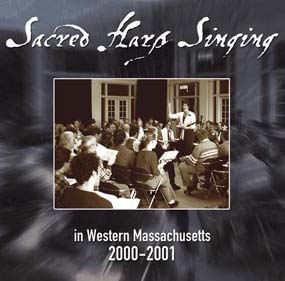
Sacred Harp, or more correctly shape-note singing, is a truly glorious sound, totally unlike anything else in music. A mighty, full-bodied, abundantly soulful, often quite rough choral attack that confronts you then sweeps you along like an unstoppable tide, swelling and breaking with incredibly powerful momentum. Once heard, never forgotten. You either love it or hate it, it seems; myself I love it, it's seriously addictive, and this CD gives me my fix! It brings us in its 72 minutes 30 tracks, each a separate hymn from the 1991 edition of the Sacred Harp collection. And before you turn hastily to the next review, the word "hymn" loses all its connotations of lugubrious piety in these utterly joyful enactments. Yes, shape-note singing is Fun!
The recordings were made not just at one Sacred Harp Convention but at a variety of shape-note singing events in Western Massachusetts during 2000 and 2001. As the liner notes point out, each "sing" has a character all its own, reflecting all who participate (largely "untrained" voices, no "professional" snobbery here), in their beauty and blemishes alike. The hymns are positively belted out, with spirit and energy a-plenty and foot-thumping to mark rhythms - the atmosphere is potent indeed. Most individual selections follow the usual format of first "sounding out the shapes" then singing the words themselves.
The uniform tonal and dynamic range fully reflects the participants' absolute vitality of expression, though there's one surprising intrusion into the normal scheme of things with the performance of a longer hymn (Long Sought Home, which sounds like a not-so-distant relation to Amazing Grace) where the participants take a more conventional approach to varying mood by dynamics. Satisfying though this is on its own terms, it's not quite in keeping with the rest of the selections. But no matter; the whole CD is a vibrant mix of the comparatively familiar (like Windham) and unfamiliar, consistently well sung, and for sheer rugged, full-throated joy (happy-clappy in the desirable sense!) this CD proves irresistible.
David Kidman
Gospel meets rockabilly, anyone? Well that's what comes blastin' out of your speakers at the start of this sparky offering from Eilen Jewell and a handful of her like-minded chums. Prominent in the mix is a hard-driven slapped bass, with guitars, fiddle, banjo and drumkit all doin' their bit to propel the message forward. Eilen, you'll remember, gave us that memorable s/s album Letters From Sinners And Strangers last year, so she's no stranger to down-home hillbilly old-time gospel traditions. As you can hear on her earthy and committed handling of repertoire classics like Twelve Gates To The City, Travelin' Shoes and Hank Williams' Ready To Go Home (in this respect, it's a pity Eilen doesn't get to take the lead on a few more songs!).
The Sacred Shakers band was originally assembled by drummer Jason Beek, along with Eilen, bass-man Johnny Sciascia and bluegrass singer Daniel Fram, subsequently completing the lineup for this record with vocalist Greg Glassman, banjoist Eric Royer, guitarist Jerry Miller and fiddler Daniel Kellar. In other words, most of the complement are musicians from Eilen's own touring band, so they work well together and know just where they can take the music.
Comparatively well-trodden gospel favourites like John The Revelator, Jordan Is A Hard Road To Travel and Gospel Plow get a gutsy fresh coat of paint, while a less frantic country-blues treatment for Banks Of The River and Green Pastures proves a wise choice and the good ol' Titanic is given a solid reading too. Vocal duties are shared out among band members pretty equally, and there's not a weak link in there. It would seem from the press release that Daniel Fram has since left the band, though, which will leave a bit of a gap in the vocal department (he takes the lead on several numbers on the disc). So if you're in the mood for a set of uplifting gospel tracks that retain the oldtime vibe, well you don't have to have got religion to appreciate these vital, honest, down-to-earth and accessible performances.
David Kidman August 2008
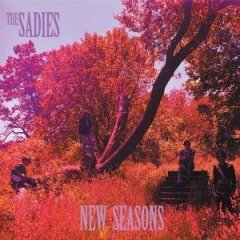
The album produced by Gary Louris from the Jayhawks, folksier flavours emerge with Anna Leigh and My Heart of Wood but the dominant influence here is 60s West Coast even if the lyrics and themes are slightly darker (sample "If I'm still alive when the autumn kills the leaves, I guess I'll be what they consider free") than the era's general sense of psychedelic optimism. Featuring Howe Gelb on piano, closing instrumental The Last Inquisition (pt V) serves reminder of just why they're regarded as the backing band of choice by so many but, for all its retro feathers, there's also ample proof that they're a solid, tight and talented alt-country outfit in their own right.
Mike Davies October 2007
Live albums have to be a bit special if they're to transcend the usual tour memento status for those who were there or couldn't make it. One thinks of Joe Cocker and Springsteen for example. This double set by the Toronto outfit isn't in that league, but it's still well worth a spin and a useful introduction for anyone yet to discover their Byrdsian jangles, bluegrass and psychedelic rock.
Over 40 tracks are variously trawled from their eight year career, band favourites and contributions by show guests, ranging on disc one alone from the McGuinn folk rock burr of Why Be Curious to the Stan Ridgeway-like 1,000 Cities Falling Apart, surf twang instrumental Rat Creek, bluegrass gospel yelping Higher Power and rockabilly rabble rouser Leave Me Alone.
Disc two hits the tracks with a couple of trash blues rockabilly covers from Heavy Trash with Jon Spencer on guest vocals before the set welcomes in an array of other special guests that include Jon Langford from The Mekons on his co-penned American Pageant and Strange Birds, Garth Hudson playing piano on the Band's Evangeline with Neko Case handling vocals. Case also takes over the mike for a cover of Roger Miller's Home and her Sadies collaboration Hold On, Hold On while the Jayhawks' Gary Louris drops by to take charge of Syd Barrett's Lucifer Sam and their own Byrds do Dylan flavoured Tailspin while Canadian faves Blue Rodeo handle duties on You're Everywhere from their Casino album
It's rough and ragged, but you certainly get the sense of everyone having a good time hanging out and playing music together, there's even a set by the band's trippy stoner rock side project The Unintended. Fans will love it, the uninitiated might find themselves scouring the gig guides on the offchance.
www.thesadies.net
www.myspace.com/thesadies
Mike Davies, Sept 2006
The Sadies - Favourite Colours (Yep Roc)
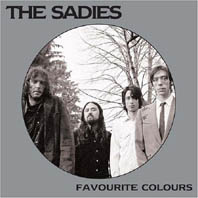
Their fifth album - and second for the label - finds Travis and Dallas Good harking back to their prime Americana and 60s psychedelia influences, kicking off with surfbeat bluegrass instrumental Northumberland West tribute to Clarence White before heading off into further thought of The Byrds circa Sweetheart and Byrdmaniax with Song of the Chief Musician, Good Flying Day and Why Be So Curious? while 1000 Cities Falling manages to sound like Stan Ridgway fronting The Flying Burrito Brothers. Those West Coast memories come flooding out again too with Translucent Sparrow suggesting the more country shades of Moby Grape with Jerry Garcia sitting in on fuzzy guitar.
It's not entirely successful, with Only You And Your Eyes never living up the promise of its jangling Beatlesesque opening and neither As Much As Such or Coming Back summoning any life or interest at all. But, mid-sectioned by gentle droned instrumental The Iceberg and rounded off with Robyn Hitchock taking over vocals for his own Why Would Anybody Live Here?, when it does work it's worth borrowing off a friend to take a listen.
www.yeproc.com
www.thesadies.net
Mike Davies
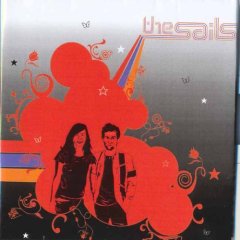
Here we are back in the 60s, sunshine and flowers in the air, bands skipping through San Francisco fields with their guitars and drumsticks to the sound of sherbet fizzing psychedelic pop with tumbling melodies and hook laced choruses. As it turns out, despite sounding like they were given a McGuinn blood transfusion on the opening See Myself, they actually come from the UK, rising from the ashes of frontman Michael Gagliano's previous outfit, Epic.
Come Make My Day and Sgt Pepperisms of the string laden Firebell Alley and you'll be hearing the Beatles inputs loud and clear, while, just to underline their English heritage, they even have a love song named after famed goalie Peter Shilton ("I'll never let you down, I'll never drop the ball") that sounds a bit like a cross between the Byrds and Herman's Hermits.
Shamelessly retro, with She Is All That Matters providing both the expected Beach Boys touch and a dash of classic baroque pop and Be Everything cut from classic Everlys country-pop ballad cloth (with a melody line partly borrowed from Little Drummer Boy), it doesn't offer anything new, but with irresistible numbers as Chocolate this is absolutely past perfect.
Mike Davies, Sept 2006
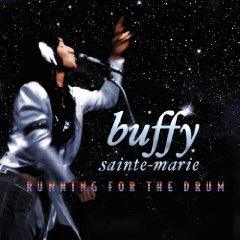
Already winner of a JUNO in Canada as Aboriginal Album Of The Year, it's licensed to Cooking Vinyl in the UK but for America, where it's due out in August, it will fittingly mark the 100th release on the Appleseed label.
It opens in full blooded style with No No Keshagesh, a stinging attack on corporate greed (the title translates as Greedy Guts, as in those who consume their own and everyone else's too) in which, set to a driving tribal rhythm and 'powwow' vocals, she sings about those who've "got Mother Nature on a luncheon plate, they carve her up and call it real estate."
She's in equally powerful protest mood on the funky dance mojo working R&B streaked Working For The Government addresses "that age-old money-laundering enterprise called war", stomping the groove like a Cree version of Tina Turner while the spooked hypnotic mantra Little Wheel Spin And Spin comments on how individual prejudices are the building blocks for hate movements.
It's not all about rant, though.
Her cultural, ethnic and musical roots again evidence, Cho Cho Fire is an urgent number about having fun, a sort of Native American party hard that, utilising an old powwwow sample, references the drumming frenzy of the experience. In similar frame of mind, Blue Sunday's a rock n rolling homage to the young Elvis whose slap-back recording sound, she says, changed her life. Musically, it's probably the album's most inconsequential throwaway, but it still gets the blood jumping, and sounds like it was written to be felt live. The same holds true of I Bet My Heart On You, a ragged barrelhouse New Orleans boogie with Taj Mahal duetting on piano.
For the rest, she's in quieter, more melancholic, romantic or, on Still This Love Goes On's folksy homespun dreams of home, wistful mood. With a guitar line that echoes In The Ghetto, a notable highlight is Too Much Is Never Enough, a soaringly tender love song that showcases that Sainte-Marie warble while of no less merit you'll find To The Ends Of The World, a bluesy torch number that, deliberately or not, evokes Skeeter Davis classic The End Of The World, and the touching Easy Like The Snow Falls Down , a sort of Lean On Me dedicated to hospice workers helping families struck by dementia and Alzheimers.
Sainte-Marie has described how, in the 70s, she and others in the Red Power movements, had been blacklisted and effectively put out of business, Lyndon Johnson apparently writing letters in the 80s praising radio stations that had suppressed her music. All the more poignant then to hear her sing America The Beautiful on which she gives the traditional national anthem a little twist with 'words and music Ind'n style' of her own. Hers may be a different drum, but it beats proud from sea to shining sea.
Fans and newcomers alike should seek out the special edition featuring hour long documentary A Multimedia Life which, through present day interviews (with herself and the likes of Eric Andersen, Joni Mitchell and Robbie Robertson), archive footage and photos, and live performance (including a vintage Universal Soldier) charts her background, life and career.
Mike Davies July 2009
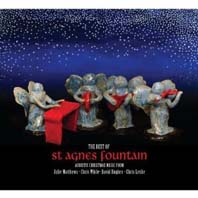
Incredible to believe it, but 2011 is the tenth anniversary of St. Agnes' Fountain, the band formed by David Hughes to celebrate the festive season by "giving Christmas songs a good, if respectful kicking" - yeah, exactly what they need, of course! Every December this doughty combo - teaming David with Chris While & Julie Matthews and Chris Leslie (a mouth-wateringly gift-wrapped lineup if ever there was one!) - enraptures its devoted audiences in a tour-full of sellout concerts that ring the changes on the widest possible repertoire of seasonal songs from down the ages. Joy, laughter and a few tears form the trusty recipe for success, and this continued success is now celebrated in style with this handsomely presented, generously filled (close on 2¼-hour) two-discs-for-the-price-of-one compilation that covers all potential bases in a lovingly sequenced programme. It presents a brilliantly representative selection of items culled from all seven previous SAF albums (some of which I've never even seen, let alone possess a copy!), mostly studio recordings interspersed with occasional live cuts. But whatever, you can depend on a SAF treatment to come up with something refreshing and stimulating, often fun and always different.
This handsome retrospective is kicked off by the uplifting, nay positively cinematic I Saw Three Ships (which headed the original SAF Acoustic Carols album way back when!), after which the seasonal processional takes us effortlessly from the sprightly nowell-wassail gait of Masters In This Hall to the sublime In The Bleak Midwinter and on through to more recent outings like the beauteous, soaring O Holy Night (featuring one of Chris's most genuinely divine vocal performances). SAF are by turns joyful, respectful, reflective, thought-provoking, nostalgic and yes, mildly (but never offensively) irreverent, while they can turn their hands (and voices) to any style they choose to get the message across. And somehow there's always a surprise lurking at the bottom of the stocking – like the cheeky Hawaiian Christmas number Mele Kalikimaka, the savvy rap of The First Nowell and O Come All Ye Faithful, the growly, smoky sotto-voce of Jingle Bells and the exultant gospel fervour of Deck The Halls. In addition to the half-expected standards into which are breathed new life (and invariably gorgeous vocalising – be prepared to swoon over O Come O Come Emmanuel!), we're treated to some abundantly fine originals on the seasonal theme by Julie or Chris – pick of these being Julie's Upon This Winter's Night and Follow That Star (the latter taken from The Show CD), and Chris's Home For Christmas and Innocent New Year.
Festive instrumental shenanigans aren't forgotten either, with the lively Boules Et Guirlandes and an exotic middle-eastern take on God Rest Ye Merry Gentlemen (complementing the Brubeck-cum-gospel-style vocal version on the first disc), in addition to Chris (Leslie)'s catchy mood piece Bringing Home The Tree which graces the second disc. Also on that disc, by the way, we encounter superb covers of Joni Mitchell's River and Steve Ashley's Spirit Of Christmas, and an animated "simultaneous" rendition that pits a Beth Nielsen Chapman song (Sweet Love) against a rap-style declaration of My Religion.
So, alongside an ever-inventive approach to their chosen material, and an unashamed joy and delight in the participants' communication of their natural musicianship, there's an added warmth about the SAF shows that transcends any possible charge of sentimentality, exuding a generousness of spirit that's old-fashioned (in the nicest possible sense) in espousing the hand-in-hand traditional values of good companionship and good musicianship. Here in SAF we find the Spirit Of Christmas in its truest, completest sense.
David Kidman December 2011
St. Agnes' Fountain - Three Ships (Cuppity Records)
For the past three years, the St. Agnes' Fountain team (Chris While, Julie Matthews, Chris Leslie and David Hughes) has provided me with a must-have cheer-me-up antidote to the desperate commercial claptrap that has all but obliterated genuine celebration of the festive season. The series of albums released by this foursome have been one of the surprise hits of the decade, and each year I've marvelled anew at the way these musicians have come up with a fresh menu of festive-themed songs that's been at once exceedingly pleasing and creatively stimulating. Three Ships is this year's offering, and (as is now customary) is released in time for the crew's annual tour. It's a set of live recordings, mostly taken from performances on last year's tour, so those with fond memories of those evenings will find much delight in revisiting them.
It goes without saying that the singing, playing and overall musicianship are all first-rate, and the balance is well struck between rehearsed accomplishment and warm-hearted, spontaneous music-making - much in the manner of a typical Chris 'n' Julie live set, in fact. The mix of material on Three Ships proceeds on its usual sprightly way - a couple of carols (a suitably glistening O Come All Ye Faithful, and as an encore a jaunty uke-ridden Ding Dong Merrily On High), a small clutch of excellent original compositions by Chris and/or Julie (When She Was Nine, Follow That Star and the glorious Innocent New Year), and some less well-known traditional fare (I specially liked Seven Rejoices Of Mary). There's also a Hutchings-style sequence drawn from two separate gigs, comprising a recitation of words by William Kimber (Boxing Day 1899) and a stepthrough of the Bean Setting dance. Tongue-in-cheek humour (or should I say "light-up relief"?!) is provided by David Hughes' recitation Smoker's Christmas, but at over six minutes long it hangs somewhat stalely in the mind after one play I find, despite the topicality of its sentiments!
Overall though, St. Agnes' Fountain have carved themselves a goodly niche in the seasonal market with their nicely un-formulaic treatments of familiar and unfamiliar material - and long may they continue!
David Kidman
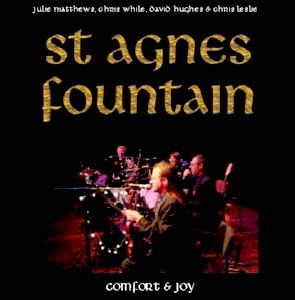
The first St. Agnes' Fountain album was one of the surprise delights of last year's seasonal offerings for me, and this year's follow-up maintains its high standard. Again, David Hughes and his team (here Chris While, Julie Matthews and Chris Leslie, with a guest appearance from Steve Brookfield on just four tracks) have taken an admirably fresh slant on some by now rather hoary seasonal standards, credibly leavening these with more recent material, and the result is a most pleasing album which the marketing gurus might well term the ideal seasonal gift for the modern mainstream folkie - though its appeal will, I suspect, extend further.
Comfort And Joy is built round a sequence of traditional and yes, overly wellknown Christmas carols; normally, the very thought of this would be a guaranteed turnoff for me, but SAF's artistry and vitality is such that their new renditions are invariably worth hearing. On carols such as Silent Night and We Three Kings, what we'd think of as the "proper" tunes are preserved, and (as you'd expect) accurately and most beautifully sung, but here and elsewhere the brightest jewels probably lie in the innovative and unexpectedly foot-tapping arrangements - God Rest Ye Merry, Gentlemen gets a swinging Brubeck-style cool-jazz rhythm treatment, for instance, and a gentle reggae lilt proves ideally joyous for Once In Royal David's City, the Caribbean sunshine feel extending over into Away In A Manger. I particularly liked the soulful-gospel groove of the reworking of O Little Town Of Bethlehem, and the ensuing Follow That Star. Note that the album's not entirely devoted to carols however - the team's decision to tackle Joni Mitchell's The River is similarly inspired, and there's also a bonus track wherein Ralph McTell reads an extract from his wonderfully evocative autobiography to a simple and fairly unobtrusive musical accompaniment - a perfectly judged way of ending proceedings.
All the instrumental work is superb (no surprise there), but I'd have to single out Chris Leslie's mandolin embellishments, which are exemplary in their taste and discretion. The non-vocal tracks include a vibrant Breton-style Boules Et Guirlandes set. The otherwise typically sumptuous package is deficient only in respect of omitting the composer credits. Comfort And Joy is not only ideally titled, but also a fine festive souvenir, one to keep on the shelves alongside the Maddy Prior/Carnival Band seasonal CDs and one that I'd not be ashamed to dip into at other times of the year.
David Kidman
St Thomas - Let's Grow Together: The Comeback of St Thomas (Track and Field)
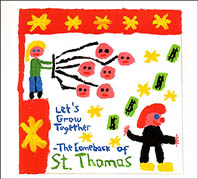
With this his fourth album in as many years it's not exactly as if the former Norwegian postman and footballer has been away, the comeback refers to a personal clawing back from too much drink and too many drugs and the fact he wasn't happy at not having control of his last album, feeling it didn't contain his real personality and there were just too many musicians involved. Well, it was produced by Lambchop's Mark Nevers who roped in a fair few of the collective to help out.
So this time he's playing most everything himself for a more intimate, simple and, yes, stoner, folk/bluegrass hybrid album. Also, given the fact he hates the comparisons, there's rather less of the Neil Young falsetto about it too, though having said that you'd be hard put to identify the Elvis, Dylan and Creedence influences he cites. Elliot Smith and Lou Barlow maybe, Will Oldham definitely.
Unfortunately his assorted mental meltdowns seem to have left him with an unfortunate propensity for coming over all Jonathan Richman with dippy songs about, er, growing together in the colour blue, being born to make a song every day and going to the mountains to catch a fish. And as if the skies and flowers weren't enough, then there's the kazoos. And yet even when it threatens to overwhelm with whimsy and twee something like the skewed weirdo Norwegian folk of Waltzing Around Insane, an almost brooding Like You Know and a frankly creepy The Red Book pop up to remind you that Hansen's mental state is up there with Syd Barrett and Brian Wilson. There are times here when his fractured genius almost climbs the same heights.
www.stthomas1976.net/thomas
www.trackandfield.org.uk
Mike Davies
St Thomas - Hey Harmony (City Slang)
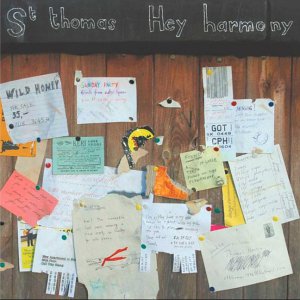
Thomas Hansen is a former Norwegian postman and footballer though listening to him you'd readily believe he drank his mother's milk from the bosom of Nashville and grew up practising singing Neil Young songs in front of the mirror. Indeed, if you can imagine Neil Young's falsetto with a Norwegian accent then that's exactly how Everything Was Up For Romance sounds. He even mentions a cowgirl, though not in the sand. And surely Heroes Making Dinner owes just a touch to Dance Dance Dance.
The good news though is that while the phrasing inflections can still be heard on things like People In The Forest, with his third album - and production by Lambchop's Mark Nevers and a helping hand from assorted members of that musical community and Giant Sand's Howe Gelb - he's starting to come out of his hero's shadows and find his own voice.
With noises off including a barking dog and crickets on Institution (an emotionally devastating story about two children being sent away for summer camp as seen from their feelings of abandonment), the feel is of rough hewn home recordings, the gentle pop rhythms of the perky skipalong A Long Long Time and the loping 45 Seconds sounding like something a bunch of chums put together having that cup of tea or the wine and cookies he mentions in New Apartment and Heroes Making Dinner.
Given his documented meltdowns in the wake of a higher public profile, it's not too surprising to find songs about variously Falling Down (dark and broody with neurotic guitar and mariachi brass) and hiding away (New Apartment). But if, as the cheerfully offhand title and the jaunty Strengthen Your Bow (pronounced bough) , suggests he's found a new serenity, then we can hopefully look forward to many more songs about milking cows as positive get yourself together therapy.
Mike Davies
Kilburn-based Sallon's an emerging name on the contemporary folk scene who made his recording debut with a rather good cover of Paul Simon's Kathy Song. It would be tempting, then, to try and spot Simon influences on his debut album, but while there may be some similar guitar stylings (though Bert Jansch is far more the touchstone), Sallon's roots are firmly planted in home soil, occasionally prompting the obligatory reference to Nick Drake, but (while he's probably never heard him) his blues-tinted folk and sometimes tremulous wood-grained delivery more brings to mind that of Noel Harrison (he of Windmills Of Your Mind fame), the early recordings of Al Stewart or even, at times, Cat Stevens.
Harking to the sound of the late 60s folk scene, Just The Same sees him alone with just his intricate arpeggio guitar playing, but otherwise the album embraces much fuller arrangements and orchestrations with some effective use of strings, Sallon joined by an impressive bunch of friends that include veteran drummer Evan Jenkins, pianist Neil Cowley and, duetting on the melodically melancholic It's Not Hard To Lose Your Way, Kami Thompson, daughter of Richard.
While working with the folk-blues framework, the album mixes it up effectively so that My Radio has a jazzy rhythm and more of a rocking mood, No No No ( Know What You're Thinking) rides a choppy syncopation with an almost reggae bedrock, I'm Free is stripped back acoustic blues, Give's enfolded in strings, the brooding War has a certain Eastern European air and Too Young To Know builds to a dramatic, drone underpinned finale. He's trying to break into what is becoming an increasingly competitive market. but there's more than enough evidence her to suggest there'll be a lot more than one for his particular road.
Mike Davies May 2013
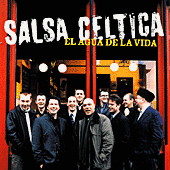
The third offering from Salsa Celtica (their second for Greentrax) is an exciting affair, surpassing even the spectacular energy of The Great Scottish Latin Adventure, which was touted as "a salsa album made by Scottish musicians in love with Latin music and by South American musicians in love with Scotland", yet on which the Latin element seemed to over-dominate just a tad. But I'd say that El Agua De La Vida ranks as the best integrated of the three albums yet, with an unstoppable fieriness and a good degree of commitment to both sides of the divide that transcends the moments where the joins are obvious, to the degree that it doesn't really matter. The traditional Scottish tunes are allowed to breathe as they enter the basic Latin texture. Admirably too, Salsa Celtica have toned down the bouts of silly forced high-jinks that marred their previous efforts, without letting go of the fun element in the playing. The basic eleven-piece ensemble is augmented to produce an awesome sound indeed, with blasts of blowsy brass and tinkling piano that enhance the party atmosphere. We even hear Eamonn Coyne's guest banjo percolating to the front of the mix when he steps forward up to the mike on two of the tracks. One of these, believe it or not, is Auld Lang Syne, at the thought of which I cringed at first - but the slinky, smoochy opening section soon gets the spirit going with a hair-down workout to finish. Sometimes I thought the vocal interjections just a little too enthusiastic, and amusingly I experienced a mondegreen moment on Whisky Con Ron (I really did think they were singing "Whisky Gone Wrong"!). But seriously, this is a really intoxicating release that should even appeal to those with a distinct salsa-allergy (to coin a phrase - at least you know what you're latin' yourself in for…).
David Kidman
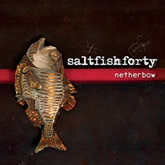
Saltfishforty is a dynamic Orkney-based duo (Douglas Montgomery and Brian Cromarty) who bring their own special stamp to the blending of the traditional music of their native islands with contemporary song - much of the latter being their own compositions.
Their particular attributes are well illustrated on the dozen tracks that comprise Netherbow, their third album, which comes after a recording break of five years. During this time they've become well established on the UK festival circuit - indeed, they're currently touring Scotland in tandem with Spiers & Boden, with whom they share an intrinsic dynamism and trademark freshness of approach. Considering Saltfishforty comprises just two musicians, their live sound is admirably full, and this quality is well translated to the medium of CD, albeit here with a modicum of selective augmentation from percussionist Erik Laughton on a handful of the tracks.
What most characterises Saltfishforty's music is its immediacy, which is coupled with a real sense of exuberance and joy in execution, even on the slower-paced items – which doesn't mean to say that the faster pieces don't possess a brilliance and drive that doubtless makes the duo the envy of many a larger ensemble. Highlights among the purely instrumental tracks are the genially storming set of jugs (track 5), the intriguing tune The Locks At Athy (which the duo learnt from Kris Drever) and sprightly, if nicely measured accounts of the title tune, a strathspey composed in the 1950s by Rousay's then-postie Jimmy Craigie, and a wedding march composed for Douglas' neighbours on Burray. The closing track Svecia is a gorgeously dark-hued tune written and played on a viola part-made from wood salvaged from the wreck of the ship of that name (which sunk off the coast of North Ronaldsay in 1740), while the preceding pacy set of Cape Breton reels (track 11) has a distinctly playful, almost La-Bottine-Souriante demeanour.
As for the songs, and notwithstanding the high standard of the original writing (especially perhaps the traditional-sounding A Ring On Her Hand, which was partly inspired by a George Mackay-Brown story), the pick of these is probably The Bride's Lament, a traditional song that Brian learnt through The Big Orkney Song Project. Brian's keen vocal work is well counterpointed by his own guitar and mando accompaniments and the intelligent pairing with Douglas's fiddle (or viola or mandolin).
Yes, Netherbow is a well-engineered, generous and thoughtfully paced record that lovingly and infectiously extols the virtues of these two musicians.
David Kidman July 2010
Other than a couple of acoustic gigs as a duo, the year's seen a fairly low profile for Neal Cook and his Wolverhampton Americana cohorts. However, now they're back on the scene to kick up a storm with long awaited follow up to 2004's Asphalt Good.
There's no major departures from the blueprint (which the web sites calls a cross between the Replacements and Wilco, but which also features a fair dab of Neil Young and Green On Red), but it's served them well so far and it's far from broken. So, cranked up ringing guitars, throaty dust coated vocals, swaggering rhythms, and twangy melodies then, kicking out of the traps with Mindshakes, a gutsy slow burning guitars on fire song about screwing up things at home by not keep your 'damn mouth shut'.
They keep it amped up and rolling with the circling guitar riffing Sore Eyes, a track that hints to the country side of the Stones as well as more current Americana heroes, keeping the pace moving with a Scorchers-ish Map and the jerky Dixie boogie Still In Love.
But it's probably the slower numbers on which they shine best, here ably represented by a plangent Fair Warning, highway keening closer Windshield Blues with its speed bump time signatures and, arguably the album's highlight, Coming Home, a weary gravel under heel ballad that recently scored pole position in the Cosmic American Radio charts. They may never find the wider audience and sales enjoyed by such kindred spirits as Ryan Adams and Wilco but, along with the likes of Broken Family Band and Michael Weston King, they're a solid shining reminder that Americana is a matter of mind and musical attitude rather than geography.
Mike Davies, June 2006
A Manchester based quintet fronted by married multi-instrumentalist/songwriter team Sam Lench and Anna Zweck, their instrumentation includes cittern, flute, glockenspiel, piccolo and vibraphonbe alongside piano, viola and guitar so you won't be surprised to find them embracing medieval English touches on The Ground, the drone based Rope Has Bound The Shadows Down and Gravity Is Merciless. Elswhere, though, it's the psychfolk colours of the early 70s that prevail on numbers like the rhythmically tumbling Black Dog and the ebb and flow quiet/loud structure of a near eight minute Fish which moves from spare piano to climactic cacophony.
Largely recorded live in a Victorian concert hall to catch the ambiences, Peter Pan provides the title along with the recurring themes of escape and flight that surface in Lench's lyrics while the minimalist piano chords of Zweck's contributions reflect a bout of RSI that left her unable to move her right hand.
Although the simple hymnal setting of Brother Jon and a jaunty handclapping flute and guitar strum through the trad Begone Dull Care stand out, it's more of an album to gain attention rather than make them overnight stars in the folk firmament, but they promise a brightly twinkling future.
www.thesamsonanddelilahshow.co.uk
Mike Davies January 2011
Mike Sanchez with Knock-Out Greg & Blue Weather - Women & Cadillacs (Doopin)
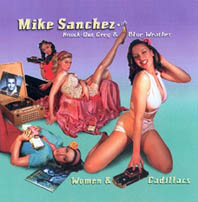
It's not just his keyboard skills that are apparent here as he shows a silky quality to his voice on the bluesy The Voice Within and the earthy vocals on Hot Dog show his range. The pick of the self-written songs is You Gonna Win which has a Howlin' Wolf quality to the music if not the vocals. There's a little Professor Longhair in Gambling Woman Blues and the enthusiasm of King Kong and the title track will have you joining in despite yourself.
You Got Money is barrelhouse blues at its best and All She Wants To Do Is Rock along with Let This Lovin' Begin are complete rock n roll songs. His cohorts on the album are Swedish rockers Knock-Out Greg & Blue Weather and it surely won't be too long before these guys are starring in their own right.
If you're having a party and you like your rock n roll and rhythm & blues then you could do a lot worse than stick Mike Sanchez on the CD player.
David Blue

Four years in the making, Sandell has had to grab time for her solo debut solo between contributions to albums and live performances by Chris T-T, The Broken Family Band and Magoo, not to mention being one third of Emily Barker's band, Red Clay Halo, with whom she plays accordion and flute. Not surprisingly, favours have been returned here with appearances by, among others, fellow Halo member Anna Jenkins on violin, Barker, and T-T.
As well as her regular instruments, Sandell also reveals her guitar and piano skills on a collection that mixes together self-penned material with a brace of covers. She has a light, airy and slightly quivery vocal with a girlish tone that sits well with a publicity photo of her playing acoustic guitar in a field of flowers.
Unsurprisingly there's a fair amount of natural imagery with references to gulls and seals on Will I Lose My Love?, bees, doves and wilting flowers surface on the upbeat rather lovely chugging Wrap Your Treasure (though you half expect it turn transform into Anne Murray's Snowbird) and the ocean's crashing waves on the solo spotlight title track while butterflies and meadow flowers adorn The Message, a gentle lament for a passing soul.
There's patently the heart of a traditional folkie beating through many of her lyrics (A Breeze Upon The Hill and Rowan Tree, especially), although the music sounds more influenced by pastoral 60s acoustic folk.
The arrangements are caressingly simple and sympathetic, often weaving a dreamy mood around her voice, notably so on the tender cover of Wild Mountainside, the Trashcan Sinatras ode to the Scottish Highlands, where she's accompanied by just Anna and Emily on violin and guitar. The album's second cover is a sparse, piano accompanied version of Natalie Merchant's wearied bittersweet love song to the city's concrete sprawl, transformed here into almost a hymn. Keeping the natural world theme going, it features a musician credit for the rain. Let's just hope her work schedule doesn't mean another four year wait for a follow-up.
Mike Davies December 2010
Though a long-standing and well-regarded Fairport member, Ric's own back catalogue has been less than lavishly treated where CD issue (or reissue) has been concerned, and so this disc will be much welcomed. Its subtitle (Instrumental Ballads 1980-2008) provides the biggest clue, and its purpose seems to be to amass a representative clutch of recordings that demonstrate Ric's intense musicality and the magnificent breadth of his output outside of his work with Fairport and generally eschewing the more showy technique-driven material in favour of the more restrained elegance of his more classically- or jazz-inclined excursions. It supplements a host of original recordings with some rethought and/or newly-recorded versions (recorded fairly recently with Vo Fletcher and Michael Gregory aka The Ric Sanders Group) of three of Ric's key compositions – in one case (Calm Waters), both versions are included. There are also two renditions of Portmeirion – the original and a 2001 version featuring Ian Anderson's flute. The disc's original recordings are culled from various solo albums and other projects, with a track apiece from the duo albums Second Vision (with John Etheridge) and One To One (with Gordon Giltrap): all of these are welcome additions to the current CD catalogue, and some I believe are making their debut in CD format. Yet even for Ric's many admirers I suspect this will still be a slightly confusing issue, since (as so often with Talking Elephant releases) a certain amount of careful reading of credits and ancillary detective work or guesswork will be required to confirm the provenance of individual tracks – having said which, the whole 75-minute span of the disc flows wonderfully as a sublime listening sequence and on that level alone cannot be faulted. If nothing else, it all goes to prove how superior and consistent a musician Ric is, over and above his signature work with Fairport, with so much more to offer the cognoscenti. Deserving of some special place in our affections, I'd say.
David Kidman May 2009
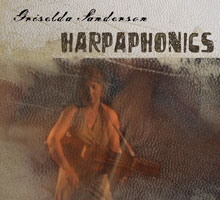
In 1989 Griselda formed Waulk Elektrik, which for almost ten years provided an eclectic and pioneering meeting-point for traditional Scottish and Irish dance and 90s rave culture. A little after the eventual demise of that band she encountered the nyckelharpa, a strikingly individual (if perhaps mildly unwieldy-looking) stringed instrument of Swedish origin which is currently enjoying something of a renaissance among enterprising folk musicians (newer bands such as Bellevue Rendezvous are eagerly taking up its multifarious challenges). Usually bowed, it has four playing strings (one being a drone), with twelve sympathetic strings and thirty-seven chromatic keys attached to three rows of wooden tangents - and a range of three-and-a-half octaves!
Gris instantly fell in love with its mesmerising sound, and ever since finally acquiring one (just three years ago) she's been eagerly exploring its myriad of sonic possibilities (e.g. by plucking or strumming the strings or using the bow or keys for percussive effects). On Harpaphonics, Gris ingeniously incorporates the nyckelharpa's many and special sounds into an impressive array of settings, moods and textures. While selectively adding violin, viola, fiddle, chanter, piano and Hammond organ to her own armoury, Gris is further aided in her endeavours principally by James Dumbelton and Sam Yeboah on assorted percussion, with occasional contributions from other musicians including Louis Bingham, Toby Morgan, Alex Roth and Steve Turner.
Gris first introduces us to the nyckelharpa's strange and beautiful resonances by performing Exordium entirely solo: this is a prelude which evokes both the antique ambiences of early music and the florid flusters of Bach and Paganini. From then on in, the nyckelharpa is placed in a multiplicity of creative contexts on tunes penned mostly by Gris herself, of which the stately Skånklåt For Thursa most closely approximates the Swedish tradition. Spring Storm (a pair of slip polkas) eerily counterpoints the nyckelharpa with violin and makes great play of jazzy cross-syncopations on piano, cahon and bodhrán, while the Erdély Reels set aromatically mingles gypsy swing with Transylvanian and North African modes. The Magpies And The Mole is driven by a hypnotic, mantric gourd-percussion figure (a bit Third Ear Band!), while Alpha features the raw and strident tone of the riti (a Gambian one-stringed fiddle). The Irime (Ice Warrior) reel (also featured on the disc's bonus video) moves from rippling Carnatic raga-inspired motifs to funkier African bass riffs, while The Charmer and Treadlightly March incorporate samples into their exotic, Malian-inflected tapestries. The busy backings are both distinctly stimulating and most imaginative, often with unusual aural consquences (like the bodhrán part on Skånklåt which sounds for all the world like a tabla!). But even though plenty else is happening in the soundscape, I too swiftly became addicted to the fabulous sound of the nyckelharpa itself, finding it hard to prise this brave, enchanting and most rewarding disc from the player.
David Kidman November 2008
Deb Sandland - Semer Water (Hairy Dog Records)

A remarkable sequel to My Prayer, Tamworth born Sandland's sophomore solo album confidently secures her a place at the top table of UK folk music with its assured fusion of traditional atmospheres and arrangements and contemporary sensibilities. As with the brooding title track, a tale of cruelty and curses inspired by Yorkshire poet William Watson's own The Ballad of Semerwater, much here draws on rural legends and stories, often with a supernatural basis. Underpinned by Phil Beer's fiddle, The Dancers of Stanton Drew revisits an account of a doomed wedding party whose insistence on dancing into the Sabbath attracted the attentions of a real devil of a fiddler, The Erl-King is an arrangement of Goethe's cheery epic poem about a gnomish being and the death of a child while, perhaps more familiar, she also visits country classic death song Long Black Veil for a duet with Beer to a simple mandolin backing.
It must be said that the album doesn't have the sunniest of dispositions. Taken from Robert Burns and set to a spare piano and recorder backdrop, Mary's Dream tells of a lover lost at sea, the self-penned a capella Get Thee To The Drowning (where Sandland's voice is at its nakedly purest) deals with sacrifice by suicide, hanging, the Crucifixion and death by gassing in WWI. The inclusion of Lal Waterson's The Scarecrow, trad doom laden The Cruel Sister, Steve Knightley's chilling Don't Look Now and, yet another death by demon, her own My Kind And Gentle Man all serve to pile on the sombre notes though the stunning unaccompanied vocal harmony arrangement of emigrant ballad Will You Meet Me Tonight (On The Shore) at least closes the album with at least a glimmer of heart warmth.
Downbeat yes, but rarely has misery, death, depression and doom sounded quite so stately and majestic.
Mike Davies
Deb Sandland - My Prayer (Hairy Dog)
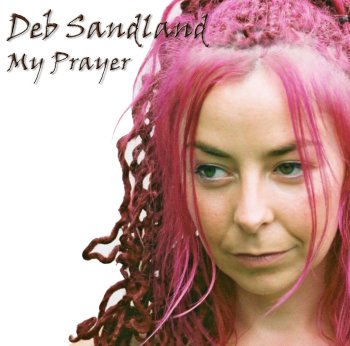
Spawn of a musical family (dad played jazz bass, one brother's a multi-instrumentalist, the other musical director for the RSC), Tamworth born Sandland has steered her inclinations in a folk direction, initially working with Julie Thurman as unaccompanied duo The Aqua Sisters before expanding to a more fulsome five piece. That having run its course, she moved back to duo work again, this time with Phil Beer, eventually joining his band and recording a couple of ltd edition albums and contributing to the two Heart of England compilations before finally taking the solo plunge (albeit helped out by the band) with this album.
It's an interestingly mixed collection that ranges from the trad flavours of John Tams' Hold Back The Tide, and the a capella Ivy is Good and the evergreen Wind That Shakes The Barley to the Christine Collister flavours of the acoustic guitar accompanied The Thing You Love (which sounds at times like Killing Me Softly) by way of laid back smoky folksy covers of Paul Simon's Still Crazy After All These Years and The Stereophonics' I Wouldn't Believe Your Radio. Elsewhere she tackles Nick Cave's arrangement of Henry Lee and Mike Scott's When Ye Go Away with assured strength.
She's got a soft, breathy autumnal evening and raindrops voice of deceptive depth that is brimful of assured poise and the confidence of experience but can, as with Don't Leave For The City and the closing My Prayer, still sound beguilingly innocent and wearily vulnerable. Falling between the trad and contemporary stools may make her hard to pigeonhole for audiences who like to know whether they're getting Kate Rusby or Thea Gilmore, but approach with open ears rather than closed labels and you'll realise she can hold her own with either and both.
Mike Davies
Hope Sandoval & The Warm Inventions - Bavarian Fruit Bread (Rough Trade)
An unlikely combination on the face of it, but on a couple of tracks here the sometime Mazzy Star singer and former My Bloody Valentine cohort Colm O'Ciosoig join forces with veteran British folkie Bert Jansch. It works too, his delicate melancholic guitar tracery a perfect foil for her wasted on valium vocals. On The Low sounds like a show tune from the heroin cocktail lounge and those drugged up Velvet influences are to the fore too on Lose Me On The Way and their cover of Jesus and Mary Chain's Drop. It's a sparse comic wash of sound like waves lapping on some lunar shore, vibes tinkling on Suzanne, lazy harmonica blowing across On The Low, a piano's nerves fraying the brief instrumental Baby Let Me and a cello scraping mournfully on the rustic chill out that is Feel the Gaze. Enervated in a good way it weaves a narcoleptic magic, never better than on a cover of Butterfly Mornings, a song hitherto (to the best of my knowledge) only ever before heard sung by Jason Robards and Stella Stevens on the soundtrack of Sam Peckinpah's 1970 classic Western The Ballad of Cable Hogue. Hope and indeed glory.
Mike Davies
Soft-spoken gentle-man Colum's one of the most captivating and genuine talents on the folk scene, and his latest inspirational and ambitious project is a lovely collaboration with acclaimed singer and clarsach player Maggie (daughter of legendary Barra singer Flora MacNeill).
It ostensibly takes its cue from the story of a voyage two centuries ago on the little vessel named The Seedboat, from the Hebridean island of Barra to Newry in Co. Down, by Donald, a young man intending to buy some whiskey for his forthcoming wedding; this (ill-fated) story is recounted in a bittersweet lament composed by his left-behind bride Catriona, which here is heartrendingly sung by Maggie (with help, and some English lyrics, from Colum). The power of this song, rooted in the heritage of both Scotland and Ireland, also symbolises the continuing richness of the musical dialogue between the two nations, unashamedly rejoicing in the wealth of "shape-shifting" language they share. This piece is the catalyst for an intelligently-crafted sequence of songs and tunes that's loosely linked by the sea and drawn both from the wellspring of tradition and Colum's original compositions.
It's both highly imaginative and delightfully stimulating in a wonderfully homespun way, and the two performers dovetail together immaculately, working hand-in-hand like the best-fitting of gloves. Their voices and sensibilities are as naturally and well-matched as the sounding-together of English and Gaelic. The catchy lilt of Calum's Boat gives way to one of Colum's characteristic slices of homespun philosophy The Wave Upon The Shore (which resonates onward to and from the second, The Window Half Open, towards the end of the CD), while some typically puckish light relief is provided by Colum's irresistible, if slightly tongue-testing I'm A Terrible Man and the vibrant little morris-tune that Colum uses as the basis for Dance Like Billy-o.
The emotional temperature is high when Maggie blesses us with her peerless renditions of some wonderful old songs: the unutterably sad Dh'fhlabh Mo Nighean Chruinn Donn (My Lovely Brown-Haired Girl Has Gone) is done to a delicately spare guitar backing, while her magisterially expressive account of the emigration song The Quiet Land Of Erin comes with sympathetic clarsach decorations and the lyrical duet of The High Walls Of Derry is given an appealing lilt by Colum's deft guitar work. One finely managed (though maybe less characteristic or expected) contribution finds Colum and Maggie sweetly duetting on Burns' It Was A' For Our Rightfu' King, while Hebridean mouth-music makes its mark on the project with a sturdy waulking song in praise of Alasdair, Son Of Gallant Coll, and the disc ends in more tranquil mode with the yearning spell of The Castle Of Wild Waves. Like the whole disc, this reading is characterised not only by the performers' soothing, intimate vocals and careful, bright-eyed musicianship, but most important, also by its sense of life and vitality and an incurable optimism of the human spirit.
This entirely charming release, though impeccably presented in the most attractive of digipacks and sporting a beautiful booklet that contains full texts and translations, may well be in danger of slipping through the nets of coverage, as the promoters and radio stations always seem to have bigger fish to catch – but you mustn't let it, for it's a true pearl, and thus eminently treasurable.
www.maggiemacinnes.com
www.columsands.net
David Kidman February 2011
Why it's taken this excellent singer/flute player so long to get round to recording a solo album is a real mystery. Mick's been around music all his life: his Northumbrian background and musical family ensured early exposure to the delights of music-making, and together with his sister Susan he was heavily involved in the London Irish music scene after leaving university (he was in a group with the three Boyles at one point). Latterly Mick's been concentrating on theatre work, among other things adapting medieval and ethnic vocal music for use in classical plays, but he's not neglected folk music, keeping his hand in with the London Irish session scene. But this slightly-offputtingly-titled CD (well it is a bit of a mouthful!) by and large steers clear of both of the above aspects of Mick's talent, concentrating instead primarily on his fabulous singing voice. Having said that, it proudly encompasses a vastly more varied selection of source material than you might expect to encounter from Mick, even acknowledging his multi-talented nature. The disc is bookended by truly delightful performances of two indigenous songs from the north-east: Up The Raw (taken from the Northumbrian Minstrelsy) and When The Boat Comes In - the latter backed percussively (and most creatively) by spoons and handclapping! - while a further reflection of Mick's north-eastern lineage comes with I Drew My Ship. The second track, the beautifully melancholy Autobiography, is a superb setting by Mick of a favourite Louis MacNeice poem, accompanied by Siáned Jones' keening violin and Clive Carroll's guitar. On which subject, Mick couldn't have chosen a finer guitarist to complement the unique character of his own singing voice - notwithstanding the fact that Clive's immensely highly regarded as a skilled soloist, nay virtuoso, in his own right (and here on Mick's record he's no mere subordinate support artist). Back to Mick's singing, the solo and/or unaccompanied tracks are tremendous: potent yet utterly unaffected renditions of Dónal Og (with only a pipe drone for backing) and Robert Burns' Slave's Lament, and a seductive rendition of Cunla which at times sounds almost casually tossed out of Mick's mouth - but by gum, its tongue-tripping lines are expertly handled! Instrumentally, Mick demonstrates his considerable skills (mostly on flute) on a lovely Forest Fields (a medley of Roumanian air, jig and slip-jig) and a set of Midsummer Reels (where you can marvel at Clive's extraordinarily sympathetic guitar work), also an intriguing, freshly syncopated "Irish-flavoured" version of Maid On The Shore (though I hear as much of Eastern Europe in those dashing rhythms!). Mick's treatment of Silver Dagger is set as a kind of Appalachian slow-drag-blues - and very effective it is too. As is Mick's own original song Where The Deerness Flows, a poignant lament for the loss of the west Durham coalfield and the area's industrial heritage that has much of the feel of a traditional Irish ballad. And last but not least there's Tres Damas, Mick's atmospheric yet simple setting of a traditional Sephardic text (originally done for a RSC production). This is a landmark CD, as well as a brilliant portrayal of Mick's multi-faceted musical personality.
www.copperplatedistribution.com
David Kidman March 2007
Maggie, an attractive-voiced singer, has already released three solo albums in Germany (two in collaboration with fellow-musician Mark Powell), and for her fourth she brings an unusual new flavour to the illustrious WildGoose menu. Maggie's special musical gift is the creative blending of English traditional songs with the stance, gait and instrumentation of medieval and renaissance-era music. This description may lead you to expect something like Anthems In Eden, with a hint of Amazing Blondel perchance, but what you hear on this disc probably has more of a kinship with the modern-day minstrelsy of, say, Pint & Dale or Maddy Prior and her Carnival Band than the more rarefied Shirley & Dolly intensity or the experimental Gryphon edge. Maggie and her musicians (playing hurdy gurdy, recorders, crumhorns, flute, harmonium, mandola, cittern, guitar, bouzouki and percussion) together make a predictedly bright, lively and busy sound, which, in consort with its typically hi-energy dance-bedecked treatments (interposing saltarello, estampie or jig as appropriate), will by its very nature suit some songs better than others. For example, The Banks Of Sweet Mossom and Cob-A-Coaling are irresistible, as are the disc's two items of French origin (although Maggie's a bit naughty sneaking a snatch of Grieg into the nonsense song À La Porte Au Palais!), What may count as a stumbling block for some listeners (I run the risk of generalisation here, but it's not a criticism) is that Maggie's musical aesthetic tends sometimes to make her interpretations feel more setting-driven than text-driven, the words being at the service of the musical arrangement and idiom rather than the other way round. The brightness of the settings, with their sometimes stylised dance-like textures and tempos, can give a false impression of insubstantiality which belies the thoughtfulness of Maggie's interpretations, and these can seem unduly detached. Rigs Of The Time might be judged too jolly for its message. Having said that, Maggie employs a more restrained and sombre instrumental complement for Bushes And Briars, while her trouvère-ballad-style treatment of Rosebud In June is not inappropriate (although on the latter, along with If I Were A Blackbird, Maggie might appear to mildly over-indulge her ornamentation skills). In all, Maggie has produced a stylish, entertaining and fresh-sounding record that provides an interesting twist on the interpretation and performance of traditional song. The key is to acknowledge and celebrate its differences from the standard folk approaches to this material, and on those terms I found myself readily warming to the charms of Maggie and her Sandragon consort (Mark Powell, Malcolm Bennett and Anthar Kharana, with guests Will Summers and Will Hughes).
David Kidman May 2009
This is a really fine collection of original songs, many never before recorded or available, that together offer an eloquent, expansive and balanced (and intensely thought-provoking) account of one of the most controversial political situations in all of mankind's history. These songs, all but one (the beautiful John Connery ballad The Road To Aughnacloy) having been penned by the famed activist, singer and musician Tommy Sands over the course of several decades, are here performed by Tommy himself, with (inevitably) contributions from fellow Sands Family members Anne, Ben, Colum and "Dino"; and notably, the lovely singing of Tommy's daughter Moya brings an added poignancy to the four songs on this CD where she takes the vocal lead - A Stone's Throw, Bloody Sunday, Bessbrook Lament and Silent No Longer. Other folks making special guest appearances on the album include Pete Seeger, Dolores Keane and John Tams, while the deft, subtle instrumental backdrop, embracing inter alia the talents of Messrs. Cooney, McGlynn, Lunny, Cutting, McCusker and Seward, produces light and airy textures at all times.
In spite of the disc's theme, this is not a depressing album, more an uplifting one. It ranges from Tommy's stirring Civil Rights anthem of 1971, We'll Sing It All Over, through the angry disillusionment of 1975's You Sold Us Down The River and songs concerning Bloody Sunday written from unusual perspectives (e.g. All The Little Children) to Troubles (one of a number of reflective songs that were commissioned by the BBC's John Leonard in 1980), which sports a disquieting rippling guitar accompaniment. Some songs, such as Have You Seen Joe Cahill?, The Bessbrook Lament and A Quiet Man, commemorate specific personalities from either side of the conflict or individual events during the Troubles, while there's humour too, in the traditional-styled summary of the complications of The Mixed Marriage (a delicious little duet with Dolores Keane).
All of these songs are ideally judged both in terms of tone and pace (although It might be said that the gait of the opening history-lesson Song Of Erin feels a touch too chirpily animated), but in the main it's very easy to get swept along in the exhilarating tide of emotion, especially perhaps in the overriding optimism and hopeful nature of the disc's final group of songs, from The Music Of Healing (a duet with Pete Seeger, with whom Tommy penned the song back in 1995) and the rousing anthem Carry On, through to the inspirational, defiant Silent No Longer; after which, the closing number is a celebration of the new diversity, The Lagan Side. Perhaps it surprised me that Tommy's best-known song on the subject, the sublime There Were Roses, doesn't appear on the disc (not even for completeness' sake), but most of us already possess a recording of it I suspect. Oh, and around the disc's halfway point, there's an instrumental interlude, A Call To Hope, a captivating whistle tune with unique resonances that was first played ad-hoc on camera by Tommy at a crucial hour during The Talks in 1998.
The disc's presentation is absolutely exemplary, for, conforming to the label's house standards, the release comes with a fulsome booklet that incorporates Tommy's own helpful explanatory notes as well as all the lyrics to the songs. This release is a supreme achievement by any standards, which in presenting Tommy's even-handed response to the Troubles will very probably come to be regarded as a key contribution to our understanding of the events of the past 40 or so years of that stormy conflict.
David Kidman November 2011
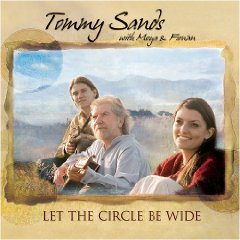
Tommy's known as the principal songwriter of the six-strong Sands Family group (though it contains at least two other fine songwriters!), and he's become a legend in his own lifetime as one of his country's foremost peace activists. It can't be said that Tommy's songwriting output is prodigious, however, for the release of Let The Circle Be Wide is a cause for celebration simply by dint of its being his first CD of original material since 1995 (his only other new CD in the intervening years being a 2001 Christmas record). Rest assured though, for Tommy's not lost his touch in any way and I'm sure that many of the new songs included herein will swiftly become well-loved within the folk community, if not perhaps attaining quite the classic status of There Were Roses or Daughters And Sons. Tommy's trademark political and artistic integrity is stamped on every song he's written, and his dream of an Ireland without conflict remains as powerful and committed as ever; he addresses the global concerns of humanity in an accessible and attractive musical language that resonates with the universal appeal of traditional Irish music. The opening Young Man's Dream is actually based on the original version of Danny Boy, but has none of the hackneyed crooner's grandstanding of the popular ballad we all know, being instead a clear and fresh paean that "suggests the surrender of the singer to the song rather than the other way round". Another well-known tune, Lillibulero, weaves in and out of The People Have Spoken, a brilliantly effective political statement that draws parallels between two opposing Ulster catchphrases. Time For Asking Why is another time-honoured plea that transcends its simple philosophical conundrum. There's a heartfelt celebration of the late, great Tommy Makem, with whom Tommy was great friends, and at the other end of the emotional spectrum a light-hearted reel-like song of craic (Balleyvalley Brae) and a rollicking anecdote about the healing powers of a fiddle champion (Send For Maguire). Fields Of Daisies is a modern-day broken-token song that really hits the spot, as does the evocative Carlingford Bay, while the tenderly voiced You Will Never Grow Old, dedicated to Tommy's brother Dino, is a slice of perfection that apparently took Tommy thirty years to write! The softly anthemic (almost Seegeresque) Keep On Singing is one of those optimistic numbers you can't shake from your consciousness once you've heard it, and Tommy's all-embracing idealistic positivism lingers on into Make Those Dreams Come True and the album's closing (title) song. One curiosity is Rovers Of Wonder, wherein Tommy conjures a musical alliance between himself and a group of Mongolian throat-singers. Which brings me to the observation that the musical backdrops Tommy employs throughout this set are exceedingly well-drawn and expertly recorded, with every strand of the sometimes quite busy and bustling texture admirably cleanly delineated and followed without distracting from the impact of the lyrics or Tommy's fabulous singing voice. On this album, Tommy's also joined by his son Fionan (mandolin/banjo) and daughter Moya (fiddle/whistle/bodhrán), the latter turning in a tremendous and beautiful rendition of Brian O'Higgins' A Stór Mo Chroí midway through the disc. Throughout, Tommy uses his music and song to pursue his goal of bridging cultural and political differences, and his universal vision of, and quest for, peace is as potent as ever. Welcome back, Tommy! For this is a triumph of a record: a wonderfully affectionate album, full of supremely engaging and enchanting songs and performances.
David Kidman March 2009
The Lee Sankey Group - Tell Me There's A Sun
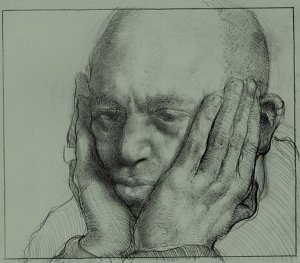
Lee Sankey's wailing harmonica welcomes you to the title track of his second album. The harmonica soon gives way to layers of horns, keyboards and Ian Siegal's soulful voice. The richness of the opener is in stark contrast to the spoken vocal of The Man, which provides some silky bass from Andy Hamill and strangled harmonica from Lee. This is music for smoky clubs with the audience right on top of the band.
No Man's Land provides a funky beat and some more soulful vocals from Siegal. He certainly has added an extra dimension to his vocals. The acoustic Heading Into Town is laid back in the extreme and He Doesn't Live Like The Others starts with some Miles Davis style horns before going off onto another spoken vocal with excellent National Steel guitar from Chris Whitley.
Doing What I Should Have Done is more upbeat than most of its predecessors and has some outstanding horns. The High Points is very jazzy and normally this would not be to my taste but Lee Sankey and the band win me over and they may do so with you as well. A return to the slinky bass for Frank's Brother, this time by Rob Mullarkey, gives us some more spoken vocals - maybe too much for one album. This sounds like the introduction to an old American detective film.
National Steel guitar introduces The Unchosen and it soon goes off on a pseudo-blues riff that will have your head nodding and your fingers tapping. Monkey Lips shows, in my opinion, Lee Sankey at his best. This is over 5 minutes of class harmonica playing and I could listen to this all night. The longest track is saved for the last and has a big band feel to it, showing more of the bands versatility. Remember to leave your CD player on until the end or you'll miss a little harmonica and steel guitar blues.
The second album, I've heard say, is the hardest one to produce but on this evidence then Lee Sankey and his group should have no fears about going on and becoming a force in British and world music.
www.leesankey.com
www.10yearnoose.com
David Blue
Is this guy cool or is this guy cool? The opening track, Drinking Game with its Steely Dan horns and guitar is a spectacular start to this, his debut album. We are then taken into the Larry Adler-ish harmonica of Only My Baby. This jazzy song profiles both Sankey's high-class harmonica playing and laid-back vocal style.
The harmonica is also to the fore on Women And Trouble, exchanging riffs with the horns before the song lifts off into an R&B extravaganza. Sankey visits the world of big bands with Shout It On Out and continues the jazz feel with Office Politics.
Stone In My Shoe is more in the style of Little Walter's playing while S'picious Woman is likely to be a British blues classic of the future. The title track takes us back to the jazz tinged efforts of earlier in the album and it's a sound that pervades throughout.
I Don't Like My Way Of Living is a classic title for a blues song and is one of the few slow tempo songs on the album. The closing track Where We Going To has a great riff and is a fine way to finish.
This, of course, is a special edition and what makes it special is that you get an extra CD. The second CD provides five tracks, starting with the 11 minute She's Not Alone, a slow blues with the now customary top-notch harmonica. Three live tracks give an insight into what we can expect if we get to see Lee and his excellent band in the future. My favourite has to be the last track Country Blues Intro and Stone In My Shoe where Lee turns himself into Sonny Terry and Kim Wilson in one fell swoop.
I think that this is a fantastic debut and I'm sure that it will continue to grow on me.
www.leesankey.com
www.10yearnoose.com
David Blue
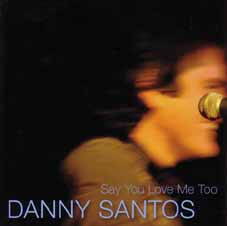
At first glance I have to admit apprehension regarding the song titles and the potential subjective content. Lyrics that unimaginatively employ love song rhyming chestnuts such as moon, June and spoon (and such), are a major stumbling block for these ears. Darn if five of the thirteen titles don't feature the word love or variations thereof. Here we go, this is gonna be a challenge!
Say You Love Me Too is Austin, Texas based Santos' fifth album and his first release in as many years. Apart from a cover of Sittin' On Top Of The World (a folk-blues written circa the early 1930's by Walter Vinson and Lonnie Chatmon of the Mississippi Sheiks, although it's credited in the liner booklet as public domain), Santos penned all the songs apart from Hungry For Love and This Memory Of You, which were co-written with Austin troubadour Steve Brooks. Brooks plays nylon string guitar on El Coyote, a commentary on recent developments regarding the porous U.S./Mexican border.
Hard To Love, Harder To Hold is driven by a rhythm straight out of the Buddy Holly songbook, with a marginal variation propelling the later Love's Been A Long Time Comin'. Ain't Love Grand, a teen melodrama c/w eloping couple who perish on the highway, features the cello of Strings Attached alumni Shawn Sanders. Seven Eleven Heaven recalls a love affair that never got off ground following a chance encounter in a Citgo service station, while The Coffee Club is a portrait of the old folks who frequent a local diner. The album closes with a couple of live recordings, Caution To The Wind and Haagen-Dazs Blues. In the latter Santos names numerous ice cream makers, discards Texas' famed Blue Bell brand, and casts his vote in f(l)avour of Bronx made Haagen-Dazs. As a cohesive song collection, contrary to ordinary it is not! Score 5 out of 10.
Julian Sas is considered to be one of the best live acts on the blues-rock scene in The Netherlands and Resurrection is his first assault on the rest of the world. Starting with Moving To Survive, a fast blues rock with incisive guitar licks akin to Rory Gallagher and Gary Moore, Sas sets out his stall with nine original songs. I love slow burners and Burnin' Soul is one of the best that I've heard. The band plays in the classic power trio format with Rob Heijne on drums and Tenny Tahamata on bass. Slide guitar from Sas is most welcome and, on this, he shows his class. Runnin' All My Life is powerful blues influenced rock and he's made the transition from being a big fish in the small pond of Dutch blues to swimming with the bigger fish very well. He has nothing to worry about and he is so easy to listen to. The obligatory power ballad comes in the form of All I Know as Sas strokes his Strat on this 7-minute epic. His sanguine vocal is well suited here and there's a telling guitar break.
Ain't No Change is standard fare as far as blues rock goes and the eponymous title track stays on the rock side of the blues with fuzzed guitar. He's managed to keep his standards high throughout the album and Stranded is another high-class song even if the Bon Jovi style ballad isn't quite in the same sphere vocally. Junkies Blues is a gritty blues and the band play it extremely well. The only drawback is that it is let down by the vocal, which happens a little too often on this album. He closes with another 7-minute epic that embodies everything a power trio should be, gentle in places and powerful in others. This is, quite simply, three players at the top of their game.
www.juliansas.com
www.mascot-provogue.com
David Blue March 2007
Currently one half of Sugarcane Jane with singer-songwriter Anthony Crawford (who produced and wrote 11 of the 12 songs), Alabama's Savana Lee (not to be confused with Vancouver's Savannah Leigh Wellman whose band's called Redbird) released this debut three years ago, but it's only now finding exposure outside of the USA courtesy of Sweden's Hemifran.
Save for one track, the blues flavoured A Heart Needs A Reason which features Waddy Wachtel and Spooner Oldham, Crawford also played everything too, so it says much about Lee that she remains the dominant personality. Her voice slightly reminiscent of the young Nanci Griffith with a pop flavour to the trebly country twang but also capable of riding bluesy ranges on something like the moody The One Before Me, digging into a shade of Zooey Deschanel on the speak-sing Chameleon's All Star Love Band while Little Creeps and Uptight Situations channel the barroom swagger of Sheryl Crow.
Stylistically ranging between the shuffle pop of Uptight Situations, Blue Monday's piano balladry and the campfire Oh Brother trot of The Wait, Crawford's songs suit her well and, in return, she brings them to emotional life. The only non-original is her cover of Steve Forbert's signature song Romeo's Tune, the tempo taken down a notch with mandolin backing. When she sings 'meet me in the middle of the day", you'll find yourself asking where.
www.savanalee.com
www.myspace.com/savanalee
Mike Davies November 2010
As a teenager, Philip Sayce was held in such high regard as to be invited to join the Jeff Healey Band and played with them at the Montreux Jazz Festival and many other sold out gigs around the world. After moving to Los Angeles he joined Uncle Kracker and was with the band when they had their massive US number 1 with Drift Away. He then joined Melissa Etheridge's band and was with her until 2008. Now temporarily on his own, he releases his debut solo album on Provogue, a label that is getting a reputation as the home of guitar players.
Peace Machine opens with One Foot In The Grave (not the theme to the popular sitcom), a high energy rocker. Save Me From Myself continues the hard rocking – classic stuff. Slip It Away is a Jimi Hendrix style hard blues which speeds up as Sayce launches into a solo that will take your breath away. The title says it all on Powerful Thing – think Lenny Kravitz and you'll almost be there. This is followed by the acoustic led Angels Live Inside before he turns the power back on for the ballad, Dream Away and the rock with Sweet Misery.
Blood On Your Hands is a standard rocker but a classy example of one. Sayce doesn't go in for too many solos but he puts in a good one here with touches of Bon Jovi. Cinnamon Girl is a classic Neil Young song and Sayce stays very close to the original feel. It flows well with archetypal riffs helping it to do so – psychedelia lives! The acoustic led Over My Head is a classic American MOR rock tune and Sayce finally unleashes his guitar as he builds the song layer by layer. Alchemy is a slow, bluesy instrumental which showcases his playing ability and it works very well. All I Want is another Lenny Kravitz style rocker and Morning Star stays in the same mould. Sayce is very easy to listen to although he is getting more and more adventurous as the album goes on. The title track has echoes of Foxy Lady at the beginning before going onto a heavy blues riff. This is a big, blues rocker and a feast of guitar playing. The bonus track, Arianrhod is another instrumental to satisfy the guitar lovers. Sayce uses just about every effect pedal in his collection. At over 7 minutes, it has a bit of a break just after 4. He then goes off into what is effectively a reprise of the title track, this time played on dobro. Philip Sayce is a worthy addition to Provogue's excellent stable of guitar players.
David Blue December 2009
Boz Scaggs - Dig (Virgin Records America)
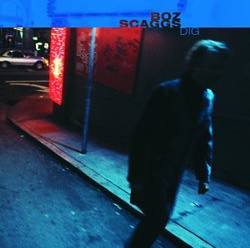
When you see the words Boz and Scaggs on the cover of an album, you can be pretty damn sure that you're in for some smooth, sophisticated soul, leavened with a fair smattering of grit - just to keep things interesting. Dig delivers all that, served up with the degree of professionalism you'd expect from a man who's been plying his trade for more years than he'd probably care to admit. Of course, the Scaggs man can't do it all himself and, for his first set of original material in more than seven years, he's called upon the services of lots of old pals to produce a sound that gels and flows despite the changing personnel from track to track. Thus, at various times across the 11 songs, we hear the likes of Danny Kortchmar and David Paich - who, in addition to guitars and keys, co-produced Dig - Ray Parker Jr, Greg Phillinganes, Steve Lukather, Nathan East and Roy Hargrove Jr; each top in his field and on top form here. 'Payday' sets the ball rolling - a nice bluesy piece taken a respectable lope with some tasty guitar and a first opportunity for Hargrove to flesh out a song with some effective horn fills. Tracks two and three - 'Sarah' and 'Miss Riddle' - show the side of Scaggs' music which least excites the old Hall backbone. Cool, smooth, laid-back, soul-tinged love songs that ought to be listened to only after midnight in an expensive penthouse apartment with the Gucci loafers casually kicked off on to the hand-woven Persian rug. It's really not my cup of tea at all but either of these could do a fair job of work of getting the likes of Barry White or Teddy Pendergrass back into the charts. And I suppose that, if push came to shove and I had to listen to this kind of thing, I'd rather it be by Boz Scaggs than many others I could name.
By way of complete contrast, Scaggs can also offer up the wonderful 'Get on the natch' - all growled vocals, choppy guitar, upfront drums and sharp angles. Reminds these ears of the Alabama 3 and is the dirty, raunchy side of Scaggs that I could happily groove along to from dusk 'til dawn. 'King of El Paso' has a similarly lived-in appeal and, in addition to the guitars of Scaggs and Kortchmar, features a great backing vocal from a lady called Monet, of whom more will undoubtedly be heard. 'I just go' sees Scaggs playing the part of the perennially selfish and ultimately lonely man, once again having to apologise to his love for thoughtlessly taking off without a word of explanation. The rhythm section of East's bass and Robin DeMaggio's hand percussion lends the slow pace real depth. It is, quite simply, lovely. Possibly more renowned for his ability to achieve a certain sound and feel, it could be said that Scaggs' songwriting has taken something of a back seat in the past. That's not the case with Dig as, whether singlehandedly or in collaboration, the tunes and lyrics bear close scrutiny. It's an album with a variety of moods and one which is destined, I reckon, to become known as one of Scaggs' best.
Fred Hall
Minnesota-born Martha has latterly relocated to Montana; she's worked on the Cold Mountain movie soundtrack, and spent six years in East Tennessee as a key member of the highly regarded Reeltime Travelers until they disbanded in early 2005. During that stint, she won both first and second prizes at a songwriting competition at 2003's Merlefest; meeting up with Dirk Powell provided just the catalyst she needed to get on down and make a solo record, and The West Was Burning is the result. Martha's songs are at once straightforward and enigmatic, with a gentle organic feel, and really capture the essence of the backroads of the west ("places where there's no exit number", as Dirk puts it!) where she's most at home. Having said which, it's not always easy to say what they're about, for even the more tangible imagery she uses has a peculiarly elusive quality that comes as much from an appealing looseness of expression (matched in the music) as from succinct, even wry observation from the other side of the barroom or tracks. The downhome authenticity and no-nonsense emotional intensity of Martha's personal vision at times recalls that of Gillian Welch, but hers is arguably a more measured, less overtly bleak view, with telling resonances evoked from the most simple activities ("riding on a troublesome vine", indeed). Her musical settings complement the quivering timbre of her teasing, intimately fragile singing voice: pure and sensitive, characterised by her own rippling guitar and clawhammer banjo (Riley Baugus), with bass (Eric Frey) and occasional steel (Guy Fischetti), dobro (Michael Juan Nunez), fiddle (Gina Forsyth) and piano (Glenn Patschka). Many also boast a raw, edgy rhythm coming from what often seems like a back-lot garage drumkit (interestingly, drum duties are shared between Levon Helm of The Band and Amy Helm from Olabelle). The sound just sort-of comes together, I can't put it any other way. And naturally, Dirk himself augments his producer's role by playing (among other things) fiddle, electric guitar, banjo and mandolin, for he can't resist contributing just one instrumental (Call Me Shorty), where his mournful fast-drivin' fiddle is very much in evidence. This album may sound at times slightly low-key, but it proves to be of significantly deeper impact - quite irresistible, in fact - and the quietly grainy charms of its music and poetry readily, if subtly, insinuate themselves into one's consciousness.
David Kidman 2007
Pauline Scanlon - Red Colour Sun (The Daisy Label)
A native of Dingle Co. Kerry, although Scanlon had been performing round the Galway pubs since she was 15, she first came to most people's attention when she provided the vocals for John Spillane's All The Ways You Wander on Sharon Shannon's Libertango album. Shannon repays the favour on Scanlon's debut, produced by and featuring Lunasa guitarist Donogh Hennessy, lending her accordion to a breathy voiced but jauntily earthy bodhran driven version of Cyril Tawney's Sally Free and Easy. Scanlon claims her singing style to be influenced by the likes of Joni Mitchell and Tori Amos, and while that's not immediately obvious there's no denying the quality of her timbre, not as ethereal as, say Maire Brennan or Sally Oldfield, traces of both in evidence, but still suggesting faerie folk qualities behind the cut peat flavours. Despite her background, there's only a handful of traditional interpretations here, the murder ballad What Put The Blood and the equally cheerful Molly Ban, but she has selected her diverse covers well. Peggy Seeger's The Springhill Mining Disaster, on which she duets with Damien Dempsey, is a suitably brooding affair that stands in distinct contrast to the dreamy love beneath the stars readings of Don McLean's And I Love You So and Willie Nelson's Valentine while, along with the equally a capella interpretation of Kerry folk tune The Boys of Barr Na Sraide, her haunting drone accompanied version of John Spillane's All The Ways You Wander is one of the album's most striking moments. She writes too, and while Churchyard's the only one self-penned contribution here, it's something of a gem, a trad styled ballad inspired by False Knight On The Road and veined with Eastern textures. It's an impressive debut that bodes well for Scanlon's future. She's generous too. She actually has no input at all on the title track, a 90 second instrumental epilogue written and performed by cellist Caroline Dale.
www.daisydiscs.com/pauline.htm
Mike Davies
Scatter is a somewhat indescribable outfit. After releasing their acclaimed album Surprising Sing Stupendous Love back in 2004, they then by all accounts made a hell of an impression at last year's Green Man Festival. Scatter turns out to be a loose Glasgow-based collective (here comprising nine participants) with one foot in the folk/world camp and another in improv, yet their second, and latest album, The Mountain Announces, while generally veering (sometimes a little queasily, one might say) between the two poles, in the end sounds like neither and actually provides stimulating and often pleasing listening. Deconstructed folksong meets organised confusion, one might say...Three (possibly four) of its eight tracks are ostensibly based on folksong - or rather, derive their inspiration from the mood of a particular folksong: She Moves Through The Fayre brings the most audibly recognisable statement of the source song itself, and here it's sort-of-chanted, wailed, by the ensemble's new vocalist Hanna Tuulikki. Instrumentally, the band sound is now darker than previously, with the recent addition of viola and trombone to the bouzouki/guitar, drums, cello, trumpet, double-bass, harmonium lineup (and the departure of their flute player too) - though dark doesn't necessarily mean gloom-filled, and Scatter's music can be strangely uplifting, as on the perversely beautiful celebratory processional that forms Delitier The Organ (a rolling snowball of sound where triumphant ululating voices perch atop Brass Monkey chordings and a bouzouki that sounds like a hammer-dulcimer). The title track nosedives off a Beefheartian pseudo-Japanese guitar riff to a jabbering cacophony of public-address and into a strident jazz ostinato passage. And by transporting the Dowie Dens Of Yarrow to the home of rebetika they're evoked as "a place of mystery and misery" in Scatter's intriguing arrangement. O Death is perhaps the strangest of all: dubbed by group vocalist Oliver Neilson as Scatter's "hold-music", its "call-centre field-holler" reminds me more than anything else of the pitch-and-toss sequence on the Incredible String Band's Creation, with its discordant keening and tumbling storm-racked drumming. All told, this is an extraordinary album, which takes the concepts both of folk-drone and radical jazz to new and often dizzying heights; but it takes an open mind and close listening to unravel its curious tapestry of delights, a mind that will be receptive to following Scatter's tangents wherever they may lead.
David Kidman, July 2006
Mark Schatz & Friends - Steppin' In The Boiler House (Rounder)
Mark's one of those enviably talented performers (Bruce Molsky's another one!) who might in all honesty be termed jack-of-all-trades, for he's a gifted singer and dancer as well as banjoist. It's primarily the latter, however, which is on proud display on this, his second solo album. He plays the banjo - and how! - in the approved clawhammer style, but his playing blends the precision and attack of traditional bluegrass with the soul and grit of the real old-timer, and he's unafraid either to bring in some swing-band influences or to mix new tunes in with the old. Steppin' In The Boiler House starts out with just that - Rig Root, like the title track later on, features Mark's "rock clogging" feet alongside his banjo - but then settles down to an enticing and varied menu that's not by any means all "flash Harry" picking. The enchanting delicacy of Eileen's Waltz forms a perfect foil to the rootsy galumph of the preceding Cajun Stomp, and the expertly controlled hoedown stringband runpast of Last Old Dollar (featuring Tim O'Brien guesting on vocals and mandolin) leads through naturally to the more reflective Season Of Joy and the beautifully poised original tune Robindale, inspired by the mountains around Asheville, North Carolina, that ushers in some seriously blistering picking on Slate. Mark's "house band" for the album sessions unites two seasoned veterans Missy Raines (bass) and Jim Hurst (guitar) with "young turk" fiddler Casey Driessen (fiddle), while Tim helps out on several cuts and there are some notable contributions from Stuart Duncan (fiddle), Jerry Douglas (dobro) and Bela Fleck (mandolin) too. There's a grand sense of fun on these sessions, everyone's having a ball yet they're content to let the pace ease back apiece rather than go hell for leather for effect - and the miracle is that there's still plenty of excitement and internal tension in the performances. And that makes all the difference of course. Tim puts it exactly in his booklet note: "Mark Schatz's music echoes and freshens those many shared experiences of good times, good music and good friends"; and you too will feel you've made a few new good friends after listening to this spirited disc.
David Kidman
Andy Scheinman - Make Amends (Tangible)
Thank goodness for labels that release albums outside the celebrity/marketing-led loop. Tangible of New York is one such and they have some wonderful surprises in their catalogue. Signed to the label is New Yorker Andy Scheinman, whose debut album has recently been given distribution in the UK. This is one to seek out now and play often during those moments when you need the Linus-blanket of feel-good music and a sunny day smile.
We are in familiar Nashville territory but it is refreshingly good. For all of you who are tired of polished mediocrity, this is unvarnished honesty, impossible-to-resist rootsy, hatless 'country' fare with a 'recorded live' energy and songwriting of the highest calibre. His are catchy tunes with great hooks and lyrics which had me suspecting that he has his tongue in his cheek some of the time! Andy cites The Band, Bob Dylan and Johnny Cash as some of his influences. Their echoes are all there on this 13-track collection in the best possible way. Make Amends is produced by Tommy Spurlock who adds his own steely talents on guitars, mandolin, pedal steel, dobro, lap steel and bass. His assured, no-nonsense contribution made me check him out. He's produced albums for Dave Olney and Chip Taylor, played on the albums of artists such as Delbert McClinton, Rosanne Cash, Rodney Crowell and The Band and he's a member of cult band Jon Wayne. What a pedigree and what an album!
Sue Cavendish
The album, which was two years in the making, opens with Any Direction, which is vibrant and fresh with a youthful vocal and stinging guitar. The eponymous title track is funk/soul with a little input from horns and a silky guitar interlude. He stays with the funk for Take On My Beliefs but he rocks it up a little this time. His guitar playing shines through and the whole package comes across a little like Prince, who he just happens to think is a genius. Just Not Today has his vocal progressing all the time and still staying on the funky side.
U Don't Mind has crisp drums from Arie Verhaar and this mid-paced funk grinder certainly shows up Prince as a major influence. Gone By Tomorrow is a slinky professional blues whereas Everybody's Gotta Be Somewhere is soulful and a strong contender for song of the album. The latter has one of his best vocals so far. Game Called Love is a big, ballsy, swinging blues with heaps of attitude. He rocks it up a little for It's Gonna Be Alright but this rarely gets out of the power pop genre. Last Goodbye is just Schill on guitar and vocal with a little harmonica added by Aram Raken. This acoustic track shows the talent behind the gloss and is a very pleasant finish. On this basis, Stefan Schill is certainly worth another listen.
David Blue April 2010
Danny's been quick to follow his fine 2009 collection Instead The Forest Rose To Sing, and he's done so with a telling (if seemingly literal) sense of continuity: for Man Of Many Moons begins with Houses Sing, a catchy little number that was inspired by a bout of house-hunting but is actually more concerned with the browsing of one's inner neighbourhood in search of commitments (to path, place and persons). The title track proves to be another equally catchy ditty with memorable join-in tag lines, expressing partly complex personal conundrums in maddeningly simple language.
The close, intimate feel of the new album as a whole is managed as much by the lyrics as by the brilliantly simple and proudly unadorned acoustic-guitar-based arrangements, which mostly involve just Danny himself with occasional second-guitar embellishments (courtesy of Will Sexton), some gentle harmony vocal work from Raina Rose and Carrie Elkin, piano from Keith Gary on and charismatic harmonica from Ray Bonneville on Ragtime Ragtime Blues (which otherwise is probably the album's least memorable song).
The central theme of questioning recurs in most of the album's ten new original songs, from the cyclical philosophy informing the thought-patterns of Little White Angels down to the playfully political Guilty By Association Blues and its kinda-sequel Almost Round The World, complementing the folky-fable-style reflection On Abundance and the more defiant Know Thy Place. Danny's softly tremulous vocal is, as ever, the ideal expression of this wide-eyed yet knowing, and ever-keen, questioning of life's imponderabilities. The two oldest songs in this latest batch, however, are the exception: I've Mostly Watched observes with admirable honesty Danny's penchant for commenting on life, rather than engaging directly with it, while Two Guitars explores a similar vein whereby, taking the form of a letter back to Danny's artistic comrade Paul Curreri, he laconically laments the state of their common "careers" (having quit their day-jobs to become full-time artists).
The album's lone cover is Buckets Of Rain, which Danny admits to being the first Dylan song that really hooked him in – again by virtue of its simplicity of expression and the gentle interweaving of its guitar part; this is traced beautifully by Danny here. As it happens, the magic of this cover version dovetails neatly into the appealing, and quietly compelling, fabric created by Danny's own compositions.
David Kidman March 2011
Austin-based Danny's latest collection is a considered, themed set that explores the concept of money and wealth and its worth in today's world. It's an increasingly complex concept nowadays, and even on such a well-worn theme, Danny proves that he's got plenty to say and makes his observations relevant to all our lives, his central thesis being that how we choose to relate to the idea of money reflects a lot about our values.
Simply crafted, plain-spoken in expression and attractively sung, while furnished with impressively memorable melodies, the songs on this set tend to fall into two broad categories: either granting or exploring a thought-provoking perspective on the central theme (Better Off Broke, Southland Street) or else painting vivid portraits of individual characters searching for meaning in their lives (Grampa Built Bridges, Oh Bally Ho, and the somewhat Cohenesque Firestorm). My initial feeling, that the set's strongest songs occur in the second half of the disc, is reinforced on each subsequent replay, with the enigmatic Accidentally Daisies and the genial barroom waltz of The Night's Just Beginning To Shine fast becoming favourite cuts. After the darker mode of much of Danny's previous material, the folky-singalong opener Better Off Broke may seem deceptively jaunty, but Danny has the gift of making quite deep observations out of everyday colloquies, as a number of other songs on this new set also demonstrate. Even when you feel that Danny's trying to shoehorn too many words or force the pace a little, as on Southland Street, his delivery is irresistible.
Generally, Danny still continues to follow the time-honoured musical templates of folky Americana, with occasional dashes of indie-roots-rock and blues, and his gently quivering yet strong and resonant vocal style continues to enchant. His backing crew this time round centres on multi-instrumentalist Mark Hallman, with deft supporting strokes from other talented instrumentalists (violin, cello, accordion, trumpet, harmonica and rhythm section) as and when required – just enough to enhance each song individually and originally. The album's blessed with great packaging too, by the way, with attractive design and lyrics clearly reproduced on the foldout sleeve. With excellent songs and performances like these, Danny's set to seduce us for some time yet, I suspect.
David Kidman April 2009
So here's the promised new Waterbug release from the Texas-born songwriter whose 2005 set Parables And Primes so impressed me on its way-belated UK release last autumn. And it lives right up to expectation in just about every way (even tho' there's no epic track like Stained Glass on this record). Unlike Parables And Primes, though, Little Grey Sheep draws on seven years of Danny's writing. It "takes its title from the fact that at one point in time or another, each song had been deemed too askew to fit neatly alongside its peers", yet its unity - as a "flock", if you like - resides in that each song can be traced back to a very particular episode in Danny's life, and in Danny's special worldview as applied to the personal rather than (as on Parables) the generalised human experience.
The album as a whole still compels close listening and commands (and gets) your undivided attention right from the outset. Danny's beguiling and highly individual brand of apparent gentility emerges from the ether on the opening song, Leaves Are Burning, a jaw-droppingly atmospheric piece dripping with highly sensory imagery and cocooned with ear-burningly eerie female harmony vocal (Joia Wood, who shares this role with Devon Sproule over the course of the album). Danny goes on to examine the ambiguities of relationships on Cliff Song and Around The Waist: the former is a seemingly simple relationship song, sung in a quivering tremolo that emphasises the utterly scary nature of the predicament, while the latter is a lighter reflection on the mystery of emotions. Towards the end of the record, though, Danny presents a more straightforward stance on the constancy of love and friendships, with the beautiful and delicate Song For Judy And Bridget and the powerfully valedictory litany-cum-credo Company Of Friends (this itself complements the fairly cautious optimism of Drawing Board earlier on the disc).
The disc's two parables provide contrasting experiences: Go Ugly Early is steeped in desperate southern-gothic familial mythology while Tales Of Sweet Odysseus is a more overtly ironic twist on a mythological adventure that's craftily set to a sideways cod-Irish slip-jig (as a companion to Beggars And Mules, it's almost kind of another in-joke for Danny's muso friends, I suspect). Then there's an almost-too-easy Guthrie-esque demeanour to the next pair of songs, Emigrant, MT and the quirkily double-edged California's On Fire, but both make their points concisely and attractively. The only track I'm unsure about is Adios To Tejasito, which may well be summed up by the "It's nice enough to visit, It's nice enough to get back in your car" couplet for which sentiment the song's general of air of too knowing over-flippancy and somewhat sloppy rhythm-section input don't hope to compensate.
Helping Danny with production this time round is Paul Curreri, a genius who plays a large assortment of instruments very sparingly and is blessed with an acute ear for just what limited textures should grace each of Danny's compositions (banjo, guitar, piano, whatever); other Charlottesville musicians (fiddle, accordion, harmonica, steel guitar, bass, drums) are also occasionally brought in for softly judged traceries and subtle effects. Even the "heavier" electric arrangement for Trouble Comes Calling isn't allowed to swamp Danny's lyrics. This convincing new set from Danny was worth waiting for, sure.
David Kidman March 2008
New England musician Lissa's is one of those names you don't forget notwithstanding which, she's evidently an accomplished musician of whom I'm very surprised not to have heard previously. According to Lissa's website, Dance is her seventh recording (and sixth CD) since 1997. It seems to be intended as the second in a complementary pair of releases that started with 2008's disc entitled Song. As you'd expect, then, Dance is all-instrumental, concentrating on Lissa's clear-sighted fiddle playing and surrounding her with a select number of simpatico musicians, who as it happens are an entirely different crew from those who supported her on Song.
Lissa's playing style is unassumingly communicative: smoothly flowing and well-moulded, easy on the ear, gently virtuosic yet not a slave to technique, and so the discs 39 minutes flies by most companionably. Lissa delivers a series of tunes both fairly well-worn and definitely more unusual, including some great ones I'd not come across before (the Mountain Ranger set and Suffer The Child, for instance). And it's fortunate that Lissa has a good ear for ringing the changes in matters of accompaniment, because Bethany Waickman's guitar backing is pretty ubiquitous and in its own syncopated way can sometimes seem a touch routine, although it's pleasing enough in context, especially when its more supportively restrained as on Eugenia's Waltz. The sound of a tenor banjo brightens Lady Walpole's Reel, while trombones and pump organ fill out Moneymusk and euphonium and trombone Jamie Allen (on both of these, a second fiddle part really boosts the sound and drive of Lissa's own playing); a piano accordion counterpoints Lissa's lithely folksy take on Weber's Huntsman's Chorus, while bass and drums grace and propel Fisher's Hornpipe.
This is a well-judged CD which sparkles where it ought , so it should not fail to charm its listeners, although I feel its a little too polite and unchallenging on occasion; everything is in its rightful place, and I can't fault the playing or presentation the package even includes cryptic (to me!) dance instructions and theres sufficient variety in the arrangements to sustain interest generally, and yet I'm inexplicably left wanting more of something.
David Kidman October 2010
A cult figure on the Austin indie rock scene with former bands the Scabs and Ugly Americans, the Michigan born singer-songwriter's Schneider's now carving a successful solo career, cropping up on such film soundtracks as Miss Congeniality, The Divine Secrets of the Ya-Ya Sisterhood and Jay and Silent Bob Strike Back while this, his first to get a UK release, was named Album of the Year in his hometown Music Awards,
He's been compared to such names as Counting Crows and The Wallflowers, to which, judging by the laid back shrugging lazy rock of Captain Kirk, you might also want to add Steve Miller, the track clearly owing a debt to The Joker.
He's got a relaxed, warm style, easing through mellow Americana hued numbers like Come With Me Tonight, A Long Way To Get (shades of Paul Simon here) and the string enhanced lullabying ballad Love Is Everywhere while a sparkier side's revealed with the Dylan-like jogging rhythmed title track and a Tom petty flavoured C'mon Baby with its hard guitar riffs. And, as The Bridge Builders demonstrates, he can whip up a beefy quiet-to-a-storm moody rock ballad too.
With broken relationships, alienation and drugs on the lyrical agenda, he deals in the darkside but there's a sense of wit and ironic humour in there too; viz God Is My Friend which, nodding melodically to Joan Osborne's If God Was One Of Us, offers the image of the Almighty lounging around on a cloud snorting coke or wearing Italian shoes and chugging on a Coors Light.
The album takes a while to work its way inside your head and there are a couple of tracks that probably won't figure on the repeat play button, but it is something to which you will find yourself returning.
Mike Davies
Manchester's finest Matt Schofield returns with his fourth album and makes it a set of two apiece for live and studio albums. He has recently been voted by Guitar & Bass magazine as one of the Top 10 British Bluesmen of all time and that is some accolade. Just as he was influenced by Albert Collins and Robben Ford he now is regularly quoted as being an influence on many a young British guitarist. Although a studio album, Ear To The Ground was recorded live with the band in a single room and the overdubs were kept to a minimum. They open with Freddie King's Pack It Up and turn it into a funky blues, strong both musically and vocally. Nine Schofield and band written originals follow and start with Troublemaker. This gives Jonny Henderson on keyboards a chance to shine, and he takes it. Schofield joins in with Albert Collins influenced runs as he burns up the frets. The eponymous title track is a grittier, tougher blues altogether and the trio get into a groove. Heart Don't Need A Compass is a slow brooder. Schofield's guitar is a star - jazzy and much influenced by Albert King's Stax period. Once In A While is even slower and has a Gospel feel surrounding it - classy guitar.
Room At The Back, a short instrumental that allows free flow guitar, allows Schofield to tip the nod to such bands as The Meters and Soulive. Someone has a full blown harmonica burst from 'Big Pete' Van Der Pluym and is heavier than most on offer. It builds well and the guitar and harp work well together. Searchin' (Give Me A Sign) is jazzy blues with an edge - slinky guitar and reputed to be Matt's favourite. Move Along is full blown jazz/blues with Schofield and Johnny Henderson in synchronization. A fast paced, energetic instrumental with drummer Evan Jenkins chipping in to complete a classic organ trio song. Cookie Jar is organ based but Schofield steals the show and turns it into a highlight. When It All Comes Down is a BB King cover and a great finish. It is different enough from the original but still keeps the ethos. Schofield manages to sound like the great man on guitar and it sounds as if everyone who was in the studio that day is involved in the sing-along finish. The Matt Schofield trio have an album that keeps them in the highest echelons of British Blues.
www.mattschofield.com
www.nugenerecords.com
David Blue June 2007
Matt Schofield is a bright young light in British guitar playing and this debut album recorded at the Bishops Blues Club shows why. There's a strong guitar and drum start on the funky, jazzy Uncle Junior and Evan Jenkins provides a continuing rhythm, for over 8 minutes, on his kit. The classic Everyday I Have The Blues is given the treatment and showcases Schofield's excellent guitar style. His voice is silky but it's not BB King. Bloody Murder is done in a John Mayall style – just close your eyes and listen. The stunning guitar work on this make it a highlight.
Treat Me Lowdown is a swinging jazzy blues and Jonny Henderson is given his chance to shine on the organ. There's some good interplay between guitar and organ on Cissy Strut and this 8 and a half minutes of virtuoso playing just makes you realise how good a guitarist Schofield is. I don't know many people who would cover an Albert Collins track but Matt's version of Travellin' South will have made the maestro proud. His chopping, snappy guitar and vocal are delivered with feeling.
There's another blues classic next, it's Sitting On Top Of The World. This is different from the original and also from the version done by Cream and Schofield has managed to put his own stamp on the song, something very difficult on a much-covered track. The trio belt out the jazzy blues Hippology to finish and I detect the Albert Collins style in there once again. The trio are a very good live band and the only thing that I can criticize them on is that they did not offer up any self-written material. Maybe they are saving that for the next studio album and I wait in anticipation.
www.nugenerecords.com
www.mattschofield.com
David Blue
Many readers will remember encountering the spellbinding Canadian fiddler Oliver Schroer when he performed regularly with singer-songwriter James Keelaghan during the earlier part of the decade; tragically, however, Schroer, an intensely gifted musician and composer (and noted music educator) in his own right, died of leukaemia in July 2008. At the time of his initial diagnosis in the spring of 2007, and while awaiting treatment, Oliver recorded Hymns And Hers, an ensemble project on which he collaborated with friends old and new including some of Toronto's finest musicians (including David Woodhead, who's also worked with JK) and vocalists.
In direct contrast to many of Oliver's earlier compositions, the music of Hymns And Hers is altogether more spiritual in character, in that it expresses important things about his relationship to life. It does this by means of more rarefied kinds of forms and melodies (outside of pure entertainment vehicles like jigs, reels and waltzes), instead now bringing forth prayers, incantations, melismas and suchlike in lovingly textured musical settings that are sometimes quite plush yet remain pure and intimate.
Each of the disc's dozen items possesses a special character all its own. The opening "prayerful hymn" A Song For All Seasons gradually unfolds like a Mike Oldfield piece (Oliver even plays a burst or two of electric guitar), while Flowers centres around a playful baroque fiddle-and-piano arabesque and She's With The Angels Now is a peaceful and reverential (though almost unbearably touching) piece written after the death of a close friend. Roses For The Lady, written for Oliver's mother, resembles a slightly cheeky variant of an elegant Edwardian salon-piece, contrasting with the desperate discords (and strange vocal juxtapositions and ululations) of Hymn For The Dispossessed. The Morning Star joyfully unites brass and fiddle choirs in hope and jubilation: qualities which also resound through the rippling wedding-tune Chel's Bells and the reposeful beauty of the final pair of pieces on the disc. So OK, we understand the hymns, but why the "hers", you'll now be asking? – according to Oliver, these he calls "the other part of the divine duality", being the tunes that felt like they belonged here but did not feel like hymns. Fair explanation… Hymns And Hers is a delightful release, although be warned: its distinctive, intensely sweet poignancy may at times catch you unawares.
Camino, recorded three years before Hymns And Hers, is here re-promoted, hopefully to gain wider circulation. Both albums share a basic quality of intimacy, but Camino's intimacy derives from the purely solo nature of the performances enshrined within as much as from their ambient settings. The disc presents a series of excerpts from a vivid audio record of Oliver's trek along the Camino de Santiago pilgrim trail, the major element of which consists of pieces Oliver played on the violin that he carried with him like a precious relic on that pilgrimage, wrapped not in a violin-case but in a sleeping-bag in his backpack. These musical items are like limpid fantasias, both highly ascetic and deeply emotionally charged, like a disenfranchised parallel universe where time stands still for the duration of each piece and the austerely quasi-improvisatory world of the Bach partita meets the mesmeric but spacious liturgical iconography of John Tavener, at times also hinting at indigenous Canadian fiddling traditions. Oliver's playing is both graceful and evocative, it forming a two-way process whereby the attractive remoteness of the settings informs the almost religious spirit of Oliver's communing with the genius-loci. Each sonic space is acoustically enticing in its own way, each church possessing its own special resonances, while the trail's various environments also provide the ambient sound-sketches that punctuate the musical performances: the pealing of bells, street sounds, birdsong, praying and chanting. Immerse yourselves in this rich and rather magical experience; though it may prove all too easy to get lost in its charms and you may not want to return to our world.
David Kidman January 2010
Willy Schwarz - Home (Clearspot)

The second album from Tom Waits' raspy-voiced New York German-Italian Jewish keyboard player bears the subtitle Songs of Immigrants, Refugees and Exiles. It contains exactly what it says on the label. The opening track's clattering rhythm may initially recall his former paymaster, but as it opens out into Native American tribal colourings the album's globe hopping musical and thematic nature is quickly signposted. Calcutta, Italy, Malawi are among the places Schwarz's stories visit, taking potent angry, sorrowed or yearning photos of the socio-political landscapes and emotional climates. Here are the world's unwanted and rootless, forced to move on (Same Old World), work in menial jobs (Lavaplatos), left 'pacified' in their own blood (Refugees) or trying to scrape a life in the land of the free (Taxi). Here are personal stories of torn dreams and crushed hopes but also of the tenacity to survive (Mother of Exiles) and the strength of love (Wind In Our Sails) in the face of adversity. Musically eclectic, it journeys through the blues, Hindustani tala, Bulgarian trad, Tijuana waltzes, Celtic twilights, African funk, Jewish roots, show tunes and Kurt Weill cabaret, constantly and consistently in tune with the humanity from which it's birthed and which it observes. A quite magnificent and moving work.
www.efa-medien.de/frankf/frame_hausgemachtes_clearspot.htm
Mike Davies
Lo-Fi/garage/punk from an American boy and girl duo (boy on guitar and girl on drums). Sound familiar? No it's not The White Stripes. Schwervon! is Nan Turner and Major Matt Mason USA (Matt Roth) and they hail from the Lower East Side of New York City.
This, their debut album, opens with the angst ridden American Girl (not the Tom Petty song) and continues to ask questions about your musical leanings for the next ten tracks. The only song not written by the duo is the final offering, the classic Surfin' Bird which is given a slower treatment than the original but when it gets going it is the best track on the album. This would be the ideal song for them to do on 'Later With Jools Holland' if they get an invite.
Songs like Holy Cat and Twin Donut could easily be modern American classics although the formers title sounds like one that Phoebe from Friends would sing. The simple yet effective Dinner is one of my favourites and the equally simple and powerful Springtime may have you humming 'Don't Fear The Reaper' before it settles down.
They do tackle the classic them of love as well as the offbeat. Breaking In is their version of a love song. Something Else (again a title from days gone by but this is a new song) is very reminiscent of The Eels and Schwervon! could be a classic 60s TV theme but with a contemporary twist..
Schwervon! will find a market for their music and they may even achieve the cult status of that other aforementioned duo.
www.olivejuicemusic.com
www.shoeshine.co.uk
David Blue
[Ed. See NetRhythms reviews of urban-folkster Major Matt Mason USA's albums Honey, Are You Ready For The Ballet and his debut Me Me Me at Major Matt Mason USA
Look out for the excellent Call It What You Want, This Is Antifolk on Major Matt's own label Olive Juice Records - a collection of performances, including his own, from other New York anti-folk acts.
"I'm going to find my state of grace," sang Scialfa on 2004's 23rd Street Lullaby. Judging by the follow-up, it seems the quest took her deep into the American south. Indeed, on the opening Looking For Elvis she pretty much lays out her map and motivations as she sings "I'm just looking for some inspiration, I'm looking for something to rock my soul, I'm looking for for a brand new destination, I'm looking for Elvis down a Memphis road."
She certainly seems to have found it, producing an album steeped in Memphis rock n soul and gospel, a vintage R&B mood that sets the mind thinking of such names as Laura Nyro, Bonnie Raitt and, with the 'doo-lang doo-lang' back ups culled from He's So Fine on Like Any Woman, such girl groups as the Chiffons.
That's not the only specific 60s reference either. A smoulderingly earthy acoustic blues-soul number, The Word features elements from folk staple Sally Go Round The Roses while the bluesy groove swagger Town Called Heartbreak quotes Janis Ian's Society's Child. And although there may be no sample as such, the lyrics of a slinky love fever Bad For You surely deliberately reference both Say A Little Prayer and Knock On Wood.
But then the whole feel of the album harks back to those musical streets, Play Around a gently rippling ballad that Ben E King might have sung had he been Dion De Mucci while Run, Run, Run struts the sort of dirty heat Tina Turner patented back in her scorching raw youth.
There's a strong sense of melancholy, of falling from grace, finding salvation and getting back up, to several of the songs, a mood that fuels the album's strongest, simplest ballads, the dock of the bay/back porch feel of the reflective world weary title track and the love pledging Black Ladder, that bring things to a hushed, evening calm close. I suppose I should mention that, yes, husband Bruce does play some guitar and organ, while the musicians also include E-Streeters Lofgren and Soozy Tyrell, but, more than ever, it's clear from this album Scialfi's standing in no one's shadow.
Mike Davies September 2007
Patti Scialfa - 23rd Street Lullaby (Columbia)
It's been over a decade since Mrs Springsteen released her excellent but underestimated debut album Rumble Doll, immediately attracting speculation that hubbie had anonymously provided the songs as well as playing on the album. The domestic connections are evident again, Bruce providing occasional guitar and keyboards (fellow E Streeters Nils Lofgren and Soozy Tyrell are also present and correct) while the nostalgia steeped atmosphere and images of streets, rain and romance recall much of his own work. No great surprise there, but this is patently Scialfa's baby, the songs hewn from her own and her family's experiences and while the melodies may conjure him indoors its influences hark more to the guitar ringing Jersey soul of Southside Johnny and the delivery to Dylan.
"I'm looking for a piece of my past," she sings on the Lou Reed-like You Can't Go Back, recalling New York City 1988 when she "used to walk invisible." It was a time and place caught between faith and failure, of searching for a place in the American Dream (State of Grace, Young In The City), of kindly waitresses with wordly wise words (a sha la la ing Rose), of getting knocked back (Stumblin' To Bethlehem) and finding solace in lovers arms (Each Other's Medicine, Romeo) however temporary they may be.
Rich in hooks and harmonies, tumbling emotions caught in folky vocal catch on songs that veer between the Mink De Ville meets The Corrs of Love (Stand Up), the swaggering bluesy City Boys, the gospel hued piano ballad showtune that is When You're Young in the City and the wonderful title track's down on the avenue and up on the Brill Building rooftop city valentine. "I'm going to find my state of grace," she vows. Musically speaking, this album suggests the quest's well underway. A ltd edition also includes a bonus disc with three live tracks, 23rd Street Lullaby, Spanish Dancer and As Long As I (Can Be With You)
Mike Davies
This sparkling new set of 13 contrasted songs also moves their musical development on a stage further, taking their basic approach and extending it with some finely contoured musical arrangements which, while remaining tastefully minimal, really do enhance both the songs and the singing. Credit here to producer Dave Walmisley and engineer Ken Powell, both formerly of the well-regarded trio Risky Business, whose trademark gentle mellifluosity pervades the proceedings to good effect (and all of whose members appear sporadically during the course of the disc). Both Sue and Liz happen to be really good singers, either heard individually or together in attractive harmony, and their thoroughly professional attitude to their craft enables them to relax sufficiently as they demonstrate their affinity with their chosen material and communicate its essence directly to their audience. Their delivery is captivating, refreshing and entertaining, and often very moving; coincidentally perhaps, the latter quality characterises my personal highlights: the powerfully evocative Siren Sea (one of Alan Bell's finest compositions in my opinion, and complementing his beautiful Sailor's Sky which closes the CD) and Briege Murphy's The Sea (some nice whistle playing from guest Phil Brown on all three of these songs by the way), also the unjustly neglected Dransfields song Fair Maids Of February, and a sensitive interpretation of the traditional Rigs Of Rye. I also really liked the ladies' tender setting of Ron Baxter's succinct yet poignant character portrait Molly, also their unsentimentalised take on Mary Benson's Sail Away, both of these done straight acappella (the latter with Felicia Dale guesting), and their lovely treatment of Allan Taylor's deceptively simple Come Home Safely To Me. But Scolds Bridle can make you laugh as well as cry too - the disc's "fun" song, Lynne Heraud's piquant little discourse on The Menopause, is a perfectly acceptable interlude in this context, while one has always to acknowledge that "fun" songs tend to wear less well in the cold light of home listening (hmm, I'm tempted to label this particular song "less suitable for regular periodic (sic!) replay"!)
Any minus points? - well, some may consider the similarity of tempo marking for the vast majority of the material to be a drawback, but I'd say the variety in the actual songs more than compensates. Recording-wise, there's an occasional tendency to fierceness or over-closeness in capturing Liz's lead vocal contributions, but this is a minor point that's more noticeable on some CD players than others. In summary, this is a very lovely CD that, while almost effortlessly pleasing Scolds Bridle's growing loyal fanbase, really ought also to bring them plenty of new admirers.
David Kidman August 2007
This Dublin singer-songwriter had a brilliant start to her career with her 2004 debut album Poor Horse, which has subsequently appeared on at least one Irish critic's "best-ever" poll. Having not heard that album, I was a mite puzzled by the followup, We're Smiling, which I reviewed quite late in the day, finding it a slightly wayward and yet more than intermittently promising collection that purely in sound terms owed more to alt-indie-rock and ambient, opaquely trip-hop-shaded electronica than to the folk songwriting models one might have expected from glances through her press releases. On that album it was Ann's voice rather than her songwriting that mesmerised, and I was left wondering whether I was missing out on some of the textual substance through paying attention to the voice and the arrangements.
Flo, album number three, does at least allow (at times) for greater concentration on Ann's lyrics through a generally sparser-textured aural milieu, much of it based around her own acoustic guitar but still for much of the time imaginatively, if blurrily enhanced by assorted strange reverberant layerings, pluckings and strummings ("real" cello, violin and piano, with sounds that may or may not be "real" dulcimer, autoharp and vibes, and some programming courtesy of Ann's co-conspirator Kark Odlum) and bold, if sometimes ominous percussive gestures.
Notwithstanding the evident attention to precise detailing within that quite tangled web of sound, and the myriad of individual textural strands, there's still a sense of woozy dislocation about Ann's music on this new record, which she describes as "a bunch of songs about being lost and how to get there". At the risk of making a very obvious comment, it may take a bit of getting into, and once you're in there it might be likened to being lost in a slightly impenetrable maze, such is the nature of Ann's aural imagination. It's heady, but really captivating, and often very touching – for instance the beguiling closing (title) track, which revolves around a persistent cyclic piano motif.
Musical reference points might seem to range from Kathryn Williams (whose voice Ann's uncannily resembles at times) to the Creatures (Universe), Mazzy Star/Hope Sandoval, wyrd-psych-folk (Untrue), even maybe the Velvets (Under The Sun) or The Cure (Sally). It's possibly at moments like the spooked Hangman, or the cascading guitar arabesques of All Eternity ringing across the ether before the storm finally breaks, that Ann's work is arguably at its most mesmerising, her moody and yet sweetly wistful voice there being used almost as another instrument. Having said that, the softly menacing character of the pair of songs opening the disc (Love Is In Him, featuring a harmony vocal from Gemma Hayes, and the eerie Killerman with its spectral banjo part) is as much of a highlight in its own way, as are the forlorn pointilliste rhythm of Return To Die and the plaintive, deliquescent gamelan of Lost.
Ann has clearly lavished much time and effort on this spare but lush creative endeavour, and its provocative air of sensual mystery is undoubtedly very attractive; I would strongly advocate the listener repaying Ann's effort.
David Kidman November 2010
Apparently she's twice been nominated for Best Female by the Irish Meteor Awards and her debut, Poor Horse, has been ranked in the top 100 of the greatest Irish albums. Maybe I'm missing something, then. The Dublin singer-songwriter certainly has presence, her voice dark and moody, her music swathed in the sort of atmospherics that have seen her dubbed Tori Amos with a guitar and compared to the likes of Imogen Heap, Juliana Hatfield, Cat Power and Gemma Hayes. And yet I still find myself having to work to find a way into this, her second album, with its twisting rhythmic structures, electronica shaded goblin folk, and murky ambience.
There are entry points. The six minute She:Jubilee swells from airy, ethereal mists into chugging alt-rock reminiscent of early Kristin Hersh and those icy water Throwing Muses/Blake Babies colours do prove hard to resist on Mountain while 100 Dances, 1000 Stars, Feather For Feather, skeletal piano blues Farewell Henrietta and the rippling electronica and coy sweetness of Down At The Parlour throw her long slung guitar and skittering beats into impressive relief.
But, ultimately, the shadings tend to remain within a narrowly defined palette and Scott's voice never really shows the same warmth that, for example, Kate Ellis' cello brings to Imelda, a track that oddly reminds me of The Cranberries at their more spidery. Approach her more from the trip hop alt folk pop perspective that Beth Gibbons assayed with Rustin' Man and many will find the rewards waiting. And, I suspect, after I've given it a few more plays and soaked it by osmosis, so will I.
Mike Davies February 2009
For some years now, the Irish music scene in Liverpool has been a vibrant one; the charming and distinctive singing of Liverpool Irishman Bruce Scott, one of that scene's most charismatic performers, is captured faithfully on this disc, which has been put together exclusively from recent recordings. Bruce's performing style is both a reflection and a consolidation of a lifetime spent singing; it embodies a bold and quite florid use of decoration and vibrato, while retaining a fluent sense of pacing that does not destroy the internal rhythms of the songs. This collection of 15 songs brings together both strands of Bruce's artistry - his interpretation of existing (principally traditional) song and his own songwriting (the latter being a comparatively recent venture, we're told). The former is the source for just over two-thirds of the CD's material, and includes versions of The Rocks Of Bawn, Easy And Slow, The Month Of January and She Moved Through The Fair which are very characterful indeed, if at times some listeners may find some of the slower songs a mite strident perhaps, or even slightly laboured. To introduce a bit of tonal variety into the proceedings, Bruce is accompanied on five of the songs, on whistle or flute, by Terry Coyne (who you'll know as member of Garva). Good though Bruce's renditions of traditional songs may be, his own compositions, very much in the traditional style, are uniformly excellent; this CD's title track won him the title of 2004 All-Ireland Champion in the category of newly-composed ballads, and no wonder - although all four self-penned songs display a comparable flair for composing within the tradition, especially in respect of Bruce's creative adoption of traditional airs. This well-presented CD makes for mesmerising listening, and proves a worthy addition to Veteran's catalogue.
David Kidman
Still underrated in many quarters, even as an acknowledged virtuoso in the Americana field, Darrell - currently touring with Plant's Band Of Joy - is now celebrating his own talent by unassumingly releasing a whole double album's worth of new self-penned songs. And wow, not only has he written everything but he also plays every note himself; not just the expected guitars, mandolin, banjo, dobro, but also keyboard, cello, accordion, entire rhythm section and harmony vocals!
This epic of multitracking was Darrell's intention right from the start, but that it all comes off as impressively as it does might be counted a minor miracle (well, for those who don't know Darrell that is). Darrell effortlessly rises above the potential torrent of "oh what a clever boy" criticism by producing a thoroughly musical record for which the phrase "labour of love" is an understatement. The songs have definitely been written from the heart, and those on the first disc in particular carry a potent emotional weight, a true life experience, without descending into sentimentality.
The melodic element is especially strong, for these are classic songs that you almost feel have been around for ages, genuinely timeless. Darrell's singing has never been better, and his close, almost confessional delivery puts you at ease straight away, with instrumental backing that provides exactly the right contours and measures to suit the songs.
Outstanding cuts include the sparsely scored title track (which opens proceedings), the almost unbearable heartache of Candles In The Rain (Childless Mothers), the deep pathos of A Father's Song, and the sumptuous evocation of The Open Door. And then there's For Suzanne, which pays tribute to a litany of songwriters through underselling Darrell's own humble gift as a songwriter. And as far as consistency goes, there's not really a seriously weak moment among the 20 tracks (16 songs and four rather brief instrumentals), so the argument for distilling all the music onto an abridged single disc is probably a non-starter (although the two discs weigh in at only just over the 80-minute disc capacity threshold, so by cutting one of the lesser instrumentals Darrell might've been able to make it a single-disc release I guess).
If I'm being hypercritical, I might venture the opinion that disc two feels more like an assemblage of songs than a unified album, and that disc one is the more satisfying of the two simply because the songs on disc one feel more personal and intimate and connected – but that observation is very much relative. The second disc certainly contains the songs that I'd characterise as mini-epics, more consciously produced and staged creations with by and large a fuller sound and more expansive musical setting (I might cynically suggest ripe for cover by other artists).
From personal preference, I might be tempted to skip the rock gestures of Snow Queen And Drama Llama and the slightly tired-sounding gospel of This Time Round on repeat playthrough, but that would largely depend on my mood at the time. Either way, though, there's no doubting that with his eighth solo album release Darrell has produced possibly the best and most coherent set of his illustrious career to date.
David Kidman November 2010
The status of this release is readily apparent right from the first chords of its opening track, Darrell's cover of the undersung Gordon Lightfoot "prayer" All The Lovely Ladies: Darrell's long-term admiration for Gordon's artistry is present in every lovingly phrased note of his interpretation. Modern Hymns is, unusually for this noted songwriter, an album of covers – but what superbly judged covers. As confirmed in his own companionable and anecdotal booklet notes, Darrell similarly conveys his desire to make other folks' great songs truly his own, in the easy company of a stalwart roster of musos that includes Dirk Powell, Danny Thompson, Andrea Zonn, Stuart Duncan, Casey Driessen, Ronnie McCoury and Danny Flowers, with extra vocal support from (among others) Del McCoury, Kathy Chiavola and the Fisk Jubilee Singers. In terms of material, Darrell draws on the work of writers whom he clearly considers personal heroes, in a special category which he rather appealingly terms "lock-myself-in-my-teenage-bedroom-and-absorb affairs". There's Bob Dylan, Hoyt Axton, John Hartford, Kris Kristofferson and Mickey Newbury, for a start; and yet there are also some pretty unexpected choices here, while even the more familiar of the songs are invariably dealt with in intriguing ways. Paul Simon's American Tune gets a neat bluegrassy treatment, with Tim O'Brien tagging along, while Mary Gauthier adds exemplary gravitas to Darrell's magnificent cover of Leonard Cohen's Joan Of Arc (now there's a modern hymn for you!), itself further enhanced by Alison Krauss's contrastingly angelic tones (on the chorus-vocal part) and an atmospheric string section backing. On the final track, Darrell repays the compliment of Guy Clark covering one of his own songs, by turning in an affectionate rendition of Guy's That Old Time Feeling (he even gets to play Guy's old #6 flamenco guitar on the track too!). The only cut where I'm not quite sure Darrell convinces is his pacey 2/4 trot through Joni Mitchell's Urge For Going. The one strictly non-vocal number, Pat Metheny's James, is bestowed with a gorgeous wordless part (Moira Smiley) that when it's not keening the main melody forms a counterpoint to the sensitive newgrass-style instrumental treatment. No other word for it - this disc is a gem.
David Kidman August 2008
Grammy-winning country musician Darrell Scott is not your common or garden variety of singer/songwriter.
And it's not just because he's a member of Steve Earle's Bluegrass Dukes, or the producer of two of Guy Clark's albums or even that he plays with John Cowan or Sam Bush, the real reason he's so special is revealed on The Invisible Man - the title shows a nice line in irony because it is going to make him anything but invisible.
The songs on the album aren't plucked from the imagination of a writer, they're hewn from the beliefs and experiences of a man who just happens to be one of the most talented musicians around country music today. Even if he weren't, the passions that drove him to write and perform I'm Nobody would have to find an outlet somewhere, it's music's gain that his safety valve is a guitar and a lyric.
Darrell Scott's brand of country is deep-rooted, there's a substance and solidity to his music. He opens up his soul on Looking Glass but he's not about to crumple while he's doing it. But the 'messages' are also wrapped up in some great country-rock riffs and melodies, not once has Scott forgotten that he's also an entertainer.
While Darrell Scott was born in London, it was a tobacco farm in London, Kentucky that was his first home and it may be fanciful notion to suggest that, alongside Kris Kristofferson and Micky Newbury, Scott picked up on the late, great Lindisfarne front man Alan Hull. However with In My Final Hour and the title track, he steps out of country and taps into the same passionate, conscience driven folk that was Hull's genius, a fanciful notion maybe but for those moments they are kindred spirits.
There is another British connection on The Invisible Man, the eerie, haunting Shattered Cross was written by the late Stuart Adamson, founder of Scots band Big Country and a friend of Scott's, the track was recorded a month after Adamson's death, Darrell Scott does his friend proud.
And, like most great writers, music or otherwise, Darrell Scott is able to look beyond his own horizon and Goodle, USA and I'm Nobody are uncomfortable songs, only because they grab hold of equally uncomfortable truths.
Whatever it is you search for in music, Darrell Scott shows himself to be a master. All of the narratives on The Invisible Man are deeply personal, 'with my head in a song and a song in my head, let me live until I'm dead' from The River Is Me doesn't need a genius to work out its meaning and it sets the scene for songs like The Dreamer. Darrell Scott follows the old adage 'write about what you know', it's lucky for us that he knows himself so well.
Michael Mee, July 2006
Darrell Scott - Theatre of the Unheard (Full Light Records)
The question is not how good is Darrell Scott on Theatre of the Unheard, East of Gary, the opening track will tell you that this is a very, very good album.
The 11 tracks that follow, will serve to confirm the opinion that this is surely destined to become a treasured album, not just of this year either. The real question is just WHAT is Theatre of the Unheard?
There is a real sense of journey running throughout the music. East of Gary and Uncle Lloyd have a suffocating desolation hanging over them like a storm cloud. When Scott sings of the bleakness of the steel mills, he delivers it with an industrial tempo. He's not looking back through rose-tinted glasses but through steel-grey eyes that recognize harsh reality.
If music does have a 'higher' purpose than to be simply entertaining, then that purpose is well-served by Six O'Clock In The Morning, it's the kind of song that makes you squirm in your seat but it's hold is unbreakable. It also has an intro that is indescribably sad.
But like life, the journey moves on and almost imperceptibly but surely, the mood lightens. Like the sun rising the soul of songs like River Take Me is warmed. Miracle Of Living is both funky and forward looking, enough of emotional baggage it's time to hit the road.
Darrell Scott seems as comfortable with the confessional Full Light as he does with the free-rocking I Wanna Be Free, by now we're into the real guts of the album, having shed the weight of the past he cuts loose and with Jonelle Mosser as the voice of Sally by his side, the song climbs and soars. And yet, as if to burst the bubble of passion that is now suspended over the album, the sweet folk charms of Alton Air soothe and calm the whole thing down, they blow through like a warm breeze.
But it's back to business with the wonderfully evocative The Man Who Could Have Played Bass With Shanana, it is so beautifully woven that even if it isn't true (and it must be) I'd rather be left in ignorance and believe it is.
The sleeve notes set the album out as scenes of a play. If Theatre of the Unheard is to be thought of as musical drama then Darrell Scott's role is that of the 'honest man' making his way through life and sharing his thoughts the best way he knows how.
But is it country rock, blues, folk, folk/rock or pure Americana, it's all of those and more. The sum of its parts is made greater by the hand of a maestro, Darrell Scott.
Michael Mee
Our favourite Bradford-on-Avon songwriter (not the Waterboy!) here swiftly follows his quirky (if at times stark) Irregular release Shedsongs (reviewed here last summer) with a new, independently-produced collection that may be more ambitious (in terms of arrangement and sound production) but just as intelligent and unpretentiously idiosyncratic as before in both content and basic outlook. Mike's lyrical meanderings convey life-experiences that we can, and do, all share; at times it's like we're hearing a Bristolian Loudon Wainwright, and at others Mike's gift for laconic, wry observation recalls Ivor Cutler. If I were completely honest I might opine that, in terms of almost surreal absurdity value, one or two of the songs on Um don't quite measure up to the level of memorability of invention of the majority of those on Shedsongs (but then, how do you follow some of those celebrated utterances?!). But Mike's still got the gift of being very entertaining while remaining thought-provoking – and vice versa – on observational gems like Domestic, Wealth and Mr Wilson in particular. Maybe in comparison songs like Corridors seem to sprawl a little more aimlessly, but when Mike's focus returns it's as sharp as previously. Sharp and focused, too, are the contributions of Mike's backing musicians (notably Graham Ball, Mark Griffin, Mark Jones, Carmen Mirza and Kate Riaz). Perhaps I'll give a better flavour of Mike's creative endeavours by quoting from the priceless, if pithy putdown that masquerades as a liner-note: "… I don't feel inclined to explain these songs. They are, in the aggregate, the dropped underclothing of an unremarkable life, you may choose to launder or bin them, secretly sniff them, or metaphorically wear them, hold them at arm's length or you know I mean… um…" (As we fade somewhat less than coherently into the sunset of our thoughts)
www.myspace.com/bristolsmikescott
David Kidman June 2007
Not to be confused with the Waterboys main-man, this Mike Scott is a songwriter of some 25 years' standing who hails from the Bradford-on-Avon area, well-regarded locally yet has yet to gain acceptance nationally; Shedsongs, his first recording to be issued on a more widely-distributed label, may help in that respect. His style of delivery is direct and involving, with a definite Bristolian burr, and his simple guitar accompaniments are attractively mellifluous, skilled but unflashy enough for you to be able to concentrate on the lyrics. These largely consist of directly expressed observations on the incredible absurdities of normal living, observations with most of which almost all of us can identify I'm sure, and they're often very funny indeed. (Who else might be able to get away with following an accurate commentary on the appalling state of today's Cornish pasties with a questionably delectable ditty on the peculiar properties of feline excrement...?!!) "My songs will not offer you many solutions to the difficulties we all wrestle with, but I hope they might pose a few pertinent questions, and cause the odd chuckle", says Mike. The direct and sometimes superficially simplistic nature of his observations actually conceals an innate keen intelligence and a real gift for irony. In the latter respect Mike recalls Loudon Wainwright III (whom he acknowledges as a major influence) and perhaps also Jake Thackray (without quite the same degree of laconicism). He possesses a skill that's increasingly rare these days - that of being genuinely entertaining without descending to the WMC gambits of patronising his listeners and drawing attention to himself over and above the call of duty. He achieves a good rapport with his audience (as the four live tracks on the CD amply demonstrate) through his straightforward communication of the shared life-experiences with which we can all empathise. In other words, there's an unpretentious, and also disarmingly self-confident, take-it-or-leave-it aspect to Mike, his songs and his performance of them, which paradoxically often verges on self-deprecation: a combination of qualities which we find in ourselves if we have the percipience to look deeply enough and be prepared to admit, but one which Mike forces out in to the open and invites us to examine. Highlights of this little collection include the priceless The Door (a stark yet right-on exploration of one's standing as an artiste in today's folk clubs), The Bridge (an ode to dumping) and the hidden bonus track Men Bugger Off, while the less humorous side of Mike's writing - every bit as valid both as comment and as commentary - is represented by 25 To 3, Miss Appleton's Bell and Warstars. Mike's a treasure, an individual among songwriters, his writing not exactly reminding you of anyone in particular - a good thing in anyone's book. I'd like to hear more of Mike's work, and I do hope this CD brings him some more lucrative gigs out with "The Door", for surely he does deserve them!
www.irregularrecords.co.uk
www.myspace.com/bristolsmikescott
David Kidman April 2007
Wayne Scott - The Weary Way (Full Light)
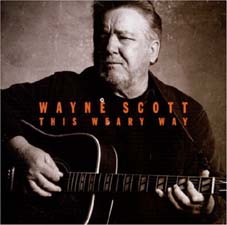
Surely the only reasons that Wayne Scott recorded a debut album at age 71 are that he is in love the music and he still feels has something to say with it. The Weary Way passes with flying colours on both counts but Scott was a reluctant recording star, having to be coaxed into the studio by his son Darrell.
After building cars in Michigan and working in the Indiana steel mills, Scott Sr made his way to California where, at the ripe old age of 40, he formed his first band.
He played the West coast for 20 years, joined by his five sons but he was definitely a 'play for pay' jobbing musician and never aired the hundreds of songs he had written throughout his life, preferring to give people what he thought they wanted. Many of those covers were infinitely inferior to the songs which appear on The Weary Way.
Then Wayne Scott put all his songs into a songbook as a Christmas gift for Darrell, who instantly recognised that his father was a born storyteller and who, eventually and thankfully, coaxed him into the studio to record The Weary Way.
Joined by Guy Clark and, of course, Darrell, Wayne has made an album that has the relaxed feel of music made and recorded by friends on the spur of the moment. In fact many of the tracks come from sessions in various living rooms.
We'll never know what Wayne Scott would have achieved, had he had the opportunity to record earlier, but The Weary Way has the grounding and ruggedness of music made by a man who has lived a full life outside of the cloistered confines of Tin Pan Alley. He has poured a lifetime's expereinces into every song, in place of a professional writer, striving to put together the perfect song, the man himself is etched into every line and every verse.
He mines the same harsh truths as a musician he admittedly admires, the late great Johnny Cash - the album ends with a wonderfully gritty Folsom Prison Blues. They share the common bond and belief that a song is something more important than merely a vehicle to impress or pay the bills. Like Cash, Wayne Scott uses music to explore, heartbreak, faith, family and the restorative powers of whiskey all come under his gaze.
The album's title, The Weary Way, is a bit of a misnomer, Wayne Scott displays the passion and energy of a man a third his age. Sunday With My Son, My Last Bottle Of Wine and When It's Raining After Midnite may be reflective, but they are the words and music of a man who is brutally honest with himself, the power derived from that honesty makes The Weary Way electrifying.
At the heart of Wayne Scott's music is an optimism and belief in the future epitomised by Since Jesus Came Into My Heart. He may be 71 but Wayne Scott is far from finished with music.
Michael Mee
Scottish Guitar Quartet - Fait Accompli (Circular Records)
This CD, the Quartet's second recording, bears a 2002 date, yet it has only just reached me – some quirk of distribution no doubt… Anyway, suffice to say that it does largely what it says on the proverbial tin, being a spirited 40-minute set of pieces played by four acoustic guitarists, mostly in the jazzy-classical-folk mould that would be regarded as, or at least bordering on, easy-listening if the textures weren't so perennially busy. And as such some listeners are likely to find them too "twiddly" for continued or repeated listening - so this may not be a CD for listening to all in one sitting (except in the context of superior background music for relaxation perhaps). But taken individually, each track has much to commend it, whether in the ever-stylish, highly accomplished playing or the idiomatic compositions (all originals by one or other group member). Influences and styles range from flamboyant flamenco (Dance Of The Gypsy King) to classical Spanish to classy incidental music (From Dawn To Dust) to gentle bossa-nova (Simplicity Itself). I don't normally appreciate over-tricksy playing, but here the virtuosity is altogether unassuming and is channelled creatively - I specially liked the fascinatingly awkward Sideways Mobile, From Dawn To Dust and the softly-characterised After Hours. The quartet comprises Malcolm MacFarlane, Ged Brockie, Kevin Mackenzie and Nigel Clark; of the ten tracks, Ged gets the lion's share as regards composing credits (six), Malcolm three and Kevin just one. The recording quality is predictably excellent, with individual lines perfectly clearly delineated at all times. The potential drawback is that the unvarying timbre of four guitars could prove tedious for the non-aficianado. However, whatever your musical tastes, basically if you enjoy the likes of Martin Taylor, or just love the sound of the guitar well played then you just know the quartet can't put a finger wrong. If you don't, then keep well away – but then, fair dos, you wouldn't give it a second glance if guitars weren't your bag would you?… A fait accompli in both senses – an accomplished feat and a foregone conclusion (if ever there was one!).
David Kidman
The Scottish Power Pipe Band - Cathcart (Greentrax)
The Scottish Power Pipe Band is a - well, what other word can I use but powerful (sic) Grade 1 ensemble that's featured as a regular prizewinner in all major piping competitions over several decades, and in 2004 came fifth in the World Pipe Band Championships. But this release is a pipe band album with a difference - well, a few differences in fact, most notably in texture. The first track may sound straightforward pipe band fare, with a brief skirl of reels on pipes'n'drums, and there's a mighty six-minute tune medley near the end of the CD, but track 2's Gaelic Air And Jigs set breaks with piping tradition by incorporating electric and bass guitar and drumkit and threatens to really rock; as does track 9 (somewhat imaginatively titled Jigs Set) from the very start. The track 5 set is a more restrained affair, ringing the piping changes as a strathspey/reel combination played on smallpipes with guitar accompaniment, while the Asturian Set introduces keyboard too and later on the CD there's a rendition of Amazing Grace in the Gaelic psalm version which is sung impeccably by guest Karen Matheson (though I do feel this is the one isolated instance on the whole CD where the actual arrangement is rather bland, albeit anchored more or less at the tasteful end of the tourist-board-type spectrum). Lest you begin to think that members of the pipe band are moonlighting by throwing down their bagpipes to pick up all these other instruments, I'll scotch that immediately - it's none other than the CD's co-producer Phil Cunningham, who's persuaded a host of other top-class Scottish roots musicians (Malcolm Stitt, Kevin MacKenzie, Matty Foulds, Stuart Nesbit, Foss Paterson and Alan Thomson) to take part. Their contributions are extremely well balanced within the overall mix, and clarity of texture is paramount. The commercial-concessional gesture of Amazing Grace aside, this is overall a significantly refreshing release that brings the standard sound and repertoire expectations of the pipe band into new territory and without playing too safe.
David Kidman
Paul's first solo album has been a long time in coming (I know I'm not the only one who'll have been trying to persuade him to record something after seeing him perform at one or other of the many festivals he's played over the past few years), but the lengthiness of its gestation has evidently enabled him to produce something very worthwhile indeed. Although the principal melodic focus falls naturally on Paul's abundantly stylish squeezing and singing, there are times when it feels to be nearly as much of a showcase (albeit almost incidentally) for the criminally undersung talents of his duo partner Jon Loomes, that intensely skilled guitarist/fiddler/singer whose own album Fearful Symmetry has stayed with me ever since its unnecessarily low-key release. Freshly Squeezed is an apt title, for the music therein - an intelligently sequenced and finely balanced mixture of tunes and songs - always comes up fresh (there's the obvious bit), and (not so obvious maybe) it's been put through the blender and yet come out the other end as a delicious confection with a piquant flavour, rich and full in texture but retaining all the essence of its original fruit. OK, that sounds a mite laboured, but I trust you get the gist. Paul's been careful to vary the moods and textures throughout, and his (and Jon's) consummate musicianship winningly carries through the sequence, both leaving you generally wanting more and also desiring to revisit a large number of the tracks at an early opportunity. Paul's roots as a dance musician (and his current membership of "innovative ceilidh band" Chalktown) are evident in his infectious, well characterised melodeonship, particularly in qualities such as the sense of fun in rhythm and embellishment which I suspect arises out of the strong and lasting influence of his mentor John Kirkpatrick (seeing John at a folk club had originally inspired Paul to take up the melodeon in the first place!); having said that, Paul's playing is in no way imitative. The tunes he's chosen for this CD enterprisingly range from "good old English" dances (eg. the sparkling opening set) , original compositions by Dave Whetstone and Paul Burgess, a slow air, a suitably dignified retreat march, and even a Schottische associated with (or was it written by?) the singer Harry Cox. Who (neatly and coincidentally) provides the source for two of the six songs on the disc, Spotted Cow and Bold Fisherman. I wasn't entirely convinced by the irregular step of the latter, but the remainder of the disc's songs all benefit from Paul's vital approach (although, as is sometimes the case with the source recordings which surely form Paul's vocal inspiration, the phrasing and distinctive basic timbre of Paul's singing voice might take a little getting used to for some). I especially liked his take on the simple but evocative poetry of Bill Meek's Another Morning; and there's even one unaccompanied song: the fetching, slightly silly tale of Billy Bones And His Dancing Cat! The arrangements, mainly collaborations between Paul and Jon, are attractive and ingenious, making great capital out of the particular instrumental combinations: melodeon and fiddle work especially well in counterpoint (check out Beetle On The Wine), and Jon's guitar work on the final hornpipe is absolutely outstanding, while Jon's various contributions on hurdy-gurdy make for a scintillating addition to an already fulsome sound. Paul also doubletracks a mandola on occasion (it sounds a bit like a hammer-dulcimer on the aforementioned Schottische, I thought), and Michael Beeke adds English border pipes and recorder on the track 9 set to form The Mad River Band! Oh, and we have Jon to thank for the excellent recording too. A most creditable disc, well worth that long wait.
David Kidman October 2007
Chris's contribution to the music of alt-country legends BR-549 (and many of their peers) is already well-recognised, so his solo album is rather eagerly awaited in many quarters, and I'm glad to report that it doesn't disappoint - although at times it may rock a little heavier than some will expect (and the press release quite helpfully tags it as close to towards the far left of alt-country).
Although Chris himself is responsible for all the writing (bar one track), its dozen cuts initially seem a bit of a mixed bag, whose slightly thrown-together nature nevertheless makes for a refreshingly ragged disunity. I wouldn't exactly class Chris as a maverick, but he sure has a taste for lively eclecticism. There are a few tracks where the unusual combination of electric guitar, steel guitar and vibes imparts a kind of weird signature to Chris's music, but there's also a fair bit of variety when guests like Howe Gelb, Chuck Mead and Harvey Brooks add their own imprimaturs to the versatile musicianship of Chris himself. Following the full-on barrage of sound of the opening salvos (Josephine, the Dylanesque-rockabilly-styled It Ain't Right, and the outright rockers Running From The Graveyard and Troubled Times), things then settle down a bit, with the disc's middle stages embracing the cool vibes-bedecked swagger of A Victim's Song and a plaintive voice-and-guitar take on The Open Road, The Open Sky (penned by Chris's late uncle Ron Davies, who was best known as writer of It Ain't Easy from Bowie's Ziggy Stardust LP).
Thereafter Chris whips things all up again for one of the standouts - the juicy, twangy hillbilly honky-tonk of Where The Wind Might Blow (Don Herron's sparky fiddle fair lettin' its horse-hair down!). In the pure backwoods campfire ambience of Old Souls Like You And Me Chris is joined for some vocal harmony by Kelly Hogan no less, and the jazzy swoon of the closing Change Your Made Up Mind (complete with lazy piano solo from Nick Luca) drifts us back in time to the western-swing era. Perhaps Open Letter and Sing Your Tune are a touch self-consciously gawky, but the rest of the songs all ring true and there's some interestingly crafted wordsmithery at the heart of the best of Chris's writing.
www.chrisscruggs.com
www.myspace.com/chrisscruggs
David Kidman August 2009
The phrase "all-star extravaganza" might have been invented for this pair of vintage albums that provided the legendary Scruggs with some rare album-chart action in the mid-70s. The good Mr Scruggs, veteran exponent of the three-finger banjo style, had recorded prolifically after splitting up with his famous longtime partner Lester Flatt in early 1969, and the esteem in which he was held was reflected in the stellar cast of guest stars he was able to command to augment his sons Gary, Randy and Steve and their rhythm section in the Earl Scruggs Revue lineup which recorded over a dozen albums between 1969 and 1984. Anniversary Special and its sequel were titled to mark the 25th anniversary of Scruggs signing with CBS. So it was fitting that the roster of special guests for these recordings would be an extraordinary one, a real who's-who, comprising not only some of the most celebrated and ubiquitous session men of the time like Jim Messina and Jim Keltner, but also an impressive array of names from country, bluegrass, pop and rock, all knitted together on volume 1 by producer Bob Johnston, who had himself produced (or was shortly to produce) almost anyone you could name (and many you couldn't!). Although Earl and his Revue-compadres play on virtually all the tracks, many of the individual numbers (at least on volume 1) tend to feature one principal "guest" - eg Loudon Wainwright III on his own Swimming Song, Rambling Jack Elliott on Dylan's Song To Woody, Johnny Cash on I Still Miss Someone. And on volume 1, a host of honorary luminaries (Joan Baez, Michael Murphey, Bonnie Bramlett, The Pointer Sisters, Leonard Cohen and Buffy Sainte-Marie) also put in fleeting vocal appearances. As well as half-expected names like Roger McGuinn, Charlie Daniels, Doug Kershaw, some tracks (like the instrumental Bleeker Street Rag) feature a number of players more associated with rock than country - (eg Billy Joel and TYA guitarist Alvin Lee). For Volume 2, the lineup was less ambitious, and settled down to just the basic Revue band expanded out with sessioners like Pete Drake (steel), Teddy Irwin (guitar) and Shane Keister (piano). On both volumes, though, there was room for the more intimate country material alongside more blowsy, slightly overdone production numbers like Gospel Ship. The key attraction of these two albums, here usefully reissued on the one disc, is the timeless nature of their music. Not all of the material is top-drawer in my opinion, but it's worth hearing, and star-spotters and completists will doubtless have a field-day here. And even hardened banjo enthusiasts will find much to delight in these recordings. The booklet notes (by John Tobler) are in the best Gott tradition, admirably comprehensive and full of intriguing details and fascinating tangential connections, from which even the most well-travelled listener is likely to learn much.
www.gottdiscs.com
www.myspace.com/tombliss
David Kidman April 2007
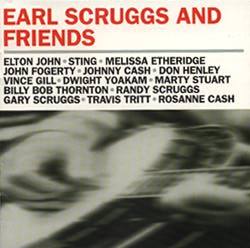
He may be 77, but the king of the blue grass banjo clearly has no intentions of settling for a life of pipe, slippers and chewing baccy on the front porch. & Friends albums are a regular occurrence in the country world, but this is one of the best and with the revival of interest in trad American music in the wake of O Brother, Where Art Thou? Also one of the most timely. Elton John's the first at the party with his own Country Comfort, Earl taking an underplaying role that quickly transforms into more prominent picking come the second track, joining Dwight Yoakam for a hillbilly Borrowed Love. It's a joyful bubble of a noise that defies any attempt to keep toes from tapping, which is pretty much the mood sustained for the rest of the album as such names as Scruggs is joined by such names as Sting (Fill Her Up), Travis Tritt (True Love Never Dies), son and album producer Randy (Somethin' Just Ain't Right), John Fogerty (hoe downing it with Blue Ridge Mountain Blues), Vince Gill & Roseanne Cash (I Found Love) and, reworking gospel blues to their own means Don Henley and Johnny Cash trading it out on Passin' Thru. Least memorable is Billy Bob Thornton growling his way through Ring of Fire while on the other hand Scruggs and a throaty voiced Melissa Etheridge find something rather special together on the ballad The Angels, but if you really want a quick summation of what the man and the music is about then check out Foggy Mountain Breakdown, a yeehawing breakneck banjo and geetar instrumental jamboree with Scruggs and sons, Gill, Marty Stuart, Albert Lee, Leon Russell, Jerry Douglas, Paul Shaffer, Glen Duncan and Steve Martin. Fire on the mountain indeed.
Mike Davies
Big on the burgeoning Scottish Americana scene, the Scuffers can't seem to put a foot wrong since their debut album, The Life I've Had, gained glowing reviews back in 2007. Scrambled Pictures, their followup, again revolves around the compositions of the band's talented songwriter Gavin Wallace, who this time round expands the musical palette beyond pure Americana into rock'n'roll, skiffle, pop and folk. The playing is both polished and good-natured, with a keen feel for entertaining an audience without patronising them. Founder members Gavin and Ian are joined by Danny Mitchell, Angie Darcy and Dave McCluskey, with Conor Smith adding plenty of signature twang guitar - grand stuff for sure.
Particular successes include the Fleetwood Mac (Rumours)-style acoustic folk of If Only I Knew Then What I Know Now, the good-time drive-time vibe of High And Low (albeit slightly spoilt by some muffled production gimmicks) and the country-gospel of A Heartful Of Lovin', the bouncy Into The Night, the breezy uptempo honky-tonk of A Man Who Treats You Right and the (Larkinesque?!) lover's riposte Here's To The Days (well, that's the polite way of putting it!).
Artistic unity is not an issue, and yet there's a nagging feeling that it does seem to have been sacrificed in the inclusion of some more makeweight (lightweight) and less memorable songs towards the end of the disc. Something To Pass The Time veers a little too close to pastiche for comfort, perhaps, in its cross between Showaddywaddy and Dexy's Midnight Runners, and we can by now all do without the crackly-vinyl gimmick that ushers in the otherwise appealing Swan Song.
Yet virtually all of the songs here are catchy, the hooks completely irresistible, and it's difficult to find fault while any individual track is playing, but in the end I'm not entirely convinced that diversity is strength in this case, even though the various idioms are without a doubt authentically managed and the mix is in the end perfectly amenable.
David Kidman November 2010
This documentary DVD is an illuminating and mostly satisfyingly incisive look at the life and music of the legendary Chicago bluesman, who died in December 2004 at the age of 62 after complications from diabetes. Frank "Son" Seals was one of the more exciting of the Chicago axemen, with a thrusting, intense expressive style all his own. He made seven albums for Alligator over a 30-year period, and label boss Bruce Iglauer is but one of the folks interviewed in the 30-minute documentary film that forms the backbone of this DVD release. The film intersperses interview segments with footage of Son Seals in performance, during which he drives his band through excerpts from 12 of his best-known numbers (two-thirds of which were his own compositions, including the celebrated instrumental Hot Sauce, with which he habitually closed his set in later days). It's a straightforward documentary, which illuminates Seals' life through the reminiscences and insights of his sister Kat, his son Rodney and luminaries like Dr John, Koko Taylor and Stephen Seagal. It points up the Seals' courageousness in the face of struggles with ill-health (not just the diabetes but the effects of a bullet wound in his brain), and examines his philosophy behind the business of personal his music-making. The bonus feature on the DVD consists of three short (10-12-minute) segments of live performance, recorded in Chicago (Rooster Blues, House Of Blues and the Chicago Blues Festival) around five or six years ago. These show Seals and his band on blistering form, although the recording quality of the second set is a tad distant and lacking in presence compared to the immediacy of the other two. And personally I'd have liked to have longer extracts from his performances within the documentary (some are very brief indeed). But anyone who desires a permanent visual and audio memento of this honest, down-to-earth blues legend who thrived on live performance and as-live studio music-making, should find no disappointments in this package.
David Kidman January 2008
Having returned to independent label land with Play It Again Sam (Third Man in the US) after two albums with Warners, this compilation serves as a useful snapshot of his recording career to date.
Trawling material from all five albums, and giving each fair representation, more recent admirers will be most interested in hearing the tracks from his first two releases, the hard to find Cheap and Dog House Boogie, the album that first brought him to attention and secured his major label deal.
The former yields the scuzzy title track blues, 8-Ball and the moaning Xmas Prison Blues while from the latter you again get the title track with its Spirit in The Sky riff, My Donny, Fallen Off A Rock and Cut My Wings.
Any worries that given the facilities of a major, he might overpolish the raw, choppy Mississippi blues that made his name were put to rest with the arrival of I Started Out With Nothin' And Still Got Most Of It Left which provides the most cuts with Prospect Lane's train rhythm chug, Thunderbird's scuzzed tribute to the wino's tipple, the laid back Walkin Man, Happy Man with Ruby Turner on backing and KT Tunstall on rhythm guitar, St Louis Slim's talking blues and, of course, the title track.
The follow-up, Man From Another Time was, certainly in terms of the material itself, something of a disappointment and the banal lyrics of That's All sound no better now, but otherwise the compilations picks wisely to include Diddley Bo's showcase of his one string guitar of the same name, the wistful gospel blues sparseness of Dark, the Tokoloshe Man like Never Go West and by way of a change from his usual guitar accompaniment, the haunted self-descriptive Banjo Song. It's the only album not to have the title track included, but that's no loss.
You Can't Teach An Old Dog New Tricks came out earlier this year, so limiting it to three numbers seems fair and the choice of stripped back folk blues Treasures, the down and dirty title track with its Morris Minor hubcaps slide guitar and John Paul Jones on bass, and the urgent I Don't Know Why She Loves Me But She Do featuring a four string guitar made from a cigar box are solid choices.
It's a pity there's no unreleased material. but the deluxe edition does come with a bonus DVD featuring BBC4's Bringing It All Back Home documentary that took him back to his Deep South stomping grounds as well as a live recording of his 2009 show at the Brixton O2 Academy. Now 70, he shows little sign of slowing down and, as New Tricks showed, he's back to full musical fighting strength, so hopefully this collection is a comma in his career rather than a full stop.
Mike Davies November 2011

There has to be an interesting story as to why he's parted company with Warners and signed to an independent label after two Top 10 albums, the last reaching the Top 5, but no one seems to be telling it. Whatever, the move seems to have given 70 year old Steve Wold a creative kick up the backside after the frankly thin material of Man From Another Time. From the opening Treasures, a haunted folk blues about the transitory nature of material possessions featuring just his nicotined voice, guitar and banjo with Georgina Leach on fiddle, it's clear he's a man reinvigorated.
Any concerns that that might be his best shot and are swept away when he slides into the down and dirty title track, running slide licks on a guitar made out of Morris Minor hubcaps while Dan Magnusson and Led Zep's John Paul Jones hold down the solid rhythm section.
And if he's not squeezing the blues out of redeploying auto parts, he's conjuring the devil out of an old cigar box converted into a belching four string slide for the urgent I Don't Know Why She Loves Me But She Do while Magnusson provides the skittering percussion.
The trusty 3-string Trance Wonder gets plenty of workouts too; driving the Back In The Doghouse trouble blues groove along with Jones and Magnusson, burping and throaty on Party, a bluesman's vision of an afterlife comprising of booze, beautiful women and playing music with old friends, and keeping him company alone for What A Way To Go, another wry musing on mortality as he sings about working your life for a pension plan and then popping your clogs a month after retiring.
Elsewhere his Jack, Dirty Digger, Tractor and Paint guitars (photographs of all illustrating the lyrics booklet) all do solid service on an album that sets out to remind folk that he's about more than the blues tag that got hung around his neck.
Sure there's always a blues element, but Underneath A Blue And Cloudless Sky is a raw Appalachian country banjo tune, Whisky Ballad (written by son Paul who accompanies on washboard and whistling) is a goodtime front porch folk number, there's a gospel undercurrent to the slow moaning Burnin' Up and the closing country It's A Long Long Way, which sees the return of Leach's fiddle with Jones on mandolin and backing by 'the Lyndhurst Rabble Choir', both recalls Cohen's Passing Through and sounds like something Johnny Cash would have recorded.
Arguably the best thing he's done and an album to send young pups scurrying back to their kennels with their tails between their legs, why on earth would anyone want to teach new tricks when the old ones remain so dazzling!
Mike Davies June 2011
Instead Diddley Bo and the talking blues Seasick Boogie are essentially about either his guitar or playing the songs themselves while lines like "freedom for most is just a word like toast" on That's All plumb the depths of banality.
Indeed, perhaps aware of his lyrical limitations, he himself seems bemused by the adulation that's been lavished on him as, on the title track, he says "don't you got nothing better to do that listen to a man from another time?"
The good news, however, is that while the songs may be a little thin, the electrifying delivery remains ample reason to listen to the 66 year old's North Mississippi blues. Whether picking his signature 3 string Trance Wonder, battered acoustic, the aforementioned one string Diddley Bo or the four string guitar made from a cigar box, he plays up a storm, slicing out the slide blues, crunching the riffs and, on Never Go West, letting rip with a full throated drawl, drums and bass for a track that recalls John Congos's voodoo pumping Tokoloshe Man.
Such is the heat and power of the playing that, rather than honing in on his talking about riding his old John Deere tractor on Big Green And Yeller, you're caught up in the smoky burping stomp while the spooked Banjo Song makes you feel like you're actually standing in some deserted backwoods road with no sense of direction and on the spare wistfully intoned Dark you realise why you were first intoxicated by that nicotine stained voice in the first place. Next time though, he'd better have dredged up some sharper memories if he's going to remain a tramp shining.
www.seasicksteve.com
www.myspace.com/seasicksteve
Mike Davies October 2009
Literally thrown out of home when he was 14, Oklahoma born Steve Wold opted for the hobo life, riding the rails, working carnivals, sleeping rough or in flophouses, and frequently passing a few days in a variety of county jails. During which time he learned to play the blues, picking guitar on street corners for loose change before eventually winding up living in Norway where he recorded his debut album, Cheap, with Swedish band The Level Devils.
Then, two years back, came Dog House Music, a collection of stripped to the bone Mississippi acoustic/electric blues in the tradition of John Lee Hooker, Son House and Blind Willie Johnson that'll have many checking the man's skin pigment. That and his charismatic live performances, suitably grizzled in battered hat, dungarees and grey beard, perched on a stool playing three string trance guitar, a one string 'diddley bow' and stomping out percussion on the wooden box he calls the Mississippi Drum Machine, also attracted major label attention.
Which brings us to his wittily titled first release as part of the Warner conglomerate. Good career news for him, but mixed blessings for fans who might feel that the studio polish, backing singers and guests that include Ruby Turner (duetting on the gospel hewn Happy Man), KT Tunstall, and Nick Cave take something away from what attracted them in the first place. Certainly, Walkin Man and St Louis Slim veer dangerously close to the somnambulance of JJ Cale, though admittedly he'd never be found providing drawled explanatory spoken introductions about riding the freight cars and picking artichokes. Or, indeed, including a hidden 11 minute spoken track simply reminiscing about living rough and cooking up blackberries and peanut butter on a pot-belly stove.
However, the good news is that while parts of the album sound like they've been designed to lure in listeners for whom down and dirty blues doesn't extend further than Eric Clapton doing Layla, there's a considerable element that retains his unfiltered approach to the music and songs that draw on his former life.
Cases in point being Thunderbird, a scuzzy throaty blues celebration of the wino's chardonnay, the wicked slide work on Chiggers, a talking blues about dealing with some nasty little bugs, and the slap leg train rhythm chug of Prospect Lane. As it turns out, the contribution from Cave and his Grinderman buddies on Just Like A King is also one of the album high-spots, an easy rolling blues strum laced with sexual innuendoes.
Closing with the unadorned My Youth, a stark mediation on growing old and the memories that have amassed, at the end of the day the score board is in Steve's favour and it's to be hoped that in albums to come he continues to remember that a battered guitar and a wooden box can work more magic than a state of the art studio desk.
www.seasicksteve.com
www.myspace.com/seasicksteve
Mike Davies October 2008
Literally thrown out of home when he was 14, the Oklahoma born Steve Wold opted for the hobo life, riding the rails, working carnivals, sleeping rough or in flophouses, and frequently passing a few days in a variety of county jails. During which time he learned to play the blues, picking guitar on street corners for loose change before eventually winding up living in Norway.
All of which, feeds into his Dog House Music (Bronzerat) album, a collection of stripped to the bone Mississippi acoustic/electric blues in the tradition of John Lee Hooker, Son House and Blind Willie Johnson that'll have you checking the man's skin pigment.
The hardship subject matter of songs such as Dog House Boogie, Fallen Off A Rock, Things Go Up and Hobo Low doesn't stray far, but it's Steve's playing and talking style delivery that invest them with real individual personality, elevating above the blues cliches.
Looking suitably grizzled in his battered hat, dungarees and grey beard, perched on a stool and simply playing the blues, he's cuts a mesmerising figure, an authoritative booming voice underpinning the tales of a drifter's life. He also throws a few musical curves with a three string trance guitar (heard to great effect on Cut My Wings) and even, as on Save Me, the twangy one string 'diddly bow', stomping out the percussion on a wooden box he refers to as the Mississippi Drum Machine.
Returning to live work after being struck down with a heart attack a year or so back, he arrives now packing a four track single of new material, It's All Good, following the same slap blues storytelling pattern, scuzzing it up on Thunderbird (the cheap wine not the car) and simply keeping you rapt as he talks his way through The Jungle.
Mike Davies May 2007
David Kidman August 2007
These two guys are icons in their own fields, and it's no surprise that they'd first operated in tandem during the revolutionary Greenwich Village folk revival days circa '63 (as fellow members of the Even Dozen Jug Band with Maria Muldaur and Stefan Grossman). Following which, of course, John led the eclectic band The Lovin' Spoonful and wrote some brilliant songs, while David spearheaded the acoustic music revolution with his genre-defying "Dawg" music that took in elements of bluegrass, folk and jazz. The genesis of this new record lay in a meeting of the two musicians some 40 years on at a benefit concert, where they greatly enjoyed their evening of spontaneous music-making. The resultant album's more than a bit of a treat in many ways, with some absolutely superb playing from both musicians that's better than we've probably any right to expect! Their skills shouldn't be taken for granted, I know, but instrumentally speaking David and John are so in their element on whatever tune they choose to pick up and the result is always classy and never less than wholly technically expert. John's harmonica playing (oft underrated in the past) is fabulous, and totally spot-on too, with a real feel for the collaboration and interaction with David's multiplicity of mandos. Just under half of the tracks are instrumentals, and these sure provide the set's high points: new takes on David's delicious Dawg's Waltz and his perennial EMD, and a particularly tasty cover of the Everlys number Walk Right Back, all demand instant replay, while even the obligatory jamming cut (Harmandola Blues) scores with its sparkling, as-live interplay. It's a shame that the vocal items aren't as distinguished, largely due to the fact that John's delivery, though perfectly amiable, exhibits a tiredness that (I'm sorry, but there's no kinder way of saying it) betrays his age somewhat and to a certain degree negates the brilliance and liveliness of the pair's instrumental work. Best of the vocal numbers, perhaps, are John Henry, It's Not Time Now and a reworking of the old Spoonful hit Coconut Grove, whereas these latest renditions of Deep Purple and Passing Fantasy verge on embarrassingly indulgent and yawningly complacent. Satisfied then? - Well, to be fair, not entirely - but it's still not a bad record by any means, and the musicianship still shines from every digit!
David Kidman January 2008
They really are sisters too. Hailing from Muscle Shoals, Alabama, 20-something siblings Laura and Lydia Rodgers grew up singing in church and around the family home, presumably weaned on a diet of Buck Owens, Doc Watson, the Everlys and the Louvins. Becoming a duo after Laura auditioned for a proposed new group and took Lydia along when she was called back for a second hearing, their debut single, a rowdy gospel version of Johnny Cash's Big River, was produced by Jack White for his own Third Man label and features him on squally guitar.
A cooked to perfection 60s country covers collection, the album was recording using 50s style anologue equipment, produced by Dave Cobb, who auditioned them, with a much impressed T Bone Burnett signing on as executive producer and session legends Rob Turner and Hargus Robbins along on steel and piano respectively with Laura taking lead and Lydia providing harmonies.
George Jones gets the old tyme treatment with a twangy rendition of Why Baby Why, written but never recorded by bluegrass king Bill Monroe, The One I Love Is Gone is a slow, dark ballad given a Gillian Welch vocal feel, Owens' My Heart Skips A Beat trips along lightly with a bounce in its step and, naturally, Hank Williams is in there too, rounding off the album with the honky tonking Why Don't You Love Me and, by way of contrast, a beautiful prairie hymn reading of House Of Gold.
If some of these are a touch obvious, they make other interesting choices, too. There's a souffle light cover of Frank & Nancy Sinatra hit Something Stupid while I've Got A Feeling is a faithful note for note revival (complete with bum bum dum de bum opening vocals and fade out) of an obscure 1963 single by the then 15 year old Nancy Baron.
All About You and Do You Love An Apple are both traditional numbers, the former's hoe-down swing harking back to the Andrews Sisters while latter's a folk number previously recorded by both The Bothy Band and Rufus Wainwright, the girls pleasingly keeping the 'wear bugger-all' line.
But they're not just about other people's songs. They open the album with one of their own, the lilting Tennessee Me conjuring thoughts of early Emmylou Harris while the other original, Waste The Day is a honky tonk quick step that could easily have come from the vintage days of Patsy Cline and Wanda Jackson. There's quite a few young artists doing retro country at the moment, but after this it's an open secret who's among the very best.
Mike Davies February 2011
Recorded in 2010 on a stage in New Zealand to raise money for an arson-damaged local women's centre (hey, what a typically "Peggy" cause!), this latest release both entirely accurately represents and proudly celebrates the consummate entertainer, communicator and commentator that is Peggy Seeger. This performance, for all that it has been edited, forms an object lesson on how to engage and hold an audience's attention over a long timespan, in this case with the most varied possible selection of material, all delivered in that characteristically clear, genuinely ageless voice. Anyone who has seen Peggy live will know that she makes everyone feel at home with her from the start, and that we're all on the same side (whatever our politics) – although it's also a safe bet that she'll convert you to at least one extra cause before the evening's out!
The set-list reproduced on this 65-minute CD is a very typical one, in that it unashamedly includes and intersperses the most diverse of elements: on the one hand a sprinkling of contrasted traditional American folk ballads (Fatal Flower Garden, Mountaineer's Courtship), a song culled from the Lomax recording of a prison inmate (I Been A Bad Bad Girl), a banjo-song medley and the playful kids' song Bought Me A Cat, and on the other hand songs of woman-power (the right-on sarcasm of Everyone Knows) and deep political conscience both of mordant wit and earthy humour. These may be brief (activist Bob Bossin's priceless Deterrence Lullaby), or ultra-wordy (Peggy's celebrated I'm Gonna Be An Engineer, which gets its inevitable airing – she even lovingly refers to it as her "albatross" here! – as do a further generous helping of Peggy's own songs including the laconic You Don't Know How Lucky You Are, For A Job and Give 'Em An Inch, the curiosity Missing, and the genuinely moving, even heartbreaking observation Everything Changes (written for her mother, as recently as 2008).
Peggy's supreme skill as a songmaker is complemented by her skill as a raconteur, and there are plenty of jokes (and serious inferences to be drawn) snuggled cordially into the running-order, along with what the press handout brilliantly describes as "tart (spoken) hand grenades into sexist pomposity". Peggy herself moves easily and expertly between banjo, guitar and piano, and brings on harpist Bob Bickerton, mandolinist Nathan Torvik, and her own partner Irene Pyper-Scott for cameo contributions here and there. The whole CD perfectly reflects the concert experience, in fact.
David Kidman August 2012
Fly Down Little Bird presents a set of recordings made by Peggy and Mike in (mostly) late 2008, shortly before Mike's death; for these recordings they'd decided to lay down for posterity some of the "old songs" as closely as possible to the way in which they had originally heard them (singing along to ancient field recordings that were playing as a soundtrack to their childhood while their mother Ruth laboriously transcribed them). To achieve this, Mike and Peggy took time out to just sit back and sing (with no overdubbing, and little or no cutting between takes) fourteen of these old familiar songs.
There's a lovely intimacy about these recordings, a genuine feeling of being totally at-one with these songs that have naturally become a part of the singers' psyches. To the manner born, indeed, and you won't ever hear the songs done better or more authentically. A small number of the songs (eg Cindy, The Farmer Is The Man, Little Birdie) have become staples of the old-time revivalists' repertoires, but a significant proportion of the remainder are definitely more obscure and well worth exhuming once again, especially in such authoritative and genially committed performances as they receive here, performances which in spirit cannot help but transport us back to the original Lomax field recordings.
The Dodger Song, Blood-Stained Banders and My Home's Across The Blue Ridge Mountains were among those completely new to me, while several of the other selections couldn't be counted at all familiar. There's earthy ballads like Old Bangum, balanced by a pair of fun duets (Jennie Jenkins and Where Have You Been My Good Old Man?) and the curious Fod!, on all of which Mike and Peggy are clearly having the time of their lives affectionately reliving and recreating those old memories; while especially enjoyable are those characteristic soundings-together, those gloriously natural sibling harmonies (as on Poor Little Turtle Dove and Little Willie's My Darlin'). Accompaniments are varied too, with superbly skilled use of banjos, guitars, lap dulcimer and harmonica; while the closing item, Red River Jig (which actually sounds more like a reel), is sparkily rendered as a fiddle-and-piano duet. Hey now, don't you miss out on this treasurable disc.
www.peggyseeger.com
www.mikeseeger.info
David Kidman May 2011
This is the final instalment in Peggy's "home trilogy" of recent recordings for Appleseed, following 2003's Heading For Home and 2005's Love Call Me Home. It consists for the most part of newly-recorded versions of some of Peggy's favourite traditional (or near-traditional) folksongs from the US and UK, to which 12-track sequence is appended the beautiful, poignant, reflective self-penned title track, which forms the most fitting conclusion to (and consummation of) the trilogy that one could imagine. It's a deeply personal composition (how could it be otherwise, with lines like "The first time ever I saw his face, his heart became my own"?), and yet its sentiments and experiences also can be seen to have an embracingly universal import; this aspect, together with its very simplicity of expression, renders it profoundly moving. As for the traditional material, well these new renditions are uniformly superlative and often intriguing; not only do we get here the voice of a master interpreter of these songs of many years' standing, one who loves and knows the songs in depth and clearly truly understands them, but Peggy's also a lady who has immense experience of actually thinking about these songs and carefully choosing the ideal versions for her to perform. Not least with regard to the tunes she uses: a case in point is Molly Bond, which Peggy sings unaccompanied here, to a tune which conveys the intrinsic eeriness of the ballad and is commendably far removed from the significantly sweeter "usual" melody, while conversely her chosen tune for Newlyn Town is sweeter and more plaintive than the "usual" one for this broadside. In fact, some of the tunes Peggy calls into service here were new to me, and these prove especially intensely rewarding and refreshing. Peggy's choice of songs is an interesting one by any standards, containing as it does variants of the fairly well-known (Home Dearie Home, Hang Me, Roving Gambler, Little Birdie) alongside other material which, though not exactly obscure, can be regarded more as the province of the hardened folksong buff (the Texas holler Dink's Song and the industrial complaint Let Them Wear Their Watches Fine, for instance). Aside from Peggy's own excellent performances, the songs are also blessed with beautifully considered yet spontaneous-sounding down-home-style backings courtesy of Cary Findley, Calum and Neill MacColl, John Herrmann, Rosemary Lackey and Vollie McKenzie (in varying permutations), and a further contributing factor in the success of the whole enterprise must surely be the sympathetic yet upfront production by Calum himself. Not to mention the ingenuity of the at times uncannily simple instrumental arrangements (special mention for the ghostly drone-enhanced concertina-and-harmonium backing for O The Wind And The Rain and the unusual use of slide-guitar on the Napoleon ballad). This is an exceptionally lovely release; in fact, the whole trilogy has proved eminently treasurable - thanks, Peggy, for everything.
David Kidman January 2008
Peggy's 70th birthday celebration, held at London's Queen Elizabeth Hall on 29th May 2005, began (in Peggy's own words) "with a wish" (for a cake!), and "a deep desire to see as many of (her) family and friends in one place as possible". Naturally (and through the good auspices of Peggy's children Neill, Calum and Kitty and her partner Irene Pyper-Scott), Peggy's wishes came true – albeit while she was still 69 (though only just!)… She says she felt born again when she "walked out on that stage and knew that so many of the people who had touched (her) life were there, ready to touch again and bawl the choruses out." And this aspect is certainly captured by the faithful recording of the event by BBC Radio 2, now given a proper release on this fine two-disc set. (Well I think it's virtually the whole concert, but newspaper coverage of the event made mention of at least one other item that's not included on the discs, so I'm a little confused.) Inevitably, Peggy dominates the proceedings, but what a presence - imperious sometimes, yes, and definitely in control (in the nicest possible way) of proceedings, but also much humbled and even awed by the presence and contributions of those so important to her. The gig was emphatically not an excuse for an exercise in arrogant self-congratulation, but a highly organised, affectionate and sincere thankyou that flows both ways between Peggy and her fellow singers and musicians (and indeed her public). If occasionally there's a faint whiff of didacticism about the event, that's not entirely inappropriate in view of Peggy's enormously influential role in the development and wider currency of folk music in all its senses over the past half-century; let's face it, she still has plenty to teach us all!…
The celebration concert covered all possible bases from the broad church of folk that forms Peggy's musical world: from the traditional ballads she so loves through to her own original compositions that so ably and memorably espouse her personal preoccupations and responsibilities, particularly in the areas of war, feminism and union politics. These songs so deserve to be more widely heard, and if this CD is regarded even partly as a taster for Peggy's songwriting then that's no bad thing in my book (folks can then go on to investigate the lovely trio of albums Peggy recently recorded for Appleseed). So finally to the performances – Peggy's cohorts did her proud, fully rising to the occasion. Some were granted solo or lead appearances, and shone accordingly without eclipsing Peggy's own personality. Memorable moments include: Cindy, on which Peggy, brother Mike and half-brother Pete perform together for the first time in decades; Che Guevara, with Peggy leading the ensemble (Eliza & Martin Carthy, Norma Waterson, Calum & Kitty MacColl) in rousing chorus; Billy Bragg's unrehearsed duet with Peggy on Darling Annie is quite touching in true downhome "all fell together on the night" fashion. There are inevitably some entirely forgivable lapses in intonation, but the charm of the performances and sense of occasion overrides any concerns of a purely technical nature here. At times Peggy even leaves the stage completely, yielding the spotlight to Norma and Eliza (for Lowlands Of Holland), and later on to Mike and Pete individually. Of course, the items which Peggy performs solo – and there are quite a few – carry an intimate resonance all their own, and the gentle power of her sharing these songs with us is well communicated even through the CD medium. And the rather special bonhomie of the final two items, Sing About These Hard Times and Love Call Me Home, is genuinely irresistible. As is the whole concert (in spite of one or two "you really had to be there" moments that you may find less-conducive-to-home-listening). Yes, these two discs are definitely to be cherished.
www.pgseeger.com
www.appleseedrec.com
David Kidman March 2007
Peggy Seeger - Love Call Me Home (Appleseed)

This is a truly delightful record. I absolutely loved Peggy's last two releases on Appleseed, especially the beautiful Heading For Home (released in the fall of 2003) which formed the first instalment of a projected "Home Trilogy" (the fluid concept of "home" embracing her American birthplace, England, stages where she's performed, her physical body and the music that has shaped her career) - of which Love Call Me Home is now the second. Believe it or not, Peggy's fast approaching her 70th birthday, but on this record she sounds virtually ageless, ie every bit as fresh as she has in ages, radiating the good vibe that can only come from a singer so deeply connected to her material and displaying that innate and comprehensive understanding of the songs she chooses to sing.
Love Call Me Home is Peggy's 21st solo album, on which she again mixes old songs with new compositions of her own, of which here there are just two, bookending the album. Dealing with the latter category first, these - although highly contrasted - are particularly fine examples of homage-writing; Sing About These Hard Times is kinda based (at any rate musically) on the spiritual Down To The River To Pray, and updates the mood of the times as a contemporary response to an exhibition of artwork of the Great Depression, whereas the album's title track is a tenderly felt remembrance of a friend Christine Lassiter who died of cancer four years ago (for in the end, love calls everyone home).
The rest of the songs are traditional in origin; as Peggy explains in her liner notes: "I love new songs, yet I still find myself returning to the old ones… songs handed down to us by singers who loved and tended to them, as I love and tend to them for those who come after me." These are loving performances indeed, and tremendously affecting; they include a stark, superbly authentic unaccompanied rendition of Bad Bad Girl (a song her mother had transcribed from a 1936 recording of Ozella Jones), while the second of the unaccompanied tracks - Love Is Teasing (where Peggy uses the American melody, different from the usual English and Irish versions, which is well worth reviving) is delectable. There are also very fine versions of Rynerdine and Loving Hannah, not to mention two hanging ballads (Hangman and Poor Ellen Smith), an eerie, quite chilling rendition of Who Killed Cock Robin? and a derived playparty song (London Bridge).
Accompaniments are homely and simple, using favourite instruments like autoharp, Appalachian dulcimer, banjo, psaltery, guitar, fiddle and mandolin; musicians include two of her sons by Ewan (Calum and Neill) and daughter Kitty contributes some backing vocals. Much of the album was recorded in England in fact, five of the tracks at Calum's studio here. The whole project has a tangible and highly satisfying unity that's brought to it by Peggy's own potent and thoroughly likeable presence (the personification of a folk artist) and her inborn understanding of the repertoire, songs with which she's truly at one and at home. The press release is spot-on - for this is indeed an album that will call you (too) home.
David Kidman
Here's a fantastic, previously unissued concert given by the 40-year-old Pete at Bowdoin College in Maine on 13th March 1960. This was a time when he'd been targeted by the infamous House Un-American Activities Committee, blacklisted, and under indictment for contempt of Congress for refusing to answer questions about his political beliefs. In the face of all of this pressure, Pete persevered, travelling throughout North America and performing "community concerts" in schools and other local venues. The close-on-two-hour concert, reproduced in full here over the course of two CDs, was recorded with extraordinary audio fidelity by the campus radio station WBOR-FM, capturing all the electric communal atmosphere of this gig. Its 35 tracks together form not only an entertaining and varied programme, but also a demonstration of the enormity of Pete's talent as a performer, song leader and social activist. A key component of his success in involving the audience was that each one of the songs performed was prefaced by an introduction that put that song into a social and historical context, and this gambit never fails him throughout the extended set.
The first disc takes us from the old folk song Penny's Farm into the intense He Lies In The American Land, composed by a Pennsylvanian steel worker about the death of one of his co-workers, then moves onto sea chanteys of Afro-American origin, a banjo medley, Gershwin's Summertime, D-Day Dodgers, a sequence of political songs, a 12-string-guitar instrumental, the English ballad The Water Is Wide and an absolutely stunning performance of Pete's own (then recent) setting of Bells Of Rhymney, finishing up with perennial weavers favourite Goodnight Irene. And that's just the first half of the gig - eclectic or what?
Disc 2 brings us Big Rock Candy Mountain (in close on the Lomax version), a spiritual, civil rights and anti-war songs, a lengthy excerpt from Pete's ambitious medley from his then-not-quite-released Rainbow Quest album (which included the original three-verse version of Pete's own Where Have All The Flowers Gone?), the celebrated Vive La Quince Brigada, then a sequence of numbers popular from Pete's days with the Weavers group (Suliram, Wimoweh, Tzena) and some Leadbelly-originated songs, finally bringing the concert to a close with Worried Man Blues, which Pete had acquired from a 30s Carter Family recording.
The whole set is self-recommending, needless to say, and comes in a sturdy double-gatefold digipack complete with fulsome 24-page booklet and notes in the very best traditions of the SF house.
David Kidman August 2012
This CD presents a unique snapshot in time, when the convergence of an iconic folksinger, a Clearwater educator, an innovative public school teacher and a group of enthusiastic fourth-graders led to unexpected results. Pete's own dictum, of course, has always been that "the future of the entire human race lies in the hands of children", so I guess this particular outcome – a whole CD chronicling the collaboration – is not completely unexpected.
In the face of complaints from some parents and school personnel (considering Pete's activist background and reputation), Pete tirelessly and patiently schooled and prepared the kids for performance, of a whole load of archetypal songs of activism, optimism and the power of music, songs sourced from a variety of writers (including some of his own of course), songs which instil in the kids a pride in their environment and a concern for its future. To assist him in this worthy endeavour he brought in a number of adult friends including Dar Williams and David Bernz (on the brand new co-write Solartopia), Sarah Underhill (on Bill Staines' timeless River), Rick Nestler (on his own "history lesson" The River That Flows Both Ways), and Dan Einbender (on his own recycling anthem It Really Isn't Garbage).
The breadth of Pete's musical references allows space for guest appearances too, including Sloop Clearwater captain Travis Jeffrey (who leads the call-and-response piece It's A Long Haul with Pete and the kids) and David Amram & Victorio Roland Mousaa (who perform a Native American round dance). The kids do a splendid job in mastering some quite complex choruses and verses, and the keen motivation of all parties comes across superbly, while Pete himself is as sprightly as ever (although at 90 you expect a certain frailty of vocal projection at times).
So, as you can see, this is far removed from being an album of tiresome kids' songs to be sung on auto-pilot at the back of the school bus by tiresome kids when teacher's not listening – instead it's an entirely unpatronising and brilliantly conceived exercise in right-on social grooming which gives all the participants a real good time in learning and appreciating some top-quality songs with a real caring message. Just hear the enthusiasm with which the kids sing Take It From Dr. King, Pete's 2001 entreaty to non-violence, and We Shall Not Be Moved too… And for that matter, their timely revisit of Pete's timeless Turn Turn Turn (not an easy song to sing) - complete with several new verses and Pete's explanation of how the song came about!…
Pete the supreme communicator certainly achieves his mission here – to show that everyone is capable of making music for entertainment and for social change; thus Tomorrow's Childrenis an affecting, affectionate and charming release, and a typically Pete Seeger venture, and although to be fair it will probably fall into the category of "not one for frequent replay", it will still doubtless be counted an essential part of the Pete Seeger jigsaw.
David Kidman August 2010
This handsomely-packaged and supremely well-presented set is an expanded re-release of the series of five seminal discs that were previously available as individual CDs. They contain Pete's influential (if admittedly by today's standards more than a touch raw and basic) renditions of no fewer than 139 songs from all branches of America's folk heritage - a staggering corpus indeed. Folkways' enterprise is forever to be applauded, for at the time these recordings were first undertaken and planned (the late 50s) this was an undertaking not to be carried out lightly, still a huge investment (and leap of faith) even notwithstanding the comparatively minimal resources required.
It's a veritable encyclopaedia of American folk culture, with Pete unashamedly giving the same measure of commitment both to songs of true worth and songs of little substance, the classic traditional ballads and the embarrassing ephemera, spirituals and nursery rhymes, protest songs and old-time hokum, the deeply felt and the undeniably corny all unashamedly presented cheek by jowl as it were. Pete delivers all of these songs simply and directly, either with his own guitar or banjo accompaniment or in a few cases unaccompanied; but in all instances, you can hear every word, and relish his evident, almost childlike perennial delight in communicating these often timeless songs.
The original LPs, recorded between 1957 and 1962, sold so well that their contents provided what amounted to a core repertoire for the folk revival; even today, 50+ years on, they have the power to modestly and unpretentiously entertain, educate and yes, impress with their degree of direct insight - provided you don't expect too much from them in any more "radical" sense. Pete's presentation was (and still is) unfussy, and yet thoroughly engaging, for his attitude (and mission) was clear: he embraced the task of sharing, the passing-on of songs, with complete enthusiasm, just as much so for the insubstantial or dubious examples as for what might be termed the real folk nuggets.
These five volumes are an absolute treasure-trove, not least for containing a healthy quotient of seldom-heard or little-known variants of songs or tunes we think we know and/or which have been "done to death" (Black Is The Colour being just one instance and cause for rejoicing). We also find that Pete's version of Big Rock Candy Mountain is a revelation to one who's grown up with the sanitised Burl Ives version, while old-time standards The Fox and Old Joe Clark include several verses I'd not heard before too. For in so many cases we can name, tunes since have been endlessly recycled for newer compositions, and lyrics have since been combined, cobbled, paraphrased and parodied, often quite mercilessly. And the fact remains that so very many of these songs have since become repertoire standards (and worse) through their swift incorporation into the skiffle and then pop arenas. Whatever, the litany of song-titles includes now-staples which we can't imagine ever at one time being without: Midnight Special, Putting On The Style, Alabama Bound, Wabash Cannonball - you get it!
The copious liner notes, reproduced in full in the lavish booklets, are a model of erudition and information, and I learnt much regarding the provenance of songs I thought I knew all about (if you see what I mean) - indeed, Pete's notes scotched several misconceptions I'd long harboured. Endlessly fascinating, in fact!
As far as Pete's actual performance goes, well sure, there are a couple of instances where Pete's unbridled enthusiasm to communicate gets the better of him (some decidedly over-cooked barnyard impressions on I Had A Rooster for example), but these can readily be forgiven! And let's not forget Pete's banjo playing, which in itself has been an inspiration to countless folks (old and young), for as we know he was to go on to provide tutorials and workbooks that are now regarded as seminal in their field.
The remastering of all five discs is pretty damn fine, apart from one curious and frustrating glitch whereby track 13 of disc 3 (My Good Man) is abruptly cut short at around 2½ minutes (around night number five of the seven drunken nights).
The presentation and packaging, as I've already hinted, is both lavish, sturdy and user-friendly, with all five volumes accessibly yet solidly bound into the one robust hardcover sleeve. Robust as befits the monumental importance of this "collected edition" representing the enduring legacy of the legend that is Pete Seeger, his pioneering work in encapsulating nearly a century of American history and culture in order to "plant the seeds of a better tomorrow in the homes across our land". Pete truly put his own stamp on America's exhaustive folk song heritage while bequeathing it to generations to come. And now that Smithsonian Folkways discs have attained an efficient and reliable UK distributor in Discovery (www.discovery-records.com), this provides an ideal incentive for you to become part of that folk process and invest in this key collection of recordings.
David Kidman July 2010

Travelling back in time from Appleseed's last Seeger release that chronicled Pete still going strong a couple of years ago at the age of 89, here's a great two-disc set presenting a newly discovered live recording taped in Pittsburgh's Carnegie Music Hall close on 45 years ago. It brings us the quintessential Pete Seeger in equally quintessential concert mode: the man of constant communication, charismatic to the last, exuberantly bobbing and weaving around the microphones as he performed this totally riveting two-hour solo show.
Pete treats the audience to the full spectrum of his repertoire, moving effortlessly and entirely naturally from laughter to tears, contemporary to traditional, balladry to social commentary, activism to nostalgia, children's songs to adult philosophy, one area of human experience to another, in a polyglot pageant of life itself. In doing so, he gives us unique insights into the origins of the songs and thus the byways of human creativity. His trains of thought and song may often seem tangential but they're always highly fascinating. For instance, his introduction to Hamish Henderson's Freedom Come All Ye (complete with an authentically Scottish delivery) takes in an impromptu performance of D-Day Dodgers; his performance of When I First Came To This Land leads to a Pied-Piper-like exposition of the use of the same tune throughout many cultures; similarly, literary and cultural references are brought in to inform every song Pete performs. And even his occasional switching-over of instruments (from banjo to 12-string guitar) is accomplished with minimal delay and an entirely modest degree of genially informative anecdotery – no time wasted here!
As for the enormous breadth of material Pete eagerly encompasses during the show, a partial tracklist must suffice to give you a flavour: Oh Susanna, I Come And Stand At Every Door, Peat Bog Soldiers, Guantanamera, Dylan's A Hard Rain's A-Gonna Fall, Matt McGinn's hilarious Manyura Manya, of course some of his hits (Bells Of Rhymney, Turn Turn Turn, If I Had A Hammer, Where Have All The Flowers Gone), and a generous helping of songs in languages other than English (Malaika, Los Cuatro Generales). There are some quite spine-chillingly atmospheric moments, such as the bizarre point at which Pete seems to turn Greensleeves into a spaghetti-western theme while exhorting the audience to sing along! And we mustn't forget to mention Pete's unassuming, but very real instrumental prowess, notably on the banjo (check out his Old Joe Clark for starters). It's a real privilege to share these songs with Pete, to feel part of that audience and to sing them along with him (plenty of evidence here of his unshakable belief that "singing is like democracy – it's best when everyone participates"!); to hear his accounts of the stories behind them and come to an understanding of everything he stands for.
Oh, and even tho' he's up there on that big stage, the guy's human after all – so what if he muffs a line or two, forgets a word or so! What matters is that this show is nothing less than a totally involving experience (it might usefully be marketed as Now That's What I Call A Folk Concert!): Pete engages you directly from the very outset and refuses to let your attention wander for a moment. He's an inspiration to us all, and has been for a very long time. This issue is nothing less than the ideal celebration of Pete in his prime, the consummate folk entertainer.
David Kidman January 2010

Pete Seeger is a living legend, and unquestionably one of the greatest living Americans, let alone one of the most important musicians of our time. And at age 89, he's still vibrant, interested and creative. So here, on his first new recording in five years (the Pete & Friends disc on 2003's third volume in the Seeds series), Pete himself surveys the progress that's been made during his lifetime and what still needs to be done to create a society of equals and to ensure continued world survival, taking this opportunity to guide us through music and songs which reflect all the key aspects of his life's work. Its 32 items (mainly original compositions of Pete's, and including 26 tracks never previously recorded by Pete) have been sequenced using brief spoken introductions and solo instrumentals as links to provide a series of organic suites that address Pete's leading concerns - welcome, fellowship and community, ecology and peaceful coexistence, the tragic uselessness of war, the dangers of blind obedience and finally the need for saving the planet. Some of the songs are rewrites or updates of earlier material and others have been included to demonstrate their continuing relevance (Waist Deep In The Big Muddy is probably the best-known of these), whereas some are comparative squibs, but there's no excess fat anywhere: everything is relevant to the cause. These fresh recordings have all been made suitably democratically (in Pete's preferred fashion!). Many are performed by Pete himself either taking the lead or supported by fellow-activists or fellow-musicians (among them producer David Bernz), but he yields the lead voice part on key songs, eg to his niece Sonia Cohen for a sublime performance of When I Was Most Beautiful, and to the Walkabout Clearwater Chorus for a truly joy-filled version of the Weavers' favourite Tzena, Tzena, Tzena. Perhaps the most poignant item of all, however, is this latest rendition of Little Fat Baby, where Pete (in company with James Durst, David Bernz and Martha Sandefer) confronts his own mortality (it's close on one of those Joy Of Living moments).
This CD is an important release, one of historical significance and contemporary celebration, and is complemented by some splendidly joyous photographs. All throughout the disc's hour-long span, what comes across so very powerfully is Pete the survivor, his eternal optimism, his abundantly generous personality and intrinsic humanity, his deep personal involvement in everything that's important in life and his desire to involve us all in necessary activism of some kind... even if at this remove all we can do in respect of some of the issues will be to join in heartily with him and sing along, for someone somewhere will be listening!
David Kidman October 2008
Pete Seeger and Friends- Seeds: The Songs of Pete Seeger Vol 3 (Appleseed)
Disc 2 gives Seeger the day off as assorted friends take over for interpretations of songs either written or made famous by him, a roll call of whom highlights include Tony Trischka and Jennifer Kimball with Seeger's arrangement of Jesu, Joy Of Man's Desiring, Dick Gaughan's sombre take on Bells of Rhymney, Martin Simpson and Jessica Radcliffe's Turn! Turn! Turn!, Carolyn Hester with One Man's Hands, the protest number Seeger co-wrote with Joy of Sex author Alex Comfort, Janis Ian's stark guitar and vocal reading of Who Killed Norma Jean and a frankly stunning funereal version of Florence Reece's union song Which Side Are You On. Three Volumes, 5 CDs in, and they're just beginning to scratch the surface of Seeger's legacy and influence.
Mike Davies
If I Had A Song: The Songs Of Pete Seeger, Vol 2 (Appleseed)
Steve Earle, Jackson Browne & Joan Baez, Billy Bragg with Eliza Carthy, John Wesley Harding and the Minus 5, Dar Williams & Toshi Reagon, Arlo Guthrie & Pete Seeger, and Kate & Anna McGarrigle, are just some of the 16 collaborators who sing the songs of 82-year old Pete Seeger - little masterpieces all, mostly recorded specially for Appleseed - on this second volume celebrating his songs.
What can one say about this man that hasn't already been said? He's a living treasure, a tireless activist for social justice, a singer and songwriter who's influenced the politics of his audiences as well as a host of traditional folk musicians for decades. He's irresistible - if you've been to a Seeger concert, he will have had you singing harmonies and loving him for his aura of amiability and his honesty.
The sixteen songs on this album, some his own, some adapted, are unique personal interpretations. Predicable (but nothing wrong in that) are Guantanamera (Brown & Baez), and If I had a Hammer (Bragg & Carthy). But the beautiful Oh, Had I A Golden Thread (Williams & Reagon), a rap version of Talking Union (John McCutcheon & Corey Harris) and Little Boxes (McGarrigles) in French, are amongst the many recorded delights. There's something here for everyone.
Sue Cavendish
This band are Big! Not just in the sense that there's lots of them, or that they appear for all the world an extended family. Their ideas are big, their presence is big. You just can't ignore them (and so you shouldn't!). You have to sit bolt upright and take notice, then be drawn in to the flow and end up embracing them wholeheartedly. Live, they're right there in-yer-face, onstage appearing as an uncompromising wall of people with an engagingly upfront and often positively provocative stance and sound. They're so totally persuasive, however, that you can't help but be won over. It takes boldness and expertise of a very special kind to get their kind of message put across. And it's a hell of a message, whether political (in any sense) or environmental and humanitarian, it's intense and packed with evident commitment, passion and an unstinting zeal, reflecting a total and unshaking belief in their mission - ie., to make this world a saner, greener (and thus better) place. Now me I'm always suspicious of the religious zealot with the happy-clappy, sickly smile, and though Seize The Day might by some folks be viewed superficially as card-carrying evangelists of a kind, their shining integrity and grass-roots cred had impressed me right from the outset due to the integrity with which they present their social commentaries; they clearly have all the courage of their deeply-held and unwavering convictions, total confidence in their talents and in the nature and worth of their message. If you don't seize the day, they're saying, we'll all be so much the worse off. And if they need to shout it, to get their message across, then so be it.
Formed around seven years ago by two exceptional singer-songwriters (Shannon Smy and Theo Simon) to celebrate and inspire the country's environmental movement, Seize The Day quickly developed into a vibrant acoustic band that at once became the hit of Glastonbury (their "home patch", in effect) and subsequently many other festivals up and down the country. STD's first two CDs had presented their all-embracing outlook on a wealth of highly relevant contemporary issues. First, It's Your Life… it's our world set out their stall in defiant and emphatically energetic fashion, with some awesomely good singing (whether solo or harmonised) that despite its well-rehearsed polish still retains a healthy element of spontaneity in the delivery. Plenty of active percussion and other imaginative instrumental arrangements set the seal on the excellent songwriting and ensured the album was a real winner. Then, All Hands That Are Ready… ran the gauntlet with opposite extremes of the emotional spectrum, featuring on one hand some wonderfully upbeat and stirring protest anthems and on the other hand harrowingly tearjerking ballads that really tested the comfort threshold for repeated listening. And now the band's third release, Alive, gives us two CDs-full of STD in all their moods, captured very much live at various festival stages (Stainsby, Glastonbury, Whitby World Music, The Big Green Gathering) and live in the studios, with only six of the tracks on CD1 having appeared before at all (on the first album), the rest either previously unrecorded or recent additions to the set. Shannon's Sweet Love is a standout of sensitive writing that's not overdone, and Theo's fine creation United States appears in two different forms on this set of discs, of which the more impressive is the impassioned unaccompanied rendition on CD1. Maybe Guantanamo Bay falls a tad flat without the visual impact of the accompanying dance routine, but what the hell, STD can't be beat for two-way involvement with their audience and sheer professional entertainment value, that much is obvious. There are also a couple of examples of what might appear to be slightly mannered in-jokes: G'n'T comes complete with rather exaggerated accents and role-playing that fairly quickly wears thin on the listener, then there's a lengthier (though paradoxically, rather better focused) cod-hicksville-country-style vaudeville-satire piece where the band rail (not unjustifiably) about their unfortunate experience last year when they won the BBC Radio 3 audience poll for the World Music Awards but were denied the award merely because they sang songs opposing the war in Iraq. But the band's lively agit-folk approach scores - indeed, as Leon Rosselson has observed, "their songs live because they live their songs". Well, "you don't want any more…" says the festival compère at one point on CD1 - but of course you do! We need bands like Seize The Day around to stir the action, to entertain and inspire - which with their undoubted "power to empower" they do so outstandingly well. (Buy the album and buy the songbook too - there's a special deal from the website…)
David Kidman
Oooh! yes, can I have some more please? Here are crunchy guitars, solid rock riffs, weary blues and not a 'cover' in sight. All the songs here are Selby's own or co-written and his songs and co-writes have been recorded by a host of Nashville names (including Trisha Yearwood, Dixie Chicks, Wynonna Judd) and blues rocker Kenny Wayne Shepherd.
More Storms Comin is Nashville-based Selby's debut album, and it's a roots-rocker with all the right musical influences; Stones/Clapton rolling songs; gritty John Hammond-style vocals; electric guitar-hero techniques with a dash of acoustic Mississippi delta blues. The title track, More Storms Comin', is an example of the latter; blues at it's most despairing, spirit-broken and haunting, sung with only national steel and bottleneck slide accompaniment. Elsewhere his band: Denny Dadmun-Bixby, bass, Chuck Fields, percussion, Reese Wynan, keyboards, are able, assured and perfect for the job at hand. Choice backing vocals come from Crystal Taliefero and Bekka Bramlett (Delaney and Bonnie's daughter, of course).
It's his wonderful catchy (and more accessible) rockers which will grab most people straight off. There's a new generation of skilled young blues rockers strutting their stuff, some of it lack-lustre, much of it not very original. We need to hear more of Mark Selby - he's skilled, original and exciting.
Sue Cavendish
A San Diego native, she's got a killer voice as big as Southern California, as capable of honeyed sweetness as it is sandpapery rasp. She calls her music Roadhouse Rock, though Nashville Soul might be an equally succinct label for her mix of country twang and muscular rock n roll where echoes of Bonnie Raitt, Maria McKee, Steve Earle and Wanda Jackson hit you between the eyes.
It's been four years since her last release, Nothing But The Truth, and while that one passed me by, its 2002 predecessor, Do You Know Me?, was one of the year's best. This is album number five, another fine set of countrified rock that sees her covering Patty Griffin's tear-stained Goodbye and turning Gram Parsons' classic She into something The Band might have written.
The upbeat bluegrassed title track and the Texas twangy Cryin' Eyes are both non originals, but the remaining 10 cuts are all self-penned, taking her from swaggering ringing guitar barroom rockers (I Believe In Love) to blues hued tough guitar chuggers (Street I Grew Up On), gutsy rebel yell bluegrass (One Day At A Time) and wistful aching ballads (That's Enough). Soulful gospel hints are there on Love You Away From Me while Welcome To Paradise is moody bluesy country and 1000 Kisses veined with strong pop colours, which, all put together packs a poke and a punch that warrants much wider exposure.
www.eveselis.com
www.myspace.com/eveselis
Mike Davies July 2008
Eve Selis - Do You Know Me? (HCT)
There's a clutch of hold love together uptempo numbers variously etched in bluegrass, country and twangy pop colours (of which Love Came Just In Time stand tallest), but it's the quieter, more thoughtful numbers that really stamp on the seal of quality'; the 9/11 inspired hymn to the forgotten angels on the street who toil behind the scenes, the dedicated second grade teacher, the bus driver who keeps spare change for those who can't pay, her lullaby to her kids My Whisper, and a heart tearing cover of Julie Miller's Broken Things.
As yet, Selis has gathered more glowing reviews than she has actual commercial success, but if she keeps them coming like this it won't be long before the title's a redundant question.
Mike Davies
I've had a real job finding out much about Greenville, Mississippi-born Sid, beyond the fact that he spent his early days in Memphis learning to play the blues from the likes of Furry Lewis, Fred Mc Dowell and the late Jim Dickinson, after which he's toured the world, etc etc, and claims Dylan as an admirer. We're also told that I Should Be Blue is his eighth album - so where the hell's he been all these years that he's never figured on NetRhythms radar until now?
Sid's the real deal, a light-textured and supple vocalist with the strongest Memphis influences all brought to bear on his slowburning singing style: soul, folk and pop are all seamlessly woven into a characteristic yet surprisingly unique personal statement. That amazing voice, so effortlessly idiomatic and brilliantly controlled, stops you dead from the opening cover of Tom T. Hall's That's How I Got To Memphis (shades of Eric Bibb here maybe), and keeps you hooked right on through personalised treatments of songs by Tim Hardin, Donovan, Townes Van Zandt and Fred Neil along with a small contingent of his own well-crafted compositions tucked into the centre of the record for good measure. His songwriting feels as fresh as his singing, although its lazy, laid-back mode on the likes of Dimestore Angel and Fine Hotel still references classic soul and Americana all down the line. As an interpreter, Sid convinces both on the thoughtful material (the majority of the cuts) and also on the falsetto moves required for the comic quirkiness of You're Gonna Look Like A Monkey (When You Get Old). It's hard to escape occasional reminiscences of Phil Ochs in his delivery too (no bad thing tho'), and his high-register shifts are coolly impressive too. What's more, his voice blends really well with that of Amy Speace, whose own song Two provides a tender disc highlight towards the end of the set; in fact, Amy gets to join Sid on four out of the dozen tracks, and their duet on Donovan's Catch The Wind is seriously good too.
Sid's gathered round him a small but effective crew of support musicians that includes his son Steve on various electric guitars, Al Gamble on organ, Don Dixon on bass and Paul ""Snowflake" Taylor on drums; together this crew makes an ideal foil for the persuasive tones of Sid's voice, moving with him from subtle chordings to languid, almost Latin-jazzy ambience to soulful discretion. It's all surprisingly easy listening, considering the intense delicacy and hinted-at depths within, and although there's a slight tail-off towards the end of the album the whole set still manages to score highly on sheer entertainment value.
David Kidman August 2010
Sid Selvidge could hardly be classed as a prodigious source of material - he releases one album per decade - but if they are all as good as this then he's worth waiting on. He's a bit of a Memphis institution and has been around since the 60s when he was signed to, of all labels, Stax as a white folk singer.
The title track, and opener, is a gentle introduction to the world of Sid Selvidge. It's a world of Folk, Blues and classic Americana. Hobo Bill has the feeling of a children's song, much akin to Puff The Magic Dragon but he's back in adult land with the bluesy Mama You Don't Mean Me No Good, Long Tall Mama and Every Natural Thing. Although there's only one original song on the album the covers are pure Selvidge. His voice has a warble to it and is as sweet as syrup on the country style Do I Ever Cross Your Mind? and one of the highlights of the album, John Hiatt's, The River.
Blues and country are mixed in together for Real Thing and we hear another level to Sid's voice, there's a bit of grit in here for this one. Folk blues for the excellent Swannanoa Tunnel will have the hairs on your neck standing to attention and the straightforward folk offering Long Black Veil is a lovely song. The album finishes with Pickin' Petals and Arkansas Girl. The former has one of my pet hates, yodelling, although I can forgive him because of what has gone before and the latter takes us out in the gentle manner that we began with. Both of these songs remind me, vocally, of Leon Redbone. Take a few listens of this album because Sid Selvidge will grow on you.
David Blue

In its majestic pomp was there a more theatrical band than SAHB? I doubt it, it took showmanship and gave it a rock n roll soundtrack.
It's 24 years since the death of the great Alex Harvey and now with The Shamen's Max Maxwell out in front, Zalvation shows that Zal Cleminson, Chris Glen and Ted and Hugh McKenna have lost none of the devil that drove them on in the first place.
Zalvation is a glorious resurrection of 'old-style' 'no prisoners' rock n roll, recorded live and loud it begins with the manic The Faith Healer and ratchets it up from that point.
Obviously listening to SAHB on CD, in the comfort of your own home, won't capture the full force of the sweat-soaked roller coaster ride of a gig but it's still a breathtaking experience that many of today's 'young guns' would struggle to emulate.
With Cleminson looking like the latest Batman villain, Zalvation is in your face, in your ears and in your brain. It's theatre allied to the white heat generated by a real rock band and it is infectious.
To be this madcap you also have to be very good and Swamp Snake for one, is a perfect example of the band's pure musical talent, it's hard driving, hard living rock n roll, it proves that SAHB would be a great band even without the attendant circus.
As you'd expect Next, Boston Tea Party and the Delilah all appear prominently, in fact the last two provide a fitting climax to a wonderful album.Michael Mee, August 2006
Sequoia - Ebb & Flow (High Desert Music)
Such is the sweet softness of Surrey-born Andy Stedman's bruised voice that, on first playing the title track I found myself searching the credits to find who the female vocalist was. The more you listen though, the more evident it becomes that he's of much the same timbre as Iain Matthews, Paul Heaton and Lloyd Cole, the latter two surely an influence if Laura Valentine, Day To Drink To and Boy Who Saved The World are anything to go by. It's chiming country rock pop with the requisite jangling guitars, tumbling chords, harmonies and gentle melodic ache that's been compared to Brinsley Schwarz but is probably closer to Starry Eyed and Laughing but without the overt Byrds feathers.
Brand New Day and Smile To Take show their more uptempo rock inclinations but for the most it's the reflective ballad that's the album's backbone, at its finest with the gorgeous September Sun (so good they play it twice, closing on a more dying fall version with cello), Ebb & Flow and Close To The Sun which swells from a folksy English pastures feel to a big piano, guitar and cello climax. Probably unlikely to turn them in giant redwoods, but it's an impressive enough little acorn to build an oak upon.
Mike Davies
The title pretty much tells you what to expect, and the stetson sporting Southern Californian doesn't disappoint, serving up a solid set of revved up honky-tonk boogie in tandem with sidemen that include guitarist-producer Ed Tree and Dwight Yoakam bassist Taras Prodaniuk.
Get It In Gear provides an appropriately titled opener, the album drawing on such legends as Merle Haggard and Buck Owens as well as contemporary kindred spirits like Yoakam and Dave Alvin as he boogies atop the barrellhouse joanna with Permanent Position and dances around the bar for If You're Serious, beers and tears ballad I Only Smoke When I'm Drinking, and the cowboy coloured Country Couples and The Heartache's On The Other Sleeve.
Selby doesn't stray far from his comfort zone, but he does pay visits to Western Swing with The Grass Is Always Bluer, the choppy guitar Southern soul of Honky Tonk Affair and the Bakersfield Tex-Mex polka of For Cryin' Out Loud.
At the end of the day, he's probably too much in thrall to his heroes, Yoakam especially, to be his own man, but he plays with a relaxed confidence and an authenticity that won't ever get him thrown out of a bar room.
www.myspace.com/davidserby
www.davidserby.com
Mike Davies August 2009
Serious Kitchen serve up a really succulent menu that'll leave your taste buds wanting more, I'll wager (and you can get more by purchasing the band's previous album On The Mash, in fact)! But to start at the beginning - Serious Kitchen is a three-piece acoustic outfit comprising Nick Hennessey (vocals, harp, concertina, bodhrán), Vicky Swan (Scottish smallpipes, flute) and Jonny Dyer (guitars, low whistle). The band's artistic credo was set out in the insert to On The Mash - they "embody the folk tradition and make it their own, from kicking jigs and reels to the most ancient of ballads", cooking it all up into something seriously fresh. And why kitchen? Well, after house and garage, it's perfectly logical I suppose and an ideal venue for a party!… On The Mash was a well-balanced, inspiring brew concocted from newly composed tunes and fresh readings of traditional songs, and Tig retains that mix, Tig was recorded down in Steáfán Hannigan's studio in Milton Keynes, with Steáfán himself at the helm, and sounds every bit as good as its predecessor. The relatively unorthodox instrumental complement is just one of Serious Kitchen's unique features, but in their case it's even more of a bonus because they can all really play those instruments! Even so, they wear their virtuosity very lightly, with a modesty that belies their considerable skill as individual musicians. This modesty extends to the arrangements too, where ostensibly quite simple basic material is treated with both style and innovation a-plenty (as on Stable Door, where the tune first appears as a reel and then a jig, and the opening Kilt Set - named after Nick's curious predilection for the wearing of the aforementioned garment - no, I won't go into that!). Although rhythmic urgency is the keyword, there's an occasional ensemble tendency for the tempo to appear to run away with itself; this, I suspect, is more the result of youthful exuberance than any deficiencies in dexterity. Having said that, they can relax by doing gentle and slow too, as they prove on Bowland Bridge. But, formidable though the band is instrumentally, they've another trump card to play with Nick's singing; indeed, he's already well regarded on the folk circuit as a fine interpreter of traditional ballads and as a master harper and storyteller of no little accomplishment (do check out his solo albums, but better still catch him live - absolutely spellbinding!). Nick's contributions to Serious Kitchen mustn't be underestimated either; his solid yet responsive reinterpretations of what might be regarded as over-common material are impressive and unexpected - just sample Sally Gardens, worlds away from the sickly-sweet tune we're accustomed to, and you'll hear what I mean. There's a slight nagging feeling though, that Serious Kitchen's approach to The Blacksmith (in matters of basic thrust, rhythmic and melodic contours) might appear a tad uninvolved, or at least suspiciously similar to that adopted on Seven Little Gypsies (comparably placed on Mash, as it happens), while some ballad-aficionados may feel that the delivery of the more uptempo of their ballad readings might appear a little casual on first acquaintance, but these are minor points set alongside the band's pervasive enthusiasm and inventiveness. Whatever, don't let this outfit pass you by!
David Kidman
Take four of Scotland's finest fiddlers (Capercaillie's Charlie McKerron, Wolfstone's Duncan Chisholm, Croft No Five's Adam Sutherland, and Gordon Gunn), plus a "dream team" of a backing band comprising luminaries from the Scottish music scene (Brian McAlpine, Kris Drever, Tim Edey, Ewen Vernal, David Robertson), and put them into a studio, letting them loose on a mixture of traditional and modern-day compositions, and the result is Session A9. And aptly named the project is too, for the end product is rather more like a session than a studio concoction. The players' freewheeling, innovative approach to the material and playing together comes across in spades, captured vibrantly by the production team. One or two oddly polite and straight-laced moments aside, this is a pretty exciting CD, and one which you'll want to return to often I imagine. I specially liked the fiery energy of the set of jigs at track 8, the altogether more sedate drive of The Aird Ranters set (track 5) and the reels on track 11, as well as Kris's vocal contribution to Shady Grove, but throughout the CD quality is assured, no mistake, with fresh delights round almost every musical corner. And glory be - those corners aren't compulsorily taken at breakneck speed!
David Kidman
David Kidman May 2009
In the 22 years since he released his debut album, Sexsmith's had more than his share of setbacks, but somehow he's always managed to come up on the sunny side. This, his thirteenth, was born of two more. When shopping around his last album, Long Player, Late Bloomer, he met with constant rejection. not because it wasn't any good but because record labels felt it was, pause for incredulity, too commercial. Then there was a cancer scare when he found a lump in his throat. That turned out to benign but the flirtation with mortality led to a bout of introspective, personal songwriting, the results of which found their way into the studio with producer Mitchell Froom.
The other good news, is that the concerns of those labels turned out to be welcomingly correct, to the extent of becoming his best seller in some time and even going silver in Europe. At the time, however, the response was a kick to his confidence that left him wondering what he could possibly do next. The outcome of which was to write this album's French horn coated opening track, Nowhere To Go, a rather fine tune about life running you over.
Between the two experiences, he's come up with another fine set of songs and yet another immensely pleasurable album that, steeped in warm often playful melancholy (She Does My Heart Good even uses flatlining as spur to a romantic ending), harks back to those early recordings on which he also worked with Froom.Echoing their reflective nature, there's lot of 50 dreaminess to many of the songs, a feeling enhanced by the use of strings and woodwinds and, as on If Only Avenue (situated next to that hotel down at the end of lonely street), the occasional mellow twang of a guitar. Lost In Thought perfectly lives up to the air of reverie in its title, you could even imagine it being sung in some 40s ballroom, a mood that also embraces Life After A Broken Heart and the wistful memories of Autumn Light, the two bonus tracks with words not by Sexsmith but Don Black.
It's not all about curling up in a languid swoon: Snake Road comes with a funky groove that's part Latin, part Motown with some fat brass as he recalls how many times he succumbed to bad advice in his youth and 'couldn't keep my trousers on', Back Of My Hand has a McCartneyesque cascading melody line (and whistling) and My, Myself And Wine takes a New Orleans jazz marching sway down main street with tambourine, horns and a vintage red.
A song that specifically relates to his feelings after his health scare, on Deepens With Time he recalls his mother's voice calling him home, the touch of his brother's hand, a favourite song, fingers entwined with a lover's, memories that, precious or painful. are part of growing older and ever more resonant. The title seems a perfect description of listening to an album which ranks among his very best.
Mike Davies February 2013
Ron Sexsmith - Time Being (V2)
Reunited with producer Mitchell Froom (and working with Elvis Costello's rhythm section), this, Sexsmith's tenth album, is his most reflective with songs that, sporting titles like I Think We're Lost, Reason For Our Love, Some Dusty Things and Hands Of Time, ponder mortality, the passing years and why we're here in the first place.
As befits the subject matter, the approach is relaxed and mellow and although he does turn up the heat slightly on the jangling I Think We're Lost (with a guitar solo that surely nods to George Harrison) and the poppy singalong Ship Of Fools, is mostly acoustic strummed soft folk pop that recalls vintage McCartney lullabies on more than one occasion.
There's a nice bluesy groove at work for Jazz At The Bookstore, a lament about how great music is so often relegated to in store aural wallpaper while The Grim Trucker is a witty if slightly unsettling number that breaks out into cod burlesque vohdeodoh jazz routines, but it's fair to say the best stuff here is the softer balladry, Sexsmith's husked croon lulling you into a cosy melancholic warmth on the spare beauty of And Now The Day Is Done, and the tenderly lovely faded love of Snow Angel.
Mike Davies, June 2006
If nothing else, referencing Arthur Lee and Bob Dylan on the press release is certainly a good way to prompt a listen. However, you then have to make good on the comparisons. A London based four piece, they've been together for some five years and this is actually their second album. As 60s influenced folk-rock-blues go, it's actually pretty good but you'll search in vain for the spirits of Dylan and Love, even if they do have a song called Old Man.
Still, once you realise this isn't Forever Changes meets Bringing It All Back Home, then you can concentrate on Shabby Rogue instead. A mix of live recordings and overdubs, it opens with Northern lights, a spoken Scottish voice giving way to a swirling wall of noise military beat tune that takes its Gaelic cue from Peatbog Faeries fiddler Adam Sutherland.
My Future With You switches mood immediately to tinkling mid-tempo before the strident guitars strike back up again with The Mountain. Unfortunately, this tend to rather fall apart from this point with a frustrating inconsistency and meandering sense of direction.
Old Man flirts with jazzy rhythms, previous single My Life As A Secret Agent ditches folk entirely for surf guitar indie rockabilly, hollow drums and distorted vocals, Hidden In The Yard tries piano led bossa nova, Jack In The Box harks back to 60s prog psychedelic folk and Tales From The City is all muddy vocal garage blues rock with aspirations to some hybrid of Led Zep and Iggy Pop.
Wandering interest is revived by the nine minute title track, a simple acoustic strum and dust country, world weary vocal coloured by bottle neck and trumpet building to a big anthemic chorus and brass finale. If they can make a third album with that sort of heart and focus, then things might not be as shabby as they currently appear.
Mike Davies March 2010
Sam Shaber - Eighty Numbered Streets (SMG)
She calls it acoustic soul, which seems reasonable enough though you'd be advised not to go in expecting unplugged Aretha. Rather you'll hear traces of Sheryl Crow ( Make It Up To You), early Joni (All Of This), and the young Janis Ian (the potent protest number Simon Says written in response to 9/11) amid her New York folksy pop, produced here by Shawn Mullins who also contributes the guitars and keyboards. You might even note Dolly Parton on the bluesygrass country talk-singing affirmation of love When The Roses Run Dry and Ani di Franco mixed up with Tom Waits on the brief scratchy blues n rap Intalood.
As a songwriter she knows how to hook an emotional nerve. A gentle, tinkling acoustic guitar number with a string arrangement, Rain and Sunshine sounds like a gentle enough simple song of loss and the natural cycle until you learn it's dedicated to her friend Maribel who died following a car crash during their first cross country tour while the album's bookended by moving healing hymns of love and gratitude to her mother (Eldorado with its haunting mandolin intro) and (Solitaire), her late father David, the screenwriter of cult movie The Warriors. On the appropriately unaccompanied Bare she also takes time out for a self-portrait of the singer on the road.
Mixing in the uptempo foot-tappers with the reflective ballads, all deceptively catchy and all graced with a voice one part dust road and two parts the creek at the end of the meadow, it's an initially unassuming album that becomes increasingly essential the more often you play it.
Mike Davies
Three long years since the release of their From The Ground Up debut gained them exposure on Grey's Anatomy, the critically acclaimed Birmingham outfut finally resurface with their sophomore album.
Trailed earlier this year by the urgent flamenco flavoured piano and drums driven single Volcano!, echoing the ecological themes of imagery of its predecessor it's a suite of songs inspired thematically by the Peloponese forest fires of 2007 and musically by lugubrious voiced songwriter Lawrence Becko Vasiliadis's Mediterranean childhood in Greece, rather than the British flavours of the debut.
Expounded through widescreen cinematic symphonic pop, alt-folk and postrock atmospherics woven with Latin beats, strings, brass and choirs, it again features the shared vocals of pianist/guitarist Becko and violin and French horn player Jasmin Hollingum with Aidan Murphy on guitars, Alex Housden on cello and Sophie Barnes and Nick Gosling providing trumpet and drums.
Another stunning piece of work, it's destined to draw comparisons to Tindersticks, Sparklehorse, Radiohead, Morricone, Twilight Sad, iLiKETRAINS and Grandaddy but I'd also make mention of cult Malvern outfit And Also The Trees too.
Opening with the evocative mournful title track with its simple repeated piano phrase and swelling Andalucian textured brass, the journey proceeds from the aching anthemic tumbling pop melody of Night Song (might Demis Roussos be an influence?) and the swelling melodramatic balladry of Daphne with its descending piano scale to a suitably tense and anxious journey through the bracken woods of Bears with pizzicato strings and exposed nerve keyboards and the symphonic pop of Plan B and ebb and flow instrumental The Lava Waltz.
Etched out on a circling piano line and what sounds like woozy accordion, The Dream affords the album's other instrumental while flamenco again rears its head on the urgent molten blaze (where fire becomes both a physical and emotional image) of Trials Part III which, naturally, precedes Trials Part II's penultimate sparse piano and haunted brass meditation on memory and loss with its near operatic chorale lament and French horn climax.
Echoing its theme, the album closes with the dying embers of In Memoriam, a hymn-like epilogue of regret that, musically, conjures images of smoke curls fading into the sky's first cracks of dawn. They have been tested and not found wanting.
www.shadybard.co.uk
www.myspace.com/shadybard
Mike Davies September 2010
They've had something of a low key build up over the past year, but the time's now ripe for Birmingham's environmentally friendly alt-folk five piece to burst into the national consciousness with their debut album.
With instrumentation that includes French horn, glockenspiel, violin, cello and ebow as well as your regular acoustic guitars and drums, and featuring shared vocals between Lawrence Becko and Jasmin Hollingum, they weave a wonderful, achingly world weary campfire melancholy that variously prompts thought of the Super Furries, Arab Strap, the more sublime moments of Radiohead, Sparklehorse, Godspeed You! Black Emperor and Tim Buckley.
Gathering together tracks from their previous limited edition EPs, it's a glorious, tranquil listen, at times so fragile and delicate you can hear the wind whisper between the notes of something like Memory Tree, Summer Came When We Were Falling Out and the shimmering Fires, Becko's phrasing oddly evocative of the Incredible String Band).
At others it builds to the sort of lysergic fuzzed storm that blows through Treeology, the warm brass enfolded Winter Coats, and the windswept landscapes of the title track. Best of all though is the transcendentally soul-tingling, frost-lined Penguins which rivals the very best of Sigur Ros.
Like many of the songs here, it illustrates Becko's use of synaesthesia, a condition that pairs to or more senses, so that words appear as colours, here light blue, white and green to match with the imagery of ice and nature.
Hewing lyrics from ecological themes and images of nature, matching melodies to the seasons and the weather, and built upon a deep, honest emotional core that reverberates through every song, Shady Bard are a band for the ages, music for eternity.
www.shadybard.co.uk
www.myspace.com/willymason
Mike Davies May 2007
Singer, songwriter and musician Anna's a welcome and immensely popular addition to the bill of any festival or folk event. She's genuinely (and modestly) multi-talented, and enviably prolific - as her ever-expanding discography proves. She seems to be releasing at least one brand new CD virtually every year: a statistic which would be far less significant were the material and performances not so consistently top-drawer.
Anna's latest collection, Up The Riggin', delivers a very satisfying maritime-themed set that runs a wide gamut of emotions and subject matter. Anna writes with true insight about the all-too-often-forgotten perils faced by the modern-day seaman (For The Sailor), displays sympathy for the disillusionment of a young sailor newly returned from sea (Tarry Sailor) and the plight of trawlermen saddled with unworkable regulations (The Discards), whereas The Net (with its florid fiddle backing) unusually takes that object's viewpoint on fishing and the cheekily jaunty The Salty Sea presents a more conventional romantic view on the old salt's devotion to his trade. The disc ends (far too soon!) with a companionable fun-runthrough (nay, breathless gallop) take on The Sailor's Hornpipe: this may not exactly be Anna's Tubular Bells, but it's all shipshape and Scarborough-fashion.
The four contrasted acapella tracks are especially brilliant: the intense and beguiling siren-call Come Sailor! is a standout performance; Sails, Masts And Anchors rousingly lists the exotic contents of a ship's cargo manifest; smuggler and folk-hero George Ransley is convincingly portrayed in the style of a traditional broadside; and there's also a shanty for a lifeboat horse (Pull Ebony) on which Anna's lusty delivery proves ideal for the role of shantyman.
Of course, the upfront directness of emotion and expression, the controlled passion allied to real sensitivity, are key qualities of Anna's voice, complementing her equally assured instrumental prowess and naturally skilled songwriting. Not forgetting her intuitive feel for creative arrangement (almost all the instruments and vocal harmonies you hear belong to Anna herself). Here, the music's all been recorded on a small 8-track machine in her caravan: she uses this humble facility to fullest effect, but keeps things simple and gimmick-free, and quite honestly she puts many a more sophisticated or complex studio production to shame!
David Kidman July 2011
Over Land is Scarborough-based songwriter Anna's fifth CD release, and comes at the culmination of three years during which she's been working (and gigging) hard and rapidly (and deservedly) building a reputation as one of the folk-acoustic scene's most confident - and compelling - live presences.
For, as folks around the north of England scene already know, she makes a hell of an impression in live performance, where she brings to her lyrical and sensitively evocative songs her seriously stunning singing voice and some intensely accomplished musicianship that encompasses distinctive guitar work (influenced by both classical Spanish and folk stylings) and occasional excursions onto whistle and percussion. (She's also a more than capable player of fiddle, flute and oboe by the way, and these instruments all get brief but effective airings on this new record, which scores points by virtue of its sparse yet richly-toned palette.)
Strictly speaking, Over Land's immediate predecessor, the lovely, intimate When We Were Young album (released in 2008), should have brought her name to the attention of every right-thinking music-lover, for it was her most perfectly formed collection and if anything it sounds even better today. I'm not entirely sure (yet) that Over Land is quite as consistent a set in total, but it certainly contains plenty of real gems and not a weak song.
It actually also forms a neat bridge between albums (and, I guess, creative periods in Anna's writing), since its opening two tracks (A Little Piece Of Africa and Frost On The Larch) also occur on When We Were Young and just happen to be two of its strongest songs. The reason for the re-recording of these songs, Anna explains in her liner notes, is essentially the presence of the incomparable Mike Silver, who's been responsible for production (and mastering and mixing) of Over Land as well as the gentle and sympathetic musical arrangements on three of the tracks. Mike's rather special, (umm) silvery-toned Lowden guitar graces six of the songs in beautiful counterpoint to Anna's own guitar lines, and he sings backing vocal on a seventh. Mike's new, and strongly individual, arrangement for Frost On The Larch, made after hearing only the melody of the original version, is just wonderful.
Moving on through the album, Anna glides over land (and sea) to retell the tale of the flight of golden eagles returning to their native Scotland, then comes to earth and settles down for a sequence of songs with the land (the soil) as a loose connecting theme. Three tracks carry the special resonance of Anna's own stamping ground: the rather bluntly-titled Yorkshire Song chronicles a special moment in the fields around her home, Cinder Hills is a gentle instrumental portrait of a local hillside, and English Holly takes a Victorian perspective on one of Anna's own regular occupations, the harvesting of holly to make wreaths.
Two songs powerfully retell old tales: the ballad of Charlotte Dymond, based on a Bodmin legend, comes straight out of Mike Silver Country, while Velvet Green (a standout track) is an old English fable on the consequences of infidelity which has a stark traditional feel and moves eerily from acappella to fiddle and hurdy gurdy drone accompaniment. Several of the other songs would have fitted in well on When We Were Young, two in particular feeling complementary to that earlier album, both being reflections from the point of view of a farmer (Where Once He Laboured affectionately recalls years spent with his working horse, while No Money For Old Rope tells of being defeated by technology and modern ways). Dancing With Lilies was written for Anna's youngest daughter, while Bravios Gryengro provides a historical window into the life of a Romany.
So why, despite its many virtues, do I still have a nagging feeling that Over Land isn't quite as consistent a set as its predecessor? I suppose it might be that I've grown to love When We Were Young so much that it will inevitably take a little longer for any new album (however good) to surpass it; but it's equally possible that while each song is strong individually, there's sometimes a sense that Anna's melodies aren't all quite as immediately distinctive this time around. This may just be a false impression, and certainly when I take a step back and at further remove from the earlier album Over Land scores especially highly and on its own terms is definitely an immensely appealing and rewarding experience - which in the end is how it should be assessed.
Oh, and the accompanying artwork is sheer magic. Anna's is a very special talent, so miss this release at your peril!David Kidman January 2010
I Won't Back Down is the Tom Petty song and I'm disappointed in this as I love the song. Mem's treatment is not a success despite his strong guitar work. No Such Thing has him back to what he does best - funking up the blues. Keyboard player glides across the keys. Forget About Me is slow soul and heartfelt. His deep voice booms this out. Voodoo is the first of two epic tracks to finish off with, this being just under 12 minutes long. This is a funk-fest with an outstanding rhythm section in Josh Milligan on drums and Angelo Nocentelli on bass. It's a great version of the Neville Brothers song and the full band is on top form. Phunkville is from his last album and he goes out with a bang on this grinding blues-based funk.
www.memshannon.com
www.northernblues.com
David Blue August 2007
The exuberant Sharon never stands still! She's both Queen of the Accordion and a prime mover-and-shaker in bringing together all manner of world musics and their exponents in vital cultural collaboration, and the latest record to be released under her name is another veritable multi-faceted stew of influences and inspirations. A great time is had by all, while retaining the integrity and respect Sharon's always accorded her own tradition.
Saints And Scoundrels follows on quite reasonably from 2003's Libertango and 2007's Renegade in fact; and naturally, once again Sharon's portfolio involves a whole host of special guests. The dozen tracks kick off with a raucous zydeco number Mama Lou (penned by Shane MacGowan and starring Sharon's house band The Cartoon Thieves), a fun vibe that continues on through the disc on Imelda May's gritty Go Tell The Devil. Midway through the disc, Sharon secures a coup with a Waterboys number, Saints And Angels, which comes from the period of her stint with the band at the start of the 1990s; the song was actually written for, but not included on, the band's seminal Fisherman's Blues album, and fittingly, Mike Scott leads the performance, with Sharon's sensitive accordion embellishments a real pleasure to hear. Indeed, her unbridled joy in playing and collaborating shines through all her contributions, though it's probably fair to say most fetchingly so on the five vibrant instrumental selections which are her own compositions, notably the driving funky reels The Wild West Wagon Train and Hillbilly Lilly & Buffalo Benji, and the moody slow air Cape Clear (taken from a new Neil Jordan movie in which Sharon herself appears). The lilting Shifting Summer Sands, where Automata's Carol Keogh takes the vocal lead, is just delightful, and Sharon's partnership with Shane MacGowan on Rake At The Gates Of Hell makes for a rollicking, rousing conclusion to the album.
The majority of the tracks are masterful in their economy, few taking much longer than three and a half minutes to say what they need to: always a good thing. However, the downside of any albums featuring a large number of special guests is that there's always the danger that the main artist's own identity might get subsumed, and I feel that this set tips over that edge once or twice, with Jack O'Grady's Whitewash Station Blues little more than a rowdy makeweight. But the purely musical quality of other guest-led contributions (like Let's Drink For Once Dead, featuring Jerry Fish) is in no doubt, and Sharon's own scintillating box work provides every reason to revel in this her latest project; the package's action pics show Sharon enjoying herself enormously, and her enjoyment is as infectious as ever.
David Kidman December 2009
Clare-born Sharon is an excellent musician, and she has been playing music from an early age, yet only got round to recording her first solo album in 1989. Even then, she was always keen on musical collaboration, and the majority of her records since have focussed less on her own individual instrumental skills than on her role as a catalyst for the performances of other musicians. This compilation, which spans the years 1990 to 2007, seems to be making this point, and at least is capably reflecting that role, even if in the end it produces a frustratingly uneven musical experience. We simply don't get to hear enough of Sharon's own superb accordion playing - even the breathtaking Music For A Found Harmonium is an edited version. There are some classic moments captured on this compilation - the original (1999) Steve Earle rendition of the disc's title number, a fun-filled Courtin' In The Kitchen from the 2005 Big Band tour featuring Dessie O'Halloran, the classy Jackson Browne take on Man Of Constant Sorrow (from the 2000 Diamond Mountain Sessions set). The two medleys of rocked-up reels featuring Renegade are predictably exciting, typical of the crowd-pleasing "big session" approach; the famous "dance remix" of The Bag Of Cats has a certain incongruous charm (heard once!); and it's good to hear again the famous Libertango (with Kirsty MacColl), which is very well managed, if arguably more of an acquired taste.. but then we also have to contend with the truly dire rap of What You Make It and the overkill of Damien Dempsey in full flight on I've No Alibi. Sure, Sharon's been responsible for producing and arranging some stimulating blending of traditional with world music influences, but that shouldn't be the whole story. And the lack of discographical detail in the booklet is inexcusable - that is, if one key objective of this compilation is to entice purchasers to delve deeper into Sharon's back catalogue. And I can't resist making the obvious point: that it seems more than a touch illogical to title the disc The Galway Girl when Sharon's a Clarewoman.
David Kidman October 2008
Sharon's first studio album since 2003 is a new project bringing her renegade spirit to bear on a selection of tunes and a few songs which cross the boundaries and straddle the genres in an often surprising manner. For this album, Sharon again teams up with her long-time guitarist Jim Murray, but additionally she's brought whistle/flute virtuoso Michael McGoldrick and fiddler Dezi Donnelly into the mix, and the result is scintillating and vibrant. Additional spice in the rhythm department is brought in courtesy of some creative looping and programming as well as "conventional" drums and bass (Jason Duffy, John Reynolds, Paul O'Driscoll and Clare Kenny), and a small brass section makes suitably funky contributions to the Freemount Bypass set. A certain degree of instrumental overload is acceptable on the straight instrumental tracks, where there's room to experiment and stretch out the arrangements, but overkill sets in occasionally, as with the intervention of hip-hoppers 2Play & Roachie on Got A Hold On Me, the disc's "must-skip" track, one which just feels totally out of place here even under the potential aegis of fusion. Far more successfully integrated are the heady electric drive of Neckbelly and Madonna Groove, and there's a suitably joyous session feel to Michael's composition The Full Set. And Sally May Melia, an aggregation of the gorgeous, gentle Aggie's Waltz with two other recent compositions by Sharon and Jim, is a refreshing and invigorating highlight almost worth the price of the album on its own. The disc also contains two vocal numbers (Jim does the honours here): an attractive enough, carefree, casual treatment of The Curra Road and a delicately accompanied but finally fairly bland rendition of First Time Ever I Saw Your Face. Overall, Renegade can be considered a success, but there's still a distinct feeling that Sharon and her cohorts are sometimes trying too hard, firstly by packing too much into the disc's 38 minutes and secondly by mixing in flavours that in the end don't necessarily taste well together.
David Kidman January 2008
Sharon Shannon and Friends - Libertango (Independentrecordsltd)
Originally a member of The Waterboys way back in 1988, the Clare born accordionist/fiddle player's career has seen collaborations with such diverse musicians as Bono, Nigel Kennedy, Denis Bovell and the Kodo Drummers of Japan as well as a steady stream of well received solo albums, reaching a peak with 2000's The Diamond Mountain Sessions. For her latest (the first release on her manager's new label) she's brought together a number of female vocalists to join her road band and such guest musicians as Donal Lunny and Steve Wickham, for an album that combines the traditional flavours of her native Ireland and the kindred musical spirits of Scotland with the warm exotic tones of Latin America, pulling them all together for the opening slow jig lazy fiesta of The Whitestrand Sling. First recorded by Grace Jones and covered for the Each Little Thing album, the late Kirsty MacColl's version of Libertango (based on the tune by Astor Piazzolla) gets a re-arranged treatment to draw out even more of its lazy sultry rhythms and serve reminder of what a talent has been lost. The other well known guest is Sinead O'Connor, with whom Shannon's been touring, who joins her for The Seven Rejoices of Mary (an ancient chant learnt from the monks of Glenstal Abbey) and the traditional Anachie Gordon. Perhaps the best performance though comes from newcomer Pauline Scanlon who takes vocal duties on John Spillane's All The Ways You Wander while by far the most unexpected is the closing What You Make It which reworks the opening track with rap and backing vocals by Marvel and Lady K. A surprise hit single in the making perhaps. If that raises traditionalist eyebrows, they'll be lowered and soothed again by the more familiar Celtic strains of such instrumentals as Shannon's own Hogs & Heifers (a pub as it happens), the waltz and jigs of The Burst Mattress, Tommy Peoples's The Wishing Well and, sounding nothing like the title might suggest, Space Party. And for those who've long wondered what Fleetwood Mac's Albatross might sound like played with accordion, mandolin and fiddle, well look no further.
www.independentrecordsltd.com
www.daisydiscs.com
Todd Sharpville - The Meaning Of Life (Cathouse)
Three naked women wearing angels' wings and dropping wads of cash into a guitar case surround Todd Sharpville on the cover of his album. On the back the girls are still naked, but now they're horny devils. Could this really be 'the meaning of life'?
With album artwork of the kind not seen since Jimi Hendrix made naked women a cliché image - and which make a visit to the till to pay for the record a potentially embarrassing experience - you wouldn't expect anything too subtle from this new album from inveterate session guitarist Sharpville; you won't be disappointed by the rather formulaic, big production blues that pours forth with a push of the 'play' button.
Todd writes the songs - apart from a couple of covers, including Magic Sam's 'Look Wacha Done' - plays guitar and sings, and clearly wants to be Gary Moore. However, although this is billed as a solo record it sounds much more like a band effort. With no fewer than than four guest vocalists, plus some C-list musical celebrities thrown in, there's no real feel of it being the work of one person. Those guests include Mick Taylor on slide guitar, Eugene Bridges (Hideaway Blues Band), Snowy White, Paul Lamb and even Leo Sayer doing the microphone duties on one track, and showing what a good, ballsy singer he still is. It's a fine array of musicians but, with such strong talent vying for attention, Sharpville himself too often disappears into the background, behind a sound that's got everything but the kitchen sink. When he does step up and flex his fretboard fingers, it's fine if rather anonymous stuff. In fact, this album is more memorable for the work of veteran blues vocalist and harp man Keith Dunn, who has worked with the likes of Joe Louis Walker, Jimmie Vaughan and brother Stevie Ray, and here appears on no less than seven tracks.
Nice album, Keith. Not sure about the lead guitarist, though...
Phil Widdows
It's hard to think that the unbelievably young-looking face staring out from behind the fiddle on the booklet photo portrait belongs to the voice you hear singing on the record, but it's true! Not only does seventeen-year-old Amanda sound more mature than her years, but her fiddle playing is pretty special too.
There's a spiky gutsiness about her musical personality that's most attractive, and she probably owes much of that to her New Orleans background and the vibrant Cajun spirit of that community which pervades this disc along with the region's steamy brand of funk and a seasoned pop sensibility. That mix can produce a mildly uneasy marriage, but it doesn't sound contrived and your final verdict on the record as a whole will depend on your personal taste within those categories. Me, I can really get off on Amanda's fiery fiddling, and the three rocked-up-trad sets work just fine (if unadventurous in the arrangement department), but I do find one or two of the pop-soul tracks (eg Woulda Coulda Shoulda) a mite routine, even tiresome on repeated listening.
Amanda's own original songs tend to fare better, especially the slow-burner Wishing Me Away and the throwback-80s feel of the title track, and she makes a passable stab at jittery TH-style funk on the horn-drenched Brick Wall, while (but for the twisted fiddle solo) the heavy riff-laden Easy On Your Way Out could've been pinched from a '71-vintage Purple album. Perhaps the thrusting backbeat is a tad omnipresent at times, but generally speaking Amanda's singing overrides the show with abundant character and presence. Scott Billington's the man responsible for production, and he's done a good punchy, upfront job, also assembling a reliable backing crew (mostly consisting of Cranston Clements, Scott Thomas, Ronnie Falgout and Mike Barras), although the most noteworthy name amongst the sidemen will be Dirk Powell, who contributes fiddle and acoustic guitar, and Sarah Borges sings harmony vocal on a couple of tracks.
David Kidman February 2008
Cutting across styles to embrace airy pop, jazz and blues as well as folk and country not to mention sounding a little like Kate Bush on Sea Of Sky, I'm not 100% persuaded the Harrowgate confessional singer-songwriter's debut album is Net Rhythms material. On the other hand, echoes of Vashti Bunyan, Eddi Reader, Charlie Dore and maybe a little Loretta among the other comparisons that might include Beverley Craven, Julia Fordham and Martina Topley-Bird.
Sligtly reminiscent of Gerry Rafferty, the title track is one of those tasteful, jazz tinged numbers with brushed drums and moody guitars that tend to find favour on late night mellow music radio stations. You Were Loving Me, the breathy voiced Angel From The Blue, Under The Sun and the eight minute Chapters with its sultry groove and congas all tend to slot into the same acoustic pigeonhole.
It's easy listening and she handles it well, but she's more interesting when she leans towards the rootsier side of things, as with the countrified Sweet Little Dreamer and Waiting For The Day which blends trad English folk influence with Appalachian colours and lap steel accompaniment.
I'd like to hear more of that and the unadorned tender beauty of Boy, a song from a mother's heart which features just her and acoustic guitar, but, even if I'm still not sure quite how I feel about the Smooth Radio side of things there's something about here that warrants keeping an eye out.
www.myspace.com/angieshawmusic
Mike Davies July 2011
This CD presents nearly 40 minutes of music from the soundtrack of the acclaimed BBC Scotland drama serial based on Finlay J. Macdonald's novels set on Harris, whose title translates as Crowdie And Cream. It combines traditional music, played by traditional musicians, with the lusher classical sounds of the BBC Scottish Symphony Orchestra. That sounds like a recipe for a diverse and unsatisfying cobbling-together of big names just to cash in on a TV success, but this issue is an honourable exception to that rule. Capercaillie members Donald and Charlie have here composed a score which is cinematically intimate yet panoramic and finely evocative, in which the disparate elements are extremely well-integrated, although there are inevitably moments where a specific style predominates. The whole score hangs together really well and makes for a satisfying listen on its own terms; the cream on the crowdie, as it were, being provided by the top-class playing of all the musicians involved, and with guests of the calibre of Michael McGoldrick, Kris Drever, Rory Campbell, Manus Lunny, Brendan Power, Jim Sutherland, Tony McManus and James Mackintosh, you just know you're in for something special. The idiom is accessible and attractive, with sufficient contrasts to maintain interest, for instance there's florid orchestral soundscape in the open-toned manner of Copland or Vaughan Williams perhaps (Machair At Dawn or Atlantic Funeral) set alongside the earthy, jaunty country-shuffle of All Slicked Up and the sweeping majesty of The World Below. If you don't know any Gaelic, you could in fact be forgiven for mis-reading the serial's title as Truth Is Beauty, which would (ironically) be rather appropriate, for its soundtrack CD is spellbinding, beautifully recorded and very high quality incidental music, and as such is well worth your investment.
David Kidman
Virgil Shaw - Still Falling (Future Farmer)
Mike Davies
Shearwater - Winged Life (Fargo)
When you get a press release describing a band as Talk Talk covering early Elton John or Bert Jansch anticipating the Smiths, you do kind of pay attention. Amazingly they actually live up to the hype, albeit translating the quintessential Englishness of the comparisons into quintessential heartlands America. What crosses the bridge intact is the melancholic alienation of souls lost, lonely and adrift, breathed into life with brushed arrangements of guitars, keyboards, vibraphone and skeletal bluegrass banjo.
Fronted by contrasting songwriters and vocalists Jonathan Meiburg (an ornithologist, which no doubt explains why the band's named after a water-skimming bird) and Will Sheff, they craft an atmospheric web of wistful disillusionment with songs that whisper stories of missed opportunity, moments (and loves) let go and unfulfilled hopes. Indeed, the spooked tick tock opening A Hush is actually narrated from beyond the grave.
The mournful Wedding Bells Are Breaking Up That Old Gang of Mine finds the singer lamenting the passing of youth's freedom and the ache of being left outside of the widening domestic circles while A Makeover tells how the new leaf turned over by the protagonist has quickly lost its lustre and even the paradoxically jaunty pop sounding (I've Got A) Right To Cry is veined with paranoia.
They certainly know how to write an evocative lyric, for example on the sparse sounding back porch bluegrass gothic Whipping Boy where they sing "just to see him laugh I would have washed in the blood of an innocent man" or in the scenes sketched in the Eltonish piano ballad The World In 1984 where, talking to his grandfather and mother, Meiburg laments everything lost in the past two decades. As seven minutes of The Set Table shows, they can go on a bit, but for the most part this is a Shear delight.
Mike Davies
As light as cappuccino froth, I've previously likened Deschanel's voice to the aural equivalent of the smell of crisp linen dried in the fresh air, and listening to it again I also get images of summer breezes, lavender and the coyness of a young girl's bashful fluttering of eyelashes as she sings something like the Pasty Cline meets Lesley Gore of Thieves, Don't Look Back with its air of The Cowsills' 60s surf pop or the twangily intoned In The Sun with its warm chugging guitar, piano figures (by Deschanel) and guest contributions from Tilly & The Wall. Like its predecessor, it's an utterly enchanting listen, tinged with a touch of Mexican sway and Sedaka pop on Lingering Still, taking an old school country stroll through I'm Gonna Make It Better, touching on 60s soul for Sing and hushing lullaby ballads with Me And You and close harmony doo wop closer If You Can't Sleep, something that could easily have come from an old Ink Spots collection.
As before, there's two covers among her self-penned gems. Here it's the mid 70s summer beach party pop of NRBQ's Ridin' In My Car and a crinoline crooned, wire brushed Latin tinged acoustic version of Gonna Get along Without You Now, originally recorded by Teresa Brewer but probably best known as hits for Skeeter Davis and Trini Lopez. If you get a copy of the In The Sun single or the Brazilian version of the album, there's also their version of the Beach Boys' I Can Hear Music.
Perfectly produced by Ward who also provides guitar, mandolin and backing vocals, it's already topped the US Independent, Folk and Rock album charts as well as reaching No 6 on the Billboard 200. A truly lovely record and one for the year end best of lists. Now, let's hope they go for the hat trick.
www.sheandhim.com
www.myspace.com/sheandhim
Mike Davies April 2010
In a business of sycophants where few people are prepared to give you an honest opinion, talent self-delusion tends to be the rule when it comes to actors and actresses turning their hand to music. There have, of course, been honourable exceptions. And to that list you can now add Zooey Deschanel. While she was acclaimed for her work in All The Real Girls, she's not, perhaps, among the highest profile Hollywood names, her films including minor roles in the likes of Almost Famous, Die Hard 4, The Assassination of Jesse James, and, oh dear, The Happening. She's probably best known for her perky turn as Juvie, in Elf, where she got to duet on the soundtrack with Leon Redbone on Baby It's Cold Outside. She also contributed three numbers, including a fine version of Ooh Child, to the Bridge To Terabithia soundtrack.
It was for the as yet (at time of writing) to be released The Go-Getter, that director Martin Hynes paired her with singer-songwriter M Ward to record a cover of Richard and Linda Thompson's When I Get To The Border. Apparently she mentioned she wrote a few things herself, played him some samples and he suggested they make a record together. This is it.
She's clearly in thrall to the girl groups and solo stars of the 60s, so that I Was Made For You (which surely pinches from You Got What It Takes) sounds like Lesley Gore fronting the Ronettes, the keening pedal steel country Change Is Hard has a touch of the Clines, the summery This Is Not A Test is somewhere between early Cher and Sandy Posey and the Tin Pan Alley feel of the excellent I Thought I Saw Your Face Today will, along with several others, bring to mind Carole King and her Brill Building cohorts.
With a warm blowing in the breeze silky voice that sounds like freshly laundered linen smells, she's a decent writer too, her songs tending to the torchiness of falling in and out of love, all wrapped in easy on the ear infectious melodies. With Ward providing occasional vocals along with guitar and keyboards, self-penned stand-outs would also include a Carpenters-ish Sentimental Heart, moody piano and strings lounge ballad Take It Back, country rolling Got Me and, co-written with fellow actor-musician Jason Schwartzman, the Spector pop meets Pet Sounds Sweet Darlin'.
She and Ward give good cover too with a simple voice/guitar gospel sway through Smokey's You Really Got A Hold On Me and a duetted remodelling of Lennon & McCartney's I Should Have Known Better in a Hawaiian lounge style where, revealing the fun involved in the project, you can hear her giggling in the background. Rounding off with an unaccompanied woozy reading of Swing Low Sweet Chariot, you have to hope the album lives up to its title and there's more to follow. I'd give anything to hear her covering I Don't Want To Play in Your Yard.
Mike Davies August 2008
This scintillating new all-female outfit, originally the brainchild of Borders fiddler Shona Mooney (CrossCurrent, Unusual Suspects), brings together six graduates from Newcastle University's Folk & Traditional Music degree course. Shona's own fiddle can be heard alongside that of Olivia Ross, and The Shee's lineup is completed by flautist Lillias Kinsman-Blake and harpist Rachel Newton (whose duo CD Dear Someone so brightened last month), together with Amy Thatcher (piano accordion) and Laura-Beth Salter (mandolin). Their debut album lives up to its name like the blowing-in of a fresh breeze, nay a whirlwind of invention, with its adventurous and well-proportioned blend of Scottish folk, Gaelic song and bluegrass. The Shee depart from any superficial comparison with the Poozies by virtue of their use of bluegrass-inflected mandolin in place of guitar, a feature which proves key to both their overall and incidental musical stylings. The Shee present a dynamic total sound picture, within which each individual line or colour, though tightly controlled in its execution, also displays an easy facility for interchange of melody and textured harmony roles, while their arrangements display a strong sense of co-operative approach. Naturally, individual band members also get the chance to shine, and their handling of those quite specific instrumental colours is innovative and often quite startling, for instance in the array of effects Rachel conjures from her electric harp (you might almost mistake its dark twang for a bass guitar at times).
The disc contains eight contrasted songs, over which the lead vocal duty is shared virtually equally between The Shee's three fine singers: Olivia contributes a composition of her own, the delightful lilting Summer's Promise, as well as a feisty, funky take on Graham Moore's Tom Paine's Bones. Rachel revels in her spirited interpretation of Lady Margaret, and she shares the spotlight with Olivia on an enterprisingly different treatment of MacCrimmon's Lament, while Laura-Beth brings to the mix some old-timey trad (Chilly Winds) and a pleasing cover of Here I Am (co-written by Ronnie Bowman and Shawn Long). The Shee's general air of bold friskiness and abundant energy is even more apparent in the three instrumental tracks: Ahma pairs a deliciously syncopated reel with a tricky piece by Carina Normansson, while the Happy Halloween jig is all Amy's work and the Drunken Duck set incorporates sparky tunes from the pens of Rachel and Lillias. The album's production, by Duncan Lyall, reflects and brings out the imaginative character of the ladies' playing without letting the sound-picture get too cluttered even in the richer-textured passages, although I do have a slight reservation about the distinctly boxy acoustic he's given to some of the vocal parts (presumably for clear separation purposes). A Different Season is a very impressive debut indeed: I might say, one of shee-er brilliance!
David Kidman October 2008
This Bristol-based five-piece outfit made their debut in style close on five years ago with the acclaimed CD Uncle Lung, which proudly set out their proverbial stall on the big wide world-folk marketplace. On the followup, the band take another leap forward in their presentation, this time recording at Peter Gabriel's RealWorld studios.
Once again, but with an even greater confidence, they tirelessly purvey their own diverting brew of influences - Celtic, klezmer, reggae, gypsy, jazz – stirring them up and tossing them straight back out into the dance-floor with unbridled abandon and an obvious surplus of energy. The album title and the associated clever artwork gives a good flavour of both the reckless delight and sense of fun, and at the same time the careful attention to detail, that the enclosed music contains. Aside from a couple of trad-arrs, the bulk of Sheelanagig's material is self-composed: mostly by flute/whistle player Adrian Sykes, guitarist Dave Archer and/or violin/mandolin man Aaron Catlow. Each selection is expertly managed, and clearly tailored to the musical skills of the band members. The all-acoustic sound is full and detailed, with a light-textured precision of phrasing and effect that ensures your attention isn't inclined to wander. And - surprisingly, considering the often frantic energy-quotient and the magpie nature of the constant parade of musical styles and nuances - it's hard to feel impatient with the tunes when they refuse to settle anywhere in particular.
The strongest feel during this new set is that of East European jazz, and that's an idiom in which the guys really seem at home – having said that, they convince on every front they tackle, from nutty-boy skank (Scruffy Dog and the title number) to Latino hip-hop with a Cossack flavour (All Over The Floor), a jaunty hot-club take on bhangra-mystic (Soup With A Fork – a brilliant title for describing bassist Dorian Sutton's slippery solo passages on that track!) to a pensive Northumbro-Celt tone-painting (Wilson's) that forms a satisfying prelude to the tricky rhythms of The Canny Man. The latter is one of two tracks to feature the stunning banjo work of the band's guest Leon Hunt, by the way. Perhaps the most iconoclastic track on display here is Gargantor (here deceptively named after its gentler introductory section, Al Fresco's Love Temple Waltz), a veritable folk-freak extravaganza which has rapidly become a live favourite. But that track's no flash-in-the-pan, for there's great – I might say bewitching! – musicianship on display throughout Baba Yaga's Ball. So go check these guys out at a village hall near you – or better still at a festival… for they've already stormed Glastonbury, Trowbridge, Shepley, Larmer Tree and The Big Chill, and more are planned for this year.
David Kidman January 2010
Yet again the Glasgow based label comes up trumps by introducing a hitherto unknown US country act into the UK. This time it's the Philadelphia based duo (though the band currently features five members) of Tennessee's Amy Pickard (guitar) and Texan Beth Case (percussion played on beaded purse, screwdriver and wood blocks), the tracks here a compilation of their two albums to date, the eponymous debut and Not About Love.
More akin to the McCarters and Be Good Tanyas than the Indigo Girls, their update on old fashioned Appalachian Gothic has been described as "tart, smart, neo-hillbilly," a love of traditional front porch mountain music that's filtered through influences not as diverse as Elvis, Led Zep, Tom Waits and, especially for her female perspective, Loretta Lynn. Listen to 900 Nights and, while inspired by 70s Nashville twangy female country, you'll hear Connie Francis in there too.
They lay out their mission statement from the off, opening up with a worksong styled cover of the trad Oh Death, harmony a cappela save for the spare percussion and occasional sound of clanging pipe, before moving on to the self-penned bluegrass of the title track. From hereon there's no looking back. A slow waltz Never Enough is the first of three deep voiced Case songs about her broken marriage ( the more uptempo Not About Love, bears Townes Van Zandt's stamp while Box on a Fence draws on the semi-spoken melancholy and stripped back bluesiness of Lou Reed) before the washboard shuffle goodtime boozing-themed Henri. Par for the roots course, they give good tragedy. The Carter Family lay their traces over Awful, a beers and tears style melody song about dealing with death and the grieving while Rosie kicks up its heels in a 'hard folk' stylee to play out a murder ballad from the perspective of the woman. I'm not wholly convinced by old school unrequited love song Hey Baby, but the naked Relic, an early Case song about longing and emotional distance, deftly illustrates their ability to pin a nail through the heart.
And, as you might guess from their name, they're not exactly devoid of wit either, appropriately coming in at just under two minutes, Semi is an in a hurry number about being impatient while in just 27 seconds Truck manages to encapsulate the whole love affair Texans have with their motorised nearest and dearest. Looks like the start of another aural love affair for roots country devotees.
Just a trivia note : Case and then husband Chris Zimmerman wrote and performed It's Only Memory on the soundtrack of Thom Fitzgerald's magnificent film The Hanging Garden but it sadly isn't on the soundtrack CD.
Mike Davies
David Blue September 2009
Michael J Sheehy - Ill Gotten Gains/No Longer My Concern (Beggars Banquet)
Two reviews for the price of one. Gains was the second solo album from the former Dream City Film Club frontman following up Sweet Blue Gene (the title track making a belated debut as the opening number here) with another helping of romantic, cinematic soul baring melancholy dripping from his tenderly bruised aching voice. Blues roots are in evidence in a slurry displaced version of Elvis hit Mystery Train, the Tom Waits lurching of Michael Jnr, a fuzz n distortion Wa'cha Gonna Do? and the mournful worksong influenced Black Hole Is Waiting, but otherwise the mood is quiet and reflective in the manner of Cowboy Junkies (Tired Old Love Song) and Tindersticks (No One Recognised Him's tale of a boxer who throws a fight), the closing Let It Be Love This Time an angelic kindred spirit to Jackie Leven. Gorgeous.
Now comes his much anticipated (at least by the lucky few who've found and succumbed to his forlorn charms) third and highly personal final piece of a loose trilogy based around themes of drink, sex and screwing up. Or as he succinctly puts it on Pigboy, "It was summer I was ten, a family trip along union canal I was a miserable f***er then and I'm still one now."
With the notable exceptions of the dark metronome rhythms of Ballad Of The Pissed Apostle and Pigboy, and the Waitsian twin set of finger clicking bass twanging scratchy blues Donkey Ride Straight To Hell, which enfolds Willie Dixon into the writing credits, and Swing Low which is based on Swing Low Sweet Chariot, this is a musically melancholic set, those Tindersticks reference points expanded on Dark Country Moment to also take in Leonard Cohen while Modest Beauty could easily be the best thing Nick Cave never recorded. Misery doesn't mean humourless however, and there's plenty of wry touches lurking in the lyrics too, Sheehy seeing the absurdity in his reflection while still tracing the track marks of pain. He's declared this is the last of his confessional outpourings, but it's hard to imagine him finding his inner S Club 7 somehow.
Mike Davies
US singer-songwriter Duncan became a household name in 1996 (in the States) with his debut single Barely Breathing, which stayed in the charts for almost a year and helped land him a grammy nomination for his first album release later that year. Four albums later, we reach White Limousine, which is an apt followup to 2002's Daylight in that it's a further collection of twelve modern artful pop songs in the "epic balladeer" mode, hazily couched in wistful melody and rich atmospheric shimmering arrangements (mostly involving a string orchestra as well as guitars, keys, bass and drums).
The settings are impeccably managed and the songs comparably thoughtful and soul-searching, but I'm not sure that there's been much in the way of artistic progression over the past three years and Duncan seems to settle into one particular expressive vein for much of the time and with little in the way of memorable hooks his songs tend to drift in and out of your consciousness - although some of them do grow on me in a Nick Drake/late-Pink-Floyd kind of way.
Arguably the most interesting selling-point of this latest release, then, perhaps lies in Duncan's decision to include a second disc, a DVD-ROM which, if I understand it correctly, contains separate files of all the album's songs created in a (separately installable) software package which allows listeners to remix the songs however they wish (the idea being that when one opens any given song, all the individual parts will be separated out so that they can be muted, soloed or altered). As Duncan states: "in this way, maybe someone will actually make the minimalist electronica version of the album that (he) was afraid to realise". A fascinating premise and an intriguing adjunct, although since reviewing time is limited I've been unable to get down to making it work yet; I suspect it's beyond the capabilities of my humble PC!
David Kidman, July 2006
The portmanteau collective name SS&W conceals two-thirds of the celebrated Aberdeen combo The Gaugers (Tom Spiers and Arthur Watson), the third member (Peter Hall) having unfortunately died suddenly a few years back. Peter may have been irreplaceable, yet another Peter (Peter Shepheard) proves an equal match in every sense, for his melodeon playing and excellent singing fit with the duo's singing, Tom's fiddle and Arthur's whistle like the proverbial glove.
The whole is in fact an inordinately fine sum of inordinately fine constituent parts, with everything so absolutely right and in its place yet sounding stirringly fresh each time you play the record. It contains both vocal and musical prowess of such natural skill that it's nothing less than an object lesson on how to perform this repertoire. It's also nothing less than mandatory listening for anyone who believes that all Scottish folk music begins and ends with tawdry reels, tartan trews and braw piping! Here we have three performers - all song-collectors par excellence - who are totally at one with their material, having thoroughly absorbed and assimilated their traditional sources (both songs and singers); they know the virtue of simple accompaniment (as opposed to unduly exotic tunings and distracting instrumental trickery), and they know how to tell their stories in song; their deep enjoyment in communicating those stories is tangible and strong.
There's a healthy variety in the songs themselves, with even the more well-known of the song titles (like Glenlogie, Banks Of Newfoundland, Dowie Dens O' Yarrow and Bonnie Ship The Diamond) hiding some deliciously unusual versions. Although the texts are rightly always uppermost in their renditions, the performers' control of the rhythmic element and the instrumental balance is also unerringly infectious. The tone they coax out of their instruments is as glorious as their individual and combined voices; I particularly love the timbre and swing of Tom's fiddle, but all three play winningly. And the booklet notes are exemplary in their clarity and informativeness.
This CD is an unrivalled pleasure that ought to convert even the most hardened anti-Scot; I just couldn't bid it farewell, and had to replay Ye Boys O' Callieburn instantly!... oh, why aren't there more records like this?!
David Kidman
After essaying various lineup permutations and augmentations - notably the iconic ensemble Last Night's Fun - over the past few years, those two nigh-inseparable touring companions Chris and Denny have now reverted to their initial dynamic duo format and released a fabulous new CD. The incredible bond that Irishman Denny and "Goolishman" Chris formed when they met on the 90s Hull session scene has never waned, and together they make an entirely unmistakable sound, a blend and delivery that simply could not be achieved by any other musicians on the folk circuit.
Here, then, Denny's magisterially assured guitar work (complete with trademark rhythmic drive) ushers in the distinctive, plaintive, sensitive tone of Chris's anglo concertina, with its inbred dancing fingers seamlessly dovetailing magical jig sigs into and out of the melody of the song Denny proceeds to sing with unbridled and yet fully considered passion. The duo's critics might allege that their approach steers perilously close to becoming a formula - albeit a tried and tested one, for even those critics would have to admit that Chris and Denny almost certainly pioneered this approach originally. And it's a mega-involving approach too, which paradoxically - and quite in spite of the restrictions imposed by the singularly limited instrumental complement - pays maximum dividends for the listener, who's taken on an emotional rollercoaster: one moment virtually in tears at a passage of aching lonesome beauty and another barely able to contain feet (and senses!) from dancing with abandon around the galaxy.
Chris and Denny are definitely at the top of their game nowadays - and I thought that only a few years ago! But the intervening years have seen a continuing development in their individual and combined artistry that's miraculous, especially noticeable in Denny's singing, which, while retaining its essential rawness, has moved beyond the stentorian and sometimes over-declamatory character of his earlier efforts into the realms of intensely felt immediacy, with an even more involved passion being expressed within the lilting, decorative contours. At the same time, Chris's playing has evened out the jagged edges while retaining that keen sense of spontaneity both in its own phrasing and its creative interaction with Denny.
As Sherburn & Bartley albums go, Lucy Wan moves on a stage from its predecessors in that only one track (Donnybrook Fair) is a fully-fledged tune-set - the remainder being primarily song-based - and in that it finally (and not before time!) also introduces Denny as a fantastic unaccompanied singer on the title song (placed right at the end of the disc), which receives an extraordinarily powerful and convincing performance, one of the finest I've ever heard of this ballad, and all super-concentrated into just a three-minute timespan.
The range of songs to receive the trademark Chris'n'Denny treatment is wider here than hitherto, with Shane MacGowan's Rainy Night In Soho opening the new collection in style before moving on into more familiar traditional territory (Bantry Girl's Lament, which is ideally combined with a slow reel by Charlie McKerron, and a glorious Sean Tyrrell-influenced rendition of Connie's Song). Seeing Brendan Behan's warhorse The Auld Triangle further down the tracklist brings misgivings, but these are immediately dispelled in Denny's thoroughly refreshing revisit. Even more refreshingly different is Denny's vital and involved take on the "loaded boxcar" chestnut New Railroad. The duo then turn in a leisurely yet epic (eight-minute, tho' it doesn't seem in any way overstretched) version of Sheep Stealers ingeniously built around the Humours Of Tullycrine reel.
So go eat your heart out Harry Potter - this is high-grade wizardry, the real deal. Lucy Wan is a disc shot through with blistering passion and totally brilliant musicianship, all its base elements melded together with serious alchemy.
David Kidman November 2009
Cosy's engaging presence as both songwriter and performer sure shines through in this fifty-minute set recorded live in front of a small (45-strong) audience on one April evening at the converted barn that is CedarHouse Sound & Mastering Studio in New Hampshire. Ostensibly part of the Cosy Sheridan Mid-Life Crisis Tour (!), this date saw Cosy fully at home here with the instrumental support of bassist T.R. Ritchie (with whom she's toured for the past ten years) and Kent Allyn (piano, electric guitar, bass). Her songs seem to alternate between deadly serious, insightful pieces of soul-searching and wry, pointed, sly fun ones, with the interpolation of an occasional story. Not all of them connect on first acquaintance, and there's an element of "you had to be there" sometimes, but by and large Cosy's work is compelling and thoughtful and communicates strongly. Curiously however, the glee-club vaudeville of Hannibal Crossed The Alps provides one of the gig's most memorable moments. The principal potential drawback with this release is that Cosy's fans will already have the majority of the songs here on her previous (six) album releases, and in most instances these new versions don't really add much; but as a record of Cosy's continuing ability to communicate with, and invariably delight and please, an audience, this disc has its value.
David Kidman October 2006
Cosy is one of the coterie of singer-songwriters who originally arrived in my consciousness through the efforts of Andrew Calhoun's enterprising Waterbug label (her albums Quietly Led and One Sure Thing were more than just intermittently impressive). Since that label's demise, however, it's been difficult to keep track of artists' progress on an individual basis, so this vintage-year-2000 album is rather late in being reviewed. As I've already hinted, in the past I've actually been quite readily seduced by Cosy's highly individual brand of often wicked, and almost always entertaining, songwriting. Even after living with this (her latest?) album for a while, though, I'm still not entirely sold on the totality of the worldview, the picture she presents; this is most likely to Cosy's insistent vacillation between musical styles, although I'm acutely aware that she still has her finger on the pulse with regard to outlook on life and personal philosophy. The carefree Broadway-cabaret-jazz idiom of the overtly satirical tracks dealing with "Issues" tends to grate after a couple of plays, whereas the deeper import of story-parables such as Dorothy And Eve (termed a well-imagined conversation between some role models) and ostensibly simpler tribute-songs like the touching Love Is Thicker Than Water proves somewhat more lasting. The melodic lusciousness of the more lyrical pieces, such as the title track, recalls Dar Williams at her most memorable. So this album is therefore rather a curate's egg, and a short one at that (just 33 minutes). But Cosy's intrinsic amiability ensures you can't ignore her work.
David Kidman
Here's another great recording that but for the kind auspices of Copperplate Distribution would have fallen through the cracks and remained largely unheard in the UK. It was made over 2 years ago, but has all the timeless appeal of the best of Irish traditional music. Co. Leitrim-born Dave is a fine flute player who gathered together an assortment of his musician friends to partake of a session in that metaphorical guest-house-cum-caravan somewhere in the Irish countryside. The 15 tracks, mostly jigs and reels, may be carefully planned as far as arrangements are concerned, but they're played with all the spirit of the convivial session and the varieties of texture Dave and his accomplices conjure up is quite miraculous. Dervish's Brian McDonagh, who's recorded the album, has given the sound a unified bloom that's full and attractive, yet lets the individual contributions breathe within the total sound-picture. I don't think I've ever enjoyed a flute-centred record quite as much, in fact, for the spirit of the music-making is so infectious; even though the whole affair's obviously a studio production rather than a live recording, there's a great feel of different musicians dropping in for each set and being accommodated and allowed free rein. This accentuates, but in a thoroughly nice way, the degree of contrast between individual tracks, and makes for some imaginative touches - as on the Johnny Allen's set (track 5), an isolated instance of Dave forsaking the flute for the button accordion and bringing in Seamie O'Dowd on dobro alongside Padraig McGovern's uilleann pipes and some excellent rhythmic underpinning from Neil Lyons and Keith Kelly. This set forms a real contrast with that preceding, a more strict-tempo approach to a pair of jigs (Maid On The Green and Humours Of Drinagh) where Brian Rooney's spirited fiddle steps it out with Dave to Kevin Brehoney's lively piano vamping. That sort of points up the glory of this album - that it's emphatically not just another series of "more jigs and reels" in "OK, so what?" performances, but a pleasing and often intriguing sequence of inventively varied renditions. And when you glance down the list of musicians (apart from those mentioned, there's Oliver Loughlin, Damien O'Brien, Michael McCague and Padraig O'Neill to name but four), you just know you're in for some scintillating musicianship. After all this positive commentary, however, I feel obliged to voice my one reservation regarding the disc: the inclusion of a song, a composition of Dave's own (Our Beautiful Tradition), the admirable sentiment of which rather fails to light my candle on account of the smooth yet overwrought manner in which it's sung by Dave's cousin Conor. No such problem besets Dave's self-penned polka and reel on the final track - the only other exception to the exclusively traditional source material used throughout this classy record.
www.sheridansguesthouse.ie
www.copperplatedistribution.com
David Kidman August 2008
Oldham-based Jan and Pete have a long history of singing in and around Manchester, initially as individuals and latterly both as a duo and in various groups. As has been the case (and necessity) with many folk-performers, there was then a post-marital hiatus (career and family commitments), following which around three years ago they returned to the scene as a duo performing a wide range of folk songs, Jan taking the singing role with Pete elegantly and sensitively accompanying on guitar and supplying occasional vocal harmonies. BetterLate is incredibly, their first CD together, and it's a refreshingly bare-bones record which deliberately comes as close as possible to representing how they sound live. The choice of songs is both attractive and apt, representing the better class of folk-club fare and - crucially - songs which suit their performing style and general, thoughtful approach. Traditional pieces include time-honoured material such as Broom Of The Cowdenknowes, I Wish I Wish, Call The Yowes, Verdant Braes Of Skreen, and (for me the most successful of all) Time Wears Awa' (sung unaccompanied by Jan), while the cream of contemporary folk writing is represented by Karine Polwart (two contrasting songs: the beautiful Waterlily and the witty John C. Clarke), Paul Brady (Follow On) and Huw Williams (Rosemary's Sister). Jan and Pete have obviously taken time out to seek and cover the work of some less-heralded but worthy writers too: here, Eamon Friel (whose lyrical Arrow And Heart turns out to be one of the album's highlights) and Mary Asquith (whose Closing Time is popular and well-received in the Stockport and Manchester areas). Wade Hemsworth's Foolish You (which most of us will remember from the wonderful first McGarrigles album) gets a warm and generous reading here too. BetterLate's interpretations are consistent in quality: cleanly expressed and classily turned, each individual interpretation satisfies both as a stand-alone experience and as part of the whole listening sequence (although there are a couple of instances, especially during the first half of the disc, where I would have welcomed a greater contrast of tempo for successive tracks). The CD booklet has just the right amount of necessary information, and the overall presentation (by which I mean all elements of package and design as well as the welcomingly clean recording) is admirably uncluttered.
David Kidman February 2009
Here is James Taylor meets Carol King and you don't often hear music like this these days. It's elegant, melodic and timeless, yet redolent of the 70's. The excellent Mark Feltham's harmonica, sounding very like Stevie Wonder's, just adds to the feeling of better times past.
Sky Turn Blue is South London singer-songwriter/guitarist Chris Shields debut album, on his own Taciturn label. Shield's voice is very JT; light, lyrical and relaxed. Nice musical arrangements with saxophone, trumpet, flute, keyboards and mandolin (as well as the above mentioned harmonica) and a little funk, all add up to a quality blend of (radio) friendly songs.
A Sweet Baby James lullaby? I played the album to a stressed-out friend who fell asleep and woke feeling refreshed and restored! Shields may not take it this way, but it's a great compliment! It's genuine feel-good music. Peace and harmony, brother!
Sue Cavendish
With a core band of Mavericks guitarist Eddie Perez, engineer John Lousteau on drums , one time Funky Kings member and session legend Greg Leisz on pedal steel and Derek Silverman playing and arranging the keyboard parts, it drips with catchy, pop friendly hooks-laden melodies, soulful rhythms and chugging countrified riffs that hark back to the alt-country of the 80s.
Dealing with staple themes of love, death and life on the road, it's not the most lyrically original album you'll hear but, carried on predominantly upbeat musical wings, the songs are strong and prompt you to turn the volume up. Standouts would have to include rousing opener Helsinki, the rhythm rolling Get Along, An Atheist's Prayer's Southern country soul, a keening bluegrass tinged rockabilly cover of Joe Strummer's Burning Lights and the big building power chord anthemics of God Damn, but it all sounds good in the fast lane with the windows down.
He mentions Eddie Cochrane, Wilco and Merle Haggard among the influences, but with that guitar sound and the nasal burr to his vocals, then if Brian Fallon's the new Springsteen Shiflett has to be the new Tom Petty.
www.chrisshiflettmusic.com
www.myspace.com/chrisshiflett
Mike Davies July 2010
Two of the album's most potent creations (Marina's Table and Balloon Man) are rooted in explorations of imaginary characters from Richard's now-local (Argentinian) environs. State Of The Union, an involving glimpse into an addict's journey into and out of sobriety, is one of the handful of songs on the album which have featured in Richard's live sets for a year or two, as is Get Up Clara, a recent live favourite that delivers an imaginary historical soliloquy by a traveller to his mule. These songs here receive a definitive recorded performance, in which Richard is backed by a wealth of talented musicians including Sara Milonovich (violin, viola), John Putnam (pedal steel), Seth Glier (Hammond organ), Viktor Krauss (acoustic bass) and Ben Wittman (percussion); and as a bonus, Lucy Kaplansky sings harmony vocals on two songs too. Richard himself is also ringing the changes a bit here by using bouzouki to add an extra drive to several of the songs. Richard's UK fans won't be disappointed with this latest set, and there's even a chance to see him on this side of the pond for just a select few dates around the middle of this month.
David Kidman June 2009
Richard Shindell - South Of Delia (Signature Sounds)
This is one of the best albums of covers I've ever come across. I say that at the outset because Richard's previous albums have excelled as much in the songwriting stakes as in the performance aspect.
South Of Delia sees Richard delving into the rich roots heritage of that sprawling American borderland between country and folk, while also offering genuinely fresh perspectives on a few more overly well-travelled songs along the way. It's hard to define exactly what makes Richard's cover versions so very special, but I'll try...
The first thing you notice is that there's a tremendous degree of sensitivity to the lyrics on Richard's part, for he sings each phrase with a true understanding - almost as if he'd penned the songs himself it seems - but also with a degree of knowing understatement that enables him to bring out the best in the musicians he's taken along for the ride. The other key aspect of Richard's interpretative gift is that he sings with an obvious deep affection for the landscapes (both emotional and physical) that the songs inhabit (perhaps this is surprising when you consider that, although New Jersey-born, Richard's lived in Argentina for the past seven years).
For instance, and excitingly, Richard gets to the essence of Springsteen's Born In The USA in a genuinely fresh way, making me feel that I truly understand the lyric for the first time now; Richard emphasises the pain in the lyric so much better through his gently bitter delivery and reassessment of the song's pace, as compared to The Boss's air-thumping all-out anthemic sensory assault. Another masterstroke comes with Richard bringing out the latent melancholy in the blues classic Sitting On Top Of The World, his mournfully spare delivery and setting really penetrating to the heart of what in lesser hands so easily becomes a throwaway number.
Two further standouts come with Jeffrey Foucault's desperately introspective Northbound 35 and Josh Ritter's tenderly evocative yet defiant Lawrence, KS; and then again, Richard's take on The Humpback Whale (from the pen of Harry Robertson) glistens with both insight and the majesty of the ocean (and a superlative guest contribution from Richard Thompson no less), and Richard so potently makes Dylan's Señor his own.
The remainder of the set ranges from a beautifully phrased take on The Storms Are On The Ocean and a stirring Texas Rangers to an earthy down-home Acadian Driftwood by way of a perhaps more surprising choice, Peter Gabriel's plaintive Mercy Street. Whatever the landscape, though, Richard places you right there - and convinces. As does his excellent backing crew (which includes Larry Campbell, Sara Milonovich, Dennis McDermott, Viktor Krauss and Radoslav Lorkovic, with Lucy Kaplansky and Eliza Gilkyson on harmony vocals - heaven!).
Richard's distinctive and richly incisive way of presenting his own songs is carried through here into his interpretation of the work of other narrators (Richard draws the distinction with the term songwriters), and he's produced some outstanding, highly thoughtful and intensely refreshing recordings for this disc. No exaggeration, this supremely artful set of "twelve songs that belong together" is interpretive magic of the very highest order. (I've just one little complaint: I'd have liked a translation for Leon Gieco's Solo Le Pido A Dios, the only song here that was completely new to me... )
http://www.richardshindell.com
David Kidman
Nashville-based West Texas gal Amanda started out as a fiddle player when she graced the ranks of the Thrift Store Cowboys, but as a singer-songwriter she really only started to make waves on the roots music scene after her 2008 collaboration with Rod Picott, but it was her West Cross Timbers album a year later that pushed her right into the limelight of Americana front-runners. This was a slightly eccentric record, but what impressed most was Amanda's haunting singing, which cohered magically with the atmospheric musical backdrops. Carrying Lightning continues much in the same vein, but if anything has an even more potent appeal.
Co-produced by Picott and David Henry, the album has an elusive kind of sound-world, characterised by gently shifting, often heavily twangsome alt-country-style textures, with due prominence given to guitars, steel and fiddle but then not exactly in a standard Nashville kind of setting. Hard to explain, but the sound-picture is subliminally evocative rather than providing heart-on-sleeve bold colourings – and this quality matches Amanda's charismatic lyrics, which (sometimes quite cryptically) generally form a personal take on the basic theme of "get wrecked in love – and be loved".
There's no question that Amanda's emotions are deeply felt, and her breathy yet disquieting delivery conveys the queasy uncertainty of relationships, the angst of what invariably feels like true romance, the intensity of primal carnal feelings and the pitfalls of commitment (in whatever sense). Her emotional gamut ranges as widely as her theme, with the almost matter-of-fact resignation of When You Need A Train It Never Comes balancing the quiversome aching longing of Love Be A Bird, the almost-too-good-to-trust contentment depicted in Sloe Gin countermanding the runaway motivations of the mysterious Ghostbird, the lustfully seductive desires of Shake The Walls contrasting with the more wistful, uke-backed fantasy of Lovesick I Remain. At her finest, Amanda comes close to Emmylou in effect.
But for all that Amanda's music can be woozily mesmerising and yet captivatingly focused (as on standout cuts like Love Be A Bird), there are also moments of cloying, almost sickly texture (eg the over-arranged strings of Kudzu and Bees In The Shed, and the coy whistling of Swimmer) which tend to take the edge away from the disc's more cutting musical experiences or the uneasy, eerie delicacy of some of its earlier moments. And the album's one cover (Barbara Keith's Detroit Or Buffalo), though capably managed by Amanda and the team, doesn't seem to quite fit with the rest of the material. For those reasons, it's hard to give the album as a whole an unqualified recommendation, though its best is both satisfyingly disquieting and strangely cathartic. Amanda will be touring the UK and Ireland from mid-April.
David Kidman March 2012
It's been a long, long time since I've been as engrossed in an entire album as I have been listening to Amanda Shires's West Coast Timbers.
It is entirely fitting and undoubtedly not coincidental that she begins the album with Upon Hearing Violins because not only is this West Texas musician a beautifully precise singer she is a skilled and passionate fiddle player as well. But she is also a 'canny' enough performer avoid lessening the instrument's impact, it visits tracks like Mineral Wells and Angels and Acrobats like a treasured guest rather than one that has outstayed its welcome, wherever and whenever it appears you're glad its back.
West Coast Timbers is built on the bedrock of traditional American folk music, there are delicate shades of country, bluegrass and slightly ironically in the case of Upon hearing Violins a subtle version of country rock to add texture. But it is the heart and soul that Amada Shires brings that is the album's vital, life-giving ingredient.
She possesses that rare ability to bring lyrics to vibrant life. You can almost touch and see the heartbreak within Put Me To Bed, for a song so full of sadness and despair it fairly crackles and fizzes with raw emotion.
There is also an engaging, natural unaffected quality to both Amada Shires and her music that allows the listener to believe in her. While others would have searched a song like Unwanted Things for a theatrical effect, Amanda Shires finds the simple truth that is at its core.
It would have been so easy for Amanda Shires to use tradition as a crutch, there is no doubt that she could have recorded - and may yet record - a superb, rough-edged 'old-time' country album but West Coast Timbers is not it. The songs have a depth that only the personal can bring, this is Amanda Shires laying herself bare.
Throughout West Coast Timbers Amanda Shires shows the confidence and maturity to allow a song like Days In Blankets to speak for itself, it and the whole album has the lightness of touch that comes from a true musician, set against the barest of musical canvasses Amanda Shires and West Coast Timbers flourish.
www.myspace.com/amandashiresrunning
Michael Mee February 2009
With its cocktail of Julee Cruise, Victoria Williams, Mazzy Star, Bjork and Rickie Lee Jones, their 2002 sophomore album, Rough Dreams, should have been the one to elevate Ambrosia Parsley, Duke McVinnie and Danny McGough to international status. As it turned out label wrangles meant it didn't even get a US release and almost caused the band to throw in the towel. They stuck with it though, lifted up by the patronage of Quentin Tarantino who used Goodnight Moon on the Kill Bill 2 soundtrack, and now with a new label they return with album number three, it's title - and the track New Casablanca - inspired from the line in the Bogart classic, its songs asking the same romantic questions of love, lust and betrayals.
As befits the inspiration, the mood is very chill out lounge, Parsley's sultry, seductive tones smoothing their way across the various jazzed backings and more experimental colours. Someday sounds like a textbook slice of torch pop hijacked by scuffed rhythm shuffle and New Orleans brass section, The Fat Lady of Limbourg takes a European cabaret sway and peppers it with a machine press rhythm and bleeps and bubbles of steam while Little Black Mess deliberately sets the vocals and backing to different tempos.
On paper that may make it sound a little disconcerting, but it all flows with a smooth, lazy ease, taking to the dance floor for a Latin sway mixed with a reggae lurch with 2 Far (Parsley at her most little girl kittenish), I Close My Eyes coming over all 40s New York noir with its twangy guitar and sashaying vocals and both Mexican Boyfriend and the dreamy pop that is It All Got Black providing perfect soundtracks for those impossibly perfect sunny afternoons by the river. Spine shivareeingly good.
Mike Davies
Shine is a trio of Scottish women that's perfectly named, for that's precisely what their music does, and very brightly. The roll-call comprises Alyth McCormack, Corrina Hewat and Mary MacMaster - each one's a stupendous singer, and the last two mentioned just happen also to be established practitioners of the electro-harp. Yes, that soft-toned yet wonderfully resonant beast whose distinctive timbre formed such a memorable constituent in the sound of the Poozies and Sileas (both of which included Mary among their ranks, of course). Unlike the Sileas albums, though, Sugarcane presents a sequence of songs (as opposed to instrumentals), a selection that can only be described as genuinely and inspirationally eclectic. A handful of Gaelic songs (shame no texts or translations!) ably complement Sting's Fields Of Gold (which turns up here in one of the finest versions I know) and Michael Marra's curious Happed In Mist, while the delicious wispiness of the title track is breathtaking, and the set is completed by some inspired treatments of Burns (notably the unaccompanied Tocher and, especially, Gloomy December, which provides an interesting counterpart to Robert Tannahill's Gloomy Winter).
Vocals are mellow-toned, yet with precision and bite convey a daring approach to harmonies, unafraid of exploring dissonances and where the natural, bold and fearless expression of them might lead. You might imagine that just harps and voices would make for a somewhat rarefied and restricted sound-palette, but full compensation comes in the sweeping deftness and delicacy combined with a robustness of attack, the sheer variety of material and the innovative treatments that fully utilise all three lasses' strikingly different vocal timbres. The trio's differing backgrounds and training (traditional folk, jazz, classical) allow them to reap each other's benefits, and together they weave an altogether gorgeous tapestry of sound. Like yer actual sugarcane, the sound is sweet yet at the same time quite basic and just a little raw, happily unrefined by such things as saccharine keyboards. Unless you're incurably allergic to the sound of the harp or to women's voices, you'll love this album, which makes a virtue of uniting disparate sources into a truly coherent, enchanting and richly rewarding listening experience. This album was a long time coming, but the lasses have every right to be extremely proud of their achievement - it's brilliant!
David Kidman
Not having been to New Mexico, let alone Albuquerque, home of three-piece Shine Cherries, I can only give an educated guess as to what it looks like. My image is of a hot, arid, rugged and awesome place, the kind of country that mother nature has taken thousands of years to carve.
And it's that natural grandness that Shine Cherries don't they have definite articles in America?) evoke in this 6-track EP.
The three, Michelle Collins, Johnny Cassidy and Jeffrey Richards have made every moment of this album a vital one. And rather like the effect of the wind and rain, slowly but inevitably a little more of the true depth and shadows are revealed as the EP moves on.
This is dark, intense, angular rock and roll, there is no gentle easy flow as each track moves in a series of inky black waves. Over it all like a harbinger of doom hangs the superb voice of Michelle Collins. On Fight or Flight she brings a natural, unknowing sensuousness to the song. So stately and grand is the progress of tracks like Mosquito that guitar drums and voice appear, at first glance to be completely unrelated but, as they join together, they create an atmosphere that sends a chill up your spine.
Surely no album has ever deserved or required a track like Atmosphere, because that's what is at the core of everything good about Shine Cherries, it's also perhaps fitting that they begin with a track called Palm Of Your Hand because that's precisely where you'll be.
This introduction to the innovation and imagination ofhtree superb musicians is a musical trek through a shadowy landscape, it may hold terrors but once its begun it's impossible not to see it through.
Shine Cherries is available from www.milesofmusic.com
Michael Mee
There is an almost magnetic awkwardness about the songs on Sam Shinazzi's third album Then I Held My Breath. Its as if Shinazzi is revealing a series of uncomfortable moments in his life. Instead of polishing and crafting the tracks, he has left them at their most natural best. There is a simple clarity and honesty about songs like Please Don't Let Me Forget that makes them breathtakingly beautiful. Instead of searching for that elegant, well turned phrase Shinazzi tells it as he feels it and that only serves to strengthen the bond between artist and audience.
The simple but unshakable songwriting foundations on which Shinazzi has built Then I Held My Breath allow him to be touchingly frank, Girls, for one, only works because it is so open. Any hint of over production would make it self indulgent. And that's the key to Then I Held My Breath, each song 'works' in its own unique way. The fact that Lil' Wanderin' Star is 'painted' on a rock canvass, doesn't make it a rock song. It's the story that Shinazzi is compelled to share that is at the heart of it all.
With Then I Held My Breath, Sam Shinazzi displays a born talent for creating a mood. Walking is sparse to the point of being bleak but it's that quality that drives the song home. As it unfolds it's as if Shinazzi is completing it along the way. To then follow it with the naive love song My Very Own Mary-Ellen gives a perfect example of the light and shade contained in the album.
You'd be hard pushed to find a convenient label for Then I Held My Breath, while it has threads of many genres, it belongs to none. In truth it's a shining example of a songwriter at his best, the triumph of substance over style.
Michael Mee June 2009
A double CD from Swiss slide player Hank Shizzoe and his band Loose Gravel, with the second of the two albums featuring the Louisiana man himself, Sonny Landreth. I must admit that this is the first time I've come across hank and it's not often we come across singer/slide guitarists from Switzerland who have such roots/rock leanings. The musical style of the first of the two CDs is more rock than roots and we can probably attribute this to the songwriting of one Thomas Erb, not a member of the band. A couple of covers might have eased us in and given us a reference point or two. However it is Shizzoe's own fine slide playing that dominates this CD, especially on the slower numbers, 'Low Budget', 'Waltz No. 1' and 'Handmade Love'. When the brakes are off, as on 'Indian Girl', the band come across as somewhere between Mountain and JJ Cale. Why not?
The second CD offers more variety with songs from Dylan ('She Belongs To Me'), Knopfler, Landreth's sometime employer, ('Six Blade Knife') and Petty ('Cabin Down Below') being thrown into the mix with Landreth's class certainly showing. It's his understanding of melody and ability to listen to what's going on around him that makes his playing special. Where side 2 trips itself up is that the vocals often sound a semitone too low for Shizzoe's voice. That's a real shame as it means we sometimes don't get the full dynamics of the numbers. Even so there's no denying that Shizzoe and Landreth work well together with liquid slide work on 'Joe Went To The water' and 'Six Blade Knife'. Drummer Cristoph Beck gets his chance to write with 'Isborn' but rather predictably come up with a six minute drum solo - ouch!
There's over two hours of live music here and the fact that Sonny Landreth plays on one of the albums, he's also featured on the live video track 'Stagger Lee' that is also on the album, will be irresistable to some. Personally I find it difficult to overcome the fact that we have a Swiss singing in an American accent, it's bad enough having British singers do the same even though we share a common language. Then again it's better that I put aside my own prejudices as there is plenty here to enjoy and the opprtunity for Hank Shizzoe to expand his musical territory.
cj holley
Typical, you wait ages for a new Michelle Shocked album and then three come along at once. Available both individually and as a triple set, it marks the latest stage in her self-styled American Trilogy, the discs lining up as Mexican Standoff, Don't Ask, Don't Tell and Got No Strings.
The middle one of the pack, which she refers as Short Sharp Shocked grown up, stems primarily from her recent divorce, ranging stylistically between blues (Used Car Lot), rock (Fools Like Us), punk (Hi Skool), Tex Mex country (the superb Evacuation Route) and jangling folk pop (a Dylanish talk-sing How You Play The Game) and pretty much steering clear of any self-pity as she snaps out the Waitsian greasy blues Hardly Gonna Miss Him and lounges through the newly alone bittersweetness of Early Morning Saturday.
While you may find yourself wondering what on earth she's on about with the talking noir parable Don't Ask ("did I ever tell you about the time I was change into a rabbit?"), which musically fuses together a Grapevine walking riff with psychedelic fuzz and jazzed brass, you'll not disagree that, closing with Goodbye (complete with flugelhorn Taps), Shocked bidding punters farewell and introducing the band as they file out of her barroom, it's one of the strongest sets she's put together in some years.
Billing herself as la Senora, Mexican Standoff subdivides the concept further as she straddled her own heritage with a set that moves from the Mexican flavours of the first five numbers produced by Steve Berlin from Los Lobos) and partly sun in Spanish to the slide guitar American blues of the second five. I'm not sure if she's making any point or simply approaching nostalgia from both sides of the border, but either way the Mariachi cabaret La Cantina el Gato Negro, a jazzy Lonely Planet and the lurching tango beats of Match Burns Twice sit solidly alongside the delta swampy Mouth of the Mississippi, a lazy wail 180 Proof and the guitar blues groove of Blackjack Heart.
Interestingly, Wanted Man offers a new set of spoken lyrics and Tex Mex colours while using the melody line of the old Johnny Cash nugget.
Which leaves Got No Strings (on which she's now Bab Won't) , an unlikely but hard to resist collection of Disney songs reworked as Western Swing, embracing a kittenish Leon Redbone take on the title track, a hot club workout Give A Little Whistle and A Dream Is A Wish with Gave Witcher on fiddle, channelling Eartha Kitt on A Spoonful of Sugar and turning Bare Necessities into a fabulous cocktail of back porch, catfish and Huck Finn down the creek.
Only stretching herself thin a couple of times over 31 tracks, it's an excellent package that keeps turning up new rewards with each listen. And, start saving the pocket money because this apparently's only the tip of the accumulated material iceberg and there's another triple set due later in the year.
Mike Davies
Michelle Shocked - Arkansas Traveler (Mighty Sound
The cast list on the re-released Arkansas Traveler is impressive enough. The Band, Pops Staples, Alison Krauss and Doc Watson just to name a few. But even such luminaries are cast in the shadows of Michelle Shocked and her music.
Arkansas Traveler is the third in a trilogy released between 1988 and 1992 and was Grammy nominated first time round and deserves to be again. Here it is remastered and augmented by seven bonus tracks and incidentally it's one of the most powerful examples of what a singer-songwriter can achieve when they stretch themselves.
Curiously the opening track, 33 RPM Soul is perhaps the thinnest on the album a fact made even more curious because Shocked is joined on it by the great Pop Staples. Maybe it's the strength of what follows but it becomes a quirky aside that leaves little lasting impression.
The same cannot be said of Come A Long Way which is graphically autobiographical and, with a story told so plainly and honestly, it's impossible not to be sucked in. And that's what Michelle Shocked does best, she makes the listener care deeply about the subject of each song. From this point on the album is a sheer delight. It doesn't appear to have a common thread running through it but it's one that is best listened to from start to finish (even 33 RPM Soul) and then started again.
Secret To A Long Life is pretty much what you'd expect from a collaboration with The Band. After all you wouldn't call them up and ask them to be anything else, now would you? But I have definitely a new-found respect for the Hothouse Flowers. Their contribution to the rumbustious, Guinness-flavoured Over The Waterfall is stunning but, as always, at the heart of it all is Michelle Shocked.
Everything about Arkansas Traveler screams spirit. Hold Me Back is a perfect example of the kind of 'kick down the door' blues that just won't be ignored. And yet she's equally at home with the fly-blown, homely, back porch country of Strawberry Jam.
The blues is obviously very important to Michelle Shocked, it's influence is almost everywhere on the album. But it's not a blind allegiance, her duet with Alison Krauss is one of the exceptions that proves the rule. It's gentleness wraps itself around you like a comfort blanket.
Arkansas Traveler may be a hodge-podge of styles . In truth it's more of recorded jam session than anything else. The title track is surely just Jimmy Driftwood fooling around in the studio, with Michelle Shocked joining in but from that spontaneity springs magic.
The seven bonus tracks too, add more to the album than just seven more songs. Her live version of Worth The Weight with Dan Crary is just that and the stripped back solo demo of Come A Long Way is in many ways a better version than the 'finished article'.
Michelle Shocked has a studio scheduled for release in 2005, until then Arkansas Traveler will do very nicely.
Michael Mee
Michelle Shocked - Deep Natural (Mighty Sound)
Funky isn't a word I'd ever thought I'd use in the same sentence as Michelle Shocked, but that's exactly what her new album is. And not just Southern funk. There's soul, there's gospel, there's blues, reggae, and, just occasionally, the acoustic roots with which she made her name. It could, of course, have been an eclectic mess, the haphazard sound of an artist dabbling with genres on her own label and no one to tell her no. In fact it's probably the best thing she's ever recorded and an album that warrants a place in the year's best of lists. Good News, (((Joy))), What Can I Say and Peachfuzz swing out big and fat (the latter evoking much the same mood as Dusty In Memphis), Can't Take My Joy hits a Jamaican dub rhythm, Little Billie is a dirty guitar electric barroom blues with Shocked grabbing the microphone in one hand and a jug of bourbon in the other to take on early Tina Turner at her own game while, continuing the album's emphasis on confessional, spiritual and faith based lyrics, Psalm is a full on testifying slab of gospel rock n country that is precisely the sound Dylan was looking for when he ventured into Christian rock.
On the quieter front and touching the album's other concerns of love and understanding, the reflective acoustic country Why Do I Get The Feeling? with its yearning steel and tumbling drums, the aching folky Forgive To Forget and the country jazz That's So Amazing with its late night up on the roof Stax sax intro (think Jesse Winchester crossed with Van Morrison) are no less soul-warming, Shocked more confident and relaxed than she's even been. It's a sign of her musical maturity that the album also comes in a bonus edition with a second cd of dub instrumental versions that's far more listenable a project than you'd assume.
Worth noting she now owns all her own back catologue which have been reissued in special editions, the Campfire Tapes in particular expanded and remastered to the proper speed.
Mike Davies
Shooglenifty are (rightly) regarded as virtual co-founders (with Peatbog Faeries) of the "acid-croft" genre in contemporary Scottish music, whereby traditional tunes are transmogrified into full-blown Celtic fusion through the incorporation of dance grooves, electric and electronic elements alongside the traditional instrumentation. The resultant "hypno-folkadelic ambient trad" is hypnotic and yet vital, with interest sustained through a penchant for stretching out the texture, the groove and the envelope within the span of a piece (rather than necessarily going all-out for in-yer-face rave effect).
The band's latest release, Murmichan, doesn't ring any musical or personnel changes, but is a further prime illustration of exactly what the six-piece does best, no more and no less. The format is slightly unwieldy, with music spread over two discs (where it could almost have fitted onto one): a mixture of live-in-the-studio recordings, real-live recordings and remixes (four radical remixes of tunes from the first disc, including two by Dolphin Boy, appear on disc two). Disc One has a particularly satisfying unity, with its seven tracks building well through the various moods from a trance-chill opening (The Road To Bled) to dextrous filigree workouts (Dancing Goose, The Vague Rant) to whirling Eastern-inflected improv (The Dotterel set) and the final Transatlantic-Session-style resting-place of Glenfinnan Dawn. Perhaps more than usual, the band dynamic is defined by the wondrously funky inner tension of the rhythms and the rootsy mando-guitar-fiddle-banjo combination rather than the electronics and samples, and it's a supremely invigorating listen.
Disc Two, though rather more "spacey" in nature, is hardly any less unified artistically, despite the provenance of the various recordings, for performances are consistent and typically energetic and in the end the remixes are far from disposable. It all comes full circle with a vengeance on a stunning, extended nine-minute revisit of the aforementioned Road To Bled that was recorded truly live at this year's Celtic Connections fest with Ensemble Kaboul in tow. In all, no complaints - pretty much the essential Shoogle, and nifty as they come.
David Kidman December 2009

This album was launched almost exactly a year ago this week, yet for some reason it hasn't been reviewed on the site yet so now it's high time to redress the omission, for it's far, far too good an album to be ignored or otherwise consigned to the recycle-bin of the also-rans. Should you not by now be aware of the fact, Shooglenifty are possibly the premier Scottish fusion band, who for some years have been right at the forefront of pioneering the mix of traditional Scottish folk music with more modern dance grooves. Not only that, but they've been renowned for their specially exciting live shows, and it's taken until now for that aspect of their art to be captured on silver disc.
The Radical Mestizo title, inspired by the band's tour of Mexico in March 2004, was taken from a brave Mexican journalist's attempt to describe their music in Spanish. But Mexico is not after all where the majority of these recordings were made... even so, does it matter? Not one jot as it happens. Radical Shooglenifty's music certainly is, and tremendously exciting are the band's performances, here represented by just ten tracks from a whole year's worth of which have been whittled down onto this CD. Much as I've rated the Shoogle studio offerings, this live set is definitely the one to have, to convince even the staunchest of disbelievers that there is life after trad after all. And what life! What energy! This just has to be one of the finest live albums.
The quality of recording is profoundly excellent too, and just enough of the audience vibe is caught for atmosphere purposes without intruding on the music-making. And as you'll hear, Shooglenifty don't confine themselves to Scottish trad sources by any means; all world music is grist to their mill, and they integrate the various flavours wholly credibly, picking up on riffs and melodies as a creative springboard for some fantastic flights of instrumental virtuosity yet not by just spitting clusters of notes out at the listener. Why exactly the Shoogle sound makes so much impact I just can't pinpoint - but it does. Loads of presence, superb musicianship, extreme togetherness and unity of purpose, a relaxed grasp of idiom, a total-conviction approach that has no truck with the faint of heart or soul, where no-holds-barred yet tightly controlled fearlessness holds sway. The response - and loyalty - they engender from audiences across the globe are persuasive evidence for the (perhaps unexpected) universality of their brand of music-making (dance music in its broadest sense is appreciated the world over, whether reggae, reel or salsa, after all).
My personal favourites out of this hour-long selection, perhaps, are the fresh live takes on The Arms Dealer's Daughter and Delighted, but I also love the feisty, thrusting Scraping The Barrel and the cosmic A Fistful Of Euro. In truth you could easily say that on everything Shooglenifty touch the fiddle, banjo, mandolin and electric guitar have never sounded so good, especially with all those inventive percussive and keyboard sounds that are organically - and properly - integrated into the texture. It's all magic of the highest order, with global musics transforming and mutating before your very ears; hard to believe, but for virtually every track you feel the need to go back to the start to convince yourself of the journey just undertaken, so far do you seem to have travelled. Brilliant!
David Kidman
David Kidman
Shotgun Party hail from Austin, Texas - and yes, there's something cheekily "austintatious" about their music"! The good ol' western swing is pushed high up over the bar on this, their second CD (it's a couple of years since their first), much of the time threatening to topple over into the tumbleweed or shoot off into space.
The two-gal, one-man trio consists of vocalist and guitarist (and writer) Jenny Parrott, fiddler and vocalist Katy Rose Cox, and upright bass-man Chris Crepps (who's since been replaced by Andrew Austin-Petersen). They're a larger-than-life experience for sure; they can be exceedingly endearing (almost to a fault) or at times seem embarrassingly gawky, some of the singing is a touch abrasive, yet for most of the time they ride on the high wire of taste and manage to keep their balance somehow. This is probably down to their winning combination of brazen "hey, let's go for it and what the hell" DIY stance, attitude and some genuine high-class musicianship.
First impressions tho', I'll admit, weren't quite as positive, with the opening cut, Operatar, appearing nothing but a rather self-consciously jokey piece of froth. But by the time a couple more tracks had passed, the combo's quality playing and overall musicality, topped off with some cute and clever vocal harmonising started to win me over and the beguiling quality of the songwriting just reinforced my desire to continue on through till the end of the show. The playing, as I said, is distinctively classy (I'd specially single out Katy's uniquely vocalised soaring fiddle lines and Chris's ripely inventive bass work), and the singing never less than piquant and arresting. And there's no real chance of getting bored cos the individual songs are gorgeously pithy little creations that just dive on in there, make their point and skedaddle off into the sagebrush so you can move onto the next dish pronto.
It's a wild and exciting trip, with the trio taking no prisoners as they whisk us from jailhouse lament (Paints A Yates) to barroom regret (Mean Old Way), the border-gipsy vibe of Y Yo to the carefree klezmer of The Builder and the sleazy slide-blues-swing (come-down-in-my) Kitchen Mechanic. Then there's the sultry fiddle-tango of Tanya, one of a brace of frenetic instrumentals (anythin' but Draggin' The Bow!). Warped it is, but the right side of wacky – and darned addictive. Y' could say it's like the Hot Club Of Cowtown meeting up with Ember, the Roches and the Bad Livers for a night out on the tiles.
There are a couple of moments that some of you out there may find uncomfortable, like on one or two songs where the lead vocal appears a touch piercing and strained when reaching its strange melody out towards its highmost notes and intervals, but I soon got used to it cuttin' thru the ether. And the disc's gentler moments, like the tenderly seductive, richly-harmonised Lullaby, the charming and whimsical Star Song and the whining backporch reminiscence of Crynecticut, are priceless in their own kooky way.
In the end I've come to love this gem of a disc and I feel a real cool connection with the quirky band that made it. More please!
David Kidman January 2010
The multi-award-winning duo's first studio album in three years just has to be something momentous, and by the same token it just has to contain, and bring together, all the many strands of their musical activity – which it does most impressively, without the whole exercise turning into an ill-focussed ragbag, which it could so easily have done in lesser hands. Even so, its amazingly rich stylistic diversity might at first seem more than mildly bewildering, nay overpowering, as during the space of just under an hour the lads take us on a journey that embraces all facets of their musical expertise, entwining their (and our) roots, both English and North American, while almost incidentally celebrating 20 years of their fabulous partnership.
The 15 songs move from acerbic topical and social commentary through historical storytelling to evocative Americana, throwing in traditional-style folk-romance, matters of the heart and work arising from special projects along the way, all the while meaningfully interweaving key influences and inspirations yet making the resultant creations uniquely their own. And that's a hell of a skill to have developed!
Since, as Knightley has stated, the album intentionally carries on where Arrogance, Ignorance And Greed left off, we might have expected Company Town, the song that most closely achieves this, to be kicking off proceedings here, but instead pounding opener Haunt You, co-written with (and featuring) Seth Lakeman, brings the latter's trademark insistently modern pulse to its defiant and chilling twist on the time-honoured folk scenario of sailor returning to curse unfaithful lover. The aforementioned Company Town swaggers in on its heels with rolling raggy-jugband-blues gait, industrial percussion and knowing, sneering lyric, then comes a complete contrast with Now You Know, one of Knightley's solid-gold-classic romantic dilemma-songs that'll have you singing along before the first refrain has faded. Katrina, penned by Devon musician Chris Hoban, sports the most hypnotic of the album's arrangements, its sense of truly eerie dread conjured by an uncannily intelligent use of sampled atmospherics (sounding neither overly naturalistic nor artificial).
Other intensely poignant moments are scattered sensibly throughout: Coming Home, a telling snapshot of the Afghan war campaign which cleverly incorporates a fragment of the traditional Bonnie Light Horseman (beautifully sung by Miranda Sykes); the sparsely-scored genuine-angst-ridden slow-burner No Man's Land (dedicated to the late Jackie Leven); the heartbreaking tale of Cruel River (a keen reworking of the standout title track from Knightley's first solo album); and the simple wistful nostalgia of Home To A Million Thoughts, written as a commission for the reopening of Exeter's Royal Albert Memorial Museum.
The country-waltzer Who Gets To Feel Good? demonstrates Knightley's skill in transposing the perils of love to the indigenous American musical idiom, while the duo's responsive way with covers is represented by Richard Shindell's reflective Reunion Hill and Bob Dylan's trad-ballad Seven Curses (the latter benefitting from Mr. Beer's gritty vocal qualities). Finally, lighter moments are provided with the Appalachian-style gospel of Aunt Maria (which arose out of the Cecil Sharp Project), the carefree throwaway idealism of King Of The World, and the tongue-in-cheek singalong Stop Copying Me, while the disc ends (perhaps a touch too obviously!) with the purpose-built gig-closer Thanks.
The roster of musical friends assembled for their album-trip down the A303 to where it meets Route 66 (canny metaphor that!) is suitably impressive, and they sure do a grand job. Key roles are played by Miranda Sykes, Cormac Byrne and producer Mark Tucker, while others not namechecked above who also make vital contributions comprise Martin Simpson, Andy Cutting, B.J. Cole, Paul Downes, Hannah Martin, Phil Henry, Paul Sartin, Leonard Podolak, Rex Preston and Jenna Witts. Packaging and artwork is the usual ultra-high SoH standard - impeccable, attractive, informative and entirely relevant.
What more can I say? Wake The Union is definitely another milestone in Show Of Hands' already stunningly illustrious career.
David Kidman October 2012
The point to stress, though, is that when you play any one of the eight new Knightley originals in splendid isolation, it makes a very strong impression indeed. The subject-matter is almost uniformly pretty dark, informed no doubt by the devastating personal crises Steve has undergone over the past year or so as much as by the vastly more troubled state of the world itself twelve months on. The most directly autobiographical songs here are the penetratingly soul-searching The Man I Was and the weird emotional melting-pot that produces the apprehensive daydreaming reverie of Drift (born out of those lengthy sojourns around hospitals last year due to the illness of close family members). Then there are the songs of biting social comment, like The Napoli (one of those country-life-style behavioural pieces that Steve does so well) which hammers home its stance with its catchy communal chorus of looters and its interpolation of snatches of Kipling's Smuggler's Song - and of course the self-evident title track. The Worried Well offers a fresh take on the preponderance of contemporary medical hypochondria, couched in a gospel-style call-and-response, and the tongue-in-cheek Evolution primally purveys Steve's own personal stance on Darwinian theory. Elsewhere, the sinister IED: Science Or Nature (with its superbly chilling Trees They Do Grow High counterpoint) ticks away at your conscience while trying to make sense of seemingly random events that can ruin people's lives; this song contrasts tellingly with the one that follows, The Vale, Steve's poignant and beautiful reminiscence of what seems an altogether simpler time which evokes his mother's wartime evacuation to a Dorset village (while also melody-wise carrying uncanny resonances of Steve's earlier classic Man Of War, I thought).
The overall soundscape of this latest album can actually sound rather stark (compared even to those more bare-bones-style of former Show Of Hands offerings), but this element carries with it a distinctive (cutting) edge of extra-crisp definition - a quality that's so much the hallmark of producer Stu Hanna, by the way - and it accentuates that additional degree of uneasy bleakness I noted in so many of the songs. Although this is characterised by the direct, literal potency of the actual lyrics, it's arguably brought out even more in the new gravel-edged textural quality that Steve's singing voice has now developed: a cracked vulnerability, an extra dimension of grainy weariness (at once resigned and resolutely defiant - the fist is definitely clenched), where he seems drained from the personal events he's undergone over the past year. This quality may at times be a less than comfortable listen and take a bit of getting used to, but I find it very powerful indeed, and the appropriately complementary lean, often nervily edgy musical settings enable Steve to pull his lyric punches soberly and (I believe) make a greater impact than if backed by a more fulsome or glossy production.
Another vital factor in the effectiveness of this new album is the classy nature of the supporting contributions: I'd single out for special mention Jackie Oates' sublime duet vocal on The Vale and The Keys, Debbie Hanna's lovely cameo vocal (on IED and Drift), and the bold presence of Steve & Phil's regular touring-partner Miranda Sykes. Not to forget Andy Tween's refreshingly lean-etched drumming and cajon on four tracks, Matt Clifford's piano on a further two, and the three members of Mawkin: Causley adding fire to The Napoli.
So, notwithstanding the overall excellence of the product and its abundance of must-have qualities, the final impression on complete playthroughs still obstinately remains one of an album whose sum is less constantly great than its individual constituent parts. For, although credibly sequenced, it doesn't quite hang together logically; perhaps befitting its coy bonus track (the gentle, quiet backporch-style singalong Rain Song), it's a cloudy, mist-ridden enigma from which (I'm convinced) at some unspecified time in the future the fog is destined to suddenly part. It's nevertheless rapidly becoming one of the most indispensable Show Of Hands releases for me.
David Kidman October 2009
Last March, in part as a warmup for their prestigious Royal Albert Hall gig, Steve and Phil performed a series of five concerts in small venues within the Devon village of Topsham, aimed at a purely local audience (even so, they were sold out despite almost no advance publicity!). The intimate and convivial spirit of the gigs was captured "fly-on-the-wall" style by hand-held cameras, and this 90-minute DVD presents a sequence of highlights. What comes across big-time, complementary to their consummate professionalism and musicianship, is the tremendous rapport the lads have with their audiences and the unequivocal support they command from all quarters (fans to technicians, management and venues). Even though I've seen Show Of Hands countless times, they always come up with a fresh slant on their material, and the sparkling accomplishment of their instrumental work is on particularly fine form on the fifteen selections here (I'd single out Phil's wondrous fiddle embellishments on their cover of Willin', the inspired plaintiveness of No Woman No Cry, the feisty Cousin Jack and some stunning guitar interplay on Cocaine, but it's all both typically brilliant and stimulating). They're joined by "third man" Miranda Sykes for three of the gigs, and her excellent contributions provide further cause for celebration. Finally, the disc contains some bonus material in the shape of footage of rehearsal and preparation for the RAH show, and including a split-screen montage (some limited use of that technique during one or two of the earlier gig sequences, although not exactly fly-on-the-wall, proves commendably undistracting too). Show Of Hands don't need to prove themselves, yet their canny ability to present a constantly refreshing angle on their music will continue to win them new admirers, of which this DVD provides further persuasive evidence. As if I needed to say this - but Show Of Hands are still very much a class act, with no signs whatsoever of getting stale; long may they reign.
David Kidman June 2008
The phenomenal cumulative success of this premier English acoustic duo over 15 years is something worth celebrating, sure, and this lavishly-presented double-disc edition is the best possible artefact to fulfil that function. It serves all at once as a commemoration, a best-of, a sampler, a taster, a calling-card, and forms a persuasive and satisfying musical sequence that stands up in its own right - and it retails at a super-bargain price too.
The occasion has provided Steve and Phil with the opportunity to stand back from their recorded output and reassess - in conjunction with the fans' Internet-based forum Longdogs - that impressive corpus of work. The 30 tracks on this set (with a total playing time of some 2½ hours) are drawn from the widest variety of sources: favourite tracks from each of the duo's six studio albums are juxtaposed with live recordings (all but one, Cousin Jack, having previously been released on live albums, but all surpassing the original studio renditions), as well as timely, newly re-recorded versions of the concert standards Crow On The Cradle, Exile, Are We Alright? and Santiago. The first and last of these - especially Crow - sound particularly well in their new clothing, I reckon.
The two CDs are complementary in character, with the first (subtitled Short Stories) presenting 16 solid favourites that showcase the best of the duo's songwriting and spotlight their unstintingly brilliant instrumental skills, not to mention their ability to infuse a cover version with some really special insight all their own. And of course the striking talents of Steve and Phil as individuals, musicians and songwriters (hey, these guys really have got it all!...) and communicators (just catch the tremendous atmosphere of the live Cousin Jack, recorded only this past April, for the perfect illustration of that!). Disc 2 (subtitled Longdogs) presents 14 tracks chosen by the aforementioned Internet fan-group - one from each duo CD release.
All in all, the songs chosen for the two discs run the gamut of the duo's musical and lyrical inventiveness and stylistic versatility, from the intimate and haunting (Cold Frontier) and the folk-ballad (Widecombe Fair) to the right-on observational commentaries (Country Life), the highly evocative songs of place and time and history (of which there are many) to the intrinsically theatrical (Columbus) and the crowd-pleaser (Galway Farmer). It's inevitable - but entirely proper, all things considered - that the first disc should open with the single/video mix of Roots, the duo's highly-politically-charged anthem and (aside from possibly the Falmouth Packet/Haul Away medley) the fullest of the aural "productions" on the set, and appropriate too that the second disc should close with the full 22-minute version of the epic Tall Ships which originally appeared on the duo's 1990 cassette release.
How far they've travelled on their voyage, yet all the while remaining absolutely true to their ideals and respecting and trusting their loyal fan-base. That unbeatable Show Of Hands combination of exceptional musicianship, personal integrity and good business sense has been central to their success, and the exceptionally high standard of presentation - not just in the excellent quality of the remastering of the individual tracks on this set but also in the actual packaging of the set (hardcover digipack and integral 27-page booklet containing full performer credits plus essential intro, album-by-album overview and lyrics for all the songs on disc one) - is entirely typical of the duo's refusal to compromise on quality. And that's notwithstanding one's own personal choice of "best" tracks, which is bound to differ (albeit only slightly, I suspect) from that offered up on this set. If I must find something to complain about, maybe a very few of the pauses between tracks" are just a little less than ideal, and I did find one or two typos or glitches within the booklet credits (like the omission of Phil's violin on Crow?), but in essence these minor points don't spoil what in every respect that really matters is a most persuasive compilation and a wholly fitting celebration of the longevity of the justly acclaimed and highly respected musical institution that is Show Of Hands.
www.showofhands.co.uk
www.philbeer.co.uk
www.myspace.com/showofhandsuk
www.myspace.com/steveknightleymusic
David Kidman November 2007
This latest album from the nation's premier acoustic roots duo is both recognisably classic (and classy) Show Of Hands and at the same time something very fresh and boldly different. It presents no fewer than nine brand new Steve Knightley compositions, all well up to scratch (!) and full of his trademark seemingly effortless facility in really neat song construction; as you play through the album, you wonder how he does it (still!), for each successive song is outstanding, making you catch your breath anew. Which you would anyway, with the awesome, ear-catching production (courtesy of Simon Emmerson and Simon "Mass" Massey) which sets its own standards and provides an inventive and creative new setting for the Show Of Hands experience we know and love.
The album, described as "a series of scenes from a cinematic-style journey of the West Country", opens with two punchy, driving songs which are archetypal Steve, raging against the intentional desecration of English life of one kind or another (life in a commune on Witness, the country's musical heritage on Roots), venting his anger in lyrics of venom and guts while as ever preaching more tolerance of perfectly reasonable ways of living which just happen to be unorthodox. The West Country coastline then comes into focus for a powerful and contrasted sequence that follows the atmospheric dank claustrophobia of The Dive with an Afro-Celt-style uptempo global workout that ingeniously segues a storming Phil Beer instrumental The Falmouth Packet into a beat-bedecked shanty (Haul Away Joe, with ancillary voices courtesy of Port Isaac shantymen The Fisherman's Friends) although it ends rather abruptly and we're left to pick up on the Undertow with a bleak tale of hopes and aspirations in small-town life whose disturbingly well-observed minutiae are echoed and refracted by the eerie tones of Phil's Ebow.
The mood is broken by the now-familiar, spicy Rubberfolk cover of If I Needed Someone, before Phil leads the way in a fantastic dark new arrangement of Johnny Coppin's setting of Charles Causley's chilling Innocents' Song. Then it's back to Steve's original songs with the striking, sparsely-textured Union Street, telling poignantly of the last letters between a Marine and his wife (played, or should I say sung, beautifully by Miranda Sykes). The Bet is another of those slyly enigmatic supernatural-chance fables with a ghostly aftertaste a little redolent of Widecombe Fair perhaps, following which the mood lightens with the gutsy Ink Devil (which postulates creative writing running amok) and the quirkier Scratch (a cynical look at curious addictions).
The CD ends on a highly personal yet truly universal note with All I'd Ever Lost, a reflection set in the ambient hauntings of an attic-room. Steve's songs always strike a responsive chord, either by making us punch the air madly in strong and healthy agreement or by reaching deep within us for their emotional resonance; Witness contains some splendid examples of both, and the whole album just has to be a major milestone in the Show Of Hands œuvre. Words of praise too for the excellent playing (not just Steve and Phil but also Miranda, Matt Clifford and Mass himself, with cameos from Jackie Oates, Lizzie Westcott, Johnny Kalsi, Seth Lakeman, Paul Downes and Paul Wilson). And the well-designed digipackage, with attractive booklet including all the lyrics. All told, Witness proves a particularly impressive entry in the Show Of Hands canon.
David Kidman, May 2006
Show Of Hands - As You Were (Hands On Music)
Quite honestly, I've never heard them on such splendid form as on the most recent tours. The repertoire/set list embraces plenty of the duo's celebrated originals as well as their ever-canny choice of covers (including here a particularly strong rendition of Crow On The Cradle), and there's a fair amount of the bantering intros that (surprisingly) don't pall with repetition as you're always caught up in the context and the moment. Even the sometimes-jaded and latterly more-than-slightly-predictable theatricality of Galway Farmer captivates on this occasion. I also need to mention that in addition to Steve and Phil themselves, there's Miranda Sykes on vocals and double-bass too for a large part of the set, and "Western Approaches" collaborator Jenna features on vocals and keyboard on Smile She Said and Crooked Man. So, firstly to any SoH devotee this set is self-recommending, whereas secondly to those (are there any?) who haven't yet succumbed it ought to be, so to this latter category of punters I'll just say get yourself along to a SoH gig pronto and snap up a copy of this great set, for after the gig you will definitely want a lasting memento of "as you were" feeling at the time.
David Kidman
Show Of Hands - Country Life (Hands-On Music)
Of course, the snipers will only hear what they want to hear – a revisit of familiar SOH themes and tried-and-tested instrumental textures. But anyone with more than half an ear won't need convincing that the SOH integrity effortlessly cuts through such prejudice. Indeed, Country Life gives us the best of all of SOH's various worlds – a whole load of great new Steve Knightley originals, along with one superb cover (Kelly Joe Phelps' Tommy) and two fresh takes on traditional songs (an unusual pulsating treatment of Reynardine and a beautifully managed Adieu Sweet Lovely Nancy). The usual SOH performance trademarks – Steve's plaintive, expressive vocals riding above the duo's uniformly high degree of instrumental accomplishment and musicality – are there in abundance as you'd expect. As are Steve's characteristic lyrical traits – sharply perceptive, often acerbic observation allied to a strongly evident compassion and an acute sense of history and tradition.
The title track is another of Steve's commentaries on the undesirable aspects of modern-day "country life", the uncaring attitudes of present-day country dwellers, the "offcomers" who've taken the heart and soul away from their adopted country. A recurring theme, sure, but there's always plenty more to say and a satisfying musical setting in which to place these thoughts. Seven Days and Drake revisit the theme of the sea and its effect on our lives (the parting of true loves, the pride of heritage, the overwhelming sense of destiny). The simplicity of I Promise You is infused with gentle poetry. Hard Shoulder and the closing Don't Be A Stranger are soaked through with the poignancy of hindsight and memory. And these are just the obvious highlights… Steve and Phil provide the majority of the accompaniment themselves, with occasional, telling contributions from Jenna Witts (co-writer of Seven Days), Matt Clifford and a select few other individuals on around half of the tracks.
The main CD is packaged with a second ("promo") disc, which contains a promo video for the title track, a slide-show, full album lyrics, and (though I'm not quite sure why!) yet another appearance of The Train, this time in the guise of an extract from the Big Gig video, as well as duplication of three of the audio tracks from the main CD. But the main course, the album Country Life, is another excellent product all round, I say. Probably Show Of Hands' best – and to my shame and regret I haven't even got round to seeing the live show this time round!
David Kidman
These days, Show Of Hands albums come out with little fanfare outside of those in the know and/or on the band's now extensive mailing lists, with the result that they get reviewed all too rarely in the press. This is a shame, for although there will always be an element of preaching to the converted in any such review, there are always still opportunities for expanding their fanbase (believe it or not, there are still music fans out there who've not yet latched onto the brilliance of this duo). With their most recent studio album, Cold Frontier, Phil and Steve returned to a more basic instrumental setup, while delivering the goods in style as ever on a new batch of songs which were well up to the high standards they've set over the years. The album-related tour was a triumph too, and in addition to the songs from the album itself opportunity was taken to revisit older material and showcase some new arrangements of songs from other writers both familiar and unfamiliar. Cold Cuts presents a sequence of live recordings from that tour, and gives a very good indication of the duo's compelling live presence and uniformly high level of instrumental and vocal accomplishment. About half of the material comprises covers, some of which have been in the duo's repertoire for a while but not all of which have previously appeared on CD. Some are quite radical rethinks, but none prove any less than pretty fine as covers go – songs such as Free's My Brother Jake, Leonard Cohen's First They Take Manhattan and John Lennon's Rose In The Thorn might initially seem surprising choices, but Show Of Hands really make them their own, as they do for a superbly energetic submarine-driven reading of Cyril Tawney's Sally Free And Easy with Paul Downes guesting. Even so, it's probably the revisits of their own compositions which turn out the most revealing here – the pared-down settings (and revised pace) for Steve's Faith In You and Track Of Words, for instance, put a different complexion on the songs from their fulsome production on the earlier studio recordings, and there's an inspired medley where Battle Of The Somme and Time After Time frames The Keeper. All in all, Cold Cuts does its job really well, and in the end represents rather more than just a satisfying add-on tour memento for existing fans, being a worthwhile acquisition for its own sake.
David Kidman
I don't know whether the duo Show of Hands (Phil Beer and Steve Knightley) just get better and better or that, whenever I see them, I fall in love again with their music and the way they perform it. Does one ever grow tired of excellence? Show of Hands are a benchmark for excellence in contemporary English acoustic music.
The first indelible image you'll get at a Show of Hands concert is their musical instruments. Handmade by David Oddy, silky-smooth, polychromatic wood gleaming, the mandocello, guitars, mandolin and cuatro will hold you entranced. Almost alive and at attention, they wait on stage in a circle, spotlit from above. When they are finally picked up by Phil and Steve, effortless fingerstyle-played notes roll from the strings. No rough edges anywhere, with spot-on sound and production, Show of Hands make beautiful music.
Cold Frontier is the new album and the tour which will keep them on the road until the end of November. Steve Knightley's songs are known for their storytelling and the sense of place which infuses them. New songs, 'Cold Frontier', 'Come By', Yeovil Town', 'Cold Heart of England' and 'The Flood' are folk songs which will doubtless be the 'traditional' songs of tomorrow. Oldies, 'Northwest Passage', 'Widdecombe Fair' [sic], 'The Streets of Forbes' and 'Sally, Free and Easy' are given fresh arrangements. 'Are We Alright', 'You're Mine' are strong, memory-sticking, stand-alone love songs.
Steve's voice is not a 'folk' voice. It warmly engages the listener and Phil's, lighter and higher, harmonises, responds or sometimes takes the lead. Phil Beer, multi-instrumentalist, adds colour, space, light or shade with whichever instrument he picks up; four, six or eight strings; fingers, slide, bow or pick.
Whether it's the Royal Albert Hall, country Village Hall or on CD, experience the magic of Show of Hands for yourself.
Sue Cavendish
Show of Hands CD - Cropredy Village Hall '99
OK, I'll come clean; for me there's nothing that comes close to a 'live' gig unless it's the 'live' album that follows it. When a performance is 'kicking' and audience adrenalin pushes the energy level to the edge, there is a magic which can seldom be found in a studio production.
Such magic was captured on CD: Show of Hands 'Cropredy Village Hall '99'. Fans of Phil Beer and Steve Knightley packed Cropredy Village Hall pre-Christmas 1999 for mulled wine, mince pies and an evening of live music which has produced an official bootleg of truly excellent quality taken from the sound desk.
Eighteen tracks from the full SoH repertoire were recorded that night with different line-up and instrument mixes: Show of Hands; Phil solo; Steve solo (with three tracks from his new CD 'Track of Words'); several aided by Gareth Turner on melodeon and some enthusiastic audience participation. Live albums often include musical jokes, amusing asides and links and this album is liberally sprinkled with them, including a Chinese Jingle Bells, Once In Royal David's City and intro to Longdogs (following their appearance at the Hong Kong festival), that valuable piece of advice for driving in Delhi "good horn, good brakes, and good luck!", and a Chas & Dave-style Blue Cockade.
This is a must for collectors of limited edition rarities and lovers of Show of Hands' superb acoustic musicianship - listen out for that mandocello and Phil's acoustic 'slide', I will test you later! Copies are available from richard@longdogs.co.uk
http://www.showofhands.co.uk
http://www.longdogs.co.uk
Sue Cavendish
This album came out around 18 months ago but I've found myself increasingly returning to it over the past months for its touching simplicity and genuine if understated emotional integrity. Sally's an Arkansas-born, Colorado-based anthropologist, a singer-songwriter who merges the Ozark bluegrass sensibility of Iris Dement (though without that estimable lady's distinctively gawky vocal timbre) with wider country and folk influences, and to good effect. On this, her second CD release, she's blessed with musical support from a selection of Colorado worthies including ex-Hot Rize banjoist Pete Wernick and dobro virtuoso Sally Van Meter, also Ed Caner on fiddle/viola, and there's some excellent deft melodic mandolin from Greg Schochet, but their contributions are sympathetically managed and never intrude on the delicacy and uncomplicated sentiments of Sally's songs. All thirteen tracks are Sally's own compositions, this statistic alone demonstrating her confidence in her own material, which in this instance is not misplaced; it might not be cuttingly innovative, but Sally certainly treats respectfully, and skilfully develops, her acknowledged heritage with these unaffected and reflective vignettes of ordinary life. There's real quality in these songs (I wouldn't be surprised to hear Gillian Welch or even Alison Krauss covering South Carolina for instance), but also a surprisingly broad stylistic ambit. The softly drifting ambience of Still Stands Time is deceptive, and contrasts greatly with the equally believable, almost rockabilly stance of All Roads Lead To You. There's more than a touch of early Nanci Griffith at times perhaps, especially on the attractive Kinda Easy, Kinda Slow. I also really liked the vocal harmonies, which come courtesy of either Celeste Krenz or Sally's sister Alice. This charmingly unpretentious and eminently likeable CD may not set the musical world on fire, but it's gently and subtly satisfying and therefore well worth seeking out.
David Kidman
Guitarist Alex Shultz has brought together a plethora of top performers for this album which was, in his own words, "a labor of love". Guest vocalist Finis Tasby is first up on the opener, Done Got Over It, which is a smooth blues that drifts off into jazz with Shultz's guitar, Alberto Marsico's Hammond and Mando Dorame's sax to the fore. Lynwood Slim takes over vocal duties for Be Good, Be Gone, a jive song that harks back to 50s America and it's already becoming obvious that Alex sets himself on the jazz side of the blues. Let's Start Again features yet another singer. This time it's Tad Robinson and he, like those who have gone before, gives a rounded performance. This has a big band feel (without the big band!) as Alex continues to work on the fringes of the blues. Shultz comes up with some slow, sweet moves on Big Time which is an instrumental to close your eyes and drift away to. Acoustic guitar makes an appearance for the first time on I Don't Want Your Money Honey. This is jazz club fare and even Lynwood Slim fails to ignite it. Think is 12 bar blues of the highest standard and Shultz shows that he can do it on this, the best song so far. It's no coincidence that Finis Tasby returns on vocal.
Act Right is another example of Alex's jazzy blues but I sense a lack of edge to his music. That edge does surface a little on the fast paced, guitar led instrumental Lexington Express. I Love The Woman is a slow Chicago blues and is the real deal. There's a strong vocal from Finis Tasby and an excellent guitar performance from Alex - a highlight. No Use Knocking is good time music that will have your feet tapping whereas Who Will The Next Fool Be is deathly slow with Tad Robinson's voice wracked with emotion. This should push your buttons. The instrumental, Rhumba & Orange, as the name suggests is a rhumba but it leaps off into a big bad blues with excellent exchanges between guitar and horns. Alex closes with Walkin' And Talkin' which re-introduces Finis Tasby's fine voice but it may be a strange one to end with although it does build throughout the song.
David Blue, June 2006
SIA - Colour The Small One (Island)
Lushly arranged, the dreamy tropical flavours of Sweet Potato, Beck collaboration Bully and The Church of What's Happening Now prime examples, there's a vague hint of Dido here and there but with the closing Where I Belong and the chanson inclined Sunday the name that floats unexpectedly to the surface is Edith Piaf.
Mike Davies
"Just feel the music and listen to the magic", quoth the press release. Hmm, for the hardened cynic in me (and many a NetRhythms reader too, I suspect) would approach such weasel words and verbal clichés with a certain (healthy) level of distrust. Well, I'm pleased to allay those misgivings immediately by reporting that for virtually all of this disc's 53 minutes the result is charming and intriguing and yes, quite magical. Both earthy and unearthly. Weird even, sure. But then, what else might you expect from Kate Bush's cousin?? - charisma aplenty, an amazing singing voice, and a quirkily original writing talent are but three of the common factors, but Beck sounds like no-one else even though there are theatrical touches in her delivery which definitely remind me of Kate (listen to her dramatic leaps and expressive delicacy on the ominous Under Thunderous Skies and her tone and phrasing on Tangled In Green and the album's title track for starters). As well as possessing an amazing voice, Beck's a multi-talented musician, on this CD playing guitar, tenor recorder and Celtic harp. As a general observation, Beck's music - and her writing - is marked by a quite special quality of tactile sensuality in the way she uses her chosen images and sounds; she also has a natural ear for creative instrumentation in her settings, for the most part eschewing the obvious effects and going instead for innovative colours that genuinely enhance the words. My favourite pieces here are those where all these expressive virtues come together in a unified attempt at conveying a special experience or mood or quality of atmosphere: the extraordinarily powerful Under Thunderous Skies, also Moss, Tangled In Green, Mountain Ash and the two brief acappella tracks. On Sherbrooke Forest, though, I do find a hint of new-age pretentiousness in Beck's over-use of ambient sounds, a device that strays over the edge and beyond the initially attractive evocation or creation of the soundscape. Of the 16 tracks on this CD, ten are entirely Beck's own creations; the remainder include two intelligent, perceptive settings of Tennyson (Shadow Of A Dream is certainly one of the album's highlights, a strange but abundantly beautiful moment). Beck also tackles three traditional pieces: there's an appealing enough multilayered-choral (wordless) adaptation of The Foggy Dew, though her warbly rendition of Greensleeves doesn't do much for this oft-hackneyed ditty as it's at the same time too wayward and yet too close to the original melody, whereas she could have got away with doing something much more radical with the melody of The Blacksmith, although her skittery reading is quite persuasive in its detached portrayal of a sense of recrimination. At its best, Beck's music is seriously enchanting; she clearly has a very special talent, which should be encouraged and nurtured rather than criticised for what it is not. Generally speaking, it's not really like anything else you'll have heard, although connoisseurs of the weird and wonderful will find - in addition to the aforementioned cousin! - elements at least of the fantastic strangenesses of Pooka, Ember, Abbie Lathe and the Incredible String Band all in there at times. And the fine production (a joint effort between Beck and Paul Strahan) perfectly suits Beck's musical personality. She's well worth a listen - especially if you keep an open mind.
David Kidman November 2006
Philadelphian Gina Sicilia is a new voice on the blues scene and she is making waves already. That's A Pretty Good Love is a swinging opening with Sicilia unleashing her big voice on the song many will associate with Big Maybelle. I Ain't Crazy is a big band blues with a great horn section. The guitarist, Dave Gross, plies his trade well and Gina is powerful again. Try Me is a slinky blues, originally sung by Esther Phillips with Karel Ruzicka Jr and Rob Chaseman on sax are on form. One Of Many sees the introduction of Dennis Gruenling on harmonica for this upbeat song. It's blues but it does flirt with the jazz side. Pushover has a 60s feel and Gina does a great job of covering this Etta James song.
The self-penned Rest Of My Days is soulful and you can sense influences such as Otis Redding. The second half of the album is written solely by Sicilia and the eponymous title track is a grinding soulful blues with jagged guitar from Gross. You Set My Heart On Fire is a sultry nightclub blues with Matt Stewart's muted trumpet under a raunchy vocal. Bass (Scott Hornick), drums (Mike Bram) and guitar (Dave Gross) are all understated – gorgeous. There Lies A Better Day is a harmonica blues and Gina vamps it up again as Dennis Gruenling beefs it up on harp. This swings along very well indeed and her voice belies her years. That Much Further is Country and the poorest track on offer. The Gospel inspired When My Ship Comes In finishes things off and is played acoustically to let the listener hear the lyric. The last two tracks are obviously in there to show her versatility but it almost backfires. However, I have to say that this is an above average debut.
David Blue Sept 2007
This disc is informatively subtitled "Tradition and Invention from Wales and Estonia", indicating that the listener is in for something quite stimulating and unusual (especially remembering that the enterprising Welsh label on which the disc appears has in the past brought us some intriguing musical experiments). The young duo Sild (named after the Estonian word for bridge) comprises Sillve Ilves, Estonian singer, fiddler and exponent of the hiiu-kannel (a bowed harp, sometimes referred to as a thigh-violin), and Martin Leamon, innovative Welsh guitarist and bouzouki player (formerly with Boys From The Hill). Tro turns out to be the duo's second album release, and continues the exploration begun on their first (Priodi), reuniting them with its producer Ceri Rhys Matthews and engineer Jens Schroeder. Such is the confident air of the music-making that it's hard to believe that Martin and Sillve have only been performing their unique and traditional-yet-modern-sounding fusion of Welsh and Estonian musics for six years. For those who are curious to know what it all sounds like, the best I can offer is that if you already appreciate Scandinavian music and the sparse delights of Fernhill, then you'll find the music of Sild pleasing, fascinating and most rewarding. Their collaboration coaxes an extraordinary amount of richness from an ostensibly quite stark instrumental palette, and this is in no small measure due to the exotic, full tones of the bowed instruments but partly also as a result of the presence of Sillve's arresting singing voice. Having said that, Sild's music is predominantly inhabited by a mysterious, fragile and gentle charm that can at first be quite enigmatic but (rather in the same manner as the music of compatriots Fernhill) once you're won over, the effect is seriously magical. Tro (a Welsh word for journey) is a creative and compelling sequence of stories in music and song, during the course of which the Traveller encounters various characters, some of whom have their own tales to relate, and an old fiddler (the forest-devil Vanapagan) who entertains him by playing some tunes. The various vignettes are darkly intimate and mesmerising, and the whole sequence gains its strong sense of unity through the duo's elegantly skilled musicianship and their nimble and sensitive adaptation of their sources, which range from anonymous 16th century Welsh poetry to archaic Estonian invocations, sacred music to original words based on a Shakespearean sonnet, and from extant to defunct dance forms. The perhaps unexpectedly varied sound-world conjured by the duo's playing and singing is further augmented by occasional Hammond organ chordings and other imaginative (ambient) touches, all of which elements impart an occasional small-scale art-cinematic atmosphere to the proceedings and generally enhance rather than distract. This is a highly distinctive and exquisitely beautiful release.
David Kidman April 2008
Fronted by Cuban-American Walter Salas-Humeras, a former founder member of 80s cult Florida guitar rock outfit the Vulgar Boatmen, the Silos have been knocking around since 1985, earning a steady following and being named Best New American Band in Rolling Stone's 1987 critics' poll without ever really troubling mainstream consciousness.
Reliable rather than innovative, they're very in the same Americana folk rock arena as early REM, Wilco, Tom Petty, Long Ryders, and Drive By Truckers with ringing guitars, big power chords and slightly raspy, emotion packed vocals.
Opening track Coming From The Grave lets you know what you're getting and the band never defaults on the promise throughout, delivering slow and soulful with On Your Way Home, moody balladry strings backed Election, the swaggery country rock boogie of Never Lost The Sunshine, a chugging The Ring Of Trees with its echoes of the Georgia Satellites and The Rainmakers and Teenage Prayer firing off the straight ahead border country punk you might associate with Alejandro Escoveda.
The muddy blues vocal distortions of Hold You In My Arms don't really work, but otherwise this is the sort of melodically catchy music which, while it might not fill stadiums will certainly sound great blasting out of the car stereo. 'We're a bunch of normal people getting trashed', Salas-Humeras sings on the punchy, chiming Getting Trashed. You could do worse than join them.
Mike Davies July 2011
Mike's one of those solid, hard-working, uncommonly gifted songsmiths who has until fairly recently never gained the recognition he deserves in his home country. But this has never fazed him, for his philosophy's been that when the music works its special magic the size of the audience can be irrelevant. Now, after over thirty years in the business, in place of producing a whole album of completely new material, Mike has opted for re-recording some of his most acclaimed songs together with a couple by other writers (in this case Ewen Carruthers and Mike's former partner Christien Eterman). This collection was recorded in Germany with fellow musician Chris Jones (whom many of you will know through his work with Kieran Halpin). Now don't get suspicious, just because Mike's currently doyen of BBC Radio 2 and has a hit single currently on the station's playlist (Not A Matter Of Pride, which starts off this collection in fine style). Mike's picked a winning selection of his back catalogue for inclusion here, pretty much representative of the breadth and consistently high quality of his writing; and as I recall, no fewer than five of the twelve tracks don't appear on any of Mike's currently available CDs. But even if you already own all those other CDs, there's still plenty of reasons to purchase this new disc. For this project, Mike has gathered a number of talented German musicians to augment the silver-toned acoustic guitars of himself and Chris Jones, and they provide a backing that's wholly apt, sympathetic, accomplished and intelligently-managed, realistic in scale in the context of the songs. The seven re-recorded songs adopt a variety of approaches, from the stylish enhanced radio-friendliness of Not A Matter Of Pride to the adventurous and beautiful instrumental textures of Let It Be So and Reaching Out For Love. Whatever, the result is always at once commercially accessible and musically most satisfying - not an easy balance to achieve, but Mike and Chris have an unerring ear and an enviably empathic degree of total musicality. If you've not yet sampled Mike's work, this is a good place to start; but do try to catch him live too, for the gentle power of his voice and guitar in an intimate club setting can provide one of the most magical experiences you're ever likely to enjoy.
David Kidman
Silverhawk - Westward (Blue Eyed Crow)
Silverhawk are brothers Sam (guitars and vocals) and John C. (guitars and vocals) Densmore. This, their debut album, opens with the pacy, The Hold Up, which is an alternative folk/Americana classic for the future. The instrumental title track could easily be the theme for a modern western with its twangy guitars a la Bert Weedon, Duane Eddy and The Shadows. The quick western style music continues with Waking Up Drunk, the jaunty melodies hiding deep and, sometimes sinister, lyrics.
Kalispell is good Indie type rock and shows the brothers close harmonies at their best and, to show their versatility, Fancy Bird, is a slice of modern country rock with psychedelic phasers in the background. Fools Love Gold is one of the slower tracks but the vocal harmonies shown in later tracks such as Kalispell are there and there's evidence of some grungy guitars. The brothers manage to produce a sparse sound on the acoustic Rocket To Space, which has all the elements of classic Americana.
The second instrumental, Desert Theme, sees the return of the twangy guitars and western style but the following track, Villians, with its tale of revenge is possibly the weakest track on offer but it is also one of the shortest. By way of redemption the best is saved for last. I'm Going Off To The Mountains To Die has more grungy guitars and is a great way to end an album both in its concept and its performance. It does what a last track should - it leaves you wanting more. Absolutely brilliant! The brothers write all the tracks and there are some telling drum contributions from Bobby Lindstrom (see review of A Lick And A Promise). There's a new land of discovery out there so it's Westward Ho for the Densmore brothers and Silverhawk.
David Blue
This month sees the overdue release in this country of Stephen's singularly impressive and widely acclaimed debut full-length CD, which originally came out in the US two years ago (shortly after his self-released live EP). Coming to it fresh from the perspective of last year's almost brutally sparse Drink Ring Jesus, it's an altogether different animal in at least the one respect: over the course of its 71 minutes, it covers a wide variety of musical canvases from full band arrangement to stripped-down acoustic. Although thematically it deals with much the same concerns (loss, love, life), Last Call is shot through with originality of thought and perception, while its emotional landscape, though familiar, ain't exactly predictable. Its potent stories are concerned with the various ways the album title can be interpreted: the "last call" from the bar, the "last call" for your soul, and the "last call" of small town living when experiencing city life. Each track is an epic of situational observation, subdued and melancholy but upliftingly so, from within which we experience the soul's reflections on the human condition, often as if viewed from the bottom of a glass. Love and life, religion and redemption (Forgive Me Father for what I done here today), tales from the dark night of the soul yet curiously soothing, for life ain't easy for anyone in Loserville - whether it's the unfortunate Shut-Up Samantha, the uncomfortably familiar protagonist in the sinister Dirty Side Of Me, or the guy's painful regret that twists the knife for that eternal dilemma of Betty I'm Married. Then, Lay On The Tracks plumbs the depths of despair and desolation but the sweetness of the melody and the arrangement signify a peculiarly calm resignation; and another standout, the beautiful Just Like Love, is at one and the same time direct and enigmatic. Stephen's brilliant, sometimes deceptively dark little vignettes are couched in comfortingly familiar musical colours with prominent elements such as lonesome harmonica, fiddles, gentle twang, occasional pedal steel and dobro, soft brushed drums (tho' there's still a few surprises, such as the almost grungy energy of the title track). These features aside, it's real hard to categorise Stephen's music - tho' I wouldn't be exaggerating to say there's the feel of a Tennessee version of Steve Earle on County Lines, and quite a few tracks kinda recall a backwoods version of Springsteen. Stephen's also real fortunate to be supported on this disc by a whole gang of Nashville notables: Kenny Vaughn (guitar), Dave Jacques (bass), Paul Griffith (drums), David Henry (cello), Wendy Newcomer (backing vocals), Casey Driessen & Ward Stout (fiddles), with Paul Niehaus and producer Eric Fritsch. Now I've spent entire days playing this CD over and over again, and I still don't feel I've got its full measure, there's so much on offer, so many depths and subtleties. It may be an overwhelming sprawl of an album, with so many ideas running through its 16 tracks in a heady (if at times understated) parade of imagery and sounds that provide a challenge to the senses and emotions. Last Call is a magnificent record genuinely without a weak moment, that fully justifies the acclaim heaped on Stephen as one of the outstanding new talents within what's loosely classed contemporary roots Americana.
David Kidman July 2007
Imagine a world weary blend of Steve Earle, John Prine and Harry Chapin, and you have a rough idea of how the Nashville singer-songwriter sounds. Dusty, acoustic Americana built around themes of faith and redemption, although Simmons makes no apologies for his beliefs given that his own upbringing in the conservative Church of Christ saw musical instruments banned from church this isn't quite the God bothering album you might expect from songs like Devil's Work is Never Done, Next Stop Redemption and the title track.
At times calling to mind the similarly themed concerns with losers and religion found in Johnny Cash's catalogue, Simmons sings of lost souls in need of a 'fixer-upper' carpenter, of a drunk finding Christ's face revealed on his beer glass, of the seven deadly sins engendered by drink and of the salvation train stopping off at long abandoned depots on its way back to the eternal terminus.
He even adopts the Devil's voice to complain that all he ever gets are the 'poster child souls who think they're above the fold' while God takes the poor and the needy with their true hearts.
But you don't have to have a family Bible by the bedside to get lost in Simmons's melancholic baritone or share his stained reflections on the tears and travails of life, of losing your tracks, being unable to find the way home, and ultimately doing the best you can in the hope of a brighter tomorrow.
Mike Davies October 2006
Following in the foosteps of Jakob Dylan and Rufus Wainwright, now another scion of a famous father steps into the spotlight. At 37, he's taken his time but Paul Simon's little boy (named for mom Peggy Harper) arrives musically fully formed even if he's not fallen too far from the tree with breezy, folk kissed melodies and an airy graceful alto that are dead ringers for the old man's.
As well as playing guitar on The Audit, Simon Sr also contributes three co-writes to his son's eponymous debut; yee-hawing country bluegrass stomp Tennessee, the whimsical Ha Ha and the lap steel and piano waltzing The Shine which, intriguingly is also co-credited to his former step-mother Carrie Fisher.
He's clearly got a well stocked Blackberry since other collaborators here include Sean Lennon (playing celeste), guitar genius Marc Ribot, pedal steel legend Lloyd Green, Joan (As Policewoman) Wasser on viola and, providing back-ups Inara George and Petra Haden, the daughters of the late Lowell George and jazz bassist Charlie Haden respectively. Even the cover art is by Tracey Emin!
Kicking up the dust with the stompy Cactus Flower Rag and hanging at the honky tonk for All I Have Are Memories and Shooting Star, there's a lot more country to his sound than there is to Paul's, but if Graceland or Rhythm of The Saints don't appear to have filtered into the gene pool, it's hard not to hear the solo acoustic bookends of the trad folk blues All To God and the shimmering Berkeley Girl or the skipalong joie de vivre of Wishes And Stars without thinking of those early S&G albums.
He may not yet have the gift for writing songs that will endure for decades, but this is a very promising, if slightly belated, start down the path.
Mike Davies April 2010
Paul Simon - Surprise (Warner)
His first album since You're The One six years ago and his best since 1990's Rhythm of the Saints, with Brian Eno sharing production credits and featuring guest appearances from Steve Gadd, Herbie Hancock, and Bill Frisell, Simon sounds a lot younger and more sprightly than his 64 years might lead you to expect. And yet this is clearly an album of a man seasoned by life and experience as he sings about his family, the malaise of alienation that's occupied his thoughts since he first started writing songs, regret, God and the post 9/11 world.
Never the most direct of political commentators, preferring to mask things with metaphor and allusion, he's nevertheless fairly upfront here on the opening How Can You Live In The Northeast which encompasses Hurricane Katrina, the New Orleans floods and how religion more often leaves us in the dark than leads us into the light. Likewise Wartime Prayers is a gospel hued post 9/11 hymn for the nation and the battered American Dream while Outrageous romps along on chicken scratching guitar licks as the narrator bemoans corporate greed in the verses and spends the chorus wondering 'who's gonna love you when your looks are gone' as he does 900 sit ups a day. Eno may bring his own electronic sheens to the material and perhaps have prompted the complex arrangements and elliptical musical structures, but this is unmistakably Simon. Indeed, despite some buzzing techno colours, Once Upon A Time There Was An Ocean melodically harks right back to You Can Call Me Al while Everything About It Is A Love Song, That's Me and the poignant Another Galaxy shimmer with his distinctive folk pop warmth. There's even a wry self-deprecating nod towards his own supposed arrogance on the choppy Bo Diddley rhythmed Sure Don't Feel Like Love where he sings "once in August 1993 I was wrong and I could be wrong again."
Rounding off with his parental love song Father And Daughter, hitherto only available on the, er, Wild Thornberry's soundtrack, this is no album from some ageing musician content to recycle well worn past formula as he grows older but the work of a man who takes the foundations of his past and consistently seeks to redevelop and redesign the structures erected upon it. A pleasant surprise, indeed.
Mike Davies, June 2006
Paul Simon - The Paul Simon Songbook (Columbia)
Given the compilations, reissues, remasterings and box sets to which the Simon & Garfunkel catalogue has been subjected in recent years, it's surprising that Simon's 1965 solo album has never been previously available on CD.
Partly written and wholly recorded during his stint schlepping round the UK folk clubs following disillusion at the cold response to the duo's Wednesday Morning 3.AM debut, it provided the blueprint for the subsequent Sound of Silence and Parsley Sage etc albums with formative one man and a guitar versions of such future evergreens as The Sound of Silence, I Am A Rock, the poignantly tender Kathy's Song and April Come She Will.
If Simon's deep seated themes and images of communication and existentialism had yet to find full expression (though Patterns and Rock pointed the direction), his protest voice was in good form on such emotive numbers as A Church Is Burning's angry civil rights story of the torching of a black church, the somewhat naive anti-war The Side of a Hill and He Was My Brother. Dylan parody A Simple Desultory Philippic never sounded quite convincing in the first place and is less so now, even as a cultural curio but it's testament to Simon's songwriting skills and his sensitivity to the human condition that the likes of A Most Peculiar Man (a suicide song companion piece to The Kinks' A Well Respected Man), Leaves That Are Green's quiet acceptance of mortality and the cynical world view of Flowers Never Bend In The Rainfall still resonate almost 40 years after their first appearance.
Appropriately issued in the original mono with recording date and take annotations and the addition of previously unreleased alternate takes of I Am A Rock (more chorus emphasis and tapping) and A Church is Burning (on six rather than 12 string guitar), it may be a belated addition to the Simon CD library but it's a no less welcome and essential one.
http://www.simonandgarfunkel.com
Mike Davies
Having discovered how to turn African and Latin American music into a commercial goldmine with Gracelands and Rhythms of the Saints, Simon's often returned for another dip in the well. However, he's not drunk quite as deeply since Songs From The Capeman as he does on this Phil Ramone produced collection where both musical continents inform much of the material. But not exclusively so.
There's kora, djembe and talking drum carrying the percussive Afropop rhythms of Rewrite (a powerful song about a traumatised Vietnam vet reimagining the breakdown of his family with a Hollywood ending), but there's also the tinkling South Asian sound of a bamboo angklung. The Afterlife shucks along with a zydeco shuffle groove (which, of course, was also there on Gracelands), Dazzling Blue features tabla and clay pot alongside fiddle, dobro and glockenspiel yet also sounds like something lifted from the Australian bush while Love & Blessings revisits doo wop and the title track's 'life is what you make of it' theme is carried along with a slapping blues resonator guitar riff and gospel music handclapping. Simon's a world traveller, and his musical passport has plenty of stamps.
For the first time, Simon also uses samples. Love & Blessings features a 1938 excerpt from The Golden Gate Jubilee Quartet, Love Is Eternal Sacred Light slips in Train Whistle Blues to go with its wheels rolling gospel rhythm while album opener Getting Ready For Christmas Day intercuts Simon's elbowing delta groove rhythm and verses about folks bearing up under adversity with samples from a 1941 sermon of the same name by the Rev. J.M. Gates.
At 70, it's not too surprising to find plenty of musings on mortality and, although he's not particularly religious, God. However, while the themes may be serious, Simon frequently informs them with playful aside Indeed, that's God who (owning up to a sense of humour) provides the narrative voice of Love Is Eternal Sacred Light, a song that embraces the birth of the universe, terrorism and cruising the highway in a 'pre-owned 96 Ford'.
The Afterlife muses on death, but by way of bureaucracy as 'Buddah and Moses and all the noses from narrow to flat' have to fill out forms before getting past the pearly gates to ask the eternal question 'Be Bop A Lula? Or ooh Papa Doo?'.
Or, preceded by acoustic guitar instrumental Amulet, there's Questions, a gentle meditation on loneliness, disappointment and destiny that suddenly slips in an image of rapper Jay-Z with a kid on each knee advertising clothes.
At the end of the day, Simon's conclusion is that it's love that gives reason to life, wonderfully summed up in the gorgeous piano, woodwind and strings backed ballad Love And Hard Times where God and His only Son visit Earth and decide "the people are slobs' only for the song to open out into a lush melody as Simon plunges into romanticism and sings of love at first sight, 'clouds of antelopes' and how his heart beats easier when his wife takes his hand.
Simon reckons the album's his best work in 20 years. I reckon he's underselling himself.
Mike Davies June 2011
Simon & Garfunkel - Old Friends Live On Stage (Columbia)
It must be said that purists may find the rearrangements of some of the classics a little hard to get their head around; I Am A Rock and The Sound of Silence for example get wholly different pacing and phrasing that tends to rob them of the inherent sense of isolation while the full band behind the likes of A Hazy Shade of Winter, Baby Driver, Cecelia (over cluttered with African drums and probably the kitchen sink too) and Mrs Robinson, with a mid song break into a Latino instrumental funky work-out, don't do memories of the originals many favours. And really, did Homeward Bound need to be stretched to six minutes with a guitar solo?
Dogged nostalgia reservations aside, there's much here to savour, not least reclaiming Bride Over Troubled Waters from Simon's gospel revision (even if Art's voice isn't quite what it used to be on those angelic high notes) and their first performance of Leaves That Are Green since 1967 .
It's the quieter, more reflective numbers that really stand out; a delicate The Only Living Boy In New York, the wistful yearning of America, a simple Scarborough Fair and, still moving after all these years, the tenderness of Kathy's Song.
Another couple famous for their squabbles, Don and Phil Everly put in a guest appearance to mark their own influence on S&G with a duet (or is that quartet?) On Bye Bye Love while the album also features a bonus track with their first studio recording in 30 years, a version of anti-nukes number Citizen Planet that Simon originally recorded for Citizen for 1983 solo album Hearts and Bones. Here's to their next difference of opinion and reconciliation, then.
Mike Davies
Previously released under the title Live& Kickin': In Europe & The Caribbean, Vol 1, Empress Live was recorded in the South of France and on un-named Caribbean islands at the height of Simone's popularity. She is given a rapturous welcome for I Loves You Porgy, a slow sophisticated jazz, written by the Gershwins. She follows up with two of her own songs; Four Women is powerful lyrically and is the type of song that made her what she was and builds to a fitting climax whilst The Other Woman is a soulful night club song. The Burt Weill written Pirate Jenny is a strange one. It is very descriptive but will not everyone's taste and, unfortunately, I am one of them. Bob Guidio's For Awhile is slow again and she's still not really out of first gear with this torch song. Three more self-penned songs follow and the first of these, You Took My Teeth, is up-tempo at last but it is very, very short.
Sugar In My Bowl is a Jazz/Blues and swings along very nicely. Her voice is beginning to get in gear and the level of applause tells the tale. Backlash Blues is a rhythmic Blues and she is really on song now. Jim Webb's Do What You Gotta Do is standard fare and her own Mississippi Goddam is a fast paced political tune. Two more Simone originals follow in the shape of See Line Woman, complete with audience participation and I Sing Just To Know That I'm Alive. There is percussion backing only on the former and this makes for a powerful experience. I Sing Just To Know That I'm Alive is repetitive but has a carnival feeling. She closes with My Baby Just Cares For Me and this has her chiding the audience for their lack of energy but not for long. If you asked any number of people to name a Nina Simone song then this will be it, even if she did not actually write it. This is a good version and a fitting end to an introduction to Nina Simone as a live artist.
David Blue July 2007
Considering Martin's serious reputation as an instrumentalist par-excellence, it might at first glance appear mildly surprising to learn that he's always considered accompanying song his favourite occupation. But those who've known his work over the past 30 years will agree that his consummate accomplishment in that humble role (far removed from that of the centre-stage solo performer) has always been nothing short of miraculous. It's with typical modesty, then, that an important element of Martin's stated premise behind this latest album release is to celebrate vocal and instrumental collaboration by inviting key singers to contribute by sharing the vocal duties. Even so, Martin continues the trend set by his previous albums in that he's also called upon the instrumental expertise of specific musician friends to help him realise his personal vision of the chosen songs. These songs have been very carefully selected from a "wish-list" that's a wide mix drawn from a 50-year time-span of musical experiences, many of which (as Martin explains in his lovingly conceived booklet notes) have been both key and revelatory. And the air of revelation is potent for the listener too on this new record, with Martin himself experimenting with new approaches, even the occasional new instrumental texture (lap side on Barbry Allen, for instance).
At the same time, it's not often that an established performer of Martin's stature is heard to run the risk of being upstaged by fellow-singers to whom he willingly and deliberately yields a lead vocal role. For not only does Martin now enable June Tabor to revisit Richard Thompson's Strange Affair from their seminal 1980 duo album A Cut Above (while perhaps by way of repaying the compliment, its composer plays signature electric guitar on three tracks elsewhere on Purpose And Grace including a superb account of Springsteen's Brothers Under The Bridge) – but he also encourages one of today's finest younger song-carriers, Fay Hield, in his sympathetic and idiomatic accompaniment of her singing of The Bad Girl's Lament. There's also a stunning pair of tracks which feature a collaboration between Martin and the magisterial Dick Gaughan: Martin provides backing for Dick's unrivalled and passionate account of MacColl's variant of Jamie Foyers, and their sensitively managed vocal duet on Brother Can You Spare A Dime delivers arguably the best version of that chestnut I can ever recall hearing.
Another long-time acquaintance revisited by Martin on this new album is The Lakes Of Pontchartrain (which he first recorded on 1985's Sad Or High Kicking), here closing the show in style and given a rather different, funkily-swinging old-timey-cum-cajun treatment with B.J. Cole, Jon Boden, Will Pound, Andy Cutting, Andy Seward and Keith Angel busking it up in tow. The majority of those musicians provide a kind of "house-band" for the album, in fact, and their understated but uniformly excellent musicianship graces both Martin's invariably stimulating fresh interpretations of In The Pines (wonderfully eerie and dark) and Little Lisa Jane (taken at a cracking pace and even granted a cheeky little reprise at the end of the disc), and Martin's original compositions like the affecting tribute to Kentucky's Banjo Bill Cornett and the rollicking cajun-style instrumental Don't Put Your Banjo In The Shed Mr Waterson (the whole album being dedicated to the recently-deceased Mike W, in fact). And yet, for all the virtues of that array of sundry guests and accompanists, right in the midst of the shenanigans Martin shows how utterly persuasive a solo performer he is by bringing the "house still" sign up with a matchless bare-bones vox-and-guitar rendition of Bold General Wolfe.
Purpose And Grace is ideally titled (after a quote from Dime's writer Yip Harburg, incidentally), and represents a further charismatic chapter in Martin's career and a more than worthy successor to those award-winning CDs Prodigal Son and True Stories – indeed, I suspect that it surpasses even those artistic highpoints.
David Kidman October 2011
This pair of albums was originally released by Topic back in 1983 and 1985 respectively, then both gained a long-awaited CD reissue on Fledg'ling at the tail-end of the following decade. Handsome and necessary though these reissues were, it's good that Fledg'ling has now decided to give them a new lease of life in slimline digipack format. I can't detect any difference in the sound quality - they sound as fine as before – but it's great to listen to these albums again after a spell of on-the-shelf languishing while keeping up to date with Mr Simpson's continued illustrious career.
They may be but early entries in the Simpson canon, but they hold up extraordinarily well against his latter-day output, quintessential Simpson down to the last shimmering chord. Even then Martin was immensely assured, not only in his guitar technique but also in his vision, his way with a song, for he knew exactly where he was taking it. Refreshingly original in both approach and execution to classic material drawn from the transatlantic folk traditions, the annals of blues, country and rock'n'roll, all brought together in one neat package as naturally as breathing. Grinning… roams from traditional ballads (Handsome Molly, Little Birdie) to more contemporary classics (It Doesn't Matter Anymore through Your Cheating Heart and First Cut Is The Deepest to Biko), with a couple of Martin's own tunes thrown in for good measure, while Sad Or High Kicking! ranges even wider afield, with the brace of celebrated Anne Lister covers (Moth and Icarus) at its heart and surrounded by more traditional Americana (No Depression In Heaven and Lakes Of Ponchartrain, the latter given an admittedly somewhat idiosyncratic zydeco treatment), Dillon Bustin's Shawnee Town, covers of Living Without You and Let It Be Me, a Jessica original (Stillness In Company) and an affectionate instrumental dedicated to Jessica.
It's interesting to hear how Martin's interpretations have evolved over the past 20 years – compare and contrast Masters Of War for example – and a healthy majority of the pieces remain in his repertoire to this day. And although Martin's vocal style has matured much, and moderated where needed from the slightly affected delivery on parts of these albums (Ponchartrain and Reuben's Train especially), there's still nothing to be ashamed of whatsoever in these renditions. On Grinning…, Martin sings and plays exclusively solo (albeit with some overdubs), except for limited appearances by Bob Smith and Annette Costello; on Sad Or High Kicking!, he extends the palette more on occasion (albeit always with commendable sensitivity) with the help of sundry "Gentlemen Of The Orchestra" who include Jonathan Davie, Laurie Harper, Andrew Cronshaw, Rob Mason and Micky Barker.
Good on Fledg'ling for making these albums available again, and – aside from a couple of uncharacteristic typos on Grinning… (viz. Cat Stephens and Flyde dobro) - these are immaculate editions that deserve a place on anyone's shelves.
David Kidman March 2010
The cynics might deem it a trifle late in the day to be releasing a DVD recording of a live performance (at the Union Chapel, Islington in November 2007) of material from Martin's 2008-award-winning Prodigal Son CD (bearing in mind that Martin's released a further brand new album, True Stories, during the past few months). But this is no mere replication of the CD's contents note-for-note, or even track-by-track: for a start the running order is completely different, and the concert's opening number skilfully segues three of the album's tracks. And during the course of the evening Martin brings other material into the set, notably an electrifying rendition of I Can't Keep From Crying Sometimes (on which he makes full use of the Ebow), a passionate cover of Richard Thompson's Strange Affair and his quite individual treatment of Cyril Tawney's Ballad Of Sammy's Bar. The concert performance is spellbinding from start to finish: it comes across that it was evidently a really special occasion, with Martin on very fine form indeed and clearly fired by the unique ambience of the venue. The first set showcases Martin's matchless solo presence - his unrivalled musicianship, superlative instrumental (guitar and banjo) and vocal skills and thoroughly absorbing and companionable anecdotes and background information: as on the album itself, his musical sympathies range tirelessly and persuasively over deeply traditional and more contemporary sources. During the concert interval (as it were), we're treated to a short (25-minute) film, You Can Go Home, in which yes you guessed it, the Prodigal Son returns: in this case, Martin takes us on a tour of his early haunts, retracing his steps around his native Scunthorpe and then engaging in candid kitchen-table reflection about his life-journey (and in particular his father and the background to his own composition Never Any Good); the whole film is by turns fascinating and revealing. For the second set, Martin brings onto the stage three other musicians, two of whom (Andy Cutting and Kellie While) are common to the original CD recording with Andy Stewart here taking the place of Danny Thompson on bass. The emotional impact of the music and the unbridled sympathy of the performances is so very strong, and Martin's unassuming personality, both generous and genuine, knits the whole experience together compellingly. And the very high standard of the 5.1 sound and the professional (and admirably straightforward and unintrusive) concert photography is everything you could hope for in this DVD package.
David Kidman December 2009
Of course, Martin's own ever-brilliant guitar playing is invariably at the centre of any recorded artefact, together with his increasingly confident and powerful singing and songwriting. There are no fewer than five of Martin's own songs here, all telling "true stories" of one kind or another. There's the affectionate (self-explanatory) Home Again, and a delectable little tribute to the North East's celebrated harmonica player Will Atkinson; both contrasting with the episodic shuffle-beat swamp-rocking social commentary An Englishman Abroad and the significant questionings at the heart of the jolly-sounding Done It Again. But standing out (albeit in a field of excellence) is the poignant One Day, a song whose genesis traces back to lines of poetry on the theme of recovery supplied by fellow-guitarist Martin Taylor and which now forms an affectingly emotional tribute to MT's own son Stewart (who died at age 21).
The disc also includes two self-penned instrumentals: a giddy, glittering, delicately virtuoso piece inspired by his daughter, Swooping Molly (which reportedly took him all of four years to learn to play "reasonably well"!) and a truly gorgeous slide-drenched mood-opus Greystones. And onto the aforementioned Will Atkinson tribute Martin cannily appends a sparkling rendition of the Kielder Schottische, most idiomatically assisted by Andy Cutting and Danny Thompson, whose talents also grace a further handful of tracks. Other inventive instrumental touches are provided by Nigel Eaton (hurdy gurdy on a spirited version of Sir Patrick Spens), Jon Boden (fiddle on Done It Again and the disc's closer Stagolee), Keith Angel (percussion), B.J. Cole (pedal steel) and Radiohead's Phil Selway (drums etc. on the album's bookender-tracks, including a weirdly rumbustious mardi-gras-style Look Up, Look Down), while Muireann Nic Amhlaoibh and Kellie While supply backing vocals on three tracks between them. And I've just realised that aside from Spens I've not referred to the disc's three "classic" traditional ballads: these are well reinterpreted, with quintessential MS skill, but here they don't quite wear their intended gravitas in the manner expected of them – which may of course be only due to the intense and highly memorable quality of the tracks surrounding them, rather than any deficiency in Martin's treatment of the ballads themselves.
In summary, True Stories is both sublime and another hefty triumph for Martin, proof that he's still at the top of his game, not only continually capable of ingeniously ringing the changes but also if anything even further enhancing his award-winning cred.
David Kidman July 2009
Originally released on vinyl in 1987, this album was rereleased on CD last year, with a couple of extra tracks recorded around the same time as the as the initial release. These are the beautiful 'Bluebird (Judy G)' and a very stark and sombre 'Black is the Colour'. Excellent additions both. The Simpsons are joined on some tracks by Rob Mason on harmonica, Mary McLaughlin on synthesizer, and Laurie Harper on fiddle, mandolin, jews harp and percussion. John B. Spencer plays guitar on 'The Keel Row', a very classy rendition of the well known North Eastern tune. Another stand out track on a generally typically virtuoso collection is the setting of the Henry Lawson poem 'Past Caring' to a tune by Steve Ashley.
Steve told me: ' Years ago I was asked by Dobe Newton of the Bushwackers to set some Australian poems to music. The author of these was Henry Lawson, a kind of Australian Kipling who died in 1920. So I made up the tune for Past Caring' which appeared on the Bushwackers Bushfire album and then two others: Freedom On The Wallaby and Faces In The Street both of which appeared on the subsequent Bushwackers album Faces In The Street (produced by Trevor Lucas). As far as I know, there have been four other performances of 'Past Caring' apart from The Bushwackers and they are on albums by Mara!, Banjacks, Shanley Dell and the Martin and Jessica Simpson.' Thanks Steve:)
This album also contains fine versions of the thoughtful Chris Coe song 'The Rising of the Women', a catchy and thoroughly singalongable 'Essequibo River', and the chilling 'Young Man', a song written by Jessica, as was 'In My Keeping', which has some breathtaking Dobro playing from Martin, and spinetingling vocals from Jessica. 'Man Smart, Woman Smarter' provides lighter moment in what is generally a collection of folk red in tooth and claw - the way I like it!
Jon Hall
Given Martin's respected and unchallenged status as expert guitarist, captivating singer and unfailingly intelligent interpreter of song, any new CD he brings out is unlikely to disappoint. The latest, the characteristically eclectic Prodigal Son, could be viewed as cementing Martin's decision (around five years ago) to return to live in the UK, being a further inspirational collection of music that demonstrates Martin's unique take on the musical heritage of Britain and America.
Though recorded entirely within the studio, Prodigal Son is a well-planned and credibly sequenced set that fully communicates the intimacy and spellbinding nature of Martin's live performances, wherein he moves effortlessly from deep oldtime roots (eg. Pretty Crowing Chicken) to big ballads Scottish (Andrew Lammie) and American (Duncan And Brady) via some deceptively virtuoso instrumental pieces.
Scattered exceedingly modestly amongst these delights we find a handful of Martin's own compositions, songs and instrumentals; these (which form highlights among a disc full of high points) are for the most part both highly poignant and personal in nature. A Love Letter might almost be considered the disc's emotional centrepiece, while two of the guitar pieces (She Slips Away and Mother Love) are unbelievably tender and moving. At the other end of the emotional spectrum there's the fiendishly tricky but beautifully managed little quasi-Bourée La Rivolta which, though it lasts barely two minutes, is far classier than to be regarded as a mere light relief interlude.
Although the disc's every bar is infused with Martin's own musical identity, he nevertheless enjoys some superbly supportive guest contributions, principally from Andy Cutting's accordion, Barry Phillips' cello and Danny Thompson's bass (which together give many tracks a distinctive signature, thoughtful and mellow), and Alistair Anderson's concertina (and Northumbrian pipes at a significant point during Andrew Lammie). There are incidental delights, too, in backing vocals from Kellie While (on Batchelor's Hall, a kind of Pretty Saro paraphrase), Kate Rusby (on Martin's own touchingly honest Never Any Good, written after a conversation with his brother Simon) and Jackson Browne (on a heavy-with-contemporary-resonance revisit of Randy Newman's Louisiana 1927, which Martin had first recorded on his debut LP The Golden Vanity back in 1976!).
Having said that, Martin continues to impress on solo outings like a superb version of The Granemore Hare (where the decorated vocal and guitar lines stunningly mirror each other in almost sean nós fashion) and a freshly immediate, tumblingly eager rendition of Little Musgrave. This excellent, admirably artisan CD will be manna to the converted, naturally, but for other purchasers it's also likely to provide a impetus for further exploration both of the actual material performed and of Martin's illustrious and extensive back-catalogue - not to mention garnering a crop of awards along the way I'm sure.
www.martinsimpson.com
www.myspace.com/martinsimpson1
David Kidman July 2007
After a tremendous album (The Bramble Briar) on which Martin paid homage to traditional English music, he now reverts to his other principal love - the blues - for the bulk of this new release. The CD's title is strangely apposite - it stems from a chance throwaway remark made by a man with whom Martin fell into conversation in Nashville, but it could equally be seen to represent the deeply religious moral code of the Southern States and the steamy climate of the Mississippi delta, from which much of the album's music either originates or takes its cue. It can be taken as read that Martin's exceptional instrumental skills are to the forefront throughout the album, and here Martin plays not only "standard" acoustic guitar but also slide, electric and lap-steel, as well as ukulele and 5-string banjo. He plays solo on four tracks, accompanied by only a bass player (either Rick Kemp or James Singleton) on a further six, and by a New Orleans session crew (including Dave Malone and Carl Budo) on most of the remainder. Artistic consistency is uniformly high on the album, as you'd expect, and there's a healthy variety of pace and mood within the basic "blues-related musics" remit, from straight blues (Rollin' And Tumblin'), ragtime (Easy Money), traditional ballads (John Hardy, Georgie), and tunes from the old-time banjo and fiddle repertoires, together with a handful of Martin's original compositions in the relevant musical idiom. The latter category provide some of the album's highlights - the affecting Love Never Dies (directly inspired by Martin's experiences at a truckstop in Memphis), the potent genius loci of the brief banjo sketch Ghost In The Pines, and the gloriously vibrant, hyperactive syncopations of Horn Island. Another standout is Martin's atmospheric new version of Blind Willie Johnson's I Can't Keep From Crying Sometimes, where Martin's own playing and singing is enriched by sparse, spooky organ chords and spine-tingling, eerie vocal contributions from Jessica. OK, so maybe I could have done without another version of The Coo Coo Bird (Martin's electric romp isn't really that distinguished), but overall this album represents another creditable addition to Martin's extensive discography.
David Kidman
Moderately successful in hometown Nottingham, like many a young DIY punk before him, Simpson's now a home spun acoustic strummer bashing out a mix of love songs and social comment in a very British manner.
He's been likened to Damien Jurado and Willy Mason, which is probably a lot closer than the press blurb references to Mike Skinner, Kate Nash and Jose Gonzalez. Or indeed, his own proclaimed influences of Costello and Waits. Guthrie and Bragg I could understand. Rather less a left wing diatribe than the title suggests, the album reveals a warm, locally accented, heartfelt vocal with a relaxed off the cuff delivery and some nifty finger picking around catchy melodies. There's an infectious playfulness to things like the self-critical, Keynotes (where he declares he can't get it up thank to too much booze), Your Marvellous Life's regret tinged put down of an ex ("when we kissed on the steps of your house ...I'd have sworn there was glass in your mouth") where he sounds like a busking Jarvis Cocker, and The Watercooler's brief snapshot of office 'romances'.
But, as the wonderful ruminative dissection of hollow hard man braggadocio of The Centurian ("I have killed men with these hands, I tear them apart... I don't want to fight no more") and The Beast That Lived Behind The Bank's jaunty, guitar fuzzed and jazzed sloped credit crunch snapshot, he has a keen observational eye and poet's tongue too.
With the skiffle, rock n roll, one man band strum stomping Hooray's swipe at the consumer rat race ("they're trying to sell me that Blu-Ray an old picture in a new frame") suggesting he's a vibrant live proposition too, Simpson's debut gets better the more you listen. Frank Turner, Jamie T and the like had better start looking over their shoulder. Could have done without the naked man cover, though.
Mike Davies November 2009
Pete Fyfe
Steve Singh - I Will Not Break Your Heart (Own Label)

A Toronto singer-songwriter of the 60s folk pop school possessed of a warm voice and a lyrical dexterity, there's times when you'll be put in mind of Loudon Wainwright, Don McLean, and James Taylor while I'd lay odds McCartney, Costello and Smokey Robinson figured among his influences too. Although he describes it as lightly embellished in places, it's decidedly beefier than his six song debut. A Little Squirrel Like You (a tale of the return of the songwriter to the popular stage) trots along at a country lick with pedal steel, unfortunate band member's true story drugs bust NYC vs Jeffrey Brown is a handclappy slice of pop and Sweet Summer Song (about writing a song that has to include a list of references) lopes along behind a thinly veiled Motown styled melody.
Although This Teacher Has Retired talks about a love that's run its course and Gimme Three! swims around the pool of frustration and anger, he's not as biting this time round. Indeed, the bulk of his material's about trying to save relationships (This Party Is Over), basking in love's sunshine (Skip The Flowers), kicking back and letting the world slide by (What A Lazy Week) and, on Twice Her Size, Half Her Age the sagacity and maturity of youth; especially when they're girls. All put to softly smoothing lullaby melodies that waft in on balmy morning breezes and fade away into still city nights, leaving the scent of romance behind in the air.
Mike Davies
The Singing Adams - Problems (Track & Field)
Singer, songwriter and guitarist with The Broken Family Band, Steven Adams now takes time out for a lo fi solo project that, largely recorded in bedrooms and living rooms with an assortment of musician chums, veers away from their American stylings into more bedsit folksy territory for a collection of personal London-centric songs about loving, losing and generally not having a great time of it. 'I need something to whine about', he sings on Ship, offering a pretty good idea of the self-pitying mood he's enjoying here. Other breezy nuggets include the miserable downer of Hello Baby, a crooner that sports lines like 'poison the well, dance on the grave, shit where you eat', the self-loathing romantic denial of the strummed Starsign ("I don't mind if you have other men that you lie to...I don't want your love") while a distorted guitar hidden track notes People Are Gonna Hate You If You Break My Heart.
It's not all gloom. Skipalong strummed pop song Minus Nines has him fancying some girl he knows will be a heartbreaker but too smitten to be careful while on the pretty You And Me he declares 'I don't believe in love anymore...except for you and me.'
Musically, it's a touch ramshackle, often sounding like he grabbed the guitar and the recorded after a few late night drinks and just let it roll out, while The Mayor is a brief psychedelic banjo freakout, New Southgate Love Song a plinkety bluegrass number, I Can Do Nothing all early snarling Roxyism guitar noise and drone and St Thomas (about the Scandinavian singer visiting in a dream inviting him to Oslo) a hushed, barely there pulse of guitar and keyboard. Not , it has to be said, the year's most essential acquisition but even so a worthy adjunct to the day job collection.
Mike Davies
Although you have to visit his MySpace website to get the details, this debut album from the soft-voiced Dublin singer-songwriter is a bit of a conceptually themed affair set around a journey on the London underground with each of the 10 songs relating to a Tube station and the experience related to it.
Thus train rhythmed opening track Worry Number One begins at Cannon Street after a few drinks with musings on the sexual attraction of money while the last, People, winds up at Clapham Junction, an end of the line symbol of endings and new beginnings.
Essentially, by way of Bank, London Bridge, Kings Cross, Piccadilly Circus, Heathrow and Waterloo, it's an album about relationships and expectations, of yourself and by others, of trying to make it in the music business, falling down and picking yourself back up. On paper, it all sounds a bit contrived and pretentious, but in the DIY reality of the music (which he produced and pretty much played all by himself) it's anything but.
Not unlike Richard Hawley to whom he bears comparison, Singleton's foundations are built on a bedrock of classic pop music from the 60s and 70s. But where Hawley's are rooted in America, his are firmly British, most potently the Beatles (Harrison and McCartney rather than Lennon) and The Kinks (and their own acolytes such as Crowded House, Squeeze and CS&N) but, on the scratchy rock blues of Gimme Something also a touch of Marc Bolan. He does upbeat glam pop (Get Up), he does druggy rock blues (Twisted City), he does power pop reverb (The Only One) and he does dreamy ballad melancholia (Tonight, Pieces) and acoustic strum (You Carry On), and he does them all to sublime perfection. Do yourself a favour and get a season ticket.
www.hrissingleton.co.uk
www.myspace.com/chrissingleton
Mike Davies February 2007
Slip this into my media player and the tag comes up as General Country, which seems a fair enough summary of the New York based Americana singer-songwriter's debut album. Drawing on such influences as Steve Earle, Uncle Tupelo, Big Star, Steve Forbert and even a hint of the Beatles, veering between roots rock, blues and alt-country, he pens catchy melodies with tumbling chords and toe tapping rhythms and writes lyrics coloured with sepia nostalgia and stains of wistful regret. At times, he displays the eye of a cinematographer, at others the soul of a storyteller.
However, despite a pleasant voice and an affable style, the problem is that he doesn't have sufficiently strong enough material to yet carry a whole album. Driving California is a capable slice of highway cruising country rock, Wasted In The Sun jangles nicely, and both Yer Mah Gurl and Schuylkill Road crank up the twangy resonating guitars to rocky and atmospheric effect respectively.
But, for all its worthy sentiments about the closure of traditional retail outlets with the rise of downloads, All The Record Stores is a weak song, Broken Radio a trite, cliched lament for the days when radio stations were the soul of their local communities and the rolling rhythm Funeral Train (which leans a little on I'm On Fire for its melody) a curiously out of time remembrance of Bobby Kennedy's funeral with 'black and whites running next to me waving bye bye."
A commendable first outing, but there's still work to be done before he's ready to take on bigger audiences.
Mike Davies April 2011

OK, some facts first. Sir Silence is the pseudonym of one Bill Taylor-Beales, a Hampshire born but Cardiff based visual artist and guitar picker who also happens to be married to singer-songwriter and album collaborator Rachael Taylor-Beales.
Produced by and featuring Martyn Joseph (to whose label Rachel is signed), the 10 tracks are all based on paintings, prints and photographs from last year's Scratch The Sky exhibition at Cardiff's Gate Arts Centre and sales of the album will benefit the People Round Here Charitable Trust which seeks to create opportunities for artists to work alongside disenfranchised members of the community.
OK, that's the biographical bit out of the way, so what about the music? Well, we're largely in 60s folk-rock territory here and if Joseph is Cardiff's Springsteen, then Taylor-Beales may well be its Cat Stevens.
The man himself cites Cohen and Dylan as influences (on By And By he actually quotes from Blowing In The Wind) while those Eastern folk drones owe as much to the Velvets as the ISB. But listen to his talk-sing breathy vocals and you'll more readily find yourself thinking of Donovan (and not just because he has a song called Jennifer), the young Al Stewart and, I suppose inevitably, Nick Drake. Ironically, perhaps, he also often sounds a lot like, well, Martyn Joseph.
I don't know the background to the individual arts works that inspired the songs, but the tenor of the music is very much melancholic, stories like Standing On This Ledge and Fine And Friendly steeped in sadness and populated by troubled souls and mental disorders.
However, as on the penny whistle haunted Fire On The Water, the hoar-frosted These Are The Days and the book-ending title track, there's also a lining of hope and optimism while the rousing banjo plucked trad flavoured sea shanty Sink All The Boats is a rousing swayalong arms linked community hymn of defiance. As the man says, pick up an axe and swing.
www.billtaylor-beales.com
www.hushland.com
www.peoplearoundhere.com
Mike Davies January 2008
Originally from North Carolina but now based in Nashville, Sarah's being heralded as one of America's most promising young songwriters, even though she's already been active as a s/s and recording artist since age 14 (that's over 15 years ago!). Her profile was more recently given a massive boost when she toured with indie-rockers Bon Iver back in 2008 (they also performed her song Lovin's For Fools as their regular encore on that tour), and she's likely to receive a further injection of well-deserved cred when she supports Paul Brady on the upcoming tour to promote his new CD release Hooba Dooba, to which Sarah has contributed some backing vocals. The good Mr Brady has been quoted describing Sarah as his "new favourite female singer of the moment", and we're also given to understand that a famous Bonnie also "raitts" Sarah's talents very highly indeed!
Sarah's songwriting CV includes penning Simple Love and Goodbye Is All We Have for Alison Krauss (both released as singles), while other songs of Sarah's have been covered by the Infamous Stringdusters and April Verch. Say It Louder, which turns out to be Sarah's sixth album, has been available on download for just over a year now, but it's now been taken up by Proper Distribution, which is good news (it certainly doesn't deserve to languish in cyberspace).
Having never come across Sarah's own music before, I wasn't entirely sure what to expect, but Say It Louder doesn't sound particularly Nashville (or rootsy or s/s or bluegrass, come to that), it's significantly closer to alt-indie-rock I guess. Sarah's backed by her formidable (and tightly knit) three-piece live band (Joe MacMahan, Lex Price and Ian Fitchuk), who conjure a distinctive and full-bodied instrumental sound that's dripping with burnished electric guitar textures (Sarah herself contributes the rhythm part on a trusty Gibson ES-175 most of the time).
Her songs brim over with confident and well-focused expression of the emotions gone through on a particularly difficult life-journey, all the pain and trials which have had to be gone through in order to arrive at a rebirth and a kind of re-embracing of life. The album's title heralds this renewed confidence, while it can also be heard to reflect the very nature of her vocal delivery - forthright in its attack, boldly insistent in its line and tension (indeed, first-time listeners may find the pushier, more strident nuances of Sarah's voice a touch wearing, especially on the title number itself and the otherwise gentler Falling Stars, where constant reaching for repeated notes in a higher register occasionally betrays a sense of strain).
What's particularly notable, and encouraging, is that Sarah and her band seem together to have built themselves a distinctive, signature sound which once experienced is unlikely to be mistaken for anyone else. And moreover, while the out-and-out thrust of Keep Me Alive is undoubtedly an album standout (it also features Sarah's long-time hero Jerry Douglas with some searing lap steel work that swoops and grinds across the soundscape), and the looser buildup of Worth Fighting For really makes an impact, Sarah's still also unafraid to keep the full band sound in check when necessary at the service of her lyrics, occasionally reining it in (as on the glorious shimmering One Step Closer) or even jettisoning the rhythm section (on Getaway Girl), or bravely taking centrestage spotlight alone (on Kite, Long Nights, the piano-backed gospel-tinged Reasons To Love or the brief but telling acappella number Go – another rather special landmark).
Say It Louder, notwithstanding the sometimes opaque (and thus a trifle elusive) character of the musical settings, is an impressive set that illuminates the corners of Sarah's life with commendable integrity and emotional honesty.
David Kidman March 2010
Although they never seemed quite sure whether their name was numeric or alphabetic, fronted by preacher's son David Eugene Edwards, there were few alt-country bands as Bible black and southern gothic in their music or songs, a draining intensity heavy with religious imagery and themes of redemption, punishment, and guilt. They split in 2005, citing musical and spiritual differences, leaving behind a legacy of four studio albums and a fan base for whom Nick Cave now seemed like light relief.
It's the fans who have selected the first half of this double disc collection which, accompanied by a booklet of lyrics and stretches back to their eponymous 1995 debut EP with the loping swampy blues Haw. 1998's Low Estate doesn't seem to be a particular favourite, yielding only two cuts in For Heaven's Sake and the title track, while debut Sackcloth 'n' Ashes is represented by three, I Seen What I Saw, banjo driven Appalachian hell howl Black Soul Choir and the, er, wheezing American Wheeze.
Their final album Folklore, featured only four original tunes among the traditional covers, and by far the best was the mournful acoustic Hutterite Mile, earning it a slot here. The remaining five numbers - Splinters, Clogger, Poor Mouth, Cinder Alley, Strawfoot - are all taken from their third album, Secret South. Possibly the most popular because it was relatively less crushingly intense musically, more melodic and focused on the band's storytelling skills.
The second disc contained long unavailable rarities and previously unreleased recordings. Disappointingly, that doesn't include any previously unheard songs, but rather demo versions of Cinder Alley and Poor Mouth, a remix of Clogger alongside a slightly less menacingly in your face version of Black Soul Choir and a radio session recording of American Wheeze, both lifted from compilation releases.
These are pretty much strictly collector's material, but wider audiences will be interested to hear the long out of print B sides, three (Phyllis Ruth, Flowers In My Heart and Dead Run from hard to find 1995 single Heel On The Shovel), De-railed, Worry and their spooked swamp blues cover of Bad Moon Rising. The cherry on the cake though is the inclusion of their non album 1998 French single release which paired a brimstone rock n roll cover of Jeffrey Lee Pierce's Fire Spirit with their splendid version of Cohen's The Partisan.
Edwards and Pascal Humbert currently still work together as Woven Hand (or, keeping their options open, Wovenhand) with Humbert playing with fellow co-founder Jean-Yves Tola in Lilium, and while neither band has yet made anything like the same impact, the trio can pride themselves on a powerful legacy as the progenitors of Gothic Americana.
Mike Davies September 2011
16 Horsepower - Folklore (Glitterhouse)
Given the draining intensity of their music, it's amazing that it only takes a couple of years between albums for both singer-writer David Eugene and the band's fans to recuperate and tunnel their way back up to the light.
As the opening Hutterite Mile announces, this is as Bible black as anything they've done (even the sleeve is black), albeit less of a sonic hellstorm, the power focused into more stripped back arrangements yet still making Nick Cave sound like S Club.As you may surmise, he's not turned into Mr Cheery and songs of death, damnation, religion and love blasted to bleeding fragments remain his singalongs of choice. Gloom and doom ooze from every note, every skeletal banjo line, every image of dry, hard and husked emotions, parading avowed influences Dylan, Cohen, Joy Division and, obviously, Cave with striking hypnotic potency.
They may kick up a pair of barn dancing heels on the Carter Family's Single Girl but there's a note of sadness even here and while they waltz on Hank Williams's Alone And Forsaken it's more like a funeral dance than a wedding. There's a clutch of other covers here too. The sound of open desert spaces as shadows roll ominously over and somewhere feral coyotes howl, Outlaw Song is a traditional Hungarian arrangement, the brittle, spare lament Horse Head Fiddle a Tuvan traditional, Sinnerman's the old American hellfire and salvation folk number but given at a far more oppressive and apocalyptic pace and tone than its usual skipalong arrangement. After all this soul scouring and grim brimstone, the last of the trad tunes, La Robe a Parasol, at least winds up the album on an upbeat note, an old time Mazurka that takes you out dancing with a big grin on your face. Even if you are just two stepping it down to everlasting perdition.
Mike Davies
Good news here for solid-state bluegrass fans: Charlie's been around for years on the specialist bluegrass scene, sufficiently acclaimed by the aficionados, but here he makes his Rounder debut, on a collection of 14 songs that would appear to have come from his own pen. Decent, crafted and able, if not always lingering in the mind after playthrough, the best of the cuts being the slower ones, or those where slightly bluesier inflections are called into play (as on Blame It On Vern and The Silver Bugle), as well as Alison's Band (a regretful nod to Union Station) and the tongue-in-cheek The Less That I Drink. The rest of the material, while efficient, is likeable enough but more disposable, maybe even interchangeable. There's predictedly reliable support from his band (fiddle, banjo, guitars): competent, straight-down-the-line, no-nonsense playing that just gets on with it and says what it needs to perfectly economically with no excess baggage and no soloing. But to my mind, a little anonymous in the process (I get the feeling I'm not the only one to grin heavily with unintended irony at the killer quote on the back cover: "Don't try to operate dangerous machinery or start your taxes while Charlie is singing. You'll just get hurt." Oh yeah?!).
www.charliesizemoreband.com
www.myspace.com/charliesizemoreband
David Kidman October 2007
This album is unlike anything else Ricky's ever done; here he forsakes bluegrass (and his trademark flashy instrumental virtuosity) almost entirely in favour of a concept album on which, teaming up with producer Gordon Kennedy, he passionately celebrates his Christian faith in a veritable mosaic of musical styles but sticking closer to mainstream country than anything else. Ricky's faith is clearly unshakable, his total conviction never in doubt, and his vision of the wisdom of the teachings, of humanity and its humble place in the God-created universe is coherently and consistently expressed on Mosaic, in thoughtful and generally unpreachy language.
From the purely musical standpoint, Mosaic is eminently accessible, soothing and comforting if sometimes to the extent of verging on bland (You'll Find God, Make God First) and occasionally rather Beatle-esque (Picture, and the title track), while even the guest appearance of Peter Frampton (guitar solo on My Cup Runneth Over) does nothing for to compensate for the empty pop-single vibe of the song. The altogether rootsier arrangement of Someday Soon and the gentle acoustic rhythms of Shepherd's Voice are more satisfying, and Ricky's daughter Molly sings lead on the touchingly simple I'm Awake Now.
There are some attractive neo-Celtic touches, like the uilleann pipes and "Irish flute" (ie whistle) on Return To Sender and complementing the string section on the slow-gospel Instead. The exciting Fire In The Sky, another really strong number, could've been classed a highlight but for the gimmicky interpolation of thunder effects (actually credited to God!) which take over towards the end of the track and rather wash away the inspiration generated by the song itself. Finally, an eastern-sounding jam-session (Spontaneous Worship) closes the album as a bonus track.
The consistency of the album as a project is, I feel, undermined by the blander settings, but after a few plays it all seems to fall into place a touch more convincingly and first impressions of waywardness are largely dispelled in the communication of Ricky's theological vision, inspirations for which are also amply reflected in the fulsome liner credits.
David Kidman November 2010
Keeping things fittingly homespun with the sort of spare instrumentation he'd have heard around the family hearth, Skaggs gets the ball rolling with Fred Rose's sprightly Foggy River, playing and singing everything himself with a choice selection of oldies that include songs popularised by the likes of the Monroe Brothers (What Is A Home Without Love), the Stanley Brothers (Little Maggie) and Roy Acuff (Branded Wherever I Go).
There's a generous helping of traditional numbers, both vocal (God Holds The Future In His Hands, Sinners, You'd Better Get Ready) and instrumental (Colonel Prentiss, Calloway) while Skaggs himself contributes the fiddle and banjo showcase Pickin' In Caroline.
By dint of his roots and upbringing and the origins of the music itself, there's plenty of old tyme religion, and his versions of Appalachian gospel songs Green Pastures In The Sky, the starkly rendered City That Lies Foursquare and This World Is Not My Home perfectly capture their simple spirituality while, by playful contrast, I Had But 50 Cents, is a light hearted warning about dating someone with an excessive appetite.
I've found much of Skaggs' work a little too slick and polished, but, in easy going voice and reining in the instrumental showboating, this is a highly engaging exception. His dad would be proud.
www.rickyskaggs.com
www.myspace.com/rickyskaggs
Mike Davies October 2009
Ricky's impressive pre-solo career took him from Ralph Stanley sideman to Country Gentleman, also encompassing recordings with Keith Whitley and a stint in Emmylou's Hot Band, but he brought a broad-based musical virtuosity to bluegrass, gospel and country and his role as torch-bearer for this rootsier music was key to the early success of the Sugar Hill label. This sensible retrospective charts Ricky's Sugar Hill years, taking four cuts from the landmark album with pioneering band Boone Creek that formed the label's debut release, two from Ricky's first solo album Sweet Temptation, three from his duet album with Tony Rice, and a couple of less obvious but no less welcome choices drawn from more obscure releases, including Ricky's duet with Sharon White on Townes van Zandt's If I Needed You (from the Seldom Scene 15th anniversary album). This great little collection sure encourages timely reassessment of Ricky's original Sugar Hill releases.
www.sugarhillrecords.comDavid Kidman August 2008
Marking his return to the UK after a stint living in Mexico where he recorded Mexile and Empires And Us, the former Latin Quarter singer arrives with a new collection of tunes that again bring together rock, reggae, Latin, African, Celtic, gypsy and TexMex rhythmic influences, the sound deepened by Luiz Gutterez's rich violin.
Again too, many of the songs are part penned by long time collaborator Mike Jones, albeit this time trawled and reworked by Skaith from a stockpile of unused lyrics.
What strikes is that, unlike past solo and Latin Quarter releases, it's less overtly political and more personal, covering the pathetic Peter Stringfellow style attempts at clinging to ladies man self-delusions of Do Without Aladdin, question whether life is random or purposeful on Hidden Hand, an ageing rock musician of Gave Somebody A Night and the sense of mortality and growing older that informs Stranger At Your Door and Life.
Not that there isn't political teeth, one of the album's strongest numbers being Imaginary Friend, an atheist's lament for the resurgence of religious fanaticism, in all creeds and faith.
It's hard to avoid thinking there's a couple of missteps here though, Whisky, Hatha-Yoga's portrait of a couple of burned out barstool losers clinging to feeling alive rather spoiled by some clumsy couplets or the slightly facile 'fame's a jailor, idol's all that matters' of The Emperor's critique of celebrity culture. That aside though, while I'm not persuaded it's better than its predecessors and it's unlikely to earn many new converts, long time fans won't be disappointed.
Mike Davies July 2007
The follow up to 2003's solo debut Mexile, the former Latin Quarter frontman maintains his Mexican flavours (that's where he lives these days and from where he's drawn his current band) while the global musical net also trawls in those African colours. The songs again mostly written by former LQ lyricist Mike Jones keep the socio-political threads going while Skaith ensures that these are wrapped up in irresistible infectious melodies.
Take album opener The Big Pit as a prime example, a song about America's industrial meltdown and unemployment that boast a ridiculously catchy upbeat chorus and a melody straight out of Paul Simon's Graceland songbook (indeed the guitar break could be lifted from You Can Call Me Al) while the reference to turning Ford and Fiat into museums has a timely application in the light of the Rover collapse.
Elsewhere, as you might expect in the current and recent climate, George W and his foreign policy comes in for a deal of big stick with the choppy reggae rhythmic The Special Relationship (ah, that'll be Tony then), Home (the tanks are rolling in again, and it could be Iraq as easily as Palestine) and 5 Point Star ("we reserve the right to do what we please").
It's not all global politics though. The heated rhythmic Keywords tells of a woman who slashes her wrists in frustration at under and over analysis instead of understanding while your basic ups and down of the heart provide the fundamentals for (Don't Give Me) Sweet Love (another tumbling African lilt), Near Me (a simple arrangement of voice, jarana and dumbeck), and The Aftermath (looking for break up rationalisations in books).
You will, of course, recall that Latin Quarter's big hit was Radio Africa, a wearied lament for all the bad news from South Africa. Times have changed, so it's nice to find things brought up to date with the closing Come Alive, a celebration of the good news and a tribute to those who gave their lives and liberty to achieve it.
Mike Davies
The orchestra's album attracted the unlikely attention of The Coral who, though you may not know it, are apparently big on Cole Porter and George Gershwin. It was they who urged Skelly to pursue the songs he was writing and move into the singer-songwriter arena and four of the band, Paul Duffy, Nick Power, Lee Southall and Ian Skelly, feature in the backing band with Ian also handling the production, while and brother James Skelly also helped write the original numbers.
There's hints of Skelly's jazz background on the easy sway of both Brambles & Heather and Colours Collide, the former of which seems sure to spark any number of Richard Hawley comparisons, but the album's prevailing flavour is folk-country. Indeed, the title track opener immediately suggested John Hartford's Gentle On My Mind with a slightly sandier voice than Glen Campbell. I can hear Campbell on some of the other self-penned numbers too, but there's also a trace of Kristofferson to Will She Hold Another while, with its pedal steel and acoustic guitar backing, the dreamy Child Of The Morning combines the feel of early Jim Webb and Fred Neil's Everbody's Talkin'.
Skelly's choice of covers say much too; a lovely reading of Jackson C Frank's Blues Run The Game, a country blues boogie take on Guthrie's 900 Miles, Phil Ochs's Changes (though it owes more to the Crispian St Peters' version) and, a self-confessed fan, two by Dion, streaking pedal steel across The Road I'm On (Gloria) and giving the anti-war He Looks A Lot Like Me a suitably brooding arrangement with metronomic rhythm and mournful pedal steel.
Only one track lets the album down. Given his experience, Skelly clearly knows how to sell a song and a performance, so I can only assume he was nervous about taking on something as iconic to a Liverpudlian as Eleanor Rigby. Divested of the emotion he shows elsewhere, he sings as if he's in a hurry to get through it with the snare too far up in the mix.
That aside, this is a real gem with a timeless appeal from a voice and writer from whom you'll definitely want to hear more.
Mike Davies June 2011
Masterly. Nigh faultless. Bliss. Thereafter, I am fair lost for words to describe this beautiful CD, without having to resort to critical clichés. So I need to distance myself and give you the straight biog... Sketch is a trio comprising Maggie Boyle (yes!), Gary Boyle (no relation!) and Dave Bowie (and before you jump, no!), in a totally natural musical confluence of one of the folk scene's finest singers, an excellent guitarist and an excellent double bass player, both of the latter having serious cred in jazz and acoustic circles. And yes, the combination does work! And how! So maybe I'll just provide some word-sketches then. The music of Sketch is relaxed, easy and intimate in demeanour, belying the intense artistry and accomplishment within and exuding a consummate classiness. Soothing but stimulating, and gently compelling. Truly cool, yet also red-hot spine-tingling.
It's not folk, it's not jazz - well, not really, but it's got the best of both worlds. Should you think Pentangle? Ship Of Fools? John Martyn? OK; all and yet none exactly. Take a look at the source-material Sketch perform: of the album's nine tracks, five are arrangements of traditional songs, one a set of traditional reels. Hearing these song arrangements for the first time, one's struck by the freshness of execution that stands outwith the practical need to provide a conscious framework - in one respect you know what you're going to get, and yet you're constantly surprised and delighted by Gary and Dave's fluid, supple playing, responding to and answering (and yes, these can mean different things) Maggie's own fluid and supple responses to the texts. Her own exemplary phrasing, her use of restraint in decoration and nuance, her skilful use of dynamic shading, all these elements are mirrored in the brilliant counterpoint of her fellow-musicians (to use the word accompanists is to undervalue their contribution). Moreover, the three players have a miraculously acute sense of internal balance, clearly born of a deep respect for each other's talents, which is conveyed unerringly by the clear-toned, jewel-like recording.
Sketch have produced what is very much a less is more record, a miracle that so ostensibly restricted a palette (which could all too easily be sterile) can conjure such a varied emotional landscape. One packed with enchanting incidental details, yet never feeling cramped or constrained by the need to engage the listener. Gary's inventiveness as a soloist knows no bounds, yet he knows instinctively when to rein in and support or step out into the spotlight; Dave's organic approach to the role of the bassist perfectly complements Gary's intricate playing while both creating and allowing space within the texture supporting Maggie's own melodic lines and ornamentations. But if the Sketch renditions of the traditional songs are fabulous, then what they do with the three more recent compositions is nothing short of revelatory, with an extra dimension of contemporary empathy imparted to God Bless The Child in particular, while Maggie turns in an intensely sympathetic version of Steve Tilston's Anthony Believes and Bert Jansch's Bird Song also comes off unexpectedly well. And the cover and booklet design, in its simple pastel minimalism, ideally reflects the deft brushstrokes of the artistic musical gestures within. Perfection. Bliss. Aaah...sublime...
David Kidman August 2008
Skilda is a fairly new Celtic band recording for the renowned Survival Records label (who up to recently boasted Capercaillie on their roster). It draws together personnel from Ireland (vocalist Naia - so why isn't she allowed to reveal her surname, I ask - is this a misguided attempt at Celtic mystique?!, Scotland (guitarist Aly Balder, bass player Mike S. and drummer Bran) and Brittany (piper/synth programmer Konan Erwan) - all of these musicians sharing an adventurous and innovative approach to the Celtic music traditions. This should be a recipe for a healthily dose of contemporary fusion, and for at least some of their debut CD's 51 minutes that proves to be the case. There are some rather glorious moments, especially when Naia sings (her voice will inevitably be compared - and justifiably so - with Karen Matheson). There's some decidedly prog-rock-like galumphing (The Wicker Man) complete with crashing, soaring electric guitar, set alongside some strongly pulsing electronics, keyboard experimentation, organic sampling and the like. Occasionally, as on the opening sound-collage (Welcome To The New Century), this all sounds like just a bit of a cacophony, whereas the ensuing Hi Ri Him Bo builds well from a dreamy floaty opening section to a robust and powerful grind. Freedom, Future then takes the Shooglenifty funk-fusion groove method to attractive new heights and Airfailarin creatively utilises the rhythms of chanting and peat-beating much in the manner of Martyn Bennett. But why part 2 of The Flower Of Finae is placed at track 5 and part 1 at track 12, well that's perverse! Moonstone glistens and beams like a Capercaillie outtake, but doesn't quite come together, and none of the tracks in the middle of the CD really gel to any great extent, despite making some nice noises. Things are redeemed then by And It's Gone, which has a melodic line that's rather reminiscent of Renaissance, while it's back to the Peatbog/Shoogle funk'n'reel for the spacey Lewis (Cosmic Reel). All in all, there's certainly enough sufficiently interesting ideas on this CD for me to be wanting to keep a watching brief on Skilda, but at the moment perhaps these ideas aren't quite integrated enough to enable the band to step into the shoes of Capercaillie just yetawhile, in my opinion.
David Kidman
Ray Skjelbred - Plays Blues and Boogie Woogie (Arcola)
Another top class release from blues specialists Arcola. This one goes away from their normal guitar-based offerings and takes us into the world of blues, jazz and boogie-woogie piano. Ray Skjelbred is the man to take us there and this album of instrumentals covers a number of styles and influences. There are 21 tracks on the album and Skjelbred has written about a third of those.
We open with the first of Ray's tunes, Comiskey Blues. This is relaxing and softly played song on which every note can be heard. To follow, he conjures up a top version of Big Maceo Merriweather's County Jail Blues. A feature here is his strong bass (left hand) playing. Back to his own songs for Hull House and Bluebird Blues. The former is a moody tribute to Art Hodes who Skjelbred says was a 'significant blues figure' in his life and the latter is a rocking piano blues homage to the aforementioned Big Maceo.
Things are slowed down for the gentle Riverside Blues, a song previously played by the King Oliver Jazz Band. Leroy Carr is one of Ray's heroes and Midnight Hour Blues is his favourite Carr track. This is played so well that Carr himself would have been proud to have produced it. Neighborhood Stomp is barrelhouse blues at its best and one of the better self-written songs. Another homage follows, this time it's the dynamic laden George Zack Blues.
My Daddy Rocks Me, the old Art Hodes song is played, as most others on the album, with feeling. There's a familiar feeling to Ma Rainey's Barrelhouse Blues - just imagine the pianist in the corner of a bar-room pounding this one out. On The Wall is a traditional song but it is mainly associated with Clarence Cripple Lofton but I am reminded so much of Professor Longhair when I hear Ray play it - stunning. Skjelbred doesn't only play piano on this album; he turns his hand to the celeste as well. This instrument is used to good effect on Blues For Celeste Holm, where its music box sound gives a beautiful overtone.
Jimmy Rodgers' Tuck Away My Lonesome Blues is another example of how beautiful a piano can sound, especially in the hands of a master. One of the few faster songs on the album is the upbeat version of Frankie Jaxon's Fan It. This shows Ray's versatility in a very good light. You can't have an album of boogie-woogie and blues without a Jelly Roll Morton tune and Ray has chosen Shoeshiners Drag, a variation of London Blues played in a barrelhouse style. The big name artists are all represented here and The Alligator Pond Went Dry is the Victoria Spivey contribution. Skjelbred worked with Spivey in 1971 and loved this song. He says that he can still hear her voice when he plays this - if you listen hard enough, you might hear her too.
I have only one word for Take Your Burden To The Lord and that is, uplifting. Cathedral Blues has a very effective switch from piano to celeste in the middle, which gives it a warm feeling. You've Got To Give Me Some was recorded by Bessie Smith and often played by Art Hodes. In fact, on the one occasion that Skjelbred got to play with Hodes, this is the song that they started with. The penultimate song is Duke Ellington's The Mooche and although it's only played on piano, a strong, deep and powerful blues is delivered. To close, Ray has chosen his final self-written tune, Gray Blues. There's nothing gray about this as he delivers a mix of styles and gives us an upbeat end to the set.
I didn't know if I was going to enjoy an album full of piano instrumentals but when delivered by an artist of this quality then it certainly isn't a chore to listen.
David Blue
Yes, these are the original recordings, those from the collection of 78 rpm discs belonging to John Junner of Banchory, which were first (re-) issued by Topic just over 25 years ago if I remember rightly. I don't own a copy of that Topic release, but the sound quality on this new reissue simply must be superior, it's so good. Initial impressions of scrawniness of tone are soon dispelled as you get used to the dynamic range. The recordings have been newly remastered using the latest CEDAR processing technology to get rid of surface noise and intrusive clicks; opinions tend to be divided on the quality of the end result, some enthusiasts believing that the process robs recordings of essential atmosphere, but I think that in this case the results are pleasing to the ear and strike a sensible compromise rather than appearing unnecessarily recessed or clinical (helpfully, a comparison is provided at the end of this CD by the unprocessed repeat of the final track).
Fiddler James Scott Skinner (1843-1927), a real "character" by all accounts, made these recordings during the last half of his life (though no dates are provided here) on both cylinder and vinyl, in between touring both here and in the USA, accompanied in all instances by an unidentified pianist. Purists have claimed that Skinner's use of classical techniques such as glissandi in his playing and own compositions "detracted from the essence in the "early" traditions of Scottish music", but no-one can deny Skinner's skill and dexterity and his artistry in bringing this music to prominence. The then-contemporary vogue for "Scottishisms" in classical music no doubt had something to do with the popularity which Skinner enjoyed, but equally there is a clearly discernible, purely indigenous drive and vigour, lending a special edge to the brilliancy of his playing which is delightful in its own way, even though not all of the actual music is of the highest calibre. His own development of the standard strathspey bowing technique is probably the most immediately definable element in this. Whether you already own the Topic release or not, this Temple CD is bound to become the definitive edition of these historic recordings – handsomely presented and sounding superior in every way.
David Kidman
This is not as you might think just another "covers" album, nor should it be judged as such. This is an album of rock anthems played by an acoustic band - without benefit of backline!
The stadium-filling sound is demonstrated by a band called Skuffle. Their quest is to prove that even classic rock numbers can be played acoustically. All that needs to be added is a small but mighty wooden box known as a 'Cajon' - 'The Skuffle Box.' It was legendary session man Kevin Healy's idea to demonstrate that for a small amount of money an acoustic band of any age can be put together using a Cajon accompanied by additional acoustic instruments; in this case guitars and double bass. Using a Cajon will enable young bands on a tight budget to produce a range of sounds.
Kevin Healy has selected a collection of classic songs to demonstrate the range and volume of sounds that basic acoustic instruments are capable of making.
Healy, one of the UK's best known session men, says, "I have played guitar for some of the most famous names in music and have always been amazed by the sound acoustic instruments can make and the volume they can achieve. So I set about making an album which at first could be mistaken for a covers album. Nothing could be further from the truth! This is a full on exercise in the use and possibilities of acoustic instruments in contemporary music. It is my wish that 'Skuffle' might in some small way help younger musicians get back to playing inexpensive music instruments such as the Cajon, acoustic guitar, double bass etc. The possibilities are endless especially with some of the instruments that are now available from around the world."Musicians left to right in the video are Sean Kingsley (vocals) now playing in Billy Elliott, Andy Taylor (Guitar) now playing in Oliver, Shan Chana (Skuffle box (Cajon) now playing in Dirty Dancing, Steve McManus (Bass) now playing in Oliver, Kevin Healy (Guitar) session producer. In this film Sean, Andy, Shan, Steve and Kevin all legendary session men at the top of their game tackle ACDC's 'Back In Black' acoustically. Filmed by George Robertson at Air Studios, London
Purchase Cajons from Knock On Wood
And here's a bit of history: A long time ago Geordie Skuffle aka Kevin Healy was playing his guitar in the pit of the enormously successful West End show "Cats" when soaring above the chorus he heard the astonishing voice of Sean Kingsley, They knew they were destined to make records together but both continued to make a living whilst time rolled mercilessly by.
Around the same time Geordie Skuffle visited the orchestra of the iconic seventies show "Fame" where he encountered the future Skuffle Box Skuffle, Shan Chana. A few years later Kevin on holiday with his family in Barcelona was walking through the old town when he heard the sound of drumming coming from a shop doorway. Inside he discovered his Skuffle Box (Cajón) being played by the local drum-shop assistant.
Now the Skuffle Box is an old cheap Peruvian instrument of rustic manufacture which found it's way to Spain and the Flamenco fraternity during the nineteen nineties. They call it Flamenco Cajon (not to be confused with Cojon, most often seen in plural form Cojones). Cajon translated means box therefore Flamenco Box but Cajones can also be used to mean chest of drawers. Kevin brought one home via Easy Jet who kindly allowed it a seat, causing a near riot with an American woman who seemed desperate to sit next to him. You can hear the freshly named Skuffle Box included on most of the tracks that make up the album Skuffle.
More time passed and Kevin again sitting in a West End pit now accompanying Patrick Swayze (R.I.P.) in "Guys & Dolls" amused himself in the interval playing rock tunes on his acoustic guitar. When the incumbent double bass player joined in (for a laugh) something finally clicked in Kevin's brain...
www.joeysjukebox.com
www.myspace.com/joeysjukeboxltd
Sue Cavendish May 2010
Emily Slade - Fretless (Rustic Thorn)
With Fretless, Emily's produced an accomplished and mature follow-up to Shire Boy, which in itself was quite a bit more than merely promising as first full-length albums go. In its own way too, Shire Boy was pretty much "fretless", in that it espoused the philosophy that a good song is simply a good song whatever its provenance (traditional or composed), even taking into account that individual songs might without question intrinsically belong in one defined category or another. Emily is one of those performers who's adept at blurring these categories by means of a consistent expressive approach to her chosen material. She takes this a stage further here, with her own distinctive interpretative style providing the unifying factor.
The first four tracks of this new offering imply that Fretless is going to turn out a masterpiece of gentle intensity. Intimacy and expressiveness, not always easy bedfellows, here go hand in glove. On the opening track, a sublime (and brave) a-capella version of Dan Fogelberg's Wandering Shepherd, Emily's joined by Kellie While. Next up comes a Clive Gregson opus (Blue Rose), given a strongly committed vocal performance that's set into relief by Phil Beer's slide guitar and Maart Allcock's bass (fretless of course). Throughout the album, in fact, Emily's surrounded herself with similarly highly-rated musicians; they're not just skilled musos who've been drafted in to cover up any shortcomings in Emily's own performances (not that there are any!). Mike Silver's vocal duet with Emily on her own My Love Lies is a thing of beauty and a joy for ever, and Phil Beer's slide guitar and fiddle atmospherics are a treat.
Emily's own songs are interspersed throughout the album – they range from the attractive trad-jig settings of John Rand (featuring the uillean pipes of James O'Grady) and Towerblocks And Lullabies to the more contemporary, piano-backed I Need An Angel (with Kathryn Roberts helping out on harmonies), while the title track's a brief but telling guitar piece that quietly showcases Emily's dexterity. Elsewhere, Emily returns Mike Silver's favour in performing his own Where Would You Rather Be Tonight?, and she's also heard following Dave Burland's example in reinstating Bob Geldof's I Don't Like Mondays into folk credibility. As the album progresses, I can't pretend I don't increasingly notice within Emily's vocal style, the kindof mid-Atlantic inflection that I know some listeners hear as mannered, even undesirable, but to me that's just part of Emily's refreshingly personal approach and doesn't detract from the power of each individual song interpretation. The high standard of the writing and playing lasts right through to the Bluegrass Lullaby at the (eventual) close of the CD; even so, I found myself returning most often to those first four tracks for the deepest listening satisfaction.
David Kidman
Slainte Mhath - VA (Greentrax)

The name, as you linguists out there will know, is the Gaelic salutation for 'good health to you', and the album title is the phonetic pronunciation of the second part. The band may be less familiar, despite being nominated for the Horizon award in this year's BBC2 Folk Awards. They hail from Cape Breton and were forged some eight years ago by brothers Ryan on keyboards and Boyd MacNeil on fiddle and guitar, since which time the line-ups grown to embrace drummer Brian Talbot, fiddle and bodhran player (and stepdancer) Lisa Gallant and Highland and Border pipes man John MacPhee.
Put them together and what they make is a vibrant brand of Celtic folk coloured with samples, loops and beats that pulses on this, their second album, with the same sort of energy they bring to their live shows. There's a hefty number of credits for our old favourite writer Mr Traditional, among them O'Rourkes, the Strathspey/Reel Set and Foxhunter's, but you'll also find Donal Lunny's Tolka Polka (folded into 004 with its disco groove) and self-penned tunes like Ryan's slow, minimal, moody and atmospheric Attack Of The Flying Slugs, which makes you wonder what they're fertilising the fields with over there.
Though not quite as heavily into the groove thang as Shooglenifty, they're still ones to throw in an experimental curve like Annie, a mesmerisingly hypnotic combination of crunching percussive beats, swirling circling pipes and a sample of a concert announcer from the 60s saying things like 'finally I got through to Annie' and 'she dances so light you'd think she was made of Dream Whip'.
The BBC's Horizon award is for artists "being seen to be promising great things." This album fulfils that promise in spades.
Mike Davies
Rebecka Slater Lyons - Water Carvings (Tree Trunk Records)
Rebecka was born in Gothenburg, Sweden, and spent her pre-student years there, writing songs and poetry from an early age, later learning flute and guitar. She then came to England to study in Dartington, Devon, after which she went on to work as a community arts musician, where she currently leads choirs and music workshops, composing and arranging music for groups. This social and practical aspect of music both informs and complements her songwriting. Having lost her husband Tom through cancer last year brings an even more poignant perspective to her songwriting, which expresses her desire to understand the life often unfathomable experiences of life, each song taking a kind of journey through one aspect or other. The intensely beautiful Out Of Silence and the positive, hopeful philosophy of Let All This Darkness provide the emotional highpoints, in which Rebecka tries to come to terms with her loss by reflecting and travelling onward. Elsewhere, there are a few songs (like the mythologically-inflected Birdman and the poetic Starburn) which (thematically or more ambiently) recall the earthly conscience of the writing of Anne Lister, whereas others like Layered River and (especially) Forgive employ a vocal tessitura highly reminiscent of Joni Mitchell (those weird octave leaps in the melody and harmony lines); having said that, the at times scattergun vocal phrasing of Birdman is also reminiscent of Joni. Rebecka opens and closes the CD with (different renditions – first acapella and then accompanied) of a traditional love song from her native Sweden in which the singer bids farewell to her belovèd; outside of this, though, Rebecka's singing betrays barely a hint of her provenance; her strong, pure-toned voice is well suited to her material. At their best, Rebecka's songs are highly captivating, while at their least interesting (Maybe) they can seem just a little overwrought, though not necessarily always in terms of musical arrangement (where Rebecka has, for the most part commendably sensitively, multitracked her own instrumental parts and vocal harmonies with a modicum of help from the cryptically-named "MaJiKer"). Only very occasionally does Rebecka's overwhelming desire to communicate become slightly obtrusive for the listener, and in the end the genuinely precious moments on this, her debut CD, far outweigh those where the listener feels a little like an intruder.
David Kidman
A most enjoyable third release from the self-styled ambassadors of the music of Ireland's Sliabh Luachra region (memo: must catch up on the previous two!). Sliabh Notes is currently a trio - fiddler Matt Cranitch, button accordion player Dónal Murphy and guitarist Tommy O'Sullivan - who here are augmented from time to time with high-calibre guests like the Chieftains' Matt Molloy (flute), De Dannan's Colm Murphy (bodhrán) and Patrick Street's Kevin Burke (fiddle). It's to the trio's eternal credit, though, that its their own contributions which provide the consistent thread with tremendously instinctive and empathic playing; track 3, a set of reels, which features plenty of guest musicians, is perhaps the most convincing demonstration of this, for the core trio never sounds swamped and the set catches fire spectacularly. As well as nine tune-sets (featuring plenty of the slides and polkas characteristic of the Sliabh region) and a slow air (a duet between Matt and guest guitarist, the album's producer Steve Cooney), the album contains three songs spotlighting Tommy's softly lilting vocal skills; only his treatment of Cyril Tawney's Grey Funnel Line didn't quite convince me. But each and every instrumental selection is a treasure, incorporating an almost endless parade of subtleties that demands repeated, and detailed, listening - I keep returning to delights such as the superb twin-fiddle work on the set of jigs (track 5), for instance. It may sound a bit of a contradiction in terms, but the album's fresh ambience carries with it a softness of touch that belies the spring in the step and tempers the occasional hint of further wildness that creeps into the playing; some may find the result a little over-polite at times, but I find the combination particularly attractive.
David Kidman
It's been a short but immensely rewarding time for Slide since their first CD, and the band have negotiated the "slippery slope" of hard gigging and built up a very healthy reputation as one of the best live acts on the folk-roots circuit not only in their native Yorkshire but also further afield at folk festival stages. The band's second CD (The Slippery Slope itself), released in 2001, found them almost completely escaping from the clutches of the overt Show Of Hands influence that had dogged their early efforts, with a good mix of traditional and original material, taken from folk (songs and session tunes), country (including oldtime) and contemporary song. On the latter category, composing credits are shared more or less equally between band members Tom Bliss and Neil Russell Whitaker. Tom's compositions are of particular merit - they may already be familiar to you from his excellent recent duo album with Tom Napper, The Silverlode (that very song, together with The Violin, also appears here on this Slide album), whereas Neil's compositions are predominantly (tho' not exclusively) in the goodtime country mode (but none the worse for that!). The tune-sets once again come in either the straightahead-folk or old-time country idiom, being well-played and inventively-arranged session staples or else original tunes by Derek Magee. So as you will hear, Downhill All The Way… takes the aforementioned mix forward very credibly, building on the previous album's strengths while developing the band identity still further. This latter angle is more of an issue now, as Slide have since recruited a fifth member - Rod Taylor, who plays fiddle, mandolin, guitar and bodhrán. Not only does he fill out the overall sound, at times enabling a twin-fiddle front line, but he also allows Derek's uillean pipes or whistle to come into their own and the resulting blend is magic; just take a listen to the great arrangement of Carolan's Young Katherine for instance. This new album was recorded in a live setting earlier this year, and the distinctive lively Slide presence is faithfully captured (take it from me). Slide impress wherever they play, in fact; a grand time is guaranteed.
David Kidman
Based in the north-west (Greater Manchester), J. P. Slidewell purveys a defiantly individual approach to folk music wherein he reworks traditional sources in a powerful and excitingly passionate way which to my ears owes much to the partly declamatory style of urban-folksters from Pete Morton to Billy Bragg. At first acquaintance it may be a little too much for the more traditionally-inclined listener, even at times too relentless perhaps, but in the end I find J. P.'s approach very refreshing indeed as in the majority of cases he has something really vital to say. There are plenty of subtler shadings involved in J. P.'s readings too, and anyone who appreciates the excellent reinventions of the aforementioned Mr. Morton, say, is unlikely to be frightened off. Whatever, J. P.'s vocal performance style is commanding and full-on, yet his own guitar accompaniment (as we hear on the majority of tracks here) is supremely well controlled, and somewhat more gentle in demeanour than might be expected - and pretty effective for all that. He's augmented on bass on a couple of tracks, and additionally a bodhrán appears on Jonny Jump Up, but otherwise it's just the pure unadulterated J.P. that you get here - and all the better for that. Admittedly, not all of J. P.'s reworkings convince me entirely as interpretations - his rather pop-style Mr Fox (ostensibly a cousin of Daddy Fox) transposes his "den-O" for "dinner", and his Bonnie George Campbell rather misses the brooding tension of the original ballad, while his Lord Randall comes across rather stagey. But he turns in interesting and compelling versions of Handsome Molly, Four Loom Weaver and Peter Bellamy's Abe Karmen that are well worth your time, and The Warlike Lads Of Russia maintains its momentum convincingly over the course of the tale. The live feel of the recording is commendable, and the reproduction faithful and immediate if a little rough-and-ready. Quite honestly, I think J. P.'s got a hell of a lot to offer (and not least in terms of artistic integrity), and the buzz from around the scene is favourable and very encouraging so far, so do give him a listen when you get the chance. He's got a lot of gigs coming up in the autumn, to coincide with the release of a new CD As It Happened!
David Kidman
Slim Cessna's Auto Club - Always Say Please And Thank You (Alternative Tentacles)
Slim Cessnas Auto Club sounds like it should be a meeting of vintage car fanatics not a country outpost of the San Francisco punk label, Alternative Tentacles. That country/punk combination has a natural US home at Bloodshot Records in Chicago where the likes of Robbie Fulks, Wayne Hancock, etc. can be found. Needless to say, the Californians add a degree of eccentricity that is less in evidence than at their Chicago counterparts. In fact, the band has that feel that suggests wide-eyed stares and bashing their bibles down hard on the bar whilst demanding their next shot of the demon drink. Frantic singing and driving country swing sits side by side with lonesome ballads on both these records. Always has Jesus Christ, Last Song About Satan, Water Into Wine and Pine Box giving you a strong indication that religious tradition has inspired much of the lyrical content of this record. It is almost an alternative soundtrack to Oh Brother, Where Art Thou? Indeed, there is a zaniness of which the Coen brothers would be proud. Their self-titled CD is a re-release of their first album that walks (should that be stalks?) the same strange territory though references to Jesus Christ are fewer in number. Instead, were back in more classic dark country areas with murder, lost love and self-abuse high on the agenda. These are definitely off the wall guys that can be dark one moment and sound like a surreal Muppet Show in the next. If youre wonderful is weird, these records are a good mix of the weird and wonderful. Handle with care.
Steve Henderson
Slobberbone - Slippage (New West)
One of the most attractive names to grace the rockier side of Americana, the combo have toughened up the sound since last year's Everything You Thought Was Right Was Wrong Today where they made a good case for being tagged the Texan Pogues. Produced by Don Smith whose past client list includes the Stones and Dylan, this is essentially a roughed up rock n roll album, spitting guitars up front and while dobro rears its head there's nary a hint of mandolin, banjo or fiddle. Even the rootsy balladry of Sister Beams, Live On In The Dark and their sterling cover of the Bee Gees To Love Somebody have an amped up ringing edge to them, with only the in search of redemption closing acoustic Back displaying the simpler, back porch colourings. Elsewhere, as they unfurl their stories of losers, drifters, drinkers and dreamers facing and sometimes shifting their fates from the opening Springfield, Il through Write Me Off and Sweetness, That's Your Cue to Down Town Again, this is most reminiscent of the punked up country of Jason & The Scorchers filtered through The Replacements, Brent Best's scarred, dusty gutsy vocals somewhere between Paul Westerberg, John Mellencamp and Uncle Tupelo's Jay Farrar. Songs to hit the heart and the brain even as you're dowing that sixth pint of Lone Star brew.
Mike Davies
Slobberbone - Everything You Thought Was Right Was Wrong Today (New West)
The publicity that came with the CD referred to Alternative Country. That would be alternative like the Pogues were alternative traditional folk... It's a gritty soundtrack for everyday life in the Southern USA, where the end of the world, the loss of a dog and the dreadful state of 'rawk' are similar personal tragedies. Accompanied by screaming guitars and banjos (non-screaming). For American readers - it's the college band you always wanted to play in, the one that got the girls because of the sound and kept them because of the lyrics. You know where you are from the start, 'Meltdown'. Armageddon happens, and wouldn't you know it, there you are with a beer in hand, nicely relaxed. Damn. What can you say but "Hey baby, it's the end of the world/I hope you had fun". Yeah, that'll do it. Carry on, chaps...
Now, as one who is closer to a free bus pass than his particular 'Golden Age of Rock' (clue - think Led Zep, Deep Purple, Pink Floyd, Motorhead...) I'd like to thank Slobberbone for including 'Placemat Blues'. Not just for the retro 'one, two...' that can just be heard at the start, but for the nailing of what passes for New Metal. Huh, in our day, 'new metal' was just the latest shrapnel injury, the kids these days don't know they're born... They must have been listening to the latest Slipknot offering, or something similar when they wrote this, an indictment of record companies that slavishly follow whatever they think might be the next big thing and feed young people 'Bizkits and Korn with a spoon'.
There's a feller out in the States that spray paints "Trust Jesus" on freeway flyovers, and good luck to him. A nice guitar and piano-led song commemorates him and his daily prayer... "Lord, I'm only just one man"... "Lord, I'll do the best I can..." This is a glimpse into other peoples' lives, you realise, as banjo picking opens 'Give Me Back my Dog'. Your girl leaves, she takes her CDs, the good crockery, the furniture that isn't busted, her car - you can live with that. But the dog? Gimme back my dog! (Best howled from the heart, like songwriter and singer Brent Best does. He plays guitar too, some people are too talented for their own good.)
Maybe it's me, but are there too many versions of Albinoni's Adagio around? 'Trust Me' is another song founded on that chord progression. Still, Albinoni never added the power chords, and the bleak lyrics that reminds us that anything learned from the hard knocks of life doesn't amount to the feeling "when you're alone on a Sunday night."
This is a CD that repays repeated plays; this reviewer had it on heavy rotation for some time before the inner beauty revealed itself, but it was worth it to appreciate the controlled tension of 'Bright Eyes Darkened', the lyricism and ultimate sadness of 'Lumberlung', the song of a bedridden man who would rather his girl left for someone who could do more for her - but she stays anyway, to "lay on these sheets so stained - it ain't the same..."
Like Slobberbone have to explain too often - remember, it's rock. The rock will get you. The lyrics will keep you. This is a CD of real good country songs, in the same way that Tammy Wynette had flat, lifeless hair. Buy it to hear the latest report from the country where Slobberbone live.
Mark McCulloch
Skerryvore, fast becoming known as one of Scotland's most exciting folk-rock bands, have just released their third album, a modestly eponymous effort that consolidates their driving, athletic sound on a set of ten original compositions that highlight the band's various influences and mix epic and goodtime rock rhythms with occasional traditional folk gestures and sometimes more than a dash of country.
In these regards, the new album is a further tentative nudge away from the more traditional folk arena where the band started out back in 2004, to the extent that they themselves don't always sound quite as convinced by it all yet, and that they're still feeling their experimental way. Having said that, many individual passages over the course of the album exude a swaggering confidence that's self-evidently born out of their majestic high-octane live shows (over the past three years in particular).
The band, originally formed as a four-piece on the Isle Of Tiree, has now grown into a vibrant six-piece unit comprising Alec Dalglish (acoustic and electric guitars, mandolin, vocals), Barry Caulfield (bass), Martin Gillespie (bagpipes, accordion), Daniel Gillespie (accordion), Craig Espie (fiddle) and Fraser West (drums); they make a big sound which probably doesn't need further fleshing-out but producer Alan Scobie helps out on the CD with some keyboard work here and there.
Yes, Skerryvore sure have a lot going for them, with a tremendous attack and a heap of talent and versatility. The problem for me is that while they evidently believe in themselves, personally I'm not entirely convinced in the totality of their act. My feeling - which I readily admit is gained through just playing this album in isolation over the past few months, not having sampled the earlier records or seen the band live – is that they simply steer down too many different musical pathways to be sufficiently credible in all of them.
The hard-edged rocking bagpipe-and-fiddle-fuelled folk-rockery of Wit's End is probably the most fiery number, and Clueless Wife and Jailhouse Jigs buff up nicely, but the remainder verge on trusty cliché: the epic scene-painting of Gairm A'Chuain, the stirringly Runrig stylings of Path To Home, the all-purpose funk-fusion groove of Angry Fiddler, the convivial, jangling, accessible jangling pop of Good To Go, the genial country-rock choogle of Simple Life… all these are efficiently managed, but in the end they lack a defining band character beyond the feeling that they're trying-on a well-fitting suit. And the pop-style ballad Hold Me Tonight just seems out of place in this diverse company. Even the inclusion of the impassioned live number Home To Donegal as a bonus cut - complete with chummy arm-swaying loyal-encore crowd-participation sequence – doesn't quite swing my own loyalty, sorry to say.
David Kidman October 2010
Skipinnish comprises two West Highland musicians based in Spean Bridge: accordionist Angus McPhail and piper Andrew Stevenson. On this, their second CD, they play a selection of tunes popular in those parts, throwing in three songs along the way. If that description sounds a trifle ordinary, well I must assure you straightaway that this is a defiantly feelgood album on which the two lads clearly enjoy every moment of what they do, big time, and really do communicate that enjoyment to their listeners. They've gathered round them a host of other musicians, yet manage to retain their own infectious musical identity which is stamped on every bar they play - and they've a delectable sense of humour that pervades the proceedings too. They're equally at home with marches, reels, strathspeys or waltzes: all are played with unerring control and feel for the jaunty rhythm of the dance, aided on a few tracks by some stirring percussion work from Andrew MacPherson, Fraser West or Iain MacFadyen, and on three tracks boosted by the cheeky, twangy tones of the tromb (jaw's harp). And when the lads slacken the pace for a slower mood piece, as on the more richly-scored Farewell To Nigg, the stately, measured tread of their phrasing is every bit as persuasive. Of the songs I mentioned earlier, two (renditions of Spancil Hill and Tìr A' Mhurain) employ Rachel Walker's beautiful voice and count for much more than the makeweights their inclusion might imply. The third vocal track is a rousing party of a recording of Hòro Gheallaidh, with a veritable choir of singers (including Mary Ann Kennedy, Deirdre Graham, Roddy Campbell, James Graham and the musicians themselves) having a real ball. None of the tracks seem at all too long, even though a glance at the timings afterwards reveals that the vast majority are well over three minutes in duration. The Sound Of The Summer really conveys the feel of those long summer nights in the Highlands where daylight never fades, music wafting through the pure air... what a joyous sound! If the music on this CD doesn't make you feel good, then you are indeed incurable!
David Kidman 2007
David Kidman August 2007
Nine years ago, the Australian singer-songwriter cut back on her performing and recording work to return to her second love, the law, and work as a Melbourne family lawyer with Victoria Legal Aid. Thankfully, she's not given up music entirely and, every now and again, a new album materialises. Produced by Chris Matthews and Julie While, her latest also shows she's lost none of the humanism and taste for social and political comment that made her name with such early songs as Mothers, Daughters, Wives, Speaking Hands Hearing Eyes, Women Of Our Time and One Voice In The Crowd.
Her standing as a distaff Eric Bogle is immediately confirmed with the opening Stolen Gems, a typically melodic number based on the life of Aboriginal singer Ruby Hunter and all those indigenous children taken from their family against their will in the name of education' by a 'benevolent' government. With a chorus that includes the refrain 'it may not be our guilt but it is our shame' this has all the makings of another Small classic.
Many of the songs here are drawn from real life stories, invested with her deep sense of compassion, commitment and indignation at injustice. The lilting, African flavoured Joseph Mkolo Is Singing is a hymn to the liberating power of music inspired by the story of a South African choir comprised of convicts. Wanted Woman details the true account of an abused wife who fled from America with her daughter to seek refuge in New Zealand, and the ten year fight to secure the right to remain safe from harm.
Co-written with While and Matthews, the closing Never Lose Hope is a song for peace and a world without guns that celebrates the children who have risen above the horrors of violence in Capetown and Afghanistan. She also reaches back into her past to revisit and revise Our Best Friend, offering a contemporary update of her ironic but heartfelt lament for the loss of America's innocence.
Small's wit is also in sparkling evidence on the jaunty but serious minded There's Life In The Old Girl Yet's song of post-feminism and emancipation while Fifty Something is a spry reflection on reaching your half-century, of the way others start to treat you and of the journeys that still lie ahead.
There's a couple of covers here, a spare reading of Ewan McColl's Nobody Knew She Was There, a haunting, stark song of a woman driven to suicide by the neglect of society, husband and children, and Janis Ian's soft hymn to hope Days Like These. And, of course, there's the very personal songs. Her pure voice quivering with emotion like a female Stan Rogers, Mosaic (The House That I Grew Up In) is a poignant reflection on choices made, paths taken and the roots from which they grew, while, thirty after his death Song of My Father is a moving dedication to the journalist and 'gentle and honest' man whose wisdom and love of words live on in his daughter's songs and life.
Wherever he is, he must be a proud man and if Small's even half as good a lawyer as she is a singer and songwriter, then Australian justice is in very safe, capable hands indeed.
Mike Davies, June 2006
Christina and Jean specialise to an almost equal degree in traditional dance tunes and (not necessarily traditional) songs and ballads - the key point being that most of their repertoire emanates from their native province of Newfoundland. Music to which they're totally dedicated and about which they are abundantly passionate - and which they clearly really enjoy communicating to their listeners: that much is all abundantly clear from just a brief exposure to August Gale, which (incredibly) is only their second CD release on this label in just over 20 years of performing together (the past ten as a fully-fledged duo). The hallmarks of their performances are a dynamic clarity of expression (both instrumental and vocal) and their commitment to making their music accessible to their audience. The energy and drive of Christina's fiddle playing complements her equally heartfelt cello playing, and Jean's guitar does far more than rhythmically embellish in the scheme of things, while Jean's singing is a model of clarity as regards diction (although some listeners may occasionally find her innate vibrato a little unaccommodating at first acquaintance). The ladies' long-standing friendships with the older generation of Newfoundland singers and musicians is one crucial factor that gives them the edge in terms of depth of understanding - and thus in effective interpretation - of the island's unique repertoire of songs and tunes. August Gale more or less alternates instrumentals with songs, and Jean and Christina prove equally excellent at presenting either. Both categories include some real discoveries: the title track's one of those stirring near-contemporary loss-at-sea ballads (from the pen of Billy Wilson of Merasheen Island), as is Ron Hynes' Atlantic Blue. Fine as these are, though, the standout vocal track for me is definitely a stunning version of the traditional The Privateer, which Jean learnt from Eric West, here sung in a beautiful acappella arrangement by Jean with guest Greg Walsh. The duo's renditions of the more well-known Curragh Of Kildare and Green Shores Of Fogo are up there with the best available too, while they also revive a delicious curiosity, a jaunty Newfoundland variant of the comic ditty Butter And Cheese (which I'd learnt from the singing of Sam Larner). As for the instrumental tracks, these include sets of lively - and typically idiosyncratic - reels, stepdances and jigs (some self-composed) alongside the fun "staggered rhythms" of Christina's Snow Shoveller's Waltz. But I most enjoyed Jean's set of jigs (track 5), where her lead guitar line is given an eerie drone counterpoint by Christina's fiddle, and the track 7 set from the repertoire of accordionist Frank Maher (who joins Christina and Jean on the recording), whereas the CD's finale (Le Bon Vin) infectiously combines a drinkers' chorus with the stepdance - hey, what a way to go!
By the way, Christina and Jean are over here for a rare UK tour at the moment - do go see them!
David Kidman, June 2006
Carl and Beverly have been around on the American traditional music scene for well over 20 years now. Mandolin, banjo and fiddle player Carl originally toured with Norman and Nancy Blake as part of the Rising Fawn String Ensemble, and he now often plays in a duo with James Bryan as well as collaborating, as here, with respected old-time guitar player (and singer and fiddler) Beverley, who herself has worked with an assortment of great musicians and singers from Bruce Molsky and Brad Leftwich to Tara Nevins and Laurie Lewis, while also part of the old-time band The Rockinghams. Surprisingly, Somewhere Over Yonder is only Carl and Beverly's second joint album, but it's a beautifully accomplished hour-long set that gives them both a chance to shine individually as well as together on a really lovely selection of songs with a handful of suitably rollicking tunes thrown in for contrast.
Beverly and Carl's approach is characterised by a wholly unpretentious demeanour, a welcomingly unhurried performing style and a delicate and haunting quality that really brings home the genuine intimacy of old-time music-making, completely natural (as speaking or breathing) and without ever seeming practised and manufactured. Even when they up the pace, as on the Delmore Brothers number Happy On The Mississippi Shore, there's no sense of undue haste and the picking is as faultlessly controlled as the singing. It seems invidious to try and pick out highlights, but it's a real joy to hear their gorgeously phrased "sung from memory" version of Bill Halley's Roll Along Kentucky Moon, their charming covers of Carter Family songs This Is Like Heaven To Me, My Home Among The Hills and Gospel Ship, the equally delightful ballad Charming Beauty Bright, and the closing track, a supremely evocative rendition of Lonesome Scene Of Winter that the duo originally learned from Morgan Sexton (and brilliantly rounded off with a sprightly instrumental coda).
Carl's a fine writer of hopeful songs too, as he proves on There's No Such Thing and the title track. Beverly's singing is peerless - both graceful and idiomatic. Yes, this CD is an absolute treasure, and I do hope these good folks won't take too long in releasing a followup - tho' it won't be in time for their all-too-brief whistle-stop UK tour this month!
David Kidman May 2008
In gestation for some six years, this ambitious song cycle was inspired by the stark landscape of the American West with its vast and often foreboding vistas, a physical desolation that serves as metaphor for a psychological and spiritual one.
Devised to be performed theatrically as well as in their own right, the songs integrate with a series of monologues from Richard Isackes telling the story of a bruised and battered man's quest for revenge and redemption, his end of days punctuated by recollections of a dark West Texas.
On album, it's a journey into the places you can never reach, a search for answers without knowing the question and, as he says about the track Bull By The Horns, a meditation on getting old and dealing with the future that remains.
With brass, pedal steel, piano and electric guitars, it's no stripped down affair but even so musically diverse numbers such as Sierra Diablo, the border country mariachi flavour of Don' t It Go To Show, alt country jog-a-long Make It Back To You, the late night blues-jazz of Truth Of The Rooster and the instrumentals Vertigo and Marathon Sky are all characterised by spacious feel.
There's times when, as on the Jackson Browne-like Over My Beating Heart, you wish things had been as musically naked as the brooding spoken blues That Water and the existential epilogue of 75 Miles Of Nothing, but there's a power here as solid as the Siwerra Diabolo mountains themselves. But a lot more hospitable.
www.dardensmith.com
www.myspace.com/dardensmith
Mike Davies September 2010
With 10 studio albums now to his credit, this collection finds him taking stock of the past and looking to the future. It can, inevitably, only give a flavour of the music he's released over the past 25 years, but it does at least touch base with at least one track from all of them, including Reminds Me (A Little Of You) from the Hewardine collaboration, Evidence.
Working chronologically, it opens with the dust coated narrative Two Dollar Novels from his self-released 1986 debut Native Soil, a track that gave early notification his skill as a storyteller. There's a balance of the ballads and his more uptempo material like the finger-clicking Frankie & Sue from Trouble No More and the bluesy rocking Chip Taylor co-write Levee Song off Little Victories. It is, though the slower songs where he's strongest, perfectly illustrated here by 1988's Driving Rain, Circo's soulful shuffle Make Love So Hard and the title track of Field Of Crows.
Two new recordings complete the set. Bringing him full circle back to his roots music origins, Dyin' To Be Born Again is a honky-tonk, gospel number recorded with Harlem Parlour Music Club while the moody jazz and border country tinged Sierra Diablo offers a taster for the upcoming Marathon, due for release in spring 2010, and a hint that the best may yet still be to come.
www.myspace.com/dardensmith
www.dardensmith.com
Mike Davies November 2009
Of all the excellent young Scottish female singers active at the moment, Emily's one of those who's given me consistent listening pleasure over the past few years; although her clear, pure diction is nigh faultless, she always finds sufficient room for the demands of the song in terms of expressive nuance.
Traiveller's Joy, Emily's fourth album release, is, you could say, aptly titled, since it reflects its gradually-developed theme of travelling in addition to the joy Emily experiences both in the travelling and in the singing and music-making. That emotional state is not really quite the import of the title song, however, which is a poignant and beautifully evocative tale of unrequited love. I first discovered the song through the singing of Alison McMorland (who with Geordie McIntyre was responsible for the adaptation of the traditional melody on which is based the musical setting of Helen Fullerton's original poem); Emily's arrangement surprised me initially with its altogether more frisky gait, but it makes just as much sense in its own way.
After this thoughtful opening track, the album proceeds along a convivial path, mixing traditional songs sourced from the travelling people (in keeping with the disc's central theme) with romantic songs from Emily's own pen that loosely embody a travelling theme in some respect. Into this ongoing sequence, Emily credibly inserts her own captivating, string-backed setting of a Robert Hettrick poem (Roll On Lovely Doon) and a well-chosen pair of what might justly be termed standards of the contemporary folk repertoire: Richard Thompson's Waltzing's For Dreamers, which with its solo piano backing and melancholy syncopated lilt is a distinct triumph of reinterpretation, and Rick Kemp's Somewhere Along The Road, which, melded to Emily's own delectable composition Evie's Waltz, is given a lovely Transatlantic-Session kind of feel. That gentle, relaxed vibe also extends to the self-penned Take You Home, its easygoing Nashville ambience accentuated by the guest fiddle contribution of Stuart Duncan.
For some reason, all four of Emily's own compositions are clustered within the first half of the CD, and I'm not convinced this works in their favour, for their light, breezy and accommodating character (as exemplified by Butterfly) can give a slightly false, and not entirely justified, impression of insubstantiality. Generally speaking, the traditional songs fare better; these range from Sweet Lover Of Mine (a version of the riddle ballad The Elfin Knight collected in Coleraine, Ulster) to a swinging, almost insouciant rendition of Gypsy Davy and a quite plaintive take on Lord Donald. At times there's a suspicion of erring a little on the side of sprightly, but in this repertoire this is not necessarily a bad thing and Emily always treats her sources with due respect.
Saving arguably the best till last, though, Emily closes proceedings in unaccompanied mode with What A Voice (effectively a variant of I Wish I Wish that she adapted from a recording of Lizzie Higgins); this encapsulates a complex of emotional states in a mere two and a half minutes.
I wouldn't wish to imply by my high rating of that track that Emily's gorgeous singing voice doesn't benefit from accompaniment elsewhere, for not only is her own piano and accordion playing finely contoured, her support crew is also highly capable, consisting as it does of album producer Jamie McClennan (mostly on guitar), Alan Doherty (flutes, whistles), James Fagan (bouzouki), Duncan Lyall (double bass) and Signy Jakobsdottir (percussion) in addition to the aforementioned Stuart Duncan who appears on two-thirds of the tracks.
All in all, Traiveller's Joy will more than satisfy Emily's many fans, for it's an album that definitely leaves a lingering impression, although the strength of that impression may be more due to the seemingly higher level of invention and memorability in its second half compared to much of its first half – and that observation in turn may itself be deceptive.
David Kidman December 2010
If Eddi Reader's recent collection of songs by Robert Burns left you hunkering for more musical settings of the work of Scotland's National Bard, then this will hit the spot. For their choice of material to mark the 250th anniversary of his birth, Smith (2002 winner of the Young Tradition Musician of the Year and voted Scots Singer of the Year 2008/09) and New Zealand born musical partner McLennan have chosen a collection of lesser known poems (well, save for Silver Tassie and A Man's A Man For A' That), that is) for what their "upbeat, happy, optimistic album" with "no broken hearts, no sad endings, just songs celebrating love, beauty and good times."
With uncluttered acoustic arrangements that throw Smith's pure, peat and heather tones into full relief, the poems are mostly set to traditional Scottish (or in the case of The Brave Lads Of Gala Water, Irish) tunes but Smith herself provides the melody for The Soldier's Return (the name of the soldier's sweetheart Nancy likely inspiring a tune reminiscent of Farewell Nancy) and not only gives Lassie Lie Near Me a new lullaby feel but also adds a couple of verses to the original.
Performed with a sprightly gait, sounding fresh and newly minted, and with an annotated booklet of lyrics, this could well be a late contender for traditional folk album of the year.
www.emilysmith.org
www.jamiemcclennan.com
Mike Davies November 2009
Here on album number three, Emily's come a long way (no, I wouldn't say too long a way!), from when, as accordionist, pianist and singer, she won the BBC Radio Scotland Young Traditional Musician Award back in 2002. After her predictably-full-of-promise debut album A Day Like Today (on Footstompin' Records), its followup (A Different Life) signalled a shift in her development, increasingly as a writer of compelling original songs. Too Long Away moves things on even further, now removing instrumental sets from the recorded menu entirely and instead managing a delicate balancing act between songs self-penned and those taken from traditional sources (five of each). Emily here achieves musical unity not only with her consistently pleasing singing but also with a permanent backing band that's a skilful and outstandingly sympathetic support unit. Jamie McClennan (fiddle), Ross Milligan (guitar, banjo), and Duncan Lyall (double bass) convincingly ply gentler, understated instrumental brushstrokes rather than unduly dazzling the ear or upstaging Emily's thoughtful singing, while the additional contributions of Luke Plumb (mandolin) and Alyn Cosker (drums) are impressively minimal and astonishingly unobtrusive. Refreshingly too, Emily's own piano accompaniments are deft and economical, avoiding flooding the ether with ubiquitous full-blown chordal washes. Emily's singing voice is very attractive in timbre and perfectly natural in its expression, with an approach to phrasing that's mature beyond her tender years (she's still only in her mid-twenties). This time round I was even more keenly aware of the full-toned and lilting qualities of Emily's voice, a combination that, along with her soft Scottish accent, quite uncannily recalled Karine Polwart (I hasten to add, not in any imitative sense but more like a subconscious parallel universe). Emily also displays a comparable gift for writing enchanting, memorable melodies that really suit her lyrics. The wistful, comforting and tenderly reflective Come Home Pretty Bird is a good example. Like Emily's other compositions it's directly inspired by her emotional state, or her direct reactions to places encountered on her solitary walks (Winter Song and Audience Of Souls, both standout tracks) or historical figures from her locality (Old Mortality). The Dumfries region also provides the source for some of the disc's traditional songs, eg. the mesmeric Mermaid Of Galloway; this contrasts with an altogether funkier setting employed for the ballad of May Colven, while the lesser-known Burns song As I Was A-Wand'ring receives an exemplary, beautifully expressive treatment from Emily. This is an inspired and most persuasive record, likely to propel Emily into the mainstream of folk acceptance without compromising her artistic integrity.
David Kidman April 2008
Aagh! If I didn't already know to trust the Footstompin' label implicitly on the excellence of past form, I mightn't be inclined to give much credence to the tag "new sensation" that the press release gives to this bright young singer/accordionist/pianist from Dumfries-shire, but this winner of this year's BBC Radio Scotland Young Traditional Musician Award is a pretty special talent. This CD, Emily's début recording, presents Emily with her three-piece "band", and the whole thing comes across at first like a kind of Scottish equivalent to the Kate Rusby Band (and hey, track 4, Green Grass Grows Bonny, even turns out to be a version of the song Kate names I Wonder What Is Keeping My True Love Tonight!). Lest that description sound a mite disparaging and even slightly cynical, let me scotch that impression at once by explaining it away as a mere coincidence that Emily has chosen to surround (and certainly complement) her own talents with those of three fine young musicians (Ross Ainslie, Jamie MacLennan and Sean O'Donnell) who just happen to play pipes/whistle, fiddle and guitar respectively. The mellow yet spirited blend they achieve is suitably listener-friendly, yet retains enough of an edge to silence those who might otherwise (quite unfairly as it turns out) delight in accusing Emily of toning down her response to the (almost exclusively traditional) material. That edge is present too in Emily's singing, which is (inevitably) harder in tone, distinctively Scottish, and possessing a superb expressive range which is particularly impressive for one so young; its forthright and assured delivery is balanced by a thoughtfully subtle approach to phrasing of lines and melodic contours. Oh, and Emily's sole composition here, the actual title track, is a paragon of simplicity – and so what if the woman's left holding the baby again?! Although the contributions of Emily's band aren't to be underestimated, the album's highlight for me is the stunning maturity of Emily's unaccompanied rendition of Time Wears Awa' (which she learnt from the singing of Alison McMorland), where she gets the chance to display her skill in restraining her use of ornamentation to best serve the text. The purity, poise and tonal security of Emily's singing are a distinctive feature of every song here, however, and the album's capped by a goosebump-inducing arrangement of The Cruel Mother that features the chilly bowed double-bass of guest Neil Cameron. The album's rounded out by three purely instrumental tracks which would stand favourable comparison with their counterparts on any recent Scottish traditional album. I want to hear more of Emily – and soon!
David Kidman
Another superlative release from Rounder's 'Portrait' series featuring veteran old-timey artists. Hobart Smith was the younger brother of singer Texas Gladden; a native of Virginia (hence the album's title), Hobart died in 1965 a virtual unknown. On the evidence of this collection, he was a true all-rounder (no pun intended), as expert on guitar as fiddle as banjo, and a hell of a singer with a forceful presence (to put it mildly - it was said that to hear him sing was to experience the soul of the Appalachian mountains).
The recordings on this excellent CD present 31 tracks recorded by Alan Lomax at various times between 1942 and 1963, inevitably varying wildly in recording quality despite a fair bit of cleaning up, but every one shot through with Hobart's contagious (often vividly foot-tappin') energy and incredible personality. He can justifiably be regarded - without a trace of exaggeration - as a true link between the days of aural tradition and the modern folk revival. These recordings are an absolute joy to listen to, while they provide research material galore for the serious student of old-time music, with copious and intelligent insert notes by John Cohen. Hobart's repertoire was every bit as varied as his instrumental and vocal talents, with ballads, blues and hollers naturally accommodated alongside reels and other dance tunes. There's some really unusual banjo tunes (check out the weirdly uneven metre of Banging Breakdown), and loads of truly stunning fiddling, and an energetic piano rendition of a square-dance piece that changes key (and tune) without batting an eyelid! It's often hard to imagine that such an expert player of bluegrass and old-time could also have delivered a top-flight level of country-blues performance such as Railroad Bill, but yes it's the same guy! Amazing - and totally essential.
David Kidman
Earlier this year I watched the relatively unknown John Smith totally enthrall a partisan John Martyn audience, a crowd who know their guitar heroes but certainly don't suffer fools gladly. Smith not only won them over, but laid down a gauntlet daring Mr Martyn to better his performance.
This live CD, recorded at the rejuvenated Roundhouse in February 2007 was released during the John Martyn tour and is a good representation of the live Smith experience. He happily acknowledges the musicians who have influenced him - he will often preface one of his own songs with a guitar piece by Nick Drake or Stefan Grossman and on this recording he covers Tim Buckley's Song to the Siren and adopts the John Renbourn arrangement of Lord Franklin. Casting his net more recently is a version of No One Knows from Californian heavy rockers The Queens of the Stone Age.
Not that Smith is simply a copyist, far from it. He has a distinctive, gravelly voice, somewhat at odds with his unassuming demeanor and is the most natural acoustic guitarist that I have seen for a long while. Completely at ease with his instrument, to the point where he loves to experiment; while other players fear their strings de-tuning, Smith's attitude is bring it on – let's see what we can do with it!
The opening song, Axe Mountain is a blood-curdling tale of serial killing on the Devon moors, told in true murder-ballad style. "A lot of weird stuff goes on down there, man" he tells the audience, only half joking. So, So crackles like an old 78 in jaunty waltz time and Winter is simply mesmerising, an atmospheric concoction of percussion and harmonics played on one six string acoustic played pedal-steel-style across his lap.
If you get to see John Smith live - and you should - you will go home with this CD in your pocket as the perfect gig souvenir; if you hear the CD first, you'll want to see him in concert. Either way, there is no escape from this major new talent.
www.johnsmithjohnsmith.com
www.myspace.com/johnacousticsmith
Chris Groom July 2007
Canterbury-based Luke's first two (mini-) albums came out in 2000 and 2003 respectively, and life has obviously been working itself out for him, for he's now been able to come up with more songs drawn from the same well of perceptive inspiration. These are attractive mini-personal dramas, conveying a deep sense of needing to belong yet not ever quite making it into mainstream society - a sense of dislocation and mild dismay that's something I can identify with too. Luke is blessed with an unaffected and disarmingly laid-bare talent, where his desire to perform and get his views across is almost subliminal - his presentation is a cross between cabaret and singer/songwriter though without the worst barriers of both. The more I hear of Luke the more I like, and, charmingly self-aware lyrics aside, his songs contain many simple little incidental pleasures, like the gawky 60s guitar solo on Awkward Teenage Girl and the jolly yet edgy east-ender philosophy of The Hard Way. He also trades in jaunty, almost nonchalant Small Faces-Robyn Hitchcock knees-up music-hall touches, or even (as I remarked last time round) at times glimpses of Jonathan Richman or Ray Davies-style whimsy. The first half of this new CD at least is an unending delight, aside from the occasional slightly gauche moment (like the spoken intro to No-one Else Will Do, which brings an air of old-fashioned, almost idealistic sentimentality that feels out of place in the scheme of Luke's work generally). I felt, however, that the memorability quotient (and level of invention) tailed off towards the end of the disc, for reasons I can't quite fathom (and even re-playing that second half in isolation didn't help much), and there's another of those slightly embarrassing spoken intros to contend with too. As on his previous discs, Luke plays mostly piano, also some guitar, bass and ukulele, with Dave The Drummer prominent again; Luke's "Feelings"? - well, that's a loose term for his cast of supporters which actually is little more than a series of momentary augmentations: Samuel Jackman's trumpet on some songs, sax courtesy of James Ross (soprano) or Peter Cook (alto) on others, and some rather nice female backing vocals. There are times when the smoothy moochy lounge texture Luke conjures crosses the line all too easily and it verges on self-parody, but when Luke's at his honest best (and least pretentious) then he's very appealing indeed. Oh yes, and you could well say that "this time he's done it", in that he's created an epic by breaking the 40-minute barrier - just!
www.lukesmithmusic.com
www.bejo.co.uk
David Kidman, July 2006
Mindy's 2007 release My Holiday was rather enchanting, and had caused me to eagerly anticipate the followup – but Stupid Love, while undeniably a step forward in some ways, disappointed me. It's not that it's unlikeable – it's a tastefully conceived and arranged album if you like your country to sound more like ear-candy - but it seems that, in deliberately pursuing her pop sensibility and following a path towards a more commercial sound, Mindy has compromised her artistic vision. Happily, though, she retains her trademark clarity of vocal expression, and at least in that regard she remains able to communicate the essence of her thirteen new compositions, which deal honestly and plainly with various stages of relationships. The more reflective songs with the more pared-down settings (Telescope and Disappointed) work their magic, and Mindy just about gets away with irony (perhaps) on her seductive delivery of Bad Guy, but all too often elsewhere the sweet-toned pop gloss bestowed by Mindy and her co-producers Ian Fitchuk and Justin Locks, and their over-insistent use of programming and keyboard textures, just smoothes out the emotional contours and dilutes the effect of the lyrics. True Love Of Mine, the latter a duet with co-writer Daniel Tashian, starts promisingly but becomes sickly, and even the importing of guest stars like Vince Gill and Amy Grant does little to help. There's nothing wrong with catchy melodies and hooks, but the overt radio-friendliness of Highs And Lows and the tinkly sugariness of What Went Wrong all serve to belie the deeper content within. Maybe Mindy needs to take another holiday and think about getting back to rootsier basics.
David Kidman November 2009
Another country artist makes her contribution to the festive grab-bag, but this one's definitely not yer average casual throwaway saunter thru the snow. Instead it's one that'll quietly "sleigh" you (sorry, couldn't resist!), being a very tasteful collection of which any potential cringes (and there ain't many) are completely sidestepped by equally tasteful - no, really darned tasty, supporting playing and some superlative songwriting.
Just under half of the 11 tracks are either wholly or partly Mindy's own compositions, and they're all characterised by a beautifully simple faith: best of them are Follow The Shepherd Home (with gorgeous harmony vocal from her co-writer Chely Wright), the delicious opening (title) track and the chiming, upbeat Come Around, with I Know The Reason (a duet with the song's co-writer Thad Cockrell) not far behind. You can't fault Mindy's well-considered, slightly jazzy take on The Christmas Song (just smell dem chestnuts a-roastin'!), comforting and cosy without over-sentimentalised; nor can you complain about her harmony-duet version of Away In A Manger with Alison Krauss (tho' I still hate the song!); nor would I carp at the gentle warm glow of Silver Bells.
Throughout the album, you do feel that Mindy's got her heart in the right place, for she refuses to let any sickly tinsel or glittery over-arrangement get in the way of genuine affection at celebrating a traditional Christmas in song, and her good taste and extreme restraint are exemplary. Her clear, delicate singing voice has never sounded better or more at ease, as it wraps gently around the material with a glowing sense of nostalgia and joy at the very simplest of seasonal pleasures and sharing.
A snowstorm full of credit also needs to be showered on her supporting musicians, a kinda "house crew" of top-flight bluegrass musicians comprising Bryan Sutton, Andrea Zonn, Lex Price, Kenny Vaughan, Paul Franklin, Steve Cox, Michael Rhodes, Steve Buckingham and Eddie Bayers, along with a couple of extra guests. Yes, of the legion of "countrified Christmas" albums on the market, this one from Mindy is definitely the most refreshing, and I'd certainly hint that it's the one that many NetRhythms readers will want to be "stocking" up on! It's a "keeper" alright!
David Kidman December 2007
David Kidman
Direct lyrics, simple, catchy air punching melodies with pounding piano, power chord guitar, and rousing singalong choruses, I have a lot of time for Tim Smith, one time singer with punk outfit The Adverts, but in recent years a socially committed protest-folk troubadour in the tradition of The Levellers, Chumbawamba and the better days of Bob Geldof.
Thankfully shedding the production overkill of his last album, joined by Tim Renwick on guitars this is essentially a set of man the barricades power chord folk rock as he attacks consumer culture (Get it Now), climate-change denial (It's Warming Up, Clone Town), the self-serving moral bankruptcy of government (See-Through), blind conformity (Together Alone), social collapse (Weak Glue), control through a nanny state climate of fear (In The Arms of My Enemy) and the need to take a stand (Trojan Horse). The world could do with a few more of his kind.
Mike Davies June 2008
Founder and frontman for late 70s New Wave outfit the Adverts (best known for Gary Gilmore's Eyes) before going on to form TV Smith's Explorers (minor hit Tomahawk Cruise), although 'big' in Europe Smith's never really received the acclaim and appreciation he's deserved. Following March of the Giants, Immortal Rich, Generation Y, best of re-recording Useless, and Not A Bad Day, this is his sixth solo album and, while the production overkill is to be regretted and it could live without its German sung punk Es Stort Mich Nicht, another reminder that he remains a thoughtful, socially committed songwriter and a ragingly energetic performer.
Like Mike Peters and The Levellers, at heart his material is protest folk rock that's been plugged into an electric rock dynamo charged with power chords and surging choruses. Here he tackles the contentious ID card proposals and the world of Bush and Blair in Not In My Name, rings out a call to arms against a politically muzak nation on Good Times Are Back, laments the collapse of the foundations of the country's political process in Ghost of Westminster and, on Ark of Suburbia, More Than This, Right Hands Rise, Small Rewards and Second Class Citizens generally notes how apathy and complacency has let government and its cashmasters walk all over us. At least, the closing Carrying On sounds a note that, with a little self-will, things can get better and 'we can do anything'.
All of this is blazed out with cranked up guitar distortions and general barricade storming riffery, brass elbowing its way through You Saved My Life Then Ruined It. It's not the sort of thing you put on for a quiet, subtle reflection on the way of the world, but if your record collection happens to contain anything by New Model Army, The Levellers or Chumbawamba, this should feel right at home.
Mike Davies, April 2006
Chris sounds like no-one else. His plaintive, genially world-weary drawling vocal, signature reflective and easy guitar picking and accompanying toe-tapping beat together build a sound-picture that totally captivates, at whatever tempo the song requires. And after a good dozen albums, he's still providing thought-provoking, timeless and sensitive deep insights into the human condition - of which the eight fresh instances of his songwriting craft on this new album furnish further top-drawer examples. Chris's intense, often heart-rending portrayal of hard-won experience is still keen and compelling, as is his great gift for providing a rich melodic input within the conventions of the blues. Rhythm's always a vital element too: for instance, the disc's title track encapsulates the meaning of a brief moment, set to the insistent ticking clock of tapping foot-percussion, and I Don't Know incorporates a skittering quasi-calypso beat to reflect the uncertainties the singer's pondering, and Surprise Surprise brings in a Jimmy Reed-style riff to push the point home. And at the disc's epicentre, there's the bleak resignation of Old Man Down, followed by the grungy desperation of I Told You So.
Elsewhere, Chris puts his distinctive stamp on three covers: Frank Hutchison's Miner's Blues is one I'd have imagined Chris might've done sooner, while Dylan's …Train To Cry is another logical inclusion, invested here with a resigned poignancy that offsets the more laconic edges of the lyric, whereas Mark Knopfler's Madame Geneva's may seem a mildly surprising choice but works really well in the context of the Smither originals. Chris has shown in the past that his personal brand of songwriter-country-blues requires the exact right kind of production values, and he's been fortunate on Time Stands Still to secure the services of "Goody" (David Goodrich), whose ultra-sympathetic approach enables a concentrated portrayal of the specially intimate emotional essence of his music and personality. No note or inflection is wasted in the sparse accompanying textures: the only additional musicians are Goody himself (various guitars) and drummer Zak Trojano.
True class through and through. This is an excellent record, and definitely one of Chris's finest collections.
David Kidman September 2009
The latest studio offering from the master of latter-day country-blues, his second to utilise David Goodrich as producer, is a typically understated set that includes among its twelve tracks seven new compositions by Chris that you just feel couldn't have been written by anybody else! The glittering uptempo Open Up is the perfect, er, opener-up, and illustrates that point immaculately, as does the following cut, the album's catchy title track, on which Chris's accompanied by the mandolin of guest Tim O'Brien and some soulful, lilting backing vocals from Sean Staples and Anita Suhanin. The more pensive Shillin' For The Blues cooks up "a little slow resentment and an ounce of small regret" into a persuasive brooding concoction, then the young neo-gospel quartet Olabelle join Chris for his reflective spiritual Seems So Real. The similarly light-textured, fleet-footed soft-shuffle setting for Origin Of Species then brings more of a sense of playful fun to the proceedings, after which comes the first of the album's thoughtful covers, a beautiful and delicate mex-inflected reading of Peter Case's Cold Trail Blues (with Anita back on duet vocal). Then Chris gives us some swinging rock'n'roll on the edgy, if slightly throwaway political commentary of Diplomacy, before settling into the attractive, distinctly Chapmanesque musings of Father's Day. Then comes what many may regard as the album's tour-de-force, a singularly inventive 6/8-time rendition of Dylan's Visions Of Johanna. The disc concludes with a typically idiomatic runthrough of the Lightnin' Hopkins arrangement of Blues In The Bottle and a gentle gospel-style treatment of John Hardy that's given extra resonance by the presence of Olabelle and then a prominent lonesome keening fiddle (Tim again) in the "reprise" coda. All in all this is another fine set from Chris, ensuring that his particular light will be left on to illuminate our path to fine music.
David Kidman Sept 2006
Chris Smither - Honeysuckle Dog (Forever-Heavenly)
David Kidman
This latest studio album from the man with the blue guitar mixes seven brand new originals with four covers, and shows the man with no shortage of staying power in a superlative, consistent set that's as unmistakeable as it is at times understated. Honestly, I don't think Chris has been on better form. In his hands, the covers are worlds away from the usual getout clause "Hey I'm short on new songs this time so let's hastily cook up some filler retreads": Dylan's Desolation Row (here lasting a mere 7:47 in running time - yes, Chris "co-compiles" a couple of the verses!) has in effect been "rebuilt from the ground up", and produce something genuinely stunning with an intriguing battle-scarred musical landscape that comes over like one of those epic Civil War movie backdrops. Mississippi John Hurt's scurrilous Candyman emerges with a hitherto undreamt-of degree of seductive sophistication, while Dave Carter's Crocodile Man is 3 minutes of delicious, casual fun, contrasting well with an atmospheric version of Richie Furay's Kind Woman (from his vintage Buffalo Springfield days), recorded late at night when the engineer kept the gear runnin'! Chris's new originals are well up to his usual high standard too - Outside In has that truly hypnotic combination of lazy drawling vocal and busy fingerpicked accompaniment that more than once had me thinking Michael Chapman, while Never Needed It More is another of those bittersweet ditties in the Link Of Chain/Happier Blue mould, with a melody and hook to die for, and Let It Go brings on a delicious growling scat shuffle. Here, as on the majority of the tracks, Chris has the benefit of guitar or other sundries from "Goody" (David Goodrich), while elsewhere there are subtle guest appearances elsewhere from Mike Piehl, Lou Ulrich, Richard Downs, Anita Suhanin and (just on Desolation Row) Bonnie Raitt. Chris's own deeply characterised, timelessly appealing brand of country-blues remains utterly irresistible; with its soulful vocal work, fluent guitar lines, never-absent rhythmic impetus (largely courtesy of those tappin' feet!), this totally tasty offering is likely to rank as one of my year's top choices.
David Kidman
Having called them the most exciting arrival on the folk roots world this century on the strength of last year's Frozen Heart EP, there was a certain amount of trepidation as to whether the debut album would live up to the hyperbole. So, what's the verdict?
Both members of their Chichester school choir back in the mid-90s, Jessica Davies and Katherine Blamire bonded over their parents' guitars and record collections, vowing to someday put together a band. A year holed up in New Orleans, time travelling the Southern states and a sting living in Vancouver deepened their interest in heady American folk-rock. Returning to the UK and attending the Sidmouth Folk Festival opened their ears to a homegrown tradition too.
Limited edition singles were followed by an EP, attracting critical praise and the attention of names like Jack White who produced a single and Richard Hawley who invited them to sing on two tracks on his recent False Lights From The Land EP.
Their name taken from the local term for the wisps that form from the evening mist on Suffolk country roads, it's a perfect description of their otherworldly sound and the spidery, spectral purity of their harmony voices.
That they list the likes of Mark Lanegan, Tori Amos, 16 Horsepower and CS&N among their favourite albums gives a good idea of their own musical sensibilities and pushed for reference points I'd have to say English goblin folk duo Pooka (who they've probably never heard) and The Chapin Sisters (who they probably have), but there's also traces of June Tabor, Renaissance and Gillian Welch in amid their musical cauldron of dark woods folk, deep ellum blues, and medieval plainsong.
Fuelled by their restless years, it's a collection of songs about relationships blossoming and broke, about leaving, longing and loneliness, and about change and transition. The album actually opens on a relatively upbeat note with Summer Fades with its rainy day acoustic guitar lines, a line about clutching to a dying hope and the album's catchiest chorus as they plead "can you hold me like you held someone you shouldn't have let go".
It's a bit emotionally downcast after that with the circling metronomic guitar rhythm and dark viola of Devil In My Mind, a song inspired by the note of menace places like London can strike in the soul of those raised in the country. The sexually charged Hotel Room is one of their rockier folk blues numbers, guitars again sounding as though they're plugged into a still of hooch.
Dragon's a more sedate trad folk styled number, almost a fairytale lullaby with descending vocal scales, albeit a lullaby in which the narrator wishes to follow her fellow villagers into death's maw to escape the pain of being alone. Wood grained Americana meets madrigal on Erie Lackawanna, a reference to the end destination of a railway line that ran past Jessica's grandfather's New Jersey house. A chorus line of 'I can hear a wrecking ball coming for the house" pretty much encapsulates its narrative.
Swamp blues and a slide guitar riff provide the swirly atmospherics for the twisted emotional wire of Strange Moon Rising and its gathering darkness and desire, Morning Blues brings a calmer but no less troubled acoustic dawn of leaving and loss while, keeping the imagery elemental, Storm Song uses the devastation of the landscape, branches torn down "like they were screaming", to echo that of a relationship, mournful viola backing to a surge of electric guitar.
Things are a touch more optimistic on the wintry Blue Skies Fall, another metronomic melody but with notes of joy in the harmonies, before, marking the third appearance of the colour in a song title, Feeling Is Turning Blue talks of extinguished lights and lost keys, crashing and burning, to the sound of just their voices, guitars and 'rhythmical organ sounds'.
Keeping the natural imagery (although the flightless bird's a bit of an old chestnut), the album ends with the starkly acoustic folk-blues of After The Rain, as they sing about being not knowing how to leave someone you do not love and not wanting to know "why you flinch when you're dreaming". Probably not a track to play if you're looking to set a romantic mood.
Superbly produced to capture the duo's nuanced vocal interplay and the organic nature of the guitars, next time I'd like to hear a little more variation to the musical colours and maybe at least one slightly less than desolate lyric, but I see no reason to revise my first impressions.
www.smokefaires.com
www.myspace.com/smokefaires
Mike Davies October 2010
Having called them the most exciting arrival on the folk roots world this century on the strength of last year's Frozen Heart EP, there was a certain amount of trepidation as to whether the debut album would live up to the hyperbole. So, what's the verdict?
Both members of their Chichester school choir back in the mid-90s, Jessica Davies and Katherine Blamire bonded over their parents' guitars and record collections, vowing to someday put together a band. A year holed up in New Orleans, time travelling the Southern states and a sting living in Vancouver deepened their interest in heady American folk-rock. Returning to the UK and attending the Sidmouth Folk Festival opened their ears to a homegrown tradition too.
Limited edition singles were followed by an EP, attracting critical praise and the attention of names like Jack White who produced a single and Richard Hawley who invited them to sing on two tracks on his recent False Lights From The Land EP.
Their name taken from the local term for the wisps that form from the evening mist on Suffolk country roads, it's a perfect description of their otherworldly sound and the spidery, spectral purity of their harmony voices.
That they list the likes of Mark Lanegan, Tori Amos, 16 Horsepower and CS&N among their favourite albums gives a good idea of their own musical sensibilities and pushed for reference points I'd have to say English goblin folk duo Pooka (who they've probably never heard) and The Chapin Sisters (who they probably have), but there's also traces of June Tabor, Renaissance and Gillian Welch in amid their musical cauldron of dark woods folk, deep ellum blues, and medieval plainsong.
Fuelled by their restless years, it's a collection of songs about relationships blossoming and broke, about leaving, longing and loneliness, and about change and transition. The album actually opens on a relatively upbeat note with Summer Fades with its rainy day acoustic guitar lines, a line about clutching to a dying hope and the album's catchiest chorus as they plead "can you hold me like you held someone you shouldn't have let go".
It's a bit emotionally downcast after that with the circling metronomic guitar rhythm and dark viola of Devil In My Mind, a song inspired by the note of menace places like London can strike in the soul of those raised in the country. The sexually charged Hotel Room is one of their rockier folk blues numbers, guitars again sounding as though they're plugged into a still of hooch.
Dragon's a more sedate trad folk styled number, almost a fairytale lullaby with descending vocal scales, albeit a lullaby in which the narrator wishes to follow her fellow villagers into death's maw to escape the pain of being alone. Wood grained Americana meets madrigal on Erie Lackawanna, a reference to the end destination of a railway line that ran past Jessica's grandfather's New Jersey house. A chorus line of 'I can hear a wrecking ball coming for the house" pretty much encapsulates its narrative.
Swamp blues and a slide guitar riff provide the swirly atmospherics for the twisted emotional wire of Strange Moon Rising and its gathering darkness and desire, Morning Blues brings a calmer but no less troubled acoustic dawn of leaving and loss while, keeping the imagery elemental, Storm Song uses the devastation of the landscape, branches torn down "like they were screaming", to echo that of a relationship, mournful viola backing to a surge of electric guitar.
Things are a touch more optimistic on the wintry Blue Skies Fall, another metronomic melody but with notes of joy in the harmonies, before, marking the third appearance of the colour in a song title, Feeling Is Turning Blue talks of extinguished lights and lost keys, crashing and burning, to the sound of just their voices, guitars and 'rhythmical organ sounds'.
Keeping the natural imagery (although the flightless bird's a bit of an old chestnut), the album ends with the starkly acoustic folk-blues of After The Rain, as they sing about being not knowing how to leave someone you do not love and not wanting to know "why you flinch when you're dreaming". Probably not a track to play if you're looking to set a romantic mood.
Superbly produced to capture the duo's nuanced vocal interplay and the organic nature of the guitars, next time I'd like to hear a little more variation to the musical colours and maybe at least one slightly less than desolate lyric, but I see no reason to revise my first impressions.
www.smokefaires.com
www.myspace.com/smokefaires
Mike Davies October 2010
Now, I know NR doesn't normally do EP reviews, but it would be criminal not to share this with the world while awaiting a full album. With the rumbling mountain music vibe of clanking steel mill percussion and bluesy guitar backdropping their English trad folk harmony vocals, the title track weaves a hypnotic trance that, in another tale of travelling lost souls, conjures images of dank, fecund vegetation, a goblin folk evocative of the legendary Pooka at their best.
Fences lightens the musical mood slightly, but keeps that metronomic rhythm and otherworldly ambience spinning behind the intoxicatingly spidery voices while Morning Light pads through acoustic deep south blues undergrowth on a headily still summer breeze and medieval plainsong influence can be heard in the girls' soaringly spectral pure voices on the intricately textured We Had Lost Our Minds; the sound of a devil's brew up of Clannad and Gillian Welch. Topping things off with He's Moving On, another stark marriage of English folk and deep ellum blues scratched from the fields with bare hands, they're one of the most exciting arrivals on the folk roots world this century.
Mike Davies May 2009
Let me take you back to 1984, the year that Stiff Records released Red Roses For Me, the debut album by The Pogues. It is here and in the world of 1985's Rum, Sodomy & The Lash that the Reading seven piece dwell, a world where drink flows like water and pubs serve tin whistles, banjos and accordions on draught. A world where rowdy, carousing, arms linked and swaying punters will swear that opening track Wasteland was by Shane MacGowan rather than the raspier voiced Macca. It's the same world of which fans of Dropkick Murphys and Flogging Molly dream when they slip beneath the sheets for dreams of seafaring and nights of drunken revelry.
It's a world the SBs know very well and where this album would be a turntable regular, belting out the likes of the banjo and mandolin frenzied Yuppie Dracula, dervish banjo driven instrumental Mong Some Hoof, the folk punk stomping Eden Holme and fast, slow, part spoken, musically all over the place Aspirations, I Have Some where they variously namecheck, Springsteen, Die Hard, The Gaslight Anthem and Jesse Custer from The Preacher graphic novels.
They push the comparisons a little too far by attempting to do a Shane and Kirsty with the dreary Dear Mol which is less a Fairy Tale and more of a night terror, but My Son John's a decent a capella take on the traditional sea shanty. It's a fun world to visit but you wouldn't want to live there and you really should make your excuses and leave before they kick the tables aside and lurch into their folked up cover of Mamma Mia.
www.smokeybastard.com
www.myspace.com/smokeybastard
Mike Davies November 2011
I hadn't even started writing for Netrhythms when New York based Anna Domino (Taylor, actually) and Belgian guitarist Michael Delory released their debut album, Songs From My Funeral, back in 1999. It's taken them this long to get round to a follow-up, but nothing seems to have much changed in the intervening years, otehr than Domino's voice sounds a little deeper and more seasoned.
The debut, which proved a major influence on the likes of Portishead and Massive Attack, was a collection of traditional folk songs such as Banks Of The Ohio and Tom Dooley given a dark urban trip hop feel. And that's what you get again here as loops and beats are woven into the fabric of the material as they work their hypnotic magic on assorted songs about murder and other such shadowy subjects.
Hard drinking, unfaithful femme fatale Little Maggie gets the ball rolling in skittering, bluesy form the keyboards making it sound like some 60s beat cellar jam, then it's on to a narcotic treatment of Johnny's anti-war tale of the young soldier returning home without his legs, a slow uncoiling, bewitched Stagger Lee, a percussive dubstep voodoo stained Sadie and a melodically mesmerising reworking of Raggle Taggle Gypsies as The Lady O with guitar drone, 12 string, hand percussion and, it says here, knives.
Relatively obscure murder ballad Omie Wise wanders through a druggy fog, Darlin' Corey blends synth with banjo and bluesy dobro for Appalachian trip hop, the no less sombre on Marbletown Girl Delory introduces a muted bluesy rock tone behind Domino's otherwordly hushed tones that gives a Cowboy Junkies ambience before closing up with a relatively straightforward folk blues version of The Bachelor (better known as English folk lament The Foggy, Foggy Dew) and, with the tempo taken down to a wasted early hours shuffle a version of Michael (Rowed The Boat Ashore) that's a million miles away from The Highwaymen's 60s #1.
There's a wealth of similar material out there waiting for the duo to reinvent it, so let's hope it doesn't take another twelve years before they get round to album number three!
www.myspace.com/snakefarmsongs
www.thebeesknees.com
Mike Davies October 2011
Previously dubbed 'the new heroes of British country-rock', the London based Americana five piece share their affection for country with those of 60s rock n roll and blues. As a result their sophomore release, four years after the acclaimed Songs From The Satellites, is a somewhat schizophrenic affair as it spreads itself across rather too many bases for a cohesive album.
Dusty slow shrugging country rock sets the running with the close harmonies and twang guitars of Interview that parades Gram and Everlys influences alike, but the mood's broken with the Calexico desert shaded Latin rhythms of the smoky What Have I Done and rowdy harp wailing garage blues rumble Refrigerator Blues before shifting back to the alt-country strum of Promised Land and a bluegrass romping Wasting Time.
And so it goes. You settle into the Tom Russell feel of Cumberland Breeze only to be dragged to your feet for the 60s Buddy bounce of We Can Fly and then slapped back down with the scuzzy blues of Jesus In A Box.
Strongest wearing their honky tonk duds on drinking too much rouser Amaretto and the highway cruising cranked up guitar rocking of Tin Foil Town, a little more judicious planning of the running order might have made it a stronger album, but there's no denying they have the songwriting chops.
www.the-snakes.com
www.myspace.com/the_snakes
Mike Davies September 2010
For me, one of the most pleasurable tasks of 2008 was reviewing this Chorley-based duo's debut CD Take To The Green Fields, for it provided a refresher course for the jaded mind in presenting a ready template of everything that can be so good about the folk scene – a thoughtfully balanced and entertaining menu of good songs and tunes familiar and unfamiliar, all well sung and played and demonstrating commitment, passion and enjoyment aplenty in the act of performance.
Now, three years on, here's the followup CD to be savoured. And it does virtually everything you'd expect of a followup: it builds on a winning formula, both cementing and developing the repertoire, and it finds both performers growing in confidence and maturity of approach. Not that their debut was lacking in the confidence stakes – but clearly the intervening years, deservedly filled with club and festival bookings, have enabled them to consolidate the individual niche they occupy in the context of the folk scene and consequently further refine the distinctive musical identity they've created.
So once again the Snapes serve up a well-contrasted sequence that takes the listener through a wide range of narrative and emotional experiences, expressed through the words of folk songsmiths both anonymous and credited, from deep tradition and contemporary writing; into which is interlaced this duo's trademark "house-speciality", a liberal sprinkling of music-hall material associated with Gracie Fields, an idiom in which Barbara excels (she so accurately evokes the spirit of Our Gracie and yet places her own delectable personal stamp on the material).
As soon as the disc starts up, it's just like turning on a tap – out tumbles a stream of fresh water! By which I mean here an ebullient, enthusiastic yet splendidly in-control rendition of The Beggarman headed by Barbara's firm-toned, confident voice; she knows exactly where she's taking the song, and Peter's fully supportive melodeon accompaniment follows her lead with typical empathy and a suitably jolly spring in its step. But now listen closer, for on this opening track we encounter for the first time the disc's "added attraction", the element modestly described as "enhancement" in the CD booklet: some supplementary instrumentation, here courtesy of Jane Threlfall and Bob Snape (on sprightly mandola and mandolin respectively). Those two musicians appear very selectively elsewhere on the CD, along with Amanda Threlfall on occasional fiddle – and excellent use is made of the Threlfall Sisters' wonderful voices on around a third of the disc's tracks, imparting a rather lovely third-dimension to the Snapes' already enticing performances (all brought out so expertly by Brian Bedford's masterful production).
But back to the core of this review – the Snapes deliver on all counts with their characterful readings of songs from various branches of tradition. The first four songs in particular form an especially persuasive sequence; they contain a beautiful waltz-time arrangement of Poor Old Weaver's Daughter, a forthright take on The Hare's Lament (one of a number of songs here to have been taken from an Ulster source, whether the Sam Henry collection or the singing of Len Graham) and the fabulously atmospheric story of The Nightingale (gleaned from Barbara's first-hand experience of the singing of Helen Banchek Schneyer).
After the necessary light relief of the first of the Gracie Fields numbers come two more highlights; I particularly love Barbara's version of John Tams' tremendous anti-war song Will I See Thee More?, which is tellingly followed first by The Lancashire Hare, a C. Fox Smith piece given a lusty chorus treatment to Barbara's own brilliant tune, then the moving Kipling setting My Boy Jack, first of two Peter-Bellamy-authored items on the disc (Leaves In The Woodland, from The Transports, being the other).
On the Snapes' debut, I'd cautioned against the slight impression of formula response to treatment of songs that was in danger of creeping in, but there's no hint of that here and Barbara's response across the varied menu of moods and emotions is both natural and persuasive – her instinctiveness mirrored in Peter's own responses and musicianship. The Unquiet Grave, done to the Dives And Lazarus tune, employs Barbara's uncomplicated guitar figures to good dramatic effect. The Snapes' approach to this ballad is typically intelligent and considered – and this level of care and attention is a hallmark of their performances in general, whether of a poignant ballad or a piece of frothy (or slightly risqué) fun like In The Woodshed or Mary Ellen's Hot Pot Party (deliciously done!).
And of course this care and attention goes right through the whole package, including the admirably informative booklet notes. If I've any reservations at all about this charming and satisfying disc, then it's that Peter doesn't get the chance to shine quite enough (there are no purely instrumental tracks this time round), while there's also a feeling that the otherwise careful sequencing falls apart a little from halfway through, with the Gracie Fields numbers clustered a little too closer together than ideal perhaps. But the latter is easily cured, and a minor point when set against the thoroughly appealing nature of the duo's music.
So revel and rally, and sing up! for it's as much fun listening to this record as Peter and Barbara clearly had in making it – but oh what a shame their Scented Soap meets such an ignominious fate when it vanishes down the plughole at the end!
David Kidman November 2011
Here's a genially welcoming and thoroughly unpretentious folk record: one that displays, over the course of its 15 items (mostly songs), a cross-section of Chorley (Lancs.)-based Peter and Barbara's repertoire that would (along with the attendant inter-song banter and intros) make up two typical sets at a folk club booking.
The concept of folk music as entertainment in its old-fashioned sense is presented here in the disc's "well-balanced diet" template, a sensibly considered and well-drilled programme of songs; these are mostly traditional in origin and nearly all of known, proven club standing and popularity. The performances are much in the direct, straightforward, time-honoured WYSIWYG manner, with Barbara taking the vocal role (also playing guitar on three tracks) while Peter plays an assortment of melodeons to accompany her. Barbara has exactly the right sort of voice for folksong, with many years of solid experience and love of singing on her personal CV, while Peter also comes from a family steeped in pleasurable music-making; their clear enjoyment of the activity radiates through their performances, both live and on this CD. And importantly, the two performers work and sound well together.
As far as repertoire is concerned, well the jewels of this set are the discoveries, the infrequently heard items: notably Nick Caffrey's fine song The Dandy Factory (which chronicles the story of the riots that took place following the introduction of power looms into East Lancs' cotton mills in the 1820s). Aside from Dougie MacLean's (Ready For) The Storm, the bulk of the remainder of the menu consists of arrangements of traditional songs, for the most part hard to fault in steering a reliable and satisfying middle course between inspired and workmanlike. A few of the songs seem to be driven along a little too hard for their own good, and there's a slight tendency to over-use the "jaunty brisk-¾" approach (eg on two consecutive tracks near the start of the CD), but generally speaking the settings are well considered and tempos reasonably chosen.
Peter's playing is lively and committed throughout, with an appealing spring in its step and thoughtful embellishments of the melodic lines; he also contributes a couple of his own tunes (a hornpipe and a polka) to break up the songs. Barbara's singing voice has a solid tone and a firm and confident range. She takes a definite, assured stance on the material, and she knows exactly where she is taking the songs. Bold Privateer and Slieve Gallon Brae are especially persuasive and well sung with a combination of ebullience and charm. The downside of Barbara's vocal accomplishment, however (at any rate, on some of the songs), is that in presenting an already precisely preordained or "worked-out" interpretation she runs the risk of leaving little or no room for any element of rubato or flexibility at the moment of performance, and the whole performance is then in danger of becoming over-stylised. She convinces better when singing unaccompanied and she refuses to be constrained by purely metrical considerations; I particularly liked her way with The Lover's Ghost (Bay Of Biscay), while her acappella rendition of Loving Hannah is taken at a sensible pace, with intelligent phrasing that's almost too sympathetic for the song! Finally there's the obligatory "light relief" quotient, here reflecting Barbara's penchant for music-hall songs on two well-oiled Gracie Fields numbers, performed as to the manner born (though as is the nature of such things, you may not wish to hear them each and every time you play the disc!).
As regards the overall package, the Snapes' dedication to their craft is carried through into the evident care with which they have composed their booklet notes, including a copious level of information on their sources and where appropriate some background on the actual songs. And the recording itself (a supportive Brian Bedford production) has a sympathetic bloom. So if you're looking for a good record of a traditional-style folk club night's entertainment, this CD is a reliable memento of time well spent in the Snapes' convivial company - and you really can't go far wrong with that.
David Kidman October 2008
Clem Snide - Soft Spot (Fargo)
Clocking in at just under 40 minutes, the fourth album by the alt country Brooklyn outfit - none of whom are called Clem Snide, the name taken from William Burroughs - is a more pastoral effort than before, singer Eef Barzelay's woozily delicate cracked voice murmuring its way through the sweet laced soulful melancholy that infuses its tales of relationship highs and lows. There's a track called Fontanelle which, as you'll know refers to the soft spot (cue album title) on a baby's head. All of which relates to the fact that Barzelay's just become a dad, which means that he's put cynicism largely on hold and there's several songs here that - like There Is Nothing and Close The Door - were clearly written in the irony free throes of parental and marital bliss
Even when he stirs up the pace on something like the perky Action and a twangy pop Happy Birthday, you can still hear the bluebirds of happiness twittering on the end of his guitar. Indeed even when he sings "I buried our love in the back yard. Until it thaws, we could play cards" on All Green, it still sounds like a lullaby.
Fans of their previous, lyrically edgier albums may find this all a bit twee, but a few listens should find their resistance melting along with their hearts.
Mike Davies

For the past fifteen years, Oregon-born Todd Daniel Snider has been a fixture on the alt-country/Americana scene but not figuring over-much on other folks' radar. Championing the overlooked and underappreciated in society, Todd's personal stock-in-trade is goodtime street prophecy and social commentary laced with a compelling blend of dry humour and genial cynicism, and The Excitement Plan continues much in that approved vein. He's been tagged "a lowlife Randy Newman", a convenient epithet that's not entirely without accuracy as it turns out, although he's yet to attain the latter's profile. According to Todd himself, The Excitement Plan is about "the lap of poverty, being sung with authority and experience … certainty from the heart of the story". Its wry opener Slim Chance is a perfect example of Todd's art, a simply expressed slice of sly, homespun philosophy that's all over in a little over two minutes, having made its point succinctly and companionably. On Greencastle Blues, Todd tries to come to terms with his own mortality, after which on the Cooderesque America's Favourite Pastime Todd pitches in with the tale of a drug-tripping baseball player. On the semi-spoken rappish Doll Face, Todd depicts the enigmatic world of the eternal optimist, and Unorganised Crime that of the failed killer. The album also contains a joint composition – and duet – with Loretta Lynn (the honky-tonker Don't Tempt Me) and one with Peter Cooper (The Last Laugh), as well as one cover (Robert Earl Keen's Corpus Christi Bay) with whose central character Todd evidently has much empathy. And finally, Todd shuffles out, down the hobo's roadway and off into the distance with the chummy Good Fortune – but I'm sure he'll be back soon.
David Kidman July 2009
There's a lot of furious rock n roll on Snider's new album. A deceptive old church hymnal piano intro to If Tomorrow New Comes gives a way to a Jerry Lee Boogie, The Highland Street Incident is dirty street slouching blues, Thin Wild Mercury sounds like a lost Graham Parker track from Howlin' Wind, The Devil You Know rips up the floor with swampy rockabilly, and the emotional barriers of Unbreakable come swaggering in Tom Petty cascades.
The musical venom reflects the album's concerns with the two nations America's become and songs that variously turn an eye on crime, poverty, and prostitution but also celebrates the blue collar resilience to raise a bottle and a middle finger to hard luck.
Personally, I prefer him channelling the issues through the album's slower numbers; tracks like the mid-tempo Velvets meets Petty slow strut of Lookin' For A Job, the harmonica backed talked out tale of a hustler and a hooker finding a moment of quiet in sharing old memories, the throaty guitar Lou Reed like Highland Street Incident sung from the perspective of the guy's who mugged him in Memphis and the fingerpicking Prine-like talking blues closer Happy New Year where he declares himself a guilt ridden Catholic turned Evangelical Agnostic with no idea of what we're doing here.
Oh yeh, that and the talking You Got Away With It, a Tale of Two Fraternity Brothers who got away with murder, one of whom went on to do the same thing on a somewhat larger scale operating out of Camp David. Devilishly good.
Mike Davies November 2006
Todd Snider - East Nashville Skyline (Oh Boy Records)
For an album released in the wake of the death of Todd Snider's great friend Skip Litz, engineer, musician and unofficial mayor of East Nashville, this is an album completely devoid of self-pity.
It has righteous anger and great tunes aplenty but wallowing is not on the agenda.
On the album, Snider acts as an honest broker for country music. He hasn't quite thrown in his lot completely with 'nu country' but neither has he remained rooted in the past.
On Incarcerated and Good News Blues Snider has remained a faithful suitor to both, he embodies the troubled rebel spirit of Hank and Jerry Lee while having his eyes fixed firmly ahead.
There are two ways of exposing prejudice, Steve Earle fires your outrage until it is white hot, Snider takes a more subtle but no less effective approach, although not in his choice of titles. Conservative Christian, Right Wing Republican, Straight, White American Males, makes you first smile and then laugh at the absurdity and idiocy of it all, and prejudice should be laughed at on a regular basis.
But within a framework of country music, Snider has filled East Nashville Skyline with delicious subtleties. The Ballad of the Kingsmen seduces and draws you in with the charm, warmth and sheer folksiness of its melodies, then hits you over the head with the sledgehammer power of lyrics that should make every right thinking person angry. Michael Moore needn't look far for his music soulmate, Snider is right here all the time. Iron Mike's Main Man is another that starts out as a piece of curio but ends up as a polemic laced with bitter irony.
Snider is one of a band of musicians who manage to make the fruit of their labours much more than is at first apparent and East Nashville Skyline is a stunning example of the eternal relevance of music when placed in the right hands.
Michael Mee
Michael Snow - Never Say No To A Jar (IGO Records)
Michael Snow may not be a name that you know very well but he has moved in some very interesting circles. He is a composer of some note (the 70s hit Rosetta being one of his) and he has had recent collaborations with ex- Dr. Hook frontman, Dennis Locorriere (who provides harmony vocals on this album). This collaboration resulted in Here Comes The Skelly, the first in a trilogy of albums from which Never Say No To A Jar is the final piece. Snow is an American-based Liverpudlian with Irish roots and it is this heritage that he brings to his music. Just read down the list of musical instruments that includes fiddle, tin whistles, uillean pipes, hurdy gurdy & bodhran and you get a flavour of what is to come.
The album opens with Dandy Vernon; Irish, as you'd expect, with accordions, whistles and everything else thrown in. Driven along by Nanci Griffith Band rhythm section of Pat McInerney and Ron De La Vega, it's bouncy and has a great sing-a-long chorus. That Sonic Boom has Duane Eddy style electric guitar added and whilst not necessarily Irish music, still has that feel. It comes as no surprise to read the sleeve notes and find that the song was dedicated to the great man. Light That Fire Again is an Irish ballad. Sentimental, but aren't they all? River Remember Me is a wartime tale with fiddles added for more atmosphere.
There is some contemporary Irish music on Little Terrace Houses which has very clever lyrics and is a very evocative song. Cailin Dall is an amalgam of styles but it is underpinned by some lovely guitar work from Brian Willoughby, who co-wrote the song. Brand New Uniform is probably the type of song that most people would relate Irish music to - almost a sea-shanty. The slow, pondering Peeling The Layers Away has a serious message as demonstrated by the lyric 'I don't like religion, it warps and it bends. Makes you believe that there's no bitter end. The battle and bloodshed, all done in God's name. Again and again and again.
Old Iris Tunes is an a capella tale of an Irish family growing up in the USA and A Pub On Every Corner is possibly the most Irish sounding track of all but still manages not to sound too traditional. One Of Us has political and racial overtones and is very relevant, especially in light of what has happened in the UK recently. The Dogs In The Street is a poem about his hometown, Liverpool, set to music and is another example of that city's knack of turning out those with a lyrical bent. Snow's Irish roots continue to show on Black Sheep: Blarney Star and the album finishes with A Skelly's Farewell, a song about emigration that evokes feelings that many an emigrant must have felt as they left their homeland. Keep listening though, for there's a hidden track at the end, a lovely Irish version of Rosetta which brings us back to where we started.
www.igorecords.com
www.skellysongs.com
David Blue
Following up last year's Songs From The Brickhouse debut, again written by singer Matt Wise, the West Sussex trio haven't made any major departures from its 60s/70s country rock influences though the absence of any Slim Chance echoes means that the sound's more American inclined this time.
Spencer Cullum repeats pedal steel duties, though this time shared with Christ Pritchard, and while there's no fiddle on this occasion there's more keyboard emphasis with James Batchelar on organ, and both Ben Davies and Pat Kenneally providing the piano, the latter also adding melodica.
Former touchstones like CSN&Y and the Jayhawks are still in evidence, the latter especially on the opening country rock chime of Wheels A'Turning and the chugging shuffle Crawling Over Town, but the influence of The Band has become more prevalent, informing such numbers as the two step swaying Light of The Morning, the lazy summery Blues Flag (where John Sebastian might well have an input too), Martyr's Avenue, Judge & Jury, 40 Days and the bluegrass traces of Davey.
It's not the one that's going to elevate them into the same league as, say Danny & The Champions of the World, but it will help spread the word and swell the ranks of their steadily growing live audience.
Mike Davies September 2011
A West Sussex trio whose influences cross continents to embrace The Jayhawks, The Band and Ronnie Lane, since coming together six years ago they've build a solid live reputation but, thanks to two tours, are probably better known in Canada than, say Camden.
Bringing three part harmonies to their love of 70s country rock and the classic sound of Laurel Canyon, with frontman Matt Wise handling the songs with a swaggery nasal drawl reminiscent of Bob Walkenhurst of The Rainmakers you'd be forgiven for thinking they were an American import rather than home grown talent.
At times their reference points are a little obvious with Back In The Woods a kissing cousin of The Weight, Blown On The Breeze harking closely to CSN&Y, and When The Lights Go Down sounding like some lost Slim Chance dusty folk blues. Conjuring an influence that doesn't appear on their list, you'll also hear some Fighting In The Streets during On My Way.
However, none of this detracts from the fine job they do or, with splendid contributions from Deadstring Brothers pedal steel player Spencer Cullum and violinist Sarah Gonputh, the quality of the musicianship involved.
Opening in harp blowing, rolling style with the tied one on morning after of Fools End, there's no slack over the course of the album's 11 tracks with notable stand outs to be found on the inspired collapsing relationship imagery of I Watch The Rain Fall Out Of You, the Eagles-ish Long Train (with an acoustic guitar intro that recalls that of Suspicious Minds) and the steel keening slow waltzing romantic masochist's lament, Knives. This is one Society that really shouldn't be a secret.
Mike Davies February 2010
SOIF is a three-piece outfit with a big sound which has been variously described as cinematically gargantuan, avant-folk and advanced indie-pop, but I'd characterise it more as classical-inspired folk-prog-pomp with distinctly operatic pretensions. There are (at closest) shades of Mostly Autumn and Renaissance, but true comparisons aren't quite so readily made, as you'll hear. Centred around the truly amazing, ultra-dramatic singing voice of Louise Kleboe, SOIF conjure abundantly luxurious, impressively upholstered, ambitiously epic washes of sound from just a violin (Chris Brierley) and an accordion and programmed synth sounds (Alfie Thomas). The shimmering string layerings of the opening track The Moors recall the serene undulations of the sound of John Tavener (with a dash of Vaughan Williams' lush Tallis Fantasia perhaps): the lyrics are intense and yearning, the overall effect brilliantly uplifting - this is serious magic. And the next track Nursery Of Day And Night, while not reaching quite the same expressive heights, evolves from a gamelan-like figure into a brooding, almost sinister ballad with an unsettling ambience all its own. All the more surprising, then, that the third track (For Those Online, a kind of hymn to Facebook and MySpace) is thoroughly embarrassing twaddle of the worst kind that I can't "face" listening to ever again. SOIF redeem themselves again, thankfully, with the remainder of the disc, notably on the adventurous wraparound timbres of the nightmarish, creepily vulnerable aria The Tide Of Life (that sweeps all before it) and the tender chamber-gothic lyricism of The Lovely Rain. Earlier, too, Going Home turns out to be a soulful and resigned ballad with spare and restrained accompaniment that put me in mind of a Shirley Bassey-Mary Wilson-Dusty Springfield hybrid: most effective, and a keen contrast to the larger gestures of the blowsy, Puccini-esque grand-operatic scena Night Of Power that follows. Similarly, the jazzy, spooked demeanour of the episodic Easy Way (a mini-opera in itself, or else an alternative soundtrack for the cult movie Suspiria!) contrasts atmospherically with the Kate Bush-like controlled histrionics of Flower on the Wall. I'd really have liked the lyrics to have been included in the enigmatic packaging however. But as I've already hinted, the main health warning of this disc comes with Louise's vocal delivery – it will almost certainly not be to the taste of the average folk, roots or even rock fan, but it totally demands your rapt attention. It's entirely compelling, with perfect "trained" diction and power-phrasing, but also an abundance of genuine emotional expressiveness. It's such extraordinarily overpowering music that you just have to give in.
www.societyofimaginaryfriends.com
David Kidman November 2008
It always seems to have been the case that the albums made by Soft Machine after the departure of original drummer Robert Wyatt (ie 1973's Six onwards) have been regarded as the poor relation in terms of musical interest, inventiveness and importance. But this assessment is not entirely justified in my opinion.
The replacement of free-blowing reed virtuoso Elton Dean (in 1972) with oboist and keyboardist (and composer) Karl Jenkins was a key element in the band's change of musical emphasis, especially in respect of the input of new material. As was the incorporation post-Seven of a guitarist into the lineup for the first time – this being Allan Holdsworth, whose presence brought a whole new element within the group dynamic, making it barely recognisable from that purveyed by the original lineup (the only constant now being founding keyboardist Mike Ratledge).
This reissue of Bundles, the 1975 (recorded 1974) album which signalled the band's move to the Harvest label, should afford ample opportunity for re-evaluation of this phase of the band's long career, for its confident espousal of the new sound and fresh material proved both exhilarating and musically satisfying. The opening gambit was a side-long suite, Hazard Profile, which reworked a key theme from the Nucleus album We'll Talk About It Later of five years previous – which of course had featured Karl in its lineup. Side Two, although it too played more or less continuously, was only marginally less consistent, and it contained some particularly fine moments in the fine, if rather astringent oboe solo on Peff, the limpid, shifting minimalism of The Floating World and the energetic title track. Even the obligatory (though brief) percussive interlude Four Gongs Two Drums emerges with credit. The fact that Holdsworth left the band rather abruptly just as Bundles was released lends the album an added potency, making it a unique (and unrepeatable) snapshot in the Soft Machine canon.
David Kidman August 2010
The Sojourners are three friends from Vancouver (Marcus Mosely, Ron Small and Will Sanders) who are steeped in the classic gospel sounds of the 50s and 60s. They first came to prominence as a group just over a couple of years ago when they recorded with Canadian bluesman Jim Byrnes and then shortly after released their own debut CD Hold On, to glowing reviews.
The trio's special brand of soul-stirring often reaches farther than straighter, stricter gospel, for it takes the faith directly into your consciousness in a sometimes brash but always cleansing blend of vintage sanctified, country-blues, R&B and doowop. The trio's smoothly accomplished, deep-rooted vocal harmonies are backed here on their second CD release by intelligent and sympathetic musicianship courtesy of producer Steve Dawson (guitars, banjo), Mike Kalanj (Hammond B3), with the addition of rhythm section (Keith Lowe and Geoff Hicks) on the majority of the album's cuts. Occasionally, as on the jubilant Great Day, the backings threaten to swamp the ebullience of the singing, but for the most part sensitivity rules.
The material chosen is a keen mix of seasoned gospel classics with a few traditional items; the pick of the set for me is the trio's quite chilling rendition of Death Don't Have No Mercy, with other highlights coming on Brother Moses Smote The Water, the gentle It's Hard To Stumble, the soulful Los Lobos number Peace In The Neighbourhood and the uplifting, spiritful finale By And By (the latter also featuring a finely etched mandolin solo from guest Jesse Zubot).
One or two of the slower items are a touch overwrought perhaps, and the spoken interlude on Another Soldier Gone feels misplaced, but by and large this is a solid, refreshingly unpreachy soul-inflected gospel disc that has every reason to be proud of its timeless authenticity and genuine creativity.
David Kidman March 2010
Over their near-15-year career, the trailblazing Irish-American band Solas have never stayed still, with what seems a constantly fluctuating lineup – though all the while continuing to produce scintillating and fulfilling music. Following their exhaustive 2006 retrospective project Reunion, and the subsequent departure of singer Deirdre Scanlon, founder Seamus Egan and remaining members Winifred Horan, Mick McAuley and Eamon McElholm have welcomed into the fold Kilkenny singer Máiréad Phelan, whose vocal timbre and approach brings different sonic possibilities to the established Solas equation. Her light-textured voice is probably at its most seductive on Mollaí na gCuadh Ní Chuilleanáin, although she can't be faulted anywhere she appears. I also liked the extra prominence given to backing or harmony vocals – a subtle change from previous Solas albums – whereby Máiréad's voice blends so well with that of either Mick or Eamon (both of whom are showing as increasingly capable singers in their own right). Instrumentally, the Solas fire is still there in abundance, right from the opening set of reels, with Winifred's energy-filled playing a constant joy especially when in counterpoint with Mick's box, and the rip-roaring set of jigs (track 10).
But the band's feel for more restrained dynamics is also keenly demonstrated on this new disc, especially so on the three tracks where cellist Natalie Haas guests. Mick sings enchantingly on a version of the old Dillards number There is A Time (which furnishes the disc with its title by the way), while another unexpected success is Máiréad's rendition of Rickie Lee Jones' Sailor Song, and Winifred's own composition My Dream Of You makes a beautifully stylish finisher for the whole set. Two further tracks feature a collaboration between Solas and Canadian rootsers The Duhks: Merry Go Round (which, though featuring some excellent duet fiddle work, doesn't engage terrifically as a song) and a spirited full-steam-ahead instrumental extravaganza, which both provide rousing occasions where the two bands effectively dovetail their collective talents and get to display some individual musicianship while not feeling the need to be unduly showy. My only small reservations concern Solas's use of a driving backbeat for their rendition of Seven Curses, which I find mildly distracts from the narrative, and the somewhat bland treatment of The Gallant Hussar.
David Kidman June 2009
Sometymes Why are a female folk supergroup made up of three singers and instrumentalists from three of the finest contemporary folk and bluegrass bands in the US. Take Aofie O'Donovan (Crooked Still), Kristin Andreasson (Uncle Earl) and Ruth Ungar Meredena (The Mammals), and you have the makings of a stunning vocal and instrumental group. While the trio have travelled the world with their respective groups, it was a tour in 2004 that saw them singing harmonies together, which in turn led to a low-key self released album, and eventually to the release of this first 'proper' album.
What is evident from the opening notes of the memorable 'Aphrodisiaholic' is that there is real chemistry and magic between the trio, the harmonies are lush and unforced, the arrangements laid back and natural, and the whole album has a fluid pace that sweeps the listener through the 10 songs.
The sound of Sometymes Why a little different to what you're probably expecting, it's not quite folk and not quite bluegrass, and although it has obvious influences from both camps, the overall sound is laid back, organic and distinctly individual. What they do have is lots of character and charm, and a confidence that radiates out of the disc in the lyrics, performances and harmonies.
www.myspace.com/sometymeswhy
www.fishrecords.co.uk
Neil Pearson, Fish Records, March 2009
Fish Records are suppliers of singer/songwriter, folk & acoustic music based in Shrewsbury, England
The very fact that this genial record, Naomi's third solo album, is produced by the famed Jim Rooney (previously responsible for landmark albums by Nanci Griffith and Iris DeMent, inter alia), should be taken as recommendation enough that Naomi's own music is worth your time.
It's a relaxed, affable affair, on which Naomi is joined by family members (her brother Daniel plays trumpet on a few tracks and her father Phil does some harmony vocals) as well as some friends and a handful of Nashville musicians (including Tim Crouch and Al Perkins); a key member of the crew is guitarist/pianist Noam Weinstein, whose contributions were both important and craftsmanlike. The backing vocals of Lisa Bastoni are also important in the scheme of things (she appears on just under half of the tracks). I like Naomi's singing voice generally, for it's easy on the ear, confident in its gentle phrasing and pleasing in its range and tone. Her songwriting is heartfelt and truthful, not merely introspective and personal, for it also embraces such topics as the ongoing war in Iraq (Come Home).
And outside of Naomi's own writing, the album contains an appealing cover of Sea Of Heartbreak (made famous by Don Gibson), which (perhaps curiously) gives the record a bit of a lift. For if the album as a whole has a downside, it's that it can all seem just a little too medium-tempo, soft-hued and comfortable, despite the genuinely felt nature of the emotional content. In this respect, the album could be said to be consistent to a fault, even-tempered with no specific peaks or troughs or sudden mood-swings. There are occasions when this softly beguiling mix is just what the doctor ordered, as it were, but then at other times something more directly stimulating is required. Even so, it's hard to fault Naomi's music on artistic grounds.
David Kidman December 2009
OK, here's the math. Gentle As The Sun is the third solo album to bear Naomi Sommers' name, and in terms of other recordings was immediately preceded by the 2006 self-titled set by the duo, Gray Sky Girls, of which Lisa Bastoni is the other half. The fourteen song Gentle As The Sun is composed of thirteen Sommers penned originals, old and new, and one cover song. Two of the songs appeared on Naomi's debut album Flying Through [2002], five more are drawn from her sophomore set Hypnotising [2004] and there's a pair from the aforementioned duo album. Add the foregoing together, then subtract from fourteen and you should come up with the answer that Gentle As The Sun features five new songs. But that's not the whole story.
All of Sommers' previous albums were co-produced with her father Phil Rosenthal, recorded in his Guilford, Connecticut studio and released on his label, American Melody. Circa 1977 – 1986 Phil was lead vocalist in D.C.'s legendary bluegrass band, The Seldom Scene. Housed in a tastefully designed, sepia toned gatefold card case, Gentle As The Sun is also an American Melody release, but was recorded in Nashville with support from some of the usual suspects - Al Perkins (dobro), Dave Pomeroy (upright bass) and Pat McInerney (drums, percussions) - plus, as had been the case previously, there was input from family and friends. Her father [recovering from a stroke at the time], Daniel her brother, and pals Lisa and Noam Weinstein also contributed.
The album was produced by the legendary [and practically retired] Jim Rooney, and it was he and Naomi who devised the mix of songs featured on this disc. Supported by a happy-go-lucky feel to the melody, there's a fresh air feel to the lyric of album opener Two Sparrows. The same could be said of the penultimate cut, Fine Morning, which originally appeared on Hypnotized. The love themed lyric to Hypnotizing, to all intents the album title cut from the latter collection, is suffused with melancholy. Come Home was initially intended to be a letter to a friend who had enlisted in the army and served in Iraq. A poem was the result, and with the addition of a melody the song appeared. According to Naomi since the subject matter was so grave, the melody was intentionally upbeat. Also a song from Hypnotized, Now He's Gone recalls Sasha, the eccentric family dog, who wanted to be a human being.
Previously unrecorded, February, is a seasonal song that gives witness to the demise of winter and contemplates the spring to come, while Gentle As The Sun is another [new] song that explores relationships, in this instance a break-up. Back in 1961 Don Gibson enjoyed a hit with Sea Of Heartbreak, and here Naomi reprises a song that the Gray Sky Girls also cut. Also from Gray Sky Girls, Hard To Love You closes with the stone cold, knock out blow "Keep the house, the car, the jewels, babe, all I'm taking is this song." Surely the latter is a telling caution, "Never knowingly upset a songwriter!" Hardly a regularly used instrument in the folk field, Daniel Rosenthal's support work on trumpet simply fits like a glove.
Set in Louisiana, Mama's House, another new number, finds Naomi's recall a memorable visit to the south with a friend, although edginess is embraced by the lines "A kid in this town with its shady past, From slavery to poverty, Wouldn't you still be angry?" Watershed Song and It'll Be Alright previously appeared on Flying Through. The former, replete with sensual lyric, is another love themed number, while the latter, a positively joyous swing number, closes this album. A Boston resident for a number of years, in Gray Sky Girls – her tribute to the city's female populace - Sommers' cleverly employs a male narrator.
9 out of 10
Arthur Wood, Kerrville Kronikles April 2009
Counting Springsteen among their biggest fans, their fourth album finds singer-songwriter and playwright Lyndon Morgans confronting his Welsh heritage (he discovered he was adopted and his sister was one of the girls on Robert Palmer's iconic Addicted To Love video) with an acoustic confessional outpouring that takes up two 'acts' and 18 songs of love, sex (passionate, hungry, angry, hollow), rusted romanticism and rejection as it winds its way from Montparnasse to Porthcawl Sands through landscapes of drunks, drifters, lover, loners, and losers with their dreams and desperations.
The trio's regular instrumentation of guitars, percussion, keyboards and mandolin augmented with double bass, violin, cello, French horn and, on Like Kim Novak, even saw, while staying within its folk troubadour parameters the musical mood is also both lusher and darker.
A Brel devotee, Morgans does have a tendency to overwrite at times, stuffing more imagery and metaphors into the songs than they can sometimes stand, but there's no denying his poetic sensibilities and eye for the storyteller's observation.
Listen to the bitter despair of a decayed relationship that stains I Bought A Rose From The Guy At The Traffic-Lights, the accordion waltzing Brel memories of an old flame in A Prayer To Old Idols, the lover's suicide tale Ruben's Tattoo, or the broken contenders that litter Just Another Night In Limbo and you'll find yourself hard-pressed to walk away with much faith in the durability of love. But at least you'll have some haunting music to keep you comfort in the black hours.
Mike Davies February 2008
The trio Songdog, based around the extraordinary songwriting talents of Lyndon Morgans, has been making darkly strange, bittersweet and painstakingly literate music for around five years, and this, their third album, is a further demonstration of their unique vision, a perfect companion to - and a credible development from - the already impressive Haiku, with an even more accomplished grasp of structure. The individual songs brood beautifully and stretch out unashamedly, well beyond the accepted three-minute norm yet without overstaying their welcome; and despite their necessary wordiness, the lyrics embody a curious sense of economy. The pervasive, sensuous, indeed often highly erotic, impact of their linguistic expression derives as much from savouring the aroma created by the often quirky and invariably unusual accompaniments which come courtesy of Lyndon's fellow band members, guitarist Karl Woodward and multi-instrumentalist Dave Paterson. And with so much going on you don't feel the need to break from the now-accepted Songdog tradition of a uniform slow-to-mid-tempo pacing for Lyndon's gem-like creations... These are designer-artsongs couched in a preciously knowing passion, intimately cinematic pieces which evoke a sense of wide-eared wonder in the listener who can't help being drawn in by the striking, bold yet often delicate imagery. The careful, subdued delicacy of the musical settings belies the profundity and intense poignancy of the ideas being expressed, yet enables maximum concentration on these (at times, you might think, verily the stuff that doctorate theses are made of!). It's weird, but even with all these apparent contradictions the Songdog experience exudes its own special sense of strong artistic unity. One even weirder twist to the Songdog tale here perhaps is the inclusion of a cover of The Clash's Janie Jones, which against all the odds chimes hand in glove with Lyndon's own songs. Listening to Songdog's music can be like drifting through a dreamlike landscape from which you don't want to awake, pleasurably achingly painful though some of the recounted experiences may be. This is quite a long album, and you need to adjust your own personal body-clock to its leisurely timespan, for experiencing The Time Of Summer Lightning is at times rather like freeze-framing and slow-winding the image of a lightning flash and just sitting there being mesmerised by the changing cloud-formations during a continuously rumbling summer storm. Like watching a storm from the comfort of your window yet prickling from the electricity of its charge, it's ominously, gently scary and intensely addictive.
David Kidman Sept 2006
I have to confess that I found the Welsh alt country trio's debut, The Way Of The World, a steamingly overwritten, self-conscious vanity project stuffed with pretentious references and sung in an overwrought tortured manner that sounded like a bad parody. So, no-one's more surprised than me to discover their follow-up is - while not entirely liberated from some archly posturing lyrics and 'aren't I cultured' namechecks that include Chet Baker, Judy Garland, Magritte and Nabokov - a heady brew of dark and stark romanticism that is frequently so sexually forthright that it makes Alanis seem some shrinking violet.
Parental advice labels seem inevitable.
The debut earned references to Dylan, Cohen and Brel, but while old Jacques still colours things here the more pervasive influence to poet-novelist-playwright Lyndon Morgans' noirishly eroticised tales of desolate losers, dislocated lovers and marginalised misfits (typically pull of images of drugs, gutters, and cheap motels) would seem to be Henry Miller and the Beat generation writers, most specifically Charles Bukowski, and Alan Ginsberg.
Here are tales of drifters looking for, if not love, then at least a moment's contact, the brief warmth of bodies connecting. The Girl On The Escalator at HMV, the Hitcher, the Hat-Check Girl (one of two songs to feature the Margo Timmons meets Marianne Faithful vocals of Suzanne Rhatigan), She Played 'Summertime' (On the Brothel Piano), With Her Pop Art Lips and Cappuccino Skin all involve the characters in either fantasies of romance or doomed fleeting encounters. On Party Frock the singer (and it could be either gender) even asks their unfaithful lover for a blow by blow (and you suspect Morgans intends that orally) account of the sex, if only to feel alive in the voyeurism of the telling.
He's not got quite the same dark lyricism as Nick Cave and there feels something forced about lines like "I ...saw the whole secret meaning of my life. When we get home I'm gonna condense it down to a haiku and scrawl it along my veins with a Stanley knife." But set to simple acoustic arrangements that inevitably prompt Nick Drake thoughts with their English leafy almost lullaby folksiness and delivered in that tremulous edge of breakdown voice (imagine the early Dennis Locorriere Dr Hook songs crossed with Vic Chesnutt and Steve Forbert), the gathering poetry of desperation and its observed snapshots becomes hard to resist and sometimes, as on She Hangs In The Dark Like A Saint In The Cathedral and Gigolo Moon where Rhatigan provides a spoken passage that is both erotic and achingly sad, seizes the heart with its ineffable beauty. Now I know how Paul felt on the road to Damascus.
Mike Davies
How often have those of us of a certain age, sat down and pondered the question, what would Blue Oyster Cult's (Don't Fear) The Reaper have sounded like had it been recorded by CS&N with Flock's David La Flamme on violin.Clearly the same conundrum has been bothering the East Anglians, And so, enlisting Richard Lockwood to transpose the guitar solo to fiddle, they've posited their own answer on this third album. Makes you wonder why Eric Bloom and Buck Dharma didn't think of it in the first place.
Again built around the core trio of Messrs Kirk, Patridge and Hammond, returning regulars Helen Mulley on vocals (once more giving it the country Beautiful South touches) and banjo man Tony Winn are joined by a plethora of part timers and guests that include pedal steel man Nick Zala, cellist Liz Townsend and, among the heavenly choir backing vocals on the lyrically ambiguous Risk, Judy Dyble.
And, more good news is that the BOC reimagining isn't the only inspiration evident here, either. Not messing around, they get the ball rolling with one of the best numbers, Beartown Road, a rolling Gram-like country number with weeping pedal steel in which a man joins the other absent sons at the cemetery on Mother's Day, reflecting on his decision to put mom in a home. Lumps in throat all round. How good is it? So good it could have been written by Gerry Colvin.
Rummaging through the other cuts, you'll find yourself tapping toes to Her, a catchy little singalong with Mulley taking the woman left behind vocals, swooning through the romantic In My Arms which is basically their Lady In Red but considerably less annoying and beating time on the steering wheel as you plough through the spidery, violin scraping night of Song V, an East Anglian road song about keeping your eyes on the white line and listening to Del Amitri.
They've been in the trunks too to dust down a couple of numbers left gathering dust; Incredible a re-recording of an early 90s B side and Kings And Gods, a plaintively romantic song Mulley co-wrote and recorded with Steve Mears that proves another highlight to stand alongside Katy Did's touching portrait of a young girl growing up and the banjo flecked dust-throated Bob Lind-like Vanilla that contains references to, among others, The Waterboys, Guy Clark and Loudon Wainwright for those smart and with time enough to spot them.
It's all wrapped up in a bow with another old tune, parading their sea shanty and sway folk flavours with squeeze box and guest vocalist Paul Mosley for Come On # 2, a fine play out to an album that, as the title suggests, has the bark to go with its bite.
www.songsfromthebluehouse.com
www.myspace.com/songsfromthebluehouse
Mike Davies October 2007
Songs From The Blue House - Too (SFTBH)
As you might surmise from the title, this is the second album from the East Anglian outfit, once a core trio of James Partridge, Shane Kirk and Richard Hammond and now expanded to a sextet with added guests as the occasion requires.
They made their name playing beer festivals, which seems a lot more attractive than the usual club and pub toilets, before deciding to take the lark seriously. The released their eponymous debut back in 2003, since which time they've honed the act considerably, sharpening up their electric folk rock and bluegrassy sound and songs, enlisting Russell Barnes and Pete Pawsey to add banjo, mandolin, zither and dobro to the mix and, most crucially, bringing in Helen Mulley to take most of the lead vocals and provide harmonies with Partridge, often making them sound like a folksier Beautiful South. You'll get a rough idea of what to expect from the fact that they talk about REM and the Be Good Tanyas as influences.
The material's strong too, setting the standard from the opening with the Appalachian flavoured banjo plinking 'clippity-clop' verse sharing Song III and proceeding through a wad of infectious delights that include the hot club coloured fiddle swing Antbike, the legs-weakening sadness of the euphonium tinged Waste of Angels where Mulley sounds possessed by the spirits of Sandy and Lucinda simultaneously, and the big music that is Then There Was Sunshine.
There's not really a lame track here, but pushed to pin down personal favourites I'd have to nominate the triple set of Not That Kind of Girl (a wonderful lollopping English pop folk singalong with hints of early Kirsty McColl), Ophelia (a soul-stirring emotionally soaring Celtic mist number derived not from Hamlet but Mulley's character in their faux-cowboy band The Perfectly Good Guitars ) and The Big Dipper, a cajun rhythmed, jug bandy type thing that Partridge says influenced by Guy Clarke and Townes Van Zandt but which, I'd lay odds, also owes a debt to Miracle Legion's The Backyard with its ' the world was so big and we were so small' chorus.
"It's an ordinary wonderful, an earthly kind of magical" sings Kirk on the closing Another Happy Day. Seems a reasonable description of the album.
PS: The sleeve lists 11 tracks, but you'll find two hidden bonus numbers too, a live to four track Small Town originally intended for an earlier Kirk project and Tumble, rescued from a solo Partridge CD released in 1992 under the John Fowlesian pseudonym of Daniel Martin if you fancy playing completist.
Mike Davies
The title of the latest album from Jay Farrar's ongoing band pretty much tells you what's inside the box: two step tunes, pedal steel, fiddles, songs stained by beer and broken hearts. On Seawall it even duly makes mention of honky tonk angels .Stripped of all guitar rock settings, it finds him getting back to the spit and sawdust sounds of such heroes as Buck and Hank, inviting dimes into jukeboxes and gingham-clad girls on to the dance floor.
With a touch of Cajun fiddle about it, Hearts And Minds sets the ball rolling in backyard waltzing fashion, leading on to the Brick Walls which takes its cue from the classic Bakersfield blueprint (there's even a number titled Bakersfield a few tracks later), a straightforward, no frills dust country sound that pretty much characterises everything here. But if Farrar doesn't much deviate from the staple tempo, melodies and themes he certainly makes the best of them, his unhurried drawl catching the ache of the lyrics on numbers like Angel Of The Blues, Wild Side, Tears Of Change and the road philosophising of Down The Highway where he observes that "there's a world of wisdom inside a fiddle tune."
Farrar's a self-confessed fan of the classic recordings of Gram Parsons and the Flying Burrito Brothers and this album keeps their legacy alive in sterling fashion.
Mike Davies March 2013
OK, hands up. When Uncle Tupelo split and Jeff Tweedy and Jay Farrar filed for divorce, I confess that, for all the fine work Wilco's produced, it's Farrar's outfit that get my visitation rights.
Coincidentally appearing almost simultaneously with the new release by his former partner, harking back to the alt country of their debut this stripped down sixth album might also be his band's finest hour, not least since there's times when, in the muscular melodies, tremolo guitar and vocal phrasing, he sounds incredibly like Bruce Cockburn, one of my all time music gods.
Blue collar hard road romance, the trials of the daily grind and the economic meltdown provide the lyrical bones around which the band wind their threads of pedal steel, fiddle, waltz time percussion and twanging guitars while Farrar's voice weaves its world weary, life seasoned ache.
Things kick off with the dusty country toned Dynamite, shuffling along on a back beat and accordion as Farrar sings "this love is like celebrating Fourth of July with dynamite". It's an instant classic that almost stops you moving on to the second track, so strong is the urge to play it again. However, get to the Cockburn-sounding Down To The Wire and that suddenly becomes the repeat play favourite with its biting observation about the economic collapse of the heartlands, full of 'dead industries'.
Coincidentally, the other track to bear strong Cockburn traces (along with a shake of Crazy Horse's tail) is another politically driven song, the slow steamrollering, Merle Travis referencing, When The Wheels Don't Move with its grim post industrial concerns about fuel, national priorities ("who makes the decision to feed the tanks and not the mouths") and the grinding down of civilisation.
If that casts a shroud over the future, story song Sultana harks back to the real life 1865 disaster when, overloaded with returning Union POWs, a boiler exploded on the Mississippi riverboat 16 miles out of Memphis and she went down with the loss of 1547 lives. However, despite a higher death toll than the Titanic, it remains a little known tragedy since newspapers of the time were still covering the assassination of Lincoln, 13 days earlier.
Conjuring the spirits of George and Hank, Dust of Daylight concerns gloom and doom of a more romantic persuasion, pouring a glass of old school barroom country heartbreak with a head of pedal steel and fiddle and beers and tears lines about how "love is a fog and you stumble every step you make".
Their ghosts hang around to hover over the mournful road trip of Pushed Too Far while you might hear Springsteen and Young echoing respectively through the Tom Joad twang of No Turning Back's images of migrant, dispossessed workers and the twangy lope and soft whine of Jukebox Of Steel.
Thankfully, as the latter reveals, Farrar's not a total downer. There's upbeat notes too on Strength and Doubt while Roll On, a shimmeringly fine country two step with a plangent guitar riff as its chorus, even glimmers with optimism as he sings "every Don Quixote must have his day."
And, inspired by Keith Richard's notorious claims of snorting of his dad's remains, Cocaine And Ashes may sound like a forlorn funeral dirge fiddle and piano melody with a theme of looming mortality but, delivered in a heartfelt Youngian baritone, it's actually a heartfelt and oddly life affirming meditation on love and loss. This, as Picasso once put is, the dust of everyday life. Grab a handful.
www.myspace.com/wilco
www.sonvolt.net
Mike Davies July 2009
According to the blurb, Jay Farrar's follow up to Okemah and the Melody of Riot "vividly portray the prevailing modes of the human condition in the first decade of the 21st century: cynicism, reflection, restlessness, yearning, paranoia, despair and conditional hopefulness." That's a big burden to lay on an album of jangling guitar Young/Dylan/Zevon-like life on the road folk rock, but fortunately it's more than up to the task, and has some bloody good songs too.
Opening in whining Neil mode with Slow Hearse, a staccato chiming piano and warped psychedelic guitar loop and a lyric consisting solely of him intoning 'feel like driving round in a slow hearse', it lunges into the Memphis horns swinging social commentary The Picture laying down the road map through a world where, to requote the blurb, 'the centre no longer holds'. But if the place is falling apart, the track still makes you want to punch a fist in the air. Eastern flavours feed into Action, a descending guitar raga riff and biting wordplay number that curiously evokes The Who as much as it does Warren Zevon. Wiretaps and broken hearts litter the strings dripping Underground Dream's reflection on cowboy ideologies and the more subdued musical mood continues into the Circadian Rhythm, a song about social conscience lethargy he describes as a nod to Zuma era Young with its backward guitar but actually sounding more reminiscent of Bruce Cockburn, especially in Farrar's vocal phrasings.
By now, the album's already well on its way to the best of the year lists but just to seal matters you get the chugging alt country REM rock of the title track, the lonesome arc from despair to tentative hope on acoustic ballad Adrenaline And Heresy, the yearning organ and slide guitar coloured melancholia of addiction themed narrative number Methamphetamine, and the beautiful celebratory road song country slow waltz Highways & Cigarettes with its Shannon McNally harmonies.
And then, to round it all off, he return to Young's Harvest territory to close up with Phosphate Skin, a number that drift away into the night heavens, leaving a faint trail of optimism as Farrar sings 'the daily drag makes you stronger ...it can only get better from here. Don't have any fear.' Here's looking with you, kid.
www.sonvolt.net
www.myspace.com/sonvolt
Mike Davies April 2007
Son Volt - Okemah and the Melody of Riot (Sony/BMG)
One of the most distinctive voices in Americana, having drawn a line under the band's past with the recent compilation retrospective and assembled a new line-up (Brad Rice, Andrew Duplantis, Dave Bryson), Jay Farrar returns with the first album under the Son Volt imprint since 1998's Wide Swing Tremolo. And arguably the finest record of a distinguished career.
Coincidence or not, like the Billy Bragg Mermaid Avenue collaborations by his former Uncle Tupelo partners now trading as Wilco, it pivots around folk legend Woody Guthrie. Not in specifics (save for the Guthrie references in the blistering opener Bandages &Scars). but taking its title from his Oklahoma birthplace, it embraces Woody's political concerns and spirit of resistance in a quasi-conceptual collection of songs addressing themes of sin, salvation and social unrest. How fitting then that, at times (notably on the plangent Atmosphere which directs its venom at "madmen on both sides of the fence"), his timbre and phrasings should bear strong comparisons to Bruce Cockburn. A tight affair with lashings of slide guitar and pedal steel, it doesn't break much new ground in folk dusted country rock flavours bearing the frequent trace of Neil Young's guitar storms (6 String Belief's war of rock n roll on corruption, Endless War's lament for the wasted lives of interchangeable conflicts) but it keeps a firm grip on a musical roadmap that runs from the ringing rock of Afterglow 61 (a tribute to the highway immortalised in song almost as often as Route 66) and scathing Bush targeted protest number Jet Pilot to quieter, melancholic moments such as Ipecac and Medication, the latter's slide dulcimer conjuring thoughts of the trippy slow build of The End during Apocalypse Now.
But if he sometimes despairs of the spiritual malaise and political self-interest that is poisoning America, Farrar also takes hope 'from the words/Of those that went before' on the two versions of the closing World Waits For You, the first a ghostly piano doodling hymn to the inner strength to overcome, the reprise a fuller blooded play out of the repeated title phrase that adds the iron to the soul, serving reminder that given the will, the faith and the determination this land can be your land once again.
Mike Davies
On a good day, the quirky Chicago-based trio Sons Of The Never Wrong (Bruce Roper, Sue Demel and Deborah Maris Lader) purvey an appealing, tastefully managed brand of acoustica; on a not so good day, their songs can verge on the embarrassing and/or appear more than mildly pretentious. Their previous albums have largely steered just the right side of acceptability with the occasional too-kooky-or-geeky-for-their-own-good moment that might've graced the worthier type of kindergarten.
I Am is described on the package, rather self-consciously cleverly I think but with more than a grain of truth therein, as a collection of songs that is a neighborhood. Sometimes the sidewalk is more walk than side, or maybe it is more side than walk, you just never know. Unfortunately, the walk overwhelms the side (or should it be the other way round?) and the less desirable category of preachy-cum-child-friendly life-philosophy is more in the ascendant on this latest disc, and songs like All In A Song, Head Over Heels and Pass It On are simply twee in the hoary, if approved "life is a circus" vein, even a touch over-schmaltzy, and don't always bear repeated listening for me. Other songs, however, do find the trio on a good day, with some attractively literate writing and careful instrumental work - I Saw Sorrow, Say Goodbye and the delightful Leona being prime examples. Sue's composition Twiggy Little Bird sounds a bit like something the Roches might've come up with in one of their off-guard moments, though it's not without a certain charm, Order In My House has an infectiously itchy gospel flavour, and I Am appeals with its trusting simplicity of outlook.
Throughout this new album the trio are teamed up with the Kairos (String) Quartet, who provide what mostly amounts to some genial and sympathetic enhancement to the instrumentation on the majority of the disc's 14 songs as well as providing a series of brief and fairly unremarkable instrumental interludes that are scattered amidst the songs. Pity about the less inspired songs – the Sons still have it in them to produce a more consistently satisfying record, I feel sure.
www.myspace.com/sonsoftheneverwrong
David Kidman December 2010
Martina Sorbara - The Cure For Bad Deeds (Nettwerk)
Canadian songstress Sorbara not only writes, sings, plays piano and guitar but manages to make her own guitars and clothes in her spare time too. Originally released independently in 2000, following her signing to Nettwerk debut album The Cure For Bad Deeds has been reissued with new tracks, some remixes and, now providing the album's bookends, a brand new, more muscular version of the opening Bonnie & Clyde.
Were you to judge by that opening tune alone with its Ironic nature you'd quickly slap an Alanis clone label on her. But then she comes over all jazzy, skittenish and folksy with things like Casanova, the piano accompanied All In Good Time and a playful shrugging Eggs Over Easy, and you find yourself thinking more Norah Jones meets Tori Amos with a side order of Joni. She herself cites Tom Waits as her major inspiration, though thankfully that's Waits circa Heart Of Saturday Night rather than Bone Machine. The old gruffer would certainly appreciate the dichotomy between her angelic pure crystal stream voice and the lyrics she wraps it around with talk of a 'relentless pelvis', 'being tossed about your Cold white pole" and the bristling sexual compliance of Better Man.
While sex, sleazy, sensual and at times spiritual, looms large, lost love and longing are in there too. Undone finds her regretting letting a relationship fall apart just for the hell of it, Once I Was Mighty is the song of a woman wishing she could have lived up to being the woman he saw in her, while This Ship puts on a brave face, parading the emotional open wounds round town, a burst of defiance but with the smile just an upside down frown.
As the ringing Pretendersish guitar swell of Cry Wolf shows, she can cut a convincing pop swagger, but she does vulnerability even better, pitching perfect for the quietly acoustic and affecting Cherry Road (very reminiscent of Lucy Kaplansky singing Paul Brady's Crazy Dreams) where she finds some peace to take home amid the wreckage and rubble and all that broken glass.
She does pop, folk and jazz with equally beguiling melodic and vocal assurance and while - although Bonnie & Clyde comes close - she's not yet got that killer radio conquering star-making song, it's clearly only a matter of time.
Mike Davies
Having listened to, and been captivated by, the previous 9 albums, it's difficult to be completely objective about The Sorentino's latest, Volume 10. But on balance it may just be the best of the lot.
As a band they are drum tight, long years on the road and in the studio have left their playing almost instinctive and while songwriter Danny Sorentino already has a legacy to be proud of , here he has written a 'complete' album.
It's also nice to note that the band's two 'love affairs' remain strong, although these twin 'paramours' have never been particularly secret loves. The band has long professed its admiration for all things UK and Ray Davies Day is a wonderful affirmation. The other 'love' is with song-led, guitar driven rock n roll.
As with most of the band's songs, nothing on Volume 10 requires too much analysis. It's not that they are simplistic or superficial, Danny Sorentino has always been an incisive writer and experience has merely honed that ability, it's more that the tracks are clear-eyed. Sorentino plunders his life - and you suspect that of those around him - for inspiration with the ferocity of a Viking. Surely only he could conjure a song and almost make a virtue out of the kind of debts we all face every month and then go on to fashion a superb 50s rock n roll pastiche out of a love for guitars.
It's almost impossible to overstate the long and sometimes troubled route that has brought the band to its 10th album. None of its members are in the first flush of youth, all have had wider success dangled in front of them, only to see it unjustly snatched away, many have come, gone and come again - being a Tino may not be easy but it's for life - and most , if not all have day jobs. Forget the Hollywood recording locations and Grammy award winning producer, this is working rock in its truest sense.
Paradoxically, the band's unsuccessful flirtations with wider fame and fortune has left it free to continue to make the kind of down to earth music that gets the juices flowing and free to take quintessentially West Coast rock, the Tom Petty reference on Seventeen is no accident, let it run free and see where it leads. The thumping Gone, for example is a tribute to The Sorentinos unbreakable spirit.
There will be more lauded albums released in 2007, undoubtedly there will be albums that will earn cash by the bucketload. But there will not be many that remain so true and close to what rock n roll should be, touching your soul, raising a smile and striking a chord. It is by those criterion that Volume 10 should be judged. It may be that the single greatest thing about Volume 10 is that you could lift it straight out of the studio, stick it in a bar, stadium or theatre and play it whole.
Danny Sorentino's insight grows by the year, whether it be life, love or just the fact that getting older sucks. Sometimes he drives it home with a riff, at other times a caustic lyric is enough but time and time again the band nails it.
However, the influences of Messrs Lee, Ruiz, Vatcher and Susan are vital. Collectively they push and prod what is brought to the table and extract every last drop from it. The result is an album that is joined at the hip with the people listening to it. If you want hear grassroots rock n roll listen to Volume 10, then go out and buy the band's back catalogue and find out how it got this good.
Michael Mee
The Sorentinos - Way Out (The Major Label)
The symbolism couldn't be any clearer, not only does it suggest an affinity with London in particular and the UK in general, could it also be that the title also refers to the Swinging 60s when the capital was the centre of the known universe?
If you needed any further proof, slap bang in the middle of the album sits British Blues which namechecks just about every UK blues great you can think of. The confession couldn't be more stark if Sorentino stood up at a meeting of UK Anonymous and said 'hi I'm Danny, I love British music'. Still not convinced? Then Guinness (the song) will surely do it for you. It's a homage to the miles travelled and the places played in a career that has been largely at the sharp end of rock n roll.
There are perhaps two things Danny Sorentino should realize, firstly there are worse influences a musician could have than John Mayall, Peter Green et al; secondly, those of us who have digested every word and note of The Sorentinos already knew. It's perhaps arrogance on our part but we always felt that the wry and sardonic lyrics would find a more sympathetic listening this side of the pond.
Although it's four years since The End Of The Day, The band is living proof that the more things change, the more they stay the same. Rob Ruiz left and came back and Steve Lee left a job in music management to forge a career in - music management.
Even the fact that Danny Sorentino has been training as a longshore man hasn't weakened the collective will to be a tino. Now, I don't know what the job market for longshoreman is, but I do know there's a worldwide shortage of musicians of the calibre of Danny Sorentino. The man was born to write and play music not unload ships. But after all that, this is where they want to be and this is what they want to do.
Way Out is the album of a band done trying to impress someone. They know how good they are, they know inside and out what they do just about better than anyone else and they do it here. Anyone who wants to listen is welcome but, if you don't that's fine as well.
However, just because the band has reached a certain point in its career, doesn't mean to say that they are ready to be comfortable. The songs on Way Out are as jagged and rough tongued as any of their predecessors.
To twist the old adage, when Danny Sorentino shoots from the lip, he shoots straight and true. He can also be a fairly brutal writer, Up Ain't Worth The Down pulls no punches it's the polar opposite to the 'It's not you, it's me', kind of brush off. Believe me, after this, it's all you, while Gone In Nine is even harsher, 'Count to ten' sound like comforting words but when they're followed by and 'I'll be gone in nine' they become almost dismissive.
But nothing with The Sorentinos is ever really straightforward, Spark is self-deprecating and almost humble, all through Way Out the emotional goalposts are constantly shifting.
Musically, their brand of guitar rock 'n' roll is as tight as ever, this is a band that has learnt and honed its talent where it counts, on the road. Each knows that either side of them there is a great musician and none is going to be the weak link. The riffs on British Blues and The Moon show that the fire still burns bright, but it's the rock solid groove that underpins Uniform that sums up The Sorentinos best. This may not be the day job for some but it's serious business.
Those who already know just how good this band is, will be delighted that, having drawn a line under the first part of their career with the excellent retrospective Love and Haight, it has returned refreshed and ready for action, armed with a collection of songs that are up there with the best. Danny Sorentino and Steve Lee play the 12 Bar Club Saturday, March 19 and Tuesday, March 22. A band tour is mooted for later in the year.
Michael Mee
The Sorentinos - Love And Haight: A Retrospective, Volume One (The Major Label)
Having listened to all of the band's six albums (Four Chord Wonder is a Danny Sorentino solo release) the inescapable conclusion is that Sorentino does not write a bad song. And, if by some freak of nature, he did, Steve Lee, Rob Ruiz and the rest of The Sorentinos wouldn't play it. This is a band that knows its business and that business is rock 'n' roll in all its guises and shades. This retrospective covers 13 years from Danny Sorentino and the Sinners to Four Chord Wonder and is an object lesson in why fans want bands to remain close to them and why the music business is as much about talent as roulette is about skill.
For those who are already 'Tinos Love and Haight is merely confirmation of the fact that The Sorentinos are an accomplished guitar band, blessed further by the sharp observations of Danny Sorentino, it's that simple. However for those have yet to discover the delights of It's People I Can't Stand but like their music played 'honest' then the Pandora's box that this album opens up makes it a mouthwatering prospect.
Michael Mee
I think it's time to tell the truth. No matter how much Danny Sorentino affects an American accent or claims to come from across the pond, he has to be British.
Four Chord Wonders is the proof, at times it's positively waspish.It's not just the title of the album, it's not just the sleeve which sees him studying a 'How to write songs for guitar' book, they are obviously tongue-in-cheek. What does it for me is the injection of acid wit throughout the album. It starts with the opening track, Sensitive Singer Songwriter 'James Taylor got Carly Simon, cos he's really good at rhymin' sounds almost childlike in its simplicity. Add Sorentino's wry cynicism and the song becomes something completely different. As with any great storyteller you're never quite sure how much is meant to be taken literally.
Although Sorentino colleagues, Steve Lee, Kenny Susan, Russ Kerger and Rob Ruiz all appear, this is a solo album. It's Sorentino's personal hit list and the scores are settled in full.I am tired of all the Tom Petty references when describing Sorentino's music, I would be willing to bet he is as well. Yes it's guitar-based, yes it's basically laconic country-rock. But it's stripped back and real, judge it on its own merits.
It's People I Can't Stand speaks for a gender. There will not be a man in the land who has not stood in a supermarket queue and said to himself, 'it says ten items or less' as somebody unloads 25 tins of beans on to the conveyor belt. Gentlemen, this is your moment. I believe in peace and harmony and the brotherhood of man as much as the next bloke but enough's enough. However the targets Sorentino seeks out like a laser, are not all as straightforward. Daddy Nicotine superficially a dark and sleazy warning, leaves the nagging feeling that there is a hidden, more intimate reality to it. It makes the song all the more chilling.
With the best will in the world you couldn't describe Four Chord Wonders as a happy album, sardonic definitely. But even when we see the gentler side of Danny Sorentino, on Carry Me and A Good Day Now it is all presented with a world-weariness.Categorizing Danny Sorentino as a very good rock musician, is true but only half the story. Anyone who has listened to The Sorentinos will know that when you get a Danny Sorentino song you get a slice of the man himself. It's powerful, it's compelling and you can't help but go back time and time again. Four Chord Wonders has the same effect.
Michael Mee
I might be a bit naive but shouldn't the only criteria for musical success be musical ability? All right I am VERY naive. But what the hell does Danny Sorentino, and by extension The Sorentinos, have to do to make the big breakthrough?
As well as producing great guitar rock with the band, he has come up with a superb album that is a little deeper and a lot darker than normal. So Low is definitely not just the Sorentinos sans The Sorentinos. While I'm at it, just thought I'd mention that if I have to explain the title then the rest of Sorentino's lyrics are going to be a struggle, because this man is good. Danny 'does' words as well as he 'does' music. Freed from the needs of the many and concerned only with what he sees as 'Danny Sorentino' music he has pushed it a bit further. Even when being optimistic he still has a sharp cynical edge to his voice. That is magnified by some sharp, cynical lyrics and less reliance on a band melody. So Low is a sparse album, Like Sunday is basically an acoustic track and wouldn't suffer in the slightest if it were stripped back even further. Sorentino and a guitar are a powerful combination. The delight comes from what he says, as much as how he says it. Whilst there is nothing similar to a Wonder Boy or Million Pills on the album, why would there be? The album has more than its fair share of moments. The guitar on Planet Is Doomed is a joy and the willingness to explore highlighted on Undertow, but present throughout, demonstrates just what a major-league muscial talent Sorentino is. Solo he pitches himself up against the Reeds and the Waits of this world and is more than capable of living in that company.
Given the dark intensity of So Low it may be a little too rich for some tastes, especially those not yet familiar with The Sorentinos. However those familiar with the band will relish the chance to listen to its leader indulge himself a little. So Low is available via the band's website.
Michael Mee
The Sorentinos - The End Of The Day (The Major Label - through Evangeline/Universal)
Take 'The End Of The Day' new CD by The Sorentinos, a liberal quantity of Tequila Sunrises which we'll christen Tequila Sunsets in honour of the album (1 measure Tequila, 4 measures orange juice, 2 dashes Grenadine/ice cubes, slice of orange/maraschino cherry) - you'll put on your dancing shoes, I'll unpack my superlatives and let's have a party with some of the very best 'feel-good' music out of West Coast America. Unfortunately, you can't buy it till September, so you'll have to come round to my house, OK!
The Sorentinos have their own recipe for universal happiness: wonderful melodies with great hooks; gently rolling acoustic/electric rockers with a certain Stones/Petty/Dylan/Willburyness about them; life and love songs with lyrics - always witty and cleverly observed and sometimes very, very funny. 'Kiss The Ground' (the fearful flyer's anthem), 'Lower' (set your sights ... Ooo err!), 'Hippie On The Inside', 'Bacon'N'Eggs' (well, you'll be buying the album and I wouldn't want to spoil it for you by giving away its secrets ...)
The Sorentinos have built a devoted and deserved following amongst lovers of great music on both sides of the Atlantic. Danny Sorentino, songwriter extraordinaire/lead vocal/guitar/harmonica; Rob Ruiz, bass/background vocals with style and attitude; Steve Lee, classy electric/acoustic 6 and 12 string guitars (and London resident); Kenny Susan, drums, background vocals, percussion, are the core Sorentinos. Russ Kerger, organ and piano joins them for all tracks on this album. It's a joyful blend of wonderful songs and great musicianship - seventeen tracks - and there's no dead wood anywhere. It's a f***ing forest of impossible-to-resist goodies!
So, whilst you're waiting for The End Of The Day and September, when Danny & Steve will be touring in the UK (full band in November), there're six other Sorentinos albums to help you through the Summer... at the end of the day there's the music and you know you need it. Do yourself a favour and buy a couple now. Sorted!
Sue Cavendish
The Sorentinos - All Good Things ... - The Major Label
If you like memorable, hummable songs, West Coast rock guitar bands - and Tom Petty and the Traveling Wilburys - you'll love The Sorentinos' sixth album All Good Things ... On first listening I felt like I was hugging a great friend; every track familiar and promising over an hour in wonderful company. How can this band be hidden in the margins, but then again, isn't that where we find music like this these days - and isn't this why we're forging ahead with NetRhythms, so that you'll know that it's there?
The songwriting is original and exceptional with tongue-in-cheek humour, yes, and lots of clever turns of phrase to listen out for. Some are more, errm, up front: (Can you feel me now, Honey, I'm) Electric? or (I Just Want To See You) Naked, or my favourite, Ready Or Not (I'm Here To Love You). It's a slow-burn, laid-back groove; a rootsy and sparkling fresh collection which gets better every time you listen to it! Congratulations, guys, you're making hits!
The Sorentinos are Californian based: Danny Sorentino - songwriter/lead vocal/guitar/harmonica, Rob Ruiz - bass/background vocals, Steve Lee - electric/acoustic 6 and 12 string guitars, Dean Johnson - drums/percussion, and Howard Vatcher - alternate lead guitar/back ground vocals. Steve Lee, he of some really tasty guitar work, now lives in London, and it's for this reason, maybe, we'll be having the opportunity of seeing them for a short series of gigs in November (see our Listings). You'll see me there - I'll be the one with the big, satisfied grin on my face!
Sue Cavendish
Soundsphere - Midnight Dawn (Soundsphere)
This York-based acappella (with a bit of percussion) female vocal quartet go from strength to strength, with a beautifully co-ordinated corporate identity, eyecatching appearance and stunning ensemble live act that deservedly wins them many friends. They clearly put a hell of a lot of work into preparing their material and working it through and out for maximum effectiveness in performance - work which pays off handsomely. All of the individual voices are both accomplished in intonation and clearly audible, and each has an important part to play in the overall texture; the arrangements, though distinct and conscious, are eminently sensible. Midnight Dawn, the quartet's latest CD, is perhaps a more overly restrained affair than its predecessors, toned down even, at least in terms of not seeming consciously to be striving to Make An Impact - Soundsphere don't need to take that stance any more, they've moved on way beyond that stage. Midnight Dawn is less frenetic, less over-the-top, more considered, and contains some seriously enchanting music that's more repeatable on CD than some of the more extrovert pieces on their other discs. Again, eclecticism is the watchword, embracing pieces from all ages emanating from France, Italy and Japan, with a Gaelic song of farewell and a Native American thanksgiving song for healthy contrast. And also - I'm glad to say - a composition by group member Paula Ryan (The Faintest Touch, a lovely and tender piece advocating understatement over flamboyant gesture). I really loved J'ai laissé là-bas, which the liner note perfectly describes as "a heart-rending, bitter-sweet song of exile", and the delicious counterpoint of the curious Kanon-Quodlibet. And even the vibrant Lapland reindeer song Yoik is sensibly "reined in" (sorry!) for home consumption, although I'm less convinced of the need for so extended a passage of "atmospheric sounds" at the start; I'm also not entirely won over by the spoken interpolation in the meditative lullaby Der Mond Ist Aufgegangen). Finally, a word of praise for the extremely attractive presentation - design and artwork are outstanding. In truth, the only real drawback of this otherwise exceptional CD is its extreme brevity; perhaps the lasses would do better to save up more material and wait a little longer before releasing another CD.
David Kidman
South Austin Jug Band - Dark and Weary (Jug Band Records)
Having introduced themselves in fine style with their eponymous debut, the South Austin Jug Band obviously subscribes to the theory of striking while the iron's hot with their second album Dark and Weary.
In truth they needn't have worried about anyone captivated by SAJB forgetting them. However, the good news is that Dark And Weary is just as good, different but just as good.
While they have followed the same pattern of that debut with a clever mix of originals and classics, Dark and Weary definitely has a lighter, airier, almost classier touch, for Hendrix's Little Wing, read Gershwin's Lady Be Good.
Dark And Weary is the album of a country band totally at ease with what it does. If the album weren't so damn heart-warming and charming, you could accuse Brian Beken, Will Dupuy, James Hyland, Dennis Ludiker and Willie Pipkin of being a bit too clever for their own good. However, the combinations between the five and the way that the melodies and harmonies are woven around intelligent lyrics, means that you can't help but warm to it all. These are the clever dicks that everyone likes.
It would be easy and perfectly understandable for such skilled musicians to indulge in a little showing off now and again and who could blame them, Overdrivin The Mic, Raleigh and Spencer and Bluegrass in The Backwood are just three that afford them plenty of opportunities. But these boys already know how good they are and they have no need to resort to 'trickery' to prove the fact, it gives Dark and Weary an integrity which pays due respect to its bluegrass roots.
The South Austin Jug Band has been variously described as 'bluegrass', 'newgrass','neo-jug', 'acoustic country folk', 'Texas roots unplugged' and curiously 'swinging Lone Star, beatnik country', those labels that I understand, I agree wholeheartedly with, the rest I'll take on face value. To that you can add a healthy dose of silky Texas swing but whatever the label you give them, the truth is that these boys just enjoy playing and what's more they're good at it.
Dark And Weary encompasses styles and welcomes them into the fold but only the subtlest shades of each see the light, this is all about appreciating and savouring the simple joys.
In the grand scheme of things Dark and Weary may be a humble album but as a piece of music to be enjoyed, it is bottomless.
Michael Mee
If this had arrived with no label or artwork, it might have taken a couple of listens but you'd be able to guess fairly accurately where it all originated from. The bluegrass apple hasn't fallen too far from the tree. The immediate impression is that wherever you listen to it there will be blue skies and warm weather, this an album that brings its own inbuilt sunshine with it.
When singer James Hyland needed a 'pickup' band he recruited bassist Will Dupuy, mandolin player Matt Slusher, guitarist Willie Pipkin and fiddler Warren Hood. Immediately there was magic in the air and the South Austin Jug Band was born.
Although Hood left he was replaced by Dennis Ludiker but the band barely skipped a beat on the way to winning the new band award at the Telluride Bluegrass Festival.
As the sound developed Ludiker moved to mandolin and 19-year-old prodigy Bryan Beken took over the major fiddle role.
While it's impossible and pointless to accurately say what proportion of the band's appeal comes from it's traditional bluegrass folk, its Texas Swing or just plain country music, what you can say with certainty is that the band has blended those ingredients with the skill of a cordon bleu chef.
How else do you explain the seamless mix of the traditional Long Journey and Stealin' with a quite unbelievable cover of Hendrix's Little Wing and a clutch of originals that become classics the instant the final notes fade away.
Perhaps because of their youth, South Austin Jug Band have injected a freshness and energy into this most traditional form, in place of a piece of social history there is a modern and vital piece of music. Like the sun breaking through after a thunderstorm, it has a lightness and optimism coursing through it.
The talent and the simple joy of playing, blazes through on instrumentals like the Ramen Noodle Rag, which builds to an unstoppable pace, while Hyland generates a gentle warmth on the likes of Turn Around. South Austin Jug Band is all about loving what you do and that's the album's lasting legacy.
You'd expect there to be a story behind the band's name but if you're expecting some romantic backwoods tale, think again. They named themselves after Emmett Otter's Jug Band Christmas from the Muppet's movie, they say some traditions die hard in Texas.
Michael Mee
It must get confusing. Five years ago Texan songwriter Will Johnson simultaneously released albums by both his parallel projects, then two years later came SSG's follow-up and, the year after that, another by their companion outfit. To save confusion, this time round he's brought both bands together for a double album, featuring a disc by each of them.
As ever, they share the four piece core line up of Johnson, Mark Hedman, Scott Danborn and Matt Pence with SSG adding a further seven additional musicians and, again, Centro-matic are the more rocking bunch and the latter the more stripped back scuffed and darker side of the Americana border.
To take SSG first, this album takes a while to seep beneath the skin with its hushed desert night sky moods and Danborn's violin accentuating the melancholic ambience and Johnson's wearied vocals. However, persist and you'll find you eventually awake up with your fingers automatically tapping out the slow rhythms of Kept On The Sly, your head unconsciously swaying to memories of the hauntedly lovely Emma Jane. It's a spare, fractured, bone-dry collection of songs, aspiring to cello led epic heights on The Arc And The Cusp, offering parched echoey vocals and splintered brushed percussion with the spooked art rock When The Angels Will Put Out Their Lights and prowling across swamp gospel blues to a brooding keyboard pulse and discordant strings for Of Evil/For Evil.
From the opening The Rat Patrol And DJs, it's clear the other half of the equation, recorded a year earlier, is a different proposition with its rasping guitars and bass throb sounding like early REM. Their guitar distortion with its Neil Young banners is evident on Two Seats Gold Reserved and a throaty Remind Us Alive while I, The Kite shows their melodic pop sensibilities churning beneath the wire and Twenty Four is a foot-tapping honky tonk tip of the hat to jangling Gram Parsons country-rock.
Counting The Scars finds them hanging out in a deserted barroom, clutching a half empty glass at three in the morning, slow waltzing with some lonely heart with too much drink and too much time, but otherwise this is precisely the sort of noisy, urgent affair you'd expect from an album featuring a track called Strychnine, Breathless Ways. And, it doesn't disappoint.www.centro-matic.com
www.south-san-gabriel.com
Mike Davies April 2008
South San Gabriel - Welcome Convalescence (Munich)
Centro-Matic - Love You Just The Same (Munich)
Fronted by the prolific Will Johnson, Texas's Centro-Matic trade in a beguiling mix of scratched throat indie lo fi Americana and scuffed and weary jangling guitar power pop a la early REM and Miracle Legion. Anchored by a solid rhythm section. Johnson's lyrics might not make much literate sense but delivered in his weather-beaten tones lines like 'rearrange hope on the sediment feed' and 'you shoot down the newest stars with some vernacular' do manage to take on an emotional resonance that make sense in your blood if not your head. Anyone fired up by the sound of a fuzzy distorted ringing guitar (copyright vintage Neil Young) is going to returning to Breathe Deep Not Loud, Picking Up Too Fast and Spiralling Sideways a fair few times, but there's enough fractured melancholy and feedback here to snag the casual drifter too.
SSG is also Johnson's baby, a parallel project with the same core line-up (and guest members of Slobberbone and Pleasant Grove) but with an emphasis more on stripped back atmosphere and loose open spaces, or what the press blurb calls 'ambient deconstructivist pop.' Whatever labels you apply, what you get is an even wearier resigned gentleness, curled around woodsmoked vocals and tunes that can barely lift themselves away from the bar stool and whiskey glass to lament those lost and wandering through the wasteland shards of songs that hide behind such titles as New Brookland, Smelling Medicinal and The Splinter Angelic. If this is convalescence, imagine what a heavy weight the sickness must have been.
www.munichrecords.com
www.centro-matic.com
www.south-san-gabriel.com
South Side glares at you from the cover of the album like he means business and the opening track, Blues For Sure, confirms this. Vibrant and vigorous, it covers the youth in his voice and highlights the talent in one of the currently least known of the current crop of young guitar whiz kids. Roadblock is a funky blues that has a real attitude with shades of Prince and James Brown. This is followed up with more funky blues in the shape of 8 O'clock In The Morning. This has an eerie guitar feeling and will leave you asking the question, can South Side only play at top speed? Young Man is a more traditional, jazzy blues and the introduction of saxophone is welcome. South Side shows two sides of himself on the sophisticated blues of Comin' To Your House and the strong and moody blues of Almost Daylight.
Raisin' Hell is, as the title suggests, a rocking blues that allows Slim to let loose on guitar and boy, does he do just that. There's a return to the funky blues style for Another Lonely Night and this just serves to confirm how strong a guitar player he is. He can do the traditional as well and You Never Can Tell is about as traditional as he gets. No matter what style he is playing there is no doubting his credentials as a top class guitarist. He sticks with the traditional style for Kitchen Floor and serves up what is probably the track of the album. He could be a big name if he produced more of this quality. There's a big finish to the album with two more strong tracks, the fast paced jazzy blues of Big Money and I Wish I Was Blind, a Chicago blues. The latter is the better and suits his voice very well – a classy finish to a very good album.
Slim is still mean and moody on the cover of Trouble On The South Side but the cover belies the funky and soulful opener, Blue Rain. It's based on the blues theme of having little or no money and there's some gritty sax but not too much of Slim's guitar. The blues arrive in the shape of V8 Ford and Slim's guitar is unleashed. He goes a little over the top perhaps but that's just him and this is his one nod to traditional electric blues on the album. Funky Chicken is, as the title suggests, a funky blues and it has a very cool organ break. The powerful Last Man Standing is played in an Elmore James style and Slim takes it to the extreme. This is followed by another fast paced blues in the shape of Sunset And Vine and Victor G. Purvis turns in a strong performance on bass. Hell Hounds On My Trail is a strong Chicago blues and Slim really hammers his guitar, showing what an aggressive player he is. We stay in Chicago for Guilty Mind but he slows things right down. This is another strong song and Slim has certainly upped his game, both vocally and lyrically. There's a lovely rolling guitar solo that shows he can be gentle too.
Feelin' Pain sees a return to funky blues and marks another strong one off the conveyor belt. They just keep on coming and The Jam gives us guitar overload, not that that's a bad thing! I thought that Fire And Ice (The Smoking Gun)was going to be political but it turns into an accelerated guitar instrumental that's the musical equivalent of a nuclear bomb. Interview With Slim is a novel idea, putting the song in the form of an interview and explains his versions of the blues. Reminisin' is good, old style shuffling soul and there's some Spanish guitar on Ride With Me. This is a bit out of place on this album but it's pleasant enough. The same goes for the instrumental version before Slim finishes with the title track. This gives a chilled out R&B/soul finish and is fine but I do have to admit that I prefer Slim's in-your-face style.
David Blue, October 2006
Honestly, there sometimes seems to be more bands playing alt-country over here than in America, and sounding just like their homegrown counterparts into the bargain. Comprising Kevin Stokes (guitar), Bradley Putze (vocals, guitars), Karl Schasching (bass) and Tim Hughes (drums,keyboards), this London based Anglo-Kiwi outfit are another addition to the list, this their second album following 2002 debut The Open Plan.
Recorded in Cornwall, honed in London and mastered in Nashville, there's individual digressions into bluegrass lollopping (Thirty Years Bouquet), Stones slide swagger (Cuba Libra), Texicali pop (Kettle), stoner psychedelics (Up Downer Street) and even Velvet Underground narcotics (Forever The Fighter), but for the most it unfussily alternates between lo fi country blues (White Lies) and mid-tempo fuzzy country rock (All Hands To The Pump). Putze has world weary ache to his voice which well suits their wistfully poetic lyrics of love's loss and life's yearning ("we see ourselves as seagulls on the breeze", he sings on Moorgate), ingrained and stained by the London experience.
Nothing actually leaps out and grabs you by the ears, but put in on repeat and you'll find the smoke curling likes of All These Streets, Open Road and the resigned piano ballad Love's Left This Town creeping up on you unawares.
Mike Davies February 2007
Although he made #41 in the US album charts with 1979's You're Only Lonely, enjoying his sole Top 10 single with the title track, Souther was never as successful as a solo artist as he was a writer. Of the other three albums he released between 1972 and 2008, only one of them charted in to the Top 200.
As a writer, however, he was responsible for some of the best known country rock hits of the 70s, co-writing New Kid In Town, Best Of My Love, The Sad Cafe and Heartache Tonight for The Eagles, Run Like A Thief for Bonnie Raitt and Prisoner In Disguise and Faithless Love for Linda Ronstadt with whom he also duetted.
Having broken a 25 year recording silence with 2009's If The World Was You, Souther went out on the road with a show performing the classic songs made famous by others. In turn that's led to these studio versions, the composer singing many them on disc for the first time.
They're stripped down affairs, arrangements rarely consisting of more than guitar, piano and bass with the occasional appearance of sax or trumpet. As such, things like Silver Blue, Go Ahead And Rain and Best Of My Love uncomfortably come across as late night supper bar material.
However, there are equally moments when the intimacy rewards his interpretations by exposing the vulnerability and sadness at the song's heart, notably evident on New Kid In Town with John Jorgenson on classical guitar, a tender, trumpet brushed reading of The Sad Cafe and a hauntingly melancholic Prisoner In Disguise.
He fittingly ends the set with I'll Be Here At Closing Time, a heart-aching rework of the Waits style ballad from his 'comeback' album with Jerry Douglas on dobro and Chris Walters on piano and a reminder that, if the voice isn't quite what it once was, his ability to pen a classic song hasn't diminished.
Mike Davies August 2011
This is one of those sure-fire, can't-go-wrong collections that ought to've been done years ago. For the first time, we find collected together in one ultra-convenient 71-minute package 18 key tracks from the solo recordings of J.D. (John David) Souther, "King of the LA Freeway Cowboys" and co-writer of (and creative force behind) some of the most well-loved of the Eagles' material (The Best Of My Love, New Kid In Town et al.). This means a fairly good chance to reassess the glories of J.D.'s four solo albums and the two he made with the Byrds' Chris Hillman and Poco's Richie Furay (as the Souther-Hillman-Furay Band). It's clear from these recordings that J.D. had all but cornered the market in strongly melodic, quality, easy-going country-rock with a rootsy tinge, and if nothing else this sequence demonstrates the consistency of his writing over that golden period (1972 through to 1984). The selection ranges from the poignancy of Jesus In ¾ Time to the good-time west-coast of Border Town itself, the jazzier flavour of Trouble In Paradise and the beautiful acoustic balladry of Faithless Love: a classy, well-recorded cross-section that typifies both the musical climate of those years and J.D.'s reliable compositional versatility. Inevitably too, the collection includes J.D.'s affectionate Roy Orbison tribute You're Only Lonely (that's one of just two cuts taken from that charting 1979 release). And of course the array of great musicians cropping up as sidemen on these tracks (including J.D.'s long-term collaborator Glenn Frey, Linda Ronstadt and of course Messrs Hillman and Furay!) speaks volumes for the man's credibility. I wouldn't argue with a single selection on this collection – though fans might've included a couple more from Trouble In Paradise if there'd been room, say, and my preferences would definitely omit most of the later, altogether blander Home By Dawn album. And even tho' there's no previously unreleased goodies or alternate takes here to tempt the serious collector, it's just fine as compilations go. It's being released to coincide with J.D.'s first UK tour in 20 years; so if you're a fan, then these are the shows to catch this month.
www.jdsouthermusic.com
www.unionsquaremusic.co.uk
David Kidman September 2007
Hayseed Dixie aren't the only ones who like to play around with their cover versions, applying different musical styles to songs you'd never expect to hear in a particular genre. Dick Miller, Mary Huff and the rest of the SCOTS holed up in Miller's ranch last year with a few beers and knocked together this set of reinterpretations, combining their twin loves of early Nashville and British rock n roll into a sort of Grand Ol Opry garage.
It's an interesting set of bedfellows, ranging from the twangy stomping take on Oh Lonesome Me to rocked up versions of Wolverton Mountain and Rose Garden that should prove rousers at Country pub singsongs, from a boogie woogie slap bass rockabilly Engine Engine # 9 and psychedelic Beatles makeover of The Byrds' Have You Seen Her Face to a Sam the Sham tequila pop turnaround of Slim Harpo's Te Ni Nee Ni Nu.
Showing just how obscure their record collections can be, they pluck Pre-Creedence Golliwogs song Fight Fire out of the vaults to turn it into a sort of Monkees play nuggets pop urgency, give The Kinks' Muswell Hillbilly exactly the wild side of life treatment it always deserved and, taking a cue from the original guitar line, flip The Who's Happy Jack into a bluegrass classic while, with a sly perverse grin, make T-Rex's Life's A Gas sound like something George and Tammy or Porter and Dolly might have recorded. Frivolous perhaps, but undeniably great fun.
www.scots.com
www.myspace.com/southerncultureontheskids
Mike Davies March 2007
Southern Culture on the Skids - Mojo Box (Yep Roc)
Mike Davies
That we have here a mighty fine bluegrass combo using damped arpeggio banjo licks to mimic the analogue sequencers of Tangerine Dream almost says it all. STFU may well be Edinburgh based adherents of American roots music but they are in no way in thrall of its history or shackled by its traditional deep conservatism. Indeed, the political/social resignation of the album's title, fuels an underlying darkness to that one suspects would alienate bluegrass royalty in much the same way that Steve Earle's approach to the music apparently horrified the traditionalist Del McCoury.
Of course none of this would matter if they couldn't deliver musically, and that they do with aplomb. Recorded old style with the band playing live in a circle around the microphones, the sound and the playing is simply as good as you'll get and the songs, all from within the band are thoughtful, well crafted, beautifully performed and gelling into a coherent, totally satisfying piece of work. This would, I'm sure, appeal to the legions of Mumford fans as long as they understand that this is hand crafted artisan wholemeal rather than processed white.
www.southerntenantfolkunion.com
Steve Morris January 2013
Released in advance of their Scottish festival season, the Edinburgh septet's swift follow-up to the New Farming Scene ploughs a similar furrow, blending traditional American, English and Celtic flavours with a contemporary folk feel.
Again recorded live with Lau's sound engineer Tim Matthew, whereas the last album slotted in a traditional ballad this time round the only non original material comes with the spare banjo accompanied An Irish Airman Foresees His Death with lyrics adapted from the W.B. Yeats poem, topped off with a fiddle instrumental by Carrie Thomas.
That said, such is their affinity with their musical roots, you'd be easily persuaded that Pat McGarvey's The Rights And Interests Of The Laboring Man, inspired by the 1902 anthracite miners strike in Pennsylvania and featuring pipes and whistle from John Currie, came from the Library of Congress collection.
The sweat of the working man also informs the similarly American folk flavoured Ewan Macintyre's Labour Season while political themes also inform the fragile utopian ideals of Chris Purcell's gentle fiddle backed It Takes Time, the revolutionary call of If You've Got The Heart, bluegrass breakdown Ida Won't Go's nod to the decline of farming communities, and Pat McGarvey's melancholic title track (which takes its name but not its lyrical content from the East Lothian village) featuring double bass, mandolin and an almost 30s approach to the vocals with lines repeated in a different key.
Elsewhere, with five of the team contributing writing credits and different vocalists taking their turn, songs touch on double-edged relationships (the suicidal abandoned pregnant girl of The Tide, the bittersweet ambiguity of mountain music caper Monument) and renewals (I Dream Of Burning Buildings, At The Break Of Dawn, Rough Head Mountain) while, keeping to a thematic path, the album waltzes to a close with McGarvey's take on The Holy Machine, Chris Beckett's novel about a world divided between religion and science.
The album doesn't have the sort of crossover appeal to do a Mumfords, but it will serve them well enough to expand an already growing following.
www.southerntenantfolkunion.com
Mike Davies June 2011
Another 'unknown' name featured on Divided By A Common Language's compilation of UK Americana, this Edinburgh based London outfit plough the old school bluegrass side of the genre meadow, seeding the furrows with Scottish folk and backwoods gospel.
Recorded live around vintage East German microphones with Lau sound engineer Tim Matthew twiddling the knobs, it comprises ten self-penned tunes and one musically reworked 19th century bothy ballad. That'll be the stark fiddle and mandolin accompanied South Ythsie which provides the gateway to the album with Sid Griffin alumni and chief songwriter Pat McGarvey's peat stained vocals, However, so authentic are the songs, arrangements and delivery that it could easily be the unaccompanied Little Grains Of Sand while Let Me Wipe The Tears From Your Eyes could have come from the songbook resting next to the family Bible in some Appalachian cabin.
McGarvey and fellow SFU stalwarts Adam Bulley on mandolin, double bassist Silas Child, Cajon player John Langan and guitarist Chris Purcell (guitar, vocals) are joined on various tracks by three notable fiddle players. Cameron Henderson of Black Diamond Express features on five numbers, including the opening track, a murder themed Hardy and the deceptively jaunty TA9 while Peatbog Faeries' Roddy Nelson scrapes the bow on the post-apocalyptic title track with its Mad Max image of 'forty acres of scratch' surrounded by barbed wire and machine gun nests. However, it's arguably Patsy Reid from Breabach who takes the fiddling honours with her contribution to the tempo shifting thigh slapping jug band stomp of No Work Today.
Elsewhere, other highlights would have to include the brisk kicking heels bluegrass mandolin romp Holding On/Beholden On and the equally spirited Don't Take No Notice with its breakneck melody and swing your partners chorus hook title line. Working the land in today's dark times may be a hard job, but this album has yielded a bumper crop. (Released June 7)
www.southerntenantfolkunion.com
www.myspace.com/southerntenantfolkunion
Mike Davies May 2010
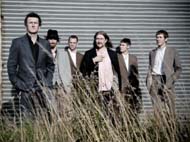
Another 'unknown' name featured on Divided By A Common Language's compilation of UK Americana, this Edinburgh based London outfit plough the old school bluegrass side of the genre meadow, seeding the furrows with Scottish folk and backwoods gospel.
Recorded live around vintage East German microphones with Lau sound engineer Tim Matthew twiddling the knobs, it comprises ten self-penned tunes and one musically reworked 19th century bothy ballad. That'll be the stark fiddle and mandolin accompanied South Ythsie which provides the gateway to the album with Sid Griffin alumni and chief songwriter Pat McGarvey's peat stained vocals, However, so authentic are the songs, arrangements and delivery that it could easily be the unaccompanied Little Grains Of Sand while Let Me Wipe The Tears From Your Eyes could have come from the songbook resting next to the family Bible in some Appalachian cabin.
McGarvey and fellow SFU stalwarts Adam Bulley on mandolin, double bassist Silas Child, Cajon player John Langan and guitarist Chris Purcell (guitar, vocals) are joined on various tracks by three notable fiddle players. Cameron Henderson of Black Diamond Express features on five numbers, including the opening track, a murder themed Hardy and the deceptively jaunty TA9 while Peatbog Faeries' Roddy Nelson scrapes the bow on the post-apocalyptic title track with its Mad Max image of 'forty acres of scratch' surrounded by barbed wire and machine gun nests. However, it's arguably Patsy Reid from Breabach who takes the fiddling honours with her contribution to the tempo shifting thigh slapping jug band stomp of No Work Today.
Elsewhere, other highlights would have to include the brisk kicking heels bluegrass mandolin romp Holding On/Beholden On and the equally spirited Don't Take No Notice with its breakneck melody and swing your partners chorus hook title line. Working the land in today's dark times may be a hard job, but this album has yielded a bumper crop.
www.southerntenantfolkunion.com
www.myspace.com/southerntenantfolkunion
Mike Davies May 2010
There are two main reasons for welcoming Revivals, Rituals and Union Songs. The first is that it is about as authentic an example of American folk/country/rock as you'll get this side of the Appalachians. The second is quite simply how good it is, there is not a wasted second or opportunity missed.
It would be a convenient vehicle to express surprise at a UK band beating many 'homegrown' outfits at their own genre and an equal delight at how 'roots' the album is but that would be to somehow insult former Arlenes and Coal Porter Pat McGarvey and Case Hardin man Pete Gow. Both know their craft intimately and Revivals, Rituals & Folk Songs needs no contrived device to illuminate its brilliance, to suggest otherwise would be plain daft.
But while the album comes with the 'hallmark' of an impressive line-up the real pleasure comes from a relatively new name. Vocalist Oliver Talkes has the ability to mould and fashion the songs so that they eventually fit him like a second skin. The danger is that without him, they would somehow be lessened but while he's here, he stretches the likes of Cocaine taut. Revivals, Rituals & Union Songs is a glorious collision of styles. Folk, country, roots, Americana, gentle rock and pretty much anything you can think of all lurk within its cover somewhere to varying degrees. The result is musical kaleidoscope where the patterns change constantly, sometimes vividly, sometimes more subtlely but it's an album that is always on the move.
A host of bands have attempted to do what Southern Tenant Folk Union have accomplished with such aplomb. However, few, if any, could combine the out and out bluegrass of Never Got The Best Of Me, the almost sensuous shades of Back To Front with the tradition of Folk Tree and make them feel like they were born to be together.
Even fewer, whatever the genre, manage to capture the freedom of spirit that allows the album to soar so high. As you listen to the raw passion that fuels Let It Roll, superlatives don't spring to mind they leap with the agility of an Olympic athlete. Individually the members of STFU may be accomplished musicians, collectively they cross the invisible line that separates the great from the good. But praise, however warranted, seems to sit uneasily on the shoulders of an album whose strength is built on the simple, direct honesty of Her Love's Gone Cold.
It's not totally unexpected that Revivals, Rituals & Folk Songs is as good as the title somehow suggests it would be, Southern Tenant Folk Union promised much, they delivered more.
www.southerntenantfolkunion.com
www.myspace.com/southerntenantfolkunion
Michael Mee March 2008
It's not that unusual to discover more about an album the more you listen to it. However, with Southern Tenant Folk Union, it's what you discover that provides the shocks. It's not that the album's depths are particularly hidden, it's clearly a great album from the off. But the album introduces itself with the instrumental Southern Folk Theme in A stirring piece of bluegrass and, while it is a great fun, it's certainly not unique.
The feeling that the band is treading a well-worn path is strengthened by the country charm of All You Need To Know which could have winged its way straight from the Oh Brother soundtrack.
But there is a whole lot more to Southern Tenant Folk Union than simply reheating dusty roads traditional country music. The first 'revelation' arrives with The Cold Flagstone, a haunting and chilling song that seems to stretch beyond the horizon. Much of that is due to the seemingly bottomless well of emotion that singer Oliver Talkes is able to draw from.
From that moment on Southern Tenant Folk Union truly takes flight, A Little Deeper is a wonderfully constructed song , Southern Tenant Folk Union is a band that believes in its music and that makes it unstoppable.
But even being pre-warned that this is no 'run of the mill' bluegrass album can't prepare you for Mosul Train - a song about a war that could have could easily have been written during an earlier one. The innocence of the music acts as a cruel mask for the bleak hopelessness of the lyrics. Southern Tenant Folk Union has added another brick in the wall of biting condemnation.
Formed by Belfast-born five-string player Pat McGarvey and named after the multi-racial union of sharecroppers and non-landowning tenant farmers founded in Arkansas in the 30s, Southern Tenant Folk Union comes with an impressive pedigree. Alongside McGarvey is Oliver Talkes whose heartfelt vocals give the band's soul a voice, Pete Gow on guitar, Frances Vaux on fiddle, Eamonn Flynn on mandolin and Matt Lloyd on upright bass and while the talents of the individuals are never in doubt, it's the collective impact that makes Southern Tenant Folk Union, album and band, so special. Bluegrass - the kind that was hewn from the arid soil of the depression - is at the heart of everything that is good about this album. However, while the sense of and affection for tradition is strong, the passion and energy is too raw and vital to render this as merely a slice of nostalgia.
Throughout, even on the haunting ballads, there is a real feeling of joy coursing through the album's veins, and Rosalind for one is hoedown of a love song.
The album Southern Tenant Folk Union is a collision and celebration bluegrass, folk and country but it is the commitment and talent of Southern Tenant Folk Union the band, that acts as the catalyst for what is a thoroughly wonderful album.
Michael Mee December 2007
Maddie's a singer-songwriter based in Bristol, who's been garnering plaudits galore both locally and across the Atlantic, and is likely to achieve wider recognition in this country with this, her début CD release. Far from being "just another angry young woman with a guitar", though, Maddie belongs more to the Kate Bush (and possibly Suzanne Vega) ambit, writing sensitively and often mellowly on issues that are drawn from personal experience yet despite their intensity of feeling are couched in an accessible musical language. Maddie has a superb voice, with a clear timbre and a good expressive range, breathy and yet well controlled, (the Kate Bush connection again - a feeling hard to escape on listening to tracks like But Very Natural). She also plays piano, keyboards and harmonica, and has made sympathetic and mature arrangements for her songs, employing guitars, drums and occasionally cello in textures which at times display an almost classical purity. Even so, I'll admit that I started off finding a few of the early tracks a touch bland, at any rate musically, in comparison with some of the later ones, and there were occasions when I felt that the rather special qualities of her lyrics perhaps deserved more distinctive melodies than they're given. But subsequent, closer listens in a more leisurely or relaxed environment revealed further felicities, and I've been forced to revise that opinion somewhat. (And there's actually a lot more variety in the musical settings and approaches than just listening to the initial tracks might suggest.) Think maybe more of the contented glow you get sitting comfortably in front of a fire, thoughtfully reflecting on memories and evocations arising within and out of the flames… This album has quality stamped all over it, make no mistake, even though its very classiness may evade those listeners who have come to expect a more obviously and immediately striking musical landscape as a backdrop for songs of comparable depth and philosophical good taste. I ended up being well and truly won over, in fact.
Space Police Preview @ The Water Rats, London - 8th May 2001
Charismatic five-star rapper General Levy fronts Space Police, a mega-hot fusion ragga/rock band who've been invading my neural pathways since seeing them play a larger-than-life showcase at In The City, Manchester, last September. These guys have enough energy and attitude to steamroller a stadium or blast it into outer space! They're dangerously addictive and outstandingly good live.
American rap/metal fusion has been around for a while and we are seeing it in the charts, but this is Jamaican rap/British rock. It's novel; tight and incredibly fast. They call it 'messy' but don't you believe it: rap/ragga/reggae/punk rock may be the mad mix of elements rampaging from the stage but the General, with his sharp, machine-gunned lyrics and strong songs, knows exactly what he's doing. These are skilled musical mercenaries with total control of their instruments of seduction: thrashing electric guitar from Rocco Barker (ex-'Flesh For Lulu' and 'Wasted Youth') and 'live' drums and bass, augmented by an urban techno edge. Awesome!
The story goes that General Levy and Rocco Barker met up whilst obliged to spend a little time on a project for 'Her Majesty', (we shall not ask what or why). Having ascertained that both were musicians, they exchanged tapes. The rest is history - or should be - because, surprisingly, they haven't got a recording deal. They may not have an album, but these guys have the power.
Sue Cavendish
(Ed: The deal never happened and the band dispersed. General Levy going solo)
Two seven track EPs in one package provide a good introduction to the musical diversity of the Chicago born singer-songwriter who recently relocated from Nashville to Barcelona. I've not heard her five earlier releases, so although all the tracks were recorded. mixed and mastered in Nashville, I can't say whether the Iberian colours on the first disc (the flamenco flavour of Mama, the classical guitar on the ballad Until Morning, a cover of the standard Quizas, Quizas, Quizas) evolved from the move or were previously present.
What I do know is that they lend the disc a sultry moody flavour, complemented further by the acoustic bluesy rawness of Rain (The Widow) with its resonator guitar courtesy of Will Kimbrough and the desert howl slow blues Over where Joplin comparisons are hard to resist.
Kimbrough's not the only classy name to be found among the musicians. David Henry provides strings and organ, Fats Kaplan's there on pedal steel and Alison Krauss' brother Viktor plays upright bass while backing vocalists include David Mead and Shawn Mullins. the latter duetting on Letter To A Wretch #2 on the second disc.
It's testament to their adaptability too that, like Sparks, they make the transition from the bluesy notes of Morning to the more Americana style of the Dark. Sparks unpacks her twang for the opening Delilah, a terrific track which, were it not for the organ backing, could have come from an early Emmylou album while Judge A Book is a full bodied rumbling Southern country rock drive with train wheel rhythm and throaty electric guitar.
Elsewhere, Tennessee Line, a spare ballad with mournful strings, is one of those place name songs ("I loved you in Toledo (etc) but could not love you when I crossed the Tennessee line") but given a bleak heart, emotional territory also mined in the equally downcast and stripped to the bone Come Out Of The Dark where producer Henry weaves the sort of melancholia he brought to the Cowboy Junkies.
She mentions Bono on her sleeve note thanks and you can hear the U2 influence seeping into the slow building power ballad There Is An Ocean, its musical waves finally crashing on the mountain top.
Slow dancing romancer The Sea And The Sand completes the package, the only disappointment being Wake-Up Call on the first disc, a 33 second track which is exactly what the title says. A throwaway pointless joke that spoils the flow and the mood, surely she had another song that could have made an equal seven on both EPs! That aside, it's a flawless collection by a name that deserves to be far better known, and an artist whose back catalogue I'll now be tracking down.
Mike Davies September 2011
Even as singer-songwriters go, Nashville-based Tori is a bit of a self-confessed enigma, for on her extensive touring she displays a persona almost as much akin to a stand-up comedian as a folk musician. Her gift for musical storytelling, however, is strongly in evidence on The Scorpion In The Story, her third release to date, which is best described as a concept album. Its tale of life on the road revolves around thirteen individual vignettes, each of which depicts a true-life character Tori met while touring during 2008. Some of these vignettes – those portraits where the textual depiction is dramatically and accurately mirrored in the musical setting – prove incredibly persuasive.
Any quirkiness is sufficiently present to make it interesting, but doesn't intrude on the message or the narrative. Cases in point include the downbeat-country opening cut Tall Towers, the swaggering Little Wrecking Ball, Background Music and the disturbingly Cohenesque Rubbernecking, but perhaps best of all is the intense, passion-soaked Leaving Side Of Love (the lyric of which contains the striking image that provides the album's title).
Given the sheer diversity of the characters Tori meets on her journey, it's inevitable, I guess, that the musical settings she employs will vary quite a bit stylistically over the course of the record – and yet even after a few plays this diversity sometimes seems more wilful than strictly necessary, to the extent that there are several tracks where I find Tori's vocal performance a bit of a trial to listen to, especially when she's trying to sound soulful, sultry or raunchy (as on Days And Days And Nights, Merry-Go-Round and Penny On A Rail – in each case, her exaggerated delivery and vocal gestures tend to detract from the lyrics).
Even so, the CD still has many redeeming features, not least the expert production by multi-instrumentalist David Henry, and the galaxy of other musicians contributing at various points, which includes Fats Kaplin, Viktor Krauss, Will Kimbrough, Steve Bowman and Barry Walsh. But Tori herself certainly makes sparks fly.
David Kidman April 2010
Although reworked and remixed, all but three cuts have already appeared on their previous two EPs, including the Riders In The Sky sounding surf noir Last Chance, Into the Wild's cocktail of trad folk and White Stripes garage band blues, the dark folky rumble of I Will Break You, Swam Like Sharks' bluesy country and Hendrix guitar, Joplinesque country blues waltz You've Got It All and crooner Broken Heart, Broken Home.
Of the new material, Medal Around Your Neck is another rumbling Appalachian-sounding acid-folk tune loosely inspired by the story of a veteran with Gulf War Syndrome and, a song about misguided do-gooders, Mercenary runs a military drum roll through an almost nursery rhyme melody before climaxing in a post rock explosion. But it's Crystals that is the album's piece de resistance, a transitional excursion into almost Floydian-Americana that could well point the way to future directions, establishing them as a dark psych folk Cowboy Junkies for the 21st century.
www.sparrowandtheworkshop.co.uk
www.myspace.com/sparrowandtheworkshop
Mike Davies April 2010
If Lee Hazelwood has joined forces with Grace Slick rather than Nancy Sinatra and stirred together a mix of trad folk, country and surf psychedelia then the result might have sounded something like this Scottish (drummer Gregor Donaldson),Welsh (bassist Nick Packer), and American (singer/guitarist Jill O'Sullivan) trio.
With seven tracks and a running time of around 24 minutes, it's more mini album than EP, but however you define it, their brand of dark Americana is electrifyingly compelling. A brooding duet between O'Sullivan's countrified nasal twang and Donaldson's more sonorous tones, You've Got It All opens the album on a backwoods hymnal note before thundering drums erupt to carry it into keening country slow waltz whereas the title track slips from trad folk into a bluesy garage rock riff and, continuing to mind a rich seam of searing lust, Crossing Hearts would be a perfect example of high lonesome psychdedelic surf country if such a genre existed.
The rootsy blues ebb and flow of Blame It On Me manages to crossbreed White Stripes and Jefferson Airplane in the Appalachian mountains while Jealous Of Your Heart harks back to the latter's earlier Great Society incarnation but imbued with the churning soul of Johnny Cash. Listening to the bluesily Hendrix slide guitar and firmly muscular drumming that underpins the country ache of Swam Like Sharks, you get the feeling they're a particularly potent force live too. Like God's, your eye should be on the Sparrow. And, the Workshop.
www.myspace.com/sparrowandtheworkshop
Mike Davies November 2009
Having been signed by Judy Collins to her own label, the Baltimore born songwriter found early critical acclaim with her 2006 debut album, Sonsg From Bright Street. The follow up should serve to consolidate and progress her standing as one of the best new folk-country voices around. Actually, she's several voices. Early obvious comparisons were to Lucinda Williams, and you can certainly hear that influence on the opening track, Dog Days, a gravel road tale that charts a smalltown (but not unhappy) life through a parade of beds, from child's to lover's to death's, or the plangent Americana of This Love.
But you'll also hear hints of Roseanne Cash on Better's smart complaint about a stagnated relationship ("you put on the TV and tune me out") and This Love while the achingly sad, simple cello and guitar arranged Haven't Learned A Thing (another reflection on a troubled relationship) evokes the tremulous purity of the young Joan Baez. Then come to the brooding six minute Storm Warning with its lengthy instrumental play out, and it's about as close as you can get to sounding like a track off Between The Lines without actually being Janis Ian.
The song's a heartbreaking reminiscence of a young woman who shared her first kiss with her lover the night before he went to war never to return. It's not the only anti-war track on the album. Previously featured on Got To Get A Message To You's collection of contemporary protest and included here as a hidden bonus track, the strummed acoustic Weight Of The World tells a similar story of a brother killed in the desert 'dodging bullets when he wasn't dodging bombs'. A lament for the wasted youth of America's military, there's no indication of any autobiographical element but she invests a deeply personal emotion in its universal sorrow.
It's just one of several examples of Speace's exemplary, highly literate (lines in Something More Than Rain suggests she's read Auden's Funeral Blues) songwriting craft, shown best effect on the standout title track's clever and complex American Gothic portrait of doomed lovers and an abusive relationship perversely solidified by a common self-destructive inner darkness. Or, as Speace puts it, "the leaver in me can't quit the leaver in you".
To be totally honest, the album does tail off a little towards the end. The sweet and sour of Dirty Little Secret that shifts from Janis Ian whispers to PH Harvey howl doesn't quite come off, Would I Lie's hurtling train rhythm rockabilly feels at odds with the lyrics' anger at corporate America's greed, and I Met My Love, a honky tonk piano boogie folk stomper (and one of two tracks to feature Ian Hunter on backing) is a bit of a loose, sloppy throwaway. But, closing on the acoustic Piece By Piece's declaration of emotional steadfastness, the strengths far outweigh any minor weaknesses and earn this a place among year best of contenders.
www.amyspeace.com
www.myspace.com/amyspeace
Mike Davies April 2009
Amy grew up in Baltimore, then moved to New York where she first became ingrained in the city's singer-songwriter scene before forming her own band, the Tearjerks; her debut solo album (Fable) was released back in 2002, to some pretty high acclaim by all accounts, but Songs For Bright Street, its followup (which comes out on Judy Collins' Wildflower label), marks my first experience of Amy's music. Well the opening track sure lives up to the album title, a bright and breezy blend of pop and nu-country with assured vocals, catchy melody and solid rhythmic impetus. Amy and her accessible country-folk-pop sound have been described as Americana-Dido: you can hear what that means, but I think Amy has rather more depth than that implies; certainly her writing mostly succeeds in capturing complex emotions in neat, melody-rich settings and her singing's chock full of attitude to match tho' without overdoing it. For me, the most satisfying tracks on this record are those with the simplest, folkiest settings, like album highlights Two and Row Row Row (on these, Amy duets with Gary Louris and Cliff Eberhardt respectively), Can't Find A Reason To Cry (love that plaintive register-leap Amy does so well in the chorus!), Right Through To Me and the truly magical Water Landing. Having said that, the fuller mellotron-infused sound of the closing ballad Home and the sheer ebullient drive and energy of the altogether rockier, heavy-slide-soaked Not The Heartless Kind both prove stimulating and immediate in their appeal too. I really like Amy's style, even if on one or two of the other songs I sometimes feel that she's resorting to writing in conversational clichés (The Real Thing is trying too hard to be sassy, Make Me Lonely Again is too torchy in its response); also Double Wide Trailer is just a touch too cod-country for comfort maybe tho' it's fun enough, but I do like her cheeky, twangy country take on Debbie Harry's Dreaming. And of course, credit must be given to producer James Mastro and the rest of Amy's excellent Tearjerkers backing band, whose bassist Matt Lindsey quite incidentally turns in some beautiful vocal harmonies on Water Landing (especially) and a couple of other tracks.
David Kidman December 2007
Singer, composer and mandolinist Ron Spears is a mainstay of sturdy straight-ahead bluegrass, and yet he hails from the rather unlikely (for bluegrassers) state of Utah. He formed his band Within Tradition in the mid-90s, but in 1999 introduced the current lineup which comprises experienced bluegrass guitarist Charlie Edsall (a co-founder member), and three comparative youngsters Joe Ash (bass), Philip Bostic (banjo) and Mike Tatar (fiddle). Carolina Rain builds on the lineup's earlier Copper Creek debut with a further parade of a dozen distinctly classy and inspirational cuts (nine songs and three instrumentals - two fast and drivin', one slow and tender) that cover the whole range of the genre from Appalachian right through to honky-tonk with lots of songs of love and longing in between. The songs are mostly from the pens of band members, and several are by Ron himself; there's also a few covers (Merle Haggard's The Fugitive for instance). It's all set off with some sizzling playing in the best traditions of bluegrass. And as if that weren't enough, there's good ol' Rob Ickes guesting on dobro too - magic! This music sparkles and shines; here we have a supremely together ensemble giving their all in relaxed yet energetic fashion, tremendous instrumental work and fine contemporary vocal harmonising (just marvel at the smooth tones on the gospel number Lord, Lift Me Up - you can't envisage it being done better!). Another of those albums where you just have to keep going back to the beginning and playing it over again (and not just 'cos it's so darned short!).
David Kidman
Not, as the press blurb would have it, the first time they've worked together in 13 years (they actually released Rockin' The Paradiso last year), but even so there's still plenty to celebrate about this get together by the legendary guitarist and the rockabilly maestro in honour of the 30th anniversary of Elvis's death.
Wary of being stuck with the impersonator tag', Gordon had always resisted making an Elvis album but since ultimately there's no getting away from that voice, he's finally agreed to let nature take its course. As the songs says, it's now or never.
And this is what it is, a collection of covers of well and lesser known Elvis songs, delivered totally faithfully and given an additional touch of authenticity with vocal back-ups from The Jordanaires.
Kicking off with Mess Of Blues, you'd swear the King was sitting in on the session as the album snake-hips through the curled lip delivery of I Beg Of You, Don't Be Cruel, Baby I Don't Care and Lawdy Miss Clawdy. Presley's country and spiritual colours are embraced by I'm Left, You're Right, She's Gone, an incredibly deep voiced Peace In The Valley, Love Me and a stunning Young & Beautiful.
There's a couple of misfires with a by the numbers My Baby Left Me, a curiously lifeless Tryin' To Get to You with the rhythm section sounding a beat behind, but these are mere niggles on an album that doesn't look to reinvent or stamp individual interpretations on the material, merely to celebrate the only true king of rock n roll.
www.chrisspedding.com
www.robertgordon.dk
Mike Davies July 2007
Perhaps primarily known as a guitarist due to his status as a mainstay of the British session scene since the late 1960s, Chris is also a prolific singer and songwriter, as this reasonably-priced and intelligent retrospective collection demonstrates. Although Chris is still very much active (he's recently recorded on Katie Mehlua's album, and is currently touring with Bryan Ferry and Roxy Music), this collection trawls Chris's most successful period, between 1969 and 1981, when he recorded for the Harvest and RAK labels. It features all the singles including his "hit" Motorbikin', alongside some choice cuts from those six underrated studio albums he cut for EMI including The Only Lick I Know and Hurt (though unaccountably, there's only one cut from Backwood Progression). Chris has worked with just about everyone over the years, from Paul McCartney to Elton John, Mike Batt to Iggy Pop, yet on this collection he shows an unsung penchant for many more different musical idioms including Southern Boogie (Jump In My Car), retro, beefy pogo-punk (Hurt By Love) and romantic ballad (White Lady), also proudly displaying his talent for pastiche (as in the Duane Eddy-styled spag-western Gunfight, the Eddie Cochran-riffed New Girl In The Neighbourhood, and most obviously on Guitar Jamboree, where Chris becomes to all intents and purposes an all-star tribute-band!). He also turns in some classy covers, like 1980's I'm Not Like Everybody Else, while on his own material he shows a canny knack for believably integrating melodic lead guitar and solo passages into his songs. This collection is a salutary reminder of Chris's versatility, and of his wide-ranging talents beyond the realm of "mere" guitarist (though as we all know he's no slouch in that department either). Its only fault in my book is that it should have stretched to two discs!
David Kidman July 2006
Kenny's been best known hitherto as the former guitarist with the John Wright Band, but is rapidly gaining a healthy following with his new band Real Time (with Joe Wright and ex-Bad Penny Judy Dinning). However, Kenny's first solo outing, Bordersong, showed him to be an exceptional and distinctive talent in his own right, although that album sneaked out rather quietly I felt. When I reviewed it, I noted Kenny's own very attractive and mellow vocal style, which is again well to the forefront on this new release but has grown much in confidence and assurance in the two years or so since. The principal difference between the two releases lies in their content, for whereas Bordersong concentrated almost exclusively on traditional material, North Wind Blowing is entirely the work of contemporary writers, and ranges from one each by Dougie MacLean and Ewen Carruthers to two by Jim Reid and no less than four compositions by Kenny himself. Some songs, like Jim's wonderful Vinnie Den, betray a strong traditional influence, whereas others – like Kenny's Rolling On - are defiantly rockier. The latter (and Kenny's love song, The Other Part Of You) may well, I feel, be said to be influenced a wee bit by the writing of "adopted Borderer" Kieran Halpin (an admitted long-term inspiration of Kenny's), whose Mirror Town Kenny tackles with an appealing, almost conjunto feel. Which prompts me to mention the high-quality, precisely-managed support that Kenny and his guitar enjoy throughout the album, courtesy mostly of Gavin Dickie (bass), Terry Coyne (whistles) and Dave Haswell (percussion), with Judy Dinning, Ian Lowthian, Tom Roseburgh and Frank Usher also putting in appearances. There's a slight overlap with Real Time's repertoire, but this shouldn't deter you from buying this really fine collection of Kenny's, which - like Bordersong - begins and ends on highpoints (here, Norlan' Wind and Kenny's own Traveller's Lullaby), and deserves wider press coverage than Bordersong had achieved.
David Kidman
Follow ups to well received debuts are always a testing time for artists, but we reviewers often approach them with trepidation too, hoping they live up to the praise initially bestowed but nervous that the promise might have been short-lived and you find yourself having to confess disappointment.
Three years ago, I was rather taken by the now Vancouver-based Canadian's debut album, A Town Called Hell. And I'm pleased to be able to say her sophomore release doesn't let either of us down. The core recording were done on a portable studio in a hotel room in Rome by just herself and guitarist Francesco Forni, fleshing things out in Vancouver with piano, ukulele, bass and clavinet but still retaining the sparse, organic quality.
Reviewing her debut, I variously likened her voice to Emmyou, Gillian Welch and Buffy Sainte Marie, but this time round, while often double-tracked, it's only the Harris hints that are in evidence, Spence's slightly breathy, occasionally tremulous tones now very much her own.
As before, she includes one of her mother Barbara's songs, the jazzily languorous, dreamy - and if I'm being honest slightly twee - Good Morning Bird with Simon Kendall on piano and tasteful acoustic guitar break from Johannes Grames. Two of the other non-originals are her arrangements of traditional tunes, a brooding Wayfaring Stranger (the most Emmylou like of all) with Forni weaving dark electric and acoustic guitar patterns, and an aching a capella lament reading of I Never Will Marry with Spence multi-tracking the chorus.
The fourth cover is Nick Lowe's The Beast In Me which, while not quite as soul-scouring as Johnny Cash's version, is impressive nonetheless. The remaining five numbers are self-penned, all, to some extent, revolving round a melancholic theme of life in transit or transition. The title track opener's the prize bloom of the collection, its slow dancing front porch melody swaying along to piano backing with accordion and guitar accompaniment as she sings about sailors and sirens, ramblers and dreamers, all looking for something but blind to what's in front of them.
The simple pleasure of dropping by on a friend and sharing concerns is at the heart of the fingerpicked Tian Put The Tay On with its evocative line 'we've been spending too much time watching pantomimes we didn't buy a ticket for' and there's an equal feeling of warmth and yearning to end of the party You Can Sleep On My Floor where she recalls the loneliness of vintage Janis Ian while beautiful lullaby Safe And Warm uses images of turbulent weather to acknowledge the inevitability of mortality but steadfastly adds 'in the meantime we'll weather the storm'.
Going Down The Riverside closes the album on a different musical note with the jaunty wash my blues away old school Oh Brother era folk swing, complete with whistling solo, spoons and, in the album's only nod to percussion, a final crash of cymbals. It's the sort of upbeat confidence that assures you that album number three is nothing to worry about at all.
Mike Davies November 2011
Born in Winnipeg and currently living in Ireland, Spence began singing at an early age but after studying theatre she moved to Vancouver and took up acting. Eight years later, in 2003, she'd become disillusioned and, encouraged by Chris Isaak's band after regularly working on his TV show, decided to return to her first love. Acting's loss is music's gain.
With a colourful background that includes a folk singer mother, a grifter father, fiddler grandfather and bank robber first boy friend, she's not short of inspiration for her downbeat autobiographical folksy songs for the lost and the lonely and their tales of lovers, drunks, rogues and losers.
The sound of a lonesome train whistle that precedes Town Called Hell sets the melancholic tone that seeps through her reflections on the past, her voice variously summoning thoughts of Gillian Welch, the early Emmylou and Buffy Sainte Marie. There's two covers here, chirping crickets framing a tremendous world-wearied old school country version of Mary Gauthier's I Drink, and Bukka White's High Fever Blues stripped down to the grain of a front porch rocking chair.
Her own material, though, is a match for anyone's. The title track with its dusty harmonica is a marvellous invitation to defy a dead end existence with a transistor radio, a bottle of wine, and a riverbank park bench while Those Were The Days is a reverie of childhood, Boys Like You And Girls Like Me a bittersweet brush off of a guy who's just not bad boy enough for a girl who never thinks she's good enough to be loved. Its instrumental fiddle and harmonica playout of You Are My Sunshine is steeped in a heartbreaking irony.
Elsewhere, you'll be seduced by the chill in the late summer air moods of A Murder Of Crows with its distant trumpet ache and the thunderstorm introed, moss hung Losing You Again, co-written with mother Barbara. But she perhaps saves the best to last, Here's To You And Me a plaintive duet with Rob Bracken, a pledge of apology and devotion spoken by cheating lovers who know the words only hold true until they're found out again. Discover her today, tell someone else about her tomorrow.
Mike Davies July 2008
W.C. Spencer - Blues Explorer (Catscan Records)
The self-styled 'Bluescat' is a rare breed these days - he's a one-man band! I don't mean someone who can play a number of instruments and record them individually but someone who can play them at the same time. On this, his third release for Catscan, he serves up a feast of blues styles with some well-known covers, some less well known and throws in a few of his own compositions for good measure.
He opens with the first of his four self-penned songs, I Said The Blues, an upbeat start of jump blues with excellent guitar and harmonica interplay. Spencer achieves the feeling of a full band sound and this is exceptional considering this is one of eight live tracks. Fourty Four is not normally the first Howlin' Wolf track artists choose to cover but he turns in an accomplished vocal on this and he could easily fit into a top band on any of the instruments that he plays (guitar, harmonica and drums). His drums, incidentally, are a specially made Alectroset kit and he does not have the cymbals between his legs and the bass drum on his back!
Tell Me Mama is one of Little Walter's most famous songs and it's given a funky drumbeat full of rim shots. However, Spencer only achieves a passable version and sadly he's not in Little Walters class. Then again, who is? His second song, So Long, is listed as his tribute to Roy Buchanan and Danny Gatton. It's very reminiscent of Gary Moore and that's high praise. Not blues in the traditional sense, it is an excellent guitar instrumental that all three of the aforementioned gentlemen would have been proud of.
I seem to be reviewing Kansas City with great regularity these days. It's a good job that I like the song and that I've not heard a bad version yet. W.C. keeps up the record with his swinging version. Down With The Blues provides grittier vocals and top harp playing. This Tommy Bankhead shuffle is played with feeling. A return to Howlin' Wolf follows with I'm Leavin' You and Spencer manages to impose his own style here with some nice slide guitar.
Big Maceo's Worried Life Blues is given a bit of a treatment - no piano for what is essentially a piano blues. Played in the style of Freddie King, there is more excellent interplay between the guitar and harp. I seem to remember The Blues Band doing a rocking version of this as Someday Baby in the past. Mean Old Train provides some of the best harmonica work on the album. This plain and simple Papa Lightfoot song is one of the highlights. The final two own compositions, Call On Me & Fat Man Walking follow. On the former there is some more top harp and the slow blues shows that he can write as well as perform. The second of these is the only acoustic blues on the set but it is 30s style acoustic blues of the highest order.
To finish the album Spencer has chosen the Big Bill Broonzy classic Key To The Highway. This is a strong finish and it's just the way he started - live. I've got to see this guy before too long and maybe, just maybe, one-man bands will last long enough for me to do so.
David Blue
Amilia K Spicer - Seamless (Free Range Records)
Originally released in 2003 and getting a second wind repromotion in advance of the follow-up, this should deservedly help spread the word about this Pennsylvania rooted, LA based singer-songwriter.
She's had a number of comparisons thrown at her, Neko Case, Jesse Sykes, Emmylou, Stevie Nicks and even Daniel Lanois and I daresay you'll find traces of all of them in around her vocals, delivery and arrangements. But she deserves to be heard as a her own voice, slipping comfortably between the ballsy country rocking (line dance friendly) Wasted, the swing 4.08 and the boogie woogie I Got Trouble and the more reflective, emotionally keen-edged moments of Route 15, Tangeray, the country hymnal Moving Mountains and a keening Safety In Numbers. She's called the title track a cross between Ravel's Bolero and Led Zep's Kashmir, and while you may find yourself hard-pressed to quite hear those connections, the fact remains this gently swelling is unquestionably her defining classic. One suspects she's certainly got more in store.
Mike Davies
Emily, originally from Oxford - where by all accounts she was a regular (singer) at the city's Half Moon pub session - has recently decamped to Germany; there she met, and "clicked" musically with, bouzouki player Tobias Kurig, whistle player Till Storz and an assortment of other talented musicians (most of whom augment her on this album).
According to Emily herself, this meeting enabled her to find a different kind of expression in the songs than she had been accustomed to while singing in the unaccompanied style. I'd like to have heard this phase of Emily's singing career, which she describes as being very much influenced by the singing of Graham Metcalfe and the group Folly Bridge, but I've not come across any recordings… But on the evidence of the CD The Half Moon Lovers, Emily's a persuasive singer with a good grasp of the expressive potential of a song; just occasionally (as on One Morning In May), Emily's swooping, maybe slightly eccentric phrasing seems to be more at the service of the rhythms of her accompanists, but this is probably relative and/or a reactive swing from the freer nature of her earlier style (I can only guess) and is never a serious problem while she clearly responds directly to the songs themselves. Traces of sean nós styling and decoration surface in slower items like The Emigrant's Farewell (although I feel Emily could have made more emotional capital of this broadside by holding back the tempo even further), and The Banks Of The Lee, where the only accompaniment is the responsive harp playing of Steph West. Emily's take on Mary And The Soldier also benefits from a sparer setting, with rippling percussion offsetting the keening fiddle line.
The musical settings Emily employs are very much acoustic-Celtic (predominantly Irish-inflected) in flavour, mostly scored for the small but perfectly formed ensemble of whistle, bouzouki and fiddle with sprightly bodhrán and sometimes accordion or bass to thicken the texture but always recorded with plenty of presence and separation. There's a couple of wholly instrumental tracks (The Broken Bed and The Funeral Waltz, both penned by Till), which form pleasing enough interludes between the exclusively traditional menu of the songs. The tracklist betrays Emily's penchant for songs about love in all its forms, and includes companionable - if sometimes undersold - treatments of Searching For Lambs, The Banks Of The Lee, My Johnny Was A Shoemaker and the like.
The Half Moon Lovers is a pleasant and committed record, even if I'm left with the feeling that sometimes the accompaniments are a shade all-purpose in nature and a little more imagination could be deployed therein to make Emily's own presentation of the songs more distinguished and individual.
David Kidman December 2010
Note the word "revisit" - for this is a creative exercise, not merely a cash-cow compilation that's been flung together at the behest of the marketing moguls: a great deal of thought and preparation has clearly gone into this. And while I'm sure that it's not been their intention to hammer the point home about their great influence on the English folk scene during the past ten years, the selective presence of key fellow-folkers on all but one of these new recordings speaks volumes about the respect John and Jon rightly command. And also about the way their wide experiences outside of the duo format (Ratcatchers, Bellowhead etc.) have informed and revitalised that format beyond anyone's wildest dreams.
These songs and tunes have become almost signatures for Spiers and Boden, and yet they're still capable of finding something spring-fresh (I might say stomp-fresh) therein, pointing up the extent to which their interpretations have continually evolved over time. This applies equally to the sprightly morris medley from Through And Through (which here gains even nimbler gait from the fingerwork of guest Martin Carthy) and the flexible treatment of Brown Adam (with tightly controlled guitar adornments courtesy of Martin Simpson), to the intriguing Horn Fair (featuring Maddy Prior's dulcet tones and Mr Simpson's eerie ebow) and the gutsy ballad Bold Sir Rylas (one of a handful of cuts that sport a backing chorus embracing permutations of Pete Coe, Fay Hield, Ian Giles and Eliza Carthy).
The roster of extra folk luminaries appearing in tandem with John and Jon here comprises Nancy Kerr, James Fagan, Hannah James, Sam Sweeney, Andy Cutting and David Kosky, but nowhere do any of these upstage the principals, for their musicianship is respectful and discreetly enhancing at all times. Interestingly, the one and only track on which John and Jon play as a duo without any augmentation is that well-travelled staple of their repertoire, the Rochdale Coconut Dance. But however small or great the instrumental (and vocal) complement, the recording is exemplary, with every line of the texture beautifully clearly rendered.
David Kidman July 2011
Well it's the fifth album from these fine lads in a five-or-so-year career during which they've done wondrous things for the reputation of "true" English folk music, bringing it back to the forefront of the nation's consciousness; they've given us some consistently spectacularly dynamic live performances and recordings, both as a duo and with Eliza Carthy's Ratcatchers and the mighty Bellowhead (to mention but two of their ancillary activities).
From the opening flourish of Tom Padget, Vagabond is immediately recognisable as prime Spiers & Boden, that ultra-vigorous blend of gutsy fiddle and soaring, stomping melodeon forging ahead with a pounding contemporary dance sensibility, which just couldn't be anyone else, period. Vagabond is very much business as usual for S&B, then. Apparently it has been recorded "live-ish", and yes, in that respect it does come close to replicating their continually upfront and abundantly infectious stage presence, what you hear is what you get: just about. It's business as usual, too, in another sense: being a further selection of intelligently arranged songs and tunes from the tradition, often blending the two in an attractive, involving manner.
In this instance, I particularly liked their choice and interpretation of the lesser-known fare, for instance the derived Child Ballad The Birth Of Robin Hood, while I also felt that their thrusting treatment of Captain Ward (learnt from Peter Bellamy) worked well. Jon's singing is captivating, notably on the gentler songs like Mary Anne; he seems to have shed some of his former wayward Bellamyisms, and to particularly pleasing effect. The tunes are well contrasted, although the closing Vignette is too brief to make any kind of lasting impact (that may not be its intention, I know) and feels a mere damp squib after the outpouring of The Rain It Rains.
In stature, Vagabond generally approximates the creative plateau attained on and by the duo's previous release, the pair of discs Songs and Tunes. And the overall concept which kindof forms the disc's binding thread - that of the itinerant or outsider - is thoughtfully engineered. But (and I'm being brutally honest here) it doesn't seem to represent much of an artistic development from those CDs; indeed, the very fact that the selection of tunes includes a fairly perfunctory medley of Speed The Plough and Princess Royal rather implies that the well may be running a little dry in places.
There's no problem with the playing or singing on this disc, although there's sometimes more than a hint of an inevitable sense of polish (that has come with the need to tighten up in the context of a bigger band) which has planed off some of the rough edges and rawness that has always been so much a feature of John and Jon's duo performances. The latter are minor points, and probably not of any consequence to those coming relatively new to the Spiers & Boden brand; for whatever, the lads still make a glorious sound, distinctive and vital, that keeps them at the front of the pack.
www.spiersandboden.com
www.myspace.com/spiersandboden
David Kidman May 2008
Spiers & Boden - Songs (Fellside)
Songs is the second album of the duo's staggered double-release (Tunes came out around a few months ago). Never ones to use their stomping style and enthusiastic instrumental accomplishment to present merely club-friendly or pub-session-type renditions of their chosen material, the lads have here performed a great service to folk music by redressing the balance in favour of some relatively obscure variants of gems of the English tradition. You want examples?: OK then, the opener Bold Sir Rylas is an ingenious conflation of various fragments or versions of Child Ballad 18 (which has arguably some of the most outrageous lines in all balladry), and the Spiers & Boden one also comes complete with a singalong chorus! And that hoary old maritime classic Old Maui is stripped of its usual rollicking shanty-crew raucousness and given a fresh, sober and quite mournful minor-mode treatment. Two of the most haunting tracks, however, are Innocent When You Dream (the one non-trad selection - yes, the Tom Waits song, given a lilting, almost Victorian-music-hall treatment) and the chilling Lucy Wan (the Bert Lloyd "find" that was "adopted" by Martin Carthy). But perhaps the finest pairing of gruesome tale with strangely sweet melody comes on the murder ballad Cruel Knife. As the latter amply demonstrates, the Spiers & Boden approach ensures that it's all very thoughtfully managed, with a deliberate sense of proper pacing for the stories being told, yet at the same time none of the duo's trademark dynamism ever gets lost. While, at the same time, their presence within Eliza Carthy's Ratcatchers band has further informed their acute sense of instrumental balance. Songs does, however, mark a departure from the duo's earlier CDs in that they've developed their already-considerable instrumental armoury even further with the addition of bandoneon - a type of Argentinian accordion - and Anglo concertina (Spiers) and guitar and duet-concertina (Boden). Vocally, too, each of them gets stronger by the album - Boden especially so. Yes, you really can't beat Spiers & Boden for a continually challenging, immensely rewarding musical experience that persuasively and creatively combines in the same performance the qualities of boundless energy and intense repose.
www.spiersandboden.com
www.myspace.com/spiersandboden
David Kidman
Loved this one! Spikedrivers draw their direct inspiration from American acoustic-electric country-blues. I suppose that given the trio's credentials (and those hard years on the road since their first album in 2003 - which I sadly haven't heard) I shouldn't have to admit to marvelling at the sheer authenticity of their take on bluesy Americana. The band's main songwriter is guitarist Ben Tyzack, and his immersion in the idiom is total and all the while utterly convincing; the lineup's completed by bassist Constance Redgrave and drummer Maurice McElroy, both instrumentally equal partners. They both help out on vocals from time to time, Con's contributions being particularly impressive and atmospheric. It turns out that Ben's written (or part-written) all but three of the CD's 15 tracks. There's a more-than-respectable cover of the Stones' No Expectations (affirming the wonderfully rootsy Beggar's Banquet vibe of Ben's own compositions), and the remaining two tracks are creations of Constance's (of which the eerie Angel Of Blue is a truly spinechilling CD highlight in my book). Con takes lead vocal on her own compositions, and though she hasn't got what you might call a conventional blues-voice her weary and knowing delicacy of expression speaks volumes more than a shouter might with using twice the lung-power. Mostly, the album runs the gamut from hard-drivin' dirty lowdown to brooding measured dirty mean 'n' moody as it progresses, Ben's writing coping effortlessly with everything in that there kitchen from driving uptempo harmonica-boogie (Wrong Way Henry) to melancholy reflection (Blues To The River) to washboard-ridden acoustic shuffle (Wear Out My Name), with three rather neat instrumental cuts in there too (the first, Scarecrow Eyes, has the ambience of Albatross-style Mac, but remains its own animal). In the end, Ain't It Real proves a very apt title for this distinctly impressive set, which though cleanly textured and recorded conjures a real sense of space and appreciation of internal dynamics with a miraculous subtlety that's rarely a feature of albums in this genre.
David Kidman
John, a native of Cork and lead singer with band Nomos, unleashed on the music world a striking solo album The Wells Of The World back in 1997; it received scant publicity but made a strong impression on critics. Its followup, the autobiographical Will We Be Brilliant Or What?, appeared in 2002 (though it was only released in Ireland). Now for album number three, which upon its release in Ireland just over a year ago went straight to the top ten of the Irish album charts; it finally gains an overdue British release now. That's good, for it seems that the word has spread about John's songwriting, to the extent that all manner of folks (from Karan Casey to Christy Moore, Sharon Shannon to Sean Keane) have recently recorded a song of John's. Hey Dreamer is a brand new collection that takes his Irish folk roots further into contemporary idioms while remaining true to them; he tackles subjects which enable him to recall the simple things and the simplest emotions and focus on the universality of their impact. Having said that, I don't quite relate to all the songs here, and two in particular (the out-of-character and somewhat overwrought Madwoman Of Cork and the rather over-poppy Dunnes Stores Girl) have consistently eluded me even after several playthroughs, but the best of these new songs make a very strong impression indeed, I suspect by virtue of their more subtle approach. Beautiful Tears and The Wild Flowers are standouts in this respect, while A Song For Rory Gallagher is a decidedly strange-sounding track, which inserts a slightly off-kilter bluesy riff against a spoken-Irish passage. Production-wise, Hey Dreamer is a step back from album number two, which many will feel is all to the good; there's a nicely pared-down feel which remains intimate despite the immediacy of the sound-picture. The select backing band includes Justin Adams, John Reynolds, Kieran Kiley, Eamon De Barra, Graham Henderson and Clare Kenny, with Pauline Scanlon on backing vocals on four of the songs. John's singing is first-class, and stirs the emotions without peddling sentiment; he sings with authority, a highly desirable quality which extends to every key aspect of this release.
David Kidman, July 2006
I reviewed Spindlestone's first CD (O'ergrown) around three years ago (though not on this site), and found it an enjoyable and refreshing offering from what might be termed an occasional trio (occasional in the sense of actually getting together - since one of its members, Ray Leonard, is based distantly in British Columbia!), on which they presented a parade of inventively-arranged renditions of (mostly) traditional material from Northumberland and Tyneside. Wanton Frolic is largely more of the same - which is no bad thing (unless, that is, you're one of those listeners who insist on a well-defined sense of progression from one album to another). Spindlestone still benefits from the instrumental and vocal skills of John Bibby and Kim Bibby-Wilson (of the redoubtable Border Directors ceilidh band), as you can glean right away from the telltale dance-like "bounce" to their rhythms. And just as on O'ergrown, Spindlestone's music still hangs heavy with the spirit of 70s folk-rock, albeit with an ever-so-slightly-passé vibe, but hey, it's a very pleasant time-warp to be trapped in! For instance, Ca' Hawkie, and especially The Cullercoats Fish Lass, are done very much in the mid-70s-Steeleye-commercial mode, and the Spindlestone rendition of John Barleycorn is suitably gutsy and electric (even in spite of the obvious drum-machine!), as is Cartagena (though this is more Trees than Steeleye perhaps). I also liked Spindlestone's majestic take on Sair Fyeld, Hinny, not an easy song to bring off. Ray's vocals are vital and strongly characterised as ever, though non-native-speakers may find some songs a mite impenetrable! His brilliant rendition of The Paanshop Bleezin', for instance, done in almost music-hall style with parlour-piano accompaniment (though it's spoilt just a bit by a silly sound-effect attempt at the end - just as some flippant swanee-kazoo business robs The Travelling Candyman of some of its impact). Midway through the CD, the traditional mood is broken by a cover of James Keelaghan's Fires Of Calais that's probably a little too thrusting and Tanglefoot-like to convey the essence of the lyric. Elsewhere, the vocal tracks get some relief in the form of instrumental cuts which ably prove the folks' musicianship, while showing that John can write some canny tunes (Louise's Giggle is particularly infectious!). So there it is - Spindlestone have produced another fun, frolicksome CD that's both intelligently done and musically satisfying.
David Kidman
Contemporary classical? Acoustic? Folk? Their music has elements of all of these: it's a uniquely exhilarating and fast-moving tapestry of sound that's characterised by a hard-driven yet fluid (and often unexpectedly lyrical) momentum, whether the tempo or pulse of each piece be fast or slower. Spiro have over the years been engaged for film, theatre, TV and contemporary dance work, which is hardly surprising in view of the high, near-scientific level of intricate organisation and planning that goes into each of their compositions, and the astonishingly high degree of discipline with which the music is played. In that respect their music is definitely closer to that of the Penguin Café Orchestra and contemporary minimalist composers Nyman and Reich than the world of pure folk song and dance (even their most obviously closest bedfellows on the folk scene - Hoover The Dog, Thought Gang - allow their individual musicians more independence of thought and execution!). Having said that, there's something stirring within the integration of parts, especially the accordion and violin, which signals a responsiveness that arises from beyond the pre-determined.
Dance and pipe tunes from various manuscript books (Offord, Playford, Peacock, Dixon) do form the basis of a little under a half of the 17 cryptically-named tracks, but the source-tunes are imaginatively mutated, reconfigured rather than merely reinterpreted or recreated. There's no ornamentation, no session-style solos or showy bravura passages, but instead the band play in "locked-in" mode, in a relentlessly insular sound-world that Spiro themselves refer to as "the mesh". Contrary to expectations, though, this makes for a euphoric and very much involving (and far from soulless, mechanical or clinical) listening experience, where chordings and attendant textures are particularly rich. Its inherent sense of urgency is born of a cultivated, cultured (rather than spontaneous) brand of momentum. And yet there are also significant moments of relative repose: stiller epicentres where textures drift apparently motionless in a kind of impressionistic-baroque way. It's not easy music to describe, especially if none of the above reference points are in any way familiar, and thus it can on first acquaintance sometimes seem distinctly unsettling although the sometimes fractured forward momentum exerts its own kind of fascination and draws you in and onward.
At its most compelling, Spiro's musical world is simply mesmerising, although for some listener sensibilities its tender lyricism may seem to lack an obvious linear progression. And when you learn that the whole of this album was recorded live in the studio with no overdubs or enhancements, its achievement is all the more astounding. It might even be described as kind of a minimalist masterwork.
www.realworldrecords.com/spiro
David Kidman July 2009
The Spooky Men's Chorale is a distinctly idiosyncratic vocal ensemble from the Blue Mountains, west of Sydney (Australia), and like to describe themselves as a "wanton congregation of jolly vocalpaths". They were a big hit at UK festival stages during 2006 and 2007, performing, acappella, a show-stopping mix of original compositions both funny and heartbreaking, vocal anthems from Georgia (the former Soviet Union state) and what they term "choralised" versions of rock standards. Folk music in a very wide sense, then, you could say - and potentially unacceptable to many. They make a big impression, "striking while the irony is hot" - and I suspect that they're very probably one of those acts that you'll either "get" straightaway or will harbour an inbuilt resistance to. But SMC leader Stephen Taberner, is clearly a man of vision, having shaped this ostensibly disparate bunch of men into a well-drilled fighting machine that conquers all auditoria - including your living-room. Their representation on CD is certainly faithful, bold and full of presence, but I still rather think that, great though the recorded sound is, you do need to have seen them live to get the most out of the testosterone-filled impact of 18 hirsute males pounding and cajoling their vocal chords into your consciousness. Imagine the stentorian dark tones of those rumbling Russian choirs (if without quite the deep gothic darkness of the Russians' sepulchral basses), or the carefully-arranged vocalisations of the American barbershop or glee-club without the latter's over-polite predictability: yes, it's a kind of compromise, but always an entertaining one and a very positive listening experience; and what's important is that each one of the men has their heart firmly in their singing. The problem I guess for some listeners will be that once the initial impact is made, the moment of delightful delirious shock, nothing is any longer a surprise or can be. Whatever you may think of their repertoire, the Spooky Men exude a certain rugged charm, and the "beautiful anarchy" of their performances embodies a skilful mix of faultless vocal expertise and maverick abandon. Stop Scratching It is the SMC's second CD, and it moves totally unembarrassedly between the sublime (Joni Mitchell's Fiddle And The Drum, and a wonderful, spiritually reposeful setting of Gospodi Pomiluj) to the (sublimely) ridiculous (their incredible rendition of Abba's Dancing Queen has to be heard to be believed!), between which extremes we find Glagolitica, an intensely stirring, busy adaptation of fragments of Janáèek's Glagolitic Mass, sung in Old Slavonic and for all the world sounding just like you'd imagine an invading army of Visigoths! Sensitivity isn't forgotten elsewhere, with SMC member Ryan Morrison's Lightpole and a theatrical adaptation of Belloc's fable Jim, while Captain Beefheart's Upon The My O My sounds unexpectedly well. It's a more satisfying mix than the ensemble's debut album, which strove too hard at times to make an impression... But yes, in spite of the inevitable reservations, I still find the mighty SMC spookily compelling, so hey-up-ho, get yourself all tooled up and go see their unique show when they next visit!
David Kidman May 2008
Danny's another of those extremely good folk performers who for some inexplicable reason are almost unknown except to a narrow circle of cognoscenti. I myself only encountered him relatively recently, at a folk festival concert where the warmth of his presence and personality all but upstaged major-name artistes appearing later on the same bill. Danny, a Cockney by birth, left home at 13 to work on a Thames barge, and for ten years thereafter gained invaluable first-hand experience of the conditions at sea, thoroughly learning his craft in a succession of jobs from lighterman to tug and trawler skipper. In the early 1960s he ended up in Australia, where together with such singers as Martyn Wyndham-Read he became instrumental in that country's own folk revival, bringing indigenous folk songs to the people. Since that time Danny's gained a reputation as one of the finest singers of British and Australian folk songs over in Australia, and as a social historian skilled in communicating his passion for both traditional and contemporary folk culture. He's a strong singer: strong enough to risk performing a good proportion of his repertoire acappella, whereas for the remainder of the time he accompanies himself on the concertina or guitar. This, his latest CD, forms a direct contrast to his previous release (an album of Australian rural work sings), being subtitled Songs Of The Whaling Industry. Here, Danny's assembled a satisfying thematic sequence of related songs which span the years from the 17th to 20th centuries and the lands from Australia to the USA, France to South America, dealing with both triumph and tragedy; in Danny's capable hands, the songs "become windows into another time", claims the booklet note, and listening to his definitive and totally committed performances you can hear exactly what that means. For Danny has really done his research; he treats his chosen material respectfully and presents it thoughtfully and sympathetically, in its proper social context and without a trace either of undue sentimentality or political posturing. The accompanying booklet is a model of presentation, starting with a straightforwardly factual essay giving a brief history of whaling (although Danny cannot avoid closing the essay by making clear his right-thinking repugnance at the current role of the whaling industry as a focus for commercial greed), and then giving admirably full descriptive notes and texts for each of the 15 songs. Over the years, there's no escaping the fact that the whaling industry (like many unfortunate "occupations") has provided many moving and powerful songs, and the disc contains several examples. Some of these are either taken directly from, or have their roots in, Gale Huntington's published collection Songs The Whalemen Sang, while others come from the Tasmanian whaling tradition. Danny also treats us to a couple of accepted maritime standards but in less usual versions (I particularly like his version of Rolling Down To Old Maui, based on the one Bert Lloyd sang), and there's also a cheery Breton rowing song (Pique La Baleine). Towards the end of the disc, Danny performs a triptych of songs by Harry Robertson, a Scot who himself had worked on whaling ships out of South Georgia between 1949 and 1951; these include Wee Pot Stove, where (seminal though Nic Jones's famous version was in bringing this song into wider currency) Danny goes back to Harry's original text for his authentic and heartfelt rendition. Finally, it's fitting that the whale itself should have the last word: how else but with Andy Barnes' The Last Of The Great Whales, here given an honest and well-paced (non-dirgey) reading by Danny. All Danny's performances prove similarly honest, with no frills or gimmicks; Danny's backed by Duncan Brown (vocal) or Pam Connell (button accordion) on a few songs, but elsewhere Danny's own involving vocal work and integrally shaded accompaniment is all that's needed to communicate the songs poignantly and persuasively on this winning CD.
David Kidman April 2007
Sally's credentials are certainly impressive: she was born in California and raised in North Carolina, named a top singer-songwriter by Gerde's Folk City back in the mid-70s, and subsequently recorded with an array of musicians ranging from Gene Parsons and Tift Merritt to Marshall Crenshaw and Jack Lawrence. And she's chalked up no fewer than four CD releases prior to Made Of Stars, of which the last, 2007's Mockingbird, made significant waves in Euro-Americana circles.
I heard good things about that record, found out about this new one, and decided to investigate – and I'm so glad I did, for it's a treasure. It was recorded in Hoboken over the spring of 2009 in the company of her musician friends Ted Lyons (drums, resonator guitars), Rich Feridun (guitars), Graham Maby (bass) and James Mastro (electric guitar, keyboards), with occasional help from Susan Cowsill, Gurf Morlix and Caitlin Cary on harmony vocals, while Harvey Gold, Peter Holsapple, Rooster McGhee, Claudia Chopek and Fred Smith are chief among the cast making guest appearances on the odd track or two apiece.
Sally's responsible for the composition of eight of the disc's eleven songs, the exceptions being an eclectic mix indeed. Notwithstanding the high quality of Sally's originals, it's her tender, heartbreakingly beautiful phrasing on her so-genuinely-felt cover of Johnny Cash's I Still Miss Someone that for me has gotta be the album standout, where her intensely yearning croon may sound a bit of a dead ringer for Cowboy Junkies' Margo Timmins (please don't take that as a negative comment cos it ain't – it's a handsome compliment!) but wow, what emotion is conveyed – and what a gorgeous guitar part (James Mastro) weaving itself round Sally's voice in fabulous counterpoint.
The telling way instruments are used is also a feature of other album highlights, notably the old-time-backwoods-flavoured Boys In The Cornfield (which has Caitlin Cary's plangent fiddle in tow, echoing and commenting on the vocal line then letting its ambience linger in the memory after the melody's departed) and the disc's title song (which is blessed with an engaging, dark-hued string arrangement).
But all through the album Sally's glorious vocal work is an outstanding constant; there are other occasions where a direct Timmins comparison can be justifiably invoked (Beautiful Ride and Mattie especially, and the jazzier recorded-live track It Don't Make Sense), and I guess you could say there are shades of Chrissie Hynde on tougher numbers like the mid-paced jangle-rocker Mercy, but for most of the time Sally's accomplished, even-toned and natural contralto, though earthy and characterful, doesn't make a ready comparison with any other singer in particular. Her thoughtful take on Los Lobos' Short Side Of Nothing is imbued with a quality of poised nostalgia in its delivery that's both stylish and responsive to the demands of the lyric.
As far as Sally's songwriting's concerned, it may be gently poetic, but at the same time its underlying intimate qualities of acute honesty and realism, resignation and regret are tinged with (and often matched by) an at times more than tentative hope. The recording, though polished, is wonderfully delicately balanced, and there are so many telling details in the supporting musicianship whether utilising the simplest of settings or opening the texture out gently into chunkier soulful or alt-rock territory; all credit to Ted there.
Hey, this is a record to rave about for sure - as well as one that demands full attention where, although initial impressions strike hard, the most careful listening will nevertheless bring deepest rewards.
David Kidman December 2010
Lots of artists thrive in the company of a sideman who is happy to stand just out of the spotlight; Sally Spring has Ted Lyons, and between them they've come up with a cracking album. Borrowing from English folk music as much as modern American singer-songwriter styles, eight of the eleven songs are originals, with Ted Lyons getting a co-write credit on three of them. Overall we could probably do with one or two lighter, or faster, songs; that caveat aside, it's a joy to hear these beautifully played, and beautifully sung, songs.
Sally Spring's voice is low enough to have that darkness and emotional complexity that reminds me more of June Tabor than any American singer I can think of off the top of my head. Her phrasing is fantastic, the phrasing of a real singer. She always seems to have time to put the emphasis just where she wants it - yet at the same time, many of the songs are very strongly rhythmic, with an impulse of their own for which the musicians seem to be merely conduits. This is most clearly felt on "Here Come The Memories"; Sally Spring's voice and guitar establish the rhythm and mood, before bass and harmonium come in to fill out the sound - but Sally's singing is utterly the focus, quietly compelling, and quickly under your skin.
Throughout this record, the playing is beautiful; it is the playing of mature musicians who know their game, and know how to embelish without being flash. A few big name supporters turn up to lend their weight, Gene Parsons, for one, contributing pedal steel and vocal support on the two versions of Hickory Wind that appear here. I have to say that she gets more meaning from the lyric, for my money, than the other Parsons that wrote it. "Mockingbird" is a polished gem, and I can only wonder at why Sally Spring's profile has been so low in recent years.
John Davy January 2007
Born Mary Isobel Catherine Bernadette O'Brien, originally one third of folk pop trio The Springfields, influenced by the soul and r&b music she's heard touring in America when the group split the rechristened Dusty made her mascara-eyed solo debut in 1963 with I Only Want To Be With You. It made the UK Top 4 and was to become the first of her 19 Top 40 hits. 20 if you include her Pet Shop Boys collaborations, What Have I Done To Deserve This. Her last Top 40 UK hit came in 1990 when Reputation (not featured here) struggled to the No 38 position, while her final album, A Very Fine Love (again from which nothing is included), reached No 43 in 1995, four years before her death from cancer.
Opening with her debut single, this 26 strong collection, is compiled chronologically in terms of her UK chart run up to 1989's In Private, while also including 1967 album cut If You Go Away, 1979 US hit Brand New Me, and Breakfast In Bed and Just One Smile both from the seminal Dusty In Memphis.
Out of chronological synch, the final four tracks feature her version of Anyone Who Had A Heart from 1964 debut album A Girl Called Dusty, Take Another Little Piece Of My Heart from 1968's Dusty Definitely, 1970 How Can I Be Sure B-side Spooky and 1967 hit The Look Of Love, the Oscar nominated song from Casino Royale, inexplicably only released in the UK as a B-side.
I'll put my hand up and admit I was not greatly enamoured of the recordings towards the end of her career, finding the PSB influenced electro pop-soul of In Private especially bland. But listening again to those big dramatic ballads like I Just Don't Know What To Do With Myself, Little By Little and You Don't Have To Say You Love Me, the Spectorish pop soul of Middle Of Nowhere, I'll Try Anything and Stay Awhile, her definitive version of Goin' Back and, of course, the career defining Son Of A Preacher Man and I'm reminded of why, in the 60s, I'd be glued to our old black and white TV watching her every appearance on Ready Steady Go. It's not the first Dusty compilation but, it's probably got everything you really need. Except that is, her great version of Wishin' and Hopin'.
Mike Davies April 2009
There have been several "greatest hits" collections of Dusty, but this arguably beats them all, laying claim to be the truly definitive one, for it gathers together on two extremely well-filled discs not only all the hits but also all the other UK and US singles that were released but never really made a dent on the charts, along with a handful of harder-to-find obscurities. Of course, it thrusts the spotlight firmly on her glorious voice - which was an underrated talent at the best of times, and strong even when she recorded less interesting material. The set chronicles Dusty's career from the perspective of the singles, naturally, and yet there's also a keen sense of onward development within the larger timeframe. She moved from the initial phase of finding her voice within the then-customary, expected sphere of more pop-oriented material and big ballads, on to the revelatory discovery, at first via Motown-inflected material, of her gift for Memphis-style soul singing (there were times when purely on audio evidence she'd been mistaken for a black singer). Her later successes - including the 1989/90 Pet Shop Boys comeback and the 1995 duet with Daryl Hall - are also represented here, bringing her story round to completion. Dusty had always been an exception among lady singers of her era in that she insisted on, and was granted, total artistic control from the outset, and this set reflects her adoption and maintenance of high standards. This Gold collection thus does Dusty proud.
David Kidman November 2008
Throughout the years, the measure of every true folk artist's music has been a response to and document of the age in which he lives. That has been increasingly true of Springsteen over the past decade. The Rising was his response to 9/11, Magic documented his antipathy to the Bush regime and the Iraq war and Working On A Dream was infused with the hope offered by the new Obama administration.
However, that optimism has been swallowed up by the devastating economic downturn caused by Wall Street greed and the recession's increasing gulf between the haves and have nots, both in American society and globally. As such, it's perhaps no surprise then that, this album's closest companion in the Springsteen canon is We Shall Overcome: The Seeger Sessions, the roots of both buried in the soil of American folk music. Thematically too, it shares the same concerns but also, like Nebraska and The Ghost Of Tom Joad before it, reaches back to the blue collar dust bowl protest songs of Woody Guthrie. Yet, neither of those albums were as bleak or as angry as this.
When he released Born in The U.S.A, the then administration wilfully ignored its true sentiments and shanghaied it as a flag waving anthem for the first Gulf War. Burned by the experience, Springsteen leaves little room to misconstrue the bitter ironies of the album's opening salvo, We Take Care Of Our Own. A classic chest bursting Springsteen triumphant anthem, it sets the sloganeering title line chorus against rhetorical question verses ("where's the promise from sea to shining sea? Where's the work that will set my hands and my soul free?") that give it the lie.
For Springsteen, work and dignity go hand in hand, take away the one and you lose the other. On the roots rock gospel infused uptempo Shackled and Drawn he sings "freedom son's a dirty shirt, the sun on my face and my shovel in the dirt" while the careworn acoustic slow march Jack Of All Trades with its mournful trumpet solo has the narrator listing the handyman jobs he can do to keep the family from going under.
In both songs he clearly identifies those to blame as the bankers who still have it 'fat and easy' while the workingman pays the bill. It's a theme he robustly furthers with the folky stomp Easy Money, where his character decides to take a leaf out of the fat cats' book and turn to crime, and, musically echoing his collaboration with the Dropkick Murphys, with the Irish rebel song flavoured, tin whistle accompanied Death To My Hometown which talks of the robber barons who 'destroyed our families, factories and they took our homes' and 'whose crimes have gone unpunished now.'
Featuring Rage Against The Machine's Tom Morello on guitar, the soulful, wearied melancholy of This Depression marks the lowest ebb as he sings 'I've had my faith shaken but never hopeless... I haven't always been strong, but never felt so weak'. But, in the line about the morning sun breaking the song also marks the start of the journey out of the darkness to, perhaps, 'the new world coming' he mentions in Jack Of All Trades.
Written in 2009 in tribute to the Giants Stadium in New Jersey which was set to be demolished, Wrecking Ball is classic Springsteen. One of the final recordings to feature Clarence Clemons' might sax sound, it's an anthem of defiance as he advises' hold on to your anger' and declares 'c'mon and take your best shot let me see what you got'.
Opening with just acoustic guitar but opening up to take on drums, electric guitar and handclaps, the bluesy You've Got It is easily the album's weakest track, but its simple statement of romantic/sexual magnetism also serves as an image of salvation, bridging the album's journey from despair to hope.
Journeying, literally and metaphorically, is at the heart of Rocky Ground which, sampling the traditional hymn I'm a Soldier in the Army of the Lord and drawing on religious imagery, adopts a similar musical mood to Streets of Philadelphia. With lines about prayers going unanswered and doubt supplanting faith, it may seem defeatist but references to the flood, Jesus throwing the money lenders out of the temple and being Canaan bound culminate in another mention of a new day coming, as the song breaks into a rap (a Springsteen first) by Michelle Moore before a gospel choir picks up the title refrain for the fade.
The second of the tracks to feature a Clemons solo, Land Of Hope And Dreams actually dates back to 1998 and was originally intended to appear on The Rising. Picking up the journey motif and again featuring Moore, it finds its home here in full E Street blood with its migrants imagery and a message to get on board, leave darkness behind and that 'dreams will not be thwarted' as its binds a sample of Curtis Mayfield's People Get Ready to a backbone carved from Woody Guthrie classic This Train.
Every struggle to throw off tyranny and oppression costs lives, and so it is that the album closes with We Are Alive. Opening with a single acoustic guitar, it breaks out into another Irish cum bluegrass knees up with fiddle, banjo and a gleeful borrowing of the riff from Ring Of Fire in celebration of those who died seeking a better world, referencing the Maryland railroad workers strike of 1877, the 1963 Birmingham Alabama church bombing and, less specifically, those who never made it across the desert from Mexico. But while their bodies are gone, Springsteen affirms that their spirits live on, their souls rising to ' light the spark' and carry on the fight 'shoulder to shoulder and heart to heart.'
They couldn't ask for a better rallying cry than this album and while it might not find a place on the Goldman Sachs jukebox, it might be an idea for the likes of Obama, Romney, and Gringrich to familiarise themselves with a copy.
Mike Davies March 2012
In 1975, after two albums that had earned critical praise but insignificant sales, Springsteen finally became an international name following the release of Born To Run. He also found himself locked in a lawsuit with manager Mike Appel that effectively prevented any follow-up. Not one to sit around waiting, in the two years it took to resolve the suit, Springsteen was busy writing and recording demos for that difficult fourth album. However, when Darkness On The Edge of Town appeared in 1978, it was a markedly different album than it would have been had there been less time between them. Rather than a sequel to the big music youthful anthems of rebellion and romance, it was, in his words, "a reckoning with a life of limitations and compromises."
During that period, he wrote and demoed over 40 songs. Several became hits for others, and over the years many have surfaced on bootlegs, five found their way on to the Tracks album, but until now there has been no official release for others in the archive of what might have been.
Here then are 21 songs from the album that never was, polished up a little for this release (though, he says, never beyond what he'd have done at the time) but charged with the fire with which he was burning after Born To Run and full of the pop and rock n roll history (the tumbling rhythm of Outside Looking In is a clear nod to Buddy Holly) on which he was building.
It opens with a song that did survive to the Darkness album, Racing In The Street. A few seconds shorter and with subtly different lyrics, it's a good example of how Springsteen was constantly revising his work, looking for the sharpest, most poetic images. Candy's Boy is another case in point. Here it's titled Candy's Boy and again features an earlier version of the lyrics, including a reference to "the Mongolian gangs" who "ride herd on Route 9".
But if whole songs didn't make it to the end of the process, individual lines or images might. You'll recognise the tune of Come On (Let's Go Tonight) as a prototype of Factory which features a revised version of the line about men who "walk through these streets with death in their eyes" but also "put on your black dress baby and put your hair up right" would surface later in Out In The Street on The River as well as in the "put your makeup on, fix your hair up pretty" variation of Atlantic City.
Written in 1977, the song also references Presley's death and his influence is readily apparent on several numbers, most notably in the Elvis-style delivery and arrangement of Fire, a song that would provide hits for both Robert Gordon and The Pointer Sisters. Much bootlegged, the most famous song here is another he gave away, donating a then half written Because The Night to Patti Smith. Springsteen in turn then recorded this version based on hers, Clarence Clemons providing a signature sax break.
Also much bootlegged, Rendezvous finally surfaced on Tracks. That, however, was a live version, here is the slightly slower original demo. It appears on Disc 1, the stronger of the two, with other numbers including the big music of Wrong Side Of The Street, hushed reflective ballad One Way Street and the pure Orbison of The Brokenhearted.
Disc 2 has the playful rock n roll throwaways, good to hear but not indispensable; the doo wop goodtime Ain't Good Enough For You with its handclaps and a reference to engineer Jimmy Iovine, the Spectorish The Little Things My Baby Does, a rather plodding meat and potatoes It's A Shame and Talk To Me, a bouncy soul pop number that ended up in the lap of Southside Johnny.
Spanish Eyes is a decent enough illicit romance ballad, but Springsteen's written far better in the same genre and it's doubtful this would have ever been seriously considered for album inclusion. Save My Love, is apparently a new recording of a song that didn't make the final Darkness selection, but strong though it is a far better case for inclusion would have been the powerful trademark narrative dramas of Breakaway (a classic escape to freedom number) and the collection's monumental title track itself. Originally pegged as the album's linchpin, a song about following a dream, fighting a fight and, referencing Thunder Road, "something dyin' down on the highway", Springsteen abandoned it after rumours circulated that its themes of betrayal and loss were about the law suit.
Singing about taking a cab to meet his baby down on Twelfth and Vine, the subdued City Of Night is a bit of limp way to end the album, or it would be were it not for a hidden version of one of his most simple, but most romantic pledges of devotion, The Way, a song so iconic and so beloved it's hard to believe it's taken 33 years to finally make its way on to disc. For that alone, this journey through his back pages is worth every step.
For true devotees with full wallets, the album's also part of a box set that includes the documentary The Promise: The Making of Darkness on the Edge of Town, an 80-page spiral notebook with facsimiles of Springsteen's original and alternate lyrics, recording notes, and never-before-seen photographs, an especially recorded 2009 live performance of Darkness on the Edge of Town, previously unreleased live video of rehearsal and stage performances from 1976-1978, a three hour "bootleg" video performance from the Darkness '78 tour, filmed in Houston and the first digitally remastered version of Darkness On The Edge Of Town itself.
Mike Davies November 2010
You had to be there, but if you weren't this is the next best thing. And if you were, but right at the back, then it's a welcome chance to see what you were hearing. The date was June 28 2009, the day after he'd taken Glastonbury by storm with a 25 song set that ran over two hours. That was just the warm up, the Hard Rock Calling headliner stretching to 172 minutes and two more songs, Springsteen frequently heading off the stage to urge on the crowd from walkways just behind the barriers.
Opening with a rousing version of London's Calling (having started the previous day with Joe Strummer's Coma Girl), although the running order's different the set's pretty much the same as Glastonbury, though, if anything even more energised. You might not see the steam rising this time, but that grey shirt is still soaking within minutes.
Variously trading licks and choruses with Miami Steve and Nils Lofgren, the Springsteen anthems begin with a storming Badlands before ripping the place apart with Night and She's The One. The marmite track on the last album, Outlaw Pete works much better live, Springsteen cranking up the blues at its heart with Soozie Tyrell swapping guitar for violin backing. Then it's the first out to the crowd number with the chorus response friendly Out On The Street (and the crack about needing an elevator to get back up because he's now 60) while the Obama-inspired Working On A Dream prompts an ocean of waving arms before he pulls it back to reprise Glastonbury's preacher of music promise to not just rock the house but to build a house a love. That's our job, he says, before the band hit the riffing intro to a bluesily volcanic Seeds. If the economy could harness that energy, there'd be no unemployment.
Second foray into the crowd - to collect messages and requests scrawled on cards - comes over the intro to the second cover of the set, a faithfully goodtime version of Young Rascals' hit Good Lovin'. At the end of this he picks up a sheet of paper, shows it around the band and launches into Bobby Jean. The same happens with Jimmy Cliff's Trapped. Since neither of these were in the Glastonbury show, it's reasonable to assume the whole thing's spontaneous. The crowd are duly appreciative, though I'd have been pretty frustrated if I'd been the guy holding the Backstreets card.
However the third request is for No Surrender, the number for which they were joined by Gaslight Anthem's Brian Fallon the previous day. "Is Brian around?', asks Bruce. Amazingly, yes. He still doesn't hit the right notes though.
From here on, save for the omission of The River, its a mirror of Glasto, from Waitin' On A Sunny Day through Promised Land, Racing In The Street, Radio Nowhere, Lonesome Day, (switch to Disc 2) the Rising and Born to Run. That was the pre-encore closer the day before, but here the band add on Rosalita, the crowd going predictably nuts.
As before, Springsteen returns to throatily open the traditional Hard Times (Come Again No More) alone before the rest of the band join in on choral harmonies, building to anthemic level as the music kicks back in with Miami Steve on eight string mandolin and solos from Clemons and Tyrell on fiddle. Thunder Road and Land Of Hope And Dreams are absent, but Hyde Park gets a sensational Jungleland, a perfect contribution to the gathering night. Then it's the rousing Glastonbury playout of American Land from the Seeger Sessions with the crowd a bouncing mass, Glory Days and finally, and appropriately enough, Dancin' In The Dark.
As a longtime fan, I have to say I miss the lengthy anecdotal introductions of the more 'intimate' shows, but performances like this are a working definition of American rock n roll and just further confirmation that Springsteen and the E Street Band are the greatest live act in the world.
There's also two bonus numbers. Making up for the Hyde Park omission, the DVD restores The River taken from the Glastonbury set and, for no apparent reason, the music video of Wrecking Ball stitching together b&w sound check and colour live performance footage.
www.brucespringsteen.net
www.myspace.com/brucespringsteen
Mike Davies June 2010
Not his best song by a long way but, a tongue in cheek spin on the Badlands style mythologies of anti-heroes (one in which he's indulged more than once) and Western cliches, opening number Outlaw Pete ("at six months old he'd done three months in jail, he robbed a bank in his diapers and little bare baby feet") lets you know that this time the Boss in playful rather than political mind.
Maybe it's a response to the gathering Obama euphoria (surely a subtext to Working On A Dream) that was sweeping America when the album was written and recorded, but this a firmly a Springsteen pop album. Coming straight off the back of his latest E Street Band reunion tour, it bristles with that live energy that comes from kindred souls who know each other's moves so well they can just let slip the reins and just play. Case in point second track My Lucky Day. Again it's not a great song and not a patch on past classic blue collar romantic avowals, but it thunders along in vintage E Street flood, the Clemons sax break arriving right on cue.
He's 60 this year, so maybe that explains why where once he looked for the promised land burning rubber on the highways, now he finds it behind the cash till with the Queen of the Supermarket, a hymn to the unassuming beauty of America that hides under those company caps. I'll make bets this proves one of the album's most enduring cuts and a future live staple.
The power of love (and its sibling, friendship) dominates his thoughts here, be it on the bluesy What Love Can Do where it's a life line through hard times, the 50s balladeering flavoured This Life where his universe is 'the hem of your dress' or the skiffling brushed drums shuffling Tomorrow Never Knows that surely harks back to his Guthrie influences.
I'm not yet persuaded by Good Eye, a gravelly growled harp wailing dirty muddy water delta blues stomp, nor Life Itself where the opening line, "we met down in the valley where the wine of love and destruction flows" sounds too much like self-parody and the dark clouded music feels like its looking for a path to follow, fading out without resolution.
But, the final stretch sees the album truly find its feet. Kingdom Of Days is glorious anthemic simple affirmation of the lasting splendour in the grass as he and Patti grow older "and count the wrinkles and the grays". Surprise, Surprise finds them channelling McGuinn with ringing folk rock guitar on an utterly simple but jubilantly joyous lyric and melody written, it would seem, for Scialfa's birthday.
Then comes sadness. Although he's featured on the album, E Street veteran Danny Federici passed during the making, and the stripped back folk and a capella gospel choir fade of The Last Carnival which referring back to 1973's Wild Billy's Circus Story) uses its fairground imagery of a trapeze artist "my wrists waitin' for your wrists" to pay poignant tribute to a lost friend who was always there to be relied upon.
Originally intended as the final track, it would have made a perfect close, but there'll be no complaints to find the kindred spirit solo acoustic Golden Globe winning bonus track The Wrestler. Written for the award-winning Mickey Rourke film about a faded grunt n grappler seeking redemption, its line his only faith being "in the broken bones and bruises I display", its image of endurance and battered dignity somehow seems quintessential to everything at the heart of the Springsteen dream.
Mike Davies February 2009
But, hey, who's complaining. This is, after all, exactly what you expect and want a typical Springsteen album to sound like. Some songs about girls, some songs about politics, songs about disillusion and dreams, a generous helping of religious iconography (I'll Work For Your Love a Springsteen masterpiece of symbolism of there ever was one), and a coating of sepia and dust nostalgia and older but wiser anthems for lost youth.
On the face of it, Last To Die's bitter images (conjoining Vietnam and the Gulf wars) and Devil's Arcade, a hauntingly sad soldier's widow's lament that stands as an Iraq war companion piece to You're Missing from the 9/11 themed You're Missing, are the only obvious commentary on the times. But, if you dig around you'll find the passionate, troubling concerns with even Radio Nowhere, a frankly by the numbers rocker has him considering apathy in an America where there's no one else 'alive' out there.
The sense of loss and worlds turned upside down that inform You'll Be Coming Down, Your Own Worst Enemy with its pizzicato strings, and Living In The Future (with its rolling thunder reference) are domestic on both micro and macrocosm levels while Long Walk Home only partly cloaks its faith that the flag still means something and the nation can rebuild the foundation stone on which it was built. It is, perhaps, telling that the album's only specifically personal number, Terry's Song, dedicated to his late working partner of 23 years, Terry Magovern, is a hidden track, the lyrics not included; a private moment of loss and grief set apart from the album's more wider sense of mourning and hope in a nation's resurrection. Some have called this an obvious Springsteen album. It is, but in far deeper, more resonant ways than they mean. And oh yeh, Girls In Their Summer Clothes also sounds just like the Icicle Works too.
Mike Davies October 2007
Well, you can't say you're not spoiled for choice with Springsteen's foray into the Pete Seeger songbook. The original Seeger Sessions albums came both with and without an accompanying DVD of the recording, and then there was the American Land Edition with five extra tracks, including the eponymous Irish ceilidh sounding new number inspire dby Seeger's own He Lies in the American Land.
That too came with a DVD version which, in turn, also featured additional material to the earlier release. There was the TV special about the making of the album and, of course, the tour. Now, in presumably a final statement, you get the full Dublin concert, a double disc set recorded at the Point with an expanded Sessions Band over three days last November. Plus, of course, the DVD of the same performances. Since there's no bonus material on the DVD in terms of backstage footage, don't be too surprised if a special edition doesn't surface at some point.
You are, of course, advised to possess both the aural and the visual versions (even if the latter's a bit on the dark side) of what the Washington Post declared the best concert they'd seen in the past five years.
So, what do you get? Well, most of the Seeger Sessions material obviously, setting the ball rolling with an infectiously good time Old Dan Tucker and proceeding through exuberant treatments of the likes of Jesse James (with damn fine bluegrass banjo from Greg Litz), a New Orleans brass and gospel workout O Mary Don't You Weep, the haunting Erie Canal, squeeze box happy My Oklahoma Home, an Irish wedding band Mrs McGrath and rousing handclapping, everyone join in versions of Jacob's Ladder and This Little Light Of Mine. Plus the growled Springsteen lurching anthemic stadium filling country blues Bush baiting revamp of How Can A Poor Man Stand Such Times And Live and the inexplicably moving, pared down, quietly melancholic and wearily resigned take on When The Saints Go Marching In showcasing a duetting Patti Scialfa in fine voice.
However, what really sets this alight are the radical reworks of several of Springsteen's own nuggets, in some cases featuring never before released performances. The old blueprints are broken from the opening number as Atlantic City gets the Born In The USA blues reimagining treatment, turning it into fiery gospel and organ driven urgency, the backing singers doowopping away behind the fat brass. It's back seven years to Further On (Up The Road), opening with penny whistle and transfigured into a Gaelic folk song before, casting memories back even further 1982's Open All Night re-emerges as an Andrews Sisters piano boogie woogie tune with Stephane Grapelli style violin and, from a decade earlier, Growin' Up hits a barn stomping TexMex border hoe down and the now rarely performed and here initially unrecognisable Blinded By The Light becomes a gypsy mazurka.
The real gem though has to be If I Should Fall Behind, recast as a mid-tempo waltzing fiddle tune that sounds like it might have been written for a village hall dance scene in a John Ford Western or maybe even Heaven's Gate.
Which just leaves the two bonus tracks, duetting with Curtis King Jr on a cover of the evergreen Love Of The Common People, a reggae inflected rendition that likely owes a little to the Nicky Thomas version (and does anyone remember the 60s one by Pennsylvania Sixpence?), and winding up the show with We Shall Overcome, not in the traditional anthemic, man the barricades protest fashion but subdued, weary yet, in the almost throwaway title line, quietly optimistic. It's a magnificent end to a stunning concert. If you get half as much a good time listening to it as everyone patently had in performing it, you'll have a smile on your face for months.
Mike Davies June 2007
There's no accounting for the fickleness of public taste, as the massive turnround in Springsteen's status in the UK, from cult-hero singer-songwriter to mass-adulation major-attraction - all within the space of a mere few months between late 1984 and early 1985 - clearly showed. Even so, fellow-artists had been quicker to recognise the potential of The Boss's compositions, as this new collection demonstrates.
It comprises 73 minutes' worth of back-catalogue gems originally released over the course of the almost-quarter-century between 1974 and 1996, though I'll admit that some of them may deserve their apparent obscurity. Yet some are remarkably good too! Alongside the blindingly obvious inclusions like Born To Run (Allan Clarke), the anthemic Because The Night (Patti Smith) - a song of which Springsteen himself was never to release a studio recording - and the two famous extended prog-workouts by Manfred Mann's Earth Band (Blinded By The Light and Spirits In The Night), there are some unjustly neglected curios like the Flying Pickets' inspired adaptation of Factory. Then the barometer of taste swings wildly on between Greg Kihn's attractively jangly Rendezvous, Quo boogying on characteristically through Cadillac Ranch (a 1983 Back To Back outtake), the 1975-vintage Hollies trundling gently through Sandy, and a quite tedious pop-metal treatment of He's The One (Rhonda), whereas Alvin Stardust turns in a reasonable take of Growing Up (though fans tend to prefer the unreleased David Bowie version from four years earlier).
Minor but nevertheless enjoyable covers from Dave Edmunds (From Small Things), Eddie & The Hot Rods (The Ties That Bind) and the delectably trashy (albeit inanely-named) Dawn Chorus & The Blue Tits (I'm Going Down) do make up in some measure for the pretentiously overblown Louis Clark/LPO canter through Dancing In The Dark. And Shakin' Stevens' Fire sounds rather as though it's been transferred from an off-centre pressing. Whatever, the whole collection is at least blessed with some typically fine booklet notes, though we can only assume that licensing restrictions (rather than compilers' ignorance) precluded selection of some rather more interesting, less mainstream covers (we could all furnish a list perhaps!). Even so, there's enough of interest here to make the collection worth checking out at least.
David Kidman December 2006

Back in 97, Springsteen recorded the title track for a Pete Seeger tribute album. Self-confessedly no expert on Seeger's music, he spent several days boning up on the songs and emerged a man obsessed, his entire notion of 'folk music' and its place in the civil rights movement redefined. Over the following years, the idea of recording a whole album of Seeger's music simmered away on the back burner. Then, after being introduced to a bunch of musicians who'd played at a fiesta on his farm and possibly spurred on by Billy Bragg's Woody Guthrie albums, he finally decided to do it instead of talking about it.
Embracing his original recording of the seminal freedom song and laid down in two further sessions, the approach was simple. The acoustic band (guitar, banjo, fiddle, drums, bass, pump organ) set up in the living room, brass musicians in the hall, and, without any rehearsals, kicking off with Jesse James, they recorded everything live.
After the sombre The Rising and Devils And Dust, it's good to hear Springsteen having fun again, shouting out cues to the musicians as they play and generally letting it all hang out. As a result the album sounds pretty much like what it is, a bunch of friends and enthusiasts coming together to have a good time singing on a bunch of songs they all hold in affection.
Since Seeger was interpreter rather than songwriter, with the exception of My Oklahoma Home (co-written by dust bowler Agnes Cunningham, founder of Broadside magazine) and additional lyrics by 50s civil rights activist Alice Wine to the gospel hyym Eyes On The Prize, all of the material here is trad or public domain.
Opening in frolicsome, banjo plucking form with the knees slapping hoe downing Old Dan Tucker, it swishes its skirts and coat-tails through railroad rouser John Henry, Negro spiritual Jacob's Ladder, the ramshackle clattering spiritual O Mary Don't You Weep, sea shanty protest Pay Me My Money Down and, as a good time closer, the veritably ancient Froggie Went A'Courtin'.
Quieter notes are struck on 1815 Irish anti-war ballad and Easter Rising anthem Mrs McGrath (especially for those who always wanted to hear Springsteen sing too-ri-aa, fol-did-dle-di-aa) and the haunting work song Erie Canal.
But to these ears, the album's finest moment comes with a hymnal reading of the classic world weary Shenandoah which with lonesome banjo, choral backing, slow march beat and a play out flourish of melancholic tuba, conjures heart aching images of some John Ford epic with early mist rising over the fields and mountains of the Civil War devastated South as a bone tired Henry Fonda leans against a pine and dreams of home.
Awesome stuff and, if you get the ltd edition there's also a 30 minute DVD of the album sessions featuring five of the tracks plus everyone larking about in the field playing Buffalo Gals and bonus audio recordings of both that and an a capella How Can I Keep From Singing.
Mike Davies, May 2006
Bruce Springsteen - Born To Run: 30th Anniversary Edition (Columbia)
Springsteen, of course, we knew; his Greetings from Asbury Park and Wild Innocent and E. Street Shuffle sets we'd bought and enjoyed although the overall impression was of a verbose Van Morrison disciple. That was at odds with the live reports filtering through in Rolling Stone and latterly, the NME. These told of something like a rock and roll messiah with marathon shows that offered the fervour of revival meetings. In my local Virgin Records store (when Virgin Records stores were pocket draining Aladdin's caves for music lovers) this buzz was a cornerstone conversation as if, subconsciously, we were all waiting for, well 'something'. Now I'm not sure of the chronology and looking up the dates isn't going to unscramble my thoughts, and anyway, it all kinda fuses but the album must have landed first. Track one side one, Thunder Road made perfect sense of the US press raves. This was classic rock and roll on an epic scale. Oh it was hokum and the plot could have been Grease (indeed it possibly should have been as it predated it!) but the telling of the tale, the orchestration and cinematic scale was just whet we needed. It at once validated not only mythic romantic ambition - living, as I was, on grey damp Humberside, the notion of grabbing the girl and pointing a vintage Chevy down the A63 to freedom was the perfect dream - but also our belief in music. We totally understood 'Roy Orbison singing for the lonely'.
That first listen probably caught us catching our breath through Tenth Avenue Freeze Out, Night and Backstreets only to find on flipping the record that it was real when Born To Run itself burst out of the speakers like a vintage London American 45; brash guitars, wailin' sax and a presence that suggested a midnight meet of Phil Spector, Dylan and Duane Eddy. Topping it all off was Jungleland, an audacious street-jive epic resolved around a sax solo so mighty that hair stands on end even now when every note is hardwired into the internal jukebox. We now knew that Springsteen wasn't a Van The Man pretender on verbose highway. He was an unholy mix of Dion DiMucci, Dylan and every other great 45 on the best jukebox you knew. Except that it was that the spirit he derived; there was no sense of revivalist or copyist. The man was traveling forward on what Strummer's 101ers would call 5 Star Rock'N'Roll Petrol.
Right about now the 'tour' was announced - three show at the Hammersmith Odeon the first night just one show and, about a week later following a european jaunt, two shows in one night. It had to be done but back then it was not so easy. Living in Hull kinda cut you off as the days of internet / credit card phoneline booking was rather distant. As luck would have it my little brother had moved up from London leaving his wife down there to sort out the remainder of the move. She could get the tickets and his company car could get us there and back. That's how I ended up in Circle Block 2 Seat H45 for the second house on November 24th 1975.
We knew it would be good because Virgin store assistant manager Jon Webster (the very one who became international numero uno for Virgin Records fact fans) had made the same journey in an ailing Nissan a week previous and he was boiling with the detail of his rock'n'roll epiphany.
Luckily we can now share the moment as this celebratory edition of the album is boxed with remastered album, documentary DVD and a previously unseen concert DVD from the 11/75 Hammy Odeon. And believe me when I first watched the concert disc I was there again; the voice and piano version of Thunder Road that opened those shows brought the same cold chill it did three decades back, the same sense of being in the presence of something great. And believe me this is no retrospective rejigging of the facts, I bored far too many people in the days immediately following this gig for there to be substantial proof available in my support.
The show I caught back then has stiff competition - Dylan '66, Hendrix' first club tour, other Bruce shows over the years etc. etc. - but is certainly one of the two best rock shows I have ever seen; it was celebratory, soulful, powerful and fun. I do have one squabble with the DVD, however. Whether by revisionism or lack of footage, The Searchers cover - When You Walk In The Room - and the fabulously hammy theatrics of Pretty Flamingo are missing which is sad not only for my nostalgia but because they reveal an artist unafraid of his lineage, at ease with his place in the pantheon and perfectly willing to entertain his audience.
I guess I've written more about me than the contents of this box but then this album and the gig are pivotal to me and I'm not sure that I could be objective about this record any more than I could be about Ike And Tina Turner's River Deep Mountain High, Duane Eddy's Because They're Young or Dylan's Like A Rolling Stone. They're medicine, stimulant and soother, they can get you through anything.
Steve Morris - December 2005
If The Rising was Springsteen's response to 9/11 then this album's stripped down allegorical title track, written two years ago, is informed by President John Wayne's decision to teach them injuns a lesson. A man with God on his side and his 'finger on the trigger... a long long way from home' talks of facing devils and dust. However, these devils aren't foreign but born of a government-created fear that leaves trust confused and 'kills the things you love'.
Devoid of E Street Band and electric guitars, it's a stunning work, emotionally deep and straddling the musical landscapes between the stark and overcast Nebraska and (as on the upbeat All The Way Home) and the swaggering jubilant blue collar rock of Born To Run.
The songs - some a decade old - spin tales of despair and loss, many carved from the bedrock of Western mythology and film noir. Here you find The Hitter's burned out boxer reduced to illegal fights after selling out his pride by taking a dive, the illegal immigrant's dream that ends at the muddy bottom of the Rio Grande on the backwards narrative of Matamoros Banks and the ineffable sadness of leaving the sanctuary of home and a mother's now dusted away smile that unfolds in the cinematic Steinbeck vision of the Dylanesque Black Cowboys.
But to balance these there is always the dim promise of love and hope; the memories of the brown eyed girl that breathe through a soft-voiced brushed rockabilly All I'm Thinkin' About, the 'sweet salvation' from a pitiless life on the barbed wire highway that is found in Maria's Bed, and the achingly touching Long Time Comin' where a man reaches out a hand in the campfire light and places it on his wife's pregnant belly, vowing, as Springsteen defiantly spits out the f word, not to screw up like his father before him.
Often the two come hand in hand, as in the son remembering his dead mother as he rides deep into the mountains in the metaphorical horse saga that is Silver Palomino or in the powerful image of Christ reassuring Mary everything will be all right in Jesus Was An Only Son.
Mothers provide recurring images here, motifs of things left behind and innocence lost just as lovers like Leah offer promises of better days. On the album's most controversial track they're joined by the prostitute substitute ("she had your ankles") of the sexually graphic Reno, where frustration, anger and a kind of catharsis are channelled through oral sex and $250 'up the ass'
"Maybe your first choice, he's gone", he sings, offering to play second fiddle come closing time, a heartfelt reminder perhaps to a wounded nation that while some losses can never be replaced there's always someone willing to walk you all the way home if you're not afraid to risk the fall and take from life what you can get.
Mike Davies
Despite all the odds, there's a delightfully old-fashioned feel to Devon's latest offering. Suffused tho' it is with her typically warm songwriting, it's not by any means a straightforwardly uninterrupted summery haze and incorporates some disconcertingly harsh shadings amongst the sometimes weird, cool-chamber-jazz tonalities that pervade some of its textures. For this new record, Devon's switched from having her husband Paul Curreri produce the album, instead (at the suggestion of her manager) teaming up with Canadian producer Sandro Perri. And thus the album's unique textures come courtesy of the backing band Devon uses on this occasion – Toronto trio The Silt (an outfit known for their infusion of the spirit of experimentalism into pop music), who play trombone, bass clarinet, flute and analog synth alongside more standard instrumental colours, all of which are used very creatively at the service of Devon's lyrics and provide a complementary nervy energy.
For this at times slightly oddball mix rather suits the character of Devon's latest poignantly eccentric batch of songs, which find her preoccupied with matters such as the frailty and frustrations of a close relationship and the fragility of the human body, with sideways excursions into other aspects of life such as that of the touring musician (The Warning Bell), where a smidgen of electronica inhabits the acoustic texture (a sonic approach also utilised on the official closing track Now's The Time). These qualities – notably the innate vulnerability and the potential for fracture and discord within the warmth and comfort – are reflected in Devon's voice and its delivery of those personal lyrics, while the album's two covers (Terre Roche's Runs In The Family and Mary Margaret O'Hara's Body's In Trouble) are well chosen since they explore similar themes.
The whole set is both intriguing and strangely comforting, and proves that Devon still has plenty to say – not just to connoisseurs of independent non-genre-specific songwriting, but to anyone with the good sense to keep an open mind on her creativity.
David Kidman June 2011
Yes, live albums are by their nature strange beasts – neither one thing nor another, and inevitably a key contradiction in terms. And by their nature they tend often to be "for dedicated fans of the act only", notwithstanding their often very high level of adrenalin and/or artistic achievement. In this package, the CD element captures Devon Sproule in fine and florid form at a Queen Elizabeth Hall (London) gig on 31st October last year (we only find that out from the credits on the DVD, eventually – for the DVD rather curiously splices together, almost at random, segments from that show and a house concert in Coventry around a fortnight earlier). The DVD's 41-minute live sequence has five songs in common with the CD, but somewhat confusingly not all of these are sourced from the same actual gig.
At the QEH, Devon was joined onstage by Paul Curreri, along with Andy Whitehead, B.J. Cole, Emma Smith, G. Vaughan, Vince Sipprell and Lucy Anne Sale: they acquit themselves well on a good selection of songs from Devon's own self-penned corpus (including Julie, Ain't That The Way, Old Virginia Block, Plea For A Good Night's Rest) and repertoire ranging from Megan Huddleston's One Eye Open and Black Uhuru's Sponji Reggae to the traditional Weeping Willow. No complaints on the CD front, although the DVD comes across a bit disjointed, and the inconsequential "tour diary" inserts do nothing to enhance the live footage; neither do the DVD "Extras", which comprise two songs performed at the piano by Mandler (also at the QEH) and a heap of publicity blurb for the film production company.
Yes, this release is probably one for the hard-core devotee of Ms Sproule rather than the one to convert a newcomer to her music - winningly casual and relaxed stage personality though she possesses.
David Kidman September 2010
Having enjoyed her highest profile and success to date with Keep Your Silver Shined, the Virginian singer-songwriter looks to consolidate and expand awareness further with album number five, one that, again produced by and featuring husband Paul Curreri, leans more on her early jazz and old time country influences and less on the folk flavours. The Victoria Williams comparisons are somewhat diminished (though still evident on live favourite Healthy Parents, Happy Couple), but there's strong shades of Patsy Cline on The Easier Way and the title track where BJ Cole's pedal steel gets a special spotlight while You Need A Maria again hints at Maria Muldaur and both the lazy grooved Ain't That The Way with its searing guitar solo (and backing from Jesse Winchester) and an organ, brass and percussion driven cover of Don't Move's Bowling Green lean to gospel tinged Southern bayou blues.
Lyrically it's again much informed by domesticity and on Ain't That The Way's rueful road song complaint ( about being away from home and balancing work and marriage. As she sings on You Need A Maria "you can't give it all to music, you can't give it all to love".
The title track's an amusing reminder to hubbie to slow down and 'don't hurry for heaven while I'm taking care of you here' that swerves off into a witty image that compares a guitar's curves to a woman's and suggests he should practice on her as much as he does on his 'old Martin'.
Indeed, on the playful Good To Get Out (a lazy 60s summery pop vibed about not staying cooped up) she even talks about 'Paul on tour, the Dev at home' as she suggests it's 'good to get out of the house'. And, on A Picture of Us In A Garden, accompanied by just her guitar, she muses on home in Charlottesville, Monk on the stereo and her and sister-in-law Maria in the vegetable plot.
It's not, perhaps, as immediate as its predecessor but the longer you listen the more it seeps it, relaxed, easy going and full of little musical and lyrical delights. I've especially warmed to Julie, a pedal steel keening slow waltzing country folk tune about chancing upon a licence play from the same state of a long lost old flame, sung from a male perspective. And, as I write this, her duet with Paul on a folk-blues cover of Black Uhuru's Sponji Reggae is making increasingly good sense. A literally home spun affair, you should pay a visit.
Mike Davies May 2009
The debut release by the new Coventry label, spawed from the increasingly legendary venue, the Canadian born, Virginia based singer-songwriter's fourth album draws thematic inspiration from her recent marriage to fellow musician Paul Curreri and musical influences from her explorations of jazz and swing.
Evocative at times of Victoria Williams, it's a lazy sun dappled, gurgling creek of an album, opening to the back porch banjo n fiddle moonshine blues Old Virginia Block and closing with the plaintive traditional The Weeping Willow where she harmonises with Curreri and a curiously uncredited Mary Chapin Carpenter to backwoods hymnal effect.
Inbetween she also trades lines with hubbie (who also plays on most of the tracks) on his own wistful reverie Eloise & Alex, lounges in a hammock (lyrically and musically) for Does The Day Feel Long (where Leon Redbone meets Maria Muldaur) with its double bass and clarinet, and shuffles into a breathy bossa nova breeze for Stop By Anytime, a song surely hewn from the pages of Mark Twain's picture book. And isn't there just a hint of fellow countrywomen the McGarrigles on the playful delights of The Well-Dressed Son To His Sweetheart?
So homespun you can almost taste the apple juice and smell the lilacs drying on the wall, it's peppered with images of nature and domesticity; orchards and a grocery list pinned by a magnet on the title track, a basement full of wine at the jaunty lollopping 1340 Chesapeake, and noting how 'a groundhog ate the lettuce' on the gorgeous clarinet and accordion brushed Let's Go Out.
Combining her finely sketched observational songs with the laid back effortlessness of the playing (a special plaudits to Nate Brown on drums), this could well be shaping up as one of the year's best contributions to the library of American folk roots. Dress Sharp, Play Well, Be Modest she sings. She does and she is. Allow me to sing her praises then.
www.devonsproule.com
www.myspace.com/devonsproule
Mike Davies March 2007
Back in 1969, singer-songwriter Bridget was one of the first artists to be signed to John Peel's Dandelion label, following the tremendous interest which her debut radio appearance, on John's landmark Night Ride programme in August of the previous year, had generated. Although she never managed to gain mainstream acceptance, Bridget nevertheless went on to become one of the most prolific BBC radio sessioneers, with over 20 sessions under her belt by the time she moved away from the UK at the end of 1976. (She has recently returned to performing, notably on tour with Michael Chapman!)
This well-presented two-disc Hux compilation gathers together tracks from nine different BBC radio dates, including the aforementioned 1968 debut, a classic 1969 Top Gear session and three (I think virtually complete) In Concert programmes (from 1971, 1974 and 1975). It's easy to hear why she captivated the radio audiences, writing and performing her charming and genuinely felt songs of hippie gentleness and delicacy whose (at times mildly winsome) lyrics both expressed and brilliantly evoked the peaceful, optimistic zeitgeist and (at any rate for those in tune with that sensibility) largely escaped any potential charge of tweeness. As self-accompanist, Bridget may not have been the most inventive guitar player on the circuit, but she was better than adequate; and at any rate, the qualities which had so enraptured listeners were the beauteous power of her singing voice, cool yet earthy in tone and pretty distinctive (Peel himself had rated her alongside Buffy Sainte-Marie, although it's also possible to hear shades of Nico at times too), and of course those gorgeous word-pictures. Even above the whine and crackle which dogged the radio reception of the day (as you can hear on the first song of that debut session – although here, as throughout, remastering engineer Ron Geesin has done a splendid job on the decidedly variable available tapes). Songs like Ask Me No Questions, Curl Your Toes and To B Without A Hitch are quintessential Bridget, of course.
Each of these session dates is special; several of the songs Bridget performed for the BBC did not appear on her own LP releases (this was of course a key feature of the BBC session for many other artists). For instance, the 1969 Top Gear session (which provided the source for four tracks on the BBC various-artists album-of-the-show) is notable for including a lovely cover of The River (written by John Martyn, a good friend of Bridget's) and a very credible take on Joni Mitchell's Night In The City (with its notoriously awkward range and pitching). And a number of the songs from the In Concert dates are gaining an official release for the first time, including the remarkable Leaves Of Lime, the austerely atmospheric She Used To Play Harmonium and a standout cover of another John Martyn song, Head And Heart. The backing band from Bridget's Jumblequeen album appears on the 1974 date, while she duets affectingly with Kevin Ayers on the final three songs of the January 1971 session.
This set, which has been compiled by Bridget herself, comes complete with a lavish 20-page booklet that contains rare photos as well as extensively-researched and informative notes that pay scrupulous attention to detail, is also very beautifully presented (right down to respecting Bridget's wish to incorporate no plastic in the packaging).
David Kidman July 2010
A brand new album from Stackridge, and all's well with the world again!… I am so, so chuffed that it's as good as it is - for in the early 70s this endearingly eccentric West Country band defined much of my musical experience, shining a beacon of thoughtful, wistful deep-joy on the world as they yomped their defiantly original and independent way through those otherwise fairly vacuous times. Happily (following some years during which at least two of the band's key members were embroiled in the badlands of electro-pop), the original front-line (Andy, James, Mutter and Crun) reunited in 2007, touring to wide acclaim during 2008 (including appearances at Glastonbury and Cropredy); and now, with this brand new studio album, recorded last autumn with producer Chris Hughes (Tears For Fears, McCartney, Plant), one might say they're all set for world domination!
A Victory For Common Sense brings us an arguably even more revitalised Stackridge, whose latest musical adventures manage to bring off the awkward trick of bearing many of the hallmarks of their classic work yet at the same time sounding thoroughly contemporary and continuingly relevant, with not a hint that it's all a mere exercise in rosy-tinted nostalgia or retro re-creation. The disc contains several really strong songs that are characterised by those charming and distinctive, recognisably Stackridge vocals and preserve the band's time-honoured, uniquely English vision: notable among these are Cheese And Ham and the excellent linked pair of the Stanleyesque The Old Country and the delicately poignant (Waiting For You And) England To Return, whereas Red Squirrel runs these close too.
The band members all display a keen sense of musicianship throughout, and yes they've retained that memorably melodic, witty and edgily intelligent post-Beatle approach to the creation of true britpop, right from the sharp Dangerous-Bacon-style kickstart of Boots And Shoes through the more winsome tones of North St. Grande. Admittedly, not everything in the garden produces a bumper crop: Lost And Found suffers by succumbing to a messy synth-heavy aura that feels out of kilter and ill-fitting the song's lyric. And the more extended instrumental adventures of the disc's two longest tracks don't quite reach the dizzier episodic idiosyncrasies of Syracuse, although the laid-back, almost Floydian groove of The Day The World Stopped Turning is attractive and compelling (and its eleven minutes passes by almost fleetingly).
Having said that, the band's creative instrumentation is second-to-none and there are some exceptional contributions from band members outwith the "core original quartet", especially Sarah Mitchell (violin and backing vocals), keyboardist Glenn Tommey and violinist Rachel Hall (who has since this recording left the band). As regards presentation, well the digipack in which the disc is housed is suitably economic, but sadly doesn't include lyrics (although at least they're available at www.avictoryforcommonsense.co.uk). But let's not be churlish, for this triumphant return to the silver-disc medium for Stackridge is more than a victory for common sense, it's a definite cause for mighty celebration.
David Kidman July 2009
This issue comes in two different but complementary forms: a double-CD set and a DVD. Each one brings us a jolly memento of a gig which these celebrated yompers performed to a sell-out crowd in Bath's Rondo Theatre almost a year ago. The gig heralded the return to live performance of original Stackridge man Mutter Slater, who joined fellow-founder-members James Warren, Andy Davis and Crun Walter onstage to run through the vast majority of the band's most golden songs interspersed with just a few markedly less distinguished, and more recent, pop creations by band members. Inevitably the oldies come off best, and although there's a hint of routine about one or two of them I never expected to hear Syracuse The Elephant and Teatime sound so fresh again. Anyone For Tennis?, Road To Venezuela and particularly The Volunteer, also come up as new paint, while even the tired pastiche of Dancing On Air (Mutter's would-be-hit-single) emerges creditably. Oh, and there's a key curtain-call for ultra-young violinist Rachel Hall, while Glenn Tommey, Nigel Newton, Sarah Mitchell and Andy Marsden also provide solid, if at times perhaps a touch too well-upholstered, extra weight to the basic foursome. Even so, the eccentric Englishness of the Stackridge brand-name emerges triumphant for the most part, still sounding almost as charming and quintessentially oddball as when first minted. For, although Stackridge hungrily but naturally embraced all manner of musics from the catchy melodic pop of the Beatles to the experimentalism of Zappa, jiggery folk-rock to classical pomp, they never sounded like anything but Stackridge – and the momentous occasion enshrined on these discs gives immense pleasure outside of its literal terms of reference. Especially when the 2-hour-plus DVD of the event really allows you to be there, well as close as dammit... The DVD faithfully reproduces the entire gig (as does the CD the identical musical element), but also contains bonus features in the shape of interviews with the four main-men and a short history of the band. No Stackridge fan can afford to be without this issue in one form or other, but I suspect that any true Stackridge fan will doubtless want to have the gig in both formats (but in any case the audio CDs are great for giving you an uplift just when you don't feel like sitting stationary in front of a screen!).
David Kidman March 2008
The CD presents an almost casual little programme of what Yvette calls "farm-folk", a sequence of eight songs, all of Yvette's own creation (and by the way, it does not include the song you might expect from the album's title!). These compositions serve to bring to our attention the plight of the modern farmer through intriguingly-crafted observations on the rural way of life which build upon the legacy of English folksong. Not exactly in the manner of Show Of Hands, although the press release hints at a comparable sensibility in Yvette's take on matters rural. I suppose you might say that the nine tracks form a kind of patchwork of fields growing contrasting crops ... and together, the collection is described as "a personal view of farming today, interwoven with silliness, folksong and fantasy". The opener, Crazy Aunt Cottage (ostensibly a kind of new-age lullaby, but its stridency is more likely to keep the babe awake!) doesn't quite connect for me, but thereafter we get down to business with some simple yet powerful commentaries and I love the rest of the album. The Bluebell Herd was inspired by the FMD catastrophe, The Sea And The Soil examines (in divine vocal harmony!) the true cost of food and the concept of wastage within the global economy, and – probably finest of all - the solo acapella Who Understands The Land? persuasively addresses our underappreciation of farmers. Sedgemoor 1685 is a stirring vision of "the pitchfork poor called to war", and Road To Araby a kind of farmer's wishful dream I suppose, while the stark tale of The Greyman (a co-write with Abbie) is a concise Lied-like highlight. In complete contrast, Patio Song is a deliciously vengeful barbershop-style ditty inspired by a local wifebeating! Finally, there's an unpretentious instrumental interlude in the form of a simply-conceived piano arrangement of Pretty Nancy. This disc has a very appealing homespun cottage-industry vibe, and Yvette's songs all have something important to say.
David Kidman August 2007
The title track rocks things up with fuzzy, reverb guitar lines in keeping with its homage to 70s New York punk (though the chugging melody line also recalls Plastic Bertrand's Ca Plane Pour Moi) while the funky chop rhythm Stormy nods to Little Feat (and surely Steve Forbert) and Red Bandana ably shows his skill with emotionally aching balladry.
A troubled past is acknowledged in the bluesy slurred Higher Than Heaven, but now clean and sober, Stagger clearly has a promising future ahead both as a performer and writer, Too Many Rainy Days clearly a song that should be doing the rounds of Nashville's country coterie.
Mike Davies June 2009
Stairheid Gossip is a fairly new women's group based in Edinburgh, who sing, almost completely unaccompanied, an enviably wide range of material, with a lively energy and plenty of appropriate feeling. The five members of the group (Claire Lamond, Sylvia McGowan, Rebecca McKinney, Eileen Penman and Elaine Wallace) first met at the Edinburgh Adult Learning Project's "Women In Folksong" class (taught by Eileen); in fact, the group originally numbered six (Karine Polwart having since gone on to greater things in the Battlefield Band, Malinky and MacAlias). Stir It Up, their first recording, certainly conveys the ladies' enjoyment of singing together, and their commitment is in no doubt. However, I don't always feel they get the most out of the material - the two South African songs come across a little "choir-stagey" (a common fault with most non-ethnic groups tackling this kind of material, I find), as to some extent does Both Sides (Of - sic) The Tweed, while Rantin' Dog loses some of its power from being over-harmonised, and the opening Burning Of Auchindoon seems a mite undercharacterised. Also, one or two of their choices of song are perhaps a little unadventurous (Harriet Tubman crops up yet again!). But I did especially like Elaine's own fine composition Bone Upon Stone, the wistful pining of Aye Waukin' O (having eventually got used to the tempo-shift between verse and chorus), the good-time vitality of Cotton Mill Girls, and Eileen's solo version of William Motherwell's High Germany. There's a lot to enjoy here, indeed, and I'd welcome the chance to experience the group live now if I get the chance.
David Kidman
The Stairwell Sisters (who, of course, ain't sisters at all!) are a dynamic new (well, five-year-old) five-piece all-female stringband ensemble from San Francisco who are making quite a name for themselves on the revival circuit stemming out from the thriving Bay Area old-time community. What strikes you about their music from the word go is their easy togetherness, and how their music-making, though tight as hell, just seems to fall naturally into place without forcing any of its elements. Stylistically they're right in there with the best old-time practitioners, digging deep into the traditional sources and all the while creating original compositions that so perfectly complement them. Instrumentally they're red-hot, energetically driving the music forward, laying down that authentic grainy vibe with an unerring sense of pacing. With five expert musicians, inevitably there's always a lot going on, and yet the instrumental layering is intelligently managed so that clarity of line and texture - and importantly, rhythm too - is preserved. And one thing I especially like is the way individual instrumental timbres are so cleverly judged - things like ex-Crooked Jade Lisa (Berman)'s dobro interjections throughout (a real joy to hear), Evie's gleeful chompin' clawhammer banjo work, Stephanie's joyous fiddle, Martha's fine bass underpinning, guitarist Sue's tiple cutting through the texture on Red Gal, and even the occasional bout of buckdancing! And on top of all that ride the Sisters' vocals - all five group members sing, and with real character too. The melodies are often stripped down to bare bones, with harmonies raw to match; and at times here I was put in mind of the Be Good Tanyas in that each band member has a very distinctive voice, and is hand-picked to lead on a specific song. Sue and Evie's fine rendition of Dock Boggs' desperate Drunkard's Lone Child is a definite highlight among the vocal tracks (which amount to around three-quarters of the CD), another being Lisa's doleful "singin' in a stairwell" on her setting of old grave epitaphs (Stranger Stop & Cast An Eye), while I just loved Evie's gloriously sad The Longest Night; these three selections contrasting well with the lusty "hambone shout" vocal square dance of Jump Back and the more obviously attention-grabbing "hey, come on down!" even-rougher-hewn singing on uptempo numbers like Cindy In The Meadows. The Sisters' harmonies can sometimes be a mite hair-raising (at any rate, for those used to the smooth silk cocoon of the McGarrigles, say), but this edginess gives the music a real kick and I love it, for that sometimes shrill, comparatively unpolished vocal quality smacks more of spontaneity and true feeling than unpreparedness, and shouldn't put off any genuine addict of old-time. The final (official) track, an enchantingly unsentimental treatment of the old Red Wilson gospel number Where The Flowers Bloom Forever, probably brings the best compromise with gorgeously strident harmony singing from everyone. If you love authentic old-time, delivered with guts and grit, then you'll find the Stairwell Sisters a tremendous (and overdue) discovery and yep, your feet'll be all over the floor too! If you want more, then get hold of their first (eponymous) CD - and I sure hope their third ain't too long in comin', for I sure can't get enough of 'em!
David Kidman
Chris Stamey - Travels in The South (Yep Roc)

It's been over 12 years since Stamey, former founder of the dBs and latterly member of The Golden Palominos and producer for Caitlin Cary, released a new album. During which period he's obviously spent a deal of time immersed in his 60s record collection.
Spurred back into recording by Ryan Adams, who joins the likes of Cary, Ben Folds, Tift Merritt, and Peter Holsapple lending a hand, Stamey's concept was to assemble a dozen songs dealing with life's big picture, you know, growing up, love, sex, death, God.
14 Shades of Green opens the set in typical Stamey chiming pop rock form with a high school reunion that characterises the notion of passing time, a theme picked up again on the bluesy The Sound You Hear with its reflection of how far you travel from your young dreams and "the song you used to be".
The Almighty's called into question on Kierkegaard, a track on which the Brian Wilson influence looms large - along with more than a hint of the Brill building - while no less a deity than Phil Spector gets the nod on In Spanish Harlem, a song that takes its title from the Ben E king classic, begins with I Am A Rock's guitar intro and then deliberately mistakenly references guitarist Kenny Burrell and the Shirelles in its weaving of a half remembered dream.
And if Spector's big sound finds its way into the gloriously tumbling pop that is Alive so The Beach Boys echo too through dreamy love ballad And I Love Her while those elaborate Wilson arrangements loon large on Insomnia and the yearning, slightly countrified title track with its pedal steel and, as with the following There's A Love, simple affirmation of the holding power of an all encompassing love.
Closing with the instrumental Leap of Faith, which deceptively announces itself as a flute variation of Kierkegaard before transforming into drum heavy modern jazz, it's an album that succeeds in being both instantly addictive and a subtle grower. Hopefully he won't leave it so long next time.
Mike Davies
This charged 28-minute set was recorded in 1986, as a "quick-and-easy one-off" while Ralph and the band were between recording contracts (this was a time when bluegrass was somewhat marginalised). It was originally released (under the title of Sixteen Years) on limited-run cassette only, on the obscure local label River Tracks (subsequently it came out on Copper Creek in 1995). The present Rounder reissue has appeared out of the blue, but comes splendidly remixed (from the original master tapes) and also (tho' I'm not quite sure why) re-sequenced. It's simply timeless bluegrass at its very finest, impeccably realised and executed, much of it captured in the old-fashioned way (in a single take). The sense of spontaneity and enjoyment is palpable; you can visualise the five musicians huddled precariously round the single-mike on numbers like Cotton-eyed Joe, dazzling solos just steppin' out in the approved manner. In spite of the sometimes frenetic pace (marvel at the Dickenson County Breakdown for instance!), everything is just so effortless and relaxed, but immediate with it.
The craggy and soulful Ralph is on magnificent form, as masterful instrumentally as vocally, but the added bonus here is the presence of the excellent guitarist Charlie Sizemore, whose lead vocal work is great and whose harmonies complement Ralph's just fine (and provide a definitive continuity with the original Stanley Brothers sound, even tho' Charlie's contributions are arguably more understated than those of Carter Stanley). This is old-school bluegrass from the soul that welcomes you in and won't let you go.
David Kidman December 2009
Ralph Stanley - Ralph Stanley (DMZ/Columbia)
A living bluegrass legend, now 75 and with over 170 albums under his belt, Dr Stanley still plays around 150 shows a year. This year he won his first Grammy, two in fact, both for his contribution to the O Brother soundtrack where he performs Oh, Death and Angel Band. So there's probably a whole new audience out there with an awful lot of back catalogue to catch up on.
Raspingy, husky and slightly gummy of voice these days, though he was never what you might call a crooner, this pretty much finds him doing what he's always done best, playing banjo and singing songs about Jesus, women, hard times, death and salvation. You don't really need to know much more, but just to fill out the space slightly it's produced by T Bone Burnett, features a harmony vocals from Evelyn and Suzanne Cox on two numbers, and that the trad repertoire here includes Henry Lee, The Death of John Henry, Girl From The Greenbriar Shore, the unaccompanied Twelve Gates To The City, Little Mathie Grove (that's a Matty Groves variation for you Steeleye Span fans) and I'll Remember You Love In My Prayers. Go on, earn him another Grammy.
Mike Davies
Mavis Staples - Have A Little Faith (Alligator Records)
This is an extremely tasty set from Mavis, near-legendary veteran of the groundbreaking gospel-soul group The Staple Singers and possessor of one of the most distinctive voices in the genre. Coming a full ten years after Mavis's previous solo album (1993's The Voice), it builds in a thoroughly contemporary fashion on her family tradition of joining gospel fervour with shades of modern soul and funky R & B, if anything leaning even further back on the spiritual delta-blues-gospel angle that originally defined the Staples' sound, and proves an inspirational and rewarding 51 minutes' listen. Mavis is blessed with a fine support crew to enable her to realise her musical vision (producer/instrumentalist Jim Tullio, with – among others – Jim Weider, Chris Cameron, Tim Austin, Maurice Houston, David Reznick and even the Dixie Hummingbirds), whilst the recording itself is exemplary. Mavis herself is on superb vocal form throughout too. The material ranges pretty wide, and my own favourites include the passionate Ain't No Better Than You, the sinuous A Dying Man's Plea (which turns out to be a funky and invigorating new take on the blues standard One Kind Favour), and the soaring gospel-folk of the opening cut Step Into The Light. Having singled those out, however, it must be said that there's not a dull track on the entire CD. In short, this release is a triumph for Mavis.
David Kidman
Star City - Star City (Star City Records)
Here's an album that arrived with five reviews from other music magazines, all very interesting. Within those entertaining paragraphs, the 'No Depression' review by Roy Kasten was very good; comparisons are drawn with the Jayhawks, Crash Test Dummies, Whiskeytown, Uncle Tupelo and Son Volt. So this is Alt. Country, the real stuff, part of the clique, low profile stuff. All the reviewers agree that this is not the forefront of experimental recording, i.e. we've heard it all before. They all also agree that it's a very 'listenable' album. While major record companies have dabbled in Alt. Country they seem to forget that the idea is to remove the music/band from major labels so the musicians are free to do what the hell they like. In the case of Star City the band could find themselves being courted by the biggest dealers in the game, it's such a listenable album that it could easily cross over into mainstream sales.
Jason Lewis is the frontman, guitars/vocals (he does sound like Jay Farrar) and the main songwriter of the unit, David Chernis, adds pedal and lap steel; Errol Kolosine on drums, Todd Nicholson on bass and Andy Hollander on Hammond, piano and accordian. It's a relaxed unit with overdriven guitar that launches into 'Kissed a Girl', Manassas/Stills styled full-on electric country sound with overdriven lap solo. Nothing new I have to agree but it's done to perfection, there's enough 'raw edge' to give the well-worn chords a new lease of life. 'Fruit of the Poisonous Tree' kindles slowly with Jason's vocal sounding very big indeed, not unlike Brett Sparks here and his voice has a bit of Pearl Jam about it. The whole thing ends in a West Coast-styled guitar fest over three chords.
'Green Grass Blue' is an 'it's all over' song with delightful tumbling pedal steel. This co-write is worth close investigation as the writers, the whole band less Hollander in this case, apart from writing songs that demand that you listen, have some neat turns of phrase. 'Broken Heart' rocks, in a rock 'n' roll way, pounding, manic piano and a barhouse feel and within seconds they're the acoustic/country Byrds with 'Spruce Knob'. Then a smokin' edgy 'Indian Summer', and 'Will You Be Around' is a straight country ballad, beautifully performed with the pedal steel nodding in the direction of 'Ode to Billy Joe'. 'The Sleeping Dog' is weak compared to the strength of the rest of the album, especially since it's the track before 'Ring of Silver', a Charlie Rich-styled ballad.
Star City have made a very good album, an album that will appeal to Mavericks fans as well as Alt. Country lovers. Well tried and tested chords that don't jar and they drop in some nice stops to keep things varied. More than just another country album, Alt. or not, if you like country rock in general then you'll like Star City.
Get it or regret it from: www.starcity.org
cj holley, Get Rhythm magazine
The name lifted from the opening line of Dylan Thomas' Under Milk Wood (which also inspired a King Crimson album and Stan Tracey track), the Mancunian folk-rock outfit return with their sophomore album, gaining a new label, losing the dulcimer and banjos and turning the focus away from the acoustics and towards electric guitars and synths. Thus hives of Moogs swarm and buzz behind Helene Gaultier's airy Gallic vocals while space cruising Telecasters often follow vapour trails left behind by Hawkwind.
There's been past comparisons to Pentangle's folk-jazz fusions and they still apply here, though this time, on the nine minute Les Furies, that's Pentangle reconceived as an acid jam band. That San Francisco psych-folk ambience swirls around Hanging On The Vine and, if you were thinking there might be a dose of the Velvets in their DNA, then the narcotic rhythms and jangling of Your Majesty Man certainly confirm suspicions.
They've not forsaken their more traditional English folk roots, making themselves felt here on the earthy slow lurching Say Donny Say, the pastoral, woodwind and acoustic guitar arranged Country Heir and the Jansch/Renbourn influenced instrumental Popty Ping while the six minute Radio Blues with Gaultier's ethereal vocals conjures a mood of leafy, dank woodland before the goblins turn up for a burst of synth and guitar discordance.
It's a pity they opted to close the album with another six minute opus, Year Of Dalmatians, that, save for soaring away on a Floydian guitar solo, mirrors its form almost exactly, but otherwise this is a shape you should really get into.
www.starlessandbibleblack.com
www.myspace.com/starlessandbibleblack
Mike Davies August 2010
Two years ago, American blues guitarist Brook Williams stepped in at short notice to play Boo Hewardine's Ely Christmas concert when bad weather meant the advertised special guests couldn't make it. It was to spark a creative chemistry that now finds expression in this special relationship album, recorded in just a day and a half in the track order they appear on the album, featuring just the two of them and their guitars, the songs self penned - individually or in collaboration - with one cover and one trad tune. Written and sung by Williams, the chug rhythm of Darkness sets the ball rolling with its dusty Americana and slide guitar before Hewardine picks up the baton, taking lead with Brooks for 23 Skidoo, a wry look at life with a 30s hula hula melody. They retain a retro feel for two co-penned numbers, the eponymous instrumental where their guitars gel perfectly and the lazy rippling Paper, Scissors And Stone, a song you could imagine either Harry Belafonte or Leon Redbone singing.
An unlikely but delightful bluesily acoustic take on Pet Shop Boys number Rent, breathily delivered by Hewardine, gives way to Williams slapping guitar for the trad Peg And Awl while Hewardine provides the melody line.
Again harking back to the hula lounge sounds of the 20s and 30s, Williams' dusty tones crooning romantic lullaby Distant Memory is the third of the joint compositions, the album rounded out with his ragtime blues Union Jack, Hewardine's Cicadas (a relaxed number surely meant to be listened to while lying in a hammock with an iced mojito), and a shared vocal gospel folk strumming Sweet Honey In The Rock written by Boo and John McCusker with Williams having the last Three Little Words with a gentle, drift away honeyed caress.
As you'll know, the State of the Union is the annual address by the President to the US Congress reporting on the state of the nation. Well, America may be in a mess, but I'm glad to report that this musical alliance is in splendidly healthy shape.
Mike Davies April 2012
Status Quo - Ma Kelly's Greasy Spoon/ Dog Of Two Heads (Castle)
Castle continue on through their sequential reissue programme of original Pye label albums and at the same time complete their Status Quo repackages with possibly the two most eagerly awaited. Dating from 1970 and 1971 respectively, these two albums saw Quo jettison wholesale the paisley uniforms and frilly trappings of psychedelia in favour of the hard-driven denim blue twelve-bar riffing that would become their chart-topping trademark in years to come. The good-time vibe of the single Down The Dustpipe was a distinct harbinger of things to come, but (unusually for singles of the time) it did not appear on the resulting album. In fact, Ma Kelly's Greasy Spoon actually included amongst the primitive (yet developing nicely thankyou) blues workouts some pretty diverse material – the Latin rhythms of Lakky Lady and a strikingly gentle acoustic string-laden ballad (Everything), for example. This latest repackage of the album includes substantial bonus material: the singles (Dustpipe, In My Chair, Gerdundula), a couple of rough mixes and a handful of BBC session tracks. Essential stuff, as is this newly repackaged edition of Dog Of Two Head, for which the band lost their keyboard player and donned a whole lot more street cred. The 12-bar workouts were becoming at the same time more progressive and more hard-edged (eg the lengthy Umleitung), and many fans view this period as one of the band's finest hours in the studio. Again there's an enticing array of bonus cuts – a rough mix, both sides of the Tune To The Music single and two BBC session tracks. These two reissues must now stand as the definitive packages for this integral Quo material (which, together with the band's first year or so at Vertigo, represented the quintessential Quo, the classic period before the formula set in). Definitely the ones to have in your collection to let you listen beyond the chart hits, for there's pearls of creativity in the deep waters below the twelve-barrier riff.
David Kidman
Had Hope Sandoval been born in the north of England and spent her formative years glued to records by Sandy Denny, Annie Briggs and Shirley Collins while reading gothic romances, then she might have been fronting the Manchester outfit rather than Jayn Hanna.
Having taken a lengthy sabbatical following 2006's Floodlights EP, she returns with a new album - recorded between Hebden Bridge and San Francisco - heavily featuring co-producer Mark Peters from The Engineers on guitars.
The combination gives a good idea of what to expect with the album's meld of drone and folk beautifully encapsulated in coincidentally titled five minute opener Hope (though it's perhaps Nico era Velvets that provides the influence more here) where her narcotic ethereal vocals give way to a wall of guitar noise reverb.
Save for the hypnotic Stay In Silence - which conjures thoughts of union of Mike Oldfield, Kate Bush and Cocteau Twins - such sonic swells don't put in a reappearance, but Peters still makes his presence felt, whether with the ambient guitar that underpins the dark pastoral acoustics of The Weight or providing the icy drone accompaniment to Hanna's vocals and organs on the neo-Gregorian feel of Borderlines.
It is, however, John Hogg who, along with drone player Mandi Solk, who invests Dead Flame Rising with the Jansch-like folk blues accompaniment to the trad flavours of Dead Flame Rising, a number coiled with a musical tension to mirror the suppressed passion of the lyrics.
Although they sound nothing alike, on the closing All Coming Back, the band create an atmospheric akin to Clanaad circa The Hooded Man, then feed it through a psych-folk filter to create something intoxicatingly spaced to which you suspect Syd Barrett might have chilled. I'd file that under a major recommendation.
www.thesteals.com
www.myspace.com/thestealsmusic
Mike Davies August 2010
Described as "the second CD of the Great White Steamchicken, the English Ceilidh band led by the harmonica of Ted Crum", Wingin' is as much a winner as a winger! The solid 90s three-piece band has now (well, as at two years ago) expanded to a full-size six-piece, adding horns and drums to the original lineup, with an emphasis on improvisation within the tune framework. And unlike many ceilidh bands, there's no fiddles, for honking saxes and chunky harmonicas figure large in the front line alongside the squeezeboxes and pianos, with the addition of mandolin too on a few tracks. Virtuoso (and versatile) young musicians Matt Crum and Will Pound add a special brand of energy to the already healthily energetic mix. And that mix is finger-lickin' ceilidh music played with attitude and more than a modicum of ingenuity - and a seriously healthy dose of jazz/swing-dance-band chutzpah. At times it's a bit like the Bonzos meet At The Racket, as on Stop The Cavalry, where the erstwhile Jona Lewie chart-topper is inspirational, yet not exactly as claimed "largely absent"! And there are many other mouth-wateringly fun moments, such as when Simon Burrell's deliciously squashy tuba bounces through Bunch Of Coconuts. Then there's Flog The Conkers, which starts out like Tickled Pink with a driving traintime rhythm, then makes way for a busy darbuka-laden percussive passage full of saxy eastern promise (there's what sounds like an alternate live take of this track hidden away at the end of the CD), while a synthy mellotron tone invades the Athol Highlanders interlude. Matt Crum's formidable piano skills are showcased on another interlude, the jazzy, quasi-cinematic miniature Waltz For Time, which provides three minutes of mid-CD respite for the dancers! Another unusual touch is provided by the smoky late-night-jazz treatment of an obscure 9/8 slip-jig morris melody T' Old Wife, while a bluesy harmonica sails proudly on The New Rigged Ship. Steamchicken cook up a head of steam alright, and their infectious bonhomie and sense of fun will surely spread effortlessly into your home via your tapping feet.
David Kidman
Using her own band on every song for the first time, the fourth album by the New York singer-songwriter and Donna The Buffalo founder, follow up to 2007's Bird's Fall, continues to mine late night confessional heartbreak moods with spare arrangements, insidious melodies and elliptical lyrics.
Shadows and memories, mortality and lives out of focus drift across the songs, opening with the languid Shadows On The Lake where the first words you hear are "nothing lasts forever, bedrock begs to differ' before hints of death ('she meets you in the driveway with news of your father, first time I saw you cry') and images of depression; 'captive in your bed watching all the re-runs, captain of your bed watching the sap drip down".
The scene shifts to Berlin for brushed percussion melancholic waltz Pale Blue Parka and a tentative couple caught between dreams and illusions while, to the accompaniment of acoustic guitar and piano trills, the melancholic hushed Frida hints at an old lost lover as she sings "I saw her in your eyes one day, a crimson shade of you...the song you gave to her a jewellery box beneath the floor, a riddle broke in two, a faded photograph, a clue".
In the dusty hushed Lose Control, memories are 'perilous and free hanging from the black willow branches' as the narrator drives along an icy road gradually gathering speed, then as the night slips away on the six minute, pedal steel keening Light Of Day , "your shadow still remains in the stairwell" as she wonders whether "the sounds we make, do they linger on, do they disappear?".
That sense of impermanence, of the transience of life and relationships, surfaces again on Grasp, a song which itself seems to musically hover between sleeping and waking, where lovers hold hands 'as if their existence hinges on that grasp'. With upright bass, brushed drums and spooked minimalist piano sculpting an ice cavern atmosphere, on Under Water she confesses 'I tried to love you', but, her voice echoing the lines back, acknowledges 'I can't save you from this beautiful world', hinting at a sense of suffocation in the bitterly sad 'I can't breathe underwater'.
Taking a more country turn with the musically tearstained In From The Cold, she wearily describes her unknown subject as 'trapped on a carousel with an ill fated clown, late night AM radio never fails to bring her down', yet the song also marks the first sign of optimism and resilience with the line 'she felt pretty in her dime store crown, she outgrew this forsaken town'.
Likewise, while the tellingly titled Silver Lining has 'swirling pools of discontent' 'stones pulled from the farmers field stained with blood and sweat', and lovers chamber battlegrounds that 'witness glory and defeats', the chorus refrain goes 'hey, you're so pretty in the rain...you illuminate the faint' and she sends her character 'down to the tracks where the silver lining hangs from the cracks in the sky ....where the lightning made its mark and the moon left is shine' as the song's persistent chugging strum builds to a fuller, brighter swell.
On the piano doodling Thieves 'my veins their duties will expire' may suggest defeat or even hint at suicide, but rather than fall through 'the cracks in the sidewalk' the song ends on the line 'walk away'.
The opening line of the final, title, track runs 'I'm tired of blurry edges take me to your bed of roses', but it feels like the calm after the storm, peace rather than surrender. Following on from an image of 'hollow bones', the line 'lucky bird that learned to fly' serves reminder that fragility and weakness are not the same thing. 'Spin until you get too dizzy, sing until your throat is sore', she giddily urges. What doesn't kill you makes you stronger. So sing 'until your heart is good and worn', she concludes as the steady piano accompaniment's joined by drums, slide guitar and the album exits on a defiant, triumphant squall, releasing you from the spell in which you've been held..
Not every songwriter's album warrants such analysis, but then not every songwriter is Jennie Lowe Stearns.
Mike Davies September 2011
Bluesy earthy folk Americana, produced by Gurf Morlix and featuring guest vocals by Jim Lauderdale, this is the Ithaca born former founder member of Donna The Buffalo's fourth album and, while sadly unlikely to much broaden awareness beyond her current following, its will send a shiver down the spine of anyone who wondered what a meeting between Gillian Welch and Lucinda Williams might produce.
Although Thirty Years almost breaks into a midtempo pace and sports some mildly throaty electric guitar, the pace is otherwise kept to a sleepy, late night slow waltzing sway as she lays bare her confessional tales of love and loss. Sparsely arranged with lap and pedal steel providing the occasional extra colour to the guitar, bass and drums, ears looking for persuasion might well be directed to the moodily pulsing Grandfather, the overcast swampy atmosphere of the title track, a keeningly wistful Morning Glory (not Buckley's) with its Weissenborn and mandocello, and the tear-stained farewell to love album sad waltz closer When You Go. She could well prove your best new discovery this year.
Mike Davies, Sept 2007
Jennie Stearns - Sing Desire (Available in UK from Fish Records)
Variously compared to Jane Sibbery, Lucinda Williams, Suzanne Vega and Gillian Welch for her aching folksy voice, melancholic lyrics and bluegrass/folk influences, she injects her own flavours into the reference pot with jazz and Hispanic melodic shadings on the likes of Early Train, Season of Dreams and Sleeping. Stearns' breathily caressing vocals, the sound of autumn leaves, corn husks and dirt streams washing over children's' feet, ease dreamily through moods of wistful sadness on the simple Shades of Blue with its hymnal harmonium, a slow waltzing Too Close, the gorgeous reverie that is You Save Me and the earthy yet ethereal title track while County Road, Sleeping and the desert dusk atmospheres of Whisper find her in more musically energised form.
And as if her own songwriting wasn't ample reason enough to invest in this and track down the back catalogue, playing guitar on Season of Dreams, one of the album's stand outs, Johnny Dowd also provides the album's only cover, a spare voice and churchy organ version of the trad folk sexual come on Garden of Delight. Highly desirable.
www.jenniestearns.com
www.fishrecords.co.uk
Mike Davies
Jody Stecher & Kate Brislin - Songs Of The Carter Family (Appleseed)
Kates glorious singing really does bring a whole new dimension to comparatively well-trodden material like Single Girl, Married Girl (here, interestingly, it's performed as a duet), but the less well-known songs come off very well too, and Jody's insert notes are (as ever) a model of informed evaluation and illuminating historical and musicological perspective. And the duo round out their ostensibly sparse sound on several of the songs with some extra vocal harmonies from Sue Thompson and Larry Hanks - the latter's scrumptious dark, rich bass specially offsetting Jody's own yearning tenor to great effect, as on the opening cut Away Out On The Old Saint Sabbath, and the whole ensemble excels itself on the driving gospel groove of Bye And Bye.
Every single track has its own particular delights, to which this review cannot hope to do justice - my most meaningful response would be a succinct, strong recommendation. This understated, minimally-produced release is another case of "less is more"; but in truth, that's also the only thing wrong with this wonderful album - its unusually short playing time.
David Kidman
Is it me or are blues players getting younger? Eric Steckel is the latest kid on the block and at the age of 17 he is certainly one of the youngest. However, he is already a bit of a veteran having released his debut album when he was just 11. Feels Like Home opens with Just Walk Away, which has power from the outset. Blues rock with a maturity that belies his years. The eponymous title track is sophisticated Southern style rock and shows that he is an extremely talented and classy guitarist. Southern Skyline is an instrumental that highlights his exceptional technique and he is ably backed by Duane Trucks on drums and contributes Hammond organ himself. I haven't mentioned his voice yet but on the plodding Don't Look Behind it demands to have the attention taken away from the guitar. The voice will grow as he gets older but the signs are there that he came become a top class all rounder.
He shows that he is as adept on dobro as he is on electric guitar on Smiling Liar and his solo performance on Robert Johnson's C'mon In My Kitchen is raw and exciting. Something Better is a return to the sophisticated rock of earlier on - a very, very strong performance. From Time To Time is a shuffling blues and is as good as anything in the genre at the moment. Is he a possible successor to Stevie Ray Vaughan? He has every chance. When Ignorance Turns To Bliss is an atmospheric acoustic based blues ballad and the predominately instrumental The Ghetto, led by Hammond organ, is an excellent jazzy offering. These tracks serve to confirm his excellence. He shows he can play acoustic guitar too on the closing track, Tuscany. This is an instrumental that calls up memories of days in the sunshine but seems a strange way to end such a powerful album. I'm not complaining, though. If you like your guitar licks then check out Eric Steckel, the baby-faced blues assassin.
David Blue June 2008
Listening to this album blind, you'd never guess that Eric's still but a teenager. Such is his prowess on the guitar and such is his passion for the (electric) blues. He recorded his debut CD A Few Degrees Warmer in 2002 with his band, at the age of eleven; it was a bold and confident debut, being a live album, and he followed that up with High Action, a studio effort, in 2004; I'll leave you to work out the math, but three high-quality high-energy blues albums in five years is a staggering achievement for any artist, let alone one so young. OK then, that's got the necessary allowances out of the way at the start, so what about the music? I started off thinking "so what?" but I was very quickly won over by the sheer power of Eric's playing and his command of the idiom; he really is an outstanding musician in that field - ie rockin' electric blues in the approved classic late-60s/early-70s mould - and his band (Nick Franclik, Wayne Smith, Robert Sands, and Duane Trucks, Butch's nephew) are right up there with him, through his every move around the fretboard. Vocally perhaps Eric still betrays a slight tendency in his phrasing to express "what's expected" rather than feeling it afresh from the depths of his soul and/or hard experience (naturally enough considering his tender age), but give him time... This thrilling hour-long set, which stretches Eric's expertise (and that of his band) across the whole gamut of tempos from high to low, storm-ahead shuffles (San-ho-Say) and grinding slow-trains (Radio Blues) to Santana-influenced instrumental (Espirita) and southern boogie (Philips Highway), even throwing in a sensitive and thoughtful nine-minute exposition of Little Wing, was recorded in front of a rightly enthusiastic Havana (=New Hope, PA) crowd right at the tail-end of 2005; just think how much better Eric must be nowadays! Quite stunning.
David Kidman June 2007
The Nashville-based SteelDrivers delivered one of the most soulful and intense of 2008's bluegrass albums, and 2010 sees them set to repeat that trick with album number two.
On the face of it, nothing's changed – in terms of lineup, we've still got Chris Stapleton (guitar), Mike Henderson (mandolin, National guitar), Tammy Rogers (fiddle), Richard Bailey (banjo) and Mike Fleming (bass). But, we now discover, the band has recently been dealt a body-blow with the departure (since recording Reckless) of Chris, whose distinctive lead vocals have hitherto provided the SteelDrivers' most powerful signature. Quite simply, this feature is the one that has thus far set SteelDrivers apart from any other bluegrass-tagged outfit you could name: the tough, in-yer-face, ragged rasp of Chris's singing, which surely owes more to the Southern rock of Lynyrd Skynyrd, is worlds away from the smooth high bluegrass tone you get with the standard issue outfit. It embodies all the passion and pain his personal lyrics need to convey, and seems to inspire in the other musicians an even higher plane of gritty energy that's not only immensely satisfying for both player and listener but also so very convincing on all fronts. And he's also capable of putting across the softer nuances in between the harsh and equally deeply-felt bluesy realities (as on the world-weary old-man's reflections of Where Rainbows Never Die).
Standout tracks seem to come thick and fast, from the hard-times tale of Good Corn Liquor (which at one point includes a break into a falsetto-register shout that's both unexpected and blood-curdling) through the beltout chorus of The Price and the robust, ballsy don't-mess-with-me swagger of Peacemaker on to the soul-inflected lonesome honky-tonk of You Put The Hurt On Me and the fearsome bluesy Appalachian stomp of the haunting closer Ghosts Of Mississippi.
And stunning though Chris's voice is, I can't help being knocked out too by the instrumental work, which is powerhouse in the true sense of the word, virtuoso in an expressive way, ie without thrusting cascades of tricky notes and runs into your ears. Even on the more leisurely gait of Can You Run, which is perhaps the closest the band come to the "conventional" bluegrass sound, there's a serious fire to the music, the rich controlled lustre of the fiddle work in particular, which carries right over into the perfection-style harmony vocals too.
Yessir, I can foresee that Reckless is very probably going to be my bluegrass album of the year.
David Kidman October 2010
With backing from such illustrious names as John Bennett from High Llamas on guitar, Young Folk Musician on the Year winners Jez Wing and John Dowling on piano and banjo. Turn Brakes drummer Rob Allum, and Hannah Peel on fiddle, the Runcorn born multi-instrumentalist singer-songwriter's not done too badly for himself in the past few years.
His debut album, recorded under the name of Muddyhead, and follow up led to support slots with Roxy Music and America and he, Bennett and Allum were also part of an early Coal Porters line-up. Now he's the first new artist signed to the back catalogue specialists in 15 years, taking his place alongside such folk firmament names as Fairport, Ashley Hutchings, Amazing Blondel and Pentangle.
The label's faith and enterprise is well rewarded with a poetic requiem for a love story played out on a traditionally inspired English pastoral folk landscape, although, as with the opening of On Kentish Town, you'll also be able to trace the migration of those musical roots across the ocean.
The track provides a sterling opening and, although I'm not personally taken with the jaunty Walking In The Rain and its music hall piano melody or the sax drenched morning mist bluesy ambience of The Devil I Know where a recurring snare beat sounds distractingly damp, the quality dips little throughout.
Highlights would have to include the sprightly fingerpicking Wish For A Word, the fiddle driven slow waltzing Are You Ready For The Night? and, accompanied by Dowling, the contemplative art in nature themed title track where he seems to share a lyrical affinity with the Lakeland poets.
With Wing taking his turn in the spotlight on piano instrumental Time To Run and Dowling and Peel sparring superbly on Here Comes The Sunshine, it marks an auspicious new phase in a career that's patently moving in the right direction.
Mike Davies October 2011
Steeleye's 1974 album Now We Are Six has widely been regarded as somewhat of a landmark within the early phase of the band's illustrious career, taking their trademark blend of folk and rock to new limits with the expansion of their sound through the parallel expansion of the lineup to that of a six-piece for the first time since Hark! The Village Wait. The band arrived at a similar artistic crossroads back in 2010 with the departure of guitarist Ken Nicol, following which the nucleus of Maddy, Rick, Peter and Liam recruited two new members: Julian Littman to take over electric guitar duty and Pete Zorn to further fill out the sound with acoustic guitar, mandolin, flute and sax.
In spring this year, ostensibly to celebrate this coincidental "six to the power of six" anniversary (or is that stretching a mathematical point?!), they all stepped out on a tour which thematically revolved around the concept of revisiting that classic album in its entirety, thereby - as the theory goes - bringing a fresh new twist to this familiar material, being filtered through over three decades of subsequent experience. This new release presents two discs-full of live recordings from that Spring 2011 tour.
The first disc directly replicates the Now We Are Six LP, right down to its original running order. To my mind, though, and despite its iconic status, it never was an entirely satisfying album from the sequencing point of view, with a distinct tailoff on the final stages of Side 2 (I always used to eject the disc after the lusty, husky fusky dusky musky delights of the oft-replayed Two Magicians!). It's inevitable that diehard Steeleye fans' reactions to these latest renditions of the album's tracks will be coloured by both the rosy tint of memory and the various, indelible impressions - good and bad - made by the original 70s record. For instance, I honestly thought the LP's closer and "wild-card novelty number", a cover of the Teddy Bears hit To Know Him Is To Love Him, cheesy even for '74 (altho' as a closet rocker I'd really enjoyed Steeleye's maverick acappella take on Buddy Holly's Rave On a few years previously) - methinks it would have fitted better into the context of The Bunch!
But the original Now We Are Six LP sure contained some classic moments - notably the epic Thomas The Rhymer, the majestic Drink Down The Moon (impeccably segued to Cuckoo's Nest) and the plaintive Long A-Growing, all of which receive very fine reworkings from the current band (Drink Down The Moon I thought especially so, with a real passion and depth in Maddy's mature vocal). The lone instrumental, Mooncoin Jig, also comes off creditably, although I do miss Tim Hart's banjo lines here and on Edwin (the original's arrangement of which was altogether quirkier and more interesting, and while I'm glad they've now ditched the awkward "whisper" episode, the new version arguably loses a little in dramatic impetus through its textural consistency). Seven Hundred Elves neither gains nor loses in interpretive terms, but is efficiently managed nevertheless and benefits from losing the artifice of the extra reverb that dogged the LP.
But it's the title track that represents perhaps the biggest gain on the original, with the (admittedly quite charming) "faux-child's rendition" of three old riddles now replaced by Maddy's striking, almost sinister new reading which sports eerie pizzicato violin in place of the "school piano" backing of the LP version. A significant gain also accrues with Twinkle Little Star, which is transformed from an embarrassingly flat throwaway in-joke into a poignant little lullaby sung not by a naughty child but by its loving grandmother, its spare voice-and-violin setting also embracing a magnificent, florid Paganini-esque solo from Peter. To Know Him Is To Love Him is given a reading that's undeniably polished (informed by 30 years of acceptable rock'n'roll revival practice) yet at the same time affectionate and committed; here David Bowie's celeb sax cameo is now taken up with flair by Pete Zorn.
The second (bonus) disc presents a collection of the new lineup's takes on an assortment of songs that have become audience favourites, now in effect Steeleye classics (though all too inevitably perhaps, they finish up with the now-obligatory All Around My Hat and Gaudete). Along its vibrant way, this live sequence takes in a suitably powerful version of Edward, a grittier and more brooding Prince Charlie Stuart, a cheery canter through Creeping Jane, a storming rocking Cold Haily Windy Night and a timely reappearance of Let Her Go Down (though the new sax embellishments probably don't add much), along with a comparative rarity or two (Just As The Tide and a thoughtful version of Two Constant Lovers). The recording and balance are realistic and full of presence (even if the audience response seems distant and rather muted at times, that's not a problem as far as I'm concerned).
We'll all enjoy observing the various changes the years have wrought in the band's approach to these songs, not just in terms of arranging skills but also clocking details like the change in tonal character of Maddy's voice (it's still peerless and unmistakable, of course, but there's a sense of gruffer dramatic effort now at the back of that trademark effortless soaring purity), not least in her increasingly pronounced adoption of a Scots brogue, here on Cuckoo's Nest and Cam Ye O'er Frae France! But above all this latest release continues to proudly fly the flag for folk-rock, while celebrating the unflinching professionalism that has become a hallmark of "the Steeleye brand", and in doing so maintains Steeleye's reputation as an outfit unafraid to reinvent itself with spirit and commitment.
David Kidman December 2011
The continuing, and lasting, success of the Steeleye brand is one of the absolute givens of folk-rock, it would seem. Here they are, this year celebrating 40 years with the release of their 21st album, a brand new studio set on which they bring typical flair and imagination to their interpretations of a whole host of traditional songs. It's hard to believe they've not covered any of these particular songs before, but, as Maddy and the gang would readily point out, that only shows just how much good material there is in the traditional domain still to be mined. Even so, the dozen choices here include a number of songs which are very well known within the folk fraternity (whether they're sung extensively at present or relatively recently, or else have since the earlier folk revival fallen into temporary limbo): virtually every one of these songs can be regarded as timeless. And yet ...
The well-oiled-timepiece motif of the album title and cover design might well be viewed as an apt image for the Steeleye machine: mightily constructed but capable of delicate precision too; solid and reliable, with each detail, cog and wheel playing its part. But cynics might venture the opinion that this choice of image also lays Steeleye open to the potential charge that the workings of that timepiece might on occasion be viewed – and heard – as just a little too mechanical (even predictably so), with its movements transparently obvious. That's an unfortunate observation, but nevertheless one which this latest album tries valiantly to scotch – and for the most part succeeds. And yet...
The great machine lumbers into action at the start of the disc by imparting a heaving full-steam-ahead depth-charge of a shuffle rhythm to the tale of The Gallant Frigate Amphitrite. The scoring is curiously leaden, though, and it takes until the second track, before Peter's magisterial fiddle makes its presence felt on Locks And Bolts, a song which has been enjoying something of a revival of late, and one which Maddy does good justice. The tempo picks up for Creeping Jane, given a cheeky Quo-boogie treatment: some are bound to find it a touch "old-Hat" but I reckon it rocks rather nicely! Maddy turns in a nicely thoughtful rendition of Our Captain Cried, and the wistful gait of Two Constant Lovers is attractively managed (this is the only song where Maddy's persuaded to relinquish the lead vocal). But Maddy arguably saves the best till last, with a quite stunning bonus track - a fairly epic treatment of The Great Selkie, just Maddy and Peter's fiddle, with Peter treating us to some proto-Paganini-with-reverb improvisation on a Scottish-sounding theme along the way.
Alongside which we must set the moments where there's a feeling of treading water somewhat, like Just As The Tide (this is better than perfectly acceptable, but I guess we've been spoilt by the Albion Band's version with Shirley Collins!). And the curiosity that is Machiner's Song, where the aforementioned cover image is audibly rendered by essaying an altogether too literal depiction, a cacophonous onomatopoeia if ever there was one, whose novelty value rather quickly wears off I find.
So, not a momentous 21st album then, and not a coming-of-age, but at the same time not a disaster by any stretch of the imagination, with more than enough sterling re-definitions of traditional song to keep fans happy until the 22nd album!
David Kidman October 2009
Steeleye Span - Winter (Park Records)

After the overwhelming and totally unexpected chart success of Gaudete, rather longer ago than we care to remember, it was perhaps inevitable that Steeleye would wish to steer well clear of rockin' up the Christmas tree. But is was just as inevitable too, given that Maddy and the Carnival Band have been enjoying immense success with their own seasonal shows and albums for many years, that Steeleye would itself eventually get around to giving the full-on Steeleye treatment to a loosely thematic "seasonal and sacred songs" collection. Such is Winter, then; and so does it sustain our interest? Well generally yes I think. Steeleye have used the tried-and-tested approach beloved of the Carnival Band, in serving up a generous helping of more obscure material alongside trademark interpretations of well-worn Yuletide classics. That's a good gambit for starters. And they've resisted the temptation to indulge in studio gimmickry or sickly sleigh-bells, so this is a perfectly straightforward release displaying exactly the kind of singing and playing for which the Steeleye brand-name is renowned. But the album begins a touch uninspiringly, with a limpish and obvious-sounding folk-rock version of The First Nowell that sounds leaden despite a welcome shift in rhythmic emphasis from the traditional one. Things improve considerably with Down In Yon Forest, a strange song collected by Vaughan Williams that's thought to bear reference to the Grail legend, and then the first of two Ken Nicol compositions, Unconquered Sun (the other, Mistletoe Bough, turns into a satisfying round). Chanticleer is suitably rousing, and the token Peter Knight instrumental (Winter) suitably evocative. Of the "trad. arr" carol makeovers here, Today In Bethlehem is probably the one with the most of the expected Steeleye magic in its joyful flowing arrangement, though their more pensive take on Hark The Herald Angels Sing has its own kind of attraction and exhibits a refreshingly laid-back, quiet jubilation. In The Bleak Midwinter retains the quality of purity inherent in the text, with Peter's sensitive string embellishments neatly sidestepping any trappings of undesirable sentimentality, and the band then have three minutes of wholly acceptable thrashy fun with Good King Wenceslas. There's a mildly tribal feel to the percussion backing for the otherwise acapella rendition of Blow Your Trumpet Gabriel, one of the album's highlights, but Steeleye's version of the ancient Bright Morning Star definitely disappoints those of us who are used to the seminal, visceral Peter Bellamy reading. There's nothing on this release that has the stark beauty of Gaudete, sure, but all in all the press release speaks true in that Winter, while being certainly "an album for Christmas", has a life outwith that season.
www.steeleye.freeservers.com
www.parkrecords.com
David Kidman
Steeleye Span - They Called Her Babylon (Park)
Always the hard rock end of folk with their thumping, crunchy rhythms section and some serious heavy guitar riffery, the Span have survived far longer than one might have expected, rivalled only by the Fairports in the longevity stakes. Still anchored around Maddy Prior, Rick Kemp, Ken Nicol, Liam Genockey and Peter Knight, this is their 35th anniversary album, the first collection of new material recorded with Prior since 1995.
It's typical stuff, primarily traditional material given the distinctive -if sometimes plodding - Span treatment, among the best numbers a muscular revamp of Van Diemen's Land with Prior in vocally shrewish form, scarf swaying stomper Samain about the festival that became Halloween, Knight's multiple harmony rearrangement of Bride's Farewell, and a rather lovely version of the old harp tune Si Begh Si Mohr. On the other hand the title track's a truly lumbering dirge about the siege of Lathom House in 1643.
Sounding rather dated and creaky these days in the wake of the new breed of bright young folk things like Kate Rusby, it's unlikely that they're ever going to catch the imagination of the new generation of audiences, but as long as they keep churning out what they're known for the old brigade should remain steadfastly loyal.
www.steeleye.freeservers.com
www.parkrecords.com
Mike Davies
Steeleye Span - Present (The Very Best Of Steeleye Span) (Park)
I'd heard that even some diehard Steeleye fans were yawning at the thought of another "greatest hits" collection when this project was mooted. Basically, the fanbase was asked to vote for their favourite Steeleye songs, after which the band went into the studio to record brand new versions of those songs which received the most votes, before taking the package out on tour. Not everyone will agree with all the choices of course (personally, if pushed I might have ditched King Henry and Lyke Wake Dirge and possibly Sir James The Rose brought in Maid In The Garret and Lovely On The Water, but we all have our preferences don't we?!), but there's not a weak performance among the 18 on these two CDs, and they mostly avoid the dull old "retread" path by having something fresh to say, whether in unbridled vitality or actual detail of arrangement. The ensemble work from the "present" lineup (Prior, Johnson, Knight, Kemp and Genockey) is uniformly superb, and the occasional use of multitracking (notably Peter's violin doublings to thicken the texture) is both allowable and sensitively managed.
The original treatments are refreshed and updated (thank goodness this doesn't mean imposing trendy programmed beats on the music!), in the main bringing improvements in textural clarity over the sometimes cluttered ambience of the original recordings. Rhythms are well balanced and kept solid and chunky, even permitting an occasional workout on items like Blackleg Miner (though here, as on Long Lankin, the track suffers from a premature fade). The latest four-part rendition of Gaudete is altogether less churchy and more gutsy (and brisker) than the "hit single", while even the well-worn Hat still sits firmly and peerlessly in place and outsmarts potential charges of predictability. The trademark Steeleye combination of dynamism and poise are present throughout, now overlaid with the easy maturity which the intervening years have enabled the group members to bring to their interpretations.
There may not be any radically new ideas here, and one or two of the new recordings may not add significantly much to the originals (Let Her Go Down, for instance), but the 2002 versions are no disgrace either. So Present is certainly what the doctor ordered, not least in the sense that it's an ideal gift for the existing fan and more recent convert alike. It surely does the trick, as it works on many levels – as a temporal snapshot of a successful band in great form, and a fine present-day example of a genre (folk-rock) which against all the odds has survived and is still thriving. OK, so the first CD's short measure at only 41 minutes, but otherwise the only (mild) irritation is the need to fast-forward through eleven minutes of silence at the end of King Henry in order to access the hidden track!…
David Kidman
I've been a fan of Steely Dan for more years than I wish to recall and they've been in and out of fashion a number of times during that period. They've not exactly been over-productive in the past decade or so. In fact, this and the year 2000s Two Against Nature are the only original Steely Dan albums of the past 20 years. The special edition of this album comes with an interview DVD which takes place in the back of a Las Vegas taxi cab - well worth getting.
The opener The Last Mall is a bluesy twist on Armageddon Day where they compare the last day on earth to the last shopping mall closing down. Things I Miss The Mostis typical, simple Steely Dan and Blues Beach with its underlying funky bass line is laid-back to the extreme.
Godwhacker isn't as it sounds. The Godwhackers seem to be some sort of vigilante group and the message on this song is don't do wrong or we'll get you. Walter Becker takes over the vocals for Slang Of Ages and although he makes a great effort with his slow, almost talking, delivery it doesn't just quite sound like Steely Dan until the chorus arrives. Great Wurlitzer and sax though.
A return to Donald Fagen for Green Book and we're back in the Dan groove. This slow burner will be a favourite for years to come I'm sure. I don't think that Pixeleen would be out of place on such a classic Steely Dan album as Aja and that is high praise indeed. This is one of the highlights of the set.
The penultimate track, Lunch With Gina is another one of those songs that Steely Dan do so well. A full story squeezed into four and a half minutes. Everything Must Go finishes with the title track and it is worth waiting for. From the opening saxophone burst you know that you're in for six minutes or so of classic Steely Dan. As with all of their previous albums the musicianship is faultless, some would say clinical and they have lost none of their talent for storytelling. They have continued the theme of closing down from The Last Mall to Everything Must Go but on this performance Fagen and Becker won't be putting up the closed signs for some time.
www.steelydan.com
www.repriserecords.com
David Blue
This North Carolina quintet are absolutely steeped in bluegrass tradition, and it shows in abundance on their fifth band album, their first for the illustrious Rounder imprint (you'll probably most recently remember them, of course, for their 2011 collaboration with Steve Martin on his Rare Bird Alert album). Their 2010 album Deep In The Shade was a bluegrass chart-topper.
But although based on tradition, the band's music is not exactly formulaic or predictable, even though it consistently retains the traditional bluegrass values of deft picking, skilled songwriting, and distinctive and well-harmonised vocal work. Each member of the band, from mandolinist Mike Guggino and guitarist Woody Platt to banjoist Graham Sharp, fiddler Nicky Sanders and bassist Charles Humphrey III, proves a fine singer in complement to his instrumental chops, and every element of the texture falls neatly into place with apparently little effort and perfectly naturally.
Therein, I think, lies the sticking-point, for, well-crafted though the individual songs undeniably are – seven of the dozen tracks were penned by Graham himself – the long-term memorability factor isn't all that high, and I was struggling to recall any of the songs in particular even after three or four contented playthroughs. Maybe the best of them are Ungrateful One and Between Midnight And Dawn, but it was the lone instrumental cut (Knob Creek) which made the most persuasive impact first time round. Don't get me wrong – there's nothing remiss about the band's work, from their well-judged close harmony singing to the indelible musicianship that's imprinted on these players' genes, but I've not found myself getting wildly excited by their music either, for it feels just that little bit anonymous, perhaps too studied even, to really catch fire.
David Kidman March 2013
There's an effervescent, rodeo bull-at-the-gate impassioned energy in Stelling's follow-up album to last year's debut release Songs Of Praise And Scorn. Brooklyn, NY-based Stelling has variously been described as 'high-energy Americana...with gothic-folk stylings'. Which is a good a start as any. Poignant, small-town romances and lost chances on the vulnerable You Can Make It contrast vividly with the big-bang opener Brick x Brick. Stelling's vocals have a world-wary rasping resonance as though he's chewed more than a pickled maggot or two after a Kamikaze Tequila midnight showdown. It's as though we're invited to walk the ghostly streets of Laredo littered with the remnants of a busted flush, broken hearts and El Dorado dreams trodden into fool's-gold dust. But, Gene Autry and Roy Roger's blazing ass-saddles it surely ain't.
The candour of songs such as The Naked Swamp and Free To Go have a visceral, almost Gospel confessional element - maybe the man about to hang making peace with his Lord (or Demons). These are song to be savoured in your wind-blown log-cabin/cast-iron stove high plains drifting imaginings.
Ballad, Homesick Tributaries, has the heart-string tugging elegiac simplicity once so vividly captured on the early albums by the soul-mugged, anonymous motel-bound Loudon Wainwright. Take a road-trip in to the heartland of the soul with this sometimes trouble troubadour, but ever optimistic, minstrel curator of the unattainable, alternative American Dream-scapes.
www.christopherpaulstelling.wordpress.com
John Kennedy May 2013
Crookfinger Jack was a six-piece band assembled by composer and musician Greg Stephens in the 1970s, their brief being to bring to wider attention the music played by musicians of the north-west of England (which here is defined specifically as "the area from Chester to Carlisle, bounded by the Irish Sea to the west and the Pennines to the east") over the last four hundred years or so. Many of the tunes played by the band seem hitherto to have enjoyed only purely local currency - and even now, close on 30 years later, not so many of the 24 chosen for this recording (originally issued by Fellside in 1978) are all that often played. The Crookfinger Jack musicians (who came from all manner of backgrounds - folk, rock, jazz, classical) all played for northern ceilidhs, so they knew how to get folks up and moving round the dance floor. Their instrumental complement was a little unusual, especially by the standards of the day (wot? no squeezeboxes?), but it made a full and spirited sound, much in the spirit of the village-band of yore - ie quite wild, and at times a little rough and ready (like the venerable one-horned sheep!). They boasted an extensive string section of two fiddles (Dave Lyth and Chris Ashley), cello (Chris Hill) and double bass (Pete Mickelborough), with Greg's own tenor banjo and mandolin, Gordon Johnston's guitar (and some inventive bodhrán to boot) and last but not least the mighty Peadar Long on whistle, flute and occasional clarinet or tenor sax (the latter pressed into effective service on The Cantsfield Polka which so stylishly closes the disc - here I was reminded of At The Racket). The whole disc resonates with convivial atmosphere, exciting too with the tang of the rediscovery of freshly unearthed music (there are some marvellous tunes here), and all generously upbeat in tone. The opening set packs so much vitality into its three minutes that it proves a hard act to follow, but the truth is that most of the rest of the sequence proves every bit as uplifting, while even the slower tunes like The Northern Lass and Jenny My Blithest Maid have a relaxed poise to their demeanour that genially captivates. Virtually none of the performances have dated, aside perhaps for the pseudo-Strawhead approach to the gavotte on track 8. And hey, it's great to have this pioneering espousal of rarely-heard dance music available again for our delight.
David Kidman January 2008
The ace young guitarist with the bands 422 and KAN is here heard to good advantage and in a wide variety of moods and settings on Line Up. It's billed as a solo album, but although Ian's exceptionally dextrous playing is a driving force whenever it is encountered, he seems content to stay away from the front-line for much of the time, and even forsakes the guitar altogether on some tracks.
There's a keen sense of accomplishment to Ian's playing, and his degree of versatility is quite unusual among guitarists (here he also plays melodeon, double bass, mandolin, harmonium and cello at various points). He's a very gifted musician indeed, but an unassuming one who will humbly resist the limelight and let others take the principal weight of the musical argument at any appropriate opportunity. Not for Ian the flash must-prove-myself-with-dazzling-pyrotechnics-at-all-costs attitude – and he's all the better a musician for it. He can, of course, play flash and fast, but the delicacy with which he does so is miraculous; at times, as on the first section of the Walking On Water jig-set (track 11), I was reminded of the artistry and dynamic control of Tony McManus.
It goes without saying that the contributions of the extra musicians are first-rate, whether from "names" you might recognise or not; and each of the 12 tracks has its own strongly individual character that's defined by the presence of a specific instrumental complement or arrangement (as opposed to a "session" vibe). For example, each of the three fast-tempo tune-sets features a different lead-soloist, and Brian Finnegan (whistle and flute) and Alistair Anderson (concertina) both excel themselves throughout the disc.
Several of the selections are tunes composed by Ian himself, and range from the funkily invigorating The Black Trail, with its tricky time-signature (some especially brilliant playing from Brian here) to the lyricality of the tone-poems Twilight (featuring fiddler Antti Järvelä) and Return From Helsinki, and the languid, jazzier repose of Coming Home. There's also a nicely relaxed saunter through J.P. Cormier's E-Flat Tune with mandolin and box, and two songs – Wild And Wicked Youth and Snow It Melts The Soonest – both fetchingly sung by Sarah Hayes. Finally, Farewell, the powerful closing track, is led by Andy May's majestic Northumbrian pipes with a brooding backdrop of viola (Emily Ball) and cello. Other musicians appearing on the CD comprise Ross Couper (fiddle), Esko Järvelä (viola), Laura Bell and Björn Dahlberg (saxophones) and Jim Goodwin (drums).
Ian's to be thoroughly congratulated here, on producing a satisfying and attractively packaged and well-recorded CD that will stand as a credit not only to his own superb and humble musicianship but also to the top-quality musicians with whom he's surrounded himself.
David Kidman February 2011
Stephenson's released a whole slate of solo albums (some more limited editions than others) in recent years, the last, Wheel of Fortune, recorded with Isaac and John Sutherland at their Lighthouse studio at Dunnet Head. However, this is the first 'band' album since 1992's Lenny Kaye produced A Boy's Heart.
With long time associates Paul Smith on drums and Anthony and Gary Dunn on bass and guitars respectively, it's again a fairly eclectic collection of musical genres. There's Celtic folk ambience on the six minute Western Eagle Part 2 (where his semi-spoken delivery conjures thoughts of Jackie Leven), a slide from lazing 40s flavoured country into reggae and calypso on Indian Summer (resurrected from 1997's Beyond The Leap Beyond The Law), heads down blues boogie for Stone Broke Stone Cold Sober, and the jangling folk rock guitar of an unassumingly anthemic We Are One and the handclappy Right By You.
If you're looking for influences, there's echoes of Rambling Jack Elliott to the jaunty talking blues Shadow of the Sun while the simple acoustic I Cannot Run borrows the melody of Bank Of The Ohio and harks to the old tyme gospel bluegrass of The Carter Family.
There's even a 50s sarsaparilla pop flavoured slap bass Cherryade & Rock 'n' Roll which, dedicated to Syd ("Barrett not Vicious"), features a Bert Weedon style guitar break. And, while we're talking solos, there's a fabulous jazz guitar and buttery sax interlude midway through The Bubble that will make the toes curl with pleasure.
It's all lovely stuff, the melodies and his voice as welcomingly warm as fresh baked bread, the songs beating with the heart of Stephenson's humanity, at peace with the world and content with himself. "Everywhere we wander, love will guide us home", he sings on the untitled, soulful folk bonus track where he sounds like County Durham's very own Van Morrison, and you can feel the sentiment glowing throughout the album.
"I want to change my music, won't you give me a hand.", he says on the jangling upbeat Change My Music. Don't you dare!
www.daintees.com
www.myspace.com/martinstephenson
Mike Davies May 2008
This is a thoroughly charming release that among other things affirms Martin's continuing affection for the backwaters of old-time western (as opposed to C&W) music - i.e. Bob Wills and Charlie Poole primarily. Its dozen tracks feature five of Martin's own compositions alongside a batch of songs mostly popularised by Charlie P. Quirkily laid-back, warmly characterised renditions of Once I Loved A Sailor (aka Ride In Your Airship) and The Hangman (an American backwoods variant of The Prickly Bush) sit easily alongside Martin's own Ballad Of The English Rose, whereas the mellow nature of Scott McDonald's Tynemouth Sands, though impeccably performed, doesn't quite square with either of the album's bookend-sequences (the western-swing chutzpah of the opening brace of tracks and the fun-folky string-band ambit of the two closers), although it arguably paves the way for the gentle honky-tonk of the title track and the tender chronicle of Soloman, via the jazzy organ shuffle of The Joy That U Give. In truth, though, these slight stylistic disparities notwithstanding, this album proves a joy from end to end, an easygoing and wholly natural-sounding experience, with Martin sounding totally comfortable with the musical companionship of grand folks like guitarist Brian Younger, fiddler Jim Morrison, bassist Chris Clarke, vocalist Helen McCookerbook and steel stringmaster B.J. Cole. Need I say more? - I suspect not, for you'll already be headin' off to buy a copy of this CD.
www.myspace.com/martinstephenson
David Kidman September 2007
Martin Stephenson - Collective Force (Force)
Were there any justice in the world, Stephenson would long ago have done a David Gray, translating fervent cult following to global stardom. Instead, his new album, largely recorded in the Scottish Highlands where he now lives, arrives on his own small label, but these days you suspect he wouldn't want it any other way. As the man himself says, he prefers to take the B and C roads because "there is more to see and you can smell the flowers." The fragrance here is captivating.
Blessed with a voice that's as warm as molasses and as comforting as the smell of your granddad's pipe in the potting shed, Stephenson lazes his way through 20 tracks embracing bossa nova (Highland Bossa Nova), Eastern mantras (All Ways Us), blues (Collective Force), spirituals (Time For Jesus), jug-band (The Sun's Coming Out), Celtic folk (Home), ragtime (Blind Man's Blues) (Every Step of the Way), Western swing (Toodle Oodle Ooh! With Bobby Valentino and BJ Cole), township (Every Step of the Way) and even Brian Wilson's cocktail lounge (Summer's Gone) with effortless, aptivating ease.
Echoing the us not me sentiments of the album title, there's a whole bunch of guests too, among them long time cohort Gypsy Dave Smith, Locus Eaters frontman Peter Coyle, 60s prog-rock stalwart David Foster while Brighton Goes Gospel Unplugged take charge for the African traditional Baba Num Sana and Karen Birrell provides vocals to the simple classical acoustic guitar medieval folk flavours of Rowan Peppers. Even Mother Nature is up there on the sessions with Sounds of the Garden and the Woodland Orchestra being exactly that.
Gorgeous, life affirming, feet up in the garden sunshine, woodsmoke on the breeze stuff. "I will always be a carpet fitter," he says on the sleeve notes. He can come and lay my axminster anytime.
Mike Davies
Here's the latest in the series of remastered and deluxe-expanded reissues of the classic Cat Stevens Island albums from the early 70s. These have appeared with a scandalous, almost total lack of publicity and promotion, yet are definitely worth investigating. Most of us of a certain age will count one of the four key Cat Stevens Island LPs among their treasured memories of that era, which is hardly surprising given the memorability and durability of songs like How Can I Tell You, Moonshadow, If I Laugh, Changes VI, Tuesday's Dead, Ruby Love and Peace Train (even if you found Morning Has Broken just a tad twee), and the excellent, forthright musical arrangements with backing tracks that involved the cream of the era's session musicians (who were of course anything but mere jobbers).
However, the overriding disappointment is that there would appear not to be terribly much additional material from those days left in the vaults. The bonus second disc for this deluxe edition of 1971's Teaser And The Firecat presents just five superbly immediate voice-and-guitar demos of tracks from the album, with Changes VI especially stunning; these are bookended with live renditions of Moonshadow and Bitterblue respectively (dates not given), and then the disc fast-forwards three years to a vibrant rendition of Tuesday's Dead from the 1976 Majikat Earth tour. After this we're firmly in the Yusuf Islam comeback era, with a world-beater of a performance of Peace Train (from 2003, live at the Royal Albert Hall) and the reasonable enough recent (Yusuf's Café) revisit of The Wind. All in all, though, this turns out a mildly dispiriting package, for together the discs only give us just over an hour of music and consequently there's less sense of celebration or discovery in the previously unreleased material here. Also, I can't comment on the packaging or presentation, since, unhelpfully but typically, only white-label CDRs were made available to me.
www.myspace.com/catstevens
www.yusufislam.org.uk
David Kidman July 2009
A deluxe package this, a lavish four-disc retrospective that fairly extensively chronicles the journey of the superstar singer-songwriter (now known as artist Yusuf Islam), from his first ever recording at the age of 17 through his late-60s career as a pop artist and his early- to mid-70s acoustic troubadour period to the last compositions of the late 70s and finally briefly spotlighting his current work. Yusuf has not only selected the tracks for this release, but he's supplied an essay and notes, to show that he's not as embarrassed about his past achievements as we'd previously been led to believe. The booklet presentation is very attractive, with Yusuf's essay - which largely takes the form of poignant reminiscences forming an insight into his own personal spiritual quest - set against a timeline of his career.
An introductory essay by Bill De Young sets the context effectively, though frustratingly it refers to many songs that aren't included on the set itself. But the songs that are included do a pretty good job of placing the man's search for spiritual fulfilment squarely in the context of his approach to life and his songwriting. He had a good singing voice and a relaxed performing style that, while easy to listen to, communicated exceptionally vividly through being well constructed and possessing delicately understated yet direct language and imagery - factors leading to his success, his music being easily appreciated. His conviction and commitment is obvious throughout, even on the songs where pop sensibility dominates over personal issues. Right from that early demo Back To The Good Old Times, he had an individual voice, which no amount of those typical 60s swingin' cityscape brass-and-strings arrangements (however tasteful) could obscure, as demonstrated by the varied selection of cuts on the first disc encompassing the main hits like Matthew And Son and the concomitant, more experimental flops (A Bad Night) as well as his original version of First Cut Is The Deepest (a hit for P.P. Arnold) and a hitherto unreleased cut featuring Elton John. The second disc, covering probably my favourite Cat Stevens period, has six tracks from the "first comeback" album Mona Bone Jakon (including one alternate take) and five apiece from Tillerman and Teaser, interpolated with some good rarities including two out-takes, a demo, a B-side and two songs from the soundtrack to the film Harold And Maude. Quality and impeccable taste in both songwriting and arrangements, a golden age indeed when everything just came together so perfectly, with musical contributions from the likes of Rick Wakeman and Andy Roberts which for various reasons went unheralded at the time. I suspect that disc two will be the highpoint of the set if, for you too, Cat's early-70s albums provided you with an omnipresent, deeply personal and meaningful life-soundtrack during that period. Disc three begins on a high with the intensely catchy instrumental B-side 'Crab Dance' and five cuts from the ambitious Catch Bull At Four album (mostly taken from Side 1 as it happens), then sensibly limits the selection from the uneven Foreigner to the lengthy title "suite" and The Hurt.
The lavish gatefold album covers of subsequent albums tended to linger in the mind longer than the music however, and the less satisfying Buddha And The Chocolate Box tracks which follow typify Cat's tendency towards lyrical obscurity as his spiritual quest deepened, with the curious throwaway jollity of Another Saturday Night uneasily concluding the disc. The final disc recounts Cat's improving studio craft up to his retirement from music at the end of the 70s, and truthfully depicts the (musically) increasingly unsatisfying albums (Numbers, Izitso) together with some pretty good unreleased live cuts (notably Ruins) that show there was still considerable personal magnetism amidst the burgeoning technical and spiritual sophistication. The collection is rounded off with God Is The Light, with vocal by Raihan, taken from the 1997 Syukur album. So all told, this is a pretty fine compilation, in spite of a few surprising omissions (like Maybe You're Right, Boy With The Moon And Star). If this set heralds a full bunch of state-of-the-art remastered reissues of even just those albums up to Catch Bull At Four, then I for one wouldn't complain.
David Kidman
Sufjan Stevens - (Come On Feel The) Illinoise (Rough Trade RTRADCD250)
He looks like he just fell off the school bus but Sufjan Stevens is a far more mature artist than his young years may suggest. Anyone who can mix banjo with the jazz sensibilities of the avant-garde has got to be worth an earful. In a short space of time, he's carved a niche that he's steadily developing along with a loyal fan base to fit into it.
His style seems quite troubadour in approach with guitar and banjo at the heart of most of the songs. However, he's not afraid to add brass sections, angelic choruses, strings and anything else he can get his hands on. The level of sophistication to the songs suggests a formal training in music but don't let that switch you off. Unfortunately for me, he is the reviewer's nightmare. The sleeve shows 22 tracks, the CD player finds 14 but the sleeve notes suggest 11. Even if you manage your way through that you'll find extended titles that would fill a review on their own.
'Illinoise' is the second in his planned series of 50 CD concept records themed around each American state. All this might suggest that Sufjan is just a perverse sort who likes to get everyone puzzling about his intentions rather than listening to the music. However, the music is pure magic. Unlike many contemporary jazz or classical players, Sufjan does not forget the need for a great melody and his gently sung lyrics take a dreamy trip through his youthful past. Each album has progressed in terms of its complexity and 'Ilinoise' is no exception with one track opening with a hitherto unheard of funk to the beat. He certainly doesn't stand still.
I look back across this review and feel that I've given you little guidance - let me just say that, if you want to hear something new and fresh and are tired of all those soundalike guitar bands, start here. Sufjan is your man.
Steve Henderson
Tom's got a long and illustrious pedigree in the music business, but he's probably best known for his 3½-year stint with the Long Ryders, with whom he made three albums that all featured songs of his, and then as a member of Danny & Dusty. Over the years Tom's also played bass with Gene Clark, and the influence of the Byrds is an audible feature of this new solo set, as is the genre which gave Tom his formative musical (performing) experience, garage-rock. Home is actually Tom's first record of solo material for 12 years; most of the album's songs were written/completed between 2003 and 2005, and inspired by his family's move to a new house where he could get down to a full home recording setup. Many of the songs have more levels of meaning than might first be apparent, but there's a consistent quality of hope and general optimism about the writing which really appeals. As Tom says in his liner notes: "Music heals, friends heal and life heals". Melodically, each track has a catchy hook, though some catch more readily than others, but the production makes best capital out of the arrangements, which vary from Burrito-style country haunted by "the happy ghost of Clarence White" (In The Basement) to brooding garage (Death Wish), reverb-soaked twang (Ghost Train) to stately and introspective (Away From The Great Cold City). Flame Turns To Blue is an economic and poignant expression of faith, while the title track is a defiant reminiscence set to an insistent, thumping beat. Tom's support cast is minimal - he plays virtually everything himself and the record is a DIY production! - tho' wife Sarah makes two ethereal contributions (violin on Home, backing voice on the lovingly atmospheric Flying Out Of London In The Rain), while "Uncle John" Potthast plays banjo and Telecaster on In The Basement. At first you may feel that this isn't quite a record to set the musical world on fire, but it's solid and feelgood, its musical and lyrical virtues are not to be underplayed and - most important of all - I'm increasingly finding it amply repays a deeper acquaintance.
David Kidman December 2007
Young Scots fiddle player Anna-Wendy is already a considerable veteran of touring, having worked with the groups Anam, Calluna and Fine Friday (whose lineup she currently graces), and latterly in a duo setting with pianist James Ross. Now she's branched out on a new project, in name a solo CD, on which she's joined by the aforementioned Mr Ross along with Ewan Vernal (bass) and James MacIntosh (percussion), who together provide a virtually omnipresent yet subtle and always sympathetic backdrop to Anna-Wendy's polished and beautifully moulded fiddling. Initial impressions of this disc are a mite deceptive, for Anna-Wendy's playing tends often to hide its dynamism beneath a finely-honed technique and a laid-back, easy virtuosity. Perhaps, too, the constant underlying presence of the piano gives the whole project a slightly understated ambience that's almost classical in its refinement, yet (just as with chamber music) there's actually a lot more going on than initially meets the ear (an awkward metaphor perhaps, but I'm sure you'll hear what I mean). The programme mixes traditional tunes with modern compositions in decent proportion, and includes three of Anne-Wendy's own (ranging from a lovely air written in tribute to her father to a spirited reel that she even got to play on the dreaded Balamory TV show!). The arrangements are sensible and cool (though not in the sense of unemotional), and textures are at all times intelligently managed; similarly with tempos, which are acutely agile yet relaxed and controlled, for Anna-Wendy doesn't need to show off by frenetic note-spinning and there's evidently no lack of fire or energy within. Her intuitive feel for phrasing is always impressive; I particularly liked her way with Lament For Glencoe and the extra opportunities for display of musicianship on the more extended Dog Bites set. This is a well-recorded and exceptionally musical CD which is likely to give much pleasure.
David Kidman
Born and educated in the west of Scotland, though resident near Huntingdon, Cambridgeshire since 1989, David Stevenson has had a songwriting and performing renaissance of late, appearing regularly at St. Neots and Cambridge Folk Clubs, and performing on the club stage at the Cambridge Folk Festival. Unfinished Lace is his first CD release, and consists entirely of self-penned work (eleven songs and one instrumental piece) performed with just voice and guitar and recorded as single takes. An admirable method, and one which pays dividends in terms of better appreciating the material, certainly. David's guitar playing, though admirably fluid, carries a powerful sense of momentum, whereas his singing, though unfussy, is not lacking in expressive nuance. There's a relaxed demeanour and a troubadour's sense of rootsiness to some songs, recalling on one hand Michael Chapman (notably on Blood Red Moon, a tribute to bluesman Robert Johnson, and the reflective Waiting For The Weather) or on the other hand Steve Tilston. At the same time, there's an acute feel for history and its effect on the emotions of the characters with which his songs are peopled; as the centrepiece of the disc, for instance, there's a Great War trilogy which examines different aspects of the experience by presenting three insightful perspectives, whereas the fairly epic song The Last Of England, inspired by the famous Ford Madox Brown painting of that name, is another moving portrait. Turning Of The Tide is a brief yet telling piece documenting the final stage of a relationship. The simple universal truths expressed in Parting Is The Hardest Thing or the altogether lighter What Shall We Drink To Tonight? may be a little obvious and perhaps not the most profound as statements, but neither are they lacking in believability. And if in the end David's songs generally may not quite have the stature of those of (say) Eric Bogle or Jez Lowe, neither are they unremarkable or in any way unmemorable. The CD has an appealing and honest sound, wherein engineer Brian Bedford has captured the essence of David's unpretentious and amenable style. (The appearance of this review was delayed pending the construction of David's website, which I'm glad to report is now up and running.)
www.david-stevenson-music.co.uk
David Kidman June 2007
The Scottish acoustic troubadour seemingly doesn't believe in providing any background biographical info. Apparently he's a RADA graduate but all you get on the web site are set lists, his current listening and reading favourites and some diary updates. But then the music says enough really. He's been likened to Dylan and Paul Simon and, while the former's not too easy to discern the latter's influence clearly rears its head on the melodies and delivery of easy rolling folk flavoured songs like Lost American, My Fingernails Are Piano keys and (especially in the voice and phrasing) Always Is A Long Word.
Having said that, there's times when he conjures thoughts of a Scottish Van Morrison melded with a hint of Donovan and a wash of Jack Johnson, notably so on the rather lovely dusk tempered Heart Shaped Stone, the lilting slow dance of Not Real Careful or the hymnal flavours of Hangdog.
It doesn't all work. The Morrissey-like She's Chinese which sports the line' when I died in your arms and woke up with an erection' and the hustling along Rhythms of the Saints styled talking slide guitar blues What's The Sign For Love prompt an urge for the skip button, but for the most part this is a very promising debut by a name I'll guarantee we'll be hearing a lot more of. Especially if they take the line about mushrooms and shit out of the single If You Don't Kiss Me (a track which reminds me greatly of Peter Sarstedt) and reservice it to Radio 2.
Mike Davies, July 2006
The title of this new album from inventive virtuoso harpist Savourna refers to her ongoing collaboration with The Chemiranis (the Marseilles-based Iranian percussionist family with whom she'll be touring briefly in Scotland during the final week of this month); it therefore represents both an enchanting blend of Celtic and Middle Eastern influences and the latest in Savourna's series of collaborative albums (previous co-conspirators have included June Tabor, Eddi Reader, Danny Thompson and Davy Spillane). The pieces on this new CD are all Savourna's own compositions, ranging from the middle-eastern sensuality of the title track (one of two to feature Bijan Chemirani on udu as well as zarb) to some more Celtic-influenced tunes with an appealing soft-jazz hue (Persian Purple Blues, Chemirani Waltz And Reel). There are also four tracks featuring vocals, which are inspired by Kahlil Gibran's The Prophet; three of these are direct settings of words from that book - two sung in English by Alyth McCormack and one (What Of Time?) spoken by Savourna herself. Shores Of Your Souls is interesting, with modest electronic enhancements as well as the bass of Paul Speirs (he also appears on five other tracks). The fourth vocal track, Bron Aqus Aigh, is sung in Gaelic and uses Aonghas MacNeacail's words. My favourites among the non-vocal tracks are the masterly tone-picture Ballad Of Grey Weather (inspired by a John Buchan short story), which Savourna performs solo, and the quietly energetic An Buachaille. Throughout the album's modest 40-minute span, Savourna's typically lithe playing has the power to move as she translates all manner of world-music inflections to her instrument, while her deft fingerwork is as always a delight to hear, even if its excitements are necessarily of the quiet and undemonstrative kind. Perhaps the album's overall impact is diluted a touch too by the relative restraint of the percussionists' contribution, which remains set back within the overall sound-picture.
David Kidman
A new studio album from Al Stewart will always be an event - even after 40+ years in the business! Sparks Of Ancient Light is aptly named, too, in that its songs tend once again, and typically for Al, to concern themselves with historical themes and their relevance to the stories being told. The sound of the album is also typical, in that it's polished and professional, supremely cleanly- and clearly-defined with a strong acoustic-rock character. Just like Al's three previous albums, Sparks Of Ancient Light is characterised by the wonderfully accomplished guitar playing of producer Lawrence Juber (formerly with Wings) and his companionable instrumental arrangements which give due prominence to Al's filigree acoustic guitar work and make good capital out of cello lines and other generously managed touches. And interestingly, vocally Al seems hardly to have aged too since the 70s. In terms of literacy and subject-matter, it seems at times almost like this new album is a continuation of Al's late-70s output (Time Passages and Past Present & Future), certainly in some respects it feels like a return to the form of those classics. The Loneliest Place On The Map, Like William McKinley, Hanno The Navigator, Shah Of Shahs and Silver Kettle are all catchy songs, songs that could have easily graced one of those earlier albums, with memorable melodies and atmospheric lyrics embodying Al's characteristically literate turns of phrase. There's an intriguing jazziness to End Of The Night that appeals, while the strange Elvis At The Wheel has a certain charm outwith its incongruous premise, and even the ersatz-60s baroque-sunshine-pop of Lord Salisbury doesn't quite strike the false note it might. But there really is no track that comes up to the cast-iron marvels of Roads To Moscow, Nostradamus, or even Fields Of France, while some songs here really do seem dangerously below-par: Football Hero and Angry Bird being the two most obvious candidates for the cutting-room floor in that the subjects just don't engage. And sometimes I felt Al steering towards the bland and middle-of-the-road safe ground rather than flexing his poetic muscles. All of which leaves me in the end feeling a tad unsatisfied with the album as a whole I'm afraid, its excellent recording and playing notwithstanding.
David Kidman October 2008
I'm not entirely sure what EMI's intentions are as regards the Al Stewart back-catalogue (they brought out a five-disc retrospective Just Yesterday last year and a further-extracted two-disc anthology A Piece Of Yesterday last month), but this one's a fairly straightforward reissue of Al's celebrated 1993 album, digitally remastered and with three bonus tracks. The original album, which came after a five-year layoff from studio activity, was the product of sessions in California, with typically lavish 90s rockist arrangements that at times rather swamp the admirably diverse collection of songs. Sometimes, as on the nonchalant, breezy opener Feel Like, the cheerfully fulsome settings actually enhance the lyrics, whereas at others (eg Trains, Night Rolls In), the glittery swirling synths and rock guitar work (and occasional 80s sax) distract somewhat, but even though the album doesn't contain Al's best writing in my opinion it's still not an album to ignore, since Al shows that his literate craftsmanship and powers of observation are as acute as ever. Tracks like Necromancer still sound as powerful today, and the sillier moments like Hipposong still charm. So, down to the bonus tracks: these are taken from the 1996 collection Seemed Like A Good Idea At The Time, a limited-edition release of out-takes and demos that was originally released by Al and Acoustic Music Resources as a thankyou to fans. These songs (In The Dark, Blow Your Mansion Down and Mixed Blessing) are stylistically akin to the Famous Last Words tracks, certainly, but I'm a bit puzzled as to why only these three, and not more from the same source, were included here (it doesn't seem to be a playing-time consideration). With the complete absence of insert notes, the rationale is unclear - although at least this new edition retains full lyrics in the booklet (including those for the bonus tracks).
David Kidman
This young champion of the wooden flute is rapidly becoming a must-see performer, and to facilitate that he's been touring with musical partners Lauren MacColl (fiddle) and Andy May (piano) as the Calum Stewart Trio (now there's a surprise) for a little while now (and his next scheduled UK appearance is at Fylde Folk Festival in a couple of months' time…). Meanwhile, we've a fine CD to be going along with, which very effectively showcases Calum's abundantly stylish playing and absolutely breathtaking (no other word for it, I'm afraid!) musicianship.
Now as an instrumental colour, the flute tends to be regarded rather as a "cool" texture, but Calum's playing also has a warm, sensuous quality, and this is a most appealing feature of the disc as a whole. For Calum's delivery draws you in immediately, compelling you to follow his pied-piper of a melody line wherever it leads and delighting in the multiplicity of ingenious yet natural-sounding twists and turns along the way. And that's just the opening set of strathspeys (Haughs)! That's followed up with a delicious set built around the sparkling 9/8 jig Fa's Sae Merry, on which the unison teamwork of Calum and Lauren is spellbinding. Here, as throughout the disc, Andy proves more than a mere vamping accompanist, contributing some intelligent counterpoint as well as a keen sense of rhythmic embellishment and sensing just when to pull back or step forward for a moment or phrase; the puirt a beul that concludes the Da Coud Nights medley (track 5) is specially well-coordinated in this regard. Another stunning piece of flautistry comes with Calum's solo performance of the fiery Scott Skinner variations on Tullochgorum. In his economic liner-note, Calum gives us all the information we need regarding the origins of the tunes performed, and we learn that some of the most attractive items are self-penned: the Three From The North set of tunes in ¾ was inspired by a visit to Brittany, whereas the essence of fado (wistfulness and fatalism combined) is conjured in Summer Saudade.
Although Calum's key combination of dexterity and expressiveness on the disc's faster pieces is miraculous, the slower pieces with a more obviously lyrical bent are no less successful, the pick of these definitely being the majestic and superbly eerie tone-painting of Roslin Castle (which features some particularly spine-tingling fiddle playing from Lauren) and the more overtly impressionistic Fading Footsteps (which Calum plays beautifully, partly in the manner of the pipes). After this, and following a seemingly interminable five minutes of silence, there's a hidden bonus track, a brilliant fiddle-and-flute duet on a strathspey and reel (I think), which sounds as though it was recorded live, in one channel only, at a distance and/or on a crackly acetate (or is this meant to be a memory that is "gradually washed away by the fading tide"?). But the main menu of the disc is superbly recorded, with loads of presence; Calum's may be the lead-name on the disc, but it's good that his fellow-musicians are here accorded the balance and respect they clearly deserve too.
www.myspace.com/calumfrancisstewart
David Kidman June 2009
Given how his time's taken up with producing, musical theatre, film and TV soundtracks, directing, publishing and writing for and playing with other artists, it's hardly a surprise that he's not found time to make a solo album in 16 years. And even this was written and recorded over the space of five days in Nashville.
The first thing to be said is that the production, shared between Stewart and Mike Bradford, is outstanding. Crystal clear, the mix and balance of instruments flawless, you can hear everything he sings and every note that's played. Turn up the volume and you could be in the studio with them.
Secondly, take a look at the musicians; drummer Chad Cromwell, bassist Michael Rhodes, Mike Rojas on keyboards, Tom Bukovac on guitar and living legend Dan Dugmore on pedal and lap steel. Between them, there probably isn't a major country artist they haven't played with.
And so, the music. As you'll have surmised, country provides the basic foundation, and from this the songs shape into either bluesy rocking swaggers and ballads or downhome keening honky tonk. Maybe it was because of the time constrictions and the fact he was writing on the hoof, but the influences, while not necessarily obvious, are sufficiently apparent to make The Magpie Diaries a more appropriate album title.
There's plenty of throaty Stones style licks here. Listen to the intros of Can't Get You Out Of My Head and So Long Ago (and slightly tedious number about how the likes of Mississippi John Hurt and RL Burnside0 were the real blues rather than, ahem the Stones); while not copi0es, don't tell me you don't find yourself thinking Start Me Up, Honky Tonk Women or Brown Sugar. One of the best cuts, Beast Called Fame sounds exactly like what you'd get if Bob Dylan and the Stones had co-written it. Is that Just Like Tom Thumb's Blues in there?
Dylan, of course, does share a writing credit, co-penning the relaxed gospel soul coloured Worth The Waiting For, although, while Stewart adopts a Dylanesque delivery, it ironically doesn't sound like a Dylan song at all.
Now, I realise this is beyond the realms of possibility, but I swear the drum introduction to Magic In The Blues makes me think of Sweet's Blockbuster. Or maybe it's Ruby, Don't Take Your Love To Town? I can certainly make the lyrics of that fit into the chugging melody of this. Or at least until it breaks out into the squally electric guitar slow blues solos.
Rather less fanciful, I suspect, is All Messed Up, a piano backed duet with Martina McBride that's almost a dead ringer for Sorry Seems To Be The Hardest Word, with added pedal steel keening chorus. And then what to make of The Gyspy Girl And Me; a track that sounds like it threw 3 Dog Night's Mama Told Me Not To Come and Stuck In The Middle With You into a blender and put the setting on Dylan circa Highway 51.
It's not too big a step from Dylan to Mark Knopfler, which is exactly who the midtempo border country ballad The Well recalls, just as the accordion backed One Way Ticket To The Moon has the same atmospherics as Dire Straits' Private Investigations.
The Secret Sisters provide back ups on the latter, returning to crack open a bottle of harmonies on the easy rolling honky tonk of Country Wine, Stewart's honeysmoke voice suggesting this would fit nicely on a Willie Nelson session.
Colbie Caillat's also on the guest list, calling round to duet on the excellent last dance romance of Bulletproof Vest, a song about erecting defences against love that features the immortal line 'love is all you'll bleed'.
The remaining guest is Stevie Nicks, the pair singing in synch on Cheaper Than Free, a simple but gorgeous question and answer country love song in the Kris and Rita tradition that sounds like a much covered classic in the making. It also appears on Nicks' own new album, In Your Dreams, which Stewart produced and for which he provides six further co-writes as well as guitars and backing vocals.
Nicks fans will recall that in 1985 she released Rock A Little, on which there was a track called Has Anyone Ever Written Anything For You. Well, 26 years later, Stewart has. A mid tempo country rocker called Stevie Baby, it's not a great number, but it does reference both the album title and Leather and Lace, her solo debut hit, as well as, obliquely, her past cocaine habit fall from grace, clearly something to which Stewart, who's had his own run ins with Class As, relates when he sings 'we both know what you've been through.'
Stewart says he suffers from ADD, constantly moving on to new projects, and with the latest, an unlikely collaboration with Jagger, Joss Stone, Damian Marley and A. R. Rahman named Super Heavy, occupying his thoughts, this is probably already yesterday's news. Hopefully, record buyers will afford it a slightly longer lifespan.
Mike Davies June 2011
Described by Billboard as "a master wordsmith who captures the soul of America in his songs", John Stewart has been purveying his own individual "essence of Americana" for over forty years now. Most of us know the infuriatingly simple Daydream Believer, possibly Runaway Train (a hit for Rosanne Cash) and maybe Gold too, but the truth is that John's been responsible for a hell of a lot more fine songs over the years. His trademark is simple yet often strikingly beautiful imagery, expressed in spare and uncomplicated language, which gives a uniquely touching quality to his creations, and this new disc abounds with prime examples - the supremely evocative Jasmine, the forlorn pre-hurricane portrait of a city New Orleans, the road-weary East Of Denver, the personal and incredibly poignant Broken Roses, to single out just four here. John also revisits Run The Ridges, a song he originally wrote and performed with the Kingston Trio. Musical backings are understated, firmly in the "gentle on the mind", universally appealing lightly-rocking country-folk-rock mould, and John's heart-on-the-sleeve, settled-yet-passionate vocal delivery expresses his feelings in a way that no other's could (though perhaps there's a touch too much reverb on it for my liking here). The direct spirituality of John's outlook, his unqualified love of humanity, comes across in music of tremendous hope and almost tearful optimism, which in certain moods I can find overwhelming (albeit in a very positive way); that's meant as a compliment to John's integrity and his power of communication. John's songs grab you and tend not to let go without a fight - which makes it all the more surprising that there aren't more performers covering them.
David Kidman
John Stewart - Havana (Appleseed)
As a lifetime admirer of Stewart, I have to confess that I find it hard to listen to him these days, the gummy state of his voice on which he sometimes sounds like a man singing with false teeth out a sad ghost of those glorious tones that used to belt out Gold or twist your heart round on things like Armstrong, Mother Country, Cannons In The Rain and Last Campaign Trilogy.
That said, while they sometimes make the lyrics hard to discern (as on Waltz of the Crazy Moon) the now aged tones do bring a world weary poignancy to the reflectiveness of things like Starman, Miracle Girl's love song to wife Buffy, his aching cover of Lucky Old Sun and the lovely Cowboy In The Distance, a song inspired by Rosanne Cash's roller-skating nanny. That song is equally testament to Stewart's continuing ability to pull a classic out of the bag, something like Star In The Black Sky Shining which harks back to his lifetime themes of being and purpose. Waiting For Castro To Die, a musical documentary of contemporary Cuba, is another solid example On the other hand, you also get the dreadful rose-tinted Diana tribute song Turn of the Century (music of the angels, come on!), Rock n Roll Nation's contrived attempt to pinion contemporary US history through the musical journey of a kid born in the 50s and the Johnny Cash chugging I Want To Be Elvis in which he declares that he want to be, well, Elvis.
Some have suggested that this album is on a par with California Bloodlines, to which one can only suggest they dig out their collection again and listen to what they're saying. Completists will have to have it and to be fair there's a handful of tracks I'll play again, but I think it's time I realised that I want to keep my memories as intact as my Omaha Rainbows.
Mike Davies
A native of the Island of Lewis, Margaret has a long-established reputation as one of the finest of Gaelic singers. As a National Mod winner, she has never deserted her heritage but has expanded her repertoire to include songs from other areas too. The present CD's title refers to the fact that some of the songs to be found therein are rarely heard – indeed, some have never previously been commercially recorded, and so this would be considered a release of cultural significance in any case, even were it not for the supremely high quality of the songs themselves, Margaret's performances of them and the tender, attractive, unadorned musical settings (courtesy of producer Iain Macdonald). As you'd expect, the disc embraces a variety of Gaelic songs from various parts of Scotland, including gently humorous songs from Uist, Skye and Lewis and simple love songs, and plenty of examples from the great Gaelic bards. It opens with a bit of a curiosity: a sinister narrative ballad in the form of a waulking song (A Phiuthrag 's a Phiuthar), which benefits from an unsettling musical setting which features the plangent sound of James Ross's chalameau (think dark-toned clarinet). Later on, a rather catchy Clan MacDonald praise song is given a stirring arrangement that ingeniously incorporates the mighty Strathclyde Police Pipe Band. Otherwise, instrumental simplicity is the order of the day, with rarely more than one or two instrumental lines used to accompany Margaret's dignified and sensitive (but not by any means straight-laced) renditions of these songs she evidently loves. In addition to album producer Iain MacDonald (pipes, flute), the roll-call of musicians providing the high-class accompaniment comprises Griogair Labhruidh and Mark Kelly (guitars), Allan Henderson (fiddle, piano), Ingrid henderson (clarsach), Micheàl O'Brien (uilleann pipes), Aóife Ni Bhríain (viola) and Ian Hardie (double bass), with Kathleen MacInnes supplying backing vocals. Margaret has fun too, with the whisky-sodden ditty Chaidh An Dileag Ud Nam Cheann, which she learnt from Morag MacLeod of Scalpay, while at the other emotional extreme she turns in an intensely-felt unaccompanied rendition of John Stewart's Lament For Twinkle (Murdo MacKay). The disc's other unaccompanied selection, The Battle Of Falkirk (both a celebration and a declaration of Jacobite sympathies), ascribed to Duncan Bàn MacIntyre, also receives a finely turned performance - as does the Lament For Aonghas which precedes it in the disc's sequence. In contrast, another track with immediate appeal is the delightful Bachelor's Song which is paired with an equally fun Irish jig. This is a beautifully produced and presented album, even by Greentrax's usual high standards, and the stunning booklet photography is competition-class too (as is the standard of its reproduction).
David Kidman March 2008
Rod Stewart - Reason To Believe: The Complete Mercury Studio Recordings (Universal)
There've been so many Rod Stewart compilations, far too many, and almost all have had some merit; Handbags And Gladrags was arguably the most satisfying, and the one I myself would have chosen if I couldn't be bothered to invest in the individual album reissues. But no need to ponder or browse the shelves any more, for Reason To Believe does exactly that - it gives you reason to believe that this is the ultimate collection for any music fan who seriously rates Rod and his vocal skills and wants a collection that represents the very high point of Rod's achievements as a recording artist. This set contains every last track Rod recorded for Mercury, from his more-than-acceptable eponymous solo debut (recorded in 1969, shortly after he'd left the Jeff Beck Group) through to the undeniably patchy Smiler album of 1974. The entire contents of the albums Gasoline Alley, Every Picture Tells A Story, Never A Dull Moment rub shoulders with the single-only cuts that were recorded contemporaneously, and the third disc is bookended by the maverick orchestra-backed Pinball Wizard and the five outtakes that had previously appeared on the Handbags set. A large number of music fans must hold Every Picture Tells A Story in esteem as one of the quintessential early-70s albums, the soundtrack to an era and a wealth of formative experiences, and it still stands out close on 35 years on as a landmark album that set a benchmark for country-rock-blues-folk crossover and almost incidentally gave the respective genres a measure of chart cred in their own right. It contained some abnormally fine playing, as well as cuts like Maggie May and Mandolin Wind that rank among the era's all-time great defining moments. Admittedly, the releases either side of Picture were no out-and-out masterpieces, with variable recording quality and occasionally slapdash production values, but they showcased Rod's strengths and his unique approach to his material admirably, while producing a fair share of both hit singles and convincing album tracks. And OK, so Smiler was the beginning of the downward slope artistically, with many tracks tired retreads of the formula (even the involvement of influential mates like Elton John couldn't disguise the lack of inspiration), but the album was by no means a total turkey. So if you want the true best of Rod Stewart the solo artist, then invest in this set with total confidence. For, unlike Rod's bland and tedious latterday records, this particular old raincoat (freshened up for your continued wear!) won't ever let you down; these recordings will last for ever and see you through all manner of weather.
David Kidman
Master bluegrass musician Ron, voted IMBA Fiddle Player of the year back in 2000, on this solo album extends his prowess to banjo and guitar, assuredly leading a small ensemble comprising Jesse Brock, Rob Ickes and Dudley Connell and Marshall Wilborn on a mixed collection of vocal and instrumental numbers, many self-penned. Ron's mates Wayne Taylor and Sammy Shelor also appear sporadically. Ron's typically impeccable technique isn't all he's got going for him, as beneath all that easy virtuosity there's a soul and feeling that enables him to respond as a team player every bit as effectively as he leads.
The instrumental cuts demonstrate this admirably, with fire and responsiveness in equal measure. Time stands still in the sense that good bluegrass playing (and singing) such as this is truly timeless. What a pity about the all-too-brief playing time here though, which makes the whole affair seem unduly transient, even lightweight - I can't believe for a moment that just 35 minutes' worth of music was all that resulted from these sessions. Oh, why do bluegrass albums always have to be so darned short?
David Kidman
Co. Fermanagh-born Rosie is regarded as an ambassador for traditional Ulster singing, with a direct, forceful and purposeful manner that gets straight to the import of a song. Although she's become more widely known since her appearances at Whitby Folk Week, the National Festival and Celtic Connections, she still remains outside the radar of many traditional folk enthusiasts, which is a pity for on the evidence of this, her second CD, her intensely captivating delivery and her absolute passion and involvement in everything she sings should by rights encourage a greater appreciation of her artistry.
On The Leitrim Mountainside follows her first CD Adieu To Lovely Garrison in presenting an eclectic mix of songs Rosie has picked up over the years, although, as she explains in her note, it marks a change of direction in that whereas on the earlier release she performed unaccompanied, on no fewer than eight of the new CD's fourteen tracks Rosie fulfils her ambition of recording "with music" (this is her own, rather quaint way of saying "with band accompaniment"). But we needn't worry, for Rosie's magnificently commanding voice receives the finest possible settings here, simple and considered and undistracting, drawing the colours from a small ensemble consisting of Paddy Morgan (guitar), Thomas Polland (mandolin, mandola, banjo), Neillidh Mulligan (pipes), Brendan Carson (flute, whistle) and Petesy Burns (basses), with rarely more than two or three instruments playing at any one time (even on the disc's one non-vocal item, a spirited set of hornpipes). The actual selection of songs is quite brilliant, with Rosie turning in excellent renditions of traditional ballads like The Maid With The Bonny Brown Hair and The King's Shilling and the fanciful travellers' song What Shall We Do. Rosie's also totally at home enthusiastically blasting out a country song (Fifty Miles Of Elbow Room, culled from the singing of Iris Dement), unashamedly placing this alongside Rosalita And Jack Campbell (from the pen of Armagh songwriter Sean Mone), a powerful contemporary evocation that lurches from comedy to tragedy in depicting the effect of sudden violence on people's lives.
Among the unaccompanied selections, Rosie's heavily ornamented rendition of Davie Robertson's Star O' The Bar is especially electrifying, while her joyous Jug Of Punch is a truly refreshing change from the more-usually-heard (and mechanically joyless) versions, her treatment of Bill Watkin's The Errant Apprentice is enormous fun, and her finely contoured opening rendition of Lough Erne's Shore makes for instructive comparison with that of fellow Fermanagh singer Paddy Tunney, from whom Rosie learned the song.
The CD's a genuine "cottage recording", with a wonderfully close, intimate atmosphere that allows for full listener involvement with Rosie's tremendous performances. One of the most enjoyable and consistently rewarding discs I've heard recently from any "traditional singer in English", this is.
David Kidman October 2009
Wanted A Girl is the first album from Stewboss, fronted by young New Jersey guitarist/songwriter Gregg Sarfaty. It's a collection of mostly sunny pop-rockers with some lovely hooks - a little Stones, a sprinkling of Springsteen and The Band and a whole lot of youthful enthusiasm! "Songs for a whiskey-swilling Saturday night" say The Music Box.
The opening track 'Heaven of Mine' had my attention. It's a memorable rolling, folk-rocker with fiddle and tambourine and, to my taste, the best track on the album. The rest show a diversity of styles and a refreshing 'recorded in one take' simplicity of production.
Stewboss have got something. I'm not quite sure whether they've got it 100% yet but I bet they will. They'll be in the UK for eleven dates from late July, including supporting Slaid Cleaves at The Borderline on the 24th. I for one will be checking them out.
Sue Cavendish
Stiff Little Fingers - Guitar And Drum (EMI)
Still in Ireland - Belfast to be exact - with one of punk rock's survivors, Stiff Little Fingers still produce the kind of knee-jerking, limb-stretching, adrenal in-pumped pun/power pop that gets even the most dedicated couch potato jumping from one leg to another. Time hasn't really moved on for frontman Jake Burns - he rasps and snarls and entreats and threatens as if this were still 1978 and tight-fitting trousers were still the now fashion. What has happened, of course, since that year's Inflammable Material is the SLF have perfected their craft. Then, they were young and brash and not exactly over-proficient in their art; an amazing 25 years on - and it is amazing to think that punk is still spitting in rock's face - whereas now they have at least mastered their instruments and - lawdy, lawdy - know how to get those axes grinding, the drums pummelling behind. These are songs; real songs. This ain't punk any more; sure. It's got its roots in a rebel yell era a quarter of a century ago but the music on Guitar And Drum (and that's what this album is, no less no more) has verve, spirit, drive and power. The group know where they are going; they have ploughed their own particular furrow and aren't deviating: chords slash and burn, drums batter, the bass snakes behind it all and the tracks rock. In the end, perhaps not without a little irony, Stiff Little Fingers have become the sort of classic rock act they and their ilk so despised so long ago. Guitar And Drum sees them as vanguards of a kind of punk mainstream. This is great stuff. I think I'll go and get my hair cut short again! Phew.
John Stacey
Chris's first solo album, 100-Year Thing, appeared nearly six years ago, and when I finally caught up with it I was amazed at its strength of purpose and individuality, especially considering how much it reminded me of, and harked back to, his dad (Stephen)'s vintage solo debut from the mid-70s. But this (somewhat unimaginatively eponymous) followup is a different beast, in that some of it sounds more akin to polished contemporary-pop than raw-toned acoustic roots, with the Ethan Johns signature of 100-Year Thing largely replaced by that of Hod David.
I don't mean that's necessarily a bad thing though (for production is immaculate, whatever the stylings on individual tracks) and the sound and approach of this new CD is undeniably that of a perceptive and steadily maturing artiste. For in writing this album, Chris's idea was to explore the ties between the two different cultures that nurtured him - French songs (his mother being chanteuse Véronique Sanson) and American rock. He sings two of the album's eleven songs in French, in fact, working on the lyrics alongside native songwriters and composers; authentic they certainly are, although (and this is a matter of personal taste I suspect) I didn't quite connect with the perkiness of Kitty Cathy or Démon. However, Chris's own (English) songs are solid and memorable, and Hod's done a great job in bringing them to life in the studio.
What I respond to more than anything else in Chris's songwriting, though, is its acute sense of sophistication, and the way that its awareness of rock heritage informs its musicality (hard to put into words, but just check out Story Of A Dying Man and you'll hear what I mean); Chris's music sounds at once contemporary and timeless - no mean feat! So, whilst there are still plenty of instances of what here on NetRhythms had in 2000 dubbed "an edgy acoustic brightness", here notably on the delicious Sweet California, the Manasses-like Golden Hour and the sneakily seductive Fool For Love (on the last-named of which Chris's singing reminded me inescapably of prime Steve Miller), the first half of the album in particular has a more poppish vibe, and a Tom Petty-like feel to tracks like Flying High; there's also some of the slightly showy vocal caressing of melodic lines that we associate with, say, a Rufus Wainwright - but Chris has a fine command of that facility and it never sounds overblown. Let the disc play on after Sweet California tho', for there's a neat hidden track, an affectionate French-language rendition of Robbie Robertson's classic The Weight.
All told, Chris has produced an album that both reflects his dual-cultural heritage and showcases his own not inconsiderable individual songwriting and performing skills. To complement this studio set, I also received a live-in-Paris six-tracker that presents a different slant to half-a-dozen of the studio album's songs: Say My Last Goodbye is rocked out in blistering Crazy Horse-style, featuring some decidedly passionate and raw singing and guitar work from Chris himself, while Landslide is blessed with an altogether gentler setting for Chris's intense vocal part. A fascinating adjunct to the studio set.
David Kidman, July 2006
Chris Stills - 100 Year Thing (Atlantic 1998)
What a seductive mix; CYS with a groove, tradition with sharp production and a contemporary feel, alternative olk/blues/rock driving rhythms. Stills is the 23-year old son of Stephen and this is as much a tribute as an album is likely to get without being a pastiche. But he is the real thing; he honours but keeps his own identity. Strong songs, very personal, very raw yet sophisticated and so evocative that you find yourself thinking back to 1975 when you first heard Stephen Stills' solo album on vinyl.
Producer and multi-instrumentalist Ethan Johns (son of producer Glyn) is much in evidence as a collaborator on this album. He's someone I'll be watching out for in the future. That collaboration in spot-on as are the musicians - the basic line-up is Stills on guitars and vocals, Jason Hiller on bass and Johns on just about everything else: mandolin, pedal steel, drums and percussion, mandocello, electric/slide guitar, dobro, BVs and string arrangements, plus an assortment of different drummers (inc. the great Jim Keltner - hey guys, who's hanging out in the studio today?). They lay down that essential beat just as you'd want it.
There's an edgy acoustic brightness throughout, from the opening 100 Year Thing, through Last Stop, If I Were A Mountain, Rattlesnakes (uncannily like early SS) to the hypnotic chugging grooves of Razor Blades of Time and Voyeur.
Get out your Buffalo Springfield, your Manassas and then play Chris Stills - follow the living tradition through to the 21st century. If you're disappointed I'll give you your money back!
Sue Cavendish
This BGO two-disc set conveniently gathers together Stills' third, fifth and sixth solo albums, which appeared in 1975, 1976 and 1978 respectively on CBS. They came directly after Stills had scored with his more experimental nine-piece outfit Manassas, and fairly swiftly on the heels of the chart-topping CSNY compilation So Far. The first of the trio, Stills, was singularly unimaginatively titled (and fairly confusingly, given the previously eponymous nature of Stephen Stills and Stephen Stills 2); it tried to make up for that with its heavy-duty roster of major guest stars (including Crosby and Nash!) and top session players in tow, and it made a respectable showing in the US charts. Stills insisted on using Donnie Dacus as his right-hand man and lead guitarist, as a result of which the album as a whole lacked the necessary degree of individuality to mark it out as quintessential Stills. Even so, spinning the album again today after all these years, perhaps it's not as undistinguished as I remember it, despite its general air of diluted roots and mid-70s tiredness. As I Come Of Age, which features Ringo Starr on drums, sounds a bit like a CS&N outtake, and there are pleasing moments elsewhere on tracks like In The Way (with its more live-in-the-studio feel), Neil Young's New Mama, and even the curiously unfinished-sounding Love Story, which prove refreshing in their own way amongst some less-than-remarkable music. It all sounded quite typical of mid-70s commercial-west-coast, in fact, with a fair degree of clutteredness in some of the arrangements that swamps what the songs themselves have to offer.
Stephen Stills Live, his fourth solo record, was effectively a retrospective contractual-obligation exercise for Atlantic, and isn't included in this set, but the fifth, Illegal Stills, the second fruit of Stills' deal with CBS/Columbia, is. Illegal Stills once again heavily involves Donnie (he co-wrote four of its songs with Stills, and has solo writing credit for the album's least distinguished track, the bland Ring Of Love), and has an even glossier sound-world for the most part, with more synth and keyboard lines and overdubs, and more of a Latin influence to several of the tracks that lends a different edge to the political and hotel-room writing. All of which arguably makes the more stripped-down acoustic Stateline Blues the more satisfying, along with the album's obligatory Young cover (The Loner) which is given a pleasingly rocky treatment.
The sixth album, Thoroughfare Gap, was Stills' contract-filler for CBS. For much of its length, it feels like a kind of less rootsy counterpart to the Doobie Brothers, with an element of radio-friendly, limp-wristed soft funk (on tracks like You Can't Dance Alone and What's The Game) and disco-grind (Can't Get No Booty), both only really redeemed by Stills' distinctive vocal work. But in truth the album bears more listening scrutiny, the lyrics are reasonable, the actual backings are well enough orchestrated and executed, the arrangements distinctly classy in their own way. The title track's a gently atmospheric number with some nice fiddle work by Al Gould, Woman Lleva sounds a bit like a Manassas outtake, the two covers (the old chestnut Not Fade Away and Gregg Allman's Midnight Rider) are actually pretty respectable… But in the end, Thoroughfare Gap proved a commercial failure – mostly, I suspect, too classy for the mainstream but neither sufficiently rootsy nor radical enough for the west-coast specialists, and its songwriting is in retrospect arguably less than ideally distinctive, even compared to Stills and Illegal Stills. But Stills completists will want to keep these albums alive in their collection, so BGO are to be congratulated for bringing them out on CD, digitally remastered in this collected edition (and with fine booklet notes by John Tobler).
David Kidman January 2009
Stephen Stills - Man Alive! (Talking Elephant)
Man Alive!, Stills' first solo studio album in well over a decade (correct me if I'm wrong, but wasn't the last the 1993 acoustic offering Stills Alone?), is the end-product of several years of writing and producing slotted in between touring with Crosby and Nash in the latest rejuvenation of CS&N. On balance it's a solid enough set, on which Stills' celebrated political activism continues to inform his songwriting yet still finding room for some more personal emotional writing. Musically, Stills' knack of spanning cultural borders reigns supreme on Man Alive!, yet there's a mildly disquieting sense here of testing how many different flavours can be crammed onto one CD in a rush to catch up on the trends in roots and world music. That may sound a trifle unkind, but it's the impression that at least some of the CD creates. Stills moves uneasily from the breezy west-coast ambience of the opener Ain't It Always to the goodtime cod-Caribbean groove of the lyrically rather trite (in the sense of obvious) Feed The People, then redeems himself with the lighter acoustic-driven Hearts' Gate. Then there's a predictably fierce stomping electric workout (Round The Bend), and a chunky reggae-mode I Don't Get It (neither do I, actually), and a funky excursion (Around Us) before dipping into the covers bag for Booker T's Ole Man Trouble and a sturdy new take on the traditional Different Man. The wearily bluesy Piece Of Me rings true, as does the joint Stills/Nash composition Wounded World, which is then followed by a joint Stills/Young opus Drivin' Thunder, then comes the obligatory cajun track (Acadienne) and the finale, the 11½-minute Spanish Suite, which after a promising and evocative initial 6 minutes or so seems to lose focus and ends up in a fetching if ultimately rather meandering Latin-jazz-style instrumental workout. (And it would've been nice to have the song lyrics printed in the booklet, especially for those of us not fluent in Spanish…) However, despite the overt stylistic disparity of the album as a whole, there's no need to question the actual playing - top-notch contributions from engineer Joe Vitale (drums), Jimmy Zavelo (harmonica) and Mike Finnigan (organ) supplement Stills' own guitars and bass, while Herbie Hancock, Steve Madeo and assorted percussionists crop up on the Suite and elsewhere Graham Nash and Neil Young contribute occasional or cameo backing vocals. In some ways the CD grows on subsequent plays, but its lack of unity becomes more worrying; time will probably tell as to whether it's up there with Stills' best work.
David Kidman
The season of winter has inspired countless songwriters and musicians over the centuries, and the latest to fall under its spell - well, sufficiently so to release an album-full of material centred around the theme - is Sting. But we have no pretentious groan-inducing cash-in-motivated pseudo-concept album here, but instead a seriously-intended artistic statement of considerable value and integrity which will give much pleasure in the least expected of quarters.
Sting's unmistakably gritty vocal tone pervades the album, much like a blanket of snow: and it's closely recorded, which for some listeners may make it feel like a smothering blanket, but I'd prefer to think of it like a comforting ancient folk presence, the bearded bard welcoming us into the cosy fireside. It's possible that you might react a bit against Sting's delivery at first, for there are occasions when it settles to easily into a mannerism (it can sound a trifle exaggerated and affected when he attempts a smooth legato line – as on Gabriel's Message, Balulalow and Cold Song especially), but in those instances, and against the odds, Sting's deliberately moulded enunciation proves easier to get used to than you might readily imagine. In any case, it's Sting's unique singing voice (and generous ambition) that, together with the keen production skills of Robert Sadin, gives the whole project an auteuristic unity, much as you might envisage, and the album not only conjures a potent ambience but also brings a genuinely fresh perspective on a commendably wide range of music by filtering some ostensibly disparate musical styles into one album.
Sting actually presents us with a sensitive, imaginatively-realised sequence of songs that embodies its own logic outwith the purely thematic connection, moving quite naturally between the fruits of Anon (Cherry Tree Carol) and Trad (The Snow It Melts The Soonest), and the traditional-sounding (Soul Cake), to wintry poem settings from the baroque era (by Purcell and Praetorius), the classical lied repertoire (Schubert's spectral Der Leiermann, here adapted by Sting himself), the early 20th century (the howling winds of Peter Warlock's Balulalow) and much more recently (Chris Wood's intriguingly syncopated treatment of Southwell's The Burning Babe, an inspirational setting by Sting and Mary Macmaster of Stevenson's Christmas At Sea which incorporates what sounds like a Gaelic chant, and two excellent compositions from Sting's own pen, The Hounds Of Winter and Lullaby For An Anxious Child). Sting's musical arrangements are intensely creative, and tend to tread (at times very bravely) the territory between folk and classical/art-song without becoming over-ornate.
In order to help him realise his open-hearted seasonal vision, Sting has invited into the studio a number of respected musicians: these include guitarist Dominic Miller (a long-time collaborator), Kathryn Tickell (on fiddle and Northumbrian pipes), Julian Sutton (on melodeon), Mary Macmaster (on metal-strung Scottish harp), along with other instrumentalists on violin, viola, cello, mandolin, recorder, trumpet, clarinet, soprano sax and percussion, some extra vocalists and a small string ensemble.
The CD's presentation is superb too: industry-standard, with full texts and notes. This is absolutely fitting, since here Sting has triumphed in producing a masterly and significantly inspired exploration of the themes and emotions of winter, one which repays more than just a casual acquaintance and entices the musical traveller back into its delights time after time.
David Kidman April 2010
That excellent Gainsborough duo Sue and Mike Dewsbury have been gaining a healthy reputation since the release of their previous CD Threads (reviewed in Roundabout 134), through solid gigging and lots of practice - so this new CD proves all their aard vark has paid off (ouch! who said my jokes are worse than Mike's?!)! But seriously tho', it's evident that a lot of thought has gone into this disc in every respect, for the selection of material is as first-rate as the singing, playing and arrangements. Sue and Mike know their strengths and play to them, but part of their strength is their unpretentiousness; they display a professional competence yet entirely without the arrogance that quite often goes hand in glove with the exposure of natural talent and accomplishment. Sue's singing is as glorious as ever, with its wonderfully clear diction and purity of tone; she possesses that not-entirely-common ability to share with her listeners her unbridled delight in the songs she sings and communicates her passion through her understanding phrasing. Mike's contribution to the duo's success should not be underestimated, for his is emphatically not an unimaginatively ploddy accompanimental role; there's a genuine sympathy in the way he intuitively moulds his chordings and embellishments round Sue's dulcet tones, as well as a true feel for pace and line that remains gently inventive while never obscuring or distracting from the import of the songs themselves.
The choice of songs is well-managed: Sue has acquired the essential knack of tackling songs that actually suit her voice and sensibility. Admirably, too, she's not afraid to tackle "difficult" songs like If I Had A Son and make them her own, while she gets the complex mix of emotions in gems such as Maggie Holland's A Proper Sort Of Gardener and Bill Caddick's The Cloud Factory so absolutely right. Nobody can rival Sandy Denny on White Dress, but Sue does a creditable job; elsewhere, Stitherum's readily appealing performances of songs like Catch The Wind give audiences a way in to the deeper and more unusual material they unearth for our delight. It shows too that all the material has been thoroughly road-tested in live performance over the past couple of years or so. And in that context the humorous side of Stitherum's repertoire is not neglected I'm glad to say: that sublime His Worship & The Pig classic The Aardvark is the perfect choice for CD simply because of its combination of intelligent wordiness and genuine fun (so many humorous songs only work on stage and just don't stand up to repeated home play), and catchiness that doesn't overstay its welcome. For this recording, Sue and Mike have again gone for an as-you-would-hear-them-live approach, which is wholly admirable; there are a few minor indulgences in the form of additional vocal harmony (on High Part Of The Town, one of two Jez Lowe covers here), also some extra instrumental lines here and there, but invariably tastefully managed with not a hint of gimmick or overkill, with Mike showing his prowess on cittern, octave mandolin, strummer and acoustic bass as well as the obligatory guitar. The recording's ambience is believable with decent (neither too close nor too reverberant) presence. If there's any complaint, then it's that there's only one of Sue's songs here (the touching Last Christmas); Sue's a very proficient songwriter, with plenty of awards and nominations under her belt both in her native Lincolnshire and further afield, so perhaps Stitherum's "difficult third CD" could be a whole disc of Dewsbury originals ... please?
www.angelfire.com/folk/stitherum
David Kidman February 2007
Alan Stivell - Parcours (Pathe / Keltia III DVD)
Given a command of the French language that can, on a good day, land me a beer and a command of Breton (the language of much of Stivell's material) that would fail to do even that, it's hard to explain a three decade affair with the Breton folk musician.
Curiosity was piqued back in 1972 with a friend's playing of his Olympia Concert and Renaissance De La Harpe Celtique LPs. That lead to the purchase of his Chemins De Terre set - his new album of '73 - a quick procurement of the back catalogue and ever since, a sharp eye on release schedules to make sure that nothing was missed. Along the way live shows at Manchester's Free Trade Hall (in the 70s) and a starlit, drizzly, open air acoustic gig in Birmingham (mere weeks before my son was born in the summer of '94) added themselves to the mental list of the very best of 43 years of gig going.
Which brings us to Parcours (it translates as distance covered, length, route of a procession - get the drift), a DVD / CD package which whilst neither particularly biographical nor historically arranged does tell the tale of the man and make avery eloquent musical argument for his greatness.
And it's a stature that goes beyond simply being a culturally aware folkie. Stivell's father was dedicated Breton musician who, rather than simply mourn the passing of the Breton harp in French music, set about building new ones to the original blueprint and reinstating them in the fabric of the culture. Needless to say young Alan became a master of the instrument and a highly visible and vocal protaganist of Breton culture and politics - think Wales and nationalism for a rough parallel.
Musically this fed into something which might be shorthanded as celtic folk rock making Stivell quite the star in 70s / 80s France; I well remember finding, to my delight, his singles on jukeboxes throughout the Loire at that time. He didn't stop there however, exploring and including other flavours kept his music alive whether by writing a Celtic Symphony or working with artists as disparate as Kate Bush and Simple Minds (their collaboration on Belfast Child realises exactly what the Minds failed to deliver with their own attempt). Indeed when I interviewed Stivell years and years back he was amazingly animated by the possibilities of taking Breton music into rave culture and on to the dance floor suggesting that only by taking the music did it live and that the last thing folk music should be is an aural museum. And in his own way he's done that and more with later albums predating the likes of Jim Moray in their fusing of dance beats and ambient textures.
Evidence for all of this is here in concerts from '94 and '01 along with interviews (which my poor French can just hang on to, so I'm sure you'll manage, folks) and a generous handful of performance extras. The CD is one variation on a best of (how do you distill 30 years in to 70 minutes?) which adds four previously unreleased live gems.
I got mine from Amazon France after a chance meeting with its existence on Stivell's website . . . so pointez votre souris . . .
Steve Morris
Remember Stockton's Wing? The Irish band who after a strictly traditional beginning for around a decade (mid-70s through to mid-80s) purveyed a blend of pop, rock and traditional Irish music that shifted the nation's sensibilities and made them a leading live act with a staunch following. At which time the band comprised Mike and Kieran Hanrahan, Maurice Lennon, Paul Roche, Fran Breen and Tony Molloy, and benefited from the production guidance of Bill Whelan. This album's a bit of a nostalgia trip for those who do remember the band, with the original live album release now digitally remastered and topped up with three bonus studio tracks recorded around the same time (1985). A Stockton's Wing gig was always all about fun and good music, and the crowd captured here are clearly punching the air along with catchy anthems like Beautiful Affair, if not quite in U2 fashion! But I never really latched onto the band at the time, always preferring either more the wholly traditional or the wholly contemporary acts; and I find now that the passage of time has not been kind to Stockton's Wing, for the arrangements on much of this album sound rather dated I fear. To be sure, Maurice's fiddle work is as fiery as I remember it, and generally speaking it's the instrumental tracks that tend to stand up better than the songs, one or two of which wear only reasonably well, but in the end the band's mix of elements is neither one thing nor the other and leaves me curiously cold, often turning out an uneasy marriage that goes no further than obvious crowd-pleasing: much like Riverdance, in its own way.
www.stocktonswinglive.com
www.mikehanrahan.com
David Kidman December 2006
Stolie - Satire-Laden Melodies (Screaming Galaxy Records)
Stolie's a 25-year-old singer-songwriter from Chicago, tho' "rock-pop, 'cos I ain't folky" she sez! She also gets compared to Jewel, tho' her musical mentors had tended to be more Ani Di Franco and Tori Amos, apparently. Thankfully her own music, of which this is the current recorded example, doesn't bear that unwelcome tinge of self-indulgence that saddles Ani's work in particular. Stolie's also given a lift, no doubt, by her day-job as publicist for that estimable Chicago insurgent-country label Bloodshot. Satire-Laden Melodies, Stolie's latest (and third) full-length CD, is a sparky effort, in its early stages at any rate often decidedly strange, that's uncompromising in its laid-back quirkiness. Perhaps surprisingly, you don't hear all that much of Stolie's guitar for the first half of the CD, where mostly the arrangements are characterised by the capable and always interesting production work of DJ Albino Red (who also plays keyboards, trumpet, bass and electric guitar). Stolie herself describes the album as lying "somewhere between the soulful sounds of Sade and the balls-out rock of the White Stripes", but in truth I don't hear much of the latter in there, although Sade's definitely been an inspiration to Stolie vocally. Whatever, I like this album a lot, not least for its mature embracing of a variety of influences from hip-hop/house through to drifting acoustic (You Flatter Me). The title track, for instance, is probably more Portishead than Jewel, though it also comes again towards the end of the programme in an alternate (acoustic) take; Up To The Highlands also comes in two versions, one a dedicated Albino Red remix. All the songs are Stolie's own compositions, and her "free-spirit" temperament comes across loud and clear in her personal lyrics, whether on the delicate poetry of love-songs like Skin or on more cryptic material like Up To The Highlands. Stolie's got a lot of good ideas, now she needs time to develop them more.
David Kidman
OK Lobby Lud! This high-energy five-piece ceilidh band needs no special pleading, for they've come up trumps with their second CD, a spirited and imaginative mixture of tunes both time-honoured and freshly composed, with the occasional song thrown in (there's two here by band member guitarist Andrew King, one much in the LJE styling and the other a whimsical seaside fantasy that doesn't quite fit, and a respectable trad-arr to finish). Stömp's sound is less yer traditional ceilidh and more a kind of mixture of Flook, Tull, Swåp crossbreed with fiddle (Kevin Adams) and English-concertina (Sheena Masson) to the fore in place of accordion/melodeon, and displaying a strong European influence and interest amongst the sundry Englishry, and yet a distinctly New Victory sense of fun surfacing on the likes of Mr Gifford's Maggot. Notwithstanding all that, members are well versed in the UK ceilidh scene - bassist Martin Appleby, has produced for the Bismarcks and Posh Band, and Kevin's driving morris-style fiddle and chirpy mandolin have graced countless bands (most recently dance band Stocai), while drummer Rob Gifford is veteran of Flowers & Frolics and Gas Mark 5 and latterly The Committee Band. For a ceilidh band CD, this is an unusual one, with an altogether more intricate (possibly softer-edged) instrumental blend and some attractive more reflective moments, but that doesn't mean it's lacking in guts or general chutzpah (and occasional rude loudnesses!) and tracks like the Scan Tester's set certainly get the feet tapping in the approved manner, while I also liked the band's crisp sense of attack that derives from their pedigree as a working dance band. Exciting and invigorating, electric without shouting, polished yet spontaneous, varied in texture and pace - what more could you want? Me I need to catch up with their first CD!
David Kidman July 2006
Canadian banjo-playing composer Jayme has always enjoyed a different perspective on his music-making than most banjoists, simply through a long-time fascination with - and intensive study of - the ancestry of his chosen instrument. He's studied not only with acknowledged banjo maestros like Tony Trischka and Béla Fleck and stellar instrumentalist Bill Frisell, but also with Indian sarod player Ali Akbar Khan and, more recently, Malian masters Djelimady Sissoko, Adama Tounkara and ngoni pioneer Bassekou Kouyate.
His tireless quest for further knowledge and his intense thirst for new musical experiences led him to travel to Africa to delve deeper into the roots of the banjo. We've only relatively recently come to realise that the instrument originated in West Africa, and travelled across the ocean on slave ships from Senegal and Mali, but Jayme's seven-week immersion in Malian music (making field recordings and playing with countless musicians) brought him even closer to the heart and soul - and many wonderful idiosyncrasies - of the culture that in effect spawned the many branches of what we know as roots music. Jayme even managed to discover two banjo ancestors unheard of in North America, providing a kind of metaphor for the depth of African music still unexplored by Westerners. Indeed, a while before his Malian trip, Jayme had met - and immediately established a powerful connection with - the noted griot singer and kora virtuoso Mansa, who was in the process of moving to Quebec. So in a way, then, it was inevitable that the two would collaborate, and Africa To Appalachia is the resultant CD.
It's an at times bewildering cavalcade of what might on first acquaintance be described (as in the terms of the press release, and pretty accurately I feel) as "the swirling, overlapping rhythms of ancient melodies", wherein Jayme and the members of his core quartet (guitarist Grant Gordy, bassist Paul Mathew and percussionist Nick Fraser) are both warmly enveloped and tremendously inspired by the intuitive collaborative musicianship of Mansa and, from time to time, a number of guest musicians from both sides of the "divide", building and maintaining the natural musical bridge between the cultures. Best of all, maybe, are the rippling call-and-response kora and banjo work on the folksy lullaby Tene and the mesmeric chant of the praise-song Bamaneyake, which features some superb incidental soloing.
Mansa's powerful singing is at the forefront on the opening invocation to the hunting eagle Bibi and the closing vocal anthem Kaira Ba (a soulful duet with Toronto's "snow griot" Katenen "Cheka" Dioubate), while ace fiddler Casey Driessen gives an excellent impression of the mythical snake on the sinuous Ninki Nanka and adds much to the quirky polyrhythmic dance-like Tree To Tree, which contrasts with the market-day bustle-and-shuffle of Djula (with producer David Travers-Smith on trumpet). Tunya is a creative adaptation of the well-worn traditional griot song Jarabi that blends cross-syncopated rhythms with intricate kora-banjo interplay, while Sila is an altogether more reflective piece sung by griots at birth and funeral ceremonies.
The "recycled rhythms and repurposed Senegalese melodies" of Dakar deliver a successful marriage of styles too, whereas the pair of tracks which are heavily based on traditional Appalachian fiddle tunes (June Apple and Chiquapin Hunting) form the most literal representations of the disc's subtitle, and even bring Casey into the fray for extra bluegrass cred, but don't quite manage to bestride the musical bridge in spite of some brief and well-intentioned Malian-flavoured interjections.
In general, I tend to feel that Africa comes off best, lending the stronger character to the majority of the tracks, for despite the undeniably strong banjo presence the Appalachian element of the latter is at times more sublimated to those definitive swirling rhythms and textures. This is no criticism however, for it all still makes for compulsive and attractive listening and reveals more subtleties with every playthrough. Jayme and Mansa will be touring (with Paul and Nick) throughout the remainder of this month, beginning at Celtic Connections; on this evidence they will be well worth catching.
David Kidman January 2009
Joss Stone - Mind, Body & Soul (Relentless)
One of the few saving graces in the misfiring remake of Alfie with her version of the classic theme song (originally done by Cher not Cilla, trivia fans), Stone effortlessly brushes aside those sophomore album doubts, retaining the same back up band to provide a scorching sequel to her blistering The Soul Sessions debut. Entering the UK charts at No 1 is impressive enough, but taking old school soul back to America and turning it into a gold album says much about the authenticity that burns through the 17 year old's whisky and pain coated vocals.
This time round she's also co-written most of the material (with such names as Lamont Dozier and Beth Gibbons), brushing aside any thoughts that her career would have to rest on covers, with the likes of Right To Be Wrong, the funky You Had Me, torch souler Spoiled and slow pulsing sensual closer Sleep Like A Child sounding as if they could have been unearthed from some time capsule of previously unheard late 60s and early 70s soul classics.
It might have benefited from being a couple of tracks shorter since there's a tendency to get fixed in a familiar groove, but with the reggae lurch of Less Is More, the Iberian flavours of Understand and the r&b beats of Snakes and Ladders showing she's not totally wed to the retro resurrecting of the golden age of soul, it'll be interesting to see in which directions she moves next time round. For now though, she may not yet have totally persuaded that she's Devon's answer to Aretha and Doris Troy rolled into one, but with a voice that can ignite steel it's as close a call as you're likely to get this lifetime.
Mike Davies
A frequent visitor to Chicago's House of Blues, Rob Stone is a harmonica player very much in the mould of his heroes. Little Walter, Big Walter Horton, Sonny Boy Williamson and Junior Wells. It's been seven years since his last Earwig release but he has spent the time wisely, honing his craft with relentless touring. He opens with You're No Good For Me, which is a rolling blues to start proceedings off with. Stone has an easy vocal style and this makes for an excellent opener. He is a killer harp player, ably backed by the band and, in particular, snappy guitars from Chris James and Jeff Stone. The eponymous title track is a big brassy swing blues and laid back Stone has the perfect tone for it. Slashing guitar from James for the lengthy guitar break. Love You For Myself is a slow Chicago blues with stylish interaction between Aaron Moore on piano and Stone's harp. Give Me Time is a mid paced R&B with a great guitar riff going on in the background and a fluid solo. It's a little different from most of the others on offer. I Need To Plant A Money Tree (don't we all) is laid back and class just oozes out of this one. Chicago All Night is mid-pace funky R&B that reminds me a bit of Papa's Got A Brand New Bag.
Lot To Love About You is another in the up-tempo area -- a swing blues that slides over you all too easily whereas Sloppy Drunk Blues is a bit of fun on barrelhouse piano from David Maxwell and Stone on harp. It's Hard But It's Fair is a strolling blues and Dragon Killers is a hi tempo lung buster. Both of these confirm how stylish a player he is. Can't Turn Back The Clock is a high speed piano boogie with Maxwell on top form. He finishes with No Strings Attached, an up-tempo blues with more piano from Maxwell to the fore.
David Blue January 2011
It is, as you might imagine, pretty rough and ready, the guitar accompaniment is mostly basic strumming and his, at times indistinct, swallowed vowel vocals take some getting used to and the production is virtually non-existent, But, there's clearly potential behind these unvarnished offerings.
Firmly in the old school folk troubadour tradition, he writes songs with lyrics that are worth taking the trouble to hear, his songs firmly rooted in the everyday experiences of life and relationships and, while he lacks the same sense of poetry and biting commentary, comparisons to the early Dylan aren't totally without substance. The title track's a thoughtfully down to basics cover of the undervalued Paul Simon number while his among own contributions the wistful broken romance of Baby Come Back (where a touch of Richman or Kimya Dawson rears its head), a bittersweet Mannequin ("If I had a place for a heart I'd fill it up and let you tear it apart") with its doo wop harmonies, Fever's screwed up lover jauntiness ("you'd said you'd stick around forever, and that's why I'm scared) and the darkly melancholic 'world full of hurt' storytelling of Clementine, all mark him out as a name to keep a close eye on.
Mike Davies August 2009
The Stoney Curtis Band carries on the long tradition of blues/rock power trios and has been working the circuit for many years, honing their show entitled 'Acid Blues Experience'. Stoney includes Kiss, Deep Purple, Robin Trower and Led Zeppelin amongst his influences but it was BB King who turned him onto the blues. The opener, That's Right, is an electric blues with a shuffle. Stoney's guitar will cut through your skin and rattle your bones. His voice sounds strained but that is just his style. Sometimes She Likes Me is a good old blues boogie with stunning guitar work and Girlfriend has a solid base from drummer Charlie Glover, built on by Curtis' funky guitar. This grinder is the musical equivalent of a good boys night out. Behind The Sun is mellow and chilled out. However, I'm not convinced that the vocal is up to the job this time. It's weaker, even with the elastic guitar and is a bit too long. American Lady is another strutting blues rock and Black Rose is a raunchy and heavy blues. It's not the Thin Lizzy song but it is down to earth, honest music.
Blues Without You has a stunning guitar intro and turns into a standard slow blues that the masters would be proud of. Eli's Blues is an electric 12 bar with gritty slide and the instrumental Coldwater Canyon is played at breakneck speed with scorching guitar. You'll need some water from the canyon to cool down after this one! Rain Over Me is a bit wishy-washy. It's the obligatory ballad but the anthemic chorus is worth the inclusion though. Love And Money is back to basics rock - air guitar at the ready. They close with Dirt and they keep up the power to the end. I can't believe how much power Curtis generates.
David Blue January 2008
Given that his last release was Brimstone And Blue, seven years ago, chances are Stonier will be more familiar as writer (notably Fairport Convention) or producer, his credits including all of Thea Gilmore's albums, both of Katy Lied's and a track on Joan Baez's The Day After Tomorrow. Also a regular member of Gilmore's live band, he's finally stepping back into his own spotlight with this fourth solo album.
With a title referencing Dostoevsky's Notes From Underground (a novella supposedly excerpting an embittered narrator's rambling memoirs), a sleeve image in the style of 20s Soviet constructivist art and a Brecht quote on the inner sleeve, you might anticipate some heavy thematic going.
There's certainly been a lot of to feed on for inspiration during the past six years, both personal with several family deaths, his and Gilmore's break up, reconciliation and eventual marriage and the birth of their first child as well as wider global issues.
With a slightly dusty nasal voice reminiscent of young Al Stewart and Roy Harper (both of whom I'd suspect are influences along with Costello and Dylan) and playing pretty much everything except drums, strings and clarinet, it's the wider issues Stonier focuses on with the opening rock edged, guitar driven Season Of Thunder, a pop at right wing religion, consumerist culture and the 'eve of distraction' in which we live.
Elsewhere, the strummed acoustic brooding All Along The Watchtower feel of This Is How It Goes is veined with darkness with lines about towns bleeding, jerking chains and juries while the bluesy urgent steamrollering If Not Us is a call to arms against apathy just as In The Time Of My Running seems to be about the need to stop and face up to responsibility and commitment, whether in a relationship or in the world.
This isn't, however, a collection of 21st century socio-political angst. For starters, with ringing guitar and power chords, Whole Lotta Nothin' Goin' On is an amusing dig at the empty headed glitterati and eye-on-a-quick-buck execs at a music business party. The jangling Rickenbacker 12 string stays plugged in for the 60s flavoured love-struck Man Overboard and Nearly Man's harmonica blowing wry failed romance account of going from riches to rags and (one of several allusions to his oldies record collection) a King to a Jack.
Paring everything down to largely acoustic guitar and accentuating his English folk roots, the second half of the album strikes the most personal notes. On Transient Friend he sings "when somebody hits the spot you jump no matter what", banjo flecked slow backwoods march Lamplighter's Song deals with death and life's seasons while on Girl Sailing he pleads' don't put me back on hold" because "this time I swear I'm gonna do what I'm told... grab the shower and kiss the storm."
The final two songs relate directly to recent domestic events, backed by Gilmore and featuring harmonica solo the lovely Set You Free spills over with a parent's love for their child while lazy brushed drums summery jazz shuffle Union Street has him reaching out his hand to embrace marriage, admitting to "mixed views" but having "never felt less like singing the blues".
It's an album you'll want to have and to hold too.
www.nigelstonier.co.uk
www.myspace.com/nigelstonierproducer
Mike Davies June 2010
Stormcrow is a four-piece outfit based in the north-east (not to be confused with an American rock band of the same name), who've gone through various incarnations since arising out of the ashes of local 80s bands English Smog and Malachi but have (it appears) now settled into the lineup of Mark and Amanda Hadlett, Sarah Mason and Sam Coles. (The only time I'd come across the Stormcrow name before was when a track of theirs, Gargoyle, appeared on the tremendous John Barleycorn Reborn compilation that came out a couple of years ago.)
I guess Stormcrow might be classed a folk-rock band, but their instrumental complement is decidedly basic (Mark plays the various guitars and some bass, with Amanda on percussion - and that's all, folks). The trademark Stormcrow sound is more like a strident brand of acoustica which happens to have rock overtones (notably the presence of a heavy but cool electric guitar line on several tracks and that prominent, if sometimes eccentric, percussion role, also in the chord structures and occasional subtle electronic treatments or effects), and yet their milieu of operations is determinedly "dark-folk".
Stormcrow remind me quite a bit of those idiosyncratic early 70s wyrd-prog-folk acts like Jan Dukes De Grey and Forest, even (dare I say) Tyrannosaurus Rex circa Beard Of Stars or Unicorn, but although some of their songs still concern themselves with natural occurrences, seasons and ritual, the main difference is that Stormcrow's lyrics are often more directly concerned with expressing the everyday inner fears of humanity than the specific retelling of esoteric mythology or legend - their trick is to couch these introspective observations and home truths in powerful imagery that mirrors the symbolism of magic and the wyrd-folk ethic. Mark writes all the band's songs, and on Behind The Mask he sings the vast majority of them, in a forthright, once-heard-never forgotten declamatory fashion that really compels attention. Sarah and Sam mostly take on the often ethereal backing-vocal duties, and both are worthy of greater exposure - although I realise that their contributions are carefully chosen where the songs concerned would suit the special qualities of their individual voices (as when Sam takes the lead on Winter and Immortality).
There's not a weak song amongst the 14 on offer, although I particularly rated the evocations of Sunset and Winter, also Goddess Of The Fireplace, Immortality, Pain, Profits Of Doom and the galloping rhythms of the cryptic Jacob's Song. Considering the band's comparatively restricted instrumental palette, the CD presents a full, busy sound and bold, upfront character to the listener; this is primarily achieved by a creative (and I think necessary) use of multitracking, although the band bring in a couple of extra personnel for cittern or lead guitar duties here and there.
It all comes together pretty well, although there were isolated moments when I detected a little clumsiness in synchronising (or offsetting) the various bustling rhythms, but I suspect this is more a by-product of a surfeit of energy and enthusiasm than any deficiency in the playing or execution. What matters is the forceful presence - and strong identity - that Stormcrow possess: one that this disc certainly conveys. And in case you're curious to hear how Stormcrow come across live, you can get a measure of the vitality of their stage presence with the CD's bonus track, a live recording of Monstrosity.
David Kidman February 2010
A couple of years ago, I reviewed The Story's previous recording, Tale Spin, a creditable contemporary acid-folk release that owed much to classic early-70s practitioners of the genre Forest – not surprisingly, for The Story is Martin Welham (one member of Forest!) and his son Tom, who are audibly carrying on the tradition. Arcane Rising is a worthy sequel to Tale Spin, for it inhabits much the same English-pastoral-hippie landscape and shares the attractive quality of being partly improvised. Instruments used once again comprise a panoply of acoustic guitars, with melody harp, flutes, whistles, harmonica and percussion.
Compared to its predecessor, however, this new collection of songs from The Story is ostensibly more of a consciously realised song-cycle than a sequence of disparate songs. It proves a thornier nut to crack at times: the unity of sound-world and melodic approach is counterbalanced by a tendency towards a more episodic construction and shorter individual tracks; some of these are attractive enough taken as snapshots, vignettes or interludes, but not all of them prove as musically satisfying as the longer (standard-length) pieces. Most impressive of the latter are the ISB-like Flash Across The Sky and A Course Of Action, the busy Slipstreams, the rich invocation Precious One, and the impressionistic Winter Light. Taken together, the 16 songs of Arcane Rising make a gently inspirational whole, yet inexplicably I've a lingering feeling that the cycle isn't quite complete and I'm definitely left wanting more. The recording quality and balance is authentic and clear-textured, with each instrumental colour precisely delineated.
The accompanying booklet is attractively designed, although for confusingly, for some unknown reason, many of the lyrics given under the individual song titles just don't correspond to (and in some cases even omit completely) what you hear on the disc itself. But this is still a most charming release, which gains in stature on each new encounter.
David Kidman July 2009
"Everybody wants you to make it", sing Steve Balsamo and Rob Thompson on the opening track of the same title. That sentiment is certainly true of the loyal fan base the band accrued and the reviewers who extolled their first two albums and numerous live shows. Unfortunately, the record buying public as a whole remained disappointingly resistant to the band's close harmony charms and West Coast influenced country tinged soft rock melodies. Consequently, after surviving a series of career setbacks over the years, the band finally called it a day with a farewell hometown concert in Cardiff this June. But not before leaving behind this valedictory farewell as a reminder of what the world at large is missing.
As before, references to The Eagles, CS&N, Poco, and Jackson Browne are inevitable, but never do these songs suffer by comparison, indeed the likes of Daylight Calls Again, Burning Sun and closing ballad All Inside can stand shoulder to shoulder with the very best of those SoCal giants. On the harmonica opening of Take All The Time That You Need, you'll also hear a touch of Neil Young before it opens out into a stadium piano power ballad where Elton meets Bon Jovi.
The decision to wind things up is all the more disappointing since, after providing back up harmonies on Town Beyond The Trees, when founder member DaiSmith left in 2008, Rosalie Deighton was enlisted as his vocal replacement alongside Balsamo, Thompson and Andy Collins. Sadly, the album proves to be her first and last outing with the band, but in taking lead to play Stevie Nicks on the Fleetwood Mac-like Please Come Home she's ensured an enduring part in their history.
On the softly tingling mid-tempo soft rocking Before I Fall, Balsamo sings about standing at the crossroads and asks "should I chance my hand at another throw?" Let's hope they do.
www.thestorys.co.uk
www.myspace.com/thestorys
Mike Davies August 2010
Welsh-Italian singer Steve Balsamo must wonder if he's cursed to have things given to him with one hand and taken away with the other. First he lands the West End lead in the Jesus Christ Superstar revival and follows it up by being signed to Columbia only to have his first single stall outside the Top 30 and his debut album pretty much sink without trace.
Parting company with the label, he forms The Storys with a bunch of fellow Welshman, including fellow vocalist Andy Collins. They record an album and release it on their own label. Then along comes Warners imprint Korova offering a deal. Reviews are good, they land a support slot on the Elton John tour and set about recording a follow-up. The future looks bright. Then Korova goes under, putting them back where they started.
But as it turns out, things might actually have worked in their favour. With no label interference, they're able to keep control of what they want to sound like and producer Jon Kelly agrees to stay on and finish the job, adding strings for a final polish.
And here it is. But while it may be another new beginning, the band have stuck with what they've proven to do best. Namely, a UK close harmony soft rock counterpart to the West Coast sounds of The Eagles, CS&N, Jackson Browne et al. Indeed, on the opening Long Hard Road, Balsamo sounds uncannily like Don Henley while Nobody Loves You and the stunning Trouble Deep (with backing vocals from Rosalie Deighton) could easily have been outakes from Hotel California.
Elsewhere you find yourself thinking of either a Bon Jovi stadium ballad on the lovely You Couldn't Make It Up while Evangelina (Seven Days) jangles down the highway with the hood down and harmonica wailing, Alone builds to anthemic status on sweeping strings and the title track takes it right down to a plaintive fingerpicked acoustic song about a guy on death row writing to his unborn child. Across the water they could easily take on the countrified soft rock market leaders at their own game while here, without a hint of cynicism intended, they may well make their name as the thinking music lover's Westlife.
Mike Davies March 2008
If they were in America, they'd be huge, but despite releasing three EPs and an album, the West Midlands based five piece (with added brass section) remain a little discovered name, a cause of much consternation among those who've experienced their live shows and recorded output.
Hopefully awareness might spread a little wider with the arrival of this, their second full length album, a 14 track collection of classic southern country tinged rock n soul that underlines such acknowledged influences as The Band, Jackie Lomax, Frankie Miller, The Byrds, Van Morrison, Graham Parker and Neil Young. If you need instant persuasion, then bend an ear to In Our Time, a class act number that recalls the vintage days of Elvis Costello with added Northern soul, but there's plenty of equally conversion prompting moments packed into this package.
Kicking off the album, 5th October opens with a guitar riff that pulls together Blue Oyster Cult and Mark Knopfler before heading into 60s psychedelic phasing and a swaggering talk-sing vocal from Neil Jones. Then they top that with the Peter Green Fleetwood Mac in the Young Rascals everglades moods of We'll Be Flying with its jazzy keyboards and fat brass. And so it goes, chipping out minor classic after minor classic; a late night and too many beers and broken hearts barroom piano swaying Goldmine, the Counting Crows go Memphis of Seven Days, and acoustic guitar ballad If You're Looking For A Way Out with its aching harmonica.
And, if that weren't sufficient to convince, how about a resonant Signed Valentine that reimagines Steve Winwood fronting Southside Johnny with Nik Sandall's twangy Chris Isaak guitar, the Small Faces soulful Autumn's Child, So Begins The Conversation's jangly Dylanesque summery pop or the closing six minute slow burning soul power ballad that is Last Goodbye where Ian Wilson Arnold's Hammond smoulders behind Jones giving it the sort of emotion-churning raw throaty soul of Chris Farlowe, Otis Redding, and Wilson Pickett? Do yourself a favour and take an introduction to masonry course.
www.myspace.com/stonefoundation
Mike Davies May 2007
Listening to opening track The Coronation, you could be forgiven for thinking they'd misfiled some space rock album under the folk singer-songwriter section, leading out with a siren guitar wail, reverb, feedback and drone rhythm while Stout's voice burrows its way through the sonics. Indeed, the opening electronic bleeps and scuffs of Space Station initially seem to reinforce the impression before the song slowly unfolds into a slow acoustic lope as Stout wearily talks of his guilt about going off boozing while a friend slips into a diabetic coma. Fusing found sounds (wind, birdsong, barking dog, children's voice) with electronics, minimal arrangements and instrumentation, it's not an immediate record by any means, often making you work to reach the autobiographically hewn words behind the drunken melodies. A task not rendered any easier by the fact Stout's slouch of a sandpapery vocal often seems to have been recorded at the bottom of a well. But with a Dylanesque line to his imagery and storytelling and the bruised, battered but unbowed heart evident on songs like First Song For Jaclyn, the haunting Fountain Of Youth and To Prague And Back, it's well worth the effort.
www.monotremerecords.com
www.myspace.com/aaronstout
Mike Davies October 2006
Fair Isle fiddler Chris Stout, a leading light in the supergroup Fiddlers' Bid, has always had an inquisitive interest in the connections between Scottish and other musics and in the possibilities of creative fusion, as his brilliant duo work with harpist Catriona McKay has demonstrated. He visited Brazil for the first time back in 2003 as part of the collaborative project Orquestra Scotland Brasil, and there connected with rabeca and sax player Thomas Rohrer, who specialises in the music of the aforementioned Brazilian fiddle.
A return visit a few years later, and further work with the same group of musicians, cemented the collaboration, and eventually it was brought onto the stage of Celtic Connections in 2010, a recording of which event forms the basis of the disc under review. There's a real sense of occasion and of groundbreaking on the seven pieces performed here, and Chris's freewheeling and innovative yet judiciously planned and integrated approach to the fusion process is brought into your homes with brilliance and immediacy here. The music is genuinely heartwarming and invigorating, with the keen sense of ensemble meeting spontaneity of invention in a most persuasive way.
Opening track Latina, a composition by one of the band's guitarists, Carlinhos Antunes, typically mixes a variety of Latin rhythms with intriguingly spicy interplay, while Maria Rosa takes a tune composed for the Venezuelan cuatro as a basis for an exploration of (among other things) Brazilian choro. Outstanding musicianship is the keyword here – I need only mention the involvement of guitarist Ian Stephenson, bodhrán player Martin O'Neill and double bass players Neil Harland and Rui Barossi, and you'll have some idea of the aural treats in store on this set. The harp playing of Catriona McKay is miraculous, at once fleet-fingered and atmospheric, while the rapport between Catriona, Chris and Thomas is always something of great joy.
The sheer exhilaration of quirkily rhythmic tunes like Devil's Advocate complements the overwhelming fun of Xaxados Y Perdidos (another of Carlinhos' compositions) and the swirling rabeca tune Pé Quebrado, all of which provide a lively contrast to the reflective Fisherman's Prayer, a composition of Chris's based on the old Shetland tune Auld Swaara, which provides the basis for a gentler kind of rippling improvisation.
The whole set provides a convincing demonstration of the productive musical links forged between Scotland and Brazil by Chris and his doughty band of musicians. In fact, I enjoyed this disc a lot more than I expected to; and it might well turn out to prove a rare exception to the rule that I tend not to return to live albums all that often after the initial act of reviewing.
David Kidman October 2011
Babe Stovall - The Old Ace (Arcola)
The fantastically titled Going Away To Wear You Off My Mind seems to be an amalgamation of a few songs, a practice not unknown in blues circles. The Ship Is At The Landing was reputedly one of Stovall's favourites and was one of his church songs. It was said that he often played his guitar behind his head, years before Jimi Hendrix did, but it's not known if this song was one that he did this to.
Baby Let Me Follow You Down is history in reverse. He learned this from a Bob Dylan recording (Dylan learned a lot from old blues recordings), added some verses and moulded into his own. There's a smoky tinge to his voice on Worried Blues and you'll recognise some Robert Johnson lyrics in there. Will The Circle Be Unbroken is a famous song and Stovall has produced a fantastic, uplifting version with his voice in full flow.
His version of the oft-recorded Leroy Carr song, How Long How Long Blues is as good as any that I've heard. The song is probably best known through the Eric Clapton version and Babe obviously enjoys himself here, as he does on many of the other tracks, judging by the laughter at the end. Dirty Mistreater has some of the best guitar work on the album and Good Morning Little Schoolgirl is a good version of the Sonny Boy Williamson track although the subject material, combined with the tone of his voice only serves to make him sound like his intentions are less than honourable.
Gods Word Shall Never Pass Away has Stovall's voice stretched to the limit on another of his church songs and Kansas City Blues is a charming song with a feel all of its own and rustic in the extreme. Big Road Blues/Careless Love is another amalgam from many sources but performed in his own inimitable style. The final two tracks are interviews that give an insight into how he learned guitar, who his influences were etc and court appearances.
David Blue
David Kidman December 2007
A native of Wyoming and wizard of the fingerstyle guitar, Walter's also a singer-songwriter who drags rootsy Americana from the open spaces of the Midwest out into the far reaches of the globe. In the past, he's worked with musicians from West Africa to Australia to Finland, weaving together seemingly disparate musical strands and disciplines into a surprisingly seamless whole. The ten tracks on this, his debut CD, comprise eight songs and just two instrumental cuts. Taking the latter first, one (Dustdevil) is a plain astounding piece, a whirling, spinning mass of kora textures (on which Mamadou Diabate guests, no less), whereas Spinner's Cascade is also aptly named, being a tumbling solo acoustic guitar painting on which Walter demonstrates his consummate mastery of the instrument in a pastoral, neo-folk-baroque context (think acoustic Led Zepp perhaps). The vocal items, all songs of Walter's own composition, are also exceedingly satisfying, indeed tasty, and embrace a variety of roots idioms, from the tenderly soulful Latin-inflected Time, Peace And Honey through the deep-throated horn-bedecked The Beast and the contemplative Like Water. Walter's gently soulful, smoky, sometimes dreamlike vocal tones suit each song so well, whether he's framed by edgy Beefheartian rhythms (Love Puddle), funky percussive picking (In The Stone) or a yearning pedal steel (as on Blue Horizon and Spring Song) or carrying the expressive heart while kora and guitar cascade meaningfully around him. Walter's chosen his guest musicians well - they include Rich DePaolo, Bob Carlucci, Ken Laroche and Bill King - and Walter's keen incorporation of the African influences in particular leads to some creative and stimulating musical adventures, wholly naturally blending the rippling rhythmic patterns into his own inventions. Pulling Shadows was recorded a couple of years ago at least, yet it sounds bang up to the minute, and a followup is due this year sometime, maybe (I hope) to coincide with a short UK tour starting next month; this guy'll certainly be worth seeing.
David Kidman April 2009
1st May 2009 was a historic occasion for Hampton Court Palace, when the authorities allowed a concert to take place in front of the palace's façade for the very first time. Although the "main event" was a full-blown, full-length performance of Rick Wakeman's Six Wives Of Henry VIII suite, with band, choir and orchestra, the "warm-up" act (at the express invitation of Wakeman himself) was Acoustic Strawbs (Messrs. Cousins, Lambert and Cronk)!
The "main attraction" menu of this souvenir DVD, therefore, presents a sequence of six songs drawn from the following night's performance, kicking off with a passionate rendition of Lay Down and moving on through Cousins' typically theatrical New World (dramatically underpinned by Chas's pedal work) and the anthemic Shine On Silver Sun to the more extended Ghosts. The recorded sound is exemplary, with a remarkable brilliance in both tone and balance, but the visual aspect of the DVD is disconcerting since for some reason the vocal synching doesn't seem to quite match what we're hearing on the soundtrack. That's the only blemish on what is otherwise a fabulous record of a special occasion.
The disc's bonus features, which together last longer than the main menu, comprise a fine Oh How She Changed, recorded on the first night's "warm-up" set, a preview segment from the Wakeman suite, and four audio tracks recorded in the same month by the trio with Wakeman guesting on piano (these suffer from being accompanied somewhat unimaginatively by an identical photo-gallery sequence).
All in all, this probably can't be classed an essential acquisition except for diehard Strawbs fans, but it must be said that the "main attraction" set does contain some especially fine performances on which the trio very much rose to the occasion of introducing their music to a large crowd.
David Kidman October 2010
The Acoustic Strawbs - Baroque & Roll (Witchwood Records)
Well, here I am, settled in with a Drambuie on the rocks, all ready to review B&R. The tie is loosened (I'm not even wearing one!), the shoes have been kicked off, and I'm nice and relaxed. I'll open with a few quick impressions...
When I first heard of this album, I though immediately that it would be another 'Old School Days' kind of thing, with a new song or two thrown in for fun. After the first listening, I thought I was correct, save for something that caught my attention. I then sat down, put the dragon back in his cage, fed the gryphons, and really gave a good listen. My ears haven't been the same.
First and foremost, this is NOT just a collection of songs done on acoustic guitars done because it was cheaper on the eletricity bill. In fact, these aren't old songs at all. They may have been written some time ago, but they are, in every sense of the word, new. They have been redefined beyond any parameters you have ever known. They demand a new hearing, like a convict with new evidence to indicate his innocence. They have been given a fresh voice, a beautiful voice, and they are heard here for the first time. They have lived before, but are reborn. They are, in effect, different songs than the ones you know by the same titles. Oddly enough, the new songs gave me a distinct feeling of nostalgia. On 'Not All the Flowers Grow', the nostalgia of hearing 'Hangman and the Papist' for the first time, and being moved to tears by the hardness of the world. Afterward, listening to 'Alice's Song', and being moved to happiness by a delightful tune that brought a smile to your lips and put hope back in your heart.
Perhaps another time I will go through the songs one by one, but for now I would like to comment on the Acoustic Strawbs. As one creeps toward middle age, then toward old age, it's hard not to fear that the best of one's life has already passed you by. The old saying 'you're not getting older, you're getting better' doesn't hold much water with you when you're the one watching your life slip away. The things you held dear have faded, and the adventure of discovering something new dissolves into sameness like antacid tablets dissolving into water. Then something happens, and you remember what life held when you were younger, and the promise of the world held sway. This is what the Acoustic Strawbs are. They have redefined beauty and splendor. They have renewed hope and promise. The beauty of this work is breathtaking, it is a new morning, a clean beginning. A fresh start. Listen to the guitar work. It is not folk music, it is not country music.
It is orchestral. The arrangements are amazing. The harmonies of the guitars are the work of masters. Listen closely, cock an ear in this direction, listen as the guitars meld into shimmering gold. Rumpelstiltskein would burn his straw if he heard this. When you look at the pictures, you see three older gentlemen. When you hear the music you realize that age is an illusion, that the deepest part of humanity is beyond age, is forever. When I listen, I become a child inside, and remember that life is to be lived today, now, and not in the past. The Acoustic Strawbs are still the Strawbs, with all the excellence behind them, but they have redefined themsleves in a way that is exciting and exhilerating.
Sorry, I didn't mean to get so philosophical, but it happens from time to time. Well, the Drambuie's almost done, and so am I. If I may, I might find it in me to add a word or two later on. This work certainly invites it. If you don't own it, order it. No Strawbs fan should be without it. When you get it, listen to it alone. And wear your sunglasses. This one's brilliant.
Doug LeBlanc
The String Cheese Incident - One Step Closer (SCI Fidelity Records)
I have to admit that I expected a more regimented and narrow country album. I also thought that The String Cheese Incident would be easier to define as a bluegrass/country band.
However, One Step Closer is a very fluid album, many musicians combine styles but few do it so naturally and seamlessly. Instead of fixing its eyes on a certain direction and making everything fit, the band just goes where the music takes it.
Maybe that fluidity comes as a result of collective responsibility. With five equal voices it's not the bluegrass of Bill Nershi or the funk and jazz of Kyle Hollingsworth that holds sway. Instead, in their own words, Nershi, Hollingsworth, bassist Keith Moseley, violinist/mandolinist Michael Kang and drummer Michael Travis have indulged in the 'Big Compromise' that has produced One Step Closer. All write, all are equal and it makes for an eclectic album.
But it would be foolish to equate compromise with dilution, One Step Closer isn't the result of taking the path of least resistance and keeping everyone happy. On One Step Closer, the band has played to individual strengths. What that means is that you can't say with any certainty whether it's country, country rock or anything else for that matter.
The album was recorded in a house in Boulder, rather than the more sterile surroundings of a studio and that gives tracks like Until The Music's Over a homely, crumpled feel. It meanders on its merry way rather than being pushed and pulled, there's the distinct feeling of a jam session about the whole album.
One Step Closer is also a spare album, as if the band had played with what they were able to carry. Silence In Your Head is the epitome of the beauty of simplicity, it builds to a crescendo of its own accord, adding layer upon layer just for the sake of it would only serve to clog the music's arteries. What the group ethic brings to One Step Closer is highlighted by Farther, while it retains the gentle, intelligent easiness of Silence In Your Head, it is not just a variation on a theme.
The band's refusal to slot neatly into a pigeonhole, means that after five albums and decade of making music The String Cheese Incident can still come up with Swampy Waters which has a freshness at odds with its title.
Michael Mee
Just two years ago, a revitalised version of the former prog-rock band String Driven Thing appeared bearing a brand new album (Moments Of Truth) which showcased the recent songs (and distinctive singing voice) of SDT's founder member Chris Adams. It was clear from that set that Chris was steering the band in a more rootsy direction, and this change is taken a stage further with Songs From Another Country, for which the band sound is thinned down even further in tandem with a reduction in total personnel and a consequent (though I trust not directly related!) shortening of the band name (now ignominiously dropping the Thing).
The latest (and more basic) lineup supporting Chris is George Tucker (guitar), Andy Allan (bass) and Dick Drake (percussion), with additional contributions from Robin Adams (Chris's son) and Danny Mitchell. This lineup produces an altogether leaner, slimmer sound-picture that now strays more consciously into rootsy Americana (tho' more in the mellower, laid-back strand of the Dire Straits-meets-Tom Petty mode than pure country thoroughbred). The album is an outright vehicle for a batch of ten new songs from Chris's pen; these are indeed songs from another country: the country of the past. There's a recurring theme of reflection and regret in dealing honestly and meaningfully with the past, its personal experiences and feelings, carrying out the cathartic and entirely necessary process of soul-searching against the background of specific places and recollections. Musically, these tend to be couched in a quite laid-back, rock-steady mid-tempo or slower setting, with gentle electric guitar figures and brushed beats cradled in and rising out of a soft acoustic base. The most memorable tracks incorporate yearningly simple poetry (eg. Place To Lie) or recount intense memories (Kelvin Way), and the more extended narrative of Gresham Hotel (which neatly avoids referencing the Raglan Road air to which the lyric alludes) benefits from its relaxed, slinkily swinging setting.
Chris's voice is as expressive as ever, soft-toned yet strong in communicating the emotions and memories that are so vividly etched. Lyric-wise, Chris adopts a more dispassionate stance when addressing Affairs Of The Heart, but his delivery betrays his deeper involvement; on the other hand, the chugging riff of the rock-reminiscences for Die Without It proves more interesting than the heard-it-before lyric which borders on cliché. Together, however, the ten songs portray a measured consistency of approach, the downside of which is that there's no escaping the impression that several of the tracks (particularly in the album's later stages) sound rather similar: certainly that's been the experience I've had from my playthroughs of the album so far.
David Kidman June 2009
The String Sisters is a collaboration-cum-gathering of six of the world's foremost female fiddle players: Norway's Annbjørg Lien, Sweden's Emma Härdelin, Shetland's Catriona MacDonald, Ireland's Mairead Ni Mhaonaigh and the US's Liz Carroll and Liz Knowles. They were originally brought together for a special one-off show at Celtic Connections in 2001, which really brought the house down, but then the momentum was lost a tad due to those inevitable logistical problems which prevented the ladies getting together again until just over four years later, in February 2005 in Norway – which is when this particular recording was made. It has been available before, on the Heilo label, but it now gains a wider circulation at long last through the good offices of Compass Records (although the original release came with a DVD-format expanded alternative, which to my knowledge has not been reissued by Compass).
Of course, the ensemble was eventually reunited for British fans at 2007's Celtic Connections, but those of us unable to get there or purchase the Heilo releases have had nearly three years to wait for this disc. Worth the wait? Definitely. It's brilliant – and the ladies give their all (and more besides) in a stunning display of virtuosity, aided by an equally virtuoso male foursome (Tore Bruvoll on guitar, Conrad Ivitsky on double bass, David Milligan on piano and James Mackintosh on percussion). I did at first find the relentless energy of this combined team a touch wearing, especially the at times quite insistent piano work, and particularly on the opening intentionally-show-off jig-and-reel set and the over-stressed violence of Rumble Thy Bellyful; but they can also tread a neat line in delicate embellishment (on selections like the Shetland speciality Da Trowie Burn and the well-managed April Child/Joy Of It medley).
The choice of material, as you'd expect, is well balanced, ranging across the nations that spawned the players, and a sizeable proportion of the tunes are originals composed by band members. For me, and in spite of the invigorating nature of the tune-sets, the most enticing and lastingly haunting moments of the hour-long set come on the Scandinavian vocal pieces (Emma's renditions of an Estonian chorale and the broadsheet ballad of The Hussar), Annbjørg's delicate Norwegian horsebell tune and Mairead's macaronic version of The Matchmaker's Song; but there's no lack of appeal in the strongly-characterised faster numbers like Annbjørg's composition Wackidoo or her more atmospheric welcome-dance (G-Strings). The playing of all participants is probably faultless, but it never betrays any complacency, for the ladies clearly get off on each other's musicianship. Yet there's also a great sense of poise about all the playing, which fully complements the musicians' intense commitment and energy.
The live recorded sound is state-of-the-art, with so much more miraculous inner detail that might pass you by in the heat (or acoustics) of the auditorium; the audience are admirably unintrusive (if a touch polite in their appreciation!). Snap this one up while the licence allows!
David Kidman January 2010
Chris is a well-regarded songwriter in the bluegrass-gospel arena, and over the past five years his songs have been recorded by artists such as Dale Ann Bradley, Claire Lynch, Larry Cordle and Dan Paisley. On Crooked Man, Chris takes the lion's share of the songwriting, and (I risk damning with faint praise here, I know) while he clearly has a keen ear for the conventions of the bluegrass genre he can also at times seem to pander to the more worn clichés of homespun philosophy. Lyrically speaking, the best tracks on this record are those where Chris seems to take his penchant for storytelling onto a deeper level of expression – Sojourner and the title track in particular, with Thirteen Steps and The Crime At Quiet Dell not far behind. Brunswick Stew has a more basic rootsy Appalachian feel, which makes a refreshing change from the bluegrass-lite of much of the record. And early on, there's an interesting departure from the bluegrass sound with the distinctly traditional-folk-sounding The Streets Of Charlottetown, with florid pennywhistles giving the song a strong Celtic flavour that attractively complements the writing. Sadly, some other of Chris's songs are efficient but in the end less than remarkable examples of straight-ahead contemporary bluegrass writing, as if time had stood still since the Stanley Brothers, say. I See God Coming Down The Road is pleasant enough gospel, but hardly likely to set the world on fire, whereas the tale of Ofer And Yesbuddy descends into dire, undue sentimentality at the drop of a spoken verse. Three of the disc's 13 tracks were not penned by Chris: there are two perfectly reasonable songs by Backcountry's banjoist Janet Beazley, and a creative, richly textured instrumental (Silverton) by the band's fiddler, teenager Christian Ward (brother of young bassist Austin, who's step-son of the group's guitar/mandolin man Eric Uglum). The two "boys" radiate easy accomplishment, and evidently have the bluegrass tradition firmly in their DNA, for they play with commendable taste and impressive maturity. In the final analysis, and despite some very pleasing individual tracks, this disc is too inconsistent to be really satisfying. It gives an overall inescapable feeling of playing safe, and although the essential qualities such as craft and musicianship aren't absent from their music-making Chris and his team don't seem to have quite got their act together yet.
www.chrisstuart.com/crookedman
David Kidman January 2009
This CD, iconic country star Marty's 14th studio album, was recorded in RCA's renowned Studio B in Nashville, where so much of America's legendary country music legacy was recorded. And fittingly, it's as authentic hardcore country as they come, with good solid playing and singing and intensely committed musicianship from Marty and his band The Superlatives - a word which sure describes the immensely strong, signature pedal steel playing of Ralph Mooney that pervades the whole record almost as much as the presence of Marty himself.
I'm sorely tempted to rate this album one of the finest straight-ahead country records of the year, in fact. Cuts such as the heartbreaker ballad Drifting Apart, the harrowing tale of Hangman (co-written with Johnny Cash very shortly before his death), the Nashville-West-style instrumental Hummingbyrd, the howling-steel-infused A World Without You, the honest Hard Working Man, the rocking Little Heartbreaker, the glorious duet with Connie Smith I Run To You (which she co-wrote too), the closing Mississippi Railroad Blues (a breakneck mandolin solo by Marty himself), and Country Boy Rock & Roll (with Kenny Vaughan in tow). Even the semi-spoken Porter Wagoner's Grave is genuinely moving (such eulogies normally leave me cold!).
There's so much to like about this album. It's brilliantly recorded, and the musicianship is nothing short of ace; Marty's ringing, chiming guitar work is in the best traditions of the house, and his support crew are just perfect for the job. The disc's eleven songs and three instrumentals provide a well-balanced menu that is the best possible advocate for top-quality straight-down-the-line country in the approved tradition that also proudly boasts a keen social conscience alongside the usual country music preoccupations, standards and values.
David Kidman November 2010
I played through this advance copy of Peter Stuart's début album a couple of times when I first received it, then put it aside for further consideration and only this week managed to relocate it! My mistake there, for it is an extremely assured, well programmed release full of strong melodies and pretty damned fine songwriting craft, very much in the manner of Tom Petty. I hadn't been aware of the band Dog's Eye View back in 1995 when they had charted in the States – well, that's my loss, for on the evidence of Propeller, their mainman singer and songwriter Peter has a lot to offer. A voice to die for I reckon, but the songs themselves are directly emotional and really speak, while they exude a true pop-AOR quality without overmuch gloss but enough production savvy to hit the mark more often than not. The clattering guitar-led onslaught of the opener Take Me Back leads perfectly naturally onto swooping Coldplay-style power anthems like Innocence, the Lofgren-style Vertigo, the sublime and imaginatively scored Songs About You and string-soaked closer Bring You Back and the contrastingly resigned smoky country-jazz of Roll Me Over - Peter's a master of effortlessly accessible writing that doesn't compromise by taking the easy way out, and yes he deserves to be heard.
David Kidman
Hailing from Boston, but sounding like their hearts belong further south and west, this is The Stumbleweeds second album. With an old-fashioned rocking country sound, they wear their retro ambitions on their sleeve - a front porch picture of the band looking pretty 1950s-ish, and a track listing divided between "Side One" and "Side Two". Guitars, drums and stand-up bass support the lusty country-girl vocals of Lynette Lenker, and the tracks divide pretty evenly between old classics from the likes of Wanda Jackson and Harlan Howard, and brand new songs written in the old style.
Now there's no denying the energy and enthusiasm of the Stumbleweeds, but they could do with some variation in pace and mood, because I, for one, felt like I was being battered into submission long before the end was in sight. Actually the primary problem is the guitar sound, which too often is harsh, aggressive and over-dominant. The best tracks are where the guitar is just a piece in the picture, and country guitar at that, not the rock guitar sound that intrudes too often. It'd be nice to hear Lynette Lenker's vocal performance have more variety, too. The cover of "I Love You Because" highlights all the worst things in this record, all but completely lacking in emotion or subtlety, and therefore pointless. On the plus side, the best tracks include the new songs, with Lynnette Lenker's own "Doggone Thing", being perhaps the best of all: slower and more restrained, it has the wonderful lines:
"You ain't never done a doggone thing for me
Unless you count endless pregnancy"
a classic country song if ever there was one. No doubt they're a band that exist for gigging and the energy and volume would provide for a great Saturday night - singing and dancing and drinking ( even if they do also cover "A Girl Don't Have To Drink To Have Fun" )...
John Davy December 2006
With a trademark blend of gospel, funk, folk and blues, the Subdudes are simply one of New Orleans' finest musical outfits. And although their new CD Behind The Levee was recorded before the tragedy of Hurricane Katrina, many of the songs on the record could have been written as love letters to the great city of America.
The opening track, Papa Dukie and the Mud People, is as joyous and affirming as an early morning sunrise and celebrates everything that is New Orleans. Steve Amedee's powerful percussion drives the song along, and the chorus-line of "Love is a wonderful thing" is as catchy as any Top Ten pop record.
The whole album is produced by Keb Mo and also features the Dirty Dozen Brass Band, but the real stars are the Subdudes themselves. Tommy Malone has never sounded better, either as a guitar player or a singer. John Magnie's mixture of keyboards and accordions give the whole thing a funky backporch vibe, while Jimmy Messa and Tim Cook keep the rhythm section with more bass and percussion. And if anyone out there thinks playing a tambourine is easy, well, try listening to Steve Amedee again - he gets sounds of that humble little instrument which just beggar belief. Who needs a drum machine when you've got someone like that around? Another of their strengths is the group's incredible harmony singing, which would put many Gospel choirs to shame.
As their previous CD Miracle Mule showed, the Subdudes are also excellent songwriters. The beautiful simplicity of songs like No Vacancy and Next To Me on Behind The Levee is just stunning. Another stand-out track, Social Aid and Pleasure Club, has John Magnie and Tommy Malone sharing the lead vocals and creating a spicy little gumbo.
The Subdudes' brand of music is a strange mixture of different influences, much like their home city of New Orleans. Both deserve our support. Long may they continue to give music lovers the world over so much pleasure.
Jamie Hailstone, May 2006
Like Katy Perry but wish she was more country? Wish the Dixie Chicks played more stadium anthems? Reckon Desperado would have been a better if The Eagles had been women? Then here's the answer to your prayers.
Originally an Atlanta folk rock trio but now comprising just Jennifer Nettles and Kristian Bush, although they've sold millions of albums in America, been nominated for and won numerous Grammys and scored numerous US country #1s, I'm willing to bet they're still pretty much unknown in the UK. Finally receiving a hefty promotional push, chances are this, their fourth studio album should change that and produce the same sort of crossover breakout recently enjoyed by Lady Antebellum. Especially given it's the furthest yet they've moved from the Nashville mainstream.
Augmented by Brandon Bush, Kristian's younger brother and former member of Train, on keyboards (which figure prominently) with Travis McNabb from Better than Ezra on drums, the duo have set their sights on nothing less than stadium size material.
Making Perry's Fireworks sound like a damp squib, the album opens with All We Are as Nettles belts out a soaring punch the air anthem about the power of youth before a marching drum beat and tumbling U2 guitar chords introduce the no less massive title track which, in turn, gives way to the itchy hiccuping rhythms and mandolin of catchy single Stuck Like Glue, the first number to feature anything obviously country in its make-up.
Tonight rolls out the power ballad guns with crashing guitar chords and mountainous drums and Nettles bursting her lungs in Melissa Etheridge style for the big finish, then it's another youth pull together anthem with Stand Up featuring shared lead and rousing two part harmony vocals from Nettles and Bush Jr, the call to boys and girls to stand up and 'use your voice' chorus guaranteed to have live audiences taking up the call.
Drawing a line in the sand between the inspirational and the mundane, Brandon's throaty title track interlude gives way to the poppier tropical undulating rhythms of Every Girl Like Me and the handclappy bubblegum Find The Beat Again, neither of which represent their finest lyrical hour and both of which can be safely skipped by anyone over the age of 16 who's never seen Glee or High School Musical.
It'll also mean you don't have to sit through Little Miss, an entirely forgettable acoustic guitar country twang ballad. The driving country poprock chugger Wide Open is another one to gloss over, but, thankfully, they pull it back together for the final track, Shine The Light's piano ballad hymn to support and friendship and the number that prompted that Desperado reference a few paragraphs ago.
I'd like to hear Nettles sing at a volume slightly below overload to see how she handles softer, more intimate emotions and, skipping through earlier tracks, I think losing the banjo, fiddles and dobro might not be the best move they've made. Still, while Incredible might not be the adjective I'd use, the machine is undeniably and impressively well oiled.
Mike Davies February 2011
Rather spookily, this album dropped on to my doormat on June 21 - only hours before one of the acknowledged blues greats, John Lee Hooker, died in San Francisco, aged 83.
With a name like Sugarland Slim, you'd be forgiven for thinking this earthy, raw album was the work of a contemporary of the great John Lee. You couldn't be more wrong.
Sugarland Slim is actually four young blokes from around Bedford way, each of whom, on this self-produced debut album, displays a knowledge, understanding and love of the Mississippi Delta blues of the 1930s and I'm sure that they, like many, many others, would have been saddened by the passing of the best-loved and most-revered of the old Delta bluesmen. While this album contains none of the great man's compositions, it does boast a handful of numbers by such of his contemporaries as Big Bill Broonzy, Robert Johnson, Son House, Muddy Waters and Jimi Hendrix. Okay, maybe Hendrix doesn't quite fit in with the others but Sugarland Slim's working of his "Red House" certainly harks back to Jimi's musical forbears. Leading in with Tom Dale's chiming guitar, the world-weary harmonica of Jeff Adams picks up the melody before Sean Kingsley's gravelly vocal tells us about his baby. It seems she's done a runner, prompting him to seek solace in the arms of her sister (how resourceful!). It's all underpinned by Darren Power's inventive bass and Dale turns in a tasty bottleneck solo - one of several across the album - and the whole thing is fairly unrecognisable from Hendrix' original.
Broonzy's "Hey Hey" is taken at a fair old lick and lets Dale slide out another bottleneck break as well as giving him the chance to show us that he's a pretty nifty banjo-picker on the side.
One of the album's highlights is John Mayall's "Eagle Eye" which sees each of the Slim boys showing great restraint as the guitar and mouth organ weave delicate patterns around the voice and bass.
Robert Johnson is alleged to have sold his soul to the devil and, on the evidence of this version of his "4 'Til Late", I'd say Old Nick saved at least a small part of it for these fellas. The sprightly work-out lets each of 'em kick their legs a little, Dale in particular, who, once again, picks an unfeasibly useful guitar.
The sleeve note states that "these tracks were recorded 'live' in the studio, just as they were 60 or 70 years ago" and that approach has produced a gem of a blues album.
Only time will tell if Sugarland Slim goes on to carve the kind of reputation enjoyed for so long by John Lee Hooker but "Blues This Bad" is a firm foundation on which to build.
Fred Hall
Les's long-awaited second CD brings together a host of his own songs which since album number one (Echoes Of Mingulay, reviewed here a year or two back) have been much requested. Also since that first album appeared, an increasing number of Les's songs have been taken up and sung by other singers: testament enough to their lasting quality, and so anyone interested in top-drawer songwriting will have a field-day here.
Although the title (like that of Les's first CD) namechecks a dwelling-place (in this case his Hertfordshire home) rather than the sea-song of the same name, there's still a nautical angle to many of Les's compositions. Les's early naval career is recalled with the opening track, Rum Not Ale, a chorus song which pokes light fun at the withdrawal of the traditional tot of rum, also with the one song on the CD where the words are not Les's own: Ron Baxter's Clan Alpine, given a spirited acappella rendition by the assembled "crew" (Les plus Johnny Collins, Kitty Vernon, Derek Burgess and George Papavgeris). Les's penchant for diving comes to the surface (sorry!) in No Tengo Mas Que Dar Te, a touching tale based around an inscription on a gold ring found by a diver. Long Way Home is a warning against needless whale-slaughter that could be seen as a companion piece to Andy Barnes' celebrated Last Leviathan (also told from a cetacean viewpoint). Also prominent in Les's psyche is an interest in war history, and a compassion allied to a deeply rooted sense of (and rage against) its many injustices: for instance, Harvest Of Iron is a telling meditation on the aftermath of war, sparked off by reflecting on the unceasing digging-up of war impedimenta, while Menim Gate, a memorial to the dead of World War I, deserves to take a place alongside The Band Played Waltzing Matilda, The Rose Of York et al. in the slowly-growing corpus of acknowledged-classic war-inspired folksongs. Other highlights of the collection include The Ringmaster's Hat, a reflection on the equality bestowed on us all by death (with something of the doleful air of The Great Valerio) and its successor, The Reaper Smiles, a strange little meditation which came to Les while standing in Tynecot Cemetery. But Les's songs deal with other topics too: he tackles the world of personal relationships in his observation on loneliness City Of Lost Dreams, while Jimmy's In A Bottle is a commentary on alcoholism, which says much in under two minutes with an economy of expression that recalls the writing of the aforementioned George Papavgeris (who contributes a distinctive guitar part to this track by the way).
Aside from the six songs performed unaccompanied by Les and his chums, Les and his guitar alone form the welcomely basic soundscape for the majority of the disc. Kitty's lovely voice duets with Les on several of these, whilst a few also employ soft keyboard chordings (Ady Shaw) which fill out the bare guitar texture ever so gently without overegging the texture. In fact, the quality of gentle power is a hallmark of Les's writing generally, for his own renditions of the accompanied songs tend to entail a slow, measured delivery, taking their time and making their due weight; these are outstanding, and extremely poignant, songs, and their effect is intensely moving. Les's economy of expression colludes with his keen ear for a good story on two adjacent, well contrasted tracks: Batavia, a shipwreck-narrative in the guise of lusty chorus-song, and Granville's Mother's Mince Pies - the fun lyric of which leads me to remark on the delectable cartoon artwork that (just as with the first of Les's CDs) graces the front cover. It turns out to be by Granville (Rush) himself, and perfectly sums up Les and his affable personality; the slogan "Les Is More" emblazoned on his T-shirt alludes both to that quality of economy of expression in his songwriting and (slyly!) to his big-heartedness and - er, well-roundedness (in both respects! - or has he just eaten too many of those mince-pies?!). The cartoon's affectionate and casual tone just might, however, give a false impression to the casual browser that here we have an album full of humorous songs -and, while humour definitely has its place, the expression of consternation on Les's (cartoon) face betrays the fact that the need for a measure of caution may be paramount! For inevitably, the greatest impact is bound to be made by the more serious of the songs. The recorded sound is immediate and close-to-live, with a distinct -though gentle -presence befitting its status as a humble homespun production, albeit one of high quality.
www.howlingtoad.mysite.wanadoo-members.co.uk/index.jhtml
David Kidman April 2007
If your eyes roll at the thought of hearing another 'legend' then put them back in because Hubert Sumlin is the real deal.
Twenty-five years a guitarist with Howlin' Wolf, Jimmy Page describes him as 'one important person' and About Them Shoes sees appearances from Eric Clapton, Keith Richards and Levon Helm, legend seems about right.
Sometimes you have to let the music do the talking, unles you've lived the life how can you pass intelligent comment on musicians like Hubert Sumlin. The idea behind the album is a tribute to Muddy Waters (with whom he also worked) and contains seven songs from Waters, four from Willie Dixon one from Carl C Wright and one from Sumlin himself.
But it's the thick, treacly voice of Sumlin as the album explodes into life that is the album's crux. When he sings Evil you can well believe that it's the last song you'll hear as you descend into the bowels of Hades. Ever wonder why it's called the Blues? Listen to Hubert Sumlin
Michael Mee
Playing pretty much everything himself, the third album from the Birmingham multi-instrumentalist singer-songwriter sees him largely stepping away from the backwoods Americana of its predecessors in favour of a dreamier 60s West Coast feel. Born out of the pain, confusion and self-questioning of divorce, the songs inevitably deal with the bitter barbs of love, feelings of betrayal, regret, self-pity and anger intercut with bittersweet memories and the hopes that things could get fixed.
Given the subject matter, it's a surprise to find how many of the dozen tracks are couched in breezy, sun-tipped melodies, almost as if (especially on the pure crystal water mood of the dobro instrumental Jelly Bones) the music were cleansing the past as the songs unfold.
The album opens with Another Day With You's Like Torture, a lushly arranged, twangy guitar song less about romantic antagonism and more to do with the pain of trying to make things work. Elsewhere Heads Down Eyes Up, the folksy Stuck In The Mud, a gently pulsing What's On Your Mind?, the finger-picking A Little Time and the spare spooked blues 9 Lives all variously deal with making it through and picking yourself up.
Being burned once always makes it harder to keep the dark shadows gathering in the corner of the sun, a feeling nicely captured in the gently ticking Count To 10 where, imagining a new as yet unmet love he's already thinking of having to work things through while a Will Oldham sounding Once sets the question about falling in love again against the image of a bedroom full of broken glass.
"I know that feeling sad brings out the best in songs, but I wouldn't recommend this to anyone", he sings on the closing Paper Bag. But as the simple, hymnal like keyboard notes are joined by wistful banjo and guitar to become a gathering peaceful swell before, in a distant voice he says that "butterflies and angels help me count to ten when I think I want you back again", you know he's going to be all right.
www.myspace.com/jamessummerfield
Mike Davies August 2008
James Summerfield - Hailah, Hailah (Bearos)
Formerly guitarist with Birmingham alt-country outfits Buick 6 and then The Toques (same band, different name), Summerfield's now gone solo. However, his debut album (on which he plays virtually everything, including lap steel and banjo) remains musically allied to Americana, albeit much of it heading into the sparse, darker moss hung territory of ghostly bluegrass frequented by the likes of Gillian Welch, Gabe Minnikin and the Handsome Family.
Divided - apparently at random - into Road Trip, Painters and Sleepy songs, each section announced by a brief scraping of bible black violin, it's a remarkably authentic sounding collection that could easily have been recorded in some backwoods mountain cabin, preacher man and moonshiners gathered round the table to partake of shared misery, decaying hymns and murder ballads.
Although the banjo tickling Whistling For Christmas and The Devil In Me with its English folk undercurrents are fairly jaunty numbers, Summerfield's prevalent approach is stripped down Southern gothic moodiness, oozing pine sap from his dark twangy guitar, double tracked folk blues grained voice inching wearily across the dank vegetation of the melodies. With the slow waltzing Mrs Charlton The Second, an achingly sad This House I Pass (which borrows a few musical lines from Leadbelly's Goodnight Irene), the rumblingly earthy six minute Lightening Oak (on which the Neil Young influence is readily apparent) and the tender swaying hurt of Saltwater Running providing the stand-outs, perhaps he'll get to fulfil the alt-country promise his former band never delivered.
www.jamessummerfield.com
www.bearos.co.uk
Mike Davies
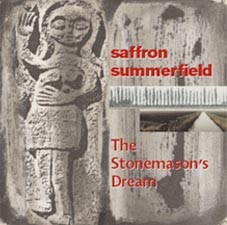
Two years ago, the retrospective The Early Years reissued Saffron's first two album releases, enabling us to re-evaluate her very first contributions to that much-maligned genre of singer-songwriter. Since the mid-seventies, Saffron has spent a lot of time touring abroad, also studying (and developing her skills in playing) bottleneck guitar, as well as writing music for radio and TV, before returning to the studio for an intriguing jazz-folk fusion album Whose Land Is It Anyway? just over ten years ago. A further new album from Saffron has thus been quite eagerly awaited, and The Stonemason's Dream doesn't disappoint. It's a collection of mostly her own compositions (including one instrumental), along with two appealing traditional covers (I particularly liked her poised, beautifully-expressed and well-paced rendition of The Leaving Of Liverpool).
Saffron's new songs still display the same qualities that attracted me to her earlier material - a combination of gentle optimism and earthier realism with a mature, knowing stance that tempers the occasional (only apparent?) innocuousness. The songs themselves prove accessible and attractive, growing on you almost imperceptibly after their sometimes more enigmatic first impressions. On the majority of the tracks here, Saffron's melodic and sensibly understated guitar (or bouzouki) accompaniment is fleshed out by cello, melodeon, trombone and a modicum of percussion, with chorus vocals augmenting one track; perhaps the initial welcome novelty of the trombone tone wears a little thin through over-use, otherwise the ensemble treatments work very well.
David Kidman
Home in 3 bits is the title of an intriguing collaboration between Newcastle poet Paul Summers and former Lindisfarne musician Dave Hull-Denholm.
Dave Denholm has seemingly chosen a project as far removed from his previous band as possible, supplying an instrumental soundtrack that weaves its way behind, over and through Summers' spoken poetic narrative. The music has a flowing, filmic quality, with Denholm playing guitar and piano throughout and enlisting the help of Lindisfarne buddies Rod Clements and Ian Thompson, plus cellists Greg Pullen and Cathy Donelly, to add flesh to the bones of his atmospheric compositions.
Paul Summers has a sharp eye for detail, and the wordsmiths knack for bringing those images to life; witness his description of the old pub domino players: "the skin of one-time double chins hangs paper-thin in breathless flags, and when they laugh, their straining necks, like pelicans remembering storms" or the "jaundiced streetlights" that render "every puddle an orgy of mercury eels."
While I admit that my knowledge of poetry lies somewhere between John Betjemen and Roger McGough, Summers work is altogether tougher, angrier, grittier - and in turn reflective and emotional, conjuring the landscape of the North East coastline as much as the people that inhabit this story of one mans homecoming and his struggle to come to terms with the death of a child.
For a relatively low-key project, sensibly sponsored by Arts Council North East, the quality of the overall package is extremely high and deserving of a wider audience. Even if poetry is not your thing, don't let this, or the ostensibly dark themes put you off; like all worthwhile art it asks more questions than it supplies answers - which is why you will find yourself returning to it time and again.
Currently only available online, for more information visit the website:
Chris Groom February 2007
Solan originate from Shetland, and comprise Richard Chaff (vocal, guitar, keyboard) and Frances Wilkins (English concertina). On their début album Northern Shore they made up a three-piece with Chris Henderson on fiddles, but for this second offering (originally released in 2001 but now re-promoted in advance of the release of a third) they've slimmed down to a duo, with the fiddle and viola of Christopher Stout (and on the fine title set, Debbie Scott too) maintaining a guest status. I saw the twosome performing live around three years ago, and I thought their basic concertina/guitar combination pretty fulfilling without any obvious need for extra musicians, but having said that, the additional instrumental line is invariably sensibly integrated into the texture - on this album, as indeed on Northern Shore, enhancing rather than detracting from the delicate balance, which I think is even better managed this time round. In any case, there's plenty of spirit and commitment in Frances' and Richard's own playing, and their individual styles mesh together well. Additionally, their selection of material is enterprising, though they include virtually no indigenous Shetland music (even if Richard's own compositions are often directly inspired by Shetland music and musicians). The tunes range from traditional Irish to one of Phil Cunningham's to French-Canadian to Jay Unger, while the songs embrace Richard's own (Roundabout, Daphne Bury), two by Nick Mitchell of Chester band Full House, Mike Harding's poignant yet underrated No-Man's Land and the latterly somewhat ubiquitous Fields Of Gold (taken a little faster than normal, though not without feeling I'm glad to say). At times I still get a feeling of partly-unrealised potential that I can't quite place, but you can nevertheless rest assured that this album is definitely a few notches above the average "gig purchase" in terms both of recording quality and staying power.
David Kidman
A New York native, Steve describes himself as "an old-fashioned folk singer in the People's Music tradition", with close on 40 years' experience and a repertoire accumulated over that time that mixes topical-political folk with songs of America's industrial heritage and old-time, blues, ragtime, gospel - sometimes unashamedly rewriting his sources as he fancies (very much in the aforementioned tradition, then). This CD, Steve's third, has a welcoming (and yes, distinctly "low-rent" - and proud of it!) demeanour, with an unpretentious, no-frills down-home recording that just presents Steve and a bunch of friends performing exclusively for you, right there in your very living-room. Not for Steve the manufactured product of the folk-degree perfectionist or the studio engineer - this is the real deal: folk music as the people's entertainment, accessible and relevant but also suitably thought-provoking where required. Steve's own songs subscribe to the Woody Guthrie/Pete Seeger ethos too: they include a rousing tribute to working men and women (Let's Sing), a topical rewrite of The Blind Fiddler (The Blind Veteran), some perversely self-deprecatory innuendo (High Ballad Man) and a neat little commentary on urban gentrification (the title track). Steve also turns in a handful of adept and authentically realised covers, which include three lesser-known Guthrie songs and Si Kahn's Aragon Mill. On this recording Steve's front-room friends include among the supporting vocalists Anne Price (with whom he's touring the UK later this month), with a handful of other musicians on banjo, fiddle, harmonica and piano at various points (and quite naturally and genially) augmenting Steve's own plain-styled but effective guitar playing. And the whole gathering (plus audience!) gets to join in on the live bonus cut. The inevitable caveat will be that folkies of a more contemporary predisposition who would revel in (or at least expect to hear) hard-hitting strong language or more overt Bush-bashing rhetoric must look elsewhere, for Steve's brand of social and political comment belongs to what might best be termed the old school of protest-folk, determinedly - and unashamedly - old-fashioned... and timeless in its own way. Ça suffet, indeed, you might say!
David Kidman October 2008
The eponymous opening track is a stormer and would be a great way to start a gig. This brand of R&B venturing into soft rock is loved worldwide and the warbling harmonica of Sugar Ray Norcia sets it off to a tee. They throw in a Kansas City style blues on I Done Got Wine and Sugar Ray's voice is particularly suited to this style as he slips into his harmonica breaks seamlessly. This isn't flash music, it's just good music. A further style change takes us to Chicago and Dark Roads Calling. Paul Size shows a deft hand on guitar during this smouldering blues. Livin' A Lie is a jaunty, upbeat blues that has Ray blowing his harp like a good 'un and Cloud Cover is an instrumental that allows him to really strut his stuff. In another change of style the band switch to Rock n Roll, Dave Edmunds style, with high octane performances from all. However, special mention is merited for Michael Mudcat Ward on acoustic bass who certainly makes himself heard.
The Rock n Roll theme continues with the slower That's My Desire which sounds much the same as One Night. This is brightened up by Size's twangy guitar. (I'm Gonna Break Into) Folsom Prison is slightly disjointed but the base is there for a great song. The band returns to high paced R&B for I Want To Marry You Girl and they go through their paces with ease. The real highlight of the album is I Won't Leave Home No More, a classic Chicago blues with Size excelling. Ray shows his versatility on River Stay 'Way From My Door which is a harmonica led smooth, jazzy night club song. I hope that The Last Blues Song is not prophetic as I need something to write about in the coming years! Seriously, this bar-room blues would grace many an album, even those produced by better known artists. Ray and the band finish with the peaceful, slow and short harmonica blues of End Time. Time for bed, nighty-night.
David Blue, June 2006
Les's name isn't well known generally, although one or two of his songs are sung around the country's folk clubs with often no idea on the part of the singers as to the identity of their author. This is Les's first CD; he only started to write songs because, he says with typical modesty, "every time I went to a singaround someone would stand up and sing the song I had been rehearsing over the last few days so I decided to write my own". The entirely logical reasoning of that explanation pales into insignificance, though, when you're as bowled over by the quality of the songs as I was. Five of the 13 songs here have a loosely nautical theme (to some extent reflecting Les's early career in the Royal Navy and his keen interest in diving which continues to this day). The Mingulay of the title, you'll be interested to learn, is the boat on which Les used to live! Perhaps the song of Les's which has gained widest currency (so far) is Jutland (it's been recorded by Johnny Collins, also by the Forbitters, and even in German!); it's one of those simple but immensely powerful compositions that feel deeply traditional. But in truth, every one of Les's songs makes an immediate emotional impact, being earnestly, sincerely compassionate and very, very moving (this quality is betrayed by occasional unavoidable cracks in intonation in Les's own fine singing). Aside from the nautical topics (as well as ships, there's the rousing smugglers' tale of Deadeye Sound and the bounty hunters commanding Five Pounds), Les also celebrates the heroism and bravery of quite ordinary people (the Royal Army Medical Corps in Roses Of No Man's Land, a soldier in the American Civil War in Sullivan's Farewell and Rev. Philip "Tubby" Clayton in Forever In Peace), turns in a poignant industrial lament (Wind Upon The Cranes) and insightfully tackles the more personal dimension on Mary's Gone Now, Butterflies And Bows and Someone Waits For Me. On this CD Les's own voice (and occasional guitar) is joined by Kitty Vernon (resident of the famed Herga Folk Club) for some really lovely harmonies, also the wondrous bass vox of the aforementioned Mr. Collins; Les is also blessed with a sympathetic producer (and guitarist/vocalist) in George Papavgeris (now where have we heard that name before?!). There are a couple of minor technical glitches (like a discrepancy in playback levels between the acapella and accompanied tracks, and one odd edit), but these need not concern us unduly, for I'm tempted to summarise by taking that diving analogy further and say that Les reaches depths of emotion that so many other songwriters fail to reach by remaining on the surface.
www.howlingtoad.mysite.wanadoo-members.co.uk
David Kidman
Sunhoney is a six-piece that after around two years of successful gigging around their native Scotland has finally released a début album. It makes quite an impact on first listen, an intriguingly shifting brand of rootsy funk that takes the bland-sounding concept tag of fusion into another dimension. The individual members are all well regarded for their work in other areas of the modern Scottish roots scene; there's fiddler Aidan O'Rourke (Tabache, Blazin' Fiddles), vocalist Alyth McCormack (who released a stunning solo album An Iomall last year), bassist Quee McArthur (Mouth Music) and drummer Donald Hay (aka Drummy, of Nusa and Mystery Juice), who together with keyboard player/programmer Fergus MacKenzie and guitarist Kevin Mackenzie produce what the press release accurately dubs an "intricately engineered and brilliantly realised heavyweight collision" of musics that probably almost defies categorisation. Some tracks, like The Wishing Tree, Peckham and The Lobster, use for their basic framework a set of trad-inspired tunes composed by Aidan, initially much in the Shooglenifty vein you might feel, but the way they get to develop is Sunhoney's own, with an altogether funkier interaction between the various instrumental parts and a vitality in the ever-changing texture that is really refreshing.
An integral element in the success of Sunhoney's sound and approach is the tremendous, ecstatically busy hyper-percussion work, which can't fail to move the parts most other drummers can't begin to reach. And another highlight for me is Alyth's singing (here in English and in quite a pop-inflected styling), the purity and intensity of which provides an unusual foil for the programmed beats and swooning guitar figures that leap in and out of the texture of the four songs on the album (three by Fergus and one by Quee). All six members of Sunhoney meld together extremely well to give of their inspired best in this setting and create a special kind of magic that can be appreciated on many levels and listened to equally effectively in different ways.
David Kidman
Named for a South Korean boxer and the current vehicle for former Red House Painters singer-songwriter Mark Kozelek's tales of memory and melancholy, it's taken five years (punctuated by Modest Mouse and AC/DC covers albums) to follow up Ghosts Of The Great Highway with original material. But, with a running time that pushes the clock past 70 minutes and three numbers around the 10 minute mark, he's certainly made the wait worth the while.
The same applies to the songs and musical mood which, in dealing with trademark themes of loss, loneliness and death, calls to mind the Harvest/Zuma days of Neil Young veined with traces of Nick Drake and, on Harper Road and the disturbingly dark Heron Blue, traditional English folk transplanted to the stark Appalachian mountains. Some might wish to toss the Tim Buckley tag around and, while it's not without merit, Tonight In Bilbao is probably more a kindred soul to David Ackles.
He turns up the guitars to throaty for The Light and the reverb growling Tonight The Sky, but otherwise his dominant mode is pastoral strum, Lucky Man and Moorestown (one of two numbers previewed on 2006's Little Drummer Boy live album) both dressed in crystal tinkling guitar arpeggios, the latter gilded with dreamy strings and piano that echo the sadness in his warm wearied voice.
Mortality and ghosts (of the departed, if not necessarily dead) haunt the album; on the lengthy guitar and violin opener Lost Verses with its reflections on youth, the sense of years passing on Like The River, in the angel who whispers word of comfort as she follows him down the Unlit Hallway (one of two numbers featuring Will Oldham) and, most poignantly, on the closing plucked flamenco guitar Blue Orchids with its reference to his sister's death.
April, may indeed, as TS Eliot had it, be the cruellest month, but it's also the time of rebirth as what was past and buried returns with the promise of new life. And it's a promise this album ultimately keeps.
www.sunkilmoon.com
www.myspace.com/sunkilmoon
Mike Davies August 2008
When it takes seven years to produce a successor to your debut album, then you're really starting from scratch. Such is the case for Edinburgh's alt-country rockers who emerged to fulsome praise with Outrageous Expectations, toured with and backed numerous like minded acts and then went to earth.
Resurfacing now, there's been a lot of water under the roots rock bridge since then and many another act sporting the same ringing guitars and country toned pop. Fortunately, none of them feature Iain Barbour on guitar, a man who's been tagged Scotland's answer to James Burton. He's undoubtedly the backbone here, tossing off effortless licks that shift from the Stonesy swagger of Desperate Man and King Of The Small Town to Last Generation To Die's chiming power chords and the bluesy riffs of Band Of Rain.
On the downside however, none of the songs make a lasting impression and neither Paula nor the slightly twangier David McKee are particularly distinctive vocalists. They're competent enough, but you never hear any real feeling or passion behind them, so that it all ends up sounding like the sort of serviceable bar band you enjoy as background to your beers, but don't sufficiently inspire you to visit the merchandising desk afterwards.
Mike Davies October 2011
Outrageous? Not a bit of it. If I'd had any expectations at all for Scottish band The Sunshine Delay's new album, they would have been exceeded by what is a superb album.
Listening to it is a bit like throwing open the windows after a long, hard winter. It hits you like a warm breath of fresh air and leaves a good feeling in its wake.
It helps of course to have a singer like Paula McNally, surely one of the finds of the year. She is a worthy compatriot of Eddie Reader, both bring a slightly off-centre, folky feel to their lyrics.
But no man (in this case woman) is an island and in David McKee, Dave McManus and Ian Barbour she is joined by kindred spirits. All are obviously passionate about the kind of melody-drenched pop that nowadays is as rare as a happy motorist.
It is abundantly clear that band thoroughly enjoyed recording the album. You can't manufacture the joy and lightness of spirit that surrounds the whole thing.
What else is fairly obvious is that the band pretty much stepped off stage and got in front of a mike. The production is so light as to be almost invisible, only the merest hints of a producer's touch interrupt the spontaneity. But when you can play like the Sunshine Delay leave well alone. In album that straddles the line between power-pop and soft rock there are instantly memorable moments aplenty. But if they're looking for a signature tune to announce the arrival of Outrageous Expectations, then the band could do worse than pin their hopes on Defeated Blues. It's the kind of slow burner that builds and builds until, by the end it's red-hot and rocking. After you've listened to the album, say a little prayer of thanks that 'real' music is back in fashion, or else the Sunshine Delay could still be an undiscovered gem. There is nothing flash or fancy about what they do, it's all about the music, great melodies, well-written lyrics beautifully presented. It's a recipe that many would do well to emulate.
Michael Mee
It's been a few years now since the London-based Suntrap released their third CD Sweet Fast River, and although there's been a further lineup change (Debbie Chalmers has replaced Nicola Hillary on violin and viola), the band's trademark confident sound, with its sparkling freshness of balance, rich and creative vocal harmonies and intelligent and subtle layering of instrumental parts, remains intact on Unravelling, the band's debut for Fellside.
Aptly for their name, Suntrap purvey shimmeringly beautiful music that might best be termed contemporary folk with a touch of tradition, a tinge of psych and more than a hint of savvy pop. The bulk of their repertoire centres around the compositional talents of band members Paul Hoad (guitars) and Sara Byers (accordion and whistle), who present for our delectation their evocative and accessible personal reminiscences and pertinent though poetic reflections on life and love (which as often as not are laced with a healthy dash of self-mocking humour).
The dizzying highs and lows (and mind-stretching contradictions) of romantic infatuation are sensually explored on the wilful over-enthusiastic craziness of So Sweet and the more considered title track, while Beautiful Boy muses with spiritual sensitivity on the death of a close friend and Brown Eyed Boy delicately reconciles a father and son through the revelation of shared experience. Don't Go takes the form of a snapshot of a relationship at breaking-point, while on Just Like A Bird Sara powerfully draws on the example of her own sister to examine the disparity between inner and outer personae.
The album's non-originals turn out to be quite a disparate bunch: Fleetwood Mac's spunky Rumours classic Gold Dust Woman, here coupled with the traditional Young Collins, works curiously well, though the intrinsic bitterness of Gillian Welch's Didn't Leave Nobody But The Baby is arguably a mite underplayed here. Best, though, is Suntrap's considered interpretation of The Snow It Melts The Soonest, which, in spite of its tempo at first seeming a little brisk, eventually capitalises on its instrumental bookending, drone backing and unsettling harmonies.
Through their likeable yet telling presentation and the sense of commitment which shines through in the immediacy of their writing, Suntrap easily establish a rapport with the listener, and key qualities such as their assured craft and keen feel for texture (especially in the blending and intertwining of Mary and Debbie's violin lines) invariably ensure constant interest. I also liked the subtle use of studio production techniques on the judicious filling of backing textures. The band employs just one guest musician – Flook's Sarah Allen – who appears on just a couple of tracks including the dreamy opener Blue Skin Bay. And finally, for the dyslexic amongst you, the sexy closing track is not a song but a snog (OK, an instrumental!) – make of that what you will…!
Unravelling proves an assured, intense yet attractively listener-friendly album with appealingly thought-provoking content.
David Kidman October 2010
The youthful London-based Suntrap are becoming an increasingly sought-after band following the success of their first two albums (Long Winter Coat and Red Red Shoes), and Sweet Fast River, their third, builds on that success with a thrilling mix of original compositions and interesting covers (including three traditional songs). There's also been a lineup augmentation since 2002, with violin/viola player Nicola Hillary bringing additional creatively interweaving lines to the existing trio of Sara Byers (accordion, whistles), Paul Hoad (guitars, harmonica) and Mary Wilson (violin). Stylistically, the mix is much as before, with enterprising folkier arrangements rubbing shoulders with appealing country-tinged waltz-time numbers (the title track and Holding On) and tales formed from contemporary preoccupations (romantic and urban angst). But the standard of songwriting from Paul and Sara (they tend to write individually), though not exactly weak on the first Suntrap album, is stronger than ever here, from the tumbling opener Silver (now that one sounds for all the world like a sweet fast river!) to the decidedly poppy His Or Mine (one of Paul's, reminiscent of a more commercial Steve Knightley opus perhaps), Sara's Peacock Skirt, full of striking imagery (and sounding at times like a hybrid of Abbie Lathe and Pooka), and the thoughtful duet Black Crow's Wings. Hallmarks of the Suntrap sound are a musical and highly competent instrumental base (a distinctive blend) enfolding some great vocal harmonies (all four band members sing, and well too, although Sara and Paul inevitably take the lion's share of lead vocals). These harmonies can often be quite unsettling, twisting and turning their lines in unusual directions, as on All Things Are Quite Silent and Peacock Skirt especially. And of course the acappella tracks (sadly only two brief ones this time, one of which is an intriguing cover of Kate Bush's The Man With The Child In His Eyes) admirably showcase those superb voices, sounding not in the slightest bit cruelly exposed in their splendid isolation from the instruments. All in all, Suntrap revel in making full and expert use of the possibilities of range, colour and power that four voices and four instrumentalists can bring, producing a rich sound that never sounds overblown, incorporating an impressive and intelligent use of texture and dynamics. Some subtle electric guitar on River and selective sample bass and drums on A Blacksmith Courted Me are two further examples of Suntrap's ever-creative approach to instrumentation, providing a foil to that now-characteristic dual-violin approach which permeates many of the songs; the fact that the whole album is beautifully recorded helps too, of course. And I'm really glad that the band have seen fit to provide a full booklet with lyrics this time round - now we can appreciate the artful construction of the songs even better. Sweet Fast River is an exceptionally strong set, brimming over with confidence and musicianship.
David Kidman
Having gone awol following a falling out with their old label, Dan Warden and Miles Copeland (no, not that one) resurface on their own imprint for their official second album. Imagine a two man Polyphonic Spree channelling the influences of Brian Wilson, Glen Campbell, The Turtles, McCartney and Jimmy Webb and you'll have a reasonable idea of what's contained within. Albeit on a far smaller budget with less ambitious more lo fi production values.
Employing harps, vibraphones, Fender Rhodes and some synth called an Omnichord alongside the usual guitars, it's a dreamy, 60s pop nostalgia affair rippling with hummable melodies like the widescreen sunshine of Anymore and the happy together skipalong vibe The Northern Song or the Henry Mancini sounding 50s cinema soundtrack ambience of All Your Memories and Golden. The songs frequently drenched in shimmering harps to go with the wide-eyed freckled romanticism, it can become a touch too twee, making Jack Johnson sound like death metal, but next time you're heading for that beach picnic you'll want to pack this on the iPod.
www.myspace.com/superimposers
www.wonderfulsound.com
Mike Davies February 2008
A Coventry duo comprising Richard Sykes and Joel Kendrick, they describe their second album as "another self-composed, limited edition featuring 13 tracks of varying lengths and moral turpitude." I've not heard the first, Stumble, Mumble...Talk, but apparently this is less comatose.
Behind all this self-deprecation lies a rather good if rough shod collection of strummy country folk tunes and songs filtered through a jaded, cynic al view of the world and influences that might seem to encompass Simon & Garfunkel, American Music Club, Calexico, Roy Harper and maybe even a touch of Ralph McTell alongside such declared inspirations as, er, Bollo, Frank Lloyd Wright and Titian paintings.
Translate that musically and they jog happily from the opening jaunty bounce of These Big Steps, which is a bit like Horse With No Name on happy pills, through the S&G 60s folk pop Cold Carry On, Under The Radar's desert country blues, and Latin samba swaying Waiting For The Butterflies to the flamenco and hand percussion strains of The Bowerbreak, front porch sunny afternoon strum There'll Be No Whiskey In This House No More and a ukulele plinked home on the range trotting Feverish Dreams. My Imaginary God shows they know how to write a catchy pop melody too while the tropical lilting Taliesen West displays their instrumental prowess.
Not quite as laid back as their name implies, but even so it's the sort of relaxed music you dig out when the skies are sunny, the beer's chilled and the smell of new mown grass is on the wind. Just don't poke around too much in the lyrical undergrowth, there may be worms.
www.myspace.com/supineorchestra
Mike Davies September 2010
It's been a long six years since the release of American Refrigerator, but the South London singer-songwriter's clearly not be sitting on his thumbs in the interim. Signed to a new label, he's shrugged off past Dylan comparisons to produce an album of Americana that, variously rocky and balladeering, narrows the reference points to Don McLean (especially on the gospel-blues piano ballad You Got A Man Like Me Loving You) and John Prine. Indeed, the fresh out of prison When Tomorrow Comes (which, like several numbers, features the fabulous Siobhan Parr on harmonies), could have come from one of Prine's own early classics.
With songs that variously deal with how love can bring light to a dead end life (the sad waltzing, organ and string quartet coloured Dreams About Beautiful Girls) and battles with the booze (the rootsy mandolin flecked Honey I'm Home and Rose In A Bottle, both which evoke thoughts of Ronnie Lane's Slim Chance), a sense of striving to be a better man runs through the album.
If I'm being honest, I'm less taken with its uptempo numbers, the rocking country Coming Apart At The Seams and the chugging hobo blues Road And Rails with its slide and steel. But when he switches to plaintive acoustic melancholy for something like In The Cold Light Of Morning, which features Matt Percival on dobro while skilled guitarist Gunnar Frick switches to accordion, or the lovely, string quartet and guitar title track with its melodic evocations of an old Confederate hymn, then I'm weak at the knees.
There's one non-original here, and while Townes Van Zandt's If I Needed You has been covered umpteen times, Sutherland's arrangement with its different vocal and melody phrasings and the colours added by Frick's lonesome lap and pedal, still manages to bring something new. Don't keep him waiting, it's time Sutherland was invited to become a full member of your collection.
www.davesutherland.co.uk
www.myspace.com/blindboydavesutherland
Mike Davies July 2008
Dave Sutherland - American Refrigerator (Shaye Music)
Born in Hammersmith, in the nine years since he started struggling his way through the few chords he knew down the London pubs, Sutherland's learned to pick guitar like a wizard, paid his dues as support act to Glenn Tilbrook and Bert Jansch (who produced his debut), toured the US and recorded two albums.
This is his third, delivered in a slightly nasal honeyed sandpaper voice that variously bears traces of Dylan (on the opening title track, a marvellous song about former cop confined to a wheelchair after a shooting) Roger McGuinn, John Prine, and, for the real 70s obscurists among you out there, Jimmy Stevens (and if anyone knows what happened to him I'd love to hear). With the banjo driving bluegrass stomper Candyman (that'll be drugs then), waltz time swayer Dead In Her Head, folk-blues shuffle Sugar Babe and lost love song Where Are You Now? it's amply evident that he's steeped in a rootsy mixture of American country-folk and Celtic, but as Happier Blue and the frankly quite brilliant I Don't Play With The Rolling Stones And She Don't Sing The Blues (a title Shel Silverstein would have killed to have written) reveal, he's also more than capable of kicking up the folk-rock dust too.
The album's laced with a reflective melancholy - even on Going Down To Georgia's tale of a guy (a fugitive?) who's gota gun to a hostage's head - that finds perfect expression in the closing From The Vauxhall Tavern...to the Deptford Broadway with its lines 'where we stood now stand houses when they levelled all the land," its cascading mandolin accompaniment and a feel that's best described as Martin Stephenson if he were Don McLean.
It's barely been off my player since it arrived, its unassuming acoustic simplicity, imaginative arrangements and Sutherland's warm vocals and beguiling melodies making him the most welcome surprise discovery of the year so far. And, just for the 'where are they now?' Brigade, please note the credits list Annabel Lamb on backing vocals.. Right, now to track down the other albums.
Mike Davies
I was turned on to Dave Sutherland when a very dear friend sent me a copy of his CD - Comfortable Junction. "You might not like it" she said, "it's not your normal cup of tea". Darn right, give me Deep Purple or the Albion Band any day. But I'll listen to anything and dutifully played the CD. Several times. What struck me was the quality of the production; maybe not as tight as one might expect from a multi-million selling artist, but clear, bright and eminently listenable. Dave works on the CD within a 'band' environment - acoustic and electric guitars, bass, drums, organ and piano, harmonica, backing vocals. There's even a mandolin to please this self professed folkie.
There are touches of folk, country, some bar-room type numbers and one or two that yer average Framptons might want to go overboard on. It's a great CD, and I hope the follow-up, when it comes, delivers more of the same.
Dennis Bird
For a full account of Dennis Bird's trip to 'sarf' London to see Dave 'live', plus gigs, albums and pictures of David Hughes, Andy Guttridge, Little Johnny England, Alan Burke and more, go to www.shogem.co.uk
This record was a real labour of love for master Nashville session guitarist Bryan; though a low-key affair, it fairly sparkles with the glow of personal, spontaneous music-making of the kind that often happens when guitarists get together to jam informally. Bryan listed the various guitarists who'd had the greatest influence on his bluegrass guitar playing, guys who happened also to be friends and inspirations to him; then, instead of bringing them into the sterile studio environment to play, took some recording equipment into their homes and played duets with them, with the goal of capturing as much interplay between the two guitars as possible, honing in on the various nuances and reactions of the musicians. Bryan's thesis being that "he guitar has such a wide tonal range that in a good duet situation you don't miss anything"
Amazingly, he was able to get all the players on his wish-list but one (Mark O'Connor), and the list is certainly impressive, a virtual who's who of bluegrass guitarists: Russ Barenberg, Norman Blake, Dan Crary, Earl Scruggs, George Shuffler, Ricky Skaggs and Doc Watson, to name just half! The recordings are essentially live takes, with occasional edits here and there. Bryan approaches these duets as a vehicle for a kind of sub-conscious improvisation, whereby he's inspired by specific elements (licks, chords or voicings, say) within the playing of his partner musician; he "simply listens and reacts, allowing the music to grow naturally". Each of those musical partners proves to have something different to teach Bryan, whether it be tonal simplicity, clarity or dynamics in flatpicking technique, or rhythmic momentum. Many of the tunes used as a springboard here are traditional in origin, but taken by Bryan and his musical partners to an altogether higher plane that transcends and familiarity. Highlights for me were Lonesome Fiddle Blues and Dusty Miller (both with Tony Rice), and Bonaparte's Retreat (with Jerry Douglas), but in truth every track's a gem. A most fortuitous collection of musical encounters, this.
www.bryansutton.comDavid Kidman
Masterly (and increasingly ubiquitous) session guitarist Bryan follows up his first solo recording for Sugar Hill (the sparkling Ready To Go) with a more humbly-titled effort that reaffirms his commitment to the genre, albeit in a rather quiet and undemonstrative way. This time round however, it's an all-instrumental set, and largely as you might expect with its mixture of rags, reels and arrangements of other tunes (and some songs) both traditional and composed. There's no grand showing-off, just a relaxed and easy-going groove, showing Bryan to be at complete ease in the company of cohorts Tim O'Brien (mandolin), Tim Crouch (fiddle), David Talbot (banjo) and Dennis Crouch (bass). Bryan rises effortlessly to the challenge of playing fiddle tunes on the guitar, and elsewhere he makes a neat job of "instrumentalising" (for want of a better word) songs like the Carter Family's The Storms Are On The Ocean and Tim O'Brien's High Road. Bryan's own composition Nelia's Dance takes a pride of place on this CD as a wholly credible reinterpretation of the bluegrass tradition. I can't fault the tasteful playing throughout this disc, but at the end I was left feeling just a little underwhelmed; maybe Bryan's a little too self-effacing a musician to carry a high-profile solo instrumental recording?
David Kidman
The Scandinavians love their blues and this pair has obviously been influenced by many of the greats. They play delta blues from the 20s and 30s and mix it up with a contemporary feel every now and then. Rootation begins with the Jimi Hendrix classic Voodoo Chile and I'm not complaining about yet another band covering Jimi. This duo on acoustic guitar and harp make it sound like an authentic blues/roots song and produce a powerful opener. Heaven Only Knows is the first of half a dozen self written songs. In fact, the album is split 50/50 with covers and original tracks. This one is by guitarist Svensson and it's a great country blues; foot stompin', clapping excellence. Stay Away From Love is Dafgard's first track (he contributes two) and is a swinging blues performed in the guitar and harmonica bare bones style that they have already shown is theirs. Svensson's next effort is Men Of Steel. This is an atmospheric, epic tale, performed on guitar and voice which only adds to the overall feel. At My Front Door is a classy blues that allows Dafgard to show his style on harmonica and Bad Luck Blues by Blind Lemon Jefferson is just so easy to listen to the boys have come up with a stomping roots version.
My Love Is has a contemporary, moody feel to it and has the best vocal on offer before they run off into Dafgard's second, and final, song, Change My Ways. This is a highlight with its Cajun infused country moves. The rootsy Albert & Agnes is Svensson's penultimate song and, although he tends to overdo it a bit, it does tell a good story. No harmonica player can go a whole album without a Little Walter song and Dafgard comes up with It Ain't Right. Again, he shows his undoubted class and passes the test with flying colours. There's some more top harp playing on M&O as Dafgard shows he can really grind it out. Having said that, Svensson does deserve some praise for his consistently excellent guitar work too. They close with Pilgrim, Svensson's final song, which is a slow roots/Americana track. Unfortunately, this is a bit insipid and proves to be a slightly disappointing end to what is a fabulous album.
www.svenssondafgard.com
www.dustyrecords.se
David Blue, July 2006
Just to put your mind at rest, Gleowien is a middle-English word meaning to make music and merry: a decidedly worthy activity to which Vicki and Jonny's fourth album (and third for WildGoose) is dedicated. As was apparent right from their days in Serious Kitchen, Vicki and Jonny certainly enjoy making music at any time, and with each of their records (and live performances, come to that) I'm brought up sharp by their natural and apparently effortless multi-talentedness. Gleowien is a glorious celebration of that trait, sure, but it also marks a further milestone in their development as musicians.
Not only are Vicki and Jonny both continuing to grow in stature as singers and song-interpreters, but they're also expanding their available instrumental sound-palette. In the latter respect the most striking element is the latest addition to the duo's already impressive instrumental armoury: Vicki's fairly-newly-acquired nyckelharpa (that determinedly unwieldy-looking but wonderful Swedish instrument), which provides yet another string (or 16!) to her bow (!). She adds its distinctive, haunting timbre to a goodly number of the tracks (but to her credit, she refrains from over-exposing the instrument's delights). Textures are sensibly well varied over the course of the disc, with Jonny's trusty and friendly guitar overlaid and/or counterpointed by a melody (or harmony) line or two from Vicki, who flits mercurially between Scottish smallpipes, wooden flute and the aforementioned nyckelharpa. Jonny also adds further colours to the mix with accordion and cittra (a Swedish zither), while there are some wondrously subtle yet inventive guest contributions from a neat little rhythm section comprising bass guitarist Mark Southgate, Bellowhead's mad percussionist Pete Flood and bodhrán player Roy Jones.
The disc more or less alternates between instrumental sets (seven) and vocal items (five); all but one of the former consist of original compositions in traditional style by Jonny or Vicki - and by traditional I mean Scottish, English and Swedish, and often you can't feel the join, so authentically are they managed. Pick of these for me is the central Whist, which pairs a beguilingly reflective slow air with a more vigorous depiction of a game of cards (the real deal!), while the more rhythmic Time Out set ingeniously pulls the smallpipes away from their Highland heritage. Similarly, the songs range over (or are strongly influenced by) the traditions: first, there's two fine examples of Jonny's creative synthesising of classic ballads (Child #3, here called William, and Lord Ullin's Daughter), on which at times I can't help hearing the spirits of that admirable Australian duo Cloudstreet (no aspersions intended!) in terms of tone, manner, phrasing and presentation. Then there's Vicki's translation of an enchanting Swedish love song (The Roses Three), and a delicate setting by Vicki of a charming poem (The 'Dood' Night Kiss) written for her grandfather by his own grandfather! Arguably the most enduring of the vocal tracks, though, is Jonny's genial and memorable (if gentle) chorus song calling the family home from the fields (Follow Me Home).
With its exceedingly well balanced menu and a light, airy and thoroughly infectious vibe amply befitting its title, this refreshing CD communicates every scrap of the musicians' enjoyment of their craft while managing to quietly impress without needing to shout or boast.
David Kidman September 2009
David Kidman August 2007
Swan Arcade - Round Again (Fellside)
Two albums on one CD - 'Together Forever' and 'Diving For Pearls' provide an essential recording of this unique band. Close three part harmony, with rough edges - 'The Watersons on speed' as I like to think of them. There is much to like on this CD - both traditional, but especially their take on more modern songs. Some highlights include 'Paperback Writer', 'Lola', 'Raise Your Banner' (John Tams), 'Black Seam' and 'Children's Crusade' (Sting), 'Shipbuilding', and 'Peat Bog Soldiers'. Also recommended are the Sacred Harp hymn selections, and the wealth of trad material - 'Boomers Story' and 'Go From My Window' being choice examples. If you love singing and songs, this collection is a must.
Jon Hall
A very pleasant and well produced album of quasi folk/pop sounds from this American duo. As the title suggests, it's a recording best listened to in the summer months, but the feelings induced should help you through these cold months.
Lots of '80's type keyboard sounds and retro nuances, but generally these don't obscure the quality. Songs of love and loss, songs sung with feeling - a fine package, and the added extra of 'Moon River', which is sublime.
Jon Hall
Swank - The Survival Issue (SOCAN)
In music, like life, you should never judge a book by its cover, (copy of Tales from Topographic Ocean anyone?) but before you listen to a note of The Survival Issue you'll fall head over heels in love with the cover which lovingly creates one of those magazines from which you could order a home hair cutting kit or a 12 week course to a 'new you' from Charles Atlas.
In fact, there's so much care and attention been lavished on the cover, that the suspicion must be that there was none of either left for the music.
Have no fear because a) it needs little money to produce the sound of a band having a stonking good time and b) all the time needed for Swank to get this good was surely spent on the road and in front of an audience, not in the soulless, sterile atmosphere of a studio.
Warming up with the kind of twanging guitar instrumental that wouldn't be out of place on the soundtrack of a 50s film noir, the kind of film where the weather is always hot and sticky and evil family secrets lurk round every corner, Swank then introduce themselves with a 90-mile ride down the hallelujah trail with How Do We Do.
I care not a jot if and how far, their collective tongue is in their collective cheek because faced with the hellfire and damnation rock n roll of How Do We Do, I'm saving myself and I'm doing it now.
As the album careers on through Lost Respects and Honest Time you get the feeling that when the members of Swank were young, surrounded by country music, they spent a mite too long immersing themselves in the irreverence of punk. They have used the traditions of country music as a base and then built a gnarled and twisted sculpture of country rock on top of it. One on shoulder is the 'angel' of tradition whispering 'country, country', on the other sits the 'devil' exhorting them to get down and dirty, the result is wonderfully chaotic and hugely enjoyable.
Swank are the latest in a long line of rebellious country bands who have married anarchic guitars and rasping guitars with country melodies and sentiments, on Reverend Pleasant the friction between them causes sparks to flyand, just to show that band have a delicious sense of irony, the easy flow of track 6 is in direct contrast to the lyrics and the title (you'll have to see for yourself what it is).
Swank is undoubtedly a clever and accomplished band but its message is delivered from the heart via the guts.
Michael Mee
Over half of the album is quite bewitching, with Nicky's gorgeously tender vocal matched and dispatched by equally tender, gently sensuous backings that pair her own acoustic guitar with Alan Cook's sensitive pedal steel, Bethany Porter's luscious cello lines and Rick Foot's double bass. Tracks like Long Time, Tuesday's Lament, Amy's Waltz, In Too Deep and Wheels Keep Turning are charming and piquant examples of stripped-down folky acoustic-Americana styling, with Nicky's voice conveying all the necessary passion with minimal resource and plenty in reserve, while the delicate opener Little Bird and a new-look take on the Beatles' hit I Want To Hold Your Hand also convince, as does Nicky's closing lullaby treatment of the traditional Welsh poem All Through The Night.
But then there's the wild-card tracks that disrupt things, mood and expectation-wise: the tumbling yeh-yeh-yeh rock'n'roll of Crash And Burn, the sparky country-rockabilly of One Step Up, the crazy jazzy bossanova Hold On and the smouldering soul-strut of You Got Me Boy may all provide a necessary contrast to the slower and more pensive numbers, but the last two-mentioned in particular don't always immediately spark, well though they're performed. In the end, it's probably that very restlessness of expression that counts most against the cumulative impact of the album and (probably unintentionally) signals a kind of uncertainty of purpose. The accompanying booklet doesn't help, for half of the song lyrics are wilfully omitted and some of those that are included are virtually unreadable due to the registration and colour-scheme adopted.
Even so, the musical content of the album is all beautifully recorded by Tom Joyce, and there's enough must-hear music on Matches And Dispatches to cause me to keep an eager weather-eye out for Nicky's next recording.
David Kidman April 2010
Marsha Swanson - Watershed (Own Label)
London singer-songwriter Marsha released two singles last year to some acclaim, and now follows up with a full-length album. Watershed sees her broadening her ambit from the occasionally slick, kinda-Carole King feel of those singles (both included here, by the way) and on into deeper waters, most of the while not losing her grip on the need to communicate her thoughts and feelings. There's an attractively fresh feel about Watershed, both in the songs themselves and the musical arrangements, which are full and intelligently realised without being obtrusive. Marsha's singing is what strikes the ear at once; seemingly effortless; her strong, well rounded voice has a folkish tinge but also a straightahead pop-style directness that can distract from any intended subtlety in her lyrics. Mostly these concern recognisable personal/relationship situations and are expressed equally directly in identifiable imagery and accessible language. Musically, Marsha keeps well on that tried-and-tested, accessible side of the divide, without daring to offer anything really challenging - nothing wrong with that, but I get the feeling there may be more to Marsha that she's willing to let us hear at present. On this evidence, she probably fares best on the simpler settings - the folky-pop of Don't Blame It On Love and Cry, with just Marsha and her guitar and some fairly subliminal string contributions, for instance - but having said that, the gently techno Beth Orton-like Johnny Can't Read and the Kate Bush-like drama of Madam M also convince in their own way. My honest feeling is that some of Marsha's other songs don't quite measure up to those mentioned above in terms either of memorability or setting - Ghost Song and Weekend Best Friend, for example, pass by as breezy enough fillers but don't really engage the senses and, like the rather repetitive Old Sun, seem to suffer from over-busy arrangements. All in all, there's enough of interest on Marsha's debut album to inspire confidence that next time round she's likely to produce something more consistently, individually special.
David Kidman
No, not the Camptown Races - but the music on this CD is even more lively and infinitely more invigorating. It comes from the perchance-curiously-named Anglo-Swedish quartet comprising Karen Tweed (piano accordion) and Ian Carr (guitar), with Dalarna fiddlers Ola Bäckström and Carina Normansson (who also sings), a conglomeration which apparently stems from a chance meeting nearly ten years ago - and since that "catalystic conversion" their abundance of energy has won them many admirers, even amongst those who would normally resist the sometimes esoteric charms of Scandinavian music. The joy the four musicians bring to, and experience in, their music making just shouts out of the proverbial grooves of the disc. Moreover, that incredible, tangible rapport between each and every one of the four musicians is a trait that has carried the lineup through thick and thin, Du Da being both a culmination and a step forward both in terms of repertoire and presentation - most noticeably, perhaps, in the respect that no fewer than five out of the twelve tracks this time round feature Carina's forthright singing (and songwriting), which bring a piquant extension to the hitherto predominantly instrumental mix (varied and well presented though that always was to a great extent). But having said that, I wouldn't ever want to be without the glorious instrumental selections, of which the opening track is so very typical of Swåp, transposing deftly charging strange-metred rhythms and energetic ensemble passages with happy solo playing that's elegant and refined in both melody and execution. The supremely confident precision of phrasing and equally deft layering of the individual timbres is a grand example of art concealing art, and time just flashes by as you're caught up in the sweeping flow of the musical argument. Although my favourite tracks tend to fluctuate from play to play, for optimum repeat listening enjoyment I just can't resist the pull of the first three tracks in sequence, followed by the moody traditional ballad Så Rider Jag Mej (I Rode) (track 8) and rounded off by the Blind Mattis Leken polska (track 4). (And just where have I heard that catchy little Mäster Åslund tune (track 7) before? was it The Pack?!...) You might have thought that the quartet would have exhausted the possibilities for creative interplay after three CDs, but Du Da, their fourth, ups the ante considerably and is a totally fresh-sounding delight from start to finish.
David Kidman
Reason for being, indeed... for barely one spin of even the introductory bars of the first track will give you all the reason to be alive. That trademark feelgood joyous swing bursts out of the speakers like nothing else you'll ever hear, and puts the magisterial presence, the essence and vigour of the iconic Swarb right there in front of you: the sheer embodiment of the fiddle. Bringing us, in effect, full circle from the opening salvo of Swarb's very first LP excursion (the magnificent Rags, Reels & Airs), with Spanish Ladies receiving a bit of a chirpy makeover in a spanking (or should I say skanking!) new recording by Swarb with the six-piece Jason Wilson Band in happy - and tactfully contemporary - consort. That's but the first part of a four-part tune medley that really cooks, which shows the multiple-award-winner and proud EFDSS Gold Badge Of Merit holder at yet another career performing-peak, still playing from his very soul: enviably effortless (ha!), totally in command and still utterly unmistakable.
And it just gets better through the ten tracks that form the remainder of this new record, of which Swarb himself honestly admits: "It has taken all of eight years for me to complete ... and I don't think it can be repeated". Sessions for the disc took place between 2002 and 2010, mostly at Swarb's home studio in Coventry (the exception being the aforementioned Jason Wilson Band track, recorded only last year on their home ground, Canada). On all but three of the tracks we're treated to the miraculous, fine-tuned artistry of Swarb's Whippersnapper comrade-in-string, the ace (and nowadays abnormally busy!) guitarist Kevin Dempsey, who's capable of playing in any style imaginable and makes light work (and cool invention!) of the potential textural and rhythmic intricacies of the dance music that almost exclusively forms the basis of the disc's repertoire. Who says that virtually a whole disc of dance tunes can be boring? No way - for Swarb's own supremely vital, unreservedly animated playing possesses the power to rouse even the most staid listener and charm the most hardened resister of purely instrumental albums. And his continuing research into previously unrecorded early English dance music (dating from 1680 to 1745) has paid dividends in the canny arrangement and presentation of some wonderful discoveries.
To balance the foot-tapping, body-shaking items on the menu there are moments of comparative repose, including two majestic airs sourced from a 1796 book of Irish tunes (which memorably feature the incomparable piano playing of Beryl Marriott, with whom Swarb has been making music for over half a century), and two of Swarb's own lovely compositions: the delicate aural hug of Sweet Alban (written in affectionate tribute to his wife Jill) and Andy's Waltz (in memory of Andy Smith). On the latter we hear Swarb playing the baritone violin, a less-often-heard instrument which also imparts its distinctively earthy timbre to two uptempo selections later on the disc. One of these, the "Jiggs And Joaks" set that comprises track 10, is an indisputable disc highlight that made me shed copious tears of joy, featuring as it does the irrepressible ebullience of the combined talents of Martin Carthy, John Kirkpatrick and Isambarde's Jude Rees, all in the finest fettle imaginable. In fact I don't think I've heard Jude play better: even by her own high standards she really rises to the occasion here (on oboe and recorder, with shawm and curtal also in rude tow of course!). The invigorating set of triple-hornpipes (track 8) is pretty much irresistible, as is the (track 3) pair of tunes where Swarb manages (just!) to give maestro Simon Mayor a run for his mando-money, while each time round I can't avoid replaying those frisky little Swarb'n'Kev adventures like the Buttock Beef set (where Swarb doubletracks fiddle and mandolin- another echo of the "traditional folk engineering technique" used on parts of Rags, Reels And Airs!), or the gorgeous Ravenscroft's Fancy which brings in Michael Burnham on what amounts to far more than second-fiddle.
Raison D'Être is an outstanding collection which would be a masterful achievement in anyone's book, but it's even more to be celebrated for its significance in the continuing thriving career of Lifetime Achiever Swarb, fiddle player by appointment to the universe.
David Kidman June 2010
Glory be! - this legendary duo partnership, who first recorded a joint album over 40 years ago, is now reunited after some 14 years. Much of that period was an enforced absence from the recording scene that was due principally to Swarb's lengthy period of ill-health, but he's now very much back in the saddle and playing as brilliantly as ever, currently doing a limited amount of touring both with Martin and in the trio Swarb's Lazarus.
Living proof that a comeback album can after all be every bit as good as we remember the artists being in their glory days, Straws In The Wind is a natural successor to the duo's pair of early-90s discs (Life And Limb, Skin And Bone), while continuing very much in the mould of their seminal 60s releases; no studio tricks or enhancements, just two expert musicians on excellent form doing precisely what they do best. Of course, both men cannot but be older and wiser, and the passage of time has brought a significant and telling degree of additional insight to their performances on this new recording.
The disc's 14 tracks draw almost exclusively from the ageless tradition, with typically robust, highly accomplished and deeply thoughtful renditions of material predominantly sourced from the Penguin Book Of English Folksongs. In all but one case, the versions sung here accord closely with those found in that book, although, as Martin's clear-sighted and duly referential commentary in the booklet notes hints, ancillary sources may also have been considered and/or creatively trawled in order to arrive at optimum performing versions of the songs. Many of these are from what one might call the second-rank of folk-familiarity: not the repertoire you're likely to hear every week in your local folk club perhaps, but familiar enough to connoisseurs perhaps and definitely up for being refreshed and given a new lease of life - which Messrs Swarbrick and Carthy effortlessly achieve here. Songs like Unfortunate Tailor, Jacky Tar, When I Was A Little Boy and Bold Benjamin for starters (and I found Martin's play with accents on the latter especially satisfying). The duo's version of The Mermaid is both authentic and wonderfully dark, and a welcome change from the jolly romp of the "usual version", while their latest portrayal of Ship In Distress (a song that's been in their repertoire for 40 years) is also masterly, keeping a close focus on all the text's inherent majesty; Swarb's fiddle accompaniment in particular is outstanding in enhancing the repugnance and horror of the tale.
No Swarb & Martin album would be complete without at least a couple of instrumental tracks, and here we have three, of which the first is a spirited medley, comprising two marches and an O'Carolan tune (Lord Inchiquin, long a particular favourite of the duo's), which manages to be both fervent and beautifully controlled. The other two are fine and distinctive examples of Swarb's own canny compositional craft: Mrs Marriott, a breathtaking tribute to his long-time musical collaborator, is an especially delightful piece with plenty of surprising little twists and turns (though it's a shame it gets faded out after four minutes), while the beautiful final tune My Heart's In New South Wales brings in Kevin Dempsey (Swarb's Lazarus colleague and the album's co-producer) for some abundantly sensitive duetting guitar work. The whole album, in fact, contains some peerless performances, electrifying and inspirational; Martin's ever-inventive guitar work is exemplary, always a high benchmark for any aspiring guitarists, while the intensity of Swarb's fiddling ensures that sparks fly, its very occasional wheeziness only adding to the essence of spontaneity and conveying the total conviction in his music-making. Absolutely superb; no home should be without this invigorating disc.
David Kidman, October 2006
Swarb's Lazarus is a trio that holds all the aces: it comprises "Swarb" (ace English folk fiddler Dave Swarbrick, formerly of Fairport Convention and Whippersnapper), ace guitarist Kevin Dempsey (also ex-Whippersnapper) and ace multi-instrumentalist Maartin Allcock (formerly of both Fairport Convention and Jethro Tull). Swarb received a new pair of lungs in October 2004 after several years of debilitating emphysema which left him at death's door a few times (the Lazarus connotation harks back to the infamous premature obituary which appeared in the Daily Telegraph in April 1999! ...) and he was welcomed back to the performing stage in style at Cropredy. The recently-convened Swarb's Lazarus lineup is complementary to Swarb's revived duo partnership with Martin Carthy (touring this month, and a new album due out shortly), and this live set marks the first extended recorded offering from the revitalised Swarb. What a comeback! It collects together just over an hour's worth of performances recorded at four different locations (Abingdon, Leek, Rugby and Rochester) during March and April this year. The trio's repertoire predominantly consists of their own arrangements of British traditional tunes, combined into intelligent medleys, with a leavening of (again mostly traditional) songs. Inevitably Swarb's supreme, and demonstrably undiminished, instrumental skills are a primary focal point of the performances, but the equal-handed empathy and tremendously high standard of the other two musicians' contributions are blindingly obvious even to the most casual listener. Quite simply, Swarb couldn't have better-qualified or more supportive companions for this venture! His predictably breathtaking showmanship is retained in all its glory, whether on fiddle or mandolin (his puckish filigree dancing alongside Kevin's voice on I Know My Love is but one of the disc's high points). And it's indicative of the quality of the musicianship here that even after all these years and countless renditions by Fairport, that old warhorse Dirty Linen set still has the power to stun and delight in almost equal measure (and all in just under four minutes!). The eight-minute Jamaica medley is stunning in a different way, with Swarb's own composition Lament For Walter Klaebel forming a poignant and emotionally wrenching centrepiece. Swarb's dexterity is still miraculous on those fast runs and intricate rhythmic passages, and his state of recovery is only betrayed in the occasional lapse in intonation on the slower music (as on the strathspey The Dean Brig O' Edinburgh), but this doesn't cause any problem 'cos the feeling's all there and Kevin and Maart are with him every step of the way, an absolute model of sympathetic accompaniment. Even with the occasional fluff or scrape taken on board, Swarb still knocks any competition into a hat and I could still listen to him all day, such is the overwhelming sense of Enjoyment in his playing, that abundance of joyous swing that's always been such a feature of his artistry. Even so, let's not underestimate the scintillating guitar and bouzar work of Kevin and Maart respectively, and Kevin's excellent vocals (his version of Two Constant Lovers is masterly, and his thoughtful reworking of The Pride Of Kildare is very attractive too); and Maart even gets to sing, on Grey Funnel Line, with some particularly finely moulded fiddle contributions from Swarb on that occasion. The CD also has an extra CD-ROM section containing extra photos, song lyrics, printable sheet music and other goodies. It's brilliancy all the way; what more could you ask for?
David Kidman Sept 2006
This is a nicely turned compilation that in the end delivers more than either its apparent promise or its rather basic subtitle might imply. Firstly, that subtitle's actually a bit of a misnomer, for only the first of the compilation's two discs actually deals with the recordings that Swarb made for the Transatlantic label (between 1976 and 1983). Secondly, as connoisseurs will already know, Swarb's Transatlantic recordings are among his finest from any period - not just in terms of the quality of his playing, but also because they embrace possibly the widest variety of styles and approaches and contain some of the best supporting performances from a bewilderingly star-studded cast of musicians. There were basically three separate sessions, each of which produced a batch of two albums; the tracks on this disc are all taken from the first and third of those sessions (which produced the Swarbrick/Swarbrick 2 and Smiddyburn/Flittin' pairs of records). Notwithstanding the fact that both pairs are currently available on "2-on-1" CDs (on Essential and Raven respectively), this disc still presents a useful overview and contains some great performances culled from the more "progressive" of the tracks contained therein, the finest for me being those from the well-nigh-perfect third session on which the ringing guitar of Richard Thompson is prominent and Swarb is reunited with members of Fairport; these include the disc's one and only vocal performance by Swarb, on a cover of Sandy Denny's song that forms the title track of this anthology. The more traditional "ceilidh" side of these sessions, including Swarb's studio work with the Marriotts, is therefore under-represented on this collection. Most importantly though, in view of availability on CD, it's sad (though presumably due to licensing restrictions) that there are no tracks here from the second session (the one that produced Lift The Lid And Listen and The Ceilidh Album, both of which originally appeared on the Sonet label rather than Transatlantic); so let's hope that these can be issued on a future "2-on-1" (please!). Meanwhile, however, to Disc Two, which proves worth the price of admission for its own sake, as it consists entirely of BBC recordings made at the Cambridge Folk Festival - five tracks from a set billed as Dave Swarbrick & Friends (an acoustic band comprising Messrs. Nicol & Pegg, Roger & Beryl Marriott and Timi Donald) in 1980, then four from a particularly fine early set with Whippersnapper dating from 1984. Both of these sets are released for the first time here, in fact. Colin Harper's accompanying booklet notes are useful for their commentary and perspective. All in all, this well-filled anthology (nearly 2¼ hours of music) does indeed suits me well, and I guess it will suit you well too.
David Kidman
Disc two, C for Cyril, deals with Collaborations. This contains, in addition to the inevitable clutch of tracks featuring Swarb collaborating with Fairports in differing incarnations, three contrasting Whippersnapper tracks from the Swarb Archive, as well as rarities from Band Of Hope, Eureka!, the Keith Hancock Band and two mementoes from Swarb's days with the Ian Campbell Folk Group. Disc three, E for Eric, comprises Extras. E also stands for Early Appearances (as on that aforementioned 1961 MacColl album), Extra-curricular activities (guesting with the Young Tradition, 3 Desperate Mortgages and Brian Maxine) and Essential Eccentricities, including a rare Swarb vocal (rare in that the song is Tam Lin!) during a Fairport set in Stockholm in 1971, but of which the pick is surely an all-acoustic live performance of Sloth with Simon Nicol at the Topic Folk Club in Bradford in the mid-80s.
More so than the other three discs, disc three is also an Egg of the curate's variety in terms of recording quality, but every single track's worth having. And so finally to disc four, S for Swarb, which conveys the essence of the man and the breadth of his multifaceted musicality through 21 fine recordings. These encompass all the celebrated and classic lineups that Swarb has been associated with (whether as duo or group member or "mere" sideman), and also a handful of genuinely solo recordings which probably more than any others definitively and very directly convey the true essence of the man and the musician that is still unmistakably Swarb. It goes without saying, of course, that the set will have omissions from any Swarb admirer's personal favourite list, and there are instances where a specific recording could have fitted equally logically onto two or even three of the four discs, but who's to argue, for each disc is extremely well filled (not just padded out), sensibly sequenced and replete with the necessary degree of contrast, making for a great way of spending 70+ minutes. Free Reed's exemplary presentation also includes a superb 136-page full-colour booklet that manages to be both eyecatching and highly readable, with its dizzying panorama of detailed background notes and appreciations from key figures in the folk world with whom Swarb has worked. Its proudly exhaustive fact-finding knows no bounds, and with admirable clarity expounds (and confounds) many a thorny discographical, biographical and critical anomaly. As if that weren't enough, there's also a special extra item in the box – a Fiddle-Case Tune-Book containing 25 of his most famous tunes. OK, there's no Pete Frame Family Tree this time, but it'll give you an excuse to get the other boxes down off the shelf again! Whether you feel you need a complete overview of Swarb's career or not, I'm sure you'll find the set a required purchase, so now be thankful! And at £45 it's even more unbelievable value too.
David Kidman
Jon's best known as folk-dance-fusion outfit Blowzabella's piper/whistler, Becky as ceilidh band Finality Jack's box player. Together the Border pipes and piano accordion make a truly wonderful sound, just the two of them effortlessly filling your speakers without overloading your senses – and, glory be, it's a sound I just can't tire of, even after a whole 57-minute CD of nothing else (well, aside from the occasional departure onto whistle or pipe organ)! This sparkling collection of tunes is subtitled "music from England and the Borders" (though it manages also to include just a few original compositions conceived in the same spirit and idiom, but let's not quibble!); it takes in plenty of contrasts of tempo and mood, and the sources range from 18th century manuscripts through to Victorian collections, with three English carols and a handful of tunes from songs collected by Cecil Sharp thrown in for good measure. There's quite a number of tunes here that I'd not come across before, which is always a brownie-point in my book and especially when they're so memorable (I kept returning to the set of hornpipes, track 3, the stately, quasi-modal processional of The Northern Lass, and the ingeniously extended set of variations on the Bagpipers theme, but in truth every track brings fresh-sounding delights). The playing is at once tremendous and highly charming, and the tunes themselves interpreted and carried with verve and assurance as well as an enviably controlled elegance.
David Kidman August 2006
Having been won over by last year's Hello Wave, I'm delighted to welcome back Cardiff singer-songwriter Stephen Black with his third album. As the title might suggest, it's more of a 10 track double EP, the first five both beginning and ending with the title track. The opening version, which sounds like Frankie Miller crossed with Bon Iver, is the fuller anthemic version with clattery drums, fuzzed electric guitar, parps of brass and backing vocals, sounding as if some New Orleans march had been hijacked by Appalachian hillbillies.
The second is a more stripped back affair with just acoustic guitar, minimal mandolin, crooning back-ups and Black's reedy world-weary vocals bringing out the resignation of lines about struggling with drinking and being bound for Hell.
Booze spills into the glass of Y'r Lungs too, a whimsical but poignant lost love snapshot that finds him on a Welsh hillside with a bottle of rum and memories of 'lungs, guns and tongues springing to mind'.
The remainder of the first half comprises languidly swelling folk lament To The Sea ("if the world owes me nothing how come I got so goddam poor?') and Wish I Was Made Out Of Steel, a folk-pop campfire shuffle with wibbling theramin, brushed drums and guitars.
Who Would Have Thought launches the second half in jaunty thigh slapping, almost bluegrass form as he asks his lover to be patient as he spends his days making records and gigging round the country. His meld of Daniel Johnston and Jonathan Richman whimsy rears its head on Three Thumbs where, after two minutes of vibes, theramin and guitar he finally starts singing about being a plant with, er, three thumbs. I think it's a love song.
He's back on the bottle (drinking for fun rather than in despair) for the Baby Let Me Let You Sleep, a rambling seven minute strummed lullaby to a departed lover who stole his heart and 'placed it with a spider' on the porch. No, I'm not sure, either.
The fingerpicked Two Moles ("I thought of all things that I'd like to be and not one of them were me") and the playfully self-deprecating ("Daniel Johnston's written hundred of great tunes and I've got six"), end of a relationship If I Died Would You Remember That You Loved Me wind up an album that's slighter than Hello Wave and, at times, a little irritating, but still possessed of an endearing primitive charm.
www.sweetbaboo.co.uk
www.myspace.com/sweetbabootheband
Mike Davies October 2010
Whimsical and quirky with a dark undercurrent to his lyrics, he writes skewed tales of love, mortality and loss with titles like Hello Bullfrog, Hello Wave (a fishing imagery wistful romance), Darlin' If You Think My Songs Are Fun Then Darlin' You Are Wrong (a satire about God, Jesus and ruthless ambition), and the fairly self-explanatory If I'm Still In Love When I Get Back Home From Travelling (America) where he oddly recalls a bluegrass George Formby.
References to God, death, demons, faith and religion also pop up quite a bit, notably so on.
In The Night Sky I Hear Him Calling Me, and the jaunty jubilant folk gospel sway along finale Tim's Song where I'm sure that's a kitchen sink in the background along with what sounds like theramin and chippering birds.
Produced by Charlie Francis and recorded and mixed in five days with a collection of friends and family chipping in on double bass, pedal steel, saw, organ, mandolin, shaker and 'fairground noises' (combined instrumental prowess showcased on It's Three, Let's Go), it's an endearingly ramshackle affair that, for all the slightly downbeat topics, can't but help make you feel good. And besides, how can you resist anyone who writes something like the thrumming acoustic guitar rhythmed let's move to the country How I'd Live My Life AKA The Bumblebee Song. Wave Hello, don't say goodbye.
www.myspace.com/sweetbabootheband
www.sweetbaboo.co.uk
Mike Davies August 2009
This is Sweet Billy Pilgrim's debut album and they; yes they (not one person but three) are the subject of quite a bit of chatter at the moment. 3,000 downloads of their last song, Forget To Breathe, in 3 weeks will testify to this. As debut albums goes I have to say that this is one of the most accomplished that I have heard. Atlantis is a low key opener and has some hints of Peter Gabriel in the vocal. This is folkadelica and will most likely become a favourite of the future. Stars Spill Out Of Cups has already been released on a successful EP and has as beautiful a chorus as you are likely to hear. All of the songs on the album are written by Tim Elsenburg and the other members of the trio are Anthony Bishop and Alistair Hamer. This is definitely not in your face music and I found it very soothing. The haunting God In The Details is very original and very probably will get under your skin. Elsenburg again shows that he has a talent for writing a chorus. Faraway vocals introduce In The Water I Am Beautiful and gives up folk for people who don't really want to admit that they like folk music.
There's been a bit of banjo playing so far on the album and Deshonrado has some more but the most interesting piece about this song is that the vocalist sounds as if he is in the room with you. Very clear and great production on this and it is the best song so far. No Jesus In Here is some more gentle, easy going material and harks back to Neil Young in his Harvest Moon period. This contributes to a very strong middle section to the album. Experience is painfully slow with signs of Robert Fripp and King Crimson whereas Black Flag is not much faster but does get them back on form. If you have heard and liked King Creosote then you will certainly like these guys. The final track comes along all too quickly and Atropina keeps up the sedate pace of its predecessors. I'm trying hard to think what this reminds me of and the only thing that I can come up with is Aqualung but not the Jethro Tull effort. Just drift away on this selection of songs - it is sublime.
www.wonderlandmedia.net
www.sweetbillypilgrim.com
David Blue
Three years on after teaming up for a collection of 60s cover versions, Sweet and Hoffs move on a decade for a selection of their favourite 70s tunes. As before, they prove to have eclectic record collections, taking in power pop and prog, glam and rock that mixes up such cult numbers as Big Star's Back Of The Car, Bell Bottom Blues by Derek and the Dominoes (Hoffs turning on the kittenish slink) and lesser known Raspberries number Go All The Way with classics like All The Young Dudes (a little over-heavy on the echo), You're So Vain, Everything I Own and (Hoffs channelling Rod's rasp) Maggie May.
Guitarist stamps of approval come from Lindsey Buckingham on Second Hand News, Steve Howe contributing to unexpected Yes inclusion I've Seen All Good People:Your Move/All Good People and George Harrison's son Dhani on his dad's Beware Of Darkness.
It's a little more of a hit and miss affair than Vol 1. The duo turn in fine summery folk versions of Little Feat's Willin' and The Grateful Dead's Sugar Magnolia while Todd Rundgren's Hello It's Me gets a lazy Young Rascals groove, but on the downside Tom Petty's Here Comes My Girl feels listless and Sweet (who's starting to look worryingly like Lemmy from Motorhead) just doesn't give the necessary bite to Lennon's Gimme Some Truth. Enjoyable then, but unlikely to get as many repeat plays as its predecessor.
www.myspace.com/sidnsusie
www.matthewsweet.com
www.myspace.com/susannahoffs
Mike Davies August 2009
Having previously worked together in Ming Tea, the band featured in the three Austin Powers films, power-pop veteran Sweet (aka Sid) and Bangles lead singer Hoffs decided to take thinsg a step further and, in keeping with the retro nature of the movies, put together an album of favourite 60s pop songs. So, recruiting Van Dyke Parks to add that authentic touch on arrangements and keyboards, what they've come up with is a fabulously fun 15 track collection that nods its head to the British invasion, the West Coast summer of love, baroque pop and folk protest.
While the acts covered pretty much include the usual suspects with songs from the Beach Boys, Beatles, Neil Young, the Velvets, Dylan (It's All Over Now Baby Blue) and The Mamas and Papas (Monday, Monday, what else), the selections aren't necessarily the most obvious. Indeed the Fab Four are represented by the fine jangling folksy pop And Your Bird Can Sing with Hoffs taking lead, Sweet does his best Brian Wilson on Warmth of the Sun while the Velvets are here courtesy a lovely Sunday Morning and Young by both the stomping Cinnamon Girl and a prowling Everyone Knows This Is Nowhere.
Rarely featured on this sort of project, the Who also crop up with Sweet handling duties for a bouncy, guitar spraying The Kids Are Alright while, as you might expect, Hoffs steps up for the Newsmith penned Stone Poneys hit Different Drum and a sensitive reading of Fairport's Who Knows Where The Time Goes? Casting their nostalgia net wider, there's also a rather fine take on such rarely covered nuggets as the Bee Gees' Run To Me, obscure Left Banke gem She May Call You Up Tonight and, with Hoffs channelling Petula Clarke, the Zombies poppy prison love song Care of Cell #44 complete with a Brian Wilson flavoured vocal middle eight. And deserved respect is also paid to The Marmalade with their psychedelic, Roy Wood-like, I See The Rain.
It also takes a degree of courage to attempt to do justice to Love's Alone Again Or and, while it may not match Lee's original, their version, complete with strings, trumpet and some nifty acoustic guitar work, comes pretty darn close.
When cover albums like these appear, there's usually moans about not bringing anything new to the material, not trying to put an individual spin. And it's true Sweet and Hoffs aren't looking to bend anything out of shape. But really, who cares, this is glorious. Roll on Vol 2.
www.sidnsusie.com
www.susannahoffs.com
www.matthewsweet.com
Mike Davies, June 2006
Whilst it is an album that fairly crackles and fizzes its way along. It is underpinned by a clear-eyed and affectionate appreciation of its genre, real, old fashioned country and the talent to make it leap out. Be warned though, if you don't enjoy the sound of fiddles and banjos being tested to their limits then you may want to pass quickly over parts of Showtime because both instruments are the twin pillars that support the album.
However, instead of entirely resting on the laurels of country's traditions that see the band mentioned in the same breath as The Stanley Brothers and The Carter Family, Sweet Sunny South is perfectly happy to add its own shades and hues to the music. Showtime may be traditional at heart but it's not entirely tied to the past, Two Dolla Pistols, for one, has just enough of a curve to make it different, even if you're not entirely sure why. But all fears of a band selling its soul to modern life are dispelled by the beautiful simplicity of Brees Waltz , a song that could have been lovingly handpicked from the soil of more than a century ago.
It is a testament to the collective god-givenl talents of Bill Powers, Cory Obert, Rob Miller and Shelley Gray that they are able to weave together the sturdy Pardon Me Darlin', the warm sentiments of Pretty When She's Sleeping and the spit and sawdust country of Two Shot Glasses. All may be close musical cousins but each needs tender care in order to work so well together under one roof. Neither Sweet Sunny South nor Showtime is a marriage of convenience, this is a band that belongs together and the music it produces is natural and believable.
It's all a matter of personal preference but for me it's the razor-sharp fiddle of Coy Obert that provides the fuel that drives Showtime to its undoubted heights, Prison Bars and Little Widder are stellar moments in a very good and very enjoyable album.
www.myspace.com/sweetsunnysouth
www.katycarr.com
Michael Mee November 2009
Three years ago, Frames singer Glen Hansard and Czech singer and pianist Markéta Irglová's were asked by Czech director Jan Hrebejk to write songs for his film Beauty In Trouble. They then became the duo's eponymous debut album. The following year, four of them found their way into another film, Once, a naturalistic Dublin set drama in which the pair played struggling musicians who meet and, mirroring their offscreen relationship during the filming, fall in love. In 2008, one of the songs, Falling Slowly, won the Oscar for Best Original Song.
Now comes the duo's second album which documents their falling back out of love to a backdrop of Celtic soul and folk rock. Hansard's a long time Van Morrison disciple and that influence is again evident here, no finer than on the brass warmed opening track, Low Rising, a song that conjures the best of Moondance and Astral Weeks. That soulful melancholic balladry glows too on In These Arms and Paper Cup where Hansard softly whispers the heartache at the album's core. Not that a fractured relationship means they can't do uptempo too. The Rain, shuffle along The Verb, a full blooded folk rock Feeling The Pull and the steady rolling High Horses all have an energetic dynamic drive.
Hansard takes charge of most of the upfront vocal duties, but both slow burn ballad Two Tongues and the eastern hued Love That Conquers highlights the chemistry of their harmonies while Irglová steps into the spotlight for the confessional hushed and dreamy I Have Loved You Wrong with its atmosphere of hillsides under starry skies and the trad folk feel and slight Latin sway of Fantasy Man.
Admirers of Once will undoubtedly rightly embrace this too, though having now done the beginning and end of love, you have to wonder what turns the relationship needs to take for album number three.
www.myspace.com/theswellseason
www.theswellseason.com
Mike Davies November 2009
Wendy Stewart - Standing Wave (Greentrax)
Gifted long-term exponent of the clarsach (Scottish harp) – and well-respected teacher of that instrument - Wendy was for around ten years a key member of the band Ceolbeg, and since departing their ranks in 2000 she has concentrated on a solo career and her teaching commitments. Standing Wave is her third solo record for Greentrax, on which she brings together a well balanced collection comprising a number of traditional tunes, some of her own compositions, a few songs and a couple of pieces by others.
As well as playing several quite different harps (bohemian, gut, wire and electro), Wendy also plays concertina on a set of border tunes and on her own composition Fires At Midnight, and also sings on two tracks. Her small backing crew, who appear in various select permutations on just over half of the tracks, comprise Gary West (whistle, pipes), Mike Travis (percussion), Fraser Spiers (harmonica) and Rod Paterson (guitar); Rod also takes the vocal on the strangely beautiful There Is A Tide (Wendy's setting of words by Sydney Goodsir Smith), which makes great play of resonances of sounds.
Elsewhere, Wendy demonstrates her innovative approach to adapting tunes such as pipe jigs and reels for her instrument, and their capricious nature is well caught in her fleet-footed performances. She also manages to revisit her celebrated piece Cairn Water, which had formed the title track of one of the Ceolbeg albums, this time as a solo for the gut harp; this instrument is also the vehicle for a brief but attractive piece composed by Wendy for her mother. The variety of material and instrumental timbres on ready display throughout this CD provide ample proof that a whole disc of music played by a skilled musician who happens to be known primarily as a harper can be every bit as vital and interesting as that by any other multi-instrumentalist. That's because there's more to the humble harp than gentle rippling, for in Wendy's hands these instruments are capable of robust shadings too, as you can hear. All of which is why Standing Wave demands, and gets, repeated play - when you have the time to sit quietly and appreciate its subtle qualities, that is, for it's not an album that shouts its virtuosity at you.
www.greentrax.com
www.wendystewart.co.uk
David Kidman
Cary Swinney - Big Shots (Johnson Grass JGPC 75784-2)
Cary Swinney has been singing and playing around Lubbock, Texas for many years, and built himself a fine reputation that has attracted a host of musicians to join him on this, his third album - most notably Lloyd Maines on steel and several other types of guitar. Like Steve Earle, Cary's heart is clearly torn between country and rock, so that whilst track one is a riotous hoedown with country fiddle to the fore, track two has a rock intensity with electric guitar dominating. Now I have to get the bad news out of the way: for me, about half of this album is way too solemn for it's own good. He has a few lyrical themes he keeps returning to: the first is a nostalgia for old times and simpler ways - the America he grew up in; the second is a sense of outrage at the crimes and lies of the American state, and the third is a religious sentiment that wrestles with the implausibility of gospel-truth preaching. Now, it's difficult to reconcile the first of these with the second two, and that is exemplified by track six, "Livin' In My Head", where he gets sentimental about old black and white tv, and Gene Autry - just the sort of lying mythologising that he rails against elsewhere.In addition these serious themes encourage him to drop the driving country or rock arrangements for some songs and instead give them a spare, meditative atmosphere of great solemnity that, frankly, the lyrics can't support. But now comes the good news: the other half of the album is excellent - engaging, lively and witty. The first three songs with their contrasting styles really pull you in. After the real country of "Noah's Ark" and the angry rock intensity of "Dawson County", he leaves you all mellow with the nostalgic whimsy of "A Hero On A Square". Track four is my sort of protest song, a gleeful satire in the style of Kinky Friedman, lambasting the American mythology of "the land of liberty..and honesty..integrity..and bravery...in the land of the free..and all that kinda stuff". My favourite track though is Track eight, "Fatherless Child", an angry song where he comes on like a harder driving male version of Mary Gauthier; the lyric attacks the irresponsible crackhead capable of fathering a child that he subsequently abandons. The child then grows to be a rootless, amoral, lethal crack-head himself. To see someone who clearly regards himself on the liberal side of things to take such a clear stance on an issue that reaches into most of our lives is welcome and overdue - and there's my bit of solemnity; it must be catching. And finally, there is a bizarre instrumental of a "hidden" track, all dissonance and crashing piano chords with a tone somewhere between whale song and the soundtrack to "Psycho" - not easy on the ear but strangely compelling.
John Davey
What a strange voice she has, an androgynous whispery rasp that seems to jumble shades of Melanie, Marianne Faithful, Grace Slick, and Janis Joplin in a melting pot of churning emotions while her band, featuring former Whiskeytown alumni Phil Wandscher, channel vintage Crazy Horse (especially so on LLL) and welcome guest slots from jazz keyboardist Wayne Horvitz, and avant garde violinist Eyvind Kang.
Together they make a powerful vehicle for her dark country soul songs of isolation, loss, regret, fraying nerves and fragile hopes of love and connection, and while there's few tunes on the new album you will find yourself humming (the Beatles echoes of You Might Walk Away the closes) there's equally few that won't burn into your being the more you hear them. Listen to the tremulous desperation of The Air Is Thin with its swelling brass refrains suggesting an alt-country Peter Gabriel, the ache of Eisenhower Moon with its mournful Midnight Cowboy harmonica, the emotional desolation of Aftermath where she sounds like Janis Ian after three nervous breakdowns, or the bluesy barroom gospel waltzer The Open Halls of the Soul, and try to resist returning to them again like an opium addict to his pipe, discovering new subtleties of lyric and musical phrasing with each curl of smoke.
Mike Davies February 2007
Jesse Sykes & The Sweet Hereafter - Reckless Burning (Fargo)
Teamed with lover and original Whiskeytown guitarist Phil Wandscher (who co-wrote much of their seminal Strangers Almanac), the Seattle-based singer-songwriter's debut is a bleak collection of sparse, pared down songs and a desolate smoky alto that's prompted comparisons to The Cowboy Junkies and Sandy Denny with its mix of torch Americana and trad English folk. Indeed, Fairport could do worse than to lend an ear to Drinking With Strangers when they're compiling material for their next album.
Mellowed in bourbon and nicotine and forged from the troubled break ups of her marriage and the duo's separate bands, you can taste the stain of life in her voice on songs like the backwoods desolation of the banjo plucked Doralee, a twangy Walkabouts style desert noir Love Me Someday and the dappled dreaminess of Lullaby. Wisely nothing is forced about the music, variously curling like smoke into a damp sky as on the slow burn Made of Wood or shuffling round the honky tonk with a beer in one hand and a stranger in the other on Don't Let Me Go. With its keening steel guitar Lonely Still is the only other 'up-tempo' tune, a number that conjures thoughts of The Band to add to the references. Otherwise, it's dark romantic moodiness all the way for its tales of dislocation and reconciliation, a relaxed melancholia that's mournful yet somehow as comforting as staring up at the stars through a canopy of pines.
Mike Davies
Miranda Sykes - Bliss (Hands On Music)
Bliss is Miranda's second solo album; Don't Look Down was a significantly accomplished and persuasive first effort which easily convinced potential disbelievers that a solo album from a female double-bass player and singer could be most vibrant and wide-ranging, but Bliss is rather a different beast. Not that it loses any of the above qualities - far from it - but that stylistically it's perhaps more unified, in that a jazz idiom seems to predominate. At least on initial playthrough, where I was tempted to remark that it could almost be retitled Miranda's Jazz Album! Not that there's anything wrong with that - I always felt she'd got it in her to make a really convincing jazz-flavoured record - but what comes across for much of its 41 minutes (at any rate at first) is that it's the ideal late-night listen, more so than the altogether fuller band sounds of Don't Look Down.
Without exception, the songs on Bliss are performed in seriously stripped-down settings, with Miranda's double-bass (or, on three tracks, acoustic guitar) and voice counterpointed by representatives from a select group of musicians: Dave Jones and Rabbit Bundrick (pianos), Roy Dodds (percussion), Miles Russell (trumpet), Kathryn Locke (cello), with Maart Allcock and Phil Beer helping out at times. Here Miranda has tended to modify the stylistic eclecticism of Don't Look Down into a more unified mood, an ideal late-night listening experience you might feel, but still characterised by her uncannily sensitive and mature vocalising and her equally sensitive signature double-bass playing.
The material comes courtesy of Miranda's ongoing exploration of great contemporary singer-songwriters, with two from Kirsty McGee (the title track, an intriguing and intimate reworking, and the decidedly lighter, quirkier Stonewashed Jeans) and Sting's Shape Of My Heart heading the list. I'd make special mention of Miranda's superbly spine-tingling cover of Patty Griffin's Icicles, and I also rather liked her seductive take on Be With Me (penned by Leslie Mills and Andy West); she also turns in a great version of Nicki Leighton-Thomas's bitingly reflective Scars (which I first came across last year on Carol Grimes's latest, Mother).
Towards the end of the album, where the mood shifts more to the work of folk-roots songwriters, Miranda tackles Beth Nielsen Chapman's uncharacteristically upbeat Happy Girl (passing the bass duty over to Maart), then follows with a beautifully poignant rendition of Steve Knightley's Don't Be A Stranger (and, after a small aeon of silence, the obligatory hidden track, a rather cute kitchen-table tryout of Rialto's Monday Morning 5:19 - at the close of which you'll wonder, as Miranda clearly does, "is this the end?"! ).
Throughout the album, Miranda's on excellent form both vocally and instrumentally. In short, Bliss is brill. And real classy. Though arguably more of an acquired taste, more of a connoisseur's set if you like, than its predecessor - no criticism intended!
David Kidman
Miranda Sykes Band - Miranda Sykes Band (Irregular)
Miranda's ten-year professional career has seen her working with almost all the really important names of contemporary acoustic music, from folkies to singer-songwriters, Bill Jones to Show Of Hands, Pressgang to Steafan Hannigan, Little Johnny England to Robb Johnson, Firebrand to Alan Burke. Her recent solo album Don't Look Down showed her to be a darned fine singer as well as the skilled double-bass player we already knew her to be, and demonstrated her good taste in choosing suitable material to sing, and now for her new album she's taken the decision to chance her arm further by performing in a full band setting. In this instance, "full band" refers to the individual and combined talents of her five well-regarded workaholic chums Maartin Allcock, Pete Zorn, Gareth Turner, Martin Fitzgibbon and Imogen O'Rourke. Miranda's own typically chunky bass work provides a solid yet unobtrusive backbone as you'd expect, but it's probably true to say that for the majority of the time on the twelve songs performed here, Miranda's strong and purposeful singing places the focus every bit as firmly on the songs themselves as on the arrangements, important (and inventive) though these undoubtedly are. Having said that, the vast majority of the album does appear to have a particular "sound signature". A kind of "Eliza Carthy-meets-Jethro Tull" vibe would be the best way I could describe it at the moment; just dive straight in with the opening track, a trad-arr Deep In Love, that's defined by feisty singing, prominent flute traceries and a swinging, cool, gently rockist beat. There are occasions when this arrangement feels just a tad all-purpose, but the impression soon passes as Miranda's interpretation of the song concerned delights with fresh insights and unexpected turns of phrase - an instance of which comes on the second trad-arr song, Ten Thousand Miles, where I started off wondering whether we really needed yet another contemporary reworking and by halfway through was convinced there was indeed room for another! The remainder of the disc presents an enterprising selection of covers of songs by contemporary writers - Kirsty McGee, Dana Robinson, Roger Wilson and Karine Polwart alongside the more usual Nanci Griffith, Oliver Knight and Sandy Denny. Personally I didn't think Miranda adds much to Sandy's By The Time It Gets Dark, but none of her treatments are less than respectable, or indeed respectful, and Miranda generally has something valuable to say in her expression of the songs' sentiments. And - another minor point - perhaps Miranda's take on the insouciant-jazzy becomes a mite self-conscious on her rendition of Jenny Crook's Killing Time, but by and large she's a stylish singer who doesn't (consciously or otherwise) need to resort to cliché or caricature to put the songs across. Two of Miranda's own settings (of lyrics by Christopher Marlowe and Sir Walter Raleigh respectively) complete the bill, and these are delightful though with tunes that at first seem strangely half-familiar (or maybe I've just listened to too much folk music?!). This is a satisfying set, and I'm glad Miranda got it together to make this record, but I'm not sure she'd be able to bring off the same trick again with the same musicians for a further album's worth of songs, however good the material.
David Kidman