
A to Z Album and Gig Reviews
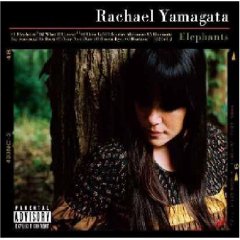
Having lent her talents to albums by the likes of Ray LaMontagne, Jason Mraz, and Ryan Adams and with her songs turning up on the soundtracks to everything from The OC to Hotel For Dogs, the Chicago based Yamagata steps back into the spotlight with her second solo album and the first for her new label. Formerly with a funk fusion outfit, these days the Japanese-American-Italian-German more favours a mix of moody singer-songwriter hushed folk flecked blues and skin scraping alt-rock, both sides of the equation represented by this double disc set.
Elephants is the quieter persona, a collection of predominantly acoustic, lush, sleepy meditations on emotional wounds, strings, piano and guitar weaving the textures across numbers such as the dreamy title track, a lazy rippling What If I Leave, melancholic waltzer Horizon and the quite, almost whispered, bruised hymnal Duet on which Montage repays the favour.
Building into big guitar noise shapes and soaring vocals, Sunday Afternoon shows her pricklier musical side, one strikingly in evidence on the five track second disc where Sidedish Friend opens on a surging swaggery poprock riff, Faster loads up distorted blues that calls Bowie's Jean Genie riff to mind, and Accident shows the claws on an early PJ Harvey styled rhythm driving rock blues. Don't closes up shop back on torch form with reverb guitar and smouldering Orbison noir landscape, but with lyrics ("don't fuck me in front of me") that suggest you don't want to mess about with her emotions. Whichever side of the musical personality divide you prefer, you'll find Yamagata has a psychosis to suit.
www.rachaelyamagata.com
www.myspace.com/rachaelyamagata
Mike Davies March 2009
Imagine a time when bands roamed the earth in Transit vans, sharing the space with their gear and perhaps a driver. Road crew would have been the ultimate luxury though as no one had invented mixers and PA systems as we know them there would have been nothing for them to do! Yes it was basic, raw and exciting but there was a live music scene that existed independently of the whims of the record business. Bands could, and did, build followings from live work and could fill clubs to the rafters without the slightest whiff of a hit record or, in many cases, a deal.
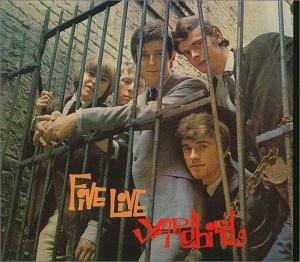
The Animals and Yardbirds were two such, though in fairness Five Live Yardbirds was a major label release that followed a couple of near hit 45s. That said back in '64 even a deal with the mighty EMI wouldn't ameliorate the band in a van indignities of working musicians. And they were working musicians; The Yardbirds captured her on fire at London's original Marquee Club knew how to fire an audience with a stripped down R&B that The White Stripes would envy. It's amazing hearing Eric Clapton rip into this classic material with a gusto that long ago diluted; back then he was a man on a mission playing blues as religion. The rest of the band are no slouches either, pushing him to play out of his skin.
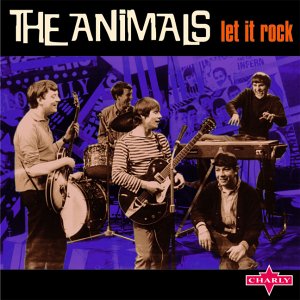
Meanwhile The Animals were kings of Newcastle Upon Tyne's Club A Gogo (I still have my membership card to what, for me, was a doorway to another world) where they dispensed pharmaceutical strength R&B with an intensity that modern day retro rockers would be afraid of. They were a band that locked into an almighty groove that the great Eric Burdon (still an underrated R&B vocalist, in my opinion) surfed with aplomb. Let It Rock catches them live in '63 taped (bootlegged you might argue) by Yardbirds manager Giorgio Gomelsky, a uniquely influential figure in UK music, before they landed a deal or released anything more than a demo. Both albums are amended reissues. The Yardbirds adds 10 tracks that didn't make the original cut whilst The Animals adds what was once a separate album; eleven tracks that find the quintet backing visiting blues giant Sonny Boy Williamson at the A Gogo. It's a fascinating document of cross generational influences - Sonny Boy was in his seventies by then - and proof that nothing is new and that the current hot shot is merely the present baton holder.
With that in mind you should seek out these albums, not as historical curios but as important links in a vital chain.
Steve Morris
David Kidman
Terry Yarnell will probably be familiar to many as veteran of the London Critics Group (at the time of Ewan MacColl) and the contemporaneous London folk scene. Hitherto he's attained a fine reputation as a sympathetic admirer and performer of classic ballads. On this CD though (his first solo record I believe - he's no lover of the studio!), we're treated to a "bonny bunch" indeed, a neatly programmed mix of songs and ballads. Aside from his own rather attractive guitar accompaniment to three of the twelve songs, and Paul Draper's melodeon on one other, Terry performs exclusively unaccompanied. His highly distinctive singing style owes much to the Connemara sean-nos, but not in a merely imitative way, while he's also absorbed influences from all manner of traditional singers through his extensive and open-minded listening. This CD grips the ears from the very first note, and Terry's obvious deep understanding of the text is absolutely tangible; this is conveyed as much in his precise diction as in his unrivalled command of phrasing, features which allow the listener to be drawn in straightaway and on along totally naturally through the progress of the story. Terry's is a very considered type of delivery, within a generally level dynamic that - if you're not paying close attention - can seem misleadingly inexpressive. Myself, I was immediately impressed by the compelling combination of florid decoration and deliberate pace in Terry's singing, equally effective whether as part of the quite declamatory Bonny Bunch Of Roses or the softer, delicately moulded The Trees Grow High (to take just the first two tracks as well contrasted examples). In Terry's case however (unlike some other singers with whom decoration forms a major element of their singing style), these embellishments do not distract from the unfolding of the narrative. Of the more epic items here, Terry's version of the graphic sea ballad Flying Cloud is certainly among the best I've come across, and his version of Child 69 (Clerk Saunders) forms a valuable comparison with that by Alison mentioned above (Terry uses his own tune, somewhat redolent of Willie O' Winsbury in its opening phrase perhaps, which due to its starkness I find I actually prefer to the one Alison uses). Other (and maybe unexpected) song choices which Terry brings to this CD include The Wedding Song (aka. Come Write Me Down) and Hopping Down In Kent (on which Terry's voice is joined by Mary's - a deliciously sprightly slice of light relief after the heavy-duty ballad!), while he rounds the collection off with an excellent, tenderly expressive rendition of Sweet Thames (Flow Softly), a song he clearly rates highly within the writer's canon, bringing full circle the Ewan MacColl connection he forged in the 60s. But for me the CD's highlight is Terry's wonderfully dramatic treatment of Mr. Fox, a contemporary cousin of the Reynardine/Bluebeard family of tales written by John Pole, where he proves himself master of suspense indeed. This really is a stunningly good CD, and varied enough to hook new listeners in and foster their interest in the ballad traditions.
Tradition Bearers releases are available either on subscription or individually, from PO Box 26064, Kilmarnock KA2 0YG; or
David Kidman
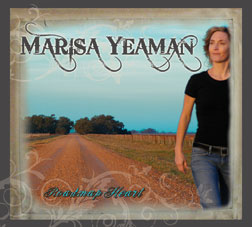
Musically and vocally pitched between Lucinda Williams (1000 Mile Stare) and Chrissie Hynde (Perfectly Flawed) with Dar Williams (Flying North) somewhere in the middle, Yeaman's a nomadic Australian whose road has taken her across Central and South America and India as well as her native continent but whose heart and soul remain firmly rooted on the grassroots front porch of a country lifestyle.
A tendency to speak more than sing her songs, gives them a downhome storytelling quality, particularly evident on the swaggery desert noir rocking Desolate but also to be found in the live recording of Old Hotel Phone, the soft, steel buffed Bonneville,a bluesy Silent Murder, and the past love reminiscences of Amsterdam Rain.
She moves around the moods confidently, slinking into the smoky blues with the slide guitar couched Dirty Hands, hitting a r&b groove for Mercy Train with its organ middle eight, keening to Appalachian dawns on Time Is Cast and even exploring Asian textures with the tabla and sitar that colours the betrayed by love Mantra.
Released last year, it's already spent two months on the Euro Americana charts; a renewed promotional effort and planned 2010 tour should deservedly spread the word wider.
Mike Davies January 2010
The opening track – a cover version of Trees' macabre Garden Of Jane Delawney – was carefully contrived to appeal to us wyrd-folk enthusiasts, I'm convinced. And it's efficient, certainly, but somehow lacking the eerie impact of the original with its weird cooing harmonies and unique atmospheric tension. That's all the more curious, as the publicity blurb for Ygdrassil, a pair of Dutch female singer-songwriters (Linde Nijland and Annemarieke Conders), makes great play of their intense harmony singing; no, perhaps I'm too used to hearing that uniquely intimate song in its original incarnation. However, when I give Ygdrassil a fair hearing on the remaining 40 or so minutes of this, their fifth album, I uncover more of interest, with some powerful folk-inspired original songs by Linde (In A Lonesome Town has an acute feel for folk melody that's reminiscent of Kate Rusby's, the rippling All By The River is quite disturbing, and Down In Yon Green Garden has an attractive old-timey Appalachian feel) and some altogether more personal compositions by Annemarieke (of these, the desperate, claustrophobic This Heat, which brings a different slant to summertime, is outstanding). Ygdrassil also try out a pithy Bulgarian song (Nazad), and further covers include Sandy Denny's North Star Grassman And The Ravens and (huh?!) Neil Young's Motorcycle Mama (this treatment seems to've been inspired by the Be Good Tanyas). Instrumentally the duo's guitars are augmented to telling and beguiling effect by Bert Ridderbos (cittern, bouzouki, accordion, banjo, guitar), with occasional appearances by fiddle player Rens Van Der Zalm (of Andy Irvine's stellar Mozaik ensemble), bassist Eddy De Jonge and violinist Jannet Fink. The spare instrumental textures are welcome and non-intrusive, keeping the focus firmly on those febrile Ygdrassil harmonies. In the end, Easy Sunrise turns out to be a haunting, and very rewarding, album, and really makes me want to hear the duo's previous four albums (none of which were released in this country, I gather).
David Kidman
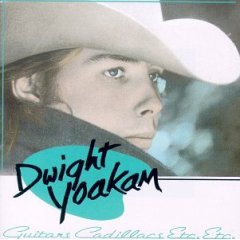
Today as much feted as an actor (most recently seen in Three Burials of Melquiades Estrada and Crank) as a singer, Kentucky born Yoakam's debut album was released back in 1986, spawning hits with the title track and Honky Tonk Man and instantly proving a cornerstone in the revival of interest in the Bakersfield sound of Buck Owens among the 80s college audiences.
It's being overhauled for its 20th anniversary, released as a double disc set that features a remastered version of the original album alongside the 1981 demos and a Live At The Roxy set from 1986 featuring several previously unissued recordings.
Aside from an opportunity to hear rough drafts of things like It Won't Hurt and I'll Be Gone, there's a clutch of songs that never made it to the debut album, among them the rather fine I Sang Dixie (which surfaced later) and Please Daddy (which he's never re-recorded). Meanwhile, over on Disc 2, Yoakam's in rousing form, belting through pretty much the whole album with a loose limbed twang and swing, while also tossing in Bill Monroe's Rocky Road Blues, My Bucket's Got A Hole In It, and, dedicated to John Fogerty and Emmylou Harris, two artists who inspired him to make country music, a rattling version of Mystery Train.
Sounding as fresh now as when it first appeared, this is a perfect opportunity for old fans to upgrade their copy and a chance for a whole new generation to start catching up on what they've been missing.
Mike Davies, Sept 2006

2009 began with an album I immediately knew would be on my best of list. 2010 ends the same way with the second release from the Swedish quartet. I'd likened their minimalist cabin folk debut to Bon Iver and Iron And Wine with a helping of Delta blues and that stands here, though you'll also note the colours of such stated influences as Daniel Lanois, Neville Brothers, John Prine, Mahalia Jackson and Ralph Stanley.
With Rachel Eddy providing harmony to Mats Qwarfordt's centuries-old cracked and dusty lead and Janne Peterson on harmonium, the album opens with a cover of Mississippi John Hurt's Louis Collins, a spiritual lament for a young gunfight victim. It's a thing of such exquisite beauty it's hard to image how they can possibly equal let alone top it.
Effortlessly would seem to be the answer. The mood shifts through for a second cover, a haunted, rumbling, harmonica wailing near seven minute version of Skip James' Cypress Grove with Qwarfordt making you feel that your knee bones truly are aching and your body's cold.
The album's third cover stays in the Mississippi Delta and Biblical frame of mind for Blind Willie Johnson's The Soul Of Man, Kjell Gustavson's slowly intensifying drums rumbling like tumbrel wheels on the judgement road while Christer Lyssarides picks out spooked mandolin behind the vocals.
The remaining cover keens closer to home for Amerikavisan, a spare mournful harmonica and mandola instrumental version of the song by Swedish emigrant Jan Erik Lindqwist who died, along with his son, on the boat to America in the 1800s.
Among the remaining self-penned five numbers, The Miner is another instrumental, a solo turn by Lyssarides on guitar and mandola, dedicated to the late Ludvig Larsson from the historic Bergslagen mining district and, since I can find no reference anywhere, presumably a personal import.
Qwarfordt provides the remainder; the choppy, accordion and harmonica accompanied trad-hued folk blues The Flower a cheery allegory of a butterfly dying one the valley's prettiest flower, After Sun a wistful Prine-like slow waltzing observation of lost love with zither plucking the heartstrings, and Closer a gently rippling, six minute whispering love song with flute and karimba.
The album closes in the spiritual mood with which it opened, all four voices coming together for the a cappela Foreign Shore, stamping feet proving the beat for a gospel work song that could have been collected from the cotton plantation fields of the deep south.
I'm amazed none of the UK or US based roots labels haven't picked this up for licensing or distribution, given the current interest in the music they play they have the potential to be the ABBA of cabin folk.
www.yonder.nu
www.myspace.com/yondersweden
Mike Davies December 2010
It's always good to start a new year with an album you know is going to be among your best of lists in twelve months time. Such is the case with the European release of this 2007 debut from Stockholm's guitarist Christer Lyssarides, bassist Bjorn Lundquist, percussionist Kjell Gustavsson and cracked deep voice singer Mats Qwarfordt.
Destined to draw comparisons to the likes of Bon Iver, Iron And Wine and Fleet Foxes, it evokes a cabin recording feel with its simple acoustic mix of old school Delta blues, southern soul, church and mountain music, and the hints of world music like the African shanty flavour of the mbira rippling through I Want To Wake Up With You.
Clearly no young whippersnappers, there's a lived in world of experience feel to the music, melancholic love songs and wistful reflections on life. They set out their stall with the opening number, a haunting, harmonica based version of the traditional blues spiritual Beulah Land learned from the recordings of Mississippi John Hurt. The second non original on the album also spotlights Qwarfordt's harmonica playing with solo instrumental Anxious Mind, an old Nordic folk song about being given the push by your lover.
However, steeped in gospel (the sleeve notes end with the 'blessed are the meek' quote from Matthew) their own songs sound equally timeworn. Featuring just vocals and Lyssarides on mandola and zither, April Snow is an aching tale of a woman abandoned by a faithless lover while the delta-coloured Single Man Blues spins the same theme from the smooth tongued perspective of the seducer and the worksong rhythm chugging Motherload Of Love talks of searching for that gold of the heart.
With haunting guitar instrumental Stella providing the border line, the album squarely divides itself between songs of love and songs of faith. The eponymous title track sets the mood for the second half with what is, essentially, a variation on the traditional Farther Along, a reflection on mortality spurred by a friend's passing that finds Mats' delivery spurring thoughts of Townes Van Zandt and Ted Hawkins.
Musically redolent of autumnal pine woods, Faith pretty much speaks for itself with the stand-out achingly weary, soul battered Foggy Straits using the metaphor of a boat adrift, rudder broken and anchor lost, as Qwarfordt sings "tug me home Lord, 'fore I get tossed'.
Introed by two minutes of simple harmonica and lap guitar that conjures images of cowboys and campfires and surely borrows its spiritual melody from All My Trials, the album concludes with the final non-original, bringing together Scandinavia and America for Day By Day, an affirmation of trust in the Lord translated by a Swedish immigrant in Minnesota in the late 1880s.
With a simple sleeve design to match the soothing ambience of the music, it's a wonderful album that fully deserves the plaudits it must surely attract. The quartet are apparently due to play European and UK dates in April/May 2009; I'd suggest you sign up tio their mailing list now.
Mike Davies January 2009
Well right at the start it sounds like the band are still up there on yonder mountain ponderin' the sky, for the album opens with a gentle drone before the banjo, guitar and bass truck on in to back the voices on the reflective group composition Sidewalk Stars. From then on in, it's 60s-style vocal harmonies in tandem with some high-powered (but not necessarily frantic) bluegrass pickin', nicely turned and with an easygoing gait at whatever speed the licks are managed. It sounds like a progressive yet well developed style, and it turns out this is the band's fourth album so far. I learn that it's the first time they've worked with a rock producer (Tom Rothrock), but this hasn't compromised the band's acoustic integrity or string-band cred, just added a little drums to the mix on a handful of numbers, and to really good effect too. You may feel that Adam Aijala, Jeff Austin, Dave Johnston and Ben Kaufmann didn't really need to sharpen up or toughen their sound, but the slightly rocky edge to some of the numbers on this new album is really attractively managed rather than just being added as a production gloss overlaying the bluegrassy roots. Tracks like the driving Angel have been dubbed "hard folk", an interesting but revealing term which works just fine (and listen out for Darol Anger rockin' out there on fiddle!). Dave's banjo is used in a pretty radical way on its duel with Adam's electric guitar on How 'Bout You?, and the extended hoedown call of Just The Same rocks along like nobody's business, while there's a really appealing Doobie Brothers vibe (but punchier) to Classic Situation and Wind's On Fire makes an ideally atmospheric album-closer. The whole CD, in fact, is a brave attempt to freshen up the old-time sounds and close the gap between bluegrass and rock - which it does with real style. My only small criticisms concern the two instrumentals: Midwest Gospel Radio meanders nowhere in particular, while the breakdown Fastball is way too short!
www.yondermountain.com
www.myspace.com/yondermountainstringband
David Kidman, November 2006
This unpretentiously plainly-titled latest venture from Fife-based nu-folkster James has its gestation around the turn of the decade, in a projected album of traditional folksongs which Fence Records were to put out as a companion issue to an album of James's own songs. When James was offered a recording contract elsewhere, this project got shelved and the extant recordings gradually trickled out over the years. But James continued learning folksongs from recordings, and eleven of his reworkings of such songs now appear on this new CD.
James differentiates it from his "usual" output by employing (instead of his usual band The Athletes) James Green's Big Eyes Family Players, whose music James had discovered while on tour earlier in the decade. Their individual instrumental complement (harmonium, violin, pedal steel, autoharp, drums) is definitely central in creating the very special and intimate atmosphere in which James's reworkings breathe: one of antique-sounding chamber-folk, though freshly-visited and not in the least musty-sounding.
James's liner notes reveal that his intention is to put his own stamp on what he considers the essence of traditional song, an essence which he found in abundance when he discovered classic recordings by (among others) Anne Briggs, Shirley Collins, Jean Ritchie and Nic Jones but which he reinterprets in his own terms, whether by recreating the songs' simple truths in his own paraphrases or by composing his own original melodies (for the supporting musicians to embellish, at times almost quasi-improvisatorily). All of this adds up to a mesmerising, seriously enchanting experience for the listener, the new settings being ingenious enough to stimulate the palette while not too overly "radical" to chance disturbing the sensibilities of those already familiar with the original sources (or the recordings from which James took his cue).
Sometimes, though, the tone of James's reworkings may come as a shock, for he often seems to take a giant step back beyond the revival recordings to the timeless, almost primeval modes that form the basis of the stories the songs are telling. Some of James's new versions can seem dour, almost sedate, by direct comparison with the lively, sprung, energy-driven readings by (say) Nic Jones or Eliza Carthy & Nancy Kerr, but just listen closely to tracks like Thorneymoor Woods, or (particular triumphs these) Little Musgrave and Sovay, and you'll find a canny intelligence at work that really gets to the kernel of these ancient songs. On the other hand, keep an open mind as you consider the jangling, yearning demeanour of the slightly sinister admonition of Rufford Park Poachers as perceptively reinterpreted here by James. Or the rippling gallop, the casual, almost bossanova-style rhythm James imparts to The Hills Of Greenmoor, which kindof reflects the moral ambiguity and shifting viewpoints of the text. Or the more hectically charged gallop of James's majestic Low Down In The Broom, which imparts the tale with more of the character of a spaghetti-western legend, or the busy momentum of Mary Connaught & James O'Donnell (which rather recalls Dylan's Jack Of Hearts). Just occasionally, the delicately understated nature of James's reworkings can counter the import of the text – Just As The Tide Was Flowing (with harmony vocal by Nancy Elizabeth) just about manages to keep the balance, but loses by being inexplicably shorn of half its verses. The odd-track-out in this collection is not a song at all, but a Galician tune which reprises in its full form the snippet James used to round off his debut single.
Final verdict? – if you're seeking unusual but effective contemporary reworkings of traditional songs which respect and retain their essence, then James's latest collection is well worth your investment: according to his website, you can either buy it in standard form (as reviewed), or as a deluxe three-disc limited-edition set which also includes a DVD and CD of a live folk song session.
David Kidman July 2009
This unpretentiously plainly-titled latest venture from Fife-based nu-folkster James has its gestation around the turn of the decade, in a projected album of traditional folksongs which Fence Records were to put out as a companion issue to an album of James's own songs. When James was offered a recording contract elsewhere, this project got shelved and the extant recordings gradually trickled out over the years. But James continued learning folksongs from recordings, and eleven of his reworkings of such songs now appear on this new CD.
James differentiates it from his "usual" output by employing (instead of his usual band The Athletes) James Green's Big Eyes Family Players, whose music James had discovered while on tour earlier in the decade. Their individual instrumental complement (harmonium, violin, pedal steel, autoharp, drums) is definitely central in creating the very special and intimate atmosphere in which James's reworkings breathe: one of antique-sounding chamber-folk, though freshly-visited and not in the least musty-sounding.
James's liner notes reveal that his intention is to put his own stamp on what he considers the essence of traditional song, an essence which he found in abundance when he discovered classic recordings by (among others) Anne Briggs, Shirley Collins, Jean Ritchie and Nic Jones but which he reinterprets in his own terms, whether by recreating the songs' simple truths in his own paraphrases or by composing his own original melodies (for the supporting musicians to embellish, at times almost quasi-improvisatorily). All of this adds up to a mesmerising, seriously enchanting experience for the listener, the new settings being ingenious enough to stimulate the palette while not too overly "radical" to chance disturbing the sensibilities of those already familiar with the original sources (or the recordings from which James took his cue).
Sometimes, though, the tone of James's reworkings may come as a shock, for he often seems to take a giant step back beyond the revival recordings to the timeless, almost primeval modes that form the basis of the stories the songs are telling. Some of James's new versions can seem dour, almost sedate, by direct comparison with the lively, sprung, energy-driven readings by (say) Nic Jones or Eliza Carthy & Nancy Kerr, but just listen closely to tracks like Thorneymoor Woods, or (particular triumphs these) Little Musgrave and Sovay, and you'll find a canny intelligence at work that really gets to the kernel of these ancient songs. On the other hand, keep an open mind as you consider the jangling, yearning demeanour of the slightly sinister admonition of Rufford Park Poachers as perceptively reinterpreted here by James. Or the rippling gallop, the casual, almost bossanova-style rhythm James imparts to The Hills Of Greenmoor, which kindof reflects the moral ambiguity and shifting viewpoints of the text. Or the more hectically charged gallop of James's majestic Low Down In The Broom, which imparts the tale with more of the character of a spaghetti-western legend, or the busy momentum of Mary Connaught & James O'Donnell (which rather recalls Dylan's Jack Of Hearts). Just occasionally, the delicately understated nature of James's reworkings can counter the import of the text – Just As The Tide Was Flowing (with harmony vocal by Nancy Elizabeth) just about manages to keep the balance, but loses by being inexplicably shorn of half its verses. The odd-track-out in this collection is not a song at all, but a Galician tune which reprises in its full form the snippet James used to round off his debut single.
Final verdict? – if you're seeking unusual but effective contemporary reworkings of traditional songs which respect and retain their essence, then James's latest collection is well worth your investment: according to his website, you can either buy it in standard form (as reviewed), or as a deluxe three-disc limited-edition set which also includes a DVD and CD of a live folk song session.
David Kidman July 2009
This CD may be subtitled "popular music from the period of the Gunpowder Plot", but it be no treason to review it on this website I assure you! York's official "band" of the time of Guy Fawkes was its Waits, and its present-day equivalent specialises in the music of Tudor and Jacobean England, opportunely commemorating the 400th anniversary of the 1605 Gunpowder Plot by releasing this CD and performing a series of concerts. And so to the music herein, then: the rich and slightly overpowering sound of massed shawms, sackbut, bagpipes and percussion opens proceedings in spicy, almost ceremonial style, and sets the tone for what follows, a fulsome sequence of mostly short pieces - dance tunes both courtly and rustic, mixed-consort arrangements of popular melodies (yes, including Greensleeves, since you ask!), etc. - performed with authenticity and a ready vitality by the seven musicians of the Waits in various combinations of recorders, pipes and tabors, Renaissance violins, viola, rebec, curtals, cittern, lute, guitar, harp and hurdy gurdy as well as the customary already-mentioned wind/reed instruments. At its most piquant, the sound of the Waits is lusty and very invigorating, at its most refined it's surprisingly cool and relaxing; yet whichever type of basic "band" lineup is utilised, the impact is considerable. Each individual piece (or mini-set) is perfectly satisfying in its own right, but the more ambitious six-minute sequence of "two mournful tunes followed by a rumbustuous (sic) jig" near the end of the CD, which "perhaps echoes the doleful and delirious atmosphere which accompanied public executions", is definitely a highlight.
David Kidman
Recorded in the summer of 2008 while working on the final touches to Back And Fourth, it's hard to figure why this was put on the back burner in favour of his album with Scarlett Johansson (which he admits he had to be persuaded to make by his brother, her agent) which was dull almost beyond belief.
Recorded over just five days in a makeshift studio with Frank Black handling production duties, it's a back to basics collection of introspective, personal songs about relationships, insecurity and doubts that shows off Yorn's rockier Pettyish edge. Indeed, with its ringing guitar and plangent chords, opening number Precious Stone wouldn't have sounded out of place on Damn The Torpedoes while the nostalgic Velcro Shoes, mid tempo chugger The Chase and a punched up dirty guitar Badman all see Black urging him into a rock n roll streak.
There's softer moments too, of course. Sung in a weary voice that's down but not out, Rock Crowd is an ebb and flow tribute to the fans who keep him going and provide the fuel to keep optimism alive, Stronger Than a simple acoustic strum about learning to love himself in order to love others with Wheels a fine nuts and bolts cover of the Gram classic and Sans Fear a mind tempo sway with chiming guitar and almost a 50s doo wop feel that channels vintage REM balladry.
Again reminiscent of Michael Stipe, the jangling Future Life lays out his worries about why his friends 'diving into matrimony; with the house, dog and kids "scares the shit out of me" and reminds himself that instead of wanting what he hasn't got and it's easy to get stuck, he should accept that "life's been great to me" and appreciate what he has "I see a future that was made for me," he sings. This album is a big step towards embracing it..
Mike Davies February 2011
Pete Yorn - Day I Forgot (Columbia)
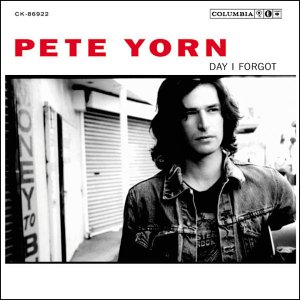
Last year saw the UK release of his debut, Musicforthemorningafter with its airplay hit For Nancy and songs about Beach Boys dad Murray Wilson, Ian Curtis and Jack The Ripper. Now comes the follow-up adding a touch of Neil Diamond vocals to the melting pot with the surging pop throb of fuzzy guitars that is Come Back Home and nods his love of Britrock in the direction of George Harrison with When You See The Light.
It's a much more no frills tougher rock n roll approach, Long Way Down, bonus track Drive Away, the heavy riffing Carlos and a punky emo Burrito all big on loosely slung rough and ragged noise over the top of the melody lines.
But as lovelorn waltz Turn of the Century (inspired by Baz Luhrmann telling him his plans for Moulin Rouge), Man In Uniform and So Much Work show, he still wears the mantle of wistful romantic troubadour with stylish ease.
Overall perhaps not quite as impressive as his debut and lacking that necessary killer song to make him a major player, but there's enough here to indicate he's around for the long haul while his rousing cover of Suspicious Minds suggests his live shows are jubilantly energetic affairs.
Mike Davies
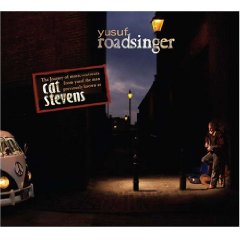
Three years on after An Other Cup marked his return to music after an almost 30 year hiatus and his conversion to Islam, Yusuf is back with an album that, in his own words, picks up where the artist formerly known as Cat Stevens left off. Actually, rather than the next step on from Back To Earth, with its acoustic guitar and folk-tale material, this sounds much more like a companion piece to Tea For The Tillerman and Teaser And The Firecat while the Spanish guitar mood of World Of Darkness may even recall Lady D'Arbanville.
It's a quintessential Cat Stevens album with all that entails. So, a gentle tweeness, soft sentimentality, often gauche lyrics ("things are looking bad, everybody in the world's looking so sad") and mellow spirituality. There's even what sounds like a kiddie choir on the new age philosophy of the tinkling piano pop To Be What You Must ("you must give up what you are"), though I suspect it may well be a multi-tracked Martha Wainwright.
There's plenty of references to his faith, the Tim Hardinish title track about the outcast troubadour finding the path to enlightenment and happiness "through the desert sand", but they're all couched in lovely folksy pop melodies with nothing so overt as to scare off non believers or anyone with religion in song phobias.
And, he's clearly still got a wry sense of humour too, the closing, rowdy Boots And Sand a recounting of his 2004 run in with US authorities when, travelling to record with Dolly Parton, he was refused entry into America on national security grounds. Or, as he puts it, being on "our no song list".
Recorded live with James Morrison, Michelle Branch and Hank Williams' granddaughter Holly also lending a helping hand and most numbers clocking in around the three minutes or under mark, it's all perfectly formed little nuggets, the brief strings and piano instrumental Shamsia a delicate stand out tribute to a young Afghani who refused to stop attending school even after the Taliban blinded her.
The distinctive Stevens warble now seasoned with age and experience, numbers like Welcome Here, tinkling love song Thinking About You, buzzing cello darkened apocalypse themed The Rain, and the universality embracing/one God devotion strummed All Kinds Of Roses are all guaranteed to warm the cockles of old fans' hearts and maybe make a fair few new ones along the way.
Mike Davies April 2009
For 400 years the Copper family have lived and worked around the Sussex village of Rottingdean, and for at least half of that time they've been renowned as singers locally. Ever since Jim and his son Bob sang on BBC Radio at the beginning of the 1950s, there have been recordings made of succeeding generations of Coppers (most notably perhaps those made by Peter Kennedy in the 50s and 60s), as well as a series of inspirational (and award-winning books) written by Bob in the 1970s. Each successive generation has inherited from its forebears a deep love for the songs and for the singing of them, and a strong determination to keep the tradition alive. Thus we come to the latest generation to find their way onto record: going under the name of Young Coppers, this particular family grouping comprises Bob's six grandchildren, from both branches (ie the sons and daughters of Jill and John respectively, children of the 60s and 70s: Mark, Andy, Sean, Ben, Lucy and Tom). This disc therefore constitutes an important release, and listening to it without any preconceptions is very difficult indeed; but I feel sure that anyone coming new to the distinctive "Copper Sound" will revel particularly in the tracks which feature the glory of the full ensemble, six family members singing together in harmony in what we've come to regard as the "genetic footprint" of the time-honoured "Copper way". Especially so since the recording has an attractive resonance, a bloom and dynamic range that captures well the fullness of timbre and tone of the combined individual voices when sounding together. It's indicative too, perhaps, that the making of the album started in the studio, which felt quite alien to the performers, and so to rectify this they moved the microphones downstairs to the bar! There's certainly an appealing informality to the proceedings as a result.
The full ensemble is utilised on five of the dozen songs here, the remainder giving us a chance to hear the special qualities of the individual singers. Inevitably, some are stronger and more characterful than others; one or two are clearly still coming to grips with matters of flow and phrasing, and there are instances of what sounds like off-key and/or uncertain pitching (Cupid's Garden), but it's evident that each of the singers has developed his/her craft entirely naturally and, importantly, retains a sense of carrying forward the living tradition. Each Young Copper gets the chance to lead a song (or else, as in the cases of Lucy and Andy, perform entirely solo), with varying success. Generally speaking, the livelier songs come off best; nonetheless, it sometimes doesn't quite feel that they're all having fun and actually enjoying the singing. A few of today's renditions sound almost too respectful rather than spontaneous, even to the extent that they're appearing to attempt a "carbon-copper" re-creation of the "received template" Copper Sound (even if that's not actually the case!); this is especially so with the opening track, Hard Times Of Old England (a Coppers staple if ever there was one). The first time I listened to the new recording of this song was in company with a long-time Coppers fan who expressed immediate disappointment, thinking it overly laboured, a little dreary and lacking in drive and passion; at the time I felt I part-agreed, at least with regard to what I felt an over-deliberate pace being adopted. But memory plays strange tricks, and expectation fostered by memory is a peculiar beast; indeed, more so when coloured by countless other (non-Copper) performances of a familiar song. So I took the Ron Copper recording down from the shelf for comparison - and to even my surprise, I found the pace virtually identical. That's just one example (albeit an extreme one maybe) of several throughout the disc where memory really deceived me. And I suspect a majority of listeners are apt to make comparisons between the performances and interpretations of Young Coppers and those of their forebears. It's a foregone conclusion that the Young Coppers would not be able to produce a present-day equivalent of the often electrifying close harmonies of Bob and Ron, say. For, being honest, one's aural image of the Copper Family as a performing unit-cum-institution necessarily abides largely in familiarity over time with those older recordings and thus the performances enshrined within. The latest Rose Of Allendale is a touch slower than before but I rather like its added gravitas, which through the phrasing eschews sentimentality; however, Banks Of The Sweet Primroses now feels more stilted at its over-measured pace (and the extra syllable in "prim-i-roses" seems an affectation), while Come Write Me Down arguably feels a mite on the lugubrious side.
Finally to the presentation of the disc. The foldout booklet contains a brief discourse with the six Young Coppers, a useful family-tree (albeit the pics are frustratingly not "current") and a photo gallery, the latter (less helpfully) captioning the locations rather than the people pictured within. Most surprisingly considering the importance attached to the Copper Family's repertoire, there are no notes whatsoever on the songs themselves (not all of which are exactly "Coppers' Greatest Hits" within the recognised corpus). We can't assume that all purchasers will be familiar to any significant extent with the songs...
In summary then, what this disc contains is definitely worth hearing, not least as a snapshot-in-time representation of the present singing generation of Coppers. But it does have the air of a bit of a rushed job, released hastily to comply with a predetermined touring schedule deadline - and most disappointingly, one feels distinctly shortchanged when the disc contains a paltry 36 minutes of music (12 songs out of a potential 80 or so).
David Kidman February 2008
The sole album by Cardiff's post-punk minimalists, originally released in 1980, is often cited as one of those records which achieved a state (and later, the status) of perfection almost without trying. Immaculate from conception to construction, Colossal Youth was also unique in its unblemished and spellbindingly original sound-world, a special moment that existed in, and formed, its own time-capsule before - a couple of EPs later - the bubble burst and the group split (there has since been a reformation, when they played the Hay-on-Wye literary festival last May - and they're doing some further European dates next month, I understand). This important new release is a two-disc set that continues the tradition of Domino's recent excellent expanded-reissue programme. It presents the original Colossal Youth in all its minimalist glory as disc 1, then assembles all the band's single and EP tracks and the cuts comprising the 1979 pre-Rough-Trade demo album that was previously issued (by Vinyl Japan) as Salad Days. Stark beauty in sparse detail characterises the band's music, which was pretty much unique in its time, an era where overblown and rock'n'roll had gotten themselves polarised and impending apocalypse was the biggest thing on the agenda. YMG sounded like no-one else, Alison's spectral lyrics and Stuart's pointilliste guitar contributions underscored by chilled organ and/or clipped robotic percussion. The cool and unassumingly limited instrumental palette proved no stumbling block to conjuring a triumphant range of moods and feelings, from urban angst (The Taxi) through riffy electro-surf (Music For Evenings, Credit In The Straight World) and cheeky, cheesy lounge (The Man Amplifier) to wistful and curiously pastoral (Salad Days) and the spare, ominous and unsettling bubblegum of the title track. Muted and primitive yet full of meaning, and a huge (yet not always readily acknowledged) influence on succeeding music-makers. Over 25 years on, several of the album's tracks still send quite a chill down the spine.
David Kidman April 2008
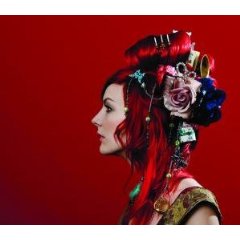
Sounding like she's tripping around some travelling carnival with her band, the opening Umm pretty much indicates what lies ahead as tempos suddenly switch from slinky prowl to a brief dervish flourish with a sense of controlled chaos while Ladies Of The Lake conjures images of her clad in fishnet stockings striding across tables at the Moulin Rouge, pausing only to stroke some champagne sipping gentleman under the chin before tipping him off his chair.
The slow sway shuffle title track itself introduces banjo into the tapestry to bring some smoky country flavour, the whirlygigging Ones That Got Away is in juke jive 20s cotton club flapper mood, Ask You A Question whips up the accordion for a clattering mazurka with dresses flaring as drumsticks patter out the rhythm on the rim while Sour takes you downstairs to some smoky cellar bar where a hangdog trumpet player wails for tips and Too Young To Die sustains bruised, whispered melancholy over a slow waltzing six minute chanson. It's a little hard to pin down exactly where her audience lies, but if you've latched on to either Imelda May or Gogol Bordello then chances are you'll love this.
www.gabbyyoung.com
www.myspace.com/gabbyyoung
Mike Davies October 2009
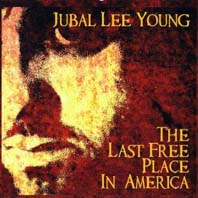
The only son of outlaw country pioneer Steve (Seven Bridges Road) and his rather lesser known wife Terrye Newkirk, Young apparently spent his 20s in a drink and drugs spiral wrestling with his legacy. And, one might suspect, being landed with such terrible wordplay for a name.
Now 39, he's apparently comfortable with who he is and, listening to his third album and its Steve Earle echoes, has clearly made good use of his growing pains experiences and the music on which he was raised.
Variously written between 1993 and last year, the album pretty much divides down the middle with hard rocking, bluesy outlaw country on the one side and more honky tonk and Americana inclined mid tempo numbers on the other.
It's the former that gets the ball rolling with Uh, Let's Go with its blowing harmonica, kicking Texas barroom rocking rhythm, lap steel boogie and Young's raspy delivery. The same groove drives the loose limbed John Lee Hooker styled Boom, Boom, Boom, the prowling smoked midnight blues of Animal Farm (a political rant and the oldest song here) , a swampy, fiddle laced Justice Or Death and the droning blues slow stomp of Dead Miners with its attack on the 'bottom liners' more concerned with profits than workers' lives.
He delivers with leathery, whisky soaked conviction, but, personally speaking, I'm more inclined to the other side of his musical coin.
Here you'll find the Lay Lady Lay feel of Bloom, Lily, Bloom, pedal steel weeping slow waltzers Whatever You Do and Falling For You, a cracked and rumbling dust layered, mahogany folk stained cover of Richard Dobson's Piece Of Wood And Steel and, evoking Hurricane like thoughts of another Young entirely, the closing 1997 penned One And One Is One.
The life and spirit of Woody Guthrie is also a significant presence. A fiddle flying jauntily amusing autobiographical tale of stubborness, I Refuse harks to This Land Is Your Land while the album's anthemic and lyrically ironic stand out title track, drawled over steel and harmonica, was inspired by reading about Guthrie's time in a Brooklyn lunatic asylum where he declared he was finally free to stand up and declare himself a Communist.
The most recent song in the collection, it'll be interesting to see if it provides the marker for the new material he'll be assembling for album number four.
www.juballeeyoung.com
www.myspace.com/juballee
Mike Davies January 2010
Martin's first album The Climbing Boy was released what I'd term long years ago (pun intended - Martin was then using his original surname ……). Botany Bay represents more of the same; firstly in that it mixes his own songs with arrangements of songs by other writers as well as a handful of traditional songs, and secondly in that he has again called on the production and instrumental skills of ex-Albions/Home Service lad Graeme Taylor, and the supporting cast again includes John Kirkpatrick and Jon Davie. This time round, though, Martin also enlists Nancy Kerr, James Fagan, Michael Gregory and Keith Thompson, and the result is an enticing and listenable release, well presented too. Right from the opening cut, the atmospheric local portrait Romney Tower (written by Bob Kenward with great feeling for the heritage of Martin's Kentish base), you know it'll be quality all the way.
Martin's a reliable singer, sensitive self-accompanist (guitar and cittern) and writer of some damnably fine songs, many with a commendably authentic traditional feel. Janitors And Jailers has become celebrated through Keith Kendrick's recording (on Home Ground). The guest contributions are sensibly managed and really enhance Martin's own singing and playing. I do have a couple of reservations, which I'll freely admit may be just a matter of personal taste - perhaps the cheesy evangelical arrangement for Keith Donnelly's hilarious Bungee Jumping For Jesus is a little over-the-top (and the megaphone-style interjections are unintelligible), while the new setting for Janitors And Jailers comes perilously close to swoopy, syrupy BBC animal-documentary music (or was that deliberate? - either way, the song has a greater impact sung unaccompanied I feel). In addition, I felt that one or two of the tracks using a relatively large ensemble sounded a mite cluttered balance-wise compared to those which use relatively few musicians and backing singers. But don't let that stop you hearing this impressive release.
David Kidman
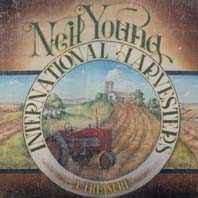
When not in the studio laying down a steady stream of new material, Young is clearly closeted in his vaults ploughing through the archives to put together collections of previously unreleased studio and live recordings.
The latest to emerge into daylight is this live album compiled from shows during his 1984/85 US tours with a band featuring country session legends Anthony Crawford on guitar and banjo, Rufus Thibodeaux on fiddle, piano man Spooner Oldham, bassist Tim Drummond and Kark Kimmel on drums with guest appearances from Hargus Robbins, Joe Allen and, on the swaying appreciate-what-you-have themed Nothing Is Perfect, backing vocals from Tracy Nelson and Matraca Berg.
This is the song he performed at the 1985 Live Aid concert (though this recording comes from the Minnesota State Fair show), but until now it has never appeared on disc. As a live album per se, this is pretty damn good, but its biggest appeal is that, along with that number, it features a further four previously unreleased songs.
At the time, Young was at loggerheads with his then record label who, in 1983, had rejected his proposed Old Ways album as 'uncharacteristic' and 'uncommercial' and were suing him after he gave them the finger with the 50s rockabilly Everybody's Rocking instead.
With the material for Old Ways, they felt he'd gone too country which, they thought would alienate his rock fans on one hand and not get country radio airplay on the other. Young eventually released a revised version in 1985 (it reached #24 on the country charts, far better than on the Top 200) and two of its numbers feature here; the fiddle and banjo driven rock n rolling hoedown Get Back To The Country and the glorious Bound For Glory with some fabulous steel from Keith.
More to the point, the set deliberately included either songs Geffen had rejected or which were written on the road. The first provides the album's opener, the old school country flavoured Amber Jean, a song named for his newborn daughter and making a highlight of lap slide and fiddle. The second is Let Your Fingers Do The Walking, another fiddle and steel barnyard bouncing track that would have been right at home on a Waylon Jennings (who appeared on the eventual Old Ways release) album.
Soul of A Woman is a raunchier proposition, the fiddle still scraping away but with a bluesy, rocking barroom boogie swagger providing the through line while album closer Grey Riders also lets rip with some searing guitar licks and solos.
They're not the only bluesy rock material in the set. Taken from Re-Actor, both the eight minute train rolling rhythms of Southern Pacific and, another pitched around the American worker, Motor City's swipe at the decline of Detroit's automotive industry ("there's already too many Toyotas in this town") see the guitars letting loose.
But it's on the old time country numbers where he and the band seem to be having the most fun, fiddle waltzer It Might Have Been (a cover of the Ronnie Green/Harriet Kane song) a particular delight.
Two further numbers complete the set, a rousing Are You Ready For The Country from Harvest that has the band cutting loose and a revisit of Buffalo Springfield's Flying On The Ground Is Wrong that stands alongside if not tops the original.
Young has said there was a lot more unreleased material that didn't make it on to this album for space reasons. Hopefully, he'll be back in the vaults soon.
www.neilyoung.com
www.myspace.com/neilyoung
Mike Davies June 2011
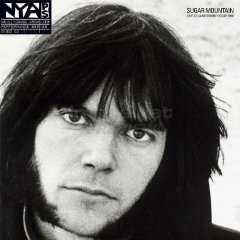
Continuing to mine his vaults of live recordings, this one comes from 1968 when, following the demise of Buffalo Springfield, Young was testing the water as a solo performer. It's a low key, intimate solo acoustic affair recorded on Nov 9 at the Canterbury House in Ann Arbor, part of the University Of Michigan, just three days before the release of his eponymous solo album.
Young's in chatty if rambling mood, talking about his love of old cars, how Mr Soul took only five minutes to write because he's apparently a receiver and microphone rather than songwriter, and about brief stints driving cabs and being high while working in a Toronto bookstore. They're unguarded, revealing anecdotes, but they're not exactly in the Springsteen class and given there's ten of them over the space of 23 tracks, with some lasting longer than the songs, there'll be a lot of track programming to be done for anyone looking to play the disc more than once.
Musically, though, it's a collector's dream. From the debut album he dips into The Loner, The Last Trip To Tulsa, The Old Laughing Lady, I've Been Waiting For You and If I Could Have Her Tonight while there's also stripped back versions of his Springfield contributions, Nowadays Clancy Can't Even Sing and Out Of My Mind off the debut and Mr Soul, Broken Arrow, and Expecting To Fly from Buffalo Springfield Again, plus the non-album On The Way Home.
Even more interesting is the inclusion in the set list of Birds, one of the first performances of a song that wouldn't appear on record for another two years with After The Goldrush and, of course, the title track, a song written back in 1964 but again not making its vinyl debut until 1970 as the B-side to The Loner. Not up there with the recent release of the Massey Hall show perhaps, but an important addition to his journey through the past.
Mike Davies November 2008
No you didn't somehow miss the release of Chrome Dreams I. Young recorded it back in the late 70s but it was never released, songs such as Like a Hurricane and Pocahontas turning up on later albums. Fortunately, this time round Neil's gone all the way for what he's called his gospel album and quest for spiritual guidance, fuelled, like Prairie Wind by his recent brush with mortality.
Well, perhaps not entirely since many of the numbers date back to the 80s, among them the opening plaintive country ballad Beautiful Bluebird, the banjo plinking slow tribal stomp Boxcars (from another dumped project) and the 18 minute epic of Americana cultural travelogue of Ordinary People with its throaty coruscating guitars and brass.
But while Young's always been balancing the search for self and inner peace alongside darker portraits of troubled churned up souls raging at the world, it does mean the album's a bit of a stylistic musical hotpotch, as fascinatingly erratic as the man himself. Even his band is made up from different phases of his career with members of Crazy Horse (Ralph Molina), Stray Gators (Ben Keith) and Bluenotes (Rick Rosas).
Thus, along with the swaying country lilts (Ever After) and the rumbling rock (Spirit Road, Dirty Old Man) there's some Youngian Memphis soul (Shining Light, The Believer) and, heaven forbid, even the inclusion of a kiddies choir with The Way, a track you may well wish to put on permanent skip along with the interminable 14 minute trudge through No Hidden Path. So, some you love, some you will never listen to twice, some that will baffle and some that will beguile. All in all, pretty much your classic Neil Young album then.
Mike Davies October 2007
"Let's impeach the President for lyin' and misleading our country into war". Well, cards on the table then. Young's never been reticent about proclaiming his political views but while other artists may have referenced and protested the Iraq war with one, maybe two, tracks, this is a whole album's worth of direct sticking it to the Bush administration. He even enlists George W's own befuddled, contradictory soundbites as samples for the cause on Let's Impeach The President.
Given his previous post 9/11 hawkishness, which included the gung ho Let's Roll, the album also serves as a metaphor for a whole nation that's woken up to the realities of what's going on.
With Young on vintage, angry distorted guitar rocking form, it opens at a fierce, deliberate pace with After The Garden, a combination of environmental warning and apocalyptic vision before sliding into the title cut, the first of the album's anthemic melodies with Young and a choir singing what can only be called a protest spiritual. The coruscating Restless Consumer, Young in falsetto mood and talking his way through the verses, turns it venom on the consumerism and corporate greed that has driven a war with oil as the agenda as he sings about the refusal to negotiate. It's back to Iraq with Shock & Awe, adopting a well known Presidential catchphrase for a classic piece of Young rock that pulls no punches in laying into the botched liberation and its aftermath, with 'thousands of bodies' bought home in boxes, a theme that links into Families (where, stuck in a war they don't want to fight, a soldier asks for respect in songs written about them) and Flags of Freedom where a family watches their son march off to war set to a surging Creedence sounding rocker that deliberately borrows from and references Dylan's Chimes of Freedom.
Following directly on from the singalong Impeach, comes Lookin' For a Leader, a fiery throaty number where Young hopes there's someone out there, "maybe ...a woman or a black man after all" who can take up the challenge and right the wrongs. Which leads out to the melancholic memoir Roger & Out, recalling the old hippie highway, the ideals of the 60s and those gone before in the fight. Having resurfaced backing Young on that, the choir takes centre stage for the album's playout track, swelling to 100 strong for a non ironic, deeply moving a capella rendition of America the Beautiful that declares Young still a patriot, but a patriot who wants his land back and cleansed of sin and taint.
It may be an album for the moment and unlikely to stand the repeat play test of time in the years ahead, but for now it's rock n roll's battle hymn of the republic.
Mike Davies, May 2006
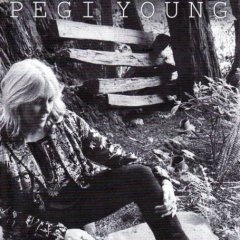
It's taken some 20 years getting to this, having been kept busy providing back ups for husband Neil, raising their disabled son and looking after the Bridge School for children with special needs. I review it more because of who she is than what she's recorded, since there will obviously be many a Young devotee out there who wonders what the debut album by his wife has to offer. Well, while it's fair to say that she's no Patti Scialfa, she has an attractive, age-weathered homespun voice that does good service to a set of easy going folksy rock tunes that she's written over the years, most hovering around themes of seeking independence and being completed by love.
She has, of course, some pretty solid players to call on for support and Neil, Ben Keith and Spooner Oldham are all here, hubby providing harmonica and taking his turn as the back up singer. Clearly the steadying influence in the marriage, she keeps the musical mood equally mellow, only flirting with some gentle barrelhouse boogie on I Like The Party Life and broaching some uptempo rhythms and brushes with the blues for Love Like Water.
Otherwise this is laid back listening, country slow waltz time for I'm Not Through Loving You Yet, jazzier colours on Fake and a flicker of torch banjo for Hold On while banjo and fiddle provide the backporch flavours to things like Heterosexual Masses and, the album's best number, When The Wild Life Betrays Me.
Were she not who she is, the album would probably not get the attention it has, but there's enough going on to make it worth a listen in her own right.
www.myspace.com/pegiyoungMike Davies March 2008
Young No More - Three For A Girl (Own Label)
A beautiful, bright and eye-catching cover design by Al Atkinson (featuring a magpie, naturally!) adorns this CD, the first release by well-respected Midlands acappella trio Young No More. Their name perhaps requires more than a cursory explanation (beyond the tongue-in-cheek ageist reference, that is!): basically, group members Vic Simpson and Nic Burdett sang together for some years as part of the well-regarded trio Burdett, Simpson & Young, then when Rob Young returned home to Northumberland they were Young No More (geddit?) - and soon recruited Jacky Lockley, thus regaining trio status. I really like their performing style; it's characterised by forthright and powerful singing, generally unison-based but making good use of harmonies at strategic points, notably line-or phrase-end cadences. Each of the three singers is well known on the folk scene as a noted exponent of traditional song and is blessed with a strong and solid individual voice, whilst any combination of these voices sounds very well. They sing with a confidence and ease (akin to putting on one of Nic's celebrated comfy rainbow sweaters!?) yet they lose nothing in spontaneity thereby; their delivery is authoritative and admirably unpretentious, straightforward and unfussy without being boring, and they sing with evident feeling but a refreshing lack of extraneous finicky decoration (preferring instead to allow the song to be carried by the melodic straight-line). Young No More's special delight is in researching to find, or reinstate, songs (or meanings) that may have been forgotten or bypassed by others; and good on 'em I say! Although their repertoire is firmly rooted in the English Tradition, it also proudly encompasses several top-drawer contemporary songs written equally firmly in the tradition (here represented by Graeme Miles' Sea Coal, Martin Graebe's Jack-in-the-Green, John Cartain's Lobster Lad, and two ornithological items in the shape of Dave Dodds' The Magpie and Dave Webber's The Blackbird). Nic also contributes a tune for the group's setting of a poignant little Steve Plowright poem Countryman. And each of the three singers is allocated one solo track too (though Vic gets two, since he draws the shortest straw first time round!). Summing up - if your taste is for good and tuneful (and perhaps mildly obscure) songs honestly recorded and consistently well sung, then you'll enjoy what Young No More have to offer, for they come across very well on CD in this truthful no-frills recording - but they make even more of an impact live... go see!
www.youngnomore.free-online.co.uk
David Kidman
Expert fingerstyle guitarist Terry joined the big boys at Tanglefoot (Canada's lusty and illustrious folk-roots band) back in 1999, since which time he's become proficient on several other instruments, added to his already prolific songwriting tally and now produced a solo CD. This proves an excellent showcase for Terry's creative guitar playing, but also shows the hidden depths to his songwriting talent that Tanglefoot aficionados may not have suspected (notwithstanding his co-writing credits on celebrated songs like Willow Dan and Backyard Sailor). Terry's eternally rootsy fingerwork is a focus of this CD, sure, but Terry's songs inhabit sensibilities which extend naturally beyond the folk-roots platform of the band, generally following the theme of man's humility in the face of nature and inevitable consequence of action. Essays in thoughtful contemporary philosophy (Changing The Name Of Heritage) fit in comfortably alongside songs which incorporate altogether more light-hearted, often tongue-in-cheek observations by way of jazz and blues elements (Bad Service, Out Of Luck, The Lottery Blues), although Terry's way of singing the latter type of song can seem a trifle mannered at times. For a similar reason, the closing track, Aileen (Terry's heartfelt tribute to his mother) took a bit of getting used to I found. However, the legions of Tanglefoot fans will doubtless appreciate Lunenburg Skies, a tribute to the Nova Scotia town that hosts what Terry classes as his favourite folk festival, and the simple lament for the loss of Ontario farmland Swept Away, whereas the more disposable pop-style Save For You And Me is redeemed by a touch of Terry's typical filigree guitar magic. Perhaps the most touching of the songs here, though, is We're Desired, a disarmingly honest portrayal of an all-too-familiar emotional conundrum. The CD's two purely instrumental cuts comprise the delightful title track and an unusually jazzy, intriguingly syncopated rendition of Si Beag Si Mor. Terry's own voice, guitar, mandolin, bass and penny-whistle are augmented on the CD by Bryan Weirmier (piano), fellow-Tanglefooters Terry Snider (fiddle) and Al Parris (stand-up bass) and Kim Brown (vocals), and the whole affair is admirably balanced.
David Kidman, July 2006
Mike Younger Band - Tooth and Nail (Nashanoke Music)
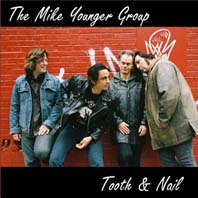
In today's madcap dash to find the 'next big thing' we should be thankful that 'real' music has never been so shallow, instead of 'out with the old in with the new', fans treasure those who maintain and cherish traditions. Such a band is The Mike Younger Band and Tooth and Nail is the blues-tinged expression of those traditions. There's no need to search for great innovations or whizz bangs, there aren't any.
In the 8 years since Younger turned from street performer to professional musician he's had an album, Somethin' In The Air, produced by Rodney Crowell and shared a stage with Steve Earle, Naci Griffiths and a host of other great names. Tooth and Nail shows he's nither flattered or overawed by the company he keeps.
Dandelion, which opens the album, turns out to be a bit of a red herring. A typically American radio-friendly piece of AOR that would not be out of place on a Bob Seger album (just not next to Hollywood Nights) it's pleasant enough but comes and go without remark and gives no hint of the real treasures to follow.
Throughout Tooth and Nail you'll be reminded of a myriad of performers, The Faces and even a hint of Joe Cocker come to mind. Although the Cocker reference may come from singing Delta in a throaty growl but all the influences are ones to be savoured.
Because Younger and the band stick to the central core of blues/rock it gives the likes of Banished a steel spine. This is a band without pretension or pretence, their only obvious ambition is to play great rock n roll and in that they succeed handsomely.
If there is a slight dip, then it comes with the soulful Together which is a little too polished and clean cut, a little more dirt and sweat would have given a good song, a kick like a mule.
The Mike Younger Band are at their best when their rough edges are celebrated and roughened even further, slick rock bands we have aplenty. Those who can play and sing like The Mike Younger Band are altogether rarer.
Michael Mee
The youthful, hirsute Hartlepool threesome The Young'uns need no introduction to folk audiences in the north-east, and they're getting an increasing number of plaudits in more southern climes for their vigorous performance style and wall-of-sound presence (imagine half of the mighty Wilson Family for starters!), garnering plenty of bookings at UK festivals now. I've been enthusing about these awesomely talented guys for a while now, and I'm glad to have finally caught up with their two available CDs, for it's high time they were reviewed somewhere (the first, To Hell With Pirate John!, came out last autumn, and the second, Plastic Cod'eads, a mere couple of months ago). And as it turns out, while the two discs are pretty much complementary, in terms of production especially the second is streets ahead (naturally, for they have a greatly talented sound engineer within their ranks: the amazing David Eagle).
The lads didn't consider it worth my while bothering to review To Hell With Pirate John!, "as it was recorded in one day and with no control over the production", but I really ought to do more than just mention its existence in passing, simply because it does still form a straight-down-the-line, tiny-warts-and-all-but-so-what! representation of the trio's overwhelming acappella live presence, gutsy and tremendously upfront. Three intense and hefty individual voices, yes, but when they're combined in harmony they fair set the spine tingling. Over the course of their two CDs thus far, Michael Hughes, Sean Cooney and Dave Eagle have shown themselves to be masters of all kinds of material: on that first disc alone there's shanties (appropriately-paced and lustily delivered), folk standards (Jolly Wagoners, Pace-Egging Song) and contemporary folk classics (John Ball, I Can Hew, and, most notably of all, Graeme Miles' Sea Coal, of which the Young'uns' brilliantly considered interpretation has just got to be the finest you'll ever hear). Occasionally, some of the choice of repertoire, as well as the aforementioned wall-of-sound delivery, betrays a distinct Wilson Family inspiration - but hey, that's a great place to learn from and the Young'uns always rise above their influences to give us renditions that are truly their own and full of their own distinctive character. This CD may have its rough-and-ready moments, with the odd duff note or harmony or the occasional distractingly over-dominant harmony line – but it so perfectly conveys the in-yer-face, almost visceral excitement, the sense of danger and "singing on the edge", the unbridled passion and commitment that the Young'uns bring to each and every performance (it had been said that never once do you feel they're just "going through the motions" – even if they do occasionally resort to singing in the Gents'!). Whatever, I wouldn't want to be without this CD!
These qualities carry over into the second CD too, despite its being for the most part a markedly different kettle of fish'eads (so to speak), a rather gentler affair (I can't really use the word "quieter"!) that prominently features some recent original-compositions by Young'un Sean. Pirate John had begun to hint at the songwriting talents within the group, by incorporating two strong local-based songs, but those presented on Cod'eads are even more remarkable for their well-crafted expression and their display of real and deep insight into aspects of Hartlepool's heritage and local history. And, lest you be tempted to write the Young'uns off as just a loud bawl-it-out combo, you'll encounter considerable vocal sensitivity on this record - notably in Sean's powerful and lyrical re-telling of elements in the life-story of Sancta Bega (who was said to have founded the monastery at Hartlepool in the 7th century) and the tragic ballad of Mary Farding. The "Another Side Of The Young'uns" demeanour of much of Cod'eads comes from the use of a modicum of instrumentation as an integral part of the sound-picture, here including a generally intelligent (and not overfacing) use of keyboard textures and some well-considered guitar lines. But five of Codheads' 12 tracks play to the lads' special vocal strengths, being done acappella. These embrace many of the album standouts: best of all is Sean's outstanding, eerily atmospheric One December Morn, which commemorates the German bombardment of Hartlepool in 1914 (and Sean's mum Jean provides a cameo-vocal on this track to great effect).
Other highlights include The Legend Of Holy Hilda, from the pen of the late Dick Smales of Stockton, and The Fisherman's Daughter, an excellent local-tradition song from the pen of Mike Stephenson. There's also a stirring version of the traditional The Pressgang, and a shanty (Santiana) provides rousing ballast. Interestingly, although the lads are always great fun live, I find it's the lighter, more flippant items, where that irrepressible quality (and a "jolly, rollicking" pub-piano) threatens to run amok just a little, that feel like crowd-pleasing makeweights (tho' only in comparison, I'd stress). But even so, any CD worth its sea-coal needs, and thrives on, such contrast, and this new record is stronger for its embracing of the whole emotional gamut of a Young'uns club or festival set. I'll also warn you: you gotta leave each CD playing for its cheeky "secret track" (the epic one on Pirate John is specially cool!!)... Brill, lads - so keep takin' the Podcasts!
www.myspace.com/theyounguns
www.theyounguns.co.uk
David Kidman August 2008
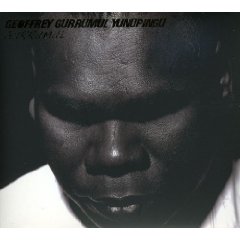
A rather belated review this, the album having hovered outside the UK Top 50 for a while now, but if it can encourage other ears to seek it out, then better late than never. Born blind and speaking almost no English, Yunupingu hails from a small island off the coast of Northern Australia, a member of the Gumatj clan of the indigenous Yolngu people and is mother from the Galpu nation.
Formerly keyboard player with Aboriginal outfit Yothu Yindi, his solo debut earned a sheaf of awards and nominations when released in Australia last year. It's not too surprising. Singing in Galpu, Djambarrpuynu, and Gumatj (and occasionally in English, learned phonetically one assumes), his voice is probably best likened to that of an Aboriginal answer to Aaron Neville, only with more warbling angelic soul. Maybe it's my ears, but bizarrely, the folk hymnal nature of the music also sometimes sounds Welsh.
A traditionalist, he plays acoustic guitar and sings of his land and people, and you don't have to read the translations to be touched by the deeply felt emotions pouring from numbers such as Bapa (about his father's death), Gurrumul History (about his blindness), Galiku (about his country and Marrandil (being connected to the land).
Simple and expressive, his album is a soothing balm of beauty to the ears and heart.
www.gurrumul.com
www.myspace.com/gurrumul
Mike Davies August 2009