
A to Z Album Reviews
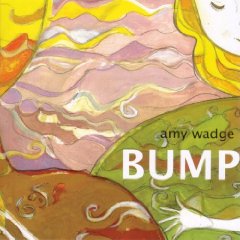
So titled because she was pregnant during recording (two days and first takes), the Bristol born, Wales based singer-songwriter's fourth album is a highly introspective and reflective affair, musing on missed or lost opportunities and dealing either with relationships or the dream and pursuit of a musical career.
The latter looms large on the second track, Nashville, where "there's music in the water" and she declares she's "going to drink me some slow southern beats". It name checks Chet Atkins, Roy Orbison and the Everlys, and there's another nod to heroes and influences on the acoustic strummed These Are The Songs.
Looking back to herself as a 15 year old with "a bashed up guitar" and a "big head full of big time thoughts," about getting to Nashville and singing with James and Jackson, and of a glittering career of Grammys and Hollywood, she wonders why, 15 years later "it's all gone wrong." But, she adds, "you're never going to stop me from singing those songs".
If that's about music as a rock to cling to, it's clear that there's been times when she's come close to drowning. Clean is a jaunty confessional of getting wasted and having "done some silly things to my body", but now reaching out to grab life as it passes by, while soulful piano ballad Bridge is another song about figuring herself out and of being made stronger by the scars and bruises.
Finding ways to hold on to relationships and opening up to others form the core of the slow burn One More Day, Tell Her, a James Taylor-ish Therapy 2008, her jazz smoked country blues cover of Don't Leave Me This Way and the southern soul sway infused I Wanna Be Loved with its hint of White Shade Of Pale on the organ intro.
Childhood informs the album's remaining two tracks. Mockingbird recalls discovering 'not everything is black and white' from reading To Kill A Mockingbird (though, if I'm being picky, Harper Lee's first name was Nelle not Nell) while becoming a new mother clearly prompted the closing eco-themed keyboard backed lullaby Who Will You Be?
Unfussily arranged and streaked with the dust of Southern folk and country, it's probably more of a career consolidating album than anything, but those who've been along for the ride so far will have no complaints and, for newcomers, it's a warmly inviting place to begin.
www.amywadge.com
www.myspace.com/amywadge
Mike Davies August 2009
Amy Wadge - No Sudden Moves (Manhaton)
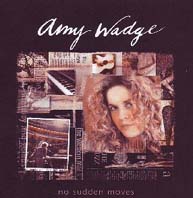
The Carole King and Indigo Girl references remain strong on numbers like Free Fall, Always and the stand out Pulling Me In while Fairweather Friend and the title track suggest Sheryl Crow's mellower moods and Here In My Hands even has a touch of Bonnie Tyler about her husky delivery.
A poetic lyricist, the songs too have grown in stature. The material on Woj was solid, but she's moved to a new level with things like the jazzy flavoured easy rolling Always, the emotionally drained Shattered, Play It Again's poignant farewell to a late friend and the Brill Building airiness of the other man's grass themed USA, We'll Wait & See , the Welsh version of which reached No 9 in the native charts. Indeed, it says much that her wistful piano interpretation of the Manics' Design For Life slots in seamlessly among her original material. It may take some concerted gigging and a leg up from Radio 2 airplay to crack the territories beyond the land of song, but as the album suggests, she's in no hurry and her time is definitely approaching.
Mike Davies, May 2006
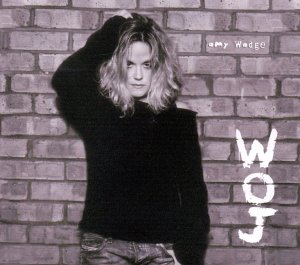
There was once a rumour that the Avon by birth Welsh by adoption singer-songwriter was going to replace Cerys in Catatonia. The truth is that their rhythm section joined her. Wise move. Pronounced as per the album title, Wadge, winner of the Best Female Singer Welsh Music Award for the second year running, has been frequently compared to Joni Mitchell, one of her prime inspirations, but perhaps more accurate reference points would be Janis Ian (Anywhere, written for her late father-in-law), Carole King (Nothing) , Aimee Mann (Scream) and Thea Gilmore (Just In Time), or maybe even the Indigo Girls.
Partly new recordings of material from her DIY demo album Open, it's a mix of gentle acoustic folksy pop and more rock inflected material like the slow ringing swagger of Valley Boy (about her actor hubbie) or Six of One where Robbie McIntosh lets his guitar off the leash. Her voice too runs the gamut from breathy wisps of smoke (Grace) to gutsier blood (Breathe), playful on things like the jaunty Paris with its cafe accordion, wistfully tender on the piano ballad June, and on Adre' nol, a valentine to her chosen homeland, even partly sung in Welsh. Croeso y Woj.
Mike Davies
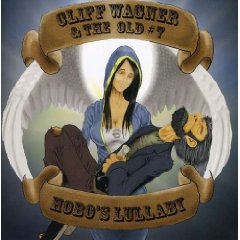
Hobo's Lullaby is this bluegrass band's fourth recording, and content-wise eight Wagner originals merge with seven covers including the Goebel Reeves penned album title track. With a back line of bass and drums, Wagner's banjo, fiddle and lead vocals are supported by mandolin, guitar and resonator guitar. The latter instrument comes to the fore when the five piece slips into grass-less blues mode – aficionados will know that the town of Greenwood featured prominently in the demise of legendary bluesman Robert Johnson - as on Muddy Waters' Rollin' & Tumblin' and Cliff's arrangement of the traditional Carroll County Blues which closes this collection. Score 5 out of 10
Arthur Wood, Kerrville Kronikles, June 2009
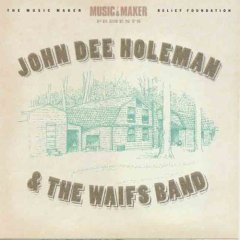
Born in 1929, John Dee Holeman is an original bluesman and here he teams up with the young Australian folk/rock band The Waifs for a surreal session that resulted in this gem of an album. They open with a straightforward version of the country blues classic, John Henry and follow it up with the electric blues of Country Gal. This is delivered at a pedestrian pace but the delta/Chicago hybrid is the real deal. Mojo Hand is another, no messing electric blues and the band gives it to us, warts and all. This is a rough diamond with a live feel to it. The strangely titled Give Me Back My Wig gives the harmonica player, Vikki Thorn, a chance to step out of the shadows and she does excel on this rustic offering. I'm A Pilgrim is acoustic, traditional and fantastic.
The tracks keep on coming and Coming Home To You is a classic blues. The first slight disappointment is Elmore James' Dust My Broom. I've been brought up on powerful versions of this song and Holman's just doesn't do it for me. Next up is Little Queenie but I could swear that I was listening to Reelin' and Rockin' – someone has got his Chuck Berry tunes mixed up! This shows how wide reaching Chuck Berry's influence is. They return to electric delta style blues for I Miss You Huggin' and they turn in an unpolished performance that demonstrates how sweet music can be. Looking Yonder Comin' is country acoustic blues and harks back to days gone by. If there is a style to pin to Holeman then this is it. They finish with the classic Baby, Please Don't Go - often covered, few better.
David Blue October 2007
The Waifs - Up All Night (Jarrah)
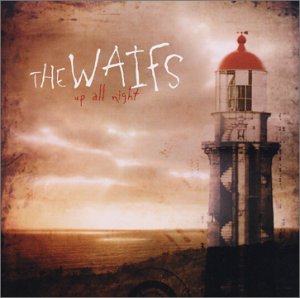
The latest Americana outfit to emerge from Australia (their 'strine accents proudly undisguised), founded by singer-songwriter guitarist sisters Donna and Vicki Simpson and Josh Cunningham the Waifs have actually been going since 1992 and were the first Oz band to play the Newport Folk Festival, but it's only now they're starting to stretch the horizons beyond their native shores. Partly recorded in LA, this, their fourth album, pretty much describes where they're at with its acoustic bluesy folk-pop, or as Donna puts it on the opening Fisherman's Daughter, "just your regular West Australian fisherman's daughter .. a middle class folk singing guitar playing girl."
A collection of written on the road songs, stained by the dust, warmed by the sun and cooled by night under open skies - on Highway One they even sing about eating fish from a coal fire and sleeping outside - it's unfussy but accomplished stuff, the sisters twangy soulful vocals clearly having spent some time soaking in the glow of Nashville (listen to Three Down) but without feeling the need to actually pretend they were born there.
Recent single London Still (curiously evocative of the late Kirsty MacColl) where, to the accompaniment of lonely dobro. they talk about wandering round Camden and buying old Motown records will undoubtedly strike a chord with Aussie ex-pats, but you don't have to come from the land Down Under to appreciate the sentiments that vein something like the aching barroom ballad Nothing New where Vicky writes of the 'embittered heart' of a woman burned by love or the 'you don't know me' notes of Cunningham's funky bluesy Flesh And Blood. Cunningham actually makes his vocal debut on this album, taking lead on two tracks, the semi-spoken don't get out much these days Since I've Been Around, which suggests he's a bit of a Dylan fan, and the closing weary heavy-lidded six minute title track that surely owes a nod to Tom Waits. They're both fair enough numbers, but if the band are going take on the world then it's clearly the sisters who'll be out there leading the assault.
Mike Davies
It's been a long five years since the Canadian trio released Firecracker, since which time Anabelle Chvostek has left to be replaced by alto jazz singer Heather Masse, bring the M quota up to three alongside founders soprano Ruth Moody and mezzo-soprano Nicky Meht.
In good democratic fashion, all three have contributed four songs though, if they have individual styles these have been streamlined to fit seamlessly within the group's sweet folk harmony style and you'd be hard pressed to identify who was responsible for what. Even the lyrics share themes of romantic yearning littered with natural world imagery.
Which is less a criticism and more a testament of how well they work together in the service of the common bond.
The title track, sung unaccompanied, is a traditional American folk tune and that's pretty much the seam they mine throughout, opening with Swing Low Sail High and working their mellifluous way through the likes of bluegrass ballad Bird Song, revisited from Masse's solo album with a new fiddle solo, Mehta's lovely ukulele-accompanied, life's dusk and dawn themed Away But Never Gone, and the old back porch crooning quality of Mona Louise.
They do tinker with things here and there, though. Across The Sea begins with Masse singing a capella before the others join in and acoustic guitar and warm flugel horn add their soft touches, What Has Been Done is bluesily atmospheric with electric slide and Storm Comin' finds Moody in soulful gospel mode, the songs stripping back to a handclap rhythm midway while, nodding to Masse's jazz training, Cherry Blossom Love is pure Andrews Sisters styled 40s retro.
Closing with the mandolin and trumpet-backed country-folk swayer The Last Goodbye, they don't push and genre boundaries, but they can most certainly be relied upon to shine within them.
www.thewailinjennys.com
www.myspace.com/thewailinjennys
Mike Davies March 2011
Loudon's latest celebrates 40 years since his first recording with a typically acerbic set of new songs that say all they need to say in the space of less than three minutes. Two of them are covers of songs written at the time of the original Great Depression, which have just as much relevance for our times and their New Depression, drawing the keenest of parallels with our current situation (plus ça change, indeed): The Panic Is On, from the pen of medicine show performer Hezekiah Jenkins, and On To Victory Mr Roosevelt by Texas politician W. Lee O'Daniel.
The remaining eight compositions range from straightahead trenchant right-on socio-political observation in the Guthrie mould that address the issues and concerns of this day (Times Is Hard) through to a couple of more lightweight slightly-silly creations (Halloween 2009 and I Got A Ukulele), while a song titled Cash For Clunkers will be abundantly self-explanatory!… Along the way, the recurring thought is that "the present will most assuredly stretch into the foreseeable future" (this percipient soundbite is taken from Loudon's own personalised liner notes). The paranoid polemic of Fear Itself is a perfect illustration that nobody is immune from the catastrophes of the world or the paradoxes of the American Dream (payback time comes with the quatrain "You know that job I always said that I hated? Well yesterday they gave me the sack. Loving your work is so damn overrated – I sure wish to God I had that job back!"). And on Middle Of The Night, Loudon taps into his own personal psychological depression and becomes empowered to purvey an optimistic point of view. For "it's not the end of the world, good people.
In the great tradition of the minstrel show, ostensibly downbeat lyrics are hammered home with almost relentlessly jaunty, upbeat tunes, although the disc's most pensive moment, House, hits home (sorry!) equally powerfully without resorting to a singalong mode. Aside from some mildly intrusive sound-effects on Halloween 2009, the admirably bare-bones voice-and-one-instrument (guitar, banjo or uke) settings ensure that Mr Wainwright Snr's message comes across "Loudon-clear" at all times. For his commentary is as cutting, and as cutting-edge, as ever; this is political songwriting par excellence, shot through with complete honesty and of course laced with more than a touch of mordant humour and rapier-sharp wit, even when the targets are at their most obvious. Quite simply, there's no-one can do it like Loudon, and the guy's sure on form again here.
David Kidman August 2010
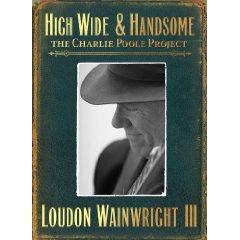
Born in North Carolina in 1892, Poole started working in the cotton mills when he was 12, but teaching himself to play banjo (as did his dad, brother and cousin) he soon began to make a name for himself. Eventually leaving behind work, wife and young child to ramble across America and Canada, he teamed with crippled coal miner and fiddler Posey Rorer as both buskers and moonshiners.
Marrying Rorer's sister,Lou Emma, and settling back in NC, in 1925 Charlie, Posey and guitarist Norman Woodlief (later replaced by Roy Harvey) became the North Carolina Ramblers, signed a recording deal with Columbia and, recording a series of best selling cover versions, began the rise to fame.
Despite splitting with Rorer in 1928 over a royalties row, Poole continued to be a success, living 'high wide and handsome', only for things to fall apart in 1931 as the Depression hits record sales and booze took hold. Invited to play in a Hollywood movie, Poole went on a thirteen week drinking binge to celebrate. Shortly afterwards, in May, he died of a heart attack age 39, just before he was due to start the film.
An influence on Hank Williams and Bill Monroe, it's his legacy and legend Wainwright addresses here with reworkings (rather than direct copies) of songs recorded by Poole (or, in the case of 1897 gospel number Beautiful, performed live) alongside nine, title track included, written by Wainwright and producer Dick Connette inspired by their subject's life and times.
A veritable companion piece to Springsteen's Guthrie tribute, it's a diverse collection of styles that underlines the breadth of Poole's musical talents, embracing swing, formative bluegrass, gospel, jazz, comedy songs, Dixie, minstrel songs, trad folk, sentimental music hall ballads (Mother's Last Farewell Kiss a sterling example) and string band.
Titles may not be immediately familiar, but once those of a certain age and/or with an appreciation of America's musical history will recognise the likes of The Deal (aka Don't Let Your Deal Go Down and one of several cuts featuring mandolin wizard Chris Thile), Sweet Sunny South, The Letter That Never Came, Ramblin' Blues and Where The Whippoorwill Is Whispering Goodnight. The only real disappointment is that it doesn't include Take A Drink On Me though I'd also like to have seen what today's audiences made of Coon From Tennessee.
Wainwright and Connnette's own songs slot in perfectly, and, were it not for the biographical lyrics of The Man In The Moon (sung in the persona of Lou Emma by Maggie Roche), Rowena and Charlie's Last Song, you could easily believe they too were part of the Poole repertoire.
Impossible to conceive of it being done by anyone other than Wainwright, it's also something of a family affair. Aside from Maggie, other contributions come from Terry, Suzze and David Roche, Lucy Wainwright Roche, and Martha, Sloane and Rufus Wainwright while musicians include long standing friends and accompanists David Mansfield, Erik Friendlander and Chaim Tannenbaum, the latter also getting to take rich deep lead vocal on gospel tune The Great Reaping Day.
Superbly played and sung, it's a labour of love that deserves to be rewarded in kind and, who knows, start a movement to see Poole enshrined in the Country Music Hall of Fame where he belongs.
www.thecharliepooleproject.com
Mike Davies August 2009
Loudon Wainwright III - T-Shirt/Final Exam (Evangeline)
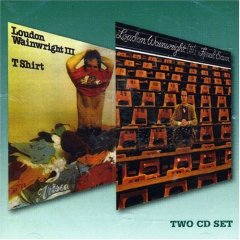
Way back in the mid-70s, Loudon released a couple of albums on the Arista label that for some unknown reason were a devil to get hold of; I never even had copies at the time, so I'm real pleased to see that Evangeline have the good sense to make them available again. OK, so there are one or two marginally less than comfortable moments on both albums (and a couple of instances of gratuitous sound-effects), but what strikes me most hearing these albums some 30 years after they were made is the extraordinary sharpness of Loudon's vision, both in the lyrics (naturally) and in the musical settings too.
T-Shirt was originally unleashed on an indifferent world in 1976, and it really does run eclectic rings round most of what was happening in music in that year. Down-home old-time, country, Dixieland jazz, lounge, blues-boogie, strident politico-rock, songwriter-musings - they're all here, and Loudon shows a real gift for tailoring his musical accompaniments impeccably to the subject-matter, the milieu of the tales and the inimitable bite of his social commentaries. There's the Guthrie/Dylanesque Talking Big Apple 75, the edgy rollin' of California Prison Blues, the histrionic rock angst of Prince Hal's Dirge, the tacky drink-sodden barroom honky-tonk of Wine With Dinner... masterful each and every one. Moreover, the more philosophical of the songs (eg Reciprocity and Just Like President Thieu) are every bit as impressive as the deliberately satirical offerings and even the overt "novelty cuts" don't tend to grate. Backing musicians mostly comprise "house band" Slowtrain, who play way better than just fine throughout (as they do on Final Exam too by the way), with the wacky Holy Modal Rounder Peter Stampfel on Wine, and two of the Roches make an appearance as well (on Summer's Almost Over). While casually and almost incidentally, Loudon demonstrates his unsung prowess on the humble banjo (on Hollywood Hopeful (duetting with Eric Weissberg here, no less).
Generally speaking, with T-Shirt folks didn't know what'd hit 'em, and sales of the LP were as muted as the critical reception. So, as the insistent farting washboard fades away at the end of the Wine reprise, the call of destiny leads us now inexorably to reappraise Final Exam. That album followed in 1978, and after the ignominious reception given to T-Shirt perhaps great things couldn't be expected in terms of commercial success. But although it's evidently cut from the same cloth so to speak, if anything the compositions therein display a greater assurance and defiance, a determination to realise a vision of life that's proud and uncompromising and above all to force folks to think (in the best traditions of political folksong, but of course it wasn't termed such at the time). And there's some splendidly quirky contributions from those Roches again (on Golfin' Blues and The Heckler) and the touching Pretty Little Martha gives Loudon a chance to dust off that ol' backporch banjo again. So I'd say snap up these albums now, before they disappear again from the catalogue. For here's Loudon the iconoclast, in all his splendour, and these two albums are essential to the picture of the man and the artist.
www.evangeline.com
www.loudonwainwright.com
David Kidman June 2007
Although she made her first stage appearances singing backup with her half-brother Rufus, the daughter of Loudon Wainwright III and Suzzy Roche has always cast herself as an independent musical spirit, and her own debut releases, 2009's near-simultaneous Eight Songs and Eight More EPs, carefully hedged her bets with a mixture of self-penned songs, covers and arrangements of traditional pieces, on no category of which did she let her audience down, her brand of clear singing voice and bittersweet expressiveness winning her a devoted, if small, circle of admirers ever eager to hear what she would come up with next.
For her full-length debut CD, the abbreviated eponymity of its title conceals a lack of anonymity (at any rate in terms of musical identity). This time round, however, Lucy chances her arm by producing an eleven-tracker consisting almost entirely of original songs; only the closer (Simon & Garfunkel's America) and the bonus track (Elliot Smith's Say Yes) being covers. Lucy's own songs are pleasing and have the ring of truth about them; her tales of life on the road are sincerely perceptive yet charming expressions of those familiar singer-songwriter preoccupations like the simple pleasures of everyday life and straightforward, uncontroversial personal values. Politics and mean streets don't not exist, but they tend not to intrude on her largely positive and tolerant world-vision. One can't accuse Lucy of being naïve or unaware, but equally there's no sense of her missing out on the wider issues, it's just that these need not concern her for the moment – the moment that each song is attempting to capture. And mostly it does the job in a tasteful, appealing, lilting folk-contemporary-acoustic styling that's hard to resist; songs like Open Season, Statesville and Mercury News soon get to lodge themselves gently in your mind.
Perhaps a song like The Worst Part needs more edge to its perception to make its desired impact – here, it's a little too sweet and contented, and one gets the feeling that Lucy needs to give that darker side of things fuller rein: but hey, there's time enough comin'… As on those aforementioned EPs, Lucy once again brings in a few guest musicians and singers to help her out: in addition to Kelly Hogan, Steuart Smith, Indigo Girl Emily Saliers, Nora O'Connor, Stewart Lerman, Brian Griffin and Girlyman, there's the whole Roches trio supplying wistful, if understated backup vocals on America, and Ira Glass duetting with Lucy on Say Yes. Well, on balance I do say yes, this disc will do nicely for the moment, but I can't help wondering what Lucy might have up her sleeve in the manner of musical adventure for next time.
David Kidman November 2011
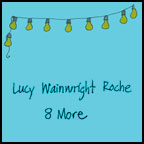
There seems to be no end to the musical lineage of the Wainwright offspring. Daughter of Loudon and Suzzy Roche, and half sister to Rufus and Martha, Lucy has clearly inherited the talent from both sides of the family. She's much more inclined to the folk side of things than her siblings though, her pure crystal voice ranging from soprano to alto with fluid ease, carrying airs of joy and melancholy on its wings.
Released last year, 8 Songs mixes up trad evergreens, covers and self-penned numbers, her appealing readings of Wild Mountain Thyme and an a cappella Barbara Allen set alongside Richard Shindell's wonderful travellers hymn Next Best Western and a lovely, joyously innocent version of Fleetwood Mac hit Everywhere.
Of her own songs, the double tracked vocals of Rather Go call to mind mom and her aunts' own group while the slow rolling Saddest Sound is an aching love song veined with hope and resignation. Best though is Bridge, a folk blues strummer where her voice soars from intimate confessional to open sky celebration.
More musically fleshed out, the second collection is the stronger of the two, her songwriting having gained in strength and confidence as ably demonstrated by the gorgeous Awhile (shades of Jimmy Buffet) and Snare Drum's snapshot of all too brief childhood, both of which show a strong folk pop sensibility.
Sounding a little like Zooey Deschanel, the bittersweet domestic waltz University Drive and the dreamy star kissed fluttering pop of Chicago beguile further while, joined by actress Martha Plimpton, she finishes up with a two parter of Springsteen's Hungry Heart, their world weary folksy version followed by an upbeat, handclapping chorus coda. She may have broken with sibling tradition by not writing songs about Loudon being a crap father, but otherwise the family name (both of them) again proves to have an enduring lustre.
Mike Davies October 2008
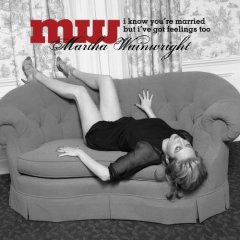
That title does rather set up expectations as to what the songs might be about. And, as the opening track has it, Loudon's little girl is certainly Bleeding All Over You. She may have recently married, but there's no lovey dovey cocooned in domestic harmony here.
Maybe she's just clearing out the stored up feelings and resentments of being hurt so they don't intrude into the marital bliss. If so you'd hope things like the soaring pop of You Cheated Me, Bleeding All Over You's letter to an ex-lover who's now a father, the disillusionment and unreliable lover of Jesus And Mary, the scuffed New Orleans lurching Hearts Club Band's finger to someone (dad?) who 'wrote a song a day' and was cruel in a different way than I was used to", the self-loathing in Jimi and the insecurities of the nakedly confessional, musically plaintive I Wish I Were have got things out of the system.
There's a definite darkness here, if not involving emotional instability and former beaus, then a meditation on mortality and failure; the latter embodied in the nervy folk blues of The George Song (about another ex who committed suicide), the former underpinning the baroque chamber moods of So Many Friends (where her voice slides down the scales) and the stark, wailing gothic blues brooding In The Middle Of The Night which (with vocal back-up from brother rufus) addresses mother Kate McGarrigle's (successful) battle with cancer.
Fortunately, this is balanced with notes of defiant hope (Tower Song) and certain playfulness. That's certainly the case in the gloriously Fleetwood Mac like poppiness of Comin' Tonight where she considers going to a gig by an old flame (maybe the one from Hearts Club Band) to rip off one of their melodies. And, while it may have been penned before she tied the knot with producer Brad Albetta, Niger River is a simple trad-hued folk song about making commitments, played out to cello and violin. Musically though, with contributors including Pete Townshend, Garth Hudson and Donald Fagen, there's little gloom, the commercial radio friendly appeal of Comin' Tonight echoed all over, especially so in You Cheated Me and, joined by mon, aunt Anna and first cousin Lily Lanken, her playful folksy jogging cover of Pink Floyd's See Emily Play. Rufus had best get used to sharing that Wainwright star spotlight..
www.marthawainwright.com
www.iknowyouremarried.com
Mike Davies May 2008
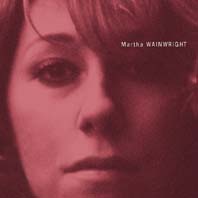
You'll already know about her recent EP and its vitriolic title track Bloody Mother F***ing A**hole, a payback ditty dedicated to dad Loudon for his less than paternal attention as a child, and it's on the fire spitting tracks like that, sexual politics belter Ball & Chain and G.P.T that the power of her voice and anger really rises.
But it's arguably the smokier side that serves her best, offsetting the acid edge of her lyrics with musical honeyed charm as, for example, on Far Away that sounds like a cross between The Carpenters and Across The Universe, Factory's bruised cry of displacement, the domestic tedium and relationship stagnation of This Life or the regret-veined These Flowers. She's blessed with an emotionally acrobatic voice, cracking with a choke, leaping with hope and aching with a forlorn lack of self-worth and defensiveness that, understandably given her childhood, informs many of the songs here, most notably TV Show and the warbling sweet jazzy blues Who Was I Kidding?
It may have been gestating and stewing in her blood and soul ever since she was a young girl but, deliciously topped by the circling melody of lurching waltz The Maker where brother Rufus adds accompaniment and Whither Must I Wander's reflection on mortality with its plaintive harp and piano hymnal setting, this is an album to build a life on.
Mike Davies
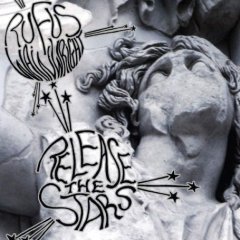
When he sings 'do I disappoint you in just being human' on the discordantly orchestrated Do I Disappoint You, or spits out ''tell me, do you really think you go to hell for having loved?' and 'I'm so tired of you, America' on the wearied Going To A Town, it's obvious Rufus is having a bit of a righteous strop. He's also prone to bouts of romantic insecurity and bitchy need with Slideshow both asking 'do I love you because you treat me so indifferently' and snapping ' I better be prominently featured in your next slideshow because I paid a lot of money to get you over here'.
Waspish, a bit of a queen and revelling in tortured, diva angst, it's a jot to have him back with this, his first self-produced album. Gloriously cabaret in mood, still infused with the spirit of Judy Garland, summoning images of staring out at rainy afternoons from the Brill buildings windows and dreaming of European boulevards, sly gigolos and cafes selling absinthe. Indeed, he's even got a lovely languid little number here called Tiergarden (the album was recorded in Berlin, his new home), while sleeve photos have him posing (in both senses) in lederhosen.
Sex clearly charges his creative batteries, affording both the tender on the violin jittered Brel inspired operatic Tulsa (dedicated to The Killers' Brandon Flowers) with its wonderful line 'you taste like potato chips in the morning', and the magnificently lust soaked, funky rocking glittering pop that is Between My Legs where he sings 'dancing without you, I shed a tear between my legs' and Sian Phillips turns up to provide a voice over finale.
With myriad guests that include sister Martha, mom Kate McGarrigle, Larry Mullins, the Thompsons Richard and Teddy, exec producer Neil Tennant, and Joan Wasser, it's another fabulous excursion into elegantly jaded languor. Illuminated by twinkling cerise fairylights and the reflections of a slightly rusted glitter ball, they shimmer across the acoustic guitar kissed swirling unconsummated desires of Sanssouci 'gambling the tiny shards of brass once my heart' and the studied ennui protestations of Not Ready To Love, indolently waltzing through the full blooded, doo wop and brassed up belting show finale title track farewell to a faded Hollywood. 'I'm tired of writing elegies to boredom,' he sings. But we're far from tired of listening to them. Pull up a cocktail and swoon.
Mike Davies June 2007
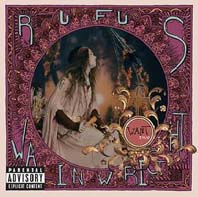
Here's another CD that's been wearing a big big hole through the "must get reviewed" pile for a couple of months, yet has obstinately refused to drag a conclusion out of my addled brain. But notice of the forthcoming re-screening of the BBC documentary has galvanised me into action.
It really is proving hard to meaningfully assess Rufus, at least at first. I'd known for a time that he was someone to watch/listen out for, his name had been touted round ever since well before the appearance of Want One, I'd never got round to hearing any of his music and my requests for review copies of his CDs fell on deaf ears at the promo companies. Success in finally obtaining a copy of Want Two, however, had persuaded me that I will after all need to backtrack to previous albums to make complete sense of Rufus' talent.
With such a talent, the big problem for a reviewer is how to cut through the hype and "explicit content" warnings and catch a valid reference point - for Rufus may be the son of a celebrity singer-songwriter, and claim to be one himself, but he produces music like no other singer-songwriter, and it's music that positively demands attention. Any s/s CD that starts off with a pseudo-classical, richly-clothed six-minute setting of the Agnus Dei (and it's brilliant, by the way!) is, you'll say, either plain unorthodox, seriously maverick or just plain twisted; and you'll have a good point there.
Want Two is almost too much to take in, an extraordinary mixture of heady piano-backed ballads (The Art Teacher), brooding and thoughtful lazy-lounge (Peach Trees), seemingly workaday, breezy adult-oriented rock (The One You Love), smalltown backporch folksiness (Hometown Waltz), pomp-rock (Old Whore's Diet), moody alt-rock, and wilful yet believable full-scale pastiches of anything from French chanson, through to Brandenburg-baroque (Little Sister), "Egyptian reggae" (Old Whore's Diet again) and glittering Broadway-style orchestration-production numbers (Memphis Skyline). Its simultaneous smoothness and swaggering assurance can be distinctly unsettling, even though it largely stays on the right side of the dangerously thin line leading to overkill. It can easily seem sickly, like a luxury chocolate, and too fulsome and almost too good to have to (or want to, geddit?!) devour in one sitting. Quite an aural mouthful, in fact. But make no mistake, it's a genuinely thrill-a-minute album.
Rufus is a hell of a lyricist; he's capable of both a surprisingly sensitive approach to detail (This Love Affair) and an imaginative approach to using deliberately provocative imagery (Gay Messiah). And what leaps out of the speakers straightaway is that the man's got a hell of a singing voice. A voice which is supremely strong, with an immediately identifiable timbre and approach to phrasing, sometimes just a little affectedly histrionic some might say but undeniably full of character. At the risk of appearing mildly sacrilegious, I was sometimes reminded of Freddie Mercury's posturing, but in a positive way. Perhaps the very impassioned nature of that voice doesn't quite gel with the idiom of every song he essays (Coeur De Parisienne sounds distinctly overwrought), but by and large it's an extremely effective vehicle for the expression of his lyrics. The occasional mismatch, where Rufus almost seems to be trying too hard to convince, is brought home by the pair of live tracks at the end of the CD; both sung in French, they tellingly contrast each other, in that Rufus uses his own piano accompaniment on the first (Coeur De Parisienne), whereas on the second (Quand Vous Mourez De Nos Amours) the altogether gentler playing style of his mother (Kate McGarrigle), taken together with the need to allow space in the texture for those delicious McGarrigle vocal harmonies, inspires a similarly gentler responsiveness in moulding Rufus' own vocal performance.
The very fact that Rufus has thus far received a mixed press, veering from unbridled adulation to intense indifference, may well be the indication of true greatness, or else it signals the emergence of a major talent that's destined for purely cult status rather than wholesale acceptance. After a number of false starts and indecisions, from hereon in (and even despite some nagging reservations) you can count me among the believers; I enjoyed my rich choccy-feast, and now (probably against my better judgement!) I Want More!
David Kidman
Making her eponymous debut in 1996, named after grandmother Eleanor Sloan, Loudon's youngest sister - aunt to Rufus, Martha and Lucy - remains the lesser known of the family, despite having released six studio albums in the past 15 years.
This is her seventh, a collection of (save for an early Joni Mitchell flecked cover of Mani Cregan's Holland) self-penned numbers about taking life by the balls, that showcases her rich, deep contralto and, much informed by her Greenwich Village years, musical leanings that hew more to earthy folk, blues and gospel than others of the clan.
Featuring Stephen Murphy on mandolin, she opens in rousing anthemic form with the folk-gospel inspired battle cry Live Out The Best Of Your Life, a song which, like the big belting declamatory show tune sounding Here I Am, underscores the positive, seize the day tone of the album.
It seems appropriate that, given the sense of moving on and grasping the future, she should finally include the title song, a lovely old-fashioned country flecked tune featuring Gerald Menke on pedal steel, written some 30 years ago when she was pregnant with her son, Sam. who, inevitably, is also now a singer-songwriter.
The spectre of mortality also hovers over the album, but the mood is celebratory rather than melancholic. The simple piano and strings backed I Wear The Ring has its roots in the passing of her husband in 2008 while the tenderly bittersweet Today poignantly features the late Kate McGarrigle, who co-wrote the song, on piano with longtime McGarrigles sidemen Chaim Tannenbaum and Joel Zifkin on mandolin and viola.
If the other songs don't hit quite the same emotional heights, they still command your attention with their musical and lyrical power; the bluesy take hold of tomorrow I Can See Now with its echoes of Mahalia Jackson, jangling folk rock gospel protest Little Bit Right ("I am the power, I am the source, my life is right on course") and, delivered with just voice, acoustic guitar and keyboards, the equally defiant affirmation of I Am Free, a number that could have been born of the Civil Rights movement.
The young generation of Wainwrights may get all the attention these days, but this album clearly shows that the older branches of the family tree still bear ripe fruit.
Mike Davies August 2011
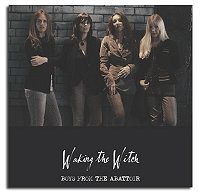
It's a cliché, I know, to brand Boys From The Abattoir as "difficult third album" time for the totally cool Leeds foursome, and so all credit to the girls for coming up with a sophisticated and mature offering fully worthy of its participants that in many ways rings the changes on its two predecessors yet remains entirely true to the WTW brand-name and the band's ultra-distinctive musical identity. First of all, what hasn't changed, without a doubt, is the girls' sheer consistency of output in the face of the striking, and often strikingly contrasted, songwriting and singing styles of the four of them (it's easy to identify which is witch - if you forgive the obvious homonymic pun!), which prove tellingly complementary. And the quality of the songs is once again outstanding, there's no other word for it; they encompass a great variety of mood and approach which is reflected in the diversity of the equally innovative musical settings. And the trademark WTW lush vocal harmonies and intensely assured acoustic guitar work are still firmly in place at the centre of the group sound.
But there are marked changes: for this new album, WTW have engaged the services of Dave Creffield (famous for his work with Leeds band Embrace) as producer, and in so doing, they claim, they've "become the instigators of a new genre of roots music" - "indie acoustic". Well I'd go along with that, if only because it can be interpreted as providing a convenient tag for the Witches' headily original sound-world, which has hitherto obstinately defied categorisation. And maybe in marketing terms the tag's a headline-grabber that might just get WTW some overdue attention from the more influential sectors of the industry. But whatever, the end product is tremendous.
Boys From The Abattoir takes a step back from the intimacy of the shiveringly beautiful, hushed aura and minimalist stance of Hands And Bridges and then expands the sound outwards again but in intriguingly different ways. On the majority of the eleven new songs this involves bringing on board a vibrantly edgy rhythm section (Jon Short on bass and Mick Bedford on drums), which keeps things on the move and the balance sharply defined; this is achieved spectacularly well. At the same time, greater depth is given to the overall picture by making the textures attractively richer, by the creative use of extra instrumental resources such as some stirring, burnished electric guitar (courtesy of Big Country's Bruce Watson) on Me Leaving Me, funky bluesy harmonica (John Burr) on Only Human, sweeping violin and cello (the enigmatic Fluff, latterly with the re-formed Incredible String Band) on three songs, as well as some percussion from James Goodwin and double bass from Dave Bowie. There's even a mini-brass-choir on the sort-of-title track, while at the same time the Witches have extended their own personal musical armoury with the addition of slide guitar (Bex) and mandolin (Pats).
Every track's a strongly individual composition, complete in itself of course, while different to, but recognisably from the same stable as, each of the rest, and as you'd expect each of the four girls proves herself once again to be a special talent in her own right, lending each track its definitive character and flavour. The assurance of the writing is stunning, whatever the feel or idiom of any particular groove, from Pats's narcotic love-song Rock 'n' Roll to Bex's punchy rap-rhythmed Horse To Water, Jools' darkly glistening string-soaked torch-song High Fire And High Water to Rach's pounding gothic anthem Me Leaving Me.
But in truth there's so much great writing on display here (musically and lyrically) that you can easily forgive (in fact, I rather liked) the occasional cheeky nods to folkier territory: for instance the insistent chiming mando-riff of Yorkshire Boy (chart single here we come!), which is pure Show Of Hands, and the perky schoolgirl-chant of Jenny Thornton & The Boys From The Abattoir which recalls While&Matthews' Class Reunion...
Notwithstanding the Witches' strong reputation as a fearsome live outfit, this is a fully credible studio outing that would put many a studio-based band in the shade. And it's an album that already has a place assured on my selective best-of-2007 list.
www.wakingthewitch.co.uk
www.myspace.com/rachpatsjoolsbex
David Kidman January 2007
The Waite Collective - Flights Of Angels (Cock Robin Music)
Seasoned festival-goers will, I'm sure, already know and appreciate the vocal talents of the female members of Chester's Waite family – mother Mal and daughters Rebecca and Katrina (I hesitate to say the trio are already making waves on the scene!). Their repertoire is intelligently chosen, also admirably wide-ranging, and their individual and collective versatility is at once apparent in their ability to switch between melody and harmony lines and between different musical styles with consummate and comparable ease. From straightforward traditional to well-crafted contemporary (Steve Knightley, Allan Taylor) to Mama Cass! They've unearthed some gems too – Nick Lines' Heavy Horses and Chris Rogers' Vampire's Prayer are but two of their welcome discoveries. Each of the three ladies is a very fine singer, and the collective empathy of their harmony work can be breathtaking as well as beautiful and stimulating, for their voices blend well, and virtually effortlessly. Their versions of Ewan MacColl's powerful Terror Time and the West Gallery transcription of the 18th century Cat's Catch are probably the best, and most contrasted, examples of their expertise in this field. The CD's title is taken from Shakespeare's Hamlet – "… let flights of angels sing thee to thy rest". And while that quotation nicely reflects the rough thematic tenor and overall musical character of the CD, it also pinpoints what for some listeners may be its downside, in that it's all perhaps a bit too polite and soft-focus in character (the Waites don't do rip-roaring, raucous or gutsy, in other words). The gentleness of their approach leads to a tendency to mildly underwhelm the listener, which is more prevalent on a CD than it is live, where their singing comes across more compellingly. Also, one or two of the early selections (I'm thinking of Bonny Portmore and the Connemara Cradle Song in particular here) are taken a mite slowly, the resultant lessening of forward momentum frustrating the more rigorous exigencies of home listening. Around half of the tracks feature a limited degree of (undistracting) accompanying instrumentation, courtesy of Mal's own guitar, Chris Harvey's keyboard, and contributions from musician friends from Chester (Chris Lee, Nick Mitchell and Dave Manley), while Alison Younger and Graham Waite chip in to swell the chorus on James Keelaghan's Sing My Heart Home. There's a slightly artificial ambience to some of the tracks, specifically to the voices themselves on occasion (a curious woolliness to the backing-chorus reverb is how I'd describe the effect on the Waites' otherwise superbly arranged and performed rendition of the standard Fever, for instance). But these are minor matters, for whether singing together in gentle harmony or regaling the ears with their poised solo work, they're always worth a listen, even if inevitably some songs work better than others. And the hidden track at the end, a lovely rendition of The Parting Glass, provides a fitting conclusion to the disc.
David Kidman
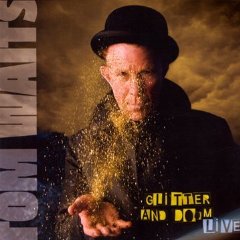
Over the years, Waits' rasping growl has deepened and transmuted into a unique and brutishly fearsome thing, like some goblin gargling a mix of grit and second hand phlegm while he strides simian-like around the stage like a ringmaster from Mr Dark's Pandemonium Shadow Show in Ray Bradbury's Something Wicked This Way Comes, an image that surely informed his casting as the Devil in Terry Gilliam's The Imaginarium of Dr Parnassus.
Trawled from 11 different dates on the tour, recorded in cities that range from Birmingham and Edinburgh to Milan and Tulsa, it's a raucous affair with Waits leading a fiery band that includes son Casey on muscular drums, Seth Ford-Young playing upright bass, keyboardist Patrick Warren, and Omar Torez delivering guitar work that spins from demented blues to delicate jazz. Another son, Sullivan, also puts in guest appearance on sax and clarinet. Things kick off in Birmingham UK with the fusion of Lucinda and Ain't Goin Down from the Brawlers collection, stripping them to the bone and welding their very different styles into one lurching troll-like stomp. Do not let kids hear him singing. They won't sleep for weeks.
The it's off to Edinburgh for a lollopping rework of Singapore into a blustering sea shanty as conceived by Kurt Weill and down to Tulsa for the fabulously clattering and clanging Get Behind The Mule with its wailing blues harmonica and work song rhythm.
There's more unhinged volcanic trampling to be found on the loose-limbed blues and beatnik jazzy workouts of Such A Scream, Goin' Out West and Metropolitan Glide. But, if not soft exactly, there's also Waits-style dark-stained bourbon breath tenderness to be found on Dirt In The Ground, a heartbreakingly magnificent Fannin Street, the ragged soulful Falling Down, and The Part You Throw Away's Spanish guitar and gypsy campfire romancing.
It is a mark of the man's alchemical brilliance that he takes two songs, I'll Shoot The Moon and Lucky Day, from the notoriously difficult and inaccessible The Black Rider, the songs for his stage collaboration with Robert Wilson and William S. Burroughs, and reinvents them as showstoppers; accompanied by piano, the latter the closest here to the days of The Heart Of Saturday Night. You had to be there, but if you weren't this is the next best thing.
As those who've experienced him live will know, he also spins between song stories of wit, charm, bizarre facts and downright fabrication. The second CD here, Tom Tales, links them together in a 36 minute monologue (his speaking voice a lot less gravelly), and while some will be familiar from interviews, it's an unexpectedly engaging bonus even if you're unlikely to be playing on a regular basis. You can, however, find transcripts if you sign up on his new website and read at leisure.
Mike Davies December 2009
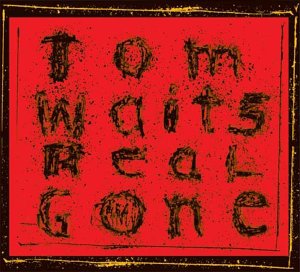
Listening to a Tom Waits album can never be described as an easy experience, understanding him is even more difficult. But like anything worthwhile the experience is ultimately a hugely satisfying one.
Waits, blessed with a voice that sounds as if someone's carving strips off his vocal chords as he's singing, mines the darkest recesses of the human soul. When not satisfied with his efforts, he then searches a little deeper and a little further.
In both style, or lack of it, and content he is the antithesis of a 'showbusiness' musician, he growls and snarls his way through Real Gone but what he unerringly uncovers is the core beliefs of his muse.
Wait's originality is borne out of a complete lack of fear. The ability to conceive of an album that is at times optimistically funky and then able to become the soundtrack for a post-apocalyptic wasteland is the mark of a genius. To make it work as well as Top Of The Hill does, for example, elevates Waits to the very top of modern musical innovators, (admittedly not an overcrowded market). A complete faith in his own imagination and ability is both justified and a cause for celebration.
It may be stating the obvious to those already familiar with Waits, to say that he has an innate feel for the blues. His voice alone carries the sound of a lifetime's hardship but its much more than that, he feels the songs as deeply as he sings them. Nowhere is that better demonstrated than on the beautifully haunting Sins Of The Father.
But to restrict artists like Tom Waits to a 'label' is both intolerable and futile. He pushes and presses himself and his music to the absolute limit, Hoist That Rag may well be largely impenetrable to anyone other than the author but it's impact is simply devastating.
Real Gone is a raw and bleeding piece of music that wears its heart on its sleeve, Dead and Lovely is as much a romantic and heartfelt ballad as anything sung by some charlatan in a nice suit with a slick hair cut. It's just that in Waits world, hearts get broken and flowers wither and die. There are few things left in this world that are truly real and honest, Tom Waits is one of the few.
Michael Mee
Rick Wakeman is an oddity to me. While I love his playing, I really do not like his writing. His albums leave me cold, and have for a long time now. Where he really shines is in Yes. Here he is given music to enliven, music to put colours into. Under the awesome imagination of Jon Anderson, he finds scope and more for his considerable abilities.
Dave Cousins is the heart and soul of a band called The Strawbs. They have been around for many years. In fact, Rick Wakeman used to play with them before joining Yes. It seems the Dave Cousins could never find a way to use the virtuoso talents of Mr. Wakeman until after he had left. The Strawbs ventured into the world of progressive rock, and did so quite successfully. Sadly, Rick was not around to help with those halcyon days, save for the occasional session work.
This CD reunites the old friends for the first time in over thirty years. There are a few new songs, and some older Strawbs songs are dusted off and given new life. Yes, Dave and Rick are old friends, drinking buddies from their 'good ol' days'. But can they play together? Can they make it work after all these years? Would this be just a nostalgia album, wiping away a tear for auld lang syne?
Yes, it does work, and no, it is not an nostalgic look back. It is a nod of recognition between two accomplished artists, an acknowledgment that time may have passed, but it has not passed these two by. They work together as if they they had never stopped, as if they could read each other openly and honestly. Dave Cousins didn't just pick out a few random tracks to play with Rick, the songs are heard here are if they are brand new. They are given new life on this album, and they work as good, if not even better than they did as the original versions. They work because Rick Wakeman has added entire new meanings to the words; entire pages of passion to the work. This is especially true of the passionate So Shall Our Love Die?, the gentle guitar ballad from the Nomadness album. The song is fragile, but Rick does a beautiful job of catching the delicate strength of the song, and reinforcing the beauty of the melody. His work here rivals anything he did with Yes, even the lovely Turn of the Century.
There is one complaint, though. The opening track is called The Young Pretender, and features violin work by Ric Sanders of Fairport Convention fame. I find this spoils an otherwise good song. One almost longs for Dave Lambert of the Strawbs to step up and say "Now hold on a mo, let's have a gander at that!", then lay down guitar work to really capture the fire of the song.
Of the original songs, I find the sweet fragrance of the title track truly captures what Cousins and Wakeman can do, although Can You Believe is certainly excellent, as well. Higher Germanie is a traditional song, but seems quite unremarkable to me. It has the same melody as a dozen other traditional songs; this one is hardly noteworthy enough to warrant inclusion here.
On the whole, an excellent CD, well worth the effort. It is a testament to the abilities of two great men, Dave Cousins, the songwriter, and Rick Wakeman, the musician. Together they make a formidable team.
www.strawbsweb.co.uk
www.witchwoodrecords.co.uk
Doug LeBlanc
Off the radar to the extent that many probably thought they'd split up, it's taken six years for Chris Eckman, Carla Torgerson, Terri Moeller, Michael Wells and Glenn Slater to put together a follow-up to Acetylene. Part of that was down to life getting in the way, but part was trying to find what they describe as a 'different trail', an idea 'worth fighting for'.
The answer, of course, lay in their own backyard and a nation that had lost its sense of identity and purpose, the mythical desert setting of the title 'an America with a future as cracked and worn as a dry-lake bed...a land where hollow ideas win out and hopes and dreams are slowly slipping back into the wild.'
As you might imagine, given their Americana roots and joined by former Willard Grant Conspiracy member Paul Austin, this musically translates into a widescreen panorama of doomy atmospherics, tight percussion, prowling guitars, desolate trumpets, mournful organ and strings and the same desert ambience of bands like Calexico, Thin White Rope and Giant Sand.
The 11 tracks are arranged in four segments, each prefaced by a literary quotation taken variously from Paul Bowles, the book of Jeremiah, Willa Cather and William T Volmann that underscores the apocalyptic tone of the songs, the final section titled Dust, Stones, Silence. The lyrics are oblique, peppered with images of water, fire, dust, dry fields and of a land parched of hope.
Sharing lead vocal duties, she on the slower numbers, he in charge of the more rock driven ones, Torgerson opens the album with My Diviner's visions of drought and a dry fear enfolded in a curling melody, lonesome lap steel and weary vocal that conjures thoughts of Emmylou and Margo Timmins.
Eckman then takes over with a distorted rasp for the bluesy, shimmering heat haze of The Dustlands and the rockier Soul Thief with its driving organ and tremelo guitar. Then it's back to Carla for brooding piano ballad They Are Not Like Us and, with a backing and arrangement that recalls early Jefferson Airplane, Thin Of The Air.
Her torn silk vocals also anchor Wild Sky Revelry and the Neil Young gospel touches of Every River Will Burn, Eckman turning up the fire for Rainmaker Blues, the alt country swaggering No Rhyme, No Reason with its stabbing rhythm and Crazy Horse guitar snarls, and the pair trading lead for Long Drive In A Slow Machine, drum machine intro giving way to the real thing and ringing guitars.
An outstanding return, if they need six years to make an album this good then roll on 2017.
Mike Davies October 2011
This, the latest Walkabouts offshoot project from the band's key members Chris Eckman and Carla Torgerson makes deliberate attempts to avoid the "M" word that has - rightly or wrongly - dogged Chris and Carla over the years. Of course, that's a tall order, for melancholy (with that capital M!) has always been a major element of their stock-in-trade. And, although the lion's share of the songs on Fly High Brave Dreamers are unquestionably about hope, even hope can't altogether avoid introspective melancholy, especially when the very way Chris writes (and scores instrumentally) always lends a certain air of the "M" word to proceedings. But I promise I won't mention it again... What we have here on this new 11-tracker is a mostly coherent set of ten new Eckman songs (the eleventh, Salad Days, being a Young Marble Giants cover) that share a generally uplifting demeanour. Some of these I like very much - Taking Leave Of Our Senses is wonderfully intimate, if a mite claustrophobic in a kinda Junkies way, while Long Slow River builds cautiously to its inexorable chorus and Rising Backwards uses a cool jazz ambience and confidential vocalising to accentuate the gently nagging water-torture repetition of the lyric's gnomic poetry. The level and kind of detail in the musical settings is very typical of Chris's skill for arranging and selecting just the right kind of instrumentation, with guitars used to counterpoint the keyboards and occasional programming rather than the other way round; sometimes this works against the songs however, with an over-sweet, slightly sickly ambience that cloys (as on the opener, At The Twilight's Last Gleaming) - basically, such songs can easily stand a less cosy, less mellow setting, I feel. But when the appealing combination of texturing and intricate detail gets to balance just right, the music of Chris and Carla is at its most persuasive. Its occasional drawback can be its elusiveness, but as is often the case a closer acquaintance reaps closer rewards and I'd guess Walkabouts devotees won't be disappointed.
David Kidman December 2007
The Walkabouts - Acetylene (Glitterhouse)
Still around and fronted by Chris Eckman and Carla Torgerson after some 20 years, a flirtation with major label backing during their stint with Virgin, this sees the band re-energised and reborn with a potent rock edge after a period of quiet, atmospheric late night city in the rain albums.
Recorded pretty much as live during the run up the last Bush election, you can feel the anger and foreboding in the music and the apocalyptic nature of the songs, spookily F*** Your Fear ("the reckoning is in the air") and Coming Up For Air (this ain't hell, it's a holding tank") were both recorded on 9/11 2004, the latter clocking in at nine minutes eleven seconds. On Sept 13 they recorded Kalashnikov ("they're bulldozing the suburbs down, putting up a razor fence"), the same day America lifted its ban on the sale of assault weapons.
Understandably it's a raw, electrified album (Eckman says the fantasy blueprint was Neil Young recorded in Wire's studio), guitars slicing through the melodies like barbed wire, ripping flesh from the songs, leaving the likes of the snakelike Whisper, Before This City Wakes ("divide and conquer is the new mathematics") and the title track dripping blood. Even when Devil In The Details and the nine minute The Last Ones open with Torgenson in whispery prowling form things wind up in sonic eruptions that cram 60s psychedelic wig outs into the wind tunnel of Young's Rust Never Sleeps. Acetylene torch songs indeed.
Mike Davies
The Walkabouts - Drunken Soundtracks (Glitterhouse)
Given their general lack of mainstream success, Chris Eckman and Carla Torgerson are nothing if not prolific. I've got a dozen albums in the collection (not including their Chris & Carla projects) and that's by no means complete. They also regularly issue mail order only releases and turn up on tribute albums. And then there's the tracks that never make it to album. This latest 2CD compilation covers the years 1995-2001, gathering together studio material that 'got away' as well as major label singles, tribute rarities, covers, a remix (a country take on The Light Will Stay On) and two tracks (one being Serge Gainsbourg's Bonnie and Clyde recorded live in Belgium with the Nighttown Orchestra) from the label's mail order only catalogue.
Although recent years have seen them experiment with dub, jazz and experimental rock (listen to the Bone Mix of On The Day), theirs is consistently the sound of dark gothic folk-soul, sometimes distilling the ambience of desert nights at others capturing the rain washed neons of the city, brooding, melancholic, sometimes downright doom laden at others veined with a rich romanticism, almost always tinctured with the sort of cinematic textures found in the works of Wim Wenders, Jim Jarmusch and David Lynch.
There's 29 examples contained here, progressing backwards from their 2001 recordings to 1996's Theme from Where The Air Is Dark and Cool from the mail order soundtrack. With such riches it's difficult to play favourites. So for those who revel in their offbeat covers included here are Serge Gainsbourg's Sorry Angel, Neil Young's Albuquerque, 22 Pistepirkko's Scandinavian Midwest noir Shot Bayou, Mickey Newbury tribute How Many Times (Must The Piper Be Paid For His Songs), a suitably fractured and fevered reading of Townes Van Zandt's Sanitorium Blues and, just to illustrate their diversity, Neil Diamond's Glory Road and Antonio Carlos Jobim's Corcovado. And for devotees of the self-penned rumbling storms and glowering angels, suffice to say the inclusion of Thieves Like Us (a mini epic of fugitive lovers played out south of the border) and the title track are more than worth the price of admission on their own. Best listened to through a haze of Mescal.
Mike Davies
Hank Williams, You Wrote My Life is a superb title and what a life Slim must have had. This is good old style country played in a contemporary way and may even get some people searching back and checking out old Hank himself. America's Wives is another that mixes old and new country and has the obligatory steel guitar from Paul Franklin to the fore. The Way I Am is a statement from Slim and it is Nashville through and through. He has such an easy way and that steel guitar reverberates again. It's Never Too Hard To Be Humble treads a well worn country theme of trucks, not surprising seeing that Slim was a trucker in a previous life. Slide guitar on this is a standout and it sounds like it was recorded in one take. It's said that country music covers four main themes; prison, farms, trucks & trains and Slim more than covers the trucks theme. That is confirmed on the final three tracks. 300 Miles is a true American tale, the Honky Tonk Truck Drivin' Songs continues the theme and things are rounded off perfectly with 18:18 Wheeler, which has the listener feeling like they are in a moving truck. Stuart Duncan's fiddle keeps the pace up and makes it a true driving song.
This is a superb collection of Nashville inspired songs and well worth a place in your collection even if you don't like country music. However, if you are looking for Slim's blues side then check out his sublime last album, No Paid Holidays, with standout tracks such as the rich sounding Blues For Howard, the shuffling You're The One I Need and the heart aching And When I Die.
David Blue August 2009
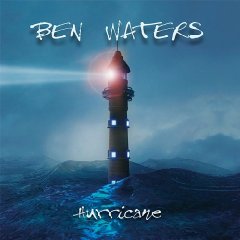
By his early 20's Ben Waters (PJ Harvey's cousin for those of you that like to know that sort of thing) had already played with some of the giants of British rock such as Mick Jagger and Pete Townshend. He also played at Jools Holland's wedding and led the great boogie-woogie pianist to say "boogie-woogie is alive and well. Ben Waters has got the touch and feel for it".
A few years on sees the release of his first album for Hypertension. The title track does what it says on the tin - a high octane boogie with twinkle fingers Waters on piano. A bit more vocal attack would have set the song up perfectly, especially on the Beach Boys style chorus. Tiny Planet is another boogie with great interaction between Waters' piano and Clive Ashley's saxophone. It is a good piece of social commentary. It's hard to categorise Booker but it builds well and is an homage to James Booker who had a great influence on the young Waters as well as teaching Dr John and Harry Connick Jnr to play piano. The Sky Fell Down is the most commercial song so far and good enough to match chart bands such as The Hoosiers and their ilk. Helicon Boogie has more piano and sax competition with the sax, played by guest Derek Nash, being more than a match on this intriguing instrumental.
Amos Milburn's Roomin House Movie is a shuffling boogie and just good time music played for the fun of it. Mother Natures Molecules has increased pace and you certainly can't criticize his energy. There's a bit of Nick Lowe in his and partner Richard Hymas' songwriting style. The Wasp is a high paced boogie-woogie with sax taking the part of the wasp. Waters' muscles on his left arm must be of Popeye proportions. Who U Lay has funky bass from Hymas and keyboards from Waters and is only one step away from a Steely Dan song. He saves one of his slowest songs to finish with and Inconsequential shows that he has more than one tone to his voice. There are touches of Squeeze in this and the sax fade out is top class. Jools Holland was correct!
David Blue August 2008
Muddy Waters - Electric Mud (Originally released on Cadet/Concept, October 5, 1968, Re-released on Chess, March 31, 1997)
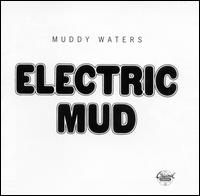
Amazingly, I find no reviews of Muddy Waters material on the NetRhythms website. Time to set the record straight methinks. OK, so this album isn't exactly a new release (a little difficult since Muddy passed away in 1983), but it's new to me, so that's all the excuse I need.
I've got a few recordings by the blues legend in my collection, but this is one I missed. In fact, it would have stayed missing had it not been for an episode of the excellent BBC4 series "The Blues", featuring Electric Mud. Anyway, after watching the archive footage and listening to tracks from the original album, I decided to buy it the next day. Unfortunately, so did a fair few of the other viewers. Imagine now, a company that sells 30, maybe 40 copies of an old blues album a year, suddenly gets requests for thousands all on one day. Just a guess, but maybe that's why it took over 2 months to arrive.
So when I got back off holiday, the first thing I did was start playing the eagerly awaited disc. On first play, I was a little disappointed. I was listening on headphones due to the lateness of the hour, which maybe didn't help. Also, the quality of early stereo recordings leaves a bit to be desired and the 'phones emphasised the left ear only, right ear only stereo effect. The choice of material was good though, and I thought it showed promise. The next day, after catching up on my sleep, I played it again, this time through speakers. Mmmm. Maybe something is stirring here. This is actually quite good. The mix sounded much better; the speakers smoothing out the apparent disjointed nature of the recording and making the vocals breathe more. By the end of the second play, I wanted to put it on repeat for the rest of the evening. I was hooked.
There are only a couple of self penned songs on the album, which consists mostly of well known, yet heavily reworked covers of material by Willie Dixon, Charles Williams and James Cotton. Also included, is a version of Jagger/Richards track "Let's Spend The Night Together", perhaps as thanks for the Stones taking their name from one of his songs or maybe for covering many of his early hits, helping revive his own career when it was at a low ebb.
Stylistically, the music is very much of the period. Jimi Hendrix was recording Electric Ladyland and Miles Davis released the controversial electric jazz album Bitches Brew around this time and this record sounds very much like a blend of the two. Wailing guitars and funky bass licks provide the backing with Muddy's monumental voice soaring over them, distorted and full of reverb. Spinetingling stuff now, imagine the impact in 1968.
Thing is, it's not so much a Muddy Waters record, but a record featuring Muddy Waters, if you know what I mean. This is an album loathed and despised by many blues purists, but I'm not one of those. To me, music is music, and if you listen to this album with an open mind, then the marriage of late 60's electric jazz and psychedelia with the one of the most distinctive blues voices of them all, produces something quite unique and extraordinary. Just give it the space it needs and enjoy.
Incidentally, the sleeve notes were pretty comprehensive and the pictures of Muddy at the hairdressers, complete with curlers and a hairnet were worth the price of the disk alone. All in all, a cracking album and well worth the paltry £7.99 it cost from 101CD.co.uk. Good value as long as you don't mind the wait.
Andy Pearson
This is a curious new artistic venture from the ex-Pink-Floyd supremo whose uncompromising stance on the importance of freedom to the individual had produced some of the most enduring and successful works from the band's later years, from Dark Side Of The Moon through to The Wall. He began work on it as long ago as 1989, during the bicentenary of the French Revolution, on hearing of the creation of an original libretto by the songwriter Etienne Roda-Gil and his wife Nadine, which portrayed the events and spirit of the Revolution through a multitude of perspectives using a circus as a central theatrical framing device and metaphor. Roger was attracted by the libretto's power, and by its parallel application to contemporary events and philosophies close to his own heart, and set about creating a full orchestral score in collaboration with Etienne. Before it could be finished, Nadine died of leukaemia, hence the delay in the work coming to fruition; but now we have a recording of the final score which Roger had undertaken in collaboration with Rick Wentworth. It's certainly an ambitious project, and Roger has evidently immersed himself in its complexities with the fullest commitment. The problem for me is that it's not been possible to assess the work to the optimum level of critical appraisal, simply because the promotional edition consists of just the two audio discs, with no synopsis of the action and no supporting libretto to follow while listening (these are de-rigeur for opera critics, I hasten to add) and no detailed notes. There's no indication of the work's dramatic structure (although it's stated to be in three acts, the music flows continuously), and it's just not easy to follow the action properly when we're given little or no idea of which character is singing at any given moment or of that character's role within the plot as it unfolds, even when that character is voicing a static reflection on the action. (Naturally, the finally-released package includes proper background notes and the full libretto, as well as a DVD documentary chronicling the history of the project and the making of the recording, and by the time you read this the opera will have received its staged première, in Poland.)
But as for the purely musical impact, well, there's no denying that Roger's first essay in operatic composition is a brave, if flawed one. Flawed because his concept of "acceptable" dramatic expression, though ostensibly rooted in "serious" opera as exemplified by the Italian late-Romantic school (Mascagni, Puccini et al), equally has something in common with the over-expressed gesturings of the music-theatre and even the musical. The orchestral scoring, too, while not in any way incompetent, betrays a certain reluctance to depart from elements that are perceived as "operatic convention" and which almost come across as clichés of the genre. Bold instrumental gestures aren't out of place in this kind of work, of course, but a little too often their impact is deliberately underlined for the listener rather than merely underscored with any subtlety of instrumental texture. In this recording, the incorporation of sound-effects for "atmosphere" during much of the score distracts too rather than aiding appreciation of the action; dramatic coups are invariably best conveyed purely by the music itself, which should stand alone on its own pictorial merits. It goes without saying, though, that the actual recording is state-of-the-art for an opera, immediate and bold with a wide dynamic range; and the performances are suitably spirited and committed. Bass-baritone Bryn Terfel was a good choice for portraying the principal characters of the Ringmaster, the Troublemaker and King Louis, while tenor Paul Groves and soprano Ying Huang make the best of their own leading roles; there's also an intriguing cameo part for the Senegalese Ismael Lo. There are some effective choral contributions, notably in the defiant "In Paris there's a rumble..." section, but at several other moments the dramatic impact is spoilt by the use of a kids' chorus who sing in what sounds like a misplaced stage-cockney (their To Take Your Hat Off is more akin to a chirpy Disney musical number than an operatic chorus!). Elsewhere, the score has a weakness which is common to many operas: ie. some of the early sections are dramatically insubstantial, even weak, their purely episodic or scene-setting nature betraying or occasioning their thinness of invention; things improve significantly as the action gathers pace, however, as you might expect, and some later episodes are genuinely stirring.
Whatever my reservations, though (principally stemming from my own love of opera as a musical experience and valid art-form), I still think the work is worth a listen - whether you're a Pink Floyd buff or not - as a valid artistic statement; after all, many "classical" composers who wrote operas and vocal works didn't achieve their greatest artistic credibility with opera but with purely instrumental forms, so all credit to Roger for trying. And since the work is sung in English, language should not be the barrier to understanding that it can be for newcomers to opera as an art-form. For, more than just an operatic history of the French Revolution, Ça Ira is a piece examining the potential of humanity for change (after all, its very title, taken from a revolutionary song of the period, translates as "there is hope"). And there will always be a place within artistic endeavours for the honest expression of such views.
www.ca-ira.com
www.roger-waters.com
David Kidman August 2006
"You reached for the secret too soon
You cried for the moon
Shine on you crazy diamond."
It is impossible to listen to In the Flesh without trying and failing, to choke back a tear at the sad news of Syd Barrett's death. Wish You Were Here and Shine On You Crazy Diamond particulary take on an obvious added poignancy. Unintentionally, Roger Waters has offered his friend the perfect, loving epitaph.
Waters and Barrett were the creative geniuses behind the early Floyd, theirs was the band that defined and still does, the wonder of the psychedelic 60s. Waters and Pink Floyd have been variously accused of being overblown, too arty and pretentious. If this 2-CD and DVD set does nothing else, it shows what a great rock musician Roger Waters is.
True artists dream bigger dreams than us mere mortals, they think on a grander scale and then make those thoughts real. A lot of In The Flesh is theatrical, it's meant to be, Waters is as visual an artist as he is audio.
However, some of the guitar riffs, particularly on Another Brick In The Wall are blistering and the song itself, apocalyptic in tone, is as far removed from the fey and foppish as it's possible to get. Conversely, Mother is as open and simple as any singer songwriter's best effort, Waters dispels a whole lot of myths in those two songs alone.
Obviously, he could have taken an easier path to even more fame and fortune with In The Flesh but, as he has always spurned one and has no need of the other, this is a wide-ranging and eclectic collection. Breathe, Time, Money and Comfotably Numb represent the 'hits, while the inclusion of the The Bravery Of Being Out Of Range and The Pros and Cons of Hitchhiking and Each Small Candle show that Waters' creative juices didn't stop flowing with the acrimonious Floyd split.
The DVD, which completes the set, is both a gem and a surprise. A gem because Waters has gathered around him a group of young, energetic and highly talented musicians and they rise admirably to meet each of the challenges that Waters sets, giving some complex and well known music a fresh perspective.
It's a surprise because once again a perception of Roger Waters is shattered. On In The Flesh he appears to be perfectly happy to be a band member. Although your eyes never leave him and completely without ego and almost unwittingly he is undoubtedly the star of the show.
In The Flesh is a masterpiece from a musican whose work has stood the test of time and no doubt he will be as listened to, discussed and analysed in the future as he has been for the past 40 years.
As the world clamours for a Pink Floyd reunion, Roger Waters demonstates that he is as sharp and incisive a performer as he has ever been.
His position over the years has been a difficult one, largely blamed for the break up of Pink Floyd, he has gone about his business of making challenging music. In The Flesh is an object lesson in just how powerful, intelligent rock n roll can be, it stirs the soul and fires the imagination. Shine On Syd.
Michael Mee, July 2006
Countrified college retro pop with shades of Gram Parsons, The Jayhawks and Big Star, the Baltimore quartet aren't going to set the world on fire but they do make for pleasant sunny day listening with their breezy melodies, nasally vocals and songs about stealing your brother's girlfriend (Forgive Me Robert), screw ups (Andy), changing your ways (To All Those Girls) and the general ebb and flow of boy/girl relationships. All God's Children makes for a punchy piece of guitarslinging pop, (Darling) You Won't Have To is bouncy jug band folksiness and Southern Belle takes the slower path with the organ throwing up a hint of The Band, and while you wouldn't drive out of your way to hear them if you stumble across a copy while browsing they're worth a listen.
Mike Davies, July 2006
The mighty dynasty that is the Waterson Family has been at the forefront of the English folk music scene for a full half-century, not only as special and distinctive performers (individually and collectively) but also in terms of the pervasive influence and continual inspiration they've provided for other performers to this day, whether in the form of the original Watersons group of the 1960s or in any of the various personnel combinations or offshoots of the latter-day Waterson: Carthy umbrella.
This two-hour-plus DVD has been cleverly assembled to celebrate the extended family's contribution to the folk revival, their longevity and lasting appeal; it is centred round the brilliant homecoming concert they gave at Hull Truck Theatre on 15th August last year, which also just happened to be the occasion of Norma Waterson's 70th (no, not her 84th!) birthday. This concert presented nine members of the Waterson clan onstage together: Norma herself of course, with husband Martin Carthy and daughter Eliza (both now long-standing A-List performers in their own right), alongside on one hand her late sister Lal's son Oliver and daughter Maria (Marry), and on the other hand her slightly younger brother Mike, his wife Ann and daughters Rachel and Eleanor.
Of course, viewing this DVD is bound now to be tinged with infinite sadness, as only a few days ago we learnt of the passing of Mike himself; the charisma, the wit and humour and lively presence of "little short-arse" (as he's affectionately referred to at one point!) is (happily) very well represented on this DVD, with many treasurable moments to savour that encompass not only his unique character as a singer and raconteur but also his stature as a master songwriter (and in that regard criminally undersung IMHO)… so the disc will henceforth also serve as a memorial for Mike.
The DVD's format preserves the concert's actual running order, complete with song introductions, scripted anecdotes and natural between-song banter – all bound together by Norma with her proven skill as an involving and companionable compère in the best tradition. At strategic points in between the concert's 22 individual (musical) items, the production team has interspersed eleven apposite sequences compiled from exclusive interviews with key family members (Norma, Mike and Eliza) conducted at the family home near Robin Hood's Bay, which together weave into the fabric of the concert to create what amounts to an inclusive and helpfully informative (if necessarily mildly selective) career overview-cum-retrospective that complements the passages of anecdotal history within the concert footage itself. The interview soundbites also yield significant insights like Norma's recollection of Bert Lloyd's observation that the group sang in Mixolydian harmony (following which she hot-footed it to Hull Library to ask staff what that actually meant!), and of Lal's entirely relevant, related explanation of the group's technique: "you sing the tune until you can't, and then you sing the harmony"… and, most poignantly, Martin recalls that distressingly, when Lal died, the family – and especially he and Norma and Mike – were unable to sing again for quite a while; one thus quite naturally now fears for the implications or repercussions of Mike's tragic recent death.
The material performed, as befits such an occasion, stretches right across the territories of the family members' repertoires, from sturdily sung and arranged, well-considered full-ensemble renditions of traditional song (The White Cockade, I Found A Bird's Nest, Shepherds Are The Cleverest Lads, A Bunch Of Thyme), shanty (Shallow Brown), seasonal or ceremonial offerings (Apple Tree Wassailing Song, Earsden Sword Dance Song), and classic sanctified/spiritual songs (The Good Old Way, Sleep On Beloved). These are juxtaposed with appropriate examples of original song drawn from the writings of Lal (Some Old Salty, Fine Horseman) and Mike (Bright Phoebus, also a marvellous, well-contrasted clutch of his more recent compositions – Oranges On The Dock, Cold Coast Of Iceland, Three Day Millionaire and the hilarious, uncensored rant Tea's Made – the last of which receives the most riotously enthusiastic audience applause of the entire gig!). In addition, Marry and Ollie perform their own song Re-voiced as a taster for their debut duo CD, Norma and Eliza give us their proven cover of Jerry Garcia's Black Muddy River and Martin leads the hearty music-hall number Don't Go In Them Lions' Cage Tonight. Finally, as standouts in an already excellent musical showcase, we're treated to some speciality performances of traditional song (Rachel and Eleanor shine brightly in consort with Eliza on what must be counted exceptional accounts of Wealthy Squire and Bold General Wolfe, while Eliza turns in an earthy solo rendition of Maid On The Shore).
All of the participants are on great form on the night; the palpable sense of occasion is well conveyed, and the DVD's editing is precise yet sympathetic, the sound well focussed and visuals undistracting, unfussy yet telling with use of closeups sensibly coordinated. Package presentation would have been improved by the inclusion of an accessible (=printed, thus user-friendly) complete tracklist for guidance and selection of specific "chapters" (the term used to describe individual menu items); otherwise I can't fault this fabulous DVD, a must-have for all Watersons fans and folk enthusiasts in general and a magnificent memento of a one-off snapshot taken at a landmark (and with hindsight even more so) moment in the family's generation-spanning career.
David Kidman June 2011
A fully-fledged artistic collaboration between the children of the late Lal Waterson may have always seemed both inevitable and imperative,
but it's been a long time in coming.
There have been good reasons for this: Olly, of course, has been kept more than busy as arranger, producer and sound engineer (he's been involved in well over a hundred different album projects to date), while Marry had been carving herself a career away from singing (initially in graphic design) until the two siblings were brought together on stage in 2007, first at the Waterson family show A Mighty River Of Song at the Royal Albert Hall and then at the Once In A Blue Moon Lal Waterson tribute concert at CSH, performing some of Lal's songs. These occasions provided the catalyst for the opening of the creative floodgates, out of which flowed the collection of songs that together form this new album.
Inevitably, it's impossible to escape comparisons being made with Lal's own writing and recording; for even if you were unaware of Marry's family connection with the Watersons – and Lal most especially – you'd clock the close relationship straightaway. For a start, there's no denying the close similarity in pure vocal quality, not to mention many aspects and overtones of her phrasing and attack (particularly noticeable on songs like Curse The Day, Revoiced and Angels Sing). And there's an uncanny kinship between mother and daughter within Marry's own writing: a melancholy, sometimes mournful and often elusive but always image-rich characteristic, a sensibility that's common to them both. This is accentuated even more at the points when Marry includes some of Lal's own lyrics within her own songs (Rosy and The Loosened Arrow both being inspired by a collection of unpublished phrases written by Lal), to beguiling (and emphatically not cheaply derivative) effect. And the telling lyric "your lines entwine with mine as we sing to a different tune" crops up in Angels Sing; "from time to time she's in my rhyme" indeed.
Out of deep personal experience of matters common to us all, Marry conjures some quite delicious poetry, for the communication of which Olly's acutely realised, companionably loosely structured musical settings gain resonance and poignancy from his earlier proven empathy with Lal on their own collaborations Once In A Blue Moon and A Bed Of Roses. They score their bullseye every time, whether keeping the brief simple and acoustic or embellishing with suitably tasty and fiery (if not always expected) bursts of electric guitar (its complementary "intrusions" on Sleeping Flame really hit home) and/or cello from Olly himself, with cameos of clarinet (Jo Freya on Windy Day), trumpet (Jude Abbott on Angels Sing), and occasional double bass (Miranda Sykes or Doogie Paul) and piano (Reuben Taylor), and some trademark fiddle playing on three tracks from cousin Eliza Carthy (including a lovely string arrangement on Rosy). Eliza also takes the lead vocal part on The Loosened Arrow, while James Yorkston duets with Marry on the magically evocative Yolk Yellow Legged, and Kathryn Williams repays Marry's favour (of singing on one key track of Kathryn's album The Quickening) by singing harmonies and co-writing this album's bookend songs (Secret Smile and Father Us).
The Days That Shaped Me is everything you'd expect from Marry and Olly, while still springing some quiet and thoroughly delectable musical and lyrical surprises – and revealing gorgeous subtleties on every successive play. Quality, musicality, poetry and magic - yes, this is serious enchantment.
David Kidman March 2011
Here we have a straightforward reissue of the complete For Pence And Spicy Ale LP from 1975, which formed the return to the folk scene (and recording) of the Watersons. The personnel of the group had changed slightly in the interim, with Martin Carthy having been recruited to replace John Harrison, and that lineup was at a peak when it recorded this album. Indeed, none could equal their sound - and it's still as uniquely thrilling an experience as it was 30 years ago.
The material therein contained some of the Watersons' most enduring discoveries, of which the likes of Country Life, Chickens In The Garden, The Good Old Way and Adieu Adieu are still very much doing the rounds today. Hunt songs, seasonal songs (wassail, May) and gospel legends - all was grist to the Watersons' mill - and here these were topped up with Mike's own puckish composition Three Day Millionaire.
This re-release has been completely remastered from the original tapes, and is clearly superior (especially in terms of overall bloom) to the earlier Topic CD reissue of 1993. What the new edition lacks, though, is the bonus tracks which the 1993 disc included: three tracks from Mike's solo album and four from Lal and Norma's True Hearted Girl LP. However, this omission is reasonable enough in the circumstances, since both those LPs have been reissued on CD (with bonus material) in recent years. A handsome re-release, of that there's no doubt, and yes, one of the Watersons' finest recordings, which no home should be without.
David Kidman June 2008
This one is a magnificently rousing, heady parade of seasonal songs of various kinds, basically an aural counterpart to the family's current celebratory Frost And Fire tour and a sequel to both the (original) Watersons' album of the same name and their Sound, Sound, Your Instruments Of Joy of many moons ago (and succeeding where last year's Yorkshire Christmas shortchanged us on the purely musical element). And Fire is the operative word here, for these wonderful ritual songs are charged with elemental passion, the participants' response to which has evidently stirred up something deep within their souls so that the sheer driven fervency of their active and wholly intuitive involvement is apparent right from the opening bars - and it never lets up for a moment.
Yet without wishing to play down the W:C clan members' own performances, another vital ingredient in the immense impact of this collection is definitely the presence of The Devil's Interval (Jim, Lauren and Emily - see their Blood And Honey CD reviewed a couple of months ago on NetRhythms). Their contributions to such selections as the round The Falling Tear, and the several pieces using comparatively "massed forces" including brass players, add significant depth and weight - and variety of vocal timbre - to an already fulsome and invigorating blend. But with all singers and musicians on a high, operating at full strength singing their proverbial hearts out and playing as if their lives and souls depended on it, this is one quasi-seasonal disc that will never outlast its welcome.
It's an eclectic collection too, kicking off like a rocket with the decidedly strange Residue, which is hotly pursued by some highly unusual carols, wassailing songs and social and religious commentaries drawn from many and various traditions (Yorkshire to Baptist to travellers), all neatly offset with a handful of more obviously doomy, pensive offerings that provide album highlights (like Eliza's chilling version of Mike Waterson's Jack Frost, Tim's sparse, bleakly admonitory rendition of On Christmas Day It Happened So and Eliza's fine setting of the salutary Time To Remember The Poor).
Throughout, we're in the presence of something very powerful and primeval: the potent combination (and contradiction) of elements - beauty and savagery, doom and optimism - that's at the heart of any celebratory tradition and ritual itself. The disc's sequence is well planned and managed too, presenting us with a grand and satisfyingly uplifting experience.
David Kidman November 2006
The Watersons et al. - A Yorkshire Christmas (Witchwood Media)
David Kidman
Waterson: Carthy - Fishes And Fine Yellow Sand (Topic)
David Kidman
This wondrous four-disc set pays tribute to the still-continuing (hurrah!) career of that famous singing family of folk who were once dubbed the "folk Beatles" (ho ho!), the importance of whose distinctive ensemble performing style has divided folk music enthusiasts, arguably more than almost any other folk group of recent times. There are those who've been inspired to a great extent (and not exclusively in their formative years) by the Watersons' joyous, soulful and powerful singing and their exciting approach to repertoire, while others have castigated them for (among other things) over-harmonising and/or destroying the melodies of the songs they perform. To whichever of these views you may incline, you can neither deny the pervasive influence of this "extended family" of performers nor arrive at anything but a genuinely favourable assessment of each member's individual talent as a singer (whether or not you actually like what they do). This set chronicles over its four well-filled discs not only the career of the Watersons as a defined singing group but the recording activities of the various individuals (not only actual Watersons but also "satellite" or non-family members like Peter Ogley, John Harrison, Jill Pidd, Martin Carthy - the latter of course is now the venerable patriarch!) over the forty-year span from the 60s to the present decade with the new generation. The set also gives a healthy degree of perspective to the roughly concurrent story of what has become known as the English Folksong Revival.
The earliest recordings here are two rather rough takes on shanties recorded by the "Folksons" in 1964, whereas the latest is a track from Oliver Knight's Mysterious Day album; in between is a veritable treasure trove of some 80-plus tracks encompassing both group, solo and duo performances from various Waterson incarnations. Twelve of these are taken from rare and/or deleted recordings, and a further 40 are previously unreleased in any format; the remainder are well chosen to provide a sensible overview (oh alright, I could quibble with the omission of some of the quintessential Watersong repertoire staples like Country Life, and I suppose I expected Some Old Salty to have cropped up herein, and yes, we didn't really expect the necessary co-operation from he-who-shall-remain-nameless for the inclusion of a track from the landmark, if maddeningly inconsistent Bright Phoebus album did we?!). And one of the major virtues of the set is the compiler's knowing avoidance of the over-obvious choices out of the legacy of group performances in favour of more obscure smaller-scale or offshoot recordings. It's salutary, too, to compare different renditions of songs - for instance, the group version of Whitby Lad (from 1966) as against a 1978 reading with Martin C taking the lead, and similarly The White Cockade in group performances from 1966 and 1990 respectively. And I appreciate the opportunity to relish hitherto unreleased variations of songs recorded by the group, like the Pace Egging Song (one of three cuts recorded in 1974 in Loughton folk club, that open disc two).
Highlights of the set for me, though, are such real discoveries as Norma's amazing, deeply felt rendition of Coal Not Dole (recorded at an American festival in 1991), Mike's own composition Jack Frost (a demo recording from 1996) and three starkly atmospheric demos recorded by Lal in 1970/71 (one for the Bright Phoebus album, the others privately at home in Hull) which include the incredibly dark and intense Song For Thirza. Yes, this set also scores by celebrating Watersons as songwriters, with a number of good examples of both Lal's and Mike's craft. Norma's solo rendition of Poor Boney (taken from the 2001 Sharper Than The Thorn show) and the 1997 Waterson:Carthy version of Flowers Of Knaresborough Forest are both certainly worthy of an outing here - but then, so are all of the unreleased items…! I've already hinted that the genuine rarity quotient is high, but even I was surprised to find some curios that'd passed me by over the years, such as Mike's McIlroy The Emerald Cowboy (recorded for a 1994 No Master's compilation). And it's good to see the incorporation into the CD catalogue (at long last) of The Morning Looks Charming and Heavenly Aeroplane (originally from A Yorkshire Garland and Sound, Sound Your Instruments Of Joy respectively, but which thus far had eluded the trawl onto CD format of virtually all of the remainder of the Watersons' back catalogue).
Another big bonus is the inclusion of a DVD of the legendary and highly evocative 1965 BBC documentary Travelling For A Living, which incidentally also includes footage of Anne Briggs; this documentary so well captures the essence of the group's performances and attitude, their endemic energy and vivacity. As indeed the whole set celebrates the extended Watersons outfit as an undisputed major creative force in the English folk revival. The mammoth task (nay, mammoth tusk!) of archival research and compilation for this lavish set could not have been entrusted to a better man than the wholly admirable David Suff, who has an excellent track record in masterminding innumerable fine anthologies and themed charity collections (mainly for his own Fledg'ling label). Extreme good taste, allied to an ear for unearthing the significant pearls of obscurity and an eye for detail in that perennial quest for accuracy - all these hallmarks are present in the planning and sequencing of the discs themselves as well as in the attractive and informative "extra items" - the Frame-style discography and the reminiscence-packed 52-page booklet (though maybe the landscape-format of the latter makes it a mite floppy for a comfortable read!). An essential venture (not before time!), and an equally essential acquisition.
David Kidman
Hot on the heels of last year’s exhilarating Catfish On The Line album comes a sequel, on which the Portland, Oregon-based Boys prove that - barely a year on - they’ve lost none of the deliciously raw, hard-driven high-energy string band feel that marked the earlier record. Even so, the opening cut, Crooked Road, wrong-foots us just a touch by kicking off at around half the breakneck tempo I’d expected before cutting loose full tilt for its “B” section. If anything, the instrumental work is both tighter and more immediate than before – especially Walter Spencer’s good ol’ slapped bass and Josh Rabie’s gutbucket fiddle (check out the frenetic Blackbird Pickin’ At A Squirrel, the hoedown Bread and the breezy Fromage for instance).
Against these triumphs, it must be said, the band’s forays into a more leisurely tempo don’t always come off - Goatheads survives its weird lyric by being cast in the form of a rough-hewn Cajun waltz, Telegraph is rather charming in its own Norwegian Wood/high-school-psych-homage way and Since You’ve Been Gone is a competent enough recreation of honky-tonk heartbreak, but Tequila With Lime and Numb both sound limp and perhaps slightly disinterested by comparison, I’m Not A Stranger sounds merely awkward, and the band’s attempts at kooky humour (Sunday Night Roast) kinda misfire tho’ they’re redeemed in the end by the fiery playing.
The Boys’ gift for penning original compositions that sound totally authentic, surfaces most successfully on cuts like Heaven, but I gotta admit their inspiration does waver a bit during the course of this new album – and I’m sure that’s not because all the tracks are originals this time round (no traditional material). I’m not necessarily saying that Sole Kitchen is a disappointment, but it’s taking a while to grow on me whereas Catfish On The Line made an immediate and strong impact. And yet, if you thought the band’s previous albums were a touch relentless, this time you might well think they’ve gone too far the other way and (cynically!) compromised on the quality control in order to get a new album out in time for this year’s UK tour (thru’ August and into early September.
David Kidman June 2010
On the evidence of album number two, the boys sure bring an abundance of youthful energy to both traditional material and original compositions, a raging, almost-punk full-ahead charge that's wedded to some tremendous (and authentically driven) individual playing and a tightly-coordinated band sound that conjures up the image of all four huddled round a single radio mic just doin' what they do – and how! So far, WTBB have invited comparisons with Old Crow Medicine Show, but I feel they've an edge in that they're more raw, with an unashamedly rockin'-out stance, really getting off on the music yet still treating their sources with respect. They sure know how to have a good time, and the gutbucket-hoedown of tracks like Greasy Coat is as infectious as they come; while they romp through the chestnut Sitting On Top Of The World like they really do have no cares. They do a nice line in mid-paced rollin' too, with some great high'n'lonesome harmonies on tracks like I'm Blue And Lonesome. OK, so there's a slight hint of pastiche on one or two of the original compositions, which have a bit of a "still feelin' their way" mood to them, but they'll still stand up to any competition.
The production is great, and really captures the down-home/garage essence of the foursome's rough'n'ready, take-it-or-leave-it music-making; and the inclusion of just one (even more energetic) live cut Tennessee near the end of the disc is not the misjudgement it might've been. So go reel in that there ol' catfish and have yourself a great feast with some real invigorating music. On tour in the UK later in July.
David Kidman July 2009
Although Sara's eight years with Nickel Creek rightly highlighted her prowess as fiddler, and to some extent as vocalist too, this unassumingly eponymous new record, while not neglecting those facets of her musical personality, also brings her writing skills to the fore – she's written six of the album's 14 tracks (five songs and one instrumental) and either co-written or co-arranged a further two. At the outset I'll venture the opinion that she's still finding her songwriting feet to a certain extent (the opening All This Time is a touch bland and repetitive perhaps), but what we hear on this disc is most encouraging. Sara's on really excellent vocal form throughout the album: deeply intense in her expression and understanding, and often recalling Julie Miller more than Alison Krauss (there's a compliment!). She can be bewitchingly fragile, vulnerable and yearning when need be (as on her own compositions My Friend and Where Will You Be?, and Tom Waits' Pony), or downright seductive - as on her lazy-moded but forthright cover of John Hartford's Long Hot Summer Days, which enjoys a solid workhouse backing that brings in Gillian Welch, David Rawlings, Byron House and Tim O'Brien, with Billy Cardine on dobro and Rayna Gellert on fiddle.
Others involved at various points on the disc include fellow Nickel Creekers Sean and Chris, also Greg Leisz, Chris Eldridge, Jon Brion, Ronnie McCoury, Mark Schatz, Benmont Tench, Michael Witcher and even John Paul Jones himself. Although Sara doesn't skimp on guest musicians, and the production uses them to good advantage with a smooth and well-balanced sound, there's no sense of overkill (with totally authentic western-swing small-group backing for Jimmie Rodgers' Any Old Time and a tasty electric soul-strut for Too Much). Standout cuts include the gospel number Give Me Jesus and a tender and insightful cover of Norman Blake's Lord Won't You Help Me, and I must just mention the plaintive Bygones, which has Sara backed by twin fiddles and gentle organ and some delicious and eerie harmonies from Aoife O'Donovan and Claire Lynch.
This is a very confident first-dip into the murky waters of the go-it-alone solo-album, on which Sara more than proves her talent and maturity.
David Kidman September 2009
That youthful, one might say precocious guitar talent Sean (of Nickel Creek) springs back into the limelight with a new CD recorded over two years during breaks between touring with the group. It's his third solo album; the artistic and stylistic jump from albums one to two was really startling, so inevitably that to number three is not so much so, but you'll find that Sean still has the capacity to surprise and challenge. Blinders On is at once more reliant on simple textures and more reliant on "produced" textures; those who love the contemporary-bluegrass mode of Nickel Creek will find No Lighted Windows the track to die for, and sister/band-mate Sara brings her fiddle alongside that of Gabe Witcher for Starve Them To Death and I'm Sorry, whereas those of a more open turn of ear will appreciate the distinctly Beatlesque retro feel of tracks like Summer's Coming, or the Radiohead-style "acoustic-industrial stew" of Happy New Year, which makes a virtue of a veritable barrage of fuzzy distortion and drum machine. On many of the tracks Sean seems to delight in being wilful, because nothing seems to stay the same for long and several cuts finish on a different sonic planet from where they started and others (like I'm Sorry) returning full circle after an exhausting journey.
Although Sean plays most of the instruments himself, he benefits from guest contributions from, apart from those mentioned elsewhere, Jon Brion, Byron House, Mark Schatz, Glenn Kotche and Benmont Tench. There's some discreetly lush autumnal string textures, some eerie experimental layerings and sounds (like what seems like a prepared-piano on Coffee), and a fair amount of signature flatpicking too (and a glorious instrumental hidden track, a traditional old-timey breakdown featuring some fabulous bluegrass cello work from, I'd guess, Rashad Eggleston, who guests on an earlier track too). Sean's songwriting tends to focus on themes of regret and loss, and his gift for poetic expression can be almost painfully economic, as in the pithy and bittersweet miniature Hello… Goodbye. And as for Sean's singing, there are times when I feel his vocal style comes close to emulating Brian Wilson, at others a more understated version of Rufus Wainwright (it can be quite heart-on-sleeve, albeit in a more restrained manner).
All in all, Blinders On is an album that amply repays close investigation and, in spite of its frequent air of restlessness, possesses an artistic coherence and thus satisfies greatly on repeated plays. Oh, and I'd like to hear the whole of Sean's string quartet someday (a tantalising 20-second sample forms track 11 here, a mere interlude on this disc).
David Kidman, July 2006
One third of that highly-rated young modern bluegrass outfit Nickel Creek, and already barely in his mid-twenties, here's Sean making his second solo album. Two years ago, Sean's first solo effort, Let It Fall, was basically (except for one lone vocal cut) little more than a sequence of quasi-improvisatory acoustic bluegrass-infused mood-pictures, characterful and yet virtuosic, but in the end bordering on the sterile, too much reliant on a gasping perfection of technique to provide lasting interest. 26 Miles, however, is a different thing entirely. Instrumental skill and expertise is still an integral part of the picture, but the settings are much more adventurous, and most important, (rather unexpectedly) the emphasis this time is firmly on Sean's developing songwriting. This inhabits an often intriguing musical landscape where rhythmic ebb and flow are captivating and yet unpredictable, where "diary entries" seem to provide the inspiration and soft, gentle and persuasive combinations of instruments and voices are the order of the day rather than tightly structured tradition-infused narratives. There's a definite ambience of "quality pop" about much of the album. But having said that, there's also at times a prominent mid-to-late-60s-retro feel to the musical effects Sean creates - the White Album's an obvious reference point, and the luscious harmonies of the cryptic Through The Spring lend it the air of a lost Brian Wilson creation - even though Sean's not afraid to utilise technology (sampling and sequencing) selectively to enhance a mood, as on the title track. The CD's centrepiece, Chutes And Ladders, bucks the trend by being one of three "scary-good" flatpickin' instrumentals on the album (you know, those complex pieces that Sean can probably play in his sleep). There's a degree of funkiness in there too though, which is as refreshing in this context as the obvious fun that Sean and his friends had in recording it. Sean's cohorts include an odd assortment of musicians from the cream of San Diego's jazz community (among them Kevin Hennessey on bass, Duncan Moore on drums and Trip Sprague on sax), while in addition to Jon Brion on keyboards there's sister Sara on fiddle who joins Glen Phillips on harmony vocals on several tracks, also a fine string quartet arrangement on the enigmatic closer Carousel. It's a constantly interesting palette, and I find myself increasingly drawn to the songs themselves as a result.
David Kidman
Dale is widely regarded as one of country music's last authentic voices, and his latest offering, Carryin' On, finds him – er, carryin' on carryin' on and comin' up with the goods, with 14 songs that sound like they've been around for ages but are all in fact recent compositions of Dale's. For the majority of the album's 43 minutes, I'd say, straight-down-the-line honky tonk just don't come any better than this, and we all know it.
Which makes the album all the more difficult to review, cos it's all been said before and there ain't no more to say. Period. Life in bars, on the road, with family and friends, all the ups and downs and trials and tribulations -- it's all in there in Dale's songs, he's lived it and keeps living it. Standouts in terms of memorability? ok, the moody Heart Of Stone, the charming Flower In Your Hair, the rapid-fire scattergun I'll Show You, and especially the intimate (distinctly Orbison-esque) barroom shuffle For A Little While, but virtually every song here's a would-be-classic in the approved mould (tho' not breaking any new ground, nor does it need to). The only slightly jarring moment comes with the chirpy Tequila, Whiskey And Beer, Oh My!, which goes too far down the Disneyfied yellow-brick-road of Oz to be convincing.
But as you'd expect, there's no faulting Dale's support crew, including as it does Lloyd Green (pedal steel), Pig Robbins (piano), Dennis Crouch (bass), Pete Wade (guitars) and Glenn Duncan (fiddle), with the four-strong Carol Lee Singers on backing vocals. And Dale himself is in fine, reliable voice of course. It shouldn't need to be said that Dale's legions of admirers will find no reason not to purchase this album immediately.
David Kidman August 2010
Sometimes we spend way too much of our lives searching for hidden 'twists and turns' in music, whether it's the message, subtext or hidden meaning there just has to be something lying, as yet undiscovered, just below the surface. In the case of Dale Watson's The Truckin' Sessions, it could be that the 'truth' is a whole lot simpler.
It could be that Dale Watson plays the kind of country music that is just hugely enjoyable. It could be that he loves the roots and traditions that have sustained country music over the decades and that he's turned his back on the various mutations visited on the genre. He may claim to play 'Ameripolitan' but to you and me, The Truckin' Sessions is just good old-fashioned, warm-hearted blue-collar country.
The title is the dead give-away, The Truckin' Sessions is the musical equivalent of a road movie. It's an album that could only have sounded more authentic if it had been recorded over a CB radio, each track is its own call sign. If you need proof, head straight for 10-4.
In a cynical world, it's difficult for such a traditional and 'stylised' artist to emerge completely unscathed, staying close to tradition is seen as somehow not being adventurous enough but The Truckin' Sessions has an energy and integrity that few albums can match. Yankee Doodle Jean come have come hotfoot from the Grand Ol' Opry and it wouldn't have travelled alone. Watson's unshakable belief in the kind of country music that comes replete with oil stains makes The Truckin' Sessions a take it, or leave it kind of an album. He has narrowed the listener's options to love country, love The Truckin' Sessions, if not there's little point in hanging around.
Ultimately, it is to Dale Watson's credit that he has made what is a series of variations on a theme so interesting. Tracks like Hey Driver and Hero are not miles apart musically but Hero in particular makes the honest appeal of a simple tale, well told irresistible. With The Truckin' Sessions, Dale Watson shows little inclination to compromise, The Truckin' Sessions shows that he has no need to.
www.dalewatson.com
www.myspace.com/dalewatson
Michael Mee April 2009
Doc Watson - Memories (Gott Discs)
This is a straight reissue of Doc's landmark 1975 album which was a key statement in what the album's original sleevenote-writer Chet Flippo termed the "recent… encouraging… acknowledgement of Southern music". In spite of the solo header credit, Memories presents Doc mostly not in a truly solo capacity, performing a wide-ranging selection of material from his celebrated heritage of traditional and old-time music (which shamelessly embraces ragtime, blues and the work of Jimmie Rodgers alongside the more obviously mountain music category). The album was recorded just a year after Doc's important contribution to the Nitty Gritty Dirt Band's Carter tribute Will The Circle Be Unbroken, and is the most persuasive demonstration of his artistry and versatility you'd think possible. Doc's playing and singing on Memories is totally excellent, and both in terms both of performance and unerring choice of material has proved inspirational to every musician who's followed in his footsteps. Doc's supporting cast on Memories centres round his late son Merle, with Michael Coleman, Sam Bush, Chuck Cochran, Jim Isbel and Courtney Johnson making up the rest of the ensemble. Even some occasional relative concessions to "modern" instrumentation (in the guise of a gentle bass-and-drums rhythm section or electric piano or organ) don't intrude on the effervescent musicality of the performances. As well as instrumentally (from the easy fluidity of the fingerstyle flat-picking guitar for which he's become most famous and influential through to an equally exquisite frailing banjo technique), Doc also here proves himself master of vocal exposition, most notably perhaps on an acapella rendition of Wake Up Little Maggie. The man's an institution – truly one of considerable talent and stature, yet modest to the last. The entire record is characterised by that wonderful combination of virtuosity and fun that marks out the very best of Southern music. Don't miss out on this excellent reissue, which (like all Gott Discs releases) comes complete with both original and new sleeve notes and a handsome slipcase presentation.
David Kidman
David Kidman
I never cease to be amazed at the amount of good music that has sat in obscure vaults since the 50s and 60s and is only now beginning to surface and get released on CD. Here's another example - 14 previously-unreleased tracks of prime Doc Watson recorded live during two two-week stints from December 1962 through to March 1963 at Gerdes Folk City in Greenwich Village, New York. These tracks are of considerable historical importance, not least in that they were Doc's first solo acoustic engagements, but in that they capture Doc's already considerably accomplished musical personality and his ability to hold an audience in the palm of his hand with his vocal and instrumental presence. Although these are solo performances, he inveigles other musicians - John Herald, Bob Yellin and all three Greenbriar Boys respectively - up on stage for three of the cuts. At that time, Doc's superlative performances of authentic folk and oldtime country material were (together with the pioneering work of the New Lost City Ramblers) proving key to the growing realisation of the richness of the country's musical heritage, and this release is thus immensely valuable, and not least for its purely musical virtues. Listening to these performances today also enables us to humbly reflect on Doc's pervasive influence on subsequent generations of guitar flatpickers. Doc's stunning, benchmark-setting renditions of Blue Smoke and Cannonball Rag have to be heard to be believed - even in these days of so-what, almost off-the-shelf virtuosity. Then, that Cannonball Rag is followed up with a definitive, finely controlled unaccompanied rendition of The Lone Pilgrim. The appreciative audience clearly relished Doc's trailblazing performances too, and hey, wouldn't it be good if we were to learn that the rest of the shows were also taped?!
David Kidman
David Kidman
Helen has always been a unique performer, and her early career took her from singing in a soul duo and the blues band Loose Lips on into session work in the early 80s. This, coupled with a growing interest in songwriting, led to a recording contract with EMI, who released two albums and a clutch of singles by Helen towards the end of the decade and then (of course) almost immediately deleted them. Here's a welcome reissue, then, for the first of those albums. You might say that Blue Slipper has the sound of a very typical late-80s pop album, but with more than a touch of real class in its superior production values. Recorded in Los Angeles and produced by Glyn Johns, the album featured the talents of a stellar crew of backing musicians including Jerry Donahue, Bernie Leadon, Snake Davis, "Michael Landau", also Paul Barrère, Bill Payne and Richie Hayward of Little Feat. All its songs were Helen's own compositions (all but one co-written with Martin McGroarty); though tailored exquisitely both to her voice and to the style of the times, they nevertheless possessed a mature and sassy outlook matched to a poetic perception of situation. There are some really good songs here, in fact. Tho' it's true that the synth-programming-and-rock-guitar-gestured arrangements dominate and there are moments that veer in the direction of mildly misplaced Ultravox-style electropop (and the prominent backbeat of Rock Myself To Sleep even nods to both Zeppelin and Feat!), it's all handled with a restraint quite rarely found in the over-glossy production ventures of the era. Helen's superb vocal performance characterises the set - entirely as it should be - with her feisty and distinctively seductive singing, her enthusiasm, drive and artistic commitment. Helen's singing is pretty much peerless, and the playing and arrangements first class, so the only possible reasons for the album's lack of commercial success can be firstly that it was simply too good for its contemporaries and secondly that it was not your typical singer-songwriter product by any means, falling right between the stools of soul, blues, jazz and pop. This excellent reissue is state-of-the-Fledg'ling-art, with original artwork, photos etc (all it lacks is a background liner note!). It contains the entire original 1987 album, together with bonus tracks in the form of two sides taken from contemporaneous singles (one a 12") and two previously unreleased demos from 1986 (pre-dating the album sessions).
David Kidman 2007
Helen Watson - Lifesize (Fledg'ling)
Lifesizeis the third in the recent series of solo releases from the ex-Daphne's Flighter. Helen's previous two Fledg'ling albums each formed a highlight of that particular listening year for me, and have proved extremely hard acts to follow, so I'm glad not to have felt in the slightest bit let down by this excellent new offering. Lifesize is an accurate title for this new set of Helen's own compositions, in that the viewing-lens is zoomed just a tad further out (in terms of musical perspective) after the ultra-close (though not intimidatingly so) intimacy of Somersault and Doffing.
The aural soundscape is arguably warmer too, with instrumentation that's occasionally slightly fuller than hitherto (though it's still enviably sparse and telling, and the recording is again of exemplary clarity), around which Helen wraps her succulent, seductive vocal tones (still the sexiest I know!), with expression that savours every tiniest nuance of her gnomic, understated observational lyrics. These largely, though not exclusively, concern love lost and found, though this love is acutely, truthfully observed, not in any way sentimentalised or clichéd. Intricate subtlety is the order of the day, and Helen again coaxes some beautifully-realised ancillary performances from Howard Lees (guitar), with various other instruments courtesy of her "longtime cohort" Julie Matthews (who also mixed the album and co-produced much of it, incidentally, with an incredibly sure touch), also Heather Greenbank, and Danny and Chris While. Even the use of drum programming (Steve Brookfield) on a handful of tracks turns out to be selective and pretty cool, while the rhythms produced actually simmer 'n' cook (not the apparent contradiction it sounds!). Extra vocals from Chris While and Helen herself sometimes impart an intriguing and slightly unsettling Rochey touch to the harmony. The delectable, well-nigh-uncategorisable, quirky and highly individual soulfully-folky groove that's Helen's trademark is present throughout this sublime new set, with characteristic incursions into cheeky a-capella (How Come Your New Lover… - a typically potent mix of gospel, doo-wop and folk) and funky soul (Future Bone, which wouldn't have sounded out of place on the latest While/Matthews album).
Elsewhere, the delicate title track is a graceful almost-waltz that begets a curiously animated, less smoothly paced closing section, Too Bad I'm A Millionaire interpolates a strangely jubilant cross-syncopated jig, and the delicious Quicksetts is cautiously country, while Arterials may well depict the ultimate cycle-ride, whereon the road does indeed go on forever! Yes, this is another eminently classy album of considerable stature from Helen. Magnificent may just be the title of track three, but surely it applies to the whole album.
www.bluemoonmusic.co.uk
www.thebeesknees.com
David Kidman
Jason Walker & The Last Drinks - Ashes & Wine (Laughing Outlaw)
In which Jason Walker, one time member of Aussie troubadours Golden Rough, becomes - just for one night only, Matthew - Mick Jagger's younger brother on the (appropriately titled) Dissatisfaction. Ashes & Wine is the album where Walker exercises his love of Ryan Adams and Gram Parsons, and then some. This album has muscle; songs like You're On Your Own and Listening Out For Our Song grab you by the throat and demand to be heard while Helpless Guy cranks up the lacrymose content with its big men do cry harmonies and pedal guitar steen that gives it classic country tale status. Ashes & Wine - mixed, produced and engineered by the ubiquitous Michael Carpenter - ups the ante from Walker's previous album, Stranger To Someone. For a start Walker has written, or co-written with Carpenter, all the songs, where previously he had penned only four. The difference is threefold: Walker sounds more confident, the band behind him is tight and powerful, and the overall sound has more punch and drama. Occasionally, you get the feeling Walker is doing just a little too much to make his point, but in the main it works: Ashes & Wine has a gritty rawness that should elevate Walker onto the same level as the people he so obviously admires.
John Stacey
Little Toby Walker - Live At The Bottleneck (Powerhouse Records)
It took two attempts to get this CD to me for review, thanks to the Royal Mail for 'losing' the first. When it did finally arrive and I got to listen to it I can assure you that it was worth the wait. Walker is from Long Island, USA and this live album shows all his American heritage.
Starting with the traditional I Know You Rider he takes us from early folk blues and ragtime through to contemporary blues of the highest order. The opener is a taster for things to come with its stunning guitar playing. He also turns in a strong vocal and is very reminiscent of Catfish Keith. He's very softly spoken for such a powerful singer but it is as a guitarist that he truly excels. Main Street Rag is, quite simply, a rag but the spectacular guitar lifts this above any other rag that I've heard.
Matchbox Blues is a Blind Lemon Jefferson song and Walker shows that he knows his blues history when he tells the audience that Jefferson was a blind wrestler. He makes this song his own though and I would have liked to have heard this as a duet with Walker on guitar and Jefferson on vocals - what a sound that would have been. Big Bill Broonzy's Good Liquor picks up the pace again with a fast delta style slide guitar and Baby Who You Waiting For slows it back down again and has the familiar theme of a love spurned. Both are played with such passion.
Walker shows his humorous side on Things I Used To Do All Night, a gentle, funny blues about the perils of growing old and it's full of old jokes. Devil Beatin' On His Wife is country blues with snappy guitar and is followed by the soulful True Religion. Schoolboy Blues, every schoolboys dream? Nudge, nudge, say no more! Weak Willed is a tale of what will happen to you if you're too gullible, well maybe not the marriage part.
Son Of A Muleskinner is, like the rest of the album, expertly played and the thought provoking lyric is well sung. The second and final rag, Hacksaw Rag/Cincinnati Flow Rag (the second part is the Reverend Gary Davis' tune) is an instrumental full of top guitar playing. Following this is more breakneck guitar on the traditional Glory Glory and Corrina. The final track, Who's Gonna Be Your Sweet Man Tonight, is a fingerpicking extravaganza and is a perfect way to finish. The audience were very appreciative and although we don't get to hear too much of the banter you can tell that he has a way with a crowd.
This is Little Toby Walker's fourth album and I'm off to find the other three.
www.bottleneckblues.co.uk
www.littletobywalker.com
David Blue
Rachel, you'll remember, is the extraordinarily fine Gaelic singer who was born in Salisbury, relocated to Wester Ross at age eight and quickly found her true vocation as singer and interpreter of Gaelic song, studied at the RSAMD then founded the band Dochas. I heaped high praise on Rachel's debut CD Bràighe Loch Iall and its followup Fon-Reul Sholus back in 2006; and so captivating were those two discs that it's hard to envisage her producing a further similarly outstanding CD so soon after.
But the great news is that she's eclipsed even those with album number three, Air Chall. There's an even greater confidence in Rachel's singing; her deep love of singing has always been a strong feature of her performance, and yet it all now seems almost effortless, and the accomplishment and maturity of her technique is never going to get in the way of her expression of the song's message. It's hard to explain the allure of songs sung in the Gaelic language, and it can be just as difficult to determine quite why some Gaelic singers don't seem to suffer from the inevitable language-barrier turn-off effect, but at the same time the especially attractive nature of Rachel's exquisite voice must be at least partly a mitigating factor.
Rachel's latest release begins in approved fashion with a call-and-response waulking song, before settling down with a delicate lullaby and waking up with a spiritful Puirt A Beul set., the first of two equally breathtaking instances on the menu, both incorporating tunes (either on the box or the pipes) within their joyful medley. Elsewhere there's a lovely song of unrequited love, An t-Oighre Òg (from the singing of Margaret Bennet), and the hauntingly self-harmonised acappella of the pleading A Mhór, A Ghaoil (Marion, My Love), this pair of songs together arguably forming the emotional core of the disc.
Around which, however, you'll not fail to notice something totally unexpected; for there's also been a significant development in Rachel's music whereby she's now started writing her own songs. Air Chall contains no fewer than four excellent examples, three in Gaelic and one in English, all very much concerned with time-honoured personal themes such as intense loneliness (Home On My Mind), loss and betrayal (the title track, which features a telling slide guitar part), the aforementioned lullaby (which Rachel wrote for her nephew), and – best of all – Fada Bhuann, which portrays with moving simplicity the plight of a woman awaiting her loved one's safe return from sea and features a wonderfully complementary duet vocal part by James Graham. James, in tandem with fellow-singer Norrie MacIver, also contributes to two other tracks (the lament Air Failirinn Iù is another of the disc's high points), while Rachel's core backing band comprises Kathleen Boyle (accordion), Jenna Reid (fiddle) and Ewan Robertson (guitar), with important embellishment from Angus MacKenzie (pipes and whistles) and Alec Dalglish and Malcolm Jones (acoustic and electric guitars), and further selective augmentation from Barry Caulfield (bass), Martin O'Neil (bodhrán) and Ian Sandilands (percussion). The last-named moves to the trusty drumkit for the disc's surprising closing number, a swinging country-style take on Wayfaring Stranger (sung in Gaelic of course), where Rachel and her band are clearly enjoying themselves mightily. Something a little different, then, but proof of Rachel's vocal adaptability beyond the perceived confines of Gaelic song.
Through this album's gentle pushing of her own musical envelope, Rachel's impressive talents are reaching out for that elusive wider audience – most believably, and with no hint of selling out. And the clear, clean, beautifully balanced recording does her proud.
David Kidman October 2010
And you thought OK Computer was difficult! Eleven years after the fabulously impenetrable Tilt, the now 64 year old Mr Engel returns with a new album that makes that seem like Liberty X. At the end of one song, he does a Donald Duck impersonation, quacking 'what's up, doc?" I kid you not.
There's hints of melodies peeping through the cracked fragments of sonic bones that provide the twisted scaffolding for his symbolist, modernist 'songs', but for the most these are swathes of seemingly unstructured noise and notes that would seem more at home providing the soundtrack for some nightmarish Italian horror movie.
I say seemingly because, after you get past the initial shock and start really listening things do tend to meld into recognisable shapes, angular, discordant, jagged, terrifying even, but still invested with a sense of purpose and a fierce sense of discipline. This isn't stuff you play by accident.
Listen to the opening Cossacks Are, a steamrollering number with plangent guitars and clomping drums, which, once you get a handle on the collage lyrics, reveals itself to be an invective about despots and tyrants, a political sensibility that also informs Jesse (September Song), a stark, desolate lunar landscape of a song that, in its fixed gaze on the worm eaten American Dream, addresses the Twin Towers with images steeped in a baroque horror ("sic feet of foetus flung at sparrows in the sky") that Lucio Fulci would admire as a swarm of sonic bees gather around his head. When he traumatically intones 'oh my, I'm the only one left alive", the shivers in your blood are palpable.
It doesn't lighten up much. Hanging on skeletal industrial percussion and vast chasms of space, Jolson And Jones teems with images of equal despair and decay, observing how nice girls were turned into whores before a squall of noise and squawks leap out into your face like one of those heart stopping moments on carnival ghost rides.
And how do you talk about Clara, an operatic 12 minute number about the execution of Mussolini and his mistress Claretta , which opens with 30 seconds of fuzzy silence and proceeds to unfurl through desolate rumbles, shards of electronic storm and a spoken section about the display and mutilation of the bodies before fading back into pulsing silence.
Lyrically, Cue would seem to be about AIDS in the Third World, Hand Me Ups might be the artist's terror of performing, Psoriatic is about, well, who knows. Death perhaps as he croaks out 'here come the blankets'?
Such avant stylings permeate everything. Even the most 'straightforward;' track, the closing acoustic A Lover Loves sees him disrupt the cold crooning by occasionally going 'pssst' and throwing off key notes into the monochrome guitar strum. It's not an easy listen. It's not meant to be. Imagine if Kurt Weill and Freaks director Tod Browning had collaborated on a cabaret for purgatory. It's an album by a man whose senses are overcome by the stench of the world, who can taste the 21st century poison in the air, who senses the apocalypse has already come and the sun really ain't gonna shine anymore. And yet, as he sings 'you and me against the world' on The Escape, still has the soul of a romantic.
www.4ad.com/scottwalker
www.the-drift.net
Mike Davies, May 2006
Another release from this East London five-piece spins a baffling array of influences, ranging from Celtic and Arabic to Cajun and Balkan by way of reggae and ska with a twang of country, yet sadly is unlikely to break them into the big time. It's not the material: Hugh Poulton's pen is prolific as ever and his ear for a tune undimmed by time, the band's origins dating to punk's heyday. It's the attitude. Community centre collective Walking Wounded seems not to have evolved into the bloodied but unbowed state that graces most of music's survivors, but rather emerge newly-minted in ready-formed indifference to conventional careerism. Little is given away as to the band's origins in this rudimentarily-packaged release; there is not much selling going on, the band clearly playing to its solid, established but niche fan base. Yet if an album today serves as a calling card to a gig, 'Waiting on The Outside' does the job with full throttle verve. Poulton and his band do not lack attack and this latest slew of twelve cracking songs are driven home with shouty enthusiasm and real passion, the production simple but clear and complementary and with notable contributions from Jonny Owen on harmonica and accordionist Christine Taylor. It's a strong set pretty much throughout. Indeed, listen to this and chances are you'll want to go out and catch them live. So - job done.
Peter Muir August 2009
David Kidman August 2007
Great idea to make a biopic about the early life of the late and very great Johnny Cash. After all, he lived a thousand lives and changed the face of country music for ever and, by all accounts, the film is stunning.
But it was a brave gamble to record the cast singing some of country music's iconic songs. A million career musicians have failed to emulate Cash, Jerry Lee Lewis and Elvis so what chance actors? In direct comparison to Sun Records golden age, none. When Cash sang 'I shot a man in Reno, just to watch him die', you believe him, when Joaquin Phoenix, as Cash, sings it, you believe he wants you to believe him, he's a great actor not Johnny Cash. But forget about comparisons because Phoenix and Reese Witherspoon (as June Carter) do an excellent job. Witherspoon in particular, has a mournful quality and intriguing depth to her voice. It would be no hardship to listen to her for an evening.
The CD should also be applauded because it does not contain the dreaded phrase 'music inspired by' where a few 'classics' are lumped together in a naked attempt to cash in. This is an old style movie cast recording and a true record of the film and the better for it.
The weight of the album falls on the shoulders of Joaquin Phoenix as the 'man in black' and, as daunting as it must have been to be faced with 'I Walk The line', 'Ring Of Fire' and 'Folsom Prison Blues' he carries the load with some style, treating the music with respect, neatly sidestepping direct imitation which would have been fatal and trusting his own voice.
Michael Mee, January 2006
Here's another debut on CD from a performer who's well-known around the folk club and festival circuit with a proven track record on his home stamping-ground of Ely (Cambridgeshire). Wall To Wall was recorded by expert sound-man Graham Bradshaw, who has succeeded in capturing the essence of Andy's live presence and his undoubted talents as singer and guitarist; very few overdubs have been used. The 15 songs Andy's chosen for the record are ones which he clearly knows well, never tires of singing and has thus brought to a state of considered interpretation. These range across the classier folk-club standards, leavened with a few more obscure items that are worth bringing out now and again; most welcome in the latter category we find You Never Wanted Me (Jackson C. Frank), Smokey's Bar (Jeff Deitchman, popularised by Nic Jones), Bush Fire (Eric Bogle), Newlyn Fair Maids (acquired from the late Toni Savage) and a pairing of Dory Previn songs suggested by Dave Burland: all of which are very well done, with some supple and appealing guitar accompaniment from Andy's Martin and Gibson models. I also appreciated Andy's enterprise in combining Lord Huntley with Twa Corbies. But too much of the remainder of the menu is comprised of songs which are now almost "too popular for their own good" and done to death, one might say Don't Think Twice, Georgia On My Mind, Rosemary's Sister, Where Have All The Flowers Gone?, Drift Away - which leads neatly to what for me is the disc's sticking-point, which should really be its virtue: the consistent Andy Wall stamp. For no-one can fail to enjoy Andy's unassumingly competent performances: his basic performing style is attractive and accommodating, companionable, and just what you need for a quality warm-up set or reliable floor spot. But (and this is not meant to sound unkind), in the final analysis, Andy's just a little too efficient and even-toned from one song to the next - it's not that his renditions are too consciously practised, but more that his interpretations feel to have "settled" too much and he's now got little genuinely new or spontaneous to bring to the songs – for which reason it's hard to get excited about them all over again. However, those reservations notwithstanding, it's still good – and necessary – to have a permanent record of Andy's artistry: and especially one as truthful and well-recorded as this one.
David Kidman May 2009
Those who have their indie credentials in order will recognise Walla as producer, songwriter and guitarist for Death Cab For Cutie. No real surprise then that his solo album sounds pretty much like the day job. Just with more of a political streak.
If you happen to be a DCFC fan, then you'll be well content with this. If you've never heard of them, then the comparisons won't matter and you can take Walla's finely crafted collection of indie rock on its own terms, a mix of soft, breathy ballads and more cranked up electric guitar noise. The latter's well represented by The Score and its chunky riffing put to service of a lyric about bringing the troops home along with more alt-rock pop numbers like Geometry &C, the Hurricane Katrina themed Everybody Needs A Home and Our Plans, Collapsing.
On the quieter side, Sing Again does a pleasant pop jog, while both A Bird Is A Song and It's Unsustainable are slow and hushed to the point of almost disappearing. It doesn't actually have much to say about the state of the world that anyone with a soft liberal social conscience won't have already filed in their commitments diary, but it has a pleasant musical warmth and the opening track, Two-Fifty, is a lovely, lushly melodic and dreamily harmonised number that just tips this beyond being more than something for Cutie completists.
www.hallofjusticerecording.com
www.myspace.com/chriswalla
Mike Davies May 2008
Nancy was one of the four subjects of that key "New English Folk From All Directions" fRoots cover feature last May, and at the time she'd the highest profile of the four artists included. This was probably due to her fairly lengthy stint with The Memory Band a few years earlier, where (among other things) she assisted in unpretentiously restyling a handful of traditional folk classics. Since that time, she's been involved with The Owl Service, and now at long last she's got round to producing a proper solo album which blurs the musical boundaries in mixing her own charming compositions with fresh-accented, free-of-preconception takes on just three of her beloved traditional folk songs.
Here, Nancy gives us a tender take on I Live Not Where I Love that comes straight from the heart, while the album's closing gambit is a persuasive account of The Drowned Lover. Maybe she doesn't quite seem to connect as much with The True Lover's Farewell, but that's probably relative when all the songs encircling it shine like richly radiant genstones. Nancy commands marvellously sympathetic, if spare folk-driven accompaniments from fellow-Memory-Band collaborators Jennymay Logan (violin) and Richard Lewis (accordion), which boost her own playing (chord organ, guitar, ukulele, concertina and accordion) and impart a glove-like precision to her enchanting and involving personal visions for the various songs. Nancy may at times still quite audibly take the cue for her essentially pure vocal approach from Shirley Collins, who's both a seminal influence and a mentor; this doesn't, however, mean any lack of originality in her lovely delivery (though there's an occasional parallel tendency to what I might term Essex-ify certain vowel-sounds).
Her own songs dovetail almost seamlessly with the traditional ones, much in the manner of Anne Briggs' I thought. Indeed, Anne's own writing is strongly recalled at times, especially in themes like perennial wanderlust and the urge to escape (eg. the rolling, flowing Many Years) and the converging (and recurring) emotions of hope and desire, love and parting, which are tellingly conveyed in Nancy's own words and through the character of her singing and its phrasing. This whole magical collection is one of those sit-through-and-be-hypnotised experiences that commands immediate replay - a luxury which its frustrating brevity (a mere half-hour) does at least afford.
David Kidman January 2010
Minneapolis-born Bob is one of those infrequent but welcome visitors to these shores, another of those immoderately modest souls whose great expertise is readily and generously placed at the service of his audience and allied to an entirely natural and unassuming grasp of tradition. Bob's latest record project bears fruit in this, his (only) third release in many, many years.
Fittingly dedicated to the memory of Johnny Collins, this CD takes the form of an exploration of some of the "lost" shanties and forebitters to be found in the huge James Madison Carpenter collection of manuscripts and cylinder recordings at the Library Of Congress (for those not in the know, Mississippi-born JMC carried out exhaustive research into sea-songs of all kinds in the early 1930s following his Harvard PhD thesis in sea-shanties). Although quite a few of the shanties in the collection were only recorded in one or two verses by Carpenter, Bob here treats us to performing versions that authentically convey what a complete version might have sounded like in the days of commercial sail. Bob's own voice – that of a true shantyman! – is supplemented by two different choruses (The Eddies and The Freshwater Shellbacks) where appropriate or, on the forebitters (which are generally comic songs) by his own button accordion playing.
For the shanty specialist, this CD will prove both fascinating and instructive, not least because there are some unusual and rarely-heard shanties here (Saucy Anna in particular is a real discovery that I can't get out of my mind), while even those shanties which may seem at first to be familiar are here presented in their Carpenter-collected form which in most cases is quite different from that which has more common currency on the maritime scene (take Ranzo, or Haul Away Rosy, or Hilo, Johnny, Hilo, or Hoist Her Up From Down Below for instance).
As well as the actual shanties, Bob also includes some titles that have been adapted for use as shanties (eg Tally I O). Whatever the form, though, Bob makes the most of his sources, occasionally adding verses of his own or verses from other similar shanties, but he treats the genre with total respect and you'd never notice the join. Bob's performance style steers a course close to the roots of the tradition but with an ear to the present as well (some lyrics have been slightly modified, and there is more use of harmony than was common at sea). He sings straight and true, with just the right degree of thrust, and he enjoys solid support from his choruses.
So in summary, the shanty enthusiast and the shanty specialist alike (yes, they can be different species!) will both find much to enjoy and learn from on this fine disc (and the complete lyrics are available on Bob's website).
David Kidman October 2011
Perhaps the biggest clue to the principal intended selling-point of this release lies in its title – the uncovering of a number of tunes which have either never been recorded before or are rare or almost forgotten (many previously existing only within the confines of Garry's own family). The "old music from Counties Cork and Louth", learnt from Garry's parents over the years, indeed. The only exceptions to this are three individual tunes composed by family members, including one by Garry himself. But then again, Garry himself is only just being "uncovered" – ie discovered – as a musician, for this is his debut release. Manchester-born but with strong family roots in Counties Louth and Cork, Garry plays flute - and superbly too. But as well as the D flute, he also plays the B-flat and E-flat instruments which are less often heard in the tune repertoire. His playing style is at once fluid and highly rhythmic, and sometimes possesses a wonderful quality of lonesomeness in tone that is often remarked as associated with parts of Counties Clare and Galway. Garry's excellent playing is complemented on this release by some equally excellent musicianship courtesy of Clare Fitzpatrick (fiddle), Dave Hennessy (melodeon), former De Dannan-ite Colm Murphy (bodhrán) and Johnny Neville (guitar). These extra musicians are used variously and sparingly, and each track has a different instrumental complement, making for a stimulating variety of texture and atmosphere. Highlights for me were the set of reels (track 8) which team Garry's D-whistle with Colm's bodhrán, the hornpipes (track 7) on which Garry's accompanied by Clare and Dave, and the sets on which Garry plays the B-flat flute (notably the jigs on track 11), where the eerie deep quality of the flute itself is given a beautifully mellow counterpoint by Ilsa De Ziah's guest cello contribution. The final set brings the whole ensemble together on stage for a relaxed pair of reels. It's great to be able to hear so many new tunes on an album for a change. My only criticism of this fine CD is its criminally short playing time (37 minutes); why oh why?…
www.ossian.ie
www.copperplatedistribution.com
David Kidman
Kate's an independent Brighton-based singer-songwriter with a distinctive voice, yet has steadfastly remained unsigned for her entire career. She's released three albums thus far, but the fourth, Peppermint Radio, is the first to contain none of her own songs. It's described by Kate herself as her own private little radio station with an audience of two, mum and dad (that refers to a game she played as a child), and this tag conveys the intimacy and personal nature of her covers of an eclectic sequence of songs from the 80s and 90s that she grew up with and was subsequently inspired by.
It's a sparse set too, with mostly just Kate's piano (and a few percussive or string effects) for company on quite a number of the tracks and an arrestingly close production by Tim Bidwell (who'd also been at the helm for Kate's two previous albums). In a way, the music on this set represents just as much a therapy as the act of songwriting itself, for Kate's determined personality shines through in her creative approach to the process of covering a song. Even so, I can't comment on the success of all of the eleven tracks, at least not in terms of closeness to the original, simply because I'm not really a fan of much 80's pop - so Erasure's A Little Respect leaves me cold - as does the 1990 Shamen chart hit Move Any Mountain. But I can understand Kate's desire to return the compliment by covering a track from Turin Brakes 2001 debut album (Feeling Oblivion), since two members of that band had guested on her own Light And Dark album only last year.
More of an impression is made by Kate's thoughtful cover of the Eurythmics Who's That Girl?, while her take on The Cures Lullaby is ingeniously creepy and Prefab Sprouts' When Love Breaks Down emerges from Kates rethink just the right side of melancholy. The album closer, Monochrome (originally on a 1997 album by The Sundays), was I admit new to me, and (the Cure track aside) was the only one that made me want to go back and hear the original version. Blur's Beetlebum, though outside my usual sphere of reference, proves an interesting choice however, and Simon Le Bon's Save a Prayer manages somehow to be less vacuous than the overly chirpy Duran Duran original in Kate's hands too. I never liked EMF, nor their dance hit Unbelievable, and though I appreciate Kate's more solemn take on the song I still can't warm to its mannered concept.
A mixed bunch, then; for even while there's no denying the artistic validity of Kates genuine response to these songs I cant view many of them as inspirational classics - I guess you, like Kate herself, had to grow up with them.
David Kidman October 2010
To this tale of love triangle guilt you can add the dreamy As He Pleases, I Cling On For Dear Life (where, sparsely accompanied, she sounds a bit like a young Tori Amos) and 1000 Bees ("you sting with...", well, you get the picture) which sees her either fearing losing or already having lost her current lover.
Mind you, June Last Year (with added pedal steel) and Gather My Strength both suggest she might come on a bit strong (there's a certain scary obsessiveness when she sings 'I need to bring him my love') and be a bit of an emotional clinger while Trying has her confessing to being compulsively attracted to train wreck romeos.
Still, she's head over heels again for Seafarer, declaring "I want to keep this man; I want to sing about it" and pleading "let him have me" to a jazzed country arrangement. At least this one doesn't end in tears by the last verse.
All this might be more suitable for an agony aunt correspondence course were it not for the fact Walsh doesn't come across as particularly self-pitying and is as honest about her own faults as she is scathing about the men who've messed her about. And, besides, Old Man isn't actually about some middle aged lothario, it's about being screwed by the music business.
Plus, there's that enfolding warm voice and the fact that, for this album, she's fleshed out the sound with a considerable but sympathetic use of strings and enlisted Olly Knights from Turin Brakes to provide harmonies on Trying and the swelling, gorgeously sad Greatest Love. Crispin Hunt from Longpigs also lends his vocals for the tinkling On The Stage, a number on which the lines "imagine what it's like to have to pour your bleeding heart into a song for all to hear" reassuringly show that all those romantic disasters haven't dulled her wry sense of humour and irony. The woman has a great divorce album in her.
www.katewalsh.co.uk
www.myspace.com/katewalsh
Mike Davies September 2009
Now here's an "acquired taste" if ever there was one… 21-year-old Sam, who hails from somewhere near Malvern, is a present-day example of what through harsh personal experience I've found to be the most maligned and unappreciated (and, unfairly, the most unpopular) brand of folk artist: the unaccompanied solo singer. Not without some justification is Sam being branded "folk singer extraordinaire", for he also happens to be one of the most uncompromising exponents of his chosen discipline. But this is no criticism – far from it, for I admire him for having the courage of his convictions and presenting his songs in precisely that way, without feeling any need to dumb down the narrative, underplay the drama or prettify the delivery. If in being scrupulously honest in his approach he risks alienating his audience, well then so be it… After the initial (for me, pleasant) shock has worn off and you start to "get" what Sam's about, well personally I find he commands your attention with stirring, passionate, meaningful – albeit sometimes, it must be admitted, a touch over-declamatory – renditions of traditional balladry and suchlike.
In Sam's readings, you can't escape the dramatic import of the text – and nor should you want or expect to, for, as Sam rightly says, "if it's a scary song, then people should damned well be scared", and "if it's a sad story, then they should feel the pain and heartache". (Well said, that man!… ) Now of course, not all folk singers have the "right" vocal apparatus (or attitude or flair, come to that) for them to be able to adopt Sam's honest, uninhibited stance in song interpretation with any degree of truthfulness or conviction. What that amounts to is, in effect, a kind of musical method-acting, which could I guess be likened to performance poetry: a rendition where the performer gets himself fully into character and gives us exactly what's going on inside and for that character. Taking the MacColl doctrine just that bit further, you might say. But there's also a touch of Bellamy in there: not only in that not everyone will warm to his singing, but also in the man's character – that unashamed, determined lack of compromise, that rakish and wilful eccentricity allied to an inborn seriousness of purpose. For Sam's attitude is just as much as a reaction against what he calls the "sterile, polite and even, frankly, twee" nature of much of the traditional material being served up these days – and rightly so IMHO (and yes, it will frighten the horses – good!).
Bonny Bunch Of Roses is one of Sam's most convincing forays; it also just happens to be one of the few (only three) tracks on the ten-song album that are actually rendered entirely unaccompanied – a fact which, bearing in mind Sam's mission statement, comes as somewhat of a surprise and indeed could be seen as a contradiction; on the remaining two-thirds of the album Sam employs a shruti-box to provide a drone accompaniment, except on his own song Wars On TV, which features his own (fairly primitive) guitar backing.
At his best, Sam's a distinctly compelling performer, and his keen sense of the drama of any given song is most infectious, displaying a really convincing feel for dynamics and shading (on Lord Marlborough for instance). But that's not to say that everything he touches is turned to gold, for there's a few instances on the CD where Sam's (what I'd term) "natural experimentation" and "innate theatricality" don't entirely ring true, and don't quite come off in performance. At worst, the exaggerated manner he adopts can sound affected, rather reminiscent of the celebrated Peter Sellers skit on A Hard Day's Night where he delivers the Beatles lyric in the highly cod-theatrical manner of Richard Harris and at these times he could be said to verge on parody; Sam's take on Death Of Lord Nelson falls into this category, I think, as at first acquaintance does the (recorded live) rendition of his own song A Simple Lad Like Me – but if you can listen beyond the mannerism of the "rolled Rs", this latter piece is actually a very powerful statement.
One aspect of this disc which is a bit of a letdown, though, is its decidedly take-it-or-leave-it presentation: just a plastic sleeve containing a home-produced CDR sporting just a basic tracklist and cover photo (OK, we get the subliminal comment that the old-fashioned red telephone box is a dying breed and should be preserved at all costs). And yet as soon as you start listening it's so obvious that Sam cares intensely for the effective aural communication (and sometimes, yes, somewhat mad personalisation) of the songs he chooses to interpret, and his actual interpretations, though sometimes undeniably eccentric, are not necessarily all that wayward except (and this only sometimes) in terms of adopted tone of voice and/or a slightly unpredictable freeness of phrasing.
Sam's singing is a challenge to the listener, but one which I've found mightily enjoyable and worth taking up. It has taken me some time and quite a bit of concentrated and persistent listening, but I've come to really appreciate Sam's uniqueness and individuality – and his total conviction, which comes through in his expression and technique. All power to him, I say.
David Kidman March 2011
David Kidman
Doctor by day, seminal name in British country music away from the surgery, Wangford's been making music for some twenty years, a clear influence on the likes of Alabama 3 and Billy Bragg.
Disappointing, then, to have to say that this isn't up among the best of his albums. With the likes of Martin Belmont, Roy Dodds, BJ Cole and Reg Meuross on board, it's certainly musically adept, classy and relaxed with some lovely keening melodies. Hank's smoky voice is on good form too. It's just that too many of the songs don't really hold up.
On the credit side, opening waltzer Lonely Together is the sort of number you'd expect to find Willie Nelson covering, Told You Say a fine sample of laid back Western Swing, Jealousy a twangy tale of obsession and the pedal steel keening and the witty Mr and Mrs Teardrops and Moping To Mopping could both pass as a 40s Grand Ol' Opry nuggets.
On the other hand, Ballad of Bill Pickett takes the fascinating story of Negro Cherokee Indian cowboy who, being black, was 'no use to Hollywood' and does nothing with it other than to say Tom Mix and Will Rogers got rich and famous and he didn't. And, really, when One Of Those Days rolls out the line 'it's one of those afternoons where nothing goes right, your friends all call you a shite', you really do cringe in embarrassment. He's made and hopefully will make better records, meanwhile this really is one for completist fans.
Mike Davies December 2008
Yes, it's a brave artist indeed who chooses to open her debut full-length album with her own unaccompanied voice – but then Derby's Lucy Ward has never taken the easy route, instead choosing to rely on her supernatural (or should I say other-worldly) integrity and upfront strong personality to carry her through the fog and mire of preconception and prejudice that inevitably greets any new entrant to the folk scene.
Lucy's an extraordinary young lady, who, though her reputation may precede her, turns out to fully deserve every ounce of acclaim that's been heaped upon her. Hers is a crucial talent: she inhabits her chosen songs intensely and totally, and her expressive response, though clearly hard-won and fully internalised by the time it comes to public outing, always feels entirely spontaneous at the very moment of performance every time, with the result that each subsequent performance feels of that instant and absolutely true to the song and its protagonist. And not often can one genuinely say that about any singer.
Lucy's voice is tremendously versatile: she can roar earthily, croon sensually, whisper tenderly and confidentially, or soar sweetly, often all within the compass of a single song - where the text demands it – and yet this is all part of her instinctive response to, and interpretation of, the song's drama. She also makes a virtue of her proud regional identity, without making you feel this is just a device to get you on her side! Her choice of material is eclectic, truly inspired and nothing short of enterprising, and she can excel at virtually anything she tackles, whether it be caustic revenge-songs such as Mike Waterson's Stitch In Time or the more traditional bawdy comedy of Maids When You're Young, the earnest self-penned confessional of Julia, the beguiling local folk-tale of Alice In The Bacon Box or the desperate resignation of Death (Rock Me To Sleep) – Lucy's own setting of words believed to have been written by Anne Boleyn. While her own songwriting is pretty interesting too, from the enigmatic Adelphi to the scary realisations of F For Love. Lucy's highly individual treatment of the Two Sisters ballad makes capital of its originality, its singularly disquieting and discordant concertina ostinato, whereas at the other end of the emotional spectrum she shows great tenderness and compassion with her incorporation of the traditional Eriskay Love Lilt into a true story that frames the disc's closing track Bricks And Love.
Although Lucy's highly characterful vocal performances are rightly the focus of the disc, and she contributes a measure of guitar (and the aforementioned concertina) on some of the songs, the album's producer Stu Hanna (of Megson) also contributes some meaningful and selective instrumentation (banjo, mandolin, guitar), as do Belinda O'Hooley (piano) and Sam Pegg (bass), while occasional backing vocals from Debbie Hanna, Heidi Tidow and Belinda add to the powerful atmosphere of the recording.
This masterly eleven-track album is, it turns out, but the tip of the iceberg of Lucy's extensive combined repertoire, although it unquestionably contains much of her strongest material and forms the core of her live appearances. I'd say Lucy's one of the most assured and compelling new talents on the scene today, a born communicator and a natural song-carrier in the truest sense. She's got a hell of a future ahead of her if she just keeps her modest head and stays both cool and true to her instincts. Meanwhile, I'd recommend you catch Lucy live pronto for a spellbinding pindrop musical experience, even though I'd still describe this album as serious magic.
David Kidman August 2011
Having paired off with Zooey Deschanel for last year's 60s pop pastiche project She & Him, the Oregon singer-songwriter returns with his own sixth solo album, a mix of self-penned material and deconstructed covers, produced by Brighy Eyes' Mike Mogis with strings arranged by Peter Broderick.
She's still with Him on two tracks. There she is harmonising and singing yeah yeah on Never Had Anybody Like You, a crunchy glam rock stomp that mashes together Johnny Cash, T Rex and the Glitter Band. And again, aahhing away in the background of a scuffed up crackle voiced lazy surf campfire Jack Johnson rework of Buddy Holly's Rave On with twangy guitar, tubular bells and what sounds like crashing waves.
It's a cover too that welcomes his other female guest, Lucinda Williams slurred croak joining his yawned exhalations for a slowed down, strung out slouch version of Don Gibson's Oh Lonesome Me that drags itself along the dust tracks with simple tapped guitar, sleepy strings and a solitary piano note.
Then there's Granddaddy's Jason Lytle joining in on back ups for To Save Me, a broken-limbed, percussion lashed Beach Boys boogie-woogie rumble, but for the rest it's a one man vocal show, kicking off with, appropriately enough, For Beginners, a simple hushed -rolling rhythm acoustic strummed number which, when he gets to the 'ah ha' chorus lines sounds a lot like Cornershop.
Folk, pop and blues hang out together on several of the tracks; the backbeat Jailbeat, a backwoods One Hundred Million Years, the chugging Spectorised Stars Of Leo, a hillbillygospel Shangri-La and, nodding further to his religious persuasion and borrowing Cash's Folsom Prison Blues rhythm, Fisher Of Men.
Elsewhere you'll find the dreamy dusk-kissed Hold Time sporting classical piano soundtrack flavours, Epsytemology imagines itself in a Elvis movie about Catholic schools shot through a screen of fuzzed gauze, Blake's View muses on mortality and the afterlife to crooning tune and a Spanish guitar (though, rather unfortunately sounds a bit like an Eric Idle skit) before everything fades away on 50s surf guitar slow dance instrumental reimagining of Sinatra/Holiday hit I'm A Fool To Want You. Less immediately obvious than some of his previous albums and certainly nothing like as accessible as his Deschanel collaboration (of which she promises a Vol 2), but if you've acquired a taste for Ward's croak then this rolls around the mouth most palatably.
www.myspace.com/mward
www.mwardmusic.com
Mike Davies February 2009
A fan funded release via www.sellaband.com (a required $50,000 budget made up of minimum $10 investments), the Kent born London based singer-songwriter can at least be sure he's going to sell a fair few copies to those who've put their money where their musical tastes are.
These, one would surmise from the tracks here, would tend to revolve around David Gray, James Blunt and Damien Rice, all of whom Ward-Murphy's warble tends to evoke. Although the uptempo The Queen Of Something New could prove a Radio 2 magnet, he's unlikely to enjoy comparable massive success, but, finely produced by veteran knob-twiddler Tony Platt, it certainly warrants wider attention than his 'believers'.
Predominantly acoustic, the stripped down arrangements (a smattering of strings and an occasional Wurlitzer) afford space for the emotional investment in the literate material to come through on numbers like the heart quivering The Genius Of Myra, violin backed dreamers hymn Under The Wire, the bluesy-pop My Beautiful Predicament and the breath-catchingly loveliness of I Think I Made You Smile and The Sun Is In Your Eyes, one of two duets with Jennifer Delaney. It's fair to say, his fans have got a pretty good deal for their $10.
Mike Davies February 2009
A direct, honest, open-hearted album from this brilliant communicator of song who when performing live invariably conjures an enchanting evening worth travelling miles to catch. Jeff's parents, Frank and Anne Warner, were of course two of America's most important and revered song collectors, so Jeff himself has been doubly fortunate to have been immersed in traditional song both from early on and throughout his life since; the resultant depth of knowledge and understanding is carried enthusiastically on through his ever-enterprising choice of material and into his music-making, and most infectiously too. Jeff's warm, deceptively relaxed performing style is very involving; it helps too that you can hear every word he sings, whether it's a broadside ballad or a music-hall/Tin Pan Alley ditty with higher-speed comic patter (after all, there are many examples of such that have legitimately entered the folk tradition) - for Jeff fully respects his sources and believes in getting his stories across clearly. Jeff's equally talented - and highly convincing - at conveying the essence of contrasting types of song: his renditions of Crossing The Bar (Rani Arbo's poignant setting of Tennyson) and The Southern Girl's Reply are especially beautifully turned, while Bald-headed End Of The Broom and Dan MacArthur's Yucky Bugs both demonstrate his chuckling propensity for just havin' some good old-fashioned fun. Jeff closes the album with a wonderfully wistful version of a piece which he "sometimes…(considers) the perfect song", Peter Bellamy's setting of Kipling's Mandalay. Jeff freely admits, though, that he "keeps on coming back to the old songs", and several of those he's recorded here are taken straight from his parents' collection (three of them from the repertoire of Lena Bourne Fish and two from Eleazar Tillitt), but in true "folk process" fashion Jeff doesn't fight shy of adding a verse or two of his own when he feels it's appropriate (as for Come Take A Trip In My Airship). Accomplished though Jeff is on guitar, banjo or concertina, he's engaged some further musicians as accompanists here, including Rodney Miller (violin) and David Surrette (mandolin), while on a handful of songs either Barbara Benn or Bruce Macintyre provides a supporting vocal part. The instrumental backings are both highly apposite and finely contoured, though I'm not entirely convinced by the use of piano keyboard on the title track, which seems to allow for a winding-down of pace that doesn't quite fit the song. But that's a minor issue of personal taste, I suspect, in what remains essentially an immensely enjoyable disc.
David Kidman, July 2006
The name of John Warner should be familiar to readers even if it might take a moment or two to recall exactly why! John's a fine folk historian and songwriter whose stock-in-trade is poignant and well-researched songs about Australian social history and heritage; you'll doubtless have heard the wonderful Anderson's Coast, which came from John's earlier Pithead In The Fern project (as did Miner's Washing), while Dave & Anni's latest album features John's rousing union anthem Bring Out The Banners. John's latest project is a substantial (hour-long) song-and-verse-cycle about Yarri, a Wiradjuri man who heroically saved the lives of nearly fifty European settlers during the great flood in Gundagai in 1852; it's performed here by John himself with Margaret Walters and the rest of the (Australian) Roaring Forties ensemble imparting additional vocals and instrumentation. With his keen sense of both history and the wider picture, John's a born storyteller who has the knack of involving his listeners and keeping them involved through the use of bold and lively imagery and the direct, honest and compassionate depiction of universal human emotions and truths; his characters come alive through the natural roleplay allocated to the various singers, all of whom have strong and distinctive voices. Instrumentation is colourful, well chosen and not at all overdone, with guitars, whistles, mandolin, bouzouki and a modicum of percussion tellingly augmented by the signature tones of the didjeridoo. The production is technically superb, both clear and forward, with the various elements in truthful balance; and it's good that (unlike with Pithead) any ambient sound effects are used sparingly here and confined mainly to the Great Flood sections, where they underpin, and really do enhance, the verse. As for the songs, well there are plenty of very fine and memorable ones here which (perhaps surprisingly given the fairly specialist nature of the tale) I'm sure are destined to gain wider currency outside of complete performances of the cycle. The stylings of the songs have their roots in traditional forms - lament, ballad, shanty, protest song - and each example is wholly believable, with John's innate feel for the epic sweep of traditional verse-drama forming the icing on the cake. Inevitably, several of the songs deal with the personal elements of the tragedy, the response of the settlers to the unforgiving climate and the plight of the Indigenous people in the face of settlement. Additionally, John has creatively embodied the river itself with a female "personality", and two of the most striking songs (Mother And Daughter and Black Sally) take the form of touching duets between Margaret Walters and Jennifer Lees; Jennifer also pairs up (this time with Robin Connaughton) on another standout song, Richard And Sarah, which highlights the conflict within a family unit between the needs for safety from the flood and income from trade. On Reward, the status of Yarri as spokesman for his people is starkly but effectively represented with the help of call-and-response techniques, while numbers such as John Spencer's Punt and Roof Top Shanty also benefit from some lusty and vigorous chorus singing. There are times, especially early on, when the sections of verse (persuasively narrated by John Derum) seem to predominate (although this impression quickly proves false should you check out the timings); however, but the cumulative impact of the writing becomes so great as the piece follows its course through the drama that the verse narrative and commentary feel wholly naturally integrated by the time you're even halfway through. It feels like you're carried along with the ebb and flow of the Murrumbidgee River, in fact! And the overwhelmingly positive message of the piece, that of healthy and fruitful interaction between Indigenous and other Australians, comes through loud and clear. Yarri Of Wiradjuri is more than just a song-cycle, it's a powerful and haunting historical document: a bit like a bridge between concept album and radio- ballad perhaps, and convincing on all fronts. And importantly, it benefits from being played all through in one continuous sitting, and proves a compelling and rewarding experience, one that bears repeating.
David Kidman May 2007
Line many an artist who seemingly appears from nowhere, the androgynous Kansas City born African-American singer's paid her dues, playing Missouri jazz clubs, busking in New York and Paris (where she's now based), releasing an EP, opening for Erykah Badu, sharing a bill with Martha Wainwright and touring with Rufus Wainwright.
She made her UK debut last year with a showstopping appearance on Later With Jools Holland before going on to play at the London Jazz Festival and Union Chapel as support to country star Diana Jones.
Currently part of Nick Drake tribute show tour Way To Blue, she's not going to be an unknown much longer. Signed to the Paris based label three years ago, she recorded her debut album at Electric Ladyland studios with her New York based band under the guiding hand of Grammy winning producer Russell Elevado, drawing on influences that range from the Bill Withers and Marvin Gaye to Aretha and Me'Shell NdegeOcello for a sound that mixes earthy soul, folk, blues, jazz and indie.
She's been described as musical bridge between Jeff Buckley and Nina Simone and you can certainly hear traces of the latter in her octave ranging voice while echoes of Armatrading and Odetta aren't fanciful. She writes city songs about urban life that span the spectrum from giddy romance to desolate loneliness, dressing them in the infectious melodies and sophisticated arrangements given flawless life by a band which, as the limbs-snaking, slide guitar showcasing, itchy rhythm Current Events shows, have chops to spare
Year End Issue, the song that first introduced her to a UK audience, opens the album on a note of languid romantic folk-soul and lines about 'trousers, socks and underwear" that could do for her what Fast Car did for Tracy Chapman.
But that's just the tip of the iceberg as she moves with masterly assurance through the Withers-like Three Women, a gospel hued Sunday Comfort, playful sashaying jazz swing To The Middle, piano backed, brushed drums jazz-soul waltzing croon Some Trivial Pursuit with its hints of Dinah Washington, Sparkle And Fade's softly puttering samba with its vocal counterpointing, and the Broadway musical loft apartment feel of A View From The Rooftop, a song that suggests a pairing with Randy Newman might work a very special magic.
With further highlights in Title Track (sic) catching the emotional fragility that lingers in the heart-smoked moments just before dawn and a soul drenched The Means To Be's gradual build from clip clopping country through pizzicato strings to cacophonous freak out climax, it's clear you're in the presence of a supernova just waiting to flare.
Mike Davies January 2010
Warsaw Village Band - Uprooting (World Village)
This is likely to be an ear-opener of a CD for many listeners – demanding perhaps, but urgent, thrilling, raw, earthy, exhilarating, invigorating. It can be overwhelming when played loud, too, but go for it I say! The WVB's energetic approach to traditional Polish folk music has been dubbed hard-core; it's certainly a very upfront and hard-edged sound, with strident female vocals (that wonderful primeval rural "white voice" style) and prominent swooping, surging fiddles, a rich palette that's bolstered by cellos, baraban and frame drums, with occasional hurdy-gurdy, hammer-dulcimer, jew's harp and xylophone. In a defiant spirit of no-concession-more of-a-challenge-to-modernism, the band have even engaged a couple of DJs to scratch and add electronic touches (and indigenous roots samples) to two tracks, but even this experimentation works for me and certainly can't spoil the sheer physicality, the unbridled impact of the music. In fact, it's good to hear that musicians with an evident penchant for authenticity can also creatively but selectively embrace new techniques of expression, credibly and on their own terms. The sheer friskiness of the ensemble that marks their incredible live presence is captured remarkably faithfully on this studio recording. Not all the material is taken an a frenetic pace by any means; the ceremonial song Let's Play, Musicians is dignified and powerful, and augmented by the Lipsk women's choir, and there are also moments where time almost seems to stand still, as on Maja Klescz's solo Lament. There are just a few typically spirited instrumental tracks too, but the majority of the selections contain those magnificent and highly seductive female vocals – and you needn't be worried that you won't understand what they're singing about, as synopses are given in the booklet notes. Tremendous stuff – do take a chance and hear it!
David Kidman
A twentysomething English singer-songwriter whose first studio session was a $10 recording of You Were Always On My Mind in a Nashville theme park, Warwick's story has been one of steamrollering success. After a stint with her own band, she recorded an EP that funded a trip back to Nashville where producer Marl Moffatt put her together with Reba McEntire's musicians to record six tracks. From this came her debut single, Mistake, a twangy mainstream country ballad delivered in a voice evocative of a Dolly Parton/Loretta Lynn cocktail that made a sizeable impression on Texas and Nashville charts and topped the European CMSA chart over Christmas 2004.
Bouyed by success, the six tracks then emerged as a mini-album, Maverick, with the pedal steel southern country rocking line-dance friendly Highway 109 lifted as a second single. That hit No 1 on the British Independent country chart and earned her a Female Vocalist of the Year nomination by the European CMA. So it was back to Nashville to record more tracks, this time with McEntire's band augmented by contributions from guitarist George Marinelli and noted steel player Bruce Bouton.
The result pairs the six tracks from Maverick with six new numbers. The former includes the first two singles, alongside the funky rhythmed Cowboy that shows off the growl in her voice and sounds, in a perverse sort of way, a bit like Jolene on mescal, and the coiled rocking Angel, one of the few songs that don't deal in either woman done wrong/right or woman fallen out of love relationships.
Of the newer material, the opening Sunshine points towards pop crossover territory and, given its Nashville roots, rather oddly calls to mind The Corrs, Lovin' rucks it up while a banjo niggles away underneath the sassy attitude while both Goodbye and the politically veined Excuse Me (references the death of Princess Di and George Bush's war agenda) underline the fact that she's more about rocking out country than moping around crying into beer glasses.
Two of the tracks are non-originals, the raunchy snakehips Rodeo Man from Amy Mayo and Marv Green who wrote Amazed for Lonestar, and her recent country chart hit One Last Look At Love, a ringingly anthemic chorus powered number by Moffatt, Jon Robbin and Alex Call (who penned Huey Lewis' Power of Love) that pulls on its boots, throws back its head and showcases Warwick's classic Dolly come Lucinda warble to sterling effect.
The only Brit country artist to chart in the America last year, Warwick's already earned her spurs. This album should see her firmly in the saddle for the future too.
Mike Davies, May 2006
Ricky Warwick - Tattoos & Alibis (Sanctuary)
Mike Davies
One-time member of the band Uncle Earl, songwriter and banjo player Abigail released a thoroughly captivating solo album (Song Of The Travelling Daughter) around the middle of last decade, the acclaim for which spurred her on to create a collaboration with The Sparrow Quartet, "an intimate exploration of crossing global and cultural lines" which spawned an album and a band, the latter touring as far afield as Beijing. In doing so, this lineup further promulgated Abigail's dual empathy for American and Chinese cultures, and inevitably resonances from both cultures continue to inhabit her music on City Of Refuge, her second solo album, which was recorded early last year with producer Tucker Martine (who's worked with artists as diverse as Tift Merritt, Sufjan Stevens, Laura Veirs and Bill Frisell).
The cast-list for City Of Refuge is both impressive and extensive, but for the most part it's used sparingly, in brush-strokes rather than washes, and the disc's overriding ambience is thus gentle and delicately scored, providing a neat portrait of Abigail herself. After the brief scene-setting instrumental Prelude, which uses sampled street sounds to clothe an arrangement of a snatch of traditional melody that sounds medieval-modal, Abigail's banjo leads us into the droning title song, which brings a backporch old-time sensibility to her imperative thoughts of fleeing to that city. Gradually, additional instrumental colours are introduced into the texture as it builds, but no elements are allowed to overwhelm Abigail's own contribution.
Bring Me My Queen is the first of the disc's five songs that Abigail's penned jointly with multi-instrumentalist Kai Welch (whose keyboard work forms an integral yet subtle part of the track's arrangement); it has a hypnotic, gorgeous feel that kinda reminds me of the McGarrigles albeit with a slight oriental influence. The pentatonic Chinoiserie is more prevalent toward the later stages of the disc, with Dreams Of Nectar especially aromatic, although the distinctive shadings and tonalities are always persuasively integrated. Even when the scoring thickens significantly, incorporating such eccentric bedfellows as trombone and tuba (as on Ballad Of Treason), Abigail remains unflustered and unswamped.
Perhaps the least characteristic track is Chains, a Kai Welch/Tommy Hans composition which forms a pleasant interlude – a slice of acoustic pop (think Rumours with pedal steel). Elsewhere, I was sometimes reminded of the Cowboy Junkies' recent Renmin Park excursion, but even at these times Abigail's special personal qualities shine through and override any potential charges – after all, in terms of intelligently realised global music, in particular the American-Chinese musical conjunction, Abigail got there first! (Catch Abigail in live performance with the City Of Refuge musicians at Celtic Connections in a couple of weeks' time, then in London towards the end of the month.)
www.abigailwashburn.com
www.myspace.com/abigailwashburn
David Kidman January 2011
Abigail's recent hectic five years of touring with Uncle Earl hasn't seemed to stop her from pursuing a parallel solo career, and her solo CD Song Of The Travelling Daughter was released in 2006 to much critical acclaim.
By this time, she'd already put into practice a touring partnership with cellist Ben Sollee, and toured China along with Ben, banjo maestro Béla Fleck and bold young fiddler Casey Driessen, under the collective name of the Sparrow Quartet. It's an extraordinary combination of talents, this newly-recorded instance of which is given even more of a cutting edge by Abigail's genuine bilinguality (some songs are sung in Chinese, and this is no mere gimmick of token orientalism!).
As you can hear straightway in the (mostly) instrumental prelude (Overture), old-time Americana is rendered a world-scale musical language, where orientalisms turn back and forth into old-time, newgrass and classical gestures (just like in the movies!). Elsewhere too, challenging and innovative elements are introduced into the soundscape: not least the unusual sounding-together of two banjos (clawhammer and three-finger style) with cello and five-string fiddle. And of course there's the inalienable fact that these musicians all have a hell of a track record for innovation - Béla has virtually reinvented the sound and image of the humble banjo in a long-term crusading career, while Casey has proved a visionary in combining virtuoso playing and improvisatory capabilities with a feel for the tradition. Ben's more of a wild-card, in that his unique approach to playing the cello (combining spirited fiddling with three-finger-style pizzicato and percussive bow work) is only recently being lauded for its inventiveness and soulful and gutsy qualities. And by the way, Ben also sings (pretty well too!) and writes songs.
As for Abigail herself, well she has a voice to die for, and a very individual one: deliciously resonant, and with an often unexpected approach to phrasing, it's also capable of some interesting decorative expression (not to mention that authentic Chinese, and even a hint of overtone technique, alongside some yodelling). It can seem a little strident too on isolated occasions, as on the sanctified-style Strange Things, but that's not a barrier to the adventurous listener. Seven of the thirteen tracks are Abigail's own compositions, two of these being jointly penned with Ben; pick of these are the creepily intimate and emotionally fragile It Ain't Easy (it sure ain't!), which features the intriguing sound of a "sitar banjo", and the delicate, charmingly tactile imagery of Oh Me Oh My.
Elsewhere, there's still lots to admire, whether in the homespun call-and-response of Captain (inspired by a Lomax recording of the Georgia Sea Islands Singers), the almost unbearably plaintive, love-obsessed A Fuller Wine or the funky chinoiserie of the folk tune entwined within Béla's Old Time Dance Party. Any sense of mild exoticism, as in Journey Home or the Chinese traditional Tayang Chulai, is perfectly plausible; much of the melodic invention is highly memorable, and the yodel-bedecked waltzery of Great Big Wall In China will sit around your brain for ages after. (I do need to warn you about one small presentation glitch, tho': the order in which you hear tracks 10 and 11 is different to that given both on cover and in booklet.)
This is a stunningly original and very stimulating record, the likes of which I'd guarantee you won't hear elsewhere, and it's one which goes into my end-year best-of shortlist for sure.
www.abigail-washburn.com
www.myspace.com/abigailwashburn
David Kidman June 2008
Abigail Washburn - Song Of The Traveling Daughter (Nettwerk)
Illinois-born Abigail's biog is fascinatingly different from the pack, and her musical career so far could be considered serendipitous - especially when, as she claims, she never planned on having one! Six years ago, during her first year at college, Abigail joined a summer exchange programme to China and found that Chinese culture had a profound effect on her; then, on her return to the States, hearing Doc Watson was just one of the catalysts that led her to explore her own American traditional roots.
She bought a banjo, joined a string-band whose banjo player had just departed, and quickly got hooked on live performing and delving deeper into the roots of American tradition. Soon after, she started writing songs, both in the traditional idiom and (unbelievably!?) in Chinese, and cemented her prowess on the banjo by touring China with a group of friends and bluegrassers, performing both bluegrass and traditional songs in both English and Chinese... and then she joined the band Uncle Earl (whose debut album, out on Rounder, I'm still waiting to hear). Abigail's first solo CD, then, just has to be something rather unusual and special - and so it proves. She describes it as "my journey to the subtle heart of the most American of all things... transformation" - and there are several places during its 47-minute length when you might say that before your very ears, old-time roots music will transform and transmute into oriental music.
You get a real sense that Abigail is caught between the two cultures, though this comes across as a good thing rather than something that's tearing her apart and fragmenting her creativity. Abigail evidently likes being a bridge, and this is reflected in the instrumental cut, a medley of Backstep Cindy and Purple Bamboo (namechecking Riley Baugus and George Gao as handed-down sources), which is followed by The Lost Lamb, one of two original songs of Abigail's here which are written (and sung) in Chinese; this is way more accessible than it might sound, by the way!
The majority of the songs on the album are Abigail's own compositions, in fact; many of these, like the opener Sometimes, are couched in the traditional old-time idiom, yet the more contemporary-sounding Halo (co-written with her grandfather in a nursing home) is every bit as compelling (although the closing track, the similarly acutely personal Momma, isn't exactly a comfortable listen by comparison). Musically too, although the basic idiom of Abigail's music is traditional old-time, there are plenty of occasions (like especially the title track and the curiously-accented Eve Stole The Apple) where oriental-sounding (and specifically Chinese) modality kicks in and/or permeates the melodic lines and inflections in the vocal phrasing. Having said that, Abigail's singing throughout the album (in whatever language) is most compelling, and she convinces equally on the delectable brokenhearted lullaby Rockabye Dixie, the bouncy jugband Coffee's Cold, the fetching McGarrigle-esque Red And Blazing and the cautiously poetic Deep In The Night.
I also liked the simple but effective acappella Single Drop Of Honey, featuring the gorgeous harmony vocal of Megan Gregory. Instrumentally, Abigail and her trusty banjo are supplemented selectively by a handful of other musicians, who together give the recording its unique sound - Ben Sollee's cello figures large, but there are also significant contributions from Casey Driessen (fiddle) and Jordan McConnell (guitars, whistles, uilleann pipes), while Amanda Kowalski (bass), Tim Lauer (accordion), Ryan Hoyle (percussion) - and Bela Fleck - drop in too from time to time! There really is nobody else doing quite this blend of musics - you wouldn't think it could work with such unlikely bedfellows or components but it does, and it sure weaves its primitive magic for me. This is a striking, spellbinding and highly individual album that's immediately joining the ranks of my year's best so far (hey, it's getting to be a vintage year already).
David Kidman
Formerly of Bristol punks London Cowboys and many years playing sessions with Sylvain Sylvain from New York Dolls, Wassif's made plenty of friends along the way. Two of them happen to be among the world's finest guitarists, Eric Clapton and Bert Jansch. It was they who suggested it was time he made an album of his own.
Thus this rootsy blues collection of originals, covers and trad material, delivered in Wassif's mellow whisky and nicotine voice with an equally relaxed guitar style that, together, suggest a meeting point between Ronnie Lane and Mark Knopfler.
Jansch and Clapton didn't just prod him into the studio, either. They joined him there. Jansch, who wrote the infectious shuffling country blues opening track Build Another Band that highlights Wassif's slide work, plays on several tracks, and, in a recording first, is joined by Clapton for both the slurry laid back Wassif-penned ballad Please Don't Leave and, with Clapton on dobro, the sleepy cover of Big Bill Broonzy's Southbound Train.
However, it's testament to Wassif that you could remove the celebrity contributions without affecting the album's quality. It takes craftsmanship and individuality to stop your eyes glazing over when confronted by another version of folk blues chestnut 900 Miles, but, stripped down to guitar, dobro and drums, this is a spooked, lonesome treat.
Likewise, his fresh arrangement of trad folk number Ballad of Rose Donnelly and original numbers like the world weary, country flavoured I Missed It All and the simple solo acoustic beauty of Lonely Highway make this a glowingly warm listening experience.
And, if you listen to his fingerwork on the album's two self-penned instrumentals, the medieval classical folk stylings of Preacher's Trick where he's joined by Jansch, double bassist Robin Clayton and Evan Jenkins on drums, and the solo acoustic title track, you'll realise it was as much a joy for the two legends to play with him as it was for Wassif.
Mike Davies August 2011
The Watchman is Ad Van Meurs, that guitar-picking Dutchman who played an important part in the intriguing, if flawed Arabicana project No Blues which I reviewed here last year. He writes predominantly contemplative songs, as the eleven here on his second album High Acres demonstrate. The problem for me is that, while there's no escaping the fact that the quality of writing, playing and recording is above-average and certainly competent, the quality of invention and memorability doesn't quite measure up to the exacting standard set by other writers of his ilk. Ad's surrounded himself with good musicians, including his wife Ankie (who also produced the album), Stephan Jankowski (guitars), Theo Wijdeven (bass), and Eric Van Der Lest (drums), but the whole affair's relatively anonymous, if tasteful enough, verging on easy-listening country-flavoured acousticana (as exemplified by the introductory instrumental cut Eagle Lander (not one of Ad's pieces, but instead composed by Tinus Tabak). Even the more satisfying of the cuts, like Autumn Blues, Jump Over The Wall and The River, fail to completely engage for the whole of their length and despite their easy fluency of expression many of the rest of the songs possess a distinctly flat, even slightly stilted quality. The entire album, indeed, is agreeable and inoffensive, sure, but in the end rather lukewarm in emotional impact thus not easy to forge a connection with.
David Kidman, October 2006
Setting a single poet's work to contemporary music isn't new by any means. There's been many examples over the years; Country Joe McDonald's War War War featuring the WWI writings of Robert Service, Cleo Laine's jazz interpretations of Shakespeare, Jah Wobble's William Blake album, Eddi Readers recent collection of Robert Burns and even Mike Read's adaptations of John Betjeman.
Nor is Mike Scott the first to give the same treatment to William Butler Yeats. Not counting songs inspired by his writings (Joni Mitchell's Slouching Towards Bethlehem, for example), various poems have been turned into songs by the likes of Carla Bruni, Loreena McKennitt and Cherish The Ladies while Yeats Is Greats saw American duo The Speakers give several a country makeover.
Some may recall the 1997 album, Now And In Time To Be, a celebration of the poet that featured interpretations by such names as Shane Macgowan, Sharon Shannon, World Party, the Cranberries and, yes Mike Scott and The Waterboys.
Of all those who've sought to marry the poetry with music, Scott is perhaps the most sympathetic to their spirit and themes, sharing Yeats' fascination with mythology (they both have a thing about Pan) and occult or mystic symbology and while he may have been born in Edinburgh, he has an Irish soul.
Having already recorded The Stolen Child (1988's Fisherman's Blues) and Love And Death (1993's Dream Harder) as The Waterboys as well as teaming with Sharon Shannon for A Song Of The Rosy Cross on the 1997 compilation), he's now adapted a whole album's worth of material.
He doesn't always strictly adhere to the poems, repeating lines to forge refrains and choruses, sometimes interpolating words from other of Yeats' writings, or even (as on Sweet Dancer) omitting words or lines. He does, though, seek to embrace each poem's spirit in the music.
Thus The Hosting of the Shee (Sidhe in the original) is a rousing earthy stomp that reminds me of The Dancing Did, News For The Delphic Oracle has a fairground carousel mixed with Celtic jig feel that captures the poem's sybaritic imagery and White Birds adopts an Albatross-like free flying undulation.
Hopping around the other tracks, The Faery's Last Song is delicate cobwebbed folk, Mad As The Mist Of Snow has a suitably feverish fiddle driven urgency, Lake Isle of Innisfree harks to a slow Dylan blues with added violin and Sweet Dancer is every bit a Fleetwood Mac pop song duet with Katie Kim.
Yeats, of course, was as equally interested in politics as he was mythology and Rosicrucianism, and arguably the political poems are also the strongest tracks here, seven minute rebel song September 1913 getting a steady marching beat and heroic piano that surely nods to Springsteen, the strident, horns-backed big music Politics (itself previously adapted by former Waterboy Karl Wallinger), and An Irish Airman Foresees His Death which, with its simple drums, keyboards and Cor Anglais backing, becomes a mournful Dylanesque folk blues in the manner of The Ballad of Hollis Brown.
The tour de force, however, has to be the stirringly heartfelt and soulfully anthemic arrangement of Let The Earth Bear Witness, not a poem at all but its verse and chorus taken from two different plays.
I'd have liked to hear what he made of The Second Coming and The Circus Animal's Desertion, but there's little to fault with either the choices here or the arrangements they've been given. Definitely an appointment worth keeping and if it prompts a few folk to pick up a collected works too, that can't be a bad thing.
Mike Davies September 2011
The mighty Waterboys are back - with a Crash - a Crash Of Angel Wings in fact, the opening track on this brand new salvo. It's been heralded as a natural successor to the band's classic recordings, and in many respects it fits that bill admirably. Recorded last autumn, it shows Mike and the band on top form on a set of strong, mature new compositions which explore life and love in the confident and perceptive manner we associate with Mike's best writing. The book of life is the book of lightning, containing many storms which we must weather, and Mike uses the constantly-present physical and meteorological landscape as a metaphor for the emotional, to potent effect - and to which the powerhouse instrumental backdrop forms the ideal foil. Many of these new songs are I'm sure destined to become Waterboys classics: the majestic and stately She's Gonna Hold Me, the supercharged Crash Of Angel Wings, the wistful Nobody's Baby Anymore, the perplexed reflection of Strange Arrangement, the anthemic You In The Sky... Then there's the tender She Tried To Hold Me, which packs a hefty punch despite some over-obvious rhyming. The heady days of the Fisherman's Blues sessions are recalled on Everybody Takes A Tumble, where Steve Wickham's fiddle brings the expected dash of Celtic swing, but for much of the album it's the "big sound" that dominates - albeit with plenty of shafts of light penetrating the stormy brooding cloudscape. The band are on excellent, typically stirring form, and the guest contributions are sparing but telling (special mention for Roddy Lorimer's trumpet on Sustain). The epic sweep of Book Of Lightning makes it a masterful continuation of the Waterboys story, and yes, a blistering return to form.
David Kidman June 2007
If they'd never made another record, Mike Scott's band The Waterboys should have ensured themselves a place on everyone's shelves with their classic 1988 (fourth) album Fisherman's Blues. Strictly blues it wasn't though, but a storming parade of cuts that virtually defined the term Celtic Roots Rock. It also defined its time, an era when rock had lost its way again and was journeying back to roots in search of (or to rediscover) depth. In 1986, Mike had come to the conclusion that the Waterboys had taken their "broad, symphonic sound" as far as they could, and he was returning to the simplicity and purity of folk and country in his listening, absorbing the soul of those musics anew in company with new recruit, fiddler Steve Wickham in preparation for the unveiling of Mike's own freshly stripped-down "open-horizoned style of acoustic roots music", which was (as Mike puts it in his sleevenotes) "performed with a high quotient of delight" (and a deliciously subtle style of drumming, courtesy of Noel Bridgeman, that was an antidote to the crash-bang school of folk-rock). Hearing it again after a time away, its intelligent good-time vibe and obvious deep respect for the tradition and the common roots recalls vintage Lindisfarne – but if anything it has even greater impact. It's great news, therefore, that Fisherman's Blues has now been reissued in a brand new remastered form (overseen by Mike himself) with not only greatly enhanced sound quality - you really can hear every strand of the texture - and including significantly extended versions of two of its songs (World Party and And A Bang On The Ear). The package is even further expanded by a whole CD's worth of quality bonus material featuring 14 extra tracks that were cut at the album sessions (including alternate versions of the title track and When Will We Be Married?). This really is an object lesson on how best to present a reissue, and an absolutely essential acquisition.
David Kidman, July 2006
The Waterboys - Universal Hall (Puck)
Reunited with violinist Steve Wickham, Mike Scott's latest excursion under his band moniker was recorded in the Hall of the title at Findhorn, two factors that help explain the sense of spirituality that runs through its dozen tracks.
Considerably pared down from the sometimes bombastic sound of his Big Music days with even the lyrics rarely stretching beyond a couple of repeated lines. It's an acoustic low key (though Seek The Light is a huge distorted sonic rumble and tumble that sounds like The Smiths gone folk) affair built around piano, guitar, and fiddle, at times harking back to their Celtic days, steeped in religious images of open hearted prayers (listen to The Christ in You) and declarations of love, a theme that finds its most expansive expression in the closing title track where he sings 'I sacrifice my power on the altar of your love.' Simple, intimate and devotional it may strike some as needing filing in the New Age rather than the Rock section, but the busking strum of the uplifting This Light Is For The World and the heart-wrenching soaringly anthemic Silent Fellowship truly deserve their place nestling next to The Whole of the Moon.
Mike Davies
The Waterson: Carthy folk supergroup follow up their excellent Broken Ground album (over two years old now, yet it seems but five minutes ago!) with their fourth "corporate" album. Their individual and collective voices and instruments make a glorious sound, and this is a glorious CD, made in celebration of some of the people who had a profound effect on one or other of the clan at some stage in their musical lives. So Martin kicks off with a version of The Devil And The Farmer learnt from Seamus Ennis, followed by Eliza's new take on May Morning, which like the less-often-heard Crystal Spring she learnt from the Cecil Sharp collection. Vibrant and way-above-mere-efficient-retreads though these cuts all prove to be, it's track 3 that set me bolt upright in my chair. It's an absolutely spinechilling Death And The Lady, introduced by a spectral slide guitar figure that could only be the work of Martin Simpson - and so it proves when I consult the sleeve! (he also backs Norma's singing of the eerie Holland Handkerchief later in the CD). The tune used has been oh-so-slightly altered from the original source by Norma, emphasising the unsettling minor-key modality. And at long last W:C have got round to recording The Old Churchyard, which they learnt from "Granny" (alias Almeida Riddle of Arkansas) back in the late 70s; here we get a chance to wallow in the electrifying sound of the clan's combined voices in unaccompanied mode. Instrumentally, the wondrous energy of Eliza's fiddle playing is a vital element in the sound-picture, and is a special delight when combined with dad's sprightly guitar and the ebullient melodeon of "new kid on the W:C block", Tim Van Eyken (who has replaced Saul Rose on things squeezy). There's a version of Seventeen Come Sunday, set by Tim to a Cornish tune, that's neatly framed by sparkling performances of a Morris tune and hornpipe. And the closer, a magisterial and earthily rousing 7-minute ensemble sing through the Copper Family's Shepherds Arise, is alone worth the price of the CD. Previously, I was a mite less convinced by Eliza's arrangement of Diego's Bold Shore, which though beautifully sung, perhaps sounds a little "parlour-bound" through having piano as its primary accompaniment. Overall, though, Waterson: Carthy can always be relied on to find something new to say about even the most well-travelled of traditional songs, and this superb album (with its typically cryptic, apparently contradictory yet somehow utterly apposite title) is a further exceptional demonstration of this.
www.folkicons.co.uk/wcart.htm
www.topicrecords.co.uk
David Kidman
Jacqui Watson - Cocaine And Brandy Days (Artist Choice)
New Zealander Watson recorded this album, her second, in Nashville and it is hard to believe that it is only two years since she was writing and practising on the farm back home. What she has produced are 12 self-written songs that will prove a milestone for her career to come. The opener, My Way Or The Highway, starts off in a country rock vein but the vocal doesn't stand up to scrutiny. The chorus could have been good and although this is a missed chance it does show promise. I Like You This Way gives further promise but she isn't quite there yet. The cover alludes to a country blues album and there are elements of both genres throughout.
The title track sees continued improvement and is a strong song. Jacqui's voice will get better as will her song writing. The backing on this is excellent. I Do is a gentle song with Mexican influences and Me And My Cardboard Man has all the ingredients for a top country song. Eileen is straightforward country but the introduction of electric guitars adds depth. That's The Way It Goes is another of her strong songs. It's well played and sung in a folk/country style. Magpie is debatably the best track on offer. Slow and gentle, it will just drift over you.
I know that in the past I've said that I don't like sentimental songs but, although Little Emma doesn't change my mind, it is better than most as it's not overly twee. You're Not Good Enough For Me doesn't do it for me lyrically although the chorus is superior to the verse on this country tinged offering. The album effectively ends with Best Friend, an old style country fest. The addition of fiddle and mandolin adds authenticity and gives Jacqui one of the best songs on the album - this is the direction that she should be heading. The actual last track is a version of I Like You This Way with added electric guitars.
'Promising' is a word that I have used more than once in this review and Jacqui Watson offers much promise for the future.
David Blue
Lorna, an exciting young Borders fiddler, was BBC Scotland Young Traditional Musician Of The Year finalist back in 2002 and 2003, has performed extensively with other artistes including live gigs with The Unusual Suspects and appearing on the Borders Young Fiddles CD; she's currently a student at the RSAMD. The "three" of this disc's title refers not to it being her third album, but instead to the three musicians who accompany her on the disc: these comprise accordionist/pianist Fiona Young and two equally talented but quite different guitarists, Innes Watson (Lorna's brother) and Barry Reid (of Croft No.5 fame): together this ensemble won the Danny Award at 2005's Celtic Connections festival. In spite of the number of musicians involved, however, textures are always sensibly lean and spare, with no excessive fills or unnecessary lines. On this CD, Lori's debut solo recording, she plays tunes both traditional and self-penned and sings (five) songs, these mostly traditional in origin. The disc kicks off with a flowing set of mazurkas which Lorna wrote, and subsequent instrumental tracks include sets of reels and jigs and a lively set of European dance tunes. Lorna's fiddle playing is cleanly articulated but never soulless, and her command of phrasing is both flexible and credible, while Fiona's light-textured accordion style is nothing but complementary and the admirable versatility of the two guitarists enables a greater flexibility in the choice of accompaniment for each selection than would normally be the case. The songs fare well too, for Lorna has a lithe and assured singing voice with a great sense of poise (it's also been described as silvery-toned), these traits seeming quite uncannily to match similar qualities in her fiddle playing. The spare, unaccompanied What Can A Young Lassie ... is probably the disc's song highlight: Lorna turns in a stunningly controlled, if marginally understated rendition of the text (collected by Burns) which she got from the singing of Cilla Fisher. I also liked Lorna's considered treatment of The Three Healths, and she also finds a (devilishly) driving pace for the dramatic Riddles Wisely Expounded ballad, although I do seriously question her method of ending that track, with a closing gimmick that, like many studio "effects", just jars after initial hearing. As far as the tunes are concerned, the lovely varied Capon set and the mesmerising Dreamer (air-and-reel combi) that closes the album are probably the pick of the bunch (good though the rest are), not least for the latter's inventive use of scordatura technique (whereby the fiddle's tuned differently from standard, making it sound rather Scandinavian). But the main feature of the playing is its consistent (and deceptively languid) quality of relaxed dynamism, whatever the tempo and whatever combination of instruments is playing at any given moment, so this disc can't fail.
David Kidman December 2007
Roger's best known for his work with Muckram Wakes and the New Victory Band, but more recently he played key roles in Mick Ryan's folk-opera The Navvy's Wife. However, he hasn't released a solo album for absolutely ages; here, at last, we have one: Past And Present. It keenly reflects the spirit of his freelance work for the organisation he founded, Traditional Arts Projects, by acknowledging the processes of tradition in his performances, notably in owning and individualising material from heritage sources.
Roger's ebullient and committed performance style, and not least in his choice of instrument – the trusty melodeon (with occasional forays onto English concertina) – will naturally invite (favourable) comparisons with other squeezebox masters such as John Kirkpatrick, Pete Coe and Brian Peters. Additionally, these performers all share a penchant for creatively rewriting or updating traditional sources – in a still-respectful but refreshingly non-po-faced manner. For this disc, Roger offers up three of his own rewrites: a cheeky but in the end quite poignant Peg Of Derby, a fun take on Lovely Joan that recalls Brian's recent "biker's Child Ballad" Six Nights Drunk, and a version of Lowlands that invokes the free spirits of Martin Luther King and other political figures. He also adds a telling extra verse to Two Brethren, familiar from the singing of the Copper Family. Roger's brace of original compositions on the disc (Gilliver and The Manager's Daughter) both draw on reminiscences of his ancestors who worked in the mining industry, and he also turns in a cover of the evocative Bob Pegg song Rip Van Winkle from the first Mr Fox LP (tho' I rather miss Carole Pegg's keening fiddle part!).
Elsewhere Roger ably displays his no-nonsense approach, instrumental dexterity and lively musicianship on a number of neatly-combined tune-sets, which embrace (among other delights) a non-jig version of Hunt TheSquirrel and a 3/2 hornpipe-round that uses an ektaal rhythm from a Bengali ra-g! On a handful of tracks, Roger enjoys musical and/or vocal assistance from Jackie Oates (five-stringed viola) or Tim Walker (flugelhorn, cornet), otherwise he performs resolutely solo – and he's in good robust voice too. In all, Past And Present does not disappoint, forming a well-rounded portrait of this charismatic performer.
David Kidman October 2009
Once again, the twins' vocal harmonies are both nigh faultless and well-judged, and they can turn their vocal apparatus to anything from driving soul and strident pop to romantic folky-country yet with an enviable control that enables necessary understatement rather than torchy over-egging of the emotions. No, it's the songs themselves that again prove the Twins' Achilles' heel – again they're perfectly acceptable if taken in isolation one at a time, but when assembled together on disc they just seem cumulatively insubstantial despite the inventive and often rather appealing nature of the musical settings (which involve members of bands Everest and My Morning Jacket).
The best tracks (and those which repay more than a couple of plays) are where the girls keep it simple: the gentle romantic charm of Snow Canyons, the cooing, seductive ambience of Give Me A Chance, the harmonious doowop of Tell Me Why, the soulful Midnight, the soft chugging reggae of Harpeth River, perhaps even the uncharacteristically electro-twangy opener Modern Man, all these score with a degree of individuality, but truth to tell the rest just don't stick in the memory and just pass by the ears in a cool yet anonymous groove or a blur of pleasant homogeneity.
www.myspace.com/thewatsontwins
David Kidman April 2010
Until recently, Kentucky born identical twins Chandra and Leigh Watson were best known as being the 'and...' on Rabbit Fur Coat, the bluegrass solo album by Rilo Kiley's Jenny Lewis. Now they step into their own spotlight with this debut album of sweet, swoonsome country-folk based pop that embraces a splash of mariachi trumpet on surf guitar on the retro pop Map To Where You Are, flirts with soul streaked folk for Bar Woman Blues and sifts through the Motown collection on the opening How Am I to Be. It is, perhaps, a little on the safe side with something like Lady Love Me and Only You in danger of fading into the wallpapered background. And while it may be all soft and cuddly, their cover of The Cure's Just Like Heaven drains the song of all its giddy exuberance and replaces it with a Sunday School teacher's crush.
Their songwriting could do with some extra work too, but, as Waves superbly illustrates, you can't fault those entwined voices while the Neil Young wintry folk feel of Sky Open Up and Dig A Little Deeper shows a willingness to dig into the darker corners of their influences. It's a well crafted calling card, but hopefully next time they'll really have the heat this title promised.
www.thewatsontwins.com
www.myspace.com/thewatsontwins
Mike Davies July 2008
Gaelic singer Catriona won the BBC Radio Scotland Young Traditional Musician Of The Year 2007: not surprisingly, for she's blessed with a beautiful, rich singing voice and takes a lyrical and thoughtful approach to her chosen repertoire. Her singing also has the power to move and excite, as each and every track on this her debut CD proves. One of the special hallmarks of her singing is a flair for conveying the dramatic without losing control of line (equally so on the rhythmic call-and-response of Ailein Duinn A Nì 'Sa Nàire and the more overtly emotional Luinneag Mhicleoid). And she convinces just as much on the snappier A' Bhean Eudach and Puirt A Beul as on the poignant Do Dh'Arm Righ Sheumais, with her deep understanding of the texts. Although the opening address to Ailein Duinn impresses all the more for being sung unaccompanied, Catriona's interpretation of the disc's title song (Sea Sleep) I can't imagine being surpassed. Just one track, A Song Of Parting (Óran Dealchaidh), was recorded away from the rest of the disc, at Catriona's home in Lewis and with her granny, Christy MacDonald, on backing vocals; this track gives the listener an intriguing double-take (the melody being more familiar as that of Paddy's Green Shamrock Shore). Catriona's distinctively sonorous voice is set into relief by some generous and highly musical settings, to which the main contributors are pianist Lauren Tait, fiddler Fiona MacAskill and whistle player Gillian Chalmers, with Martin O'Neill (bodhrán) and Duncan Lyall (bass) appearing on several tracks, and Mary Ann Kennedy and Mhairi Hall playing piano on one track apiece. Maybe one or two of the selections are a touch over-arranged (Nan Tigeadh Tu Idir for example), but there's generally a commendable sensitivity and restraint in the instrumental accompaniments. An T-Aingheal Diona employs the same number of musicians, but there's space left between the notes for the song to breathe and work its magic. The booklet includes texts and translations too - always a good sign. A very attractive release that heralds the arrival on disc of a significant interpreter of Gaelic song.
www.myspace.com/catrionawattband
David Kidman February 2009
The Waxwings - Let's Make Our Descent (Rainbow Quartz)
Detroit garage rock liberally laced with shades of American power pop, Liverpool beat 60s and 80s, and the psychedelia of the Stones circa Satanic Majesties is the musical story behind the outfit's latest excursion. Multi-part harmonies mix it up with the sort of fuzzed guitar noise favoured by 60s English r&b bands like The Pretty Things, which probably means that the album's unlikely to provide unilateral satisfaction but individually Steady As Starlight's guitars and keyboards summery old skool power pop, the chamber folk pop Of Late, the Who echoes in All The Fuss, and the Nuggetsy dirty water splashing over Sky's A Mirror make for invigorating retro pleasures.
Mike Davies
A Nashville four-piece with a noticeably wide age range, The Waybacks have Chuck Hamilton and Joe Kyle Jr. in their rhythm section and James Nash on guitar and vocals trading the frontman role with Warren Hood on fiddles and vocals. Warren Hood is the baby of the band and clearly the one to watch. His songs are simpler and more direct than James Nash's and he's the one who brings the swing/jazz/blues feel to the melange of Americana sounds presented here. His singing is pretty blooming good, having a feel for making the most of a line - or a word - and sounding remarkably emotionally commited. His fiddle playing, though, is positively stellar and worth the price of the cd on its own. His instrumental, 'Black Cat', just blows you away. Starting in the style of a sentimental East European folk tune, it heads in the direction of Stephan Grapelli and Django Reinhardt with some ferociously fast passages as Warren Hood and James Nash spark off each other, James Nash's guitar playing well married to the pyrotechnics coming from the fiddle.
In fact, James Nash's guitar playing is impressive throughout, whether acoustic or electric, and the band as a whole are clearly an excellent band, well in tune with each other. They're helped along by some pretty starry guests, Cindy Cashdollar, Sam Bush and Fats Kaplin amongst them. Nash's vocals are good, too, quite strong and resonant and coming from the folk/rock end of things. Unfortunately, I find his songs pretty clunky, with a tendency to stop/start and to be generally too wordy without clear purpose. This is nowhere clearer than with 'Beyond The Northwest Passage', a folk number with manly multi-voice choruses in the style of Tamarack or Great Big Sea. This sort of thing can be quite stirring, of course, but this lament for the damage wreaked by man's restless avarice is over-earnest and overlong. This awkwardness in the songwriting area contrasts strangely with the bright flow of his guitar playing, always appropriate and never self-indulgent.
I guess this is a typical three -star review, then: 'Loaded' is not likely to make anyone's essential listening list, but well worth checking out.
www.myspace.com/thewaybacks
www.waybacks.com
John Davy March 2008
The Wayfaring Strangers - This Train (Rounder)
Mike Davies
The Wayfaring Strangers - Shifting Sands of Time (Rounder)
Shifting Sands of Time by The Wayfaring Strangers hit my doormat with a classy thump during the last days of 2001. It's set a standard of musicianship and album production which will be tough to follow in 2002. This is director of the project and musician Matt Glaser's exploration and fusion of sophisticated jazz with bluegrass, folk, klezmer, blues and country. One moment it feels like Aaron Copland meets Jacqui McShee's Pentangle, the next rough backwoods meet New York jazz clubs, but it all works brilliantly. The thirteen tracks may gently meander but they are also musically adventurous; there's a coolly smooth undertow with hot and unexpected ripples breaking through. Every eloquent note is beautifully played and sung and it achieves an acoustic whole of quite surprising excellence.
The all-star ensemble (you really wouldn't want call them a Band) comprises Matt Glaser, violin, viola; Andy Statman, clarinet, mandolin; John McGann, guitar, mandolin; Jennifer Kimball, vocals (ex-The Story); Bruce Barth, piano; Tony Trischka, banjo; Jim Whitney, double bass. Guest vocalists include Ralph Stanley, Lucy Kaplansky, Tracy Bonham, Rhonda Vincent, Laurie Lewis, Tim O'Brien, Cathie Ryan, and Ry Cavanaugh.
Look out for this one - it's jazz, it's bluegrass, it's a classic and it's spell-binding! File under Good Music.
www.thewayfaringstrangers.com
www.rounder.com
Sue Cavendish
This is a highly creative venture authored by cellist Wendy Weatherby, but those with an aversion to the sound of the cello can rest content in the knowledge that it's not in any sense merely a vehicle for that instrument (although there's one brilliantly evocative piece scored for solo cello, Out Of This World And Into Blawearie, roughly halfway through). Instead, Sunset Song is an intense and heartfelt encapsulation of the essence of Lewis Grassic Gibbon's novel- one of the acknowledged classics of Scottish literature - through a musical exploration of some of the book's key themes, notably those of constancy and change in the landscape, people and farming practices of Aberdeenshire and the effects of World War I on the land and people. Commissioned by, and premièred at, Celtic Connections 2004, this is an ambitious work which by and large stands up very creditably to aural scrutiny, even if by its very nature there are bound to be a few mildly disjointed passages, especially where individual sections of musical depiction are necessarily short. The overall musical styling is simple, capably utilising elements of both folk and classical music, although some of the most satisfying items are those where folk-inspired material is arranged for, and played by, an ensemble. Having said that, the whole work flows really well and the alternation of instrumental and vocal sections is well coordinated. Wendy unifies the book's overview by having the singing voices of Mairi MacInnes and Rod Paterson providing the thoughts and ideas of the book's two principal characters, and this works admirably. The Pearlfishers' David Scott has provided some fine narrative lyrics for this purpose. The quality of the playing and the recording is exemplary, and Wendy clearly has been able to get the best out of her select coterie of musician contributors, who include among their fiddlers Chris Stout and Pete Clark, as well as those excellent instrumentalists Leo McCann (button accordion), Frank McLaughlin (smallpipes, guitar), Julie Fowlis (oboe, whistle), James Ross (piano) and Stevie Lawrence (bouzouki). The essential quality of Scottishness is naturally conveyed, partly through rich and convincing adaptations of traditional dance tunes, and the scoring of these and many other passages is sensitive and abundantly attractive, while thematic continuity is expertly managed through the time-honoured device of manipulation of motif and structure. The whole 58-minute span of this suite proceeds seemingly effortlessly, without a hitch, in music of great beauty that - unlike much "concept" music - is destined to be revisited.
David Kidman December 2007
This collection of (mostly) traditional tunes and songs has been assembled with the express intention of "helping to reinstate the cello as an integral part of Scottish music". And it succeeds admirably, I feel, although to be fair nearly half of the 13 tracks are in fact Wendy's own compositions. Wendy, an accomplished cellist and singer, has maintained parallel interests in both traditional music and jazz since graduating from the Royal Scottish Academy Of Music And Drama in 1983; she's guested on numerous recordings, including acclaimed albums by Andy Shanks & Jim Russell, Mairi MacInnes, Savourna Stevenson and Angus Lyon, and has also worked with Lester Simpson among many others. On A Breath On The Cold Glass, inevitably, the mellow beauty of the cello's distinctive tone is the dominant element, and, equally inevitably, that instrument's appeal (or not) to your own taste is likely to be central to your appreciation of this finely considered album. Having said that, there's still enough textural variety to satisfy the non-cello-addict, with accompaniment from piano, pipes, trumpet, cittern/bouzouki and percussion at various points courtesy of Stevie Lawrence, Brian McAlpine, Ken Campbell and Bill Martin. Wendy demonstrates that the cello can excel at other moods than the usual associative mournful and autumnal, with spikily robust playing on John Anderson, My Jo for example, and suitably sleazy and seductive bowing on the Ballachulish Tango. My favourite tracks here make up a set at the centre of the CD - Wendy's version of Michael Marra's Happed In Mist, the ensuing lullaby and jig (even though the cello itself seems a mite backwardly-balanced on the latter), a fine version of The Great Silkie and the curious Moleskin Joe which combines arco and pizzicato techniques to entrancing effect. But there's not a single less than inviting track here, and the whole album is a persuasive advocate for the continuing place of the cello in this repertoire.
David Kidman
Carl Weathersby - In The House (Crosscut Records)
Chicago bluesman Weathersby unveils his special talent on this, the fifth in a series of In The House albums recorded at the Lucerne Blues Festival. He opens with Leap Of Faith which is a classic R&B/Soul song with blues guitar thrown in. His smokey voice puts you at ease straightaway, readily accepted by the enthusiastic crowd and he is seriously good. He then goes into a slow version of Marvin Gaye's What's Going On which then merges into Love Lead Us Home. This has crisp guitar and the mid-song solo is sheer class.
As a former rhythm guitarist for Albert King you would expect Weathersby to have learned a bit from the master and on If That Ain't The Blues you can hear that he listened very well. The upfront guitar style is very reminiscent of King's and the solo is top notch again. There's Chicago blues on Keep Your Hands Off My Baby and Billy Branch joins Weathersby on harmonica. They've played together for 17 years and the understanding between the two is apparent from the start of this rocking blues. Hobo Blues has a shuffling beat with Branch again on harmonica and Otis Clay adding his not inconsiderable vocals to this soulful rendition of a classic song.
Angel Of Mercy is a powerful urban blues and is a highlight with second guitarist Paul Hendricks getting his chance to shine. There's an almost seamless transfer into Can't You See What You're Doing To Me? This is sophisticated in the extreme. During the song Carl asks if he's doing alright although there was no real need to ask as he burns up the fretboard on the first of two Albert King tracks. The second of these is Night Stomp and it's even more powerful than the earlier Angel Of Mercy. Both guitarists excel here. The final track, Looking Out My Window is played very much in the style of Jimi Hendrix (in fact, Weathersby has been known to walk amongst the audience playing the guitar behind his head). The only thing that I can say about the guitar playing is that it's stunning. If the rest of the In The House series is as good as this then we're all in for a treat.
David Blue
Mirepoix, for those not of a gastronomic nature is a traditional French combination of onions, carrots and celery that forms the basis of stocks and stews. Judging by the sleeve notes, it serves as a metaphor for the songwriting process, the basic ingredients into which are poured the experiences, observations and emotions that imbue the nine numbers on his seventh album.
The fact he was also working as a pre-cook at a Minneapolis farm to table restaurant at the time he was writing them might have something to do with it too.
Stripped down to the basics with a sparse instrumentation of guitar, banjo and the occasional drums and piano and recorded live over a two day period, he says the album's about his life, who he is and how he's evolving. It's packed with natural world imagery and a novelist's descriptions; the swarm of bees in the clover in Grass Doe's memories of an old love affair, the 'rabbit fur in the coyotes' shit' and "the fly in the cat's water bowl' of the melancholic banjo accompanied While I Am Gone, the chanterelle mushrooms folded into a shirt near a tree in the similarly rustic backwoods of Maiden Cliff.
It's no surprise to find Weaver's also a published poet and writer of short stories, and many of the songs here feel like sketches for longer narratives, leaving you wanting to know more of their characters. The City Girl in her grandmother's coat standing waiting for a train "like a mitten lost in the snow', the hesitant, uncertain romance of the couple in East Jefferson or The Rooster's Wife with 'horse like eyes' who walked naked into the river with a book of poems in a zip lock bag.
Leonard Cohen is an obvious influence, heard clearly on the self-portrait reflections of Split Ends from which the album title comes but also evident in the slow banjo blues 22 Shells, a stark lament of a life of loss and searching that features the heartwrenching image of his father as "the stitches where a leg should have been."
It's a rare creature, an album where the lyrics are as much a resonant pleasure to read as they are to hear. If he cooks like he writes and sings, he must have amazing dinner parties.
www.benweaver.net
www.myspace.com/benweavermusic
Mike Davies December 2010
The follow up to Stories Under Nails, and the Minneapolis singer-songwriter's first for his new label, doesn't much mess with the established blueprint of laments of loss and loneliness, etched over threadbare melodies picked out on scratchy acoustic guitar and minimal piano notes, sung in a baritone cross between Waits (this time it's Plastic Bag that sounds like a Small Change tune), Earle and, on Whatever You Want To Haunt Young, a touch of Cohen.
He gets into fuzzy swamp blues with Geisha, but otherwise the tempo rarely lifts throughout, matching the dark moods of his songs. Numbers about lovers with 'abattoir eyes' (Like A Vine After The Sun), the gnawing emptiness of broken relationships (Down 25, Black On Black, Surrealism + Blues), self-loathing (Frankie), and the destructive legacy of George Bush (The Unelected) don't make for soothing lullabies, but if you want to curl up with misery Weaver makes for excellent company.
Mike Davies May 2007
Ben Weaver -Stories Under Nails (Fargo)
Mike Davies
No relation to the Webb Brothers, twentysomething siblings Charley and Hattie have been playing since they were youngsters, starting out on piano and harp, giving recitals as teenagers, churning out folk, jazz and The Carpenters for the likes of, well, the Queen. Somewhere along the line they also obviously found a stash of Fleetwood Mac and Corrs albums and thought they could do that. Thus, having spent some time soaking up the obligatory California sun, they recorded their self-released debut album, Piece of Mind, which they proceeded to sell at gigs.
Six years later, a major label deal in their handbags, they're back for this collection of pleasant soft rock and harmonies. Boomerang suggests it might be advisable to steer clear of trying to be bluesy in future and Everything Changes sees them straining a little beyond their register for the big choruses, but anyone with a fondness for the sounds of 80s West Coast will surely fall in love with the Rumours echoing I Still Hear It, Torches and the folksier flavours of Momentary and Turn The Lights On with their cascading harps, songs destined to be fuelling California teenage dramas for years to come.
Mike Davies, July 2006
The newest disc from one of the finest singing partnerships in the land is truly well named, for it epitomises the concept of unity in all senses, notably the spirit of togetherness: generally in terms of strength of voice and song, sentiment and purpose, and specifically in terms of the duo themselves and their select supporting (and supportive) cast. When that cast comprises the first-rate voices of Johnny Collins, Sue Brown, Ian Giles and Lorraine Irwing, you know this disc will be a very special experience, just like an evening at your favourite folk club in the company of friends. (All you miss is the assembled voices of your good companions - but you can always sing along!) As studio recordings go, this is as good and close as you'll get, with the voices and their distinctive timbres captured absolutely faithfully; engineer Martin Atkinson gives just the right degree of bloom and definition to the individual voices and combined forces alike, with each strand of the texture, harmony or unison, clearly audible. And no instruments to distract - it's all in glorious acappella!
All of the above attributes are used to best advantage on an excellent-as-ever (and typically enterprising) choice of songs. Some of these, have taken a time to unearth, whereas others have been more readily available within the repertoire (though it's taken Dave and Anni a while to get round to recording Johnny Handle's powerful Guard Your Man Weel and Davy Steele's tremendously poignant Last Trip Home, although both songs have for some time formed highlights of the Webber & Fentiman live sets). Even the most familiar item on the menu, Whittingham Fair (one of the many variants of Scarborough Fair) comes up fresh in Dave & Anni's perfectly paced version which gives the song back its due gravitas, while their succinct retelling of Lord Randal (Wild, Wild Berries) is also persuasively handled.
Sadly the disc contains no new songs from Dave's own pen, although the superb opening track, John Alderslade's lovely setting of Alfred Williams' The Reaper, almost sounds like it might have come from that source (that's meant as a compliment!). By a strange coincidence, two of the songs on Unity have appeared on other CDs I've recently reviewed. John Beavis's New Road (for me) improves on Martyn Wyndham-Read's version, possibly by virtue of its using a more natural rhythm that's not constrained by instrumental backing. And the delectable Fisher Lad Of Whitby, which uses not Barbara Berry's tune but one of Anni's; here we're reminded anew of what a fabulous solo singer Anni is too (although the pindrop atmospherics of that song are mildly compromised by some minor inconsistencies - in the aural presentation rather than in Anni's singing itself I hasten to add, which is peerless). The CD's sequence is superbly managed too, with variety and textural contrast aplenty; it's amazing what can be achieved with a thoughtful approach to the presentation of acappella singing. Elsewhere, the gorgeous Lonesome Dove rings the changes by using just the female voices in counterpoint, whereas 'Arry, 'Arry is a spirited music-hall party-piece from Dave and his "gentleman's chorus" (fair suits 'im dahn to the grahnd, that one!).
The disc ends on a suitably rousing note of unity with John Warner's Bring Out The Banners (though the very final cadence, where one voice seems to stray momentarily from the accepted line, took me by surprise). Lovers of fine singing and fine songs will definitely want this CD; and then again, I'd vouch that anyone not already familiar with Dave and Anni will want to see them perform live as soon as practicable after hearing this CD.
www.oldandnewtradition.com/daveandanni
David Kidman, November 2006
Aficionados of the folk scene will easily take it as given that any Webber & Fentiman album will be brimfull of good solid singing of real character, providing a rich-toned and enriching experience for the listener. And there might this review end. My duty, however, is to inform all readers, some of whom might still be unaware of the abundant talents of this fine duo. Well if you've not heard Dave and Anni, then you've never lived, I say. Theirs is truly life-affirming music - grand songs, many coming complete with grand choruses just made for singing along. A better demonstration of the sheer power of song you'll be unlikely to find, in fact.
So what does this new CD contain? - well, it's been a long time in the making, due to the couple's busy schedule, thus it's no surprise that quite a number of the songs here have been part of their live repertoire for a while now. So now they're well and truly "sung-in", but the familiarity still doesn't breed contempt, as there's a perennial freshness in the couple's delivery that will inspire and delight in equal measure. As regards the actual songs, well, the mixture is much as before in terms of proportional representation. There's two more Kipling/Bellamy offerings (Dutch In The Medway, My Boy Jack), and one C. Fox Smith setting (Race Of Long Ago, aka The Robin Adair). These prove good company for a recent Dave Webber song, A New Season's Love, which, though (unusually) it was written "to order" at a festival workshop, turns out a worthy successor to earlier classics such as Bonnet And Shawl. There's also Dave's idiomatic setting of Housman's Is Me Team A-Ploughing?, while Anni gets to sing three solos this time, two of which together form the album's Tyneside contingent (her celebrated performance of Joe Wilson's Gyetside Lass, sitting well alongside Derwentwater's Farewell). There's a varied quartet of traditional songs, which include Catch Me If You Can(learnt from Vic Legg), the spirited "hymn to life" Contentment, and an interestingly driven duet version of the classic Lady Margaret ballad. The ample tracklisting is completed by a miscellany of more recent songs broadly within the tradition. Dave's own admitted self-indulgence is Ewan MacColl's Joy Of Living - a song that's so utterly touching in its emotional impact that it's well nigh impossible for many of us to sing without breaking up or breaking down, and Dave's no exception, his rendition deeply moving due to the innate vulnerability his strong tones here can't avoid displaying. Good, too, to find the songs of the late and much-missed Rod Shearman represented, with the poignant Song Of The Sea (I half expected Here's To Friends to turn up!). Those who like their folksongs hidden behind a tinkly guitar or other chordal accompaniment need to go elsewhere, for this album keeps well "Away From It All" in treating us to nothing but the glorious sound of unaccompanied voices; not just Dave and Anni, but those of Johnny Collins, Joyce and Danny McLeod, Pete & Trish Watkinson, Cathy Barclay, Bob Walser and Julie Young for their superb chorus contributions where needed. Truly a sumptuous release, one to revel in, surpassing even the duo's previous recordings.
www.OldandNewTradition.com
www.freespace.virgin.net/daveandanni.music
David Kidman
His reflective lyrics often sounding more like those of someone three times his age and featuring characters in their autumn years, he sings with conviction and passion. And even if he does sometimes overplay the soaring vocal drama to an extent that you find yourself thinking of Chris De Burgh, he has an engaging voice (not, at times, like an amalgam of Damien Rice and David Gray) and the overall result makes for an impressive debut.
Mike Davies September 2009
Remember Fred? - well most of us do, if only for The Oldest Swinger In Town, never one of my favourites... But Fred's early days, as collected together in this double-disc anthology-reissue of his 60s-to-early-70s output, produced some good examples of the halfway-decent folkie-comedian plying his trade and developing his art. The earliest tracks here, which comprise the set's bonus material, are taken from Fred's 60s Saydisc EPs (I'm not sure whether this includes absolutely everything however): these give us some competent enough trad-arrs alongside an Adge Cutler cover. The bulk of this set comprises the two vintage LPs that Fred released on the tiny independent Village Thing label (yes, the one started by fRoots' Ian Anderson down in Bristol). The first, The Folker, was the then-standard folky-jokery as translated to vinyl, which contained some moments of genuine inspiration (here, The Folker, Fred's own priceless parody of The Boxer, and his mock-educational Lurn Theeself Fawk), which were clearly the high points of his live act, alongside some variable humorous items from the pens of others (here Keith Christmas, Miles Wootton and Dave Turner) and as fillers, adequate-cum-reasonable covers of traditional songs; there's also a spirited (if inevitable) dialect-drenched Cutler (again Wurzel not Ivor!) cover - the latter prominently featuring the Pigsty Hill Light Orchestra. The second of the Wedlock VT LPs, Frollicks, is more inconsistent, but still contains some gems that Fred became famous for bringing into the folk clubs - Stan Crowther's Vicar And The Frog, Keith Christmas' Robin Head and Examinations Rag, and, as a grand finale, an iconoclastic (for then!) Chuck Berry-style thrash through the venerable (even then!) Wild Rover. And of course there's a Talking Folk Club Blues that rambles on more than a bit... Much of this LP was recorded live, and yes, the recording does bring back the halcyon days of the 70s folk club scene - at least the non-serious-trad side of the fence. Fred was always one of the more entertaining of the folk-club comics, and this collection does him no service despite its share of distinctly dated moments. When good, it's fairly side-splitting; when not, it's bordering on the positively embarrassing; but time capsules are invariably of interest when exhumed, and this one is no exception.
David Kidman May 2008
Let's get the bad news out of the way first. When memories still endure of Etta James and Chicken Shack, an uptempo country-soul cover of I'd Rather Go Blind does not work; not even when it has a Willie Nelson phrasing. Okay, now let's get on with the good news. A sweet voiced Southern California singer-songwriter who's been covered and endorsed by Lucinda Williams was once half of Lonesome Strangers, Weeks's third solo album is a solid set of countrified guitar pop full of tumbling hooks, dark hued songs (fuelled by chewing over and adjusting to a broken relationship) and catch in the throat voice that on more than one occasion (most notably Goin' To Heaven where Man on The Moon springs instantly to mind) sounds like early REM.
Joined by musicians and guests that include Tony Gilykson and Lisa Germano, it's clear from things like the summery jangling tumble of Transistor Radio, the walking beat I'll Take My Candy and the bitter mid-tempo Looking For A Good Time that Weeks has a knack for penning catchy radio friendly pop songs. But the musical cooker has other rings burning here too, the choppy soul blues Could've Had It All, a funky good time boogie Fu Manchu and the horn parping lazy jazz lounge soft shoe shuffle If You Don't Take The Medicine, all serving to underline the fact he should be given the support of a label to ensure he's better known than he is.
www.randyweeks.com
www.myspace.com/randyweeks
Mike Davies November 2006
Randy Weeks - Sold Out At The Cinema
Recording with Los Angeles' musician Randy Weeks must be a joy. The question, 'What do you need Randy?' Will surely be answered by 'just a mike and a stool, me and the songs will do the rest'.
Sold Out At The Cinema - which doesn't refer to a cinema at all but a juke joint on Supelveda Boulevard in West LA - has such a natural, uncluttered, unfussy feel to it. It's an album that celebrates the song in all its glory and it's an album that has much to celebrate.
It kicks off with the light and airy Miles Away which is bristling with Crosby/Nash harmonies and that really sets out the album's stall. A good feeling surrounds it like a halo.
However Weeks also manages to inject a little venom, albeit 'sugar coated' by some great country music. Big Man Make The Little Cry may sound as if it escaped through the Carter Family's back door but it has an ironic edge and there is an unmistakably bitter tang to When I Get Over You.
In his own way Weeks delivers dry, cutting lyrics in the same subtlely devastating way as Lou Reed.
If you so wished, you could enjoy Sold Out At The Cinema as nothing more than a very, very good album of modern country/rock songs. But it would be a crime to shut yourself off from the rest of what Randy Weeks has to offer, scratch the surface and you discover that this good ol' boy has sharp teeth.
Michael Mee
A coming together of Boston based Deb Talen and New Yorker Steve Tannen, both singer-songwriters with well received solo albums to their credit, the duo released their collaborative debut Happiness back in 2003. Now, recorded in a Pasadena cottage, they're back with this sophomore collection, a 13 track set of acoustic, folk flavoured pop songs with their musical hearts in the late 60s and their eyes on the ups and downs of love.
To be honest, it's a little difficult to understand quite why this has received such fulsome praise since, while undeniably beguiling and blessed with gorgeous harmonies, the melodies tend to shade into one another and it's not that different from any number of other similarly inclined outfits sticking to much the same blueprint. That said, when it does shine the beams are full of warmth, and you'd have to be especially cold-hearted not to fall under the spell of, say, Living In Twilight, the crystal streams feel of Citywide Rodeo, and Painting By Chagall while the Simon & Garfunkel-like World Spins Madly On was undeniably one of the highlights of recent undervalued but rather lovely Jennifer Aniston film Friends With Money. Pleasant listening but not entirely essential.
Mike Davies, June 2006
Chuck E. Weiss - Old Souls & Wolf Tickets (Rykodisc/Slow River)
It took Tom Waits to drag Chuck E out of ‘retirement’ for 1999’s ‘Extremely Cool’ – which it was. Almost prolific now, ‘Old Souls & Wolf Tickets’ arrives three years later and it sounds like he’s been immersed in New Orleans music for this one. ’Congo Square At Midnight’ roars in with an intro that comes straight out of Dr John’s early period. I checked but the latter isn’t on the record unless, of course, he’s one of the musicians who gets billed as a ‘?’ against the instrument. Hey, ain’t that just Mr Weiss? There are horns and strings on the record that add up to a real gumbo soup of influences. ‘Sweetie-O’ has a swagger that suits a track about a delightful lady that no man can resist.
As well as women, there are cars when ‘Two Tone Car (An Auto-Body Experience)’ arrives with its swinging R’n’B complete with saxophone driving it along at a fair old speed. ‘Anthem For Old Souls’ is written as a lament for lost friends as well as a piece that might get played for living friends at Chuck’s own funeral – ‘I’d stand by their sides if I could’. If you’re not already convinced of this man’s wicked sense of humour, get an earful of ‘Jolie’s Nightmare (Mr House Dick)’. A track that not only rocks but tells the true (?) tale of Al Jolson getting married at 60 to a young girl whose wedding night was a bit of a shock when Al blacked up before slipping between the sheets. ‘Mr House Dick, Mr House Dick’ was the cry for help to the house detective! Yes, Chuck is not a man short on humour or invention and he pulls out music which can rock, be funky, swagger, be slick in a jazzy style and do all those things which say get down the record shop, now.
Steve Henderson
Eight years. Genres can come and go in that time. But if the arrival of a new album by Welch and musical partner David Rawlings after a lengthy creative block proves one thing, it's that it doesn't matter how long a gap there is between them, steeped in Southern folk tradition, the music they contain is timeless.
Stripped right back to the DNA of voice and acoustic guitar with occasional splashes of banjo or harmonica for added colour, this is as musically spare as the content is dark, songs full of pregnant sadness and allusions to events best not described. If a harrow is used to first churn up and them smooth over the soil, then it has buried many a secret in the lyrical loam here.
Take the opening Scarlet Town, the title itself carrying a weight of metaphor, where, couched in Welch's gravedigger vocal, an abandoned bride refers to unspecified sights that "did mortify my soul", directing the listener's attention to a deep well, dark grave and iron bell. She ends, looking down at the town through a telescope from hell, suggesting the latter is a far preferable location.
There's a spurned lover in the lazy jazz blues Dark Turn Of Mind too, past experience having left her seeing 'bones in the river' and feeling 'the shadows a calling'. Accepting the gloomy change in her outlook, she sees it as a blessing as she sings 'you'll never know how happy I'll be, when the sun's going down,' but it doesn't exactly leave you wanting to get her number.
But if these are songs of loss and tribulation, they're also streaked with the accepted wisdom of Southern fatalism. It's no thematic accident that three songs are progressively titled The Way It Will Be, The Way It Goes and The Way The Whole Thing Ends.
' I lost you a while ago,' are the opening words of the first (previously known as Throw Me A Rope and a long live staple), as the protagonist recounts being told to choose between relationships by someone who 'couldn't share' and of 'never been so disabused, never been so mad'.
In the second, a rather more sprightly fingerpicking blues, we're immediately told 'Becky Johnson bought the farm, put a needle in her arm' and was buried by her brother 'in the cold Kentucky ground' before it goes on to enumerate several others fallen from grace before bringing it back to the end of a personal relationship. The meaning behind the line 'everybody's buying little baby clothes' is richly open to interpretation, though perhaps 'she was busted, broke and flat, had to sell that pussy cat' won't count among her finest couplets.
Rocking on the front porch, the lullabying third (which bears a slowed resemblance to Didn't Leave Nobody But The Baby) has ' a little sweetheart' standing in the doorway crying with a bloody nose, pessimistically concluding 'that's the way the cornbread crumbles'.
Elsewhere, Silver Dagger (which ripples along with a guitar melody line reminiscent of You Are My Sunshine) has its narrator 'on the dark side of a hollow hill', through with bibles, through with food, as her lover approaches, blade in hand. It's not the most upbeat relationships album you've ever heard.
Other characters inhabit the album too as it turns its eye on southern rural life. The melancholic acoustic guitar looking away to Civil War anthems, the duo travel Down Along The Dixie Line, recalling a happy 'childhood spent walking the wildwood' and the freight trains that once rumbled through, now just torn up tracks. Opening with the image of an old man encouraging his mule, accompanied by a weary bluegrass banjo, the optimistic seeming Hard Times (Ain't Gonna Rule My Mind) resolves into a defiant lament for the march of time and progress trampling over old traditions. Driven by banjo, leg-slap percussion and harmonica, Six White Horses is the album's sprightliest tune, which seems vaguely ironic given it's about a traditional funeral with horse drawn hearse.
Which leaves the album's longest and arguably best track, Tennessee, a sultry folk blues which begins with Welch drawling 'I kissed you 'cos I've never been an angel' recalling how love and desire made the protagonist 'a child of sin' and confessing 'of all the ways I've found to hurt myself, you may be my favourite one of all', seeking redemption in a return home and the haunting chorus of "it's beefsteak when I'm working, whiskey when I'm dry, sweet heaven when I die'.
Tilling the creative land may have been hard going and seeds may have withered and died along the way, but at the end of the day, the pair have raised a bountiful crop.
Mike Davies June 2011
It's almost six years since Soul Journey, and we're starved of any new product from Gillian – so (principally to celebrate a fresh distribution deal with ADA Global for the Welch-Rawlings label Acony) her first three albums have been straightforwardly re-released along with the DVD that was first issued as a companion to album number three but (I guess at least partly due to its being only an experimental and early example of that format) hitherto only available on the international market. As far as the CDs are concerned, nothing's changed in terms of packaging or tracklisting; maybe one or two of the photographic images are sharper but the music doesn't appear to have been remastered anyhow and there's no bonus material to tempt re-purchase if you don't already have the discs in their original incarnation. But those who were late in coming to Gillian's music will find these discs a real revelation; the music is timeless, and starkly individual to boot. It's been described as "old-time rock'n'roll chamber music", and not without justification – raw and intensely haunting, original and uncompromising, independent almost to a fault. Back in 1996, it was real hard to categorise Revival, which alternated incredibly deeply emotional backporch laments with raucous and clunkily primitive neo-rockabilly; presenting a distinctly skewed but proud indie variant of its title, the album contained Gillian's iconic Orphan Girl as well as several other to-be-classics like Paper Wings and Annabelle. It eventually garnered wide acclaim, but not before raising a few hackles - and that similarly back-of-the-neck reaction is one that much of it still physically produces in me to this day. Two years later, the followup Hell Among The Yearlings produced a more polished yet still fiercely independent set with a decidedly dark demeanour (set by the opening murder ballad Caleb Meyer) that contained some of Gillian's most compelling writing ever (My Morphine especially) and set a powerfully bleak tone that remains unsurpassed among the slew of backwoods-gothic releases it inspired. It also finally sealed the benchmark and style of the trusty Welch-Rawlings (Gibson-Epiphone) collaboration. Three years along the line, Time (The Revelator) took a similarly revelatory stance in its adoption of more consciously west-coast rock'n'roll gestures like the expansive title track and a modicum of electrified instrumentation, but Gillian's vision remained bleak; the album included such gems as Elvis Presley Blues, Red Clay Halo and the epic-length closer I Dream A Highway: magic of a very high order indeed. The aforementioned companion DVD, originally released in the US a year later than the CD (in 2002), presented two segments of live concert footage (nine songs in total, including a bonus song filmed at the earlier of the two shows) plus three promo videos (two with alternate-take soundtracks). Shot entirely in verité-style monochrome, it's a fine record altogether, though a couple of inconsequential (though mercifully momentary) filmed insert clips spoil two songs in the second show, which is otherwise notable for containing some especially astonishing soloing from David as well as his lead vocal debut on a Bill Monroe cover – one of a handful of sparkling non-originals that get an airing in these shows including Dylan's Billy and Neil Young's Pocahontas. It still confounds me, though, why the ultra-capable Mr Rawlings, who contributes so much to the whole experience after all, doesn't get a proper billing on the package – for I'd have thought the re-release would've afforded an ideal opportunity to rectify this illogical and unjust omission from the original issue. But the eventual UK release of this DVD, however imperfectly realised, is still ample cause for celebration.
David Kidman June 2009
Gillian Welch - Soul Journey (Acony)
It is, says Welch, the sunniest album she's ever made. Which makes you wonder how she'd define overcast.
Okay, One Little Song is fairly chirpy, a touch of Malvina Reynolds perhaps in there as she sings about "one little piece of cherry pie" and "there's gotta be a song left to sing, 'Cos everybody kinda thought of everything." But otherwise this is mostly the melancholic "gray scale" songs of restless wanderers Welch we've come to love.
Well not quite. Although long time collaborator David Rawlings produces, co-writes and plays on the album, it's the first time they've not featured as a duo. Here the songs feature as either full band arrangements or with Welch totally solo as on One Little Song and the album's two traditional country blues numbers, Make Me A Pallet On Your Floor and I Had A Real Good Mother And Father, the intimacy of their performance possibly reflecting the fact that none of them were ever intended for release.
As for the other tracks, she's joined by Son Volt bassist Jim Boquist, dobro player Greg Leese on Dobro, guitarist Mark Ambrose and Ketch Secor on old-time fiddle with everything else handled by herself and Rawlings. Though One Monkey is surely the bluesiest, funkiest she's ever got and the closing Wrecking Ball brings every one on board for a building jam in the manner of Dylan and the Band, there's no huge musical departures to cause consternation among the faithful. I Made A Lover's Prayer is a simple guitar/harmonica little more love song, Welch's voice double tracked Lowlands a mountain music slow gospel stomp with a tune that calls to mind Janis Joplin's Mercedes Benz, Wayside/Back In Time (disgruntled singer sitting on their hands in Nashville wants to get back out there) is the Band in the backwoods mood and No One Know My Name, a song she describes as the most personal on the album, is pure Oh Brother poor soul but trust in the Lord hayseed revivalist meeting fare. The fuller sound takes a while to get used to - and shouldn't been seen as a statement for future recordings - but it's a grower, Welch's southern melancholy seeping into your pores as effectively as anything she's done. It also features one of the best things she's recorded, the opening Look At Miss Ohio, a Dixiefied weary good girl wants to go bad for a bit, slow swaying round the barroom floor a sad come hither look in her eyes as Welch sings "she's runnin' around with the rag top down. She says 'I wanna do right, but not right now'". Whatever she do, when it comes to the music she makes she's a do right woman.
Mike Davies
Her first release since her contribution to the Oh Brother Where Art Thou? Soundtrack and subsequent spin-off live Ryman show with musical partner David Rawlings (from which I Want to Sing That Rock and Roll is included here) finds them pitching tent on their own label with Rawlings taking over production duties. This DIY retreat from the corporate industry is mirrored in the stripped back approach to their acoustic rekindling of the soul of early Appalachian music and in the album's themes of redemption and remorse. Whether regretting an ended romance on My First Lover or paralleling the fate of the King with that of hammer swinging country boy John Henry on Elvis Presley Blues, it's a melancholic affair, treading through sombre moss hung country blues with Ruination Day Part 2 or wearily warning a potential love that "I'm the pretender and not what I'm supposed to be" on the six minute beguiling Revelator with Rawlings' casually reflective guitar picking. The set ends with the 15 minute I Dream A Highway, a spiritually infused meditation on faded stars, art, death, love and atonement that is so sparse that by the time it ends it's almost not there at all. But like the rest of this disarmingly affecting sepia coloured album it still is, lodged in the ventricles of your soul.
Mike Davies
A Patch Of Blue Sky marks Kevin's first return to solo recording since 2001's Millionaire, after a series of award-winning, chart-topping collaborations, notably the astoundingly good Lost John Dean and Kane Welch Kaplin albums dating from the middle of last decade. I'd risk sounding a mite ungracious by being honest, but I don't consider this latest record's ten new songs as memorable, although their air of general well-craftedness is inescapable and the arrangements are capable and well-played by a band that comprises stalwarts Bukka Allen, Fats Kaplin, Dustin Welch, Glenn Fukunaga, Rick Richards and Brian Standefer, who together can do no wrong of course. It's possible that the strength of the lyrics demands better melodic construction than Kevin can provide here (certainly, some of the settings are quite mundane) - or it may even be that the songs themselves need more time to grow into my consciousness; I'm not entirely sure which is the essential truth, but either way there's a bit of a mismatch between expectation and end-product. Even after a few playthroughs, the only songs that really stand out are the poignant New Widow's Dream (a co-write with Dustin), the twang-rich Steve-Earle-like Marysville, the gentle Andaman Sea (a duet with guest Eliza Gilkyson) and Midnight And Noon (featuring Sally Allen); but I'm sure there must be more satisfaction to be derived in due course from this companionable but workmanlike-seeming collection (certainly scrutiny of the lyrics on Kevin's website helps).
www.kevinwelch.com
www.myspace.com/kevinwelch
David Kidman June 2010
Sheena's been an ambassador of Scottish song for a long time, and was most recently involved with the Greentrax Celtic Connections Scots Women concert and double CD. Her entertaining and relaxed presentation has ensured her popularity, commendably without compromising artistic quality. Hamely Fare is another such collection, which contains both well-trodden "tourist" songs and some less familiar, more recent compositions. Although I can't carp at Sheena's mature and straightforward renditions of Ae Fond Kiss and Ye Banks And Braes, and she makes a very good job indeed of Parcel O' Rogues and Now Westlin Winds, it's really the more unusual selections which shine for me. Sheena's unaccompanied version of Karine Polwart's Whaur Dae Ye Lie? (a song that's getting rather deservedly popular of late, and has now even been covered by Roy Bailey) is superbly controlled and full of true understanding - indeed, all the unaccompanied tracks prove to be standouts, ranging from a Child ballad (My Son David, which Sheena learnt from the singing of Jeannie Robertson) through to Bonnie Susie Cleland, an outstanding rendition in a comparatively crowded field. And A Man's A Man turns out to be a worthily emotional rendition recorded live at the opening of the Scottish Parliament in 1999. But even so, the rest of the album makes a real virtue of sparseness of arrangement, with minimalist instrumental accompaniment from Ewen Sutherland (guitar), Neil Paterson (whistle) and Pete Clark (fiddle) making an important contribution to just over half of the tracks. This is the kind of CD that ought to be promoted and sold in Scottish Tourist Board and such outlets in place of the tartan'n'haggis pap; real Scottish song sung by a real professional and very accessibly too with no undesirable gimmickry.
David Kidman
The title is double-edged, for it refers not only to the title track, a fine song penned by Ruth herself, but to the duo's status, that of a well-kept secret outside the South Yorkshire folk and acoustic scene. Ruth and Gary have been turning in solid and reliable performances at most of the region's festivals as well as doing a grand job running the weekly folk nights and annual festival at Wath-upon-Dearne, keeping the music very much alive and raising its profile locally. Their own profile as a performing duo has suffered as a result, with few opportunities to branch out and take their music wider afield, which is a shame for they are a talented pair who deserve to be heard. This is their first CD, very obviously in the "home-produced" category though none the worse for that since Gary's own production is good and truthful and the recorded sound is more than respectable. Listening to the CD, it's easy to hear why the duo's live appearances are well regarded, and why a recording has been eagerly awaited hereabouts. Since expectations are high, therefore, and since honesty is my policy as a reviewer, I'm duty bound to remark that the very act of recording, for Ruth and Gary as for all worthy regional performers, has exposed some comparative weaknesses as well as their undoubted strengths. Most of the material Ruth and Gary perform is covers - not necessarily the "usual" ones, for they have keen taste both in listening to and choosing the right kind of material to perform. Having said that, the album opens with Dougie MacLean's Caledonia, which is nowadays rather a folk and acoustic club standard; here there's a chance that, on first hearing at any rate, some listeners might think it's taken at too rushed a tempo, though any initial misgivings are soon swept aside as you admire Ruth's fluent handling of the vocal line, finding just the right degree of expressive nuance in her accomplished phrasing of the melody, superbly mirrored by her rippling guitar figures and Gary's well-moulded and responsive bass lines. The above descriptive phrases typify the duo's approach, which basically varies little from song to song; nothing wrong with that, for in the majority of cases it works very well, especially so on pieces like Richard Thompson's Strange Affair, and taken on a song-by-song basis is extremely effective. Andy Barnes' The Last Leviathan is another example where a swifter pace actually works for the song rather than against it (oh too often we hear such dreadfully dirgey and sentimentalised renditions of this one - Ruth's truthful detachment is I feel so much more appropriate). Ruth's own compositions, of which there are only three here among the album's fourteen tracks (including one co-written with Tony Dargan), are well crafted and attractively memorable indeed. After the third of these, the album's title track, however, things seem to go downhill just a bit. The duo's laudable decision to record something authored by that redoubtable local humorist George Hill backfires somewhat in their choice of what's probably one of his lesser pieces (if only in the respect that it's a parody rather than an original composition), Bolton To Bristol, which is only intermittently successful. There's another (apparent) engineering glitch, where Coal Not Dole fades in and out disconcertingly. The reverb on Green Grow The Rashes-O only serves to emphasise a strident flatness in Ruth's reading. And finally I'd question the inclusion of a spot-the-difference "remix" of Dominoes Falling as the album's "finisher", which feels suspiciously as though they couldn't make up their mind which version to include! For the record, I think I marginally prefer the second, which prompts me to conclude that "all's wells that ends wells"…!
David Kidman
So many artists disappoint when they get round to releasing a CD; you buy it at a gig, then find when you play it at home it just doesn't capture the essence of that artist or what you specially enjoyed about that artist when seeing them perform live. Of course, that's fine if it's intended as a deliberately different product, a studio production with all the self-evident technical and artistic aspirations that go with such an exercise (as opposed to a basic studio re-creation of the live act). But the pure studio artefact is not Welsh Geoff's aim; instead, here is a perfect example of a gig-purchase-CD that delivers into your living-room (or wherever) a faithfully-recorded re-creation of Welsh Geoff performing his songs live (with all the pluses of direct miking and none of the drawbacks of a troublesome audience), every song faultlessly reproduced for posterity yet still performed with absolute conviction and confidence.
Geoff's songs are all self-penned, and on many of them he can be termed just not so much a songwriter as a songmaker (in some cases much in the Ray Hearne sense of utilising or paraphrasing existing tunes for his proud local-historical flights of fancy). The songs tend to work on a very immediate level of listener response, for Geoff's gift for stringing together words and language is as pronounced as his gift for guitar and banjo playing (well skilled at all times, yet refusing to steal the limelight from the lyrics). Geoff's expert playing shows a good understanding of the blues and folk idioms, yet his songs might be considered to have more in common with Jake Thackray (than, say, Bert Jansch or John Martyn), in whose recordings an enviable lightness of touch tends to disguise the "profundity dressed up as nonsense" aspect of his invention.
Many of Geoff's songs concern themselves with whimsical, reminiscence-driven accounts of local characters or places or events: local, that is, to South Wales, Swansea and the Gower region in particular (where Geoff's from, need I say!). This ten-song selection is the tip of Geoff's iceberg (he's written around 100 over the years but only produced two privately-released CDs in the past). From the "local-hero epic" narrative of Big Joe Williams And The Lion to the more reflective portrait of Olchfa Wood, the wry yet affectionate rock'n'roll musings of the title track to the in-joke motorcycle musings of Life's An MZ, the thought-provoking exploration of The 18-Inch Seam to the genial good humour of the gazetteer visited by Dafydd's Bus, Geoff's companionable manner and his easily assured way with his storytelling ensures an immediate appeal for his songs with almost any audience, who can be relied upon to respond with more than a chuckle and a ready smile on the visage. His songs may be quirkily individual, but they're also "pretty much self-explanatory, perhaps", as Geoff himself bluntly (if mildly dismissively) states in his pithy liner-note to one song (The Denver Train); for one feels that the songs just find him and trip off his tongue (rather than the other way round).
Some listeners may feel that this very ease of communication may be a double-edged sword, in that, because Geoff's superbly-crafted delivery provides an effective first-time-impact for his tall tales or canny commentaries, it may be harder to gauge the depths of those profundities lurking beneath or beyond if you're led to believe you've "got it" first time round. So don't be deceived - instead, prepare to dig deeper.
Or not to worry, for Rock And Frigidaire undeniably succeeds as an entertaining and often fun product that won't disappoint fans of Geoff's writing or his winning live presence.
David Kidman December 2010
OK, the metaphor appropriate here is the PGA Senior's Tour: a bunch of seasoned pros, associated with the greats of their generation, get together to demonstrate their still appreciable talent and all that's missing is the power and pizazz of youth that would enable them to compete in the open market. Bill Wence played professionally with Bobby Bare and Tom T Hall, amongst others, for many years before taking up a career in music promotion that continues to this day. He's written his share of country hits, too, and that shows in the neat self-penned songs that make up the majority of the tracks. Maybe it was a case of "Anything Chip Taylor can do...". The music hovers around the country area, with touches of rockabilly and gospel, but the commercial nous is always there: these are hummable songs, nothing experimental or deep, and there's a light wash of that uniquely American sentimentality over the whole thing.
The band of old pals are really good, still playing with a sense of fun after all these years. Everybody knows their job and contributes to the whole without hogging the limelight, and that includes Bill Wence himself on keyboards. I have to say, though, I particularly enjoyed listening to Byrd Burton on guitar and Doyle Grisham on steel, masters both. Sadly, Bill's singing voice isn't really up to carrying the album; it's forced tone might remind you of Mike Nesmith or maybe Steve Forbert at best, but really it's just not that strong. In compensation, there's generous use of backing vocals with the Jordanaires bringing their distinctive sound to two songs, and the Sisters Morales, amongst others, brightening the picture on other tracks. Overall, pretty solid country pop for ageing country pop fans.
www.myspace.com/billwencepromotions
John Davy September 2007
This second CD from the Burnley (Lancs.)-based female acapella harmony trio proves to be an attractive - and most attractively-sung - collection of 19 songs, all but one predominantly traditional in origin, expertly arranged to make best use of the Wenches' vocal qualities and their approach to harmony. Janet Lynch, Emma Crickmore and Gin Crewe are all experienced and accomplished performers who've been singing for quite a number of years both in and out of groups and folk clubs; as a trio, they've recently appeared on BBC Radios 2 and 4 as well as on local radio stations in the north-west. They research their material carefully and thoroughly from a variety of sources, and credit for the arrangements of many of the songs goes readily to Janet's husband Lol, who clearly knows the nature and strengths of the lasses' voices very well indeed. The Wenches bring to their material a real zest for performance and an innate talent for communicating the import of a song, whether it be frolicksome or tragic, insouciant or thoughtful, lovelorn or caustic. To be fair, the full infectiousness and delicious humour of their live act just cannot be captured on CD, but Twelve Men And No More comes so much closer to bringing you the true Wench All experience than its predecessor Ne'er A Penny O' Money (reviewed in Stirrings 115) - which at least set out their stall but, though typically well sung, felt distinctly mild, even muted in its impact. This new offering has plenty of presence, with a very good inter-voice balance wherein the blend, and the qualities of the Wenches' individual voices, are well brought out, with the lasses' excellent diction allowing every word to ring out loud and clear. The sequencing of songs is effective too, the whole enterprise intelligently bookended by a brace of counting songs, mowing songs in fact, which the Wenches had unearthed (sorry!) on their researches. And, aside from one moment of pensive repose provided by the one contemporary song here, Kath Reade's beautiful portrait of The Stone Circle, the Wenches' journey then takes us pell-mell through love and lust, life and death, with several songs representing specific customs or traditions (Pace Egging, Wassail, Maypole), placed gleefully alongside rural toasts and broadside tales - sometimes, it must be admitted, almost without giving the listener (let alone the singers) chance to catch breath! For that latter reason alone (and this is but a minor criticism in the context of the product as a whole) some listeners may find it difficult to play through all 19 tracks in one sitting, while others more instrumentally-inclined may yearn for an occasional non-vocal timbre within the texture - but I'd stress that ain't a problem for me in the slightest, for I love acapella and I love the Wenches' inimitable sound! In this instance, the enthusiastic performances, together with the excellence of the recording and some well-presented and informative booklet notes, prove the best possible advocates for the chosen songs, many of which incidentally are not well known even within the more specialist confines of the trad-folk scene (and that gives the Wenches another brownie-point in my book!).
David Kidman July 2006
This 2CD pack is a celebration of The Wentus Blues Band's 20th anniversary and they managed to get some stellar guests to come along and help them celebrate. The album is also the soundtrack to the DVD of the same name, giving it a feeling of The Last Waltz. The Wentus Blues Band is a Finnish outfit with an international outlook. Proceedings begin with a short acoustic introduction, Going To The Show, before they are off into the electric boogie of Moonshine. They are a big family and have many guests but this is one of their own songs played just by themselves with strong guitar from Niko Riippa & Kim Wikman and Juha Kinaret's vocal hits the mark. Pekka Grohn provides excellent backing on organ. Deadric Malone's You Gonna Make Me Cry is slow and soulful with a mourning voice. It builds superbly and certifies the bands credentials. There is a snappy BB King style guitar on Since I Been Loving You and this is overlain with a powerful vocal. It also sees the first guest star, Sven Zetterburg, on guitar. Kim Wilson joins Zetterburg and the band for Little Walters I Got To Go. As expected, this is a harmonica blues which is fast paced and well received. Zetterburg leaves but Wilson stays on for Passenger Blues, which is a grinding, churning blues with Wilson's harp a wailing. Pick Up The Pieces has Eddie Kirkland joining the family and he provides some silky guitar. The vocal interchange between him and Kinaret is top drawer. Zetterburg is almost becoming an extra band member as he joins the band and Kirkland on this Kirkland original. Lonesome Fugitive is an acoustic country blues performed by Lazy Lester and Angel Blues is a slow electric blues with Omar Kent Dykes. He has such a lived in voice and even manages to get his guitar sounding like a helicopter at one point. This is a strong performance overall. Stop Twistin' My Arm is a big production R&B and the high energy will get to you. Barrence Whitfield screeches it out, especially at the end and Clas Yngstrom adds some telling guitar. The Stones' Can't You Hear Me Knocking gives sax player Tore Berglund a chance to excel and he grabs his chance on this soulful instrumental. He is followed by Grohn on keyboards and guitar - all excellent soloists. It's appropriate that the guitarist is none other than Mick Taylor - who else to get to play a Rolling Stones song!
The second CD opens with I Heard The Angels Singing, which is an acoustic led, gentle paced swinger with spiritual overtones. The guest on this one is Eric Bibb and his soul is all over the track. Down The Line has the band playing on their own again and they deliver a grungy R&B with high energy and impact. Looking For Trouble is a Kim Wilson song and he returns to play harmonica on this standard shuffling blues. Hold That Note has searing guitar from Clas Yngstrom, as you would expect. This is a bouncy blues with a good sentiment to the lyric. It goes to show that you can do as much with one note than 10 times as many. Annie-Lee is a slow Chicago blues with powerful vocal performances from Whitfield and Kinaret. Blind Willie McTell has an explanation of the song before it gets played. It is different from the Dylan original and it is beefed up by Taylor. I like this! Backroom Delta is, as the title suggests, a Delta blues. This is good fun, especially at the end, as Louisiana Red and Niko Riippa try to outdo each other. Louisiana Red stays on for Ride On Red and gets the audience going with its funky style. Jagger & Richards' Ventilator Blues is a plodding, grinding blues on a topic that can't be classed as pleasant. Mick Taylor guests again and performs it very well. Raining In My Heart is a strolling Kansas City style harmonica blues with Lazy Lester on harp. The closing song, Biscuit Roller is a bouncy R&B with organist Grohn back on good form again. There's a smokey lead vocal from Barrence Whitfield with screaming backing vocals and more guitar interceptions from Yngstrom. The last track, Outro – Great Final is one minute of soft acoustic led, Celtic style music - point? This is a celebration of a band that has stayed together for twenty years and on this evidence, there's another twenty yet to come.
David Kidman April 2008
Jeff's one of those wonderful "characters" much admired in traditional singing circles; for his whole life (up to his recent retirement) he's been a farmer at Whittlebury near Towcester, Northamptonshire, and with his wife Sylvia he's been a mainstay of the local folk club as well as running the popular Song & Ale singing weekends on the farm itself. Considering the esteem in which his singing is held, it's a shame that the only previous recording of his singing (a Veteran cassette) has been deleted (although a few tracks from it have surfaced on Veteran compilations since). However, this new CD, recorded at a special evening down in WildGoose territory in deepest Hampshire last autumn, should please Jeff's many admirers and make his singing available to a wider audience at long last. It presents 17 songs from Jeff's extensive repertoire, all done in the attractively flowing, relaxed, measured style that has become his hallmark (especially in latter years). Several of the songs have been collected by Jeff himself - which in itself is remarkable given the general dearth of known indigenous Northamptonshire songs - and these include The Ballad Of Boughton Fair and The Charwelton Murder, interesting enough songs with a local connection but perhaps not especially memorable in nature (even though Jeff himself has "created" tunes for some of them!); still, it's good to have these preserved on record. More rewarding, I think, are Jeff's lovely renditions of more well-known fare like Apron Strings, Turtle Dove (these two in creatively portmanteau versions) and The Tarry Sailor. Jeff also tackles (and well too) a couple of classic ballads (Young And Growing and The Unquiet Grave), and turns in a typically passionately-felt performance of local songwriter Alan Burbidge's piquantly nostalgic Empty Echoes (the subject - the impact of modern ploughing methods - being, naturally, close to Jeff's heart). I also liked Jeff's way with the delectable "parochial" fun of Couldn't Help It ("that's quality", Jeff impishly remarks!) and Last New Year's Day (learnt from George Fradley), while the disc's title track is one of the most successful of the "chorus" songs (which account for just under half of the total number); even so, it's the non-chorus songs which show Jeff's distinctive style to its best advantage. Then again, the presence of an audience and its chorus singing is no handicap - just the reverse, for the whole CD has all the convivial atmosphere of a "real" folk club, with committed chorus participation, and it's a very enjoyable experience. A worthy project indeed - and let's hope it's but the first of a whole series.
www.umbermusic.co.uk/S&Aprojects
David Kidman
You'll hear Bacharach and David colours here and there as well as nods to the fresh faced days of The Beatles, although the jaunty vaudeville Top Of The Bottom and the 'perky' AOR of Sleepy People might also find you thinking Gilbert O'Sullivan.
The End sees him getting upbeat with shades of 80s New Wave Costello stapled to alt country guitar rock, Sick Organism is a stabbing cockney pop slice of Squeeze and Wild Boy sees the album off in a sort of 70s sax, keyboards and guitar jazzy jam session, but the default mode is the dreamily melodic laid back approach of things like Daylight Ghosts and the country twang tinged Your Mind's Playing Tricks On You. The voice throughout is effortlessly graceful.
The strongest suit though are Harding's lyrics. Writing books has clearly sharpened his turn of phrase and narrative acumen, so that My Favourite Angel finds God lamenting his love for Lucifer, Top Of The Bottom offers a self-deprecating faux career overview and music biz critique and Sleepy People is a riposte to drowsers everywhere. Not an obvious album but its charms blossom with repeat listenings and, if you have a place in your heart for Imperial Bedroom or Woodface, then this will sit happily alongside. A welcome return, let's hope he doesn't have another novel in him for a while.
A special edition release also comes with bonus live disc Don't Look Back Now on which, recorded last year at Brooklyn's Union Hall with a band that includes David Lloyd on mandolin, features 11 old favourites (plus a then preview of The Top Of The Bottom), among them The Devil In Me, Kiss Me Miss Liberty, Window Seat, and a duet with Josh Ritter on Our Lady of the Highways.
www.myspace.com/wesleystace
www.johnwesleyharding.com
Mike Davies July 2009
John Wesley Harding - It Happened One Night/It Never Happened At All (Appleseed Recordings)
If you're going to take your stage name after a Dylan song you'd better be good, thick skinned or hope your audience understands irony. Wesley Stace aka John Wesley Harding certainly qualifies for the first of those criteria. If Billy Bragg reflects and stays true to his east end roots, then John Wesley Harding is the musical conscience of the Home Counties. Cultured, polite but ultimately with the same acid pen and tongue as the Bard of Barking.
This 2 CD set is neatly split into two distinct records, It Happened One Night not surprisingly is a live recording while It Never Happened At All is what Harding describes as an 'alternative debut CD'.
On both, Harding shows he's more than a musician, he's a raconteur set to music, an old fashioned satirist and humourist and a teller of truths. In this instance music is the means but his songs would be just as powerful spoken or written down. John Wesley Harding is a chronicler of the foibles and frailties, the triumphs and tragedies that colour all our lives.
On the live CD he is quite clearly enjoying himself in his natural element. The intimacy of guitar and voice draws his audience to him like students eager to learn. For Harding's part he is obviously happy just to have brought his tales to town, in this case The Wheelhouse Club, Chiswick in 1988, and found an audience ready to give him a fair hearing.
As well as being an astute observer, he is also a brave one, few would dare to tamper with the 'Global Jukebox' in the way he does on July 13th 1985. His take on Live Aid is both hilarious and affectionate, a lesser talent would be dead in the water yet Harding carries it off with great style and wit. On It Happened One Night John Wesley Harding presents his music in its purest and simplest form, music as honestly written and passionately performed as this would find embellishment an unwanted intrusion. Just a word of warning. Due to a microphone fault, Every Sunrise Is Another Sunset and Three Legged Man sound like the kind of recording you'd do surreptitiously, with the microphone up your jumper. Buy all they do is drive the live experience home even deeper.
As you would expect the 'studio' element makes It Never Happened At All a quite different prospect. Even the songs that appear on both bear little relation to each other.
In parts, It Never Happened At All has a much fuller, more commercial sound. It's easy to see with Love's Sacrifice why Harding made such an impression in the US, opening for Springsteen on the Ghost Of Tom Joad tour in 1995 ( The Boss's first opening act since 1978). And while, at times, it strays perilously close to college rock, Harding's lyrical suppleness keeps the album razor sharp. It is no surprise to learn that he studied English Literature at Cambridge.
While the studio may have 'rounded' some of the edges of Harding's music, it also allows him the room to explore and exploit the beauty of Roy Orbison Knows, the strains of Crying floating somewhere in the distance give it a haunting quality.
The real clue to It Never Happened At All being a debut (of sorts) is its scattergun approach to styles. Harding dips his toe into just about every genre you could think of, even a little gentle rockabilly with Browning Road. The boy from Hastings becomes the man from Houston.
Listening to both albums you can easily understand why he's mentioned in the same breath as Elvis Costello and Bragg, but Lovers Society hovers on the same cusp of pop/rock and has the same whimsical way with words as the Kinks at their dandyish best. But then Scared Of Guns has the is tempered with the harsh awareness of Tom Robinson at his most irate. Harding follows the timeline of great UK singer songwriters as faithfully as a man following a thread out of a maze.
With these two albums he shows himself to be a musician for all seasons. Rocker, poet, punk, popster or folkie it all comes as one. But the sum of these parts is something unique.
Michael Mee
This is a good'un - a classy, totally authentic-sounding new album from Alan, a performer with a deep-rooted passion for the better end of mainstream country music; Alan's established himself over the past three decades as one of the UK's finest exponents of that sometimes-unjustly-maligned musical genre. Previously winner of the British Country Music Association awards (as part of the duo West & Elliott), Alan went on to release the critically-acclaimed solo album Songs From A Neophyte, the success of which led to him being offered a tour with Hal Ketchum no less.
The Way Of The World is Alan's followup record, and it consists entirely of the compositions of Steve Black, an unsung songwriter if ever there was one. Steve seems to have a total and unforced command of every branch of country music songwriting, from heartbreaker-ballads (Line In The Sand, You're On Your Own) to plaintive love-songs (I'm Not Over You, Wasilla, The World That's Lost Your Name), plain-talkin' honky-tonk (How Much Time, Stick Around A While) to rockin' twang (Keep The Spirit), the decidedly Steve-Earle-esque The Big Freeze, and even a spot of southern-mex-shuffle (Devil Or An Angel). And Alan's straightahead and sympathetic delivery, backed by his accomplished touring band (which features Dean Barnes, Marie Dazzler, Bruno Liger and John Taylor), just can't be faulted but is at the same time genuinely involving without going over the top in any way. Oh, and Alan's even persuaded Albert Lee and Sarah Jory to contribute to his new record - can't be bad, eh? Quality through and through, this solid but enviably relaxed record should well satisfy the Bob Harris playlist and its serious Americana and country music aficionados.
David Kidman May 2010
If, like myself, you've not heard the Californian's two previous albums, it apparently makes no difference since her third marks a change of style from country-bluegrass to a more acoustic jazz-folk, West Coast soul feel while Pollen even partakes of a cocktail of trad folk and fiery Spanish flamenco.
Recorded at a lake shore studio in Canada, the landscape feeds into the album's relaxed atmosphere and sense of space through which her smoked honey voice - a grained crossweave of Margo Timmins and Natalie Merchant with notes of Tracy Chapman and just a tinge of early Joni - flows with fluid purity.
As the rippling Lily Ann shows, her Appalachian bluegrass affections haven't been entirely snubbed but it's the folkier end of the Americana spectrum that holds sway, splendidly so on numbers such as the title track's song of endurance, the upright bass accompanied slow waltzing travelling soul's lament The Stranger and the many walked roads and turning of the year meditation on life that is Turn The Wheel.
Whether dealing direct as on Whisky Poet or trading in the imagery and symbolism of the sultry folk blues Lady Luck and the 60s baroque folk pop ballad The River's Fool (where she sounds a little like Judy Henske, she writes insightfully and resonantly about matters of the heart, soul and existence. And, with tasteful guitar work from co-producer Doug Cox, as a languid, bone-weary cover of Everybody's Talkin' that conjures smoke curling rainy dawns and slow lapping streams, shows, she has an inspired ear when it comes to interpreting others experiences of the world too.
www.myspace.com/corinnewest
www.corinnewest.com
Mike Davies August 2009
Falling somewhere between bluegrass and folk, she is an artist who uses her excellent vocals and star-laden band to great effect; it's striking that despite having Jerry Douglas, Darol Anger, Tony Furtado and Mike Marshall making up most of her band, the disc is all about her voice and the songs, rather than an exercise in the virtuosity of the assembled musicians. In fact it's a surprisingly quiet and understated, and this gives her distinctly sweet and clear vocals the chance to shine through and for the stories in the lyrics to be heard - there are plenty of places where the assembled cast get chance to show of their skills, but it's all in context and in the appropriate place.
The 11 tracks are a mixture of up-tempo pieces and slower ballads, but the constants throughout are West's evocative vocals and the quality of her lyrics which tell their stories in both a direct and poetic way - there are some memorable and thought-provoking songs here; standout tracks include 'Hand Full of Gold', 'Roses to Rust', and the excellent 'Cabin Door'.
The production from Marshall is excellent, and the whole disc is really understated and perhaps harks back to a simpler style of American music where the vocals and words were the driving force, and for being brave and eschewing the current trends for overblown production this disc deserves to be heard.
There aren't many artists working in this style, but the thoughtful stylings of folk mixing with bluegrass give it Appalachian feel, but that's not quite the right description as it a distinct and unique atmosphere - labels aside this is a fresh sounding disc, full of strong, moving songs and put together by some of the finest musicians you could wish to hear.
www.myspace.com/corinnewest
www.corinnewest.com
www.fishrecords.co.uk/reviews/secondsight.htm
Neil Pearson, Fish Records, October 2007
www.fishrecords.co.uk
Fish Records are suppliers of singer/songwriter, folk & acoustic music - based in Shrewsbury, England
Corinne West - Bound For The Living (Make Records MRC 747)
Steve Henderson
Hedy West, who died in 2005 at the age of 67, was indisputably among the greatest of the female singers of the American folksong revival; although college-educated, she hailed from the south (Georgia) and derived much of her repertoire from her own family. She came to prominence in the mid-60s, a time when she came to England and established herself on the European scene and when (between 1965 and 1967) she recorded a series of three seminal LPs for the Topic label.
This fabulous new two-disc set collects together the entire contents of those three LPs in strict chronological order, enabling us to chart Hedy's progress on the folk scene of the time and highlighting her unwavering artistic consistency in the presentation and interpretation of the classic material contained within. And of course the improvement in the standard of recording over the three years: the leap-forward in terms of clarity and presence alone from the slightly recessed, even primitive sound of Old Times And Hard Times to the following year's Pretty Saro is quite startling.
These three albums have become much sought-after over the years, and the impetus for the present reissue stems from Fellside supremo Paul Adams' personal frustration that, incredibly, nobody was taking the initiative to reissue these important records. Hedy's performances, where she sings accompanied only by her own five-stringed banjo, are a model of simplicity – not exactly virtuoso in mode but perfectly well-played nevertheless, simply and flawlessly conceived and executed, and letting the songs speak for themselves in the time-honoured fashion.
Hedy's singing is fully idiomatic, unsentimental, and hard-edged in the traditional sense: an object lesson in how to present these songs, in fact, and, though often emulated, rarely bettered since. Whether performing a "big ballad" like The Wife Of Usher's Well, The Cruel Mother or Little Matty Groves, or more light-hearted fare of the ilk of Old Joe Clark or The Girl I Left In Danville, whether tackling less well-known items like Lament For Barney Graham or staples like Barbara Allen and George Collins, Hedy displays a natural affinity with her heritage and, still excitingly even at this temporal remove of some 45 years, fully connects with her audience with nothing short of consummate skill at all times. And there need be no worries that an unrelieved diet of voice-and-banjo will pall during a continuous near-two-hour playthrough – it doesn't (while the handful of purely acappella items are genuinely compelling too)!
Yes, this is quality through and through, and thus any lover of this repertoire will regard this excellently remastered, fully annotated and brilliantly packaged two-for-the-price-of-one reissue as seriously unmissable.
David Kidman August 2011
Joe West - The Human Cannonball (Frogville FVR 0035)
Hooray, a new Joe West album to brighten the days as Summer comes to an end. Joe's music is country based rock, sometimes jaunty, sometimes driving, sometimes mournful - but always full of warmth and wit. Unafraid of obvious jokes, of retreading his own material or of pastiching better known artists, he gets away with all these things by being way smarter than the average; his sly knowingness keeps you grinning all the way through. So here we are again with a new collection of oddballs, ordinary Joe heroes and lovers who never hang around. I honestly don't know what to make of his cultural references sometimes, I mean, what would you make of a song about "Jimmy Joe the wrangler, The Phillipino queen" ?' (who, incidentally, tries to get a drink in an Oklahoma bar, gets set upon by a bunch of rednecks, but pulls a gun and leaves them all dead in a Peckinpah shoot-out).
I'm not sure I want to know what the "string cheese show" that crops up in another song is all about,but the idea makes me laugh anyway. Possibly the shortest protest song ever, the "Talking Terror Yodel" clocks in at 43 seconds and makes the point that violence will always beget violence. Probably my favourite of the bunch is "Jam bands in Colorado". Joe's got quite a thing about the unglamorous parts of the States, and here he debunks the notion that Colorado is all about "John Denver and Rocky Mountain High" -----the Colorado he found is a "Suburban Bacchanalia!", well into it's micro-brewed beer.
It's all familiar and deeply lovable Joe West stuff though I have to admit to a nagging feeling that it all sounds a little reined-in compared to the gleeful, full-on sound of "Jaime Was A Boozer" and "South Dakota Hair-Do".It's a minor quibble, though, because Human Cannonball has all the things that make Joe West so good; he's going to be playing in this country in the autumn, and there's nothing I'm looking forward to more.
John Davey
From the unbelievably good Frogville label in New Mexico comes the unbelievably good Joe West; watch out for this man, he's going to be over in the UK later this year and people are going to latch onto him pretty quick.
South Dakota Hair-Do picks up where Jamie Was A Boozer, the previous album, left off and brings us a blindingly assured collection of songs, not a weak link in the chain from Track 1 to Track 12. Musically, I guess he's in the roots rock/Americana zone, playing with such zip and flair on the faster tracks, and such lightness and dexterity on the slower tracks that endlessly repeated listenings fail to weary this reviewer's ear. Reports have it that his band, The Sinners, have fallen by the wayside and the new album on it's way will be a more intimate sound; well I heard a few live tracks recently with The Sinners recorded for an American radio station and I'm sad to have missed the chance of ever seeing them on stage. Still, that's life.Lyrically, Joe West brings you slice of life songs that manage to be detached and amused, and yet at the same time deeply sympathetic about the trials and tribulations of ordinary lives - falling in and out of love, falling foul of the law or the bottle, struggling to get by and to find meaning in life. Mostly, he's just wickedly funny - witty and very intelligent. Even when he's serious, he's funny.
After a brief intro with spoken lyric we're bowled into the glorious swinging rock of the title track, the South Dakota Hair-Do being the haircut they give you in jail. This is right up there with any "Best Opening Track" you can think of for the joy of the song itself and the knowledge that you'll now happily stay with all that follows. We get songs about (apparently) Joe's own chaotic love-life and what seem to be observations about the lives and loves of those around him; he hops around from one style to another, and varies the pace very satisfyingly. When he does a fine Lou Reed pastiche on "Frank's Jealous", it is in no way irritating as a pale imitation but rather deeply enjoyable - realised with such ease and grace that you know this man could turn his hand to most anything.
And now I'm lost for words, I can only urge you to chase this album down, fall in love with it, and then get your local venue to book him.
John Davey
Musically, this release is probably a bit of a departure from what we'd normally expect to hear from Appleseed, yet artistically it's actually very typical in that it presents a distinctive and original talent. One of those where you may not like everything you hear but you can't deny you're in the presence of something quite special, a lady purveying her defiantly individual take on the world. Lizzie's described as a Brooklyn-based cross-country gypsy influenced by beat and naturalist writers and poets, and she travels almost constantly. She started performing her music at subway stops and street corners, and it's a wonder that she can ever be in one place long enough to get down to recording an album - however, Allegiance is her second (her first, Holy Road: Freedom Songs, was reissued by Warner three years ago, but I've not heard it). It's a heady parade of eloquently upfront and strikingly performed personal and philosophical experiences and views, which are set to ballsy arrangements which are informed by anything from folk, roots and contemporary Americana and gospel to hip-hop, jazz and reggae. Lizzie's backed throughout by musical collaborator and boyfriend Anthony Kieraldo (aka The White Buffalo), who also co-produced the album, and there's a few more occasional contributors on things like bass, percussion and extra vocals. And speaking of vocals, here comes the health warning: it's this aspect of Lizzie's work, rather than her songwriting, which is likely to cause the most serious division among listeners. Her singing style is, at its most extreme (and I'm not being unkind, merely factual) best described as possessing a kind of bleating, wavery vibrato that can verge on the unlistenable. For me, it's the more overtly folky tracks that work best, where the simple arrangements work really well and Lizzie's voice is at its least warbly: Portrait Of An Artist As A Young Woman, 19 Miles To Baghdad and Brooklyn Bound are particularly strong cuts, while I also liked the programmed-scratch-beat treatment of God Damn That Man, and Lizzie's eminently tasty "enhanced cover" of Bob Marley's Get Up, Stand Up (creatively extended by a poem of her own) contains some extraordinary, ecstatic ululations alongside her "normal" singing technique. I Can See The Mountains From Here works better because the cool jazz-organ arrangement complements the vocal line. But generally as the album wore on, I found myself increasingly intolerant of Lizzie's singing (though the waveriness is more noticeable on some songs than others, perhaps a reflection of the album being recorded at different periods over the past three years?), finding it rather difficult to concentrate on the content of otherwise very attractive songs like Of Course My Love and Reaching For Light and losing patience rather with her rendition of Steve Goodman's City Of New Orleans. Conclusion: the best of this CD is very good indeed, and I like over half of it a lot, but with much of the remainder I suspect you'll need to try before you buy, to see how you get on with Lizzie's singing!
www.lizziewestlife.com
www.appleseedrec.com
David Kidman, June 2006
Based in Partick, West Glasgow (where he runs its annual Folk Festival), Mick is one of the most highly regarded singer-interpreters of traditional Scottish song, and yet to date he's only recorded a couple of albums. Sark O' Snaw, Mick's first for Greentrax, came out right at the end of last year (too late for consideration in a year-best-of list – within which it would almost certainly have been a contender!).
It's an exceptional record in so many ways, not least for Mick's fabulously rich, deep singing voice and keen, bold interpretations of course, but also for an imaginative choice of repertoire and the use of sparkling, crisply defined and colourful musical arrangements which complement and enhance Mick's vocal prowess in just the right proportion. Mick's trusty Band comprises some truly excellent, well-respected musicians – Fraser Fifield (whistles, sax, percussion), Stevie Lawrence (bouzouki), Frank McLaughlin (guitar) and Ali Hutton (pipes, whistle, bodhrán, guitar) – who are augmented for this recording by Mario Caribe (double bass), Graeme Stephen (electric & acoustic guitars) and singers Kerry Fettes and Torhild Ostad, with Lillebjorn Nilsen guesting on hardanger fiddle on one particularly enterprising choice, the mesmerising Kringsatt Av Fiender (Face The Foe – a Scottish translation of part of a much-loved Norwegian song).
Even the more well-known repertoire items on the disc are treated with respect and accorded attractive and entirely fresh-sounding settings, with occasional neatly configured touches of the "plugged-in" but with no need to resort to folk-rock clichés or overplayed keyboard domination. The first three songs in particular really benefit from Mick's approach: The cryptic Child Ballad of The Gairdner Chiel, previously most famous from the Ewan MacColl collation, surfaces well in Mick's sturdy reading, whereas Matt Highland (its awkward compass so easily managed by Mick's supple voice) now possesses a quietly epic quality that suits the vagaries of logic which have always plagued the text. And Mick "gets away with murder" in real style on the gorefest of Chylde Owlett culled from his friend the late Alistair Hulett.
Another quiet triumph is the appealing, tender transportation ballad My Last Farewell To Stirling. The disc also includes a few departures from purely Scottish repertoire – aside from the aforementioned Norwegian song there's a gently funky hybrid version of The Rambling Sailor (which could have originated anywhere from Cecil Sharp to Steeleye Span!), and a splendidly eerie treatment of The Well Below The Valley and a plaintive but strong rendition of When A Man's In Love (from the repertoire of Paddy Tunney), both of which reflect Mick's great fondness for Irish song.
Blessed with a brilliant recording and fully detailed presentation, all matching the careful and committed nature of Mick's own performance, this is a thoroughly recommendable disc for those wishing to hear just how valid an inventive contemporary approach can be in revitalising traditional song.
David Kidman October 2010
Eric Westbury - Burnt Tongues & Blue Truths (Barreltown)
A new name to me, Westbury may be based in Calgary but he's got a soul connection right to the heart of Austin. His debut album, Walking Tracks, fell into the hands of Texas producer Gulf Morlix who was so impressed he offered to twiddle the knobs for the second as well as contribute guitar.
With four re-recorded tracks from the debut and seven new numbers, the result should go quite some way to establishing Westbury among the forefront of current Americana. Aside from being the only person I know to play a five string guitar left handed and upside down, he's got a smoky gravel gruff prowl of a voice (down to a partially paralysed vocal chord apparently) that variously evokes Tom Waits, a seedy barfly Steve Forbert, and Steve Earle at his more reflective while his songs hover around characters fighting alcoholism, depression and social injustice, not necessarily with much success but with, as he puts it on One Million Shovels, grit and gristle.
There's a bluesy Nick Cave moodiness to the stalking Hooves and Horns with its grim vision of a world gone to the devil, a burning earth atmosphere that recurs on Tanks with its hints of Cohen on a lyric about not seeing the problems around us. But he can take a swipe at the establishment and people's refusal to get involved in other musical frames too, the soulful twangy country of the magnificent title track where he advises you can't fight battles while hiding in the shadows or the jaunty rock along self-explanatory titled Knockin' The Big Man Down.
Melancholy infuses many a track; the regrets of a man whose dreams faded with his jeans on Usual Everything, a character who, like the old man of Walking Tracks, looks to the bottle to numb the pain. And on the simple acoustic Churchill's Black Dog he's created a brilliant image for the personal demons that seek you out. Yet there's hope in there too; on Next Showing of the Big Picture with its subtle theme of reincarnation and getting it right next or the time and on Nickajack Cave, dedicated to Johnny Cash, where he retreats inside himself, goes cold turkey on guilt and doubt and emerges into the daylight to move on with head up. Westbury may speak in burned tongues, but his truths are never forked.
Mike Davies
Paul Westerberg - Folker (Vagrant)
Recorded in a lo fi mindset in his basement, the former Replacement's latest outing isn't, despite what the title might suggest, some makeover as a folk artist, though there's clearly those influences filtering through into his rock n roll roots. It's something of a mixed result really, the bittersweet rumination on his relationship with his late father on Dad suffering from the song's rather plodding pop chug, As Far As I Know is tumbling 60s power pop by numbers and Breathe Some New Life borders on the painfully unlistenable. On the plus side though, Looking Up In Heaven is a gorgeous slice of Brill building pop that conjures thoughts of Aztec Camera while the country colours of What About Mine?, the hangdog 23 Years Ago and a Parsons-like $100 Groom all serve reminder of why he remains something of a legend. And if you yearn for those jangling glory days of the vintage Replacement years, then just set Gun Shy on repeat play and swoon.
Mike Davies
From WWI to Vietnam, protest troubadours were always there to serve as the voices of the masses, but ever since the socio-political explosion of anti-Thatcher punk there's been few mainstream musicians taking to the barricades to shout about injustice in the manner of a Seeger, a Guthrie, a Dylan or a Bragg. Can you imagine the winner of the next X-Factor covering Eve Of Destruction?
Standard bearer for a revival, the ever excellent King is both making a statement about the world in which we currently live and serving reminder that while the times may change, some songs remain forever relevant.
As the title suggests, it's essentially an anti-war album, fuelled by the political motives behind the invasion of Iraq and the war in Afghanistan. Of the 12 tracks, nine are cover version, the powerful title track King's piano setting of a song written by Siegfried Sassoon's trench contemporary Alfred Bryan back in 1915,but every bit as resonant for the parents of those fighting and dying in the world's current theatres of war.
Inevitably, Ochs and Dylan figure. The latter's represented by a waltzing, mandolin-accompanied I Pity The Poor Immigrant while the former's songbook provides Cops Of The World's bitingly satirical attack on an American foreign policy that's changed little since he wrote it and, given a steely bite, the lesser known but equally ironic Is There Anybody Here with lines about thinking following orders takes away the blame.
Although best known from the Tim Hardin recording, featuring just King on acoustic guitar the closing 60s join together anthem Simple Song Of Freedom was actually written by Bobby (or Bob as he was then credited) Darin. The sentiments are undimmed.
Over covers are perhaps less well known. Sounds Of Our Time stems from the soulful pens of Jim Ford and Bobby Womax even if it sounds a little like The Band singing I Shall Be Released while, addressing economic meltdown rather than conflict, High Price Blues faithfully revisits the old Sykes Roosevelt song popularised by Brownie McGhee and, set to a mandolin flecked, chugging folk-blues arrangement, Life Is Fine puts music to a poem of suicidal desperation by Langston Hughes.
The other non-original is more recent. Co-written by album guitarist Paul Hesketh and King's son, Oliver Lomax, themselves part of Manchester indie rockers The Reveres, Parish Of Rope is an enigmatic but addictive track that Lomax describes as being about a young man choosing to go and fight but feeling disenfranchised by his country, adrift from all generations and ("like Harold Wilson on the Morecambe and Wise" out of place within society. If their own eventual album is of this standard, it's going to be well worth seeking out.
The remaining three numbers are by King himself. Bearing a distinct early Dylan influence, I have to confess I'm not entirely sure what In Spain The Dogs Are Too Tired To Bite You (an early song revised for the album) is about (there's reference to the devil and a line about a dream of being forced fed pills by tattered boys wearing soldiers' clothes), but it's a track that keeps pulling you back for repeat listens.
Returning to the album's prevalent anti-war theme and featuring a poignant extract from Homeward Bound and the line "it's time for me to get on the plane, my box will soon be loaded with fifteen others that all look the same", the fingerpicked Hey Ma, I'm Coming Home is a soldier's letter to his mother, the sort of which have been all too tragically making headlines of late.
Referencing the same contemporary conflicts and "the black knight in The White House" attempting to clean up his inherited mess, stand-out gutsy marching rhythm folk-rock opener In Time sees America's gift of democracy from the perspective of an Iraqi or Afghan father on the receiving end of liberation.
Another potent, superbly performed and heartfelt offering from King, on the inner sleeve, he lists songs that didn't make it, among them Sins Of The Family by PF Sloan, Paul Simon's He Was My Brother, Richard Farina's Birmingham Sunday and The Ghetto by Delaney And Bonnie. Here's hoping for a follow-up. (In store Aug 9)
www.michaelwestonking.com
www.myspace.com/michaelwestonking
Mike Davies July 2010
Currently preparing to fund and record not one but two new albums while shopping a home for his and wife Lou Dalgleish's old-school country album My Darling Clementine, King isn't one to let economic barriers stall the creative drive. Yet to turn album sales into a commercial success to match the critical acclaim and the respect of his contemporaries, it's playing live that keeps the finances turning. No surprise then that this is the third collection of road songs, nor, perhaps that he confesses to feeling a little weary of the constant slog round Europe and America to keep a roof over his head and tape in the studio.
But if there's an air of weariness to the material, both in the material and the weathered and worn delivery (compare A Decent Man with the studio version), it doesn't dull the quality of the performances, simple (mostly) one man and a guitar recordings culled (complete with compere intros) from intimate live shows and radio sessions across America and Canada including Nashville's legendary Bluebird Cafe.
There's also two new studio tracks, recorded in free time during his travels, opening fairground waltzer The Dancing Around and a tremendous coal-dust throat cover of Townes Van Zandt's Marie. Of the live numbers, none of the songs have appeared on previous live albums and include Phil Ochs' No More Songs alongside self-penned flawless diamonds like She Is Still My Weakness, It Will End In Tears, I Fall Behind and, a personal favourite, My Heart Stopped Today. Taken from a session for LA's KCSN 88.5FM, the latter's a fuller sound and features backing vocals from co-writer Dalgleish who provides the album's previously unreleased bonus track with her own spine-tingling solo piano live performance of the wistfully regretful Cosmic Fireworks, a song from King's days fronting The Good Sons and the title of their best of compilation. Now buy this, and help grease the financial wheels to record those new albums.
www.michaelwestonking.com
www.myspace.com/michaelwestonking
Mike Davies May 2009
After the live and rarities compilation Absent Friends and his recent covers collection, finally comes the long awaited follow up to A Decent Man, a collection of new material that, with musicians that include Mike Cosgrave, Kevin Forster, partner Lou Dalgleish and long time collaborator Jackie Leven, sees King stepping further away from the Americana veined sound that's long distinguished his work as both solo artist and leader of The Good Sons, and entering the rarefied field of classic singer-songwriters.
He's not wholly forgotten and forsaken his roots mind you, as the Texicali n Cajun rocking n rolling Let The Waves Break Around Your Face with its hints of Los Lobos or the Gram-like My Heart Stopped Today where he's joined by Chris Hillman and Herb Pedersen so readily bear witness.
But listen to the opening, piano cascading Here's The Plan with its swelling chorus, the hymnal piano ballad The Last Hurrah, This Man Can Break So Easily with the shifting time signatures of a Broadway tune, brass flourished troubadour lament swayer Rosenkrantz and Kristian's Gate (I'm Dead) or the poignant domestic abuse regrets big building closer It Will End In Tears, and you'll hear a musician who's risen above pigeonholing genres to produce an album categorised only by its sheer class.
Be warned though, as you might guess from the title lyrically it's a bit of a downer with songs talking of loss, isolation, broken marriages, self-recriminations and, on the simple waltzing From Out Of The Blues, a collaboration with Ron Sexsmith and Don Kerr, a quietly crushing song about the parents of a murdered girl and her killer.
Appropriate then that the album's sole cover should be a harmonium and French horn arrangement of Gilbert O'Sullivan's hymn to sadness and loss, a song that both echoes the emptiness that informs King's own songs and, in the final verse, serves as tribute to his late mother. It's a perfect grace note to arguably the finest album of his career to date.
www.michaelwestonking.com
www.myspace.com/michaelwestonking
Mike Davies January 2007
I must declare a bit of an interest here, in that over the past few years, I've followed and supported York-based Emily and Ben quite closely as they've been steadily and reliably learning their craft and building up a strong following in the folk clubs of Yorkshire. A well-deserved booking at this year's Bedworth Folk Festival should ensure that their talents are brought to the attention of a rather larger audience, and wide distribution of this CD, their début duo recording, ought to do them similar favours. Laudably, Ben and Emily have waited until ready before committing themselves to record, and this very sensible and thoughtful approach to their art is a reflection of the stylishness and commitment which are hallmarks of their interpretations of songs both traditional and contemporary. It's probably fair to say that the former comprise the bedrock of their repertoire, and this CD mirrors this, with just two contemporary compositions (Paul Weller's English Rose and Billy Bragg's Between The Wars - a choice entirely typical of the duo's enterprising and open-minded outlook) which complement the traditional material extremely well. Ben and Emily's performances display an attractive virtuosity, yet theirs is not a dazzling exhibition of note-intensive instrumental prowess, rather a quiet virtuosity evident in the skill and intelligence of their simple yet effective musical arrangements, which are mostly centred on Ben's meaningfully deft, understated yet flexible guitar work which provides the ideal foil for Emily's vocals, not driven by pure technique but by the needs of the song. Emily has a distinctive singing style; her delivery is assured - solid and sturdy and quite hard-toned, yet with an appealing plaintiveness that almost always manages to enable just the right degree of emotional expression. (And her fine unaccompanied version of Black Dog And Sheep Crook is even better live!) The duo's sense of pacing is equally assured, and it's a tribute to their thoughtful and considered approach to their chosen material that none of their interpretations ever feels rushed or constrained. Also to their credit, Emily and Ben don't try to impose their own personalities artificially on the songs, yet they still demonstrate an individuality in approach and purpose that provides a distinctive stamp on the material; in a nutshell, they obviously really care about the songs, and are sufficiently respectful to carefully acknowledge their sources too in the liner notes. Instrumentally, there's a limited (though welcome) additional variety in texture when Emily picks up a whistle or fiddle, as on a handful of the tracks; her nascent fiddle style is improving all the time, though at the time of this recording was not fully formed. Ben can sing a bit too, although here he confines himself to some barely-audible harmonies on the final track (Adieu To Old England, the only cut not to entirely convince me for some reason I can't quite fathom yet). A sympathetic production by Alistair Russell at his own studio is the icing on this sparsely decorated but appetising cake.
David Kidman
Bill and Dave are without doubt Lincolnshire's most persuasive advocates for the traditional heartwarming folk club experience, a fact that is now at last being recognised more widely by audiences up and down the land. They possess a truly distinctive (yet wholly unpretentious) performance style with an unmistakable sound, and have an unerring ear for a good song, whether it be traditional in origin or newly or freshly composed. Having said that, the proportion of traditional songs has been decreasing exponentially over the course of their recording career, from nine out of seventeen on their first album (1996's Their Fine Array) down to none at all on this, album number five. This shift is undoubtedly in recognition of the enormous amount of quality songwriting within the folk scene, much of which inexplicably remains unrecognised outside of key connoisseurs of song like Martyn Wyndham-Read, Bram Taylor and the late John Wright - to whose illustrious names we must add Bill and Dave! (And it's probably significant that Martyn has recently recorded a song by Eric Payne, writer of Acorn To Oak's title track.)
For Bill and Dave are performers who truly enjoy singing, were born to sing, and communicate their love of the singing and the songs in everything they sing. And so Acorn To Oak presents us with a further 17 carefully-chosen songs that metaphorically plant the seeds for a blossoming appreciation of their writers' talents. Some of these writers have been represented on previous Whaley & Fletcher CDs (Phil Colclough and Iris De Ment on Old Men And Love Songs; Stan Graham, Bob Watson, Lawrence Dean and the Wright & Anderson team on Fit For Reclining), and for sure, there's always been quite a sense of "plenty more where these came from" about Bill and Dave's "discoveries" – and indeed, a sense of consistency of quality and a stylistic unity (most of these songs being written in a sympathetically traditional idiom). This latter observation may for some prove a sticking point, for on this latest occasion I don't feel the standout tracks stand out exactly, or as much – if you see what I mean. This may be partly because the disc's sequence doesn't seem quite ideal – for example, End Of The Day (an uncharacteristic but well-considered excursion into acappella delivery) would have been better exchanged with The Bard in order to form a suitably reflective call-to-arms finale for the disc. And it's an unusual phenomenon, but I find that if I adhere strictly to the programmed sequence of the CD, it takes until track 4 for any individual song to make a significant impact – simply because the first three tracks (and tracks 2 and 3 in particular) are very similar in terms of mood and key. However, another factor in the disc's uniformity is of course a huge positive: this is the tried-and-tested Whaley & Fletcher sound, constructed of those solid building blocks comprising rich and deeply satisfying concertina tones of varying hues, superb lead vocal work and well-moulded harmonies. No need to tamper with such a winning approach, I say – and so album five is much like album four in this respect, all those elements proudly and firmly in place but with a little judicious overdubbing of additional instrumental lines (less obtrusively than on previous occasions), these principally emanating from Bill's "new toy", his custom-built midi-concertina which here emulates banjo as well as organ timbres.
With regard to the actual songs, as is always the case I have definite personal favourites; this time George Papavgeris's brilliantly affirmational The Miracle Of Life, along with Dave Fletcher's own composition Sing For Me (the latter is the CD's Kleenex track for me, corresponding to Fit For Reclining's Beyond The Distant Hills and Crossing Over). And other songs that invoked a deep response in me were Stan Graham's poignant reflection Time Like The Tides; the lovingly depicted The Brambley Lane by the late Brian Ingham; and certainly two out of the three by Steve Thomason. And the pair of excellent songs by Phil Colclough and Toby Wilson, which seem to inspire Dave to give his greatest vocal performances here, exhibiting an extra degree of fire and florid passion. All told, no Whaley & Fletcher fan will be disappointed with Acorn And Oak, I'm sure; yet (and no criticism is intended here), I do find that for much of the time (and definitely more so than with its predecessors) the songs that make up this new disc may need to take their time to germinate, grow and be appreciated - rather in the manner of the naturally lengthy lifespan of that tree's growth. Oh, and I'd also like to record my strongest agreement with the sentiments expressed by the writers of the eloquent and affectionate liner notes, for clearly they fully understand exactly what Bill and Dave are all about.
David Kidman July 2008
Considered by many to be Lincolnshire's finest folksters, Bill and Dave have now achieved a healthy level of recognition for their characterful music-making by dint of several years' worth of excellent live performances (at folk festivals and clubs) and three solid CDs. They love the songs they sing, wholeheartedly, and their honest expression of that love is passionate and paramount, as anyone who's heard them will attest. Quite simply, they're among the most persuasive of present-day advocates for the traditional-style folk experience. Having said that, although their styling is very much traditional they're tending to perform markedly fewer exclusively traditional songs as time progresses, basically in recognition of the increasing number of exceptional songs being composed "in the tradition" by latter-day or contemporary songwriters (in this respect they take a large leaf out of the "gospel according to Martyn Wyndham-Read"!). They almost always seem to make a beeline for songs that suit their performing style down to the ground, and they've got great taste (and they must be right, 'cos an uncanny proportion of those songs appear in my own repertoire too!).
So it goes, then, on this, album number four, which as far as material goes is right up there with its predecessors in the excellence stakes. In many ways it's the mixture as before (no complaints there!), with further grand examples from Dave Evardson (The North Wall), Bill Meek & John Conolly (One More Before We Go) and Graeme Miles (The Drift From The Land, Westerdale) alongside Mick Ryan's Prince Of Peace and Love Is Life, Dave Webber's Parting Song and the traditional Downhills Of Life and If I Were A Blackbird. I'm also pleased to hear them tackle one of Stan Graham's songs (Days Like These), though in this case their brisk tempo took some getting used to at first. And of course there are some real discoveries here too - like Bob Watson's Autumn Song and the lovely Sophie Wright & John Anderson composition Quiet Waters. But the showstopper for me is the duo's imaginative and oh so poignant pairing of Beth Nielsen Chapman's brief I Find Your Love with the Lowen/Navarro song Crossing Over, sung with acute feeling for Dave's late and much-lamented wife Maggie and described as "an affirmation so beautiful, powerful and so personal that it almost defies comment" - I'd term it a multiplex-Kleenex model that puts the Victorian "tearjerker" Your Faithful Sailor-Boy (the foregoing track) firmly in the shade! But in truth, any one of the sixteen songs here could've been tailor-made for Bill & Dave to sing...
Here too, the duo's performance of their chosen material is exactly what I've come to expect - Dave's superbly strong and tuneful singing (they don't call him "GoldenGob" for nothing!) so very ably and aptly accompanied (that bland word hides so much artistry doesn't it?!) by Bill's vocal harmonies and his subtly expert concertina (or, on Westerdale, accordion) work. Not just any old concertina either, but those of the English, duet and bass persuasions - and now, since its tentative outings on album three, a little more of a role for the innovative "midi" concertina, which has the ability to reproduce all manner of instrumental timbres from church organ down to banjo (though not on this CD, for Bill must continue resisting, as he does now, any temptation to go overboard in experimenting or showing off!). Personally, I'd say that the unadulterated, unfettered sound of Bill and Dave on their own in full flight is absolutely glorious, and abundantly rich enough without any need for thickening of texture by further augmentation or enhancement; which is why I have reservations about their decision to bring in Chris Harvey Pollington for keyboard parts on three of the songs; his rippling, tinkling piano tone gives an unfortunate and not entirely apposite whiff of "parlour song" to the fine compositions being performed, I feel. And I'm not entirely convinced either by the extra instrumental lines (midi?) that Bill employs for the final two verses of The North Wall, which to my mind dilute (by sweetening) the impact of the lyric; or by the addition of a slightly distracting whistle counterpoint to the existing vocal and instrumental lines on a couple of other tracks. But these are minor matters, which should not deter lovers of fine songs well sung from buying this CD, whose focus is as much on the actual songs as on the perennially attractive performances. The unique "Whaley & Fletcher Experience" survives intact for this CD's heavenly length - so you can either "fitfully recline" in front of your speakers without a trace of guilt, or else go see them perform live: either way, an unforgettable experience is guaranteed.
David Kidman, July 2006
Over the past half-dozen years or so, Bill and Dave have gradually built a solid reputation on the wider folk circuit (ie outside their native Lincolnshire), yet somehow remain ensconced within the province of aficionados of fine songs and fine singing - this despite their gaining a higher profile through appearing on Martyn Wyndham-Read's prestigious Song Links project last year. Encountering Bill and Dave in live performance, you could imagine no better advertisement for the classic folk club experience or a more immediately captivating and convincing illustration of the vibrancy and longevity of the continuing folk tradition; In fact, I bet you'll wonder why on earth you'd not come across them before, just as I did! The hallmarks of the duo's style are an unbridled joy in singing (and encouraging their listeners to join in with gusto!) and a total and unflinching commitment to the songs they sing. The intriguing paradox is that due to their characteristically solid and utterly honest approach to this material they're often thought of as "traditional" performers, yet less than half of that material is strictly traditional in origin. Never mind that some of the songs have often been mistaken for traditional (Harvey Andrews' English Ale, Bob Dylan's Lay Down Your Weary Tune); they joyfully tackle compositions by Lincolnshire writers Tom Lane and (albeit from the opposite end of the county to themselves!) John Conolly and Dave Evardson alongside Ian Tupling's anthemic Come The Days and Dave's own competition award-winning Follow The Drum. The premise is always that a good song is a good song whatever its provenance. Here, as on the duo's two previous CDs, what comes over straightaway is the melodious strength of the individual and combined voices, and how distinctively well-matched this is by the accompanying panoply of concertinas (English, duet, bass and now midi too!), melodeon and harmonium. Just occasionally the incorporation of an additional (whistle) line in the instrumental texture is a mite distracting, otherwise the arrangements are admirably simple and positive. If you enjoy strong folk singing with plenty of character, I guarantee you'll not be disappointed.
David Kidman
Ever since Whapweasel's fourth singularly stimulating record (2005's Pack Of Jokers), the mighty beast has mutated some: a fiddle player has come and gone, and now (by the time it comes round to recording again) the original twin-melodeon line concept has returned (now in the shape of Saul Rose and Simon Care) while the brass section has been beefed up by adding a trombone (Joe Fowler). But lawdy, tho' this potentially unwieldy now-decet might invite a close head-count comparison with Bellowhead, it leaves the Whappers sounding more like dance-hall rude-boys than Weimar theatre-cabaret (but rumour has it they're now whapidly sneaking a few songs into their live sets!). Whatever, there's still no other English ceilidh band quite like Whapweasel, not least since their music can equally engage the feet (body) and the ears (mind). With a thrusting tightness of attack that's almost obscene (careful with that axe now, Rick!), they weave their magic carpet in bright primary colours (flying it defiantly in the face of the minimalist grey tone of the digipack), displaying a bewildering ability to change gear and ring the changes almost capriciously yet entirely logically within the space of one composition. And refreshingly, their propensity for surprising and delighting their audience (and, one suspects, themselves too!) still comes entirely without any sense of trendy impression-making or point-scoring contrivance. Their cleverly constructed tunes (all penned from within the group, and suitably pithily-titled) sound traditional but they're worldly-wise: sucked in and spat out, hoovering up the tiger moths as well as the dog in a brilliant production by the good Mr. Kemp himself that sweeps all before it. Typically, the title track's deceptively jaunty squeezebox outing gets cranked up some notches with brass cross-rhythms and chiming Afro-guitar; Brighton's funky, snarling jazz-skank riff is overlaid with syncopated minor-key morris; Moustache finally succumbs to the lummy temptation of the Stackridge yomp; Ticket carries the nutty-boys one step beyond sheer madness; Bus transports its ska with a floaty prog guitar solo; Sunday steams in on a grinding soul stomp; Vodka distils 50%-proof dub without unduly "Russian" it; while Mayday is a cool, jangly pastoral interlude. The good ol' Whaps are still as sparky, cosmopolitan and invigorating as ever.
David Kidman October 2008
Whapweasel - Pack Of Jokers (Whapweasel)
With all the brouhaha surrounding this outfit over the past couple of years, steadily building up to them most deservedly winning the Radio 2 Folk Award for Best Dance Band back in February of this year, I suppose I'd have to grudgingly admit that I'd been expecting something even more groundbreaking and brilliant than the mighty Relentless, but in that respect - and that respect only - I feel ever so mildly let down. But in absolutely every other sense this is a cracker of a record. I've had it on constant repeat play in the car and slipped the clutch more than a few times trying to avoid losing touch with the rhythms!
All the definitive Whapweasel elements are present and very much correct, but there are always those extra little details that creep out of the weaselwork to surprise and delight you on successive plays. This feature naturally stems from their recent branching out from their "super-ceilidh-band" role into a parallel concert act of equal super-ness, wowing all and sundry wherever they appear (and even inspiring a devoted legion of younger fans along the way that's almost unheard of in a band consisting mainly of shall we say relative elders!). They seem to be cornering the market with their seemingly effortlessly high-powered, seriously eclectic, ultra-energetic, supremely inventive arrangements of their own original dance tunes of all shapes and sizes; quite simply, there's no other band that's doing what Whapweasel is at the moment, nor could you imagine anyone doing it better. Honest! For the Weasely Ones have made giant strides over the years - you might say that from starting out humbly as Blame The Dog they've since "hoovered up" the opposition and cleaned up on the dance circuit!
The now familiar eight-piece lineup of Relentless - melodeon, cittern, two saxes, keyboards, guitar, bass and drumkit – breeds no contempt, but rather deep respect for spiritful grooves that this time round exceed even the "madness" of that celebrated disc. Madness is an operative word too, for there's lots more of the Nutty Boys about the assorted card-carrying weaselling to be found in the Pack Of Jokers (and not only in the context of the zany cover photo-poses!), alongside the highly addictive and often insidiously catchy trickiness of the tune-melodies (and yes, there's melody aplenty in there cheek-by-jowl with the rhythmic impetus). The sure hand of Rick Kemp is felt not just in the upfront and suitably detailed production but in his relatively new-found status as a fully-fledged band member, with some rocking yet brilliantly understated electric guitar work. And I can't praise the tight and unerringly idiomatic contributions of every last too-numerous-to-name member of the band, who exercise restraint, observe niceties of balance and create some tempting nuances of light and shade just where the ebb and flow of the music seems to demand it (sections of the CD's title track are a delicious case in point).
It's good too that the contributions of the citterns and mandolin are mixed in proper perspective, as in lesser hands they might all too easily be submerged in the ruder and altogether noisier tones of the brass, melodeons and keyboards. Pedalo and Polka Dynamo both contain sparkling examples of the excellent balance that's achieved between instrumental elements. Perhaps the replica-scratching that surfaces at times during Hanging On The Edge seems a needless concession to trendy gimmickry, but everything else on the disc gels perfectly. Intelligent ceilidh dance music for our age that's boppable and listenable - what more could you ask for?
David Kidman
Erica Wheeler - Almost Like Tonight (Live) (Blue Pie Music)
Erica's been touted as 'the next Mary Chapin Carpenter', tho' I'm not sure this tag is much help in assessing her contribution to latter-day singer-songwriterdom, at least having heard Almost Like Tonight. This, Erica's third CD release (though there were two previous tapes), comes after a five-year silence as far as recordings goes, and has been produced in response to the punters who've approached her at the merch table after a gig and asked "which one is most like tonight?"; now they can be told triumphantly, "this one!"… Hmm, a sensible gambit, and probably a good way to get to know Erica's repertoire as a whole instead of just approaching her act through her own songs. Not that there's any deficiency in that department, for Erica writes about the common human experience with finely detailed language in an imaginative combination of grace and verité depth. She takes us on a ride through life and loves, travelling out on the open roads, musically inhabiting the new-country/alt. bluegrass/small-town folk landscape. Her innate wistfulness is tempered with an engaging sense of humour and a true desire to communicate with her audience - as this collection of live recordings demonstrates. Perhaps the editing process has made the sequential pacing of the set just a little breathless, as you don't quite get sufficient space between songs and moods and the changes between them, the essential recovery and adjustment time that you'd get on a studio album (even though Erica's intros have been left in), but that's not as big a drawback as it sounds and by and large this is an accurate and representative tour through Erica's world. Interestingly, the departure point for her travels is the James McMurtry song Angeline; the other non-originals are Van Morrison's Crazy Love, Claudia Schmidt's Quiet Hills and a short throwaway fun-singalong piece by Mark Graham. Among Erica's own compositions, alongside a good selection of songs drawn from both of her studio albums, are two concert favourites that she's never gotten round to releasing commercially up till now and a fine recentish (well, 1998) studio recording of Quiet Night, a song from one of Erica's pre-CD cassette albums, with Larry Campbell on second guitar. That final item apart, the bulk of the performances on this CD are taken from a gig in Florida last February, with a small handful of excerpts from other shows, but there's also a couple of radio session tracks and a radio interview segment that culminates in a live take of Spirit Lake. But, good though this live CD is, I still harbour the sneaking suspicion that for the moment I'd probably get a better measure of Erica's actual writing (as opposed to her personality) by going back to those studio albums, for some of the songs seem a little pale to stand up sufficiently well to make a strong enough impression with such a close and sparse solo treatment - and I'm not sure why that is, even after quite a few plays.
David Kidman
Hoary old songs like My Son John and Gypsies seem to have been discovered anew by the team and granted a fresh coat of paint, as are some even more hoary session tunes that are wildly scattered around the album; there's never any danger of getting bored, and there's no shortage of energy across the board. Although the band clearly know when – and how – to relax slightly or pull back on the riotous tempos, the energy level doesn't let up, not even on an ingenious reworking of the notoriously nasty Childe Owlett ballad, which is neatly complemented by the band's treatment of Edwin Collins later on the disc. It's great too that there's a fair bit of switching-round of vocal and instrumental duties, ensuring a fine variety in approach within the generally oomph-ridden folk-rock template from which they take their basic inspiration.
Lead vocal duties are amenably shared between Jonny Starks, Sophy Blundell, Toby, Ben and Callum, and there's also some very capable acappella vocal harmony work here. But the principal feature of the mighty Wheeler Street sound parades electric and acoustic guitars both in trusty consort and in gleeful abundance, with prominent bouzouki, fiddle and whistle along for the ride, and a chunky driving rhythm section blasting through; the picture's completed by occasional bursts of melodeon and sundry bits and pieces from the disc's producer Jim Moray (no less!), who maintains an unobtrusive guiding hand on proceedings and achieves a commendable clarity of texture in the process while ensuring the band's acute enthusiasm, overspill of energy and deep joy can still burst out of the frame. A marvellously life-affirming debut disc that's a decisive statement on the positively healthy state of folk-rock here in the UK.
www.wheelerstreet.org
www.myspace.com/wheelerstreet
David Kidman April 2010
It's been a while since this young south-Dublin (Tallaght)-born tin-whistle virtuoso's scintillating eponymous debut CD, which when I finally got round to hearing (and reviewing) it earlier this year I somehow got confused and erroneously labelled his second (for which I must now make an apology). But it was probably an easy mistake to make, for such, no doubt, was the level of expertise and maturity in his playing even then - and Gavin's still only 27! Anyway, there's cause for celebration now, for here's Gavin's true second CD, which is at one and the same time a continuation of the first and a major leap forward. In the first sense, Another Time delivers another excellently-chosen and well-presented sequence of not just reels but jigs, hornpipes, highlands and slow airs too: a truly rounded selection that demonstrates both the enormous breadth of the "bottomless pit" of available material and Gavin's expertise in arranging and playing in a healthy variety of moods and tempos (something which many listeners persist in believing the humble tin-whistle incapable of!). And in the second sense, Another Time takes Gavin's skills into another dimension of expertise as not only does he play even more breathtakingly than before and is showcased in at times arguably more ambitious settings (which, however, proudly retain the traditional session feel that marked the first album) but also he gets to play the uilleann pipes (hurrah!), even if only on one track!
Now the sprightly opening set of reels certainly has the "more of the same but even better" feel about it, as it's very similar in style and execution to comparable tracks on Gavin's first album. Nothing at all wrong with that of course. But it's one of the many delights of Gavin's playing, that he can make "just another set of reels" sound completely fresh, as he proves with his unhurried yet still joyous tempo for the Mountain Lark/Paddy Killoran's/Hut On Statten Island set (track 3). Once again, as the album progresses, I'm marvelling afresh on each track at Gavin's supreme dexterity, his exemplary breath control, his clean and precise intonation that never sacrifices musicality at any cost, and that delicious sense of joy in his playing that bounces back and forth between Gavin and his fellow musicians. A good example of the latter trait is the energetic hornpipe The Hunt (track 9), where the interplay with fiddler Finbarr and bouzoukist Eoín is a constant delight. For once again Gavin's surrounded himself with a tight little pool of brilliant young players, all but one of whom (keyboardist Peter Eades) had already lent such a distinctive sound to Gavin's first album: the roster comprises Donnchadh Moynihan and Gavin Ralston (guitars), Eoín O'Neil (bouzouki), Colm Murphy (bodhrán), Zoë Conway (fiddle), Finbarr Naughton (mandolin, fiddle) and Aoghàn Lynch (concertina). Zoë's wonderfully spirited duet with Gavin's pipes on the Paddy Mills/Connacht Heifers set (track 8) is tremendous, and a definite highlight of the whole album. But I also really liked Gavin's way with the slow airs, particularly his heartfelt rendition of The Yellow Bittern (definitely not a case of twice shy there!). Gavin also rings the changes from his largely traditional approach to the tunes with a couple of unexpectedly syncopated arrangements which work very well - like the hornpipe set at track 12. This is another really exhilarating, enjoyable and repeatable release from Gavin, beautifully recorded to boot, one that restores the good name of traditional Irish instrumental music to those who may have given it up after years of tediously flashy sessioner-products. I've only one complaint (and that a very minor one) - the text of Gavin's excellent booklet notes (where he's admirably meticulous in crediting his sources) is virtually unreadable in the middle panel of the three (insufficient contrast with the white print on beige background!). Otherwise, this finely-presented package is a real credit to Gavin - as is his superb website...
David Kidman
Incredibly, it's three years almost to the very month since I reviewed this sublime mother-and-daughter duo's long-awaited first album together; that eponymous release was an entirely unpretentious collection of favourite (largely contemporary) songs which showcased their uncanny empathy, one that transcends even the closeness in which the family connection inevitably rejoices. So for album number two, why go break with a winning formula? And they don't, for Too Few Songs is a further collection of "songs they love to sing" given a wholly tasteful, minimal acoustic backing (just their own guitars in the main) which allows the full glories of those two gorgeous voices to come through in the service of the songs. Immaculate renditions these may be, but there's no shortchange in terms of expressiveness: it's luxurious, but with an edge that their spontaneity of response to the lyrics brings and retains. As far as lead vocals are concerned, duties are shared equitably, the exact choice always carefully judged and yes, right. As Kellie herself has observed, their two voices, though easily distinguishable from one another when singing solo, harmonise in such a way that when singing together it's strangely difficult at times to identify which is which.
The songs themselves are drawn from all manner of quality contemporary songwriters from the fields of folk, country and Americana. High points for me this time are their wholly natural renditions of the David Francey song Greenfields, Mike Silver's Let It Be So, Lucinda Williams' Love Is An Abandoned Car, Jim Malcolm's Neptune, Richard Thompson's Persuasion, the Robin & Linda Williams classic Don't Let Me Come Home A Stranger – and the fairly showstopping acappella Baking Bread (a Michael Kennedy song that was new to me): quality songs by quality writers all the way. Oh, and things come full circle with Paul Metsers' Play It All Again – for a much younger Chris and Kellie's father Joe both sang harmony vocals on Paul's own original recording of the song well over 20 years ago! But none of their choices show the ladies at less than their best. Part of the credit for this must go to the album's producer Julie Matthews - if she doesn't have an unrivalled insight into how the Whiles do and should sound, then nobody does! Too Few Songs is a special and quietly classy set, but its title does incorporate more than a grain of truth: eleven songs and 41 minutes does leave that phrase frustratingly ringing in the ears, even though you can (and most probably will) easily decide to play it all over again.
David Kidman July 2007
www.kelliewhile.co.uk
www.whileandmatthews.co.uk
David Kidman
What is there to say? I long ago exhausted my thesaurus of superlatives when it comes to reviewing the duo's albums, leaving me struggling to find the words to do them justice. So, let me just start at the beginning with the joyously optimistic This Beautiful Life where, sounding like the Indigo Girls in their pomp they serve a timely reminder that 'bad luck won't last forever' and that we should be looking beyond the horizon rather than no further than the end of the week.
Next up is one of Chris's songs, a lilting missing you love song guitar waltz written on a sunny Melbourne morning that knows you don't need new words to express feelings as old as time. Inconvenient Hero is the first of two of Julie's storysongs, a biting indictment on the way the 911 rescue workers have been shut out of remembrance gatherings and that many are dying as a result of what they did that day because they have no health cover. A powerful message deserves a powerful melody, and Matthews does both justice.
The second number is Nie Weider (Never Again), a piano ballad (featuring Nancy Kerr's fiddle and Andy Cutting's melodeon) with a gypsy melody line that part echoes Janis Ian's At Seventeen and a lyric about the persecution of Jewish athlete, Gretel Bergmann, in the run up to the 1936 Berlin Olympics.
They're not the only ones inspired by world events, Shaky Town, the sole joint composition is an uptempo jazzy blues shuffle, with bubbling slide guitar from Martin Simpson, inspired by the 2011 Christchurch earthquake and the resilience of its citizens.
While has her own story song too, one that may well have been lifted from a news item, Broken Crash Barrier another jazzy blues track with a sort of choogling JJ Cale rhythm about a car crash in which both the occupant and would be rescuer (and song's narrator) are drowned.
The remaining numbers are all relationship focused. From Chris there's Come On Over (essentially her You've Got A Friend) and the slow swaying, pure voiced, Celtic-tinged parting of South America (Come Home Soon) with daughter Kellie on backing vocals while Julie's tender love songs embrace the waltzing I Apologise, the starlit feel of Gravity and the near hymnal Appalachian colours of Hope Springs which features the album's title and both Chris and Kellie on gorgeous harmonies.
Beautifully crafted and immaculately sung, at times disarmingly moving, at others joyously uplifting, and a superb new addition to an already illustrious catalogue, I've found the superlative to describe it. It's a Chris While and Julie Matthews album.
Mike Davies February 2013
Indisputably still the UK's reigning female folk duo, the two years since Together Alone suggests they've been busy getting the passports stamped.
The journey begins in Andalucia with Julie's Carved In Stone, a meditation on mortality and the things we leave behind inspired by an old tombstone in a Comares cemetery, that theme of endurance and history resurfacing in Chris's Rock of Gelt, a lovely number featuring uillean pipes she wrote for a project exploring Hadrian's Wall, and which, in imagining a story behind a Roman Centurian's graffiti, also talks of carving stone.
The same project gave rise to Matthews' ukulele dappled Bridge Over Time, another across the ages themed number inspired by Robin Birley's discovery of the wooden Roman documents at Vindolanda.
If you'd not yet registered the meditation on time passing, Where The Year Has Gone finds them visiting Venice, writing postcards and wondering how the days ran away like wild horses.
Travelling further afield, a stark bluesy The Darkside Wood tells the fictitious (but based on true stories) of lovers being boiled to death seeking refuge from a bushfire in a dam, unaware the water temperature would rise.
Back home, hymnal piano ballad Somewhere I Walk Alone finds Matthews paying tribute to the resilience of those who weather Cumbria's hard ground and harder lives as the lyrics slide from stillborn baby to strangers drawn together by destiny. But even when the songs aren't away from home, they're imagining taking wing on the soaring harmonies and yearning violin of The Coldest Winds Do Blow as the geese fly overhead stirs wishes of travelling south to a distant lover.
Restlessness, outrunning time, separation and distance are recurring themes. On the plaintive moving Four Walls, the narrator has retreated from the outside world and finds themselves achingly dreaming of loved one who have passed beyond, Matthews' piano and string ballad Ghost Of You (with another open door image) is a break up number that conjures thoughts of Carole King's darker moments while, in jaunty contrast, the co-penned folk-blues shindigging title track recounts a familiar tale of a mother and father caught between the devil and the deep blue of a teenage daughter's determination to leave the nest.
Although dealing with the end of a relationship (and the singer's unwillingness to accept), We're Not Over Yet is odd one out in the collection, not a Clive Gregson cover but Matthews' homage to those who wrote the Everlys classics and, finally, the excuse I need to once again declare them the British answer to the McGarrigles. Wherever they travel, may the road rise with them.
www.whileandmatthews.co.uk
www.myspace.com/chriswhileandjuliematthews
Mike Davies September 2010
Having released both solo album and a collaboration with daughter Kellie, While returns to her long running musical partnership with Matthews for an overdue collection of new material, their first since the acoustic Here & Now three years ago.
By now it's a given that the duo are the country's answer to the McGarrigles, that their songs drip with melody, the sing glorious harmonies and write moving lyrics that cut to the personal and political heart. Although a rather uninspired rocky Shame lets the side down a bit, there's no change here, Matthews providing the bulk of the material, with While contributing two numbers and two collaborations making up the dozen.
The co-written title track sets things in motion, a mini soap opera pitch of folk that share a four storey building but never each other's lives, then Matthews takes up the baton for a Welcome To Your Life's celebration of a new baby. If I'm honest, it's not a particularly strong number, the lyrics following the old 'wonder what the future holds' route, but she invests it with a tender emotion that eases the cliches. Rather better, and at the other end of the age scale, is Take These Bones, a piano based almost Carole King sounding ballad (with choir) inspired by the stories of the Comfort Women, the girls and young women pressed into prostitution for the military by the Japanese government in WWII.
While's first song is A Simple Twist of Fate, a bittersweet tale of relationship wrecked on the rocks of a casual pick up in a bar and a car crash, while her second visits Old Morocco for a jaunty banjo plucked snapshot of a 12 year old and his sister trying to earn a dirham or two. Children loom large, and there's another dancing through Matthews' Little Man Jake, a song of childhood innocence that suggests she might one day do a kids' album of lullabies.
I have to say, I prefer her when there's more bite in the heart and voice, as on Single Act of Kindness, a touching tribute to those who stretched out their hands to help in the aftermath of Hurricane Katrina or on The Sum If What I Am, a stripped down piano and guitar song taken from the Radio 2 Radio Ballads where she and While trade vocals on a song inspired by the testimonies of the HIV positive.
That same naked emotion quivers too through the equally spare Blue Old Saturday Night where While takes heartaching lead on her partner's song of an abused wife, easily, along with Take These Bones, one of the album's glowing highlights and likely to prove equally so live as they hit the road promoting it through October and November.
Mike Davies September 2008
Chris is undoubtedly one of the top female singers in the UK, so rated by audiences and fellow-performers alike, and she recently enjoyed copious accolades when she took on Sandy Denny's role in Fairport's Cropredy revisit of Liege And Lief. Although Chris has been inordinately busy since leaving the Albion Band in 1997 (mostly in her ever-flourishing touring partnership with Julie Matthews, also latterly with daughter Kellie) and constantly in demand, it's still unbelievable that Rosella Red is Chris's first solo project in ten years.
She's come a long way since In The Big Room (fine collection though that was): her voice has developed and matured even since those days, of course, but also in that no fewer than eight of the ten songs on this latest offering are Chris's own compositions. (Now I wouldn't wish to undersell those, but the two non-originals are surely among the album's standout tracks: the hauntingly evocative Pennyweight Hill by Australian songwriter Michael Kennedy, and a stunning rendition of Joni Mitchell's Both Sides, Now to close the disc).
The selection of Chris's own songs presented here really does capture the impressive breadth of her artistic creativity both as songwriter and as singer. There's a real poetry in her imagery: the album's title is a depiction of the glow of the Australian landscape, taken from the love-song Safe In Your Arms, while on Falling Ashes Chris memorably chronicles the industrial decline and subsequent rebirth of her home-town (Barrow-in-Furness). The purposely enigmatic When I Watch You Sleep has a cheeky country feel, while Dark Blue Eyes is a love-song-cum-tribute to the very special bond that Chris has with Kellie (who repays the compliment by contributing some lovely backing vocals over the course of the CD). Another standout song, The Promise, is a heartfelt cri-de-cœur that forms Chris's personal take on the current environmental crisis and contains some simple yet harrowing images. The latter song is a perfect calling-card for the album too, for it contains the defining sound of a significant part of it: that of a string quartet blending and weaving with the generous but simple acoustic traceries of guitars and soft percussion. Which leads me to mention that maestro Joe Broughton is responsible for those beautiful and sensitive arrangements (remember, he'd previously collaborated with Chris on her contribution to the Rubber Folk album, Nowhere Man) and plays violin, mandolin and guitar throughout the disc. Other musicians involved here include bassist Neil Fairclough and percussionists Gerry Conway and Tom Chapman, who together provide sufficiently light textures that set Chris's gorgeous voice in due relief. Nicely complementary cover art too, by the way (designed by Swarb's wife Jill). Yes, Rosella Red forms another satisfying chapter in Chris's illustrious career.
David Kidman October 2007
Released in 2005 but now getting a second wind, the latest acoustic studio collection from the UK's answer to the folk harmonies of the McGarrigles is something of a reflective mid-life contemplation affair, its songs, whether individually or collaboratively penned, concerned with transitions, either through passing over, the end of relationships or the resolve to make changes.
The latter informs the opening On My Way, a jaunty feelgood strummer about making a late starter's determination to finally go for it while mortality hovers over the sick subject of the tender dulcimer coloured Steady Breathing, So Long Old Pal concerns someone 'saddled up for going home'. Elsewhere Cover Our Eyes speaks for itself with the line "he took the gold ring from his finger, he found a drawer to keep it in".
But, there's resolve and hope here too. The softly cascading title track with its gazouki, high strung guitar and glorious harmonies serves reminder to live the moment rather than dwelling on the past, a sentiment shared by Breathe, one of the album's finest moments, a quietly, near hymnal long night of the soul number about finding the strength to carry on with Matthews's aching vocal accompanied just by minimal guitar.
Then there's Flourish, While's buoyant filigree guitar celebration of the healing, restorative powers of a decent spot of sunshine (be it from nature or love), All Around The World, a touch of soulful gospel urging people get ready for the 'wave of love' that must come soon, and the rousing appreciation of the good things that lift the spirits that is Feel Good List.
But perhaps the backbone of the album, musically and thematically, lies with the marvellous Innocent New Year. With Matthews plucking the banjo and conjuring thoughts of the more backporch flavours of Alison Krauss or some old cowboy song, it recalls the faces of 'friends strong and true" who "have carried me through" and looks to the promise of better days ahead. Owning this album would seem part and parcel of that.
Mike Davies, March 2006
This landmark (yet often overlooked) late-70s art-rock band, which comprised Colin Newman, Bruce Gilbert, Graham Lewis and Robert Grey, may have been short-lived as a unit, but during the course of what's been termed their "accelerated development" between 1976 and 1979 Wire produced three astonishing and seriously challenging albums that have both stood the test of time and proved enormously important and influential. With hindsight, it's perhaps most indicative of that forward-reaching influence that Wire's three albums came out on the Harvest label, which had been an icon for almost all things truly progressive just over a decade previously. The first of the triptych, Pink Flag, is an uneasy alliance, kindof an uncertain compromise between pop and punk that however proves strangely satisfying, although for most of the time it seems to deliberately refuse to hang together as an album. In its continuous 35-minute span it throws into our ears a mixed bag indeed, with half-a-dozen ultra-brief "buzzsaw/oi"-mode angular punk cuts thrusting queasily in between a mod-power-pop gem (Mannequin), gloomier guitar-based indie (Champs) and some more interesting, more extended (well, 3- or 4-minute) nouveau-psych adventures like Strange and the VU-like cataclysmic buildup of the title track. There was more than enough potential in Pink Flag to ensure that its followup, Chairs Missing, would be braver and more successful, but nothing could have prepared us for the iconoclastic originality and diversity of that followup, incorporating a giant leap forward into an ambitious musical palette which vigorously embraced its antecedents in an altogether more radical way. Chairs could be termed one of the first albums to exhibit a genuinely post-punk sensibility, and you could say it traversed the "whole wide world" with its riff-heavy Heartbeat, while paraphrasing for a new age the sinister psych of early Pink Floyd (French Film Blurred), alongside nervy psychosis (I Feel Mysterious Today), gutsy essays in vintage electropop (Another The Letter), beautifully turned, abundantly tuneful pop nuggets (Outdoor Miner) and the towering onslaught of the brooding Mercy, with but the occasional nod to the acknowledged punk blueprint (Sand In My Joints, Too Late) - albeit filtered through Buzzcocks perhaps. The impact of this classic collection was both developed and fragmented by the 154 album, which came out in 1979 at a time when the band had become artistically disunited; like any release by a band in the throes of self-destruct, it can be heard as a frustratingly inconsistent album, a bit of a rollercoaster ride through a burgeoning array of different styles and approaches. But whatever the pressures and difficulties, it's still somewhat of a tour-de-force and contains plenty of splendid moments, from the defiant, confident new-wave pop of The 15th, the wonderfully epic early-Floydian breadth of A Mutual Friend and the doomy, cataclysmic A Touching Display through to the shattering theatricality of Once Is Enough and the weirder experimentalism of The Other Window. All three albums have been freshly remastered, and any partial impression of thinness gained from the original vinyl issues is completely dispelled by the excellent sound of these new editions. My only complaint is the absence of bonus material (I can't believe there's none lurking in the vaults?).
David Kidman, June 2006
Witches Of Elswick - Hell's Belles (Selwyn Music)
Hell's belles indeed! These four feisty lasses have now been "out of bed" quite a while, and so they've had time to "bed into" the scene more naturally after the initial splash they caused when they appeared fully formed with their strikingly characterised renditions of often unusual material, mostly but not exclusively traditional folk. Mind you, they still make an enormous splash wherever they perform, with a knockout of a live show. All 13 of the songs on this their second CD are performed acappella, but the lack of instrumental accompaniment causes no problem since there's such a rich diversity encompassed by the Witches' individual vocal timbres and singing styles that ensures no boredom sets in. There's also a good variety among the largely traditional pieces the Witches tackle, always credibly whether saucy or solemn is the mood. The vigorous Jan Knuckey is a good choice for opener, and the Witches' harmonic zest brings just the right element of sadness to their retelling of Our Captain Calls. Saucy becomes spicy in the case of the Baring-Gould version which the Witches adopt for Saucy Sailor, and Jake Thackray's "sheepish" Old Molly Metcalfe is superbly turned, as is the "absolutely miserable" Must I Be Bound? Perhaps even more successful are the final four tracks, where the "bewitching" tale of The Squire's Daughter and the lasses' spirited reworking of Billy Boy give way to an impressive version of Lullay, Lullay (The Coventry Carol), which effectively combines passion with poise, and a nicely controlled rendition of The Parting Glass to round off the whole experience. The only track where I felt that the Witches' mannerisms and occasional vocal histrionics got the better of them was their rendition of the Coppersong Shepherd Of The Downs, which though "grown-up" and toned down a smidgen for the recording, is still too overtly theatrical to bear much repetition. But mostly, in the words of Sandra Kerr, the Witches "can enchant, engage and excite"; I'd add "enthral" to that list, especially after seeing them live (though thankfully, the occasional over-indulgent girliness that can sometimes afflict their live act doesn't get a look-in on CD), and their sense of fun is conveyed intact in the freshness and healthy upfront liveliness of their performances.
David Kidman
Featuring the twin female vocals of Morgan Nagler (dubbed her favourite songwriter by Jenny Lewis) and Vanessa Corbala, the LA based four piece shifted some 3000 copies of their self-released debut, catching the ears of Gillian Welch and David Rawlings in the process, who duly made them the first signing to their new label.
You can see why they struck a chord, sharing a traditional American folk sensibility while prepared to push the boat out and see where the waters take them. Thus, No Dope is strung out croaked and creaky indie folk that makes Cat Power sound like Kylie whereas Ebb And Flow features throaty bass, funeral beat drum beat, dissonance, growly blues-metal guitar and a sort of Waitsian beatnik jazz. It doesn't make it a comfortable listen, but it's certainly an interesting contrast to the backwoods country shuffle of Old Times. At times, you suspect they may be trying too hard, for example with From The Start/Jamboree, a harmonica blowing hillbilly stomp that sounds like they've mixed LSD in with the moonshine, or Erase The Lines which mashes up electronica, guitar noise, spare revival meeting folk, spoken passage, whibbling otherwordly whistle, and a crunchy climax.
All this may underscore their cool indie cred, but they're at their best when they just strip it to the core for the lazy country blues jug band feel of 103, the simple strum and harmonies of Pushing Oars, Mexican tinged twangy lope Done With Love and piano ballad Atlantic that sees Nagler and Corbala joined on harmonies by Welch and Lewis.
Not an easy record to love by any means, but just like that mean streak lover you'll likely find yourself returning again and again despite yourself.
Mike Davies February 2009
Midlands-based Alan, a veteran of the Middle Bar singarounds at Sidmouth Festival and latterly at other folk and maritime festivals, has waited sensibly long before recording and releasing his first CD. It's a representative mixture of songs with just a few tunes interspersed, fully reflecting Alan's predilections and playing to his considerable strengths as both performer and informed enthusiast of song. Just over a third of the songs are sung by Alan accompanied on one of his own English concertinas, a further third enjoy chorus vocals by two of Alan's good friends, and the remaining three songs are performed solo unaccompanied. What comes across above all else is Alan's total enthusiasm for the music: the playing, singing and researching alike; this extends to the quest for accuracy in crediting his sources within the booklet notes, which are a friendly and attractive mix of information and (where relevant) anecdote and informed conjecture. As for the actual performances, Alan has a singing voice of real character, and an often individual approach to phrasing that betrays his uncompromising commitment to forging his own interpretation, never content to perform a carbon copy of that of any other singer - and good for him, I say, for that's what it's all about after all! The material is two-thirds traditional, the remainder in the traditional style; the latter category includes two by Dave Webber - Blackbird and his setting of Cicely Fox Smith's Limehouse Reach - Cyril Tawney's Grey Funnel Line, and Ken Cockrell's Borneo, so Alan clearly appreciates good writing. Alan turns in lovely, expressive versions of Lark In The Clear Air, Bright Fine Gold and Linden Lea (the latter to the gorgeous strains of his Wheatstone Baritone concertina), while he equally evidently relishes the element of fun in such pieces as Legger's Song and Lincolnshire Poacher. Singers' session staples like Green Grows The Laurel and Country Life - and even The Leaving Of Liverpool - come up fresh here too, while Parting Glass proves the very aptest closer for the disc. Well done Alan.
David Kidman December 2006
Amelia White - Blue Souvenirs (Indigrrl Records)
Michael Mee
Belfast-born and raised but now living in Melbourne, White's another of those travelling singer-songwriters who's been peddling quality for over a quarter of a century now, over the course of ten studio albums and a couple of books of poetry. A couple of years ago, he published a semi-autobiographical book, 21st Century Troubadour, that gave an often hilarious account of life on the road, and this new double-disc set is intended as a kind of "album of the book" companion.
The first disc collects together a generously representative selection of 14 songs; these are mostly taken from his latest four studio albums (Andy White, Boy 40, Garageband and Songwriter), and there's one apiece from early-90s records Himself and Out There. In all these provide a good introduction to his accessible and convivial style, which encompasses elements of rock, pop, roots and folk to communicate his thoughts and feelings on a wide range of topics entirely relevant to his own experiences and musical and cultural heritage. Although an inveterate world traveller, he's not forgotten his native Belfast either, as standout Twelfth Of July proves, but there's much more to his work, and favourite songs like Travelling Circus and If You Want It are both catchy and rewarding creations for all that. White's songwriting has always been both reflective and insightful, and this collection contains plenty of fine examples including at their simplest and most memorable The Fortune Teller's Right and Italian Girls On Mopeds.
Themes and preoccupations resonate into the second disc, which he describes as an "audio book with a soundtrack", on which he reads excerpts from his memoirs (to background music), as well as In LA I Dream Of Books, a bebop poem from his second volume of poetry and then plays us out with the collection's title song, recorded in 2011. It's strange maybe, but I find this second disc even more compelling than the songs on disc one – perhaps it's a minor case of over-familiarity with the songs? – but that's no criticism!… For, as White rightly says, "life is just a travelling circus, stops off when it rains"; and he enables you to share this experience directly through his book and this excellent double-CD. Oh, and do check out his brilliant website, which contains even more information and full notes on all the material.
David Kidman February 2013
Recorded live in Canada with musicians that include members of Be Good Tanyas and Neko Case's band, the songs are also mostly co-writes, among them contributions from Stephen Fearing and Po'Girl's Allison Russell.
With the exception of the semi-spoken reincarnation themed When I Come Back (which mixes the playful with the political) and the lamentable twangy rock Turn Up The Temperature On The Machine Of Love (which is every bit as awful as the title and of which Fearing should be thoroughly embarrassed), there's nothing to have you exercising the skip function. Indeed, you could even well find yourself putting the opening Celtic infused country ballad The Valley Of My Heart on repeat play along with the Russell co-penned Kathleen, a hoedown meld of political and personal that romps along in a Pogues stylee.
With its malt and barley blues mandolin and piano boogie, Twelve String Man is another lively uptempo bouncer while more mellow memorable moments come with the Van-like soul of Why Don't You Stay, the lilting Faithful Heart and Russell duet piano ballad First And Discovery. Not one to introduce White to a new audience perhaps, but a respectable addition to a generally impressive canon.
PS: Check out his MySpace page to hear new political satire la la la singalong strum Gordon Brown ("it's over now you're going down").
www.andywhite.com
www.myspace.com/andywhite
Mike Davies September 2009

Although drawn from a relatively short time-span there seem to be 2 distinct Andy Whites on "Rare". There's early, angry, Dylan-inflected (but not derivative) Andy spitting acrimony & venom about the troubles in Ireland & religious intolerance ("Walking Wounded", a re-recorded "Religious Persuasion"). Then there's mature, smart, quiet Andy writing songs so simple & effective that you might miss their power at first listening ("I Wouldn't Lie for You").
Both Andys display a characteristic wry wit, most notable in the blackly humourous tale of a postman jailed for running down his partner "2nd Class Deliverance" & the exceptional, poignant "England Died with Bobby Moore". Despite being a collection of b-sides, demos & outtakes "Rare" hangs together as a reasonably cohesive whole. A few songs don't work or needed further work but that's the nature of the beast; the reason why the collection is so fascinating. Comprehensive sleeve notes enhance this experience.
The effectiveness of White's approach to songs & arrangements & his occasionally almost deadpan, half-spoken delivery is particularly evident on the 2 covers here, Lennon & McCartney's "Cry Baby Cry" & a live recording of "There Were Roses" by Tommy Sands. The White neophyte might be wiser to start with angry Andy's debut "Rave on Andy White" or mature Andy's sublimely understated "Destination Beautiful" but even so, there is plenty here for any aficionado of fine songwriting.
James Hibbins
There's been a sense over recent years that White had become more of a musical documentarist of Southern culture, channelling the souls of others rather than a songwriter in his own right, something that found specific expression in Sounds Of The Americans, the score he wrote for the play based on the works of Sam Shepherd.
However, because his wife left him in the middle of the recording of songs he'd written for her and he found himself steering them to reflect the devastation he felt, this, his first since leaving Luaka Bop, comes across as a much more personal affair steeped in hurt and a need to find his way back into the light.
That certainly seems true of the opening number, Chase The Dark Away with his hushed vocals and the haunted lonely piano backing evoking a night under desert skies mood, the gathering arrangement of guitar and percussion serving to dispel the shadows. "I got no one to talk to, nothing to say", he laments on the mournful, Lou Reedish Sunday's Refrain yet still comes up with a chorus line of 'words like jangle and chains' that, along with a warm brass accompaniment, turns the song into a lazy stretch in the sun rather than a mope in the house.
Understated banjo shuffles along the brushed drums bluegrass The Way of Alone where he seems to perk up immediately after singing 'some are born to go it alone' and finds peace at the Good Will downtown where you can rest your head and close your eyes.
White's a noted storyteller and here you can perhaps discern some of his influences, Kristofferson on the upbeat dusty day in Texas of State of Grace, Mickey Newbury on My Brother's Keeper, a tale of a man telling how his friend died of a broken heart after he introduced him to a good time girl who turned down his proposal.
That dark cloud of emptiness and the damage love can do returns to envelop the brittle That Wintered Blue Sky with its icy piano stabs and chilly strings as he sings about the highway rising up "to swallow me whole". Likewise, while presciently written before the split and titled afterwards, Epilogue To A Marriage's tale of a couple drifting apart isn't exactly a seven minute ode to joy, with two instrumental minutes of meditative permafrost notes before he can bring himself to sing "on the best of days, still there's hell to pay."
And yet, while there may be melancholy, it's not to the exclusion of more upbeat numbers; scat jazz blues slink Infinite Mind, Here We Go's funky soul jam with its high pitched vocals and background shouts and, the Guy Clark-like banjo accompanied strum of Why It's Cool.
It's interesting to speculate what direction the album might have taken if his life hadn't fallen apart, but while it may sound callous, admirers of his music might guiltily find themselves pleased that it did.
Mike Davies February 2012
Not a swift follow-up to Transnormal Skiperoo but rather a six track live album of 'roadside rarities', an intimate set featuring White with guitarist Patrick Hargon and bassist Fiona McBain helping out on four of them. There's no information as to when or where they were recorded, but they do provide a useful snapshot of White's music. Three numbers come from Skiperoo; a plaintive slow swaying Jailbird, the funky Counting Numbers In The Air (sounds like a band but is actually a backing track with White playing guitar) and a reworked take on the self-accusatory Plywood Superman. The spare solo ghostly blues Alabama Chrome stems from Drill A Hole...., but the other two numbers would seem to be new material; a spooked and lyrically disturbing Southern gothic Stranger Candy and the wittily insightful honky tonk waltzer Jim 3:16 where he observes that "a bar is just a church where they serve beer." In addition, you also get his between song banter and, by way of a bonus, 15 Years: A Story which is just White in raconteur mode spinning a moral fable about when he worked nights in a surf board factory and the strange phone call he received from a mystery caller who just kept saying 15 years. If the music doesn't make you want to catch him in concert, then that surely will.
www.jimwhite.net
www.myspace.com/officialjimwhite
Mike Davies October 2008
When Jim White raised his head on the musical scene with 'Wrong Eyed Jesus', it was clear that he was ploughing a lonely furrow. Musical comparisons were few and far between and I'm pleased to say that's still much the case with this new release, 'Transnormal Skiperoo'. He may be able to wave across the field at that other lone ploughman, Johnny Dowd, but it remains a singular path that he scatters his musical seed along.
Produced by Joe Pernice and Michael Deeming, 'Transnormal Skiperoo' opens with the surprisingly sing along and accessible 'A Town Called Amen'. Indeed, it's just the sort of tune that would have reviewers rushing to pigeonhole Jim as a Country/Americana artist. That's before they've heard the slinky funk of 'Crash Into The Sun' made with contributions from Laura Veirs and her pals, Tucker Martine, Karl Blau, Steve Moore and Eyvind Kang. That slinky, almost blue-eyed soul continues with 'Fruit Of The Vine' which wouldn 't be out of place in an Ibiza chill-out zone. The same might be said of 'Diamonds To Coal' but don't let that fool you. Tracks like 'Take Me Away' bring you back to that Southern Gothic that has pervaded Jim's work. It tells the tale of a boy sat on the train line watching the oncoming train while his momma watches religious TV from dawn to dusk. Rather like Ringo's contributions to The Beatles albums, 'Turquoise House' then lightens the mood with its humorous tale of a character obsessed with the bluish green colour. A trick to change the mood used by Jim to good effect with 'God Was Drunk When He Made Me' on the earlier album, 'No Such Place'. Working up the musical side of this record are Olabelle but, elsewhere on the new record, 'It's Been A Long Long Day' has Jeff and Vida providing a laid-back blue grass feel to a slow song that is just made to hear while watching the sunset. To add to this, another of Jim's ace cards is the imagery he creates with the lyrics. Take 'Plywood Superman'; here, the simple image from an advertising board translates into the inadequate feelings of the character in the song who suffered from a father who always told his son he was useless. A touching tale that typifies a record full of beautiful music and beautiful words.
Steve Henderson November 2007
A recent BBC Arena documentary, released with extra interviews and songs, this sees cult alt-country singer Jim White take a skewed musical and spiritual roadtrip through the South in a beat up Chevy with a wooden statue of Christ, revealing the eccentric worlds of its marginalised po' white folk as he stops off at swampy everglades, car graveyards, barber shops, diners, bars, prisons, and Pentecostal churches looking to find "the gold tooth in God's crooked smile."
The Lord and Southern gothic loom large, especially in the tales of novelist Harry Crews, but everyone's got a story of death, sin, redemption and personal demons to tell while the likes of The Handsome Family, Johnny Dowd, old time banjpo player lee Sextorn former New York Doll David Johansen, and David Eugene Edwards from 16 Horsepower join White to provide complementary performances. From guitar playing frenzied gospel preachers to a gnomic old crone spreading the word on radio, it's utterly beguiling, headily atmospheric stuff.
www.myspace.com/jjjimwhite
www.luakabop.com
www.searchingforthewrongeyedjesus.com
Mike Davies, February 2006
For all of his dark lyrics, Jim White records still come into the world like shining stars of individuality. In a typical contradictory style that Jim would appreciate, I've found myself struggling to describe his music to friends but point out that he can turn out songs that should be Top Ten hits. The sublime opening track 'Static On The Radio' is a prime example with its 'chorus to die for' delivered in the most delightful way by Aimee Mann. She's not the only guest of note with Joe Henry returning to do some production work and Oh Susanna, Mary Gauthier, Ralph Carney, Barenaked Ladies, Bill Frisell, Tucker Martine, etc adding touches here and there to make a very satisfying whole
Jim's lyrical approach comes from the same angles you'll find on earlier records. He mixes the eerie Southern US, gothic feel of 'Borrowed Wings' side by side with the humour of 'If Jesus Drove A Motorhome' and, as in the past, religion is never too far from the surface. The musical styles with their atmospheric moods will be familiar to his fans and, indeed, 'That Girl From Brownsville Texas' has featured live for some time. However, tracks like 'Objects In Motion' shows an increasing sophistication to the production and jazz flavours pepper a number of tracks like 'Buzzards Of Love'. Jim White is a man possessed with an odd take on the world but one that should be cherished for the very reason that he has something more than the usual fare to offer us. After supporting David Byrne earlier in the year, he returns to the UK with his band in June. Not to be missed.
Steve Henderson
Joy Lynn White - One More Time (Thortch Recordings)
If anyone doubts that Joy Lynn White was born to sing the kind of emotion-twisting songs that appear on One More Time, they should go straight to Love Sometimes or the album's final and title track for absolute proof. If you are not deeply affected by the intensity of them, then I'm afraid your soul is in more danger than Joy Lynn White's and that's saying something because she's released an album that can only be described as up close and personal.
Be warned, One More Time is an intense, draining experience. The tracks on it are not the product of some pleasant afternoon spent in a songwriter's circle, they are ripped bloody and bleeding from the very centre of a broken heart. Like all true artists Joy Lynn White has chipped away at the edifice of her life and offered the results up for public scrutiny. One More Time strengthens the suspicion that musicians like White are certainly different from us and probably a little madder. What on earth drives them to reveal as much as I'm Free does and then make it known to all and sundry, I have no idea but I'm damn glad she did.
If you're looking for label then One More Time is a country rock album but it's what Joy Lynn White has woven onto that bald label that creates the magic, although perhaps magic is the wrong word because One More Time is an album wracked with pain, White's voice closes around the heartache and cossets and cuddles it.
The thumping intro to the optimistically titled Keep This Love, flatters to deceive because this is a searing song of angry resignation and sets the tone for much of what follows, 'All the leaves are turning colour and you're a leaf that's turning too' tells a different, darker, truer story. Even I'm Free has the air of a woman trying to convince herself and others that all is well and not being too successful at it, while the 50s diner rock n roll of Certain Boy ends with a twist, 'What's his name?' is answered by 'Can't tell you', she can't tell you because she doesn't know, and the suspicion is left that these may be the dreams of a spurned lover.
Joy Lynn while is an open and honest writer, Girls With Apartments in Nashville lays bare the romantic notions that non musicians have of the life of an artist. Fiction: They go to Nashville, get a contract and all is set fair. Fact: 'they drive beat up old cars, ride around with their guitars in the back seat, they have their dreams'. Throughout One More Time Joy Lynn White places herself fairly and squarely on the front line.
Although she skilfully reaches in and places your emotions in a vice-like grip, Joy Lynn White is no crumbling, tragic heroine sitting at home with tissues and old episodes of Oprah, the album slowly, subtley and surely turns winter of discontent into glorious summer. Looking For You, Looking For Me is a gentle song full of hope. It conjures up images of looking through a steamed-up, rainy window. The images it casts back may not be all happy ones but it has a certainty that better times lie ahead and Good Rockin' Mama speaks eloquently and passionately for itself. Sit it on the shelf next to I Am What I Am as twin bastions of fresh start and defiance. |As a country singer Joy Lynn White will have her equals, although I doubt whether she will have many peers. As a writer her equals will be fewer and further between and her peers non-existent.
Michael Mee
Kenny White - Symphony in 16 Bars
While Kenny's keyboard work is present on every track (mainly piano with variety coming from Wurlitzer, Hammond, B3 and harmonium), this is a disc full of top quality musicians and a wide range of instrumentation – guests include Larry Campbell, Duke Levine, Merrie Amsterburg and Marc Cohn. 'Symphony in 16 Bars' has an urban, 'big city' feel that you don't often see on traditional East Coast singer/songwriter discs, and while it's the combination of lyrics and excellent production that give this sense of location, it's White's expressive and varied playing that really creates the atmosphere. Lyrically strong, musically sophisticated and an excellent and individual singer/songwriter disc. Highly recommended.
www.fishrecords.co.uk
www.kennywhite.net
Neil Pearson
Fish Records are suppliers of singer/songwriter, folk & acoustic music based in Shrewsbury, England
Dr. Michael White - Dancing In The Sky (Basin Street Records)
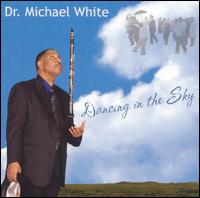
I don't play clarinet but my daughter does and when I played this to her all she said was WOW! White opens with Algiers Hoodoo Woman and this is New Orleans jazz played by a virtuoso. And Nicholas Payton's trumpet just speaks to you. This takes you back to the 30s and what you may have expected the sounds of the speakeasy to be. Dancing In The Sky (Reflections) is maybe what you would think New Orleans jazz bands would sound like, up-tempo, rhythmic and having a good time. Add in some smokey vocals from Gregory Stafford and you are there.
The Truth Of The Blues is sheer class and White makes his clarinet sing on this sleazy blues. The band return to 30s style again for Give It Up (Gypsy Second Line) and Lucien Barbarin is a standout on trombone. There's almost non-stop playing on the impressive The Hag's Rag and it is followed by the vaudeville-esque Angel In The Day (Devil At Night). The vocal by Thais Clark is excellent on this jazz/blues. Jambalaya Strut gives the whole band a chance to shine and is good time jazz.
There are some slow songs on the album and When The Mighty Mississippi Sleeps is precise and gives the impression of the river rolling along. It's back to the up-tempo foot-tappers on New Orleans Bounce (Out Of The Woods) before a return to the slow, almost funereal Creole Nights. It's hard to explain but it's like the type of song that you hear played when they are showing a New Orleans funeral on TV or film - you know, the ones with the guys dancing with umbrellas at the front. The good Doctor then serves up a slice of ragtime on the old classic Down By The Riverside before giving us Amazing Grace, played with much aplomb. He finishes with Dancing In The Sky (Transition) and this is even slower than Creole Nights at the start but stick with it for the Doctor goes out with a bang.
David Blue
In the years since releasing her first album (The First Of My Rambles, released on tape in 1992 and reissued on CD in 2000), Roisín's been kept busy with teaching and organisational commitments until her retirement from teaching finally allowed her time for singing out. She's still in fine voice, as this latest recorded tour through her repertoire demonstrates. And she's got plenty to be thankful for (hence the title of the disc), including survival from a bout of breast cancer around three years ago, and meeting and sharing songs with, many great source and revival singers while in Armagh.
Roisín is a warm, welcoming and wholly natural singer, and this new disc compiles recent recordings made in Manchester and Co. Clare which well capture the essence of her affable, sharing performance style. The main interest for many listeners will be the less-often-heard ballads, and McGuinness, Pat O'Donnell, The Bleacher and Cloughwater all turn out to be of some interest. On the ballad of Johnnie And Molly, Roisín adopts a kind of staccato lilt which in its more forthright character forms a good contrast from her more flowing treatment of the other ballads on the disc.
Many of the other items are quite well-known, but Roisín's renditions can hold their own with the best. These include Mountain Streams, and the two songs sung in Irish: An Bonnán Buí (The Yellow Bittern) and Úrchnoc Chéin Mhic Cáinte, both fairly widely-recorded elsewhere. We also encounter a rather refreshing version of The Lakes Of Pontchartrain, learnt from a Paddy McCluskey recording, which has an almost music-hall-style tune, while Erin The Green (learnt from Cathal O'Connell), with its superb melody, was a discovery for me. Roisín also turns in sprightly renditions of Lass Among The Heather and the deliciously lively Tandragee (learnt from Paddy Tunney and more recently done by Fermanagh's Rosie Stewart).
Throughout, Roisín's easy, unassuming lilt invariably furnishes the listener with an reliable gateway into the heart of the song, and this marks a welcome and attractive return to recording for her.
David Kidman February 2010
Snowy White - Restless (Hypertension)
Snowy White's credentials are second to none. He has been a member of Thin Lizzy, a touring member of Pink Floyd and played with Peter Green, all this in addition to being a solo artist. He is probably best remembered for the classic Bird Of Paradise from the eighties. On this, his latest solo offering, he manages to give us some melodic guitar rock infused with the blues.
The opening track, Blues Is The Road, with John 'Rabbit' Bundrick on Hammond organ, is a blues rocker in the vein of Santana. The Time Has Come, as with the rest of the album, is self-penned. It includes some sharp guitar but maybe this ballad will suffer from being compared to the afore-mentioned Bird Of Paradise. Snowy treats us to a little progressive rock on Restless Too and Soldier Of Fortune sounds as if it's from a 'concept' album. The title track has an excellent bass line from Walter Latupeirissa. Both he and drummer Juan Van Emmerloot excel throughout the album. You Can't Break My Heart slows the pace down and is another fine ballad. There are some clever lyrics and this is one of the best tracks. It's Your Life is a standard rock track with Snowy's guitar on top form and Softly is a very relaxing instrumental. The album is rounded off with the atmospheric New Day …Maybe and the longest track on the album, Too Far Away. This slowly takes you into an excellent ending guitar solo which showcases his guitar to best effect.
Snowy White may not be a chart regular but he is still one of Britain's foremost guitarists.
www.snowywhite.com
www.hypertension-music.de
David Blue
Right from the start of his career (1969's Polk Salad Annie), Tony Joe White's name has been synonymous with elegant, laid-back and soulfully bluesy swamp-country, a style that's influenced so many key performers from Mark Knopfler to Eric Clapton; The Shine, his latest offering, brings a brilliantly fresh 50-odd minute dose of this medicine to cure all ills.
The raw-textured yet uncannily seductive strut of Ain't Doing Nobody Any Good is the perfect illustration of TJW's artistry, with lean and bare-boned guitar lines trading licks with a bluesy harmonica behind that unmistakable, shadowy growl of a vocal part. And the imagery Tony Joe uses in these new songs is so compelling too, both creating and enhancing the moody beauty of the musical backdrop. The overall feel of the performances is organic and loose, relaxed yet tight, the very special essence of this new batch of songs having been largely captured in just one take by Tony Joe and his trusty cohorts (George Hawkins on bass, Jack Bruno on drums, Tyson Rogers on keyboards and John Catchings on cello); it might seem miraculous that so much soul can come from so sparsely scored a canvas.
The ten tracks have a gently spellbinding cumulative effect too, from the lightly funky Tell Me Why to the eerily majestic Paintings On The Mountain (a collaboration between Tony Joe and wife Leann), the sad spectral blues of Roll Train Roll to the painfully plaintive regret of All and the tenderly reflective closer A Place To Watch The Sun Go Down.
Admittedly, Tony Joe's singing is a bit of an acquired taste, and it can be difficult for many listeners to take a real shine to his music when they can't hear beyond his mumbling, almost-too-laid-back delivery, but pace his detractors, for I find it masterly through and through.
David Kidman November 2010
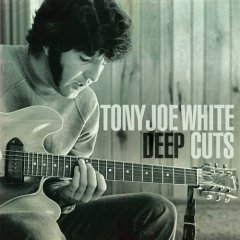
Tony Joe White – those three words should say it all. Deep Cuts is the new album from one of the greatest songwriters of all time and it features a number of titles that aficionados will be familiar with. With such a large back catalogue to choose from, accusations of complacency could easily be levelled at him and there will be those that just say, "oh, it's just another greatest hits album". However, he has allowed his son, Jody access to the songs and his choice has been measured plus he has a couple of writing credits in there too. He has certainly added to the songs with the inclusion of funky drum loops but some purists may still be running for the hills. Songs such as Willie & Laura Mae and Soul Francisco dramatically gain from the snappy drums and the 21st century, in your face attitude that Jody has inspired. Other highlights include the expansive & world weary Aspen, Colorado and Swamp Water which is a down & dirty instrumental which sums up Tony Joe White and shows his raison d'etre.
There is no mistaking Tony Joe White's contribution to popular music. This selection of songs confirms his sublime songwriting talent and Jody's involvement has fine tuned them for a new audience.
David Blue July 2008
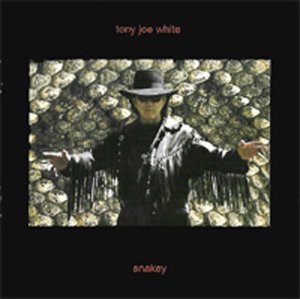
Swamp Rock = Tony Joe White. Blues-earthy, raw and funky, Tony Joe White gets into his groove and his rich bass tones breath hidden secrets, stories and dark dreams.
Snakey is his latest trip into the Louisiana bayou in a album career that commenced with his 1969 Black and White and the classic tracks Willie & Laura Mae Jones and Polk Salad Annie. More recently his Steamy Windows was a worldwide hit for Tina Turner. There have been a couple of dozen (?) albums and several label changes but now Snakey comes to Europe on TJW's own Swamp Records label via the excellent Munich Records. This is a laid-back and pared-down production of ten co- but mostly self-penned songs. The musician credits are Tony Joe White on Harmonica, Percussion, Keyboards; Little Troll Forrest on bass and Boom Boom Cohen on drums. TJW and Chet Hinesley produce. The album is proof, if ever it was needed, that it's not just JJ Cale who's king of the of the mellow, chugging roots vibe.
TJW has a wicked sense of humour and every song is a fertile seed sown in the mind. He's a rock legend whose lyrics will make you shakey. Listen to this from the opener Feeling Snakey.
I was feeling snakey this morning
All my thoughts were covered with mud
And I feel like biting somebody
Feel like poison
Running through my blood
Good grief - that was some hangover! Bayou Bleus - a Sultans of Swing visit to the Big Easy. Dark Horse Coming? - the ominous biblical reference, followed by Organic Shuffle - what might seem to summarise the TJW groove is in fact a worrying but hilarious story about a health-food store visit. And Living Off The Land is not so much Deliverence as weekends roughing it in cashmere socks. Or that snake-supper finale, Taste Like Chicken? Of course the man's a genius!
Sue Cavendish
Named for the capital of Yukon Territory in Canada, although they've toured together and contributed to each other's recordings, after six years as husband and wife this is the first time Luke Doucet and Melissa McClelland have worked on a joint project.
Initially, with the opening Eulogy For Whiskers Pt 1, a sparse and spooky number of textured guitar and barely audible spoken word, you have to wonder if they've taken leave of their individual senses, abandoning their rootsy individual shared backgrounds for some sort of arty experimentalism. Then you get to the clanky swamp blues of Killing Time Is Murder and you're more concerned that cast themselves as a replacement White Stripes.
So relief all round then as the jogging bounce of Emerald Isle shows they've not abandoned their folk and pop Americana colours, coming off as a sort of surf guitar and bluegrass shaded She & Him while Broken, a song revisited from Doucet's back catalogue, nods to the Gram/Emmylou blueprint with a modern alt-country rock n roll swagger and Springsteen's I'm On Fire gets a new lease of life as classic Johnny & June chug a lug country with twangy guitar.
The inclusion of Night Owl's dreamy 30s mood and a more Creedence sounding approach to McClelland's 2006 number Passenger 24 suggests they're still playing around to see where their shared visions are the strongest. As such this is more of a taster than a main course, but it'll be well worth seeing what they cook up next.
Mike Davies February 2012
Delivered in his warm, hushed tones, They Care For You opens the album with a simple forever love song set to a circling acoustic guitar phrase before , with spoken verses and chorus sung over a rolling rhythm and guitar figure, My Heart Doesn't Age (It Just Gets Older) offers wry observations about staying young inside. Pastoral folk influences are to the fore with Pretty Soon and the rippling Hold On To What Have (both tracks also concerned with the passing of time) will spark Nick Drake references (though, to the best of my knowledge, he never sampled an electric screwdriver) while, with its wheezing accordion, body image theme and wannabe fashion model subject, the bittersweet Three Bodies is more of a waltzing whirligig and, quite possibly borrowing from Ring Of Fire, the jaunty jogging banjo The Fire Of Lust has a definite shanty flavour.
Legendary pedal steel man BJ Cole features on two tracks, the gentle Know Me with its intriguing off kilter rhythm and the keening alt-country tinged When We Were Sleeping, but there's solid input from local musicians too, among them Jo Hamilton and Carina Round collaborator Tom Livemore on theramin and, providing beautiful viola on the elegantly intoxicating piano ballad closer All That Will Survive Of Us Is Love, Helen Lancaster from the Old Dance School.
The past year has seen the emergence of several pretenders to the UK's troubadour throne, but with this album Whitehouse is clearly the only heir apparent with a valid claim.
Mike Davies October 2011
Jenny Whiteley - Hopetown (Black Hen)

A Canadian folk-bluegrass singer-songwriter, Whiteley's been making a name for herself back home, winning a Juno for her eponymous solo debut back in 2000. Her second album should go some way to spreading the word beyond her native Toronto with its expansion into Deep South country and blues territory, her seductively weary voice easing its narcotic ennui across The Circus Is In Town (part lullaby, part outtake from One From The Heart) but also jiving round the Lucinda Williams barroom on Drive Anywhere and Hallelujah, and getting crackerjack for the banjo plucking Needle In a Haystack.
It's the slow waltzes and last dance shuffles that stand tallest though, the heartbreakers that are Burning of Atlanta, Spin It Round, I Never Knew and the unaccompanied folk purity of Day To Day, though unquestionably the album's finest moment is the yearning country Halls of Folsom, an achingly sad song about institutionalisation sung by a prisoner scared to leave the bars behind for the uncertainties of life outside its walls. A bit of a stunner really.
Mike Davies
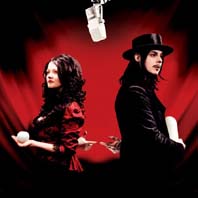
If, as it is said, we're all in the gutter, then the stars that some of us are looking at include The White Stripes. Get Behind Me Satan confirms the band as one of the most original and innovative of this, or many other eras. There's a laser-like sharpness to the opening track that acts as the perfect curtain raiser for the flamboyance of what follows.
The White Stripes epitomise everyhting we want musicians to be, colourful, strutting and musically extraordinary in the truest sense of the word. As The Nurse and My Doorbell unfold like acts in some weird and gothic opera, you just can't imagine either Jack or Meg sitting in jeans and t-shirt plucking away at guitars. Red Rain is the expression of the grandeur of Jack White's fractured imagination, what's the point in having rock musicians who think like we do. Part of their appeal is that they take us to places we can't go by ourselves.
And in that theatrical excellence lies the rub. The White Stripes are so far removed from the ordinary world that at times it's difficult to emotionally connect with the music. You admire the passion poured into the bluegrass-flecked Little Ghost and there's no question that The White Stripes are sincere but there remains a curtain between listener and artist. That the band has it in it to be anything it chooses to be, is illustrated by the blistering Instinct Blues. Experimental or traditional, it all comes the same to Meg and Jack but Get Behind Me Satan is memorable more for the brilliance of its parts than the impact of the whole. It's a challenge to hang on to the coat tails of music that continually moves at right angles. The White Stripes are in danger of carving out a niche for themselves and then being condemned to remain in it.
Michael Mee
This album was recorded seven months before Chris Whitley's untimely death due to cancer and it is a fitting piece of work to remember him by. Vocal flits between wispy and pronounced power on the opener, Stagger Lee. This is a slow, brooding version of the famous song with acoustic backing, electric slide and a throbbing drum beat from Ashley Davies. Twelve Thousand Miles is a gutsy blues with excellent, equally gutsy guitar. Bob Dylan's When I Paint My Masterpiece is a wall of sound with Whitley and Lang both on form with this grinder. Rocket House is country blues at the start but runs into a contemporary urban blues. There is some excellent slide guitar from both of them and what a loss Whitley is - hypnotic. The Road Leads Down has, quite simply, superb. They manage to get the ethos of the pre-war Delta and bring it slap bang up to date on the eponymous title track.
Forever In My Life has, as with the rest, a broody undercurrent. The use of Dobro on the album has been a masterstroke, none more so than on Velocity Girl. Unfortunately, the vocal on this is not as good is has been on others but the jagged guitar makes up for that. Ravenswood is airy but the voice goes a couple of times. Underground is completely different from those that have gone before. Electric, grungy guitar with a fuzzed vocal, it is almost demonic. Their voices differ but compliment each other and this is highlighted on the second Dylan cover, Changing Of The Guard. The breathless quality of the vocal is counterbalanced by the snappy guitar. Motion Bride is the last noted track and starts off in a sea shanty style with banjo to the fore. However, there is a short silence and then the guitars take over for a very ethereal rendition of Robert Johnson's Hellhound On My Trail. This is followed by another, Kick The Stones I believe it to be, and the whole thing lasts over 11 minutes with a live track at the end. Not altogether unnecessary but it would have been good if they could have listed these tracks.
David Blue October 2007
Chris Whitley - War Crime Blues (Fargo)
David Kidman
Tragically Chris Whitley born 31 August 1960 - died November 20, 2005 - due to complications from lung cancer.
William's another of those unlikely musical heroes: a latter-day crooner-cum-songwriter steeped in the deep-dark, whose performing style at various points recalls the twisted whimsy of Tom Waits, the growling eccentricity of Captain Beefheart, the innate raw soulfulness of Ray Charles and/or Van Morrison, or the keening hjllbilly inflections of Hank Williams – yet at the same time remains very much its own animal. For William's singing goes beyond mere throat-abusing grind, and he's clearly also studied the singing of the above and other notables from the blues and soul traditions, while also displaying resonances of other inspirational singers through the years. I'm a mite staggered that William's music hasn't hitherto figured on my radar, actually, for Animals In The Dark is his seventh album (the first, Hymns For The Hopeless, came out in 2003!). I can't make any kind of comparisons with any of those earlier records yet, but taken in isolation Animals In The Dark is a sufficiently uncompromising set of self-penned songs that makes a strong impression. Its clarion call is the opener Mutiny, an awesome call-and-response chanted to a pounding snare-drum tattoo, while the ensuing Who Stole The Soul could not be in greater contrast, a slice of deep anguish in the shape of a cracked, heartfelt guitar-and-cello-backed ballad. Another ballad, the tale of Johnny Law, brings the pace up a notch, then we get a clutch of more rested tracks, at the still centre of which is There's Hope For You, which could easily be taken for an authentic soul-gospel number from the 50s till it builds into its fuzz guitar riff coda and segues into Hard Times, a rougher-hewn electric dust-bowl lament. The passionate Let The Rain Come In could almost have come from the Safe As Milk sessions, with its Cooderesque slide and rumbling, insistent bass. Throughout the album, backings are sparse and tightly controlled, yet retain an edge of raw spontaneity; William's own guitar or banjo is augmented sparingly by a handful of other musicians playing organ, cello, accordion, E-bow, bass and drums. At the end of it all, though, and curiously, the small but significant final taste that lingers is that the sum of the album is less than greater than the unquestioned power of each individual part…which I can't quite figure. But the good Mr Whitmore's music is still mighty addictive - I'm sure hooked, and I'm up for more.
www.williamelliottwhitmore.com
David Kidman April 2009
Imagine for a moment how refreshing it would be to hear a largely spartan recording with a huge slug of sinister Deep South Country-Rock verve, a splash of Tom Waits' burred voice, an edge of insane half-frailed banjo & stomped foot percussion, natural unpolished textures, a hint of haunting open acoustic guitar & a strong line in direct, unaffected words. Now stop thinking about it & go buy this record.
www.williamelliottwhitmore.com
James Hibbins April 2007
A humble title for an album with nothing to be humble about. Whilst Jason Whitton will no doubt find himself bracketed alongside other young Americana stars with Thriftstore Cowboy, he shows that the older, more traditional country song is also in very good hands.
Without wishing to unduly burden the young Texan-born musician, there is much of the same openness and warmth that characterized Glenn Campbell's early career. And before we get totally carried away, as good as the songs are, there's no Jimmy Webb here either.
Whitton resembles Campbell more in spirit than anything else, his slightly velvety voice with an aching heart never far away, caresses songs like I Still Believe In Love - a song that relies on a country staple, unbreakable hope triumphing over adversity - and Madagascar.
There is also a much simpler pleasure to be derived from listening to Jason Whitton, he is obviously enjoying himself and the lack of pretension or naked ambition for his songs is very attractive, his music retains an intimate small town outlook.
Born in the Texan town of Bryan, before his family moved to Houston in the early 70s (a fact that makes him older than his music makes him sound), he now lives in Los Angeles and here he combines the best of the two cultures.
The tradition of pure country runs deep in Dandelion Girl and Whitton possesses an integrity that creates an immediate empathy with the listener.
However, he just doesn't mine the past for his gold, Jessica Drive and Lucy owe as much to the sunny energy of the West coast as anything else. In fact Whitton nods affectionately in the direction of John Mellencamp on Fingernail Moon and in truth he could just as easily do the same to Jackson Browne.
It would be easy to be seduced by the easy rhythms and melodies of Thriftstore Cowboy into thinking that it is nothing more than a pleasant stroll through some equally pleasant country rock, but Jason Whitton writes, plays and sings songs that bury themselves under your skin. Beware the power of the comfortable hook, its grip is just as tight.
Michael Mee, March 2006
I've been thinking for ages that it's high time this gap in the Who discography were plugged by a decent CD release of the band's explosive debut album - and here it is, stretching out over two CDs. This deluxe edition represents the first time the tracks have been remixed into stereo from the original master tapes. Disc One presents the original album in its entirety, with the eleven tracks common to both UK and US versions supplemented by the two alternates (I'm A Man from the UK release and Circles from the US release), then rounded off with three bonus tracks (the hit single I Can't Explain and its B-side Bald-Headed Woman, then a B-side from a later 45 Daddy Rolling Stone). There's no argument that the original album contained some of the most noteworthy music committed to disc by any band of the time - not just My Generation itself and the anthemic Kids Are Alright, but also underrated cuts like The Good's Gone and the blistering 12-bar surf-inspired instrumental romp The Ox (a vehicle for bassist Entwistle's pyrotechnics). Alongside, it must also be admitted, some less inspired covers of soul and R&B material. Disc Two brings 45 minutes of additional bonus tracks, which include the familiar mono mixes of My Generation and A Legal Matter with guitar overdubs and newly-unearthed fuller-length versions of two of the album tracks, alongside further B-side material, session tracks, relative disposables and welcome rarities like an unusual example of a-capella Daltrey (Any Time You Want Me) and the version of Anyhow, Anywhere, Anyway (sic) that was originally released on an obscure French EP. All very useful, but why on earth did the compilers omit the classic UK single version of that latter track?? That inexplicable oversight aside, this is virtually the definitive edition of this admittedly uneven but still quintessential mod-era artefact, which here also benefits from some insightful notes and an attractive presentation.
David Kidman
Wholehearted are Pete Luscombe and John Oke Bartlett ("Barty"), founder members of the erstwhile (and celebrated) wall-of-sound acappella folk foursome Ramskyte. Pete and John are now performing as a duo, and on this CD they present us with an honest and accomplished 16-track collection that (maybe subconsciously) centres around six of Barty's fine original compositions: these range from the catchy chorus song Taro Fair to the evocative White Horses (written staring out to sea), the poignant homage Kindred Spirits (posthumously written for fellow-Ramskyte founder Brian Ingham) and the almost too painfully aware Close The Door (a deep response to the suffering caused by the concentration camps).
The remainder of the disc is comprised of quality traditional-flavoured contemporary compositions (penned by Peter Bellamy, Graham Pratt, Barrie Temple, Mick Ryan and John Tams respectively) and an 1833 hunting song, these then being topped up with a handful of good-to-middling trad-arrs, some benefiting more than others from the duo's straightforward harmonic approach and lusty delivery. Some songs are taken a touch too briskly perhaps, losing their expressive import a touch, but for the most part things work just fine.
Pete and Barty are suitably wholehearted in their attitude and delivery, so they certainly live up to their name – and "ripe and bearded" can be taken as a further qualification (and recommendation!). Their singing is attractively robust, suitably direct, and consistent almost to a fault. Which arguably turns out to be the only real potential drawback of this well-sung set, for the duo's method of delivery and general approach to that delivery, though attractive in its own right, doesn't in the end vary much from song to song, and a greater measure of expressive variety may well be welcomed by many listeners who are unaccustomed to this kind of singing. And I'll admit I find the sequencing of the disc a mite curious, with a majority of the self-penned songs placed towards the end, leaving a less balanced impression than perhaps was intended. But this disc was definitely worth making.
www.myspace.com/wholeheartedduo
David Kidman October 2009
The Why & Wherefores - Alright (Dusty)
It's been four long years since a CD from Emily last graced my player: this was her rather fine duo album with Steve Jones, Songs From The Silver Band Room, on which she displayed a new maturity of outlook and expression overlaying her already impressive grasp of the delta-blues idiom and country-blues and roots picking styles. No criticism intended, but Emily's writing and performing partnership with Steve would since appear to have outgrown its sonic space (if not her own modest ambitions), with the result that the duo has since last year been creatively augmented into a full-blown five-piece following the addition of Martin Wydell (sousaphone), Marc Layton-Bennett (drums) and John Barker (lap steel and guitar) to flesh out the tasty grooves. This is an interesting development, producing a supremely confident sound that's quite unique among roots combos and which enables both better nuances of shading and more stylistic versatility than might otherwise be possible with a more standardised roster of available sounds.
It's indicative that during the course of the album's 42 minutes or so, Emily puts her crack-tight band through their paces on anything from retro-rockabilly-shuffle (the title track, which kicks off a bit like Roman Holliday) and smoochy swing (The One I Left Behind) to Cooderesque blues (Black And White), heavy-duty funky garage (Rev Gal) and the "electric mud" vibe of I Thought I Loved Someone Else. And the musicians prove their complete and exciting mastery of any of these styles and much else besides.
The arrangements are cleanly defined, and the recording exceptional in deftly yet positively pointing up both Emily and Steve's intense feel for the music's roots and the more unusual aspects of the scoring. Rough Diamond is a special case in point, where Emily's brilliantly characterised vocal is cocooned in an intriguing, gently sumptuous setting where a string section casts a spellbinding and sultry veil and the sousaphone lends a resonance and cast-iron firmness to the bass line. Rollin' & Tumblin' has a vibrant, and suitably onomatopœic, Latin-style rhythm, while Illuminated brings a touch of melody-rich bossa-nova to the mix. Way Out West slouches in like a lost Little Feat number, with a particularly gritty soulfulness in Emily's singing complemented by rough-house violin interjections. And I just love the way Emily wraps her voice round the jazzy dub swagger of Last Go Round: you could say she's "lively-ing up herself" nicely in preparation for the disc's chunky closer, its lone cover (the Bob Marley classic of almost that name).
Maybe at times the pace of change, the switching between modes, can seem a mite relentless, especially early on the disc, but hey, you can always hit the pause button to give yourself a breather and let each mood settle in. Oh, and I realise I've gone this far without commenting on the sheer excellence of the songwriting - Alright contains no fewer than eleven compellingly sparky and thoroughly idiomatic new songs from the increasingly masterly Druce-Jones writing team. No sir, this CD is vastly more than "alright"... if ever there was an understatement!
www.whyandwherefores.com
www.emilydruce.co.uk
David Kidman December 2008
If your bag is radio-friendly, accomplished Americana with easy hooks and time-tested kind of melodies, then hey, go give an ear to Joe. First time round, Joe brought out an album in 2005, The Lower 48, which coincided with live appearances at the Carlsberg Rhythm & Roots Festival in Kilkenny, where he opened for Son Volt among others. So now, in a similar gambit, Joe's follow-up full-length CD is being released here to coincide with a handful of dates he's playing in Ireland, Scotland and London very shortly. Most of the time there's an upbeat and optimistic uptempo gait to Joe's music, with a straightforward backbeat and attractive electro-acoustic setting, but I warmed more readily to the more stripped-down cuts like No More and the plaintive Out Of Tune and Ring Around The Moon. Generally tho', Joe's music is that of a true all-rounder in terms of appeal: he's a real good singer, he's got a solid backing band (including Brian Bassett, Jason Cade, Dan Nachimson and Dan Marcus), he's obviously totally committed to making music, and his songs slip down like a good session beer – consistently tasty and suitably thirst-quenching, but not so strongly-flavoured or heady as to get you drunk and maybe spoil things. Can't fault that - right?
www.joewhyte.com
www.myspace.com/joewhyte
David Kidman October 2007
Championed by Barb Jungr, with whom she shares a similar song stylist approach, this is the West Yorkshire singer's debut album after making her name as part of Bradford collective The Sex Patels and working the Yorkshire jazz, folk and soul circuits.
Following in Jungr's footsteps, it's a collection of interpretations of 'timeless classic and oddities' that embraces Tom Waits' Make It Rain, Nick Drake's Northern Sky, Randy Newman's Louisiana 1927 and a boogie piano and slide guitar hustle through Dylan's Everything is Broken. On the jazz side of the spectrum she tackles Humphrey Lyttleton's Bad Penny Blues, Nina Simone's Sugar In My Bowl, and, rather ambitiously, Monk's 'Round Midnight while Whatever Lola Wants, originally sung by Gwen Verdon in Damn Yankees, and a vocal arrangement of Bernstein's Some Other Time show her affinity for shop tunes.
She doesn't take as many risks as Jungr and, other than the context of the instrumental arrangements, several of the songs don't stray too far from the originals, but she's certainly the got the voice and presence to make you sit up and take notice.
Mike Davies March 2010
Todd Widell - Late Night Saturday (Widell Publishing)
Mike Davies
A power pop/rock trio, Canadians Wide Mouth Mason are inevitably being dubbed the modern day Police or Nirvana. While they still have some way to go to emulate those two they have built up a solid following with their high impact live performances. They have toured North America with The Rolling Stones, AC/DC and ZZ Top so they are no small thing. Shot Down Satellites, their fifth album, opens with I Love Not Loving You, punky pop/rock and an energetic start. Unfolding keeps the pace up with a great riff thrown in. If they can reproduce anything like this live then they will be a force to be reckoned with. Everybody's Right is top class modern rock and these boys are easily chart material. There's some good guitar on this and the singer shows that he has a vocal talent also. Really Wrong is not as powerful as the opening trio although they introduce slide guitar and the high standard of chorus' are becoming the norm. Phantom Limb shows that they can write a good song and the title track is another one off the conveyor belt.
They maintain their own high standards with guitar prowess and a grinding rhythm section. Worse Than Before is as good as anything put forward by the modern power pop bands. Rust is a concession to the ears and shows that they can produce more sedate songs too. It does build up though – they just can't help themselves. Simply put, this is great. Moment That You Came is grungy power pop and Wide Eyed has a blues influenced, fuzzed vocal intro before going off into the same power pop as before. There's some more good guitar work but they may have been better staying with the intro and building on it. Eleven is track 11, surprisingly, and is more pop than the rest. It does still confirm their talent of writing a good chorus though. Please Go Home confirms their Green Day styling and is yet another powerful, catchy song. They finish with the Beatle-esque It's So Bad, a short, strange ending to a powerful album. Van Morrison once said of them "the best band that I've seen in a long time", not a lot to add to that, really.
www.widemouthmason.com
www.curvemusic.com
David Blue June 2007
Fiona is an outstanding singer by any standards, of that there's absolutely no doubt. Although classically trained, she embraced Celtic music from early on, rapidly becoming soloist with Anúna and then the Riverdance show, and The Last Rose is an ambitious solo project which represents her own individual take on the Celtic music heritage. In many respects it's precisely what you might expect from the above description, with distinct elements of what one might term "staged-Celtic". Inevitably, the focus is squarely on Fiona's angelically pure, soaring voice, which is beautifully recorded with state-of-the-art and sensitive backing courtesy of a small handful of musicians. Keyboard player Cathal Synnott is Fiona's principal collaborator and co-arranger, while other young musicians involved in the recording include Cora Venus Lunny, John McGlynn, Des Moore, Andreja Malir, John O'Brien and Robbie Harris. Fiona's singing is peerless: faultless almost to a fault, crystalline and gorgeously glossy-toned, very much at the smooth end of the spectrum away from the rough edges of the traditional singer. But it's not as empty or shallow as that might imply; Fiona's personal response to the texts is certainly genuine, even if the character and timbre of her delivery are unlikely to please the sean nós enthusiast. Fiona's choice of material for the album is wide-ranging, with sufficient variety in mood and plenty of imagination in the settings. Highlights come on a beguilingly sinuous habanera-style treatment of She Moved Through The Fair and a stunning (virtually) a-cappella My Lagan Love (the disc's centrepiece and emotional core), while I also really liked Sigma (composed by Rolf Lowland and David Agnew), a beautiful Gaelic prayer with a tasteful and restrained orchestral arrangement. Fiona also has a keen compositional involvement in the proceedings, on several tracks including Romance Of The Rose (inspired by Chaucer with snatches of La Rotta!). It's good to find an example of Paula Smith's writing here too, represented by A Blessing, although the major-mode lushness of the setting is perhaps a little too sweet for my taste. Similarly with the following takes on Ave Maria (rather amusingly credited as a joint composition by J.S. Bach and Gounod!), The Last Rose Of Summer and The Water Is Wide - for these have a hint of Celtic-by-numbers about their inclusion which compromises the integral originality of so much of the rest of the CD. There's excitement here, but it's a cool excitement, unquestionably carefully manufactured rather than entirely spontaneous. Basically what I'm saying is that if your personal taste doesn't demand a more immediately raw and "rootsy" listening experience and you're able to embrace Fiona's astounding vocal skills and more considered musical vision on their own terms, then fine, you'll be well satisfied with this disc (except that, like me, you'll doubtless think it ends far too soon, after only 36 minutes!...), for it's a classy product and a superior example of its kind, of that there is no doubt.
David Kidman March 2007
While you have to question whether, to judge by some of the material, this means they were intended to sound like The Eagles' mellower cousins (it's an observation not a criticism), in covering the gamut of the band's styles and with songs addressing survival, dogged determination, and mortality, it is, essentially, a reader's guide to Wilco.
With walking bass and chugging guitar, the Velvets-like self-titled opener and the piano barrelling rock n soul You Never Know rep their uptempo rocking side. And if the latter has you thinking of George Harrison, then mid tempo piano ballad Country Disappeared and the closing Everlasting Everything (with its swelling piano chords and vocal styling conjuring A Day In The Life) also pointing up the self-confessed Beatles fan's Lennon influences.
His fascination with existentialism informs the skittering Deeper Down where he sings "I adore the meaninglessness of the this we can't express" to a dreamy tropical melody and harpsichord trills while, accompanying the tale of a murder told from the killer's perspective.
the nerve jangling staccato guitar and single prodding piano note of Bull Black Nova (sounding like Television having a breakdown) remind you of their past excursions into sonic experimentation just as lines like "I can't calm down, I can't think" recall his past addiction to prescription drugs.
On the gentle side, they invite in Feist to duet on the summery acoustic You and I and float across blue skies (with the occasional noiur guitar twang cloud) for One Wing, Sonny Feeling harks to the powerpop 60s (Beatles yes, but Big Star too) and Solitaire wanders warmly among leafy folk ferns with a keening guitar suggesting the occasional alt-country bud.
It is, perhaps, a little too secure in its own strengths and self-awareness to summon the edge of their best work, but as an album that shows Tweedy finally comfortable with who he is and the music he's had running around his dead for the past decade and a half, it is, as the song puts it, "an aural arms open wide, a sonic shoulder for you to cry on."
www.myspace.com/wilco
www.wilcoworld.net
Mike Davies July 2009
Three years on from A Ghost Is Born, Jeff Tweedy and co return in similar relaxed, pensive 70s mellow mood, still tinged with Neil Young shades but this time without any sudden eruptions into growling guitars, feedback or 10 minute electronic drones.
With the languidly dreamy Either Way and You Are My Face setting the pattern, the music here is a limpid soundtrack to lazy afternoons by the river, laying back in sun hazed fields and (as Tweedy's prone to do) musing on love's bliss and bruises.
Not that this doesn't mean they're also content to let the songs just drift on by, here and there they turn unexpected corners with jazzy tones taking over from the country colours, or Beatles (Side With The Seeds), Stones (Hate It Here) and even Randy Newman (Shake It Off, Walken) influences peeking through.
It may disappoint those who were hoping for weirder sonic experimental progressions, but it's hard to imagine anyone begrudging them the swaying pedal steel waltzing Americana of What Light, the piano melancholy behind On And On And On or the languid Oriental hued soft rock ripples to Impossible Germany. Lay back and float the dream with them.
www.wilcoworld.net
www.myspace.com/wilco
Mike Davies November 2007
Hot blues guitarist David first made his name as a good-time live performer back in the mid-70s with a band, before stealing the show on record from the 80s on in; to date he's released a long series of albums that have embraced every style from deep blues to rock'n'roll, synth-rock, gritty jazz and country, so you might be forgiven for asking where his true musical loyalties lie. This latest set is mostly, though not exclusively, a funky take on the blues. Despite the unity that David's driven and accomplished playing gives the album, his desire for showmanship can be excessive as can his quest for diversity of expression, so not all of the cuts turn out equally successful. At two extremes we find the raw punk energy of Professional Victim and the gentle shuffle of Shuckin' Sugar (an adaptation of a Blind Lemon Jefferson number), both of which work really well; elsewhere, Flip, Flop And Fly has some really tasty mandolin work upfront of the principal axework, Buddy Boy's Blues ably showcases the gentler side of David's talent, the instrumental The Groove contains some interesting twists and turns, and the bump-and-grind of Natural Born Lover just about makes it over the line, but some of the funkier items sound quite laboured, and the often overt theatricality of David's performance style (as opposed to his consistently brilliant playing) may deter the more purist blues fans seeking even a fairly straight-delivered electric blues set - certainly I don't feel inclined to repeat the experiences of Catman and Feel Like... too often. Even so, this release will no doubt readily achieve its intended aim of bringing the house down for David's fanbase.
www.myspace.com/davidwilcoxrocks
David Kidman March 2008
Rivers is the third album by this Swedish band, and combines under one CD roof the entire contents of the pair of limited-edition vinyl-only 12" EPs Retina and Iris, which were originally released back in May and June of last year respectively.
The five tracks making up Retina are characterised by at times sumptuous washes of choral sound, above and through which the lead vocal line manages to float its often enigmatic text. The pieces were recorded in a church, with the help of the 12-strong Schola Cantorum Reykjavik Chamber Choir (who, you'll recall, also featured on Björk's famous Medulla album), and range from the eerie confidence of Under Land And Over Sea to the pounding pseudo-tribal drumscapes of Bleed Like There Was No Other Flood and Fight For Me and the relentless militaristic tattoo of Peeling Off The Layers.
The five tracks making up Iris provide a fair contrast in timbre from the heavy atmospherics of Retina, with a concentration on the ringing, resonant sound of the steel pan augmenting the drumkit element to counterpoint Mariam Wallentin's intimately edgy vocal. I tend to find the Retina tracks more satisfying, not just because of the more interestingly resonant recording; one or two of the songs that make up Iris seem to drag a little, I feel, perhaps due to their comparative lack of melodic development. The whole Rivers project was conceived for live performance, and the almost-live recording reflects the captivating sense of occasion the duo's performances invariably bring off.
www.wildbirdsandpeacedrums.com
David Kidman March 2011
A four piece from Edinburgh, the Strawberry are fronted by Gordon Macdonald who, on his own admission, spent far too much time as a youth listening to Jacques Brel. Certainly you can hear the influence, albeit as channelled through such past interpreters and fellow devotees as Scott Walker, Bowie, Ian McCulloch and The Tindersticks.
Produced by Boo Hewardine the band's sophomore album throws up an interesting stew of reference points that would (in the light of Be My Muse) probably also have to include The Doors while the opening track, Faster, sounds like a hybrid of gypsy folk, Al Stewart, 60s psychedelia and ABC.
Scottish pop sensibilities are well in evidence too on the crooning Home Falling Star and But That Was Not The Best Part which soar above the same aching heart 3am rooftops as The Blue Nile while Long Time Man summons thoughts of early Deacon Blue. Boolean Boy shows the rockier side of things with a juddering riff that's pure Velvets mixed with shades of Bolan glam, Don't Met My Dreaming turns down a country highway, Here Comes The Honey Man is surely on nodding terms with a copy of the Rebel Rebel sheet music and it wraps up with the title track's big Mid-West hellfire preacher dramatics. It's a variegated punnet but there's some fulsome fruit flavours here.
Mike Davies

He may have done a degree in jazz at Leeds College of Music, but the Blackpool singer-songwriter's debut album is firmly within the realms of pastoral English folk pop, his light as a feather vocal burr curling over airy upbeat melodies like a leaf floating in the breeze over country lanes.
Looking a little like the young Gerry Rafferty on his booklet photo, he's a fine fingerpicking guitarist, accompanied by a rhythm section of Dan Rogers and Mark Whiteside while the presence of violin and mandolin player Richard Curran gives things an extra lift, bringing a Celtic feel to the lilting Broke My Heart All Right and Opened My Eyes while co-producer Ian Bailey provides classical guitar on Be Gone.
Although they don't sound alike, there's something warmly homespun about the nature of his singing and the songs that reminds me of Martin Stephenson, while the percussive Wait Until Tomorrow could be John Martyn if he'd never drunk or smoked and the waltzing Nearest I Have To Home like Damien Rice without the earnestness. I've seen his voice compared to the young Steve Tilston, but if I had to draw a comparison it would be a slightly more trebly Clifford T. Ward.
There's some lovely stuff here; the bittersweet leaving song Unkind, Nowhere with gentle troubadour guitar work that reminds me of early Tom Paxton, Looking Out with Whitehead's skittering percussion and Curran's flightly strings bustling along with a giddiness that reflects lines like 'I can't wait to get into your door, I'm wanting you to kiss me". The icing on the cake, though, is the unadorned voice and guitar of closing number, It Hurts To Reminisce, which, Wilde sounding not unlike Paul Simon, would not have been out of place on Bookends.
There's no big marketing budget or hype behind him or the album, but for those who seek it out it could be the start of a lasting love affair.
Mike Davies March 2011
The birth of her first child rather put the squeeze on finding time to get back into a proper studio for the former Sixpence None The Richer guitarist's third solo album. So she improvised, recording in the small apartment in Geissen, Germany she shares with husband Christian Roth (who wrote the German sung Anette), using an upholstered armchair as a bass drum, keys in a metal cup for snare and a wine glass as glockenspiel. She also made good sonic use of her son's toys too.
Of course, she did also manage to find room for proper instruments too and even managed to shoehorn in a three piece choir for a couple of tracks. The result's actually rather charming in its intimacy, putting extra emphasis on Wiley's gentle ache of a voice and bringing out the emotional layers of such reflective, sad tinged songs as Crying For You and, featuring some of the loveliest lyrics you'll hear, Tenderness & Love.
Along with some obvious references to motherhood, the Christian element of her old band is here too with Messed Up Everywhere Blues while Raise Your Hand should bring a smile of recognition to those smarting over the way the media imposes its own views on the sort of music you can hear.
Mike Davies, Sept 2007
Two years on from his debut album, the Coventry born singer-songwriter returns with this sophomore offering. Again it's a simple set of acoustic numbers with Wilkes' guitar augmented by strings, brass and woodwind, but you can hear a further maturity and confidence to his music and lyrics and although his references remain cloaked in shades of Drake, Dylan, Martyn his voice seems to have lived a couple of extra decades between albums.
There were Eastern European gypsy violin flavours on his debut and you'll hear them again here on the instrumental Intro and the haunting title track itself, a wistfully resigned song where, singing 'freedom is a soldier, with blood on his hands' and referencing the Spanish Civil War and the French Revolution he conjures thoughts of Al Stewart's history themed early work.
Further illustration of the rich mix of textures can be found on Black Rider where brass and woodwind pain burlesque colours over a canvas of the spurned, exiled son returning 'like the devil' to 'rectify what's owed' or perhaps 'meet them with forgiveness'.
Or there's Alien, a guitar and violin acoustic country blues waltz steeped in self-examination and feelings of alienation, failure, and an unarticulated hunger and need to become something more.
And on The Making Of A Fool, he sets out on the path of a simple campfire lilt before taking a sidestreet to a French cafe chanson while Django jazz guitar picks away behind As It Comes.
It's clearly a collection of songs hewn from personal depths and doubts, at times circling black holes in his self-confidence and relationships (In Many Ways I Am Losing), at others (as on England's Scheming or Garden Of The Night) wrestling with political disgust or ambivalent feelings towards the land of his birth, bending the knee to America. And, on The Trouble I've Seen and The Dust Song sounding like a man old before his time as he considers loss and transience.
But then, on arguably the best track, as he look back on roads travelled, wild youth and a blue eyed love affair with that gypsy wayward girl, he sings If I Could Change Everything, I Wouldn't Change Anything. Which pretty much encapsulates how you should feel after listening to this.
www.joewilkes.co.uk
www.myspace.com/joewilkes
Mike Davies January 2008
A singer-songwriter from Coventry whose dad was district secretary for the Community Party in Birmingham and Coventry, Wilkes spent part of the 90s living homeless in London before decamping to Paris in 2002 to play the bars and cafes. He's back in London now where he's been making a name for himself on the acoustic scene, playing in pubs and bars, as well as landing a Bert Jansch support slot.
It's an unfussy affair, Wilkes's finger-picked acoustic guitar augmented by drums, sax and the odd string quartet, his throaty, smoky voice sounding as stained by life as you might expect from someone twice his age. He cites Dylan as a major influence, but there's no suggestion that he's trying to be a clone. Instead you might hear hints of Jansch, John Martyn (especially on Easy Talking), Nick Drake, John Prine. and maybe even Don McLean on these 10 songs about life, love and the world around. He writes songs worth bending an ear too as well, Too Late To Pray, with its almost gypsy hued intro and hot club sax, a response to the post 9/11 paranoia of America, The Castle a portrait of world weariness and resignation, Say Something a self-examination of intent and purpose, Tomorrow Whatever a simple celebration of life.
"I wish I could sing a good song for you" he says on the encouraging This Time Won't Last Forever. These will do for now, Joe, these will do.
Mike Davies, April 2006
The first would be correct because Walt sings beautiful country; the second would be arguable because Mustang Island is a million miles away from what you would reasonably expect.
As a singer and writer he stands alongside comparisons with Guy Clark and Kris Kristofferson and both Ricky Skaggs and Kenny Rogers chose wisely when they covered his songs because he fits right in with the intelligent, unpatronising, storytelling school of musicians that includes Pierce Pettis and James Taylor. When There's No Money Coming In shows the same unsentimental objectivity that is a Pettis trademark, it's harsh and hard but the effect is startling.
When you say the right things as often as Walt Wilkins does on Mustang Island, there's no need to shout or indulge in theatrics. His style is understated but the message hits home with the force of a hammer blow. There's a natural ease about him, when he sings Grand Ennui for instance, he is completely comfortable in the skin of his music.
Musically Mustang Island is wonderfully warm and relaxed, however you don't need to be a child prodigy to recognise that Mike Daly, Ron Delavega, Mickey Grimm, Tom Lorsch and Rick Plant are musicians at the very top of their profession. They go about their business in such an unfussy way, providing the perfect setting for some rare jewels.
And what precious jewels they are, apart from Grand Ennui, written by Michael Nesmith and a cover of Kevin Welch's One Way Rider, Mustang Island is all Walt Wilkins, although the album's songs are co-written, in truth they belong body and soul to Walt Wilkins. What you get from his voice as he sings If It Weren't For You is the god's honest truth.
Mustang Island rips the guts out of you with Someone, Somewhere, Tonight, then freezes your blood with Long Winter, while Wrapped is the kind of love song any man would be proud of.
But always, always on Mustang Island all roads lead back to the magic of the lyrics, each one conjures up an image that becomes a fond memory. Under the tender care of Walt Wilkins, Mustang Island is a hypnotic, mesmerising and very special place to be.
Michael Mee
Those still recovering from Let It Roll's startling departure from expectations with its nine minute sonic storms and feedback tumult and Robert Fisher's occasional transformation into Nick Cave, will be pleased to hear that, working with Scottish composer Malcolm Lindsay (best known for the soundtrack of Young Adam), things have settled back into more familiar mode.
So, that'll be warm melancholic brass coated old time American folk-gothic filtered with dust dappled jazz moods and interleaved with violin, cello, and pump organ as songs of death, despair, repentance and salvation soak through the soul. If you find yourself thinking of Jackie Leven, you won't be too surprised to discover he's also one of the guest musicians.
The opening Lost Souls is instant reassurance that, as Fisher sings, less is again more, his rich world weary cracked tones sounding like a less gravelly Tom Waits before moving to share the microphone with Iona MacDonald on The Great Deceiver, an acoustic gospel duet (with massed choral backing) about seeking salvation that is easily one of the best things the band's ever recorded. So good it even comes with two reprises; once at the end of the track and again at the end of the album.
The biblical mood ensconced in the album's title embraces the spare Jerusalem Church Bells with its fretless upright bass and the slow waltzing The Pugilist where, backed by pump organ and a heavenly choir, Fisher sings of being 'bowed out and broken, shot full of holes.'
From the semi-spoken Painter Blue with its plucked strings, singing saw and spidery chamber music ambience through the piano and horns blues Water & Roses to the Cohen-like appropriate end of journey closer Vespers, sung to just a mournful violin and a gathering wind, this is Fisher in total command of his strengths.
And, just to add the icing, there's two mid-album covers too. A simple piano hewn Appalachian folk music reading of Lal Waterson's Phoebe and a six minute bluesy and booze fumed avant-folk lurch through American Music Club's Miracle On 8th Street that begins with percussive beats and builds on a spine of intoned piano, a steady brushed snare rhythm, muted trumpet and Chris Eckman on a persephone analog synthesiser to the emotional catharsis of a man seeking faith.
It's a dark, troubling road, but you really should walk beside him.
www.willardgrantconspiracy.com
www.myspace.com/willardgrantconspiracy
Mike Davies May 2008
Thus both Painter Blue and Vespers from the previous album now present themselves in stripped down, raw form alongside songs from Let It Roll (Mary of The Angels, Lady of the Snowline, From A Distant Shore, Skeleton), Regard The End (Ghost Of The Girl In The Well, Soft Hand, Fare Thee Well), and Flying Low (No Such Thing As Clean) plus two new numbers, Scars and a cover of Tom Waits' The Ocean Doesn't Want Me. Given WGC can make Nick Cave sound like Mary Poppins, you'll be pleased to know that both sound every bit as infused with doom hung bleak gothic bleakness as their usual cheery ditties.
www.willardgrantconspiracy.com
www.myspace.com/willardgrantconspiracy
Mike Davies September 2009
If, after five albums, you thought WGC weren't about to change their spots, here's a turn up for the book. It's not as though they've suddenly turned into thrash metal or anything and they still make a fine companion bookend with Tindersticks, but with the departure of co-writer guitarist Simon Alpin, mainman Robert Fisher has taken sole control of the creative and production helm, inviting in guests such as Mary Lorson, Steve Wynn and Chris Eckman and unleashing those Nick Cave and Lou Reed influences he'd kept bottled inside.
Bizarrely, with Denis Cronin's trumpet flourishes, the opening Distant Shore, a zeitgeist song about a soldier on the eve of battle ("I landed here in country with my nations guns and flags"), sounds like something Cave might have recorded with a Yorkshire brass band. But that's nothing compared to the following title track, a nine minute sonic epic that preludes its dark, religious imagery lyrics with a boiling three minute tumult of violin, keyboards and guitar, a storm of sound that returns towards the end before the song fades away on a dying piano. Studio time clearly wasn't a worry because there's another nine minuter in the rather more meandering Breach while the slow waltzing, violin melancholy of Dance With Me clocks in at seven and the desert noir slouching blues cover of Dylan's Ballad of a Thin Man stretches to just past six.
The width's matched by the quality though, the Wynn co-penned Flying Low an optimistic, chorus friendly number steeped in a gently rolling melody, Crush a raucous rock n roller with parping brass and Velvets swagger, and Mary of the Angels a lovely hymn to love custom built for some backwoods church.
Fisher closes up with the shortest number, Lady of the Snowline, the brass returning to burnish the simple acoustic guitar figure and its spiritual lyric of open acceptance of "these days filled with grace" as Fisher sings 'roll me down to the water, lay me down by the shore, let the water hold me over till I find my way home." Roll with it, indeed.
www.willardgrantconspiracy.com
Mike Davies, March 2006
Willard Grant Conspiracy - Regard The End (Loose)
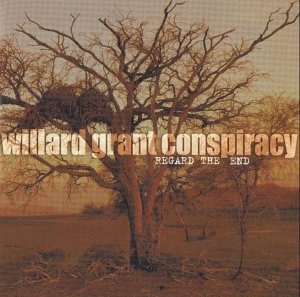
Songs concerned with death, misery and mortality, hued with doleful violin or mournful melodica and delivered by Robert Fisher's sorrow hung melancholic resonant throaty rumble of a baritone that can make Nick Cave sound like S Club Juniors - it's not exactly a recipe for a knees up.
But strangely the presiding mood is upbeat, even River in The Pines trad tale of two young lovers, a drowning and a grave manages to come out the other end celebrating their devotion while the self-penned Beyond The Shore sees passing as the end of life's woes and a passage to Glory.
Of course, it's hard to find too much sunshine in Ghost Of The Girl In The Well, a murder ballad (featuring Kristin Hersh) about a plantation girl who died trying to escape the man "who owned my family" or The Suffering Song, a magnificent though not entirely optimistic saga of a dysfunctional disintegrating family which reminds us that 'sufferings gonna come to everyone someday'. It's a sort of negative zone version of the gospel worksongs about heaven's mercies the slaves used to boom out to ease their toil. And talking of which, of the four traditional numbers among the eleven songs, you'll find a transfixing version of Another Man Is Gone (aka Another Man Done Gone) that etches its mood on piano and slide guitar as Fisher booms out with a bellowing howl of anguish and indignation designed to shake the almighty's throne.
It says much of Fisher's work and influences that unless you know it's almost impossible to separate the trad from the self-penned, as easy to mistake Twistification for the latter as it is The Trials of Harrison Hayes for the former.
Working with the usual array of guest musicians (17 of them this time including Jeff Klein and The Walkabouts' Chris Eckman) and partly recorded in Slovenia (which may explain the Eastern European folk ambience here and there), it may turn over the rocks to explore the human failings that scurry below but there's redemption and hope here too. On Soft Hand basic human contact of skin on skin brings a smile and while death peers over the shoulder on Day Is Past And Gone and Fare Thee Well finds a man alone in a rented room ruminating on a wrecked relationship, there's a sense of peace and acceptance rather than anger. One to have you reaching for the Rizlas rather than the razors then.
Mike Davies
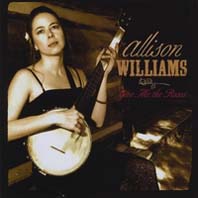
Allison's got an interesting singing voice: dark with experience, slightly worn and croaky at times, and possessing an authentically hard mountain edge that sounds really well against her striking clawhammer banjo playing. Said instrument naturally features prominently on the cover pic of Give Me The Roses, Allison's debut solo CD (which in fact came out last autumn), so we might expect at least a good modicum of oldtime-inspired music therein I guess. Which ain't quite what we get, actually. Not that there's a problem, it's more a case of strength in diversity, although first playthrough may be a touch disconcerting. So, just to prepare you ...
There's five exuberant, medium-to-hard-driven (and quite brilliant) covers of oldtime string-band numbers, on most of which Allison's backed by a crack little combo comprising Tim Gardner (High Windy Band), Dom Flemons (Carolina Chocolate Drops), Matt Kinman (The Little Hobo) and Joe DeJarnette (Wiyos) - the last-named being responsible for the album's production, by the way. Allison happily credits her sources (Tennessee Ramblers, Rick Ward, Tilman & Molly Pyeatt, Carter Family, Georgia Organ Grinders), but she's not afraid to "do something that will probably make 'em all mad" in her slightly idiosyncratic reinterpretations, like bringing in what sounds like a set of quill-pipes (homage to Henry Thomas?) on Charming Betsy. Then there's a clutch of really attractive original songs, largely in a more folky-s/s mode (The Harbor and the soul-searching Anything), where Allison accompanies herself on piano or guitar. And then it's back to banjo for the easy-rollin' travellin' song Love In The Election Year Part 1 and the gorgeous Construction (a standout cut, which also features guest Jeff Whitworth on lap steel). And talking of gorgeous, Allison treats us to a couple of swingingly-paced original triple-timers including the seriously beautiful Lee Creek Waltz on which she plays fiddle in twin-mode along with Tim.
In the above company, maybe the remaining two tracks don't quite belong: the throwaway swing-shuffle Just What I've Been Looking For, and the closer John Hughes Hero, which is a cheery, if cheesy Casio'n'handclap original reeking of schoolday pop-culture. But successive plays reveal the charms of these oddball moments almost as much as the delights of the more traditional-sounding tracks, and the whole package hangs together better the more you keep an open mind while you're listening. And it leaves me breathless with anticipation to hear what sparks will fly when Allison and Chance get together to tour the UK in the (I hope not too distant) future.
www.myspace.com/allisonwilliamsmusic
www.allisonwilliamsmusic.com
David Kidman July 2009
A somewhat ambiguous title for an album steeped in Pan-Americana Roots 'n Blues, doused in Moonshine alt-Billy and delicious Dixie. But it's not long in before you savour the self-deprecating irony of Williams' take on this labour of love homage to his birth-Muse. Infused with heritage and wry humour, it never takes itself too seriously but equally never flippant or fly.
Devotees of Martin Simpson, Boo Hewerdine (Williams' partners in State of the Union) and other musical icons will appreciate their studio contributions both to the predominately self-penned songs and choice covers including the poetic, hymnal King Of California (Dave Allen). Williams is peer/publication ranked as one of the USA's finest acoustic guitarist no less.
Opening track One Step crackles with a deliciously laid-back alt/honk-tonk walking double-bass. With following Mercury Blues' boy-meets-car-of his dreams its infectious slacker shuffle has beguiling recollections of Harry Nilsson and Dr. Feelgood. The 'Bar-jam' informality of this album allows the somewhat ambitious (why not make that generous?) thirteen track-list to shoot the breeze with ease with a dip-in/pick n'mix shuffle-friendly pace. Interestingly, the freight-train tumbling C&W Carry On features as a mid-listed acoustic with Williams on the now familiar resonator and Kevin McGuire featuring on double-bass and harmonies. A full band indulgence reprises the song as the album closer.
The generous gatefold package is a work of dedication in itself. Each song introduced with a wry quote or cryptic anecdote - re Son Of A Gun - 'It was on fire when I got here.' That's what he told the police.' A smoky-cellar jilted lover's blues lament to be savoured with an anaesthetic slug of red-eye to be sure.
For those bobby-sock retro-romantics the Buddy Holly homage New Everything bubbles with cookie-cute but kitsch-free innocence and heart melting harmony. There's much to enjoy and, were one forced to nominate an album that (a near impossibility, agreed) rail and road trip traverses three, maybe four, generations of American popular music – the counter-ironically entitled New Everything is as a good a start as any.
John Kennedy August 2013
This 90-minute DVD gives us a straightforward tutorial by Brooks himself, demonstrating his craft and outlining - gently at first - just how much can be accomplished by simple embellishments and enhancements to basic technique. His intention is to inspire aspiring guitarists with a modicum of technical grasp to think about how to achieve what he calls "guitar groove", a concept which introduces motion and movement into guitar playing (yet still doesn't ignore the element of melody). He likens this to a pianist moving about the keyboard. Indeed, to those hitherto used to (and/or content with) mere strumming and playing first-position "cowboy-chords", Brooks's is a fresh and original approach: mildly virtuosic, sure, but hey, what musician worth his salt won't relish the challenge?
He starts with basic tenets such as "all chords move", and guides the player through a series of suggested moves, creating riffs and patterns and inserting favourite gambits such as note-slide, hammering, and pinch and slap percussive effects, all to achieve things like funky rhythms and bass lines which make the music more interesting and cool. He also casually (but concisely) expounds some of the arcane mysteries surrounding such technicalities as second chord shapes (and makes light of those fiendishly difficult barre chords!). He leads the guitarist into adventure by first taking a song and making it "groove", then building up a standard 12-bar blues structure by livening it up, before moving on to examine two of his own most-requested pieces (Knife Edge and Rich Tonight) in order to see how they get to groove and what makes them tick in terms of onward propulsion and incidental interest. He then brings it all together on Belfast Blues, a prime example of how to create an individual pulse for what starts out as a basic blues shuffle, and how a solo guitarist can in effect become a whole band by selectively applying the various embellishments he recommends (whether fingerpicking or flatpicking).
The bonus section deals with creating defined riffs (such as those playfully named Walkin' The Dog and Blowin' The Horn) just to tickle the tired old template. There's an accompanying tablature booklet too, which makes it all look suspiciously easy - this complementing Brooks's determinedly unflashy showmanship, his masterly musicianship and good taste and eminently personable face-to-face presentation style. But then, you'll realise that this DVD covers a hell of a lot of ground too! By the time it's over, you'll be feeling mildly overwhelmed (and nicely so!) but then the whole session is a peculiarly compelling combination of relentless and relaxed, so that it's likely that even the non-practising-guitarist will doubtless find fascination and much insight therein.
David Kidman November 2008
It's an immediate and intimate record, glowing with easy expertise yet retaining that telling edge of spontaneity that always marks Brooks' performances. Vocally too, I don't think Brooks' soulful authenticity has ever been more faithfully captured on disc. Here alongside a healthy batch of new original compositions Brooks tackles Mississippi John Hurt's Louis Collins, Son House's Grinning In Your Face, Mel London's Sugar Sweet, the old Ellington classic I Got It Bad (given a suitably relaxed rendition) - and around halfway through the disc he even comes on in that ol' kitchen with a completely fresh angle on Amazing Grace (not easy these days!). But after all's said and done it's those originals that stand out - from the gently aching country of Last Chance Love to the laconic resignation of All Been Said, the funky driving Moon On Down and the delicious rockabilly-style title number, there's not a disappointment among them.
Needless to say, Brooks' subtle, sophisticated and seemingly effortless guitar wizardry speaks volumes too, and is an ideal foil for his songwriting; at the same time, though, P.J.'s joyous, and brilliantly-judged, guest contributions should also be singled out for special praise. Just luxuriate in the atmosphere of the delectable little instrumental Devil's Punchbowl, and you'll need no further persuading. But that sense of togetherness, of musicians having fun with music with which they so clearly have a great affinity, is everywhere palpable.
Brooks has excelled himself here, I believe; and all told, I'm sure thinking that Baby O! may well come to be regarded as Brooks' finest collection to date. Go see him live - he tours the UK from mid-April thru till July.
David Kidman April 2010
Brooks Williams was born in Statesboro (made famous by Blind Willie McTell's Statesboro Blues) and was influenced by, amongst others, Taj Mahal, Duane Allman and Ry Cooder. He then discovered the original artists who influenced his heroes and his love of blues and roots was confirmed. This album of covers and traditional songs is the result of a series of single take recordings. Weepin' Willow Blues is a traditional song attributed to Blind Boy Fuller in 1937 and is controlled acoustic blues with up-tempo slide - good beginning. Brooks slows it down for In The Evening, written by Leroy Carr. He brings us a plaintive but clear voice and well played delta guitar blues. Shady Grove is another traditional American folk song and his arrangement has it bouncing along in a very effective, easy going way. I don't know if Miles Davis' All Blues is meant to encompass every blues style because if it does, it fails. What it is, is an instrumental that showcases Williams' guitar dexterity. Don't Get Around Any More is a Duke Ellington song and Brooks' jazz side comes out. I think that the album could do without this track even though the guitar is still good. Robert Johnson's Love In Vain is often covered and although it lacks the emotion of the original this is still a very good version due to the different guitar style that includes slide.
Tenpenny Bit is a traditional fiddle tune but has been re-jigged for guitar and again shows Williams' mastery of his instrument. Lightning Hopkins Honey Babe is up next and this simple, fast paced blues is a highlight. Another of the traditional songs is Watch The Stars which is hard to categorise so I would probably plump for Americana. Brooks' technique of overlaying guitars is well used here. Peacemakers Hornpipe is another fiddle tune revamped for guitar and mandolin. Wonderful folk music and his technique is there for all to hear. There's another powerful guitar performance on Bruce Cockburn's country/gospel One Day I Walk but the Tommy Dorsey instrumental Take My Hand, Precious Lord is hard to take any message from. Brooks closes well with country blues in the shape of Trouble In Mind. Overall I feel that listeners will get more from the guitar rather than Brooks' voice but as far as the musical content is concerned, this is an album worth having in an acoustic blues collection.
David Blue, July 2006
Brooks Williams - Guitar Player (Solid Air)
David Kidman
Veteran of thirteen albums now (and I'm still missing at least three of these!), Brooks continues to consolidate his pole position as guitar picker par excellence with this new set. Nectar has if anything a sharper focus than Skiffle-Bop, with a distinctly fuller sound picture overall and a feeling of more substance and consistency. After previous albums which placed more of an emphasis on Brooks' instrumental prowess, the emphasis on nectar is more on the songs themselves, of which all but four of the ten tracks are Brooks' own compositions. That doesn't entail any neglect of his instrumental skills, which are still prominent, or at least never far below the surface, but it's good to be reminded of just how compelling a songwriter Brooks is. The superbly controlled, delicate Singing In The Dark must count as a highlight, and several other tracks come close. Brooks is as consistent as ever vocally, with an enviable mastery of a range of emotions within that warm, inviting and relaxed delivery. By and large the covers are successful; the album opens with a creditable version of Roddy Frame's Birth Of The True for instance, and closes with a soothing rendition of Dougie Maclean song Brooks turns in an intriguingly fresh take on Memphis Slim's Mother Earth, although, much as I love John Martyn's May You Never, I'm not convinced that Brooks' new version (pleasing tho' it is) adds much to the large number already in the catalogues, even if it's typically expertly played and sung and has some specially fine lap steel embellishments from Phil Madeira, one of the select few backing musicians on the CD (others include Chris Donohue, Steve Hindalong and Dennis Holt). Nectar is well up to Brooks' usual high standard then, and Brooks' current touring profile should ensure more awareness for the considerable all-round talents of this guy who even for many roots fans quite unaccountably still remains a best-kept secret.
www.brookswilliams.com
www.acousticroots.net
David Kidman
To date, Proper have issued nearly 40 of their super-budget-price four-disc box-sets ranging over a wide spectrum embracing jazz, blues, swing and now country, and it should go without saying that this excellent Hank Williams set generally lives up to the series' intimidatingly high benchmark! This is a very fine collection indeed, suitably comprehensive for the period it covers (the first seven years of Hank's recording career), and a godsend for those of us unable to afford the mighty 10-disc "complete" Mercury set. Getting the downside out of the way at the start, though, I must mention that licensing restrictions prohibit the set from extending into the final year of Hank's brief life, which means you won't hear favourites like Your Cheatin' Heart, Jambalaya, Settin' The Woods On Fire, I'll Never Get Out Of This World Alive and Take These Chains From My Heart (all these were recorded during 1952, of course). But that's the only thing I could find wrong with this great set - the remastered sound is exemplary, the notes (by Adam Komorowski), are typically illuminating and detailed, there's a full sessionography, and the packaging is sensible.
The first two discs are arranged chronologically, taking Hank's career up to Cold Cold Heart at the start of 1951. Disc Three gives us the key recordings from 1951, then for its final ten cuts reverts to 1946 demos that predate Calling You from the tail-end of that year (which kicked off Disc One). Disc Four presents six of the radio-syndicated Health And Happiness Shows (ironic title!) that Hank and Audrey recorded in Nashville in 1949 (chronologically speaking, halfway through Disc Two). The first disc, taken along with most of the second and about half of the third, could be said to contain the essential Hank, but I do grow weary of the many spoken homilies on Disc Three, which Hank seemed so fond of recording through 1950 and 1951. Even so, as legions of critics and biographers have traversed the territory on countless occasions, suffice it to say that Hank's legacy as contained in this set is still more than sufficiently representative of his contribution to the history of American music to convince any doubters of the importance of his genuinely soulful brand of honky-tonk. Maybe waiting that extra year for the license might have made this compilation a more attractive proposition, but what the heck - you still won't lose out if you spend £15 on this set.
David Kidman
Despite being her first studio album in three years and giving her her highest entry on the Billboard Top 100 albums, Promised Land has never received a UK release and her US label,R azor & Tie, presumably not au fait with the global nature of the internet, declined to provide Netrhythms with a review copy on the grounds you couldn't buy it here.
Good news than that her latest will be nestling in UK stores as well as available on line, although, while featuring new recordings, there's not new material. Following in what seems to be a growing fashion for reworking your back catalogue, Dorothy Snowden Williams has taken twelve of her old songs and revisited them in simple acoustic guitar arrangements in company with, save for two numbers, 'a few friends'.
Going unplugged is always a risky business, exposing as it does both the song and the vocals, but, as her impressive discography and live performances ably demonstrate, Williams has nothing to worry about on either score.
Riding solo, debut album The Honesty Room furnishes the playfully bitter early Suzanne Vega-like The Babysitter's Here while from follow up Mortal City, her first excursion into electric, comes Calling The Moon. Although Patty Larkin adds second guitar, When I Was A Boy, also from the debut, is another solo Williams vocal, a touch of the young Janis Ian to her delivery.
Likewise, the tender You Rise And Meet The Day is again just her pure, crystal voice with Jayhawks singer Gary Louris on guitar. He gets more to do elsewhere though, singing on no less than six of the tracks, five of those as duets with Williams. Ranging across her albums, these include As Cool As I Am, at one point her signature song, and, best of the bunch, the biting Spring Street from The Green World.
Disappointingly, The Christians and the Pagans, one of her sharpest lyrics, doesn't work, being taken too fast and with Sean and Sara Watkins vocals cluttering rather than complementing to song. However, true to form, Mary Chapin Carpenter lends her sublime tones to the album's two best tracks, joining in delicate harmony on The One Who Knows and as part of the choir alongside the Watkins, Louris and Motherlode for a rousing rework of Mortal City's Iowa.
Should you wish to make then and now comparisons, six of the songs also feature on the package's companion bonus disc, The Best Of Dar Williams. A useful thumbnail for newcomers there's something from all seven studio albums (three off Promised Land) and includes the superb The Mercy of the Fallen, Teen For God and her cover of Ray Davies' Better Things, though disappointingly not Pink Floyd's Comfortably Number or, surprisingly, Teenagers, Kick Our Butts from End of the Summer.
www.darwilliams.com
www.myspace.com/darwilliams
Mike Davies October 2010
Dar Williams - My Better Self (Zoe)
I don't know, you wait ages for a cover of Pink Floyd's Comfortably Numb then two come along in a row. First there was the Saturday Night Fever treatment accorded to it by Scissor Sisters, and now Williams joins forces with Ani DiFranco for this plangently haunting measured and moody, dark and world wearied semi-acoustic interwoven harmonies version that invests it with a whole new female perspective. It is, says Williams, a commentary on the spiritual and emotional anaethetising of America in the aftermath of the last election and as such slots perfectly within the albums general theme of politics and emotion and songs that address social, spirtitual and environmental issues.
It certainly has teeth. The opening Teen For God is a wicked swipe at the smug self-righteousness of young Christians trying to suppress their sexual feelings (there's a lovely line about riding a lot of horses!) for the sake of appearances while Empire is a potent, angry commentary on the current American adminstration foreign policies and, in cotect with the album's mood, her duet with Marshall Crenshaw on Neil Young's Everybody Knows This Is Nowhere takes on a whole new metaphorical references.
Casting the socio-political net wider, the ringing and chiming Echoes looks to remind that we can make an impact and bring changes a world away even with the smallest of actions, a song clearly in tune with the current put an end to poverty campaign.
There are emotional snapshots here too. Calling to mind a world-weary Joan Baez, The Hudson is a wonderful love song to the New York river and, by association, a hymn to the humanity and connections it traces in its wake, while keeping the watery connection Williams branches out into the blues for the haunting and now ironically timely Two Sides of the River, a song about loss and separation written following a New Orleans gig in 2003. She should get bluesy more often.
Over her career, she's produced a stunning catalogue of albums but she's arguably never sounded better than she does here, more assured, more relaxed, wiser and older with the year, all of which pours into the simple heart's affirmation of You Rise And Meet the Day or her moving love song to her young son, So Close To My Heart where she rivals the very best of Janis Ian. She's long overdue discovery by a wider audience that will provide chart placing returns, this may just be the album that let's the rest of the world in on the secret.
Mike Davies
Dar Williams - The Beauty of the Rain (Evangeline)
A bit of a change of strategy, this sees Williams's pop-folk embracing a much fuller production sound and welcoming aboard musical collaborators such as Alison Krauss, Bela Fleck, John Popper, Chris Eberhardt and Hooters mainstays Rob Hyman and Eric Bazilian. But while there may be more flesh to her bones, the soul remains as beguilingly unadorned as ever. At ease in her musical clothes, Williams lets the songs and her tales of lives in transition flow organically over a collection of infectiously lyrical melodies that ache with both yearning and sadness. If her previous album, The Green World, was formed from her life among the fields and skies of Massachusetts, this is informed by her move to New York City, the 'smaller conversations' overheard in the urban landscape.
Subjects that get her astute attention this time hover around themes of identity (the upbeaty Your Fire Your Soul), independence (I Saw A Bird Fly Away) and dreams outworn and new (the rather self-explanatory I have Lost My Dreams where both Krauss and Eberhardt provide harmonies), but it's relationships and (as with Farewell To The Old Me) thoughts of moving on - emotionally or physically - that provide the bedrock. Closer To Me finds her unselfishly urging a lover to get out and see the world, to fulfil their sense of wonder working on the absence makes the heart grow fonder principle, the gorgeous acoustic title track observes a couple drifting apart with a quiet acceptance while a gently hymnal The One Who Knows realises that one day a lover or a child will one day leave but celebrates the time and experiences shared and given until then.
It celebrates both the small spiritual pleasures of Fishing In The Mountains and the globe enfolding, world opening potential of technology on the rousing alto voiced soaring and tumbling The World's Not Falling Apart, one of the album's central highlights. A plaintive churchy cover of The Band's Whispering Pines, suggested by her new hubbies favourite songs, doesn't quite come off, but on an album that opens with (evoking early Jackson Browne and one of the best songs she's ever written) the shimmeringly magnificent folksy anthemic Mercy Of The Fallen (in which she takes inspiration from those who've faced and overcome difficulties in their lives, you can forgive a small patch of drizzle in an otherwise glorious deluge.
Mike Davies
Dar Williams - The Green World (east central one/Razor & Tie)
Having taken a career diversion tangent to join Lucy Kaplansky and Richard Shindell for the collaborative Cry Cry Cry project, Williams finally turns attention back to solo albums for a belated follow up to 97's End of Summer. The title comes the Shakespearean concept of there being two worlds, the closed and the green. The closed, represented by his court plays, is the ordered side of life whereas the green, as typified by things like A Midsummer Night's Dream, is more magical and anarchic where we learn, often reluctantly, things about ourselves that we then apply to our life in the closed. Which basically means the album's about change and how that affects our way in the world and our relationships. About growing up, I guess. Or as she sings in Playing to the Firmament, "When did sex get so mean? When did crime get so clean?" Adding "What's the rush? Dip your brush into this twilight. There are leaves upon the skylight," as a reminder to hold on to what innocence you can for as long as possible, accepting but not surrendering to the closed world's rigidity.
Occasionally evoking thoughts of early Judy Collins and Janis Ian in both the conversational approach of her beguiling but experience seasoned voice and the shades of her melodies, the musical tone is folksy but embellished with arrangements that draw on the rock end of the spectrum, Hammond organ and sprightly drums adding flesh to her frequently jangling acoustic guitar. Her past albums have demonstrated her observational insights and clever wit, and they've been honed even sharper here. Take I Won't Be Your Yoko Ono, where, in an upending of the usual perspective on her relationship with Lennon, she addresses what female artists sacrifice when they get involved with male stars. "I wonder if Yoko Ono ever thought of staying solo. If she thought of other men. And if she doubted John Lennon. Worrying that he'd distract her art."
There's a lot here about the struggle between art and artist, about not falling prey to pretentiousness and hollow self-importance. "I don't want to screw myself with an inscrutable pout. I just want you to come and figure me out," she sings on Another Mystery while Spring Street sticks it to the poseurs who "find a small apartment where a struggling artist died. And pretend because I pay the rent I know the pain inside." And then on After All, a song about depression, she affirms our place in the great design as "The sun rose with so many colours it nearly broke my heart. It worked me over like a work of art. And I was a part of all that."
Empathy is a strong suit, veined with a smiling affection as with Happens Every Day where she watches college students and observes "You would think they're carefree, I have seen their trials. Frowning into Shakespeare and practising their smiles."
Williams says that the songs are permeated by an "an acceptance of the beauty and grace of the things that you're not going to figure out or that are not going to come to you through the conventional channels." Step back, loosen up, drop the pose, surrender to the mystery and magic of the world around us. Williams is more than willing to take your hand on the journey. "I wanna be the one to feel the sun. So if you want to see the world with me, let's go." You couldn't be in better company.
Mike Davies
Chances are that, while he has released several albums encompassing blues, Reinhardt styled 30s gypsy swing, bluegrass and old time folk music, you're more likely to be familiar with the Canadian singer-songwriter's work if you're an American pre-schooler. He's the songwriter for PBS children's show The Big Green Rabbit, for which he won an Emmy, has released award winning children's albums and clocked up 30 million YouTube hits for kids tune The Rhino Song.
He also happens to be a working cartoonist and author of short stories and poems with a PhD in English whose been writer in residence at various American colleges and universities. This album, however, should find him a wider and slightly older audience. A collection of dusty Americana about lovers, losers, big hearts and small pleasures, his throaty delivery and storytelling songwriting style often has you thinking of Johnny Cash, particularly so on Mama, Got To Go To Heaven, Old Death and the marvellous plaintive love song I Don't Want No One But You.
But you'll also hear Kris Kristofferson on Human/Inhuman's whimsical account of why power makes everyone an asshole, Guy Clark on Rock Shop Girl and Hick Town, and a deeper voiced John Prine on the title track's sharp look at body image pressures.
Some of his finger picking can sound the same (listen to the title track and Misfits back to back), but his tunes are catchy, his arrangements effective (there's particularly good use of fiddle and banjos) and his lyrics repay attention. Beware though, listening may make you a chocaholic.
www.myspace.com/davidwilliamssongs
Mike Davies March 2011
Gail Williams - Women Of A Certain Age (Rossendale Records)
Gail's a really lovely singer with a warm tone and attractively understated style of delivery; although she hails from Wrexham, she's a convincing interpreter of the American song and ballad repertoire, as this fine CD demonstrates. Strange as it may seem, I'd not come across Gail before except in a supporting role on a Kate Lissauer CD five or six years ago, although I learn that she's been a stalwart of the London folk scene for around 20 years in company with her husband Jim Younger (who accompanies her on either guitar or banjo on 8 of the 13 tracks here). I was equally surprised to learn that Women Of A Certain Age is Gail's solo debut on record. A distinct virtue of Gail's singing is her ability to make these songs her own and put them across convincingly without having to resort to adopting an American accent. This even applies to her cover of Silver Threads And Golden Needles, the only "composed" song on the CD (unless you count The Titanic, inextricably associated for many with the singing of Almeda Riddle). And after all, many of the ballads originated on this here side of the pond…! My favourite tracks tended to be those where Gail sings unaccompanied – not that I don't appreciate Jim's ever-sensitive playing, always quietly inventive in its expressive embellishment, but more that I value how the extra degree of rhythmic flexibility of singing unaccompanied gives Gail's voice the chance to stretch out. Having said that, perhaps my favourite track of all is Gail's rendition of Old True Love, which I hear as a variant of A-Rovin' On A Winter's Night with sundry floating verses taken from other American songs – here Gail for once accompanies herself (superbly) on 5-string banjo. This is a delightful release, which bears repeated and detailed listening; refreshing in its plain presentation of well-chosen material and its total avoidance of any unnecessary gimmicks. Just one thing puzzles me about it though – in my ignorance I'd question the relevance of the cover photo (of a trio of Welsh women peasants) and CD title to the contents; a private joke perhaps, or would the album's producer, the enigmatic Dónal Maguire, enlighten me?!
David Kidman
Hank Williams - A Proper Introduction To Hank Williams: The Final Sessions (Proper)
Proper's earlier Hillbilly Hero box-set, which presented the very best examples of Hank's genius on just four well-filled discs a few years back, prompted me to remark: so who needs the utterly complete editions? But that set's exhaustive excellence was spoilt only by its chronological limitation, in other words its curtailment at a point where Hank had just over a year left to live – a deficiency which is remedied in style with this superb single-disc adjunct to that box. The Final Sessions presents the last three sides Hank recorded for MGM in 1949 and 1951, along with several tracks from the "Health And Happiness" radio shows which he recorded in company with the Drifting Cowboys (including sparkling takes of Lost Highway and You're Gonna Change). The disc also gives us a clutch of demos Hank recorded between 1950 and 1952, including Weary Blues From Waitin' (which became a posthumous hit for Hank) and the singularly inappropriate There's A Tear In My Beer. What was unarguably one of Hank's finest ever recording sessions, his final one on 23rd September 1952, yielded a whole series of solid-gold classics, embracing not only all-time quintessential country tunes like Your Cheatin' Heart and Take These Chains From My Heart but also the more unorthodox Kaw-Liga. This very fine collection thus serves the dual purpose of perfectly complementing the Hillbilly Hero box and forming a genuinely representative selection of Hank's versatility within the various sub-genres of country – for in addition to the good ol' heartbreak fare, there's prototype rockabilly (Settin' The Woods On Fire), spoken homilies from Luke The Drifter (Be Careful Of Stones That You Throw) and fervent, stridin' gospel (Sing Sing Sing). Y' want the best of Hank? – well forget all the other compilations, just invest in Hillbilly Hero and this one, it'll only cost you around £20 total.
David Kidman
A startling collection of classic, windswept American folk, it says on the press release. A little overstated, methinks. American folk, certainly, windswept, yes, though dusty's probably a better description. But while I was taken with his slightly cracked and throaty relaxed vocals and the easy drift of his melodies, startled wasn't quite how I'd describe the reaction. Nor, while superbly well crafted and written with open honesty and a nice line in evocative imagery, would I venture to declare either I Will Understand (Mary Ann), dreamily bittersweet waltzing Mockingbird or even 6 minute closer Great Plains, with its yearning pedal steel and violin, as 'classic'.
However, what I would say is that everything here underlines Williams as a talent to listen to and nurture, a writer with a knack for stories that resonate and touch hidden corners of the emotions and whose influences would seem to be drawn from such names as Tim Buckley, Tom Rush, Jackson C Frank and early James Taylor.
With numbers like the title reflective bluesy title track, a weary New Year's Eve and the untitled hidden track, this is a very good album that suggests that, at some stage not too many years away, they might want to dig out that opening description again.
www.haywardwilliams.com
www.myspace.com/haywardwilliams
Mike Davies August 2010
She may not share the same first name, but, five years after confounding expectations with an introspective debut album of the singer-songwriter persuasion, her sophomore release finds Williams maintaining the family tradition by waving the country standard. However, unlike granddaddy Hank, dad Jr and half-brother III, she's keeping clear of the honky tonks and rowdy saloons in favour of a more alt-country sound streaked with steel guitar and (especially on the kickalong Chris Janson duet A Love I Think Will last) splashes of mainstream Nashville.
Not that she's kicked autobiographical introspection out of the window. Driving along on a shuffle drum beat and a twangy chorus Mama reflects on how, following her parents' divorce, mum stayed strong and, preaching forgiveness, refused to turn her kids against their father. On an equally personal note, the uptempo Let Her Go is a plea to a much loved daddy to let her fly free on her own wings while Without Jesus Here With Me looks back on the car crash that almost killed her and her sister and the faith's that since sustained her.
But if there's the spiritual, there's also the carnal as, on Three Days In Bed, she sings of a hot time with someone she met in France while, the afterburn of relationships gone down inform Gone With The Morning Sun, the swaggery Keep The Change and, conjuring the heartbreak ballads of Mary Chapin Carpenter, He's Making A Fool Out Of You.
Closing out with a simple, piano accompanied cover of Neil Young's Birds that shows her voice at its naked best, it's clear that the Williams legacy is in no way bound by gender.
www.hollywilliams.com
www.myspace.com/hollywilliams
Mike Davies August 2009
Holly Williams - The Ones We Never Knew (Universal South)
Let's not lean on the fact that Holly's granddaughter of Hank and daughter of Hank Junior, please, for that celebrated musical lineage is virtually irrelevant! Holly's been writing her own kind of songs since age eight, in fact; it turns out she's every bit a talented singer-songwriter in her own right, and needs no referential exploitative gambits in order to succeed. For on this, her debut CD, her assurance is astonishing. And you can see from the booklet photos that assurance extends to her good looks, for she exudes natural beauty in a way that obviates the need to show off her legs to pose for a cover shot! But onto the music, and rightly, the focus is firmly on Holly herself and the powerfully observant way she has with a lyric, putting herself right there in the shoes or character of her protagonists (normally failed romantics, it must be said) with an insight and maturity that it might well surprise you to find in a 24-year-old. Holly's adopted bohemian lifestyle, her early touring days opening for Ron Sexsmith and Billy Bob Thornton, all have stood her in good stead for making this album, and although her lyrics - at least on this evidence - are almost entirely downcast and introspective, they have the ring of truth and a tenderness in their expression that transcends any impression of unremitting sadness that would otherwise be quite overwhelming in an lesser talent. The desolate emotional landscape Holly paints is for the most part wholly convincing, from the desperate resignation of Would You Still Have Fallen? and the equally desperate pleading of Take Me Down through to the philosophical, sweetly knowing warning shot of I'll Only Break Your Heart. There's one even more poignant moment though, when, having already intentionally played down to zilch Holly's family connections, it's hard not to respond to the one obvious reference to her grandfather's death in the final verse of the reflective and wistful opening track Sometimes (I wish I were an angel in '52… And there I would have saved him, The man who sang the blues") - it's interesting to note that Holly hadn't even heard Hank Snr's music until after age 17, and only came to realise its importance when she started hearing other contemporary songwriters namechecking him in their own songs (and while I'm at it, might I assume that the album title alludes to Holly's celebrity ancestry too?)… The musical arrangements clothing Holly's songs are interesting; they tend to be centred round Holly's guitar or piano, yet the songs that make the most impact are those where the settings are most restrained and relatively sparse, like Take Me Down and the hushed almost reverential ambience of Memory Of Me. There are some moments where I felt at first hearing that Holly and her co-producer Monroe Jones had opted for a commercial-type lusher production at the expense of the intimacy of her songwriting, but I'll admit that after a couple of playthroughs I was more inclined to appreciate the high production values for what they are, and I now believe that generally the production inventively enhances Holly's songs at key points even if one or two of the cuts (like Velvet Sounds and Everybody's Waiting For A Change) still seem overblown with their sweeping string (or synthesised string) textures with expansive classical piano chords and insistent rhythm section. No matter, for Holly's strong voice and songs shine through most stylishly on this release - so no empty gestures here, and no hanks for the memory then!
David Kidman
John's best known as a founder member of the stellar Irish-American band Solas, but it's not often we get to hear him demonstrate his instrumental prowess outside of the group environment; this chance, which finds him teaming up with that excellent guitarist Dean Magraw (who you may recall from his partnership ventures with Peter Ostroushko), is thus to be grasped with all due eagerness. Here, as with Solas, John mostly plays either concertina or button accordion, and as you'd expect the menu is exclusively instrumental, a fair majority of the tunes being originals from the pen of one or other participant (each an unsung-gifted composer on this showing). Several of the selections are somewhat in the traditional mould - and very convincing they are too... Yet, equally often, the traditional sources are taken as a springboard for some really inventive leaps and/or some wild improvisation, as on Dean's helter-skelter Trippin' In Eden, but there are also some significant departures from the world of the obvious folk tradition which prove eminently worth hearing, like John's excursion onto piano for a murky yet curiously ancient-sounding piece of film music Perdition Piano Duet, where the silences and rests prove as important as the notes and chords played by both musicians. And there's an uninhibited grace to Dean's measured portrait Lianna (where "innocence and intensity" are combined most magically), while the swirling Kilnamona contains some stunning fingering work amongst the evocative guitar traceries. The non-originals include a Breton medley (the bonus "live encore" track) as well as some classic pieces from the repertoires of Solas (naturally), Frankie Gavin and La Bottine Souriante, all arranged and executed with flair and panache. Indeed, whether playing fast or slow, the guys' playing is full of a kind of earthy joy in their music-making, with some particularly telling responsiveness on display between their dancing fingers; the great thing is that lyricism is not forgotten either. Although the recording is clear and truthful for the most part, at least with regard to the principal instruments, I was less convinced by one or two places where John has doubletracked whistle or flute and the balance is less than ideally clear (as on part of the track 6 set). On a purely musical level, though, this disc proves a splendid showcase for these two fine musicians.
www.johnwilliamsmusic.com
www.deanmagraw.com
David Kidman, June 2006
Last heard collaborating with Neil MacColl on the Two album, the Newcastle based songstress now returns with her new label debut and a belated follow up to 2007's Leave To Remain.
Despite the fact that this is her seventh solo release and she has a scrapbook full of critical praise, she still remains something of a cult. Finding her on peak form with an urgency and immediacy that comes from not allowing the musicians to hear the material before they went into the studio, and setting a limit of four takes, hopefully this will change matters.
Opening with 50 White Lines, a song about long distance driving with a rhythm to match as a voice counts from 1 to 50, it's a gently reflective and often melancholic affair with songs contemplating the dawning and dying of love, rich in delicate fingerpicked guitar and her shy softly breathed vocals.
The cold snap of Winter Is Sharp finds her exploring traditional folk with a spare, accordion, percussion and ukulele arrangement that should sit nicely with Unthanks fans, but otherwise, save for certain Nick Drake colours, there's more of a soft, brushed pop flavour in evidence; Wanting & Waiting nodding to Waterloo Sunset in its yearning and underpinning melody with Just Leave's disintegrating relationship and the similar themed glockenspiel tinkling and suitably wispy Smoke both fragile gossamer waltzing delights.
Stretching out, she also slips into a late night jazz cellar vibe with the whispery Cream Of The Crop and the resonant piano backed, icily atmospheric, almost spoken There Are Keys before Noble Guesses returns to folksier climes and hints of the young Joni Mitchell as she sings about the connotations of different types of absences.
Having spent the rest of the album in leisurely mood, she gets positively spritely for the bass led Little Lesson with its handclaps and almost pass the dutchie rhythmic stomp before bringing things to a close with Up North, a regret tinged and Pentangle shaded love song to the Northern home where she wishes she could spent more time.
The title, of course, refers to the stage in pregnancy - often referred to as flutters - when the foetus first shows signs of individual life. On the evidence here, mother and child are both doing exceedingly well.
www.kathrynwilliams.net
www.myspace.com/kathrynwilliams
Mike Davies February 2010
A much-praised one-time Mercury Prize nominee, singer-songwriter Kathryn has been on the fringe of major recognition for several years now, producing album after album of her own exquisite, low-key, personal yet accessible songs. This new record (named after the number of main participants – it's not Kathryn's second album!) sees her teamed up with guitarist-singer Neill MacColl (son of Ewan MacColl and Peggy Seeger), whom she first met at the Daughters Of Albion concert that formed part of the BBC's Folk Britannia season (there they performed together Ewan's classic First Time Ever I Saw Your Face). Here they capitalise on the magical intimacy they shared on that occasion with a sequence of songs that embodies a gently rapturous and inclusive mood all of its own and displays the potent immediacy of a moment captured. The majority of the songs are Kathryn's own compositions: each one is sublimely etched, and instrumental accompaniments are delicate and creative: their very sparseness is in itself a kind of richness, an understated sumptuousness that underlies Kathryn's fragile voice and Neill's prescient harmonies. It's a shame, then, that I was unable to share in all its riches, for that the promo disc came with no credits or lyrics – these are supposed to be available on the website, but I sure couldn't find them anywhere. Whatever, Two is certainly a classy acoustic offering, of that there's no doubt, and listening to individual tracks in isolation brings considerable rewards - more so than by listening to the whole album in one go, for despite the intensity of the experience (you can almost tell it was recorded over a short timespan, just six days), there's an uncanny uniformity of mood and style that in the end I find counts against the music and its impact somewhat. It may be indicative that the duo's charmingly quirky cover version of Tom Waits' Innocent When You Dream is one of the more distinctive tracks here.
David Kidman March 2008
She may not be working under major record label pressures to deliver to a timetable these days, but the Liverpudlian singer-songwriter's clearly not shirking. She's turned out an album a year since Little Black Numbers back in 2001, keeping up the output now with Leave To Remain While hardly overproduced, unlike last year's Over Fly Over, it's a fuller sounding set, building on the core piano, cello guitar trio framework with woodwinds and strings along with the occasional dab of electronics.
Otherwise, it's business as usual with her folk flavours tinted with the golden days of 60s American songwriter pop on sophisticated, intelligent, insightful and compassionate songs that address love and sadness, unwanted or self-imposed loneliness, and the yearnings for at least one night of happiness.
On Sandy L she adopts the persona of a woman who keeps company with those watching her on webcams, Stevie is a melancholic hymn to tragic poet Stevie Smith, while she weaves haunted, unexpected poetic images of jaundiced babies (Blue Onto You), drawings of lions (Let It Happen), effects pedals (Sustain Pedal), and a glass bottomed boat (er, Glass Bottom Boat) into tales of love embraced or invited in.
Muted and at times meandering, but consistently full of depth and insight, both her albums and her performances demand that you stop the chatter and let the voice, the playing and the songs seep under the skin. Why on earth would you not.
www.kathrynwilliams.net
www.myspace.com/kathrynwilliams
Mike Davies October 2006
Many of those who've got into Lucinda's music in recent years won't be aware of her early career history, and the re-release of her first two albums, originally issued on the independent Folkways label, is a welcome chance to reappraise them. It's hard to believe that the first of these albums was recorded over thirty years ago, in September 1978, for Ramblin' is a brave (for the time) launch onto the recording stage in that it's a pretty much bare-bones acoustic affair (just Lucinda, her twelve-string and John Grimaudo's six-string). And, coming before Lucinda had any kind of experience or reputation as a songwriter, it's a set consisting entirely of covers - and then, mostly of traditional material (folk, blues and country-blues classics) in which she'd immersed herself at a surprisingly early stage. Repertoire which stemmed from Robert Johnson, Memphis Minnie, the Carter Family, Hank Williams, and the jugbands. She responded to the gutsiness of the lyrics of these songs, a down-to-earth quality which she was to nurture later in her own songwriting, and her often highly personal reinterpretations (here enshrined in recordings she herself funded) reflected her free-thinking musical nature. They may not seem particularly radical or startling at this temporal remove, but you need to remember the era in which they appeared, and the fact that not many of these songs had by then attained their now-familiar status. It's a low-key but pleasing and actually quite impressive debut, which hasn't really dated. And you can hear traces of her rapidly developing talent for forthright vocal expression too.
Happy Woman Blues, by contrast, sees Lucinda embarking on the highway of original compositions by confidently presenting an album-full of them, the first fruits of her wholehearted embracing of that activity during the intervening year-and-a-bit. Here she gives early indication of her ability to embrace authentic Americana genres in expressing her inner thoughts, and while some layerings may seem a mite superficial there's much evidence of the future potential. Indeed, Lucinda must've thought a lot of this early material, for she notably revisited one of the album's songs, I Lost It, for her breakthrough Car Wheels On A Gravel Road album in 1998. By the time she was proudly showcasing her own (even at that time well-structured) compositions, Lucinda's vocal style had also matured and developed the beginnings of its own identity, although there are traces of vibrato (the Joan Baez influence) and some distinctly warbly moments (eg on King Of Hearts) where a wobble becomes just a little intrusive. But Lucinda has always displayed a sure grasp of exactly where a song was going, and her innate defiance comes through strong and clear, especially on the contradictorily-named title track and the gritty tough strut of Rolling Along. The album's moods move credibly through the time-honoured territory of life and love, in settings that take us from the pacy cajun ambience of Lafayette and Louisiana Man to the torchy emotional vulnerability of King Of Hearts, the knowingly regretful One Night Stand, the simply heartfelt Sharp Cutting Wings (Song To A Poet) and the supportive Hard Road. Fittingly, there's none of the Nashville gloss, for Lucinda has only a tactfully employed small band for company (although a good measure of raw and authentic local colour is bestowed by even those fairly minimal resources). Although there are rough edges, and it was to take Lucinda a further seven or eight years of honing her talents before being accepted into the pantheon of major country artists, Happy Woman Blues is nevertheless a record that's worthy of a place in your collection.
David Kidman October 2009
Williams has appeared three times on the legendary Austin City Limits TV show, but this little nugget was her very first, recorded on October 13, 1989 in the 15th anniversary season. She'd just scored a country hit with Passionate Kisses and, a decade on from her first release, suddenly everyone was finally waking up to her talent.
You can tell from the performance that becoming a belated overnight sensation had infused her with renewed energy and self-confidence while her band at the time, and while there's some early nerves by the time she gets to Crescent City, she's clearly relaxed and enjoying the moment with guitarist Gurf Morlix, bassist John Ciambotti and drummer Donald Lindley firing on all cylinders.
Opening in casual but confident form with the twangily weary Big Red Sun Blues, a further ten numbers in the set are drawn from the recently released self-titled album, among them a belting rock n roll driving version of I Just Wanted to See You So Bad, a tremendous honky tonky waltzer Price to Pay, a bluesily chunky Changed The Locks and, of course Passionate Kisses.
Looking back her previous two albums are represented by Son Jackson's Disgusted off the country blues covers debut Ramblin' and, show closer, the second album's self-penned Delta blues stomper title track Happy Woman Blues with John Logan giving it plenty of harmonica stick.
Audiences got something of a sneak preview treat too with the inclusion of Something About What Happens When We Talk, announced as a song from her next album, but not surfacing on Sweet Old World for another three years. The special edition of her Lucinda Williams includes a live version of Memphis Minnie Lawlers' Nothing In Rambling. A live staple of her shows at the time that crops up here too but, by way of making the DVD especially desirable for fans, second number in is a fine cover of John Sherrill's Wild And Blue, a song she's seemingly never recorded. She'd next appear on the show almost ten years later in December 98 following the release of the album that took her from start to icon, Car Wheels on a Gravel Road. It's worth noting that DVD's also available from New West too.
Mike Davies April 2009
Now, could Lucinda surpass her exceptional album of only 18 months ago, West? Well after only a few playthroughs I'm coming to believe Little Honey (which is her ninth studio record in total) almost does just that. It contrasts with the downbeat nature of West in being a generally a more upbeat collection; it comes as a bit of a surprise to learn that most of its songs were originally written for West (though Circles And Xs dates back to 1985 and Well Well Well to the Sweet Old World days of 1992). Little Honey, however, stretches Lucinda's already eclectic musical envelope even further beyond the approved boundaries of country and Americana. She's retained West's engineer Eric Liljestrand as co-producer (with Tom Overby) for Little Honey, and there's real high-octane chemistry in the support crew, which mostly comprises her latest crack road band (now collectively known as Buick 6), including among its ranks guitarists Chet Lyster and Doug Pettibone, bassist David Sutton and drummer Butch Norton; additionally, keyboardist Rob Burger (who'd played on the West sessions) returns to gently fill out the textures some more. All told, Little Honey is a very physical album, though it still keenly (and sensually) expresses that quality of introspective spiritual heartache that has made Lucinda one of country music's most enduring songwriters of our time.
The cheeky false-start to the guitar-led rock of Real Love belies the supreme strutting confidence of what follows, its almost breakneck tempo and solid sexy road-band sound, a hard-riffing template which returns with even more raunch and grit on the muscular, hard-driven Honey Bee. Then track number two, Circles And Xs, brings us right back to the cracked, pained world-weariness that's become Lucinda's trademark, this vocal trait continuing on into the bluesy Tears Of Joy. On this new album in general, Lucinda's usual dark heartbreak mode is quite often lit up when the sun kinda fitfully breaks thru the clouds and relative contentment seems to prevail, but disillusionment never quite leaves the stage completely, even on the more optimistic numbers.
There's another departure too, in that the ever-evolving nature of Lucinda's songwriting is matched by some unusual and adventurous musical ideas: for instance, the delta-blues groove of Heaven Blues employs a down-home-made-kitchen-junk-percussion kit, whereas Rarity has a warm-toned, soft-edged and subtle brass arrangement that weirdly counters the caustic and sinister (almost Cohenesque, as befits its namecheck) lyric. Little Rock Star brings the Spectorish gestures of the torch ballad crescendo to point up Lucinda's intimate cautionary musings on the downside of stardom, culled from bitter first-hand experience. But then, another of the album's standout tracks turns out to be the most sparely scored of all: the moody and double-edged Plan To Marry, which is just Lucinda and her guitar, confidential and yet defiant. Another of my favourites is in complete contrast, the tenderly memorable If Wishes Were Horses. I was also interested to hear Charlie Louvin and Jim Lauderdale lending authentic lonesome bluegrass cadences to Well Well Well, and the ultra-distinctive tones of Elvis Costello spar-duetting on Jailhouse Tears. Interestingly, the album's bonus cut is a stripped-down "alternate early version" of Jailhouse Tears, which has much to commend it (in fact I think I actually prefer its simplicity to the later mini-drama take). Only the official album closer, It's A Long Way To The Top, failed to convince me - I thought it bland, distinctly clichéd in a 70s-rock-chick-by-numbers way almost, and then I discovered it's the only song on the album that Lucinda didn't write, it's even an AC/DC cover for gawdssake, so there ya go! But that cut aside, Little Honey has got to be close on Lucinda's finest hour in the studio so far, and (if nothing else) it forms a great complement to West.
David Kidman October 2008
Lucinda's classic 1998 album is now available in a deluxe edition; that phrase isn't always good news, particularly to those who bought the original release, but in this case there's plenty to celebrate. The original album, the contents and value of which need no comment other than the description "essential Lucinda", has been remastered - though I'd challenge you to spot any significant differences! But on this new two-disc set the first CD appends three extra tracks which are of sufficient interest to warrant mentioning here. Two of these are previously unreleased: Down This Big Road Blues, and then (We Are So) Out Of Touch which comes in a poignant pre-Essence arrangement. The third is the alternate (Horse Whisperer movie soundtrack) version of the Car Wheels album cut Still I Long For Your Kiss. Disc 2 is devoted to a recording of an hour-long live show Lucinda performed in July of '98 at the WXPN Radio Singer-Songwriter Festival, during the course of which she gives us gutsy, committed renditions of around two-thirds of the Car Wheels album's songs plus four other choice numbers from her back-catalogue including the then-ten-year-old Changed The Locks. The bonus material on this deluxe edition is really good, so it's not just to be considered for completists and hardcore Lucinda devotees.
www.lucindawilliams.com
www.myspace.com/lucindawilliams
David Kidman March 2007
Three years on from the Grammy nominated World Without Tears, the Queen of alt-country returns with an album of highly personal songs about loss, darkness and redemption, fuelled by the death of her mother, Lucy Morgan, and the ugly collapse of a 'tumultuous' relationship. She may have been through emotional hell, but, produced by Hal Willner and featuring Bill Frisell, Gary Louris and Doug Pettibone, it's given birth to a stunning album, its sense of loss and rage steeped in the blues but filtered through country sensibilities.
The passing of her mother clearly informs the mid-tempo shuffling Mama You Sweet with its aching reflection on what remains behind while the Emmylou-like gently rueful Fancy Funeral's struggle to reconcile private grief and public display (she paid for but didn't attend) patently stems from the same roots.
However, the emotion leaking through other songs of loss, the twangy Learning How To Live and the numbed emptiness of the spare Everything has Changed could apply equally to the death and the end of the affair as she considers life left alone and changes wrought.
There are, though, several tracks that are unmistakably directly related to the bust up. There's no two ways about Come On, a slow slouching rock blues with searing Neil Young guitar that opens with her drawling 'Dude, I'm so over you' and proceeds to deliver a vituperative kiss.
The funky tribal chant rhythm and spoken vocal nine minute Wrap My Head Around That tells us whoever it was had a far too free zipper while Words refers to the 'filthy sounds stumbling ugly and crude' coming from 'your beautiful mouth'.
And yet, within the same song you'll find determined defiance as Williams finds strength and perhaps escape in her songs. It's interesting too that there's a couple of numbers that deal with separation in more tenderly concerned and forgiving terms.
It may not relate to the same experience, but on the aching midnight under open stars opener Are You Alright? (one of the album's best cuts) she asks 'are you sleeping through the night do you have someone to hold you tight'. Then the torch blues (and perhaps a little sappy) Where Is My Love? doubtless refers to another failed, long distance, love affair as she pines through a road map of possible locations where her man might be and what he may be doing.
The putting back together, the self-reclamation if you will, is here too; in slow swaying country mood on the organ backed hymnal Learning How To Live and, by way of total contrast, the blues moan Unsuffer Me calls for release from the pain to the sound of tortured soul guitar. And if God can't do it there is, on the smooth waves of Rescue, always her father who 'can't pull the demons from your head' but can 'tie some ribbons in your hair and show you that he'll always care'.
And so it is that hope fitfully rises, the six minute wistful ambling What If imagining a topsy turvy world where 'we loved one another in equal amounts' the fade out swelling to musical optimism. Having found her soulmate (record label marketing director Tom Overby if you're keeping notes), the album closes with its sleepy campfire title track (the instrumental break oddly reminding me of The Green Leaves Of Summer from The Alamo), a clean cool breeze blowing away the dust of hurt that sees a lover 'counting the days 'til I see you again', acknowledging 'who knows what the future holds' but urging 'come out west and see'.
She's said this is the last batch of songs to be drawn from her personal darkness, that she's grown out of the destructive patterns they document. It'll be interesting then to see where the journey West, physically or metaphorically takes her, but you'll want to be along for the ride.
www.lucindawilliams.com
www.myspace.com/lucindawilliams
Mike Davies February 2007
Lucinda Williams - World Without Tears (Lost Highway)
How on earth was she ever going to follow up Car Wheels On Gravel Road, we wondered. The answer was by upping the bar even further with Essence. But how could she top that? Here's the answer. Recorded almost totally live off the floor with her road band, it's her toughest, most swaggering rocking and sexually direct (listen to the smouldering in your face seductive Righteously) and album yet, one in which - cover your ears Nashville - she uses the f word (which comes as a bit of a slap in the Patsy Cline heartbreak torch n twang of the magnificent Those Three Days) and includes lyrics like "Lean over the toilet bowl and throw up my confession, Cleanse my soul of this sin obsession!", marrying thoughts of hard edge Dylan, Neil Young's Live Rust and, especially on Bleeding Fingers, Exile On Main Street era Stones while Williams also cites The Band (People Talkin', a lament about the bruises wagging tongues can cause), The Doors (the ghostly organ moods of American Dream) and ZZ Top meets Howlin' Wolf (the dirty blues claw at organised religion that is Atonement) as other influences that fed into the songs.
From the opening bluesy slurring barroom and two bottles of Bourbon slow sway of Fruits Of My Labor where thoughts of Christine Perfect on I'd Rather Go Blind come to mind, it's a breathtaking work, sounding like the product of a hungry, angry twentysomething rather than the 50 year old Williams now is. She's growing old disgracefully and you wouldn't want to cross her in a brawl.
There are magnificent, transfiguring and emotionally lacerating songs here. American Dream is a searing talking blues sketch of strip-mine workers and heroin addicted Vietnam veterans, the dispossessed and disenchanted in a world where "everything is wrong." Sweet Side" is a chilling snarled portrait of child abuse and its adult psychological fall out ("you were screamed at and kicked over and over, now you always feel sick and you can't keep a lover"). But they don't have to be that dramatic, she doesn't have to be that forceful, to kick you in the heart. Minneapolis is a keening Springsteenesque hymn of regret and old wounds, Words Fell a healing song of reincarnation that dispenses with guitar in favour of upright bass, drums and pedal steel, while World Without Tears is a slow swaying blues that asks 'if we lived in a world without tears ...how would sorrow find a home" and reminds us what renders us human. Add the vagabond dreams of Ventura ("I wanna watch the waves make signs out on the water") and Over Time, the album's other flicker of Cline's torch, and you've got the year's prime contender for country album of the year already done and dusted. Now, how's she ever going to follow this?
Mike Davies
The follow up to the 1998 Grammy winning Car Wheels On A Gravel Road finds the 48 year old Louisiana native exchanging its largely heel kicking uptempo for slower, more intimate burns, travelling dust tracks rather than highways. If that was Sheryl Crow with knuckle dusters, as the Guardian wonderfully described it, this finds her in less musically pugilistic mood but no less heartachingly passionate in her storysongs of desire, desolation and religious salvationalism. Pulling in a new band that includes Jim Keltner on drums, David Mansfield on violin and producer Charlie Sexton (himself once touted as a new Steve Forbert) on rhythm guitar, with guest harmonies from Jim Lauderdale, Gary Louris and Joy Lynn White, her weary voice and forlorn guitar etch deep yearnings of battered life and love through the veins of Bus To Baton Rouge (a melancholic return to childhood memories), Blue, Lonely Girls, the old time Kitty Wells of Reason To Cry and the longing of Broken Butterflies. But Are You Down also finds her wearing tough trousers while the mesmerising title track prowls with a defiant feline Southern sexuality and Get Right With God serves of a hot off the slide guitar griddle slice of foot stomping testifying religion. Guess they'd better start engraving that next Grammy right now.
Mike Davies
Husband-and-wife team Robin and Linda have been making music together for several years longer than I've been into their music; I've still not managed to catch up with all their records, but with each one I hear my resolve gets stronger! Buena Vista, which is their 20th album to my reckoning, gives most probably the strongest impetus yet, while at the same time indicating that its dozen songs (eleven originals plus one cover) may well represent their finest achievement to date.
There may be nothing new under the sun, as it were, but on Buena Vista everything comes together for Robin and Linda in some special way under the production guidance of the irrepressible Tim O'Brien, who lends his considerable instrumental skills to the mix on every single track (not to omit mention of vocals too, and exemplary contributions from Jerry Douglas, Dennis Crouch, Kenny Malone and John Jarvis, and one-off cameos from Ray Bonneville and Jeff Taylor into the bargain!). But even when the gorgeous (and admirably understated) vocal harmonies of Robin and Linda (and of course Robin's straightforwardly solid guitar playing) are taken into account, you just can't ignore the quality of their songwriting either, which is absolutely top-notch throughout.
They prove dab-hands at all of the time-honoured highways and byways of Americana: they're steeped in the art of the tribute song (Maybelle's Guitar And Monroe's Mandolin), the lonesome honky-tonk (I'm Invisible Man), the telling homespun philosophy (When A Thread Gets Caught, For Better Or Worse), the poignant (Visions Of Mother And Dad), the traditional ballad (Pretty Polly Williams). Not all of the songs here are strictly speaking new I guess; I certainly remember All Broken Hearts Are The Same from a few years back, and it's surely one of the vintage Robin & Linda compositions that prove well worth reviving here. But hey, I've no complaint, for everything you hear on this record is classily crafted in the best traditions of the country-Americana genre: every note and nuance is there naturally in its rightful place, perfectly catching the letter and spirit of this music in all its glorious incarnations. No frills, for none are needed: this is timeless, straight-down-the-line quality through and through.
David Kidman January 2009
David Kidman
This performance is from the 2006 Bay-Car Festival which is held in the North West of France, near Dunkirk. Saginaw resident Williams blows away the audience with her explosive opener, Tell Mama. Lars Kutschke's guitar rings on this funky version of Clarence Carter's song that Big Mama Thornton made her own. Big Fall is medium paced soul but Kutschke does pick up the speed a little on his solo. How Much Can A Woman Take is a slow blues and Pietro Taucher steals the show on organ even though Kutschke does try to upstage him. The more I listen, the more he does. Power is all about the voice and builds into a pounding blues with lightning fast guitar breaks.
I'll Take You There is funky soul and a long one at that. Hard Drivin Woman is a mid paced boogie and I'll Give You Mine is a slow jazz burner. Just You And Me has Robin Rogers guesting on harmonica and vocals and is a good time blues on which harp and piano feature highly. The final track, Travellin'has a little bit of Bo Diddley in there before it becomes a singalong and then goes off into Gospel shouting before coming full circle back to the beat. Also available is an eight track DVD covering all of the songs on the album apart from Just You And Me. This shows you how much of a stage presence Sharrie Williams has.
www.sharriewilliams.comDavid Blue August 2007
The Welsh duo's third CD sees them edging even closer to realising their full potential with a somewhat different kind of collection that moves away from the mixed-bag of traditionals and covers which characterised their first CD especially, now focusing much more extensively on Vicki's own songwriting. Bearing that in mind, it might then seem perverse that Changing Light kicks off with two trad-arr songs (The Oak And The Ash and Boys Of Bedlam, the latter done acappella with vocal contributions from Vicki's daughter Faye) before proceeding into contemporary territory with Writing Home, a beautiful song from the pens of Miv Cameron and Kev Hughes. I say contemporary territory, but the "c" word refers to the era of composition rather than the actual ambience of the rest of the album, since Vicki's songs too carry distinct resonances from the past and the spirits of place and tradition. For instance there's the intriguing, evocative The Happy Ghost (in common with several of Vicki's songs, it's somewhat reminiscent of early 70s prog-folk by The Sun Also Rises, though none the worse for that I hasten to add!). Walking Apart is inspired by the story of the distance romance of Joseph Parry and Myfanwy Llewelyn, and is followed by a tender performance (in Welsh) of the song he composed in her memory. The whole CD is pervaded by an air of gentle confidence and accomplishment, with Trefor and Vicki themselves responsible for the crafted vocal harmonies and well-judged guitar and mandocello work. That said, they also benefit enormously from the occasional presence of some fine guest musicians whose playing perfectly matches their own style; once again they call upon label-mate Phil Hare who contributes some inspired and superbly deft guitar work to three tracks, and then there's the extraordinarily soulful fiddle playing of Mike O'Connor and the flutes and recorders of David Manley (on a couple of tracks apiece). Changing Light shows just how far Trefor and Vicki have come since their occasionally tentative Bare Branch release, both in respect of building on their strengths and of choosing the ideal guest musicians to enhance the impact of Vicki's increasingly compelling songwriting.
David Kidman
That's obvious from the opening Storm where steady ticking Edge-like guitar riff and percussive beats provide the pulse for her prowling hush the album proceeding into the yeah yeah yeah chiming Fleetwood Mac inclined Sing The Body Electric where she manages to sneak in references to both Walt Whitman and Isambard Kingdom Brunel.
Shut Your Mouth lifts the pace further for some sexually charged feline power pop while, with its spoken lyric, chant yowl backing and beefy guitars, Slake suggests what Pink Floyd might sound like where they to enlist Clannad and Sinead O'Connor.
And if you want to rummage around in the box of previous comparisons, then you might fish out Tori Amos for the sombre piano sweller Pinned while the spooked early hours chilled atmospherics of How You Take My Breath Away, the sax weeping skeletal fingers of Eve and the sonic collage of Crashing Minis touch on early Portishead territory by way of Jonny Greenwood.
Lyrically, matters of the heart underpin much of the material (Crashing Minis is, perhaps inevitably, about a car wreck of a relationship), albeit often coming from skewed angles and dressed in often nihilistic imagery. But ultimately it's hard to resist feeling uplifted, especially so on the shimmering tinkling piano closer The Stars Are Beautiful, a song that perfectly captures that feeling of wanting to stand on a hillside, staring up into the sky and throwing your arms wide open to embrace the heavens. The first Viking Age ended in the 11th century, the last revival came with 19th century Romanticism. Williamson could well spark another.
www.astridwilliamson.net
www.myspace.com/astridwilliamson
Mike Davies June 2009
The Shetland born former Goya Dress singer's third solo album has a very specific reference back to a track on its eponymous predecessor in the form of Superman 2, a glorious bouncy folk-pop sequel that, in singing about taking the plunge, serves to celebrate ordinary people and extraordinary life and the love and/or dependency that often connects them, a theme that dizzily spins through much of the album on such songs as Another Twisted Thing, the stately slow burning ballad True Romance and (included in the lyrics but unlisted on the back sleeve) the piano smouldering Amos-like Only Heaven Knows.
Much has to do with emotional ambivalence, the desire to rush in and the fear of consequences or being burned. It's there on the opening ambient folk of Siamese, in the heat of the sexually predatory Reach and the spooked Amaryllis where she wants to be possessed but also to crush the object of her desire.
Open to her spiky pop sensibilities on Shhh and the doo-dooh-ing chorus of Tonight, in touch with her inner Joni on Forgive Me and the bonus Work This Hour yet cool enough to slip in the brief jazz doodling piano instrumental Carlotta, Williamson has crafted an elegant portrait of the churning turmoil beneath the assured surface of contemporary urban woman. After languishing in cult shadows, it's about time this lone wolf was given the opportunity to howl at the whole of the moon.
Mike Davies July 2007
Robin's very latest offering is, one might say, an almost complete contrast from certain of its altogether knottier predecessors (the trilogy comprising The Seed-At-Zero, The Iron Stone and Skirting The River Road in particular), being instead almost entirely a straightforward programme of songs with just a guitar for accompaniment. It's also one of Robin's most immediately accessible albums in purely musical terms – but that doesn't mean it's a lightweight or throwaway product… far from it in fact. Instead it's a most thoughtful, well-put-together collection that showcases Robin's mastery of different styles of song, the strengths of his own songwriting, his skill in adapting traditional sources, his uniquely involving and convivial way of communicating the essence of a song whatever its provenance, and his (often underappreciated) skill as a guitarist-as-self-accompanist. The set also to a large extent reflects the content and balance of his current live repertoire. Notwithstanding the fact that these are considered interpretations, there's a glorious spontaneity in Robin's delivery at all times, and while he tends now to rein in the more eccentric of his vocalisations he still allows enough scope for expressive embellishment to satisfy the storyteller's instinct in us all. Quite simply, Robin's a delight to listen to, and a captivating (and highly individual) song-interpreter at every turn. His recounting of the ballad of Matt Groves and Lady Barnard, while so different from the now-familiar Fairport template, is superbly managed, with a great sense of immediacy. He turns in affectionate Job Of Journey Work-like renditions of the traditional When First To This Country and the comforting, gospelly Take A Heed Of Me Sometime (first heard on the Ring Dance album), while there's a convincingly sparse revisit of The Man In The Van (an undersold song from his Merry Band's American Stonehenge album). Through The Horned Clouds is a jewel of a song that now emerges from its former "myrrhky" arrangement into harsher but arguably more truthful perspective in its new sparser setting; there's also some fine slide guitar on this song, and even more cutting slide work on the keenly-observed title track (which has some of the most intriguingly personal lyrics of the entire set). There's a feel of the old country-blues masters about the world-weary Jordan Is A Hard Road, not only in Robin's puckishly gritty vocal delivery but also in the delicious, thoroughly infectious momentum of his guitar playing. This song, like a handful of others, also benefits from a gently stomping foot-drum beat, generating a kind of genial, almost busking feel to the proceedings – which, when augmented with a harmonica, as on the cover of Wild Horses, had me thinking of one-man-band Don Partridge (no insult intended!). Even his slightly free way with Dylan's Absolutely Sweet Marie, which at first hearing may seem more than a touch wayward, does (once assimilated) then embody its own logic. The only track which hasn't entirely grabbed me yet is The Silence Between The Words, a new song with a spoken intro, which doesn't quite seem finished, almost like a work-in-progress. The album concludes with a magical little drone-based instrumental (Song For Bina), simple but effective in the style of a slow-raga progression – but it just sort-of stops in mid-flow (shame!). Nevertheless, this is a very fine album with it own special aura – both worthy and typical of Robin the avuncular bard and his consummate artistry.
David Kidman January 2009
Robin Williamson & His Merry Band - Journey's Edge (Fledg'ling)
Journey's Edge was the first stage in Robin's post-Incredible-String-Band progress, and captures him largely shedding the slightly tired rockist posturings of the final days of the ISB and attempting to find his true musical voice, though still yet to succeed in the field of what was to become his trademark latter-day Celticry. As the ISB dissolved, in 1975, Robin relocated to Los Angeles and began recording, with occasional ISB add-on bassist Stan Lee, mixing his new songs with the accumulated backlog of material which hadn't fitted the final-period ISB. The ensuing experimental bar-band (The Far Cry Ceilidh Band) was eventually and gradually to morph into The Merry Band following the meeting with West Coast Celtic musicians Chris Caswell, Jerry McMillan and Sylvia Woods: at which point (early 1977) the Journey's Edge sessions took place in Santa Monica.
It's also a quite remarkable record in its own way, and although it might never be regarded as one of Robin's most key artistic statements I nevertheless have a certain fondness for it in all its quirkiness, and it doesn't in any way deserve the neglect it has suffered within the Williamson canon. Its temporal context and discographical history also give some measure of perspective: it first appeared in 1977, released in the US only on Flying Fish, a specialist label with limited distribution (remember this was the pre-internet age, when anything not strictly mainstream was deemed obscure and thus hard to seek out). And musically it was very much a transitional work, with a patchwork history and unusual instrumental complement that encompassed elements of both rock band and acoustic-Celtic-folk. The LP only finally achieved a CD release in 1993 on Edsel, and this has been only erratically available since. Now, however, this fabulous deluxe-edition reissue - remastered from the recently-discovered original master tapes - presents a wonderfully bright, clear, uncluttered soundscape that enables the felicitous colourings of the Merry Band's special ensemble to be heard properly in all their glory. The original LP has never sounded better. In my opinion (and with the inevitable benefit of hindsight) the music on these 11 tracks seems in many ways like an alternate (ie non-Fairport/Steeleye) path for the meeting of folk and acoustic rock and/or a logical development from the adventures of the ISB circa 1971 (ie if the band hadn't deviated down the rockier path post-Liquid Acrobat). Like the music of the mid-period ISB, Journey's Edge configured itself into something of a stylistic ragbag, albeit a pleasing one. It ranges from nascent Celticry (the excellent Mythic Times and the instrumental tone-picture Voices Of The Barbary Coast) to a somewhat strangely-strange-inspired but entirely likeable Rap City Rhapsody and a gently reflective Out On The Water, a Saturday Maybe-style string-backed ballad Lullaby For A Rainy Night to a fun cover of the late-40s comedy-music-hall number Maharajah Of Pockador. Then there's The Bells, with its mix of Myrrh-style chamber textures and Job's Tears "oh happy man" tag, and the even weirder marriage of folk, rock and ska beats on Red Eye Blues, and even some guest backing vocals from ex-ISB member Licorice McKechnie on two songs. Robin's Merry Band was coming together nicely, as you would then hear on its next offering American Stonehenge (recently reissued by Gott Discs and now available from BGO).
For Williamson fans, this is an absolutely essential purchase, not just because it restores the original LP to wider availability but also because it includes no fewer than ten bonus tracks which were recorded at various points in 1975, forming an integral and hitherto missing piece of the jigsaw which gives us for the first time a degree of insight into the artistic confusion that Robin was undergoing prior to his Celtic renaissance (clearly, he was unsure of the direction he wished his creativity to take at that point). Several of these tracks (Precious Blues And Greys, To Give My Heart To You, Bleeding Again) are written in a more private, confessional, introspective style than we're accustomed to hearing from Robin, and employ a loosely soft-rock, even slightly conventional backing. The lyrically cryptic, curiously episodic but equally curiously satisfying Dark Lady Of The Waters is the standout among these demo recordings, straddling the musical divide between piano-based s/s and experimental Celtic. On the other hand, the jaunty Old Entertainer doesn't quite survive its very-late-ISB feel, while The Kid I Never Knew prefigures later Merry Band quasi-autobiographical offerings and When Winter Comes has the appealing carefree-Celtic crossover spirit that characterised the later Journey's Edge sessions, and the final bonus track is a real oddity, an atmospheric and reverberant cover of the old standard After The Ball. The allure of this intriguing set of bonus cuts is only marginally compromised by the frustrating lack of information about the personnel involved, and the non-provision of lyrics for these nine songs within the booklet (I suspect this information was simply not forthcoming, otherwise I feel sure that the admirable guys at Fledg'ling would've included it). In all other respects, however, the deluxe presentation and packaging is typically exemplary, and Fledg'ling have done a grand job with this edition.
www.thebeesknees.com
www.pigswhisker.co.uk
David Kidman January 2009
There are a lot of Robin Williamson discs around at the moment, and those not in the know need to be a tad careful before committing to purchase. In this connection, it's best to warn you right at the outset that this particular two-disc set will almost certainly be an essential acquisition for the admirer of Robin's artistry, but only for the very dedicated fan of the storytelling side of his activities. It brings together recordings of four separate stories, each of which embrace the character of the Gruagach, who, in the folk tales of Scotland, the Isles and Ireland, is a wizard – and a rascally, malicious and usually untrustworthy one at that. Although the readings themselves span the two decades and more between 1981 and 2006, Robin remains absolutely consistent in his approach. Two of them - The Fisherman's Son And The Gruagach of Tricks and Rory Mor And The Gruagach Gaire - are first-time CD transfers of recordings that originally appeared on Pig's Whisker cassettes in 1981 and 1982 respectively, whereas Prince Dougie And The Swan Maiden is a 2006 re-recording of a tale that originally appeared on cassette between the first-mentioned pair, and the fourth tale, Blind Raftery And The Jealous Hero, is a brand new recording. Robin has just the right feel for the pace of these tales, and you can tell he relishes communicating them to his listeners intimately yet proudly. They're delicious tales alright, full of vivacious little details and quirks that suit the puckish side of Robin's personality down to the ground, although some may feel that this involves a wee bit of over-acting in the characterisation. As is his wont, Robin also incorporates snatches of harp tunes, which enhance rather than distract from the telling, and are an integral part of your experience of being in the presence of a true bard. It goes without saying that Robin's a practised master of the art of storytelling, and he clearly practises what he preaches, his dictum being that: "in order to tell a story you have to learn the bones of the storyline and then put it into your own words and develop it in performance". And it's immediately evident that Robin has developed all four of these tales in live performance before committing himself to recording them. One really can't imagine these stories being told better; the only caveat - and a necessary one - is that, however magical and compelling the experience, it's not necessarily one for frequent or repeated play, so this release is not destined to be a best-seller: rather, an esoteric one for the aficionado and/or the reference library, albeit one of the very highest quality.
David Kidman March 2007
For those with long memories, the title of Robin's latest CD (this is a new release, by the way, as opposed to a reissue) is taken from a key track on the Incredible String Band's 1968 LP The Big Huge, and that song is revisited here. But this album (the third in the continuing series of Robin's "explorations of sung poetry" to be released on the jazz/improvised music label ECM), is no jaded retrospective set, but another important landmark in a long career that has produced some of the most startlingly original, imaginative, inspiring and stimulating work in the whole world of folk/acoustic music, virtually inventing the term "proto-world music". Robin has the natural (some say supernatural) ability to transmute any source material with supreme inventiveness yet retain the thrust and character of its narrative and its emotional and spiritual essence. Here, Robin gives us settings of verses by John Clare, Raleigh and Emerson, all characterised by a freewheeling spirit of discovery - his uneasy treatment of Clare's violent and disturbing poem The Badger is especially persuasive, his florid setting of Emerson's Bacchus twirls its vine-like vocal tendrils around woozy curling mandola lines, and he gainfully employs the melody of a highland harper's lament for Even Such Is Time. Robin also transforms the ballad Sir Patrick Spens, incorporating a queasy, seasick shifting onomatopoeic portrayal of the motion of the waves (both in his melismatic sung narration, which according to his own liner note "abandons melody for the limited note possibilities of cras gwyair, the old Welsh harp tuning", and the ominous, aleatoric instrumental setting): extraordinary! Elsewhere on the disc, in addition to The Iron Stone (which, disappointingly, is now shorn of both its celebrated sitar traceries and, more seriously, of the cathartic impact of its "second phase"), Robin also (more creatively, I'm glad to say) reworks other earlier compositions of his own including the Wee Tam classic The Yellow Snake and To God In God's Absence, the dreamlike portrait of Edinburgh Henceforth and the truly beautiful Verses At Ellesmere (written for his wife Bina), also imparting a rather strange, almost Second-Viennese-School quality to There Is A Music with a new "abstract spontaneous composition" setting. He punctuates the "heavier" items with the more relaxed bardic harp-backed Wyatt's Song Of Reproach, the chirpy benediction In Praise Of The Mountain Hare and a "floating" arrangement of an O'Carolan piece (Loftus Jones). The only track which doesn't quite fit in (here at any rate) is Political Lies (setting arguably too "conventional" a polemic for its mystical bedfellows). Robin's trademark open-mindedness and eclecticism are strongly in evidence on this recording, on which he's joined by musicians from the worlds of jazz and improvised music (Mat Maneri, Barre Phillips and Ale Möller). It's not an easy listen by any means, being quite thorny, often weird, and always challenging, but hell, is it rewarding - and unquestionably one of the most intriguing albums released anywhere in 2006.
David Kidman February 2007
David Kidman January 2007
This unquestionably brave release (one of the finest albums of 2002, in my humble opinion) has just received an unduly dismissive and caustic seven-line thumbs-down from good old fRoots mag! One man's meat etc, sure, but Robin could never come up with a product totally devoid of any redeeming features or at very least a modicum of interest. Whatever your views on the merits or otherwise of the poetry or the music within, you have to admire and respect Robin for his integrity and enterprise. As far as Robin's profile within the folk and world music scene is concerned, basically there's no middle ground – you're either aware of Robin's name from the heady days of the Incredible String Band and/or have kept in touch with at least some of the music he's produced since, or you've remained fairly blissfully unaware of his talents throughout. One thing's certain – he's not (and never has been) a performer you can ignore, although there's no denying that his music can be (to put it mildly) an acquired taste. OK, I'm putting it upfront that you're not in for an easy ride here, even if you're already familiar with Robin's trademark eclecticism. But as ever, for all that Robin's work is challenging, it's also immensely rewarding if you're prepared to take the time and give it the detailed attention it so deserves. And again, each and every album he releases is quite different.
First, then, some background. Robin's never happy unless he's occupied with at least three major projects simultaneously; currently he's touring with the resurrected ISB while continuing to carve a distinguished solo career as a compleat modern-day bard (harper, storyteller and songsmith rolled into one), all this activity somehow leaving him time to pursue various innovative and highly individual studio-based projects. Just two years ago, Robin issued an album (The Seed-At-Zero) on the ECM label (noted for its modern, experimental jazz releases), on which he performed, either to exceedingly spare instrumental backings or else totally unaccompanied, a series of settings of mainly mystical poetry by Dylan Thomas, Henry Vaughan and Welsh bards, interspersed with a few of his own songs. This landmark album formed a very persuasive demonstration of Robin's musical and artistic strengths both as a performer and as an advocate of the continuance of folk culture through the ages, the concept of a common, linked heritage being one to which Robin has never been a stranger.
Skirting The River Road is a suitably logical follow-up, although it's actually considerably different in sound-palette and overall atmosphere from Seed. One common feature, half-expected by now, is that Robin's voice is used instrumentally, highlighting its extraordinary range and elasticity. Skirting is, however, an unorthodox album in the Williamson canon by dint of its use of (predominantly, though not exclusively) blown reed (rather than plucked string) textures; here, Robin is ably and empathically augmented by two musicians (Mat Maneri and Paul Dunmall) experienced in improvised jazz, who between them play a collection of saxes, flutes, clarinets and more exotic reed instruments; there's also a violist (Ale Möller) and double-bass player (Mick Hutton) on board, while Robin does, however, still sometimes utilise his own guitar or harp or whistle, to good effect.
This time round, the musical approach taken may owe more to improvisation than to formal arrangement, but there's no hint of restraint or compromise in the settings, just a wholly natural desire to coherently respond (much in the spirit of the old ISB, you might say). The featured poets – Henry Vaughan, William Blake and Walt Whitman – have been carefully chosen to emphasise both their essential modernity and the thread of continuity that links their visionary work. The poems aren't what you might term the "easy", "usual" selections, but often represent what is arguably the more dense, obscure side of the poet's output – with Blake, for instance, we get the prophetic The Four Points Are Thus Beheld (from Jerusalem). Robin vocalises (intoning, singing or speaking) the words, with an inherent acute and (musically and spiritually) highly intelligent response to the texts that absorbs and reflects such purely literary expressive devices as alliteration, internal rhyme, onomatapoeia, taking in his stride (indeed, positively relishing) irregularities of metre or structure that would defeat most folk musicians. Whitman's kaleidoscopic Crossing Brooklyn Ferry (hard to believe it was first published as long ago as 1856!) is accorded a radical, heady, free-form treatment that (once you get attuned to its almost "beat" feel) seems just right for its sixteen packed minutes. On the other hand, another Whitman setting, this time a composite, Facing West From California's Shores, is closer to a "conventional" folk song structure, a little reminiscent of Robin's conjunto-inflected work with the Merry Band. In addition to the poetry settings on this album, as on Seed Robin interpolates some of his own compositions – there's a reworking of Here To Burn (which first appeared on 1988's Ten Of Songs album) along with a brace of new ones including the fearsome, surreal stream-of-consciousness of The Map With No North, which closely approximates Robin's approach in his own earlier fascinating Dream Journals sequence. Robin's response to the texts is nothing short of masterly, and his innate musicality is simply stunning. Such a complex response demands a certain amount of effort from the listener, thoughtfulness befitting Robin's own effort in bringing these timeless artistic visions to fruition. Perhaps the bottom line is that if you're serious about music, then you owe it to yourself to experience what Robin has to offer, at least the once. Skirting The River Road is a majestic album, and certainly a worthy successor to Seed-At-Zero.
David Kidman
This is Sonny Boy Williamson II aka Rice Miller and these two albums are available on one CD in the UK for the first time. Down And Out Blues from 1959 was the first of only two albums released during his lifetime and was his breakthrough into the white audience. When you list backing artists such as Fred Below (drums), Willie Dixon (bass), Robert Jr. Lockwood (guitar), Jimmy Rogers (guitar), Otis Spann (piano) and Muddy Waters (guitar) then you know that you have a piece of history in your hands. He was known as the 'King of the Harmonica' and his powerful guttural style is shown to great effect on songs such as Don't Start Me To Talkin', Your Funeral And My Trial and 99. This is not to say that the playing on the other tracks is not up to standard. In fact, it is the contrary and every song on both albums has harp playing from the top drawer. His singing is not too shabby either and, although he's not a blues shouter in the vein of, say, Howlin' Wolf, he is effective enough.
In Memorium, from 1965, was released in the year of his death and was a re-issue of The Real Folk Blues album. It had much the same personnel as Down And Out Blues with the notable exception of Muddy Waters, Matt Murphy being added. This album was not as rough and showed a certain amount of sophistication, probably as a result of his frequent visits to Europe. Too Young To Die was prophetic in its way but it is a great memorial to the man. He didn't do too many slow songs but Trust My Baby, with its wailing harmonica and eerie vocal, is about as slow as anyone could have gone. His harmonica playing had not diminished in the six years between these two albums and Checkin' Up On My Baby and Bring It On Home, where the harmonica is used as an echo to the vocal, are excellent examples. To say that Williamson was a great influence on those who followed would be an understatement and his style carried on with Junior Wells to name but one. These two albums are a testament to one of the true greats of blues music and every home should own at least one Sonny Boy Williamson record.
David Blue

Toronto-based artist Tamara Williamson is exploring new territory with her songs. She's an unusual talent and it's difficult to get a fix on her. Her songs are like a trick with mirrors. She samples and delays her guitar and voice, creating layers of harmony - leaving images which are subtle, spacy and melodic. Her voice, wistful but confident, sensitively weaves and soars, adding texture and colour.
Tamara was born and raised in London and, with the anarchist attitude which continues to infect her music now, played in various punk bands, shaved her head and went to art college. Canada has obviously not tamed her!
Her fourth and most recent album, Unconcious Pilot, was produced and recorded by Tamara at Orchard Studios, just outside Toronto, but it's 'live' that her magic really impresses and hypnotises. Building her loops and delays, she captures her audience in her performance. Luckily for us, she's spending a lot of time in the UK. You can buy her music at her gigs or http://www.hmv.com or from her website
Sue Cavendish
It's been five years since Kelly Willis released the much-acclaimed 'Easy' long player. You might have thought that she'd have wanted to capitalise on her success with that but the small matter of having four children in the meantime sort of scuppered those plans. However, such is the affection for her that she's been able to call upon Chuck Prophet to land a helping hand for this new record, 'Translated From Love'. In my books, that's a pretty good helping hand.
So, the net result here is that what could have been an album of covers has turned into some compositions with Chuck and some quite selective cover songs. As you might expect, Chuck's pop sensibilities and all round musical knowledge have helped to make this a job well done. So, for example, the retro feel of 'Teddy Boys' has resonance with Kelly's first musical outing in the rockabilly of Kelly and The Fireballs. He also introduced Kelly to the wild Iggy Pop song 'Success' which both amused and appealed enough to her that her version found its way onto this record.
The range of music takes in some straight ahead pop/rock with 'Nobody Wants To Go To The Moon Anymore', the country stroll and strings of 'Sweet Little One', the jangling pop of 'The More That I'm Around You' and the ballad that makes the title track. To help keep the family close, Bruce Robison, Kelly's husband duets on the bluesy 'Too Much To Loose' too. It all adds up to show a lady who is at home with her talents working with a guy who knows how to best lay them out for us to appreciate. Nice work all round.
www.kellywillis.comSteve Henderson September 2007
Kelly Willis - Easy (Rykodisc)
Five albums down the line, the bluegrass songbird made her greatest impression with her 1999 Rykodisc debut What I Believe that had her hailed as a female Wilco and the new Lucinda Williams. This isn't likely to elicit the same fervour, but with Chuck Prophet providing sterling guitar work its relaxed Texan country - she even does chirpy bluegrass without working up a sweat - slips down as, er, easy as mint julep.
With the exception of the lullabying Reason To Believe - which is about new son Deral - Willis's own songs are of the love lost, found or lingering variety, the title track and the Gary Louris co-penned mandolin strumming Getting To Me her best contributions. But it's the covers that provide the strongest tracks, Paul Kelly's self-explanatory You Can't Take It With You, hubbie Bruce Robison's broken-heart What Did You Think and a home on the range slow waltzing version of Kirsty MacColl's Don't Come The Cowboy With Me Sonny Jim!
Mike Davies
Brian Willoughby - Fingers Crossed (RGF Records)
It's been a long time in coming this, an all-instrumental album by ex-Strawb Brian, who's currently in partnership with talented Nashville-based singer-songwriter Cathryn Craig. His skills as a songwriter were showcased on his previous solo album Black And White, but fine though his original songs are, it's as a superlatively skilled guitarist that Brian's probably best regarded by his many fans. Fingers Crossed (what an apt title, you'll think if you've ever watched Brian intently and tried to figure out how on earth he's doing what he's doing on that fretboard!) is a sequence of 19 pieces, not all of which were originally written as instrumentals – there's a version of his justly celebrated Alice's Song for instance, and three more of Cathryn's, including Goodbye Old Friend (from her joint album with Brian, I Will) also appear here too shorn of their lyric content but they take on a new life by being rearranged thus. All the individual pieces are Brian's own, some co-written in Nashville with Michael Snow or Dennis Bryon. The title cut is actually a debut recording of a piece he wrote for a home demo that landed him the job of Mary Hopkin's guitarist back in 1971!
Many of the tracks are quite short, so at times there's an inescapable slight feeling of bittiness, though that's probably an unfair criticism when the actual playing is always, always absolutely top-notch. Brian's a real master of many styles too, from evocative mood pieces to intricately picked mini-extravaganzas to jaunty raggy Resonator work to Fahey-style delta bottleneck to the prog-country full-on electric phase-soaked onslaught She Rings My Bell that ends the CD. Not only does Brian display a formidable grasp of technique throughout, but unlike some "guitar technicians" we could mention he utilises this gift to play beautifully.
David Kidman
Proper's essential odyssey through the hinterlands of classic American music continues with what must now be the finest available collection devoted to the inspirational and influential combo fronted by Texan Bob Wills. As the excellent booklet note succinctly posits, Bob almost single-handedly invented a bold new musical hybrid that "fused traditional fiddle music with New Orleans jazz, ragtime, blues, swing and Mexican music to create the immensely popular genre known as Western Swing". The four discs provide an exhaustive (albeit necessarily not quite complete) survey of Wills' output for various labels including Brunswick and Columbia, spanning his most creative period (1932 to 1950) and demonstrating how the new approach could be used to serve a great variety of material from ballads to stomps - much of this was composed by Bob himself. The latter years saw instrumental as well as musical innovations - for instance, Bob was one of the first to realise the potential of the amplified fiddle (at one time the band had no less than three in its ranks), and sideman Tiny Moore brought the electric mandolin into prominence in the post-war years. And the large - but not unwieldy - band complement ensured an internal flexibility that could create a good variety of moods and styles within any given set. It goes without saying that this new box supersedes earlier Wills compilations like the fine ASV King Of Western Swing release (all but one of that CD's tracks appear here, and in very good remastered sound).
David Kidman
As singer with full blooded American rock outfit Heart, it was never likely that Wilson's debut solo album was going to be big on gentle, acoustic folk rock ditties. That voice wasn't build for hushed whispers.
Case in point her version here of Led Zep's Immigrant Song, it may not be quite the storming bone crushing wailing Valkyrie folk-metal stomp of the original but, like the blues storming cover of Lennon's Isolation, you could probably use it to crack walnuts.
Save for the solitary self-penned Little Problems, Little Lies (which actually is a quieter folk rock number), sung in the voice of a soldier dying in Iraq, this is an album made up totally of cover versions. And featuring a whole bunch of guest collaborators. An interesting, not to say eclectic, mix it is too. She joins forces with sister Nancy for spooked and extended take on Pink Floyd's Goodbye Blue Sky, teams with Elton for a bluesy rock drift across his Where To Now St Peter?, and hits the backwoods bluegrass trail in the company of k.d.lang with a chunky slide guitar licked version of Lucinda Williams' Jackson. And that's just the first three tracks.
Deliberately themed with songs about war and troubled hard times, you'll also find her in company with Wynonna for a muscular cover of We Got To Get Out Of This Place, The Youngbloods' eerie folk hued Darkness, Darkness (the second of three with her sister), trading folk country and fiddles with Gretchen Wilson on Bad Moon Rising and getting decidedly riled up for Neil Young's War Of Man while Alison Krauss provides the sweeter counterpoint.
I'm not convinced A Hard Rain's a-Gonna Fall works with its verse swapping between Wilson, Shawn Colvin and Rufus Wainwright, becoming a bit of a plodder over its six minutes with an overwrought kitchen sing final. But, finding its loveliest moment with Nancy, Wynonna and Deana Carter on The Youngbloods peace anthem Get Together, this is far better than you might have expected if your only frame of reference was the stadium thundering of Heart's Barracuda.
Mike Davies October 2007
Not as addled as he sometimes seems when he performs live, the wayward surf pop genius continues his recording comeback with this Californian song cycle that includes narrative punctuations from Van Dyke Parks that would clearly like to think themselves up there with Ginsberg, Kerouac or Bukowski but more often sound like Les 'Desiderata' Crane providing voice-over for some Broadway musical. Between times though are Wilson's songs, well his and the old title track chestnut which gets reprised on several occasions, where he does that Brian Wilson thing with 60s sunshine surf pop even if he sometimes sounds like a 66 year old passing himself off as teenage beach dude. Which, I guess, is exactly what he is doing.
As such there's not the same lightness of touch to something like Morning Beat or Good Kind Of Love that would have been there 40 years ago. But perhaps that adds a certain wistful poignancy of faded youth as he references his own past on Forever She'll Be My Surfer Girl.
Whatever, even if they are Beach Boys pastiche, songs like the gently shuffling California Role, the lapping waves of the almost a capella Been Too Long and the very Surf's Up vintage balladeering Midnight's Another Day are damn fine, finely crafted quality pop songs. The album closes on two pointedly autobiographical numbers, the dreamy Southern California where he sings about a dream of singing with his brothers and, prior to that, the piano boogie rocking Going Home where he growls about turning out the light when he was 25 because he couldn't handle the fear in his eyes but says that now he's back. The song's a blatant remodel of Do It Again. And, I guess he has.
www.brianwilson.com
www.thatluckyoldsun.net
Mike Davies September 2008
Brian Wilson Presents - Smile (Nonesuch Records)
Asking someone to review Brian Wilson's 37-year epic Smile (painting the Sistine Chapel celling only took Michelangelo four) is a a bit like picking someone off the street, sticking them in front of the Mona Lisa and asking: 'well what do you think'.
The likely answer is: ' nice painting, bit of a funny smile though'. The point being that we have really no way of knowing why something is a masterpiece, we just have to accept it for what it is, a unique piece of art. So it is with Smile.
Its history is well documented, as are the myths and legends that have grown up around it. But here it is and while 37 years is a very long time to say it was worth the wait. It is undoubtedly an important piece in the Brian Wilson jigsaw, that will build to give us the picture of a genius.
Factories produce flawless products, geniuses give us living breathing, vibrant pieces of work. It is the creator's flaws and fissures, echoed in the music, that make it so brilliant. Smile crackles with the experience of a life that has always run true. It will undoubtedly split opinion asunder, not only is that a measure of its worth, it is also the reason why we listen to music. If it were middle of the road everyone would like it a little.
The sheer scale of the album is staggering, Heroes and Villains is a kaleidoscope of sounds that seem to attack from all sides, whichever way you turn, they're there on your shoulder.
This would be good point to mention the harmonies, except that a Brian Wilson album WITHOUT harmonies would be worthy of comment. They are in the main instantly identifiable and sweet, even straying into the barbershop on Roll Plymouth Rock.
Smile is as much a piece of American classical music as anything by Aaron Copeland, Stephen Foster, Gershwin or Porter. It is alive with the vibrant colours and vastness of its native land.
As it rolls inexorably on towards the finale of Good Vibrations, it lifts the spirit and feeds the soul, Smile really does light up a room. Like a plot from a great novel, it may veer off into a myriad of subplots but always returns to its main theme, America. If ever a piece of music could be described as a page-turner, it is Brian Wilson's Smile.
Michael Mee
Danny George Wilson - The Famous Mad Mile (Fargo)
Taking time out from Grand Drive, this is their Australian born front man's debut solo album. Though pared down to more basic acoustic campfire strums, it's not a million miles removed from the day job with its Texas back porch Americana while the reflective songs, which geographically hover around London and Surrey, are veined with themes of dusty nostalgia, regret and solace delivered in Wilson's wearied nasal voiced whine and twang.
Lap steel, fiddle, mandolin, dobro and saw provide the spare instrumentation with Jess Klein often playing Emmylou harmonies to his Gram to produce a quiet but yearningly intoxicating album. The material's strong too; Old Soul a gorgeous lullaby about remaining close while far away, Painted Pebble a song of memories and enduring love. the cascading melody line of the title track recalling Sometimes When we Touch with the song full of Springsteenesque imagery as it uses an old car as a metaphor for a wistful reverie of life left behind. Achingly lovely stuff.
Mike Davies
John's one of the most familiar and much-welcomed faces on the folk scene in the north-east (Teesside, Tyneside and North Yorkshire), particularly at the singarounds where his leonine features grace the environs as he reduces a room to pindrop silence with his bold yet unassuming presence and his very fine singing. Let's clear one thing first though, for those who don't know: John's no relation to either the famed Wilson Family or to Tony (both of those parishes). His singing is of an altogether different character too: though gentle and considered, it's powerfully expressive. John is a most thoughtful performer, and his interpretations, while invariably finely honed, lose nothing in spontaneity or hushed intensity in the process. Considering how long John's been a part of the scene, and his many long years' experience of singing, it may come as a surprise to learn that this is his first recording. His admirable (and unshakable) belief has always been that the live, face-to-face experience of music is unique and irreplaceable and liable to be devalued or even destroyed by the very act of attempting to recreate that frisson of immediacy in a studio and enshrining that in a replayable format.
Although insistent have been folks' demands for a "saleable product" over the years, John had until now resisted the pressure, preferring to wait for the right combination of circumstances and conditions before embarking on such a project. The then-impending celebration of the 400th anniversary of a notable local (North Yorkshire) event (Willance's Leap), around the tale of which John had written a song, provided a certain degree of impetus, which was cemented both by considerable encouragement from the right quarters and the opportunity to record at Brian Bedford's studio! Brian's production expertise plays its part in the success of this disc, for he has faithfully captured the essential qualities and special nuances of John's singing, while maintaining a realistic and listenable balance between voice and guitar. The latter is required on eight out of the 15 tracks, where John's fascinating, distinctive (some might say mildly idiosyncratic) playing style (using the thumb as both a pick and a percussive device) is an important part of the sound-picture, generating and maintaining the momentum and flow of John's interpretations. These are highly personal, yet they remain accessible to anyone who's prepared to listen properly and absorb; I'd almost guarantee that any listener will gain considerable insights into the songs from hearing John's renditions, in fact. They're intelligently considered, with words and phrases carefully weighted while not overstated; not a word is wasted in fact.
The mix of songs John has chosen is but the tip of his repertoire iceberg, yet still properly represents his wide-ranging tastes, with well-researched variants of otherwise familiar club staples like Raglan Road, Lizzie Lindsay and The Snows They Melt The Soonest sitting provocatively alongside more unusual fare like Burns' The Young Highland Rover (a strange but compelling tune this!) and a sensitively-drawn (and not over-drawn-out) version of Lord Ullin's Daughter (to John's own melody). An excellent small selection from the work of near-contemporary songwriters includes Larry Kaplan's poignant Get Her In To Shore, an affectionate take on Dave Goulder's Sandwood Down To Kyle and - probably finest of all - a breathtakingly poised rendition of Anne Lister's powerful "leap of faith" Icarus. John's own setting of Robert Service, Remember Dear, provides another evocative highlight, while I also liked the stately, well measured Bushes And Briars (the only track here to be recorded not in the studio, but live at Robin Hood's Bay folk club). Finally, an important disclaimer: I must own up to a privileged involvement in the final stages of the making of this CD, listening to and advising on the final mix and optimum running order - but even so, all the credit for the achievement, and the excellent result, is unreservedly John's own. His talent for design extends to the whole CD package, while his often slightly enigmatic booklet notes probably err just on the side of teasingly brief. Quite simply, John's done himself proud with this recording.
David Kidman October 2006
Roger may indeed look familiar: he's probably best known for his musical collaborations with folks such as Chris Wood and Martin Carthy (in Wood, Wilson, Carthy), Pete Morton, the House Band, as well as being a well-respected session musician, but he's at pains to point out that this latest record (his third solo disc) is to be considered more as a radical departure in eschewing traditional material in favour of making a personal, singer-songwriter statement. The publicity flyer describes it thus: "ten beautiful, tuneful, clanky, emotive, wobbly, scary, dense, funny and thought provoking new songs by Roger Wilson", and while these put a different slant on acoustic folk writing than "urban folk", it's not necessarily all that far removed at times. The best of the songs enchant right away: the attractively modal Little Miss Muse tellingly and thoughtfully explores the songwriter's dilemma, while Bad Hair Day relishes its defiantly oddball stance, whereas by essaying a similar kind of quirkiness on The Man In The Moon and Bob's Building A Boat Roger seems to be trying too hard to be Kevin Ayers or Syd Barrett. On the other hand, the folky-gospel hoedown of Holy Blue is compellingly driven; the wistful Little Dog is exquisite and totally charming (the melody recalls the Steve Tilston style, I thought), and Rockface Wall has the bittersweet aura and melodic interest of a Clive Gregson opus. But there are one or two other songs that flatly refuse to engage me, even on repeated plays, and just end up awkwardly unmemorable. And this is notwithstanding some finely considered and sympathetic (and refreshingly, neither over-minimalist nor over-fussy) backing from many of Roger's erstwhile collaborators, including Messrs Wood and Carthy, Ian Carr, Joel Evans, Keith Angel, Ian Carr, Martin Green and Andy Seward. Instrumentally, Roger's own guitar playing is pretty good, but his fiddle playing even better, as Holy Blue and Little Dog especially highlight. There are indications here that Roger's developing a healthily interesting songwriting voice, but ultimately the album's ten songs together need more quality control, for they make for a set which despite its many positive qualities is slightly frustratingly uneven in terms of songwriting invention.
David Kidman February 2009
A swiftish follow up to last year's Miracle Girl, the Swiss-based Bostonian's third album was actually recorded in Italy, working with multi-instrumentalist, producer and label boss Damiano Della Torre and a mix of Italian and American sessioneers, LA drummer David Raven representing the latter.
Inspired by men 'past, present and dearly departed' with the songs a mix of true stories and fantasies, as with the previous release, it's a warm mix of uptempo blues and soul inflected Americana and more laid back, easy rolling balladry. If there's an era influence, it's probably the 70s with the dappled folk haze of Easier Life suggesting early Joni while the funkier Bring You Back, the Hammond backed Blame Yourself (a poignant song about her sister and dead father) and Makin' War's Southern soul swing conjure thoughts of Bonnie Raitt or the late Nicolette Larson.
As before, one track introduces a reggae influence, the chugging positivity of For The Living infinitely better than anything on the superstar littered Supercharged album, while the introduction of accordion adds a Paris cafe flavour to the lazy back porch sway of Beautiful Friends. The use of such instruments as djembe, dumbek and Tibetan bells also adds depth without playing any obvious world music cards.
Loss and leaving loom large, most specifically on the country soul Damn Angel, an angry-sad love letter farewell to friend Max Gini (also the inspiration for Bring You Back) who tragically succumbed to depression and committed suicide, a recording from his files providing the posthumous sax solo that lights up the track.
But loss is everywhere leavened by love and compassion, evident in those songs and others, among them in the stand by my wanted man story of the bluesy Lover On The Run, the stand by my unreliable, drunk walking disaster man in Sweet Tragedy (another Joni echo) and the border country colours of the joyful My Babe.
On her last album she included Neil Young's Only Love Can Break Your Heart and there's another choice cover here, a swampy slowed down version of Creedence's Bad Moon Rising that focuses on the words and which, underscored by Damiano's moody slide guitar solo, emphasises the song's sense of apocalyptic foreboding.
Deserving (though frustratingly unlikely) to reach as wide an audience as recent releases by Welch and Williams, it's a contender for the end of the year best ofs. Even if I didn't get a chocolate bar incentive this time.
Mike Davies September 2011
Being confronted with a blurb that describes her as "the conscious person's Renaissance Singer/Songwriter. A strong & sensitive Artist tuned into living peacefully in today's uncertain world", immediately prompts me to expect some sort of New Age dippiness.
However, the CD having arrived with payola in the form of a Swiss bar of chocolate-enrobed Ovaltine biscuit, I'm predisposed to give it a chance.
Thankfully, the soft shuffling opening title track quickly dispels such fears, revealing the Boston born, Switzerland based Wimmer to be more in tune with the Americana of Lucinda Williams with a warm, relaxed, slightly twang-smeared huskiness that's drawn comparisons to Chrissie Hynde.
It's a winning introduction and she proceeds to cement our new relationship over the course of the following nine cuts, from the equally easy rolling Ten-Four through a ska-country bouncing Lover From Last Summer, a bluegrass streaked Dreams Bring Me Down and the fragile folk balladeering My Name Is Love to closing bar room guitar slinging Nashville rocker Self-Righteous Son Of A Bitch where she shows she has the sass to match the sweet.
Topped off with a dreamy, piano waltzing cover of Neil Young's Only Love Can Break Your Heart, it deserves to win her wider attention and build on the positive reviews for her Live Within Live Without 2003 debut. Released in Europe at the end of last year, two tracks found their way on to the end of year Top Ten of Glasgow based Radio Six International. I'd be surprised if at least one didn't figure on the Radio 2 list in nine months time. Even without chocolate bars.
www.bethwimmer.com
www.myspace.com/bethwimmer
Mike Davies March 2010
If you're going to give your new body of songs a big brave boasting title like 'The Great American Album', then either you have a band ego the size of the Grand Canyon or you're pretty sure that you've come up with something pretty special to offer the unsuspecting hungry music lover. I first came across Wineskin via the internet music site ReverbNation a few months ago and was instantly struck by their musicality and intuitive understanding of rock 'n' roll then and now. They draw on a wide range of influences from Zeppelin to Thin Lizzy, from Little Feat and Neil Young, to the Band, and even the Drive By Truckers. One moment they're flailing you with pounding sharp-soloing rock numbers like 'Two To Go', 'Make It Work' and the mighty 'Stalker Love', the next they confidently come up with Don Henley-styled mid-tempo country rock songs like the album's opening cut 'A Thousand Tomorrows' and the spacey melodic 'Vagabond'. Wineskin hail from Bucks County in Pennsylvania and their sound is rooted in rock's 50 year old worldwide heritage which they've distilled and synthesised into a darned good debut. My favourite track though has to be the deliciously crazy Mellowing-Yellowing Donovan-influenced 'The Mighty Withlacoochee'. The quieter folky feel brings the album to a close with the live lazy sounding Lovin' Spoonful styled 'Sixteen Beers'. The five piece band is led by guitarist, vocalist and songwriter Evan Walton and their musicianship is simply second to none. Have a look at Wineskin's web pages, listen to their live and demo downloads and above all treat yourself to a copy of the truly amazing 11 song set that is 'The Great American Album'
Simon Beards November 2008
After releasing a quite patchy debut record, the band's last album The Light Divides gave me a lot of listening pleasure, being a more rounded and purposeful offering on all counts. Guitarist Dennis Crommett and vocalists Flora Reed and Philip Price together continue to define the band sound on Central Chambers, which pushes the sonic envelope further out from the sometimes tentative folk-indie-pop aura of Winterpills' eponymous debut CD, now employing guests like Sidney Satorsky (some neat keyboard treatments), Sara J (violin on Take Away The Words) and Daniel McLeod (saw on Wire) alongside the creative, full-but-cleanly-etched acoustic textures conjured by the five band members. Philip Price remains the band's songwriting voice (aside from one cover, Michael Grace's Burning Hearts), and he's come up with another consistent, if at times understated batch of songs that possess that trademark Winterpills haunting vibe, where the words and the supporting textures breathe a life of their own together. Maybe one or two of the tracks (like Gentleman Farmer) stretch their limited musical ideas out a little on an overlong coda, but for the most part the songs are a triumph of economy. The customary Winterpills gentle-but-tough demeanour comes into its own here too, and yet there's also a new quality of edginess apparent (check out the driving We'll Bring You Down and the almost Beatlesque psych-inspired You Don't Love Me Yet). I sure am glad that Winterpills have built on the consistency of The Light Divides and delivered us a difficult third album of such strength and character.
David Kidman February 2009
Winterpills is a band that's proving to be more than the sum of its parts, I suspect, and that's certainly so on the evidence of this, their second CD. I'll admit that I was not one of those who rushed to unreservedly acclaim the band for their debut disc; while there were several tracks that really hit the spot, there were equally a few that seemed to embody a curious aimlessness, a quality which seemed to belie the innate organisational creativity of the band's songwriter Philip Price, and the record as a whole had a mildly frustrating lingering sense of unfinished business and unrealised potential. The Light Divides, on the other hand, feels to hang together much more as a collection of songs, even though each one's still an individual indie-pop jewel crafted to just-about-perfection and with a well-defined sense of purpose and structure. It's primarily the arrangements, however, that ensure the songs live up to their lyrical promise, for the elemental strengths of the Winterpills sound comprise Dennis Crommett's shimmeringly beautiful melody-driven guitar lines and Flora Reed's sublime vocal contributions (including some particularly exquisite harmonies) to which a solid gentle-yet-tough acoustic base and occasional keyboard and other subliminal colourings provide a perfect counterpoint. I'd defy anyone not to be utterly beguiled by delectable cuts like Hide Me and Handkerchiefs, or the epic I Bear Witness where tenderness of expression meets a barely concealed sense of hopelessness and even anger, not to mention the more feisty poetry of songs like July and Shameful. However, I'm not convinced by the need for a second take of Broken Arm to be included as a hidden track, for the album seems perfectly complete without it. The resonances of the songs leave the listener with a warm contented glow. And it's good to have the lyrics in the booklet too, although some of them are less than ideally readable due to the choice of photographic background. One other thing: the album title is a great metaphor for the sound of the band - individual instrumental and vocal colours being refracted out from the total sound-picture like a prism... Yes, if it doesn't sound like a contradiction in (aesthetic) terms, I'd say my former resistance is rapidly thawing as I find myself increasingly warming to the Winterpills!
David Kidman June 2007
Fourth album in from this Lincolnshire-based acoustic duo, and Dave Wilson's songwriting (which I've always found inspiring) still impresses with its sheer quality and consistency. All three of the duo's previous offerings contained a high proportion of fine original songs, captivatingly performed with relatively minimal resources in a way that only accentuated their strength of expression (Storm Around Tumbledown has now entered the hallowed pantheon of modern-day folk standards, for instance), and These Are The Things provides further choice examples of the duo's artistry: more of the same, but not in any way redundantly so. In addition to a few songs which were completely new to me, there are some taken from their recent live sets which I'm really glad to find now enshrined for posterity on CD. This latter category includes the memorably poignant Two Million Soldiers (based on a poem by Chris Watson chronicling the fate of war veterans among the down-and-outs in Glasgow) and The Metagama (Look At Me Now), a stirring tale of emigration firmly within the modern tradition of such key writers as Tom Bliss and Steve Knightley. The impact of those two songs in particular benefits greatly from the duo's decision to return to a stripped-down production and delivery for the album - for as we well know, Winter Wilson make a very strong impression live, with both Dave and Kip being the proud possessors of brilliantly expressive voices which Dave's skilled (mostly acoustic) guitar work compellingly enhances. You really don't need anything else to bring these excellent songs alive. Even so, it's perfectly excusable to find on this new album a bit of vocal double-tracking here and there (as on the simple but engaging portrait of Jilly), while just four of the 14 songs have one extra instrumental colour (recorder, accordion or soft drumkit) sparingly but effectively applied, but the rest is pure unadorned Winter Wilson, one or two voices and one guitar - and splendid stuff for all that, an ideal setting in every case that never sells the songs short. In addition to the more intense narrative, personal or historically-inspired songs, Dave also does a good line in what you might call slightly-rock'n'roll, with a grasp of the idiom that draws you in right away and never lets go (for instance, catch a few bars of I Never Intended Running Away and you're hooked!). And the anthemic final number, Middle England To The Middle East, has overtones of both Dire Straits and Oysterband. But most of all, if I said that Winter Wilson bear extremely favourable comparison with another classy duo (albeit from the past!), Gregson & Collister, then I don't think I'd be exaggerating. Just take a spin through These Are The Things, and I bet you'll also want to investigate Winter Wilson's previous CDs pretty soon thereafter!
David Kidman June 2007
Winter Wilson - I Hear Voices Sing (Own Label)
No, before you ask, this duo are no relation to the mighty Wilson Family of the north-east, as far as I'm aware! Let me introduce Kip Winter and Dave Wilson, purveyors of quality contemporary acoustic-based songwriting who hail latterly from near Sleaford, Lincolnshire. Both Kip and Dave are blessed with fine voices, which are used to good effect on this set of twelve original songs by Dave which make up their third CD. Generally speaking, Dave's lyrics are thought-provoking and sensitive without ever needing to shout out their quality (just very occasionally there's an intermittent sense of the over-obvious turn of phrase, but that's hardly worth mentioning really). Whatever, several of Dave's songs do deserve to be more widely performed; for instance, I can imagine Helen Watson covering the soulful Nothing Hurts Like The Truth and Unfinished Business, and Chris While & Julie Matthews making a great job of One Step From Heaven. This latter track emerges as one of the strongest, partly I suspect due to the uncluttered backing (just guitar). For there's sometimes a suspicion that taking the decision to flesh out the instrumental palette may work against best intentions, when (as on the stirring opener Soldier's Song) the sound-picture is overloaded and the lyrics are overwhelmed (and rendered inaudible). I did, however, revise that view as the album progressed, for a more restrained level of additional instrumentation really does enhance songs like Maybe Tonight. All the arrangements are very credible and well managed, in fact, with Dave playing virtually everything you hear (guitars, bass, keyboards, percussion). As far as idiom goes, there are touches of Mark Knopfler here and there (especially in the appealing guitar work on Ain't Life Like That as well as the rippling Americana of Jeffrey Foucault (Rainy Days And Dusty Roads) and the elegiac tone of Tim Wood (Rainbows And Clover), two more standout tracks – but Dave has absorbed his influences well, being inspired to create his own music from them rather than be content to parade them unthinkingly.
David Kidman
Apparently we have his wife's nagging to thank for the first new album in a decade from the man responsible for such classic songs as Third Rate Romance, Brand New Tennessee Waltz, Mississippi You're on My Mind, Biloxi, My Songbird and Say What, the track that provided his first (and last) Top 40 hit.
It's a welcome return and a reminder of what an underrated vocalist he is with that tenor blend of folk, country and soul, not to mention his talent as both writer and, as his country soul take on Stand By Me underlines, interpreter.
He opens the set with his own version of O What A Thrill, retaining the Orbison-esque feel of the Mavericks cover but with a much lighter, laid back, slightly reggaed vibe. That same relaxed groove ripples through the 30s flavoured old school strummed waltzer Bless Your Foolish Heart while, to show he's not too old to strut some funky stuff, Wear Me Out teams with Jerry Douglas' lap steel licks for a gospel blues number about a rather demanding lover.
It's hotclub guitar picking and brushed drums time for It's A Shame About Him's witty tale of dirt dishing social gossip, a theme he picks up again on the closing honky tonk cover of Freddie Hart's Loose Talk with bluegrasser Claire Lynch channelling Dolly Parton on duet vocals. Elsewhere, while Far Side of the Jordan is firmly in Louvin Brothers territory, Lonely For A While is the sort soft shoe shuffle French chanson swing that conjures the danceband era and I Turn To My Guitar conjures a soft voiced Orbison in a Border cantina, the prevalent musical mood is relaxed and off the shoulder.
Particular highlights include his own version of I'm Gonna Miss You, Girl that gave Michael Martin Murphey a Top 10 country hit and Sham-a-Ling-Dang-Dong which, far from the doo wop it suggests, is a lovely romantic sentimental slow dance reverie about falling in love as teenagers. For such moments are Jesse Winchester albums made and this is no exception. His wife should bend his ear more often.
Mike Davies April 2009

Don't take this the wrong way, but the cover photo does blonde-haired Swedish singer AnnaLena Winter no favours. Black and white makes her features look hard and the denim jeans simply look, well, odd. My first thought was that she was of the same family as Johnny and Edgar. Colour images reveal a softer appearance, but then perhaps that doesn't suit the songs of the heart's experience contained on the disc.
I also have to say that, listening to the raspy voiced, organ driven bluesy rocking opening title track and the moodier but still rock based ballad Face On The Wall with its effects pedal guitar, I didn't initially consider this Netrhythms material more.
Then I got to Cccc'mon, a sassy Southern country swaggering strut and reconsidered. The next two tracks, mid-tempo hurt heart ballad Book Of Love and the twangy Crazy, both conjuring thoughts of a mix of Lucinda Williams and Bonnie Tyler decided it. A crooning A Minute Away with its pedal steel could sit easily with Chris Isaak while the alt-country pop swagger of Pretender, a slow rumbling Run with its bluesy guitar solo and the lazy country blues swing Real Gone, where Winter brings a weary tenderness to her voice, are all standout cuts.
Winter's voice and confident delivery speaks of experience and earned emotion while her band, fellow Swedes Abbe Abrahamsson on drums, bassist Johan Stromberg and new guitarist Fredrik Lidin are accomplished seasoned players who know just what a song needs and just when to back off. It proved an unexpected and welcome surprise to these ears. Let it do the same to yours.
www.thewinterband.com
www.myspace.com/winternet
Mike Davies May 2010
It's 35 years since Edgar Winter had a hit with Frankenstein and he has been re-inventing himself ever since. His current incarnation takes him closer to his brother Johnny with an infusion of blues rock that breathes freshness into the genre. With guest appearances by Slash, Clint Black and the aforementioned Johnny Winter, Edgar has put together an album of finely crafted songs.
The eponymous opener features Slash and is a high impact start with a shout along chorus. It's a big guitar song with no real sign of Edgar's famous keyboard skills. Eye On You is a pounding, throbbing rocker - this is a highlight. Power Of Positive Drinkin', with Clint Black on harmonica, is potent and has another great chorus along with top class guitar. Freedom is softer and far mellower than those that precede it. It does build up after a sluggish start. Rockin' The Blues has Johnny Winter stamped all over it and this mean and moody blues rocker allows him to upstage his younger brother.
The Closer I Get is an acoustic ballad that is a bit out of place. Dedicated to his wife, Monique, it's pleasant enough and does show different levels to his voice. Do It Again has clean lines and this rocker has a full bodied chorus - another highlight. Texas Tornado has the first real overt signs of keyboards. A gritty vocal and big sax input help to grind this one out. The mid-paced Beatlesque ballad Peace And Love is another of the songs that sounds out of place. His softer tones really don't do too much here. Horns Of A Dilemma is a welcome return to the raunchy country rock of earlier. This is a good time boogie and Clint Black sets the whole thing off. The final track, Oh No No is another rocking boogie to finish with and it has yet another rousing chorus. Winter says that his idea was to make a classic American rock album like those of the 70s. Objective achieved, I say!
David Blue July 2008
A first-time remaster for this long-deleted early album by one of the first white blues guitarists to infuse rock with blues credibly, well over 30 years ago. The Progressive Blues Experiment was very probably thus titled in order to bring Johnny to the attention of America's "guitarheads" during an era when "progressive" and "experiment" were key buzzwords and anything more blatantly old-fashioned was out. Originally released on the Liberty label, the album's ten cuts bring prime examples of the kind of fiery, explosive playing that was to fuel and inspire the notorious late-60s blues boom, on versions of classic standards like Rollin' & Tumblin', Got Love If You Want It, Help Me and Broke Down Engine. Johnny drives his Texas cohorts (bassist Tommy Shannon, later of Stevie Ray Vaughan's Double Trouble, and drummer Red Turner) through their paces like nobody's business, mostly on blistering electric guitar, yet when he switches over to acoustic the effect is no less searing and intense – as Bad Luck And Trouble, boosted by the presence of a mandolin and harmonica, amply demonstrates. So what if the mandatory Elmore James track (Black Cat Bone) has become a bit of a cliché since - Johnny plays a blinder of a version here. The whole 42 minutes of this album is pretty much definitive, and the sound hasn't dated in the slightest (certainly not in the way that most so-called "experimental" albums of the time have done).
David Kidman
Either the former Traffic main man is genuinely returning to his roots with his first album for years, or he's decided it's time to earn some serious money by investing in some derivative cover artwork.
For About Time (lousy title) so much resembles Santana's last two offerings that Santana fans would understandably grab the CD off the racks thinking it was another release. Perhaps that's not a bad idea, for at least it would provide Winwood with a much-needed career boost. About Time sees the former Traffic, Blind Faith and Spencer Davis Group keyboard player and guitarist strip down his sound to the basics. Gone is the synthetic programming of old; he's thrown away the glossy studio sheen to replace it with something altogether more organic. Relying just on a hammond organ, guitar and drums/percussion - no bass, as Winwood uses bass pedals to great effect - About Time returns the man to the sort of sound fans have been praying for - bluesy, soulful and gospelly. Add to that Winwood's white soul voice - which, for a many of relatively advancing years (by rock standards anyway) shows no sign of diminishing - and you have a potent brew that grabs you by the throat from track one and pummels you into submission.
Winwood should have been making stuff like this years ago; his infatuation with new technology in the past has meant the one British musician with genuine soul has compromised his art album after album until eventually he sounded like a British version of Hall & Oates. About Time (a significant title but, as I said earlier, rather cheesy and unoriginal and something Take That might have thought of) is a (qualified) return to form. Winwood sticks to hammond, and all its effects, throughout and forsakes the guitar completely, which is a shame. This is a long album, and 60+ minutes of in-yer-face soul-rock does get a little wearing. A little variety would not have gone amiss. But, all in all, About Time is something to treasure; perhaps, should Winwood stick to this vein, a follow-up will reveal more depth.
John Stacey

Since I reviewed his UK debut, Philadelphia Songs, for Netrhythms, River Bends & Flows Into The Sea has slipped quietly on to the Philadelphia based singer-songwriter's discography. Now comes his 7th studio album (not counting two EPs), and it's as dreamily gorgeous as you could wish, once more conjuring echoes of James Taylor, Jackson Browne, Elliott Smith and (especially on Ringing of the Bell Tower) Don McLean on a set of songs loosely linked around dreams and the hopes they can bring.
Reunited with Don Peris of The Innocence Mission behind the desk and on guitar, it also features Peris's angelic voiced wife Karen on several tracks along with Sufjan Stevens playing banjo. It's a warm, lush and soothing album with Witmer's languid dappled tones sleepily lazing across songs about insomnia (Everything But Sleep), St Francis (the lovely tumbling folk pop of Little Flowers), dreams as photograph albums (Castles and Cathedral), waking up feeling inexplicably agitated (Worry all The Time) or reminiscences of family in Grandma Mary or, on California Brown and Blue, waking up in the arms of a girl called Golden Gate.
Then for the final track, Finding Your Feet Again, Witmer's joined by a chorus of backing vocalists to bow on out on a benediction as he sings 'go now in the light of your God, go now in the love of your God, go now in the peace of your God.' If albums were times of the day, this would be the first moments of dusk rising over fields on a hazy summer's day, a soothing soft breeze playing through the hair, lulling you to golden slumbers. What dreams may come of such relaxing listening.
www.denisonwitmer.com
www.myspace.com/denisonwitmer
Mike Davies, Sept 2006
Denison Witmer - Philadelphia Songs (Bad Taste)
Although he released his fourth album, the covers collection Recovered, last year, it's only now that this 2002 outing, recorded with Six Parts Seven serving as his backing band, is making its way over here to form his UK debut.
If you've never heard of him, he was first discovered by Don Peris of The Innocence Mission and slots conveniently into the folk inflected rock slipcase next to the likes of Jackson Browne, Nick Drake, Elliott Smith and, well yes, The Innocence Mission. Opening with the acoustic Sets of Keys he moves from growing up in Pennsylvania to coming to his adopted city as, with gentle melancholia, proceeding to paint first person vignettes in an ode to the titular city veined with the sadness of loss and disappointment in life and love, albeit occasionally, as with I Won't Let You Down, flecked with rays of hope and the determination to make it through. A song about resisting pressures to be who and what you're not, though barely 2 minutes 24 Turned 25 is arguably the best track here, one that will send Starsailor fans into paroxysms of delight, but it's a close call given the likes of the wistful Leaving Philadelphia where he sounds not unlike Don McLean, the Tim Buckley-ish Chestnut Hill or the sublime, slowly swelling Remembering The Things You Have Seen. Quite possibly one of the best things you'll hear all year.
Mike DaviesSomewhat confusingly perhaps, Wolfe Bros. ain't brothers at all, but it's the name given to a four-piece oldtime string band from Elk Creek in the mountains of Southwestern Virginia. Although the group was founded way back in the mid-70s, they've only lately been coming into prominence through increased performance activity at all kinds of venues and gatherings. The lineup comprises husband-and-wife team Jerry and Donna Correll (fiddler and bassist respectively), Dale Morris (banjo, guitar) and Casey Hash (guitar, accordion), and all but Jerry contribute some vocals; additionally, ace guitarist Mac Traynham sits in on two cuts. Old Roads And New Journeys may only be the band's second release for Copper Creek, but it turns out to be their fourth recording all told, and it's a masterful collection of songs and tunes, blending a few originals with some reworkings of older material (several of which benefit from extra verses composed by Dale himself to add a special local flavour). Wolfe Bros' choice of material is a creative one; as they say in their insert note, they're striving to add to the "living" oldtime tradition - and hell, do they succeed! Many of the choices have hitherto been rarely recorded - Gal In The Galax Jail and Natural Bridge Blues being two prime examples. There's also some fine songs that were handed down through the generations, as well as a treatment of a Delmore Brothers classic (Honey, I'm Rambling Away), a Jimmy Driftwood novelty number (I'm Too Young To Marry), and right in the midst of all that we get a show-stopping unaccompanied offering from Donna, a tender and inspirational reading of an old Isaac Watts hymn. The tunes, performed in a suitably lively but not breakneck manner, mix well-worn old-time standards (Grey Eagle) and real rarities (like the tune Jerry got from the repertoire of Missouri's Joe Politte that forms the basis for Headin' Up Elk Creek). This is a really invigorating release, one of the finest to come out of the Copper Creek stable, and a must for all lovers of old-time.
David Kidman
When I reviewed her debut album I likened her story based songs to the musicals of Willy Russell and suggested that perhaps her future lay less as a live performer and recording artist and more as a songwriter for the West End stage.
I still reckon that's where her biggest success may yet lie, but this sophomore release is more persuasive in making a convincing argument for a place among female singer-songwriter CD collections.
Again released on her own label, it's again a pretty much one woman show, though she does delegate drums, bass and strings duties. Musically, while Not Lonely has an uptempo rock dynamic, it mostly stays within the same warm sophisticated jazz flecked pop territory of its predecessor, Somewhere In Between (a song drawing on her own experience as 'an Irish child in London with an English accent') conjuring Brill Building era visions and even hints of Randy Newman.
However, if her debut was largely populated by children, the characters here are adult, though not necessarily any less emotionally wounded or dysfunctional. For example, How Can I? where the opening line has its relationship screw up declaring 'I've been a bitch today', the title track's character worn out with arguments and throwing the blame around, or the grieving aged widow of Freddy And Eve. Loneliness, be it through loss, rejection or self-destructive behaviour looms large on This and Not Lonely. And anyone who's ever seethed while queuing behind some OAP should listen to Cardigan Pockets and get a compassion transfusion.
Her Mike Leigh/Ken Loach sensibilities remain sharp too with the immigrant mother in Asylum bitterly documenting the prejudices meted out to her and her kids by an unaccepting community and her experience of the Little Englander mentality of a gated community in Spain. And, the self-interest themed Cowboys is drawn from bitter personal experience of some dodgy builders who causes the completion of her studio and the album to be delayed by a year.
But, they say that if life gives you a lemon then make lemonade, and Wolfe finds sweetness too; the promise of the spring and summer that lie ahead in La Ranche En Hiver and the rays of optimism sprinkled through Cheer. She's a formidable eccenCitric talent.
Mike Davies December 2008
Paula Wolfe - Staring (Sib Records)
Born in Dublin, raised in London, educated in Hull and musically bloodied in Manchester where she briefly played with punk folkers Gone To Earth before cutting loose to go the singer songwriter route. Now relocated back down south where she's been making increasingly bigger ripples on the London acoustic circuit, this is her debut album, a solo effort in every sense having played, arranged and produced everything you hear. It's also her own label.
She's not exactly rootsy, her music more informed by pop, light folksy jazz, and, one suspects from such numbers as West Side, May I and the spoken Maybe, the stage musicals of Willy Russell. As the latter observation may suggest, her songs tend to be small stories and snapshots, her landscape that of the inner city streets and estates (the voice may be sweet but she has the eyes of Mike Leigh) strewn with crumpled cans of beer and populated by hardened faces (Oldham Street) and hardened hearts (Staring). Maybe it's the maternal instincts in her, but many of the songs deal with emotionally bruised children, the neglected kids of West Side, the emotionally withdrawn and scared girl in Leanne, the bored and the broken hanging around the corner on May I, the embittered teenage cynic of Joy. Maybe that's also why, although she sees the despair, the emotional brutalisation and the numbing of too many dreams, she also offers notes of hope, the possibilities of bluer skies and better lives that cling by the fingertips to That Is The Way and This Time. Even if, as on Wind, that feeling is only for a day.
Although the biog casually throws out Norah Jones and the Be Good Tanyas as compass points, I'm not sure her future lies in the music business with its slogging round small clubs and trying to break even on CDs but somewhere out there there's a West End theatre waiting for her name on its billboard.
Mike Davies
David Wolfenberger - World of the Satisfy'n Place (Blue Jordan)
His profile may not be as high as Victoria Williams or Mark Olsen but the Illinois born, Cincinnati-based singer-songwriter is long serving member of their Original Harmony Ridge Creekdippers and shares with them an easy going love for the country inflected lilting pop tune and the ability to pen songs with lyrics that seep into your mind. There's a certain downhome ambience going down here, a mood emphasised by two short bursts of a handmade band organ, but while Halfway Round The World may affect a gentle drifting on a sunny day atmosphere, listen in and you'll find melancholy at work, the song a reflection on how the Bataan Death March survivors has to beg young Congressional whippersnappers for reparation, to no avail of course in this world where old enemies now run multi-national corporations. There's similar touches; Til April's Gone's rumination on WWI or an oboe graced Fairfax Girl (The Price of Life) about a baby that never made it and her parent's faith that she would. Even the upbeat numbers like the opening Bury Me At Ivesdale, a hymn to his hometown childhood, deals with death while The Blade it Cuts Both Ways which whips up a rocking bluegrass storm, blows dark thoughts on how we're all capable of being Jeffrey Dahmer.
Yet this isn't a downer experience. Ultimately it's an album about hope. On the slope-shouldered perky Stealin' the Lines he sings 'I'm worried less about tomorrow than I was just yesterday,' Paul uses the Apostle's conversion as a story about the journeys of change we go on and on the closing From A Field, July 1975 where his higher pitched Neil Young voice is accompanied just by piano, he says "I need no reasons, no I need no fears, I can stand on a mountain and see God from here. I need no worries like the birds of the air. You could beat or amuse me and I wouldn't care. So secure am I." And when you wear a Grizzly Adams beard and have fronted a band called The Marshwiggles, you can take it on trust that the man speaks with confidence.
Mike Davies
The influences of Laura Nyro, Phoebe Snow and, especially on Making My Way Back (To Free). Joni Mitchell loom large over the second album from the New York songwriter whose satisfied customer list includes Dionne Warwick.
The daughter of a legendary Madison Avenue jingles writer and who's sung on a fair few herself, Woloshin obviously knows about making an impact in a short space of time, and so it is that her songs are big on memorable melody and lyrical hooks, although as In My Dream shows she can work with atmospheres too.
There's something about her music that suggests she'd be more comfortable at Carnegie Hall or on Broadway than some smoky club, but when you're talking about numbers like Joanna and its exploration of loss, the wistful piano ballad Where Does All The Time Go, and her rearrangement of We Can Work It Out then you'll likely be prepared to stump up for the ticket costs.
Mike Davies September 2010
Carter Wood - Unspoken (Shoogah)
With a voice that can veer between little girl down the creek and witchy woman in the moss (think Lucinda Williams meets Kirsty MacColl) and a fondness for cranked up guitars, the Kentuckian singer-songwriter debut album shimmers with a beguiling mix of innocence and world weary experience wrapped up in lilting melody lines and chorus hooks, things like Here Is My Heart and Turned Away even reminiscent of Rumours era Fleetwood Mac. As Someone Else, Strange Love and the plaintive sparse Alabama Rain demonstrate she does aching yearning (pretty much the album's keynote emotion) with heartfelt grace, but the standout song by far has to be the cascadingly superb bitterly sad but defiant Pretty Girls Drink For Free, a song that could reduce you to a stunned hush broken only by the choke of a sob.
Mike Davies
The title of Chris's latest offering has been chosen with not a little irony, I suspect – for we're always much the wiser after exposure to his contemporary moral tales and incisive commentaries on the state of England today. The title track comes first in the running order (naturally), and its purpose (and viewpoint) may seem obvious - but wait, for that song's lyrics, we learn in Chris's liner note, have been "pieced together from observations and overheard conversations while on a 50-city tour of the UK at the end of 2012". Clever that - for while devoid of cliché, it's also evidence of the sometimes maddeningly oblique nature of Chris's stance and his status as a key chronicler of our times. Its flat, almost overly undemonstrative road-song-style melodic content notwithstanding, its sound-world may also come as a surprise, in that it heralds a kind of sea-change. Soft-toned electrics with controlled jazz chords predominate, in a kinda more vague, fluid, rippling musical climate that plays by its own rules and embodies its own brand of precision.
Chris's newly-convened three-piece ensemble (the modest trio of Neil Harland on string bass, with Justin Mitchell on Hammond, Wurlitzer and flugelhorn and Martin Butler on piano, augmenting his own forays onto electric guitar on a newly-acquired 1964 Epiphone!) brings a distinctive new musical signature to proceedings; Chris says that the journey from genesis of this album has been "all about the sound". I guess that means that in the here and now, he is to a certain degree subconsciously reflecting his lyrical obliqueness by adopting a musical demeanour that's less easy to immediately appreciate maybe, in that it's less akin to the modal tunefulness and melodic contours of English folk song and increasingly resembling the cautious jazzy soulfulness of John Martyn. Chris even manages to deliver some casual Martyn-isms in his vocal phrasing, but I was actually reminded even more of Robert Wyatt during the course of this album: that laconic, conversational, intimate late-night probing of your conscience and indeed your very soul with his pithy, well-chosen words, from the fiery commandment of Thou Shalt to the sensitive environmental concerns of The Wolfless Years and the surprisingly tender expression of unavoidable realism in the combined love and protest song The Sweetness Game.
On four of the album's nine tracks, though, Chris turns outside his own compositional talent for inspiration; Tally Of Salt, a homage to the ancient state of marriage, was penned by long-term trusty collaborator Hugh Lupton, while The Little Carpenter is a delicate and thoughtful retelling of the traditional ballad that may not quite fit here, being something of a mild interlude in the conscious bleakness of the rest of the disc, which extends most powerfully to a sparely scored (piano only) setting of words penned by an emotionally-spent John Clare as he lived out his final days in a Northampton asylum.
Chris's interpretive creativity throws us the most unexpected curveball, however, in the shape of a radical rethink of Blake's Jerusalem (apparently as a result of a 4 a.m. epiphany), yielding insights that free the poem's prophetic thoughts from the shackles of the well-known, pomp-laden Hubert Parry setting (while accepting that it's unlikely to ever be possible to entirely free them of their intrinsic metrical straitjacket).
In all, this new record may not be quite what even Chris's fans might have expected, and it's not always easy to come to terms with its particular, singular ambience, but it's still a rather extraordinary, if disarmingly subtle and distinctly slowburning, piece of work that repays much careful aural scrutiny.
David Kidman June 2013
The new album's very title is supremely apt, for you could well say that Chris lovingly crafts each and every one of his original songs (by hand as it were) from life observations. One of his personal trademarks is to take what sounds like deeply traditional source material (notably well-worn phrases or near-quotations or paraphrases) as his starting-point for engaging with true-life, either as a springboard for creative updating or reinterpretation or simply drawing a parallel in expounding his own unique brand of urban legend. Chris's songwriting, always sharp and laconic, retains its tightly focused quality, while nowadays also broadening its scope to encompass evocative personal reminiscence and genuine (if not necessarily rose-tinted) nostalgia as well as the more overtly political commentary for which he's become known. All knitted together, of course, with some gloriously apposite turns of phrase and piquantly memorable wordplay.
No Honey Tongued Sonnet takes an ambivalent view of the twisted nursery-rhyme situation that was schooldays, whereas Spitfires combines a skewed kind of nostalgia with a barbed commentary on the jingoistic nature of ordinary folk's response to war. The album's central focus comes with Hollow Point, set in the badlands of Brixton and Stockwell and retelling (with devastating impact) a notorious news story. Political corruption is paraded circus-style on Caesar, while the disc's final salvo, The Great Correction, indisputably enters the pantheon of top-drawer contemporary political song. My Darling's Downsized presents a rather gleefully triumphant take on the curse of work, in effect playing the employers at their own game thankyou, and then when venturing down to the proverbial allotment (on early retirement?) Asparagus is itself downsized in the sense that it's a decidedly terse, cryptic little "frozen moment" of realisation. One of the many standout songs is the imagery-rich Turtle Soup (which will be familiar from the Darwin Song Project, in which Chris had a key involvement earlier this year), while the delicate memorial Sleep Johnny Sleep (which uses words by Hugh Lupton) is equally masterfully portrayed, yet also not without its sinister overtones (it has something of the aura of Crow On The Cradle). And the picture painted by the enigmatic Two Widows is certainly both timeless and potently thought-provoking in its eerie inevitability.
Throughout the album's ten songs, the emotions being expressed or examined may be every bit as stripped-bare as Chris's vocal delivery, and this combination is extraordinarily powerful, especially when set to his own characteristic guitar playing. And yet, in another masterstroke of judgement, Chris has assembled a small backing band for the Handmade Life tour, and these musicians also play on the album. Danny Wood plays guitar (subtly complementing Chris's own terse stylings), while Barney Morse Brown (from the current Eliza Carthy Band), plays cello, Andy Gangadean (of The Bays) occupies the drum stool and Robert Jarvis (from the London Improvisers' Orchestra) plays trombone.
This really is one hell of an important album, yet its paradox is that its very nature - its conversational, almost casual air of understatement belying its uncompromising confidence - generates - subliminally overwhelming impact and is thus all the more impressive on greater acquaintance. And therein lies Chris's gift of expression, QED his genius.
David Kidman November 2009
[Ed: You can pre-order the album NOW only from this website (shipping on 7th Dec) or buy your copy from the Handmade Life concerts which begin on 20th November. Retail release scheduled for 1st March 2010.)
His wholly engaging performance style is exemplified to perfection in the set's 21 tracks, which form an ideal entry point (and catch-up vehicle) to Chris's wider catalogue, since of his eleven CDs all but one (the Wood-Cutting Live At Sidmouth set) are represented, along with a track apiece from Karen Tweed's May Monday and Simon Emmerson's Real World project The Imagined Village and - tucked at the end of disc one - a brilliant, previously unreleased Two Duos Quartet track The Farmer.
The various selections have all been remastered, and are extremely well chosen to reflect not only Chris's own distinctive musical personality but his ability to creatively collaborate and interact with other musicians and act as a catalyst for further inventiveness, inspiring musical adventure through the gentle blending of spare yet often unusual instrumental textures. And running right through the collection like a binding thread is Chris's uncanny gift for making the traditional (or neo-traditional) sound modern and thoroughly relevant to contemporary sensibilities.
Thus, Disc One contains three of those quintessentially English slices-of-life: Summerfield Avenue, (Hugh Lupton's) One In A Million and the anthology's significantly epic title song, with Chris's candid and affecting tribute to John Clare (Mad John) and his celebrated atmosphere-laden "finisher" Walk This World With Music both receiving pride of place on Disc Two. An extraordinarily powerful insight and intelligence is at work here, as is further illustrated by Chris's supremely knowing adaptations of the traditional Pace Egging and Hares On The Mountain, also Tucker Zimmerman's delectable Taoist Tale (oh what good luck!) and Sydney Carter's John Ball (a wonderfully skewed, "bittern and twisted" rendition with Karine Polwart in keen harmony).
Chris's instrumental skills are put in the spotlight (well, relatively speaking) on Knock John's fluid ramble Down The Wagon Way and the sublime extended duet with Andy Cutting Valtz Efter Tor Lohne (a poignant reminder for me that I still need a copy of the Lisa album!), while the very fact that Chris has chosen to include I Feel A Smile Coming On here shows his modesty in the company of other musicians who are "so bloody flash" that Chris knew when to admit he was "in over (his) head"; ditto his unduly self-effacing note to Copernicus!
The inclusion of three tracks from each of the last three albums (The Lark Descending, Trespasser and EAC's Ghosts) is indicative of their relative importance within Chris's total oeuvre, but the remainder of the selections round out the picture of this highly respected all-round consummate musician very nicely. It's important to remember, though, that Chris's artistry, although intense and wholly engaging, is not of the hit-you-between-the-ears-in-a-flash kind, but that his music demands your undivided attention and subsequently reaps maximum rewards. For which reason it can sometimes appear less immediate in its appeal. But this uniformly excellent anthology makes so persuasive a case that it should convert even resolute non-believers to the Chris Wood cause.
www.myspace.com/englishacousticcollectivechriswood
www.navigator-store.com
David Kidman June 2009
While Chris Wood has been established on the English folk scene for many years, the release of 'The Lark Descending' in 2005 gave him a much wider profile, so much so that this follow up album is one of the most anticipated folk discs in recent memory.Known for his songs of English life and his uncompromising lyrical approach, those expecting this disc to build on the foundations laid by the 2005 release will not be disappointed.
The liner notes give the listener and idea of what to expect; there's a well reasoned and compelling essay on English Diaspora, and that's followed by notes on each of the songs. Chris writes articulate, immediate and direct pieces that all have a story to tell, and those with any connection or interest in English life will find reference points throughout the disc, and poignancy across many songs.
Put together almost exclusively by Chris, his guitar and fiddle provide the structure for most of the songs, the addition of Karine Polwart providing backing vocals on two songs provides some colour just when needed. Coming in at over 50 minutes 'Trespasser' is a substantial album with a number of important songs; the epic 13 minutes of 'England in Ribbons' are a fantastic tribute to Mummers plays, with an atmosphere that catches the feel of a play perfectly. 'Riches on the Bold' and 'John Ball' are also superb, but the album's centrepiece is undoubtedly 'The Cottager's Reply'. In just four minutes the song says a huge amount about English people and their priorities (both past and present); it's an important and impressive song that sits amongst a collection of other impressive pieces.
'Trespasser' is a very fine album; it's not the lightest of listens, and it may not be to all tastes, but those that delve into this will find a thought provoking and intelligent album that will challenge and reward them in equal measure. Very highly recommended.
www.myspace.com/englishacousticcollectivechriswood
www.englishacousticcollective.org.uk
Neil Pearson, Fish Records, November 2007
www.fishrecords.co.uk
Fish Records are suppliers of singer/songwriter, folk & acoustic music - based in Shrewsbury, England
Chris Wood - The Lark Descending (Ruf Records)
I plead guilty of hanging onto this one for a few weeks, purely because I've listened through several times but always got interrupted each time I started the review, then lost the thread! It's not an easy CD to describe tho', for reasons I can't quite fathom. It's neither a traditional album, nor a contemporary one; it embodies elements of both, yet… Chris is best known for his long years of working in small groups and ensembles on or near the fringes of the traditional folk scene - notably in tandem with Martin Carthy and/or Andy Cutting, and latterly with the somewhat forbiddingly-named English Acoustic Collective (whose CD Ghosts I reviewed here a few months back). The Lark Descending (catchy title that! - with its reverse-echoes of Vaughan Williams' rhapsodic approach to English folksong) is actually an exceptional release in very many ways. Although it's a genuinely solo outing on Chris's part, and accompaniments (predominantly on guitar) are unobtrusive with textures admirably lean and sparse, just a few of the tracks involve a modest modicum of multitracking - guitar or fiddle being augmented by an altogether darker-toned member of the string family, very possibly a viola (though mildly infuriatingly the box credits merely state "all instruments and voices Chris Wood") to produce an overall rich texture (surprisingly so, in fact) that complements Chris's deep-toned voice (which itself is occasionally overdubbed in close harmony, to beguiling effect). It's a deceptively dour-sounding album at times, but the essentially serious quality of its expression draws the listener in (at times much in the decidedly minimalist way that Alasdair Roberts does, I thought). Just three of the album's eight tracks are arrangements of traditional songs: the best of these is a stunning rendition of Our Captain Calls (All Hands), accompanied only by fiddle, on which Chris's vocal skills are demonstrably second to none (his is a compelling technique that always manages to bring the melody back in line after an often intriguing and ostensibly quite wayward journey). Chris's chosen version of John Barleycorn, while clearly inspired by the Carthy treatment, is nonetheless no disgrace, and he also turns in a not-quite-epic rendition of Lord Bateman. The latter I namecheck mainly because it's upstaged by the track immediately following, a delightful original composition by Hugh Lupton that (rather cheekily?!) uses the Bateman name at the outset for one of its characters; One In A Million is a true modern-day ballad (a bit of a cinematic epic in terms of length and scope), told in unpretentious language, that exerts a simple yet profound emotional pull on the listener. It's one of the CD's standout tracks, another being Bleary Winter (also a Lupton composition), where Chris's almost jazzy approach to a flexible vocal line strongly reminds me of a lower-register Robert Wyatt. Walk This World With Music is a drone-laden, modern-day yet timeless-sounding wassailing song that builds layers of sound into almost a mantra. Then - last but definitely not least - I must mention Albion, a sombre-hued song by Chris himself which recounts an episode when he and his son found a young man hanging from a tree branch, also reflecting pithily on the state of modern society and the unbelievable paradox of feeling "homesick now though I live in the town where I was born" - a powerful statement that. As is the whole of this CD, which - impressively - reveals more in the nuances of its bald soundscape than many a more layered product.
www.EnglishAcousticCollective.org.uk
David Kidman
Given that he's been making music for some 20 years, during which he played the folk club at well known real ale pub he Little Dry Dock in Netherton during his student years in Wolverhampton as well as playing at the 2009 Cambridge Folk Festival, the Leek born singer-songwriter's taken his time getting round to making an album.
Of course, he was a little busy working with the UN co-ordinating aid agencies during the Haiti earthquake and then, last year, spending time assisting the Pakistan flood relief, but at least he was also writing songs, inspired by both his experiences and of being away from loved ones at home.
He finally managed to finish up this summer, when he was voted best act at the Cambridge Buskers Festival for the second time. Even before the album was completed, he'd already notched up an impressive achievement when a poetry society asked if they could make one of the tracks, lilting love song waltz Until The Stars Fall, their official song. Not just any poetry society, but Immagine & Poesia, an Italian movement which explores the mutually inspirational relationship between art and poetry and whose members include Lawrence Ferlinghetti and, until her death, Dylan Thomas' daughter Aeronwy who requested to have one of her poems printed on the CD booklet. The members obviously have impeccable taste.
Variously written over the past 20 years, the songs are loosely linked by a theme of soul mates separated by distance and circumstance and a yearning to be together again, in this life rather than the next, deftly encapsulated by the lovely opening track, Gentle Moon, which, featuring mandola and mandolin by Guy Fletcher, was written in Haiti, 4000 miles away from his girlfriend.
A predominantly acoustic affair with instrumentation that includes piano, double bass, violins and cello, although some might hear hints of Snow Patrol its musical roots actually hark back to 70s Los Angeles. Indeed, Woods' voice and writing calls to mind the vintage days of Jackson Browne on such numbers as The Timing Was All Wrong and achingly lovely piano ballad Breath And Blow Of The Breeze while, written in 1991, Whispering Wind suggests what James Taylor might have sounded like had he hailed from the Peak District.
An outstanding debut album, there's not a weak track on it, but I'd particularly single out Trust In The Universe, a slow swelling, anthemic leap of faith ballad which, also written in Haiti, I'd rate alongside Browne's Before The Deluge. It's on my Best Of 2011 list, it should be on yours too.
Mike Davies October 2011
Paul Wood - Free Again (self-produced)
There comes a time for this reviewer when I'm so jaded from too much music that I can't think of a word to say. You know - all that same old, same old commercially driven tosh, those 'important' collections of dark, confessional songs where oblivion is deserved and desired. It's all just more plastic included in the heap of 300 or so released in UK each week.
Then along comes a CD-R from prolific songwriter Paul Wood of Sunderland. Hmmm! It's a real gem. Catchy and upbeat; really accessible guitar-rich pop-rock songs. Thinks: Very nice! and I'm playing it again and again, humming along, foot-tapping. It's impossible to resist. I don't ever review CD-Rs but this is brightening my day. This is what I'd like to hear on the radio. It's not there at the moment but it's probably only a matter of time before some DJ trips over it and yells Eureka!
The eight-track album is surprising fresh, seeing as it has it's roots in 60s and late 80s songwriting and rock; acoustic and electric. Paul really knows how to play guitar and he's played, recorded and produced every bit of this album in his home studio. His ex-band CUE is no more. Lots of musicians are doing it these days but Paul has used the technology with remarkably impressive results. Maybe it suffers from lack of variety instrumentally which a real band would bring, but to me that shows how much potential there is for when he takes his music further, which he undoubtedly will.
It's dressed up and ready to go to the party, all it needs is the invitation.
Sue Cavendish
Pete's not ashamed to put his personal spin on the songs, one which may depart from the more widely accepted version, but it's invariably Pete who comes off best! Amongst the traditional material (which are all credited with their Roud numbers, incidentally), Pete turns in an especially powerful, and credibly-paced, rendition of The Dowie Dens Of Yarrow and a persuasively simple I Drew My Ship, whilst both the title track and The Dolphin, though more rousing, also yield satisfactions of their own. Among the composed songs on the disc we find plenty of contrast in mood and pace, with MacColl's Durham Big Hewer, Graeme Miles' The Running Fox and Stan Ellison's setting of Pomphret's July Wakes particularly well done. And the brace of songs by Keith Marsden - Willie 'Ole Lad and the less-frequently-performed Left Left Right Steady Man - is done suitably animatedly yet without overdoing the "performance" aspect. Here, as throughout Pete's delivery, the element of theatricality in his singing is natural and unforced, and kept in neat check in order to serve the drama or narrative rather than being liberally applied for mere effect. Maybe on occasion a sense of preordained response (not as strong as to be considered a mannerism) creeps in (perhaps there's a mild excess of expressive relish on the tale of The Cow That Ate The Piper), but that's a small price to pay for Pete's interpretative insights elsewhere. A good illustration would be Pete's decision to set The Great Valerio to a curiously apt (if initially most disconcerting) stumbling, skittering rhythm that keeps stuttering and almost faltering (like the man on the tightrope), a valid alternative interpretation that doesn't entirely miss the bleak import of the original. Pete's bluesy stride-piano gives Shanghai Brown an altogether different demeanour to the more familiar Derek Gifford acappella rendition, but it's equally convincing in its own way (and I must also pay tribute to Tom McConville's characterful and sinuously responsive fiddle work both here and on Valerio). And on the subject of backings, Pete manages to achieve some textural variety while keeping any accompaniment minimal (just his own concertina on four songs, a doughty Keeler chorus on four and that folkwise-unusual combination of piano and violin on the two mentioned above).
The engineered sound of the disc truthfully conveys the timbre of Pete's voice as well as the essence of his personality - not an easy feat to bring off, but the estimable Ron Angus has scored another triumph here. The various nuances of Pete's singing are captured unerringly and any degree of introduced studio ambience is unobtrusively managed, aside perhaps for there being a touch too much reverb here and there on the chorus contributions. One mildly disconcerting technical point about the disc mastering (which may worry some listeners more than others) is the initial difficulty (on a listener's part, I'd emphasise) in establishing (and getting used to) a song's key-centre; perhaps some of the inter-track pauses could have been made marginally longer to compensate for this effect (I'm thinking of the key-shifts between tracks 2-3, 5-6 and 8-9 especially, which catch the ear unawares at first). But in all musical and artistic respects this is a mighty disc indeed, from a mighty singer who deserves wider recognition.
David Kidman August 2007
This is a well-planned and well-proportioned anthology that pays tribute to an axe-man who's not always received the credit he's deserved as a musician, his flamboyant stage presence having often largely overshadowed his purely musical talents. As you hear on disc two of this set, which concentrates on bands with which Ronnie's been associated, the man's exhaustive CV runs the gamut from hard beat-R&B (The Birds, represented by four tracks taken from their Decca singles vintage 1964/65) through mod-artpop (The Creation - both sides of their 1968 Polydor single Midway Down), to his long association with Rod Stewart in the late 60s and early 70s. This gives us four slices of messy, funky blues-rock with the Jeff Beck Group, then Gasoline Alley, Maggie May and Every Picture Tells A Story, and finally a handful of examples of typically loose-limbed good-natured pub-rock with the Faces (five tracks). The disc concludes with two tracks from Ronnie's tenure with the Stones (one each from Sucking In The Seventies and Tattoo You). Disc 1 of the set presents a sensibly wide range of cuts taken from Ronnie's solo outings, covering all manner of styles from soporific disco-soul (If You Don't Want My Love) to believable boogie (Big Bayou) to soulful country-rock-ballad (Always Wanted More) and funky strut (Jospehine). Starting with three cuts from his 1974 solo debut, the disc then proceeds - if somewhat unevenly - through the albums Now This, 1234, Slide On This, Slide On Live and 2001's Not For Beginners, on the way revisiting Ronnie's 1992 contribution to the Dylan 30th anniversary tribute (Seven Days), finally ending with two (so far unreleased) tracks dating from last year (Little Mixed Up and You Strum And I'll Sing) - well, you could say that Ronnie's always got his own album to do...! These solo tracks do however demonstrate a strong artistic continuity throughout Ronnie's career, so it's a bit of a shame about the dearth of meaningful liner-notes, even if the appended anecdotal and discographical info is reasonable enough; I suppose you could say that the music speaks for itself, but considering the effort expended in compiling this issue a critical overview would have been useful, if nothing else as a rationale for the release.
David Kidman August 2006
Susan Dillane, Rob Healey and Graeme Swindon are nothing if not laid back. The Birmingham trio released their eponymous debut album back in 1999 and it's taken them six years to get round to a second. Given the narcotic, dreamy lo fi opiated sounds they make perhaps that's not too surprising. Indeed, listening to the album you wonder how they summoned the energy to get from one end of a song to the other. Sparse and delicate in a way that makes Mazzy Star sound like Motorhead, they open with the ethereal acoustic folk-pop of Cope which, if were any less there, wouldn't even register on the CD and proceed to hush their way through a further ten chill out nuggets of musical introspection.
They're not always quite so enervated, Starts Cold's tweaks up the toe tapping quotient with a tumbling lullaby rhythm that almost breaks into 60s Beatles pop (hey, they've got a song called I Feel Fine if you doubt the influences) while Tea Time Assortment (yes, that's biscuits) threatens to get really musically petulant with a display of sonic paddy, Ban Everything works up a bit of a funky vibe and Me Me Me could easily be the valium addled cousin of Wreckless Eric's Whole Wide World. Ideal listening for those sunny days when you could swear you could hear the worms plotting a coup d'etat.
Mike Davies
Heather's a Leeds-based singer with a pleasing and individual style of presentation, who also accompanies herself on guitar on two-thirds of the dozen songs on this, her debut CD; on the remaining four she takes the brave decision to perform acappella. Heather's been performing these songs (and many more) live around Yorkshire's folk clubs for a few years now, and has enthralled audiences into silent, rapt attention with her distinctive, soft-toned (and actually quite beautiful) singing voice and her considered interpretations of songs to which she clearly responds.
Heather's careful in her choice of material, for she's aware that her particular singing style and timbre (clear, pure, high-register, predominantly head-voice) doesn't necessarily suit every kind of song (she does a particularly nice job on Karine Polwart covers, but there aren't any on this disc!). To some listeners, Heather's delivery may sometimes on first acquaintance appear a touch detached – removed from, or drained of, the relevant emotion when a more dramatic approach might be called for, but the good news is that there aren't any disasters here, and she "gets away with it" on darker pieces such as The Three Ravens (an ethereal reading, with a suitably "antique" atmosphere conjured by Tim Knight's piano accompaniment) and Cuchullan's Lament, while The Unquiet Grave is one of three tracks that benefit further from Alison Battye's accomplished and cultured flute accompaniment.
The acappella tracks, always a challenge for a singer to record, are better than respectable, although Heather would be the first to admit she betrays a touch of nervousness at times; of these, The Bonny Bonny Boy is probably the best, although her version of Black Is The Colour is refreshingly different from the one we usually hear. As for the remainder of the menu, Heather entices us almost innocently on Come My Little Roving Sailor and The Bird Song, but I Know Where I'm Going and Where My Caravan Has Rested (though idiomatically sung) will probably be too redolent of the parlour-room for some tastes. All in all, Heather has produced a modest, attractive, well-thought-out and persuasive calling-card.
www.myspace.com/heatherwoodheadmusic
David Kidman July 2009
You may recall Terry Woods' name from the very first (1969-70) incarnation of Steeleye Span; prior to that he'd been a member of Sweeney's Men (along with Andy Irvine and Johnny Moynihan). Terry and his wife Gay left the band shortly after the first LP (Hark! The Village Wait), and the resulting Woods Band recorded just one album. Some time after a stint with the Pogues, Terry re-formed The Woods Band in 2001 with the help of Dave Browne and young frontman Shane Martin (formerly of the band Reel). The lineup is completed by Paul Harrigan, David "Sparky" Hughes and Steve Browne. Terry readily compares The Woods Band's music to "Sweeney's Men meets the Dubliners meets the Pogues"; actually, I'd place it somewhere in the middle between the first and last of these, for its (actually pretty respectful) versions of traditional songs like Spanish Lady and As I Roved Out come with a prominent backbeat, sure, but the instrumental interplay behind it is actually quite delicate and jangling. (I seem to remember a few of these songs being in the Sweeneys' repertoire too.) "Traditional" instruments (cittern, mandolin, accordion, uillean pipes, whistles) blend really well alongside the trademark electric guitars, in fact. There's no lack of guts or vitality in these attractive performances, as even the relatively thoughtful originals prove. Love On Tillery probably comes closest to emulating the Pogues' sound, and Finnegan's Wake is more like electric Dubliners, but even then I'm not complaining. Just to prove the band aren't confined to Irish source material, they also turn in a very fine folk-rock take on Ewan MacColl's Freeborn Man as well as a version of Don Gibson's Sea Of Heartbreak, both of which, along with Terry's own epic Grosse Isle Lament, serve to vary the pace of the CD nicely thankyou. This is a damnedly enjoyable disc, abundantly fresh and devoid of Oirish cliché. By the way, the album's title refers to Golden Lane in Dublin, which was named "The Four Corners Of Hell" because there was a pub at each corner and a pub in the middle as well! Love it!
David Kidman
Very much a "does exactly what it says on the tin" disc, this – and the better for it. This is an exemplary CD, notable for its consistency of vision and its clear-sighted, unpretentious musicality. It was recorded in just one three-hour session, and sounds like a genial, relaxed and confident live performance in the intimacy of your own living-room – one which you would actually like to hear again. What I find amazing is that Michael's been performing this repertoire for over 30 years and yet he's managed to elude my radar until now. And this is only his second CD (the first, By A River, appeared ten years ago). Stylistically, Michael's evidently most inspired by the pre-war country-blues greats (Blind Boy Fuller came especially to mind, and now I read in Michael's booklet note that his first exposure to country-blues was Fuller's Pistol Slapper Blues played by Rory Gallagher). Michael's fingerpicking has an infectious sense of the pulse of the music, making light of his technical perfection. The disc takes us through a well-balanced mix of uptempo numbers (ragtime instrumentals and rolling country-blues) and more leisurely-paced delta blues, and Michael displays equal skill in both. I liked his take on I Know You Rider, with its particularly well-considered accompaniment, and it's interesting to hear another artist cover the obscure Grateful Dead track Dupree's Diamond Blues (tho' the compass of the B-section is a trifle awkward to sing!); Michael also gets the chance to shine on some bottleneck-dobro, though on just the one track (Sleepy John Estes' Brownsville Blues). Perhaps there's the occasional hint of tripping over his own fingers on a couple of tricky manoeuvres during his own composition Excuse Me, Mr. Phelps? (is Michael deeming this to be a "mission impossible"?!), but Michael's dexterity and overall sense of oneness with his chosen idiom is never less than impressive. And on the more expressive numbers, maybe Michael's singing tends to lack the last vital ounce or two of grit, but a degree of understatement can be a virtue in this field too. So if you're seeking a convivial, straight-down-the-line album of country-blues classics done with skill, directness, flair and true feeling for the idiom, then get your hands on this thoroughly pleasing disc (which by the way pleases the eye too with its aesthetically satisfying art-deco artwork).
www.myspace.com/michaelwoodsguitar
David Kidman March 2009
San Franciscan Mitch Woods has assembled a stellar New Orleans band for what has been described as the Big Easy version of The Buena Vista Social Club. They open with the eponymous title track, a big band blues that verges on rock n roll, and it's a great way to start. Erving Charles, Jr on bass, who is sadly no longer with us and Earl Palmer provide the driving force and they are complimented by some great other New Orleans old timers. Woods takes on the vocal duty in addition to his piano but it is his piano playing that transcends all. Thought I Heard Satchmo Say is a pleasant New Orleans shuffle and Fallin' For You is a slow rock n roll stroller, both of which are played with heart. Mitch and the band stay in the rock n roll arena for Counting The Days which moves along very well and shows just how good a band they are. Mojo Mamba is a good fun-time boogie with an earthy voice from Woods and the telling introduction of female backing vocals. Mitch shows what he is about on Crescent City Flyer; this piano boogie is certainly from the high end of the market.
It's back to the slow rock n roll for Heart And Soul To You and this is pretty standard stuff at best. He stays in the rock n roll field for Short, Sweet And Tender but things are speeded up quite significantly. This will be a real crowd pleaser and again shows Woods to be in the higher echelon of boogie-woogie piano players. Back In Your Arms Again is medium paced rock n roll and is lit up by the horns of Herb Hardesty, Clarence Johnson III and Fred Sheppard on tenor sax, Reggie Houston on baritone sax and the legendary Dave Bartholomew on trumpet. I Left My Baby At The Mardi Gras Cryin' is played in a Professor Longhair style but the added guitar of Jimmy Moliere gives that different feel as he does his thing. The slow swinger, New Gert Town Blues is a fine example of Woods leaving the audience in no doubt that the piano is the star of this show. They crank up the pace again for I'm Ready, the Fats Domino classic, and this excellent version leads us up toward the end of the album in fine style. The closing track, The Ballad Of Dr Daddy O has a spoken narration about the first Black radio DJ and is a good story, if somewhat a strange way to end the album.
Also included is a DVD with a live New Orleans performance, recording studio footage, interviews, biographies and a discography. This all makes for a top class package.
David Blue January 2007
Woodstar - Life Sparks (Wet Clay Records)
Mike Davies
David Kidman
In his day job, Woomble is frontman and singer for Idlewild, the Glasgow rock outfit who make a pretty convincing job of being the UK's answer to REM. However, while you'll hear strong echoes of Messrs Stipe et al on As I Still Watch Your Grave and Under My Breath for this solo outing, he's delved much deeper into his love of the Scottish folk tradition on which he grew up as well as the English folk-rock embodied by the likes of Fairport.
It's no album by some dilettante looking to hitch a ride on the Britfolk bandwagon. Woomble's roots run deep and while five of the songs were written with Idlewild's Rod Jones, other collaborations involve producer and folk luminary John McCusker (who also provides the rousing dance reel Whiskeyface), Michael Angus from altfolk outfit Foxface and borders based rising star Karine Polwart who provides the lilting trad flavoured If I Could Name Any Name. In addition to the above, all of whom play on the record, he's also been joined in the studio by respected folk musicians Michael McGoldrick, Andy Cutting, Ian Carr, Dave Burland and Kate Rusby. None of whom are going to turn up just to add some genre cred.
Language, communication and the silences between them provide the central themes to songs hewn from experiences of the land and people with whom he grew up and bearing the influences of poets Robert Frost and George Mackay Brown.
He begins with the inexplicably moving simple acoustic I Came In From The Mountains, his voice rich, deep and peaty, before the album fleshes out with the sort of bigger melodies favoured by his band. Numbers like the chiming Every Line Of A Long Moment, the Celtic infusions of the McCusker co-penned title track, a soaringly majestic Waverley Steps and the magnificent From The Drifter To The Drake which moves from a capella choral intro through urgent ringing guitars and nervy sea shanty to a tumultuous chant and instrumental middle eight breakout before returning to its palpitation rhythms.
It's a marvellous collection with every track revealing beguiling colours, like the whistle, violin and harmonium peeping behind the heartbreak of Act IV (one of five with Rusby on harmonies) with its swelling chorus or the accordion and uillean pipes on the dusk over country fields moods of the celebratory closing Celtic waltzing Play Me Something, with its hidden tambourine tapping slow march instrumental coda.
Woomble plays a handful of dates to promote the album and intends to do some radio appearances but with Idlewild settling in to record the new album chances are further live exposure is going to be restricted. It would be a shame if, after the initial flurry of interest from the band's fans, this slipped off the radar because, in a year that's already seen several outstanding folk albums released, Woomble's is up there with the very best, one that could both open ears of rock audiences to a whole new music and delight those of the already concerted.
Mike Davies, July 2006
Having dumped two albums, one because it was apparently too extreme with self-loathing over his drink problems, Workman (Ryan Corrigan to the family) finally follows up Lover/Fighter with a collection of songs he's dubbed 'hymns for a dying planet and a culture in decay'. Veined with themes of innocence and death, it's not what you might term cheery froth (so heaven knows what he felt was too dark) as his piano led ditties talk about environmental catastrophe (When These Mountains Were The Seashore), climate change (the dreamy Ice Age with its horns coda) and a post-apocalypse future (You And The Candles).
And yet, maybe because he came through his troubles by taking himself off into the desert to sober up (the not entirely symbol free Hey Hey Hey (My Little Beauties) was written for the birds sheltering from the rain on his window ledge), he also finds positive notes. The world may have fallen into ruin, but it means he and his lover can cosy up by candlelight while the ice age could be a nice age if it brings them closer to keep warm.
The music too is full of warmth and lazy melodies rather than the uptempo rocking tunes of before, simple and uncluttered with piano arrangements and understated backings, variously punctuated by whistles and whoops. And the philosophical acceptance of A Moth Is Not A Butterfly is probably just how pretty and cute as you can get without having everyone reaching for the sick bag. It may not reap the instant results of his past releases, but it may yet prove his most enduring.
Mike Davies, July 2006
Hawksley Workman - Lover/Fighter (Universal)
Mike Davies
Watching Hawksley support Jim White at a recent concert identified him as a one-off which makes 'For Him And The Girls' essential listening in my book. His live solo show mixes camp vaudeville with an operatic voice, some sensitive lyrics and pop hooks. Thankfully, 'For Him And The Girls' has the same mixture but takes the music into a much broader setting with arrangements that take on board brass and strings. We are talking complex arrangements here in the way that Queen put across 'Bohemian Rhapsody', for example. The opening blast of 'Maniacs' has Hawksley yodelling his head off before hitting a lurching rhythm which leads into a gentler almost ballad feel before the yodelling returns. I think you get the picture. That's not to say that his work is all frenetic in style. As 'Safe And Sound' shows, he can right a straightforward melody and delivery it in a simple way. I don't bandy the word genius about but the word hovers on my lips with Hawksley. A one-off talent, indeed. I just hope that he finds enough open minded music fans who can take on board this wild and whacky mix.
Steve Henderson
The most immediately striking thing about this Exeter-based singer-songwriter's work is her innovative approach to texture, which provides a haunting and full-bodied foil for her soulful, lilting singing voice. There's more than a touch of Beth Orton about these arrangements, but Rebecca's voice is stronger and has more depth of character than Beth's I feel. Rebecca's melodies are quite unusual at times, and often incorporate the kind of angular melodic leaps you associate with Kate Bush, but Rebecca never sounds as girly; the difficulty is that most of the songs start with a broadly similar sequence and phrasing. Her lyrics tend to question and explore a dark and quite desperate side to progressive relationship issues, sometimes with quite a politico-philosophical bent, examining perceptions and modes of truth through often quite violent language, yet it's not always ideally easy to focus on, or pick up, the content when you're concentrating on the overall picture, guided or entranced by the opaque, beat-ridden, jazzily-rock-influenced backings. The final pair of tracks (Here and End Of A Silence), with their more acoustic-textured settings, arguably make a greater impact, at least initially. The mood and outcome of most of Rebecca's songs is a profound restlessness, a tendency to rage persistently against the way things are and inevitably will be, with a reluctance to accept how things will go; however, revenge when it comes is felt to be sweet though double-edged (as in Small And Vulnerable). She seethes with confusion over the anonymity of consumerism (The High Street), and addresses the notion of imagination (Is It You?). Rebecca's world does occasionally allow in moments of comparative repose (Unspeakable), although even these are troubled, beset with musing and wondering rather than contented acceptance. Hers is an interesting vision, though in the end perhaps too unsettled in itself to be wholly satisfying to the listener outside her direct personal experience; I wonder what kind of songs she'll be writing in, say, a couple of years' time.
David Kidman
Seeing this release was a surprise in more ways than one. Eric, whose classic single Whole Wide World was one of the original first batch of Stiff releases back in 1977, left the label acrimoniously three years later - but now he's back there once again with his brand new album, his first since 2004's determinedly independent Bungalow Hi. It's also his first release in tandem with feisty NY singer-songwriter and "mod housewife" Amy Rigby (herself the creator of some marvellously spunky solo records), with whom he's been touring for around two years following a meeting full of weird coincidences when, in the Hull pub where Eric first sang WWW, Amy was singing the song as part of her own set!
Their "two-piece rock'n'roll group with vocal harmonies" is a compelling act alright, and this album is on one hand raw and homespun, on the other touching and sensitive, at all times strongly characterised and musically and lyrically savvy. Eric's familiar melting-pot of stylistic references are brought to bear on this splendid clutch of eleven new songs: elements of indie, bubblegum pop, grunge and techno are meshed in and absorbed by Amy's pop, folk, country, beat, surf and psych.
The production's bright and upfront, with a strong DIY feel - loads of Woolworths-organ, jangling acoustic guitar, an old beatbox and some simple but creative percussion work and sampling. The songs oscillate between upbeat and downbeat, couched in acutely observed musical language: the acid-folk pop jangle of Please Be Nice To Her, the proto-beach riffing of The Downside Of Being A Fuck-up, the spaced-up "Traffic fantasy" psych of Astrovan, the mildly cluttered, spaced-out bossanova of A Taste Of The Keys. There are a few cheeky but pertinent references to classic pop too, lyric-wise most obviously on cuts like Another Drive In Saturday (which also borrows a trademark T-Rex riff), but then there's "Trotters", which is less a song, more like someone had let Freakout-era Zappa loose on a demo tape of God Only Knows!
The writing duties are more or less shared out equally between Eric and Amy: although five of the songs are Amy's own creations, two of Eric's own, three joint, five of Amy's and one cover (a curiously endearing take on Johnny Cash's I Still Miss Someone that Eric describes as "sounding like the Seekers on substances"!). This album is a really strong return to the recording scene for both artists, and I do hope there's gonna be plenty more mileage in this sparky collaboration.
www.myspace.com/wrecklessericamyrigby
David Kidman September 2008
Brian Wright - House on Fire (Sugar Hill) This LA-based, Texas-born singer-songwriter has already released two albums with band The Waco Tragedies that he's fronted for the past six years, and been touring the UK and Europe on a regular basis for the past three or four of those. Last year he released his first purely solo album, House On Fire, which now gains a proper release in the UK.It's a collection of 14 self-penned songs that takes the broadest musical view of southern Americana, displaying and integrating influences from alt, country, blues, gospel, rock and all over while retaining an urgency of personal expression that's at times strangely compelling. For this set, Brian's taken the opportunity to keep the firmest (albeit relaxed) controlling hand on the tiller, playing all the instruments himself and taking care of the production too, and there can be no denying his creativity, although there are times when one feels he's letting the fun of arranging get the better of the songs. But the immediacy and radio-friendliness of the soundscape Brian conjures have their own peculiar charms too.
Having said that, there's plenty of hardcore appeal in the record's apparent stylistic waywardness, from the twang-soaked Blind April to the folky dustbowl acousticry of Mean Ol' Wind, the slightly weird banjo texturings of Accordian to the eccentric 60s psychobilly of The Good Doctor, and the burnished delta slide of Rich Man's Blues to the driving opener Strikin' Matches. My favourite moments, though, come on the tender Live Again (a gorgeous duet with Jamie Drake),and the stripped-down murder-ballad Maria Sugarcane (very much in the Texas s/s tradition of Townes Van Zandt, that one). The would-be-soulful posturings of Still Got You feel misguided, though, and Pretty Little Pennies is perhaps just too twee for its own good, while there are also suspicions that Brian's a little too obviously attempting to cover all possible bases. Also, Brian's singing voice doesn't always square with the lyrics, it's as if he's just "trying on" the idioms that don't quite fit.
All told, and despite the fact that I like some of the tracks a lot, this is (probably more so than in most cases) a confusing album overall, one where your reaction to any one element at any given time is likely to cause you to turn the disc off in search of something more stable in mood.
David Kidman June 2011
Newly signed to Vanguard, acclaimed country songstress Chely on her seventh album releases her most personal set yet. Even after the emotional maturity of album number six (The Metropolitan Hotel), Lifted Off The Ground is even higher in those stakes, being a song-cycle with the ring of truth about its every stage. It depicts a woman climbing inch by inch out of a deep personal crisis, and to help her realise these songs' full potential she's enlisted the help of producer Rodney Crowell, who gives the material a simple but effective bloom through well-considered arrangements that involve gentle electric settings and occasional restrained use of strings. After the ache of the opening Broken, the hope of Heavenly Days and the tender sensuousness of Hang Out In Your Heart both bring an intimate reassurance. Moving on through the punchy black-humour motif of Notes To The Coroner, the reflections-cum-reverie of Snow Globe and the revelations brought about by the awkward self-examination of Like Me, then onto a keener realisation with the nagging riffs that characterise Object Of Your Rejection, Chely eventually arrives at a state of peaceful inner strength with the almost hymn-like Shadows Of Doubt, which has a truly lovely mando-dobro-harmonium arrangement. Interestingly, simultaneously with the release of this new album, Chely is bringing out a book that gives a moving and candid account of her life, career and extraordinary personal journey; if it's as compelling as the album, then it'll be worth seeking out.
David Kidman April 2010
Dusty Wright - Elevened (PetRock)
Elsewhere slide guitar and tribal thumping rhythms blast their way into the echoey Link Wray-like hoodoo rockabilly stomps of Farmer's Daughter and Love Saves The Day, but on the turn of dime he can just as easily slip into the twangy guitar classic country ballad Watching Angels Cry or the moody desert The Devil's Handmaid which wouldn't sound out of place among a Giant Sand or Nick Cave collection.
Preacher Boy (and whatever happened to him?) pops in to add banjo for a good old five pints rebel country line dancer Let The Wind Blow, another track that suggests the stetson hatted Wright probably kicks up a storm live much in the manner of early Steve Earle, before he rounds things off with a guitar and harp country waltzing restyling of Mercedes Benz that owes far more to Cash than Joplin. A little rough round the production edges maybe, but then I guess that just serves to underline his honest approach to the music.
Mike Davies
This very fine DVD release has taken a while to reach me, and even longer for me to get round to reviewing (see below for my excuse!), but this is a case of better late than never for what has to be one of the finest distillations of the great talent and immense appeal of John Wright, who for many has become The supreme (supremely acceptable) interpreter of quality contemporary song within what's loosely regarded as the wider ambit of acoustic music. Celebrating John's ten years as a professional singer, the Live And Life package comprises two DVDs which together form a satisfyingly complete portrait of the man and his music. The first, Live, presents a glorious close-on-two-hour concert by John, given at the Vredenburg Theatre, Utrecht, in 2005, on which he was backed by his fantastic four-piece band of that time (Joe Topping, Joe Wright, Angus Lyon and Colin Henderson: each one a star in his own right). During the course of that concert, John performs 20 of the "songs his fans keep asking for", although such is the nature and quality of his total repertoire that it can't exactly be considered a "best of" selection. Generally speaking, the concert sequence alternates between slower-paced, more emotional and overtly passionate songs and more upbeat (at least in tempo) ones, although this doesn't make the concert as stop-start/disjointed as that summary might sound and the onward momentum and atmosphere generated is never less than totally compelling. John starts the concert by going back to traditional roots with Dumbarton's Drums, which receives a truly magisterial acappella reading (the other band members joining in the chorus). After which, there's a veritable parade of excellent songwriting, all songs performed by John and the band with acute sensitivity, passion and an abundance of top-class musicianship. Singling out any individual contributions would take far too much space, but I must remark at least on the unrivalled instrumental versatility of these musicians on various combinations of guitars, fiddles, accordion, piano keyboard and bass: never over-egging the texture in the slightest, and always sympathetically tailored to John's uniquely moulded interpretations of the songs themselves. Which leads me to my "excuse" for not getting this set reviewed earlier: basically (and this is even despite my having seen and heard John perform countless times over the years, so I should know what to expect!) I was so utterly captivated by John's performances of the first three songs alone (tracks 2 and 3 being Sandy Denny's Rising For The Moon and the Stan Rogers song The Lock-keeper) that it was ages before I could stop re-playing those songs and move on to the remainder of the first set… similarly so from the rousing clap-happy reel that capped off Queen Of All Argyll at the close of that first set, it was hard to move on to the delights of the second set! So I must at least namecheck some personal highlights: John's heart-stopping rendition of Beth Nielsen Chapman's Sand And Water, his peerless takes on two Kieran Halpin songs (the signature All The Answers and the lesser-known Hold On), his championship of the works of James Keelaghan, Pierce Pettis and John Gorka, his matchless rendition of Robin Laing's subtly erotic anthem Black Clothes, and, to finish with, he gets the audience singing along with Ron Kavana's stirring Reconciliation. Magic of the very highest order, with John typically lovingly caressing each phrase, every word, showing his deep understanding of the lyrics of each and every song he so carefully chooses to sing.
Moving onto the second DVD, Life: this is a biographical portrait, a documentary if you like, which through a series of revisits to special locales (old haunts) and people (old friends), John guides us through his life, from choirboy through soldier to hill-shepherd and finally professional singer. Inevitably it's a personal portrait, but it gives us a piquant flavour of the places and characters that have been so key to John's life and development. In view of the candour with which John unassumingly talks of his experiences, influences, inspirations and motivations, it's perhaps surprising - or perhaps not - that the final leap forward to his recent move (back) to Lancashire is rather glossed over, but for the most part this is an absorbing, quietly revealing and often gently evocative film that suits its subject well. This second DVD also contains extra titbits including a discography and photo gallery and a rather entertaining series of outtakes (which I'm tempted to call It'll Be All-Wright On The Night!).
Presentation and recording of the two DVDs is of a very high standard, with only one little quibble as far as I'm concerned, that of the unfortunate near-unreadability of the tracklist on the back of the box (black writing on dark brown? - aagh!). Even so, I'm tempted to consider this set as one of the best music-related DVD releases, for it's no mere marketing exercise but a genuine and honest - and to my mind entirely successful - attempt to present a full and rounded portrait of this exceptionally fine singer, his life and his live presence.
David Kidman January 2008
PJ Wright - Hedge of Sound (Hedge of Sound)
He's backed Bobby Vee and Del Shannon, he spent the 80s and 90s as lead guitarist for Steve Gibbons, he's part of the Dylan Project with Gibbons and Fairporters Pegg, Nicol and Conway and for the past six year's he fronted Little Johnny England. So, it's about time the Leicester born musician got round to making a solo album.
Given his background, it's pretty much what you'd expect with largely self-penned folk-rock inclined songs and socio-politically concerned lyrics about the working man and the daily grind with the odd relationship number for good measure.
With guest musicians that include Anna Ryder, Dave Pegg, Gareth Turner and Ric Sanders, it's a solid rather than stunning album but that's by no means a put down. There's three instrumentals, a clumpingly fine Nether Bagwash suite, the gentle acoustic guitar tune Madeleine and the rustic slow air Peter Brown's fancy which spotlights Sanders on violin while
Wait For The Whistle To Blow (a lament about the nine to five life) is a feisty little number straight out of the LJE while Random Acts of Kindness (which nicks the line 'how can a poor man stand such times and live") could easily slip into a Fairport set without you noticing the join. Maritime tales wash up with Pete Scrowther's Lily Of Barbary (a tale of slave made good finding true romance) and Indisputable Thing, a song of love, dreams and growing old that sounds a lot like Tom Robinson.
On the downside, shifting from boats to trains, Electric Railway's a bit of a misfire, a sluggish blues rock number that definitely doesn't warrant its instrumental reprise as the closing track while Going Up Leicester, a scratchy acoustic blues about taking the Hinkley bus to buy a pork fat bread roll, sung in authentic - and impenetrable - Leicester accent should probably have been left as the idea down the pub it probably began life as. The hedge could have done with some judicious pruning, but there's still some fine foliage here.
Mike Davies
Sandy Wright? The name seems oddly familiar, and yes should by rights be familiar, but odds are you'll be hard placed to pin him down - that is, unless you've been closely involved with the Edinburgh music scene over the past twenty years or else paying close attention to the albums of Kris Drever and Eddi Reader. Sandy's got every claim to the epithet "undiscovered hero", or at least he can genuinely be dubbed a best-kept secret whose work is even now primarily known through other performers covering the songs.
Myself, I'm amazed it's taken so long for Sandy himself, now at the age of 60, to get round to recording even a few select items from his extensive catalogue of around 250 songs. Here at last, on this generous and well-packaged set, we're treated to one disc of performances by Sandy himself (with his band The Toxic Cowboys) of a dozen nicely contrasted songs from that catalogue, supplemented by a second disc comprising covers by other artistes of 15 of Sandy's songs – on which only two titles from the first disc are duplicated (not that it matters!).
As a performer, Sandy is pretty distinctive, with a gritty and what might be termed typically Scottish delivery – shall we say laconic-Caledonian, with hints of Michael Marra and even Ivor Cutler – albeit crossed with shades of legendary American mavericks like Tom Waits. Stylistically, Sandy's songs inhabit a companionable country-tinged folk sound-world, ably conjured by that tight, largely-acoustic little "band of pals" (Dave Rattray, Sarah McFadyen, Joey Sanderson, Ruth Lee Barrie and Ian Stoddart) whose keen sense of less-is-more scoring provides the perfect musical setting for the brilliantly pithy yet affectionate chronicles and vignettes which tend to be inspired by folks he's met. In spite of all that life throws at him, Sandy retains a fondness for the foibles of humanity, even though he can be (justifiably) critical of much that goes on in our world; but what comes across in his writing is his deep honesty and compassion, and we generally emerge from the experience of hearing Sandy feeling uplifted.
His songs have an impressive span – from the epic to the intimate, the outlandish to the everyday, and incorporate comedy and tragedy, sympathy and pathos. Sandy takes us from the gentle but powerful simple metaphors of This Old House to the classic-wistful Whisky Moon, the memorably tongue-in-cheek, if scathing portrait of Hotel Caledonia to the gleeful rhymes and wordplay of Happy Pills, finding time for a couple of world-weary rants against Whores And Bitches and imposed American values (53rd State Of America) before returning via the reflective In The Summertime to a state of more personally-focused resignation (Tin Badge). Sandy's jewel-like songs are all so darned persuasive – but 25 songs is but the tip of that enormous iceberg, so now can Sandy please be persuaded to record some more for us?
Onto disc two, we encounter a series of expertly realised interpretations of Sandy's songs presented by performers who've really keenly responded to their special qualities. Chris Wood's beautifully economic take on Beads And Feathers kicks the disc off stylishly, followed by Inge Thomson's brittle and ingenious electro-folk rendition of the disturbing Tears Of The Sun (also featuring Martin Green). Another disc highlight is Fourteen Hands, here performed with supreme passion by Karine Polwart and Corrine Hewat in a moody David Milligan arrangement, which concerns the Knoydart peninsula's historic recent struggle for community land ownership. Mary Macmaster and Donald Hay lend a similarly experimental air to their intriguing cover of Mary Cullen. Elsewhere, Sarah McFadyen takes on the backporch-philosophy of Life's Too Short (embellished with some lovely mandolin playing from Luke Plumb), and Heidi Talbot proves perfectly suited to the poignant delicacy of Angel Of Mercy (I could also envisage Kate Rusby covering this one well).
Lori Watson's cover of Silver Geese (which sports a marvellous fiddle arrangement by Lau's Aidan O'Rourke) provides another wholly charming highlight; Boo Hewerdine tackles All On A Summer's Morning with a hushed air approaching reverence, and time stands nicely still for Gramercy Arms & Mascott (In The Summertime), while at another sensual extreme Roddy Woomble & Kris Drever make a reasonable fist of being Stoned Again. Others involved in this tribute include Dean Owens and William Douglas. And as already mentioned, a select few of the other tracks on this second disc will already be familiar to our listeners: Kris Drever's Steel And Stone (the sort-of-title-song from his award-winning Black Water CD), Eddi Reader's gorgeous My Shining Star (from Love Is The Way) and Hey Mama, Michelle Burke's fine portrayal of the thoughts of a death-row inmate (taken from her debut solo CD Pulling Threads); but even if you've already got any or all of these recordings on your shelves, there's much to be derived from hearing them in the context of what amounts to a generous and well-chosen compendium of Sandy's songs.
The slipcase package includes two inserts: one folds out to give the lyrics, complete with stave notation, for all the songs on disc one, and the other the full personnel and recording credits for the songs on disc two. The only significant thing missing is a biographical note – the omission of which must surely be down to modesty on Sandy's part rather than any desire for shyness?! For if this selection doesn't convince you right now that Sandy's is an important songwriting talent, and that he's a man of true integrity to boot, well then there's no justice or hope!Hegri Music/Lau Scotland Ltd.
www.myspace.com/sandywrightmusic
David Kidman June 2010
When husband and wife duo Adam and Shannon Wright moved to Nashville, looking to dedicate themselves to making it in the music business, they were lucky to get a helping hand from his uncle. The uncle being Alan Jackson, he knew a few folk and when they'd recorded their debut album negotiated a deal to release it on his own Alan's Country Records label as a joint venture with RCA.
However, when it came to album number two RCA messed them around and, after long delays, it eventually wound up being released on ACR. Having been burned by the industry, the duo decided to do things for themselves, starting up their own label and releasing an album of favourite covers, In The Summertime.
Buoyed up by that experience and freed from the pressures of compromise, they set about putting together their next self-penned collection. Which brings us to this colourfully titled release.
I have no idea what past albums sounded like, but this is a stunner. With its clock ticking bedrock, plangent chiming guitar and glorious harmonies, opening number Since You Left Me instantly evokes the golden days of Gram and Emmylou, the recent pairing of Plant and Krauss and their shared Everlys influences. It's such a tremendous track, you almost don't want to continue through the others in case they disappoint. They don't.
Again conjuring Don and Phil, The Way I'm Living is a reverb guitar rockabilly swagger that would sounded perfectly at home on an Everly Brothers greatest hits album while Could You Ever Imagine, the desert moan guitars of Miles For You, a loose-limbed Cash chugging We'll All Drink Money and the rumbling surf rock I Cry with Shannon taking lead indicate they've got bluesy roots too.
With the simple hushed harmonies and strum of We Were Made To Love, Flying Home's rolling Eagles-feathered country rock twang taking it easy and the 50s rock n roll country of Teardrop Express, this is an album that would fit seamlessly in your collection between Gone, Gone, Gone, Grievous Angel, and Raising Sand without being diminished by the company.www.thewrightsmusic.com
www.myspace.com/thewrightsmusic
Mike Davies September 2010
The talented Wrigley twins (fiddler Jennifer and guitarist Hazel) released their very first album, the oh-so-aptly-titled Dancing Fingers, when they were just 16 years old. Ten years followed during which they built a solid reputation as ambassadors for the music of their native Orkney, all the while increasing in confidence, releasing a further four albums which culminated in the considerable, if unassuming achievement of Skyran. After which, they took a break from exhaustive touring, returning to Orkney to set up The Reel, a music school and much else besides. Only in the past five years have they managed to return to the recording studio to gather tracks for another album, and finally they've released album number six, Idiom, which - in a loose reflection of that term - explores different musical languages with common instrumentation, a variety of ways of expressing oneself. It also happens to encapsulate the sisters' special musical and personal qualities: assurance, sophistication, technical expertise and superbly nifty, sprightly playing allied to invigorating energy, and a charming and appealing presence.
The disc's fifteen tracks present a colourful pageant consisting of tune-sets interspersed with individual and shorter pieces; these range from the straight and simply played traditional melody Far O'er The Blue Waters to the deliciously slinky swing-jazz-flavoured Shetland Pony Shuffle (one of Jennifer's own compositions), and Hazel's own lyrical tribute to inspirational Orcadian fiddler Erika Shearer, which ably complements Jennifer's touchingly beautiful air James & Emilie Kirkness. The more strict-tempo-style arrangements (like Iris Nicolson's Favourite and the Partans set (an ingenious reel-time setting of two Orkney songs) have abundant life too, and the sisters' infectious sense of humour surfaces especially on the cheeky lilt of Eric's Strathspey, the boisterous Latin rhythms they impart to Sandy Lamb's Polka, and the fabulous hoedown fiddle-and-banjo drive of the Drunken Goats set. The more reflective Scandinavian mode of Magnus' Polska provides another interesting departure with its richer timbres.
On this new record, the sisters receive a good measure of instrumental support and companionship from musician friends who are collectively (and perhaps confusingly) referred to here as The Reel. This consists of several of the sisters' long-term acquaintances - Irishman Eamonn Coyne (banjo and tenor guitar) and Orcadians Ian Mackay (bass), Stewart Shearer (lead guitar, banjo) and Billy Peace (accordion) - who are joined by drummer Jim Walker (of the band Seelyhoo), with guest appearances from transatlantic duo Cathy Fink and Marcy Marxer (banjo and mandolin respectively). All these musicians are used intelligently, to ensure that no two tracks sound the same (if you see what I mean), and yet their presence, in whatever permutation, is a natural foil to the sisters' own increasingly mature musicianship and good taste.
David Kidman March 2011
A swift follow up to 2006's Pull The Brake, the Richmond five piece may play meat and potatoes Southern alt country rock n roll, but the Richmond crew cook it just right and serve with a tasty gravy that's stirred in with waltzing barroom bluegrass and (especially on Black Skies For The High & Mighty) some feisty backporch picking.
Driving along with frontman Andy Stepanian handling acoustic guitar, Chris Heard and Mason Brent supplying banjo and mandolin respectively with bassist Brian Gregory and drummer Stuart Gunter providing a solid rhythm section, they have that old school twang and growlingly dusty warble that calls to mind Steve Earle, Jason & The Scorchers, the Burritos and their breed. They also come with strong, melodic material that sounds like you've heard them all your life, highlights here including a slow swaying Chemical Dependence, the shuffling train rhythm steel guitar coloured Cadillac Limousine (where Heard takes over vocals), the melancholic title track and, imbued with the spirit of Gram Parsons at his finest, the steel keening Ringing In The Days.
Album bookends Broken Rider and Bells & Whistles are sterling examples of their good time shit-kicking rocking country while a seven minute Ursa Major with its brooding electric guitars shows them more than able to craft a moody and muscular cosmic country epic to put fire in your blood. 'Burn bright', they sing on its chorus. They do, now go fan the flames.
www.wrinkleneckmules.com
www.myspace.com/wrinkleneckmules
Mike Davies, Sept 2007
This latest magnum opus from Mr Wyatt is a natural followup to Cuckooland (if at first acquaintance less immediately penetrable), being still both entertaining and thought-provoking in the best Wyatt manner. However, a word of caution first: you'd do well to be reminded that it's not filled with the uproarious fun of a comic opera in the normally-understood sense of that term, but that the term "comic" is used in the Greek-drama sense, ie. of it being a piece concerned with human foibles. Ambitious and individually-minded as ever, Robert has here constructed an hour-long musical work which he has deliberately subdivided into three distinct "acts". It would, however, be simplistic to say that each of these has a different musical character as such (although it would perhaps be more accurate to say that each act is informed by its sub-title, which in turn is seen to form a reflection on its thought-contents and ideas). Act One is subtitled Lost In Noise; its musical climate is largely of the "intelligent jazzy" variety, with rich brassy and woody textures counterpointing lyrics that concern themselves variously with relationships, bereavement and misunderstanding. The first of these, Stay Tuned, takes its cue from the act's subtitle, and is Robert's compelling interpretation of words by Anja Garbarek, the remainder of the Act is made up of pieces composed by Robert with lyrics by his wife Alfie. Act Two, The Here And The Now, deals with precisely that, in all its quirkiness, and, although similarly unified in theme, is rather more whimsical and wayward musically. Its sardonic observational provincialism and nostalgic grumbling together makes, according to Robert, "a sort of composite picture of all he loves about London", but with a brutal sting in its tail in the form of the would-be-euphoria of A Beautiful War and then a final bombshell, Out Of The Blue. Act Three, Away With The Fairies, is a sequence of extremes, painting an unsettling picture all told: not just through the superficial alienation device of its songs being sung in another language than English but also through pieces like Fragment which distort and remix (and undermine) the tolerance-preaching love song Just As You Are from Act One, the lumbering chord-sequence comprising Cancion De Julieta and the sinister vibrating electronic gamelan of Pastafari – before the whole affair culminates in a rendition of the Carlos Puebla "hymn to Che" Hasta Siempre Comandante. All in all, Comicopera is not an easy piece to come to terms with at first, but the rewards are there to be discovered in subsequent plays, as is the sense of sharing a vital experience. Musically too, it's a companionable piece - literally too, in the sense that musician friends are playing together in the same room. And perhaps more than anything else, Comicopera is a brave work full of integrity, a work of instinctive and pertinent commentary that's concerned with searching for connections and meaning in today's bewildering world; managing to be both comforting and iconoclastic, it remains true to Robert's indomitable spirit.
David Kidman January 2008
David Kidman
Nick and Becki are two young fiddle players from North Devon who share a strong interest in the traditional music of the south-west. Although they've worked together as a duo for a few years now, Nick has also performed with folk-rockers Sacred Turf and Devon outfit Jiggerypipery, while Becki has appeared with the Angel Brothers. Here they follow their debut full-length CD The Calling with a collection of songs and tunes that, whether purely traditional in origin or not, nevertheless have their wellspring in English tradition.
Listeners new to the duo's style will probably find it takes them a while to get used to, especially since the first few tracks are quite stark in terms of overall texture, presenting fairly unrelieved spans of just fiddle and viola (or else twin fiddles) with some double bass. Myself I find it invigorating, but not everyone will warm as readily. Having got that caveat out of the way, however, there is much fine music in which to delight here. The Antimacassar, the first of the album's four original compositions, builds well from its austere motoric opening motif, with the darker timbre of the viola landing a special elegance to the instrumental blend. This tune also serves to characterise the complementary playing styles of the two musicians: Nick's driving presence and Becki's more melodic, emotive expressiveness.
Then again, there's no lack of drive in Becki's playing, for her own original tune Barnstaple To Umberleigh is clearly inspired as much by eastern European time-signatures as by traditional west-country sources, and here, as on a handful of other tracks, Nick and Becki employ some creative and welcome augmentation from Andy Seward (double bass), Keith Angel (percussion) and Ellen Driscoll (French horn). These musicians' contributions to Benjamin Bowmaneer are particularly successful; the latter, which verges on small-scale folk-rock, is one of just three songs on which Nick does the vocal honours - a role he fulfils with reasonable distinction, if at times a touch self-conscious in matters of emphasis or expression. At the centre of the CD are two well-contrasted instrumental pieces: the atmospheric A Trip To Marrowbone and the quintessentially English (Playford) Coronation Day. The second Playford item, The King Of Poland, also benefits from the introduction of a glockenspiel which adds a quite chilling tone in counterpoint to the warmth of the string playing.
As indeed throughout the disc, the playing here has an appealing quality of refinement that matches its commitment, even if there are times when it brings the feel of the performance closer to art-music or chamber music than folk – any rougher edges have been smoothed out, with the passion being sublimated to the careful arrangements. Your final enjoyment of this disc will probably largely depend on whether this approach lights your candle; personally I find it engrossing and captivating.
David Kidman January 2010
Having recently released a best of his time with the Cosmic Rough Riders compilation, the Glaswegian singer-songwriter finally gets round to following up The High Cost Of Happiness with an album that cranks up the guitars and songs that explore realities below surface appearances, a theme perfectly embodied in Hey Melvin which questions the events by which Melvin Dummar claimed to be named Howard Hughes' heir.
There is, as you'd imagine, more of the West Coast influenced summery pop embodied by the likes of the Beach Boys and Byrds, best represented here by the illegal-downloading themed title track.
But he's cast his net wider too. I'm A Machine, You Go There and the folk veined Keep It To Yourself hark to early REM, rollicking brass buoyant upbeat opener I Love America (which features the line "I got car-jacked while eating a Big Mac") sounds a lot like vintage Lloyd Cole and the Commotions, Hold Me Close echoes falsetto Neil Young while 60s psychedelia feeds into both I Can Fly and the swirly You're Not The Only One, the latter also hinting at George Harrison and The Lilac Time.
And then there's the instrumental Grand Canyon Experience, a wholly different Calexico ballgame of swaying jazzy rhythms and south of the border brass, and Seven Shades Of Blue which shifts between gloriously bouncy jangling ba ba baaing folk-pop and whispered Brian Wilson Smiley Smile whirls.
He remains, sadly, still much of an undiscovered talent, but those who've tapped into his special magic wouldn't swap him for a truckload of this week's new big things.
Mike Davies August 2008
Like Teenage Fan Club, CCR were a Glasgow pop band with an affection for the sunny jangly sound of Byrsdian folk rock and Americana. They were at their peak between August 2001 and September 2003 when they notched up five Top 40 singles and saw their Enjoy the Melodic Sunshine topping many a 2002 year 3end poll. However, conflicts between Wylie and guitarist Stephen Fleming led Wylie to quit during the recording of the third album leaving Fleming to continue the band as a trio (releasing two further albums to date) while he went off to pursue a solo career.
As such the album title's a little misleading since the band material is restricted to the first two albums on which Wylie appeared, the actually any band material, the remaining 11 of the 20 tracks culled from his solo releases.
Not that this is any problem in terms of what's here, embracing the first two Cosmic hits Revolution (In The Summertime) and The Pain Inside and album cuts that include the West Coast summery rolling Sometime, the trippy Glastonbury Revisited and a folksy flavoured The Gun Isn't Loaded.
Wylie's solo contributions skip over everything from out-takes album Postcards, but there's four from Ramshackle Beauty (including Unwind where those Lilac Time comparisons really make themselves felt) and five from The High Cost of Happiness (including the samba shuffle Define Love). Which leaves a demo version of The Loser, the chiming McGuinn-like song featured on 2000's Panorama and Together Forever, a non-album recording that I assume to be a lost B side. Both Wylie and his former band continue to make fine music, but for newcomers this strikes me as a pretty fine way to make the introductions.
www.myspace.com/danielwylieMike Davies February 2008
Ray's always been noted for his songwriter's gift for observation, but since his last album Snake Farm he's been immersed in the rather different discipline of screenwriting. Returning to the songwriting now, Ray considers anew the culture of attracting opposites, opposing poles of experience and perception which are all part of the same experience or the same conversation. He thinks nothing of pairing strange images, a feature of his writing which has always exerted a peculiarly gripping appeal, matched in itself by the music's outlaw demeanour, a kind-of-ragged brand of country-blues whose primitivism is arguably less hard to get a handle on.
Even within those accepted terms of reference, however, Ray's latest proves a rather enigmatic release, whose cryptic nature extends way beyond the obvious polarities of its title and life's yin-and-yang with its skewed sense of place. The package advises that "lyrics and details about each song" are available on Ray's website, but patient trawling revealed no such pages - curious... so I'm still not much the wiser. And it's taken me a good few plays to feel my way into the album musically, let alone coming to terms with the songs' lyrical content.
But Ray does give us a fighting chance in surrounding himself with a fine support crew that includes Gurf Morlix, Ray Bonneville, Jeff Plankenhorn, Bukka Allen, Lucas Hubbard, Billy Cassis and the sterling (if at times positively spectral) rhythm section of Rick Richards and George Reiff. There's plenty to satisfy on that level, from the tough Steve Earle- mode of Drunken Poet's Dream (a co-write with Hayes Carll) to the Muddy Waters-style slow-drag of Wasp's Nest, the rousing tribal gospel chant of Whoop And Holler (with guests The Trishas) to the scary self-examination of Black Wings, the craggier rock gestures of Loose and the downright weird end-of-the-universe Four Horsemen Of The Apocalypse which brings to a close a triptych of bleak, desperate songs that are probably worth the price of admission alone. For it leaves me with the impression of a very powerful set.
And yet even so there's a contradiction in that several of the earlier tracks seem not to be quite fully formed. Strange though it may seem, I'm starting to warm to the album and its uncompromising, challenging sense of vision. An enigma of a record, indeed - although one which I'm now beginning to think will reveal its full stature only in its own time.
David Kidman March 2010
I was absolutely delighted when Martyn thrust this hot-off-the-press CD into my hand shortly after his arrival at the famous Bacca Pipes club in Keighley (West Yorkshire) for last week's gig! Anyone who knows Martyn's work will expect a well-filled disc crammed with consistently pleasing performances, and equally can foresee the discovery of some wonderful new songs. So I've no hesitation in strongly recommending the disc on those grounds: it has all of those attributes, and more I've not yet mentioned - though I wouldn't for an instant wish to give the impression that the CD is predictable! It perfectly showcases Martyn's trademark gentle yet superbly expressive interpretative and performing style and his perennially inspirational choice of material, for as ever he's in abundantly fine voice (I always marvel at his seemingly effortless control of line and vocal range. Following closely in the footprint left by his most recent release Oceans In The Sky, Martyn here brings to our attention a handful of songs from the pens of less well-known but nonetheless highly deserving songwriters: standouts on this occasion are Colin Gates' inordinately beautiful seasonal song Fields Lie Silent, the brace of finely crafted Stan Graham compositions (Old Whitby Harbour and Olive And The Vine), and the wistful, evocative title track (taking the form of an Australian reminiscence) - which Mike Silver wrote especially with Martyn in mind, and is absolutely quintessential MWR. I also liked Sturdy Beggar, an example of the characterful songwriting of Cleethorpes' Jane Coombs (with music by husband Chris), and Malvern-based Eric Payne's affectionate reminiscence Copper And May, while to close the disc Martyn turns in a fittingly poignant performance of Cyril Tawney's final composition Reunion. Elsewhere, Martyn treats us to a couple of his own gorgeous settings: Sussex Drinking Song (Hilaire Belloc), Corny Bill (Henry Lawson), and revisits the traditional Cockleshells (Waly Waly), which innumerable singers will have first encountered from Martyn's earlier recording (seemingly aeons ago!). At the centre of the disc we find a simple French chanson J'ai Laissé Là-Bas, followed by an instrumental, Johsefin's Waltz (a Roger Tallroth composition), played by the No Man's Band trio (Iris Bishop, John Dipper and Gary Holder), who contribute their distinctive musical colourings so beautifully throughout the entire disc. And further icing on the proverbial cake is provided by the guesting of Mike Silver, whose exceptional guitar playing graces six tracks (he also sings on two of these). This splendid collection is not only another superlative addition to the MWR catalogue, but also an added incentive to go and experience the intimate, truly spellbinding magic of one of Martyn's live appearances.
David Kidman February 2008
Martyn Wyndham-Read & No-Man's Band - Oceans In The Sky (Fellside)
This CD, the latest in a distinguished line of releases by Martyn and his noble band, presents (as is customary with this artist) a superb collection of songs perfectly suited to Martyn's attractive, and rather deceptively easygoing, performance style. Here, Martyn persuasively juxtaposes compositions by well-regarded folk songwriters (Eric Bogle, the late Cyril Tawney) with a generous helping of what I'd term connoisseur's choices of songs by unknown or unjustly neglected writers. Martyn has for some years now been noted for bringing to our attention some of the finest of this country's less well-known or well-lauded songwriters - his 2001 CD Where Ravens Feed was a lavish celebration of the brilliant songwriting of just one, Graeme Miles - and Oceans In The Sky provides many further examples of his aptitude for discovering a good song and, importantly, for championing its writer with all due modesty and integrity. Though a number of these songs are at present virtually unknown even in specialist folksong circles, I'll wager that singers will soon be queuing up to perform them, and Martyn's clear-sighted renditions will doubtless be the benchmarks by which other performances will be judged or measured. Having said that, Martyn's admirers will have observed his interpretations of several of this new CD's songs growing in stature over the past few years through frequent exposure in his live sets (although some, like Mike O'Connor's magically evocative White Shepherd, made a strong impact on me even on very first acquaintance). At least half of the songs could be regarded as standouts of contemporary songwriting within the tradition. There's the three by Mike O'Connor for a start (which include Carrying Nelson Home, an epic invocation of the spirit of the man), and Miggy Campbell's Days Of Summer, a vivid, strongly-scented portrait of genius loci. Jane Coombes's Foxes Go Hunting cleverly uses the opening note-sequence of Daddy Fox as a springboard for her sympathetic word-picture of that unjustly maligned animal. Excellent York songwriter Stan Graham is represented by the beautifully simple reflectiveness of These Are My Dreams; Eric Bogle by Standing In The Light, a touching "retrospective apology" to his mother Nancy; and Cyril Tawney by the down-to-earth cautionary tale Suit Of Grey (of which Martyn gives a nicely wistful unaccompanied rendition). The CD also includes two poignant valedictory songs - Beyond The Distant Hills (from the pen of Faversham's Lawrence Dean) and The Last Song (Mike O'Connor). In all it's a typically well-chosen selection, then, even though two of the songs (New Road and Morning Dove) don't quite do it for me (their mildly awkward air of religiosity seems to get in the way of the message). As for the musical backing, this is much as you've come to expect from Martyn's trusty crew, the drifting, flowing lyricism of the accompaniments perfectly reflecting Martyn's own even-toned and supremely melodic singing, here and there contributing seriously beautiful harmonies and entwining lines. John Dipper's fiddle playing in particular gives real pleasure, but Iris Bishop and Gary Holder never let the side down either, and I must also single out Linda Adams' absolutely lovely vocal harmonies on three of the songs. If like me you're already an admirer of Martyn's relaxed but emotionally powerful style of performance, you'll find this CD to be another heavenly hour well spent; but even if you're not you're still likely to respond to this fine collection of songs, for which Martyn proves an exceedingly convincing advocate.
David Kidman
It's been 22 years since Dan Stuart and Steve Wynn got together to record a side project album away from Green On Red and Dream Syndicate. The Lost Weekend was to prove something of an influence on the nascent Americana scene, but neither of the guys were in any hurry to capitalise on its success by making a follow up. Not until they both wound up living in New York and Wynn was laid up with a broken ankle (referred to on the opening vaudeville-like The Good Old Days). Jamming together in his apartment, they decided the time was right to give Danny and Dusty another crack.
Hence, joined by Johnny Hott (Sparklehorse), Bob Rupe (Cracker), Stephen McCarthy (Long Ryders) and Chris Cacavas (Green On Red), this belated sophomore collection of pretty much the same sort of stuff they were playing two decades ago.
You'll hear Dylan and Cash in there, a touch of Waylon and Willie and on the fierce guitar storms of Hold Your Mud, a chunk of Neil Young too. Rather inevitably perhaps, a deal of it is veined with reflections on the past and their often turbulent histories, notably so on the jaunty harmonica wailing Last Of The Only Ones, the sax wailing Lou Reed-styled New York City Lullaby, a murky mournful Warren Oates and the playful bluegrass flavoured musical bio That's What Bought Me Here.
There's a couple of throwaways that should have stayed in the living room (the scouring funk JD's Blues, plodding ballad Let's Hide Away), but otherwise this has been sufficiently worth the wait to trust they don't leave it so long next time.
Mike Davies May 2007
I can't tell you much about Wynn other than he comes from the North of England, plays acoustic guitar country blues and this is his third album. That one of the tracks is titled Ramblin' Jack gives you an idea where he's coming from musically, especially when cited influences include Townes Van Zandt, Blind Boy Fuller, and Big Bill Broonzy alongside more recent names like Drive by Truckers and Lucinda Williams. Listening to Girl A Mine, Go Up Town and the throatier guitar sound of Booked An Gotta Go, I'd also throw in touches of early Dylan, Jackson C Frank, the young Al Stewart, Ralph McTell and Taj Mahal.
There's hints of ragtime among his talking blues and he's certainly an accomplished finger picker with a relaxed dry dusty voice that sounds well travelled and warm, and while there's no great musical variation to his work, songs like the weary Sad Stoned (fallin in the street), the watch it all roll by World Can Wait, perky shrug Walk It On and the lovely rippling Girl A Mine all have their individual charms.
It would be easy to believe this was recorded back in the 60s or, in some cases, that it was culled from the Smithsonian's Folkways archive, and on the evidence here Wynn more than warrants mention alongside those that have inspired him.
Mike Davies September 2011
Steve Wynn & The Miracle 3 - Static Transmission (Blue Rose)
Former leader of guitars drenched 80s Paisley Underground outfit The Dream Syndicate (whose John Coltrane Stereo Blues remains seminal psychedelic rock listening), Wynn isn't one for pussyfooting around his sonic gardens. Candy Machine is a raging slice of Velvets druggy rock with guitars ablaze, Hollywood struts a Dylanfunk groove, One Less Shining Star swaggers through fuzzed riffs and Chris Cacavas's stabbing organ while Amphetamine plays like only a song called Amphetamine about burning rubber on the highway to possible hell possibly can, slide guitar tearing through the desert with the devil on its tail. It's like Jason and the Scorchers taken to the max.
It's not all pumped up spit and fury though. Keep It Clean is a feversweat voodoo prowl through an addict's best intentions, the magnificent What Comes After a weariedly simple country-folk Lou Reed hued ballad, Maybe Tomorrow a slow strung out violin scraped blues that's been described as a Wild Horses for the 21st century, and A Fond Farewell tinkles with glockenspiel and Velvets walking rhythm, crooning backing, intimate talk-sing vocals and 60s pop. Like many of the songs here, it's spilling over with images of mortality, regret, uncertain tomorrows, suns setting and fading away, wondering what will be left in the passing, what will be made of 'the figures and tables that measure up to my life' when there's 'one less shining star in the sky.' But, in the end, he reckons, what the hell, he'll walk into the light, not afraid of light. When he does, he'll leave behind one hell of a legacy, this up there at the top of the pile.
Mike Davies
Absolute magic! OK, it's now the depths of winter, but this deeply charming CD really transports you back one season (or forward three!). It's a veritable breath of fresh autumn air, replete with all the melancholy beauty of that season but largely eschewing what one might term its SADder aspects and instead vividly evoking its many positives. Courting Autumn is infused with the feel of halcyon early-70s UK psych-folk, but is arguably even more timeless: it transplants English Gothic into New England with more than a glint at the kindling. The gentle mysticality and beauteous strangeness of the title song is a good entry-point for Pamela's world, for it conjures her road-to-Damascus discovery of seminal folk acts (Pentangle, ISB, Fairport, Nick Drake) and traditional Irish music. At one point these had even led her to Ireland and a chance encounter with Johnny Moynihan (whose protégée she became for a time), while more recently she's appeared at the Green Man Festival alongside assorted nu-folk luminaries (not to mention garnering fulsome praise from Shirley Collins for this disc along the way!). Pamela's performing style is totally enchanting: she has an extremely attractive singing voice: sensitive and responsive, seductively sweet-toned but not sickly. I also caught fleeting echoes therein of Anne Briggs, Sharron Kraus, Vashti Bunyan, Bridget St John and Charlotte Greig, also Martha Tilston (an occasional quaversomeness) and even (believe it or not) Grace Slick! Pamela's voice is brilliantly complemented by her well-developed guitar playing, which is at the same time deftly intricate and hauntingly full-toned. She also has an acute ear for coloristic arrangement, conjuring some rich and uncannily persuasive chamber-folk tapestries with the assistance of additional musicians who (variously) add cello, violin, viola and recorder to her own guitar, banjo, harmonium, dulcimer and glockenspiel. The aromatic combination of unusual instrumental detail and finely-honed poetic imagery provides some stop-you-in-your-tracks, neck-prickling highlights, like the stately Netherworld with its ethereal bowed-psaltery backdrop, the unexpected interpolation of a sitar on Ca' The Yowes (one of two traditional songs compellingly reinterpreted here) and the chilling yet spookily comforting spoken-word closer Fare-Thee-Forlorn, while the delicate rippling bouquet of Pipkin and the curiously edgy spinning-wheel ambience of Woolgathering (with its imaginative use of sampled sounds) provide further delightful and memorable moments. The production is intimate yet wonderfully atmospheric, and the album possesses a striking aural unity despite its being recorded in "odd nooks and crannies" at a variety of pastoral locations. The simple, homespun nature of the lovingly-assembled hand-crafted packaging is also most appealing. All told, this is a very special, seriously beautiful album, which also has the measure (though not the more undesirable pretensions) of an intensely personal artistic statement: one of considerable power, originality and vision. Definitely an album of the year already (and it's but February!)
David Kidman February 2008
Like many of their Scottish compatriots, Teenage Fanclub especially, the Edinburgh-based quartet have a thing for the chiming American guitar rock of such acts as The Byrds, Neil Young, Petty, R.E.M, et al. So armed with trusty 12 string Rickenbacker and pedal steel, filled out with mandolin, banjos and some newly prominent keyboards, their third studio album gets stuck in to being exactly what it was meant to be with singer Keith Benzie recalling Miracle Legion's Mark Mulcahy on opening cut, Driveaway.
Packed with ringing guitars, tumbling chords and more than enough hooks to land a boat-load of fish, the family-themed Canada is easily one of the finest things they've recorded while thoughts of home and the life of a band on the road also inform the country rock of Low Country Comedown.
Journeys (metaphorical and literal) and relationships underpin most of the songs here (they describe jaunty steel-laced country sea-shanty Submariner as about a modern day Captain Nemo), though they also step outside that territory on the acoustic, stripped down Curtain Call, a story about a washed-up Victorian illusionist numbing his misery in opium after a trick went fatally wrong, and Crashing (Like The Reds), where early R.E.M. meets Roger McGuinn, has a definite socio-political heft.
On a personal note, I could have done without the Crazy Horse guitar workout on Tide, which makes the track ebb rather than flow and the closing slow chug of Change Of Heart is over-extended at six-minutes, but otherwise, this is going to find itself a regular slot on the car CD system for the long haul.
Mike Davies July 2013
The band's sound I guess could be tagged primarily as country-rock with power-pop overtones, strong lead and twin-guitar work and neat, bittersweet pedal steel. Black Crowes, Jayhawks, Neil Young, sometimes Wilco, often as not the Stones - all these came to mind on occasion during Westerner (indeed, the opening You Can Have My Heart sounds very Jagger-Richard).
Keith's songwriting is down-to-earth and steeped in Americana, ranging from tales historical (Gil, the story of an American illustrator) and whimsically personal (48 Hours, an account of an ill-fated bus trip) to sensitive love songs (All That I Want), yet with occasional departures into unusual (at any rate for Americana) territory (Snowflake, which concerns the plight of an albino gorilla, and Divine Compassion, an ominous, brooding anti-war song with a Drive By Truckers-like pounding psych-rock setting). Breezy and catchy uptempo mode is, however, the order of the day (perhaps deceptively so), alternating with some telling slower-paced items like the majestic Thunder In The Valley and Ballad Of Jayne (the album's lone cover), which tend to make more of an impression first time round.
The instrumental work is both tight and solid and capable of generating both power and charm – aside from those feisty guitars (Iain Barbour and Iain Sloan) there's some tasty Hammond organ work from Ali Petrie, all providing a grand foil for Keith's impassioned vocals which give the whole album the mindfully contemporary slant that his lyrics reflect. Yet still, in spite of its strengths, Westerner remains a bit too much of a slow burner to win me over completely.
www.myspace.com/thewynntownmarshals
David Kidman April 2010